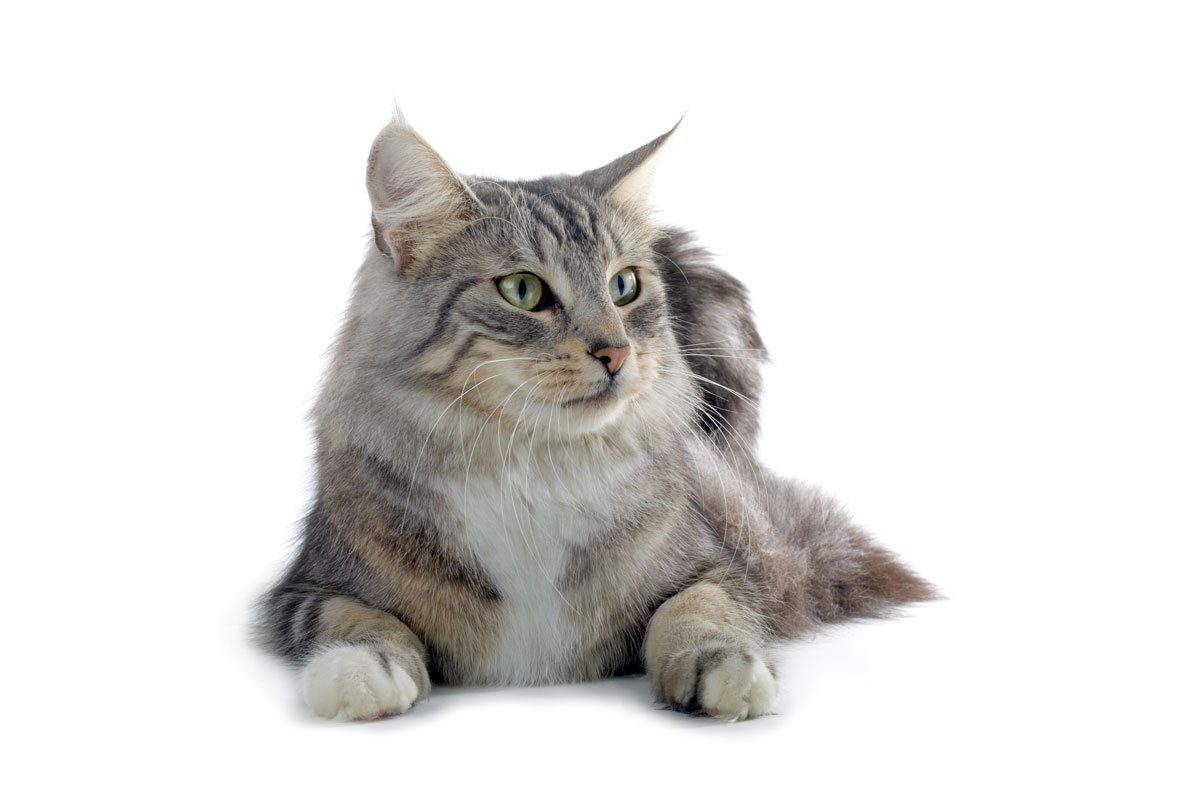
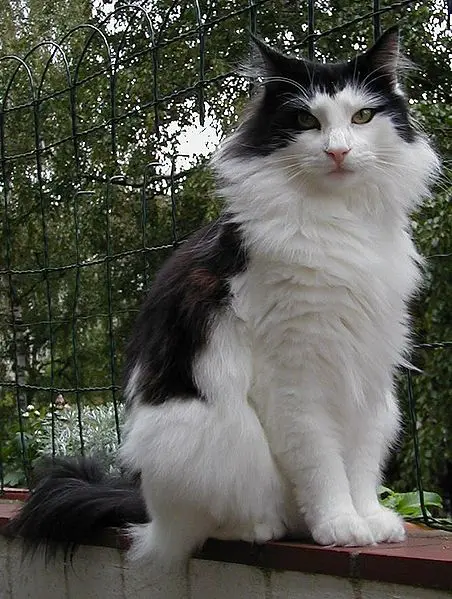
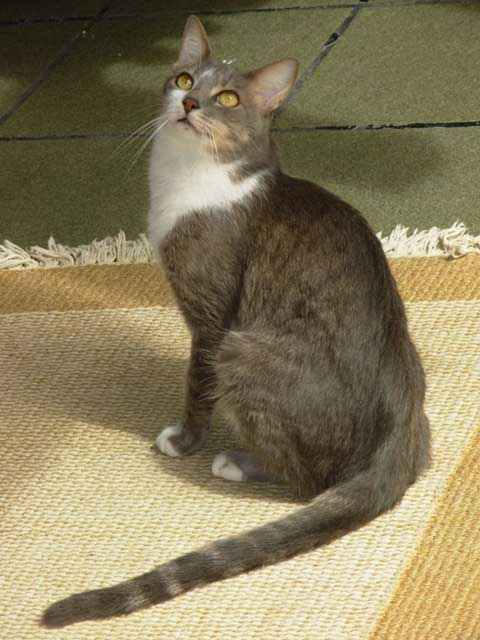
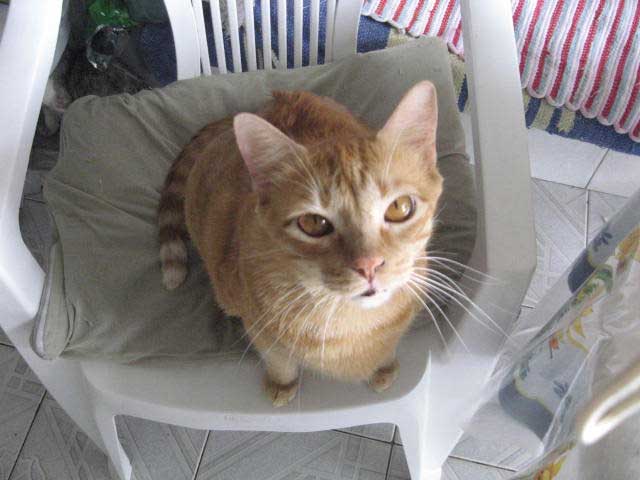
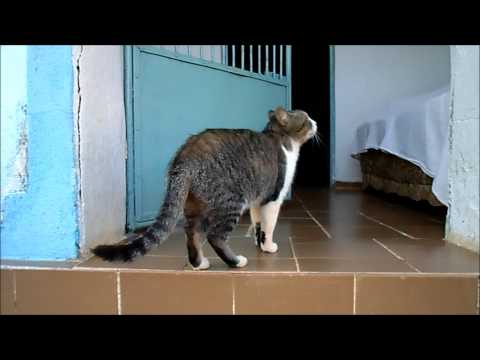
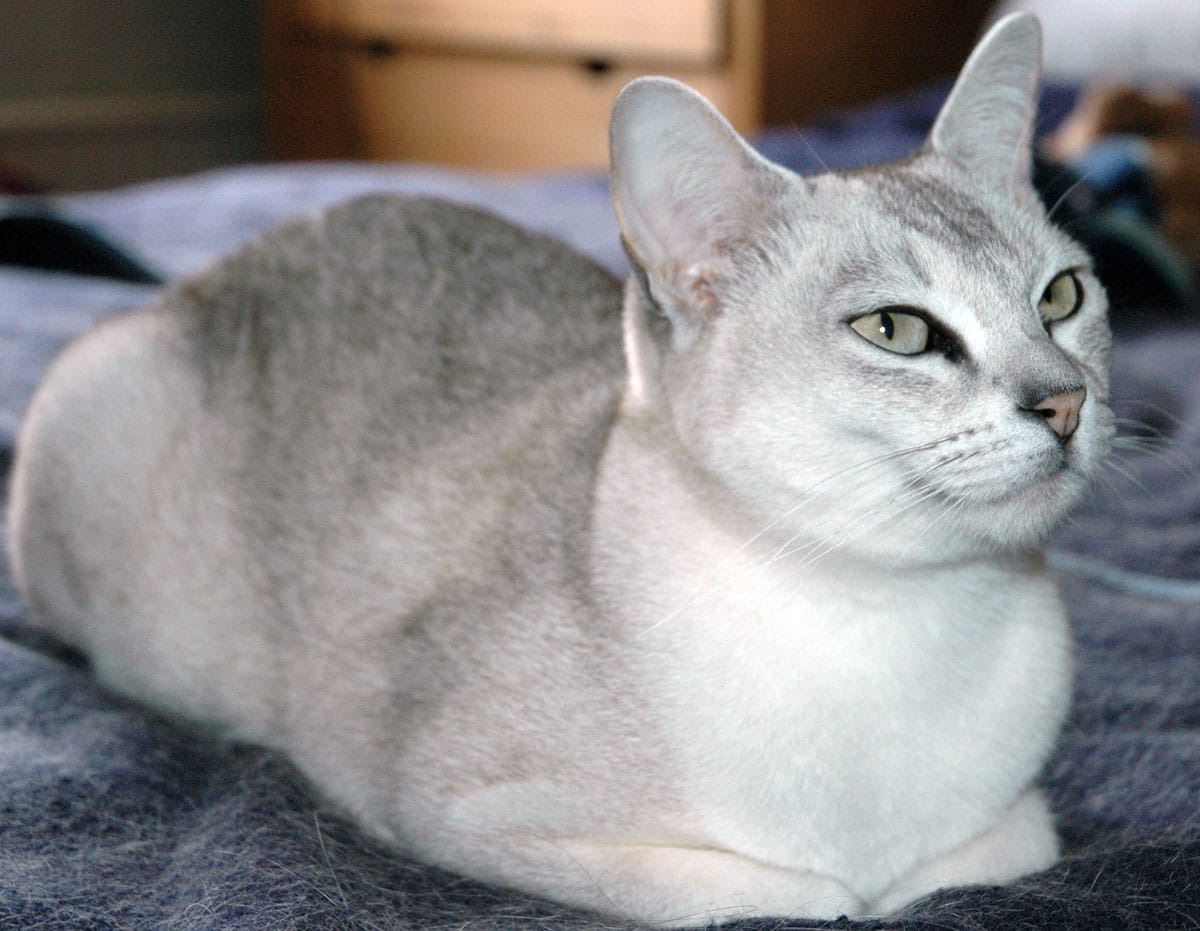
The only true thing about the cat Norwegian Forest Cat It's an ancient race.
The legend, He says that he is none other than the troll of Scandinavian fairy tales cat, But history suggests otherwise.
It is known that the domestic cat reached Norway by the year 1000 d. c. In addition to arrive with the gradual expansion of cats throughout Europe during previous centuries, cats arrived in Scandinavia due to the trade between the Vikings and the Byzantine Empire. Evidence of this movement are in some colors of fur, which are common in Turkey and Norway, but rare in the rest of Europe.
This relationship suggests the possibility that the gene for long hair came to Norway by the same trade routes. Long hair gave advantages to the harsh winters of the North, and became a widespread feature in Norwegian cats.
Photo: Wilkipedia
The skogkatt or skaukatt, as is known, not recognized as a race in his native land until the Decade of 1930, and only a few decades later their selective breeding was carried out.
But, Since the Norwegian Forest cat has gained acceptance in its terra and abroad, Although it remains less well known that the Maine Coon , another similar past long-haired cat.
This race, also known as wegie, continues to reflect its origins as a farm cat, and breeders sometimes refer to him as their "little lynx".
It is great, robust and muscular, and his triangular head is defined by a long nose. His glossy hair has a waterproof layer and a less thick, insulating. It still also has the personality of a farm cat.
These cats are flexible and agile, excellent hunters, and it is known that they fish. Although they are calm and docile companions, they are independent and tend to vigorously defend their territory. A Norwegian lives happily being the only cat in the house.
Alternative names:Skogkatt / Skaukatt / Norsk Skogkatt / Norsk Skaukatt / Weegie
Cat breeds: Norwegian Forest Cat
▷ The world of Pets: Dogs, cats, birds, reptiles, amphibians
Recognized by the LOOF, CFA, ACF, ACFA, TICA, FIFé, WCF
Origin: Russia
Antiquity: decade of 1980
Character: Sensible and resourceful
Weight: 4,5 to 9 Kg
As other breeds of cats big and hairy, It is the result of the harsh climate of the Earth, that favored the hardier hunters with fur that protected them from the cold. Not recognized as a race until the Decade of 1980, but then spread quickly through their export to Europe and North America in the Decade of 1990, first with the name of Siberian forest cat. Now accepted in most registries, but his name has been changed to avoid confusion with the cat in the Norwegian Forest. The dotted version, so-called neva masquerait, is not recognized in all countries.
The Brazilian Shorthair cat still very unknown today, even in your country of origin. Nowhere has he acquired much notoriety, which is most easily explained by the fact that the breed is still new and in full development.
Photo: by Dutchy Doo - Flickr
Content
History
As the name suggests, the Brazilian Shorthair cat He is originally from Brazil..
The history of this breed is relatively recent, since it is assumed that their ancestors are the cats brought to South America -and in particular to Brazil- by the Portuguese colonizers in the early 16th century. In fact, they carried domestic cats on their boats to hunt pests like rats and mice. With the time, some of them ended up breeding with the local cat population already present in Brazil.
These cats arrived by boat and were domesticated. But once in Brazil, they turned into feral cats. In fact, how they were left in place for some, and escaped for others, they returned to nature. This situation lasted for centuries, more specifically until the decade of 1980.
The recognition of Brazilian Shorthair cat
Paulo Samuel Ruschi – creator, president of the Confederacao de Felinos Do Brasil (CFB) afiliada a la World Cat Federation (WCF) and the first cat club in Rio de Janeiro – emigrated to the United States, and was the first to carry out a study comparing the genetics and the different morphological aspects of cats commonly observed in the main cities of Brazil with those of other large cities in the world.. The result was very clear, since it verified that the population of Brazilian cats was quite homogeneous in terms of their appearance, and that it differed significantly from the alley cats of other big cities of the world.
From these general data, Paulo Samuel Ruschi decided to launch, already in 1985, a broader study program aimed at collecting information on Brazilian stray cats in order to develop a national breed. He organized with three other breeders to observe as many cats as possible in three different cities.: Rio de Janeiro, Porto Alegre and Caera.
The four of them walked the streets of these three cities and wrote down the morphological characteristics -shape of the body, head, legs, snout, nose, eyes, tail and fur- of all possible cats. They found that, despite the distance between the cities, their appearance was very similar.
Based on these similarities, they drew up a standard for what they called the brazilian short hair: medium-sized, strong and muscular body, head characteristically small and longer than wide, big eyes, round and expressive, and a short, tight coat. Next, selected no less than 40 cats from the three cities to start a breeding program.
The Brazilian Shorthair
was recognized as a breed in its own right by the BFC in 1994. That same year, an application for recognition was submitted to the World Feline Federation (WCF). The president of the WCF, Annelise Ackmann, traveled to Brazil to observe the cats and meet the WCF members who founded the breed. Shortly after his return to Germany, where the WCF headquarters is located, the standard of Brazilian Shorthair
proposed by WCF was examined in detail by the organization. WCF decided to accept cats as Celtic shorthair cat, a breed also known as European shorthair cat. He came to the conclusion that they had many similarities to the European cats from which they were descended..
Paolo Samuel Ruschi contested this decision and pointed out the differences between the two races. In effect, in the European shorthair cat, the body should be medium to large and well muscled, big head, and not all coat colors are accepted. On the other hand, the Brazilian Shorthair cat has a medium size body, a longer head than it is wide and all coat colors are accepted.
The fact that he himself was a senior judge in the WCF helped Paulo Samuel Ruschi defend his position before the commission., relying on many documents and photographs. He even brought representatives of the races to support his arguments with examples. He kept pushing for a standard for Brazilian short hair to be recognized and, Therefore, the recognition of the race as such. Their efforts ended up paying off, since the institution did it in 1998.
But, was the only one. In fact, the other official bodies that were consulted, as the American Cat Fanciers’ Association (CFA), el British Governing Council of the Cat Fancy (GCCF), la International Cat Association (TICA) o la Fédération Internationale Féline (FIFé) se negaron a reconocer la raza. Todos utilizaron más o menos el mismo argumento: como estos ejemplares son el resultado de la reproducción de gatos callejeros, no pueden corresponder de ninguna manera a los criterios necesarios para hablar de una raza felina propiamente dicha.
In the news, the breeders keep working, always seeking to improve the characteristics of the breed. in your country of origin, the CFB issues a provisional registration for the cats presented to it whose characteristics are close to the standard, and a definitive record for those who are fully compliant.
Popularity of "Brazilian Shorthair cat"
The Brazilian Shorthair cat still very unknown today, even in your country of origin. Nowhere has he acquired much notoriety, which is most easily explained by the fact that the breed is still new and in full development. The opposition of the main world official organizations (the International Cat Federation, the International Cat Association, the Cat Hobbyists Association in America, the Governing Council of Cat Fancy in Great Britain…), with the notable exception of the World Cat Federation (WCF), obviously does not help to improve the situation.
In fact, the number of breeders Brazilian Shorthair cat still very low, and this is so all over the world: there are only a dozen of them, half in Brazil. There is no, for example, none in europe, and only a handful in America. But, the large population of these small felines on the streets of Brazil represents a huge breeding ground for their development. In fact, in Brazil, even individuals can present their cat to the Confederación de Felinos Do Brasil (CFB) for registration, as soon as it meets the criteria of the breed standard.
Physical characteristics
Brazilian shorthair kitten playing hide and seek – Button, CC BY 3.0, via Wikimedia Commons
The Brazilian Shorthair cat is a medium-sized cat with a semi-cobby complexion. Its body stocky and muscular has a broad, round chest and ends in a tail that tapers towards its rounded tip. Rises over legs strong and medium in size, that end in feet round.
The head is relatively small and longer than wide. The head is dominated by ears medium-sized, rounded at the tip and with tufts of hair at the base. The eyes they are big, round and expressive, they are quite far apart and match the color of the coat. The nose is the same width throughout its length. The lower jaw and the chin are strong and slightly prominent. Last, the slightly curved nasal bone at the level of the eyes gives it a rather particular profile.
The Brazilian Shorthair cat does not have undercoat, but he has thick and silky hair. The standard accepts all coat colors.
Last, this breed does not present any particular sexual dimorphism: males and females are identical in size.
Character and skills
The Brazilian Shorthair cat he is a very cuddly and affectionate cat, that does not tolerate loneliness and requires a lot of attention and tenderness. To keep them happy, their owners must have time to spend with them and not leave them alone for many hours of the day.
They enjoy interacting with all members of their family and they especially like children, for those who are excellent playmates; the same happens in reverse.
Being sociable by nature, it is perfectly conceivable that you share your home with another animal. They generally enjoy the company of other cats., especially if they are as active as they. It is also perfectly conceivable that your cat lives with a dog, especially if they live together since they were little. On the other hand, the utmost caution is required with birds or small rodents. It is better to keep them in a safe place, like a cage, since a cat's hunting instinct can be awakened at any time. Brazilian Shorthair cat – Junius, CC BY-SA 3.0, via Wikimedia Commons
The Brazilian Shorthair cat not only energetic, but also very agile and curious. But, They can live both in a house with a garden and in an apartment, as long as it is spacious enough and they have the possibility to exercise. If you do not have access to the outside or there are no trees, a suitable cat tree is essential, so you can exercise your agility and have a perch to hide in. Unlike many of his peers, it is also very adaptable. These may include, moving in with your cat is much less of a problem for a Brazilian Shorthair cat than for many other races, as they quickly appropriate their new environment.
His curiosity and his ability to adapt also give him an unbridled character. This little cat is a good hunter, always eager to discover a new environment, and he likes to watch over his territory, which can be very extensive. Thus, no wonder they sometimes disappear for several days.
Grooming
The Brazilian Shorthair cat does not require much maintenance, since it has a short coat and has no undercoat. Brushing once a week is enough to remove dead hair.
At the same time, you can wipe the corners of their eyes with a damp cloth to make sure they stay clean, and thus reduce the risk of eye diseases in cats.
You also have to check if the ears are infected and clean them with a damp cloth.
The weekly maintenance session is also an opportunity to brush the teeth and check that there are no problems in this area. (caries, tartar deposits, etc.). In addition to the risk of bad breath for the cat, lack of dental care can lead to various diseases, some of them very serious (for example, septicemia).
Last, natural wear and tear is usually enough to file the nails of a Brazilian shorthair that is capable of running outside and scratching trees. However, it is advisable to check every month if this is the case and, otherwise, trim them manually. The same should be done with an individual confined indoors, that you should have a scratching post at your disposal to prevent your claws from growing too fast or from making them on furniture.
Whether it's ear care, the eyes, your cat's teeth or nails, don't hesitate to ask a vet or groomer for help the first time, to make sure you know how to do it correctly. It also, it is better to accustom your pet to these manipulations from a young age, so that everything goes well later.
The Brazilian Shorthair cat seems to be in fairly robust health. But, as this breed is still new and in the process of development, there is not enough time to accurately identify certain diseases to which you may be predisposed.
One thing remains true: as in the case of any race, regular veterinary care is the best way to keep your cat in good health. This includes the inevitable health check at the vet.: must be done at least once a year, allows early detection of any disease and guarantees that the cat is up to date with its vaccinations.
Food
The Brazilian Shorthair cat it is not a demanding animal, but it is necessary to provide him with a diet of sufficient quality to satisfy his nutritional needs. Both the products chosen and the amount given each day should be adapted to their age and activity level..
As their physical activity is generally quite high, not especially prone to obesity. But, if they live in a flat, they tend to be less active, so the problem is more likely to arise. This is even more true if he has been neutered, since neutered cats gain weight more easily. So, to keep your cat healthy, you should make sure to weigh it about once a month. If your cat is persistently overweight, or even if it gets worse after several consecutive measurements, You must take charge or risk trapping him in a vicious cycle.: the fatter i am, less will want to move. Then it is necessary to go to the vet to determine the origin of the problem (disease, side effects of a medication, choosing an inappropriate food, daily ration too large, etc.) and remedy it.
Last, like any cat, the Brazilian Shorthair cat must have water available at all times.
For sale "Brazilian Shorthair cat"
The Brazilian Shorthair cat it is one of the rarest cat breeds. So, it's hard to get one, since there are no breeders in Europe.
The situation is not much better in the United States, where there are very few hatcheries of Brazilian Shorthair cat. They generally offer their kittens for a few 1000 $.
Even if you are heading to your home country, Brazil, it's hard to find one, again due to the reduced number of hatcheries. The price of a kitten Brazilian Shorthair cat often haunt them 1500 Brazilian real (something more of 200 EUR).
In the case of an adoption abroad, transport costs and administrative costs are added to the purchase price and, of course, It is necessary to respect the legislation regarding the importation of animals.
Characteristics "Brazilian Shorthair cat"
Coexistence is important that you have with your new friend. Before considering the acquisition of a cat of the breed "Brazilian Shorthair cat" you know certain factors. You must take into account their character, their need for exercise, their interaction with other pets, their care and if you have small children, their level of tolerance towards them.
Recognized by the LOOF, ACF, FIFé, GCCF, WCF. TICA, CFA
Origin: United Kingdom
Antiquity: 1981
Character: Affectionate and playful
Weight: 3,6 to 4,5 Kg
Photo: Some rights reserved by ramtops - Flickr
The Burmilla cat born as a result of an accidental cross, in the United Kingdom between a cat chinchilla Persian and a Burmesa lilac, and fruit of this cat love affair, in 1981 its four kittens are born. In the year 1984 imported several cats of this breed to Denmark.
The Burmilla is considered part of the race of the Asian Group.
Its color is white but as if a blanket of shadows and shades of black. Although different patterns are presented, Silver with black or white colors, blue, chocolate, lilac, red, cream and turtle. The different brands and colors are more than 40 different layers.
Their eyes have oblique form of large size, the bottom line is very curved, always in various green tones.
Are medium-sized with muscular bodies, round face and short snout
The Burmilla is a very irreverent and independent cat who adores his owner and displays many kitten-like characteristics., even in adulthood. In temperament that are sociable, playful and affectionate, and they get along well with children and other animals.
Cat breeds: Burmilla
▷ The world of Pets: Dogs, cats, birds, reptiles, amphibians
Coexistence is important that you have with your new friend. Before considering the acquisition of a cat of the breed "Sacred Cat of Burma (Birman)" you know certain factors. You must take into account their character, their need for exercise, their interaction with other pets, their care and if you have small children, their level of tolerance towards them.
Joy
3,0 of 5 stars (based on 1 review)
Activity level
2,0 of 5 stars (based on 1 review)
Friendliness to other pets
4,0 of 5 stars (based on 1 review)
Friendliness to children
4,0 of 5 stars (based on 1 review)
Grooming requirements
4,0 of 5 stars (based on 1 review)
Vocality
1,0 of 5 stars (based on 1 review)
Need for attention
4,0 of 5 stars (based on 1 review)
Affection towards its owners
4,0 of 5 stars (based on 1 review)
Docility
5,0 of 5 stars (based on 1 review)
Intelligence
3,0 of 5 stars (based on 1 review)
Independence
2,0 of 5 stars (based on 1 review)
Hardiness
3,0 of 5 stars (based on 1 review)
History
The Sacred Cat of Burma (Birman) has recently appeared in Europe and its origin remains mysterious. It is said that some Englishmen brought a couple of cats from Burma from the so-called Lao-Tsun temple.
It is said that one such Mrs. Leotardi, In the south of france, was the owner of Madalpour doll, a burmese cat Seal point, exhibited in Paris in 1926, whose parents came from Burma and were given to him by a certain Mrs. Thadde-Haddish.
In fact, the first subjects would be the result of crossing a Siamese cat marked in white at the end of the legs with a longhair cat (angora the persian) practiced in the twenties, in the Nice region.
About 1930, the God of arakan, A male Seal point, became the star of feline shows.
After the Second World War, during which the race was about to disappear, blood infusions were made from a Persian catcolourpoint to limit inbreeding.
In 1950, the breed was renamed as Sacred Cat of Burma (Birman) to avoid confusion with the Burmese cat.
Introduced in the United States in 1959-1960 and in Great Britain in 1965, where it was recognized, this breed is very popular with the public and has great success.
Physical characteristics
Sacred Cat of Burma (Birman)
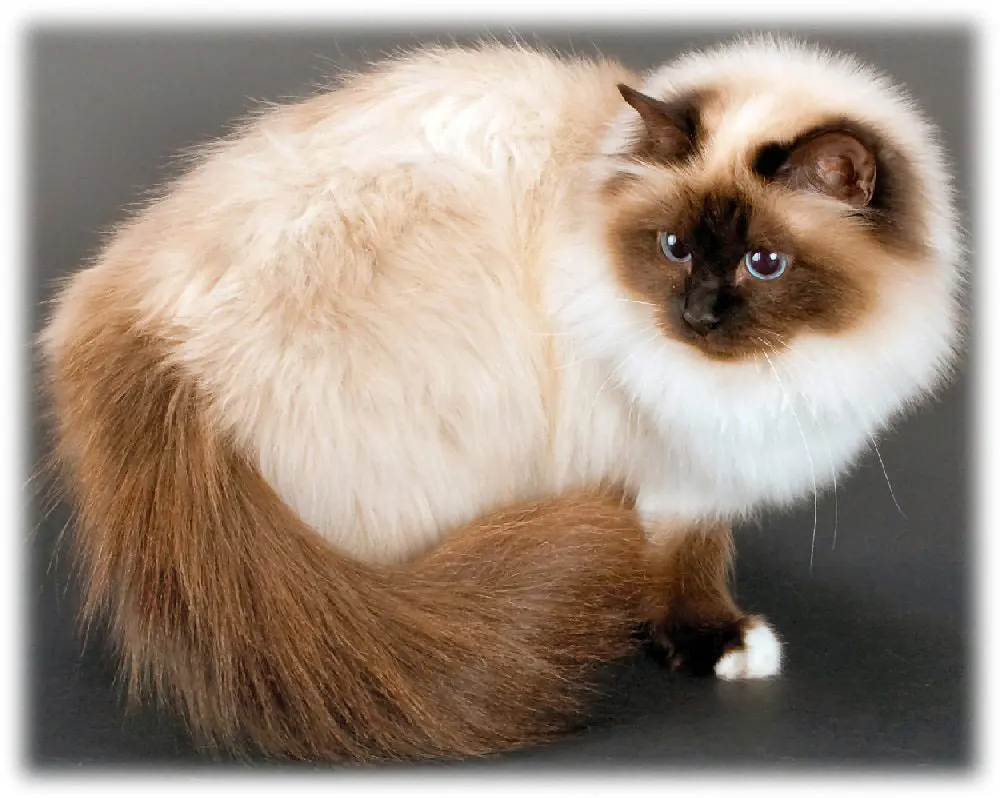
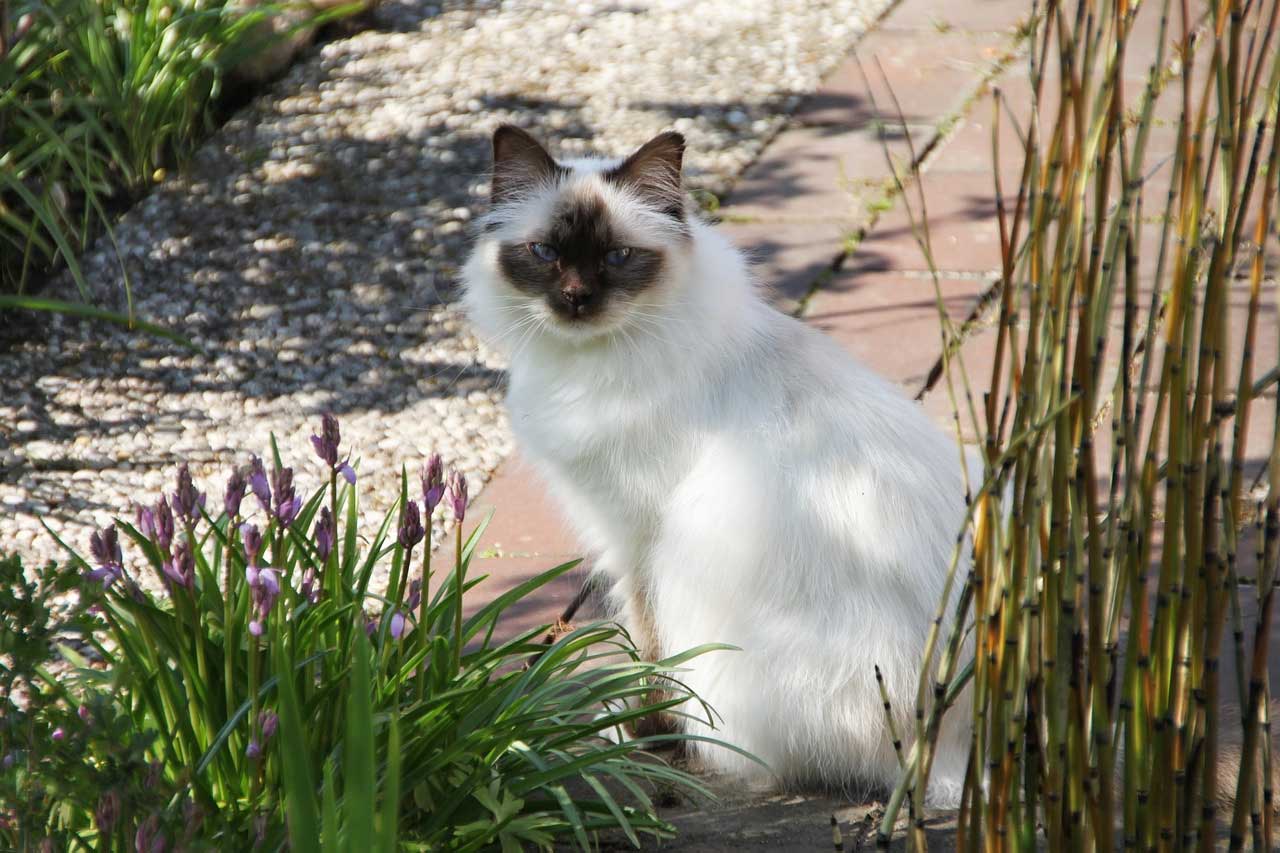
The Sacred Cat of Burma he's a long and powerful guy. He is relatively burly, with one head wide and round with large ears and eyes deep, almost round, light blue.
The face it is not flattened and the nose is rather long and straight. The body is elongated and the legs are long..
The fur is long, silky, more dense in the neck. The belly has slightly curly hair.
A characteristic feature of this breed is the presence of symmetrical white markings on the legs., called "gloves".
Colors points: seal, blue, lilac, Red and cream. Tortoise shell of all colors, except red and cream.
Size and weight
Size: 30 cm.
Weight: Of 4 to 6 kg
Breed standard
The breed standards are documents produced by official bodies that list the conditions that a Burmese must meet to be fully recognized as belonging to the breed.:
A Seal Point Birman Cat called Strofe – Kristin Kokkersvold, Copyrighted free use, via Wikimedia Commons
Halfway between the Persian and the Siamese, this cat is calm, balanced, neither passive nor exuberant.
Less docile than Persian, it is however calmer, quiet and less active than Siamese.
Kind, affectionate (especially the males), often a bit possessive, Can't stand indifference and less loneliness, although it seems a bit individualistic. His voice is soft.
He is sociable with his peers.
Playful, it is a nice companion for children. But he also likes peace and quiet.
Abroad, they are robust, athletic and great hunters.
The females., adults of about 7 months of age, They are mothers who are very concerned about their pups..
Grooming
The maintenance of the coat is relatively easier than that of the Persian, since knots and tangles are rare.
In normal times, weekly brushing and combing is sufficient to maintain the coat. But, during the move, daily brushing and combing is necessary.