โ–ท The world of Pets: Dogs, cats, birds, reptiles, amphibians

Nebelung cat
Federations: TICA, LOOF, GCCF, WCF

Content

Characteristics "Nebelung cat"

Coexistence is important that you have with your new friend. Before considering the acquisition of a cat of the breed "Nebelung cat" you know certain factors. You must take into account their character, their need for exercise, their interaction with other pets, their care and if you have small children, their level of tolerance towards them.

Joy

4,0 of 5 stars (based on 1 review)

Activity level

4,0 of 5 stars (based on 1 review)

Friendliness to other pets

4,0 of 5 stars (based on 1 review)

Friendliness to children

3,0 of 5 stars (based on 1 review)

Grooming requirements

3,0 of 5 stars (based on 1 review)

Vocality

2,0 of 5 stars (based on 1 review)

Need for attention

4,0 of 5 stars (based on 1 review)

Affection towards its owners

4,0 of 5 stars (based on 1 review)

Docility

3,0 of 5 stars (based on 1 review)

Intelligence

4,0 of 5 stars (based on 1 review)

Independence

2,0 of 5 stars (based on 1 review)

Hardiness

4,0 of 5 stars (based on 1 review)

History

The Nebelung cat today originated in the United States in the 1980, but its history is much older and inseparable from that of the Russian Blue Cat.

The Russian Blue Cat already existed in Russia in the 19th century, where it was often hunted for the quality of its hide, which caused a population decline. The breed included both individuals of shorthair like Longhair. If he Russian Blue Cat shorthair was exported to Great Britain from 1870 and quickly met some success there, his cousin from Longhair did not have this opportunity, and it continued to decline. The 20th century and its two world wars sealed its fate, and is now considered extinct. In other words, the Nebelungs current replicate their appearance, but they are not his descendants.

The history of the Nebelung starts in 1984 and Denver, Colorado ((UNITED STATES)UU.), when the cat of the son of Cora Cobb, a computer developer, gave birth to a long-haired gray-blue male kitten. Seduced by this ball of hair, Cora Cobb decided to stay with him and called him Siegfried, in honor of the protagonist of Wagner's opera "The Ring of the Nibelung".

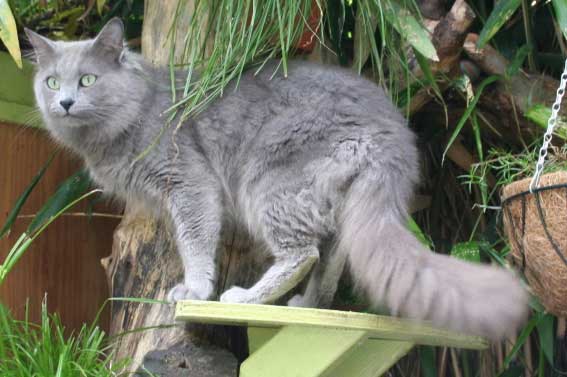
"Nebelung cat"

Nebelung
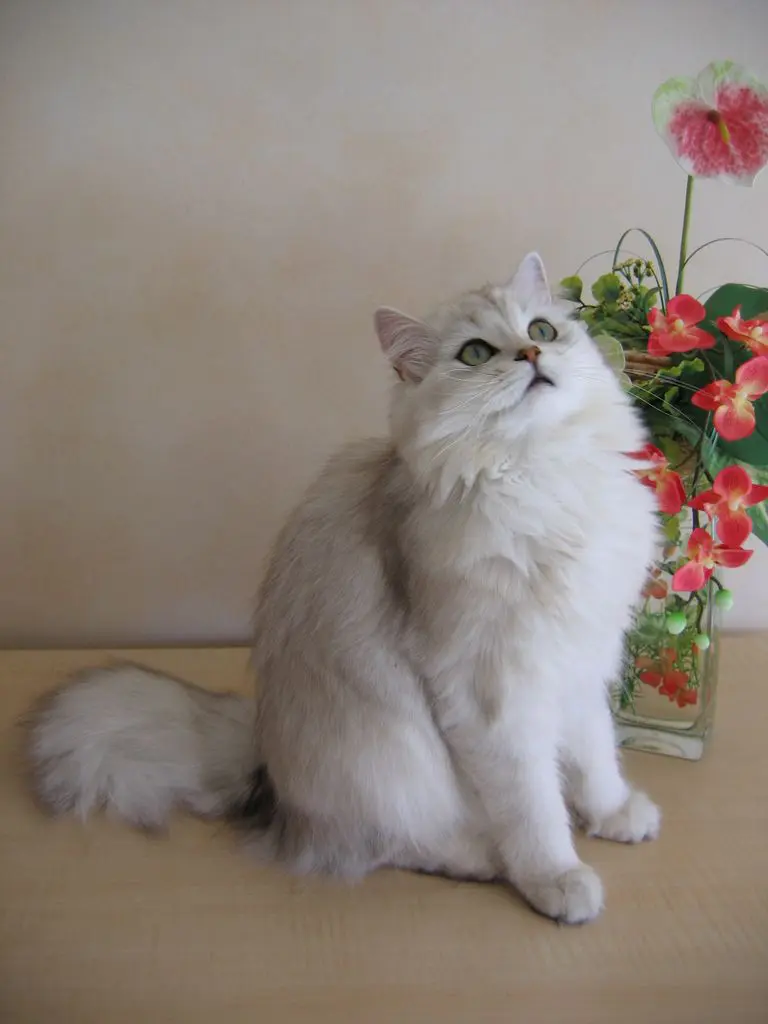
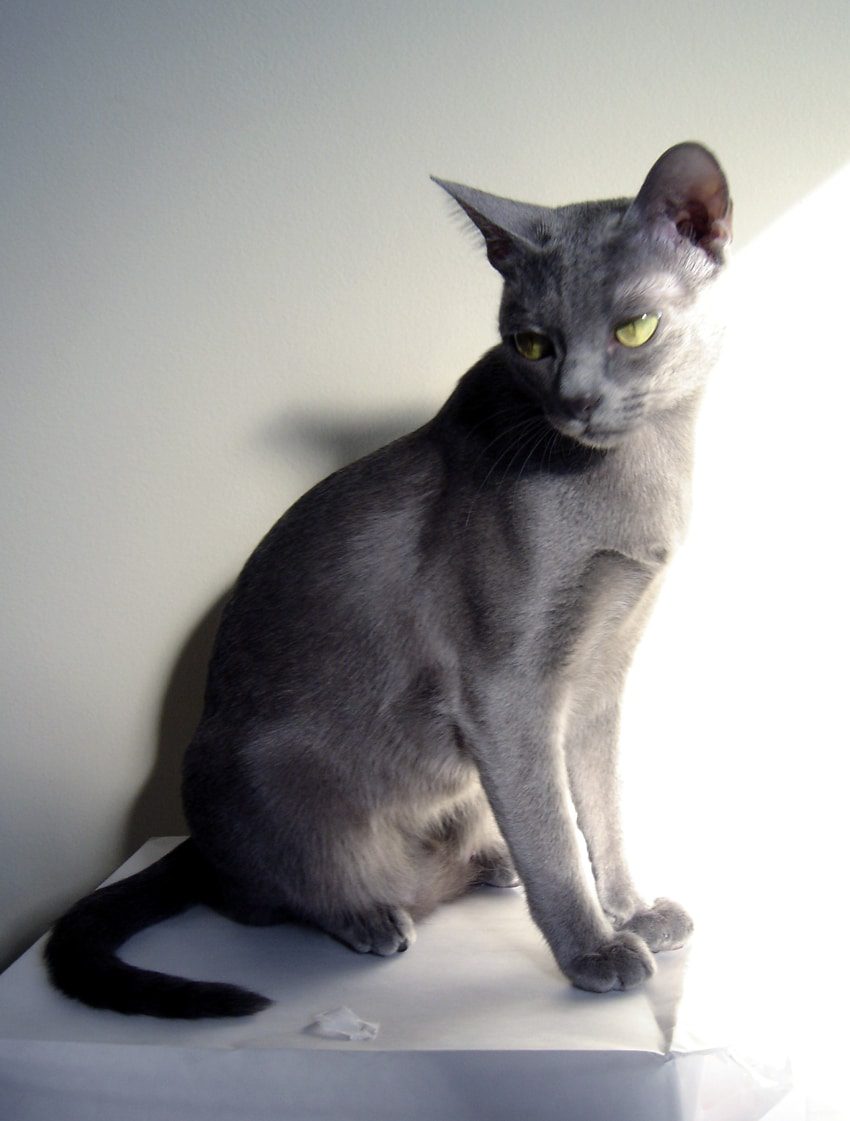
This is a Nebelung cat – Howdyhithere, CC BY-SA 4.0, via Wikimedia Commons

A few months later, this cat gave birth to another litter in which one of the kittens had long bluish gray hair. Cora Cobb he also adopted this cat and named her Brunilda, again in reference to the characters in Wagner's opera, based on the 13th century Germanic poem Nibelungenlied.

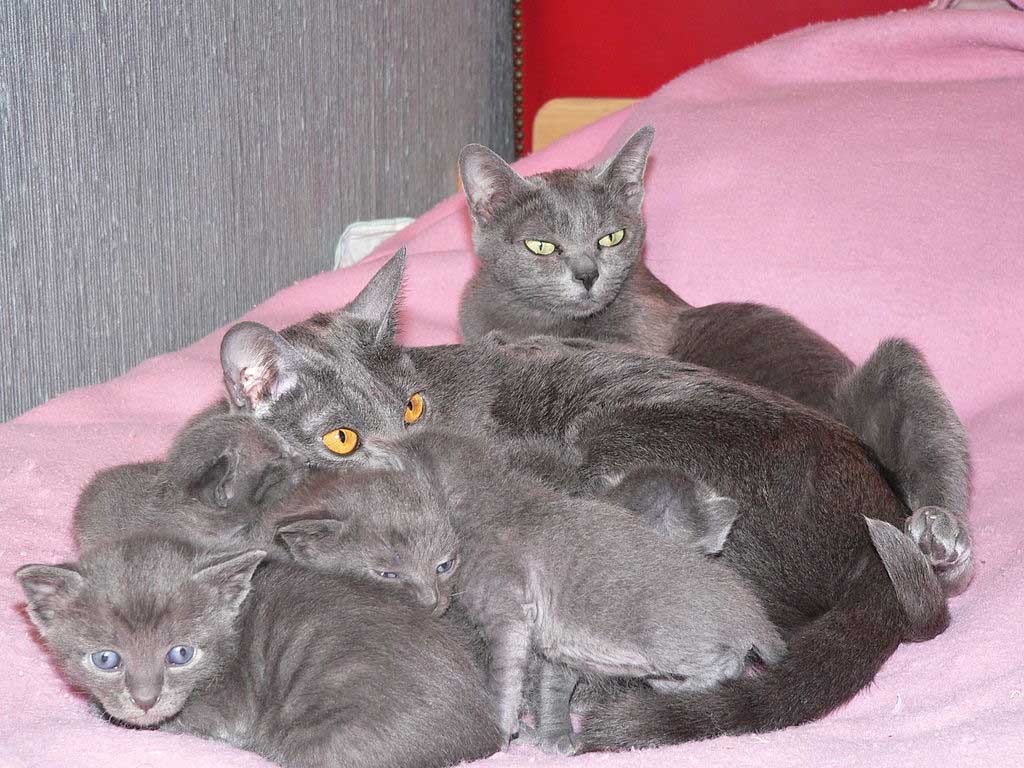
When he moved to Old Paso, Texas, Cora Cobb took to Siegfried and Brunhilde, who thanked him by giving birth to a litter of three kittens in 1986. They all had the same medium-long, blue-gray fur..

This is because the gene responsible for Longhair and the gene responsible for blue-gray hair are both recessive, which means that the individual must inherit it from both parents to have this appearance. Like this, kittens resulting from the mating of two long-haired gray or gray-blue cats must have the same coat as their parents.

Decided to call the cats Nebelung, a clear reference to Wagner's opera and original poem, but also a pun on the German word ยซNebelยป (What does "fog" mean?) and the Russian ยซNeboยป (what does "heaven" mean). Then the breed recognition process began, contacting the Dra. Solveig Pflueger, head of genetics of the TICA (International Cat Association).

Following his advice, developed a standard for the Nebelung cat based on the Russian Blue Cat, changing only the description of the fur. The TICA provisionally recognized the breed in 1987, and Cora Cobb founded his kennel, who called Nebelheim.

In 1989, the Nebelung was featured at a cat show in Paris, where it had some success and offspring began to appear in Europe. In 1997 was definitely recognized by the TICA, later for him Livre Officiel des Origines Fรฉlines (LOOF) french in 2008 and by the Governing Council of the Cat Fancy (GCCF) british in 2015. The World Cat Federation (WCF) has also recognized the breed, but neither the American Cat Fanciers’ Association (CFA) not even Fรฉdรฉration Internationale Fรฉline (FIFรฉ) have yet taken the step.

Although it is now present in North America, as well as in Europe, the Nebelung still a rare breed of cat, and has not yet conquered the general public. In France, the statistics of Libro Oficial de Orรญgenes Felinos (LOOF) indicate that less than fifty specimens are registered each year, while in Great Britain these figures do not exceed twenty. Breed is even more discreet in America, where there are only a handful of hatcheries in the entire country.

Physical characteristics
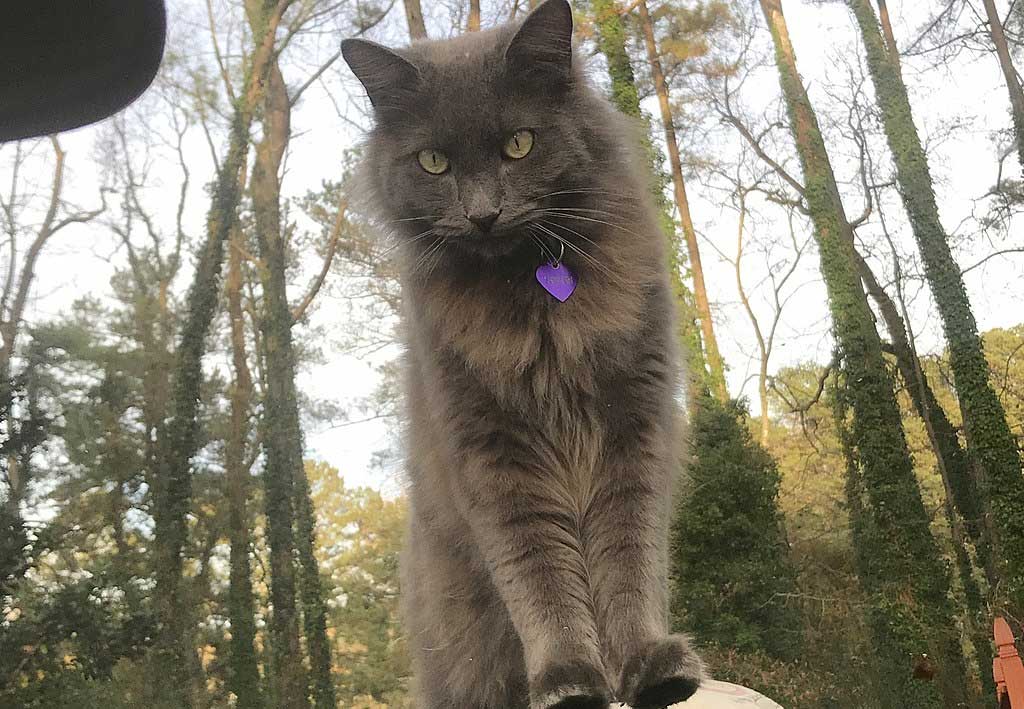
Nebelung
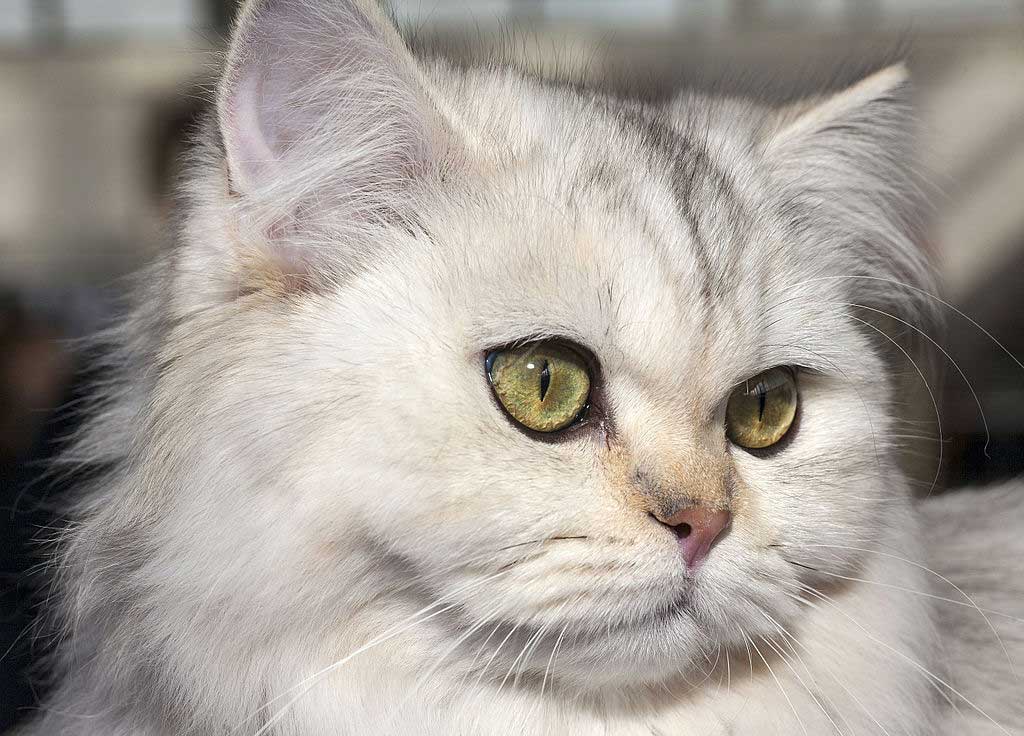
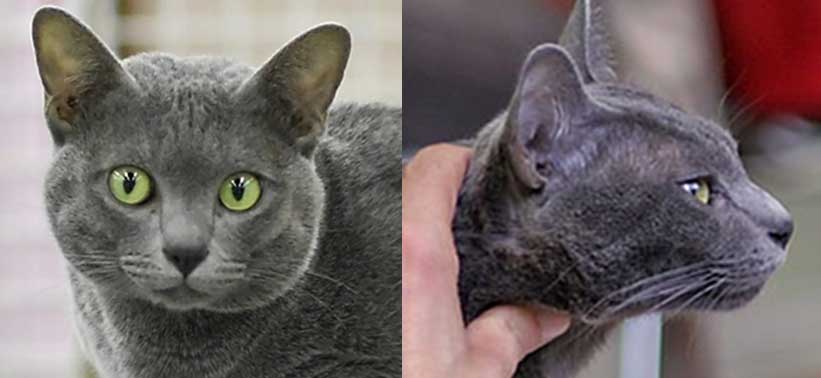
Majestic shadow beast. He prote – Amarnth7, CC BY-SA 4.0, via Wikimedia Commons

The Nebelung It has a type morphology Semi-Foreign. Its body, long and elegant, he is athletic and well proportioned, and rests on muscular legs that end in oval legs. The tail is long, at least as much as the body, and the hair of the same is longer than in the rest of the body.

The head wedge-shaped is well proportioned to the size of the animal and the ears they are big and pointed. The boca is slightly turned up at the corners, which gives the appearance of constantly smiling, and the nose is charcoal gray. The eyes They are slightly oval and of a deep green color similar to that of the Russian Blue Cat. But, kittens may have greenish-yellow eyes until they reach maturity, around two years old.

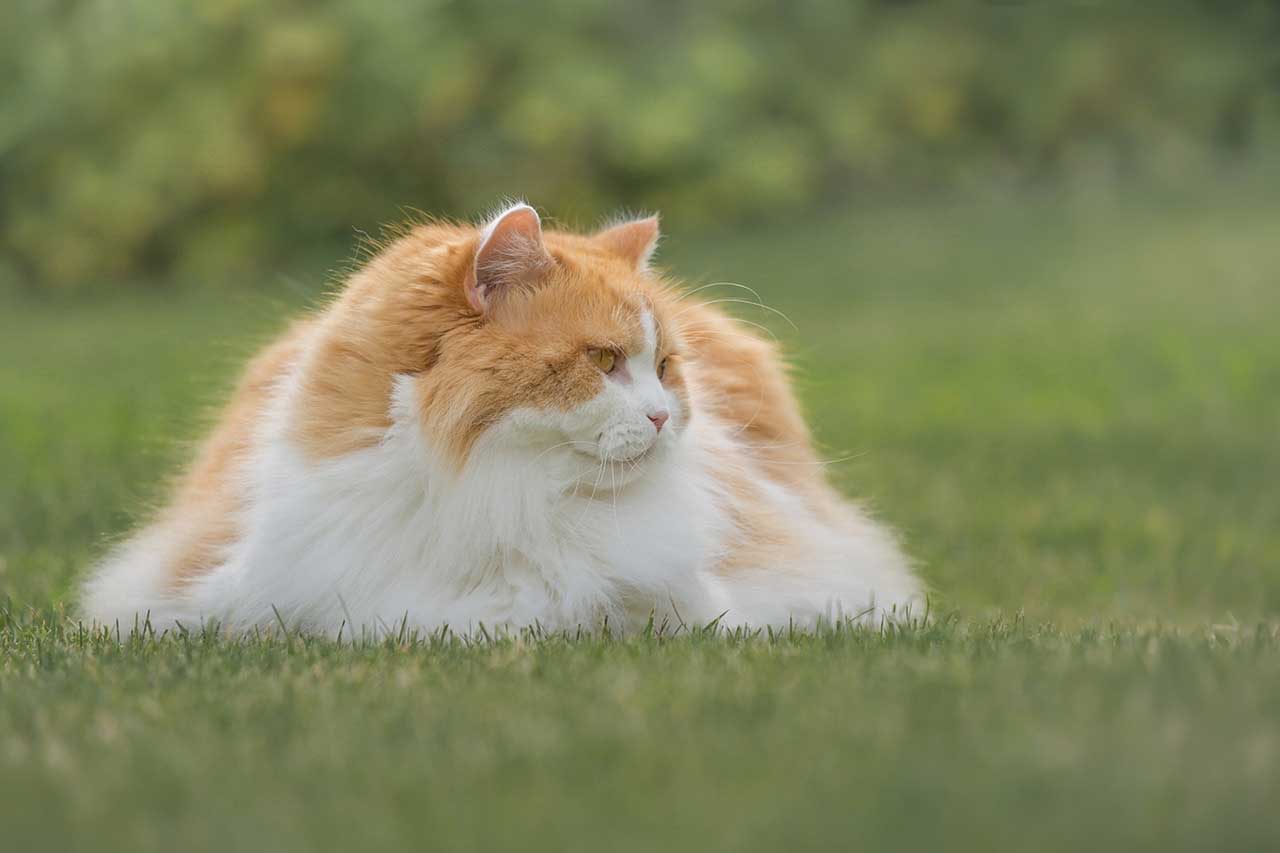
The fur of the Nebelung, that is not fully developed until that age, it's semi-long, and males can have mane. The undercoat it is dense and waterproof, while the outer coat is long and silky. In winter, the coat becomes longer and denser, allowing you to better protect yourself from the cold.

The only coat color allowed is gray., but this one is called "blue" in the world of cat shows. Kittens can have "ghost" stripes, but these disappear as they grow, giving way to a nice uniform tone.

Last, the sexual dimorphism it is quite marked, the female being smaller than the male.

Size and weight

  • Male size: 26 to 30 cm.
  • female size: 25-28 cm.
  • Male weight: 4-7 kg
  • female weight: 3-6 kg

Breed standard

The breed standards are documents established by official bodies that list the conditions that a dog must meet. Nebelung to be fully recognized as belonging to the race:

Varieties

If he Nebelung it is called often Russian Blue longhair, this is a mistake: is a long-haired equivalent of the Russian Blue Cat, but the Nebelung and this one are two different races that do not share common origins. In fact, contrary to what one might think, the Nebelung does not descend from Russian Blue longhair found in Russia in the 19th century and have since disappeared.

But, the rules allow the crossing between these two breeds, what, of course, can only lead to confusion. A kitten resulting from such a union is considered as Russian Blue if you have short hair, and as Nebelung if, on the contrary, the Longhair.

Character and skills
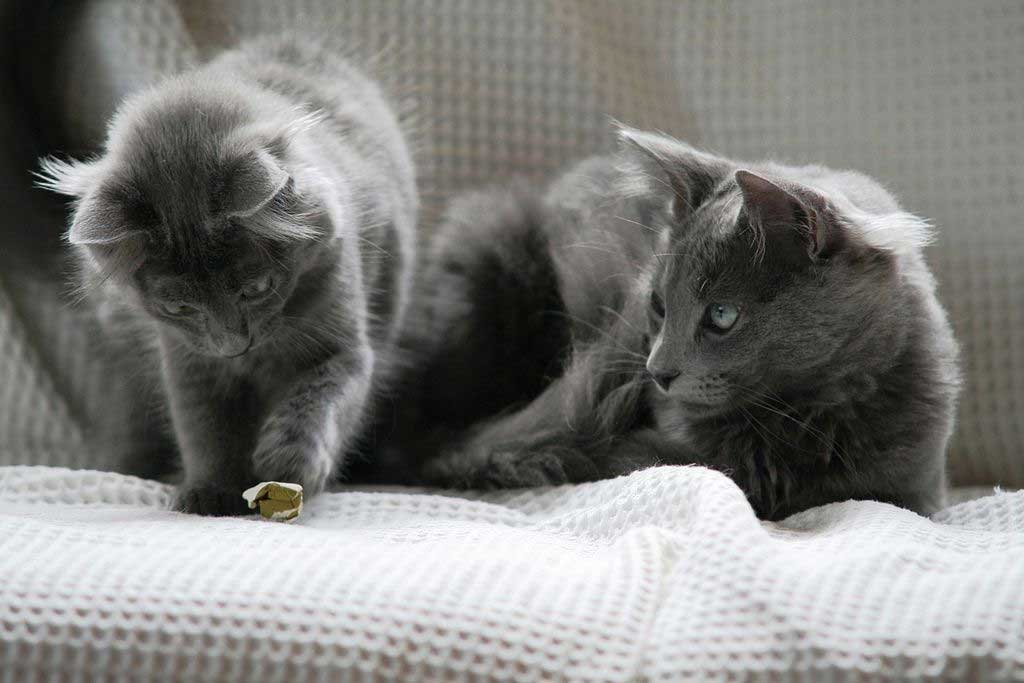
Nebelung
Nebelung – Nebelung, CC BY 3.0, via Wikimedia Commons

The Nebelung he is extremely affectionate with his family and loves to spend time with them. But, he is a rather shy cat, you need some time before you trust humans; after adopting one, you should not be forced to socialize with your family, but should be allowed to get used to at your own pace. Once you feel comfortable, he will follow his family members throughout the house and remain devoted and loyal to them for life.

Like is logic, even when it is well integrated into your home, prefers the tranquility of a family evening to social life. It is common for him to run away when guests arrive at the house, and can stay hidden for a while before showing up to greet newcomers.

They get along very well with the children in the family who have learned to behave with an animal, but they run away from the too boisterous youth. in addition, can live very well with other cats, or even with dogs accustomed to cats, as long as you are not being chased around the house and introductions are made on your terms, that is to say, without forcing you to socialize quickly.

In general, cats don't like changes, and the Nebelung is no exception. He likes routine and does not like his habits to be altered. It is an excellent alarm clock, that every morning reminds its owner that it is time to get up and, step, to give him breakfast. So, not suitable for people who move often and / or have a chaotic lifestyle.

When you feel safe in the family nucleus, this peaceful companion becomes active and playful, not hesitating to invite his master to play or run after a shiny object that has fallen to the ground. Once they have had enough exercise, they will gladly accommodate with a family member to receive well-deserved caresses.

As an intelligent race, the Nebelung is even able to learn some tricks, like fetching a ball or opening the door to the candy closet. This intelligence enables you to understand the intonations of voices, and makes you able to recognize the compliments, but also teasing: it's not uncommon to see him sulking at his family after making them laugh against their will, for example, falling off the couch.

Last, it is a cat made to live in an apartment and not in the garden: finds your marks faster and feels safer there, what favors their adaptation. In fact, even if I have access to the outside, you probably prefer the comfort of home to the possible novelties that await you outside. It also, it is a breed of cat that tolerates loneliness well, so it can be left home alone when your family is working: unlike other active and intelligent breeds, there is no need to fear that he will adopt destructive behavior, especially if you get extra care at night.

Health

The Nebelung it is a very resistant cat breed, no known genetic diseases.

This does not protect him from most of the diseases that all cats are exposed to; even if he spends his life inside, it is essential to vaccinate him well and give him adequate antiparasitic treatments.

The most important health risk is Obesity. It is not a disease in itself, but it can cause serious problems. The owner is the only person who can protect the dog from this condition, so you should make sure to weigh it regularly to control your weight and avoid being overweight.

Life expectancy

15 to 18 years

Grooming

"Nebelung cat"

Nebelung
Nebelung Male, Aleksandr of Song de China – Nebelung, CC BY 3.0, via Wikimedia Commons

The maintenance of Nebelung cat is not difficult, but it takes a little time.

Its beautiful coat should be brushed twice a week to remove dead hairs and distribute sebum from the skin. These actions help keep the coat shiny and avoid knots..

During the moulting season, in spring and autumn, this brushing should be done every day to deal with the large amount of dead hair.

It also, it is advisable to spend a few minutes each week to check the condition of the ears, cat's eyes and teeth: to avoid any risk of infection, must be kept perfectly clean. Ears and eyes can be wiped clean with a damp cloth if necessary.

When they get too long, it is necessary to trim the claws with a nail clipper. As the Nebelung it is generally an indoor cat, natural wear is usually insufficient.

Last, It should be noted that the Nebelung has a very high level of cleanliness, even more than most of its congeners. So, to avoid problems, it is important to replace the litter box and clean it regularly.

Feeding

The Nebelung is not demanding in terms of food and can be fed with commercially available industrial cat food. These must be of sufficient quality to provide you with all the necessary nutrients and vitamins to keep you healthy.. Y, as in the case of any cat of any breed, diet should be adapted to your age and activity level.

The Nebelung he's a big glutton, and your appetite can be a source of trouble. So, it is important to respect the daily servings recommended by the manufacturer, and pay attention to the calorie content of any cat treats you receive; the ideal is, of course, deduct from your ration of croquettes or pate the amount contributed by them. It also, not usually able to self-regulate, so it is better to avoid having food available all the time.

In case of excessive weight gain, do not let the situation get out of control, Instead, you have to quickly consult a veterinarian to establish a new feeding program more suited to your needs..

For sale "Nebelung cat"

A kitten Nebelung it costs on average about 1.200 EUR, but the price range goes from 1.000 to 1.400 EUR, depending on the physical characteristics of the kitten.

The price of females is usually slightly lower than that of males, but there are no big differences.

Videos "Nebelung cat"

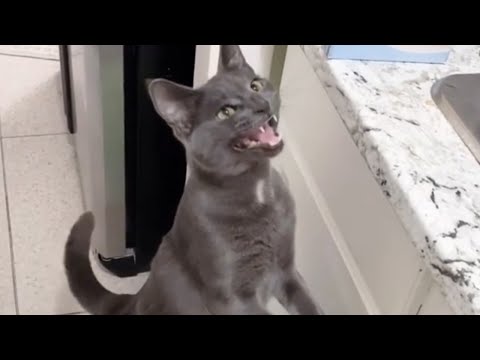
Nebelung / Cat Breed

the nebelung cat family.

โ–ท The world of Pets: Dogs, cats, birds, reptiles, amphibians

Singapura cat
Federations: LOOF, CFA, ACF, ACFA, TICA, WCF

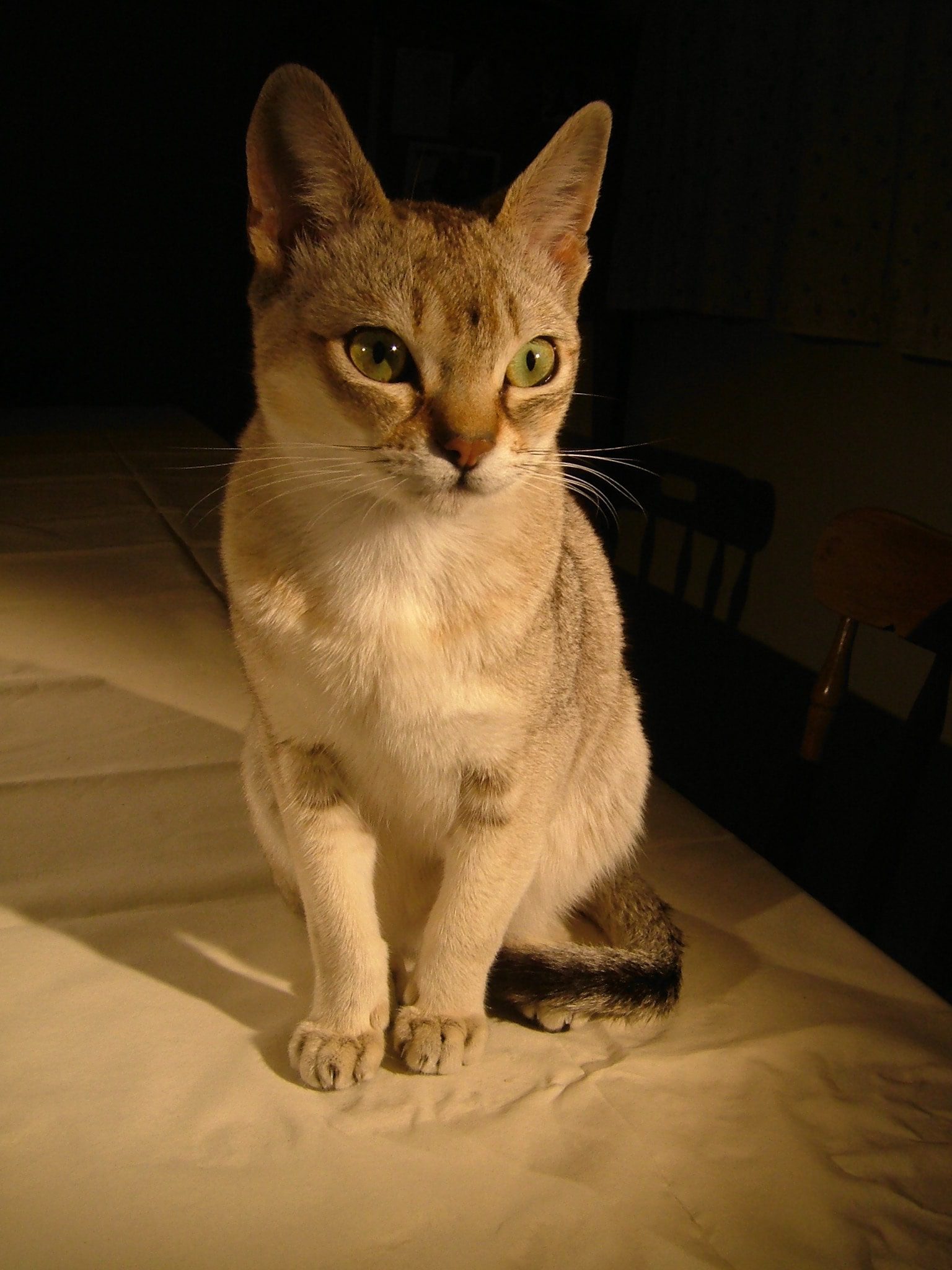
as the number of Singapura cats it is rather small, you must ensure that both parents do not weigh less than 2,5 kg. You should also check the pedigree carefully before buying., as inbreeding can greatly reduce the life expectancy of Singapura cats.
Photo: wilkipedia

Content

Characteristics "Singapura cat"

Coexistence is important that you have with your new friend. Before considering the acquisition of a cat of the breed "Singapura cat" you know certain factors. You must take into account their character, their need for exercise, their interaction with other pets, their care and if you have small children, their level of tolerance towards them.

Joy

5,0 of 5 stars (based on 1 review)

Activity level

4,0 of 5 stars (based on 1 review)

Friendliness to other pets

3,0 of 5 stars (based on 1 review)

Friendliness to children

3,0 of 5 stars (based on 1 review)

Grooming requirements

1,0 of 5 stars (based on 1 review)

Vocality

2,0 of 5 stars (based on 1 review)

Need for attention

5,0 of 5 stars (based on 1 review)

Affection towards its owners

4,0 of 5 stars (based on 1 review)

Docility

1,0 of 5 stars (based on 1 review)

Intelligence

4,0 of 5 stars (based on 1 review)

Independence

3,0 of 5 stars (based on 1 review)

Hardiness

2,0 of 5 stars (based on 1 review)

History

ยซSingapuraยป is the Malay name for Singapore. The name has also been given to a small cat considered the smallest domestic cat in the world and originally from the Southeast Asian city-state located at the southern tip of the Malay Peninsula.

In Singapura, brown or dark brown color is widespread in the genetic makeup and is characteristic of the local population of domestic cats. But, the fur of the Singapura is usually quite pale, and its origin story is not simple at all. It's not easy to find out.

Historically, the most widely accepted version was that of the International Cat Association (TICA), starring an American geophysicist, Hal Meadow, who was in Singapore at the beginning of the years 70, working for an oil company. His wife, Tommy, had been a judge of Cat Fanciersโ€™ Association (CFA) and was interested in breeding cats - he had bred the Burmese, to the Abyssinian and Siamese-, as well as by genetics - he had carried out genetic experiments with mice and rats -. Due to the interests of Tommy, Thing sent him three brown cats from Southeast Asia during a visit to the city-state in 1971. He had obtained them from the crew of a ship that had adopted them and in which he had sailed.

In 1974, When Thing He was posted to Singapore for work reasons, he moved with his wife and cats: two burmese and three descendants of those who had been sent from Asia three years earlier. In 1975, upon his return to the United States, the Meadow they brought a Burmese and five brown cats, including two kittens born in Singapore. Hal y Tommy Meadow started a breeding project to create a new breed to be called Singapura.

In 1980, Barbara Gilbertson, one of the first breeders of the Singapura cat, brought another cat to America, call Chiko, that he had obtained from SPCA (Society for the Prevention of Cruelty to Animals) from Singapore, and that was included in the breeding program. Finally, in 1987, another breeder named Gerry Mayes traveled to Singapore to get some local stray cats, Known as "sewer cats" to the public due to their tendency to seek refuge in the city drainage system. These specimens were registered in the TICA and were incorporated into the breeding project of the Singapura.

Controversy

Singapura cat
Raw Singapura and Pedigreed Singapura side by side – Straits Singapuras, CC BY-SA 4.0, via Wikimedia Commons

But, with the passage of time, other versions have emerged about the origin of the breed, that have caused controversy. The Meadows they first claimed to have captured one of their precursor cats in the vicinity of a Thai restaurant in Singapore and to have removed the other two from a nest found on the city's waterfront. This initial story was finally dismantled by a series of key events.

First of all, when the enthusiastic breeder Gerry Mayes traveled to Singapore in 1987 to bring "sewer cats", discovered that Meadow, when they arrived in 1974, had brought with them - and registered with the Singapore Ministry of National Development- Abyssinians and burmese. It also, No one on the ground seemed to have ever seen cats on the streets of Singapore that looked like the "gutter cats" described by Hal y Tommy Meadow.

Gerry Mayes he wondered if the Singapuras of Meadow were actually descended from Abyssinians and burmese that they had brought to Singapore. This did not stop him from bringing several cats from Singapore to the United States., but they could not be registered with the CFA as Singapuras, as they did not meet the breed criteria of the CFA. TICA agreed to register them. After five generations, the descendants of these cats are now recognized by the CFA as Singapuras.

around that same time, Lucy Koh, who had been collaborating with the Singapore Cat Club for a long time, undertook research and found very few cats in Singapore that met the criteria of the Singapura cat. He even claimed to have found a real Singapore cat, call Baby Bull, he had dark brown fur, much darker than the Singapuras ivory and sepia color Meadow. And what is more important, its size was much larger.

It also, Lucy Koh claimed to have a copy of a letter from 1975 of Tommy Meadow to the editor of Cat World Magazine, a month before she and her husband left Singapore. In this letter, allegedly declared his intention to achieve fame by passing American cats as singapurenses.

A third event that raised questions about the true origins of the Singapura happened in 1991. In that year, the Singapore Tourism Promotion Board (STPB) decided to grant the Singapura cat the national mascot title. After a contest to find the best nickname, the tourism body renamed it โ€œKucintaยซ, a crossword puzzle consisting of ยซkucinยป ("cat" in Malay) y ยซcyntaยป (ยซamorยป). Kucinta It also means "the one I love". Thus, the small feline's new name means "love cat", and is often known as the "Singapore love cat".

The STPB had asked Lucy Koh your opinion about him Singapura. He gave them his opinion that it was a american cat hybrid. I affirm that Tommy Meadow -participating in the Feline Society of Singapore (SFS) as a registrar- he had created the breed standard himself and had changed the procedures for registering cats at the SFS. By refusing to give credit to this information, the STPB resorted to Tommy Meadow to give his version, what was it, of course, very different. Of course, the STPB did not want to give up its great promotional campaign based on the use of the kitten as a national emblem.

Seeing this, Lucy Koh told the story to Sandra Davie, reporter of Singapore Strait Times. The reporter investigated and ended up publishing an article stating that, far from having rescued Singapore's stray cats, as he had stated, Tommy Meadow Instead, he had created Singapura in Houston (Texas), hybridizing Abyssinians with burmese.

A true novel by Le Carrรฉ

Summoned to appear before the CFA to explain itself, the breeder adapted her version stating that the cats that created the breed were, In fact, those that her husband sent her in 1971, when I was already working in Singapore. Apparently, found the cats on or near the docks in Lo Yang District. To justify your previous lies, claimed that Thing I was then on a very discreet mission, if not secret, for the oil company that had hired him. In other words, his interlocutors were almost immersed in a real spy novel.

Tommy Meadow he also denied having raised Abyssinians during the time he was in charge of raising the Singapura. He also developed several responses to counter his critics' arguments.. It seems that his explanations were accepted by the feline associations, since the Singapura is still recognized by most of them. The CFA went so far as to affirm that, Regardless of whether the mating of the original cats occurred on the streets of Singapore or Michigan, the breed's gene pool originated in Southeast Asia, as in the case of Burmese and the Abyssinian.

In any case, having died in 2004, Mrs Meadow you will never have the opportunity to provide new information about the history of this feline breed with which you were so closely linked.

Recognition by feline associations and notoriety

In 1979, TICA recognized the Singapura as a "natural" race (non hybrid) and allowed him to compete in championships. The CFA recognized the breed in 1982, but he didn't pass her for the championships until 1988. In United States, the breed is also recognized by the American Cat Fanciers’ Association (ACFA).

In Europe, the Governing Council of the Cat Fancy (GCCF) and Fรฉdรฉration Internationale Fรฉline (FIFรฉ), the main feline associations of Great Britain and Europe, they also recognize it.

So there is unanimity, despite the controversy surrounding the breed.

The Singapura It remains a rare breed, above all because feline associations - in particular the CFA- They consider it a "natural" breed and, Therefore, crossing is not allowed. So, the number of their representatives can only increase very slowly. According to the CFA, the world population of Singapuras it was about 5.000 individuals in 2006. In France, fewer than fifty births are registered per year.

Physical characteristics

Singapura
Oyster and Hudson – Flickr

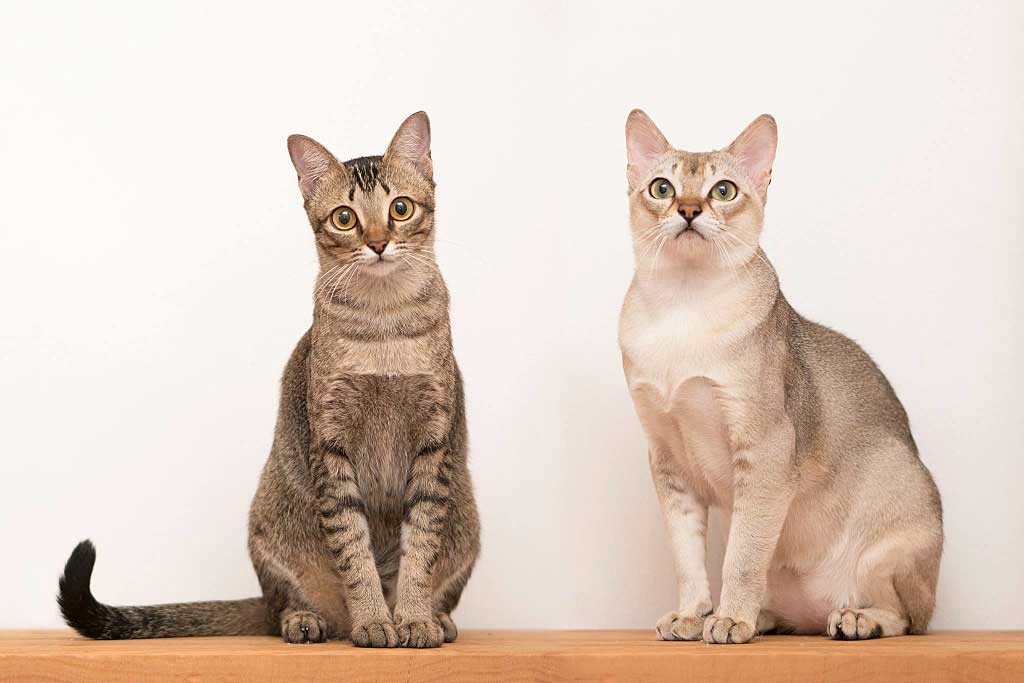
The Singapura it's a small cat. It is even known as the smallest domestic cat in the world. The adult female weighs about 2 kg, while the male can reach a weight of about 3,5 kg.

It is a somewhat stocky and muscular cat: as such, It is considered medium and semi-rigid.. Its head it is round and has large eyes hazelnut-colored almonds, brown, green or yellow. The ears they are wide at the base, deep and quite large for its size, ending slightly pointed. The tail it is thin and slightly shorter than the body, with rounded tip.

The fur is short, very fine and bright and is of the type ticked tabby, that is to say, hair strands are alternately light and dark shades. The bottom of the animal, including throat, muzzle and chin, are of a lighter shade.

In addition to his unusually large eyes and ears for his size, the third remarkable physical characteristic of the Singapura cat is the color cuttlefish from its fur. It is a coat with beige to dark brown reflections on a deep ivory background..

Size and weight

  • Size: 25 cm.
  • Weight: Of 2 to 4 kg

Breed standard

The breed standards are documents established by official bodies that list the conditions that a dog must meet. Singapura to be fully recognized as belonging to the race:

Character and skills

Singapura
This is a picture of a female cat of the breed singapura, crouching – User:Renamed user 51g7z61hz5af2azs6k6, CC BY-SA 3.0, via Wikimedia Commons

The Singapura he's a beautiful little fellow, loving and lively. It is a lively cat, energetic and very active, who is also very affectionate and friendly, since he loves human company. They love to lie on their owner's lap or shoulders and are delighted to show their affection, and expect the same in return.

Intelligent and curious, they love to play and climb on shelves and cabinets to get a good look at their surroundings. Throughout his life, her youthful and playful temperament never leaves her. This explains that it adapts very well to the presence of children or other domestic animals., who are welcome playmates for him. But, like any other breed of cat, should not be left alone in the presence of a very young child.

The Singapura cat he is also known for being very calm. He doesn't meow very often and his voice is quite discreet..

If we add to this that they like the heat and that they are reluctant to go outside when it is cold, we have the ingredients of an ideal domestic cat. But, his need for activity makes it essential to provide him with a tree and cat toys to keep him from destroying the floor, especially when left alone for a while.

They don't like to be alone and they don't get along. So, you better have a home where you are not left alone too often or for too long, and in which at least one person spends some time with him every day.

Grooming and Care "Singapura cat"

"Singapura cat"

Singapura
Singapura cat in Singapore – Straits Singapuras, CC BY-SA 4.0, via Wikimedia Commons

The short and fine coat of the Singapura It does not require a lot of care. Brushing the cat's coat weekly is enough.

Daily brushing of the cat's teeth is also recommended to prevent periodontal disease.

Last, the cat's ears should be examined weekly and, if required, clean them with a cotton ball or soft cloth soaked in a mixture of half and half cider vinegar and warm water.

Indoor or outdoor cat?

Thanks to its small size, cats Singapura can be easily kept in a small flat. It would be great if you could provide a cat proof balcony or, even better, a garden. But, even without this welcome change, the Singapura you will feel right at home if the floor is designed accordingly and there are enough opportunities to play and climb.

Much more important to him Singapura that the opportunity to spend time outdoors is the company of a companion and that his owners do not leave him alone for an unnecessarily long time, then it can be kept as an indoor cat without any problem.

How much activity does he need? "Singapura cat"?

Whether it is a female Singapura like a male Singapura, don't underestimate the high energy level and intelligence of this breed. So, a feline companion is almost essential, so that the Singapura, with its social nature, never be completely alone and can thus also dissipate energy during playful confrontations and fast chase runs.

But, the Singapura cat is very people-oriented and should not be left alone for a long time. It is much more important that caregivers take time every day for play sessions and cuddles. Especially hunting and intelligence games go well with representatives of the breed Singapura.

Health and nutrition

How this breed has a very limited gene pool, it is very possible that hereditary or congenital diseases occur in the Singapura. But, is considered robust and not prone to disease.

For the moment, according to him Governing Council of the Cat Fancy (GCCF), the leading British feline association, only the progressive retinal atrophy and pyruvate kinase deficiency as diseases to which the Singaporea is especially susceptible.

As the name of the disease indicates, cats affected by progressive retinal atrophy experience gradual deterioration of vision due to retinal atrophy. The pyruvate kinase deficiency can cause some form of anemia in affected animals. This can cause lethargy., diarrhea, loss of appetite and weight, and affect the appearance of the cat's coat. The disease can even lead to premature death of the animal.

Both can be detected by genetic testing, allowing serious breeders of the Singapura cat identify and eliminate individuals carrying the defective genes from their breeding grounds. Any prospective buyer should require proof that the kitten they wish to adopt has been tested negatively..

It is interesting to note that these two diseases are also present in the Abyssinian cat. The Abyssinian is the only breed of cat in which progressive retinal atrophy has been shown to be congenital. It is also one of the two races suspected of being the cause of Singapura…

Last, it has also been reported that the female Singapura have a predisposition to uterine inertia. In cats affected by this failure of the reproductive system, contractions are insufficient to allow expulsion of the fetus when the cat gives birth, and then a caesarean section is necessary. As there is no test to detect this disease, It is important to be vigilant when giving birth to a Singapura for the first time and seek veterinary assistance if possible. If you are found to have this condition, it is recommended that she be spayed or neutered, as any future childbirth would be risky for her and her unborn babies.

Life expectancy

11 to 15 years

Food

Feed a Singapura cat not particularly difficult. You just have to make sure that the food is balanced and of good quality, asking a breeder of Singapura or a vet if necessary.

As with any other race, it is important to bear in mind that the nutritional needs of the cat change throughout his life.

Last, as the Singapura does not tend to overeat and is usually content with the amount of food that he needs, it is a breed not prone to feline obesity.

For sale "Singapura cat"

If you are thinking of adopting a kitten Singapura, you should know that this cat can reach an age of 12 years and more. During this period of time, be prepared to provide a loving home for her and give her the right time and care.

Since the breeders of Singapura are scarce, it is not easy to find a suitable breeder, but the search is worth it, because the Singapura, extremely sociable, it is a perfect family cat that will give you many joys. Of course, it is important that you are prepared to keep it with one or more cats, because only then will the little bundle of energy really feel at home.

By the way, the breeders of Singapura renowned charge between 700 and 1500 euros for healthy kittens and vet checked with papers.

Videos "Singapura cat"

Lily Before Bedtime - Baby Singapura Kitten Talking (Smallest Cat Breed)

Singapore cats

โ–ท The world of Pets: Dogs, cats, birds, reptiles, amphibians

Jungle Curl
Federations: REFR

Jungle Curl
Jungle Curl – wanimobuzz.fr

Content

History

The Jungle Curl is an experimental breed from North America, so new and confidential that it is not recognized by any major feline organization. The only institution that allows the registration of a jungle cat is the Registry of Rare and Exotic Felines (REFR), a small association that, as the name reflects, is specialized in rare and exotic cat breeds.

Due to the lack of recognition by the different national and international feline organizations, there is no standard that defines the appearance of a Jungle Curl. The result is that the different breeders of the breed do not necessarily have the same criteria and regularly create new lines., making it difficult to unify the race.

But, all the Jungle Curl They have something in common: are the result of crosses between the Domestic cat and the jungle cat (Felis chaus), a wild cat found in Egypt, the caucasus, Central Asia, India and Southeast Asia.

This hybridization between the Felis chaus and the domestic cat is not new: the first experiments in this field date back to the years 60 and gave rise to the Chausie cat, a breed of domestic cat recognized since then. But, the Jungle Curl is not a Chausie cat: they are two very different cats.

Usually, a line of Jungle Curl is created by crossing a jungle cat (Felis chaus) with a American Curl, but breeders also often use other breeds such as the Highland Lynx or the Hemingway Curl โ“˜. The resulting hybrids are crossed with other domestic cats., as the Abyssinian cat, the Chausie cat, the Serengeti cat or the Bengal cat.

The Jungle Curl it's a rare cat, found primarily in the United States and Canada, although it also exists in Europe. But, in any country, the number of breeders can be counted on the fingers of one hand.

Physical characteristics

The Jungle Curl It is a medium-sized, wild-looking cat, with a long slim body. But, there is a great disparity in sizes, according to the breeds used in the different crosses. The hind legs are slightly longer than the front legs and the tail is medium to long..

The polydactyly it is common in this breed, but due to the lack of a standard, opinions differ: some breeders promote it by favoring polydactyl cats for breeding, while others prefer to try to remove this feature.

The head of the Jungle Curl it is rather round, with eyes tears that vary in color from yellow to green. The most distinctive feature of Jungle Curl they are her little ones ears round, similar to those of a lion, that curve backwards to a greater or lesser extent depending on the individual. These round and curved ears are the main difference between the Jungle Curl and the Chausie cat -the breed with which the Jungle Curl-, who has big ears, tall and triangular.

There are long-haired and short-haired specimens. In any case, the preferred patterns of the REFR (Rare and Exotic Feline Registry), they are the fawn and the leopard. Regarding the color of the cat's coat, diversity is the order of the day, since we find individuals with a silver fur, as well as chocolate, blue, black ebony, lilac purple, cream or even red.

Last, the sexual dimorphism it is well marked, being the male larger than the female.

Size and weight

  • Male size: 28 to 35 cm.
  • female size: 25-32 cm.
  • Male weight: 6-12 kg
  • female weight: 4-10 kg

Character and skills

Jungle Curl
Jungle Curl
It is often risky to venture a general definition of the character of the individuals of a race, but this is especially true in the case of Jungle Curl, since it is an experimental breed that has not been established or unified between different breeders. But, there are some aspects that seem to emerge in this cat that has retained the looks and intelligence of its wild ancestors, while having the character of a domestic cat.

So that, the Jungle Curl he is an affectionate cat, close to his family and fond of children. He is very attached to his owner and requires a lot of attention, so it is to fear destructive behavior of the cat if it spends too much time alone.

Living with other cats or dogs accustomed to the presence of a cat usually goes well, but it is not recommended to have small rodents in the house: this would awaken his wild instincts, so it's likely that one day I'll scare them away.

The Jungle Curl he is a playful and active cat, who loves to chase a ball or bring things to its owner. They adapt well to life in a flat, but they like to be able to go out from time to time to run and climb trees. But, it is important to be aware that his strong exploratory instincts can take him beyond the limits of the garden. Depending on the location, this can endanger your own safety and / or that of small animals in the neighborhood.

Last, the Jungle Curl is quite territorial, to the point that some individuals become true "guard cats" capable of letting strangers know that they are not welcome.. This territorial instinct counteracts his need to explore the environment and leads him to return home most of the time on his own..

Health

As the Jungle Curl It is a new and rare breed of cat., there is no reliable information about possible inherited diseases or particular predispositions to certain conditions.

Many breeders claim that the special coat of the Jungle Curl turns it into a breed of cat hypoallergenic and does not cause allergic reactions in people with allergies to cats.

Life expectancy

10 to 15 years

Grooming

The Jungle Curl it is an easy-care breed of cat.

Weekly brushing removes dead hair and distributes oil from the skin, which is enough to keep the coat clean and healthy.

This grooming session is also an opportunity to check that the eyes, the cat's ears and teeth are clean and there are no signs of infection.

Looking at its claws, natural wear and tear is usually sufficient, especially if you have the opportunity to go outside and / or have a scratching post. If that is not the case, it is enough to trim them with a nail clipper from time to time.

For sale "Jungle Curl"

The price of a kitten Jungle Curl varies enormously from one breeder to another and according to the characteristics of the animal. This is mainly due to the fact that this breed is still experimental and not standardized.; for example, the polydactyly of the cat is considered by some breeders as a defect that justifies a reduced price, while for others it is, on the other hand, a sought after feature, with a higher price as a result.

The price range is, Therefore, broad, of 1500 to 2500 EUR.

In any case, the rarity of this cat makes it difficult to find kittens Jungle Curl available for sale.

Legislation

The Jungle Curl is a hybrid cat, but it is not a recognized breed, so the regulations that affect it are not clear at all. In any case, since some local authorities prohibit hybrid cats born from a forced or natural cross between a domestic animal and a wild animal, it is strongly recommended to ask the breeder, to a vet and / or the town hall about any restrictions that may apply.

HTTPS://youtu.be/-skPCWa0FP8
Jungle Curl Male
HTTPS://youtu.be/pj3eqhYROzs
Savannah and jungle curl

โ–ท The world of Pets: Dogs, cats, birds, reptiles, amphibians

Abyssinian cat
Tabby and Silver/Smoke.

Abisinio
Photograph. Encyclopรฆdia Britannica

Content

History

The name of Abyssinia refers to Ethiopia, but most of the stories about the origins of the Abyssinian refer to Egypt. Investigation of its genes suggests that the Abyssinian cat breed originated near the coast of the Indian Ocean., where could settlers have bought the animal traders of wild animals. The breed was developed in Egypt.

The race could originate from an Egyptian cat named Zula, which was purchased in a port of Alexandria by a British soldier and brought to England in 1868. This theory is not established because there is no strong link between Zula and the first cat on the list named as an Abyssinian in 1882.

Many sources date the Abyssinian breed to be a few thousand years old., coming from the old Egypt , as cats that appear in ancient paintings. The ancient Egyptians made sculptures of them. There are also stories that wild "Abyssinians" living in parts of North Africa today.

Physical characteristics

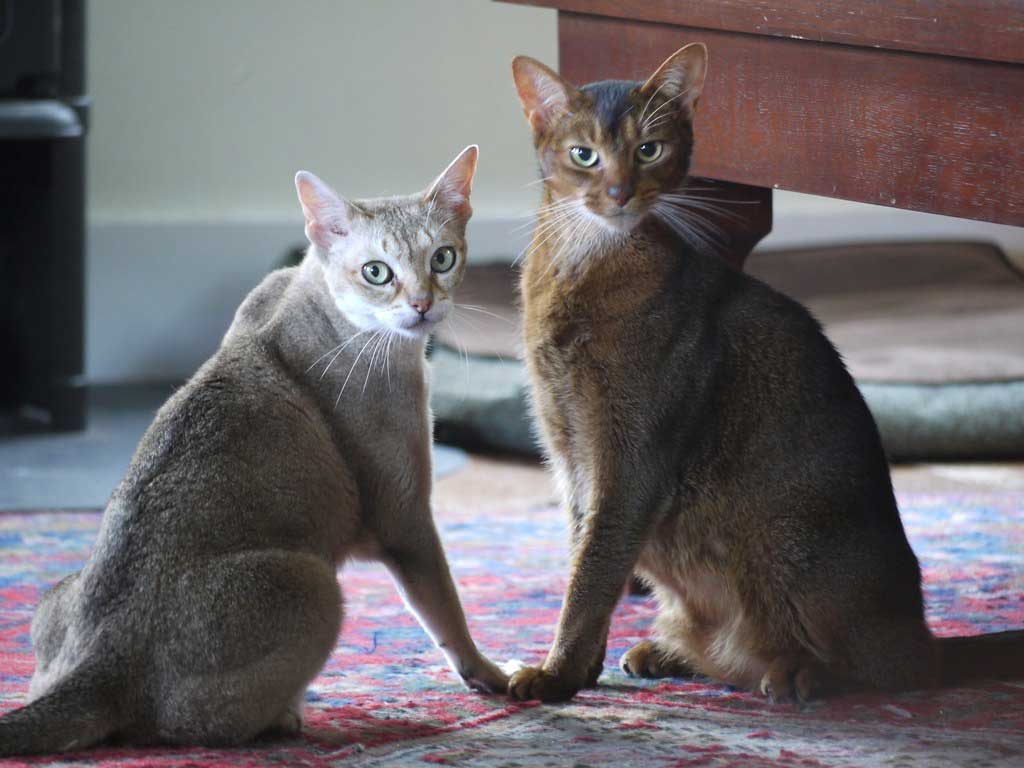
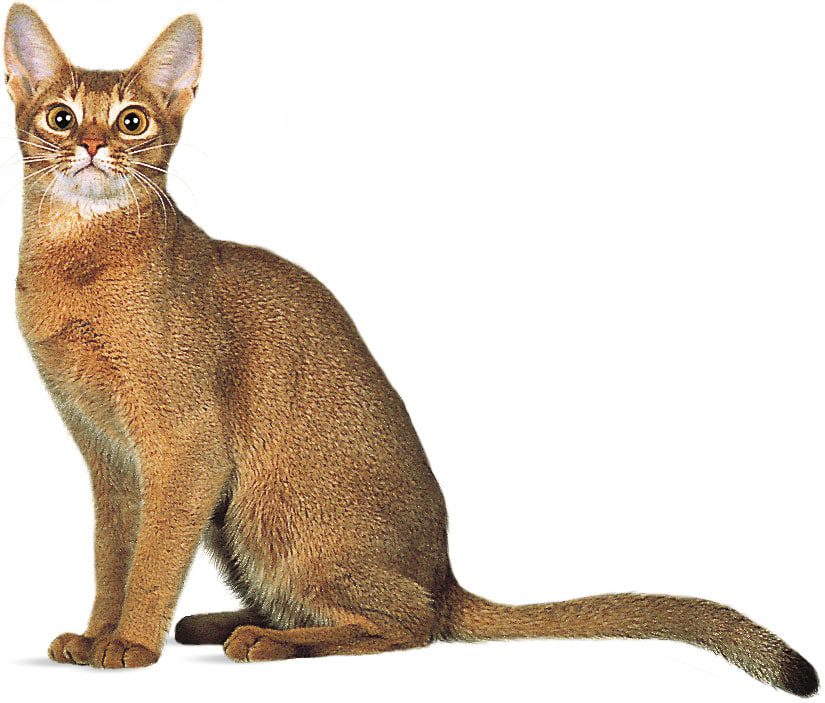
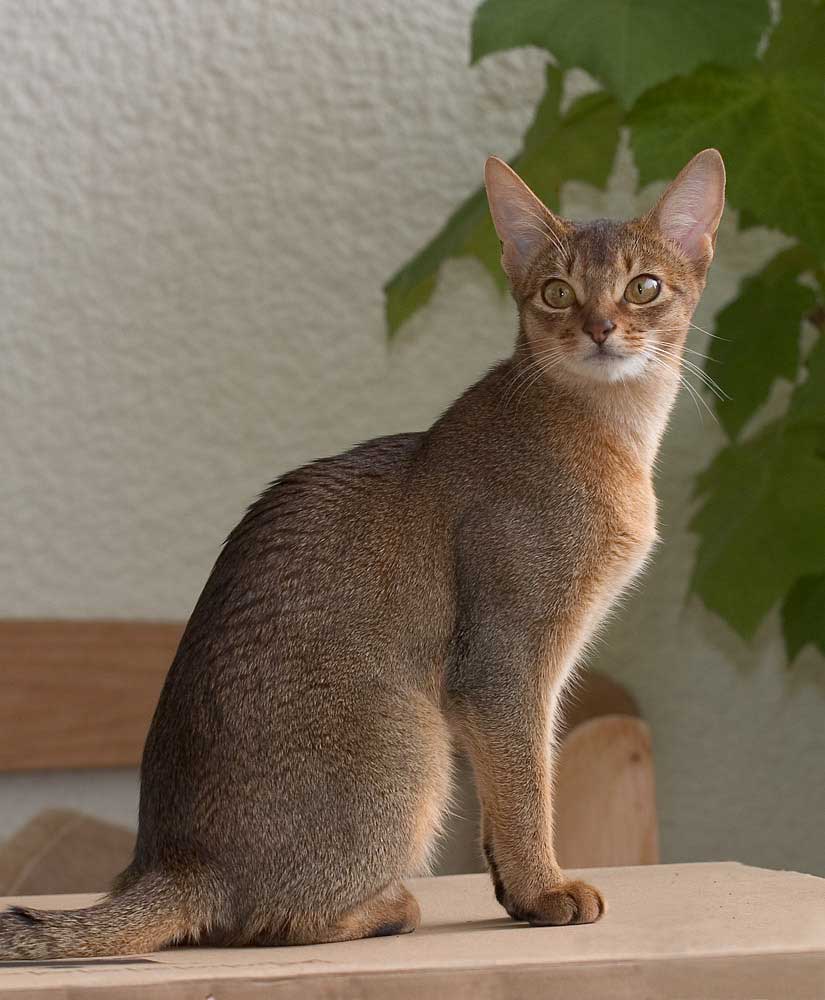
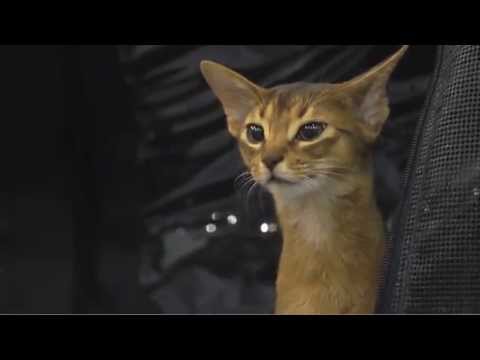
The appearance of the "Abyssinian cat" resembles that of a small puma. They are elegant and athletic cats with long, small legs.. Wedge-shaped head sits atop a graceful neck and has large ears set wide apart. Some cats have tufts of hair on their ears similar to those of the lynx. The eyes, big and almond shaped, they can be green, walnut brown or amber. The specially colored coat of the purebred cat is short, soft and close to the body. Each of the hair is ringed in various colors, which creates a great effect. This so-called tic-tac can be pronounced in different variations.

The breed standard includes all four chestnut colors (bright copper red with chocolate brown bands), blue (warm blue-gray with dark steel gray bands), leonado (muted beige with dark cream bands) and the typical wild color (reddish brown with black bands). Of all the colors there is also the Silver variety, where the base color is a light silver shade. Ideally, cats should be completely free of patterns and markings..

Character and skills

The "Abyssinian cat" is considered an intelligent and active cat breed, who gets excited about any kind of game. Especially when he's young, the cat has an irrepressible temperament and a great desire for movement. Prefers to play with other cats, so it is not recommended to have it alone. These curious cats are very people-oriented and follow their humans everywhere. In doing so, they rarely become pushy with a soft voice and prefer to watch their two-legged friend's every action. When they get stressed, these uncomplicated cats react extremely robustly and do not let anything disturb them.

Care "Abyssinian cat"

Indoor or outdoor cat?

The "Abyssinian cat" it is an active and freedom loving breed that needs a lot of exercise. It's hard to be happy locked up in a small apartment. Secure access to the outdoors would be ideal for this active breed.. Walks in the enclosed garden or on the balcony give the cat a lot of pleasure. If neighborhood conditions permit, it is also a great outdoor cat.

How much activity does he need? "Abyssinian cat"?

If you purchase a "Abyssinian cat", you should not expect a well behaved lap cat. He loves to explore his surroundings, climb and jump. Thanks to its enormous resistance and jumping power, no part of the house is safe from her. A tall, stable cat tree is an absolute must for every cat owner.. Here you can live your desire to move, as well as sharpen their claws and rest. The clever velvet paws also rejoice in any kind of mental occupation and cheerfully accept intelligence toys. They like to be taught little tricks and enjoy going for a walk on or off the leash with their owner..

Care and feeding

Thanks to its short coat with little undercoat, cat grooming is especially easy. It is enough to remove the loose hairs from the coat with a rubber brush from time to time. When the coat changes, brush a little more often to soothe the cat. To be happy, cats also need a balanced and healthy diet. It is best to adapt the food to the age of the cat and its desire to move. There should also always be enough fresh drinking water available. A bubbling water bowl is easily accepted by most breed representatives.

For sale "Abyssinian cat"

Before acquiring an Abyssinian cat, you need to make sure you can offer this four-legged friend a species-appropriate home. Once the decision is made, it is best to buy the kitten from a reputable breeder from a registered breeding association.

Pay attention to the behavior and appearance of kittens and parents. For a purebred kitten with papers you pay a few 800 EUR.

Characteristics "Abyssinian cat"

Coexistence is important that you have with your new friend. Before considering the acquisition of a cat of the breed "Abyssinian cat" you know certain factors. You must take into account their character, their need for exercise, their interaction with other pets, their care and if you have small children, their level of tolerance towards them.

Joy

5,0 of 5 stars (based on 1 review)

Activity level

5,0 of 5 stars (based on 1 review)

Friendliness to other pets

3,0 of 5 stars (based on 1 review)

Friendliness to children

2,0 of 5 stars (based on 1 review)

Grooming requirements

2,0 of 5 stars (based on 1 review)

Vocality

1,0 of 5 stars (based on 1 review)

Need for attention

4,0 of 5 stars (based on 1 review)

Affection towards its owners

4,0 of 5 stars (based on 1 review)

Docility

1,0 of 5 stars (based on 1 review)

Intelligence

4,0 of 5 stars (based on 1 review)

Independence

3,0 of 5 stars (based on 1 review)

Hardiness

2,0 of 5 stars (based on 1 review)

images of "Abyssinian cat"

Abyssinian cat

Videos "Abyssinian cat"

Abyssinian cat

Abyssinian cat
Abyssinian Cat Breed

Abyssinian Cat Breed

Alternative names:

1. Abyssinian, Abys (English).
2. Bunny Cat, Aby (French).
3. Abessinier (German).
4. Abisinio (Portuguese).
5. Abisinio (espaรฑol).

โ–ท The world of Pets: Dogs, cats, birds, reptiles, amphibians

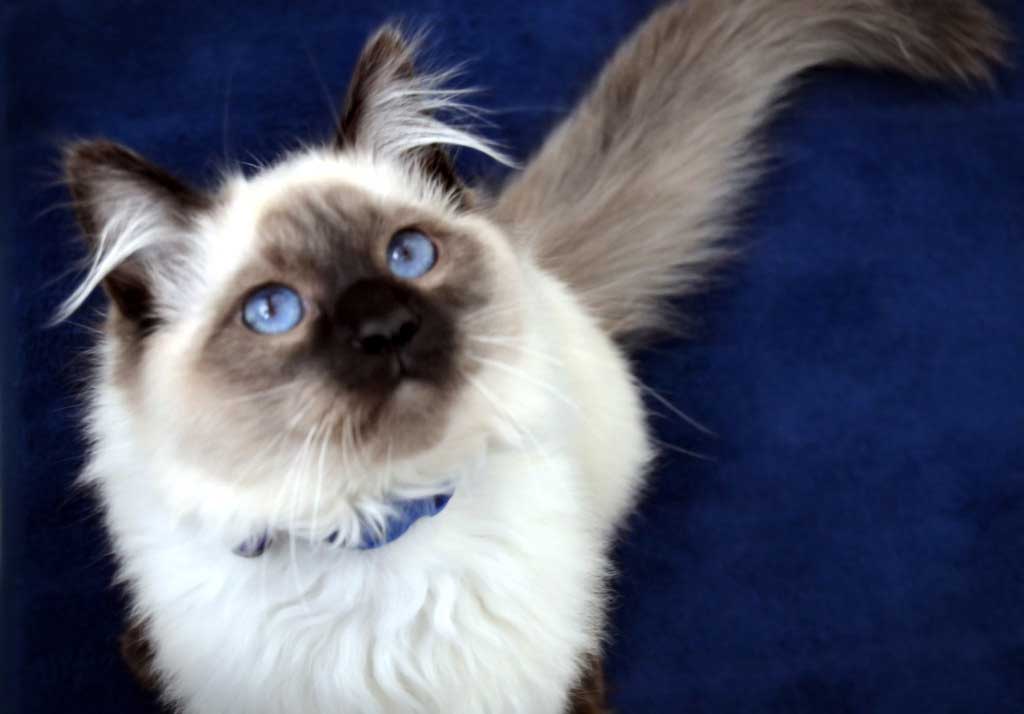
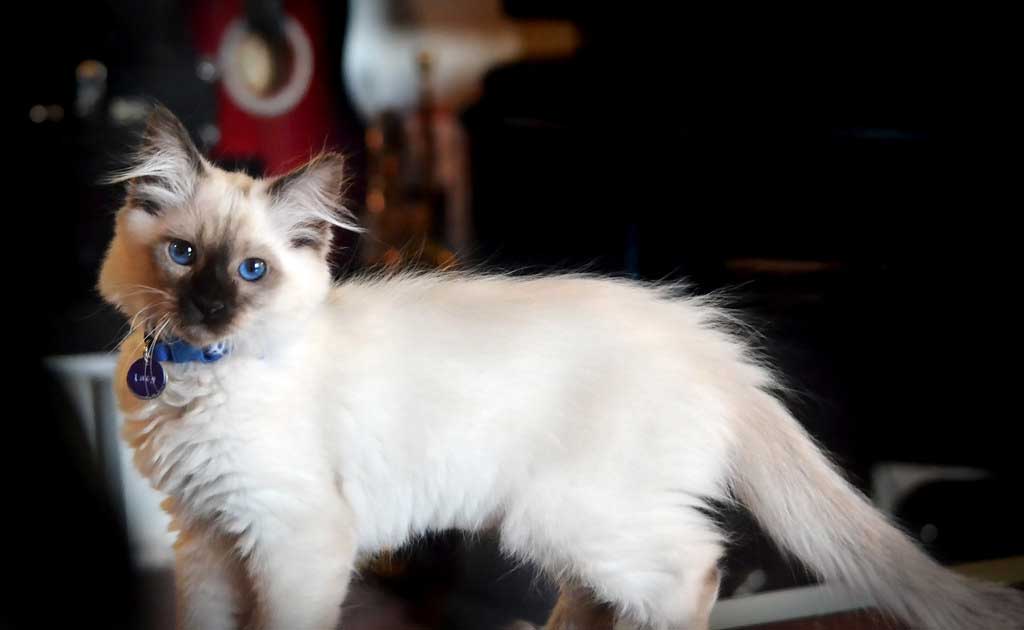
Balinese cat
Recognized by the CFA, FIFe, TICA, ACF, ACFA/CAA, CCA-AFC, GCCF

The Balinese cat can boast of having among his close relatives the famous Siamese cat.
Balinรฉs
Photo: aboutpedigreecats.com

Content

Characteristics "Balinese cat"

Coexistence is important that you have with your new friend. Before considering the acquisition of a cat of the breed "Balinese cat" you know certain factors. You must take into account their character, their need for exercise, their interaction with other pets, their care and if you have small children, their level of tolerance towards them.

Joy

5,0 of 5 stars (based on 1 review)

Activity level

4,0 of 5 stars (based on 1 review)

Friendliness to other pets

3,0 of 5 stars (based on 1 review)

Friendliness to children

3,0 of 5 stars (based on 1 review)

Grooming requirements

2,0 of 5 stars (based on 1 review)

Vocality

5,0 of 5 stars (based on 1 review)

Need for attention

5,0 of 5 stars (based on 1 review)

Affection towards its owners

4,0 of 5 stars (based on 1 review)

Docility

1,0 of 5 stars (based on 1 review)

Intelligence

5,0 of 5 stars (based on 1 review)

Independence

1,0 of 5 stars (based on 1 review)

Hardiness

2,0 of 5 stars (based on 1 review)

History

The origins of the breed as such are in the United States and go back to the years 50, but the first references to this type of cat are much older. In fact, a Chinese tapestry from several centuries ago already depicted long-haired cats with features Siamese. More recently, in 1871, Penny Illustrated magazine mentioned a long-hair Siamese, and in 1928 the American Federation of Cat Fans (CFF) accepted the registration of a long-hair Siamese.

In the Decade of 1950, Marion Dorsey and Helen Smith, of the creators of Siamese Americans based in California and New York respectively, they became interested in these long-haired kittens and decided to start a dedicated breeding program. The program was successful and resulted in Balinese cat what do we know today.

Despite what its name may suggest, the Balinese cat It, in effect, an american cat breed. The name was chosen by Helen Smith to highlight its grace and elegance, similar to that of the ballerinas on the island of Bali

Already in 1961, the Federation of Cat Fans (CFF) recognized this new breed, and the Cat Fan Association (CFA) did the same in 1970. In 1979, this same CFA set a new standard for a breed called Javanese, whose characteristics were those of Balinese cat, and that it simply allowed covering the coat colors not accepted by the latter's standard. In fact, the Balinese standard had been established by accepting the same colors as the Siamese cat, that is to say, seal, blue, chocolate and lilac.

That same year 1979, the International Cat Association (TICA) also recognized the Balinese cat, antes de ser seguida for the International Feline Federation (FIFรฉ) in 1983 and, later, por el British Governing Council of the Cat Fancy (GCCF) in 1986.

Today, but the Balinese cat is present and recognized throughout the world, still a relatively uncommon cat. in your country of origin, United States, the CFA statistics indicate that it is in the second half of the breed table based on the number of annual registrations. In France, each year less than 20 ejemplares en el Official Book of Feline Origins (LOOF). In Great Britain, GCCF figures even show a very steep decline, mainly due to the appearance of new races: Enrollments in the organization went from 150 to 200 per year at the beginning of the decade 2000 less than 50 at the end of the Decade of 2010.

Physical characteristics

Balinese cat
Old-Style Balinese Seal Point – Mary Desmond, CC BY-SA 3.0, via Wikimedia Commons

Muscular but slim, the Balinese cat seems very delicate and flexible in its movements.

With a weight between three and four kilos, the Balinese cats belong to the medium-sized breeds.

Males balinese they can weigh a little more and are around five kilos.

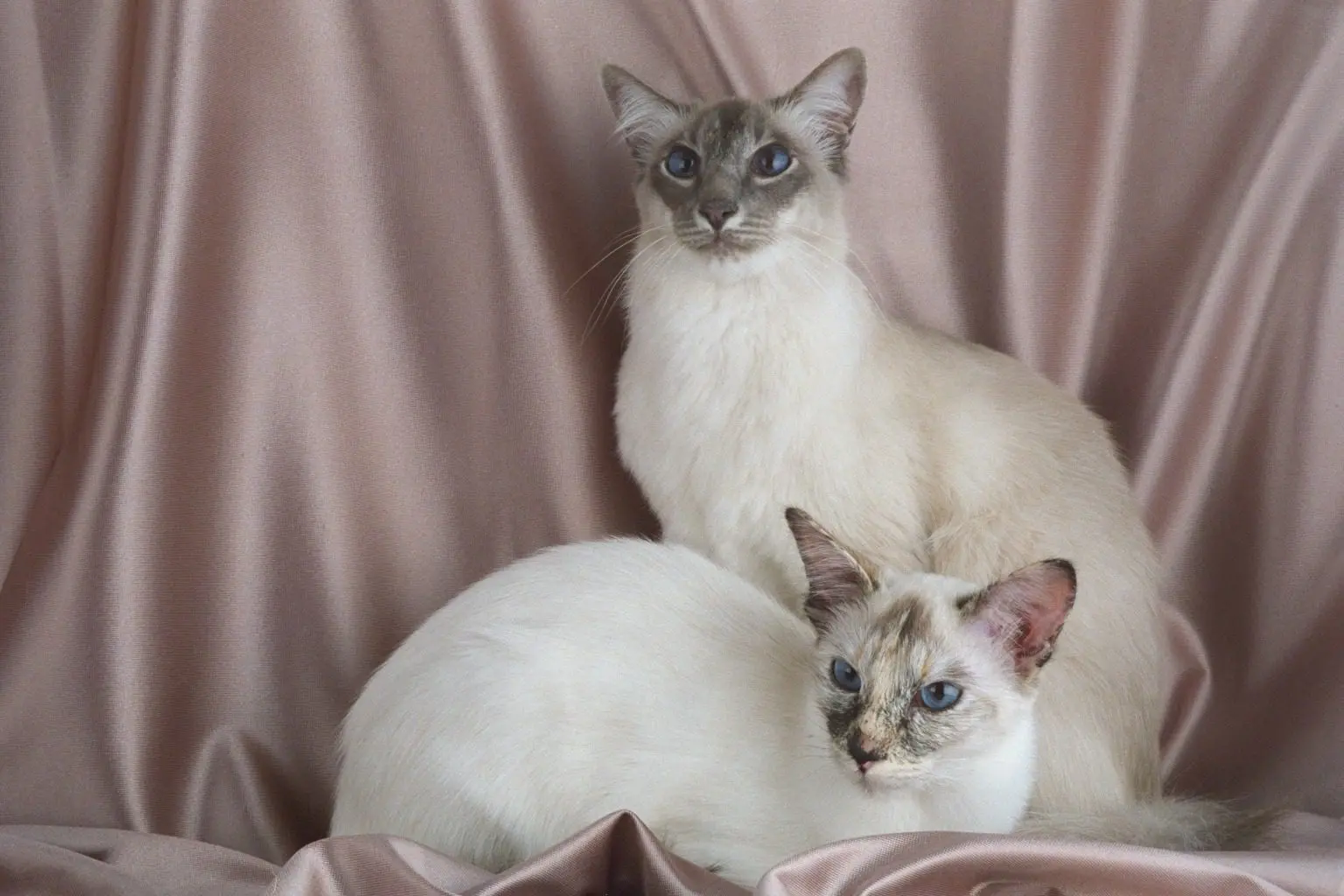
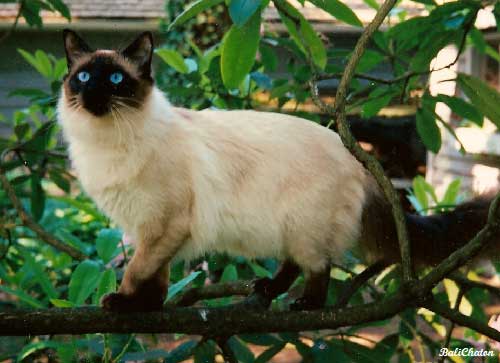
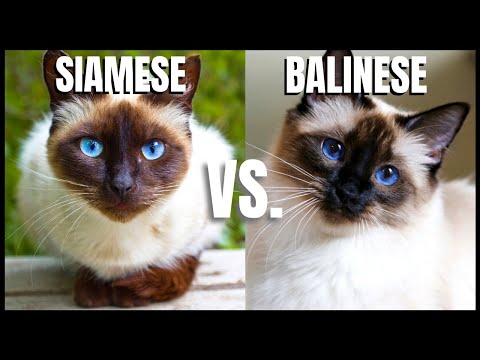
While the body, face and character are similar to those of the Siamese cat original, coat length differs considerably, which is particularly evident in the bushy tail of the balinese. But, from the start of breeding, the balinese has changed a bit and, with its elongated body and its triangular face, has been adapted to the modern variant of the Siamese cat.

If you want to buy Balinese cats, nowadays you will only find a few breeders that breed this breed in its original breeding way. In most breeders, cat lovers can buy the modern shape of the Balinese cat, whose body is narrower and its head is more wedge-shaped. A distinctive feature of Balinese cat it's her bright blue eyes, that seem especially alive and vibrant.

The only coat pattern allowed is colourpoint: the body is one color, but the tips are a darker and different color. Although the only colors allowed in the original CFA standard, written in 1970, are accepted for the Siamese, that is to say, the seal, the blue, the chocolate and lilac, the vast majority of current standards also allow the cream, The candy, red, apricot and other non-traditional colors.

blue eyes, of a unique beauty, are present regardless of coat color and are characteristic of the appearance of the balinese.

Last, sexual dimorphism is moderately marked, the male being slightly larger than the female.

Varieties of "Balinese cat"

Balinese cat
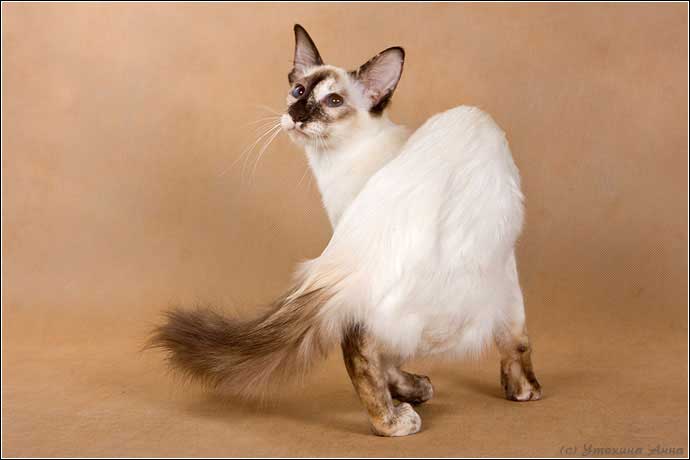
Ghislaine of Chrysanthe, balinese cat, female, chocolate tortie point – Photographer:Anna Utekhina, CC BY-SA 3.0, via Wikimedia Commons

The case of a Balinese cat with colors other than the seal, the blue, chocolate and lilac divide cat lovers from all over the world, as well as various organizations. While the International Cat Association (TICA) and the British Feline Fantasy Governing Council (GCCF) consider that these cats are indeed balinese, the American Cat Fan Association (CFA) consider from 1979 that all "Balinese" of different colors constitute a different race: that of Javanese cat.

Despite the official merger in 2008 of the two breeds under the standard balinese of the CFA, the term Javanese still commonly used in the US. to define the balinese different colors from the original standard.

This term was chosen in reference to the island of Java, neighbor of the island of Bali, in Indonesia: is a nod to the fact that the Javanese its near to balinese.

Character and skills

Balinese cat
20-week old Balinese kitten – Flickr

The balinese he is a very cuddly cat, who is lovingly attached to his family and does not leave their eyes. They demand a lot of attention, they follow their owner everywhere and constantly seek to play with him or be petted by him. It is sociable, accepts other pets without difficulty and enjoys the company of children, provided they have been taught to behave with animals.

His constant need for attention makes him not tolerate loneliness well, and you can quickly adopt destructive behavior if you feel that your family does not give you the attention you deserve. So, not suitable for a teacher who is absent often.

It is reputed to be sensitive to human emotions, and knows how to comfort a sad man or, on the other hand, share your moments of joy. They also know how to interpret voice intonations, so reprimands can hurt your sensitive nature, while encouragement reinforces the bond they have with their family.

Activos, agile and curious, to the balinese they love to explore the corners of the house. These may include, you can crawl out from under your bed with a toy you lost weeks ago or find that old photo that fell behind your living room closet years ago. But, one of his favorite activities is to climb on the shoulders of one of the family members.

He is also very smart and playful, making you an excellent candidate for teaching your cat tricks. It is very possible that he will learn something by himself, and then come proudly show your family what you can do.

Despite his high energy level, It is a breed of cat that lives very well in an apartment -if the apartment is not tiny- and does not need outer space.

Last, one of the main characteristics of the Balinese cat is your propensity to be vocal. They seem to have an opinion on everything, and they do not stop making it known, commenting from his food to what is on television or the cover of the book his master wants to read in a low voice. Although he has no problem giving long monologues, you expect to be listened to and risk starting over if you think your family has not paid attention to what you are saying. Both in terms of activity level and volume, they are definitely not one of the calmest cat breeds.

Care "Balinese cat"

Balinese cat
Seal Point Balinese kitten at 13 weeks of age – Flickr

The Balinese cat it is an easy-care breed of cat, since its long and silky coat does not tend to knot and sheds very little. So, a simple brushing once a week is enough.

This brushing session is an opportunity to check that your teeth and eyes are clean., and to pay special attention to their ears, which often need to be cleaned with a damp cloth. It also, make sure its claws are not too long, and trim them if necessary.

Indoor or outdoor cat?

The Balinese cat not necessarily a cat that should be kept outside, since these graceful animals are sensitive to cold. But, as the balinese it is one of the most active cat breeds, your house should be as big as possible and, above all, be equipped with many climbing possibilities. The ideal is to have a well-protected balcony or garden, that can also be used for running. To the balinese cats they also like to get inspired by climbing trees outdoors, and a small pool of water and other play opportunities are always welcome for this breed of cat.

How much activity does he need? "Balinese cat"?

If you decide to have a balinese, it does not matter if it is a puppy or an adult, you should take your time with him. Intelligent breed cats are very affectionate and like to be the center of attention, so they will gladly dispense with the company of other cats, but not from human attention.

So, the Balinese cat he needs a lot of pampering and you also have to take time to keep him busy. The balinese is very receptive to training and learns very quickly, which is why search games are so easy for him balinese how to learn new tricks or intelligence games. However, in regards to scratching opportunities, climb and play, you should also make sure your cat has quiet places to retreat to, since animals tend to prefer places where they have their favorite humans in sight.

Health and nutrition

The balinese is an exceptionally long-lived breed of cats, since many reach or exceed the 20 years of age.

Despite this overall robustness, are at increased risk for certain diseases:

  • The progressive retinal atrophy (ARP), a retinal disease that causes blindness in cats;
  • The amyloidosis, a disease that causes kidney failure and is often fatal;
  • Achalasia or megaesophagus, a gastrointestinal disorder that can cause food blockages;
  • Squint, a vision disorder without serious consequences for the animal;
  • Acromelanismo, a genetic disease that causes changes in coat color based on skin temperature.
  • Last, obesity is a major risk to the health of the balinese, but can easily be avoided with a vigilant and responsible owner.

    Life expectancy

    15 to 20 years

    Food

    When it comes to feeding, should focus on a protein-rich diet. So, a high-quality cat food with a high meat and protein content is essential. Especially since balinese cats they are very active and need a lot of energy, a good diet is essential. As an alternative, can feed your balinese on a soft diet, but you should thoroughly familiarize yourself with the subject and also seek advice from a veterinarian, because only with the right composition can the needs of the cat be met in a specific way.

    For sale "Balinese cat"

    If you want to get a "Balinese cat", you should know that they are very affectionate and that these intelligent purebred cats want to keep busy. Do not underestimate the necessary care of the coat.. If you are thinking of buying a Balinese cat, should only be done by a reputable and responsible breeder.

    Responsible breeders ensure that the Balinese cats are raised in a family and are well socialized. It also, if you want to buy a cat of this breed, you should know that good breeders do not place their balinese in new homes before the end of the imprinting period.

    If you want to buy a Balinese cat, do not respond to ads from amateur breeders offering purebred cats for sale without papers. The balinese kittens should only be purchased from an experienced breeder who is a member of a breeding club. Since experienced breeders only sell cats that have been vet checked and are healthy, should expect to pay between 900 and 1100 euros for a balinese kitten.

    If you want to give a new home to a Balinese cat adult, with a bit of luck you can also find it in shelters and animal protection organizations. Also in this case you will have to pay a nominal fee.

    Videos "Balinese cat"

    Siamese Cat VS. Balinese Cat
    Siamese Cat VS. Balinese Cat
    6 things you should know about the Balinese cat
    6 cosas que debes saber sobre el gato Balinรฉs

    Alternative names:

  • Long-haired Siamese
  • Thai Siamese
  • โ–ท The world of Pets: Dogs, cats, birds, reptiles, amphibians

    British longhair cat
    Federations: LOOF, TICA, WCF

    The British longhair cat was recognized as a breed by the International Cat Association (TICA) in 2009. Some other registration organizations still do not consider it a breed of its own..

    Photo: wilkipedia

    Content

    History

    The British longhair cat originated in Great Britain at the beginning of the 20th century and is the result of crossing the British Shorthair cat and the Persian cat. The British Shorthair cat They had long interbred with the persian cats, but the resulting cats that showed the long-haired gene of the Persian they were considered unusual.

    Because the breed has only recently been bred for its specific traits, have achieved race status in recent history. Much of the history of British longhair cat is associated with its relationship with its namesake and ancestor, the British Shorthair cat.

    Physical characteristics

    The British longhair cats are size medium, with long hair and a nice round face. His big round eyes, their sweet expressions and fluffy fur give this breed adorable charm. Under all your fluff, these cats have muscular and robust bodies. The british long hair usually weigh between 3 and 7 kg, and males tend to weigh more.

    The coat of the British longhair it's dense and straight, and moves away from the body to make these cats appear larger than they really are. Its fur is also soft, thick and available in many colors, like black, the lilac, chocolate or gold. They can also have a bicolor pattern, ticked o colorpoint. These cat breeds shed little compared to other long-haired breeds, but they have a thick undercoat.

    The British longhair cat is often compared to the British Shorthair cat and with the Persian cat as for its appearance, And for good reason: This breed of cat follows the same breed standard as the British Shorthair cat, except for their long, soft fur. The magnificent mane of British longhair is the result of the side of Persian cat of his genealogy.

    British longhair cat
    British longhair cat Bounty Amouge, No. 4 according to the catalog of the international cat exhibition of the RosKosh club ยซGolden Autumn-2014ยป (WCF). – Nickolas Titkov from Moscow, Russian Federation, CC BY-SA 2.0, via Wikimedia Commons

    Character and skills

    These sweet cats are as personable as their smiling faces would suggest.. The British longhair cat He is known for his smooth, calm demeanor and easygoing demeanor. These cats are not easily upset – some might even call them lazy!! Although sometimes they behave like typical playful kittens, they are significantly less active than most cat breeds and become less active with age. They also sleep quite a bit, even by cat standards.

    But these cuddly cats are so much more than just sofa companions.. They are incredibly smart, social and loving. The British longhair is a loyal breed that loves people and tolerates most environments.

    Although they are very sociable, these cats also have an independent vein, and they often feel good doing their own thing. That does not mean that these cats always leave you alone.; in fact, They have been described as small "private investigators". True to the cats of pop culture, these cats are quite curious. Don't be surprised if you find these cats pawing at your personal belongings or looking closely to see what you are doing..

    The British longhair cat He is affectionate and tolerant with children, but he doesn't like to be caught. Parents will have to spend time teaching their little ones not to pick up these adorable cats and to meet them on the floor to pet and play.

    Needs of the "British longhair cat"

    Thanks to his laid-back temperament, the British longhair adapts to a wide variety of environments. Their gentle and carefree demeanor makes them patient and loving pets for families with young children and frequent guests.. These friendly felines are sociable and adapt to changes, they tolerate curious young children and noisy dinners.

    They are far from sticky, and they don't mind being left alone while you go to work or your social activities. This independent spirit also means that the British longhair can be a bit stubborn. They prefer to do things their own way, and often do not respond to owners starting the game when they prefer to lie down. But, this does not mean that your british longhair cat does not want to know anything about you. On the contrary, you will have to spend time showing your love and affection. Lots of pampering, attention and the presence of other pets will keep you from feeling lonely.

    These cats love to chat and will have small conversations with you often to let you know that they are hungry., thirsty or just to get your attention. If you have roommates who are easily irritated or you live in an apartment with thin walls, this breed might not be the most suitable.

    If what you are looking for is a friendly and cuddly companion that adapts to different lifestyles and living spaces, the British longhair cat it's a good option. This calm cat adapts well to family life, to frequent travel and most life situations, as long as I receive a lot of love and care.

    Health

    The british longhair cats they are not more prone to disease than other cats, but they have a certain incidence of health problems. This breed has a life expectancy of between 15 and 17 years.

    ยซIt is important to check for polycystic kidney disease, in which cysts develop in the kidneys causing decreased function and, finally, "kidney failure". DNA tests are now available to detect the risk of this disease in parents, so it is advisable to do a previous screening. This disease is also very common in the Persian ancestors of the British longhair.

    Responsible breeders will test kittens for genetic health problems, but it is important to keep regularly scheduled veterinary appointments and follow the advice of your cat's veterinarian. Health problems can develop later in life and will need to be managed.

    British longhair cat
    British longhair cat

    Grooming and care

    British longhair mainly handles that task itself. Because of all this self-grooming, your British longhair cat is prone to swallowing a lot of hair and developing hairballs. Help your cat by brushing more frequently or offering hairball relief treatments.

    The British longhair cat tends to be a bit lazy, and owners will have to motivate them to move. Encourage play often, provide trees to climb and interactive toys to play with.

    ยซWeight control is very important with these cats because they tend to be less active as adults compared to other cat breeds.. ยซThey are prone to being overweight, Therefore, daily exercise is essential..

    How are they smart, these cats are usually easy to train to perform simple tasks, how to use the litter box or scratching post. These food-loving cats will always appreciate a treat to reward good behavior.

    Socialization should be easy with this easygoing breed. Kittens british long hair those who are introduced to people and pets at a young age are usually easy to get along with and accept unfamiliar faces well.

    Food

    The British longhair cat should be fed a high-quality diet approved by your veterinarian. Look for protein ingredients primarily of animal origin. Your cat can be fed dry or wet food. This breed is prone to obesity, so it is important to monitor your food intake.

    British longhair
    A bluish-white long-haired British cat from the McQueen Cattery. – Felinology, CC BY-SA 4.0, via Wikimedia Commons

    For sale "British longhair cat"

    Kittens british long hair from a reputable breeder usually cost between 700 and 1.100 EUR, depending on pedigree.

    Characteristics "British longhair cat"

    Coexistence is important that you have with your new friend. Before considering the acquisition of a cat of the breed "British longhair cat" you know certain factors. You must take into account their character, their need for exercise, their interaction with other pets, their care and if you have small children, their level of tolerance towards them.

    Joy

    3,0 of 5 stars (based on 1 review)

    Activity level

    2,0 of 5 stars (based on 1 review)

    Friendliness to other pets

    3,0 of 5 stars (based on 1 review)

    Friendliness to children

    3,0 of 5 stars (based on 1 review)

    Grooming requirements

    4,0 of 5 stars (based on 1 review)

    Vocality

    2,0 of 5 stars (based on 1 review)

    Need for attention

    3,0 of 5 stars (based on 1 review)

    Affection towards its owners

    4,0 of 5 stars (based on 1 review)

    Docility

    4,0 of 5 stars (based on 1 review)

    Intelligence

    4,0 of 5 stars (based on 1 review)

    Independence

    3,0 of 5 stars (based on 1 review)

    Hardiness

    3,0 of 5 stars (based on 1 review)

    Videos "British longhair cat"

    Cat British Longhair Blue Aquanatura Barcelona
    Gato British Longhair Azul Aquanatura Barcelona
    British Longhair Cats - Everything You Need To Know
    British Longhair Cats – Everything You Need To Know

    โ–ท The world of Pets: Dogs, cats, birds, reptiles, amphibians

    Dragon Li cat
    Federations: CFA

    It is considered that Dragon Li Cats have above-average intelligence. Mental stimulation is a must and these cats appreciate the company.

    Dragon Li

    Content

    History

    The Dragon Li cat, also called "Li Huaยป or ยซgato chinoยป, ยซLi Hua Maoยซ, ยซLi Hua Mauยป o ยซMao Liยป descended from wild cats (Puma Bieti) who live in the chinese mountains. It is said that it has been domesticated over time to get closer to the Chinese people.

    It is not known exactly how long the Dragรณn Li (Li Hua), but it is likely that it has existed for several centuries. In fact, Stories of this animal can be found in Chinese folklore.

    Recently, in 2003, breeders were interested in him Dragon Li cat (or Li Hua) and started breeding programs for this breed. That same year it was approved as an experimental breed and presented in Beijing..

    The Cat Fanciers’ Association CFA allows you to participate in feline exhibitions from 2010. But, most international cat federations do not recognize it.

    This cat is now very rare and is hardly known outside of China.

    Physical characteristics

    The Dragon Li cat (Li Hua) looks wild and powerful. The body is compact and muscular. Weighs between 4 and 5 kg.

    • The fur is short, brindle mackerel.
    • The head it is wide and rounded.
    • The eyes they are big, almond-shaped. They are very bright, yellow or green.
    • The ears they are round and of medium size. May be covered in hair.
    • The legs they are muscular.
    • The feet They are round.
    • The tail of the Dragon Li cat (Li Hua) it is relatively short. Its tip is black.

    Character and skills

    The Dragon Li cat (or Li Hua) he is very playful and curious. You want to know everything that happens in your environment.

    It is a sociable animal. But, he is not the most affectionate of cats. These may include, unlikely to come snuggle in your lap. His way of getting along with his master is to play with him.

    The Dragรณn Li (Li Hua) gets along well with other animals in the house, especially with dogs.

    Needs a lot of space to live and be able to play outside. He has kept his wild and hunter side deep inside. That is why it is important that it can thrive in a large garden.. Flat life is not for him. in addition, it is not the ideal cat to live with young children.

    Indoor or outdoor cat?

    It is very important to note that these unique felines do not like small, enclosed indoor spaces.. While most cats are perfectly happy sharing an apartment with an attentive human family, the Dragon Li cat needs a large house with plenty of room to roam if kept completely indoors. Clearly, this cat requires special circumstances and is not the best breed for everyone.

    How much activity does he need? "Dragon Li cat"?

    Unfortunately, for those who prefer lap cats, this particular breed does not like cuddling at all. In fact, these cats can become anxious when time and space are not given to them.

    The Dragon Li Cats appreciate the outdoors and are excellent hunters. They are happiest when they are allowed access to closed and safe outdoor spaces, like the patios, and when they are taught to walk on a leash from an early age.

    Dragon Li
    A tabby cat named "Pipi" – Painjet, CC BY-SA 4.0, via Wikimedia Commons

    Grooming and health

    Does not require any special maintenance. A simple brushing once a week will suffice.

    Provide an anti-flea and anti-parasitic treatment according to the age of the cat and the type of treatment you opt for. Avoid bathing your cat unless absolutely necessary, as this can remove some of the natural oils that protect your coat. Regular baths will leave your cat with irritable skin and a rash..

    The race Dragรณn Li (or Li Hua) is rare and relatively recent, so we don't have enough information on the general health of this cat. A priori, does not seem to declare any specific genetic disease.

    Their life expectancy is of 12 – 15 years.

    Videos "Dragon Li cat"

    Dragon Li's, Rodimus and Optimus Prime...
    Dragon Li’s, Rodimus and Optimus Prime…
    Dragon Li Cat

    Photo: catdiaries.com.au

    โ–ท The world of Pets: Dogs, cats, birds, reptiles, amphibians

    Korat cat
    Federations: LOOF, CFA, ACF, ACFA, TICA, FIFรฉ, WCF

    Known as a good luck messenger in his native Thailand, the Korat cat has always been a very popular wedding gift. This tradition continues today.

    Korat

    Content

    Characteristics "Korat cat"

    Coexistence is important that you have with your new friend. Before considering the acquisition of a cat of the breed "Korat cat" you know certain factors. You must take into account their character, their need for exercise, their interaction with other pets, their care and if you have small children, their level of tolerance towards them.

    Joy

    4,0 of 5 stars (based on 1 review)

    Activity level

    4,0 of 5 stars (based on 1 review)

    Friendliness to other pets

    3,0 of 5 stars (based on 1 review)

    Friendliness to children

    3,0 of 5 stars (based on 1 review)

    Grooming requirements

    1,0 of 5 stars (based on 1 review)

    Vocality

    2,0 of 5 stars (based on 1 review)

    Need for attention

    4,0 of 5 stars (based on 1 review)

    Affection towards its owners

    5,0 of 5 stars (based on 1 review)

    Docility

    1,0 of 5 stars (based on 1 review)

    Intelligence

    4,0 of 5 stars (based on 1 review)

    Independence

    2,0 of 5 stars (based on 1 review)

    Hardiness

    2,0 of 5 stars (based on 1 review)

    History

    The Korat is originally from Siam (current Thailand) and is one of the oldest breeds of domestic cats.

    The first references appear in the Tamra Maew, or "Book of Cat Poems", a manuscript written in the city of Ayutthaya between 1350 (when the kingdom of Siam was founded) and 1767 (when the city was sacked by the Burmese invaders). At the end of the 19th century, King Rama V (1869-1910) asked the monk Somdej Phra Buddhacharm Buddhasarmathera to reproduce this text on paper Khoi, version kept in the National Library in Bangkok.

    This work describes 17 cats that bring good luck to their masters, and other 6 that bring bad luck. The Korat cat It is one of the most valued lucky cats in the country., and many traditions are associated with it; for example, it is given to brides as a guarantee of a happy marriage, and usually appears in ceremonies to attract rain for the cultivation of rice. Apparently, at that time, the Korat He was a "town cat", unlike in the Siamese cat, which was mainly adopted by the nobility of the kingdom of Siam.

    The first Korats appeared in Great Britain in the late 19th century and are mentioned in the Book of Cats published in 1903 by Frances Simpson, Judge and feline historian. They were shown at cat shows as "blue Siamese", but this did not convince the judges, They had a different perception of Siamese. As a result, they were unsuccessful and disappeared from the country at the beginning of the 20th century.

    But, the Korat returned to the western world in 1959, When Jean Johnson brought to the United States a couple of Korats (Nara and Darra) that her Foreign Service colleagues gave her husband when he left Thailand. Based in Oregon, his kennel Cedar Glen then imported other specimens at the beginning of the years 60 and was the first in the West to start a breeding program for Korat. Not in vain, the breed was officially recognized in 1966 by the CFA (Cat Fanciers’ Association), the main feline organization in the country.

    The Korats they returned to the UK (and to europe) in 1972, and the first copies appeared in France in 1979. The recognition of the race by the TICA (International Cat Association) arrived that same year, and the FiFรฉ (International Cat Federation) did the same the following year, in 1980.

    Although today it is recognized by the vast majority of organizations, the Korat still a rare breed of cat in the western world. In United States, appears in the last positions of the breed classification according to the number of annual registrations in the CFA, and it hardly does any better in the UK, with less than a hundred individuals enrolled annually in the GCCF – a figure that also tends to decrease year after year. In France, the records in the Livre Officiel des Origines Fรฉlines (LOOF) were almost non-existent until 2010, but since 2013 some are registered 50 kittens a year.

    Physical characteristics

    Korat
    Korat Yog-Hurtโ€™s Atlach-Nacha at Turok Cat Show – Yog-Hurt's_Atlach-Nacha_at_Turok_Cat_Show.JPG: HeikkisiltalaGIC_Lucky_Uffe_at_cat_show_Hyvinkรครค.JPG: Heikkisiltaladerivative work: Abujoy, CC BY-SA 3.0, via Wikimedia Commons

    The Korat it is a medium size cat, semilineal, with a medium-length tail that tapers to the tip. His powerful and muscular body makes him heavier than he seems, especially when fully grown, around the 3 years. But, this does not prevent him from being an agile cat.

    Its head looks quite unusual: seen from the front, it has a heart shape, with ears large, round tip and high implantation. Their eyes large, round and expressive look oversized for your head, but they retain the typical "oriental" inclination when closed or half closed. Kittens usually have yellow-amber eyes, but they turn green when they mature.

    The fur it's short to medium, without Undercoat. Fine and closed, tends to bristle on the back when in motion. The coat is a uniform silvery blue color, no shading, marks or stains. The coat is glossier at the root, then tints to a darker blue and ends with a pronounced silver sheen. In the extremities of the body, where the hair is shorter, this silver glow is more intense.

    The sexual dimorphism is moderately marked, the female being slightly smaller than the male.

    Size and weight

    • Male size: 22 – 28 cm.
    • female size: 20 – 26 cm.
    • Male weight: 3,5 – 4,5 kg
    • female weight: 2,5 – 4 kg

    Varieties:

    In the Korat a recessive gene has appeared that can cause the silvery-blue color to fade, so it is not uncommon for kittens to be born with a purple-lilac color. This unrecognized variety is known as thai lilac.

    Character and skills

    Korat
    Sitting female Korat cat with typical bulbous green eyes and blue sheen – Heikkisiltala, CC BY 3.0, via Wikimedia Commons
    gentle and affectionate, the Korat he is unfailingly loyal to his master, whose company constantly seeks. He likes pampering, and spends most of the time near him to receive caresses and attention. It is not a breed of cat that easily supports loneliness: he does not like to stay home without his family, and if you have to stay there too long and too often, he runs the risk of shutting down and losing his usual affection.

    The Korat it is also a breed of cat that adapts to children, appreciating playing with them and spending time with them. On the other hand, does not seek the company of other cats: between their fellow humans and the humans in their family, your preference is quite found. Its calm character makes it normally tolerate the presence of other cats or dogs accustomed to cats in its territory without problems., as long as it remains the main focus of its owner's attention. On the other hand, coexistence with birds or small rodents is not recommended.

    Lively and playful, likes to chase a ball or chase paper balls thrown by their owner. But, no matter how active it is, he is not the destructive type and is perfectly comfortable in a flat without going out as long as his family takes the time to play with him.

    By the way, noise and commotion are not for him either. Although they can tolerate the noise of a television or computer, they are likely to be startled by a loud ringing phone or if a family member starts listening to loud music.

    It is a very intelligent and docile cat, that can be trained relatively easily and that respects, for example, the places that are forbidden, like the dining room table, the kitchen or the clothes closet. Last, the Korat it's not very noisy. Instead of meowing, often chooses to attract attention by rubbing around the paws or nibbling on the balls of the feet. But, they don't shut up: if they think they have something important to say, they do not hesitate to do it.

    In short, its qualities and characteristics combine to make it a suitable breed as a first cat for someone with sufficient availability, but that will also delight an experienced owner.

    Grooming and caring for the "Korat cat"

    When it comes to coat care, cats Korat they do not have any complications. Their short coat, fine and silky does not require any special care. Regular brushing with a soft brush or comb is sufficient. The silver gray cloak with its silver hair tips has no undercoat, so it only needs to be brushed more frequently during the coat change season. However, it is worth brushing the Korat regularly, since this affectionate cat enjoys any kind of attention.

    Being a house cat that does not explore the outside much, even when you have free access to it, it doesn't get very dirty, so it is generally not necessary to bathe him.

    Indoor or outdoor cat?

    Like al European shorthair cat (Common european cat), to the cats Korat they love to be outdoors and roam. So, it is perfect if you live in a rural area and you can grant them free access. It is possible to keep them only inside. If you are willing to spend a lot of time with your new housemate and can offer them a safe garden or at least a safe outside area, the Korat you will feel comfortable even without access to the outside.

    How much activity does he need? "Korat cat"?

    Purebred cats are very active cats that need adequate exercise and opportunities to climb and, If it is possible, access to the outside. But even if you can give them free access, love getting attention and are reluctant to stop playing and snuggling together. Basically, if you have a Korat at home, you will discover that he likes to be with you in everything you do and seeks your closeness. Ideally, allow the Korat have a partner of your own, so that in case of doubt, always have a playmate available.

    Health and nutrition

    Korat
    Korat breed cat family – fr:User:Epita, Max BOUCHE for the KORAT CLUB DE FRANCE, CC BY 2.5, via Wikimedia Commons
    The Korat it is a robust cat breed, but it can be affected by certain health problems, starting by :

    • The gangliosidosis, an inherited disease that attacks the nervous system and causes paralysis. Can be detected by a parent and / or kitten test, but any Korat breeder worthy of this name is in charge of eliminating this risk by discarding any carrier individual from reproduction.;
    • the Hypertrophic cardiomyopathy (CMH), a syndrome that makes it difficult for the heart to circulate blood, with potentially very serious consequences for the key.

    It also, the Korat appears to be more sensitive than other breeds to certain vaccines. So, it is advisable to ensure that the vet, when taking care of cat vaccinations, know this particularity of the Korat and take all necessary precautions.

    Life expectancy

    Of 12 to 15 years

    Food

    Not so difficult, the Korat can be fed with cat food from the market, which are croquettes or patรฉ boxes. But, it is necessary to ensure the quality of the feed, which should provide you with all the essential nutrients for your good health.

    like most cats, the Korat is capable of self-regulation, and you can thus permanently leave food at your disposal – at the same time as fresh water – without rushing over her like a hungry man. But, care must be taken that the daily ration given is reasonable, to avoid the risk of the cat becoming overweight or obese, which can cause various diseases and health problems. If required, do not hesitate to consult a veterinarian to choose a suitable diet, depending on the cat's lifestyle.

    For sale "Korat cat"

    The price of a kitten Korat often haunt them 1.400 EUR. There is no significant price difference between a male and female kitten.

    As the number of breeders of Korat is relatively small, you will have to be prepared for waiting times. But the wait is worth it, because Korat cats are robust cats that are not affected by overbreeding and convince with their character.

    Videos "Korat cat"

    Cute Korat Cat Meowing - Adorable Grey Korat Kittens Purring

    Jake The Korat Makes The Purr-fect Therapy Cat | Cats 101
    Alternative names:

  • Si sawat
  • The goal
  • Khorat
  • Maeo Dok-Lao
  • Bluish gray cat
  • Lucky cat