โ–ท The world of Pets: Dogs, cats, birds, reptiles, amphibians

Scottish Fold
Federations: CFA, TICA, ACFA, CCA

Content

Characteristics "Scottish Fold"

Coexistence is important that you have with your new friend. Before considering the acquisition of a cat of the breed "Scottish Fold" you know certain factors. You must take into account their character, their need for exercise, their interaction with other pets, their care and if you have small children, their level of tolerance towards them.

Joy

4,0 of 5 stars (based on 1 review)

Activity level

2,0 of 5 stars (based on 1 review)

Friendliness to other pets

3,0 of 5 stars (based on 1 review)

Friendliness to children

3,0 of 5 stars (based on 1 review)

Grooming requirements

3,0 of 5 stars (based on 1 review)

Vocality

1,0 of 5 stars (based on 1 review)

Need for attention

3,0 of 5 stars (based on 1 review)

Affection towards its owners

4,0 of 5 stars (based on 1 review)

Docility

4,0 of 5 stars (based on 1 review)

Intelligence

4,0 of 5 stars (based on 1 review)

Independence

4,0 of 5 stars (based on 1 review)

Hardiness

2,0 of 5 stars (based on 1 review)

History

The Scottish Fold first appeared in 1961 in Coupar Angus, Scotland. Susie, a white female, lived on the farm MacRae and she never would have become a household name if he hadn't noticed her William Ross, a shepherd who was also a breeder of British Shorthair cat. He fell in love with Susie and his ears folded forward, and MacRae they promised to give him one of their kittens.

But, there are previous references to cats with these ears, especially in Asia. These may include, the Universal Journal of Knowledge of John Hinton, published in 1796, mentions the existence of feral cats with those ears in China. More recently, the Guide to the World’s Cats (Loxton, 1975) states that in China there has always been a breed of cat with folded ears, some of whose specimens were brought to Europe by sailors.

But, It Susie the origin of all Scottish Fold that exist today.

"Scottish Fold"

Scottish Fold
Scottish Fold

The MacRae they kept their promise and in 1963 Mary y William Ross they received Snooks, that he had the same white fur and the same folded ears as his mother Susie. Snooks gave birth to her first litter, in which a white male named Snowball was chosen to be crossed with a British Shorthair white call Lady May. Lady May gave birth to five kittens, all with ears folded forward, and this litter marked the beginning of the line of Scottish Folds.

At the beginning, the Ross they called the resulting race "Lopsยซ. But, starting at 1966 and official recognition by the British Governing Council of the Cat Fancy (GCCF), with which they were allowed to show them in the feline exhibitions, they were called Scottish Folds, in reference to his Scottish origins.

With the help of the English geneticist Peter Dyte, the Ross started a breeding program with british shorthair cats and farm.

But, the situation of Scottish Fold in his country of origin it ended up souring. Already concerned about a potentially abnormally high risk of ear infection and deafness (although this fear was later shown to be unfounded), the GCCF decided on 1971 close the registration of the Scottish Fold, after the appearance of the first genetic problems. The last specimen recorded in Great Britain was Denisla Morag.

Although the Scottish Folds he had fallen from grace in his native land, had already begun his conquest of the Americas. Denisla Judy, Denisla Joey and Denisla Hester, all of them daughters of Snooks, had been imported into the United States in 1970 by the Dr. Neil Todd, a Newtonville geneticist, Massachusetts. But, after giving birth to two litters, interrupted his research project and Denisla Hester ended up in the hands of Wolf Peters Room, a well-known breeder of the Manx cat.

In 1972, the first Scotsman was exhibited in an exhibition of the American Cat Breeders Association (CFA), and the interest was immediate. Several breeders were involved in the development of the breed. In particular, Wolf Peters Room, from the kennel Wyola, and Karen Votava, from the kennel Bryric, they campaigned on 1974 so that the first specimens were registered with the CFA as an experimental breed.

At that time, the gene responsible for the mutation that causes folded ears was still unknown. It was during the work on this gene, at the beginning of the year 70, made by the Dr. Oliphant Jackson, an english geneticist, when the bone problems of the Scottish Fold, mainly due to the numerous inbreeding crosses between the first generations.

So, it was decided to introduce large amounts of new blood into the breed, and numerous crosses with him American shorthair cat and the British Shorthair cat helped reduce these bone problems. Even today, the crosses between a Scottish Fold and Shorthair are common and help preserve the genetic diversity of the breed. They are also approved by reference feline organizations.

The Scottish Fold received final recognition from the CFA in 1978, and the TICA (International Cat Association) did the same in 1979. On the other hand, el GCCF, supported in this decision by the British Veterinary Association, has never backed down from its decision to ban this breed. This is a rare case where a cat breed is recognized in many countries, but not in the country where he was born. Having said that, the GCCF is far from alone in taking this position, Since the Fรฉdรฉration Internationale Fรฉline (FiFรฉ), for example, neither does he recognize her.

This has not prevented it from conquering the rest of the world and becoming quite common.. According to CFA figures, is even among the 10 America's Most Popular Cat Breeds, and it became so within a few years of its official recognition by the organization. In France, where it first appeared in 1982, is more and more popular: while at the beginning of the decade of 2000 less than 100 kittens per year in the Official Book of Feline Origins (LOOF), now there are more than 500, which places the Scottish Fold around the post 15 among the most popular cat breeds among the French.

Physical characteristics
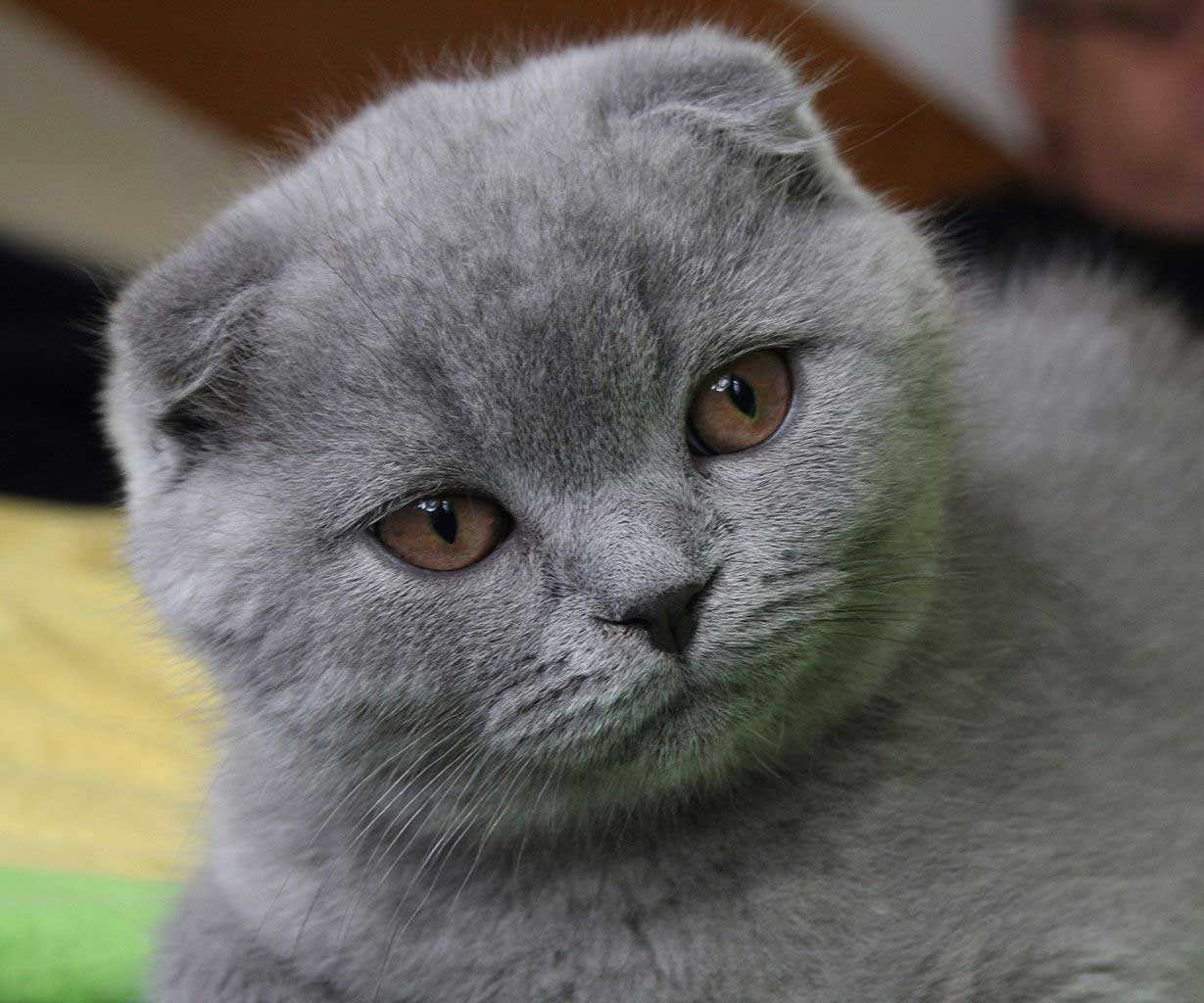
Scottish Fold
Lilac 3 months old Scottish Fold – Psychopath, CC BY 3.0, via Wikimedia Commons

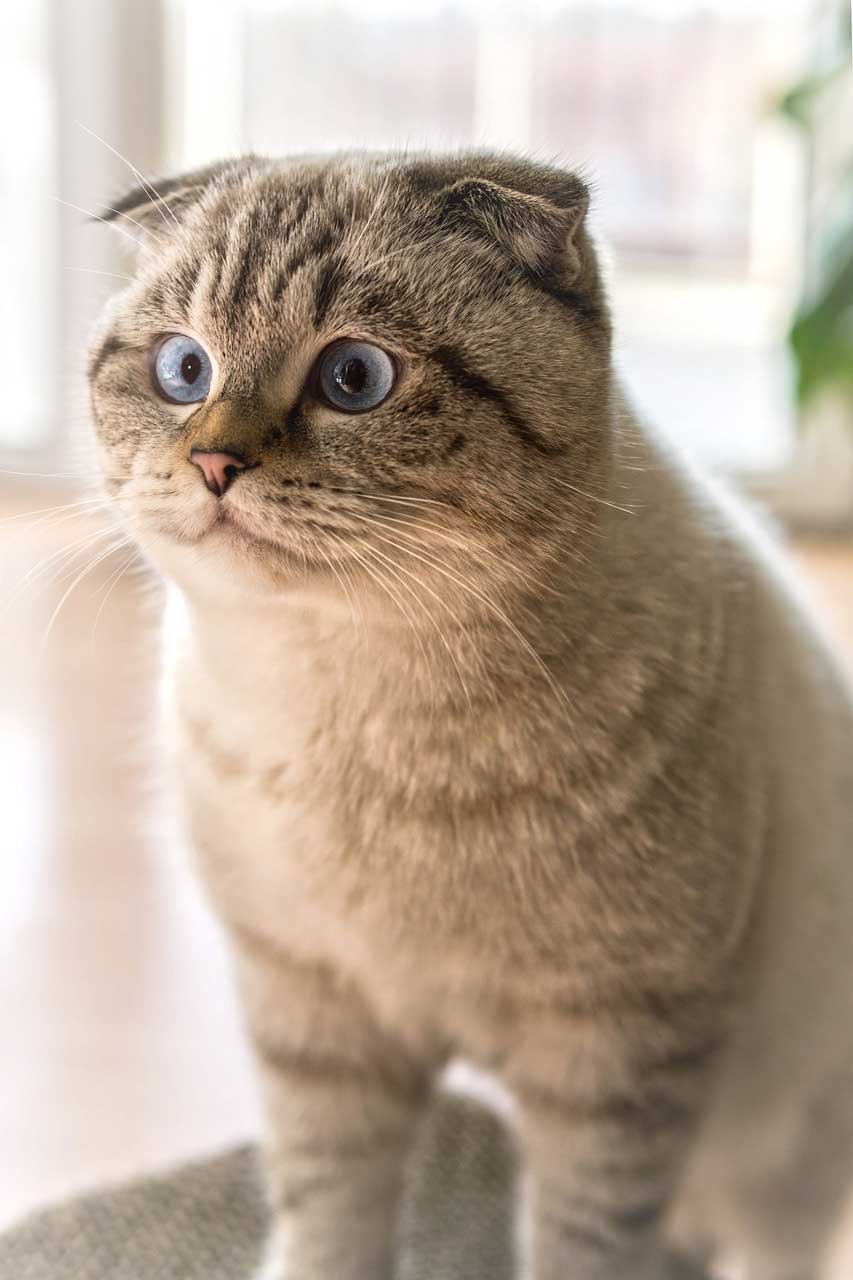
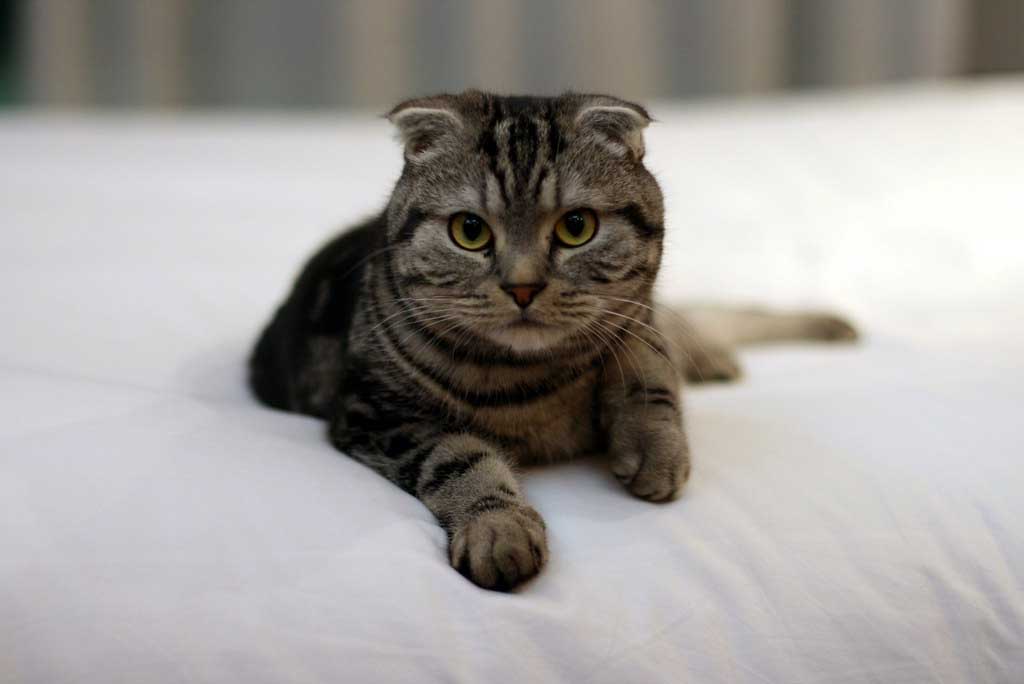
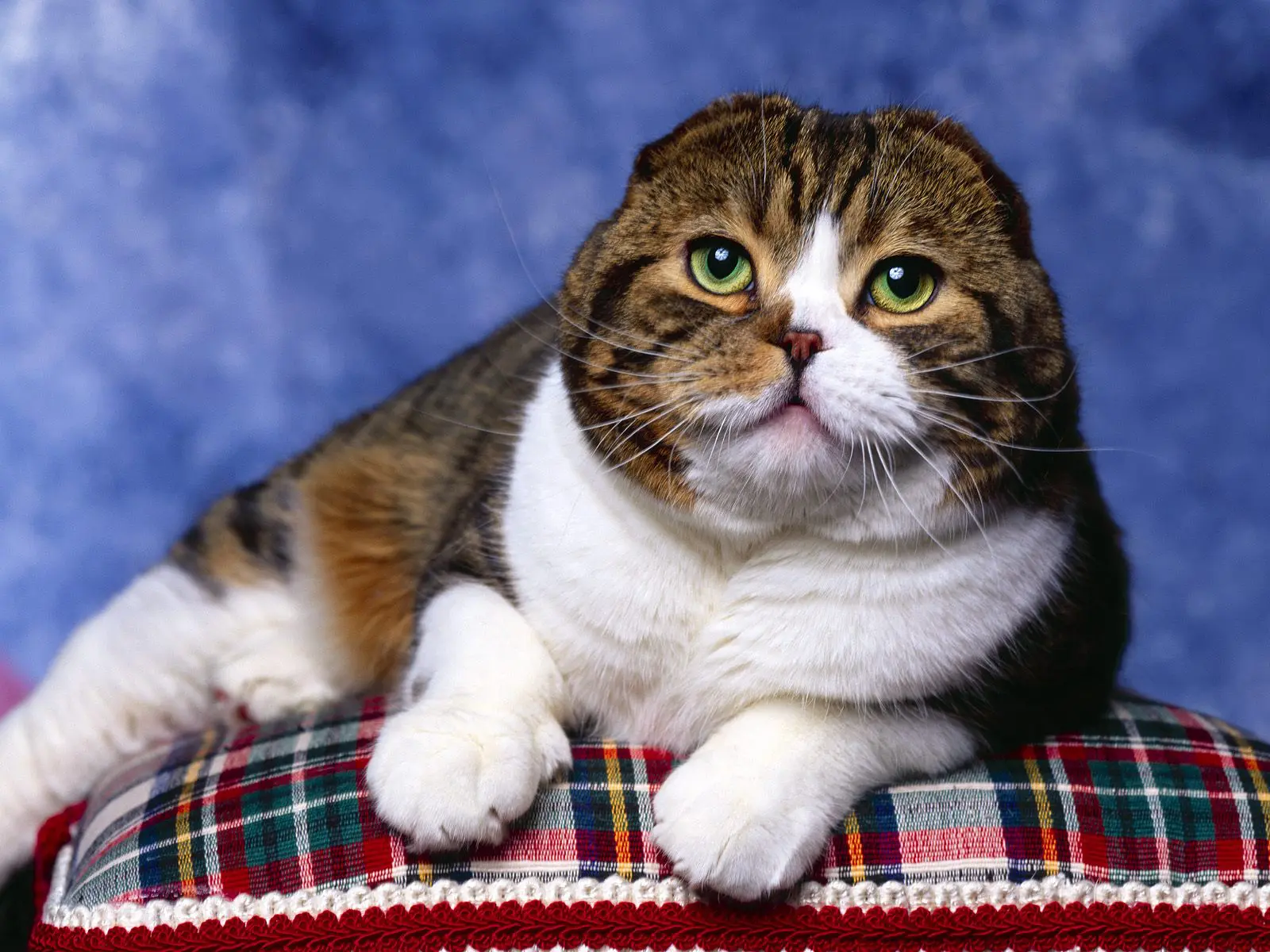
The Scottish Fold it is a medium size cat, round and solid boned, but retains a flexible and agile appearance. The legs they are quite short, while the tail is quite long and tapers to a rounded tip.

The head it is also round, with a well defined chin and jaws, and prominent cheekbones. The eyes they are big and round, usually coppery, but they can be of other colors, especially blue in white fur cats.

The Scottish Fold is known for its small ears with rounded tips that fall forward. But, kittens are born with straight ears, that don't start to fold until they have a few 3 weeks, at least half of them. The other half keep their ears straight, and are known as Scottish Straight or Highland Straight. They are not excluded from breeding, since the crossing with a Fold can lead to a kitten with folded ears.

It should be noted that the fact that they are folded forward does not prevent the ears of the Scottish Fold be mobile and very expressive, turning to hear better or getting up when opening a can of food.

The Scottish Fold has a fur dense, with a heavy undercoat and an outer coat that can be short or long. Texture may vary based on coat and/or regional or seasonal variations.

All the colors They're possible, except those that show an unauthorized crossing with another Scottish Fold, or any other race other than the American shorthair cat and the British Shorthair cat

Last, the sexual dimorphism it is well marked, being the males larger than the females.

Size and weight

  • Male size: Of 23 to 28 cm.
  • female size: 20-25 cm.
  • Male weight: 4-6 kg
  • female weight: 2,5 to 4 kg

Breed standard

The breed standards are documents produced by official bodies that list the conditions that a dog must meet. Scottish Fold to be fully recognized as belonging to the race:

Varieties of "Scottish Fold"

Scottish Fold
Scottish Fold – Flickr

The Scottish Fold it comes in two varieties: of shorthair and Longhair.

The latter are sometimes called Highland, or Highland Fold. For some organizations, as the International Cat Association (TICA), they even form a race in their own right, call Scottish Fold Longhair.

in parallel, there are cats Scottish Straight, or Highland Straight, who have the same genetic inheritance as the Scottish Fold and, Therefore, The same characteristics, but whose ears are straight, instead of folded. Although these cats are not always recognized, neither as a variety nor as a distinct breed, are essential for the health of the breed. In fact, to avoid health problems, it is forbidden to create from Scottish Folds: one of the two parents must be a Scottish Straight (or a licensed breed, as the American shorthair cat or the British Shorthair cat).

Character and skills
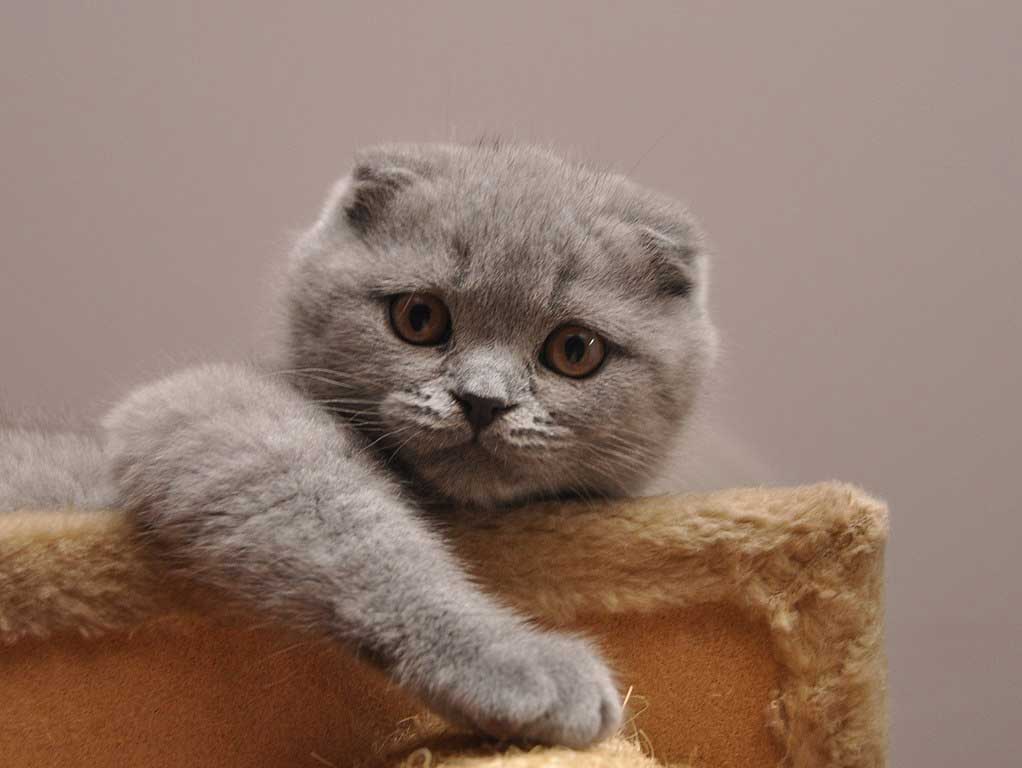
Scottish Fold
Lilac colored Scottish Fold – Psychopath, CC BY 3.0, via Wikimedia Commons

The Scottish Fold he is close to humans and very loyal. They are affectionate and enjoy spending time with all members of their family, but they do not take long to choose their favorite human, to whom they are especially attached. Needs a lot of attention, but it is not intrusive: if you are made to feel uncomfortable sitting on your lap, will sit next to you without question, and if his owner does not have time to play with him, will just follow you around the house.

Sociable and relaxed, he loves the attention he can get from the little ones: It is an ideal cat breed for children who have learned to have fun with animals and to respect them.

In general, They also enjoy the company of other cats and get along very well with dogs that are used to cats.. On the other hand, although it is possible -especially if you have gotten used to them since childhood-, coexistence with small animals should be avoided, rodents or reptiles.

Moderately active, adapts very well to life in a flat, especially if his family takes the trouble to spend some time playing with him every day.

Their need for attention and interaction makes them prone to loneliness, but having other animals at home is a good way to overcome it. If you have playmates, she has no problem spending her days at home when her owners are at work, just asking for more caresses at night. But, if left alone for a long weekend or even a vacation, is likely to express dissatisfaction by causing more or less damage.

It also, the Scottish Fold is known for his more or less surprising postures: sleeps on his back, sits on the couch like a human or stands on its hind legs to observe the surroundings, like a suricata. It is also a cat that prefers to drink water from the tap rather than from its bowl., and some specimens have the habit of eating with their legs.

The legs are extremely agile, allowing them to open closet doors or catch an object thrown by their master. Scottish folds love to exploit this ability and are especially fond of games that involve dexterity.. But, they also enjoy cat puzzle games, that stimulate their intelligence and provide them with some food if they can.

Last, it's not very noisy, not just because it's moderately vocal, but also because their meows are so soft, almost hard to hear.

Health
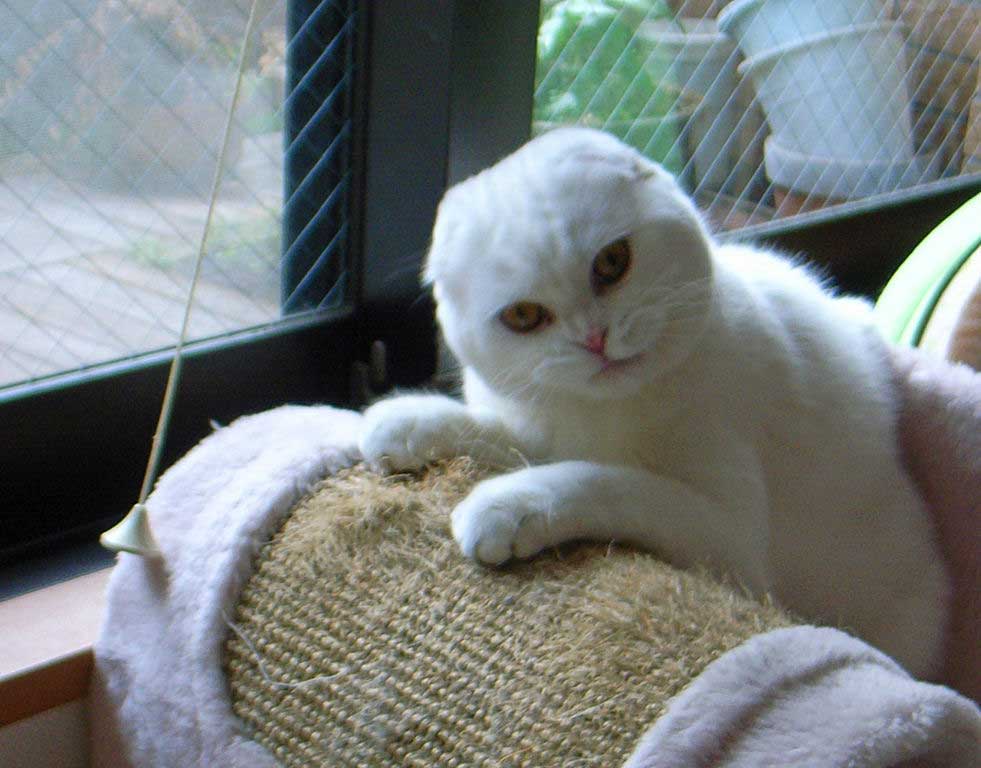
Scottish Fold
Kimi-kun, Scottish Fold – tata_aka_T from Tokyo, JAPAN, CC BY 2.0, via Wikimedia Commons

The Scottish Fold It, in general, a healthy feline breed, to the point that many specimens have more than 15 years.

But, is susceptible to certain diseases:

  • Hypertrophic cardiomyopathy, an enlargement of heart tissue that causes disturbances in how the heart works;
  • The renal polyquistosis, a genetic disease that causes numerous cysts in the kidneys and can now be detected with a DNA test;
  • The osteocondrodisplasia, which affects the development of bones and cartilage and can cause osteoarthritis from an early age, causing pain and difficulty in movement. The first symptoms are usually stiffness in the hind legs and/or tail. A very short and thick tail is an indication that the individual is potentially affected.

It also, but the Scottish Fold it is by no means the most affected race, the Obesity in cats it is a very real health risk. Thus, a good owner should regularly check that his cat is not overweight, and correct it if you have it, with the help of a vet.

Last, given the shape of their ears and to avoid infections and parasites, you have to pay special attention, that is to say, check and clean them frequently.

To avoid breeding between two Scottish Fold and the health problems that often result, it is possible to organize a mating with another authorized breed. The International Cat Association (TICA) allows you to, for example, the crossing with the American shorthair cat or the British Shorthair cat.

Grooming

One Scottish Fold of shorthair it only needs to be brushed once a week to keep its coat healthy and beautiful. One Scottish Fold (or Highland Fold) of Longhair needs to be brushed more regularly to prevent tangling and to remove dead hair: the ideal is to do it two or three times a week.

It also, a weekly check of the teeth, eyes and ears will ensure they are clean and free of infection. Pay special attention to the ears, which should be cleaned with a damp cloth.

Last, depending on your lifestyle, natural wear and tear and the use of a scratching post may or may not be enough for your claws. If not and they become too long, can be easily trimmed with nail clippers.

Food

The Scottish Fold can be fed commercial cat food. But, food must be of good quality and appropriate to the cat's age and activity level, to provide you with the essential nutrients and vitamins you need for good health.

How in general they are capable of self-regulation, food can be left in their bowl at all times, but you have to be careful that they don't get too fat. If this is the case, It is recommended to consult a veterinarian to establish a feeding program adapted to your specific needs..

For sale "Scottish Fold"

The average price of a kitten Scottish Fold is something less than 1000 EUR.

But, this average hides great disparities between kittens with physical characteristics far from the standard, whose price can be as low as 500 EUR, and those that come from prestigious lines and have characteristics that predestine them to feline shows, whose price may be higher than 2500 EUR.

In all cases, there is no significant price difference between males and females.

Videos "Scottish Fold"

A day in cat life | What's it like to have a scottishfold cat | cuddly cat | What cat does all day

๐Ÿ˜๐Ÿฑ Gray Scottish Fold Kitten ๐Ÿพ๐Ÿ’–

Alternative names:

1. Scot Fold (English).
2. Highland Fold (French).
3. Scottish Fold, Highland Fold (German).
4. Fold escocรฉs (espaรฑol).

โ–ท The world of Pets: Dogs, cats, birds, reptiles, amphibians

Siberian cat
Recognized by the CFA, CFA, TICA, WCF, FFE, AACE, ACF, ACFA/CAA

Content

Characteristics "Siberian cat"

Coexistence is important that you have with your new friend. Before considering the acquisition of a cat of the breed "Siberian cat" you know certain factors. You must take into account their character, their need for exercise, their interaction with other pets, their care and if you have small children, their level of tolerance towards them.

Joy

4,0 of 5 stars (based on 1 review)

Activity level

3,0 of 5 stars (based on 1 review)

Friendliness to other pets

4,0 of 5 stars (based on 1 review)

Friendliness to children

4,0 of 5 stars (based on 1 review)

Grooming requirements

2,0 of 5 stars (based on 1 review)

Vocality

2,0 of 5 stars (based on 1 review)

Need for attention

3,0 of 5 stars (based on 1 review)

Affection towards its owners

4,0 of 5 stars (based on 1 review)

Docility

3,0 of 5 stars (based on 1 review)

Intelligence

4,0 of 5 stars (based on 1 review)

Independence

3,0 of 5 stars (based on 1 review)

Hardiness

5,0 of 5 stars (based on 1 review)

History

The Siberian cat is a breed of cat native to Russia and has a natural origin: already roamed the Siberian forests more than 1000 years. Its exact origin is not known, but the fact that the mutation responsible for long hair in cats appeared almost simultaneously in regions as distant as Siberia, Asia minor (which corresponds to the eastern part of Turkey, and from which the Turkish Angora cat and the Turkish Van Cat) and persia (which became Iran, and from which the Persian cat) suggests that these different long-haired cat breeds share common origins.

In fact, some specialists think that these cats appeared in Turkey and that human migrations to the Great North explain their appearance in Siberia. On the other hand, others believe that the first long-haired cats originated in Russia and spread to Asia Minor, giving rise to Turkish Van Cat, to the Turkish Angora cat and to the Persian cat, but also to Scandinavia, where would they be at the origin of Norwegian Forest Cat , and then to North America, where they would have evolved to Maine Coon cat.

But, it is certain that they played an important role for the local populations who had to survive in the extreme conditions of Siberia, since they protected the provisions from rodents. Russian folklore says that they once weighed more than twenty kilos and were true "guardian cats.", who protected their homes from wild animals and hunted other animals to feed their families. Still today, many stories tell of magical cats whose mission is to protect children.

The Siberian cat It is known in Europe and North America since the 19th century. It was even one of the breeds exhibited in the first feline exhibition in modern history., held in 1871 at the Crystal Palace in London. It was also presented in the United States at 1884, at the exhibition held in the Madison Square Garden from New York. It is documented in the book Our Cats de Harrison Weir de 1889 and in the book Domestic & Fancy Cats the John Jennings the 1898. A photograph of a representative of the breed also appears on Concerning Cats, written by Helen Winslow and published in 1900.

But, the Siberian cat disappeared from the international scene for much of the 20th century, since his country of origin was isolated from the rest of the world by the Soviet regime that came to power in 1917. It was not until the decade of 1980 when Russian cat lovers were once again free to own domestic cats and organize into associations to define the rules. He had a great success at the first Moscow cat show in 1988, and soon became the national cat of Russia.

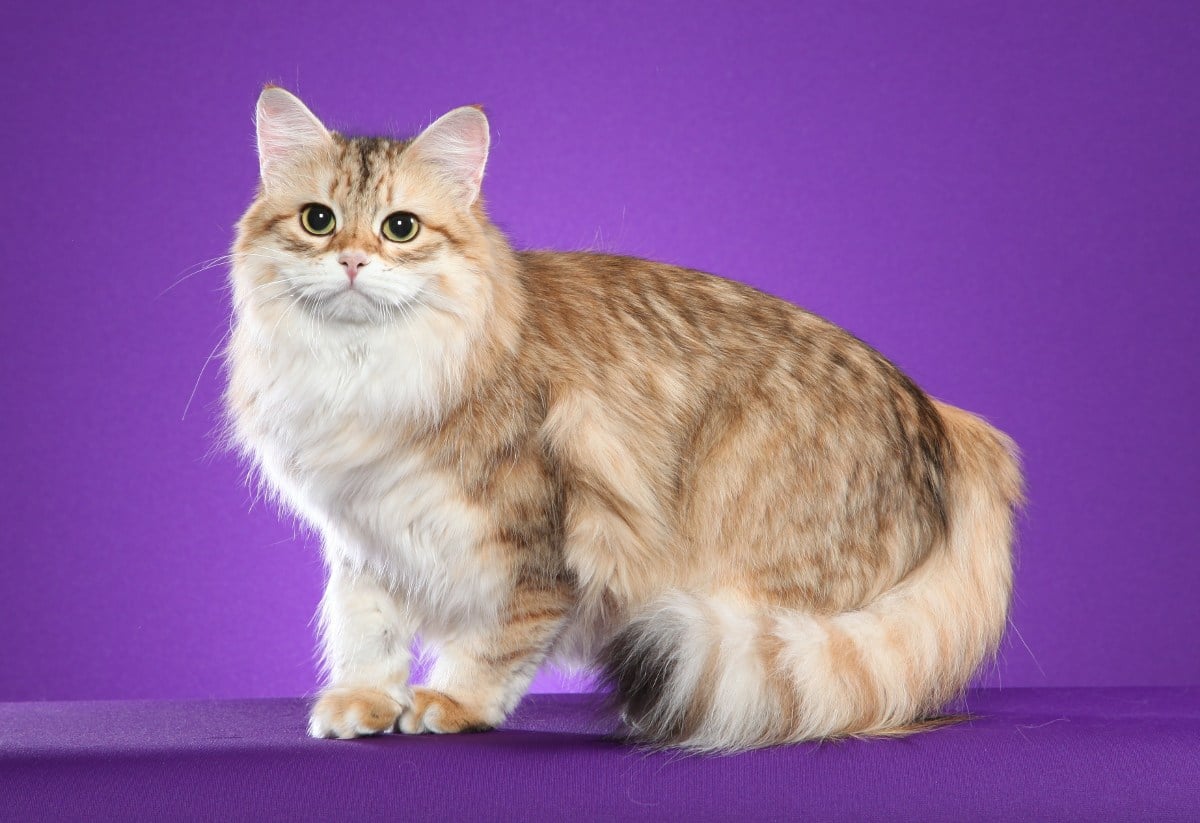
Siberian cat
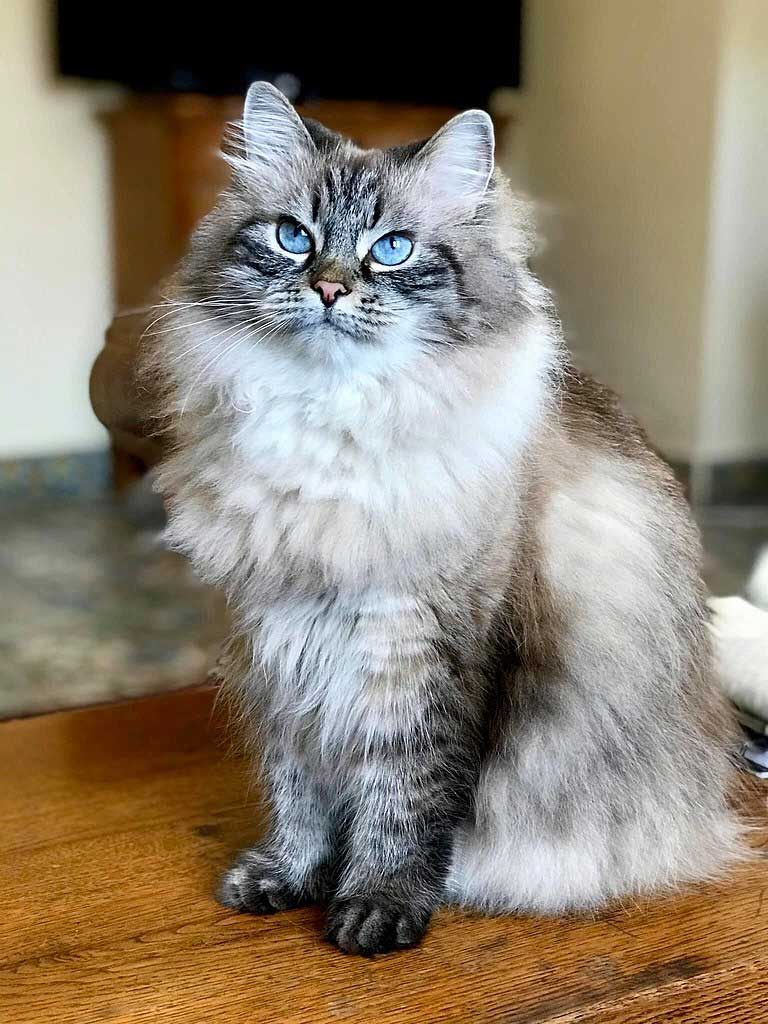
Female Adult Siberian Cat with Seal Lynx Point Coat Color – The voice, CC BY-SA 4.0, via Wikimedia Commons

In 1990, Ophelia, Naina and Kalostro they became the first Siberians to set foot on American soil in almost 100 years, When Elizabeth Terrell, a creator, exchanged them with Nelli Sachuk for four gatos himalayos. A few weeks later, David Boehm, another american breeder, traveled to Russia to bring fifteen cats from the Siberian jungle. Thanks to these two enthusiasts, the breeding of this breed began in North America..

Once the Iron Curtain fell, its international recognition was fast: the International Cat Association (TICA) was the first to do so in 1993, followed by Fรฉdรฉration Internationale Fรฉline (FIFรฉ) in 1997 and then for the American Cat Fanciers’ Association (CFA) in 2000. Surprisingly, the first copies Siberians did not arrive in the UK until 2002. Two years later, in 2004, the Governing Council of the Cat Fancy (GCCF), the country's main body, granted the breed full recognition, including the right to compete in exhibitions organized under their auspices.

Today, as well as remaining extremely popular in his home country, the Siberian has clearly found an audience beyond its borders, helped by his reputation, although unfounded, hypoallergenic cat.

In United States, for example, the Siberian cat stands above the position 20 (of 45) in the classification of breeds according to the number of annual registrations in the CFA. Its success is also growing in Europe. In Great Britain, GCCF statistics show that births in the second decade of the 21st century have risen from about 100 per year to more than 300, which places it in the top ten of the favorite cat breeds of the British.

There is also a blazing growth in France: the statistics of the Official Book of Feline Origins (LOOF) show that if in the mid-1990s 2000 only thirty specimens were registered per year, this figure had already exceeded 200 in 2010, and then cross the barrier of 1000 in 2016 and overcome the 1500 at the end of the decade. Since 2015, is one of the 10 favorite breeds of cats of the French, representing more than 3,5% of registered births.

Physical characteristics

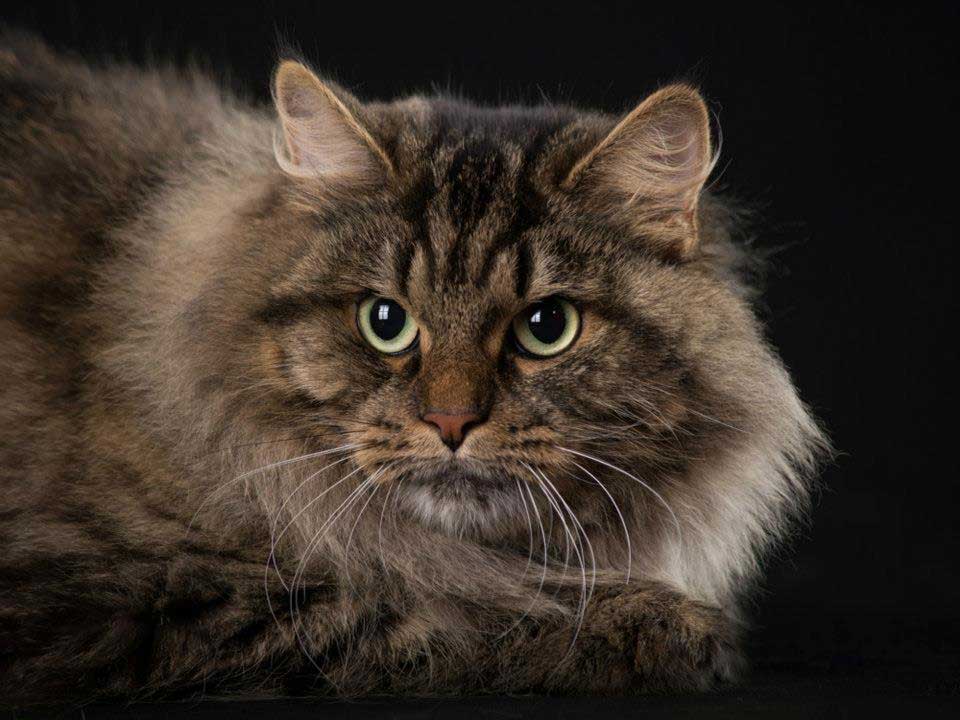
The Siberian has a semi-cobby midline morphology. Sometimes it is confused with the Maine Coon cat or the Norwegian Forest Cat , as it has a similar general appearance, but it differs by having a much more rounded head and body.

Of average length, He is powerfully muscular and his back is slightly arched. The legs they are also very strong with a solid bone structure, the rear ones being somewhat longer than the front ones. The tail is slightly shorter than the body, very full and sharp.

The head is wide and has a triangular shape with rounded sides when viewed from the front. Profile, the rounded forehead ends in a slope at the nose. The ears are size medium, wide at the base and ends in a rounded shape. The eyes they are big, almost round, slightly oblique, and they can be green, yellow, coppery or blue in some white-coated dogs.

The fur of the Siberian it is medium to long, and consists of three parts: abundant down and undercoat, and a thick, shiny protection layer. It is much more abundant in winter than in summer and forms a mane around the neck.

Except for chocolate and lilac, all the coat colors They're possible, but the brown tabby is the most common. All coat patterns are also accepted by the standard, but some organizations, like the FIFรฉ (Fรฉdรฉration Internationale Fรฉline), consider the Siberian colourpoint as a breed apart, call Neva Masquerade.

In any case, this cat grows slowly, as it does not reach full maturity until it is about five years old. But, most of the growth occurs during the first 18 months.

Last, the sexual dimorphism it is very marked: the male is much more imposing than the female.

Size and weight

  • Male size: 30 – 38 cm.
  • female size: 28 – 35 cm.
  • Male weight: 7 – 11 kg
  • female weight: 5 – 9 kg

  • Varieties of "Siberian cat"

    The fur colourpoint (a light color on the body and darker on the tips of the legs, the tail, ears and face) is accepted by most associations, as the International Cat Association (TICA), the World Cat Federation (WCF) and the Livre Officiel des Origines Fรฉlines (LOOF), the reference organization in France. But, some consider cats Siberian colourpoint like a different race.

    Is the case, in particular, of the Fรฉdรฉration Internationale Fรฉline (FIFรฉ), that since 2011 registers them with the name of Neva Masquerade cat. The LOOF also recognizes the term Neva Masquerade, but in conjunction with the name ยซSiberianยซ: in his eyes, is simply another way of designating siberianos colourpoint, but by no means a breed in its own right.

    Siberian cat
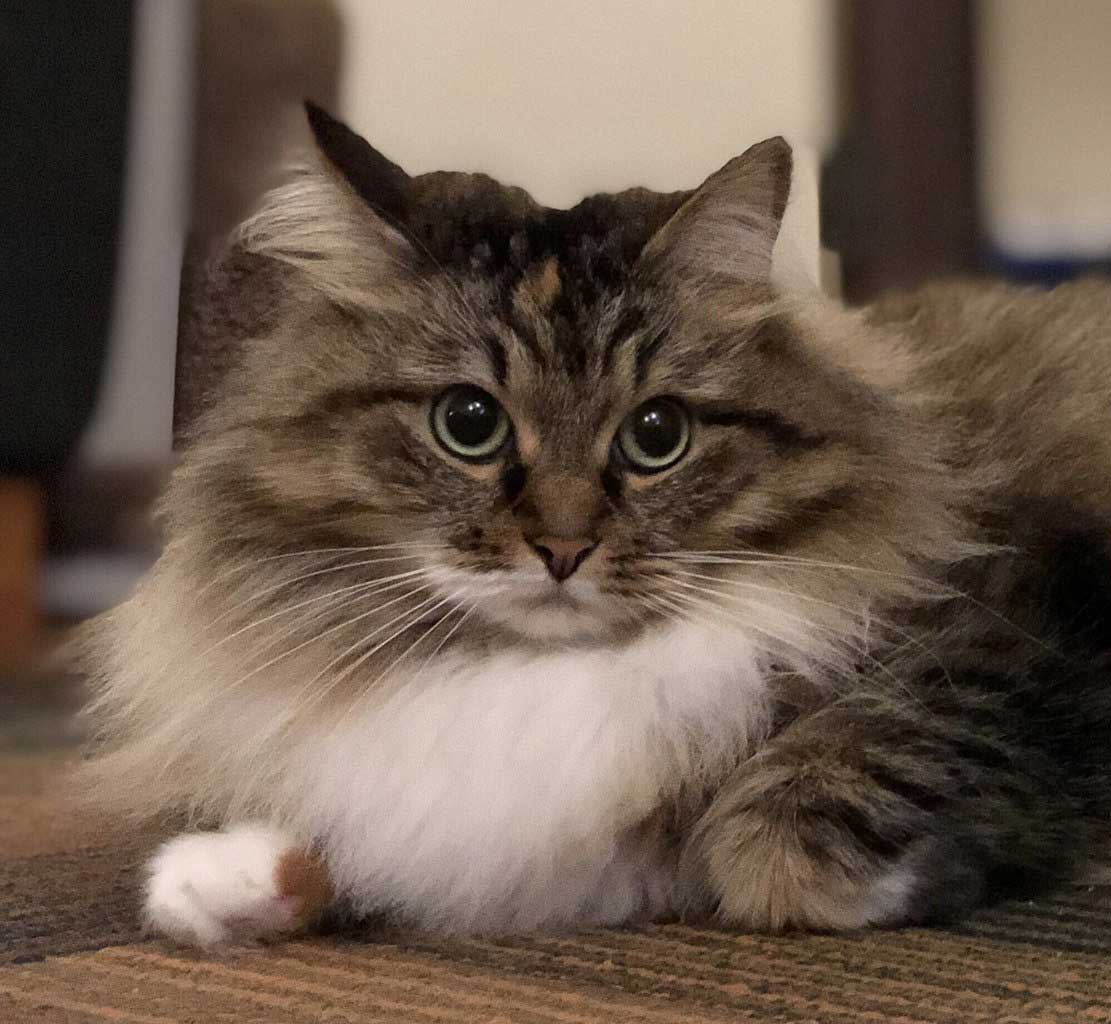
    A 3-year-old Calico Tabby Siberian Cat – Lilllio, CC BY-SA 4.0, via Wikimedia Commons

    Character and skills

    The Siberian he is a loving and devoted cat who loves his family. He waits for his owner at the door when he comes home from work, and immediately begins to tell him about his day following him around the house. Loves to participate in various household activities, either helping in the kitchen, lying on the computer keyboard where his owner is working, or sitting in front of the TV that its owner is watching.

    Having said that, although he loves to receive attention from his owners, not overly intrusive or demanding, and he is perfectly capable of waiting patiently for his owners to have time for him. They can be left alone during the day without separation anxiety.

    They are also excellent hosts and, after observing the newcomer from a distance to meet him, they will not hesitate to come over to greet you and participate in the conversation. It is also an ideal cat breed with children who have learned to behave with a certain respect., since he likes to play with them and has enough patience to tolerate some oddities and clumsiness.

    His outgoing character also applies to his peers, but also the dogs: he is not afraid of anything and is aware of his respectable size, is not easily impressed and likes to resolve conflicts amicably.

    On the other hand, has retained a strong hunting instinct that makes it very difficult, yes not impossible, cohabitation with rodents and birds. The fish are not safe either, especially because they have a certain fascination for water. This can lead to, for example, to play with the water in your bowl or toilet, or even to spray his master when he is bathing.

    The Siberian cat he is extremely intelligent, able to learn to retrieve objects (activity that you especially enjoy) or to be walked on a leash, but also to solve complex problems, like opening the closet door or reaching for that toy that its owner thought was out of reach. Teaching your cat tricks is a great way to spend quality time with him., while giving you the opportunity to exercise both physically and intellectually.

    They are also very good at understanding human emotions and know when to go play with a cheerful owner., or comfort someone who has had a bad day by purring on their lap to show their affection. This makes them an excellent therapy cat..

    Although the Siberian cat has a rather calm and quiet character, he is also an active cat that retains a playful side throughout his life. They are surprisingly agile for their size, being able to climb almost anywhere and make dizzying jumps. Some owners still wonder how their dog got the spider in the living room.… And is that, like most of his peers, he likes to be in a high place from which he can admire his territory; if you think your cat tree is not tall enough, do not hesitate to find a closet more to your liking.

    Curious and without any notion of property rights, does not hesitate to steal any object to make a toy with which to play. Thus, it is strongly recommended to store jewelry and other valuables in a safe place.

    On the other hand, although they are delighted to have access to the outside and to be able to run and climb at their ease, they are still a breed of cats capable of living in a flat. In fact, for a Siberian, the company and affection of your family are even more important than physical exercise.

    Last, this cat has a wide vocal range of soft meows, trills and chirps, but also a powerful purr reminiscent of a boat engine. They are not as talkative as the eastern races, but they like to communicate and give their opinion.

    Siberian cat
    Siberian cat

    Grooming and caring for the "Siberian cat"

    The triple coat of the Siberian it is low maintenance, since it does not tend to knot. But, a thorough brushing is necessary every week to remove dead hairs and distribute sebum from the skin. During the moulting season, in autumn and spring, the dog loses a lot of hair, so it is recommended to brush it every day. This grooming session is also an opportunity to share a complicity moment with your pet., especially since he especially appreciates staying quietly on his owner's lap while he is being brushed.

    On the other hand, it should be noted that, against popular belief, the Siberian it can perfectly provoke allergic reactions in its master. The amount of Fel d1 (an enzyme that causes allergies in people sensitive to it) in the saliva of the Siberian cat is much lower than that of a cat without a pedigree, but the amount is not zero. Thus, it is simply a race of hypoallergenic cat, that is to say, that is less likely to cause an allergy.

    Unless you want to expose your cat in a feline exhibition, it is rarely necessary to bathe him. This is certainly a good thing, as it is very difficult to shampoo their thick, waterproof fur.

    But, the weekly grooming session is an opportunity to check your teeth, eyes and ears looking for dirt, and clean them with a damp cloth if necessary. This will reduce the risk of cavities and infections of all kinds.

    Last, if your dog spends a lot of time outdoors, it may be that natural wear and tear is enough to file your nails. If not the case, it is advisable to trim them with a nail trimmer when they have become too long, so that they are not hindered in their movements.

    Indoor or outdoor cat?

    The Siberian cat it is a nature loving breed that spends a lot of time outdoors if allowed to roam freely. This independent cat loves to roam for hours in nature, hunt and explore the environment. Like a good hunter, Siberian he usually takes his prey home.

    That you Siberian gift you with dead birds and mice is not to everyone's liking and should be considered prior to purchase. If the cat stays indoors, a large floor with a sturdy scratching post is a minimum requirement. The ideal would be a safe garden, where the cat can live its desire to move. With the proper precautions, your cat will live happily.

    How much activity does he need? "Siberian cat"?

    As an active breed, the Siberian cat needs a lot of space to play and hunt. Independent cats prefer to occupy themselves and explore their environment. Of course, especially at a young age, they still like to be kept busy with a gaming rod or mice.

    Intelligence toys for cats also keep them busy and boost their intelligence. They also like to play with other cats, so they should not be alone. As one of the few cats, to the Siberian he likes to play with water and can also keep busy for a long time with a leaky faucet.

    Siberian cat
    Siberian cat Tofik – Mstachul, CC BY-SA 3.0, via Wikimedia Commons

    Health and nutrition

    The Siberian it is very robust. Able to live in environments as difficult as the Siberian forests from which it originates, It is a breed of cat that does not fear the cold. But, not at its best when temperatures exceed 30 ยฐC: to avoid any risk of heat stroke, it is then important to keep it in a shady area or even with air conditioning.

    It also, have a predisposition to certain genetic diseases. This is the case, in particular, of :

  • The feline hypertrophic cardiomyopathy, a relatively common disease in domestic cats that causes abnormal development of heart tissue, with potentially serious heart problems. Screening of parents can minimize, but not delete, the risk of transmission to the kitten;
  • Deficiency of pyruvate kinase (PK-def), which causes a problem in red blood cell metabolism leading to anemia of varying severity in cats. There is a DNA test to identify the gene; a breeder's siberian cats responsible must exclude the carriers of the offspring.

  • It also, the fact that the Siberian forest cat being so large does not make you immune to one of the greatest health risks of a domestic cat: the Obesity. Responsible owners should ensure that their cats maintain an adequate weight and seek the advice of the veterinarian if they notice a tendency to be overweight.

    Life expectancy

    Of 12 to 15 years

    Food

    The Siberian forest cat he has no problems with his diet; can be fed commercially available industrial cat food without any problem. But, choosing a quality product that is suitable for your age and activity level is essential to ensure that you are getting all the nutrients and vitamins you need.

    By being able to self-regulate, can be left with food at all times.

    But, it is the owner's responsibility to ensure that the dog is not overweight and, Therefore, weigh him regularly to monitor his weight. In the event of deviations, consultation with a veterinarian will allow to establish a more adequate feeding program.

    For sale "Siberian cat"

    It is only possible to get a Siberian cat of breeders of this breed. It is preferable to resort to a family breeding, where the cat is born near its breeder. The small size of the structure and the proximity of the human being have allowed it to develop its familiar and endearing character.

    If raised in good conditions, the Siberian cat he will not be wild and he will be very close to his master. It can become the "dog-cat" that the owner expects, the one who will be curious about strangers, the one who will wait for his owner behind the door and the one who will follow him everywhere. Please note that if the cat you are purchasing does not have a pedigree, It will not be considered a pedigree cat but a "street cat".

    Having said that, the price of a Siberian cat ranges between 700 and 1.000 EUR. The price depends mainly on whether you buy a companion cat or a breeding cat.

    Siberian cat
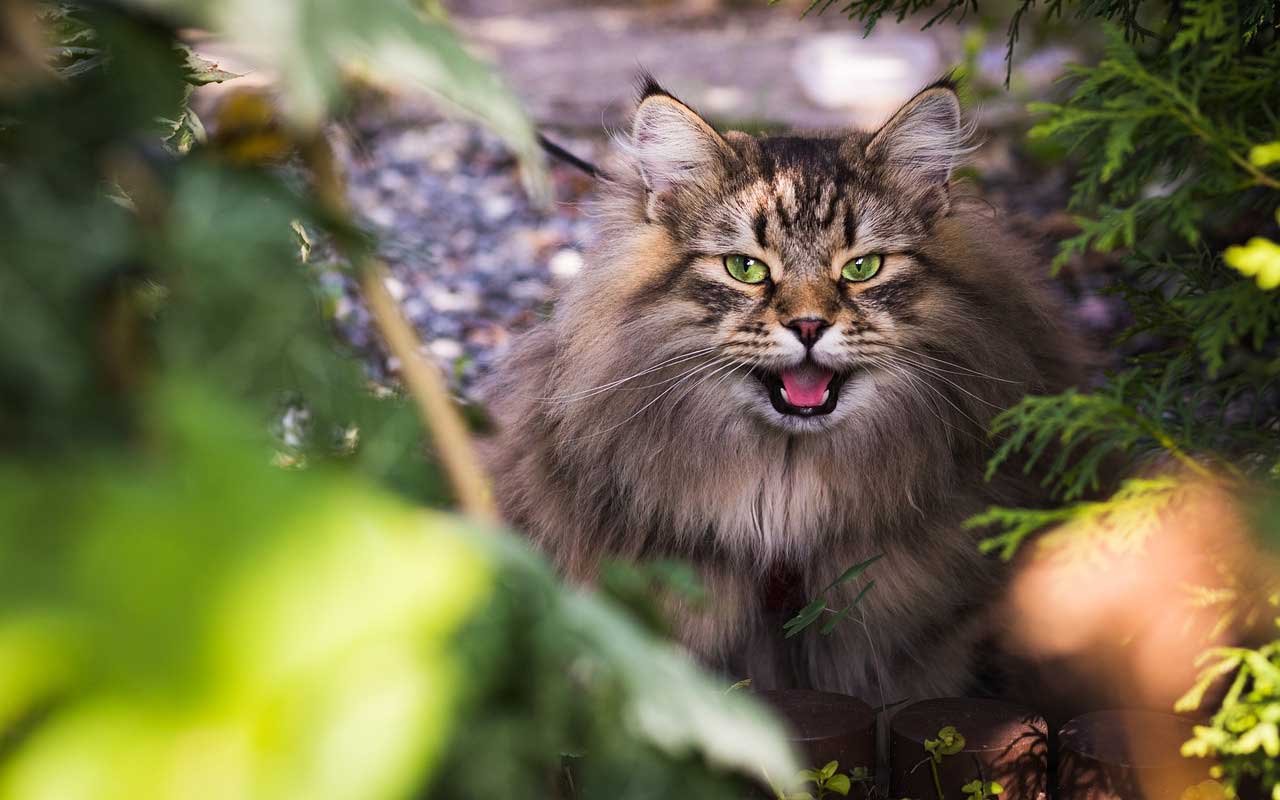
    Portrait of a Brown tabby Siberian – Sibirela, CC BY-SA 3.0, via Wikimedia Commons

    Videos "Siberian cat"

    the siberian cat / Siberian Cat - Mug&In
    El Gato Siberiano / Siberian Cat – MuKi&Mu
    SIBERIAN CAT - Characteristics, Care and Health
    SIBERIAN CAT – Characteristics, Care and Health

    Alternative names:

  • Siberian forest cat