โ–ท The world of Pets: Dogs, cats, birds, reptiles, amphibians

LaPerm
Federations: CFA, FIFe, TICA, WCF, ACF, GCCF

Although today it is present on all continents, the LaPerm still a rare feline breed.
Laperm
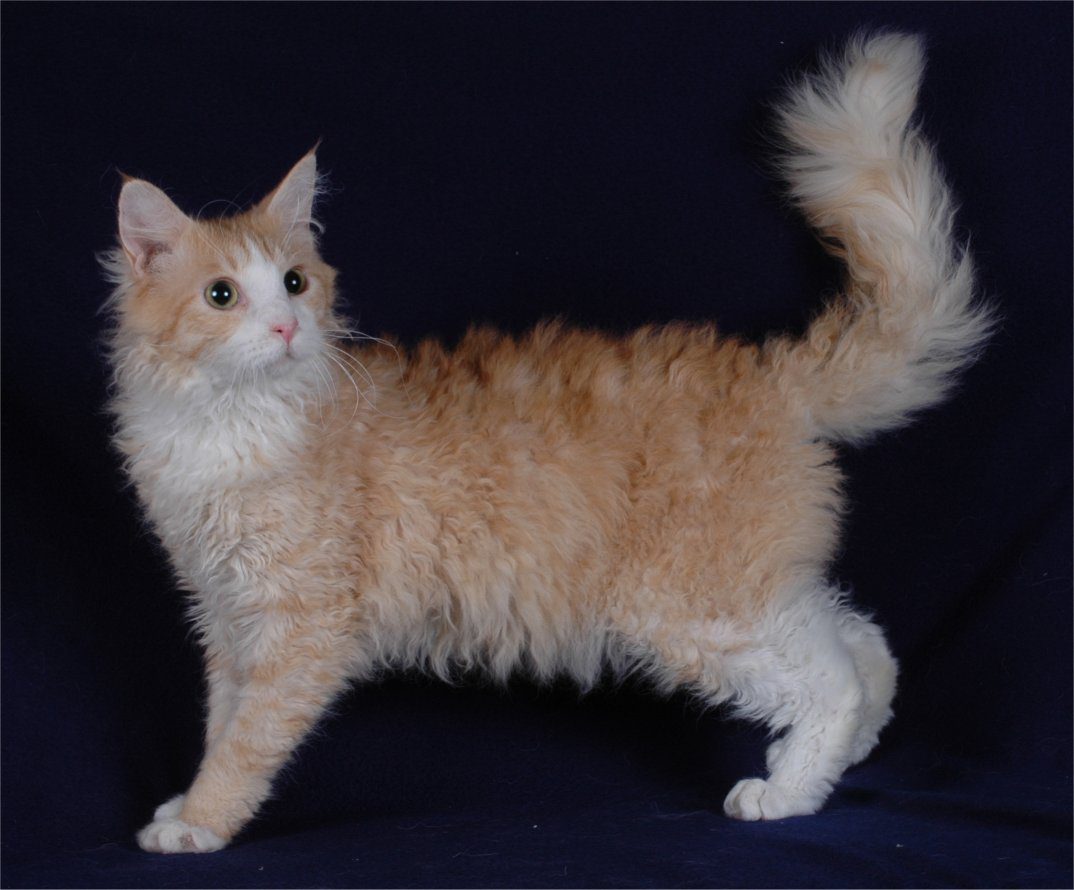
Photo by lapermcats.info

Content

Characteristics "LaPerm"

Coexistence is important that you have with your new friend. Before considering the acquisition of a cat of the breed "LaPerm" you know certain factors. You must take into account their character, their need for exercise, their interaction with other pets, their care and if you have small children, their level of tolerance towards them.

Joy

4,0 of 5 stars (based on 1 review)

Activity level

4,0 of 5 stars (based on 1 review)

Friendliness to other pets

4,0 of 5 stars (based on 1 review)

Friendliness to children

4,0 of 5 stars (based on 1 review)

Grooming requirements

2,0 of 5 stars (based on 1 review)

Vocality

1,0 of 5 stars (based on 1 review)

Need for attention

3,0 of 5 stars (based on 1 review)

Affection towards its owners

5,0 of 5 stars (based on 1 review)

Docility

4,0 of 5 stars (based on 1 review)

Intelligence

4,0 of 5 stars (based on 1 review)

Independence

3,0 of 5 stars (based on 1 review)

Hardiness

4,0 of 5 stars (based on 1 review)

History

The LaPerm is a recent breed of cat that originated in The Dalles, a small town in Oregon (Northwestern United States) located near the hunting grounds of the Wishram Indians, a Chinook tribe.

In the spring of 1982, a farm cat named Speedy, property of Linda and Richard Koehl, gave birth to a litter of six kittens. They did not know that one of the kittens, a small, hairless female, with big ears and a big heart, would become a new breed.

after two months, this kitty started showing some curly hair, what caught the attention of Linda Koehl. At four months, the kitten that was now known as Curly he had beautiful soft curly fur. To the Koehl they were amused to see such a special cat, but they accepted it without question, and Curly lived an eventful life as a farm cat.

He was about to die when, being a young cat, decided to take a nap under the hood of the station wagon. Fortunately, right after starting the car, Linda Koehl heard the panicked screams of Curly and escaped with just a few cuts.

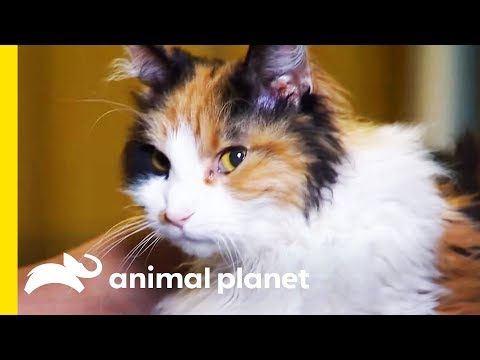
"LaPerm"

LaPerm
Nertus ,black torbie laperm cat LaPerm cat. FiFeโ€™s first international champion – KRL LPL, CC BY-SA 4.0, via Wikimedia Commons

She grew up and gave birth to her first litter of five kittens, all males and with skin as smooth as their mother's. Intrigued, Linda Koehl He did some research and came to the conclusion that it was some kind of โ€œRexโ€ mutation., which causes some cats to have a curly coat similar to that of the rabbit Astrex. But, did not go through with this.

Curly had more litters, giving birth to new hairless kittens of both sexes. One day he disappeared and the Koehl they did not see her again.

His descendants stayed. In the following years, They lived freely and gave birth to a colony of curly-haired cats in the vicinity of the farm of the Koehl. Several visitors and neighbors convinced Linda Koehl that these cats were unique, so in 1992 decided to present four specimens at a cat show in Portland, Oregon.

To be able to register them, had to register them with a breed name, so he chose the name of LaPerm. The name of LaPerm refers to curly hair of these cats, reminiscent of the permanent fashion of the years 80, but also to tradition chinook to adopt French words by incorporating your article (for example, "apple" is "lapom" in Chinook).

These first LaPerm were enthusiastically received, and the judges told Linda Koehl that the breed was unknown and should be preserved. So, 10 years after the birth of Curly, the Koehl they began to breed LaPerms, an activity they weren't prepared for, since they had originally adopted cats to hunt pests, not for the love of the little feline. With the support of other breeders and professionals, among them Solveig Pflueger, a renowned feline geneticist, the couple was able to fulfill the dream of many professional breeders: create a new breed of cats.

The tests showed that the genetic mutation that caused the LaPerm was due to a different dominant gene than in other type cat breeds Rex (Cornish Rex, Devon Rex, etc.), that is to say, those of curly fur. The dominance of this gene is the main reason for the rapid proliferation of these new cats on the farm of the Koehl: only one parent needed to be a carrier for this mutation to potentially be passed on to kittens.

In 1997, the creation of a breed club (The LaPerm Society of America) contributed to its recognition by the main feline associations. The first to definitely do so was the International Cat Association (TICA) in 2003, followed by Cat Fancierโ€™s Association (CFA) in 2008. The Governing Council of the Cat Fancy (GCCF) and Fรฉdรฉration Internationale Fรฉline (FiFรฉ) they recognized her in 2012 and 2015 respectively.

Although today it is present on all continents, the LaPerm still a rare feline breed. in your country of origin, It is in the last positions of the ranking of breeds by number of annual registrations in the CFA. In Britain he was quite successful when he arrived in 2002, with more than a hundred cats registered each year with the GCCF up to 2008, when there was a clear decline. In the second decade of the 21st century, this figure was more like twenty per year. In France, it's even weirder, with solo 20 LaPerm registered in the Official Book of Feline Origins (LOOF) between 2003 and 2018.

Physical characteristics
LaPerm
Kururu, Type: LaPerm Flickr

The LaPerm it is a cat of size small to medium with a body long and thin, with hips slightly higher than shoulders. The legs and tail they are also quite long, like the rest of the body.

The head has a triangular shape, with rounded contours. The eyes, large, beautiful and incredibly expressive, they can be yellow, copper, green or blue. The ears, quite large and located in the prolongation of the head, They are provided inside and preferably end in a plumage similar to that of the lynx.

The standard LaPerm allows all colors and fur patterns, but the turtle, brindle and red are the most common. In any case, It is undoubtedly the fur that makes him unique. LaPerm: soft and silky, has a distinctive texture reminiscent of mohair or sheep's wool. It can be simply wavy or form corkscrew-shaped curls.

There are also two varieties of the breed, since they can be short or long hair.

In any case, kittens can be born hairless, with straight hair or with curly hair. They usually have their definitive fur around the 6 months of age, although some initially straight-haired kittens only become curly after the first year.

Some, However, keep hair straight throughout their life. This is because, even though both parents are LaPerms, each of them can carry a single gene for curly hair (and how this gene is dominant, it is enough for them to have this feature). So, each of their offspring has a one in four chance of not inheriting the gene that causes this trait.

By the way, despite what you sometimes hear, curly hair LaPerm does not make it a hypoallergenic cat breed. In fact, cat allergy is caused by dead skin, not for the hair.

Last, the sexual dimorphism it is quite marked, the female being smaller than the male.

Size and weight

  • Male size: 22 to 26 cm.
  • female size: 20-24 cm.
  • Male weight: 3 to 4 kg
  • female weight: 2,5-3,5 kg

Varieties of "LaPerm"

The LaPerm it comes in two varieties: the Longhaired LaPerms and the LaPerm Shorthair.

Some organizations consider them as two different races. It is the case of the Fรฉdรฉration Internationale Fรฉline (FiFรฉ) and of the International Cat Association (TICA). But, for others, as the American Cat Fanciers’ Association (CFA) and the British Governing Council of the Cat Fancy (GCCF), they are two varieties of the same breed.

Character and skills

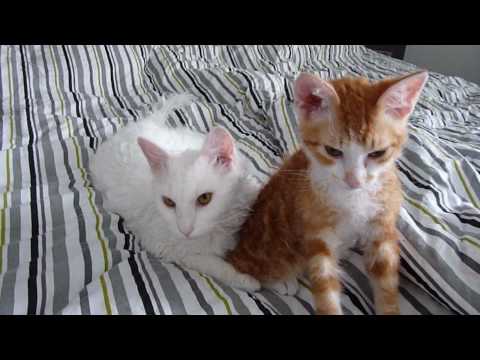
"LaPerm"

LaPerm
Two LaPerm cats – LaPerm2, CC BY-SA 3.0, via Wikimedia Commons

The LaPerm He is loving and devoted to his family. Loves interacting with humans, but it is not a very demanding cat. On the other hand, tends to follow the trend and adapt to the behaviors and initiatives of his master: if he throws a ball, run after her for fun; but if you put it on your lap, curls up quietly. He is also very tactile and loves to show his affection by touching his owner's face with his paw., or rubbing face to face. He also loves to be stroked and can't get enough of purring while scratching between his ears..

Even if I am not the type to ask for attention, do not forget to provide games and affection, and of course avoid leaving him alone in his corner. Otherwise, you will not be able to develop a strong bond with your family members, which is a shame for both him and them.

Playful and sociable, gets along very well with children who have learned not to pull their whiskers, her tail or her pretty curls. Usually, He also has no problems living with other dogs or with dogs accustomed to cats..

On the other hand, it is not advisable to expect it to coexist peacefully with rodents: in fact, do not forget that not long ago he was a farm cat whose main occupation was hunting mice and other rodents. So, no wonder he retained his hunting skills.

Curious, to the LaPerm loves to explore the environment or observe what members of his family are doing, either sitting up high or following them around the house. It also, its nimble legs allow it to open a door or snatch that coveted item, so make sure that the most fragile and / or precious objects are well protected.

Activos, they like to run around the house and climb on the furniture. They like to be able to go outside and have a good time before going in to rest. But, he can live in a flat as long as he can play and run around.

Last, prefers to listen rather than speak and reserves its meows for cases of extreme urgency, for example, when your bowl is empty.

Grooming and caring for the "LaPerm"

The fur of him LaPerm it is surprisingly tangle free and easy to care for: a simple weekly hairstyle is enough to keep the coat shiny.

On the other hand, although she changes very little in general, sometimes he does it a lot: then daily brushing is necessary to remove dead hair and allow new coat to grow faster.

It also, so that your cat stays healthy and maintains its natural beauty, You should take advantage of brushing sessions to check that your teeth, eyes and ears are clean. At the same time, they should be cleaned with a damp cloth to remove any dirt that could cause an infection.

If wear and tear and the use of a scratching post are not enough, it is necessary to cut your cat's nails with a nail clipper if they are too long.

Health and nutrition

LaPerm
the laperms with their hair cuts – Flickr

The LaPerm it is a robust breed, which benefits from a breeding program based on numerous crosses with individuals with a healthy and varied genetic heritage, to the point that today no specific genetic disease is known.

We need to remember, However, that this breed is still new and rare, so there is not enough hindsight or data to make definitive statements about it.

A well-identified risk is that of Obesity of cats. In fact, although the cat does not normally have a tendency to overeat and may, Therefore, have food at your disposal at all times, the owner should regularly check that his partner is not getting too fat, and consult a vet if this is the case.

Life expectancy

Of 12 to 15 years

Food

The LaPerm It is not demanding when it comes to feeding and it does very well with the industrial cat food available on the market, either food or croquettes.

To keep them healthy, you have to give them a quality diet, appropriate to your age and activity level, and that it contains all the nutrients and vitamins they need.

Like most other breeds, the LaPerm is capable of self-regulation and, therefore, can be left with food constantly available. But, there is a risk of obesity, so you have to do regular checks to make sure you are not getting too fat, and you have to consult a vet if this happens.

For sale "LaPerm"

The price of a kitten LaPerm varies between the 800 and 1200 EUR, without there being a significant difference between a male and a female.

But, this breed is quite confidential, so it can be difficult to find a breeder of LaPerm with kittens available.

Videos "LaPerm"

These Curly Cats Are The Perfect Affectionate Companion | Cats 101

La Perm Cat love

โ–ท The world of Pets: Dogs, cats, birds, reptiles, amphibians

Geoffroy's cat
Leopardus geoffroyi

The Geoffroy's cat it is a relatively unknown species to the general public, but not without reason. In fact, remains first and foremost a wild cat.
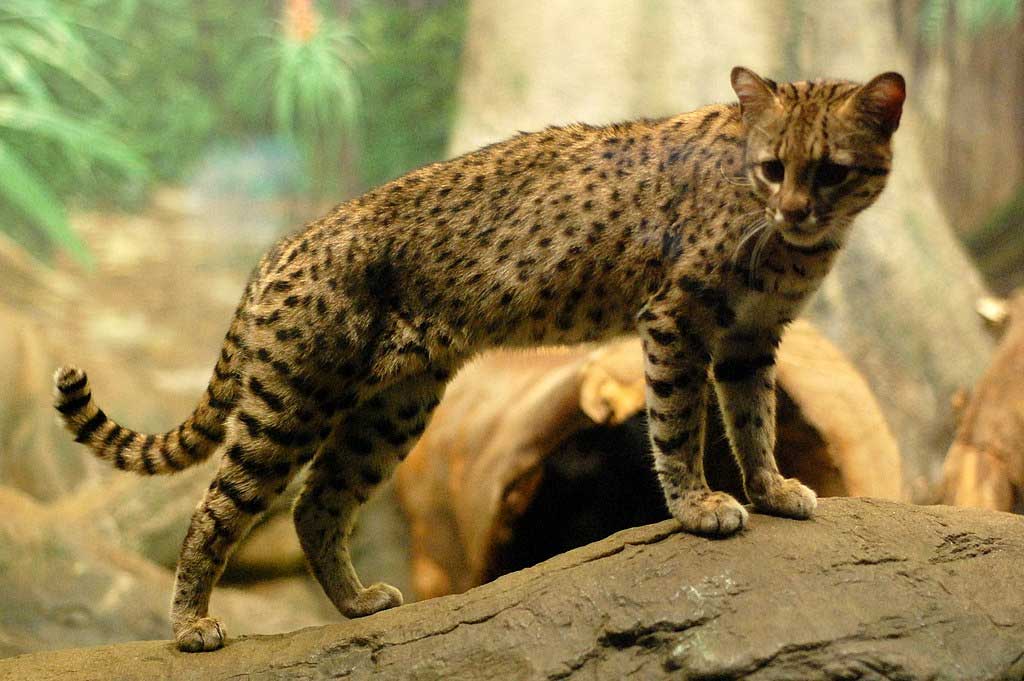
Geoffroy's Cat
Geoffroyโ€™s Cat – Charles Barilleaux from Cincinnati, Ohio, United States of America, CC BY 2.0, via Wikimedia Commons

Content

History

The Geoffroy's cat (Leopardus geoffroyi) is a small and little known spotted wild cat native to central and southern South America. Etienne Geoffroy Saint- Hilary (1772-1844), 19th century French zoologist who gives his name to Geoffroy's cat, studied this animal when he was a professor of zoology in Paris. During your study, identified five subspecies based on their geographic dispersion:

  • Leopardus geoffroyi geoffroyi – Central Argentina
  • Leopardus geoffroyi euxantha – North of Argentina, West of Brazil
  • Leopardus geoffroyi leucobapta – Patagonia
  • Leopardus geoffroyi paraguae – Paraguay, southeast of Brazil, Uruguay
  • Leopardus geoffroyi salinarum – Northwest and central Argentina

Physical characteristics

"Geoffroy's cat"

Gato de Geoffroy
Geoffrey's cat, taken at the Cincinnati Zoo. Photo by Greg Hume – Greg Hume, CC BY-SA 3.0, via Wikimedia Commons

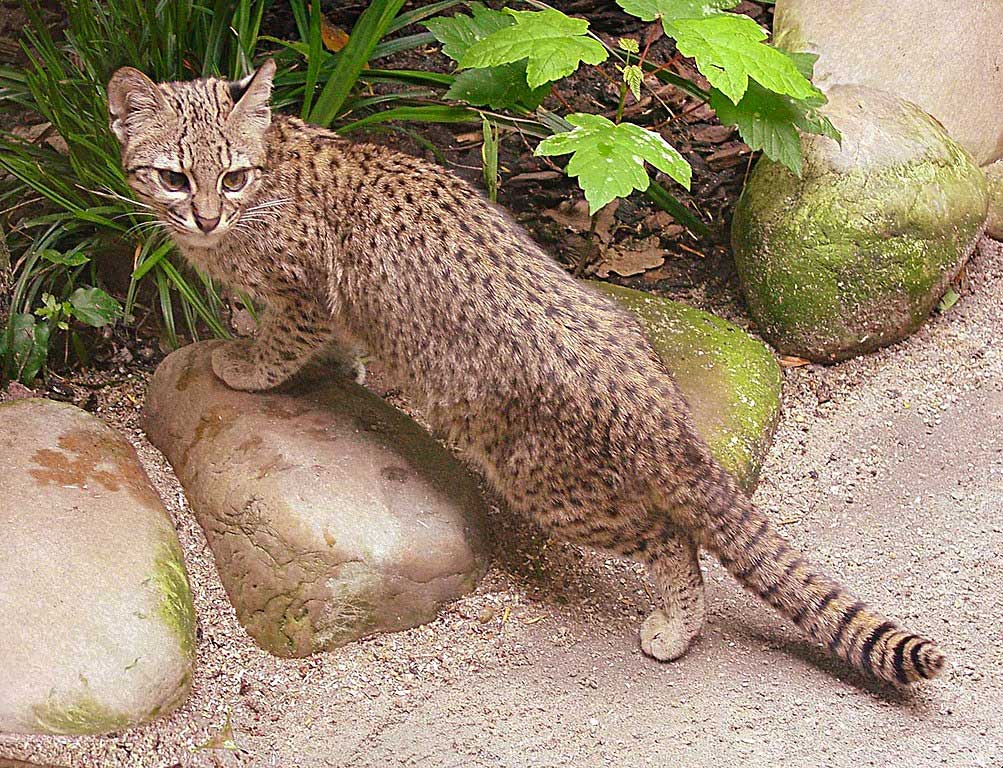
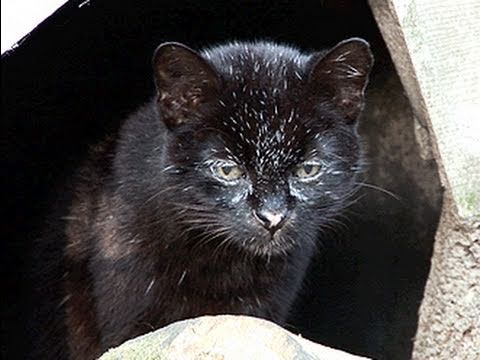
The Geoffroy's cat has small black spots that evenly cover its fur with little variation in size and spacing. Its fur varies from an orange-brown color in the northern areas to a gray color in the southernmost areas with numerous shades between them., but completely black coats have been found to be common. Like most wild cats, the fur on its belly is pale in color ranging from cream to white. Its tail and limbs are covered with dark rings, almost equally spaced.

The Geoffroy's cat is the size of an average domestic cat, with an average of about 60 centimeters (24 inches) from the head to the base of the tail and an average of about 30 centimeters (12 inches). Males weigh an average of 4,5 kg (10 pounds), while females weigh an average of 3,6 kg (8 pounds), although individuals weighing up to 7,7 kg (17 pounds).

When samples were compared between regions, only the mass of the male cat varied with geographic location. Those found in the southern part of their range are usually larger than those in the north, although no correlation was found between body mass and latitude.

Unusual among wild cats and cats in general, it has been observed that geoffroy's cats stand up on their hind legs to scan the surrounding area. Some individuals from geoffroy's cats live more than 20 years in captivity, but, average, wild cats usually live up to 14 years.

Habits and skills

Geoffroy's cat
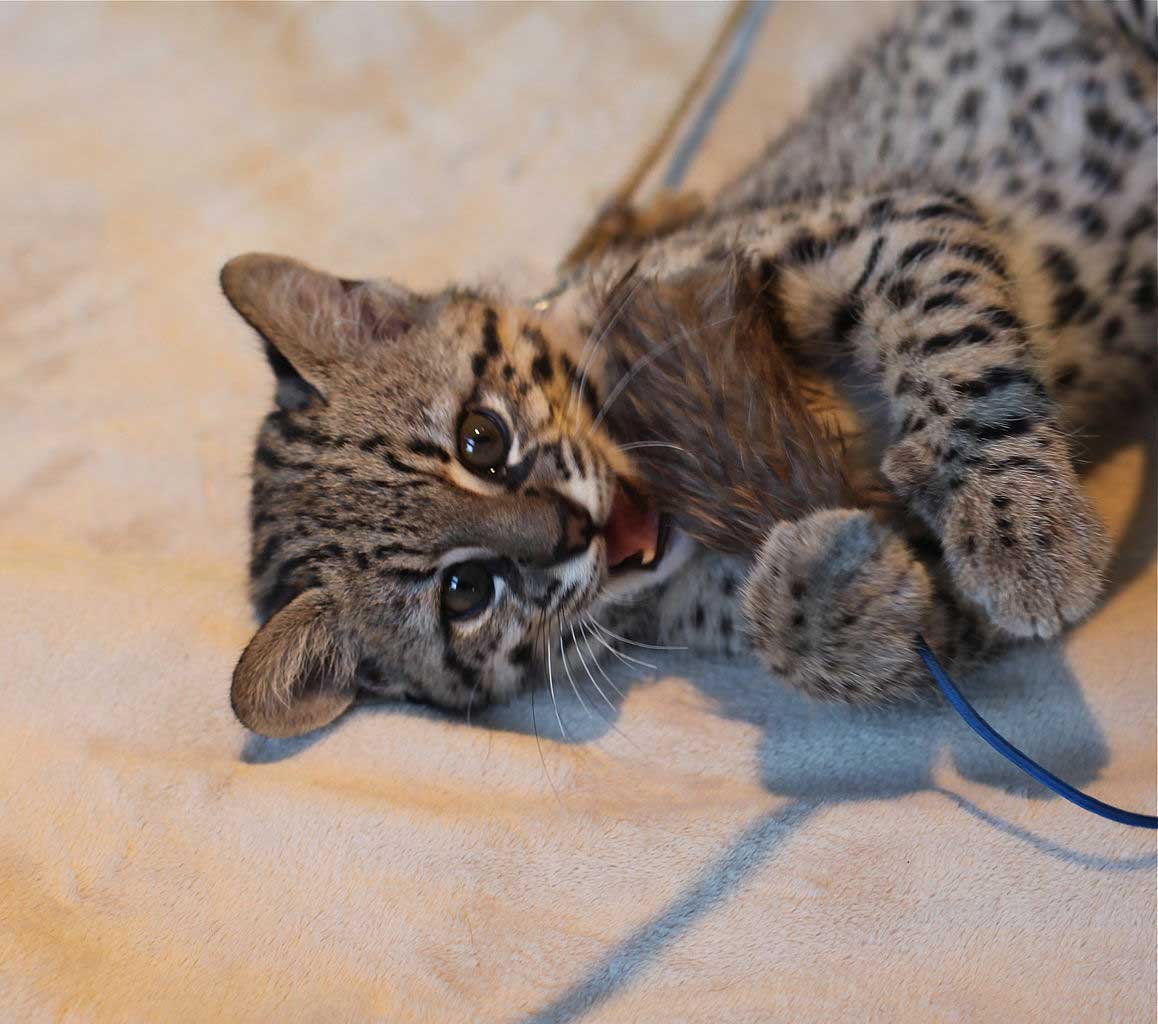
Baby Geoffreyโ€™s Cat – Steve Jurvetson from Menlo Park, USA, CC BY 2.0, via Wikimedia Commons

The geoffroy's cats are nocturnal and their activities peak in the middle of the night. They tend to spend most of their time on the ground, but they are able to climb trees and can swim very well, since the locals call them "fishing cats" for their ability to easily enter the water.

Like lonely hunters, the Geoffroy's cat only comes into contact with others during the mating season. It has been described as an opportunistic predator, which means that it will feed on whatever is most abundant in its area or easiest to prey. Small mammals are their most frequent prey, representing at least the 63,3% of their primary diet in each season, while birds are the most hunted during the warmer seasons.

The geoffroy's cats they tend to use grasslands and marshes for hunting and lounging and use forest views to mark their scent. Seasonal differences in their diet were markedly greater between the warmer and colder seasons., suggesting that the diet was limited by seasonal fluctuation and prey availability.

Distribution

The geoffroy's cats they inhabit the grasslands of the Andes pampas, in the deserts and semi-deserts of Mount, in the dry forests and savannas of the Gran Chaco landscape, from southern Bolivia to the Strait of Magellan, at a height of up to 3.300 meters above the sea level. The total size of the range of these cats is, on average, of about 8,83 km2, while the main habitat these cats frequently visit only encompasses 1,46 km2. When observed in nature, the geoffroy's cats who lived in habitats modified by ranches and cattle grazing were more active, they had wider ranges and traveled greater distances than those found in protected areas.

Conservation status

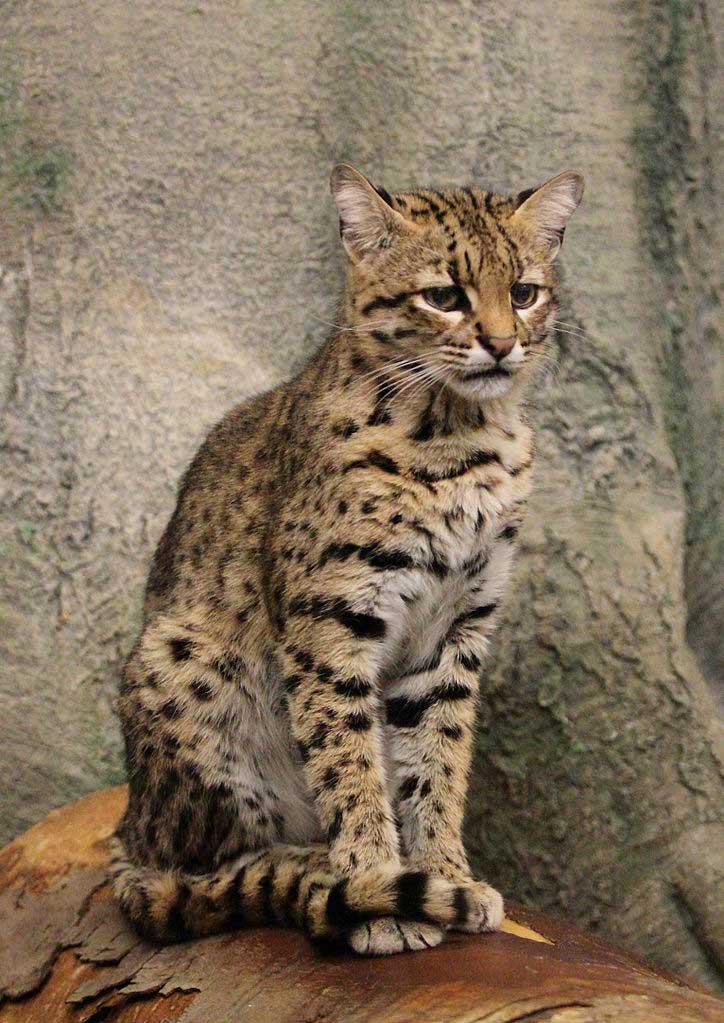
Geoffroy's Cat
Leopardus geoffroyi (Geoffroyโ€™s Cat), Karlsruhe Zoo, Germany – Daf-de, CC BY-SA 3.0, via Wikimedia Commons

In the news, the Geoffroy's cat is almost threatened and, though not in immediate danger, you are at risk.

The geoffroy's cats suffer from very high hunting pressure outside their protected area, which currently constitutes one of its greatest threats to conservation. But, the exploitation of their skins for the illegal fur trade industry between the years 60 and 80, it is estimated that some 350.000 skins only between 1976 and 1978.

Since the middle of the years 80, hunting and trade in their skins have decreased significantly, but it's still one of your biggest threats. In a recent study using camera traps, It is estimated that the population density of the Geoffroy's cat is of some 9-40 individuals for each 100 km2. Although the population size is currently unknown, we believe the population is declining and thinning. But, they are still occasionally killed when seen as pests or as predators of livestock. These skins can be seen in circulation within the local illegal trade.

In the center of Argentina, man-made mortality represents the 62% of the known deaths of the Geoffroy's cat, including poaching, death by domestic dogs and collisions with vehicles. Another factor contributing to their danger is the overwhelming demand for them by the exotic pet trade.

The "Geoffroy's cat" in captivity

The Geoffroy's cat it is a relatively unknown species to the general public, but not without reason. In fact, remains first and foremost a wild cat: if it can withstand the presence of man in its natural environment or even be bred in captivity, It is unlikely, on the other hand, that can be tamed.

Nonetheless, these cats are illegally caught and bred with domestic cats, which produces hybrid cats and reduces the total population. Critical forests and habitats are rapidly being lost to human causes, like deforestation, but unlike other species that depend heavily on their habitat, the Geoffroy's cat has learned to adapt and to use open areas as well. Currently, the Geoffroy's cat is protected in Argentina, but due to the lack of information available on its natural history, it is not possible to develop an adequate and scientifically sound conservation strategy to protect this animal.

Videos "Geoffroy's cat"

GEOFFROY CAT Species Spotlight

Geoffroy's Cat: The Ghost of South America's Salt Flats

โ–ท The world of Pets: Dogs, cats, birds, reptiles, amphibians

Korat cat
Federations: LOOF, CFA, ACF, ACFA, TICA, FIFรฉ, WCF

Known as a good luck messenger in his native Thailand, the Korat cat has always been a very popular wedding gift. This tradition continues today.

Korat

Content

Characteristics "Korat cat"

Coexistence is important that you have with your new friend. Before considering the acquisition of a cat of the breed "Korat cat" you know certain factors. You must take into account their character, their need for exercise, their interaction with other pets, their care and if you have small children, their level of tolerance towards them.

Joy

4,0 of 5 stars (based on 1 review)

Activity level

4,0 of 5 stars (based on 1 review)

Friendliness to other pets

3,0 of 5 stars (based on 1 review)

Friendliness to children

3,0 of 5 stars (based on 1 review)

Grooming requirements

1,0 of 5 stars (based on 1 review)

Vocality

2,0 of 5 stars (based on 1 review)

Need for attention

4,0 of 5 stars (based on 1 review)

Affection towards its owners

5,0 of 5 stars (based on 1 review)

Docility

1,0 of 5 stars (based on 1 review)

Intelligence

4,0 of 5 stars (based on 1 review)

Independence

2,0 of 5 stars (based on 1 review)

Hardiness

2,0 of 5 stars (based on 1 review)

History

The Korat is originally from Siam (current Thailand) and is one of the oldest breeds of domestic cats.

The first references appear in the Tamra Maew, or "Book of Cat Poems", a manuscript written in the city of Ayutthaya between 1350 (when the kingdom of Siam was founded) and 1767 (when the city was sacked by the Burmese invaders). At the end of the 19th century, King Rama V (1869-1910) asked the monk Somdej Phra Buddhacharm Buddhasarmathera to reproduce this text on paper Khoi, version kept in the National Library in Bangkok.

This work describes 17 cats that bring good luck to their masters, and other 6 that bring bad luck. The Korat cat It is one of the most valued lucky cats in the country., and many traditions are associated with it; for example, it is given to brides as a guarantee of a happy marriage, and usually appears in ceremonies to attract rain for the cultivation of rice. Apparently, at that time, the Korat He was a "town cat", unlike in the Siamese cat, which was mainly adopted by the nobility of the kingdom of Siam.

The first Korats appeared in Great Britain in the late 19th century and are mentioned in the Book of Cats published in 1903 by Frances Simpson, Judge and feline historian. They were shown at cat shows as "blue Siamese", but this did not convince the judges, They had a different perception of Siamese. As a result, they were unsuccessful and disappeared from the country at the beginning of the 20th century.

But, the Korat returned to the western world in 1959, When Jean Johnson brought to the United States a couple of Korats (Nara and Darra) that her Foreign Service colleagues gave her husband when he left Thailand. Based in Oregon, his kennel Cedar Glen then imported other specimens at the beginning of the years 60 and was the first in the West to start a breeding program for Korat. Not in vain, the breed was officially recognized in 1966 by the CFA (Cat Fanciers’ Association), the main feline organization in the country.

The Korats they returned to the UK (and to europe) in 1972, and the first copies appeared in France in 1979. The recognition of the race by the TICA (International Cat Association) arrived that same year, and the FiFรฉ (International Cat Federation) did the same the following year, in 1980.

Although today it is recognized by the vast majority of organizations, the Korat still a rare breed of cat in the western world. In United States, appears in the last positions of the breed classification according to the number of annual registrations in the CFA, and it hardly does any better in the UK, with less than a hundred individuals enrolled annually in the GCCF – a figure that also tends to decrease year after year. In France, the records in the Livre Officiel des Origines Fรฉlines (LOOF) were almost non-existent until 2010, but since 2013 some are registered 50 kittens a year.

Physical characteristics

Korat
Korat Yog-Hurtโ€™s Atlach-Nacha at Turok Cat Show – Yog-Hurt's_Atlach-Nacha_at_Turok_Cat_Show.JPG: HeikkisiltalaGIC_Lucky_Uffe_at_cat_show_Hyvinkรครค.JPG: Heikkisiltaladerivative work: Abujoy, CC BY-SA 3.0, via Wikimedia Commons

The Korat it is a medium size cat, semilineal, with a medium-length tail that tapers to the tip. His powerful and muscular body makes him heavier than he seems, especially when fully grown, around the 3 years. But, this does not prevent him from being an agile cat.

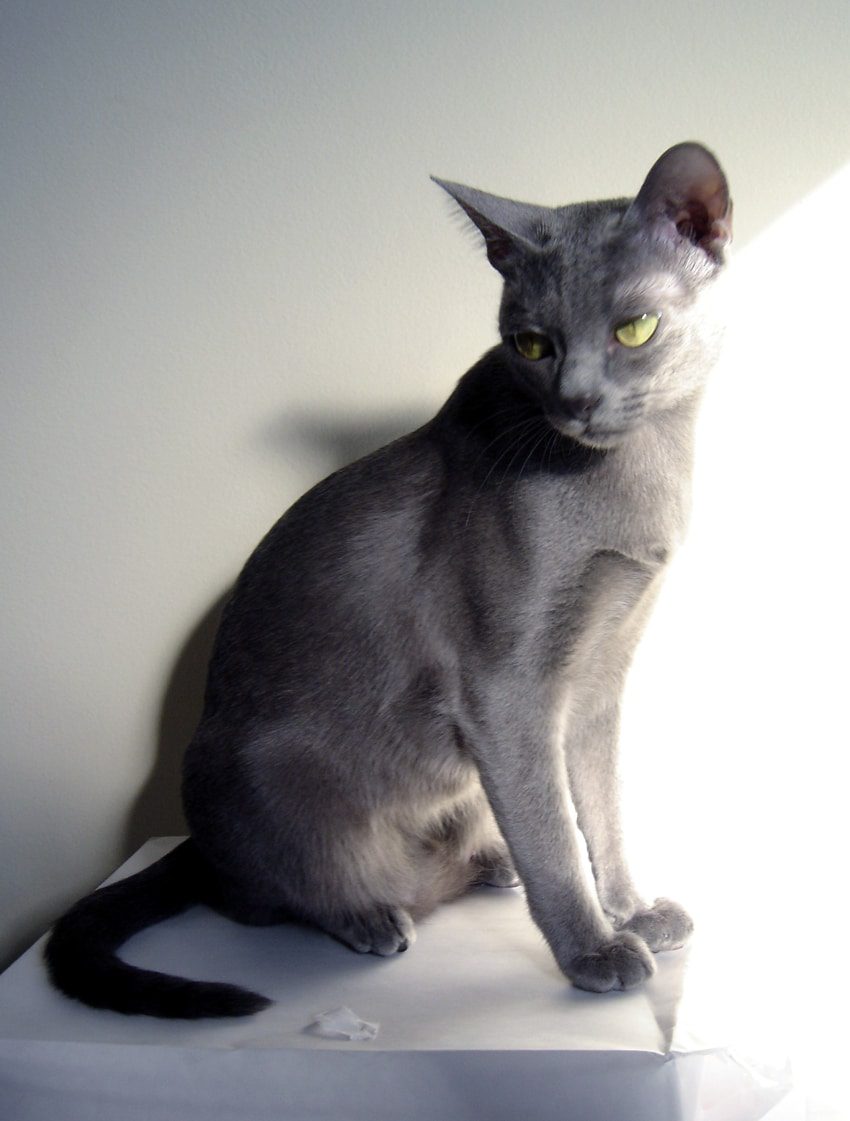
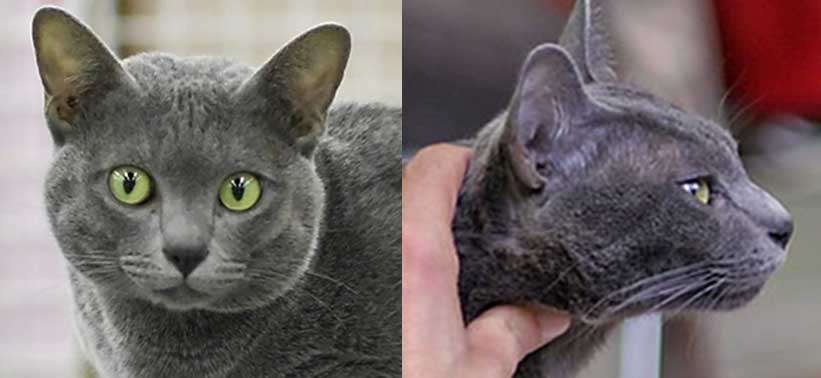
Its head looks quite unusual: seen from the front, it has a heart shape, with ears large, round tip and high implantation. Their eyes large, round and expressive look oversized for your head, but they retain the typical "oriental" inclination when closed or half closed. Kittens usually have yellow-amber eyes, but they turn green when they mature.

The fur it's short to medium, without Undercoat. Fine and closed, tends to bristle on the back when in motion. The coat is a uniform silvery blue color, no shading, marks or stains. The coat is glossier at the root, then tints to a darker blue and ends with a pronounced silver sheen. In the extremities of the body, where the hair is shorter, this silver glow is more intense.

The sexual dimorphism is moderately marked, the female being slightly smaller than the male.

Size and weight

  • Male size: 22 – 28 cm.
  • female size: 20 – 26 cm.
  • Male weight: 3,5 – 4,5 kg
  • female weight: 2,5 – 4 kg

Varieties:

In the Korat a recessive gene has appeared that can cause the silvery-blue color to fade, so it is not uncommon for kittens to be born with a purple-lilac color. This unrecognized variety is known as thai lilac.

Character and skills

Korat
Sitting female Korat cat with typical bulbous green eyes and blue sheen – Heikkisiltala, CC BY 3.0, via Wikimedia Commons
gentle and affectionate, the Korat he is unfailingly loyal to his master, whose company constantly seeks. He likes pampering, and spends most of the time near him to receive caresses and attention. It is not a breed of cat that easily supports loneliness: he does not like to stay home without his family, and if you have to stay there too long and too often, he runs the risk of shutting down and losing his usual affection.

The Korat it is also a breed of cat that adapts to children, appreciating playing with them and spending time with them. On the other hand, does not seek the company of other cats: between their fellow humans and the humans in their family, your preference is quite found. Its calm character makes it normally tolerate the presence of other cats or dogs accustomed to cats in its territory without problems., as long as it remains the main focus of its owner's attention. On the other hand, coexistence with birds or small rodents is not recommended.

Lively and playful, likes to chase a ball or chase paper balls thrown by their owner. But, no matter how active it is, he is not the destructive type and is perfectly comfortable in a flat without going out as long as his family takes the time to play with him.

By the way, noise and commotion are not for him either. Although they can tolerate the noise of a television or computer, they are likely to be startled by a loud ringing phone or if a family member starts listening to loud music.

It is a very intelligent and docile cat, that can be trained relatively easily and that respects, for example, the places that are forbidden, like the dining room table, the kitchen or the clothes closet. Last, the Korat it's not very noisy. Instead of meowing, often chooses to attract attention by rubbing around the paws or nibbling on the balls of the feet. But, they don't shut up: if they think they have something important to say, they do not hesitate to do it.

In short, its qualities and characteristics combine to make it a suitable breed as a first cat for someone with sufficient availability, but that will also delight an experienced owner.

Grooming and caring for the "Korat cat"

When it comes to coat care, cats Korat they do not have any complications. Their short coat, fine and silky does not require any special care. Regular brushing with a soft brush or comb is sufficient. The silver gray cloak with its silver hair tips has no undercoat, so it only needs to be brushed more frequently during the coat change season. However, it is worth brushing the Korat regularly, since this affectionate cat enjoys any kind of attention.

Being a house cat that does not explore the outside much, even when you have free access to it, it doesn't get very dirty, so it is generally not necessary to bathe him.

Indoor or outdoor cat?

Like al European shorthair cat (Common european cat), to the cats Korat they love to be outdoors and roam. So, it is perfect if you live in a rural area and you can grant them free access. It is possible to keep them only inside. If you are willing to spend a lot of time with your new housemate and can offer them a safe garden or at least a safe outside area, the Korat you will feel comfortable even without access to the outside.

How much activity does he need? "Korat cat"?

Purebred cats are very active cats that need adequate exercise and opportunities to climb and, If it is possible, access to the outside. But even if you can give them free access, love getting attention and are reluctant to stop playing and snuggling together. Basically, if you have a Korat at home, you will discover that he likes to be with you in everything you do and seeks your closeness. Ideally, allow the Korat have a partner of your own, so that in case of doubt, always have a playmate available.

Health and nutrition

Korat
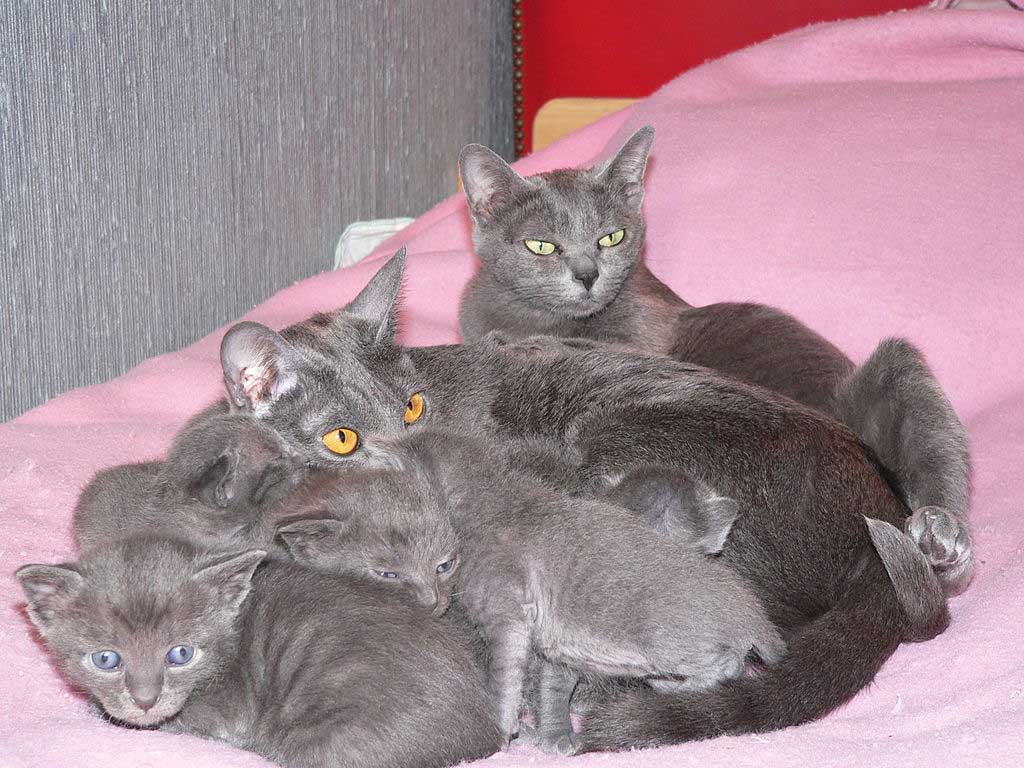
Korat breed cat family – fr:User:Epita, Max BOUCHE for the KORAT CLUB DE FRANCE, CC BY 2.5, via Wikimedia Commons
The Korat it is a robust cat breed, but it can be affected by certain health problems, starting by :

  • The gangliosidosis, an inherited disease that attacks the nervous system and causes paralysis. Can be detected by a parent and / or kitten test, but any Korat breeder worthy of this name is in charge of eliminating this risk by discarding any carrier individual from reproduction.;
  • the Hypertrophic cardiomyopathy (CMH), a syndrome that makes it difficult for the heart to circulate blood, with potentially very serious consequences for the key.

It also, the Korat appears to be more sensitive than other breeds to certain vaccines. So, it is advisable to ensure that the vet, when taking care of cat vaccinations, know this particularity of the Korat and take all necessary precautions.

Life expectancy

Of 12 to 15 years

Food

Not so difficult, the Korat can be fed with cat food from the market, which are croquettes or patรฉ boxes. But, it is necessary to ensure the quality of the feed, which should provide you with all the essential nutrients for your good health.

like most cats, the Korat is capable of self-regulation, and you can thus permanently leave food at your disposal – at the same time as fresh water – without rushing over her like a hungry man. But, care must be taken that the daily ration given is reasonable, to avoid the risk of the cat becoming overweight or obese, which can cause various diseases and health problems. If required, do not hesitate to consult a veterinarian to choose a suitable diet, depending on the cat's lifestyle.

For sale "Korat cat"

The price of a kitten Korat often haunt them 1.400 EUR. There is no significant price difference between a male and female kitten.

As the number of breeders of Korat is relatively small, you will have to be prepared for waiting times. But the wait is worth it, because Korat cats are robust cats that are not affected by overbreeding and convince with their character.

Videos "Korat cat"

Cute Korat Cat Meowing - Adorable Grey Korat Kittens Purring

Jake The Korat Makes The Purr-fect Therapy Cat | Cats 101

Alternative names:

  • Si sawat
  • The goal
  • Khorat
  • Maeo Dok-Lao
  • Bluish gray cat
  • Lucky cat

  • โ–ท The world of Pets: Dogs, cats, birds, reptiles, amphibians

    Jungala Ocicat cat
    Federations: CATZ

    Content

    History

    Most people have heard of or seen cats. Ocicats, But you never hear about the classic "Jungala". An image of one may not be found on a website, that farmers are allowed to breed with them, However, they may not exhibit them. There are three additional variants in the breed Ocicat, The classic ยซJungala,ยป, the classic tabby Ocicat which in New Zealand is called a cat Jungala, as well as the name of the race of the Ocicat cat (‘Ociโ€˜), It is derived from the name of the cat of Ocelot, a "wild" Central American or a cat "jungle", The new name in Spain for the "Jungala", which is also taken from the Sanskrit word that means "the jungle".

    "Jungala Ocicat cat"

    This breed was achieved by crossing a mixture of the Abyssinian cat, the Siamese cat and of the American shorthair cat. As such, is a home race, that was selectively bred to emulate the ocelot is found in nature, while retaining the friendly disposition of domestic.

    In New Zealand, the first cats Jungala were registered by the Karakakat kennel, with CATZ Incorporated, who recognized the Jungala cat as an independent breed with full championship status in August 2001.

    Physical characteristics

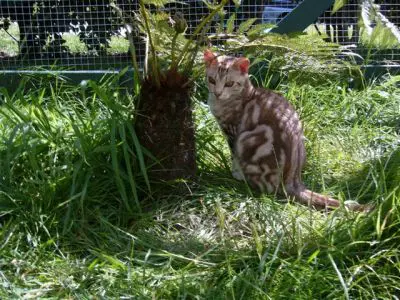
    The so -called "Jungala" is a Ocicat cat without stains. Or more specifically, a cat with genetics Ocicat that express only one pattern Tabby Classic. The conformation and personality type are exactly the same as an Ocicat, but the pattern should conform to that of the classic brindle model of the American shorthair cat

    "Jungala Ocicat cat"

    The Oci-Classic has a large bullseye circle on each side of the torso broadly defined with a beautiful color contrast. Their stomachs are also marked with spots. The spotted kittens are very nice, the classical coloring is awesome, with a luxurious and exceptional velvety color, an authentic and unusual color combination. Are highly prized for its stunning beauty. This pattern is especially striking when viewed on a Tabby Silver, where the silver under light allows a strong contrast with the marks of the final layer color depth.

    Character and skills

    The Jungala cat, just like their counterparts Ocicat, they are very sociable and somewhat similar to dogs in their devotion for the people. They are bright, easily manageable and often are outgoing, even with strangers. As such, they are an ideal cat for households where there are other pets and children.

    Source: catzinc.org