โ–ท The world of Pets: Dogs, cats, birds, reptiles, amphibians

Macquarie parakeet โ€ 
Cyanoramphus erythrotis

Macquarie Parakeet - Cyanoramphus erythrotis

Content

Description Perico Macquarie:

27 cm.. length

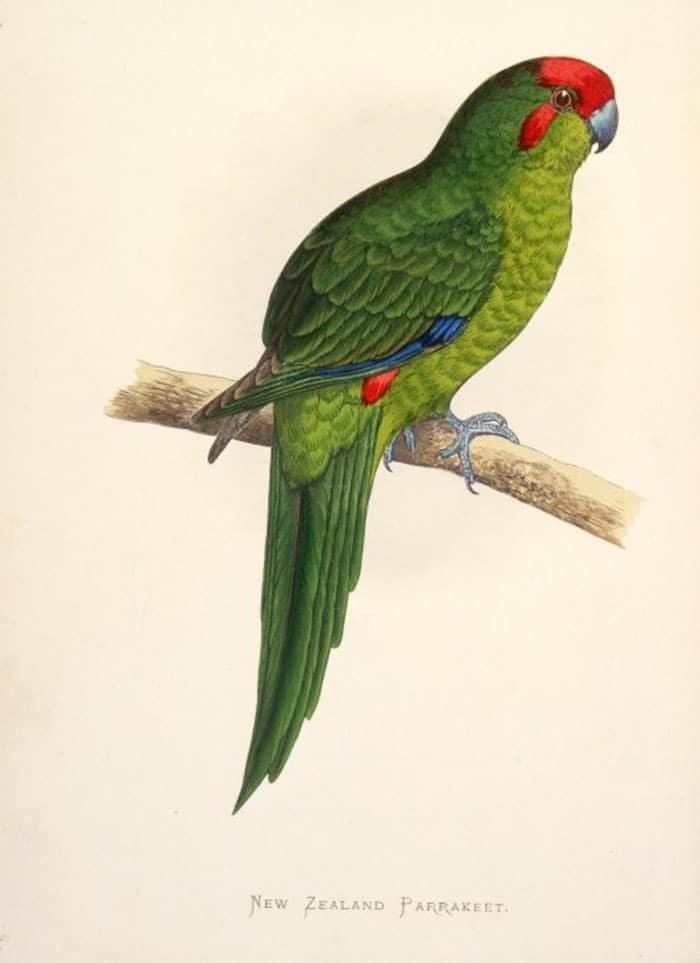
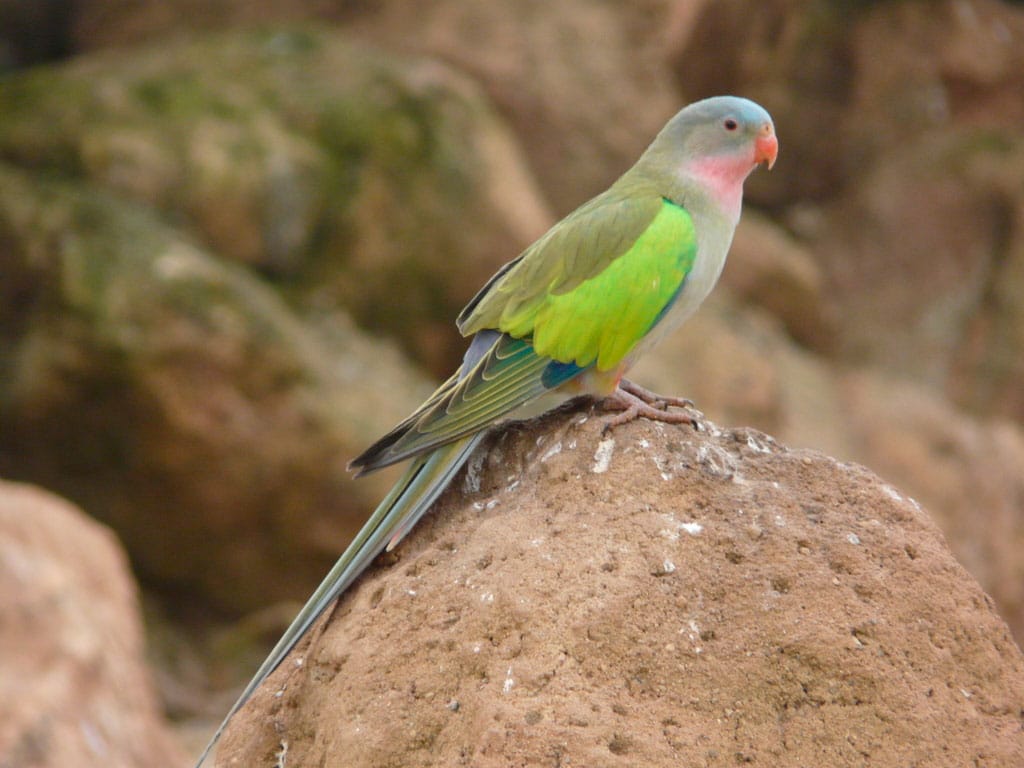
The extinct Macquarie Parakeet (Cyanoramphus erythrotis) was a medium-sized green parrot. The head was bright green with pileum and a line in the eyes crimson red. The upperparts They were bright yellow-green to dark green with a scarlet stain on either side of the rump (usually they are hidden by the wings when resting), and a greenish-blue leading edge to the wings. The eyes They were yellow or red, and the bill It was black with a base Pearly. Both sexes looked similar, but the female It was smaller (Forshaw & Cooper 1981; Higgins 1999; Oliver 1955)

Taxonomic status:

This taxon is considered a subspecies of Cyanoramphus [novaezelandiae, erythrotis, subflavescens] (sensu lato) by some authors

Lives in "Perico de Macquarie":

The Macquarie Parakeet inhabited coastal grasslands tussock in the subantarctic Isla Macquarie (Forshaw & Cooper 1981; Taylor 1979).

Reproduction:

It is known nesting in grasslands without trees.

Food ยซPerico de Macquarieยป:

Little is known about the diet of the Macquarie Parakeet, but it is said that feed on crustaceans and other small invertebrates (Oliver 1955; Taylor 1979).

It was Earth (Forshaw & Cooper 1981) and it is said to have been foraged on the seashore, taking invertebrates fused cell algae on the beach (Oliver 1955; Taylor 1979).

Distribution ยซPerico de Macquarieยป:

The Macquarie Parakeet It was an endemic parrot Isla Macquarie, one sub-Antarctic island in the Antartic Ocean which is politically part of Tasmania Australia. The island and this species were discovered in 1810, time when this parakeet was still very common. The last sighting of the Perico de la Isla Macquarie was in 1891.

Conservation Cyanoramphus erythrotis:

โ€ข Current category of the Red List of the UICN: EXTINCT.

Although hard Macquarie Parakeet They were adjusted well to inhospitable terrestrial environment Macquarie Island, They did not survive the predatory introduced species.

The extinction of the Macquarie Parakeet It was caused by the introduction of exotic predators, like cats, rabbits, mice and rats boat. He was also prey to rascรณn weka or the rascรณn of Lord Howe (Gallirallus australis). This robust flightless bird from New Zealand It was introduced on the island in the mid-nineteenth century as food for sealers, the same hunters killed large numbers of Macquarie's Parakeets (Macquarie Island) to feed. Unfortunately, the wekas They have caused considerable damage to endangered species, as they feed on small birds, Native insects and lizards.

The last sighting of live parrots occurred in 1891

Threat Reduction and Recovery

Translocation program may be suitable for the reintroduction of Norfolk Island Parakeet (Cyanoramphus cookii) on Isla Macquarie. Although programs have been tested for translocation failed Norfolk Island Parakeet (Garnett & Crowley 2000; Hermes et al. 1986), Similar programs have been successful for this parakeet in New Zealand. These programs have been successful with only 15 birds, Bottlenecks causing genetic programs with less than 150 birds. The low success of the pups in the breeding program New Zealand It may be the result of inbreeding depression or poor design of nests (Oritz-Cathedral & Brunton 2008).

The programs of eradication They are underway in Isla Macquarie. The cats were eradicated in 2002, the Keep (Gallirallus australis) in 1988 and is ongoing eradication program rats, rabbits and mice (Mouse muscle) (it. PWS 2009).

Alternative names:

Macquarie Island Parakeet, Macquarie Parakeet (English).
Perruche de Macquarie (French).
Macquarie-Laufsittich, Macquarie-Ziegensittich (German).
Periquito de Macquarie (Portuguese).
Perico de Macquarie (espaรฑol).

scientific classification:

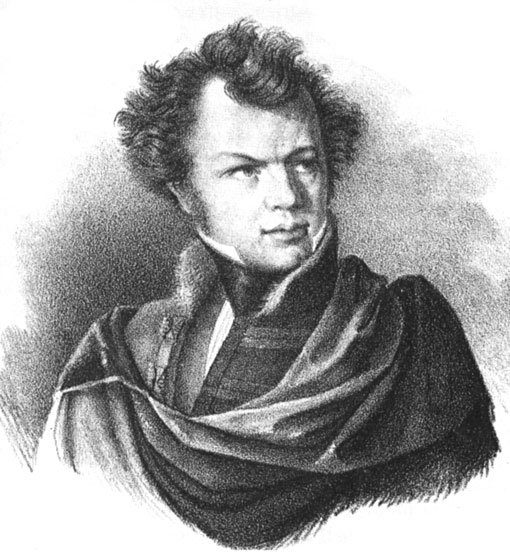
Johann Georg Wagler
Johann Georg Wagler

Order: Psittaciformes
Family: Psittaculidae
Gender: Cyanoramphus
Scientific name: Cyanoramphus erythrotis
Subpoena: (Wagler, 1832)
Protonimo: Psittacus erythrotis

Sources:

โ€ข Avibase
โ€ข Parrots of the World โ€“ Forshaw Joseph M
โ€ข Parrots A Guide to the Parrots of the World – Tony Juniper & Mike Parr
โ€ข Department of the Environment (2018). Cyanoramphus novaezelandiae erythrotis in Species Profile and Threats Database, Department of the Environment, Canberra. Available from: http://www.environment.gov.au/sprat

โ–ท The world of Pets: Dogs, cats, birds, reptiles, amphibians

Budgerigar
Melopsittacus undulatus


Common Budgie

Content

Description

18 cm. length and a weight between 22 and 32 g..

Periquito-Comun

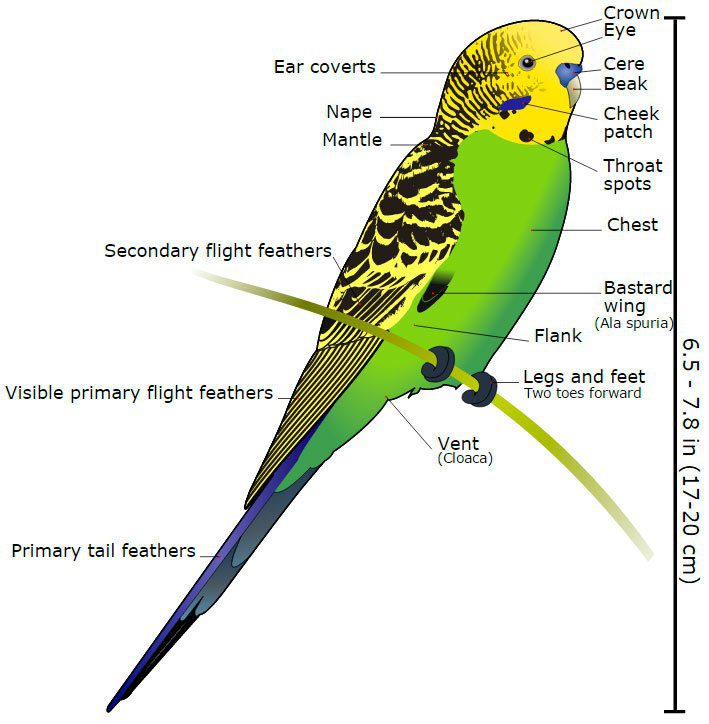
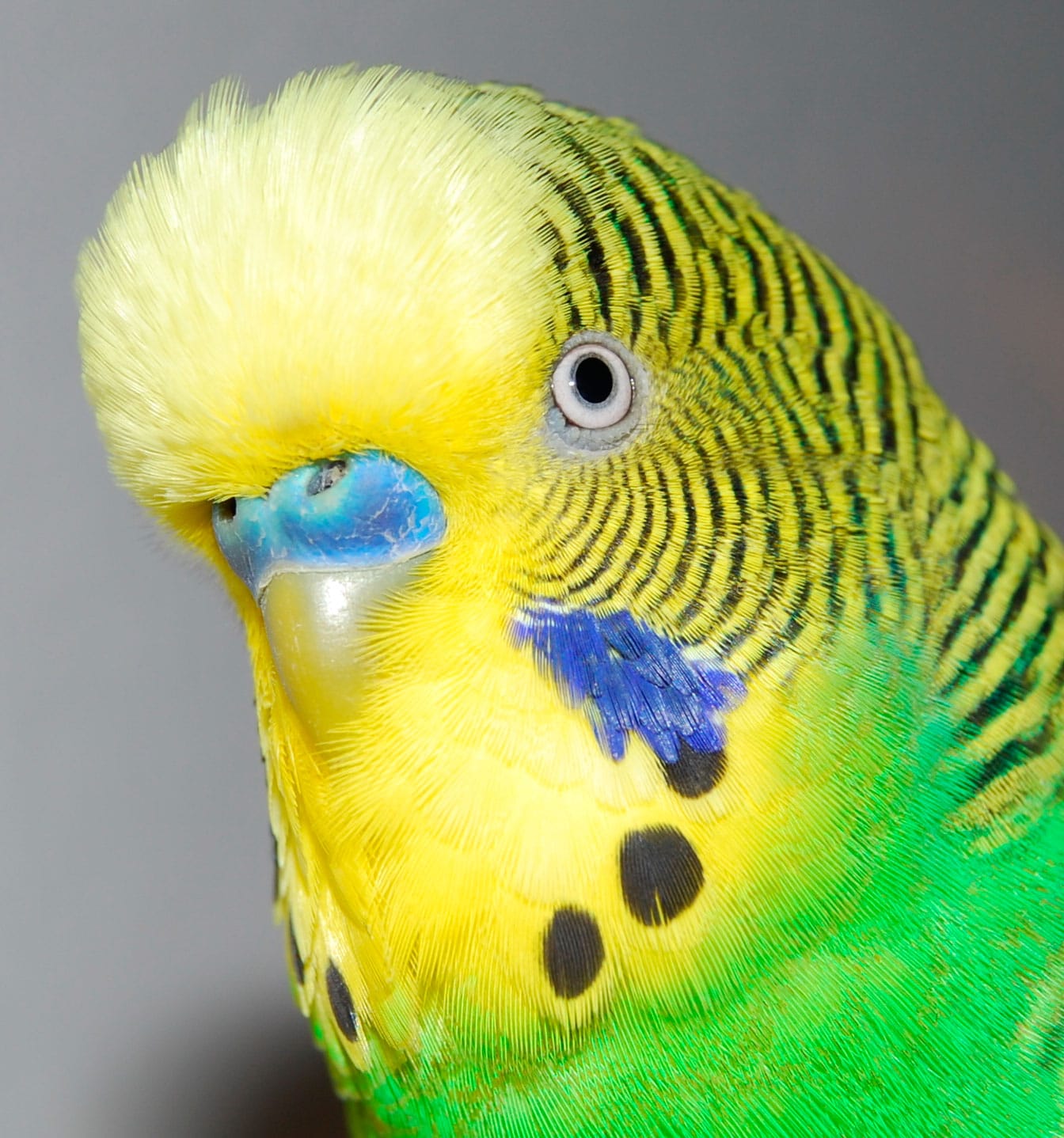
In the Budgerigar (Melopsittacus undulatus) of adults, the cere Blue contrasts with the frontal zone; the front of the face and throat are pale yellow. The latter is covered by a line of black dots. The area which is located below the cheeks it's purple.

The central part of the pileum extending from the rear of the eyes to neck It is covered with alternating thin black bands and bands of pale yellow. These bars are expanded on the the mantle and wing-coverts, forming a scaly effect.

The underparts, the area beneath the wings, the lower part of the back and rump create a beautiful pale green together. The tail is opaque blue tones with a central yellow stripe on the side feathers.

The female has a Brown wax.

The immature they are more turned off with bars on the front. The black spots on the throat they are absent.

Habitat:

The Budgerigar they are distributed by a wide variety of open habitats, including open forests, lightly wooded grasslands and savannas. Also appreciate the areas of Mallee, farmland, vegetation that grows along rivers, drought-adapted scrub and open plains. They come fitted with desert areas of Mulga (Acacia aneura). Although they are able to survive several days without water, These birds are never far from a water source.

In areas where fruit production is constant and in others where it is stable for very long periods, the movements of the Budgerigar they are easily predictable.

In the South end, Pilgrimages exist only in cases of prolonged drought and wandering parakeets return to their territory with the first rains and recolonize when river levels return to normal.

Reproduction:

The Budgerigar they build their nests of June to September in the North its area of distribution. They reproduce between August and January in the South. Nests can be installed at any time of the year after the rains fall. They establish a second brood as soon as conditions are favorable.

These parakeets usually nest in colonial way. The nest is located in a natural cavity in a tree, in a strain, an any fence post, or on a big fallen branch.

The female lays from 4 to 6 eggs and incubation lasts a few 18 days. The chicks remain in place of birth during 30 days before flying.

Food:

The Budgerigar It vegetarian, they eat herbs and seeds of quenopodios. Plants vary in categories and in proportions, according to which regions and times.

The East inside of Australia, These birds feed exclusively on seeds that are on the ground, While in the middle of the continent, There is more variety of plants to select. In the first case, grain size barely exceeds the 2 mm diameter and the second, more than 40 plant varieties make up the diet of these parakeets.

From time to time, the Budgerigar, they come in growing areas and take advantage of the ripe fruits.

Distribution:

The Budgerigar are distributed widely throughout the Interior of Australia, Although they are rare in the coastal districts of the This and the end South-West (absent of Tasmania, Arnhem Land and Cape York Peninsula).

The species may be of common to very abundant, but they are nomadic, and may change from year to year areas.

These parakeets, frequently, they burst from the arid zones to the more humid zones and there are temporary movements towards the south during the summer, but these changes may be affected by annual rainfall patterns.

We have introduced, without success, in a number of places around the world (or they have escaped from captivity and could not be) including South Africa, United Kingdom, Japan, Hong Kong, Puerto Rico, Brazil, Switzerland, Colombia, the Society Islands, New Zealand and Oman.

In the EE.UU. the species has managed to colonize Hawai and California (leaks also occur regularly in the city of New York City). In Florida a population was originally registered in the area of St. Petersburg, in the decade of 1950 and now has more of 3.000 individuals; These birds are mobile and have been recorded along the coast This of all the South from Jacksonville to Miami, and in the West everything Hudson to South of Fort Myers, from time to time go towards the North in Gainsville.

Parakeets, occasionally escaped, they may appear in Tasmania.

The world population is estimated at around 5.000,000 copies.

Conservation:


minor concern


โ€ข Current category of the Red List of the UICN: Least concern

โ€ข Population Trend: Growing

This species is not threatened at all, even they are abundant, and in some places where resources are good, countless flocks darken the sky, to cause branches to break from 4 centimeters in diameter, When large number of birds used them as support for their breaks.

Populations fluctuate widely depending on weather conditions.

Livestock living on farms in central Australia have caused Budgerigar they will benefit from new water supplies. Like this, the number of parakeets are constantly increasing.

These parakeets are the most well known psittacidas in the world.

"Budgerigar" in captivity:

This parakeet was discovered in 1805 and since then it has become the most popular captive bird in the world. While it is considered as domestic fowl, However, is a gregarious and instinctive animal, with the same needs that the parrots who freely roam the lands of Australia.

The Budgerigar It dynamic, curious, melodious and because of its small size, the beauty of their plumage and their entertaining behaviour, truly charming. This is what makes it a coveted bird. But, It is still a bird that needs to fly, play and socialize with their peers. Like any bird, It is sensitive to the social and environmental context. In fact, their real needs are too often overlooked, many parakeets suffer neglect or even abuse.

In captivity, the Budgerigar It is larger than its counterpart in nature. Measures of 20 to 25 cm. from head to tail and weighs between 30 and 45 g.. In addition to the colour of your coat, wild type, There are numerous mutations (other coat colors) associated with the increase in crossings and selections in certain genes, that translates into more spontaneous mutations.

The Budgerigar has two silent by year average, and the first moult occurs between the fourth and sixth month. The molt is complete renovation of the plumage of the bird. Pens fall to others push, includes your tube of keratin that parakeets will open with their beaks to release pen and relieve the irritation that engenders the same thrust. It can be more or less painful and intense. Some plucking is so fast that the bird may experience some difficulties during the flight.

Check the intensity of the change of the parakeet through black head tubes, tiredness and especially the number of feathers on the ground.

The feeding of the Budgerigar is based on the millet and the birdseed, Although it must be complemented with other seeds or vegetables (as the lettuce, Spinach, pepper, Carrot, corn). The fruits are also a good dietary supplement for these birds. Occasionally it can provide a little bread or biscuit, but always with caution that not give them anything very sweet. The avocado, the chocolate and the parsley they are deadly toxic for the Australian parakeets.

The the parakeet cage must be protected from the cold, a temperature between the 20-25 C. It must be of one sufficient size so you have freedom of movement and can exercise. The balusters must be arranged horizontally so that they can climb up them. The cage must be washed at least once a month with a disinfectant, change the water daily and clean the shells of the food. A cat litter tray can be placed to make their needs.
It is also important to let the parakeet out occasionally and fly freely around the room. Windows must be closed and curtains, because you can hit them.
Son very sociable birds and it is better to live with other parakeet. The best couple is formed by a male and a female. This will try to kill its companion if it is of the same gender.

With regard to its longevity, according to sources, these animals can come to live until 21 years in captivity. The same sources indicate that these parakeets suffer from a high incidence with respect to ovarian cancer.

Alternative names:

Budgerigar, Budgerygah, Budgie, Canary Parrot, Grass-Parakeet, Lovebird, Scalloped Parrot, Shell Parakeet, Shell Parrot, Undulated Parrot, Warbling Grass-Parrot, Zebra Parrot (ingles).
Perruche ondulรฉe (French).
Wellensittich (German).
Periquito-australiano (Portuguese).
Periquito Australiano, Periquito Comรบn, Cotorra Australiana, Cata Australiana (espaรฑol).

scientific classification:

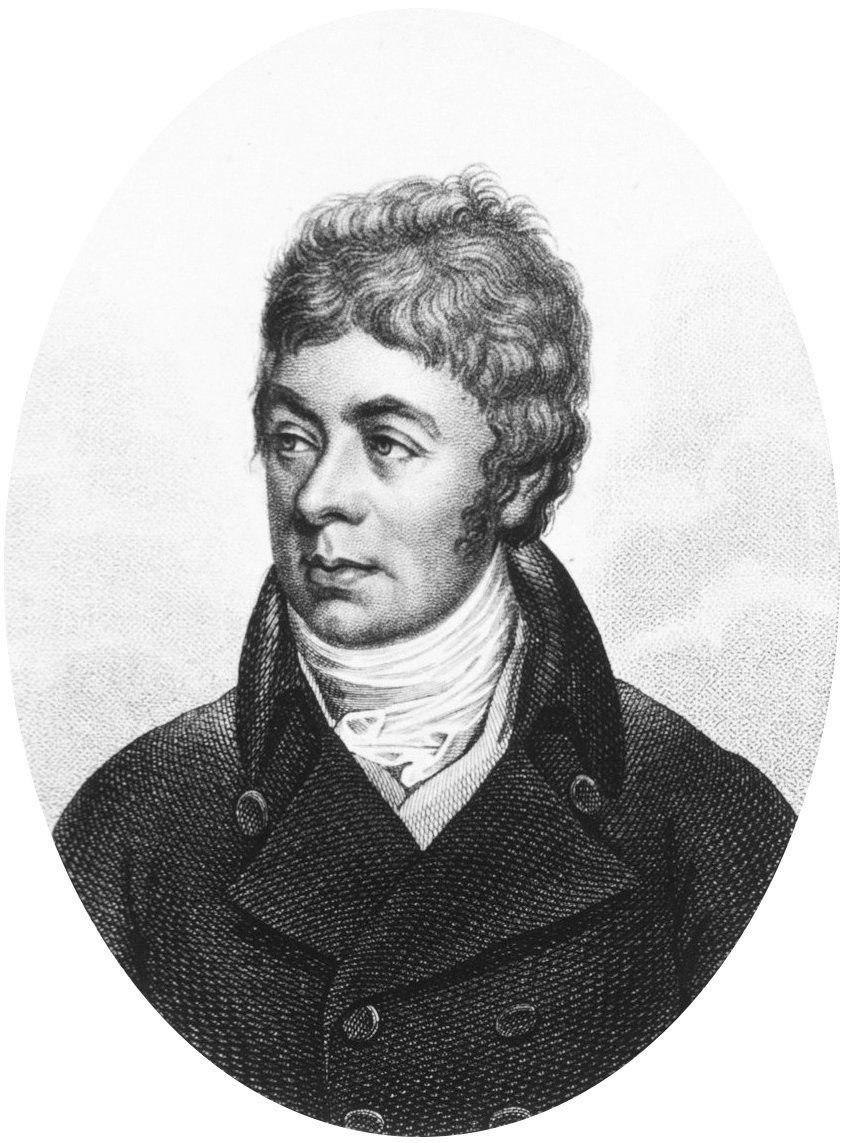
George Shaw


Order: Psittaciformes
Family: Psittaculidae
Genus: Budgerigar
Scientific name: Melopsittacus undulatus
Citation: (Shaw, 1805)
Protonimo: Psittacus undulatus

ยซCommon Parakeetยป Images:

Videos "Budgerigar"

————————————————————————————————

ยซCommon Parakeetยป (Melopsittacus undulatus)


Sources:

Avibase
– Parrots of the World โ€“ Forshaw Joseph M
– Parrots A Guide to the Parrots of the World – Tony Juniper & Mike Parr
– Birdlife

Photos:

(1) – Budgerigar at Zoo Atlanta, USA By TheSussman (Mike) (originally posted to Flickr as Parakeet) [CC BY 2.0], via Wikimedia Commons
(2) – Two budgerigar at Henry Doorly Zoo, USA By Jeff Coffman (originally posted to Flickr as DSC_1265) [CC BY 2.0], via Wikimedia Commons
(3) – male budgerigar. taken near Cameronโ€™s Corner, Qld By Benjamint444 (Own work) [GFDL 1.2], via Wikimedia Commons
(4) – Detail shot of budgerigars head By Kirk (Own work) [CC BY-SA 3.0 or GFDL], via Wikimedia Commons
(5) – Melopsittacus undulatus flock, Karratha, Pilbara region, Western Australia By Jim Bendon from Karratha, Australia (budgies_4) [CC BY-SA 2.0], via Wikimedia Commons
(6) – By User Magnus Manske on en.wikipedia [Public domain], via Wikimedia Commons
(7) – Exterior diagram of a green budgerigar By ZooFari [CC BY-SA 3.0], via Wikimedia Commons

Sounds: Marc Anderson (Xeno-canto)

โ–ท The world of Pets: Dogs, cats, birds, reptiles, amphibians

Double-eyed Fig-Parrot
Cyclopsitta Diophthalma


Double-eyed Fig-Parrot

Content

Description

13 to 16 cm.. length and a weight between 25 and 56 g..

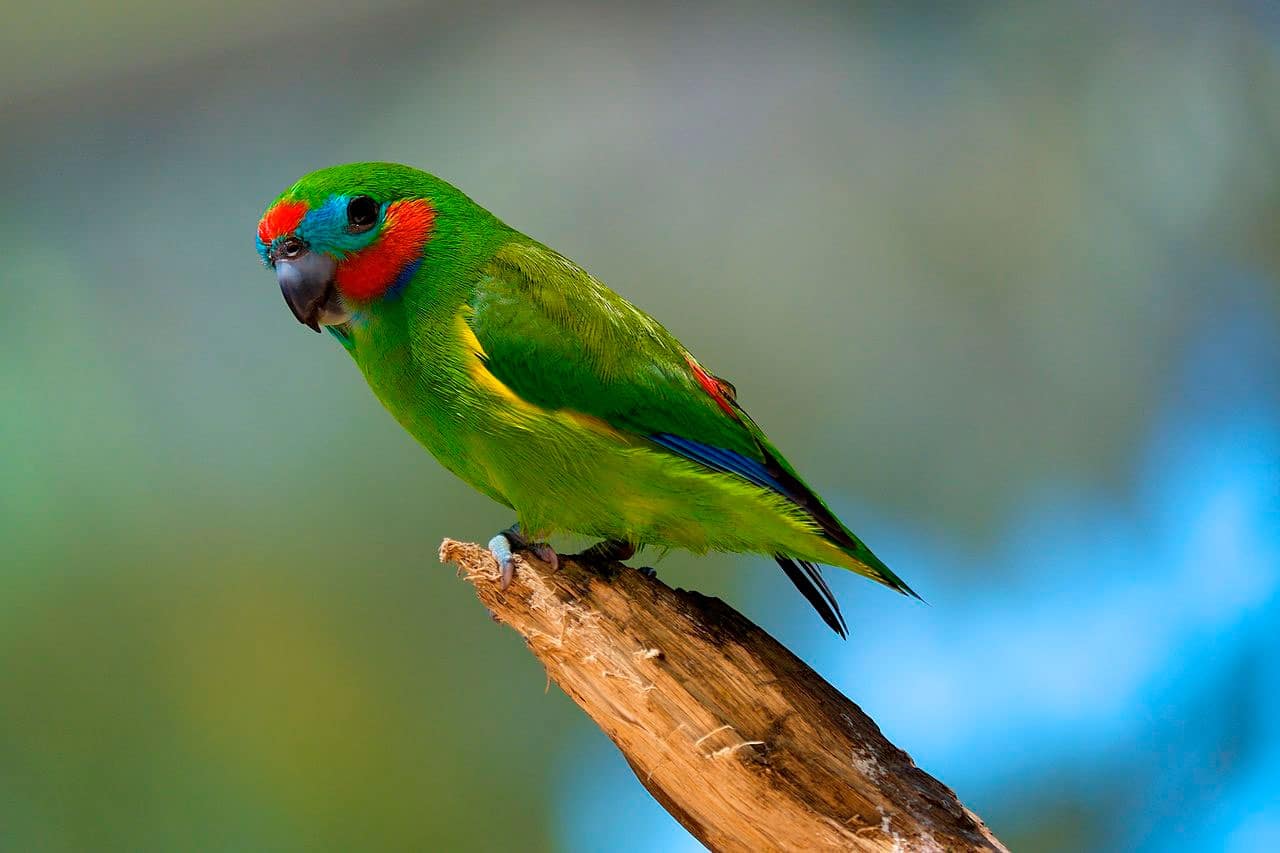
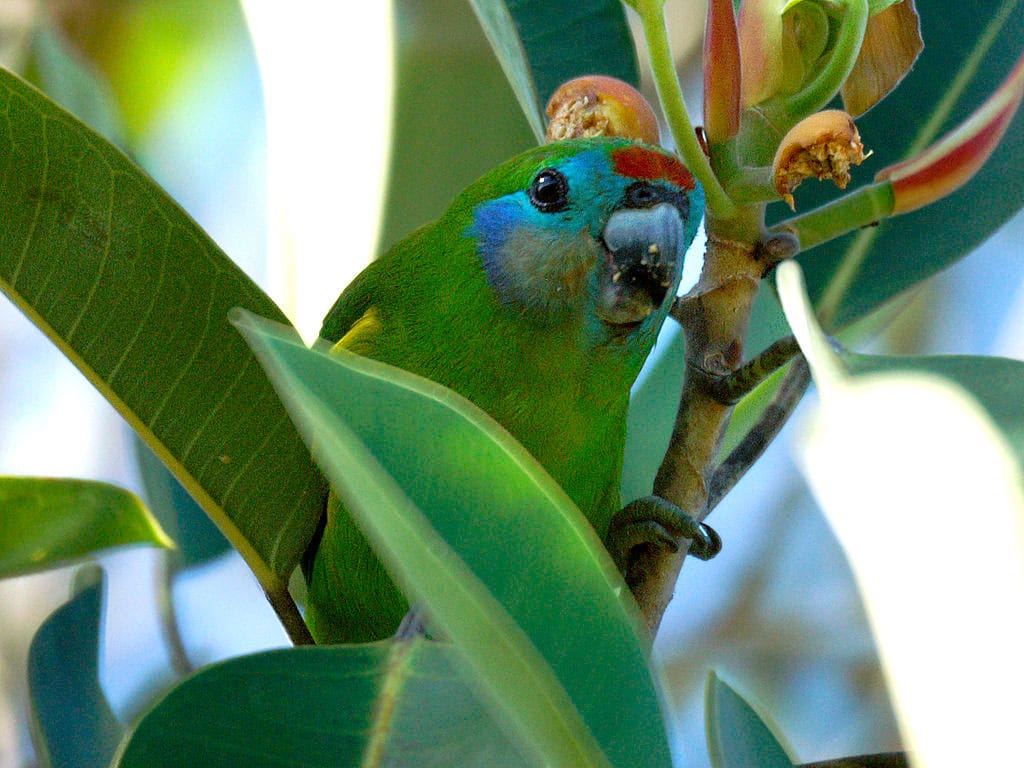
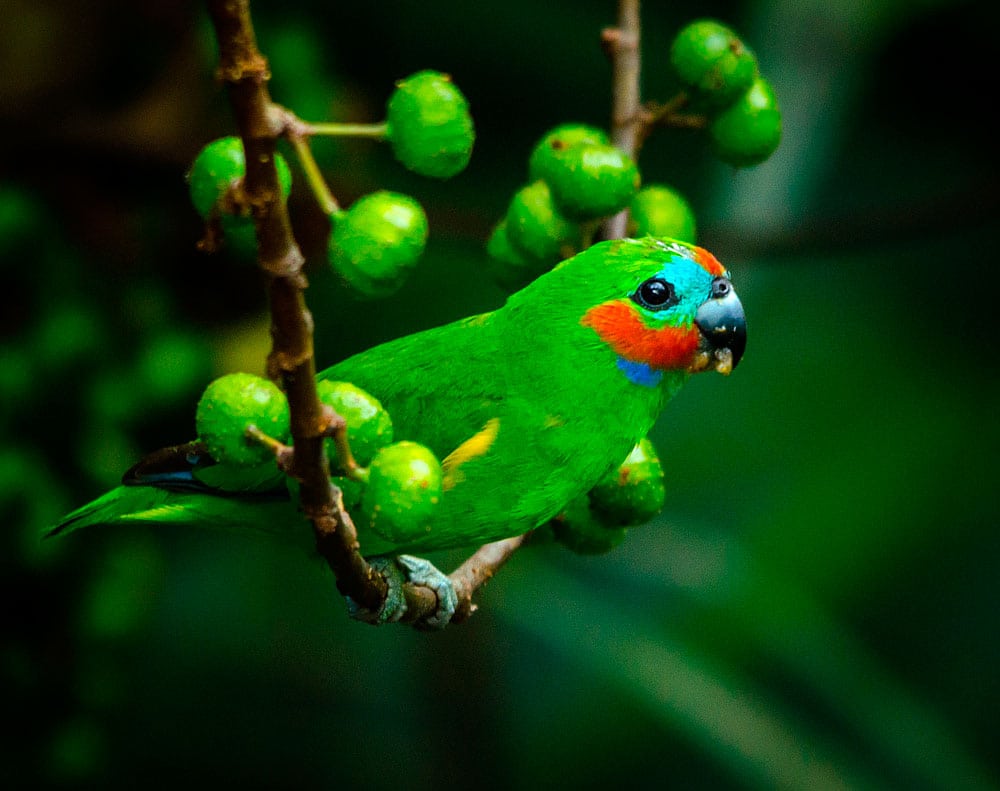
The Double-eyed Fig-Parrot (Cyclopsitta Diophthalma) half of the crown, lores, cheeks and headphones feathers bright Scarlet color with some slightly elongated feathers; bright turquoise brand above and in front of the eyes, that it extends slightly backwards above and below; green line above and behind the eyes; brand violet-blue light under the red on the back of the headphones feathers that extends to the throat; narrow yellowish Orange behind the red band of the crown, Fusion to the green in the part back from the crown.

Upperparts with indistinct diffusion of color bright green olive on the the mantle. Wing coverts, bright green; primary coverts blue; primaries with vane external of color blue turquoise pale and vane blackish internals; flight feather (except the primary outer) with band of yellowish white color visible from below; inner coverts marked in red, wing feathers bordered with yellow green.

The underparts paler; Green over yellow that the upperparts, with a strong Flash of yellow along the flank, about the bend of wing. Upper, the tail green; grey below.

Robust bill, notched grey lead and a blackish tip; cere dark grey; irises dark brown; legs Green grey.

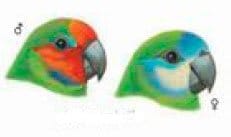
The female has the cheeks brown, not red.

Immature as the females. The young male acquire the plumage adult in 14 months.

Subspecies description

Subspecies description
  • Cyclopsitta diophthalma diophthalma

    : (Hombron and Jacquinot, 1841) – The nominal

  • Diophthalma diophthalma aruensis - male

  • Cyclopsitta diophthalma aruensis

    : (Schlegel, 1874) – Of 14 cm.. length. The plumage is greenish-yellow, the blue area on the eyes has greenish hue , Blue cheeks are lined with mauve colouration and extends to the bottom of the peak.

    Female similar to the male but all the red marks are replaced by a pale blue.

  • Diophthalma diophthalma coccineifrons

  • Cyclopsitta diophthalma coccineifrons

    : (Sharpe, 1882) – Of 14 cm.. length.

    It is usually something more dark. The Crown is red bordered with a broad yellow band.

    The female has less yellowish white.

  • Diophthalma diophthalma virago - male

  • Cyclopsitta diophthalma virago

    : (ECTION Hartert, 1895) – Of 14 cm.. length.

    Green is more pale, the red zones of the face are less extensive and more pale.
    Yellow edge of the very weak Crown.

    Juveniles as adult females

  • Diophthalma diophthalma inseparabilis

  • Cyclopsitta diophthalma inseparabilis

    : (ECTION Hartert, 1898) – Of 14 cm.. length.

    The Red coloration is reduced to a small spot on the forehead, the rest of the forehead is bluish.

    Similar to males females.

    Juveniles as adult females.

  • Diophthalma diophthalma macleayana

  • Cyclopsitta diophthalma macleayana

    : (EP Ramsay, 1874) – Of 14 cm.. length.

    The Red is reduced to a red spot in the front area and lower cheeks. The yellow border in the area of the Crown is absent, sides of the forehead and eyes blue with green. The azul-violaceos edges of the cheek extends to below the peak.

    Females more yellowish and the bottom of the cheeks is white Brown.

    Equal to the adult female juveniles.

  • Diophthalma diophthalma marshalli

  • Cyclopsitta diophthalma marshalli

    : (Iredale, 1946) – Of 14 cm.. length.

    Green is more beige and the azul-malva coloration extends to the area under the peak.

    Females have pale blue color where the male has red and blackish brown cheek bottom area.

    Juveniles as adult females.

  • Diophthalma diophthalma coxeni

  • Cyclopsitta diophthalma coxeni

    : (Gould, 1867) – It's a bit more large, of about 15 cm.. approximately, No red forehead and face with some reddish feathers, the cheeks and orange headphones feathers. Blue front clear and without yellow stripe. The area of the eyes is absent blue. Blue edges of the bottom of the cheeks is variable.

    The females are more yellowish with less or absent red in the face.

    Equal to the adult female juveniles.

Habitat:

The Double-eyed Fig-Parrot are sedentary, with some dispersion after the breeding season. It is in a range of habitats from low to medium altitude, including jungle, secondary vegetation, on the edge of the Woods, riparian forest and occasionally dry forests and open forests of eucalyptus.

In Australia There are also birds in parks, Gardens, scrub, cultivated areas and mangroves; the Diophthalma diophthalma coxeni, probably, concentrated in the alluvial forest, but it was also visible in the forests of dry lowlands and hills of rainforest.

The species is highly dependent of the Ficus figs in all habitats.

The birds are usually found in pairs or in small groups, calling the attention with their constant calls acute while flying above the canopy.

They feed in silence, moving quietly through the foliage, often giving away their presence only by falling debris, Since break the shell of the fruit to reach its seeds.
outside the breeding season, groups of up to 200 birds can be nested together, dissolving into smaller groups to feed themselves during the morning and afternoon.

When alarmed, they move their wings in an agitated manner.

during the rains, the bath is carried out with wet foliage, and mutual grooming is common.

Reproduction:

The breeding season of the Double-eyed Fig-Parrot, probably begins in New Guinea during the month of March, in Australia the main season runs from August to November.

When the birds are played are divided into pairs, territorial around their food trees. The nest It is a cavity that is expanded in a trunk at a height between 8 and 20 meters above the ground. Most of the nest preparation is carried out by the female., that takes refuge in the hole and spends a large part of the day there during its excavation. She can experiment with more than one nest.

Courtship feeding is common. The entrance hole is about 4 cm in diameter, and putting two white eggs are deposited, at intervals of 48 hours, in one camera, some 20 centimetres below the entry hole.

The incubation hard 18 days and the young will leave the nest in 7-8 weeks, After having been fed during the first 3 to 4 weeks, only for the female. They return to settle in the hollow for a short period of time after having left the nest.

Food:

The fig seeds they are their main food, birds often return to the same ripe fruits ending all their seeds. The diet also includes whole fruits small, nectar, insect larvae and fungi or lichens collected from the barks. Birds may feed in groups with others Fig parrots and, in Australia, with Rosella parakeets and other species of parrots.

Distribution:

The Double-eyed Fig-Parrot is distributed throughout much of New Guinea and parts of the northeast of Australia. At the West end is located in Waigeo, Salawati, Misool and Rafiau in the West Papua islands, Indonesian.

Is widespread but distributed unevenly through the continental part of New Guinea, absent only in the center of the Doberai Peninsula and the central belt of mountains above the 1.600 m, Although there have previously been to 1.800 meters at the local level.

You can see in the islas Aru and Fergusson, in the Islands Goodenough in the D'Entrecasteaux Group, and in Tagula in the Louisiade group.

In Australia, the most northerly of the three isolated populations, is the tip of the Cape York Peninsula, from Jardine River in the northwest of the country, to the South, around East of Lockhart River, sometimes in the South to the extreme north of the Princess Charlotte Bay; the population Centre occupies the coastal district of everything Cooktown in the North through Cairns and the District Atherton, about South of Townsville; the southern-most population, now very reduced, with less than 50 records in the last century, formerly extended from Gympie, Queensland, to the South, about Richmond River, New South Wales, arriving inland up to the Bunya mountains (in 1976 two birds were about the Koreelah National Park, in February and two close Lamington National Park in December).

The estimate of the world population is above the 100.000 individuals and stable, but the State two of its subspecies is less secure:

– Cyclopsitta Diophthalma macleayana: has a population of 5.000 individuals and may be in decline, Although multiply in parks and gardens around Cairns.
– Cyclopsitta Diophthalma coxeni: just left 200 birds, After having reduced its population as a result of the destruction of the forests of lowlands along its limited distribution area.
– The third Australian subspecies, Cyclopsitta Diophthalma marshalli it's still pretty common.

In New Guinea, the species dispersed, and is considered to be rare in the Doberai Peninsula and absent from many parts of the lowlands of the South, is mainly distributed in the Highlands of the South basin. The Orange-breasted Fig-Parrot It probably replaces this species in much of this area. It is likely that the species has not been recorded accurately due to its small size and discreet habits. Protected by law in Australia. The Diophthalma diophthalma coxeni appears in the Appendix I of the CITES

Subspecies distribution

Subspecies distribution

Conservation:


minor concern


โ€ข Current IUCN Red List category: Least concern

โ€ข Population trend: Stable

The size of the world population Double-eyed Fig-Parrot It has not been quantified, Although it is estimated at more than 100,000 specimens. But, the Diophthalma diophthalma coxeni is in critical hazard, with a population between 50 and 200 individuals; the Diophthalma diophthalma macleayana with a population of some 5.000 individuals and the Diophthalma diophthalma marshalli generally uncommon

The population, of the nominal species, is suspected to be stable in the absence of evidence of any reduction or substantial threats.

"Double-eyed Fig-Parrot" in captivity:

Rare in captivity.
Not social with people. Welcome in the distance.

Alternative names:

Double-eyed Fig-Parrot, Double eyed Fig Parrot, Double-eyed Fig Parrot, Two-eyed Fig Parrot (ingles).
Psittacule double-oeil (French).
Rotwangen-Zwergpapagei (German).
Papagaio-do-figo-de-cara-azul (Portuguese).
Lorito de Cuatro Ojos, Lorito Dobleojo, Lorito de la higuera de doble ojo (espaรฑol).

scientific classification:

Order: Psittaciformes
Family: Psittaculidae
Scientific name: Cyclopsitta Diophthalma
Genus: Cyclopsitta
Citation: (Hombron & Jacquinot, 1841)
Protonimo: Psittacula diophthalma

Images "Lorito double":

Videos "Double-eyed Fig-Parrot"

————————————————————————————————

ยซLorito Doublerojoยป (Cyclopsitta Diophthalma)


Sources:

– Avibase
– Parrots of the World โ€“ Forshaw Joseph M
– Parrots A Guide to the Parrots of the World – Tony Juniper & Mike Parr
– Loromania

Photos:

(1) – ยซCyclopsitta diophthalma-Birdworld Kuranda, Queensland, Australia-male-8aยป by ShotophotoDouble Eyed Fig ParrotUploaded by snowmanradio. Licensed under CC BY-SA 2.0 via Wikimedia Commons.
(2) – John Gerrard Keulemans [Public domain], via Wikimedia Commons
(3) – ยซCyclopsitta diophthalma-Mossman Gorge, Daintree National Park, Queensland, Australia-male-8ยป by James Island from Brisbane, Australia – Double-Eyed Fig-ParrotUploaded by snowmanradio. Licensed under CC BY 2.0 via Wikimedia Commons.
(4) – ยซCyclopsitta Diophthalma (female) -Cairns-8ยป by David Cook Wildlife Photography – originally posted to Flickr as Double-eyed Fig-Parrot (Cyclopsitta Diophthalma). Licensed under CC BY-SA 2.0 via Wikimedia Commons.
(5) – Birds-pet-wallpapers
(6) – By tamandua – PBase

Sounds: Andrew Spencer (Xeno-canto)

โ–ท The world of Pets: Dogs, cats, birds, reptiles, amphibians

Blue-headed Racquet-tail
Prioniturus platenae


Blue-headed Racquet-tail

Content

Blue-headed Racquet-tail

Description

27 to 28 centimeters length (23,5 not to mention their racquets).

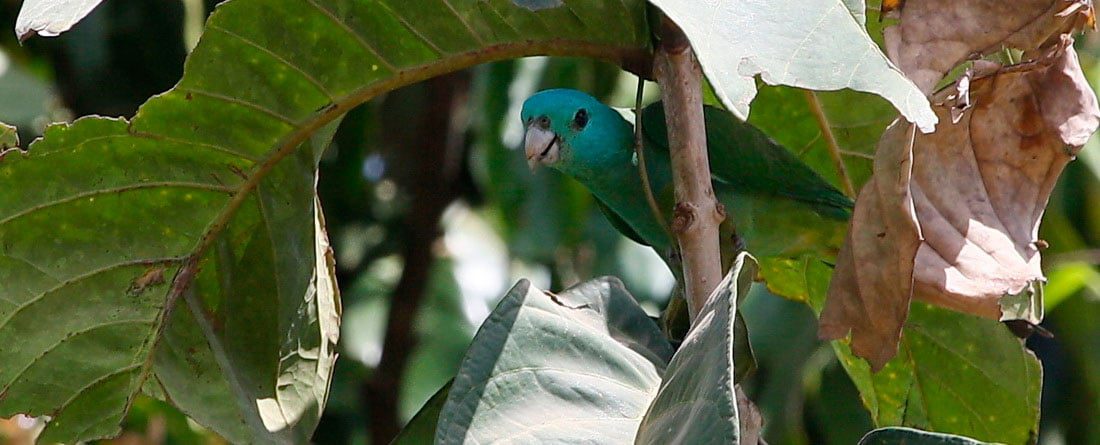
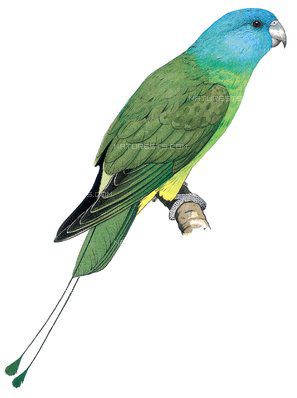
The head of the Blue-headed Racquet-tail (Prioniturus platenae) is clear brilliant blue. Mantle and back of color green light; rump slightly brighter green. Wings green, flight feather with vane blackish internal.

Underwing coverts Turquoise Green, strongly impregnated with blue. Upper abdominal area green, strongly impregnated with blue; undertail-coverts brighter yellowish green, uppertail-coverts bright. Upper, the tail green, Blue-Green lateral feathers with black tips; undertail, the tail dark, bathed in blue; spatulas blackish

Bill blue-white; irises yellowish; legs black.

Female no blue in the underparts (or simply a wash light blue) and a wash light turquoise blue in the head, in the absence of the male light blue Cap; also with extensions in tail shorter.

Habitat:

Little-known. The species is found in moist lowland forests and nearby crops up to altitudes above 300 m. In the islands of the North of Palawan, you have registered in the ultrabรกsico forest, bamboo thickets, mangroves and natural grasslands with scattered trees.. Birds are often recorded in small groups and their habits are presumably similar to those of other Prioniturus.

Reproduction:

There are hardly any data relating to its reproduction. Marked juvenile birds have been collected in January (two) and in August, and a markedly immature, in the month of may.

Food:

There are many data about food. Remains of nuts have been found in the stomachs of the specimens.

Distribution:

Endemic to Palawan and associated Islands, West of Philippines. Registered in Balabac, Dumaran and the islands of the Calamian group (Culion, Calauit, Busuanga). Uncommon and declining due to the destruction of their habitat and indiscriminate capture. The species is uncommon but regular in the Puerto Princesa Subterranean River National Park.

Conservation:


Vulnerable


โ€ข Current category of the Red List of the UICN: Vulnerable

โ€ข Population trend: Decreasing

The population is estimated at 2,500-9,999 individuals based on an assessment of the known records, descriptions of the abundance and range size.

The lack of recent information on this species is opposed to making strong claims about its current trend, but threats by logging, mining and trapping, They suggest that the species is declining rapidly.

The set of Palawan It is classified as a hunting ground, where is hunting illegal, the island was designated as a Biosphere reserve in 1990. But, legislation controlling habitat disturbance and hunting is difficult to enforce effectively.

"Blue-headed Racquet-tail" in captivity:

Not found in captivity.

Alternative names:

Blue-headed Racquet-tail, Blue headed Racquet tail, Blue-headed Racket-Tail, Blueheaded Racket-tailed Parrot, Blue-headed Racquet Tail, Palawan Racket-tailed Parrot, Palawan Racquet-tail, Palawan Racquet-tailed Parrot (ingles).
Palette de Palawan, Palette ร  tรชte bleue, Perroquet ร  raquette de Palawan (French).
Palawan-Spatelschwanzpapagei, Palawan Spatelschwanz-Papagei, Palawanpapagei (German).
Prioniturus platenae (Portuguese).
Lorito Momoto de Palau, Lorito momoto de Palawan, Lorito-momoto de Palawan (espaรฑol).

scientific classification:

Order: Psittaciformes
Family: Psittaculidae
Genus: Prioniturus
Scientific name: Prioniturus platenae
Citation: Blasius,W, 1888
Protonimo: Prioniturus platenae

– Recent phylogenetic study suggests that this species is part of a clade containing also to the P. waterstradti, P. Montanus and P. mindorensis. Formerly treated as a subspecies of the P. discurus, but the treatment recently strengthened as species, considers it Monotypic.

Images "Blue-headed Racquet-tail"

————————————————————————————————

โ€œPalawan Momoto Loritoโ€ (Prioniturus platenae)

Sources:

Avibase
– Parrots of the World โ€“ Forshaw Joseph M
– Parrots A Guide to the Parrots of the World – Tony Juniper & Mike Parr
– Birdlife

Photos:

(1) – Birds of the Philippines – Near Coron Airport, Coron, Palawan. April 2010 – manilaoldtimer
(2) – minghouse.infolinker.com.tw

Sounds: Paul Noakes (Xeno-canto)

โ–ท The world of Pets: Dogs, cats, birds, reptiles, amphibians

Alexandra's Parrot
Polytelis alexandrae

Alexandra's Parrot

Content


Anatomy-parrots

Description

45 cm. length, including its long, narrow tail, and around 92 g. of weight.

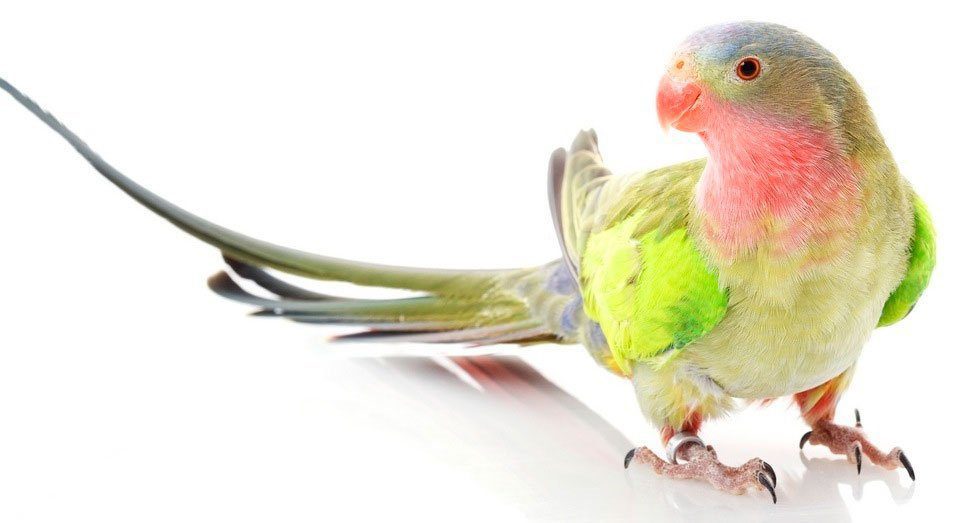
The head of the Alexandra's Parrot (Polytelis alexandrae) is light olive brown color, heavily washed in blue pastel in the Crown area, the nape of the neck, and slightly below the eyes; the Chin and throat pale pink.

Mantle and scapulars Brown olive-tinged greenish and fine dark stripes; back and rump, color pastel blue; upper coverts greenish-gray tail. Upper coverts bright yellowish green wings, with a few more green feathers around the curve of the wing; Dark greenish blue primary coverts; primary blue-green with yellowish-brown, and dark brown margin leading edge for the vane inner (the third rรฉmige primary has the tip spatula-shaped. ); secondary of pale blue-green with a yellowish margin (more pronounced in vane outer); greenish grey tertials with vane more obscure internal. Wing of bright green feathers, more yellow towards leading edge; undertail, wings greyish Brown with large pale yellow inner margin to the vane inner. Usually gray olive underparts pale, with the pink color of the throat which runs on top of the chest; belly and flanks washed clear bluish green; thighs and lower flanks with increase in pink; coverts yellow olive color infracaudales. Upper, tail Brown olive green near the axis and blue toward tip-washed, lateral feathers bluish grey and pink-tipped; undertail, Black tail with tips and margins of pink.

The beak is red with a grey periophthalmic ring; orange-yellow irises; grey legs.

Female has a shorter tail (average of 6 cm.. less than the male) and it lacks of spatula in the third tip rรฉmige primary. The wing coverts are greener and more off. And the mantle shows less green Suffusion. Crown, back and rump are less blue.

Immature similar to females and males acquire the adult plumage in about 14 to 18 months.

Habitat:

Highly nomadic and little known in the wild.

Inhabits the deserts of sand from the arid Center of Australia, often far from water. Birds can reach an area which have been absent for many years, reproduce, and quickly exit again.

They are found in mound grasslands, dry forests of coastal eucalyptus, thickets of acacia, mulga (Acacia aneura) and deserts with scattered Oaks (Allocasuarina decaisneana).

The birds are alone, in pairs or in small groups of up to 15 Member. There are also some earlier records of larger breeding colonies.

Reproduction:

The breeding season has been recorded from September to January, Although the nesting can be irregular and probably depend on the rainfall of rain and is also sometimes colonial.

During courtship, the male raises some feathers on its Crown and extends its wings and tail.

Favorite nesting place is a large hole in a Red eucalyptus (Eucalyptus camaldulensis) lined with a pile of rotting wood dust (the desert oak It has also been used).

Of four to six white eggs make up the implementation, incubated by the female for a few 21 days. While the female is incubating, the male takes care of your power. The young are fed during 5-6 weeks and become independent from three to five weeks after leaving the nest.

Food:

The birds feed on the ground and can be very meek. The diet includes seeds of Spinifex (Triodia mitchelli) and Herb mulga (Bipartite Danthonia). As well, according to sources, they can feed on nectar.

Distribution:

The Alexandra's Parrot are confined to the interior of Australia, where usually are very rare and few records. The species is an irregular visitor, It may not appear in parts of its distribution area for two decades or more.

Are distributed in Western Australia, from the North of the Great sandy desert to the West of the fitzroy river, about Wiluna, Sandstone, Menzies and Coolgardie and East through the deserts Gibson and Great victory.

Occurs in the Northern Territory to the North of the area of Newcastle Waters and Stuart Plains, and to the South up to around Alice Springs.

In Queensland, It is very rare in the South-western end, but there is a recent breeding record around Cloncurry.

In South Australia, extends to the East, about Oodnadatta, and there is a record of 1986 in the Great Victoria desert some 25 kilometers to the North of the Nurrari Lakes.

There is disagreement about its conservation status. The recent lack of records of large groups of reproduction, He cited as a possible indication of population decline, but there is little real information, and it suggests that the world's population can be estimated between 1.000 and 20.000 birds. A recent study suggests the species could be irruptive rather than nomadic, and that a population nucleus may be resident in the area around the Tobin Lake, Western Australia.

Trade, fires, changing land use regimes and predation, they have been cited as potential threats.

Protected by law.

A large number in captivity.

VULNERABLE

Conservation:


Near-threatened


โ€ข Current category of the Red List of the UICN: Near threatened

โ€ข Population trend: Stable

The population of the Alexandra's Parrot It is estimated, with low reliability, in 5 000 birds breeding (Garnett and Crowley 2000).

There is no firm evidence to determine the general trend of the number of Princess Parrot that exist. But, the rate appears to have decreased (Garnett and Crowley 2000), and recent sightings (in different places of Tobin Lake in the Great sandy desert) they have only been small batches (Garnett 1993; Garnett and Crowley 2000). On the other hand, historical records include reports of large flocks and large breeding colonies (Forshaw and Cooper 2002; North 1912; Parker 1971; Whitlock 1924).

The Alexandra's Parrot It has not been registered crossed with other species in nature. It is unlikely that any interbreeding occurs because the other two members of the genus Polytelis, the Superb parrot (Polytelis swainsonii) and the Regent Parrot (Polytelis anthopeplus), they usually do not occur in the same places as the Princess Parrot (Higgins 1999).

Remote areas occupied by species, its irregular presence in most places, and the lack of information about their movements, make it difficult to accurately estimate population size (Higgins 1999).

Conservation Actions Proposed

โ€ข Study the ecology of species, about the Tobin Lake or the Great Victoria desert to determine the likely constraints on population size.

โ€ข Monitoring of sightings to characterize the habitat and habitat models to verify the needs and historical responses to fire and precipitation throughout the distribution of the species.

โ€ข Use research information to develop a management strategy.

โ€ข Protect the areas where the species breeds..

"Alexandra's Parrot" in captivity:

Not too noisy, good whistling, and friendly disposition. It is a robust bird able to tolerate reasonable temperatures. Susceptible to infections in the eyes.

According to records, a female lived 23,9 years in captivity.

common in captivity.

Pure birds, with colors typical of their species are increasingly difficult to find.

The Alexandra's Parrot they can be accommodated in a wide variety of sizes of aviaries. It is best to raise them as couples, They seem to play better if they can see or listen to another pair of the same species. An Aviary of 4 meters long is considered the minimum to adequately house these birds.

Have brought successfully as a colony of 3-5 couples in a large aviary.

Non-toxic hardwood branches can be placed in the Aviary of birds so that they can chew them. This entertains our parakeets, helping to minimize boredom and providing them with a little exercise for supico. Natural branches of different diameters, and placed in different angles, they can be used for hangers. These natural hangers can be chewed by birds and may need to be replaced periodically. Birds can chew the flowers and fruiting bodies on the branches.

Its diet It requires a mixture of quality of food for parrots and a variety of fruits, such as the Apple and orange, as well as a variety of vegetables – corn, chard, usually providing green food and green leafy vegetables. Sowing grasses, If they are available. Soaked or sprouted seeds if they are available.

Commercial dry pellets can be part of a balanced diet.

Some birds will eat insects, as mealworms, especially around the breeding season. The insects will provide adult and young birds with a good source of easily digestible protein.. Insects can serve food to these birds on your daily diet.

The breeding season These parrots begins in March; the implementation is of 3 to 7 eggs, and incubation lasts approximately 20 days; the young become independent to the 50 days; occasionally breeding occurs 2 times a year. It is frequent that the female sexually mature in the first year, the male after the second year; couples can stay in adjacent aviaries each other separated by double metal fabric.

Alternative names:

Alexandra’s Parrot, Gould princess parrot, Pilpul, Princess Alexandra’s Parrot, Princess Parrot (ingles).
Perruche d’Alexandra, Perruche, Perruche ร  calotte bleue, Perruche Princesse-de-Galles, Princesse-de-Galle (French).
Alexandrasittich, Alexandra-Sittich, Blaukappensittich, Grosser Alexandersittich (German).
Periquito-princesa (Portuguese).
Perico Princesa, Periquito Princesa de Gales (espaรฑol).

scientific classification:

Order: Psittaciformes
Family: Psittaculidae
Genus: Polytelis
Scientific name: Polytelis alexandrae
Citation: Gould, 1863
Protonimo: Polyteles alexandrae

ยซPrincess Parakeetยป Images:

————————————————————————————————

ยซPrincess Parakeetยป (Polytelis alexandrae)

Sources:

Avibase
– Parrots of the World โ€“ Forshaw Joseph M
– Parrots A Guide to the Parrots of the World – Tony Juniper & Mike Parr
– Birdlife
– AnAge: The Animal Ageing and Longevity Database – Genomics.senescence.info

Photos:

(1) – Pet Info Club – petinfoclub.com
(2) – Princess Parrot at Cincinnati Zoo, USA By Ted (originally posted to Flickr as DSC_0026) [CC BY-SA 2.0], via Wikimedia Commons
(3) – Princess Parrot at Cincinnati Zoo, USA By Ted (originally posted to Flickr as DSC_0063) [CC BY-SA 2.0], via Wikimedia Commons
(4) – A blue mutant Princess Parrot at Flying High Bird Sanctuary, Australia By paulgear (Picasa Web Albums) [CC BY-SA 3.0], via Wikimedia Commons
(5) – ยฉ2013 Simon J.. Tonge – calphotos

Sounds: Nigel Jackett (Xeno-canto)
โ–ท The world of Pets: Dogs, cats, birds, reptiles, amphibians

Elegant Parrot
Neophema elegans


Elegant Parrot

Content


Anatomy-parrots

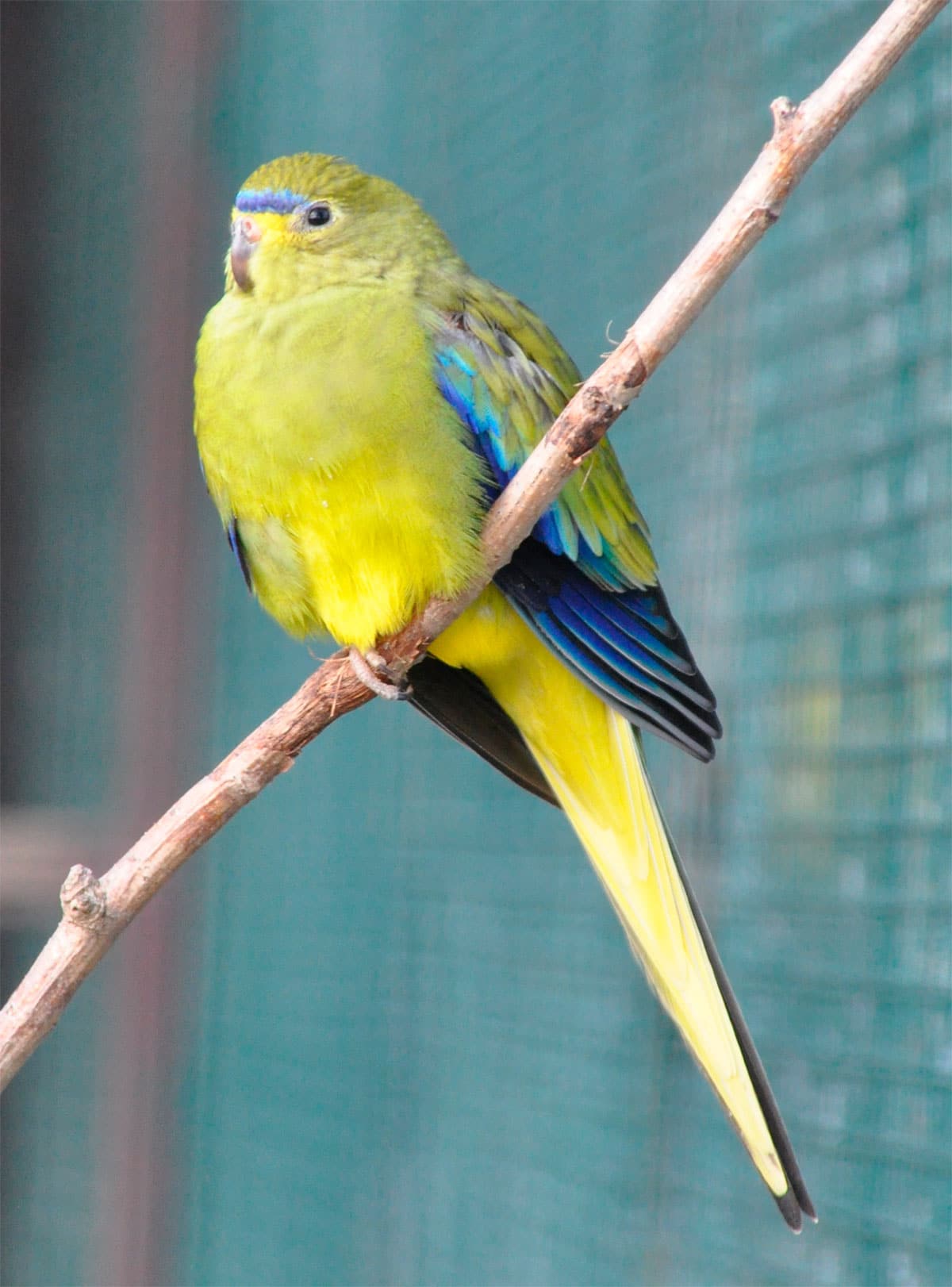
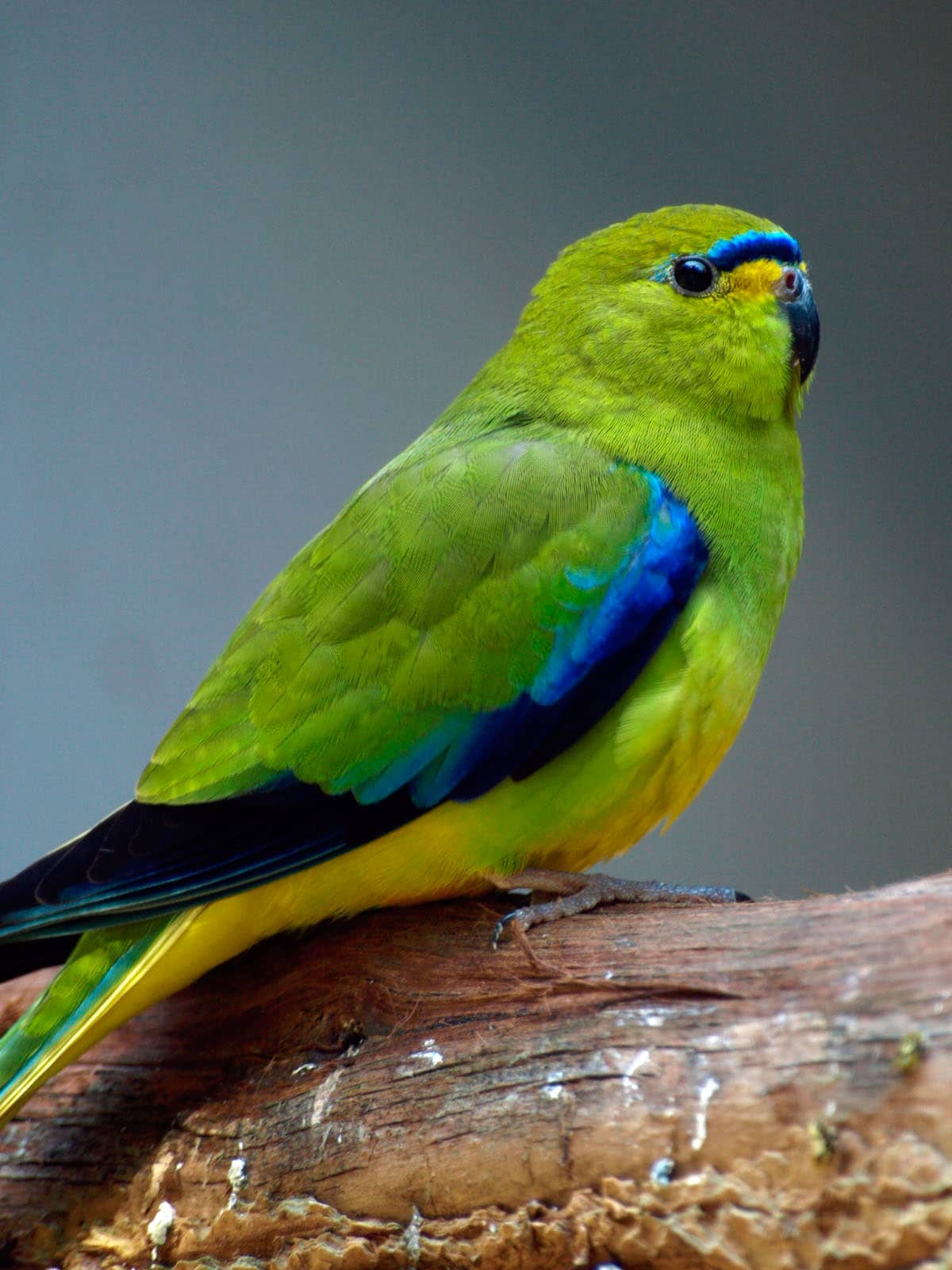
Description ยซElegant Parakeetยป

21 to 24 cm.. length between 40 and 51 g. of weight.

The Elegant Parrot (Neophema elegans) is very similar to the Blue-winged Parrot (Neophema chrysostoma), but its plumage It is brighter and more yellowish especially in the chest.

The crown is olive-green with a front band in dark blue tone and a distinctive and fine light blue on the rear margin. Lords bright yellow; the face Yellow olive.

The the mantle and back are olive green, staining in yellow tones in the area of the rump. The bend of wing they are blue. The wing-coverts more internal are olive green, the median pale blue tips, the large coverts with edge them in blue malva; the primary coverts in blackish shades with margins of violet-blue. The primaries black, with edges in blue violet dark; the secondaries greenish-yellow colour with external margins of blue color in the outermost zone.

The wing feathers blue-violet color. Throat and chest of yellowish-green, becoming bright yellow in the belly and in the undertail- coverts, sometimes with orange patches among the legs. Upper, the tail greyish blue, darker towards tip, Yellow lateral feathers with darker bases.

The bill black; irises dark brown; legs grey.

The plumage of the female is olive green opaque.

Immature females they are similar, except the line forecrown It is barely visible.

The adult plumage WINS in three or four months.

  • Sound of the Elegant Parrot.

โ€œElegant Parakeetโ€ Habitat:

The Elegant Parrot It is a nocturnal migratory bird. It is the least specialized of its kind. It attends the nearshore or coastal dunes, wooded grasslands and Shrublands, areas of Mallee that have the appearance of large shrubs and plots of eucalyptus.

You can also see in the shrubs of Acacia, in areas of low altitude provided Acacias (Acacia caesiella) or fitted with bushes of the salt Plains Saltbush Atriplex. They especially appreciate the groups of trees that are cleared up areas.

outside the breeding season, the Elegant Parrot they form large flocks, often in association with the Blue-winged Parrot, in the Southeast. They gather in grasslands and brushy areas to feed on native or imported seeds or grasses..

These parakeets are partially nomadic, above the outer limits of its range. Local low-intensity movements can also occur. These birds nest in Kangaroo Island, from November to April. after this last month, they move to the Mainland to form their winter quarters.

Reproduction ยซElegant Parakeetยป:

The Elegant Parrot They nest from August to November. Usually install their nest in a cavity in a tree at high altitude. They often use the highest branches of isolated trees. Spawning is composed of 4 or 5 eggs incubation lasts a few 18 days. The chicks are altricial and they leave the nest after one month.

โ€œElegant Parakeetโ€ Feeding:

The Elegant Parrot they are almost exclusively vegetarian. Their menu consists of clover or sunflower seeds and other plants of the type Helianthus, Trifolium and paspalum. Also appreciate the Berberis (Jeffersonia diphylla) and barberry (Berberis vulgaris).

ยซElegant Parakeetยป Distribution:

There is a two morphologically identical populations but well separated, although the species is nomadic so the birds can appear outside the normal range sometimes.

In the Southwest the species occurs west of a line from the environs of Esperance on the southern coast of the North of Western Australia through Merredin until Moora on the Northwest Coast.

They have spread through the wheat belt of the drier areas of the northeast and are now in the vicinity of Perth, as well as sometimes north of Point Cloates and the fortescue river.

In the Southeast are distributed in the South of Southern Australia, on eyre peninsula, on Kangaroo Island (present in summer), and in the districts of South, about Port Augusta, Port Wakefield and about adelaide, in the Lofty Mountains, reaching northward in the northern most part of the Montes Flinders.

The species is irregular East of 140 ยฐ E, with few records from New South Wales, North of Riverina to paroo river; is also irregular in the Northwest of Victoria.

The population of the Southwest It is growing, While in the Southeast believed to be stable although the species is generally less common and its historical range is not easy to determine due to possible confusion with the Blue-winged Parrot.

The world population is estimated over of 30.000 individuals.

โ€œElegant Parakeetโ€ Conservation:


minor concern


โ€ข Current category of the Red List of the UICN: Least concern

โ€ข Population Trend: Growing

According to the Manual of the birds of the world (HBW), This species is not threatened globally. It is common, especially in the southwest of Australia.

Until the Decade of 1930, It grew, After the use of clover in pastures.

The size of the world's population has not been quantified, but the species, according to sources, it is common. (pit et to the. 1997). It is estimated that it may be around the 30,000 specimens.

"Elegant Parrot" in captivity:

The Elegant Parrot they belong to a species that are obtained very good results in reproduction. They are also suitable for fans of parrots.

They are peaceful birds that do very low noise. They are a little shy, but they become confident with time. They are easy to maintain but they have the need to crack, a little bigger, than other species of neophemas, without the destruction of your Aviary. Your bathroom need depends on the individual. Son heat-resistant, but they are very sensitive to cold and wet fog.

To the Elegant Parrot He loves to dig the ground and is therefore susceptible to infection by worms. They are also sensitive to eye infections.

Alternative names:

Elegant Parrot, Elegant Grass-Parakeet, Grass Parakeet, Grass Parrot, Yellow Lowry (ingles).
Perruche รฉlรฉgante (French).
Schmucksittich (German).
Periquito-elegante (Portuguese).
Papagayo Elegante, Periquito Elegante (espaรฑol).

scientific classification:

Order: Psittaciformes
Family: Psittaculidae
Genus: Neophema
Scientific name: Neophema elegans
Citation: (Gould, 1837)
Protonimo: Nanodes elegans

ยซElegant Parakeetยป Images:

Videos "Elegant Parrot"

————————————————————————————————

ยซElegant Parakeetยป (Neophema elegans)


Sources:

Avibase
– Parrots of the World โ€“ Forshaw Joseph M
– Parrots A Guide to the Parrots of the World – Tony Juniper & Mike Parr
– Birdlife

Photos:

(1) – Elegant Parrot in the Walsrode Bird Park, Germany By Quartl (Own work) [CC BY-SA 3.0], via Wikimedia Commons
(2) – By Goura – Elegant parrot Perth, WA, Australia – ZooChat
(3) – Elegant Parrot Neophema elegans – animalphotos
(4) – Elegant Parakeet (Neophema elegans) at Walsrode 2007 by Maguari – ZooChat
(5) – Stirling Range Retreat, Stirling Range National Park, Western Australia, Australia (Monotypic species) by Clive Nealon – Lynx

Sounds: Mark Harper (Xeno-canto)
โ–ท The world of Pets: Dogs, cats, birds, reptiles, amphibians

New Zealand Kaka
Nestor meridionalis

New Zealand Kaka

Content

Illustration of a Kaka.

Description

45 cm.. length and an average weight of 550 g..

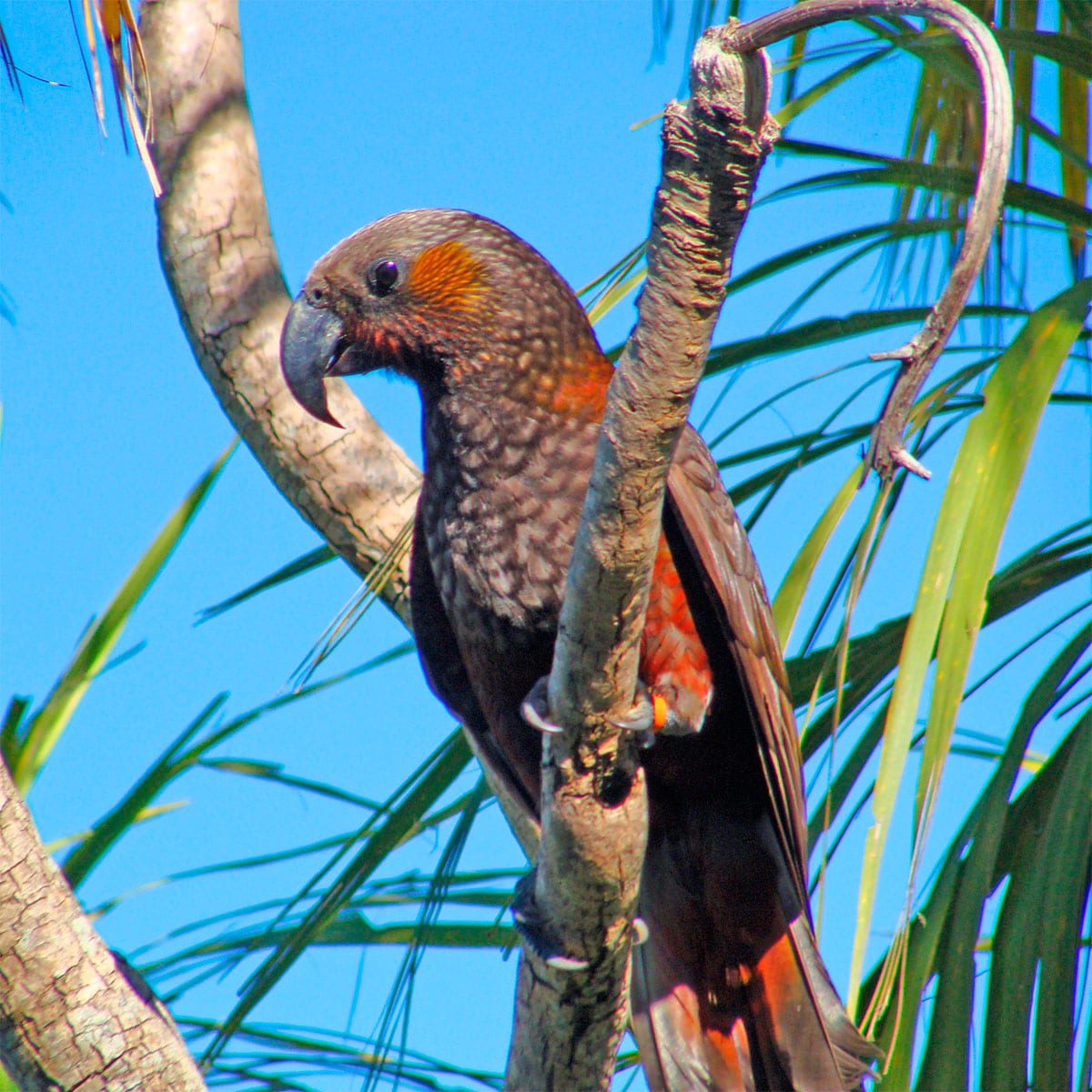
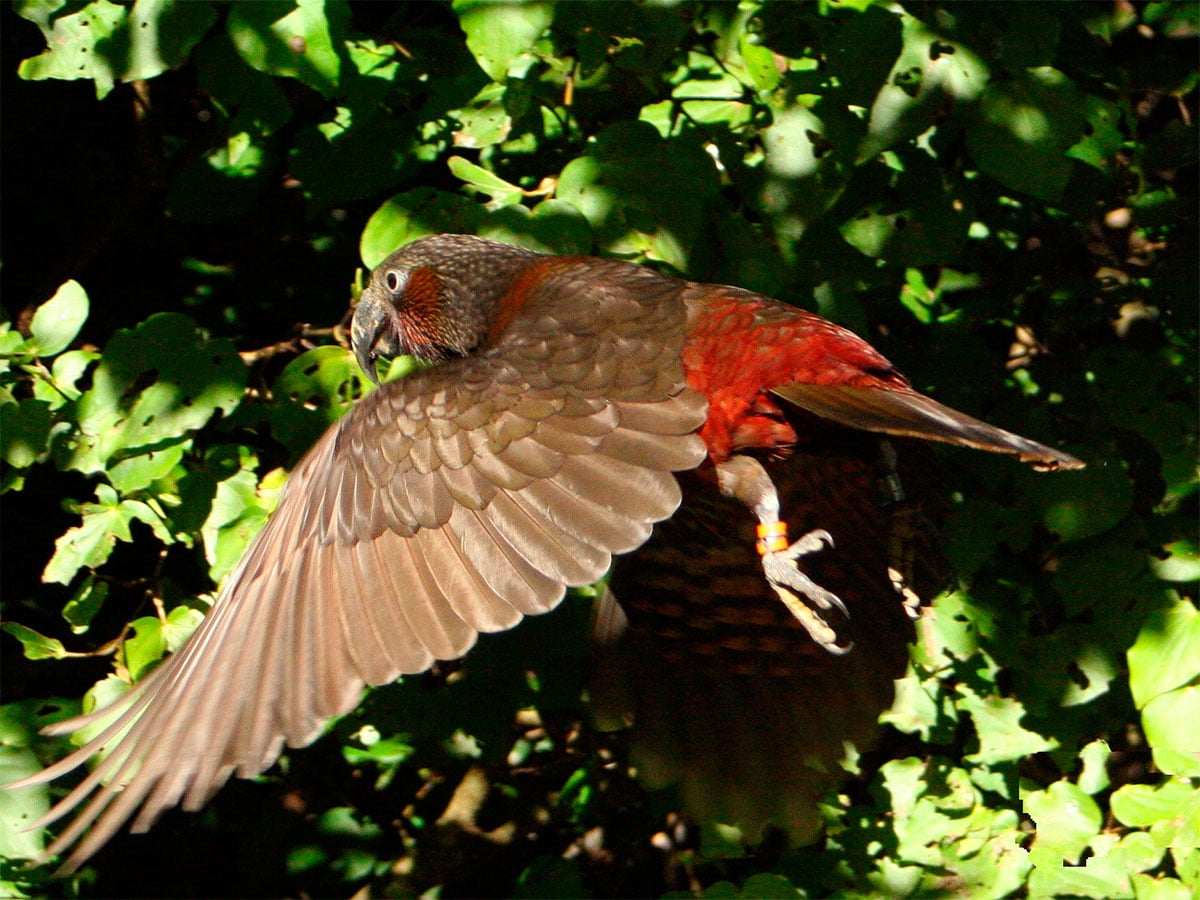
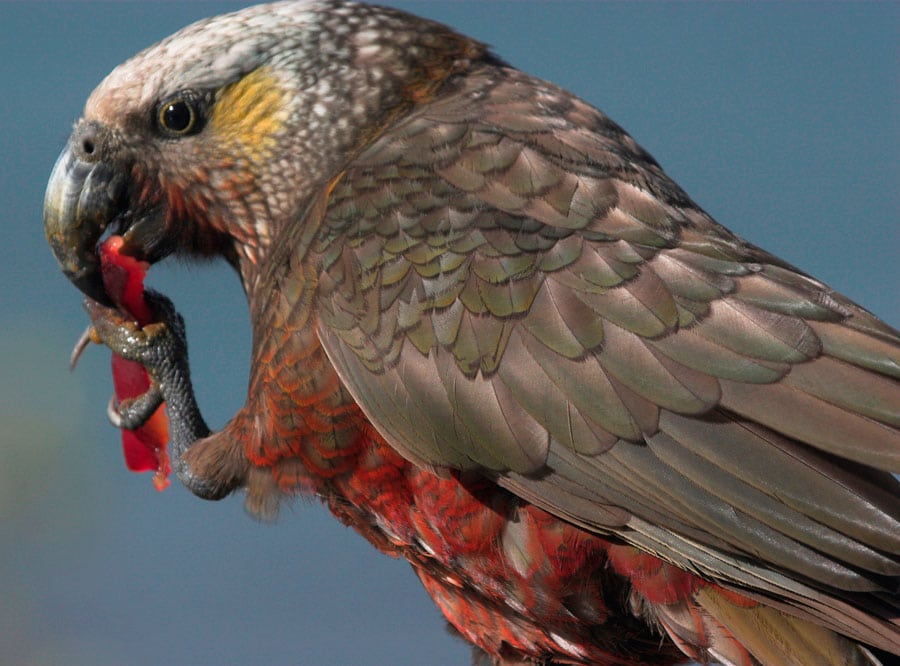
The New Zealand Kaka (Nestor meridionalis) they are some great parrots with a tail of medium length and a plumage predominantly Brown and Red.

The adult male has the crown whitish grey color and the neck with a greyish Brown appearance due to large brown feathers that surround you.

The under eye and the sides of the neck has a bluish grey clear. The lores are greyish Brown, that contrast with the ear-coverts strongly tinged with orange. The sides of the chin they have reddish-brown infiltrations.

The feathers of the upperparts are greenish Brown with darker stripes and stripes. Those in the back of the neck They are crimson red with yellow endings and browner bases..

The the mantle, sometimes, has some red spots. Rump and uppertail-coverts are red with dark brown trim. The lower area of the wings and axillary they are also red.

The feathers of the chest are olive brown in colour with reddish edges subterminales. Belly and undertail-coverts are red with dark edges.

The tail is brown with lighter tip.

The bill is brownish grey, more powerful that the of the Kea. The cere Brown it is decorated with a few whiskers. The irises is dark brown, legs dark gray.

The adult female presents a bill shorter and one mandible less curved top.

The youth they are similar to adults, but have a small yellow spot at the base of the lower jaw.

Subspecies description

  • Nestor meridionalis meridionalis (Gmelin, 1788) – Nominal species

  • Nestor meridionalis septentrionalis (Lorenz von Liburnau, L 1896) – It measures 42 cm approximately. Variation of the nominal (Nestor Meridionalis). More small, in general, and plumage more off. The red band of the neck is more small and dark. The back of the wings olive color is more dark.

Habitat:

The New Zealand Kaka (Nestor meridionalis) they frequent the compact forests of low to medium height, where there are mainly podocarp and beech trees of the genus Nothofagus. Occasionally they come into gardens and orchards, especially in winter.

These birds they tend to live at altitudes between 450 and 850 meters in the summer and from the sea level to the 550 meters in winter. But, from time to time, You can climb up to the 1.500 m.

The New Zealand Kaka they live in pairs or in small groups of up to ten birds.

These birds are not as well known as the Kea (Nestor notabilis), Although in some places come to feed in the hand of the tourists.

We can often see them at the top of trees or simply flying over the canopy.

The birds that are found in the air almost always heard before to be seen.

The New Zealand Kaka they are active during the morning and afternoon. At the hottest time of the day, around midday, They lie between the foliage of the trees.

Around the darkness, they perform a series of acrobatic flights, before returning to their roosts. Screams and calls can be heard well into the night.

In some areas, the New Zealand Kaka they are sedentary. But, most of the time they are erratic or perform short altitudinal migrations. These birds are able to fly long distances. They fly to vigorous banging of wings.

Reproduction:

The season of nesting is from September to March, but it is above all active between November and January.

The nest is located in a tree cavity between 3 and 9 meters above the ground. The pair sometimes enlarges the entrance hole with its beak..

The spawning contains 4 or 5 eggs white. These are deposited on a layer of sawdust that covers the bottom of the cavity.

The incubation, that lasts a few 24 days, It is done solely for the female. She leaves the nest at dawn and dusk to be able to be powered by your partner. an assistant, sometimes, can participate in the feeding of the female during the period in which she incubates.

In the North, the young have white down, While the of the South they have grey down at the bottom.

The juveniles they acquire their full plumage in ten weeks.

For the duration of the stay in the nest, they are fed by both parents.

The breeding success rate is relatively low and they rarely lay more than one egg per year..

Food:

The New Zealand Kaka It has a long tongue terminated tip, What helps you to extract nectar from the flowers and to collect molasses.

In the Spring, in the South of the island, the New Zealand Kaka almost passes the 30% of their time in the trees (Beech) where feeding of honeydew produced by the local cochineal (Ultracoelostoma assimilates). In other stations, This food is a less important resource due to competition with the WaSP, which is also a great consumer.

The larvae of beetles of long antennae they are also a good source of nutrition.

Throughout the year the New Zealand Kaka, regularly, frequent trees, where it used its powerful curved beak to hunt insects hidden beneath the bark.

When opossum populations disperse, the New Zealand Kaka they spend nearly the 60% of their time feeding on flowers and berries. It also, consume sprouts, seeds, nectar and SAP.

Distribution:

Size of the area of distribution (reproduction / resident): 71.100 km2

This species is endemic of New Zealand.

Subspecies distribution

Conservation:


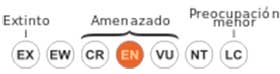
Endangered

โ€ข Current Red List of UICN: Danger

โ€ข Population trend: Decreasing

This species has a very irregular distribution. in most places, is rather sparse, but in other places, is common locally, especially in some coastal islands.

Its population It is estimated between 3750 and 15,000 specimens.

The main threat is the habitat degradation. It stays within primary forest fragments, showing its very low adaptation to artificial habitats.

The New Zealand Kaka not nest every year in a systematic way. When I was try to reproduce in captivity, the success rate was not very high (on average the 56% eggs not hatched ).

Clutches often suffer from the predation on the part of the weasels It was introduced on the island. For all these reasons that the species is classified as VULNERABLE.

"New Zealand Kaka" in captivity:

Very rare in captivity.

In terms of their longevity, according to sources, a specimen in captivity lived during 15 years.

Taking into account the longevity of the similar species, the maximum longevity of these birds might be underestimated. Other sources indicate that these birds can live up to the 35,5 years in captivity, something that is plausible, pero que no ha sido verificado; el mismo estudio informรณ que los New Zealand Kaka can reproduce a partir de los 7 years of age in captivity.

Alternative names:

New Zealand Kaka, Common Kaka, Kaka (English).
Nestor superbe (French).
Kaka (German).
Kฤkฤ (Portuguese).
Kaka (espaรฑol).

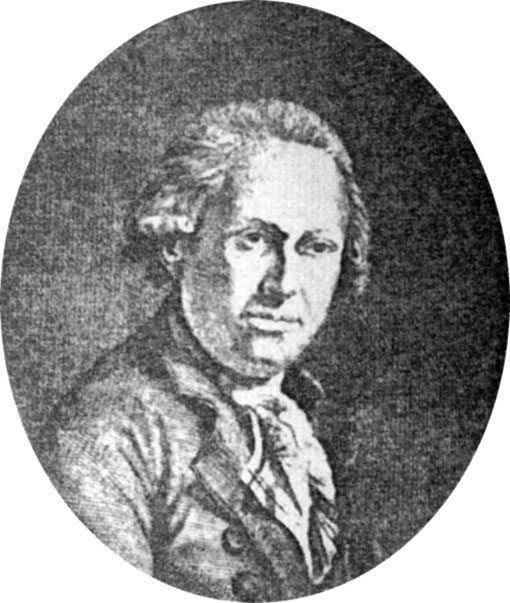
Gmelin Johann Friedrich

scientific classification:

Order: Psittaciformes
Family: Strigopidae
Genus: Nestor
Scientific name: Nestor meridionalis
Citation: (Gmelin, JF, 1788)
Protonimo: Psittacus meridionalis


"Kaka" images:

Videos "New Zealand Kaka"

————————————————————————————————

ยซKakaยป (Nestor meridionalis)


Sources:

Avibase
– Parrots of the World โ€“ Forshaw Joseph M
– Parrots A Guide to the Parrots of the World – Tony Juniper & Mike Parr
– Birdlife

Photos:

(1) – Car (Nestor meridionalis) in Wellington, New Zealand By derivative work: Snowmanradio (talk)Kaka_(Nestor meridionalis)-_Wellington_-NZ-8.jpg: PhillipC [CC BY 2.0 or CC BY 2.0], via Wikimedia Commons
(2) – North Island in Kaka, at Auckland Zoo, New Zealand By Small [CC BY-SA 2.0], via Wikimedia Commons
(3) – A New Zealand Kaka in Karori Wildlife Sanctuary, Wellington, North Island, New Zealand By Rosino (the colorful kฤkฤUploaded by Snowmanradio) [CC BY-SA 2.0], via Wikimedia Commons
(4) – Nestor meridionalis meridionalis, South Island Turkey, on Stewart Island, New Zealand By derivative work: Snowmanradio (talk)Kaka-parrot_-Stewart-Island.jpg: giles.breton [CC BY 2.0 or CC BY 2.0], via Wikimedia Commons
(5) – Kaka in flight. Karori Wildlife Sanctuary, Wellington, New Zealand. I, Tony Wills [CC BY-SA 3.0], via Wikimedia Commons
(6) – Illustration of a Kaka By J. G. Keulemans, in W.L. Bullerโ€™s A History of the Birds of New Zealand. 2nd edition. Published 1888. (New Zealand Electronic Text Centre) [CC BY-SA 3.0 nz], via Wikimedia Commons

Sounds: Fernand DEROUSSEN (Xeno-canto)

โ–ท The world of Pets: Dogs, cats, birds, reptiles, amphibians

Layard's Parakeet
Psittacula calthrapae


Cotorra de Ceilรกn

Content

Description:

29 cm., including its tail up 13 cm.. and 100 g. of weight.
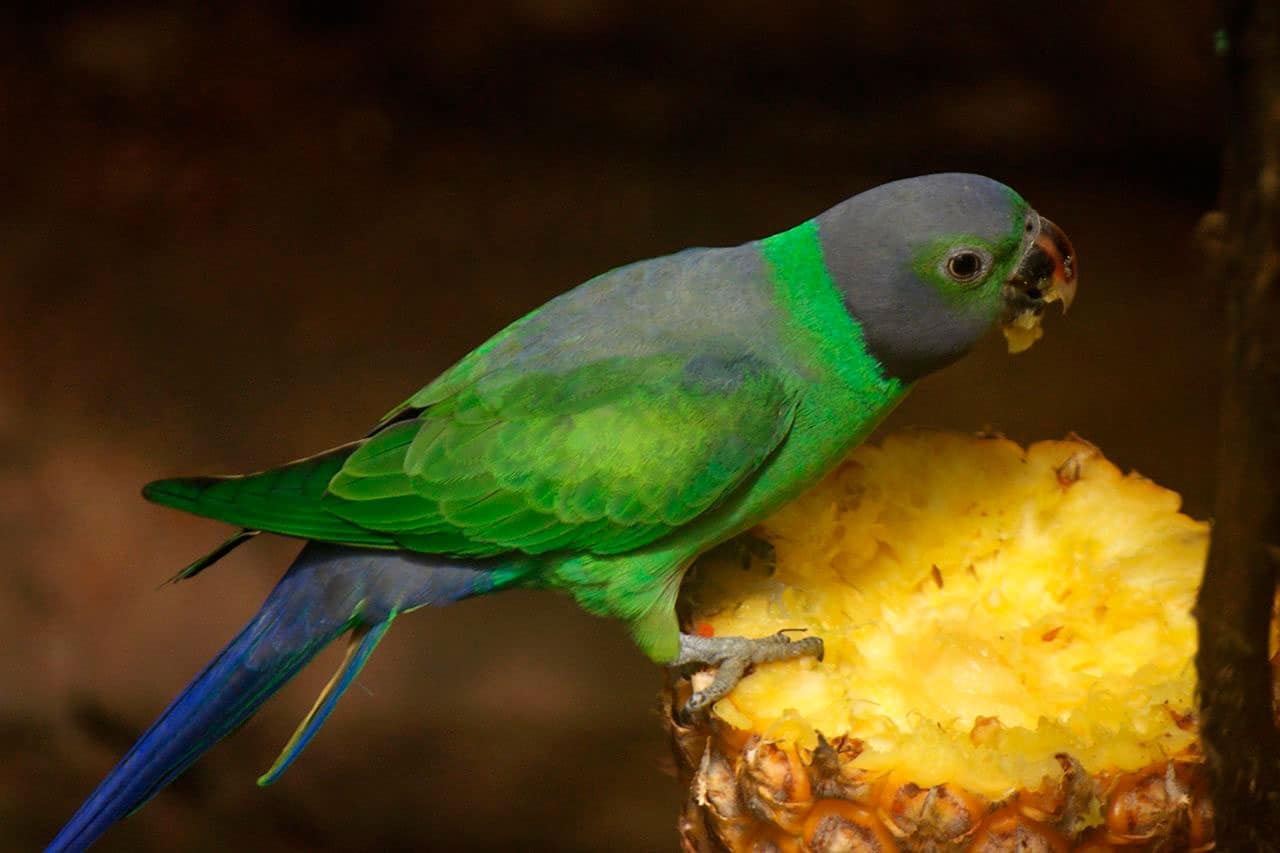
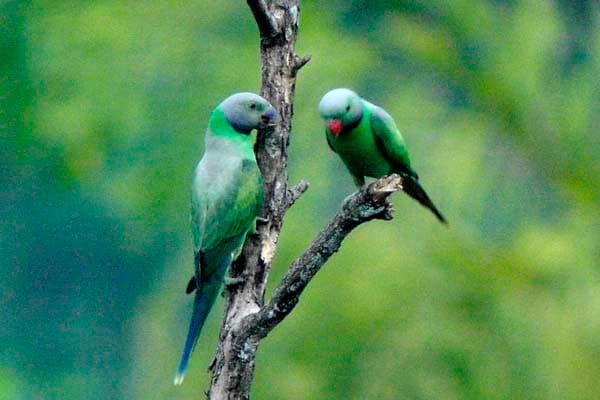
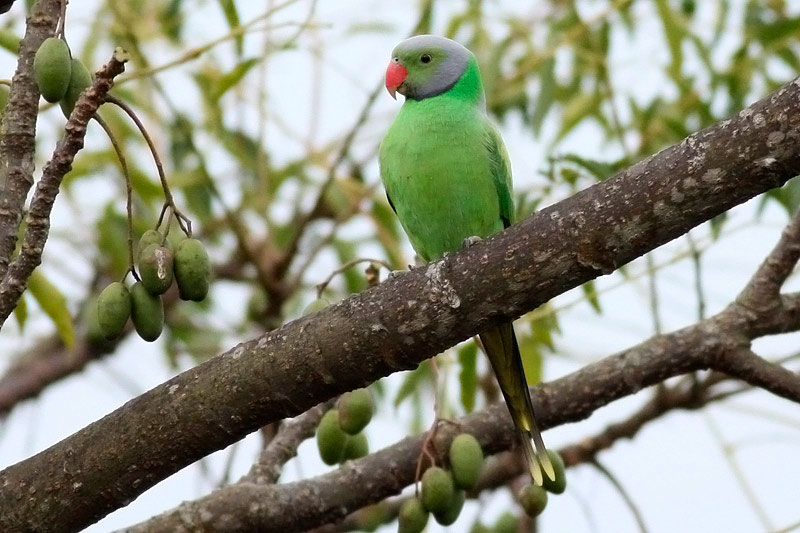
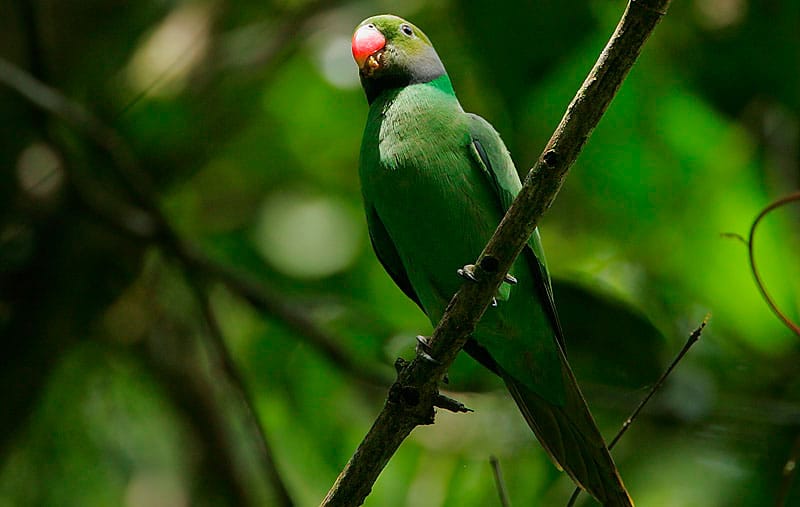
The adult male of the (Psittacula calthrapae) Layard's Parakeet has the head and back bluish grey, separated by a neck green. There is a wide swath in the chin of black color and tail It is blue with a yellow tip. Upper bill the male is red, and the bill bottom is brown.

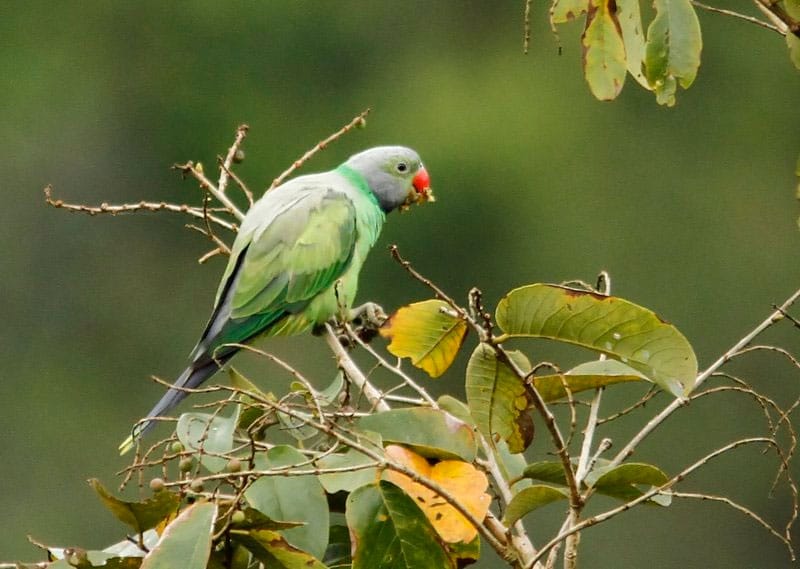
The female es similar, but has the bill top in black, and dark green stripe on the cheek. Lack the band pink in nape and the neck is greenish yellow. They have the blue tint in the rear of the head if you can see in males. Feathers middle of the tail You are washed with blue.

The immature they are like the females, but with feathers tail shorter, with a plumage mainly green and bill dark red.

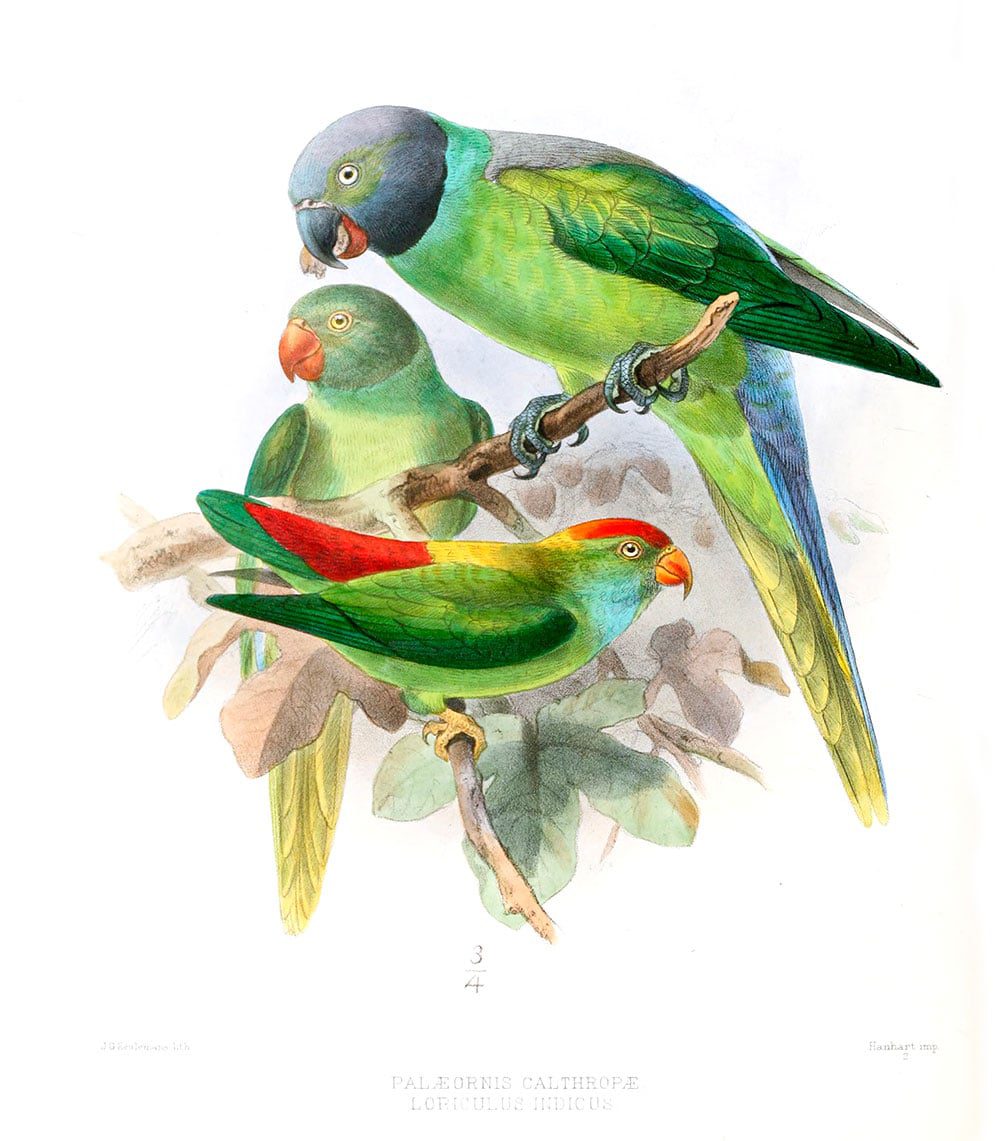
Ilustraciรณn Cotorra de Ceilรกn

  • Sound of the Layard's Parakeet.

    Habitat:

    Their preferred habitats are forested areas 1.600 meters above sea level, although registered at altitudes 2.000 m, taking advantage of a wide variety of vegetation types including natural and semi-natural moist forests, tea plantation and botanical gardens; often at the edge of the woods, generally in small groups or couples.

    Sedentary, especially in mountain areas, but extending over the lowlands, especially in humid forests near sea level.

    after feeding, the Layard's Parakeet congregate in trees chattering loud and persistent. Before break, roam issuing strong calls.

    Reproduction:

    The time of reproduction It is around January to May, with a high season from July to September.

    The eggs They are deposited in a natural cavity or disused nest Woody Woodpecker or a bearded, usually at the top of a tree. Competition for nest sites is often intense, especially with Plum-headed Parakeet. The cavity is lined with rotting wood and dust. Two to four white eggs make commissioning. Both sexes share duties incubation and feed on young.

    Food:

    Diet Layard's Parakeet It is believed to be similar to the Rose-ringed Parakeet and Plum-headed Parakeet, although their arboreal habits make them more frugivores and less destructive to crops.

    Registered with the company Brahminy Starling (Sturnia pagodarum) feeding fruit Map peltata (Macaranga tomentosa). Favorite foods include figs and fruit of wild cinnamon (Cinnamomum).

    Distribution:

    Size of the area of distribution (reproduction / resident): 18.900 km2

    The Layard's Parakeet It is endemic in south-central and south-west Sri Lanka. In Provincia Central, North of Matale through highlands around south and west Kandy in Western Province and Sabaragamuwa to the North of On Provincia.

    They are distributed also in the east, around the Gal Oya National Park and to the South, in Uva Province, until Haputale. A record of 1880 a bird against Eastern Province. Registration, unconfirmed, in the Maldives It is believed to come from leaks.

    According to sources, abundant in the 19th century and apparently still numerous in some areas, but declining due to habitat loss arising, for example, conversion of natural and semi-natural forests and plantations capture for trade.

    Conservation:

    State of conservation โ“˜


    minor concern Minor Concern โ“˜ (UICN)โ“˜

    โ€ข Current Red List of UICN: Least concern

    โ€ข Population trend: Decreasing

    The Psittacula calthrapae (del Hoyo and necklace 2014) It was previously listed as Psittacula calthropae.

    The size of the world's population has not been quantified, but the species is reported as locally common (pit et to the. 1997).

    The population is suspected of being in decline due to ongoing habitat destruction.

    "Layard's Parakeet" in captivity:

    Rare captive out of their range.

    Alternative names:

    Layard’s Parakeet, Emerald-collared Parakeet (English).
    Perruche de Layard (French).
    Blauschwanzsittich (German).
    Periquito-de-colarinho-verde (Portuguese).
    Cotorra de Ceilรกn (espaรฑol).


    scientific classification:

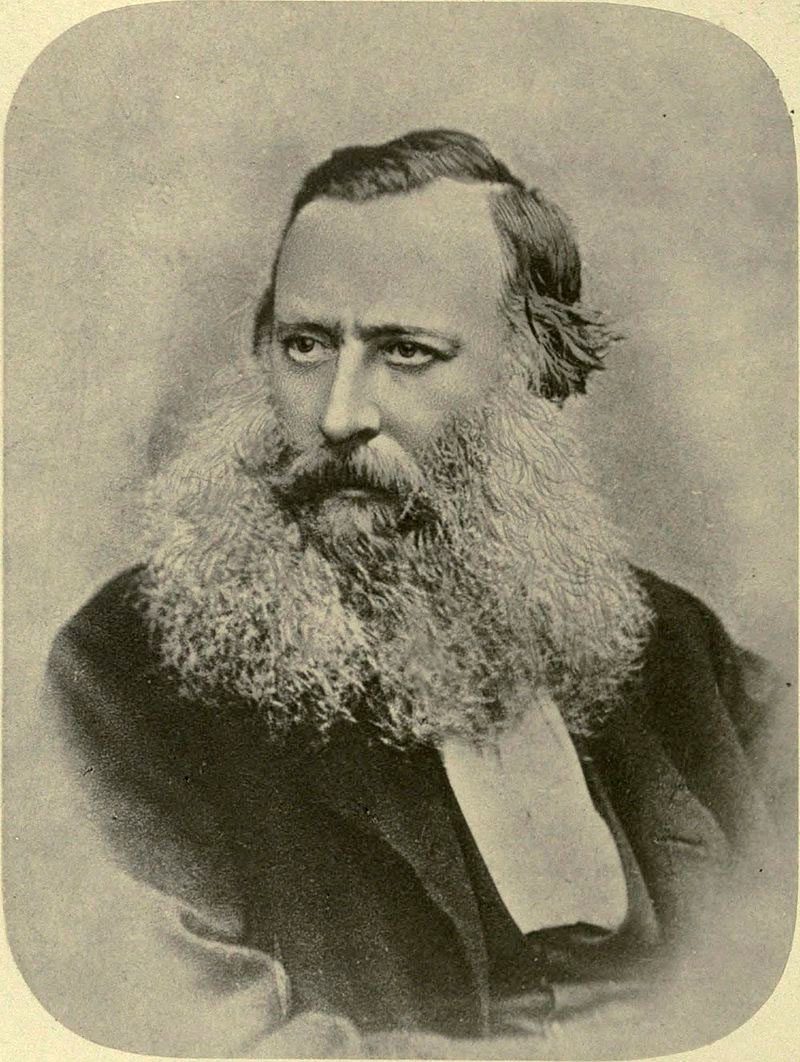
    Edward Blyth
    Edward Blyth

    Order: Psittaciformes
    Family: Psittaculidae
    Genus: Psittacula
    Scientific name: Psittacula calthrapae
    Citation: (Blyth, 1849)
    Protonimo: Palaeornis Calthrapae


    Layard's Parakeet Images:

    Videos "Layard's Parakeet"

    Parrots in the world
  • Psittaciformes (Psittaciformes) from America
  • Psittaciformes (Psittaciformes) Oceanian
  • Psittaciformes (Psittaciformes) from Asia
  • Psittaciformes (Psittaciformes) from Africa
  • Psittaciformes (Psittaciformes) of the world

  • Especies del gรฉnero Psittacula
  • Psittacula finschii
  • Psittacula himalayana
  • Psittacula roseata
  • —- Psittacula roseata juneae
  • —- Psittacula roseata roseata
  • Psittacula cyanocephala
  • Psittacula alexandri
  • —- Psittacula alexandri abbotti
  • —- Psittacula alexandri alexandri
  • —- Psittacula alexandri cala
  • —- Psittacula alexandri dammermani
  • —- Psittacula alexandri fasciata
  • —- Psittacula alexandri kangeanensis
  • —- Psittacula alexandri major
  • —- Psittacula alexandri perionca
  • Psittacula derbiana
  • Psittacula longicauda
  • —- Psittacula longicauda defontainei
  • —- Psittacula longicauda longicauda
  • —- Psittacula longicauda modesta
  • —- Psittacula longicauda nicobarica
  • —- Psittacula longicauda tytleri
  • Psittacula columboides
  • Psittacula calthrapae
  • Psittacula eupatria
  • —- Psittacula eupatria Avensis
  • —- Psittacula eupatria eupatria
  • —- Psittacula eupatria magnirostris
  • —- Psittacula eupatria nipalensis
  • —- Psittacula eupatria siamensis
  • Parrots wardi
  • Psittacula krameri
  • —- Psittacula krameri borealis
  • —- Psittacula krameri krameri
  • —- Psittacula krameri manillensis
  • —- Psittacula krameri parvirostris
  • Psittacula eques
  • —- Parrot knight knightโ€ 
  • —- Psittacula eques echo
  • Parrots
  • Psittacula caniceps

  • Layard's Parakeet (Psittacula calthrapae)


    Sources:

    Avibase
    – Parrots of the World โ€“ Forshaw Joseph M
    – Parrots A Guide to the Parrots of the World – Tony Juniper & Mike Parr
    – Birdlife

    Photos:

    (1) – Layardโ€™s Parakeet eating fruit in Sri Lanka. Its beak is not fully black, so it is probably a sub-adult female By Hafiz Issadeen (originally posted to Flickr as Layardโ€™s Parakeet) [CC BY 2.0], via Wikimedia Commons
    (2) – [BirdPhotoIndia] Layardโ€™s parakeet, Sri Lanka – Indian Birds Photography
    (3) – Photo by Steve G near Sinharaja, Sri Lanka, July 28, 2009 – Bird Forum
    (4) – An adult of Layardโ€™s Parakeet – World-Birds
    (5) – Layardโ€™s Parakeet Psittacula calthropae – Starron Bird and Wildlife
    (6) – John Gerrard Keulemans [Public domain], via Wikimedia Commons

    Sounds: David Farrow (Xeno-canto)
    + More