โ–ท The world of Pets: Dogs, cats, birds, reptiles, amphibians

Golden-capped Parakeet
Aratinga auricapillus

Aratinga Testadorada

Content

Description:


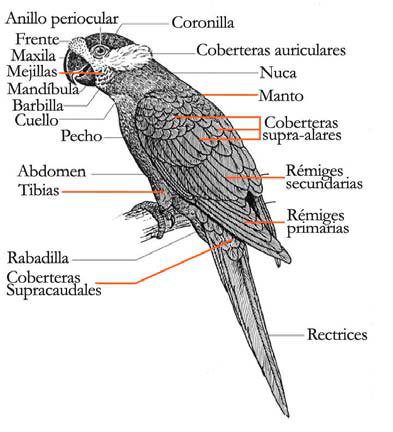
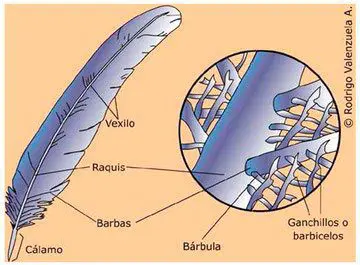
Anatomy-parrots

Of 30 cm.. of length and a weight of 130 g..
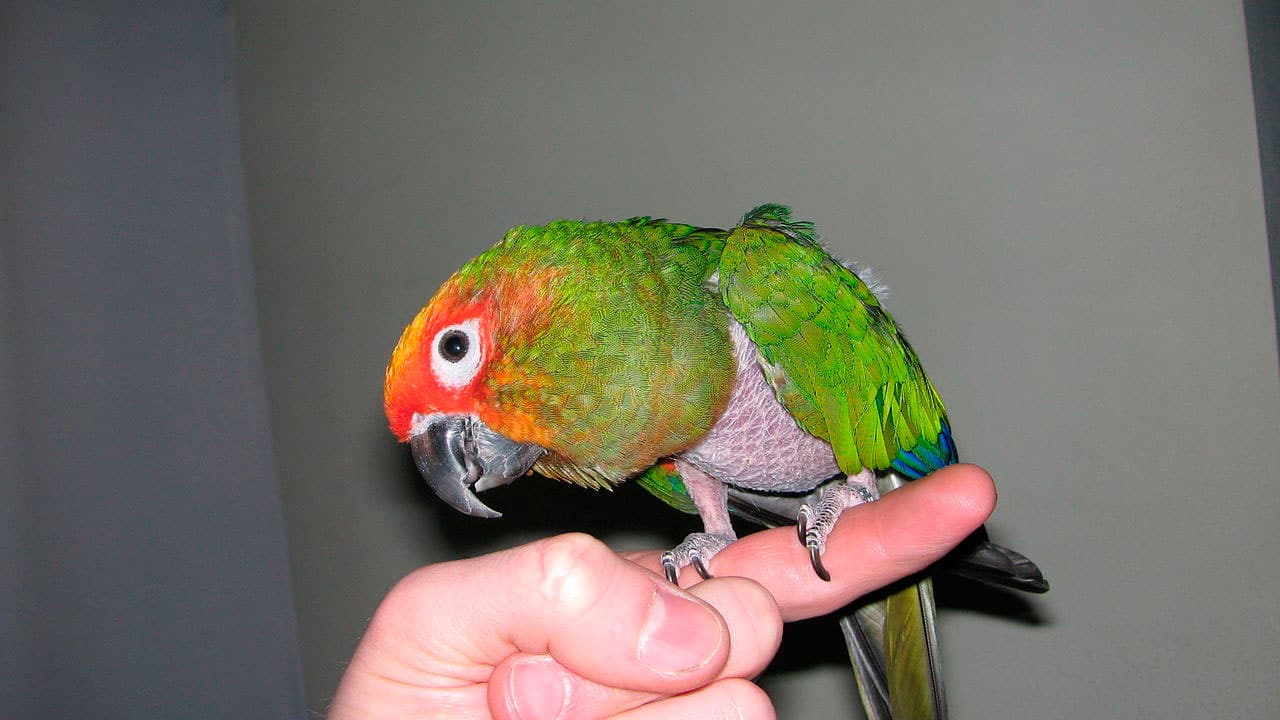
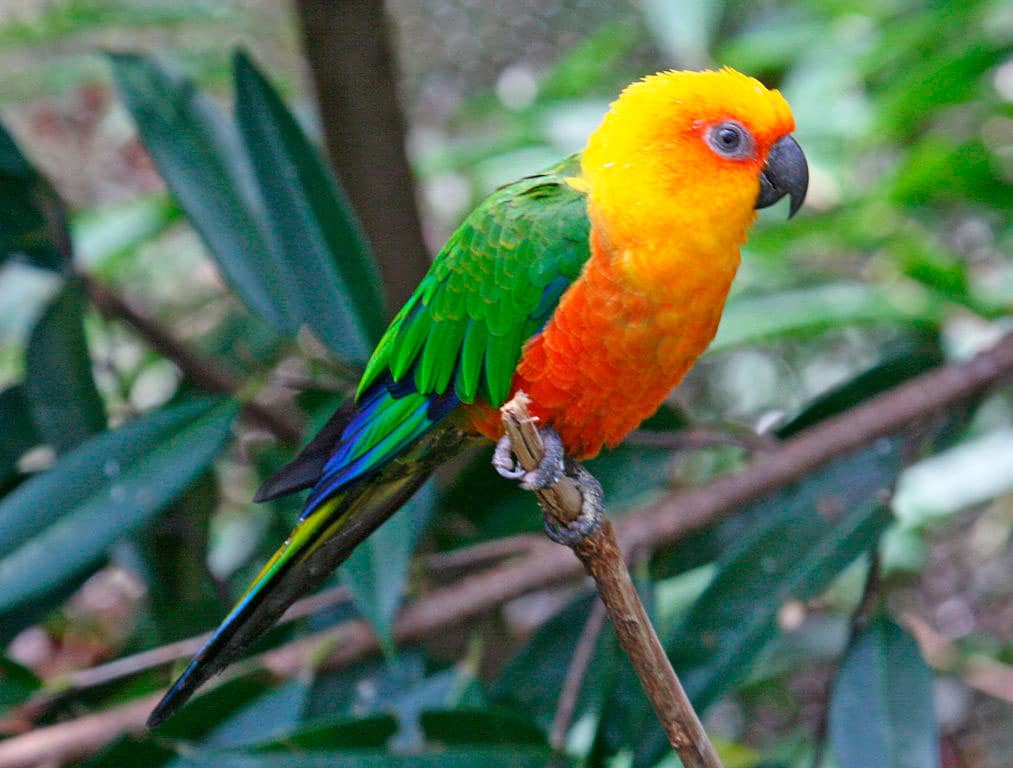
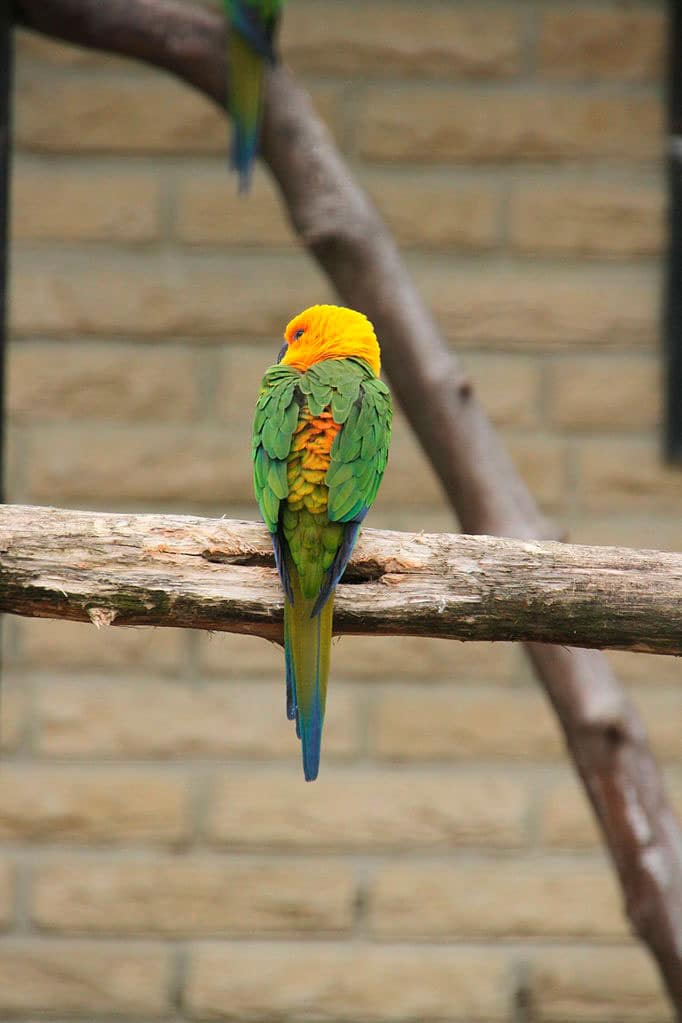
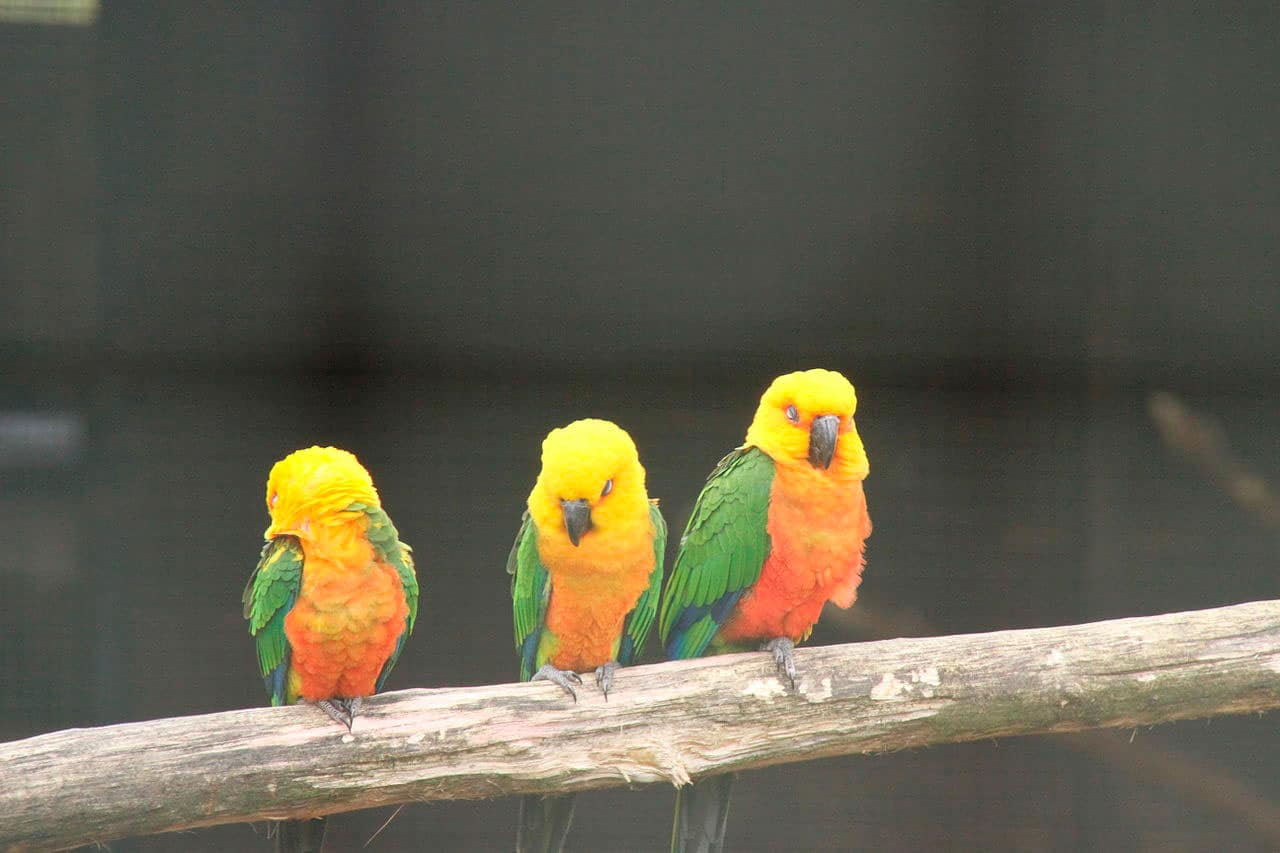
The Golden-capped Parakeet (Aratinga auricapillus) It is often treated as the same species as the Sun Parakeet (Aratinga solstitialis) and Jandaya Parakeet (Aratinga jandaya).

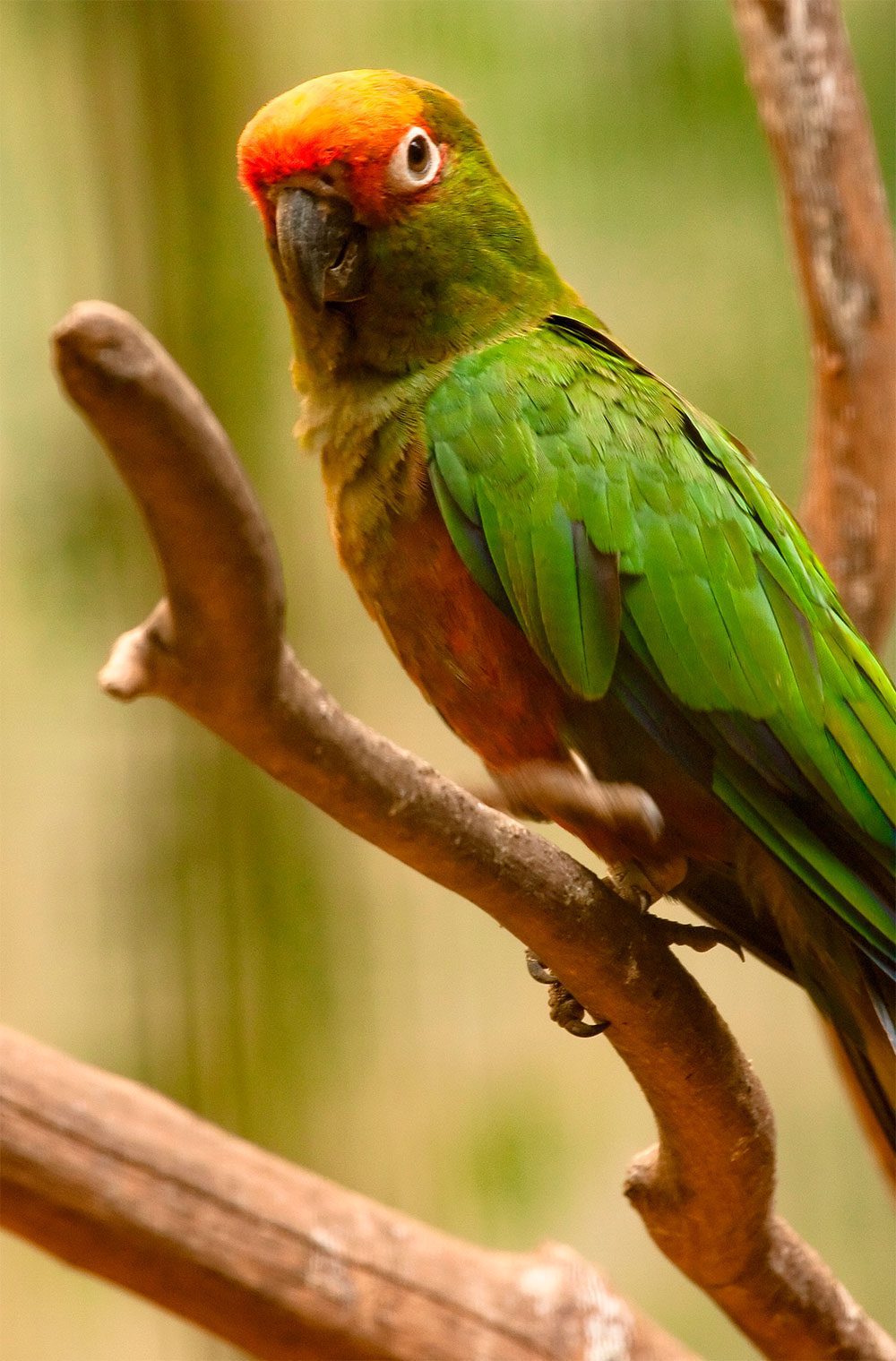
The lores, frontal band and ocular region of this kind are of color red glossy; the crown is bright golden yellow; ear-coverts, cheeks and both sides of the neck, green. The area of the nape and the the mantle are pale green: the back and the top of the rump with different hues of green and tips of red or orange; floor area of the rump and uppertail-coverts, green; the small and medium-sized upperwing-coverts, green; the large coverts and primaries, secondaries, vane outer and tips from them primaries, blue.

Underwing-coverts, orange-red; underside of flight feather grey. The chin and throat yellowish green with orange discoloration on the top of the chest and deep color red pale in the belly; vent, the thighs and undertail-coverts, green. Upper, the tail, of colour brownish with them tips blue, sometimes with the vane external foreign blue feathers; undertail, the tail, grey.

The bill, grey-black; grey, the bare skin of the bare periophthalmic; irises yellowish; legs grey.

Both sexes similar.

Immature It has little or nothing red in the rump, more off the yellow colour of the crown; the top of the chest is greener and less extensive red on the belly.

Subspecies description:

  • Aratinga auricapillus auricapillus

    (Kuhl, 1820) – The species nominal.


  • Aratinga auricapillus aurifrons

    (Spix, 1824) – The upperparts totally green (without red margins on the feathers of the back and Hip top). More green in the upper zone of the chest, lacking Orange dye of the nominal species.

Habitat:

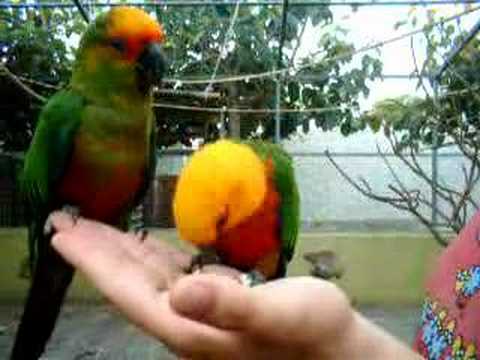
Video – "Golden-capped Parakeet" (Aratinga auricapillus)

aratinga jendaya y auricapilla

They live in forests, as well as in the clearings and edges of the same, including coastal moist Atlantic evergreen forests and inland closed-type deciduous forests. They prefer primary formations.

Scarce or absent grassland with trees or secondary vegetation, including from the vicinity of the remaining original forests. Observed to 2.180 m (Parque nacional do Caparaรณ, to the South of Holy Spirit). gregarious, usually observed in flocks of 12-20 individuals, more rarely in groups of up to 40.

Reproduction:

There are few details on the reproductive ecology of this species., Although probably nest in the months of November-December.

Implementation size in captivity is of 3-5 eggs.

Food:

Diet Golden-capped Parakeet includes various seeds and fruits. Reported foods include the corn, okra and fruits red sweet unspecified.

considered a pest of crops in some areas before its abrupt population decline.

Distribution:

The Golden-capped Parakeet (Aratinga auricapillus) are distributed in the area South-East of Brazil; from the North of Bay, Eastern part of Goiรกs and Minas Gerais, Brazil, to the East and South, on the East coast of Brazil (Holy Spirit, Rio de Janeiro, Sรฃo Paulo, Paranรก and possibly, Santa Catarina).

The observations in Rio Grande do Sul, apparently they are wrong, although the species can still be found in the extreme east of Mato Grosso from the South.

A single record in 1918 in Paraguay, near the border with Paranรก, Presumably coming from some exhaust.

Usually rare and irregular distribution, residents, extinct in many places with their current range defined by the remaining forests.

He greater stronghold population of the species is located in Minas Gerais, Brazil, where the species was considered common in 1987 in several areas. They are very rare or they have become extinct in Santa Catarina, Paranรก, Sรฃo Paulo, Rio de Janeiro and Espirito Santo, and scarce in Goiรกs and Bay.

The decrease in the population is must to the continuous logging of forests and to their captures for the trade of birds.

There are several protected areas with populations of the Golden-capped Parakeet, such as the Monte Pascoal National Park (Bahia) and Parque Estadual do Rio Doce (Minas Gerais, Brazil).

Rare in captivity, mostly out of Brazil.

Subspecies distribution:

Conservation:

โ€ข Red List category of the UICN current: Near-threatened

โ€ข Population trend: Decreasing

The size of the population of the Golden-capped Parakeet It has not estimated formally and in the absence of sufficient data, it is estimated that you there are more than 10.000 specimens, more or less equivalent to 6.700 mature individuals; But, detailed research is required.

The population the species is suspected that it may be in decline due to the continuous loss of habitat and to his capture to the pet trade.

โ€ข There has been extensive and ongoing clearance and fragmentation of suitable habitat for this species., for use as coffee plantations, soybean and sugarcane in Sao Paulo, and livestock in Goiรกs and Minas Gerais, Brazil (Snyder et to the., 2000).

โ€ข The capture for trade, He has probably had a significant impact, since it was relatively common in the illegal Brazilian markets in the mid-1990s. 1980, importing hundreds of birds to Western Germany in the decade of 1980. But, the precise effect is obscured by large numbers of captive-bred birds, that presumably see reduced pressure on wild populations remaining (LF Silveira in litt., 1999).

โ€ข Despite its tendency to nest, times, near human settlements, It is apparently not the most favoured species for the pet trade (VT Lombardi in litt. 2011).

โ€ข There are no records of persecution in response to crop degradation..

Conservation Actions Underway:

Conservation Actions Proposed:

    โ€ข Survey to locate important new populations and define the limits of their current range..

    โ€ข Study to determine its population dynamics and dispersal capacity., as well as provide a detailed analysis of their habitat requirements in different sites.

    โ€ขEnsure the protection of key reserves.

    โ€ข Protect species under Brazilian law.

"Golden-capped Parakeet" in captivity:

Rare in captivity, mostly out of Brazil.

Their life expectancy is about 30 years.

Alternative names:

Golden-capped Parakeet, Flame-capped Conure, Flame-capped Parakeet, Gold-capped Conure, Golden capped Parakeet, Golden-capped Conure (English).
Conure ร  tรชte d’or, Conure ร  tรชte dorรฉe, Perriche ร  tรชte d’or, Perruche ร  tรชte d’or (French).
Goldkopfsittich, Goldkappensittich (German).
jandaia-de-testa-vermelha, cara-suja, jandaia, periquito-de-cabeรงa-vermelha (Portuguese).
Aratinga Testadorada, Maracanรก corona dorada, Periquito de Cabeza Dorada (espaรฑol).
Maracanรก corona dorada (Paraguay).

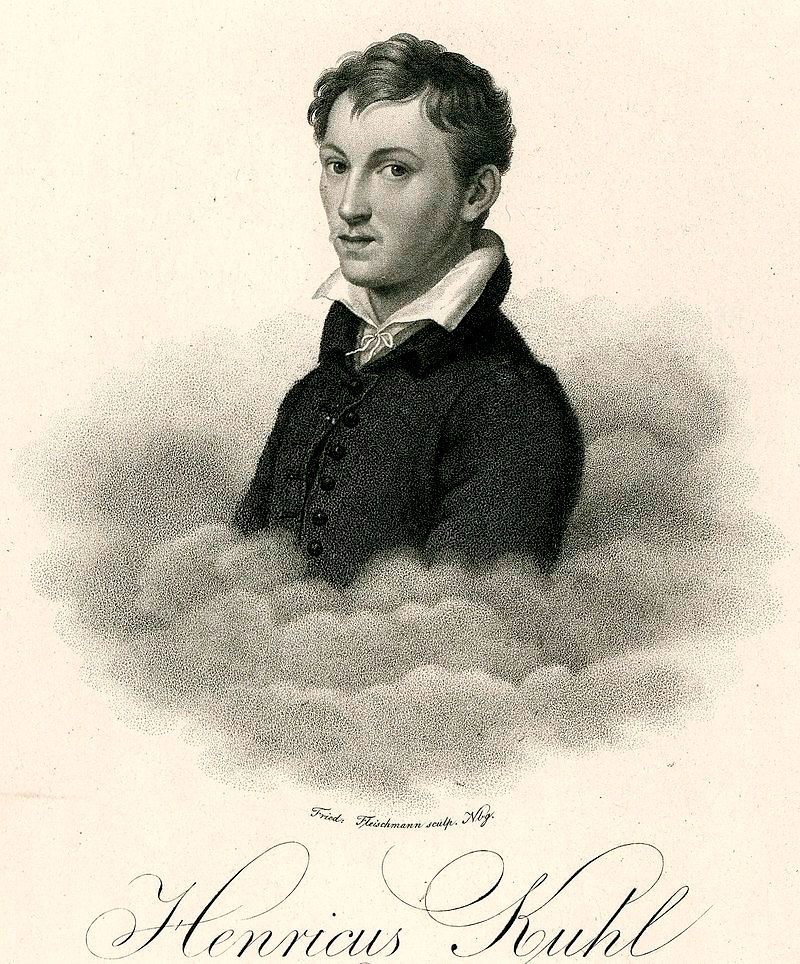
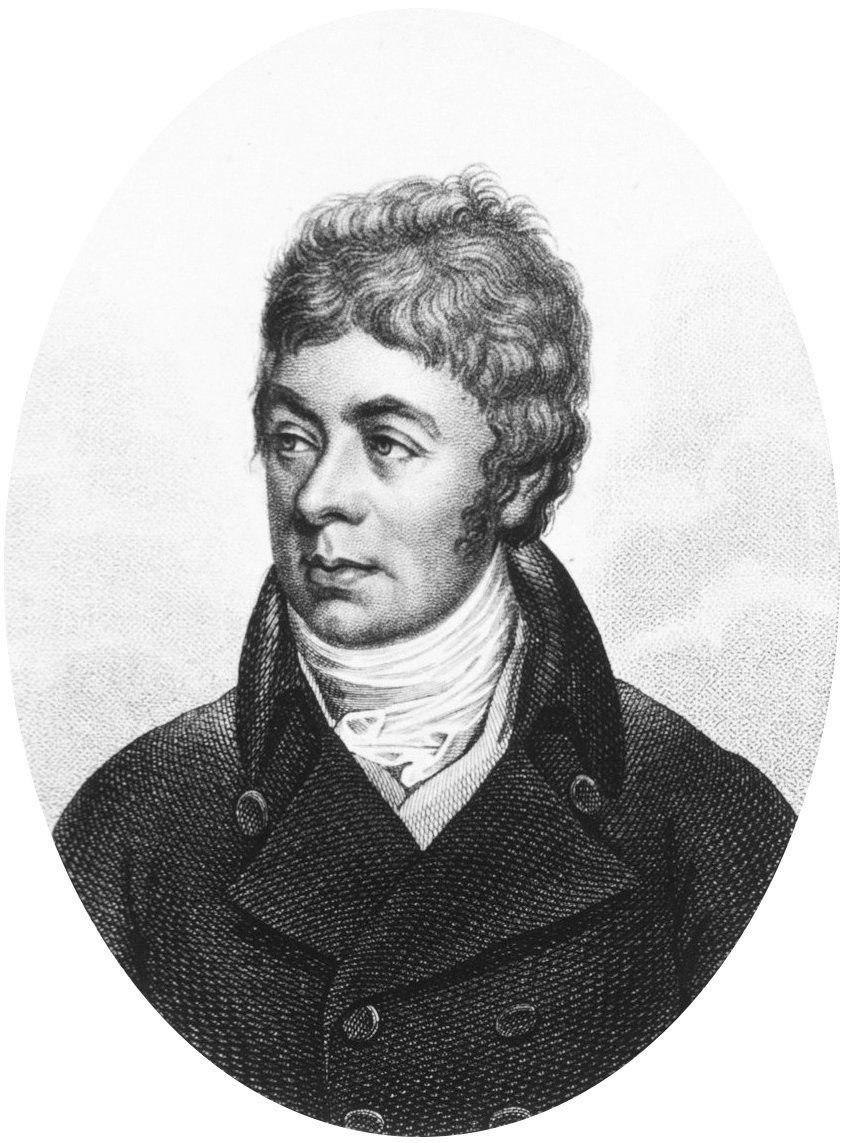
Kuhl, Heinrich
Heinrich Kuhl

scientific classification:


Order: Psittaciformes
Family: Psittacidae
Genus: Aratinga
Scientific name: Aratinga auricapillus
Citation: (Kuhl, 1820)
Protonimo: parrot auricapillus


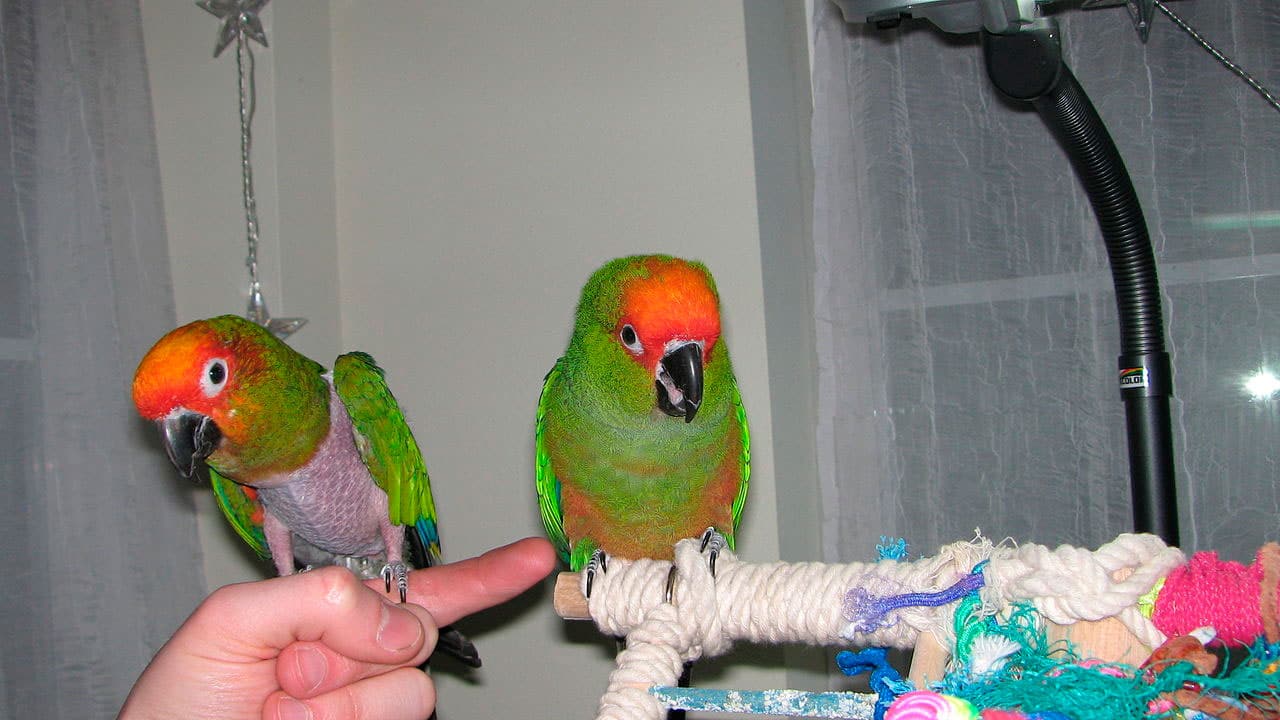
Golden-capped Parakeet images:


Species of the genus Aratinga

Sources:

Avibase
– Parrots of the World โ€“ Forshaw Joseph M
– Parrots A Guide to the Parrots of the World – Tony Juniper & Mike Parr
– Birdlife

Photos:

(1) – A Golden-capped Parakeet at Jurong Bird Park, Singapore By Peter so (Golden-capped ParakeetUploaded by Snowmanradio) [CC BY-SA 2.0], via Wikimedia Commons

(2) – Picture of a Golden-capped Parakeet in the zoo of Wrocล‚aw (Poland) By Nicolas Guรฉrin (messages) (Own work) [GFDL or CC BY-SA 3.0], via Wikimedia Commons
(3) – A Golden-capped Parakeet (also known as Golden-capped Conure) in Seattle, Washington, USA By Matthew Wilson (Picasa Web Albums) [CC BY-SA 3.0], via Wikimedia Commons
(4) – Two Golden-capped Parakeets (also known as Golden-capped Conures) in Seattle, Washington By Matthew Wilson (Picasa Web Albums) [CC BY-SA 3.0], via Wikimedia Commons
(5) – A Golden-capped Parakeet (also known as Golden-capped Conure) in captivity By Patrick Hawks from Sint Maarten (Bird is the wordUploaded by snowmanradio) [CC BY 2.0], via Wikimedia Commons

Sounds: Douglas Meyer (Xeno-canto)

โ–ท The world of Pets: Dogs, cats, birds, reptiles, amphibians

Violet-necked Lory
Eos squamata

Lori Escamoso

Content

Description

27 cm.. height and an approximate weight of 110 gr.

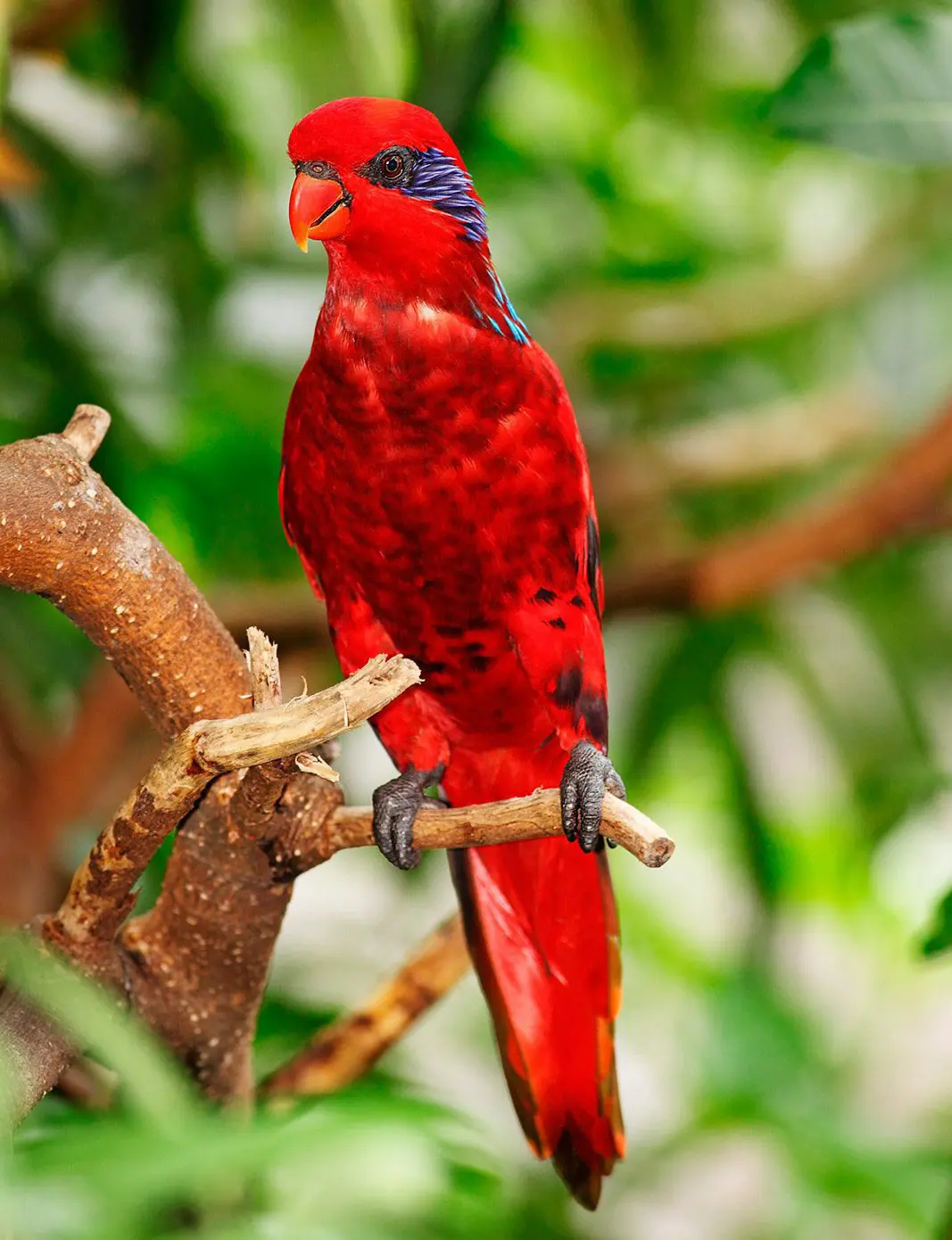
Along with the Red Lory (Eos Bornea) the "Scaly Lory" (Eos squamata) it is the only lory of the genus Eos it does not have blue marks on the ear-coverts.

Its plumage It has a scarlet general appearance. The neck It is surrounded by a violet blue collar which is well developed in some individuals, but nearly absent in others. The area from the abdomen up to the subcaudales it is dark purple. The scapulars they are dull purple with black tips. The feathers of the greater coverts and flight feather They are red with black tips.
The bottom of the wings and of remiges from below they are red with black spots at the primary level. The tail is purple red.

The irises is orange, the legs grey.

In the immature the feathers of the lower parts, have broad dull blackish purple borders. The irises They are brown.

Description 3 subspecies

  • Eos squamata squamata

    : (Boddaert, 1783) – Something smaller and feathers in the nominal species They are blue violet, in this subspecies are blackish blue.


  • Eos squamata riciniata

    : (Bechstein, 1811) – Smaller and band chest and neck is violet gray.


  • Eos squamata obiensis

    : (Rothschild, 1899) – It is somewhat smaller and with shoulders blacks. the band of neck It is variable and greyish violet. The area of the nape is red.

Habitat:

The Violet-necked Lory they are relatively common in the primeval forests or secondary forests that have large mature trees. Also found in the mountain forests and also, but with lower density in the coconut plantations bordering the coast, in the bushes during regeneration, in the abandoned gardens and mangroves.

Populations that inhabit small islands tend to stay near the coast.
On the larger islands, These birds can run in the forests of the mountains up to a height of 1.220 meters above the sea level.

The Violet-necked Lory they are particularly noisy and easily identifiable when they are in flocks, but they are a much more secretive behavior when in isolated pairs.

They usually gather in large flocks when they find abundant food sources.. This habit makes appearing more or less abundant in different regions. These flocks of birds are usually just above the tops of the trees.

Every day, they make short trips between the different islands. To do this they use a flight quick and direct, It consists of shallow wing beats. When they beat their wings produce a very audible hum.

Reproduction:

There is almost no information on the reproduction in the wild. In captivity, the implementation is of 2 eggs that are incubated during 27 days. As with all loris, the reproductive cycle is particularly long and hard about 80 days.

Food:

Exclusively vegetarian. They feed on sago palm in bloom and consume figs when they are still firm. Also eat nectar from big red flowers of Erythrina family Fabaceae.

Distribution:

Size of its range (reproduction / resident): 189.000 km2

The Violet-necked Lory They are endemic to the islands or archipelagos which are among New Guinea and Las Celebes.

They are mostly found in West Papua and of the Moluccan Islands.

Distribution 3 subspecies

  • Eos squamata squamata

    : (Boddaert, 1783) – Islands West Papua, that is to say Stupid, Waigeo, Batanta and Misool and islas Turtle (Indonesian)


  • Eos squamata riciniata

    : (Bechstein, 1811) – North of Moluccas, from Morotai to Bacan and Damar, also in islas Widi and Mayu islands in the sea of Moluccas (Indonesian).


  • Eos squamata obiensis

    : (Rothschild, 1899) – Only in the Obi Islands in the northern Moluccas.

Conservation:


minor concern


โ€ข Current IUCN Red List category: Least concern

โ€ข Population trend: Stable

The population size is very large, and therefore not approaching the threshold of Vulnerable under the criterion of population size.
The world population is estimated between 100,000 and 500,000 individuals.

About 3.000 specimens are caught every year for the trade aviaries. The pressure on the species is estimated to be quite reasonable, but it is recommended, by many associations, the establishment of catch quotas for the year.

"Violet-necked Lory" in captivity:

Son loving, curious, extroverts and show some unique behaviors. Some like to wrap yourself in a blanket to sleep. Sometimes, they can even be sleeping on your back. They can learn to mimic sounds and words.

They are capable of aggressive behavior if their territories and possessions is disregarded.

They are demanding in the requirements should be for their care, requiring much attention. Baths or showers daily should be part of your daily habit.

Alternative names:

Violet-necked Lory, Moluccan Red Lory, Violet necked Lory (ingles).
Lori รฉcaillรฉ, Lori ร  nuque violette, Lori de Wallace (French).
Kapuzenlori (German).
Lรณris-de-colar-violeta (Portuguese).
Lori de Collar Violeta, Lori Escamosa, Lori Escamoso (espaรฑol).

scientific classification:

Order: Psittaciformes
Family: Psittaculidae
Scientific name: Eos squamata
Genus: Eos
Citation: (Boddaert, 1783)
Protonimo: Psittacus Squamatus

โ€œScaly Loryโ€ Images:

Videos "Violet-necked Lory"

————————————————————————————————–

"Scaly Lory" (Eos squamata)


Sources:
Avibase, BirdLife.org, Oiseaux.NET
– Photos: SALIS- (Flickr), Bernard DUPONT (Flickr), Wikimedia, IBC.lynxeds.com
– Sounds: Frank Lambert (Xeno-canto)
โ–ท The world of Pets: Dogs, cats, birds, reptiles, amphibians

Musk Lorikeet
Glossopsitta concinna

Musk Lorikeet

Content

Description

20 to 23 cm.. length and a weight between 52 and 56 g..

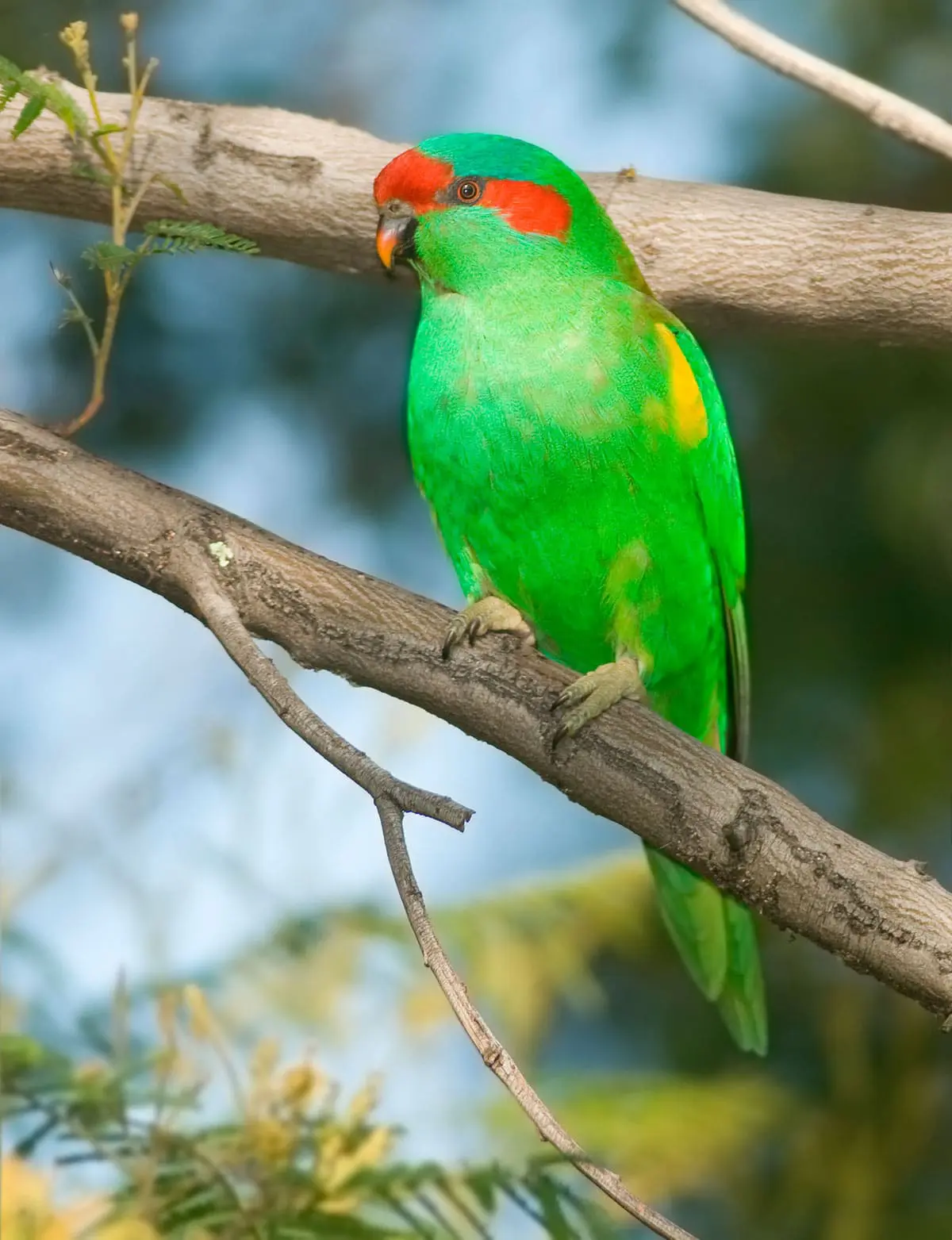
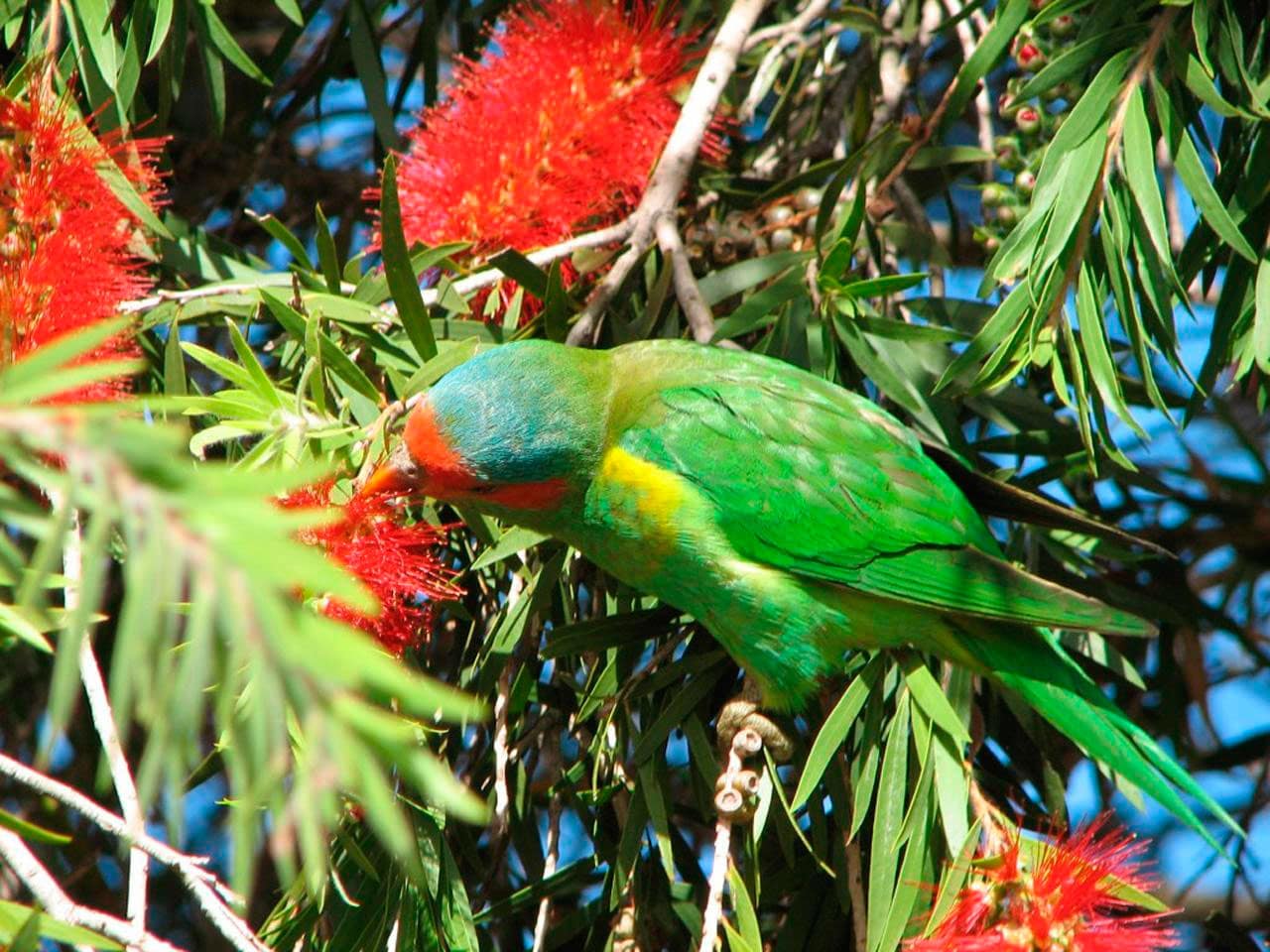
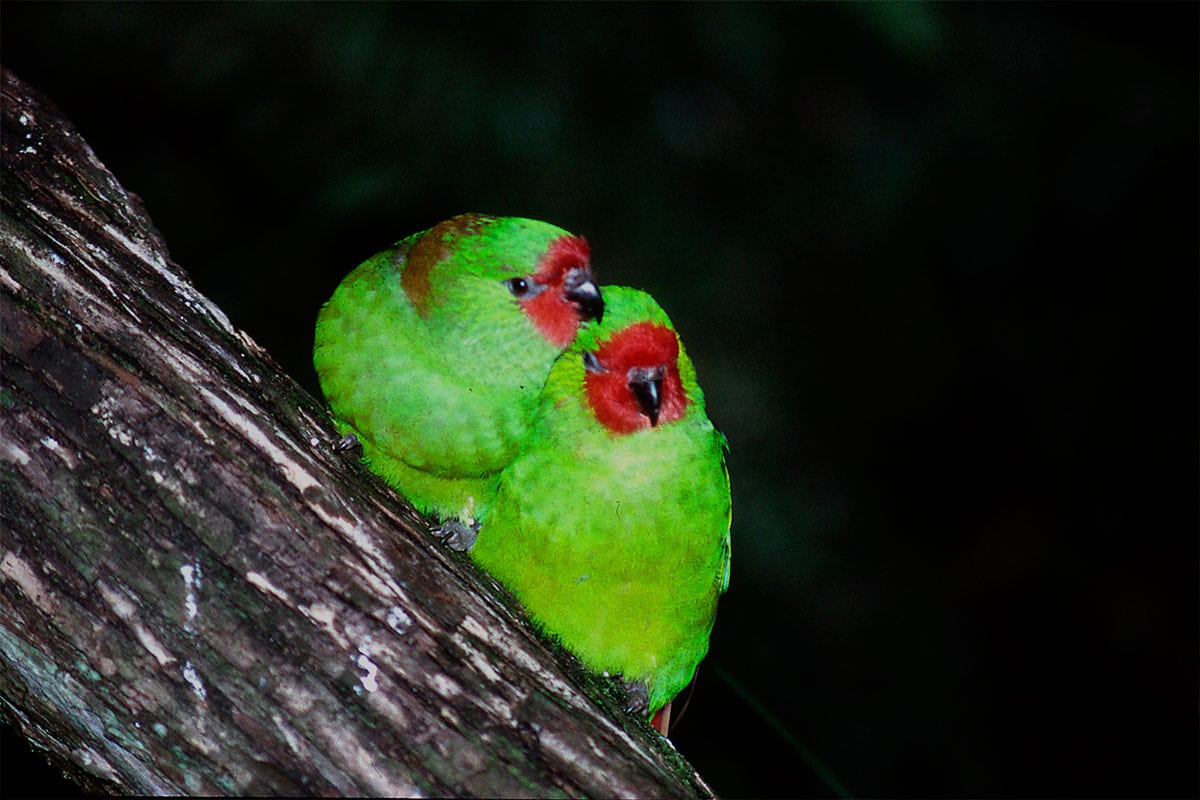
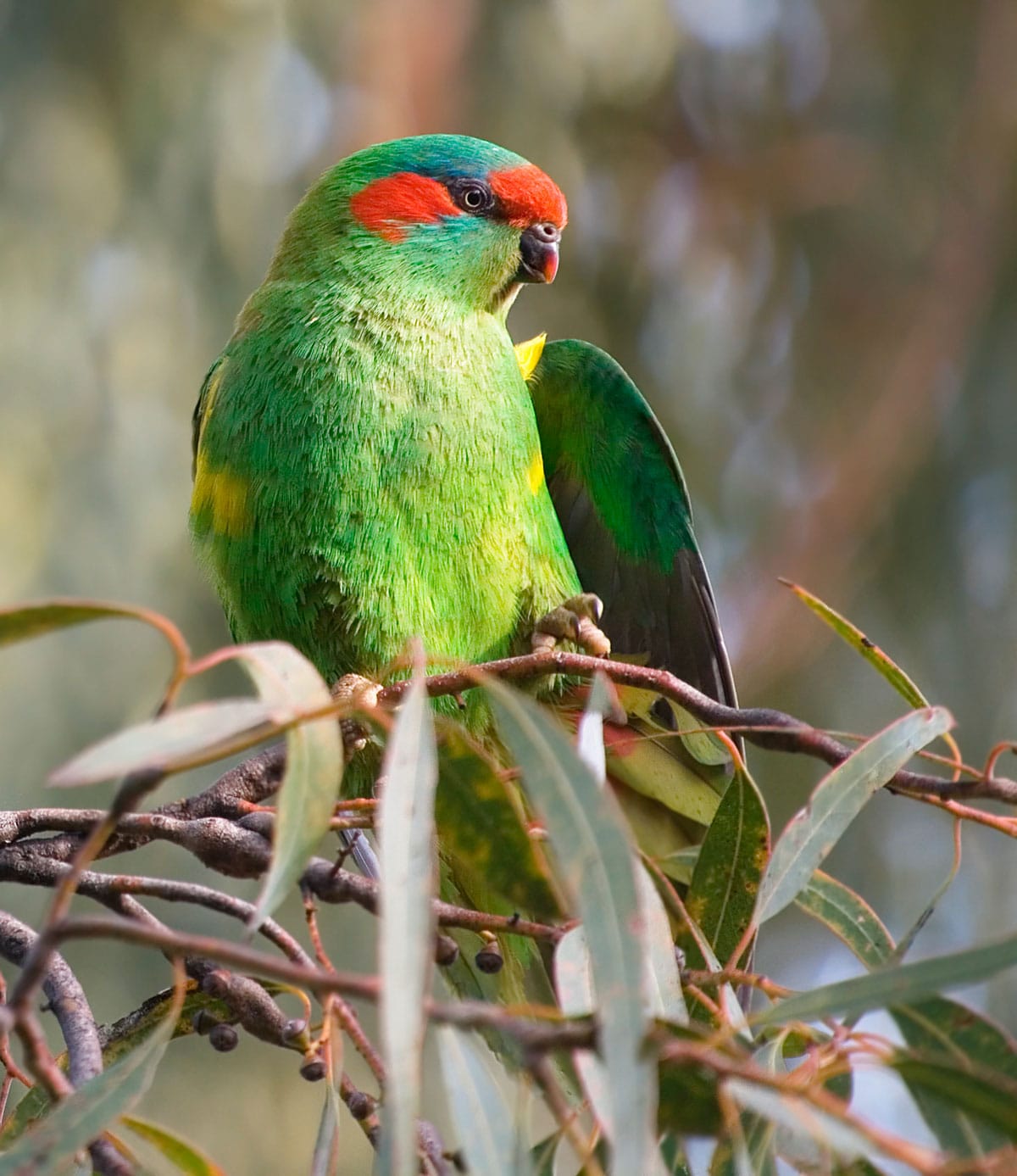
The general plumage of the Musk Lorikeet (Glossopsitta concinna) is green.

The part forward of the crown, lores and coverts headphones are of color Scarlet. Top of the head and cheeks, of color green impregnated of Turquoise under eye. The underparts of color green with a washed Brown olive around the sides of the chest. Green bright it rump. Wing coverts green, flight feather of color gray to black and a band of color yellow in the area of the shoulders. The feathers of the tail with brands reddish orange.
Part back from the neck yellowish green. Beside the edges of the wings colour yellow. Bill black-tipped Red. The irises Orange and the legs greenish Brown.

The blue area in the crown of the female It is smaller and paler which in the male.

The name of the species derives from a musky odor that is said to emit these birds.

Subspecies description:

  • Glossopsitta concinna concinna

    (Shaw, 1791) – Nominal.


  • Glossopsitta concinna didimus

    (Mathews, 1915) – Less blue in the crown, nearly absent in the female.

Habitat:

Seasonally nomadic Depending on the flowering of the eucalyptus, at least at the ends of their range.
Found in many habitats of open forest, agricultural and suburban areas, including forests of eucalyptus, dry forests, dense rainforest (particularly in Tasmania) and riparian forests.

It avoids the high open woods and high altitude. Often found in large flocks of more than one hundred of individuals, where couples who form strong bonds, they often live together. It is extremely trusting when feeds.

Flocks have been seen, frequently, flying at high altitude.

Reproduction:

Season of mating from August to January. The nests they are built in holes of eucalyptus. The two eggs are incubated for about 25 days and the young leave the nest between 6 and 7 weeks after hatching.

Food:

like most others Lori, the diet consists in nectar and pollen, as well as small fruits and some insects. They can RAID orchards, vineyards and crops, forming herds with the Swift Parrot (Lathamus discolor) and other gender lori Glossopsitta.

Distribution:

Size of the area of distribution (reproduction / resident): 664.000 km2

The Musk Lorikeet are located in the East of New South Wales, Victoria, South of Australia and Tasmania.

Subspecies distribution:

  • Glossopsitta concinna concinna

    (Shaw, 1791) – Nominal.


  • Glossopsitta concinna didimus

    (Mathews, 1915) – Tasmania, sometimes King Island. Small population wild in Perth.

Conservation:


minor concern

โ€ข Current IUCN Red List category: Least concern

โ€ข Population trend: Stable


The world population It has not been quantified, but the species is reported be very common (pit et to the. 1997).

The population suspected to be stable in the absence of evidence of any reduction or substantial threats.


"Musk Lorikeet" in captivity:

Rare out of Australia, small number in the aviaries of United States and United Kingdom.

A delight, playful, more quiet that the Iris Lorikeet; they can imitate sounds; a bit messy due to a diet of nectar.

Alternative names:

Musk Lorikeet (ingles).
Lori ร  bandeau rouge, Loriquet musquรฉ (French).
Moschuslori (German).
Loris Musk (Portuguese).
Lori Almizclero (espaรฑol).

George Shaw
George Shaw

scientific classification:


Order: Psittaciformes
Family: Psittaculidae
Genus: Glossopsitta
Scientific name: Glossopsitta concinna
Citation: (Shaw, 1791)
Protonimo: Annual parrot


Images ยซLori AlmizCleroยป:

Videos "Musk Lorikeet"


ยซLori Readerยป (Glossopsitta concinna)


Sources:

Avibase
Parrots of the World โ€“ Forshaw Joseph M
Parrots A Guide to the Parrots of the World – Tony Juniper & Mike Parr
BirdLife.org

Photos:

1 – By JJ Harrison (jjharrison89@facebook.com) (Own work) [GFDL 1.2 or CC-BY-SA-3.0], via Wikimedia Commons
2 – By Steve (originally posted to Flickr as Musk Lorikeet.) [CC-BY-SA-2.0], via Wikimedia Commons
3 – free-pet-wallpapers.com
4 โ€“ ยซMusk Lorikeet 2" Of JJ Harrison (jjharrison89@facebook.com) – It operates propria. With license CC BY-SA 3.0 Transact Wikimedia Commons.
5 – Image: Steven Kuiter – biodiversitysnapshots.NET.au

Sounds: Marc Anderson (Xeno-canto)

โ–ท The world of Pets: Dogs, cats, birds, reptiles, amphibians

Meek's Lorikeet
Charmosyna meeki

Content

Description

Of 16 cm.. length and a weight between 23 and 32 g..

Meek's Lorikeet

The head of the Meek's Lorikeet (Charmosyna meeki) is bright green, more yellowish in the Chin and throat, darker on crown and streaked on ear coats; patch of dark green blue above and in front of the eye. Green upper parts with fused olive through the mantle.

The wings of green at the top. Under the yellowish-green wing coverts. The yellowish green underparts, lighter in the back and more yellow from the chest to the belly. Top of tail dark green with yellow tip; the yellow bottom. Orange peak; pale red irises; legs Orange.

Both sexes are equal. Immature with the paler beak with base brown color and shorter tail.

Habitat:

Nomad. It is distributed in the humid hills and montane forests, but they have also found found in lowland coconut palms. Usually found alone or in small flocks of about of 10 to 15 birds flying through or above the forest cover. Larger groups can gather in the blooming of trees to feed on pollen and nectar. It can be associated with other parrots as the Duchess Lorikeet, Finsch's Pygmy-Parrot, Yellow-bibbed Lory and Coconut Lorikeet

Reproduction:

Information is not available.

Food:

Its diet includes pollen and nectar.

Distribution:

Endemic to the mountains of the largest islands in the Group of Solomons: Bougainville, New Georgia, Malaita, Kolombangara, Guadalcanal and in the past Santa Isabel. Moves starting from the 300 m, until the 1.700 m, but reportedly rarely in the lowlands or above 1.200 m. The world's population is believed to be below 50,000 exemplary but probably stable.

Conservation:


Near-threatened

โ€ข Current IUCN Red List category: Near threatened
โ€ข Population trend: Decreasing

The size of the world's population has not been quantified, It is believed that it is below 50,000 specimens, but the species is described as abundant at the Summit of Kolombangara.

There is still no evidence of a decline in its population, but would be threatened by any future large-scale export trade

"Meek's Lorikeet" in captivity:

They are not known to be in captivity.

Alternative names:

Meek’s Lorikeet (ingles).
Lori de Meek (French).
Salomonenlori (German).
Lori de Meek (espaรฑol).

scientific classification:

Order: Psittaciformes
Family: Psittaculidae
Scientific name: Charmosyna meeki
Citation: (Rothschild & Hartert, 1901)
Protonimo: Hypocharmosyna meeki

Lori Meek images:

————————————————————————————————

"Lori de Meek" (Charmosyna meeki)


Sources:

Avibase
– Parrots of the World โ€“ Forshaw Joseph M
– Parrots A Guide to the Parrots of the World – Tony Juniper & Mike Parr
– Birdlife

Sounds: Mark Todd (Xeno-canto)

โ–ท The world of Pets: Dogs, cats, birds, reptiles, amphibians

Yellow-throated hanging parrot
Loriculus pusillus

Yellow-throated hanging parrot

Content


Anatomy-parrots

Description

12 cm.. length between 25 and 30 g. of weight.

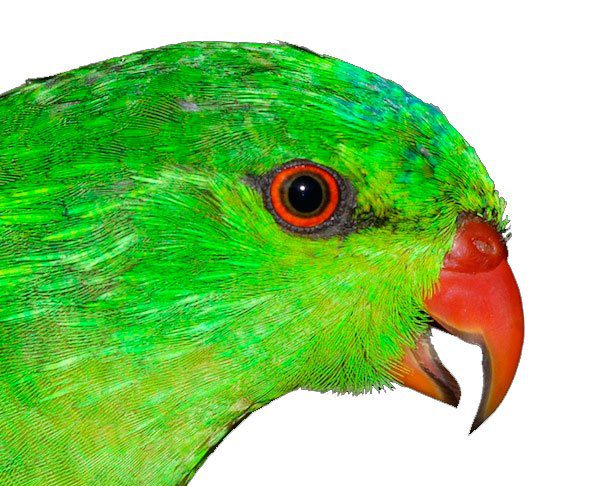
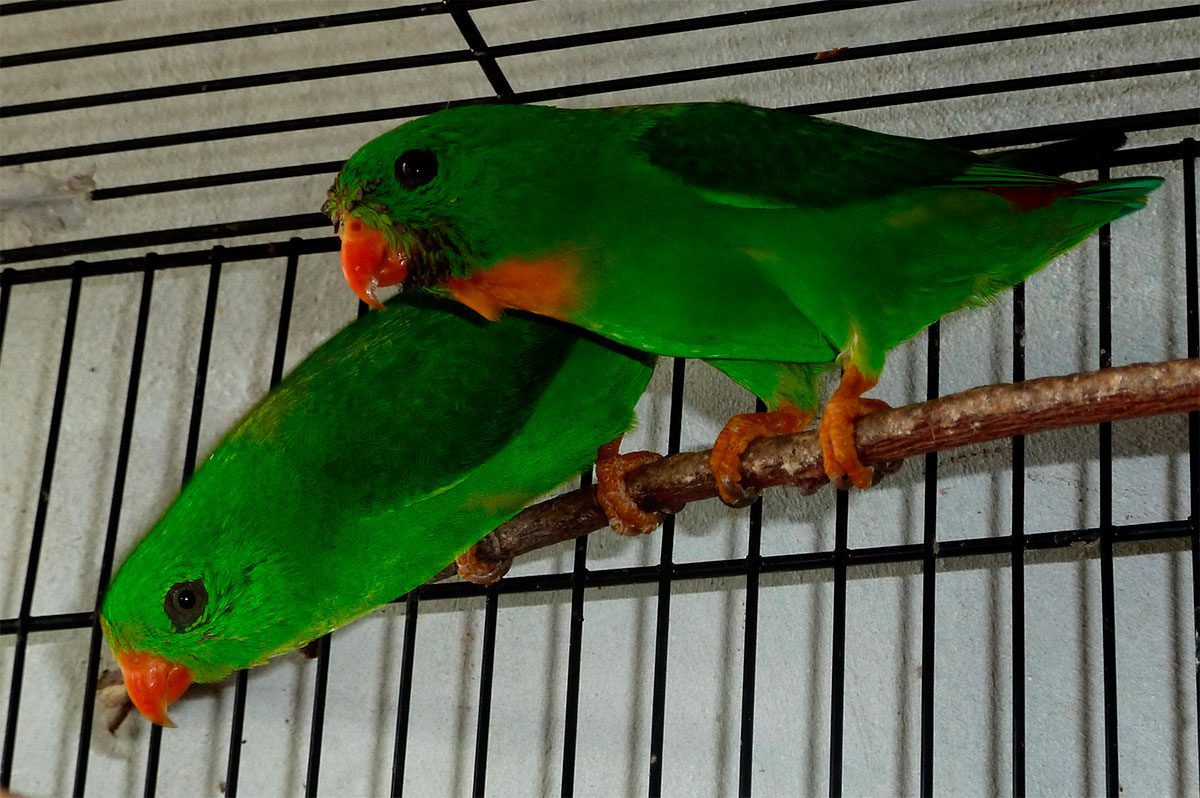
The head of the Yellow-throated hanging parrot (Loriculus pusillus) is bright green.

Upperparts green with yellow orange washing pale in the mantle; rump and uppertail-coverts, bright red. Wings green above, undertail, Turquoise with coverts green. Throat bright yellow, rest of the underparts bright green. Feathers of the tail green above, with side coverts yellowed and pale blue below. The bill orange; irises yellowish white; legs oranges.

Female and immature with yellow throat very small.

Habitat:

Reported along the edges of the forest, and in the marshy forests of the lowlands to 1.850 meters above sea level.
Possibly Nomad in response to local plant phenology.

The species shows great activity, climbing acrobaticamente on the canopy at time of collection, and resting and sleeping mouth below as well as other members of the genus.

The birds are alone, in pairs or in groups of up to eight individuals.

Larger groups sometimes gather in trees to feed.. Although discrete, the Yellow-throated hanging parrot They attract attention, since when flying between the trees they beat their wings emitting a characteristic buzz, accompanied by shrill calls.

Reproduction:

The laying tends to be of two eggs, deposited in the hollow of a tree, Palm or arbol-helecho, from time to time in an old nest of a barbet or Woodpecker. The nesting in West Java It was recorded between March and May.

Food:

They feed on nectar, fruit (including the Ficus figs), leaves and flower buds, as Cassia and Erythrina.

Distribution:

Size of its range (breeding/resident): 167.000 km 2

Endemic to Java and Bali, where it is usually uncommon. The world's population is thought to be superior to 10.000, but it may have decreased due to the logging of forests

Conservation:


Near-threatened

โ€ข Current IUCN Red List category: Near threatened

โ€ข Population trend: Decreasing

The world population It has not been quantified, It is thought to be above 10.000 specimens. The species is generally described as rare throughout its area of distribution (pit et to the., 1997).

There are no data on population trends; However, the species is suspected decreasing at a moderately fast pace, due to the loss and degradation of its habitat.

"Yellow-throated hanging parrot" in captivity:

Rare in captivity.

Alternative names:

Yellow-throated Hanging-Parrot, Javan Hanging-Parrot, Little Hanging-Parrot, Yellow throated Hanging Parrot, Yellow-throated Hanging Parrot (ingles).
Coryllis ร  gorge jaune (French).
Elfenpapageichen (German).
Lorรญculo do Java (Portuguese).
Lorรญculo de Java, Lorรญculo Javanรฉs (espaรฑol).

scientific classification:

Order: Psittaciformes
Family: Psittaculidae
Scientific name: Loriculus pusillus
Citation: Gray,GR, 1859
Protonimo: Loriculus pusillus

Videos "Yellow-throated hanging parrot"

————————————————————————————————

ยซLoricle of Javaยป (Loriculus pusillus)


Sources:

Avibase
– Parrots of the World โ€“ Forshaw Joseph M
– Parrots A Guide to the Parrots of the World – Tony Juniper & Mike Parr
– Birdlife

Photos:

(1) – The Bali Childrenโ€™s Project
(2) – By Jiล™รญ Hruลกka – biolib

Sounds: Frank Lambert (Xeno-canto)

โ–ท The world of Pets: Dogs, cats, birds, reptiles, amphibians

Jandaya parakeet
Aratinga jandaya

Cotorra Jandaya

Content

Description:


Anatomy-parrots

30 cm.. length.

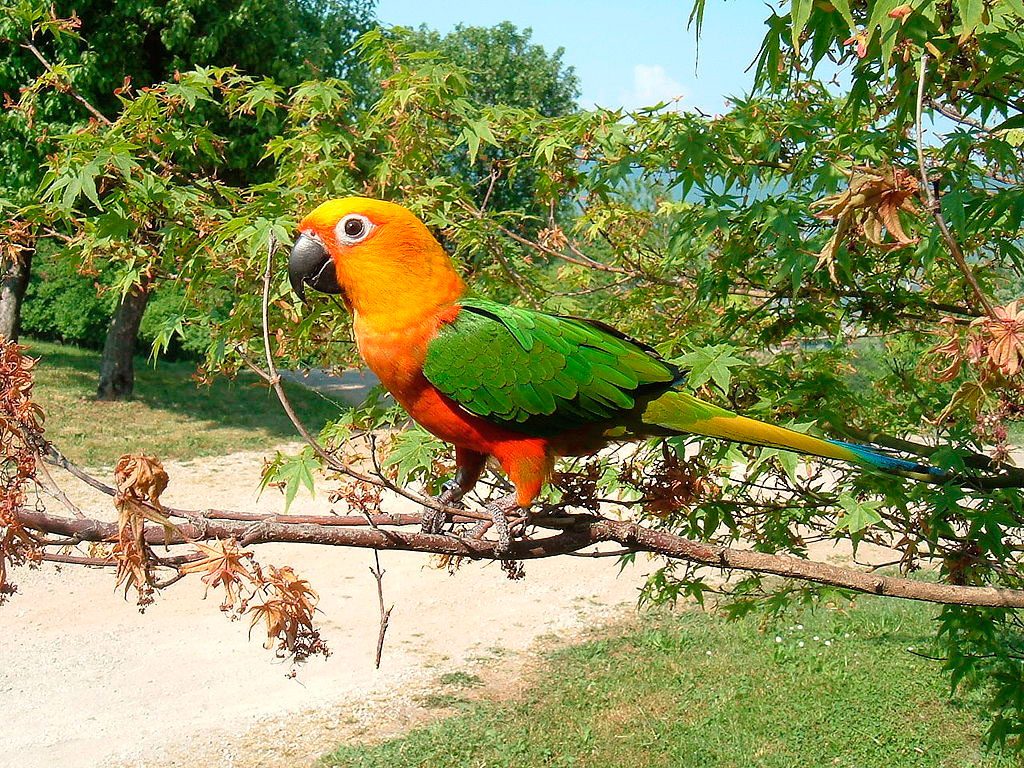
The Jandaya parakeet (Aratinga jandaya) they have both sides of the neck, cheeks, lores, ear-coverts and forecrown orange, deeper in the ear-coverts, around the eyes and in the lores; the crown and nape are yellowish-Orange (Some birds with paler yellow tones in the head).

Mantle and scapulars olive green; back and top of the rump, Green with orange-red horizontal bars; lower rump and uppertail-coverts olive green. Main feathers of the wings blue, the others feathers, green (brightest that in the the mantle). The flight feather blue color above, on the vane outer, Blackish towards the tip and grey below. Underwing-coverts orange-red. The underparts orange-red, slightly paler in the upper part of the chest and in the throat; undertail-coverts green.

Upper, the tail of olive with blue tips; undertail, charcoal grey.

Bill grey-black; bare periophthalmic pale grey; irises brown; legs grey.

Both sexes similar.

The immature has the head yellow and the neck with green markings; Dim Orange below.

Habitat:

The Jandaya parakeet move between deciduous woodlands, closed, thickets and clear areas of humid forest. Sporadically at the edge of the humid forest and in the caatinga. In palm groves of coconut on the coast of Pernambuco. Also frequent croplands and pastures. (Usually in flocks of approximately 12 birds, but sometimes in pairs or individually.

Reproduction:

Nests in tree cavities, at least a 15 metres in height. Observed young in the December nest in Maranhรฃo; eggs hatch between August-December, in the area of Belem. Clutch, probably composed of three eggs.

Food:

Food reported include seeds, berries and fruits of certain Melastomataceae, Mangifera, Palms Mauritia and Cecropia. Sometimes they can damage corn crops.

Distribution:

Distributed by northeast of Brazil. The species extends from the vicinity of Belem, Northeast of For, and Sao Luis, maranhรฃo, from South to North and East of Goiรกs and more eastward through Piauรญ, Cearรก, Rio Grande do Norte, Paraรญba, Pernambuco, Alagoas and probably the north end of Bay.

Locally common, While perhaps decreasing in some areas. It is possible that its range is usually expanding through the colonization of cleared areas of high humid forest., especially in For and Maranhรฃo.

Their status in the East its area of distribution is unknown.

Maintained in captivity with consequences serious, Perhaps derived from the illegal trade internal in Brazil and, possibly, by smuggling towards Asia South-East.

Conservation:

State of conservation โ“˜


minor concern Minor Concern โ“˜ (UICN)โ“˜

โ€ข Red List category of the UICN current: Least concern

โ€ข Population trend: Stable

This species has a range very large, and therefore not approaching the thresholds for vulnerable under the criterion of size range

The size of the world population of Jandaya Parakeet It has not been quantified, but this species has been described as ยซrareยป (Stotz et to the., 1996).

Its population is suspected to be stable in the absence of evidence of any reduction or substantial threats.

"Jandaya parakeet" in captivity:

Pretty common in captivity and easy to raise.

Like all the Parakeets, This species is not characterized by their ability to speak, still, can get to say some words with crystal clarity.

Its feeding is made up of different fruits, vegetables, soaked legumes and specific feed for parrots. There are species Meek and intelligent to which are the trains very well and are playful, What makes them good pet to maintain in a House. Being aves gregarias, is convenient to provide them a companion, Since solo can be quite noisy.

Enjoy the bathrooms, and is advisable to keep them in an Aviary or in cage of good proportions; It is also convenient to let the small flights out of its enclosure.

Its longevity often haunt them 20 years in captivity, being able to get to the 30 years, Depending on your care.

Alternative names:

Jandaya Parakeet, Flaming Conure, Flaming Parakeet, Jandaya Conure (English).
Conure jandaya, Conure ร  tรชte jaune, Perriche jandaya, Perruche ร  tรชte jaune, Perruche jandaya (French).
Jandayasittich, Jendajasittich, Jendayasittich (German).
Jandaia, jandaia-verdadeira (Portuguese).
Aratinga Jandaya, Periquito Rojo (espaรฑol).


scientific classification:

Gmelin Johann Friedrich

Order: Psittaciformes
Family: Psittacidae
Genus: Aratinga
Scientific name: Aratinga jandaya
Citation: (Gmelin, JF, 1788)
Protonimo: Psittacus Jandaya


Images Jandaya Parrot:

Videos "Jandaya parakeet"


Species of the genus Aratinga

Jandaya parakeet (Aratinga jandaya)


Sources:

Avibase
– Parrots of the World โ€“ Forshaw Joseph M
– Parrots A Guide to the Parrots of the World – Tony Juniper & Mike Parr
– Birdlife

Photos:

(1) – Jandaya Parakeet (Aratinga jandaya) aka Janday Conure. Photographed in Puerto Rico at the Mayaquez Zoo By Dick Daniels (http://carolinabirds.org /) (Own work) [CC BY-SA 3.0 or GFDL], via Wikimedia Commons

(2) – Jandaya Parakeet (also known as Jenday Conure) in Beale Park, Reading, Berkshire, England By David Long from London, United Kingdom (IMG_4798Uploaded by Snowmanradio) [CC BY 2.0], via Wikimedia Commons

(3) – Jenday Conure or Jandaya Parakeet in a tree. By GIANNIZZZERO at English Wikipedia [Public domain], via Wikimedia Commons

(4) – Jenday Conure or Jandaya Parakeet (Aratinga jandaya) at Iguaรงu Bird Park, Foz do Iguaรงu, Brazil. Photographed on 23 April 2003 By Arthur Chapman [CC BY 2.0], via Wikimedia Commons

(5) – Jenday Conure (Aratinga jandaya) at the Las Vegas Zoo By ZooFari (Own work) [CC BY-SA 3.0], via Wikimedia Commons

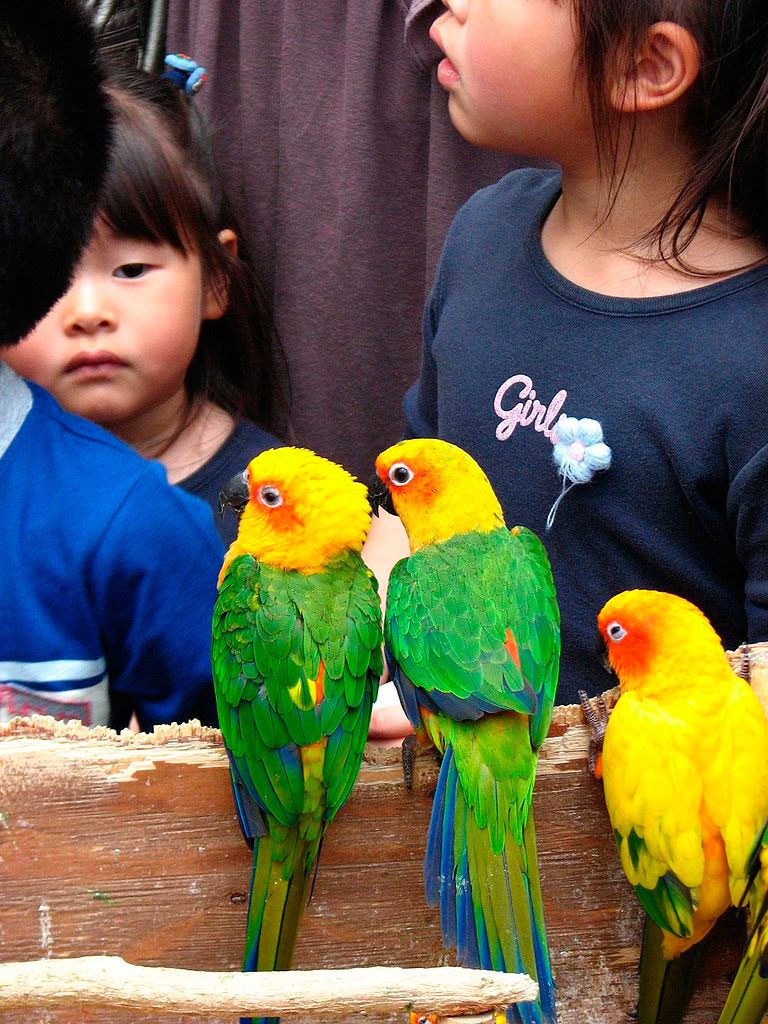
(6) – Aratinga jandaya and Aratinga solstitialis at Kobe Kachoen (Kobe Flowers and Birds Garden) in Kobe, Hyogo prefecture, Japan By Chris Gladis from Kyoto, Japan (Jandaya Parakeet) [CC BY 2.0], via Wikimedia Commons

(7) – Jendayasittiche (Aratinga jandaya) im Karl-Foerster-Garten des Tierparks Berlin-Friedrichsfelde By Lotse (Own work) [GFDL or CC BY-SA 3.0], via Wikimedia Commons

(8) – A Jandaya Parakeet (also known as Jenday Conure) at Beale Park, Lower Basildon, Reading, Berkshire, England By David Long (originally posted to Flickr as IMG_4800) [CC BY 2.0], via Wikimedia Commons

(9) – Jandaya Parakeet (also known as Jenday Conure) in Beale Park, Reading, Berkshire, England By David Long from London, United Kingdom (IMG_4802Uploaded by Snowmanradio) [CC BY 2.0], via Wikimedia Commons

Sounds: GABRIEL MILK (Xeno-canto)

โ–ท The world of Pets: Dogs, cats, birds, reptiles, amphibians

Blue streaked Lory
Eos reticulata


Blue streaked Lory

Content

Description

About 30 cm.. length and a weight between 140 and 170 gr.

Like all species of the genus Eos, the โ€œTanimbar Loryโ€ (Eos reticulata), shows a beautiful plumage mainly red. In adults, a great band blue-violet crosses the region of the eye and continues in the patches that cover the ears, at the sides of the neck.

The under neck and the mantle they are covered with long, violet-blue stripes.
The back and tail they are more or less blue red striped.

The pens and large blankets have terminations in black. The primary is almost entirely black. The tail is brownish black above and below a red opaque.

The bottom of the wings they have the edge and dark tips. Thighs and flanks they are completely Red. The bill coral red. Iris orange-red. The legs are grey.

In youth , the feathers the lower parts are aligned blue-black variably. The shield It is covered with blue spots instead of stripes. The bill is brownish Orange. The irises They are brown.

Habitat:

The Blue streaked Lory they live mostly in the most wooded areas, including primary and secondary forests. They are also found in coconut plantations, of sago palms, in the mangroves and the cultivated lands.

It seems that they show a certain attraction for the monsoon forests, relatively open and located in low-lying areas.

They live alone, in pairs or in small groups of up to ten or more individuals. These are rather shy and discreet, but their presence is often betrayed by the screams produced flocks in flight.

They have a direct flight, quite fast and composed of many flapping. Often feed on coconut blossom trees and the sago palms.

Reproduction:

There is little information of the natural environment. The Blue streaked Lory They typically make 2 or 3 eggs that colouring of 24 to 26 days. The chicks leave the nest after 7 to 8 weeks. But, even after feather, they return regularly to rest awhile. The youth they stay in the family throughout the summer and then join the dormitories where they continue their learning.

Food:

They have an exclusively vegetarian diet. They feed on fruits, seeds, buds and immature seeds. His tongue with a brush-shaped end is specialized to collect nectar and pollen.

Distribution:

Lori distribution of the Tanimbar
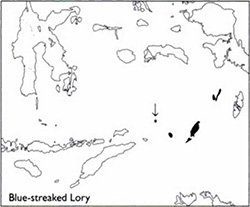
Is located in Yamdena and Larat, Tanimbar Islands and island of Babar, Indonesian. Introduced in Kai Islands and island of Damar, where has possibly gone.

Conservation:


Near-threatened

– Current IUCN Red List category: Near threatened

– The population trend: Decreasing

Habitat loss continues apace in southern Yamdena
The species is suspected that it is decreasing at a rate of slow to moderate, due to the combined forces of habitat loss and capture.
It is estimated a population of 220.000 ยฑ 50.000 birds in Yamdena

Nearly 3000 birds are traded on the international market of birds each year, fact that probably has not caused a decrease in its population. Habitat loss continues however, and this, combined with capture, probably if that will lead to more declines.

Conservation Actions Proposed:

– Regularly monitoring at certain sites throughout its range to determine population trends.
– Investigate the degree of capture and take appropriate measures, including the use of awareness-raising campaigns, to address these issues.
– Protection of the areas significant of forest right in all the Islands where is distributes the species.

"Blue streaked Lory" in captivity:

Lives of 15 to 30 years in the wild; and between 28 and 32 years in captivity.
Fairly common in the s 1970. Nowadays it is not unusual to see them in captivity.

Alternative names:

Blue streaked Lory, Blue-streaked Lory (ingles).
Lori rรฉticulรฉ, Lori ร  raies bleues, Lori striรฉ bleu (French).
Strichellori (German).
Lรณris-de-crista-azul (Portuguese).
Lori de las Tanimbar, Lori Reticulado (espaรฑol).

scientific classification:

Order: Psittaciformes
Family: Psittaculidae
Scientific name: Eos reticulata
Citation: (Muller,S, 1841)
Protonimo: Psittacus reticulatus

โ€œTanimbar Loryโ€ Images:

Videos "Blue streaked Lory"

————————————————————————————————————————–

ยซTanimbar Loryยป (Eos reticulata)


Sources:
Avibase, BirdLife.org, Oiseaux.NET
– Photos: Wikipedia – Uploaded by Benjamint444 , Jurong Bird Park, Singapore by chong kwang (Wikimedia), Jurong Bird Park, Singapore 2 by Michael Gwyther-Jones (Wikimedia), Photographed by Benjamint444 (Wikimedia), Renรฉ Modery (Wikimedia)
– Sounds: Mike Catsis (Xeno-canto)
โ–ท The world of Pets: Dogs, cats, birds, reptiles, amphibians

Little Lorikeet
Parvipsitta petty


Little Lorikeet

Content

Description

16 to 19 cm.. length and an approximate weight of 40 g.. The Little Lorikeet (Parvipsitta petty) is the smallest of the Parrots Australian.

The body is bright green, the area of the nose, the forecrown, the neck, part of the forecrown and cheeks They are red.

The ear-coverts are of color green with stripes of color green light. The neck and back top are brown-green. Under the wings brighter yellowish green. The primary flight feathers they have a very narrow yellowish Board, their underparts is yellowish-green.

The feathers of the tail has reddish orange base, the circle around the eyes is narrow and black, the irises is orange, the legs grayscale and the bill black.

Parvipsitta buttercups

  • Parvipsitta petty
  • Parvipsitta porphyrocephala
  • The immature have more off the Red of the face; the Brown of the upper mantle is minimal. Bill Dark Brown and brown the eye.

    This small Lori is likely to be confused with the Purple-crowned lorikeet (Parvipsitta porphyrocephala).

    Habitat:

    The Little Lorikeet dispatched virtually all areas and at all altitudes with trees. They prefer open areas with flowering or fruit trees and riverbanks.. Found up to one altitude of 1600 m.

    Occasionally seen in orchards and farming areas.

    Son nomads and outside the breeding season they gather in small groups of 4 to 12 birds.

    They prefer tall treetops and are difficult to see due to their small size and green color.. They prefer trees of eucalyptus that they are in bloom and they can attend major meetings when they are feeding, often associated with other lori as the Coconut Lorikeet and the Musk Lorikeet.

    Ruidoso. Their flight is flapping fast and straight, accompanied by shrill calls.

    Reproduction:

    The breeding season It is going may in the North, or August in the South, to December. It nests in the Hollows of trees, where sets of 3 to 5 rounded whitish eggs. The incubation hard ones three weeks.

    Food:

    It feeds mainly from fruits and flowers, including native plants such as those belonging to the genera Xanthorrhoea and (Melaleuca and Loranthus, and introduced plants such as the medlar (Eriobotrya japonica). Occasionally visit orchards.

    Distribution:

    Size of the area of distribution (reproduction / resident): 788.000 km2

    Distribution Lori Carirrojo
    The Little Lorikeet is located in the East and Southeast of Australia, from the vicinity of Cairns to the South by Queensland and New South Wales from the slopes of the Great dividing range until the eastern coasts to most of Victoria and Southeast of Southern Australia. Also located in Tasmania, although there is little abundant.

    Conservation:


    minor concern

    โ€ข Current category of the Red List of the UICN: Least concern.

    โ€ข Population trend: Stable.

    The main threats to these small parrots are the loss of breeding sites and of those resources food by the clearing of land in course. Most breeding records come from the western slopes, where has been a great loss of habitat trees. The loss of trees nest along the verges of Highway, often associated with roadwork, It is still a constant threat.

    "Little Lorikeet" in captivity:

    Although it was exported to Europe for the first time in 1877, the Little Lorikeet rarely seen outside of Australia. And even in the country of which it is native it is rare in captivity. Has a reputation for being difficult to maintain.

    Alternative names:

    Little Lorikeet, Little Red Lorikeet (ingles).
    Lori ร  masque rouge, Petit Loriquet (French).
    Zwergmoschuslori (German).
    Loris Pusilla (Portuguese).
    Lori Carirrojo, Lori de Cabeza Roja (espaรฑol).

    scientific classification:

    Order: Psittaciformes
    Family: Psittaculidae
    Genus: Parvipsitta
    Scientific name: Parvipsitta petty
    Citation: (Shaw, 1790)
    Protonimo: Psittacus Pusillus

    Images ยซRed-faced Loryยป:

    Videos "Little Lorikeet"


    ยซOn Carirrojoยป (Parvipsitta petty)


    Sources:

    Avibase
    Parrots of the World โ€“ Forshaw Joseph M
    Parrots A Guide to the Parrots of the World – Tony Juniper & Mike Parr
    Wikipedia
    environment.NSW.gov.au

    Photos:

    1 – By JJ Harrison (jjharrison89@facebook.com) (Hand darbas) [CC BY-SA 3.0 or GFDL], via Wikimedia Commons
    2 – By Joxerra Aihartza (ร โ€˜ire argazki bilduma / own picture) [FAL], via Wikimedia Commons
    3 – Little Lorikeets by Julian Robinson, on Flickr – Flickr
    4 โ€“ Little Lorikeets (Glossopsitta pusilla) by David Cook, on Flickr – Flickr
    5 – Musk Lorikeet [Glossopsitta concinna] again! by Norm Hanson, on Flickr – Flickr

    Sounds: Marc Anderson (Xeno-canto)