โ–ท The world of Pets: Dogs, cats, birds, reptiles, amphibians

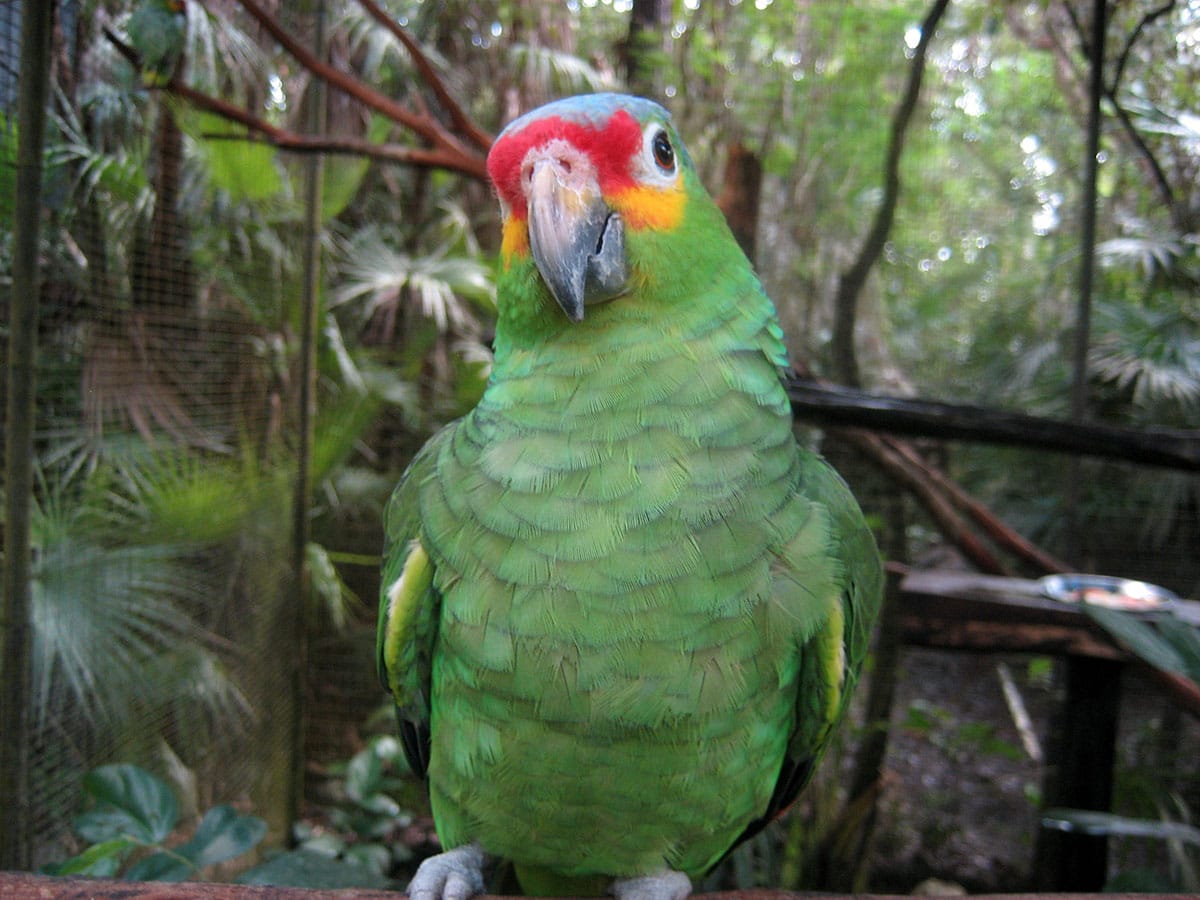
Red-lored Amazon
Amazona autumnalis

Red-lored Amazon


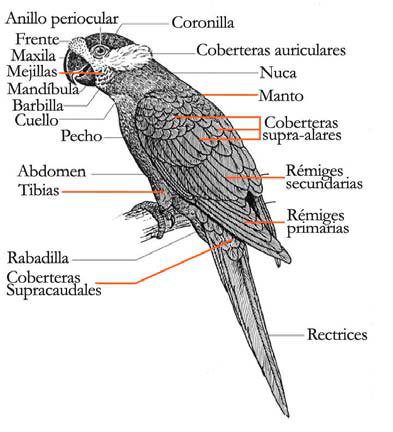
Anatomy-parrots

Content

Description:

35,5 to 38,1 cm.. height and between 314 and 485g. weight.

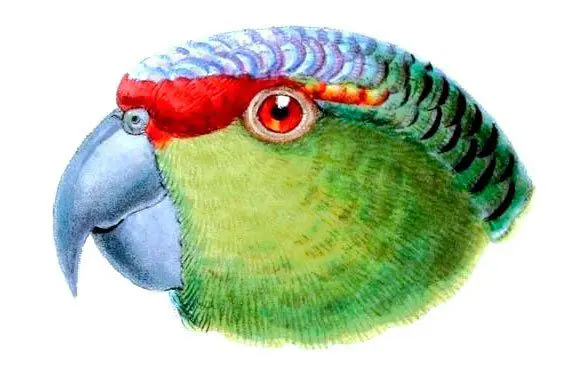
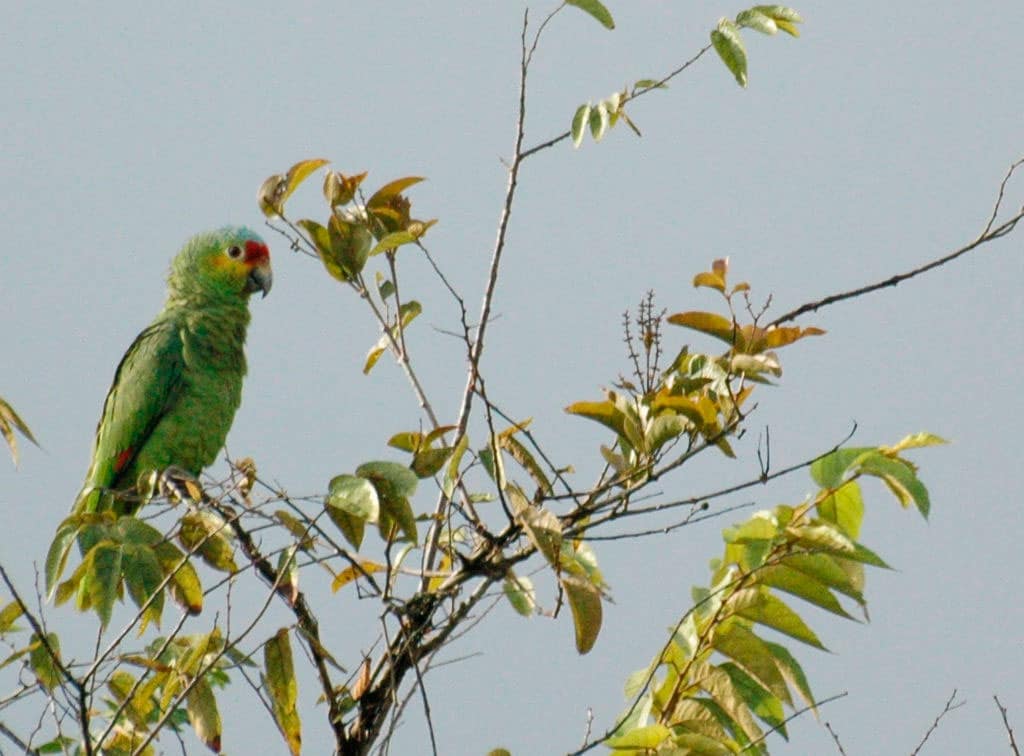
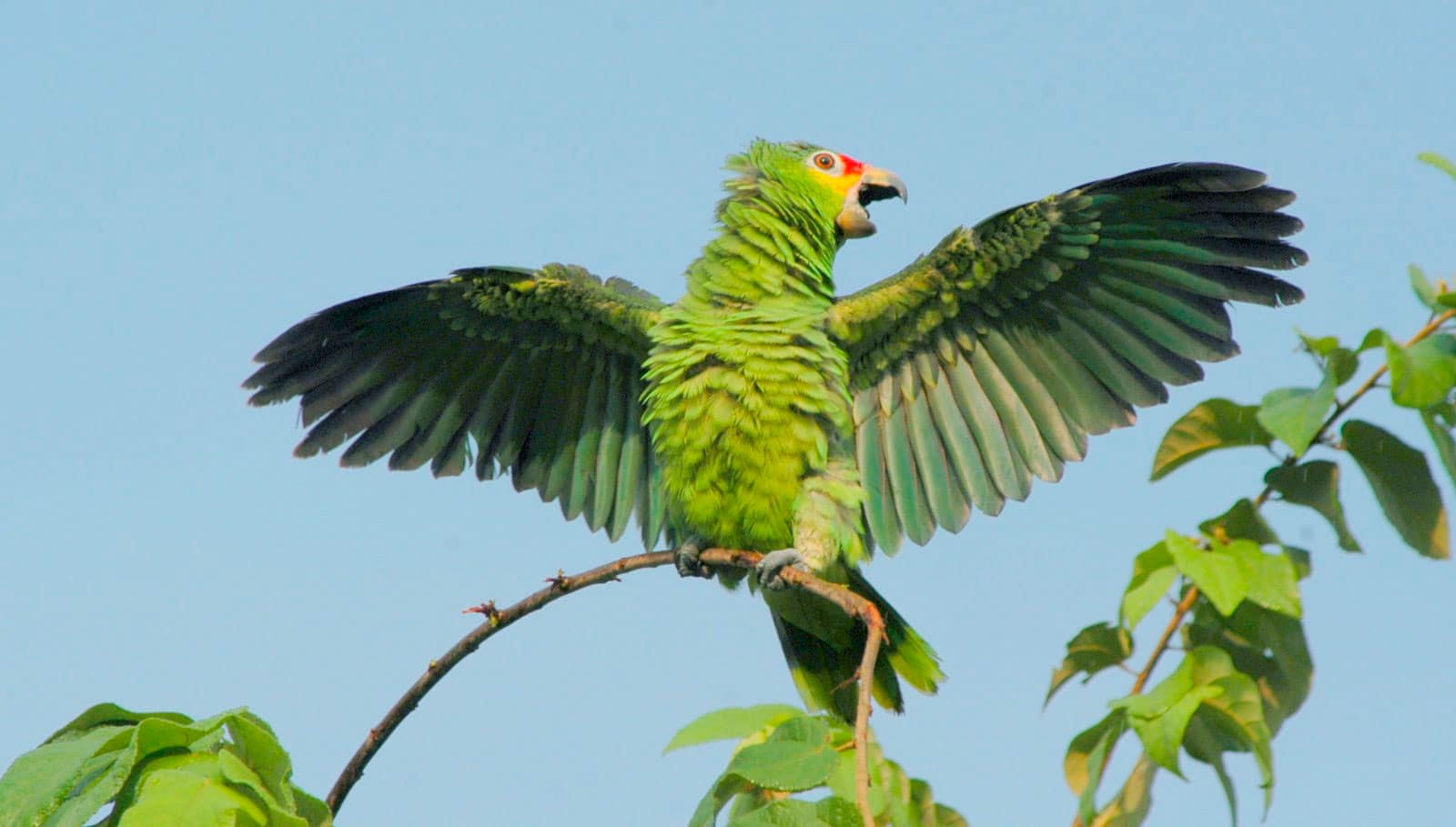
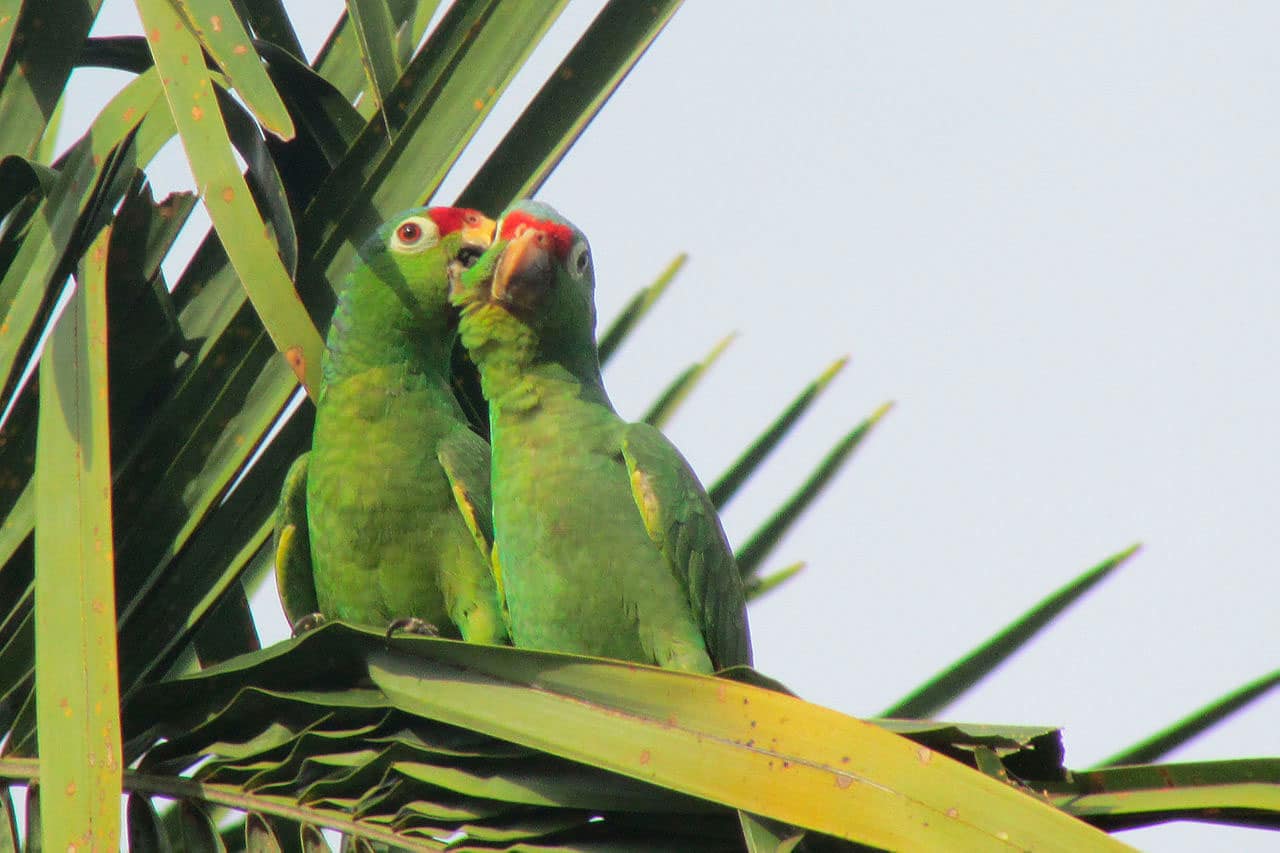
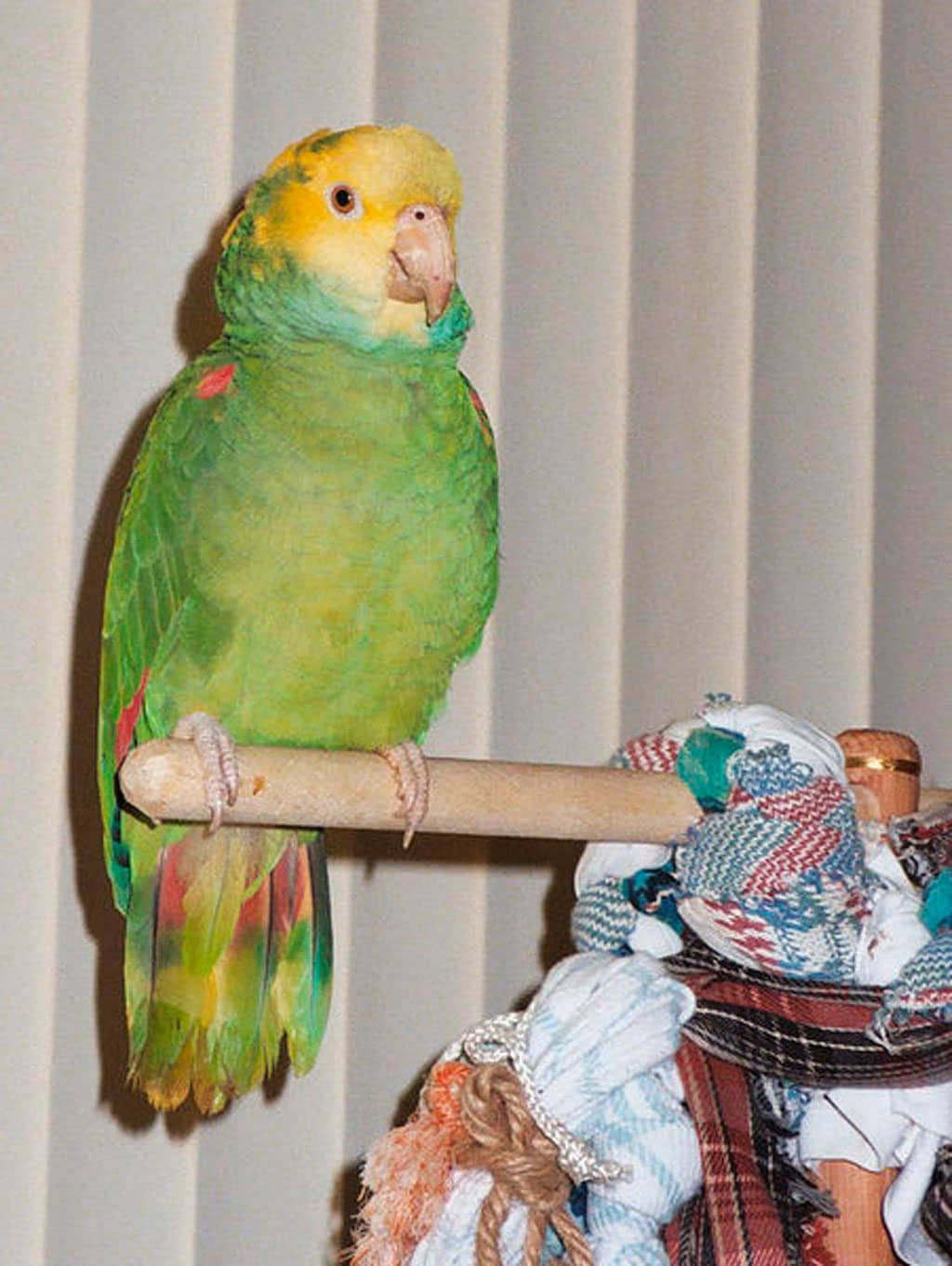
The Red-lored Amazon (Amazona autumnalis) is distinguished by its red front; Green with edge lilac it nape ; crown lilac; stain red in the wing , and tail blue margin.
The bill is grey with the upper jaw yellowish-horn. The irises his eye is orange. The legs are of color gray greenish.
They do not possess sexual dimorphism, that is to say, there is no physical difference between the male and the female.

Description 3 subspecies:

Amazona autumnalis lilacina Lesson, 1844
  • Amazona autumnalis autumnalis

    (Linnaeus, 1758) – Nominal.


  • Amazona autumnalis lilacina

    (Lesson, 1844) – It has a red band in the forecrown that it extends over them eyes; the cheeks Yellow.


  • Amazona autumnalis salvini

    (Salvadori, 1891) – It has cheeks and ear-coverts green; the basis of the tail by under Red.

Habitat:

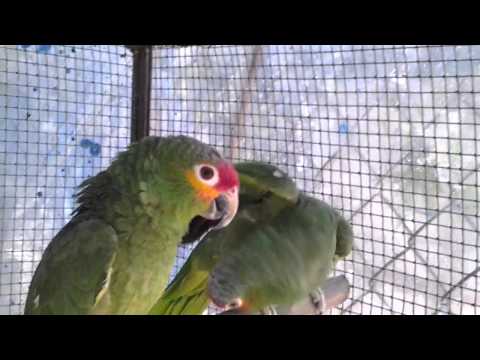
Video – "Red-lored Amazon"

Amazonas autumnalis

This amazon frequents a wide range of habitats wooded and open with trees, including rainforest, tropical deciduous forest, pine forests, mangroves, forest swamps, gallery woods, areas cultivated with trees high and plantations; also forest dry in the South of Ecuador.

The Red-lored Amazon move from the rainforest (breeding season) to a habitat more open in winter in the Yucatan Peninsula, Mexico. The altitudes that inhabit range from sea level to the 320 metres in Oaxaca, 1.100 metres in Honduras, 800 metres in the Caribbean, 1.000 meters on the slopes of the peaceful of Costa Rica, and 1.000 metres in Colombia.
The birds tend to be in pairs or in flocks loose, being more gregarious When feed (occasionally macaws) and when resting. outside the breeding season, birds take refuge in tall trees in gallery forests or mangroves.

Reproduction:

They nest during the seasonal dry in hollow of trees (usually dead, for example, Tabebuia or Ceiba) or on the stump of a Palm tree. Birds in State reproductive in April, Oaxaca; February-March, Belice; March, Guatemala; January-February, Colombia. Reproduce between February-April, Panama; March-may, Belice and January-March, Ecuador. Clutch 3-4 eggs.

The incubation varies from 25 to 26 days. The chicks remain in the nest 70 days.

Food:

In the wild these birds feed on figs Ficus, orange, Mango, fruits of Palm (including the of Cordia lutea and Spondias purpurea), coffee beans (Coffea arabica), seeds of Ferrule, Casearia and Protium. Mainly are feeds in the tops of trees high.

Distribution:

Size of the area of distribution (reproduction / resident): 2.570.000 km2

The Red-lored Amazon It extends from the South of Mexico north of South America with a population disjunct in the amazon.
You can find in them lands low of the this of Mexico, in the South of Tamaulipas, in the East of San Luis Potosi, Puebla, Oaxaca, Chiapas, Tabasco, Campeche and Quintana Roo. Records from other parts of the country (for example, City of Mexico) probably you refer to leak.
You can see in Belice and in the lowlands of the Caribbean of Guatemala and Honduras (including Roatan and Guanaja in Bay islands and probably soon in Utila), until Nicaragua and Costa Rica, where they are present in humid areas of the tropics on both slopes (absent from the dry Northwest ), also in Panama and on the islands of Coiba and Escudo de Veraguas and in the Archipelago of pearls (absent from the driest areas of the Azuero Peninsula).

In the Northwest of Colombia appear on the Pacific slope of the Western Andes from the Panamanian border to the South up to the Serrania del Baudo and from the southwest of Cauca south to Ecuador in the Gulf of Guayaquil. Also it extends to the North of the Andes in Colombia to Magdalena Medio and to the East in the Northwest of Venezuela in Zulia (Sierra de Perija).

In the Northwestern basin of the brazilian amazon a disjunct population exists between Black river and Solimรตes River.

Usually resident with some local seasonal habitat preferences (for example, in Yucatan Peninsula, Mexico). Is usually the most common parrot and more numerous in some parts of the range (for example, in parts of Central America) but now is a species very rare to the West of them Andes in Ecuador and Colombia with a population of the subspecies Amazona autumnalis lilacina estimated in 400-600 specimens.

Population decreased drastically in the island of Roatan (Honduras) where he captured it is massively for export, and maybe missing in Utila for the same reason.

Capture combined with the loss of habitat also has caused declines in some other parts of its area of distribution (for example, east of Mexico and Ecuador). common in captivity in some areas, and marketed internationally.

Distribution 3 subspecies:

  • Amazona autumnalis autumnalis

    (Linnaeus, 1758) – Nominal. Coast of the Caribbean from the East of Mexico South to North of Nicaragua.


  • Amazona autumnalis lilacina

    (Lesson, 1844) – West of Ecuador.


  • Amazona autumnalis salvini

    (Salvadori, 1891) – North of Nicaragua south to Colombia and Venezuela.

Conservation:

State of conservation โ“˜


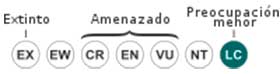
minor concern Minor Concern โ“˜ (UICN)โ“˜

โ€ข Current category of the Red List of the UICN: Least concern.

โ€ข Population trend: Decreasing.

This species has a very large range and, Therefore, is not approaching the thresholds of Vulnerability at the discretion of the distribution area size.

The population size is very large and, therefore, not approaching the thresholds for vulnerable under the criterion of population size (<10.000 mature individuals with an estimated continuous decrease in> 10% in ten years or three generations or with a specific population structure). For these reasons, the species is evaluated as least concern.

Justification of trend

It is suspected that the population is in decline due to the continuous destruction of the habitat and to levels of exploitation unsustainable.

The Amazona lored in captivity:

Is of vital importance that the diet is complete and balanced in all directions, as this prevents, along with other factors, the appearance of bone problems or the known software that affects numerous parrots. To ensure the balance of this, prepared feed very well supply the nutritional needs of each animal, However, they should not miss plant, fruits and vegetables, as well as diversity of seeds that come in mixture.

As for accommodation, If they are not removed from cage constantly, it should be spacious enough to exercise the muscles of the wings and legs, and the plumage of the bird is preserved in perfect condition.

The Red-lored Amazon enjoy, like all parrots, tearing apart and finding out things, so they must have the occasional toy or we may end up having problems with the furniture. Them feet of parrot are very suitable if your stay is in the outside of the cage. Of course, they must not be exposed to draughts or sudden changes in temperature. The water must be clean at your fingertips, because the existence of fungi causes serious breathing problems.

In terms of coexistence to have it in the neighborhood area, in comparison with other species in Amazon, are relatively quiet, so in general do not cause many problems.

In captivity, can get to live up to 80 years.

BREEDING AND REPRODUCTION:

Its captive breeding started for the first time in United States, after their importation from the place of origin, South America in the 1950's.

Those individuals acquire their sexual maturity on the 4 years of age, and if you have a good breeding pair in the right conditions, they can perform two annual broods, Although the main thing if you want to raise, patience. Many pairs need several years until the first calf, so it is very important to be patient and wait for the right moment.

The female lays in the nest (No fill) of 2 to 6 eggs incubated without the help of the male usually. This is dedicated to feeding the female itself and that of the chicks after their birth at the 28 days until independence after twelve weeks.

Alternative names:

– Red-lored Parrot, Red-lored Amazon, Yellow-Cheeked Amazon (English).
– Amazone ร  lores rouges, Amazone diadรจme (French).
– Rotstirnamazone (German).
– Papagaio-diadema, Papagaio-diadema (Papagaio cavacuรฉ) (Portuguese).
– Amazona Frentirroja, Lora Frentirroja, Loro Frentirrojo (espaรฑol).
– Lora cariamarilla (Honduras).
– loro cachete-amarillo (Mexico).


scientific classification:
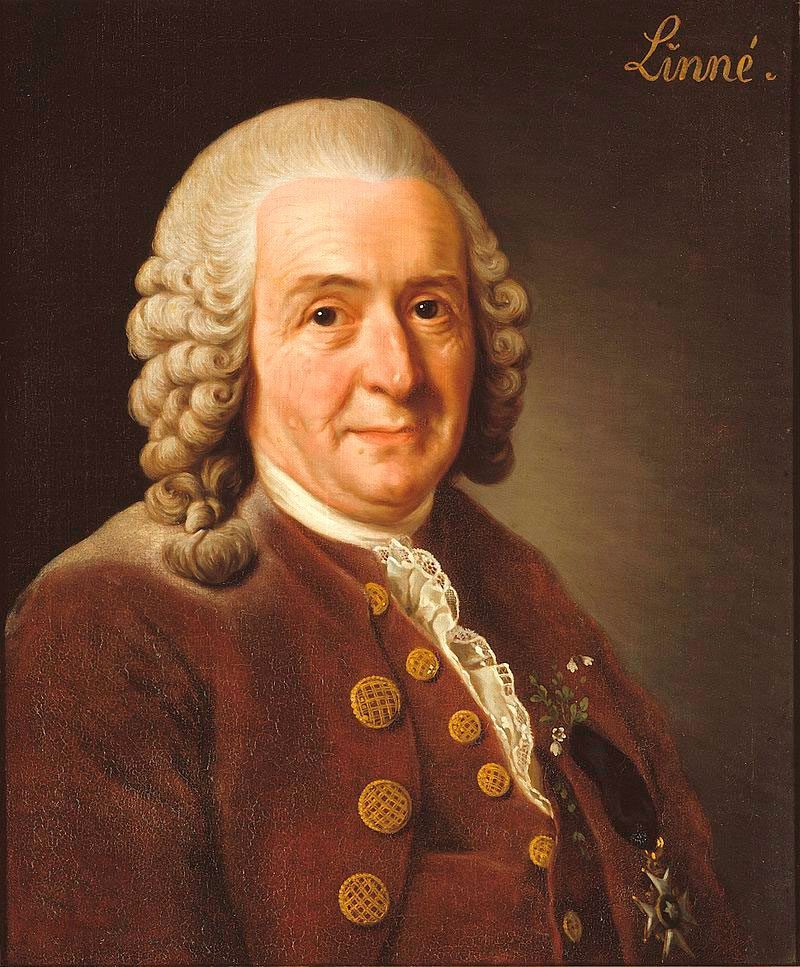
Carl Linnaeus

– Order: Psittaciformes
– Family: Psittacidae
– Genus: Amazona
– Scientific name: Amazona autumnalis
– Citation: (Linnaeus, 1758)
– Protonimo: Psittacus autumnalis


Red-lored Amazon images:


Species of the genus Amazona


Sources:

  • Avibase
  • Parrots of the World โ€“ Forshaw Joseph M
  • Parrots A Guide to the Parrots of the World – Tony Juniper & Mike Parr
  • Birdlife
  • Parrot Book, Parrots and macaws Neotropical
  • Grupohypermarkup

Photos:

(1) – Wikimedia.org
(2) – Red-lored Amazon or Red-lored Parrot; two captive parrots By Brian Gratwicke (originally posted to Flickr as Red-lored Amazon) [CC BY 2.0], via Wikimedia Commons
(3) – A Red-lored Amazon in Panama By Nelson de Witt from USA (Hello!) [CC BY-SA 2.0], via Wikimedia Commons
(4) – To pet Red-lored Amazon By Richard (originally posted to Flickr as Looming….) [CC BY 2.0], via Wikimedia Commons
(5) – Red-lored parrots (Amazona autumnalis), OSA Peninsula, Costa Rica By Charlesjsharp (Own work) [CC BY-SA 3.0], via Wikimedia Commons
(6) – A Red-lored Amazon at Rock Farm, Belize. It has a feather problem By Rigrat [CC BY-SA 3.0], via Wikimedia Commons
(7) – This is the image of a parrot originating of the jungle of Chiapas in Mexico By Joe Quick [CC BY 2.0], via Wikimedia Commons
(8) – Red-lored Amazon perching on a branch with wings open near Belmopan, Belize By Rigrat (Picasa Web Albums) [CC BY-SA 3.0], via Wikimedia Commons
(9) – A strange sight to me to see parrots flying in the wild. This Red-lored Amazon (Amazona autumnalis) was spotted with a group along the roadside in the Cayo distict of Belize By The Lilac Breasted Roller (originally posted to Flickr as Red Lored Parrot) [CC BY 2.0], via Wikimedia Commons
(10) – Lilacine Amazon, head from lateral by John Gerrard Keulemans [Public domain], via Wikimedia Commons

Sounds: Walter Rivera
โ–ท The world of Pets: Dogs, cats, birds, reptiles, amphibians

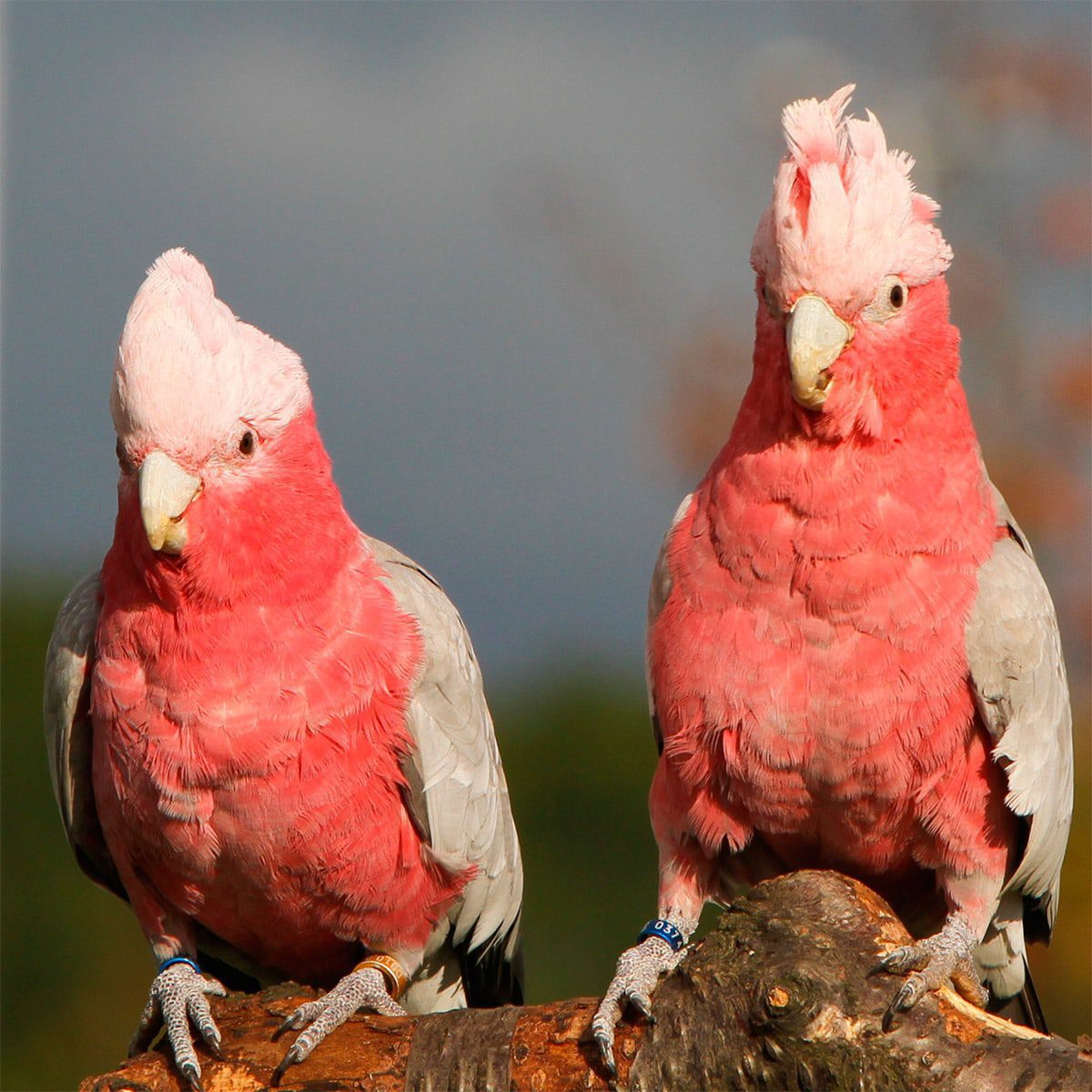
Galah
Eolophus roseicapilla


Cacatรบa Galah

Content

Description

Measured around 35 centimeters and between 240 and 330 g. weight.
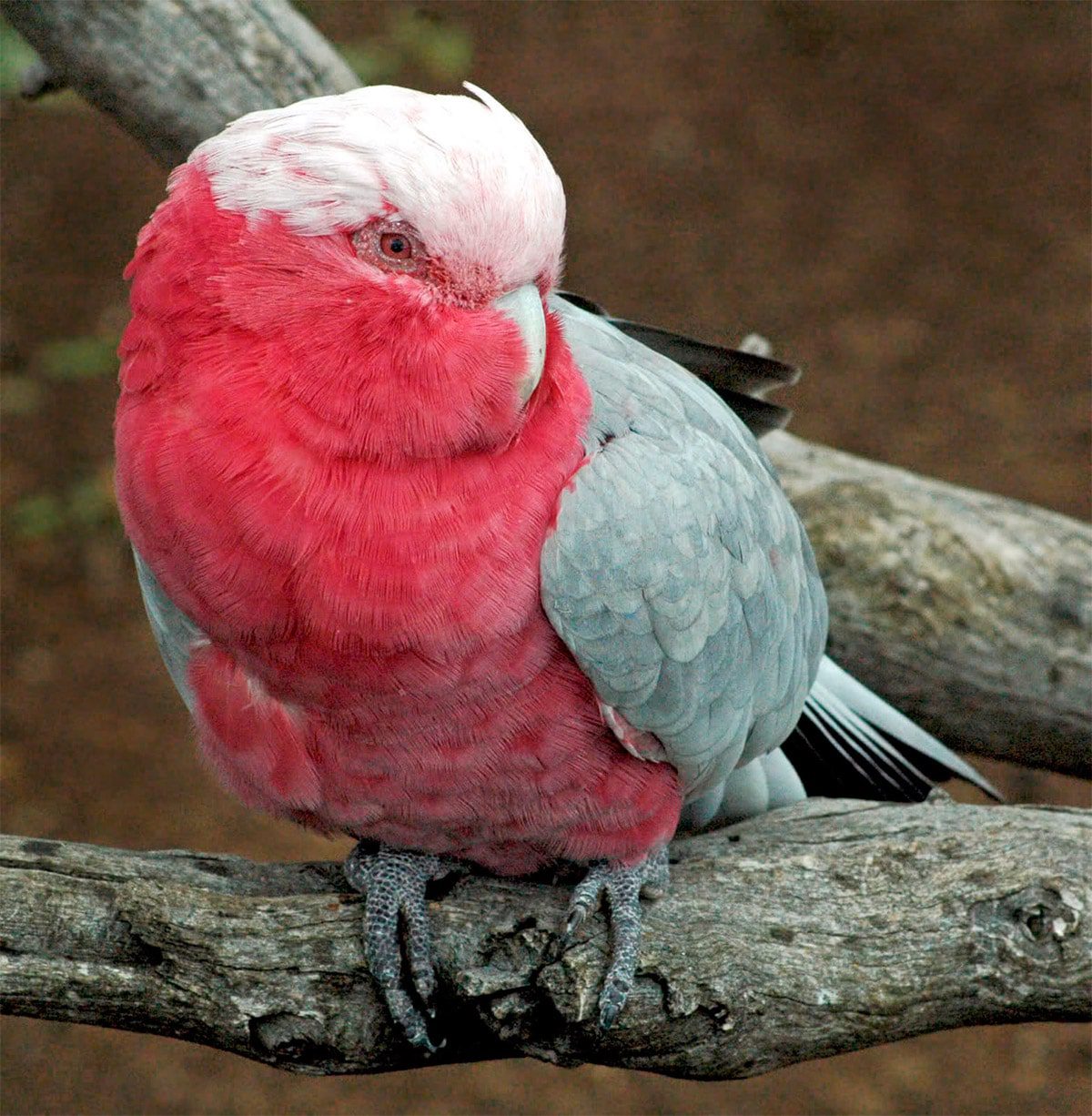
In the Galah (Eolophus roseicapilla) adult, the front, the hoopoe and the cap they form a joint undercover pale pink in white which contrasts slightly with the back of the neck darker. The face, neck and underparts they are deep pink.
The bottom of the flanks, the the thighs and mantas subcaudales are grey clear. The upperparts They show a grey pigeon which is slightly paler on the rump and in their flow rates. Tertiary they are grey and dark grey and medium the flight feather.
The upper part of the tail It is pale grey with a darker terminal tips. The bottom of the tail is uniformly Brown.

The bill is horn. The bare periophthalmic is greyish Red. The irises shows a dark brown hue. The legs are grey.

The female is similar to fellow, outside of the irises red.

The youth can distinguish is from the adults by their underparts grey infiltrated.

Subspecies description

  • Eolophus roseicapilla roseicapilla:

    The species nominal


  • Eolophus roseicapilla albiceps:

    Differs from the nominal by their larger size, the crest whitish instead of pink, and eye ring Red instead of greyish white.


  • Eolophus roseicapilla kuhli:

    It has a plumage paler and a crest shorter.

Habitat:

Video – "Galah" (Eolophus roseicapilla)

Ave wants to do everything her human mom does I Soul Mates | the dodo

In the North of its distribution area, the Galah frequent mountain forests, While much further South, most tend to live in the temperate forests of the lowlands.
During the summer season, It is more common in high altitude forested areas., staying mainly in small cool and shady ravines, always near a river.

In Winter, He moved to arid forests in more moderate altitudes. At this time of the year, also visit the parks and urban gardens.

The Galah It is a bird of open areas, always avoiding the dense forests.

During the nesting season they live in pairs or in small family groups, but the rest of the year, gather in large flocks where food resources are important. Sometimes can gather up to 1.000 birds in the pastures where they feed.

They are sentinels responsible to give the alarm in case of danger.
The power stations are separated by many miles of the rest areas.
In the evening devoted to drinking and perform aerial stunts before joining the residence. Occasionally it can be active and noisy at night.

Reproduction:

In the North, the reproduction has place between February and June.

During the courtship, the male Struts before his partner making bows, shaking his head, producing low notes and showing a repertoire of stunts.

Most of the time, the nest is a natural cavity in a eucalyptus, between 2 and 20 meters above the ground.
The cacatรบa Galah You strum the bark of the trunk around the hole which is the entrance of the nest. This practice is sometimes so excessive that they cause the death of the tree. Cliffs can also be used as a place of nesting.

The same couples usually are mate during all their life and are loyal to the same nesting sites for several consecutive years.

The spawning includes 2-6 eggs. The female lays an egg every one or two days and the incubation period is about 25 days. Both parents incubate at the same time, and they provide assistance to young people. They feed their young every 3 hours, sounding his beak to regurgitate the food. The young remain in the nest during 7 u 8 weeks.

While they are able to fly quickly when they come out of the nest, their survival rate is small. The first days after the flight, they return to the nest for the night. Shortly after, large nurseries are formed in which the parents continue to feed their young.

From time to time, the Galah It has a second litter in a season.

Food:

Consume a wide variety of plants, such as oats or wheat seed or the other many herbaceous plants. In addition to that, They also eat insects and their larvae, berries, outbreaks, flowers and seeds of eucalyptus.

They feed almost exclusively on Earth.

Distribution:

Size distribution (reproduction / resident): 14400000 km2

endemic to Australia where it occupies the entire continent. Most of its population lives in the south-east of New Welsh of the South and in the State of Victoria. In other places, is less abundant.

Subspecies distribution:

  • Eolophus roseicapilla roseicapilla:

    (Western Australia, South of the great desert of sand and probably in the Simpson Desert in the southern part of the territory of the North)


  • Eolophus roseicapilla albiceps:

    (Tasmania and Southeast of Australia, heading north to the 20 degrees latitude South and East)


  • Eolophus roseicapilla kuhli:

    (to the North of the of Australia, from the District of Kimberley to the cape york peninsula)

Conservation:

State of conservation โ“˜


minor concern Minor Concern โ“˜ (UICN)โ“˜

โ€ข Current category of the Red List of the UICN: Least concern.

โ€ข Population trend: In increased.

Although it has a beneficial action stopping the spread of some weeds, the Galah have a considerable potential of destruction and is considered a pest in most of Australia.

Crops, especially cereals, they suffer great losses each year. They often cause the destruction of the trees where they nest or establish their residences. The world population It is estimated in more than 5 millions of individuals and the number is constantly growing.

This remarkable species not is protected in all the regions and can be killed if it causes too much agricultural loss.

"Galah" in captivity:

Itร‚ยดs very common in poultry around the world, for being one of the easiest cockatoos both to raise and to care for and for being highly demanded as a pet both for its physical appearance and for its more manageable character than that of other cockatoos. Her offspring should take into account the different subspecies, Therefore we will avoid possible hybridization between them.

Son parrots extroverts, friendly, playful and affectionate. However, they are still cacatuidos, They therefore require more attention than other psittacine species to be happy animals. Its speaking ability is fairly high within the group of cockatoos, with males that better mimic. It is considered that it might also noisy, especially if you are bored or if it has been poorly educated or poorly maid, so you will have to always buy weaned and well socialized specimens. When they are young and still take porridge his voice is very unpleasant.

They possess a behavior that is similar to the of the small Cockatiel. Males are more talkers and possess a strong character. The females., on the other hand, they are silent and less dominant. They are most appropriate, Therefore, to be adopted as pets.

The males they may become aggressive in mating season.

They have a high tendency to obesity, thing very significantly decreases their hope and quality of life, by what control seriously its diet, providing low number of fats and allowing to do much exercise.

Its life expectancy formerly was around the 15-18 years, probably due to a bad diet popular ignorance of your requirements. Today there is talk of animals up to 40 years of life.

If we opt for a cockatoo for the home, a pink may be the best alternative: less demanding than her sisters, slightly less noisy and, If we chose a female, We have the gentleness and docility secured.

Its price market round the 1.000 โ‚ฌ.

Alternative names:

– Galah, Rose Cockatoo, Roseate Cockatoo, Rose-breasted Cockatoo, Willock (ingles).
– Cacatoรจs rosalbin, Galah (French).
– Rosakakadu (German).
– Cacatua-galah (Portuguese).
– Cacatรบa Galah, Cacatรบa Rosa (espaรฑol).

scientific classification:

– Order: Psittaciformes
– Family: Cacatuidae
– Scientific name: Eolophus roseicapilla
– Genus: Eolophus
– Citation: (Vieillot, 1817)
– Protonimo: cockatoo roseicapilla

Images Galah Cockatoo:


Sources:
– Avibase
– Oiseaux
– kktwas
– faunatura

– Photos: de.wikipedia.org , commons.wikimedia.org, David Cook Wildlife Photography (kookr), Richard.fisher

– Sounds: nick talbot (Xeno-canto)

โ–ท The world of Pets: Dogs, cats, birds, reptiles, amphibians

Cardinal Lory
Pseudeos cardinalis


Lori Cardenal

Content

Description

31 cm.. height and weight of 175 to 215 gr.

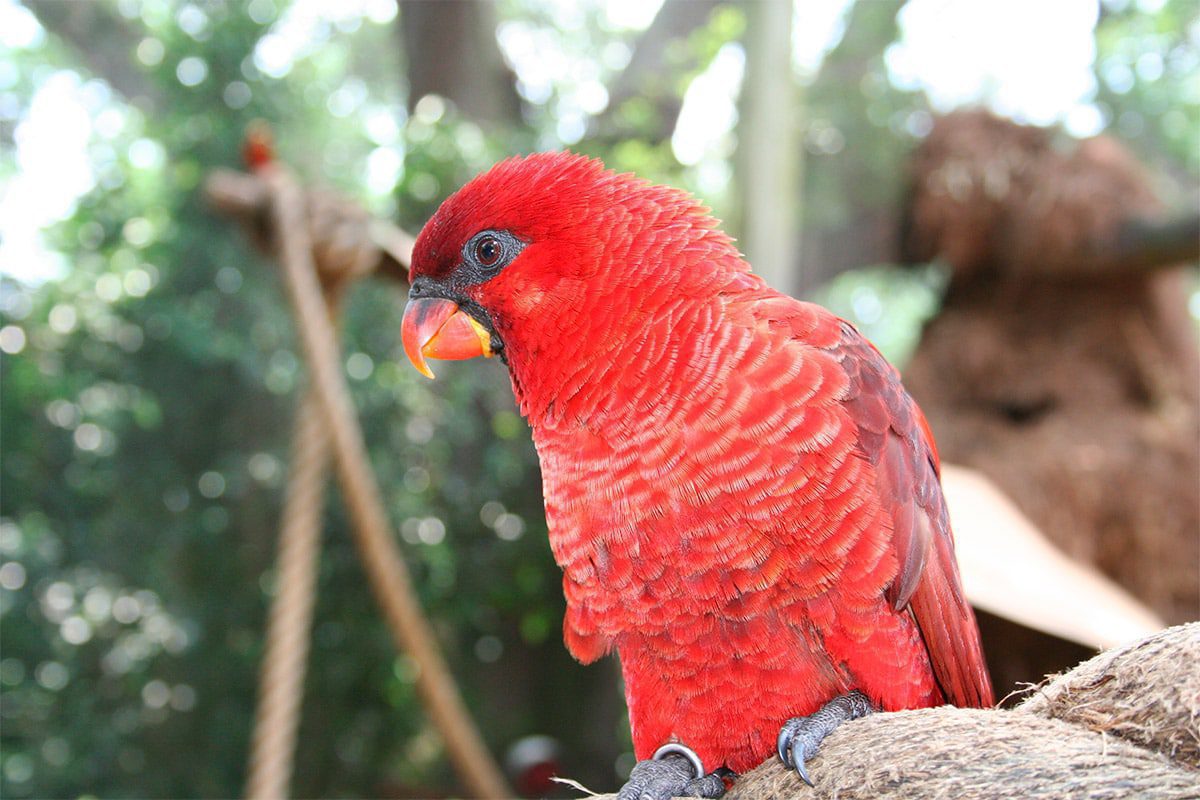
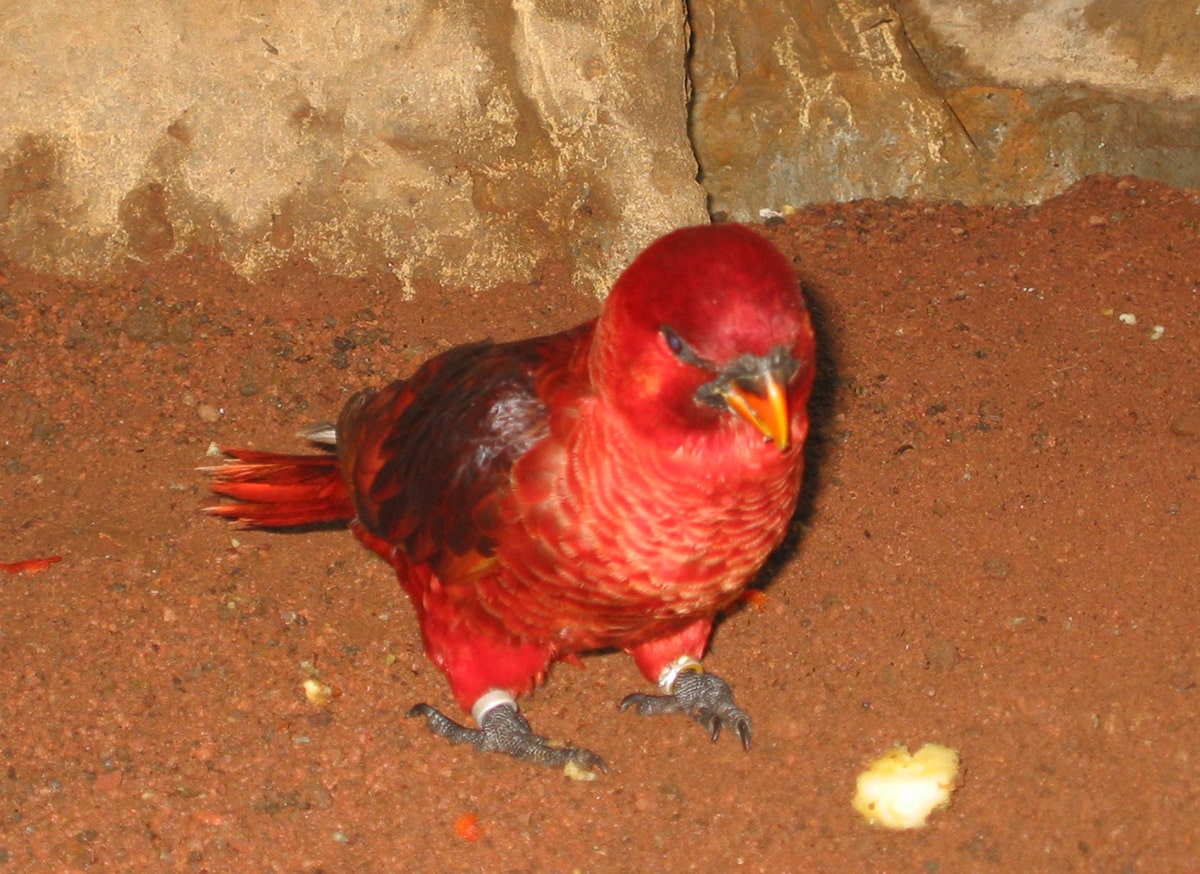
The Cardinal Lory (Pseudeos cardinalis) has a characteristic shape due to its relatively long tail.

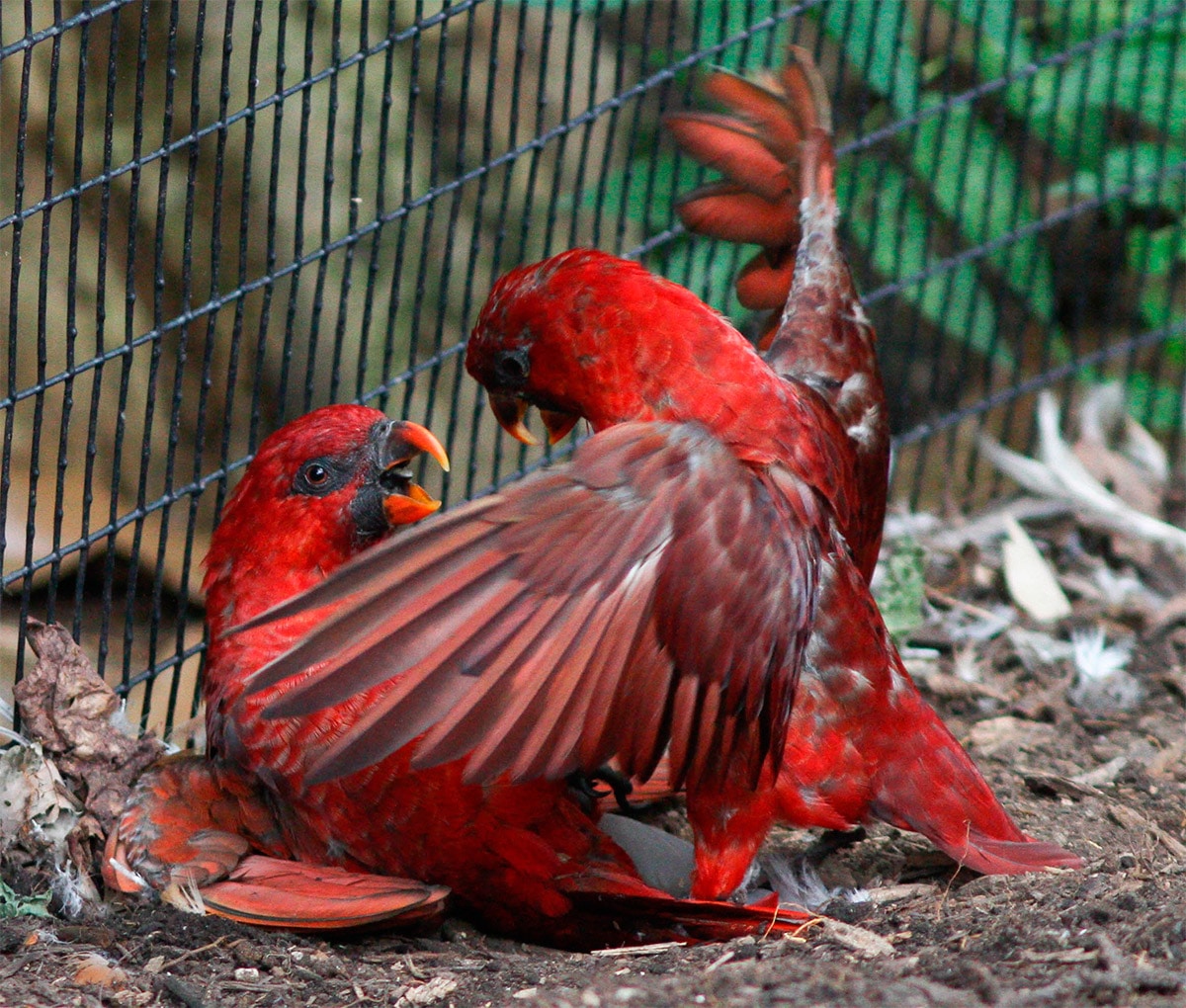
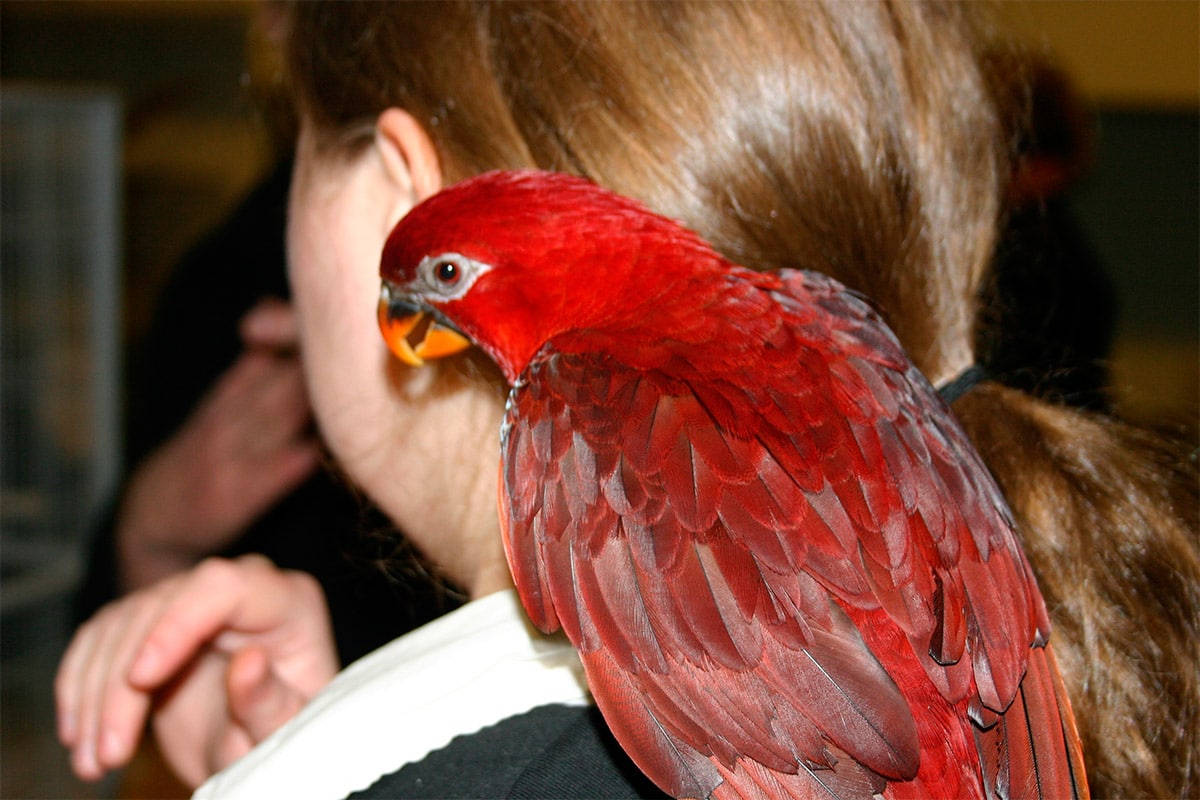
Among adults, There is no sexual dimorphism, the plumage is completely brilliant red, but the upperparts and wings They seem to be darker.

The bill is orange-red with a black color in the base area.
The bare orbital skin is black.

The feathers the lower parts have small yellowish features, What gives a vaguely scaly appearance.
The legs are grey.

The irises is red-orange.

The immature has the back and blankets of Red Wings clear. Its bill It is pale orange with small black marks. Its orbital skin is whitish grey. Their irises are pale yellow.

Habitat:

It is a kind forest. It is very widespread and is locally abundant in primary and secondary forests. It is also in the forests in regeneration in coconut plantations and mangroves where there are trees in flower.

Can rise to 1.200 m above sea level, Although in the Bougainville Island (Papua New Guinea), does not exceed of the 800 m.

It is a bird loud that does not happen easily unnoticed.

It is usually in small flocks of up to 20 birds flying high above the canopy. Also gets into branches higher trees in flower which is notable for its continuous shrieks and its beautiful bright colors.

It is often found in the company of the Coconut Lorikeet (Trichoglossus haematodus) and they particularly appreciate red flowers.

This bird moves constantly in the day, flying from one island to another.

Reproduction:

The breeding season probably starts in June. There are reports of links in August and stops extending to September.

To date, We have found a nest in a high tree cavity, at low altitude above the ground. This is the only information we have about the natural environment.

In captivity, the Cardinal Lory puts two white eggs. Both parents incubate and care for young people.
The incubation period is 24 days.

When out of the shell, chicks weigh in 6 to 7 g.. They are covered with a white quilt, long and dense.

As with all the Loris type Chalcopsitta y Pseudeos the nest is especially long and hard between 65 and 80 days.

Food:

The Cardinal Lory is exclusively vegetarian. Feeds in the canopy and fruit Palms, small berries, flowers, outbreaks, also pollen and nectar.

This Parrot seems to mark a clear preference for the flowers and red fruits.

Distribution:

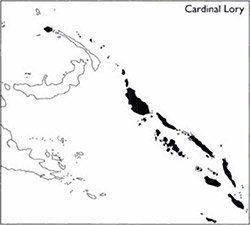
Distribucion Chalcopsitta cardinalis

The Cardinal Lory It is endemic to the Islands to the East of New Guinea. Its area of distribution covers New Hanover and the islands surrounding (Tabar, Lihir, Thong, FeNi and Nissan). Extends to Buka and Bougainville. In the Solomon Islands occupies a territory that extends to the South of San Cristรณbal.

Conservation:


minor concern

– Current IUCN Red List category: Least concern

– The population trend: Stable

The world population It has not been quantified, but the species is described as abundant (pit et to the. 1997). Sources estimate that the total population in nature exceeds the 100 thousand copies.
The population is suspected to be stable in the absence of evidence of any reduction or substantial threats.

But, is classified by the UICN as a species "in restricted area", which means that it has a territory whose surface is less to 50 000 km, therefore, potential danger.

"Cardinal Lory" in captivity:

Very rare.

In 1989, the Solomon Island allowed that a few Cardinal Lory were exported to the EE.UU.. But, because of the Law on the conservation of wild birds in 1992 The export of the Lori of Solomon Islands to the United States. UU. they banned except that is for authorized reproduction.

Alternative names:

– Cardinal Lory (ingles).
– Lori cardinal (French).
– Kardinallori (German).
– Lรณris-cardinal (Portuguese).
– Lori Cardenal (espaรฑol).

scientific classification:

– Order: Psittaciformes
– Family: Psittaculidae
– Scientific name: Pseudeos cardinalis
– Genus: Dusky
– Citation: (Gray,GR, 1849)
– Protonimo: cardinal lorius

ยซLori Cardenalยป images:

Videos "Cardinal Lory"


ยซLori Cardenalยป (Pseudeos cardinalis)


Sources:

Avibase, BirdLife.org, Oiseaux.NET

Photos: Wikipedia, Chalcopsitta cardinalis - Cincinnati Zoo (Wikipedia), Ethan Ograngy (IBC.lynxeds.com), Minppu (IBC.lynxeds.com)

Sounds: Niels Krabbe (Xeno-canto)

โ–ท The world of Pets: Dogs, cats, birds, reptiles, amphibians

Mindanao Lorikeet
Trichoglossus johnstoniae

Mindanao Lorikeet

Content

Description

20 cm.. length and a weight between 48 and 62 gr.

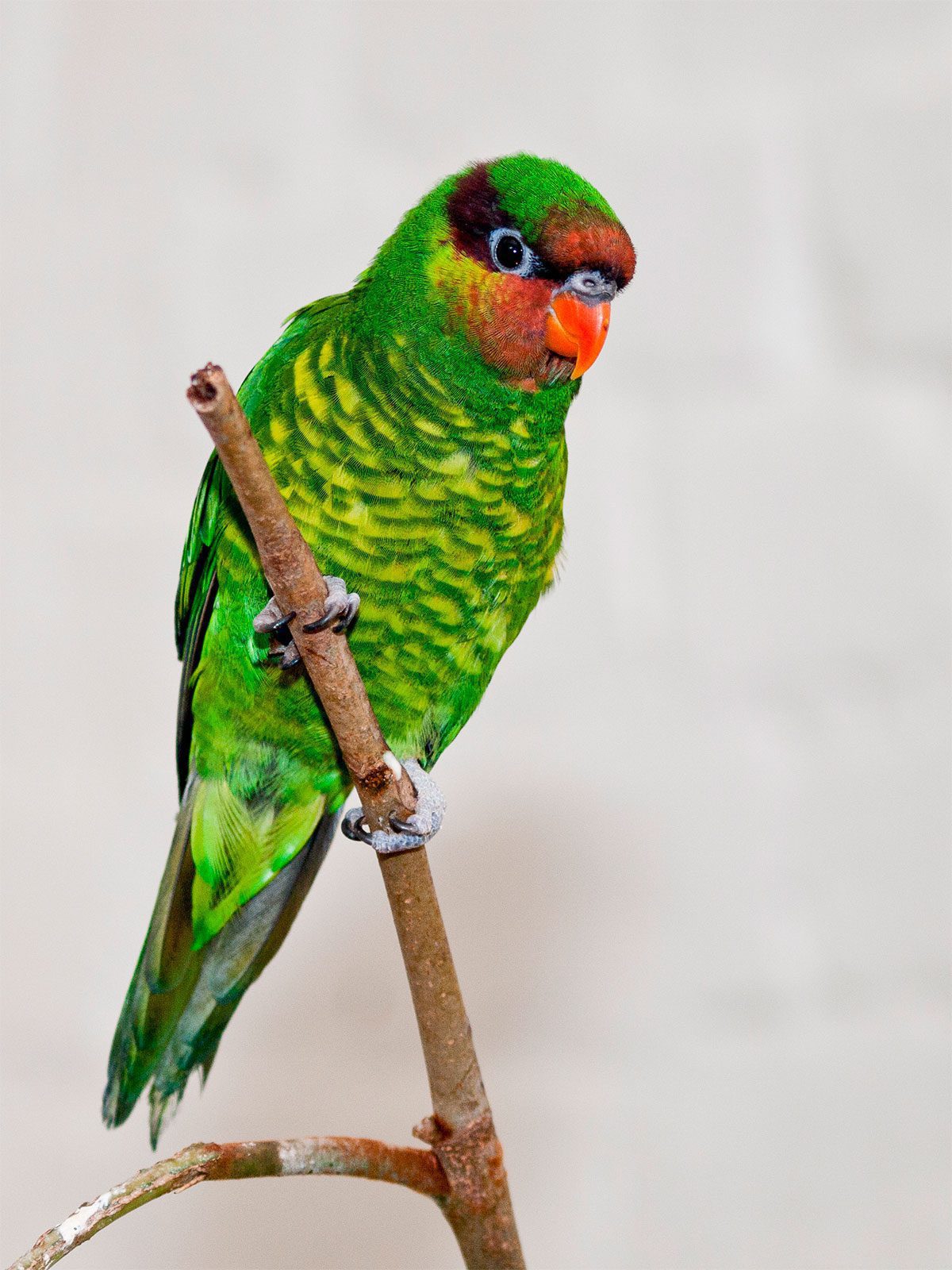
The plumage of the Mindanao Lorikeet (Trichoglossus johnstoniae) is usually Green. The facial area It is red with a tendency to pink. The band that goes from the eye until the part back from the neck it is dark purple.

The underparts are yellow, scalloped with green resembling scales. They have the Underwing coverts and subcaudales yellowish green. The band less of them wings is yellow. Its bill is reddish orange, the legs grayscale and the eye ring dark gray. The eyes orange-red.

The birds immatures have less red on the face. Instead of the band dark purple in adults, young birds have an off color lilac and a Brown stain behind the eye. The rings of the eyes are of color grey white. The eyes They are brown.

There are no significant differences between males and females.

  • Sound of the Mindanao Lorikeet.

Habitat:

Found of 1.000 to 2.500 m in the Mount Apo and 1.000 1,700 m in the Mount Malindang.

The Mindanao Lorikeet they prefer mossy forests, but also you can see them along the edge of the forest and in degraded areas.

Usually noisy during the flight, but when they feed on, remain calm. They migrate daily between different altitudes in the morning looking for food in the Highlands and in the evening return to their resting places in the lower areas.

They move higher during the day, in flocks of up to 50 birds, to feed on trees with flowers and shrubs. At sunset, they return to the lower slopes to rest.

Reproduction:

Little is known about the ecology of reproduction.. Probably it breeding is performed between months of March and may.

Captive breeding records indicate that the laying tends to be of two eggs, the incubation of some three weeks and that the young leave the nest between three weeks and a month more afternoon.

Food:

With feeds nectar, flowers, fruits, pollen and insects.

Distribution:

Size of the area of distribution (reproduction / resident): 8.700 km2

Endemic to the mountains of Mindanao (Philippines)

Conservation:


Near-threatened

โ€ข Current IUCN Red List category: Near threatened

โ€ข Population trend: Decreasing

Its habitat favorite is relatively unlikely that is affected by human activities in the medium term, but logging and capture should remain concerns.

The world population apparently not been quantified formally, but the species is described as very rare and there are those who think that there are less than 10.000 individuals.

"Mindanao Lorikeet" in captivity:

Very rare in captivity.

Due to its decreasing trend in terms of its population, any specimen that can not be returned to their natural habitat (natural range) should preferably be placed in a well-managed breeding program to ensure the survival of the species.

Alternative names:

– Mindanao Lorikeet, Apo Lorikeet, Johnstone’s Lorikeet (ingles).
– Loriquet de Johnstone (French).
– Mindanaolori, Mindanao-Lori (German).
– Loris johnstoniae (Portuguese).
– Lori de Mindanao, Tricogloso de Mindano (espaรฑol).

scientific classification:

– Order: Psittaciformes
– Family: Psittaculidae
– Genus: Trichoglossus
– Scientific name: Trichoglossus johnstoniae
– Citation: Hartert, 1903
– Protonimo: Trichoglossus johnstoniae

โ€œMindanao Loryโ€ Images:

————————————————————————————————

ยซLori de Mindanaoยป (Trichoglossus johnstoniae)


Sources:

– Avibase
– Parrots of the World โ€“ Forshaw Joseph M
– Parrots A Guide to the Parrots of the World – Tony Juniper & Mike Parr
– BirdLife.org

– Photos:

1 – ยซTrichoglossus johnstoniae - London Zoo, England-8aยป by William Warby from London, England – Unknown-Tropical BirdUploaded by Snowmanradio. Licensed under CC BY 2.0 via Wikimedia Commons.
2 – ยซMindanao Lorikeet (Trichoglossus johnstoniae)-3cยป by Mindanao_Lorikeet_(Trichoglossus johnstoniae).jpg: Elizabeth Ellisderivative work: Snowmanradio (talk) – originally posted to Flickr as lovebird and uploaded to commons at Mindanao_Lorikeet_(Trichoglossus johnstoniae).jpg. Licensed under CC BY-SA 2.0 via Wikimedia Commons.
3 – by Jonathan Beilby – IBC.lynxeds.co
4 – zoochat.com
5 – papageien.org

– Sounds: Kennedy, Robert S. – ยฉ 2014 Cornell University

โ–ท The world of Pets: Dogs, cats, birds, reptiles, amphibians

Purple-naped Lory
Lorius domicella

Purple-naped Lory

Content

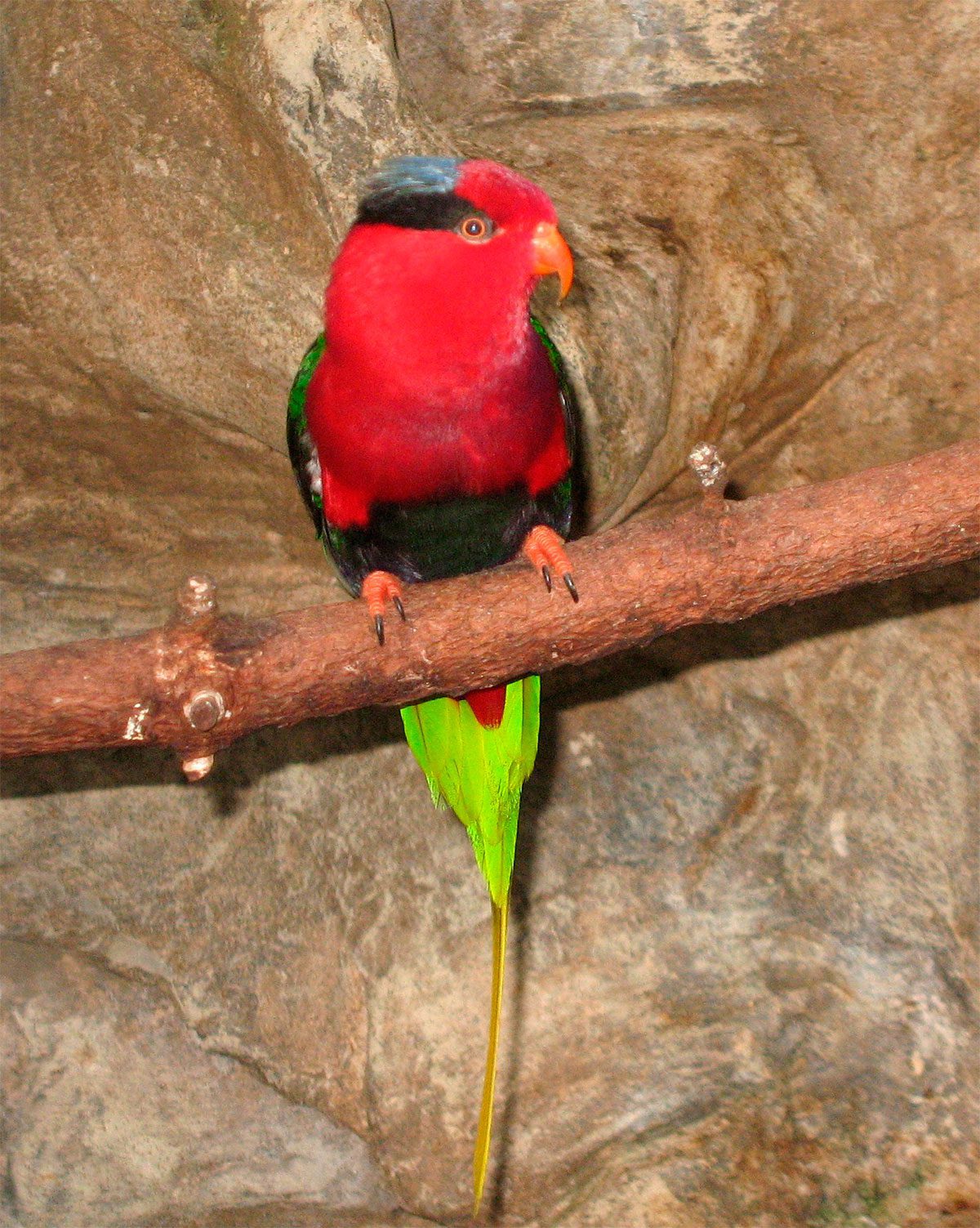
Lori damsel drawing

Description

The Purple-naped Lory (Lorius domicella) has a length of 28 cm.. and an approximate weight of 235 g..

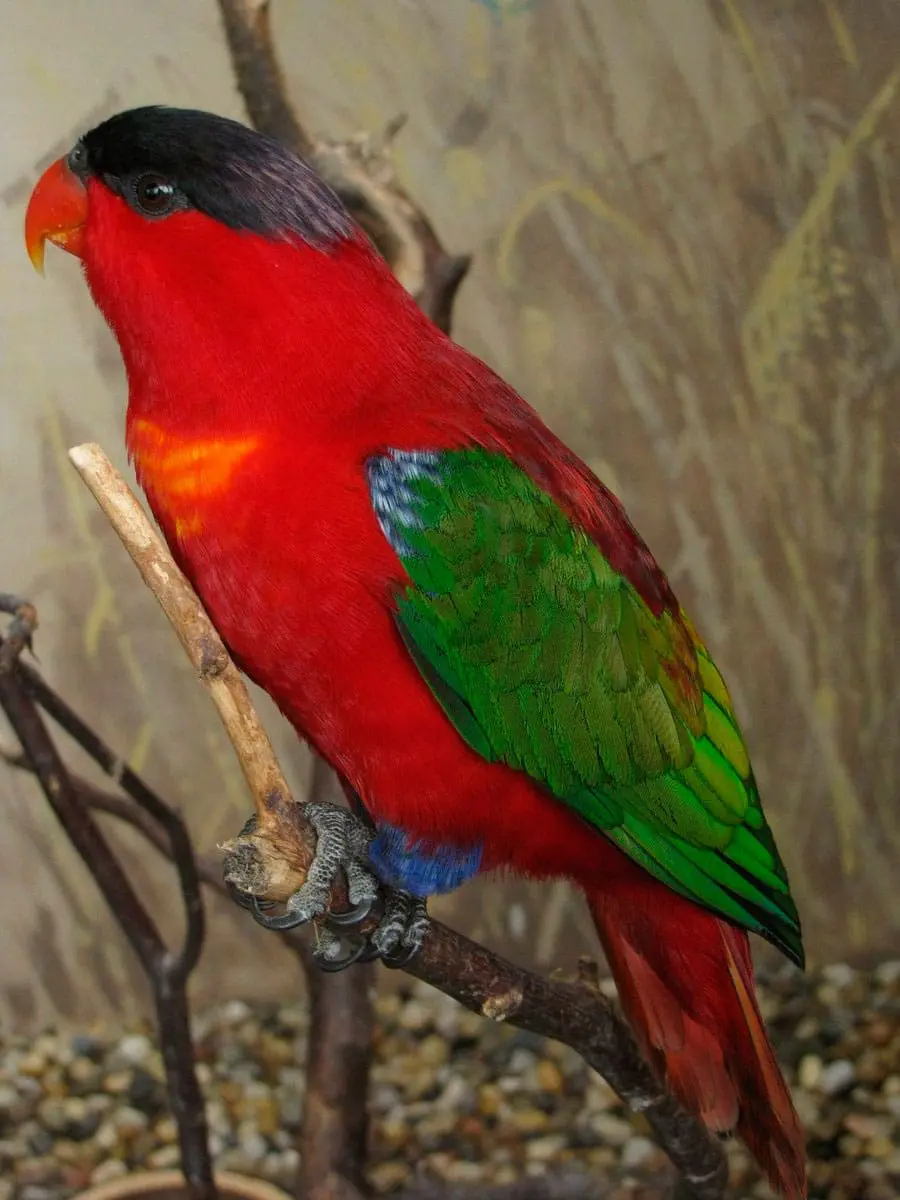
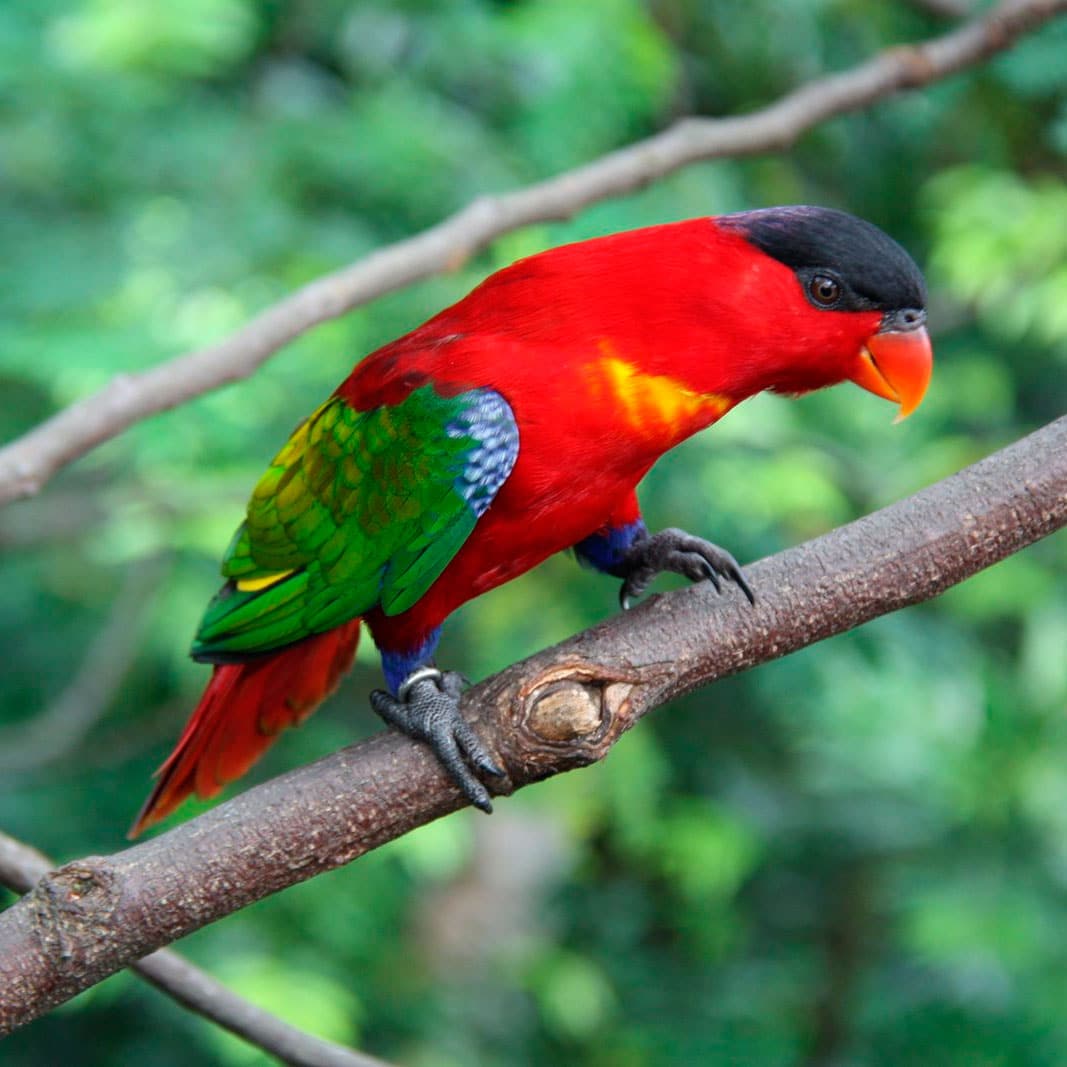
The forecrown, crown and nape black, with variable purple spots on the back of the top. The cheeks, lores and ear-coverts red. Upperparts red, darker in the center of the the mantle. Upper wing Green with white and purple patch in the shoulder. Color bronze in all the upper inner coverts, the most marked inside opaque red. the flight feather Blackish with area central in the interior of color yellow. Underwing-coverts Violet Blue impregnated white. Underwing coverts black; blue purple in them axillary. Parts low Red with band yellow, variable at the top of the chest; Violet Blue the the thighs, slightly impregnated in green. Tail red, reddish brown tipped. Bill orange; irises reddish brown; dark grey the legs.

Males and females are equal.
Immature with yellow stripe in the chest more extensive and more diffuse. Bill Brown in very young birds.

There is no geographic variation

Habitat:

In Seram the Purple-naped Lory found in montane and submontane forests, both primary and secondary, a altitude between 400 and 1.050 m; also in the jungle in the this of the island and in the areas cultivated. They move in pairs, rarely in groups and can be territorial. reproductive ecology of the species in the wild is unknown. Forshaw gives details of an instance of poultry farming in which two eggs were laid., hatching around the 25 days; the young are independent only three months more afternoon.

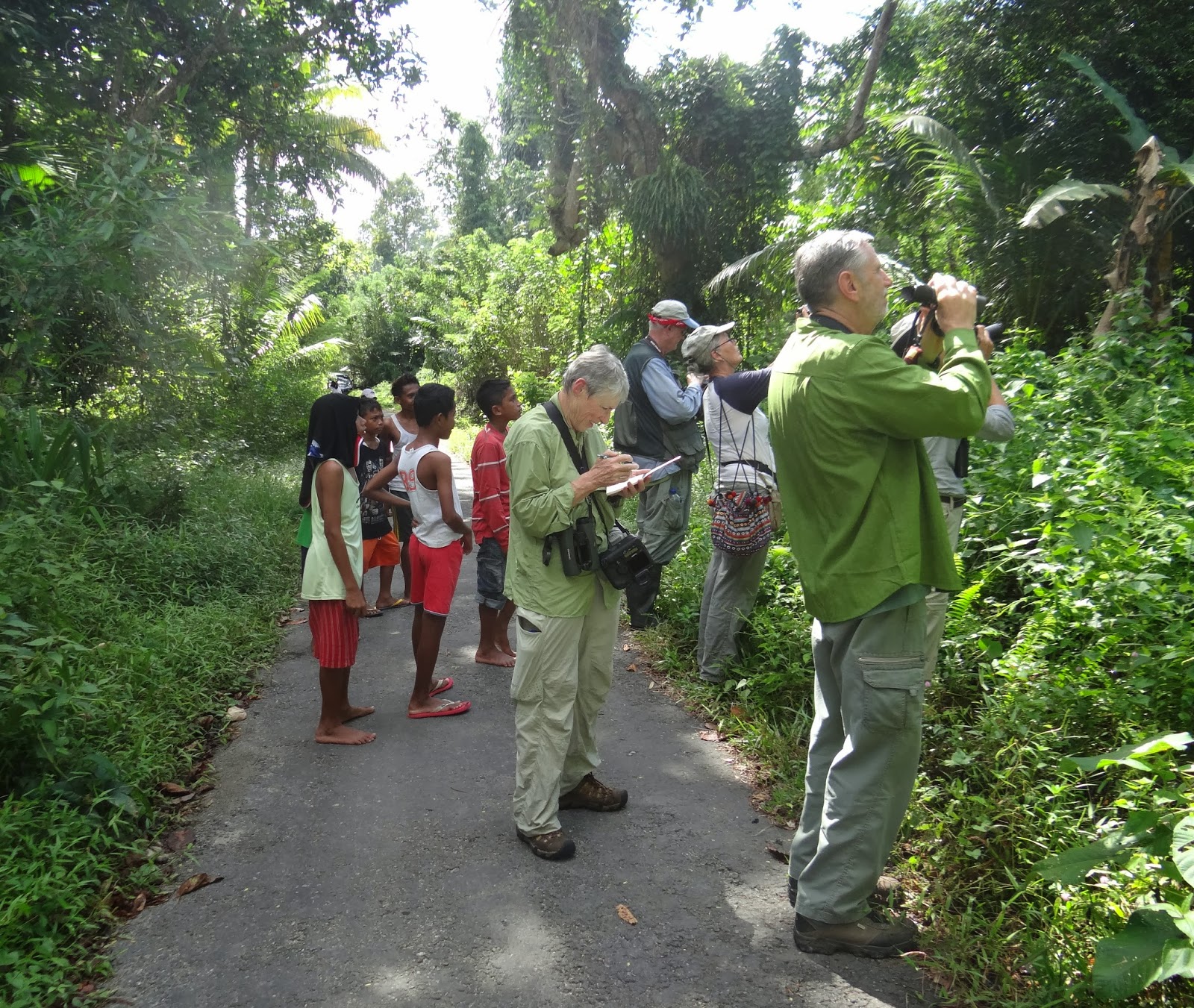
A group birding in Ambon

Reproduction:

The reproduction of the species in the wild is unknown. Details of breeding in poultry farming establish a clutch of two eggs, incubation in a few 25 days, and the young three months after independence.

Food:

Feed on fruits of Pandanus scattered.

Distribution:

Size of the area of distribution (reproduction / resident): 6.300 km2

endemic to the Seram Islands and Ambon (has also been seen in Buru: probably an escaped bird), in Indonesian. There are no recent records of Ambon or Buru. The current records come from the Manusela National Park (uncommon) and the center of Seram and WAE Fufa (locally common).

In 1987 Bowler and Taylor they found a rate of 0,7 birds per hour in Kineke, in the Manusela National Park; But during nearly two months of observations in 1990, they only saw 10 individuals.

The species is a bird people of cage in Seram and throughout the province of Maluku and the expansion of foreign trade could pose a threat to their survival.

The population worldwide is estimated at less than 20.000 individuals in 1991, but currently, the population, is considered on the rise. VULNERABLE.

Conservation:


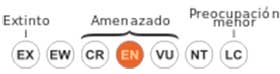
Endangered

โ€ข Current IUCN Red List category: Danger.

โ€ข Population trend: Decreasing.

This species has been upgraded to In danger Since its population It is suspected that has fallen below 2.500 individuals mature, with more than 250 in any subpopulation mature individuals.

Capture unsustainable for local and national trade, as well as the loss of forests due to logging, oil extraction and hydroelectric power combinations.

These facts, It is suspected, they are causing an downhill fast and constant in the species.

"Purple-naped Lory" in captivity:

Very rare.

Alternative names:

– Purple-naped Lory, Purple naped Lory (ingles).
– Lori des dames (French).
– Erzlori (German).
– Loris-de-nuca-roxa (Portuguese).
– Lori Damisela, Lori Domicela (espaรฑol).

scientific classification:

– Order: Psittaciformes
– Family: Psittaculidae
– Genus: Lorius
– Scientific name: Lorius domicella
– Citation: (Linnaeus, 1758)
– Protonimo: Psittacus Domicella

โ€œDamsel Loriโ€ Images:

Videos "Purple-naped Lory"

————————————————————————————————

ยซLori Damiselaยป (Lorius domicella)


Sources:

– Avibase
– Parrots of the World โ€“ Forshaw Joseph M
– Parrots A Guide to the Parrots of the World – Tony Juniper & Mike Parr
– Birdlife

– Photos:

1 – Zoolรณgico de Praga: Pรบrpura-naped Lory – animalphotos
2 – ยซLorius domicella-Artis Zoo-Netherlands-8aยป by Arjan Haverkamp – originally posted to Flickr as Img_4196e. Licensed under CC BY 2.0 via Wikimedia Commons.
3 – ยซLorius domicella-Banda Islands-Indonesia-upper body-8ยป by Henri – originally posted to Flickr as Lory = green-tailed lory. Licensed under CC BY 2.0 via Wikimedia Commons.
4 – Birds-pet-wallpapers – link
5 – ยซLorius domicella-Jurong Bird Park, Singapore-8a-tocยป by Lorius domicella-Jurong Bird Park,_Singapore-8a.jpg: kwang chongderivative work: Snowmanradio (talk) – originally posted to Picasa Web Albums as Picasa Web Albums and uploaded to Commons as Lorius domicella-Jurong Bird Park,_Singapore-8a.jpg. Licensed under CC BY-SA 3.0 via Wikimedia Commons.
6 – Illustrations ยฉ2010 by Frank Knight

– Sounds: George Wagner (Xeno-canto)

โ–ท The world of Pets: Dogs, cats, birds, reptiles, amphibians

Papuan Lorikeet
Charmosyna papou

Papuan Lorikeet

Content

Papuan Lorikeet

Description

25 cm.. length and a weight between 90 and 115 g..

The head of the Papuan Lorikeet (Charmosyna papou) It is red with a black patch on the back of the crown and a crescent-shaped mark on the nape; patch in the crown with mottled blue extends to the top of the eyes.

Under the nape a red uniform coat; centre of back Dark emerald green; under the back bright red; rump light blue. Wings Emerald green with vane internal black; undertail, the flight feather grey with coats red; coverts marginal green. Throat red, darker than the upper part of the chest and a little more off: lower chest Red clear with a variable black patch in the center of the belly, Sometimes it extends over them the thighs; the sides of chest and flanks with two obvious yellow stripe sets; bottom of the belly and coverts of the tail, red. View from the top, the tail is green and yellow is your long tip, the axis of the Central feathers is of dark brown; below, the tail is yellow, finished in Orange at its end.

The bill orange; Orange the irises; Orange and the legs.

In the nominal species, both sexes are equal.

Immature more turned off than adults. A band yellow variables at the bottom of the secondaries; rump with mottled Green; Naranja-Pardo the bill and legs; irises pale yellow.

Description 4 subspecies

  • Charmosyna papou papou

    (Scopoli, 1786) The nominal.


  • Charmosyna papou goliathina

    (Rothschild & Hartert, 1911) With sexual dimorphism and two different colors. The normal morph is similar to the subspecies Stellae, but differentiated by the yellow at the tip of the tail (non-fusion Orange to yellow). The coverts of the tail they are longer, in color purple blue, not red as in the stellae. As in the subspecies stellae, This subspecies has melanism, the upperparts is green, and underparts blue-black in their entirety. Head and the mantle, only broken by the blue of the stripes in the nape; Red in the coverts of the back and bottom of the tail. The wings are green. The tail seen from below it is more yellow-green in color than in normal morphology, and streamers they are fused opaque to verdoso-amarillo down Green.


  • Charmosyna papou wahnesi

    (Rothschild, 1906) Similar to the subspecies goliathina, but the Red of the part superior of the chest It is bordered below with a narrow yellow band. Does not have a green-washing in the flanks and abdomen top. The belly Central and tail coverts are red.


  • Charmosyna papou stellae

    (Meyer,AB, 1886) This species has sexual dimorphism and also has a melanism (excess of dark pigmentation). In comparison with the nominal, the black patch has much more extensive of the nape, blue-violet striped; This black patch replaces the two areas of black in the crown and in the nape of the speciesnominal. The streamers of the tail They also differ, merging from green to orange red (instead of green to Orange) and finally to yellow on the tips. The subspecies stellae also lacks of the chest yellow and stripes on the flanks that if you have the Papou, as well as his black patch on the belly that extends to the flanks.

    The females They show a visible patch of yellow on the lower of the back Green-tipped on the longest feathers, and coverts of the tail red (male shows red with blue on the patch of the rump). The Red of the part superior of the chest seems more uniform. In the metamorphosis by melanism the Red is largely replaced by black (see goliathina).

    The young birds with dark and thin stripes on the underparts.

Habitat:

Have been recorded at an approximate height of 1.200 meters above a row of trees and also to the 3.500 m, although the most common is to see them above the 2.000 meters and rare to see them below the 1.500 m; found by Forshaw in the forest of Nothofagus and Podocarpus to 2.800 m.

A species active and agile you are often found in pairs or in small groups. The birds move through the trees with jerky movements, often waving his serpentine tail, However, It can be very discreet between the tops of the trees.

Observed in Scheffleras, often in the company of other species, with the same food taste, as the Yellow-billed Lorikeet (Neopsittacus musschenbroekii). Seen often making passes above the trees or half-height, among the plants through the clear.

Reproduction:

The nesting in nature it is not described, but Pratt observed an adult tracing branches above and below a large group of epiphytes , Perhaps in search of a nesting site. A pair in breeding conditions was also observed in late August., and young people have been in nature during October and November. In captivity, the implementation has been two eggs, lasting about three weeks of incubation and the young remain in the nest for about two months.

Food:

Feeds on flowering trees or flowers of the epiphytes, nectar, pollen, fruits and small seeds. Larvae of insects occasionally.

Distribution:

Intervals in the center of New Guinea in Irian Java (Indonesian) and Papua New Guinea, in where are distributed from the southeast of Vogelkop towards the Adelbert range, Huon Peninsula and intervals in the Southeast.

Distribution 4 subspecies:

Conservation:


minor concern


โ€ข Current IUCN Red List category: Least concern.

โ€ข Population trend: Stable.

The world population It has not been quantified, Although that it is more thought of 500.000 specimens. The species appears to be quite common throughout its area of distribution (pit et to the ., 1997).

The hunting of this species for the use of their feathers as tribal headdresses and capture for the bird trade do not believe today that can affect the size of the population.

It is suspected that the population is stable in the absence of evidence of any reduction or other substantial threat.

"Papuan Lorikeet" in captivity:

Coupled pairs will defend their territory vigorously. Individual birds active and playful; they require a cage as big as possible. May be a bit uncomfortable due to liquid diet.

Son rare in captivity.

Alternative names:

– Papuan Lorikeet, Fairy Lorikeet, Fairy Lory, Papuan Lory, Stella’s Lorikeet (ingles).
– Lori papou, Lori de Stella (French).
– Papualori (German).
– Lori de Cola Larga, Lori Rabilargo (espaรฑol).

scientific classification:

– Order: Psittaciformes
– Family: Psittaculidae
– Genus: Charmosyna
– Scientific name: Charmosyna papou
– Citation: (Scopoli, 1786)
– Protonimo: Psittacus Papou

Images ยซLori Long-tailedยป:

Videos "Papuan Lorikeet"

————————————————————————————————

"Lori Rabilargo" (Charmosyna papou)


Sources:

– Avibase
– Parrots of the World โ€“ Forshaw Joseph M
– Parrots A Guide to the Parrots of the World – Tony Juniper & Mike Parr
– Birdlife

– Photos:

1 – (1) ยซCharmosyna papou goliathina1ยป by dragus – Own work. Licensed under Public Domain via Wikimedia Commons.
2 – (2) ยซStellas Lory 2ยป by Ltshears – Own work. Licensed under CC BY-SA 3.0 via Wikimedia Commons.
3 – (3) ยซCharmosyna papou-Fort Worth Zoo-8" for Philip Shoffner – originally posted to Flickr as Dsc_0120. Licenciado sob CC BY 2.0 via Wikimedia Commons.
4 – (4) Charmosyna papou goliathina by Zdenek Chalupa – biolib.cz
5 – (5) Charmosyna papou goliathina – Birds-pet-wallpapers
6 – (6) Charmosyna papou goliathina By Elaine Radford (ilustraciรณn) – rightpet.com

– Sounds: Andrew Spencer (Xeno-canto)

โ–ท The world of Pets: Dogs, cats, birds, reptiles, amphibians

Camiguin Hanging Parrot
Loriculus camiguinensis


Loriculo the Camiguin

Content

Description

14 cm.. length.

The Camiguin Hanging Parrot (Loriculus camiguinensis) has the plumage mostly green, with the throat, front side of the face and the thighs light blue; the forecrown, the pyleus, the obispillo and the top of the tail red, While the rest of the tail It is also blue. Underwing coverts blue. Band of orange-red in the nape, that varies from bird to bird.

Bill orange. Iris grayish brown.

The males and females they have a similar appearance, the female has less blue on the cheeks.

The youth they are similar to the adult female but with only a slight tinge of blue in the cheeks and red on the forehead minimal or absent. Bill a pale.

In 2006 described as a separate species to the loricles who lived on the island of Camiguin, to the North of Mindanao, Since then it was considered a subspecies of the Philippine loricle in the.

Habitat:

Probably sedentary. Found between the 300 and 1350 meters in montane forests, secondary forests, at the edges of the forest near the settlements, in plantations in the areas planted with shrubs and coconut.

Usually seen individually, in pairs, mixed flocks or small families. Feeds in trees or shrubs; difficult to detect. Itร‚ยดs shy and cautious.

Reproduction:

Breeding season probably between the months of September to November. Nest placed in the hole of a dead arbol-helecho. No other information.

Food:

It is said that they feed on nectar, seeds, especially wild banana (Musa), also soft fruit, berries and flowers.

Distribution:

Endemic in the Philippine island of Camiguin, off the North coast of Mindanao.

Conservation:


minor concern


This species is threatened by its limited range, the natural habitat destruction and capture for the wild bird trade.

"Camiguin Hanging Parrot" in captivity:

Probably not remain outside the island of Camiguin.

Alternative names:

– Camiguin Hanging-parrot, Camiguin Hanging Parrot (ingles).
– Coryllis de Camiguin (French).
– Camiguin-Fledermauspapagei, Camiguinpapageichen (German).
– Loriculus camiguinensis (Portuguese).
– Lorรญculo de Camiguin (espaรฑol).

scientific classification:

– Order: Psittaciformes
– Family: Psittaculidae
– Genus: Loriculus
– Scientific name: Loriculus camiguinensis
– Citation: Tello, Degner, Bates,JM & Willard, 2006

Images "Camiguin Hanging Parrot"

Videos "Camiguin Hanging Parrot"

————————————————————————————————

"Camiguin Loricle" (Loriculus camiguinensis)


Sources:

– Avibase
– Parrots of the World โ€“ Forshaw Joseph M
– Parrots A Guide to the Parrots of the World – Tony Juniper & Mike Parr
– Wikipedia

– Photos:

(1) – By Alexkant – zoochat

– Sounds: George Wagner (Xeno-canto)

โ–ท The world of Pets: Dogs, cats, birds, reptiles, amphibians

Singing Parrot
Geoffroyus heteroclitus

Parrot Heteroclito

Content

Description

25 cm.. length and a weight between 160 and 195 g..

The Singing Parrot (Geoffroyus heteroclitus) they have the head bright pale yellow.

A band Large blue-gray adorns the back of neck and gradually it fades in green on the the mantle. The throat is bluish grey. All upperparts are light green. The median stained reddish brown. You can see the pale yellow stripes on the innerwebs of the flight feather. The underparts is bright blue. Upper chest is blue-gray, which contrasts with the rest of the underparts, that are of a much lighter green back. The upper part of the tail is green. The bottom of the tail is grey, but with a slight yellow color in the outerweb external feathers tail.

The upper jaw is of color yellow pale, the dark gray lower jaw. The irises are yellow, the legs gray-green.

The sexes are dimorphic. The female has a bill totally dark. Yellow beginning of the head and neck greenish blue are away. In its place, the top It is gray and cheeks They are brownish green.

Immature show greener on the head than females. Its bill is paler and its irises dark.

Description 2 subspecies

  • Geoffroyus heteroclitus heteroclitus

    (Hombron & Jacquinot, 1841) – The nominal.


  • Geoffroyus heteroclitus hyacinthinus

    (Mayr, 1931) – Males have neck gray violรกceo.

Habitat:

The Singing Parrot frequent humid lowlands, undisturbed, Hills generally below and of the 600 meters up to a maximum of 1.760 meters in the South of New Ireland . They are also partially cleared areas, at the edge of forests, in stands of trees in regeneration and in gardens.

The birds, often, they are heard when they make calls from the exposed or isolated trees, or view flying rapidly above the canopy.

They are alone, in pairs, or having relationships in small groups. There have been next to the Cardinal Lory and Duchess Lorikeet in Bougainville. They are often calm and difficult to detect when they remain perched among the dense foliage.

Reproduction:

The nest is a hole dug by the female in a dead tree stump or rotten, but nothing more is known about the breeding ecology of the species.

Food:

The diet It includes seeds, fruit, flowers and buds.

Distribution:

Size of the area of distribution (reproduction / resident): 576.000 km2

The Singing Parrot They are endemic Bismarck Archipelago and Solomon Islands. These birds are found in the following Islands: Umboi, New Britain, Lolobau, Duke of York, New Ireland, New Hanover, Tabar, Lihir, Buka, Bougainville (Papua New Guinea). It can also be seen in Choiseul, Santa Isabel, San Jorge, Malaita, New Georgia, Guadalcanal and all the little Islands Rennell (Solomon Islands).

Distribution 2 subspecies:

  • Geoffroyus heteroclitus heteroclitus

    (Hombron & Jacquinot, 1841) – The nominal.


  • Geoffroyus heteroclitus hyacinthinus

    (Mayr, 1931) – present only in the Rennell island.

Conservation:


minor concern


โ€ข Current category of the Red List of the UICN: Least concern.

โ€ข Population trend: Stable.

The world population it is generally estimated at just less than 100.000 specimens.

The subspecies that lives in Rennell Island is between 5.000 and 20.000 birds.

The Singing Parrot It suffers from the degradation of habitat throughout its area of distribution, but is not in danger.

"Singing Parrot" in captivity:

Extremely shy and touchy; they may die suddenly without discernible cause, possibly due to stress and improper diet.

Not commonly found in poultry.

Alternative names:

– Singing Parrot, Song Parrot (ingles).
– Perruche hรฉtรฉroclite, Eclectus hรฉtรฉroclite, ร‰clectus hรฉtรฉroclite (French).
– Bismarckpapagei (German).
– Geoffroyus heteroclitus (Portuguese).
– Lorito Cantor, Lorito Heterรณclito (espaรฑol).

scientific classification:

– Order: Psittaciformes
– Family: Psittaculidae
– Genus: Geoffroyus
– Scientific name: Geoffroyus heteroclitus
– Citation: (Hombron & Jacquinot, 1841)
– Protonimo: Psittacus Geoffroyi heteroclitus

Images "Singing Parrot"

Videos "Singing Parrot"

————————————————————————————————

โ€œLorito heterroclitoยป (Geoffroyus heteroclitus)

Sources:

– Avibase
– Parrots of the World โ€“ Forshaw Joseph M
– Parrots A Guide to the Parrots of the World – Tony Juniper & Mike Parr
– Wikipedia

– Photos:

(1) – Birds-pet-wallpapers

– Sounds: Mark Todd (Xeno-canto)