โ–ท The world of Pets: Dogs, cats, birds, reptiles, amphibians

Grey-breasted parakeet
Pyrrhura griseipectus

Grey-breasted parakeet

Content

Description:

23 cm.. length and 70 g. of weight.
Grey-breasted parakeet

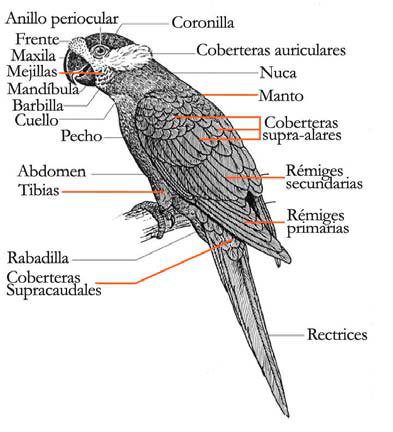
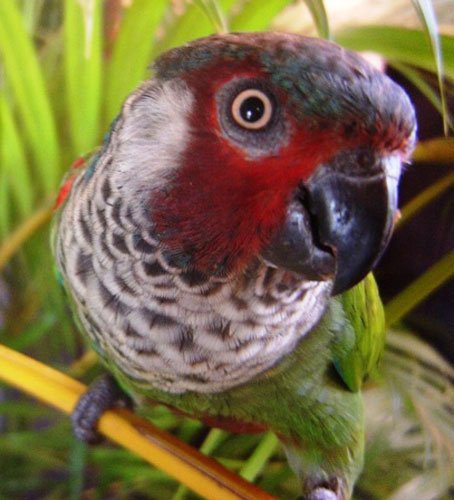
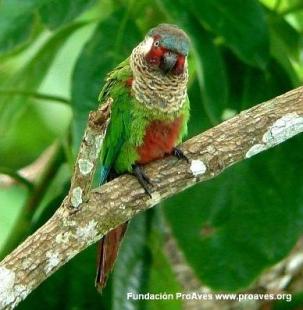
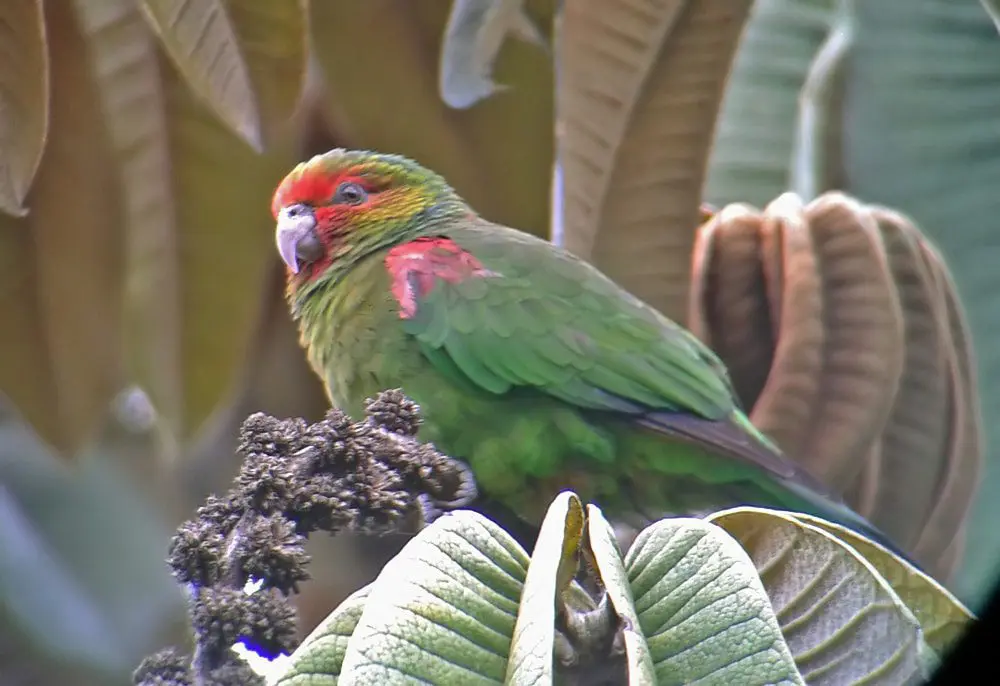
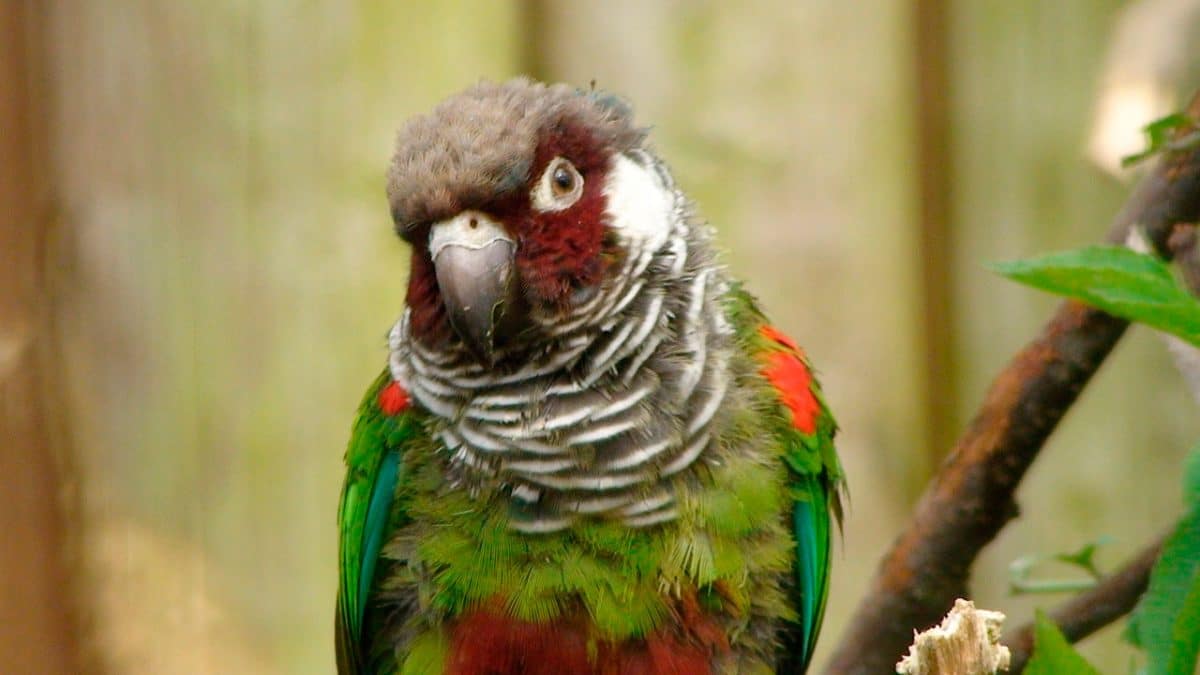
The Grey-breasted parakeet (Pyrrhura griseipectus) is a bird marked by a mask in reddish face, interrupted by a surrounding white coloration in the regions orbitals and ear-coverts.

The feathers of the neck to the upper region chest They have a gray coloration with light streaks interspersed, giving the region a striped appearance or escamado. The species has a characteristic patch reddish in belly, highlighting green coloration, its predominant body. The region forecrown up to the nape, It is dark brown with white or lighter brown spots that vary from bird to bird.. rear area neck green blue border with a width. They have a patch reddish brown in the bottom of the back which leads to the crown. The tail It is long and maroon. Bill gray-black; eye ring white gray; irises brown-orange.

It has no sexual dimorphism. The immature they are more muted than adults; You have scattered green feathers in the abdomen; the cere and the bare periophthalmic is white, less gray tone.

Taxonomic status:

This species is considered to be a subspecies of Pyrrhura [leucotis, emma or griseipectus] by some authors

  • Sound of the Grey-breasted parakeet.

Habitat:

It is in the rainforests, often located in Serranas regions, where orographic rains favor the occurrence of enclaves Atlantic Forest and Mata dry amid caatinga.

Reproduction:

The breeding season It occurs during the rainy season. The laying It is five to eight eggs in holes dug by woodpeckers since they are not able to dig their own nests; They use these holes to sleep.

When the pups are born, the couple divides the task of feeding. Sometimes they have help from even a third member of the flock to successfully raise all the young..

Food:

Probably it feeds on fruits, flowers, seeds and algae.

Distribution and status:

Size of its range (players / residents): 830 km2

This species was formerly known in 15 Locations (. Anon 2014) within Brazil. At present it is in only three areas in the state of Cearรก, the Serra de Baturitรฉ and Quixadรก (C. Albano in a little . 2006, Waugh et al 2010.) and most recently observed in a rocky mountain Cearรก, where five birds were recorded in March 2014 (Anon. 2014).

In Serra do Baturitรฉ appears to be very rare and seems to have been extinct from several areas, but recent records of groups in the Environmental Protection Area mountains Baturitรฉ; surveys 2007 half of the remaining habitat in this site revealed near 80 individuals (C. Albano in a little. 2007, 2008) and the population here is now estimated to be about 250 birds (Waugh et al . 2010).

Forests of Baturite mountains They have been greatly reduced to make way for coffee plantations and only 13% of the jungle remained in 1996. The discovery in 2010 a population of about 50 birds in Quixadรก (Waugh et al ., 2010) It raises the known world population of this species in about 300 birds.

The Grey-breasted parakeet It was previously known two other areas: the eastern slope of the Saw Ibiapaba in Cearรก, and small Serra Negra, in Pernambuco, where it was very common in 1974, with flocks of 4-6 individuals regularly seen in the early 1980, although there are no recent records. There are also unconfirmed reports 1991 in organic station Murici Alagoas in which possibly it refers to individuals released; Recent fieldwork was unable to locate the species.

Its known range is very small, and the species has declined dramatically in the past, a trend that may be permanent.

Conservation:

  • Justification of the Red List of the Category

Recent surveys indicate that this species has a extremely small population, which continues to decline after dramatic historical declines. For these reasons it qualifies as Critically Endangered.

  • Justification of the population

State of conservation โ“˜


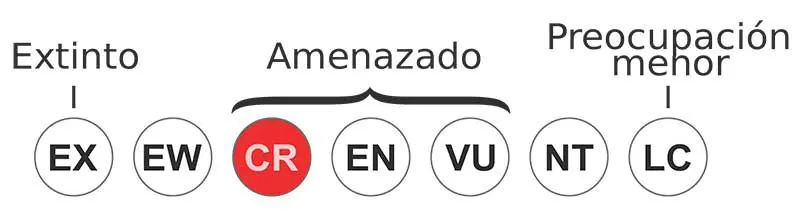
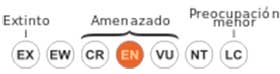
critical hazard critically endangered โ“˜ (UICN)โ“˜

โ€ข Current category of the Red List of the UICN: critically endangered.

โ€ข Population trend: Decreasing.

โ€ข Population size : 200 individuals.

The population in the Area of Baturitรฉ Mountains Environmental Protection It is estimated at about 250 birds, and discovery in 2010 a population of about 50 birds in Quixadรก raises the known world population of about 300 birds (Waugh et al ., 2010). This equates to approximately 200 mature individuals.

  • Justification trend

This species is suspected to be decreasing quickly because of their capture and habitat loss in progress within its range.

  • Threats

The habitat destruction He has played a role in the decline of the species with the original forest cover now reduced to only 13%.

The coffee plantations (especially where coffee is grown in the sun instead of shade coffee) They are impacting the habitat of the species.

The main threat, However, It is believed to come from the capture illegal underway for local and national trade (C. Albano a slightly 2006, Anon 2009..) and captive breeding (Fernandes-Ferreira et al 2012.); the Grey-breasted parakeet They can be easily purchased through Internet (Girรฃo and Albano 2008).

It is easily found in the international trade in bird cage.

The lack of natural nesting sites also it believed to are limiting reproductive success of the species (Campos et al . 2014).

Conservation Actions Underway

Appendix II of CITES.

In Brazil, It was considered above in critical hazard (Silveira y Straube 2008), but it has now been legally designated as endangered national (MMA 2014), and protected Brazilian law.

Dwelleth within Baturitรฉ Mountains Environmental Protection Area, but this area has been designated for sustainable use and traditionally has not been achieved for conservation.

Management of land by a private owner in the area has led to an increase in a small town known (C. Albano a slightly . 2006).

Since 2007, NGO AQUASIS Brazil has been conducting two research projects: one sponsored by the Brazilian Foundation O Boticรกrio for the Protection of Nature, the topography of the Baturite mountains to monitor their condition and research their biology; and another sponsored Fundaciรณn Loro Parque, for additional populations (C. Albano in a little. 2007, 2008).

The surveys carried out in the historical sites and areas of potential habitat in the period 2007-2008 They have not been able to locate members of this species, although there are strong indications of individuals that may still be inhabiting the degraded Serra do Estevรฃo, municipality Jaw, state Cearรก (C. Albano in a little. 2007 2008, Anon 2007), where it was actually rediscovered in the 2010 (Waugh et al ., 2010).

A team of AQUASIS, funded by an award Leadership Program for Conservation in 2012, conducted searches for the species on an isolated mountain in Cearรก and he found a small population of five individuals in March 2014 (Anon. 2014).

You can also persist in Serra Negra Biological Reserve, state Pernambuco, although a combination of marijuana crops and hostile local culture makes research work in this latter area difficult (C. Albano in a little. 2007, 2008).


At least 11 private reserves (RPPN) They are in the process of being created in the Serra de Baturitรฉ (C. Albano in a little. 2007, 2008) and AQUASIS They are now engaged in the process of developing a nature reserve in the Baturite mountains (Campos et al . 2014).

AQUASIS has strengthened ties with government agencies in order to influence policy decisions (Campos et al . 2014).

Scheme nest box sponsored by Loro Parque It has been carried out with nest boxes installed in different places with the consent of the landowners. (Anon, 2009).

AQUASIS also they provided nest boxes Insecticide treated to reduce infestations of bee and wasp (Campos et al . 2014). These measures have proved effective, with 16 boxes occupied in 2012 give place to 97 eggs and 71 chicks hatched successfully.

A education and awareness campaign large scale was carried out in the Serra de Baturitรฉ in 2008 (C. Albano in a little. 2007, 2008) and continues today, with many schools currently participating in education programs AQUASIS (Campos et al . 2014).

A main objective of AQUASIS is to promote the Cotorra pechigris as a flagship species, the work being supported by commercial NGOs and ecotourism WATER Trails of the Park (Anonymous 2009).

AQUASIS also it aims to develop the ability to bird watching and a development process of consciousness creating alternative livelihoods (Anonymous 2009). A visitor center has recently been established (Campos et al . 2014).

It breeds well in captivity and stocks are held in Brazil and abroad. Always captive breeding is well managed and coordinated, could be used for reintroduction into the wild.

They are being conducted studies on factors influencing the survival rate of chicks, population's genetics (in future DNA techniques can be used as a deterrent against illegal collection of wild birds); both adults and juveniles have been banded (Campos et al . 2014).

Conservation Actions Proposed

Conduct more studies in areas similar to the mountains Baturitรฉ in the northeast of Brazil, such as Sierras de Aratanha, Maranguape and Machado, by the presence of additional existing populations.

continue population monitoring known in Serra de Baturitรฉ.

improve conservation management practiced in the Guaramiranga Ecological Park.

Provide incentives for landowners to increase the network of private reserves Baturite mountains.

Monitor and control trade locally, National and international.

Investigate the feasibility of using giant bamboo (Dendrocalamus giganteus) as sites for constructing artificial nests (Campos et al . 2014).

continue making awareness campaigns to promote the Grey-breasted parakeet as a symbol for the conservation of humid forests and associated biodiversity in the Baturite mountains.

Investigate in situ conservation measures.

"Grey-breasted parakeet" in captivity:

Its continuous capture, both for domestic and international trade, They have taken this beautiful bird to a critical situation, there are only 200 specimens in the nature. There are probably more animals captivity in its natural habitat

Protected by the Appendix II of CITES, each captive specimen of this species that is capable of reproducing, must be placed in a well-managed captive breeding program and not sold as a pet, in order to ensure long term survival.

Alternative names:

Gray-breasted Conure, Gray-breasted Parakeet, Grey-breasted Conure, Grey-breasted Parakeet, Maroon-faced Parakeet (Gray-breasted) (English).
Conure ร  poitrine grise (French).
Graubrustsittich, Salvadori-WeiรŸohrsittich (German).
Tiriba-de-orelha-branca, tiriba-de-peito-cinza, periquito cara-suja (Portuguese).
Cotorra pechigrรญs, Periquito sujo, Cotorra de pecho gris (espaรฑol).


scientific classification:

Salvadori-Thomas
Salvadori Tommaso

Order: Psittaciformes
Family: Psittacidae
Genus: Pyrrhura
Scientific name: Pyrrhura griseipectus
Citation: Salvadori, 1900
Protonimo: Pyrrhura griseipectus


Images Grey-breasted Parakeet:

Videos "Grey-breasted parakeet"


Especies del gรฉnero Pyrrhura

Grey-breasted parakeet (Pyrrhura griseipectus)


Sources:

Avibase
– Parrots of the World โ€“ Forshaw Joseph M
– Parrots A Guide to the Parrots of the World – Tony Juniper & Mike Parr
Birdlife

Photos:

(1) – Grey-breasted Parakeet By writhedhornbill [CC BY 2.0], via Wikimedia Commons
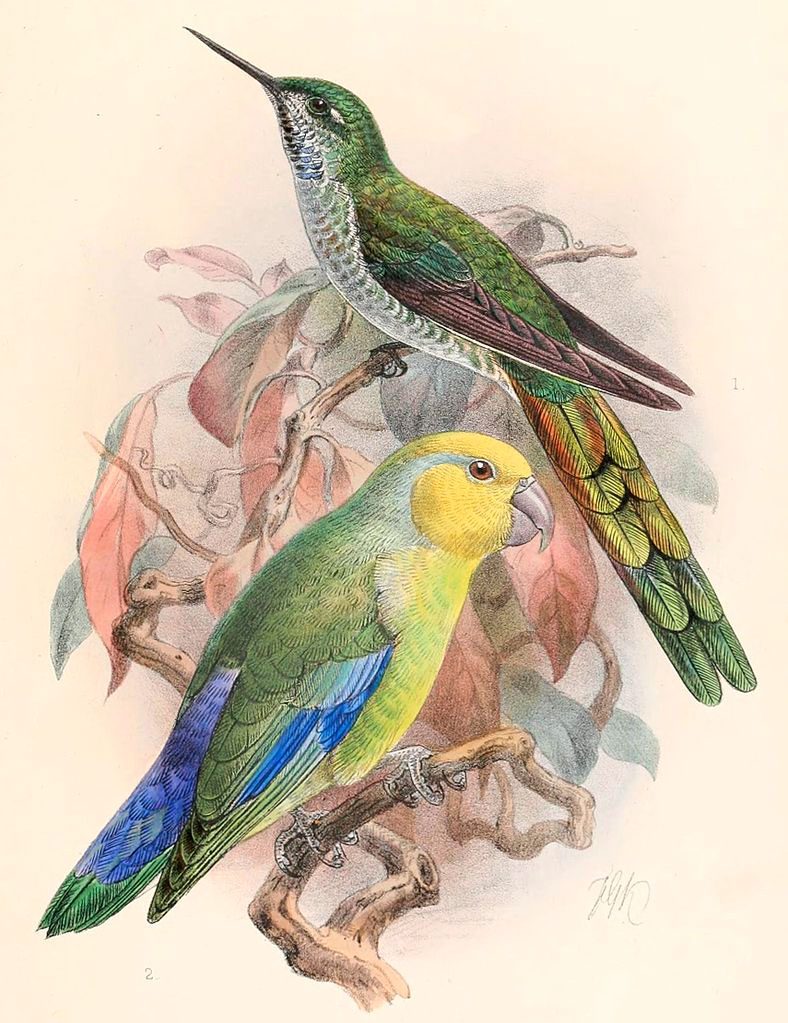
(6) – Grey-breasted Parakeet by Internet Archive Book ImagesFlickr

Sounds: Ciro Albano, XC7948. accessible www.xeno-canto.org/7948

โ–ท The world of Pets: Dogs, cats, birds, reptiles, amphibians

Seychelles parakeet โ€ 
Psittacula wardi

Seychelles Parakeet

Content

Description:


Anatomy-parrots

The Seychelles Parakeet (Psittacula wardi) It was a medium-sized parrot with a length of about 41 cm and a weight between 100 and 125 g..

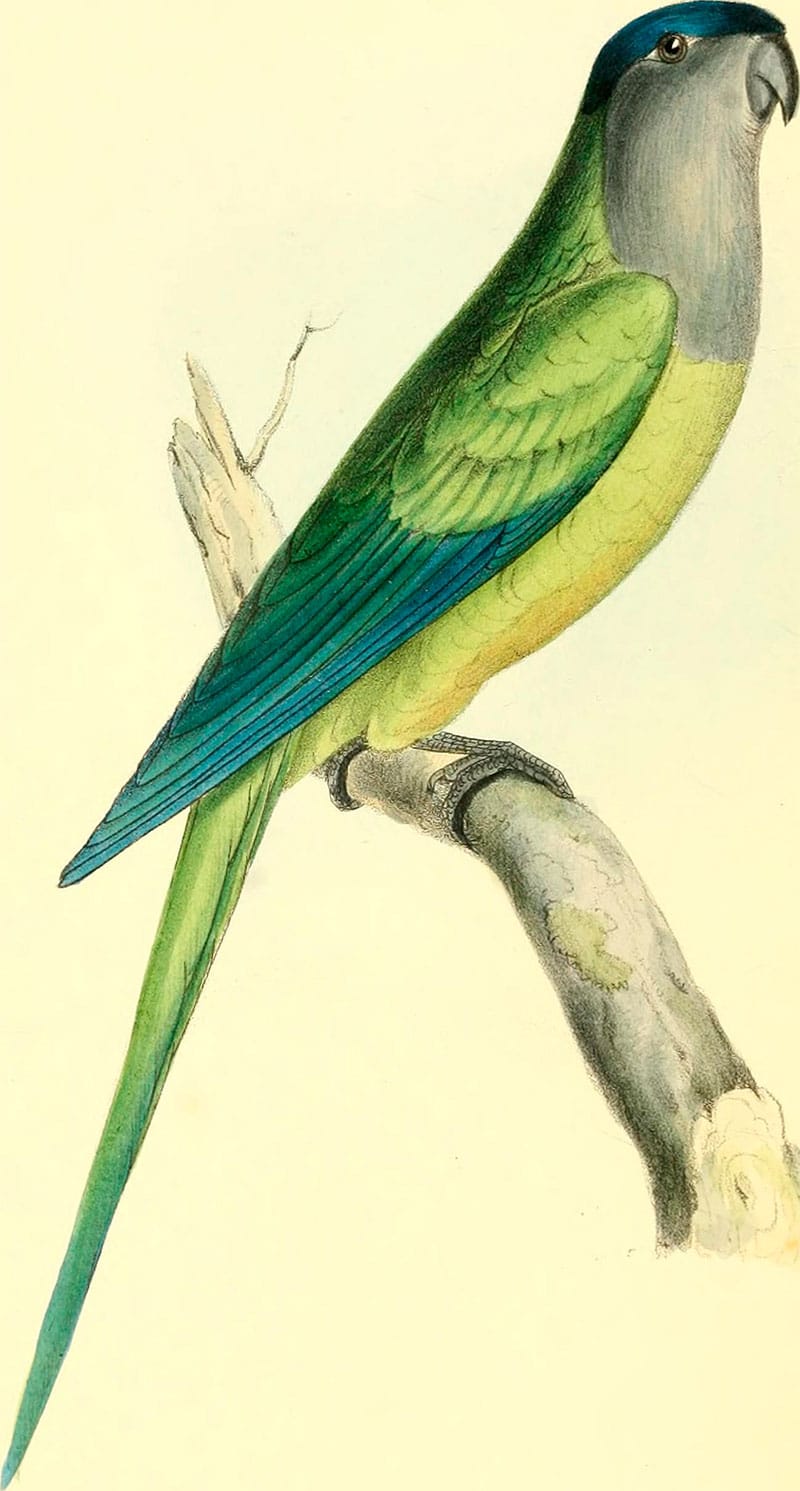
It was green with a large bill red with yellow tips, a red stain on the shoulders and a long tail. The male had a narrow black band on the cheek and neck black that the female and juvenile lacked. blueness in nape and eyes yellow. the legs They were greyish

taxonomy:

Phylogenetic studies suggest that this species away from the Alexandrine Parakeet (Psittacula eupatria).

Habitat:

In a report they were seen over the forest along a field corn.

They were probably in small groups or flocks, making striking flights. It was reported that the birds were cautious, presumably due to its constant pursuit.

Reproduction:

No data.

Food:

It was a forest species, which probably it fed on fruit and seeds.

Distribution:

The Seychelles Parakeet It was endemic to Mahe and Silhouette, Seychelles, with a visual record of Praslin. A considerable number were found in 1811, But it was rare in 1867 and the last specimen was shot at Mahe by Abbott in 1893. It may have survived until the twentieth century (Skerrett y Disley 2011), although apparently he was already extinguished when Nicoll He visited the island 1906 (Lionnet 1984).

Conservation:

โ€ข Current category of the Red List of the UICN: Extinct.
โ€ข Population trend: The last known individuals were shot dead in 1893.

Clearing forests for plantations and coconut hunting and capture (in particular, to protect corn crops) were the main causes of the disappearance of the species (Forshaw and Cooper 1989).

In captivity:

The last captive records of these birds date back to the year 1883.

There are currently two specimens in the museums of Liverpool and New York City.

Alternative names:

Green Parakeet, Seychelles Alexandrine Parrot, Seychelles Parakeet, Seychelles Parrot (inglรฉs).
Perruche des Seychelles (francรฉs).
Seychellen-Edelsittich, Seychellensittich, Seychellen-Sittich (alemรกn).
Periquito-das-seychelles (portuguรฉs).
Cotorra de las Seychelles, Cotorra de los Seychelles, Cotorra de Seychelles (espaรฑol).


scientific classification:

Newton Edward
Newton Edward

Order: Psittaciformes
Family: Psittaculidae
Genus: Psittacula
Scientific name: Psittacula wardi
Citation: (Newton, E, 1867)
Protonimo: Palaeornis wardi


Especies del gรฉnero Psittacula

Seychelles Parakeet (Psittacula wardi)


Sources:

Avibase
Parrots of the World โ€“ Forshaw Joseph M
Parrots A Guide to the Parrots of the World – Tony Juniper & Mike Parr
Birdlife

Photos:

(1) – Seychelles Parakeet (Psittacula wardi), depiction by John Gerrard Keulemans from โ€˜Extinct Birds’ by Lionel Walter Rothschild from the year 1907 by John Gerrard Keulemans [Public domain], via Wikimedia Commons

โ–ท The world of Pets: Dogs, cats, birds, reptiles, amphibians

Yellow-faced Parrotlet
Forpus xanthops

Yellow-faced Parrotlet

Content

Description:

Yellow-faced Parrotlet

14 cm.. height.

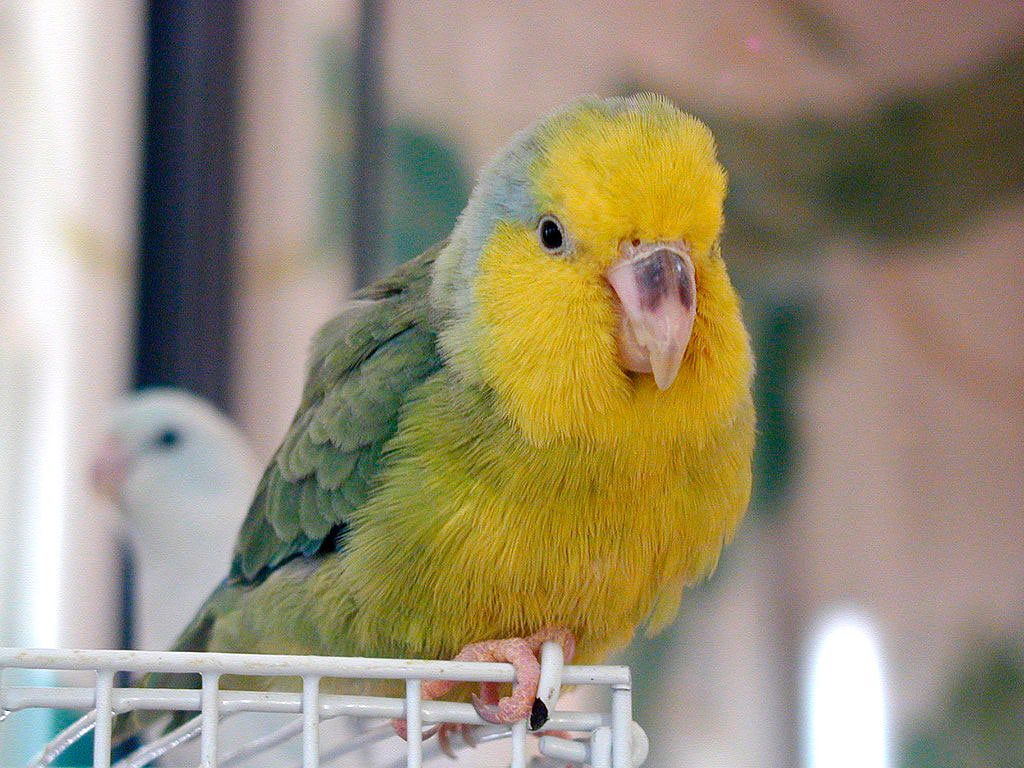
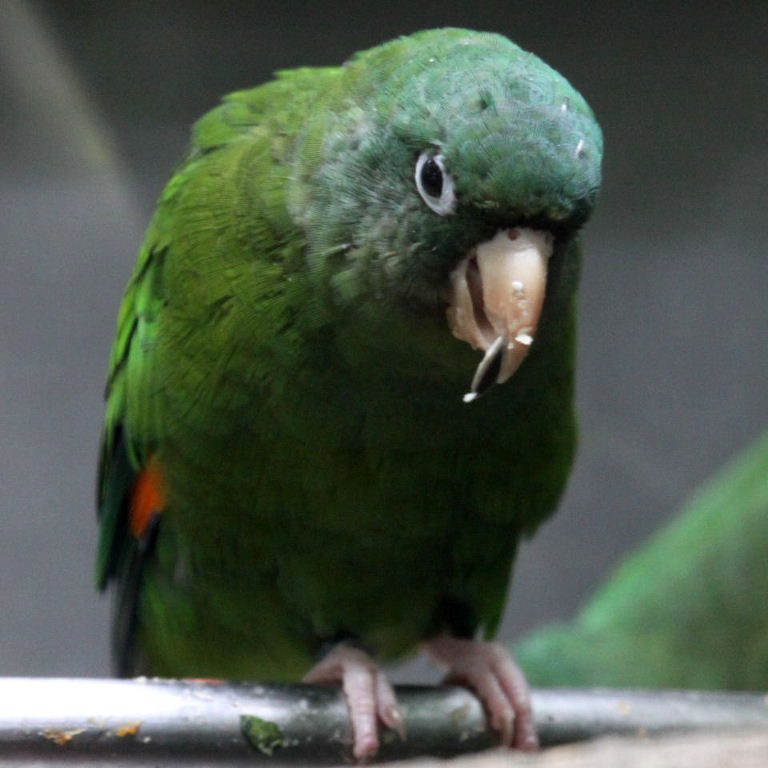
The Yellow-faced Parrotlet (Forpus xanthops) is plump appearance and a tail short ending in point. Distinguished by the crown, face, chest and belly yellow, with strong blue patch on the wing , in flight blue occupies almost half of wing . Dorsally gray cafesoso, with the rump blue. Its bill It is ocher.

The female has blue patch on the rump and wings pale smaller.

taxonomy:

Closely related to Pacific Parrotlet (Forpus coelestis); in the past it has been considered a subspecies of this, but there are clear differences in size and color. Monotypic.

Habitat:

The Yellow-faced Parrotlet It Gregaria, He lives in varied habitats, usually arid, riparian forests or gallery in the tropics and subtropics, between 1000 to 1600 m, Although it has been reported to 2745 m.

Reproduction:

Nest in communal area, using tree hollows or sand. The breeding season It is from March to April.

In captivity, They are made of 3 to 6 eggs and up to three broods are raised per year.

Food:

Their diet includes cactus, besides fruit trees. If you know that feeds on Cercidium praecox, patรฉ flowers Bombax discolor and plum fruit Prunus domestica (Begazo 1996, F. Angulo Prato Longo a slightly. 2012).

Distribution:

Extension of the distribution (breeding/resident): 4,800 km2

The Yellow-faced Parrotlet It endemic North Peru in the Valley of the Maranon River, to the south of this country and western Amazon.

Conservation:

State of conservation โ“˜


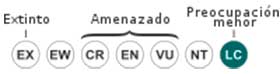
Vulnerable Vulnerable โ“˜ (UICN)โ“˜

โ€ข Current category of the Red List of the UICN: Vulnerable.
โ€ข Population trend: Stable.
โ€ข Population size : 350-1500 individuals.

According to the categories of UICN It is considered Vulnerable (VU). Habitat degradation and trade are adversely affecting the population.

Justification of the population

The population It is estimated in 250-999 mature individuals, according to surveys of Begazo (1996) and subsequent recovery of the small-scale. This equates to a total of 375-1,499 individuals, rounded here to 350-1,500 individuals.

The ban on the capture and trade has improved the status of this species. The rate of decline was very rapid in the Decade of 1980, Although at present has been reduced and even stabilized. But, the population is still very small, with records in very few places.

Conservation Actions Underway

Appendix II of the CITES.

– This protected legally in the Peru, but enforcement is poor.

– Catch rates have declined significantly since the ban, and trappers capture the species apparently only on request (Begazo 1996).

There are no protected areas within its range.

Conservation Actions Proposed

– Examine the population, especially in the less accessible center of its range, and between the distribution areas of the two known species of Forpus.

Monitor the population, working with local people to generate the will to preserve the species in situ (Begazo 1996).

– Study their biology and ecology throughout an annual cycle.

– controlling trade and enforce laws capture.

– Create at least one protected area within the range of the species (Angulo et al. 2008).

"Yellow-faced Parrotlet" in captivity:

captured for him wild bird trade, It is estimated that 17.000 birds were captured between 1981 and 1994. The rate of mortality during capture is estimated between the 40% and the 100%. Rare and unknown in captivity until 1979-1980.

Itร‚ยดs territorial, temperament quiet, active and initially shy, usually it takes in trust although this depending more on their previous experiences, age, breeding form (by hand creates it naturally).

Notes on captive breeding of Forpus xanthops

Alternative names:

Yellow faced Parrotlet, Yellow-faced Parrotlet (English).
Perruche-moineau ร  tรชte jaune, Toui ร  tรชte jaune (French).
Gelbmaskenpapagei, Gelbmasken-Sperlingspapagei (German).
Tuim-de-cabeรงa-amarela (Portuguese).
Catita Enana de Cara Amarilla, Cotorrita Carigualda (espaรฑol).
Periquito de Cara Amarilla (Peru).


scientific classification:

Salvin Osbert
Salvin Osbert

Order: Psittaciformes
Family: Psittacidae
Gender: Forpus
Scientific name: Forpus xanthops
Subpoena: (Salvin, 1895)
Protonimo: Psittacula xanthops

Yellow-faced Parrotlet images:


Video Carigualda Parrot


Species of the genus Forpus

Sources:

โ€ข Avibase
โ€ข Parrots of the World โ€“ Forshaw Joseph M
โ€ข Parrots A Guide to the Parrots of the World – Tony Juniper & Mike Parr
โ€ข Book Parrots, Parrots and macaws Neotropical
โ€ข Birdlife

Photos:

(1) – An adult male Yellow-faced Parrotlet perching on the top of its cage by Ruth Rogers [CC BY 2.0], via Wikimedia Commons
(2) – An adult male Yellow-faced Parrotlet photographed at the 2002 AFA convention in Tampa, Florida, USA by Rogers [CC BY 2.0], via Wikimedia Commons
(3) – An adult Yellow-faced Parrotlet photographed at the 2002 AFA convention in Tampa, Florida, USA by Rogers [CC BY 2.0], via Wikimedia Commons
(4) – An adult male Yellow-faced Parrotlet photographed at the 2002 AFA convention in Tampa, Florida, USA by Ruth Rogers [CC BY 2.0], via Wikimedia Commons
(5) – Forpus xanthops Maraรฑon near Canyon Ferry, Cajamarca, Peru by Nick AthanasFlickr
(6) – John Gerrard Keulemans [Public domain] – Novelty Zoologicae, too.. 2

โ–ท The world of Pets: Dogs, cats, birds, reptiles, amphibians

Todl`s Parakeet (sub)
Pyrrhura picta caeruleiceps

Cotorrita de Perijรก

Content

Perija Parakeet. Copyright ProAves Colombia.

Description:

21-23 cm.. height.

The Todl`s Parakeet (Pyrrhura picta caeruleiceps) It is generally green with the forehead and areas around the eyes, dark red.

In flight the dark red stain is very evident abdomen. Wings below greyish. The crown and nape they are blue; the front and sides of the strip head, red and scaly appearance of the chest with wider margins. This subspecies is included within the species Pyrrhura picta.

Cotorrita de Perijรก

Notes:

    Historically, classification of Pyrrhura picta caeruleiceps (Todd 1947) He has been subject to opinions found. While some authors recognize this taxon at the species level, others consider it a subspecies of Pyrrhura subandina (Todd 1947) or Pyrrhura picta (Meyer de Schauensee 1949), the latter being the most widely followed classification (Hilty & Brown 1986, pit et to the. 1997, Rodrรญguez & Hernandez-Camacho 2002). Based on analysis of morphological characters, Joseph (2000) and Joseph & Stockwell (2002) suggested that P. caeruleiceps should be considered as a distinct phylogenetic species and that the taxon Pyrrhura pantchenkoi (Phelps 1977), described from two specimens with worn plumage, is its synonym. Hilty (2003) He continued this treatment, but the classification committee Bird South America of the American Ornithologists’ Union recently it considered that existing information was insufficient to support this taxonomic change according to the biological species concept and kept provisionally caeruleiceps like a subspecies of painted parakeet (Remsen et al. 2010).
    Source: Rediscovery and notes on the ecology and vocalizations of Toddโ€™s Parakeet (Pyrrhura picta caeruleiceps) in northeastern Colombia

Ecology:

They inhabit in humid jungle, semi-humid and low cloud forests.
Nest sizable trees in abandoned nests of other species.

Distribution:

The enigmatic and little known Todl`s Parakeet (Pyrrhura picta caeruleiceps) It has a very restricted range in the rainforest, mainly between 500 and 900 Attitude meters along the border between Colombia and Venezuela, as well as patches of tropical forest in the foothills of the Serrania del Perija.

Its Freedom population It is believed to be about 30 to 50 individuals.

Conservation:

State of conservation โ“˜


Endangered Endangered โ“˜ (UICN)โ“˜

The forest loss and fragmentation are the main threats facing this bird, but the species is also trapped and kept in cages as a pet. According to the categories of UICN It is considered In danger (IN), mainly due to the habitat destruction.

Images "Todl`s Parakeet (sub)"

Videos "Todl`s Parakeet (sub)"


Especies del gรฉnero Pyrrhura

Sources:


– Parrot Book, Parrots and macaws Neotropical
– Proaves

โ–ท The world of Pets: Dogs, cats, birds, reptiles, amphibians

Golden-winged Parakeet
Brotogeris chrysoptera


Catita Alidorada

Content

Description:

Golden-winged Parakeet

18 cm.. height.
The Golden-winged Parakeet ((Brotogeris chrysoptera)) has a tail short and finished in tip, bill Of course, body almost all green.

Its main characteristic is to have wing a patch orange or gold and the end blue (more visible on the fly). Crown bluish, forecrown and throat orange.
The eye ring is whitish and without feathers; the irises is of color Brown dark and the legs flesh-colored.
The immature is distinguished by not having the Golden wing patch.

Subspecies description
  • Brotogeris chrysoptera chrysoptera

    (Linnaeus, 1766) – The nominal.


  • Brotogeris chrysoptera chrysosema

    (Sclater,PL) – Golden parakeets. Its plumage is generally more yellow. L0s adults have yellow-orange the forecrown and the regions between them eyes and the peak, on the sides of the head. There is a patch in the chin orange. The primary coverts are yellow. Son bigger the species nominal.


  • Brotogeris chrysoptera solimoensis

    (Gyldenstolpe, 1941) – Codajรกs Golden parakeets. Similar to subspecies nominal, but the frontal band is more pale and of color brown reddish. The patch of the chin is a yellow-brown color.


  • Brotogeris chrysoptera tenuifrons

    (Friedmann, 1945) – Black River Parakeets. Similar in appearance to the subspecies Brotogeris chrysoptera tuipara, with the exception of the frontal band orange, which is minimal or absent.


  • Brotogeris chrysoptera tuipara

    (Gmelin, 1788) – Parakeets Tuipara. It also seems to refer to the species, with the exception of its plumage that is usually more yellow. adults have a frontal band fine of color orange and a patch Orange in the chin. The lateral feathers with edges yellow. They are also bigger that the subspecies nominal.

Habitat:

Video – "Golden-winged Parakeet" (Brotogeris chrysoptera)

It inhabits in humid forest and savannah, more common to 300 meters although it has reported to them 1200 m. You in groups small of 8 to 16 individuals not reproductive time, It is common to see more than 100 consuming fruits in the canopy. Noisy when flying and silent when they feed on.

Reproduction:

Nest on trees, in hollows and termite mounds. Breeding season in November, February and April.

Food:

With feeds of the nectar of the flowers, fruit, figs, berries and seeds.

Distribution:

Size of the distribution (reproduction / resident): 3.110.000 km2

Its population is distributed between the East of Venezuela, Guyanas, Center and East of the Brazilian Amazon.

Subspecies distribution

Conservation:

State of conservation โ“˜


minor concern Minor Concern โ“˜ (UICN)โ“˜

โ€ข Current category of the Red List of the UICN: Least concern.

โ€ข Population trend: Decreasing.

Justification of the population

The size of the world population It has not been quantified, but this species is described as ยซcommonยป (Stotz et to the., 1996).

Justification of trend

It is suspected that this species has lost 20,7-24,8% of habitat suitable within their distribution during three generations (15 years), on the basis of a model of Amazon deforestation (Soares-Filho et to the., 2006, Bird et to the., 2011). So, It is suspected that will decrease in <25% durante tres generaciones.

"Golden-winged Parakeet" in captivity:

Rare in captivity. They are birds a bit nerve until you are acclimatized to its owner. They can be housed in an Aviary with other parrots.

Alternative names:

Golden-winged Parakeet, Golden winged Parakeet, Golden-winget parakeet, Tuipara Parakeet (English).
Toui para (French).
Braunkinnsittich (German).
periquitinho, Periquito-de-asa-dourada, periquito-de-asas-douradas, tuipara-de-asa-dourada, tuipara-de-asa-laranja, periquitinho, periquito-de-asas-douradas, tuipara-de-asa-dourada, tuipara-de-asa-laranja (Portuguese).
Catita Alidorada, Periquito de Alas Amarillas (espaรฑol).
Periquito Ala Dorada (Venezuela).

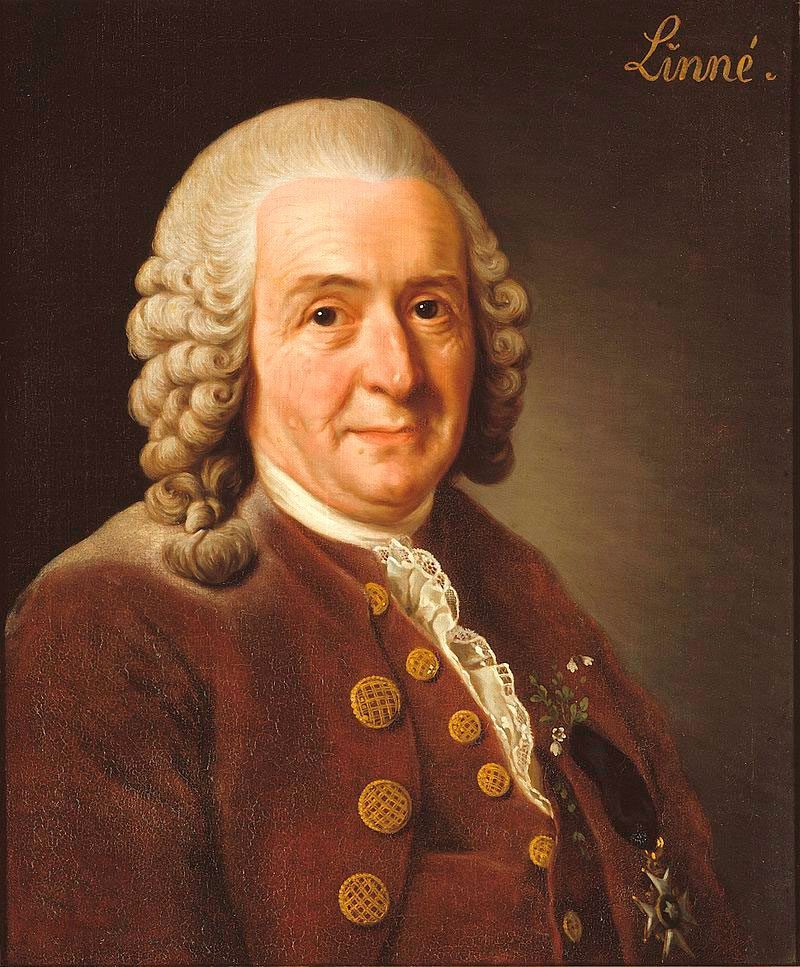
Carl Linnaeus
Carl Linnaeus

scientific classification:

Order: Psittaciformes
Family: Psittacidae
Genus: Brotogeris
Scientific name: Brotogeris chrysoptera
Citation: (Linnaeus, 1766)
Protonimo: Psittacus chrysopterus


Images "Golden-winged Parakeet"


Species of the genus Brotogeris

Sources:

Avibase
– Parrots of the World โ€“ Forshaw Joseph M
– Parrots A Guide to the Parrots of the World – Tony Juniper & Mike Parr
Birdlife
– Parrot Book, Parrots and macaws Neotropical

Photos:

(1) – animalphotos
(2) – Modern accepted name (2012) is Brotogeris chrysoptera By William Swainson, F.R.S., F.L.S. (Zoological Illustrations, Volume I.) [Public domain], via Wikimedia Commons

Sounds: controles-canto.org

โ–ท The world of Pets: Dogs, cats, birds, reptiles, amphibians

Red-faced Parrot
Hapalopsittaca pyrrhops

Red-faced Parrot

Content


Anatomy-parrots

Description:

23 cm.. height.

The Red-faced Parrot (Hapalopsittaca pyrrhops) It is distinguishable by the intense red in face and pink magenta in shoulder.

Of bill Of course, yellow feathers on the sides of the neck, crown Green with more bluish back.
Dorsally, wing with blue stain and end blackish; tail with blue border.
In flight, wing with armpit red, Blue-Green rest, tail Red with blue tip.
Youth with the face less red.

Habitat:

Rare. It inhabits in the Woods high Andean, near fells, edges and secondary forests, from the 2400 to 3500 m. They are gregarious, usually in pairs or small flocks of 4 to 6 individuals, rarely more.
They are mostly sedentary. But, can arise some movements seasonal altitudinal.

Reproduction:

Nest in the cavities of trees in October-January; the laying of eggs in late November; the chicks are born in early December, and they leave the nest in late January.

Food:

They feed in the canopy of the forest.
Its diet includes outbreaks, flowers, berries and seeds.

Distribution:

Size of the area of distribution (reproduction / resident): 33.800 km2

Inhabits the southern Andes Ecuador and North end of Peru.

Conservation:


Vulnerable


โ€ข Current category of the Red List of the UICN: Vulnerable.

โ€ข Population trend: Decreasing.

The population is estimated to be a number of 2.500-9.999 mature individuals.

Threats

Its decline is attributed to the destruction and fragmentation of habitat, largely through the conversion of burning forests to small farms (Jacobs and Walker, 1999).

Severe loss of this species can be expected due to deforestation and degradation of forests, by burning and grazing, on Cordillera de Chilla, Loja of Ecuador, although 1995 there were still extensive forest areas (Toyne and Flanagan 1997, Jacobs and Walker 1999).

"Red-faced Parrot" in captivity:

Unknown in the poultry.

Alternative names:

Red-faced Parrot, Ecuadorian Parrot, Red faced Parrot (English).
Caรฏque de Salvin, Caรฏque ร  face rouge (French).
Salvinpapagei, Salvins Zwergpapagei (German).
Red-faced Parrot (Portuguese).
Lorito Ecuatoriano (espaรฑol).
Loro de Cara Roja (Peru).


scientific classification:

Salvin Osbert
Salvin Osbert

Order: Psittaciformes
Family: Psittacidae
Genus: Hapalopsittaca
Scientific name: Hapalopsittaca pyrrhops
Citation: (Salvin, 1876)
Protonimo: Pionopsitta pyrrhops

Images "Red-faced Parrot"

Videos "Red-faced Parrot"


"Ecuadorian Lorito" (Hapalopsittaca pyrrhops)


Sources:

  • Avibase
  • Parrots of the World โ€“ Forshaw Joseph M
  • Parrots A Guide to the Parrots of the World – Tony Juniper & Mike Parr
  • Birdlife
  • Parrot Book, Parrots and macaws Neotropical

  • Photos:

(1) – Red-faced Parrot (Hapalopsittaca pyrrhops) by Dusan M. Brinkhuizen – IBC

โ–ท The world of Pets: Dogs, cats, birds, reptiles, amphibians

Yellow-tailed black cockatoo
Calyptorhynchus funereus

Yellow-tailed black cockatoo

Content

Description

55 to 65 cm.. length and a weight of up to 900 g..
The Yellow-tailed black cockatoo (Calyptorhynchus funereus) stands out clearly by its plumage mostly black, patch yellow in cheek and yellow panels in tail.

The body feathers They are lined with yellow giving it a scalloped appearance. It has a crest short and moving on top of her head.
The female It has a yellow stain on the cheek more defined and larger than the male, Bello to singr pale gray (Pink in males)
The juveniles has plumage duller overall.
The bill top of immature male black obscures two years old, While the lower peak black four years.

Description 3 subspecies

  • Calyptorhynchus funereus funereus

    (Shaw, 1794) – Nominal. Larger and tail longer dark mottled.


  • Calyptorhynchus funereus whiteae

    (Mathews, 1912)


  • Calyptorhynchus funereus xanthanotus

    (Gould, 1838) – Smaller size, tail shorter dark mottled.

Habitat:

Variety of types habitats, including forests of eucalyptus, heaths, subalpine areas, pine plantations and occasionally in urban areas.
They are often seen flying in pairs or trios formed by a pair and their young., although outside the breeding season they can join in more numerous flocks.

Reproduction:

have a long breeding season, that varies throughout its range, although Tasmania in general it is from October to February. Both sexes construct the nest in holes of mature trees, high, generally eucalyptus. Fill the hole of wood chips. The same tree can be used for many years.

One or two eggs form a clutch. Only the female incubates the eggs, While the male supplies the food. Both parents help rear the chicks, Although usually only one chick survives. The chicks leave the nest about three months after hatching and remain in the company of their parents until the next breeding season.

Food:

Seeds native trees, terrestrial plants and pine cones. Some insects also part of their diet. Unlike other cockatoos, a significant proportion of the diet up wood borers worms. The bird put his ear against the surface of dead trees to hear the sound of worms. If a worm is detected, the bird will use their powerful beaks to pull pieces of the tree until you get to the meal, often leaving a pile of wood chips at the base of the tree. These scars on dead trees are a common sight in the forests of Tasmania.

Distribution:

Size of its range (breeding/resident ): 2.700.000 km2

It is up to the 2000 meters throughout Southeast Australia, from South Eyre Peninsula to the east-central Queensland.
Your number is declining in parts of its range due to habitat fragmentation and loss of large trees used for breeding.
In Tasmania is common and nomadic. They can be seen in many parts of the state and in the larger islands Bass Strait.

Distribution 3 subspecies

Conservation:

State of conservation โ“˜


minor concern Minor Concern โ“˜ (UICN)โ“˜

โ€ข Current category of the Red List of the UICN: Least concern.

โ€ข Population trend: Stable.

This species has a very large range, and therefore not approaching the threshold of vulnerable. Not threatened worldwide. CITES II. As with most other cockatoos, its long-term existence depends on the continued availability of hollow trees for nesting,

The population is estimated at at least 25.000 birds.

The population trend appears to be stable.

"Yellow-tailed black cockatoo" in captivity:

In the poultry industry this species is extremely rare and expensive. In Australia It has attained breed in captivity.
Like all cockatoos, they come to live over 40 years.

Alternative names:

Yellow-tailed Black-Cockatoo, Black Cockatoo, Common Black-Cockatoo, Funeral Cockatoo (English).
Cacatoรจs funรจbre, Cacatoรจs noir ร  queue jaune (French).
Gelbohrkakadu, Gelbschwanz-RuรŸkakadu, RuรŸkakadu (German).
Cacatua-negra-de-cauda-amarela (Portuguese).
Cacatรบa Fรบnebre Coliamarilla, Cacatรบa Fรบnebre de Cola Amarilla (espaรฑol).

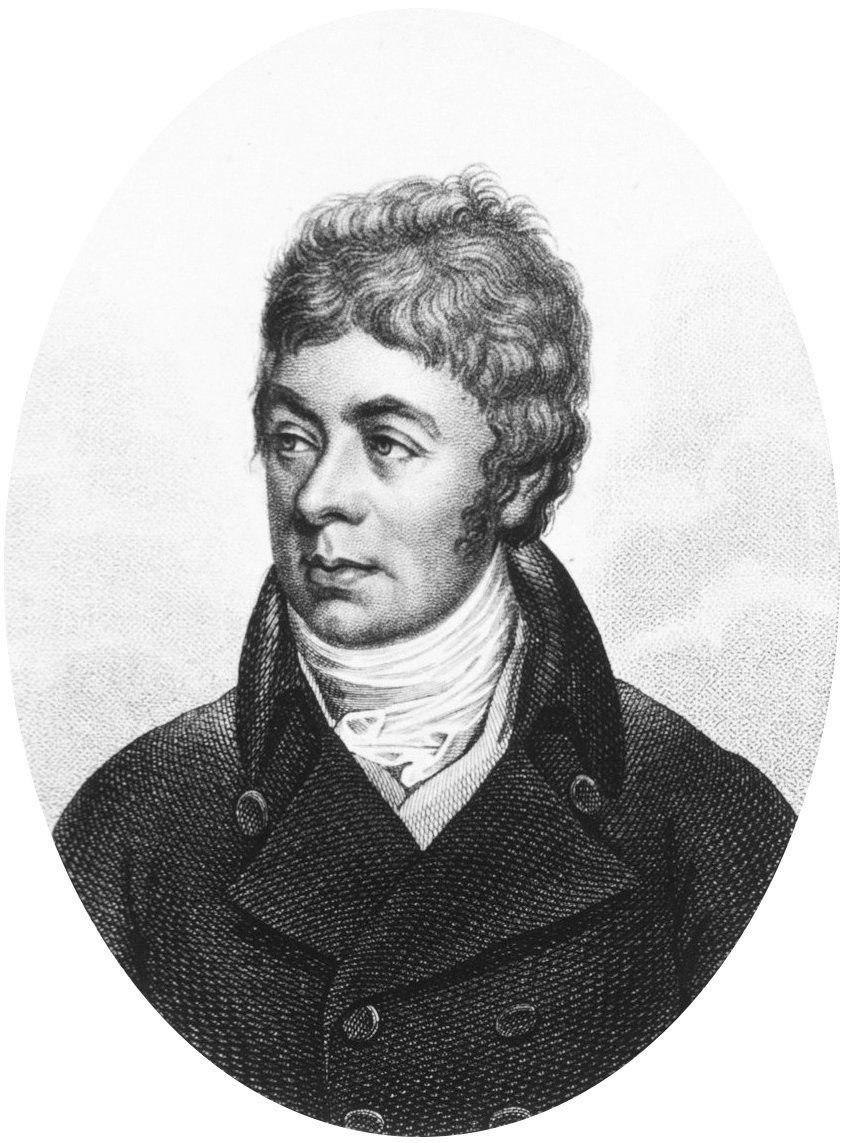
George Shaw
George Shaw

scientific classification:


Order: Psittaciformes
Family: Cacatuidae
Genus: Calyptorhynchus
Scientific name: Calyptorhynchus funereus
Citation: (Shaw, 1794)
Protonimo: Psittacus funereus


Images Cockatoo Fรบnebre Coliamarilla:


Sources:

www.parks.tas.gov.au
avibase
Birdlife

Photos: David Cook

Sounds: Nigel Jackett

โ–ท The world of Pets: Dogs, cats, birds, reptiles, amphibians

Tanimbar corella
Cacatua goffiniana

Cacatua de las Tanimbar

Content

Description

31 to 32 cm.. length and a weight of just 300 g..
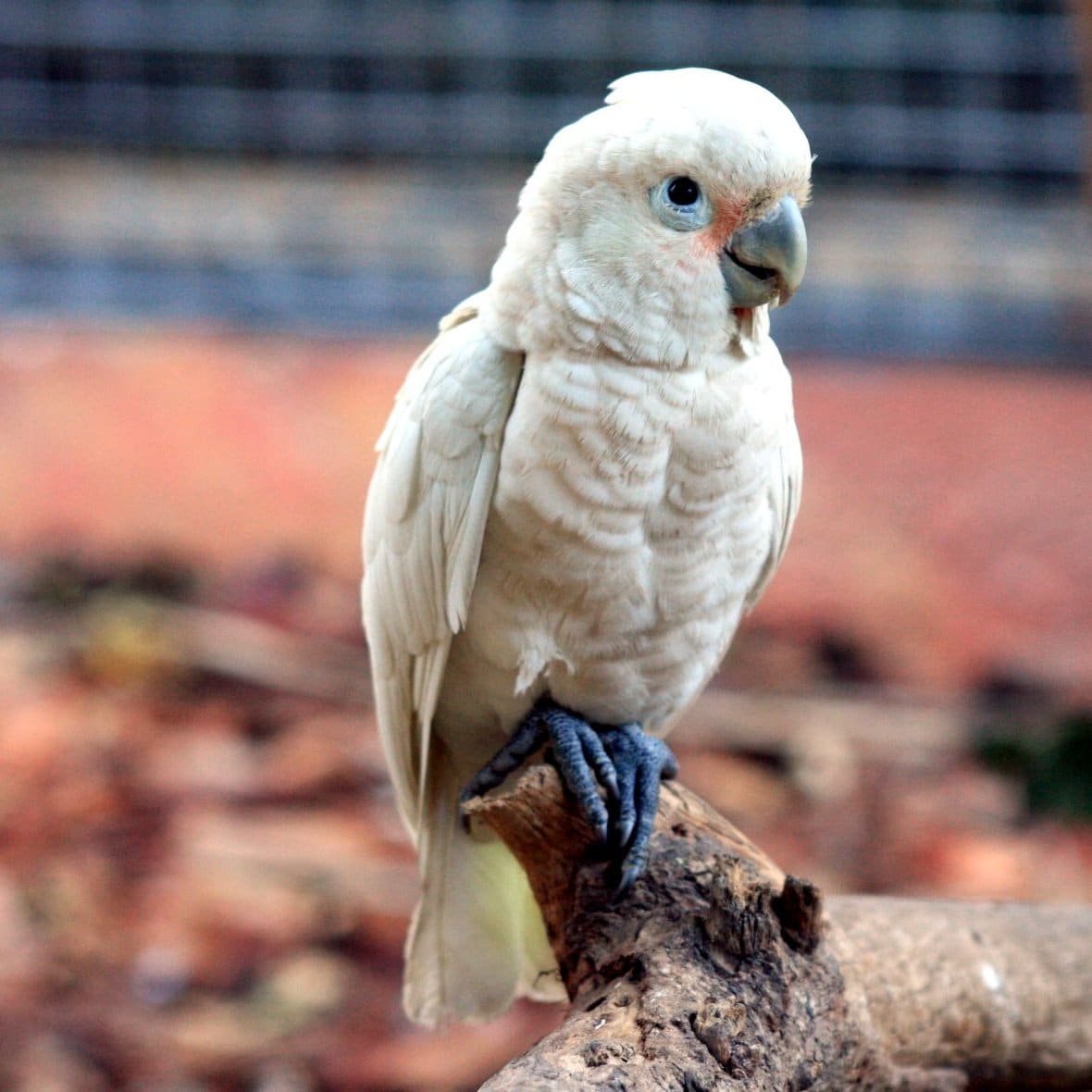
The Tanimbar corella (Cacatua goffiniana), like all family members Cacatuidae, is a species crestada, meaning it has a collection of feathers on its head which can go up or down at will; his body is covered with white feathers with some feathers or salmon pink between bill and eyes.
The deepest parts of the feathers of the crest and of the neck They are also the pink, but the color is hidden by the white color of the more superficial. The bottom of its wings and feathers of the tail They have a yellowish hue. The bill It is pale gray and eyes range from brown to black.
There is a clear sexual dimorphism and, often, merge with the blood cockatoo (Cacatua sanguinea) due to their similar appearance.

Habitat:

Riparian forests, thickets of acacias and eucalyptus with short grass or pasture with scattered groups of trees.

Reproduction:

The start is two to three eggs, generally deposited in the hollow of a tree. The incubation, that is shared by two birds, lasts a few 30 days. The chicks they leave the nest about ten weeks after hatching, and feeding by the parents continues for another few weeks.

Food:

Dried fruits, fruit, berries, flowers, estate, bulbs, egg yolks, sprouts, and insects

Distribution:

Size of the area of distribution (reproduction / resident): 9.100 km2

The Tanimbar Cockatoo It is a species of cockatoo endemic to the forests of Yamdena, Larat and Selaru, all the islands of the Tanimbar Islands of Indonesian. This species has been introduced in the Kai Islands, Indonesian, Puerto Rico and Mexico.

Conservation:

State of conservation โ“˜


Near-threatened Near Threatened โ“˜ (UICN)โ“˜

โ€ข Current IUCN Red List category: Near-threatened.

โ€ข Population trend: Decreasing.

In the Decade of 1970, Japanese loggers ravaged the Islands. Many birds were stunned and disoriented and were captured for pet trade. Although many died from stress during transport, there is still some hope after this ecological disaster, since many cockatoos managed to reproduce in the programs of captive breeding. So, there are now more specimens in captivity than in their natural habitat.

This species has a range very small, but its population is severely fragmented or restricted to a few places. Despite suffering from the pressure of his capture, seems to have maintained a large population. But, the degradation of the habitat, trapping and continuous persecution is likely to be causing a moderate reduction of the population. Therefore it is classified as Near-threatened.

There is a conservation plan in endemic parrots Tanimbar Islands, Indonesian, financed by LORO PARQUE FUNDACIร“N

"Tanimbar corella" in captivity:

You can show a fearful beginning, but you quickly get used to their caregiver, turning into a very cockatoo sweet, playful, sometimes inquisitive and very active. Enjoy being observed, being the center of the world, like all cockatoos. His cry is not nice, but this little cockatoo is quickly forgiven everything as his antics and bad manners will surprise us and make us laugh.

Has the continuing need to fly so you need a large space.

Curiosities:

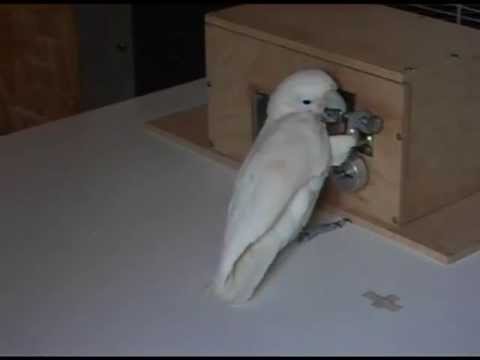
A Tanimbar corella, without previous training, open five types different locks:

The incredible mechanical intelligence of the Tanimbar cockatoos 1

The incredible mechanical intelligence of Tanimbar Cockatoo

Alternative names:

Tanimbar Cockatoo, Goffin’s cackatoo, Goffin’s Cockatoo, Tanimbar Corella (ingles).
Cacatoรจs de Goffin (French).
Goffinkakadu, Goffin-Kakadu (German).
Cacatua-de-goffin (Portuguese).
Cacatรบa de las Tanimbar, Cacatรบa de Tanimbar (espaรฑol).

scientific classification:

Order: Psittaciformes
Family: Cacatuidae
Genus: Cockatoo
Scientific name: Cacatua goffiniana
Citation: Roselaar,CS & Michaels, 2004
Protonimo: Cacatua goffiniana

Images Tanimbar Cockatoo:


Species of the genus Cacatua

Sources:
Avibase, BirdLife.org, faunadex
– Photos: sciencio.com, Marah09013 (Wikipedia),
– Sounds: Frank Lambert (Xeno-canto)