โ–ท The world of Pets: Dogs, cats, birds, reptiles, amphibians

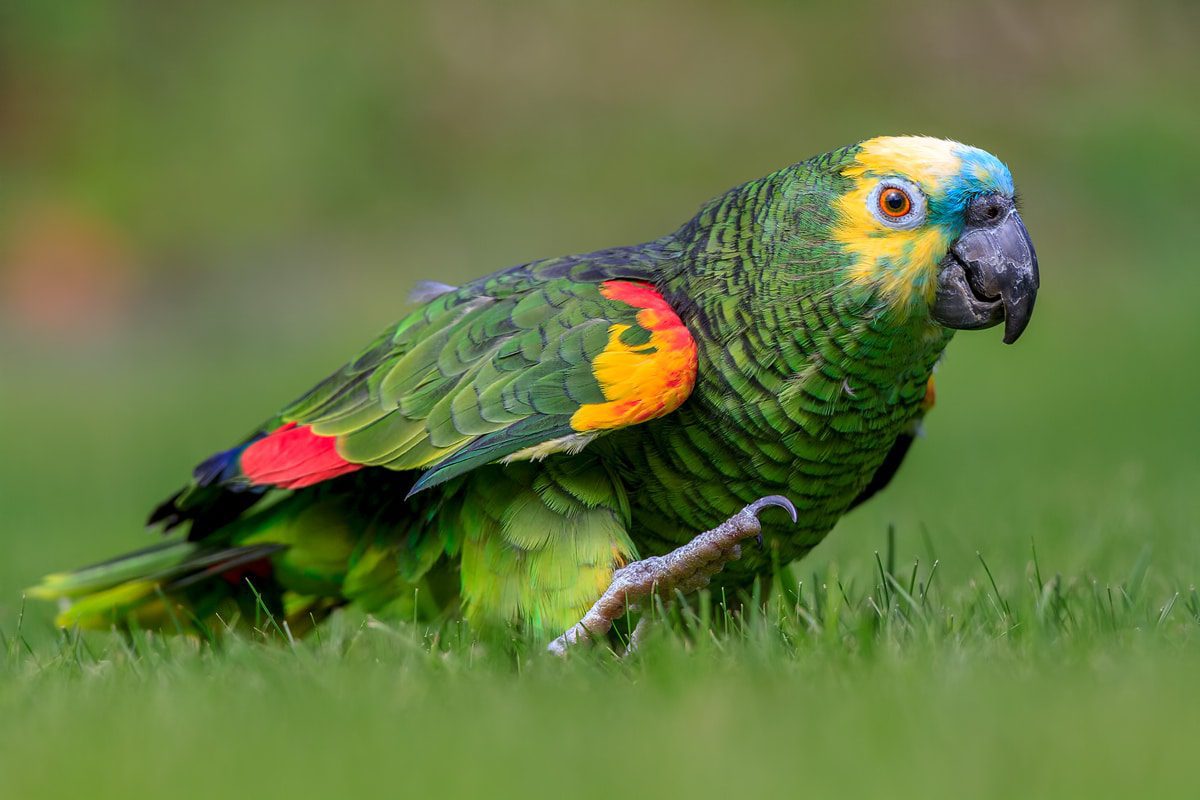
Blue fronted Parrot
Amazona aestiva


Blue fronted Parrot

Content

Description

33-39 cm.. height and weight around the 450 and 550 g..

The Blue fronted Parrot (Amazona aestiva) is distinguished by yellow head, with blue-green forehead and cheek, Dark nostrils, Red shoulders outlined with yellow, wing with red patch and dark blue ends. Rest of the usually green body, more clear towards the belly and tail.

  • The subspecies Amazona aestiva xanthopteryx of Bolivia, has more extensive yellow face and the shoulder is mostly yellow with a small red patch.

  • The subspecies A. to. xanthopteryx (Yellow wing Amazon): Wing coverts of the shoulder area almost exclusively yellow and, in general, creating a stain of greater extension. – From the southwest of Mato Grosso, Brazil, North and East of Bolivia, Paraguay and northern Argentina
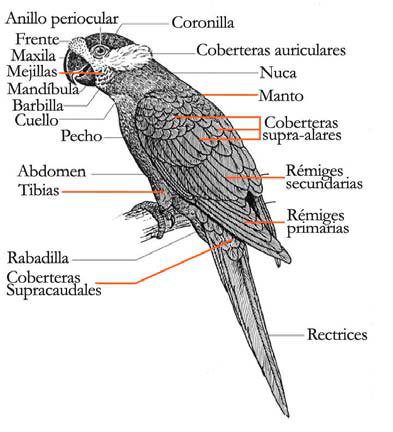

Anatomy-parrots

In young coloration is generally more off. The blue and yellow practically do not exist and the iris is dark

Habitat:

Video – "Blue fronted Parrot"

AVES - The Amazon Aestiva, one of the most popular and talkative parrots

Lives in humid forests, Savanna, gallery forest, areas planted with trees and forest with palms, up to 1600m.

Common in pairs or flocks, they have many individuals community roosts.
In this species the sex of the specimens is not distinguished at a glance.

Reproduction:

It nests in holes in large trees.

Breeds between October and March.

The implementation is usually of 3 eggs, and incubation lasts approximately 25 days. Chicks leave the nest to the 60 days.

Food:

Its food consists of fruit, berries, nuts, leaves and seeds.

Distribution:
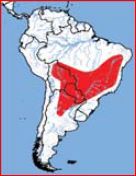
Amazon Frentiazul location

Interior of South America, from the North-East of Brazil, East of Bolivia, Paraguay, to the North of Argentina.

Conservation:

Not considered under any threat category globally.

State of conservation โ“˜


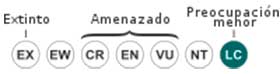
minor concern Minor Concern โ“˜ (UICN)โ“˜

Protected by the Convention CITES, consisting in annex II (species that may be threatened by a trade out of control).
It is a fairly widespread species in their area of distribution and is considered to have a stable population. However, numbers are declining rapidly in some areas due to capture for trade (both legal and illegal), and to other problems such as the destruction of their habitat and human pressure. Another problem affecting the species is that the average age of populations that exist in freedom is not known.

Blue fronted Parrot in captivity:

He is very smart, curious and loving. They are very sociable and gets along very well with children.

It is one of the best imitators that exist within the group psittacine after grays.
With its strong beak, as any Parrot, She likes chewing everything that gets you ahead. So, newcomer to our home, It is necessary to pay close attention.

It has a social behaviour so it is important to look for a partner. A large aviary and the possibility of going out every day are necessary.
If it feels threatened, It opens its wings between loud cries and wild-eyed.
Water love it. Released, When it rains, enjoy, in the rain, with open wings. The ideal humidity for a Blue fronted Parrot is of the 60-70%, which is impossible in an apartment during the winters in the heat of radiators. It is therefore necessary the use of humidifiers.

The staple food is made up of different types of nuts, sunflower seeds, pumpkin seeds, corn, wheat, etc. Important for a healthy diet are fruits and vegetables. These must be offered fresh every day.
Just before the breeding season, our birds must be provided with foods rich in calcium and protein, for example egg cooked.
Multivitamin supplements complete proper nutrition.

The female lays two to five eggs that incubate for an approximate period of 25 to 28 days.

Alternative names:

Blue fronted Parrot, Blue-fronted Amazon, Blue-fronted Parrot, Turquoise-fronted Amazon, Turquoise-fronted Parrot (English).
Amazone ร  front bleu (French).
Blaustirnamazone, Rotbugamazone (German).
Papagaio-verdadeiro, papagaio-colareiro, papagaio-comum, papagaio-curau (Portuguese).
Amazona Frentiazul, Amazona Sudamericana, Loro hablador, Lora frente azul (espaรฑol).

scientific classification:

Order: Psittaciformes
Family: Psittacidae
Genus: Amazona
Scientific name: Amazona aestiva
Citation: (Linnaeus, 1758)
Protonimo: Psittacus aestivus


Species of the genus Amazona


Sources:
– Parrot Book, Parrots and macaws Neotropical
avibase
– SEO.org
– Photo: birdnest
– Sounds: Diego Caiafa
โ–ท The world of Pets: Dogs, cats, birds, reptiles, amphibians

Salmon-crested cockatoo
Cacatua moluccensis

Cacatรบa Moluqueรฑa

Content

Description

40 to 50 cm.. length and a weight of up to 900 gr.
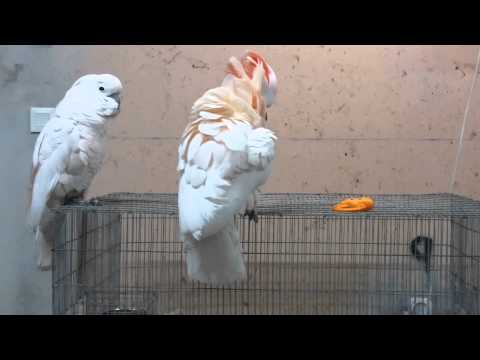
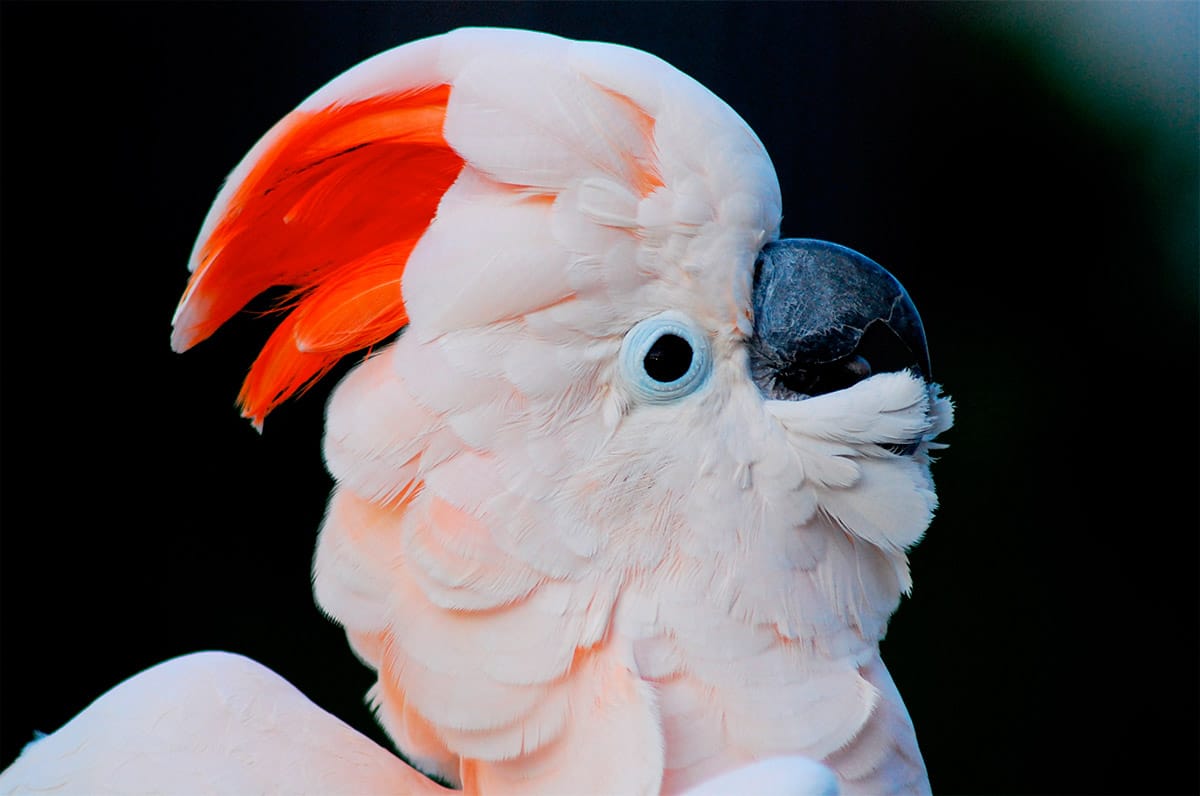
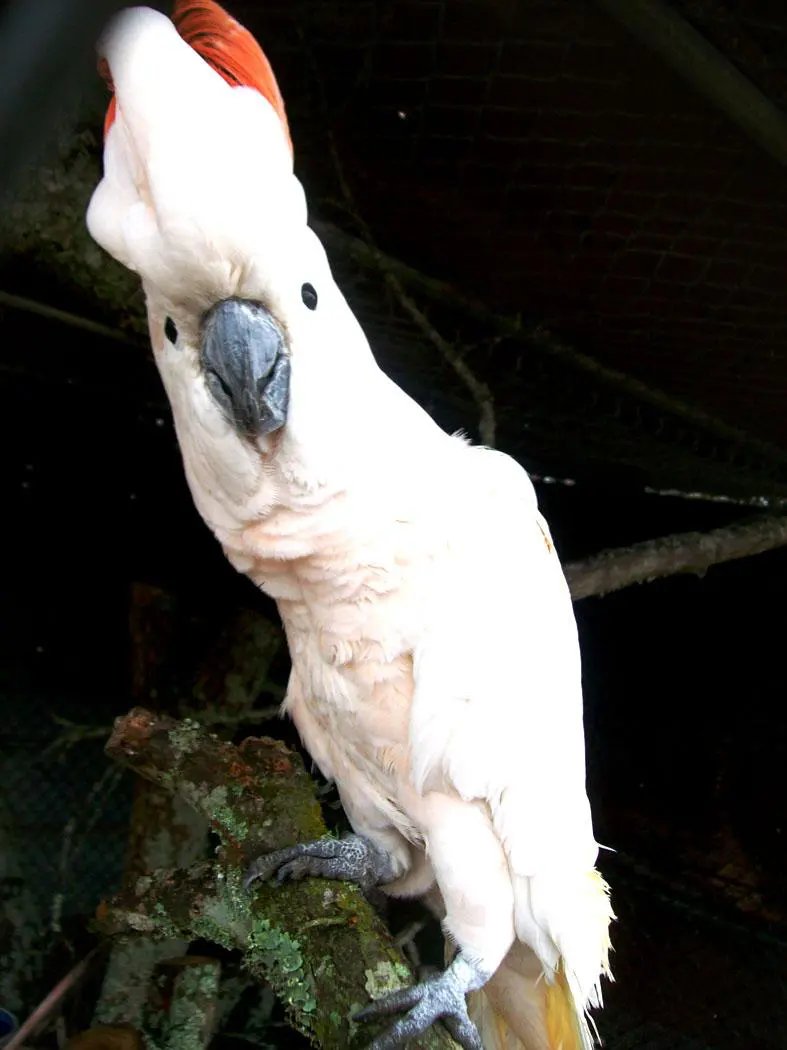
The plumage of the Salmon-crested cockatoo (Cacatua moluccensis) is predominantly white, except the tuft, that consists of red feathers that is usually when the bird is excited.

The interior of the wings is light salmon color. The the tail feathers they have a yellow-orange and pink color at the base.
The bill is strong, curved and black. The legs also are of color black. A skin bare of color white blue surrounds them eyessexual dimorphism It is in the color of your eyes. Males have dark eyes while females have them red.
The immature are like adults.

Habitat:

Video – "Salmon-crested cockatoo" (Cacatua moluccensis)

moluccan cockatoo

It shows preference for forests. It is from sea level up to the 1200 metres of elevation. In noisy roosts, during the breeding season, alone or in couples; at other times are found in groups of up to 16 birds. Species usually shy. You enable in the early morning and at dusk.

Reproduction:

The breeding season exact in the nature is unknown, but the activity of nesting It has observed in mayo, July and August, When the birds are usually seen alone or in pairs. The nests are built in large trees, taking advantage of holes in the trunks to 25 meters above the ground. The implementation size in captivity is from one to three, usually two, the eggs, they are incubated by both parents for 28 to 29 days.

Food:

With feeds fruit, grains, seeds, berries, vegetables and dried fruits. It has a peak strong, able to break the hard shells.
Probably also feed on insects and their larvae and from time to time in the coconut plantations, where Peck young fruits, to reach the water and the meat of the content.

Distribution:

Size of the area of distribution (reproduction / resident): 33.800 km2

Lives in the Plains to low height in the islands of the South of the Moluccas in Indonesian, Islands of Ceram, Saparua and Haruku.
It was introduced on the neighbouring island of Ambon.

Conservation:

State of conservation โ“˜


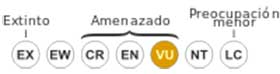
Vulnerable Vulnerable โ“˜ (UICN)โ“˜

โ€ข Current category of the Red List of the UICN: Vulnerable.

โ€ข Population trend: Decreasing.

Is in the list of species at risk of CIPA (International Council for the protection of birds). It became part of the I in 1989 of the CITES and, in Europe, is covered by the program of protection of the species in extinction (EEP).

Their main threats they are the illegal trade (in great measure responsibility of Indonesian) and deforestation, that has led to a dramatic loss of habitat.

In 1982, exported a total of 6.413 birds, around the 15% of all local poultry exports, Since this species is still very desired as a companion bird.

Although the international trade reported fell to zero in the Decade of 1990, them hunters will have maintained very active and the birds are sold openly in Indonesian.

Just 62.400 Salmon-crested cockatoo in the world according to the FWS Federal Register.

In the news Loro Parque Foundation has a "field project" underway for its protection and survival in its country of origin, We hope that this great work to proceed and succeed.

"Salmon-crested cockatoo" in captivity:

In captivity is quite rare and face, but he has adapted well and plays smoothly in the spaces provided.

As a pet is simply exceptional for its docility. The only drawback is the noise it emits at times when its demands are not immediately met.

Despite their exceptional behavior, we should not consider the possession of this cockatoo as a cage bird of this wonderful bird. Trade can lead in a few years to extinction.

Alternative names:

Salmon-crested Cockatoo, Moluccan Cockatoo, Rose cackatoo (ingles).
Cacatoรจs ร  huppe rouge, Cacatoรจs des Moluques (francรฉs).
Molukkenkakadu (alemรกn).
Cacatua-das-molucas (portuguรฉs).
Cacatรบa Copete Encarnado, Cacatรบa Moluqueรฑa, Cacatรบa de las Molucas (espaรฑol).

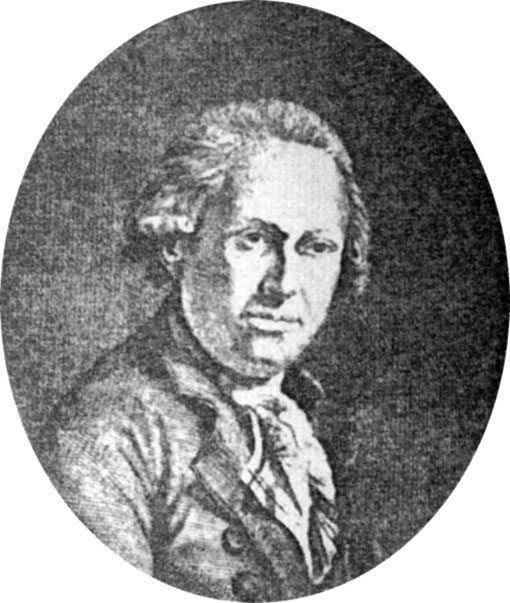
Gmelin Johann Friedrich

Clasificaciรณn cientรญfica:


Orden: Psittaciformes
Familia: Cacatuidae
Genus: Cacatua
Nombre cientรญfico: Cacatua moluccensis
Citation: (Gmelin, 1788)
Protรณnimo: Psittacus moluccensis


Imรกgenes Cacatรบa Moluqueรฑa:


Especies del gรฉnero Cacatua

Fuentes:
Avibase
– Parrots of the World โ€“ Forshaw Joseph M
– Parrots A Guide to the Parrots of the World – Tony Juniper & Mike Par
– Birdlife

– Fotos: de.wikipedia.org, Wikimedia

– Sonidos: Frank Lambert (xeno-canto)

โ–ท The world of Pets: Dogs, cats, birds, reptiles, amphibians

Blue streaked Lory
Eos reticulata


Blue streaked Lory

Content

Description

About 30 cm.. length and a weight between 140 and 170 gr.

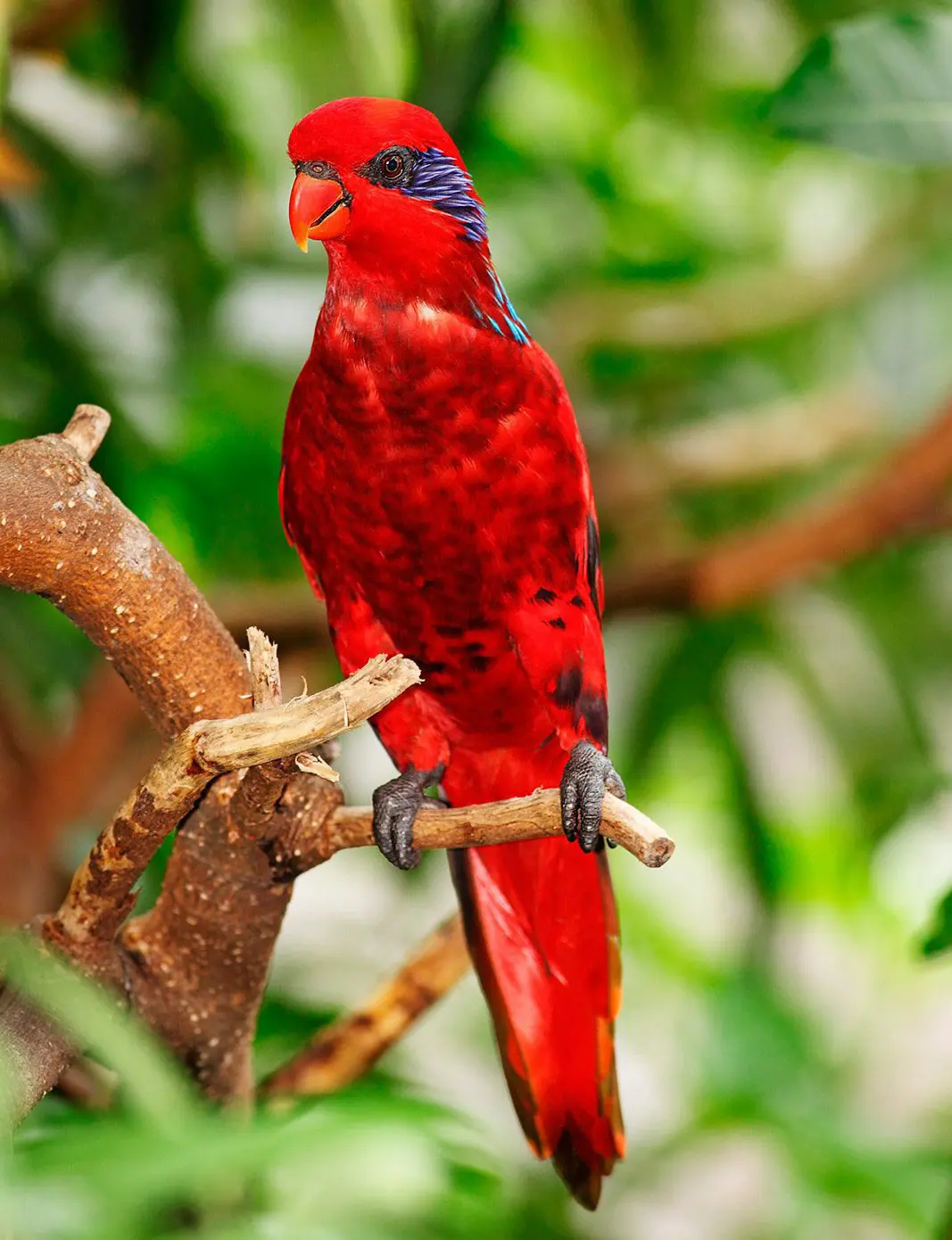
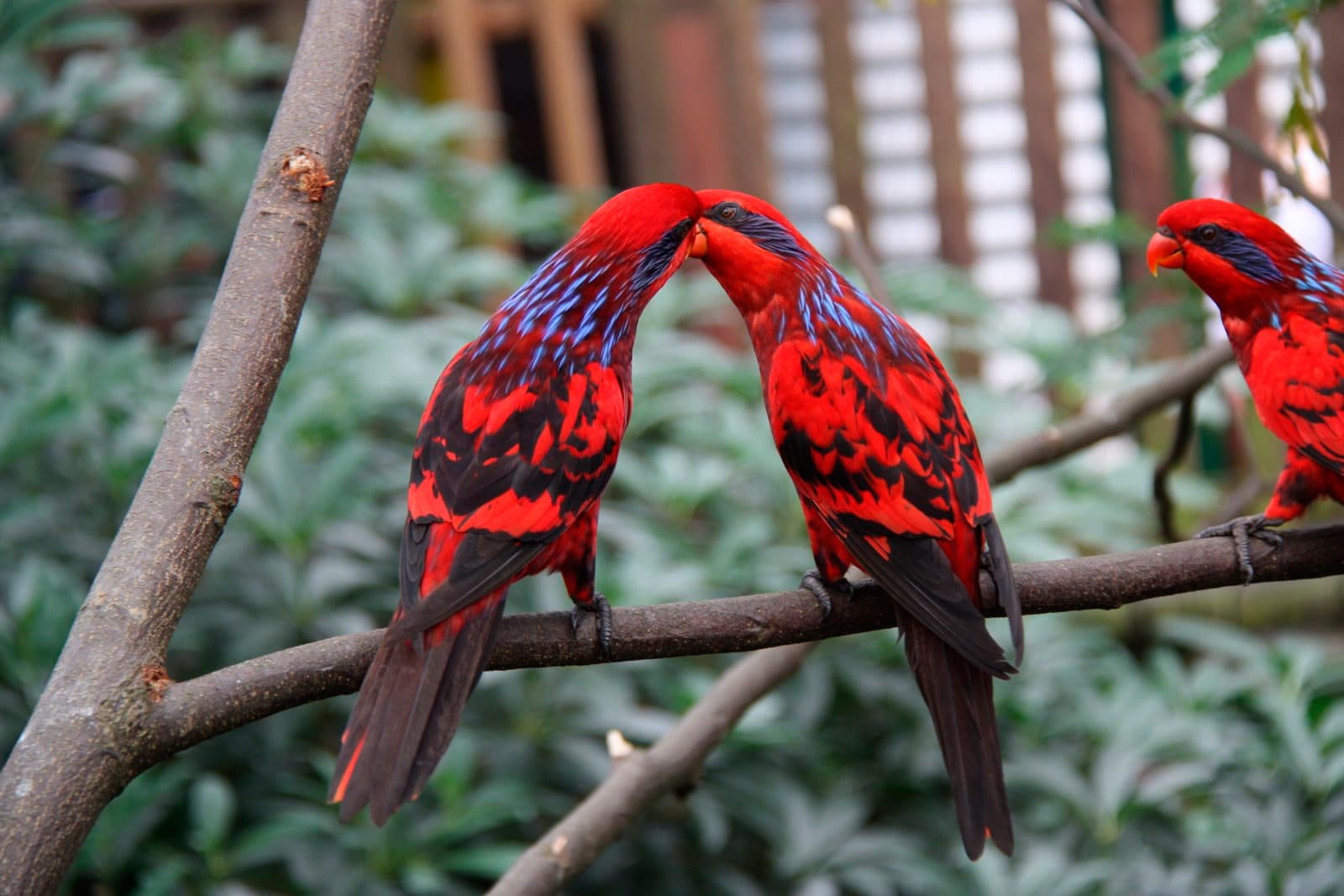
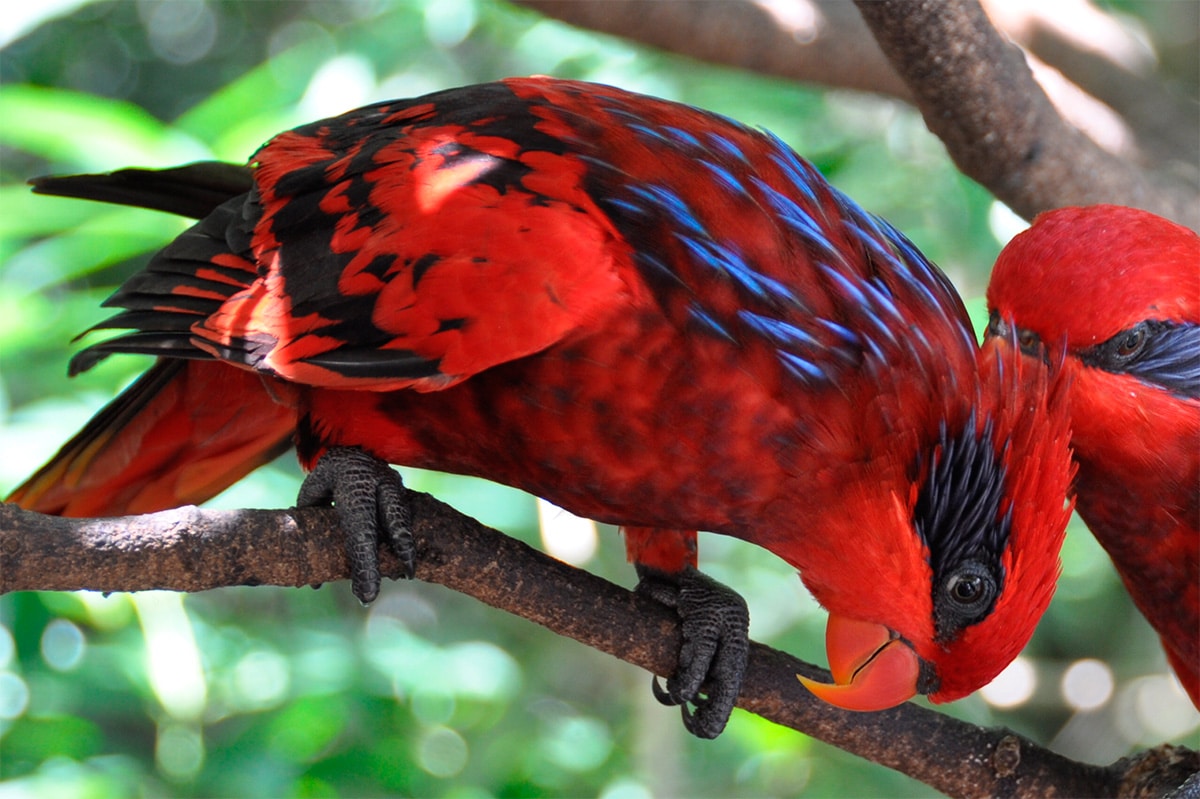
Like all species of the genus Eos, the โ€œTanimbar Loryโ€ (Eos reticulata), shows a beautiful plumage mainly red. In adults, a great band blue-violet crosses the region of the eye and continues in the patches that cover the ears, at the sides of the neck.

The under neck and the mantle they are covered with long, violet-blue stripes.
The back and tail they are more or less blue red striped.

The pens and large blankets have terminations in black. The primary is almost entirely black. The tail is brownish black above and below a red opaque.

The bottom of the wings they have the edge and dark tips. Thighs and flanks they are completely Red. The bill coral red. Iris orange-red. The legs are grey.

In youth , the feathers the lower parts are aligned blue-black variably. The shield It is covered with blue spots instead of stripes. The bill is brownish Orange. The irises They are brown.

Habitat:

The Blue streaked Lory they live mostly in the most wooded areas, including primary and secondary forests. They are also found in coconut plantations, of sago palms, in the mangroves and the cultivated lands.

It seems that they show a certain attraction for the monsoon forests, relatively open and located in low-lying areas.

They live alone, in pairs or in small groups of up to ten or more individuals. These are rather shy and discreet, but their presence is often betrayed by the screams produced flocks in flight.

They have a direct flight, quite fast and composed of many flapping. Often feed on coconut blossom trees and the sago palms.

Reproduction:

There is little information of the natural environment. The Blue streaked Lory They typically make 2 or 3 eggs that colouring of 24 to 26 days. The chicks leave the nest after 7 to 8 weeks. But, even after feather, they return regularly to rest awhile. The youth they stay in the family throughout the summer and then join the dormitories where they continue their learning.

Food:

They have an exclusively vegetarian diet. They feed on fruits, seeds, buds and immature seeds. His tongue with a brush-shaped end is specialized to collect nectar and pollen.

Distribution:

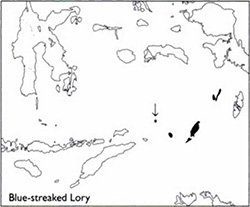
Lori distribution of the Tanimbar
Is located in Yamdena and Larat, Tanimbar Islands and island of Babar, Indonesian. Introduced in Kai Islands and island of Damar, where has possibly gone.

Conservation:


Near-threatened

– Current IUCN Red List category: Near threatened

– The population trend: Decreasing

Habitat loss continues apace in southern Yamdena
The species is suspected that it is decreasing at a rate of slow to moderate, due to the combined forces of habitat loss and capture.
It is estimated a population of 220.000 ยฑ 50.000 birds in Yamdena

Nearly 3000 birds are traded on the international market of birds each year, fact that probably has not caused a decrease in its population. Habitat loss continues however, and this, combined with capture, probably if that will lead to more declines.

Conservation Actions Proposed:

– Regularly monitoring at certain sites throughout its range to determine population trends.
– Investigate the degree of capture and take appropriate measures, including the use of awareness-raising campaigns, to address these issues.
– Protection of the areas significant of forest right in all the Islands where is distributes the species.

"Blue streaked Lory" in captivity:

Lives of 15 to 30 years in the wild; and between 28 and 32 years in captivity.
Fairly common in the s 1970. Nowadays it is not unusual to see them in captivity.

Alternative names:

Blue streaked Lory, Blue-streaked Lory (ingles).
Lori rรฉticulรฉ, Lori ร  raies bleues, Lori striรฉ bleu (French).
Strichellori (German).
Lรณris-de-crista-azul (Portuguese).
Lori de las Tanimbar, Lori Reticulado (espaรฑol).

scientific classification:

Order: Psittaciformes
Family: Psittaculidae
Scientific name: Eos reticulata
Citation: (Muller,S, 1841)
Protonimo: Psittacus reticulatus

โ€œTanimbar Loryโ€ Images:

Videos "Blue streaked Lory"

————————————————————————————————————————–

ยซTanimbar Loryยป (Eos reticulata)


Sources:
Avibase, BirdLife.org, Oiseaux.NET
– Photos: Wikipedia – Uploaded by Benjamint444 , Jurong Bird Park, Singapore by chong kwang (Wikimedia), Jurong Bird Park, Singapore 2 by Michael Gwyther-Jones (Wikimedia), Photographed by Benjamint444 (Wikimedia), Renรฉ Modery (Wikimedia)
– Sounds: Mike Catsis (Xeno-canto)

โ–ท The world of Pets: Dogs, cats, birds, reptiles, amphibians

Musk Lorikeet
Glossopsitta concinna

Musk Lorikeet

Content

Description

20 to 23 cm.. length and a weight between 52 and 56 g..

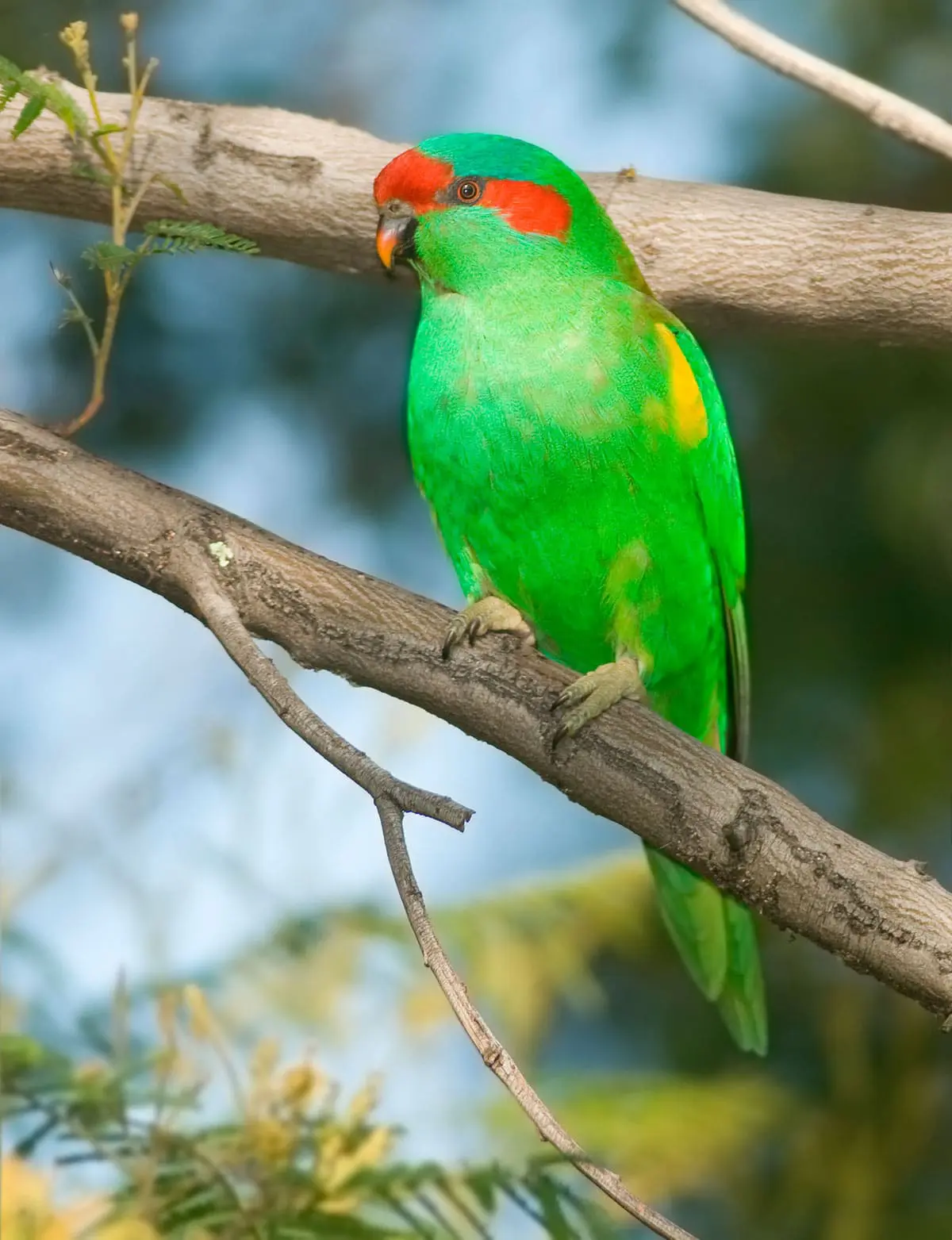
The general plumage of the Musk Lorikeet (Glossopsitta concinna) is green.

The part forward of the crown, lores and coverts headphones are of color Scarlet. Top of the head and cheeks, of color green impregnated of Turquoise under eye. The underparts of color green with a washed Brown olive around the sides of the chest. Green bright it rump. Wing coverts green, flight feather of color gray to black and a band of color yellow in the area of the shoulders. The feathers of the tail with brands reddish orange.
Part back from the neck yellowish green. Beside the edges of the wings colour yellow. Bill black-tipped Red. The irises Orange and the legs greenish Brown.

The blue area in the crown of the female It is smaller and paler which in the male.

The name of the species derives from a musky odor that is said to emit these birds.

Subspecies description:

  • Glossopsitta concinna concinna

    (Shaw, 1791) – Nominal.


  • Glossopsitta concinna didimus

    (Mathews, 1915) – Less blue in the crown, nearly absent in the female.

Habitat:

Seasonally nomadic Depending on the flowering of the eucalyptus, at least at the ends of their range.
Found in many habitats of open forest, agricultural and suburban areas, including forests of eucalyptus, dry forests, dense rainforest (particularly in Tasmania) and riparian forests.

It avoids the high open woods and high altitude. Often found in large flocks of more than one hundred of individuals, where couples who form strong bonds, they often live together. It is extremely trusting when feeds.

Flocks have been seen, frequently, flying at high altitude.

Reproduction:

Season of mating from August to January. The nests they are built in holes of eucalyptus. The two eggs are incubated for about 25 days and the young leave the nest between 6 and 7 weeks after hatching.

Food:

like most others Lori, the diet consists in nectar and pollen, as well as small fruits and some insects. They can RAID orchards, vineyards and crops, forming herds with the Swift Parrot (Lathamus discolor) and other gender lori Glossopsitta.

Distribution:

Size of the area of distribution (reproduction / resident): 664.000 km2

The Musk Lorikeet are located in the East of New South Wales, Victoria, South of Australia and Tasmania.

Subspecies distribution:

  • Glossopsitta concinna concinna

    (Shaw, 1791) – Nominal.


  • Glossopsitta concinna didimus

    (Mathews, 1915) – Tasmania, sometimes King Island. Small population wild in Perth.

Conservation:


minor concern

โ€ข Current IUCN Red List category: Least concern

โ€ข Population trend: Stable


The world population It has not been quantified, but the species is reported be very common (pit et to the. 1997).

The population suspected to be stable in the absence of evidence of any reduction or substantial threats.


"Musk Lorikeet" in captivity:

Rare out of Australia, small number in the aviaries of United States and United Kingdom.

A delight, playful, more quiet that the Iris Lorikeet; they can imitate sounds; a bit messy due to a diet of nectar.

Alternative names:

Musk Lorikeet (ingles).
Lori ร  bandeau rouge, Loriquet musquรฉ (French).
Moschuslori (German).
Loris Musk (Portuguese).
Lori Almizclero (espaรฑol).

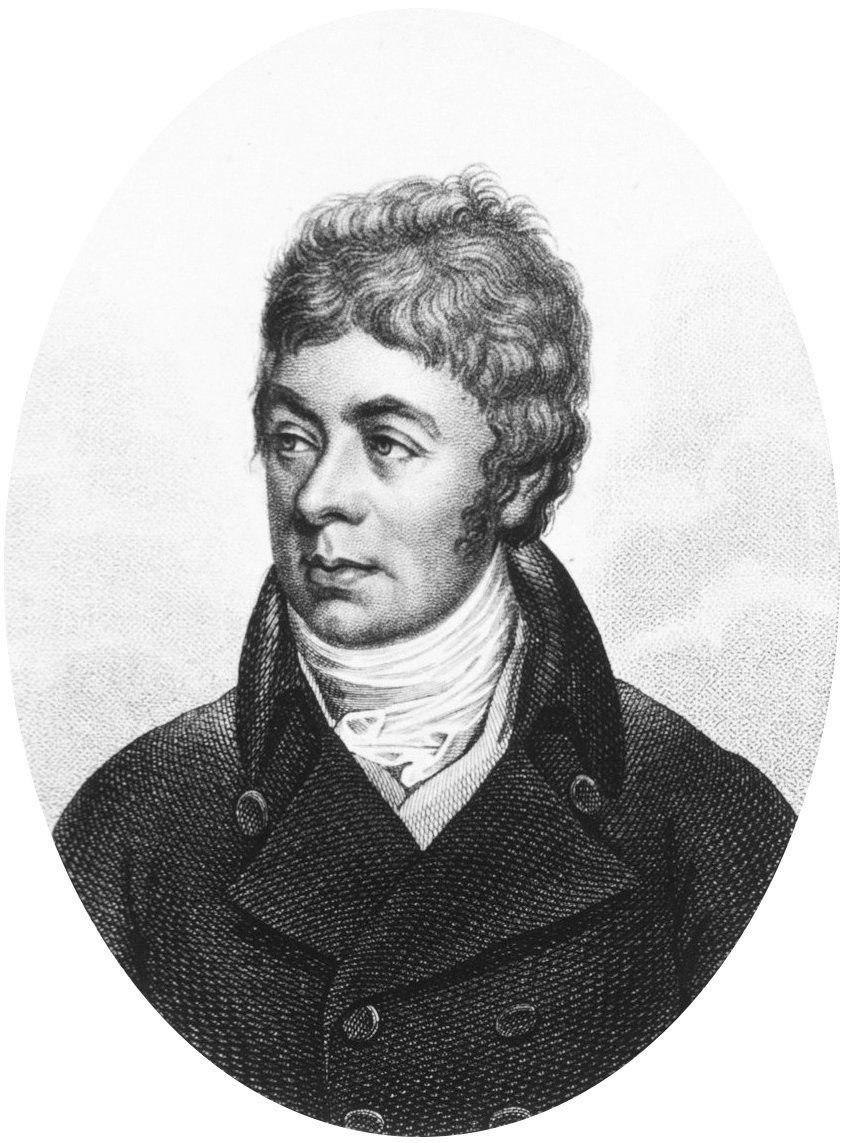
George Shaw
George Shaw

scientific classification:


Order: Psittaciformes
Family: Psittaculidae
Genus: Glossopsitta
Scientific name: Glossopsitta concinna
Citation: (Shaw, 1791)
Protonimo: Annual parrot


Images ยซLori AlmizCleroยป:

Videos "Musk Lorikeet"


ยซLori Readerยป (Glossopsitta concinna)


Sources:

Avibase
Parrots of the World โ€“ Forshaw Joseph M
Parrots A Guide to the Parrots of the World – Tony Juniper & Mike Parr
BirdLife.org

Photos:

1 – By JJ Harrison (jjharrison89@facebook.com) (Own work) [GFDL 1.2 or CC-BY-SA-3.0], via Wikimedia Commons
2 – By Steve (originally posted to Flickr as Musk Lorikeet.) [CC-BY-SA-2.0], via Wikimedia Commons
3 – free-pet-wallpapers.com
4 โ€“ ยซMusk Lorikeet 2" Of JJ Harrison (jjharrison89@facebook.com) – It operates propria. With license CC BY-SA 3.0 Transact Wikimedia Commons.
5 – Image: Steven Kuiter – biodiversitysnapshots.NET.au

Sounds: Marc Anderson (Xeno-canto)

โ–ท The world of Pets: Dogs, cats, birds, reptiles, amphibians

Palm Lorikeet
Charmosyna palmarum

Content

Description

17 cm.. length and an approximate weight of 35 g..
Palm Lorikeet

The head of the Palm Lorikeet (Charmosyna palmarum) is bright green, showing some red markings around the base of the bill, lores and the chin. The upperparts are bright green with a light washed olive brown through the mantle.

The wings are green. Under the greenish-gray wing coverts. The lower parts are bright green, more yellowish in the chin, the throat and the center of the belly (males sometimes also with some feathers red in the abdomen and the thighs). Tail Green with yellow in the Center and by the side of the feathers; below the tail is yellow.
Bill orange; cere orange; irises yellow; legs yellowish-orange.

In the females, Red in the face is reduced or absent. Immature similar to the female, but in general most off. Iris ochre-coloured. Bill yellowish brown.

Habitat:

The Palm Lorikeet It is distributed in the forests and wooded lands, more common in the foothills than in the lowlands, and mostly uninhabited cloud forests of the larger islands above 1.000 m. He travels a lot between feeding sites and is found in pairs or flocks in the tops of the trees, where its Green plumage blends with the surroundings when it feeds among the flowers.
In flocks, couples have been observed grooming are, indicating that the pair bond is maintained when the birds are in larger groups.

A constant chatter deals the presence of these parrots in their search for food.

Reproduction:

Breeding habits they are little known, but a nest with two chicks in Holy (Vanuatu), It was found, in December of 1961, in a branch of a hollow tree to 6 meters above the ground in the cloud to 1,600 m forests. altitude.
They appear in the lowlands of sporadically, especially when the Erythnna and sago palm they are in flower.

Food:

Feeds in the Palms, lianas, fig trees and shrubs, taking nectar, pollen, fruits and berries, and particularly fond with the sago palm (Cycas circinalis).

Distribution:

Size of the area of distribution (reproduction / resident): 11.300 km2

Distributed by Southwest of Polynesia in Vanuatu, the Duff Islands, Santa Cruz Islands and Banks Islands.
Range seems to expand and contract, and it has been speculated that this may be related to the effect of cyclones, or sporadic colonies as a result of blooms. These may include, in Vanuatu It was noted from fate in 1879 for the first time in 30 years, and was still present there in the decade of 1930, but by the Decade of 1960 had disappeared.

Has also been recorded in Vanuatu from Holy Spirit, Aoba, Maewo, Pentecost, Malakula, Ambrym, Paama, Lopรฉvi, Tongoa, EMAE, Nguna, Eromanga, Tanna and Futuna; in Banks group in Santa Maria. Ureparapara, Vanua Lava Lava and Mere; and in the Group of Tinakula Santa Cruz, Utupua and Vanikoro.

Conservation:


Vulnerable


โ€ข Current IUCN Red List category: Vulnerable

โ€ข Population trend: Decreasing

The total size of the population It is estimated that it will fall within the band of 1,000-2,499 mature individuals.

Avian malaria, the cyclones and the natural cycles are suggested causes of the fluctuating range. Lowland forests, especially in small islands with high populations human, It is clearing for agriculture, domestic demand for timber and commercial logging, avoiding this kind of habitat can be regularly used by this species.

"Palm Lorikeet" in captivity:

Very rare poultry.

Alternative names:

Palm Lorikeet, Green Palm Lorikeet (ingles).
Lori des palmiers (French).
Palmenlori (German).
Lori Palmero (espaรฑol).

scientific classification:

Order: Psittaciformes
Family: Psittaculidae
Genus: Charmosyna
Scientific name: Charmosyna palmarum
Citation: (Gmelin, 1788)
Protonimo: parrot trees

Images "Palm Lorikeet"

————————————————————————————————

"Lori Palmer" (Charmosyna palmarum)


Sources:

Avibase
– Parrots of the World โ€“ Forshaw Joseph M
– Parrots A Guide to the Parrots of the World – Tony Juniper & Mike Parr
– Birdlife

Photos:

1 – taenos

โ–ท The world of Pets: Dogs, cats, birds, reptiles, amphibians

Orange-fronted hanging parrot
Loriculus aurantiifrons

Loriculo Bean

Content


Anatomy-parrots

Description

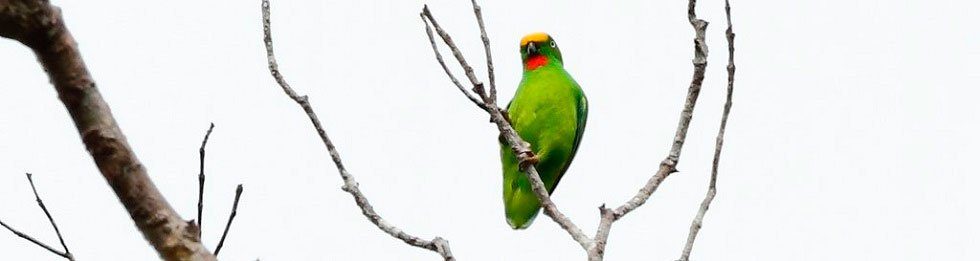
It measures each 11 cm.. length and a weight between 13 and 16 g..

Hanging-Papu

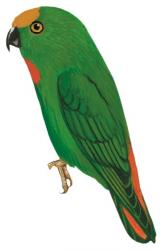
The head of the Orange-fronted hanging parrot (Loriculus aurantiifrons) is green, with the front of the crown yellow (sharp demarcation of the green in the crown rear). Upperparts green, with rump and uppertail-coverts bright red; sides rump with yellow marks. Wings Greens with vane internal to the flight feather blackish. Blue with green Underwing coverts. Chin red, rest of the underparts are slightly more yellowish than upperparts (especially coverts). Timoneras pens Green with tips yellow; undertail bluish.

Bill black; Iris whitish; legs brownish black.

Female has the face and the part front of it crown Green with red and pale blue feathers. Spada Red more small that it's the male. Iris brown.

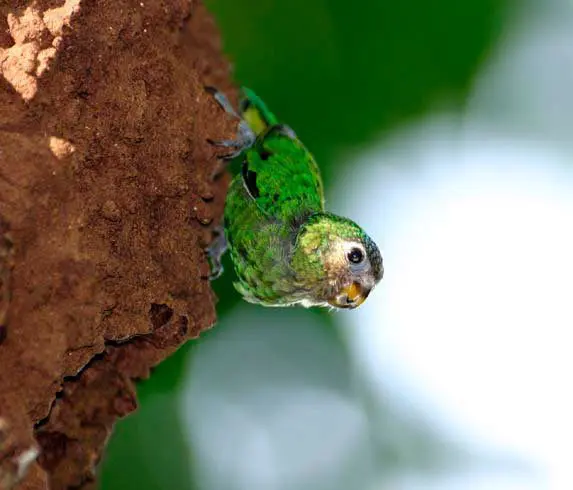
The young birds lack of the crown and throat red. Bill brown.

Description 3 subspecies

  • Loriculus aurantiifrons aurantiifrons

    (Schlegel, 1871) – Nominal


  • Loriculus aurantiifrons batavorum

    (Stresemann, 1913) – Male with less yellow in forecrown. Female similar to nominal.


  • Loriculus aurantiifrons meeki

    (Hartert, 1895) – The male as of the subspecies batavorum but slightly larger. Female also similar to nominal but larger and bases of feathers on the front of the crown, yellow-brown color.

Habitat:

The Orange-fronted hanging parrot they are distributed in the low jungle to a altitude approximate of 1.200 m (from time to time to 1.000 m), along the edges of forests, in palm plantations, areas of secondary growth, casuarinas, pines, gardens and partially cleared areas.

The species is inconspicuous and usually difficult to detect, except when they are called among them, Since it flies above the canopy. It is usually found in groups of two to four members, foraging at various levels in the forest.

Birds perch on occasions in a branch and sing (possibly part of their courtship behavior).

Reproduction:

Guidelines of nesting you have registered between July and October, and it is said that on one occasion a bird was found incubating four eggs in a hole to 12 meters above the ground. The birds have also been observed visiting holes in arboreal termite, perhaps to rest.

Food:

Is them has observed entering their peak next to the needles of casuarinas, probably in search of Lerp insects. The diet also includes outbreaks, fruits and flowers.

Distribution:

Size of the area of distribution (reproduction / resident): 576.000 km2

Widely distributed, Although not particularly continuously, through much of the lowlands of New Guinea, in both Irian Java, Indonesian, and Papua New Guinea, Although it can be absent from most of the Center-South of the big island.

Its small size, coloration and habits make difficult his observation. Field work are running that the species is continuing in the North and South of New Guinea with the clinal variation in size. The range includes the following islands of the coast: Misool, Waigeo, Karkar, Fergusson and Goodenough.

Distribution 3 subspecies:

  • Loriculus aurantiifrons aurantiifrons

    Nominal.


  • Loriculus aurantiifrons batavorum

    Waigeu, West of the papua islands, and Northwest of New Guinea, East Coast region North of Sepik River, North of Papua New Guinea, and the South coast of Setekwa River, Irian Jaya.


  • Loriculus aurantiifrons meeki

    Fergusson, Goodenough, Karkar Islands (Papua New Guinea), and this from New Guinea, from the coast north to the West of the region of Sepik River, and in the South West area of lowland up to the region of Fly River, and possibly in the vicinity of Irian Jaya.

Conservation:


minor concern


โ€ข Current IUCN Red List category: Least concern.

โ€ข Population trend: Stable.

The world population of the Orange-fronted hanging parrot It has not been quantified, Although it is suspected that it may be most of 100.000 specimens and are considered stable and locally common (pit et to the. 1997).

The population is suspected to be stable in the absence of evidence of any reduction or substantial threats.


"Orange-fronted hanging parrot" in captivity:

extremely rare.

Alternative names:

Orange-fronted Hanging-Parrot, Bat Lorikeet, Golden-fronted Hanging-Parrot, Misool Hanging-Parrot, Orange fronted Hanging Parrot, Orange-fronted Hanging Parrot, Papuan Hanging Parrot, Papuan Hanging-Parrot (ingles).
Coryllis ร  front orange (French).
Goldstirnpapageichen, Grรผnstirnpapag (German).
Lorรญculo Papรบ (espaรฑol).


scientific classification:

Hermann Schlegel
Hermann Schlegel

Order: Psittaciformes
Family: Psittaculidae
Genus: Loriculus
Scientific name: Loriculus aurantiifrons
Citation: Schlegel, 1871
Protonimo: Loriculus aurantiifrons

Images "Orange-fronted hanging parrot"

ยซPapรบ Loricleยป (Loriculus aurantiifrons)


Sources:

Avibase
Parrots of the World โ€“ Forshaw Joseph M
Parrots A Guide to the Parrots of the World – Tony Juniper & Mike Parr
Birdlife

Photos:

(1) – Rockjumper
(2) – hbw

โ–ท The world of Pets: Dogs, cats, birds, reptiles, amphibians

Geelvink Pygmy-Parrot
Micropsitta geelvinkiana


Geelvink Pygmy-Parrot

Content


Anatomy-parrots

Description

The Geelvink Pygmy-Parrot (Micropsitta geelvinkiana) has 9 cm.. length between 13 and 17 g. of weight.

The coverts headphones are of color brown with fusion to blue-green in the part rear; crown purple-blue; Upperparts green, Middle coverts with centers of color blackish. The flight feather Black with narrow green borders in vane outer. The underparts Green Center of chest and belly ocher-yellow, more warm towards the part superior of the chest. Uppertail Yellow. Central feathers of the tail blue, Green Tips with yellow spots and black exterior.

The bill grey; irises of color red or brown orange; legs grey.

Female with less blue of the crown and underparts greenish yellow.

Immature with the bill mostly yellow in color and gray tipped.

Subspecies description

  • Micropsitta geelvinkiana geelvinkiana

    : (Schlegel, 1871) – The nominal


  • Micropsitta geelvinkiana misoriensis

    : (Salvadori, 1876) – The male has the head Brown marks on the belly yellow and orange. Female with the crown blue and underparts greenish.

Habitat:

Geelvink Pygmy-Parrot

With distributes in lowland, secondary growth, cultivated areas with isolated trees, and around native gardens, until 300 meters or higher altitudes. The birds are found in groups of 4-5. and is them has seen associate it with other birds in them trees low of berries that accrued in the forest. very shy.

Reproduction:

They dig caves in termite tree in which to lay their eggs (also used for rest cavities at night), often close to the ground. The nesting It was observed from mid-June to August. Arndt He found two young in a nest which were visited by the female every two hours. The chamber was filled with dust from the termite mound and contained some broken egg shell and feathers.

Food:

Probably Lichen and fungi from the bark of the trees. As in other Meeki, crushed seeds were found in the stomach of a bird collected.

Distribution:

Size distribution (reproduction / resident): 2,500 km2

Are observed only in Numfor and Biak island, (Indonesian), up to about 300 meters above sea level. In 1991 It was thought that the global population was around of 10.000 and stable, but in 1997 searches for the species over a period of 12 days suggested that it was either rare or easily missed, with observations of a single day, sometimes only with sound contacts.

Subspecies distribution:

  • Micropsitta geelvinkiana geelvinkiana

    : (Schlegel, 1871) – Nominal


  • Micropsitta geelvinkiana misoriensis

    : (Salvadori, 1876) – Present in Biak island.

Conservation:


Near-threatened


โ€ข Current IUCN Red List category: Near threatened

โ€ข Population trend: Decreasing

The size of the world population It has not been quantified; in 1991 It was estimated in approximately 10,000 specimens. The species is described as well distributed in good numbers in lowland primary and secondary forests. (pit et to the. 1997).

There are no data on population trends, but the species is suspected that it is decreasing at a rate of slow to moderate, due to loss of habitat.

"Geelvink Pygmy-Parrot" in captivity:

Not found in poultry farming.

Alternative names:

Geelvink Pygmy-Parrot, Geelvink Bay Pygmy Parrot, Geelvink Pygmy Parrot (ingles).
Micropsitte de Geelvink (French).
Geelvinkspechtpapagei, Geelvink-Spechtpapagei (German).
Micropsitta geelvinkiana (Portuguese).
Microloro de Geelvink (espaรฑol).

scientific classification:

Order: Psittaciformes
Family: Psittaculidae
Scientific name: Micropsitta geelvinkiana
Genus: Meeki
Citation: (Schlegel, 1871)
Protonimo: Nasiterna pygmaea Geelvinkiana

Images "Geelvink Pygmy-Parrot"

Videos "Geelvink Pygmy-Parrot"

————————————————————————————————

ยซMicroloro de Geelvinkยป (Micropsitta geelvinkiana)


Sources:

Avibase
– Parrots of the World โ€“ Forshaw Joseph M
– Parrots A Guide to the Parrots of the World – Tony Juniper & Mike Parr
– Birdlife

Photos:

(1) – A juvenile bird on the termite mount (nest). by mehdhalaouate – lynx
(2) – ยซNasiternageelvinkianakeulemansยป by John Gerrard KeulemansOrnithological Miscellany. Volume 1. Licensed under Public Domain via Wikimedia Commons.

Sounds: George Wagner (Xeno-canto)

โ–ท The world of Pets: Dogs, cats, birds, reptiles, amphibians

Madarasz's Tiger-Parrot
Psittacella madaraszi

Madarasz's Tiger-Parrot

Content

Description

14 cm. length between 34 and 44 g. of weight.

The Madarasz's Tiger-Parrot (Psittacella madaraszi) is very similar to the Modest Tiger-Parrot.

Head brown, slightly paler in the cheeks and ear-coverts because of the light streaks; crown strongly mottled in color yellow, the throat It also shows some pale yellow stains. Mantle and back green, with good dark edges to the feathers; rump with alternation of yellow-green and black. Wings green, marked in blue in curve and along the leading edge; flight feather Blackish with vane Green external, showing a thin yellow margin. Wing feathers light green, underside of flight feather with broadcasting yellow in vane inner. Throat and top of the chest grey-brown; rest of the underparts slightly yellowish-green, paler than upper parts, with the exception of uppertail-coverts red. Upper, the tail green, by down blackish.

Bill grey-blue, White at the tip; irises reddish brown; legs grey.

The female has the head green with front of the crown bluish and heavily barred black and orange pink nape. The rest of them upperparts are slightly more barred that in the male, and underparts are of color green uniform, lack of the colour brown of the throat and the top of chest.

The young birds they are similar to females.

Subspecies

  • Psittacella madaraszi major

    (Rothschild, 1936) – Of approximately 15 cm.. length. The only difference is that it is slightly larger.. The same as the nominal species female.

  • Psittacella madaraszi hallstromi

    (Mayr and Gilliard, 1951) – Of approximately 14,5 cm.. length. Usually more dark and yellow paths from the back of the head and neck more narrow. Females with the black Crown and broad green bordered Orange will be making them by the back of the head.

  • Psittacella madaraszi huonensis

    (Mayr and Rand, 1935) – Of 14 cm.. length. It has the Crown of yellowish-brown. Females have the Crown, neck and back green.

Habitat:

The Madarasz's Tiger-Parrot, usually lives below the Modest Tiger-Parrot. The two two species overlap, usually in the Strip between 1.200 and 2.500 m, Although less numerous the of Madarasz.

It inhabits forests, in secondary vegetation and occasionally cleared areas, being particularly fond of the forest of beech Nothofagus.

It is a quiet species, slow and inconspicuous. You are often seen sitting in pairs on the lower floors of forests, making rash calls at sunset.

Reproduction:

Little is known of their reproductive ecology., but they have been observed in breeding conditions in the month of June.

Food:

It feeds on seeds, fruit, tough berries and leaves pulp, eat alone or in pairs at different levels within the forest. Have you noticed them is, feeding, in the company of Painted Tiger-Parrot.

Distribution:

Size of the area of distribution (reproduction / resident): 193.000 km2

New Guinea from the mountains in the center of Irian Jaya, Indonesian, through the central mountains of Papua New Guinea, up to the mountain ranges to the South-East, with an isolated population in the Highlands of the Huon Peninsula. The world's population is considered to be more of 50.000 specimens.

Subspecies distribution:

  • Psittacella madaraszi major

    (Rothschild, 1936) – present in the West of its range mountains;

  • Psittacella madaraszi hallstromi

    (Mayr and Gilliard, 1951) – occupies the central mountains of New Guinea;

  • Psittacella madaraszi huonensis

    (Mayr and Rand, 1935) – is located in the northeast of New Guinea (mountains of the huon peninsula).

Conservation:


minor concern


โ€ข Current category of the Red List of the UICN: Least concern

โ€ข Population trend: Stable

The size of the world's population has not been quantified, It is estimated in more than 50.000 specimens. The species, according to sources, It very rare in its area of distribution (pit et to the. 1997).

The population suspected to be stable in the absence of evidence of any reduction or substantial threats.


"Madarasz's Tiger-Parrot" in captivity:

Not found in captivity.

Alternative names:

Madarasz’s Tiger-Parrot, Madarasz’s Parrot, Madarasz’s Tiger Parrot, Madarรกsz’s Tiger Parrot, Maderasz’s Parrot, Plain-breasted Little Parrot, Plain-breasted Little Tiger-Parrot (ingles).
Perruche de Madarasz (French).
Madaraszpapagei, Madarasz Papagei, Maderaszpapagei, Schuppenkopfpapagei (German).
Psittacella madaraszi (Portuguese).
Lorito de Madarasz, Lorito tigre de Madarasz, Lorito-tigre de Madarasz (espaรฑol).

scientific classification:

Its scientific and common names commemorate the Hungarian ornithologist Gyula von Madarasz

Order: Psittaciformes
Family: Psittaculidae
Genus: Psittacella
Scientific name: Psittacella madaraszi
Citation: Meyer,AB, 1886
Protonimo: Birding tiger parrot

Videos "Madarasz's Tiger-Parrot"

————————————————————————————————

โ€œLorito tiger of Madaraszยป (Psittacella madaraszi)

Sources:

Avibase
– Parrots of the World โ€“ Forshaw Joseph M
– Parrots A Guide to the Parrots of the World – Tony Juniper & Mike Parr
Wikipedia
– Birdlife
– Loromania

Photos:

(1) – Photo by ยฉ Nancy Bell