โ–ท The world of Pets: Dogs, cats, birds, reptiles, amphibians

Turquoise-winged Parrotlet
Forpus spengeli

Turquoise-winged Parrotlet

Content

Description:

Turquoise-winged Parrotlet

12โ€“13 cm. length and 28 g. of weight.
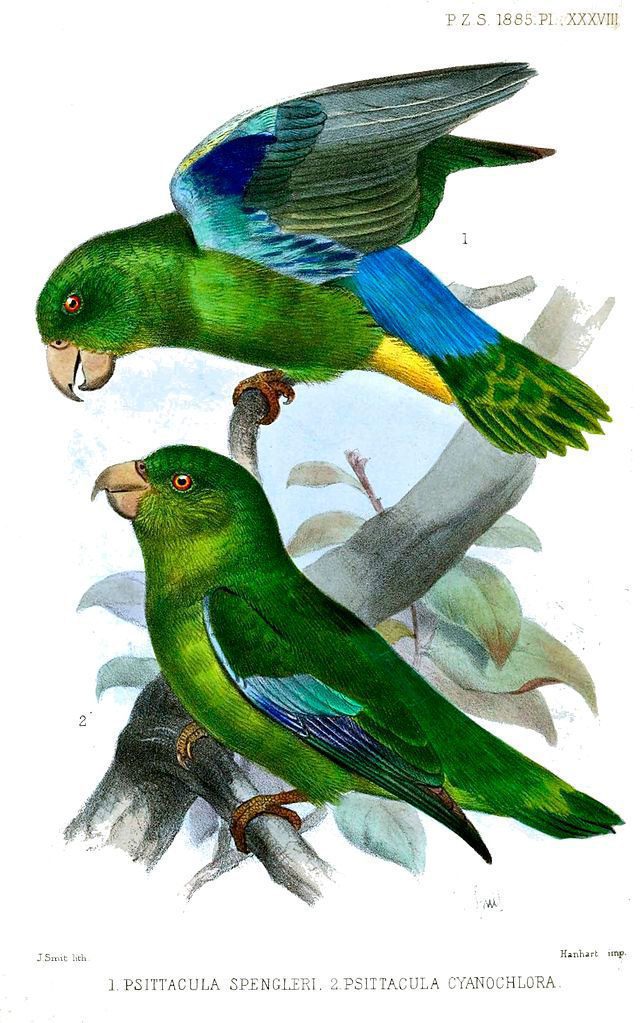
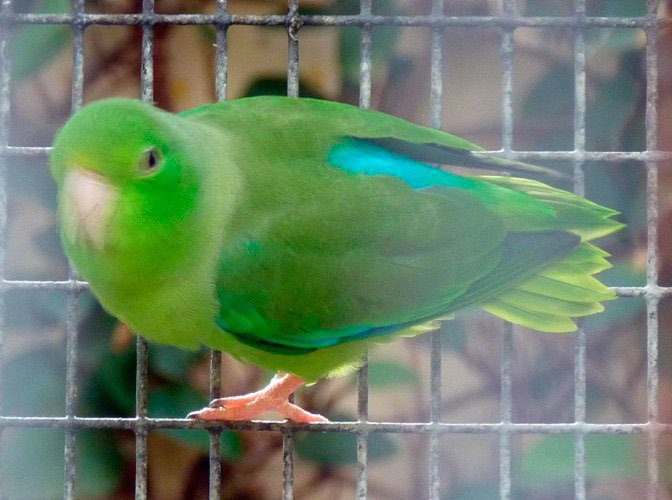
The male of the Turquoise-winged Parrotlet (Forpus spengeli) It has shades of blue at the bottom of the back, still it rump of a turquoise hue; turquoise / blue with purple on the underwing-coverts and axillary.

The wing coverts are dark green. Primary coverts are violet; wing edge bright green. Supracaudals coverts are bright green; undertail-coverts, bright yellow. Dark brown eyes with iris gray; flesh-colored legs; peak light colored horn.

The female It is green instead of blue; their face is green / yellow, It is his forecrown yellower.

taxonomy:

Until now treated as conspecific the species Forpus xanthopterygius, or sometimes as a subspecies of Forpus passerinus, or a subspecies of Forpus cyanopygius. differs, However, of the Forpus xanthopterygius in pale turquoise against the rich color tone blue rump and of the wing-coverts of the male; in the dark blue, against the rich blue color in underwing-coverts of the male; the forecrown and lores yellow in female.

  • Sound of the Turquoise-winged Parrotlet.

Habitat:

they prefer forested habitats drier as open forests and riparian, closed caatinga; Also they found in savannas, palm groves, semiarid scrub and grassland areas.

With feed in open areas and sometimes on the floor. Highly social; found in groups of up 50 individuals.

Reproduction:

Breeding season, May-August. Clutch, 3-7 eggs.

Food:

Diet Turquoise-winged Parrotlet in their natural environment it is composed of fruit of Cecropia, seeds of Mikania and tremble mirantha and flowers of Ambrosia and Marcgravia.

Distribution:

Size of its range (breeding/resident): 29.200 km2

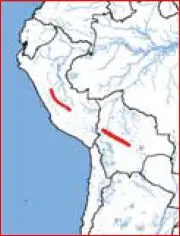
Restricted north of Colombia, from the coastal region Caribbean western and southern mountains Santa Marta, Atlantic, south along the Magdalena river in Bolรญvar and Cรฉsar.

Conservation:

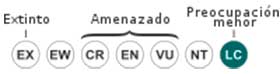
โ€ข Current category of the Red List of the UICN: Least concern.

โ€ข Population trend: Decreasing.

Justification of the Red List of the Category

State of conservation โ“˜


minor concern Minor Concern โ“˜ (UICN)โ“˜

Although this species may have a small range, It not believed to approach the thresholds for vulnerable under the range size criterion (extent of occurrence <20.000 km2 combinan con un tamaรฑo gama disminuciรณn o fluctuante, hรกbitat medida / calidad, o tamaรฑo de la poblaciรณn y un pequeรฑo nรบmero de localidades o fragmentaciรณn severa). La tendencia de la poblaciรณn no se conoce, pero la poblaciรณn no se cree que estรฉ disminuyendo con la rapidez suficiente como para acercarse a los umbrales del criterio tendencia de la poblaciรณn (> 30% decrease of more than ten years or three generations). The population size has not been quantified, but it is not believed to approach the thresholds for Vulnerable according to the criterion of population size (<10.000 individuos maduros con una disminuciรณn continua estima en> 10% in ten years or three generations, or a specific population structure). For these reasons, the species is evaluated as Least concern.

Justification of the population

The world's population has not been quantified, but this species is described as rare and local (Juniper and Parr 1998).

Justification trend

The population trend is unknown, but according to some reports, the species may be declining. (Juniper and Parr 1998).

"Turquoise-winged Parrotlet" in captivity:

Rare.

Alternative names:

Blue-winged Parrotlet (spengeli), Blue-winged Parrotlet (Turquoise-winged), Green-rumped Parrotlet (spengeli), Turquoise-winged Parrotlet (English).
Toui de Spengel, Toui de Spix (spengeli), Toui รฉtรฉ (spengeli) (French).
Tรผrkisflรผgel-Sperlingspapagei (German).
Turquoise-winged Parrotlet (Portuguese).
Cotorrita aliturquesa (espaรฑol).


scientific classification:

Gustav Hartlaub

Order: Psittaciformes
Family: Psittacidae
Genus: Forpus
Scientific name: Forpus xanthopterygius spengeli
Citation: (Hartlaub, 1885)
Protonimo: Psittacula spengeli

Images Turquoise-winged Parrotlet:


Species of the genus Forpus

Turquoise-winged Parrotlet (Forpus spengeli)


Sources:

Avibase
– Parrots of the World โ€“ Forshaw Joseph M
– Parrots A Guide to the Parrots of the World – Tony Juniper & Mike Parr
Birdlife

Photos:

(1) – Forpus xanthopterygius spengeli (24-3-15 Loro Parque) by barFlickr
(2) – (above) Psittacula spengleri [sic] = Forpus xanthopterygius spengeli (Hartlaub, 1885), ?โ™‚ (below) Psittacula cyanochlora = Forpus passerinus cyanochlorus (Schlegel, 1864), โ™‚ by Joseph Smit [Public domain], via Wikimedia Commons

Sounds: ndrew Spencer, XC165598. accessible www.xeno-canto.org/165598
โ–ท The world of Pets: Dogs, cats, birds, reptiles, amphibians

Black-winged Parrot
Hapalopsittaca melanotis


Parrot Alinegro

Content

Description

24 cm. height.

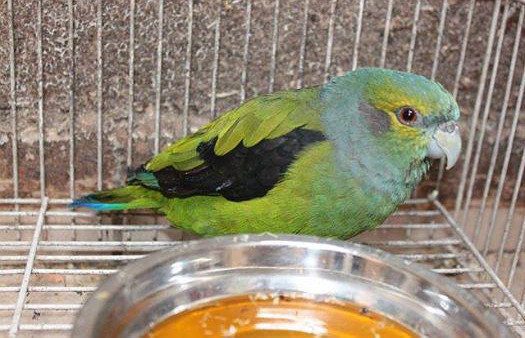
The Black-winged Parrot (Hapalopsittaca melanotis) is distinguishable by the head almost all greyish blue, with blue-billed, ochre around the eye and back of the same black spot defined. Wings with large black patch and purple-blue ends; the tip of the tail blue. The subspecies Hapalopsittaca melanotis peruviana head green, with the spot towards the back of the eye dark orange.

Habitat


Rare, Although most abundant in Bolivia. It lives in temperate inter-Andean valleys and humid montane forests., between 1500 to 2500 m.. (Occasionally a 3450 m.. in Peru). Usually in pairs or small groups. Seen mostly in pairs or in small groups of 3 to 25 birds. From time to time they gather in groups of up to 50 birds around their favored roosting.

Conservation

Not considered in any of the threat categories, It is very rare in captivity.

They have recorded for this species altitudinal migration, Depending perhaps on the fruiting, Since the fruit is their main source of food.

With reproduced in cavities of trees or places of nesting woodpeckers.

Inhabits intermittently to the East of the Andes, in the center of Peru and in the yunga of Bolivia.

scientific classification:

Order: Psittaciformes
Family: Psittacidae
Genus: Hapalopsittaca
Scientific name: Hapalopsittaca melanotis
Citation: (Lafresnaye, 1847)
Protonimo: Pionus melanotis

Alternative names:

Black-winged Parrot or Black-eared Parrot (English)
Lorito celeste (Peru, Bolivia)
Schwarzflรผgelpapagei (German)
Caรฏque ร  ailes noires (French)
Pappagallo alinere, (Italian).

Videos "Black-winged Parrot"

in the

ยซBlack-winged parrotยป (Hapalopsittaca melanotis)

Sources:

Parrot Book, Parrots and macaws Neotropical.

Sounds: controles-canto.org

โ–ท The world of Pets: Dogs, cats, birds, reptiles, amphibians

Yellow-and-green Lorikeet
Trichoglossus flavoviridis

Yellow-and-green Lorikeet

Content

Yellow-and-green Lorikeet

Description

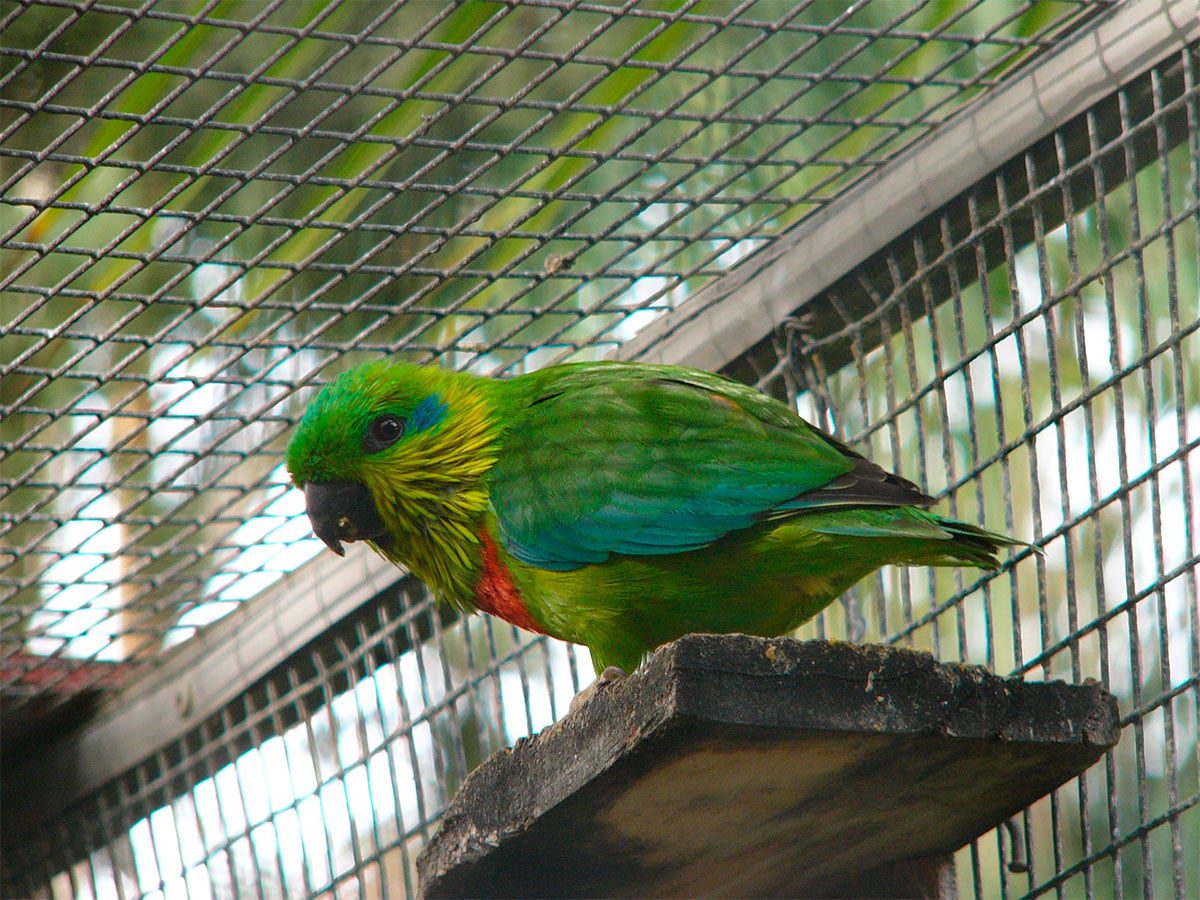
20 cm.. length and a weight between 80 and 95 gr.

Very similar to the Scaly breasted Lorikeet by appearance scaly on underparts, but differs from it by color low wing and brands that adorn their head.

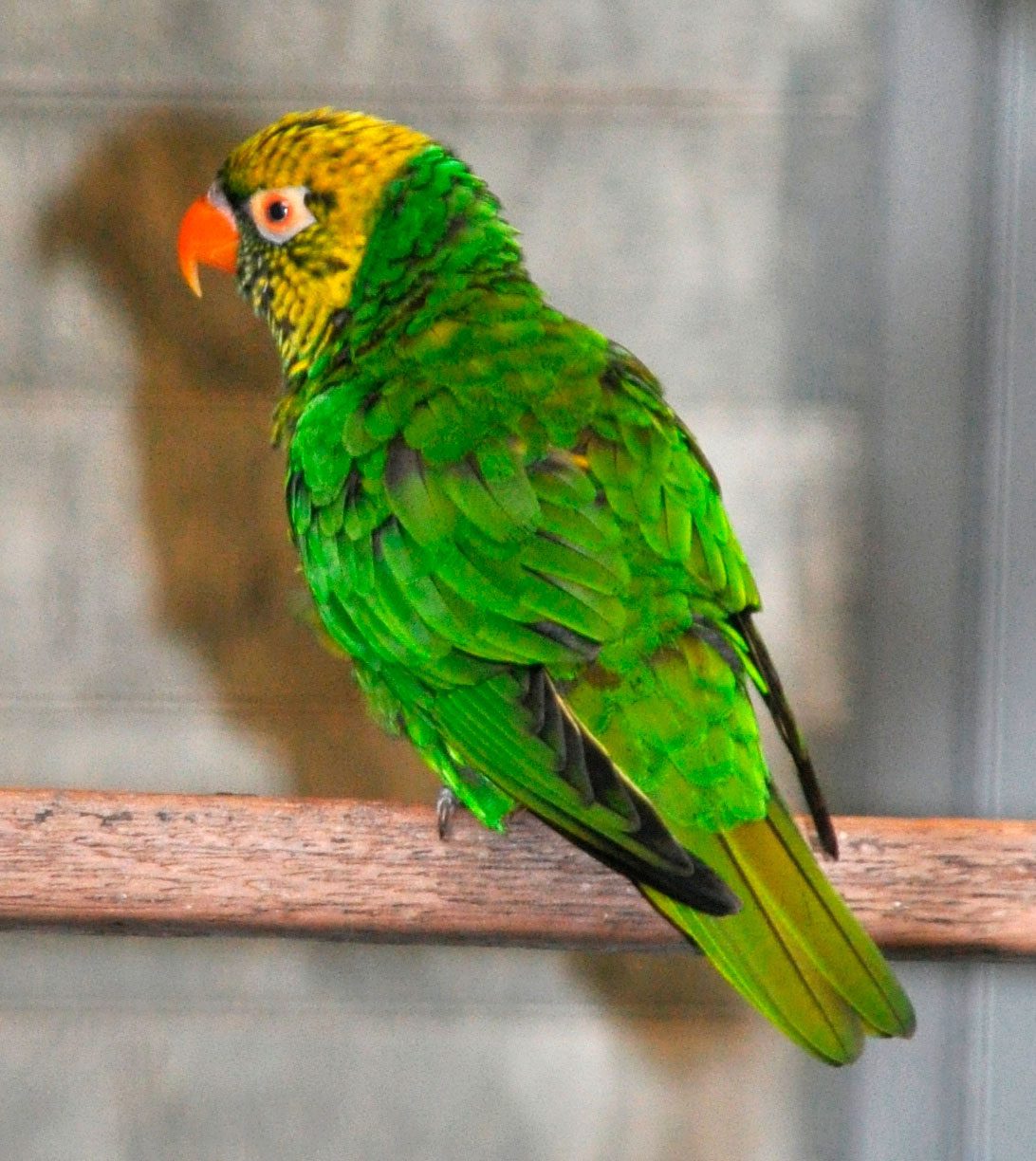
The adults of the Yellow-and-green Lorikeet (Trichoglossus flavoviridis) they have the upperparts plumage of a beautiful green.

The forecrown and top They are are greenish brown. The throat and the chest to abdomen It is yellow with dark green flakes. Area of sides up to the coverts and the bottom of the wings It shows a beautiful yellow-green.

The bill is orange. The irises is orange-yellow, the legs grey.

It has no sexual dimorphism.

In the youth, all the yellow markings are derived more green. The bill is brown, while the bare parts of the face are white. The irises is brown.

Description 2 subspecies

  • Trichoglossus flavoviridis flavoviridis

    (Wallace, 1863) – Nominal. Overall plumage It is olive green. The forecrown and crown yellow. The back of the neck brown. the yellow throat and the chest to abdomen, with the scalloped dark green.


  • Trichoglossus flavoviridis meyeri

    (Walden, 1871) – Shown in upperparts a darker shade of green; the underparts They are less scaly. The back of the top, the occiput and nape are greenish-Brown. The cheeks and throat They are yellow with dark green stripes. This subspecies is much smaller, between 40 and 50 gr.

Habitat:

The Yellow-and-green Lorikeet they are distributed with greater diligence between primary forest and mature secondary forest than their close relatives, the Ornate Lory. But, This does not prevent them from entering the open lands to feed from the ceibos in flower (coral trees).

Throughout its area, these birds are considered fairly common. In Celebes, are common in the mountainous areas where have been supplanted to a large extent to the Ornate Lory. In the Sula Islands, they are common in almost all altitudes.

They live in small flocks of noisy and sometimes mingle with the Ornate Lory When looking for food in the trees in flower at the edge of forests.

These birds are relatively Shy and they tend to stay inside the dense forest foliage, where their cryptic plumage makes them virtually invisible. When they feel threatened, leave the foliage uttering cries penetrating and powerful. They are easier to fly above the treetops on quick flights or the circulating a flight above the trees, just before landing in the branches more high.

Reproduction:

There is little information reproduction in the natural environment. The only one nest we have discovered so far was in a mossy forest, about 2.400 meters above the sea level. It was located high above the ground in a dead tree.

In captivity, the implementation is, usually, two white eggs that incubate for a few parents will be 23 days. As with all the Lori, the reproductive cycle It is particularly long and hard about 65 days.

Food:

The Yellow-and-green Lorikeet is above all vegetarian. Their language is particularly suitable for crop pollen and the nectar from the flowers. It is equipped with long buds that allows you to easily reach their favorite food. They have a predilection for the trees of the genus Euphorbia and Erythrina.

Distribution:

Size of its range (reproduction / resident): 6.300 km2

The Yellow-and-green Lorikeet They are endemic to the islands east of Indonesian. They are exclusively on the Sula Islands (Taliabu, Mangole, Sanana) and especially in the area of Celebes island.

Description 2 subspecies

Conservation:


minor concern


โ€ข IUCN Classification: Least concern.

โ€ข No threats at present.

The species is not threatened. In Taliabu, is very common in altitude zones, but it is also quite common in degraded areas bordering the coast. It is estimated one world population above the 100.000 specimens.

Justification of trend

They suspected that the population is stable in absence of evidence of any decline or threatens substantial.

"Yellow-and-green Lorikeet" in captivity:

Pretty common in captivity.

Take it easy, Nice trill. Sensitive to cold temperatures and somewhat susceptible to disease. He will join his caregiver over time although initially shy.

Alternative names:

Yellow-and-green Lorikeet, Citrine Lorikeet, Yellow & Green Lorikeet, Yellow and Green Lorikeet, Yellow&green lorikeet, Yellow-and- Green Lorikeet, Yellow-green Lorikeet (ingles).
Loriquet jaune et vert (French).
Celebeslori (German).
Lori flavoviridis (Portuguese).
Lori Verdigualdo, Tricogloso Verde y Amarillo (espaรฑol).

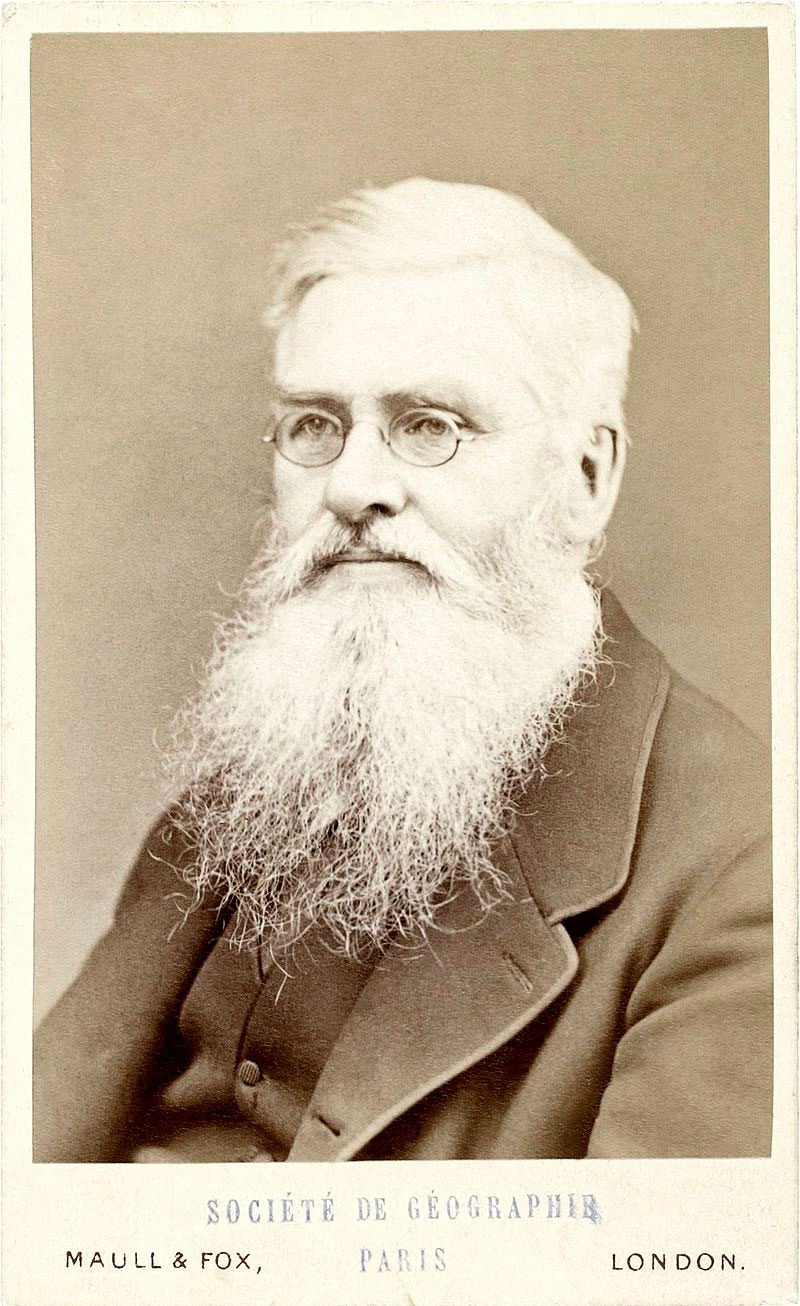
Alfred Russel Wallace

scientific classification:


Order: Psittaciformes
Family: Psittaculidae
Genus: Trichoglossus
Scientific name: Trichoglossus flavoviridis
Citation: Wallace, 1863
Protonimo: Trichoglossus flavoviridis


Images ยซLori Verdigualdoยป:

Videos "Yellow-and-green Lorikeet"

————————————————————————————————

"Lori Verdigualaldo" " (Trichoglossus flavoviridis)


Sources:

Avibase
– Parrots of the World – Joseph Forshaw M
– Parrots-A Guide to the Parrots of the World by Tony Juniper & Mike Parr
Birdlife

Photos:

(1) – Yellow and Green Lorikeet (Trichoglossus flavoviridis) in the Walsrode Bird Park, Germany By Quartl (Own work) [CC BY-SA 3.0], via Wikimedia Commons
(2) – Trichoglossus flavoviridis Proceedings of the Zoological Society of London 1862 by Joseph Wolf [Public domain], via Wikimedia Commons

Sounds: Frank Lambert (Xeno-canto)

โ–ท The world of Pets: Dogs, cats, birds, reptiles, amphibians

Salvadori's Fig-Parrot
Psittaculirostris salvadorii

Salvadori's Fig-Parrot

Content

Description

19 cm.. length and a weight of environment to the 118 g..

The forecrown and crown of the Salvadori's Fig-Parrot (Psittaculirostris salvadorii) is bright green with a little blue diffusion; cheeks and ear-coverts elongated yellow gold; area behind the eyes, pale blue: yellow the nape.

Upperparts green; internal parts of flight feather, orange-red at their ends. Under, the wings opaque green. Top of the chest with bright red band, rest of the underparts bright yellowish green, brighter and clearer than the upperparts. Upper, the tail green; Yellow below.

Bill black; irises red-brown; legs grey,

Female lacks the band scarlet chest, evident in the male, which it is substituted by a band It is showing some green opaque red feathers on the sides.

Youth equal to the adult female but duller overall; band pale blue chest, weak or invisible. Iris reddish brown.

Habitat:

The Salvadori's Fig-Parrot is distributed in the forests, along their edges, partially cleared areas and close to human settlements. Birds subsist mainly on the seeds of figs, and groups are fed into the cup of fruit trees, sometimes mixed with other species. Hang it upside down to feed, and they can make brief forays above the canopy. The species is found more often in pairs or in small groups, and nests colonies.

Reproduction:

Little is known about its ecology.

Food:

Their diet consists mainly of figs and other fruit.

Distribution:

Size of the area of distribution (reproduction / resident): 81.500 km2

THE Salvadori's Fig-Parrot (Psittaculirostris salvadorii) is endemic to the North of Irian Jaya, Indonesian. You can see in the forests of lowlands from the eastern edge of the Cenderawasih Bay to the humboldt bay (approximately 137 ยฐ a 141 it is), reaching inside through the northern slopes of the Van Rees mountains to 700 meters above sea level. Not rare within its small range.

Conservation:


minor concern


โ€ข Current IUCN Red List category: Least concern

โ€ข Population trend: Decreasing

This species is suspected of slow to moderate decline due to loss of habitat, limited degradation and some pressure for his capture.

Its population is estimated around the 10,000 specimens.

In the past, this species has been caught in relatively large numbers for the cage bird trade, both for the domestic and foreign markets, with a total of 1.582 birds exported from Indonesia between 1985 and 1990 (Beehler 1985, Nash 1990b , KD Bishop in litt., 1996, 1997to collar), and 1.791 between 1990 and 2001, When the species registered trade ceased (UNEP-WCMC 2007). But, the true extent of trade is unknown and is likely to be overlooked by many hunters in the preference of the most coveted and abundant species (B. Beehler in litt. 2012).

"Salvadori's Fig-Parrot" in captivity:

Susceptible to stress and disease.

Very rare in captivity.

Alternative names:

Salvadori’s Fig-Parrot, Salvadori’s Fig Parrot, Whiskered Fig-Parrot, Yellow-cheeked Fig Parrot (ingles).
Psittacule de Salvadori (French).
Salvadorizwergpapagei, Salvadori Zwergpapagei, Salvadori-Zwergpapagei (German).
Papagaio-dos-figos-de-salvador (Portuguese).
Lorito de Salvadori (espaรฑol).

scientific classification:

Order: Psittaciformes
Family: Psittaculidae
Genus: Psittaculirostris
Scientific name: Psittaculirostris salvadorii
Citation: (Oustalet, 1880)
Protonimo: Cyclopsittacus Salvadorii

Images "Salvadori's Fig-Parrot"

Videos "Salvadori's Fig-Parrot"

————————————————————————————————

"Lorito de Salvadori" (Psittaculirostris salvadorii)


Sources:

Avibase
– Parrots of the World โ€“ Forshaw Joseph M
– Parrots A Guide to the Parrots of the World – Tony Juniper & Mike Parr
– Birdlife

Photos:

(1) – Album parrots – parrots

Sounds: Hans Matheve (Xeno-canto)

โ–ท The world of Pets: Dogs, cats, birds, reptiles, amphibians

Yellow-fronted Parrot
Poicephalus flavifrons


Lorito Carigualdo

Content

Description:

28 cm.. length and a weight between 140 and 205 g..

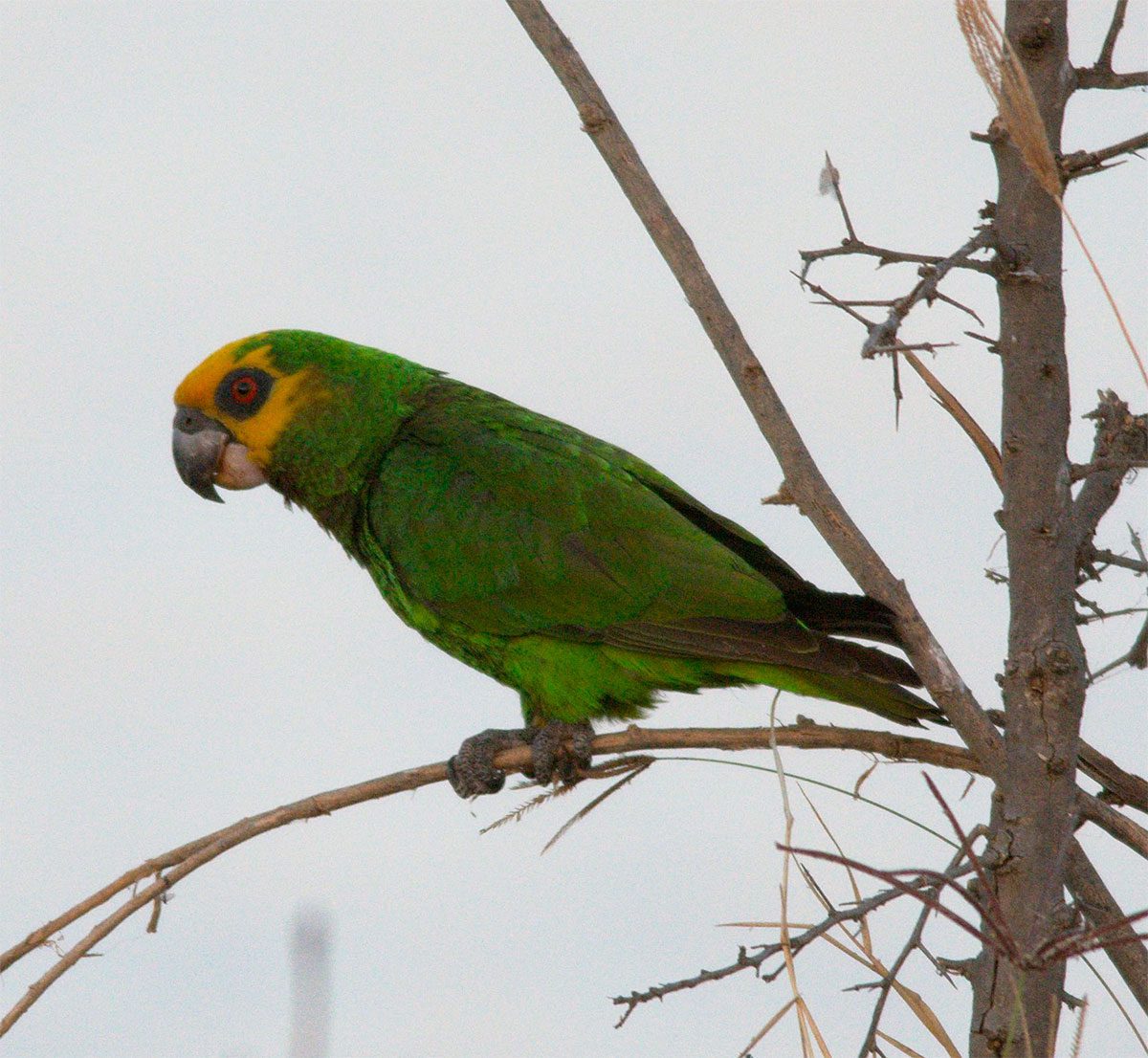
The Yellow-fronted Parrot (Poicephalus flavifrons) has the forecrown, crown, lores, the cheeks and ear-coverts bright yellow, often with an orange colour wash; small area with yellow feathers around the cheek, often with a tinge of Brown-grey color.

The feathers of the nape, the mantle and scapulars dark green with paler areas and most brilliant green margins; rump and uppertail-coverts clearer and more brilliant green as the rest of upper parts.

Upper, the coverts dark green green with light green margins, sometimes with yellow at the edge of the wing and at the base of the primary coverts most important.

The primaries and secondaries brown in color with narrow paler margins on the vane outer. Chin and the thighs sometimes sprinkled with yellow; lower parts of bright green uniform.

Tail blackish brown.

upper jaw blackish gray, lower whitish; irises orange-red; legs brownish-grey.

The mask of the females they lack the Orange wash.

Immature as adults, but the mask is olive green, not yellow.

Habitat:

The Yellow-fronted Parrot, generally, they live in the forests of Juniperus and Podocarpus, at altitudes between 1,800 and 2,900 m, mainly in trees of the genus Hagenia, that are above the 2.900 m. Also found in forest clearings, with Ficus trees intermingled in areas of cultivated plateau and in gallery forests of Acacia savanna. Also in riparian forests of acacias and Ficus, a partir de los 800 m.

Occasionally visit urban areas, for example, gardens and parks in Addis Ababa.
Usually seen in pairs, small groups of relatives or in flocks of up to 20 birds; often in mixed flocks with the Black-winged Lovebird (Agapornis taranta).

The Yellow-fronted Parrot, probably, they use the same products trees every night.

Reproduction:

Breeding habits largely unknown, but it is suspected that nest usually in tree cavities.

The time of incubation is of 28 days. The birds fly from the nest after a few 80 days after the hatching. Even then, by generating it,l feed on the parents until its full independence.

Food:

Your diet, is created that it consists of grains, seeds and fruits. They have also been seen consuming ripe fruits of Dovyalis abyssinica.

Considered a crop pest in some areas, Although of little importance.

Distribution:

Size of its range (breeding/resident): 395.000 km2

Endemic to the Highlands of the West of Ethiopia, Although its exact range is unclear.

Common in wooded areas; more common in the upper parts, to the North of its distribution area.

Probably sedentary Although there have been some periodic movements in Addis Ababa.

Conservation:


minor concern


โ€ข Current Red List of UICN: Least concern

โ€ข Population trend: Stable

The size of the world's population has not been quantified, but the species is reported from frequent to common. It is considered more common in northern parts of its range. (pit et to the. 1997).

The population is suspected to be stable in the absence of evidence of any reduction or substantial threats.

"Yellow-fronted Parrot" in captivity:

It is a kind rare in captivity outside Ethiopia. No hay datos de su reproducciรณn.
Las hembras son prรกcticamente imposibles de conseguir.

Alternative names:

Yellow-faced Parrot, African Yellow-faced Parrot, Yellow fronted Parrot, Yellow-fronted Parrot (English).
Perroquet ร  face jaune (French).
Schoapapagei, Schoa Papagei (German).
Papagaio-de-cara-amarela (Portuguese).
Lorito Carigualdo, Lorito de Cara Amarilla (espaรฑol).

scientific classification:

Order: Psittaciformes
Family: Psittacidae
Genus: Poicephalus
Scientific name: Poicephalus flavifrons
Citation: (Rรผppell, 1842)
Protonimo: Pionus flavifrons

Images "Lorito Carigualdo":

Videos "Yellow-fronted Parrot"

————————————————————————————————

ยซParquet-facedยป (Poicephalus flavifrons)


Sources:

Avibase
– Parrots of the World โ€“ Forshaw Joseph M
– Parrots A Guide to the Parrots of the World – Tony Juniper & Mike Parr
– Birdlife

Photos:

(1) – An adult Yellow-headed Parrot near Bishangari Lodge, Ethiopia By Peter Wilton (Yellow-fronted Parrot) [CC BY 2.0], via Wikimedia Commons
(2) – exploriada.com
(3) – Merenkurkun Lintutieteellinen Yhdistys r.y
(4) – Yellow-fronted Parrot. Photo by Hakan Pohlstrand – Birds of the Bale Mountains National Park
(5) – PET FORO DE VIETNAM

Sounds: Andrew Spencer (Xeno-canto)

โ–ท The world of Pets: Dogs, cats, birds, reptiles, amphibians

Socorro Parakeet
Psittacara brevipes


Aratinga de Socorro

Content

Description:


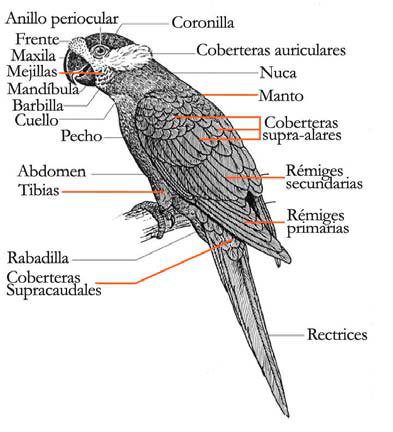
Anatomy-parrots

Approximately from 33 cm.. length, and a weight of 140 g.
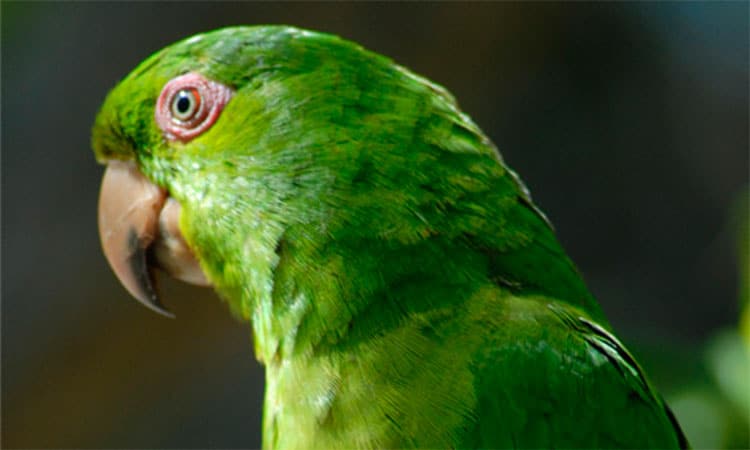
The Socorro Parakeet (Psittacara brevipes) is a medium Parrot with the plumage bright dark green, with the crown, the forecrown and lores grass-green, the sides of neck slightly brighter, the head and the neck, sometimes with one or more scattered feathers of orange-red. The upperparts are green grass, slightly brighter in the area of the rump. Upperwing-coverts herb with bluish green in the outside greater coverts. Primaries and secondaries Green in the part superior with tint blue in them vane outer; olive Oliva-Amarillo down. Underwing-coverts green. Underparts grass-green. Above, the tail dark green, by down color yellowish olive.

The bill color horn; eye ring pale beige; irises orange yellow or orange; legs yellowish brown.

Aratinga de Socorro

Gender-related differences are unknown although the immature has irises Brown color.

NOTE:

  • The Socorro Parakeet It is often considered a subspecies of the Green Parakeet. But, Howell and Webb They presented evidence that supports the separation of the species from the other subspecies of Aratinga holochlora. They found that the bill of the Socorro Parakeet is larger than, and noticed differences in the color of the skin of the eye ring, also has a Wing formula different, the tenth primary feather It is shorter than the seventh and Green Parakeet is the reverse. Both species also differ in the vocalization, calls of the Green Parakeet they are richer in harmonics that the of the Socorro Parakeet.

Habitat:

Most commonly observed in forests of species such as Bumelia socorrense, Guettarda insularis, Ilex socorroensis, with trees of at least 8 metres in height. Usually, above 500 m (especially on the South side of Socorro island), because in most of the rest of its distribution area, in the lower elevations, It has lost its vegetation preferred because of the sheep pasture.

Registered at low altitudes, 4 m, where the native forest (in canyons), near the sea level, especially in tall trees of Croton masonii, Conocarpus erecta and Ficus.

Usually, in flocks of up to 40 birds, rarely come to the 100 specimens. They gather in numerous flocks on the branches of the guayabillo, in smaller flocks (until 6) or only in pairs during the breeding season.

Son social, even there is care collective nests, They show strong fidelity to nesting sites, based on observations of re-use of nests.

Reproduction:

They nest in tree cavities, especially of the species Bumelia socorrense. the size of the clutch It is unknown, but the breeding It is thought that it can begin in the month of November. The young are altricial.

Food:

Registered foods include seeds trees Bumelia socorrense, Guettarda insularis, Ilex socorroensis and Psidium socorrense; pulp of fruits of Opuntia and Ficus cotinifoilia, especially in the season dry.

They aim to feed in the tips of the trees or the highest branches, Although also has observed them are home on the floor

Distribution:

Endemic, It is only in the Socorro island in the The Revillagigedo Islands archipelago off the West coast of Mexico. Estimated population in 400-500 birds in 1992 (approximately nine birds per kmยฒ of suitable habitat). considered common, but recent decreasepossible n due to loss of preferred habitat (still present in about 22% of the island) and the resulting erosion of the sheep that graze in excess. Predation by feral cats can also be a threat.

Conservation:

State of conservation โ“˜


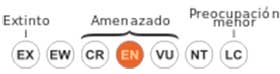
Endangered Endangered โ“˜ (UICN)โ“˜

โ€ข Red List category of the UICN current: In danger of extinction

โ€ข Population trend: Decreasing

Threatened in the Mexican official standard NOM- 059-ECOL-2001, but in Danger of extinction in the NOM-O59-SEMARNAT-2006 that is not yet published. CITES Appendix II

The Socorro Parakeet (in danger of extinction; It is only in the Socorro island and this species the habitat destruction threatens, as well as the introduction of cats, sheep and rodents.

Estimated population in 400-500 birds in 1992.

"Socorro Parakeet" in captivity:

The species, unlike most continental psittacines, does not face problems of extracting pups for the pet market.

Alternative names:

Socorro Parakeet, Green Parakeet (Socorro), Socorro Conure (English).
Conure de Socorro, Perruche de Socorro (French).
Socorrosittich, Socorro-Grรผnsittich (German).
Periquito-de-socorro (Portuguese).
Aratinga de Socorro, Perico de Socorro, Perico mexicano (espaรฑol).
Perico de Socorro (Mexico).


scientific classification:

George Newbold Lawrence

Order: Psittaciformes
Family: Psittacidae
Genus: Psittacara
Scientific name: Psittacara brevipes
Citation: (Lawrence, 1871)
Protonimo: Conurus holochlorus var. brevipes


Species of the genus Psittacara

Sources:

Avibase
– Parrots of the World โ€“ Forshaw Joseph M
– Parrots A Guide to the Parrots of the World – Tony Juniper & Mike Parr
ยฉ CONABIO

Photos:

(1) – Revillagigedo Archipelago by CONANP
(2) – Photo: (c) Carlos Galindo-Leal, some rights reserved (CC BY-NC) – inaturalist.org

Sounds: Manuel Grosselet & Juan Cornejo / Africam Safari (Xeno-canto)

โ–ท The world of Pets: Dogs, cats, birds, reptiles, amphibians

Hellmayr's Parakeet
Pyrrhura amazonum

Hellmayr's Parakeet

Content

Description:


Anatomy-parrots

22 cm.. length.

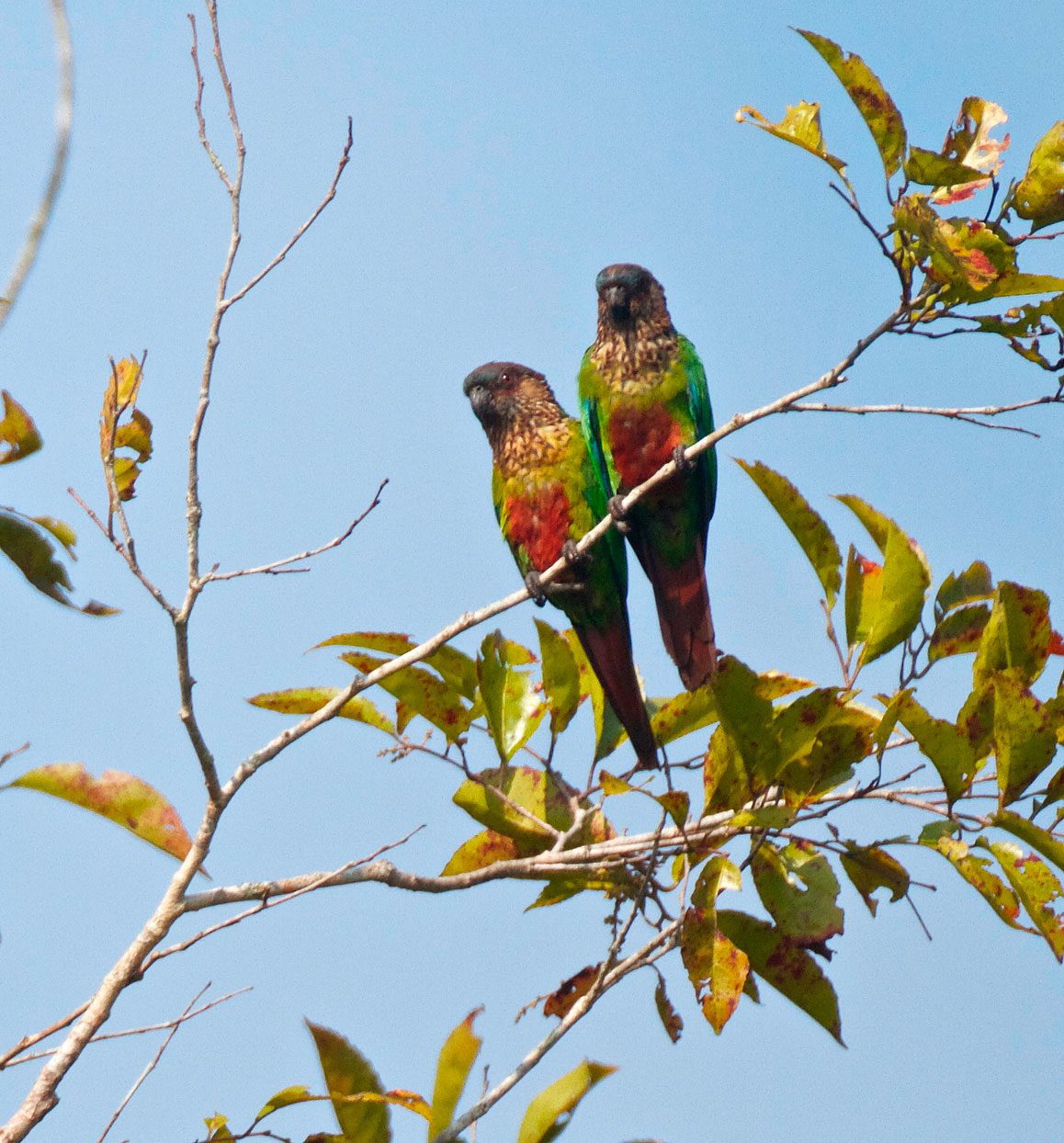
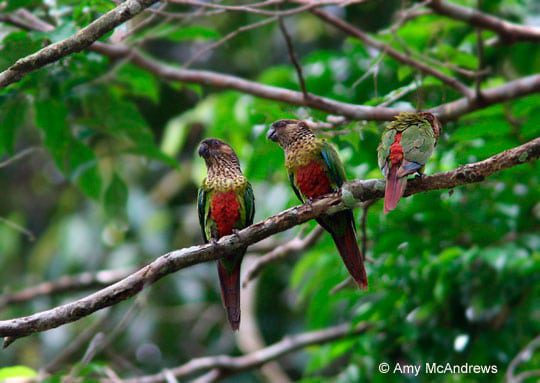
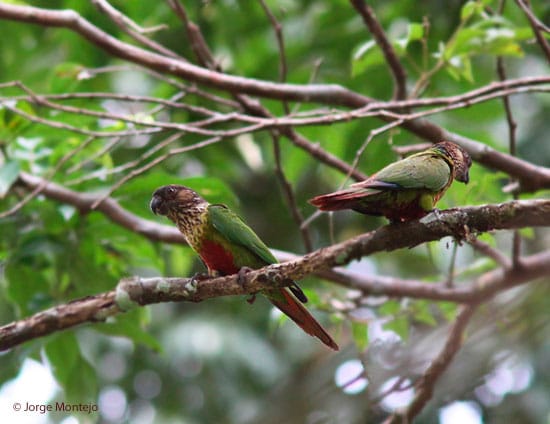
The Hellmayr's Parakeet (Pyrrhura amazonum) It is a mainly green parakeet; the area from crown at the nape it is dark brown; the belly, the rump and tip tail, They are dark red; below, the tail It is also dark red.

They have a patch whitish in ear-coverts; a blue band in front of eyes. The face It is dark reddish brown; the upper region chest It is greenish gray with gray scalloping; the bottom of the chest It is scaled with yellowish effect; the in bend of wing green; brown-red patch in the center of abdomen; of remiges blue (visible only in flight). Orbital ring blackish; the cheeks and ocular region are dark brown.
Bill grey-black; eyes orange brown.

The immature birds They have a darker plumage.

Taxonomic status:

Considered a subspecies of the Painted Parakeet by some authors

  • Sound of the Hellmayr's Parakeet.

Description 3 subspecies:

  • Pyrrhura amazonum amazonum

    (Hellmayr, 1906) – Nominal.


  • Pyrrhura amazonum lucida

    (Arndt, 2008 parrots[Arndt]) – Little or no blue on the front of the crown. Slightly smaller and paler than the Pyrrhura amazonum snethlageae


  • Pyrrhura amazonum snethlageae

    perico madeira – (Joseph & Bates,JM, 2002) – The bare periophthalmic is of color beige.

Habitat:

They are distributed in tropical moist forests and adjacent habitats. Itร‚ยดs social. Observed in pairs or groups. It is quite common in most of its range and inhabits several protected areas.. The Pyrrhura amazonum amazonum It is in the Amazon National Park, For, Brazil, while the Pyrrhura amazonum lucida It is in the The Cristalino State Park, Mato Grosso, Brazil.

Reproduction:

They build their nests in tree cavities.

Food:

With feed seed, flowers, fruit, berries and nuts. They are also considered local pests, as they regularly raid cornfields and orchards, occasionally causing considerable damage.

Distribution:

Size of its range (players / residents): 392.000 km2

Distribution 3 subspecies:

Conservation:

State of conservation โ“˜


Endangered Endangered โ“˜ (UICN)โ“˜

โ€ข Current category of the Red List of the UICN: In danger of extinction.

โ€ข Population trend: Decreasing.

โ€ข Population size : Unknown.

Justification of the Red List of the Category

Based on a model of deforestation in the amazon basin, and their potential susceptibility to capture for the bird trade, It is suspected that the population of the Hellmayr's Parakeet It has declined rapidly over three generations, and therefore it has been classified as danger of extinction.

Justification of the population

Recent world population is unknown given taxonomic divisions.

Justification trend

This species is suspected that he has been able to lose 43,0 to 52,1% of suitable habitat within their distribution over three generations (18 years) based on a model of deforestation of the Amazon (Soares-Filho et to the . 2006, Bird et to the. 2011). Given the susceptibility of this species to capture, It suspected population decline by 50% in three generations.

Threats

The main threat to this species is that it is accelerating the Deforestation in the Amazon basin for livestock and soybean production, provided by the expansion of the road network (Soares-Filho et to the. 2006, Bird et to the. 2011).

The changes proposed by the Forest code of Brazil they reduce the percentage of land that a private owner has a legal obligation to keep as forest and include an amnesty for owners who deforested before July 2008 (who would later be absolved of the need to reforest illegally cleared land) (Bird et to the. 2011).

His capture for bird trade wild can represent a significant threat.

Conservation actions and ongoing research

It is not known any.

The proposed conservation and research actions

Expand the network of protected areas to effectively protect IBA.

Effectively manage the resources of existing protected areas and new, the use of new opportunities for financing the management of protected areas with the common goals of reducing carbon emissions and maximize biodiversity conservation.

conservation on private lands is also essential, through the expansion of market pressures for rational land management and prevention of logging on land not suitable for agriculture (Soares-Filho et to the. 2006).

Campaign against proposed changes to Forest code of Brazil that would lead to a decrease in the width of protected riparian forest areas such as Permanent Preservation Areas (APPs), that function as vital corridors in fragmented landscapes.

"Hellmayr's Parakeet" in captivity:

It is a bird in danger of extinction. Each captive specimen of this species which is capable of reproducing, must be placed in a well-managed captive breeding program and not sold as a pet, in order to ensure its long-term survival.

Alternative names:

Hellmayr’s Parakeet, Santarem Parakeet, Santarem Parakeet (Santarem) (English).
Conure de Hellmayr (French).
Santaremsittich (German).
Tiriba-de-hellmayr (Portuguese).
Cotorra de Santarรฉm, Perico Santarรฉm (espaรฑol).

scientific classification:

Carl Edward Hellmayr

Order: Psittaciformes
Family: Psittacidae
Genus: Pyrrhura
Scientific name: Pyrrhura amazonum
Citation: Hellmayr, 1906
Protonimo: Pyrrhura pictured on Amazon


Images Hellmayr's Parakeet:


Hellmayr's Parakeet Santarem Parakeet (Pyrrhura amazonum) Cristalino Jungle Lodge, Mato Grosso, Brazil

Hellmayr's Parakeet Santarem Parakeet โ€“ Cristalino Lodge, Brazil

Videos "Hellmayr's Parakeet"


Especies del gรฉnero Pyrrhura

Hellmayr's Parakeet (Pyrrhura amazonum)


Sources:

Avibase
– Parrots of the World โ€“ Forshaw Joseph M
– Parrots A Guide to the Parrots of the World – Tony Juniper & Mike Parr
Birdlife

Photos:

(1) – Pyrrhura or Amazon by snethlageae Blake MathesonFlickr
(2) – Santarem Parakeet (Pyrrhura amazonum) Cristalino Jungle Lodge, Mato Grosso, Brazil by Amy McAndrewsFlickr
(3) – Santarem Parakeet – Cristalino Lodge, Brazil by Jorge MontejoFlickr

Sounds: Jeremy Recall, XC235131. accessible www.xeno-canto.org/235131

โ–ท The world of Pets: Dogs, cats, birds, reptiles, amphibians

Red-faced Parrot
Hapalopsittaca pyrrhops

Red-faced Parrot

Content


Anatomy-parrots

Description:

23 cm.. height.

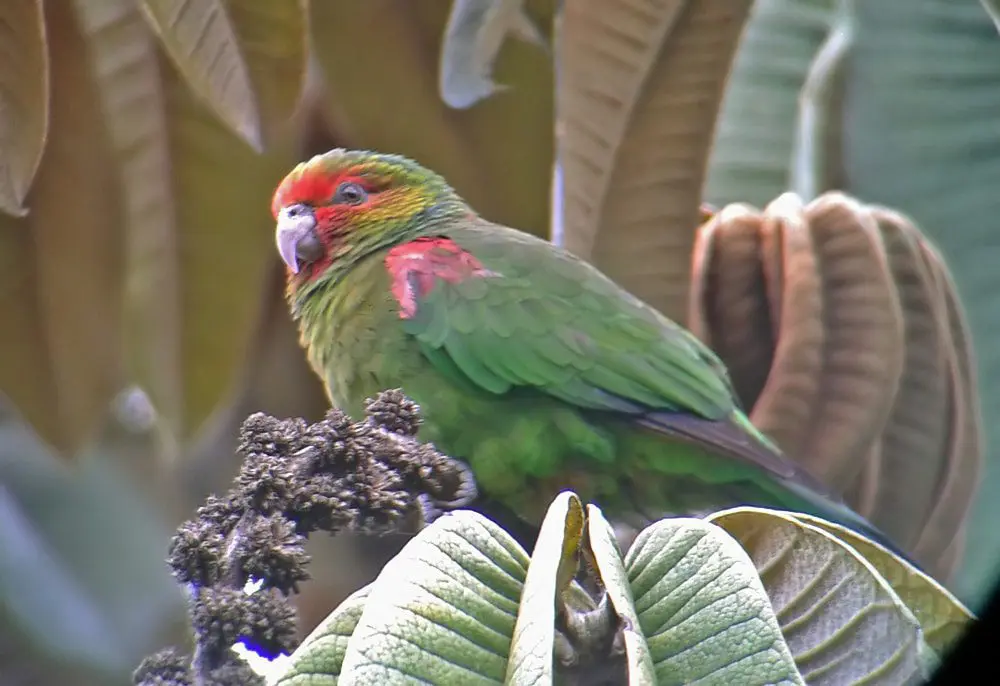
The Red-faced Parrot (Hapalopsittaca pyrrhops) It is distinguishable by the intense red in face and pink magenta in shoulder.

Of bill Of course, yellow feathers on the sides of the neck, crown Green with more bluish back.
Dorsally, wing with blue stain and end blackish; tail with blue border.
In flight, wing with armpit red, Blue-Green rest, tail Red with blue tip.
Youth with the face less red.

Habitat:

Rare. It inhabits in the Woods high Andean, near fells, edges and secondary forests, from the 2400 to 3500 m. They are gregarious, usually in pairs or small flocks of 4 to 6 individuals, rarely more.
They are mostly sedentary. But, can arise some movements seasonal altitudinal.

Reproduction:

Nest in the cavities of trees in October-January; the laying of eggs in late November; the chicks are born in early December, and they leave the nest in late January.

Food:

They feed in the canopy of the forest.
Its diet includes outbreaks, flowers, berries and seeds.

Distribution:

Size of the area of distribution (reproduction / resident): 33.800 km2

Inhabits the southern Andes Ecuador and North end of Peru.

Conservation:


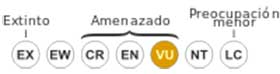
Vulnerable


โ€ข Current category of the Red List of the UICN: Vulnerable.

โ€ข Population trend: Decreasing.

The population is estimated to be a number of 2.500-9.999 mature individuals.

Threats

Its decline is attributed to the destruction and fragmentation of habitat, largely through the conversion of burning forests to small farms (Jacobs and Walker, 1999).

Severe loss of this species can be expected due to deforestation and degradation of forests, by burning and grazing, on Cordillera de Chilla, Loja of Ecuador, although 1995 there were still extensive forest areas (Toyne and Flanagan 1997, Jacobs and Walker 1999).

"Red-faced Parrot" in captivity:

Unknown in the poultry.

Alternative names:

Red-faced Parrot, Ecuadorian Parrot, Red faced Parrot (English).
Caรฏque de Salvin, Caรฏque ร  face rouge (French).
Salvinpapagei, Salvins Zwergpapagei (German).
Red-faced Parrot (Portuguese).
Lorito Ecuatoriano (espaรฑol).
Loro de Cara Roja (Peru).


scientific classification:

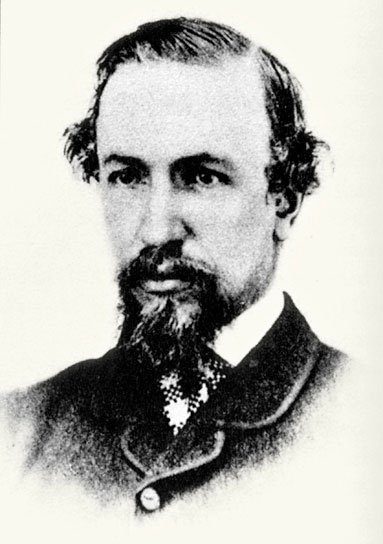
Salvin Osbert
Salvin Osbert

Order: Psittaciformes
Family: Psittacidae
Genus: Hapalopsittaca
Scientific name: Hapalopsittaca pyrrhops
Citation: (Salvin, 1876)
Protonimo: Pionopsitta pyrrhops

Images "Red-faced Parrot"

Videos "Red-faced Parrot"


"Ecuadorian Lorito" (Hapalopsittaca pyrrhops)


Sources:

  • Avibase
  • Parrots of the World โ€“ Forshaw Joseph M
  • Parrots A Guide to the Parrots of the World – Tony Juniper & Mike Parr
  • Birdlife
  • Parrot Book, Parrots and macaws Neotropical

  • Photos:

(1) – Red-faced Parrot (Hapalopsittaca pyrrhops) by Dusan M. Brinkhuizen – IBC