▷ The world of Pets: Dogs, cats, birds, reptiles, amphibians

Munchkin cat
Federations: LOOF, TICA

Content

Characteristics "Munchkin cat"

Coexistence is important that you have with your new friend. Before considering the acquisition of a cat of the breed "Munchkin cat" you know certain factors. You must take into account their character, their need for exercise, their interaction with other pets, their care and if you have small children, their level of tolerance towards them.

Joy

5,0 of 5 stars (based on 1 review)

Activity level

4,0 of 5 stars (based on 1 review)

Friendliness to other pets

5,0 of 5 stars (based on 1 review)

Friendliness to children

4,0 of 5 stars (based on 1 review)

Grooming requirements

3,0 of 5 stars (based on 1 review)

Vocality

2,0 of 5 stars (based on 1 review)

Need for attention

5,0 of 5 stars (based on 1 review)

Affection towards its owners

5,0 of 5 stars (based on 1 review)

Docility

4,0 of 5 stars (based on 1 review)

Intelligence

5,0 of 5 stars (based on 1 review)

Independence

1,0 of 5 stars (based on 1 review)

Hardiness

3,0 of 5 stars (based on 1 review)

History

The Munchkin cat is a recent American feline breed, but the existence of short-legged cats has been documented several times throughout the 20th century. These may include, already in the decade of 1930, en el Reino Unido, These cats lived for four generations before disappearing during WWII. Over the years 50, in St. Petersburg (Russia), a short-legged cat appeared, nicknamed the "Stalingrad Kangaroo" for its propensity to sit on its hips and box with its small front legs. Another short-legged cat was also observed in the 1990s. 1970 in new england, United States.

But it was in 1983, in Louisiana ((UNITED STATES)UU.), when a music teacher called Sandra Hockenedel found two pregnant short-legged cats under a truck and called them Blackberry and Blueberry. Found a home for Blueberry, but he stayed with Blackberry. Blackberry gave birth to a litter of normal and short-legged kittens. One of the latter was named after Toulouse, in honor al pintor Toulouse-Lautrec, that conserved the legs of a child in the body of an adult, and gave it to her friend Kay LaFrance, who lived nearby.

All the Munchkins current descendants of the various encounters of Blackberry and Toulouse with others domestic cats. In fact, their owners allowed them to roam freely on the plantations, and their various encounters with other domestic cats resulted in many litters with kittens of the same anatomical peculiarity. Like this, a colony of short-legged cats soon developed in the area. Hockenedel and LaFrance they decided to call the cats Munchkin, in honor of the inhabitants of Munchkinlandia in Victor Fleming's film 1939 The Wizard of Oz, and they got in touch with him Dr. Solveig Pflueger for me to study them.

He discovered that the short legs of the Munchkin cat were due to a natural genetic mutation that makes the upper leg bone short. This gene is dominant, which means that it is enough for one of the two parents to be a carrier, and therefore have this physical characteristic, so a kitten is likely to have it too. Aware of possible health risks, several breeders asked the teacher David Biller, from the University College of Veterinary Medicine at the University of Kansas, to X-ray the spines of several Munchkins. He concluded that there was nothing wrong with these cats, but that the results of his work could not be considered definitive, since the breed was too new.

At the same time, breeders examined the paws of some of the older cats - also with X-rays- and found no damage to the joints or bones. They concluded that the mutation did not pose a risk to cats, sparking a debate that continues to divide cat lovers around the world..

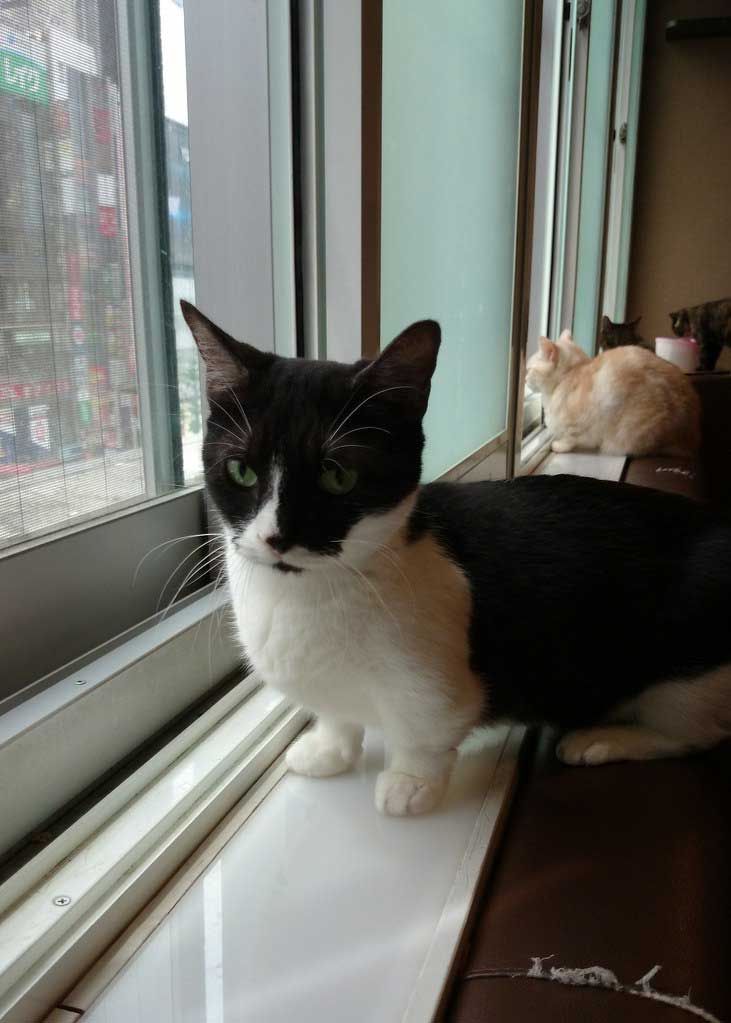
"Munchkin cat"

Munchkin cat
Munchkin cat – Sasha Krotov, CC BY 3.0, via Wikimedia Commons

In 1991, the Munchkin cat was presented to the general public at a cat show held at the Madison Square Garden from New York, and the breeders began to pressure the TICA (International Cat Association) to recognize the race. The TICA refused at first (in 1991), but four years later it took a turn: in 1994, granted the breed the official status of a new breed in development, despite protests from Katherine Crawford, TICA judge for many years, who resigned arguing that this recognition was an affront to ethics.

Indifferent to the heated debates that sparked, the Munchkin they continued to live their feline life and conquer the public, obtaining in particular in 2003 full recognition of the TICA, and therefore the possibility of competing in the exhibitions organized under the aegis of the organization.

This remains the only major feline association to have recognized the breed.. The American Cat Fanciers’ Association (CFA) has not taken the step, the Fédération Internationale Féline (FIFé) says he refuses to recognize a race 'based on a genetic disease', and the British Governing Council of the Cat Fancy (GCCF) has held a similar position since 1991 advising against the importation of these cats, adding that "it is not intended to recognize a race based on a genetic abnormality".

In other words, the dispute of Munchkin is far from over. But, it would be too easy to summarize, as some do, as a dispute between "retrograde feline organizations that do not accept change", on the one hand, and "feline organizations that do not think about the welfare of cats and only seek novelty", for another. All renowned feline organizations are committed to the health of the feline population, but they have different approaches: some prefer to take time to study any new mutation to make sure it is safe before recognizing a breed that carries it, while others choose to recognize it quickly to establish a framework for breeders and study the new mutation.

It's not the first time, not the last, that these debates shake up the world of cat lovers. But, if the discussions around the Munchkin cat they are so virulent and they take so long, it is mainly due to the attitude of some unscrupulous breeders who take advantage of the situation to make easy money without worrying about the health of the animals. Like this, although they know perfectly well that in that case a quarter of the litter never passes the fetus phase, some do not hesitate to raise two Munchkins, with the sole objective of not obtaining a litter with half the "normal" cats that are not sold.

At the end, despite the mistrust it generates, the Munchkin cat is present all over the world. But, due to lack of recognition and, Therefore, official registration of the breed's representatives in the registries, it is difficult to get an exact idea of ​​its true popularity. But, the countless photos and articles on the net suggest that this cat at least arouses great curiosity.

In France, where the Livre Officiel des Origines Félines (LOOF) is one of the few national associations that recognizes the breed (in two different varieties, depending on the length of your hair) and, Therefore, keep a record, between 2011 and 2019 were registered 134 Munchkin shorthair and 198 Munchkin longhair. The trend is up, nails on 50 registrations per year, but race only represents something more than 0,1% of the country's feline population.

Physical characteristics
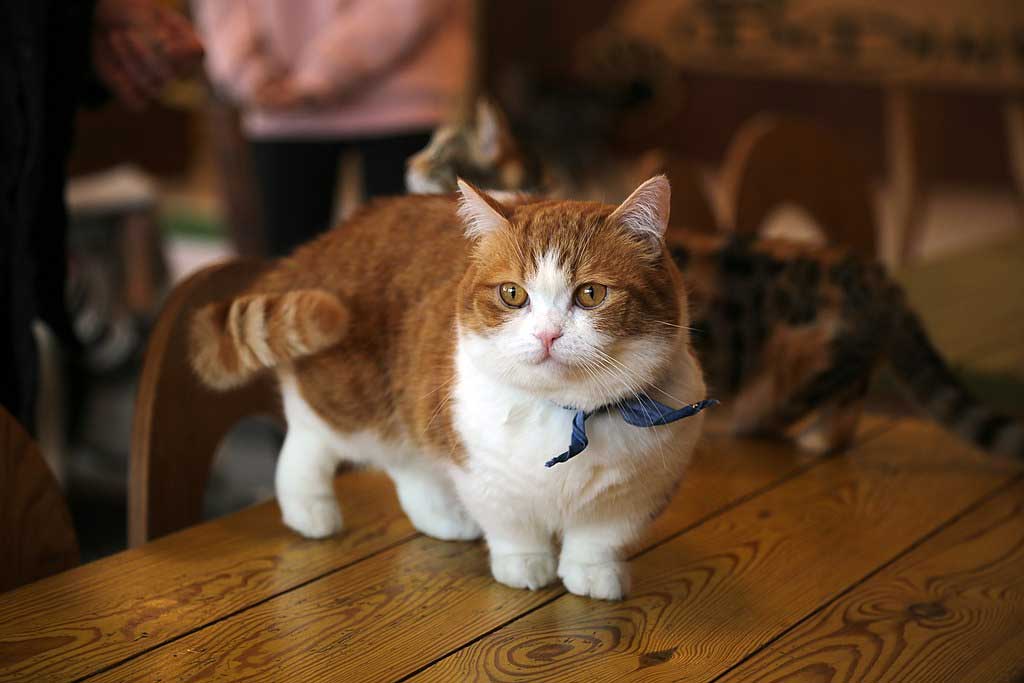
munchkin cat
munchkin cat – Tasy Hong, CC0, via Wikimedia Commons

The Munchkin cat has a midline morphology semi-foreign. His body is muscular but not compact, and ends in a tapered tail about the same length as the rest of the body.

The legs they are short (between 5 and 10 cm shorter than a normal cat), and the upper bone is approximately the same length as the lower. They are straight, with a medium bone structure and proportionate musculature.

The head is slightly rounded, with cheekbones well defined. The ears are of a size proportionate to the rest of the body and end in a slight curve. The eyes they are almond-shaped and can be of any color.

The fur of the Munchkin cat can be short (Munchkin shorthair) or semi-wide (Munchkin longhair). Some organizations, as the TICA (International Cat Association), They even consider them two different breeds that compete in two different categories at cat shows., but they share the same standard. This is not the position of the LOOF (Livre Officiel des Origines Félines) French, for whom they are simply two varieties of the same breed. In any case, long hair coat has a silky texture, while the one with short hair looks shiny.

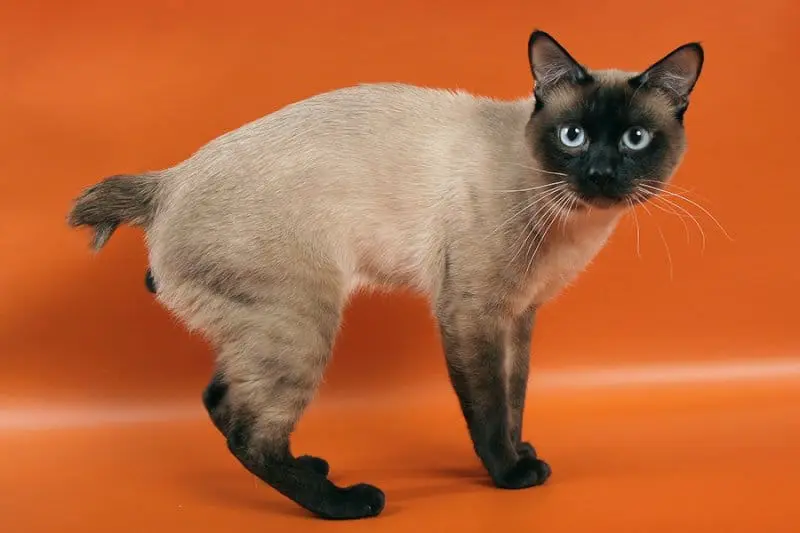
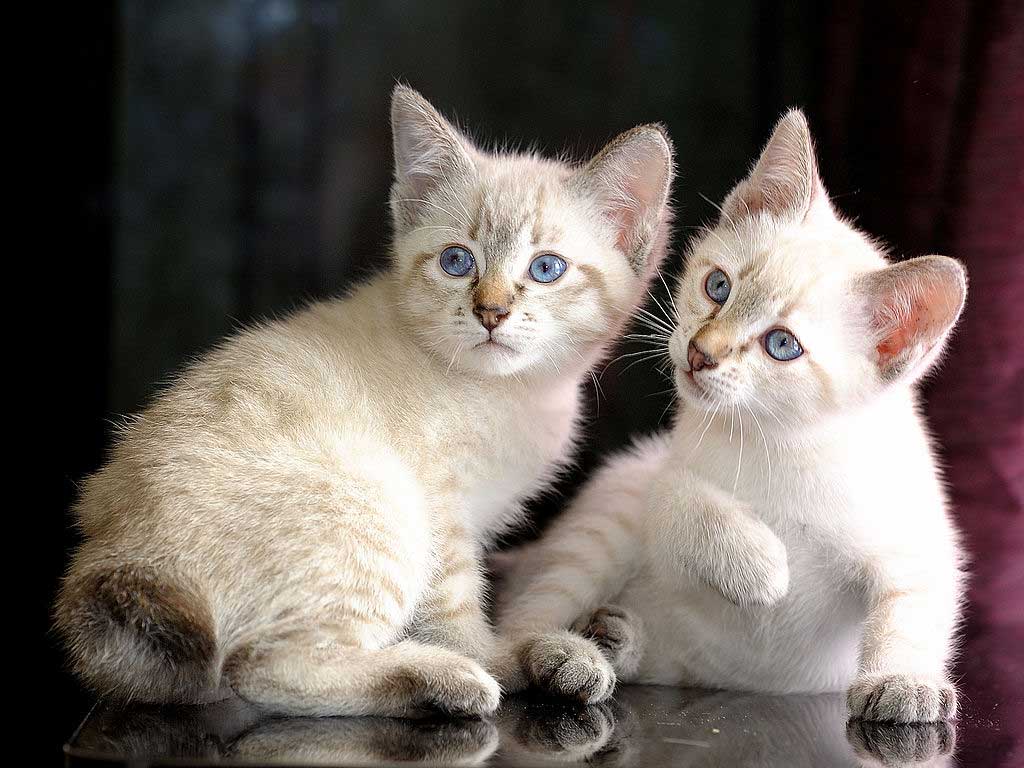
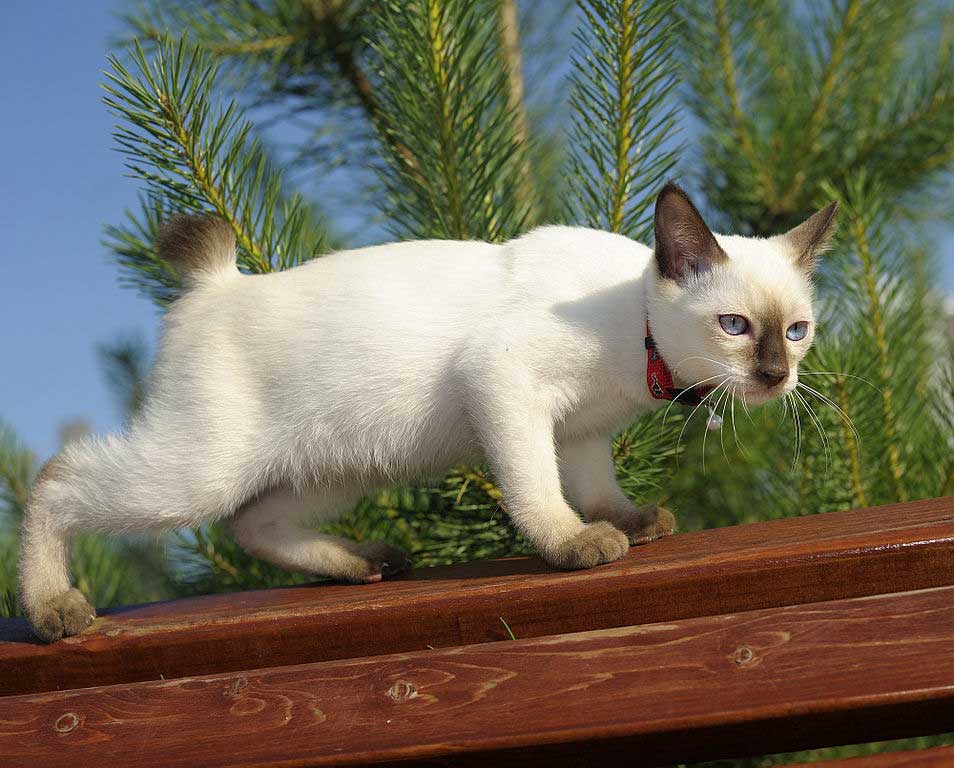
All are allowed colors and fur patterns, including the typical pattern colourpoint of the Siamese cat.

Last, the sexual dimorphism is marked, the female being smaller than the male.

But, it is important to point out that today many crosses of Gatos Munchkins with other races and others domestic cats, both long-haired and short-haired. This diversifies the breed's gene pool to avoid health problems, but it also means that the aspect of the breed is not fixed and can continue to evolve in the future.

It also, if even 2015 short legs were officially considered the exclusiveness of the Munchkin cat, and that any cat that presented this particularity and corresponded to the standard (regardless of their origins) could be recognized as Munchkin cat, It's not like that. In fact, Since this date, los «Munchkins with Persian appearance" are regarded as a breed in their own right by the TICA (The International Cat Association): the Minuet (or Napoleon).

Size and weight

  • Male size: 16 to 20 cm.
  • female size: 15 to 18 cm.
  • Male weight: 3 to 4 kg
  • female weight: 2 – 3,5 kg

Breed standard

The breed standards are documents established by official bodies that list the conditions that a dog must meet. Munchkin cat to be fully recognized as belonging to the race:

Varieties

"Munchkin cat"

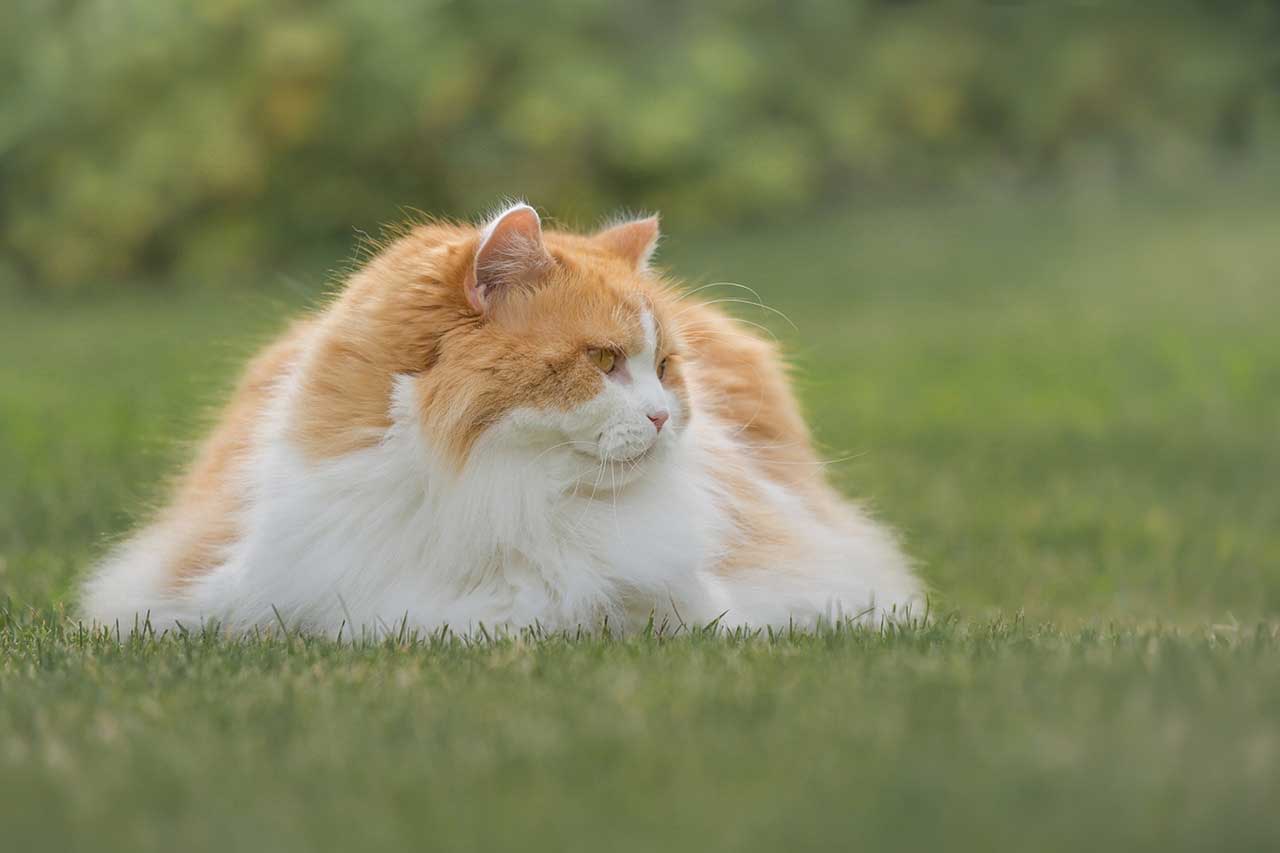
Munchkin Cat
Munchkin Cat – Flickr

There is a Munchkins shorthaired and Munchkins longhair. The TICA (The International Cat Association), the only world association that recognizes the Munchkin cat, even consider that they are two different races. On the other hand, for the French reference body, the LOOF (Livre Officiel des Origines Félines), they are simply two varieties of the same breed.

The Long-haired Munchkin cat has the same origin as the short haired munchkin cat. It is not known if Blackberry, the original female rescued by Sandra Hochenedel in Louisiana, he had the gene for long hair, but the subsequent wide variety of crosses with pedigree and non-pedigree cats may have introduced him to this breed at an early stage, Surely with all the colors and known patterns of the feline world.

The Long-haired Munchkin cat has a semi-long, silky coat and a moderate undercoat. The hair is described as suitable for all climates, although most breeders recommend that this tiny cat be kept indoors. In other respects, the long-haired variety is very similar to short hair. It has a body size medium and rounded, wedge-shaped head and large eyes. Despite his small stature, they are very active, they have a curious nature and strong personality.

It also, the Munchkin cat has crossed with him Persian cat to create the Minuet, sometimes called Napoleon, a new breed of feline accepted by the TICA in 2016.

in addition, it has also been crossed with other cats to create new breeds. But, unlike in the Minuet, the results of these crosses are not yet recognized by any official body. This is how he crossed Munchkin cat with the :

Character and skills

munchkin cat
A munchkin cat grooming herself – in:User:Pockle, CC BY-SA 3.0, via Wikimedia Commons

The various organizations that recognize race allow a Munchkin cat grew up with another Munchkin cat, with a European shorthair cat (Common european cat) or with a Domestic cat (that is to say, no pedigree, but owned by a family that normally guarantees his good health). But, some people do not hesitate to break this rule and organize breeding with individuals of other breeds. How the short leg gene is dominant, some of the kittens born from these unions have short legs, so they are considered Gatos Munchkins.

Knowing this diversity of origins, it is easy to understand that it is difficult to define the character traits that are shared by all representatives of the breed. In fact, the personality of the Gatos Munchkin varies greatly from individual to individual, since they may have more or less preserved the traits of the races from which they came. Like this, some are very attached to their family, while others are much more independent. In general, they can be especially lonely or, on the other hand, very sociable.

Most individuals, However, are in the latter case, being very attached and affectionate with both adults and children.

They also greatly appreciate the company of their peers and enjoy playing with them., without its anatomical specificity being perceived as a disadvantage by any of the protagonists. They also get along perfectly with the presence of a canine companion, provided that it belongs to a breed of dog adapted to cats, and therefore refrain, for example, of chasing him around the house. On the other hand, coexistence with small animals is not recommended, since many Gatos Munchkins they have retained their hunting instincts.

It also, many owners of Gatos Munchkin have noticed that their pet has a special attraction to shiny objects, like jewels, who does not hesitate to steal and hide in a place that only he knows. They are more likely to do so because they are usually very curious and observant. There is also a point common to all representatives of the breed: they are active and surprisingly agile and lively cats. Their little legs do not prevent them from being very fast and are a definite advantage when taking a sharp turn or making a sudden change of direction. It's hard not to smile when you see a Munchkin cat running at full speed after a ball around the house and making incredible turns.

If you prefer to stay at ground level and, usually, do not venture beyond the sofa or coffee table, unlike many other breeds, it's more by choice than obligation. In fact, even though they may not be able to jump as spectacularly as their long-legged counterparts, they are especially agile and resourceful, so that they always end up finding a way to reach in several jumps the furniture that another race will have reached in one.

in addition, their short legs do not prevent them from climbing a cat tree, and they are very likely to end up on the curtain rod, leaving their owners wondering how they got so high.

The Munchkin cat has developed the habit of sitting on its hind legs, adopting a position similar to that of the suricata to observe your surroundings. This feature has already been observed in 1956 in the «Stalingrad kangaroo», a short-legged cat discovered in Russia, that is not related to the current ones Gatos Munchkin, which suggests that it is an adaptation to its physical particularity.

The Munchkin cat it is rather a breed of indoor cat, that is to say, designed for life in a flat, especially since its short legs are a disadvantage on the outside, where it is more likely to suffer accidents or predation than another breed. But, they like to be walked on a leash under the supervision of their owner.

With everything, the Munchkin cat leads a normal life as a cat and is not particularly affected by his condition. His peers consider him completely as one of their own, and he himself doesn't seem to know the difference. So, the difference is mainly in the eyes of humans.

Health
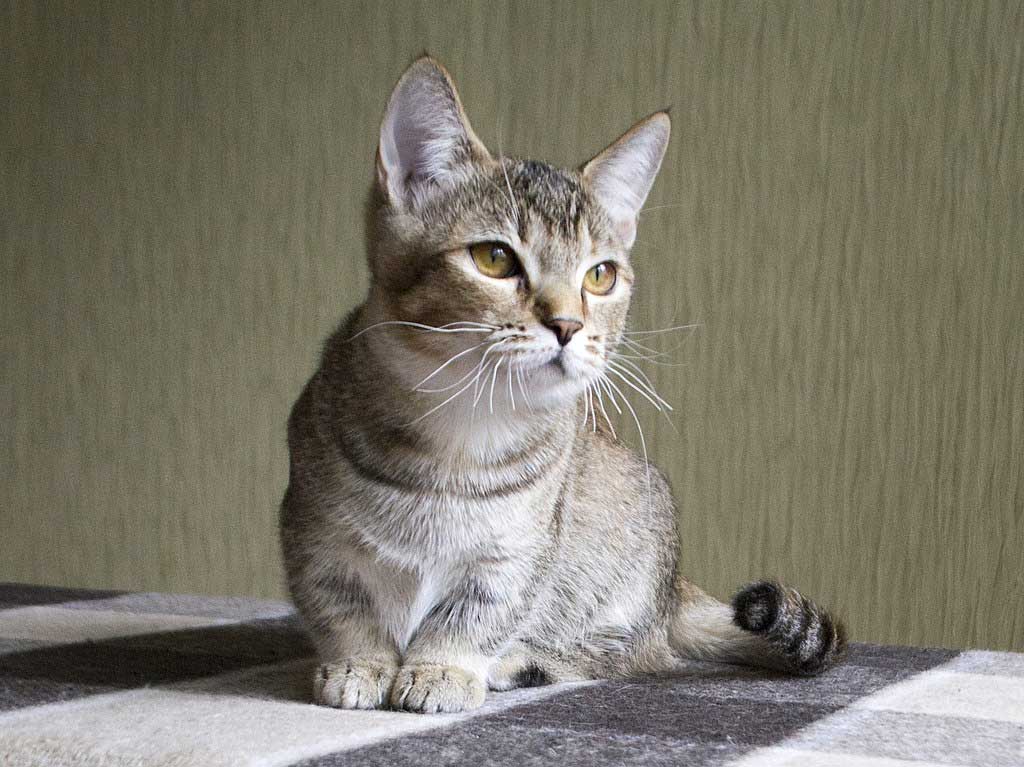
Munchkin cat
Munchkin cat – Fedorov078, CC BY-SA 4.0, via Wikimedia Commons

All the Gatos Munchkins have acondroplasia, a genetic condition associated with dwarfism. But, it is not clear whether this genetic mutation, responsible for the short legs of the breed, has any other impact on the health of affected individuals.

Studies have shown that homozygous embryos (carriers of two mutated genes) are not viable and die in utero, while heterozygous individuals (carriers of a single mutated gene) they do not appear to be affected and lead a completely normal life. This means that when two intersect Gato Munchkins, the 25% of embryos fail to mature and die in the womb: it is precisely to avoid it that they allow themselves, and are even encouraged, crosses with domestic cats, versus breeding between two representatives of the breed.

It also, although this cat is recent and, Therefore, be wary of jumping to conclusions, some conditions seem to affect you especially:

  • The lordosis, an excessive curvature of the spine;
  • The excavated breast, a deformation of the rib cage inwards, causing compression leading to breathing difficulties and/or heart problems.

Last, as with any indoor cat, obesity is a serious risk to the health of the Munchkin cat. May cause other illnesses and / or aggravate existing health problems. Thus, a good owner should regularly check that his cat maintains a normal weight, and quickly correct it if it isn't.

Life expectancy

12 to 14 years

Grooming

The maintenance of Munchkin cat it's relatively easy, especially for short-haired cats. In the case of short-haired cats, just brush its coat once a week. The long-haired variety needs to be brushed a little more frequently, once every two or three days.

In both cases, It is also advisable to spend a few minutes each week checking your teeth for cavities and tartar., and quickly clean their eyes and ears with a damp cloth.

Last, when they have gotten too long, you need to trim your cat's nails, to avoid being hampered in your movements.

Food

In general, the Munchkin cat it does not pose any problem in terms of feeding and is perfectly in line with the industrial cat food available on the market. To provide your cat with all the nutrients it needs for good health, it is recommended to give him a quality food, adapted to your age and activity level.

It also, to avoid obesity risks, it is advisable to control your daily rations. If your cat is overweight, you should consult a veterinarian to establish a feeding program to help you lose weight.

For sale "Munchkin cat"

A kitten Munchkin cat it usually costs about 800 euros for a male and 700 euros for a female.

Videos "Munchkin cat"

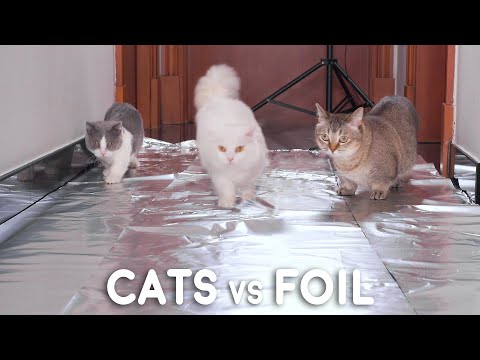
Can Munchkin Cats Walk On Foil?

How FAST can munchkin cats run?

▷ The world of Pets: Dogs, cats, birds, reptiles, amphibians

Ocicat cat
Federations: LOOF, CFA, ACF, ACFA, TICA, FIFé, WCF

The Ocicat, sometimes canine behavior, is distinguished by its great adaptability, which is an undeniable asset to make it an excellent family cat.

Content

Characteristics "Ocicat cat"

Coexistence is important that you have with your new friend. Before considering the acquisition of a cat of the breed "Ocicat cat" you know certain factors. You must take into account their character, their need for exercise, their interaction with other pets, their care and if you have small children, their level of tolerance towards them.

Joy

5,0 of 5 stars (based on 1 review)

Activity level

5,0 of 5 stars (based on 1 review)

Friendliness to other pets

4,0 of 5 stars (based on 1 review)

Friendliness to children

4,0 of 5 stars (based on 1 review)

Grooming requirements

1,0 of 5 stars (based on 1 review)

Vocality

4,0 of 5 stars (based on 1 review)

Need for attention

4,0 of 5 stars (based on 1 review)

Affection towards its owners

4,0 of 5 stars (based on 1 review)

Docility

1,0 of 5 stars (based on 1 review)

Intelligence

4,0 of 5 stars (based on 1 review)

Independence

2,0 of 5 stars (based on 1 review)

Hardiness

3,0 of 5 stars (based on 1 review)

History

The Ocicat is the result of the crossing made from 1964 by Virginia Daly, an American breeder, and its name comes from the contraction of the words «ocelot» y «cat«. In fact, although it is the result of purely domestic ancestry, this breed looks a lot like ocelote (Leopardus pardalis), a large wild cat that lives in Central America.

But, the genesis of the breed is mainly due to chance. In effect, the objective of Virginia Daly was to raise one Abyssinian cat colourpoint, far from the image of the Ocicat…

Like this, in 1964, a litter of a Abyssinian cat ruddy and a Siamese cat sealpoint. Among the kittens obtained, the breeder was left with a single female with traits mainly Abyssinians. She was crossed with a male Siamese chocolate-colored. The resulting puppies physically resembled the Abyssinians, but they all had the color point. The breeder was immediately satisfied with the result and repeated the same crossing until one day a kitten with a particular coat was born.: call Tonga, one of the kittens had golden spots on white background. By not coinciding with the objective of Virginia Daly, was quickly castrated and sold to a private.

It was not until some time later that the breeder turned her attention back to this type of wild cat of primitive color, during a correspondence with the geneticist Clyde Keeler. Seeking to revive an extinct feline breed, the "spotted fishing cat of Egypt", was very interested in the fur of Tonga. He would have liked to cross it with his own mother, but the recent sterilization of the young cat made it impossible. Then the same crossing was repeated that gave rise to Tonga, until you get stained individuals. That's how it went, and the history of Ocicat started in earnest.

Soon Virginia Daly crossed these spotted cats with the American shorthair cat. The purpose of these unions was to obtain larger individuals, as well as the silver color of the race.

Over the years 80, the Ocicat began to be known and appreciated by the public and breeders. Soon, many breeders became interested in this new breed and international organizations began to officially recognize it. Like this, after being accepted in 1966 by the Cat Fanciers’ Association (CFA) as an experimental breed, obtained full breed status in 1987. That same year, the International Cat Association (TICA) also recognized the breed. Five years later, in 1992, it was the turn of the Fédération Internationale Féline (FIFé).

This period also marked the spread of the breed throughout the world and its recognition by various national bodies., as the Governing Council of the Cat Fancy (GCCF) in Britain or the Livre Officiel des Origines Félines (LOOF) in France.

But, Although various organizations from various parts of the world now recognize the Ocicat, its number of members is still limited. This can be explained in part by the fact that in some countries all interbreeding with any other breed is prohibited., which mechanically limits population growth as well as the diversity of the genetic heritage. But, this is not the case everywhere: en el Reino Unido, for example, crosses with Abyssinians are allowed, which obviously facilitates its diffusion.

In any case, today there are great differences in the establishment of the Ocicat from one country to another. In France, still a very rare breed of cats, with less than 10 registrations per year in the LOOF since the beginning of the century – the number is even nil in some years.

The same is true in Switzerland, although, unlike france, looks like a small upward trend is taking place, since since 2017 more than 10 births per year in the Fédération Féline Helvétique (FFH).

The Ocicat is much more present in the UK, since the number of annual births registered by the GCCF exceeds 50 cats a year. Although this figure may seem high compared to other countries, it is still a decrease compared to the second half of the decade of 2000 and the first of 2010, when he approached a hundred.

Last, is in your country of origin, United States, where the Ocicat is more represented and has been more successful in establishing itself in households. Throughout the decade of 2010, stood around the post 20 (of something less than 50) in the CFA's annual registration ranking.

Physical characteristics

Ocicat
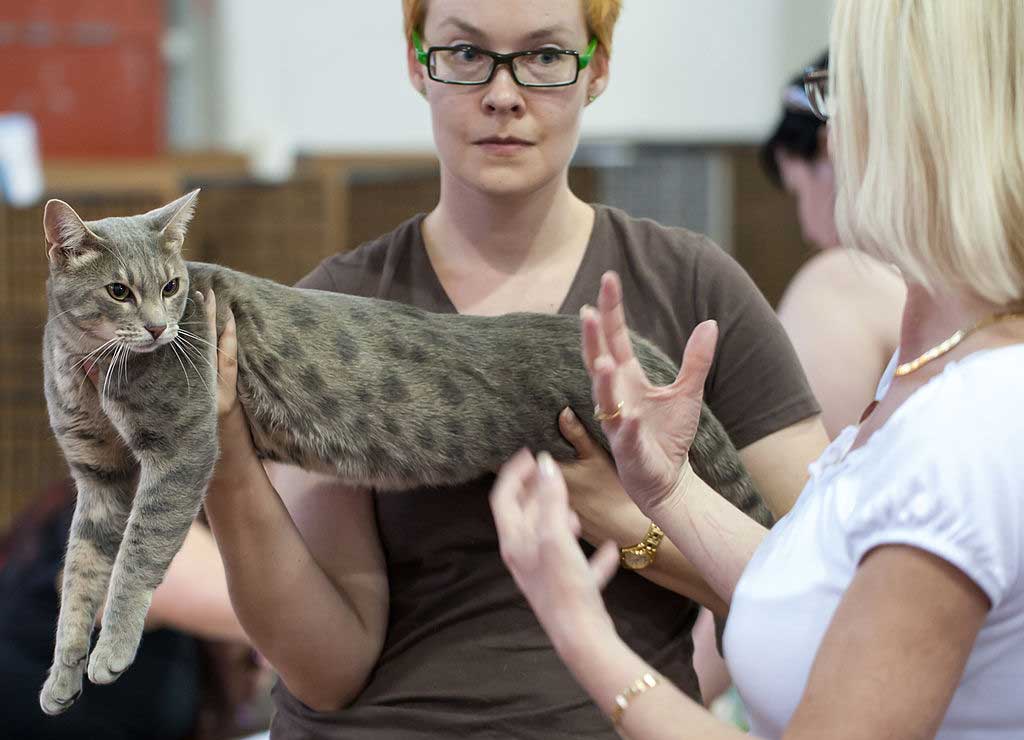
An ocicat presented at the FIFé cat show in Hyvinkää in Finland. Color : Blue spotted tabby – Heikki Siltala-catza.net, CC BY 3.0, via Wikimedia Commons

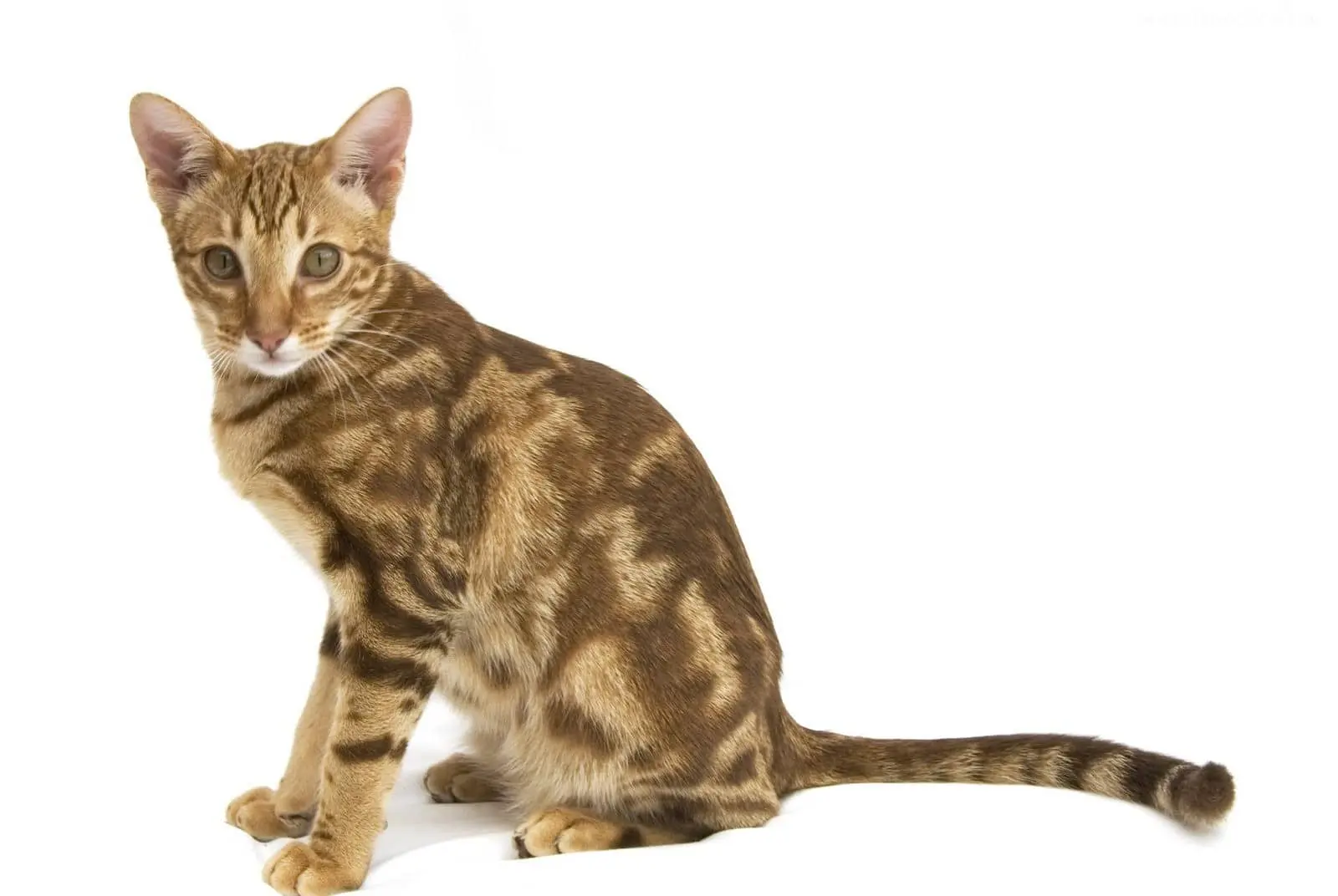
The Ocicat it has particular physical traits that make it a wild-looking feline race. More concretely, although it is a Domestic cat, looks a lot like a ocelote and represents a perfect blend of grace and power: a medium-sized feline, muscular and always very elegant. It is much heavier than it seems.

The Ocicat is built around a fairly deep chest. Its back must be straight, but the topline is slightly higher at the back of the body. The tail is long, fine and has a dark tip.

The legs they are strong, muscular and of medium length. The feet must be oval, compact and proportional to the legs.

The head it is triangular and angular, like that of his Asian ancestor the Siamese. It rests very harmoniously on a neck fine and quite arched. The snout it is wide but well defined. Master a strong jawline and a well-defined chin.

The ears they are large and set high on the head. They usually have small strands of hair on top.

Their eyes they are large, almond-shaped. They are very expressive and reflect their intelligence. All are accepted colors, except blue. On the other hand, there is not necessarily a correspondence between eye color and coat color.

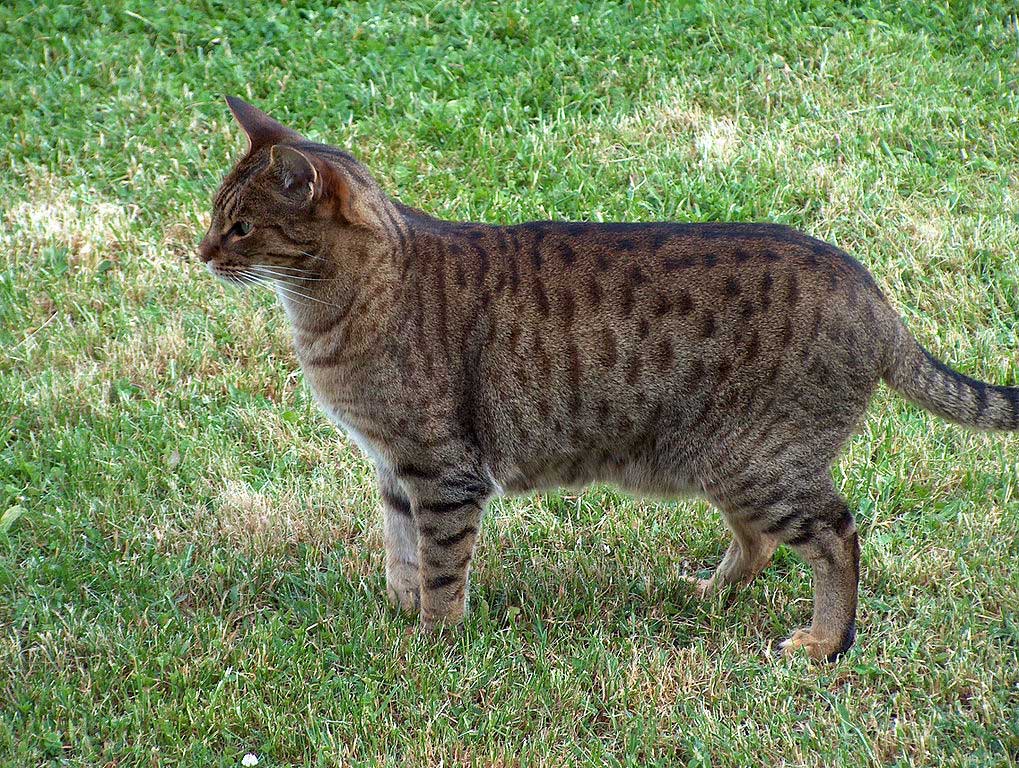
The fur of the Ocicat it is made up of short hairs, soft and shiny, always decorated with those spots that characterize it so much, giving it the appearance of a wild cat. The spots along the spine are rather round and concentrated, while those of the shoulders and the back of the body are more dispersed. The largest markings are usually found on the flanks and under the belly. The tail also has these markings, and there are usually darker hairs around the eyes and on the cheeks. It also, the forehead is usually marked with an "M", also darker than the basic coat.

There is some diversity in the exact appearance of the fur of the Ocicat, with no less than 3 fur patterns (solid, spotted tabby and silver / smoke spotted tabby) and 6 colors (chocolate, blue, leonado, black, cinnamon and lilac) possible. In all cases, slight silver shine possible, which raises the number of combinations to 36.

Last, the breed is characterized by a certain sexual dimorphism, since females are usually smaller and thinner than males.

Size and weight

  • Size: Of 30 to 35 cm.
  • Weight: Of 3 to 5 kg

Breed standard

The breed standards are documents prepared by official bodies that list the conditions that an Ocicat must meet to be fully recognized as belonging to the breed.:

Character and skills

Ocicat
Ocicat (male) – I, ToB, CC BY-SA 3.0, via Wikimedia Commons

The Ocicat is always cheerful and energetic by nature. Very sociable and active, loves to play with his humans or other animals.

They are always happy to play, but they also like to spend long periods of time resting with their owners, for example, spending the night on his lap. Many of the representatives of the breed tend to choose a particular family member with whom they form an especially intense bond., although this does not prevent them from being affectionate with others.

This closeness to their humans makes them an excellent student for those who want to teach their cat tricks.. These may include, can learn to find and retrieve objects thrown by his master, to lie down when ordered or to respond to his name.

In fact, this little feline totally breaks the image of the proud and independent cat. He is always happy to accompany his owners everywhere, without hesitation to follow them around the house… or by any other site. In fact, is usually perfectly capable of walking on a leash, making it much easier to take you everywhere. And when that is not an option, can be carried in arms: that they take it is not a problem, as long as it's done with a little respect.

It is also an ideal option for someone who wants to take their cat on vacation or even on a trip., as it can adapt to a new environment without too much trouble.

This is possible thanks to the fact that he is not worried about meeting new people.. He even likes to receive visitors at home and is not shy with them. For them, represent new possibilities for interaction and sources of caresses, and does not hesitate to meet him on his own.

It also, both at home and elsewhere, things go better because he easily assimilates the rules. He is very sensitive to vocal reprimands from his beloved masters and, usually, does not repeat the same mistake twice once caught red-handed (for example, if you have climbed on the table during the meal, or any other undesirable behavior). It is also common for him to show that he has understood the lesson by adopting an attitude similar to that of shame, like many dogs do.

In summary, do not be fooled by its wild appearance: this sometimes canine behavioral animal is distinguished by its great adaptability, which is an undeniable asset to make it an excellent family cat.

Often becomes the best friend of children, as long as they know how to behave with respect towards him. However, it is important to keep in mind the basic rules of precaution: Whatever your race, a cat should never be left alone with a young child, without the slightest adult supervision.

They can also be very suitable for older people, especially if they spend a lot of time at home and like to give them attention and affection.

Regardless of the age of the owners, they love attention and are only suitable for people who can and enjoy spending time with their pet. Otherwise, will suffer a lot.

Allowing him to have a little playmate by his side can be a wise way to keep him from suffering from loneliness., since their sociability does not only extend to humans: in general, appreciates sharing your home with a partner or with a dog, as long as, of course, this one belongs to a breed that is friendly to cats. Being dominant by nature, usually direct the other animals in the house, even when they are bigger than yours. But, this trait means that introductions to an unknown animal must be done very gradually, to avoid any kind of conflict, especially if he's also the dominant type.
In view of his tendency to play with everything that moves, It does not seem wise to try to get it to live with another animal that may be prey. In fact, it is better to avoid coming into contact with rodents, birds or fish, since it could end badly.

Due to his mental acuity and love of the game, not only quickly learn the tricks, they also love puzzles and other toys designed to stimulate their intelligence. But, they can sometimes become possessive of them, so you have to teach them to share from a young age. It also, precious items that you might mistake for games must be hidden or kept out of reach at all costs, taking into account that he is perfectly capable of learning to open doors or drawers by watching his masters do it…

Like most of its congeners, to the Ocicat he loves to hang from the heights. And given its flexibility, there is no furniture, however big it is, that you resist. You also need plenty of space and toys to feel good and get all the exercise you need.. If you live in an apartment, it must be of a certain size and equipped with numerous games, as well as with furniture and a cat tree that allows him to observe his little world from above.

Last, the Ocicat has inherited a strong voice from his ancestor the Siamese cat. He does not hesitate to use it when he has a request to make, and knows perfectly how to make himself understood when he is hungry or needs attention. Their meows are also a very good conversation tool., since he likes to chat with his master responding to his voice. Their purrs are also especially loud; some like, to others not so much. In any case, It is not as loud or demanding as the Siamese.

grooming and care "Ocicat cat"

Ocicat
Picture of a cinnamonsilverspotted ocicat – Hansboskar, CC BY-SA 4.0, via Wikimedia Commons

The Ocicat it is a breed of cat that is easy to care for.

Its short and soft coat does not need to be brushed more than once a week to remove dead hair. But, to avoid dead hair all over the house, more frequent brushing is necessary during spring and fall shedding periods.

It is seldom necessary to bathe your dog. when it is so, it is essential to use a shampoo specially designed for cats.

Weekly brushing is also an opportunity to take care of other parts of the body. The first thing to do is check the condition of your eyes and clean the area around them if necessary.. This will help prevent infections and detect any problems in this area early..

The same goes for the ears.: a weekly check and cleaning to remove dirt will help limit the appearance of problems in this area, starting with ear infections.

The teeth should also be brushed regularly with a special toothpaste for felines.. This is especially important, since the Ocicat is especially prone to periodontitis: brushing prevents plaque formation, which is the cause of many oral problems, including this one. Daily brushing is recommended, but if it is done once a week, it's already very good.

As for the claws, they tend to grow quite fast. So, if he only goes out or a little time passes, they usually need to be trimmed regularly. If they get too long, not only can they hinder you when you move, but also break and potentially injure you at the same time. In any case, if your dog does not have access to the outside, it is essential that you have a scratching post: otherwise, you risk using furniture or curtains to scratch.

The gestures to take care of your cat's coat, as well as his eyes, ears, teeth and claws, should not be done randomly, since you run the risk of harming or even injuring you. The first time, no hesitation to learn the correct way of doing things from a professional vet or cat groomer. It also, there are many reasons to get your kitten used to being handled from an early age, so that grooming sessions are not unpleasant for him, but that, on the other hand, be beautiful moments of complicity.

Indoor or outdoor cat?

The cats Ocicat they do not necessarily need to have access to the outside to feel comfortable. But, it would be ideal if you could allow the animals to go out into the wild from time to time. The ideal is a secure garden or, at least, a safe outdoor area. Basically, representatives of this breed always want to be close to their humans and not be left alone for a long time, so cats don't go on long excursions, but they stay close. Due to his affection and easy training, it is also possible to accustom the kitten Ocicat on the leash and take small excursions into nature.

How much activity does he need? "Ocicat cat"?

If you are thinking of buying a Ocicat, you should know that you will only be happy if you get enough attention. Play time and pampering together are essential. Since cats with an athletic build have quite a bit of energy, you have to dedicate time to hunting games, but intelligence games are also very well accepted. It also, representatives of this breed always seek contact with their humans, so it is especially important that, as a member of the family, be allowed to always be where the center of activity is. It also, must provide appropriate opportunities for scratching and climbing, so that the existing urge to move can also be acted upon. So being alone isn't too hard, you always have to provide a Ocicat a companion.

Health and nutrition

"Ocicat cat"

Ocicat
Ocicat "Rizzo" (cat breed) – ToB, CC BY-SA 3.0, via Wikimedia Commons

The Ocicat is generally in good health and lives a long time (until 15 years).

But, is not immune to certain problems inherited from its ancestors the Siamese cat and the Abyssinian cat:

  • Hepatic amyloidosis, a disease that can affect the kidneys and/or liver. Causes incomplete dissolution of certain proteins and leads to a buildup of deposits in organs. Loss of appetite, the diarrhea and vomiting it causes often lead to significant weight loss. Appears among 1 and 5 years of age and must be diagnosed quickly so that it can be controlled with specific treatment and a low-protein diet. Failure to do so can be fatal;
  • The pyruvate kinase deficiency (PKDef), an inherited condition that corresponds to a deficiency of this enzyme important for the proper development of red blood cells. The consequence is anemia, more or less serious depending on the case, causing various symptoms such as lethargy, diarrhea, weight loss and eating disorders;
  • The Hypertrophic cardiomyopathy (the cardiomyopathy), which is the most common heart disease seen in cats and corresponds to excessive thickening of the walls of the heart. It can be of hereditary origin, but this is only one of the possible causes. In all cases, manifests itself in various ways (breathing difficulties, hindquarters paralysis, vomiting, lethargy, significant weight loss, etc.), but the symptoms usually appear suddenly. Some individuals recover within a few months, while others die quickly;
  • The periodontal disease (o periodontitis), what is an inflammation of the gums. If the problem is not treated in time, dental abscesses may form, and it can also occur, for example, loosening of teeth or severe difficulty chewing certain foods. Longer term, if the bacteria reach the circulatory system and the jaw, infection can lead to death;
  • Progressive reticular atrophy, an incurable, inherited eye disease that causes progressive loss of vision, culminating in blindness. It has been found in some individuals, but its prevalence is still very low in the population of the breed.

The best way to avoid acquiring a cat that may suffer from some hereditary disease in the near future is to go to a serious breeder. Any breeder of Ocicat trust must be able to present not only a veterinary health certificate, but also the animal's health card (or vaccination record), containing the vaccines administered, as well as the results of genetic tests performed on the parents or the kitten, that demonstrate that they are free of inherited diseases.

Last, even if your pet looks healthy, a routine annual visit to the vet never hurts, and in fact it is highly recommended. Allows a complete health check, that sometimes allows discovering emerging problems, and also offers the opportunity to check that vaccinations are up to date. It also, the owner must ensure that their pet's antiparasitic treatments are renewed throughout the year, whenever necessary, so that the pet never stops being protected.

Food

The Ocicat he is a little complicated cat when it comes to feeding and is very happy with good quality industrial food. He also likes prepared meat dishes, vegetables and starch.

In any case, the products chosen and the servings supplied must be adapted to your needs, that depend first of all on your age, your state of health and the amount of physical exercise you do on a daily basis.

The Ocicat not especially prone to obesity but, as with any race, it is important to watch your weight. This is especially true if you have been neutered, as this increases the risk of obesity. So, a monthly weigh-in is necessary, and any deviation that is confirmed or even accentuated the next time must be taken seriously: then it is necessary to take him to the vet to identify the origin of this weight gain. This may be due to a diet that is not adapted in quality and / or quantity., but also to the appearance of another health problem.

It also, like any cat, a bowl of fresh, clean water should be available at all times.

For sale "Ocicat cat"

The price of a Ocicat usually oscillates between 700 and 1400 EUR.

But, in Europe, the number of breeders can be counted on the fingers of one hand, so it is often necessary to arm yourself with patience to find the rare pearl: you are very often placed on a waiting list for months.

One option is to search the UK, where there are many more breeders. This allows you to choose from a larger number of kittens, while avoiding long delays.

whatever the country, the amount charged depends, in particular, of the reputation of the kennel, from the lineage the kitten comes from, but also and above all of its physical characteristics. In the case of adoption from abroad, It must be taken into account that several costs are added to this price: transport, quarantine, administrative transactions, etc.

Interesting data

The Ocicats They are quite fond of water and some representatives of the breed turn out to be "water rats" and enjoy a bath in the bathtub or pool.

Videos "Ocicat cat"

[embedyt] www.YouTube.com/watch?v=qPtG-EtS3QM[/embedyt]
www.YouTube.com/watch?v=hMQ6VbAlXpA

▷ The world of Pets: Dogs, cats, birds, reptiles, amphibians

Nebelung cat
Federations: TICA, LOOF, GCCF, WCF

Content

Characteristics "Nebelung cat"

Coexistence is important that you have with your new friend. Before considering the acquisition of a cat of the breed "Nebelung cat" you know certain factors. You must take into account their character, their need for exercise, their interaction with other pets, their care and if you have small children, their level of tolerance towards them.

Joy

4,0 of 5 stars (based on 1 review)

Activity level

4,0 of 5 stars (based on 1 review)

Friendliness to other pets

4,0 of 5 stars (based on 1 review)

Friendliness to children

3,0 of 5 stars (based on 1 review)

Grooming requirements

3,0 of 5 stars (based on 1 review)

Vocality

2,0 of 5 stars (based on 1 review)

Need for attention

4,0 of 5 stars (based on 1 review)

Affection towards its owners

4,0 of 5 stars (based on 1 review)

Docility

3,0 of 5 stars (based on 1 review)

Intelligence

4,0 of 5 stars (based on 1 review)

Independence

2,0 of 5 stars (based on 1 review)

Hardiness

4,0 of 5 stars (based on 1 review)

History

The Nebelung cat today originated in the United States in the 1980, but its history is much older and inseparable from that of the Russian Blue Cat.

The Russian Blue Cat already existed in Russia in the 19th century, where it was often hunted for the quality of its hide, which caused a population decline. The breed included both individuals of shorthair like Longhair. If he Russian Blue Cat shorthair was exported to Great Britain from 1870 and quickly met some success there, his cousin from Longhair did not have this opportunity, and it continued to decline. The 20th century and its two world wars sealed its fate, and is now considered extinct. In other words, the Nebelungs current replicate their appearance, but they are not his descendants.

The history of the Nebelung starts in 1984 and Denver, Colorado ((UNITED STATES)UU.), when the cat of the son of Cora Cobb, a computer developer, gave birth to a long-haired gray-blue male kitten. Seduced by this ball of hair, Cora Cobb decided to stay with him and called him Siegfried, in honor of the protagonist of Wagner's opera "The Ring of the Nibelung".

"Nebelung cat"

Nebelung
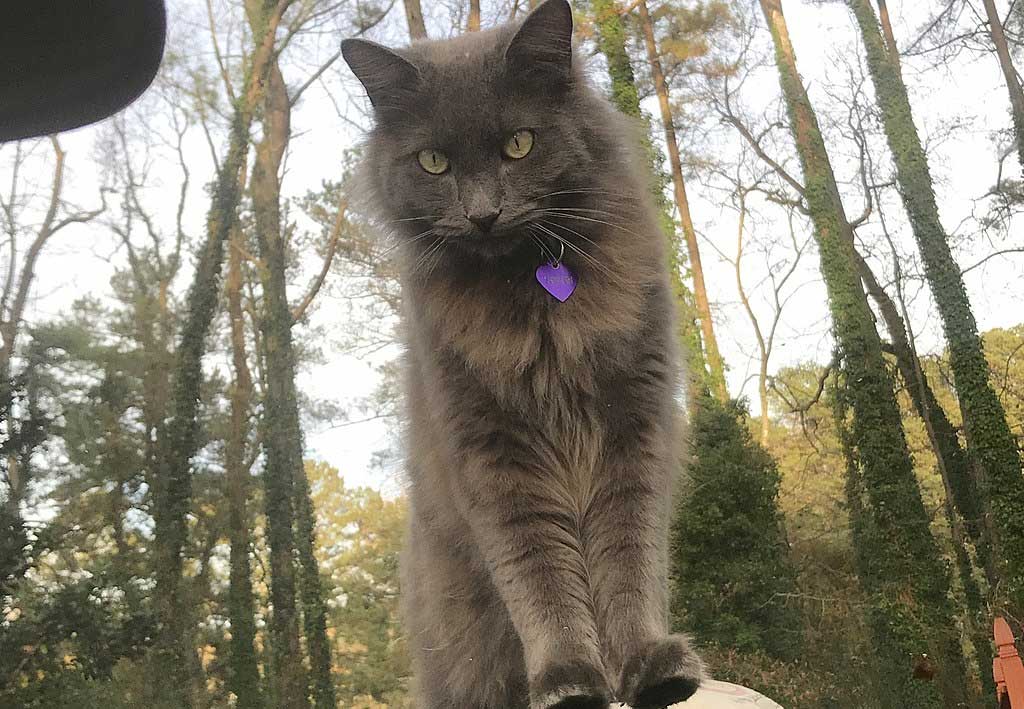
This is a Nebelung cat – Howdyhithere, CC BY-SA 4.0, via Wikimedia Commons

A few months later, this cat gave birth to another litter in which one of the kittens had long bluish gray hair. Cora Cobb he also adopted this cat and named her Brunilda, again in reference to the characters in Wagner's opera, based on the 13th century Germanic poem Nibelungenlied.

When he moved to Old Paso, Texas, Cora Cobb took to Siegfried and Brunhilde, who thanked him by giving birth to a litter of three kittens in 1986. They all had the same medium-long, blue-gray fur..

This is because the gene responsible for Longhair and the gene responsible for blue-gray hair are both recessive, which means that the individual must inherit it from both parents to have this appearance. Like this, kittens resulting from the mating of two long-haired gray or gray-blue cats must have the same coat as their parents.

Decided to call the cats Nebelung, a clear reference to Wagner's opera and original poem, but also a pun on the German word «Nebel» (What does "fog" mean?) and the Russian «Nebo» (what does "heaven" mean). Then the breed recognition process began, contacting the Dra. Solveig Pflueger, head of genetics of the TICA (International Cat Association).

Following his advice, developed a standard for the Nebelung cat based on the Russian Blue Cat, changing only the description of the fur. The TICA provisionally recognized the breed in 1987, and Cora Cobb founded his kennel, who called Nebelheim.

In 1989, the Nebelung was featured at a cat show in Paris, where it had some success and offspring began to appear in Europe. In 1997 was definitely recognized by the TICA, later for him Livre Officiel des Origines Félines (LOOF) french in 2008 and by the Governing Council of the Cat Fancy (GCCF) british in 2015. The World Cat Federation (WCF) has also recognized the breed, but neither the American Cat Fanciers’ Association (CFA) not even Fédération Internationale Féline (FIFé) have yet taken the step.

Although it is now present in North America, as well as in Europe, the Nebelung still a rare breed of cat, and has not yet conquered the general public. In France, the statistics of Libro Oficial de Orígenes Felinos (LOOF) indicate that less than fifty specimens are registered each year, while in Great Britain these figures do not exceed twenty. Breed is even more discreet in America, where there are only a handful of hatcheries in the entire country.

Physical characteristics

Nebelung
Majestic shadow beast. He prote – Amarnth7, CC BY-SA 4.0, via Wikimedia Commons

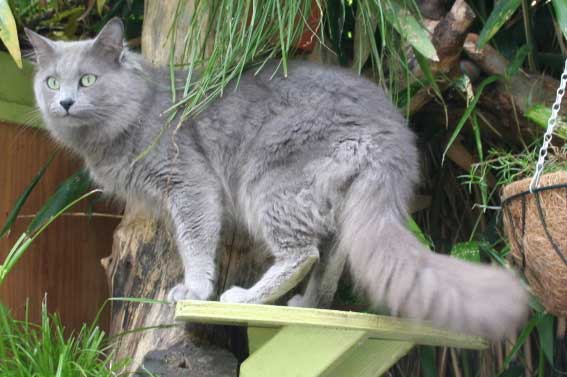
The Nebelung It has a type morphology Semi-Foreign. Its body, long and elegant, he is athletic and well proportioned, and rests on muscular legs that end in oval legs. The tail is long, at least as much as the body, and the hair of the same is longer than in the rest of the body.

The head wedge-shaped is well proportioned to the size of the animal and the ears they are big and pointed. The boca is slightly turned up at the corners, which gives the appearance of constantly smiling, and the nose is charcoal gray. The eyes They are slightly oval and of a deep green color similar to that of the Russian Blue Cat. But, kittens may have greenish-yellow eyes until they reach maturity, around two years old.

The fur of the Nebelung, that is not fully developed until that age, it's semi-long, and males can have mane. The undercoat it is dense and waterproof, while the outer coat is long and silky. In winter, the coat becomes longer and denser, allowing you to better protect yourself from the cold.

The only coat color allowed is gray., but this one is called "blue" in the world of cat shows. Kittens can have "ghost" stripes, but these disappear as they grow, giving way to a nice uniform tone.

Last, the sexual dimorphism it is quite marked, the female being smaller than the male.

Size and weight

  • Male size: 26 to 30 cm.
  • female size: 25-28 cm.
  • Male weight: 4-7 kg
  • female weight: 3-6 kg

Breed standard

The breed standards are documents established by official bodies that list the conditions that a dog must meet. Nebelung to be fully recognized as belonging to the race:

Varieties

If he Nebelung it is called often Russian Blue longhair, this is a mistake: is a long-haired equivalent of the Russian Blue Cat, but the Nebelung and this one are two different races that do not share common origins. In fact, contrary to what one might think, the Nebelung does not descend from Russian Blue longhair found in Russia in the 19th century and have since disappeared.

But, the rules allow the crossing between these two breeds, what, of course, can only lead to confusion. A kitten resulting from such a union is considered as Russian Blue if you have short hair, and as Nebelung if, on the contrary, the Longhair.

Character and skills

Nebelung
Nebelung – Nebelung, CC BY 3.0, via Wikimedia Commons

The Nebelung he is extremely affectionate with his family and loves to spend time with them. But, he is a rather shy cat, you need some time before you trust humans; after adopting one, you should not be forced to socialize with your family, but should be allowed to get used to at your own pace. Once you feel comfortable, he will follow his family members throughout the house and remain devoted and loyal to them for life.

Like is logic, even when it is well integrated into your home, prefers the tranquility of a family evening to social life. It is common for him to run away when guests arrive at the house, and can stay hidden for a while before showing up to greet newcomers.

They get along very well with the children in the family who have learned to behave with an animal, but they run away from the too boisterous youth. in addition, can live very well with other cats, or even with dogs accustomed to cats, as long as you are not being chased around the house and introductions are made on your terms, that is to say, without forcing you to socialize quickly.

In general, cats don't like changes, and the Nebelung is no exception. He likes routine and does not like his habits to be altered. It is an excellent alarm clock, that every morning reminds its owner that it is time to get up and, step, to give him breakfast. So, not suitable for people who move often and / or have a chaotic lifestyle.

When you feel safe in the family nucleus, this peaceful companion becomes active and playful, not hesitating to invite his master to play or run after a shiny object that has fallen to the ground. Once they have had enough exercise, they will gladly accommodate with a family member to receive well-deserved caresses.

As an intelligent race, the Nebelung is even able to learn some tricks, like fetching a ball or opening the door to the candy closet. This intelligence enables you to understand the intonations of voices, and makes you able to recognize the compliments, but also teasing: it's not uncommon to see him sulking at his family after making them laugh against their will, for example, falling off the couch.

Last, it is a cat made to live in an apartment and not in the garden: finds your marks faster and feels safer there, what favors their adaptation. In fact, even if I have access to the outside, you probably prefer the comfort of home to the possible novelties that await you outside. It also, it is a breed of cat that tolerates loneliness well, so it can be left home alone when your family is working: unlike other active and intelligent breeds, there is no need to fear that he will adopt destructive behavior, especially if you get extra care at night.

Health

The Nebelung it is a very resistant cat breed, no known genetic diseases.

This does not protect him from most of the diseases that all cats are exposed to; even if he spends his life inside, it is essential to vaccinate him well and give him adequate antiparasitic treatments.

The most important health risk is Obesity. It is not a disease in itself, but it can cause serious problems. The owner is the only person who can protect the dog from this condition, so you should make sure to weigh it regularly to control your weight and avoid being overweight.

Life expectancy

15 to 18 years

Grooming

"Nebelung cat"

Nebelung
Nebelung Male, Aleksandr of Song de China – Nebelung, CC BY 3.0, via Wikimedia Commons

The maintenance of Nebelung cat is not difficult, but it takes a little time.

Its beautiful coat should be brushed twice a week to remove dead hairs and distribute sebum from the skin. These actions help keep the coat shiny and avoid knots..

During the moulting season, in spring and autumn, this brushing should be done every day to deal with the large amount of dead hair.

It also, it is advisable to spend a few minutes each week to check the condition of the ears, cat's eyes and teeth: to avoid any risk of infection, must be kept perfectly clean. Ears and eyes can be wiped clean with a damp cloth if necessary.

When they get too long, it is necessary to trim the claws with a nail clipper. As the Nebelung it is generally an indoor cat, natural wear is usually insufficient.

Last, It should be noted that the Nebelung has a very high level of cleanliness, even more than most of its congeners. So, to avoid problems, it is important to replace the litter box and clean it regularly.

Feeding

The Nebelung is not demanding in terms of food and can be fed with commercially available industrial cat food. These must be of sufficient quality to provide you with all the necessary nutrients and vitamins to keep you healthy.. Y, as in the case of any cat of any breed, diet should be adapted to your age and activity level.

The Nebelung he's a big glutton, and your appetite can be a source of trouble. So, it is important to respect the daily servings recommended by the manufacturer, and pay attention to the calorie content of any cat treats you receive; the ideal is, of course, deduct from your ration of croquettes or pate the amount contributed by them. It also, not usually able to self-regulate, so it is better to avoid having food available all the time.

In case of excessive weight gain, do not let the situation get out of control, Instead, you have to quickly consult a veterinarian to establish a new feeding program more suited to your needs..

For sale "Nebelung cat"

A kitten Nebelung it costs on average about 1.200 EUR, but the price range goes from 1.000 to 1.400 EUR, depending on the physical characteristics of the kitten.

The price of females is usually slightly lower than that of males, but there are no big differences.

Videos "Nebelung cat"

Nebelung / Cat Breed

the nebelung cat family.

▷ The world of Pets: Dogs, cats, birds, reptiles, amphibians

British longhair cat
Federations: LOOF, TICA, WCF

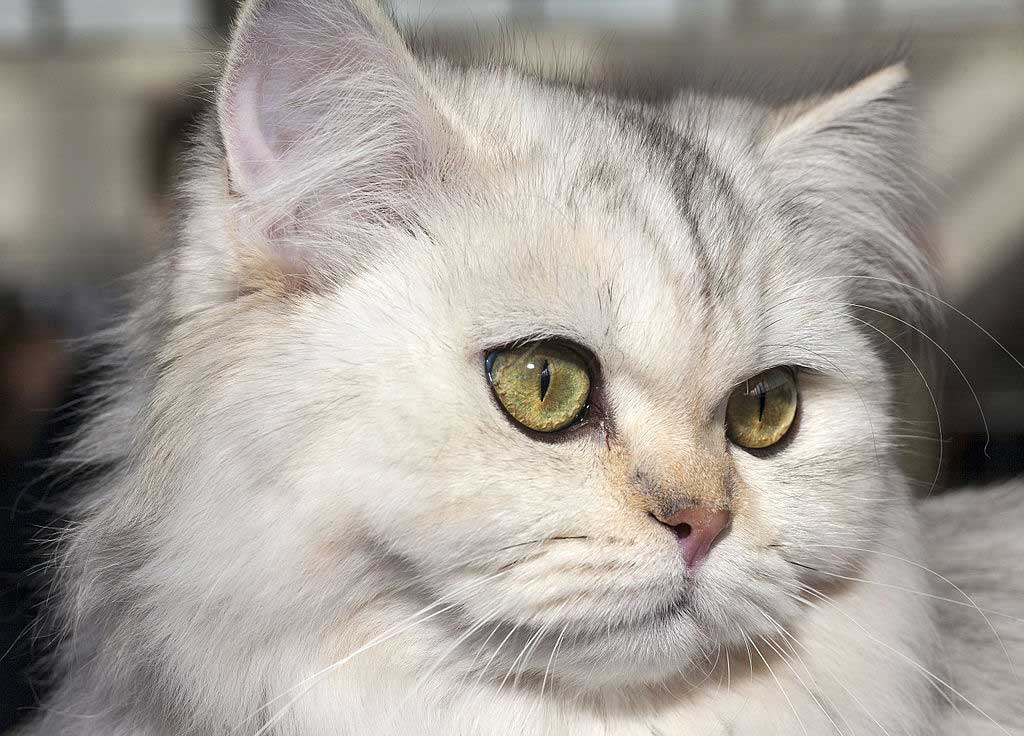
The British longhair cat was recognized as a breed by the International Cat Association (TICA) in 2009. Some other registration organizations still do not consider it a breed of its own..

Photo: wilkipedia

Content

History

The British longhair cat originated in Great Britain at the beginning of the 20th century and is the result of crossing the British Shorthair cat and the Persian cat. The British Shorthair cat They had long interbred with the persian cats, but the resulting cats that showed the long-haired gene of the Persian they were considered unusual.

Because the breed has only recently been bred for its specific traits, have achieved race status in recent history. Much of the history of British longhair cat is associated with its relationship with its namesake and ancestor, the British Shorthair cat.

Physical characteristics

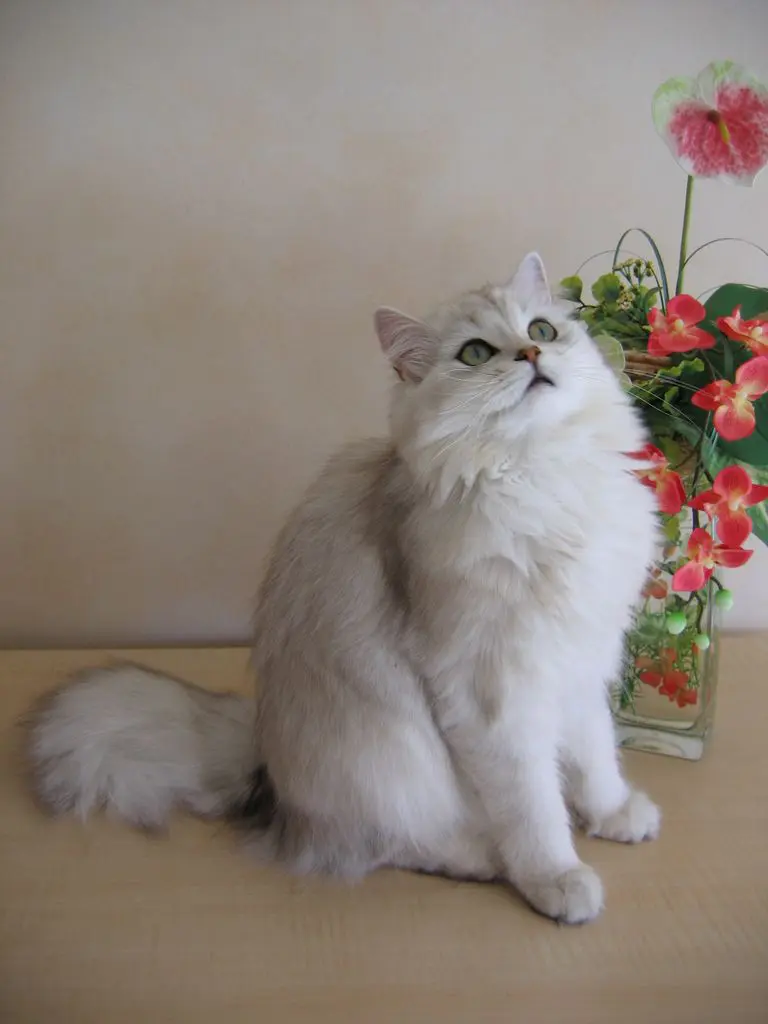
The British longhair cats are size medium, with long hair and a nice round face. His big round eyes, their sweet expressions and fluffy fur give this breed adorable charm. Under all your fluff, these cats have muscular and robust bodies. The british long hair usually weigh between 3 and 7 kg, and males tend to weigh more.

The coat of the British longhair it's dense and straight, and moves away from the body to make these cats appear larger than they really are. Its fur is also soft, thick and available in many colors, like black, the lilac, chocolate or gold. They can also have a bicolor pattern, ticked o colorpoint. These cat breeds shed little compared to other long-haired breeds, but they have a thick undercoat.

The British longhair cat is often compared to the British Shorthair cat and with the Persian cat as for its appearance, And for good reason: This breed of cat follows the same breed standard as the British Shorthair cat, except for their long, soft fur. The magnificent mane of British longhair is the result of the side of Persian cat of his genealogy.

British longhair cat
British longhair cat Bounty Amouge, No. 4 according to the catalog of the international cat exhibition of the RosKosh club «Golden Autumn-2014» (WCF). – Nickolas Titkov from Moscow, Russian Federation, CC BY-SA 2.0, via Wikimedia Commons

Character and skills

These sweet cats are as personable as their smiling faces would suggest.. The British longhair cat He is known for his smooth, calm demeanor and easygoing demeanor. These cats are not easily upset – some might even call them lazy!! Although sometimes they behave like typical playful kittens, they are significantly less active than most cat breeds and become less active with age. They also sleep quite a bit, even by cat standards.

But these cuddly cats are so much more than just sofa companions.. They are incredibly smart, social and loving. The British longhair is a loyal breed that loves people and tolerates most environments.

Although they are very sociable, these cats also have an independent vein, and they often feel good doing their own thing. That does not mean that these cats always leave you alone.; in fact, They have been described as small "private investigators". True to the cats of pop culture, these cats are quite curious. Don't be surprised if you find these cats pawing at your personal belongings or looking closely to see what you are doing..

The British longhair cat He is affectionate and tolerant with children, but he doesn't like to be caught. Parents will have to spend time teaching their little ones not to pick up these adorable cats and to meet them on the floor to pet and play.

Needs of the "British longhair cat"

Thanks to his laid-back temperament, the British longhair adapts to a wide variety of environments. Their gentle and carefree demeanor makes them patient and loving pets for families with young children and frequent guests.. These friendly felines are sociable and adapt to changes, they tolerate curious young children and noisy dinners.

They are far from sticky, and they don't mind being left alone while you go to work or your social activities. This independent spirit also means that the British longhair can be a bit stubborn. They prefer to do things their own way, and often do not respond to owners starting the game when they prefer to lie down. But, this does not mean that your british longhair cat does not want to know anything about you. On the contrary, you will have to spend time showing your love and affection. Lots of pampering, attention and the presence of other pets will keep you from feeling lonely.

These cats love to chat and will have small conversations with you often to let you know that they are hungry., thirsty or just to get your attention. If you have roommates who are easily irritated or you live in an apartment with thin walls, this breed might not be the most suitable.

If what you are looking for is a friendly and cuddly companion that adapts to different lifestyles and living spaces, the British longhair cat it's a good option. This calm cat adapts well to family life, to frequent travel and most life situations, as long as I receive a lot of love and care.

Health

The british longhair cats they are not more prone to disease than other cats, but they have a certain incidence of health problems. This breed has a life expectancy of between 15 and 17 years.

«It is important to check for polycystic kidney disease, in which cysts develop in the kidneys causing decreased function and, finally, "kidney failure". DNA tests are now available to detect the risk of this disease in parents, so it is advisable to do a previous screening. This disease is also very common in the Persian ancestors of the British longhair.

Responsible breeders will test kittens for genetic health problems, but it is important to keep regularly scheduled veterinary appointments and follow the advice of your cat's veterinarian. Health problems can develop later in life and will need to be managed.

British longhair cat

Grooming and care

British longhair mainly handles that task itself. Because of all this self-grooming, your British longhair cat is prone to swallowing a lot of hair and developing hairballs. Help your cat by brushing more frequently or offering hairball relief treatments.

The British longhair cat tends to be a bit lazy, and owners will have to motivate them to move. Encourage play often, provide trees to climb and interactive toys to play with.

«Weight control is very important with these cats because they tend to be less active as adults compared to other cat breeds.. «They are prone to being overweight, Therefore, daily exercise is essential..

How are they smart, these cats are usually easy to train to perform simple tasks, how to use the litter box or scratching post. These food-loving cats will always appreciate a treat to reward good behavior.

Socialization should be easy with this easygoing breed. Kittens british long hair those who are introduced to people and pets at a young age are usually easy to get along with and accept unfamiliar faces well.

Food

The British longhair cat should be fed a high-quality diet approved by your veterinarian. Look for protein ingredients primarily of animal origin. Your cat can be fed dry or wet food. This breed is prone to obesity, so it is important to monitor your food intake.

British longhair
A bluish-white long-haired British cat from the McQueen Cattery. – Felinology, CC BY-SA 4.0, via Wikimedia Commons

For sale "British longhair cat"

Kittens british long hair from a reputable breeder usually cost between 700 and 1.100 EUR, depending on pedigree.

Characteristics "British longhair cat"

Coexistence is important that you have with your new friend. Before considering the acquisition of a cat of the breed "British longhair cat" you know certain factors. You must take into account their character, their need for exercise, their interaction with other pets, their care and if you have small children, their level of tolerance towards them.

Joy

3,0 of 5 stars (based on 1 review)

Activity level

2,0 of 5 stars (based on 1 review)

Friendliness to other pets

3,0 of 5 stars (based on 1 review)

Friendliness to children

3,0 of 5 stars (based on 1 review)

Grooming requirements

4,0 of 5 stars (based on 1 review)

Vocality

2,0 of 5 stars (based on 1 review)

Need for attention

3,0 of 5 stars (based on 1 review)

Affection towards its owners

4,0 of 5 stars (based on 1 review)

Docility

4,0 of 5 stars (based on 1 review)

Intelligence

4,0 of 5 stars (based on 1 review)

Independence

3,0 of 5 stars (based on 1 review)

Hardiness

3,0 of 5 stars (based on 1 review)

Videos "British longhair cat"

Cat British Longhair Blue Aquanatura Barcelona
Gato British Longhair Azul Aquanatura Barcelona
British Longhair Cats - Everything You Need To Know
British Longhair Cats – Everything You Need To Know

▷ The world of Pets: Dogs, cats, birds, reptiles, amphibians

Aegean cat
Unrecognized breed.

Gato del Egeo

Content

History

The Aegean cat is a natural breed of cat from the Cyclades islands of Greece.

This species likely dates back many millennia. Archaeologists have found evidence that the first domesticated cats lived on the island of Cyprus, neighboring Greece, ago 10.000 years. It seems reasonable that, over the years, some of those cats will emigrate to Greece on fishing or trading boats, where they were undoubtedly well received for their ability to mouse. The Aegean cat They may also be related to Turkish cat breeds, as the Angora.

Very often we can see many cats of this type sitting in the ports, waiting for the return of the fishermen, who won't let them miss their share of the catch. They are not afraid of water, so they can fish independently while diving in shallow water.

These cats, common in their homeland, they have only been recognized as a distinct breed in the last two decades. Some consider them a Greek national treasure. So far, they have not been recognized by any cat registry, as the Cat Fanciers’ Association (CFA) wave The International Cat Association (TICA).

Photo: maragreg@Hotmail.gr

Physical characteristics

Aegean cat
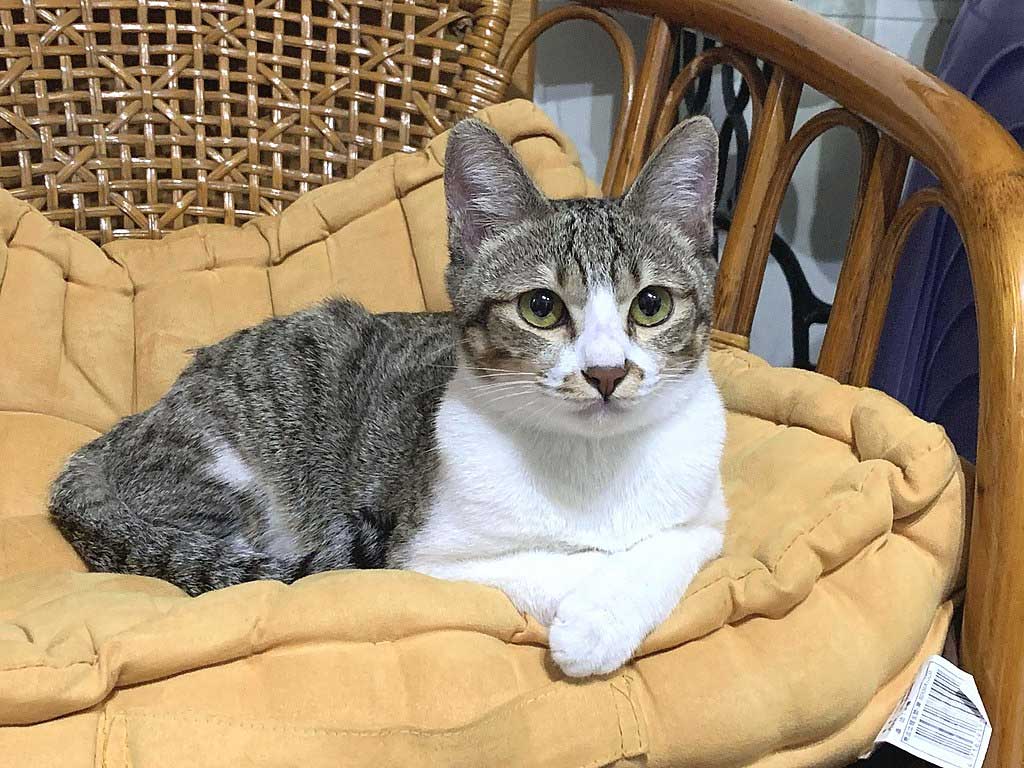
Chelinchan24, CC BY-SA 4.0, via Wikimedia Commons

This is a medium sized cat with a slim but muscular build. The chest is wide and the belly is elevated. The legs are long and muscular in relation to the body. In terms of weight, males can reach 4.500 kg, females one kilo less.

The head is not very big, but it is wide compared to the body. The ears they are well spaced, quite wide at the base with rounded tips, the eyes macaroons, with the outer ends slightly tilted up, they are very expressive and can be of various shades of a surprising green color.

Finally, the fur characterized by a two or three tone pattern, and the target usually occupies two thirds of the total area. Colors can be black, blue, grey, cream, red. The hair, soft and silky, is usually of medium length, glued to the body; there is no undercoat.

Character and skills

The Aegean cat tends to be smart and lively, with good communication skills. Usually, they are kind to people and can be excellent cats for families with children.

True to their heritage as island cats, the Egeos they do not disdain the water and can even go fishing by themselves. Consider this cat if you've always wanted a feline fishing buddy. But, if you have an aquarium or koi pond, should ensure that its inhabitants are protected from a curious cat with a claw.

The Aegean Cat likes to be part of the family and adapts well to most homes.. You will appreciate having an enclosed outdoor area where you can climb or lie in the sun, but he shouldn't be allowed to roam.

Care "Aegean cat"

Aegean cat
Sam Holt, CC BY-SA 4.0, via Wikimedia Commons

The Aegean cat has a semi-long coat that requires relatively little maintenance in terms of grooming, although its silky fur is thicker in winter. The shedding is usually moderate and brushing twice a week is sufficient.

In spring, tends to shed excess hair for a fresh, summery style. But, cats that live indoors tend to shed some hair throughout the year. This is because they live in artificial light conditions., what affects the growth cycle of your coat.

As with all races, be on the lookout for mats that may start to develop while grooming the cat. Remember that regular brushing will help keep the cat's coat clean and healthy..

Regarding the weather, is generally considered an adaptable cat that can live happily in most climates. Remember to always make sure there is shade and cool water when the temperature spikes.

Indoor or outdoor cat?

If you have ever been on vacation to the Greek islands of Andros, Delos, Mykonos, Naxos or Santorini, you may have seen these medium-sized, semi-longhaired cats hanging around fishing boats, lounging in the shade of a coffee chair or sunbathing on a balcony.

The Aegean cat, named after the sea that surrounds it, believed to be one of the oldest types of domesticated cats. It can be a pet in your country of origin, but some lead a wild life, subsisting on their own hunting prowess or the handouts of fishermen.

It is not a breed of cat to be kept in an apartment. You need the freedom you have been used to for thousands of years.

How much activity does he need? "Aegean cat"?

Aegean cat
Seven month old domesticated Aegean cat. Ursula Valentine, CC BY-SA 4.0, via Wikimedia Commons

It is a sociable pet that tolerates life in a flat quite well, but you need some freedom and exercise. He is very independent and tends to be especially attached to one person in the family, but he loves to play, so it is also suitable for families with children and does not have problems with other cats or dogs.

Although he is very affectionate and sociable, this cat has its own personality, does not like to stay snuggled in the lap of his owner, but he knows how to show his affection in another way. It can accompany you in your movements around the house, and is often a meow that seeks the attention of its favorite human.

It is a very active cat, so you need stimuli such as games and outdoor activities, especially if it can run and chase small prey there. Although it is an independent cat, prolonged periods of loneliness may be too much for her.
On the one hand, the Aegean cat live quietly with humans, but on the other hand, retains its independence and feline instincts.

Health and nutrition

The Aegean cat is generally healthy. Since they are not the product of selective breeding, they are less likely to carry genetic diseases. However, it is always a good idea to choose a breeder that offers a written health guarantee against genetic diseases for the first two years of the cat's life.

She is not a complicated cat when it comes to feeding. Fish of any kind will be a delight for our Aegean cat

For sale "Aegean cat"

Probably, the best way to acquire a Aegean cat is to go to Greece and take one home.

If you bring a cat from Greece, must have an International Health Certificate from a veterinarian indicating that he is healthy and in good condition to be transported by air.

The cat may also need a valid rabies vaccination certificate, unless it comes from an area considered rabies free, have less than 4 months or travel to a state that does not require vaccination. The vaccine must be administered at least 30 days before departure.

Characteristics "Aegean cat"

Coexistence is important that you have with your new friend. Before considering the acquisition of a cat of the breed "Aegean cat" you know certain factors. You must take into account their character, their need for exercise, their interaction with other pets, their care and if you have small children, their level of tolerance towards them.

Joy

4,0 of 5 stars (based on 1 review)

Activity level

3,0 of 5 stars (based on 1 review)

Friendliness to other pets

4,0 of 5 stars (based on 1 review)

Friendliness to children

4,0 of 5 stars (based on 1 review)

Grooming requirements

3,0 of 5 stars (based on 1 review)

Vocality

4,0 of 5 stars (based on 1 review)

Need for attention

3,0 of 5 stars (based on 1 review)

Affection towards its owners

5,0 of 5 stars (based on 1 review)

Docility

3,0 of 5 stars (based on 1 review)

Intelligence

3,0 of 5 stars (based on 1 review)

Independence

5,0 of 5 stars (based on 1 review)

Hardiness

5,0 of 5 stars (based on 1 review)

Videos "Aegean cat"

youtu.be/Jwpb82qLfUE

Aegean | Cats 101

youtu.be/Ccvcxkz62-o

Aegean Greek cat swimming

▷ The world of Pets: Dogs, cats, birds, reptiles, amphibians

Chausie cat
Federations: TICA

Despite its wild origins, the Chausie cat has all the features of a domestic cat. Very attached to its owner.
Chausie
Photo: courtneyBolton (Filckr)

Content

Characteristics "Chausie cat"

Coexistence is important that you have with your new friend. Before considering the acquisition of a cat of the breed "Chausie cat" you know certain factors. You must take into account their character, their need for exercise, their interaction with other pets, their care and if you have small children, their level of tolerance towards them.

Joy

5,0 of 5 stars (based on 1 review)

Activity level

5,0 of 5 stars (based on 1 review)

Friendliness to other pets

3,0 of 5 stars (based on 1 review)

Friendliness to children

1,0 of 5 stars (based on 1 review)

Grooming requirements

2,0 of 5 stars (based on 1 review)

Vocality

2,0 of 5 stars (based on 1 review)

Need for attention

4,0 of 5 stars (based on 1 review)

Affection towards its owners

4,0 of 5 stars (based on 1 review)

Docility

3,0 of 5 stars (based on 1 review)

Intelligence

5,0 of 5 stars (based on 1 review)

Independence

2,0 of 5 stars (based on 1 review)

Hardiness

3,0 of 5 stars (based on 1 review)

History

According to legend, the Chausie cat it is a distant cousin of wild cats domesticated in honor of the goddess Bastet in ancient Egypt. In fact, the reality is quite different, despite the eerie similarities between the Chausie real and the artistic representations of some cats of the time.

Born at the end of the years 60 or early 70 in United States, the Chausie would be the first hybrid breed resulting from the cross between a jungle cat (Felis chaus) who lived essentially in Egypt, India, Central Asia and Southeast Asia, and domestic short-haired cats of various breeds, having in common physical characteristics close to those of the Felis chaus.

The idea behind the creation of this hybrid was to create a "domesticated jungle cat" that looked like a Felis chaus but that he was as tame as a domestic cat. The Chausie cat It was intended to attract both daring people trying to domesticate real wild cats and lovers of "exotic" cats.. The bet paid off over the years 90: passionate breeders managed to stabilize the characteristic traits of the breed and consolidate the genetic stock to facilitate breeding.

Thanks to the efforts of these breeders, the International Cat Association (the TICA, an organization that lists and registers all existing cat pedigrees in the world) recognized the breed in 1995. In 2003, gave the owners of the Chausie the opportunity to present your companion in the feline shows organized under your aegis, granting him the title of New Race. But, in the news, they cannot participate in the competitions by themselves.

In France, el LEAF (Livre Officiel des Origines Félines, an association with missions similar to the TICA) follow the position of the TICA and allow owners to participate in exhibitions, but not compete.
As for the other feline associations in the world, and in particular the FIFE (Fédération Internationale Féline), they still don't recognize the breed.

Today, the breeders of Chausie cat they keep working to get new generations closer and closer physically to their wild cousin, especially through crosses with the Abyssinian cat. The breed is found primarily in the United States and Europe, but it also has a following in South Asia and India, although its dissemination is more confidential.

Physical characteristics

Chausie
Chausie – Wolfdogrew, CC BY-SA 3.0, via Wikimedia Commons

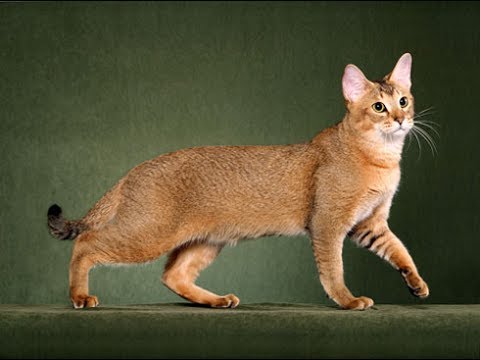
The Chausie it's a big cat (especially the males) with a long powerful guy and a long rectangular body. Has a sleek appearance and powerful musculature, but it is not very showy. The rib cage is wide, the legs are of medium length with stronger hind legs than most other cat breeds. The tail is shorter than that of other breeds and reaches the hock.

In the face, the Chausie has a broad, triangular head with prominent cheekbones, a rounded forehead and a long muzzle. The ears are wide at the base and wide open. Feathers are very popular with breeders of this breed. The eyes, oval in shape and slightly flattened on top, are generally golden yellow hazelnut in color. Light green tones are also accepted.

This cat's coat has a dense coat of short to medium length. The fur is reminiscent of its wild ancestor, the jungle cat Felis chaus, especially for its ticking. The more ticking (several colored stripes on the same coat), more appreciated will be the cat in the feline exhibitions.

Size and weight

Size: Of 40 to 50 cm.
Male weight: Of 6 to 11 kg
female weight: 6-9 kg

Varieties of "Chausie cat"

Currently, the standards TICA y LOOF they only recognize three colors. There may be a Chausie cat with other colors, but they cannot be registered in the LOOF and / or TICA.

Full black

The kitties Chausie negros may show slight brindle markings that disappear as the kitten grows older. Prolonged exposure to the sun can cause your black to turn brown.

Gray-haired black tabby

The black tabby pattern is a direct descendant of the wild cat Felis chaus and is exclusive to Chausie. In fact, no other domestic cat has this pattern, unless you have a wild ancestor in your family tree. So, it is easy to understand why this variety is the most sought after, since it is the most similar to the fur of the jungle cat.

The kitties, originally black, show black brindle markings as they grow, while her fur becomes lighter. The coat of the black tabby has a ticking that changes depending on the part of the body, ranging from dark mouse gray with black tips to a three-striped ticking (mouse gray, black and white) in the finest specimens. This characteristic reaches its full and definitive expression when the cat has 3 years.

Some Chausies gray-haired blacks can be mistaken for a Chausie negro when silver ticking is scarce.

Brown tabby

The brown tabby has a black tabby marking on a brown background, with stripes on the inside of the legs and on the tip of the tail. The shade of brown can vary from cat to cat, as long as it doesn't get too close to the Abyssinian. As with the first two colors, the final color of the Chausie brown ticked tabby not fixed until 3 years of age.

Character and skills

Chausie
Chausie – Wolfdogrew, CC BY-SA 3.0, via Wikimedia Commons

Despite its wild origins, the Chausie cat has all the features of a domestic cat. Very attached to his master, even exclusive, it is a sociable cat that demands a lot of attention and barely supports loneliness. Very affectionate, You can enjoy both being indoors with their owners at home and playing with the other animals in the family. This cat also adapts very well to the presence of children, for whom it can be a good playmate, provided he is taught to control his claws from a young age.

In effect, even if it is a good domestic cat, the Chausie also has a strong character, is often stubborn and may have aggressive reactions, inherited from its wild origins. Your fearlessness can also play tricks on you, especially when it goes outside. In any case, he needs a teacher capable of having authority and patience to reveal all his qualities and temper his predatory side.

True athlete, has a reputation for being a tireless gamer and spending without sparing expense. In fact, they do better in a house with a garden or in a very large apartment, that provides them with enough space and plenty of opportunities to play and run around in the absence of their owner.

Last, the Chausie cat distinguished by high intelligence and hunting instincts superior to those of other domestic breeds. It is one of those cats that likes to learn tricks, look for the ball, walk with harness… but also open taps and doors in the absence of supervision. Thus, it is recommended to use cat toys and stimulate their attention as much as possible, both for your well-being and for the living room furniture.

Care and grooming of the "Chausie cat"

The coat of the Chausie is slightly longer than that of normal domestic cats, but still easy to care. Regular brushing and removal of dead hairs ensure a shiny coat.

Indoor or outdoor cat?

Due to his offspring from a kind of wild cat, the Chausie cat he is very fond of freedom. This athletic cat also has a strong drive to move and can easily jump six feet from a standing position.. Thus, keeping them indoors is only possible under special conditions. If you cannot provide access to the outside, the cat must have a large outdoor enclosure. You must be able to live your natural instincts, ideally hunting mice and birds, to be happy. If you have your cat in an outdoor enclosure, You should be prepared to regularly receive “gifts” from your cat in the form of prey..

How much activity does he need? "Chausie cat"?

This affectionate cat likes to be around his owners and is reluctant to stay home alone. If you are a person who works, it is better to have two cats so that the animals do not get bored. A large, sturdy scratching post and several cat toys will keep them busy and provide variety around the home.. They love to play catch and chase mice and balls. You can also give your cat, water lover, a special treat with a soak in the tub or a bubbly drinking fountain. Some cats like water so much that they will even follow you into the shower.

Health and nutrition

Chausie
Chausie – Wolfdogrew, CC BY-SA 3.0, via Wikimedia Commons

The Chausie is a relatively recent hybrid. Thus, There is very little scientific literature on health problems specific to this breed..

But, analyzes of animals born from two different species draw a picture of pathologies that Chausies, as hybrids, can present: male infertility prevalence, fluctuating physical development (very large or very small individuals), digestive problems, behavioral instability (this cat is still more aggressive than a real house cat) and, in rare cases, heart problems due to malformations of the heart muscle.

Generations of Chausies They are classified according to their "closeness" to their wild ancestor on a scale from F1 to F4 and higher, F1 being the generation born directly from hybridization between a domestic cat (Felis sylvestris catus) and a wild cat (Felis chaus). Males of generations F1 to F3, or even F4, are generally sterile, which considerably complicates the work of breeders of Chausie to develop this breed.

Last, due to its wild origins, this cat has inherited a shorter digestive tract than other breeds. This makes them more susceptible to certain intestinal problems., including inflammation from food allergies, and predisposes them to gluten intolerance.

Life expectancy

12 to 14 years

Food

As their direct ancestors are wild animals, a high-protein diet is even more important for the breed than for other cats. Ideally, feed them their own BARF food. In this way, your cat will have all the important components of a healthy diet that it would get in the wild.

For sale "Chausie cat"

Before buying a Chausie cat, you must be absolutely sure that the hybrid cat suits you. If you can't offer enough exercise, you don't even have to think about getting a cat that likes to move. In any case, in Europe it will be difficult for you to find a breeder. The breed is not very common outside its country of origin.. If you find a breeder, you must check first if he is responsible and takes care of the health of his breeding animals. Due to its rarity, the kitties Chausie they naturally have their price. Depending on the breeder, you can spend up to 10.000 euros for a purebred F1 kitten.

Interesting Facts and Things to Know

jungle cat
jungle cat in Sofia Zoo – Bulgarian: Maria Teresa Cortes Garcia, Learning Center at Sofia ZooEnglish: Maria-Teresa Cortes Garcia, EERC Sofia Zoo, CC BY 3.0, via Wikimedia Commons

To understand the Chausie cat, it is also important to know the jungle cat (Felis chaus).

The jungle cat found in nine subspecies in Asia, Middle East and Egypt.

With his black plumes in his ears, resembles a lynx, which also earned it the name "swamp fox.".

In the wild, the jungle cats they are solitary animals and they hunt at sunset.

Its habitat is mainly near water bodies or wetlands in inaccessible reed thickets or swampy riparian forests. So, they are not afraid of water and can swim excellently.
In captivity, the jungle cats they become very tame and it is said that the ancient Egyptians even trained them to hunt.


Videos "Chausie cat"

HTTPS://youtu.be/wiyk-VyLLtI
Animal Planet : Cats 101 ~ Chausie
Chausie cat / Cat Breed
Gato Chausie / Raza de Gato

▷ The world of Pets: Dogs, cats, birds, reptiles, amphibians

Mekong Bobtail cat
Federations: WCF

The Mekong Bobtail cat still a rare breed of cat, since at the beginning of the decade of 2010 its population barely exceeded 600 registered copies.
Bobtail Mekong
Photos By Sinitsyn

Content

Characteristics "Mekong Bobtail cat"

Coexistence is important that you have with your new friend. Before considering the acquisition of a cat of the breed "Mekong Bobtail cat" you know certain factors. You must take into account their character, their need for exercise, their interaction with other pets, their care and if you have small children, their level of tolerance towards them.

Joy

5,0 of 5 stars (based on 1 review)

Activity level

5,0 of 5 stars (based on 1 review)

Friendliness to other pets

3,0 of 5 stars (based on 1 review)

Friendliness to children

5,0 of 5 stars (based on 1 review)

Grooming requirements

1,0 of 5 stars (based on 1 review)

Vocality

2,0 of 5 stars (based on 1 review)

Need for attention

4,0 of 5 stars (based on 1 review)

Affection towards its owners

5,0 of 5 stars (based on 1 review)

Docility

4,0 of 5 stars (based on 1 review)

Intelligence

4,0 of 5 stars (based on 1 review)

Independence

2,0 of 5 stars (based on 1 review)

Hardiness

5,0 of 5 stars (based on 1 review)

History

The Mekong Bobtail it is a natural breed originating from Thailand, for which it has long been known as Thai bobtail. It has been present in Southeast Asia for many centuries, and legend has it that his courage led the kings of Siam to use him as a guard to protect the treasure chamber from possible theft.

In the 19th century, these cats were considered symbols of loyalty. Royalty used to gift them to the nobility to reinforce their good relations. So it is not surprising that, at the end of the 19th century, el rey Somdetch Phra Paramindr Maha Chulalongkorn, better known as Rama V, give away 200 from them to Tsar Nicholas II of Russia.

Several of them were Mekong Bobtail, that sparked some interest in Russia, so more specimens were imported in the following years. These cats and their descendants are the origin of the breed we know today.. In other words, although it is basically a Thai cat breed, it was the Russians who allowed it to develop and flourish, without modifying it.

But, the breed could not develop under the communist regime, and it was not until the decade of 1980 when Olga Mironova, a renowned cat specialist, took an interest in her and decided that she should be recognized. With the help of Ludmila Esina, Russian breeder and cat specialist, drew up the first standard and adopted the name Mekong Bobtail, in tribute to the river that runs through Southeast Asia.

This cat was first presented at an international feline show in November 2003, during the «Royal Canine Grand Prix» held in Moscow. A few months later, in august 2004, received the recognition of the World Cat Federation (WCF). WCF has not been followed by other organizations since., so it remains the only major feline association that recognizes the breed.

In fact, the Mekong Bobtail cat still a rare breed of cat, since at the beginning of the decade of 2010 its population barely exceeded 600 registered copies. The vast majority are in the former Soviet countries, mainly in Russia and Ukraine. It is almost non-existent in Western Europe and North America.

Gato Bobtail Mekong
MEKONG BOBTAIL cat of rare lynx-point colour Dona Miya Ayutthaya. Cofein Pride cattery (WCF). – Alex opryatin, CC BY-SA 3.0, via Wikimedia Commons

Physical characteristics

The body structure of the Mekong Bobtail is similar to that of Siamese cat. With its long, muscular body and its long, thin legs, has preserved the refined elegance of Thai cats. The strong stature in combination with the beautifully modeled head give the animal a noble appearance. The characteristic feature is the short tail. It is a quarter the length of the body and has different combinations of curves and folds. According to the international breed standard, its length is at least three vertebrae.

The coat color of the Mekong Bobtail reminds of the Siamese cat. Belonging to typical cats point, breed standard allows all colors point no target. Cats often appear with sandy to cinnamon colored fur. The coat is soft and silky to the touch. Hugs the body closely. The effect is produced because the purebred cat has hardly any undercoat.

If you look at the cat's face, you will notice the large ears with the rounded tips. They perch on top of the animal's head and give it an attentive impression. This is enhanced by the slightly outwardly curved ears.. Similar to the Siamese, the breed is characterized by its large, oval eyes. Its deep blue color contributes to the exotic beauty of this rare breed of cat..

Last, sexual dimorphism is well marked, being the males larger than the females.

Size and weight

  • Height: 30 cm.
  • Weight: Of 3 to 5 kg

  • Character and skills

    The Mekong Bobtail cat he is an affectionate cat who enjoys the company of humans. They are very faithful and devoted to their owner and constantly seek their company.. Demands a lot of attention, that returns multiplied by a hundred in affection.

    Sociable and curious by nature, this cat loves to hang out with new people, especially if they give you the attention you seek. Calm and balanced, it is an ideal cat breed for children, as long as, of course, have learned to behave with animals: his patience has limits and he runs the risk of biting, even more than scratching, to those who amuse themselves by pulling their tail or whiskers.

    The sociability of Mekong Bobtail spreads to other animals, and enjoy the company of other dogs, as well as other cats. The presence of other animals in the home is an option to be seriously considered by any owner who has to be away for long periods of time each day., since it is a breed of cat that does not tolerate loneliness. On the other hand, coexistence with small rodents or reptiles should be avoided, since his hunting instinct can overcome his good manners at any moment.

    On the other hand, the Mekong Bobtail easily adapts to a new environment, and traveling by car with your cat should not be a problem. So, they are an ideal option for those who move regularly or want to take their cat on vacation.

    Active and athletic, to the Mekong Bobtail he loves to run around the house, jump on the furniture and perch on the closet. With this energy level, ideally they should have access to the outdoors, where they can run and have fun before returning to their owner to rest quietly. But, can live in a flat, as long as his owner makes sure he gets enough exercise by playing with him often, or even taking him out on a leash.

    If you have free access to the outside, it is recommended to put a necklace with a locket in which your name and phone number appear, In addition, of course, of the essential identification of the cat by chip or tattoo. In effect, although he is very close to his master and wants nothing more than to return to his side, his curiosity and the fact that he likes the company of humans can take him away from home; the risk is that you realize too late that you don't know how to get home

    Last, it is a breed of cat that usually meows, either to let its owner know that it is time to eat or that it is time to open the door to go chase the birds.

    Gato Bobtail Mekong
    Rare MEKONG BOBTAIL kittens, color tabby-point. Mekong bobtail hatchery Cofein Pride – Alex opryatin, CC BY-SA 3.0, via Wikimedia Commons

    Health

    The Mekong Bobtail it is a robust breed with no known genetic predisposition to disease.

    But, can be prone to several conditions common to all cats:

  • The feline idiopathic cystitis, a common bladder infection in cats that can have serious consequences if left untreated;
  • Various eye problems: secretion, redness or even a color change in the eyes;
  • Gastrointestinal disorders: vomiting, flatulence, diarrhea or constipation. These problems are usually due to diet and can pass within a few days or persist for several weeks..

  • It also, as with any breed, care must be taken to avoid being overweight or obese, that could cause serious health problems. Adequate nutrition and sufficient activity levels will normally avoid this problem..

    Grooming

    The Mekong Bobtail cat is a low maintenance cat breed. His short-haired coat only needs to be brushed once a week to remove dead hairs and keep it looking its best..

    It is advisable to prolong the grooming session a bit to take time to check the teeth, ears and, above all, the cat's eyes to make sure they are clean. They can be cleaned with a damp cloth.

    Last, depending on the activity level of the cat and the use of the scratching post, nails may need to be trimmed with nail clippers.

    Gato Bobtail Mekong
    Rare MEKONG BOBTAIL chocolate tip color – Talestra of Cofein Pride – Alex opryatin, CC BY-SA 3.0, via Wikimedia Commons

    For sale "Mekong Bobtail cat"

    The price of a Mekong Bobtail cat is of some 20.000 hryvnia in Ukraine or 50.000 rubles in Russia, what corresponds to some 700-800 EUR.

    As this breed is not yet common in Europe and America, it is usually necessary to import it. In this case, the cost of transport and possible customs duties must be added to the purchase price.

    Videos "Mekong Bobtail cat"

    Mekong Bobtail
    A litter of five little ones Mekong Bobtail discover a new game that seems to captivate them.
    Mekong bobtail play with circuit roller ball

    ▷ The world of Pets: Dogs, cats, birds, reptiles, amphibians

    Cherubim cat
    Federations: IRCA

    The "premium" breed known today as Ragdoll cat is an early descendant of a line of Cherubim cats.
    Cherubim
    Photo: KRO-Media - Flicker

    Content

    History

    Before becoming the RagaMuffins cat on ACFA ⓘ , This breed of cat was collectively known as Cherubim cat and registered in the IRCA registry of Ann Baker, the International Association of Ragdoll cats.

    The efforts of Ann Baker by breeding cats began in the early s 60 and were officially established in 1971 with the formation of IRCA, developing his first line of cats, the Ragdoll cat who was selected to be just a colored cat.

    During the following 23 years he continued to develop other breeding lines using other breeds and increasing genetic diversity; these lines included all the colors and patterns. All breeding lines developed throughout those years were collectively referred to as Cherubim cats and registered in the IRCA for their lines of development – all these lines together were the original founding breeding lines. The Cherubim cats.

    NOTE: The "premium" breed known today as Ragdoll cat is an early descendant of a line of Cherubim cats -> los Ragdolls of the IRCA ⓘ only.

    The founders were actively breeding the entire spectrum of lines of Cherubim cats in the IRCA ⓘ until 1992, When, due to the deterioration of the health and stability of Ann Baker, they decided to leave the IRCA ⓘ and seek recognition as a race within the formal organizations of Cat Fancy.

    Contracts with Ann Baker stipulated that if breeders continued to breed cats of the IRCA ⓘ off your record, The name "Ragdoll" could not be used to describe cats bred. The name Cherubim had also been recorded by Ann at that time. So, even though the RagaMuffin cats were in fact the Cherubim cats original, and that the logical thing would have been to keep Cherubim as breed name, The need arose to "change their name" to remain ethically faithful to their contracts.

    Today, the RagaMuffin cat continues the legacy of its founders by preserving the original focus of the Cherubim cat in personality, the sweet appearance and the genetically diverse and solid health.