▷ The world of Pets: Dogs, cats, birds, reptiles, amphibians

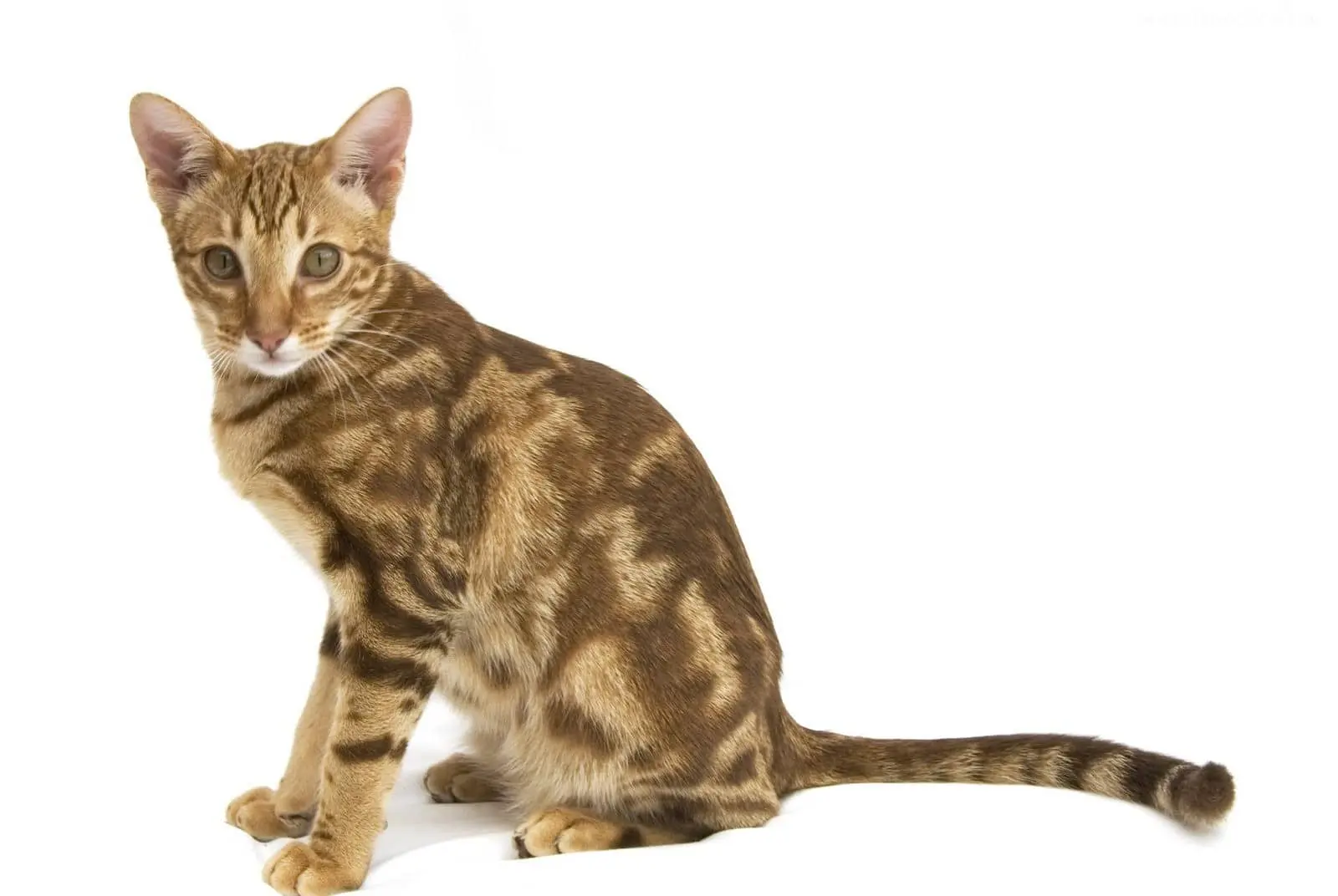
Ocicat cat
Federations: LOOF, CFA, ACF, ACFA, TICA, FIFé, WCF

The Ocicat, sometimes canine behavior, is distinguished by its great adaptability, which is an undeniable asset to make it an excellent family cat.

Content

Characteristics "Ocicat cat"

Coexistence is important that you have with your new friend. Before considering the acquisition of a cat of the breed "Ocicat cat" you know certain factors. You must take into account their character, their need for exercise, their interaction with other pets, their care and if you have small children, their level of tolerance towards them.

Joy

5,0 of 5 stars (based on 1 review)

Activity level

5,0 of 5 stars (based on 1 review)

Friendliness to other pets

4,0 of 5 stars (based on 1 review)

Friendliness to children

4,0 of 5 stars (based on 1 review)

Grooming requirements

1,0 of 5 stars (based on 1 review)

Vocality

4,0 of 5 stars (based on 1 review)

Need for attention

4,0 of 5 stars (based on 1 review)

Affection towards its owners

4,0 of 5 stars (based on 1 review)

Docility

1,0 of 5 stars (based on 1 review)

Intelligence

4,0 of 5 stars (based on 1 review)

Independence

2,0 of 5 stars (based on 1 review)

Hardiness

3,0 of 5 stars (based on 1 review)

History

The Ocicat is the result of the crossing made from 1964 by Virginia Daly, an American breeder, and its name comes from the contraction of the words «ocelot» y «cat«. In fact, although it is the result of purely domestic ancestry, this breed looks a lot like ocelote (Leopardus pardalis), a large wild cat that lives in Central America.

But, the genesis of the breed is mainly due to chance. In effect, the objective of Virginia Daly was to raise one Abyssinian cat colourpoint, far from the image of the Ocicat…

Like this, in 1964, a litter of a Abyssinian cat ruddy and a Siamese cat sealpoint. Among the kittens obtained, the breeder was left with a single female with traits mainly Abyssinians. She was crossed with a male Siamese chocolate-colored. The resulting puppies physically resembled the Abyssinians, but they all had the color point. The breeder was immediately satisfied with the result and repeated the same crossing until one day a kitten with a particular coat was born.: call Tonga, one of the kittens had golden spots on white background. By not coinciding with the objective of Virginia Daly, was quickly castrated and sold to a private.

It was not until some time later that the breeder turned her attention back to this type of wild cat of primitive color, during a correspondence with the geneticist Clyde Keeler. Seeking to revive an extinct feline breed, the "spotted fishing cat of Egypt", was very interested in the fur of Tonga. He would have liked to cross it with his own mother, but the recent sterilization of the young cat made it impossible. Then the same crossing was repeated that gave rise to Tonga, until you get stained individuals. That's how it went, and the history of Ocicat started in earnest.

Soon Virginia Daly crossed these spotted cats with the American shorthair cat. The purpose of these unions was to obtain larger individuals, as well as the silver color of the race.

Over the years 80, the Ocicat began to be known and appreciated by the public and breeders. Soon, many breeders became interested in this new breed and international organizations began to officially recognize it. Like this, after being accepted in 1966 by the Cat Fanciers’ Association (CFA) as an experimental breed, obtained full breed status in 1987. That same year, the International Cat Association (TICA) also recognized the breed. Five years later, in 1992, it was the turn of the Fédération Internationale Féline (FIFé).

This period also marked the spread of the breed throughout the world and its recognition by various national bodies., as the Governing Council of the Cat Fancy (GCCF) in Britain or the Livre Officiel des Origines Félines (LOOF) in France.

But, Although various organizations from various parts of the world now recognize the Ocicat, its number of members is still limited. This can be explained in part by the fact that in some countries all interbreeding with any other breed is prohibited., which mechanically limits population growth as well as the diversity of the genetic heritage. But, this is not the case everywhere: en el Reino Unido, for example, crosses with Abyssinians are allowed, which obviously facilitates its diffusion.

In any case, today there are great differences in the establishment of the Ocicat from one country to another. In France, still a very rare breed of cats, with less than 10 registrations per year in the LOOF since the beginning of the century – the number is even nil in some years.

The same is true in Switzerland, although, unlike france, looks like a small upward trend is taking place, since since 2017 more than 10 births per year in the Fédération Féline Helvétique (FFH).

The Ocicat is much more present in the UK, since the number of annual births registered by the GCCF exceeds 50 cats a year. Although this figure may seem high compared to other countries, it is still a decrease compared to the second half of the decade of 2000 and the first of 2010, when he approached a hundred.

Last, is in your country of origin, United States, where the Ocicat is more represented and has been more successful in establishing itself in households. Throughout the decade of 2010, stood around the post 20 (of something less than 50) in the CFA's annual registration ranking.

Physical characteristics
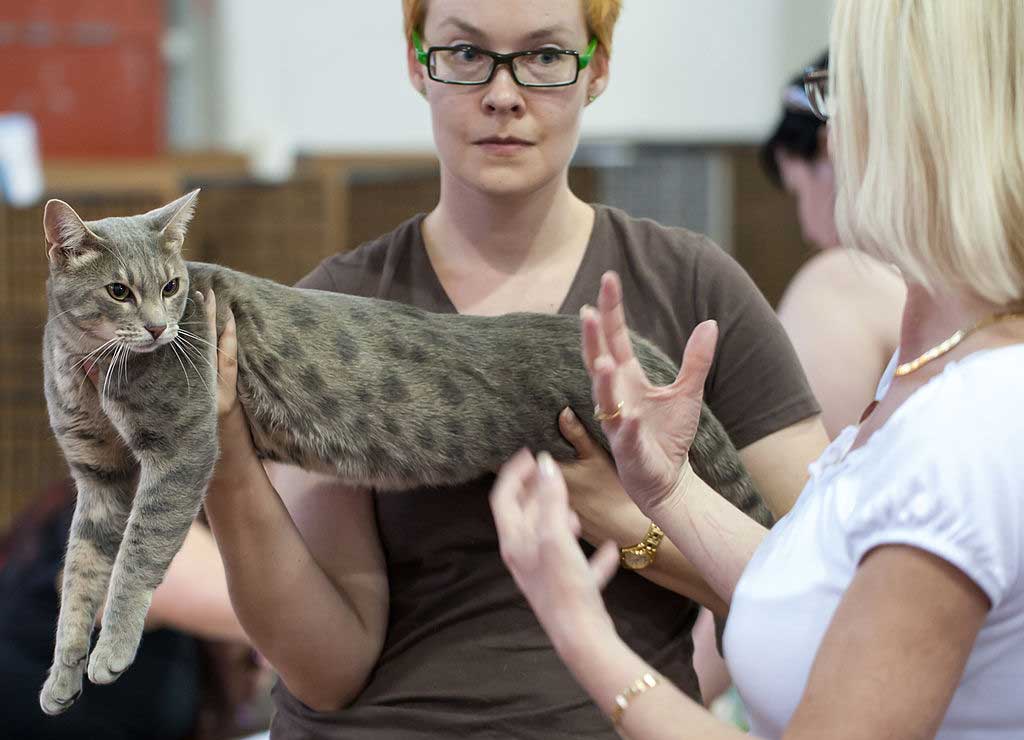
Ocicat
An ocicat presented at the FIFé cat show in Hyvinkää in Finland. Color : Blue spotted tabby – Heikki Siltala-catza.net, CC BY 3.0, via Wikimedia Commons

The Ocicat it has particular physical traits that make it a wild-looking feline race. More concretely, although it is a Domestic cat, looks a lot like a ocelote and represents a perfect blend of grace and power: a medium-sized feline, muscular and always very elegant. It is much heavier than it seems.

The Ocicat is built around a fairly deep chest. Its back must be straight, but the topline is slightly higher at the back of the body. The tail is long, fine and has a dark tip.

The legs they are strong, muscular and of medium length. The feet must be oval, compact and proportional to the legs.

The head it is triangular and angular, like that of his Asian ancestor the Siamese. It rests very harmoniously on a neck fine and quite arched. The snout it is wide but well defined. Master a strong jawline and a well-defined chin.

The ears they are large and set high on the head. They usually have small strands of hair on top.

Their eyes they are large, almond-shaped. They are very expressive and reflect their intelligence. All are accepted colors, except blue. On the other hand, there is not necessarily a correspondence between eye color and coat color.

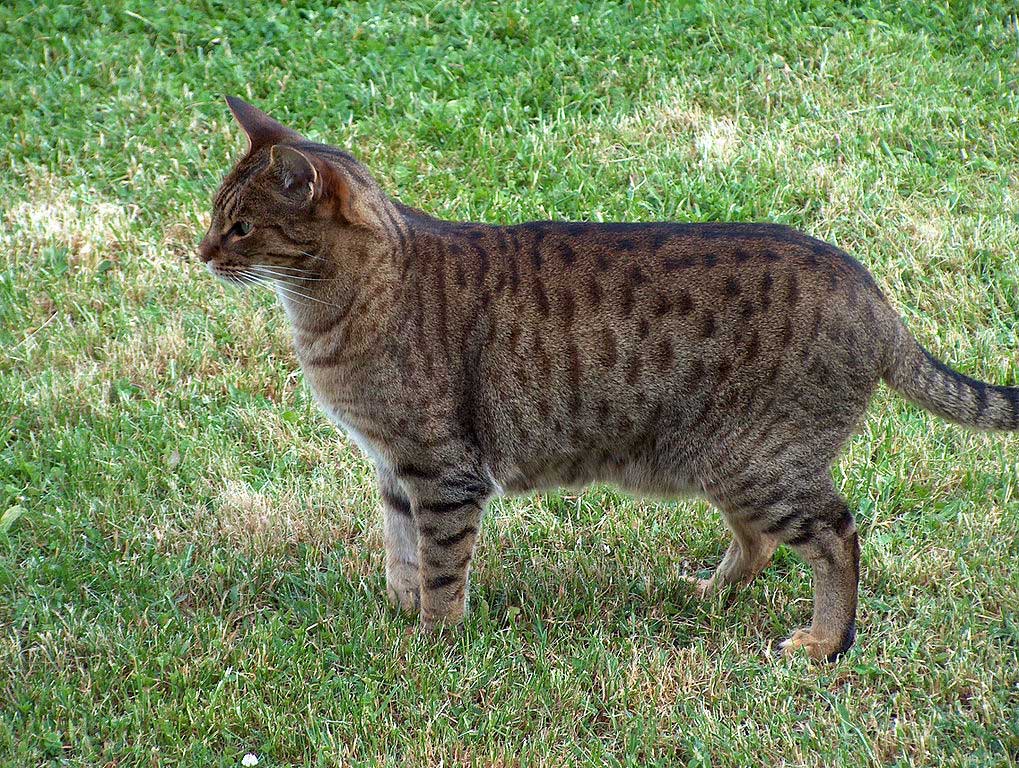
The fur of the Ocicat it is made up of short hairs, soft and shiny, always decorated with those spots that characterize it so much, giving it the appearance of a wild cat. The spots along the spine are rather round and concentrated, while those of the shoulders and the back of the body are more dispersed. The largest markings are usually found on the flanks and under the belly. The tail also has these markings, and there are usually darker hairs around the eyes and on the cheeks. It also, the forehead is usually marked with an "M", also darker than the basic coat.

There is some diversity in the exact appearance of the fur of the Ocicat, with no less than 3 fur patterns (solid, spotted tabby and silver / smoke spotted tabby) and 6 colors (chocolate, blue, leonado, black, cinnamon and lilac) possible. In all cases, slight silver shine possible, which raises the number of combinations to 36.

Last, the breed is characterized by a certain sexual dimorphism, since females are usually smaller and thinner than males.

Size and weight

  • Size: Of 30 to 35 cm.
  • Weight: Of 3 to 5 kg

Breed standard

The breed standards are documents prepared by official bodies that list the conditions that an Ocicat must meet to be fully recognized as belonging to the breed.:

Character and skills

Ocicat
Ocicat (male) – I, ToB, CC BY-SA 3.0, via Wikimedia Commons

The Ocicat is always cheerful and energetic by nature. Very sociable and active, loves to play with his humans or other animals.

They are always happy to play, but they also like to spend long periods of time resting with their owners, for example, spending the night on his lap. Many of the representatives of the breed tend to choose a particular family member with whom they form an especially intense bond., although this does not prevent them from being affectionate with others.

This closeness to their humans makes them an excellent student for those who want to teach their cat tricks.. These may include, can learn to find and retrieve objects thrown by his master, to lie down when ordered or to respond to his name.

In fact, this little feline totally breaks the image of the proud and independent cat. He is always happy to accompany his owners everywhere, without hesitation to follow them around the house… or by any other site. In fact, is usually perfectly capable of walking on a leash, making it much easier to take you everywhere. And when that is not an option, can be carried in arms: that they take it is not a problem, as long as it's done with a little respect.

It is also an ideal option for someone who wants to take their cat on vacation or even on a trip., as it can adapt to a new environment without too much trouble.

This is possible thanks to the fact that he is not worried about meeting new people.. He even likes to receive visitors at home and is not shy with them. For them, represent new possibilities for interaction and sources of caresses, and does not hesitate to meet him on his own.

It also, both at home and elsewhere, things go better because he easily assimilates the rules. He is very sensitive to vocal reprimands from his beloved masters and, usually, does not repeat the same mistake twice once caught red-handed (for example, if you have climbed on the table during the meal, or any other undesirable behavior). It is also common for him to show that he has understood the lesson by adopting an attitude similar to that of shame, like many dogs do.

In summary, do not be fooled by its wild appearance: this sometimes canine behavioral animal is distinguished by its great adaptability, which is an undeniable asset to make it an excellent family cat.

Often becomes the best friend of children, as long as they know how to behave with respect towards him. However, it is important to keep in mind the basic rules of precaution: Whatever your race, a cat should never be left alone with a young child, without the slightest adult supervision.

They can also be very suitable for older people, especially if they spend a lot of time at home and like to give them attention and affection.

Regardless of the age of the owners, they love attention and are only suitable for people who can and enjoy spending time with their pet. Otherwise, will suffer a lot.

Allowing him to have a little playmate by his side can be a wise way to keep him from suffering from loneliness., since their sociability does not only extend to humans: in general, appreciates sharing your home with a partner or with a dog, as long as, of course, this one belongs to a breed that is friendly to cats. Being dominant by nature, usually direct the other animals in the house, even when they are bigger than yours. But, this trait means that introductions to an unknown animal must be done very gradually, to avoid any kind of conflict, especially if he's also the dominant type.
In view of his tendency to play with everything that moves, It does not seem wise to try to get it to live with another animal that may be prey. In fact, it is better to avoid coming into contact with rodents, birds or fish, since it could end badly.

Due to his mental acuity and love of the game, not only quickly learn the tricks, they also love puzzles and other toys designed to stimulate their intelligence. But, they can sometimes become possessive of them, so you have to teach them to share from a young age. It also, precious items that you might mistake for games must be hidden or kept out of reach at all costs, taking into account that he is perfectly capable of learning to open doors or drawers by watching his masters do it…

Like most of its congeners, to the Ocicat he loves to hang from the heights. And given its flexibility, there is no furniture, however big it is, that you resist. You also need plenty of space and toys to feel good and get all the exercise you need.. If you live in an apartment, it must be of a certain size and equipped with numerous games, as well as with furniture and a cat tree that allows him to observe his little world from above.

Last, the Ocicat has inherited a strong voice from his ancestor the Siamese cat. He does not hesitate to use it when he has a request to make, and knows perfectly how to make himself understood when he is hungry or needs attention. Their meows are also a very good conversation tool., since he likes to chat with his master responding to his voice. Their purrs are also especially loud; some like, to others not so much. In any case, It is not as loud or demanding as the Siamese.

grooming and care "Ocicat cat"

Ocicat
Picture of a cinnamonsilverspotted ocicat – Hansboskar, CC BY-SA 4.0, via Wikimedia Commons

The Ocicat it is a breed of cat that is easy to care for.

Its short and soft coat does not need to be brushed more than once a week to remove dead hair. But, to avoid dead hair all over the house, more frequent brushing is necessary during spring and fall shedding periods.

It is seldom necessary to bathe your dog. when it is so, it is essential to use a shampoo specially designed for cats.

Weekly brushing is also an opportunity to take care of other parts of the body. The first thing to do is check the condition of your eyes and clean the area around them if necessary.. This will help prevent infections and detect any problems in this area early..

The same goes for the ears.: a weekly check and cleaning to remove dirt will help limit the appearance of problems in this area, starting with ear infections.

The teeth should also be brushed regularly with a special toothpaste for felines.. This is especially important, since the Ocicat is especially prone to periodontitis: brushing prevents plaque formation, which is the cause of many oral problems, including this one. Daily brushing is recommended, but if it is done once a week, it's already very good.

As for the claws, they tend to grow quite fast. So, if he only goes out or a little time passes, they usually need to be trimmed regularly. If they get too long, not only can they hinder you when you move, but also break and potentially injure you at the same time. In any case, if your dog does not have access to the outside, it is essential that you have a scratching post: otherwise, you risk using furniture or curtains to scratch.

The gestures to take care of your cat's coat, as well as his eyes, ears, teeth and claws, should not be done randomly, since you run the risk of harming or even injuring you. The first time, no hesitation to learn the correct way of doing things from a professional vet or cat groomer. It also, there are many reasons to get your kitten used to being handled from an early age, so that grooming sessions are not unpleasant for him, but that, on the other hand, be beautiful moments of complicity.

Indoor or outdoor cat?

The cats Ocicat they do not necessarily need to have access to the outside to feel comfortable. But, it would be ideal if you could allow the animals to go out into the wild from time to time. The ideal is a secure garden or, at least, a safe outdoor area. Basically, representatives of this breed always want to be close to their humans and not be left alone for a long time, so cats don't go on long excursions, but they stay close. Due to his affection and easy training, it is also possible to accustom the kitten Ocicat on the leash and take small excursions into nature.

How much activity does he need? "Ocicat cat"?

If you are thinking of buying a Ocicat, you should know that you will only be happy if you get enough attention. Play time and pampering together are essential. Since cats with an athletic build have quite a bit of energy, you have to dedicate time to hunting games, but intelligence games are also very well accepted. It also, representatives of this breed always seek contact with their humans, so it is especially important that, as a member of the family, be allowed to always be where the center of activity is. It also, must provide appropriate opportunities for scratching and climbing, so that the existing urge to move can also be acted upon. So being alone isn't too hard, you always have to provide a Ocicat a companion.

Health and nutrition

"Ocicat cat"

Ocicat
Ocicat "Rizzo" (cat breed) – ToB, CC BY-SA 3.0, via Wikimedia Commons

The Ocicat is generally in good health and lives a long time (until 15 years).

But, is not immune to certain problems inherited from its ancestors the Siamese cat and the Abyssinian cat:

  • Hepatic amyloidosis, a disease that can affect the kidneys and/or liver. Causes incomplete dissolution of certain proteins and leads to a buildup of deposits in organs. Loss of appetite, the diarrhea and vomiting it causes often lead to significant weight loss. Appears among 1 and 5 years of age and must be diagnosed quickly so that it can be controlled with specific treatment and a low-protein diet. Failure to do so can be fatal;
  • The pyruvate kinase deficiency (PKDef), an inherited condition that corresponds to a deficiency of this enzyme important for the proper development of red blood cells. The consequence is anemia, more or less serious depending on the case, causing various symptoms such as lethargy, diarrhea, weight loss and eating disorders;
  • The Hypertrophic cardiomyopathy (the cardiomyopathy), which is the most common heart disease seen in cats and corresponds to excessive thickening of the walls of the heart. It can be of hereditary origin, but this is only one of the possible causes. In all cases, manifests itself in various ways (breathing difficulties, hindquarters paralysis, vomiting, lethargy, significant weight loss, etc.), but the symptoms usually appear suddenly. Some individuals recover within a few months, while others die quickly;
  • The periodontal disease (o periodontitis), what is an inflammation of the gums. If the problem is not treated in time, dental abscesses may form, and it can also occur, for example, loosening of teeth or severe difficulty chewing certain foods. Longer term, if the bacteria reach the circulatory system and the jaw, infection can lead to death;
  • Progressive reticular atrophy, an incurable, inherited eye disease that causes progressive loss of vision, culminating in blindness. It has been found in some individuals, but its prevalence is still very low in the population of the breed.

The best way to avoid acquiring a cat that may suffer from some hereditary disease in the near future is to go to a serious breeder. Any breeder of Ocicat trust must be able to present not only a veterinary health certificate, but also the animal's health card (or vaccination record), containing the vaccines administered, as well as the results of genetic tests performed on the parents or the kitten, that demonstrate that they are free of inherited diseases.

Last, even if your pet looks healthy, a routine annual visit to the vet never hurts, and in fact it is highly recommended. Allows a complete health check, that sometimes allows discovering emerging problems, and also offers the opportunity to check that vaccinations are up to date. It also, the owner must ensure that their pet's antiparasitic treatments are renewed throughout the year, whenever necessary, so that the pet never stops being protected.

Food

The Ocicat he is a little complicated cat when it comes to feeding and is very happy with good quality industrial food. He also likes prepared meat dishes, vegetables and starch.

In any case, the products chosen and the servings supplied must be adapted to your needs, that depend first of all on your age, your state of health and the amount of physical exercise you do on a daily basis.

The Ocicat not especially prone to obesity but, as with any race, it is important to watch your weight. This is especially true if you have been neutered, as this increases the risk of obesity. So, a monthly weigh-in is necessary, and any deviation that is confirmed or even accentuated the next time must be taken seriously: then it is necessary to take him to the vet to identify the origin of this weight gain. This may be due to a diet that is not adapted in quality and / or quantity., but also to the appearance of another health problem.

It also, like any cat, a bowl of fresh, clean water should be available at all times.

For sale "Ocicat cat"

The price of a Ocicat usually oscillates between 700 and 1400 EUR.

But, in Europe, the number of breeders can be counted on the fingers of one hand, so it is often necessary to arm yourself with patience to find the rare pearl: you are very often placed on a waiting list for months.

One option is to search the UK, where there are many more breeders. This allows you to choose from a larger number of kittens, while avoiding long delays.

whatever the country, the amount charged depends, in particular, of the reputation of the kennel, from the lineage the kitten comes from, but also and above all of its physical characteristics. In the case of adoption from abroad, It must be taken into account that several costs are added to this price: transport, quarantine, administrative transactions, etc.

Interesting data

The Ocicats They are quite fond of water and some representatives of the breed turn out to be "water rats" and enjoy a bath in the bathtub or pool.

Videos "Ocicat cat"

[embedyt] www.YouTube.com/watch?v=qPtG-EtS3QM[/embedyt]
www.YouTube.com/watch?v=hMQ6VbAlXpA

▷ The world of Pets: Dogs, cats, birds, reptiles, amphibians

Munchkin cat
Federations: LOOF, TICA

Content

Characteristics "Munchkin cat"

Coexistence is important that you have with your new friend. Before considering the acquisition of a cat of the breed "Munchkin cat" you know certain factors. You must take into account their character, their need for exercise, their interaction with other pets, their care and if you have small children, their level of tolerance towards them.

Joy

5,0 of 5 stars (based on 1 review)

Activity level

4,0 of 5 stars (based on 1 review)

Friendliness to other pets

5,0 of 5 stars (based on 1 review)

Friendliness to children

4,0 of 5 stars (based on 1 review)

Grooming requirements

3,0 of 5 stars (based on 1 review)

Vocality

2,0 of 5 stars (based on 1 review)

Need for attention

5,0 of 5 stars (based on 1 review)

Affection towards its owners

5,0 of 5 stars (based on 1 review)

Docility

4,0 of 5 stars (based on 1 review)

Intelligence

5,0 of 5 stars (based on 1 review)

Independence

1,0 of 5 stars (based on 1 review)

Hardiness

3,0 of 5 stars (based on 1 review)

History

The Munchkin cat is a recent American feline breed, but the existence of short-legged cats has been documented several times throughout the 20th century. These may include, already in the decade of 1930, en el Reino Unido, These cats lived for four generations before disappearing during WWII. Over the years 50, in St. Petersburg (Russia), a short-legged cat appeared, nicknamed the "Stalingrad Kangaroo" for its propensity to sit on its hips and box with its small front legs. Another short-legged cat was also observed in the 1990s. 1970 in new england, United States.

But it was in 1983, in Louisiana ((UNITED STATES)UU.), when a music teacher called Sandra Hockenedel found two pregnant short-legged cats under a truck and called them Blackberry and Blueberry. Found a home for Blueberry, but he stayed with Blackberry. Blackberry gave birth to a litter of normal and short-legged kittens. One of the latter was named after Toulouse, in honor al pintor Toulouse-Lautrec, that conserved the legs of a child in the body of an adult, and gave it to her friend Kay LaFrance, who lived nearby.

All the Munchkins current descendants of the various encounters of Blackberry and Toulouse with others domestic cats. In fact, their owners allowed them to roam freely on the plantations, and their various encounters with other domestic cats resulted in many litters with kittens of the same anatomical peculiarity. Like this, a colony of short-legged cats soon developed in the area. Hockenedel and LaFrance they decided to call the cats Munchkin, in honor of the inhabitants of Munchkinlandia in Victor Fleming's film 1939 The Wizard of Oz, and they got in touch with him Dr. Solveig Pflueger for me to study them.

He discovered that the short legs of the Munchkin cat were due to a natural genetic mutation that makes the upper leg bone short. This gene is dominant, which means that it is enough for one of the two parents to be a carrier, and therefore have this physical characteristic, so a kitten is likely to have it too. Aware of possible health risks, several breeders asked the teacher David Biller, from the University College of Veterinary Medicine at the University of Kansas, to X-ray the spines of several Munchkins. He concluded that there was nothing wrong with these cats, but that the results of his work could not be considered definitive, since the breed was too new.

At the same time, breeders examined the paws of some of the older cats - also with X-rays- and found no damage to the joints or bones. They concluded that the mutation did not pose a risk to cats, sparking a debate that continues to divide cat lovers around the world..

"Munchkin cat"

Munchkin cat
Munchkin cat – Sasha Krotov, CC BY 3.0, via Wikimedia Commons

In 1991, the Munchkin cat was presented to the general public at a cat show held at the Madison Square Garden from New York, and the breeders began to pressure the TICA (International Cat Association) to recognize the race. The TICA refused at first (in 1991), but four years later it took a turn: in 1994, granted the breed the official status of a new breed in development, despite protests from Katherine Crawford, TICA judge for many years, who resigned arguing that this recognition was an affront to ethics.

Indifferent to the heated debates that sparked, the Munchkin they continued to live their feline life and conquer the public, obtaining in particular in 2003 full recognition of the TICA, and therefore the possibility of competing in the exhibitions organized under the aegis of the organization.

This remains the only major feline association to have recognized the breed.. The American Cat Fanciers’ Association (CFA) has not taken the step, the Fédération Internationale Féline (FIFé) says he refuses to recognize a race 'based on a genetic disease', and the British Governing Council of the Cat Fancy (GCCF) has held a similar position since 1991 advising against the importation of these cats, adding that "it is not intended to recognize a race based on a genetic abnormality".

In other words, the dispute of Munchkin is far from over. But, it would be too easy to summarize, as some do, as a dispute between "retrograde feline organizations that do not accept change", on the one hand, and "feline organizations that do not think about the welfare of cats and only seek novelty", for another. All renowned feline organizations are committed to the health of the feline population, but they have different approaches: some prefer to take time to study any new mutation to make sure it is safe before recognizing a breed that carries it, while others choose to recognize it quickly to establish a framework for breeders and study the new mutation.

It's not the first time, not the last, that these debates shake up the world of cat lovers. But, if the discussions around the Munchkin cat they are so virulent and they take so long, it is mainly due to the attitude of some unscrupulous breeders who take advantage of the situation to make easy money without worrying about the health of the animals. Like this, although they know perfectly well that in that case a quarter of the litter never passes the fetus phase, some do not hesitate to raise two Munchkins, with the sole objective of not obtaining a litter with half the "normal" cats that are not sold.

At the end, despite the mistrust it generates, the Munchkin cat is present all over the world. But, due to lack of recognition and, Therefore, official registration of the breed's representatives in the registries, it is difficult to get an exact idea of ​​its true popularity. But, the countless photos and articles on the net suggest that this cat at least arouses great curiosity.

In France, where the Livre Officiel des Origines Félines (LOOF) is one of the few national associations that recognizes the breed (in two different varieties, depending on the length of your hair) and, Therefore, keep a record, between 2011 and 2019 were registered 134 Munchkin shorthair and 198 Munchkin longhair. The trend is up, nails on 50 registrations per year, but race only represents something more than 0,1% of the country's feline population.

Physical characteristics

munchkin cat
munchkin cat – Tasy Hong, CC0, via Wikimedia Commons

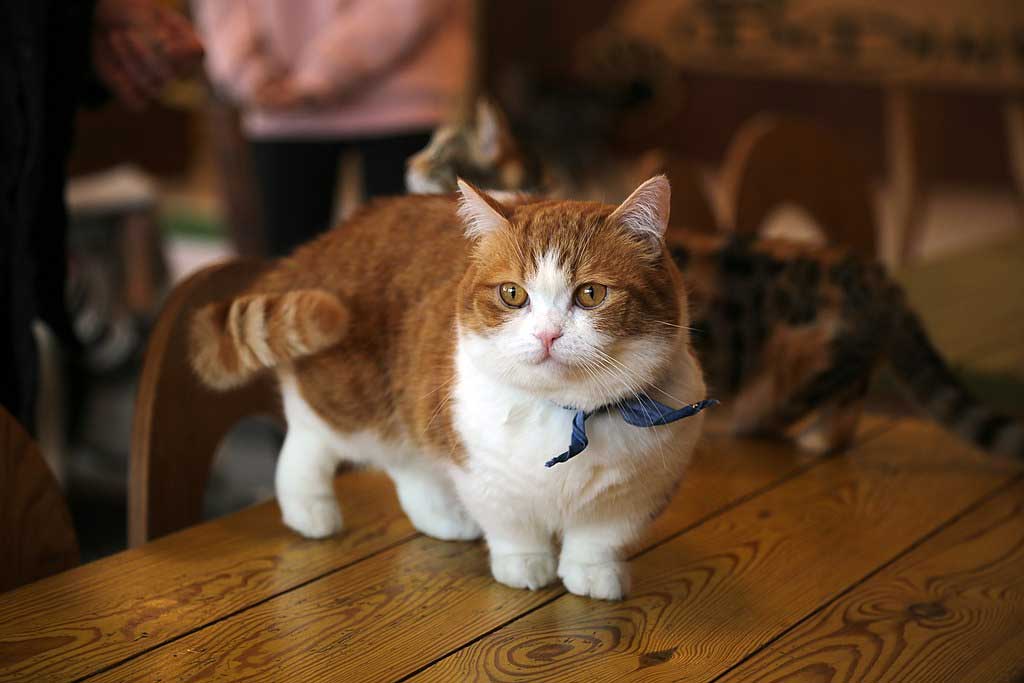
The Munchkin cat has a midline morphology semi-foreign. His body is muscular but not compact, and ends in a tapered tail about the same length as the rest of the body.

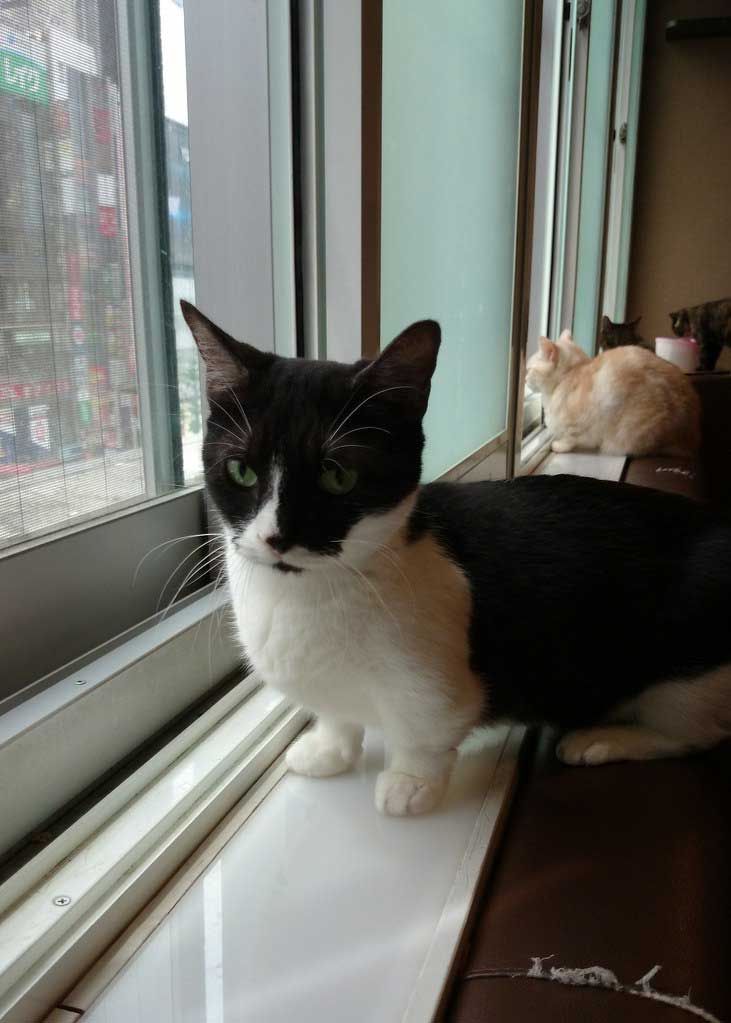
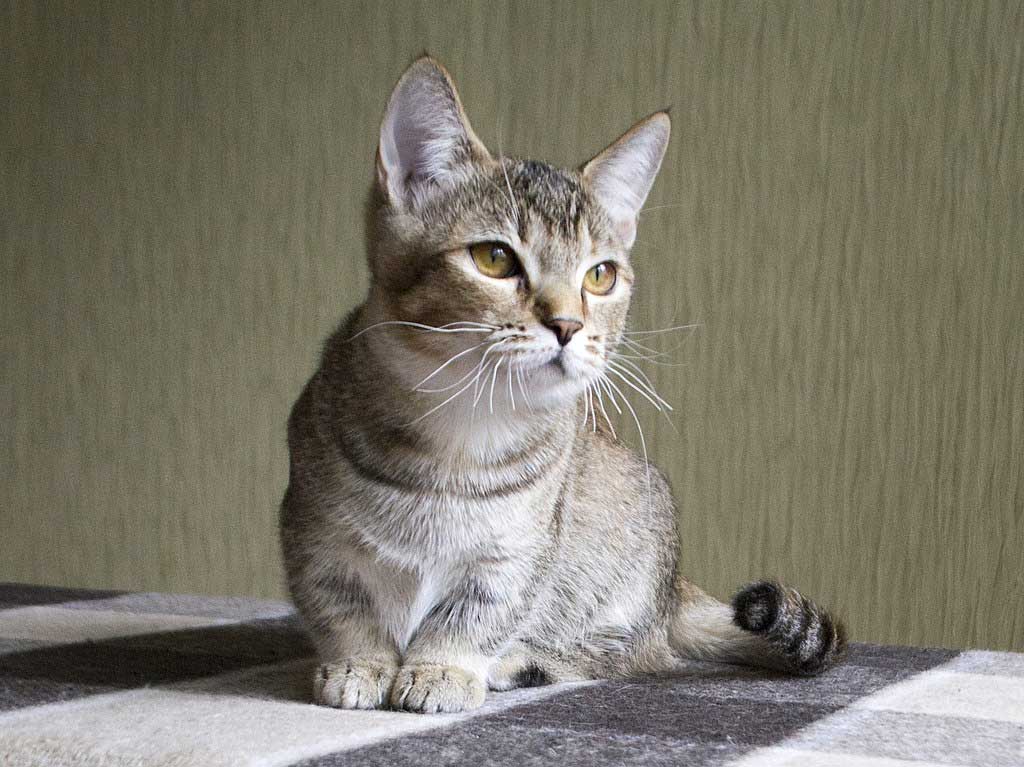
The legs they are short (between 5 and 10 cm shorter than a normal cat), and the upper bone is approximately the same length as the lower. They are straight, with a medium bone structure and proportionate musculature.

The head is slightly rounded, with cheekbones well defined. The ears are of a size proportionate to the rest of the body and end in a slight curve. The eyes they are almond-shaped and can be of any color.

The fur of the Munchkin cat can be short (Munchkin shorthair) or semi-wide (Munchkin longhair). Some organizations, as the TICA (International Cat Association), They even consider them two different breeds that compete in two different categories at cat shows., but they share the same standard. This is not the position of the LOOF (Livre Officiel des Origines Félines) French, for whom they are simply two varieties of the same breed. In any case, long hair coat has a silky texture, while the one with short hair looks shiny.

All are allowed colors and fur patterns, including the typical pattern colourpoint of the Siamese cat.

Last, the sexual dimorphism is marked, the female being smaller than the male.

But, it is important to point out that today many crosses of Gatos Munchkins with other races and others domestic cats, both long-haired and short-haired. This diversifies the breed's gene pool to avoid health problems, but it also means that the aspect of the breed is not fixed and can continue to evolve in the future.

It also, if even 2015 short legs were officially considered the exclusiveness of the Munchkin cat, and that any cat that presented this particularity and corresponded to the standard (regardless of their origins) could be recognized as Munchkin cat, It's not like that. In fact, Since this date, los «Munchkins with Persian appearance" are regarded as a breed in their own right by the TICA (The International Cat Association): the Minuet (or Napoleon).

Size and weight

  • Male size: 16 to 20 cm.
  • female size: 15 to 18 cm.
  • Male weight: 3 to 4 kg
  • female weight: 2 – 3,5 kg

Breed standard

The breed standards are documents established by official bodies that list the conditions that a dog must meet. Munchkin cat to be fully recognized as belonging to the race:

Varieties

"Munchkin cat"

Munchkin Cat
Munchkin Cat – Flickr

There is a Munchkins shorthaired and Munchkins longhair. The TICA (The International Cat Association), the only world association that recognizes the Munchkin cat, even consider that they are two different races. On the other hand, for the French reference body, the LOOF (Livre Officiel des Origines Félines), they are simply two varieties of the same breed.

The Long-haired Munchkin cat has the same origin as the short haired munchkin cat. It is not known if Blackberry, the original female rescued by Sandra Hochenedel in Louisiana, he had the gene for long hair, but the subsequent wide variety of crosses with pedigree and non-pedigree cats may have introduced him to this breed at an early stage, Surely with all the colors and known patterns of the feline world.

The Long-haired Munchkin cat has a semi-long, silky coat and a moderate undercoat. The hair is described as suitable for all climates, although most breeders recommend that this tiny cat be kept indoors. In other respects, the long-haired variety is very similar to short hair. It has a body size medium and rounded, wedge-shaped head and large eyes. Despite his small stature, they are very active, they have a curious nature and strong personality.

It also, the Munchkin cat has crossed with him Persian cat to create the Minuet, sometimes called Napoleon, a new breed of feline accepted by the TICA in 2016.

in addition, it has also been crossed with other cats to create new breeds. But, unlike in the Minuet, the results of these crosses are not yet recognized by any official body. This is how he crossed Munchkin cat with the :

Character and skills

munchkin cat
A munchkin cat grooming herself – in:User:Pockle, CC BY-SA 3.0, via Wikimedia Commons

The various organizations that recognize race allow a Munchkin cat grew up with another Munchkin cat, with a European shorthair cat (Common european cat) or with a Domestic cat (that is to say, no pedigree, but owned by a family that normally guarantees his good health). But, some people do not hesitate to break this rule and organize breeding with individuals of other breeds. How the short leg gene is dominant, some of the kittens born from these unions have short legs, so they are considered Gatos Munchkins.

Knowing this diversity of origins, it is easy to understand that it is difficult to define the character traits that are shared by all representatives of the breed. In fact, the personality of the Gatos Munchkin varies greatly from individual to individual, since they may have more or less preserved the traits of the races from which they came. Like this, some are very attached to their family, while others are much more independent. In general, they can be especially lonely or, on the other hand, very sociable.

Most individuals, However, are in the latter case, being very attached and affectionate with both adults and children.

They also greatly appreciate the company of their peers and enjoy playing with them., without its anatomical specificity being perceived as a disadvantage by any of the protagonists. They also get along perfectly with the presence of a canine companion, provided that it belongs to a breed of dog adapted to cats, and therefore refrain, for example, of chasing him around the house. On the other hand, coexistence with small animals is not recommended, since many Gatos Munchkins they have retained their hunting instincts.

It also, many owners of Gatos Munchkin have noticed that their pet has a special attraction to shiny objects, like jewels, who does not hesitate to steal and hide in a place that only he knows. They are more likely to do so because they are usually very curious and observant. There is also a point common to all representatives of the breed: they are active and surprisingly agile and lively cats. Their little legs do not prevent them from being very fast and are a definite advantage when taking a sharp turn or making a sudden change of direction. It's hard not to smile when you see a Munchkin cat running at full speed after a ball around the house and making incredible turns.

If you prefer to stay at ground level and, usually, do not venture beyond the sofa or coffee table, unlike many other breeds, it's more by choice than obligation. In fact, even though they may not be able to jump as spectacularly as their long-legged counterparts, they are especially agile and resourceful, so that they always end up finding a way to reach in several jumps the furniture that another race will have reached in one.

in addition, their short legs do not prevent them from climbing a cat tree, and they are very likely to end up on the curtain rod, leaving their owners wondering how they got so high.

The Munchkin cat has developed the habit of sitting on its hind legs, adopting a position similar to that of the suricata to observe your surroundings. This feature has already been observed in 1956 in the «Stalingrad kangaroo», a short-legged cat discovered in Russia, that is not related to the current ones Gatos Munchkin, which suggests that it is an adaptation to its physical particularity.

The Munchkin cat it is rather a breed of indoor cat, that is to say, designed for life in a flat, especially since its short legs are a disadvantage on the outside, where it is more likely to suffer accidents or predation than another breed. But, they like to be walked on a leash under the supervision of their owner.

With everything, the Munchkin cat leads a normal life as a cat and is not particularly affected by his condition. His peers consider him completely as one of their own, and he himself doesn't seem to know the difference. So, the difference is mainly in the eyes of humans.

Health

Munchkin cat
Munchkin cat – Fedorov078, CC BY-SA 4.0, via Wikimedia Commons

All the Gatos Munchkins have acondroplasia, a genetic condition associated with dwarfism. But, it is not clear whether this genetic mutation, responsible for the short legs of the breed, has any other impact on the health of affected individuals.

Studies have shown that homozygous embryos (carriers of two mutated genes) are not viable and die in utero, while heterozygous individuals (carriers of a single mutated gene) they do not appear to be affected and lead a completely normal life. This means that when two intersect Gato Munchkins, the 25% of embryos fail to mature and die in the womb: it is precisely to avoid it that they allow themselves, and are even encouraged, crosses with domestic cats, versus breeding between two representatives of the breed.

It also, although this cat is recent and, Therefore, be wary of jumping to conclusions, some conditions seem to affect you especially:

  • The lordosis, an excessive curvature of the spine;
  • The excavated breast, a deformation of the rib cage inwards, causing compression leading to breathing difficulties and/or heart problems.

Last, as with any indoor cat, obesity is a serious risk to the health of the Munchkin cat. May cause other illnesses and / or aggravate existing health problems. Thus, a good owner should regularly check that his cat maintains a normal weight, and quickly correct it if it isn't.

Life expectancy

12 to 14 years

Grooming

The maintenance of Munchkin cat it's relatively easy, especially for short-haired cats. In the case of short-haired cats, just brush its coat once a week. The long-haired variety needs to be brushed a little more frequently, once every two or three days.

In both cases, It is also advisable to spend a few minutes each week checking your teeth for cavities and tartar., and quickly clean their eyes and ears with a damp cloth.

Last, when they have gotten too long, you need to trim your cat's nails, to avoid being hampered in your movements.

Food

In general, the Munchkin cat it does not pose any problem in terms of feeding and is perfectly in line with the industrial cat food available on the market. To provide your cat with all the nutrients it needs for good health, it is recommended to give him a quality food, adapted to your age and activity level.

It also, to avoid obesity risks, it is advisable to control your daily rations. If your cat is overweight, you should consult a veterinarian to establish a feeding program to help you lose weight.

For sale "Munchkin cat"

A kitten Munchkin cat it usually costs about 800 euros for a male and 700 euros for a female.

Videos "Munchkin cat"

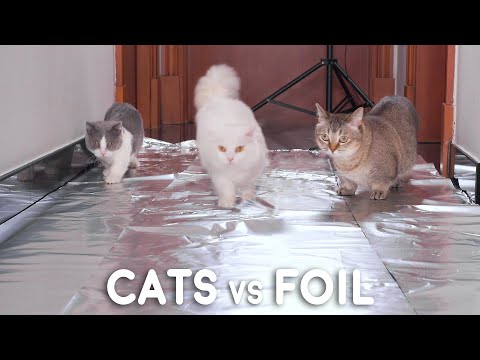
Can Munchkin Cats Walk On Foil?

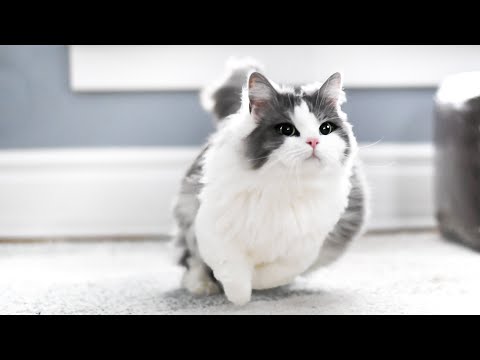
How FAST can munchkin cats run?

▷ The world of Pets: Dogs, cats, birds, reptiles, amphibians

Ragdoll cat
Federations: LOOF, CFA, ACF, ACFA, TICA, FIFé, WCF

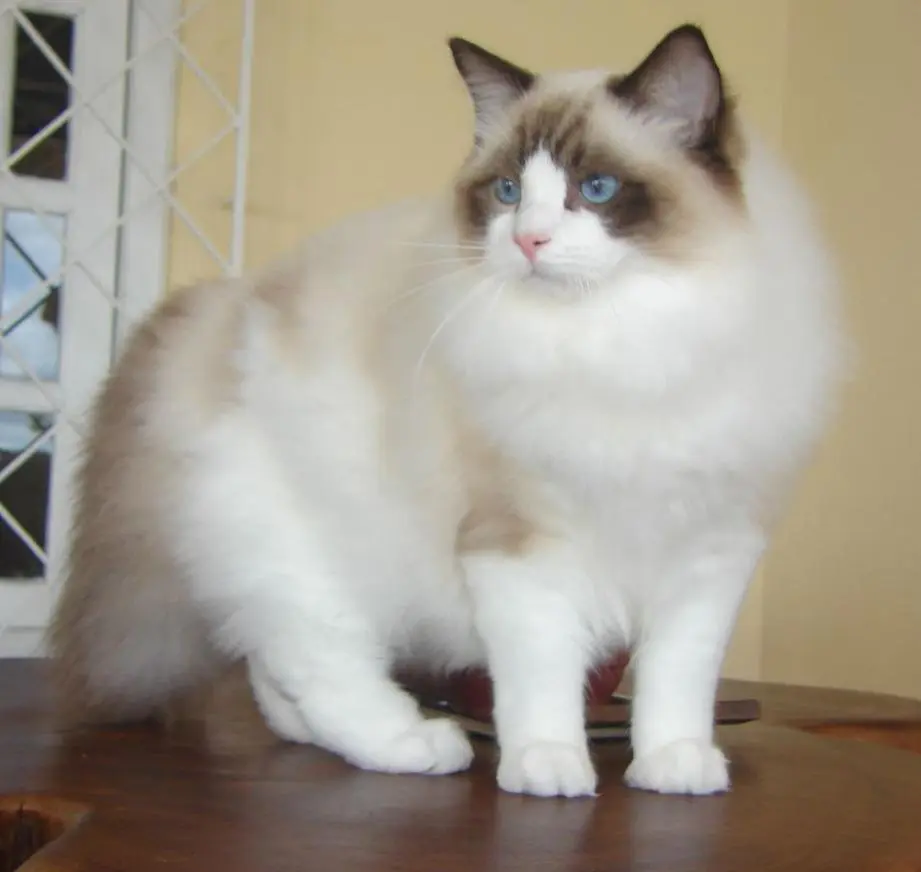
Ragdoll
Photo: Wilkipedia

Content

Characteristics "Ragdoll cat"

Coexistence is important that you have with your new friend. Before considering the acquisition of a cat of the breed "Ragdoll cat" you know certain factors. You must take into account their character, their need for exercise, their interaction with other pets, their care and if you have small children, their level of tolerance towards them.

Joy

3,0 of 5 stars (based on 1 review)

Activity level

2,0 of 5 stars (based on 1 review)

Friendliness to other pets

4,0 of 5 stars (based on 1 review)

Friendliness to children

4,0 of 5 stars (based on 1 review)

Grooming requirements

4,0 of 5 stars (based on 1 review)

Vocality

2,0 of 5 stars (based on 1 review)

Need for attention

2,0 of 5 stars (based on 1 review)

Affection towards its owners

4,0 of 5 stars (based on 1 review)

Docility

5,0 of 5 stars (based on 1 review)

Intelligence

4,0 of 5 stars (based on 1 review)

Independence

2,0 of 5 stars (based on 1 review)

Hardiness

3,0 of 5 stars (based on 1 review)

History

The Ragdoll cat He is originally from California, United States. At the beginning of the Decade of 1960, Ann Baker, a breeder of persian cats, a white cat began to cross, semi-wild and looking like Turkish Angora cat call Josephine with several street cats. Josephine gave birth, among others, to two cats named Buckwheat and Fugianna.

They were large and docile in temperament and tended to relax completely when picked up., becoming real "Ragdolls".

Two males were added to the breeding program of the Mrs. Barker: Blackie, a black guy looking like Burmese cat, and Daddy Warbucks, dark in color and with white tips of the legs. These five cats interbred and gave rise to the breed Ragdoll as we know it today.

Aware that he had a new breed of cat on his hands, Ann Baker decided not to have her recognized by feline associations and, Instead, chose to register the trademark Ragdoll and create your own record, the International Ragdoll Cat Association (IRCA), in 1971. At the same time, prohibited anyone from using the name Ragdoll, breed these cats outside the strict conditions imposed to preserve the purity of the breed or register them with another feline association.

Although the eccentric claims of Ann Baker about what Josephine was genetically altered by aliens in a car accident are not credible, it seems likely that he had a unique genetic makeup, probably a natural genetic mutation, which was later passed on to their offspring.

The eccentricities of Ann Baker sparked dissension among other breeders of the Ragdoll cat, especially because of the high level of inbreeding caused by the strict restrictions imposed by. In 1975, Denny and Laura Dayton they were among the first to distance themselves from the breed and attempt to give it a legitimate existence under the umbrella of recognized feline associations. They drew up the standard that was used later when it was recognized by the Fédération Internationale Féline (FIFé) in 1991 and for the American Cat Fanciers’ Association (CFA) in 1993.

In the meantime, the Ragdoll had arrived in Britain already in 1981, when breeders Pat Brownsell and Lulu Rowley they imported the first specimens and began to breed this cat that little by little would conquer British cat lovers. A few years later, in 1986, made its appearance in France.

In the news, the Ragdoll is recognized by most major national and international feline associations: is the case, in particular, of the Governing Council of the Cat Fancy (GCCF) British, of the Livre Officiel des Origines Félines (LOOF) French, of the International Cat Association (TICA) and of the World Cat Federation (WCF).

Well established in both North America and Europe, and its success is undeniable. In United States, it is one of the most popular breeds in terms of number of registrations in the CFA, and even ranked first in 2018. In the United Kingdom, has firmly established itself in second place since 2010; with about 3.000 kittens registered every year, it only represents around the 15% of the country's cat population.

It is also one of the five most popular cat breeds in France., and its growth is dazzling: While in 2003 less than 100 specimens in the LOOF, in 2010 more than 1.000 and in 2019 more than 2.600, surpassing the Persian for the first time. So, represents almost the 6% of births registered in the country.

Physical characteristics

Ragdoll
Ragdoll

The Ragdoll it is one of the largest breeds of domestic cats, but it grows slowly and in fits and starts, and does not reach maturity until four years.

Has a kind of body long and mighty. His body is wide and imposing, with a solid bone structure and supported by medium-sized muscular legs that end in legs round and wide. The tail is quite long and tapers slightly towards the tip.

The head forms an equilateral triangle viewed from the front. Profile, the rounded forehead is prolonged with a slide-shaped depression at the nose. The ears are size medium, point forward and end in a rounded shape. The eyes they are big, oval and of an intense blue color that rarely leaves you indifferent.

The fur of the Ragdoll, composed of a sparse undercoat and a medium length topcoat, it is silky and close to the body. Tends to elongate in winter and is densest in the back of the body, and the queue is particularly crowded. It also, some dogs have a well-developed mane.

The fur tends to be colourpoint (a light color and dark tips), but it can also be gloved or bicolor. In United States, the CFA (Cat Fanciers’ Association) also allows pattern van, or Seychelles, which is a white individual with a colored tail and head, and spots on the body. The colors allowed by the standards of the different organizations that recognize the breed are the seal, the blue, chocolate, the lilac, red and cream. These colors can be found in tortoiseshell patterns (black and Red) or tabby (striped), which gives rise to a large number of possible combinations and, Therefore, to as many cats with different appearances.

Last, the sexual dimorphism it is very marked, being the male much more imposing than the female.

Size and weight

  • Male height: Of 30 to 35 cm.
  • Female height: 28-32 cm.
  • Male weight: 5-9 kg
  • female weight: 4-7 kg

Breed standard

The breed standards are documents established by official bodies that list the conditions that a dog must meet. Ragdoll to be fully recognized as belonging to the race:

Character and skills

Ragdoll
Male Ragdoll, about three years old, with prototypical tabby patterns in the head region – BlackIceNRW, CC BY-SA 3.0, via Wikimedia Commons

Docile and devoted, the Ragdoll he loves the company of his family and follows them around the house, greeting them at the door when they arrive. He is a gentle and loving companion, who just wants to get into his master's lap to warm him up and relax him with a lot of purring after a hard day's work.

Very sociable, he has no problem greeting guests. If they take it in their arms, he behaves as he would with his masters: relax all your muscles, which reminds us why it's called "Ragdoll".

Its quiet character, relaxed and easygoing makes it an excellent choice for a cat breed with children, especially if they have learned to interact with an animal. But even if they are not treated with respect, for example, if they are carried around the house for a long time, it is very rare that they remove their claws. And if there is a cat that is willing to be dressed like a doll and then carried in a stroller, it's the ragdoll. Of course, make sure that the child does not cross the line and abuse their indulgent nature.

It is not a problem of coexistence with other dogs, as long as they don't chase you around the house. It can even live with small rodents or fish, but it is advisable not to tempt the devil: the Ragdoll still a feline, and his hunting instincts can resurface at any moment.

Its flexible and calm personality makes it a cat that adapts well to changes and is capable of living in almost any environment. A move with a cat goes much better if it is a Ragdoll that a race that does not share this quality. The owner can also perfectly consider taking his cat on vacation, without fear that your partner will be completely disoriented and not enjoy the change of scenery. It is also possible to take your cat around your holiday destination on a leash, since it is something that this breed accepts very well.

Despite its impressive size, the Ragdoll adapts perfectly to life in a flat, as long as you have everything you need: the warmth and comfort of a cozy home, the affection of his family and a little space to play. Even if you live in a house and have free access to the outside, it's more of an indoor cat: rarely goes outside to explore the garden or surroundings.

On the other hand, his closeness to humans and his patience make him suitable for friendship with anyone, and turn you into a excellent therapy cat. His presence and willingness to interact with people also means that he can be a real comfort to his owner when he is going through a difficult time., and he knows that he has a support in him that he can trust in those circumstances. On the other hand, It is not for someone who likes to be alone and does not want a companion who is a little "clingy", who prefers to opt for a more independent breed.

The Ragdoll is moderately active, but enjoy chasing a cloth mouse, especially because he retains a playful side throughout his life. They are also able to learn some tricks, especially if the owner uses positive reinforcement techniques with praise and treats. It also, if given the opportunity, they love to play fetch for an object thrown by its owner, how would a dog. But don't expect him to constantly jump on the kitchen table or climb on furniture.: prefers to run rather than jump and does not venture beyond the living room sofa or bed. Like this, unlike most of his peers, does not seek a high position to observe its surroundings from above, but choose a place that facilitates contact with your family.

It also, against a legend, not insensitive to pain, and reacts like any other cat if someone steps on its tail: cries out in pain and then walks away with a reproachful look at the offender.

Last, has a soft and musical voice, but he rarely uses it, except when you order your food.

Health

"Ragdoll cat"

Ragdoll
Male Ragdoll of 4 months. Blue mitted with a blaze – CalistaZ, CC BY-SA 3.0, via Wikimedia Commons

The Ragdoll cat it is a fairly robust breed with few genetic predispositions.

But, you are not immune to certain health problems. Among the possible risks, the most common are:

  • The feline hypertrophic cardiomyopathy, a growth of heart tissue that can have serious consequences. But, from 2007 there is a DNA test to detect the responsible gene, so serious breeders of Ragdoll have taken all precautions to minimize this risk;
  • Bladder lithiasis, that is to say, stone formation in the bladder;
  • The urolitiasis, what is stone formation in the urethra.

These last two conditions can cause the cat to be unable to urinate, a serious situation that requires the urgent intervention of the veterinarian.

Life expectancy

Of 12 to 15 years

Grooming

The Ragdoll it is a breed of cat that is easy to care for: the brushed once a week removes dead hairs and knots that may form. This session is usually appreciated by the receiver, who enjoys the attention and caresses he receives.

Although they do not shed excessively (especially because its undercoat is not very abundant), it is advisable to increase the frequency of grooming sessions during their shedding periods, in autumn and spring.

The teeth, the eyes and ears should also be checked and maintained once a week to make sure they are clean and free of infection.

It also, depending on wear and tear and how often your dog uses the scratching post, its claws need to be trimmed more or less frequently.

Last, keep in mind that, given its size, a large litter box is necessary so that she can turn over without difficulty.

Food

Ragdoll
Ragdoll

The Ragdoll it does not pose any difficulties in terms of feeding and adapts very well to industrial cat foods available on the market. But, food must be of good quality, adapted to your age and activity level, to provide you with everything you need to stay healthy.

Kittens of this breed can experience large growth spurts, so it is important that they always have food at their disposal to develop properly. This is especially true as they are capable of self-regulation., so the risk of being overweight is very limited. This is not a sign of obesity, but a normal morphological characteristic of the breed.

Adults are also capable of self-regulation and can also have food at all times without this generally posing a problem.

But, your dog's weight should be monitored regularly and a veterinarian should be consulted in the event of a pronounced increase.

What is the price of a "Ragdoll cat"?

The price of a kitten Ragdoll round the 1100 euros on average, whether it is a male or a female.

But, this stocking hides a fairly wide range of prices, since it goes from the 600 euros of the cats with the characteristics furthest from the standard up to almost 3.000 euros of the specimens belonging to a prestigious lineage and destined for their physical attributes to shine in feline exhibitions.

Interesting data

Do "Ragdolls" have a reduced sense of pain?

Since the Ragdoll hangs limply when caught and lets everything hang over him, some researchers assumed the breed has a lower sense of pain than other cats. For some time, experiments were done on the poor animals. It is even believed that the founder of the breed, Ann Baker, made this claim to better market his breed. At the end, the tests led to the conclusion that there are no differences with other cats.

The "Ragdolls" on social networks

Their funny and clumsy character makes cats Ragdoll be real stars on the internet. There is hardly a compilation of "funny cat videos" in which this breed does not appear.. The Ragdolls most famous on Instagram are the three cats Lola, Nina and Olan, whose day to day you can follow under the name of @ladylolathecat. The three cats live with their owner in a floating house and delight 139.000 subscribers almost daily with funny videos and images.

When I hugged the cat tightly, I got annoyed by saying 'Ang'.

3 Minutes of a Ragdoll Cat Being a Ragdoll Cat

▷ The world of Pets: Dogs, cats, birds, reptiles, amphibians

Clippercat
Registration: CATZ

Content

What are Clippercats?

They are a recently recognized breed, which is being developed under strict guidelines.

In a nutshell, the Clippercat is the New Zealand shorthair cat and / or the Australian longhair cat. with polydactyl feet. Poly– means "many" and Dactulos – means "fingers".

Cats usually have 5 claws on its front legs.. (4 plus a snail claw) and 4 on each hind leg. Cats with the polydactyl mutation can have between 5 and 7 fingers on the front legs and between 4 and 7 in the rear.

History

In New Zealand and Australia, between the years 1850 and 1900, a large number of immigrants arrived on the Clipper ships that sailed the seas between England and the Antipodes.

Many of these ships docked in Auckland and the Hauraki Gulf, where today we find the highest concentrations of polydactyl cats.

Following the CATZ Inc policy of inclusion and establishment of rules for the responsible registration of cats, these cats, which are a natural mutation, and an expression of an incomplete autosomal dominant gene, They can now be registered with CATZ Inc under the breed name "Clippercats", formerly called Antipodean cat, with the addition of the polydactyl mutation..

Unlike the United States.UU., the Clippercats (Polydactyls of Domestic / Antipodean origin) cannot be raised with others Clippercats, and there are strict guidelines set by the Registry for their breeding to ensure that all Clippercats recorded are the Heterozygous form of this mutation.

Right now, if you have a polydactyl cat, you can register it in the open registry as Clippercat, if you meet very specific guidelines.

Breeding conventions include recording the number of toes on each foot and the breed standard includes both a limit on the number of toes allowed and restricts the structure of the feet to three accepted structural formats..

The Clippercats they can only be bred with short hairs / New Zealander longs and the breed standard calls for the New Zealand SH / LH type with the addition of the polydactyl mutation.

The Clippercats cannot be crossed with any other currently recognized championship breed.

Where do polydactyls come from??

The polydactyl cats they have a long and interesting history. For many centuries they have roamed south-west Britain and there is evidence of polydactyl cats in countries as far away as Norway, although reports in Europe are few and far between, due mostly to the perceived relationship between cats and witchcraft.

The polydactyly is a trait allowed in the breed of Pixie Bob cat, which is classified as a natural breed, and that competes in the TICA championship, the International Cat Association. (USA)

It was also a dominant trait in many of the early Maine Coons, and it was considered that it helped those cats to overcome the heavy snows of the winters of the State of Maine. Breeders, However, selected to remove the trait from that specific breed.

There are several reports of a folklore in southern England, which states that when people found cats with too many fingers, They offered them to the captains of the ships, who apparently considered them "lucky cats" and very suitable for a sailor's life. They were also considered gifted buzzards and, thanks to your extra fingers, more fit for life on mobile covers.

Large populations of cats with this mutation were seen in and around the Boston area, where they were commonly called "Boston thumb cats". An article published in the magazine «Cat Watch» from Cornell University in 1998 analyzed the studies carried out on polydactyl cats between 1940 and 1970 and tentatively concluded that the trait probably occurred in cats that came from England to the Boston area with the Puritans in the mid-17th century. These studies focused on the unusually high concentration of polydactyls in that area., and in other east coast ports with strong shipping links to the British Isles, like Halifax and Yarmouth, and in Nova Scotia, where there were also higher concentrations of polydactyl cats.

The author Ernest Hemingway is also recorded as a gift from a ship captain polydactyl cat of the race Maine Coon cat, and this cat is believed to be the progenitor of the many polydactyl cats now cared for in the trust established for them on the author's home island in the Florida Keys. Apparently, This led to the polydactyl cats They were sometimes called "Hemingway cats.".

There are currently three separate private registries in the United States where polydactyl breeders can register their specimens.. These cats are often called "American Polydactyl Cat«.

But, it would be very conceited to consider them solely native to the United States, when its story is rather associated with the many boat cats that traveled with immigrants from England and Europe to the United States and other parts of the world between 1620 and 1900. Even the famous "Mayflower" was a merchant ship before its well-known voyage to the United States.. and in those days he made several trips between England and Norway before being chartered by the pilgrims.

Source: catzinc.org

▷ The world of Pets: Dogs, cats, birds, reptiles, amphibians

Dragon Li cat
Federations: CFA

It is considered that Dragon Li Cats have above-average intelligence. Mental stimulation is a must and these cats appreciate the company.

Dragon Li

Content

History

The Dragon Li cat, also called "Li Hua» or «gato chino», «Li Hua Mao«, «Li Hua Mau» o «Mao Li» descended from wild cats (Puma Bieti) who live in the chinese mountains. It is said that it has been domesticated over time to get closer to the Chinese people.

It is not known exactly how long the Dragón Li (Li Hua), but it is likely that it has existed for several centuries. In fact, Stories of this animal can be found in Chinese folklore.

Recently, in 2003, breeders were interested in him Dragon Li cat (or Li Hua) and started breeding programs for this breed. That same year it was approved as an experimental breed and presented in Beijing..

The Cat Fanciers’ Association CFA allows you to participate in feline exhibitions from 2010. But, most international cat federations do not recognize it.

This cat is now very rare and is hardly known outside of China.

Physical characteristics

The Dragon Li cat (Li Hua) looks wild and powerful. The body is compact and muscular. Weighs between 4 and 5 kg.

  • The fur is short, brindle mackerel.
  • The head it is wide and rounded.
  • The eyes they are big, almond-shaped. They are very bright, yellow or green.
  • The ears they are round and of medium size. May be covered in hair.
  • The legs they are muscular.
  • The feet They are round.
  • The tail of the Dragon Li cat (Li Hua) it is relatively short. Its tip is black.

Character and skills

The Dragon Li cat (or Li Hua) he is very playful and curious. You want to know everything that happens in your environment.

It is a sociable animal. But, he is not the most affectionate of cats. These may include, unlikely to come snuggle in your lap. His way of getting along with his master is to play with him.

The Dragón Li (Li Hua) gets along well with other animals in the house, especially with dogs.

Needs a lot of space to live and be able to play outside. He has kept his wild and hunter side deep inside. That is why it is important that it can thrive in a large garden.. Flat life is not for him. in addition, it is not the ideal cat to live with young children.

Indoor or outdoor cat?

It is very important to note that these unique felines do not like small, enclosed indoor spaces.. While most cats are perfectly happy sharing an apartment with an attentive human family, the Dragon Li cat needs a large house with plenty of room to roam if kept completely indoors. Clearly, this cat requires special circumstances and is not the best breed for everyone.

How much activity does he need? "Dragon Li cat"?

Unfortunately, for those who prefer lap cats, this particular breed does not like cuddling at all. In fact, these cats can become anxious when time and space are not given to them.

The Dragon Li Cats appreciate the outdoors and are excellent hunters. They are happiest when they are allowed access to closed and safe outdoor spaces, like the patios, and when they are taught to walk on a leash from an early age.

Dragon Li
A tabby cat named "Pipi" – Painjet, CC BY-SA 4.0, via Wikimedia Commons

Grooming and health

Does not require any special maintenance. A simple brushing once a week will suffice.

Provide an anti-flea and anti-parasitic treatment according to the age of the cat and the type of treatment you opt for. Avoid bathing your cat unless absolutely necessary, as this can remove some of the natural oils that protect your coat. Regular baths will leave your cat with irritable skin and a rash..

The race Dragón Li (or Li Hua) is rare and relatively recent, so we don't have enough information on the general health of this cat. A priori, does not seem to declare any specific genetic disease.

Their life expectancy is of 12 – 15 years.

Videos "Dragon Li cat"

Dragon Li's, Rodimus and Optimus Prime...
Dragon Li’s, Rodimus and Optimus Prime…
Dragon Li Cat

Photo: catdiaries.com.au

▷ The world of Pets: Dogs, cats, birds, reptiles, amphibians

Chinese Harlequin Cat
Category VI - TICA

Alrlequín chino
Photo: unitedcats.com

Content

History

This feline breed is listed as one of the category VI breeds. under the clause 307.7 of the TICA rules (International Cat Association). The Chinese Harlequin Cat has, of course, the word "Chinese" in the name, but I don't think this cat is from China or a Chinese feline breed. The TICA, from what i see, does not explain the meaning of Category VI, except it's the lowest category. The first four categories are Established Breeds (category 1), Natural breeds (category 2), Variant Breed / Mutation (category 3) and Domestic Hybrid Breed (category 4).

The color pattern of the chinese harlequin is called Van. This pattern is also found in cats Turkish van, but this cat is long-haired.

It is a domestic breed, hair short, bicolor: a predominantly white cat, but with a black tail and black spots on the head and body.

The Chinese Harlequin Cat can be found elsewhere in China, but they are rare. They are accepted as a thoroughbred by the International Cat Association.

They are represented in a large number of ancient Chinese art.

It said that it was an attempt to re-create the old Chinese cat, a race that disappeared.

Character and skills

The Chinese Harlequin Cats they are known for their kind and sweet personality, and they are very popular as pets. Unlike many other cat breeds, this breed is very active and playful, and they love to play and explore. It also, they are very friendly and easy to train, so they are a good option for families with children and other pets. But, it is important to note that the Chinese Harlequin Cats require regular care, including proper nutrition, exercise and regular veterinary care.

▷ The world of Pets: Dogs, cats, birds, reptiles, amphibians

American shorthair cat
Recognized by the CFA, TICA, AACE, ACFA/CAA, CCA-AFC

An especially famous representative of the breed was the lady short hair blazer «India», who lived in the White House as "first cat" of US President George W.. Bush.

American Shorthair

Content

History

The American shorthair cat, The "British Shorthair" and the "European Shorthair" have common ancestors. All of them, direct descendants of the "European domestic cat".

It is not known with certainty when the latter arrived in the United States., but it is very likely that European settlers brought it between the 16th and 17th centuries; in fact, the domestic cat that we know today in the United States clearly shows the traits of their European ancestors. They were excellent hunters and were carried aboard ships during long Atlantic crossings to help protect grain and other food from rodents.. Although some say he came to America on the Mayflower in 1620, others claim that it was already present a few years before. A document of 1609 mentions his presence in Jamestown, the first permanent British settlement in the New World. Other historians claim that it was already there in the first part of the 16th century, since he arrived with the Spanish in Florida. Last, some consider that it arrived much earlier through the island of Newfoundland, where it was introduced by the Vikings around the year 1000.

American shorthair
American shorthair cat showing the effects of the white spot gene. Dustin Warrington, CC BY-SA 2.0, via Wikimedia Commons

In any case, the specimens imported to America fulfilled the same functions there that they had on the ships, protecting farms and barns from rodents. Its morphology and color did not matter too much, as long as they fulfilled their mission. In fact, the American shorthair cat we know today is the result of strong natural selection: even before the establishment of breeding programs, already had a robust constitution, a muscular body and strong jaws. So, the selection work that began in the late 19th century had a very healthy starting point and brought them from the barn to the home as pets. They soon became very popular as pets, so some breeders began to study their case. His goal was to create a more refined model; a breed of cats in its own right.

Already in 1895, when the first cat show in American history was held at Madison Square Garden in New York, The so-called "Short-haired Domestic" was exposed to the public.

11 years later, in 1906, the Cat Breeders Association was founded (CFA). The Domestic shorthair cat was one of the first five breeds recognized by what is still the leading feline organization in the country. Buster Brown, a smoky male with British shorthair blood, was the first recorded individual and, Therefore, the first official representative of the breed.

At the same time, other breeds began to be imported from Western Europe and Turkey, especially Persian and Angora. With their original features that strongly distinguish them from the more "classic" cats, these cats overshadowed the Domestic Shorthair. Some breeders began to cross these three breeds. But, a group of enthusiasts who didn't want to hear this and who wanted to keep the Domestic Shorthair in its original form, they started a breeding program to preserve the breed as it was originally. They imposed themselves: crossbreeding of domestic shorthairs was soon frowned upon and breeders tried to preserve the breed's original pattern and temperament.

Years passed, but in the middle of the 20th century, many continued to blame the Domestic Shorthair for its similarity to stray cats, considering it too common. The breed was still struggling to establish itself, especially in the face of the popularity of Persian and Angora. Some breeders and hobbyists then became involved so that the distinction between the domestic shorthair cat and the feral cat would be recognized by the general public., while arguing that it was in the interest of the race to maintain its own characteristics. In particular, rightly pointed out that it is not possible to compare them: as the latter has not been subjected to any selection work, The physical and mental traits of kittens at birth are much more random and unpredictable than those of a "true" breed like the Domestic Shorthair, whose lines are carefully selected by breeders.

But, their efforts did not bear fruit. Over the years 50, a group of breeders started a new selection job, trying to improve the morphology of the Domestic Shorthair to clearly and definitively differentiate it from the street cat. Some chose to improve and distinguish the breed by crossing it with cats Persians. If the tests carried out in this sense at the beginning of the century did not last long because they were not accepted by the majority of breeders, those of this time met a very different fate, and constituted a decisive turning point for the Domestic Shorthair, that many breeders then tried to develop under new characteristics. In fact, his appearance was profoundly modified: his head widened and flattened, his eyes were rounded and his ears were shortened. It also, crossbreeding allowed the development of new coat colors.

In 1966, the Domestic Shorthair Happened to be called American Shorthair. This new name was intended to signify even more clearly the departure from the alley cat and the creation of a specifically American breed.. In fact, the metamorphosis of the American shorthair has earned him the appreciation of many cat lovers, to the point that it is now one of the 10 America's Most Popular Cat Breeds.

In addition to the CFA, the American Shorthair is recognized, of course, by the TICA (The International Cat Association), another American reference organization, and has been since 1979.

Outside your country of origin, the story is different. These may include, en el Reino Unido, not yet recognized by the Cat Fancy Governing Council (GCCF). In France, where it is recognized by the Livre Officiel des Origines Félines (LOOF), still a rare breed and at the bottom of the list. The number of people registered annually in the organization is less than 10, and even zero in some years.

Physical characteristics

American shorthair
American shorthair – Facebook page, www.facebook.com/SomewhereInLife

The American shorthair cat is a medium-sized cat that can reach a shoulder height of 30 to 35 centimeters. The cats can weigh between 3 and 5 kg, the males between 4 and 7 kg.

It is a cat semi-cobby. Natural selection has given you a strong body with a pronounced bone structure. Muscular, Atlético, balanced and powerful, gives an impression of strength and harmony. This is the main criterion for judging this breed in feline shows..

His strong chest and shoulders allow him to take big, quick jumps. In fact, the evolution of this cat over the centuries has allowed it to be better and better at hunting.

The legs they are strong and parallel and the legs are well rounded. The tail is thick at the base, medium length and rounded at the tip.

The mandible of the American shorthair cat is strong. The ears are medium in size, slightly open at the base and wide apart. The head is medium in size and well rounded, with a short, slightly sloping nose and plump cheeks. The eyes are large, round and widely spaced, also slightly inclined. They are usually gold or green in color, but in the case of a white coat they are blue, golden or light brown.

The fur it is short but very dense. All cat coat colors are accepted, except for the colourpoint, the lilac, the fawn and the chocolate. Most cats are tabbies, Calico, partial, bicolor and tortoiseshell. The classic silver tabby pattern is the most popular of all.

The American shorthair cat it is also late growing. They end up developing between 3 and 4 years of age. But, puberty is early and the first signs are visible from the 7 u 8 months, with the appearance of the first heat in the female cat and the development of the testicles in the male.

Last, the sexual dimorphism is quite pronounced in this breed: males are clearly heavier than females, weighing almost twice as much as these.

Character and skills

The American shorthair cat is known for its great adaptability. They are very sociable and get along well with other cats and dogs, as long as they accept them. Is always fair, relaxed and not very aggressive, and is very close to its owner.

American Shorthair
American Shorthair de 14 years, shaded silver, female – Ocdp, CC BY-SA 3.0, via Wikimedia Commons

It is also quite a playful animal, who always finds an opportunity to have fun. This makes them a perfect breed for children., and generally have no problems with other people's entry into their home. Exemplary companion for the whole family, they are also very suitable for the elderly, as long as they can satisfy your need for activity. But, although they always enjoy a place on the couch with their owner, some individuals do not like to be worn.

But, but the American shorthair cat is very close to humans, it is also a very independent breed of cats: he likes to have time to be alone, to rest or to escape, and it's not uncommon for it to disappear for a whole day. They remain active well into old age.

It also, you have to be very careful if you have to live with a rodent or a bird, as you are likely to consider it prey. So, it is advisable to ensure that these animals do not come into contact with each other, or even avoid such coexistence. In effect, even if you are used to rodents and / or birds since you are young, still has a strong hunting instinct.

Because of his ability to take care of himself, prolonged absences of their owners are unlikely (for example, when they are at work) make you unhappy or cause separation anxiety. In fact, it's perfectly possible to go on vacation without your cat without feeling guilty or worried, since he is perfectly capable of taking care of himself. It is only necessary to organize from time to time that a friend, a neighbor or a cat visitation service come check that everything is fine, to fill their bowls and change their litter tray.

On the other hand, although its closeness to its owners makes it unlikely that it will escape, However, is very attracted to the outside world, which can lead you to get a long way from home. Thus, it is essential that your cat is identified with a microchip or a tattoo, which is mandatory in many countries, like france, Belgium and Switzerland. It also, It may be wise to invest in a GPS cat collar, that lets you know where your cat is at all times, and thus avoid worrying absences.

Smart and savvy, they understand very quickly the rules imposed by their owners, which makes them an easy breed of cats to train. It is also a silent cat breed, that meows very little.

Care "American shorthair cat"

Indoor or outdoor cat?

It is clearly a breed of cat made to live outdoors, and that is where he exercises his greatest talent, the one that for centuries earned him his popularity in his country of origin: the one of formidable hunter. Even today, still very popular on farms and in barns, both in the United States and in other countries. Even when you don't live in those places, he is likely to return regularly from his walks in the open air with dead prey as a gift for his dear master. In any case, a American shorthair cat living in a flat with no exit would be an unhappy existence, since it would be contrary to his true nature.

How much activity does he need? "American shorthair cat"?

The American shorthair cat it is a very active cat that needs a lot of exercise. It is advisable to regularly spend time playing with her, as she tends to be overweight so she can feel comfortable. Cat trees and toys are a must for him. He also likes intelligence toys, in which you have to fish for treats from the containers, for example, and that they pose a challenge not only physical but also mental. But, she also needs her rest periods and if she wants to retire, you must take it into account.

Health and nutrition

Most of the American shorthair cats they are usually healthy, resistant and long-lived.

American Shorthair
American shorthair domestic cream colored kitten – Blueciel8, CC BY 3.0, via Wikimedia Commons

But, since the breed has undergone a certain selection work throughout its history, it's advisable, before buying a kitten from an American shorthair breeder, ask about the possible history of the line to which it belongs.

It is important to know that this cat has a predisposition to feline hypertrophic cardiomyopathy (MCH), a heart disease that involves poor ejection of blood from the heart. It leads to a slow death of the animal, and there is currently no real treatment for it.

Some individuals may also be affected by polycystic kidney disease. (PKD), a disease that causes cysts to form in the kidneys, causing its malfunction. There is no cure for this hereditary and deadly disease.

Last, the fact that he especially likes the outdoors and spends a lot of time in it implies that you have to be very careful with vaccinations and deworming the cat, as well as with your general veterinary care. This is essential to prevent -or, failing that, quickly detect- any form of disease that can be contracted by contact with other cats or the outside world.

Life expectancy

15 years

Food

You will have to be a little careful with your food and watch what you eat, because as already said tends to be overweight. When choosing food, look for a high-quality composition with lots of protein and few carbohydrates. In no case should food contain sugar. Cats can also suffer from diabetes due to an excess of sugar and, Unfortunately, often used as a flavor enhancer in cat food.

For sale "American shorthair cat"

One American shorthair cat costs between 600 euros and 1.100 euros in a serious breeder. This may seem like a lot to a kitten at first glance., but keep in mind that responsible breeding involves many costs. A pregnant cat has to go to the vet regularly and, In addition, small cats have already been tested, dewormed and vaccinated when they move in with you. Before the twelfth week, the cat should not be separated from its family.

Characteristics "American shorthair cat"

Coexistence is important that you have with your new friend. Before considering the acquisition of a cat of the breed "American shorthair cat" you know certain factors. You must take into account their character, their need for exercise, their interaction with other pets, their care and if you have small children, their level of tolerance towards them.

Joy

4,0 of 5 stars (based on 1 review)

Activity level

2,0 of 5 stars (based on 1 review)

Friendliness to other pets

4,0 of 5 stars (based on 1 review)

Friendliness to children

4,0 of 5 stars (based on 1 review)

Grooming requirements

1,0 of 5 stars (based on 1 review)

Vocality

1,0 of 5 stars (based on 1 review)

Need for attention

3,0 of 5 stars (based on 1 review)

Affection towards its owners

3,0 of 5 stars (based on 1 review)

Docility

4,0 of 5 stars (based on 1 review)

Intelligence

3,0 of 5 stars (based on 1 review)

Independence

4,0 of 5 stars (based on 1 review)

Hardiness

4,0 of 5 stars (based on 1 review)

Videos "American shorthair cat"

EL AMERICAN SHORTHAIR
10 Things Your American Shorthair Is Thinking Right Now | Chewy
10 things that your American Shorthair is thinking right now

▷ The world of Pets: Dogs, cats, birds, reptiles, amphibians

American Wirehair cat
Recognized by the CFA - TICA - ACFA/CAA - CCA-AFC - FIFe

The American Wirehair cat it is a breed of young cat. This type of cat belongs to the category of domestic cats.
American Wirehair
Photo: Wilkipedia

Content

History

The American Wirehair cat it was created by chance. In fact, the fault is a genetic defect. In 1966, in a litter of American shorthair cats, one male had an atypical coat. The fur was rough, lean and curly at the ends. The cat breeder lived in Verona, in upstate new york. Four of the kittens in this litter died, but the fifth, a red and white male kitten with this rough hair, survived. His name was Adam.

Joan O’Shea, a local breeder, found out about the kitten and immediately fell in love with it. Later he realized that it was probably a new breed and developed a breeding program.. Crosses with him American shorthair cat prevented excessive inbreeding and allowed the development of the breed.

In United States, was officially recognized in 1967 by the CFA (Cat Fanciers’ Association), but it wasn't until 1978 when this reference organization authorized him to compete in cat shows.

Uncommon in the United States, this cat is also still very rare in Europe, where it is mainly located in the UK, in very small numbers. In France, only a few births per year are recorded in the LOOF.

Physical characteristics

The American Wirehair cat you can't deny your relationship with him American shorthair cat.

It is a medium to large size cat, semirigid, with an athletic and sporty-looking body and, Therefore, with strong bones.

American Wirehair
American Wirehair sitting in a cat show – Heikki Siltala, CC BY 3.0, via Wikimedia Commons

The head It is round, provided to the body, with cheekbones prominent and a snout well developed, as well as slightly wavy whiskers. The eyes they are big and round, very separate, and express a rather gentle character. They can be of any color.

The back it is straight and well balanced, the chest rounded and wide (especially in males), like the neck. The tail it is medium size, proportional to the body, and has a rounded tip, similar to the ears, that are quite separate. The legs they are medium in size but muscular. The legs are firm and round, with large pads.

The fur he is of medium length and has very thick and sticky hair. Their peculiarity is that they are wrinkled, as if they were wrinkled, hooked or curved, and full of vigor. The three-layer coat can be any color, like other breeds of American cats, except for chocolate, the fawn, the lilac and the colourpoint (Dark color, darkened in some parts of the coat).

according to sex, the height ranges between 30 and 35 cm and the weight between 2,5 and 5 kg.

Character and skills

The American Wirehair cat it is robust, vigorous and curious. It is a very active cat, agile and playful, you need to exercise and, Therefore, requires space. Sociable, tender and especially affectionate, is as kind as him American shorthair cat, although it has a great sensitivity of its own. He cannot live alone and will remain very attached to his master.

American Wirehair
American Wirehair cat tired – Flickr

The American Wirehair cat usually purr, what can be a way to offer support to his owner when he needs it, since a cat's purr is known to be beneficial to its owner.

It also, having a rather playful character and not being a dominant cat, can live with other feline companions, and he will make friends with children and single people. But, it is important to avoid living with rodents such as rabbits or mice, since they don't mix well.

Care "American Wirehair cat"

Despite its special appearance, coat care does not take much time. A brief brushing of the coat once a week is sufficient. Your cat will do the rest. Removes dead hairs with its rough tongue. Help your feline with cat grass to get rid of swallowed hairballs.

Indoor or outdoor cat?

The American Wirehair is suitable for both types of accommodation. The ideal is to live in a rural area. Here your tiger can become a free roam without hindrance. Whenever you want to. Some cats just sit in the open window to the garden and enjoy the opportunity. Soon you will find out. Ask the neighbors if they see your tiger outside the garden.

American Wirehair
American Wirehair

Do you worry a lot when you are away from home? Then offer your pet a compromise. Fence a part of the garden (similar to a birdhouse). With free access to the house, of course.

If your purebred cat knows the floor as his living space from an early age, will not miss anything. Another possibility would be an additional cat-proof balcony. If you have your cat in a flat, you will not have problems with the neighbors. The volume of the voice is low. In contrast to the volume of voice of Siamese cats. These “talkative” contemporaries can be heard throughout the neighborhood.

No matter what you choose. Remember: an indoor cat can become an outdoor cat. An outdoor cat will never be an indoor cat again. This is valid for any type of cat, as well as for him American Wirehair cat.

How much activity does he need? "American Wirehair cat"?

This question cannot be answered in general. The character of American Wirehair cat is individual. So, some specimens are more playful and others are not. Mostly, sleep during the owner's absence. Give them a chance to take care. There are enough toys on the market to stimulate intelligence and hunting instinct. Take enough time to play at night. A second cat will save you from a guilty conscience.

Your home must be furnished appropriately for cats. This includes scratching posts with different levels. There are caves to hide, feathers and stuffed mice to play with and much more. if you have a garden, let your cat use it. The more intensely your American Wirehair cat At night, more you will have to think. Remember that this type of cat plays all its life and demands an activity appropriate to its age.

Health and nutrition

Due to its origins, the American Wirehair cat you are affected by a hereditary disease called renal polyquistosis or, more rarely, by a Hypertrophic cardiomyopathy, consisting of a thickening of the walls of the heart.

It also, your hair is especially sensitive to minor allergies, due to its specificity.

Feeding of the "American Wirehair cat"

American wirehair
American wirehair

The diet of the "American Wirehair cat" must be adapted according to your needs and activities, but also his age and health.

Feeding your cat in a species-appropriate way is not complicated. But, you should pay attention to healthy ingredients. Your future roommate is a carnivore. The cat's digestive system can't do much with carbohydrates. The ideal combination is muscle meat and offal.

It is important to monitor the rations that are given to prevent the cat from being overweight or even obese.

For sale "American Wirehair cat"

The American Wirehair cat is almost unknown in Europe. If you want to buy one, you should contact an American breed association. The Cat Fan Association will be happy to assist you.. The price depends on the demand and the population. The price of American Wirehair cat is between 800 and 1.200 EUR. Stay away from “bargain” offers on the Internet. Cats from these sources are often contaminated with inherited diseases.

Characteristics "American Wirehair cat"

Coexistence is important that you have with your new friend. Before considering the acquisition of a cat of the breed "American Wirehair cat" you know certain factors. You must take into account their character, their need for exercise, their interaction with other pets, their care and if you have small children, their level of tolerance towards them.

Joy

4,0 of 5 stars (based on 1 review)

Activity level

3,0 of 5 stars (based on 1 review)

Friendliness to other pets

3,0 of 5 stars (based on 1 review)

Friendliness to children

3,0 of 5 stars (based on 1 review)

Grooming requirements

2,0 of 5 stars (based on 1 review)

Vocality

3,0 of 5 stars (based on 1 review)

Need for attention

3,0 of 5 stars (based on 1 review)

Affection towards its owners

4,0 of 5 stars (based on 1 review)

Docility

2,0 of 5 stars (based on 1 review)

Intelligence

4,0 of 5 stars (based on 1 review)

Independence

3,0 of 5 stars (based on 1 review)

Hardiness

3,0 of 5 stars (based on 1 review)

Videos "American Wirehair cat"

American Wirehair | Cats 101
HTTPS://youtu.be/YFp1I9KbTBw
American Wirehair: Character, Health and Care