โ–ท The world of Pets: Dogs, cats, birds, reptiles, amphibians

Tanimbar corella
Cacatua goffiniana

Cacatua de las Tanimbar

Content

Description

31 to 32 cm.. length and a weight of just 300 g..
The Tanimbar corella (Cacatua goffiniana), like all family members Cacatuidae, is a species crestada, meaning it has a collection of feathers on its head which can go up or down at will; his body is covered with white feathers with some feathers or salmon pink between bill and eyes.
The deepest parts of the feathers of the crest and of the neck They are also the pink, but the color is hidden by the white color of the more superficial. The bottom of its wings and feathers of the tail They have a yellowish hue. The bill It is pale gray and eyes range from brown to black.
There is a clear sexual dimorphism and, often, merge with the blood cockatoo (Cacatua sanguinea) due to their similar appearance.

Habitat:

Riparian forests, thickets of acacias and eucalyptus with short grass or pasture with scattered groups of trees.

Reproduction:

The start is two to three eggs, generally deposited in the hollow of a tree. The incubation, that is shared by two birds, lasts a few 30 days. The chicks they leave the nest about ten weeks after hatching, and feeding by the parents continues for another few weeks.

Food:

Dried fruits, fruit, berries, flowers, estate, bulbs, egg yolks, sprouts, and insects

Distribution:

Size of the area of distribution (reproduction / resident): 9.100 km2

The Tanimbar Cockatoo It is a species of cockatoo endemic to the forests of Yamdena, Larat and Selaru, all the islands of the Tanimbar Islands of Indonesian. This species has been introduced in the Kai Islands, Indonesian, Puerto Rico and Mexico.

Conservation:

State of conservation โ“˜


Near-threatened Near Threatened โ“˜ (UICN)โ“˜

โ€ข Current IUCN Red List category: Near-threatened.

โ€ข Population trend: Decreasing.

In the Decade of 1970, Japanese loggers ravaged the Islands. Many birds were stunned and disoriented and were captured for pet trade. Although many died from stress during transport, there is still some hope after this ecological disaster, since many cockatoos managed to reproduce in the programs of captive breeding. So, there are now more specimens in captivity than in their natural habitat.

This species has a range very small, but its population is severely fragmented or restricted to a few places. Despite suffering from the pressure of his capture, seems to have maintained a large population. But, the degradation of the habitat, trapping and continuous persecution is likely to be causing a moderate reduction of the population. Therefore it is classified as Near-threatened.

There is a conservation plan in endemic parrots Tanimbar Islands, Indonesian, financed by LORO PARQUE FUNDACIร“N

"Tanimbar corella" in captivity:

You can show a fearful beginning, but you quickly get used to their caregiver, turning into a very cockatoo sweet, playful, sometimes inquisitive and very active. Enjoy being observed, being the center of the world, like all cockatoos. His cry is not nice, but this little cockatoo is quickly forgiven everything as his antics and bad manners will surprise us and make us laugh.

Has the continuing need to fly so you need a large space.

Curiosities:

A Tanimbar corella, without previous training, open five types different locks:

The incredible mechanical intelligence of the Tanimbar cockatoos 1

The incredible mechanical intelligence of Tanimbar Cockatoo

Alternative names:

Tanimbar Cockatoo, Goffin’s cackatoo, Goffin’s Cockatoo, Tanimbar Corella (ingles).
Cacatoรจs de Goffin (French).
Goffinkakadu, Goffin-Kakadu (German).
Cacatua-de-goffin (Portuguese).
Cacatรบa de las Tanimbar, Cacatรบa de Tanimbar (espaรฑol).

scientific classification:

Order: Psittaciformes
Family: Cacatuidae
Genus: Cockatoo
Scientific name: Cacatua goffiniana
Citation: Roselaar,CS & Michaels, 2004
Protonimo: Cacatua goffiniana

Images Tanimbar Cockatoo:


Species of the genus Cacatua

Sources:
Avibase, BirdLife.org, faunadex
– Photos: sciencio.com, Marah09013 (Wikipedia),
– Sounds: Frank Lambert (Xeno-canto)

โ–ท The world of Pets: Dogs, cats, birds, reptiles, amphibians

Short-billed black cockatoo
Zanda latirostris

Short-billed black cockatoo

Content

Description

54 to 56 cm.. height and a weight between 520 and 790 g.
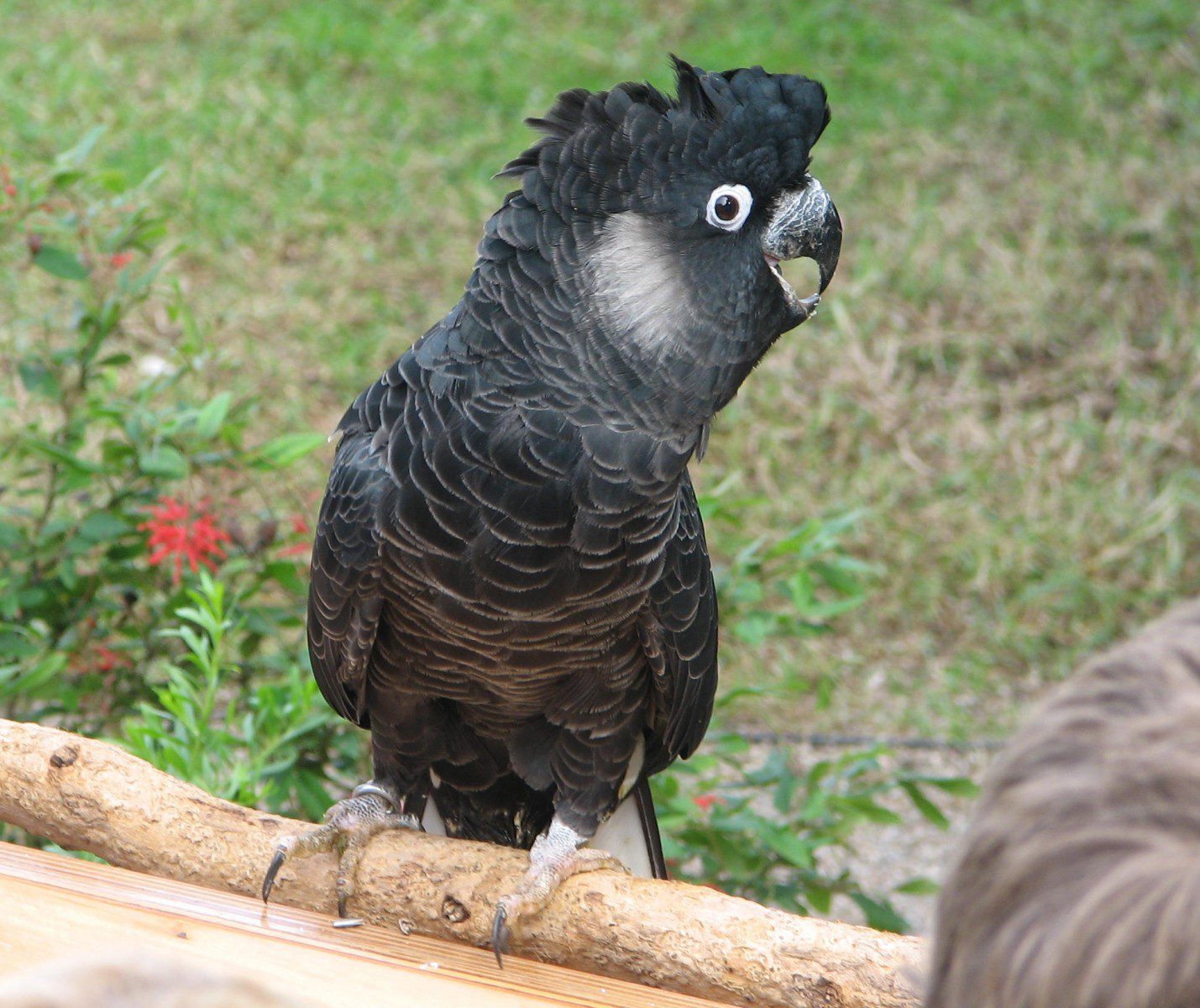
The Short-billed black cockatoo (Zanda latirostris) It is a large black cockatoo..

It has great bill black, crest erectile, white spot in the area ear and white panels on the tail. The female It is similar except patch area ear large and slightly yellowish white.
The immature Similar to adult female.
Closely related to Baudin's black cockatoo (Zanda baudinii). They were formerly treated as a single species.

Habitat:

Mainly inhabits in native forests eucalyptus and shrubland or heathland. Visit temporarily plantations exotic pines.
Sometimes you see them in cities or at the edges of roads. It is also a visible visitor to the gardens containing native plants with hard fruits around Perth.

Usually they see them in groups of three or in small flocks, but occasionally gather in large flocks composed of hundreds or, exceptionally, thousands of birds. Sometimes it is associated with Baudin's black cockatoo (Zanda baudinii) wave Red-tailed black cockatoo (Zanda Banksia) in places where food is plentiful.

The species is said to be Residents in areas of high rainfall They are retaining much native vegetation and are emigrants of the driest regions and places where most of the native vegetation has been removed.

Reproduction:

They do not breed until they are at least four years old..
Adult birds They mate for life, and stay together throughout the year.
Reproduction occurs mainly in the region Wheatbelt, northwest of the Stirling Range about Three Springs, but it has also recorded on the coastal plain in the South West, about Bunbury.
The reproductive activity It is limited to eucalyptus forests. They make their nests in large holes in the top of the eucalyptus.

The eggs They are white or cream, and they have no marks. Son incubated by female only, for a period of 28 to 29 days. The nestlings are fed by both parents, Although during the first 10 to 14 days after hatching they are fed exclusively by the female.

Adults return to the same breeding area each year.

Food:

It feeds mainly from seeds and occasionally nectar, fruit and insect larvae.

Distribution:

Size of the area of distribution (reproduction / resident): 196.000 km2

Endemic southwest Australia.

Conservation:

State of conservation โ“˜


Endangered Endangered โ“˜ (UICN)โ“˜

โ€ข Current category of the Red List of the UICN: In danger of extinction.

โ€ข Population trend: Decreasing.

On the basis of the distribution of birds during the breeding season, the total population of the Short-billed black cockatoo it has been estimated that is between the 11 000 and 60 000 birds, although there are those who affirm that its population could count on less than 10 000 birds.

The decline of this species It is mainly due to the loss and fragmentation of habitat. This has been caused by the clearing of native vegetation, mainly for agricultural purposes, Since the mid-20th century.

No specific information available on future changes in population size. But, the range of the species is thought to continue to contract for some time, which leads to a concomitant decrease in population size.

"Short-billed black cockatoo" in captivity:

A program captive breeding It was established in 1996 by the Department of Conservation and Land Management (CALM), in association with poultry farmers and licensed Zoo of Perth.
The genetic diversity of the captive population is enhanced by an 'abandoned' program’ that rehabilitates injured birds in the wild and then incorporates them into captive breeding.

Some eggs and chicks are caught illegally for sale in the markets of poultry. Although the demand for the species is said to have declined over the past decade, high market prices (approximately 3.000 dollars per bird and 5,000 $ couple) together with the scarce success of breeding captive birds, They suggest that Illegal take of this cockatoo will continue to be a continuing threat to the survival of this species..

scientific classification:

Order: Psittaciformes
Family: Cacatuidae
Genus: Zanda
Scientific name: Zanda latirostris
Citation: Carnaby, 1948
Protonimo: Zanda latirostris

Alternative names:

Slender-billed Black-Cockatoo, Carnabyโ€™s Black Cockatoo, Mallee Cockatoo, Short-billed Black Cockatoo, Mallee Cockatoo, Short-billed Black Cockatoo, (English).
Cacatoรจs ร  rectrices blanches, Cacatoรจs de Carnaby (French).
Carnabys WeiรŸohr-Rabenkakadu, WeiรŸschwanz-RuรŸkakadu (German).
Cacatua-negra-de-bico-curto (Portuguese).
Cacatรบa Fรบnebre de Pico Corto, Cacatรบa Fรบnebre Piquicorta (espaรฑol).

Images Black-billed Black Cockatoo:


Species of the genus Zanda
  • Zanda funerea
  • —- Zanda funeral funeral
  • —- Zanda funerea whiteae
  • —- Zanda funerary xanthanota
  • Zanda baudinii
  • Zanda latirostris

  • Sources:
    Avibase
    – Parrots of the World โ€“ Forshaw Joseph M
    – Parrots A Guide to the Parrots of the World – Tony Juniper & Mike Parr
    Birdlife

    Photos: Wikipedia, lostandcold (Flickr), Rabenkakadus โ€“ Wikipedia, Gnangarra…commons.wikimedia.org

    Sounds: Nigel Jackett

    โ–ท The world of Pets: Dogs, cats, birds, reptiles, amphibians

    Philippine cockatoo
    Cacatua haematuropygia

    Cacatรบa Filipina


    Content

    Description

    It measures 31 cm. and weighs around 300 g..
    To the Philippine cockatoo (Cacatua haematuropygia) It is called locally Katala.
    Its plumage is of a beautiful white color except for the feathers of the crest they are yellow or pink on its base and the bottom of the tail and wings they are yellow and Red.
    The bill is a grayish-white color, and males has irises dark brown, While the of the female are brown-red color.

    Habitat:

    Is restricted to lowland not more than 50 meters above the sea level, in or adjacent to rivers, and in coastal mangrove areas.

    outside the breeding season (March to June, and, times, from February to August), frequents corn and rice crops. This depends on the station where foods are grown and have the available resources, being partially nomadic.

    These birds can fly from their island to the adjacent if they are not more than a few 8 km. distance.

    Reproduction:

    breeding season between February and June. Of one to three eggs they are placed on a nest on a tree branch. The eggs are hatch for a few 28 days, and the chicks remain in the nest for nine to ten weeks after the hatching.

    Food:

    They feed on seeds, vegetables, fruits and berries.
    They are known to attack corn crops in agricultural areas.

    Distribution:

    Size of the area of distribution (reproduction / resident): 22.700 km2

    This cockatoo is endemic in Philippines, and the only representative of the cockatoos that we will find there; This has become a treasure of these islands.

    Conservation:

    State of conservation โ“˜


    critical hazard critically endangered โ“˜ (UICN)โ“˜

    โ€ข Current IUCN Red List category: Critical Hazard.

    โ€ข Population trend: Decreasing.

    โ€ข Population size: 370-770 mature individuals.

    In Palawan the capture of the cockatoos for the international illegal trade is particularly serious, something which is reflected in the high price of these birds ($ 160 Americans in Manila in 1997); to have been looted all the visible nests each time the price is higher because it costs more to catch them.

    The deforestation and the destruction of mangroves have been extensive in their range of occupancy and have contributed significantly to their decline.

    It is also hunted and hunted for consumption as food.
    The release of captive birds can introduce diseases into wild populations.

    Conservation Actions Proposed:

      โ€ข Conduct surveys on all range islands to assess species population size and distribution.
      โ€ข Monitor population trends.
      โ€ข Monitor rates of habitat loss and degradation.
      โ€ข Quantify catch levels, persecution and trade.
      โ€ข Designate more protected areas (for example Tawi-Tawi and towns in or near Palawan).
      โ€ข Support the proposal to expand the Puerto Princesa Subterranean River National Park.
      โ€ข Prevent destruction of mangroves.
      โ€ข Promote economically viable alternatives to avoid the capture of this cockatoo.
      โ€ข Continue with education programs and captive breeding programs.
      โ€ข Establish staff at airports and ferry terminals to control the departure of specimens.
      โ€ข Translocate animals to suitable areas such as lowland forests or mangroves..

    Loro Parque Foundation It has warned of the risk of extinction that runs the Philippine cockatoo by the construction of a power plant in Palawan, an island province of Philippines in the region of Western Visayas.

    This Spanish NGO has invested 1,3 millions of dollars and more than 14 years of work in the recovery project of this cockatoo, and fears that with the construction of this station, the less than 1.000 remaining specimens in the world could be electrocuted by high-voltage lines, In addition to being blocked their migration in search of food.

    See more in: (20minutes)

    "Philippine cockatoo" in captivity:

    Very rare in captivity, fortunately.

    Alternative names:

    Philippine Cockatoo, Philippine Islands Cockatoo, Red-vented cackatoo, Red-vented Cockatoo (ingles).
    Cacatoรจs des Philippines (French).
    RotsteiรŸkakadu (German).
    Catatua-filipina (Portuguese).
    Cacatรบa Filipina, Cacatรบa Malaya (espaรฑol).

    scientific classification:

    Order: Psittaciformes
    Family: Cacatuidae
    Genus: Cockatoo
    Scientific name: Cacatua haematuropygia
    Citation: (Statius Mรผller, 1776)
    Protonimo: Psittacus haematuropygius

    Philippine Cockatoo Images:


    Species of the genus Cacatua

    Sources:

    Avibase, BirdLife.org

    – Photos: Kim Arveen homeland, ยฉ Benedict of Laender, Wikimedia.

    – Sounds: Frank Lambert (Xeno-canto)

    โ–ท The world of Pets: Dogs, cats, birds, reptiles, amphibians

    Baudin's black cockatoo
    Zanda baudinii

    Baudin's black cockatoo

    Content

    Description

    50 to 57 cm.. height and weight between 560 and 770 g.
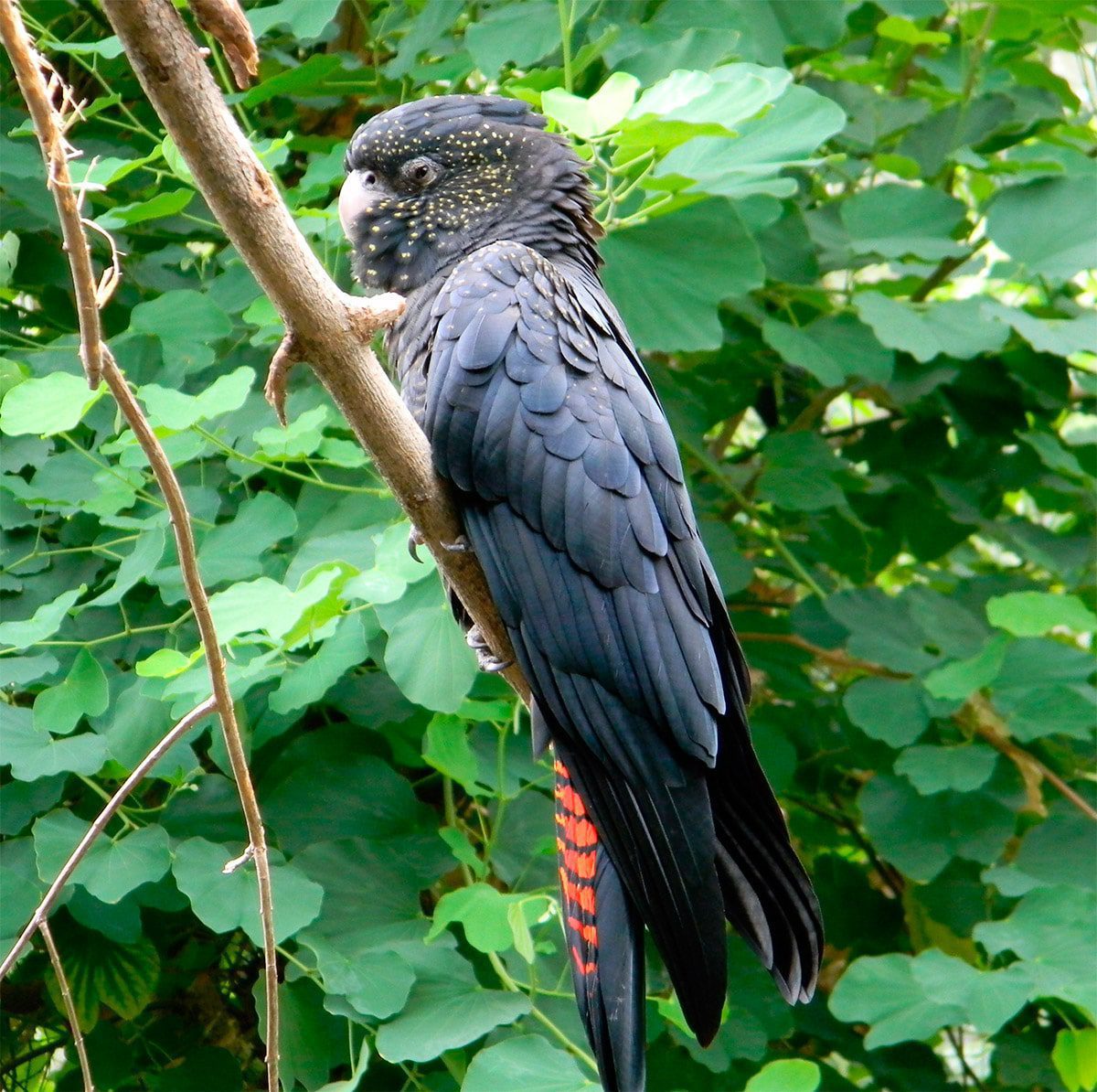
    to Baudin's black cockatoo (Zanda baudinii) is almost entirely of black, with whitish margins in the feathers, patches rounded on them ear-coverts (yellowish to white in the female and Brown to grey in the male), white rectangular panels in the tail.
    has a powerful bill (with greatly elongated upper jaw), Black in the male and white-gray color with a black color in the female tip.
    Iris dark brown surrounded by a eye ring Red in the male and female grey.
    Tail rounded, crest Erectile and legs greys. birds youth are like adults in appearance, but the bill of the male juvenile is equal to the of the of the female adult. The bill the juvenile male begins to darken after the second year.

    Habitat:

    Its natural habitat is the dense forests dominated by the Marris (Corymbia calophylla) in the extreme southwest of Australia.

    Gregaria, is often seen in groups of three, a pair of adults with a young, or in small groups. Occasionally they gather in large flocks of up to 300 birds during the non-breeding season, usually in places where food is abundant.

    Reproduction:

    Very little is known about the reproductive biology This cockatoo, such as their reproduction area, nesting events calendar, the nest tree, Characteristics of holes for nests, implementation size, incubation period, incipient and successful nesting period.

    Little is known about their reproductive cycle because nests are extremely difficult to locate.. Most of the characteristics of the biology of the species are inferred from the Short-billed black cockatoo.

    They show a strong union of couple and probably is pair of by life. They remain together throughout the year, except when the female is incubating eggs. Probably they begin to breed at the age of four. The species breeds in late winter and spring, from August to November or December. Copulation probably takes place three days before laying. The female lays one or two white eggs and you can lay an egg of replacement if the first since egg fails. The incubation lasts a few 29 days and only the female incubates them. The chicks remain in the nest for a maximum of 16 weeks.

    The nests are composed of a layer of wood chips, built in large hollow in the high eucalyptus, 30 to 40 cm. in diameter and more than 30 depth cm.

    Food:

    Are fed mainly from the seeds of MARRI and Karri. They are also fond of the rending of wood, Apart from pierce the bark of trunks in search of larvae. Apple trees and pear trees are frequently visited to enjoy its fruits.

    Distribution:

    Confined in the South-West of Western Australia, especially among Perth, Albany and Margaret River.

    Distribution Long-billed Black-billed Cockatoo

    Small captive populations in the Melbourne Zoo, in the Healesville sanctuary in Victoria, and in the Zoo of Perth. The species is bred in captivity with great difficulty.

    Conservation:

    State of conservation โ“˜


    Vulnerable Vulnerable โ“˜ (UICN)โ“˜

    In Australia is listed as Vulnerable by the law on protection and conservation of biodiversity for the environment.

    The total population of the species is estimated at 12.500 individuals, with one downward trend.
    Before the inclusion of the threatened species, the annual reproductive rate was of 0,6 per couple, too low to replace the large number of birds that were killed by horticulturists to protect their crops. It is now illegal to shoot these birds, However is it still done.

    In captivity:

    Appears in the Appendix II of CITES, what limited international trade in the species. Itร‚ยดs illegal capture These wild birds, a penalty of up to 10,000 $. This cockatoo is protected under the Wildlife Conservation Act of Australia.

    Alternative names:

    Baudinโ€™s Black Cockatoo, Long-billed Black Cockatoo, White tailed Black Cockatoo (English).
    Cacatoรจs de Baudin (French).
    Langschnabel-RuรŸkakadu, WeiรŸohr-Rabenkakadu (German).
    Cacatua-negra-de-bico-longo (Portuguese).
    Cacatรบa Fรบnebre de Pico Largo, Cacatรบa Fรบnebre Piquilarga (espaรฑol).

    scientific classification:

    Order: Psittaciformes
    Family: Cacatuidae
    Scientific name: Zanda baudinii
    Genus: Zanda
    Citation: Lear, 1832
    Protonimo: Zanda Baudinii

    Images:


    Species of the genus Zanda
  • Zanda funerea
  • —- Zanda funeral funeral
  • —- Zanda funerea whiteae
  • —- Zanda funerary xanthanota
  • Zanda baudinii
  • Zanda latirostris

  • Sources:
    Avibase, Australian Government
    Photos: Long-billed Black-cockatoo, Taronga Zoo, Sydney, Wikipedia, Goura (zoochat.com),
    Sounds: Chris Benesh (controles-canto.org)
    โ–ท The world of Pets: Dogs, cats, birds, reptiles, amphibians

    Cockatiel
    Nymphicus hollandicus


    Cacatรบa Ninfa

    Content

    Description

    25-33 cm.. length and a weight between 80 and 100 grams approximately.
    This small cockatoo is no doubt an of the bird's cage more common in the world.
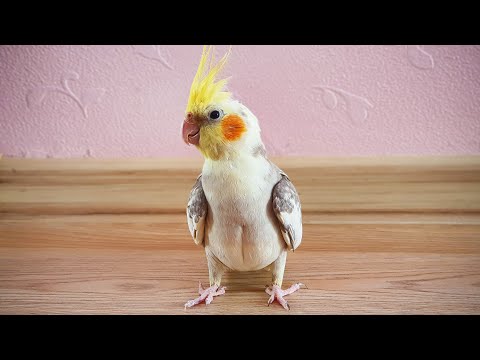
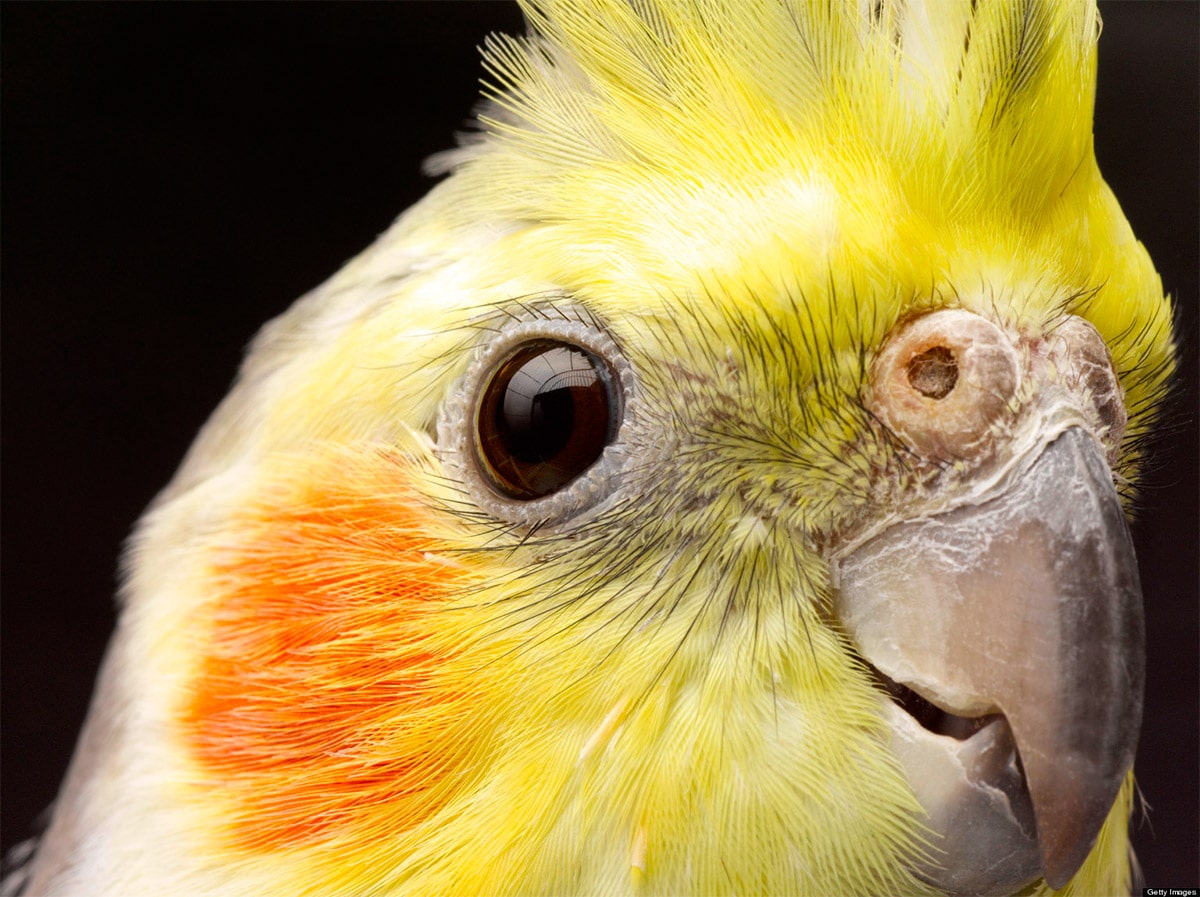
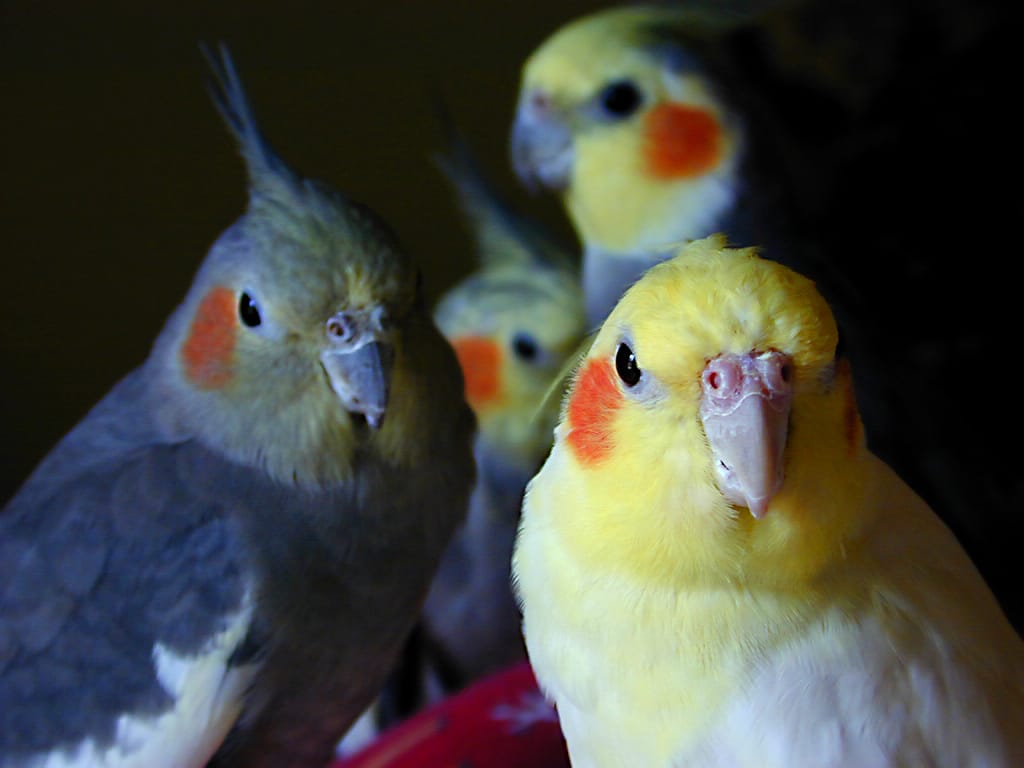
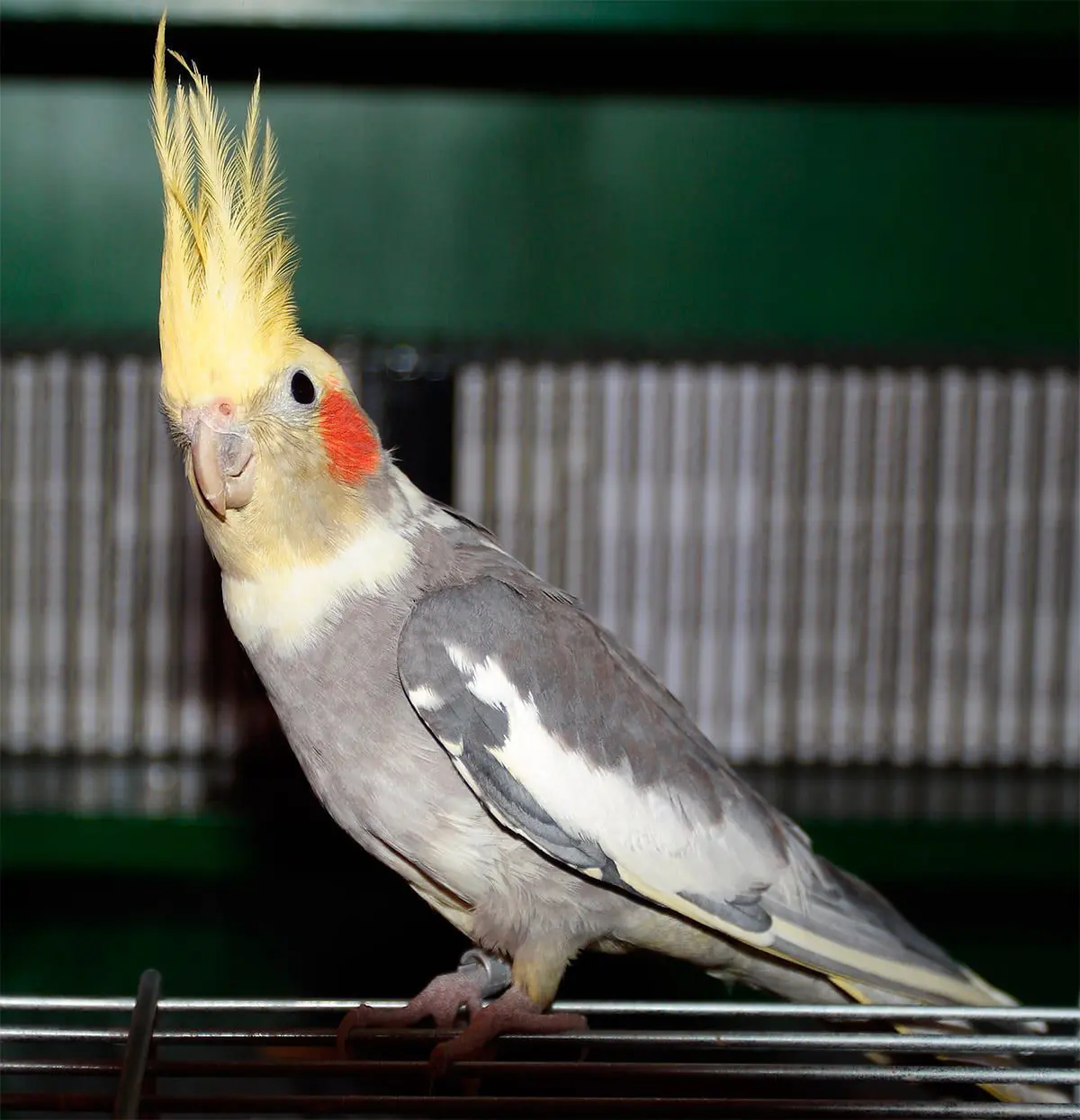
    The Cockatiel (Nymphicus hollandicus) adult has the head and the basis of the crest yellow.
    Stain handset is orange, paler on the back.
    The neck and the long crest feathers are grey.
    The upperparts are of color grey Pearl dark.
    The wings are grey, but exhibit a white color in the covered and sides.
    The underparts are a grey clear.
    The tail varies from medium gray to dark gray, the base of the tail is paler.
    The bill is grey, the irises dark brown.
    The legs are grey-brown.

    The female presents the stain handset duller, the tuft is less developed, In addition instead of the yellow, the head presents a yellowish grey with yellow dirty envelope the forecrown and a vaguely colorless gray general staining and staining is generally less intense.
    The immature are much similar to the females, but have the tail shorter.

    We find Pearl specimens in captivity, White, Gray and lutinos.

    Habitat:

    Video – "Cockatiel" (Nymphicus hollandicus)

    Funny Parrot (Nymphicus Hollandicus)

    The cockatoo Nymph they live in a wide variety of habitats, including open forests, small acacia forests that line the rivers and even stretches of Spinifex (Triodia) they are perennial and grow in semi-arid regions.

    Also found in farmland, in the stubble and the orchards, as well as on the plains and along the roads.

    In dry areas are observed in pairs or in groups of up to 100 individuals.

    When feed, the groups contain an average of 27 Member. But, We have already seen demonstrations of almost 1.000 birds near landfills containing vegetable remainders of the rice milling.

    Near the points of water, the cockatoo Nymph are often associated with the Budgerigar (Melopsittacus undulatus).

    Estas Cockatoos eat twice a day: In the morning, shortly after the Sun, consuming around 2,72 grams of plant material. At night, about an hour and a half before the night, eating around a mass of 4,25 g., It is almost 7 grams for the whole day.

    Son great travellers.
    Outside of the nesting season, they form large gatherings around the planting of cereals.
    As they feed on seeds, these birds need water and in times of drought, sometimes bands come to the coast.

    All these movements are quite unpredictable, since they are related to the weather conditions and the State of the food resources. But, in the South of the continent, migrations are more regular: the birds come to nest during the austral spring and usually go away early in the new year.

    Son gregarious and very social, so they need a wide repertoire of calls to communicate or express their feelings. They have a great power to imitate other birds.

    Reproduction:

    In the North, the reproduction is carried out between April and July, While in the South occurs in general from August to December.
    The nest is located in a tree hollow whose bottom is padded with sawdust shavings. Most of the time, the nesting site is placed near a source of water in which poultry cooled daily.

    The spawning has between 3 and 7 eggs they are incubated alternately by both parents for a few 20 days. 4 eggs are a normal litter. There will be several broods during the season. At birth, the chicks have a thick down comforter yellow. They receive their food mainly in the morning and in the evening.

    Chicks they leave the nest after 3 to 4 weeks, but they remain within the family group, Depending on their parents for 1 month. After this time, they join large flocks that roam in search of food.

    Food:

    Consume a wide variety of small seeds He collected soil, including the cultivated fields of sorghum and sunflower. When they are abundant, local seed varieties are generally preferred to the seeds that come from crops.

    Distribution:

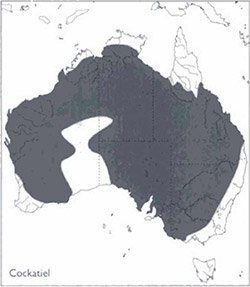
    Distribucion Nymphicus hollandicus
    Endemic to Australia. Its range covers a vast majority of the continent, except wet coastal areas. Also absent from the Cape York Peninsula, districts located more to the South in winter and areas located more to the North in the summer.

    After heavy rainfall, large meetings can be set up in the center of the country where they are, usually, absent.

    Conservation:

    State of conservation โ“˜


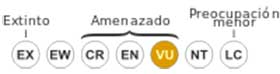
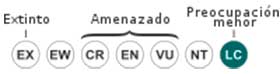
    minor concern Minor Concern โ“˜ (UICN)โ“˜

    – Current IUCN Red List category: Least concern.

    – The population trend: Stable

    This bird is very common and extended throughout the area. Probably its population grows, It has benefited from the facilities and artificial reservoirs for the development of agriculture.

    Its population It is estimated in around a million of birds. The birds that sought to be introduced in the United States they have failed in their attempts to establish themselves in the wild.

    In Australia, these small cockatoos are often persecuted for considering them pests for agriculture.

    "Cockatiel" in captivity:

    The Nymphs or Carolinas they are highly prized birds as pets by its docile nature and for being less demanding than the larger parrots. The nymphs they are perfectly suited to life in the home, they are easy to care for and if you homeschool them from small become companions adorable and very affectionate.

    They generally live in pairs or in colonies, that is why it is very common to mate them, to be able to enjoy the birth of the offspring and their development.

    They usually enjoy sharing their time with people and rather stick to their owners, Each bird has its personality, so you don't like all that take them into your hands. Males can sing and learn to mimic a few words, but they are much better to imitating sounds, as melodies, sirens or other birds singing. Females vocalize much less but tend to also be more caring.

    The nymphs are birds Smart, of friendly character and practically does not present problems of behaviour. They are easily adapted to family life and learn to interact and communicate with people who love. If you've decided to adopt one of these cute birds, make sure you dedicate time to your training to get to have a great pet. This will help you create a strong emotional bond between you and you will also keep it entertaining, mentally active, healthy and happy.

    Alternative names:

    Cockatiel, Cockatoo Parrot, Crested Parrot, Quarrion, Weero (ingles).
    Calopsitte รฉlรฉgante, Perruche calopsitte (French).
    Nymphensittich (German).
    Cocatiel (Portuguese).
    Cacatรบa Ninfa, Carolina, Ninfa (espaรฑol).

    scientific classification:

    Order: Psittaciformes
    Family: Cacatuidae
    Scientific name: Nymphicus hollandicus
    Genus: Nymphicus
    Citation: (Kerr, 1792)
    Protonimo: Psittacus hollandicus

    Images Cockatoo Nymph:


    Sources:
    Avibase, elblogdemaskota
    Photos: commons.wikimedia.org, huffingtonpost.com, optusnet.com.au, cockateil.NET, galleryhip.com
    Sounds: Marc Anderson (Xeno-canto)