โ–ท The world of Pets: Dogs, cats, birds, reptiles, amphibians

Yellow-crested cockatoo
Cacatua sulphurea

Yellow-crested cockatoo

Content

Description

Medium-sized, 35 cm.. long.

Yellow-crested cockatoo

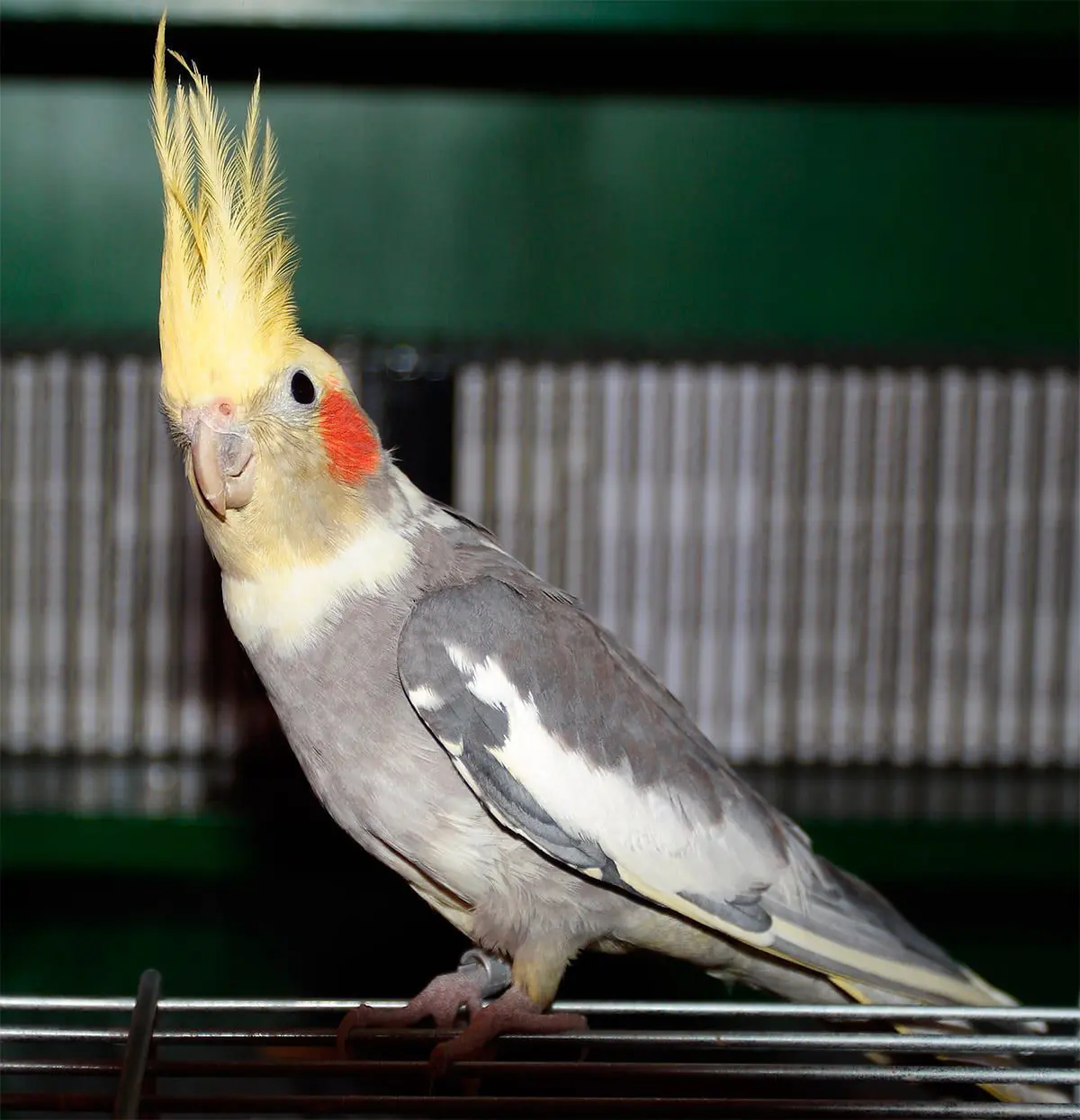
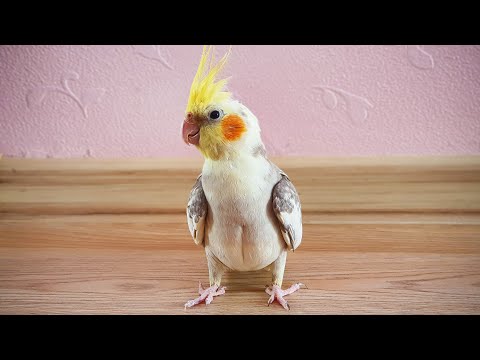
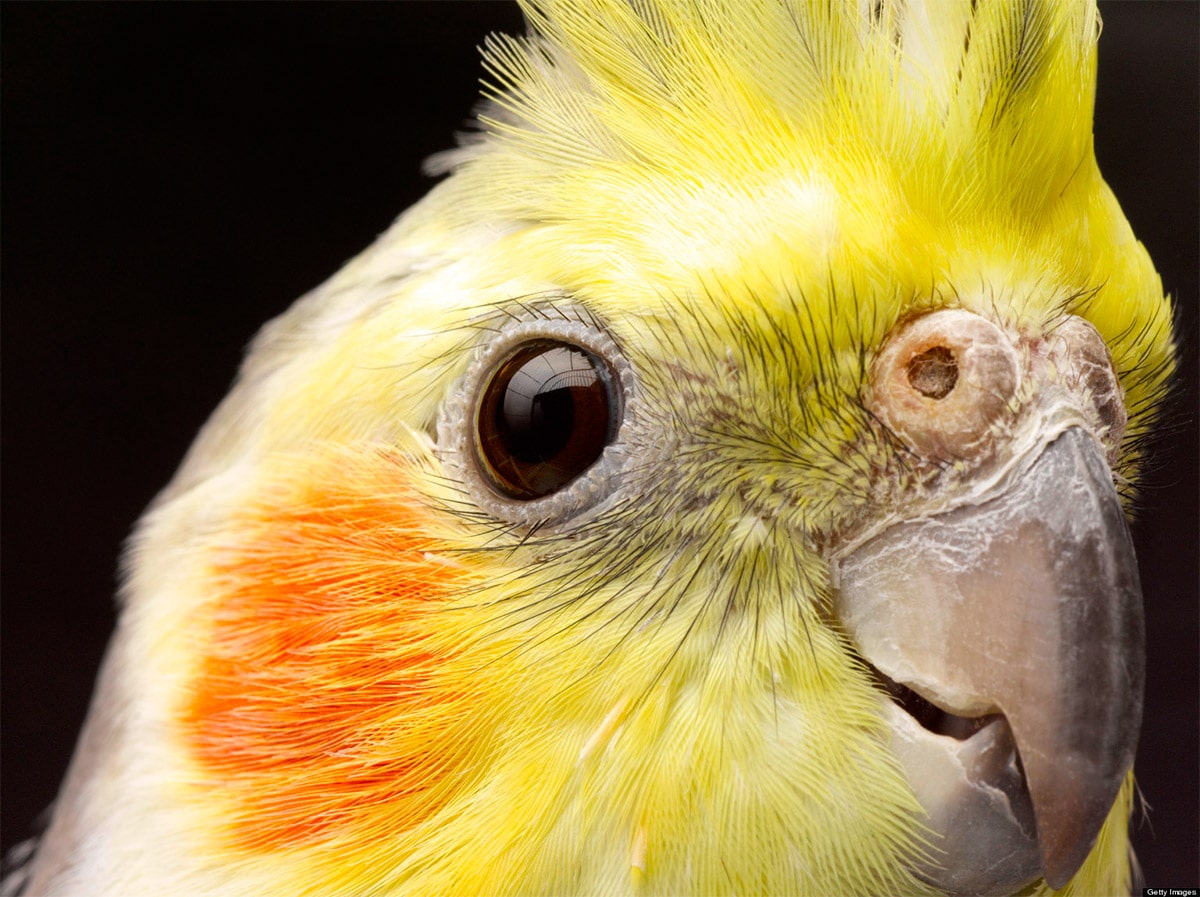
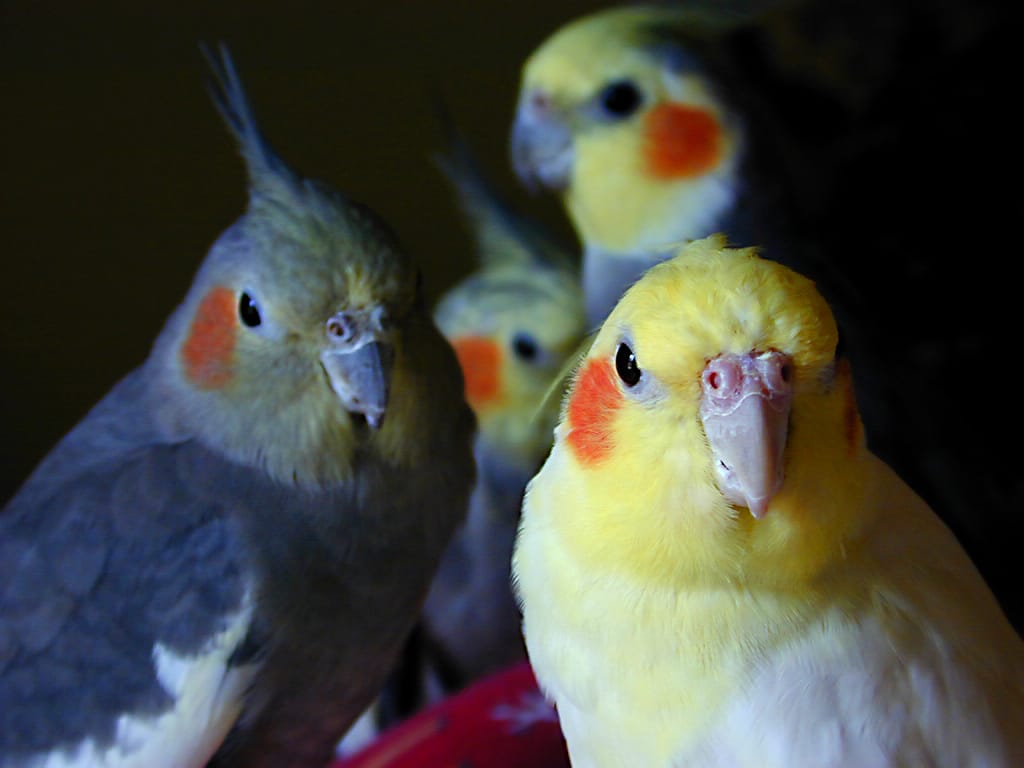
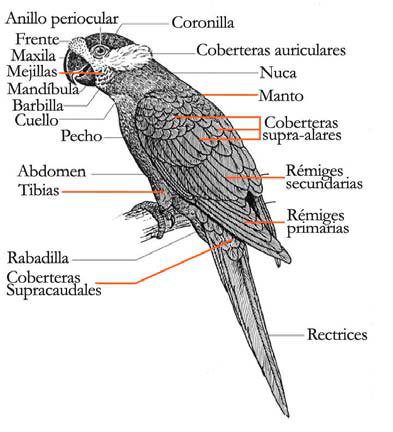
The Yellow-crested cockatoo (Cacatua sulphurea) It is distinguished by its long, thin yellow erectile crest, that curves forward, and extending upward, above the nape, when it folded. The front of his crown and main feathers crest, are white. The rest of your plumage It is also white, except in yellow suffusion ear-coverts, under the wings and in the innerwebs of the undertail-coverts. The bases of the hackles and underparts, They are yellowed; some birds show a slight yellow tone, particularly on chest and the belly. The bill It is black; eye ring pale bluish; irises dark brown; legs grey. The female is similar to the male but with the irises reddish and slightly smaller.

The young birds They show both sexes irises dark taupe, although females They begin to acquire the red coloration in the first year. The bill and legs immature are also lighter.

Description 4 subspecies
  • Cacatua sulphurea abbotti

    (Oberholser, 1917) – Similar to the parvula, but largest.

  • Cacatua sulphurea citrinocristata
  • Cacatua sulphurea citrinocristata

    (Fraser, 1844) – Slightly larger than the nominal, with one crest orange & ear-coverts orange yellow. Additional research may provide a basis for improving this subspecies to a specific status..

  • Cacatua sulphurea parvula

    (Bonaparte, 1850) – Similar to the nominal species, but with the ear-coverts paler and less yellow on yellow feathers underparts. the size of the bill in this subspecies it increases clinically towards the west.

  • Cacatua sulphurea sulphurea

    (Gmelin, 1788) – Nominal.

Habitat:

Video – "Yellow-crested cockatoo" (Cacatua sulphurea)

SULPHURE COCKATUA

They inhabit at the edges of the forest, wooded areas, farmland, cocoteros, semi-arid areas and forests until the 800 m (locally 1.200 m).

The Yellow-crested cockatoo usually they found in pairs or small groups of up to ten individuals, although they may meet in larger flocks to feed on fruit trees. They can form flocks with Eclectus Parrot (Eclectus roratus).

They tend to be noisy and visible, but can be difficult to spot when moving silently in the canopy, and they are more often in flight. The groups who leave their resting places in the montane forest areas frequently displace forage at lower altitudes including cultivated fields. Pairs may hover conspicuously above the forest canopy searching for fruitful trees, allowing a reasonably close approach when resting on a branch.

The crest It is generally stands when landing, or when an individual is making calls from a perch. Like most of the Cockatoos They enjoy a bath in the rain.

Reproduction:

Specimens of Yellow-crested cockatoo on the island of button in State reproductive during the months of September and October, although Nusa Tenggara the breeding It occurs in the months of April and May. The female It lays two or three white eggs in the hollow of a tree, and incubation lasts around 28 days with both parents participating. Chicks they leave the nest to 10 weeks and are dependent parent for about two months.

Food:

They feed in trees and soil. Its diet It includes seeds, corn (Zea mays) of cultivated fields, fruit, berries, egg yolks, flowers and nuts (including large coconuts (cocos nucifera)).

Distribution and status:

Size of its range (breeding/resident ): 1.360.000 km2

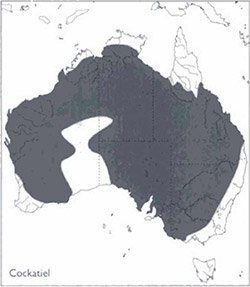
The Yellow-crested cockatoo They are confined Indonesian, where they can be seen in the lowlands Isla Celebes (virtually extinct in the north), islands in the Flores sea, in Nusa Tenggara and isolated islands Masalembu in the Java Sea.

introduced in Singapore and Hong Kong. The species is found in both wooded areas and cultivated and is scarce throughout its range. It is estimated that the world population total is less than 40.000 birds and is decreasing. Although populations of the nominal subspecies and of the subspecies parvula may still be close to 10.000 specimens, the citrinocristata subspecies It has an estimated population between 800 and 7.200 only individuals, having declined by 80% between the years 1986 and 1989, while the distinctive subspecies abbotti It is now represented by only nine individuals in nature.

Although habitat loss is clearly a factor in Sumba, where distribution appears to be linked to the extent of primary forest (is only about 15% the original forest), trade is the main threat to the species as a whole. Trade data show that exported almost 100.000 birds in years 1980-1992. The export citrinocristata subspecies It was banned in 1992 by local authorities, and 26 birds were confiscated in September of that year. There are probably at least 50 individuals of each subspecies in public collections and more than 2.000 in private aviculture, although the numbers for the subspecies abbotti They are unknown.

Distribution 4 subspecies

Conservation:

State of conservation โ“˜


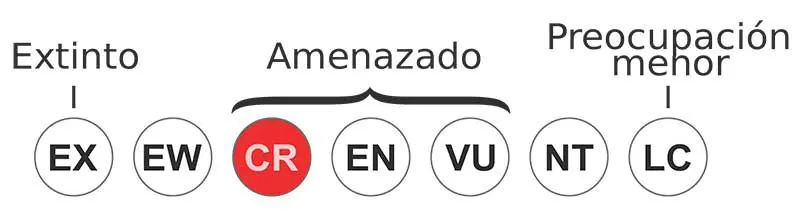
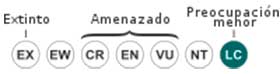
critical hazard critically endangered โ“˜ (UICN)โ“˜

โ€ข Current category of the Red List of the UICN: critically endangered.

โ€ข Population trend: Decreasing.

Its crashing fall It is almost entirely attributable to the unsustainable exploitation for domestic and international trade. Logging to the conversion of forests for agriculture as well as the use of pesticides for land and large-scale.

Justification of the population

Based on recent surveys in various parts of the range of the species, C. Trainor in some (2007) It has been estimated the world population in less than 7.000 individuals: 3.200-5.000 en Sumba (though perhaps only 562 in 2012, Burung Indonesia en preparaciรณn), 500 en Komodo, 200-300 en Timor Leste, 200-300 en Sulawesi, 20-50 in West Timor, 40-70 Flores, 50-100 en Sumbawa, 100 in Rinca and other 700 birds in total. The best data is located in the band 2.500-9.999 individuals, equivalent to 1.667-6.666 mature individuals, rounded here to 1.500-7.000 mature individuals.

Conservation actions and research in progress

CITES Appendix I (2005). It has developed and adopted a recovery plan cooperative and has prepared an update 2012 (D. Mulyawati in some. 2012). The populations are found in various protected areas, It is the most important Rawa Aopa Watumohai (55 copies in 2011 [Waugh 2013]) and National Parks Caraente (en Sulawesi), supporting up 100 individuals (transgressed 2006) , Reserva Natural de Wildlife en Pulau Moyo, Komodo National Park and two national parks in Sumba: Manupeu-Tanadaru y Laiwangi-Wanggameti. Nini Konis Santana National Park declared in Timor has a 100 estimated birds (Trainor et al., Without date) . In Rawa Aopa Watumohai nests they have been protected from predators by removing vegetation pendant necklaces and installation of plastic around the tree trunks nesting (Waugh 2013). Moratoriums on international trade are in effect, although it is likely that a large proportion of trade is a national. Several subpopulations of Sulphur-crested Cockatoo have increased in Sumba between 1992 and 2002, due to conservation efforts (including local education, ecotourism and law enforcement), although densities remained below those typical for other cockatoo species (Cahill et al ., 2006) . Capture for trade has declined dramatically in Sumba through a variety of awareness and protection measures of the community (D. Mulyawati in some. 2012).

Following the surveys of 2008 and 2009, the Indonesia Parrot Project and Konservasi Kakatua Indonesia have started meetings with community leaders and villagers in Masakambing and Masalembu, as well as with the military and local police, to raise awareness and gain support for Sulphur-crested Cockatoo conservation (Metz et al. Al., 2009) . A conservation program-awareness-pride has also begun to involve adults and school Archipelago Masalembu (Metz et al. , 2009, Translating et al., 2009) And in Southeast Sulawesi (Anon., 2012). A "village regulation" was written to catch, possess or transport the species and initiate measures to reduce habitat destruction and employ a former village chief to guard and protect nests and study Sulphur-crested Cockatoos (Translating et al., 2009) . Moronone community in Rawa Aopa Watumohai NP, where four members of the village have been hired as Forest Wardens (Anon., 2012), have established similar community-based regulations. The guards protect the species against poachers and perform monitoring activities (Waugh 2013). The pest status of the species can be addressed by planting crops to compensate for losses and to act as a "sacrifice culture", for example, sunflower fields are used to attract the species out of other crops (Waugh 2013). Mangrove restoration is also being used to increase nesting habitat available (Waugh 2013). a repeat of the population census is planned abbotti , together with studies on its biological history and ecology (Metz et al., 2009) .

Proposed Research and Conservation Actions

Carry out further studies (including Roti, but also more studies on Alor and Pantar) to identify the most appropriate action for conservation areas and to periodically monitor key population surveys repeating ago 8-10 years. Provide relevant support for protected areas and conservation initiatives within its range and protect nests when possible. Strengthen the protection of forest Poronumbu, Sumba, declaring Nature Reserve (Translating y Agustina 2012). Strengthen control, the enforcement and monitoring of trade and establishing greater management of captive populations. Improve law enforcement in designated protected areas and other key areas for trade, including ports, markets, etc. Promote widespread community conservation initiatives. These may include, en la isla de Pasoso, Sulawesi Central, work to protect the Sulphur-crested Cockatoo should involve all five families living on the island and introduce community involvement programs for children and adults on several other islands where the species occurs (Translating y Agustina 2012). The recommendations formulated specifically for the protection of the species in the Komodo National Park consisted of carrying out an annual monitoring, maintain regular patrols, sensitize local communities and studying human activities and impacts within the park (Imansyah et al ., 2005, Benstead 2006) . Conduct ecological research to clarify options for management and conservation. Other objectives should be to study the abundance and distribution of nest holes and water sources.. The provision of artificial sources of water near the nesting sites, that is to say, water ponds, It is essential for the species on the island of Komodo and may also be necessary to protect the nests of young Komodo dragons in Komodo (Translating y Agustina, 2012).

"Yellow-crested cockatoo" in captivity:

The male Yellow-crested cockatoo It is especially aggressive with the female, sometimes to kill her. This phenomenon is known in many cockatoo species..

among the white cockatoos, this is somewhat difficult to breed in captivity. As a pet can be a formidable partner provided it has been raised for that purpose and to provide much attention.

It is very difficult for them to disconnect in the presence of their owners and entertain themselves without seeking continuous interaction.
Great ability to imitate human sound within the world of cockatoos.

Note: Because of its status, CRITICALLY ENDANGERED, only controlled captive breeding is recommended in an attempt to recover this species in the wild.

Alternative names:

Yellow-crested Cockatoo, Lesser sulphur-crested cackatoo, Sulphur-crested Cockatoo (ingles).
Cacatoรจs soufrรฉ, Petit Cacatoรจs ร  huppe jaune (French).
Gelbwangenkakadu, Orangehaubenkakadu (German).
Cacatua-de-crista-amarela (Portuguese).
Cacatรบa de Moรฑo Naranja, Cacatรบa Sulfรบrea (espaรฑol).

Gmelin Johann Friedrich

scientific classification:


Order: Psittaciformes
Family: Cacatuidae
Genus: Cockatoo
Scientific name: Cacatua sulphurea
Citation: (Gmelin, JF, 1788)
Protonimo: Psittacus sulphureus


Images Sulphur-crested Cockatoo:


Species of the genus Cacatua
  • Cacatua tenuirostris
  • Cacatua pastinator
  • —- Cacatua pastinator derbyi
  • —- Cacatua pastinator pastinator
  • Cacatua sanguinea
  • —- Cacatua sanguinea gymnopis
  • —- Cacatua sanguinea normantoni
  • —- Cacatua sanguinea sanguinea
  • —- Cacatua sanguinea transfreta
  • —- Cacatua sanguinea westralensis
  • Cacatua goffiniana
  • Cacatua ducorpsii
  • Cacatua haematuropygia
  • Cacatua galerita
  • —- Cacatua galerita eleonora
  • —- Cacatua galerita fitzroyi
  • —- Cacatua galerita galerita
  • —- Cacatua galerita triton
  • Cacatua ophthalmica
  • Cacatua sulphurea
  • —- Cacatua sulphurea abbotti
  • —- Cacatua sulphurea citrinocristata
  • —- Cacatua sulphurea parvula
  • —- Cacatua sulphurea sulphurea
  • Cacatua moluccensis
  • Cacatua alba

  • Sources:

    Avibase
    – Parrots of the World โ€“ Forshaw Joseph M
    – Parrots A Guide to the Parrots of the World – Tony Juniper & Mike Parr
    – Birdlife

    Photos:

    (1) – Cacatua sulphurea by Charles LamFlickr
    (2) – Citron-crested Cockatoo(Cacatua sulphurea citrinocristata) in the Walsrode Bird Park, Germany By Quartl (Own work) [CC BY-SA 3.0], via Wikimedia Commons
    (3) – A Yellow-crested Cockatoo at Auckland Zoo, New Zealand By Ashleigh Thompson (originally posted to Flickr as Captain) [CC BY 2.0], via Wikimedia Commons
    (4) – Cacatua sulphurea citrinocristata, Citron-crested Cockatoo. Photograph of upper body and crest By Ruth Rogers (originally posted to Flickr as Citron Cockatoo) [CC BY 2.0], via Wikimedia Commons
    (5) – Citron-crested Cockatoo (Cacatua sulphurea citrinocristata). The glass between the camera and this parrot makes the picture just a little bit blurry By Alexander Tundakov (originally posted to Flickr as White Parrot) [CC BY 2.0], via Wikimedia Commons
    (6) – Photo of Lesser Sulphur-crested Cockatoo (wings clipped) By Snowmanradio, with permission from Tropical Birdland, Leicestershire, England. (Own work) [GFDL or CC BY-SA 3.0], via Wikimedia Commons
    (7) – Yellow-crested Cockatoo (Cacatua sulphurea) at the KOBE Oji Zoo by opencage.info
    (8) – Lesser Sulphur-crested Cockatoo (wings clipped) By Snowmanradio, with permission from Tropical Birdland, Leicestershire, England. (Own work) [GFDL or CC BY-SA 3.0], via Wikimedia Commons
    (9) – Yellow-crested Cockatoo (Cacatua sulphurea) by Darren – Flickr
    (10) – Yellow-Crested Cockatoo, Cacatua sulphurea by Sek Keung LoFlickr
    (11) – Cacatua sulphurea by Charles LamFlickr
    (12) – Cacatua sulphurea by Charles LamFlickr
    (13) – Cacatua sulphurea by Pichon Charles LamFlickr
    (14) – A painting of a Yellow-crested Cockatoo, also known as the Lesser Sulphur-crested Cockatoo, (originally captioned ยซPlyctolophus sulphureus. Lesser Sulphur-crested Cockatooยป) by Edward Lear 1812-1888. [Public domain], via Wikimedia Commons

    Sounds: (Xeno-canto)

    โ–ท The world of Pets: Dogs, cats, birds, reptiles, amphibians

    Little corella
    Cacatua sanguinea


    Cacatua sanguinea

    Content

    Description

    It measures 35-40 cm.. and weighs approximately 500 g..
    In the Little corella (Cacatua sanguinea), the head and crest (that most of the time stays low) are white. The pink base of the feathers are almost completely hidden and yet barely visible small flakes in the cheeks.
    Dissemination of salmon-rosa color to the area around the eyes. The upperparts and coverts of the wing are white. There is a remarkable spread of yellow color on the bottom of the flight feather and of the tail.
    The bill is grayish white. The skin nude around the eyes is blue grey. The irises is dark brown, the legs grey.

    Both sexes are identical in all aspects, including the color of the irises.

    The immature have a look more white and the skin of the periphery eyepiece less prominent.

    Subspecies description
    • Cacatua sanguinea gymnopis

      (Sclater,PL, 1871) – Features with more naranja-rosa around them eyes and in the bases of the feathers of the head, neck and top of the chest. Its orbital skin is darker.

    • Cacatua sanguinea normantoni

      (Mathews, 1917) – Is smaller.

    • Cacatua sanguinea sanguinea

      (Gould, 1843) –

    • Nominal.

    • Cacatua sanguinea transfreta

      (Mees, 1982) – Displays below the wings and tail infiltrations slightly yellow pulling a Brown.

    • Cacatua sanguinea westralensis

      (Mathews, 1917) – It has bright orange-red colors around the eyes and the bases of feathers, also in the the mantle and in the part inferior of the abdomen.

    Habitat:

    Video – "Little corella" (Cacatua sanguinea)

    The spectacular BLOODED COCKATOO - BIRD VETERINARY

    It nests in riparian forests bordering permanent pasture and cropland. In the breeding season, they can be found in a wide variety of habitats, including areas of acacias and eucalyptus bushes of short grass or pasture with groups of scattered trees. During this time, they are also present in the rice fields, cane extensions, areas of shrubs, at the edges of mangrove areas, in the pastures for horses, on roads and gardens on the outskirts of cities.

    Behavior:

    The Bloody Cockatoos they often form large gatherings in crops and pastures.

    Out of it breeding season, It is not uncommon to see flocks of up to 70.000 birds.
    At night they fly to their bedrooms, located near the water.

    Early in the morning, they drink before heading to the feeding sites often many kilometres from the bedroom.
    During the hottest hours of the day, they seek shelter in the shade of the leaves..

    Reproduction:

    In Australia they can be played back in any month of the year, When are conditions good. But, the nesting seems to be further developed early in the North (from May to October) and in the Southeast (August-December).

    In Queensland, the implementation is carried out mainly from December to April and from July to October. Reproduction is strongly influenced by climate, usually begins 2 or 3 months after the end of the rainy season in northern districts.

    There may be two or three broods per season. Couple ties are very strong and seem to last for life. They are loyal to the same nesting sites year after year. The nest is usually placed in a eucalyptus (Eucalyptus camaldulensis) between 3 and 10 meters above the ground.

    The cavity is approximately one meter in depth. It is fairly easy to detect since crust is often removed around inlet. They also nest on cliffs or termite mounds..

    They put 2-4 eggs in a bed made from chips of wood that is replaced each year.

    In general, two chicks manage to break the shell after 25 days. They remain in the nest for nine weeks, After this take off.

    Food:

    It has a diet mainly vegetarian. They feed on seeds you are in the trees of the genus EMEX, green areas or fields of melon (cucumber myriocarpus). They also eat nuts, fruit, berries, flowers, estate, bulbs, shoots as well as insects and larvae.

    Distribution:

    Size of the area of distribution (reproduction / resident): 5.300.000 km2

    The Little corella lives in New Guinea and Australia. In Australia, We found in the Northwest, on the plateau of Kimberley and Arnhem in the this of the Cape York Peninsula. They are absent from the east coast and the entire southwestern part of the country..

    Subspecies distribution
    • Cacatua sanguinea gymnopis

      (Sclater,PL, 1871) – Within the Centre and it's Australia.

    • Cacatua sanguinea normantoni

      (Mathews, 1917) – To the West of the cape york peninsula

    • Cacatua sanguinea sanguinea

      (Gould, 1843) –

    • Nominal.

    • Cacatua sanguinea transfreta

      (Mees, 1982) – Plain to the South of New Guinea.

    • Cacatua sanguinea westralensis

      (Mathews, 1917) – Basin of the murchison river, Western Australia.

    Conservation:

    State of conservation โ“˜


    Near-threatened Minor Concern โ“˜ (UICN)โ“˜

    โ€ข Current IUCN Red List category: Least concern.

    โ€ข Population trend: Growing.

    Its population is estimated at more than 1 million of birds and it believes that is in constant increase, especially in the South of Australia.

    Its growth and expansion depends on the development of agriculture and the availability of artificial reservoirs. It is a Bird protected, except in the the Australia South. In this last area, the landowners are allowed to kill birds to prevent the formation of large destructive meetings for crops.

    "Little corella" in captivity:

    The Australian poultry to the blood cockatoo is it considered common.
    They are very docile and Welcome to as pets, but you must pay them attention.

    Alternative names:

    Little Corella, Bare-eyed Cockatoo, Bare-eyed Corella, Blood-stained Cockatoo, Blue-eyed Cockatoo, Corella, Dampier’s Corella, Little Cockatoo, Short-billed Cockatoo, Short-billed Corella (ingles).
    Cacatoรจs corella, Cacatoรจs ร  oeil nu (French).
    Nacktaugenkakadu (German).
    Cacatua-corella-pequena (Portuguese).
    Cacatรบa Sanguรญnea (espaรฑol).

    scientific classification:

    Order: Psittaciformes
    Family: Cacatuidae
    Genus: Cockatoo
    Scientific name: Cacatua sanguinea
    Citation: Gould, 1843
    Protonimo: Cacatua sanguinea

    Blood Cockatoo Images:


    Species of the genus Cacatua

    Sources:
    Avibase
    – Photos: Wikipedia, John H. Boyd, murrundi.org
    – Sounds: Nigel Jackett (Xeno-canto)

    โ–ท The world of Pets: Dogs, cats, birds, reptiles, amphibians

    Palm cockatoo
    Probosciger aterrimus

    Content

    Description

    51 to 64 cm. height and a weight between 910 and 1200 g.
    The Palm cockatoo (Probosciger aterrimus) it is one of the largest cockatoo species. Unmistakable with a Erectile Crest of 15 cm.. Mainly arboreal.

    Both sexes differ in size. Immatures are differentiated by the pale yellow at the bottom and the tip of the bill and the eye ring in color white.
    Usually black with a bare area around the cheeks and eyes red. The feathers of the crest they are long and thin, black streaks.
    The bill is dark gray, smaller in the female. The legs son grises. The language is black and Red.
    The cheek skin changes color according to its health or stress level, a pink / beige to a yellow when it is excited.

    Description 4 supespecies

    • Probosciger aterrimus aterrimus

      (Gmelin, 1788) – Nominal.


    • Probosciger aterrimus goliath

      (Kuhl, 1820) – Larger than the subspecies macgillivrayi.


    • Probosciger aterrimus macgillivrayi

      (Mathews, 1912) – Larger than the species nominal.


    • Probosciger aterrimus stenolophus

      (Oort Cloud, 1911) – As the subspecies goliat, but with feathers crest closer.

    Habitat:

    The presence of this cockatoo is documented from sea level to 1350 metres in height.

    In New Guinea they are in tropical rainforests, including gallery forests, edges of forests and monsoon forests. In Australia they live in forests of eucalyptus, forest of Melaleuca, partially cleared areas and sheets.

    You are travelling individually, in pairs or in groups of five or six. About an hour after sunrise they gather in the treetops.

    Reproduction:

    The nesting occurs between August and February.
    Nest in the cavities of trees which tend to be of approximately 1 m depth and 25 to 60 cm in diameter. These are full of branches broken at the bottom on which rests the egg. The site is often used year after year.
    Reproduce every two years. They put a single egg and both parents the hatch for a period of 28 to 31 days, at around 3 to 4 more days to hatch. The squab was born completely naked and does not develop marker, unlike other Cockatoo chicks. They are taken from 100 to 110 days to leave the nest, the longest period among all parrot species. After leaving the nest, the young bird depends on the parents at least others 6 weeks because of its inability to fly.

    Food:

    Seeds, dried fruits, fruit, berries, sprouts leaves and insect larvae.
    They feed mainly in the forest canopy, but can also feed on the ground on fallen fruits and seeds.

    Distribution:

    Size of the area of distribution (reproduction / resident): 716.000 km2

    New Guinea and adjacent islands, North of Queensland, Australia.

    Distribution 4 subspecies:

    Conservation:

    State of conservation โ“˜


    minor concern Minor Concern โ“˜ (UICN)โ“˜

    โ€ข Least concern according to IUCN classification.

    โ€ข Population trend: Decrease

    This species has a very large range, and therefore not approaching the threshold of vulnerability. While the trend of the population seems to be decreasing, the decline is not believed to be fast enough to approach vulnerable bird thresholds based on population trend criteria.

    In some parts of its area of distribution, the forest habitat in which occur the hollow trees is being invaded by the rainforest.

    "Palm cockatoo" in captivity:

    Rare bird cage, Although they have a great demand for the market of pet due to its unusual appearance.
    They can live more than 55 years of age in captivity.

    They may develop compulsive behaviors, as the pecking of feathers. They can also mimic sounds and human language.

    Aggressiveness within pairs is taken into account for captive breeding., Sometimes the male usually kill the female. As such, There are more different management methods, from bringing both cockatoos together only during the breeding period and quickly removing the male, cut the male that the female escape flying, or create complex installations that are carried out next to a cutout of the male, so that the female always has an escape route in the face of aggression.

    There are currently laws that prohibit the export of any Palm cockatoo without a permit.

    Alternative names:

    Palm Cockatoo, Black Macaw, Goliath Aratoo, Goliath Cockatoo, Great Black Cockatoo, Great Palm Cockatoo (English).
    Cacatoรจs noir, Microglosse noir (French).
    Arakakadu (German).
    Cacatua-das-palmeiras (Portuguese).
    Cacatรบa de las Palmas, Cacatรบa Enlutada (espaรฑol).

    scientific classification:

    Order: Psittaciformes
    Family: Cacatuidae
    Genus: Palm
    Scientific name: Probosciger aterrimus
    Citation: (Gmelin, JF, 1788)
    Protonimo: Psittacus aterrimus

    Images of the Black Cockatoo:


    Sources:
    avibase
    infoexoticos
    – Parrots of the World โ€“ Forshaw Joseph M
    – Parrots A Guide to the Parrots of the World – Tony Juniper & Mike Parr
    – Birdlife

    – Photos: avianzoo, papageien.org, avianzoo, Wikimedia.org

    – Sound: Frank Lambert

    โ–ท The world of Pets: Dogs, cats, birds, reptiles, amphibians

    Solomons cockatoo
    Cacatua ducorpsii


    Cacatรบa de las Salomรณn

    Content

    Description

    It measures 30-35 centimeters to paste 380 g..
    The Solomons cockatoo (Cacatua ducorpsii) is a small cockatoo immediately recognizable by its long triangular Crest.
    Its plumage is almost completely white, except the part inferior of them wings and tail with infiltration of color yellow. The feathers of the crest, the cheeks, the the mantle and the chest they have a base of pink.
    The bill is grey. The bare skin around the eyes is pale-blue. The irises are dark brown, the legs grey.
    The females are distinguished from your partner to have the irises more reddish.

    The Solomons cockatoo is quite similar to the Tanimbar corella living in the Tanimbar Islands. Also seems to the Little corella, although the latter have more bluish and developed the orbital area.

    Habitat:

    Is from coastal areas to the mountains; variety of habitats, including forests, secondary vegetation and gardens in cities. Found up to 1700m; mainly below the 700 m.

    Behavior:

    They are birds noisy and quite easy to observe, even though they mostly live in pairs or small groups. They fly high above the treetops where used well exposed perches in the top of the Cup.

    Birds are very cautious, screaming when they are disturbed.

    They have a strong and uneven consisting of shallow flapping flight.

    Reproduction:

    In the wild child from July to September.

    They make their nests in hollows of trees or large branches and, they often use the same nest year after year.

    The eggs are of color white and usually there are two in a clutch. The eggs are incubated for about 25 days, the young leave the nest 62 days after hatching.

    Food:

    They feed on seeds, berries, fruit, outbreaks, flowers, as well as insects and their larvae. From time to time they ingest the fleshy parts of ยซepiphytesยซ.

    Distribution:

    endemic to the Solomon Islands. Its area of distribution extends from Bougainville (Papua New Guinea) to Malaita, Choiseul, New Georgia and Santa Isabel. The species is absent in San Cristรณbal and the islands surrounding.

    Conservation:

    State of conservation โ“˜


    minor concern Minor Concern โ“˜ (UICN)โ“˜

    – Current IUCN Red List category: Least concern.

    – The population trend: Stable

    The population world is estimated at 100.000 birds and it seems quite stable.

    The marketing of pet birds is a threat to this species, the other is the degradation of the habitat. The latter seems particularly serious, given the logging of forests in the lowlands.

    "Solomons cockatoo" in captivity:

    Itร‚ยดs little gregarious and have tendency to be aggressive with other species and with those of its same species. In relation to the human being is a Parrot very demanding. Not everyone is prepared to have a white cockatoo.

    They often tend to develop behavior problems, unbearable screams, become very destructive…If not are given a rigorous education on a very regular basis. That is why it is convenient that if you intend to have a cockatoo, it should be done so that it can be accompanied by another or others of its kind to prevent it from developing an excessive dependency and thus you can enjoy it without fear of having problems or at least trying to avoid them as much as possible.

    I like them much attention. They tend to create strong emotional bonds and they are quite Extrovert.

    Despite the great attraction that having a pet parrot with such characteristics can mean for a person,. It is not often a parrot advised for anyone or rather, hardly anyone is prepared to have a cockatoo with these characteristics.

    Alternative names:

    Ducorps’s Cockatoo, Broad-crested Corella, Solomon Corella, Solomon Islands Corella, White Cockatoo (ingles).
    Cacatoรจs de Ducorps (French).
    Salomonenkakadu (German).
    Cacatua-ducorps (Portuguese).
    Cacatรบa de las Salomรณn, Cacatรบa de Salomรณn (espaรฑol).

    scientific classification:

    Order: Psittaciformes
    Family: Cacatuidae
    Scientific name: Cacatua ducorpsii
    Genus: Cockatoo
    Citation: Pucheran, 1853
    Protonimo: Cacatua ducorpsii

    Solomon's Cockatoo Images:


    Species of the genus Cacatua

    Sources:
    Avibase, mascotasvicmar
    – Photos: animalphotos.me, goldensunbirds

    – Sounds: Mark Todd (Xeno-canto)

    โ–ท The world of Pets: Dogs, cats, birds, reptiles, amphibians

    Yellow-tailed black cockatoo
    Calyptorhynchus funereus

    Yellow-tailed black cockatoo

    Content

    Description

    55 to 65 cm.. length and a weight of up to 900 g..
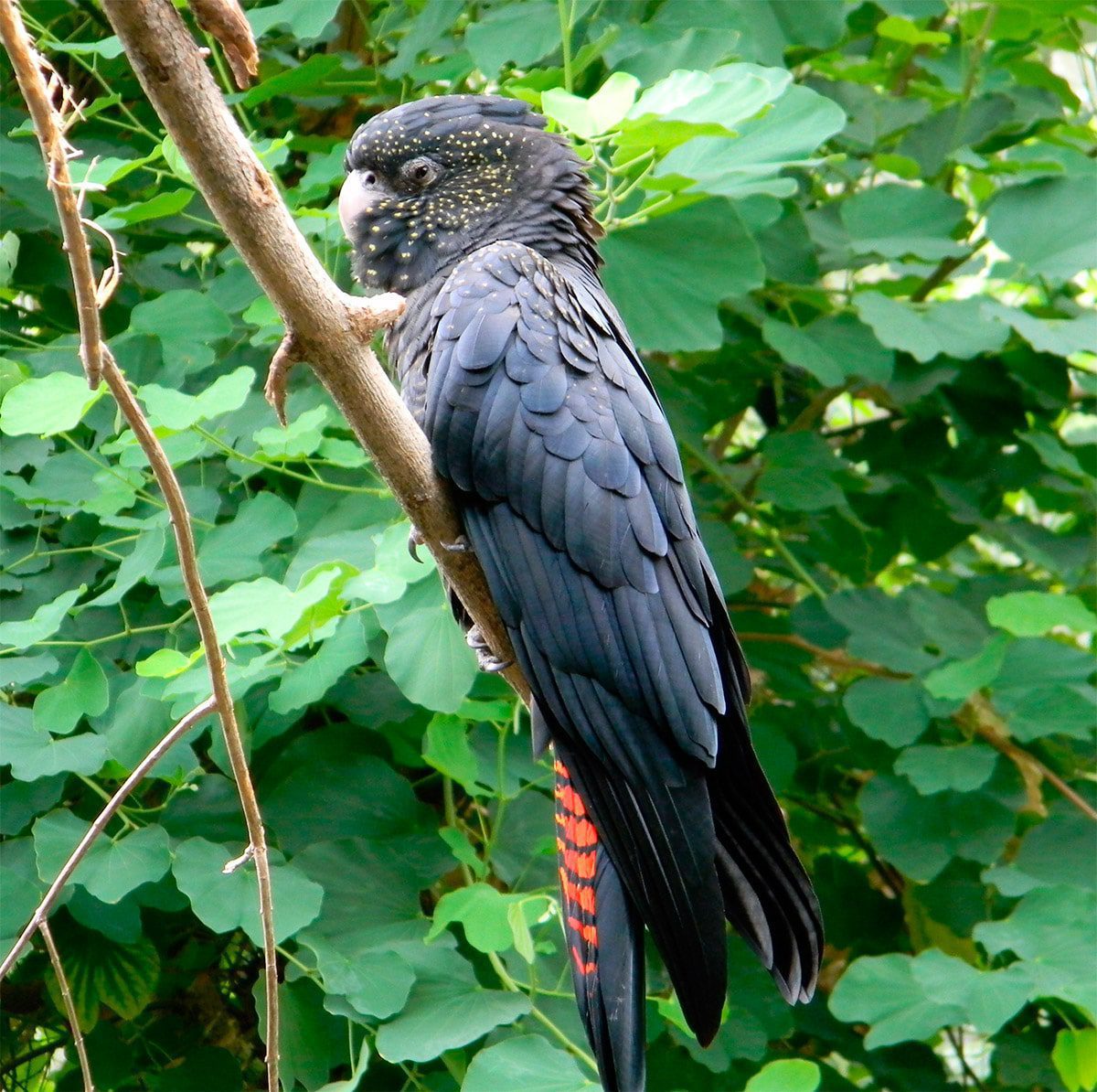
    The Yellow-tailed black cockatoo (Calyptorhynchus funereus) stands out clearly by its plumage mostly black, patch yellow in cheek and yellow panels in tail.

    The body feathers They are lined with yellow giving it a scalloped appearance. It has a crest short and moving on top of her head.
    The female It has a yellow stain on the cheek more defined and larger than the male, Bello to singr pale gray (Pink in males)
    The juveniles has plumage duller overall.
    The bill top of immature male black obscures two years old, While the lower peak black four years.

    Description 3 subspecies

    • Calyptorhynchus funereus funereus

      (Shaw, 1794) – Nominal. Larger and tail longer dark mottled.


    • Calyptorhynchus funereus whiteae

      (Mathews, 1912)


    • Calyptorhynchus funereus xanthanotus

      (Gould, 1838) – Smaller size, tail shorter dark mottled.

    Habitat:

    Variety of types habitats, including forests of eucalyptus, heaths, subalpine areas, pine plantations and occasionally in urban areas.
    They are often seen flying in pairs or trios formed by a pair and their young., although outside the breeding season they can join in more numerous flocks.

    Reproduction:

    have a long breeding season, that varies throughout its range, although Tasmania in general it is from October to February. Both sexes construct the nest in holes of mature trees, high, generally eucalyptus. Fill the hole of wood chips. The same tree can be used for many years.

    One or two eggs form a clutch. Only the female incubates the eggs, While the male supplies the food. Both parents help rear the chicks, Although usually only one chick survives. The chicks leave the nest about three months after hatching and remain in the company of their parents until the next breeding season.

    Food:

    Seeds native trees, terrestrial plants and pine cones. Some insects also part of their diet. Unlike other cockatoos, a significant proportion of the diet up wood borers worms. The bird put his ear against the surface of dead trees to hear the sound of worms. If a worm is detected, the bird will use their powerful beaks to pull pieces of the tree until you get to the meal, often leaving a pile of wood chips at the base of the tree. These scars on dead trees are a common sight in the forests of Tasmania.

    Distribution:

    Size of its range (breeding/resident ): 2.700.000 km2

    It is up to the 2000 meters throughout Southeast Australia, from South Eyre Peninsula to the east-central Queensland.
    Your number is declining in parts of its range due to habitat fragmentation and loss of large trees used for breeding.
    In Tasmania is common and nomadic. They can be seen in many parts of the state and in the larger islands Bass Strait.

    Distribution 3 subspecies

    Conservation:

    State of conservation โ“˜


    minor concern Minor Concern โ“˜ (UICN)โ“˜

    โ€ข Current category of the Red List of the UICN: Least concern.

    โ€ข Population trend: Stable.

    This species has a very large range, and therefore not approaching the threshold of vulnerable. Not threatened worldwide. CITES II. As with most other cockatoos, its long-term existence depends on the continued availability of hollow trees for nesting,

    The population is estimated at at least 25.000 birds.

    The population trend appears to be stable.

    "Yellow-tailed black cockatoo" in captivity:

    In the poultry industry this species is extremely rare and expensive. In Australia It has attained breed in captivity.
    Like all cockatoos, they come to live over 40 years.

    Alternative names:

    Yellow-tailed Black-Cockatoo, Black Cockatoo, Common Black-Cockatoo, Funeral Cockatoo (English).
    Cacatoรจs funรจbre, Cacatoรจs noir ร  queue jaune (French).
    Gelbohrkakadu, Gelbschwanz-RuรŸkakadu, RuรŸkakadu (German).
    Cacatua-negra-de-cauda-amarela (Portuguese).
    Cacatรบa Fรบnebre Coliamarilla, Cacatรบa Fรบnebre de Cola Amarilla (espaรฑol).

    George Shaw
    George Shaw

    scientific classification:


    Order: Psittaciformes
    Family: Cacatuidae
    Genus: Calyptorhynchus
    Scientific name: Calyptorhynchus funereus
    Citation: (Shaw, 1794)
    Protonimo: Psittacus funereus


    Images Cockatoo Fรบnebre Coliamarilla:


    Sources:

    www.parks.tas.gov.au
    avibase
    Birdlife

    Photos: David Cook

    Sounds: Nigel Jackett

    โ–ท The world of Pets: Dogs, cats, birds, reptiles, amphibians

    Tanimbar corella
    Cacatua goffiniana

    Cacatua de las Tanimbar

    Content

    Description

    31 to 32 cm.. length and a weight of just 300 g..
    The Tanimbar corella (Cacatua goffiniana), like all family members Cacatuidae, is a species crestada, meaning it has a collection of feathers on its head which can go up or down at will; his body is covered with white feathers with some feathers or salmon pink between bill and eyes.
    The deepest parts of the feathers of the crest and of the neck They are also the pink, but the color is hidden by the white color of the more superficial. The bottom of its wings and feathers of the tail They have a yellowish hue. The bill It is pale gray and eyes range from brown to black.
    There is a clear sexual dimorphism and, often, merge with the blood cockatoo (Cacatua sanguinea) due to their similar appearance.

    Habitat:

    Riparian forests, thickets of acacias and eucalyptus with short grass or pasture with scattered groups of trees.

    Reproduction:

    The start is two to three eggs, generally deposited in the hollow of a tree. The incubation, that is shared by two birds, lasts a few 30 days. The chicks they leave the nest about ten weeks after hatching, and feeding by the parents continues for another few weeks.

    Food:

    Dried fruits, fruit, berries, flowers, estate, bulbs, egg yolks, sprouts, and insects

    Distribution:

    Size of the area of distribution (reproduction / resident): 9.100 km2

    The Tanimbar Cockatoo It is a species of cockatoo endemic to the forests of Yamdena, Larat and Selaru, all the islands of the Tanimbar Islands of Indonesian. This species has been introduced in the Kai Islands, Indonesian, Puerto Rico and Mexico.

    Conservation:

    State of conservation โ“˜


    Near-threatened Near Threatened โ“˜ (UICN)โ“˜

    โ€ข Current IUCN Red List category: Near-threatened.

    โ€ข Population trend: Decreasing.

    In the Decade of 1970, Japanese loggers ravaged the Islands. Many birds were stunned and disoriented and were captured for pet trade. Although many died from stress during transport, there is still some hope after this ecological disaster, since many cockatoos managed to reproduce in the programs of captive breeding. So, there are now more specimens in captivity than in their natural habitat.

    This species has a range very small, but its population is severely fragmented or restricted to a few places. Despite suffering from the pressure of his capture, seems to have maintained a large population. But, the degradation of the habitat, trapping and continuous persecution is likely to be causing a moderate reduction of the population. Therefore it is classified as Near-threatened.

    There is a conservation plan in endemic parrots Tanimbar Islands, Indonesian, financed by LORO PARQUE FUNDACIร“N

    "Tanimbar corella" in captivity:

    You can show a fearful beginning, but you quickly get used to their caregiver, turning into a very cockatoo sweet, playful, sometimes inquisitive and very active. Enjoy being observed, being the center of the world, like all cockatoos. His cry is not nice, but this little cockatoo is quickly forgiven everything as his antics and bad manners will surprise us and make us laugh.

    Has the continuing need to fly so you need a large space.

    Curiosities:

    A Tanimbar corella, without previous training, open five types different locks:

    The incredible mechanical intelligence of the Tanimbar cockatoos 1

    The incredible mechanical intelligence of Tanimbar Cockatoo

    Alternative names:

    Tanimbar Cockatoo, Goffin’s cackatoo, Goffin’s Cockatoo, Tanimbar Corella (ingles).
    Cacatoรจs de Goffin (French).
    Goffinkakadu, Goffin-Kakadu (German).
    Cacatua-de-goffin (Portuguese).
    Cacatรบa de las Tanimbar, Cacatรบa de Tanimbar (espaรฑol).

    scientific classification:

    Order: Psittaciformes
    Family: Cacatuidae
    Genus: Cockatoo
    Scientific name: Cacatua goffiniana
    Citation: Roselaar,CS & Michaels, 2004
    Protonimo: Cacatua goffiniana

    Images Tanimbar Cockatoo:


    Species of the genus Cacatua

    Sources:
    Avibase, BirdLife.org, faunadex
    – Photos: sciencio.com, Marah09013 (Wikipedia),
    – Sounds: Frank Lambert (Xeno-canto)

    โ–ท The world of Pets: Dogs, cats, birds, reptiles, amphibians

    Short-billed black cockatoo
    Zanda latirostris

    Short-billed black cockatoo

    Content

    Description

    54 to 56 cm.. height and a weight between 520 and 790 g.
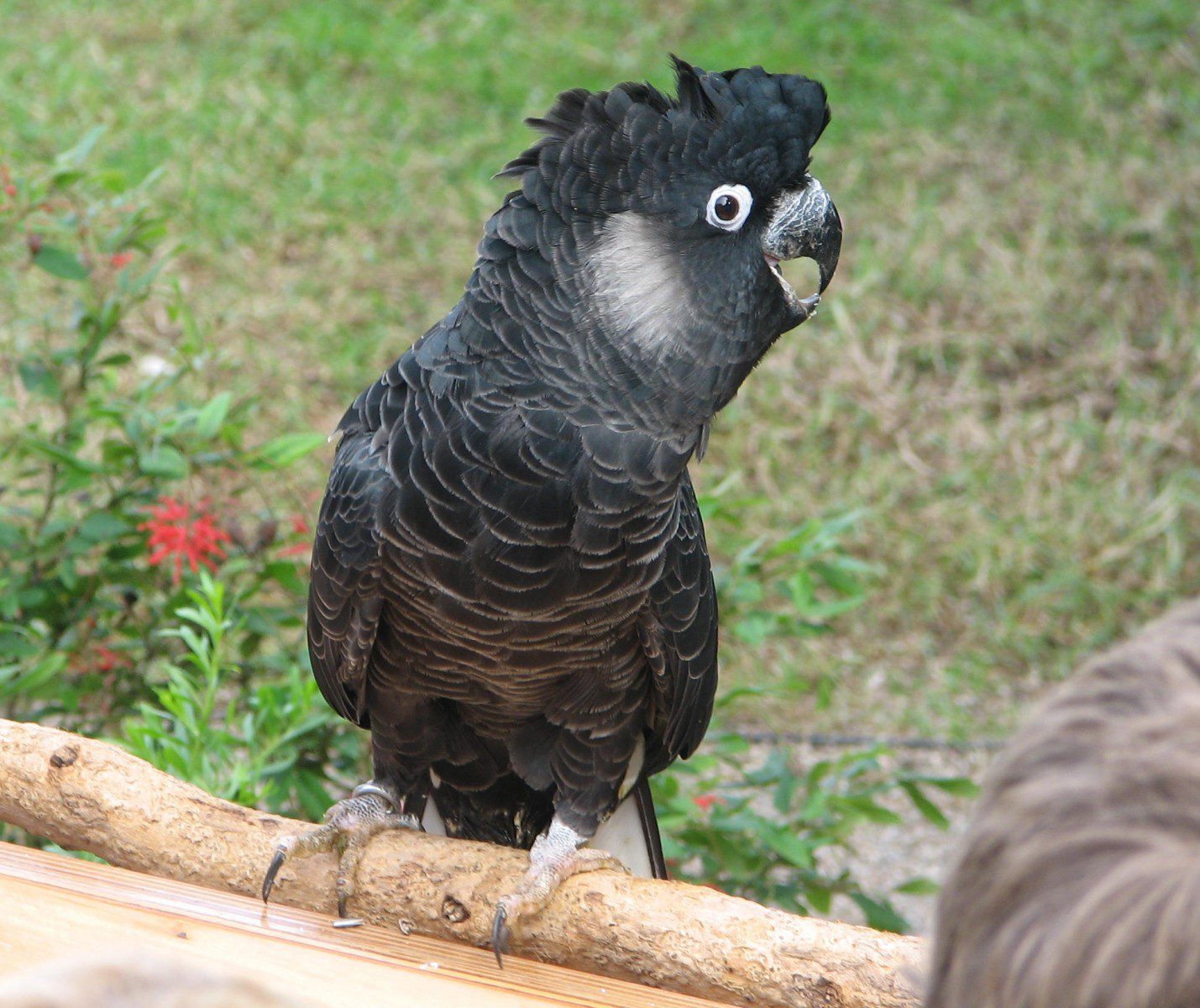
    The Short-billed black cockatoo (Zanda latirostris) It is a large black cockatoo..

    It has great bill black, crest erectile, white spot in the area ear and white panels on the tail. The female It is similar except patch area ear large and slightly yellowish white.
    The immature Similar to adult female.
    Closely related to Baudin's black cockatoo (Zanda baudinii). They were formerly treated as a single species.

    Habitat:

    Mainly inhabits in native forests eucalyptus and shrubland or heathland. Visit temporarily plantations exotic pines.
    Sometimes you see them in cities or at the edges of roads. It is also a visible visitor to the gardens containing native plants with hard fruits around Perth.

    Usually they see them in groups of three or in small flocks, but occasionally gather in large flocks composed of hundreds or, exceptionally, thousands of birds. Sometimes it is associated with Baudin's black cockatoo (Zanda baudinii) wave Red-tailed black cockatoo (Zanda Banksia) in places where food is plentiful.

    The species is said to be Residents in areas of high rainfall They are retaining much native vegetation and are emigrants of the driest regions and places where most of the native vegetation has been removed.

    Reproduction:

    They do not breed until they are at least four years old..
    Adult birds They mate for life, and stay together throughout the year.
    Reproduction occurs mainly in the region Wheatbelt, northwest of the Stirling Range about Three Springs, but it has also recorded on the coastal plain in the South West, about Bunbury.
    The reproductive activity It is limited to eucalyptus forests. They make their nests in large holes in the top of the eucalyptus.

    The eggs They are white or cream, and they have no marks. Son incubated by female only, for a period of 28 to 29 days. The nestlings are fed by both parents, Although during the first 10 to 14 days after hatching they are fed exclusively by the female.

    Adults return to the same breeding area each year.

    Food:

    It feeds mainly from seeds and occasionally nectar, fruit and insect larvae.

    Distribution:

    Size of the area of distribution (reproduction / resident): 196.000 km2

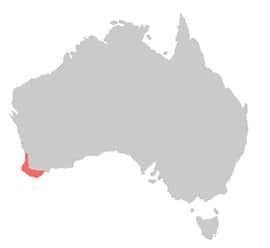
    Endemic southwest Australia.

    Conservation:

    State of conservation โ“˜


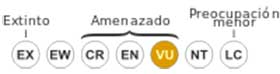
    Endangered Endangered โ“˜ (UICN)โ“˜

    โ€ข Current category of the Red List of the UICN: In danger of extinction.

    โ€ข Population trend: Decreasing.

    On the basis of the distribution of birds during the breeding season, the total population of the Short-billed black cockatoo it has been estimated that is between the 11 000 and 60 000 birds, although there are those who affirm that its population could count on less than 10 000 birds.

    The decline of this species It is mainly due to the loss and fragmentation of habitat. This has been caused by the clearing of native vegetation, mainly for agricultural purposes, Since the mid-20th century.

    No specific information available on future changes in population size. But, the range of the species is thought to continue to contract for some time, which leads to a concomitant decrease in population size.

    "Short-billed black cockatoo" in captivity:

    A program captive breeding It was established in 1996 by the Department of Conservation and Land Management (CALM), in association with poultry farmers and licensed Zoo of Perth.
    The genetic diversity of the captive population is enhanced by an 'abandoned' program’ that rehabilitates injured birds in the wild and then incorporates them into captive breeding.

    Some eggs and chicks are caught illegally for sale in the markets of poultry. Although the demand for the species is said to have declined over the past decade, high market prices (approximately 3.000 dollars per bird and 5,000 $ couple) together with the scarce success of breeding captive birds, They suggest that Illegal take of this cockatoo will continue to be a continuing threat to the survival of this species..

    scientific classification:

    Order: Psittaciformes
    Family: Cacatuidae
    Genus: Zanda
    Scientific name: Zanda latirostris
    Citation: Carnaby, 1948
    Protonimo: Zanda latirostris

    Alternative names:

    Slender-billed Black-Cockatoo, Carnabyโ€™s Black Cockatoo, Mallee Cockatoo, Short-billed Black Cockatoo, Mallee Cockatoo, Short-billed Black Cockatoo, (English).
    Cacatoรจs ร  rectrices blanches, Cacatoรจs de Carnaby (French).
    Carnabys WeiรŸohr-Rabenkakadu, WeiรŸschwanz-RuรŸkakadu (German).
    Cacatua-negra-de-bico-curto (Portuguese).
    Cacatรบa Fรบnebre de Pico Corto, Cacatรบa Fรบnebre Piquicorta (espaรฑol).

    Images Black-billed Black Cockatoo:


    Species of the genus Zanda
  • Zanda funerea
  • —- Zanda funeral funeral
  • —- Zanda funerea whiteae
  • —- Zanda funerary xanthanota
  • Zanda baudinii
  • Zanda latirostris

  • Sources:
    Avibase
    – Parrots of the World โ€“ Forshaw Joseph M
    – Parrots A Guide to the Parrots of the World – Tony Juniper & Mike Parr
    Birdlife

    Photos: Wikipedia, lostandcold (Flickr), Rabenkakadus โ€“ Wikipedia, Gnangarra…commons.wikimedia.org

    Sounds: Nigel Jackett

    โ–ท The world of Pets: Dogs, cats, birds, reptiles, amphibians

    Philippine cockatoo
    Cacatua haematuropygia

    Cacatรบa Filipina


    Content

    Description

    It measures 31 cm. and weighs around 300 g..
    To the Philippine cockatoo (Cacatua haematuropygia) It is called locally Katala.
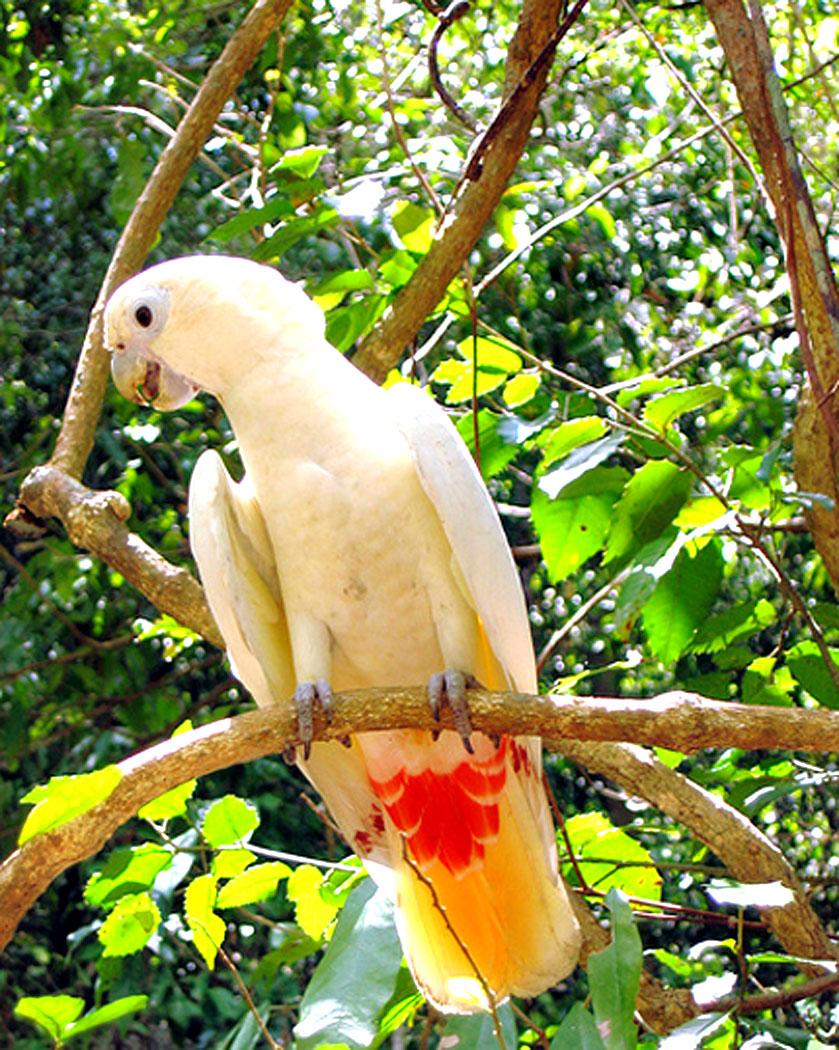
    Its plumage is of a beautiful white color except for the feathers of the crest they are yellow or pink on its base and the bottom of the tail and wings they are yellow and Red.
    The bill is a grayish-white color, and males has irises dark brown, While the of the female are brown-red color.

    Habitat:

    Is restricted to lowland not more than 50 meters above the sea level, in or adjacent to rivers, and in coastal mangrove areas.

    outside the breeding season (March to June, and, times, from February to August), frequents corn and rice crops. This depends on the station where foods are grown and have the available resources, being partially nomadic.

    These birds can fly from their island to the adjacent if they are not more than a few 8 km. distance.

    Reproduction:

    breeding season between February and June. Of one to three eggs they are placed on a nest on a tree branch. The eggs are hatch for a few 28 days, and the chicks remain in the nest for nine to ten weeks after the hatching.

    Food:

    They feed on seeds, vegetables, fruits and berries.
    They are known to attack corn crops in agricultural areas.

    Distribution:

    Size of the area of distribution (reproduction / resident): 22.700 km2

    This cockatoo is endemic in Philippines, and the only representative of the cockatoos that we will find there; This has become a treasure of these islands.

    Conservation:

    State of conservation โ“˜


    critical hazard critically endangered โ“˜ (UICN)โ“˜

    โ€ข Current IUCN Red List category: Critical Hazard.

    โ€ข Population trend: Decreasing.

    โ€ข Population size: 370-770 mature individuals.

    In Palawan the capture of the cockatoos for the international illegal trade is particularly serious, something which is reflected in the high price of these birds ($ 160 Americans in Manila in 1997); to have been looted all the visible nests each time the price is higher because it costs more to catch them.

    The deforestation and the destruction of mangroves have been extensive in their range of occupancy and have contributed significantly to their decline.

    It is also hunted and hunted for consumption as food.
    The release of captive birds can introduce diseases into wild populations.

    Conservation Actions Proposed:

      โ€ข Conduct surveys on all range islands to assess species population size and distribution.
      โ€ข Monitor population trends.
      โ€ข Monitor rates of habitat loss and degradation.
      โ€ข Quantify catch levels, persecution and trade.
      โ€ข Designate more protected areas (for example Tawi-Tawi and towns in or near Palawan).
      โ€ข Support the proposal to expand the Puerto Princesa Subterranean River National Park.
      โ€ข Prevent destruction of mangroves.
      โ€ข Promote economically viable alternatives to avoid the capture of this cockatoo.
      โ€ข Continue with education programs and captive breeding programs.
      โ€ข Establish staff at airports and ferry terminals to control the departure of specimens.
      โ€ข Translocate animals to suitable areas such as lowland forests or mangroves..

    Loro Parque Foundation It has warned of the risk of extinction that runs the Philippine cockatoo by the construction of a power plant in Palawan, an island province of Philippines in the region of Western Visayas.

    This Spanish NGO has invested 1,3 millions of dollars and more than 14 years of work in the recovery project of this cockatoo, and fears that with the construction of this station, the less than 1.000 remaining specimens in the world could be electrocuted by high-voltage lines, In addition to being blocked their migration in search of food.

    See more in: (20minutes)

    "Philippine cockatoo" in captivity:

    Very rare in captivity, fortunately.

    Alternative names:

    Philippine Cockatoo, Philippine Islands Cockatoo, Red-vented cackatoo, Red-vented Cockatoo (ingles).
    Cacatoรจs des Philippines (French).
    RotsteiรŸkakadu (German).
    Catatua-filipina (Portuguese).
    Cacatรบa Filipina, Cacatรบa Malaya (espaรฑol).

    scientific classification:

    Order: Psittaciformes
    Family: Cacatuidae
    Genus: Cockatoo
    Scientific name: Cacatua haematuropygia
    Citation: (Statius Mรผller, 1776)
    Protonimo: Psittacus haematuropygius

    Philippine Cockatoo Images:


    Species of the genus Cacatua

    Sources:

    Avibase, BirdLife.org

    – Photos: Kim Arveen homeland, ยฉ Benedict of Laender, Wikimedia.

    – Sounds: Frank Lambert (Xeno-canto)