โ–ท The world of Pets: Dogs, cats, birds, reptiles, amphibians

Red-bellied Macaw
Orthopsittaca manilatus


Guacamayo Ventrirrojo

Content

Description:

50 to 51 cm.. length and a weight between 292 and 390 g.

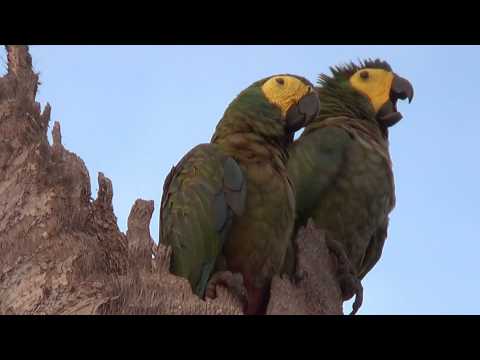
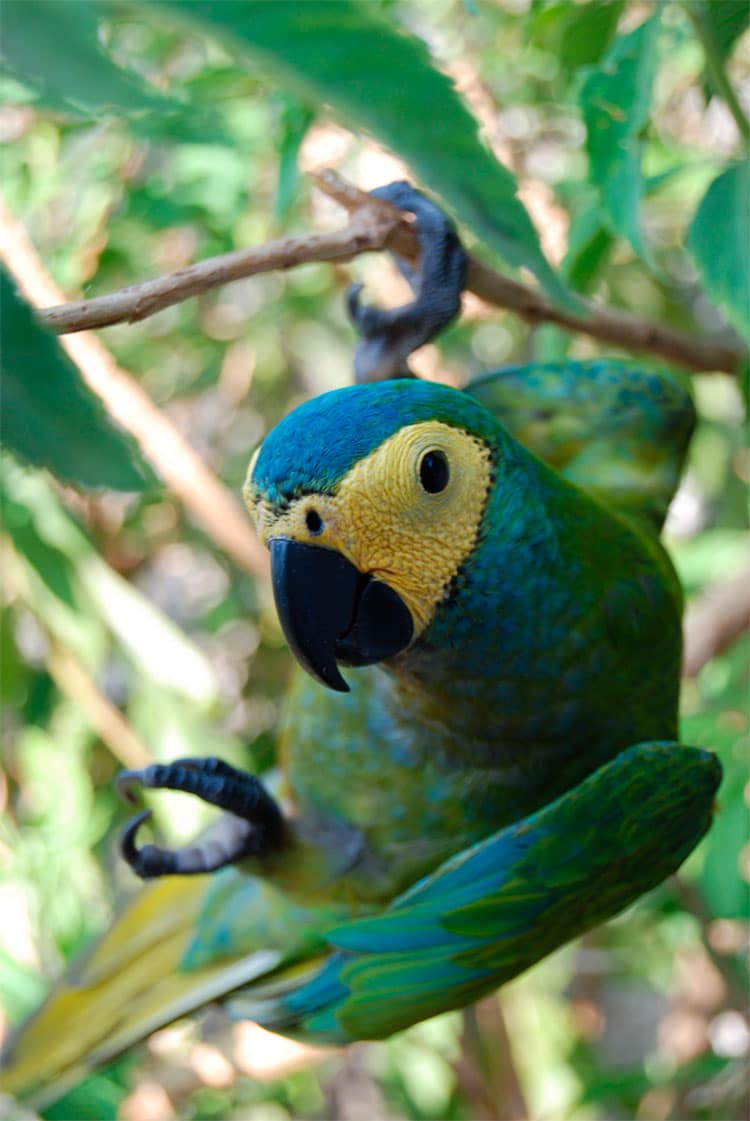
The Red-bellied Macaw (Orthopsittaca manilatus) is a medium-sized Macaw; has the forecrown and crown a bright blue, gradually faded to blue-green color in the area of the nape and on both sides of the neck. The the mantle and scapulars are green grass with impregnations color olive and yellow edges, producing, altogether, a flaky effect; the back and rump are green grass, with some feathers tipped pale bluish. The uppertail-coverts grass-green. The lesser and median coverts green grass impregnated with green olive with yellowish margins; alula and primary coverts green with vane outer blue; large inner coverts green.

The flight feather bordered with blue and green tips. Under, the wings with coverts yellowish-green and flight feather yellowish. The feathers of the throat and top of the chest are pale grey blue in the Center and yellowish-green in the margins; those of the lower area of the chest and top of the belly without tones pale in the Center, but with some feathers with margins off dark red; belly dark red; undertail-coverts bluish green. Upper, the tail green color in the Center with yellowish margins; upor down yellow.

Bill black; nude part of lores and cheeks yellowish white; irises dark brown; legs dark gray.

Sexes similar
, the males, possibly, bigger.

Immature clear tip in the bill and smaller patch of dark red color of the belly.

Habitat:

Lives in Savanna and flooded forest, where there are Palm trees, in altitudes close to the 500 m. Very dependent from the Palma de moriche or aguaje (Mauritia flexuosa), which feeds, staying almost invisible due to its Green plumage.

Occasionally wander in by cultivated areas and have been in the mangroves.

gregarious, flocks of more of 100 observed birds. Usually, they rest in the branches of the Mauritia Palms, where they remain hidden among the foliage of leaves.

Reproduction:

They nest in holes of las palmas dead found near or surrounded by water, often use the nests of the Orange-winged Parrot (Amazona amazonica), of Trinidad and Tobago.

The breeding season is from February to September in Trinidad and Tobago; from February to may in Colombia; from February to June in Guyana. The size of the put is of 2 to 6 eggs with a period of incubation of approximately 27 days. The young begin to feather already in the eleventh week. Take an average of 2 to 3 years to mature, remaining during that period very close to their parents.

Food:

Usually feeds on the fruits of the Palm tree Mauritia flexuosa they are present during the season dry when other fruits are scarce, as well as other palm trees such as Roystonea oleracea and Euterpe.

The Red-bellied Macaw communicate with each other with calls when there is a localized food source.

They roost in Palm trees full of fruit and used its beak to peel hard fruits to expose the pulp. Son, unlike most parrots, seed predators, but partially, since they eat the fruit, leaving intact the endocarpio (Darnell and Bergstrom 2002; Janzen 1981; Kristosh and Marcondes Machado-2001).

Some lick attempt to fly with the seed at its peak, and unintentionally may fall between two palm trees. Seed drop and feeding behavior, in order to avoid damaging the seed, It makes these macaws and other psittacidas agents of seed dispersal.

Distribution:

Size of the area of distribution (reproduction / resident): 7.150.000 km2

The Red-bellied Macaw is distributed to the North of South America to the East of the Andes.

In Colombia its range is from Goal and West of Vaupรฉs until Putumayo and amazon, spreading northeast of Venezuela until Trinidad and Tobago and Guianas, where apparently, they are restricted to coastal areas.

Are distributed to the East of Ecuador, Northeast of Peru, North of Bolivia and much of the Brazilian Amazon, to the East of For and from the West of Bay and Goiรกs until Mato Grosso. Apparently absent most of Venezuela and North of the Amazon basin of Brazil, in the basin of the Black river.

A small population reported in the North of Sรฃo Paulo, Brazil.

Probably residents in some areas, although migratory in others, for example, in the Northwest of Bolivia, where been observed have to these macaws in the months of September to November, being absent from November to January.

Share on a local scale; the distribution is closely related to the palms of Mauritia. Probably stable population. But, in the northeast of Brazil fruit Mauritia It is used in the manufacture of confectionery products and the trunks of the palms for some construction purposes..

Rare in captivity.

Conservation:

minor concern

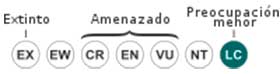
โ€ข Red List category of the UICN current: Least concern.

โ€ข Population trend: Stable.

Global population size has not been quantified, but this species is described as quite common.

The populations of the Red-bellied Macaw they depend of the Palms Mauritia for food and nesting. These trees are widely used for construction, and that is why you can have bad consequences for the future of the species.

These birds are threatened by the felling of these Palm trees and capture for the pet trade. But, This species tends to be common in most of their habitats, with the exception of Colombia, Guyana and Venezuela, where it is threatened by Habitat loss.

"Red-bellied Macaw" in captivity:

Rare bird cage.

It is extremely difficult to keep these birds alive in captivity., because, mainly, to your excitable personality, and its diet low in fat and high in carbohydrates.

The export and import for the pet trade often brings with it a mortality of the 100%; captive-bred chicks have a very low survival rate. A high percentage die at an early age kidney disease. Its acquisition as a pet is very questionable.

The only country that exports these birds in recent years is Guyana.

Due to the lack of commercial availability of nuts of moriche Palm, peeled unsalted peanuts have been used as a staple in the diet of these birds in captive. They should not be fed with the typical commercial seed, especially fat seeds such as of the Sunflower.

A nutritional analysis of the natural diet of the Red-bellied Macaw He revealed that this was made up of high levels of beta carotene, of carbohydrates and zero fat. This explains its propensity to obesity in captivity. Almost all parrots usual diets are too high in fat content, with what the Vitamin A supplements in the form of beta carotene they are essential.

Deficiencies of Vitamin A are usually made to notice very quickly, giving rise to many serious diseases, being able to get to many of them deadly.

The beta carotene is the only way Vitamin A that do not require fat to be absorbed. The successful reproduction This species only has been able to achieve by adjusting your diet.

The pups fed by hand are much quieter than adults and are able to metabolize fat more efficiently than adults. Once weaned, they remain in need of a very low fat diet.

There are no data of your longevity in captivity, Although in nature, possibly, they can live around the 40 years.

Is not a bird to keep in captive. A responsible attitude should be to place these beautiful birds in breeding programs so that future generations can enjoy them..

More information –>

Alternative names:

Red-bellied Macaw, Red bellied Macaw, Small Red-bellied Macaw (English).
Ara macavouanne, Ara ร  ventre rouge (French).
(German).
Maracanรฃ-do-buriti, arararana, ararinha, maracanรฃ-de-cara-amarela (Portuguese).
Guacamaya Buchirroja, Guacamayo Ventrirrojo, Maracanรก de Vientre Rojo (espaรฑol).
Guacamayita morichalera, Guacamaya Buchirroja (Colombia).
Guacamayo barriga roja, Perico morichalero (Venezuela).
Guacamayo ventrirrojo (Ecuador).
Maracanรก ventrirroja, Parabachi de palmar (Bolivia).
Evaรญ (Chimani).
Ararinha (tupi).
Quequeto (Guahibo).
Ectoa (Barasana).

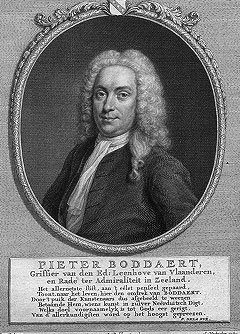
Pieter Boddaert
Pieter Boddaert

scientific classification:


Order: Psittaciformes
Family: Psittacidae
Genus: Orthopsittaca
Scientific name: Orthopsittaca manilatus
Citation: (Boddaert, 1783)
Protonimo: Psittacus manilatus


Images Red-bellied Macaw:

Videos "Red-bellied Macaw"

MARACANรƒ-DO-BURITI: Canto! (ORTHOPSITTACA MANILATA), RED-BELLIED MACAW, Yellow-faced Maracanรฃ,


ยซVentrirrojo Guacamayoยป (Orthopsittaca manilatus)


Sources:

  • Avibase
  • Parrots of the World โ€“ Forshaw Joseph M
  • Parrots A Guide to the Parrots of the World – Tony Juniper & Mike Parr
  • Birdlife
  • Wikipedia

Photos:

(1) – Red-bellied Macaw Orthopsittaca manilata in Goiรขnia, Brazil By A C Moraes (originally posted to Flickr as Tocci) [CC BY 2.0], via Wikimedia Commons
(2) – Two Red-bellied Macaws flying near the Amerindian Reservation of Santa Mission, Guyana By Feroze Omardeen [CC BY 2.0], via Wikimedia Commons
(3) – A little girl in San Martin, Peru with a pet juvenile Red-bellied Macaw on her right shoulder By Michael Nickel (originally posted to Flickr as girl with lorito) [CC BY 2.0], via Wikimedia Commons
(4) – Buchirroja Guacamaya ( Orthopsittaca manilatus) by Marcello Magnussen – wiki_aves_colombia
(5) – Buriti maracana chicks in the nest, Orthopsittaca manilatus by Osvaldo Scalabrini

โ–ท The world of Pets: Dogs, cats, birds, reptiles, amphibians

White-eyed Parakeet
Psittacara leucophthalmus

Aratinga Ojiblanca

Content

Description:


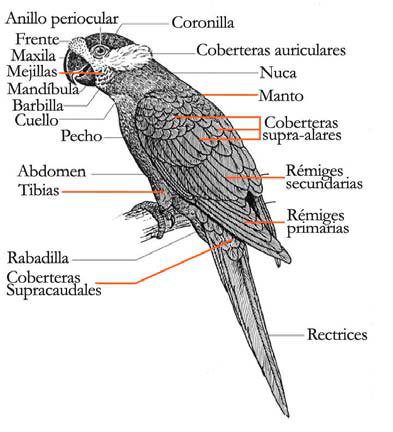
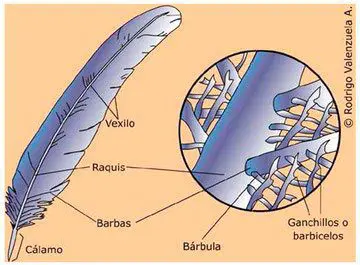
Anatomy-parrots

Of 32 cm. length and a weight between 140 and 170 g..
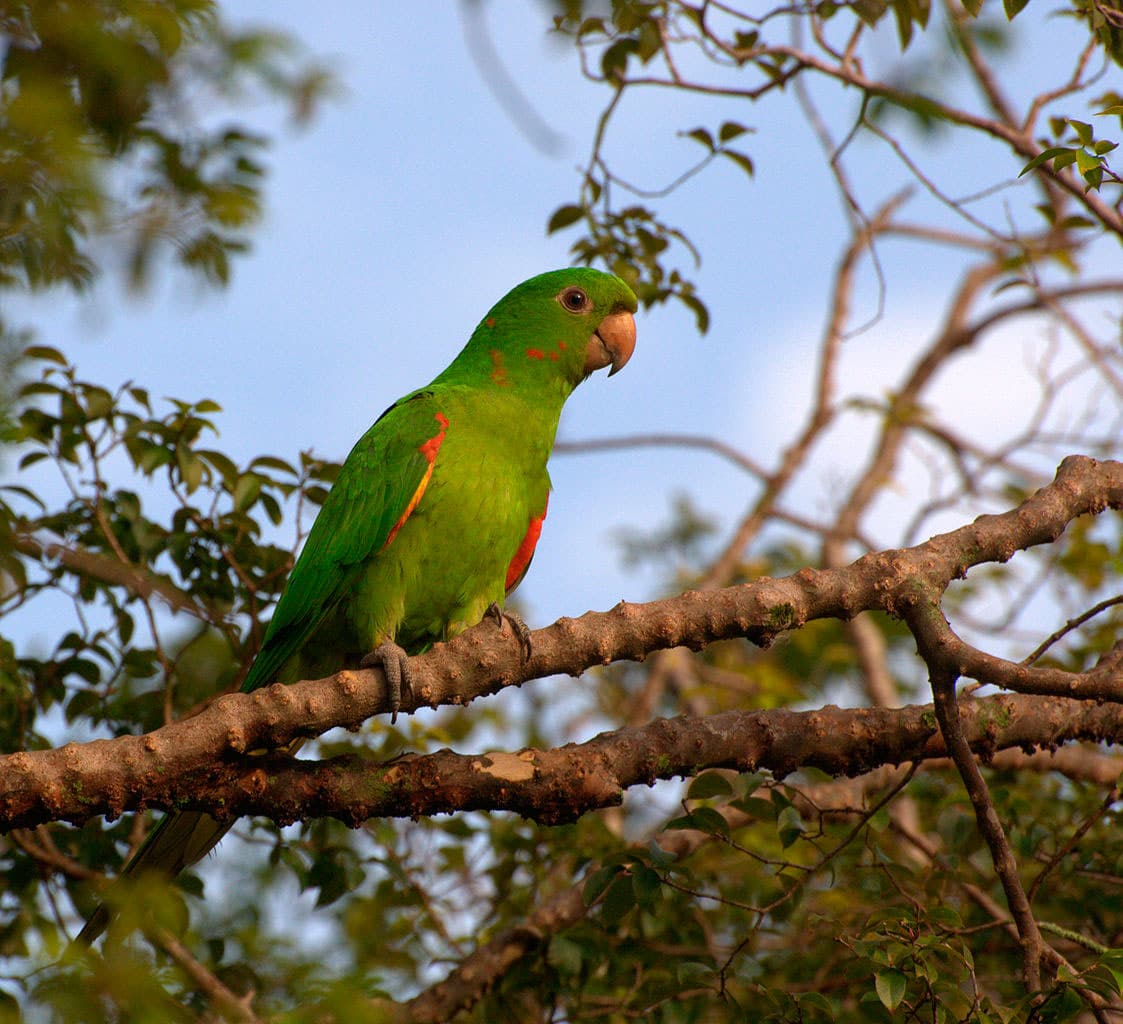
The White-eyed Parakeet (Psittacara leucophthalmus) has the head dark green with small scattered red feathers, especially in the area of the lores, cheeks, sides neck and throat. The head and nape Some birds are almost entirely green, others have solid red spots in the cheeks, with numerous scattered red feathers elsewhere.

The upperparts are dark green, with one or two scattered red feathers. Upper, the wings dark green, with a little red in the curve; undertail, with golden brown flight feathers, the outer red and green small coverts inner; Yellow large coverts external and green internal.

The underparts Green with scattered red feathers on the throat and the chest, sometimes forming irregular patches. Upper, the tail dark green; Brown down.

The bill hooked is color Horn and its gray tip; bare periophthalmic grayish white; irises yellow-orange; legs grey.

The plumage of the male and the female, they are identical.

The immature they have more muted colors; some feathers Red in the head, No red in the bend of wing and olive in the underwing-coverts outermost.

Subspecies description:

  • Psittacara leucophthalmus callogenys

    (Salvadori, 1891) – They have head, neck and throat, green grass dark with small feathers red color above the cheeks. The the mantle, the wing-coverts, the tail and primary feathers of the tail are dark green. The lower part of the chest and flanks of the body are green clear. The feathers largest of the wings and secondaries are dark green with a grey reflection at the ends. Smaller feathers of the wings and the area of the wing curvature are bright red; small coverts feathers are red; the feathers of the greater coverts are yellow. The top of the large feathers of the tail are dark green, the underparts is olive green.

    The eyes are black with the irises orange-brown. The bare periophthalmic is grayish white. Bill color horn, the sides and the tip of the upper part are dark gray. Legs brownish grey, black nails.

    On average largest the species nominal with the bill more robust. Birds in the West have a green dark.


  • Psittacara leucophthalmus leucophthalmus

    (Statius Mรผller, 1776) – The species nominal.


  • Psittacara leucophthalmus nicefori

    (Meyer de Schauensee, 1946) – Similar to the species nominal, except for having a red frontal band.

Habitat:

Video – "White-eyed Parakeet" (Psittacara leucophthalmus)

Calacante de Ala Roja Psittacara leucophthalmus.

The White-eyed Parakeet It is in a great range of forest habitats and forests, mainly in lowlands, even if they manage to reach altitudes of 1.700 meters in the Ecuador and 2.500 meters in Bolivia.

In the Amazon, they are in tropical rainforests, mostly along the rivers (including the forests and marshes), in scattered areas of woodland and in land grown in wetlands, mangroves, sheets and the forests of Palms in the Guianas, chaco types of forests in the South of its range, gallery forests and alluvial forests in Bolivia.

The White-eyed Parakeet they are highly gregarious, they form flocks, usually, hundreds of birds (usually up to 90), covering large expanses between the roosts and feeding areas.

In the Amazon, in general, birds travel along the banks of rivers, crossing also large tracts of forest to reach the meanders and hidden Marsh.

They form large community groups to sleep in trees, sugar cane fields and caves.

Associated with the Blue-crowned Conure (Psittacara acuticaudatus), the Blue-headed Parrot (Pionus menstruus), the Chestnut-fronted Macaw (Ara severus) and
Crimson-bellied Parakeet (Pyrrhura perlata), in mixed flocks, especially while they forage.

Reproduction:

The nest It consists of a natural cavity in a tree, often a palma, but also in limestone caves in Mato Grosso, Brazil. The female usually deposits there 3 white eggs, What incubates alone during 24 or 25 days. During this time, It is fed by the male. At birth the chicks are completely naked, a gray marker appears at the end of the first week. Son fed by parents for approximately 6 weeks, those that leave the nest and get together with the family group. are still dependent parents during 2 to 3 months.

The breeding season It has been reported in the months of November-December, in Argentina; July-August, in the East of Peru; From January to April, Mato Grosso; in Guianas during the month of February.

Food:

The diet of this species depends on the habitat, including a variety of dried fruits, seeds, fruit, berries, flowers and insects.

In general, they feed in the canopy, Although also feed on of grass seeds. Other reported foods include fruits of Palms and Goupia glabra, Tetragastris altissima and Allantoma lineata, as well as flowers Erythrina and ficus.

Distribution:

Size of its range (reproduction / resident): 13200000 km2

The White-eyed Parakeet are widespread in much of the North of South America, to the East of the Andes, to the North of Argentina.

Are distributed from the West of the Guianas (absent from Guyana), through Venezuela, from Anzoรกtegui and Monagas through the Delta Amacuro, until Bolรญvar and amazon, and up to the Colombian Amazon, to the North of the Department of the Goal. They live in much of Ecuador and Peru.

Extend through the entire interior of Brazil and possibly reach the coast of Sรฃo Paulo and Rio Grande do Sul (absent in the arid zones of the Northeast, mountainous areas of the northern basin of the amazon in Brazil and Venezuela, and the basin of the Black river in Brazil and Colombia).

Are also distributed to the East of Bolivia through Paraguay until Argentina, to the South of Santa Fe and Between rivers (possibly in the North of Buenos Aires), including Tucumรกn and Catamarca (There are no recent reports in Catamarca or Santa Fe, While reports of Santiago del Estero, Cรณrdoba and San Luis they are probably incorrect).

  • Narosky and Di Giacomo (1993) they consider that the population in the city of Buenos Aires and its surroundings possibly originated from specimens escaped from captivity, i.e. released or escaped pet, owners or traffickers of fauna.

Observed in the highest parts of Uruguay.

In general resident, Although some seasonal movements seem to occur in some areas. The most numerous in the center of the range, the least, at the edges. Locally abundant in the Amazon central and Mato Grosso, Brazil, as well as in the east of Peru. common in Colombia. Quite common in the forests of the coast of Suriname and in the gallery forests of Santa Cruz in Bolivia. Unevenly distributed in the North of Bolivia, where it is described as common to rare. common in Argentina, especially in the North.

The Aratinga Ojiblanca It adapts easily to the degradation and urban areas, long as no sources of food and nesting places (ceilings and other cavities) and this occurs in several cities.

Large captive population with high volume of international trade, in particular from Argentina, where the species, Perhaps, is being threatened due to the capture.

Subspecies distribution:

  • Psittacara leucophthalmus callogenys

    (Salvadori, 1891) – It is from Ecuador, Northeast of Peru and Northwest of Brazil.


  • Psittacara leucophthalmus leucophthalmus

    (Statius Mรผller, 1776) – The species nominal.


  • Psittacara leucophthalmus nicefori

    (Meyer de Schauensee, 1946) – Its validity is based on a single specimen found in an area around Guaicaramo in the guavio river, Department of the Goal, Colombia.

Conservation:

โ€ข Red List category of the UICN current: Least concern

โ€ข Population trend: Decreasing

The size of the world population White-eyed Parakeet It has not been quantified, but this species is described as ยซcommonยป (Stotz et to the., 1996).

The species has undergone intense trade: from 1981, When it was included in the Appendix II, 60.207 individuals have been captured in the wild, registered for the international trade (UNEP-WCMC trade database CITES, January 2005).

"White-eyed Parakeet" in captivity:

The White-eyed Parakeet they are among the best talkers within the family Aratinga. Well socialized they can become a good companions. Rarely are destructive and usually they are not pijas, they often take the choice to imitate human speech in place. Personality always varies from bird to bird, but they are generally known to be very playful and curious.

Imported birds are, mostly, shy and take time to gain confidence with their caregiver.

Alternative names:

White-eyed Parakeet, White-eyed Conure, Green Conure, White eyed Parakeet (English).
Conure pavouane, Perriche pavouane, Perruche pavouane (French).
Pavuasittich (German).
Aratinga-de-bando, araguaรญ, araguari, aratinga, arauรก-i, aruaรญ, guira-juba, maracanรฃ, maracanรฃ-malhada, maricatรฃ, periquitรฃo-maracanรฃ (Portuguese).
Aratinga Ojiblanca, Calacante ala roja, Calancate Ala Roja, Loro Barranquero, Loro de ala roja, Loro Maracanรก, Maracanรก ala roja, Perico Ojiblanco, Periquito Verde (espaรฑol).
Calacante ala roja, Calancate Ala Roja, Loro de ala roja (Argentina).
Loro ojiblanco, Perico Ojiblanco (Colombia).
Cotorra de Ojo Blanco (Peru).
Maracanรก ala roja (Paraguay).
Loro Barranquero, Loro Maracanรก (Uruguay).
Perico Ojo Blanco (Venezuela).

scientific classification:

Order: Psittaciformes
Family: Psittacidae
Genus: Psittacara
Scientific name: Psittacara leucophthalmus
Citation: (Statius Mรผller, 1776)
Protonimo: Psittacus leucophthalmus

White-eyed Parakeet images:


Species of the genus Psittacara

Sources:

Avibase
Parrots of the World โ€“ Forshaw Joseph M
Parrots A Guide to the Parrots of the World – Tony Juniper & Mike Parr
Birdlife

Photos:

(1) – White-eyed Parakeet (also known as the White-eyed Conure) in Piraju, Sao Paulo, Brazil By Dario Sanches [CC BY-SA 2.0], via Wikimedia Commons
(2) – White-eyed Parakeet at the aviary at the Mayaguez Zoo in Mayaguez, Puerto Rico By Kati Fleming (Own work) [CC BY-SA 3.0], via Wikimedia Commons
(3) – A White-eyed Parakeet in Reserva Guainumbi, Sao Luis do Paraitinga, Sao Paulo, Brazil By Dario Sanches from Sao Paulo, Brazil [CC BY-SA 2.0], via Wikimedia Commons
(4) – Barao do Rio Branco square, Serra Negra-SP By Dario Sanches [CC BY-SA 2.0], via Wikimedia Commons
(5) – White-eyed Parakeet (also known as White-eyed Conure) in Goiania, Goiรกs, Brazil By Wagner Machado Carlos Lemes [CC BY 2.0], via Wikimedia Commons
(6) – White-eyed Conure (Aratinga leucophthalmus) – upper body, neck and face. In captivity in the Parrotโ€™s Garden (Jardim dos Louros), in the Botanical Garden of Funchal, Madeira island, Portugal By jmaximo [CC BY 2.0], via Wikimedia Commons
(7) – White-eyed From The Crossley ID Guide Eastern Birds By Richard Crossley (Richard Crossley) [CC BY-SA 3.0], via Wikimedia Commons
(8) – White-eyed Conure, also called White-eyed Parakeet, in Brazil By Dario Sanches [CC BY-SA 2.0], via Wikimedia Commons
(9) – Couple of white-eyed parakeets (Aratinga elucophthalma). Spotted in Sao Carlos, Brazil By Leoadec (Own work) [CC BY-SA 3.0 or GFDL], via Wikimedia Commons

Sounds: (Xeno-canto)

โ–ท The world of Pets: Dogs, cats, birds, reptiles, amphibians

El Oro Parakeet
Pyrrhura orcesi


Cotorra de El Oro

Content

Description:

22 cm. of long and 73 g. of weight.

The El Oro Parakeet (Pyrrhura orcesi) is a bird relatively striking, with mostly green plumage. Has the forecrown red; feathers on the sides of the neck with the white base; Red patch from the shoulder up to the half of the wing , end of the wing blue (more visible in flight), tail above with a reddish tint and below completely red except the base.

Beak and legs blackish.

The females It is thought that less red have around the face.

the youth they are generally paler and lack much of the red marks that are seen in adults.

Habitat:

It inhabits in the very humid tropical forest between 800-1.200 m (occasionally at altitudes as low as 300 m). It has been reported that he tolerates some habitat fragmentation (Schaefer and Schmidt 2003). Performs seasonal movements. Are usually distributed in groups of 4-15, Although it has been observed in flocks of up to 60 birds. They may be closely related with the Maroon-tailed Parakeet (Pacific) (Pyrrhura melanura pacifica) and the Maroon-tailed Parakeet (Pyrrhura melanura)

The rest sites They seem to change frequently and are generally located between 2 and 24 meters above the ground, in natural cavities in trees or open branches.

It is extremely noisy and conspicuous when flying.

Reproduction:

As is a species discovered recently, very little is known about its ecology.

Seems to prefer the Dacryodes peruviana family Burseraceae for nest (Garzon 2007), and communal, sharing the tasks of incubation between several birds, Although a couple exhibited a behavior of pre-anidamiento in the cavity of a small tree Meliaceae in 1997 (Snyder et to the. 2000), and reported nests in natural cavities of 1,8-24 m above the ground in a variety of tree species (Schaefer and Schmidt 2003).

The time of incubation is of approximately 31 days.

The main breeding station seems to be between November and March (Garzon 2007), although it is difficult to specify because with the effects of 'El Niรฑo' they mate between December and January.

Movements seasonal altitudinal down to forests have been reported in the Buenaventura reserve (T. Schaefer in litt., 2007).

Food:

Discreetly feeding in the canopy, composing your diet of various fruits (including fig Ficus spp.), Fruits and flowers Cecropia (Snyder et to the., 2000).

Distribution:

Size distribution (reproduction / resident) 750 km2

The El Oro Parakeet is an endemic bird. They inhabit in the western slope of the Andes, in the southwest of Ecuador (in Caรฑar, Azuay, Gold and Loja), where was discovered in 1980.

Apparently, its population is limited to an area of only 100 km from North to South, and a maximum of 5-10 km wide (Juniper and Parr 1998), with its highly fragmented Habitat and with a population estimated in less than 1.000 individuals (Garzon 2007).

Its population in the town of Buenaventura has remained stable since 2002-2007 (Juniper and Parr 1998), estimated in 171 birds in period 2005-2006 (2007 Garzon, HM Schaefer in litt. 2012).

Conservation:

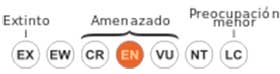
State of conservation โ“˜


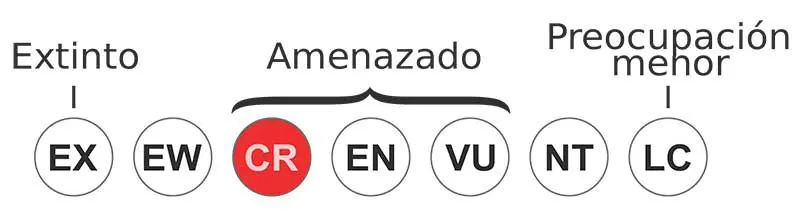
critical hazard critically endangered โ“˜ (UICN)โ“˜

โ€ข Current category of the Red List of the UICN: In danger of extinction

โ€ข Population trend: In decline.

The El Oro Parakeet is in danger of extinction due to deforestation and extreme forest fragmentation for cattle ranching, What causes the habitat degradation. This degradation destroy sites of nesting and feeding that these birds need to survive and reproduce at a healthy pace.

Population estimated in less than 1.000 individuals.

The habitat limited only to the Andes, to the West of Ecuador and because of this, sensitivity to the destruction of the Habitat is very heavy. Protection for some of the habitat of this species has been established in the Book ecological Buenaventura. In reserves, bird houses have been built in trees to help promote reproduction and has had some success. Other projects have been proposed to evaluate the size of the population.

BUENAVENTURA RESERVE REPORT

"El Oro Parakeet" in captivity:

Don't usually see in the poultry farming.

Alternative names:

El Oro Parakeet, El Oro Conure (English).
Conure d’Orcรฉs, Conure d’Orcรจs, Perruche d’El Oro (French).
Orcessittich, Orces Sittich, Orces-Sittich (German).
Tiriba-do-el-oro (Portuguese).
Cotorra de El Oro, Perico de orcรฉs (espaรฑol).

scientific classification:

Order: Psittaciformes
Family: Psittacidae
Genus: Pyrrhura
Scientific name: Pyrrhura orcesi
Citation: Ridgely & Robbins, 1988
Protonimo: Pyrrhura orcesi

Images "El Oro Parakeet"

Videos "El Oro Parakeet"


Especies del gรฉnero Pyrrhura

El Oro Parakeet (Pyrrhura orcesi)


Sources:

  • Avibase
  • Parrots of the World โ€“ Forshaw Joseph M
  • Parrots A Guide to the Parrots of the World – Tony Juniper & Mike Parr
  • Birdlife

Photos:

(1) – fjocotoco.org

โ–ท The world of Pets: Dogs, cats, birds, reptiles, amphibians

Yellow-shouldered Parrot
Amazona barbadensis

Yellow-shouldered Parrot

Content

Description:

33 to 36 cm.. height and an average weight of 270 g.

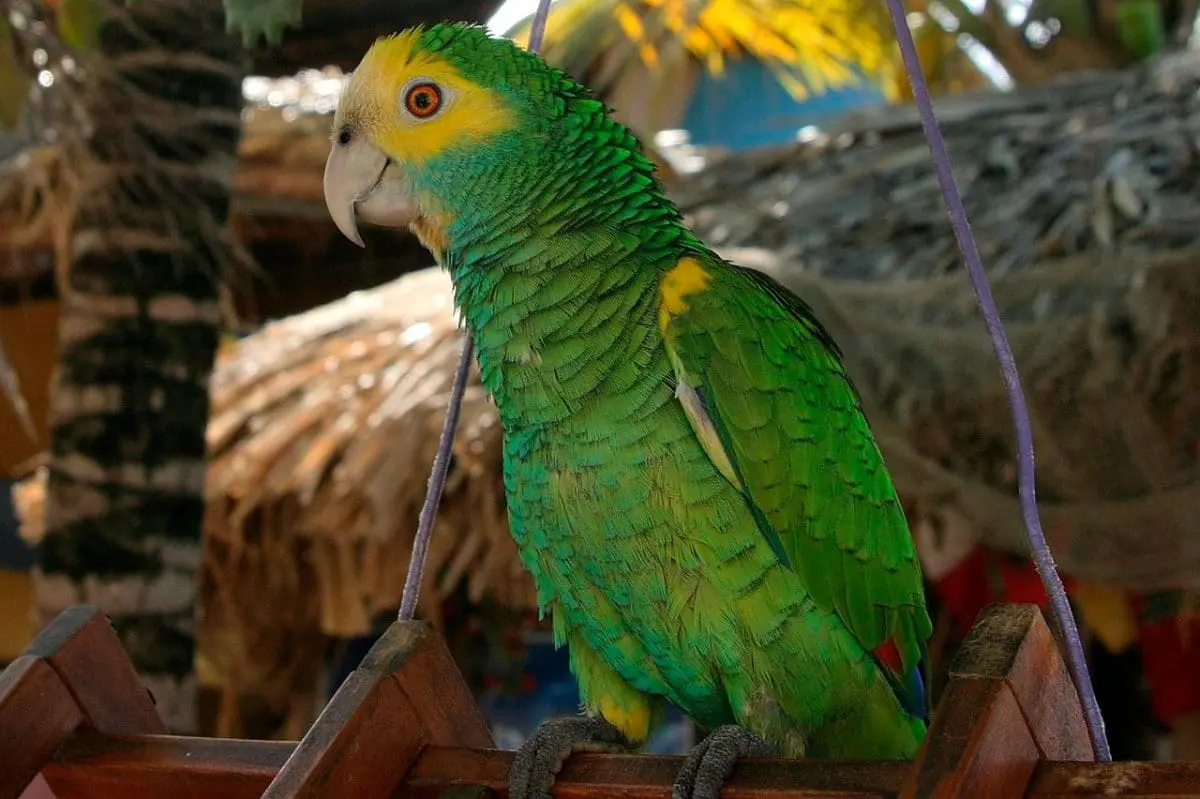
The Yellow-shouldered Parrot (Amazona barbadensis) It has a short tail, head yellow, some with forecrown white.

Its body is usually green, with black feathers edge neck, chest and back; greenish yellow in underparts.

Chin yellow with bluish tint in lower cheeks and around the chin. Shoulder and the thighs yellow.

Speculum red. dark blue tips to the flight feathers. The black edge of their feathers give them a look scaled.


Yellow-shouldered Parrot


Anatomy-parrots

The irises are red or orange and bill whitish.

The young birds are similar to adults but may distinguish by their irises and the absence darker blue hue in the lower body.

In the most notorious flight apart from the head, is the wing with shoulder yellow, Red patch and blue end.

Habitat:

They live in areas xerophytic vegetation, frequenting desert scrub dominated by cactus, cardรณn and shrubs or small trees; also frcuentan cultivated areas, until the 450 m. They move in pairs or flocks of up 100 individuals, especially at the time of feed.

Reproduction:

The nesting takes place in tree cavities, cactus or cliffs, in general, between March and August (Sanz and Rodriguez-Ferraro 2006). The average size of clutch is of 3,38 eggs per nest, and most of the eggs survive until the hatching. The incubation lasts a few 26 days and leave the nest 60 days after hatch.

It tends to rest communally in tall trees, with groups of up 700 birds recorded (Juniper and Parr 1998).

Food:

Their diet is composed of Cactus and other fruits. They have been reported in their diet fruits 22 genders. rich flowers nectar, cardรณn and the urero, which eats fruits, flowers and trunk, fruits and seeds Stenocereus, seeds and flowers guatacaro (Boarreria Sumnensis) and yaque.

Distribution:

Size of its range (reproduction / resident): 11,000 km2

The Yellow-shouldered Parrot It has a disjoint range with seven genetically isolated populations in northern Venezuela (Lara (Cerro Saroche National Park, which)), Falcon (Dabajuro, Casigua), Anzoรกtegui (about Piritu and Barcelona) and Sucre (Araya Peninsula), as well as the Margarita Islands, the blanquilla, Curacao and Bonaire (Rodriguez-Ferraro 2009).

He is currently extinct on Paraguana Peninsula (Briceรฑo-Linares et. To the. 2011). References to the presence of a population of wild parrots in Curacao They are based on a historical source of the century 18 (AO Debrot in some 1999, 2007.); there have been reports from modern 1988 (The farmer 2008, A. Rodriguez-Ferraro in litt. 2012), although it has been suggested that these birds can be released or escaped cages. (Williams 2012).

It became extinct in Aruba towards 1950 (Rojas-Suarez & Rodrรญguez 2015).

The numbers on the islands seem to fluctuate, but they have increased in Margarita of 750 birds in 1989 (Sanz y Grajal 1998) until around 2000 in 2015 (Rojas-Suarez & Rodrรญguez 2015).

The population in Bonaire It was estimated in 400 individuals in 2006 (Williams and Martin 2006) and 650-800 individuals in 2012 (Department of Resources and Planning, Bonaire by R. Martin y S. Williams a slightly. 2012).

The continent's population was considered in decline 2003 (Hilty 2003).

Their habitat continues to be lost in the eastern part of the continental mountain range (V. Sanz in some. 2016) and the population of together (is of Venezuela) it is believed that are declining due to poaching and habitat conversion for agriculture (V. Sanz n bit. 2016), so it is likely that the continental population continues to decline.

Conservation:

State of conservation โ“˜


Vulnerable Vulnerable โ“˜ (UICN)โ“˜

โ€ข Current category of the Red List of the UICN: Vulnerable.

โ€ข Population trend: Unknown.

The population size: 1700-5600 specimens.

It is classified as a endangered specie, It is the main threats capture their young for pet trade, and habitat destruction of nesting and feeding by the extraction of sand for the construction industry.

The recovery of the population of this bird has been the spearhead of Provita's work in Macanao, since its conservation benefits a large part of the biodiversity of the peninsula, as their habitat covers large areas, it is also a charismatic species, that easily attracts the public to conservation efforts.

Source: PROVITA

"Yellow-shouldered Parrot" in captivity:

Rare but increasing due to the successes of captive breeding.
have a participatory personality, inquisitivas and curious to the point of being "nosy" and her gentle nature only adds to her charm. Mild to moderate its ability to speak.
Always playful, enable They require a cage equipped with toys. They worship a bathroom and displayed chatty while bathing under running warm water.

Alternative names:

Yellow-shouldered Parrot, Yellow shouldered Parrot, Yellow-shouldered Amazon (English).
Amazone ร  รฉpaulettes jaunes (French).
Gelbflรผgelamazone, Kleine Gelbkopfamazone (German).
Papagaio-de-cabeรงa-branca (Portuguese).
Amazona de Cabeza Amarilla, Amazona de hombro gualda, Amazona Hombrogualda, Cotorra margariteรฑa (espaรฑol).
Cotorra Cabeciamarilla (Venezuela).

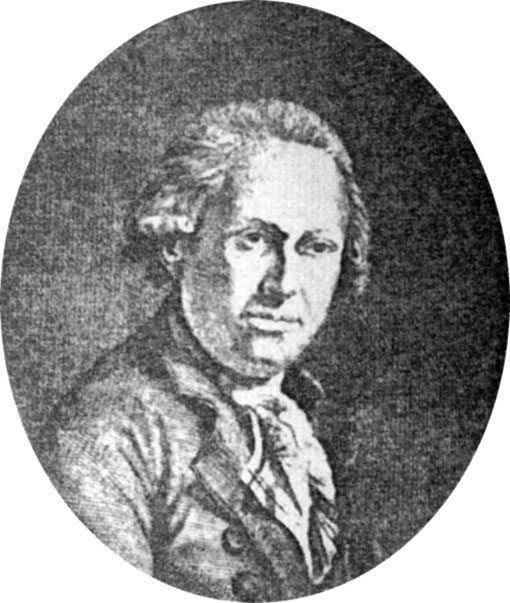
Gmelin Johann Friedrich

scientific classification:


Order: Psittaciformes
Family: Psittacidae
Genus: Amazona
Scientific name: Amazona barbadensis
Citation: (Gmelin, JF, 1788)
Protonimo: Psittacus barbadensis


Images "Yellow-shouldered Parrot":


Species of the genus Amazona


Sources:

  • Avibase
  • Parrots of the World โ€“ Forshaw Joseph M
  • Parrots A Guide to the Parrots of the World – Tony Juniper & Mike Parr
  • Birdlife

  • Photos:

(1) – Yellow-shouldered Amazon (Amazona barbadensis) also known as Yellow-shouldered Parrot. Pet in Venezuela perching on the top of a wooden frame. By John Bรคckstrand (originally posted to Flickr as IMG_2721) [CC BY 2.0], via Wikimedia Commons
(2) – Yellow-shouldered Amazon in the Walsrode Bird Park, Germany By Quartl (Own work) [CC BY-SA 3.0], via Wikimedia Commons By Quartl (Own work) [CC BY-SA 3.0], via Wikimedia Commons
(3) – Yellow-shouldered Amazon (also known as Yellow-shouldered Parrot). Two in the foreground in a cage By TJ Lin [CC BY-SA 2.0], via Wikimedia Commons
(4) – Yellow-shouldered Amazon (Amazona barbadensis) also known as Yellow-shouldered Parrot. Pet in Venezuela perching on a hand. Shows crown By John Bรคckstrand (originally posted to Flickr as IMG_2469) [CC BY 2.0], via Wikimedia Commons
(5) – Yellow-shouldered Amazon (Amazona barbadensis) also known as Yellow-shouldered Parrot. Pet in Venezuela By John Bรคckstrand (originally posted to Flickr as IMG_2468) [CC BY 2.0], via Wikimedia Commons
(6) – Amazona barbadensis in the Loro Parque zoo of Tenerife, Spain By Bjoertvedt (Own work) [CC BY-SA 4.0], via Wikimedia Commons
(7) – Amazona barbadensis in the Loro Parque zoo of Tenerife, Spain By Bjoertvedt (Own work) [CC BY-SA 4.0], via Wikimedia Commons
(8) – Yellow-shouldered Amazon (Amazona barbadensis) also known as Yellow-shouldered Parrot. Pet in Venezuela – side view – a little red and blue seen at edge of wing By John Bรคckstrand (originally posted to Flickr as IMG_3117) [CC BY 2.0], via Wikimedia Commons
(9) – Yellow-shouldered Amazon (Amazona barbadensis) also known as Yellow-shouldered Parrot. Pet in Venezuela on the top of a wooden climbing frame. Mainly showing its upper body By John Bรคckstrand (originally posted to Flickr as IMG_2723) [CC BY 2.0], via Wikimedia Commons
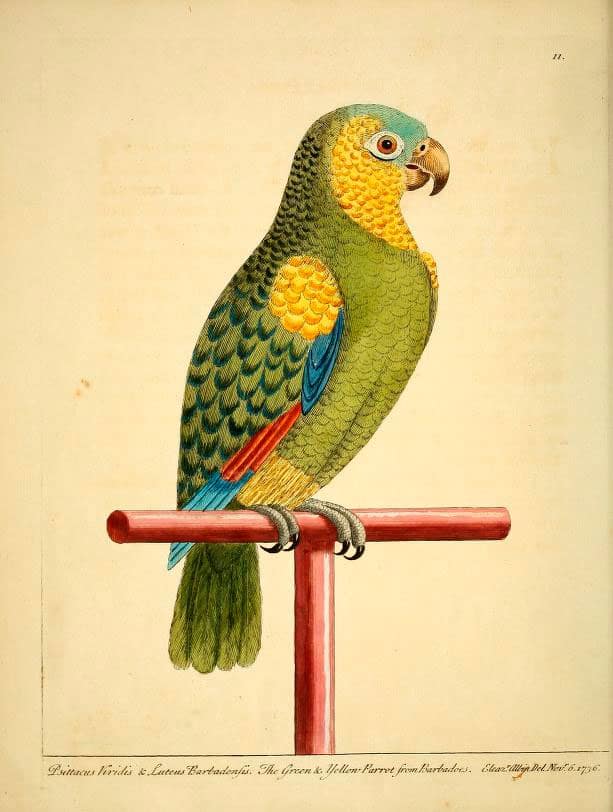
(10) – Original illustration of the ยซGreen & Yellow Parrot from Barbadosยป, currently known as Amazona barbadensis – Wikipedia

  • Sounds: ยฉ 2014 Cornell University

โ–ท The world of Pets: Dogs, cats, birds, reptiles, amphibians

Black-billed Parrot
Amazona agilis

Black-billed Parrot

Content

Description:


Anatomy-parrots

25 cm.. length and 178 g. of weight.

The Black-billed Parrot (Amazona agilis) It is the smallest of the Amazon parrots, and is one of only two species of Amazona endemics Jamaica.

This species, brightly colored, has a plumage, mostly, of color green with them underparts lighter, green or yellow.

The slightly darker edges in feathers of the back of the neck, one dan scalloped effect. Flight feathers darker at the tip; feathers of the tail blue in the margins with red bases to outer feathers. Their eyes They are surrounded by a dark brown ring dark grey, and the bill is black.

Black-billed Parrot

The adult male they have the coverts red on the outer of the wings, While these feathers They are usually green in females and in the immature.

  • Sound of the Black-billed Parrot.

Habitat:

Video "Black-billed Parrot"

Parrots in the world

It is in the humid limestone forests to elevations of 1.600 m. They can be seen in the upper canopy, and they can also be found foraging in cultivated land and plantations near the edge of the forest.

Form groups 6 to 30 individuals.

Reproduction:

The Black-billed Parrot used for nest the tree holes are formed from or related to weathering processes and pathogen attacks insects, at least a 18 meters above the ground. It has reported the use of cavity left by the Jamaican Woodpecker (Melanerpes radiolatus).
Like other species of parrots, the vigorous vocalizations among couples announce nesting territories.

The breeding season It is from March to August. The laying is of 2-4 eggs, with a range of about 48 hours between successive eggs. Eggs are incubated only by the female during 24 days. During this time the male will feed and exchange food with female. The incubation It begins after the first egg is placed, so hatching occurs at intervals, with up to seven days between the first and last hatching. Chicks this amazon They spend up to eight weeks in the nest.

Most nest failures do so in the early mating period., as a result of predation by Jamaican Boa (Epicrates subflavus) (Gruber 1980) and to a lesser extent Jamaican Crow (Corvus jamaicensis).

Food:

The Black-billed Parrot It feeds on fruit, seeds, dried fruits, berries and flowers in the forest canopy. The populations of this species will move in response to the location of food sources. This species also feed on crops and can cause considerable damage to fruit ripening.

Distribution and status:

Size of its range (breeding/resident): 5.100 km2

Its distribution area it is restricted to mid-level moist limestone forests, which have been drastically reduced in recent 40 years. Locally common by all the Cockpit Country, particularly in disturbed edge habitat where it is more common than the Yellow-billed Parrot (Amazona collaria), with which occasionally is associated.

The populations of the Black-billed Parrot also they found in Mount Diablo, in the center of the island. Historical reports also placed at the eastern end of the island, although recent sightings in that area are rare. But, small flocks have been recently in the John Crow Mountains. Preliminary surveys indicate population estimates much higher than those described above, and possibly more than 10.000 individuals in the region of Cockpit Country (C. Levy in some 1999).

Conservation:

State of conservation โ“˜


Vulnerable Vulnerable โ“˜ (UICN)โ“˜

โ€ข Current category of the Red List of the UICN: Vulnerable.

โ€ข Population trend: Decreasing.

โ€ข Population size : 6000-15000

Rationale for the Red List category

This species has a range very small within which its habitat is declining in extent, area and quality; and additional reductions of the population are being caused by the trampeo and predation, qualifying the species as Vulnerable. Currently it does not qualify as endangered because the habitat is severely fragmented and is known in more than five places. But, the species can requalify for inclusion in a top list in the future due to population decline likely if the three proposed mining concessions Cockpit Country They are awarded.

Justification of the population

Preliminary population estimates are those that best place the world population in the band between 10.000 and 19.999 individuals (S. Koenig in a bit., 2008). This is equivalent to 6,667-13,333 mature individuals, rounded here to 6,000-15,000 mature individuals. Further studies are needed to get an accurate figure.

Justification of trend

The data suggest that decrease of at least 50% of the population of this species could occur in the next 40-50 years as a result of habitat destruction due to three proposed mining concessions, two of which have recently been granted (Koenig, 2008). But, It is not sure if the third concession is granted (S. Koenig in some. 2010), and as such it is projected to suffer a decrease of species 30-49% over the next 37 years (three generations).

Conservation Actions Underway

โ€ข CITES Appendix II. protected under the Protection Act Wildlife Jamaica and Endangered Species Act of 2000, which together prohibit keeping the species as a domestic animal and local and international trade.

โ€ข Since 1995 He has worked to delineate its distribution, estimate the size of the population, identify long-term factors limiting reproductive performance and train local people in research methods and techniques for monitoring (Davis 1997, BirdLife Jamaica in little 1998).

โ€ข Habitat in the Blue Mountains National Park and John Crow, but the implementation and management of the park are weak (BirdLife Jamaica in little 1998).

โ€ข There is a permanent campaign of public awareness high-profile to prevent bauxite mining in Cockpit Country, by having the area declared closed to mining by the Minister's Discretion (S. Koenig in some. 2007, 2009).

โ€ข Proponents remain optimistic that, while losing a large area of รขโ‚ฌโ€นรขโ‚ฌโ€นhabitat, a large area of โ€‹โ€‹mining habitat will be declared closed (S. Koenig in some. 2007, 2009).

โ€ข Discussions have started that may lead to the ban the importation of psittacine to Jamaica to reduce the risk of leakage and hybridisation (S. Koenig in some. 2007, 2009).

โ€ข There are populations of captive breeding.

Conservation Actions Proposed

โ€ข Survey to delineate the range and evaluate the numbers (BirdLife Jamaica in little 1998).

โ€ข To establish a monitoring program long-term.

โ€ข Designate a Cockpit Country closed to mining.

โ€ข Ensure the de facto protection of the Blue Mountains National Park and John Crow (BirdLife Jamaica in little 1998).

โ€ข Design and implement Educational programs in the area occupied by the species and adjacent areas (BirdLife Jamaica in little 1998) and develop a structured captive breeding program.

โ€ข Improve the application of the legislation against poaching.

The Black-billed Parrot in captivity:

CITES Appendix II. protected under the Protection Act Wildlife Jamaica and Endangered Species Act of 2000, which together prohibit keeping the species as a domestic animal and local and international trade.

Populations of captive breeding.

Alternative names:

Black-billed Parrot, Active Amazon, Active Parrot, All-green Amazon, All-green Parrot, Black billed Parrot, Black-billed Amazon (English).
Amazone verte (French).
Rotspiegelamazone (German).
Papagaio-de-bico-preto (Portuguese).
Amazona de Pico Negro, Amazona Jamaicana Piquioscura (espaรฑol).


scientific classification:

Carl Linnaeus

Order: Psittaciformes
Family: Psittacidae
Genus: Amazona
scientific numberor: Amazona agilis
Citation: (Linnaeus, 1758)
Protonimo: Psittacus agilis


Images Black-billed Parrot:


Species of the genus Amazona


Sources:

Avibase
Parrots of the World โ€“ Forshaw Joseph M
Parrots A Guide to the Parrots of the World – Tony Juniper & Mike Parr
Birdlife

Photos:

(1) – A Black-billed Parrot in Jamaica By Ron Knight from Seaford, East Sussex, United Kingdom (Black-billed Parrot) [CC BY 2.0], via Wikimedia Commons
(2) – Amazona agilis in Wuppertal zoo By Simon J. Tonge [CC BY 3.0], via Wikimedia Commons
(3) – A Black-billed Amazon at Vienna Zoo, Schonbrunn Palace, Vienna, Austria By Alois Staudacher (Rotspiegelamazone) [CC BY 2.0], via Wikimedia Commons
(4) – A Black-billed Amazon at Vienna Zoo, Schonbrunn Palace, Vienna, Austria By Alois Staudacher (Rotspiegelamazone) [CC BY 2.0], via Wikimedia Commons
(5) – A Black-billed Parrot in Jamaica By Ron Knight from Seaford, East Sussex, United Kingdom (Black-billed Parrot) [CC BY 2.0], via Wikimedia Commons
(6) – A Black-billed Amazon at Vienna Zoo, Schonbrunn Palace, Vienna, Austria By Alois Staudacher (Rotspiegelamazone) [CC BY 2.0], via Wikimedia Commons
(7) – Black-billed Amazon in the John Crow Mountains, Portland, Jamaica By Brennan Mulrooney (originally posted to Flickr as Black-billed Parrot) [CC BY 2.0], via Wikimedia Commons
(8) – A Black-billed Parrot in Jamaica By Ron Knight from Seaford, East Sussex, United Kingdom (Black-billed Parrot) [CC BY 2.0], via Wikimedia Commons
(9) – Psittacus agilis By Barraband, Jacques; Bouquet; Le Vaillant, Franรงois [CC BY 2.0 or Public domain], via Wikimedia Commons
(10) – [Little green parrot (Black-billed Amazon [Amazona agilis])] From Natural History of Parrots (by Francois Levaillant, 1801-1805) by Jacques Barraband – Wikimedia

Sounds: Ross Gallardy, XC308430. accessible www.xeno-canto.org/308430

โ–ท The world of Pets: Dogs, cats, birds, reptiles, amphibians

Imperial Parrot
Amazona imperialis

Imperial Parrot

Content

Description:


Anatomy-parrots

The largest gender Amazona, measuring up 45 cm.. length.

The Imperial Parrot (Amazona imperialis) has the lores and forecrown, deep purple; cheeks and ear-coverts, brown; crown purple with dark emerald edges; sides neck and nape, deep purple with black tips, sometimes with a subterminal band emerald.

Mantle, back and scapulars, green bluish tipped pens some. Wing coverts green with scarlet at bend of wing. Primaries dark brown-black with green at the base of the outerweb; outer secondaries purple with a patch crimson in color outerweb, forming a speculum; inner secondary dark green tipped blue.

Imperial Parrot

Under wings green, coverts with blue tips. Throat, chest and belly, deep purple with black tips; some feathers (especially in the chest) show the subterminal band pinkish-vinous or olive-green, while others (visible from certain angles) bright blue sides and ends; the thighs and sides belly green with blue tips; undertail-coverts green with blue markings and vinous. Tail green at the base with a subterminal band dull reddish-brown and vinous tip. Bill dark horn, paler at the base; irises orange; legs dark gray.

The female is paler. The immature It has green on crown, the nape and lower cheeks.

  • Sound of the Imperial Parrot.

Habitat:

Video "Imperial Parrot"

First Captive-bred Imperial Parrot (Amazona imperialis)

The Imperial Parrot frequents the canopy of primary rainforest mountain, sometimes dwarf forests (above 1.200 m), preferring areas with mature trees Dacryodes excelsa and palms as Euterpe dominicana.
Mainly they distributed in altitudes of 600-1300 m, but reports at altitudes 150-300 meters when birds fall in response to food shortages or food preferences. The communal roosts They form in traditional sites, for example in large trees Dacryodes or Sloanea berteriana, They are using one year to another (but not necessarily throughout the year.

Reproduction:

Nest in holes in high forest trees, for example Dacryodes or Sloanea. The nesting territory, probably defended throughout the year. Breeding season usually occurs during the dry season between February June, when resources are more abundant. Clutch two eggs. Possibly they breed only every two years, with one calf usually per clutch.

Food:

Foods reported include fruits of Dacryodes, Licania ternatensis, Richeria grandis, Amanoa caribaea, Simarouba amara, Symphonia giobulifera, Pouteria pallida, Tapura antillana, flowers and fruits of Chimarrhis cymosa, nuts and sprouts young palms Euterpe. Usually it is fed in the morning and evening.

Distribution and status:

Size of its range (breeding/resident): 240 km2

The Imperial Parrot It is endemic to the Dominica Island in the Lesser Antilles. Formerly she lived in the central highlands around Morne Diablotin (1.447 m, the highest mountain in Dominica) in the North of Morne Anglais, in the South. In 1950 It was reduced to two disjoint forest areas, about Morne Diablotin and around Morne Anglais, where the last reliable sight was in 1983. In Morne Diablotin, per se, birds found in increasing altitudes due to habitat loss and alteration on the lower slopes. Probably now absent on the south side, with the northwest side, particularly in the upper valley of Picard River, in the area of Morne Plaisance and Dyer Estates, being of critical importance.

Resident. Early observers believed that the Imperial Parrot It was scarce. further investigation (1870) revealed that it was common to abundant, but the numbers dwindled rapidly due to the loss of habitat, hunting and capture for the pet trade. The census 1975 He suggested a total of 150-250 birds. In 1979, only 16 in Morne Anglais, when a hurricane further reduced the population. In 1987 a survey estimated the total population to 60 specimens. One census 1990 He suggested 80 parrots (possibly, but less than 100), with 80-100 estimated 1993. The species is at serious risk of loss of habitat (mainly due to the conversion of forest tree crop plantations, especially bananas, provided by the new infrastructure) and impacts of hurricanes (to which birds are highly vulnerable in such a restricted range) that destroy food plants and nesting sites. Hunting and gathering for local pet markets have significantly decreased thanks to a Program successful conservation education. Foreign collectors birds remain a persistent threat, but birds are extremely rare in captivity locally or in international trade. Part habitat is protected in the North Forest Reserve, but the important neighboring areas are excluded and remain at risk. Completely protected by national legislation. CITES Appendix I.

Conservation:

State of conservation โ“˜


Endangered Endangered โ“˜ (UICN)โ“˜

โ€ข Current category of the Red List of the UICN: In danger of extinction.

โ€ข Population trend: Increasing.

โ€ข Population size: 160-240

Rationale for the Red List category

Conservation action in recent 30 years has improved the situation of this species. Numbers have increased in recent years, but they can still only stay 250 mature individuals, calling the species as endangered. If the population continues to increase, It will be finally reduced to Vulnerable unless there is concomitant decreases in available habitat.

Justification of the population

The population is estimated at 250-350 individuals in total, approximately equivalent to 160-240 mature individuals (PR Reillo in a bit., 2012).

Justification of trend

No new data on demographic trends, but it is suspected that the species continues to increase at a rate not quantified due to conservation efforts.

Threats

A combination of habitat loss (mainly conversion to plantations, especially bananas (Snyder et to the., 2000) , and hurricane-related damage), It hunting for food and capture for the cage bird trade, They have been the main reasons for the decline of this species to 1990 (PR Reillo in some). Local trade has been considerably reduced, if not eliminated, as a result of a successful education program, but foreign collectors birds may pose a threat (Snyder et to the., 2000). The competition for nesting sites of the largest Red-necked Parrot (Amazona arausiaca) presumably it will be more significant as the lowland forest is lost and the two species are increasingly putting contact (Ministry of Agriculture and Environment of Dominica 2000).

Conservation Actions Underway

Appendices I and II of CITES. It is protected by national legislation. In recent years, They have made considerable efforts to protect adequate habitat and sensitize local citizens to their needs. Successful education programs for conservation have significantly reduced local trade. It is protected in all national parks, Forest Reserve in North and Central Forest Reserve, but important areas adjacent to these reserves remain unprotected (Ministry of Agriculture and Environment of Dominica 2000, Snyder et to the., 2000). An area 33 km 2 of North Forest Reserve it has been designated as Morne Diablotin National Park (Collar (1997to, Wiley et al 2007) . It is also present in small amounts in the Morne Trois Pitons National Park (Reillo 2001, Wiley et al., 2007) . In 2011 reports of the first captive breeding of the species were published (Reillo et al., 2011).

Conservation Actions Proposed

Monitor the population. Continue the implementation of the protection of National Parks Morne Diablotin and Morne Trois Pitons and Forest Reserves North and Central. Study the ecology of this species and the factors that affect its status (including interspecific competition) (Ministry of Agriculture and Environment of Dominica 2000, Zamora y Durand 1998, Wiley et al 2007) . Continue prohibiting trade in this species, exports for captive breeding and importation of non-native psittachines as pets in Dominica (PR Reillo in some. 2012).

The Imperial Parrot captive:

Completely protected by national legislation. CITES Appendix I.

Each captive specimen of this species which is capable of reproducing, It is placed in a well-managed program captive breeding and not be sold as a pet, with the objective of ensure their survival long-term.

Alternative names:

August Parrot, Dominican Amazon, Dominican Parrot, Imperial Amazon, Imperial Parrot (English).
Amazone de Bouquet, Amazone de la Dominique, Amazone impรฉriale, Amazone sisserou (French).
Kaiseramazone (German).
Papagaio-imperial (Portuguese).
Amazona Imperial (espaรฑol).

Charles Wallace Richmond

scientific classification:


Order: Psittaciformes
Family: Psittacidae
Genus: Amazona
Scientific name: Amazona imperialis
Citation: Charles Wallace Richmond (American ornithologist), 1899
Protonimo: Amazona imperialis


Images Imperial Parrot:


Species of the genus Amazona


Sources:

Avibase
Parrots of the World โ€“ Forshaw Joseph M
Parrots A Guide to the Parrots of the World – Tony Juniper & Mike Parr
Birdlife

Photos:

(1) – Imperial Amazon (also known as the Imperial Parrot and Sisserou Parrot) at the Parrot Conservation and Research Centre Botanical Gardens, Roseau, Dominica By Amazona_imperialis_-Roseau_-Dominica_-aviary-6a.jpg: Andrew Szymanskiderivative work: Snowmanradio [CC BY-SA 2.0], via Wikimedia Commons
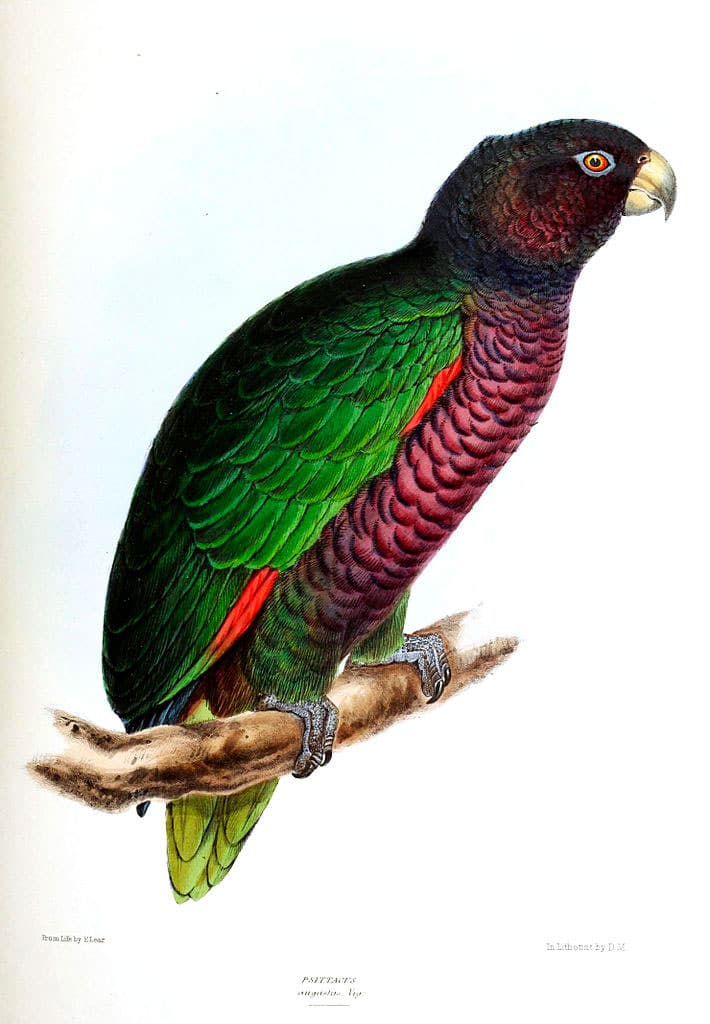
(2) – Amazona imperialis By David William Mitchell (1813โ€“1859) (The Genera of Birds. Volume 2) [Public domain], via Wikimedia Commons

Sounds: Jesse Fagan, XC188165. accessible Sound of Imperial Amazon

โ–ท The world of Pets: Dogs, cats, birds, reptiles, amphibians

Red-crowned Parakeet
Pyrrhura roseifrons

Red-crowned Parakeet

Content

Description:


Anatomy-parrots

22 cm.. in length and a weight ranging from 54 and 70 g..

The Red-crowned Parakeet (Pyrrhura roseifrons) has the head pinkish red. The neck and the area of รขโ‚ฌโ€นรขโ‚ฌโ€นthe upper chest They are dark with whitish scales. The bill is black. The tail and the central area of belly They are red. The tip of his tail It is dark red. The wings they are blue. Orbital ring dark gray bordered by a yellowish white. the legs are grey.

The immature It has reddish forehead and dark tones in the rest of the head. The pinkish red head in adults it is distinctive. Losl youth They may resemble subspecies Pyrrhura roseifrons peruviana or the Deville's Parakeet (Pyrrhura lucianii), but it lacks of the ear-coverts pale.

  • Sound of the Red-crowned Parakeet.

Description 4 subspecies
  • Pyrrhura roseifrons dilutissima

    (Arndt, 2008) – Blue restricted to a narrow strip on the forecrown; yellowish beige in ear-coverts; upper region chest pale brown festooned with pale yellowish beige.

  • Pyrrhura roseifrons roseifrons

    (Gray,GR, 1859) – Nominal. –

  • Pyrrhura roseifrons parvifrons

    (Arndt, 2008) – It looks like the Pyrrhura roseifrons peruviana, but with blue, rather than red, on forecrown.

  • Pyrrhura roseifrons peruviana

    (Hocking, Blake & Joseph, 2002) – 22 cm., length. Absent in his bright red plumage, It has more dark brown in crown and the area eyes, the crown with bluish.

Habitat:

They mostly live in small groups of a dozen members and remain in pairs during the breeding period. breeding. They lead a life Nomad, little little is known about the behavior of this species in the wild.

Reproduction:

build their nest in tree cavities. The laying is of 5 to 7 eggs incubated by both parents for 26 days (captive breeding data). The pups remain in the nest 2 months, becoming independent at the age of 3 months.

Food:

It feeds on fruits, seeds, leaves and flowers.

Distribution:

Size of its range (reproduction / residents): 1.000.000 km2

It is located in the west of the Amazonia, from the state amazon about the Juruรก, in Brazil, and the lowlands of eastern Peru in the North of Bolivia. In Brazil, They spread south and west of habitat Deville's Parakeet (Pyrrhura lucianii)

Distribution 4 subspecies
  • Pyrrhura roseifrons dilutissima

    (Arndt, 2008) – Center of Peru around the rio Ene at the confluence with the rio Quipachiari, and around Hacienda Louisiana, on Cordillera Vilcabamba.

  • Pyrrhura roseifrons roseifrons

    (Gray,GR, 1859) – Nominal. – Amazonia occidental, to the South of the amazon, from the North of Peru South to North of Bolivia (Peace) and in the West of Brazil (Western Amazon).

  • Pyrrhura roseifrons parvifrons

    (Arndt, 2008) – Two disjoint regions in northern Peru; in the East of San Martin and adjacent areas, Center west Loreto, and along the amazon in the northeast of Loreto (only on the southern shore of amazon).

  • Pyrrhura roseifrons peruviana

    (Hocking, Blake & Joseph, 2002) – Foothills of Andes in the southeast of Ecuador (Morona-Santiago) and North of Peru (Amazon and Loreto Western)
Conservation:

State of conservation โ“˜


minor concern Minor Concern โ“˜ (UICN)โ“˜

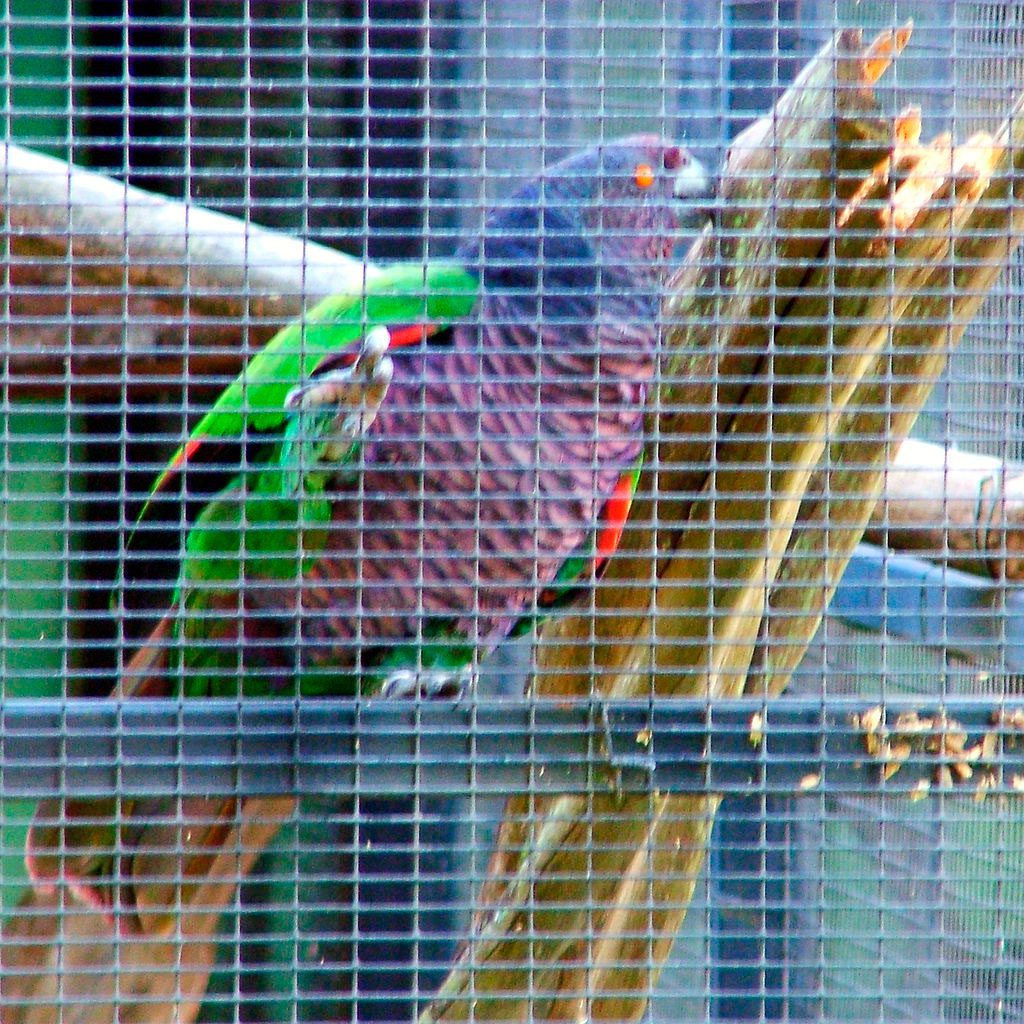
โ€ข Current category of the Red List of the UICN: Least concern.

โ€ข Population trend: Decreasing.

โ€ข Population size : Unknown.

Justification of the Red List of the Category

This species has a very large range, and therefore does not approach the thresholds for vulnerable under the range size criterion (extent of occurrence <20.000 km2 combinan con un tamaรฑo gama disminuciรณn o fluctuante, hรกbitat medida / calidad, o de la poblaciรณn tamaรฑo y un pequeรฑo nรบmero de localidades o fragmentaciรณn severa). A pesar de que la tendencia de la poblaciรณn parece estar disminuyendo, el descenso no se cree que es suficientemente rรกpido como para acercarse a los umbrales para Vulnerables segรบn el criterio tendencia de la poblaciรณn (> 30% decrease of more than ten years or three generations). The population size It has not been quantified, but is not believed to be a reason to approach the thresholds for Vulnerable based on population size criteria (<10.000 individuos maduros con una disminuciรณn continua estima en> 10% in ten years or three generations, or a specific population structure). For these reasons, the species is evaluated as Least concern.

Justification of the population

Recent world population is unknown given taxonomic divisions.

Justification trend

This species is suspected that there may be lost 7,0-7,3% of habitat within its distribution over three generations (18 years) based on a model of deforestation of the Amazon (Soares-Filho et to the. 2006, Bird et to the. 2011). Given the susceptibility of this species to hunting and / or entrapment, it is suspected that its population can decrease <25% en tres generaciones.

"Red-crowned Parakeet" in captivity:

little presence in captivity and found only in some aviaries, where however they reproduce very well. After acclimation is a strong bird that can live outdoors. It is a bird suspicious although curious and playful nature, especially if they feel safe. Young birds in captivity quickly lose their fear and are very attached to their caregivers. Itร‚ยดs noisy, especially in the morning and sleeps in the nest. The female is very aggressive during the breeding period with other birds..

Alternative names:

Red-crowned Parakeet, Rose-fronted Parakeet, Rose-fronted Parakeet (Rose-fronted) (English).
Conure ร  calotte rouge, Conure rougissante (French).
Rotscheitelsittich (German).
Tiriba-de-cabeรงa-vermelha (Portuguese).
Cotorra frentirrosa, Perico de Frente Rosada (espaรฑol).

scientific classification:

Order: Psittaciformes
Family: Psittacidae
Genus: Pyrrhura
Scientific name: Pyrrhura roseifrons
Citation: (Gray, GR, 1859)
Protonimo: Conurus roseifrons

Images Red-crowned Parakeet:

Videos "Red-crowned Parakeet"


Especies del gรฉnero Pyrrhura

Red-crowned Parakeet (Pyrrhura roseifrons)


Sources:

Avibase
– Parrots of the World โ€“ Forshaw Joseph M
– Parrots A Guide to the Parrots of the World – Tony Juniper & Mike Parr
Birdlife

Photos:

(1) – Painted Parakeet (Pyrrhura picta) – the subspecies on this photo, roseifrons, is now often considered a separate species, the Rose-fronted Parakeet (Pyrrhura roseifrons) By http://www.birdphotos.com (http://www.birdphotos.com) [CC BY 3.0], via Wikimedia Commons

Sounds: Micah Riegner, XC208597. accessible www.xeno-canto.org/208597

โ–ท The world of Pets: Dogs, cats, birds, reptiles, amphibians

Naretha Bluebonnet
Northiella narethae

Content


Anatomy-parrots

Description:

The Naretha Bluebonnet (Northiella narethae) It is smaller than Bluebonnet (Northiella haematogaster), of about 28 cm. long.

The legs and feet are dark gray, and the irises is dark brown.

The adult male has a two tonal facial pattern forecrown lighter green-blue, the ears and the area above the eye in contrast to the rest of the face which is purple-blue. The head, the neck forward and breast are marked with pale steaks and diffuse spots.. The back It is olive gray. The belly, the area of the vent and the thighs are uniform yellow, while red is limited to the area of รขโ‚ฌโ€นรขโ‚ฌโ€นthe undertail-coverts. The lesser wing coverts are blue and outer median wing coverts red, while the inner median and greater wing coverts, and inner secondary a yellow-olive colour. The central feathers of the tail are tinged with pale blue..

The female adult has a duller blue color in forecrown, and a reduced color on wings and tail, and with no tint of orange on the belly. It is smaller overall, at around 26 cm length.

The chicks they have a bill yellow and gain their adult plumage in the first post moves to bloom (three to four months old).

taxonomy:

the species Northiella narethae It was formerly classified as a subspecies (Northiella haematogaster narethe) of the Northiella haematogaster. A molecular study published in 2015 by Gaynor Dolman and Leo Joseph He confirmed the genetic isolation Naretha Bluebonnet (Northiella narethae) and recommended that it was restored as a separate species.

Habitat:

Arid and semiarid scrub and farmland, thickets mulga, weeds and dry forests open.

Reproduction:

It is heavily influenced by rainfall and food availability, but usually peaks between August and January.

The usual site nesting It is a very small cavity tree, particularly attracted to she-oaks providing appropriate holes for nesting, often near the ground, coated shavings and wood dust rotten. The female incubates the eggs but is cared for by the male who also contributes to raising the young..

Four to seven white eggs round (23mm x 19mm). Time of incubation: 22 days. The young usually leave the nest around the 30 days.

Food:

Seeds of various grasses and herbaceous plants (autochthonous), also nectar, flowers and various fruits.

Distribution:

Reports indicate that Naretha Bluebonnet They have been common in the arid region Nullarbor, and they have become more rare in the twentieth century. It is believed that localized individuals range makes the species highly endemic in an area on the border between Western Australia and Southern Australia.

Conservation:

We know the conservation status of this species, although probably in risk status.

"Naretha Bluebonnet" in captivity:

No data.

Alternative names:

Bluebonnet (Naretha), Little Bluebonnet, Naretha Bluebonnet (English).
Perruche ร  bonnet bleu (narethae), Perruche de Nareth, Perruche petite (French).
(German).
(Portuguese).
Perico Cariazul Naretha (espaรฑol).

Images "Naretha Bluebonnet"

scientific classification:

Order: Psittaciformes
Family: Psittaculidae
Gender: Northiella
Scientific name: Northiella narethae
Subpoena: (White, HL, 1921
Protonimo: Psephotus narethae

Sources:

โ€ข Avibase
โ€ข Parrots of the World โ€“ Forshaw Joseph M
โ€ข Parrots A Guide to the Parrots of the World – Tony Juniper & Mike Parr
โ€ข Birdlife

Photos:

(1) – Penochka Birds: Parrots (Psittacidae) – Source