โ–ท The world of Pets: Dogs, cats, birds, reptiles, amphibians

Mexican Parrotlet
Forpus cyanopygius

Mexican Parrotlet

Content

Description:

Mexican Parrotlet

13โ€“14 cm. in length and 30โ€“37 grams in weight.

The Mexican Parrotlet (Forpus cyanopygius) has lores, cheeks, forecrown and headphones coverts, brighter yellowish green.

The average area crown to the top of the back, green; lower back, rump and uppertail-coverts, turquoise. big blankets turquoise, other coverts, green. Primaries green, secondaries dark turquoise blue color with narrow edges outerweb. Under the wings turquoise blue and green, the flight feather dark blue-green. Underparts green tinged with yellow. Upper, the tail is green; undertail, duller. Bill and cere pale grayish; bare periophthalmic grey; irises dark brown; legs pink.

Female all green. Immature as female, with some blue feathers on the rump and in the wing-coverts, in the case of young male.

hybrids:

Forpus [conspicillatus x cyanopygius] (hybrid)
Forpus [heaven x cyanopygius] (hybrid)
Forpus [cyanopygius x passerinus] (hybrid)

  • Sound of the Mexican Parrotlet.

Description 2 subspecies:

Two subspecies. But, some authorities regarded the northern birds range as a third subspecies (Forpus cyanopygius pallidus), doubtfully distinct from the nominees. See also Note on Blue-winged Parrotlet (Forpus xanthopterygius).

Habitat:

The habitat of the Mexican Parrotlet They are gallery forests and deciduous forests, plantations, scrub, semiarid open field and trees cultivated areas; mainly observed in lowlands and foothills with the highest number of records in the south of Sonora to 360-455 m; at higher altitudes in western Durango and Zacatecas, with upper limit to 1.320 m.

Birds in breeding abilities have been observed above the 900 meters indicating possible breeding at higher altitudes. Gregaria, forming flocks 4-30 or more, sometimes in the company of Orange-fronted Parakeet (Eupsittula canicularis).

Reproduction:

breeding season may July. Clutch three eggs in captivity.

Food:

Little information about diet or creation: birds observed taking fruits the Ficus, berries and grass seed soil.

Distribution and status:

Size of its range (breeding/resident): 177.000 km2

Endemic West Mexico from Alamos in the South of Sonora to the South by Sinaloa, Nayarit (including the Islands Three Marias) and Jalisco until Colima, with the southernmost record in the Manzanillo Bay (19 ยฐ 03โ€™N).

Its range extends eastward Durango and Zacatecas. irregular population with widely fluctuating local abundance, perhaps in relation to the availability of local foods. There has been a large-scale modification of habitats within range but the species remain common (at least locally). The birds in the Tres Marias Island Perhaps they are in risk of extinction.

Distribution 2 subspecies:

Conservation:

State of conservation โ“˜


Near-threatened Near Threatened โ“˜ (UICN)โ“˜

โ€ข Current category of the Red List of the UICN: Near-threatened.
โ€ข Population trend: In decline.

Rationale for the Red List category

The species has risen to near threatened because its population has probably been reduced to a rate close to 30% during three generations (12 years), depending on the estimated operating levels and reducing the area of รขโ‚ฌโ€นรขโ‚ฌโ€นoccupancy and extent of occurrence; almost meet the listing requirements as threatened under the criteria A2cd + 3cd + 4cd. If the declinations are found to exceed the 30% then the species would qualify to lift to Vulnerable. If there is evidence suggesting that the global population of this species is <10.000 mature individuals, And it is suffering a continuous decrease of> 10% in three generations (until 100 years in the future), would also qualify to lift Vulnerable.

Justification of the population

Partners in Flight estimated that the population in number of less than 50.000 individuals (A. Punjabi in some. 2008), so it is placed in the band 20.000 to 49.999 copies here.

Justification of trend

It is suspected that the population is declining rapidly due to moderately heavy pressure from his capture by illegal trade (Cantu et al ., 2007, Marรญn-Togo et al ., 2012). According to reports, the population of the island Three Marias It has decreased (Collar y Bushman 2014).

Threats

The capture for trade in wild birds It poses a serious threat to a 8.000 individuals illegally caught per year (Cantu et al ., 2007). The range of the species is within one of the main routes for the illegal trade of parrots in Mexico and it is thought that the heavy exploitation of the species is an important factor in their apparent absence of suitable habitat areas.

Conservation actions and research in progress

CITES Appendix II.

Conservation and research actions proposed

Implement legislation to prevent illegal trade. Raise awareness of the species.

"Mexican Parrotlet" in captivity:

Quite frequently seen in aviculture.

Capture for trade in wild birds represents a serious threat to a 8.000 individuals illegally caught per year.

In captivity is not a very long-lived bird; according to sources a specimen lived 10,5 years in captivity.

Each captive specimen of this species which is capable of reproducing, should be placed in a well-managed captive breeding program and not be sold as a pet, in order to ensure its long-term survival.

Alternative names:

Blue-rumped Parrotlet, Mexican Parrotlet (English).
Perruche-moineau ร  croupion bleu, Perruche-moineau turquoise, Toui du Mexique (French).
Blaubรผrzel-Sperlingspapagei (German).
Tuim-mexicano (Portuguese).
Catita Enana Mejicana, Cotorrita Mexicana, Perico Catarina, Periquito Mexicano (espaรฑol).

scientific classification:

Order: Psittaciformes
Family: Psittacidae
Genus: Forpus
Scientific name: Forpus cyanopygius
Citation: (Souancรฉ, 1856)
Protonimo: Psittacula cyanopygia

Images Mexican Parrotlet:

Video of the "Mexican Parrotlet"

"Mexican Parrot" (Forpus cyanopygius)


Species of the genus Forpus

โ–ท The world of Pets: Dogs, cats, birds, reptiles, amphibians

Glaucous macaw โ€ 
Anodorhynchus glaucus

Glaucous Macaw

Content

Description:

72 cm.. length.

Glaucous Macaw

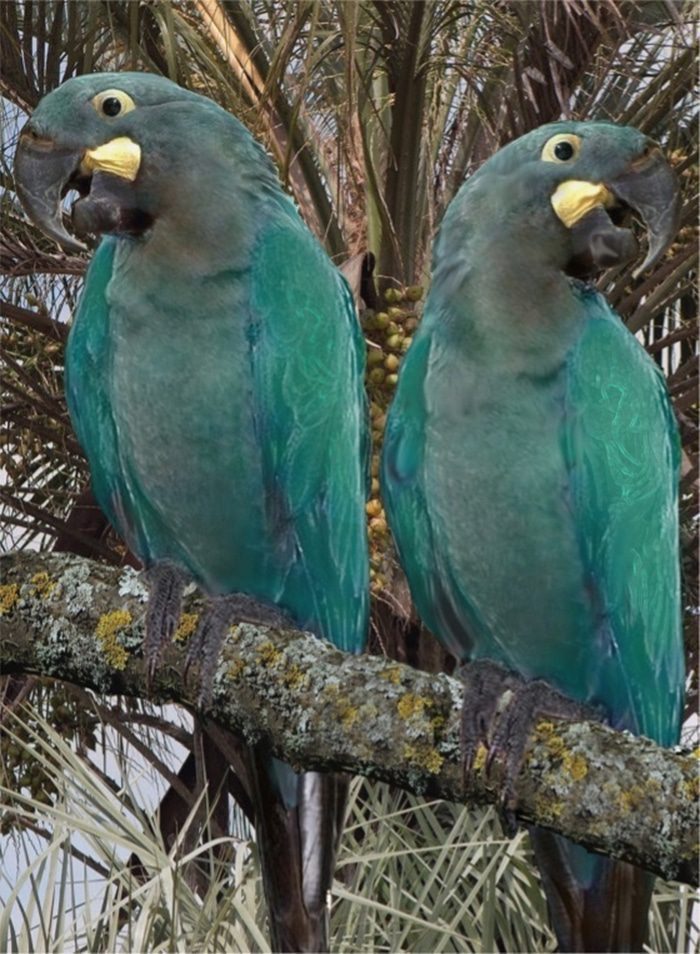
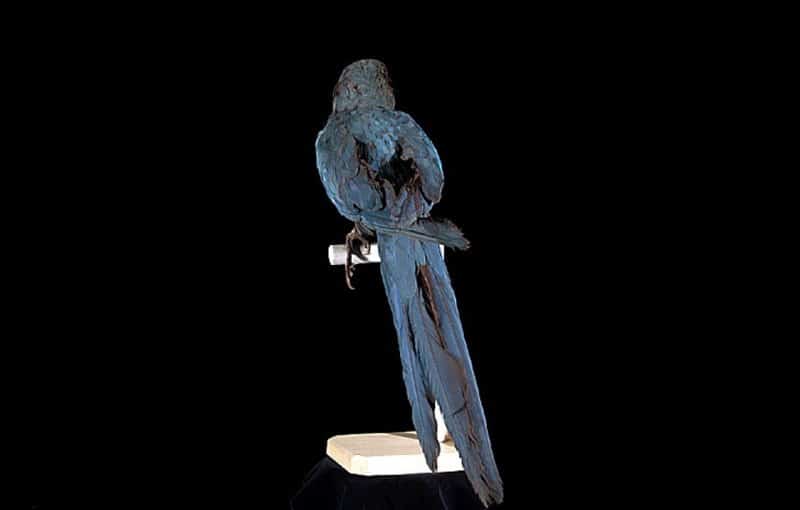
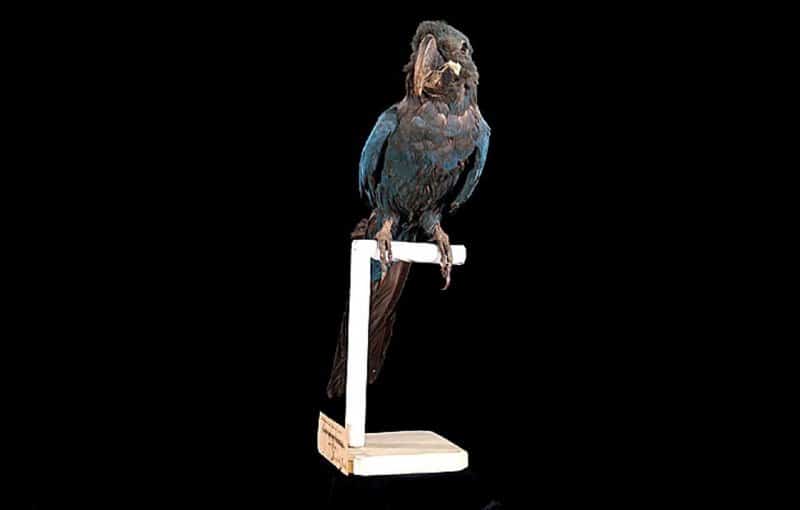
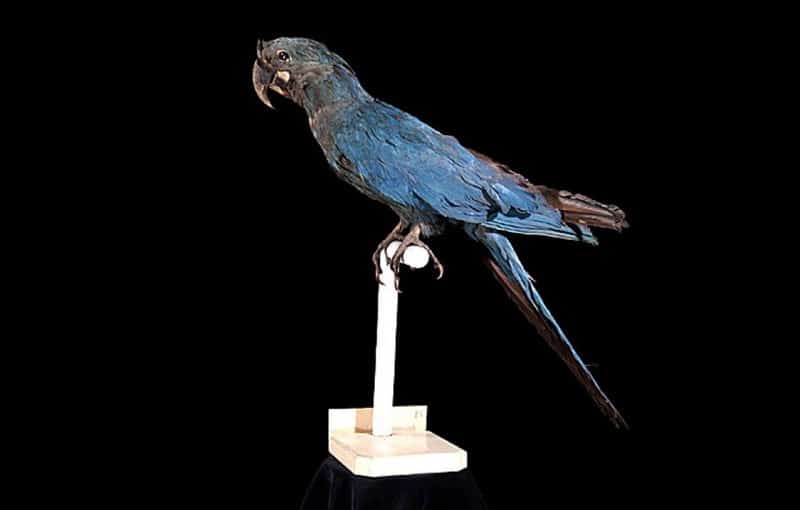
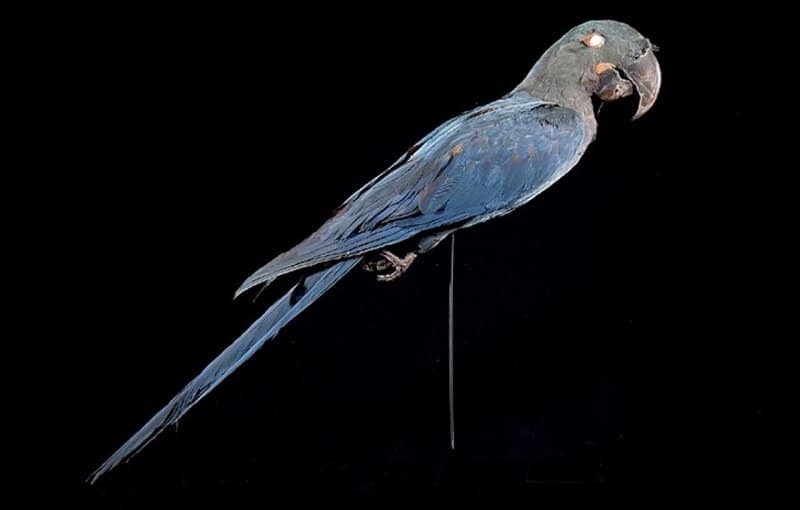
The plumage general of the Glaucous Macaw (Anodorhynchus glaucus) It is light blue, almost turquoise top, with strong grayish hue in head and underparts.

Uppertail greenish blue; undertail gray.

The bill It is dark blackish gray, the naked flames in the base lower jaw they are yellow, but paler than the periophthalmic skin; the irises is dark brown, the periophthalmic skin Nude yellow; the legs They are dark.

Habitat:

probably he occupied subtropical gallery forests with cliffs, but also used lightly wooded savannas and rich in palm trees. The few contemporary records suggest it was naturalists gregarious.

Reproduction:

It has been reported that anidaba on steep slopes or cliffs, or less generally in the cavities of trees and the average size of laying It was probably two eggs

Food:

Its diet It was probably basic nuts palm Butia horizontal (nearest equivalent in rank to size nuts Syagrus used by the Indigo Macaw, It is having the same dimensions peak).

Distribution:

Extending its range (breeding/resident): 1 km2

the Glaucous Macaw They were distributed at the time by the south-eastern South America, where apparently they were recorded in average growth of the main rivers, including Parana River, the Uruguay River and the Paraguay River, with most of the evidence of a prior distribution in the province of Currents, to the North of Argentina; cases were also recorded in western Uruguay and Southeast of Brazil (Rio Grande do Sul and Paranรก), and evidently in the south and east of Paraguay. The records of Bolivia They seem wrong. Almost certainly extinct after a precipitous decline in the early 19th century. Only two records in the twentieth century.

Conservation:

โ€ข Current category of the Red List of the UICN: Critically Endangered.

โ€ข Population trend: Unknown.

โ€ข Population size : 1-49 individuals.

Rationale for the Red List category

This species was last recorded in the 1990s. 1960 and it is likely that its population has declined dramatically as a result of hunt, Besides the degradation and habitat destruction. But, you may still exist, since not all its wide range of data, above wide, It has been adequately studied, and there have been persistent and convincing local reports. Any remaining population is likely to be small., and for these reasons it is treated as in Critically Endangered.

Justification of the population

It is assumed that any remaining population is small (counting less than 50 individuals) due to lack of confirmed records since the early 1960.

Threats

The settlement of the major river basins within its range was allegedly accompanied by the widespread loss of palms, whether by direct cleaning for agriculture or suppression of regeneration by livestock settlers. The palma de Horizontal, of the species probably fed, It was chosen to be cleared by early settlers because it was an indicator of good soil quality (Necklace et to the. 2014). The widespread loss of gallery forests could also have had an impact on the species. (Necklace et to the. 2014). The size and appearance of the bird probably made him a prime target for hunters, and even capture hatchlings as pets could have been important. There is some evidence that were sold, but few to support various claims that there has been recent trade in live specimens.

Any current trade in eggs, skins or live specimens would obviously be extremely damaging.

Conservation actions underway

    Appendix I of CITES and protected by Brazilian law.

    – There have been several attempts (so far unsuccessful) to rediscover the species.

    – There are proposals for funding under way to try to fund a work program to confirm the presence of this species in the wild.

Conservation Actions Proposed

    – Conducting interviews with the local population, especially with parrots and ancient hunters assets, to assess the likelihood of any population remains.

    – Getting ready to follow up any positive data from these interviews.

"Glaucous macaw โ€ " in captivity:

There is some evidence that were sold, but few to support various claims that there has been recent trade in live specimens.

Alternative names:

Glaucous Macaw (inglรฉs).
Ara glauque (francรฉs).
Tรผrkisara (alemรกn).
arara-azul-pequena, arara-celeste, guacamaio (portuguรฉs).
Guacamayo Azul, Guacamayo Glauco, Guacamayo Violรกceo, Papagayo violรกceo (espaรฑol).
Guacamayo azul (Argentina).
Papagayo violรกceo (Paraguay).
Guacamayo Azul (Uruguay).

scientific classification:

Order: Psittaciformes
Family: Psittacidae
Genus: Anodorhynchus
Scientific name: Anodorhynchus glaucus
Citation: (Vieillot, 1816)
Protonimo: Macrocercus glaucus

Images Glaucous Macaw:


Species of the genus Anodorhynchus

ยซGuacamayo Glaucoยป (Anodorhynchus glaucus)


Sources:

Avibase
– Parrots of the World โ€“ Forshaw Joseph M
– Parrots A Guide to the Parrots of the World – Tony Juniper & Mike Parr
Birdlife

Photos:

(1) – digital recreation of glaucous macaw. The background with Butia yatay is courtesy of http://floradeluruguay.blogspot.com/2010/05/butia-yatay.html , Andrรฉs Gonzรกlez. By Rod6807 (Martin Rodrรญguez Pontes) (Own work) [CC BY-SA 3.0], via Wikimedia Commons
(2) – Anodorhynchus glaucus by Huub Veldhuijzen van Zanten / Naturalis Biodiversity Center [CC BY-SA 3.0], via Wikimedia Commons
(3) – Anodorhynchus glaucus by Huub Veldhuijzen van Zanten / Naturalis Biodiversity Center [CC BY-SA 3.0], via Wikimedia Commons
(4) – Anodorhynchus glaucus By Vieillot, 1816 [CC BY-SA 3.0], via Wikimedia Commons
(5) – Anodorhynchus glaucus by Huub Veldhuijzen van Zanten / Naturalis Biodiversity Center [CC BY-SA 3.0], via Wikimedia Commons
(6) – Early illustration of the Glaucous Macaw illustration from Bourjot Saint-Hilaire, 1837-1838 By Bourjot Saint-Hilaire [Public domain], via Wikimedia Commons

โ–ท The world of Pets: Dogs, cats, birds, reptiles, amphibians

Raiatea parakeet โ€ 
Cyanoramphus ulietanus

Raiatea Parakeet

Content

Description:

25 cm.. length.

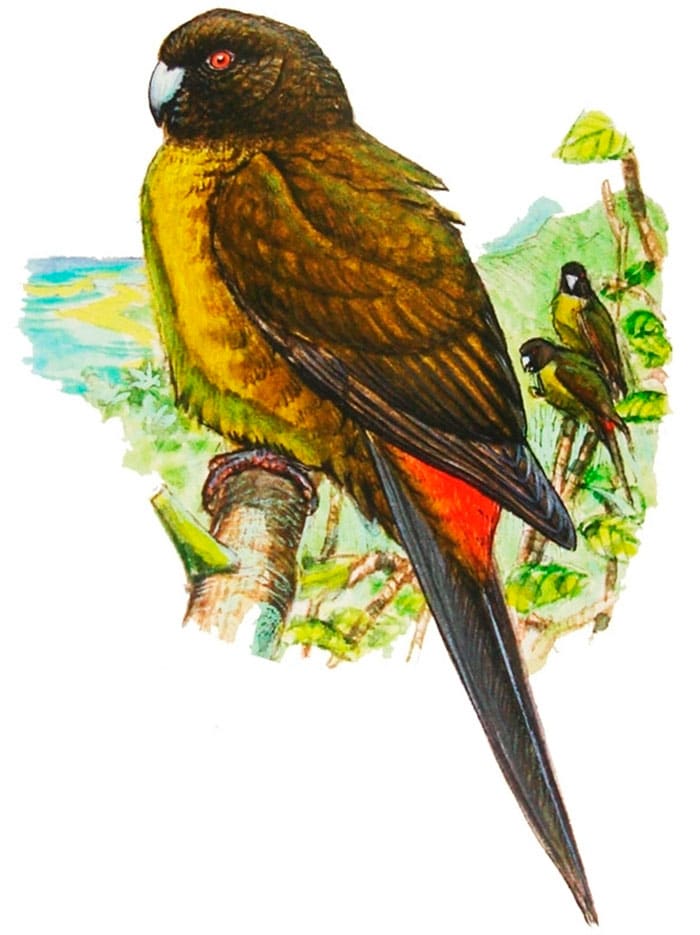
The Raiatea Parakeet (Cyanoramphus ulietanus) had the head blackish brown, paler on neck, Rump and wings. The lower part of the back and tail coverts were brownish-red; and under wing-coverts and outerweb the flight feathers were gray-blue. There was a gray border on the feathers primaries and secondaries. The chest, the abdomen and the under tail were yellow olive. The feathers of the middle tail were olive brown. The outer feathers tail were gray.

The irises were probably orange-red in the adult and juvenile brown. The legs were grayish brown. The bill was pale blue-gray or gray-brown to black tip. The males and females They looked similar.

Habitat:

It is believed that it was a kind forest, when the Society Islands They were all wooded.

Reproduction:

It knows nothing about the reproductive habits of this parrot or why died.

Food:

Nothing is known about the eating habits of this parrot.

Distribution:

Of the Raiatea Parakeet only known from two specimens in Raiatea, in the Society Islands of the french polynesia (Forshaw and Cooper 1989), collected on the trip Cook in 1773, and now Vienna and Tring (Knox y Walters 1994).

Conservation:

โ€ข Current category of the Red List of the UICN: EXTINCT.

Rationale for the Red List category

This species was known in the Isla de Raiatea, french polynesia, but now it is extinct, probably as a result of habitat or cleaning action of invasive species.

Justification of the population

There remains no existing population.

It is believed that the two bodies of this parrot that remain dissected in two museums, the Natural History Museum London and the Naturhistorisches Museum, They were collected by Georg Forster in 1773 or 1774 during the second voyage of Capitรกn Cook (Stresemann 1950). But, Medway (2009), based on the travel journal Joseph Banks, He thought they were collected in November 1777 during the third trip Cook. It seems likely that no collection will be made on Raiatea in 1768 during the first trip Cook, since the natives were hostile, which is why Forster probably obtained both specimens in the second. But, There is some confusion as to the locality, but Forster (1844) he refers to a "Psittacus pacificus" seen en Otaheite (tahiti) and Oriadea (Raiatea), from where Greenway (1967) presumed that found and collected Cyanoramphus zealandicus in Tahiti and C. ulietanus in Raiatea. unusually, Forster He did not consider the two species as different.

Alternative names:

Raiatea Parakeet, Society Parakeet, Society Parrot (English).
Kakariki de Raiatea, Perruche de Raiatea (French).
Braunkopf-Laufsittich, Raiateasittich (German).
Periquito-de-raiatea (Portuguese).
Perico de Raiatea (espaรฑol).

scientific classification:

Gmelin Johann Friedrich

Order: Psittaciformes
Family: Psittaculidae
Gender: Cyanoramphus
Scientific name: Cyanoramphus ulietanus
Subpoena: (Gmelin, JF, 1788)
Protonimo: Psittacus ulietanus

Sources:

โ€ข Avibase
โ€ข Parrots of the World โ€“ Forshaw Joseph M
โ€ข Parrots A Guide to the Parrots of the World – Tony Juniper & Mike Parr
โ€ข Birdlife

Photos:

(1) – Illustration of the society parakeet (Cyanoramphus ulietanus) by Mr thrice [CC BY-SA 4.0], from Wikimedia Commons

โ–ท The world of Pets: Dogs, cats, birds, reptiles, amphibians

European greenfinch
Chloris chloris

Verderรณn

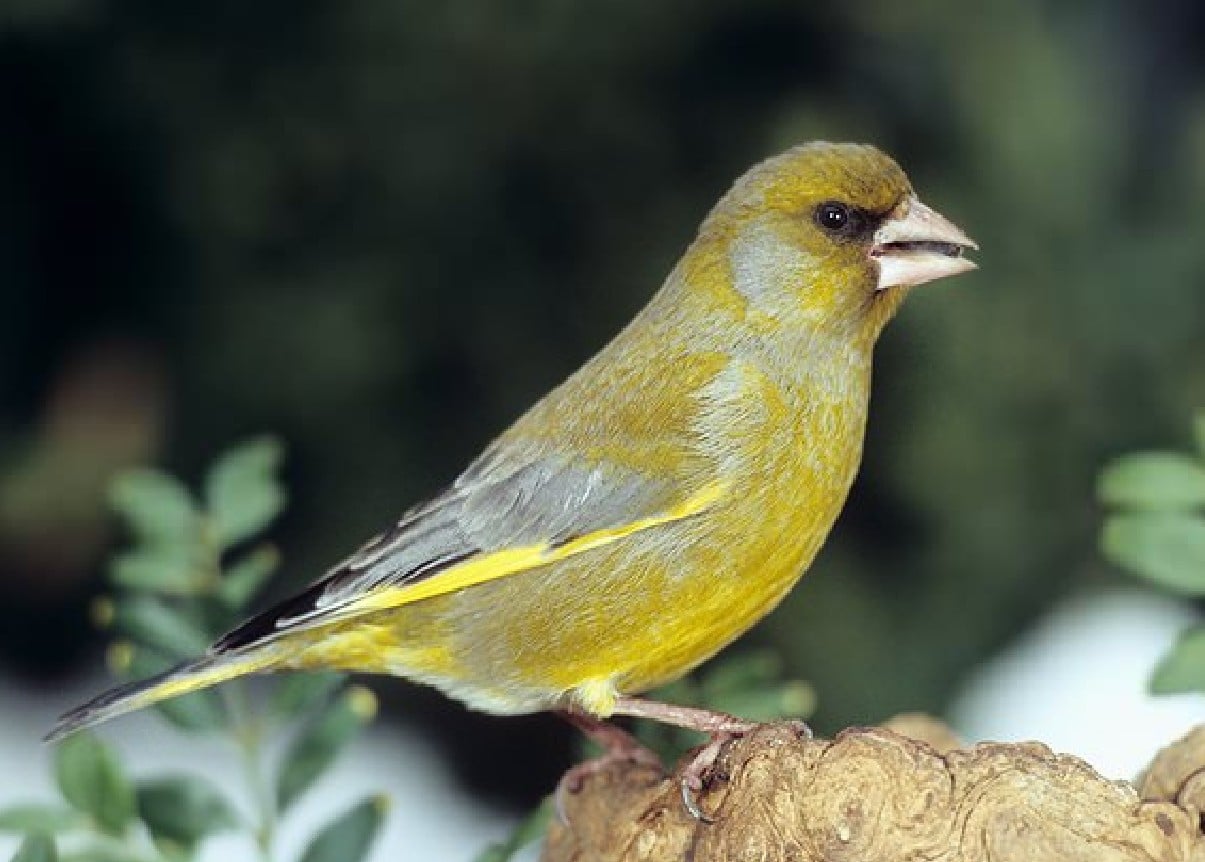
The plumage of the European greenfinch It is a striking green, more intense in the breeding season, with the sides of the tail and the obispillo, yellow..

It is a bird which fits easily in captivity.

His chirping is quite articulate and interspersed with some typical call notes, It is punctuated by a sustained nose whistle, It seems as if were produced by a forced inspiration. It also mimics the songs of other birds.

This species is found mostly in areas open to the presence of trees, as for example clear forest, huertas, cereal crops, Gardens, … It can be seen frequently in areas with human presence.
This species is present from sea level up to the 1. 900metros, Although the most commonly found among 0-800 m.

They are gradually increasing populations of this species due to the adjustment to urbanized areas.

It is one of the 10 species with greater distribution in Spain.

In captivity a couple needs at least one cage of a meter in length or greater. It is not good to stay in a smaller space because aggression problems may occur between them.

Food almost entirely seeds, wild fruits and berries.

Sources:

Wilkipedia
cinerea.org

โ–ท The world of Pets: Dogs, cats, birds, reptiles, amphibians

Rufous-fronted Parakeet
Bolborhynchus ferrugineifrons

Catita Frentirrufa

Content

Description:

18 cm.. height.
The Rufous-fronted Parakeet (Bolborhynchus ferrugineifrons) has an unmistakable band narrow in the forecrown, face and around the base of the bill, brown-red color; cheeks and throat, brighter yellowish green; crown, rear area of the neck, the mantle, scapulars, wing-coverts and skull, green; uppertail-coverts a green slightly paler. Outerwebs to primaries, bluish green. Under, the wings bluish green. Breast of color green beige tinted in green olive; rest of underparts brighter yellowish green. Upper, the tail green; by down green dyed blue. Bill brownish (slightly thickness and width) with grey base to the upper jaw; bare periophthalmic grey; irises dark brown; legs grey.

Both sexes are similar. Immature not described.

Habitat:

Video – "Rufous-fronted Parakeet" (Bolborhynchus ferrugineifrons)

Occupies the area warm upper and low of the Pรกramo of the high mountains in bushes, sparsely forested slopes near tree line, and habitats more open including fields of potatoes; those records are in altitudes of 2.800 to 4.000 m, most above 3,200m. Probably roams outside of breeding season. Highly gregarious, they forage in flocks of 5 to 50 individuals, Noting with relative frequency in the soil. Communal dormideros on the cliffs.

Reproduction:

They have reported nesting on cliffs. The male reproductive condition taken in mid-January.

Food:

It feeds mainly on ground of seeds grass, as Calamagrostis effusa, and of herbs, as flowers and achenes of Espeletia hartwegiana.

Distribution:

Size of the area of distribution (reproduction / resident): 18.600 km2

Endemic the high slopes of the Central Andes of Colombia, in where have been sightings in two areas General. The group over North of records involves the complex volcanic Nevado del Ruiz and Nevado del Tolima, where are the departments of Tolima, Quindio, Risaralda and Caldas. The southern part is located on the slopes of the Purace volcano in the Cauca. The high mountains are located between these two areas, by what the distribution can be continuous or of low density in all the chain Andean central, from Caldas until the Cauca.

The Rufous-fronted Parakeet be found in several areas protected including the Alto Quindรญo Acaime Reserve and the Los Nevados National Park, considered the last bastion of the species; is common there with more than 100 birds observed during eight hours in 1993. But, overgrazing can pose a threat to long term on this site.

Conservation:

State of conservation โ“˜


Vulnerable Vulnerable โ“˜ (UICN)โ“˜

โ€ข Current category of the Red List of the UICN: Vulnerable.

โ€ข Population trend: Decreasing.

Usually low density of the species (perhaps only a bird by km2) and scarce. Total population Perhaps 1.000-2.000 birds, probably less. IN DANGER OF EXTINCTION.

Threats

The conversion of forests for agricultural purposes has spread below the 3.300 m in the Central Andes. In the elevations more high, the forest is exploited for firewood and grazing, Although left large areas. Given its adaptation to the agricultural environment, the level of threat posed by deforestation is unknown (Snyder et to the. 2000). On the other hand, the widespread destruction of Pรกramo vegetation, even in Los Nevados, seems to have affected seriously to the population of the Rufous-fronted Parakeet. This is caused by the burning frequent, intense grazing and, to a lesser extent, the conversion to the cultivation of the potato. Colombian authorities have not been able to buy existing properties within national parks, making often that the parks are ineffective. From time to time stored as a pet.

"Rufous-fronted Parakeet" in captivity:

Occasionally stays as a pet locally but it is not known in captivity outside its area of distribution.

Alternative names:

Rufous-fronted Parakeet, Rufous fronted Parakeet (English).
Toui ร  front roux (French).
Rotstirnsittich (German).
Periquito-tolima (Portuguese).
Catita de Frente Parda, Catita Frentirrufa, Periquito Frentirrufo (espaรฑol).

George Newbold Lawrence

scientific classification:


Order: Psittaciformes
Family: Psittacidae
Genus: Bolborhynchus
Scientific name: Bolborhynchus ferrugineifrons
Citation: (Lawrence, 1880)
Protonimo: Brotogerys [sic] ferrugineifrons


Images "Rufous-fronted Parakeet"


Species of the genus Bolborhynchus

Sources:

Avibase
– Parrots of the World โ€“ Forshaw Joseph M
– Parrots A Guide to the Parrots of the World – Tony Juniper & Mike Parr
Birdlife
– Parrot Book, Parrots and macaws Neotropical

Photos:

(1) – ยฉAll rights reserved by Alonso Quevedo Gil / ProAves Foundation

Sounds:

โ–ท The world of Pets: Dogs, cats, birds, reptiles, amphibians

Sapphire-rumped Parrotlet
Touit purpurata

Cotorrita Purpurada

Content

Description:

Sapphire-rumped Parrotlet

18 cm.. height

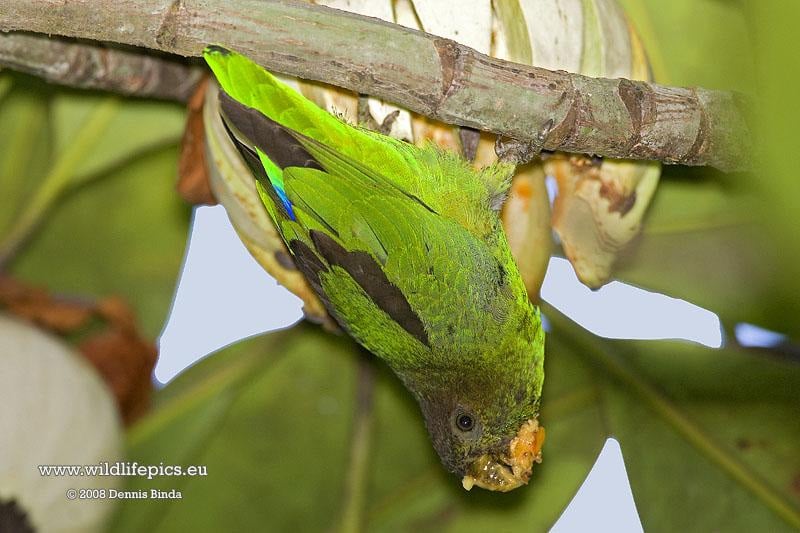
The Sapphire-rumped Parrotlet (Touit purpuratus) has the forecrown, crown, ear-coverts and sides neck, color marron-oliva; lores and cheeks green; rear area of the neck of color green pale with broadcasting brownish. Mantle and top of the back, green; scapulars and tertiary, dark brown; rump blue; uppertail-coverts green.

Feather blue in it bend of wing; primary coverts brown-black, rest of the coverts green. The flight feather Brown by up in innerwebs and tips, Yes no green; pale green blue for below. Underwing-coverts green. The underparts pale, of color green emerald slightly yellowish, with a layer of ochre in the sides of the belly. The tail Le da an appearance unmistakable, with black edge, green in the center and dark crimson on the sides, with black margins to outerwebs.

Bill off-white color pale Horn-tipped up to the upper jaw; irises black; legs grey.

The female has the tail (except central feathers) with the subterminal band green. Immature more yellowish below; the black color in the tail confined to the tips; Green olive from the forecrown up to the nape and ear-coverts lower.

Description 2 subspecies:

  • Touit purpuratus purpuratus

    (Gmelin, 1788) – Nominal.


  • Touit purpuratus viridiceps

    (Chapman, 1929) – As the nominal species but with the forecrown, crown and back neck, green; flanks with less yellowish green and feathery external of the tail showing a purple glow.

Habitat:

Species Rare and hard to see.
It inhabits, mainly, in the humid lowland canopy and forests and marshes, also observed in savanna in Suriname. In lower and more open to high altitude forests in Venezuela and in isolated areas cleared forests. Reports in altitudes of 400 metres in Colombia, and 1.200 metres in Mount Duida, Venezuela. gregarious, usually in groups of 12-40 birds.

Reproduction:

Observed the female digging a hole in a tree of forests and marshes in the month of November in Colombia; Birds in a nest in termitario tree in the month of April in Suriname, and males in breeding condition in the month of March in Venezuela. The laying tends to be of 3-5 eggs.

Food:

Observed eating fruit of Clusia grandiflora, Pouroma guianensis and Ficus figs and feeding on trees of Sapotaceae and Myrtaceae. Mainly forage in the canopy, Although also observed in low bushes and occasionally Earth.

Distribution:

Size of the area of distribution (reproduction / resident): 4.550.000 km2

It inhabits in the North of South America, mainly in the Basin Amazon, from the north end of Peru, east of Ecuador (Pastaza) and Colombia to the East of the Andes in West Caquetรก (for example, Three corners) and the southeastern tip of Guainia (along the Black river) to the South of the Brazilian Amazon until For and North of maranhรฃo, to the North of the Amazon and along the Vaupes River and the icana river through the basin of the Black river until Manaus; then through the South of Venezuela from amazon along the Orinoco to the South from the Ventauri River, in the Cerro Yapacana National Park and Mount Duida and from the South of Bolรญvar in the Tepuyes of the Gran Sabana and Caura River, in Guyana, Barima, rivers Mazaruni and Chamber and to the South up to Bartica.

Comes to be local in Suriname and French Guiana. Discrete, often difficult to observe and apparently sparsely populated in most parts of its range. Perhaps more numerous in those sections more low of it amazon basin.

Distribution 2 subspecies:

  • Touit purpuratus purpuratus

    (Gmelin, 1788) – Nominal. Southeast of amazon in Venezuela, up to the Guianas and this from the Basin of the Amazon in Brazil.


  • Touit purpuratus viridiceps

    (Chapman, 1929) – Black river, the Northwestern basin of Brazil, Venezuela West from Mount Duida until Colombia, Ecuador and Peru.

Conservation:

State of conservation โ“˜


minor concern Minor Concern โ“˜ (UICN)โ“˜

โ€ข Current category of the Red List of the UICN: Least concern.
โ€ข Population trend: Stable.

Justification of the population

The size of the world's population has not been quantified, but this species is described as ยซRareยป (Stotz et to the., 1996).

Justification of trend

It is suspected that this species has lost 12,8-15,2% of habitat within its distribution over three generations (15 years) starting from a model of deforestation Amazon (Soares-Filho et to the., 2006, Bird et to the., 2011). Given the susceptibility of the species to hunting and / or capture, It is suspected that it will fall in <25% during three generations.

In captivity:

Very rare in captivity.

Alternative names:

Sapphire-rumped Parrotlet, Purple Guiana Parrotlet, Sapphire rumped Parrotlet (English).
Toui ร  queue pourprรฉe (French).
Purpurschwanzpapagei, Purpurschwanz, Purpurschwanz-Papagei (German).
Apuim-de-costas-azuis, apuim-de-costa-azul, periquitinho (Portuguese).
Cotorrita Purpurada, Lorito de Lomo Purpรบreo, Periquito Zafiro (espaรฑol).
Periquito Zafiro (Colombia).
Periquito de Lomo Zafiro (Peru).
Periquito Rabadilla Pรบrpura (Venezuela).
Periquito lomizafiro (Ecuador)


scientific classification:

Gmelin Johann Friedrich

Order: Psittaciformes
Family: Psittacidae
Genus: Touit
Scientific name: Touit purpuratus
Citation: (Gmelin, JF, 1788)
Protonimo: Psittacus purpuratus


Images Sapphire-rumped Parrotlet:

Videos of the "Sapphire-rumped Parrotlet"

Sapphire-rumped Parrotlet (Touit purpuratus)


Species of the genus Touit


Sources:

  • Avibase
  • Parrots of the World โ€“ Forshaw Joseph M
  • Parrots A Guide to the Parrots of the World – Tony Juniper & Mike Parr
  • Birdlife

  • Photos:

(1) – wildlifepics.eu ยฉ 2008 Dennis Binda
(2) – Touit purpuratus By P. Bertrand [Public domain], via Wikimedia Commons

Of 18 cm.. tall Inconfundible by the ends of the tail, which are dorsally and ventrally purple-red with black border.
Overall green body with Brown Crown and nape, wing with both opaque Brown ends and violet blue rump.
Female with paler brown head and green-streaked tail.
The subspecies T. p. viridiceps has a totally green head.

Uncommon and difficult to observe species.
Lives in humid forests, semi-humid and swampy, until the 400 m. It forms small groups and they are silent when they feed. It nests in hollows of trees or arboreal termiteros at low altitude. The implementation is of 3-5 eggs and breeding season: from November to April

It is found in the wild in the Amazon, South-East of Colombia to the Guyanas, southern Venezuela to northeastern Peru and northern Brazil.
It feeds on fruits, and figs.

Video: Video 1

Deforestation and loss of Habitat is a threat for this species.

Alternative names: Sapphire-rumped Parrotlet (English), Periquito zafiro (Colombia), Periquito lomizafiro (Ecuador), Purpurschwanz, Purpurschwanzpapagei (Germany), Lorito de Lomo Purpรบreo (Spain), Periquito Rabadilla Pรบrpura (Venezuela), Toui ร  queue pourprรฉe (France), apuim-de-costa-azul (Brazil)

Source: Parrots, Parrots and macaws Neotropical
Photo: wildlifepics.eu ยฉ 2008 Dennis Binda

โ–ท The world of Pets: Dogs, cats, birds, reptiles, amphibians

Yellow-faced Parrot
Alipiopsitta xanthops

Yellow-faced Parrot

Content

Description

Yellow-faced Parrot

26 to 27 cm.. tall and about 260g. weight.

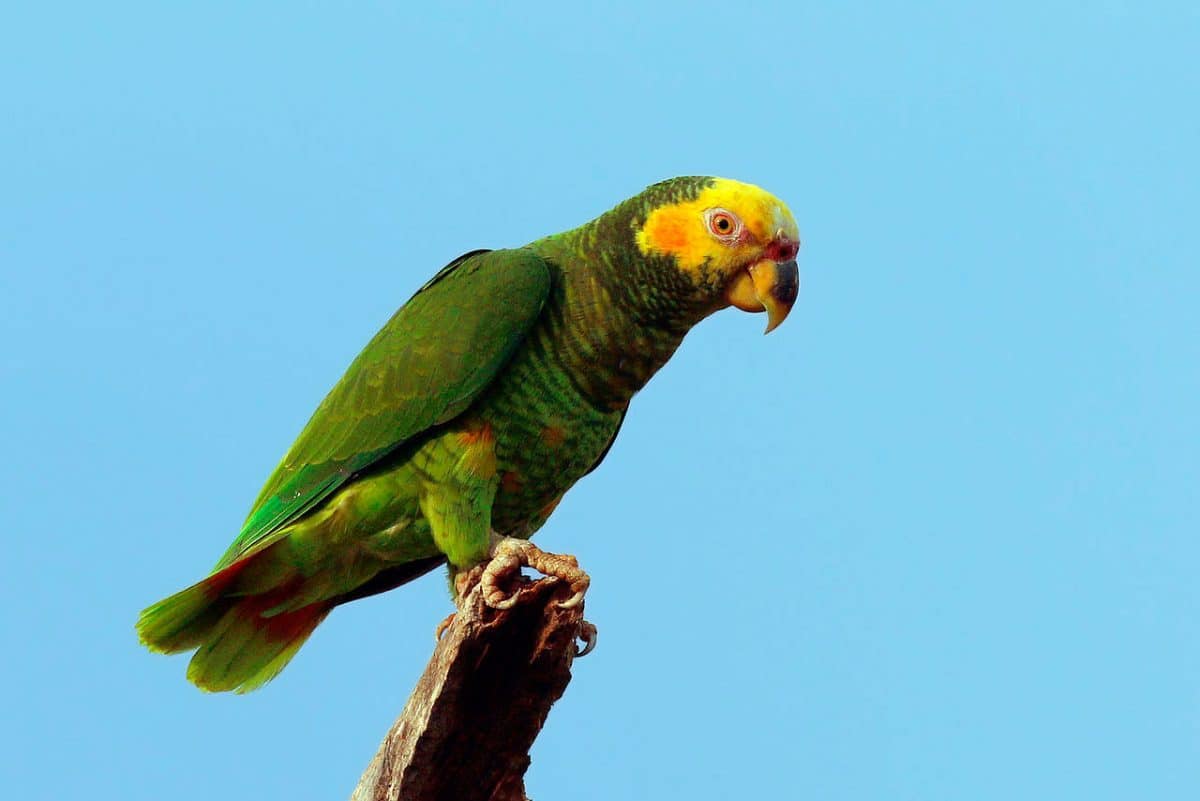
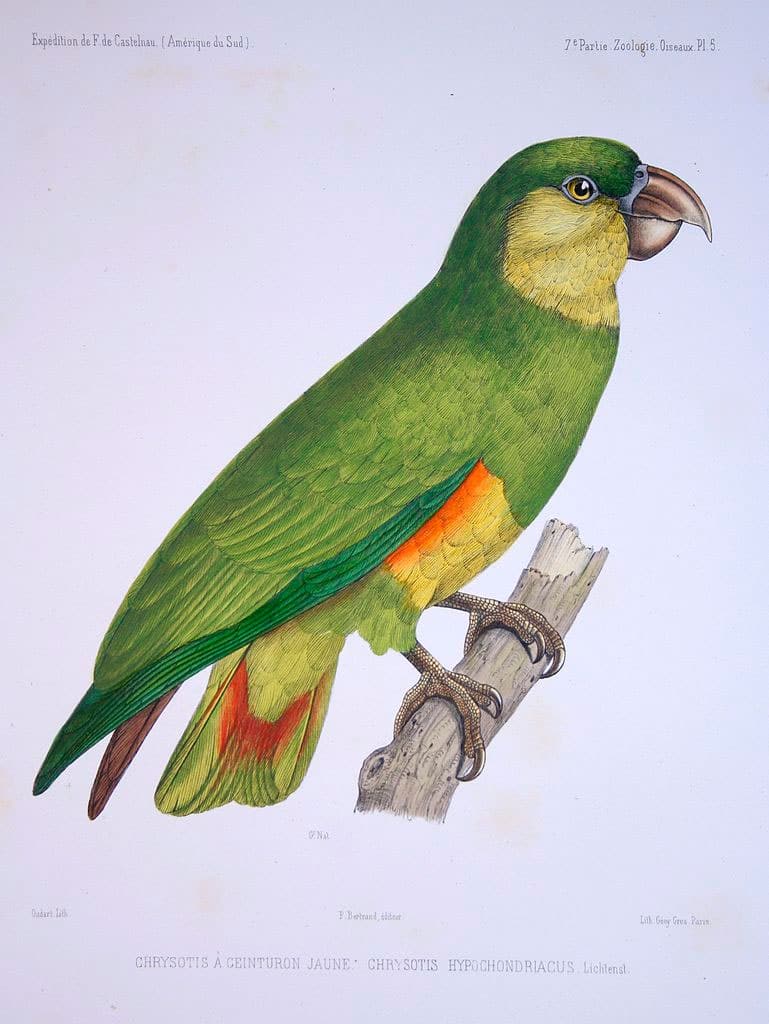
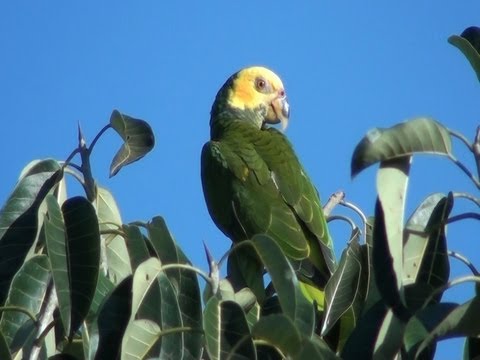
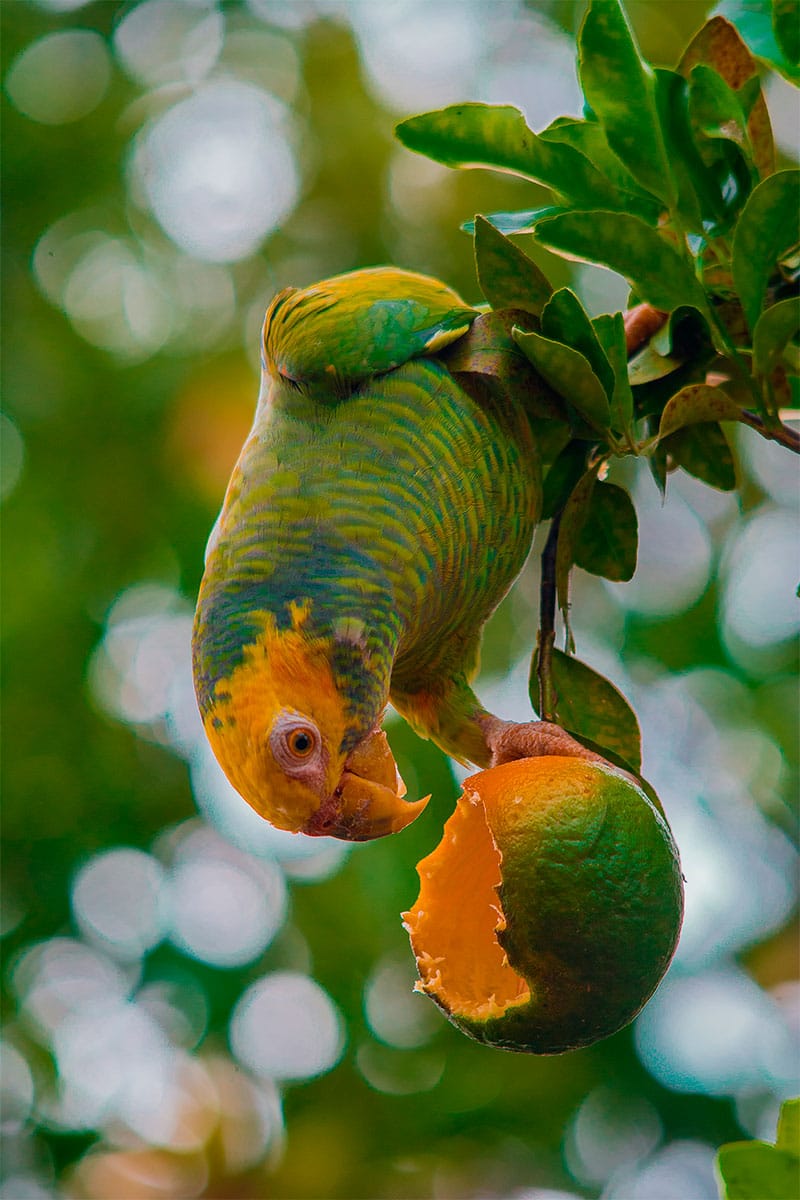
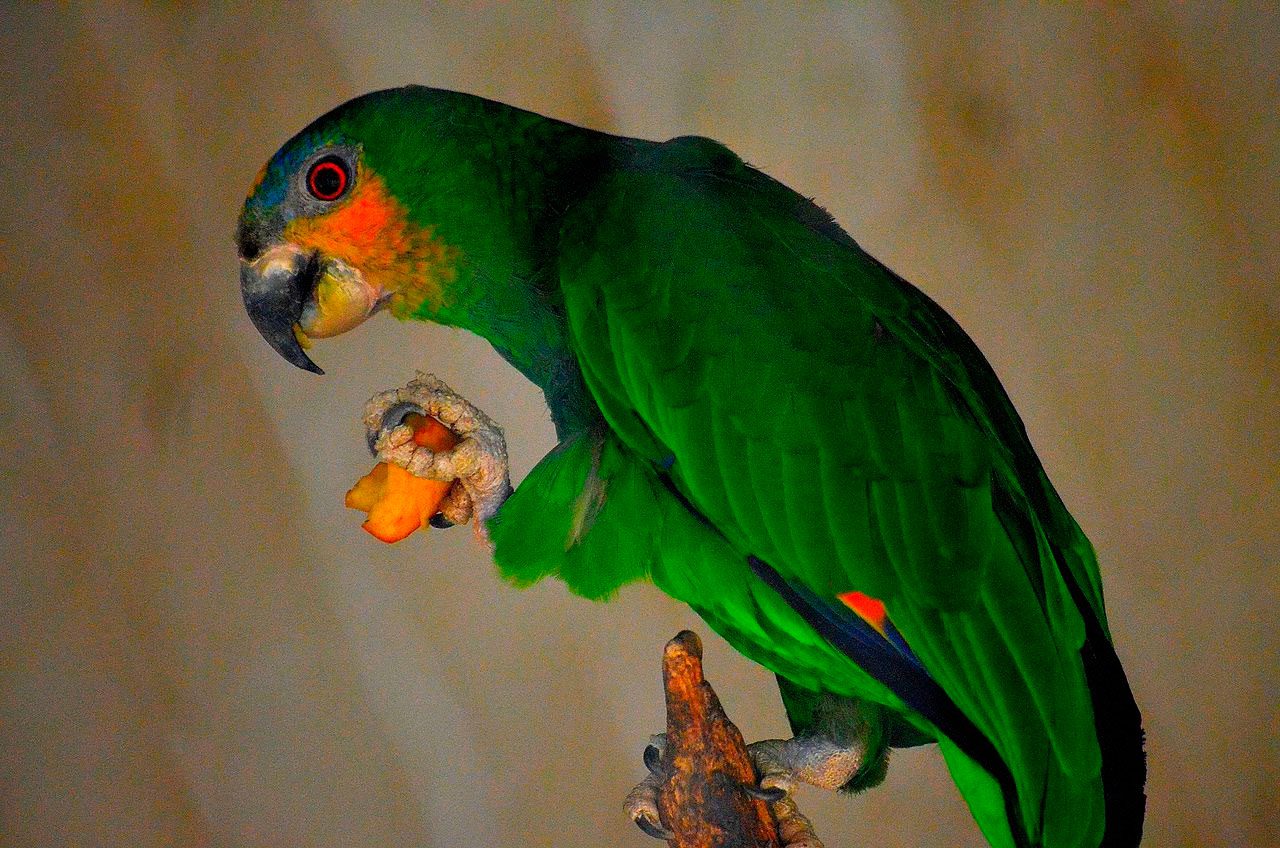
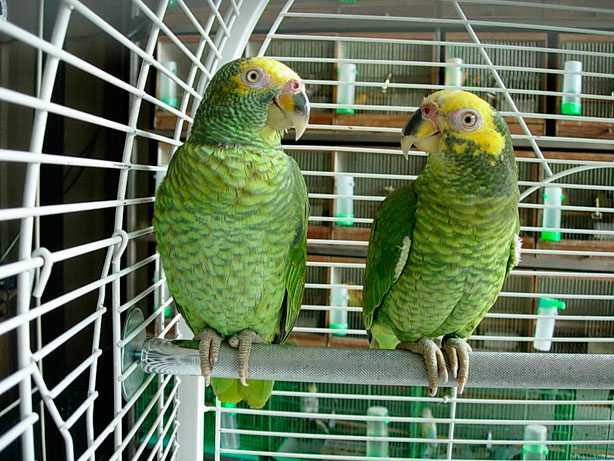
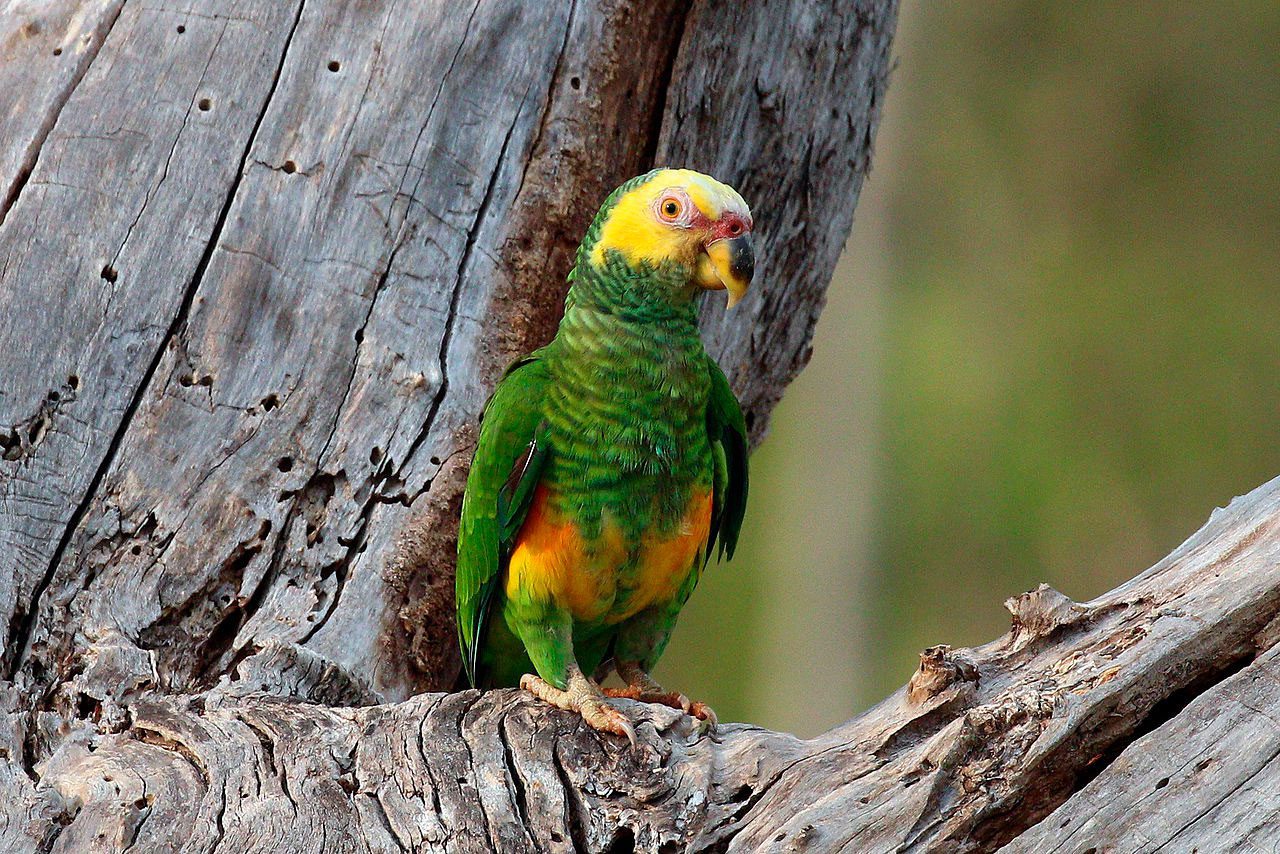
The Yellow-faced Parrot (Alipiopsitta xanthops) It is distinguished by the large area of รขโ‚ฌโ€นรขโ‚ฌโ€นyellow in the head, with green tint nape; orange to the sides of body and upper base of the tail; collar yellowish green, belly almost all yellow, the thighs and green inner core tail green; the back it is usually green with yellow tints.

blackish brown with yellow edges; iris yellow .

The youth less yellow in body.


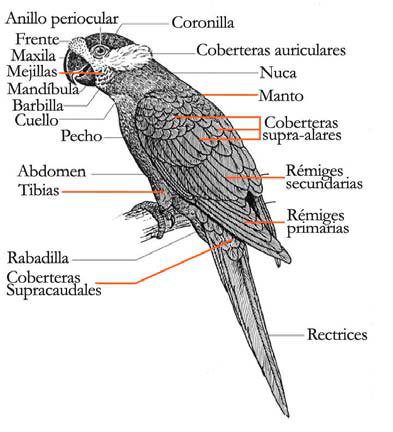
Anatomy-parrots

Habitat:

It inhabits in dry forests, also called deciduous forests, in lowlands, with the presence of palmas Mauritia, Although they prefer water courses.
They can be seen in pairs or flocks of up 50 specimens.

Reproduction:

Video – "Yellow-faced Parrot"

Canto-galego parrot (ALIPIOPSITTA XANTHOPS), YELLOW-FACED PARROT, Curraleiro, CURAU PARROT.

Although little information regarding this is available, it is known that nest in the hollows of the highest trees closed; the laying usually three eggs and the incubation period is 23-24 days.

Food:

It's a species of which there are few studies of their natural habitat. Its main food It consists mainly of fruits and seeds. Very fond of mangoes, usually visit their trees full of fruit.

Distribution:

Size of its range (reproduction / resident): 2.700.000 km2

Inside of Brazil and adjacent area to the east of Bolivia and Horqueta, in the East of Paraguay.

Conservation Alipiopsitta xanthops:

State of conservation โ“˜


Near-threatened Near Threatened โ“˜ (UICN)โ“˜

โ€ข Current category of the Red List of the UICN: Near-threatened.

โ€ข Population trend: Decreasing.

In 1993 two thirds of the Cerrado, This species inhabited, had been moderately or severely altered by agriculture, heavy cattle farming, invasive grasses, the use of pesticides and annual burning.

Conservation Actions Proposed:

โ€ข Collate sample data and recent records to provide an improved assessment of distribution and status.

โ€ข Estimate the total wild population (Bianchi 2009).

โ€ข Assess the impact of habitat loss (Snyder et to the . 2000).

โ€ข Create a network of large reserves in Bahia, maranhรฃo and Piauรญ.

Yellow-faced Parrot in captivity:

Ave Rare in the world of poultry farming.

active, curious and playful. Aggressive with other parrots. They can become very noisy. Prone to obesity

Its reproduction rarely been achieved in captivity. The basic requirement would be to isolate a compatible pair during the breeding season due to increased aggression towards other birds during this period.; also require spacious accommodations and a nest box of 25 x 25 x 60 cm. . with input from 8 cm in diameter.

They tend to be aggressive toward their caregivers. The breeding season begins in early May. The implementation is of 2 to 4 eggs, which are incubated during 26 days. The young leave the nest when they are near the 8 weeks of age.

Alternative names:

Yellow faced Parrot, Yellow-crowned Amazon, Yellow-crowned Parrot, Yellow-faced Amazon (English).
Amazone ร  face jaune (French).
Goldbauchamazone, Schoapapagei (German).
Papagaio-galego, chorรฃo, curau, papagaio-acurau, papagaio-curraleiro, papagaio-de-barriga-amarela (Portuguese).
Amazona Chica, Amazona del Cerrado, Loro cara amarilla, Lora chica (espaรฑol).


Scientific classification Alipiopsitta xanthops:

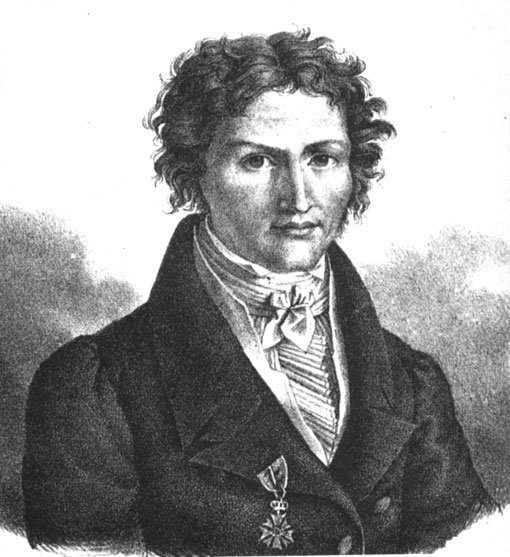
Johann Baptist von Spix

Order: Psittaciformes
Family: Psittacidae
Genus: Alipiopsitta
Scientific name: Alipiopsitta xanthops
Citation: (von Spix, 1824)
Protonimo: Psittacus xanthops


Images Yellow-faced Parrot:


Species of the genus Amazona


Sources:

  • Parrot Book, Parrots and macaws Neotropical
  • avibase
  • parrots.org
  • Parrots of the World โ€“ Forshaw Joseph M
  • Parrots A Guide to the Parrots of the World – Tony Juniper & Mike Parr
  • Birdlife

Photos:

(1) – Yellow-faced parrot (Alipiopsitta xanthops) green morph, the Pantanal, Brazil By Charlesjsharp (Own work, from Sharp Photography, sharpphotography) [CC BY-SA 4.0], via Wikimedia Commons
(2) – Yellow-faced parrot (Alipiopsitta xanthops) yellow morph, the Pantanal, Brazil By Charlesjsharp (Own work, from Sharp Photography, sharpphotography) [CC BY-SA 4.0], via Wikimedia Commons
(3) – Alipiopsitta xanthops, Yellow-faced Parrot; two in a cage By TJ Lin (originally posted to Flickr as yellow-faced amazon) [CC BY-SA 2.0], via Wikimedia Commons
(4) – Yellow-faced Parrot in Giza Zoo By Hatem Moushir (Own work) [CC BY-SA 3.0], via Wikimedia Commons
(5) – Record made in the city of Trรชs Lagoas-MS, urban area. A flock landed on a ponca tree to feed By Jairmoreirafotografia (Own work) [CC BY-SA 4.0], via Wikimedia Commons
(6) – Illustration does not look like A. xanthops (Yellow-faced Parrot). Fisch's Papageien monograph discusses this dubious specimen by Francis de Laporte de Castelnau [Public domain], via Wikimedia Commons

Sounds: Joao Antonio de B.. Vitto

โ–ท The world of Pets: Dogs, cats, birds, reptiles, amphibians

Sulphur-crested cockatoo
Cacatua galerita

Cacatua galerita

Content

Description

55 cm.. height and a weight between 815 and 975 g..
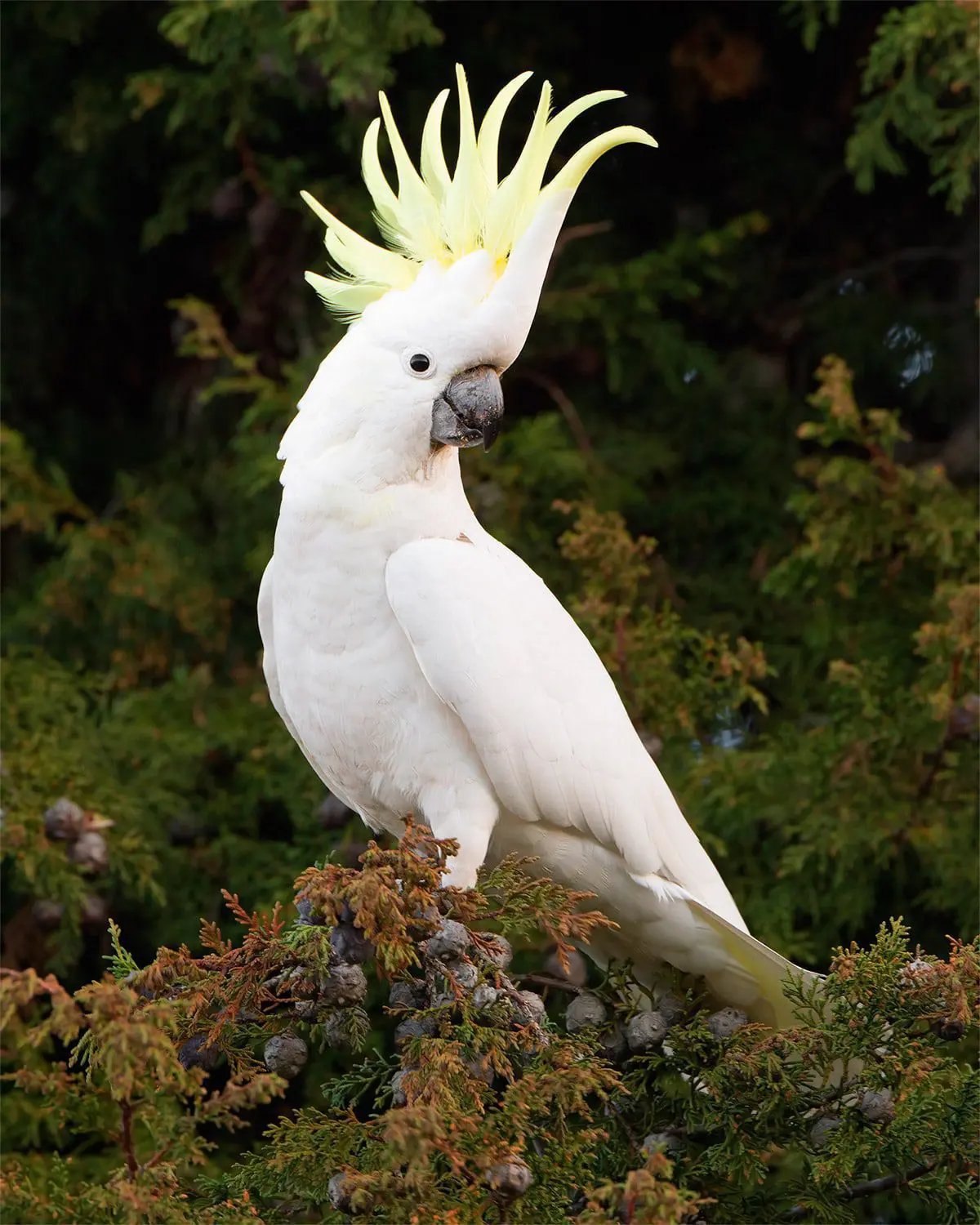
The Sulphur-crested cockatoo (Cacatua galerita) It is a bird with a predominantly white plumage.
In adults, the ear-coverts, bases feathers throat and cheeks, are pale yellow. the arista formed by the 6 Erectile feathers slightly inclined forward, are yellow. The crest You can reach up 14 centimeters in length. The bottom of the wings and of the tail van dyed pale yellow.
The ring surrounding the eye shows a white. The irises is dark brown in the male and reddish brown in the female. The bill is blackish grey, the legs grey.

The immature They are just different from adults. The irises They are pale brown.

Description 4 subspecies
  • Cacatua galerita eleonora

    (Finsch, 1863) – It's like Cacatua galerita triton but smaller and with bill smaller.


  • Cacatua galerita fitzroyi

    (Mathews, 1912) – Yellowed feathers, both ear-coverts, and the throat and cheeks, they are absent. The eye ring It is light blue. Bill but great.


  • Cacatua galerita galerita

    (Latham, 1790) – Nominal.


  • Cacatua galerita triton

    (Temminck, 1849) – Something smaller, the crest WIDER and eye ring pale blue.

Behavior:

They are very noisy and very easy to observe, Although they are more identifiable by their cries.

During the breeding season, they live in pairs or in small family groups, but the rest of the year, They are in flocks that may contain hundreds of birds.

In the urban areas and in places that they are equipped with feeders, adopt a family behavior.
In other places, It inspired his distrust and his usual prudence, the Sulphur-crested cockatoo they are very difficult to deal with.

In open areas these birds are implementing a sentinel system that is organized as follows: while most of the flock feeds, Some birds seen from a nearby perch and are likely to sound the alarm if danger.

Habitat:

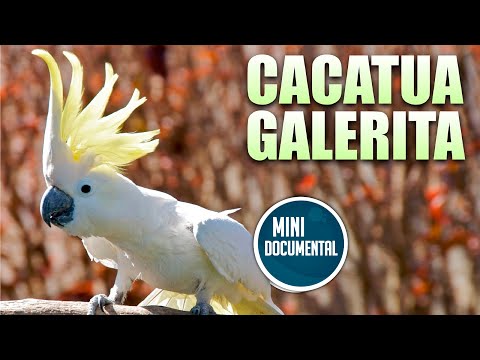
Video – "Sulphur-crested cockatoo" (Cacatua galerita)

Cacatua galerita (mini documentary)

Is located in variety of forest areas, forests (including swamps and river areas), mangroves, Open field, on farm land (including rice fields and plantations of Palm), Savannah, Mallee and suburban areas. Found up to 1.500 meters in parts of Australia, 2.400 metres in Papua New Guinea.

Reproduction:

In Australia, the breeding season occurs from May to August in the North and between August and January, in the South.

In New Guinea, It takes place during every month of the year, although the most active months are during the period from May to December.

This species occasionally breeds in colonies. The nest is a natural cavity in a eucalyptus large near a stream between 3 and 30 meters above the ground. Sometimes the residence of the Sulphur-crested cockatoo It is located in the holes of the limestone cliffs along the murray river. In this case, the eggs are deposited directly in the sand.

In New Zealand, These birds lay amid bales of hay in barns. The nest generally it contains 3 white eggs. These are deposited on a layer of debris decomposing at the bottom of the cavity.
incubate both parents alternately for a period of 30 days. Hatchlings have a yellowish color and leave the nest after 6 to 9 weeks. Quite regularly, they return to the nest to rest for about two weeks.

The juveniles They remain within the family group for several months. They feed together in small scattered groups.

Food:

forages in grasses and herbs. You can take corn and wheat sprouts. It also feeds harmful herbs like cotton thistle. other foods include: estate, Rhizomes, nuts, berries, flowers, bulbs, flower and insect larvae.

They can cause great damage to crops. They dig in lands that were recently planted to eating fruit ripening, It also causes damage to crops that are stored and bales of hay to tear the plastic covering them.

Distribution:

Size of the area of distribution (reproduction / resident): 10600000 km2

This species is endemic to the north and east of Australia, New Guinea and nearby islands, especially islas Aru, Indonesian.
It was imported successfully to Palau Islands in Micronesia, New Zealand and some Maluku islands.

The population in Taiwan It has been estimated at about 100 introduced breeding pairs

Lives mainly below 1.000 m, but sometimes you can see in Australia to 1500 m. and 2000 m in east New Guinea.

Distribution 4 subspecies

Conservation:

State of conservation โ“˜


minor concern Minor Concern โ“˜ (UICN)โ“˜

โ€ข Current category of the Red List of the UICN: Least concern.

โ€ข Population trend: In decline.

It is thought that his population It is greater than 500.000 individuals.

It is not an endangered species. But, despite protection Indonesian this species is followed by trapping wild bird trade. Nor is a protected species in Australia, therefore sacrifices occur.

In New Guinea, sometimes it is hunted for its feathers.

It is suspected that his population is in decline due to ongoing habitat destruction.

"Sulphur-crested cockatoo" in captivity:

and valued species often as a pet.
Very Intelligent, sociable and playful. It is a cockatiel for experienced bird owners. You can be dominant and aggressive. It can be very noisy.

There are anecdotal reports of some Sulphur-crested cockatoo who they have lived more than 100 years. In the news, However, longevity record, according to sources, belongs to a captive specimen called "Cocky" who lived more than 57 years in the London Zoo. Another report suggests that these animals can live up 73.0 years in captivity, but this has not been verified.

Alternative names:

Sulphur-crested Cockatoo, Greater Sulphur-crested Cockatoo, White Cockatoo, Yellow-crested cackatoo (ingles).
Cacatoรจs ร  huppe jaune, Grand Cacatoรจs ร  huppe jaune (French).
Gelbhaubenkakadu (German).
Cacatua-de-crista-amarela (Portuguese).
Cacatรบa de Moรฑo Amarillo, Cacatรบa Galerita (espaรฑol).

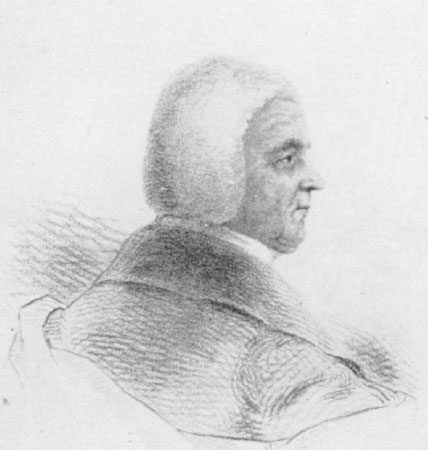
John Latham
John Latham

scientific classification:


Order: Psittaciformes
Family: Cacatuidae
Genus: Cockatoo
Scientific name: Cacatua galerita
Citation: (Latham, 1790)
Protonimo: parrot galeritns


Images Galerita Cockatoo:


Species of the genus Cacatua
  • Cacatua tenuirostris
  • Cacatua pastinator
  • —- Cacatua pastinator derbyi
  • —- Cacatua pastinator pastinator
  • Cacatua sanguinea
  • —- Cacatua sanguinea gymnopis
  • —- Cacatua sanguinea normantoni
  • —- Cacatua sanguinea sanguinea
  • —- Cacatua sanguinea transfreta
  • —- Cacatua sanguinea westralensis
  • Cacatua goffiniana
  • Cacatua ducorpsii
  • Cacatua haematuropygia
  • Cacatua galerita
  • —- Cacatua galerita eleonora
  • —- Cacatua galerita fitzroyi
  • —- Cacatua galerita galerita
  • —- Cacatua galerita triton
  • Cacatua ophthalmica
  • Cacatua sulphurea
  • —- Cacatua sulphurea abbotti
  • —- Cacatua sulphurea citrinocristata
  • —- Cacatua sulphurea parvula
  • —- Cacatua sulphurea sulphurea
  • Cacatua moluccensis
  • Cacatua alba

  • Sources:

    Avibase
    – Parrots of the World โ€“ Forshaw Joseph M
    – Parrots A Guide to the Parrots of the World – Tony Juniper & Mike Parr
    – Birdlife

    Photos:

    (1) – commons.wikimedia.org
    (2) – birdsandbirds.com
    (3) – tilcheff

    Sounds: Hans Matheve (Xeno-canto)