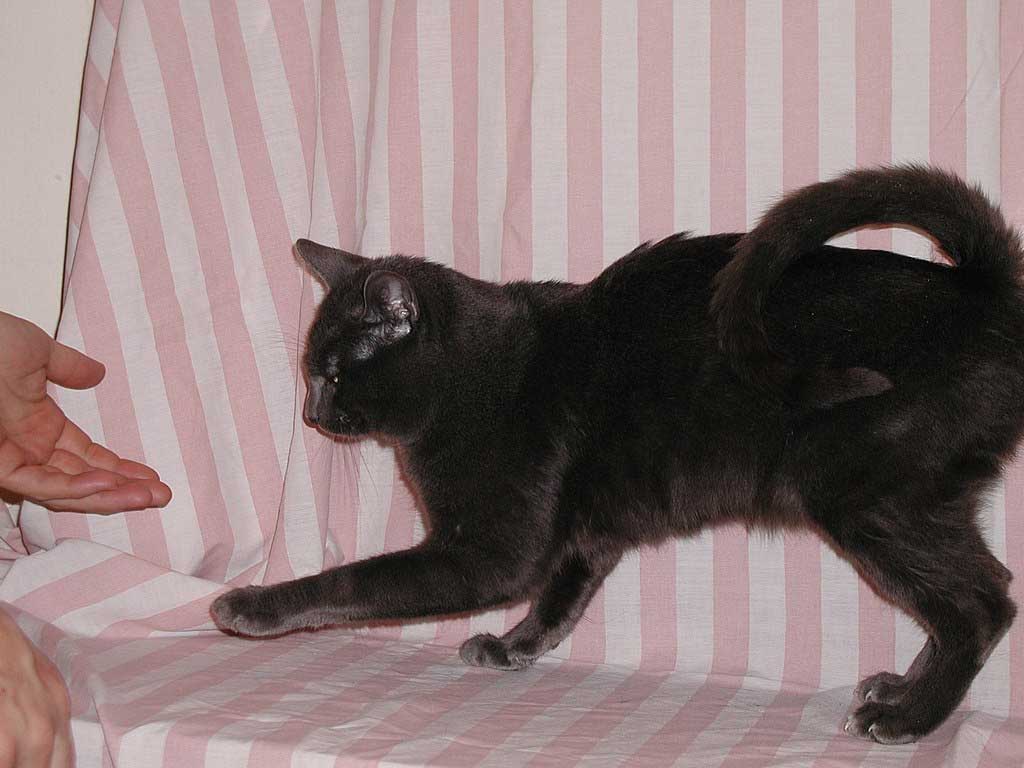
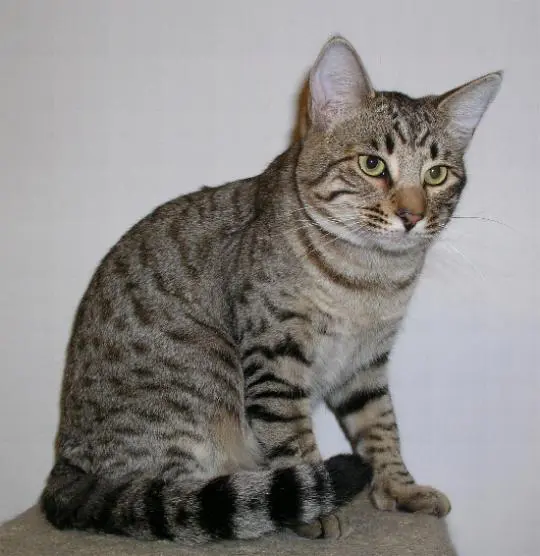
Recognized by the CFA, TICA, AACE, ACFA/CAA, CCA-AFC, GCCF, FIFe
Origin: United States
Antiquity: 1870
Character: Independent and tolerant
Weight: 5 to 8 Kg
The American Longhair Cat has a great addition to the stables, since it tends to be very fond of other animals such as horses, goats and cows, and tends to get along very well with dogs.
Content
History
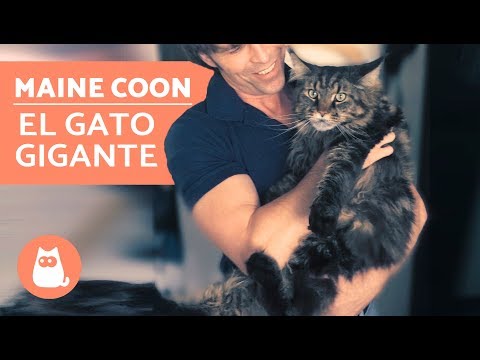
The American Longhair Cat (Maine Coon), was the result of breeders' attempts to infuse certain varieties of Persian color into the American shorthair cat. The longer coat and some of these colors appeared to be genetically related., and the result was a cat with a combination of traits from its Persian and American shorthair cats.
Unlike in the Domestic long-haired cat, that does not have a clear lineage, the American Longhair Cat comes from champion bloodlines, and some individuals are registered with multiple cat fancier associations, but the breed itself is not recognized by the larger organizations yet.
The main difference between American Longhair Cat and the Domestic long-haired cat is that the American Longhair Cat must have a pedigree that can go back as far as American shorthair cat as to the Persian cat.
Times, cats Maine Coon se denominan American Longhairs, because they were developed in the United States.
physical characteristics of the American Longhair Cat
Breed standard:
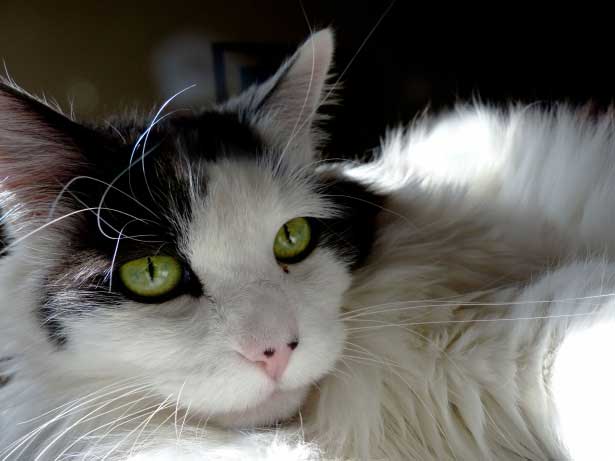
Head: The head must be big, round, wide and well developed. Cheeks should be full and have a powerful appearance. The face should be slightly concave or "domed". The muzzle is square and may be somewhat compressed, with a strong, well-formed chin.
Ears: The ears should not be excessively large, but medians in proportion to the head, wide at the base with rounded tip and good space between them. It is very desirable that the ears have feathers.
Eyes: The eyes must be large and round, widely spaced, bright, clear and of any color. Strange eyes are allowed, as long as it is not accompanied by deafness.
Body and tail: Must be a medium to large size cat, slightly longer than tall, with a powerful, broad body and a deep, well-formed chest. A fat pad on the abdomen is common for this breed and completely acceptable.. The neck is short and robust. The legs are of medium length and have good bones with a fleshy quality.. Feet are medium to large in size and round, with five fingers in front and four behind. The tail should be of medium length, feather-shaped, and is usually carried at the level of the top line.
Fur: It has a full double coat with long, straight outer hairs. Any color, except tick or spike patterns.
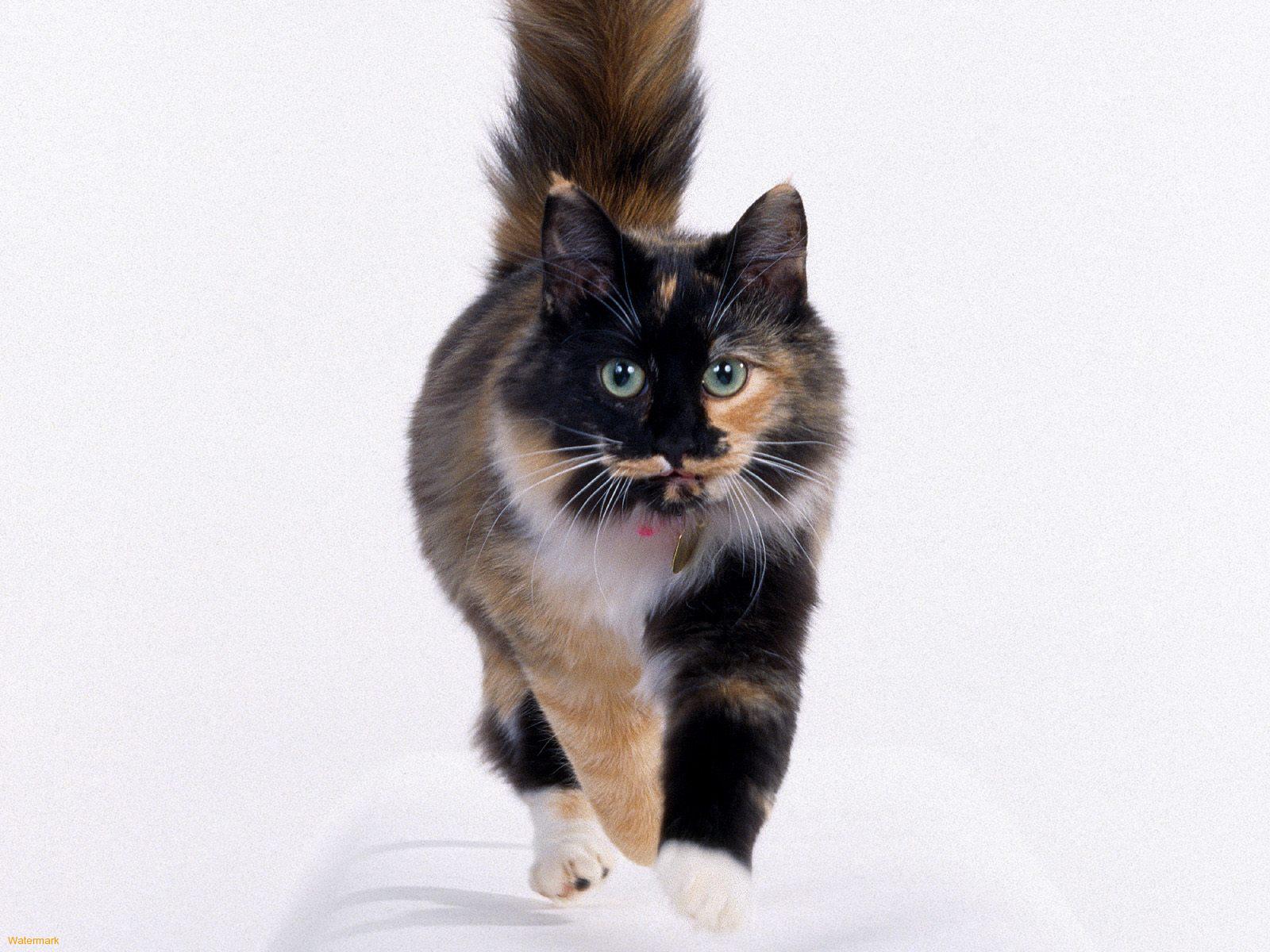
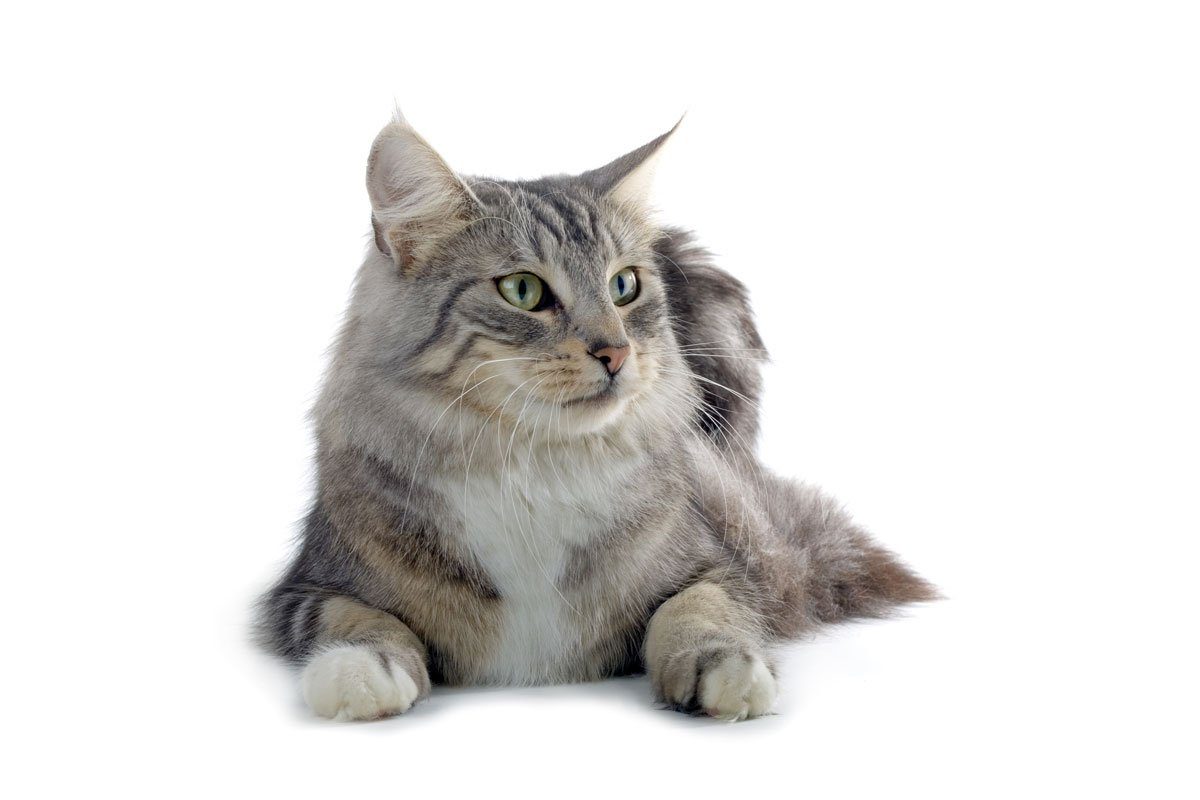
General aspect: It must be a robust animal, broad and attractive face, with a natural appearance, only slightly refined, quiet, sometimes reserved, but not shy. It is a charming and classic domestic cat, with a full and double coat, and a very hairy tail, pen-like.
Most of the American long-haired cats they have a bit of the upturned nose of Persian cats, but this varies between individuals. Athletic, well-muscled body is the standard, along with the double coat, dense and abundant molt.
Character and skills
Personality American Longhair Cat it is usually quite peaceful, with a slightly independent vein.
Can be a great choice for a busy home or a working single, since it does not require too much care, but its long coat requires some care, as it tangles easily without good brushing once or twice a week.
The American Longhairs tend to be slightly more active than any of their parent breeds. They are more athletic than the Persian cat and, in general, friendlier than him American shorthair cat.
These cats are a great addition to stables, since they are usually very affectionate with other animals such as horses, goats and cows, and they tend to get along very well with dogs. Big dogs don't have to be too picky about him American Longhair big boned, and small dogs often find a warm pampering partner.
These kittens are not usually lap cats, but due to the influence of Persian cat they can be very pleasant and patient companions for the elderly or those who cannot leave the house, provided your grooming needs are met.
The American Longhair enjoys the outdoors a lot and can spend a lot of time looking out the window. Fortunately, they are usually easy to train and quiet enough to fit into a harness and leash for a short walk outside.
Although large animals and dogs are his friends, these cats tend to be cunning hunters, and the parakeets, small animals and even pet fish could be on the menu if their cages and tanks are not properly secured.
These cats adapt well to various lifestyles, but they may not be the first choice for a family with many young children, not because they are aggressive, but because they can be elusive, choosing to avoid the fuss.
Handsome, long-lived and resistant, the American Longhair Cat it can be a wonderful pet for the right home.
Coexistence is important that you have with your new friend. Before considering the acquisition of a cat of the breed "American Longhair Cat (Maine Coon)" you know certain factors. You must take into account their character, their need for exercise, their interaction with other pets, their care and if you have small children, their level of tolerance towards them.
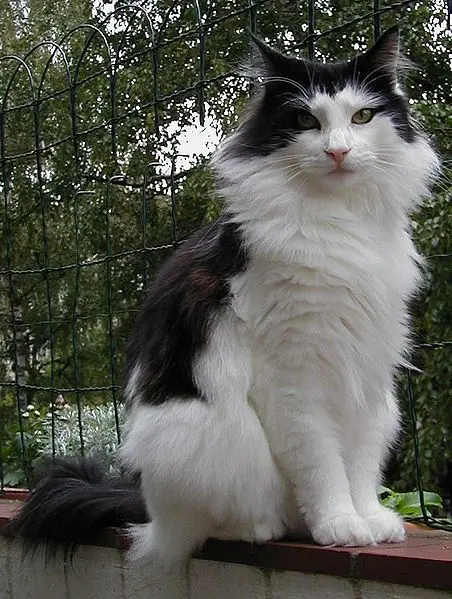
The only true thing about the cat Norwegian Forest Cat It's an ancient race.
The legend, He says that he is none other than the troll of Scandinavian fairy tales cat, But history suggests otherwise.
It is known that the domestic cat reached Norway by the year 1000 d. c. In addition to arrive with the gradual expansion of cats throughout Europe during previous centuries, cats arrived in Scandinavia due to the trade between the Vikings and the Byzantine Empire. Evidence of this movement are in some colors of fur, which are common in Turkey and Norway, but rare in the rest of Europe.
This relationship suggests the possibility that the gene for long hair came to Norway by the same trade routes. Long hair gave advantages to the harsh winters of the North, and became a widespread feature in Norwegian cats.
Photo: Wilkipedia
The skogkatt or skaukatt, as is known, not recognized as a race in his native land until the Decade of 1930, and only a few decades later their selective breeding was carried out.
But, Since the Norwegian Forest cat has gained acceptance in its terra and abroad, Although it remains less well known that the Maine Coon , another similar past long-haired cat.
This race, also known as wegie, continues to reflect its origins as a farm cat, and breeders sometimes refer to him as their "little lynx".
It is great, robust and muscular, and his triangular head is defined by a long nose. His glossy hair has a waterproof layer and a less thick, insulating. It still also has the personality of a farm cat.
These cats are flexible and agile, excellent hunters, and it is known that they fish. Although they are calm and docile companions, they are independent and tend to vigorously defend their territory. A Norwegian lives happily being the only cat in the house.
Alternative names:Skogkatt / Skaukatt / Norsk Skogkatt / Norsk Skaukatt / Weegie
Cat breeds: Norwegian Forest Cat
▷ The world of Pets: Dogs, cats, birds, reptiles, amphibians
The Cornish Rex it is absolutely unique because it wags its tail like a dog when it is happy.
Content
Characteristics "Cornish Rex"
Coexistence is important that you have with your new friend. Before considering the acquisition of a cat of the breed "Cornish Rex" you know certain factors.
You must take into account their character, their need for exercise, their interaction with other pets, their care and if you have small children, their level of tolerance towards them.
Joy
5,0 of 5 stars (based on 1 review)
Activity level
5,0 of 5 stars (based on 1 review)
Friendliness to other pets
2,0 of 5 stars (based on 1 review)
Friendliness to children
2,0 of 5 stars (based on 1 review)
Grooming requirements
1,0 of 5 stars (based on 1 review)
Vocality
3,0 of 5 stars (based on 1 review)
Need for attention
5,0 of 5 stars (based on 1 review)
Affection towards its owners
5,0 of 5 stars (based on 1 review)
Docility
1,0 of 5 stars (based on 1 review)
Intelligence
4,0 of 5 stars (based on 1 review)
Independence
2,0 of 5 stars (based on 1 review)
Hardiness
2,0 of 5 stars (based on 1 review)
History
The history of Cornish Rex started in the summer of 1950 in the small town of Bodmin Moor, Cornwall, England, when serena, a turtle cat owned by Nina Ennismore and Winifred Macalister, gave birth to five kittens. One of the kittens, red and white, He stood out from the crowd for his curly coat and was christened Kallibunker.
as i grew up, Kallibunker developed other physical characteristics: a long slim body, big ears and a very fine tail. Amused by the little Astrex rabbit-like cat, Mrs. Ennismore discussed it with her vet, who advised him to contact a British geneticist named A.C. Jude. He admitted to Kallibunker's unique characteristics and advised that he be raised with his mother., This serene.
The result was a new litter of three kittens.: one straight-haired female and two curly-haired males. Unfortunately, one of the males died at 7 months and only one, called Poldhu, survived. Junto con su padre Kallibunker, they then crossed paths with domestic cats, but also with Siamese, the Russian Blue Cat, the British Shorthair cat and the Havana brown cat, in order to obtain sufficient genetic diversity to establish a healthy and solid foundation for this new breed. It also, these various crosses also gave rise to new coats, both in terms of color and pattern.
In 1956, Life magazine published an article on the Cornish Rex, named for its origin (English Cornwall) and by the similarity of its fur with that of the Astrex rabbit. This article put the new breed in the spotlight of the world. The following year, in 1957, Frances Blancheri imported a cat to California Cornish Rex called Lamorna Cove, nieta de Kallibunker. At the time, she was pregnant with Poldhu and gave birth to a litter of four kittens in the United States., which marked the beginning of the breed in North America.
In 1960 it was discovered that the gene responsible for the distinctive appearance of Cornish Rex is recessive, that is to say, both parents must be carriers and pass on the gene for their offspring to have curly fur. So, and a Cornish Rex crosses with a cat of another breed (that does not carry the kinky gene), all her kittens will be born with straight hair. But, if they cross paths with a Cornish Rex adult, the 50% of kittens will have a distinctive coat, that is to say, Cornish Rex (the 100% of kittens carry the gene). The recessive character of this gene also makes it possible to obtain curly-haired individuals by crossing two straight-haired cats., if both are carriers of an unexpressed “curly hair” gene, and if it is the latter that is transmitted.
Despite its British origin, it was an American organization, the Cat Fanciers’ Association (CFA), the one who first recognized the Cornish Rex in 1964. It wasn't until three years later, in 1967, When the British Governing Council of the Cat Fancy (GCCF) he did the same, followed by the Fédération Internationale Féline (FiFé) in 1968. But, was not up 1997 when the International Cat Association (TICA) also fully recognized the breed and allowed it to compete in the feline shows organized under its auspices.
The Cornish Rex is now relatively common in the United States, where it fluctuates between 10th and 15th place in the ranking of breeds by number of annual registrations in the CFA (over forty in total).
On the other hand, is struggling to establish itself in Europe. Even in your home country, it's relatively rare, since the GCCF statistics show that only a few 60 individuals per year. It is even in decline, as the number of individuals has dropped by a factor of four compared to the turn of the century. In France, the number of births per year approaches that of Great Britain, at around 80 Cornish Rex registered annually in the Livre Officiel des Origine Félines (LOOF), a figure that has remained fairly stable since 2009, but before it was less than half.
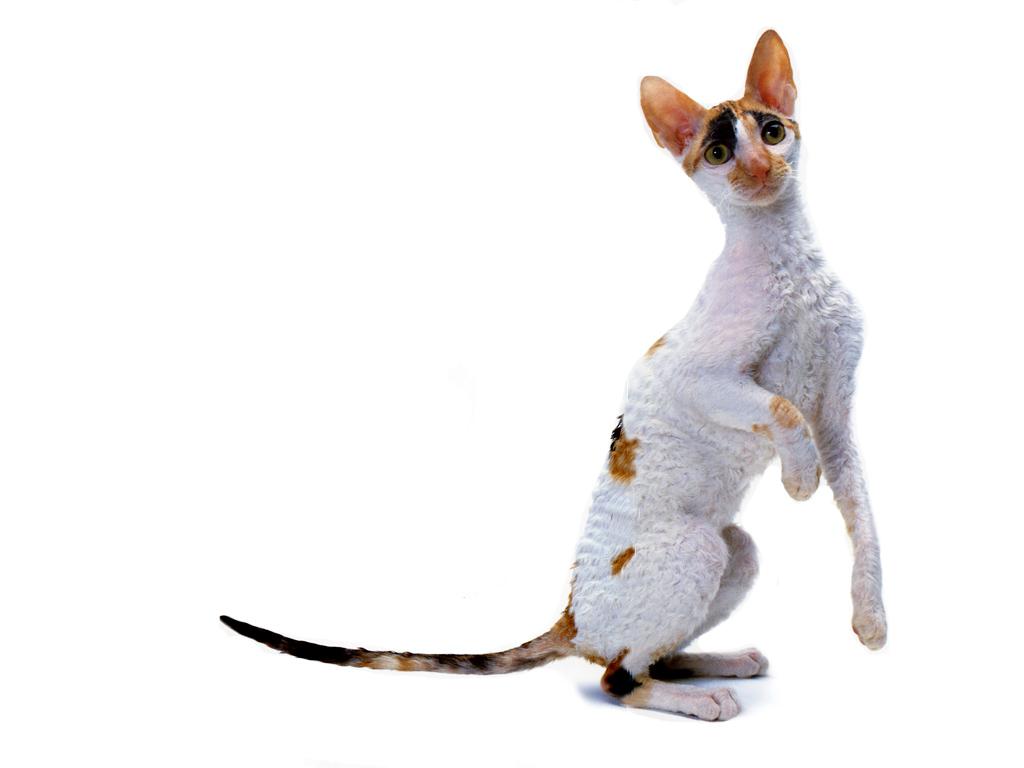
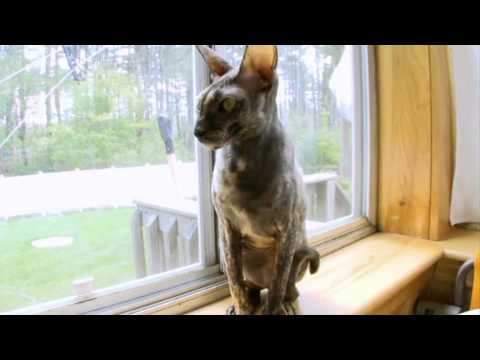
The Cornish Rex it is a medium size cat, long and thin, with unusual appearance and features. But, his long and slim body is very muscular, and her arched back, prolonged by a long and fine tail, forms an elegant curve. Their legs they are also long and thin, but surprisingly powerful, especially the rear ones, that allow you to jump to impressive heights.
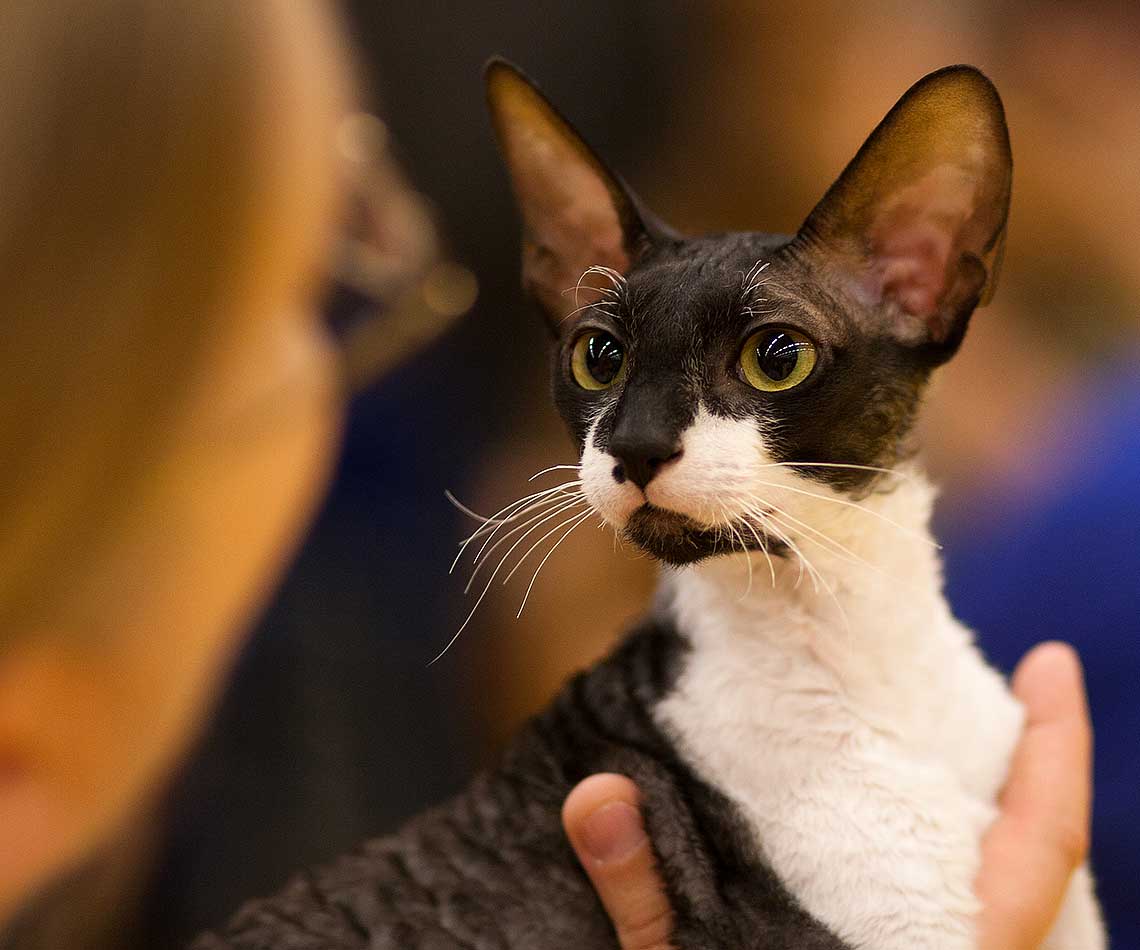
Its head it is longer than it is wide, it is egg-shaped when viewed from the side and is relatively small in relation to its body. This impression is reinforced by their huge ears conics located at the top of the skull. Its big eyes ovals are slightly sloping upwards and can be any color. The whiskers they are not straight but curved, unlike most cats.
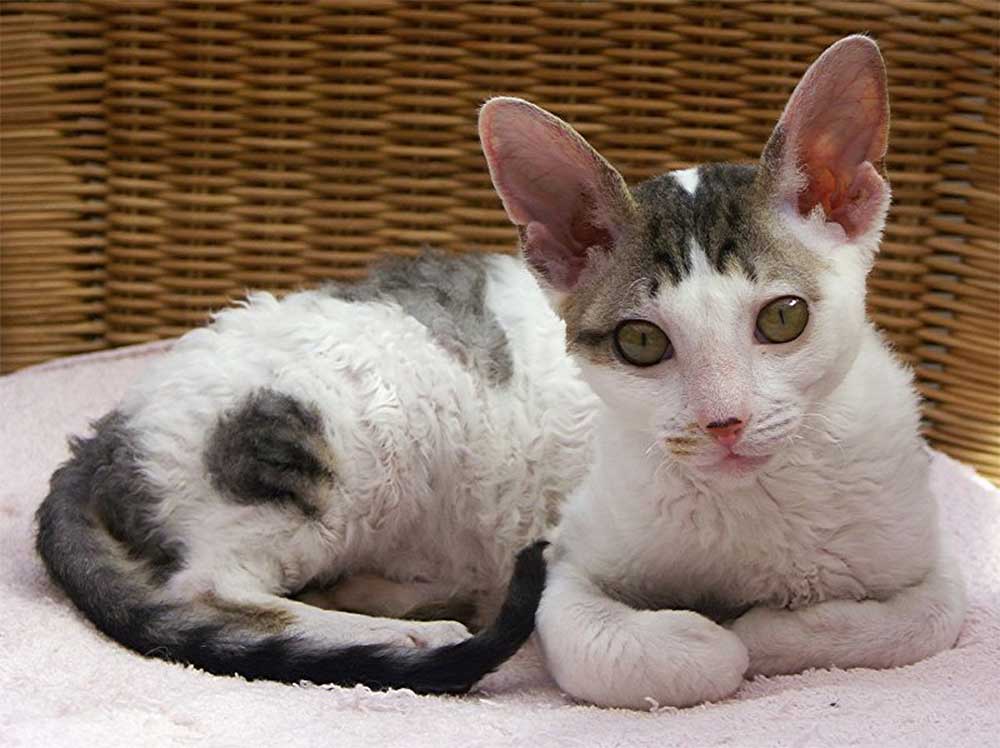
The most distinctive feature of Cornish Rex It, of course, his short coat, very soft and silky, notched or even curly. But, in the head, shoulders and legs, sometimes it can be too short to have that specific wavy texture. It also, all coat colors and patterns are allowed by breed standards.
Last, the sexual dimorphism it is well marked, being the male much larger and heavier than the female.
Size and weight
Male size: 32 – 35 cm.
female size: 30 – 33 cm.
Male weight: 3,5 – 4,5 kg
female weight: 2 – 3,5 kg
Varieties "Cornish Rex"
The Cornish Rex Variant, a cross between Cornish Rex and the British Shorthair cat, does not have the characteristic coat of the breed, but it carries the gene that gave rise to it. When this cat crosses a Cornish Rex, each of its offspring has a probability of 50 % of having the specific coat of the breed and, Therefore, to be recognized as Cornish Rex by the different organizations.
These cats have been used since the beginning of the breeding program to increase the gene pool by introducing new individuals., thus guaranteeing the good health of the breed, while allowing the specific characteristics of the Cornish Rex are passed on to the next generations.
Character and skills
The Cornish Rex is loving, very sociable and constantly seeks the attention of his family. He loves to follow his owner and interact with him, either playing or purring on your lap. He loves the company of humans, not just his family, but he is also capable of having fun alone if he cannot find a playmate. But, needs attention: it is a breed of cat that does not tolerate loneliness well, therefore not suitable for homeowners who are away often. On the other hand, the fact that he appreciates so much being cared for makes him an excellent therapy cat.
Playful and very open, he likes to spend time with children, as long as they have learned to behave in the presence of an animal and do not intimidate it. They can be an active child's favorite playmate.
In addition to humans of all ages, their sociability also extends to other animals, and accepts other dogs very well, as well as dogs used to cats. But, care must be taken that the other occupants of the house are not disturbed by this energetic cat, for example if you have to cohabit with a very calm and / or elderly dog.
The Cornish Rex he is very active and can spend hours playing and exploring. Running after a ball, retrieving a thrown object or displaying exceptional climbing skills by climbing to the top of the closet are activities he never tires of.
with such energy, you obviously like to have access to the outdoors, where you can jump higher and run further, but its owner must be aware that the risk of the cat escaping is very real. In fact, being close to all humans, you may decide to stay in another home for a long time if you find food and distractions, like a playmate. In addition to microchipping your cat, a collar and tag with his name and his owner's phone number - or even a GPS collar for cats, so you know where it is at all times- can be a good investment if you are allowed to roam freely around the neighborhood.
The Cornish Rex can live in a flat, but you need room to run and jump, both inside and outside. It is also important that the family has one or more lockable areas to ensure that their pet does not rob the kibble supply or knock over that beautiful vase that is so important to them.. In fact, besides being dynamic, has slim, agile legs that allow you to pick up and manipulate small objects with ease: for example, using a doorknob is child's play for him.
In any case, he loves the heat, so he especially appreciates being near the fire, on a radiator or under a duvet. But, his favorite place to nap is his owner's lap. When they are caressed, they seem warmer than other breeds, but it's not like that. In fact, your body temperature is quite similar; only that the thinness of their fur makes their skin temperature feel more.
In addition to being active and agile, he is also a very intelligent cat, able to learn to open doors and cupboards or sneak up to steal food as soon as the owner turns his back on him. They also excel at puzzle-type cat games that offer a reward. Teaching your cat tricks is perfectly doable with this breed, and can give impressive results.
Last, They are one of the most meowing cat breeds, who do not hesitate to claim attention by meowing and / or launching long monologues.
The Cornish Rex It is an easy-care breed of cats, as a brief weekly brushing is all you need to keep your coat healthy. More frequent brushing, or too strong, can damage the beautiful coat. For the same reason, bathing your cat should be an exception.
In the case of a cat with very short hair, just run your hand through its fur. But, for a cat with a thicker or longer coat, a brush is more appropriate. In any case, being sociable and appreciating being touched - as long as it is done delicately- often appreciate these grooming sessions.
This breed usually sheds very little throughout the year. But, some specimens have a more pronounced shedding period in autumn and spring.
It also, ears should be cleaned weekly with a damp cloth to prevent buildup of wax and dirt that could lead to infection. You should take the opportunity to make sure that his eyes and teeth are clean and that his claws do not need to be trimmed..
Indoor or outdoor cat?
As the Cornish Rex has a very fine fur, not suitable as an outdoor cat. Especially in winter, the cat, with its fine fur, cannot stay outside for long in cold weather. But, if the weather is good, you can let the cat out under supervision. A fenced garden or a secure balcony are ideal to satisfy the cat's urge to move. But, the cat prefers a warm and cozy place on the windowsill. If the cat stays indoors, a litter tray and scratching post are essential.
How much activity does he need? "Cornish Rex"?
The Cornish Rex is an active cat breed that loves to jump and needs a lot of exercise. Due to his great intelligence, these active cats need regular and meaningful exercise. They are always on the lookout for new challenges and quickly learn even the most difficult intelligence games.. With patience, you can also teach your smart four-legged friend little tricks, how to open doors. A great tree for cats to climb and jump, as well as a varied selection of toys make the child happy. gato Rex
The Cornish Rex it is rather a hardy breed of cat, with little genetic predisposition to any particular disease.
But, is particularly susceptible to certain conditions:
The umbilical hernia, a malformation that allows part of the intestines to pass through the abdominal wall. But, the last case registered in this breed was in 1997;
Congenital hypotrichosis, better known as "hereditary baldness", which makes the coat much less dense than normal;
The patellar dislocation, a relatively common knee problem that can cause difficulty walking;
Hypertrophic cardiomyopathy, an enlargement of heart tissue that causes changes in its function.
Another risk factor for the health of the Cornish Rex is the exposure to the sun, since its thin and sparse coat protects it little from the sun's rays. So, special care must be taken to protect the cat from the sun in summer, for example, not allowing you to go outside during the day. In the case of white or very light colored cats, it may even help to put sunscreen on their ears to prevent burning.
In general, their fur does not protect them well from the elements, especially bad weather. No cat should be left outside in bad weather, but the Cornish Rex, despite his British origins, it is much less resistant to rain than most of its congeners.
Life expectancy
12 to 14 years
Food
The Cornish Rex not a fussy cat, and can be easily fed commercially produced cat food, either food or croquettes. But, to keep you healthy, the food must be of sufficient quality to provide all the necessary nutrients, and be adapted to their age and activity level.
On the other hand, he also likes to help himself to his family's food, so you have to ensure that there are no leftovers.
Being very active and capable of self-regulation, the risk of obesity is quite limited in this cat. So, it is safe to leave food available at all times.
For sale "Cornish Rex"
Before getting a cat as special as him Cornish Rex, must also be well informed. How cats are quite unknown, there is probably no standardized breeding association and you will have to look for private breeders. At the time of buying, make sure that kittens do not have bald spots on their fur and that they look healthy all over their bodies. You also have to look at the parents.
The average price of a Cornish Rex kitten is about 850 EUR. The price range is quite small, since the vast majority of individuals are offered between 800 and 1.000 EUR.
Male kittens tend to be somewhat more expensive than female kittens.
Videos "Cornish Rex"
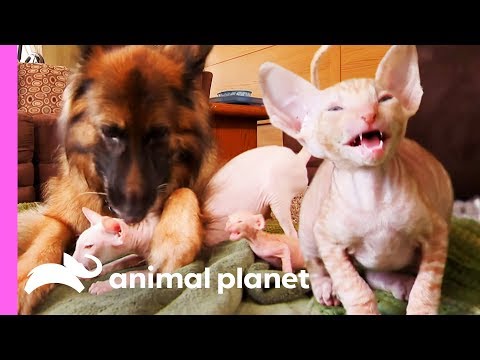
Five Cornish Rex Kittens Meet Some New Fluffy And Scaly Friends | Too Cute!
Known as a good luck messenger in his native Thailand, the Korat cat has always been a very popular wedding gift. This tradition continues today.
Content
Characteristics "Korat cat"
Coexistence is important that you have with your new friend. Before considering the acquisition of a cat of the breed "Korat cat" you know certain factors. You must take into account their character, their need for exercise, their interaction with other pets, their care and if you have small children, their level of tolerance towards them.
Joy
4,0 of 5 stars (based on 1 review)
Activity level
4,0 of 5 stars (based on 1 review)
Friendliness to other pets
3,0 of 5 stars (based on 1 review)
Friendliness to children
3,0 of 5 stars (based on 1 review)
Grooming requirements
1,0 of 5 stars (based on 1 review)
Vocality
2,0 of 5 stars (based on 1 review)
Need for attention
4,0 of 5 stars (based on 1 review)
Affection towards its owners
5,0 of 5 stars (based on 1 review)
Docility
1,0 of 5 stars (based on 1 review)
Intelligence
4,0 of 5 stars (based on 1 review)
Independence
2,0 of 5 stars (based on 1 review)
Hardiness
2,0 of 5 stars (based on 1 review)
History
The Korat is originally from Siam (current Thailand) and is one of the oldest breeds of domestic cats.
The first references appear in the Tamra Maew, or "Book of Cat Poems", a manuscript written in the city of Ayutthaya between 1350 (when the kingdom of Siam was founded) and 1767 (when the city was sacked by the Burmese invaders). At the end of the 19th century, King Rama V (1869-1910) asked the monk Somdej Phra Buddhacharm Buddhasarmathera to reproduce this text on paper Khoi, version kept in the National Library in Bangkok.
This work describes 17 cats that bring good luck to their masters, and other 6 that bring bad luck. The Korat cat It is one of the most valued lucky cats in the country., and many traditions are associated with it; for example, it is given to brides as a guarantee of a happy marriage, and usually appears in ceremonies to attract rain for the cultivation of rice. Apparently, at that time, the Korat He was a "town cat", unlike in the Siamese cat, which was mainly adopted by the nobility of the kingdom of Siam.
The first Korats appeared in Great Britain in the late 19th century and are mentioned in the Book of Cats published in 1903 by Frances Simpson, Judge and feline historian. They were shown at cat shows as "blue Siamese", but this did not convince the judges, They had a different perception of Siamese. As a result, they were unsuccessful and disappeared from the country at the beginning of the 20th century.
But, the Korat returned to the western world in 1959, When Jean Johnson brought to the United States a couple of Korats (Nara and Darra) that her Foreign Service colleagues gave her husband when he left Thailand. Based in Oregon, his kennel Cedar Glen then imported other specimens at the beginning of the years 60 and was the first in the West to start a breeding program for Korat. Not in vain, the breed was officially recognized in 1966 by the CFA (Cat Fanciers’ Association), the main feline organization in the country.
The Korats they returned to the UK (and to europe) in 1972, and the first copies appeared in France in 1979. The recognition of the race by the TICA (International Cat Association) arrived that same year, and the FiFé (International Cat Federation) did the same the following year, in 1980.
Although today it is recognized by the vast majority of organizations, the Korat still a rare breed of cat in the western world. In United States, appears in the last positions of the breed classification according to the number of annual registrations in the CFA, and it hardly does any better in the UK, with less than a hundred individuals enrolled annually in the GCCF – a figure that also tends to decrease year after year. In France, the records in the Livre Officiel des Origines Félines (LOOF) were almost non-existent until 2010, but since 2013 some are registered 50 kittens a year.
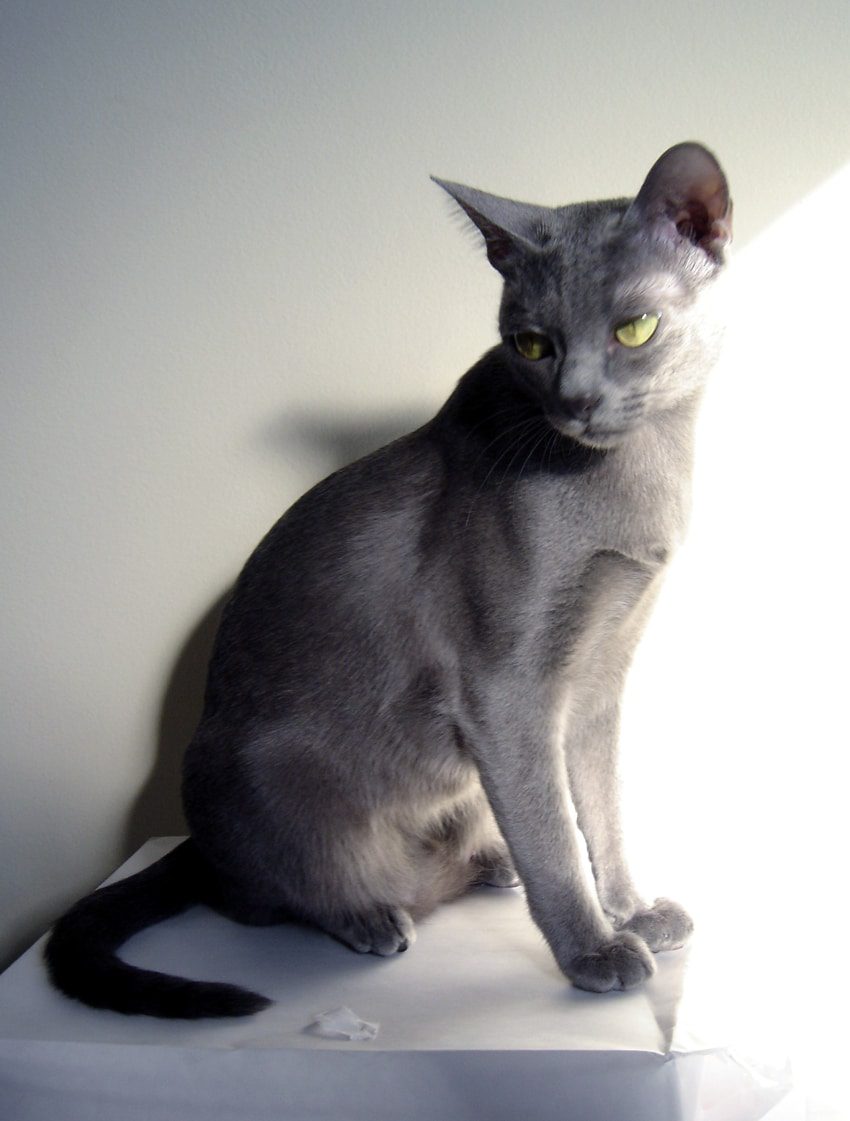
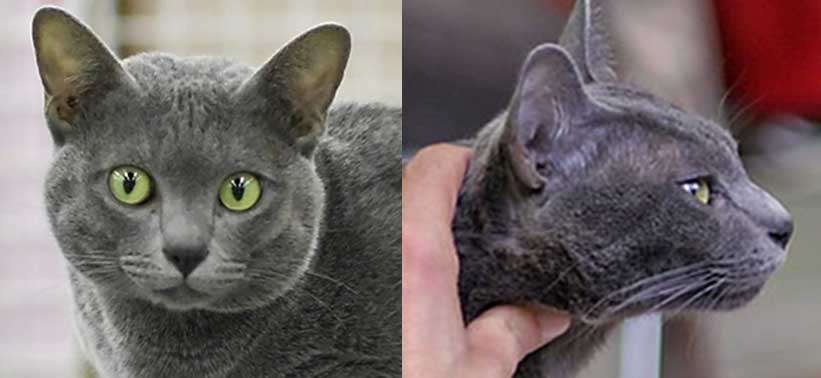
The Korat it is a medium size cat, semilineal, with a medium-length tail that tapers to the tip. His powerful and muscular body makes him heavier than he seems, especially when fully grown, around the 3 years. But, this does not prevent him from being an agile cat.
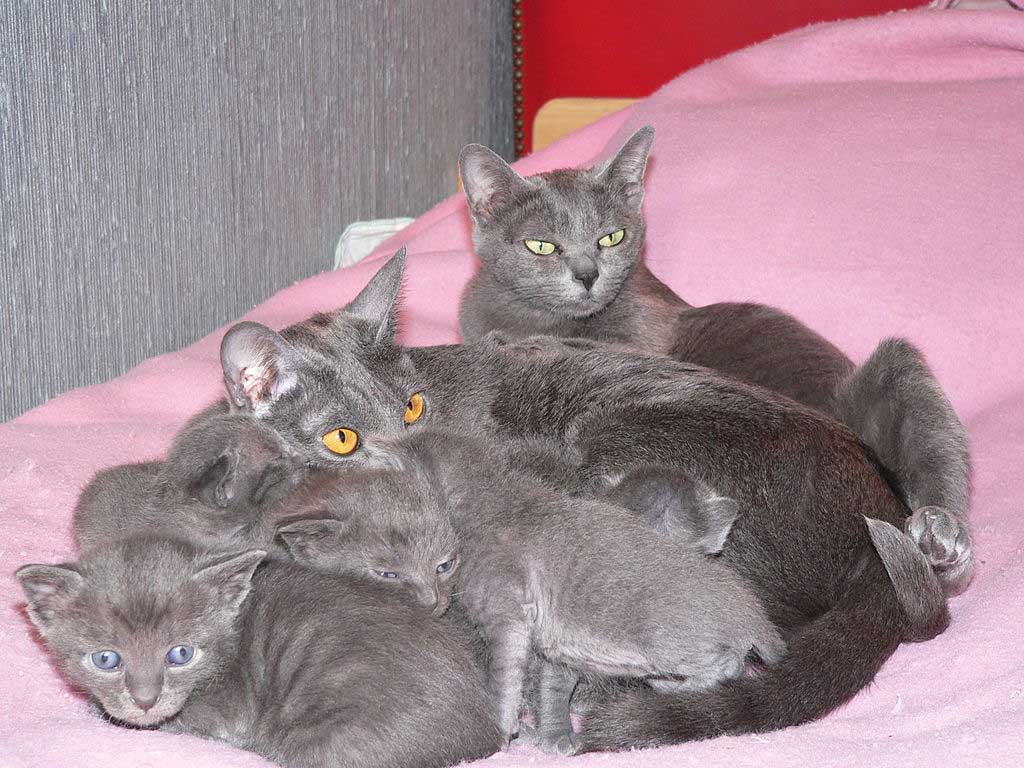
Its head looks quite unusual: seen from the front, it has a heart shape, with ears large, round tip and high implantation. Their eyes large, round and expressive look oversized for your head, but they retain the typical "oriental" inclination when closed or half closed. Kittens usually have yellow-amber eyes, but they turn green when they mature.
The fur it's short to medium, without Undercoat. Fine and closed, tends to bristle on the back when in motion. The coat is a uniform silvery blue color, no shading, marks or stains. The coat is glossier at the root, then tints to a darker blue and ends with a pronounced silver sheen. In the extremities of the body, where the hair is shorter, this silver glow is more intense.
The sexual dimorphism is moderately marked, the female being slightly smaller than the male.
Size and weight
Male size: 22 – 28 cm.
female size: 20 – 26 cm.
Male weight: 3,5 – 4,5 kg
female weight: 2,5 – 4 kg
Varieties:
In the Korat a recessive gene has appeared that can cause the silvery-blue color to fade, so it is not uncommon for kittens to be born with a purple-lilac color. This unrecognized variety is known as thai lilac.
Character and skills
Sitting female Korat cat with typical bulbous green eyes and blue sheen – Heikkisiltala, CC BY 3.0, via Wikimedia Commons
gentle and affectionate, the Korat he is unfailingly loyal to his master, whose company constantly seeks. He likes pampering, and spends most of the time near him to receive caresses and attention. It is not a breed of cat that easily supports loneliness: he does not like to stay home without his family, and if you have to stay there too long and too often, he runs the risk of shutting down and losing his usual affection.
The Korat it is also a breed of cat that adapts to children, appreciating playing with them and spending time with them. On the other hand, does not seek the company of other cats: between their fellow humans and the humans in their family, your preference is quite found. Its calm character makes it normally tolerate the presence of other cats or dogs accustomed to cats in its territory without problems., as long as it remains the main focus of its owner's attention. On the other hand, coexistence with birds or small rodents is not recommended.
Lively and playful, likes to chase a ball or chase paper balls thrown by their owner. But, no matter how active it is, he is not the destructive type and is perfectly comfortable in a flat without going out as long as his family takes the time to play with him.
By the way, noise and commotion are not for him either. Although they can tolerate the noise of a television or computer, they are likely to be startled by a loud ringing phone or if a family member starts listening to loud music.
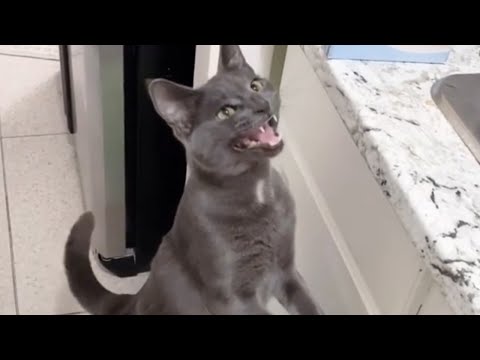
It is a very intelligent and docile cat, that can be trained relatively easily and that respects, for example, the places that are forbidden, like the dining room table, the kitchen or the clothes closet. Last, the Korat it's not very noisy. Instead of meowing, often chooses to attract attention by rubbing around the paws or nibbling on the balls of the feet. But, they don't shut up: if they think they have something important to say, they do not hesitate to do it.
In short, its qualities and characteristics combine to make it a suitable breed as a first cat for someone with sufficient availability, but that will also delight an experienced owner.
Grooming and caring for the "Korat cat"
When it comes to coat care, cats Korat they do not have any complications. Their short coat, fine and silky does not require any special care. Regular brushing with a soft brush or comb is sufficient. The silver gray cloak with its silver hair tips has no undercoat, so it only needs to be brushed more frequently during the coat change season. However, it is worth brushing the Korat regularly, since this affectionate cat enjoys any kind of attention.
Being a house cat that does not explore the outside much, even when you have free access to it, it doesn't get very dirty, so it is generally not necessary to bathe him.
Indoor or outdoor cat?
Like al European shorthair cat (Common european cat), to the cats Korat they love to be outdoors and roam. So, it is perfect if you live in a rural area and you can grant them free access. It is possible to keep them only inside. If you are willing to spend a lot of time with your new housemate and can offer them a safe garden or at least a safe outside area, the Korat you will feel comfortable even without access to the outside.
How much activity does he need? "Korat cat"?
Purebred cats are very active cats that need adequate exercise and opportunities to climb and, If it is possible, access to the outside. But even if you can give them free access, love getting attention and are reluctant to stop playing and snuggling together. Basically, if you have a Korat at home, you will discover that he likes to be with you in everything you do and seeks your closeness. Ideally, allow the Korat have a partner of your own, so that in case of doubt, always have a playmate available.
The gangliosidosis, an inherited disease that attacks the nervous system and causes paralysis. Can be detected by a parent and / or kitten test, but any Korat breeder worthy of this name is in charge of eliminating this risk by discarding any carrier individual from reproduction.;
the Hypertrophic cardiomyopathy (CMH), a syndrome that makes it difficult for the heart to circulate blood, with potentially very serious consequences for the key.
It also, the Korat appears to be more sensitive than other breeds to certain vaccines. So, it is advisable to ensure that the vet, when taking care of cat vaccinations, know this particularity of the Korat and take all necessary precautions.
Life expectancy
Of 12 to 15 years
Food
Not so difficult, the Korat can be fed with cat food from the market, which are croquettes or paté boxes. But, it is necessary to ensure the quality of the feed, which should provide you with all the essential nutrients for your good health.
like most cats, the Korat is capable of self-regulation, and you can thus permanently leave food at your disposal – at the same time as fresh water – without rushing over her like a hungry man. But, care must be taken that the daily ration given is reasonable, to avoid the risk of the cat becoming overweight or obese, which can cause various diseases and health problems. If required, do not hesitate to consult a veterinarian to choose a suitable diet, depending on the cat's lifestyle.
For sale "Korat cat"
The price of a kitten Korat often haunt them 1.400 EUR. There is no significant price difference between a male and female kitten.
As the number of breeders of Korat is relatively small, you will have to be prepared for waiting times. But the wait is worth it, because Korat cats are robust cats that are not affected by overbreeding and convince with their character.
Coexistence is important that you have with your new friend. Before considering the acquisition of a cat of the breed "Munchkin cat" you know certain factors. You must take into account their character, their need for exercise, their interaction with other pets, their care and if you have small children, their level of tolerance towards them.
Joy
5,0 of 5 stars (based on 1 review)
Activity level
4,0 of 5 stars (based on 1 review)
Friendliness to other pets
5,0 of 5 stars (based on 1 review)
Friendliness to children
4,0 of 5 stars (based on 1 review)
Grooming requirements
3,0 of 5 stars (based on 1 review)
Vocality
2,0 of 5 stars (based on 1 review)
Need for attention
5,0 of 5 stars (based on 1 review)
Affection towards its owners
5,0 of 5 stars (based on 1 review)
Docility
4,0 of 5 stars (based on 1 review)
Intelligence
5,0 of 5 stars (based on 1 review)
Independence
1,0 of 5 stars (based on 1 review)
Hardiness
3,0 of 5 stars (based on 1 review)
History
The Munchkin cat is a recent American feline breed, but the existence of short-legged cats has been documented several times throughout the 20th century. These may include, already in the decade of 1930, en el Reino Unido, These cats lived for four generations before disappearing during WWII. Over the years 50, in St. Petersburg (Russia), a short-legged cat appeared, nicknamed the "Stalingrad Kangaroo" for its propensity to sit on its hips and box with its small front legs. Another short-legged cat was also observed in the 1990s. 1970 in new england, United States.
But it was in 1983, in Louisiana ((UNITED STATES)UU.), when a music teacher called Sandra Hockenedel found two pregnant short-legged cats under a truck and called them Blackberry and Blueberry. Found a home for Blueberry, but he stayed with Blackberry. Blackberry gave birth to a litter of normal and short-legged kittens. One of the latter was named after Toulouse, in honor al pintor Toulouse-Lautrec, that conserved the legs of a child in the body of an adult, and gave it to her friend Kay LaFrance, who lived nearby.
All the Munchkins current descendants of the various encounters of Blackberry and Toulouse with others domestic cats. In fact, their owners allowed them to roam freely on the plantations, and their various encounters with other domestic cats resulted in many litters with kittens of the same anatomical peculiarity. Like this, a colony of short-legged cats soon developed in the area. Hockenedel and LaFrance they decided to call the cats Munchkin, in honor of the inhabitants of Munchkinlandia in Victor Fleming's film 1939 The Wizard of Oz, and they got in touch with him Dr. Solveig Pflueger for me to study them.
He discovered that the short legs of the Munchkin cat were due to a natural genetic mutation that makes the upper leg bone short. This gene is dominant, which means that it is enough for one of the two parents to be a carrier, and therefore have this physical characteristic, so a kitten is likely to have it too. Aware of possible health risks, several breeders asked the teacher David Biller, from the University College of Veterinary Medicine at the University of Kansas, to X-ray the spines of several Munchkins. He concluded that there was nothing wrong with these cats, but that the results of his work could not be considered definitive, since the breed was too new.
At the same time, breeders examined the paws of some of the older cats - also with X-rays- and found no damage to the joints or bones. They concluded that the mutation did not pose a risk to cats, sparking a debate that continues to divide cat lovers around the world..
In 1991, the Munchkin cat was presented to the general public at a cat show held at the Madison Square Garden from New York, and the breeders began to pressure the TICA (International Cat Association) to recognize the race. The TICA refused at first (in 1991), but four years later it took a turn: in 1994, granted the breed the official status of a new breed in development, despite protests from Katherine Crawford, TICA judge for many years, who resigned arguing that this recognition was an affront to ethics.
Indifferent to the heated debates that sparked, the Munchkin they continued to live their feline life and conquer the public, obtaining in particular in 2003 full recognition of the TICA, and therefore the possibility of competing in the exhibitions organized under the aegis of the organization.
This remains the only major feline association to have recognized the breed.. The American Cat Fanciers’ Association (CFA) has not taken the step, the Fédération Internationale Féline (FIFé) says he refuses to recognize a race 'based on a genetic disease', and the British Governing Council of the Cat Fancy (GCCF) has held a similar position since 1991 advising against the importation of these cats, adding that "it is not intended to recognize a race based on a genetic abnormality".
In other words, the dispute of Munchkin is far from over. But, it would be too easy to summarize, as some do, as a dispute between "retrograde feline organizations that do not accept change", on the one hand, and "feline organizations that do not think about the welfare of cats and only seek novelty", for another. All renowned feline organizations are committed to the health of the feline population, but they have different approaches: some prefer to take time to study any new mutation to make sure it is safe before recognizing a breed that carries it, while others choose to recognize it quickly to establish a framework for breeders and study the new mutation.
It's not the first time, not the last, that these debates shake up the world of cat lovers. But, if the discussions around the Munchkin cat they are so virulent and they take so long, it is mainly due to the attitude of some unscrupulous breeders who take advantage of the situation to make easy money without worrying about the health of the animals. Like this, although they know perfectly well that in that case a quarter of the litter never passes the fetus phase, some do not hesitate to raise two Munchkins, with the sole objective of not obtaining a litter with half the "normal" cats that are not sold.
At the end, despite the mistrust it generates, the Munchkin cat is present all over the world. But, due to lack of recognition and, Therefore, official registration of the breed's representatives in the registries, it is difficult to get an exact idea of its true popularity. But, the countless photos and articles on the net suggest that this cat at least arouses great curiosity.
In France, where the Livre Officiel des Origines Félines (LOOF) is one of the few national associations that recognizes the breed (in two different varieties, depending on the length of your hair) and, Therefore, keep a record, between 2011 and 2019 were registered 134 Munchkin shorthair and 198 Munchkin longhair. The trend is up, nails on 50 registrations per year, but race only represents something more than 0,1% of the country's feline population.
Physical characteristics
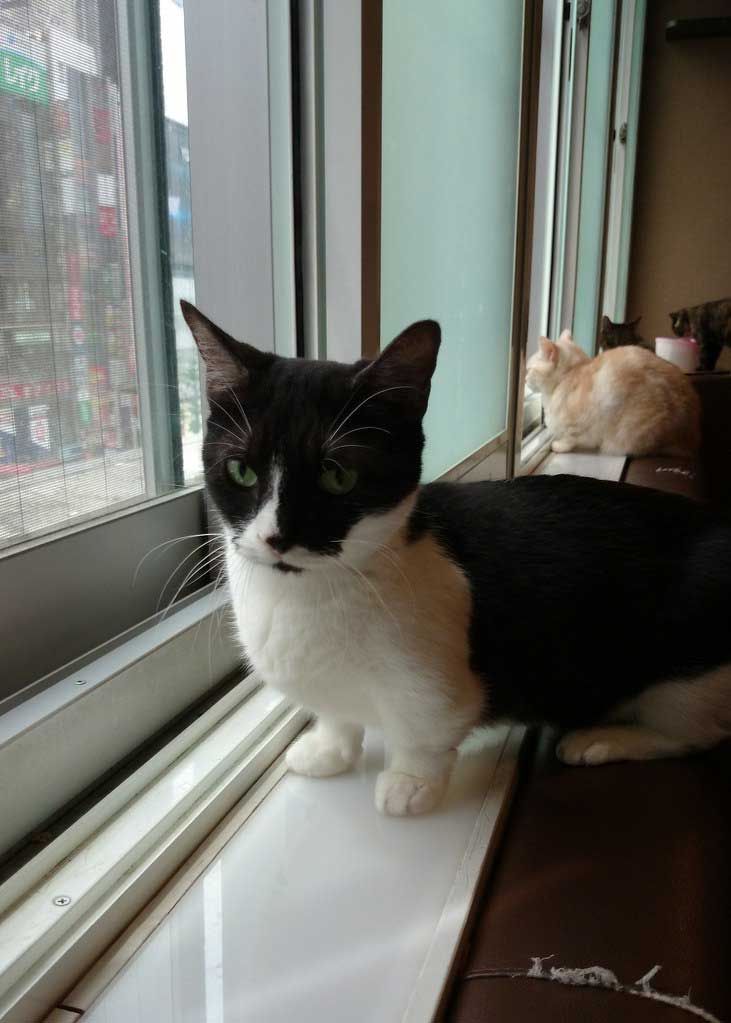
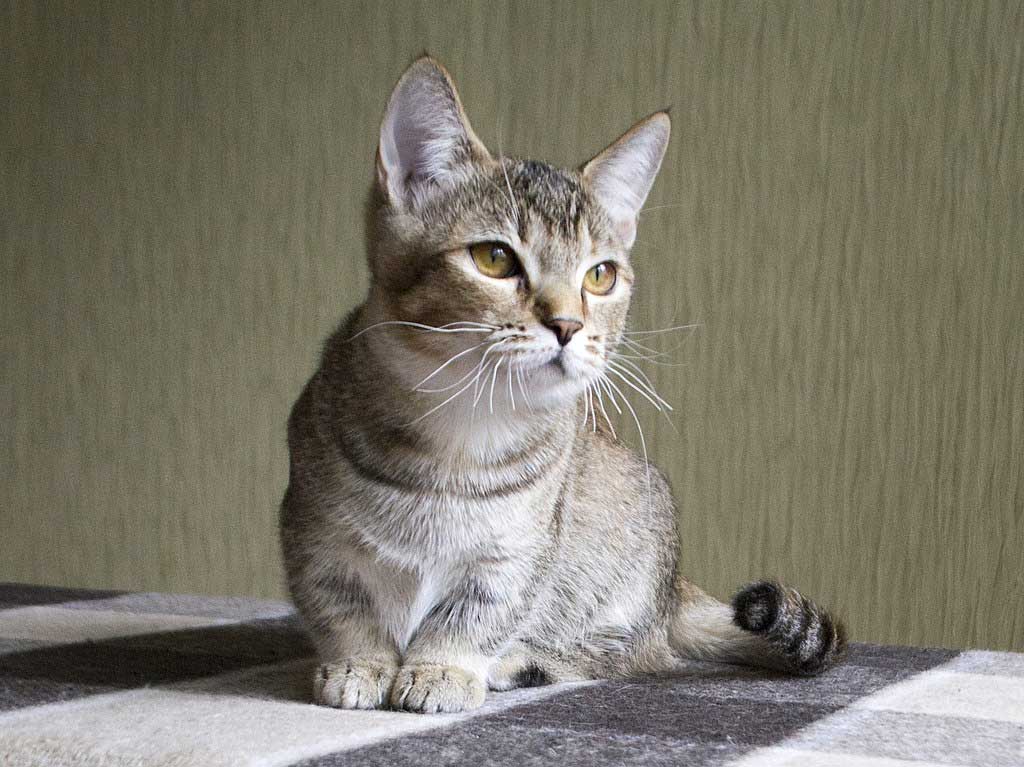
munchkin cat – Tasy Hong, CC0, via Wikimedia Commons
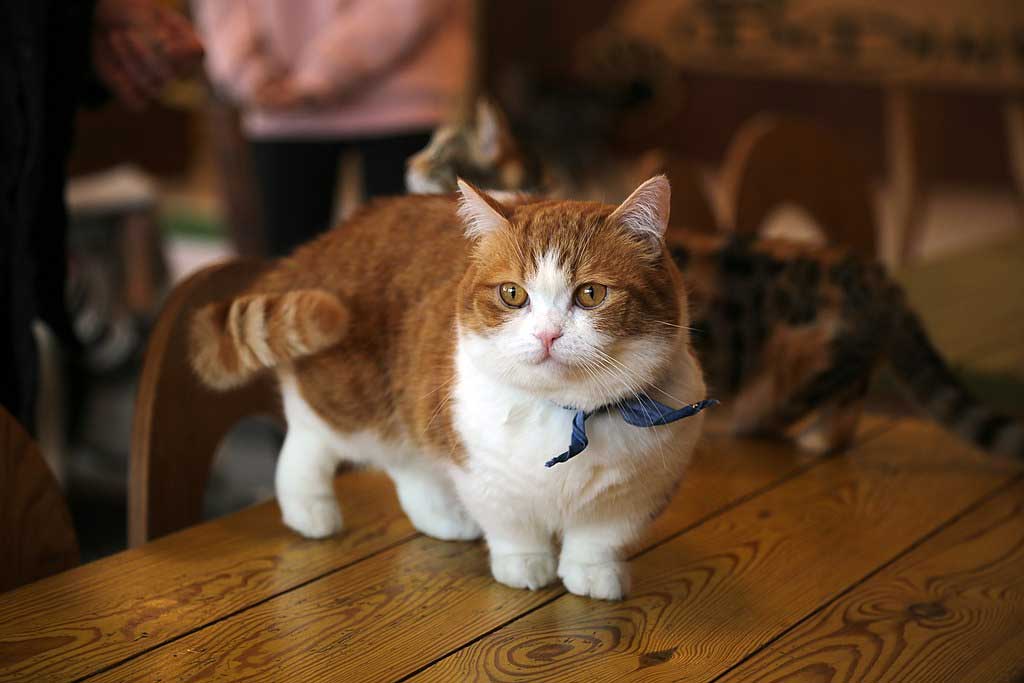
The Munchkin cat has a midline morphology semi-foreign. His body is muscular but not compact, and ends in a tapered tail about the same length as the rest of the body.
The legs they are short (between 5 and 10 cm shorter than a normal cat), and the upper bone is approximately the same length as the lower. They are straight, with a medium bone structure and proportionate musculature.
The head is slightly rounded, with cheekbones well defined. The ears are of a size proportionate to the rest of the body and end in a slight curve. The eyes they are almond-shaped and can be of any color.
The fur of the Munchkin cat can be short (Munchkin shorthair) or semi-wide (Munchkin longhair). Some organizations, as the TICA (International Cat Association), They even consider them two different breeds that compete in two different categories at cat shows., but they share the same standard. This is not the position of the LOOF (Livre Officiel des Origines Félines) French, for whom they are simply two varieties of the same breed. In any case, long hair coat has a silky texture, while the one with short hair looks shiny.
All are allowed colors and fur patterns, including the typical pattern colourpoint of the Siamese cat.
Last, the sexual dimorphism is marked, the female being smaller than the male.
But, it is important to point out that today many crosses of Gatos Munchkins with other races and others domestic cats, both long-haired and short-haired. This diversifies the breed's gene pool to avoid health problems, but it also means that the aspect of the breed is not fixed and can continue to evolve in the future.
It also, if even 2015 short legs were officially considered the exclusiveness of the Munchkin cat, and that any cat that presented this particularity and corresponded to the standard (regardless of their origins) could be recognized as Munchkin cat, It's not like that. In fact, Since this date, los «Munchkins with Persian appearance" are regarded as a breed in their own right by the TICA (The International Cat Association): the Minuet (or Napoleon).
Size and weight
Male size: 16 to 20 cm.
female size: 15 to 18 cm.
Male weight: 3 to 4 kg
female weight: 2 – 3,5 kg
Breed standard
The breed standards are documents established by official bodies that list the conditions that a dog must meet. Munchkin cat to be fully recognized as belonging to the race:
There is a Munchkins shorthaired and Munchkins longhair. The TICA (The International Cat Association), the only world association that recognizes the Munchkin cat, even consider that they are two different races. On the other hand, for the French reference body, the LOOF (Livre Officiel des Origines Félines), they are simply two varieties of the same breed.
The Long-haired Munchkin cat has the same origin as the short haired munchkin cat. It is not known if Blackberry, the original female rescued by Sandra Hochenedel in Louisiana, he had the gene for long hair, but the subsequent wide variety of crosses with pedigree and non-pedigree cats may have introduced him to this breed at an early stage, Surely with all the colors and known patterns of the feline world.
The Long-haired Munchkin cat has a semi-long, silky coat and a moderate undercoat. The hair is described as suitable for all climates, although most breeders recommend that this tiny cat be kept indoors. In other respects, the long-haired variety is very similar to short hair. It has a body size medium and rounded, wedge-shaped head and large eyes. Despite his small stature, they are very active, they have a curious nature and strong personality.
It also, the Munchkin cat has crossed with him Persian cat to create the Minuet, sometimes called Napoleon, a new breed of feline accepted by the TICA in 2016.
in addition, it has also been crossed with other cats to create new breeds. But, unlike in the Minuet, the results of these crosses are not yet recognized by any official body. This is how he crossed Munchkin cat with the :
The various organizations that recognize race allow a Munchkin cat grew up with another Munchkin cat, with a European shorthair cat (Common european cat) or with a Domestic cat (that is to say, no pedigree, but owned by a family that normally guarantees his good health). But, some people do not hesitate to break this rule and organize breeding with individuals of other breeds. How the short leg gene is dominant, some of the kittens born from these unions have short legs, so they are considered Gatos Munchkins.
Knowing this diversity of origins, it is easy to understand that it is difficult to define the character traits that are shared by all representatives of the breed. In fact, the personality of the Gatos Munchkin varies greatly from individual to individual, since they may have more or less preserved the traits of the races from which they came. Like this, some are very attached to their family, while others are much more independent. In general, they can be especially lonely or, on the other hand, very sociable.
Most individuals, However, are in the latter case, being very attached and affectionate with both adults and children.
They also greatly appreciate the company of their peers and enjoy playing with them., without its anatomical specificity being perceived as a disadvantage by any of the protagonists. They also get along perfectly with the presence of a canine companion, provided that it belongs to a breed of dog adapted to cats, and therefore refrain, for example, of chasing him around the house. On the other hand, coexistence with small animals is not recommended, since many Gatos Munchkins they have retained their hunting instincts.
It also, many owners of Gatos Munchkin have noticed that their pet has a special attraction to shiny objects, like jewels, who does not hesitate to steal and hide in a place that only he knows. They are more likely to do so because they are usually very curious and observant. There is also a point common to all representatives of the breed: they are active and surprisingly agile and lively cats. Their little legs do not prevent them from being very fast and are a definite advantage when taking a sharp turn or making a sudden change of direction. It's hard not to smile when you see a Munchkin cat running at full speed after a ball around the house and making incredible turns.
If you prefer to stay at ground level and, usually, do not venture beyond the sofa or coffee table, unlike many other breeds, it's more by choice than obligation. In fact, even though they may not be able to jump as spectacularly as their long-legged counterparts, they are especially agile and resourceful, so that they always end up finding a way to reach in several jumps the furniture that another race will have reached in one.
in addition, their short legs do not prevent them from climbing a cat tree, and they are very likely to end up on the curtain rod, leaving their owners wondering how they got so high.
The Munchkin cat has developed the habit of sitting on its hind legs, adopting a position similar to that of the suricata to observe your surroundings. This feature has already been observed in 1956 in the «Stalingrad kangaroo», a short-legged cat discovered in Russia, that is not related to the current ones Gatos Munchkin, which suggests that it is an adaptation to its physical particularity.
The Munchkin cat it is rather a breed of indoor cat, that is to say, designed for life in a flat, especially since its short legs are a disadvantage on the outside, where it is more likely to suffer accidents or predation than another breed. But, they like to be walked on a leash under the supervision of their owner.
With everything, the Munchkin cat leads a normal life as a cat and is not particularly affected by his condition. His peers consider him completely as one of their own, and he himself doesn't seem to know the difference. So, the difference is mainly in the eyes of humans.
All the Gatos Munchkins have acondroplasia, a genetic condition associated with dwarfism. But, it is not clear whether this genetic mutation, responsible for the short legs of the breed, has any other impact on the health of affected individuals.
Studies have shown that homozygous embryos (carriers of two mutated genes) are not viable and die in utero, while heterozygous individuals (carriers of a single mutated gene) they do not appear to be affected and lead a completely normal life. This means that when two intersect Gato Munchkins, the 25% of embryos fail to mature and die in the womb: it is precisely to avoid it that they allow themselves, and are even encouraged, crosses with domestic cats, versus breeding between two representatives of the breed.
It also, although this cat is recent and, Therefore, be wary of jumping to conclusions, some conditions seem to affect you especially:
The lordosis, an excessive curvature of the spine;
The excavated breast, a deformation of the rib cage inwards, causing compression leading to breathing difficulties and/or heart problems.
Last, as with any indoor cat, obesity is a serious risk to the health of the Munchkin cat. May cause other illnesses and / or aggravate existing health problems. Thus, a good owner should regularly check that his cat maintains a normal weight, and quickly correct it if it isn't.
Life expectancy
12 to 14 years
Grooming
The maintenance of Munchkin cat it's relatively easy, especially for short-haired cats. In the case of short-haired cats, just brush its coat once a week. The long-haired variety needs to be brushed a little more frequently, once every two or three days.
In both cases, It is also advisable to spend a few minutes each week checking your teeth for cavities and tartar., and quickly clean their eyes and ears with a damp cloth.
Last, when they have gotten too long, you need to trim your cat's nails, to avoid being hampered in your movements.
Food
In general, the Munchkin cat it does not pose any problem in terms of feeding and is perfectly in line with the industrial cat food available on the market. To provide your cat with all the nutrients it needs for good health, it is recommended to give him a quality food, adapted to your age and activity level.
It also, to avoid obesity risks, it is advisable to control your daily rations. If your cat is overweight, you should consult a veterinarian to establish a feeding program to help you lose weight.
For sale "Munchkin cat"
A kitten Munchkin cat it usually costs about 800 euros for a male and 700 euros for a female.
The American Ringtail It is one of the newer breeds of cats existing without registering, It is at this time as a race in a pilot phase.
3rd Generation American Ringtail cat Chunky Monkey – Suemanley1, CC BY-SA 4.0, via Wikimedia Commons
Content
History
The cat American Ringtail originated a few years ago, When in 1998 a male stray cat was rescued in Fremont, California. When the cat grew up, it was found that he tended to keep his tail in a hunched position on his back. There was no deformity or physical defects in the animal, the cat did not seem to have any kind of discomfort while holding its tail in that particular way.
Soon, other cats in the locality were observed with a similar "ring" on their tail. After the genetic consultation, the final decision was made to develop these cats as the only formal breed. The original ring-tailed male was crossed with a short-haired female cat. Since then, several litters have been born with the traits shown by the "ring-tailed cat". Originally called «Ringtail Sing-a-ling» These felines were called American Ringtail and they are currently on the road towards the full recognition of the bodies of registration of the feline breeds.
Physical characteristics
A relatively large size, the RingTail it is a long and muscular animal. Both sexes can reach a weight of 5 to 7 Kg. in adulthood. have a back long and strong. The skin is soft and silky and can come in any color or pattern. The color of the eyes is also not strictly defined at the moment. The tail it's straight with curls at the tip that fall down the back. The legs are medium-sized fingers linked by membranes.
"American Ringtail"
Spunky American Ringtail
The famous ring tail is due to two different genes that produce the ‘upright’ appearance’ and 'curved’ the tail. It is seen in certain wild cats and domestic, and even in purebred dogs. They are not associated with any health problem. Its own tail is muscular and broad at the base, well-developed bones are not fused. Cats have tails ring position when it is calm. It serves not only to balance the cats in movement, but also to slow down during a Chase at high speed.
Character and skills
The American Ringtail he is very kind and loving by nature. They interact well with children and other family members, They even developed a strong attachment with one person in particular, however they are a bit shy in the presence of strangers.
curious by nature, explore everything what they see in their surroundings and are particularly fascinated by water sources, perhaps a relic of his wild days when he used to quench his thirst by drinking from the backwaters in the wild.
Another «wild» attribute, It is their habit of its food storage, hiding in different places of the House for food at a later time. For its unique design and beauty, these fascinating safe cats win the attention and fame to prosper as a distinct breed, widely recognized for years to come.
Health
Although their ringed tail does not cause any specific health problems, the American Ringtail you may experience some problems as you age.
Grooming
Grooming your cat is a great way to spend time alone with him.. The American Ringtail usually has a short to medium coat length. Their coat is usually easy to maintain and tends to stay clean..
Brush your cat about twice a week to remove any stains or tangles, or just spend some time bonding with him and develop your relationship. They don't shed much, but brushing helps keep their coat soft and shiny.
What is the price of a "American Ringtail"?
The American Ringtail can be challenging to find, as they are still thought to be a rare breed. But, if you can find a breeder of these kittens, you can expect to pay between 500 and 1.000 $. They are currently only recognized by the International Cat Association (TICA), but with the status of “Registration Only”.
The Mojave Spotted was developed to preserve the bobcat in the mojave desert. The mojave desert is located in the southwestern United States, riding through California, Nevada and Arizona.
The Gato of the mojave desert was discovered in 1980 by April Langford, an American breeder. Your number has not been registered, but the colonies lived under bushes or in burrows to protect the young from the harsh desert climate.
The first colony he observed was in the small town of Hesperia, in southern california. All its members were very homogeneous in terms of their morphology: they were bigger than the domestic cats and they had powerful and raised bodies and very muscular legs that ended in feet polydactyls (of 6 to 7 fingers on each leg). His coat color was not uniform -silver, brown, gold or even black-, but they all had the same pattern of spots. Later, April Langford realized that the individuals of the different colonies shared the same appearance, except for the color of its fur.
April Langford decided to breed them to preserve this feline from extinction, endemic to mojave desert. He observed that it reproduced very slowly and began to disappear. But, his first attempts were unsuccessful, since these wild cats were not allowed to be tamed.
In 1984, accidentally found a litter of kittens under a juniper. How food was scarce during the winter, it seemed that their mother had abandoned them to survive herself. He decided to take them in instead of abandoning them to their fate. He placed them in a closed enclosure under a cedar and fed them a substitute for cat milk.. But, they were not domesticated and remained wild.
April Langford decided to cross them with him Bengal cat, also a spotted cat, which was a cross between a Domestic cat and European wildcat, the cat bengal leopard. The result was a cat thirteen with a spotted fur. But, even though they were born and raised in captivity, the first generations were still wild and were not domesticated.
At that time, to the polydactyl cats they were often called Hemingway cats, in honor of the famous American writer Ernest Hemingway. A Hemingway they gave him a gata polidáctila, which is known to have given birth to many litters.
Cats with six or seven toes on some legs are not a special breed.; on the contrary, they are found in many different breeds. It is simply an inherited genetic defect that can occur in any individual, regardless of race or gender. Most of the time, the sixth or seventh extra toes are on the front legs, but sometimes they are in the back, and even more rarely in all four. Far from being a disease or having any effect on the health of the animal, this particularity is rather an advantage, since it gives you greater agility.
April Langford decided to call the race he was trying to create Mojave Spotted, in reference both to its geographical origins and to the stains that its representatives present.
In the Decade of 1990, the natural habitat of mojave desert wildcat was being invaded by construction, and the feline, already in danger of extinction, was disappearing.
April Langford accelerated his breeding program by continuing to cross the Mojave Spotted with the Bengal cat, but also with him American Polydactyl Cat of other races. From 2007, these crosses are no longer necessary. In effect, the created population had reached a sufficient number of individuals to be able to continue breeding only from the cats already obtained, inbred.
It also, with the passing of the generations, the Mojave Spotted began to be tamed, although there is still a long way to go.
Breed recognition and popularity
The only organization that recognizes Mojave Spotted is the International Progressive Cat Breeders’ Alliance (IPCBA), an organization specialized in new breeds of cats.
So, no major body recognizes this cat, whether international -such as the World Cat Federation (WCF), The International Cat Association (TICA) o the International Feline Federation (FIFé)- or national, as the American Cat Fanciers’ Association (CFA), la Canadian Cat Association (CCA), el British Governing Council of the Cat Fancy (GCCF) o the Official Book of Feline Origins (LOOF) French. Given its extremely confidential distribution, there is little chance this will change in the near future.
In any case, the Mojave Spotted was created primarily as a reaction to the extinction of the mojave desert wildcat, to try to keep it another way, not with the aim of developing a new breed and spreading it as widely as possible.
Just a hatchery, Cheshire Cattery, with sede in EE.UU., participates in the development of Mojave Spotted. Giving cats are systematically neutered, to avoid parallel breeding and maintain control.
All of these factors combined limit the reputation of the Mojave Spotted.
Physical characteristics
Larger than most house cats, the Mojave Spotted it's a long and powerful body type (or long and substantial).
The body have strong bones and muscles, but the skin on the belly is slightly distended, so they are not too prominent. The back is prolonged with a tail that can be short or medium long.
The legs they are long, wide and very muscular, slightly larger at the rear than at the front. The vast majority of individuals are polydactyls, that is to say, have of 6 to 7 fingers on one or more feet. This specificity is due to a dominant gene, that is to say, it is enough for an individual to have inherited this genetic mutation from one of their parents to be thirteen. In general, the phenomenon is symmetrical, that is to say, affects both hind legs (that normally only have 4 fingers) or the front two (in which there are usually 4 fingers and a spur), the latter being the most common case. Some individuals are even polydactyls on all fours. In all cases, the claws are powerful and sharp.
The head it is quite fine, slightly oval and medium in size. Ears are medium to large, with a wide base and rounded tips. Some individuals have a tuft of hair at the base. The eyes they are big, oval and widely spaced. The snout it's wide, short and square. The leather of the nose, that is to say, the part where the nostrils meet, it is solid pink, black or brown. Last, whiskery areas are prominent.
The fur of the Mojave Spotted it's short and silky. Accepted colors and patterns are brindle, the leopard, snow leopard, the rose window, Marten, Brown, the fawn, the silver, blue and charcoal. On the other hand, the coat has dark spots that may fade with age.
But, remember that the Mojave Spotted is still a very new and developing breed. So, It is possible that, in the future, and in particular in the context of a possible recognition by some important organization, details are added about the appearance that this or that part of your body should have. It also, there may also be changes in your current appearance.
Varieties
The Mojave Spotted comes in 4 varieties:
Mojave Spotted short-tailed polydactyl;
Mojave Spotted semi-long-tailed polydactyl;
Mojave Spotted short-tailed;
Mojave Spotted medium long-tailed.
The same litter can combine representatives of the four varieties.
Apart from differences in the number of toes or the length of the tail, all individuals of the breed have the same physical appearance and temperament.
Character and skills
The Mojave Spotted developed a handful of decades ago in response to the extinction of the mojave desert wildcat. Numbers are still low, so you have to be cautious when generalizing about their temperament. But, whatever the individual observed, your wild ancestors are never far away in your family tree. Although he appreciates the company of man, this wild cat is still very independent, and only with successive generations is domestication possible. In any case, it is difficult to have him locked up, so you can't be happy in a flat, even more so when it is very active and its hunting instinct is still very present.
They need a garden to thrive, and they won't hesitate to explore beyond it if they get the chance: it is difficult to contain them in a concrete environment. In fact, being extremely curious, they usually have a strong desire to exceed the limits of their territory. Agile and athletic, they don't get tired of climbing trees, search and capture small prey, and even playing in the water, as they are one of the few cat breeds that love water.
As the breed is still new and developing, it's hard to say if he Mojave Spotted will eventually behave like most house cats, and when will, as successive selections are made. But, it is true that with each new generation, being increasingly away from the wild cat, becomes a little more tame.
Health
Since the Mojave Spotted is still very new and is in full development, information about your health and, in particular, about the possible diseases to which you are predisposed.
On the other hand, a trait inherited from European wildcat from which it descends, and that explains in part that the latter is close to extinction, is its very low fertility. the number of litters (from one to three a year) is comparable to domestic cats, but instead the number of kittens they produce (of 1 to 3 at most) is significantly less. Obviously, this is not unrelated to the fact that the number of specimens of the breed grows very slowly.
▷ The world of Pets: Dogs, cats, birds, reptiles, amphibians
The American Polydactyl Cat is specifically bred to have extra fingers, for his temper, your good health, and its color or size.
Photo: Wilkipedia
Content
History
A "Polydactyl Cat" is a cat with a physical congenital anomaly called polydactyly (or polidactilismo, also known as hyperdactyly), a type of genetic mutation that makes the cat born with more fingers than usual in one or more of its legs.
These cats are very hardy and can survive even in time of snow.
They reached the United States on Board of ships in the colonial era. Stayed them for sailors who considered as the lucky pets when they were in the sea.
Historically, polydactyly represented the 40% of the population registered among Maine Coon. Stated that the extra toes acted as snowshoes, to help these cats resistant to negotiate the snowfall in the harsh winters of New England.
The cats polydactyls It can be found in any race, but the American Polydactyl Cat is specifically bred to have extra fingers, for his temper, your good health, and its color or size.
Physical characteristics
How many fingers can a cat have on one paw??
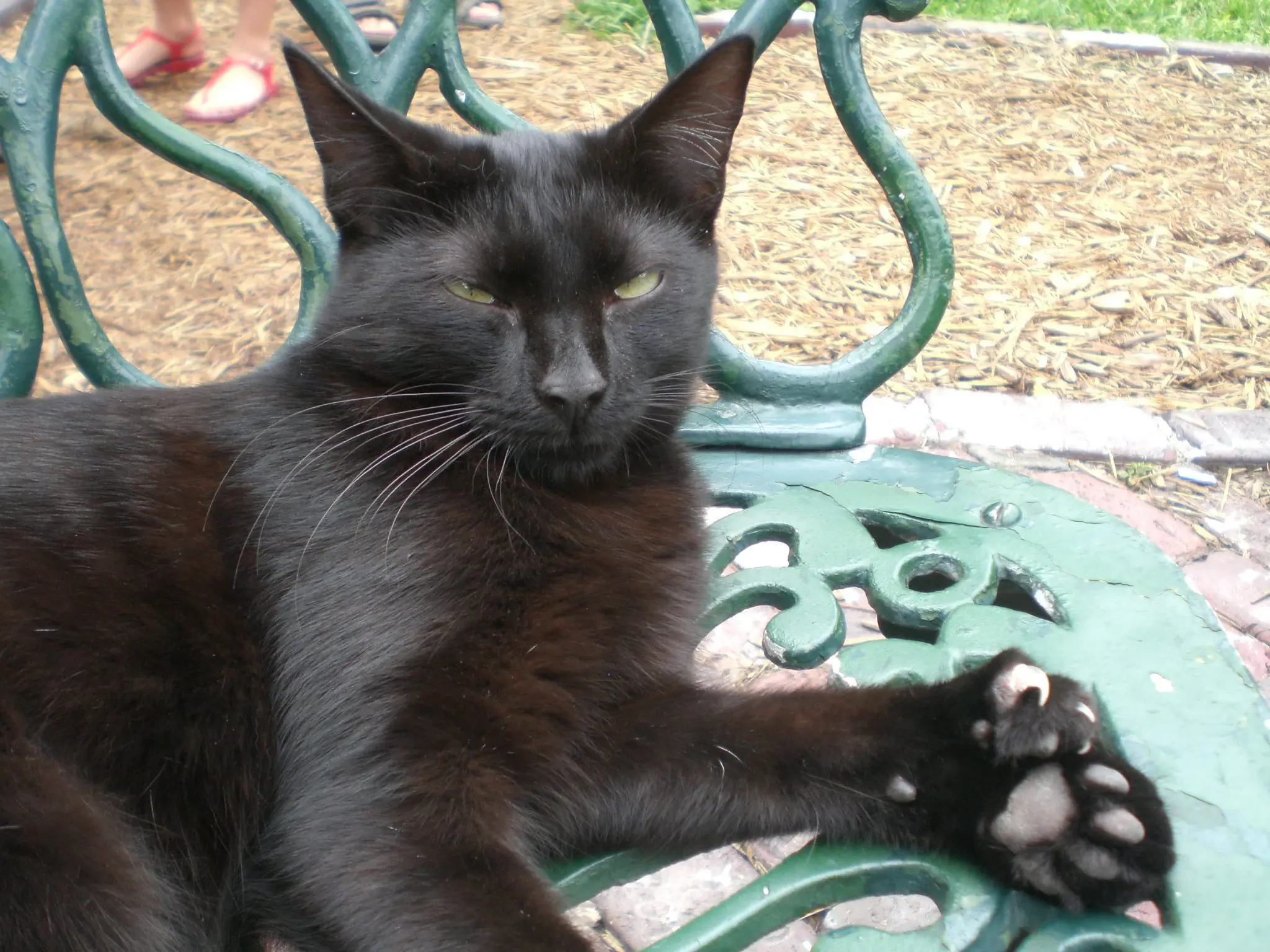
Some american polydactyl cats they have up to seven. Perhaps the most famous American polydactyl cats were those that Ernest Hemingway wrote about., and as a result this breed is sometimes known as the Hemingway cat or mitten cat..
The American Polydactyl Cat he is medium to large in size and has a strong and muscular body.
Their heads they are wide, with a modified and medium-sized stop.
Its nose and your snout they are medium in size and the chin has a square look.
The ears they are wide and have a pointed tip. Times, The american polydactyl cat used as a stallion has highly developed cheeks.
The rounded eyes of the American Polydactyls are set at an angle, and any color or combination of colors is acceptable.
The same goes for the color of the coat and the length of the coat., as long as the hairs are attached to the body.
The american polydactyl cat long-haired must have a hair soft and silky.
The bodies of the American polydactyls they are rectangular in shape, well muscled on a medium bone structure. Their breasts are well rounded and wide.
Some american polydactyl cats have tail short, and these cats have shorter bodies than those with long tails.
The legs of the american polydactyls they are straight and robust, and cats with tails have significantly longer hind legs than front legs.
Of course, the characteristic feature of american polydactyl cat are their feet with extra fingers. One of the extra finger shapes looks like a thumb, and for this reason the american polydactyl cats They are also known as "cats with thumbs". The other conformation is that of another three-toed foot attached to the cat's five-toed foot.. The extra toes can be found only on the front feet or only on the rear feet, or all feet may have extra toes.
Character and skills
The american polydactyl cat It is very similar to any other cat in terms of its personality and care. But, many owners have observed that their american polydactyl cats seem to have a more relaxed and gentle personality than other cats that have had. These cats are quite hardy and can survive even in snowy climates.
The American polydactyl cat adapts very well to life indoors or outdoors, or a combination of both. They are outgoing pets, and they are said to be loving and patient even with children.
Alternative names:
1. Hemingway Cat, Mitten Cat, Extra Toed Cat, Six-Toed Cat, Big Foot Cat (English).
2. Chat d’Hemingway, Chat à moufles, Chat à orteils supplémentaires, Chat à six orteils, Chat à gros pieds (French).
3. Hemingway-Katze, Handschuh-Katze, Katze mit zusätzlichen Zehen, Katze mit sechs Zehen, Katze mit großen Füßen (German).
4. Gato de Hemingway, Gato com luvas, Gato com dedos dos pés extra, Gato com seis dedos dos pés, Gato com pés grandes (Portuguese).
5. Gato Hemingway, Gato de manopla, Gato de dedos extra, Gato de seis dedos, Gato de pies grandes (español).