โ–ท The world of Pets: Dogs, cats, birds, reptiles, amphibians

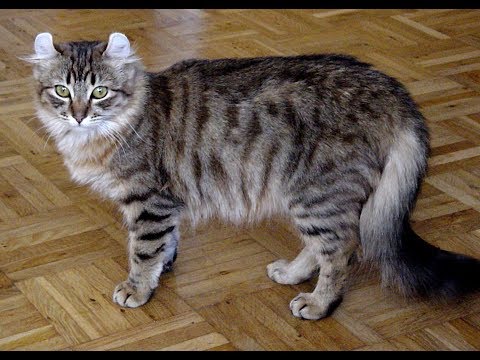
American Curl
Recognized by the CFA - AACE - TICA - ACFA - CAA

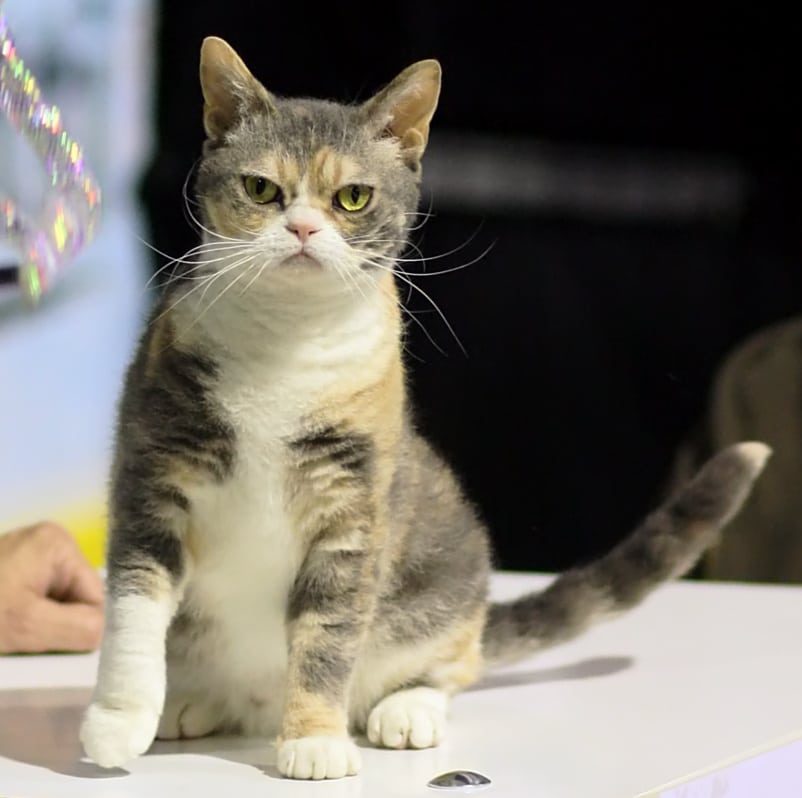
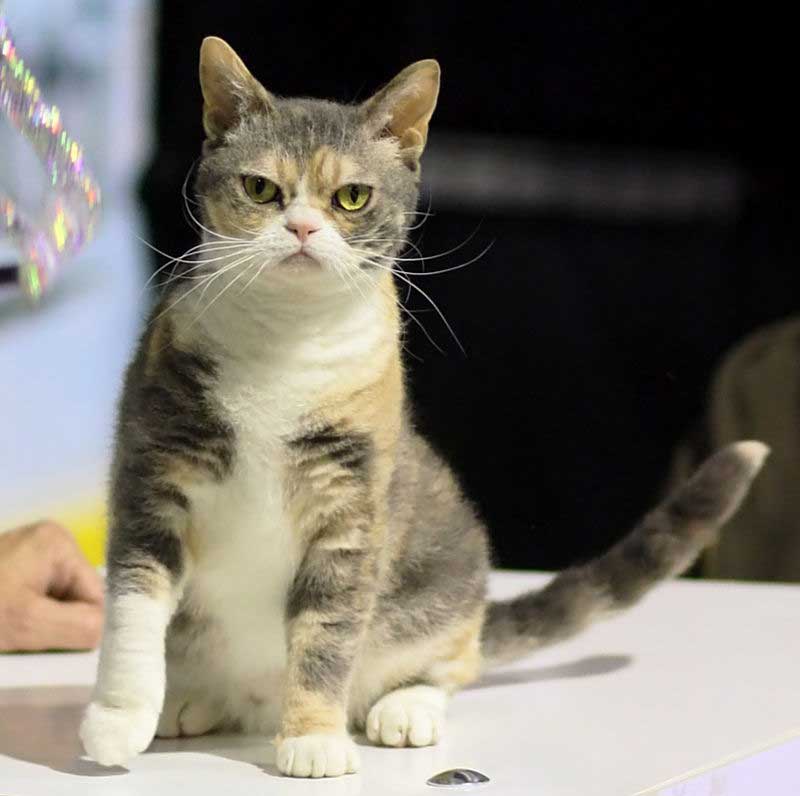
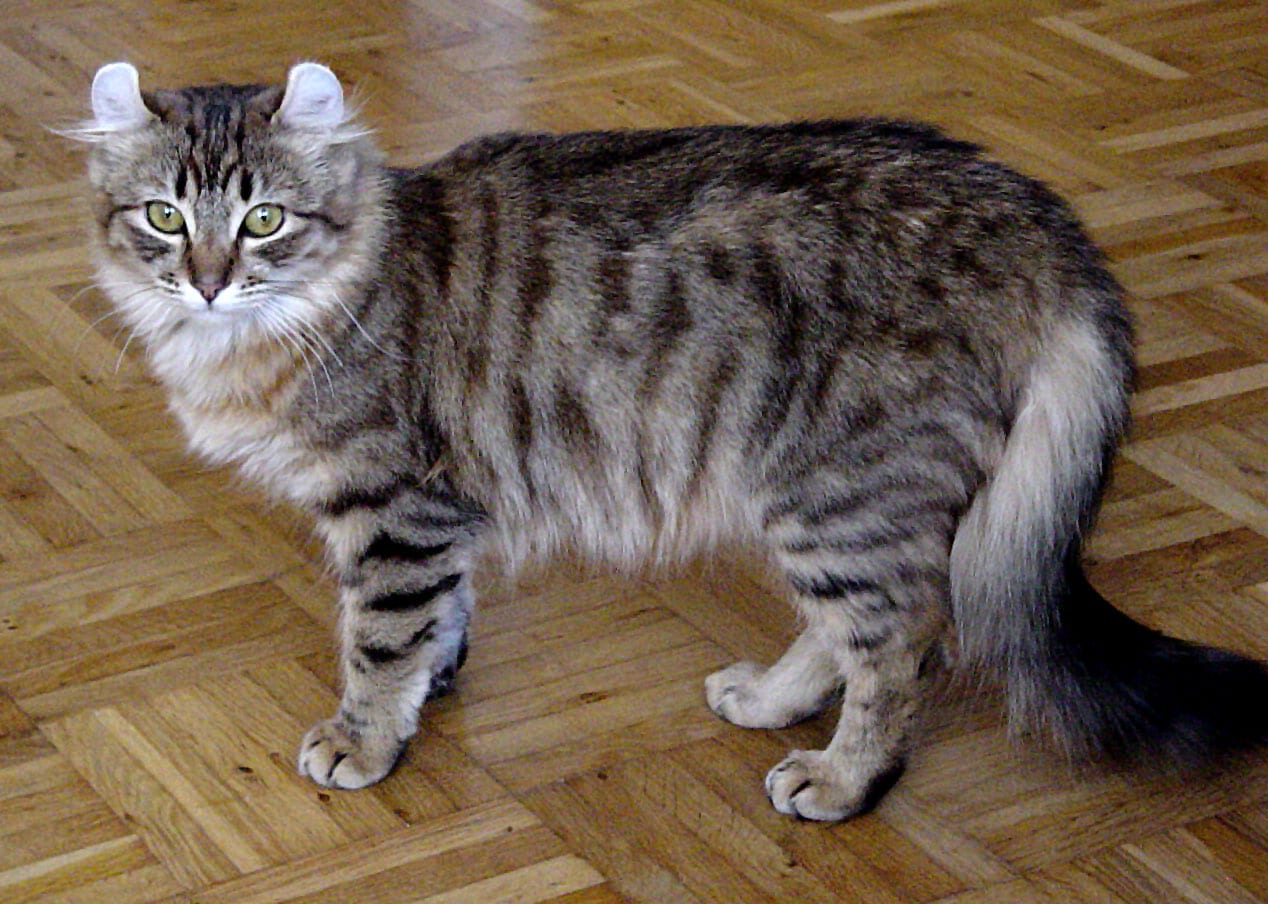
The American Curl not to be confused with Scottish Fold, having ears folded forward due to a mutation.
American Curl
Photo: Wilkipedia

Content

Characteristics "American Curl"

Coexistence is important that you have with your new friend. Before considering the acquisition of a cat of the breed "American Curl" you know certain factors. You must take into account their character, their need for exercise, their interaction with other pets, their care and if you have small children, their level of tolerance towards them.

Joy

4,0 of 5 stars (based on 1 review)

Activity level

4,0 of 5 stars (based on 1 review)

Friendliness to other pets

4,0 of 5 stars (based on 1 review)

Friendliness to children

4,0 of 5 stars (based on 1 review)

Grooming requirements

3,0 of 5 stars (based on 1 review)

Vocality

1,0 of 5 stars (based on 1 review)

Need for attention

4,0 of 5 stars (based on 1 review)

Affection towards its owners

4,0 of 5 stars (based on 1 review)

Docility

3,0 of 5 stars (based on 1 review)

Intelligence

4,0 of 5 stars (based on 1 review)

Independence

3,0 of 5 stars (based on 1 review)

Hardiness

4,0 of 5 stars (based on 1 review)

History

The American Curl was born in june 1981 en Lakewood, California ((UNITED STATES)UU.), when Joe Ruga saw two kittens in his garden on the way home from work and told his wife Grace not to feed them, to prevent them from being installed. Grace Ruga did the opposite, since he brought them food. It also, gave each one a name: the long-haired black female was named Shulamith, while his sister, white and black with semi-long hair, it was called Panda. An interesting feature of both females was that their ears were curved backwards.. But, at first the Ruga did not pay much attention to this feature.

Panda disappeared after a few weeks, and only Shulamith stayed with his adoptive family. A few months later, in December of 1981, gave birth to her first litter of four kittens, two of whom had the same curved ears as their mother. intrigued, Joe and Grace Ruga began to investigate and realized that these cats were not of any known breed. This was the beginning of American Curl, and all current representatives of the breed are direct descendants of Shulamith.

The Rugas were quick to consult Jean Grimm, judge of the Cat Fan Association (CFA) and breeder of Scottish Fold, who confirmed that this mutation was indeed new, but noted that it would be a long way to get recognition for a new breed.

In 1983, Shulamith was featured at a CFA feline show in Palm Springs, California, and the interest was immediate. A first standard was drawn up and many breeders decided to participate in the breed creation program by crossing kittens born from Shulamith..

At the same time, contacted two renowned feline geneticists, the Dra. Solveig Pflueger and Dr.. Roy Robinson, to study the genetic mutation responsible for the ears curled back American Curl. They quickly concluded that the mutation was a dominant gene, that is to say, that only one gene is required for the trait to occur.

The doctor. Robinson, settled in London, continued this study and analyzed 383 kittens of 81 litters before publishing a report in the Journal of Heredity in December of 1989, whose conclusion was to be paramount for the recognition of this new race: none of the cats studied had a defect, so the mutation was healthy for the animal.

But, the breeding program had started before the publication of this article, and the American Curl had already begun to attract professional and domestic cat fanciers, with unusual rapidity for such a new and still developing breed. The CFA allowed the registration of copies of American Curl already in 1986, and in 1988 the International Cat Association (TICA) became the first major organization to definitively recognize the breed, allowing its representatives to participate in feline exhibitions organized under its auspices.

In 1993, the CFA also definitively recognized the American Curl. It was even further, by recognizing two varieties in their own right: the American curl longhair and the American curl shorthair. Recognition of the latter is largely due to Shulamith, who gave birth to the first short-haired individual in her third litter, which showed that it was indeed the same race.

In 2003, the Fรฉdรฉration Internationale Fรฉline (FiFรฉ) also recognized the American Curl and its two varieties. But, some major organizations have not yet taken the step, in particular the Governing Council of the Cat Fancy (GCCF).

Although the American Curl is now all over the world, it is in North America where it is still most popular. In particular, is in the middle of the pack in number of annual CFA registrations.

In France, with an average of about 60 specimens registered each year in the Official Book of Feline Origins (LOOF) between 2013 and 2019, the American curl longhair represents less than 0,2% of the feline population. The short-haired variety is even rarer., with only 11 specimens registered in the same period.

Physical characteristics
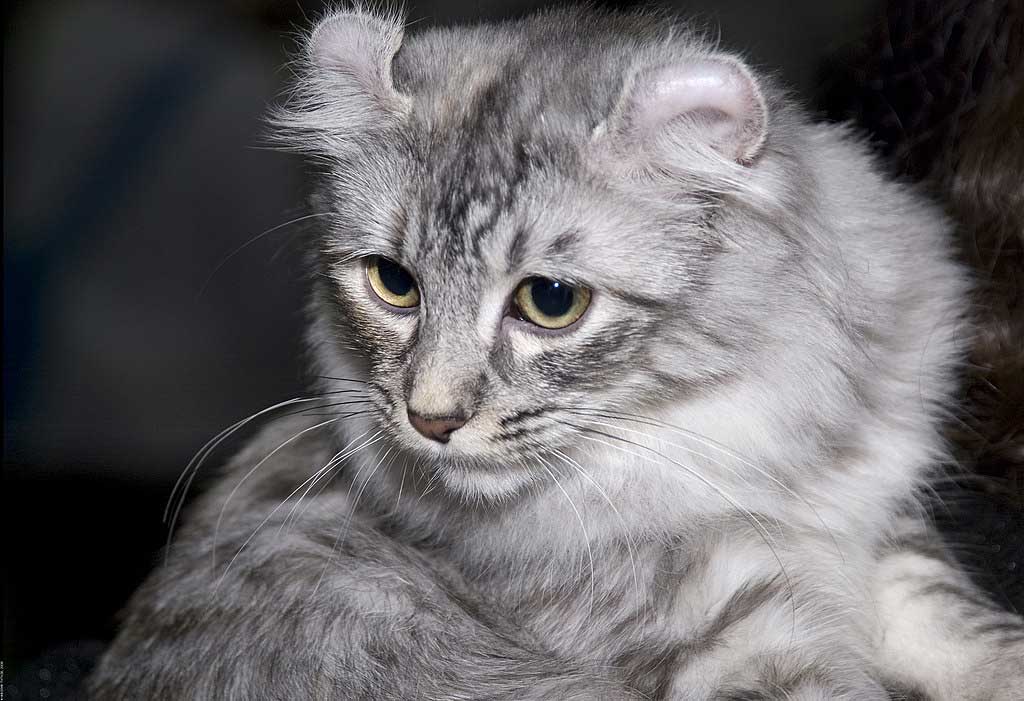
American Curl
Pointocurl Fiorentina, American curl presented at cat show. Nickolas Titkov from Moscow, Russian Federation, CC BY-SA 2.0, via Wikimedia Commons

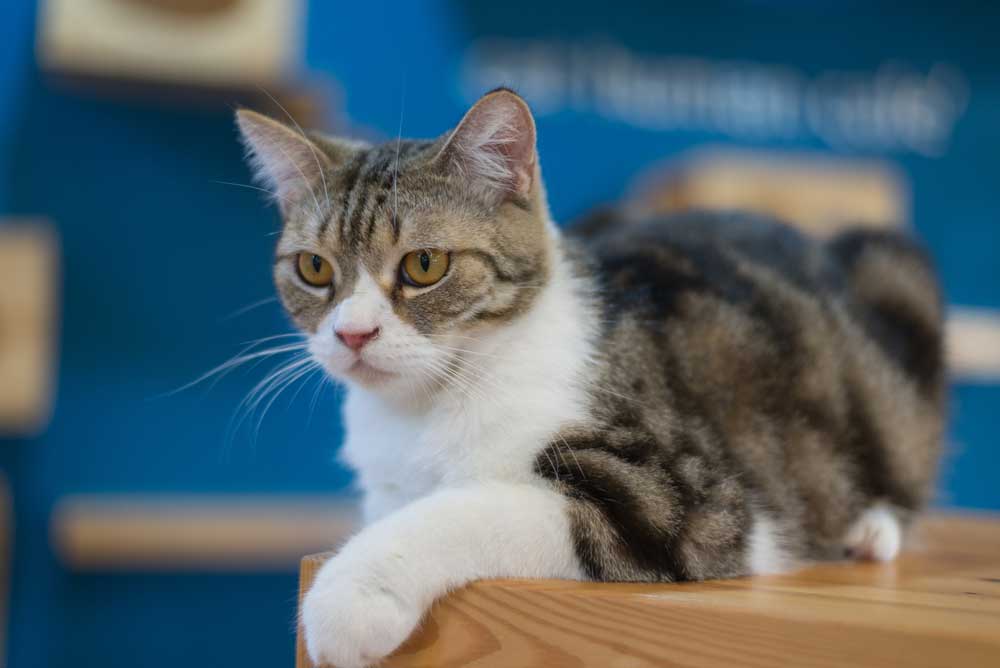
The American Curl it is a medium-sized cat with a rectangular and moderately muscular body. The legs are straight and proportionate to the rest of the body, and tail it is as long as the body.

The head it is slightly longer than it is wide, well proportioned and without sharp transitions. The eyes are almond-shaped and moderately large, are well spaced and set slightly obliquely. They can have several colors, without any correlation with fur.

The term "Curl" ("curl" in Spanish), does not refer to fur, but at ears, which are the specificity of the breed. They are wide and open at the base, while the tip is rounded and curves back at an angle of between 90 and 180 degrees. At least the first third of the ear is made up of firm cartilage, similar to that of the human ear. On the other hand, the rest of its surface is smooth and flexible.

It is important to note that ears of the American Curl are curved back, not "broken": the line of curvature should be smooth like a circle, not steep like an oval.

But, the kitties American Curl are born with straight ears, then the cartilage begins to harden and they begin to take their typical shape. Its final shape occurs around the 4 months of age, and the breeder then determines the classification of the kitten:

  • first grade: slight curvature. The individual is destined to become a pet;
  • second grade: pronounced curvature, At right angles. The individual is destined for reproduction;
  • third degree: well marked curvature, in "crescent moon". The individual is destined for exhibitions.

  • The hair can be long or short, depending on the variety. In all cases, the texture is fine, silky smooth, and the undercoat is minimal or non-existent. It also, different standards accept all coat colors and patterns.

    Last, the sexual dimorphism it is well marked, being the male larger than the female.

    Size and weight

  • Male size: Of 22 to 28 cm.
  • female size: 20-26 cm.
  • Male weight: 3,2-4,5 kg
  • female weight: 2,3-3,6 kg

  • Varieties of "American Curl"

    The American Curl it comes in two varieties: the American curl longhair (ACL) and the American curl shorthair (ACS).

    Both varieties are officially recognized by the American Cat Fancier’s Association (CFA), as well as for the Fรฉdรฉration Internationale Fรฉline (FIFรฉ) and International Cat Association (TICA).

    Character and skills
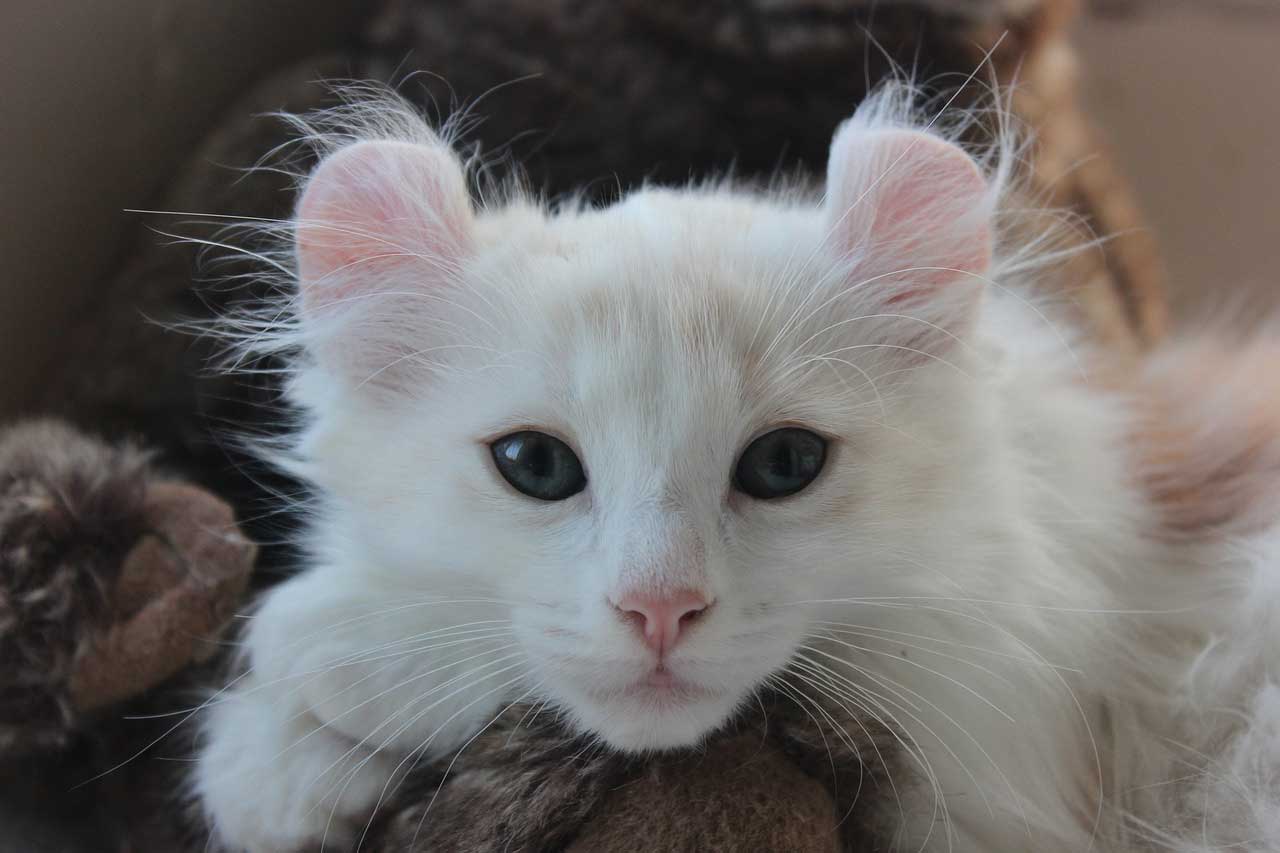
    American Curl
    American Curl

    The American Curl is known for his great sociability and affection for his family. He likes to follow his master around the house and snuggle up next to him. But, they are not very affectionate: they appreciate being caressed, but they are just as happy when they are around their family.

    It is a breed of cat recommended for use with children: He gets along very well with them and often seeks their company., either to play or just to have a moment of tenderness. But, you have to be careful with younger children to make sure they know how to behave around a cat: despite his affable nature, to the American Curl does not like to have his tail or whiskers pulled, and can respond with a scratch.

    Their sociability extends to other animals, and accepts the presence of other cats and / or dogs accustomed to cats without difficulty. On the other hand, coexistence with small rodents is not recommended, reptiles or birds: the american curl is still a feline, and his hunting instinct can resurface at any time.

    On the other hand, the other side of its sociable nature is that it is a breed of cat that does not like to be alone. Homeowners who are away often find things spilled and / or shit out of the litter box: it's his way of letting you know he's not happy to be left alone. The presence of other pets is an interesting solution to partially solve this problem: if you have a playmate at home, being left alone all day while their owners are away is much less likely to be a problem.

    On the other hand, the American Curl is moderately active, but he is a very playful cat. Although they reach maturity around 2-3 years of age, they retain their kitten behavior until old age. Some call them the "Peter Pan of cats.". Thus, it is common to see a American Curl chasing a ball or playing with an object thrown by its owner.

    You don't necessarily need an outside space, It is a breed of cat adapted to life in a flat. But, it is important to note that many American Curl They have learned to handle a door knob and do not hesitate to open doors and cabinets.

    Whether they are confined indoors or have access to the outdoors, they like to be able to observe their territory from above: That is why it is quite common to find this excellent climber perched on top of a closet or on a curtain rod., or even on a tree or even on the roof, if you can go abroad. A tall tree for cats, where can i play, sleep and observe what happens around you, it is undoubtedly one of the best gifts that its owner can give it.

    Last, the American Curl it's not very noisy, but he likes to show his affection by butting his head, a common habit among his older cousins, the Lions. As these displays of affection can occur at any time of the day or night, the master who allows his cat free access to his bedroom should expect to be woken from time to time by his little companion, who comes to rub against him to show his affection, before falling asleep next to him.

    Health
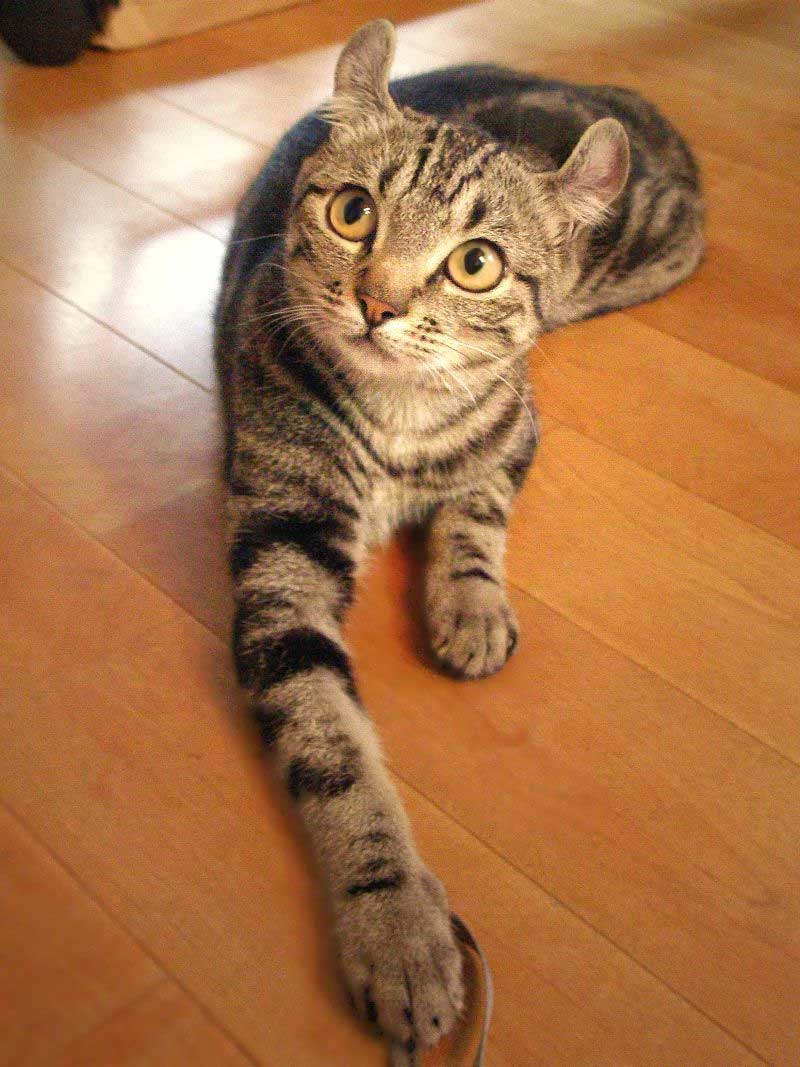
    American curl
    American curl – tanakawho, CC BY 2.0, via Wikimedia Commons

    The American Curl it is a very robust cat breed. Thanks to its stray cat origins and a breeding program that has favored crosses with other perfectly healthy domestic cats, does not present any genetic problem.

    But, some lines have a narrow ear canal, which is not a problem in itself, but it poses a higher risk of infection if the cat's ears are not maintained regularly enough.

    Obesity is another risk, and a responsible owner must ensure that the cat is sufficiently active and not overweight.

    Life expectancy

    12 to 14 years

    Grooming

    The maintenance of American Curl is simple, since brushing once a week is enough to keep the coat healthy and shiny and avoid possible knots.

    The American Curl molts very little in general, although the long-haired variety can shed a bit more when temperatures rise. So, in summer it may be useful to increase the number of brushing sessions to two per week to remove dead hair.

    The brushing session should be complemented by a quick check of the teeth, eyes and ears to make sure they are clean.

    You should also check from time to time that its claws are not too long, which may be especially the case if you don't have a scratching post available. If they are, just cut them with a nail clipper.

    Food

    The American Curl is not picky and can be fed commercial cat food, either kibble or cat food, without any problem. But, the food must be of good quality and adapted to their age and activity level, to provide you with the necessary nutrients and vitamins.

    Like most cat breeds, are capable of self-regulation, so it is better to leave food at their disposal. You must also have access to fresh water at all times.

    But, it is important to regularly check that your cat is not overweight: if so, it is advisable to consult a veterinarian to establish a feeding program that best suits his lifestyle and needs.

    For sale "American Curl"

    If you want to buy a American Curl, you should find a trusted breeder in your area. As the breed is not far outside its country of origin, you will have a hard time finding one. If there is no breeder association, you will have to resort to private breeders.

    On the Internet you can always find kittens at a great price, But you have to be careful. Before buying a kitten, inform yourself well and also look at parents and siblings. You can get a healthy, purebred kitten from a reputable breeder for about 800 EUR. The price depends on the curvature of the ears. The more elegant the curved ears are, the more expensive the cat will be. Only cats with third degree ears, that is to say, a graceful curve like a crescent, can be officially used for breeding and exhibition.

    Videos "American Curl"

    Get to Know the American Curl
    Get to Know the American Curl
    American curl / Cat Breed
    Curl americano / Raza de Gato

    โ–ท The world of Pets: Dogs, cats, birds, reptiles, amphibians

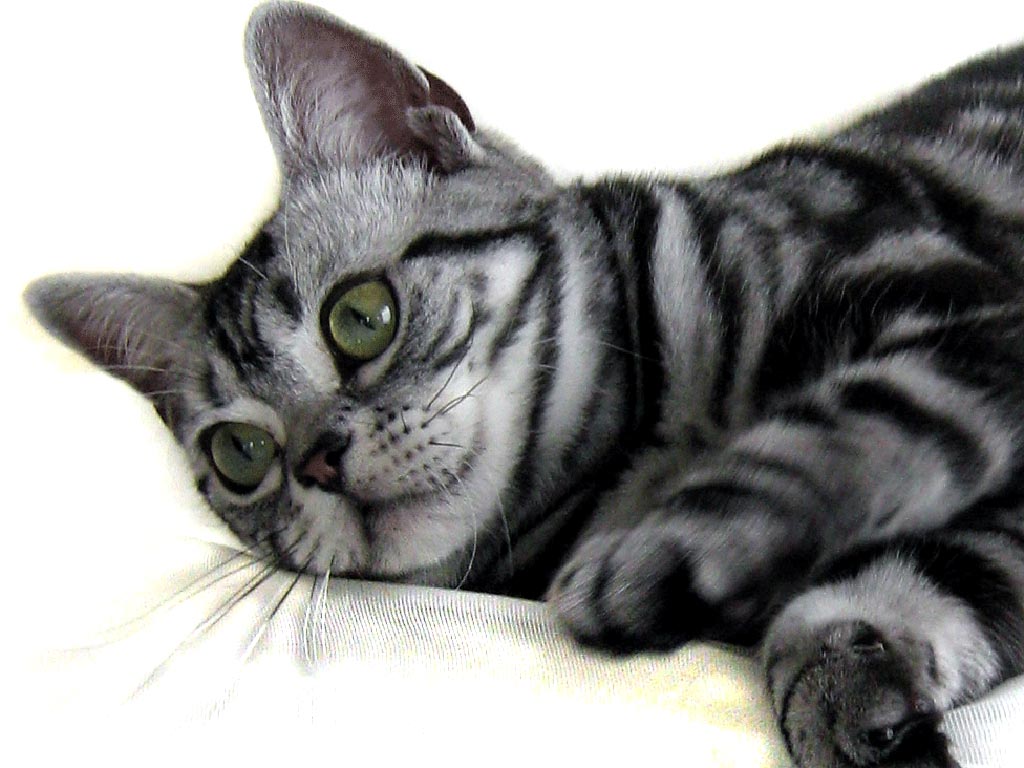
    American shorthair cat
    Recognized by the CFA, TICA, AACE, ACFA/CAA, CCA-AFC

    An especially famous representative of the breed was the lady short hair blazer ยซIndiaยป, who lived in the White House as "first cat" of US President George W.. Bush.

    American Shorthair

    Content

    History

    The American shorthair cat, The "British Shorthair" and the "European Shorthair" have common ancestors. All of them, direct descendants of the "European domestic cat".

    It is not known with certainty when the latter arrived in the United States., but it is very likely that European settlers brought it between the 16th and 17th centuries; in fact, the domestic cat that we know today in the United States clearly shows the traits of their European ancestors. They were excellent hunters and were carried aboard ships during long Atlantic crossings to help protect grain and other food from rodents.. Although some say he came to America on the Mayflower in 1620, others claim that it was already present a few years before. A document of 1609 mentions his presence in Jamestown, the first permanent British settlement in the New World. Other historians claim that it was already there in the first part of the 16th century, since he arrived with the Spanish in Florida. Last, some consider that it arrived much earlier through the island of Newfoundland, where it was introduced by the Vikings around the year 1000.

    American shorthair
    American shorthair cat showing the effects of the white spot gene. Dustin Warrington, CC BY-SA 2.0, via Wikimedia Commons

    In any case, the specimens imported to America fulfilled the same functions there that they had on the ships, protecting farms and barns from rodents. Its morphology and color did not matter too much, as long as they fulfilled their mission. In fact, the American shorthair cat we know today is the result of strong natural selection: even before the establishment of breeding programs, already had a robust constitution, a muscular body and strong jaws. So, the selection work that began in the late 19th century had a very healthy starting point and brought them from the barn to the home as pets. They soon became very popular as pets, so some breeders began to study their case. His goal was to create a more refined model; a breed of cats in its own right.

    Already in 1895, when the first cat show in American history was held at Madison Square Garden in New York, The so-called "Short-haired Domestic" was exposed to the public.

    11 years later, in 1906, the Cat Breeders Association was founded (CFA). The Domestic shorthair cat was one of the first five breeds recognized by what is still the leading feline organization in the country. Buster Brown, a smoky male with British shorthair blood, was the first recorded individual and, Therefore, the first official representative of the breed.

    At the same time, other breeds began to be imported from Western Europe and Turkey, especially Persian and Angora. With their original features that strongly distinguish them from the more "classic" cats, these cats overshadowed the Domestic Shorthair. Some breeders began to cross these three breeds. But, a group of enthusiasts who didn't want to hear this and who wanted to keep the Domestic Shorthair in its original form, they started a breeding program to preserve the breed as it was originally. They imposed themselves: crossbreeding of domestic shorthairs was soon frowned upon and breeders tried to preserve the breed's original pattern and temperament.

    Years passed, but in the middle of the 20th century, many continued to blame the Domestic Shorthair for its similarity to stray cats, considering it too common. The breed was still struggling to establish itself, especially in the face of the popularity of Persian and Angora. Some breeders and hobbyists then became involved so that the distinction between the domestic shorthair cat and the feral cat would be recognized by the general public., while arguing that it was in the interest of the race to maintain its own characteristics. In particular, rightly pointed out that it is not possible to compare them: as the latter has not been subjected to any selection work, The physical and mental traits of kittens at birth are much more random and unpredictable than those of a "true" breed like the Domestic Shorthair, whose lines are carefully selected by breeders.

    But, their efforts did not bear fruit. Over the years 50, a group of breeders started a new selection job, trying to improve the morphology of the Domestic Shorthair to clearly and definitively differentiate it from the street cat. Some chose to improve and distinguish the breed by crossing it with cats Persians. If the tests carried out in this sense at the beginning of the century did not last long because they were not accepted by the majority of breeders, those of this time met a very different fate, and constituted a decisive turning point for the Domestic Shorthair, that many breeders then tried to develop under new characteristics. In fact, his appearance was profoundly modified: his head widened and flattened, his eyes were rounded and his ears were shortened. It also, crossbreeding allowed the development of new coat colors.

    In 1966, the Domestic Shorthair Happened to be called American Shorthair. This new name was intended to signify even more clearly the departure from the alley cat and the creation of a specifically American breed.. In fact, the metamorphosis of the American shorthair has earned him the appreciation of many cat lovers, to the point that it is now one of the 10 America's Most Popular Cat Breeds.

    In addition to the CFA, the American Shorthair is recognized, of course, by the TICA (The International Cat Association), another American reference organization, and has been since 1979.

    Outside your country of origin, the story is different. These may include, en el Reino Unido, not yet recognized by the Cat Fancy Governing Council (GCCF). In France, where it is recognized by the Livre Officiel des Origines Fรฉlines (LOOF), still a rare breed and at the bottom of the list. The number of people registered annually in the organization is less than 10, and even zero in some years.

    Physical characteristics

    American shorthair
    American shorthair – Facebook page, www.facebook.com/SomewhereInLife

    The American shorthair cat is a medium-sized cat that can reach a shoulder height of 30 to 35 centimeters. The cats can weigh between 3 and 5 kg, the males between 4 and 7 kg.

    It is a cat semi-cobby. Natural selection has given you a strong body with a pronounced bone structure. Muscular, Atlรฉtico, balanced and powerful, gives an impression of strength and harmony. This is the main criterion for judging this breed in feline shows..

    His strong chest and shoulders allow him to take big, quick jumps. In fact, the evolution of this cat over the centuries has allowed it to be better and better at hunting.

    The legs they are strong and parallel and the legs are well rounded. The tail is thick at the base, medium length and rounded at the tip.

    The mandible of the American shorthair cat is strong. The ears are medium in size, slightly open at the base and wide apart. The head is medium in size and well rounded, with a short, slightly sloping nose and plump cheeks. The eyes are large, round and widely spaced, also slightly inclined. They are usually gold or green in color, but in the case of a white coat they are blue, golden or light brown.

    The fur it is short but very dense. All cat coat colors are accepted, except for the colourpoint, the lilac, the fawn and the chocolate. Most cats are tabbies, Calico, partial, bicolor and tortoiseshell. The classic silver tabby pattern is the most popular of all.

    The American shorthair cat it is also late growing. They end up developing between 3 and 4 years of age. But, puberty is early and the first signs are visible from the 7 u 8 months, with the appearance of the first heat in the female cat and the development of the testicles in the male.

    Last, the sexual dimorphism is quite pronounced in this breed: males are clearly heavier than females, weighing almost twice as much as these.

    Character and skills

    The American shorthair cat is known for its great adaptability. They are very sociable and get along well with other cats and dogs, as long as they accept them. Is always fair, relaxed and not very aggressive, and is very close to its owner.

    American Shorthair
    American Shorthair de 14 years, shaded silver, female – Ocdp, CC BY-SA 3.0, via Wikimedia Commons

    It is also quite a playful animal, who always finds an opportunity to have fun. This makes them a perfect breed for children., and generally have no problems with other people's entry into their home. Exemplary companion for the whole family, they are also very suitable for the elderly, as long as they can satisfy your need for activity. But, although they always enjoy a place on the couch with their owner, some individuals do not like to be worn.

    But, but the American shorthair cat is very close to humans, it is also a very independent breed of cats: he likes to have time to be alone, to rest or to escape, and it's not uncommon for it to disappear for a whole day. They remain active well into old age.

    It also, you have to be very careful if you have to live with a rodent or a bird, as you are likely to consider it prey. So, it is advisable to ensure that these animals do not come into contact with each other, or even avoid such coexistence. In effect, even if you are used to rodents and / or birds since you are young, still has a strong hunting instinct.

    Because of his ability to take care of himself, prolonged absences of their owners are unlikely (for example, when they are at work) make you unhappy or cause separation anxiety. In fact, it's perfectly possible to go on vacation without your cat without feeling guilty or worried, since he is perfectly capable of taking care of himself. It is only necessary to organize from time to time that a friend, a neighbor or a cat visitation service come check that everything is fine, to fill their bowls and change their litter tray.

    On the other hand, although its closeness to its owners makes it unlikely that it will escape, However, is very attracted to the outside world, which can lead you to get a long way from home. Thus, it is essential that your cat is identified with a microchip or a tattoo, which is mandatory in many countries, like france, Belgium and Switzerland. It also, It may be wise to invest in a GPS cat collar, that lets you know where your cat is at all times, and thus avoid worrying absences.

    Smart and savvy, they understand very quickly the rules imposed by their owners, which makes them an easy breed of cats to train. It is also a silent cat breed, that meows very little.

    Care "American shorthair cat"

    Indoor or outdoor cat?

    It is clearly a breed of cat made to live outdoors, and that is where he exercises his greatest talent, the one that for centuries earned him his popularity in his country of origin: the one of formidable hunter. Even today, still very popular on farms and in barns, both in the United States and in other countries. Even when you don't live in those places, he is likely to return regularly from his walks in the open air with dead prey as a gift for his dear master. In any case, a American shorthair cat living in a flat with no exit would be an unhappy existence, since it would be contrary to his true nature.

    How much activity does he need? "American shorthair cat"?

    The American shorthair cat it is a very active cat that needs a lot of exercise. It is advisable to regularly spend time playing with her, as she tends to be overweight so she can feel comfortable. Cat trees and toys are a must for him. He also likes intelligence toys, in which you have to fish for treats from the containers, for example, and that they pose a challenge not only physical but also mental. But, she also needs her rest periods and if she wants to retire, you must take it into account.

    Health and nutrition

    Most of the American shorthair cats they are usually healthy, resistant and long-lived.

    American Shorthair
    American shorthair domestic cream colored kitten – Blueciel8, CC BY 3.0, via Wikimedia Commons

    But, since the breed has undergone a certain selection work throughout its history, it's advisable, before buying a kitten from an American shorthair breeder, ask about the possible history of the line to which it belongs.

    It is important to know that this cat has a predisposition to feline hypertrophic cardiomyopathy (MCH), a heart disease that involves poor ejection of blood from the heart. It leads to a slow death of the animal, and there is currently no real treatment for it.

    Some individuals may also be affected by polycystic kidney disease. (PKD), a disease that causes cysts to form in the kidneys, causing its malfunction. There is no cure for this hereditary and deadly disease.

    Last, the fact that he especially likes the outdoors and spends a lot of time in it implies that you have to be very careful with vaccinations and deworming the cat, as well as with your general veterinary care. This is essential to prevent -or, failing that, quickly detect- any form of disease that can be contracted by contact with other cats or the outside world.

    Life expectancy

    15 years

    Food

    You will have to be a little careful with your food and watch what you eat, because as already said tends to be overweight. When choosing food, look for a high-quality composition with lots of protein and few carbohydrates. In no case should food contain sugar. Cats can also suffer from diabetes due to an excess of sugar and, Unfortunately, often used as a flavor enhancer in cat food.

    For sale "American shorthair cat"

    One American shorthair cat costs between 600 euros and 1.100 euros in a serious breeder. This may seem like a lot to a kitten at first glance., but keep in mind that responsible breeding involves many costs. A pregnant cat has to go to the vet regularly and, In addition, small cats have already been tested, dewormed and vaccinated when they move in with you. Before the twelfth week, the cat should not be separated from its family.

    Characteristics "American shorthair cat"

    Coexistence is important that you have with your new friend. Before considering the acquisition of a cat of the breed "American shorthair cat" you know certain factors. You must take into account their character, their need for exercise, their interaction with other pets, their care and if you have small children, their level of tolerance towards them.

    Joy

    4,0 of 5 stars (based on 1 review)

    Activity level

    2,0 of 5 stars (based on 1 review)

    Friendliness to other pets

    4,0 of 5 stars (based on 1 review)

    Friendliness to children

    4,0 of 5 stars (based on 1 review)

    Grooming requirements

    1,0 of 5 stars (based on 1 review)

    Vocality

    1,0 of 5 stars (based on 1 review)

    Need for attention

    3,0 of 5 stars (based on 1 review)

    Affection towards its owners

    3,0 of 5 stars (based on 1 review)

    Docility

    4,0 of 5 stars (based on 1 review)

    Intelligence

    3,0 of 5 stars (based on 1 review)

    Independence

    4,0 of 5 stars (based on 1 review)

    Hardiness

    4,0 of 5 stars (based on 1 review)

    Videos "American shorthair cat"

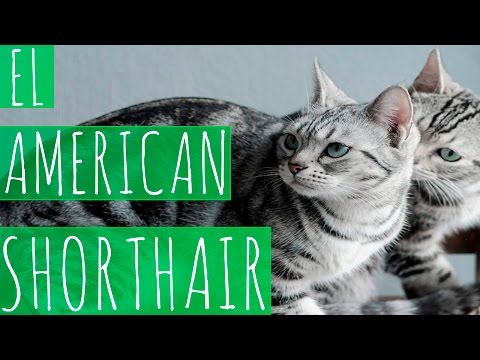
    EL AMERICAN SHORTHAIR
    EL AMERICAN SHORTHAIR
    10 Things Your American Shorthair Is Thinking Right Now | Chewy
    10 things that your American Shorthair is thinking right now

    โ–ท The world of Pets: Dogs, cats, birds, reptiles, amphibians

    American Wirehair cat
    Recognized by the CFA - TICA - ACFA/CAA - CCA-AFC - FIFe

    The American Wirehair cat it is a breed of young cat. This type of cat belongs to the category of domestic cats.
    American Wirehair
    Photo: Wilkipedia

    Content

    History

    The American Wirehair cat it was created by chance. In fact, the fault is a genetic defect. In 1966, in a litter of American shorthair cats, one male had an atypical coat. The fur was rough, lean and curly at the ends. The cat breeder lived in Verona, in upstate new york. Four of the kittens in this litter died, but the fifth, a red and white male kitten with this rough hair, survived. His name was Adam.

    Joan Oโ€™Shea, a local breeder, found out about the kitten and immediately fell in love with it. Later he realized that it was probably a new breed and developed a breeding program.. Crosses with him American shorthair cat prevented excessive inbreeding and allowed the development of the breed.

    In United States, was officially recognized in 1967 by the CFA (Cat Fanciers’ Association), but it wasn't until 1978 when this reference organization authorized him to compete in cat shows.

    Uncommon in the United States, this cat is also still very rare in Europe, where it is mainly located in the UK, in very small numbers. In France, only a few births per year are recorded in the LOOF.

    Physical characteristics

    The American Wirehair cat you can't deny your relationship with him American shorthair cat.

    It is a medium to large size cat, semirigid, with an athletic and sporty-looking body and, Therefore, with strong bones.

    American Wirehair
    American Wirehair sitting in a cat show – Heikki Siltala, CC BY 3.0, via Wikimedia Commons

    The head It is round, provided to the body, with cheekbones prominent and a snout well developed, as well as slightly wavy whiskers. The eyes they are big and round, very separate, and express a rather gentle character. They can be of any color.

    The back it is straight and well balanced, the chest rounded and wide (especially in males), like the neck. The tail it is medium size, proportional to the body, and has a rounded tip, similar to the ears, that are quite separate. The legs they are medium in size but muscular. The legs are firm and round, with large pads.

    The fur he is of medium length and has very thick and sticky hair. Their peculiarity is that they are wrinkled, as if they were wrinkled, hooked or curved, and full of vigor. The three-layer coat can be any color, like other breeds of American cats, except for chocolate, the fawn, the lilac and the colourpoint (Dark color, darkened in some parts of the coat).

    according to sex, the height ranges between 30 and 35 cm and the weight between 2,5 and 5 kg.

    Character and skills

    The American Wirehair cat it is robust, vigorous and curious. It is a very active cat, agile and playful, you need to exercise and, Therefore, requires space. Sociable, tender and especially affectionate, is as kind as him American shorthair cat, although it has a great sensitivity of its own. He cannot live alone and will remain very attached to his master.

    American Wirehair
    American Wirehair cat tired – Flickr

    The American Wirehair cat usually purr, what can be a way to offer support to his owner when he needs it, since a cat's purr is known to be beneficial to its owner.

    It also, having a rather playful character and not being a dominant cat, can live with other feline companions, and he will make friends with children and single people. But, it is important to avoid living with rodents such as rabbits or mice, since they don't mix well.

    Care "American Wirehair cat"

    Despite its special appearance, coat care does not take much time. A brief brushing of the coat once a week is sufficient. Your cat will do the rest. Removes dead hairs with its rough tongue. Help your feline with cat grass to get rid of swallowed hairballs.

    Indoor or outdoor cat?

    The American Wirehair is suitable for both types of accommodation. The ideal is to live in a rural area. Here your tiger can become a free roam without hindrance. Whenever you want to. Some cats just sit in the open window to the garden and enjoy the opportunity. Soon you will find out. Ask the neighbors if they see your tiger outside the garden.

    American Wirehair
    American Wirehair

    Do you worry a lot when you are away from home? Then offer your pet a compromise. Fence a part of the garden (similar to a birdhouse). With free access to the house, of course.

    If your purebred cat knows the floor as his living space from an early age, will not miss anything. Another possibility would be an additional cat-proof balcony. If you have your cat in a flat, you will not have problems with the neighbors. The volume of the voice is low. In contrast to the volume of voice of Siamese cats. These โ€œtalkativeโ€ contemporaries can be heard throughout the neighborhood.

    No matter what you choose. Remember: an indoor cat can become an outdoor cat. An outdoor cat will never be an indoor cat again. This is valid for any type of cat, as well as for him American Wirehair cat.

    How much activity does he need? "American Wirehair cat"?

    This question cannot be answered in general. The character of American Wirehair cat is individual. So, some specimens are more playful and others are not. Mostly, sleep during the owner's absence. Give them a chance to take care. There are enough toys on the market to stimulate intelligence and hunting instinct. Take enough time to play at night. A second cat will save you from a guilty conscience.

    Your home must be furnished appropriately for cats. This includes scratching posts with different levels. There are caves to hide, feathers and stuffed mice to play with and much more. if you have a garden, let your cat use it. The more intensely your American Wirehair cat At night, more you will have to think. Remember that this type of cat plays all its life and demands an activity appropriate to its age.

    Health and nutrition

    Due to its origins, the American Wirehair cat you are affected by a hereditary disease called renal polyquistosis or, more rarely, by a Hypertrophic cardiomyopathy, consisting of a thickening of the walls of the heart.

    It also, your hair is especially sensitive to minor allergies, due to its specificity.

    Feeding of the "American Wirehair cat"

    American wirehair
    American wirehair

    The diet of the "American Wirehair cat" must be adapted according to your needs and activities, but also his age and health.

    Feeding your cat in a species-appropriate way is not complicated. But, you should pay attention to healthy ingredients. Your future roommate is a carnivore. The cat's digestive system can't do much with carbohydrates. The ideal combination is muscle meat and offal.

    It is important to monitor the rations that are given to prevent the cat from being overweight or even obese.

    For sale "American Wirehair cat"

    The American Wirehair cat is almost unknown in Europe. If you want to buy one, you should contact an American breed association. The Cat Fan Association will be happy to assist you.. The price depends on the demand and the population. The price of American Wirehair cat is between 800 and 1.200 EUR. Stay away from โ€œbargainโ€ offers on the Internet. Cats from these sources are often contaminated with inherited diseases.

    Characteristics "American Wirehair cat"

    Coexistence is important that you have with your new friend. Before considering the acquisition of a cat of the breed "American Wirehair cat" you know certain factors. You must take into account their character, their need for exercise, their interaction with other pets, their care and if you have small children, their level of tolerance towards them.

    Joy

    4,0 of 5 stars (based on 1 review)

    Activity level

    3,0 of 5 stars (based on 1 review)

    Friendliness to other pets

    3,0 of 5 stars (based on 1 review)

    Friendliness to children

    3,0 of 5 stars (based on 1 review)

    Grooming requirements

    2,0 of 5 stars (based on 1 review)

    Vocality

    3,0 of 5 stars (based on 1 review)

    Need for attention

    3,0 of 5 stars (based on 1 review)

    Affection towards its owners

    4,0 of 5 stars (based on 1 review)

    Docility

    2,0 of 5 stars (based on 1 review)

    Intelligence

    4,0 of 5 stars (based on 1 review)

    Independence

    3,0 of 5 stars (based on 1 review)

    Hardiness

    3,0 of 5 stars (based on 1 review)

    Videos "American Wirehair cat"

    American Wirehair | Cats 101
    American Wirehair | Cats 101
    HTTPS://youtu.be/YFp1I9KbTBw
    American Wirehair: Character, Health and Care

    โ–ท The world of Pets: Dogs, cats, birds, reptiles, amphibians

    American Longhair Cat (Maine Coon)
    Recognized by the CFA, TICA, AACE, ACFA/CAA, CCA-AFC, GCCF, FIFe

    The American Longhair Cat has a great addition to the stables, since it tends to be very fond of other animals such as horses, goats and cows, and tends to get along very well with dogs.

    Amrican longhair

    Content

    History

    The American Longhair Cat (Maine Coon), was the result of breeders' attempts to infuse certain varieties of Persian color into the American shorthair cat. The longer coat and some of these colors appeared to be genetically related., and the result was a cat with a combination of traits from its Persian and American shorthair cats.

    Unlike in the Domestic long-haired cat, that does not have a clear lineage, the American Longhair Cat comes from champion bloodlines, and some individuals are registered with multiple cat fancier associations, but the breed itself is not recognized by the larger organizations yet.

    The main difference between American Longhair Cat and the Domestic long-haired cat is that the American Longhair Cat must have a pedigree that can go back as far as American shorthair cat as to the Persian cat.

    Times, cats Maine Coon se denominan American Longhairs, because they were developed in the United States.

    physical characteristics of the American Longhair Cat

    Breed standard:

    American Longhair Cat

  • Head: The head must be big, round, wide and well developed. Cheeks should be full and have a powerful appearance. The face should be slightly concave or "domed". The muzzle is square and may be somewhat compressed, with a strong, well-formed chin.
  • Ears: The ears should not be excessively large, but medians in proportion to the head, wide at the base with rounded tip and good space between them. It is very desirable that the ears have feathers.
  • Eyes: The eyes must be large and round, widely spaced, bright, clear and of any color. Strange eyes are allowed, as long as it is not accompanied by deafness.
  • Body and tail: Must be a medium to large size cat, slightly longer than tall, with a powerful, broad body and a deep, well-formed chest. A fat pad on the abdomen is common for this breed and completely acceptable.. The neck is short and robust. The legs are of medium length and have good bones with a fleshy quality.. Feet are medium to large in size and round, with five fingers in front and four behind. The tail should be of medium length, feather-shaped, and is usually carried at the level of the top line.
  • Fur: It has a full double coat with long, straight outer hairs. Any color, except tick or spike patterns.
  • General aspect: It must be a robust animal, broad and attractive face, with a natural appearance, only slightly refined, quiet, sometimes reserved, but not shy. It is a charming and classic domestic cat, with a full and double coat, and a very hairy tail, pen-like.
  • Most of the American long-haired cats they have a bit of the upturned nose of Persian cats, but this varies between individuals. Athletic, well-muscled body is the standard, along with the double coat, dense and abundant molt.

    Character and skills

    Personality American Longhair Cat it is usually quite peaceful, with a slightly independent vein.

    Can be a great choice for a busy home or a working single, since it does not require too much care, but its long coat requires some care, as it tangles easily without good brushing once or twice a week.

    American Longhair Cat

    The American Longhairs tend to be slightly more active than any of their parent breeds. They are more athletic than the Persian cat and, in general, friendlier than him American shorthair cat.

    These cats are a great addition to stables, since they are usually very affectionate with other animals such as horses, goats and cows, and they tend to get along very well with dogs. Big dogs don't have to be too picky about him American Longhair big boned, and small dogs often find a warm pampering partner.

    These kittens are not usually lap cats, but due to the influence of Persian cat they can be very pleasant and patient companions for the elderly or those who cannot leave the house, provided your grooming needs are met.

    The American Longhair enjoys the outdoors a lot and can spend a lot of time looking out the window. Fortunately, they are usually easy to train and quiet enough to fit into a harness and leash for a short walk outside.

    Although large animals and dogs are his friends, these cats tend to be cunning hunters, and the parakeets, small animals and even pet fish could be on the menu if their cages and tanks are not properly secured.

    These cats adapt well to various lifestyles, but they may not be the first choice for a family with many young children, not because they are aggressive, but because they can be elusive, choosing to avoid the fuss.

    Handsome, long-lived and resistant, the American Longhair Cat it can be a wonderful pet for the right home.

    Characteristics "American Longhair Cat (Maine Coon)"

    Coexistence is important that you have with your new friend. Before considering the acquisition of a cat of the breed "American Longhair Cat (Maine Coon)" you know certain factors. You must take into account their character, their need for exercise, their interaction with other pets, their care and if you have small children, their level of tolerance towards them.

    Joy

    4,0 of 5 stars (based on 1 review)

    Activity level

    2,0 of 5 stars (based on 1 review)

    Friendliness to other pets

    4,0 of 5 stars (based on 1 review)

    Friendliness to children

    4,0 of 5 stars (based on 1 review)

    Grooming requirements

    1,0 of 5 stars (based on 1 review)

    Vocality

    1,0 of 5 stars (based on 1 review)

    Need for attention

    3,0 of 5 stars (based on 1 review)

    Affection towards its owners

    3,0 of 5 stars (based on 1 review)

    Docility

    4,0 of 5 stars (based on 1 review)

    Intelligence

    3,0 of 5 stars (based on 1 review)

    Independence

    4,0 of 5 stars (based on 1 review)

    Hardiness

    4,0 of 5 stars (based on 1 review)

    Videos "American Longhair Cat (Maine Coon)"

    MAINE COON - The giant cat breed
    MAINE COON – The giant cat breed
    Maine Coon Cat 101 - Watch This Before Getting One (Full Guide)

    Maine Coon Cat 101 – Watch This Before Getting One (Full Guide)

    โ–ท The world of Pets: Dogs, cats, birds, reptiles, amphibians

    Angora cat

    The name of Angora cat can create confusion. It differs enough from the Oriental Longhair cat and of the Turkish Angora cat, and it does not descend the so-called cat Angoras from the 19th century. In fact, this breed emerged by accident.

    Angora_Cat_(White)

    Content

    History

    In the Decade of 1960, the English breeder Maureen Silson coupled a Abyssinian cat sorrel and a Siamese cat dotted seal to create a siamese with pointed tips. Their descendants inherited the cinnamon feature (chestnut called the Abyssinian), creating Oriental Longhair cats cinnamon, and the gene for long hair, recessive in the Abyssinian cat, What created this race, known as Angora cat to 2003. The long-haired oriental (angora) is only recognized in Great Britain, although in North America it was called Oriental Longhair cat until another race with the same name was created there. For further confusion, in Europe, this race has been called Javanese cat, a name used for some various hair long in North America, and at one point was also known as mandarin cat.

    Physical characteristics

    The Oriental Longhair cat is slender, but not extremely. Their legs are muscular, and their wedge-shaped head is not too long. Its fine, silky fur has no Undercoat and falls straight to the body. As a long-haired cat, the angora is relatively easy to care for. His eyes, Green in all varieties, less blank, they are somewhat slanted.

    Character and skills

    The personality of this breed reveals its kinship with the Siamese. They are playful cats, curious and sociable, they like to live with many cats and they are somewhat noisy.

    cat visual guide, Dr. Bruce Fogle
    Photo: Wikipedia

    โ–ท The world of Pets: Dogs, cats, birds, reptiles, amphibians

    Turkish Angora cat
    Recognized by the CFA, FIFe, TICA, ACFA/CAA, CCA-AFC

    The Turkish Angora cat remains the national animal of Turkey today.
    Angora Turco
    Photo: Wilkipedia

    Content

    History

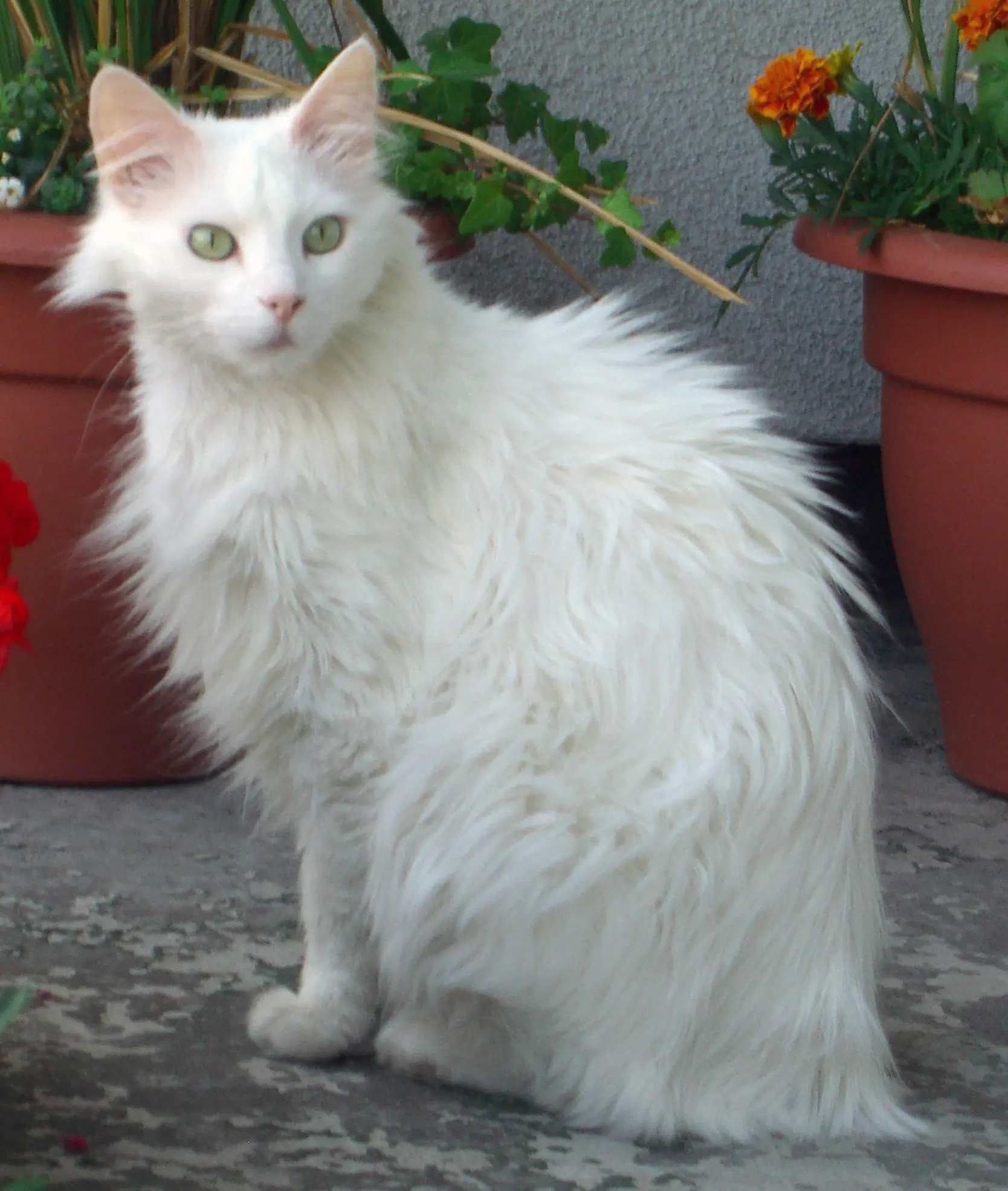
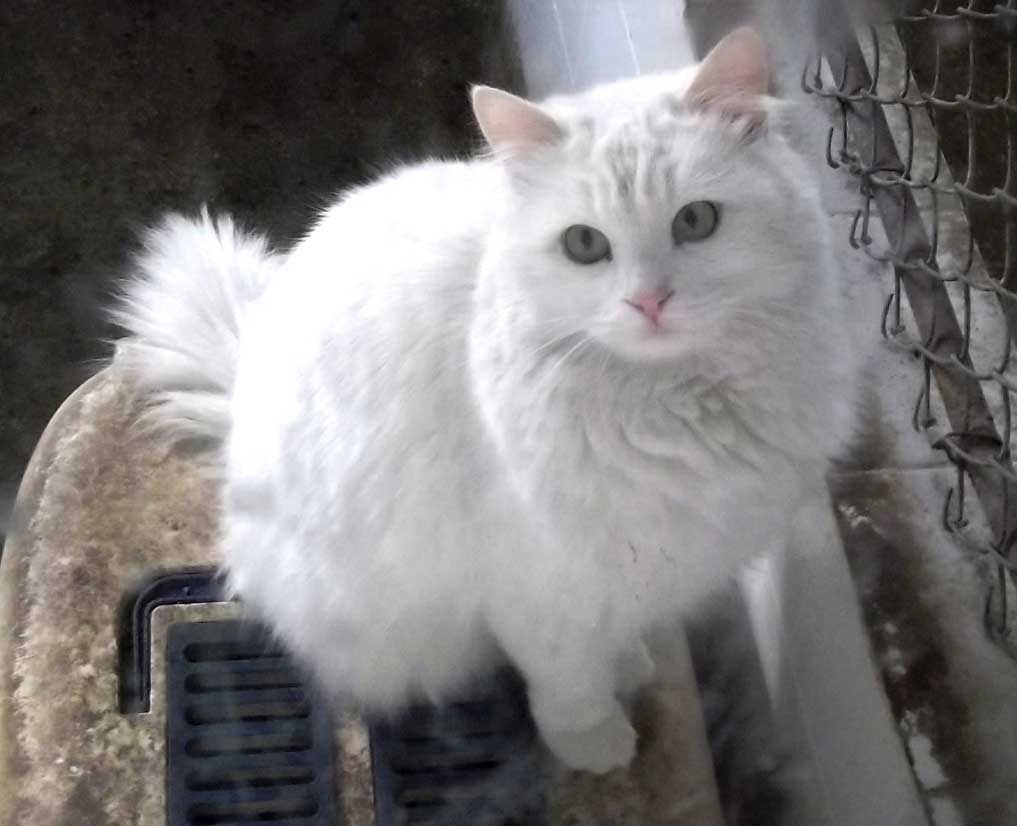
    The Turkish Angora cat It, as the name reflects, a breed of cat native to Turkey, where she was prized for her long hair and fur. Angora is the ancient name of the capital of Turkey, currently Ankara. This breed of cat has a long history, since it is estimated that it can be traced back to ancient Egypt.

    In XVII century, the Turkish Angora cat It was introduced to Europe by an Italian explorer named Pietro Della Valle and by a French named Nicolas de Peiresc, who brought several copies to their respective countries. It was a success, since it was the first breed of long-haired cat, since the other European domestic cats were short or semi-long hair. The Swedish naturalist Linnaeus called it Cattus Angorensis to distinguish it from the domestic cat and Chartreux cat, and the French biologist Buffon called it "Angora cat with long hair and completely white.".

    Such was the popularity of the cat's fur color that it served as a "royal gift", being appreciated by the entire European aristocracy, especially the court of Louis XV. Painters of the time even chose her as a model to represent their cats in their paintings, for its elegance and beauty.

    In the 19th century, the Turkish Angora cat contributed to the birth of Persian cat, to the one who transmitted the gene responsible for long hair. But with the passage of time and the dangerous crosses with other breeds of cats, the Turkish Angora lost the characteristics that had made it famous. At the same time, the dazzling success of the Persian, chosen as a breeding base by the English in Victorian times, caused a disinterest in the Turkish Angora cat as dazzling as its success, to the point that it almost disappeared after WWII. The Turkish government decided to protect the remaining specimens to ensure the survival of the breed, so he decided to prohibit its export.

    Finally, The breed was saved by American cat breeders who managed to obtain them from the Ankara Zoo in 1959 a couple of Turkish Angora Cats llamados Star (What does "Star" mean?) y Yร„ยฑldร„ยฑzcik ("Little Star"). The current Turkish Angoras were born from this couple. Interest in the breed was rekindled in 1963, when the breeders in question presented her to the rest of the world. La C.F.A. (Cat Fanciers’ Association, one of the leading American feline organizations) recorded the first animals in 1970 and recognized the breed in 1973. La F.I.Fe (Fรฉdรฉration Internationale Fรฉline) did the same in 1988.

    Despite its beauty, the Turkish Angora cat it is not yet widespread in the world and is still protected in Turkey: some zoos continue to breed to ensure the survival of this breed, which is still considered "fragile". But, the Turkish Angora It is one of the favorite feline breeds of the French, and is often featured at feline shows.

    Physical characteristics

    Turkish Angora
    Turkish Angora cat at the Atatรผrk Forest Farm and Zoo in January 2012. The zoo breeds and sells Turkish Angora cats – Ankaracats, CC BY 3.0, via Wikimedia Commons

    The Turkish Angora cat it is a small to medium sized cat, with a graceful appearance, has a beautiful head that tapers downwards and is relatively small in relation to the rest of the body. The muzzle has no pinches, the nose is slightly curved, the ears are set high on the head, turns forward and has a lock of hair at the end.

    The legs of the Turkish Angora cat they are long and thin, with oval legs and tufts of hair between the toes. The tail is wide at the base and tapers as it grows. The tail is quite long compared to the rest of the body and feathery in appearance., due to the long hair.

    The coat is of medium to long length, fine and silky, with a very light undercoat. The hair is slightly more numerous and wavy on the belly. Due to its dense fur, the turkish angora may appear much larger than it actually is: is light-boned and does not usually exceed 5 kg. The molt occurs in summer and is quite considerable.

    Originally, only a completely white gown was allowed. Today, although the white variety is still the most popular by far, a wide range of single-color coats is tolerated, bicoloured, brindle and smoked. Just some colors, like chocolate or mink, are not recognized by the standard.

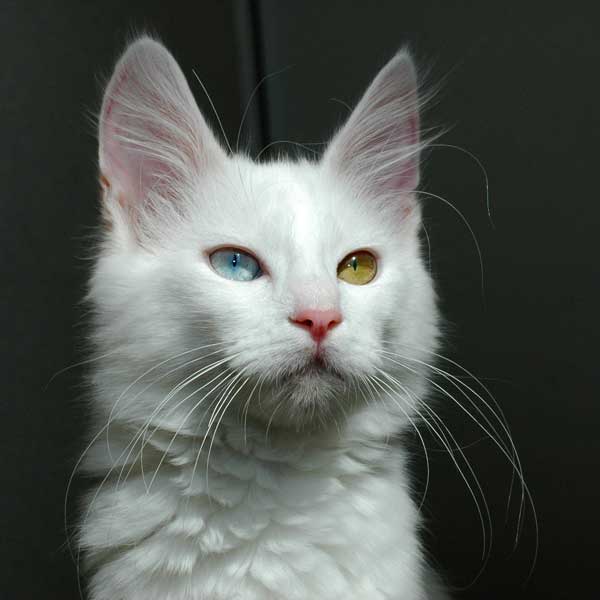
    Large, almond-shaped eyes are traditionally amber in color. In the white variety, blue or minnow eyes are also accepted (that is to say, with two different colors), while in the gold and silver varieties green eyes are also tolerated.

    Size and weight

  • Height: 30 – 35 cm.
  • Weight: 2,5 – 5 kg
  • Character and skills

    Turkish Angora
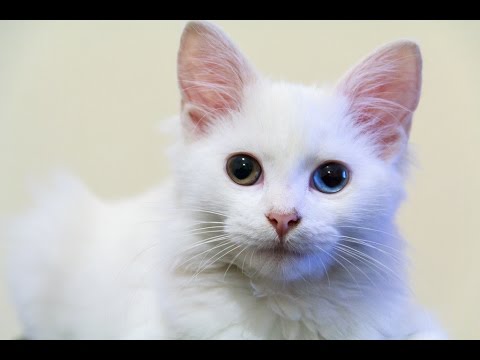
    A white Turkish Angora cat with odd eyes (heterochromia), which is common among the breed – Karatas., Public domain, via Wikimedia Commons

    The Turkish Angora cat it is a very sociable and affectionate cat, who likes to be the center of attention, to the point of being a bit loud at times. Enjoys the company of its owner and other animals, including dogs, and he especially likes children. Being a very playful and intelligent cat, can learn some tricks, how to stand up on its hind legs when presented with a toy or treat, or retrieve and return a small ball.

    The Turkish Angora cat he is also an observant cat, and nothing escapes him: is everywhere, following your every move, jumping on your shoulders when you least expect it and picking up your pen as you write. He is very capable of running after taking the glasses case, the glove or tights that were lying on the ground. But she knows how to make up for it by purring and stroking it.

    Robust, athletic and hunter, the Turkish Angora is a very independent cat that values รขโ‚ฌโ€นรขโ‚ฌโ€นits freedom. They need to have a lot of space to develop and they don't like being confined to one floor.

    Last, it is one of the few cats that loves water, and will gladly take a dip in a basin or bathtub if given the chance.

    Care "Turkish Angora cat"

    Turkish Angora
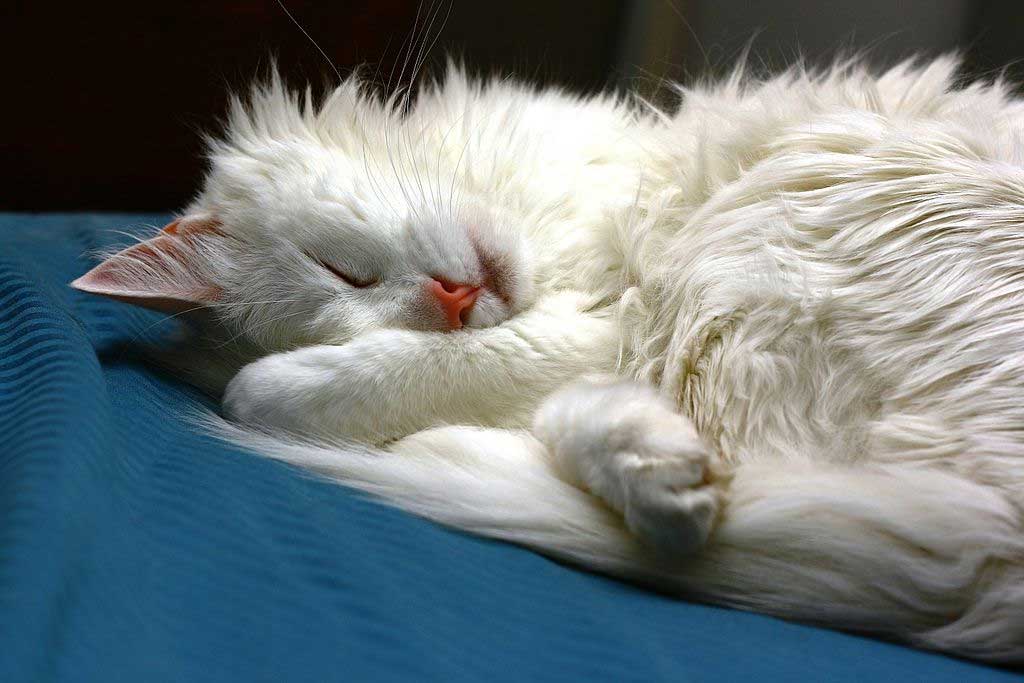
    Sleeping cat, white long-hair Turkish Angora – Roo72, CC BY-SA 3.0, via Wikimedia Commons

    The Turkish Angora cat Grooming his silky fur himself, so it is enough to brush it from time to time. This helps remove loose hair and strengthens the bond between you and your cat.. How long-haired cats tend to swallow more hair, hairballs can form in the digestive tract. To reduce the formation of these hairballs in the stomach, there are special foods for cats.

    Food

    Due to the long and dense coat of the Turkish Angora cat, it is recommended to feed the dog a diet rich in fiber so that it can more easily evacuate the trichobezoars (hair balls) what you eat when preening, and thus limit the risk of digestive problems.

    Indoor or outdoor cat?

    The Turkish Angora cat he is a very calm cat and, therefore, ideal for interiors. It is not particularly demanding in terms of its accommodation conditions and also settles for less space. Especially as an indoor cat, develops an intimate relationship with its owner and enjoys being with the family. For this reason, the loving cat should not be left alone for a long time. If you have the opportunity to let the cat out under supervision, give this opportunity. They enjoy observing their surroundings from an elevated position and breathing fresh air.

    How much activity does he need? "Turkish Angora cat"?

    This lively and active cat loves creative and challenging toys. He also enjoys learning little tricks., how to recover toys. A sturdy scratching post for playing and sleeping also offers great employment opportunities and also helps the cat care for its nails.. Extensive petting is a must for this affectionate, people-oriented cat.

    For sale "Turkish Angora cat"

    The Turkish Angora cat it is an excellent cat for beginners, but it also needs enough affection and care. Before buying a cat, you must be sure that you can offer him a full life. Once you have decided on the breed, you must visit a trusted breeder who belongs to a registered club. Pay attention to the behavior and health of kittens and parents as well. For a purebred kitten with papers you pay a few 800 EUR. In the animal shelter you can sometimes find a cat that looks and behaves like a Turkish Angora cat.

    Characteristics "Turkish Angora cat"

    Coexistence is important that you have with your new friend. Before considering the acquisition of a cat of the breed "Turkish Angora cat" you know certain factors. You must take into account their character, their need for exercise, their interaction with other pets, their care and if you have small children, their level of tolerance towards them.

    Joy

    4,0 of 5 stars (based on 1 review)

    Activity level

    4,0 of 5 stars (based on 30 reviews)

    Friendliness to other pets

    3,0 of 5 stars (based on 1 review)

    Friendliness to children

    3,0 of 5 stars (based on 1 review)

    Grooming requirements

    3,0 of 5 stars (based on 1 review)

    Vocality

    1,0 of 5 stars (based on 1 review)

    Need for attention

    4,0 of 5 stars (based on 1 review)

    Affection towards its owners

    4,0 of 5 stars (based on 1 review)

    Docility

    2,0 of 5 stars (based on 1 review)

    Intelligence

    4,0 of 5 stars (based on 1 review)

    Independence

    2,0 of 5 stars (based on 1 review)

    Hardiness

    3,0 of 5 stars (based on 1 review)

    Videos "Turkish Angora cat"

    Turkish Angora - Turkish Angora / Cat Breed
    Turkish Angora – Turkish Angora / Cat Breed
    WHITE CAT TURKISH ANGORA ะฐ.ะก.ะผ
    WHITE CAT TURKISH ANGORA ะฐ.ะก.ะผ

    โ–ท The world of Pets: Dogs, cats, birds, reptiles, amphibians

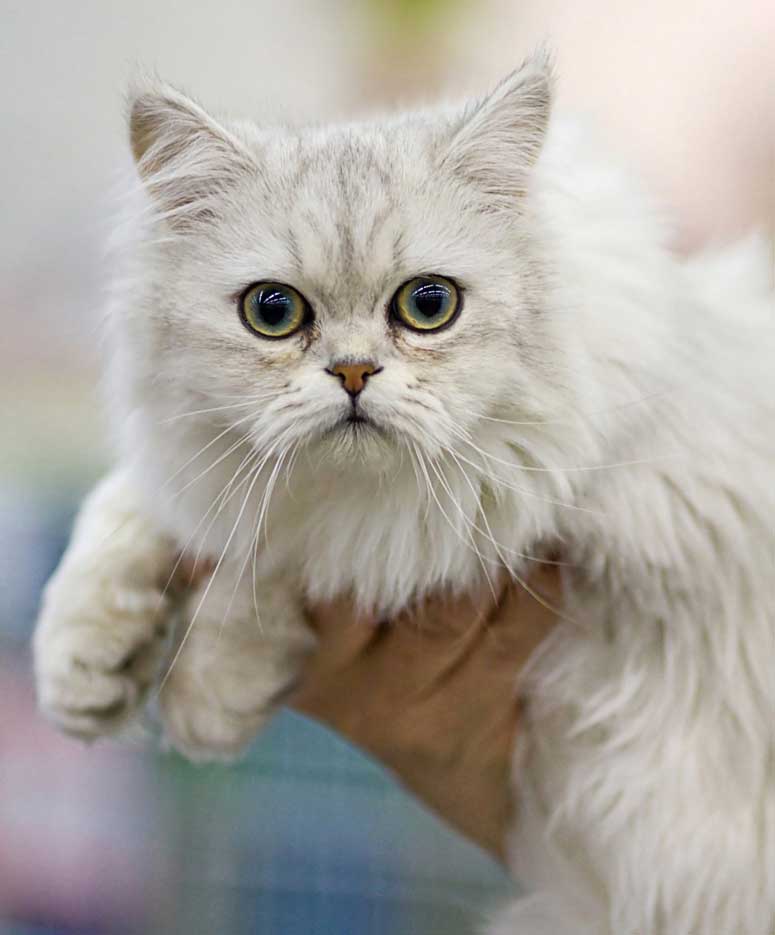
    Asian Semi-longhair cat (Tiffanie)
    Federations: LOOF, WCF, GCCF

    At first sight, the Tiffanie It is defined by its owners as an "aristocratic" cat: refined, sociable, quiet, often with an air of dignity.

    Asian Semi-longhair

    Content

    History

    The history of the origins of Tiffanie (or Asian Semi-longhair cat) differs slightly from hobbyist to hobbyist. But, all agree that the first kittens Tiffanie They were born from the mating of a Burma and cats Chinchilla. The origin may go back even further and may include the Persian cats and the races of Angora. Whether it is a deliberate crossing or not, the beauty of the resulting kittens prompted the Baroness to repeat the experiment and start a breeding program to produce Burmeses of payment, better known today as Burmilla. Some of the kittens obtained had a color that did not fit the criteria for the Persian chinchilla, or its fur was too long. But, became the founders of the Asian races and Tiffanie respectively.

    Due to its relatively recent creation, a lot of people confuse the Tiffany (spelled Tiffanie in the UK) with a American Burmese long-haired or with his distant American cousin the Chantilly-Tiffany Cat. Confusion has persisted for a long time even in America: beyond their physical resemblance, the two breeds developed at similar times and shared the same name until 1992. To limit the risks of the sale of "fake Tiffanys", now only cats resulting from crosses between English Burmese are allowed to be registered as Tiffanys, persian chinchillas, Asians or other Tiffanys.

    Despite these efforts, difficulties in accurately identifying the origins of the Tiffanie make it difficult for them to be recognized as a breed in their own right. With the exception of the Australian National Cats (or ANCats), who recognized the breed in 1999, y el British Governing Council of the Cat Fancy (recognition in 2003), other important feline associations, like the LOOF in France, consider that the Tiffanie is a simple long-haired variant of the Birman.

    Whatever the name or status of the cat, their representatives are especially present in Australia, the United Kingdom (your country of origin), as well as in Canada and the United States.

    Physical characteristics

    The Tiffanie (or Asian Semi-longhair cat) it's a ball of muscle buried under silky fur. Many agree that he is the height of a Birman with long hair. It is a medium linear cat with a semi-foreal subtype. His body is medium in size and lighter than it seems. The legs are slim and proportionate to the body, with the rear ones higher than the front ones. The tail is moderately thick at the base and tapers to a rounded tip, like a feather. If carried back over the body, should reach the cat's shoulders. Females tend to be thinner than males.

    Tiffanie
    Photograph of a Tiffany cat called Kumori – Jennie Kondo (Jennie Valdivieso Kondo – Grialte), CC BY-SA 3.0, via Wikimedia Commons

    The head it is medium size, but it must be quite high, with rounded skull top. The face has a rather triangular shape, with wide cheekbones, cheeks compact, with a marked stop and a delicate chin without protrusions. The nose is straight, neither too short nor too long. The eyes they are big, oblique and far apart. Its color can vary from gold to amber green. Other eye colors are allowed depending on the cat's coat color, but solid green eyes are considered a fault by the standards, regardless of the associated coat color. The ears they are fine, large and slightly inclined forward, moderate in size. They are widely separated on the skull and rounded at the tip. There may be a tarsus inside, and a discreet plumage is accepted.

    Last, the Tiffany has a fur dense, with an undercoat that is usually white, but fine enough to avoid the knot problems that are common in long-haired cats. The top layer is thin, silky and shiny, and forms a collar on the neck and shoulders. It is located along the spine and extends over the breeches, under the belly and on the tail. Ghost brindle markings on non-agouti adults are penalizing, except in the case of kittens or orange cats.

    Relatively little shed, and is especially recommended for cats with allergies.

    Measurements of the "Asian Semi-longhair cat (Tiffanie)"

    Height: Of 20 – 25 cm.
    Male weight: 5 – 7 kg
    female weight: 3,5 – 5 kg

    Varieties

    The "Asian Semi-longhair cat (Tiffanie)" is available in a wide range of colors. Allowable coat patterns are identical to Burmese and Asian: solid, striped, silver, ticked and smoked.

    None of these traits are favored or more sought after than another in feline shows..

    Character and skills

    At first sight, the Tiffanie It is defined by its owners as an "aristocratic" cat: refined, sociable, quiet, often with an air of dignity. But, Beneath his calm demeanor lies an energy and curiosity inherited from his eastern ancestors..

    Tiffany
    A white male Tiffanie (Asian Semi-longhair) cat presented at TUROK cat show Turku 2008 – Finland: Heikki Siltala, CC BY 3.0, via Wikimedia Commons

    Moderately active, but mischievous enough to liven up any home, the Tiffanys they are very close to their owners. He does not hesitate to ask for his share of pampering and attention with many purrs and meows, in addition to chatting with the different people in the family for no particular reason. But, he also knows how to be discreet when his master wants to go about his affairs in peace.

    They are not very aggressive and adapt easily to new environments, They are also kind to other animals in the house and to strangers, as long as they respect your quiet time. But, some cats are jealous of other cats if they get too close to their favorite master.
    Beware of possible fights!

    Apart from these rare cases of jealousy, the affectionate temperament of Tiffanie and its general characteristics make it a suitable cat breed for children, but also in a breed of cat recommended for lonely older people.

    The Tiffanie, a house cat, she is a tireless player once the game is on. Beware of fragile objects that can get in the way during your gaming sessions. To channel your excess energy, a cat tree and cat toys are essential. His intelligence and attachment to his owner also allow him to try to teach his cat tricks and commands., such as looking for a toy.

    Health

    Thanks to its multiple crosses, the "Asian Semi-longhair cat (Tiffanie)" it has a diversified gene pool that makes it quite resistant to diseases that its ancestors could suffer from. Its average life expectancy is estimated to be about 17 years, like his cousin the Burmilla, as long as, of course, is properly fed and cared for.

    But, if you want to raise your cat, it is important to be tested for polycystic kidney disease, especially if you have a Persian ancestor. Before any possible acquisition from a breeder of Tiffanie, It is possible to – if not spontaneously, as it should be normally – ask you to provide the kitten and parent screening test results. Cat tests cost between 45 and 75 EUR.

    It also, kittens of some lines may have significant umbilical hernias, whose correction requires a small surgical intervention.

    Life expectancy

    16 years.

    Grooming

    The Tiffanie (or Asian Semi-longhair cat) should be brushed daily to avoid the development of tangles in the hindquarters. But, unlike some long-haired breeds, they lose very little hair, even during the move, which makes them a hypoallergenic breed of cats. The frequency of brushing the cat's hair does not have to increase at this time.

    But, it is necessary to check the ears regularly. Cats produce slightly more earwax than the average cat, but they are not more efficient in cleaning. Thus, it is important to help you in this task, to avoid infections such as cat otitis.

    Food

    Being the Tiffanie a gluttonous cat, it is recommended to pay attention to the quantity and quality of your food, to avoid any problem of overweight or even obesity of the cat. Vigilance is all the more necessary since its semi-long coat can easily camouflage its curves..

    For sale "Asian Semi-longhair cat (Tiffanie)"

    A kitten Tiffanie male without castrar sells himself between 400 and 1.500 EUR, according to his lineage. The price of a kitten Tifanny is slightly higher, but it does not exceed 1.600 EUR.

    Characteristics "Asian Semi-longhair cat (Tiffanie)"

    Coexistence is important that you have with your new friend. Before considering the acquisition of a cat of the breed "Asian Semi-longhair cat (Tiffanie)" you know certain factors. You must take into account their character, their need for exercise, their interaction with other pets, their care and if you have small children, their level of tolerance towards them.

    Joy

    4,0 of 5 stars (based on 1 review)

    Activity level

    4,0 of 5 stars (based on 1 review)

    Friendliness to other pets

    3,0 of 5 stars (based on 1 review)

    Friendliness to children

    5,0 of 5 stars (based on 1 review)

    Grooming requirements

    3,0 of 5 stars (based on 1 review)

    Vocality

    3,0 of 5 stars (based on 1 review)

    Need for attention

    3,0 of 5 stars (based on 1 review)

    Affection towards its owners

    5,0 of 5 stars (based on 1 review)

    Docility

    3,0 of 5 stars (based on 1 review)

    Intelligence

    4,0 of 5 stars (based on 1 review)

    Independence

    3,0 of 5 stars (based on 1 review)

    Hardiness

    4,0 of 5 stars (based on 1 review)

    Videos "Asian Semi-longhair cat (Tiffanie)"

    Asian Semi-Longhair Cats 101 : Fun Facts & Myths
    Asian Semi-Longhair Cats 101 : Fun Facts & Myths
    Asian Semi longhair Cat Compilation and Mix
    Asian Semi longhair Cat Compilation and Mix

    โ–ท The world of Pets: Dogs, cats, birds, reptiles, amphibians

    Australian mist cat
    Recognized by the WNCA

    The Australian mist cat has been named Australia's national cat.
    Australian Mist
    Photo: breeds.traditionalcats

    Content

    Characteristics "Australian mist cat"

    Coexistence is important that you have with your new friend. Before considering the acquisition of a cat of the breed "Australian mist cat" you know certain factors. You must take into account their character, their need for exercise, their interaction with other pets, their care and if you have small children, their level of tolerance towards them.

    Joy

    5,0 of 5 stars (based on 1 review)

    Activity level

    5,0 of 5 stars (based on 1 review)

    Friendliness to other pets

    4,0 of 5 stars (based on 1 review)

    Friendliness to children

    5,0 of 5 stars (based on 1 review)

    Grooming requirements

    3,0 of 5 stars (based on 1 review)

    Vocality

    2,0 of 5 stars (based on 1 review)

    Need for attention

    4,0 of 5 stars (based on 1 review)

    Affection towards its owners

    5,0 of 5 stars (based on 1 review)

    Docility

    3,0 of 5 stars (based on 1 review)

    Intelligence

    4,0 of 5 stars (based on 1 review)

    Independence

    3,0 of 5 stars (based on 1 review)

    Hardiness

    4,0 of 5 stars (based on 1 review)

    History

    In 1977 The doctor. Truda Strait, the creator of the โ€œAustralian Mist Catโ€ breed, It presented an idea to the Royal Agricultural Society of NSW Cat Control (This body was replaced by the Cat Fanciers’ Association of NSW, a member agency of the Coordinating Council of the cat from Australia) to develop a cat breed that was truly unique to Australia.

    The breed was developed by crossing the European Burmese Cat., Abyssinian cat cats and dogs domestic short hair to create a cat for short hair with a spotted coat.

    The goal was to create a new breed with a peaceful temperament and spot pattern especially for use indoors.. In 1986, the breed was really recognized in Australia, at that time still under the name ยซSpotted Mistยซ. By increasing the range of brands and colors -between, the cat is also available with tabby coat-, the name was finally changed into 1998: Today the cat is called "Australian Mist".

    Physical characteristics

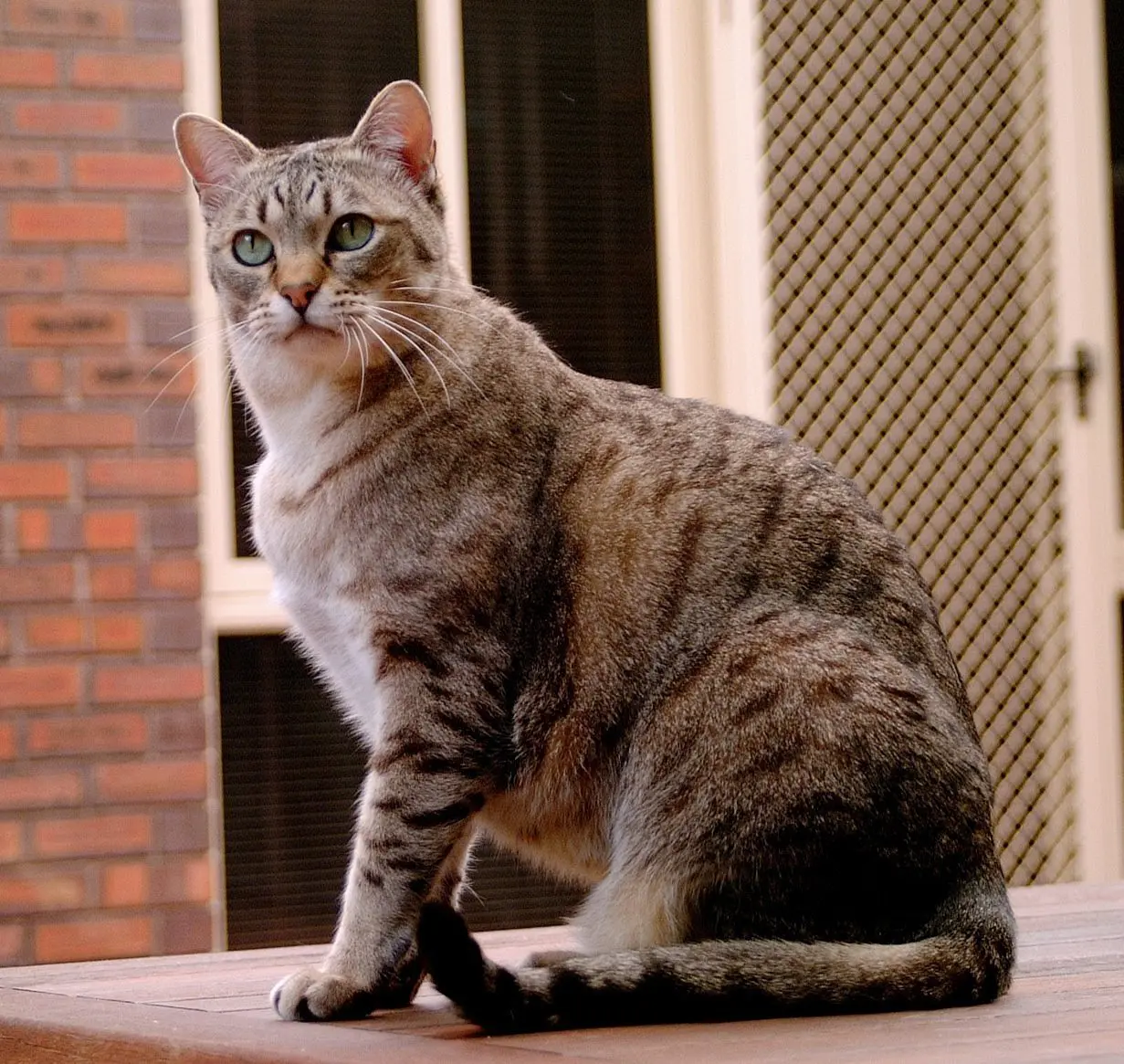
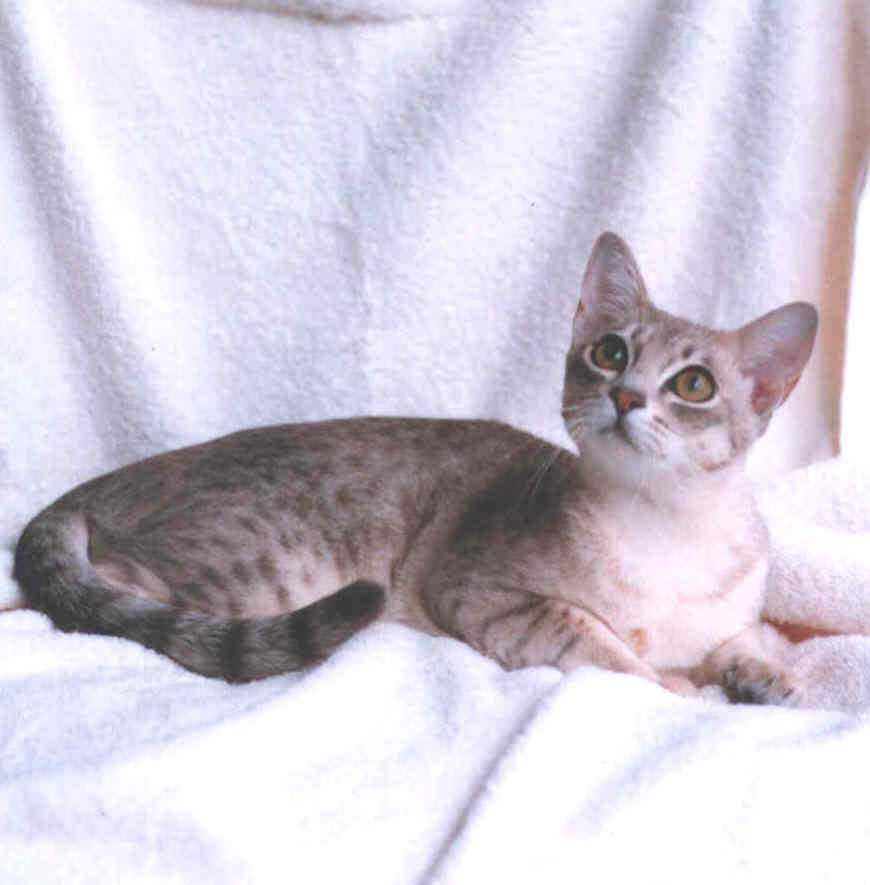
    Mist australiano
    A Blue-spotted Australian Mist – Regis2007, CC BY-SA 3.0, via Wikimedia Commons

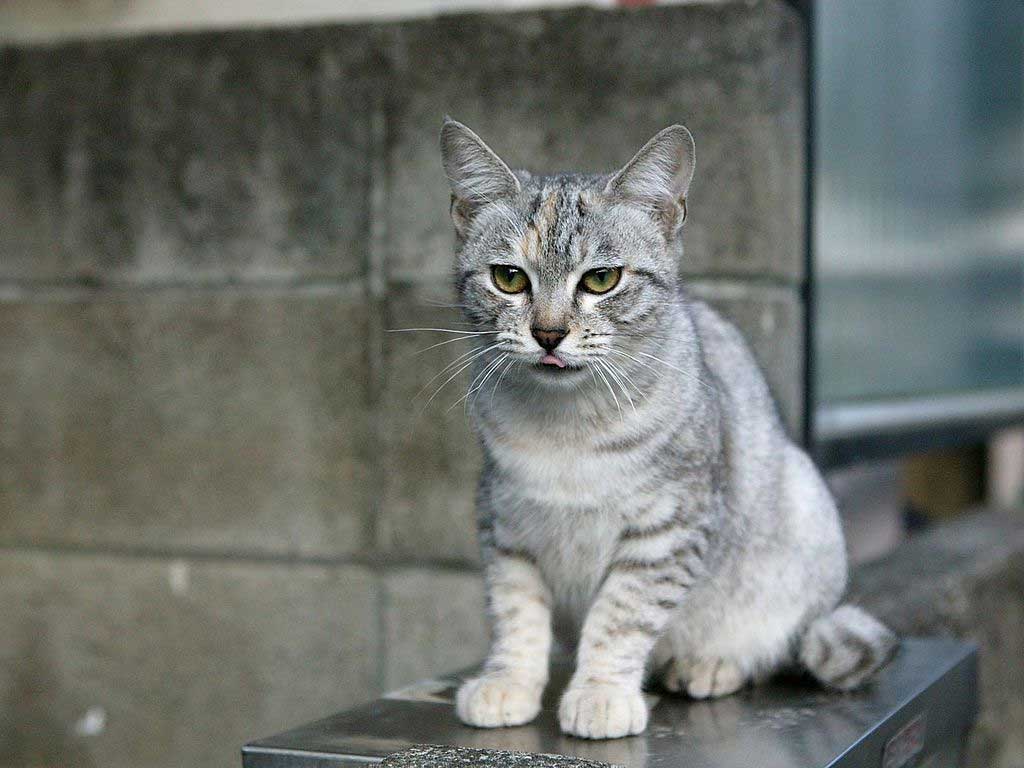
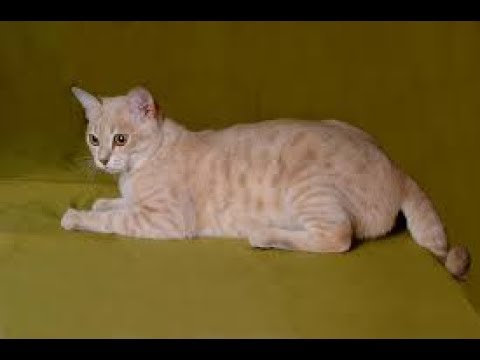
    The Australian mist cat has an athletic and muscular body. His figure with strong legs and wide torso already suggests that he likes physical activities. This medium-sized cat has large green eyes and a rounded head.. Ears are slightly rounded and stand out alertly. In general, the face radiates kindness and curiosity, attributes that are part of your personality. The fur has several drawings (stains, stripes and squiggles) and color dimensions that give the cat a hazy look. Due to these color characteristics, It is also called "Australian fog cat".

    The Australian mist cat comes in different colors:

  • blue
  • brown
  • Caramel
  • Chocolate
  • Oro
  • Lila
  • Durazno
  • Character and skills

    The Australian mist cat is caring and people-oriented. But it is also social in relation to other species, so socialization with other cats is not only possible, but also very important.

    Whenever it can come into contact with other creatures, prefers solo adventures. Although she is one of the typical house cats, seldom lazily lies down. The Australian mist cat is lively, curious and active, so he does not like monotony or boredom.

    Some Mist can be trained to go leash walking.

    Care and health

    Australian Mist
    Australian Mist – kitty.green66, CC BY-SA 2.0, via Wikimedia Commons

    The Australian mist cat adapts flexibly to the living conditions of its owner. Can cope with large families, both in a flat and in a nursing home, as long as there's someone to hang out with.

    If you acquire an adult cat, you may need some time to get used to the new environment, especially if there are children around and the cat does not yet know how to interact with them. By the way, there are no diseases typical of the breed with regard to the Australian mist cat. This breed of cat is healthy, robust and long-lived. However, You must go regularly to veterinary check-ups and update vaccination and antiparasitic protection.

    Life expectancy

    The life expectancy of a "Australian mist cat" healthy is from 13 to 17 years on average.

    Indoor or outdoor cat?

    The Australian mist cat it is a social animal that prefers to stay close to its interaction partners rather than roam outside only. They will take advantage of small outdoor spaces, like an adjoining garden, but they will also be happy in a flat, as long as, of course, can exercise and occupy themselves at home. A spacious apartment is not essential, but it would be ideal due to its agile character. If there are several options to climb and play on the premises, the Mist australiano thoroughly explore your environment.

    It also, in an unsupervised outdoor area, there is always a basic risk of loss for purebred cats. Criminal gangs see lucrative business in outdoor cats, especially when it comes to a specimen as special as the Australian mist cat. If a getter gets it, he catches it and sells it. For this reason, if you allow your cat to access an outdoor area, you will need adapted protection. These may include, equip your cat with a GPS tracker or transponder. It may even be mandatory for your cat to be marked where you live.

    How much activity does he need? "Australian mist cat"?

    The Australian mist cat is a cat with a playful interest and a greater desire to exercise, so if you keep it as an indoor cat, will need to climb a lot. Variety in the form of different toys should also be provided at all times. The cat likes it best when it doesn't have to take care of itself, but its owner or a fellow man plays with it.

    For sale "Australian mist cat"

    Buy purebred kittens Mist australiano can be treacherous, as these purebred cats are practically non-existent outside of Australia. In all Europe, it is considered a real stroke of luck to get hold of one of these rare kittens, as they are mainly bred in New Zealand and Australia. In general, the feline race is still very young, so global awareness must first be broadened before a jurisdiction of special breeding clubs can gradually emerge. It also, cats have a proud price. A prospective buyer has to pay a few 1000 euros for your desired cat, always depending on the breeder, general demand and location.

    But, with a little luck, you will find a Australian-Mist-Mix or a cat of at least similar appearance.

    Videos "Australian mist cat"

    Niebla Australiano o Australian Mist / Cat Breed
    Niebla Australiano o Australian Mist / Cat Breed
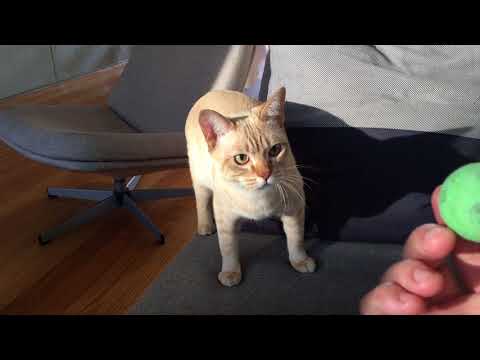
    Bronson the Australian Mist cat playing fetch
    Bronson the Australian Mist cat playing fetch

    Alternative names:

    1. Spotted Mist (English).
    2. Spotted mist (French).
    3. Australian Mist (German).
    4. Australian Mist (Portuguese).
    5. Gato de la niebla (espaรฑol).