โ–ท The world of Pets: Dogs, cats, birds, reptiles, amphibians

Todl`s Parakeet (sub)
Pyrrhura picta caeruleiceps

Cotorrita de Perijรก

Content

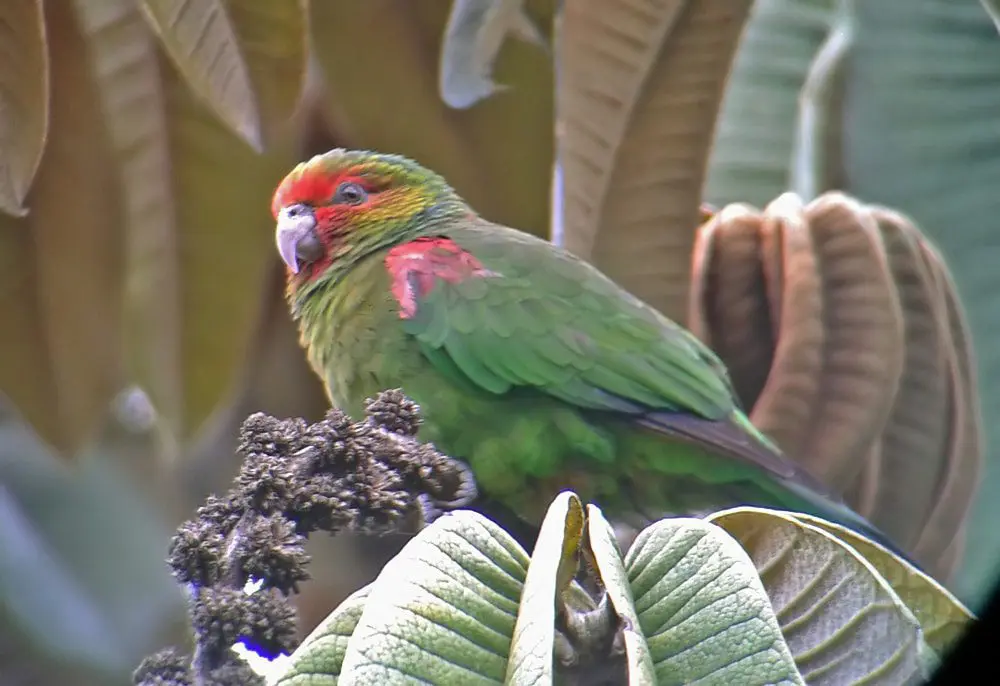
Perija Parakeet. Copyright ProAves Colombia.

Description:

21-23 cm.. height.

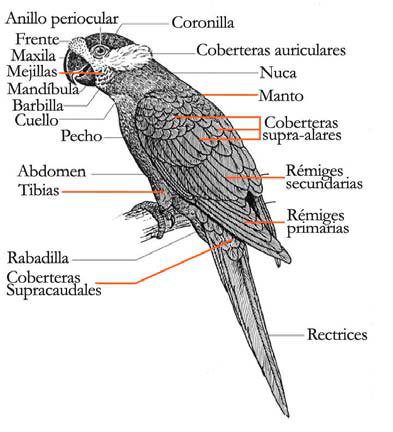
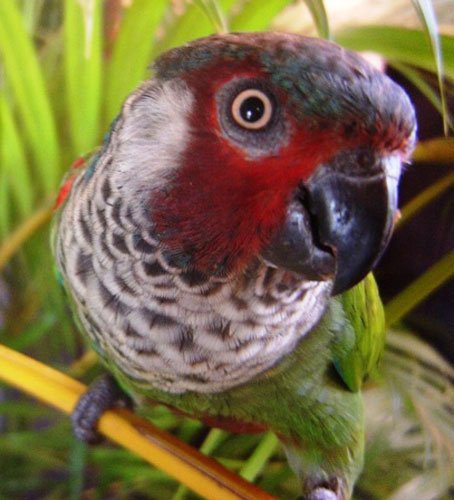
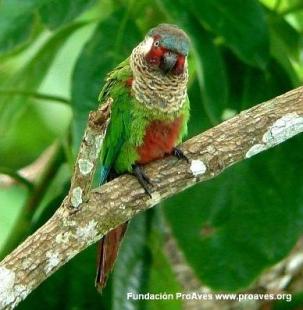
The Todl`s Parakeet (Pyrrhura picta caeruleiceps) It is generally green with the forehead and areas around the eyes, dark red.

In flight the dark red stain is very evident abdomen. Wings below greyish. The crown and nape they are blue; the front and sides of the strip head, red and scaly appearance of the chest with wider margins. This subspecies is included within the species Pyrrhura picta.
Cotorrita de Perijรก

Notes:

    Historically, classification of Pyrrhura picta caeruleiceps (Todd 1947) He has been subject to opinions found. While some authors recognize this taxon at the species level, others consider it a subspecies of Pyrrhura subandina (Todd 1947) or Pyrrhura picta (Meyer de Schauensee 1949), the latter being the most widely followed classification (Hilty & Brown 1986, pit et to the. 1997, Rodrรญguez & Hernandez-Camacho 2002). Based on analysis of morphological characters, Joseph (2000) and Joseph & Stockwell (2002) suggested that P. caeruleiceps should be considered as a distinct phylogenetic species and that the taxon Pyrrhura pantchenkoi (Phelps 1977), described from two specimens with worn plumage, is its synonym. Hilty (2003) He continued this treatment, but the classification committee Bird South America of the American Ornithologists’ Union recently it considered that existing information was insufficient to support this taxonomic change according to the biological species concept and kept provisionally caeruleiceps like a subspecies of painted parakeet (Remsen et al. 2010).
    Source: Rediscovery and notes on the ecology and vocalizations of Toddโ€™s Parakeet (Pyrrhura picta caeruleiceps) in northeastern Colombia

Ecology:

They inhabit in humid jungle, semi-humid and low cloud forests.
Nest sizable trees in abandoned nests of other species.

Distribution:

The enigmatic and little known Todl`s Parakeet (Pyrrhura picta caeruleiceps) It has a very restricted range in the rainforest, mainly between 500 and 900 Attitude meters along the border between Colombia and Venezuela, as well as patches of tropical forest in the foothills of the Serrania del Perija.

Its Freedom population It is believed to be about 30 to 50 individuals.

Conservation:

State of conservation โ“˜


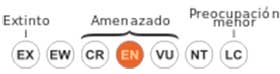
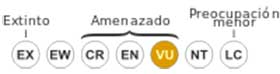
Endangered Endangered โ“˜ (UICN)โ“˜

The forest loss and fragmentation are the main threats facing this bird, but the species is also trapped and kept in cages as a pet. According to the categories of UICN It is considered In danger (IN), mainly due to the habitat destruction.

Images "Todl`s Parakeet (sub)"

Videos "Todl`s Parakeet (sub)"


Especies del gรฉnero Pyrrhura

Sources:


– Parrot Book, Parrots and macaws Neotropical
– Proaves
โ–ท The world of Pets: Dogs, cats, birds, reptiles, amphibians

Golden-winged Parakeet
Brotogeris chrysoptera


Catita Alidorada

Content

Description:

Golden-winged Parakeet

18 cm.. height.
The Golden-winged Parakeet ((Brotogeris chrysoptera)) has a tail short and finished in tip, bill Of course, body almost all green.

Its main characteristic is to have wing a patch orange or gold and the end blue (more visible on the fly). Crown bluish, forecrown and throat orange.
The eye ring is whitish and without feathers; the irises is of color Brown dark and the legs flesh-colored.
The immature is distinguished by not having the Golden wing patch.

Subspecies description
  • Brotogeris chrysoptera chrysoptera

    (Linnaeus, 1766) – The nominal.


  • Brotogeris chrysoptera chrysosema

    (Sclater,PL) – Golden parakeets. Its plumage is generally more yellow. L0s adults have yellow-orange the forecrown and the regions between them eyes and the peak, on the sides of the head. There is a patch in the chin orange. The primary coverts are yellow. Son bigger the species nominal.


  • Brotogeris chrysoptera solimoensis

    (Gyldenstolpe, 1941) – Codajรกs Golden parakeets. Similar to subspecies nominal, but the frontal band is more pale and of color brown reddish. The patch of the chin is a yellow-brown color.


  • Brotogeris chrysoptera tenuifrons

    (Friedmann, 1945) – Black River Parakeets. Similar in appearance to the subspecies Brotogeris chrysoptera tuipara, with the exception of the frontal band orange, which is minimal or absent.


  • Brotogeris chrysoptera tuipara

    (Gmelin, 1788) – Parakeets Tuipara. It also seems to refer to the species, with the exception of its plumage that is usually more yellow. adults have a frontal band fine of color orange and a patch Orange in the chin. The lateral feathers with edges yellow. They are also bigger that the subspecies nominal.

Habitat:

Video – "Golden-winged Parakeet" (Brotogeris chrysoptera)

It inhabits in humid forest and savannah, more common to 300 meters although it has reported to them 1200 m. You in groups small of 8 to 16 individuals not reproductive time, It is common to see more than 100 consuming fruits in the canopy. Noisy when flying and silent when they feed on.

Reproduction:

Nest on trees, in hollows and termite mounds. Breeding season in November, February and April.

Food:

With feeds of the nectar of the flowers, fruit, figs, berries and seeds.

Distribution:

Size of the distribution (reproduction / resident): 3.110.000 km2

Its population is distributed between the East of Venezuela, Guyanas, Center and East of the Brazilian Amazon.

Subspecies distribution

Conservation:

State of conservation โ“˜


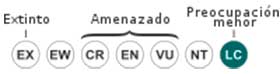
minor concern Minor Concern โ“˜ (UICN)โ“˜

โ€ข Current category of the Red List of the UICN: Least concern.

โ€ข Population trend: Decreasing.

Justification of the population

The size of the world population It has not been quantified, but this species is described as ยซcommonยป (Stotz et to the., 1996).

Justification of trend

It is suspected that this species has lost 20,7-24,8% of habitat suitable within their distribution during three generations (15 years), on the basis of a model of Amazon deforestation (Soares-Filho et to the., 2006, Bird et to the., 2011). So, It is suspected that will decrease in <25% durante tres generaciones.

"Golden-winged Parakeet" in captivity:

Rare in captivity. They are birds a bit nerve until you are acclimatized to its owner. They can be housed in an Aviary with other parrots.

Alternative names:

Golden-winged Parakeet, Golden winged Parakeet, Golden-winget parakeet, Tuipara Parakeet (English).
Toui para (French).
Braunkinnsittich (German).
periquitinho, Periquito-de-asa-dourada, periquito-de-asas-douradas, tuipara-de-asa-dourada, tuipara-de-asa-laranja, periquitinho, periquito-de-asas-douradas, tuipara-de-asa-dourada, tuipara-de-asa-laranja (Portuguese).
Catita Alidorada, Periquito de Alas Amarillas (espaรฑol).
Periquito Ala Dorada (Venezuela).

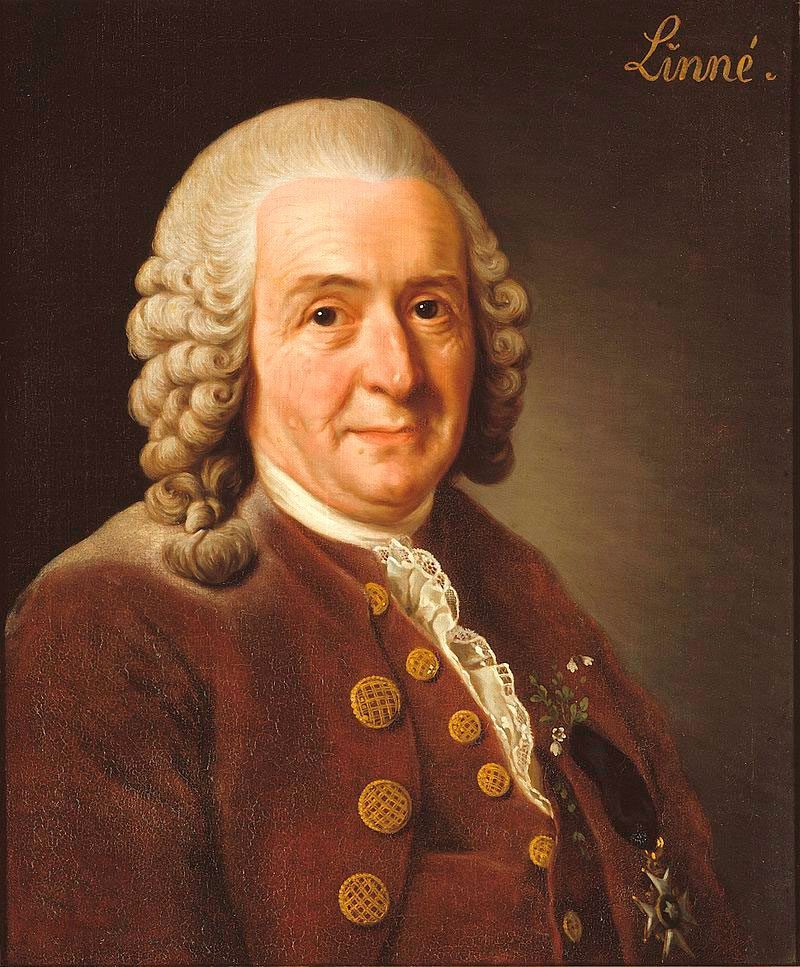
Carl Linnaeus
Carl Linnaeus

scientific classification:

Order: Psittaciformes
Family: Psittacidae
Genus: Brotogeris
Scientific name: Brotogeris chrysoptera
Citation: (Linnaeus, 1766)
Protonimo: Psittacus chrysopterus


Images "Golden-winged Parakeet"


Species of the genus Brotogeris

Sources:

Avibase
– Parrots of the World โ€“ Forshaw Joseph M
– Parrots A Guide to the Parrots of the World – Tony Juniper & Mike Parr
Birdlife
– Parrot Book, Parrots and macaws Neotropical

Photos:

(1) – animalphotos
(2) – Modern accepted name (2012) is Brotogeris chrysoptera By William Swainson, F.R.S., F.L.S. (Zoological Illustrations, Volume I.) [Public domain], via Wikimedia Commons

Sounds: controles-canto.org

โ–ท The world of Pets: Dogs, cats, birds, reptiles, amphibians

Red-faced Parrot
Hapalopsittaca pyrrhops

Red-faced Parrot

Content


Anatomy-parrots

Description:

23 cm.. height.

The Red-faced Parrot (Hapalopsittaca pyrrhops) It is distinguishable by the intense red in face and pink magenta in shoulder.

Of bill Of course, yellow feathers on the sides of the neck, crown Green with more bluish back.
Dorsally, wing with blue stain and end blackish; tail with blue border.
In flight, wing with armpit red, Blue-Green rest, tail Red with blue tip.
Youth with the face less red.

Habitat:

Rare. It inhabits in the Woods high Andean, near fells, edges and secondary forests, from the 2400 to 3500 m. They are gregarious, usually in pairs or small flocks of 4 to 6 individuals, rarely more.
They are mostly sedentary. But, can arise some movements seasonal altitudinal.

Reproduction:

Nest in the cavities of trees in October-January; the laying of eggs in late November; the chicks are born in early December, and they leave the nest in late January.

Food:

They feed in the canopy of the forest.
Its diet includes outbreaks, flowers, berries and seeds.

Distribution:

Size of the area of distribution (reproduction / resident): 33.800 km2

Inhabits the southern Andes Ecuador and North end of Peru.

Conservation:


Vulnerable


โ€ข Current category of the Red List of the UICN: Vulnerable.

โ€ข Population trend: Decreasing.

The population is estimated to be a number of 2.500-9.999 mature individuals.

Threats

Its decline is attributed to the destruction and fragmentation of habitat, largely through the conversion of burning forests to small farms (Jacobs and Walker, 1999).

Severe loss of this species can be expected due to deforestation and degradation of forests, by burning and grazing, on Cordillera de Chilla, Loja of Ecuador, although 1995 there were still extensive forest areas (Toyne and Flanagan 1997, Jacobs and Walker 1999).

"Red-faced Parrot" in captivity:

Unknown in the poultry.

Alternative names:

Red-faced Parrot, Ecuadorian Parrot, Red faced Parrot (English).
Caรฏque de Salvin, Caรฏque ร  face rouge (French).
Salvinpapagei, Salvins Zwergpapagei (German).
Red-faced Parrot (Portuguese).
Lorito Ecuatoriano (espaรฑol).
Loro de Cara Roja (Peru).


scientific classification:

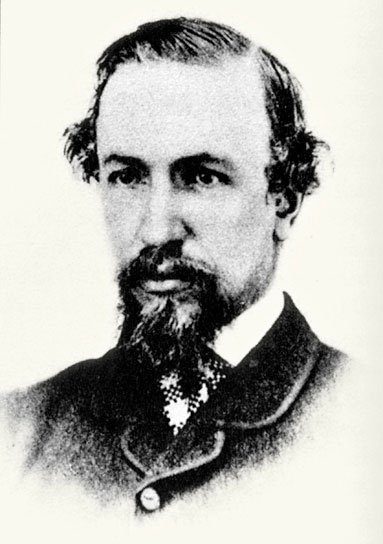
Salvin Osbert
Salvin Osbert

Order: Psittaciformes
Family: Psittacidae
Genus: Hapalopsittaca
Scientific name: Hapalopsittaca pyrrhops
Citation: (Salvin, 1876)
Protonimo: Pionopsitta pyrrhops

Images "Red-faced Parrot"

Videos "Red-faced Parrot"


"Ecuadorian Lorito" (Hapalopsittaca pyrrhops)


Sources:

  • Avibase
  • Parrots of the World โ€“ Forshaw Joseph M
  • Parrots A Guide to the Parrots of the World – Tony Juniper & Mike Parr
  • Birdlife
  • Parrot Book, Parrots and macaws Neotropical

  • Photos:

(1) – Red-faced Parrot (Hapalopsittaca pyrrhops) by Dusan M. Brinkhuizen – IBC

โ–ท The world of Pets: Dogs, cats, birds, reptiles, amphibians

Yellow-tailed black cockatoo
Calyptorhynchus funereus

Yellow-tailed black cockatoo

Content

Description

55 to 65 cm.. length and a weight of up to 900 g..
The Yellow-tailed black cockatoo (Calyptorhynchus funereus) stands out clearly by its plumage mostly black, patch yellow in cheek and yellow panels in tail.

The body feathers They are lined with yellow giving it a scalloped appearance. It has a crest short and moving on top of her head.
The female It has a yellow stain on the cheek more defined and larger than the male, Bello to singr pale gray (Pink in males)
The juveniles has plumage duller overall.
The bill top of immature male black obscures two years old, While the lower peak black four years.

Description 3 subspecies

  • Calyptorhynchus funereus funereus

    (Shaw, 1794) – Nominal. Larger and tail longer dark mottled.


  • Calyptorhynchus funereus whiteae

    (Mathews, 1912)


  • Calyptorhynchus funereus xanthanotus

    (Gould, 1838) – Smaller size, tail shorter dark mottled.

Habitat:

Variety of types habitats, including forests of eucalyptus, heaths, subalpine areas, pine plantations and occasionally in urban areas.
They are often seen flying in pairs or trios formed by a pair and their young., although outside the breeding season they can join in more numerous flocks.

Reproduction:

have a long breeding season, that varies throughout its range, although Tasmania in general it is from October to February. Both sexes construct the nest in holes of mature trees, high, generally eucalyptus. Fill the hole of wood chips. The same tree can be used for many years.

One or two eggs form a clutch. Only the female incubates the eggs, While the male supplies the food. Both parents help rear the chicks, Although usually only one chick survives. The chicks leave the nest about three months after hatching and remain in the company of their parents until the next breeding season.

Food:

Seeds native trees, terrestrial plants and pine cones. Some insects also part of their diet. Unlike other cockatoos, a significant proportion of the diet up wood borers worms. The bird put his ear against the surface of dead trees to hear the sound of worms. If a worm is detected, the bird will use their powerful beaks to pull pieces of the tree until you get to the meal, often leaving a pile of wood chips at the base of the tree. These scars on dead trees are a common sight in the forests of Tasmania.

Distribution:

Size of its range (breeding/resident ): 2.700.000 km2

It is up to the 2000 meters throughout Southeast Australia, from South Eyre Peninsula to the east-central Queensland.
Your number is declining in parts of its range due to habitat fragmentation and loss of large trees used for breeding.
In Tasmania is common and nomadic. They can be seen in many parts of the state and in the larger islands Bass Strait.

Distribution 3 subspecies

Conservation:

State of conservation โ“˜


minor concern Minor Concern โ“˜ (UICN)โ“˜

โ€ข Current category of the Red List of the UICN: Least concern.

โ€ข Population trend: Stable.

This species has a very large range, and therefore not approaching the threshold of vulnerable. Not threatened worldwide. CITES II. As with most other cockatoos, its long-term existence depends on the continued availability of hollow trees for nesting,

The population is estimated at at least 25.000 birds.

The population trend appears to be stable.

"Yellow-tailed black cockatoo" in captivity:

In the poultry industry this species is extremely rare and expensive. In Australia It has attained breed in captivity.
Like all cockatoos, they come to live over 40 years.

Alternative names:

Yellow-tailed Black-Cockatoo, Black Cockatoo, Common Black-Cockatoo, Funeral Cockatoo (English).
Cacatoรจs funรจbre, Cacatoรจs noir ร  queue jaune (French).
Gelbohrkakadu, Gelbschwanz-RuรŸkakadu, RuรŸkakadu (German).
Cacatua-negra-de-cauda-amarela (Portuguese).
Cacatรบa Fรบnebre Coliamarilla, Cacatรบa Fรบnebre de Cola Amarilla (espaรฑol).

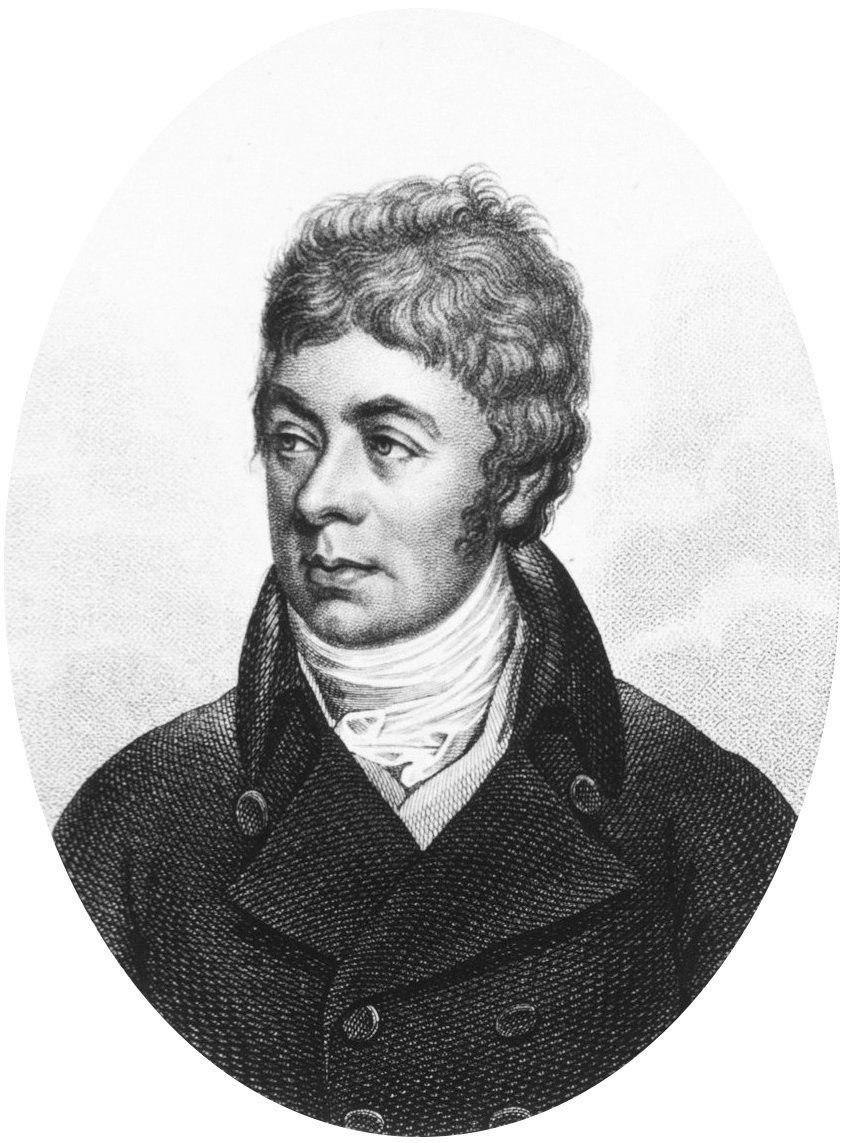
George Shaw
George Shaw

scientific classification:


Order: Psittaciformes
Family: Cacatuidae
Genus: Calyptorhynchus
Scientific name: Calyptorhynchus funereus
Citation: (Shaw, 1794)
Protonimo: Psittacus funereus


Images Cockatoo Fรบnebre Coliamarilla:


Sources:

www.parks.tas.gov.au
avibase
Birdlife

Photos: David Cook

Sounds: Nigel Jackett

โ–ท The world of Pets: Dogs, cats, birds, reptiles, amphibians

Tanimbar corella
Cacatua goffiniana

Cacatua de las Tanimbar

Content

Description

31 to 32 cm.. length and a weight of just 300 g..
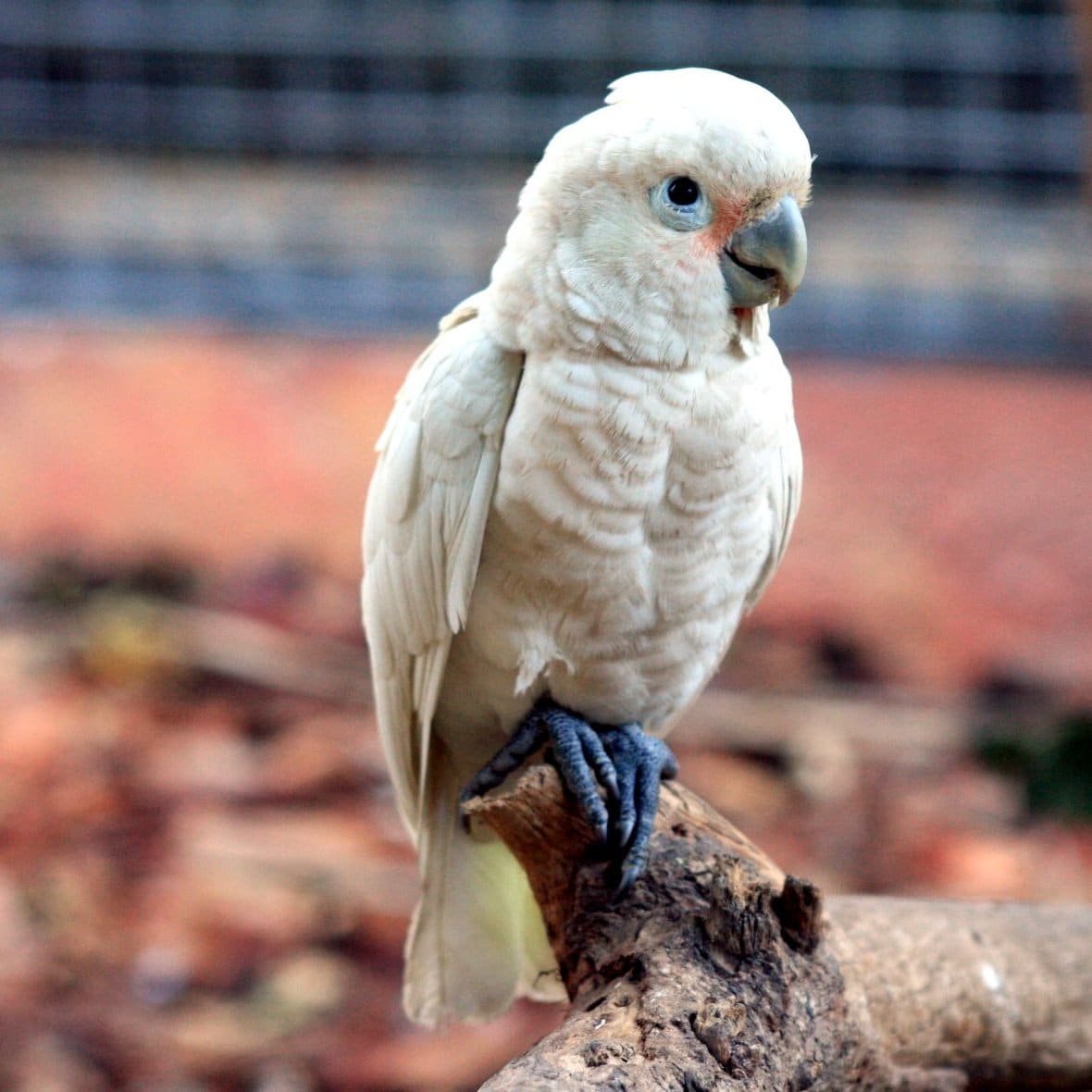
The Tanimbar corella (Cacatua goffiniana), like all family members Cacatuidae, is a species crestada, meaning it has a collection of feathers on its head which can go up or down at will; his body is covered with white feathers with some feathers or salmon pink between bill and eyes.
The deepest parts of the feathers of the crest and of the neck They are also the pink, but the color is hidden by the white color of the more superficial. The bottom of its wings and feathers of the tail They have a yellowish hue. The bill It is pale gray and eyes range from brown to black.
There is a clear sexual dimorphism and, often, merge with the blood cockatoo (Cacatua sanguinea) due to their similar appearance.

Habitat:

Riparian forests, thickets of acacias and eucalyptus with short grass or pasture with scattered groups of trees.

Reproduction:

The start is two to three eggs, generally deposited in the hollow of a tree. The incubation, that is shared by two birds, lasts a few 30 days. The chicks they leave the nest about ten weeks after hatching, and feeding by the parents continues for another few weeks.

Food:

Dried fruits, fruit, berries, flowers, estate, bulbs, egg yolks, sprouts, and insects

Distribution:

Size of the area of distribution (reproduction / resident): 9.100 km2

The Tanimbar Cockatoo It is a species of cockatoo endemic to the forests of Yamdena, Larat and Selaru, all the islands of the Tanimbar Islands of Indonesian. This species has been introduced in the Kai Islands, Indonesian, Puerto Rico and Mexico.

Conservation:

State of conservation โ“˜


Near-threatened Near Threatened โ“˜ (UICN)โ“˜

โ€ข Current IUCN Red List category: Near-threatened.

โ€ข Population trend: Decreasing.

In the Decade of 1970, Japanese loggers ravaged the Islands. Many birds were stunned and disoriented and were captured for pet trade. Although many died from stress during transport, there is still some hope after this ecological disaster, since many cockatoos managed to reproduce in the programs of captive breeding. So, there are now more specimens in captivity than in their natural habitat.

This species has a range very small, but its population is severely fragmented or restricted to a few places. Despite suffering from the pressure of his capture, seems to have maintained a large population. But, the degradation of the habitat, trapping and continuous persecution is likely to be causing a moderate reduction of the population. Therefore it is classified as Near-threatened.

There is a conservation plan in endemic parrots Tanimbar Islands, Indonesian, financed by LORO PARQUE FUNDACIร“N

"Tanimbar corella" in captivity:

You can show a fearful beginning, but you quickly get used to their caregiver, turning into a very cockatoo sweet, playful, sometimes inquisitive and very active. Enjoy being observed, being the center of the world, like all cockatoos. His cry is not nice, but this little cockatoo is quickly forgiven everything as his antics and bad manners will surprise us and make us laugh.

Has the continuing need to fly so you need a large space.

Curiosities:

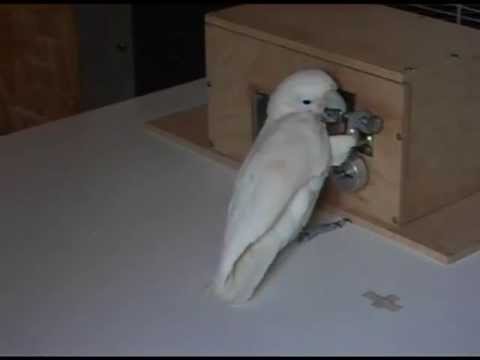
A Tanimbar corella, without previous training, open five types different locks:

The incredible mechanical intelligence of the Tanimbar cockatoos 1

The incredible mechanical intelligence of Tanimbar Cockatoo

Alternative names:

Tanimbar Cockatoo, Goffin’s cackatoo, Goffin’s Cockatoo, Tanimbar Corella (ingles).
Cacatoรจs de Goffin (French).
Goffinkakadu, Goffin-Kakadu (German).
Cacatua-de-goffin (Portuguese).
Cacatรบa de las Tanimbar, Cacatรบa de Tanimbar (espaรฑol).

scientific classification:

Order: Psittaciformes
Family: Cacatuidae
Genus: Cockatoo
Scientific name: Cacatua goffiniana
Citation: Roselaar,CS & Michaels, 2004
Protonimo: Cacatua goffiniana

Images Tanimbar Cockatoo:


Species of the genus Cacatua

Sources:
Avibase, BirdLife.org, faunadex
– Photos: sciencio.com, Marah09013 (Wikipedia),
– Sounds: Frank Lambert (Xeno-canto)

โ–ท The world of Pets: Dogs, cats, birds, reptiles, amphibians

Coconut Lorikeet (massena)
T. haematodus massena


Coconut Lorikeet (massena)

Content

Description (1)

25 cm.. length.

The Coconut Lorikeet (massena) (Trichoglossus haematodus massena) is a variation of the nominal (Trichoglossus Haematodus).

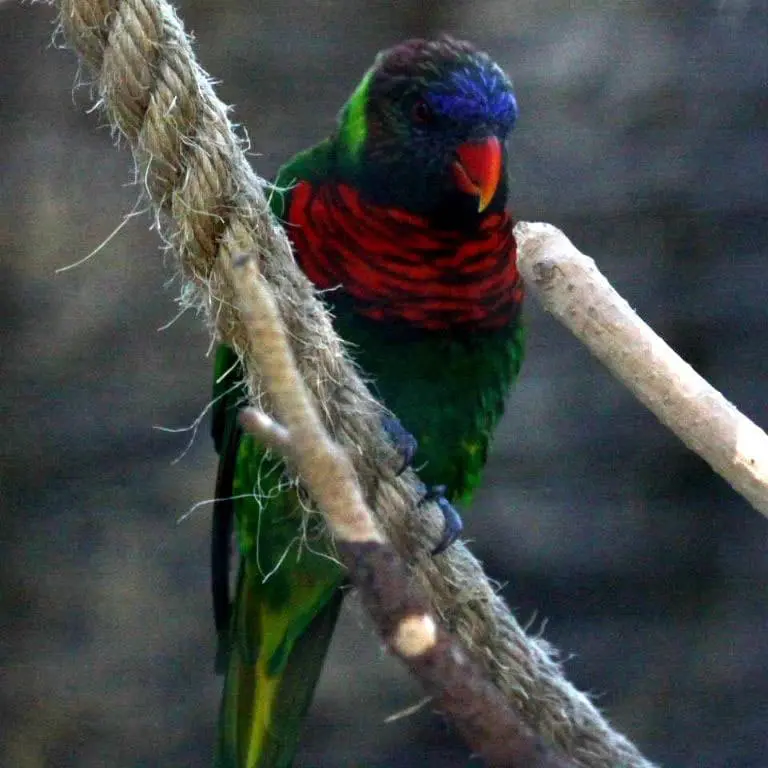
The plumage is similar to the of the Ornate Lory except that it is usually paler. The head is blue, ending at the nape with dark brown feathers interspersed with more Brown clear. The chest is reddish color with a narrow dark blue edging. In some cases, You can see some yellow zones in chest plumage. The abdomen is green; but there may be some kind of marking on the lower abdomen blue-violet.

The eyes are orange brown in juveniles and adult. The beak is orange-red.

Distribution:

Bismarck Archipelago, Solomon Islands and Vanuatu.

Conservation:

This species is endangered due to habitat loss and capture for the pet trade.

Alternative names:

Coconut Lorikeet (massena) (ingles).
Loriquet ร  tรชte bleue (massena) (French).
Allfarblori (massena) (German).
Lรณris-arco-รญris (massena) (Portuguese).
Lori Arcoiris Massena, Tricogloso de Pecho Rojo (massena) (espaรฑol).

scientific classification:

Order: Psittaciformes
Family: Psittaculidae
Scientific name: Trichoglossus haematodus massena
Genus: Trichoglossus
Citation: Bonaparte, 1854
Protonimo: Trichoglossus massena

————————————————————————————————

    (1) – Subspecies Coconut Lorikeet (Trichoglossus haematodus)

————————————————————————————————

ยซLori Arcoiris Massenaยป (Trichoglossus haematodus massena)


Sources:

Avibase

Photos: animalphotos.me

โ–ท The world of Pets: Dogs, cats, birds, reptiles, amphibians

Stephen's Lorikeet
Vini stepheni

Stephen's Lorikeet

Content

Description

19 cm.. length and a weight between 42 and 55 g..

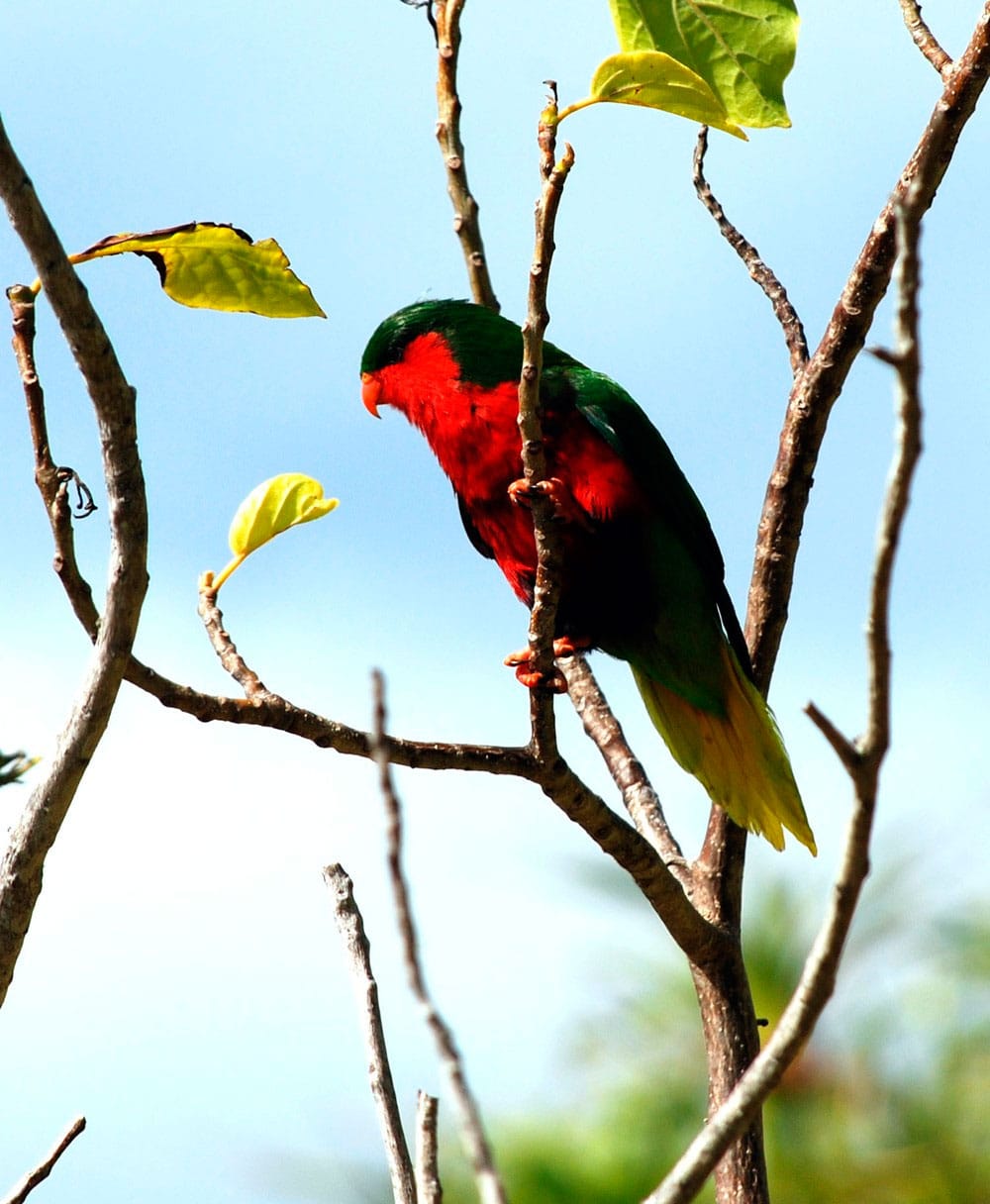
The plumage of the Stephen's Lorikeet (Vini stepheni), in general is green.

The upper part of the head is light green. The region of the windows of the nose, the cheeks, the ear-coverts, the neck, the chest and the abdomen They are red. It has a belt Variable greenish purple size chest. Thighs and bottom of the abdomen They are purple. The Hip is yellowish-green. The feathers wing-coverts They are red and green; the primaries, longer, are black. The upper part of the tail It is yellowish green and the bottom darker yellow with green.

The irises It is reddish brown, the legs and the bill are orange.

The immature they have the underparts green with purple and red marks on the throat and the abdomen. Tail dark green. The bill and eyes They are brown.

Habitat:

Its usual habitat are dense shrubs and trees, Palm trees, handles, coconut and banana plantations.

They make daily trips from the forest into the coastal strips to feed in coconut palms.

They live in pairs or small groups outside of the breeding season.. They are very active and hard to see in dense vegetation; the easiest way to see them is in flight, they are easy to distinguish by their bright red plumage. Its flight is fast with a characteristic buzz of the wings.. They are not shy and allow you to see them up close, are especially when eating.

Reproduction:

There are no data about its reproduction in the wild.

Food:

The Stephen's Lorikeet is omnivore, consumes nectar, pollen and fruits of a wide variety of plants. The flowers of the plants Scaevola sericea and Timonius polygamus They provide the main sources of nectar. Arthropods are part of the diet, including lepidopteran larvae found in the sporangia fern Phymatosorus

Distribution:

Stephen distribution of Lori


The Stephen's Lorikeet is limited to Henderson island in the Pitcairn Islands, a small island uninhabited and surrounded of coral limestone cliffs, in the south-central zone of the Pacific Ocean.

The Pitcairn Islands, Henderson, Ducie and Oeno There are four volcanic islands in the southern pacific ocean. These islands are a British overseas territory (formerly a British colony), the last one left in the peaceful.

In 1987, the total population It was estimated between 720 and 1.820 specimens.


Conservation:


Vulnerable


โ€ข Current IUCN Red List category: Vulnerable

โ€ข Population trend: Stable

This species may be the only member of its genus whose habitat and population size have been little affected by adverse changes in its environment.. But, is qualified as vulnerable, Since it is only on a small island.

It seems to have adapted to the presence of the only introduced predator., the pacific rat (Rattus exulans). In August of 2011, a rat eradication operation was carried out in the Henderson island to eradicate R. exulans of the island. But, the accidental introduction of a more aggressive predator, as other species Rattus, could be devastating. Diseases such as malaria avian and smallpox are another potential threat. The introduction of exotic plant species could have serious consequences for native vegetation and, Therefore, for this species.

– Rat eradication could save seabirds on Henderson Island

Averted a potentially serious threat in 1983 When an American millionaire sought to make a home in the Henderson island. The request was rejected by the Government of the United Kingdom. Henderson is now a world heritage site.

"Stephen's Lorikeet" in captivity:

There are currently no known Stephen's Lorikeet in captivity. VULNERABLE.

Due to its endangered status, any specimen that can not be returned to their natural habitat (natural range) should preferably be placed in a well-managed breeding program to ensure the survival of the species.

Alternative names:

Stephen’s Lorikeet, Henderson Island Lorikeet, Henderson Island Lory, Henderson Lorikeet, Henderson Lory, Stephen’s Lory, Stephens’s Lory (ingles).
Lori de Stephen (French).
Hendersonlori, Henderson Lori (German).
Stephen Lori (Portuguese).
Lori de Stephen (espaรฑol).

scientific classification:

Order: Psittaciformes
Family: Psittaculidae
Genus: Vini
Scientific name: Vini stepheni
Citation: (North, 1908)
Protonimo: Calliptilus ? stepheni

Stephen Lori "Images":

Videos "Stephen's Lorikeet"

————————————————————————————————

ยซLori de Stephenยป (Vini stepheni)


Sources:

Avibase
– Parrots of the World โ€“ Forshaw Joseph M
– Parrots A Guide to the Parrots of the World – Tony Juniper & Mike Parr
– Birdlife

Photos:

1 – by ยฉ Pawl Warren – UK OVERSEAS TERRITORIES CONSERVATION FORUM
2 – By Peter Fitzgerald, Andrew J.Kurbiko, Hansbaer, Openstreetmap (File:Pitcairn Islands map.svg) [CC BY-SA 3.0], via Wikimedia Commons

Sounds: Mark Todd (Xeno-canto)

โ–ท The world of Pets: Dogs, cats, birds, reptiles, amphibians

Striated Lorikeet
Charmosyna multistriata

Striated Lorikeet

Content

Description

They weigh around 40 to 50 g. and length of 18 cm..

The plumage of the Striated Lorikeet (Charmosyna multistriata) It is predominantly green with yellow stripes on the belly and in the chest.

The throat, the forecrown and sides of the head They are slightly more yellow. The neck and the back of the head They are brown with some orange yellow stripes. The tail is olive green on top and having a tip dark yellow. The bottom of the tail It is greenish yellow with some red feathers around the vent. The most characteristic feature of Striated Lorikeet is the bill two colors. Upper bill is blue-gray with a touch of red orange, While the bottom is completely reddish-orange. Only one other Lori with a peak of two colors and that is the Musk Lorikeet. The irises It is red and legs They are gray with black nails.

Both sexes are the same color, the male is slightly larger and has a bill longer. They are also a little colored in the head.
The immature They have the same colors as adults, only the bill it is more black and darker stripes.

Habitat:

It inhabits in the mountains and hills and forest edges. Mainly found between 180 and 1.800 m, but they have been at much lower altitude, about 80 m. Found in pairs or in small groups of up 20 birds, sometimes fellowship with the Red-flanked Lorikeet and the Fairy Lorikeet (observed in mid-February in mixed flocks with these species). similar to the behavior Red-flanked Lorikeet, the consorts, but although they have observed flocks Striated Lorikeet fly with the Red-flanked Lorikeet, they usually form discrete individual groups.

Reproduction:

Habits of nesting and breeding unknown.

Food:

Prefer treetops in bloom where it feeds on pollen and nectar, but they may also feed on epiphytes.

Distribution:

Size of the area of distribution (reproduction / resident) 170,000 km2

Endemic to the montane forests of the center of West Papua New and Papua New Guinea, South of the cordillera central. The world population It is believed to be of less than 10.000 specimens, but it is probably stable. A small number in captivity.

Conservation:


Near-threatened


โ€ข Current IUCN Red List category: Near threatened

โ€ข Population trend: Decreasing

Its habitat is locally threatened by logging and clearing for agriculture. Reports of the species in Ok Tedi They show that the population of the Striated Lorikeet has fallen dramatically after the severe drought in 1997-1998 (P. Gregory in litt., 2010).

The species may be threatened by the presence of a large copper and gold open pit mine in Ok Tedi, but the impacts of this mine are currently unknown. It is likely to be tolerant of uneven and degraded forests and although it may have a small population in general, do not believe that it is declining very rapidly.

"Striated Lorikeet" in captivity:

In aviculture the Striated Lorikeet It has become one of the rarest species. These birds have not been imported in large quantities, and many of the birds that survived the journey later died due to infections by fungi and other diseases. Few breeders were able to raise them on a regular basis.

Alternative names:

Striated Lorikeet, Streaked Lorikeet, Yellow Streaked Lory, Yellow-streaked Lorikeet (ingles).
Lori striรฉ (French).
Streifenlori (German).
Lori Estriado (espaรฑol).

scientific classification:

Order: Psittaciformes
Family: Psittaculidae
Genus: Charmosyna
Scientific name: Charmosyna multistriata
Citation: (Rothschild, 1911)
Protonimo: Charmosynopsis multistriata

"Lori striated" images:

————————————————————————————————

ยซLori striatedยป (Charmosyna multistriata)


Sources:

Avibase
– Parrots of the World โ€“ Forshaw Joseph M
– Parrots A Guide to the Parrots of the World – Tony Juniper & Mike Parr
– Birdlife
– loryclub

Photos:

1 – Author: Jaroslav Chloupekbiolib.cz
2 – by DavyVanthuyneโ€™s Bucket
3 – Birds-pet-wallpapers – link
4 – Author iggino – lynx
5 – tierportraet.ch – link