18 cm.. height.
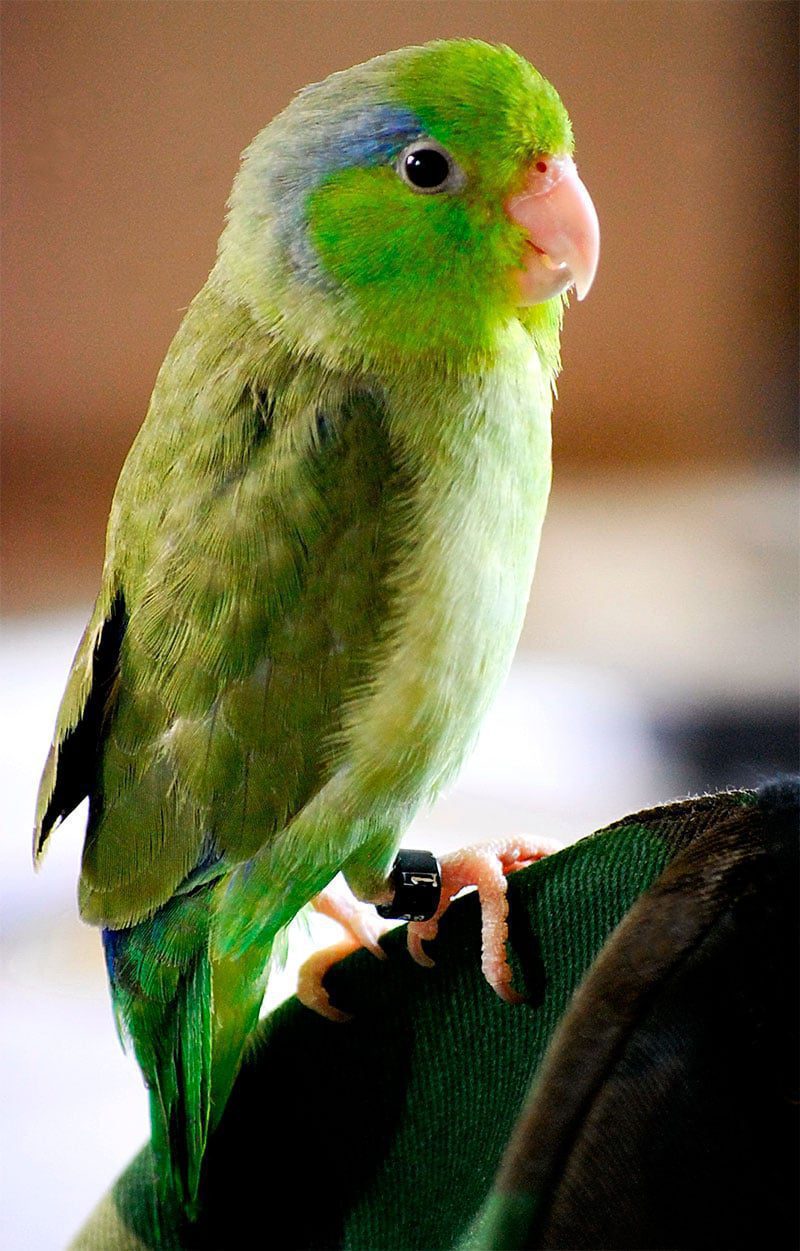
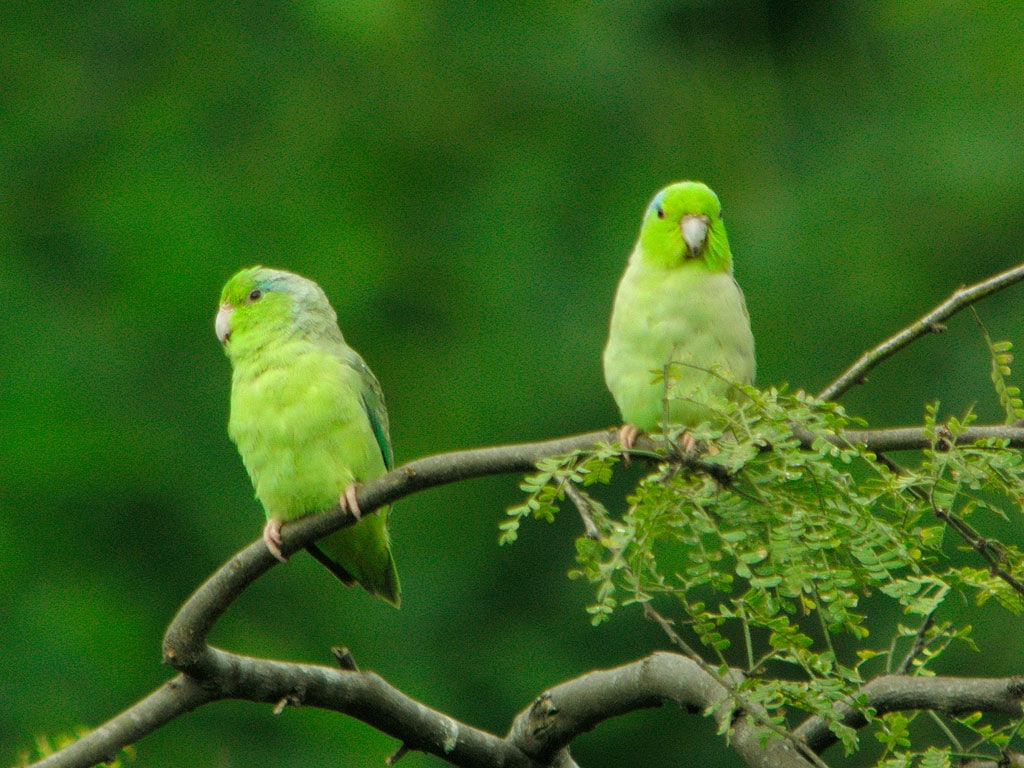
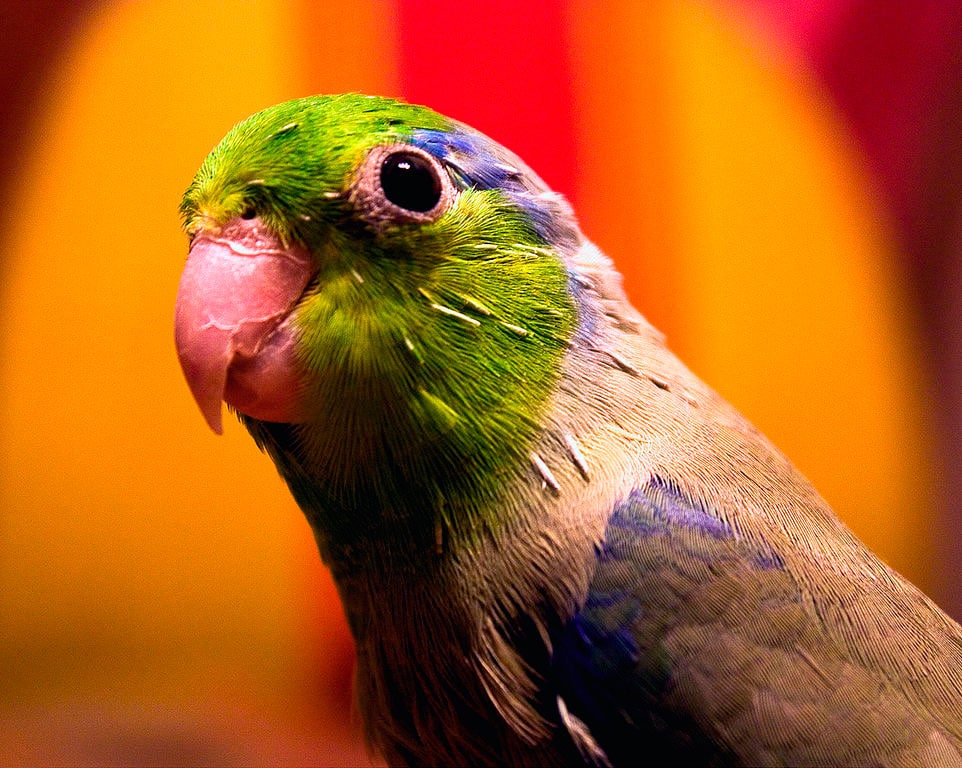
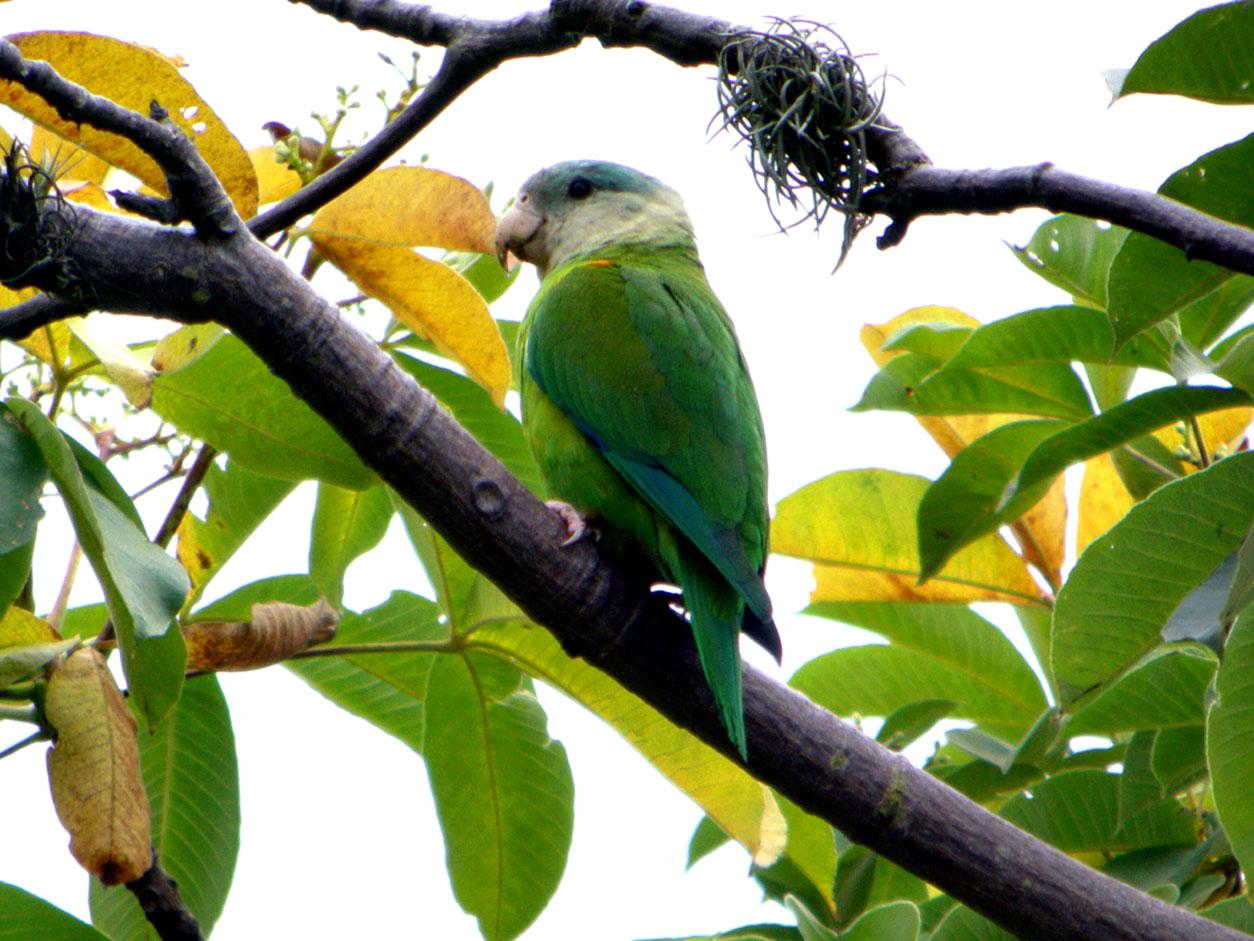
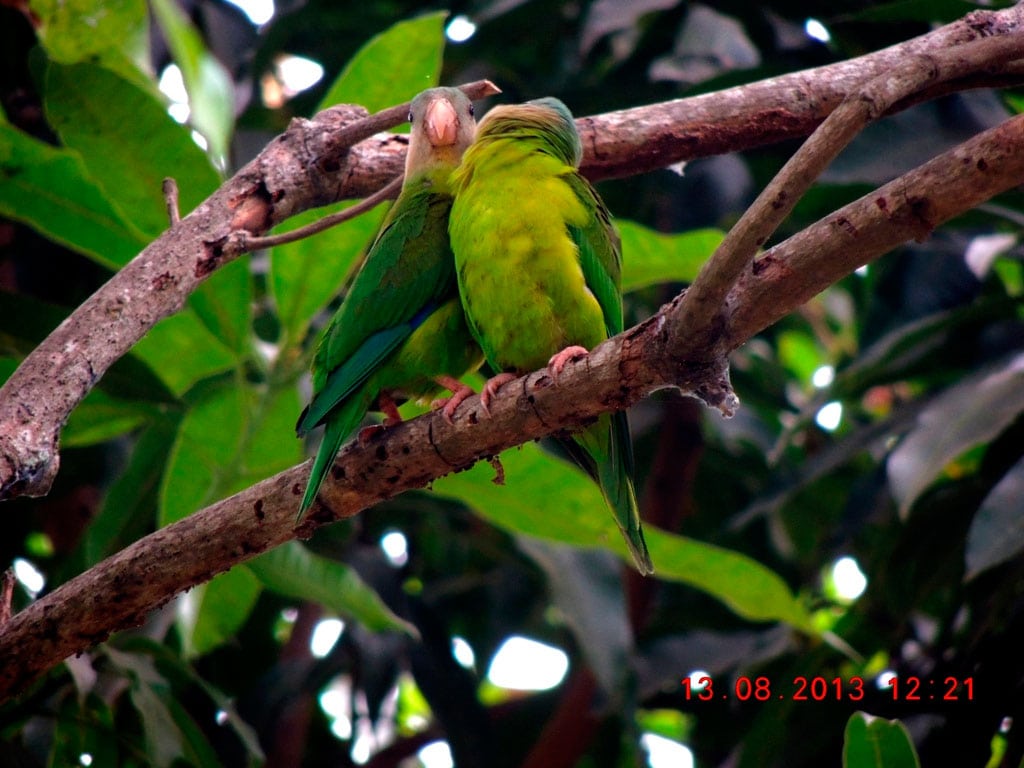
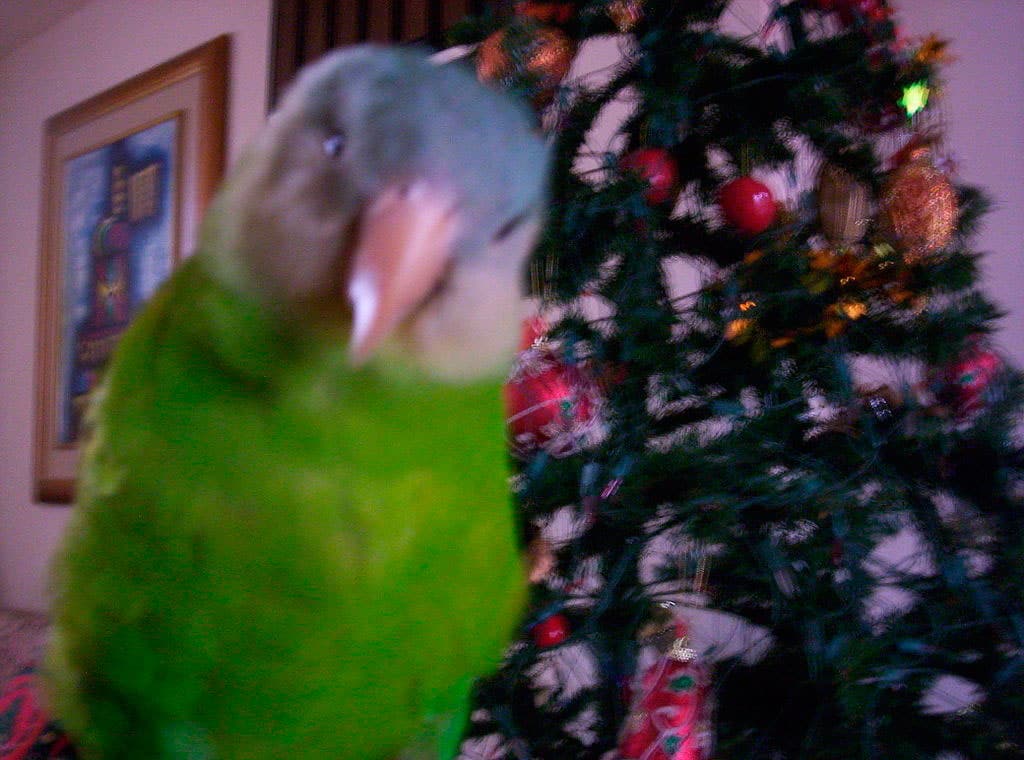
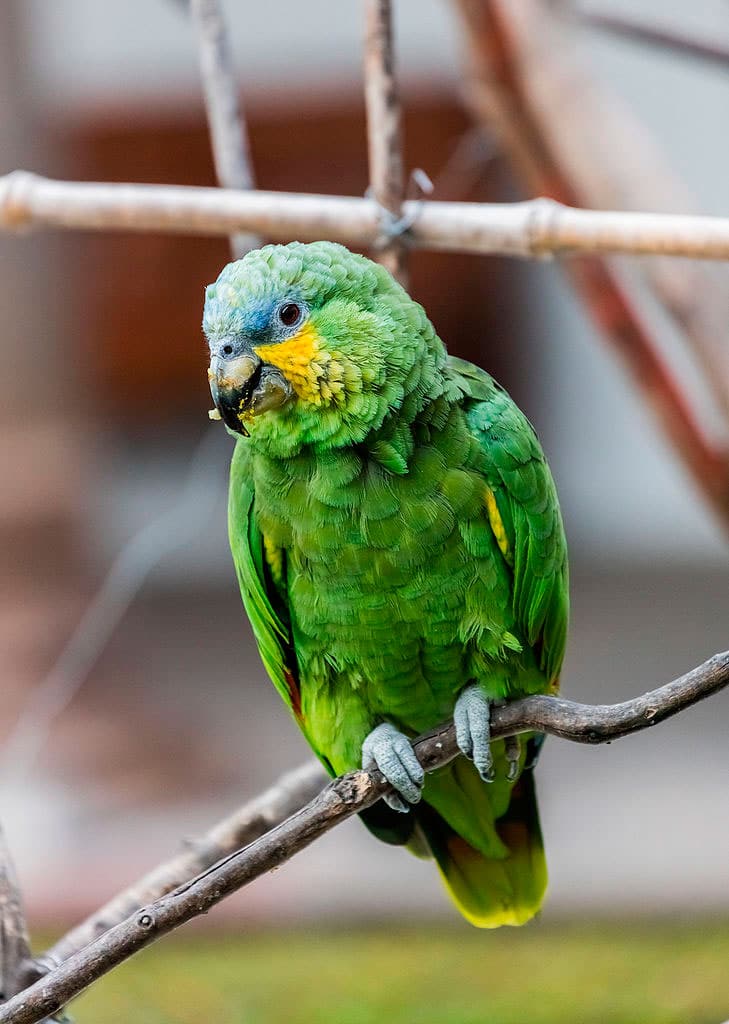
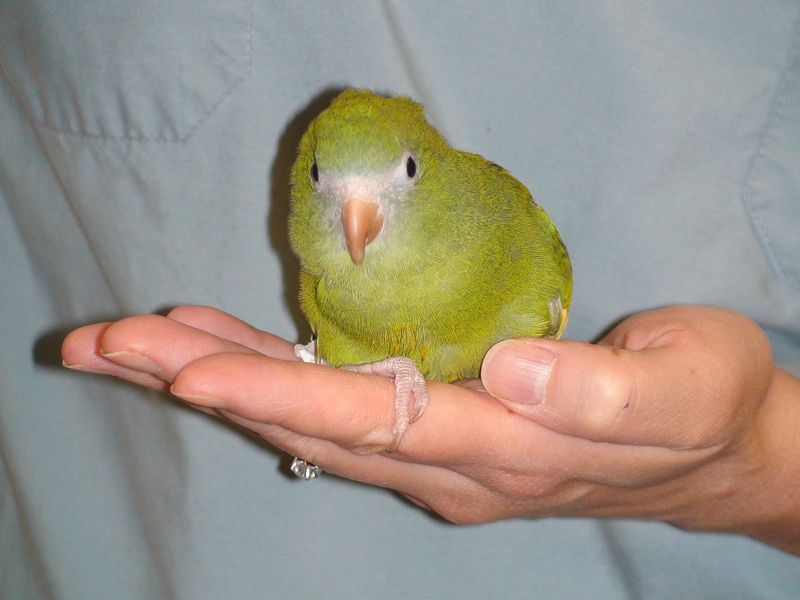
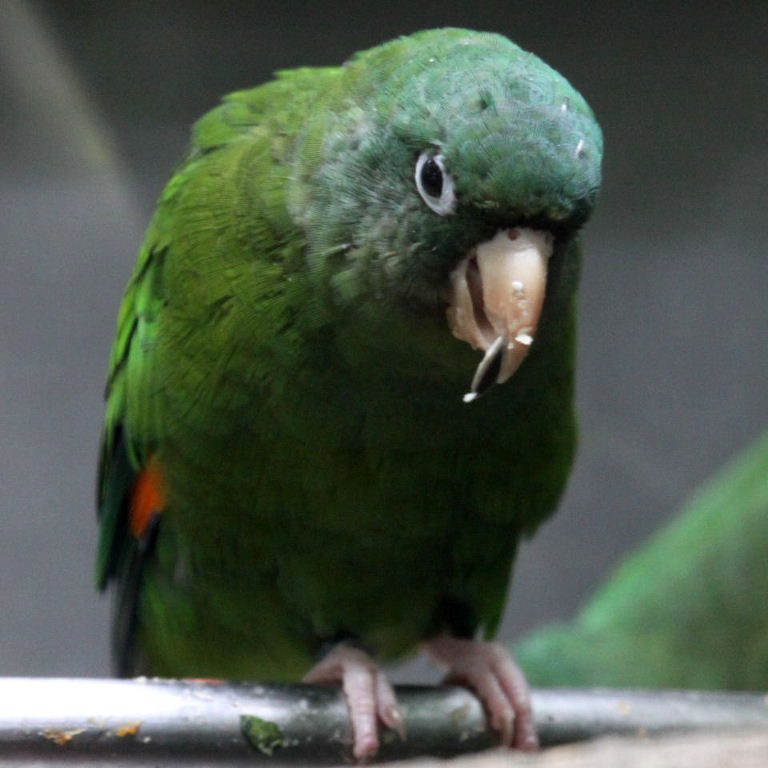
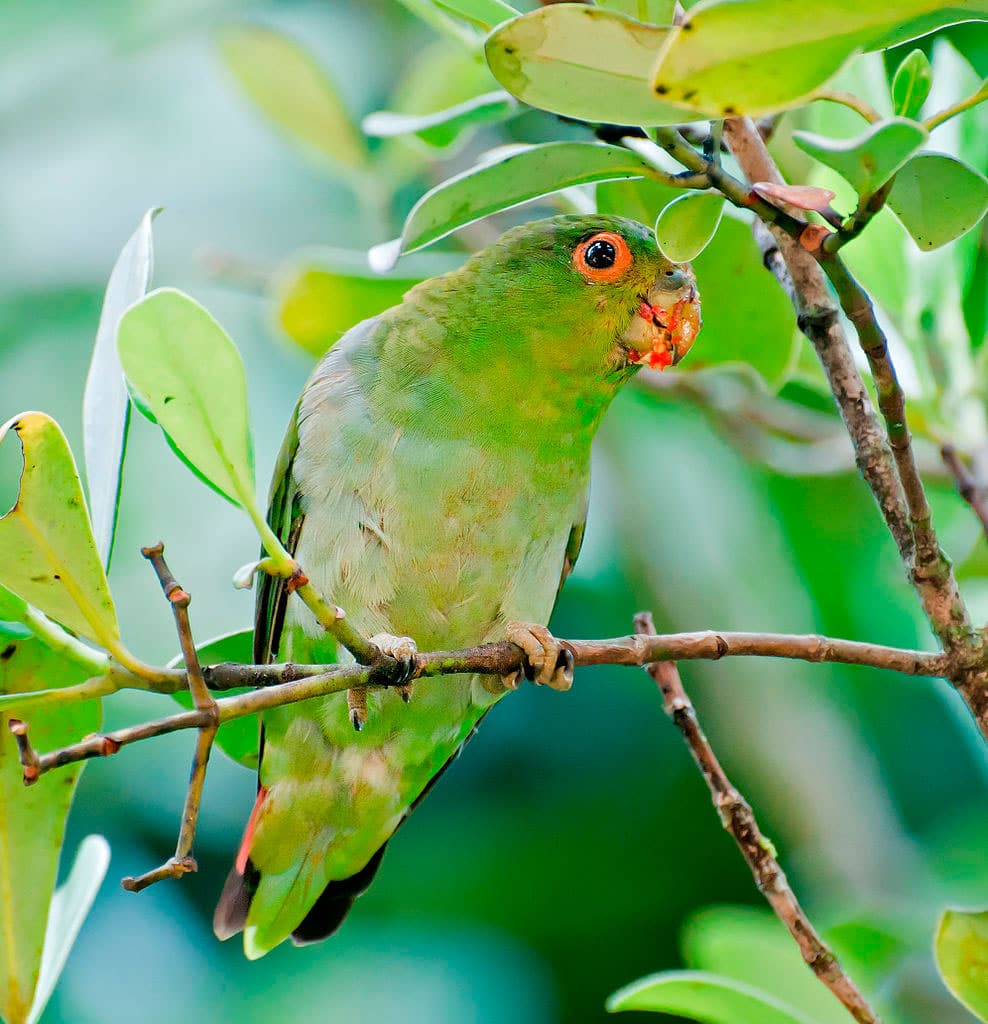
The Golden-winged Parakeet((Brotogeris chrysoptera)) has a tail short and finished in tip, bill Of course, body almost all green.
Its main characteristic is to have wing
a patch orange or gold and the end blue (more visible on the fly). Crown bluish, forecrown and throat orange.
The eye ring is whitish and without feathers; the irises is of color Brown dark and the legs flesh-colored.
The immature is distinguished by not having the Golden wing patch.
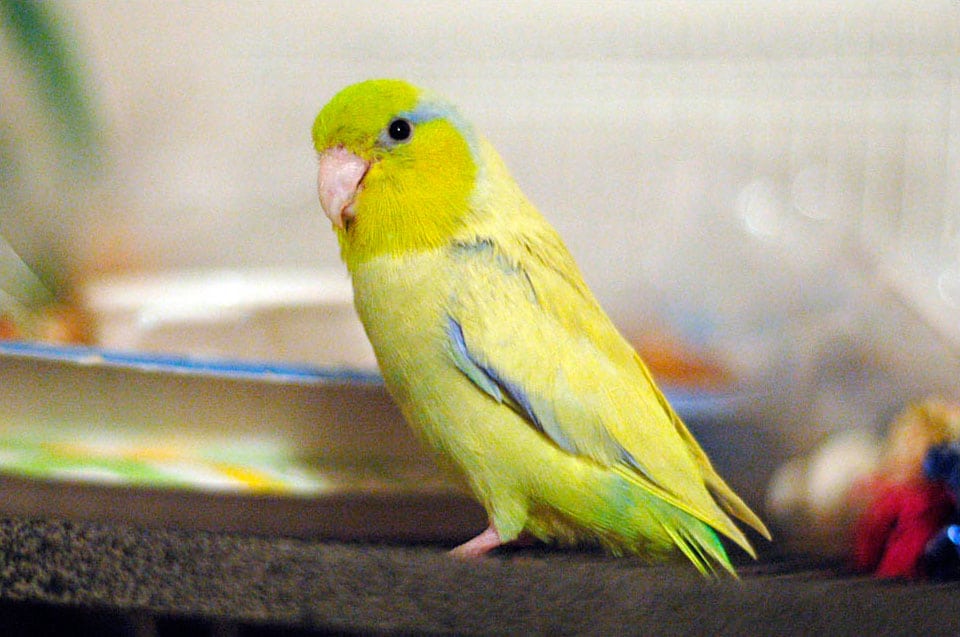
(Sclater,PL) – Golden parakeets. Its plumage is generally more yellow. L0s adults have yellow-orange the forecrown and the regions between them eyes and the peak, on the sides of the head. There is a patch in the chin orange. The primary coverts are yellow. Son bigger the species nominal.
Brotogeris chrysoptera solimoensis
(Gyldenstolpe, 1941) – Codajรกs Golden parakeets. Similar to subspecies nominal, but the frontal band is more pale and of color brown reddish. The patch of the chin is a yellow-brown color.
Brotogeris chrysoptera tenuifrons
(Friedmann, 1945) – Black River Parakeets. Similar in appearance to the subspecies Brotogeris chrysoptera tuipara, with the exception of the frontal band orange, which is minimal or absent.
Brotogeris chrysoptera tuipara
(Gmelin, 1788) – Parakeets Tuipara. It also seems to refer to the species, with the exception of its plumage that is usually more yellow. adults have a frontal band fine of color orange and a patch Orange in the chin. The lateral feathers with edges yellow. They are also bigger that the subspecies nominal.
Habitat:
Video – "Golden-winged Parakeet" (Brotogeris chrysoptera)
It inhabits in humid forest and savannah, more common to 300 meters although it has reported to them 1200 m. You in groups small of 8 to 16 individuals not reproductive time, It is common to see more than 100 consuming fruits in the canopy. Noisy when flying and silent when they feed on.
Reproduction:
Nest on trees, in hollows and termite mounds. Breeding season in November, February and April.
Food:
With feeds of the nectar of the flowers, fruit, figs, berries and seeds.
Distribution:
Size of the distribution (reproduction / resident): 3.110.000 km2
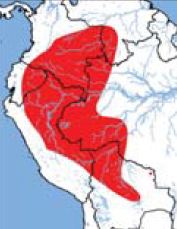
Its population is distributed between the East of Venezuela, Guyanas, Center and East of the Brazilian Amazon.
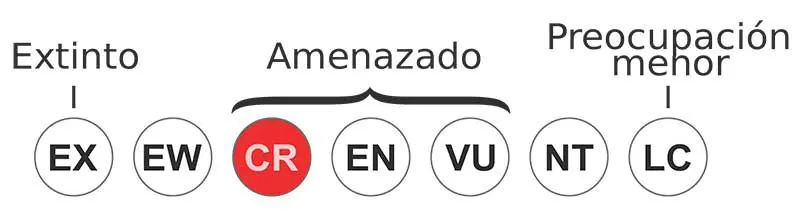
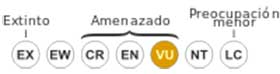
โข Current category of the Red List of the UICN: Least concern.
โข Population trend: Decreasing.
Justification of the population
The size of the world population It has not been quantified, but this species is described as ยซcommonยป (Stotz et to the., 1996).
Justification of trend
It is suspected that this species has lost 20,7-24,8% of habitat suitable within their distribution during three generations (15 years), on the basis of a model of Amazon deforestation (Soares-Filho et to the., 2006, Bird et to the., 2011). So, It is suspected that will decrease in <25% durante tres generaciones.
"Golden-winged Parakeet" in captivity:
Rare in captivity. They are birds a bit nerve until you are acclimatized to its owner. They can be housed in an Aviary with other parrots.
Alternative names:
– Golden-winged Parakeet, Golden winged Parakeet, Golden-winget parakeet, Tuipara Parakeet (English).
– Toui para (French).
– Braunkinnsittich (German).
– periquitinho, Periquito-de-asa-dourada, periquito-de-asas-douradas, tuipara-de-asa-dourada, tuipara-de-asa-laranja, periquitinho, periquito-de-asas-douradas, tuipara-de-asa-dourada, tuipara-de-asa-laranja (Portuguese).
– Catita Alidorada, Periquito de Alas Amarillas (espaรฑol).
– Periquito Ala Dorada (Venezuela).
– Avibase
– Parrots of the World โ Forshaw Joseph M
– Parrots A Guide to the Parrots of the World – Tony Juniper & Mike Parr
– Birdlife
– Parrot Book, Parrots and macaws Neotropical
– Photos:
(1) – animalphotos
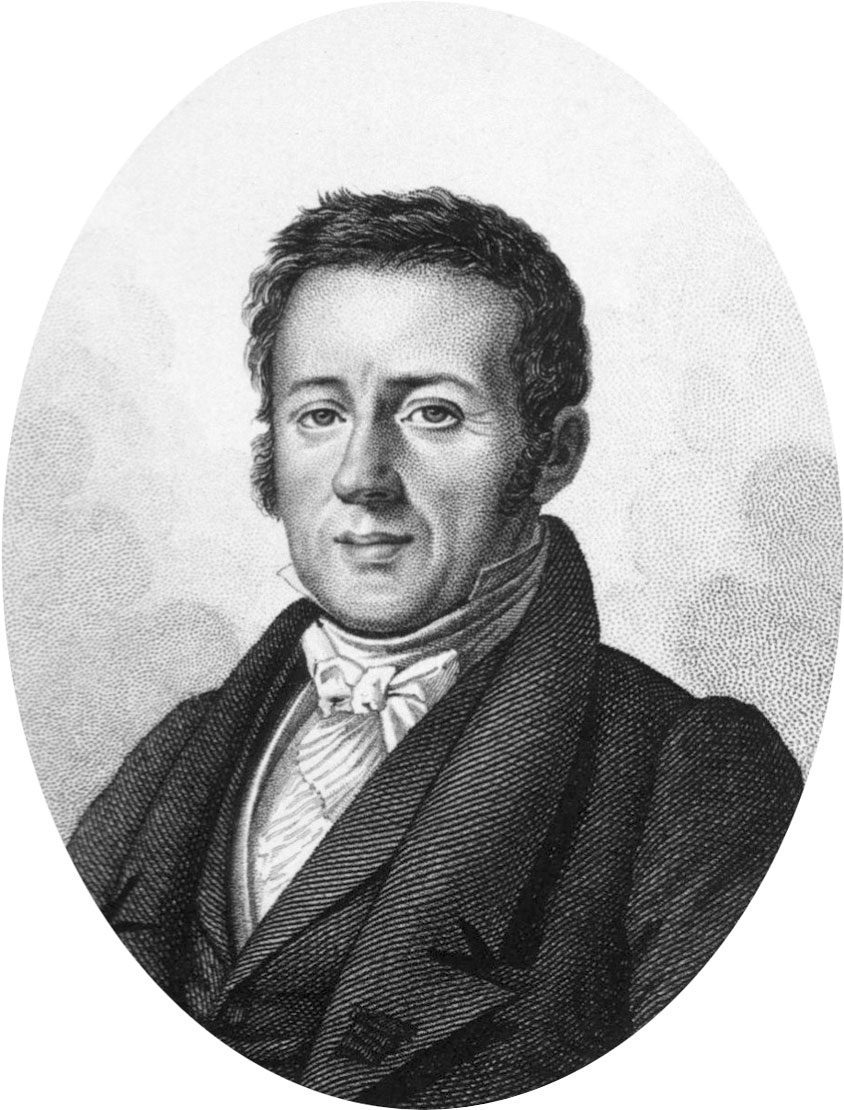
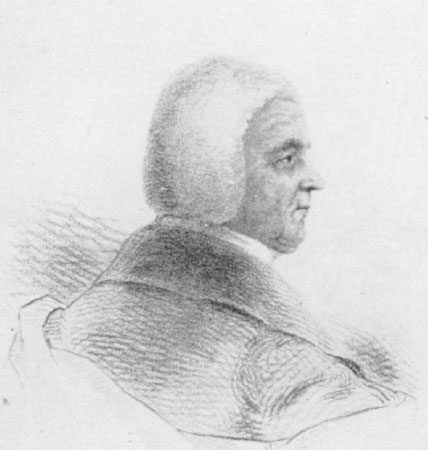
(2) – Modern accepted name (2012) is Brotogeris chrysoptera By William Swainson, F.R.S., F.L.S. (Zoological Illustrations, Volume I.) [Public domain], via Wikimedia Commons
– Sounds: controles-canto.org
โท The world of Pets: Dogs, cats, birds, reptiles, amphibians
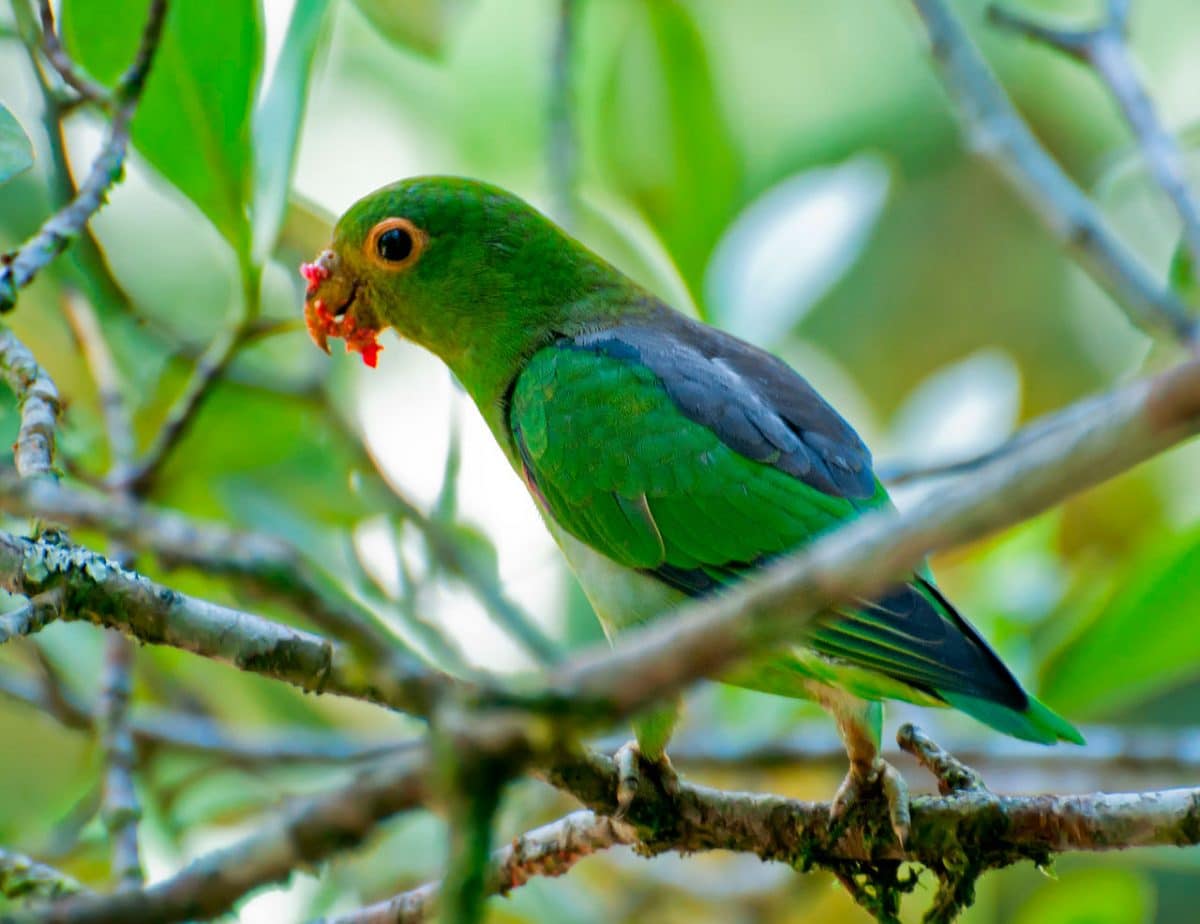
The Brown-backed Parrotlet(Touit melanonotus) has the forecrown, the lower cheeks, the sides of neck, the crown and the rear of the neck, grass-green; lores and upper cheeks paler and more yellowish green; ear-coverts brown. Mantle, back and center rump dull blackish-brown color; scapulars, sides rump and uppertail-coverts green.
Inner coverts and median, alula and primary coverts, blackish brown (the latter with narrow green margins at the outerweb); other coverts greenish brown grass. Tertiary brown. Flight feathers green on the outerweb with black opaque brown at the tips and innerwebs. Underwing, with coverts dull green, flight feather, pale grayish green. Chin yellowish; underparts pale grayish green, blur on the sides of chest. Upper, the tail centrally green with black spot on the tips of the outerweb. Outer feathers bright red at the base with broad black subterminal bands and a small green patch tips; undertail, the tail pale green tones and duller with greyish stain on the tip, pale red in outer featherss. Bill yellow distally, greyer towards base; irises grey; legs grey.
The females may show duller bluish-grey on underparts. Immature not described.
Mainly reported in humid forests on the lower mountain slopes. Most of the records are in altitudes between 500-1.000 m (1.400 metres in the Itatiaia National Park), but some are lowlands to near sea level (for example, Isla del Cardoso). gregarious and generally in small groups 5-20 birds.
Reproduction:
Virtually no information on the breeding. Presumably it occurs in September-October, but this is unconfirmed (Collar 1997a, Necklace et to the ., 2013). A juvenile was photographed in the Serra dos รrgรฃos National Park in December of 2008 (Young y Pimentel 2009).
Size of its range (breeding/resident): 400.000 km2
The Cotorrita Dorsinegra has a limited distribution in southeast Brazil, from Bay (three records in the nineteenth century) to the South of Sรฃo Paulo, leaping Espirito Santo (although presumably it is extinct there).
โข Current category of the Red List of the UICN: Vulnerable.
โข Population trend: Decreasing.
Population size : 2500-9999 specimens.
JJustification of the Red List category
It is likely that the population of this species is small and decreases, with small subpopulations. For these reasons, the species is classified as Vulnerable.
Justification of the population
The evaluation of the Brazilian Red List poultry (MMA 2014) It is estimated that there <10.000 individuos maduros con <1,000 individuos maduros en cada subpoblaciรณn.
Justification of trend
Se sospecha una decrease moderate and continuous of the population because rates of habitat destruction and degradation.
Conservation Actions Underway
CITES Appendix II. In Brazil, this species is considered Vulnerable nationally (Silveira & Straube 2008, MMA 2014), and it is protected by Brazilian law. It is distributed in many protected areas, with recent records: Desengano State Parks and Pedra Branca, Itatiaia, Serra dos รrgรฃos and Tijuca National Parks (Rio de Janeiro); Experimental Station Ubatuba, Iguape Environmental Protection Area, Serra do Mar, Ilha do Cardoso and State Parks Intervales (Sao Paulo); Salto Morato Natural Reserve y Marsh Antwren (Paranรก) (Wege and Long 1995, Aleixo y Galetti 1997, Necklace et to the ., 2013)
Conservation Actions Proposed
Examine the suitable habitat in Bahia and Espรญrito Santo to clarify their distribution and status. To determine the seasonal abundance at different elevations. You consolidate the protected areas where distributed.
– Avibase
– Parrots of the World โ Forshaw Joseph M
– Parrots A Guide to the Parrots of the World – Tony Juniper & Mike Parr
– Birdlife
– Photos:
(1) – A Brown-backed Parrotlet in Ubatuba, Sao Paulo, Brazil By Dario Sanches from Sao Paulo, Brazil [CC BY-SA 2.0], via Wikimedia Commons
(2) – A Brown-backed Parrotlet in Ubatuba, Sao Paulo, Brazil By Dario Sanches from Sao Paulo, Brazil [CC BY-SA 2.0], via Wikimedia Commons
(3) – A Brown-backed Parrotlet in Ubatuba, Sao Paulo, Brazil By Dario Sanches from Sao Paulo, Brazil [CC BY-SA 2.0], via Wikimedia Commons
16,5 to 17,5 cm.. height.
The Tui Parakeet(Brotogeris sanctithomae) has the forecrown and the front of the crown, bright yellow; rest of the head and nape, bluish green.
Mantle, back and scapulars dark green, paler and brighter in the rump and in the uppertail-coverts. Alula blue on the innerwebs, greenish on the outerweb; primary coverts greenish blue; other coverts green, the smaller and medium slightly impregnated olive green. Flight feathers greenish-blue on outerweb, dark green innerwebs, and light blue below; infra-wing coverts minor, green, the greater coverts, blue. Underparts brighter yellowish green. Upper, the tail is green; below is more yellowish.
The bill It is quite dark orange-brown; Cere pale pink; the irises brown; legs grayish bone.
(Neumann, 1931) – The yellow stripe behind (and sometimes below) of the eyes It extends over the ear-coverts. The yellow patch on the forecrown sometimes it is larger.
Habitat:
Mainly inhabits in second-growth forests, in humid areas of tropical forest, forests and marshes on the banks of large rivers and river islands and clearings near watercourses; to 100 metres in Colombia and 900 metres in Peru. Gregaria, usually in small flocks; sometimes in larger meetings. The Tui Parakeet it is very common in riverside towns and cities where it arrives in large flocks to spend the night. Visit palms on the banks of rivers.
Reproduction:
It nests on trees, in natural hollows or termiteros, small and noisy groups. views in nests in May and July, with immature during the month of June Colombia.
Food:
Few details about their diet; taking views flowers Erythrina in Colombia.
Distribution:
Size of the area of distribution (reproduction / resident): 3.870.000 km2
This species is confined to the Basin Amazon Southeast Colombia (area of Leticia), northeast and southeast Peru and to the West of Brazil, possibly on the right bank of Black river and in river basins Purus, Solimรตes (this to about Cojadรกs) and south of Juruรก, to the North of Bolivia in Pando and Beni, It is able to see so dispersed in the Eastern Amazonas, around river mouths Negro and Madeira, to the this to Amapรก and Pari Eastern, possibly up area Bethlehem.
Apparently sedentary. Local (for example, in Loreto, Peru) but common or abundant in many places (for example, about Leticia).
Perhaps its population has been reduced due to trade locally (for example, in Peru), but the effect of habitat loss remains within the range lower. Present in many protected areas (for example, > Manu National Park, Peru).
Distribution 2 subspecies:
Brotogeris sanctithomae sanctithomae
(Statius Mรผller, 1776) – Nominal. West Basin amazon, from the southeast of Colombia to the North of Bolivia.
Brotogeris sanctithomae takatsukasae
(Neumann, 1931) – Both sides of the basin under amazon, from the junction with the Black river to the East of Pari.
Conservation:
State of conservation โ
Minor Concern โ(UICN)โ
โข Current category of the Red List of the UICN: Least concern.
โข Population trend: Stable.
Justification of the population
The size of the world population It has not been quantified, but this species is described as ยซcommonยป (Stotz et to the., 1996).
Justification of trend
It is suspected that this species has lost 15,9-17,4% of habitat within its distribution over three generations (15 years) starting from a model of deforestation Amazon (Soares-Filho et to the., 2006, Bird et to the., 2011). Given the susceptibility of the species to hunting and / or capture, suspected population decline in <25% durante tres generaciones.
"Tui Parakeet" in captivity:
saved pet locally but uncommon in captivity outside its range.
– Avibase
– Parrots of the World โ Forshaw Joseph M
– Parrots A Guide to the Parrots of the World – Tony Juniper & Mike Parr
– Birdlife
– Parrot Book, Parrots and macaws Neotropical
– Photos:
(1) – A Tui Parakeet in Uarini, amazon, Brazil By Claudio Dias Timm from Rio Grande do Sul [CC BY-SA 2.0], via Wikimedia Commons
(2) – Tui Parakeet in a cage By Ruth Rogers (originally posted to Flickr as Tui Parrot) [CC BY 2.0], via Wikimedia Commons
(3) – Brotogeris sanctithomae by Gabriel Smith – Flickr
(4) – Brotogeris sanctithomae (Amazon river – Brazil) by Martha de Jong-Lantink – Flickr
(5) – Photo taken from flickr.com โ ยฉbarbetboy
– Sounds: controles-canto.org
โท The world of Pets: Dogs, cats, birds, reptiles, amphibians
The Golden-tailed Parrotlet(Touit surdus) has a plumage mostly green; the forecrown, lores, supercilii area and cheeks, They are yellowed; crown, rear area of the neck, ear-coverts and sides neck, green with dark narrow margins, giving a scaly appearance.
Mantle and back, green with rump and uppertail-coverts slightly brighter, more emerald. Scapulars and inner tertials, warm brown: primary coverts, dark brown, rest of the coverts green. The the flight feathers They are brown above with narrow green margins to outerweb; brown opaque below. Blue feathers Carpal edge of the wing. Underwing-coverts green. Chin yellowish; chest brighter yellowish green, brighter in the belly and in the undertail-coverts. Tail, centrally green with faint black markings at tips, laterally golden-yellow with narrow black tips on upper surface.. The bill yellow horn; gray irises, legs grey.
The female perhaps duller below, with lateral feathers tail greener and green tips and margins. Immature not described.
The subspecies Touit surdus chryseurus it has been proposed to birds of northeastern range on the basis of dubious lateral tail feathers more brownish and smaller.
Touit surdus chryseurus
(Swainson, 1823) – Side tail feathers, brown / yellow; smaller.
They live mainly in evergreen forests lowland, although occasionally they extend to the adjacent lower mountain slopes. Birds have been observed in the canopy of a secondary forest fragment surrounded by open fields; Other reports suggest that birds visit fruiting trees in deforested areas to feed.
You can visit, occasionally, cocoa plantations where trees shade the crop plants, but this has not been tested. They are to 700 m in Alagoas and to 800 m in Espirito Santo, Rio de Janeiro and Sรฃo Paulo. The Brown-backed Parrotlet They seem to live in flocks (mainly 6-12), perhaps you composed of family groups.
Recent observations suggest that this species is resistant habitat alteration.
Reproduction:
The reproduction of this species practically is not registered. A female observed in September Alagoas, He was not in breeding condition.
Food:
Foods reported in feed Brown-backed Parrotlet are fruits Spondias lutea and Rapanea schwackeana
Distribution:
Size of its range (breeding/resident ): 1.680.000 km2
The distribution of the Brown-backed Parrotlet It extends through Atlantic forests of eastern Brazil, including coastal areas of the northeastern states of Paraรญba, Pernambuco and Alagoas with a record Camocim in the North of Cearรก, where there are fragments of humid forest in coastal areas.
They seem to be distributed at low densities and (except a report in the lower basin tiete river in Sao Paulo) It was considered a rare species in the nineteenth century. Like other members of the genus is, without a doubt, ave a difficult to observe, and often overlooked. But, many ancient villages are no longer inhabited, with forests completely eliminated or severely degraded lowland, especially in the north of the mountain range, where you can be almost extinct. In the news They are distributed in several protected areas.
(Kuhl, 1820) – Nominal. Southeast of Brazil, from the South of Bay and possibly southern Goiรกs, south to Sรฃo Paulo.
Conservation:
State of conservation โ
Vulnerable โ(UICN)โ
โข Current category of the Red List of the UICN: Vulnerable.
โข Population trend: Decreasing.
Population size: 2500-9999 specimens.
Rationale for the Red List category
This species is classified as Vulnerable because its population is small and declining rapidly due to continuous deforestation. It has been found that it is more resistant to forest fragmentation of what was thought first, and may be sub-registered instead of actually little, especially in the southern part of its range.
Justification of the population
The species is generally rare; Its population is located in the band 2.500-9.999 mature individuals, equivalent to 3.750-14.999 individuals, rounded here to 3.500-15.000 individuals.
Justification of trend
rapid and continuous population decline is suspected on the basis of continuous destruction and fragmentation of habitat.
Conservation Actions Underway
CITES Appendix II. It is considered Vulnerable nationally in Brazil (MMA 2014). And protected by Brazilian law. There have been numerous protected areas: Hewn Stone Biological Reserve (Alagoas), Monte Pascoal National Park and Serra das Lontras, Biological Reserve and Private Reserve Serra Nice (Bahia), Great stream, Sooretama and Augusto Ruschi), Desengano State Park and Itatiaia National Park (Rio de Janeiro)
Conservation Actions Proposed
Examine the historical towns and proper habitat to clarify the distribution. Research ecology and seasonal movements. designate murici in Alagoas biological reserve and ensure their protection de facto. Consolidate protected areas distributed.
"Golden-tailed Parrotlet" in captivity:
Rare and unknown in captivity. Any captive individual (it can not be released) It should be part of a conservation program well managed to ensure continuity of this species.
(2) – Urochroma deaf By Blanchard, Emile; Bonaparte, Charles Lucian; Bourjot Saint-Hilaire, Alexandre; Le Vaillant, Franรงois; Souancรฉ, Charles de. [CC BY 2.0 or Public domain], via Wikimedia Commons
17 to 20 cm.. height.
The Orange-chinned Parakeet(Brotogeris jugularis) has the forecrown, crown, back of the neck and upper cheeks, bright green with blue tinge; lores and lower cheeks, duller green with olive tinge. feathers in the the mantle and the top of the back, olive-green with more green tips; Scapulars Green tipped bronce-marrones; lower back and rump, bluish green. Lesser coverts and median, foliage color, with a patch large in the shoulder; Primary coverts blue, greater coverts green. Flight feathers greenish blue above, Blue-Green below with less yellow in the underwing-coverts.
Bright orange stain in the throat, which flying becomes very evident. Underparts brighter yellowish green, more blue from the belly up to the undertail-coverts. Upper, the tail bluish green; by below more pale and yellowish.
Bill color pale horn; bare periophthalmic whitish; irises dark brown; legs pink.
The Orange-chinned Parakeet prefer, generally, forests or partially wooded habitats with bushes, deciduous forest, dry and wet, plantations, edge of light and areas cultivated or grasslands with trees large. It tolerates human presence and it attends the parks and gardens in cities. Most numerous in partially deforested areas, mainly in tropical zone, Although it amounts to subtropical vegetation zones in (for example, the Cordillera de Guanacaste, Costa Rica. Observed at altitudes of 500 m (Guatemala), 900 m (Honduras), 1.360 m (El Salvador), 1.200 m (Costa Rica), 1.000 m (Venezuela). Usually, in pairs or small groups, with large gatherings where abundant food. More gregarious outside of breeding season. Rest communally on rubbers (Ficus sp.) or palms.
Son very good flying, in nature there have been flights of up to 45 kilometres per hour.
Reproduction:
Nest from May to July in tree hollows (including old Woodpecker nests) and termite mounds. A laying, usually, compose of four to six white eggs, What hatch after a few 26 days of incubation. The chicks leave the nest about 42 days after birth.
Sometimes colonial. Reproduction reported in March in Mexico; January in El Salvador; February-April in Panama; January-March in Colombia.
Size of the area of distribution (reproduction / resident): 781.000 km2
This parakeet occupies the lowlands of the southern Pacific slope of Mexico, in Oaxaca and Chiapas (reports of Warrior dubious) and areas adjacent to Guatemala and El Salvador, lowlands of the Honduran Pacific, and slopes of the Pacific and Caribbean Nicaragua.
In Costa Rica is mainly a bird of your side of the peaceful, but comes into the lowlands of the Caribbean adjacent, to the South of the Lake Cocibolca, spreading through the Pacific lowlands and the Caribbean from Panama, including the Islands Coiba and Cebaco.
โข Current category of the Red List of the UICN: Least concern.
โข Population trend: Stable.
Justification of the population
Partners in Flight estimate your total population in 500,000-4,999,999 individuals (A. Panjabi in litt., 2008).
Justification of trend
They suspected that the population is stable in absence of evidence of any decline or threatens substantial.
"Orange-chinned Parakeet" in captivity:
Very common in captivity does time. It is a bird very shy and easily alarmable but with the passage of time creates a good emotional relationship with his owner. It can be aggressive with other smaller parrots.
– Avibase
– Parrots of the World โ Forshaw Joseph M
– Parrots A Guide to the Parrots of the World – Tony Juniper & Mike Parr
– Birdlife
– Photos:
(1) – A pet Orange-chinned Parakeet in Panama By Nelson de Witt from USA (IMG_2058Uploaded by Snowmanradio) [CC BY-SA 2.0], via Wikimedia Commons
(2) – An Orange-chinned Parakeet feeding in Panama By Brian Gratwicke (Flickr: Orange-chinned Parakeet) [CC BY 2.0], via Wikimedia Commons
(3) – Orange-chinned parakeets in Panama City, Rep. of Panama. Aproximadamente tres o cuatro meses de edad By Ricaurte Puga (Own work) [GFDL or CC BY-SA 4.0-3.0-2.5-2.0-1.0], via Wikimedia Commons
(4) – Brotogeris jugularis en El Salvador tomando Coca Cola By Kevinmenendez (Own work) [GFDL or CC BY 3.0], via Wikimedia Commons
(5) – This is the smallest parakeet in El Salvador know as Catalnica, Perico de Lesson, Orange-chinned Parakeet (Brotogeris Jugularis) By ceasol (Flickr) [CC BY-SA 2.0], via Wikimedia Commons
(6) – Orange-chinned Parakeet | Brown wing parakeet (Brotogeris jugularis exsul) by Fernando Flores – Flickr
(7) – Conurus jugularis Dev. & Cast. = Brotogeris jugularis (Mรผller, 1776) by Francis de Laporte de Castelnau [Public domain], via Wikimedia Commons
23 cm.. long and about 63 g. of weight.
The Plain Parakeet(Brotogeris tirica) has the forecrown, lores, crown and cheeks, pale green with yellowish tint. Sides of the neck and nape, green, duller than in the head.
The upperparts green, slightly darker than the rest of the plumage. Most of the under wing-coverts, green, some feathers dyed olive brown, especially in lesser and median coverts. Primary coverts, primaries and outer secondaries, violet blue with green margins close to outerweb. Underwing-coverts greenish yellow, flight feather, bluish green. Underparts, pale yellowish green, tinged with bluish color on the sides of chest, the the thighs and undertail-coverts; flanks yellowish. Upper, the tail green with bluish tint to the central feathers; undertail, the tail is grayish blue-green. Bill color pale horn: irises brown: legs Rosaceae.
Both sexes are similar. Immature with little or no blue in primary coverts.
The Plain Parakeet They are experts in the art of adaptation; They can be found in a wider range of habitats than any other endemic parrot Brazilian Atlantic forest: in the lowlands and highlands, in the forest canopy and forest edges, parks and gardens (for example, of Rio de Janeiro and Sรฃo Paulo), farmland with trees, scattered patches of forest and secondary growth. Apparently more numerous in the forest edge habitats. Generally observed in the lowlands, but reported to 1.200 metres in the Itatiaia National Park on the border between the state of Rรญo and Sรฃo Paulo. Gregaria. Generally seen in pairs or small groups, although sometimes you can see several hundred birds together.
It is the most common parrot in Sรฃo Paulo, where you can find even in the slums of the city.
Reproduction:
Observed in arboreal termite nests, in the crowns of Palmas or natural openings of trees; in the city of Sรฃo Paulo nest in crevices of buildings and roofs, regularly using the balconies to feed.
The breeding season It has been recorded in September; observed immature in January. The clutch common in captivity is four eggs. They stay together for life.
Some seasonal movements. Uncommon to fairly common depending on locality, but apparently only reported very common in the city of Sao Paulo. Its population has declined in the Eastern European settlement Brazil, although less than other endemic parrots in the region. Live in several areas protected (for example, Itatiaia National Park).
Conservation:
State of conservation โ
Minor Concern โ(UICN)โ
โข Current category of the Red List of the UICN: Least concern.
โข Population trend: Stable.
Rationale for the Red List category
This species has a very large range and therefore it is not close to the thresholds for Vulnerable under the criterion of size range (Extension Occurrence <20,000 km2 combinada con un tamaรฑo de rango decreciente o fluctuante, extensiรณn / calidad de hรกbitat o tamaรฑo de poblaciรณn y un pequeรฑo nรบmero De lugares o fragmentaciรณn severa). La demographic trend appears to be stable and, therefore, the species does not approach the thresholds Vulnerable under the criteria of population trend (> 30% decline over ten years or three generations). The population size has not been quantified, but it is not believed to be close to the thresholds for Vulnerable under the criterion of population size (<10.000 individuos maduros con un descenso continuo estimado> 10% in ten years or three generations or a population structure). For these reasons the species is evaluated as the least concern.
Justification of the population
The size of the world's population has not been quantified, but this species is described as ยซcommonยป (Stotz et to the., 1996).
Justification of trend
They suspected that the population is stable in absence of evidence of any decline or threatens substantial.
– Avibase
– Parrots of the World โ Forshaw Joseph M
– Parrots A Guide to the Parrots of the World – Tony Juniper & Mike Parr
– Birdlife
– Photos:
(1) – A Plain Parakeet in Morretes, Paranรก, Brazil By Ben Tavener from Curitiba, Brazil [CC BY 2.0], via Wikimedia Commons
(2) – Plain Parakeet in Brazil By Jรดnatas Cunha [CC BY-SA 2.0], via Wikimedia Commons
(3) – Plain Parakeet in captivity By Lucas de Melo [CC BY 2.0], via Wikimedia Commons
(4) – Independence Park, Ipiranga museum, Sao Paulo By Dario Sanches from SAO PAULO, BRAZIL (PERIQUITO-RICO ( Brotogeris tirica)) [CC BY-SA 2.0], via Wikimedia Commons
(5) – Plain Parakeet (Brotogeris tirica) in Sรฃo Paulo By Dario Sanches [CC BY-SA 2.0], via Wikimedia Commons
(6) – Independence Park, Ipiranga museum, Sao Paulo By Dario Sanches from SAO PAULO, BRAZIL (PERIQUITO-RICO ( Brotogeris tirica)) [CC BY-SA 2.0], via Wikimedia Commons
(7) – Independence Park, Ipiranga museum, Sรฃo Paulo Species molting By Dario Sanches from SรO PAULO, BRAZIL (PERIQUITO-RICO ( Brotogeris tirica)) [CC BY-SA 2.0], via Wikimedia Commons
(8) – Brotogeris tirica, Independence Park, Ipiranga museum, Sao Paulo By Dario Sanches from SAO PAULO, BRAZIL (PERIQUITO-RICO ( Brotogeris tirica)) [CC BY-SA 2.0], via Wikimedia Commons
(9) – The Plain Parakeet in the Serra da Cantareira State Park, Sao Paulo, Brazil By Dario Sanches (Flickr: PERIQUITO-RICO (Brotogeris tirica)) [CC BY-SA 2.0], via Wikimedia Commons
(10) – Illustration Ricardo Sanches, parakeets rich(Brotogeris tirica) in ABES-SP
Origin: Colombia, Peru, Brazil, Guyana, Puerto Rico, United States
Character: Affectionate and fun
Life expectancy: 10 to 12 years
Height: 24 to 25 cm.
Content
Description:
The Canary-winged Parakeet(Brotogeris versicolurus) measured between 24 and 25 height cm. Single parakeet with yellow and white patch and blue tip on the wing
, tail green, long and acute (noticeable in flight).
Of overall green coloration, with belly opaque, front and sides of the head grey. It has no sexual dimorphism.
It is found in variety of habitats, humid forest, riparian, edges, stubble, open and urban areas, until 300 m (in Bolivia comes up to the 2700 m).
Abundant trees in cities and towns. They fly high, in pairs or small flocks to large.
Reproduction:
The breeding season includes the months between January and July in South America. The female places of 4 to 5 white eggs. The incubation hard of 23 to 26 days. Usually, the male can stay in the nest at night, but the incubation is main task of females.
It nests in tree hollows and decaying fruit capsules.
Food:
In their natural habitats, the Canary-winged Parakeet, feeds mainly on worms, flowers, seeds and fruit.
Distribution:
Its population is discontinuous. All the banks of the Amazon River, from the East of Ecuador to the South of the French Guiana.
You can also see them out of these places due to its introduction by release of pet; places such as Lima, California, Florida and Puerto Rico.
Conservation:
State of conservation โ
Minor Concern โ(UICN)โ
It is not considered in any of the threat categories, its trade has decreased in recent decades.
Justification of the population:
The size of the world population Canary-winged Parakeet It has not been quantified, but this species is described as ยซcommonยป (Stotz et to the. (1996).
Justification trend:
The population suspected to be stable in the absence of evidence of any reduction or substantial threats.
"Canary-winged Parakeet" in captivity:
Years ago it was a very common bird in captivity, at the present time is less.
RECALLS: NEVER COMMAND A PARAKEET IN THE CITY OR IN THE FIELD
aggressive with other bird species. However, It is possible to keep a group of birds of this species together in a large enough space. Easy of tame If it is manipulated from small. Communicates with their owners, making different sounds, for example, to greet us when we see, When you want food, etc.
They are not usually very noisy. Like to climb by what shall provide elements so you can make this activity. In hot season, supplied with a tray of water so that you can bathe.
20-25 cm.. length and 72 g. of weight.
The Yellow-chevroned parakeet(Brotogeris chiriri) has a plumage, in general, bright green; the underparts They are of a paler green and lower coverts are yellowish-green.
The wings They are of a slightly darker green, with the yellow border, visible when wings remain bent or when the bird is in flight. Their bill, hook-shaped, is orange-brown and legs and feet, pinkish gray. The eye rings They are creamy white and eyes dark browns.
It is intimately related to the Canary-winged Parakeet(Brotogeris versicolurus). In fact, it was considered conspรฉcifica (owned or belonging to the same species) until 1997.
The females sexually dimorphic and are not to be sexed, either surgically or by DNA.
The immature are similar to adults but have the tail shorter and the bill It is a darker brown.
Taxonomic note:
Until 1997, some taxonomists considered the Canary-winged Parakeet and Yellow-chevroned parakeet belonging to the same species. Even though the Yellow-chevroned parakeet It has the same secondary covert yellow feathers that can be seen in the Canary-winged Parakeet – no white in the primary wing feathers.
They are mainly below 1000 m, locally up 2500 meters in a variety of habitats including humid forests, seasonal and coastal, Pantanal, savannah and city parks. reported to 2500 meters in arid areas.
Usually, traveling in flocks; in such small groups as 2 to 4 birds, but they have been observed to 20. They are described as small parrots assets, entertaining to watch.
Reproduction:
Nest usually in the cavities of trees or in tree termite nests. They also form nesting tunnels in dead palm fronds..
Once a nest It has been located and correctly "prepared" by the couple, It is performed the laying, between 4 and 5 eggs. after breeding, the Yellow-chevroned parakeet they form large communal huts until the next breeding season.
Food:
In their natural habitats, feed of seeds (including outbreaks), fruit as berries and figs and flowers. Also consume nectar, insects and their larvae. Often they are seen visiting barreiros (areas where there is soil rich in minerals) and the banks of the rivers to feed on the soil.
Distribution:
Size of its range (breeding/resident ): 5,670,000 km2
Distributed inside East Brazil to the East of Bolivia, Paraguay and North of Argentina, in Formosa, Chaco, Missions and North of Currents. Introduced populations in Miami, Florida and California.
Distribution 2 subspecies:
Brotogeris chiriri behni
(Neumann, 1931) – Center of Bolivia to the Northwest of Argentina, in Salta.
โข Current category of the Red List of the UICN: Least concern.
โข Population trend: Stable.
Rationale for the Red List category
This species has a extremely large range and, therefore, it does not approach the thresholds of vulnerability under the criteria of size range (Extension <20,000 km2 combinada con un tamaรฑo de rango decreciente o fluctuante, extensiรณn / calidad de hรกbitat o tamaรฑo de poblaciรณn y un pequeรฑo nรบmero De lugares o fragmentaciรณn severa). La demographic trend appears to be stable and, therefore, the species does not approach the thresholds Vulnerable under the criteria of population trend (> 30% decline over ten years or three generations). The population size has not been quantified, but it is not believed to be close to the thresholds for Vulnerable under the criterion of population size (<10.000 individuos maduros con un descenso continuo estimado> 10% in ten years or three generations or a population structure). For these reasons the species is evaluated as the least concern.
Justification of the population
The size of the world's population has not been quantified, but this species is described as ยซquite commonยป (Stotz et to the., 1996).
Justification of trend
They suspected that the population is stable in absence of evidence of any decline or threatens substantial.
"Yellow-chevroned parakeet" in captivity:
Today is Rare.
Since the late sixties to mid-seventies, more than 260.000 these were parakeets imported from South America for the pet trade. At that moment, the Yellow-chevroned parakeet It was the most imported parrot. They settled in California (Los Angeles, San Francisco) self-sustaining populations Yellow-chevroned parakeet released or escapes; populations also in Florida (Miami), as well as Connecticut and New York City.
The Chirirรญ Kitten appears to be better suited to its adopted habitat than its closely related cousin., the the Canary-winged Parakeet(Brotogeris versicolurus).
The Canary-winged Parakeet It has declined considerably since the early 80, while the Yellow-chevroned parakeet It has established itself in different habitats.
In 2002, the population of Yellow-chevroned parakeet in the area of Los Angeles, California It was estimated at 400 individuals. In the Florida, They have prospered more than any other place in the United States – there have been huge flocks, several hundred of them. The species is also quite established in the city center Rio de Janeiro, Brazil, which he was also introduced.
– Avibase
– Parrots of the World โ Forshaw Joseph M
– Parrots A Guide to the Parrots of the World – Tony Juniper & Mike Parr
– Birdlife
– Photos:
(1) – A Yellow-chevroned Parakeet in Sarutaiรก, Sao Paulo, Brazil By Dario Sanches [CC BY-SA 2.0], via Wikimedia Commons
(2) – A pet Yellow-chevroned Parakeet By Wagner Machado Carlos Lemes from Goiรขnia, Brazil [CC BY 2.0], via Wikimedia Commons
(3) – A Yellow-chevroned Parakeet perching in a tree By Paulo Barradas (Brotogeris chiririUploaded by Sno whom You nradio) [CC BY 2.0], via Wikimedia Commons
(4) – A Yellow-chevroned Parakeet in Goiรขnia, Goiรกs, Brazil By Delcio Gonรงalves from Goiรขnia, Brazil (A corn diferenteUploaded by Snowmanradio) [CC BY 2.0], via Wikimedia Commons
(5) – Parakeet yellow meeting. Photo taken in the hinterlands of the Sucuriรบ River By Deusdedith de Souza Alves Filho DehAlves (Own work) [CC BY-SA 4.0], via Wikimedia Commons
(6) – Yellow-chevroned Parakeet (Brotogeris chiriri)(Left) and Peach-fronted Parakeet (Aratinga aurea)(Right) on Combretum flowers By Bernard DUPONT from FRANCE [CC BY-SA 2.0], via Wikimedia Commons
(7) – A Yellow-chevroned Parakeet in Brazil By Alastair Rae (Flickr: Yellow-chevroned Parakeet) [CC BY-SA 2.0], via Wikimedia Commons
(8) – A Yellow-chevroned Parakeet in Bonito, Mato Grosso do Sul, Brazil. It is perching on the stem of a mango, which it has been eating By Alexandre Pereira [CC BY-SA 2.0], via Wikimedia Commons
(9) – A Yellow-chevroned Parakeet on Erythrina velutina By Derek Keats from Johannesburg, South Africa (… on Erythrina velutina) [CC BY 2.0], via Wikimedia Commons