▷ The world of Pets: Dogs, cats, birds, reptiles, amphibians

Tui Parakeet
Brotogeris sanctithomae

Tui Parakeet

Content

Description:


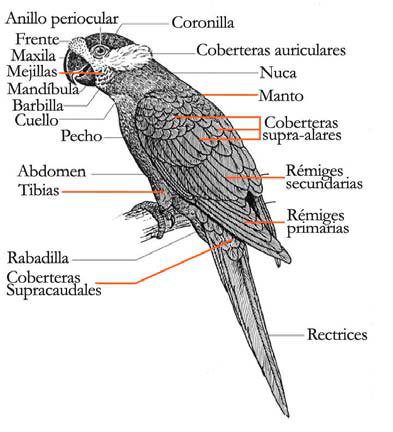
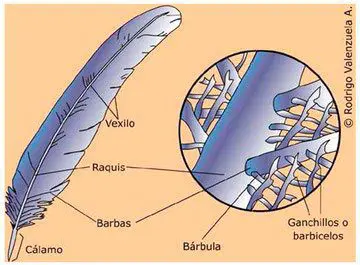
Anatomy-parrots

16,5 to 17,5 cm.. height.
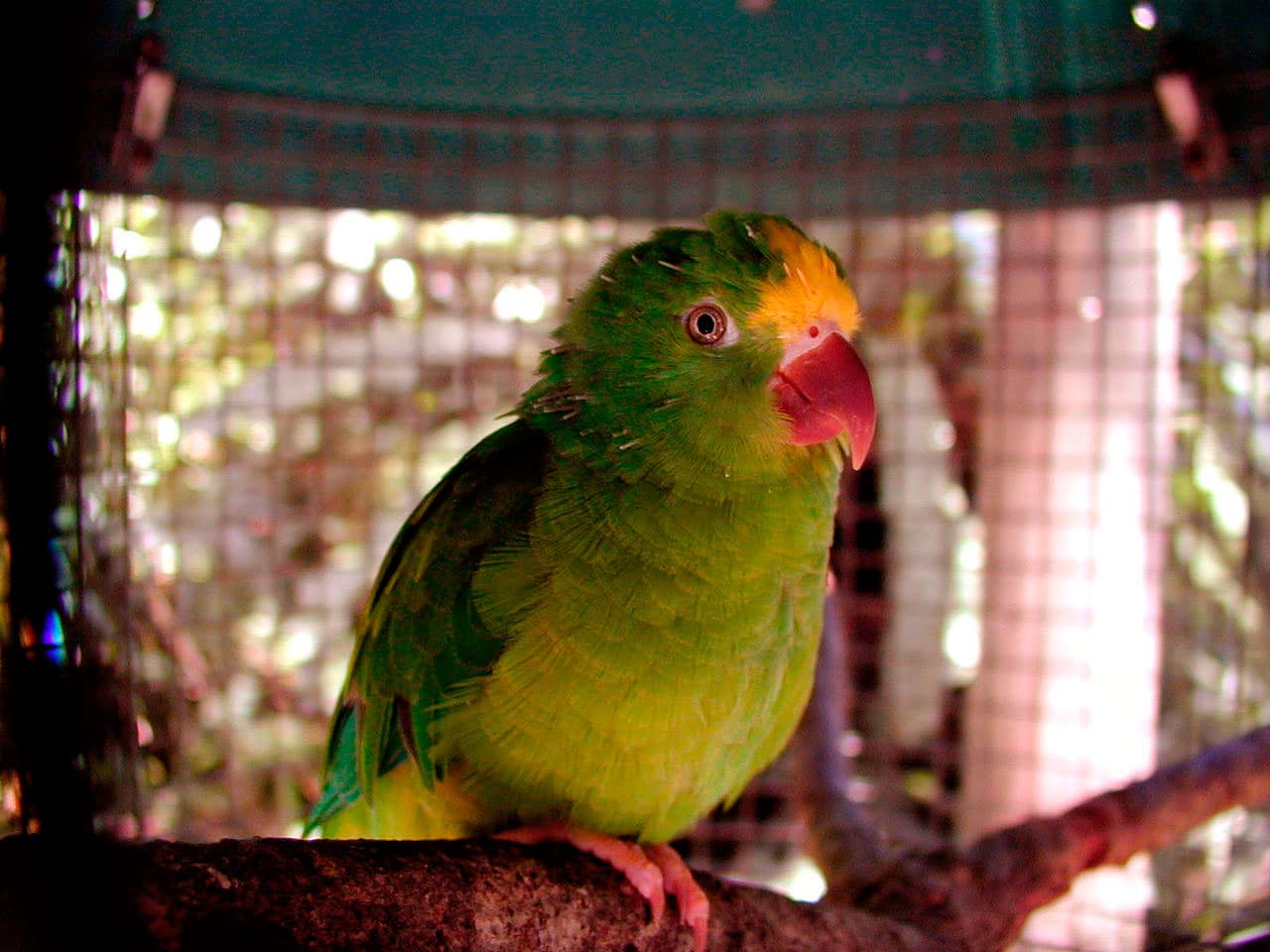
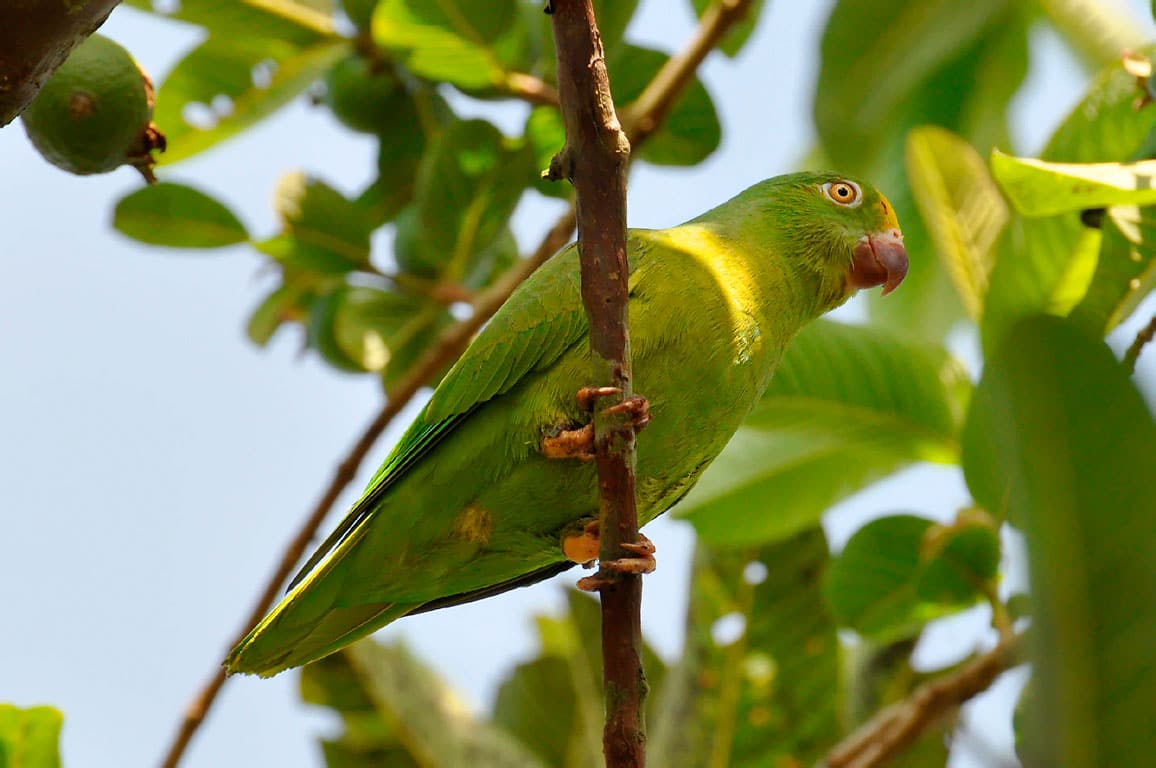
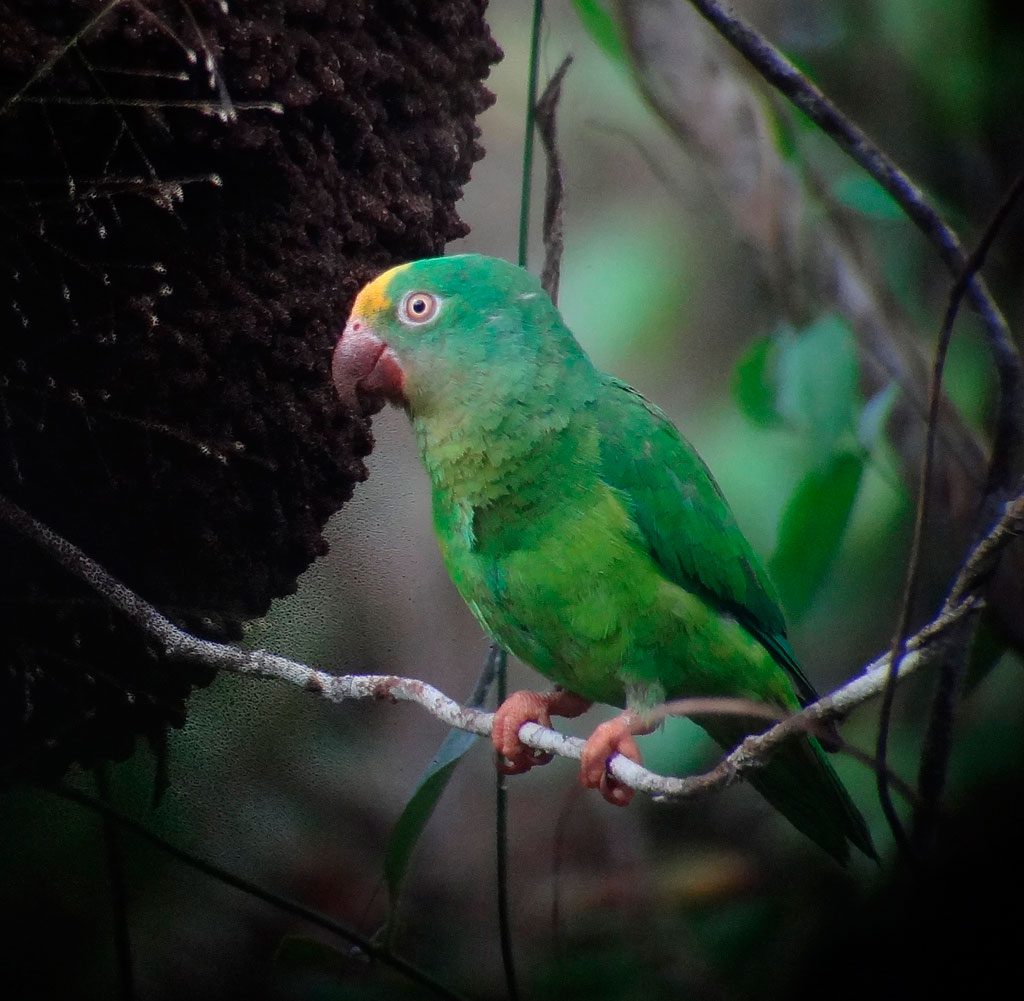
The Tui Parakeet (Brotogeris sanctithomae) has the forecrown and the front of the crown, bright yellow; rest of the head and nape, bluish green.

Mantle, back and scapulars dark green, paler and brighter in the rump and in the uppertail-coverts. Alula blue on the innerwebs, greenish on the outerweb; primary coverts greenish blue; other coverts green, the smaller and medium slightly impregnated olive green. Flight feathers greenish-blue on outerweb, dark green innerwebs, and light blue below; infra-wing coverts minor, green, the greater coverts, blue. Underparts brighter yellowish green. Upper, the tail is green; below is more yellowish.

The bill It is quite dark orange-brown; Cere pale pink; the irises brown; legs grayish bone.

Both sexes have similar plumage.

Description 2 subspecies:

  • Brotogeris sanctithomae sanctithomae

    (Statius Müller, 1776) – Nominal.


  • Brotogeris sanctithomae takatsukasae

    (Neumann, 1931) – The yellow stripe behind (and sometimes below) of the eyes It extends over the ear-coverts. The yellow patch on the forecrown sometimes it is larger.

Habitat:

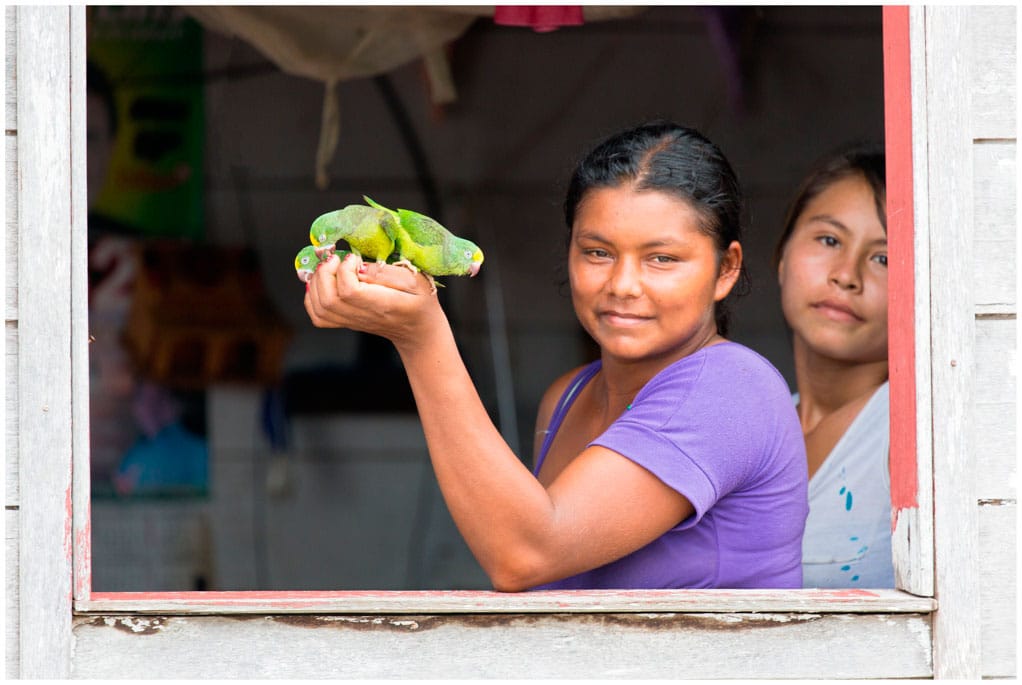
Mainly inhabits in second-growth forests, in humid areas of tropical forest, forests and marshes on the banks of large rivers and river islands and clearings near watercourses; to 100 metres in Colombia and 900 metres in Peru. Gregaria, usually in small flocks; sometimes in larger meetings. The Tui Parakeet it is very common in riverside towns and cities where it arrives in large flocks to spend the night. Visit palms on the banks of rivers.

Reproduction:

It nests on trees, in natural hollows or termiteros, small and noisy groups. views in nests in May and July, with immature during the month of June Colombia.

Food:

Few details about their diet; taking views flowers Erythrina in Colombia.

Distribution:

Size of the area of distribution (reproduction / resident): 3.870.000 km2

This species is confined to the Basin Amazon Southeast Colombia (area of Leticia), northeast and southeast Peru and to the West of Brazil, possibly on the right bank of Black river and in river basins Purus, Solimões (this to about Cojadás) and south of Juruá, to the North of Bolivia in Pando and Beni, It is able to see so dispersed in the Eastern Amazonas, around river mouths Negro and Madeira, to the this to Amapá and Pari Eastern, possibly up area Bethlehem.

Apparently sedentary. Local (for example, in Loreto, Peru) but common or abundant in many places (for example, about Leticia).

Perhaps its population has been reduced due to trade locally (for example, in Peru), but the effect of habitat loss remains within the range lower. Present in many protected areas (for example, > Manu National Park, Peru).

Distribution 2 subspecies:

  • Brotogeris sanctithomae sanctithomae

    (Statius Müller, 1776) – Nominal. West Basin amazon, from the southeast of Colombia to the North of Bolivia.


  • Brotogeris sanctithomae takatsukasae

    (Neumann, 1931) – Both sides of the basin under amazon, from the junction with the Black river to the East of Pari.

Conservation:

State of conservation ⓘ


minor concern Minor Concern ⓘ (UICN)ⓘ

• Current category of the Red List of the UICN: Least concern.

• Population trend: Stable.

Justification of the population

The size of the world population It has not been quantified, but this species is described as «common» (Stotz et to the., 1996).

Justification of trend

It is suspected that this species has lost 15,9-17,4% of habitat within its distribution over three generations (15 years) starting from a model of deforestation Amazon (Soares-Filho et to the., 2006, Bird et to the., 2011). Given the susceptibility of the species to hunting and / or capture, suspected population decline in <25% durante tres generaciones.

"Tui Parakeet" in captivity:

saved pet locally but uncommon in captivity outside its range.

Alternative names:

Tui Parakeet, Golden-headed Parakeet (English).
Toui à front d’or, Perruche toui, Perruche tui (French).
Tuisittich (German).
Periquito-testinha, estrelinha, estrelinha-do-pará, periquito-brasileiro, periquito-de-testa-amarela, periquito-estrela, tuim, tuipara-estrelinha (Portuguese).
Catita Frentigualda, Periquito Cabeciamarillo, Periquito Pálido (español).
Periquito Cabeciamarillo, Periquito frentiamarillo (Colombia).
Perico Tui (Peru).

scientific classification:

Order: Psittaciformes
Family: Psittacidae
Genus: Brotogeris
Scientific name: Brotogeris sanctithomae
Citation: (Statius Müller, 1776)
Protonimo: Psittacus St. Thomas

Images «Catita Frentigualda»:
Videos "Tui Parakeet"


Species of the genus Brotogeris

Sources:

Avibase
– Parrots of the World – Forshaw Joseph M
– Parrots A Guide to the Parrots of the World – Tony Juniper & Mike Parr
– Birdlife
– Parrot Book, Parrots and macaws Neotropical

Photos:

(1) – A Tui Parakeet in Uarini, amazon, Brazil By Claudio Dias Timm from Rio Grande do Sul [CC BY-SA 2.0], via Wikimedia Commons
(2) – Tui Parakeet in a cage By Ruth Rogers (originally posted to Flickr as Tui Parrot) [CC BY 2.0], via Wikimedia Commons
(3) – Brotogeris sanctithomae by Gabriel SmithFlickr
(4) – Brotogeris sanctithomae (Amazon river – Brazil) by Martha de Jong-LantinkFlickr
(5) – Photo taken from flickr.com – ©barbetboy

Sounds: controles-canto.org

▷ The world of Pets: Dogs, cats, birds, reptiles, amphibians

Red fan Parrot
Deroptyus accipitrinus

Deroptyus accipitrinus
National Zoo - Washington DC

Content


Anatomy-parrots

Description

35 to 41 cm.. height and between 190 and 277 g. of weight.

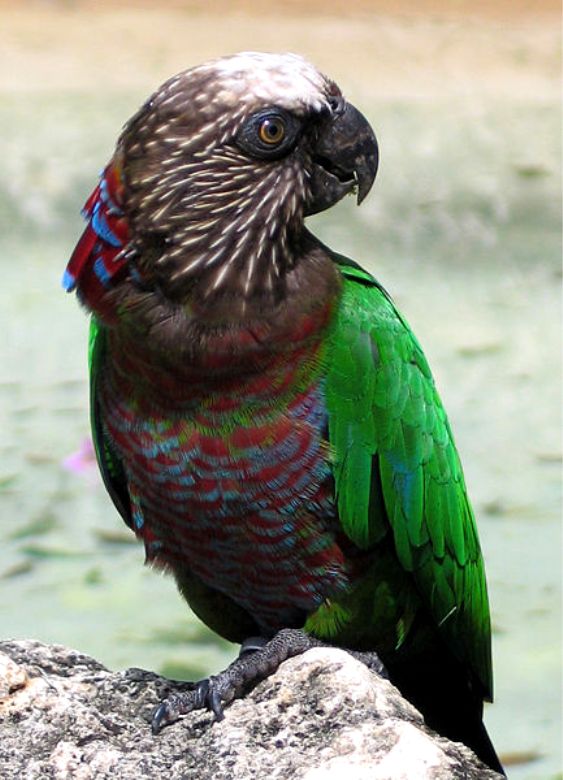
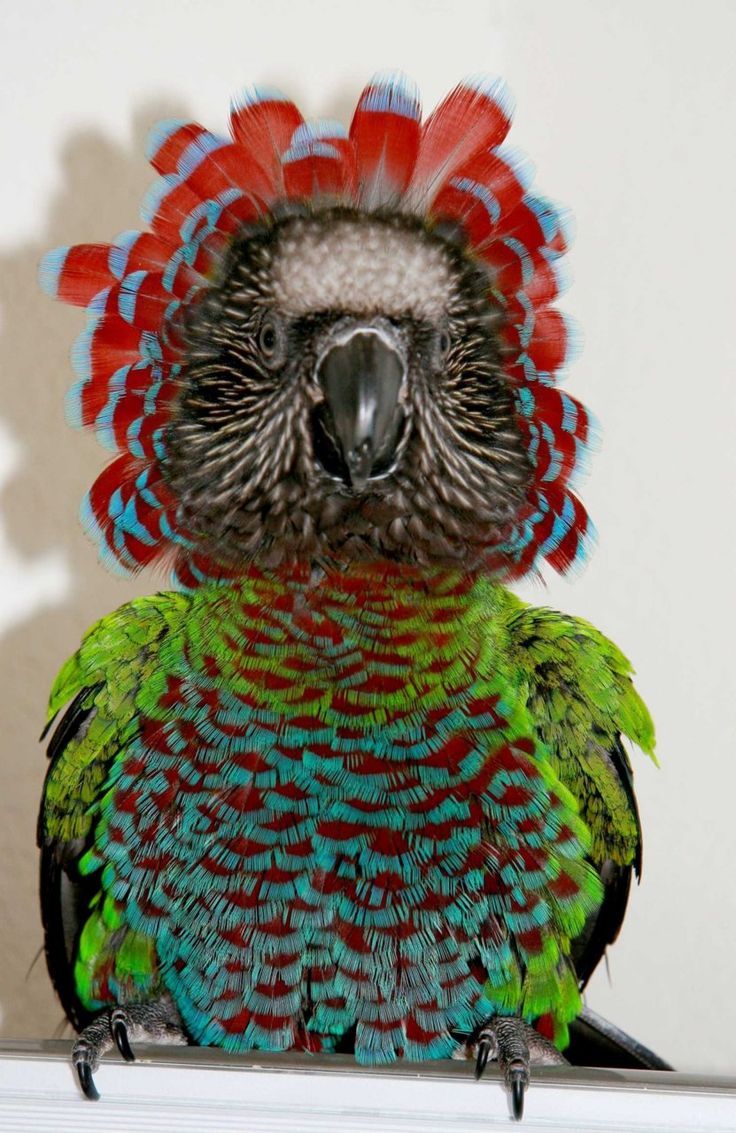
The Red fan Parrot (Deroptyus accipitrinus) is unmistakable for its showy colours. Has the forecrown and crown yellowish white, fading is back to Brown with striped pale in the part back from the neck and a bordered of feathers elongated in form of collar of color red Bordeaux in its base and blue bright in the tips; lores brown; cheeks, throat, sides neck and supercilii area, brown, strongly striped with shades yellow.

The upperparts are green. The under wing-coverts medium-sized and small are green; primary coverts of color blue dark dark. Primaries blackish, secondaries Green with dark tips. Under, the wings green, flight feather blackish. Sides of chest and belly green; center of chest and the belly red Bordeaux with blue tips, creating an effect bleached blue and Red, sometimes with a little bit of green, especially in the part superior of the chest; the thighs and undertail-coverts green. Upper, the tail green with blue tips, outer feathers with blue in the outerweb and Red hidden in the base of the innerwebs; undertail, the tail black. Bill blackish, paler at the tip; cere black; yellow the irises; legs dark grey.

It is not possible to determine the sex safely by their appearance.

Immature has lower jaw of color Horn and a rainbow Brown warm.

Description 2 subspecies

  • Deroptyus accipitrinus accipitrinus

    (Linnaeus, 1758) – Nominal. With the forecrown whitish.


  • Deroptyus accipitrinus fuscifrons

    (Hellmayr, 1905) – With the forecrown dark brown.

Habitat:

The Red fan Parrot living in the jungle tropical of land low, preferring the formations of land firm, including the ground slightly wavy or of the hills (perhaps due to a greater diversity of plants of which is fed). Apparently prevents them forests and marshes, edge of forest and clear, but there is a report of birds in forest flooded in the drainage of Morona River, Peru, and feeds mainly on riverine forests in Venezuela. Only comes to them 400 meters in the southeast of Colombia and a 200 metres in Venezuela.

Not is very gregarious, are distributed in pairs or small groups of 3-4. On rare occasions, until 10. Pre-breeding aggregations appear to break up into pairs or trios at the onset of nesting. Rest in the cups give the trees in small groups (Perhaps alone in tree cavities). It feeds mainly in the canopy.

Not are very sociable. They show an appearance of Raptor, Deploying the feathers of the back of the head fan.

Reproduction:

Nest in tree holes, including an old nest of Woody Woodpecker, for example of a Woodpecker grebes (Campephilus rubricollis). The rapid flapping of wings, followed of a mild decline of sliding, they give a deeply undulating display flight during the breeding period. Breeding March-June, Venezuela; January-March, Guiana; February-April, Suriname; December-February, Brazil. Clutch 2-3 in captivity.

Food:

Feeds of leaves and outbreaks of Bombacopsis, unripe fruits of Dialium, fruits of Euterpe, Attalea, fagifolia, Astrocaryum; Also takes Inga and guava in cultivated areas.

Distribution:

Size of the area of distribution (reproduction / resident): 4.240.000 km2

Discontinuous. Amazonia, from the South of Venezuela to the northeast of Ecuador and Peru, the Guianas and Amazonia Brazil.

Distribution 2 subspecies:

  • Deroptyus accipitrinus accipitrinus

    (Linnaeus, 1758) – Nominal. From the South-East of Colombia to Venezuela, the Guianas; Northeast of Peru and North of Brazil.


  • Deroptyus accipitrinus fuscifrons

    (Hellmayr, 1905) – Brazil, to the South of the amazon rivers (from For to the North of Mato Grosso) possibly Bolivia.

Conservation:


minor concern


• Current category of the Red List of the UICN: Least concern.

• Population trend: Decreasing.

Justification of the population

The size of the world population It has not been quantified, but this species is described as «quite common» (Stotz et to the., 1996).

Justification of trend

It is suspected that this species has lost 24-31.3% of habitat suitable within their distribution during three generations (23 years) based on a model of Amazon deforestation (Soares-Filho et to the., 2006, Bird et to the., 2011). But, given the tolerance of the species to the effects of fragmentation / degradation / edges and / or the magnitude of the losses global, It is suspected that will decrease in <25% en tres generaciones.

"Red fan Parrot" in captivity:

The Red fan Parrot or Parrot Hawk is a bird very Intelligent, playful and very beautiful. However and, Despite its undeniable appeal, It is not ideal to have captive species. Are extremely nervous and in occasions this is translated in that is start or bite them feathers or even can get to self-harm is.

Are parrots extremely noisy and having a copy inside the house does not seem too tolerable and yes, a tough test for our patience.

Alternative names:

Red fan Parrot, Hawk-headed Parrot, Red-fan Parrot, Red-fen parrot (English).
Papegeai maillé, Perroquet accipitrin, Perroquet maillé, Perroquet papegai (French).
Fächerpapagei (German).
Anacã, curiba-bacabal, maracanã-guaçu, papagaio-de-coleira, vanaquiá (Portuguese).
Lora Gavilana, Loro Cacique, Quinaquina (español).
Loro Cacique, Jia-Jia (Venezuela).


scientific classification:

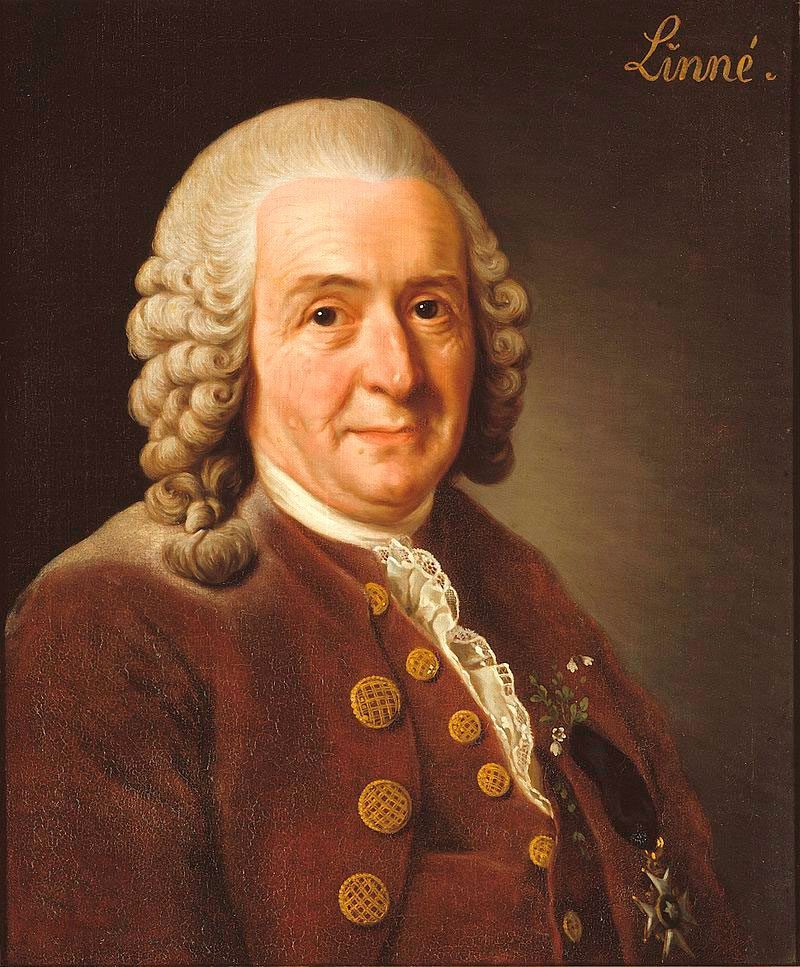
Carl Linnaeus
Carl Linnaeus

Order: Psittaciformes
Family: Psittacidae
Genus: Deroptyus
Scientific name: Deroptyus accipitrinus
Citation: (Linnaeus, 1758)
Protonimo: parrot accipitrinns


Images of «Parrot Cacique» :

Videos "Red fan Parrot"

——————————————————————————————-

«Chief Parrot» (Deroptyus accipitrinus)


Sources:
– Parrot Book, Parrots and macaws Neotropical
avibase
– mundoexotics.com
Birdlife

– Photos: Dennis Avon, National Zoo - Washington DC, sutterkane.Tumblr.com, www.zoochat.com

– Sounds: Roger Ahlman

▷ The world of Pets: Dogs, cats, birds, reptiles, amphibians

Pohnpei Lorikeet
Trichoglossus rubiginosus

Pohnpei Lorikeet

Content


Anatomy-parrots

Description

24 cm.. length and a weight between 70 and 85 gr.

The Pohnpei Lorikeet (Trichoglossus rubiginosus) is unmistakable.

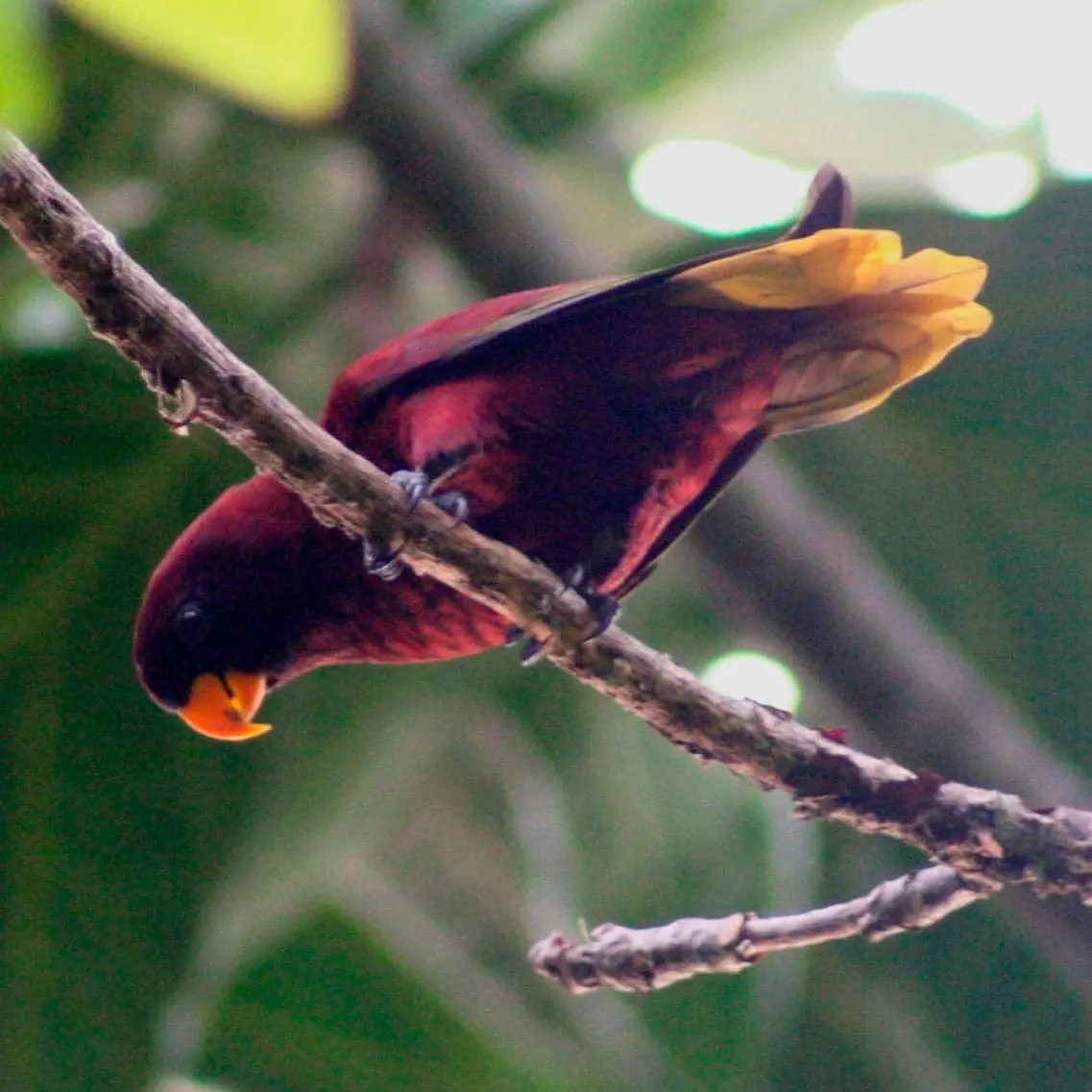
The head and back, dark brown, darker in the head. Scapulars and blankets, are of color Bordeaux dark. The flight feather are blackish in those networks internal and infiltrated with color olivaceous in them vane outer.

The primaries more external are clearly yellow. The bottom of the wings black. The underparts Deep Garnet color, with a black edge in the bottom sides of the edges that draw a bar at the bottom.

The upper part of the tail color is olivaceous, brighter in the vicinity of the tip; lower tail is of color yellow pale. The bill is orange. The irises are yellow-orange, the legs and feet are dark gray.

In the female, the bill seems more yellowish and the irises are greyish white.

In the youth, the feathers seem sharper.

Habitat:

This species is present on the entire surface of the island, until 600 m. It is distributed by a variety of habitats, such as coconut trees, plane trees, dense tropical forests, plots regenerated, forests and mangroves.

The Pohnpei Lorikeet is a bird especially loud, He throws her screams from the roosts after dark. It is fairly easy to detect, Since it wanders in small flocks of February to December in search of food in trees in flower.

It tends to fly high and travel long distances over the ocean.

When fed into the forests of tall trees, usually favors the average vegetation floor.

As the Ponape island receives a large amount of precipitation (until 7600 mm. per year in some places), the Pohnpei Lorikeet seek refuge under the large leaves.

Reproduction:

The Pohnpei Lorikeet It builds its nest on top of a coconut tree or in any cavity of a tree from the forest.
The spawning usually consists of an only egg.
The nesting season generally goes from December to may.

Food:

Consumes nectar, pollen and fruit. While feeding, It tends to keep its head down to pick up their food in the flowers of coconut and banana.
The nectar of Erythrina and the mango is very appreciated by the Pohnpei Lorikeet.

Distribution:

Size of the area of distribution (reproduction / resident): 350 km2

As its name implies, lori this is endemic of the Ponape island, which is the most populated island of the States federate of Micronesia. Formerly, also lived on the atoll of Namoluk about the island of Truk.

It is possible that range was more extensive than it is today.

Conservation:


Near-threatened

– Current IUCN Red List category: Near threatened

– The population trend: Decreasing

This species is listed as near-threatened because it is suspected that their population, which is mostly a subpopulation, It is in decline due to changes in land use. It also has a very small range; But, is unlikely that it is declining, in terms of population, given the adaptability of the species. Neither population is severely fragmented or restricted to a few locations.

Surveys in 1994 suggested that the species had declined a 74-75% Since the beginning of the eighties, probably indicating a decrease in real (Buden 2000). The current population exceeds the 10.000 specimens (Juniper and Parr 1998, M. O'Brien a little. 2011).

In the news, It is the official bird of the State of Pohnpei and your hunting, capture and export is illegal.

"Pohnpei Lorikeet" in captivity:

Is usually not kept out of the Pohnpei island.

Alternative names:

Pohnpei Lorikeet, Pohnpei Lory, Ponape Lorikeet, Ponape Lory, Ponapé lory, Red Lory (ingles).
Loriquet de Panapé, Loriquet de Ponapé (French).
Kirschlori (German).
Loris rubiginosus (Portuguese).
Lori de Ponapé, Tricogloso de Ponapé (español).

scientific classification:

Order: Psittaciformes
Family: Psittaculidae
Genus: Trichoglossus
Scientific name: Trichoglossus rubiginosus
Citation: (Bonaparte, 1850)
Protonimo: Chalcopsitta rubiginosa

Images "Pohnpei Lorikeet"


«Lori de Ponapé» (Trichoglossus rubiginosus)


    Sources:

    Avibase
    – BirdLife.org
    – Parrots of the World – Joseph Forshaw M
    – Parrots-A Guide to the Parrots of the World by Tony Juniper & Mike Parr

    Photos: By Peter – Flickr

    Sounds: Mark O’Brien (Xeno-canto)

▷ The world of Pets: Dogs, cats, birds, reptiles, amphibians

Purple-naped Lory
Lorius domicella

Purple-naped Lory

Content

Lori damsel drawing

Description

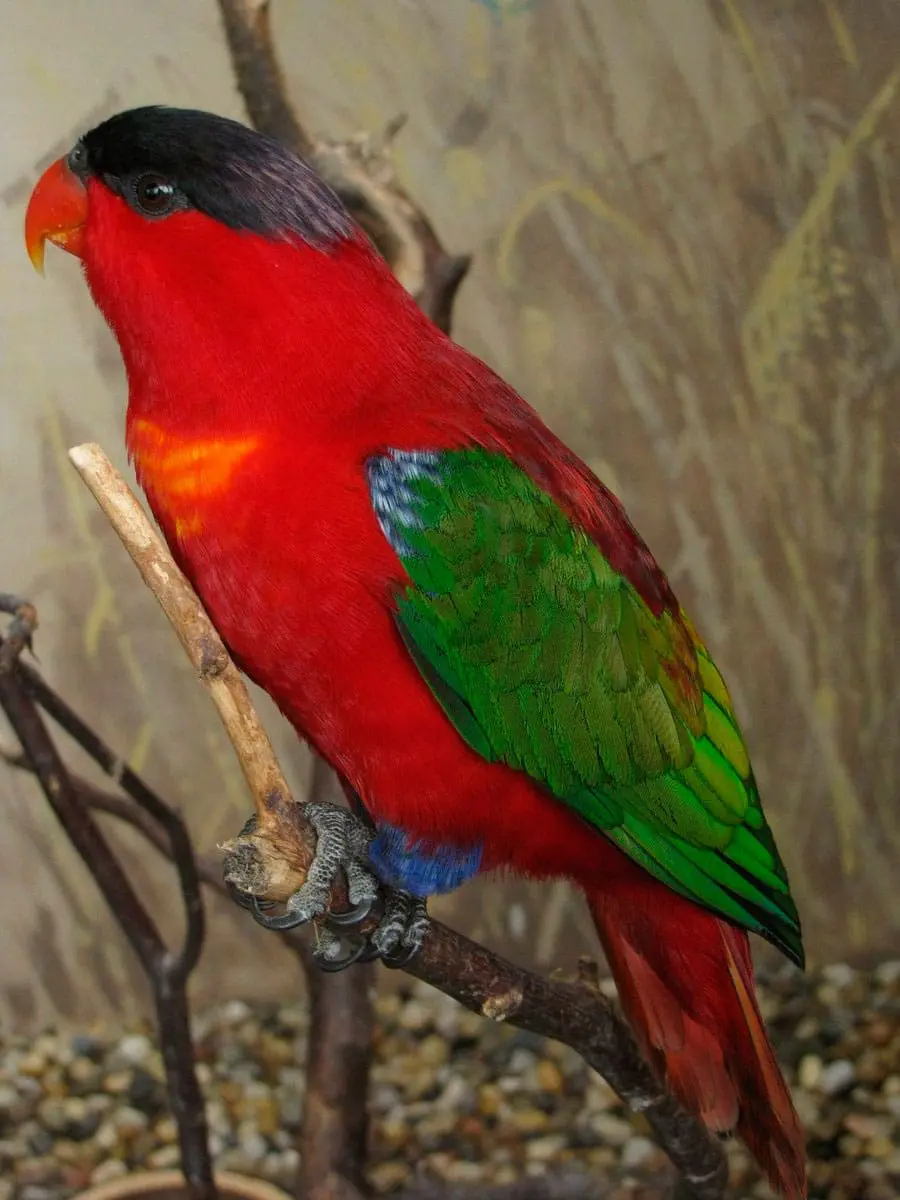
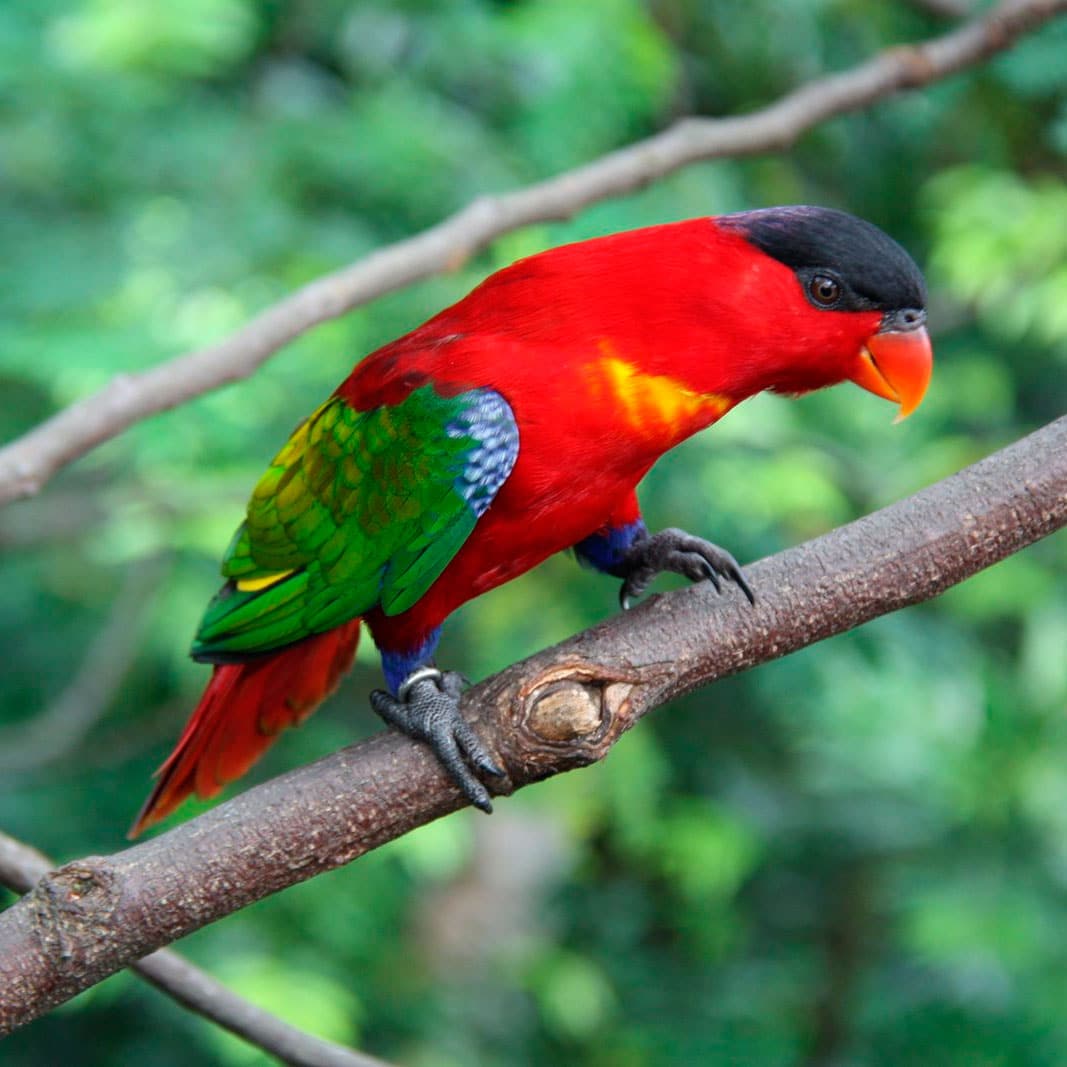
The Purple-naped Lory (Lorius domicella) has a length of 28 cm.. and an approximate weight of 235 g..

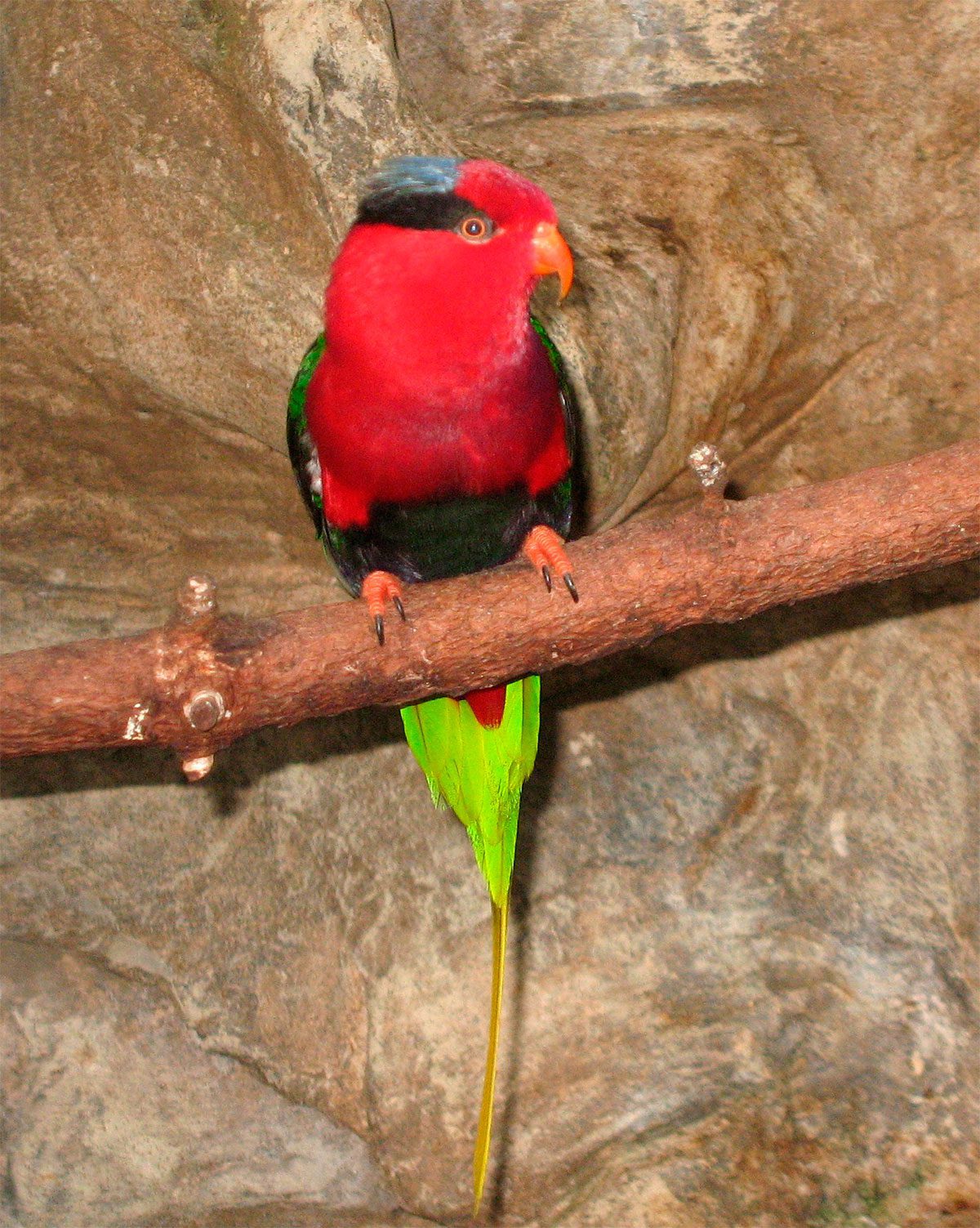
The forecrown, crown and nape black, with variable purple spots on the back of the top. The cheeks, lores and ear-coverts red. Upperparts red, darker in the center of the the mantle. Upper wing Green with white and purple patch in the shoulder. Color bronze in all the upper inner coverts, the most marked inside opaque red. the flight feather Blackish with area central in the interior of color yellow. Underwing-coverts Violet Blue impregnated white. Underwing coverts black; blue purple in them axillary. Parts low Red with band yellow, variable at the top of the chest; Violet Blue the the thighs, slightly impregnated in green. Tail red, reddish brown tipped. Bill orange; irises reddish brown; dark grey the legs.

Males and females are equal.
Immature with yellow stripe in the chest more extensive and more diffuse. Bill Brown in very young birds.

There is no geographic variation

Habitat:

In Seram the Purple-naped Lory found in montane and submontane forests, both primary and secondary, a altitude between 400 and 1.050 m; also in the jungle in the this of the island and in the areas cultivated. They move in pairs, rarely in groups and can be territorial. reproductive ecology of the species in the wild is unknown. Forshaw gives details of an instance of poultry farming in which two eggs were laid., hatching around the 25 days; the young are independent only three months more afternoon.

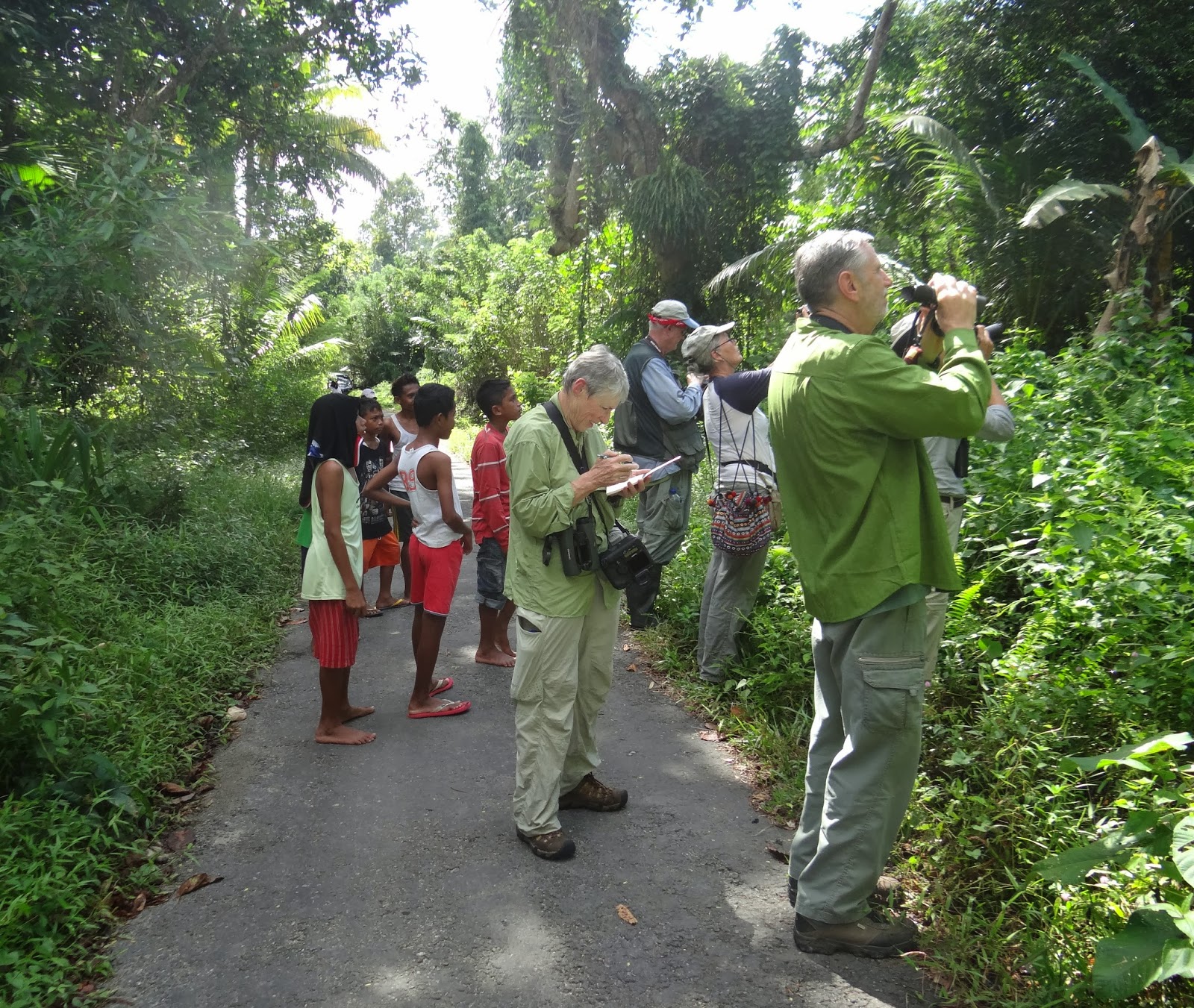
A group birding in Ambon

Reproduction:

The reproduction of the species in the wild is unknown. Details of breeding in poultry farming establish a clutch of two eggs, incubation in a few 25 days, and the young three months after independence.

Food:

Feed on fruits of Pandanus scattered.

Distribution:

Size of the area of distribution (reproduction / resident): 6.300 km2

endemic to the Seram Islands and Ambon (has also been seen in Buru: probably an escaped bird), in Indonesian. There are no recent records of Ambon or Buru. The current records come from the Manusela National Park (uncommon) and the center of Seram and WAE Fufa (locally common).

In 1987 Bowler and Taylor they found a rate of 0,7 birds per hour in Kineke, in the Manusela National Park; But during nearly two months of observations in 1990, they only saw 10 individuals.

The species is a bird people of cage in Seram and throughout the province of Maluku and the expansion of foreign trade could pose a threat to their survival.

The population worldwide is estimated at less than 20.000 individuals in 1991, but currently, the population, is considered on the rise. VULNERABLE.

Conservation:


Endangered

• Current IUCN Red List category: Danger.

• Population trend: Decreasing.

This species has been upgraded to In danger Since its population It is suspected that has fallen below 2.500 individuals mature, with more than 250 in any subpopulation mature individuals.

Capture unsustainable for local and national trade, as well as the loss of forests due to logging, oil extraction and hydroelectric power combinations.

These facts, It is suspected, they are causing an downhill fast and constant in the species.

"Purple-naped Lory" in captivity:

Very rare.

Alternative names:

Purple-naped Lory, Purple naped Lory (ingles).
Lori des dames (French).
Erzlori (German).
Loris-de-nuca-roxa (Portuguese).
Lori Damisela, Lori Domicela (español).

scientific classification:

Order: Psittaciformes
Family: Psittaculidae
Genus: Lorius
Scientific name: Lorius domicella
Citation: (Linnaeus, 1758)
Protonimo: Psittacus Domicella

“Damsel Lori” Images:

Videos "Purple-naped Lory"

————————————————————————————————

«Lori Damisela» (Lorius domicella)


Sources:

Avibase
– Parrots of the World – Forshaw Joseph M
– Parrots A Guide to the Parrots of the World – Tony Juniper & Mike Parr
Birdlife

Photos:

1 – Zoológico de Praga: Púrpura-naped Lory – animalphotos
2 – «Lorius domicella-Artis Zoo-Netherlands-8a» by Arjan Haverkamp – originally posted to Flickr as Img_4196e. Licensed under CC BY 2.0 via Wikimedia Commons.
3 – «Lorius domicella-Banda Islands-Indonesia-upper body-8» by Henri – originally posted to Flickr as Lory = green-tailed lory. Licensed under CC BY 2.0 via Wikimedia Commons.
4 – Birds-pet-wallpapers – link
5 – «Lorius domicella-Jurong Bird Park, Singapore-8a-toc» by Lorius domicella-Jurong Bird Park,_Singapore-8a.jpg: kwang chongderivative work: Snowmanradio (talk) – originally posted to Picasa Web Albums as Picasa Web Albums and uploaded to Commons as Lorius domicella-Jurong Bird Park,_Singapore-8a.jpg. Licensed under CC BY-SA 3.0 via Wikimedia Commons.
6 – Illustrations ©2010 by Frank Knight

Sounds: George Wagner (Xeno-canto)

▷ The world of Pets: Dogs, cats, birds, reptiles, amphibians

Papuan Lorikeet
Charmosyna papou

Papuan Lorikeet

Content

Papuan Lorikeet

Description

25 cm.. length and a weight between 90 and 115 g..

The head of the Papuan Lorikeet (Charmosyna papou) It is red with a black patch on the back of the crown and a crescent-shaped mark on the nape; patch in the crown with mottled blue extends to the top of the eyes.

Under the nape a red uniform coat; centre of back Dark emerald green; under the back bright red; rump light blue. Wings Emerald green with vane internal black; undertail, the flight feather grey with coats red; coverts marginal green. Throat red, darker than the upper part of the chest and a little more off: lower chest Red clear with a variable black patch in the center of the belly, Sometimes it extends over them the thighs; the sides of chest and flanks with two obvious yellow stripe sets; bottom of the belly and coverts of the tail, red. View from the top, the tail is green and yellow is your long tip, the axis of the Central feathers is of dark brown; below, the tail is yellow, finished in Orange at its end.

The bill orange; Orange the irises; Orange and the legs.

In the nominal species, both sexes are equal.

Immature more turned off than adults. A band yellow variables at the bottom of the secondaries; rump with mottled Green; Naranja-Pardo the bill and legs; irises pale yellow.

Description 4 subspecies

  • Charmosyna papou papou

    (Scopoli, 1786) The nominal.


  • Charmosyna papou goliathina

    (Rothschild & Hartert, 1911) With sexual dimorphism and two different colors. The normal morph is similar to the subspecies Stellae, but differentiated by the yellow at the tip of the tail (non-fusion Orange to yellow). The coverts of the tail they are longer, in color purple blue, not red as in the stellae. As in the subspecies stellae, This subspecies has melanism, the upperparts is green, and underparts blue-black in their entirety. Head and the mantle, only broken by the blue of the stripes in the nape; Red in the coverts of the back and bottom of the tail. The wings are green. The tail seen from below it is more yellow-green in color than in normal morphology, and streamers they are fused opaque to verdoso-amarillo down Green.


  • Charmosyna papou wahnesi

    (Rothschild, 1906) Similar to the subspecies goliathina, but the Red of the part superior of the chest It is bordered below with a narrow yellow band. Does not have a green-washing in the flanks and abdomen top. The belly Central and tail coverts are red.


  • Charmosyna papou stellae

    (Meyer,AB, 1886) This species has sexual dimorphism and also has a melanism (excess of dark pigmentation). In comparison with the nominal, the black patch has much more extensive of the nape, blue-violet striped; This black patch replaces the two areas of black in the crown and in the nape of the speciesnominal. The streamers of the tail They also differ, merging from green to orange red (instead of green to Orange) and finally to yellow on the tips. The subspecies stellae also lacks of the chest yellow and stripes on the flanks that if you have the Papou, as well as his black patch on the belly that extends to the flanks.

    The females They show a visible patch of yellow on the lower of the back Green-tipped on the longest feathers, and coverts of the tail red (male shows red with blue on the patch of the rump). The Red of the part superior of the chest seems more uniform. In the metamorphosis by melanism the Red is largely replaced by black (see goliathina).

    The young birds with dark and thin stripes on the underparts.

Habitat:

Have been recorded at an approximate height of 1.200 meters above a row of trees and also to the 3.500 m, although the most common is to see them above the 2.000 meters and rare to see them below the 1.500 m; found by Forshaw in the forest of Nothofagus and Podocarpus to 2.800 m.

A species active and agile you are often found in pairs or in small groups. The birds move through the trees with jerky movements, often waving his serpentine tail, However, It can be very discreet between the tops of the trees.

Observed in Scheffleras, often in the company of other species, with the same food taste, as the Yellow-billed Lorikeet (Neopsittacus musschenbroekii). Seen often making passes above the trees or half-height, among the plants through the clear.

Reproduction:

The nesting in nature it is not described, but Pratt observed an adult tracing branches above and below a large group of epiphytes , Perhaps in search of a nesting site. A pair in breeding conditions was also observed in late August., and young people have been in nature during October and November. In captivity, the implementation has been two eggs, lasting about three weeks of incubation and the young remain in the nest for about two months.

Food:

Feeds on flowering trees or flowers of the epiphytes, nectar, pollen, fruits and small seeds. Larvae of insects occasionally.

Distribution:

Intervals in the center of New Guinea in Irian Java (Indonesian) and Papua New Guinea, in where are distributed from the southeast of Vogelkop towards the Adelbert range, Huon Peninsula and intervals in the Southeast.

Distribution 4 subspecies:

Conservation:


minor concern


• Current IUCN Red List category: Least concern.

• Population trend: Stable.

The world population It has not been quantified, Although that it is more thought of 500.000 specimens. The species appears to be quite common throughout its area of distribution (pit et to the ., 1997).

The hunting of this species for the use of their feathers as tribal headdresses and capture for the bird trade do not believe today that can affect the size of the population.

It is suspected that the population is stable in the absence of evidence of any reduction or other substantial threat.

"Papuan Lorikeet" in captivity:

Coupled pairs will defend their territory vigorously. Individual birds active and playful; they require a cage as big as possible. May be a bit uncomfortable due to liquid diet.

Son rare in captivity.

Alternative names:

Papuan Lorikeet, Fairy Lorikeet, Fairy Lory, Papuan Lory, Stella’s Lorikeet (ingles).
Lori papou, Lori de Stella (French).
Papualori (German).
Lori de Cola Larga, Lori Rabilargo (español).

scientific classification:

Order: Psittaciformes
Family: Psittaculidae
Genus: Charmosyna
Scientific name: Charmosyna papou
Citation: (Scopoli, 1786)
Protonimo: Psittacus Papou

Images «Lori Long-tailed»:

Videos "Papuan Lorikeet"

————————————————————————————————

"Lori Rabilargo" (Charmosyna papou)


Sources:

Avibase
– Parrots of the World – Forshaw Joseph M
– Parrots A Guide to the Parrots of the World – Tony Juniper & Mike Parr
– Birdlife

Photos:

1 – (1) «Charmosyna papou goliathina1» by dragusOwn work. Licensed under Public Domain via Wikimedia Commons.
2 – (2) «Stellas Lory 2» by LtshearsOwn work. Licensed under CC BY-SA 3.0 via Wikimedia Commons.
3 – (3) «Charmosyna papou-Fort Worth Zoo-8" for Philip Shoffner – originally posted to Flickr as Dsc_0120. Licenciado sob CC BY 2.0 via Wikimedia Commons.
4 – (4) Charmosyna papou goliathina by Zdenek Chalupabiolib.cz
5 – (5) Charmosyna papou goliathina – Birds-pet-wallpapers
6 – (6) Charmosyna papou goliathina By Elaine Radford (ilustración) – rightpet.com

Sounds: Andrew Spencer (Xeno-canto)

▷ The world of Pets: Dogs, cats, birds, reptiles, amphibians

Blue-crowned hanging parrot
Loriculus galgulus


Hanging Coroniazul

Content

Description

Of 13 cm.. length and 28 g. of weight.

The head of the Blue-crowned hanging parrot (Loriculus galgulus) is bright green with a patch dark blue in the center of the back of the crown. Upperparts Greens with patch orange-brown in the Centre of the the mantle, yellow band at the bottom of the rump and tail coverts scarlet. Wings Greens with vane inner to flight feather darker. Under the wing coats green, with the underside of the flight feather blue. Throat and top of the chest with a patch bright Scarlet, the rest of the underparts slightly of a green pale that the upperparts (and more yellowish on the flanks). Upper, the tail green; Blue below.
Bill black; irises dark brown, legs yellowish brown.

The females lack of the bib red, with the underparts yellowish green. The patch of the crown is much more off, and the the mantle Orange is less marked than in the male.

The young birds lack of the crown blue, they have only an orange wash on the the mantle and bill yellowish. Maturation takes from two to four years in young men, showing the throat Red as the first sign of plumage adult.

Habitat:

Birds have been observed spending the night on the Hill of Fraser’s Hill (Malaysia), which indicates that there is a certain night dispersion. Extralimitales records have also reached coastal islands. The species occurs from the lowlands up to around 1.300 m, lies in the Woods, river banks growing, mangroves, secondary growth, lightly wooded areas, bamboo clumps, orchards, inhabited areas and coconut trees. The birds frequent the canopy and medium height plants, travelling alone, in pairs or. outside the breeding season, in groups of up to 150 birds that invade fruit orchards.

The birds are moving forward with steps balanced through the vegetation with a comical air, using the peak to help upload, and tail as support. Like other hanging parrots, This species sleeping upside down and also uses rain water for bathing in the same position.

Reproduction:

Video "Loricle Coroniazul"

Blue-crowned hanging parrotBlue-crowned hanging parrot
The reproductive behavior you have registered between the months of January and August. When the courtship takes place, the male is shaking his head, cupping their red feathers, extending the tail, with the body upright, and making calls with a soft Twitter.

The nest It is built into the natural cavity in a tree, enlarged by birds, at a height between 5 and 12 meters above the ground.

The Nesting material It is cut by the female and taken to the nest in the contour feathers. The laying is three to four white eggs often dyed Brown. The female incubates the eggs for 20 days and the chicks leave the nest about 33 days after hatching.

Food:

It feeds on flowers, outbreaks, fruit, various seeds and nuts.

Distribution:

Ranges to South, about 10 ° Norte, on the peninsula of Thailand, through Malaysia and Singapore, distributed also in some surrounding islands, including the Anambas Islands, the archipelago of Riau and Batam. The species is widespread through Sumatra and can be seen in the islands of the coast including Tuangku, Nias, Pini, Batu, Siberut, Sipura, Enggano, and to the North of Bangka, Mendanau and Belitung. Is present in a habitat along of Borneo, and the coastal islands Labuan and Maratua. His presence at the end of Java Western, in the area Labuhan, It can be the result of leaks of birds; the population around Jakarta is certainly wild.

Conservation:


minor concern


• Current IUCN Red List category: Least concern

• Population trend: Stable

The size of the world's population has not been quantified, but it is thought that it may be superior to 100.000 specimens without registration of captive birds. The species according to information, it is common and widespread in most of its range (pit et to the. 1997).

The population is suspected to be stable in the absence of evidence of any reduction or substantial threats.

"Blue-crowned hanging parrot" in captivity:

These birds are kept in poultry, both in United States as in all Europe. Your dietary needs predispose them to a series of infections if failure to observe stringent hygiene practices, which makes them difficult to keep in captivity. This is the main reason that this species is rare in poultry farming., and even rarer as a pet.

More information at loromania

Alternative names:

Blue-crowned Hanging Parrot, Blue crowned Hanging Parrot, Blue-crowned Hanging-Parrot, Blue-topped Hanging-parrot, Malay Hanging Parrot, Malay Lorikeet, Malaysian Hanging-Parrot (ingles).
Coryllis à tête bleue, Coryllis à calotte bleue, Coryllis de Malacca, Coryllis malais, Loricule à tête bleue, Loricule de Malacca, Loricule malais (French).
Blaukrönchen (German).
Loriculus galgulus (Portuguese).
Lorículo Azul, Lorículo Coroniazul (español).

scientific classification:

Order: Psittaciformes
Family: Psittaculidae
Genus: Loriculus
Scientific name: Loriculus galgulus
Citation: (Linnaeus, 1758)
Protonimo: Psittacus Galgulus

Images «Loricle Coroniazul»:

Videos "Blue-crowned hanging parrot"

————————————————————————————————

"Lorículo coroniazul» (Loriculus galgulus)


Sources:

Avibase
– Parrots of the World – Forshaw Joseph M
– Parrots A Guide to the Parrots of the World – Tony Juniper & Mike Parr
– Birdlife

Photos:

(1) – By Lip Kee Yap from Singapore, Republic of Singapore [CC BY-SA 2.0], via Wikimedia Commons
(2) – By Quartl (Own work) [CC BY-SA 3.0], via Wikimedia Commons
(3) – By Art Bromage [CC BY-SA 2.0], via Wikimedia Commons
(4) – By Lip Kee Yap from Singapore, Republic of Singapore [CC BY-SA 2.0], via Wikimedia Commons
(5) – By Lip Kee Yap from Singapore, Republic of Singapore [CC BY-SA 2.0], via Wikimedia Commons

Sounds: Marc Anderson (Xeno-canto)

▷ The world of Pets: Dogs, cats, birds, reptiles, amphibians

Singing Parrot
Geoffroyus heteroclitus

Parrot Heteroclito

Content

Description

25 cm.. length and a weight between 160 and 195 g..

The Singing Parrot (Geoffroyus heteroclitus) they have the head bright pale yellow.

A band Large blue-gray adorns the back of neck and gradually it fades in green on the the mantle. The throat is bluish grey. All upperparts are light green. The median stained reddish brown. You can see the pale yellow stripes on the innerwebs of the flight feather. The underparts is bright blue. Upper chest is blue-gray, which contrasts with the rest of the underparts, that are of a much lighter green back. The upper part of the tail is green. The bottom of the tail is grey, but with a slight yellow color in the outerweb external feathers tail.

The upper jaw is of color yellow pale, the dark gray lower jaw. The irises are yellow, the legs gray-green.

The sexes are dimorphic. The female has a bill totally dark. Yellow beginning of the head and neck greenish blue are away. In its place, the top It is gray and cheeks They are brownish green.

Immature show greener on the head than females. Its bill is paler and its irises dark.

Description 2 subspecies

  • Geoffroyus heteroclitus heteroclitus

    (Hombron & Jacquinot, 1841) – The nominal.


  • Geoffroyus heteroclitus hyacinthinus

    (Mayr, 1931) – Males have neck gray violáceo.

Habitat:

The Singing Parrot frequent humid lowlands, undisturbed, Hills generally below and of the 600 meters up to a maximum of 1.760 meters in the South of New Ireland . They are also partially cleared areas, at the edge of forests, in stands of trees in regeneration and in gardens.

The birds, often, they are heard when they make calls from the exposed or isolated trees, or view flying rapidly above the canopy.

They are alone, in pairs, or having relationships in small groups. There have been next to the Cardinal Lory and Duchess Lorikeet in Bougainville. They are often calm and difficult to detect when they remain perched among the dense foliage.

Reproduction:

The nest is a hole dug by the female in a dead tree stump or rotten, but nothing more is known about the breeding ecology of the species.

Food:

The diet It includes seeds, fruit, flowers and buds.

Distribution:

Size of the area of distribution (reproduction / resident): 576.000 km2

The Singing Parrot They are endemic Bismarck Archipelago and Solomon Islands. These birds are found in the following Islands: Umboi, New Britain, Lolobau, Duke of York, New Ireland, New Hanover, Tabar, Lihir, Buka, Bougainville (Papua New Guinea). It can also be seen in Choiseul, Santa Isabel, San Jorge, Malaita, New Georgia, Guadalcanal and all the little Islands Rennell (Solomon Islands).

Distribution 2 subspecies:

  • Geoffroyus heteroclitus heteroclitus

    (Hombron & Jacquinot, 1841) – The nominal.


  • Geoffroyus heteroclitus hyacinthinus

    (Mayr, 1931) – present only in the Rennell island.

Conservation:


minor concern


• Current category of the Red List of the UICN: Least concern.

• Population trend: Stable.

The world population it is generally estimated at just less than 100.000 specimens.

The subspecies that lives in Rennell Island is between 5.000 and 20.000 birds.

The Singing Parrot It suffers from the degradation of habitat throughout its area of distribution, but is not in danger.

"Singing Parrot" in captivity:

Extremely shy and touchy; they may die suddenly without discernible cause, possibly due to stress and improper diet.

Not commonly found in poultry.

Alternative names:

Singing Parrot, Song Parrot (ingles).
Perruche hétéroclite, Eclectus hétéroclite, Éclectus hétéroclite (French).
Bismarckpapagei (German).
Geoffroyus heteroclitus (Portuguese).
Lorito Cantor, Lorito Heteróclito (español).

scientific classification:

Order: Psittaciformes
Family: Psittaculidae
Genus: Geoffroyus
Scientific name: Geoffroyus heteroclitus
Citation: (Hombron & Jacquinot, 1841)
Protonimo: Psittacus Geoffroyi heteroclitus

Images "Singing Parrot"

Videos "Singing Parrot"

————————————————————————————————

“Lorito heterroclito» (Geoffroyus heteroclitus)

Sources:

Avibase
– Parrots of the World – Forshaw Joseph M
– Parrots A Guide to the Parrots of the World – Tony Juniper & Mike Parr
Wikipedia

Photos:

(1) – Birds-pet-wallpapers

Sounds: Mark Todd (Xeno-canto)

▷ The world of Pets: Dogs, cats, birds, reptiles, amphibians

Pale-headed Rosella
Platycercus adscitus

Perico pale

Content


Anatomy-parrots

Description

30 cm.. length and a weight between 100 and 175 g..

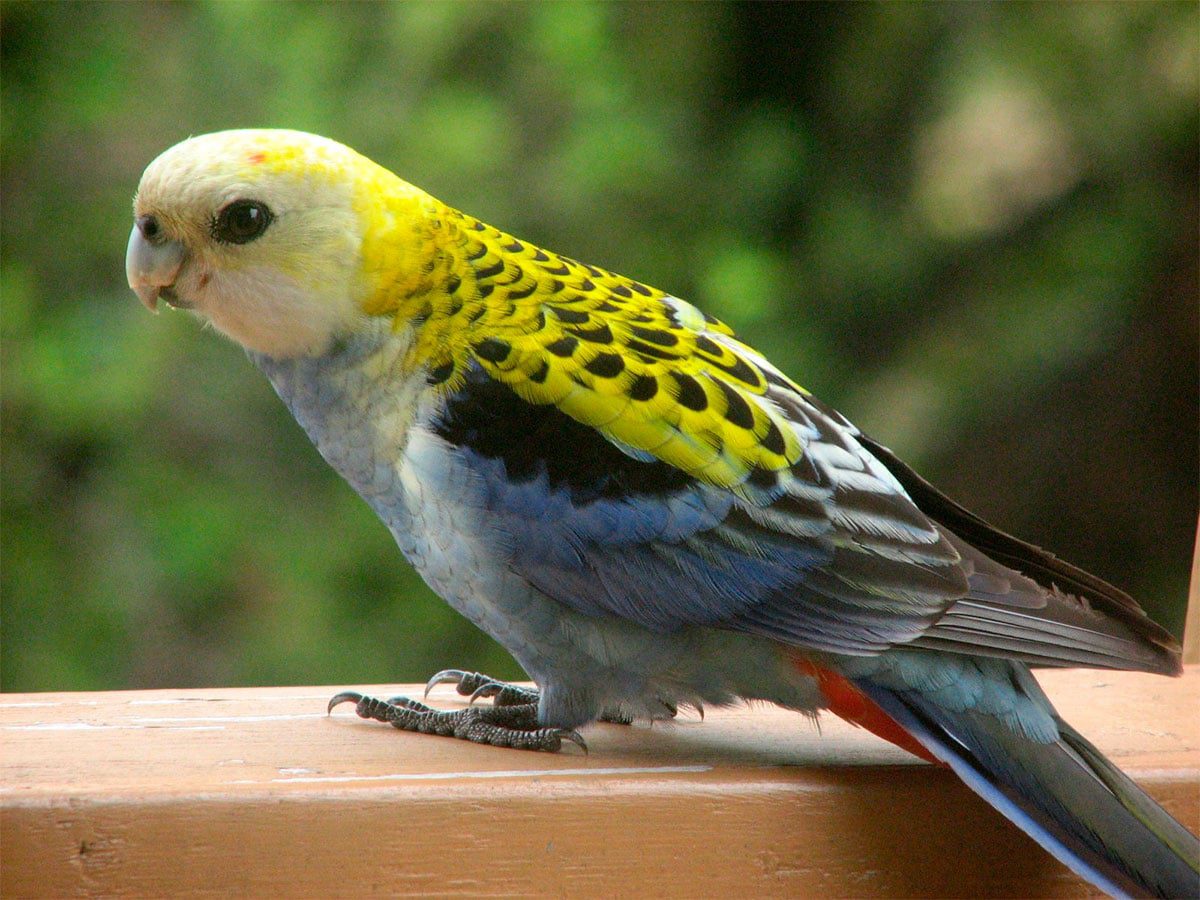
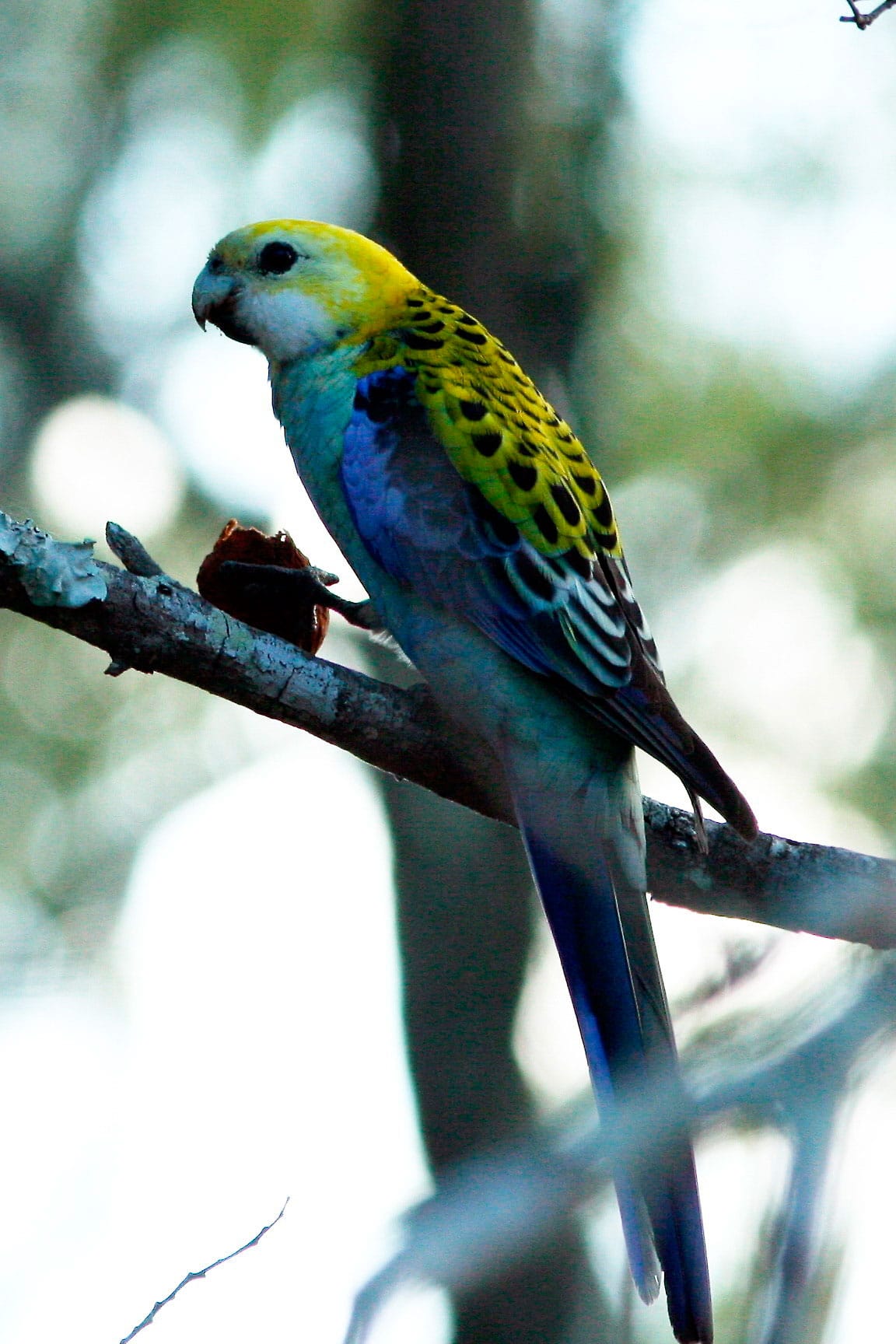
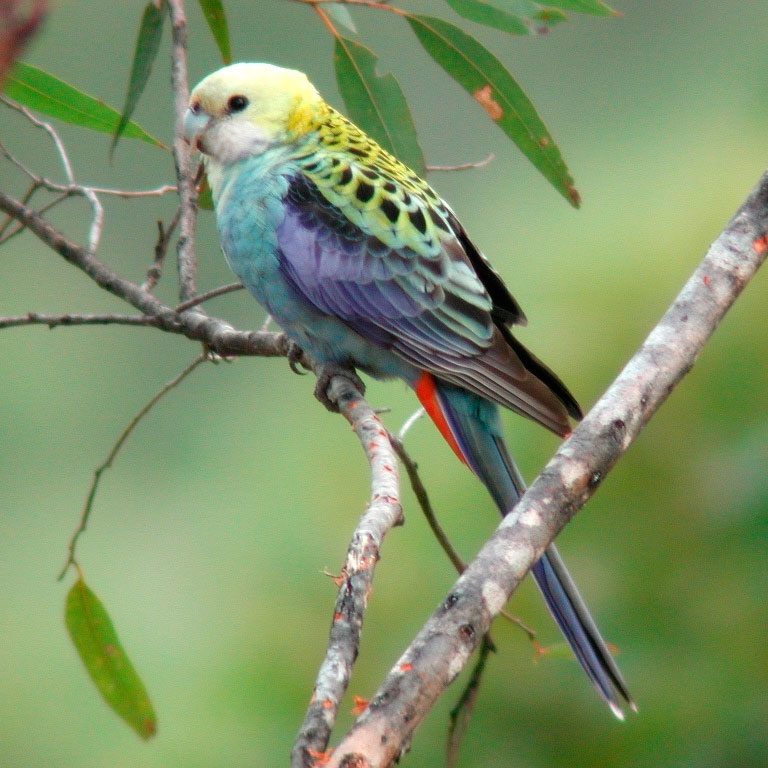
The adult male of the Pale-headed Rosella (Platycercus adscitus), It has a pale yellow "head". The part superior of the cheeks is whitish in contrast with the part below that is of color blue light. Upper chest is yellow, the lower part of the chest and the abdomen are blue. The coverts They show a beautiful red hue. The the mantle, the back and scapulars are black with broad yellow edges, these areas giving a scaly appearance.

The tail is of color yellow uniform. The external coverts are dark blue. The central feathers of the tail are dark blue, but the outer feathers are more pale with thin white edges. The bottom has no stripe.

The bill is white. The irises They are brown, legs grey.

The female is different from the male, its color is more off and has a strip at the bottom of the wings.

The immature they have grayish feathers ending in yellow or orange-red at the top of the crown and the neck. The red feathers lose them about three months. The bottom of the wings is scratched. They acquire adult plumage in about 16 months.

Description 2 subspecies:

  • Platycercus adscitus adscitus

    (Latham 1790) – The nominal


  • Platycercus adscitus palliceps

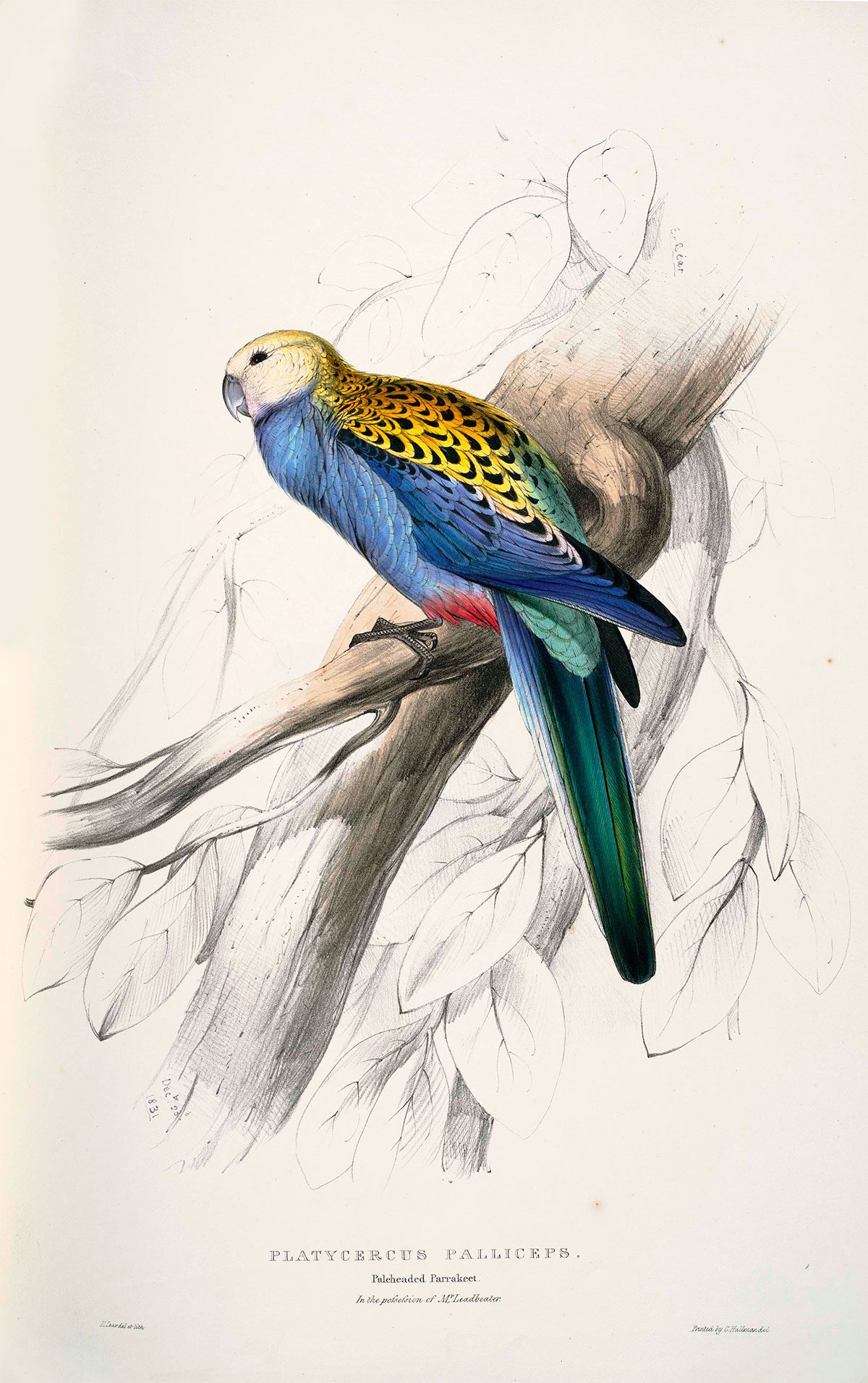
    (Lear 1832) – 32 cm.. length. It is something most large that the nominal species. The white color of the face is more extensive, coming up to the neck. Crown, nape and ear-coverts are pale yellow. The blue of the chest presents tonalities yellowishwhite and the feathers of the chest they have a thin lined black. The shoulders with wide verdosa-amarilla blue staining. bottom of the flight feather white.

Habitat:

Pale-headed Rosella

The Pale-headed Rosella they are common in all types of habitats of open forests, either scrub, scattered forests with logging, the rows of trees along rivers or swamps. They are also found in the wooded heaths which surround the coast and which are dominated by trees of the genus Banksia.

Avoid plunging into the thick forests, giving preference to the clear, meadows at the edges or directly border the plots. They also penetrate the surrounding farmland to feed.

They are birds of the lower regions, rarely rising above 700 meters and voluntarily leaving altitudes to the Crimson Rosella in dense forests and semi-montanosas areas.

Reproduction:

In the North, the Pale-headed Rosella They nest in the months of February to June, with some variations depending on the frequency of rains.

In the South, the breeding season are produced starting from September until the month of December.

These birds build their nests in deep a sick or healthy tree cavity, preferably a eucalyptus located near a river.
Other places that tend to choose are: a hole in a stump or a hole in a fence post.

The spawning generally includes between 3 and 5 eggs. The female incubates alone during 19 days, but as soon as the eggs are incubated, It receives assistance from the male that helps feed the young.

The chicks leave the nest after 5 weeks.

Food:

The Pale-headed Rosella they are mostly vegetarian. They consume a lot of plants, We have identified about 50 plant species. Similar to the Eastern Rosella, the Pale-headed Rosella It feeds mainly in the trees. The seeds of eucalyptus, acacias, Melaleuca, Black Cypress of Australia, acanthus and spiny Thistles, they are your favorite foods. The flowers and fruits some species also form part of their diet.

The Pale-headed Rosella they are often real pests for gardens and cornfields.

Distribution:

Size of the area of distribution (reproduction / resident): 1.470.000 km2

Confined to the East of Australia, where is dispersed through of the Cape York Peninsula, coming to the South up to the Gilbert River in the West, and extending to the South along the coast East of Queensland to the North of New South Wales.

In Queensland its inner boundary runs approximately through Croydon, Richmond, Lomgreach, Charleville and Bingara.

Are also distributed by the Fraser Island and around Brisbane, as well as in other coastal districts.

In New South Wales, the population is limited to the Northeast, extending toward the interior of Bourke and to the South up to around Coffs Harbour, on the coast.

Escapes have been recorded in Sydney and Melbourne, and there was an introduction without success in Hawaii at the beginning of this century.

The species coexists in the same altitude with the Eastern Rosella in the southeast of Queensland.

Common in suitable habitat within its range.

The world's population is above the 100.000 specimens.

Moderate numbers in captivity.

Fully protected.

Distribution 2 subspecies:

Conservation:


minor concern


• Current category of the Red List of the UICN: Least concern

• Population Trend: Growing

The size of the world population It has not been quantified, It is estimated at around 100,000 specimens.

The species according to reports, It is abundant in much of their range (pit et to the. 1997).

They have benefited from the clearing of the forests and the development of fruit tree crops and agricultural fields.. But, an important limitation is that of its acquisition as a popular pet bird, marketed as Blue cheek parakeet. Each year, hundreds of birds are illegally captured in the wild.

"Pale-headed Rosella" in captivity:

common in Europe, not so much in the United States.

Active and moderately loud. Aggressive with other birds. A little susceptible to stress and disease.

Alternative names:

Pale-headed Rosella, Blue Rosella, Blue-cheeked Parakeet, Blue-cheeked Rosella, Mealy Parakeet, Mealy Rosella, Moreton Bay Parakeet, Moreton Bay Rosella, Pale headed Rosella, White-cheeked Rosella, White-headed Rosella (ingles).
Perruche à tête pâle, Perruche palliceps (French).
Blasskopfrosella (German).
Rosela-pálida (Portuguese).
Perico Pálido, Rosela de Cabeza Pálida (español).

scientific classification:

Order: Psittaciformes
Family: Psittaculidae
Genus: Platycercus
Scientific name: Platycercus adscitus
Citation: (Latham, 1790)
Protonimo: Trained parrot

«Pale Parakeet» Images:

Videos "Pale-headed Rosella"

————————————————————————————————

«Pale Parakeet» (Platycercus adscitus)


Sources:

Avibase
– Parrots of the World – Forshaw Joseph M
– Parrots A Guide to the Parrots of the World – Tony Juniper & Mike Parr
– Loromania
– Birdlife

Photos:

(1) – A Pale-headed Rosella in Brisbane, Queensland, Australia By Paul Gear (Picasa Web Albums) [CC BY-SA 3.0], via Wikimedia Commons
(2) – Pale-headed Rosella (Platycercus adscitus) Kobble Creek, SE Queensland, Australia By Pale-headed_Rosella_kob02. JPG: Avicedaderivative work: Snowmanradio [CC BY-SA 3.0], via Wikimedia Commons
(3) – A Pale-headed Rosella in Herberton, Far North Queensland, Australia By Peter Shanks (originally posted to Flickr as pale headed rosella) [CC BY 2.0], via Wikimedia Commons
(4) – A Pale-headed Rosella in Brisbane, Queensland, Australia By Paul Gear (Picasa Web Albums) [CC BY-SA 3.0], via Wikimedia Commons
(5) – Pale-headed Rosella, Platycercus adscitus By Glen Fergus (Own work, Brisbane, Australia) [CC BY-SA 2.5], via Wikimedia Commons
(6) – A painting of a Pale-headed Rosella(originally captioned «Platycercus palliceps. Paleheaded Parakeet. In the pofsefsion of Mr. Leadbeater.») by Edward Lear 1812-1888 Edward Lear [Public domain], via Wikimedia Commons

Sounds: Judith Lattaway (Xeno-canto)