โ–ท The world of Pets: Dogs, cats, birds, reptiles, amphibians

Cactus Parakeet
Eupsittula cactorum

Cactus Parakeet

Content

Description:


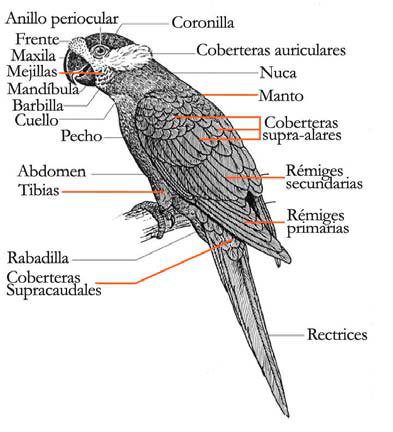
Anatomy-parrots

25 cm.. length and 75-90 g. of weight.

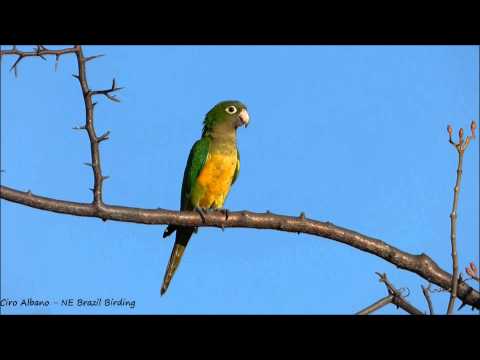
The Cactus Parakeet (Eupsittula cactorum) has the forecrown, lores lower cheeks and brown off; crown with slaty tinge; sides neck, the nape and upperparts up to the rump grass-green.

The primary coverts They are bluish green in the outerweb, the remaining are green grass. Flight feathers (above) green on innerwebs, blue green on outerweb, blue black at the tips (below) gray. Underwing-coverts greenish yellow. Throat and upper breast dull brown; lower breast and belly fairly bright orange-yellow, the thighs and vent greenish-yellow color. Uppertail green, four distal blue central feathers; undertail gray.
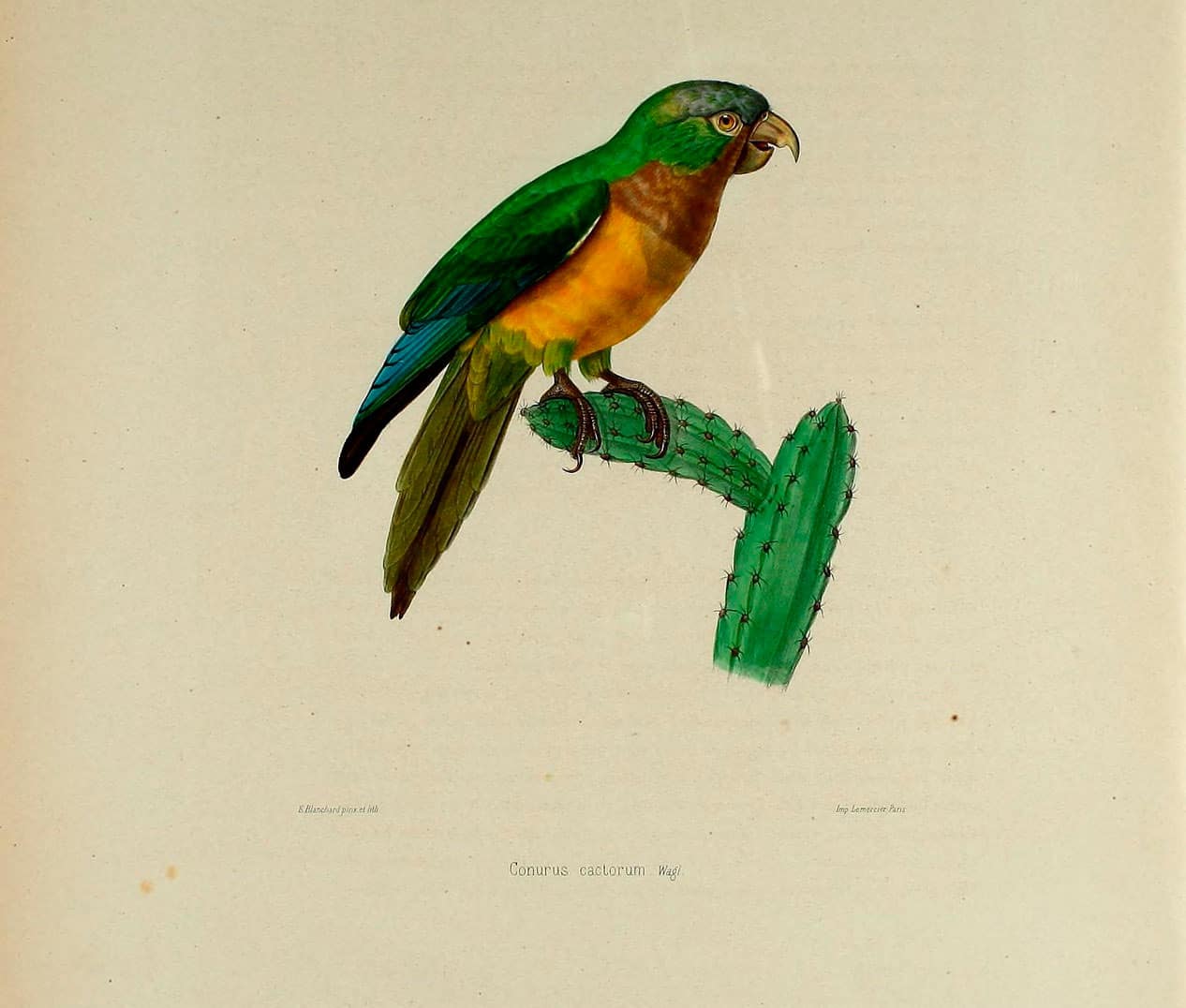
Cactus Parakeet

upper jaw horn, greyish at base and lower jaw; perioftรกlmico patch naked white; irises brown-orange; gray-gray legs.

Both sexes similar. Immature paler than adult, with crown green, more olive upper chest and throat, and the irises darker.

  • Sound of the Cactus Parakeet.

Subspecies description:

  • Eupsittula cactorum cactorum

    (Kuhl, 1820) – Nominal.


  • Eupsittula cactorum caixana

    (Spix, 1824) – Generally paler than nominal, with belly yellow instead of orange.

Habitat:

Video – "Cactus Parakeet" (Eupsittula cactorum)

Cactus Parakeet - Caatinga Parakeet - Eupsittula cactorum -

Its distribution area closely matches the dried vegetation and prickly caatinga Northeast Brazil, but it encompasses higher drier semi-desert areas created by overgrazing and dry forests (caatinga arborea) and seasonal savannah lusher (closed). Usually in pairs or (mainly outside the breeding season) flocks of up to 20 birds, most abundant where food is abundant (as rice crops).

Reproduction:

Crianza undocumented released. Clutch six eggs in captivity.

Food:

The diet includes seeds, fruits (including cactus), berries, dried fruits, flowers and cocoons, taken both trees and shrubs and soil. Sometimes it attacks crops (for example rice, grapes and corn).

Distribution and status:

Population expansion (breeding/resident): 1.220.000 km2

Distributed by the interior Northeast Brazil. The Cactus Parakeet extending from the drier parts of Bay and adjacent northeast Minas Gerais, Brazil north through Piauรญ and Southeast of maranhรฃo, up to Pernambuco and Paraรญba, passing by Rio Grande do Norte and Cearรก. Absent in coastal areas: a record of Bethlehem at the mouth of amazon in For It seems wrong or possibly refers to a leak.

It is usually common (the most common parrot in some localities) with a stable population, although the decline is inevitable in some areas due to massive loss of habitat by agriculture and plantations of exotic trees. Continuing degradation and conversion caatinga by grazing and cultivation they represent a long-term threat. Present in the Serra da Capivara National Park. Any Local persecution due to predation crop. Atrapada to trade small numbers in captivity.

Subspecies distribution:

Conservation:

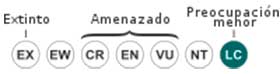
State of conservation โ“˜


minor concern Minor Concern โ“˜ (UICN)โ“˜

โ€ข Current category of the Red List of the UICN: Least concern.

โ€ข Population trend: Stable.

โ€ข Population size : Unknown.

Rationale for the Red List category

The trend population seems to be stable and, therefore, the species does not approach the thresholds for Vulnerable under the criterion of population trend (> 30% decrease in ten years or three generations). The population size has not been quantified, but it is not believed to approach the thresholds for Vulnerable under the criterion of population size (<10.000 mature individuals with an estimated continuous decrease in> 10% in ten years or three generations, or with a specific population structure). For these reasons, the species is evaluated as Least concern.

Justification of the population

The size of the world's population has not been quantified, but this species is described as ยซquite commonยป (Stotz et to the. (1996).

Justification trend

It is suspected that the population is stable the absence of evidence of any reduction or substantial threat.

Threats

Local persecution because of the invasion of crops. This species is also trapped for pet bird trade.

"Cactus Parakeet" in captivity:

Young birds are removed from their nest before they can fly, and then sold, for example, at the fair in inner cities.
These birds can become very tame, and it is not rare to see a Cactus Parakeet living "freely" in the owner's house, as a member of the family so to speak. It however is seeing a rare bird in captivity outside their range. It is not as common as other more familiar species of aratinga. It also, usually they reach very high prices.

The illegal trade It has greatly reduced the population of these Aratingas in nature, and threatens the survival of the species in many areas. Habitat destruction appears to be a minor problem.

For more information – Loro Parque

Alternative names:

Caatinga Conure, Caatinga Parakeet, Cactus Conure, Cactus Parakeet (English).
Conure des cactus, Perriche des cactus, Perruche des cactus (French).
Kaktussittich (German).
Aratinga-vaqueira, giguilim, Jandaia-gangarra, merequรฉm, periquito-da-caatinga, periquito-gangarra (Portuguese).
Aratinga Cactรกcea, Aratinga de los cactos, Periquito de los Cardones (espaรฑol).


scientific classification:

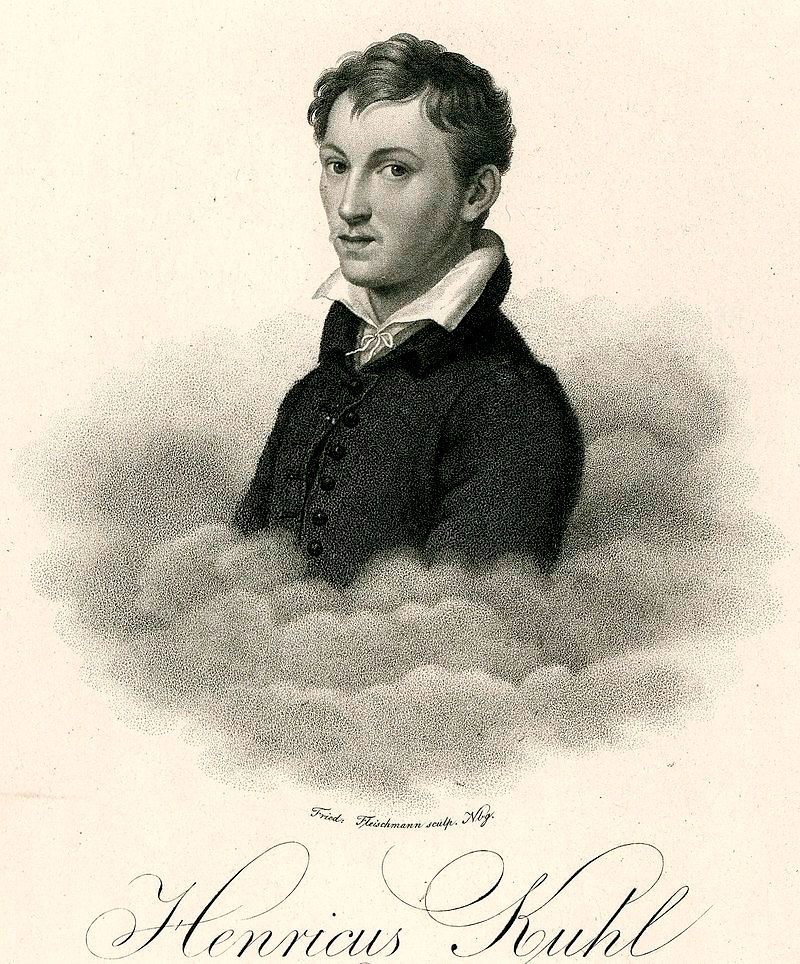
Kuhl, Heinrich
Heinrich Kuhl

Order: Psittaciformes
Family: Psittacidae
Genus: Eupsittula
Scientific name: Eupsittula cactorum
Citation: (Kuhl, 1820)
Protonimo: Psittacus cactorum


Images Cactus Parakeet:


Especies del gรฉnero Eupsittula
  • Eupsittula nana
  • —- Eupsittula nana astec
  • —- Eupsittula nana nana
  • —- Eupsittula nana vicinalis
  • Eupsittula canicularis
  • —- Eupsittula canicularis canicularis
  • —- Eupsittula canicularis clarae
  • —- Eupsittula canicularis eburnirostrum
  • Eupsittula aurea
  • Eupsittula pertinax
  • —- Eupsittula pertinax aeruginosa
  • —- Eupsittula pertinax arubensis
  • —- Eupsittula pertinax chrysogenys
  • —- Eupsittula pertinax chrysophrys
  • —- Eupsittula pertinax griseipecta
  • —- Eupsittula pertinax lehmanni
  • —- Eupsittula pertinax margaritensis
  • —- Eupsittula pertinax ocularis
  • —- Eupsittula pertinax paraensis
  • —- Eupsittula pertinax pertinax
  • —- Eupsittula pertinax surinama
  • —- Eupsittula pertinax tortugensis
  • —- Eupsittula pertinax venezuelae
  • —- Eupsittula pertinax xanthogenia
  • Eupsittula cactorum
  • —- Eupsittula cactorum cactorum
  • —- Eupsittula cactorum caixana

  • Sources:

    • Avibase
    • Parrots of the World โ€“ Forshaw Joseph M
    • Parrots A Guide to the Parrots of the World – Tony Juniper & Mike Parr
    • Birdlife

    • Photos:

    (1) – A pet Caatinga Parakeet in Riachรฃo do Jacuรญpe, Baiano northeast, Brazil By Paulo Marcos from Painted-BA, Brazil (Periquito MartinsUploaded by snowmanradio) [CC BY 2.0], via Wikimedia Commons
    (2) – Caatinga Parakeet (also known as Cactus Parakeet) in Brazil By Phillipe (Picasa Web Albums) [CC BY-SA 3.0], via Wikimedia Commons
    (3) – Eupsittula cactorum – cactus conure – Cactus conure – conure cactus by Florin FeneruFlickr
    (4) – Parakeet CAATINGA (Eupsittula cactorum) by Cantosdanatureza WITH
    (5) – Cactus Parakeet โ€” aratinga cactacea by Animal Encyclopedia 2
    (6) – Cactus parakeet – conographie parrots :.Paris :P. Bertrand,1857.. biodiversitylibrary.org/page/47804387

    โ–ท The world of Pets: Dogs, cats, birds, reptiles, amphibians

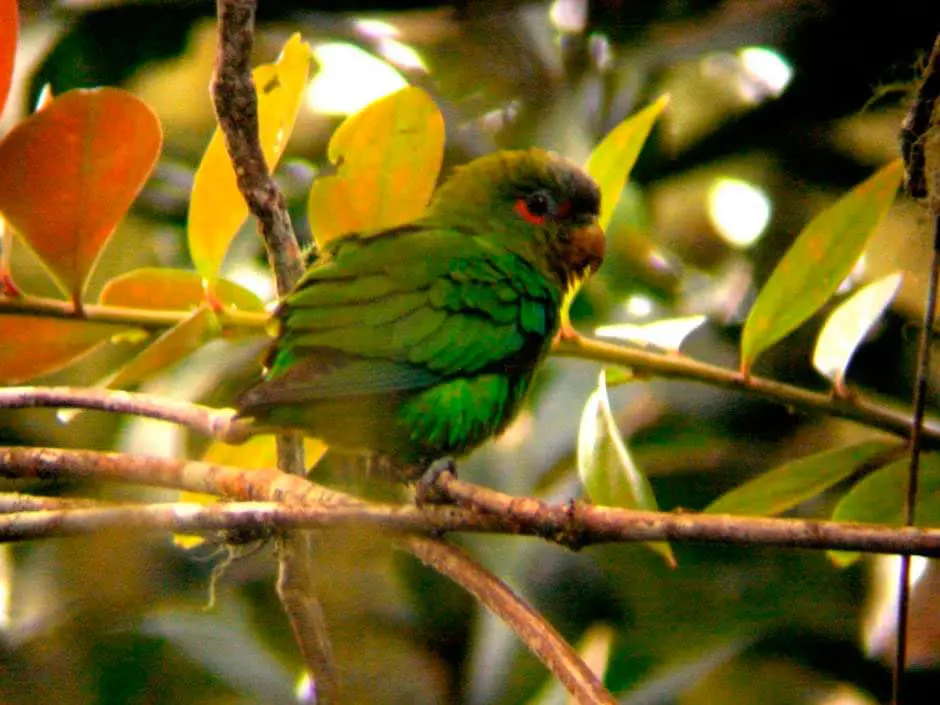
    Blue-fronted Parrotlet
    Touit dilectissima

    Blue-fronted Parrotlet

    Content

    Description

    The height of the Blue-fronted Parrotlet (Touit dilectissimus) varies between the 15 and 18 cm.. It is differentiated by the red line that goes from the bill towards the back of the eye and below the eye ring white, and blue bordering the red line from the forecrown up to the back side of. Wings with the part inside red and yellow, evident on the fly, shoulder and external margin of the wings red, crown and nape green.

    Tail with black border, Yellow ends and green central part.

    The female have the Red of the shoulder reduced or absent.

    Habitat:

    Uncommon and surly. It lives in humid forest that is often cloudy and has tall stubble., between 700 and 1700 meters above sea level (apparently with migration to the 3000 m). ANDA in pairs or groups of 15 or more, lie quietly in the canopy.

    In-flight calls are based on mild or sharp notes repeated several times between pauses. Calls are stronger during the flight.

    Reproduction:

    It nests in termite mounds on tree.

    Food:

    Cotorrita Cariazul
    It feeds on small seeds, fruits and flowers.

    Distribution:

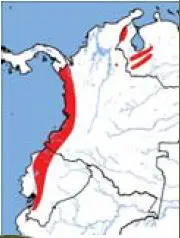
    Can be seen in freedom from Panama, Colombian Pacific to the Northwest of Ecuador, and in the northeast of Colombia and Northwest of Venezuela.

    Conservation:

    State of conservation โ“˜


    minor concern Minor Concern โ“˜ (UICN)โ“˜

    Appreciated a decrease of the species due to deforestation at the local level (in particular in Colombia).
    The population size World has not been quantified, but this species is described as ยซrareยป (Stotz et to the. 1996).
    The population is suspected to be stable in the absence of evidence of any reduction or substantial threats.

    "Blue-fronted Parrotlet" in captivity:

    These birds are rare to see them in captivity. Any person possessing one has to know that it can not be put into freedom, It must be part of a well-managed maintenance program to ensure the continued existence of this species.

    Alternative names:

    Blue-fronted Parrotlet, Blue fronted Parrotlet, Red-winged Parrotlet (ingles).
    Toui ร  front bleu (French).
    Kronenpapagei, Kronen-Papagei (German).
    Touit dilectissimus (Portuguese).
    Cotorrita Cariazul, Lorito de Alas Amarillas (espaรฑol).
    Periquito Alirrojo (Colombia).
    Churiquita (Venezuela).
    Periquito frentiazul (Ecuador).

    scientific classification:

    Order: Psittaciformes
    Family: Psittacidae
    Genus: Touit
    Scientific name: Touit dilectissimus
    Citation: (Sclater,PL & Salvin, 1871)
    Protonimo: Urochroma favorite

    Images:

    Videos:


    Species of the genus Touit


    Blue-fronted Parrotlet (Touit dilectissimus)


    Sources:

    • Avibase
    • Parrots of the World โ€“ Forshaw Joseph M
    • Parrots A Guide to the Parrots of the World – Tony Juniper & Mike Parr
    • Parrots, Parrots and macaws Neotropical
    • Birdlife

    • Photos:

    (1) – One bird perched close to the nest by Manakin Nature Tours – lynx

    โ–ท The world of Pets: Dogs, cats, birds, reptiles, amphibians

    Red-fronted Parrot
    Poicephalus gulielmi


    Lorito Frentirrojo

    Content

    Description:

    28 cm. length and an average weight of 220 g..

    The Red-fronted Parrot (Poicephalus gulielmi)has the forecrown and crown bright red; the lores and chin blackish; cheeks, back of the crown and nape dark green with scattered feathers showing blackish centers.

    The mantle feathers and scapulars Black with large green edges that give scalloped appearance; rump and uppertail-coverts bright yellowish green .

    Wing coverts black with a dark green margin; leading edge of the wings from joints carpal to the base of the primaries bright red. The primaries and secondaries black. Under, the wing feathers dark green and black.

    Underparts dark green with scattered feathers showing a black central band; the thighs bright red. The tail black.

    Top of the mandible grey, Blackish towards the tip with pale base stains, lower jawBlackish r; Orange the irises; legs dark grey to black.

    Both sexes similar.

    The youth lack of red color in the forecrown, the edge of the wings and the thighs; Green in a little paler than the adults plumage. Young birds sometimes show red color in the feathers of the wings. The irises is dark brown.

    Description 3 subspecies:

    • Poicephalus gulielmi fantiensis

      (Neumann, 1908) – Smaller that the species nominal. Forehead, leading edge of the wings and the thighs Orange or orange-red (but not red) and more extensive, in some birds. Underparts paler green with fewer black markings.


    • Poicephalus gulielmi gulielmi

      (Jardine, 1849) – Nominal species


    • Poicephalus gulielmi massaicus

      (Fischer & Reichenow, 1884) – Restricted red in the forecrown. Paler than the species nominal, with few or no black marks on the underparts.

    Habitat:

    The Red-fronted Parrot They inhabit montane forests of Juniperus and Podocarpus in Kenya and Tanzania, between 1,800 and 3,250 meters above sea level, where may depend on the primary vegetation.

    Confined in the lowlands the rest of the population rainforest (below 700 metres in West Africa), but are not limited to the primary formations, There are records of the Red-fronted Parrot perched on tall trees of shade coffee plantations in Angola and in secondary forests of Ghana.

    Usually stays in the tree tops, While they feed or rest.

    In general, seen in groups of up to 10 birds, forming large flocks where abundant food. Large congregations, sometimes, in places.

    In Kenya, the Red-fronted Parrot they make long daytime journeys of foraging (60km) along gallery forests, or crossing the savanna forest dominated by Acacia.

    Reproduction:

    The Red-fronted Parrot they breed solitary.

    During the mating, males sway rhythmically, without moving the wings, while standing behind the female's back.

    The nest is located in a cavity between 3 and 12 meters above the ground.

    In the Mount Meru (Tanzania), nests have been recorded in living trees of the genus Hagenia, Podocarpus and Juniperus.

    The egg laying It has been recorded in November to January in Tanzania, September in Zaire and March, June and from September to November in Kenya. The implementation is of between 2 and 4 eggs bright white.

    Food:

    Its diet It is believed that it is composed of a variety of seeds, fruits, flowers and insects. The seeds of Spathodea, oil palm nuts (Elaeis guineensis), fruits of the Podocarpus flowers and seeds of Grevillea robusta. Probably some insects are also part of their diet.

    Sometimes associated with the African Olive-Pigeon (Columba arquatrix) and Sharpe's Starling (Pholia sharpii) when feeding in the Olea capensis.

    Distribution:

    Size of the area of distribution (reproduction / resident): 5.380.000 km2

    Several apparently separated distributions.

    In West Africa are distributed to the East of Liberia until Ivory Coast and South of Ghana.
    In the Center-West of Africa, South of Cameroon to the Northwest of Angola. A seemingly separate population extends to the North of Zaire and South of the Central African Republic to the southwest of Uganda and Rwanda. Also found in the Highlands of Kenya and North of Tanzania.

    Sedentary with local movements. Locally common to abundant in many localities in part of its eastern range, apparently, the decrease in other areas is possibly due to deforestation.

    Distribution 3 subspecies:

    Conservation:


    minor concern


    โ€ข Current Red List of UICN: Least concern

    โ€ข Population trend: Decreasing

    Keep a Red-fronted Parrot as a pet it has steadily increased in popularity in recent years, and as a result, the species has been the subject of intense trade on the market of wild birds. His capture may represent a significant threat to the species, in particular for the population around the Mount Kilimanjaro in Tanzania, fact that could lead to the local extinction of the species in that area.

    The Red-fronted Parrot is also at risk from the deforestation in parts of its area of distribution. But, the species is still distributed over a wide area and is not currently considered globally threatened, even though global population trends have yet to be quantified.

    The Red-fronted Parrot is located in several protected areas, including the Lope-Okanda National Park in Gabon, World Heritage site, the Korup National Park in Cameroon and the Bia National Park in Ghana.

    The species is included in the Appendix II the Convention on international trade in endangered species (CITES), that means that the international trade of the Red-fronted Parrot It must be carefully checked. But, a key problem in many areas is the lack of adequate legislation, and the lack of compliance with the legislation in which it does exist.

    The wild trade in this bird and the destruction of their forest habitat may have a better follow-up to ensure that populations of the Red-fronted Parrot not to suffer future decreases.

    "Red-fronted Parrot" in captivity:

    Probably the first hatchlings of Red-fronted Parrot born in in captivity were achieved in 1978, in Switzerland and England Although already in advance, in the middle of the 90, specimens had arrived at zoos in London and Hamburg.

    The Red-fronted Parrot is little known in Spain, but in other countries it is very common as a pet thanks to its size, its great intelligence, its capacity for imitation and its character quiet and loving, but at the same time playful and naughty.

    It is soft and musical, and their cry is quite bearable. In general, is a bird bit noisy, which can be an asset to a future owner who lives in an apartment.

    They are very destructive, or both must provide them with abundant branches and non-toxic toys for chopping and shredding.

    In terms of their longevity, according to sources, one specimen was still alive after 21 years in captivity.

    Alternative names:

    Red-fronted Parrot, Jardine’s Parrot, Red fronted Parrot, Red-crowned Parrot, Red-headed Parrot, William’s Fig Parrot (English).
    Perroquet ร  calotte rouge, Perroquet ร  front rouge, Perroquet de Jardine, Perroquet vert ร  calotte rouge (French).
    Kongopapagei, Kongo Papagei (German).
    Papagaio-de-jardine (Portuguese).
    Lorito de Jardine, Lorito Frentirrojo, Loro Jardinero (espaรฑol).


    scientific classification:

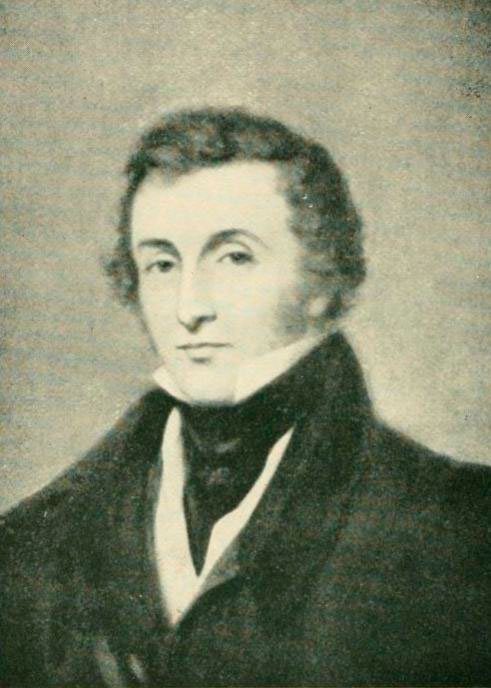
    William Jardine
    William Jardine

    Order: Psittaciformes
    Family: Psittacidae
    Genus: Poicephalus
    Scientific name: Poicephalus gulielmi
    Citation: (Jardine, 1849)
    Protonimo: Parrot gulielmi


    Images "Lorito Frentirrojo":

    ————————————————————————————————

    "Lorito Red Front" (Poicephalus gulielmi)


    Sources:

    Avibase
    – Parrots of the World โ€“ Forshaw Joseph M
    – Parrots A Guide to the Parrots of the World – Tony Juniper & Mike Parr
    – Birdlife
    – Arkive

    Photos:

    (1) – A Red-fronted Parrot at Birds of Eden, South Africa By Dick Daniels (http://carolinabirds.org /) (Own work) [CC BY-SA 3.0 or GFDL], via Wikimedia Commons
    (2) – Photograph of a couple of Poicephalus gulielmi By derivative work: Snowmanradio (talk)Poicephalus_gulielmi_pareja_reproductora. JPG: Juan Caparrรณs (Poicephalus_gulielmi_pareja_reproductora. JPG) [CC BY-SA 3.0 or GFDL], via Wikimedia Commons
    (3) – P. g. fantiensis at Birds of Eden, South Africa By Poicephalus_gulielmi_-Birds_of_Eden_-South_Africa-8a.jpg: Grahamderivative work: Snowmanradio [CC BY-SA 2.0], via Wikimedia Commons
    (4) – A juvenile pet Red-fronted Parrot (also known as Jardineโ€™s Parrot) By Bram Cymet (originally posted to Flickr as Amazon) [CC BY 2.0], via Wikimedia Commons
    (5) – Fledgeling Lesser Jardines Parrot eating vegetables By Kofiwannacracker (Own work) [Public domain], via Wikimedia Commons

    โ–ท The world of Pets: Dogs, cats, birds, reptiles, amphibians

    Carolina Parakeet โ€ 
    Conuropsis carolinensis

    Carolina parrot

    Content

    Description:

    32 to 34 cm. length and 280 g. of weight.

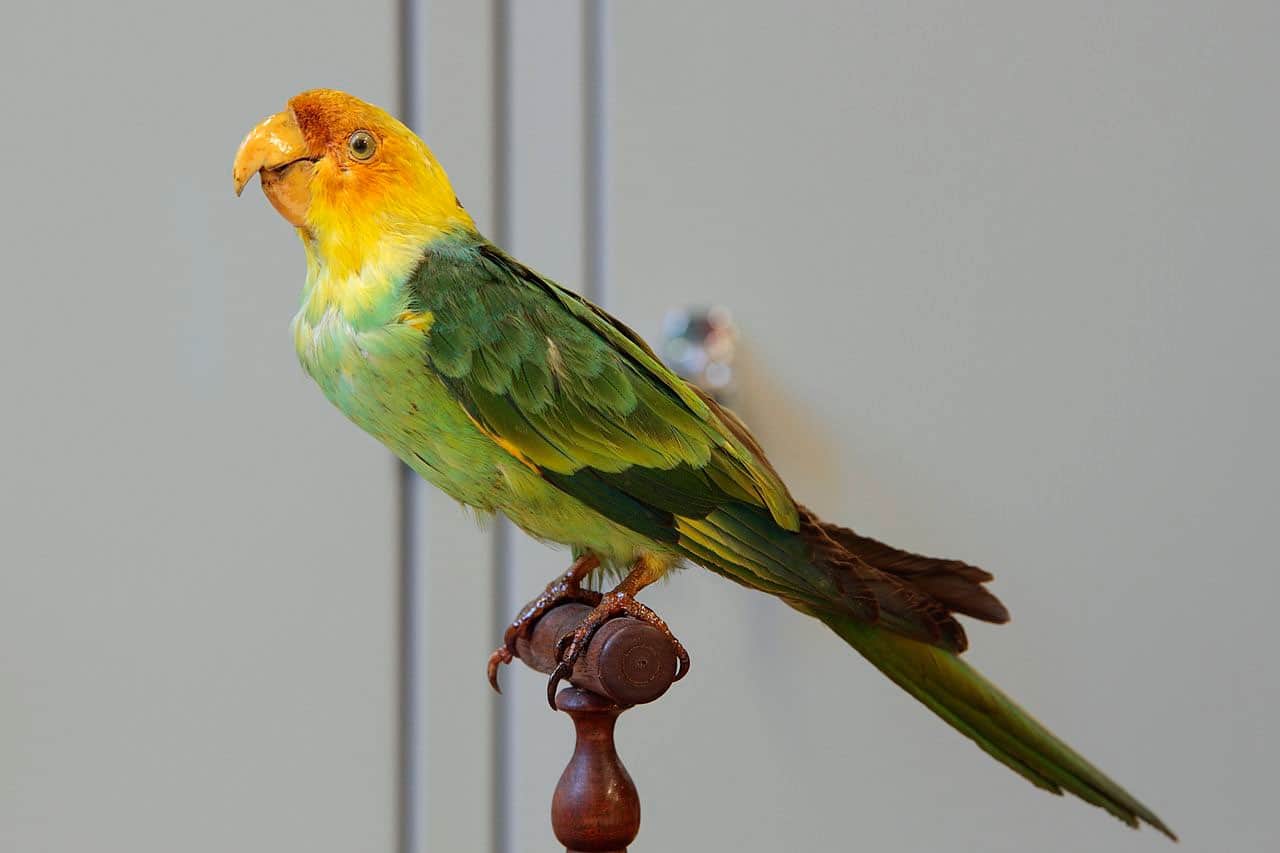
    Male and female adults of Carolina parrot (Conuropsis carolinensis) They were identical in plumage, however males were slightly larger than females.

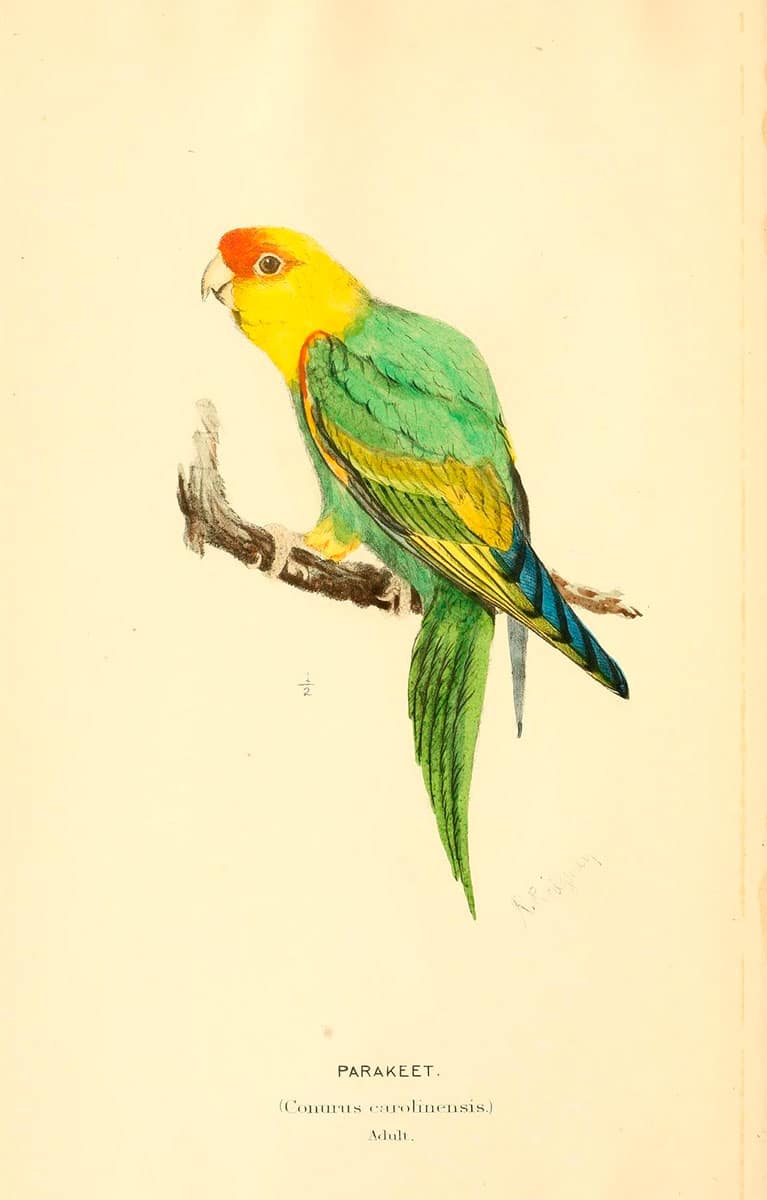
    Most of the plumage It was green with underparts light green. The primary feathers They were mainly green, but with yellow edges in outer primary. The shoulders They were yellow, continuing along the outer edge of the wings. The the thighs They were green and yellow up to the feet. The legs and feet They were light brown. The most distinctive feature of this species was the forecrown and face orange. The feathers orange spread to behind the eyes and upper cheeks (lores). The skin around the eyes It was white and bill They were pale flesh color. The plumage of the head It was completely bright.


    Carolina parrot

    The immature They differed slightly in coloration of adults. The face and all body They were green, with underparts paler. They lacked yellow or orange plumage on the face, wings and thighs. The young were covered in mouse-gray gray, up to approximately 39-40 days when the wings and queues green. The chicks had full adult plumage around 1 aรฑo de edad.

    Subspecies description:

    • Conuropsis carolinensis carolinensis โ€ 

      (Linnaeus, 1758) – Nominal.


    • Conuropsis carolinensis ludoviciana โ€ 

      (Gmelin, 1788) –

    Habitat:

    The habitats Preferred of Carolina parrot were the heavily vegetated and heavily forested lands that bordered swamps and rivers.. These parrots also lived on agricultural land and ate the crops.. Anidaban in large groups of hollow shafts. The forests of sicomoro and swamp cypress. (ยป Parakeetsยป, 2000; Fuller, 2001; Mauler, 2001; Snyder and Russell, 2002)

    They were traveling in flocks of 100 to 1000 birds. Anidaban up 30 birds in a nest. They were supposed to be Monogamie. It was about very social birds, it was probably one of the many factors that led to their extinction. When a man shot a bird, fellow herd member flitted over his lost flock, making them vulnerable too. Farmers were shooting all flock to save their crops. It is doubtful that the Carolina parrot migrated, as seen in the northern states during the cold winters. They were attracted to salt pacifiers and were observed ingesting saline waters., earth and sand.

    The Carolina parrot They are walking, They are jumping and climbing trees using their beaks as a third leg. Its flight was registered as a fast and elegant, but very noisy as birds rarely stayed silent during flight. Were involved in cleaning and grooming to keep their social cohesion. During the day they rested, slept or sunbathed. They fed in the morning and evening. (ยซParakeetsยป, 2000;ยปNature Serve, Conuropsis carolinensisยป, 2005; Howell, 1932; Rising, 2004; Snyder and Russell, 2002; Strattersfield y Capper, 2000)

    Reproduction:

    Some sources say that Carolina parrot they were Monogamie, having only one partner for life. But, no studies were conducted on mating systems and many birds apparently shared nests. (Laycock, Audobon Magazine, March of 1969; Snyder and Russell, 2002)

    There is little information available upon the reproduction of this species. They reproduced in spring, producing 2 to 5 eggs These perpetual Nidada, which then incubaban during 23 days. (Snyder and Russell, 2002; Snyder and Russell, 2002)

    Food:

    The Carolina parrot ate mainly seeds of genre Xanthium. They also consumed the fruits and seeds many other plants, as well as flower buds and, occasionally, insects. They were recorded as ruin of many fruit crops. They would pluck the immature fruit from the tree and eat the seeds. Flocks could ruin the fruit of a tree in a matter of minutes. When they ate, the Carolina parrot They are taking food with their beaks, they placed them in their claws and held them while using their beaks to eat them.. (Greenway, JR. 1967; Howell, 1932; Snyder and Russell, 2002; Strattersfield y Capper, 2000; Greenway, JR. 1967; Howell, 1932; Snyder and Russell, 2002; Strattersfield y Capper, 2000)

    Distribution:

    the former Conuropsis carolinensis It was found from southern Florida until North Carolina and in coastal areas as far north as New York City. The Carolina parrot he was in the states Gulf as far west as Texas eastern and northern along the rivers Arkansas, Missouri, Mississippi and Ohio and its tributaries. They were also recorded in South Dakota, Iowa, Wisconsin, Michigan, Ohio and W.V.. The westernmost appearances were in eastern Colorado. (ยป Nature Serve, Conuropsis carolinensisยป, 2005; Fuller, 2001; Laycock, Audobon Magazine, March of 1969; Snyder and Russell, 2002)

    Subspecies distribution:

    • Conuropsis carolinensis carolinensis โ€ 

      (Linnaeus, 1758) – Nominal.


    • Conuropsis carolinensis ludoviciana โ€ 

      (Gmelin, 1788) – Paler overall than the nominal.

    Conservation:

    This species was previously in the southeastern United States, but now it is EXTINCT, primarily as a result of persecution. The last wild records are of the subspecies Conuropsis carolinensis ludoviciana in 1910.

    The main causes of extinction of the species were the persecution (for feeding, crop protection, poultry production and trade of hats for ladies), and also deforestation (especially lowland), probably aggravated by his gregarious nature (Saikku 1991), and competition with introduced bees (McKinley 1960).

    "Carolina Parakeet โ€ " in captivity:

    One of the reasons for his extinction was the hunting of birds in the wild before their attempt to breed in captivity to sell them as pets, possibly because it was more profitable for them and it was difficult for them to breed in captivity. They could live up to 30 years in captivity.

    Alternative names:

    Carolina Conure, Carolina Parakeet, Carolina Paroquet, Louisiana Parakeet (English).
    Conure de Caroline, Perriche ร  tรชte jaune, Perruche ร  tรชte jaune, Perruche de la Caroline du Sud (French).
    Carolinasittich, Karolinasittich (German).
    Periquito-da-carolina (Portuguese).
    Cotorra de Carolina (espaรฑol).


    scientific classification:

    Carlos-Linnaeus
    Carl Linnaeus

    Order: Psittaciformes
    Family: Psittacidae
    Genus: conuropsis
    Scientific name: Conuropsis carolinensis
    Citation: (Linnaeus, 1758)
    Protonimo: Psittacus carolinensis

    Carolina Parakeet Images:


    Sources:

    Avibase
    – Parrots of the World โ€“ Forshaw Joseph M
    – Parrots A Guide to the Parrots of the World – Tony Juniper & Mike Parr
    Birdlife
    – Animal Diversity Web

    Photos:

    (1) – axidermied Carolina Parakeet. Teaching and research collections, Laval University Library By Cephas (Own work) [CC BY-SA 3.0], via Wikimedia Commons
    (2) – Conuropsis carolinensis (Linnaeus, 1758) – the extinct Carolina parakeet (mount, public display, Field Museum of Natural History, Chicago, Illinois, USA). By James St. John (Conuropsis carolinensis (Carolina parakeet) 2) [CC BY 2.0], via Wikimedia Commons
    (3) – Mounted specimen of Conuropsis carolinensis, Museum Wiesbaden, Germany By Fritz Geller-Grimm (Own work) [CC BY-SA 2.5], via Wikimedia Commons
    (4) – Taxodermic bird specimen in the Fairbanks Museum and Planetarium, St. Johnsbury, Vermont, USA. By Daderot (Own work) [CC0], via Wikimedia Commons
    (5) – Conuropsis carolinensis Linnaeus, 1758 by Huub Veldhuijzen van Zanten / Naturalis [CC BY-SA 3.0], via Wikimedia Commons
    (6) – Carolina Parakeet (Conuropsis carolinensis) by Biodiversity Heritage LibraryFlickr

    โ–ท The world of Pets: Dogs, cats, birds, reptiles, amphibians

    Caica Parrot
    Pyrilia caica


    Lorito Caica

    Content

    Description:

    23 cm.. height.

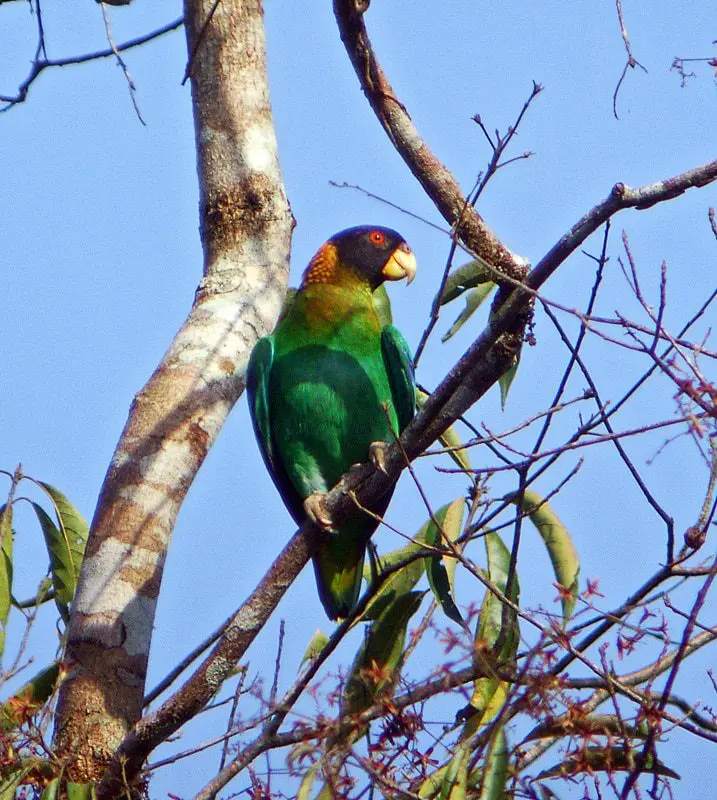
    The head of the Caica Parrot (Pyrilia caica) totally black is it more distinguishable from this species, together with a collar Golden cafesoso that extends up to the chest.

    The rest of the body usually Green, more clear in the belly and the inside of the tail; wing with blue stain and dark ends, Tip of the tail black.

    Bill color bone; ring eyepiece bare of color grey pale; Orange irises.

    The youth with crown green, face Dark greenish yellow, and collar not very notorious gold in neck and almost absent in chest.

    • Sound of the Caica Parrot.

    Habitat:

    Inhabits little disturbed humid forests, firm ground, in Tepuis, from the 50 to the 1100 m.
    gregarious, They walk in small groups. They feed in the canopy of the forest.

    Reproduction:

    Currently with little information about the reproduction.

    Food:

    In the wild, It believes that its diet consists mainly of eucalyptus flowers, fruit, nectar and pollen.

    Distribution:

    Can be observed in the South-East of Venezuela, Guyanas and northeast of the brazilian amazon.

    Conservation:


    Near-threatened


    โ€ข Red List category of the UICN current: Near-threatened

    โ€ข Population trend: Stable

    Justification of the population:

    The size of the world population Caica Parrot It has not been quantified, although this species is described as 'rare’ (Stotz et to the., 1996).

    Justification trend :

    This species is suspected that it may lose 13,6-17,2% of habitat within its distribution over three generations (21 years) based on a model of deforestation of the Amazonia (Soares-Filho et to the., 2006, Bird et to the. 2011).

    Given the susceptibility of this species to the hunting and/or entrapment, It is suspected that its population will decrease at a rate close to the 30% in three generations.

    "Caica Parrot" in captivity:

    They adult acclimatised quite easily to a new environment and are very resistant … Conversational skills (in comparison with other species).
    They are very quiet in an Aviary, with a personality friendly and Gentile. They are very sociable and it should be with a partner or in a group environment. In any way, It is not easy to see to the Caica Parrot in captivity.

    Alternative names:

    Caica Parrot, Hooded Parrot (English).
    Caรฏque ร  tรชte noire (French).
    Kappenpapagei, Kappen-Papagei (German).
    curica-caica, curica, papagainho, periquito-de-pescoรงo-marrom (Portuguese).
    Lorito Caica, Lorito de Cabeza Negra (espaรฑol).
    Perico Cabecinegro (Venezuela).


    scientific classification:

    John Latham
    John Latham

    Order: Psittaciformes
    Family: Psittacidae
    Genus: Pyrilia
    Scientific name: Pyrilia caica
    Citation: (Latham, 1790)
    Protonimo: Caรฏca parrot


    Images "Caica Parrot"

    Videos "Caica Parrot"

    ————————————————————————————————

    ยซLorito Caicaยป (Pyrilia caica)


    Sources:

    Avibase
    – Parrots of the World โ€“ Forshaw Joseph M
    – Parrots A Guide to the Parrots of the World – Tony Juniper & Mike Parr
    – Birdlife

    Photos:

    (1) – lynxeds

    Sounds: controles-canto.org

    โ–ท The world of Pets: Dogs, cats, birds, reptiles, amphibians

    Long-tailed Parakeet
    Psittacula longicauda


    Cotorra Colilarga

    Content

    Description:

    Of 40 to 48 cm.. length and 168 to 196 g. of weight.

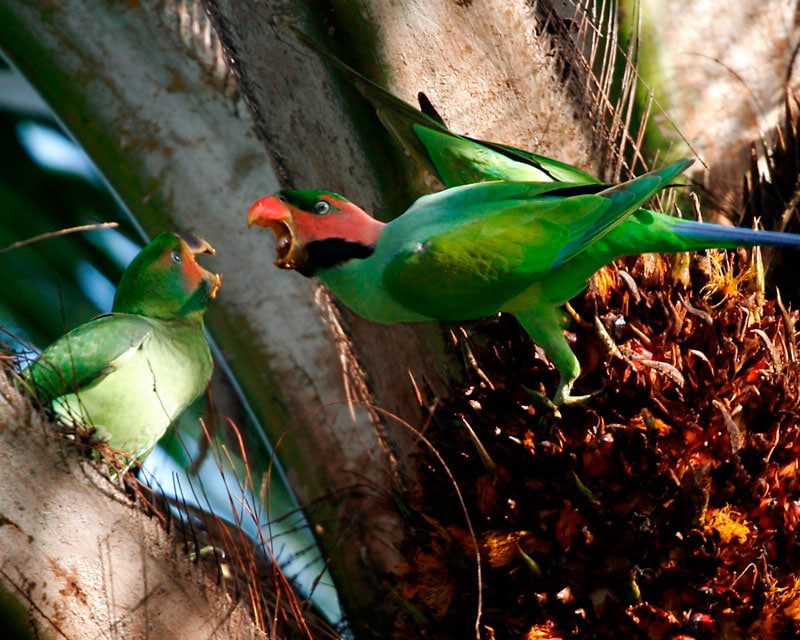
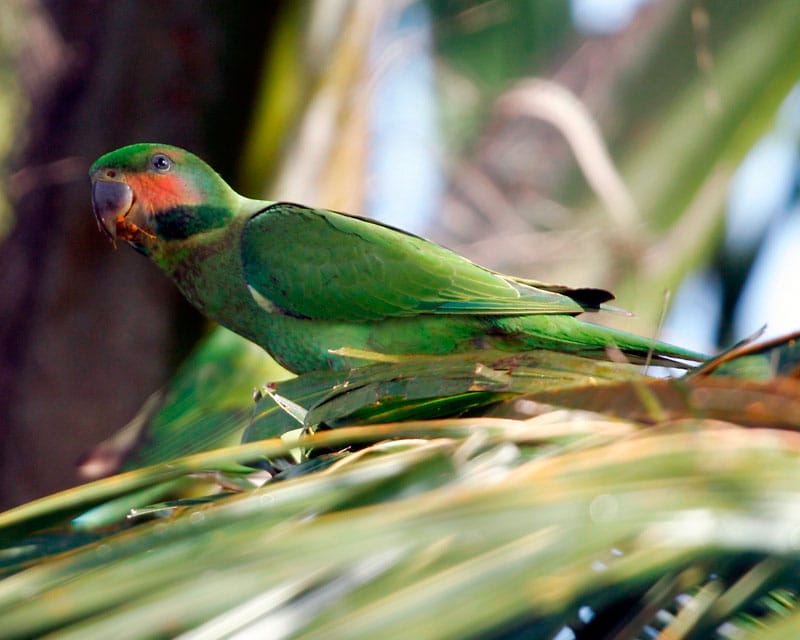
    The Long-tailed Parakeet (Psittacula longicauda) has the plumage, in general, green. The throat, the chest and the abdomen are greenish-yellow; and lores (the regions between the eyes and the beak, on both sides of the head) are bluish-black. The crown is a green dark, and the sides of the head and nape are pinkish Red. They have a black stripe in the cheeks.

    The upperparts is yellowish wash of blue-grey. The lower part of the back is pale-blue. The upperwing-coverts are yellowish. The supracaudales-coverts and infracaudales, as well as the the thighs are pale green. The central feathers of the tail are blue with pale tips and outer feathers are green.

    The bill top is red and the lower beak is brown-black color. The irises they are amarillos-blanquecinos, and legs are grey.

    The females they have the nape green. The band to their cheeks is dark green, and cheeks superiors are an orange-red live. Their feathers of the tail they are much shorter, and the bill top and bottom are brown-black color.

    Ilustraciรณn Cotorra Colilarga

    The young birds they have the head variable green interspersed with orange-red. The feathers of the tail they are shorter, and both the bill top and bottom are brown.

    The young male they have a tint blue in the lower part of the back and some birds can have a reddish tint in the bill top.

    Immature birds reach your adult plumage When they are near the 30 months of age.

    The lutino and other colorations, It is believed that they are mutations observed both in the wild and in captivity.

    Subspecies description:
    Subspecies
    • Psittacula longicauda defontainei

      (Chasen, 1935) – Of an average length of 42 cm.. As the species nominal but but the pinkish red from the sides of the head It is deep orange-red-streaked.


    • Psittacula longicauda longicauda

      (Boddaert, 1783) – The species nominal


    • Psittacula longicauda modesta

      (Fraser, 1845) – Of 48 cm.. Plumage as of the species nominal, but the crown It has a reddish-brown core and a green at the end of feather edging, becoming pink on the back of the head and nape, thus causing in the crown more Brown than green appears in many birds . The black stripe in the lores is more clearly defined, continuing in some birds to form a narrow band in the forecrown. The upper cheeks they have a deep pinkish-Red, orange-red stripes.


    • Psittacula longicauda nicobarica

      (Gould, 1857) – Of 48 cm.. As the species nominal, but the back of the head, the nape and back are greenish-yellow and slightly washed with pale blue. The ear-coverts and cheeks are deep red. The lower part of the back is green.


    • Psittacula longicauda tytleri

      (Hume, 1874) – Of 44 cm.. length. As the species nominal but the back of the head, the nape and back are yellowish green washed with grisaceo-malva. The throat, the chest and the top chest they have a pale bluish tint. The lower part of the back is green.

    Habitat:

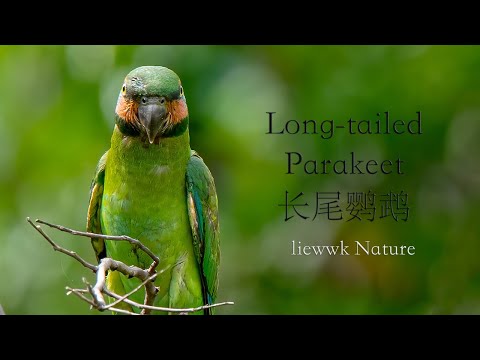
    Video – "Long-tailed Parakeet" (Psittacula longicauda)

    eating Starfruit... Long-tailed Parakeet, parakeets, parakeets, Psittacula longicauda, Long-tailed Parakeet, MALAY BAYAN

    The Long-tailed Parakeet distributed over all types of lowland (below 300 metres in Sumatra), Evergreen from mangrove forests, swamps, tropical forests, to plantations of oil palm plantations (Elaeis) and coconut trees. It prefers the edges of high forest, especially with large dead trees, including close cultivated areas.

    Visit parks and gardens on the Islands Nicobar Islands.

    gregarious.

    Flocks of thousands of birds reported in the Islands Andaman and Borneo but smaller groups (minor's 20) they are typically, especially during breeding. They form mixed flocks with the Blue-rumped Parrot (Psittinus cyanurus) in Kalimantan.

    The Long-tailed Parakeet It is a restless bird that are constantly in motion. They fly quickly around branches, moving quickly from a tree to another. Although they are usually well camouflaged in green foliage, its continuous chirp betrays its position. They tend to feed shortly after sunrise and resume foraging around sunset..

    Reproduction:

    The Long-tailed Parakeet nests in tree cavities, usually dead, often to a considerable height (for example, reported nest in a tree of the species Koompassia in Sumatra to 45 meters above sea level); in the andaman islands commonly nest in trees of the species Pterocarpus marsupium; in the Nicobar Islands sometimes in Pandanus, some 4 meters above ground and in larger trees to 10 metres in height.

    Breeds in colonies.

    The nest It is full of pieces of bark and chewed wood. In the natural habitat, the average clutch consists of 2 to 3 eggs, each one measures 30,6 x 24,7 mm.

    During the courtship, the male bows before the female, by spitting up, circular motions with his head and gently touching its beak.

    The breeding It is between the months of December-February, Although pigeons have been observed in July in the Malacca Peninsula; Feb-Mar in the Nicobar Islands and Andaman. Reports of eggs in July sunsets in Sumatra.

    Food:

    The nominal species diet includes plants from Borneo camphor (Dryobalanops sumatrensis) and fruit of the Dillenia; the subspecies nicobarica largely feeds on fruits as the papaya (Carica papaya) and Pandanus; occasionally feed on the outer cover of the betel nuts (Areca catechu). On the other hand, They assail orchards and fruit plantations to feed, for example, of the oil palm plantations Elaeis, grains and seeds, and they can have an important impact in the fields of ripening rice (for example in the Islas Andaman) and fruit of the oil palm plantations (for example in the Malay Peninsula).

    Insects and their larvae can also be part of your daily diet; If these parrots seek them actively unknown, but they may be ingested ,probably, While they feed on fruits and flowers.

    Distribution:

    Size of the area of distribution (reproduction / resident): 877.000 km2

    The Long-tailed Parakeet distributed by the islands of the bay of bengal until Borneo. The range goes from the Coco Islands and andaman islands and Nicobar Islands (India) through Sumatra (including the Enggano Islands, Nias, Bangka and Belitung), South of Malay Peninsula from Sungei Patani (approximately 6ยฐN) to Singapore, Riau archipelago and Bintan, to the East, through the Anambas Islands and up Borneo including Natuna and Karimata Islands.

    Resident and common in andaman islands and Coconut.

    On the Islands Nicobar Islands described in the century 19 as 'excessively abundant', but with few details today.

    Resident on Malay Peninsula, but possibly passage migrant in Singapore.

    You can display migratory movements in Sumatra, where probably is the decrease due to the loss in the lowlands of the primary tropical forest.

    Unevenly distributed in Borneo, and in Kalimantan numbers fluctuate through little-known seasonal movements.

    Resident local in Sabah. More common in the coastal districts of Sumatra and Borneo.

    Usually unpredictable appearances, being abundant in a locality for a period and against, absent for years.

    Subspecies distribution:
    Subspecies

    Conservation:

    State of conservation โ“˜


    Near-threatened Near Threatened โ“˜ (UICN)โ“˜

    โ€ข Current Red List of UICN: Near-threatened

    โ€ข Population trend: Decreasing

    The size of the world population Long-tailed Parakeet It has not been quantified, but the species is described as very common and widespread in southern Borneo, locally common in Sumatra and Peninsular Malaysia and common in Brunei, the andaman islands and Nicobar Islands (pit et to the. 1997).

    The destruction of forests in the lowlands of Sundaland in Indonesian, as well as in Thailand and Malaysia It has been wide (Kalimantan almost lost the 25% its perennial forest during 1985 to 1.997, and Sumatra almost lost the 30% your coverage 1985), still, the species is still numerous in a number of areas, due to its ability to forage away from forested areas and nest communally. So, the decrease is estimated to have been of the order of 20 to 30% in the last ten years.

    Conservation Actions Underway:

      – CITES Appendix II.

    Conservation Actions Proposed:

      – Monitor the species in trade.

      – Monitor habitat trends and rates of deforestation in the lowlands of Sundaland using satellite imagery and remote sensing.

      – The investigation of the ecology of the species to improve the understanding of the movements it makes.

      – Effectively protect significant areas of habitat at key sites, both in strictly protected areas and in multiple use areas.

    "Long-tailed Parakeet" in captivity:

    Rare in captivity, their mortality is high and breeding successes are rare.

    It is a bird very noisy. It is a principle very shy and slow to get your confidence. They don't bathe often, Although they occasionally sit in the rain. They enjoy gnawing fresh branches. The main problems for captive breeding are the difficulty of matching compatible pairs; the Long-tailed Parakeet they usually do not accept a mate that they have not chosen themselves and even if they are breeding pairs, it is very difficult to keep the chicks alive. Sudden deaths no apparent cause they have been reported – possibly as a result of stress.

    Some birds may refuse to eat. Have been observed Occasional attacks of females to males, coming to Peck them on the penis, causing them serious injury. It also, these delicate parrots are difficult to acclimatize. Newly imported birds are susceptible to cold, wet conditions. During the acclimatization period, should not be exposed to temperatures below to 24 ยฐC and at no time below 10 ยฐ C.

    Given that these parrots are so rare, experts prefer well managed breeding programs the possibility of keeping them captive in private hands.

    The size of the clutch average consists of 2 – 4 eggs laid at daily intervals, with an incubation which lasts approximately 23 days. The young leave the nest 7 weeks after hatching and are independent 2 weeks later.

    The Long-tailed Parakeet, in any case, you will need a large aviary which is a very active bird and will need plenty of room to move.
    It is important to place the bird in a quiet and protected, as well as provide a rest box (22 x 22 x 60 cm.) at all times.

    Alternative names:

    Long-tailed Parakeet, Long tailed Parakeet, Malaccan Red-cheeked Parakeet, Malayan Red-cheeked Parakeet, Pink-cheeked Parakeet, Red-cheeked Parakeet (English).
    Perruche ร  longs brins, Perruche de Malacca (French).
    Langschwanzsittich (German).
    Periquito-mustache-cauda-longa (Portuguese).
    Cotorra Colilarga, Cotorra de Cola Larga (espaรฑol).

    scientific classification:

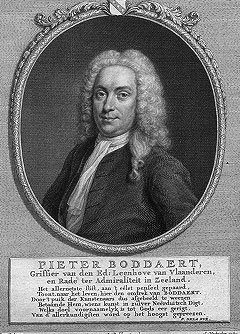
    Pieter Boddaert
    Pieter Boddaert

    Order: Psittaciformes
    Family: Psittaculidae
    Genus: Psittacula
    Scientific name: Psittacula longicauda
    Citation: (Boddaert, 1783)
    Protonimo: Psittacus longicauda

    Long-tailed Parakeet Images:


    Especies del gรฉnero Psittacula

    Sources:

    Avibase
    – Parrots of the World โ€“ Forshaw Joseph M
    – Parrots A Guide to the Parrots of the World – Tony Juniper & Mike Parr
    – Birdlife

    Photos:

    (1) – A male warning juvenile to keep away from the food while he is there in Queenstown, Singapore By Lip Kee Yap [CC BY-SA 2.0], via Wikimedia Commons
    (2) – A female in Queenstown, Central Singapore on 2 December 2005 By Lip Kee Yap [CC BY-SA 2.0], via Wikimedia Commons
    (3) – feeding in Queenstown, Singapore on 2 December 2005 By Lip Kee Yap [CC BY-SA 2.0], via Wikimedia Commons
    (4) – A juvenile in Queenstown, Central Singapore on 2 December 2005 By Lip Kee Yap [CC BY-SA 2.0], via Wikimedia Commons
    (5) – Long-tailed Parakeets at the Botanic Gardens, Singapore By Lip Kee Yap [CC BY-SA 2.0], via Wikimedia Commons
    (6) – Long-tailed Parakeet, adult male Joseph Wolf [Public domain], via Wikimedia Commons

    Sounds: Mathias Ritschard (Xeno-canto)

    โ–ท The world of Pets: Dogs, cats, birds, reptiles, amphibians

    Lord Howe parakeet โ€ 
    Cyanoramphus subflavescens

    Lord Howe Island Parakeet

    Content

    Lord Howe Island Parakeet

    Description:

    21-27 cm.. of length and a weight of 80 g..

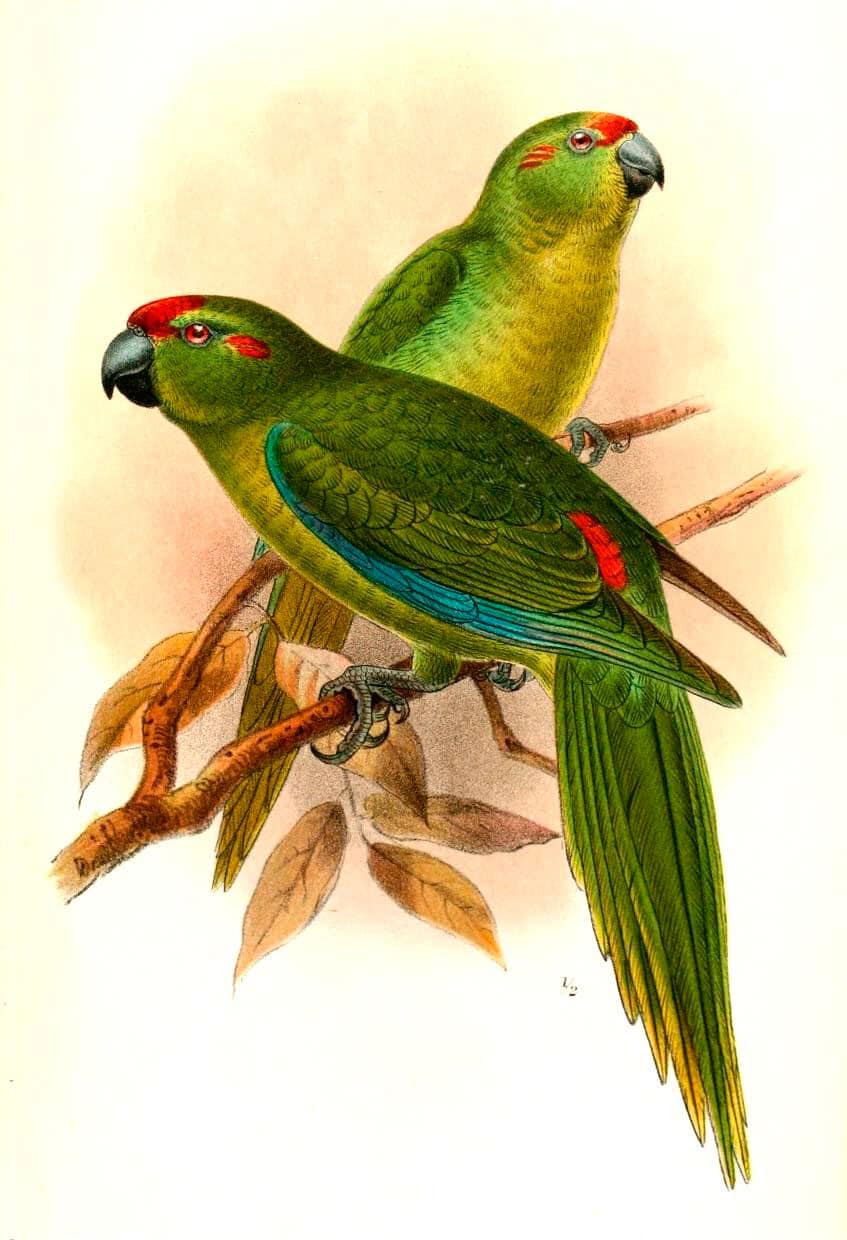
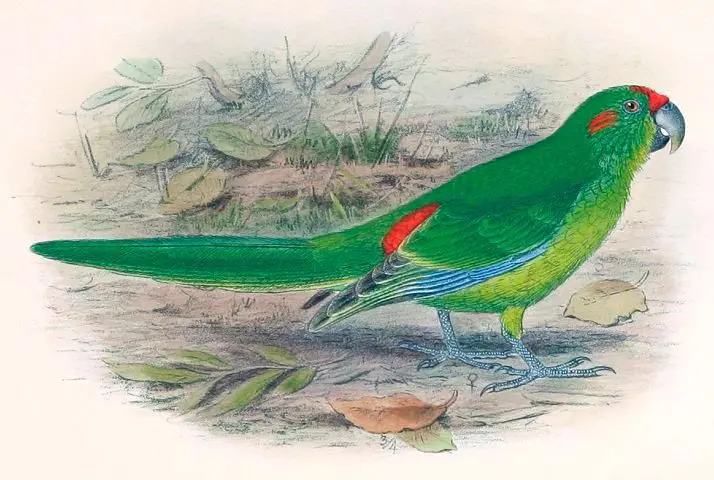
    The Lord Howe Island Parakeet (Cyanoramphus subflavescens) was a medium-sized green parrot with a head bright green, the crown crimson red in color and a stripe on the eyes; the eyes were red and bill grey. The upperparts They were bright green with a dark red spot on each side of the rump (usually they are hidden by the wings when resting) and a blue border in wings; the underparts were yellowish green.

    Both sexes looked similar, but the female It was smaller.

    Taxonomic status:

    This taxon is considered a subspecies of Cyanoramphus [novaezelandiae or subflavescens] (sensu lato) by some authors.

    In 2012, World Bird List of IOC recognized him as a species [IOC world birdnames Archived 2012-08-06 at the Wayback Machine.].

    Habitat:

    The Lord Howe Island Parakeet It was occasionally observed in flocks. There is little information on their habitats, They probably lived in inhabited forests and cultivated areas of the Lord Howe Island. No information on the use of different habitats for different activities.

    Reproduction:

    Nothing is known of sexual maturity, life expectancy and natural mortality of this extinct species. But, It has been estimated that the useful life of the Lord Howe Island Parakeet should be similar to the Norfolk Island Parakeet (Cyanoramphus cookii), About three years. the age of sexual maturity is also known populations of this species, although a juvenile female was seen mating with a male just a week after achieving independence, and captive birds are said to have bred when they were less than a year old.

    Little else is known of the breeding of the Lord Howe Island Parakeet, probably reproduced in response to weather conditions and food availability, nesting in tree holes or hollow pipes, in crevices between rocks or cliffs.

    Food:

    Meal Lord Howe Island Parakeet probably consisted of plant material, as seeds, fruit, buds and leaves of native trees and shrubs. Other extant populations ate mainly seeds, fruits and berries, egg yolks, sprouts and flowers, as well as, occasionally, a small number of invertebrates.

    Distribution:

    endemic to the isla Lord Howe in the Sea of รขโ‚ฌโ€นรขโ‚ฌโ€นTasmania, part of New South Wales, Australia.

    Conservation:

    โ€ข The last record of this species dates from 1869. EXTINCT.

    The population declines were mainly due to habitat modification, hunting, poisoning, and the introduction of predators (especially cats and rats).
    But, the main threat to the Lord Howe Island Parakeet was the hunting and its capture by settlers. Formerly he abounded in the Lord Howe Island and it was said to be a plague, since it destroyed the crops and orchards of the inhabitants of the island.

    There are only two copies of Lord Howe Island Parakeet. From the collection John Gould, taken by John MacGillivray in September of 1853 on tour HMS Herald, and are in the Museum of Natural History [Schodde, R.; & Mason, I.J. (1997). Birds (Columbidae to Coraciidae). In Houston, W.W.K. & Wells, A. (eds) Zoological Catalogue of Australia. Vol. 37.2. CSIRO Publishing: Melbourne. ISBN 0-643-06456-7 p.147.].

    Alternative names:

    Lord Howe Island Parakeet, Lord Howe Island red-crowned parakeet, Lord Howe Parakeet, Red-Fronted Parakeet (English).
    Perruche de Lord Howe (French).
    Lord Howe-Laufsittich (German).
    Periquito de Lord Howe (Portuguese).
    Perico de Lord Howe (espaรฑol).

    scientific classification:

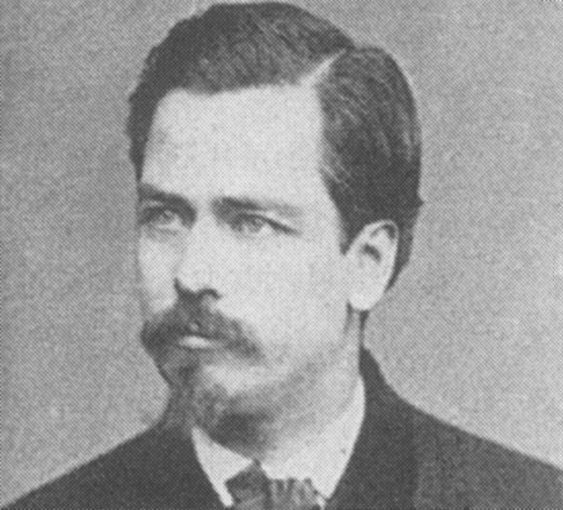
    Salvadori-Thomas
    Salvadori Tommaso

    Order: Psittaciformes
    Family: Psittaculidae
    Gender: Cyanoramphus
    Scientific name: Cyanoramphus subflavescens
    Subpoena: Salvadori, 1891
    Protonimo: Cyanorhamphus subflavescens

    Sources:

    โ€ข Avibase
    โ€ข Parrots of the World โ€“ Forshaw Joseph M
    โ€ข Parrots A Guide to the Parrots of the World – Tony Juniper & Mike Parr
    โ€ข Red-crowned Parakeet (Lord Howe Is. subsp.) – profile | NSW Environment & Heritage

    Photos:

    (1) – Cyanorhamphus subflavescens (Catalogue of the Birds in the British Museum. Volume 20) by John Gerrard Keulemans [Public domain] (2) – Hand coloured lithograph (circa 1928) showing (Cyanorhamphus subflavescens) Which is now a synonym of the Lord Howe Island Red-fronted Parakeet (Gray novaezelandiae subflavescens) From The Birds of Australia (1910-28) by Gregory Macalister Mathews (1876-1949) Artwork by Henrik Gronvold (1858โ€“1940) a Danish bird illustrator. by Henrik Grรถnvold [Public domain]

    โ–ท The world of Pets: Dogs, cats, birds, reptiles, amphibians

    Baudin's black cockatoo
    Zanda baudinii

    Baudin's black cockatoo

    Content

    Description

    50 to 57 cm.. height and weight between 560 and 770 g.
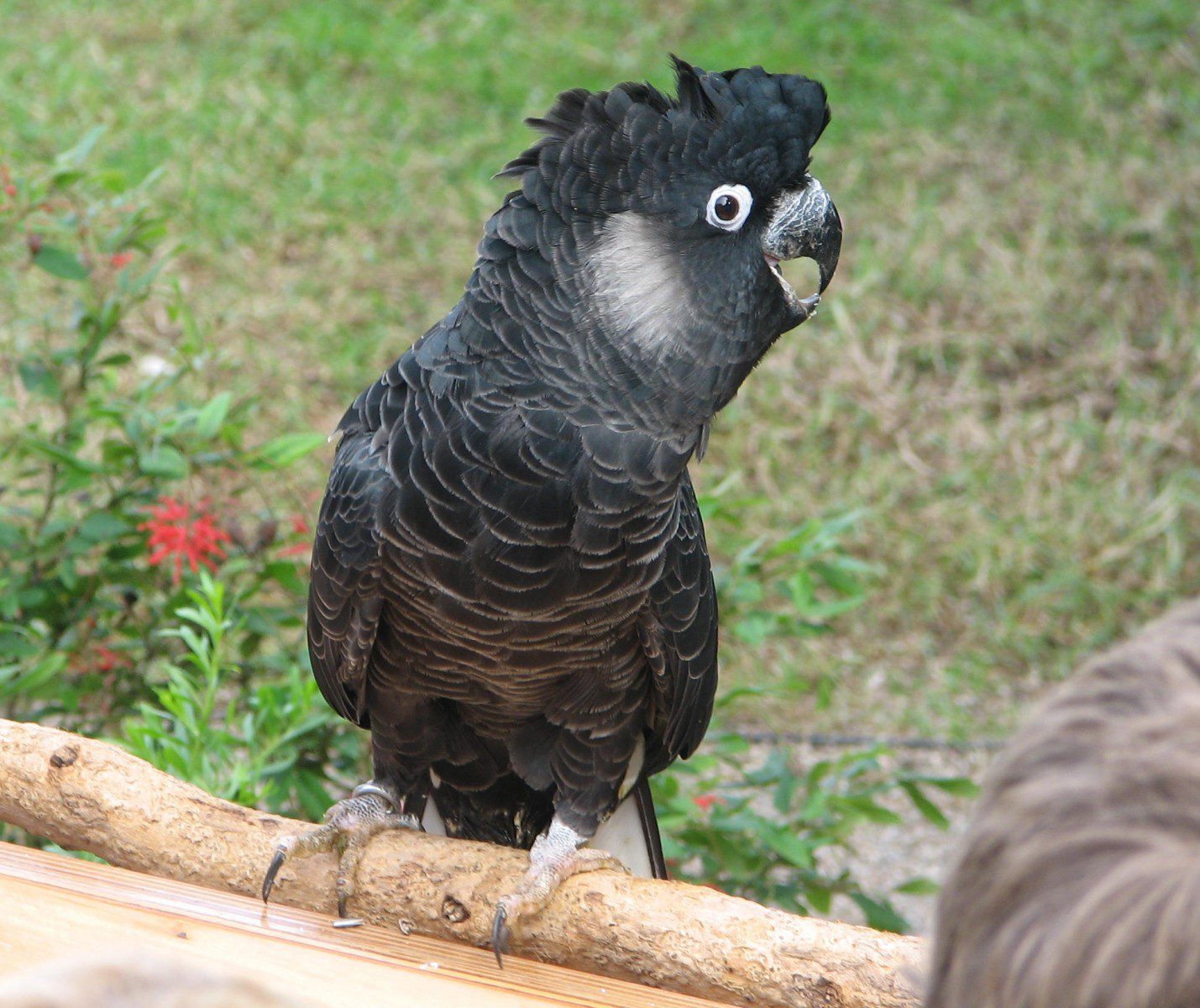
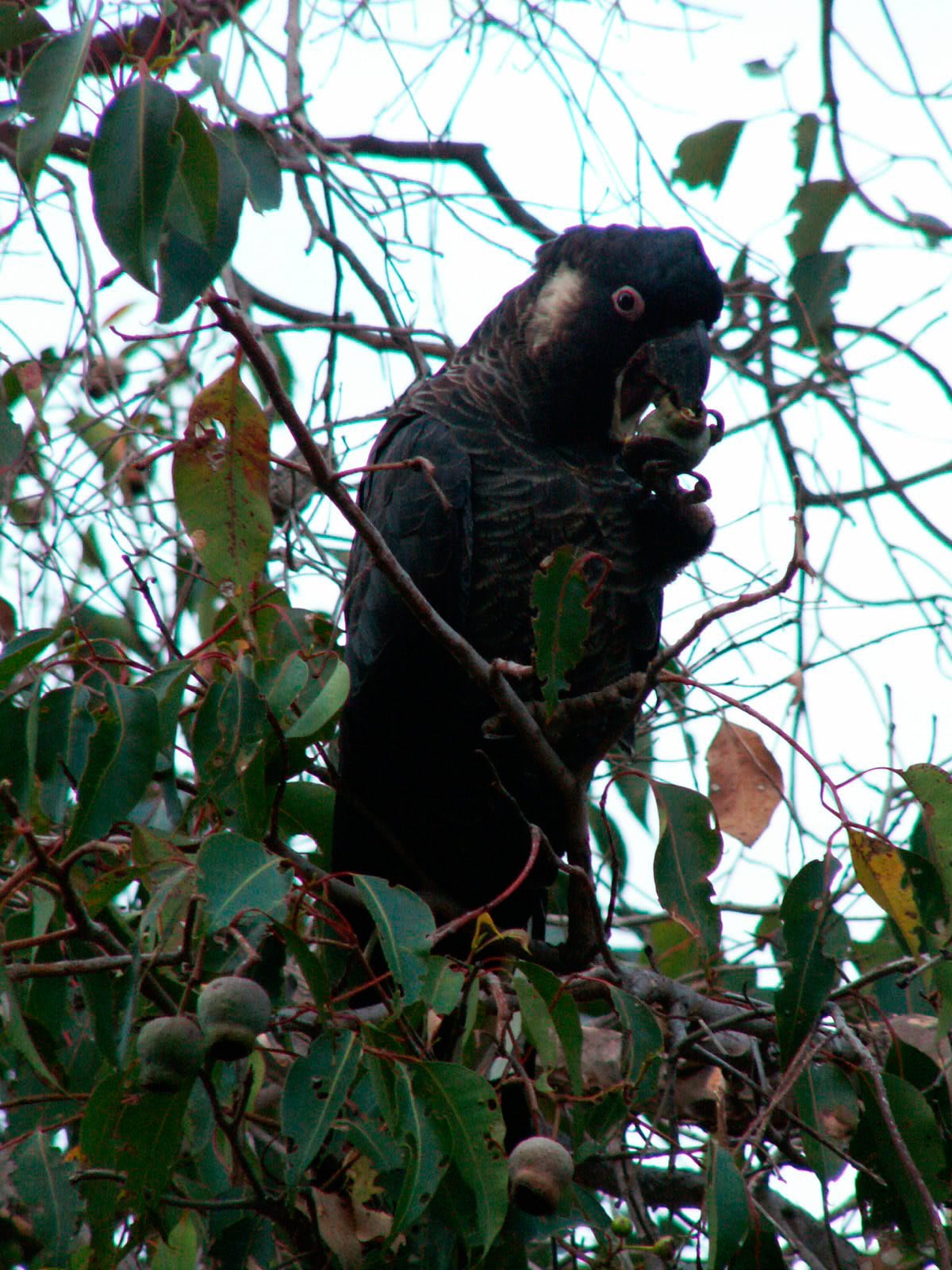
    to Baudin's black cockatoo (Zanda baudinii) is almost entirely of black, with whitish margins in the feathers, patches rounded on them ear-coverts (yellowish to white in the female and Brown to grey in the male), white rectangular panels in the tail.
    has a powerful bill (with greatly elongated upper jaw), Black in the male and white-gray color with a black color in the female tip.
    Iris dark brown surrounded by a eye ring Red in the male and female grey.
    Tail rounded, crest Erectile and legs greys. birds youth are like adults in appearance, but the bill of the male juvenile is equal to the of the of the female adult. The bill the juvenile male begins to darken after the second year.

    Habitat:

    Its natural habitat is the dense forests dominated by the Marris (Corymbia calophylla) in the extreme southwest of Australia.

    Gregaria, is often seen in groups of three, a pair of adults with a young, or in small groups. Occasionally they gather in large flocks of up to 300 birds during the non-breeding season, usually in places where food is abundant.

    Reproduction:

    Very little is known about the reproductive biology This cockatoo, such as their reproduction area, nesting events calendar, the nest tree, Characteristics of holes for nests, implementation size, incubation period, incipient and successful nesting period.

    Little is known about their reproductive cycle because nests are extremely difficult to locate.. Most of the characteristics of the biology of the species are inferred from the Short-billed black cockatoo.

    They show a strong union of couple and probably is pair of by life. They remain together throughout the year, except when the female is incubating eggs. Probably they begin to breed at the age of four. The species breeds in late winter and spring, from August to November or December. Copulation probably takes place three days before laying. The female lays one or two white eggs and you can lay an egg of replacement if the first since egg fails. The incubation lasts a few 29 days and only the female incubates them. The chicks remain in the nest for a maximum of 16 weeks.

    The nests are composed of a layer of wood chips, built in large hollow in the high eucalyptus, 30 to 40 cm. in diameter and more than 30 depth cm.

    Food:

    Are fed mainly from the seeds of MARRI and Karri. They are also fond of the rending of wood, Apart from pierce the bark of trunks in search of larvae. Apple trees and pear trees are frequently visited to enjoy its fruits.

    Distribution:

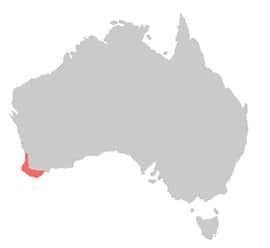
    Confined in the South-West of Western Australia, especially among Perth, Albany and Margaret River.

    Distribution Long-billed Black-billed Cockatoo

    Small captive populations in the Melbourne Zoo, in the Healesville sanctuary in Victoria, and in the Zoo of Perth. The species is bred in captivity with great difficulty.

    Conservation:

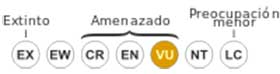
    State of conservation โ“˜


    Vulnerable Vulnerable โ“˜ (UICN)โ“˜

    In Australia is listed as Vulnerable by the law on protection and conservation of biodiversity for the environment.

    The total population of the species is estimated at 12.500 individuals, with one downward trend.
    Before the inclusion of the threatened species, the annual reproductive rate was of 0,6 per couple, too low to replace the large number of birds that were killed by horticulturists to protect their crops. It is now illegal to shoot these birds, However is it still done.

    In captivity:

    Appears in the Appendix II of CITES, what limited international trade in the species. Itร‚ยดs illegal capture These wild birds, a penalty of up to 10,000 $. This cockatoo is protected under the Wildlife Conservation Act of Australia.

    Alternative names:

    Baudinโ€™s Black Cockatoo, Long-billed Black Cockatoo, White tailed Black Cockatoo (English).
    Cacatoรจs de Baudin (French).
    Langschnabel-RuรŸkakadu, WeiรŸohr-Rabenkakadu (German).
    Cacatua-negra-de-bico-longo (Portuguese).
    Cacatรบa Fรบnebre de Pico Largo, Cacatรบa Fรบnebre Piquilarga (espaรฑol).

    scientific classification:

    Order: Psittaciformes
    Family: Cacatuidae
    Scientific name: Zanda baudinii
    Genus: Zanda
    Citation: Lear, 1832
    Protonimo: Zanda Baudinii

    Images:


    Species of the genus Zanda
  • Zanda funerea
  • —- Zanda funeral funeral
  • —- Zanda funerea whiteae
  • —- Zanda funerary xanthanota
  • Zanda baudinii
  • Zanda latirostris

  • Sources:
    Avibase, Australian Government
    Photos: Long-billed Black-cockatoo, Taronga Zoo, Sydney, Wikipedia, Goura (zoochat.com),
    Sounds: Chris Benesh (controles-canto.org)