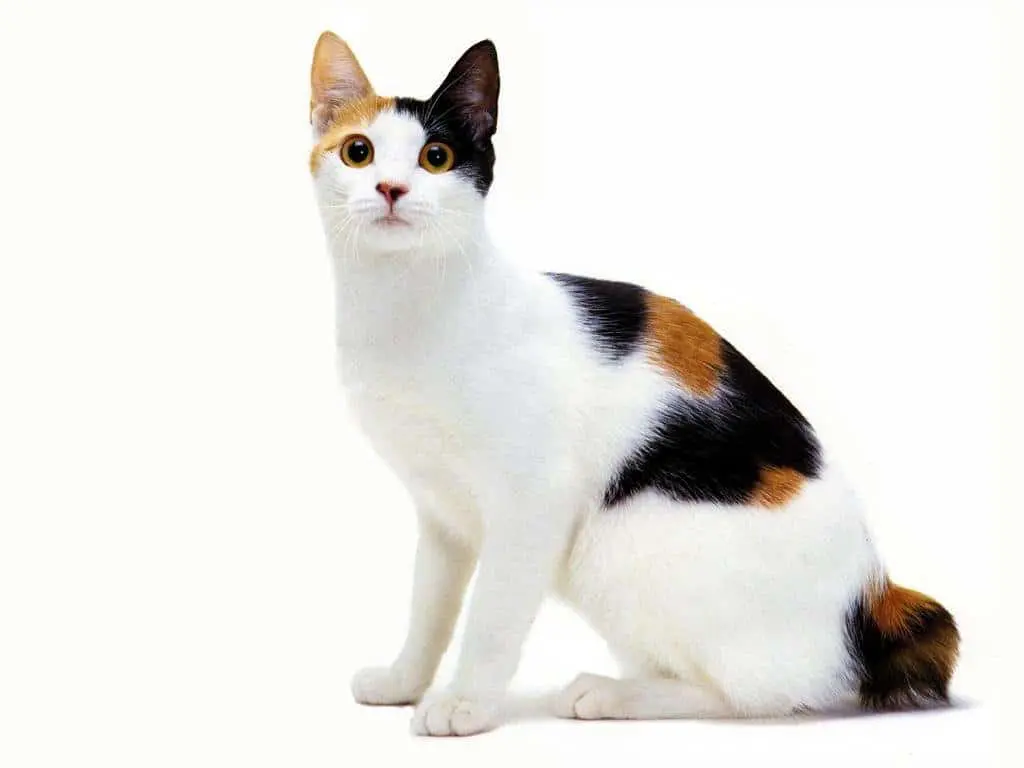
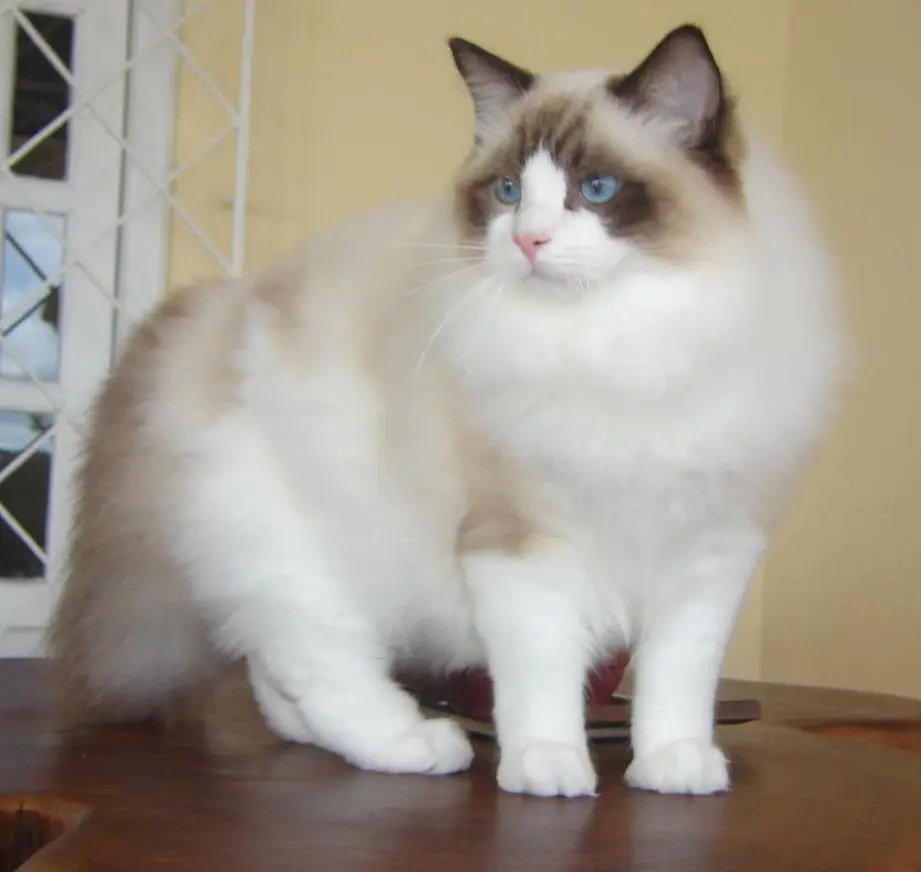
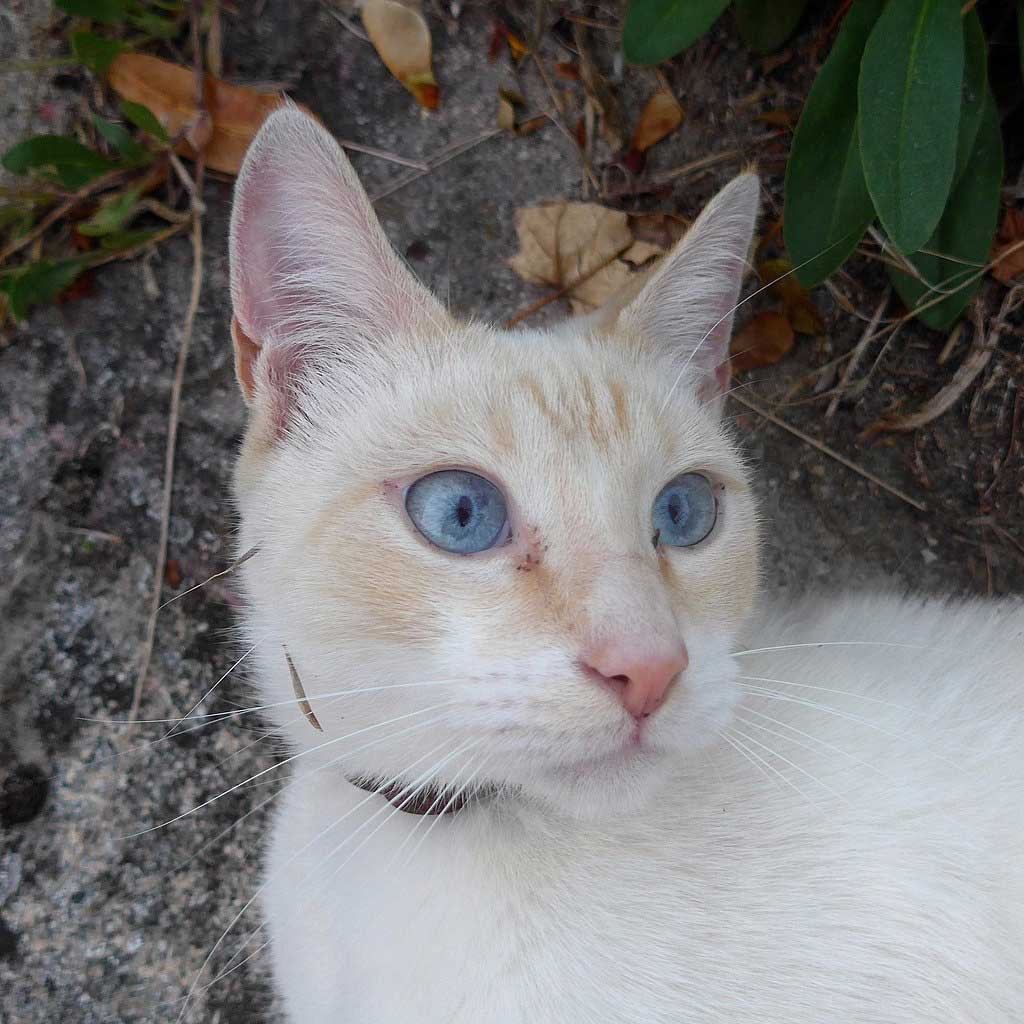
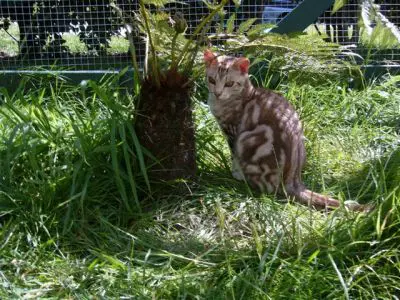
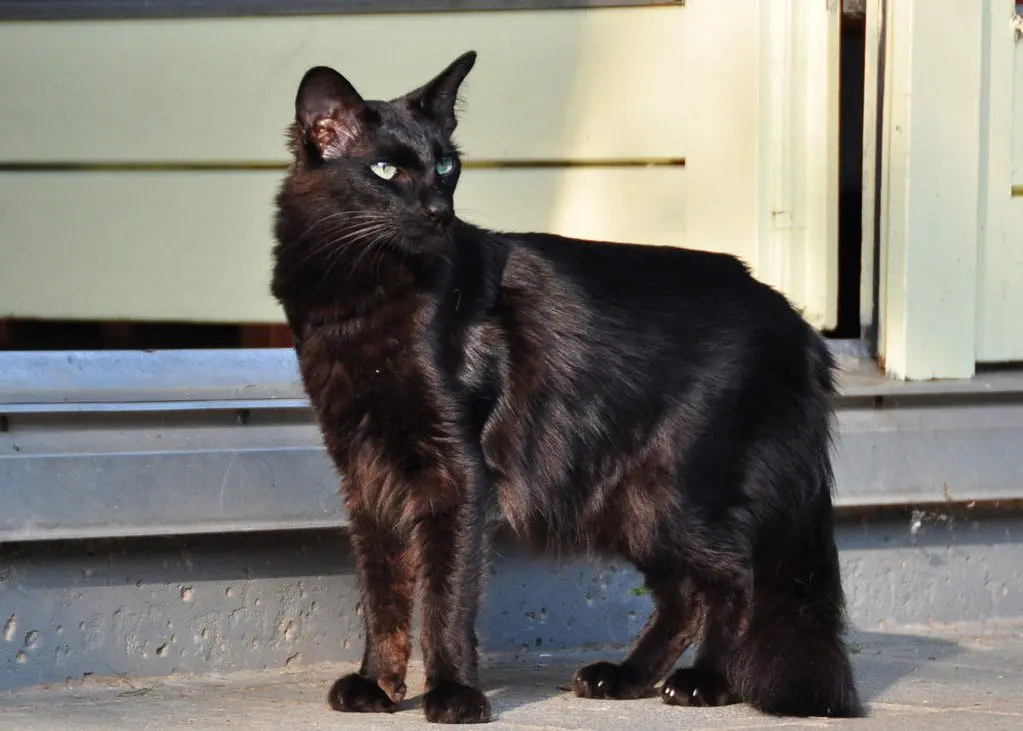
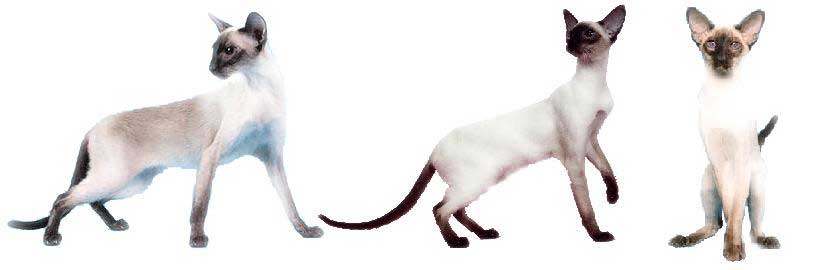
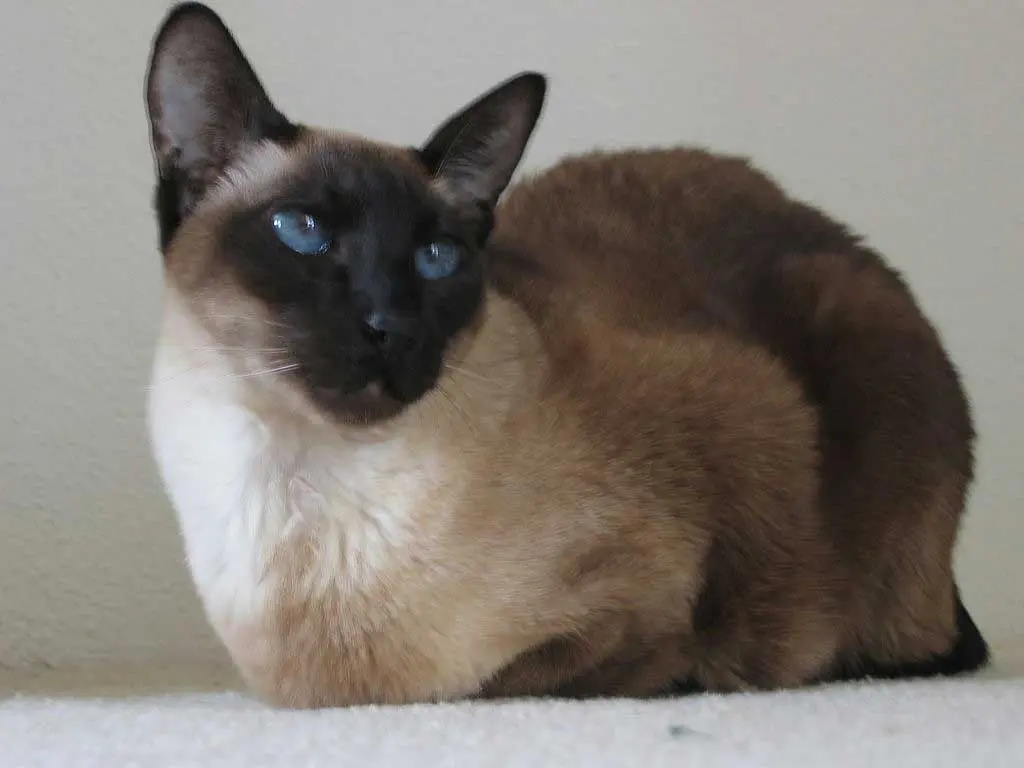
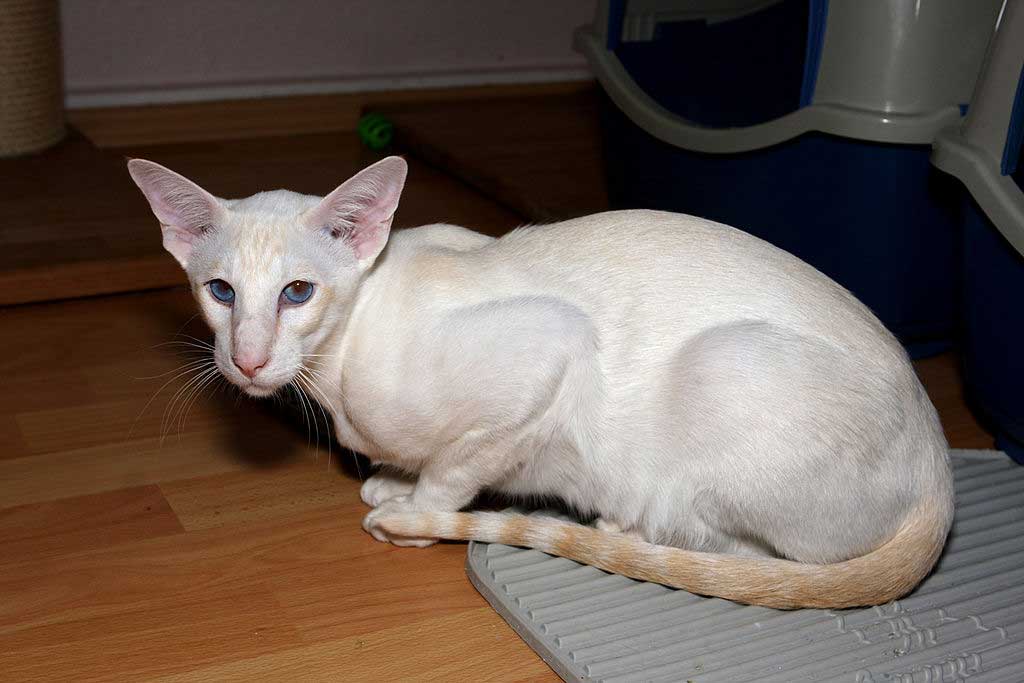
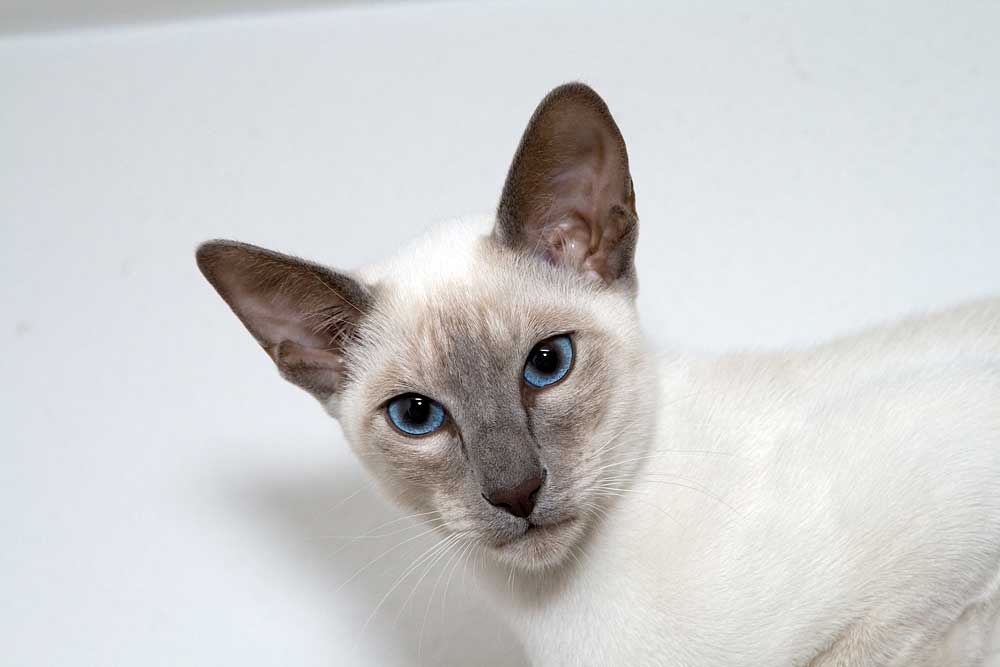
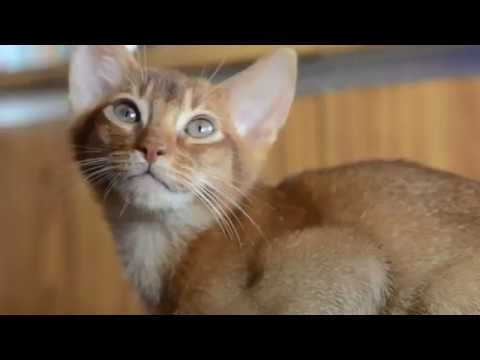
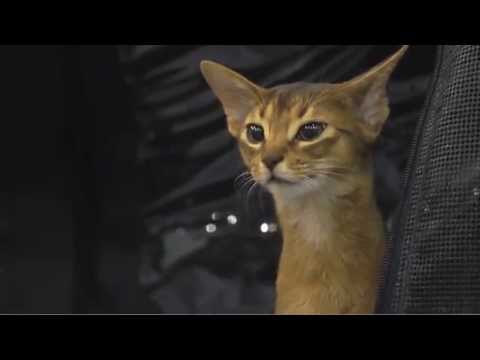
Most official bodies consider that the Shorthair japanese bobtail It is a variety of Japanese Bobtail, but the TICA (International Cat Association) consider it to be a breed in its own right.
Physical characteristics
The Japanese Bobtail looks similar to a domestic cat, but with a very shortened tail.
Its coat is short and, mostly, bicolor (white-red or white-black); the tricolor variety, less common, is especially popular. Are size medium, but very light. Even the males, that do not weigh much more than females, reach a maximum of just 3 kg.
Body: The body is medium in size, elongated, slim and elegant, but muscular.
The legs: they are long and thin, oval legs.
The tail: must be bent and / or curved and be shorter than 8 cm.. The fur on the tail is longer than the rest of the body (pompom effect).
Head: The head is no longer than it is wide and is shaped like an equilateral triangle with smooth contours.
The profile: is slightly curved. The muzzle is deviated and slightly rounded.
The chin and lower jaw: they are strong.
Ears: The ears are large and erect. They are far apart, the tips are slightly rounded.
Eyes: The eyes are large, almond-shaped. They are placed slightly obliquely. The color of the eyes corresponds to the color of the coat.
Fur: The coat is short and smooth. Has a silky texture and hardly any undercoat.
Color variations: The colors chocolate and cinnamon, as well as its dilution (lilac and fawn) are available in all combinations. (Bicolor, Tricolor, Striped) they are not recognized. A pattern with dots is also not recognized. Everyone else
All other colors and designs are accepted. Any amount of white is allowed.
▷ The world of Pets: Dogs, cats, birds, reptiles, amphibians
Coexistence is important that you have with your new friend. Before considering the acquisition of a cat of the breed "Ragdoll cat" you know certain factors. You must take into account their character, their need for exercise, their interaction with other pets, their care and if you have small children, their level of tolerance towards them.
Joy
3,0 of 5 stars (based on 1 review)
Activity level
2,0 of 5 stars (based on 1 review)
Friendliness to other pets
4,0 of 5 stars (based on 1 review)
Friendliness to children
4,0 of 5 stars (based on 1 review)
Grooming requirements
4,0 of 5 stars (based on 1 review)
Vocality
2,0 of 5 stars (based on 1 review)
Need for attention
2,0 of 5 stars (based on 1 review)
Affection towards its owners
4,0 of 5 stars (based on 1 review)
Docility
5,0 of 5 stars (based on 1 review)
Intelligence
4,0 of 5 stars (based on 1 review)
Independence
2,0 of 5 stars (based on 1 review)
Hardiness
3,0 of 5 stars (based on 1 review)
History
The Ragdoll cat He is originally from California, United States. At the beginning of the Decade of 1960, Ann Baker, a breeder of persian cats, a white cat began to cross, semi-wild and looking like Turkish Angora cat call Josephine with several street cats. Josephine gave birth, among others, to two cats named Buckwheat and Fugianna.
They were large and docile in temperament and tended to relax completely when picked up., becoming real "Ragdolls".
Two males were added to the breeding program of the Mrs. Barker: Blackie, a black guy looking like Burmese cat, and Daddy Warbucks, dark in color and with white tips of the legs. These five cats interbred and gave rise to the breed Ragdoll as we know it today.
Aware that he had a new breed of cat on his hands, Ann Baker decided not to have her recognized by feline associations and, Instead, chose to register the trademark Ragdoll and create your own record, the International Ragdoll Cat Association (IRCA), in 1971. At the same time, prohibited anyone from using the name Ragdoll, breed these cats outside the strict conditions imposed to preserve the purity of the breed or register them with another feline association.
Although the eccentric claims of Ann Baker about what Josephine was genetically altered by aliens in a car accident are not credible, it seems likely that he had a unique genetic makeup, probably a natural genetic mutation, which was later passed on to their offspring.
The eccentricities of Ann Baker sparked dissension among other breeders of the Ragdoll cat, especially because of the high level of inbreeding caused by the strict restrictions imposed by. In 1975, Denny and Laura Dayton they were among the first to distance themselves from the breed and attempt to give it a legitimate existence under the umbrella of recognized feline associations. They drew up the standard that was used later when it was recognized by the Fédération Internationale Féline (FIFé) in 1991 and for the American Cat Fanciers’ Association (CFA) in 1993.
In the meantime, the Ragdoll had arrived in Britain already in 1981, when breeders Pat Brownsell and Lulu Rowley they imported the first specimens and began to breed this cat that little by little would conquer British cat lovers. A few years later, in 1986, made its appearance in France.
In the news, the Ragdoll is recognized by most major national and international feline associations: is the case, in particular, of the Governing Council of the Cat Fancy (GCCF) British, of the Livre Officiel des Origines Félines (LOOF) French, of the International Cat Association (TICA) and of the World Cat Federation (WCF).
Well established in both North America and Europe, and its success is undeniable. In United States, it is one of the most popular breeds in terms of number of registrations in the CFA, and even ranked first in 2018. In the United Kingdom, has firmly established itself in second place since 2010; with about 3.000 kittens registered every year, it only represents around the 15% of the country's cat population.
It is also one of the five most popular cat breeds in France., and its growth is dazzling: While in 2003 less than 100 specimens in the LOOF, in 2010 more than 1.000 and in 2019 more than 2.600, surpassing the Persian for the first time. So, represents almost the 6% of births registered in the country.
Physical characteristics
Ragdoll
The Ragdoll it is one of the largest breeds of domestic cats, but it grows slowly and in fits and starts, and does not reach maturity until four years.
Has a kind of body long and mighty. His body is wide and imposing, with a solid bone structure and supported by medium-sized muscular legs that end in legs round and wide. The tail is quite long and tapers slightly towards the tip.
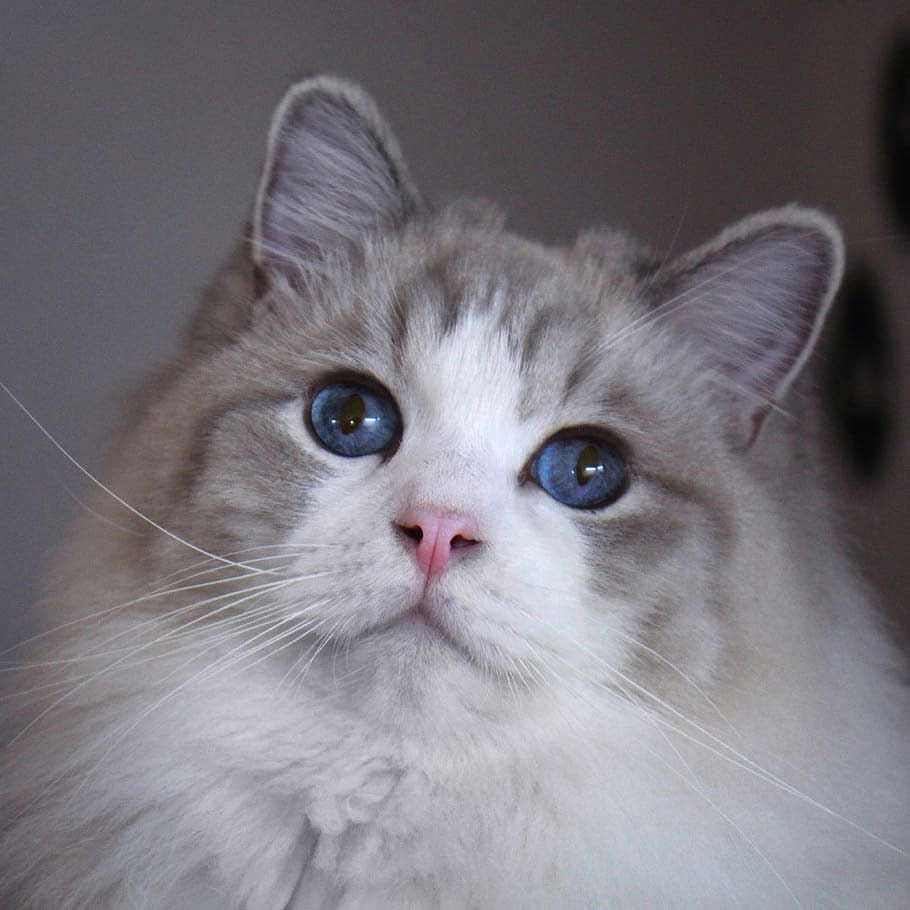
The head forms an equilateral triangle viewed from the front. Profile, the rounded forehead is prolonged with a slide-shaped depression at the nose. The ears are size medium, point forward and end in a rounded shape. The eyes they are big, oval and of an intense blue color that rarely leaves you indifferent.
The fur of the Ragdoll, composed of a sparse undercoat and a medium length topcoat, it is silky and close to the body. Tends to elongate in winter and is densest in the back of the body, and the queue is particularly crowded. It also, some dogs have a well-developed mane.
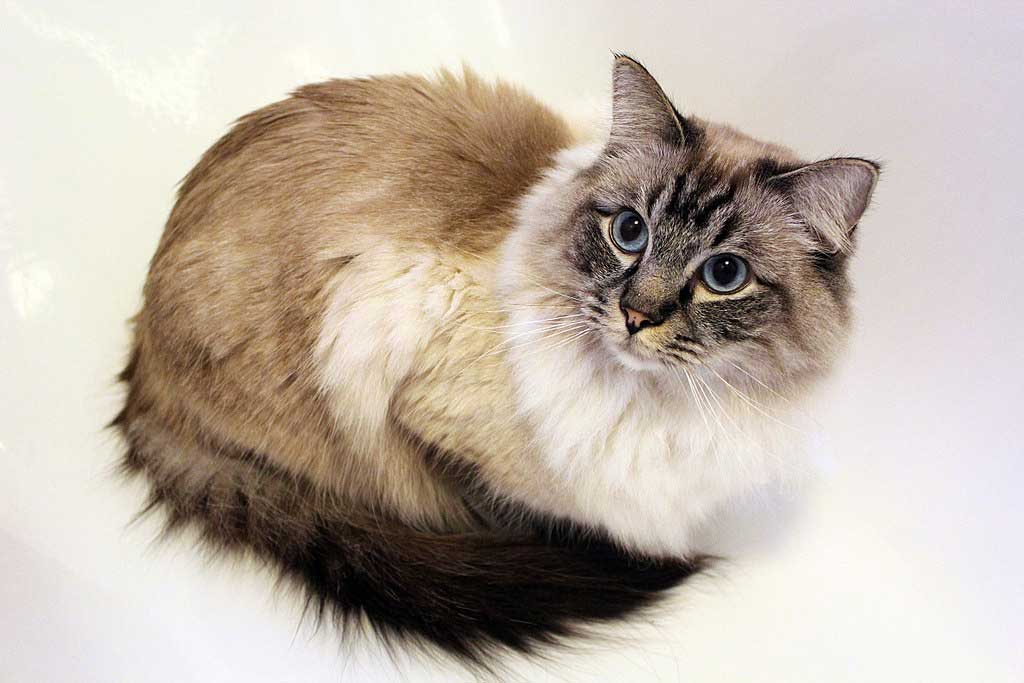
The fur tends to be colourpoint (a light color and dark tips), but it can also be gloved or bicolor. In United States, the CFA (Cat Fanciers’ Association) also allows pattern van, or Seychelles, which is a white individual with a colored tail and head, and spots on the body. The colors allowed by the standards of the different organizations that recognize the breed are the seal, the blue, chocolate, the lilac, red and cream. These colors can be found in tortoiseshell patterns (black and Red) or tabby (striped), which gives rise to a large number of possible combinations and, Therefore, to as many cats with different appearances.
Last, the sexual dimorphism it is very marked, being the male much more imposing than the female.
Size and weight
Male height: Of 30 to 35 cm.
Female height: 28-32 cm.
Male weight: 5-9 kg
female weight: 4-7 kg
Breed standard
The breed standards are documents established by official bodies that list the conditions that a dog must meet. Ragdoll to be fully recognized as belonging to the race:
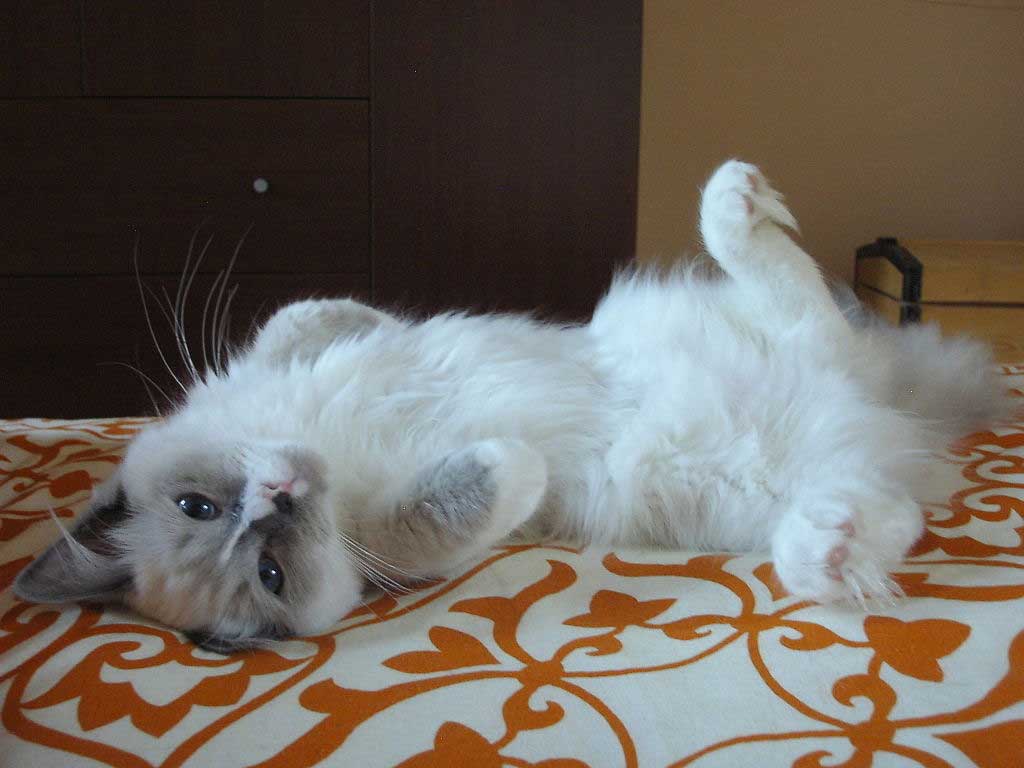
Male Ragdoll, about three years old, with prototypical tabby patterns in the head region – BlackIceNRW, CC BY-SA 3.0, via Wikimedia Commons
Docile and devoted, the Ragdoll he loves the company of his family and follows them around the house, greeting them at the door when they arrive. He is a gentle and loving companion, who just wants to get into his master's lap to warm him up and relax him with a lot of purring after a hard day's work.
Very sociable, he has no problem greeting guests. If they take it in their arms, he behaves as he would with his masters: relax all your muscles, which reminds us why it's called "Ragdoll".
Its quiet character, relaxed and easygoing makes it an excellent choice for a cat breed with children, especially if they have learned to interact with an animal. But even if they are not treated with respect, for example, if they are carried around the house for a long time, it is very rare that they remove their claws. And if there is a cat that is willing to be dressed like a doll and then carried in a stroller, it's the ragdoll. Of course, make sure that the child does not cross the line and abuse their indulgent nature.
It is not a problem of coexistence with other dogs, as long as they don't chase you around the house. It can even live with small rodents or fish, but it is advisable not to tempt the devil: the Ragdoll still a feline, and his hunting instincts can resurface at any moment.
Its flexible and calm personality makes it a cat that adapts well to changes and is capable of living in almost any environment. A move with a cat goes much better if it is a Ragdoll that a race that does not share this quality. The owner can also perfectly consider taking his cat on vacation, without fear that your partner will be completely disoriented and not enjoy the change of scenery. It is also possible to take your cat around your holiday destination on a leash, since it is something that this breed accepts very well.
Despite its impressive size, the Ragdoll adapts perfectly to life in a flat, as long as you have everything you need: the warmth and comfort of a cozy home, the affection of his family and a little space to play. Even if you live in a house and have free access to the outside, it's more of an indoor cat: rarely goes outside to explore the garden or surroundings.
On the other hand, his closeness to humans and his patience make him suitable for friendship with anyone, and turn you into a excellent therapy cat. His presence and willingness to interact with people also means that he can be a real comfort to his owner when he is going through a difficult time., and he knows that he has a support in him that he can trust in those circumstances. On the other hand, It is not for someone who likes to be alone and does not want a companion who is a little "clingy", who prefers to opt for a more independent breed.
The Ragdoll is moderately active, but enjoy chasing a cloth mouse, especially because he retains a playful side throughout his life. They are also able to learn some tricks, especially if the owner uses positive reinforcement techniques with praise and treats. It also, if given the opportunity, they love to play fetch for an object thrown by its owner, how would a dog. But don't expect him to constantly jump on the kitchen table or climb on furniture.: prefers to run rather than jump and does not venture beyond the living room sofa or bed. Like this, unlike most of his peers, does not seek a high position to observe its surroundings from above, but choose a place that facilitates contact with your family.
It also, against a legend, not insensitive to pain, and reacts like any other cat if someone steps on its tail: cries out in pain and then walks away with a reproachful look at the offender.
Last, has a soft and musical voice, but he rarely uses it, except when you order your food.
Health
"Ragdoll cat"
Male Ragdoll of 4 months. Blue mitted with a blaze – CalistaZ, CC BY-SA 3.0, via Wikimedia Commons
The Ragdoll cat it is a fairly robust breed with few genetic predispositions.
But, you are not immune to certain health problems. Among the possible risks, the most common are:
The feline hypertrophic cardiomyopathy, a growth of heart tissue that can have serious consequences. But, from 2007 there is a DNA test to detect the responsible gene, so serious breeders of Ragdoll have taken all precautions to minimize this risk;
Bladder lithiasis, that is to say, stone formation in the bladder;
The urolitiasis, what is stone formation in the urethra.
These last two conditions can cause the cat to be unable to urinate, a serious situation that requires the urgent intervention of the veterinarian.
Life expectancy
Of 12 to 15 years
Grooming
The Ragdoll it is a breed of cat that is easy to care for: the brushed once a week removes dead hairs and knots that may form. This session is usually appreciated by the receiver, who enjoys the attention and caresses he receives.
Although they do not shed excessively (especially because its undercoat is not very abundant), it is advisable to increase the frequency of grooming sessions during their shedding periods, in autumn and spring.
The teeth, the eyes and ears should also be checked and maintained once a week to make sure they are clean and free of infection.
It also, depending on wear and tear and how often your dog uses the scratching post, its claws need to be trimmed more or less frequently.
Last, keep in mind that, given its size, a large litter box is necessary so that she can turn over without difficulty.
Food
Ragdoll
The Ragdoll it does not pose any difficulties in terms of feeding and adapts very well to industrial cat foods available on the market. But, food must be of good quality, adapted to your age and activity level, to provide you with everything you need to stay healthy.
Kittens of this breed can experience large growth spurts, so it is important that they always have food at their disposal to develop properly. This is especially true as they are capable of self-regulation., so the risk of being overweight is very limited. This is not a sign of obesity, but a normal morphological characteristic of the breed.
Adults are also capable of self-regulation and can also have food at all times without this generally posing a problem.
But, your dog's weight should be monitored regularly and a veterinarian should be consulted in the event of a pronounced increase.
What is the price of a "Ragdoll cat"?
The price of a kitten Ragdoll round the 1100 euros on average, whether it is a male or a female.
But, this stocking hides a fairly wide range of prices, since it goes from the 600 euros of the cats with the characteristics furthest from the standard up to almost 3.000 euros of the specimens belonging to a prestigious lineage and destined for their physical attributes to shine in feline exhibitions.
Interesting data
Do "Ragdolls" have a reduced sense of pain?
Since the Ragdoll hangs limply when caught and lets everything hang over him, some researchers assumed the breed has a lower sense of pain than other cats. For some time, experiments were done on the poor animals. It is even believed that the founder of the breed, Ann Baker, made this claim to better market his breed. At the end, the tests led to the conclusion that there are no differences with other cats.
The "Ragdolls" on social networks
Their funny and clumsy character makes cats Ragdoll be real stars on the internet. There is hardly a compilation of "funny cat videos" in which this breed does not appear.. The Ragdolls most famous on Instagram are the three cats Lola, Nina and Olan, whose day to day you can follow under the name of @ladylolathecat. The three cats live with their owner in a floating house and delight 139.000 subscribers almost daily with funny videos and images.
The Ojos Azules cat still one of the rarest feline breeds in the world, and the number of breeders remains confidential.
Photo: elblogdegatos.com
Content
History
The history of Ojos Azules cat started on 1984 in New Mexico ((UNITED STATES)UU.), when a family discovered a colony of stray cats, some of whose members had intense blue eyes. Their attention focused on a tortoiseshell cat that they took in and called Cornflower.
She was bred with other unrelated cats and gave birth to kittens, some with the same eyes. More intense than the Siamese cat, this blue color is not linked to the color of the cat's fur, and the gene responsible for it does not cause strabismus or deafness, unlike other blue-eyed cats.
In fact, regardless of race, it is the absence of melanin in the iris that makes the cat's eye blue. But, the cause of this absence is not the same; in the case of Ojos Azules, it is a hitherto unknown gene that is in the origin.
It was the discovery of this new gene, that allowed to have cats with dark fur and blue eyes, without being affected by strabismus or deafness, which led to the International Cat Association (TICA) to recognize this breed in 1991 and to set a standard, although at that time it was still very rare. In fact, in 1992 they only registered 10 specimens.
But, Later research showed that the gene responsible for blue eyes was also responsible for a life-threatening cranial deformity. A subsequent investigation by the DRA. Solveig Pflueger, judge and president of the TICA Genetics Committee since its creation in 1979, confirmed the link. But, at the same time he discovered that the gene is Heterozygosity, so these dangerous cranial deformities can be avoided by crossing a blue-eyed individual with a standard-eyed individual. This led to prohibiting the breeding of two Ojos Azules cats together.
At the same time, a Ojos Azules in Australia, although no specimen had been imported there. This led breeders to believe that this mutation could occur spontaneously in the domestic cat population..
In France, the LOOF (Livre Officiel des Origines Francaises) established a standard for Blue Eyes in 2004.
But, contrary to what is usually observed, recognition of the breed by reference bodies did not lead to its expansion: the Ojos Azules still one of the rarest feline breeds in the world, and the number of breeders remains confidential. In fact, in 2019, both the TICA and the LOOF eliminated the Ojos Azules from the list of recognized breeds.
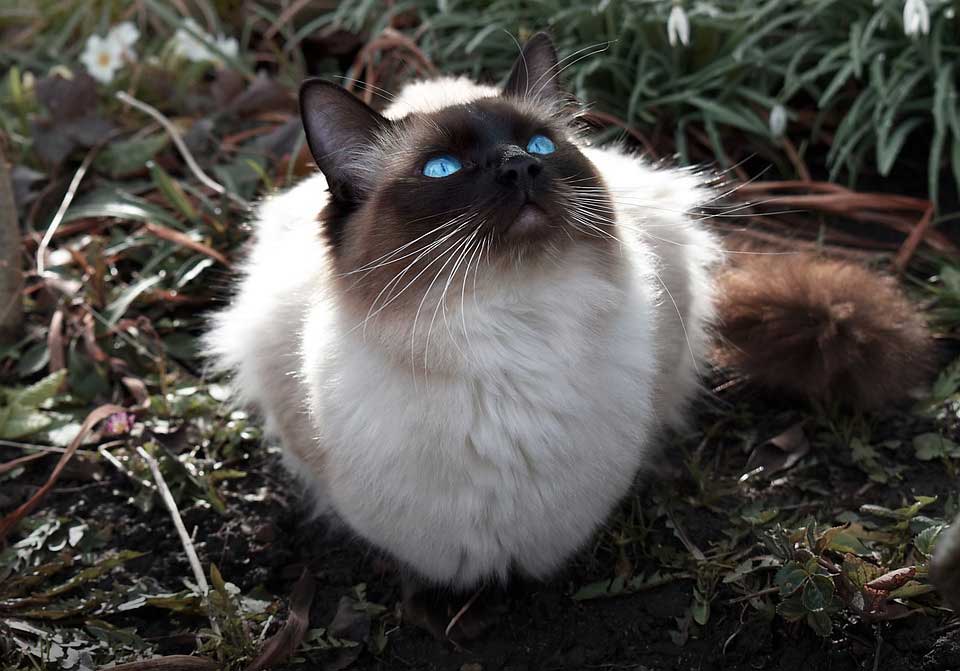
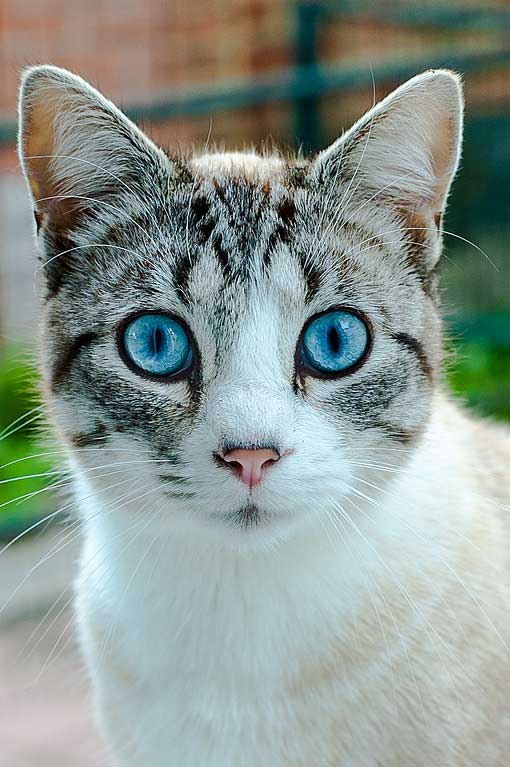
The main feature of the Ojos Azules cat It, as the name reflects, her magnificent deep blue eyes.
Otherwise, the standards describe a body rectangular with a fine and solid bone structure, well proportioned and flexible: it is about, because, of a semi-linear cat. The legs hind legs are slightly longer than front and legs, round or oval, they are rather small and delicate. The tail is of medium length and tapers to the tip.
The head it is triangular seen from the front, with prominent cheekbones and a slightly rounded forehead in profile, followed by a slight stop at the beginning of the nose. The ears medians are rounded, while the muzzle is rather square. The eyes they are almost round and as big as possible. Different colored eyes are tolerated, being one of them blue and the other green, gold or copper.
The fur it can be short or medium long and has a silky smooth texture. All colors and patterns are accepted, except for the White, to distinguish this breed from the usual white cats with blue eyes.
The gene responsible for blue eyes also usually gives white markings on the tips of the legs, ears and tail.
Size and weight
Size: 30 cm.
Weight: Of 4 to 6 kg
Varieties
By recognizing the Ojos Azules in 1991, the TICA (International Cat Association) distinguished between two different varieties in the first published standard: the Ojos Azules Shorthair and the Ojos Azules Longhair, having a medium length coat.
Character and skills
The rarity of Ojos Azules cats makes it difficult - even dangerous- draw conclusions about their character. But, owners of this breed describe them as affectionate, loyal, smart and playful.
Health
The population of the Ojos Azules cats it is not large enough to have reliable information on possible health problems specific to this breed.
But, in the early days of the breed, some individuals were affected by a cranial deformity that was sometimes fatal.
A study carried out later on the specific gene of this breed that is at the origin of the color of its eyes made it possible to establish that it was enough not to breed two individuals with blue eyes.: being the gene Heterozygosity, kittens born from the union between a Blue Eyes and another cat that does not have blue eyes are protected from this risk of cranial deformation. In fact, this risk has already been eliminated: current specimens no longer suffer from this life-threatening malformation.
The Ojos Azules cat It is an easy-care breed of cats: one brushing a week is enough to remove dead hair.
The teeth, the eyes and ears should also be checked once a week to avoid any risk of infection.
Last, if the claws are too long because they do not wear out naturally, it is necessary to trim them from time to time.
Food
The Ojos Azules can be commercially fed, either with kibble or cat food. Quality industrial products provide all the nutrients and vitamins necessary for good health.
For sale "Ojos Azules cat"
The rarity of Ojos Azules cats makes it very difficult to get one of these cats. The few specimens that exist are, Obviously, in the hands of breeders, and no kittens are officially available for sale.
Most people have heard of or seen cats. Ocicats, But you never hear about the classic "Jungala". An image of one may not be found on a website, that farmers are allowed to breed with them, However, they may not exhibit them. There are three additional variants in the breed Ocicat, The classic «Jungala,», the classic tabby Ocicat which in New Zealand is called a cat Jungala, as well as the name of the race of the Ocicat cat (‘Oci‘), It is derived from the name of the cat of Ocelot, a "wild" Central American or a cat "jungle", The new name in Spain for the "Jungala", which is also taken from the Sanskrit word that means "the jungle".
"Jungala Ocicat cat"
This breed was achieved by crossing a mixture of the Abyssinian cat, the Siamese cat and of the American shorthair cat. As such, is a home race, that was selectively bred to emulate the ocelot is found in nature, while retaining the friendly disposition of domestic.
In New Zealand, the first cats Jungala were registered by the Karakakat kennel, with CATZ Incorporated, who recognized the Jungala cat as an independent breed with full championship status in August 2001.
Physical characteristics
The so -called "Jungala" is a Ocicat cat without stains. Or more specifically, a cat with genetics Ocicat that express only one pattern Tabby Classic. The conformation and personality type are exactly the same as an Ocicat, but the pattern should conform to that of the classic brindle model of the American shorthair cat
"Jungala Ocicat cat"
The Oci-Classic has a large bullseye circle on each side of the torso broadly defined with a beautiful color contrast. Their stomachs are also marked with spots. The spotted kittens are very nice, the classical coloring is awesome, with a luxurious and exceptional velvety color, an authentic and unusual color combination. Are highly prized for its stunning beauty. This pattern is especially striking when viewed on a Tabby Silver, where the silver under light allows a strong contrast with the marks of the final layer color depth.
Character and skills
The Jungala cat, just like their counterparts Ocicat, they are very sociable and somewhat similar to dogs in their devotion for the people. They are bright, easily manageable and often are outgoing, even with strangers. As such, they are an ideal cat for households where there are other pets and children.
Contrary to what the various exotic names might suggest, was created in the United States.
Photo by blackmystica
Content
History
In 1985, at Sholine Cattery in Houston, Texas, United States, an oriental short hair and a pellets they escaped their vigilance and be aparearon. The result was a litter of silky puppies and semilargo hair of Eastern plain colors. Wisely, the owner of the cattery, Sheryl Ann Boyle, decided to raise this race, and the main records in North America and Europe soon recognized, with the exception of the GCCF in Great Britain, It believed that it was too similar to the angora, now known as Oriental Longhair cat (angora).
In 1995, the CFA joined the Oriental shorthair cat and to the Oriental longhair cat in a single breed with two hair lengths, a controversial fact according to some breeders, that they preferred the longhair trait to be eliminated from breeding lines of the Oriental Shorthair. Due to its dotted ancestors, all Asians can have puppies occasionally dotted, but cannot be displayed in most associations, since they look very similar and can be confused with the Siamese and balinese.
Character and skills
Although the Oriental Longhair cat looks elegant, his personality is often described as less languid anything. All Oriental races have the reputation of being habladoras, playful, very curious and sociable. They need the company of other cats or their owner's undivided attention for a little while each day, and some studies on the nature of these cats show. Much of the personality of this cat is inherited, and for decades farmers have reinforced the extroverted personality of Eastern races. Copies walk willingly strap and play around to get an object as if they were dogs.
▷ The world of Pets: Dogs, cats, birds, reptiles, amphibians
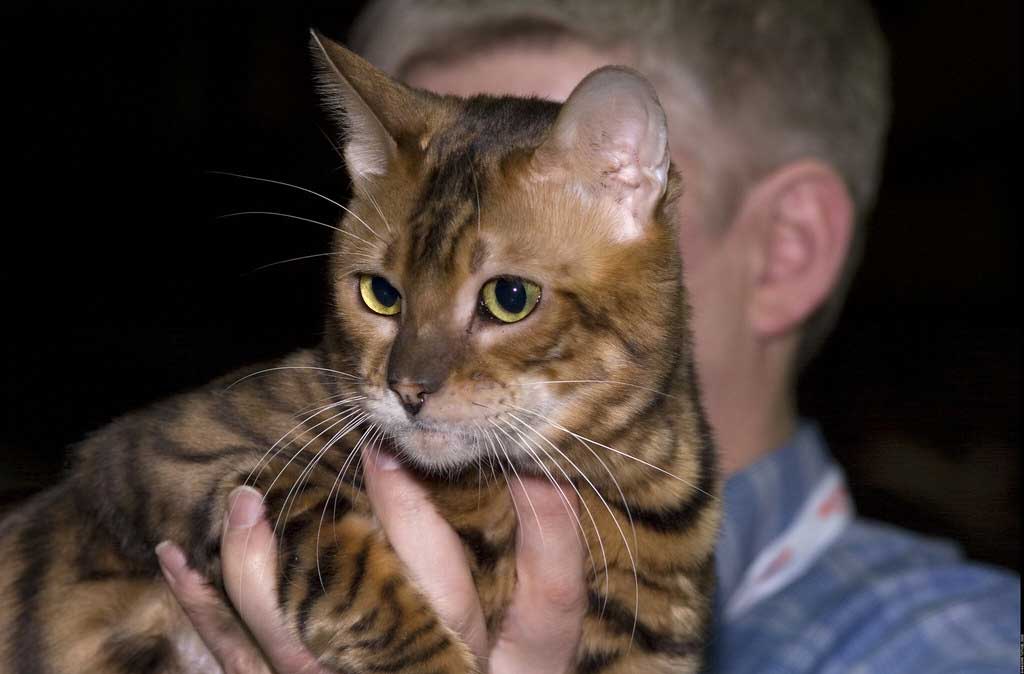
The Toyger it is a rare breed of cat, with an estimated population of about 400 specimens in the United States.
Content
Characteristics "Toyger cat"
Coexistence is important that you have with your new friend. Before considering the acquisition of a cat of the breed "Toyger cat" you know certain factors. You must take into account their character, their need for exercise, their interaction with other pets, their care and if you have small children, their level of tolerance towards them.
Joy
5,0 of 5 stars (based on 1 review)
Activity level
5,0 of 5 stars (based on 1 review)
Friendliness to other pets
4,0 of 5 stars (based on 1 review)
Friendliness to children
4,0 of 5 stars (based on 1 review)
Grooming requirements
2,0 of 5 stars (based on 1 review)
Vocality
2,0 of 5 stars (based on 1 review)
Need for attention
3,0 of 5 stars (based on 1 review)
Affection towards its owners
5,0 of 5 stars (based on 1 review)
Docility
3,0 of 5 stars (based on 1 review)
Intelligence
4,0 of 5 stars (based on 1 review)
Independence
2,0 of 5 stars (based on 1 review)
Hardiness
4,0 of 5 stars (based on 1 review)
History
The history of Toyger cat, whose name is a contraction of the words «Toy» y «Tiger«, started in California in the early 1980, When Judy Sugden, a breeder of Bengalis and daughter of Jean Mills-Sugden, famous for being the creator of Bengal cat, he noticed that one of his cats, call Millwood Sharp Shooter, he had two tabby markings on his temples. He thought this could be the basis for the development of a breed of domestic cat with circular stripes similar to those of the tiger..
The comparison between the Domestic cat and the tiger has been around for a long time, and many cats have had their coats described as "tabby.". The development of a breed of domestic cat with physical similarities to the king of the jungle is, Therefore, in a way, a logical continuation of the creation of hybrid breeds between domestic cats and wild cats, as the Bengal cat or the Savannah cat.
Judy Sugden he began his breeding work with two of his cats: a Bengali call Millwood Rumpled Spotskin and Domestic shorthair cat call Scrapmetal. Soon other breeders became interested in his work: Anthony Hutcherson, from the kennel JungleTrax, and Alice McKee, from the kennel Windridge, joined forces to promote the development of this new breed.
Although the Bengali it was used a lot in the different crosses, other races like him Maine Coon cat, the Pixie-bob and the Oriental shorthair cat helped meet some of the objectives of the breeding program: lengthen the muzzle, widen the nose and reduce the size of the eyes and ears.
In 1993, Judy Sugden imported a street cat from the Indian region of Kashmir called Jammu Blu, which had a marking between the ears very different from the usual tabby lines, and decided to include it in its development program Toyger cat.
That same year, 1993, marked the acceptance of Toyger for registration by the International Cat Association (TICA), one of the world's leading feline organizations. Name "California Toyger«, which had sometimes been used to designate this cat, it was then completely abandoned. Seven years later, in the year 2000, TICA granted him the status of a new breed, before fully recognizing her again seven years later, in 2007, and thus open access to feline exhibitions organized under its auspices.
In the news, the Toyger cat It is also recognized by the Livre Officiel des Origines Francaises (LOOF) and by the Governing Council of the Cat Fancy (GCCF) en el Reino Unido, but not for the American Cat Fancier’s Association (CFA), nor for the Fédération Internationale Féline (FiFé). In fact, still a developing breed, but very popular with breeders and the general public: the appeal of this "toy tiger", a totally tame cat with the look of the king of the jungle, is very real.
However, still a rare breed of cat, with an estimated population of about 400 specimens in the United States. In France, there have been some 30 registrations per year in the LOOF since its recognition in 2015. In the United Kingdom, the number is more like ten, but only from 2016 has been recognized by the GCCF.
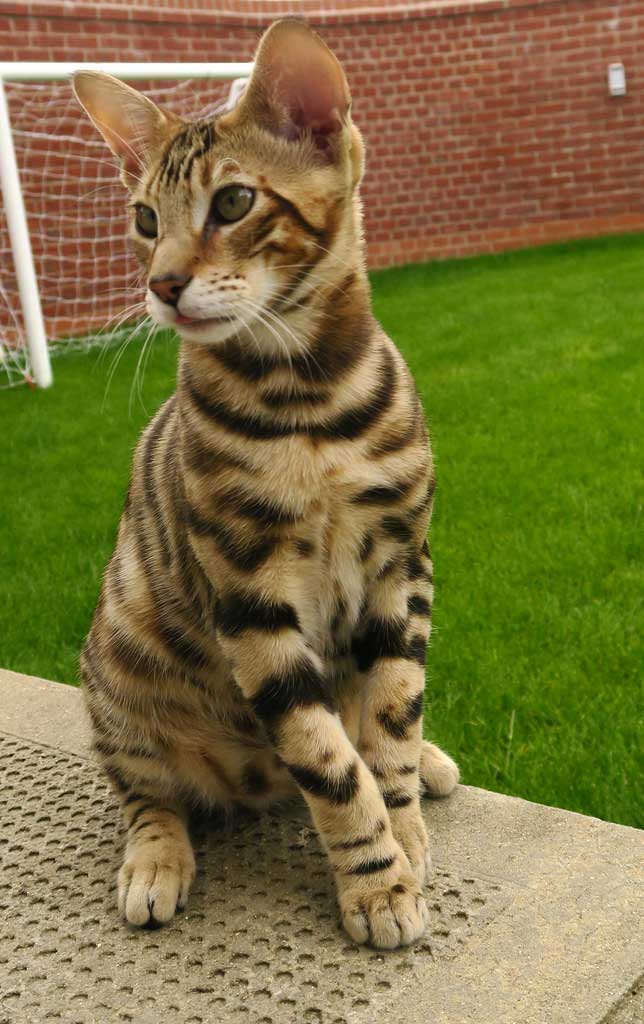
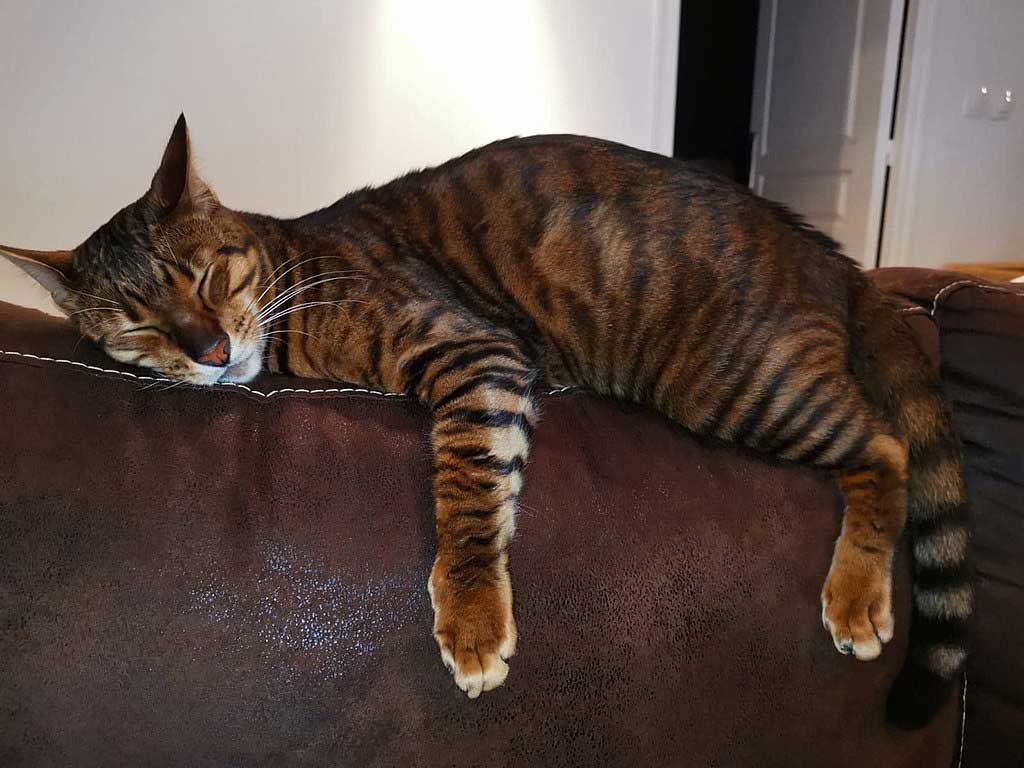
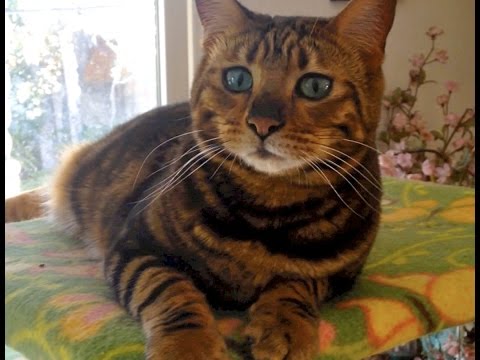
The Toyger it is a kind of long and powerful cat: it is medium size, muscular, with a long body and strong bone structure giving it a miniature tiger look. The tail, long and thick, is rounded at the tip and should be worn low.
The head of the Toyger it's long and wide, like the tiger, shaped like a hexagon if viewed from the side and heart shaped if viewed from the front. Has circular markings that do not exist in any other breed of domestic cat. Their ears they are rather small and rounded at the tip. Their eyes they are rather small in relation to their head, round and deep. Its snout it is quite long and has a well defined rounded outline.
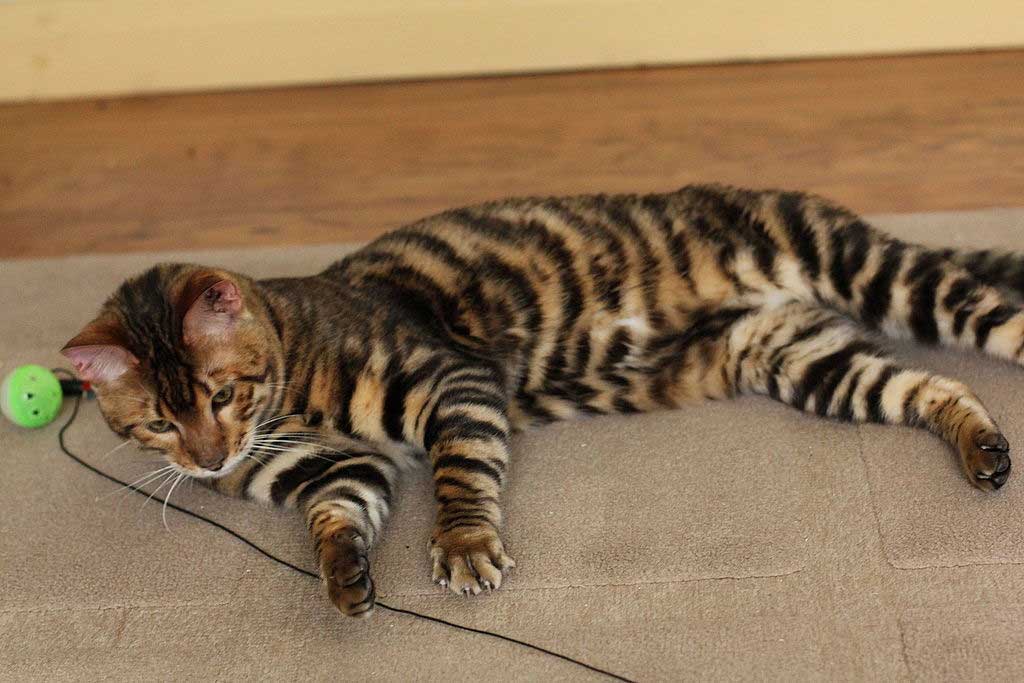
The fur is short and dense, smooth and silky to the touch. The mottling is, Obviously, the most characteristic aspect of this breed: on a brown background, this tabby cat has a mackerel tabby pattern with a sharp contrast that lines up vertically. Stretched rosettes are preferred, and the mark must not be continuous, as in the wild tiger.
In the news, the brown mackerel tabby (Brown color, with a dark tabby pattern) it is the only fur allowed by the standard Toyger.
Size and weight
Male size: 22-25 cm.
female size: 20-23 cm.
Male weight: 4,5-7 kg
female weight: 3 to 4,5 kg
Breed standard
The breed standards are documents produced by official bodies that list the conditions that a dog must meet. Toyger to be fully recognized as belonging to the race:
The Toyger silver, which has a silvery gray background color instead of the usual brown, is increasingly sought after by fans, but it is still not allowed by the standards established by the different organizations that recognize the breed.
It is a very sociable cat, who gets along well with humans and enjoys their company. He loves spending time with his family, either playing with children or sleeping on the adults' laps. Demands the attention of its owner, but offer deep affection in return.
Their sociable and friendly character also applies to other cats, as well as dogs without predatory instinct. But, living with small rodents or birds is much more problematic.
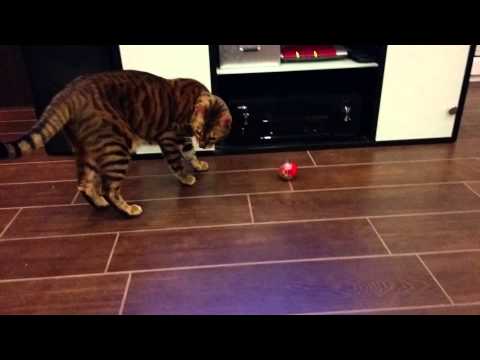
As the Toyger it is a breed of intelligent cat, it is very possible to teach you tricks, and he likes to play fetch. Although they are playful and active, it may be advisable to keep them indoors to avoid the risk of theft, as they are rare and highly sought after. A good solution for you to enjoy the outdoors is to walk your cat on a leash, especially since this is not usually a problem for him.
The Toyger cat it is a well built and very adaptable cat, able to fit well in most homes. But, needs attention and does not like to be left alone for too long and / or too often.
Health
As the Toyger It is a recent and rare breed of cat, it is difficult to have enough reliable information to draw conclusions about possible predispositions to diseases, whether or not they are hereditary. But, appears to be a robust cat breed overall, no particular health problems.
But, have been detected heart murmurs in some individuals. This is potentially a sign of feline hypertrophic cardiomyopathy, a heart disease that can cause varying degrees of blood flow problems.
The Obesity in cats remains the highest risk today, especially if they are kept indoors. So, the owner should especially watch his diet so that he maintains a normal weight.
The Toyger it is a breed of cat that is easy to care for.
Brushing the cat's coat once a week is enough to preserve its beautiful coat by removing dead hair and distributing the protective sebum from the skin.. Cats molt more in the fall and spring, but this move is relatively discreet, so brushing once or twice a week is more than enough.
The weekly brushing session is also a good opportunity to check that your eyes and ears are clean., and to clean them with a wet wipe if necessary. Teeth should be brushed with a cat toothpaste to prevent tartar build-up and keep breath fresh.
Finally, if he Toyger has a scratching post available and uses it, the natural wear of the claws is usually sufficient. If that is not the case, claws should be trimmed with nail clippers when too long.
Food
The Toyger need a high protein diet, preferably of animal origin. Most cat food manufacturers offer kibble or porridge of sufficient quality to meet your needs, but the owner must ensure that they contain all the nutrients he needs.
To avoid the risk of obesity, the owner must also ensure that the cat's rations are tailored to his activity level. By being able to self-regulate, the Toyger you can usually have your food available constantly. But, if signs of being overweight start to appear, the owner should seek the advice of the veterinarian to find the best way to limit the cat's daily calorie intake.
For sale "Toyger cat"
The price of a kitten Toyger with pedigree ranges from 500 and 3000 EUR.
It varies a lot according to its physical characteristics:
A kitten with deviations from the standard that are penalized in feline exposures (and that, Therefore, deprive you of any hope of success) costs between 500 and 1000 EUR;
A “show” quality individual is worth between 1500 and 2000 EUR;
An individual whose high-flying characteristics make it suitable for breeding can be purchased for between 2500 and 3000 EUR.
But, keep in mind that the Toyger it's rare and in high demand. As a result, few kittens are available for sale compared to demand. Thus, Most people who want to adopt a Toyger cat must sign up for a waiting list.
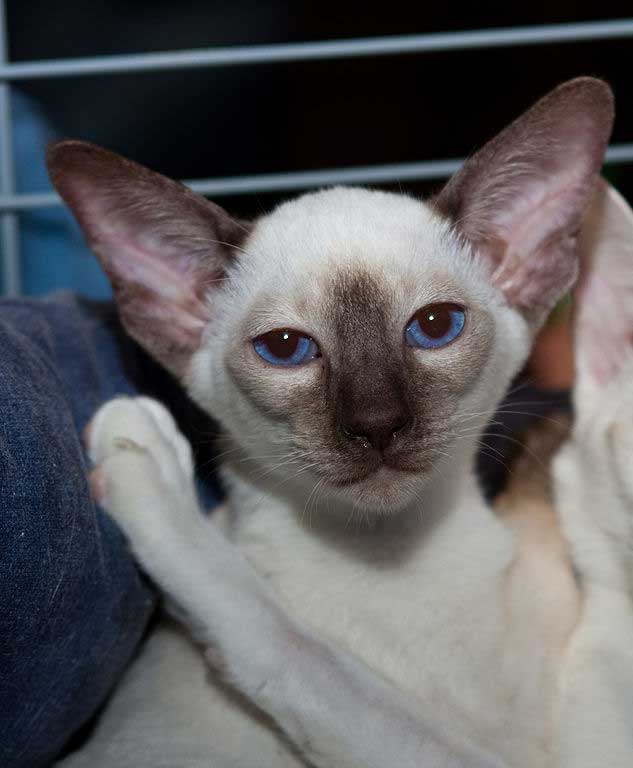
With a history of several centuries, the Modern Siamese cat began to be recognized by national and international official organizations in the years 30.
Self-made photo of Coco, sealpoint Siamese cat – Yannbee at Dutch Wikipedia, Public domain, via Wikimedia Commons
Content
Characteristics "Modern Siamese cat"
Coexistence is important that you have with your new friend. Before considering the acquisition of a cat of the breed "Modern Siamese cat" you know certain factors. You must take into account their character, their need for exercise, their interaction with other pets, their care and if you have small children, their level of tolerance towards them.
Joy
4,0 of 5 stars (based on 1 review)
Activity level
5,0 of 5 stars (based on 1 review)
Friendliness to other pets
4,0 of 5 stars (based on 1 review)
Friendliness to children
4,0 of 5 stars (based on 1 review)
Grooming requirements
2,0 of 5 stars (based on 1 review)
Vocality
5,0 of 5 stars (based on 1 review)
Need for attention
4,0 of 5 stars (based on 1 review)
Affection towards its owners
5,0 of 5 stars (based on 1 review)
Docility
5,0 of 5 stars (based on 1 review)
Intelligence
5,0 of 5 stars (based on 1 review)
Independence
2,0 of 5 stars (based on 1 review)
Hardiness
3,0 of 5 stars (based on 1 review)
History
The sophisticated Siamese takes its name from its country of origin, the kingdom of siam, which is now thailand. The oldest document that mentions it, the Tamra Maew, data of 1350 and was found in Ayutthaya, the capital of the kingdom since 1350 until 1767. This work is a treatise on cats, in the form of poems accompanied by illustrations. Some of the illustrations show cats with thin, pale bodies and darker masks on their faces., ears, legs and tails. At that time, they were cross-eyed and had knots in their tails, characteristics that only centuries later became defects that breeders were able to practically eliminate.
Legend has it that these cats were none other than the guardians of royal treasures, and that they watched them with such attention that they ended up squinting.
In Europe, it was in great britain, at the end of the 19th century, where the Siamese was first heard. In 1871, two specimens were exhibited in the first feline exhibition in modern history, held in the Crystal Palace From london. In the event catalog it was said that they were the first to set foot in the country, which is very likely.
But, they were not the ones who started the development of the breed in the country, but Pho and Mia, two specimens that Owen Gould, British Consul General, received in 1884 as a gift from the king of Siam.
He took them to Britain and his sister, Lilian Jane Veley, took care of them. He fell in love with these magnificent cats and decided to present them at the Palacio de Cristal Exhibition in 1885. Aroused great interest from the public. There are some photographs from this time that show that they were quite robust and had a round head.. They were the first two specimens registered in the British Register of Siamese, a register kept by one of the cat owners' clubs which had been in existence for several years and which were the forerunners of the Governing Council of the Cat Fancy (GCCF), founded in 1910.
They died right after this exposure, but meanwhile they had given birth to a litter. Lilian Jane Veley continued to dedicate herself to these cats; with a view to developing the breed, came to found the Siamese Cat Club in 1901, the world's first Siamese breed club.
Among 1884 and late nineteenth century, many were imported siamese cats from Siam to Great Britain and enrolled in the British Siamese Register. In fact, the breed quickly gained in popularity among the English aristocracy; as a result of fashion, many of its members wanted to own one. In 1892 a standard was developed that defined the physical attributes that a subject must have to be admitted to the registry.
The Siamese arrived in France in 1885, when a French diplomat brought two specimens from Bangkok to the Jardin des Plantes in Paris. In 1893, the Dr. Oustalet, professor at the Museum of Natural History, wrote about the siamese cats brought by the president's daughter-in-law Carnot. He took care to describe them accurately and wondered if this race descended from a wild species..
The introduction of Siamese cat in the United States took place in 1879. The American Consul in Bangkok, after learning about the fondness for cats of the then president's wife, Rutherford Birchard Hayes, sent him a Siamese, who he called Siam.
The breed really took off in America in the early 1900s, helped by the lady's cats Clinton Locke. Founder in 1899 of the Beresford Cat Club, the first registry of breed cats in the country, bought a copy in France, Lockehaven Siam, which won the award for the best cat in America in 1906 en Detroit. He repeated this feat the following year in Chicago, this time with a female, Lockehaven Elsa. In 1909 a breed club was founded, the Siamese Cat Society of America, who published a first standard.
But, the breed's development was interrupted by the First World War, both in the United States and in Europe.
The development of Siamese cat in the United States it also owes a lot to Virginia Cobb. Originaria de Massachusetts, fell in love with the breed during a cat show at the Madison Square Garden of New York in 1928. He decided to import his first copy, whom he called CH Oriental Nanki Pooh de Newton. This female lived 17 years and had many litters.
In addition to being very active and involved in the breeding and distribution of Siamese in United States, Virginia Cobb was also interested in its genetics. In collaboration with Clyde Edgar Keeler, Harvard University geneticist, explored in particular the scientific aspects of different coat colors. The first known color of the Siamese had been the seal point, with dark brown tips and a creamy coat. But, as reproductions were made, appeared the blue point (dark blue tips and bluish-white fur), the chocolat point (chocolate tips, ivory fur) and the lila point (pink gray tips, White fur).
The Second World War was a second brake on the expansion of the race, especially in Europe. At the end of the war, the breed was even on the verge of extinction in Britain.
New blood was needed to expand the gene pool and advance. Once again, several specimens were imported from Thailand, both to Europe and the United States.
But, just like before the two world wars, the Siamese had difficulty adapting to the local climate, very different from the tropical climate of your native Thailand. Breeders in all countries faced heavy losses, mostly due to gastroenteritis and parasites.
This did not prevent the breed from gaining popularity from the decade of 1960, both in Europe and the United States. Many breeders and show judges began to favor a slimmer look. The latter began to gradually evolve, as breeding and selection progressed.
The Americans, in particular, they preferred a tubular and elegant body, as well as a long head. Englishmen, on the other hand, they gave priority to almond eyes, large ears and a little lower on the skull. In addition to evolving, standards also began to differ from country to country.
But, around the world, the Siamese got longer, with a fine bone structure and a narrow head. The breeders' work also made it possible to eliminate strabismus and tail knots..
This way of evolving the morphology of the breed was chosen by most breeders, since the beginning of the years 70. Other, few, they decided to keep Thai cat. With the passing of the decades, the gap between a Modern Siamese cat, heavily modeled by man, and Thai cat, corresponding to the original physical type of the breed and known as Thai. At the beginning of the Decade of 2000, the latter was finally recognized as a distinct breed by most official bodies.
But, the Modern Siamese cat has stolen much of the limelight and enjoys much greater popularity. This explains that she herself was at the origin of several other races:
the Balinese cat, who is none other than a modern long-haired Siamese;
With a history of several centuries, the Modern Siamese cat began to be recognized by national and international official organizations in the years 30.
The American Cat Breeders Association (CFA) was the first to recognize the breed in 1934. The Governing Council of the Cat Fancy (GCCF) did the same in 1936.
The Fédération Internationale Féline (FIFé), that brings together the feline authorities of some forty countries, including Switzerland and Belgium, did the same in 1949. Ten years later, also recognized the Oriental shorthair cat, before doing the same in 1983 with the him Balinese cat, and then in 1985 with the him Oriental Longhair cat: these four races together constitute a group in their own right.
The Canadian Cat Association (CCA) recognized the Siamese in 1950, just one year after FIFé.
In 1979, the International Cat Association (TICA) also recognized the Siamese and included him in a group with the Balinese cat, the Oriental shorthair cat and the Oriental Longhair cat, who were admitted at the same time.
Popularity of "Modern Siamese cat"
In Europe, It was in Great Britain that the Siamese, and still today it is in this country where he is most successful. Still the most successful cat in the UK, ranking fourth in number of annual registrations in the British Governing Council of the Cat Fancy (GCCF), at around 1.500 a year. But, this figure triples that of the middle of the years 90, when the number of records exceeded 4.500 a year and was the second highest. The decline was especially marked in the second half of the 1990s. 2000, but continued throughout the next: early in the decade 2010 there was still more than 2.000 registrations per year.
In France, there has also been a decrease in both absolute and relative terms, and in any case the breed has never reached similar popularity levels. Nails on 250 registrations per year in the Livre Officiel des Origines Félines (LOOF), the breed is located around the position 20. In the middle of the Decade of 2000, this figure was rather 350 births per year.
In Switzerland, the Siamese has also lost part of its glory. After a peak of about 150 over the years 90, the number of annual registrations in the Fédération Féline Helvétique (FFH) steadily decreased, to the point that today it does not exceed 50 births per year. But, this places it around the tenth position in the statistics of the organization.
in Canada, it's even more discreet. In fact, the number of kittens registered each year with the Canadian Cat Association (CCA) places it around the position 25 of the ranking.
In United States, the Siamese was between 10 most popular breeds in the country in the early 1990s 2010, According to the annual registration statistics of the Cat Fanciers’ Association (CFA). Since then it has lost ground and is now around the position 12.
Physical characteristics
The Modern Siamese cat, a different looking cat Thai cat
Written in 1892, shortly after the breed's arrival in the West, the first standard of the Siamese lets us know what this cat looks like before breeders got involved. The Siamese he had a stocky body, a head round and eyes blue. It also, many of the cats were cross-eyed and/or had knots in the tail, what was not considered a defect at that time.
The traditional siamese has stayed quite true to this initial appearance, with its body and head round. On the other hand, decades of selective breeding have made the Modern Siamese cat away from the morphology of its ancestor and show more extreme forms: a body delgado, long and tubular, a head long in the shape of a triangle, ears very big and a tail very long and thin.
So, it is quite legitimate that these two cats are considered today as two different breeds, Although they share their intense blue eyes. The work of the breeders has also made it possible to eliminate the problem of strabismus that affected both, as well as the crooked tail.
The emergence of the "modern Siamese Cat"
The Modern siamese it is a medium size cat, lanky (Eastern) and elegant looking. Slim and athletic, they have a very harmonious overall look. But, he is quite muscular, which explains why it is heavier than one might think at first glance.
Its long body has a tubular shape, with shoulders and hips of equal width. Has firm musculature and fine bone structure. The tail it is long and fine and ends in a point.
The legs they are well muscled, long, slim and graceful. Hind legs are slightly longer than front legs. Both end in small, oval feet.
The head it is medium size, long, triangular, wedge-shaped and rests on a neck long and thin. The skull and the forehead are flat or very slightly rounded. More concretely, three types of profiles are accepted: straight, slightly convex or in two planes (the plane of the forehead is prolonged with that of the nose, but without a clear break between the two).
The ears they are very big, wide at the base and prolong the triangular shape of the head.
The eyes they are moderately large, macaroons, far apart and deep blue. They can be vairones (one green eye and one blue) in individuals whose fur is particular. Some individuals have both green eyes, but they are not recognized by the norms established by the different official organisms.
The cheeks are flat and dewlap is only allowed in adult males.
The nose it's long and straight, fitting perfectly into the triangle of the face. Its tip should not be narrow. Master medium-sized jaws and a strong chin.
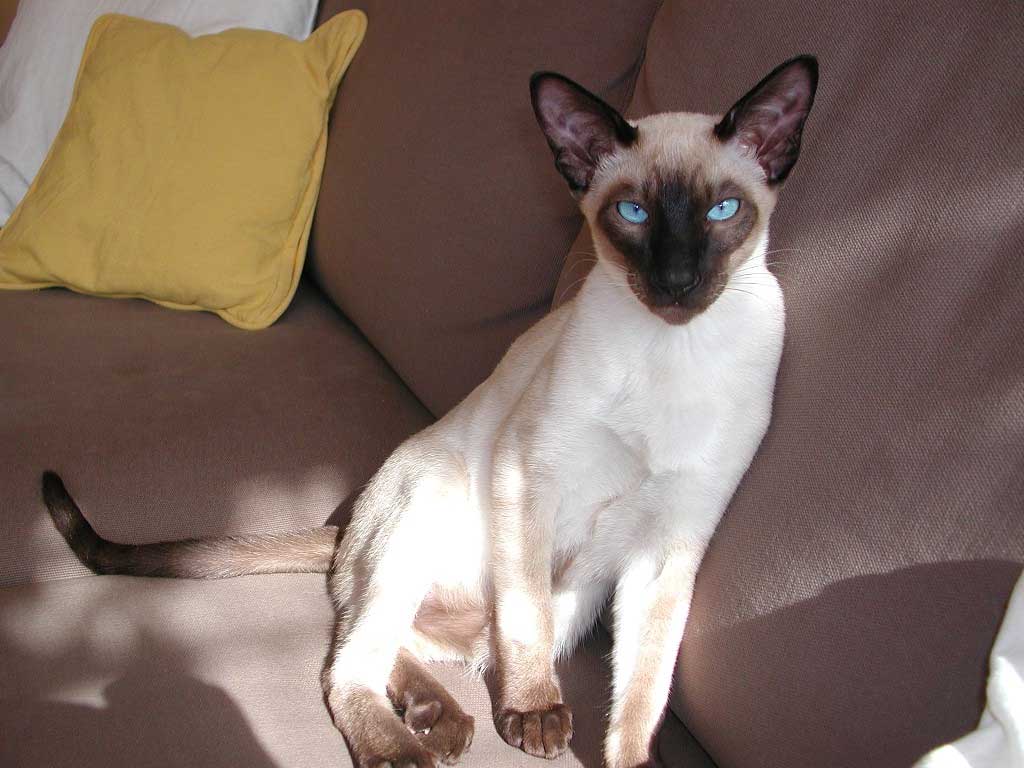
The fur of the Siamese it's closed, shiny and silky. Consists only of an outer coat: this cat doesn't have undercoat. It also, It colourpoint, which means you have a darker mask on your face and ears, as well as on the legs and tail. This makes it look like he's ready to go to a costume party.
The rest of the body color is uniform, with a clear contrast between the body and the extremities, except for kittens. Kittens are born with slightly colored tips, that darken in the following weeks.
The most common combination is seal point: the tips are dark brown and the rest of the body is cream colored. The blue point it is also quite common, with a bluish-white fur and dark blue tips.
Most official agencies accept all color points. It is the case of the Fédération Internationale Féline (FIFé), the International Cat Association (TICA), the Governing Council of the Cat Fancy (GCCF) en el Reino Unido, the Association Féline Canadienne (AFC) or the Livre Officiel des Origines Félines (LOOF) in France.
The Cat Fanciers’ Association (CFA) is more restrictive, since it only accepts 4 combinations:
The seal point: cream to fawn coat, seal points (dark brown), dark brown pads;
The chocolat point : ivory cloak, chocolate dots, pink pads and skin of the nose;
The blue point: bluish white cloak, dark blue tips, slate-colored nose pads and skin;
The lila point: White fur, lilac tips (grey pink), pink and leather nose pads.
Selective albinism in the Siamese
Male siamese cat red tabby point. name: By Aristotle Mike Delfino – Kamée, CC BY 3.0, via Wikimedia Commons
Although the morphology of the Modern Siamese cat has been partially modified by breeders, still basically a natural breed, that was not created by man. In particular, his dark mask on his face, the ears, legs and tail is due to a spontaneous and fairly benign genetic abnormality. This specificity was already visible in the first representations of this cat, dating back several centuries, and it was also found in all individuals imported in the 19th century to Europe and the United States. It is also present in the Thai cat.
It is related to the fact that all Siamese they have the albino gene. This gene encodes a heat-sensitive enzyme, that is to say, is active at low temperatures, but inactive at high temperatures. This explains that the main part of the body, the warmest, be light in color, while the coldest extremities, like ears, the face, legs and tail, They are darker.
The environment affects this thermosensitivity. When the kittens are born, they have a completely light color because the temperature in the uterus is constant and elevated. Their limbs begin to darken within a few weeks, and show their final color when they are about a year old.
This genetic trait also explains why individuals living in warmer climate countries tend to be lighter than those living in colder regions.. This phenomenon also occurs in other breeds colourpoint, as the Balinese cat or the Himalayan cat.
Size and weight
Male size: 30 cm.
female size: 30 cm.
Male weight: 2-6 kg
female weight: 2-6 kg
Breed standard
The breed standards are documents established by official bodies that list the conditions that a dog must meet. Modern Siamese cat to be fully recognized as belonging to the race:
Although not all of them are necessarily recognized by all feline organizations, or are sometimes considered as simple varieties, the Siamese was the origin of several other races, developed from the years 50:
The Balinese cat, which is simply a Siamese longhair;
But, Things have changed since then, since some organizations now prohibit the breeding of a Siamese with a representative of another race. This is the position of the Cat Fanciers’ Association (CFA) and the Canadian Cat Association (CCA).
On the other hand, other associations authorize marriages with some other races of the same group, in order to expand the gene pool.
Like this, the Fédération Internationale Féline (FIFé), as well as the International Cat Association (TICA), accept matings with :
Male siamese cat Lilac Point, modern type. Name: Freaky Curry vom Elzer Berg – Martin Bahmann, CC BY-SA 3.0, via Wikimedia Commons
Although their appearance differs, the Modern Siamese cat has a character very similar to Thai cat, although the latter is sometimes presented as a little more sociable.
It is a very affectionate cat, who loves to live as a family. But, it is better if the owner likes cats with a strong character. In effect, he is passionate about the person he considers his human of reference, and establish a very strong relationship with him. He is fully involved in the life of his protector, follows him in all his movements, sleep next to him, leans on his knees in quiet moments… He is totally devoted and faithful to him. So, he is quite a demanding cat: to be fully happy, the Modern Siamese cat needs a master willing to dedicate time, interest, honey and, sometimes, patience.
The downside is that they quickly become possessive and protest if they don't get the attention they expect.. He is very sure of himself, even moody and impatient: you like your requests to be answered quickly, and if you don't get the answer you want, does not hesitate to express his point of view with meows that only cease when he gets his way.
Although it is clear that he has his favorite human, the Modern Siamese cat usually have a good relationship with other people in the family, especially if they surround you with their presence, they caress him and play with him. This is because they help meet your need for care.. But, It may happen that you feel a certain dislike for one of the members of the house and do not hesitate to show it, dismissively ignoring him and refusing to interact with him.
He gets along very well with children and is a very good playmate for them (and vice versa), as long as they treat you with respect. But, remember that a small child should never be left alone with a cat without adult supervision. This is valid regardless of the breed of the cat, for the safety of both parties.
Affectionate with his family, this cat is on the other hand very suspicious of strangers. If a stranger enters "your" house, prefers to stand aside and observe the situation from above, for example from the top of your cat tree, an essential accessory.
On the other hand, his proximity to family means that he does not appreciate loneliness at all. Not recommended for people who are out most of the day.
In addition to leaving toys to distract him, a solution to make the absences of their masters more bearable may be to make them share their home with a fellow man. In fact, cohabits easily with another cat and is glad to have an additional playmate and partner in crime. This also prevents you from finding other things to do, how to shred paper towels, what he does with some relish.
It is also usually a cat that gets along well with dogs, although this, of course, it also depends on the compatibility of your partner with the feline species. In any case, things go better if coexistence is instituted from an early age. Otherwise, it is better to ensure that the contact is made gradually.
It is much riskier to have a bird or a small rodent living next to you, since his hunting instinct can be awakened at any time. If the situation presents itself, some vigilance is required. These may include, if you are out, the small animal should be kept in a place inaccessible to the cat.
Athletic and energetic, the Modern Siamese cat need to be active. It is imperative that I can run, but this does not necessarily mean that living in a flat is impossible for him, as long as the house is big enough. Especially since it is very possible to teach him to walk on a leash; you are likely to enjoy those outings, since he shares them with his master. But, Ideally, a cat flap would allow you to leave the house whenever you wanted..
In any case, you have to satisfy your urgent need to scratch. If there is no scratching post in the house or garden, will not hesitate to use the furniture or curtains.
Games are essential for him too, both to exercise and to develop or maintain your skills. Playing is essential for your mental and emotional balance and, Therefore, for your well-being.
This is especially true for intelligent and curious children., as it provides them with intellectual stimulation. These traits make him an ideal candidate for anyone who wants to teach their cat tricks., such as retrieve a thrown object. Having said that, does not stop learning various things on his own. Capable of opening taps and doors, they like to hide in cupboards and closets and stay there even when called, until they decide it's time to make their presence felt.
Last, the Modern Siamese cat is known to be a very talkative cat. As they seldom stray far from their owners, who does not like to have a partner who vocalizes all day with a hoarse voice, another breed would be better. It is impossible to avoid this behavior: it is his way of communicating not only with his master, but also with all family members. It is his way of communicating not only with his master, but also with all family members, so you can expect long conversations in which he expresses his approval or disagreement. Si and Am, the talkative conjoined twins of Beauty and the tramp (1955), are perfect examples of the eloquence of this cat.
They can also be very noisy when it comes to claiming attention., especially if they are left for many hours without company or without a toy: no wonder they do a series of shenanigans and long meowing sessions.
The Modern Siamese cat it is generally a robust dog.
But, like all races, are more prone to certain ailments. In your case, is about:
Amyloidosis, a hereditary disease caused by the deposit in different organs of a protein called amyloid, that prevents them from working properly. Most of the time, the kidneys are the most affected, resulting in kidney failure or even diabetes. The main symptoms, if any, are intense thirst and frequent urge to urinate, diarrhea, loss of appetite … Drug treatment and changes in the animal's diet (especially to reduce protein intake) they can wipe out these deposits. But, existing lesions are irreversible;
Aortic stenosis, a congenital disease that corresponds to a decrease in the diameter of the outlet of the left ventricle of the heart, at the level of the aorta. Most often causes a state of fatigue and a heart murmur. There are treatments to improve the comfort of life of the animal, but the disease itself is incurable;
Urolitiasis, characterized by stone formation in the bladder, the kidneys or even the ureter. Then, the cat has difficulty urinating, drink more and, sometimes, we notice the presence of blood in the urine. Stones can be removed with surgery;
Asthma, also known as chronic or allergic bronchitis, causing short-term breathing difficulties and long-term lung damage. Corresponds to an allergic reaction to certain substances present in the environment, like dust mites, pollens, chemical or synthetic products (for example cleaning products), cigarette smoke … The affected animal suffers bouts of coughing and shortness of breath, while your breath makes a kind of hiss. But, treatments can greatly improve your quality of life, reducing both the number and intensity of attacks;
Respiratory problems, due to the elongated and triangular shape of its head. If so, is less inclined to move and strain;
Progressive retinal atrophy, an incurable inherited disease that causes progressive deterioration of the cat's eyesight, up to total blindness. Often not detected until very late, when it is very advanced and the cat collides with everything;
Glaucoma, which is caused by increased pressure in the eye. This gradually degrades the optic nerve, so the affected animal gradually loses sight. Eye drop treatments are sometimes enough to remedy the problem, but the most serious cases require surgery;
Hereditary strabismus, reducing visual acuity and field of vision. This anomaly manifests itself from birth and is incurable., but not very disabling;
Mouth problems, again because of the shape of her face.
As many of the conditions the breed is prone to are inherited, it is important to go to a breeder of Siamese serious to obtain an animal that has not only grown up in a quality environment and has benefited from good socialization from its first weeks, but also have all the possibilities to enjoy -and stay- Of good health. In effect, a professional worthy of the name ensures that certain genetic tests are performed on proposed stallions, to make sure they are not carrying a disease that they would risk passing on to their young. If they do it, are excluded from the breeding program. So, must be able to present the results of these tests, along with a certificate of good health from a veterinarian and a list of vaccinations already administered to the kitten, registered in the kitten's health or vaccination card.
Once the adoption is complete, the new owner is responsible for the kitten's health for the rest of its life. A visit to the vet at least once a year, and more often as the cat ages, is essential to maximize the chances of keeping you healthy. This appointment allows the professional to carry out the necessary vaccination boosters, but also, and above all, carry out a complete health check of the animal. The latter should make it possible to detect any health problem as soon as possible., to be able to treat it in the best possible conditions.
At the same time, It is essential to protect your cat against parasites by renewing its antiparasitic treatments throughout the year, whenever necessary, so you never stop being protected. This applies even to an animal that lives in a flat, since you are not completely safe from danger.
As beautiful as it is, the fur of the Modern Siamese cat, requires little maintenance, especially because it does not have undercoat. Normally, brushing once a week is enough to remove dead hair and shine the coat.
But, it is better to double the frequency during your annual molts, in spring and autumn. Although the coat is short, the molt is much more pronounced.
The weekly brushing session is also an opportunity to check his ears. Wiping with a damp cloth removes dirt and reduces the risk of infection (for example, in the ears).
You should also check your eyes once a week and, if required, clean them with a damp cloth to prevent dirt from accumulating and becoming infected.
Teeth require more frequent care. It is important to limit the accumulation of plaque, that can cause not only bad breath, but also various diseases of varying severity. Brushing your cat's teeth once a week with a special feline toothpaste is the bare minimum., but it is best to brush more often, or even daily.
Last, it is important to keep your claws in good condition so that they are not too long, which could cause discomfort or even break and hurt you. Whether you live exclusively indoors or have access to the outdoors, should be checked once a month: if natural wear and tear is not enough, must be trimmed manually. This does not prevent you from having a scratching post at your disposal., otherwise it will fall back on the furniture, something he does without hesitation if necessary.
Whether the fur, the ears, the eyes, teeth or claws, caring for a Siamese is not particularly complex. But, it helps to know what to do: this not only ensures that action is taken effectively, but also that there is no risk of injuring or traumatizing the animal. So, it is advisable to seek advice from a veterinarian or professional groomer the first time.
This cat has a very strong relationship with its owner. For this reason, if the owner knows how to do it well, grooming sessions can become moments of tenderness and shared complicity. This is more likely if the cat is used to it from a young age.
Food
Like any cat, the Modern Siamese cat requires a diet that, both qualitatively and quantitatively, must meet your nutritional needs. As such, it must correspond to your age, your physical activity and your state of health.
Industrial foods may be perfectly suitable, as long as they are of good quality. But, the same cannot be said for human food. Unless specifically selected for that purpose, does not meet a cat's nutritional needs. Even worse, some of the foods that are potentially very popular with their owners turn out to be toxic to the little feline. So, it is a service for him not to offer him bits on the table, nor give him the leftovers or let him put his little head in the garbage can.
In any case, but the Siamese be very energetic and tend to eat a little more than a cat of another breed, He is not one of those who gorge himself. like most cats, the Siamese they self-regulate, so it is possible to make food available at all times without fear of overeating.
Last, like any cat, you must have fresh water at all times.
For sale "Modern Siamese cat"
It is not difficult to find breeders of Siamese. On the other hand, you should expect to pay a considerable amount of money, because it is by no means one of the cheapest breeds.
These may include, adopt a Modern Siamese cat usually costs between 1000 and 2000 EUR.
whatever the country, the price varies depending on the reputation of the hatchery, of the animal's lineage and, above all, its intrinsic characteristics, especially on a physical level. For this reason, the amount charged may vary from one individual to another within the same litter.
The name of Abyssinia refers to Ethiopia, but most of the stories about the origins of the Abyssinian refer to Egypt. Investigation of its genes suggests that the Abyssinian cat breed originated near the coast of the Indian Ocean., where could settlers have bought the animal traders of wild animals. The breed was developed in Egypt.
The race could originate from an Egyptian cat named Zula, which was purchased in a port of Alexandria by a British soldier and brought to England in 1868. This theory is not established because there is no strong link between Zula and the first cat on the list named as an Abyssinian in 1882.
Many sources date the Abyssinian breed to be a few thousand years old., coming from the old Egypt , as cats that appear in ancient paintings. The ancient Egyptians made sculptures of them. There are also stories that wild "Abyssinians" living in parts of North Africa today.
Physical characteristics
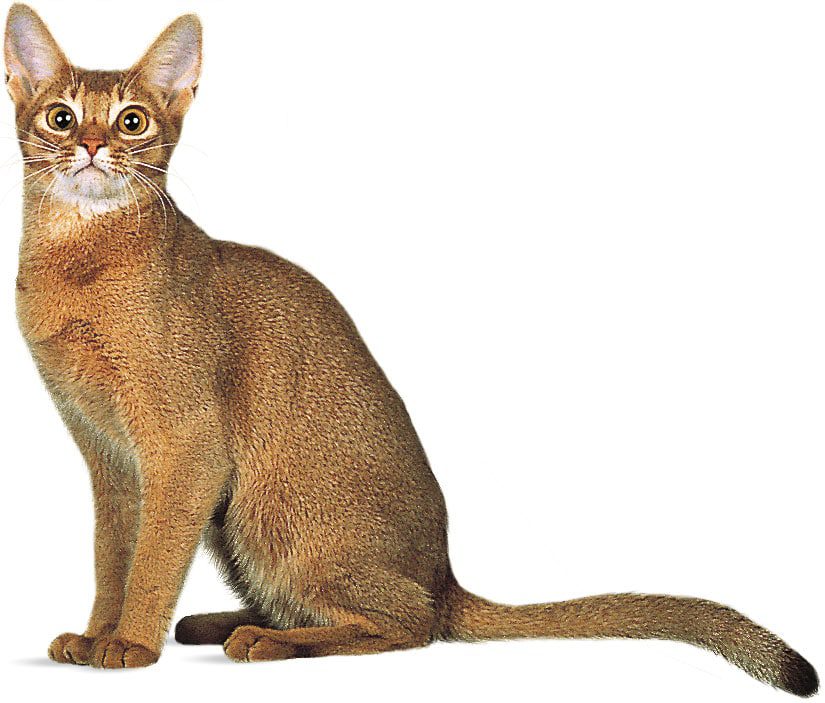
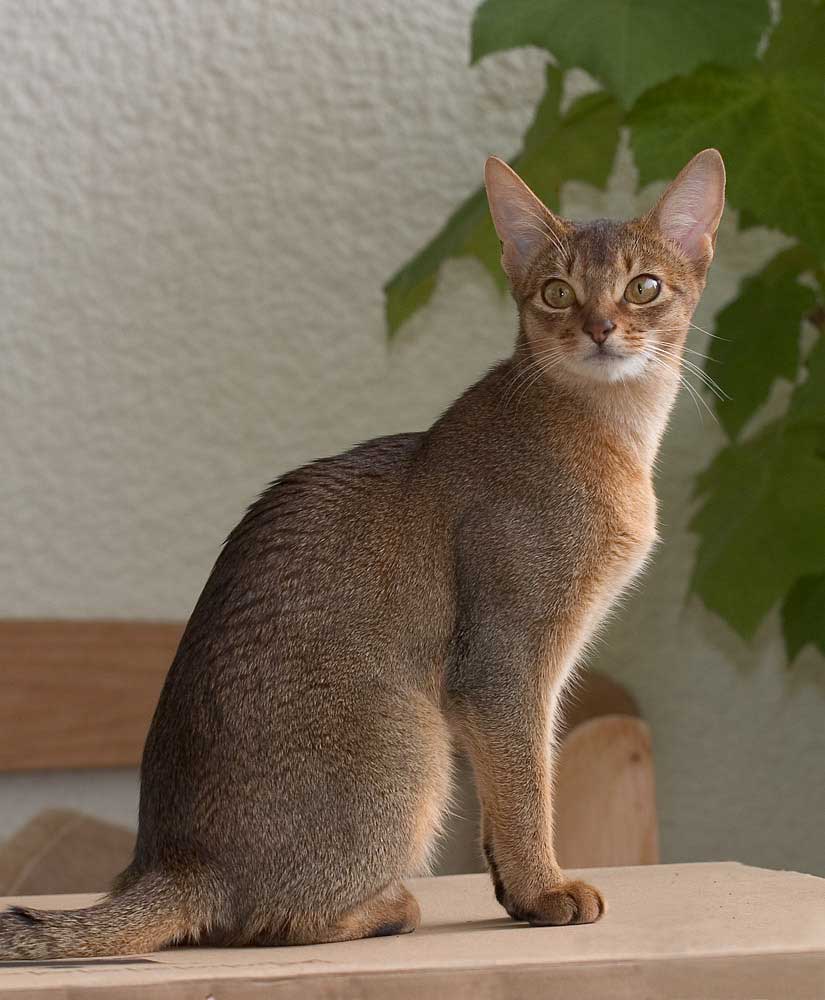
The appearance of the "Abyssinian cat" resembles that of a small puma. They are elegant and athletic cats with long, small legs.. Wedge-shaped head sits atop a graceful neck and has large ears set wide apart. Some cats have tufts of hair on their ears similar to those of the lynx. The eyes, big and almond shaped, they can be green, walnut brown or amber. The specially colored coat of the purebred cat is short, soft and close to the body. Each of the hair is ringed in various colors, which creates a great effect. This so-called tic-tac can be pronounced in different variations.
The breed standard includes all four chestnut colors (bright copper red with chocolate brown bands), blue (warm blue-gray with dark steel gray bands), leonado (muted beige with dark cream bands) and the typical wild color (reddish brown with black bands). Of all the colors there is also the Silver variety, where the base color is a light silver shade. Ideally, cats should be completely free of patterns and markings..
Character and skills
The "Abyssinian cat" is considered an intelligent and active cat breed, who gets excited about any kind of game. Especially when he's young, the cat has an irrepressible temperament and a great desire for movement. Prefers to play with other cats, so it is not recommended to have it alone. These curious cats are very people-oriented and follow their humans everywhere. In doing so, they rarely become pushy with a soft voice and prefer to watch their two-legged friend's every action. When they get stressed, these uncomplicated cats react extremely robustly and do not let anything disturb them.
Care "Abyssinian cat"
Indoor or outdoor cat?
The "Abyssinian cat" it is an active and freedom loving breed that needs a lot of exercise. It's hard to be happy locked up in a small apartment. Secure access to the outdoors would be ideal for this active breed.. Walks in the enclosed garden or on the balcony give the cat a lot of pleasure. If neighborhood conditions permit, it is also a great outdoor cat.
How much activity does he need? "Abyssinian cat"?
If you purchase a "Abyssinian cat", you should not expect a well behaved lap cat. He loves to explore his surroundings, climb and jump. Thanks to its enormous resistance and jumping power, no part of the house is safe from her. A tall, stable cat tree is an absolute must for every cat owner.. Here you can live your desire to move, as well as sharpen their claws and rest. The clever velvet paws also rejoice in any kind of mental occupation and cheerfully accept intelligence toys. They like to be taught little tricks and enjoy going for a walk on or off the leash with their owner..
Care and feeding
Thanks to its short coat with little undercoat, cat grooming is especially easy. It is enough to remove the loose hairs from the coat with a rubber brush from time to time. When the coat changes, brush a little more often to soothe the cat. To be happy, cats also need a balanced and healthy diet. It is best to adapt the food to the age of the cat and its desire to move. There should also always be enough fresh drinking water available. A bubbling water bowl is easily accepted by most breed representatives.
For sale "Abyssinian cat"
Before acquiring an Abyssinian cat, you need to make sure you can offer this four-legged friend a species-appropriate home. Once the decision is made, it is best to buy the kitten from a reputable breeder from a registered breeding association.
Pay attention to the behavior and appearance of kittens and parents. For a purebred kitten with papers you pay a few 800 EUR.
Characteristics "Abyssinian cat"
Coexistence is important that you have with your new friend. Before considering the acquisition of a cat of the breed "Abyssinian cat" you know certain factors. You must take into account their character, their need for exercise, their interaction with other pets, their care and if you have small children, their level of tolerance towards them.