โ–ท The world of Pets: Dogs, cats, birds, reptiles, amphibians

Plum-headed Parakeet
Psittacula cyanocephala


Cotorra cabeciazul

Content

Description:

Among 33โ€“37 cm. in length and weighing between 56โ€“85 grams.
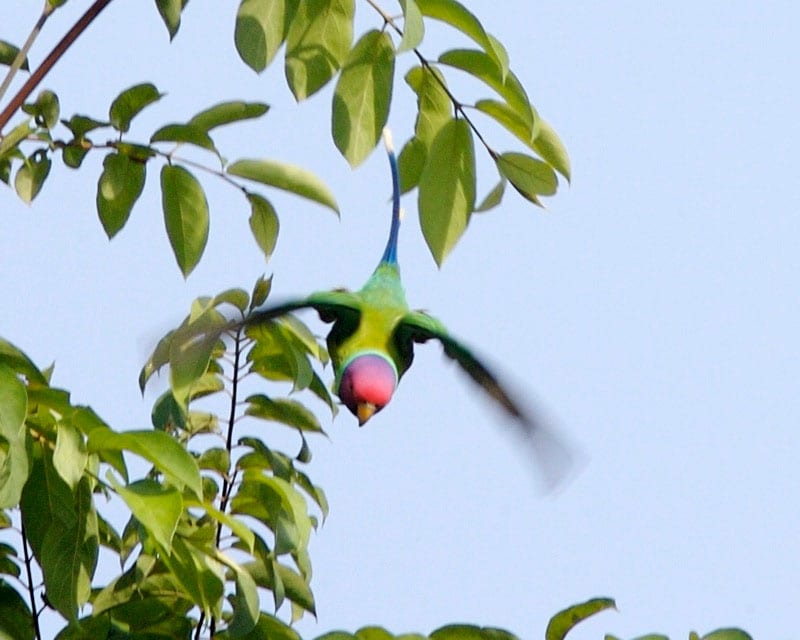
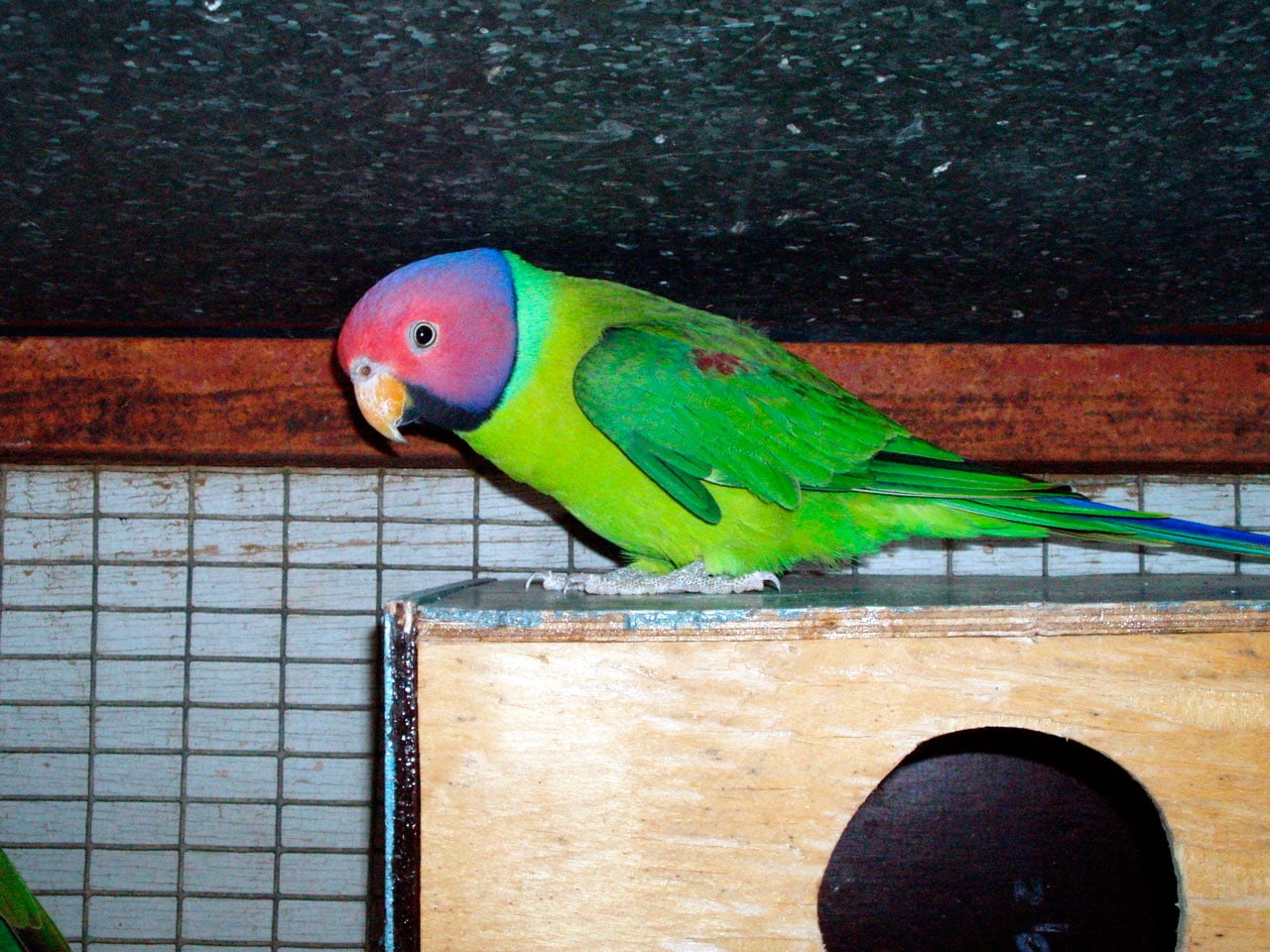
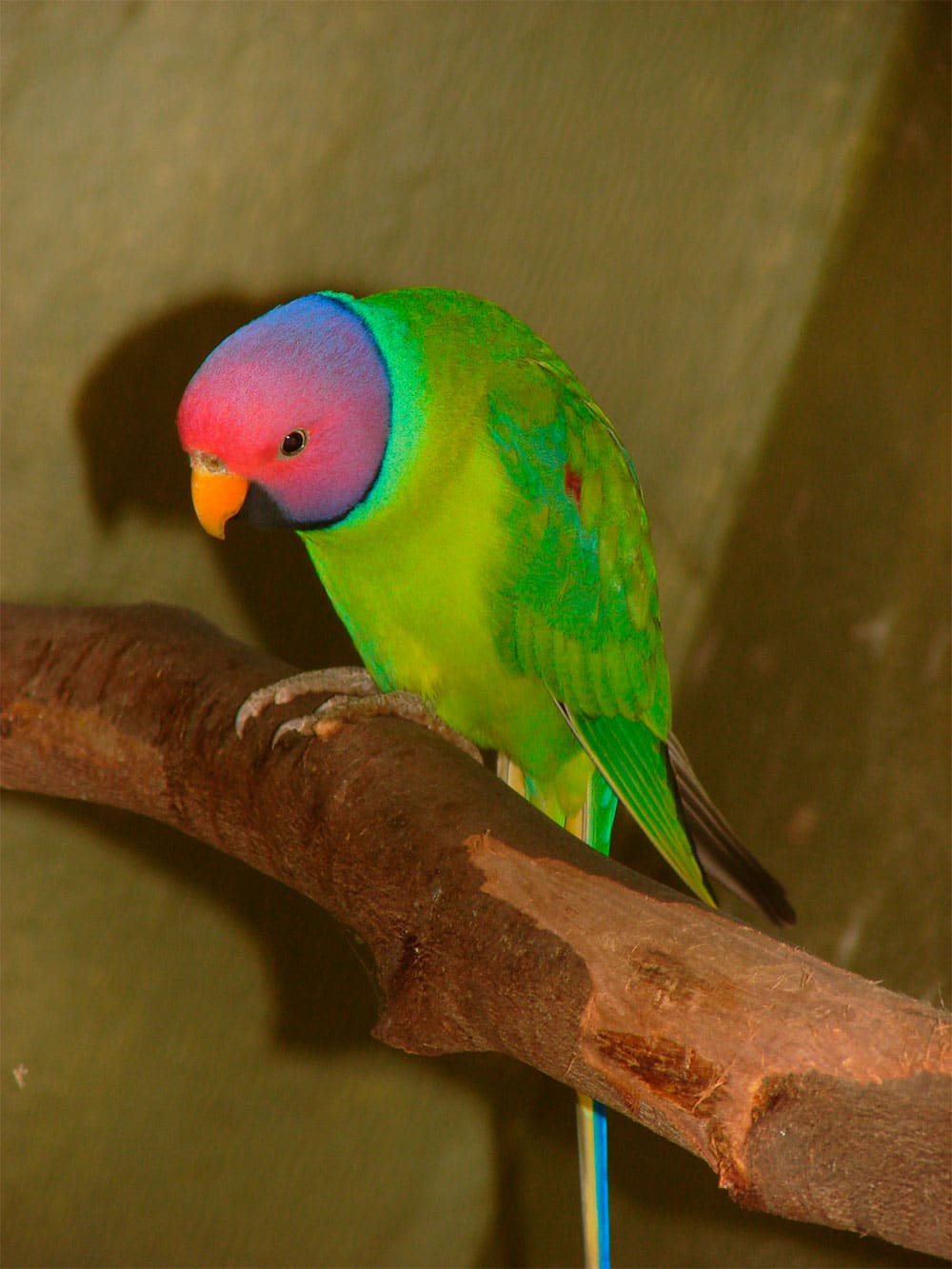
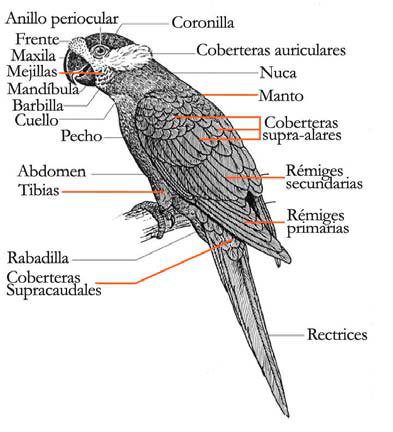
The Plum-headed Parakeet or Plum headed Parakeet (Psittacula cyanocephala) has the forecrown, lores, cheeks and ear-coverts bright red malva, fading to blue on lower cheeks, the crown and back neck, with the black stripe of the โ€œmustacheโ€ forming a collar black narrow, then bordered by a wide swath of pale green.

Mantle, back and scapulars dark green; rump and uppertail-coverts bright blue green.
Upperwing-coverts smaller and medium bright green with brown patch in the minors; greater coverts and alula darker and duller.
The primaries and secondaries dark green. Underwing-coverts bluish green, underparts brighter yellowish green. Upper, the tail bright color in the center, with white tips, slightly spatulate, outer feathers brighter yellowish green.

The Upper mandible orange-yellow, and the lower beak blackish, but pale flesh at chin; irises yellowish white; legs greenish-grey.

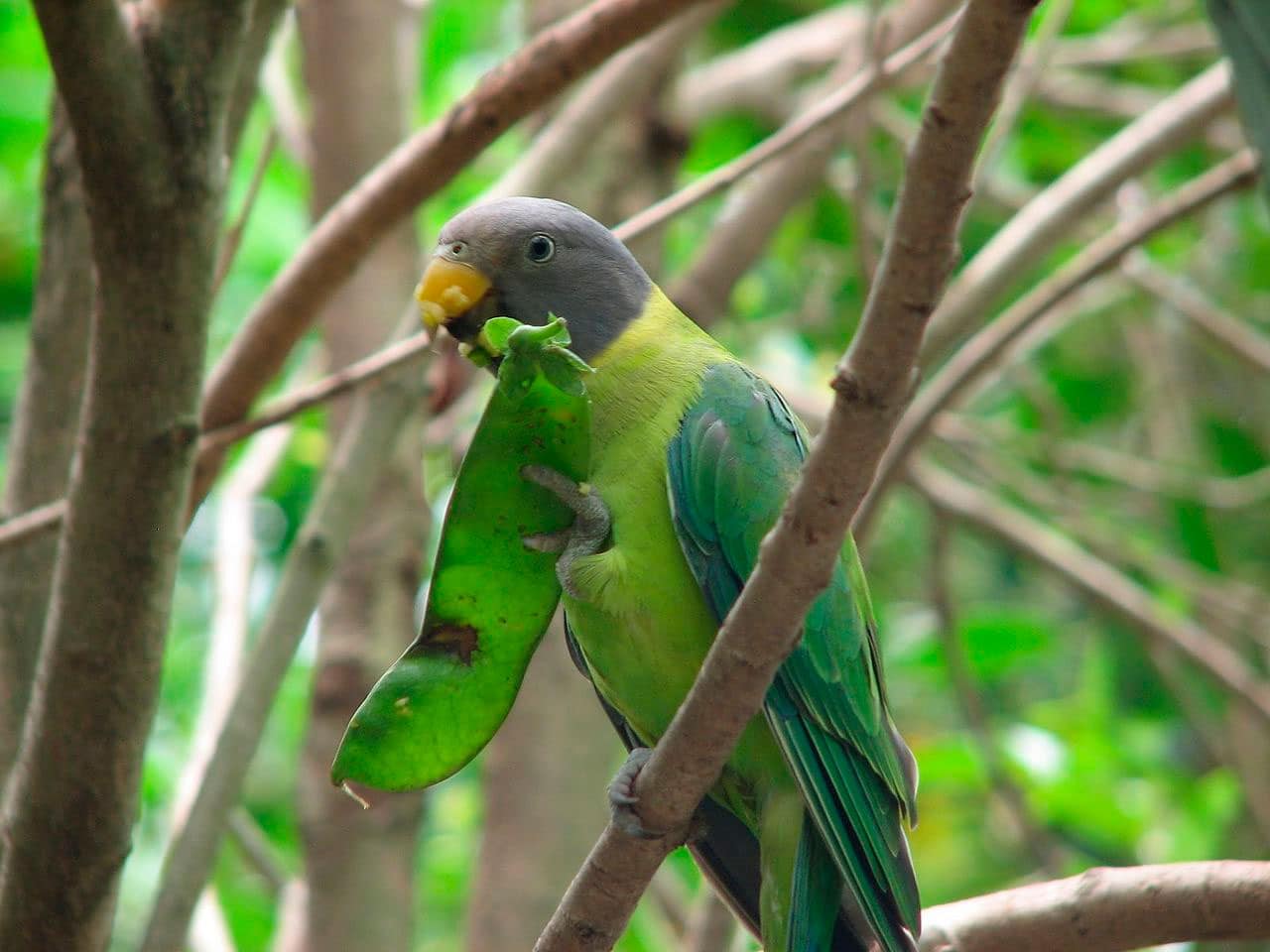
Head of the female grey-blue, in the beige throat and the sides of the neck, without black markings or maroon on wing-coverts; bill paler, tail somewhat shorter.

The greenish head of the immature sometimes tinged with gray; central feathers tail shorter.

The females reach adult plumage to 15 months; young male reach full adult plumage to 30 months.

Habitat:

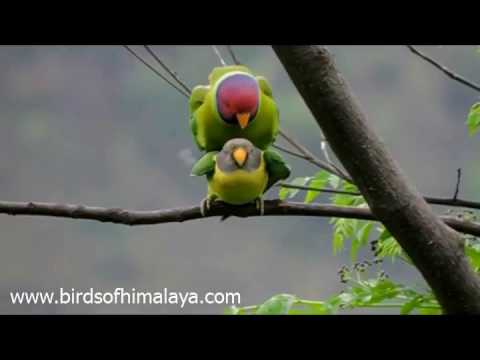
Video – "Plum-headed Parakeet" (Psittacula cyanocephala)

Plum-headed parakeet (Psittacula cyanocephala)

Preferred habitat Plum-headed Parakeet They are the mosaic of forests and farmland in the plains and hills, including humid forests deciduous, sal forest (Shorea) and subtropical Pine (Pinus roxburghii), usually below the 500 meters in the north of the range, but locally 1.500 m.

Move small flocks, although larger congregations are formed in places where food is abundant, particularly during ripening crop, and also, loudly, in communal roosts with bamboo thickets or other dense vegetation.

They forage in mixed flocks in the company of the Malabar Parakeet and Slaty-headed Parakeet.

Reproduction:

The Plum-headed Parakeet nests in holes in the trunk or hamstring, sometimes in an old nest extended "woodpecker" or "bearded". In Pakistan, Tall Pines (Pinus roxburgii), dead or dying, They are favorite nesting.

The nest chamber no liner except wood shavings produced during construction. Often reproduced in loose colonies. The male defends the nest site from other species (as the Rose-ringed Parakeet) for a few weeks before breeding. The female incubates alone. The breeding season It, mainly, in the months of December / January April; occasionally also in July-August Sri Lanka.

The laying is of 4-5 eggs, rarely 6.

Food:

Registered foods include flowering shrubs (Justicia adhatoda) and wild Granada (Punica granatum), nectar Salmalia, flowers Butea and Bassia, grains, including the sorghum and the corn, fig and apricot fruit, red peppers and chard seeds (Echinops and Cnicus). Preference for bamboo seeds in the Bandhavgarh National Park, sometimes destructive to crops.

Possibly frugivores than their counterparts, preferring smaller seeds.

Distribution:

Size of the area of distribution (reproduction / resident) 2,780,000 km2

The Plum-headed Parakeet They live in low-lying hills Himalaya, from the North-East of Pakistan through Nepal, Bhutan and West Bengal and through substantially the entire India and Sri Irinka, besides the Islas Rameswaram.

Usually frequents though, apparently, reducing its population Sri Lanka due to loss of habitat, making birds now, to a large extent, they are absent in the lowlands. It has also reduced its population in the kathmandu valley, Nepal.

Resident, but locally nomadic outside of breeding season, in response to the food supply; more predictable seasonal movements in some areas.

Conservation:

State of conservation โ“˜


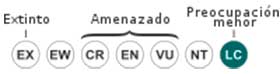
minor concern Minor Concern โ“˜ (UICN)โ“˜

โ€ข Current Red List of UICN: Least concern

โ€ข Population trend: Decreasing

The Intermediate Parakeet (Psittacula intermedia) (Sibley and Monroe 1990, 1993) is now considered a hybrid between the Plum-headed Parakeet (Psittacula cyanocephala) and Slaty-headed Parakeet (Psittacula himalayana) (Rasmussen and Collar (1999))

The size of the world population Plum-headed Parakeet It has not been quantified, but the species, according to information, it is enough common in nepal and in general, common in india (pit et to the. 1997).

Its population is suspected to be in decline due to ongoing habitat destruction.

"Plum-headed Parakeet" in captivity:

Large captive population. Although this species is not exploited as much as sympatric (in the same geographic region) Alexandrine Parakeet, trade takes its toll on local populations across the range.

They are birds Smart and many can learn to speak, but not as easily as other larger parrots.

Most of the Plum-headed Parakeet enjoy being close to your caregiver, However, They do not like caresses.

They tend to be Shy at the beginning; But, with the time, patience and daily interaction, They do become docile bird quite easily.

These tend to be parrots assets in an aviary environment and can become apathetic in an environment of cage. Their preferred environment should be an aviary, or an environment that allows them to travel and move freely in a safe environment.

In a communal aviary, usually they get along with other birds – However, You can be assertive with larger birds.

Unlike the rest of psittaculas, They are not very vocal and vocalizations, especially male, usually quite melodious.

It's not a difficult kind of create. Unlike many parrots, the-headed Parrot your partner do not bind for life.

With regard to its longevity, according to sources, a specimen lived for 18,8 years in captivity. The maximum longevity could be underestimated in this species.. In captivity, estos animales pueden criar, approximately, to the 2 years of age.

Alternative names:

Plum-headed Parakeet, Blossom-headed Parakeet, Plum headed Parakeet (English).
Perruche ร  tรชte prune, Perruche ร  tรชte de prune (French).
Pflaumenkopfsittich, Plaumenkopfsittich (German).
Periquito-cabeรงa-de-ameixa (Portuguese).
Cotorra cabeciazul, Cotorra Ciruela, Cotorra de Cabeza Azul (espaรฑol).


scientific classification:

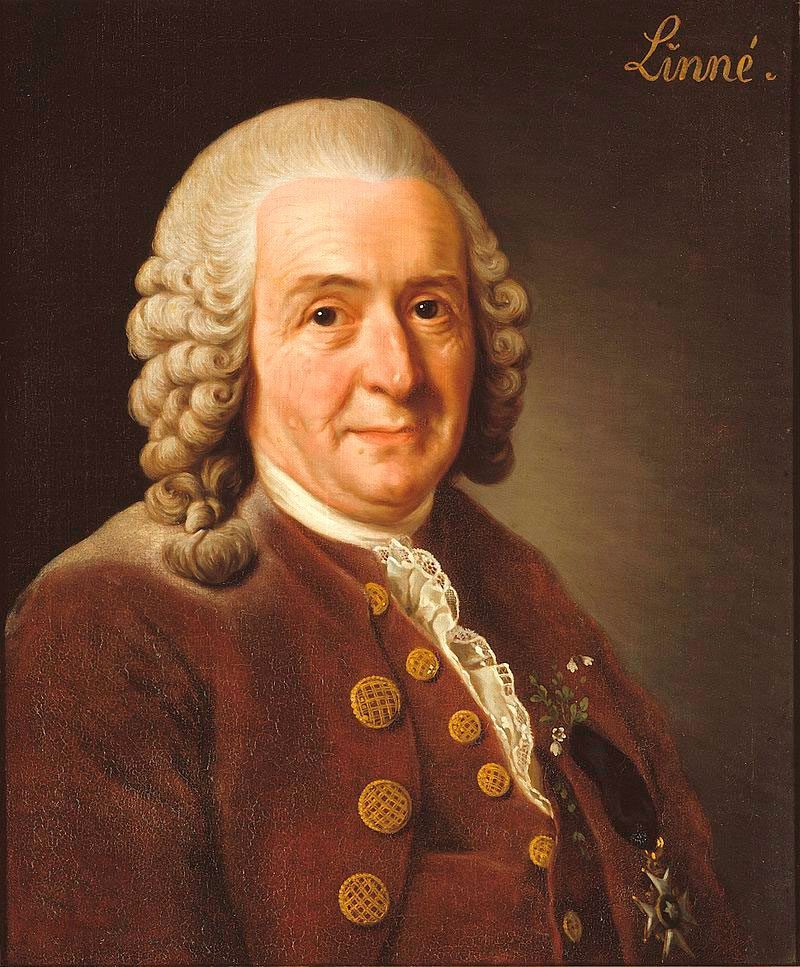
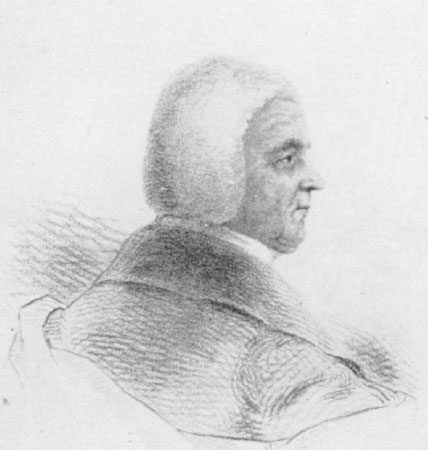
Carl Linnaeus
Carl Linnaeus

Order: Psittaciformes
Family: Psittaculidae
Genus: Psittacula
Scientific name: Psittacula cyanocephala
Citation: (Linnaeus, 1766)
Protonimo: Psittacus cyanocephalus


Plum-headed Parakeet Images:


Especies del gรฉnero Psittacula

Sources:

Avibase
– Parrots of the World โ€“ Forshaw Joseph M
– Parrots A Guide to the Parrots of the World – Tony Juniper & Mike Parr
– Birdlife

Photos:

(1) – Plum-headed Parakeet (Psittacula cyanocephala) at Bogazici Zoo, By Nevit Dilmen Turkey (Own work) [GFDL or CC-BY-SA-3.0], via Wikimedia Commons
(2) – Plum-headed Parakeet (Psittacula cyanocephala) at the mini zoo, Kapparis. Standing on a nesting box in a cage By Glen Bowman (originally posted to Flickr as Cyprus-162) [CC BY 2.0], via Wikimedia Commons
(3) – Plum-headed Parakeet (Psittacula cyanocephala) male in flight Location: Thattekad, Kerala, India By Lip Kee Yap [CC BY-SA 2.0], via Wikimedia Commons
(4) – An adult female Plum-headed Parakeet at Flying High Bird Sanctuary, Apple Tree Creek, Queensland, Australia By paulgear (Picasa Web Ablums) [CC BY-SA 3.0], via Wikimedia Commons
(5) – plum-headed parakeet – Psittacula cyanocephala by Dhruvaraj S – Flickr

Sounds: Conrad Pinto (Xeno-canto)
โ–ท The world of Pets: Dogs, cats, birds, reptiles, amphibians

Mindoro Racquet-tail
Prioniturus mindorensis

Mindoro Racquet-tail

Content

Mindoro Racquet-tail

Description:

27 cms length.

The Mindoro Racquet-tail (Prioniturus mindorensis) They are closely related to the Blue-crowned Racquet-tail but it is distinguished by the patch crown in the mindorensis it is blue with a slight violet tinge and stands out sharply against the forecrown green; the bill is larger and the rackets are never as long as in adult specimens of the discurus.

-similar female to female Blue-crowned Racquet-tail, but often with violet traces in the patch crown.

Formerly considered conspecific (belonging to the same species) with the Blue-crowned Racquet-tail (Prioniturus discurus).

Habitat:

They can be found in humid lowland forests, most recently being observed records, in groups of birds visiting the IBA Siburan.

Reproduction:

No information about their reproductive behavior.

Food:

Surely it feeds their congeners fruits, berries, nuts and seeds.

Distribution:

Extending its range (breeding/resident): 12.100 km2

endemic to the Mindoro Island in Philippines.

Conservation:


Vulnerable


Rationale for the Red List category: Vulnerable.

Population size: 2500-9999 specimens.

The population trend: In decline.

Rationale for the Red List category

This newly divided species is listed as Vulnerable it is believed to have a small town, which infers that is in decline due to the continuous pressure of capture and loss of habitat.

Justification of the population

The population size of this species has not been formally quantified, but it is estimated preliminarily that has less than 10.000 mature individuals. So, placed in the band 2.500-9.999 mature individuals, which it is supposed equivalent to a total population of 3.750-14.999 individuals, rounded here to 3.500-15.000 approximately. It is presumed that all mature individuals form a single subpopulation.

Justification trend

It is inferred that the population of the species is continuous decrease due to the constant pressure capture and habitat loss (Juniper and Parr 1998).

Threats

Little information is available about threats to this species, but it is believed that the continuous capture for pet trade and the continuous loss of habitat through agricultural expansion, timber harvesting and development are causing a negative population trend.

conservation actions

Conservation actions underway

No specific conservation actions are known for this species., although suitable habitat is officially protected.

Conservation Actions Proposed

Surveys to quantify the population.
Study the habitat needs of the species.
Assess the level of threat of capture pressure.
Using remote sensing techniques to track the change in land use in Mindoro.
Carry out awareness activities to reduce trapping activities.

"Mindoro Racquet-tail" in captivity:

Not found in captivity.

Alternative names:

Blue-crowned Racquet-tail (mindorensis), Mindoro Racket-tail, Mindoro Racquet-tail (English).
Palette ร  couronne bleue (mindorensis), Palette de Mindoro (French).
Mindoro-Spatelschwanzpapagei (German).
Prioniturus mindorensis (Portuguese).
Lorito momoto de Mindoro (espaรฑol).


scientific classification:

Joseph Beal Steere
Joseph Beal Steere

Order: Psittaciformes
Family: Psittaculidae
Genus: Prioniturus
Scientific name: Prioniturus mindorensis
Citation: Steere, 1890
Protonimo: Prioniturus mindorensis

Images "Mindoro Racquet-tail"

ยซLorito Momoto de Mindoroยป (Prioniturus mindorensis)

Sources:

Avibase
Parrots of the World โ€“ Forshaw Joseph M
Parrots A Guide to the Parrots of the World – Tony Juniper & Mike Parr
Birdlife

Photos:

(1) – Mindoro Racquet-tail Prioniturus mindorensis (Young bird with no racquets) in Mounts Iglit-Baco National Park, Mindoro, Philippines by Djop Tabaranza Accessible at hbw.com/ibc/1405853.
(2) – Mindoro Racquet-tail (Prioniturus mindorensis) – https://www.hbw.com/species/mindoro-racquet-tail-prioniturus-mindorensis

Sounds: Desmond Allen, XC79225. accessible www.xeno-canto.org/79225.

โ–ท The world of Pets: Dogs, cats, birds, reptiles, amphibians

Blue-headed Parrot
Pionus menstruus


Blue-headed Parrot

Content


Anatomy-parrots

Description "Loro Cabeciazul":

28 to 30 cm.. height and between 234 and 295g. weight.

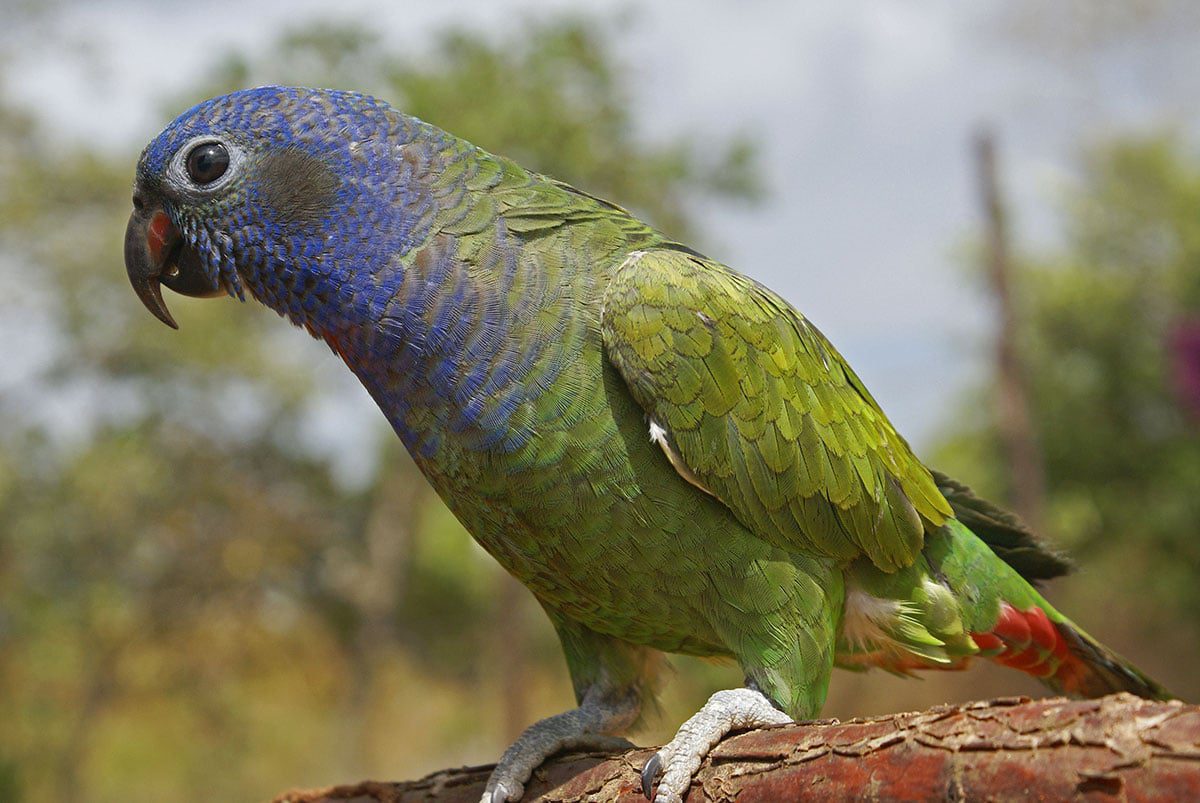
The Blue-headed Parrot (Pionus menstruus) is distinguishable by having the head, neck and chest blue; Red in the rump and in the Base ventral of the tail (very visible on the fly), basis of the bill and neck dotted with pink.

Shoulder and end of the wing olive green with yellow border, tail green with blue tip.

Subspecies description:

  • Pionus menstruus menstruus

    (Linnaeus, 1766) – The nominal

  • Pionus menstruus reichenowi

    (Heine, 1884) – Blue head, the neck and darker throat; lower underparts washed with blue green color; coverts red infracaudales with blue ends.

  • Pionus menstruus rubrigularis

    (Cabanis, 1881) – Smaller, head pale blue, neck more extensive and clear Red.

Habitat:

Species very common, lives in humid forests, semi-wet, from gallery, stubble, crop areas until the 1500 m.

Reproduction:

It feeds on various seeds, fruits and flowers.

Food:

It nests in hollows of trees and palms in dry season.

Loro distribution-headed:

They live in freedom from the South of Costa Rica, North of South America to the West of Ecuador. To the East of the Andes, comes to Peru, part of Brazil to the North of Bolivia.

Subspecies description:

  • Pionus menstruus menstruus

    (Linnaeus, 1766) – The nominal

  • Pionus menstruus reichenowi

    (Heine, 1884) – Coastal areas of the northeast of Brazil (Alagoas until Holy Spirit)

  • Pionus menstruus rubrigularis

    (Cabanis, 1881) – Tropical North of Costa Rica to western Colombia and West of Ecuador.

Conservation-headed Parrot:


minor concern


โ€ข Red List category of the UICN current: Least concern

โ€ข Population trend: Decreasing

The size of the world population of the Blue-headed Parrot It has not been quantified, but this species is described as ยซcommonยป (Stotz et to the., 1996).

This species is suspected that it may lose 18,5-23% of habitat within its distribution over three generations (20 years) based on a deforestation model of the Amazon (Soares-Filho et to the., 2006, Bird et to the. 2011). So, they suspected that can decrease in <25% in three generations.

In captivity:

Pretty common in captivity. Intelligent, inquisitive although sometimes shy. Active by nature, they can become overweight if you don't have a wide space where exercise your flight. Mature birds usually match throughout his life with his partner, you will defend with aggression of any intruder.

Its diet in captivity is wide. fruits such as: Apple, pear, orange, banana, granada, cactus fruits, Kiwi, they form around the 30 percent of the diet; vegetables such as: Carrot, celery, green beans and peas in pods; fresh corn; Greens such as: chard, lettuce, Kale, dandelion, healer, chickweed; mixture of small seeds, such as: millet, birdseed, and small amounts of buckwheat, oats, safflower and hemp; soaked and sprouted sunflower; beans, cooked legumes and boiled corn.

Alternative names

Blue-headed Parrot, Cobalt Parrot (English).
Schwarzohrpapagei, Schwarzohr-Papagei (German).
Cotorra Cabeciazul, Loro Cabeciazul, Loro de Cabeza Azul (espaรฑol).
Pione ร  tรชte bleue, Pionus ร  tรชte bleue (French).
baitaca, curica, maitaca, maitaca-de-barriga-azulada, maitaca-de-cabeรงa-azul, sijรก, Sรดia, Suia (potuguรฉs).
Pappagallo testablu (Italian).


scientific classification:

Carl Linnaeus
Carl Linnaeus

Order: Psittaciformes
Family: Psittacidae
Genus: Pionus
Scientific name: Pionus menstruus
Citation: (Linnaeus, 1766)
Protonimo: Psittacus menstruus

Images "Blue-headed Parrot"

Videos "Blue-headed Parrot"

ยซLoro Cabeciazulยป (Pionus menstruus)


โ–ท The world of Pets: Dogs, cats, birds, reptiles, amphibians

Edwards' Fig-Parrot
Psittaculirostris edwardsii


Edwards' Fig-Parrot

Content

Description

18 cm.. length and weight around 105 g..

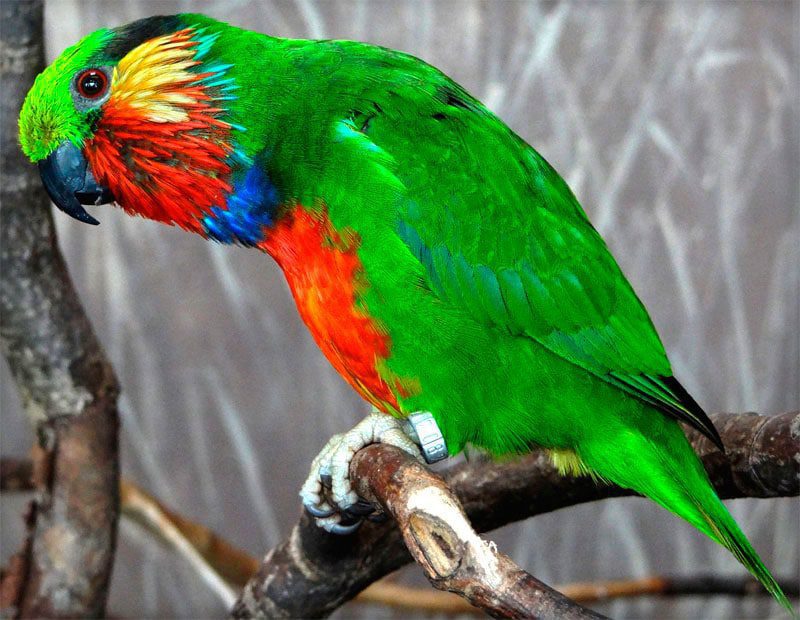
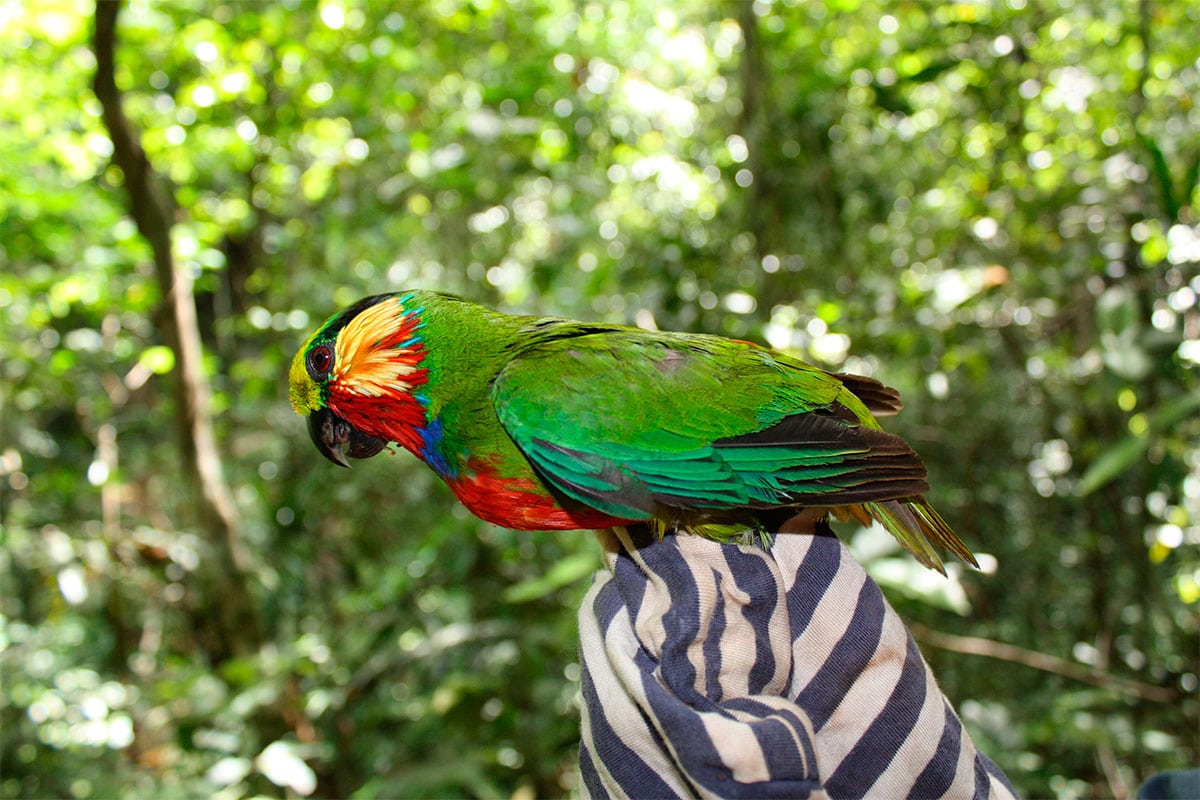
The Edwards' Fig-Parrot (Psittaculirostris edwardsii) you have the front and a bright yellowish-green Crown, with a green stripe on the back; neck greyish-Brown band above the band of gris-negruzco color that extends into the eye; area before and just behind the eyes, green. Elongated lower headset feathers and orange-red fire Gorge, with some green basal feathers interspersed and ends the headphone rear (also elongated) golden yellow with orange.

Dark green back: curve of the wing marked in blue. Black flight feathers marked with green in vane outer (except the primary outer) and with vane internal yellow, forming a set of bars under her wings; marked inner coverts reddish-orange. The wings of blue-green feathers, the longest with yellow tip. Purple-blue ruff with some lighter green feathers; Centre of the breast and upper belly of a showy orange-red; flanks, supracaudales yellowish-green coverts and thighs. Upper, the Green tail; undertail, opaque yellow olive.

the black beak; reddish brown to Brown irises; light grey legs.

The female of the Edwards' Fig-Parrot It lacks the heart of red on the chest and upper abdomen, and has a broader purple-blue band on the chest, inset below with red.

Immatures resemble females, but with the headphones coverts greenish yellow.

Habitat:

The Edwards' Fig-Parrot (Psittaculirostris edwardsii) are distributed among the humid lowland forests, partially cleared areas, wooded edges, as well as near rural areas, up to about 800 meters above sea level.

The birds are usually found in pairs or small noisy flocks, Although groups have been found for up to 400 birds collected in the canopy of fruit trees.

Rapid movements are, and usually they hang you upside down to reach food.
Has been in mixed flocks with the Double-eyed Fig-Parrot.

Reproduction:

Nesting behavior of the Edwards' Fig-Parrot they have been observed since January through may. In October he was seen a male rubbing its peak with the female and hovering above its perch. The nest is in a hole, at the top of a tree in the forest.

Food:

The diet consists of fruit, including the Ficus figs and casuarinas, nectar and probably insects

Distribution:

Endemic to the lowlands of the North of New Guinea in Irian Jaya and Papua New Guinea. It is commonly distributed in the northeast of all Jayapura along the coastal lowlands and inland to around of Pagwi, Chamhri Lake and the jimi river. Observed in the region of the Sepik River, extending eastward to the lowlands of the Huon Peninsula and the markham river. The world's population is believed to be in excess of 100.000.

Conservation:


minor concern


โ€ข Current IUCN Red List category: Least concern

โ€ข Population trend: Stable

The size of the world population Edwards' Fig-Parrot It has not been quantified, It is estimated around the 100,000 specimens. The species according to sources, it is common to very frequent, at the local level (pit et to the. 1997).

The population is suspected to be stable in the absence of evidence of any reduction or substantial threats.

"Edwards' Fig-Parrot" in captivity:

active parrot, need space to exercise. It has nice voice, harmless. Initially shy and nervous, It is customary to the caregiver with the time. You can die suddenly without apparent reason.

It is very rare in poultry.

Alternative names:

Edwards’ Fig-Parrot, Edward’s Fig Parrot, Edwards’ Fig Parrot, Edwards’s Fig Parrot, Edwards’s Fig-Parrot, Scarlet-cheeked Fig Parrot (ingles).
Psittacule d’Edwards (French).
Edwardszwergpapagei, Edwards Zwergpapagei, Edwards-Zwergpapagei (German).
Psittaculirostris edwardsii (Portuguese).
Lorito de Eduardo, Lorito de Edwards (espaรฑol).

scientific classification:

Order: Psittaciformes
Family: Psittaculidae
Scientific name: Psittaculirostris edwardsii
Genus: Psittaculirostris
Citation: (Oustalet, 1885)
Protonimo: Cyclopsittacus Edwardsii

Images "Edwards' Lorito":

————————————————————————————————

ยซEdwards' parrotยป (Psittaculirostris edwardsii)


Sources:

Avibase
– Parrots of the World โ€“ Forshaw Joseph M
– Parrots A Guide to the Parrots of the World – Tony Juniper & Mike Parr
– Birdlife

Photos:

(1) – Indonesia Traveling Guide – by Farelli in Indonesia Bird
(2) – Birds-pet-wallpapers
(3) – ยซPsittaculirostris edwardsiiยป by http://www.birdphotos.com – http://www.birdphotos.com/photos/v/parrots/IMG_3537b.jpg.html. Licensed under CC BY 3.0 via Wikimedia Commons.
(4) – By Michal Pilar – Methodical Portal
(5) – By Katerina Tvardikova – New Guinea Birds

โ–ท The world of Pets: Dogs, cats, birds, reptiles, amphibians

Luzon Racquet-tail
Prioniturus montanus

Content

Luzon Racquet-tail

Description

23 centimeters long, not to mention their racquets, and a weight between 100 and 140 g..

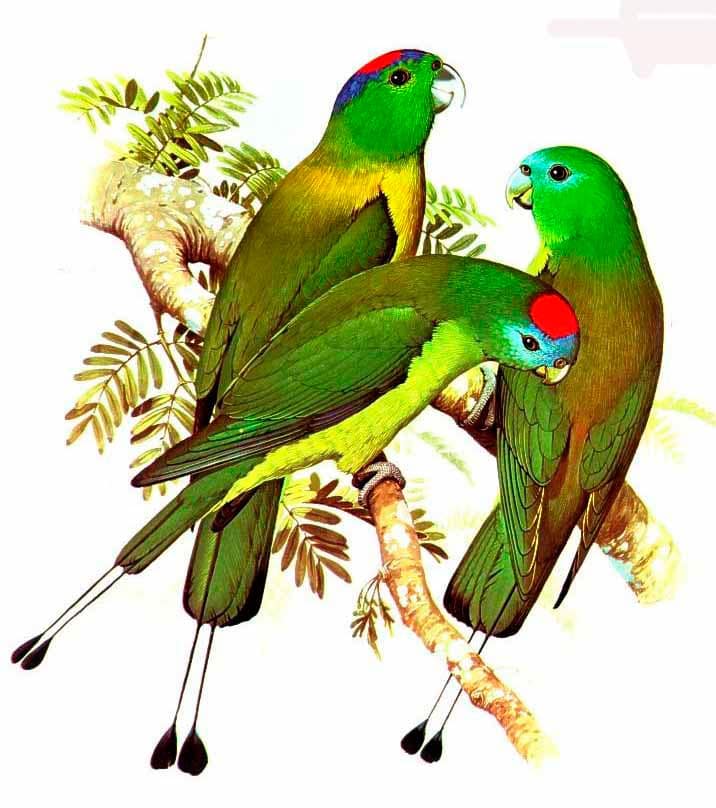
The Luzon Racquet-tail (Prioniturus montanus) has the head of color green with a strong diffusion of color blue turquoise in the face; point red in the center of the crown. Upperparts dull green. Wings green, vane outside of the flight feather, green; vane grey internal, Yellow-edged; networks internal of secondary marked in color yellow pale.

green wing feathers, bottom of bluish flight feathers; paler in network interiors to secondary internal. The underparts more green beige that the area of the back. Upper, the tail green in the center, black blue at the ends laterally; undertail, dark, blue margin to vane inner; spatulas blackish.

Bill blue; irises dark brown; legs black blue.

Female lacks of the point red and has less blue on the crown; rackets also shorter.

Young have tail Central with extensions of feathers narrow. Pens eventually lost beards to leave spatulas.

Habitat:

Little-known. Is distributed in the moist montane forests at altitudes ranging between the 850 and 2.000 m.

Reproduction:

The breeding season you have registered in the months of August and September. A nest was observed in the stump of an oak high (Quercus) at a height between 3 and 4 meters above the ground.

Food:

The birds feed on seeds, fruit, berries and nuts, and there have also been incursions into fields in the company of the Green Racquet-tail.

Distribution:

Size of the area of distribution (reproduction / resident): 10.400 km2

Endemic to Luzon. Being common in the Cordillera Central (for example, area Mount Pulag) and Sierra Madre, but threatened by the capture and loss of habitat in other places. The population world is inferior to 10.000 specimens.

Conservation:


Near-threatened


โ€ข Current category of the Red List of the UICN: Near threatened

โ€ข Population trend: Decreasing

Lambert et to the. (1993) estimated a maximum of 10.000 individuals.

The population is suspected of being in decline due to destruction of habitat, hunting and capture for the cage bird trade.

Conservation Actions Proposed:

Calculate loss of forests within its altitudinal range in Luzon. Estimate the remaining area of suitable habitat and, through surveys, produce an estimate of density to permit calculation of the size of its population. Protect effectively important tracts of forest right in key places, both in the areas of strict protection. as in multi-use areas.

"Luzon Racquet-tail" in captivity:

Its breeding in captivity is unknown..

Alternative names:

Luzon Racquet-tail, Luzon Montane Racquet-tail, Montane Racket-tail, Montane Racquet-tail, Montane Racquet-tail (nominal form), Montane Racquet-tail (nominate), Mountain Racket-tailed Parrot, Mountain Racquet-tailed Parrot (ingles).
Palette momot, Palette momot (nominal), Palette momot (nominale), Palette momot (race nominale) (French).
Motmotpapagei (German).
Prioniturus montanus (Portuguese).
Lorito momoto Montano, Lorito-momoto Montano (espaรฑol).

scientific classification:

Order: Psittaciformes
Family: Psittaculidae
Genus: Prioniturus
Scientific name: Prioniturus montanus
Citation: Ogilvie-Grant, 1895
Protonimo: Prioniturus montanus

————————————————————————————————

ยซLorito Momoto Montanoยป (Prioniturus montanus)

Sources:

Avibase
– Parrots of the World โ€“ Forshaw Joseph M
– Parrots A Guide to the Parrots of the World – Tony Juniper & Mike Parr
– Birdlife

Photos:

(1) – PetsHome.ro – Prioniturus montanus
(2) – By Bram Demeulemeester – Flickr

Sounds: Romeo B. Galang, Jr (Xeno-canto)

โ–ท The world of Pets: Dogs, cats, birds, reptiles, amphibians

Mallee Ringneck
Barnardius barnardi

Mallee Ringneck

Content


Anatomy-parrots

Perico description of Barnard

Of 35 cm.. length between 105 and 143 g. of weight.

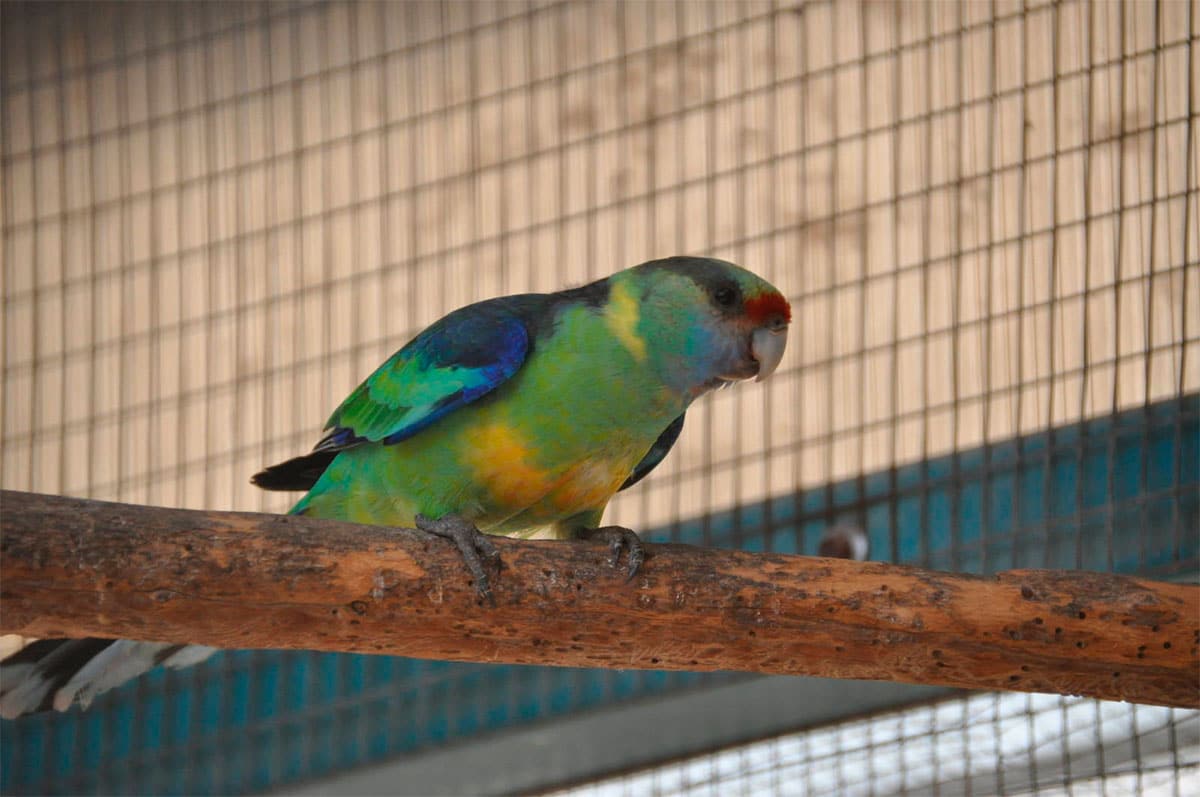
The Mallee Ringneck (Barnardius barnardi) has the plumage predominantly Green, crown and sides of the head bright green, with the cheeks slightly tinged blue and a small red band across the forecrown. The neck It is olive brown with a yellow ring around its back.

The lower area of the back is dark blue. The chest and the abdomen are turquoise blue, separated one from the other by a transverse band of yellow color which is more or less wide. The curvature of the wing It shows a greenish blue that overflows on the mantle.

The greater coverts are yellowish-green. The secondaries They are pale blue, In contrast with the covered and primaries which they are dark blue.

The underparts is blue. The upperparts tail is dark green, their central feathers with blue spikes and outer blue with pale tips.

The bill is whitish grey. The strait bare periophthalmic is solid gray. The irises is of color Brown dark and the legs grey.

The female It has colors more muted than your partner. The back and the lumbar area show a dark greenish gray. The underside is grey, with a more or less visible clear band.

The immature with even duller colors than females. They have the neck and back of the crown brown. The cheeks blues are often more developed. The back and tail are greyish green. The band underwing usually visible.

    Two species were traditionally recognized in the genus Barnardius, Barnardius zonarius and Barnardius barnardi, but both hibridaban in the contact area and are currently considered a single species.

    Taxonomic status:

This taxon is considered a subspecies of Barnardius [zonarius or Barnardi] (sensu lato) by some authors

Subspecies Barnardius barnardi

  • Barnardius barnardi barnardi

    : (Vigors and Horsfield, 1827) The nominal species

  • Barnardius barnardi whitei

    : (Mathews, 1912) Of 35 cm.. length. It has feathers off, especially the chest and abdomen where the turquoise color is absent. Female plumage more clear than the nominal. Is believed to be a hybrid of the Barnardius Zonarius with the Barnardius Barnardi.

  • Barnardius barnardi macgillivrayi

    : (North, 1900) Of 33 cm.. length. More small, more pale, with the greenish-yellow forehead more pale and with clear bright blue hue on the cheeks and below the headphone feathers. Broad band of yellow on the abdomen.

Barnard's Parakeet Habitat:

The Parakeets Barnard They are mainly sedentary, but there may be some moves to small scale in response to climate change.

The species occupies the arid areas of mallee composed almost exclusively of Eucalyptus gracilis. Also found in shrubs of acacia and cypresses and in a wide variety of very similar habitats.

The species living in the areas of the North has a clear preference for the rubber Red (Eucalyptus camaldulensis) It covers temporary streams and shows a more arboreal lifestyle.

Generally less common in populated areas and in more humid regions. Large flocks are more rare to observe; pairs or small groups are the usual social units.

Less bold and curious that the Australian Ringneck, Although the two species share habits, diet and cortejo similar.

The Mallee Ringneck have been recorded feeding in the company of the Crimson Rosella (Platycercus elegans), Pale-headed Rosella (Platycercus adscitus), Red-rumped Parrot (Psephotus haematonotus) and Bluebonnet

Reproduction:

During courtship, the male shrugs, causing the wings to vibrate slightly.
Like most other parrot species, the Mallee Ringneck they have as a practice gnaw and chew wood, whether to put his personal stamp on his favorite tree, or to enlarge the cavity entrance. This activity allows them to keep their beaks in good condition.

The nest is usually in a hollow tree, and usually four to five eggs make up the implementation, deposited on a base of wood decaying waste.

In the North, breeding season tends to be governed by weather, and the nesting coincides with the end of the wet planting season.

In the South, playback starts in July or August and the season can be extended until January with a second litter. Incubation lasts around 20 days and is carried out by the female.

The young birds leave the nest after 5 weeks, but remain in the household with his parents for a while.

Food:

The Mallee Ringneck they are mainly vegetarians, they feed on seeds – Melon seeds (Cucumber myriocarpus), bitter melons (Citrullus lanatus), fruits of the tree of the tobacco (introduced), fruits, nectar and flowers. Its menu is complemented with insects and larvae.

ยซBarnard's Parakeetยป Distribution:

The Mallee Ringneck they are distributed through the interior of the East Australia, to the West of the Great dividing range, with a practically isolated population in the Northwest of Queensland, stretching across the border of the Northern Territory, along the nicholson river, in the North, and reaching Glenormiston, and western part of Queensland, in the South; its eastern limit is about Kynuna.

The the Northern subspecies meets the nominal species in the region of Range Forsythe, and extends to the South, with its eastern boundary running near Barcaldine, Mitchell and Goondiwindi, and in New South Wales.

To the South extends East through Moree, Dubbo and Wagga Wagga to get up to Kerang in Victoria.

In the West, the species is dispersed through of Western Queensland to the region of Cooper Creek of South Australia around Innamincka.

In New South Wales, is located to the West of the basin of the darling river, about Broken Hill.

Distributes lengthwise of the murray river, and in Victoria It extends through the Northwest corner to the South, until around Edenhope.

In the southeast of South Australia ranges through Naracoorte and Mount Lofty Ranges in Port Augusta and Montes Flinders, where is integrated with the Australian Ringneck; the two species are also more North.

Getaways birds have been registered in Brisbane, Melbourne and Sydney.

Subspecies B distribution. barnardi

  • Barnardius barnardi barnardi

    (Vigors and Horsfield, 1827) The nominal species

  • Barnardius barnardi whitei

    (Mathews, 1912) Flinders Ranges, South Australia

  • Barnardius barnardi macgillivrayi

    (North, 1900) This, Territory of the North and Northwest Queensland

Conservation ยซBarnard's Parakeetยป:


minor concern


โ€ข Current category of the Red List of the UICN: Least concern

โ€ข Population trend: Growing

The species is considered common throughout its range..

The world population is estimated at around 500 000 individuals and it seems stable.

But, seems less able to adapt to the changes that have occurred in the habitat that the Australian Ringneck.

In captivity:

The Mallee Ringneck It is appreciated as a pet, but the birds in captivity are relatively few.

Una muestra viviรณ 17,9 years in captivity. According to some sources, these animals can live up to 31,6 years in captivity, but this has not been verified.

Most common in Europe and Australia; not so much in the United Kingdom or United States.

Initially it is a timid and nervous bird, Although soon it acclimatizes caregiver. Bonding with a partner to do when both birds are young, as adults they do not usually live in harmony. Aggressive with other parrots.

Alternative names:

Mallee Ringneck, Mallee Parrot, Mallee Ringneck Parrot, Ringneck Parrot (ingles).
Perruche de Barnard, Barnardius barnardi, Perruche cloncurry (French).
Barnardsittich, Barnard Sittich, Barnard-Sittich (German).
Periquito-de-Barnard (Portuguese).
Perico de Barnard (espaรฑol).

scientific classification:

Order: Psittaciformes
Family: Psittaculidae
Genus: Barnardius
Scientific name: Barnardius barnardi
Citation: (Vigors & Horsfield, 1827)
Protonimo: Platycercus theelectronicjumper

Images "Mallee Ringneck"

Videos "Mallee Ringneck"

ยซBarnard's Pericoยป (Barnardius barnardi)


    Sources:

    Avibase
    – Parrots of the World โ€“ Forshaw Joseph M
    – Parrots A Guide to the Parrots of the World – Tony Juniper & Mike Parr
    – LoroMania
    AnAge: The Animal Ageing and Longevity Database – Genomics.senescence.info
    – Birdlife

    Photos:

    (1) – By AlexKant – Israel> Petach Tikva Zoo – ZooChat

    Sounds: Patrik ร…berg (Xeno-canto)

โ–ท The world of Pets: Dogs, cats, birds, reptiles, amphibians

Orange-bellied Parrot
Neophema chrysogaster

Orange-bellied Parrot

Content


Anatomy-parrots

Description

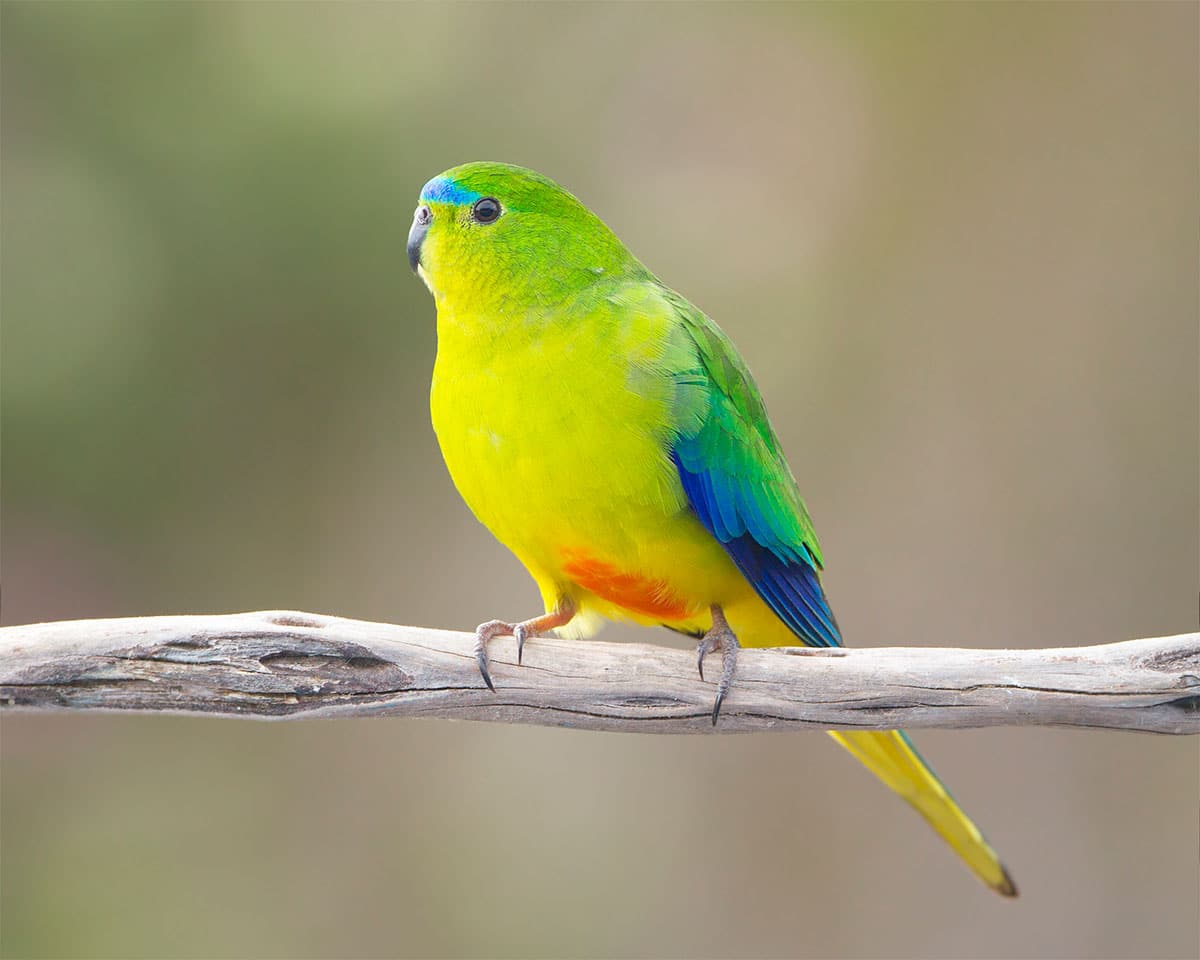
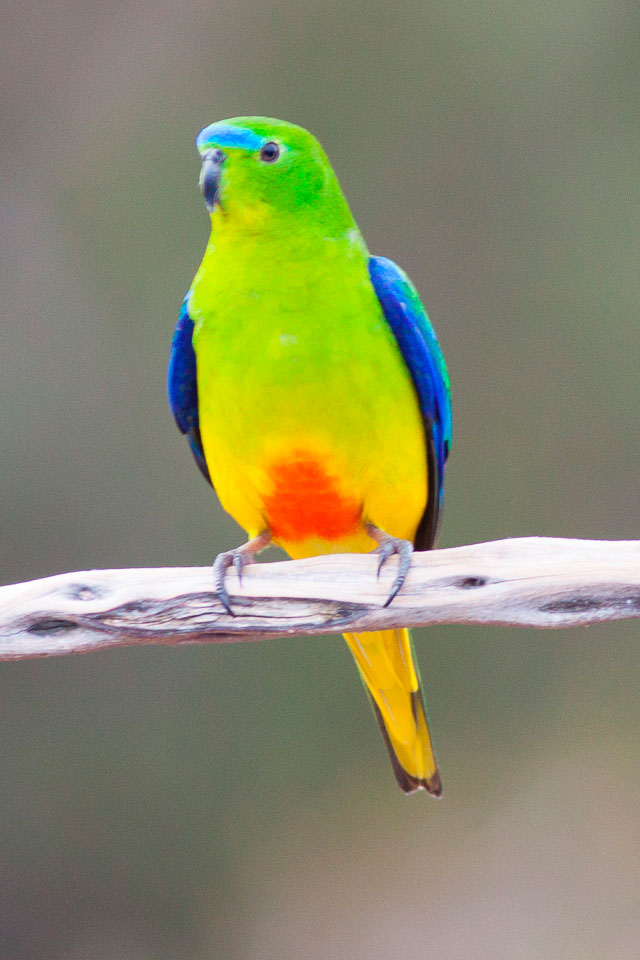
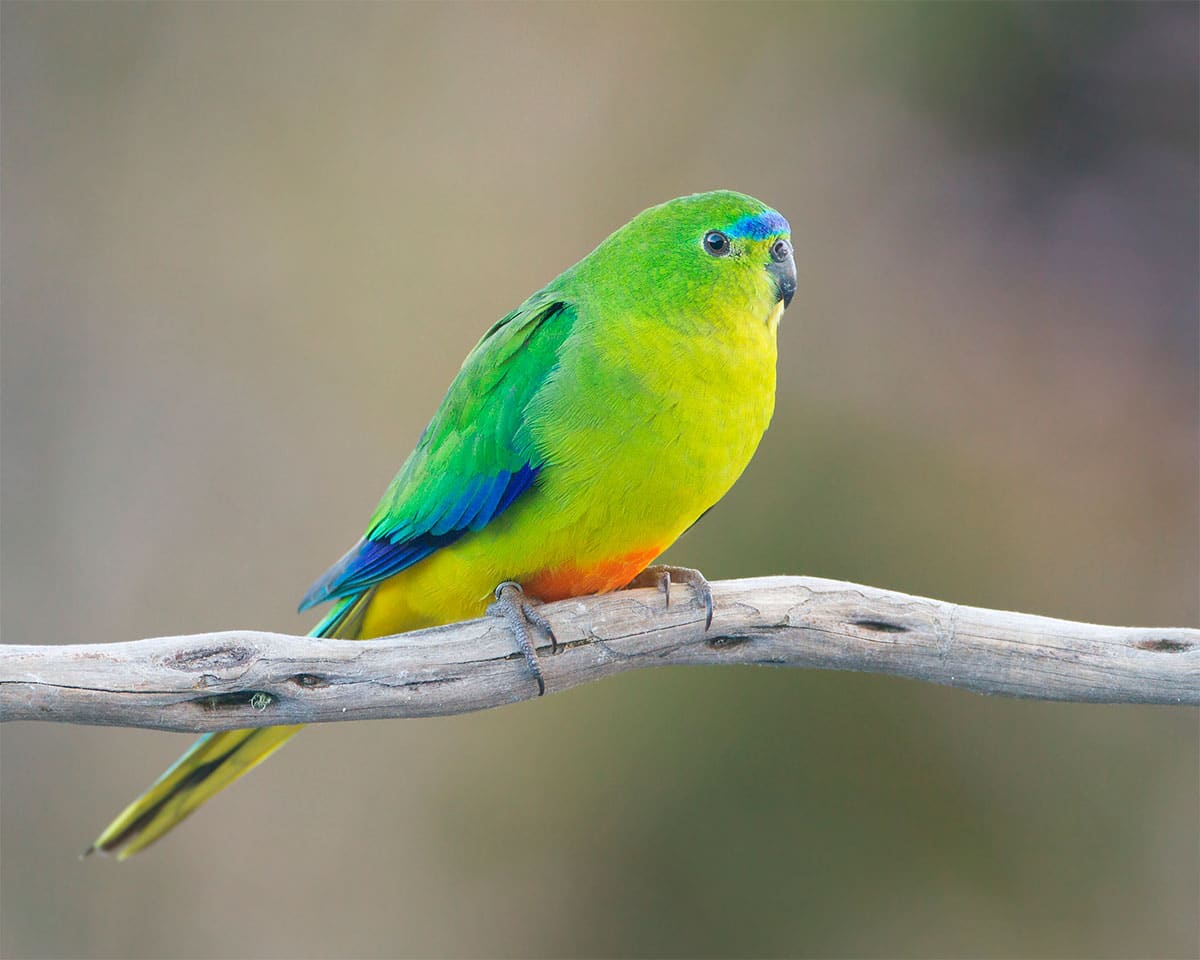
The Orange-bellied Parrot (Neophema chrysogaster) is a small ‘Grass parakeetโ€˜, so called for spending a lot of time on the ground feeding on seeds and grasses.

adults have, approximately, 21 cm length and a weight of around of 45 to 50 g..

Has the crown, the nape and the the mantle bright green, with one frontal band dark blue and a lighter blue later point that does not extend beyond the eyes.

Face and lores are yellowish-green. You have a few different bands in the wings Green and blue colors, the vane inmates of the wing-coverts are green, the blue outer.

The primary coverts are dark blue. The primary feathers Black has the outside edges with fine violet blue and yellow. The secondaries has a green border.

The underparts is blue. The chest Green is mixed with the greenish yellow color under the tail. The belly is very stained Orange. The top of queue is green with blue tip. The lateral tail feathers they are yellow with blue-green bases.

Peak and iris are black, the legs are grey.

The female is more off than the male, the frontal band has a single tone. The stain ventral Orange is smaller.

Between the juveniles, the frontal band is barely visible. The Wing band is very prominent and the bill is pale.

Habitat:

As one migratory species, its habitat varies throughout the year, with the birds that live in the marshes, coastal dunes, pastures, scrub, estuaries, Islands, beaches and Moors generally within the 10 km of distance from shore.

There is practically no records more towards the inside of 5 km and most are within 2 km from the coast. The holes of mature eucalyptus, as the Smithton Peppermint (Eucalyptus nitida) and the Swamp gum (Eucalyptus ovata), they are used by the Orange-bellied Parrot for the nesting during the breeding season in Tasmania, and breeding habitat is a mosaic of moorland and reed-covered land, dominated by the Button Gras (Gymnoschoenus sphaerocephalus) and forests.

The behavior of foraging species are usually characterized by the power in the suelor or in low vegetation, in general a less than 1 m above ground.

The birds they feed usually in pairs or individually during the breeding season, and in small herds of variable size in non-breeding season. Solitary birds often have been feeding with other species, especially with the Blue-winged Parrot (Neophema chrysostoma).

Reproduction:

In Tasmania, the only breeding place, spawning takes place in the months of November and December.

The nest of the Orange-bellied Parrot is located in natural cavities, between the 8 and 25 meters of height in eucalyptus (Eucalyptus nitida) and less frequently, in the (Eucalyptus ovata). The nest is sometimes maintained during several consecutive years. The marital ties they are strong and sometimes last a lifetime.

The spawning included among 3 and 6 eggs they are incubated during 21 days. Young people are altricial and remain in the nest for at least 5 weeks.

Food:

Initially, on Spring, the Orange-bellied Parrot they feed on plants. They mostly eat seed Sedge (Reedy) and parts of the herbs of the genus Boronia or Actinotus.

At the beginning of Winter, the regime being vegetarian, suffering some transformations. the Orange-bellied Parrot consume algae in decomposition, seeds and herbs Poaceae and Halophyte, that is to say, you adapt to saline environments, as the Rock Samphire (A maritime rhythm).

The goosefoot )Chenopodium) and Salt plants (Atriplex) also classic in their food. Introduced plants such as the Sea rocket (Cakile maritima) they are also popular.

Distribution:

Tamaรฑo del รกrea de distribuciรณn (reproducciรณn/residente) 3.100 km2

The Orange-bellied Parrot They nest along the margins of forests of the coastal plains and feeds on land covered with reeds of the Tasmanian Wilderness World Heritage Area Southwest of Tasmania, Australia, between Macquarie Harbour and Port Davey.

They migrate across Islands in the West of the bass strait (mainly King Island) towards the coast South of Australia, to Hibernate from the months of March to July, mainly along the coasts of the Bahรญa Port Phillip, Victoria (largest number of birds in Point Wilson and Swan Island, including the Queenscliffe Golf Course). They also overwinter in small numbers., from Gippsland, Victoria, to the West of the Coorong, Southern Australia. Occasionally occur during winter in areas of Tasmania and surrounding islands, as well as other individuals spend the summer on the mainland.

Every summer around 40 couples are reproduced, and an analysis of nine nests showed an average offspring of 1,7 pups per pair. The post-breeding population increased by about 50 individuals, of around 170 birds, but the population is becoming increasingly smaller, which suggests a high annual mortality. Adults begin to leave the breeding area in February and fly across the coast of Tasmania, crossing the bass strait, mainly through King Island (also records in the Hunter Croup) towards the coast of the Southeast of Australia (young birds usually travel a month later).

The Orange-bellied Parrot They tend to move around the continent, and are in the South of Australia at the end of winter. They return to breed in the months of September and October, they usually travel directly back to their breeding grounds. Since 1979 to 1990, the wintering population has remained relatively stable, with a count of 67 to 126 individuals registered every year (with a maximum of 50% of the world's population known with presence in Point Wilson).

In the last century the species flying in flocks of thousands of individuals (and raised as far East as Sydney up to approximately 1907). Wintering habitat loss and capture for the bird trade are cited as factors in its decline.

Possible winter habitat loss remains a threat, as does competition from introduced herbivores, the disturbance, and the possibility of exploration and exploitation of minerals. A detailed recovery plan includes the management of winter habitat with the exclusion of grazing animals, the diversion of economic activity and the development of Murtcaim Wildlife Management Area about Point Wilson. Captive-bred birds have been released and mixed with wild individuals.

Conservation:


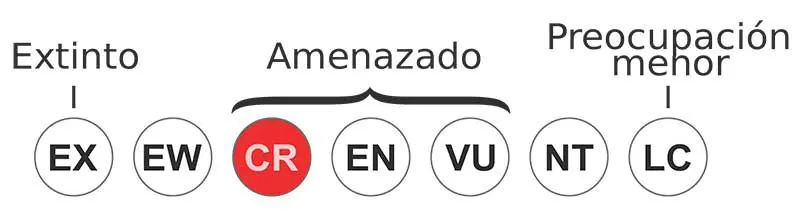
critical hazard


โ€ข Current category of the Red List of the UICN: Critically Endangered

โ€ข Population Trend: Decreasing

The Orange-bellied Parrot It has a very low population size. This very low population size is even more significant, given that the species migrates through of the Bass Strait, with which this species is subjected to the additional risk by stormy phenomena on their migratory journey.

Has a restricted geographic range when breeding, and apparently a limited supply of food during migration and winter.

The species is found in a single population of between 100 and 150 mature individuals. Habitat loss, fragmentation and modification, particularly on the migration route and in the wintering areas, they are the key threats to the survival of the species.

For a small population, stochastic factors, as the disease, storms during the migratory species, and the destruction of nests by forest fires have the potential to reduce the survival of the species in the long term.

The Orange-bellied Parrot It has a restricted geographical distribution which is precarious for its survival.

The Scientific Committee of Threatened Species considers that the Orange-bellied Parrot has suffered a historic decline since European colonization. It is considered, In addition, that the recent recovery actions that have been implemented are having a beneficial impact on the species and the possibility of future stability in the reproduction sites is becoming apparent. But, as the population of the Orange-bellied Parrot is so low, the data that we have are based on a small area of occupancy and it is likely that this species continue suffering from a series of threats in course, with what the Committee may not be sufficiently secure that available information indicate that the population is stable and safe.

Future declines in population are still likely as a result of potential threats, especially the stochastic and genetic threats to small populations are likely and that can lead to the extinction.

"Orange-bellied Parrot" in captivity:

The Orange-bellied Parrot is very rare in captivity and is, probably, more present in the hands of European collections. There are also some captive birds by some fans in Australia, to the South of the continent.

Video Ventrinaranja Parakeet

Orange-bellied Parrot (Neophema chrysogaster) 'Instincts': PPC R&BCaptive Management Using Biological Data
Fifteen years ago in South Australia, under expert supervision, were built cages with the aim of raising these birds and avoid that the Orange-bellied Parrot disappeared completely. In the early years, most of the young people died from diseases of the beak and feathers (PBFD), a viral disease (virus BFD). Similarly, cold winters in this region, where was launched the project, they had a negative effect on the end result.

Once the aviaries were displaced to areas more temperate and increased its amount, the result is improved and each year dozens of parrots have been released into the wild.

The Orange-bellied Parrot they are birds calm, peaceful and little noisy. They belong to the less active within the genre of the kind Neophema, so tend to the Obesity. These birds spend much time ashore. Usually, bathe once a day, in long baths. Reproduce well in captivity. They are exceptionally susceptible to various infections, including the intestinal parasites. These birds also, often, they die without apparent reason.

Alternative names:

Orange-bellied Parrot, Grass Parakeet, Orange bellied Parrot, Orange-bellied Grass-Parakeet, orange-bellied parakeet, Orange-breasted Grass-Parakeet, Orange-breasted Parrot, Purple-banded Parrot, Yellow-bellied Parrot (ingles).
Perruche ร  ventre orange, Perruche ร  poitrine orange (French).
Goldbauchsittich (German).
Periquito-de-barriga-laranja (Portuguese).
Papagayo de Vientre Naranja, Periquito Ventrinaranja (espaรฑol).

scientific classification:

John Latham
John Latham

Order: Psittaciformes
Family: Psittaculidae
Genus: Neophema
Scientific name: Neophema chrysogaster
Citation: (Latham, 1790)
Protonimo: Psittacus chrysogaster

Images ยซOrange-bellied Parakeetยป:

Videos "Orange-bellied Parrot"

ยซOrange-bellied Parakeetยป (Neophema chrysogaster)


Sources:

  • Avibase
  • Parrots of the World โ€“ Forshaw Joseph M
  • Parrots A Guide to the Parrots of the World – Tony Juniper & Mike Parr
  • Ministry of the environment – Australia – Environment Protection and Biodiversity Conservation Act 1999 (EPBC Act)
  • Birdlife

  • Photos:

(1) – Orange-bellied Parrot (Neophema chrysogaster) male, Melaleuca, Southwest Conservation Area, Tasmania, Australia By JJ Harrison (jjharrison89@facebook.com) (Own work) [CC BY-SA 3.0], via Wikimedia Commons
(2) – Orange-bellied Parrot (Neophema chrysogaster) female, Melaleuca, Southwest Conservation Area, Tasmania, Australia By JJ Harrison (jjharrison89@facebook.com) (Own work) [CC BY-SA 3.0], via Wikimedia Commons
(3) – Orange-bellied Parrot (Neophema chrysogaster) Melaleuca,Tasmania by Ron Knight – Flickr
(4) – Orange-bellied parrot, Neophema chrysogaster, photographed at Tasmania, Australia – Image: David Boyle/National Geographic [velociraptorize] (5) – Photo: Justin McManus
(6) – John Latham – Allen, ELSA G. (1951) The History of American Ornithology before Audubon. Transactions of the American Philosophical Society, New be. 41(3):387-591. See page for author [Public domain], via Wikimedia Commons

โ–ท The world of Pets: Dogs, cats, birds, reptiles, amphibians

Timneh Parrot
Psittacus timneh


Loro Timneh

Content


Anatomy-parrots

Description:

28 to 32 cm.. length and a weight between 275 and 375 g..

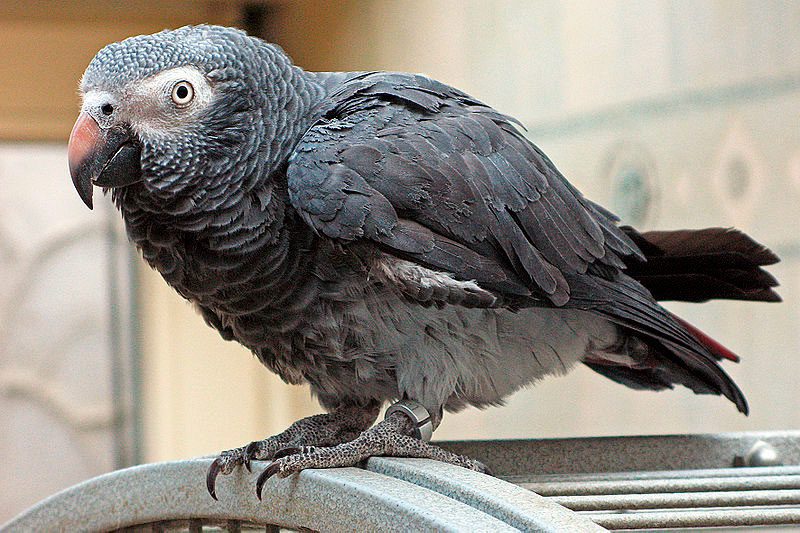
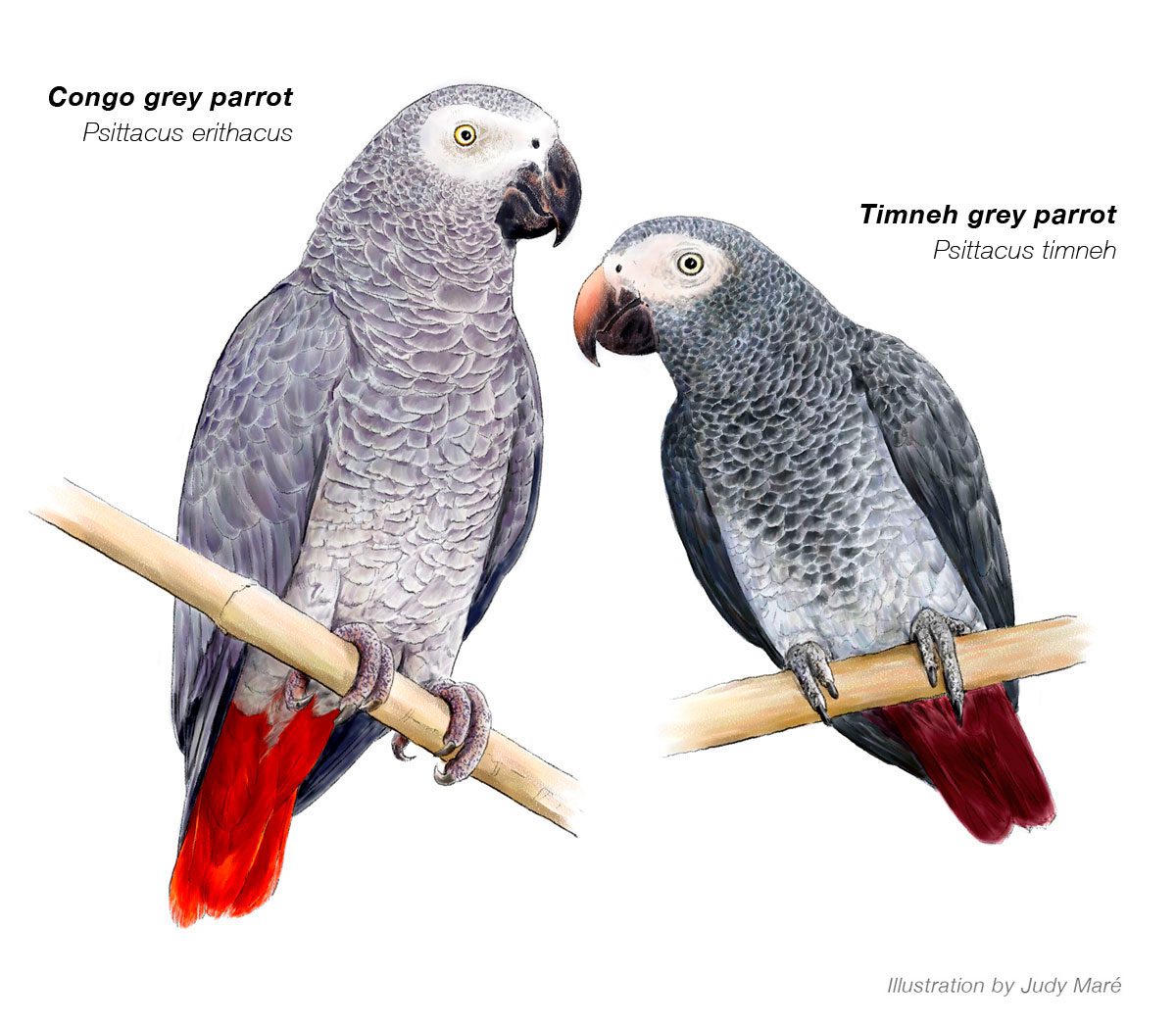
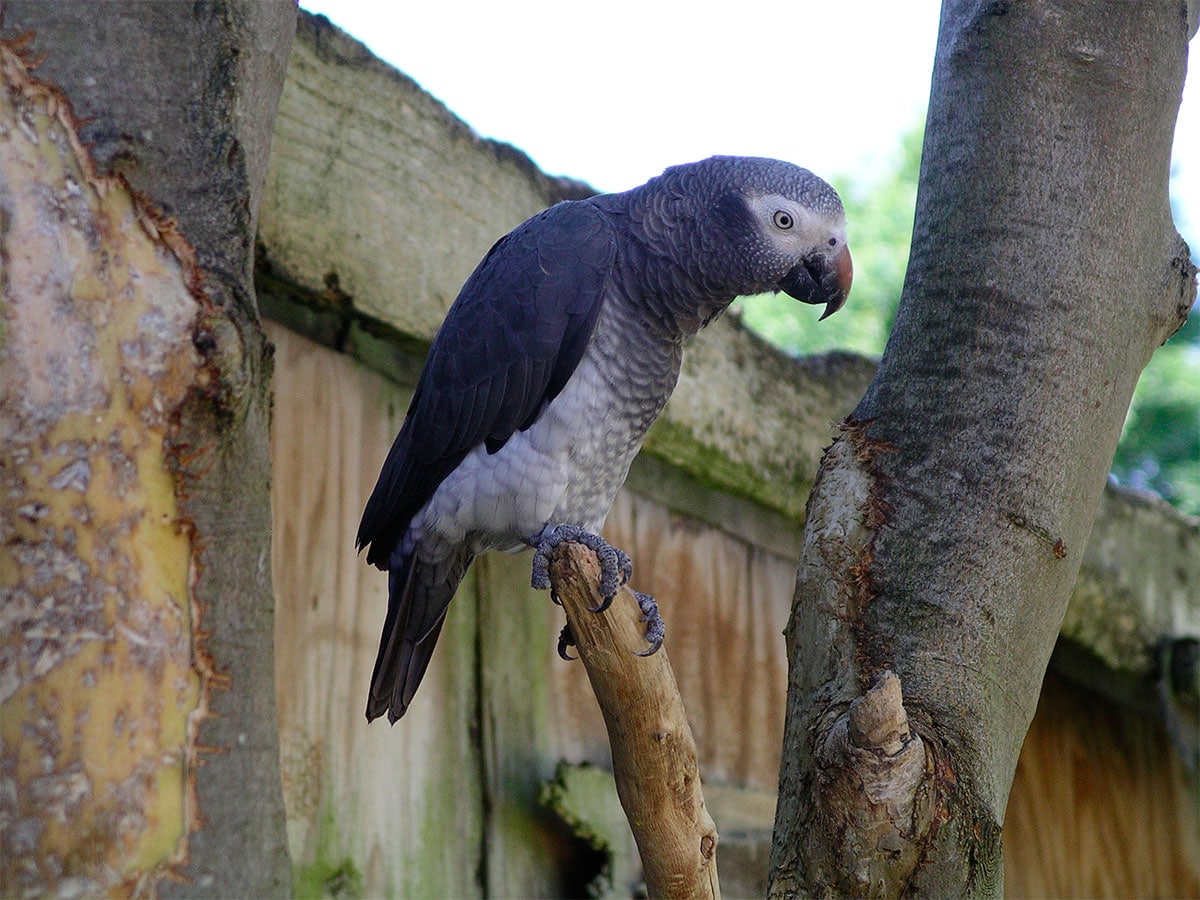
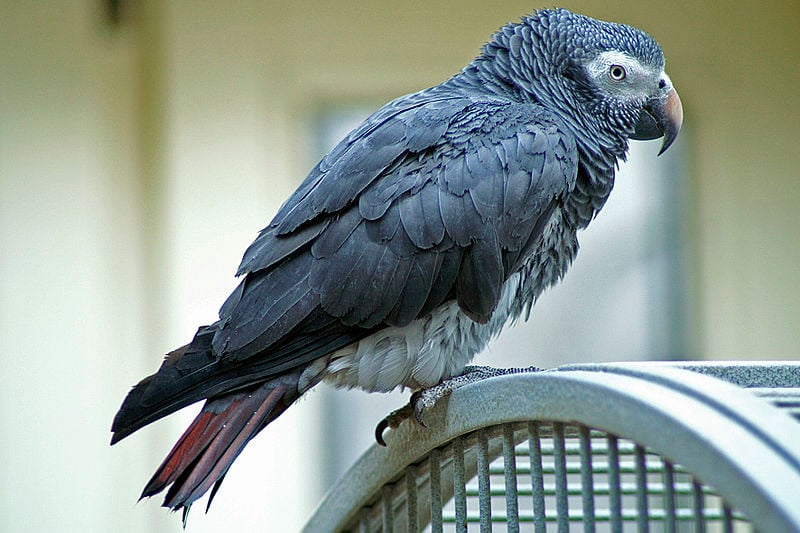
The Timneh Parrot (Psittacus timneh) is darker than Grey Parrot and the Red of the the tail feathers more off, darker and usually Brown (not Scarlet).

The uppertail-coverts son grises, dyed red (not Scarlet).

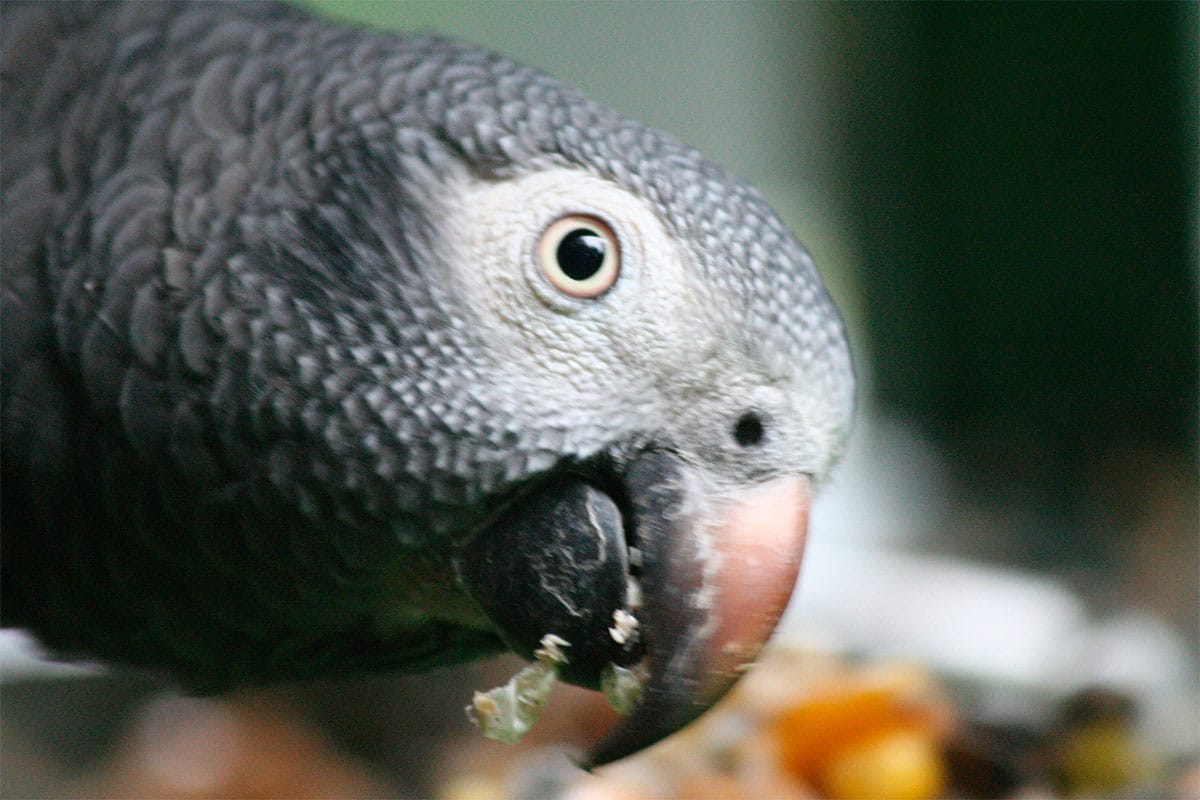
The bill It is mostly black, but it has an ivory-coloured or pinkish in the upper third of the upper jaw.

There is no visible difference between male and female.

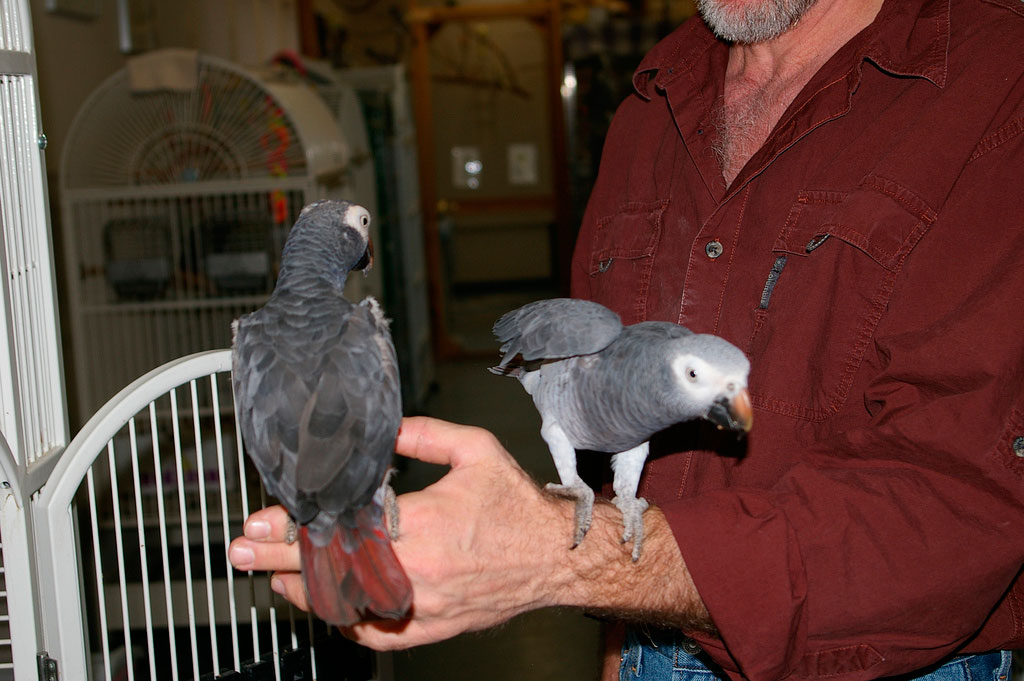
The youth they have black eyes that become a yellowish cream at the age of two years.

Smaller that the Grey Parrot

Description 2 subspecies:

  • Psittacus timneh princeps

    (Alexander, 1909) – Darker and slightly larger than the subspecies Psittacus timneh timneh, although its size is still below the Grey Parrot (Psittacus erithacus). The feathers of the tail are as red as those of Grey Parrot, but marked by a greater contrast with the almost black feathers body, giving a different impression this subspecies. The eyes are yellow, the bill It is black and legs are dark gray.


  • Psittacus timneh timneh

    (Fraser, 1844) – Nominal.

Habitat:

Ilustraciรณn por Judy Marรฉ
Illustration by Judy Mare

Although they normally inhabit the dense forests, they are also usually seen at the edges of forests, clear, gallery forest, mangroves, tree-lined sheets, cultivated areas, and even the gardens, Although it is not clear if it's self-sustaining populations.

You can do seasonal movements out of the drier areas of its distribution in the station area dry.

Sometimes travel long distances to feed. They nest in hollow trees high above the ground. Found in small flocks of a few dozen, usually no more. Flocks of birds can be noisy.

Reproduction:

Little known difference with regard to the Grey Parrot.

The breeding season is usually from November to April in the westernmost areas of west africal, probably, especially during the season dry.

During the season of breeding they put in 2 to 4 eggs, every two or three days. These hatch in 28-30 days and the young are independent in 12 to 14 weeks.

Food:

In the wild, the Timneh Parrot they eat seeds, nuts, fruits and vegetables. they climb trees, instead of flying, to collect food and keep it with one leg while eating. They enjoy eating the external Walnut meat of the Palm oil, and have been observed eating snails.

In West Africa, his hobby is known for beads, attacking cornfields and becoming considered pests in certain places.

Distribution:

Size of the area of distribution (reproduction / resident): 541.000 km2

They are distributed in the West, in the humid forest areas of the Upper Guinea and bordering savannahs of West Africa from Guinea-Bissau, Sierra Leone and South of Mali to the East of Ivory Coast, at least a 70 kilometers to the East of the bandama river.

The wild population is distributed along with the species nominal in Abidjan, Ivory Coast.

Distribution 2 subspecies:

  • Psittacus timneh princeps

    (Alexander, 1909) – Principe Island (gulf of guinea).


  • Psittacus timneh timneh

    (Fraser, 1844) – Nominal. South of Guinea, Sierra Leone and Liberia, as well as the western part of Ivory Coast. There are also smaller groups Guinea Bissau and Mali. Populations Senegal They have disappeared fish trade.

Conservation:


Vulnerable


โ€ข Current Red List of UICN: Vulnerable

โ€ข Population trend: Decreasing

Its population is estimated between 100,000 and 500,000 exemplary and decreasing.
The P. erithacus, before the division of the timneh, He was put in the Appendix II of CITES with all Psittaciformes in 1981 at the request of Switzerland and Liechtenstein. Due to concerns about the effects of the large number of this species traded, It was the subject of a review of significant trade of the CITES, in which was listed as "possible concern" (Inskipp et to the. 1988).

The Animals Committee of the CITES he imposed a sanction of two years from January of 2007 on exports of timneh from four countries of West Africa (Ivory Coast, Liberia, Sierra Leone and Guinea), and banned the import of wild birds into the EU in 2007 (Anon 2011).

In 2009 Guinea exported 720 timneh, Despite having a share of 0 (Anonymous 2011).

The controlled legal trade by CITES may represent only a small proportion of total numbers caught in the wild.

The species is found in a number of protected areas.

A PhD study assessed the distribution, abundance and the impacts of trade and habitat loss for the timneh started in 2011 (Anon 2011).

Conservation Actions Proposed:

    โ€ข Ensure that proposed trade restrictions are enforced.

    โ€ข Monitor wild populations to determine ongoing trends..

"Timneh Parrot" in captivity:

Poultry are known in a manner abbreviated as TAG (Timneh African grey).

The Parrot Timneh is equivalent in intelligence and ability of his Congo counterpart, the Grey Parrot, being, generally, less nervous and with a great ability to imitate sounds (they often learn to imitate human sounds before the Grey Parrot). They can have a wide vocabulary of hundreds of words.

Unlike the Parrot Yaco, their voices are not an exact replica of the voice of the person you are copying. The Timneh Parrot they have their own special little voice.

Alternative names:

Timneh Parrot, Gray Parrot (Timneh), Sierra Leone Gray Parrot, Sierra Leone Grey Parrot, Zambesi Green Pigeon (English).
Perroquet timneh (French).
Timnehgraupapagei (German).
papagaio-timneh (Portuguese).
Loro timneh, Loro Gris de Cola Vinagre (espaรฑol).

scientific classification:

Order: Psittaciformes
Family: Psittacidae
Genus: Psittacus
Scientific name: Psittacus timneh
Citation: Fraser, 1844
Protonimo: Psittacus Timneh

ยซTimneh Parrotยป Images:

————————————————————————————————

"Two Timneh" (Psittacus timneh)


Sources:

Avibase
– Parrots of the World โ€“ Forshaw Joseph M
– Parrots A Guide to the Parrots of the World – Tony Juniper & Mike Parr
– Birdlife

Photos:

(1) – Timneh African Grey Parrot (Psittacus erithacus timneh) Pet parrot sanding on a cage By Peter Fuchs (Flickr) [CC BY-SA 2.0], via Wikimedia Commons
(2) – Two pet Timneh African Grey Parrots perching on a manโ€™s arm By rebeccakoconnor (originally posted to Flickr as Timneh Greys) [CC BY 2.0], via Wikimedia Commons
(3) – Timneh African Grey Parrot (Psittacus erithacus timneh). A pet parrot standing on a cage. Photo shows the maroon tail feathers By Peter Fuchs (originally posted to Flickr as henry tired) [CC BY-SA 2.0], via Wikimedia Commons
(4) – A Timneh African Grey Parrot at Birds of Eden, South Africa By Graham (originally posted to Flickr as IMG_0972) [CC BY-SA 2.0], via Wikimedia Commons
(5) – A Timneh African Grey Parrot that is allowed to fly free in Tropical Birdland, Leicestershire, England I, Snowmanradio [GFDL or CC-BY-SA-3.0], via Wikimedia Commons
(6) Ilustraciรณn by Judy Marรฉ – Africa Geographic Magazine

Sounds: Etienne Leroy (Xeno-canto)