โ–ท The world of Pets: Dogs, cats, birds, reptiles, amphibians

Monk Parakeet
Myiopsitta monachus

Monk Parakeet

Content

Description:

28-31 cm. length and 120-140 weight g
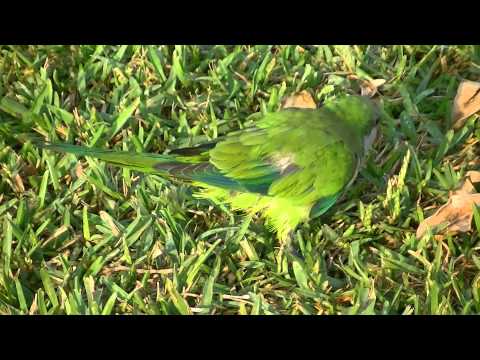
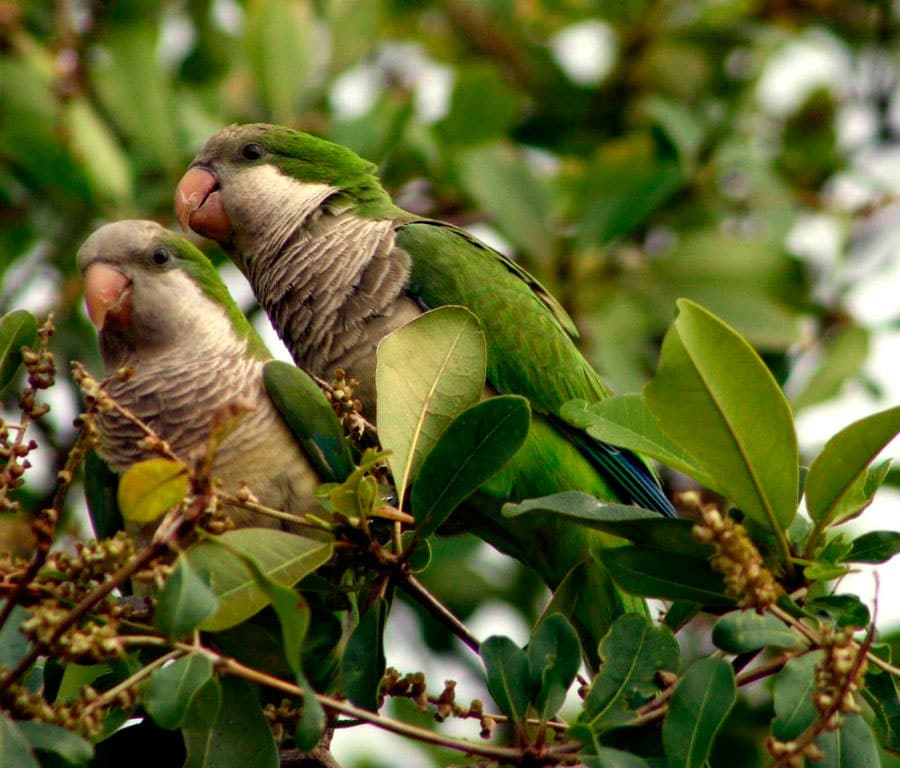
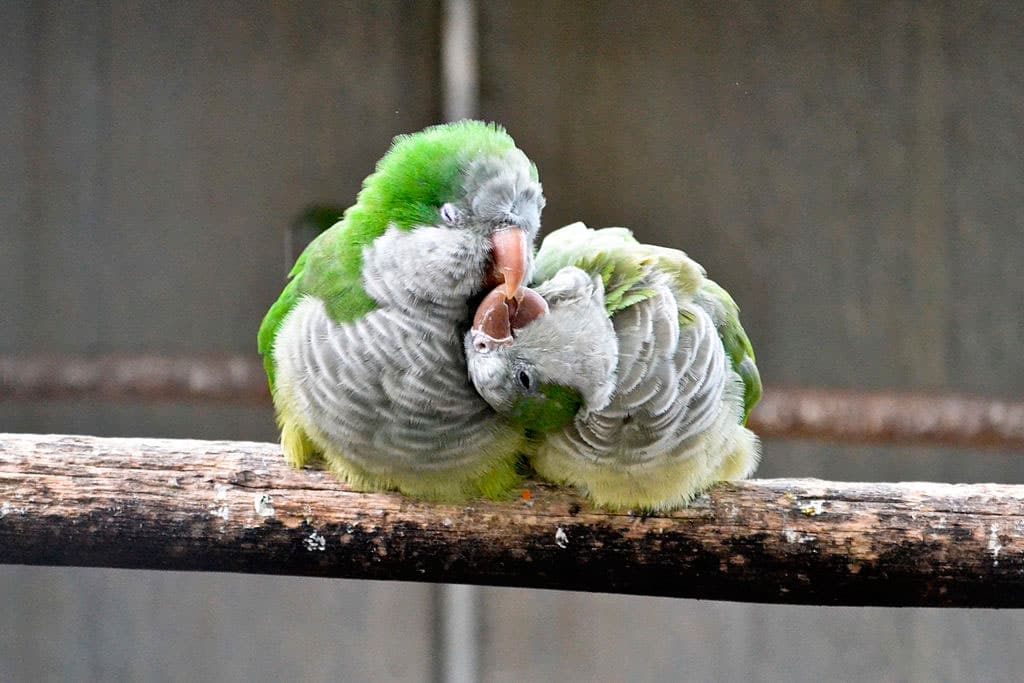
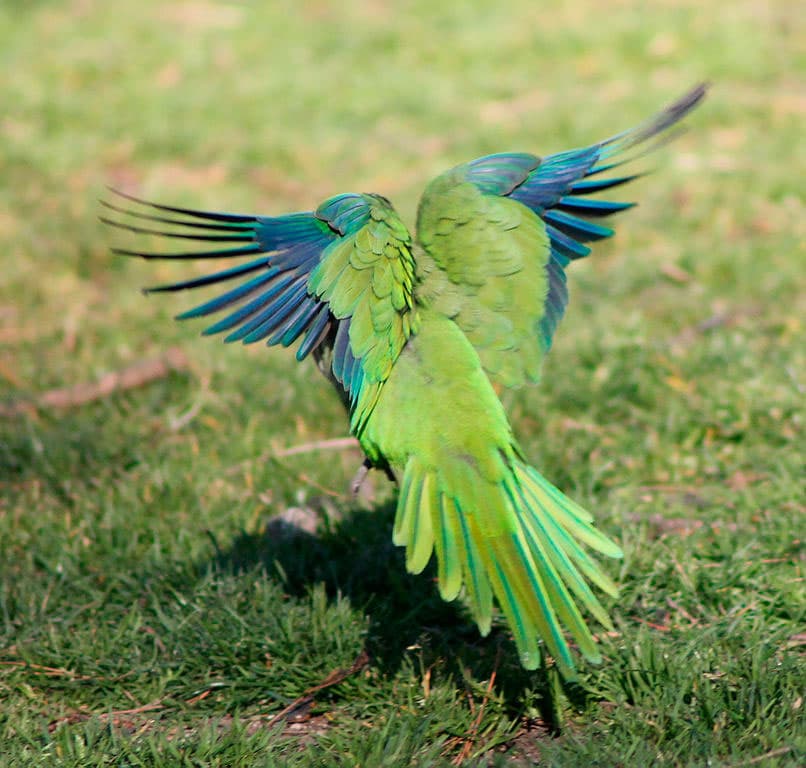
The Monk Parakeet (Myiopsitta monachus) has the forecrown (up to the half of the crown), the lores and cheeks, pale ash gray; the rear of the crown and nape, grass-green, fading to green, slightly more off, in the the mantle, the back and scapulars; rump green. Primary coverts, blue; other coverts, green.
Flight feathers Blue by up. Under the wings has the lesser coverts green, the coverts more large and innerwebs of the the flight feathers, blue. Throat and upper area of the chest, ash gray, with pale edges to the feathers, giving a beaming effect; lower area of โ€‹โ€‹the chest, pale yellow; Abdomen, the thighs and vent, pale green.

Upper, the tail is green with blue in the Center; below, pale bluish-green.
Bill color horn; Brown of the irises; legs grey.
Both sexes are similar.
Immature has the front green-tinted.

Subspecies description:

  • Myiopsitta monachus calita

    (Jardine & Selby, 1830) – Less of the nominal species (27cm.) with wings more blue and head dark gray.

  • Myiopsitta monachus cotorra

    (Vieillot, 1818) – Very similar to the subspecies Myiopsitta monachus calita, but supposedly more bright, belly least yellow.

  • Myiopsitta monachus monachus

    (Boddaert, 1783) – Nominal.

Habitat:

Video – "Monk Parakeet" (Myiopsitta monachus)

ARGENTINE PARROT: Myiopsitta monachus (www.riomoros.com)

The Monk Parakeet is, mainly, in dry wooded areas or fields open with trees, such as gallery forest, isolated thickets, palm groves, forests, linens and areas with thorny thickets with Cactus, also in land cultivation and in urban areas with trees, mainly below 1.000 m.

They tend to be observed in pairs or flocks of 30-50 individuals; with much larger gatherings out of breeding season. Rest communally, Sometimes the nests, While you are not playing.

Note:

    There are reports of transmission lines damaged by birds while nesting. In general, in the area in which have been introduced these birds, the impacts are associated mainly to the behaviors of nesting. This species of birds build large, bulky nests in communications and transmission towers, and distribution poles. In the towers of transmission represent simply a problem of maintenance and does not affect the communications, but in electrical installations can cause blackouts and fires since the nests can create electrical circuits. This problem is intensified in the rainy season and humid climates.. The nests of these birds can cause significant damage to the facilities power including a decrease in electrical reliability, damage to equipment and loss in income due to power outages caused by nests, an increase in maintenance and operating costs associated with removing nests and repairing damaged structures as well as public safety issues (ISC 2011).

Source: Naturalist

Reproduction:

It's the only one, between the parrots, It builds, usually, his nest with twigs (commonly from Celtis shrubs) in branches of tree (sometimes in telephone poles, etc.). Sometimes build nests alone (especially in those areas more dry), Although they are usually communal (until 100 nests, usually around 10) combined to form large structures cluttered of several meters of width, with inputs from the side or by under. Each nest It is built with remains of chewed branches. The nests are sometimes used by them Spot-winged Falconet (Spiziapteryx circumcincta) and other birds, to nest and rest. One nest can get to to weigh 50 kilos and be formed by more than 20.000 remained.

The breeding season, in your area natural's distribution, is between October-December. The clutch generally 4-6 eggs, Although according to some sources, the laying You can understand between 1-11 eggs.

Food:

Its diet includes a wide range of seeds wild and cultivated, wild fruits, as well as various plant material including grass seeds and grains, stems of cactus, estate vegetables and fruits cultivated, sometimes also insects and their larvae. Feeds, both in trees as in the soil, sometimes with other species including pigeons and birds of the genus Molothrus.

Distribution:

Size of the area of distribution (reproduction / resident): 2720000 km2

The Monk Parakeet lives in the lowlands of the South of South America, to the East of the Andes front Bolivia to Rawson Department (Chubut) in Argentina.

Observed in the East and North of Bolivia in the southeast of Peace, to the south, in Cochabamba, West of Santa Cruz, North of Chuquisaca and possibly in other areas (for example, Tarija), Paraguay and South of Brazil, in the South and West of Mato Grosso, Mato Grosso from the South and two-thirds of the southwest of Rio Grande do Sul, in all the Uruguay and in the Argentina, to the South of Rio Negro and probably to the North of Chubut.

Usually common and abundant in Uruguay and Rio Grande do Sul (although it does not play there). It is the most common parrot in much of its range and largely local expansion is due to the plantations of Euralyptus in areas without trees, partial deforestation in other areas, the Elimination of predators and the expansion of crops.

Pursued in several areas, Although the overall effect on its population is apparently slight.

Wild populations established in many towns outside of the range, including Puerto Rico, Florida, New York City (where there are fears it could become a major agricultural pest) and several cities more than them EE.UU. There have also been populations of the Monk Parakeet in Rio de Janeiro (Brazil), berlin (Germany), Austria, Belgium, Italy, Spain (including the Islas Canarias) and several places over the Mediterranean.

Is a trade in these birds, both local, as international, with large numbers of this species in captivity.

Subspecies distribution:

Conservation:

State of conservation โ“˜


minor concern Minor Concern โ“˜ (UICN)โ“˜

โ€ข Current category of the Red List of the UICN: Least concern.

โ€ข Population trend: Increasing.

Justification of the population

Global population size has not been quantified, but this species is described as ยซcommonยป (Stotz et to the., 1996) and ‘common to abundant‘ (pit et to the., 1997).

Justification of trend

The population is suspected to have increased as a consequence of the creation of new areas of habitat suitable (pit et to the., 1997).

Threats

The species has been marketed strongly: from 1981, When is included in the Appendix II of the CITES, they have been 710.686 individuals captured in the Middle wild for the Commerce International (database CITES from the UNEP-WCMC, January 2005).

"Monk Parakeet" in captivity:

Renowned for her beauty and intelligence, the Monk Parakeet is a pet people, especially in North America, since the 1960's (ISC, 2011). Can learn to imitate great amount of words, but at the same time are very bustling, demanding of attention and affection, with much character, and very territorial, by what not is rare that attack to their own owners when the manipulated or manipulate your cage. In captivity is reproduced with ease, but to the have many colonies in State Wildlife, not be usually stimulate its reproduction in captivity.
Its life expectancy It 3-10 years in freedom and 25 to 35 years in captivity (รlvarez-Romero et al., 2008).

Before trying to acquire one of these birds as a pet, you should know that in many countries its sale is prohibited as it is classified as species invasive.

MINISTRY OF AGRICULTURE, FOOD AND ENVIRONMENT

Royal Decree 630/2013, of 2 of August, which regulates the Spanish catalog of invasive alien species.

Invasive exotic species: exotic species that is introduced or set to an ecosystem or natural or semi-natural habitat, and is an agent of change and threat to native biodiversity, due to its invasive behaviour, or because of the risk of genetic contamination.
Article 7. Effects of the inclusion of a species in the catalogue.

  1. The inclusion of a species in the catalogue, According to the article 61.3 of the law 42/2007, of 13 of December, entails the prohibition generic in its possession, transport, traffic and trade of exemplary living or dead, of their remains or propagules, including the trade exterior. This prohibition is limited to the scope of application specified for each species in the annex.

Alternative names:

– Monk Parakeet, Monk Parakeet (Monk), South American monk parakeet (English).
– Perriche veuve, Conure veuve (French).
– Mรถnchsittich, Mรถnchssittich, Sรผdamerikanischer Mรถnchsittich (German).
– catorra, catorrita, Caturrita, papo-branco, periquito-do-Pantanal (Portuguese).
– Cata Aliazul, Cotorra, Cotorra Argentina, Cotorra Comรบn, Cotorrita, Perico Monje (espaรฑol).
– Cotorra (Argentina).
– Cotorra argentina (Chile).
– Cotorrita (Paraguay).
– Cotorra, Cotorra Comรบn (Uruguay).
– Periquito (Venezuela).

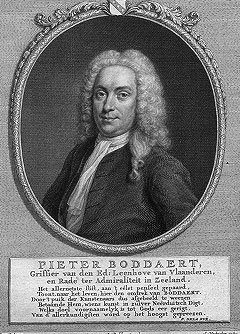
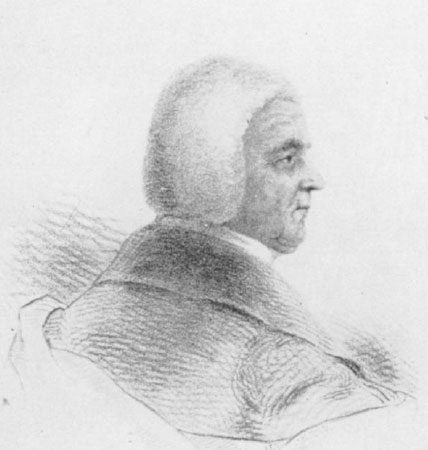
Pieter Boddaert
Pieter Boddaert

scientific classification:


– Order: Psittaciformes
– Family: Psittacidae
– Genus: Myiopsitta
– Scientific name: Myiopsitta monachus
– Citation: (Boddaert, 1783)
– Protonimo: Psittacus monachus


Monk Parakeet images:


Species of the genus Myiopsitta

โ–ท The world of Pets: Dogs, cats, birds, reptiles, amphibians

Sulphur-crested cockatoo
Cacatua galerita

Cacatua galerita

Content

Description

55 cm.. height and a weight between 815 and 975 g..
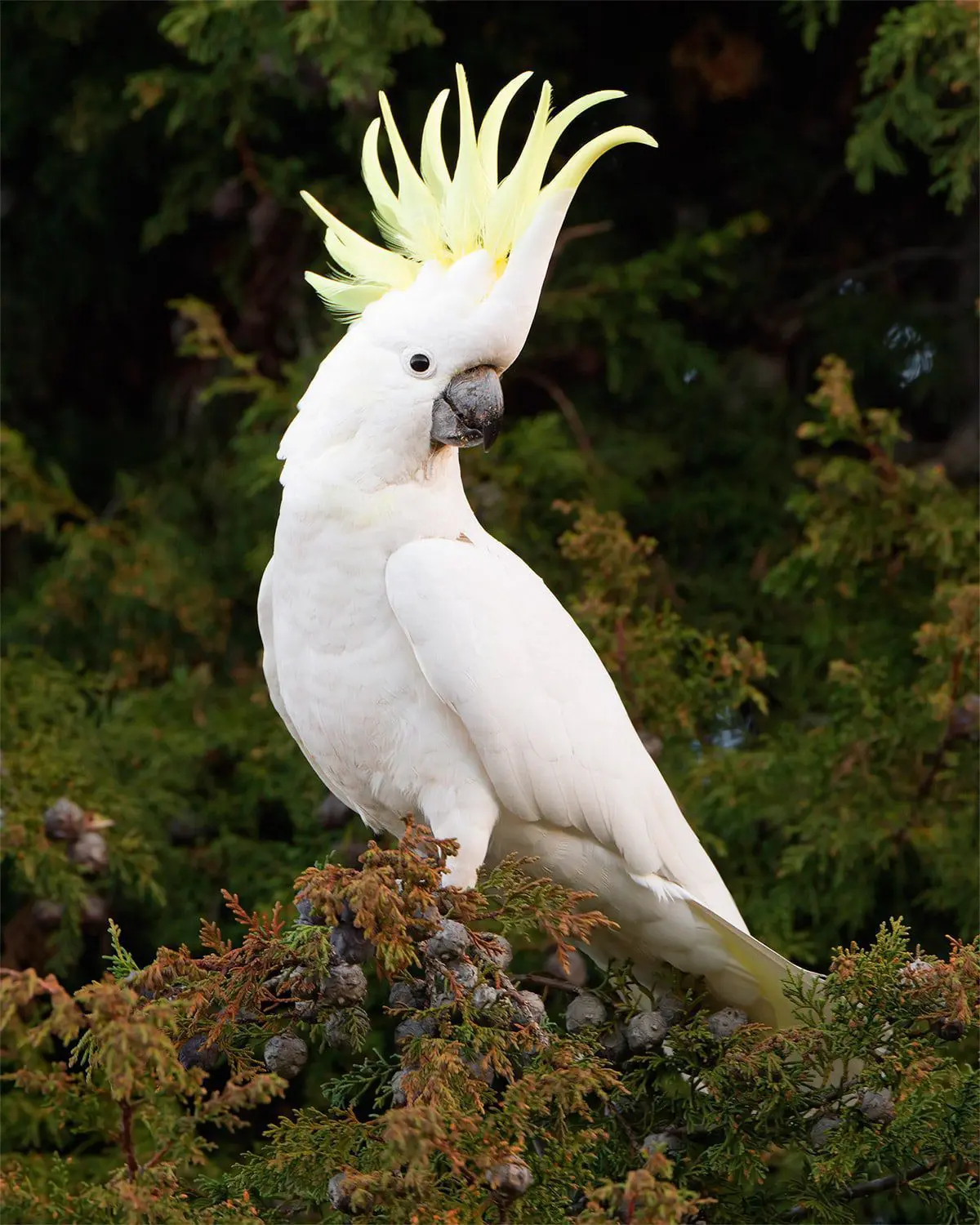
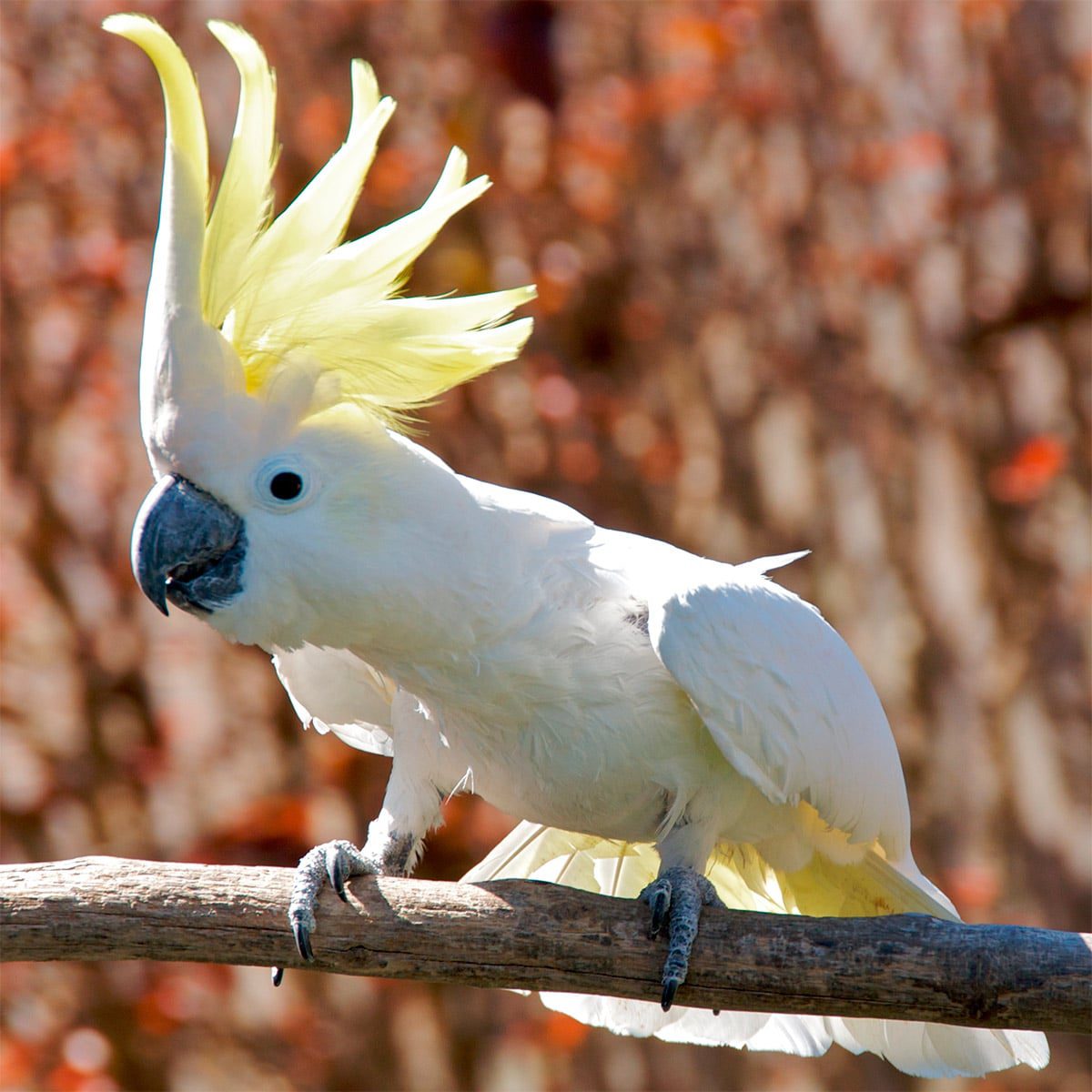
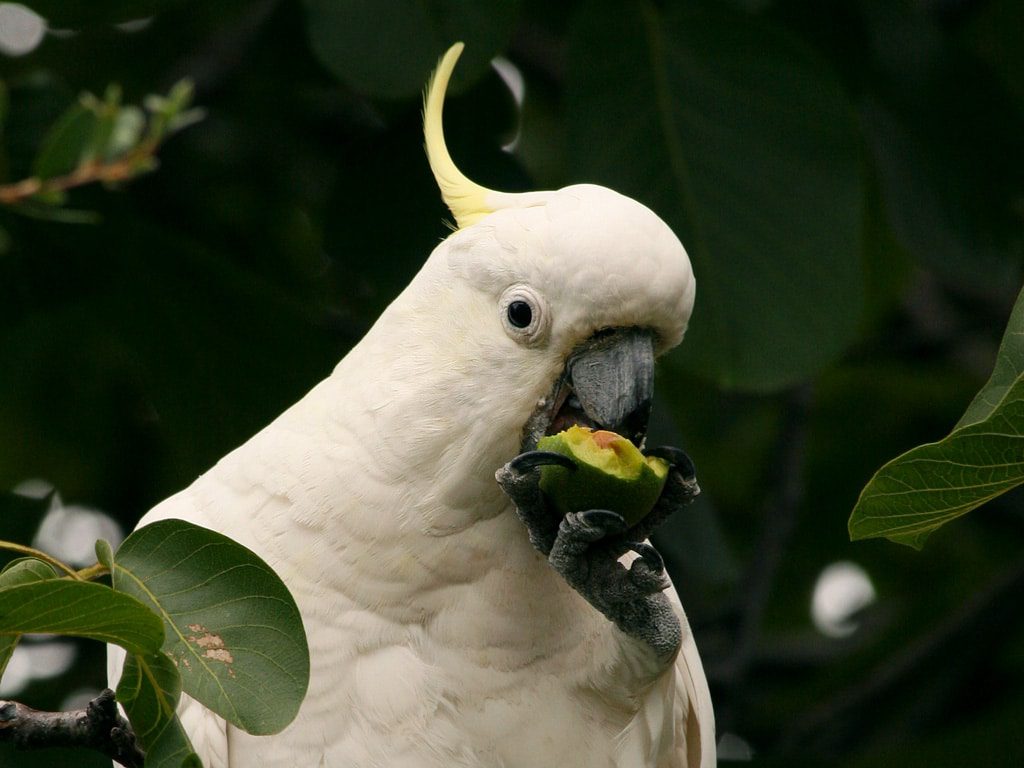
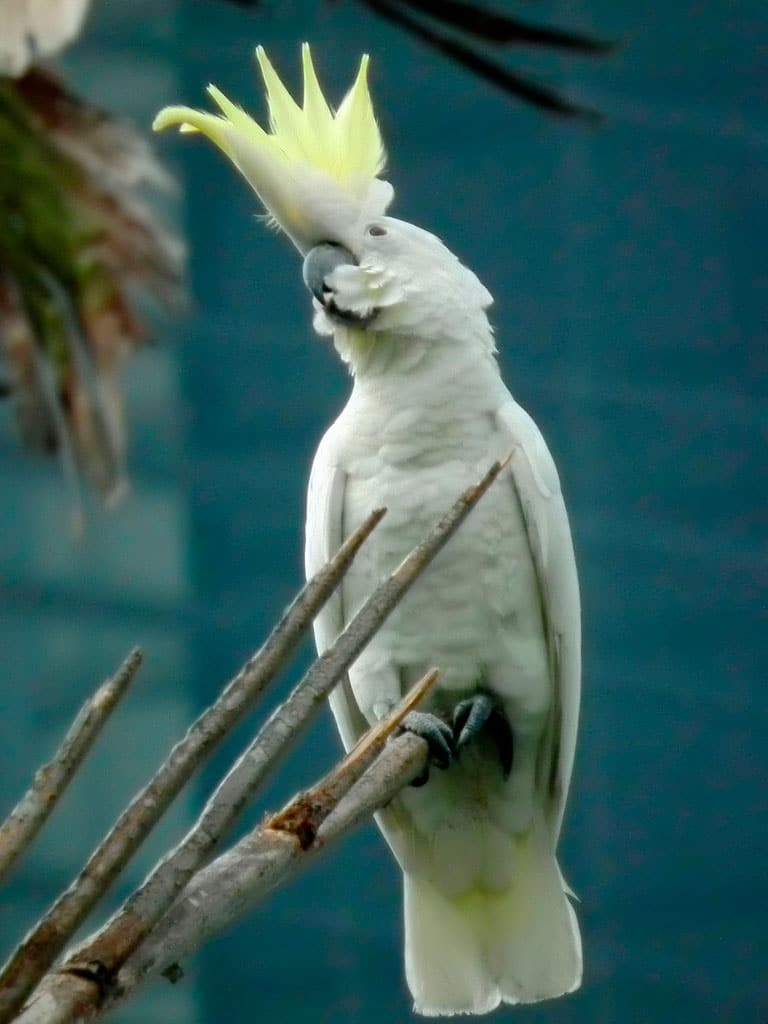
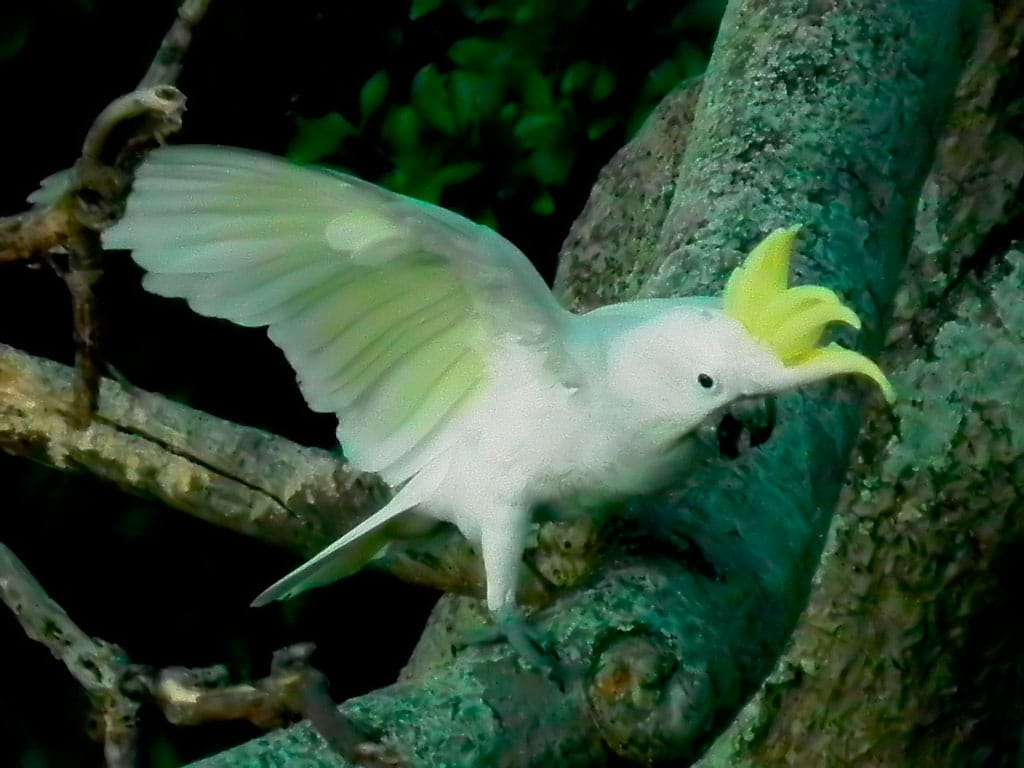
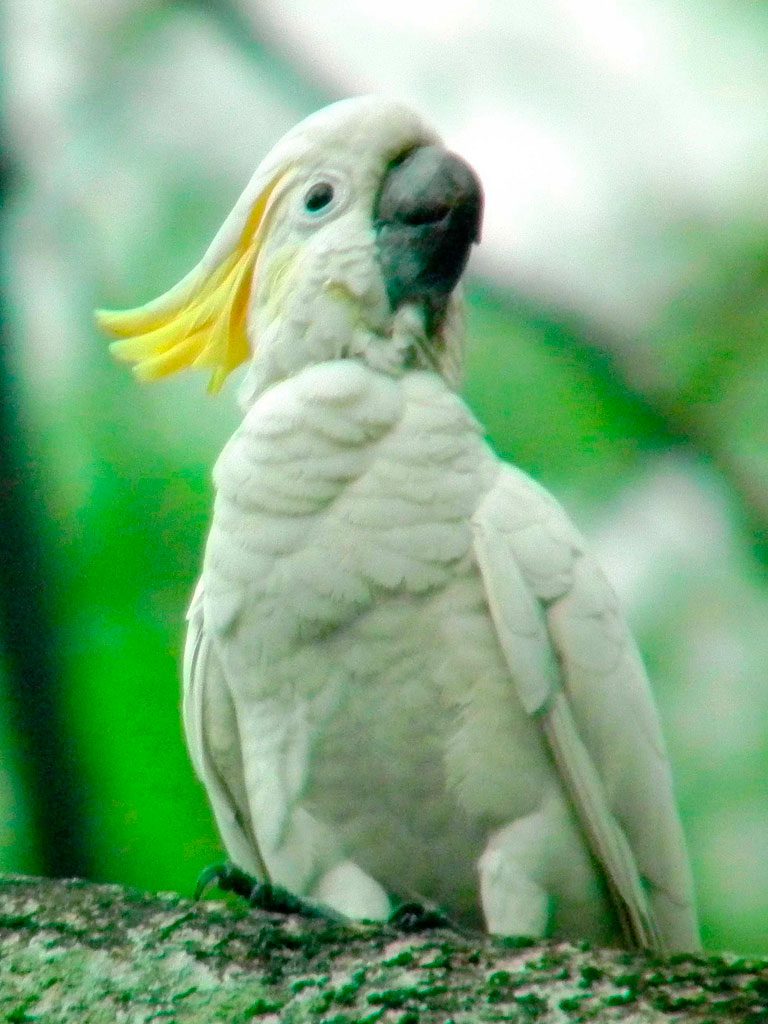
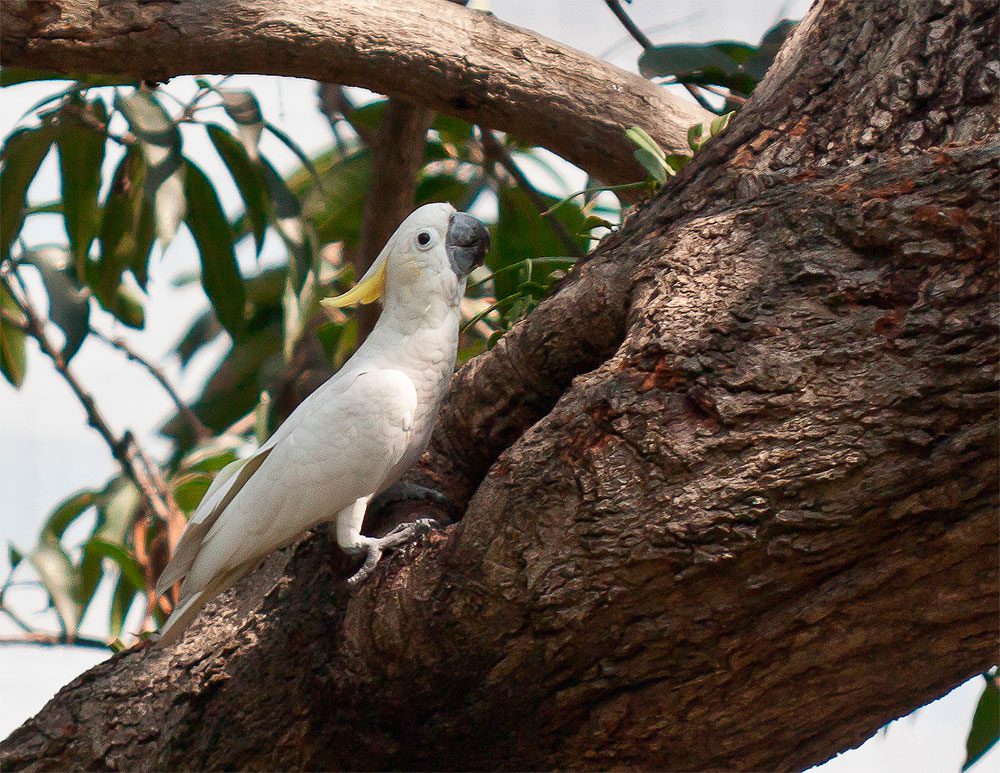
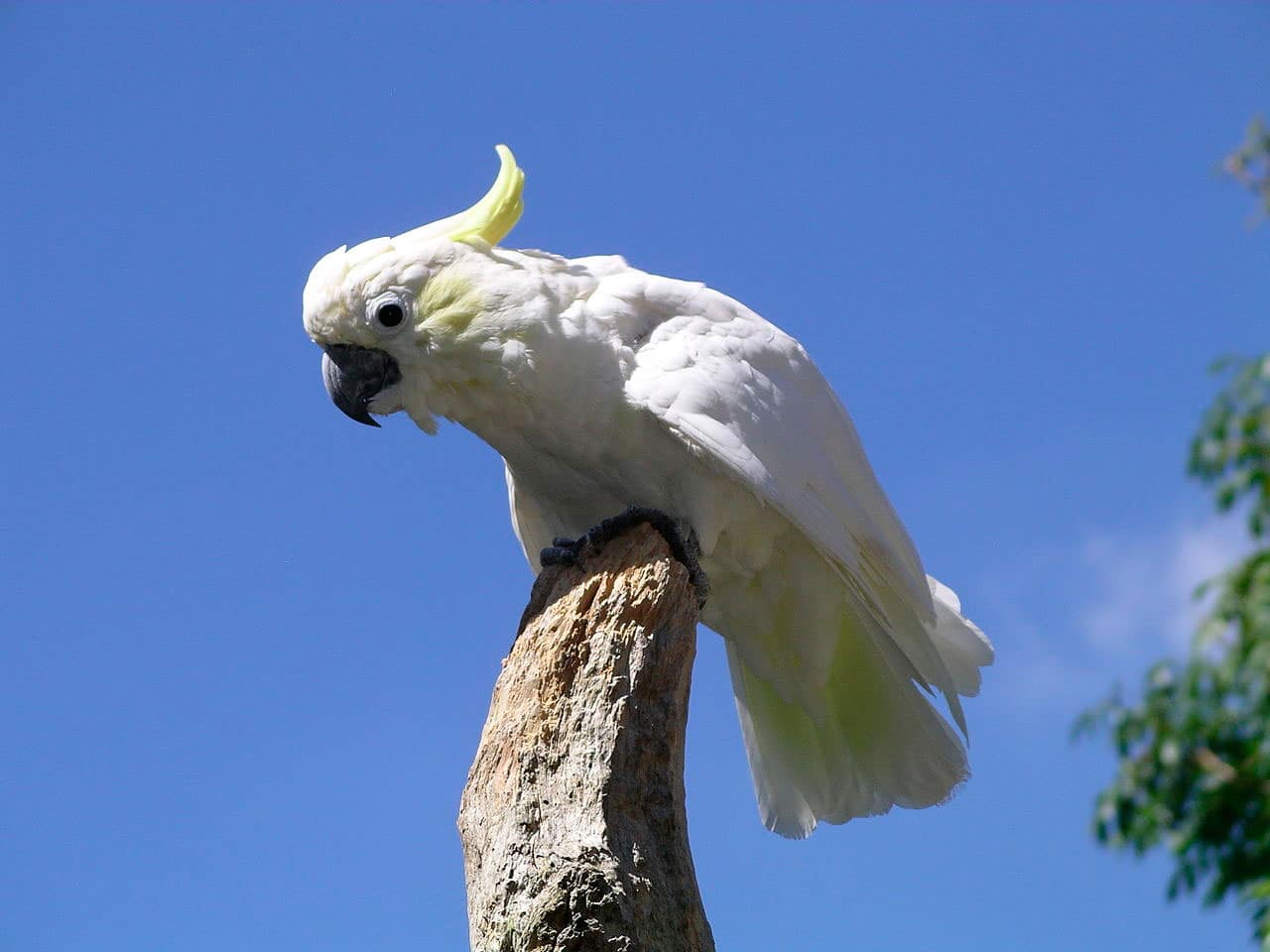
The Sulphur-crested cockatoo (Cacatua galerita) It is a bird with a predominantly white plumage.
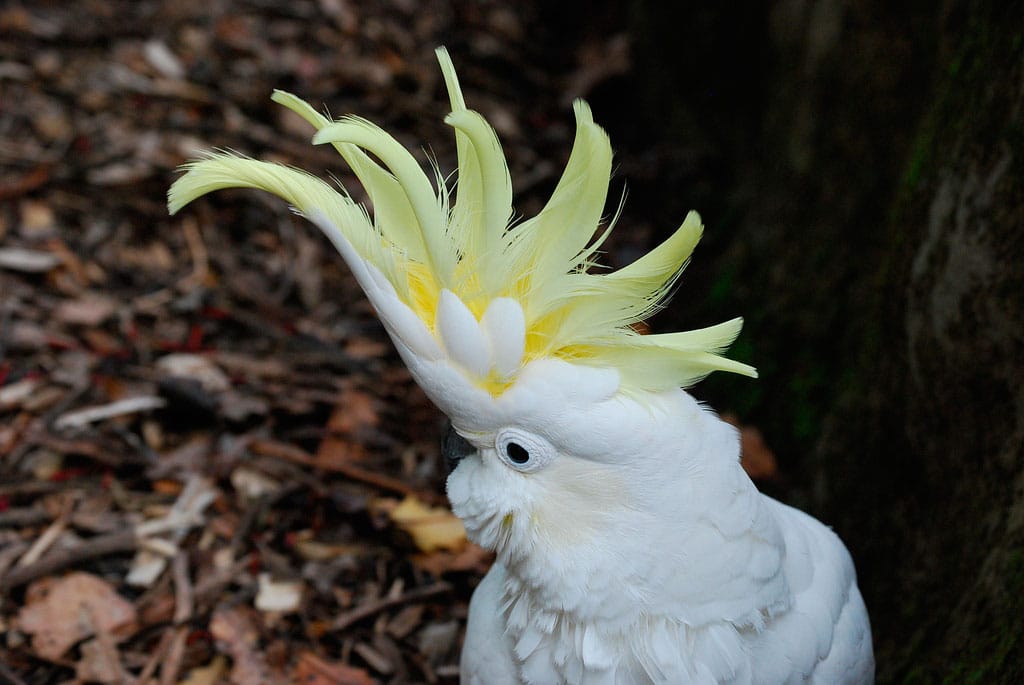
In adults, the ear-coverts, bases feathers throat and cheeks, are pale yellow. the arista formed by the 6 Erectile feathers slightly inclined forward, are yellow. The crest You can reach up 14 centimeters in length. The bottom of the wings and of the tail van dyed pale yellow.
The ring surrounding the eye shows a white. The irises is dark brown in the male and reddish brown in the female. The bill is blackish grey, the legs grey.

The immature They are just different from adults. The irises They are pale brown.

Description 4 subspecies
  • Cacatua galerita eleonora

    (Finsch, 1863) – It's like Cacatua galerita triton but smaller and with bill smaller.


  • Cacatua galerita fitzroyi

    (Mathews, 1912) – Yellowed feathers, both ear-coverts, and the throat and cheeks, they are absent. The eye ring It is light blue. Bill but great.


  • Cacatua galerita galerita

    (Latham, 1790) – Nominal.


  • Cacatua galerita triton

    (Temminck, 1849) – Something smaller, the crest WIDER and eye ring pale blue.

Behavior:

They are very noisy and very easy to observe, Although they are more identifiable by their cries.

During the breeding season, they live in pairs or in small family groups, but the rest of the year, They are in flocks that may contain hundreds of birds.

In the urban areas and in places that they are equipped with feeders, adopt a family behavior.
In other places, It inspired his distrust and his usual prudence, the Sulphur-crested cockatoo they are very difficult to deal with.

In open areas these birds are implementing a sentinel system that is organized as follows: while most of the flock feeds, Some birds seen from a nearby perch and are likely to sound the alarm if danger.

Habitat:

Video – "Sulphur-crested cockatoo" (Cacatua galerita)

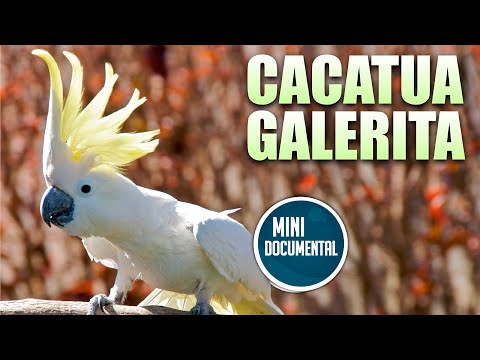
Cacatua galerita (mini documentary)

Is located in variety of forest areas, forests (including swamps and river areas), mangroves, Open field, on farm land (including rice fields and plantations of Palm), Savannah, Mallee and suburban areas. Found up to 1.500 meters in parts of Australia, 2.400 metres in Papua New Guinea.

Reproduction:

In Australia, the breeding season occurs from May to August in the North and between August and January, in the South.

In New Guinea, It takes place during every month of the year, although the most active months are during the period from May to December.

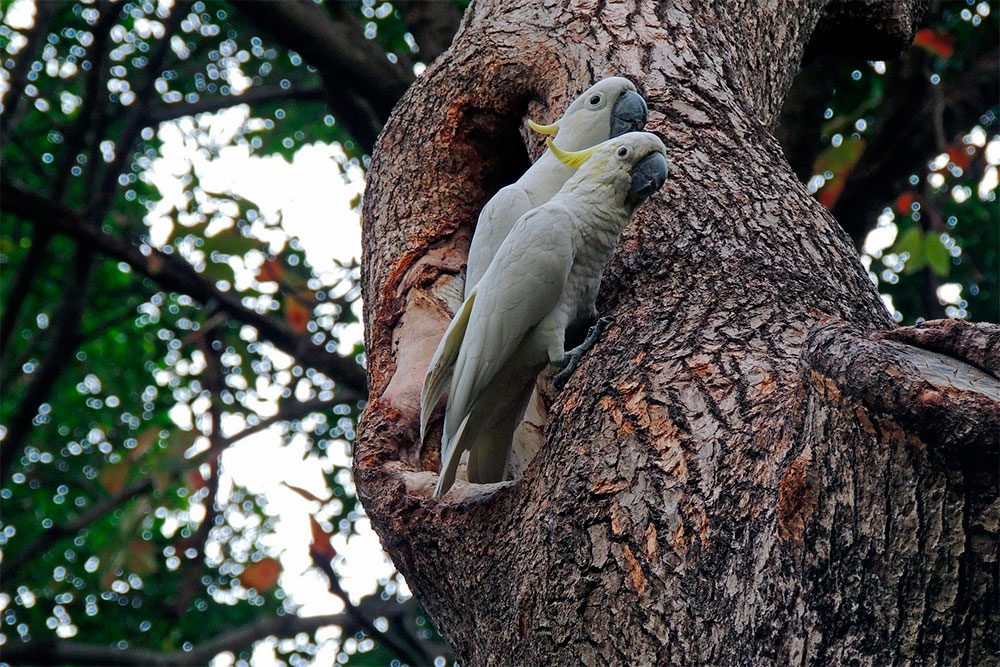
This species occasionally breeds in colonies. The nest is a natural cavity in a eucalyptus large near a stream between 3 and 30 meters above the ground. Sometimes the residence of the Sulphur-crested cockatoo It is located in the holes of the limestone cliffs along the murray river. In this case, the eggs are deposited directly in the sand.

In New Zealand, These birds lay amid bales of hay in barns. The nest generally it contains 3 white eggs. These are deposited on a layer of debris decomposing at the bottom of the cavity.
incubate both parents alternately for a period of 30 days. Hatchlings have a yellowish color and leave the nest after 6 to 9 weeks. Quite regularly, they return to the nest to rest for about two weeks.

The juveniles They remain within the family group for several months. They feed together in small scattered groups.

Food:

forages in grasses and herbs. You can take corn and wheat sprouts. It also feeds harmful herbs like cotton thistle. other foods include: estate, Rhizomes, nuts, berries, flowers, bulbs, flower and insect larvae.

They can cause great damage to crops. They dig in lands that were recently planted to eating fruit ripening, It also causes damage to crops that are stored and bales of hay to tear the plastic covering them.

Distribution:

Size of the area of distribution (reproduction / resident): 10600000 km2

This species is endemic to the north and east of Australia, New Guinea and nearby islands, especially islas Aru, Indonesian.
It was imported successfully to Palau Islands in Micronesia, New Zealand and some Maluku islands.

The population in Taiwan It has been estimated at about 100 introduced breeding pairs

Lives mainly below 1.000 m, but sometimes you can see in Australia to 1500 m. and 2000 m in east New Guinea.

Distribution 4 subspecies

Conservation:

State of conservation โ“˜


minor concern Minor Concern โ“˜ (UICN)โ“˜

โ€ข Current category of the Red List of the UICN: Least concern.

โ€ข Population trend: In decline.

It is thought that his population It is greater than 500.000 individuals.

It is not an endangered species. But, despite protection Indonesian this species is followed by trapping wild bird trade. Nor is a protected species in Australia, therefore sacrifices occur.

In New Guinea, sometimes it is hunted for its feathers.

It is suspected that his population is in decline due to ongoing habitat destruction.

"Sulphur-crested cockatoo" in captivity:

and valued species often as a pet.
Very Intelligent, sociable and playful. It is a cockatiel for experienced bird owners. You can be dominant and aggressive. It can be very noisy.

There are anecdotal reports of some Sulphur-crested cockatoo who they have lived more than 100 years. In the news, However, longevity record, according to sources, belongs to a captive specimen called "Cocky" who lived more than 57 years in the London Zoo. Another report suggests that these animals can live up 73.0 years in captivity, but this has not been verified.

Alternative names:

– Sulphur-crested Cockatoo, Greater Sulphur-crested Cockatoo, White Cockatoo, Yellow-crested cackatoo (ingles).
– Cacatoรจs ร  huppe jaune, Grand Cacatoรจs ร  huppe jaune (French).
– Gelbhaubenkakadu (German).
– Cacatua-de-crista-amarela (Portuguese).
– Cacatรบa de Moรฑo Amarillo, Cacatรบa Galerita (espaรฑol).

John Latham
John Latham

scientific classification:


– Order: Psittaciformes
– Family: Cacatuidae
– Genus: Cockatoo
– Scientific name: Cacatua galerita
– Citation: (Latham, 1790)
– Protonimo: parrot galeritns


Images Galerita Cockatoo:


Species of the genus Cacatua
  • Cacatua tenuirostris
  • Cacatua pastinator
  • —- Cacatua pastinator derbyi
  • —- Cacatua pastinator pastinator
  • Cacatua sanguinea
  • —- Cacatua sanguinea gymnopis
  • —- Cacatua sanguinea normantoni
  • —- Cacatua sanguinea sanguinea
  • —- Cacatua sanguinea transfreta
  • —- Cacatua sanguinea westralensis
  • Cacatua goffiniana
  • Cacatua ducorpsii
  • Cacatua haematuropygia
  • Cacatua galerita
  • —- Cacatua galerita eleonora
  • —- Cacatua galerita fitzroyi
  • —- Cacatua galerita galerita
  • —- Cacatua galerita triton
  • Cacatua ophthalmica
  • Cacatua sulphurea
  • —- Cacatua sulphurea abbotti
  • —- Cacatua sulphurea citrinocristata
  • —- Cacatua sulphurea parvula
  • —- Cacatua sulphurea sulphurea
  • Cacatua moluccensis
  • Cacatua alba

  • Sources:

    – Avibase
    – Parrots of the World โ€“ Forshaw Joseph M
    – Parrots A Guide to the Parrots of the World – Tony Juniper & Mike Parr
    – Birdlife

    – Photos:

    (1) – commons.wikimedia.org
    (2) – birdsandbirds.com
    (3) – tilcheff

    – Sounds: Hans Matheve (Xeno-canto)

    โ–ท The world of Pets: Dogs, cats, birds, reptiles, amphibians

    Pileated Parrot
    Pionopsitta pileata

    Pileated Parrot

    Content

    Pileated Parrot

    Description:

    22 cm.. length and a weight between 98-120 g..

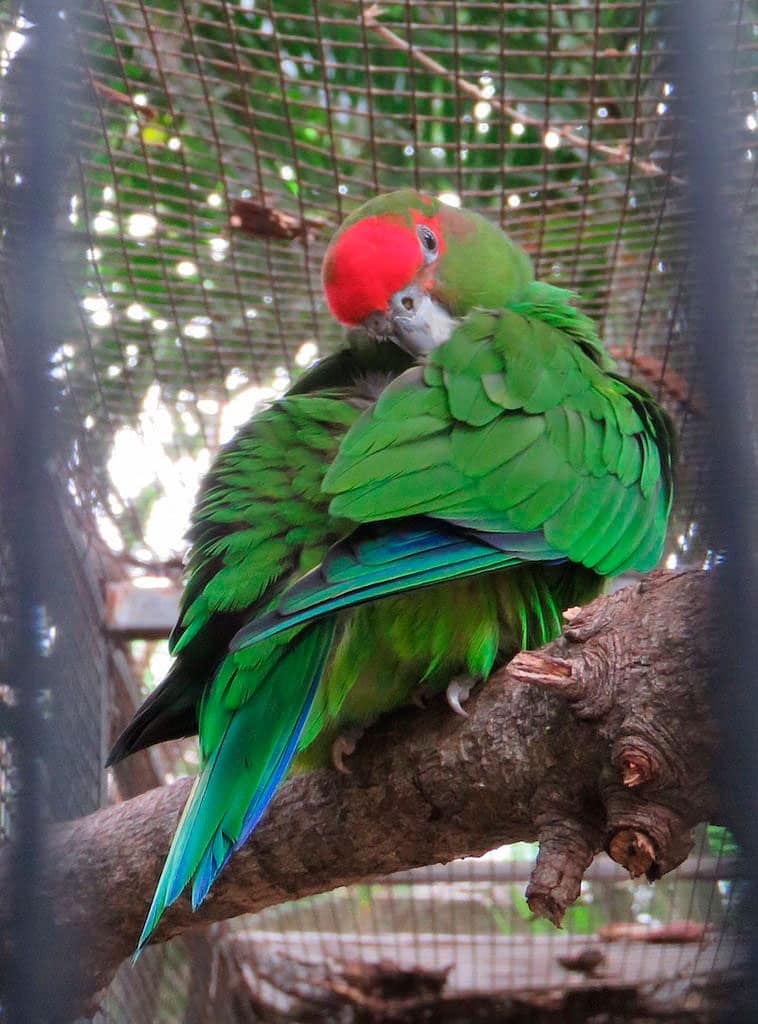
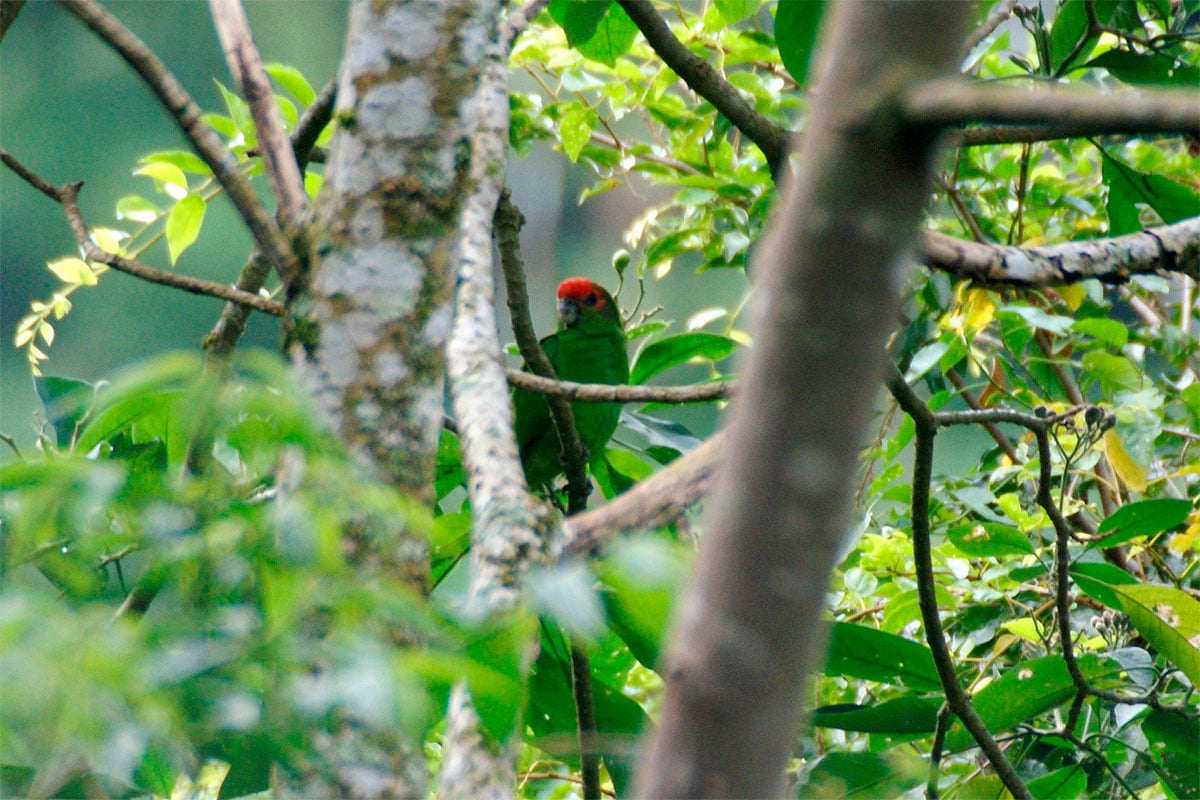
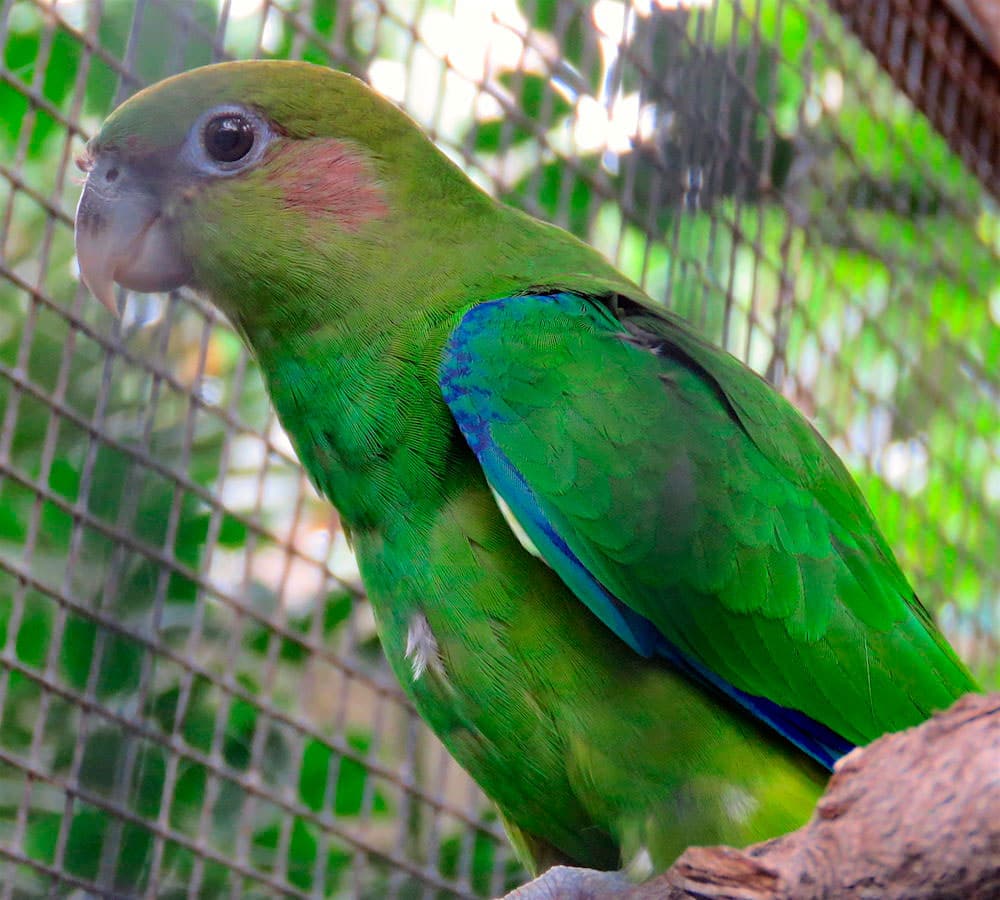
    The Pileated Parrot (Pionopsitta pileata) has the forecrown, lores, crown anterior upper cheeks to behind eyes, bright red; patch reddish brown in ear-coverts; the lower cheeks, sides and rear of the neck, green.

    The upperparts, green. Primaries and greater coverts, alula and feathers bend of wing, violet blue; other coverts, green. Outerwebs of the primary and secondary, violet blue with blue-green edges. Under, the wings bluish green, coverts with some darker blue feathers. Underparts green with bluish tint in the chest and throat, and with a yellowish tint in the belly and undertail-coverts. Upper, the tail centrally green, laterally violet blue; undertail, bluish green.

    Bill dark brown, becoming dark horn distally in both jaws; bare periophthalmic naked, pale grey, irises and legs, grayish brown.

    The female has most of its head green but with a pretty pale blue in the forecrown.

    Immature as female, but with grayish green or green spots and dark spots on the base bill; young male sometimes with red limited in forecrown with a patch orange behind.

    • Sound of the Pileated Parrot.

    Habitat:

    They inhabit in forests, including humid tropical forests and forests dominated by araucarias, mainly in lowlands in the south of the mountain range, although penetrating the coastal mountains Brazil, at altitudes of 300 to 1.500 m; also in areas partially cleared. gregarious in groups of approximately 10 birds; apparently rare in greater numbers.

    Reproduction:

    They nest in the cavities of trees. probably reproduce mainly in the months of November to January. Clutch 3-4 eggs in captivity.

    Food:

    The fruits of Euterpe edulis They are among the favorite foods during the winter in eastern Paraguay; also recorded fruits Podocarpus and Solanum, and bark Eucalyptus; visit when ripe fruit orchards in Rio Grande do Sul.

    Distribution and status:

    Size of its range (breeding/resident ): 1.650.000 km2

    The Pileated Parrot It is located in southeast Brazil, to the South of Bay, through the belt of the Atlantic forest in Espirito Santo, probably east of Minas Gerais, Brazil, Rio de Janeiro, Sรฃo Paulo, Paranรก and Santa Catarina, until Rio Grande do Sul, extending to the east Paraguay and northeast of Argentina in Missions and possibly in Currents (no recent records); also they have been reported east of Chaco in Argentina, where they can arrive as an irregular visitors.

    Some seasonal movements occur Paranรก, where birds leave the inland coastal plateau after breeding, and in Paraguay where it is in Amambay in October.

    Nomad in the Intervales State Park of Sรฃo Paulo. Its population is widespread but declining due to the extensive loss of forests by urban growth, agriculture and mining.

    Described as uncommon to fairly common in Missions, Argentina. Apparently its population is still not at risk due to habitat loss, since birds are still quite numerous where fragments of forest remain. (for example, east of Paraguay) and travel between them on land without trees. More numerous are more extensive where the remains of forest, It is more common in eastern Paraguay and adjacent Paranรก and Sรฃo Paulo in Brazil.

    Conservation:


    minor concern


    โ€ข Current category of the Red List of the UICN: Least concern.

    โ€ข Population trend: Stable.

    Rationale for the Red List category

    This species has a very large range and therefore it is not close to the thresholds for Vulnerable under the criterion of size range (Extension Occurrence <20,000 km2 combinada con un tamaรฑo de rango decreciente o fluctuante, extensiรณn / calidad de hรกbitat o tamaรฑo de poblaciรณn y un pequeรฑo nรบmero de lugares o fragmentaciรณn severa). La demographic trend appears to be stable and, therefore, the species does not approach the thresholds Vulnerable under the criteria of population trend (> 30% decline over ten years or three generations). The population size It has not been quantified, but it is not believed to be close to the thresholds for Vulnerable under the criterion of population size (<10.000 individuos maduros con un descenso continuo estimado> 10% in ten years or three generations or a population structure). For these reasons the species is evaluated as the least concern.

    Justification of the population

    The size of the world's population has not been quantified, but this species is described as ยซRareยป (Stotz et to the., 1996).

    Justification of trend

    They suspected that the population is stable in absence of evidence of any decline or threatens substantial.

    "Pileated Parrot" in captivity:

    Very rare in captivity.

    Alternative names:

    – Pileated Parrot, red-cappe parrot, Red-capped Parrot (English).
    – Caรฏque mitrรฉ, Perroquet mitrรฉ (French).
    – Scharlachkopfpapagei, Scharlachkopf-Papagei (German).
    – Cuiรบ-cuiรบ, caturra, cuiรบ, cuiuiรบ, curica-cuiรบ, maitaca-de-cabeรงa-vermelha, periquito-rei, tui-maritaca (Portuguese).
    – Catita cabeza roja, Catita decabeza roja, Lorito cabeza roja, Lorito de Cara Roja, Lorito Pileado (espaรฑol).
    – Catita cabeza roja, Catita decabeza roja (Argentina).
    – Lorito cabeza roja (Paraguay).


    scientific classification:

    Giovanni Antonio Scopoli
    Giovanni Antonio Scopoli

    – Order: Psittaciformes
    – Family: Psittacidae
    – Genus: Pionopsitta
    – Scientific name: Pionopsitta pileata
    – Citation: (Scopoli, 1769)
    – Protonimo: Psittacus pileatus


    "Lorito Pileado" images:

    Videos "Pileated Parrot"

    ————————————————————————————————

    "Pileado Lorito" (Pionopsitta pileata)


    Sources:

    – Avibase
    – Parrots of the World โ€“ Forshaw Joseph M
    – Parrots A Guide to the Parrots of the World – Tony Juniper & Mike Parr
    – Birdlife

    – Photos:

    (1) – Pileated Parrot Loro Parque – Tenerife (Spain) by Florin Feneru – Flickr
    (2) – Pileated Parrot Loro Parque – Tenerife (Spain) by Florin Feneru – Flickr
    (3) – Pileated Parrot Loro Parque – Tenerife (Spain) by Florin Feneru – Flickr
    (4) – Pionopsitta pileata by Taguatรณ yetapa – Flickr
    (5) – Red-capped parrot (Pionopsitta pileata) – ยซCuiรบ-Cuiรบยป Campina Grande do Sul | The Birds of Brazil by Ben Tavener – Flickr
    (6) – Catita Cabeza Roja by Argentavis โ€“ Birds of Argentina

    โ–ท The world of Pets: Dogs, cats, birds, reptiles, amphibians

    Yellow-crested cockatoo
    Cacatua sulphurea

    Yellow-crested cockatoo

    Content

    Description

    Medium-sized, 35 cm.. long.

    Yellow-crested cockatoo

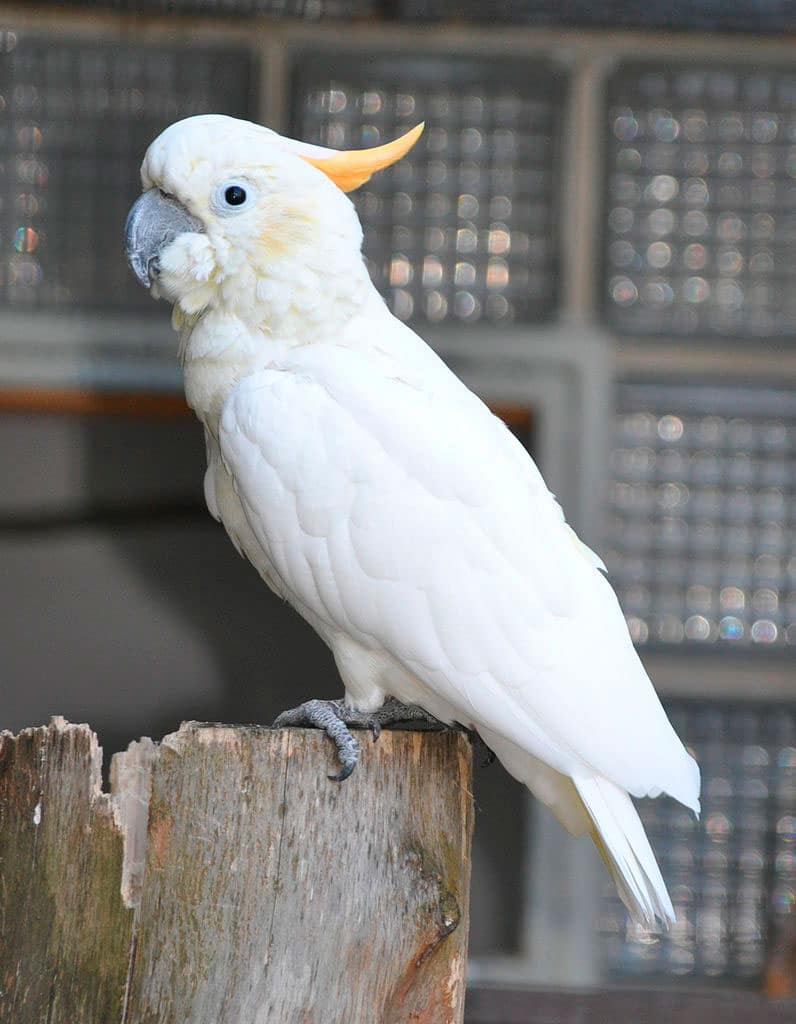
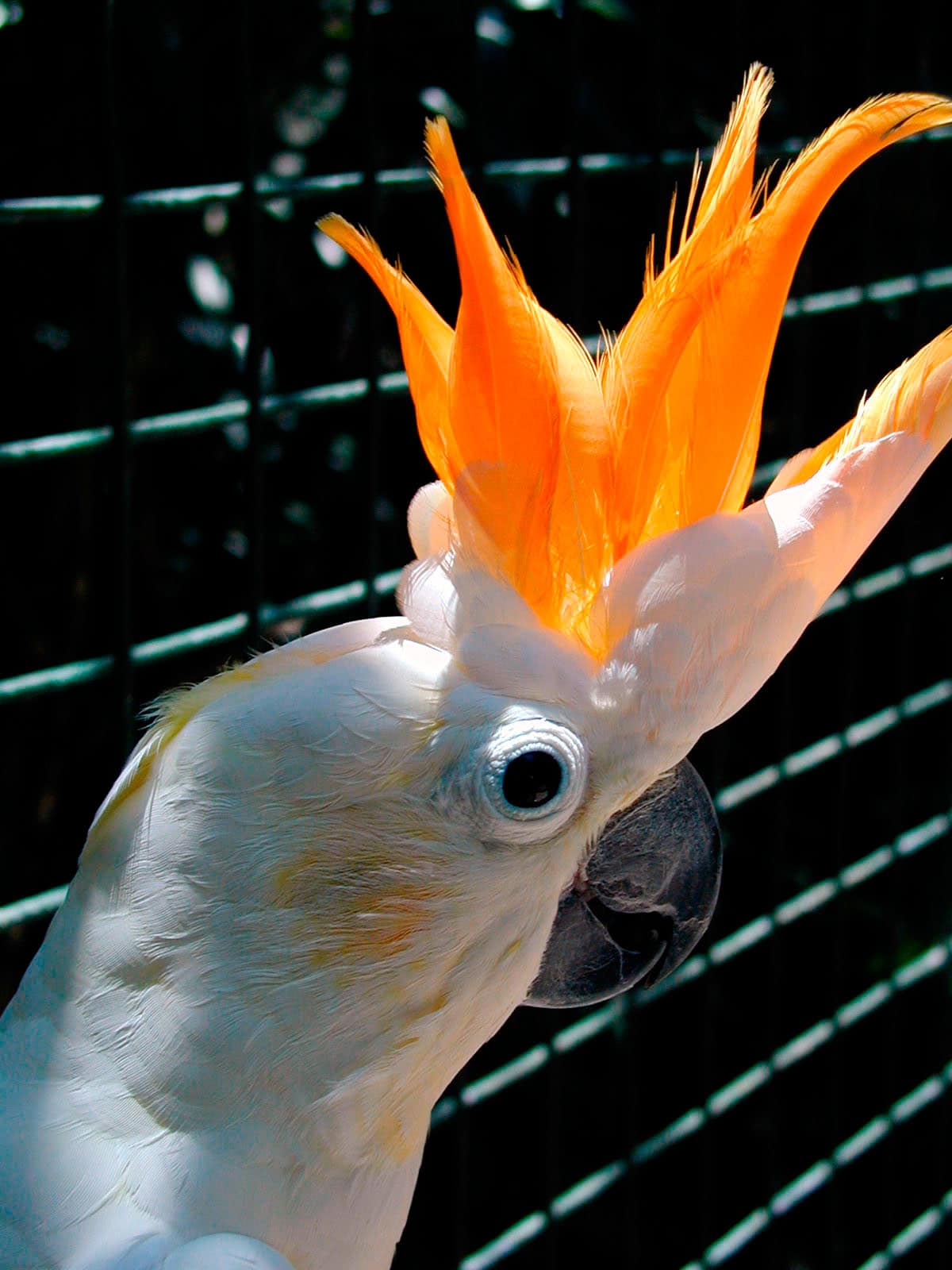
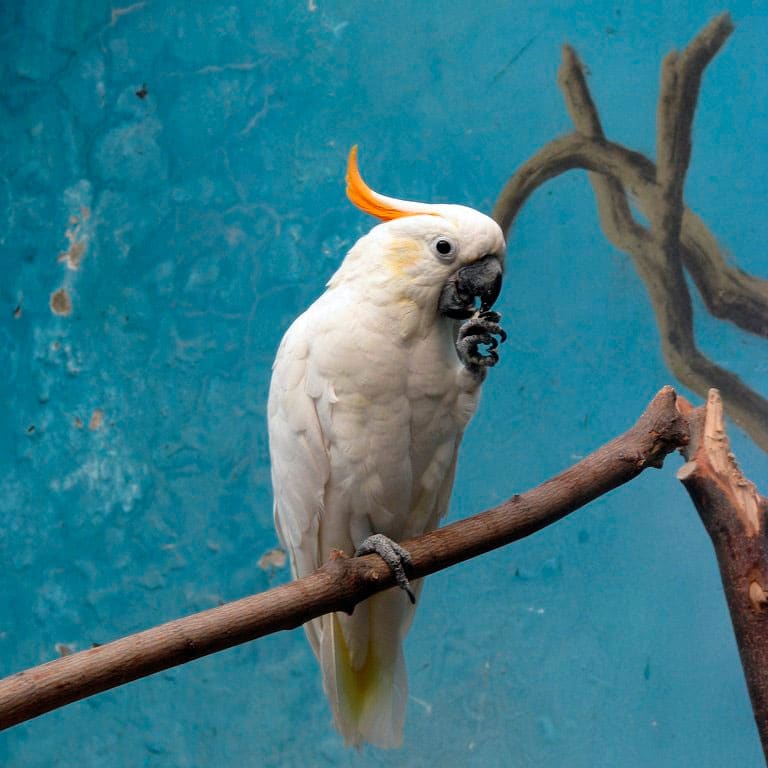
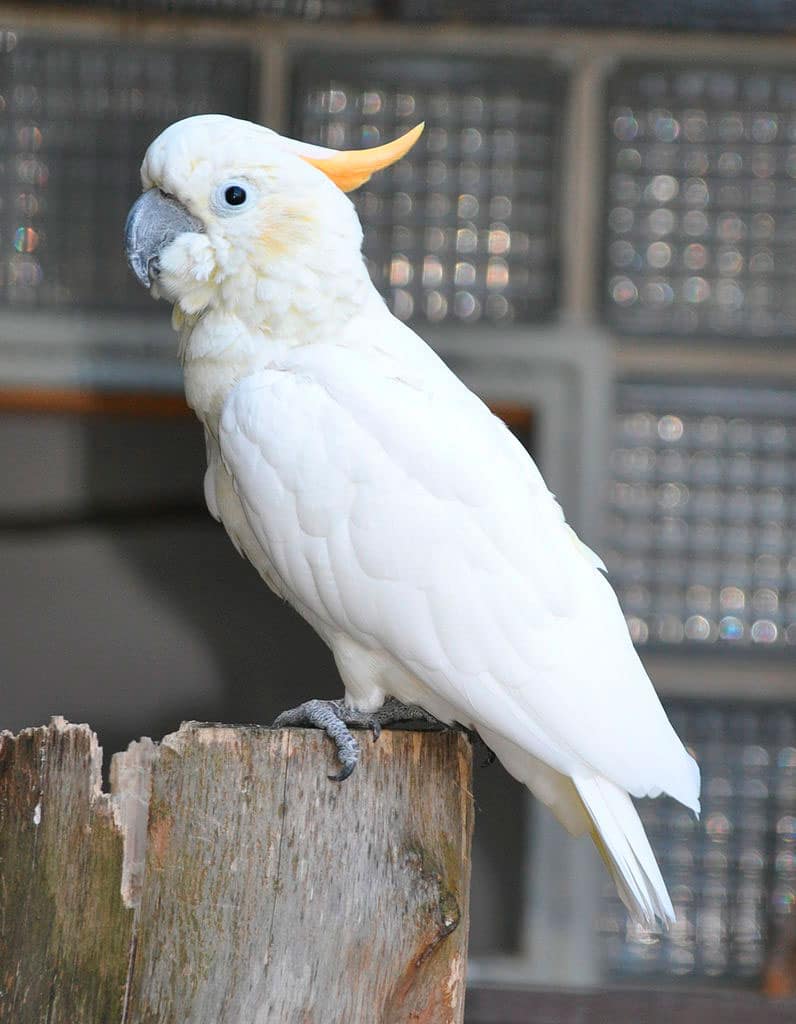
    The Yellow-crested cockatoo (Cacatua sulphurea) It is distinguished by its long, thin yellow erectile crest, that curves forward, and extending upward, above the nape, when it folded. The front of his crown and main feathers crest, are white. The rest of your plumage It is also white, except in yellow suffusion ear-coverts, under the wings and in the innerwebs of the undertail-coverts. The bases of the hackles and underparts, They are yellowed; some birds show a slight yellow tone, particularly on chest and the belly. The bill It is black; eye ring pale bluish; irises dark brown; legs grey. The female is similar to the male but with the irises reddish and slightly smaller.

    The young birds They show both sexes irises dark taupe, although females They begin to acquire the red coloration in the first year. The bill and legs immature are also lighter.

    Description 4 subspecies
    • Cacatua sulphurea abbotti

      (Oberholser, 1917) – Similar to the parvula, but largest.

    • Cacatua sulphurea citrinocristata
    • Cacatua sulphurea citrinocristata

      (Fraser, 1844) – Slightly larger than the nominal, with one crest orange & ear-coverts orange yellow. Additional research may provide a basis for improving this subspecies to a specific status..

    • Cacatua sulphurea parvula

      (Bonaparte, 1850) – Similar to the nominal species, but with the ear-coverts paler and less yellow on yellow feathers underparts. the size of the bill in this subspecies it increases clinically towards the west.

    • Cacatua sulphurea sulphurea

      (Gmelin, 1788) – Nominal.

    Habitat:

    Video – "Yellow-crested cockatoo" (Cacatua sulphurea)

    SULPHURE COCKATUA

    They inhabit at the edges of the forest, wooded areas, farmland, cocoteros, semi-arid areas and forests until the 800 m (locally 1.200 m).

    The Yellow-crested cockatoo usually they found in pairs or small groups of up to ten individuals, although they may meet in larger flocks to feed on fruit trees. They can form flocks with Eclectus Parrot (Eclectus roratus).

    They tend to be noisy and visible, but can be difficult to spot when moving silently in the canopy, and they are more often in flight. The groups who leave their resting places in the montane forest areas frequently displace forage at lower altitudes including cultivated fields. Pairs may hover conspicuously above the forest canopy searching for fruitful trees, allowing a reasonably close approach when resting on a branch.

    The crest It is generally stands when landing, or when an individual is making calls from a perch. Like most of the Cockatoos They enjoy a bath in the rain.

    Reproduction:

    Specimens of Yellow-crested cockatoo on the island of button in State reproductive during the months of September and October, although Nusa Tenggara the breeding It occurs in the months of April and May. The female It lays two or three white eggs in the hollow of a tree, and incubation lasts around 28 days with both parents participating. Chicks they leave the nest to 10 weeks and are dependent parent for about two months.

    Food:

    They feed in trees and soil. Its diet It includes seeds, corn (Zea mays) of cultivated fields, fruit, berries, egg yolks, flowers and nuts (including large coconuts (cocos nucifera)).

    Distribution and status:

    Size of its range (breeding/resident ): 1.360.000 km2

    The Yellow-crested cockatoo They are confined Indonesian, where they can be seen in the lowlands Isla Celebes (virtually extinct in the north), islands in the Flores sea, in Nusa Tenggara and isolated islands Masalembu in the Java Sea.

    introduced in Singapore and Hong Kong. The species is found in both wooded areas and cultivated and is scarce throughout its range. It is estimated that the world population total is less than 40.000 birds and is decreasing. Although populations of the nominal subspecies and of the subspecies parvula may still be close to 10.000 specimens, the citrinocristata subspecies It has an estimated population between 800 and 7.200 only individuals, having declined by 80% between the years 1986 and 1989, while the distinctive subspecies abbotti It is now represented by only nine individuals in nature.

    Although habitat loss is clearly a factor in Sumba, where distribution appears to be linked to the extent of primary forest (is only about 15% the original forest), trade is the main threat to the species as a whole. Trade data show that exported almost 100.000 birds in years 1980-1992. The export citrinocristata subspecies It was banned in 1992 by local authorities, and 26 birds were confiscated in September of that year. There are probably at least 50 individuals of each subspecies in public collections and more than 2.000 in private aviculture, although the numbers for the subspecies abbotti They are unknown.

    Distribution 4 subspecies

    Conservation:

    State of conservation โ“˜


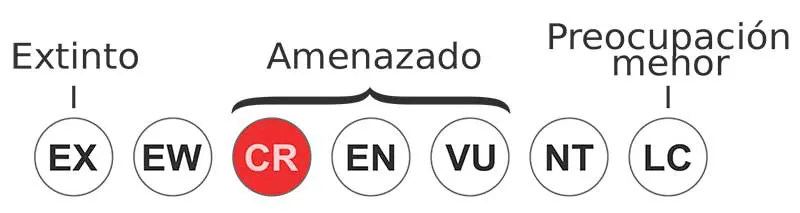
    critical hazard critically endangered โ“˜ (UICN)โ“˜

    โ€ข Current category of the Red List of the UICN: critically endangered.

    โ€ข Population trend: Decreasing.

    Its crashing fall It is almost entirely attributable to the unsustainable exploitation for domestic and international trade. Logging to the conversion of forests for agriculture as well as the use of pesticides for land and large-scale.

    Justification of the population

    Based on recent surveys in various parts of the range of the species, C. Trainor in some (2007) It has been estimated the world population in less than 7.000 individuals: 3.200-5.000 en Sumba (though perhaps only 562 in 2012, Burung Indonesia en preparaciรณn), 500 en Komodo, 200-300 en Timor Leste, 200-300 en Sulawesi, 20-50 in West Timor, 40-70 Flores, 50-100 en Sumbawa, 100 in Rinca and other 700 birds in total. The best data is located in the band 2.500-9.999 individuals, equivalent to 1.667-6.666 mature individuals, rounded here to 1.500-7.000 mature individuals.

    Conservation actions and research in progress

    CITES Appendix I (2005). It has developed and adopted a recovery plan cooperative and has prepared an update 2012 (D. Mulyawati in some. 2012). The populations are found in various protected areas, It is the most important Rawa Aopa Watumohai (55 copies in 2011 [Waugh 2013]) and National Parks Caraente (en Sulawesi), supporting up 100 individuals (transgressed 2006) , Reserva Natural de Wildlife en Pulau Moyo, Komodo National Park and two national parks in Sumba: Manupeu-Tanadaru y Laiwangi-Wanggameti. Nini Konis Santana National Park declared in Timor has a 100 estimated birds (Trainor et al., Without date) . In Rawa Aopa Watumohai nests they have been protected from predators by removing vegetation pendant necklaces and installation of plastic around the tree trunks nesting (Waugh 2013). Moratoriums on international trade are in effect, although it is likely that a large proportion of trade is a national. Several subpopulations of Sulphur-crested Cockatoo have increased in Sumba between 1992 and 2002, due to conservation efforts (including local education, ecotourism and law enforcement), although densities remained below those typical for other cockatoo species (Cahill et al ., 2006) . Capture for trade has declined dramatically in Sumba through a variety of awareness and protection measures of the community (D. Mulyawati in some. 2012).

    Following the surveys of 2008 and 2009, the Indonesia Parrot Project and Konservasi Kakatua Indonesia have started meetings with community leaders and villagers in Masakambing and Masalembu, as well as with the military and local police, to raise awareness and gain support for Sulphur-crested Cockatoo conservation (Metz et al. Al., 2009) . A conservation program-awareness-pride has also begun to involve adults and school Archipelago Masalembu (Metz et al. , 2009, Translating et al., 2009) And in Southeast Sulawesi (Anon., 2012). A "village regulation" was written to catch, possess or transport the species and initiate measures to reduce habitat destruction and employ a former village chief to guard and protect nests and study Sulphur-crested Cockatoos (Translating et al., 2009) . Moronone community in Rawa Aopa Watumohai NP, where four members of the village have been hired as Forest Wardens (Anon., 2012), have established similar community-based regulations. The guards protect the species against poachers and perform monitoring activities (Waugh 2013). The pest status of the species can be addressed by planting crops to compensate for losses and to act as a "sacrifice culture", for example, sunflower fields are used to attract the species out of other crops (Waugh 2013). Mangrove restoration is also being used to increase nesting habitat available (Waugh 2013). a repeat of the population census is planned abbotti , together with studies on its biological history and ecology (Metz et al., 2009) .

    Proposed Research and Conservation Actions

    Carry out further studies (including Roti, but also more studies on Alor and Pantar) to identify the most appropriate action for conservation areas and to periodically monitor key population surveys repeating ago 8-10 years. Provide relevant support for protected areas and conservation initiatives within its range and protect nests when possible. Strengthen the protection of forest Poronumbu, Sumba, declaring Nature Reserve (Translating y Agustina 2012). Strengthen control, the enforcement and monitoring of trade and establishing greater management of captive populations. Improve law enforcement in designated protected areas and other key areas for trade, including ports, markets, etc. Promote widespread community conservation initiatives. These may include, en la isla de Pasoso, Sulawesi Central, work to protect the Sulphur-crested Cockatoo should involve all five families living on the island and introduce community involvement programs for children and adults on several other islands where the species occurs (Translating y Agustina 2012). The recommendations formulated specifically for the protection of the species in the Komodo National Park consisted of carrying out an annual monitoring, maintain regular patrols, sensitize local communities and studying human activities and impacts within the park (Imansyah et al ., 2005, Benstead 2006) . Conduct ecological research to clarify options for management and conservation. Other objectives should be to study the abundance and distribution of nest holes and water sources.. The provision of artificial sources of water near the nesting sites, that is to say, water ponds, It is essential for the species on the island of Komodo and may also be necessary to protect the nests of young Komodo dragons in Komodo (Translating y Agustina, 2012).

    "Yellow-crested cockatoo" in captivity:

    The male Yellow-crested cockatoo It is especially aggressive with the female, sometimes to kill her. This phenomenon is known in many cockatoo species..

    among the white cockatoos, this is somewhat difficult to breed in captivity. As a pet can be a formidable partner provided it has been raised for that purpose and to provide much attention.

    It is very difficult for them to disconnect in the presence of their owners and entertain themselves without seeking continuous interaction.
    Great ability to imitate human sound within the world of cockatoos.

    Note: Because of its status, CRITICALLY ENDANGERED, only controlled captive breeding is recommended in an attempt to recover this species in the wild.

    Alternative names:

    – Yellow-crested Cockatoo, Lesser sulphur-crested cackatoo, Sulphur-crested Cockatoo (ingles).
    – Cacatoรจs soufrรฉ, Petit Cacatoรจs ร  huppe jaune (French).
    – Gelbwangenkakadu, Orangehaubenkakadu (German).
    – Cacatua-de-crista-amarela (Portuguese).
    – Cacatรบa de Moรฑo Naranja, Cacatรบa Sulfรบrea (espaรฑol).

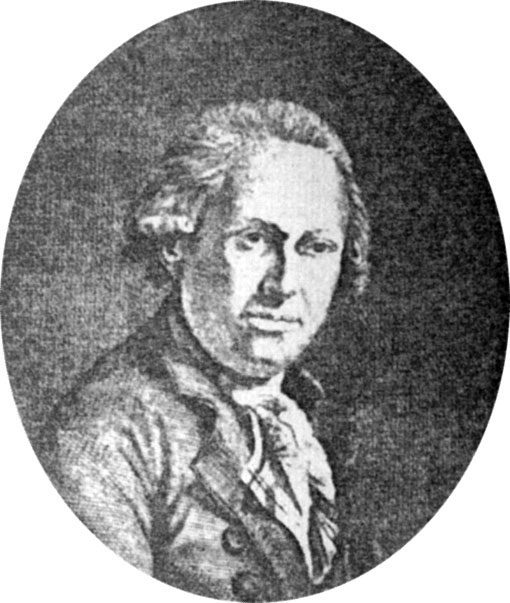
    Gmelin Johann Friedrich
    Gmelin Johann Friedrich

    scientific classification:


    – Order: Psittaciformes
    – Family: Cacatuidae
    – Genus: Cockatoo
    – Scientific name: Cacatua sulphurea
    – Citation: (Gmelin, JF, 1788)
    – Protonimo: Psittacus sulphureus


    Images Sulphur-crested Cockatoo:


    Species of the genus Cacatua
  • Cacatua tenuirostris
  • Cacatua pastinator
  • —- Cacatua pastinator derbyi
  • —- Cacatua pastinator pastinator
  • Cacatua sanguinea
  • —- Cacatua sanguinea gymnopis
  • —- Cacatua sanguinea normantoni
  • —- Cacatua sanguinea sanguinea
  • —- Cacatua sanguinea transfreta
  • —- Cacatua sanguinea westralensis
  • Cacatua goffiniana
  • Cacatua ducorpsii
  • Cacatua haematuropygia
  • Cacatua galerita
  • —- Cacatua galerita eleonora
  • —- Cacatua galerita fitzroyi
  • —- Cacatua galerita galerita
  • —- Cacatua galerita triton
  • Cacatua ophthalmica
  • Cacatua sulphurea
  • —- Cacatua sulphurea abbotti
  • —- Cacatua sulphurea citrinocristata
  • —- Cacatua sulphurea parvula
  • —- Cacatua sulphurea sulphurea
  • Cacatua moluccensis
  • Cacatua alba

  • Sources:

    – Avibase
    – Parrots of the World โ€“ Forshaw Joseph M
    – Parrots A Guide to the Parrots of the World – Tony Juniper & Mike Parr
    – Birdlife

    – Photos:

    (1) – Cacatua sulphurea by Charles Lam – Flickr
    (2) – Citron-crested Cockatoo(Cacatua sulphurea citrinocristata) in the Walsrode Bird Park, Germany By Quartl (Own work) [CC BY-SA 3.0], via Wikimedia Commons
    (3) – A Yellow-crested Cockatoo at Auckland Zoo, New Zealand By Ashleigh Thompson (originally posted to Flickr as Captain) [CC BY 2.0], via Wikimedia Commons
    (4) – Cacatua sulphurea citrinocristata, Citron-crested Cockatoo. Photograph of upper body and crest By Ruth Rogers (originally posted to Flickr as Citron Cockatoo) [CC BY 2.0], via Wikimedia Commons
    (5) – Citron-crested Cockatoo (Cacatua sulphurea citrinocristata). The glass between the camera and this parrot makes the picture just a little bit blurry By Alexander Tundakov (originally posted to Flickr as White Parrot) [CC BY 2.0], via Wikimedia Commons
    (6) – Photo of Lesser Sulphur-crested Cockatoo (wings clipped) By Snowmanradio, with permission from Tropical Birdland, Leicestershire, England. (Own work) [GFDL or CC BY-SA 3.0], via Wikimedia Commons
    (7) – Yellow-crested Cockatoo (Cacatua sulphurea) at the KOBE Oji Zoo by opencage.info
    (8) – Lesser Sulphur-crested Cockatoo (wings clipped) By Snowmanradio, with permission from Tropical Birdland, Leicestershire, England. (Own work) [GFDL or CC BY-SA 3.0], via Wikimedia Commons
    (9) – Yellow-crested Cockatoo (Cacatua sulphurea) by Darren – Flickr
    (10) – Yellow-Crested Cockatoo, Cacatua sulphurea by Sek Keung Lo – Flickr
    (11) – Cacatua sulphurea by Charles Lam – Flickr
    (12) – Cacatua sulphurea by Charles Lam – Flickr
    (13) – Cacatua sulphurea by Pichon Charles Lam – Flickr
    (14) – A painting of a Yellow-crested Cockatoo, also known as the Lesser Sulphur-crested Cockatoo, (originally captioned ยซPlyctolophus sulphureus. Lesser Sulphur-crested Cockatooยป) by Edward Lear 1812-1888. [Public domain], via Wikimedia Commons

    – Sounds: (Xeno-canto)

    โ–ท The world of Pets: Dogs, cats, birds, reptiles, amphibians

    Blue-eyed cockatoo
    Cacatua ophthalmica

    Cacatรบa Oftรกlmica

    Content

    Description:

    50 cm. length and a weight between 500 and 580 gr.
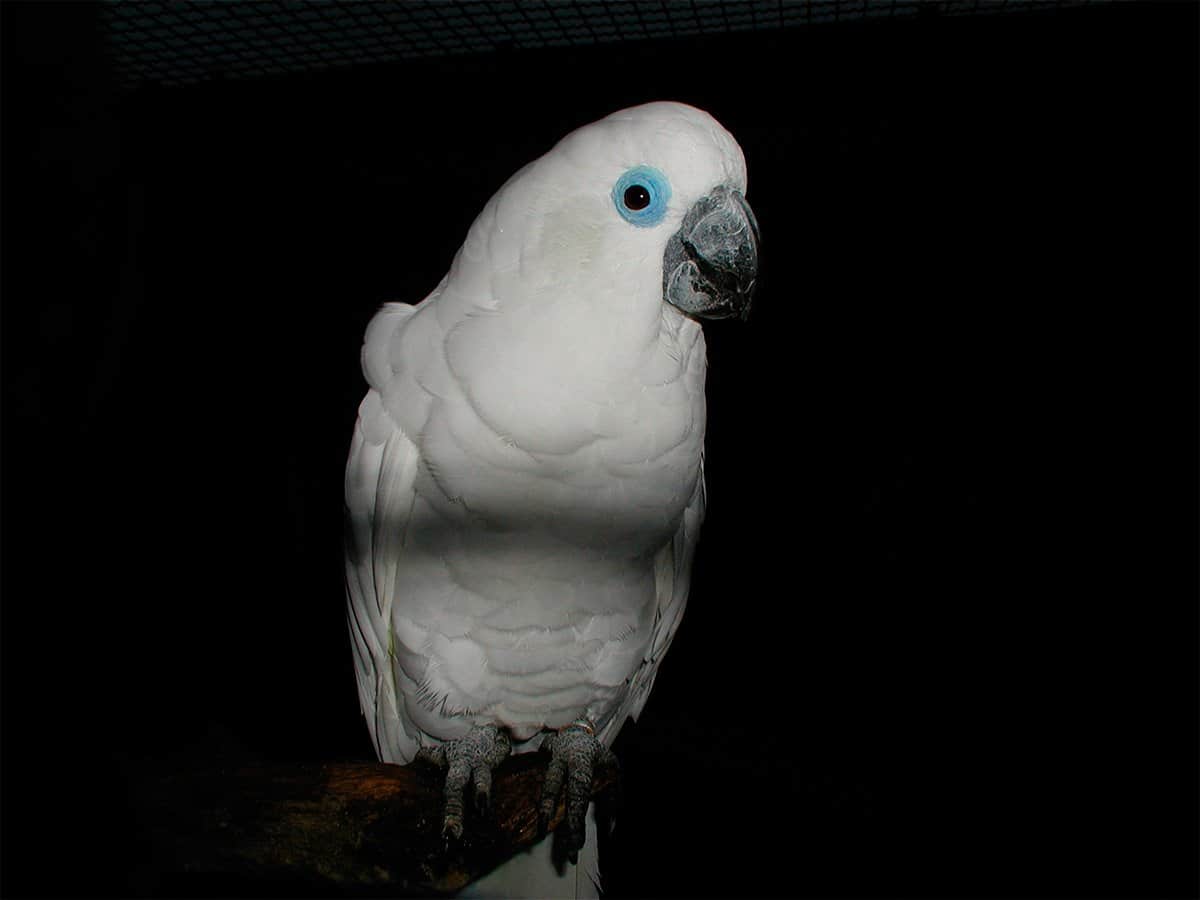
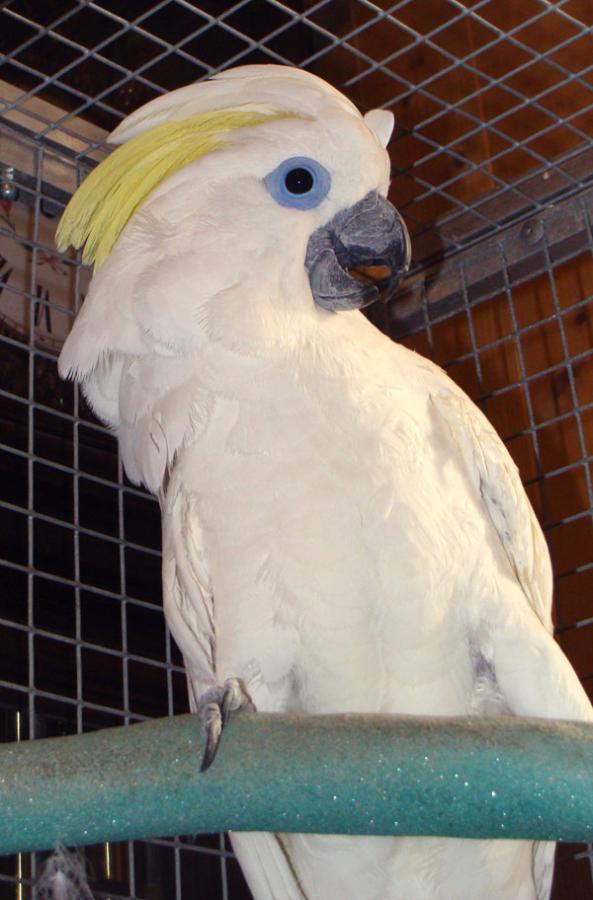
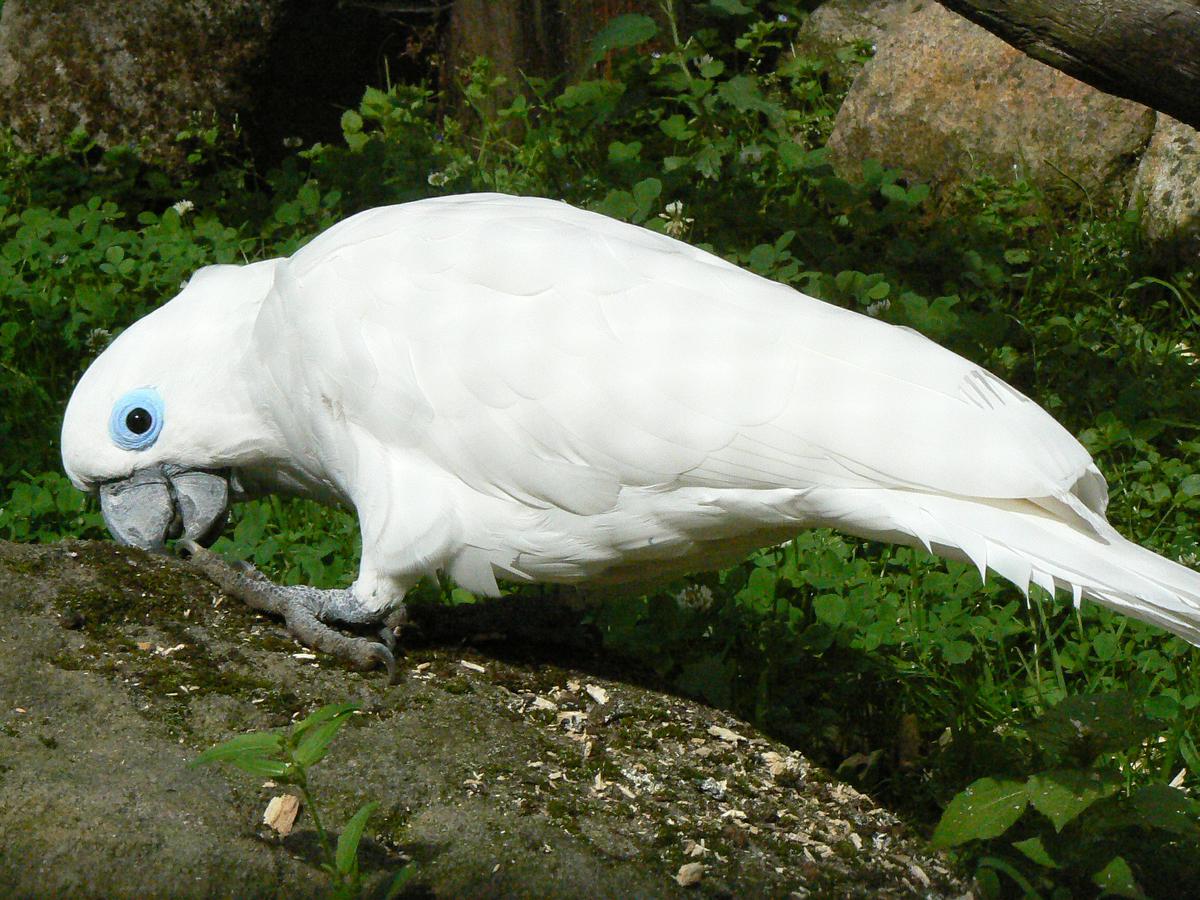
    The plumage of the Blue-eyed cockatoo (Cacatua ophthalmica) is mostly white. Its crest is yellow, large and well rounded back, leaning to the neck.

    The feathers that cover the ear, the base of the neck and cheek are pale yellow. The inside of the wings and tail are slightly yellowish. The ring around the eye is blue, the iris is dark brown and gray peak.
    Only you can distinguish males and females by iris.

    Habitat:

    Video – "Blue-eyed cockatoo" (Blue-eyed cockatoo)

    Ophthalmic cockatoo.MPG

    Primary forest, edges of forests and areas with sparse vegetation to 1.000 m.
    It is more common in the plains than in the mountains.

    They live alone, in pairs or flocks of birds 10-20. Easy to distinguish and noisy, usually. When you are flying over forests, your flight is sandwiched between glide and powerful flapping. Probably similar habits to the Sulphur-crested cockatoo, screams as she, only that stronger.

    Reproduction:

    There is no information about the reproduction of this species in the wild, but in captivity the female lays around 2 eggs and incubation lasts 28-30 days. The young are altricial (totally dependent on their parents for the first few weeks of life) and they remain in the nest for nine to twelve weeks being fed by both parents; later, young people, they are accompanied for a few months.
    Food:

    They feed mainly on seeds, fruit, in particular the figs, berries and, possibly, insects and larvae.

    Distribution:

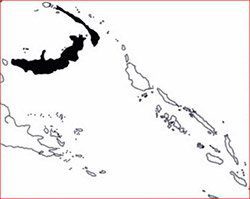
    Ophthalmic Cockatoo Distribution

    New Britain and new Ireland in the Bismarck Archipelago (Papua New Guinea).

    Conservation:


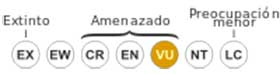
    Vulnerable

    Conservation status of IUCN: Vulnerable (VU)

    This species has been upgraded to Vulnerable because remote sensing techniques indicate that the lowland forest, on which this species depends for nesting, It is disappearing at a notorious enough pace to cause a rapid decline in the population.
    The rapid conversion of lowland rainforest to oil plantation use over the past thirty years is likely to have caused significant loss of breeding habitat..

    Although it is rare in international trade, even the limited catch would be a cause for concern.

    The population is estimated at at least 10.000 mature individuals.

    "Blue-eyed cockatoo" in captivity:

    Extremely elegant and striking. It is gaining share as a companion pet.
    It mimics human speech, is very active, capable of stunts and very close to the people.

    Despite his intelligence and skills, not at all a cockatoo that can be kept in an apartment.
    On the one hand, due to its high energy, and secondly because of the power of their cries.

    Their average lifespan is of 40 years in captivity. Surprisingly their hope for life in nature is longer, of 50 to 60 years. The life expectancy in captivity decrease may be due to inadequate attention.

    Alternative names:

    – Blue eyed Cockatoo, Blue-eyed cackatoo, Blue-eyed Cockatoo (ingles).
    – Cacatoรจs ร  oeil bleu, Cacatoรจs aux yeux bleus (French).
    – Brillenkakadu (German).
    – Cacatua-de-olhos-azuis (Portuguese).
    – Cacatรบa Oftรกlmica (espaรฑol).

    scientific classification:

    – Order: Psittaciformes
    – Family: Cacatuidae
    – Scientific name: Cacatua ophthalmica
    – Citation: Sclater,PL, 1864
    – Protonimo: Cacatua ophthalmica

    Ophthalmic Cockatoo Images:


    Species of the genus Cacatua

    Sources:
    – Avibase
    – Photos: Wikimedia Commons, kisspanda.rajce.idnes.cz/, Gros-becs.net
    – Sounds: Frank Lambert

    โ–ท The world of Pets: Dogs, cats, birds, reptiles, amphibians

    Vulturine Parrot
    Pyrilia vulturina

    Vulturine Parrot

    Content

    Description:

    23 cm.. length and a weight between 138-165 g..

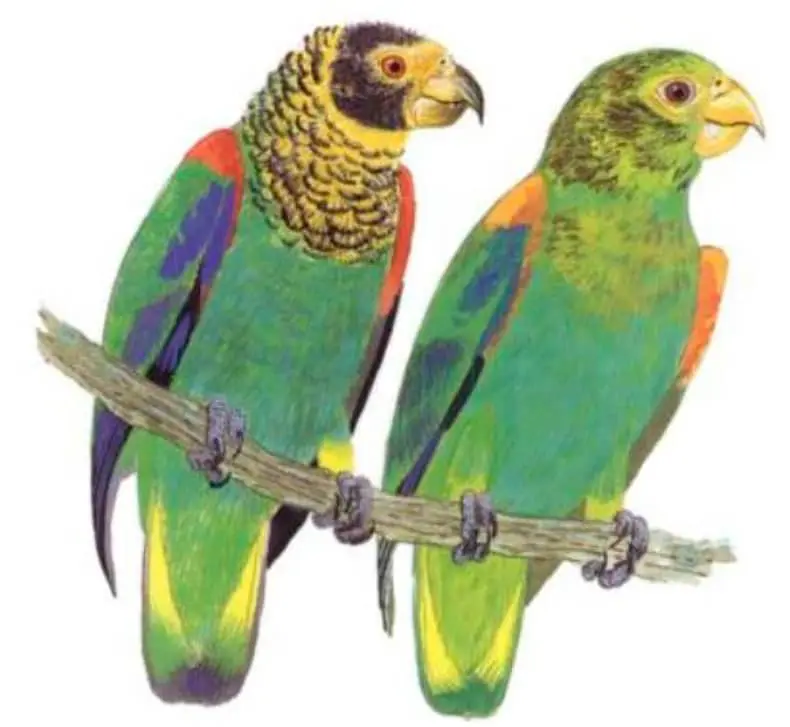
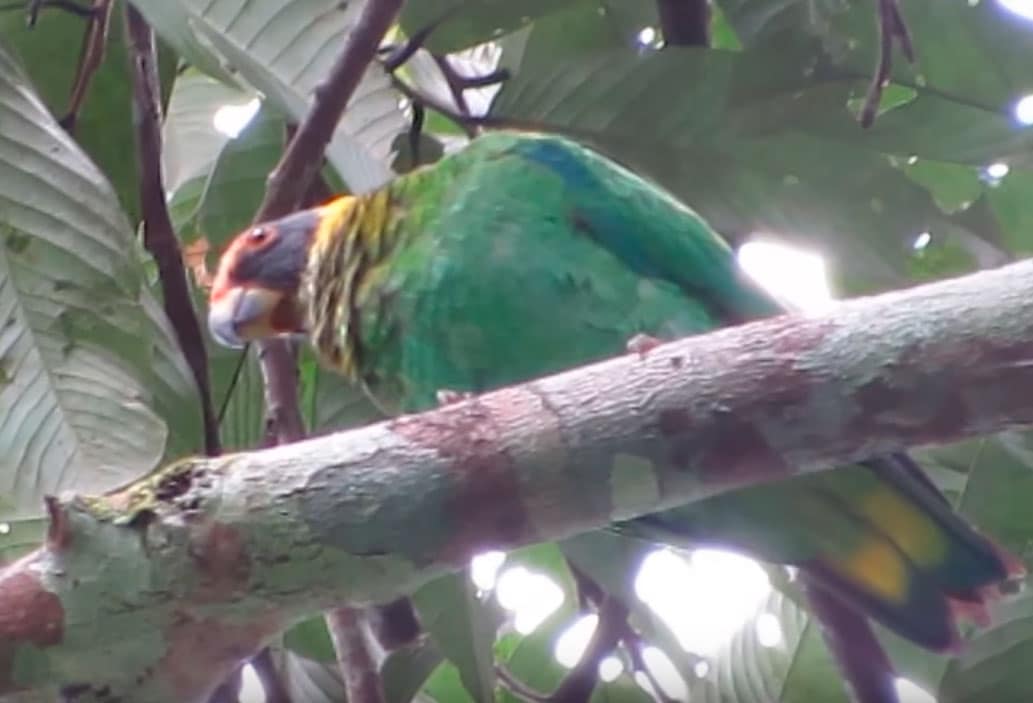
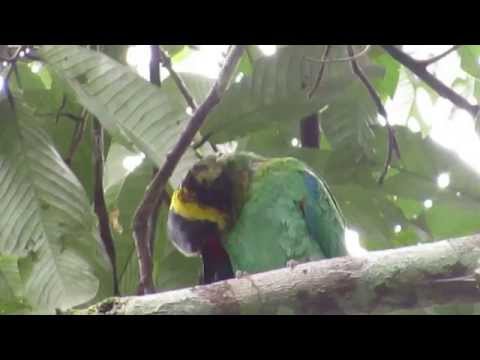
    The Vulturine Parrot (Pyrilia vulturina) It is a small parrot with bare skin yellow orange and covered bristles pale hairlike, in the area that covers the forecrown and back of the crown, until the eyes; bare skin on lores, the cheeks and center of crown black and covered with bristles black hairlike; feathers on the sides of neck and in the part back from the crown, are yellow, forming a band bright contrasting with the black of the head bare; back of the neck, black; upperparts green.

    carpal area and lesser upperwing-coverts, orange-yellow; outer median coverts with some blue; leading edge of wing, red; primary coverts blue; rest of the upper parts of the wings, green.

    Primaries bluish-black with narrow bluish-green margins to outerweb. Under, the wings with coverts red; flight feather green with blackish tips. feathers throat and the chest, olive yellow with dark tips, giving a scalloped effect; belly green with bluish tint; undertail-coverts brighter yellowish green. Tail green with tips blue and outer feathers with yellow on base of innerwebs. Bill dark blackish-grey with patch pale yellow at the base of the upper jaw; cere yellowish-horn; irises brownish-orange; legs grey.

    Both sexes are similar.

    The head of the immature, fully feathered (except in the eye ring); greenish on the cheeks and yellow olive in the rest of the head with no collar yellow. The bend of wing and underwing-coverts, yellowish-orange; irises darker.

    • Sound of the Vulturine Parrot.

    Habitat:

    It inhabits in the rainforest of lowland formations vรกrzea (seasonally flooded forest), and the Mainland (without flooding). Gregarious.

    Reproduction:

    No details on the reproductive biology of this species.

    Food:

    diet includes fruit, seeds and berries taken in the forest canopy. Its bareheaded adaptation may be a high frugivore diet, to prevent the fruit pulp enmaraรฑara their feathers.

    Distribution and status:

    Size of its range (breeding/resident ): 1.030.000 km2

    endemic to northeast Brazil, to the South of the amazon, from the eastern state of amazon, on the east bank of Madeira River, passing by For, to the south, up to the Serra do Cachimbo, extending eastward to the areas bordering northwest Maranhรฃo, in the region of the Gurupi River. May be restricted to areas around major rivers within this region, which would mean that the size of the range may be overestimated.

    References in relation to its range to include Venezuela (lower basin Caura River) and Guyana, They are apparently wrong.

    generally considered Rare, although undoubtedly they not have a lot of data due to the difficulty of observation of this species.

    The continuing rapid deforestation throughout its range has had to contribute to a substantial decrease in the population Vulturine Parrot in the last decades.

    They can be seen in protected forests in the west of its range, but illegal logging and colonization remain a threat even there.

    Conservation:


    Vulnerable


    โ€ข Current category of the Red List of the UICN: Vulnerable.

    โ€ข Population trend: Decreasing.

    Rationale for the Red List category

    Based on a model of future deforestation in the amazon basin and its dependence on primary forest and sensitivity to fragmentation, It is suspected that population of this species will decrease rapidly during the next three generations and, therefore, It has risen to Vulnerability.

    Justification of the population

    The population size World has not been quantified, but this species is described as ยซRareยป (Stotz et to the ., 1996).

    Justification of trend

    It is suspected that this species has lost 37,1-54,8% of habitat within its distribution over three generations (21 years) starting from a model of deforestation Amazon (Soares-Filho et to the ., 2006, Bird et to the ., 2011). Although the species may have some susceptibility to hunting and / or capture, also it appears to have some degree of tolerance habitat degradation (A. Lees in litt ., 2011). So, you suspect your population decline by 30-49% during three generations.

    Conservation Actions Underway

    โ€ข Is listed as Vulnerable nationally in Brazil (MMA 2014).

    โ€ข No specific actions known.

    Conservation Actions Proposed

    โ€ข Expand the network of protected areas to effectively protect the IBA.

    โ€ข Effectively manage existing and new protected areas and resources, using the emerging opportunities for financing the management of protected areas with the overall goal of reducing carbon emissions and maximize the conservation of biodiversity.

    โ€ข It is also essential to conservation on private land, through the expansion of market pressures for proper land management and prevention of deforestation on land not suitable for agriculture (Soares-Filho et to the., 2006).

    โ€ข Campaign against proposed changes to the Brazilian Forest Code that would lead to a decrease in the width of the areas of riparian forest protected as Permanent Preservation Areas (APPs), that function as vital corridors in fragmented landscapes.

    "Vulturine Parrot" in captivity:

    It is not found in aviculture; Probably they never stood outside Brazil.

    Alternative names:

    – Vulturine Parrot (English).
    – Caรฏque vautourin (French).
    – Kahlkopfpapagei (German).
    – curica-urubu, papagaio-urubu, periquito d’anta, periquito-urubu, pirรญ-pirรญ, urubu-paraguรก (Portuguese).
    – Lorito Cabeza Zamuro, Lorito Vulturino (espaรฑol).

    scientific classification:


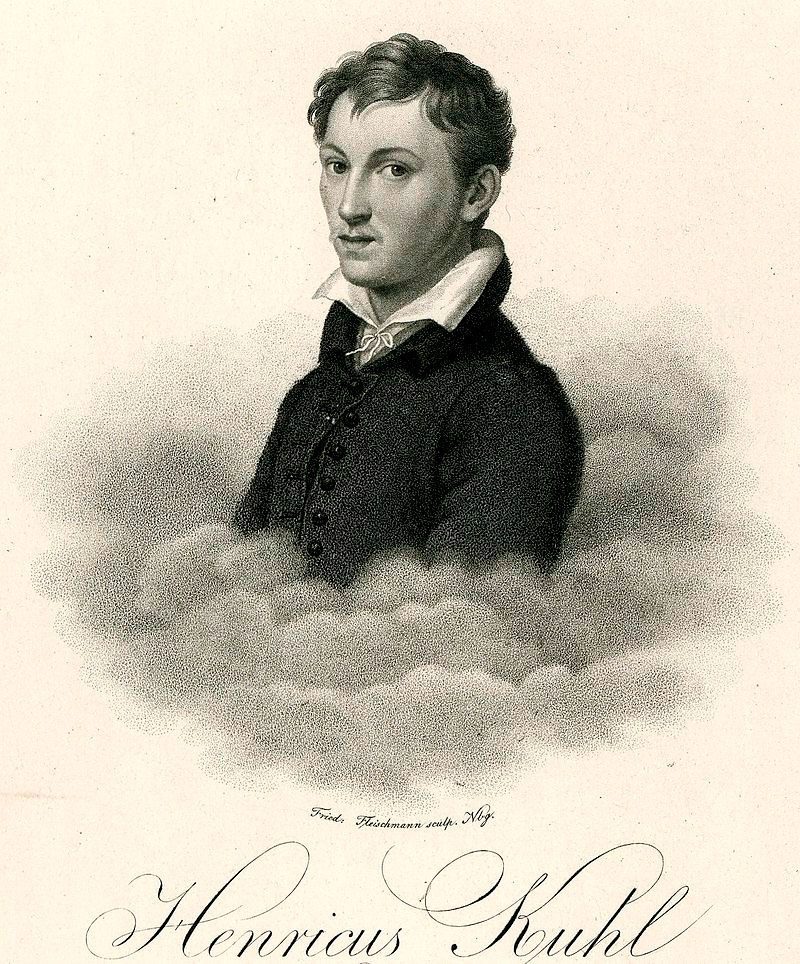
    Kuhl, Heinrich
    Heinrich Kuhl

    – Order: Psittaciformes
    – Family: Psittacidae
    – Genus: Pyrilia
    – Scientific name: Pyrilia vulturina
    – Citation: (Kuhl, 1820)
    – Protonimo: Psittacus vulturinus

    Images "Lorito Vulturino":

     Vulturine Parrot

    Videos Lorito Vulturino:

    Pyrilia vulturina ( Curica Vulture)

    "Lorito Vulturino" (Pyrilia vulturina)

    Sources:

    • Avibase
    • Parrots of the World โ€“ Forshaw Joseph M
    • Parrots A Guide to the Parrots of the World – Tony Juniper & Mike Parr
    • Birdlife

    • Photos:

    (1) – Pyrilia vulturina (adult and immature) – Imagen de Parrots A Guide to the Parrots of the World – Tony Juniper & Mike Parr
    (2) – Pyrilia vulturina ( Curica Vulture) by victor castro

    โ–ท The world of Pets: Dogs, cats, birds, reptiles, amphibians

    Black-headed Parrot
    Pionites melanocephalus

    Cotorra pechiblanca

    Content

    Description:

    Black-headed Parrot

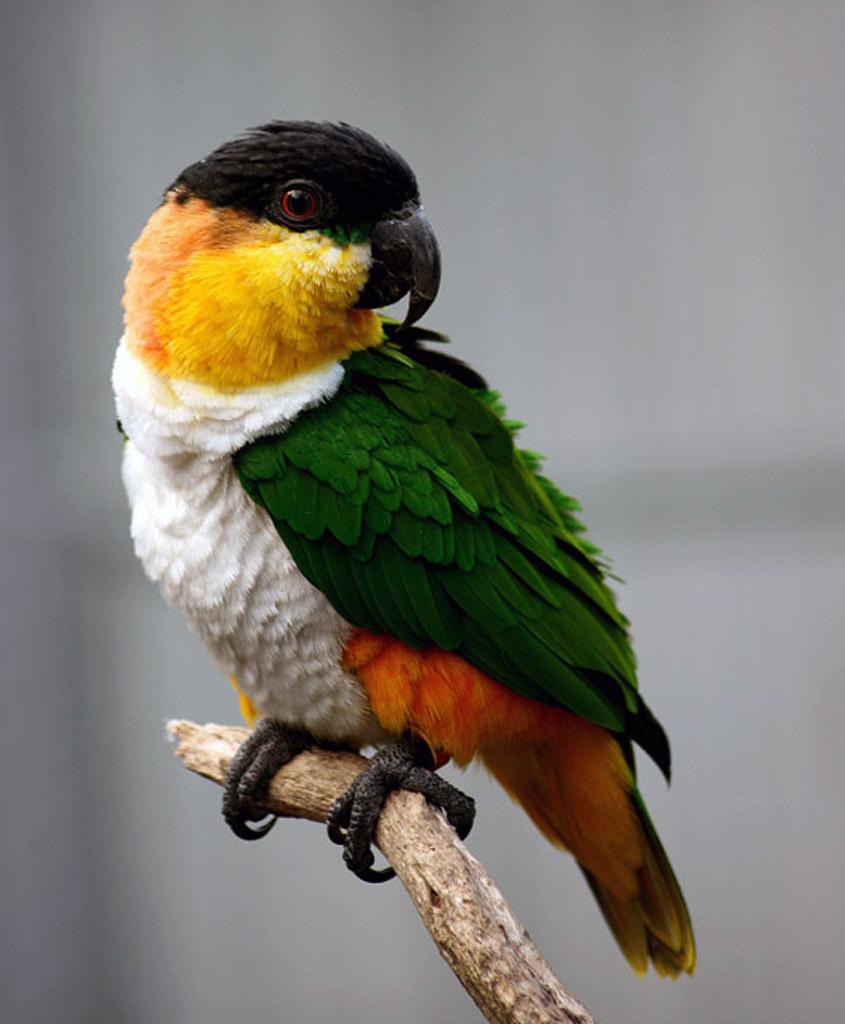
    The Black-headed Parrot (Pionites melanocephalus) measures of 21 to 23 cm.. height.

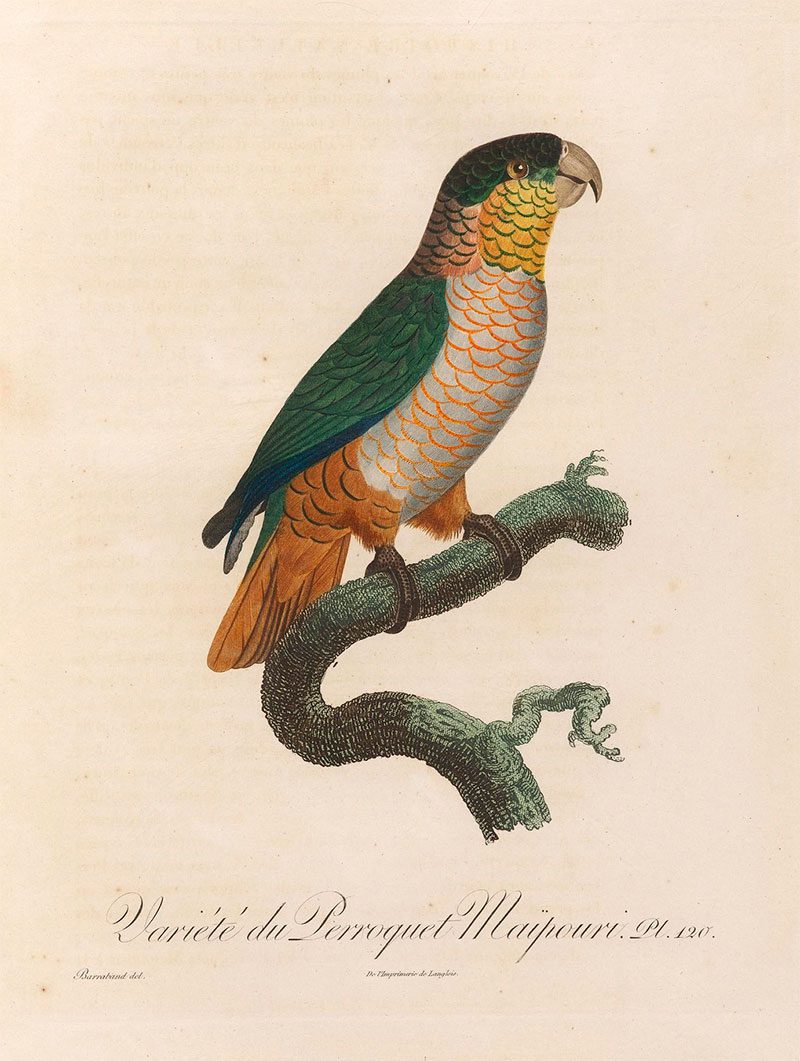
    Unmistakable by crown black, chest and belly white, the latter with yellow sides (very visible on the fly). Breast bright yellow, nape orange acanelada, back and rump green. Tip pens of wings They are blue and dark go the closer they get to the body.

    Legs and bill dark gray.

    The youth They have bluish green spots on the nape, with chest and belly yellowish.

    There is no sexual dimorphism in this species. The identification of genus must be performed by DNA testing or a surgical probe.

    Description 2 subspecies:

    • Pionites melanocephalus melanocephalus

      (Linnaeus,1758) – The subspecies nominal.


    • Pionites melanocephalus pallidus

      (Berlepsch, 1890) – It has bright yellow in the throat, the thighs and tail.

    Habitat:

    It inhabits humid jungles, semi-wet, swampy, gallery woods, stubble and crop to the 1000 m. Walks in small flocks between 3 to 10 individuals, feed in the canopy, very rare in stratum low forest.

    Reproduction:

    Its laying is of 2 to 4 eggs and the breeding season It is from December to February in French Guiana, april in Venezuela, April to May Colombia, October to November Suriname.

    Food:

    Feeds of seeds several species of plants cellulose, plants, flowers and leaves. There is also evidence of some insects in your diet.

    Distribution:

    She can be seen in the wild along the Amazonia, from the North of the Amazon River, bordering south to northeastern Peru, also in the Guyanas.

    Distribution 2 subspecies:

    • Pionites melanocephalus melanocephalus

      (Linnaeus,1758) – The subspecies nominal.


    • Pionites melanocephalus pallidus

      (Berlepsch, 1890) – South of Colombia to the East of Ecuador and northeast of Peru.

    Conservation:

    State of conservation โ“˜


    minor concern Minor Concern โ“˜ (UICN)โ“˜

    Although not in danger of extinction Its population has declined significantly. The illegal marketing is the main theory against its appearance and adaptation in an environment foreign to its natural environment. Poaching of pigeons and felling of trees are common in the south of the country.

    "Black-headed Parrot" in captivity:

    Popular poultry farming. They adapt easily to the bird or Aviary cages. You need a degree quite high commitment and attention by the owner. The like to interact with other birds and people. The love to play with toys and can be quite noisy. An interesting feature of the Black-headed Parrot It is their habit of rolling on his back and play with toys help of their paws.
    He manages to replace their jungle habitats in parks or green areas of large cities.
    Its price is quite high compared to other species due to its striking plumage and friendliness..

    Alternative names:

    – Black headed Parrot, Black-crowned Parrot, Black-headed Caique, Black-headed Parrot(English)
    – Cotorra pechiblanca, Loro cacique o Loro mocho (Colombia)
    – Perico calzoncito (Venezuela)
    – Loro coroninegro (Ecuador)
    – Chirricles cabeza negra (Peru)
    – Grรผnzรผgelpapagei, Grรผnzรผgel-Papagei (Germany)
    – Lorito Chirlecrรฉs, Lorito Chirlicrรฉs, Lorito Gordo de Cabeza Negra (Spain)
    – Caรฏque ร  tรชte noire, Caรฏque maรฏpouri (France)
    – cabeรงa-preta, maipurรฉ, marianinha-da-cabeรงa-preta, Marianinha-de-cabeรงa-preta (Brazil)

    scientific classification:

    • Order: Psittaciformes
    • Family: Psittacidae
    • Genus: Pionites
    • Scientific name: Pionites melanocephalus
    • Citation: (Linnaeus, 1758)
    • Protonimo: Psittacus melanocephalus

    Images "Black-headed Parrot"

    Videos "Black-headed Parrot"


    Species of the genus Pionites
    • Pionites melanocephalus
    • —- Pionites melanocephalus melanocephalus
    • —- Pionites melanocephalus pallidus
    • Pionites leucogaster
    • —- Pionites leucogaster leucogaster
    • —- Pionites leucogaster xanthomerius
    • —- Pionites leucogaster xanthurus


    Black-headed Parrot (Pionites melanocephalus)


    Sources:

    • Avibase
    • Parrots of the World โ€“ Forshaw Joseph M
    • Parrots A Guide to the Parrots of the World – Tony Juniper & Mike Parr
    • Parrots, Parrots and macaws Neotropical
    • Baywood
    • caiqueparrots

    • Photos: Natural history of parrots /.A Paris :chez Levrault … ;an IX (1801)-an XIII (1805).. biodiversitylibrary.org/page/40064546

    • Sounds: controles-canto.org – Patrick INGREMEAU

    โ–ท The world of Pets: Dogs, cats, birds, reptiles, amphibians

    Salmon-crested cockatoo
    Cacatua moluccensis

    Cacatรบa Moluqueรฑa

    Content

    Description

    40 to 50 cm.. length and a weight of up to 900 gr.
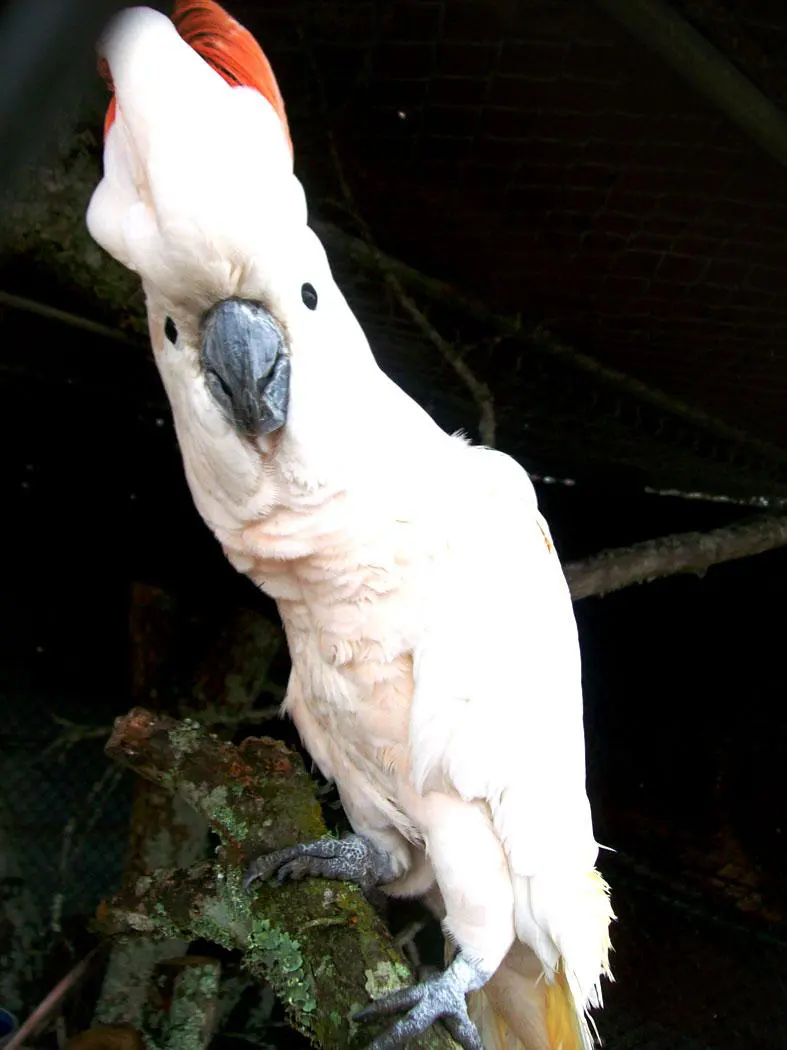
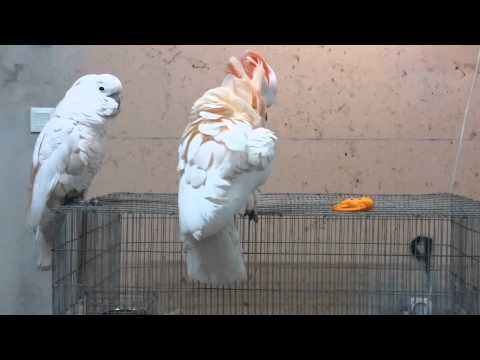
    The plumage of the Salmon-crested cockatoo (Cacatua moluccensis) is predominantly white, except the tuft, that consists of red feathers that is usually when the bird is excited.

    The interior of the wings is light salmon color. The the tail feathers they have a yellow-orange and pink color at the base.
    The bill is strong, curved and black. The legs also are of color black. A skin bare of color white blue surrounds them eyessexual dimorphism It is in the color of your eyes. Males have dark eyes while females have them red.
    The immature are like adults.

    Habitat:

    Video – "Salmon-crested cockatoo" (Cacatua moluccensis)

    moluccan cockatoo

    It shows preference for forests. It is from sea level up to the 1200 metres of elevation. In noisy roosts, during the breeding season, alone or in couples; at other times are found in groups of up to 16 birds. Species usually shy. You enable in the early morning and at dusk.

    Reproduction:

    The breeding season exact in the nature is unknown, but the activity of nesting It has observed in mayo, July and August, When the birds are usually seen alone or in pairs. The nests are built in large trees, taking advantage of holes in the trunks to 25 meters above the ground. The implementation size in captivity is from one to three, usually two, the eggs, they are incubated by both parents for 28 to 29 days.

    Food:

    With feeds fruit, grains, seeds, berries, vegetables and dried fruits. It has a peak strong, able to break the hard shells.
    Probably also feed on insects and their larvae and from time to time in the coconut plantations, where Peck young fruits, to reach the water and the meat of the content.

    Distribution:

    Size of the area of distribution (reproduction / resident): 33.800 km2

    Lives in the Plains to low height in the islands of the South of the Moluccas in Indonesian, Islands of Ceram, Saparua and Haruku.
    It was introduced on the neighbouring island of Ambon.

    Conservation:

    State of conservation โ“˜


    Vulnerable Vulnerable โ“˜ (UICN)โ“˜

    โ€ข Current category of the Red List of the UICN: Vulnerable.

    โ€ข Population trend: Decreasing.

    Is in the list of species at risk of CIPA (International Council for the protection of birds). It became part of the I in 1989 of the CITES and, in Europe, is covered by the program of protection of the species in extinction (EEP).

    Their main threats they are the illegal trade (in great measure responsibility of Indonesian) and deforestation, that has led to a dramatic loss of habitat.

    In 1982, exported a total of 6.413 birds, around the 15% of all local poultry exports, Since this species is still very desired as a companion bird.

    Although the international trade reported fell to zero in the Decade of 1990, them hunters will have maintained very active and the birds are sold openly in Indonesian.

    Just 62.400 Salmon-crested cockatoo in the world according to the FWS Federal Register.

    In the news Loro Parque Foundation has a "field project" underway for its protection and survival in its country of origin, We hope that this great work to proceed and succeed.

    "Salmon-crested cockatoo" in captivity:

    In captivity is quite rare and face, but he has adapted well and plays smoothly in the spaces provided.

    As a pet is simply exceptional for its docility. The only drawback is the noise it emits at times when its demands are not immediately met.

    Despite their exceptional behavior, we should not consider the possession of this cockatoo as a cage bird of this wonderful bird. Trade can lead in a few years to extinction.

    Alternative names:

    – Salmon-crested Cockatoo, Moluccan Cockatoo, Rose cackatoo (ingles).
    – Cacatoรจs ร  huppe rouge, Cacatoรจs des Moluques (francรฉs).
    – Molukkenkakadu (alemรกn).
    – Cacatua-das-molucas (portuguรฉs).
    – Cacatรบa Copete Encarnado, Cacatรบa Moluqueรฑa, Cacatรบa de las Molucas (espaรฑol).

    Gmelin Johann Friedrich
    Gmelin Johann Friedrich

    Clasificaciรณn cientรญfica:


    – Orden: Psittaciformes
    – Familia: Cacatuidae
    – Genus: Cacatua
    – Nombre cientรญfico: Cacatua moluccensis
    – Citation: (Gmelin, 1788)
    – Protรณnimo: Psittacus moluccensis


    Imรกgenes Cacatรบa Moluqueรฑa:


    Especies del gรฉnero Cacatua

    Fuentes:
    – Avibase
    – Parrots of the World โ€“ Forshaw Joseph M
    – Parrots A Guide to the Parrots of the World – Tony Juniper & Mike Par
    – Birdlife

    – Fotos: de.wikipedia.org, Wikimedia

    – Sonidos: Frank Lambert (xeno-canto)