▷ The world of Pets: Dogs, cats, birds, reptiles, amphibians

Crimson Rosella
Platycercus elegans

Crimson Rosella

Content


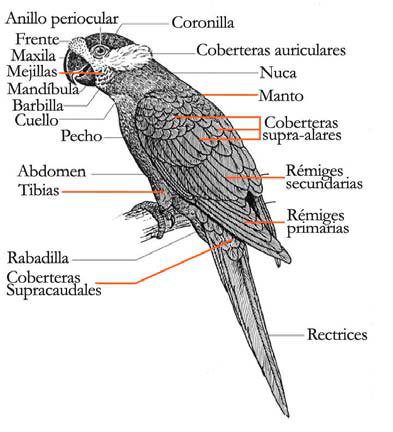
Anatomy-parrots

Description

Among 30 and 37 cm.. length and a weight between 99 and 170 g..

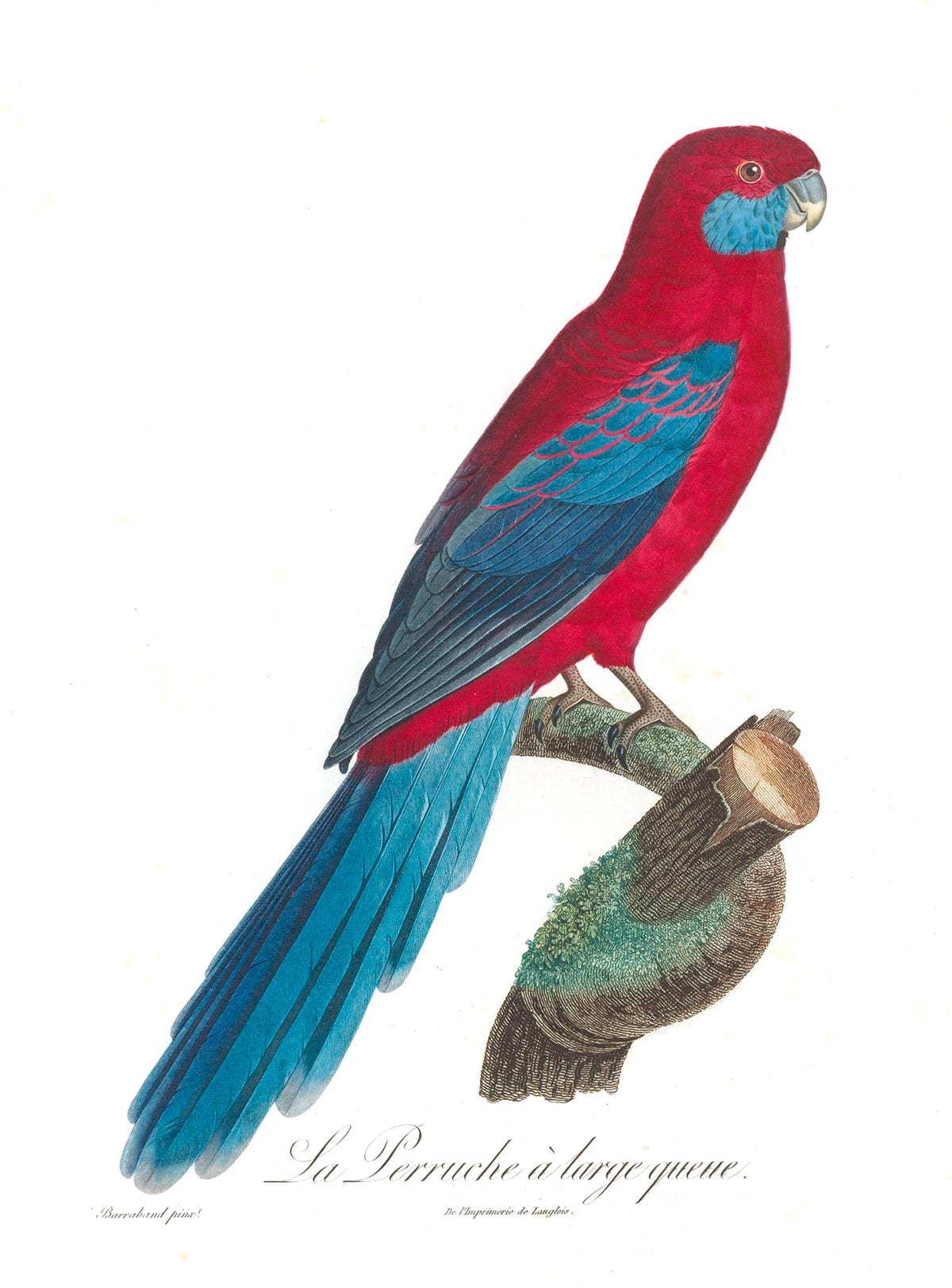
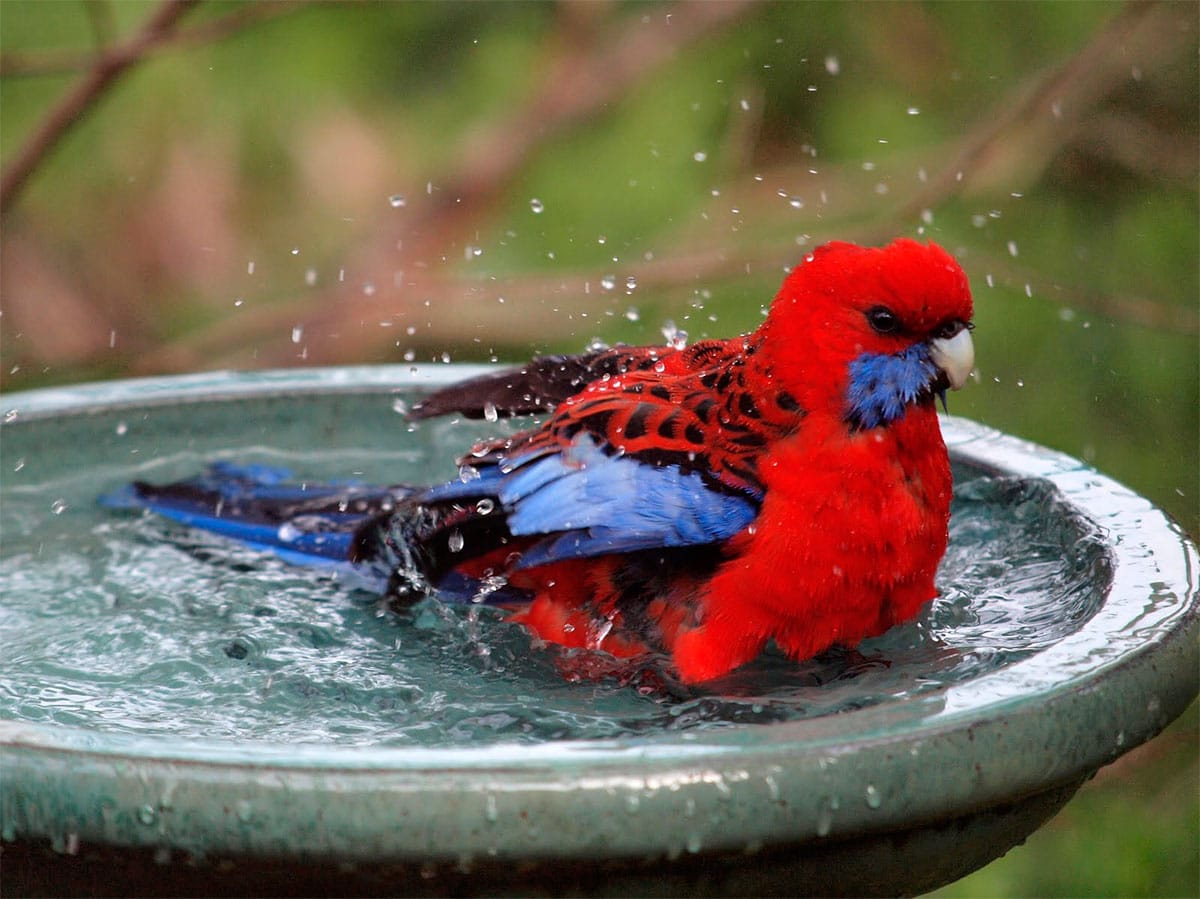
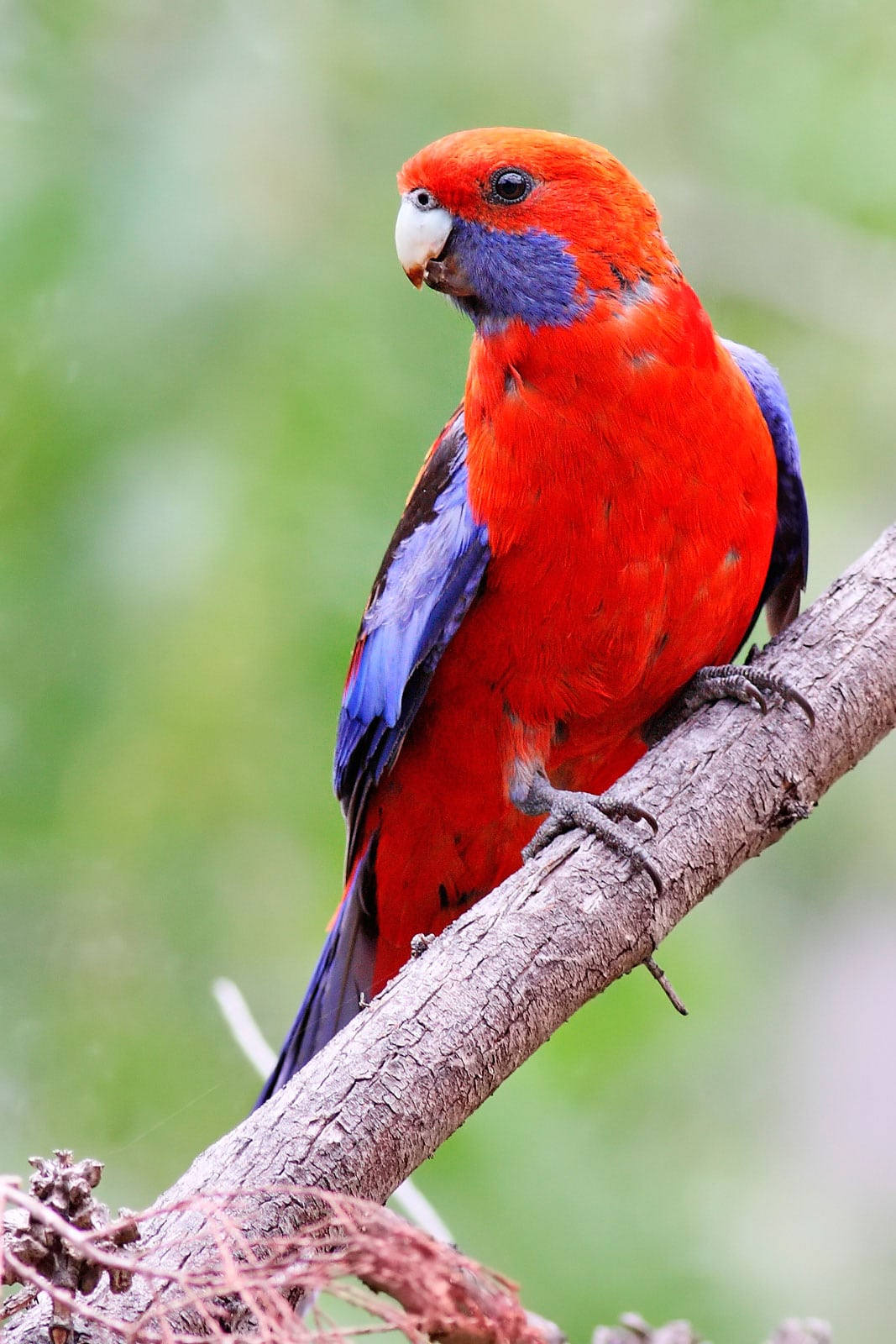
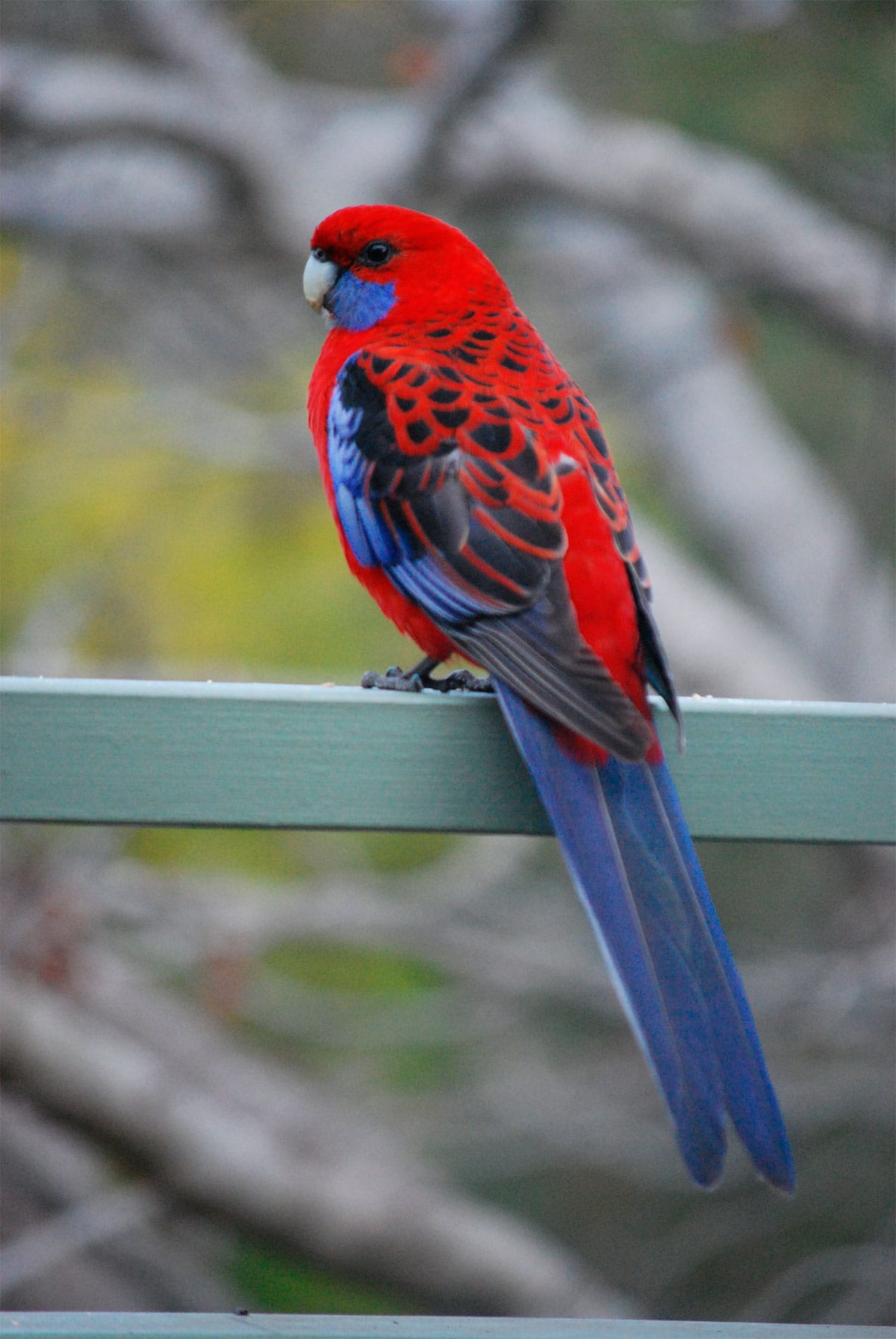
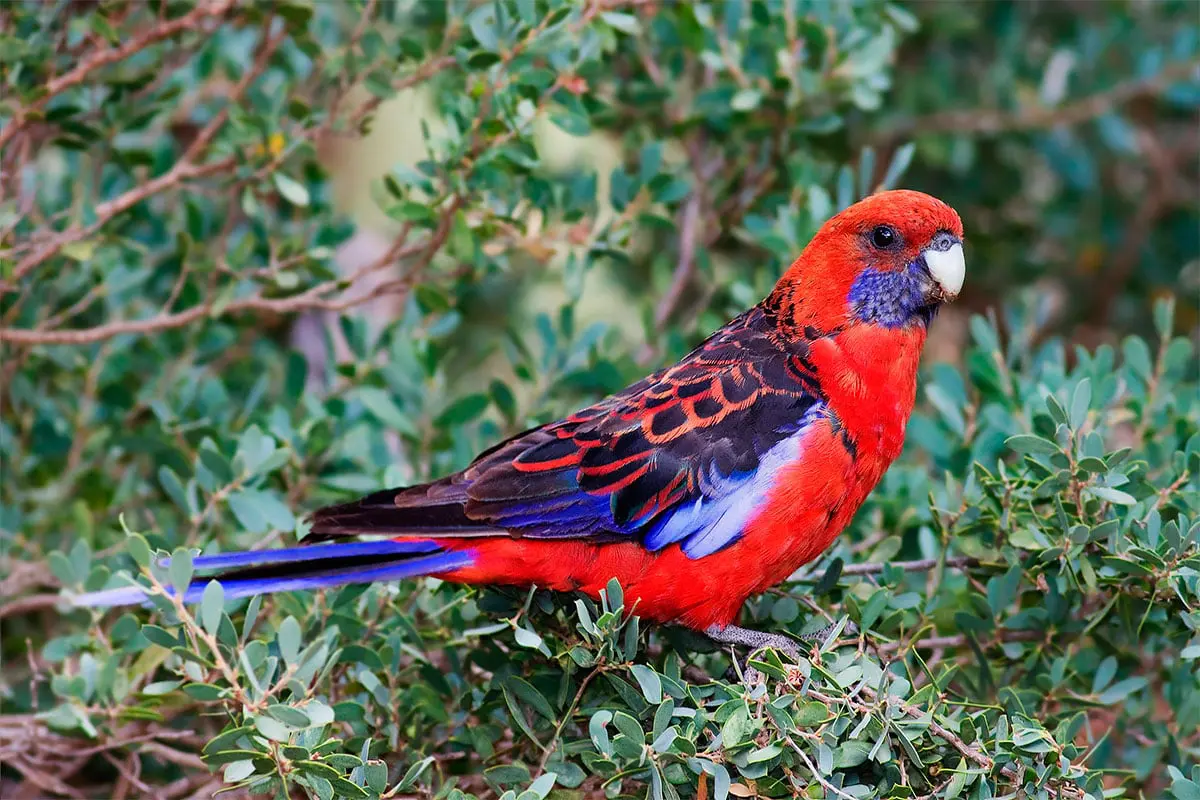
The Crimson Rosella (Platycercus elegans) has a predominantly red plumage.

Its head is bright crimson in color with the lower part of the cheeks and the throat of blue color.. Mantle feathers are black with broad crimson margins of variable intensity.; rump and uppertail coverts crimson.

Medium and lower inner wing coverts black; bend of wing, lesser coverts and medium blue color external; external greater coverts bright blue, Black Interior with red edges giving a scaly appearance to this area; primary coverts blue violet; feathers of flying blackish with thin margin foreign white in them more external and blue violet in vane outer; secondary black with vane external blue violet; tertiary black with red borders.

Under, Blackish wings with blue coats. Underparts showy crimson.

Upper, the tail is blue, the center of green-washed, Foreign feathers with vane Blackish internal and vane Violet Blue outer with pale at both ends; undertail, the tail of pale blue edged blackish when closed.

The peak of grayish-white; dark brown irises; greyish Brown legs.

The female It is smaller with narrower peak. It has no stripe under the wings..

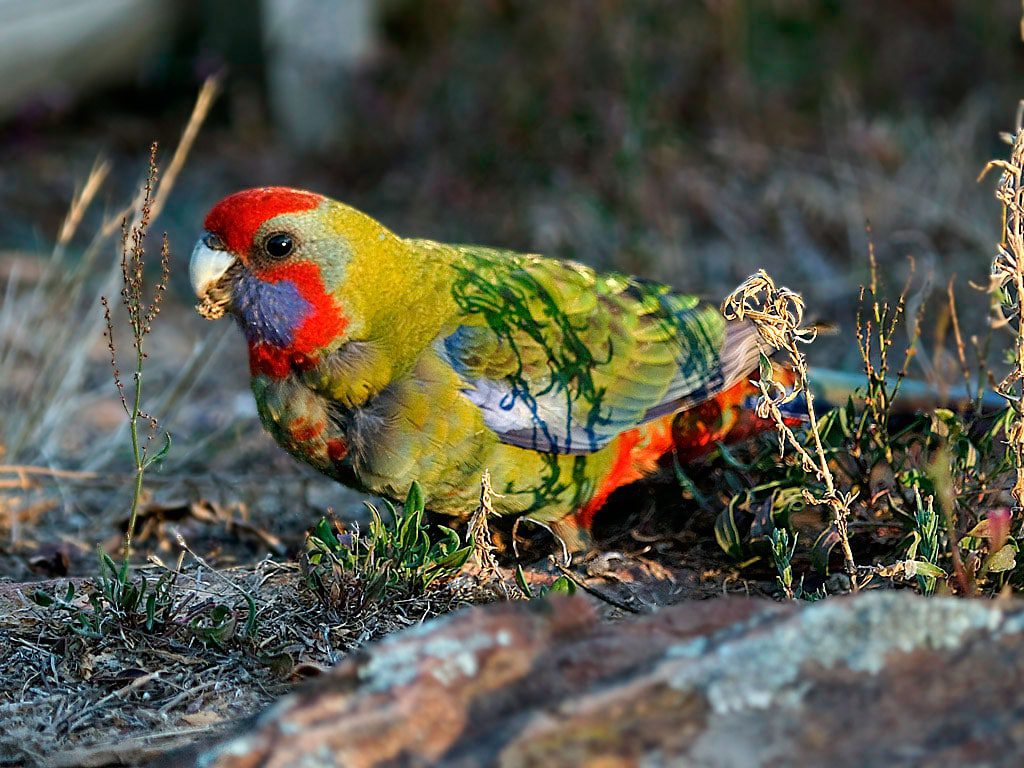
The immature is very different, with upper parts olive green (including the tail at the top), and green underparts greyish.
The centers to the mantle feathers are dark brown, and the black markings of the wings of the adult are replaced by green. Very young birds rump is green Orange. There is a pale stripe on the bottom of the wings (formed by stains pale in vane inner). It shows red feathers on the head, chest, buttocks and subcaudales coverts and move through the first fall.

Adult plumage is reached in a few 15 months. Immatures of the population in the North are mainly red, and there are less green unripe in Norfolk Island than mainland populations.

Subspecies

Description subspecies Platycercus elegans
  • Platycercus elegans elegans

    (Gmelin, 1788) – The nominal species


  • Platycercus elegans flaveolus

    (Gould, 1837) – With 33 cm.. length, approximately, It is but little that the nominal species, Yellow has no orange hue and there is orange in the neck, chest and abdomen.


  • Platycercus elegans fleurieuensis

    (Ashby, 1917) – IMG – It differs from the species rated as having an intense orange color, Red plumage, the mantle and black gray back, with pale orange-red spots; pale blue medium and secondary wing coverts.


  • Platycercus elegans melanopterus

    (North, 1906) – Of 36 cm.. length, approximately. The bordered red are more narrow, with which the back looks more black. Female as the nominal.


  • Platycercus elegans nigrescens

    (Ramsay,EP, 1888) – With 34 cm.. length, It is smaller than the nominal value and the color red is much more dark. Red feathers are more narrow. Female as the nominal.


  • Platycercus elegans subadelaidae

    (Mathews, 1912) – Approximately from 36 cm.. length. Instead of Red Blend Red, Orange and yellow. Orange red forehead, the Crown and face, they turned to brighter red frontal band. Yellow olive from the low back to the supracaudales coverts

Habitat:

Crimson Rosella

The Crimson Rosella they frequent tropical and humid subtropical forests near the coast and the surroundings of montane forests at altitudes up to 1.900 m.

They are mainly on the edges of jungle, in the secondary zones and in the dense forests of eucalyptus they arrive at a good stage of maturity.

To the South of the hunter river in New South Wales, they are distributed at all altitudes.

The nominal species has a preference for thick wooded areas, but often goes into open areas and farmland where it is mixed with the Perico conr (Platycercus eximius).

It also tends to visit plots of pine trees.

In the Kangaroo Island, where is the only parakeet present, He lives in all types of forest habitats, they are also adapting to farmland.

The subspecies subadelaidae and fleurieuensis, sometimes grouped under the term Adelaide parakeet, frequent valleys forest, arboreal galleries that border the rivers or trees on the edge of the roads. They are also present in the orchards and farmland.

The Flaveolus subspecies attends the same types of habitat, that is to say, curtains of trees dominated by red rubber trees along the river.

To feed, move away from rivers and raid agricultural land, flooded Plains, or thickets «Mallee«.

Adults are sedentary. Usually, they live in pairs or in small groups. On the other hand, juveniles and subadults form noisy groups and many roam locally when leaving dormitory at sunrise.

Its main activity is carried out in the morning and in the evening. in the middle of the day, they rest in the shady foliage. But, If the sky is overcast and the weather is cool, these birds are active during the day.

The Crimson Rosella they seek food on Earth, in trees and shrubs. They often feed in the company of the Eastern Rosella (Platycercus eximius), But if the joint working group is altered during its activity, the two species are separated in flight and taken opposite directions, each seeking refuge by his side.

The Crimson Rosella they are not very shy and can be approached at a very short distance.
In urban areas, they are particularly friendly.

Reproduction:

The breeding season covers the months of August to February and, sometimes even later.

The elegant parakeet build their nests on a branch or in the cavity of a tree trunk. Usually, Choose a healthy or dead eucalyptus, but sometimes they install their nests in a place as strange as the metal beam of a construction crane.

In all cases, the nest is located high above the ground. Spawning usually includes 4 to 7 white eggs, rarely 8, which are incubated during approximately 19 days.

The female incubates the eggs alone, but the chicks receive equal attention from both parents.

The nesting cycle is quite long and it takes around 5 weeks

Food:

The Crimson Rosella they have a mainly vegetarian mixed diet. Consume the seeds of black Cypress of Australia (Callitris endlicheri), figs, seeds of acacia and eucalyptus.

The vegetable part of its menu is complemented by a wide variety of imported plants such as Rosa rubiginosa, clover or chickweed (Stellaria media).

In the South of its range, they eat the fruits or flowers trees of Melaleuca, banksia and casuarina.

Insects are not forgotten in your menu: Hemiptera, psyllids, termites, aphids and larvae of beetles.

These parrots times behave as true pests in orchards, eating apples, Plums, pears and quinces.

Distribution:

Confined to the coastal area of Eastern Australia where are widely distributed in the wooded areas along and East of the Great dividing range.

There is an isolated population in the North between the surrounding of Atherton, Northeast of Queensland, to the South of the mountain range of Clarke and Eungella (the population in Eungella It can also be isolated).

The main population is distributed around Gympie, Southeast of Queensland, in the North, across the border with New South Wales, coming up to the Warrumbungle National Park, Bathurst and Wagga Wagga, where are approaching the eastern end where the Yellow Rosella.

In Victoria extends from the East to the Grampian and the Edenhope district, where spills into the Southeast end of Australia, coming to Kingston at its western end.

There is also an isolated population in the Kangaroo Island.

The species is found in the wild around Sydney, Brisbane and Melbourne, and leaks from birds have been around Perth. There are records in the North of Tasmania and the islands of the bass strait, probably, also refer to birds Getaways.

It is common in the Norfolk Island where it was introduced in the century 19, but is absent in the vicinity of Nepean and Philip Island; an attempt to introduce the species in Lord Howe Island failed.

Was also introduced in New Zealand, showing in the West suburbs of Wellington, and some birds can also persist in the District of Dunedin of South Island where can hybridize with the introduced Perico conr.

The world's population is above 200.000. Moderate numbers in captivity.
The birds can be eradicated with a permit in States where the destruction of crops occurs.

Subspecies

Distribution subspecies Platycercus elegans

Conservation:


minor concern


• Current category of the Red List of the UICN: Least concern

• Population Trend: Decreasing

The size of the world's population has not been quantified, Although it is estimated above 200.000 specimens.

The Crimson Rosella they are infrequent at both ends of its distribution area, but in other places, they are locally abundant and common.
In the North, they are slightly less numerous. In the past recent, they have colonized successfully parks and urban gardens, so now are very widespread in the suburbs of Canberra and Adelaide.
In the Norfolk Island, the import is so successful that they now represent a competition and a significant danger to the Red-crowned parakeet (Cyanoramphus novaezelandiae).

"Crimson Rosella" in captivity:

Moderately loud, very active, they are acclimatized to the owner. It is not usually compatible with other birds.
A sample of the subspecies subadelaidae lived 26,8 years in captivity
Rare in captivity.

Alternative names:

– Crimson Rosella, Adelaide Parakeet, Beautiful Lory, Blue-cheeked Rosella, Campbell Parakeet, Crimson Rosella (Crimson), Mountain Lowry, Murray Rosella, Murray Smoker, Murrumbidgee Lowry, Murrumbidgee Rosella, Pennant’s Parakeet, Pennant’s Rosella, Red Lory, Red Lowry, Red Parrot, Swamp Lory, Yellow Parakeet, Yellow Parrot (ingles).
– Perruche de Pennant (French).
– Pennantsittich, Adelaidesittich, Pennant-Sittich (German).
– Rosela-Pennant (Portuguese).
– Perico Elegante, Rosela Roja, Periquito Pennant, Rosella Carmesí (español).

scientific classification:

– Order: Psittaciformes
– Family: Psittaculidae
– Genus: Platycercus
– Scientific name: Platycercus elegans
– Citation: (Gmelin, JF, 1788)
– Protonimo: Psittacus elegans

"Elegant Perico" images:
Videos "Crimson Rosella"

Crimson Rosella (Platycercus elegans)

Sources:

  • Avibase
  • Parrots of the World – Forshaw Joseph M
  • Parrots A Guide to the Parrots of the World – Tony Juniper & Mike Parr
  • Wikipedia
  • Loromania
  • Birdlife
  • AnAge: The Animal Ageing and Longevity Database – Anagé Database

  • Photos:

(1) – An adult Crimson Rosella (Platycercus elegans), Wilsons Promontory National Park, Victoria, Australia By JJ Harrison (jjharrison89@facebook.com) (Own work) [CC BY-SA 3.0], via Wikimedia Commons
(2) – A Crimson Rosella photographed though a window in the Blue Mountains, Australia By John Poulakis from Australia (Crimson RosellaUploaded by Snowmanradio) [CC BY 2.0], via Wikimedia Commons
(3) – Crimson Rosella (Platycercus elegans) photographed taken in Swifts Creek, Victoria, Australia Fir0002 [GFDL, CC-BY-SA-3.0 or GFDL 1.2], via Wikimedia Commons
(4) – A Crimson Rosella in a bird bath Canberra, Australia By Duncan McCaskill (Picasa Web Albums) [CC BY 3.0], via Wikimedia Commons
(5) – Juvenile Crimson Rosella (Platycercus elegans) by David Cook – Flickr
(6) – An adult Crimson Rosella (Platycercus elegans) Jacques Barraband [Public domain], via Wikimedia Commons

▷ The world of Pets: Dogs, cats, birds, reptiles, amphibians

Pink cockatoo
Cacatua leadbeateri

Cacatúa Abanderada

Content

Description


Anatomy-parrots

35 cm.. length and weighing approximately between 340 and 425 g.
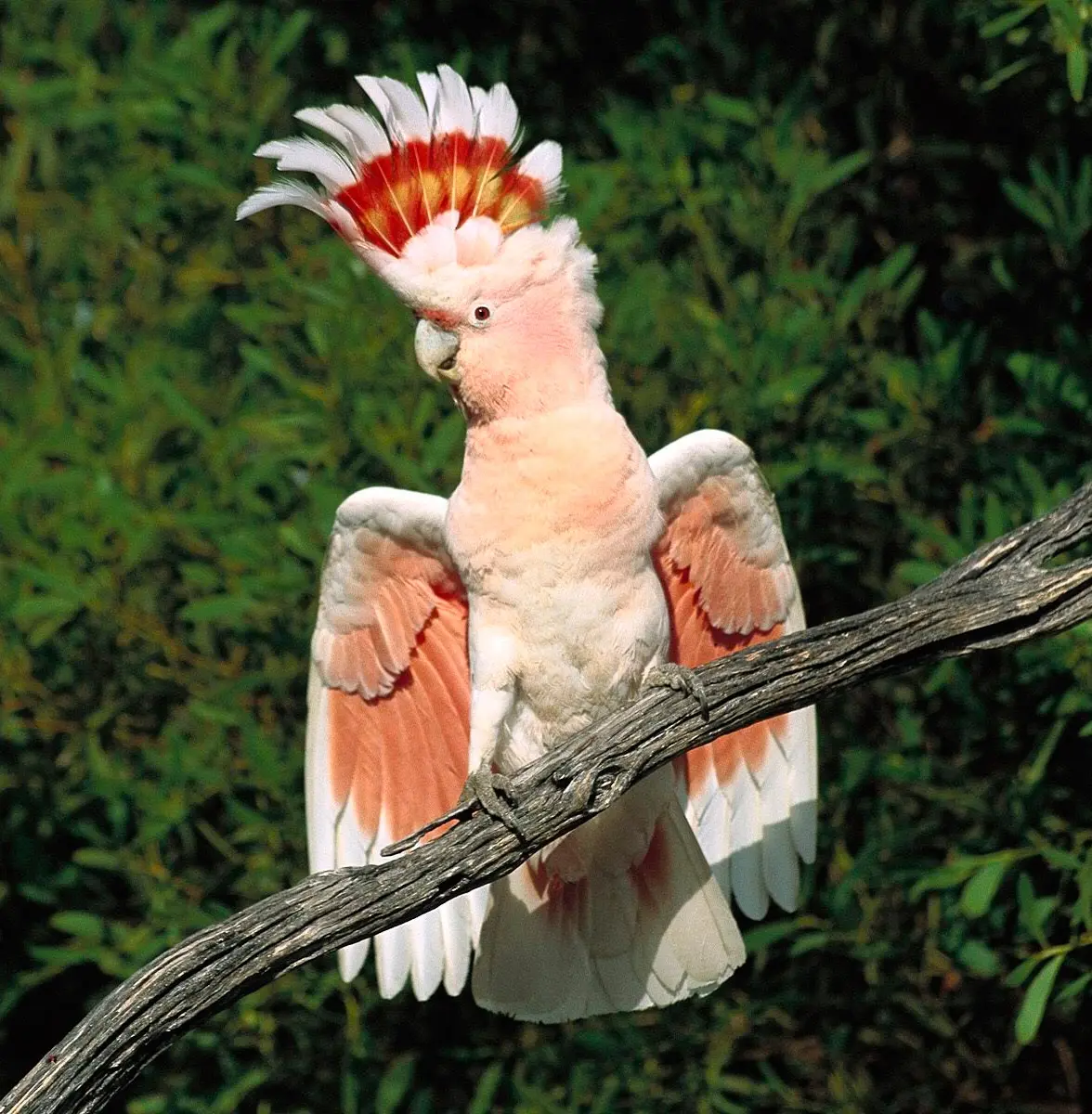
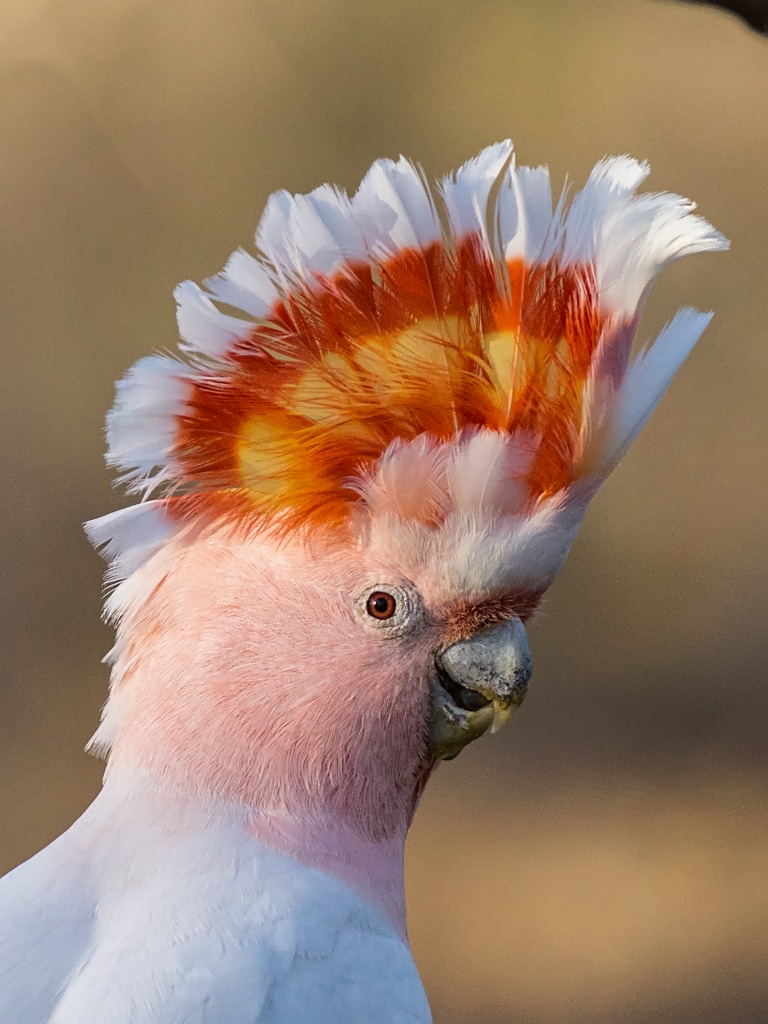
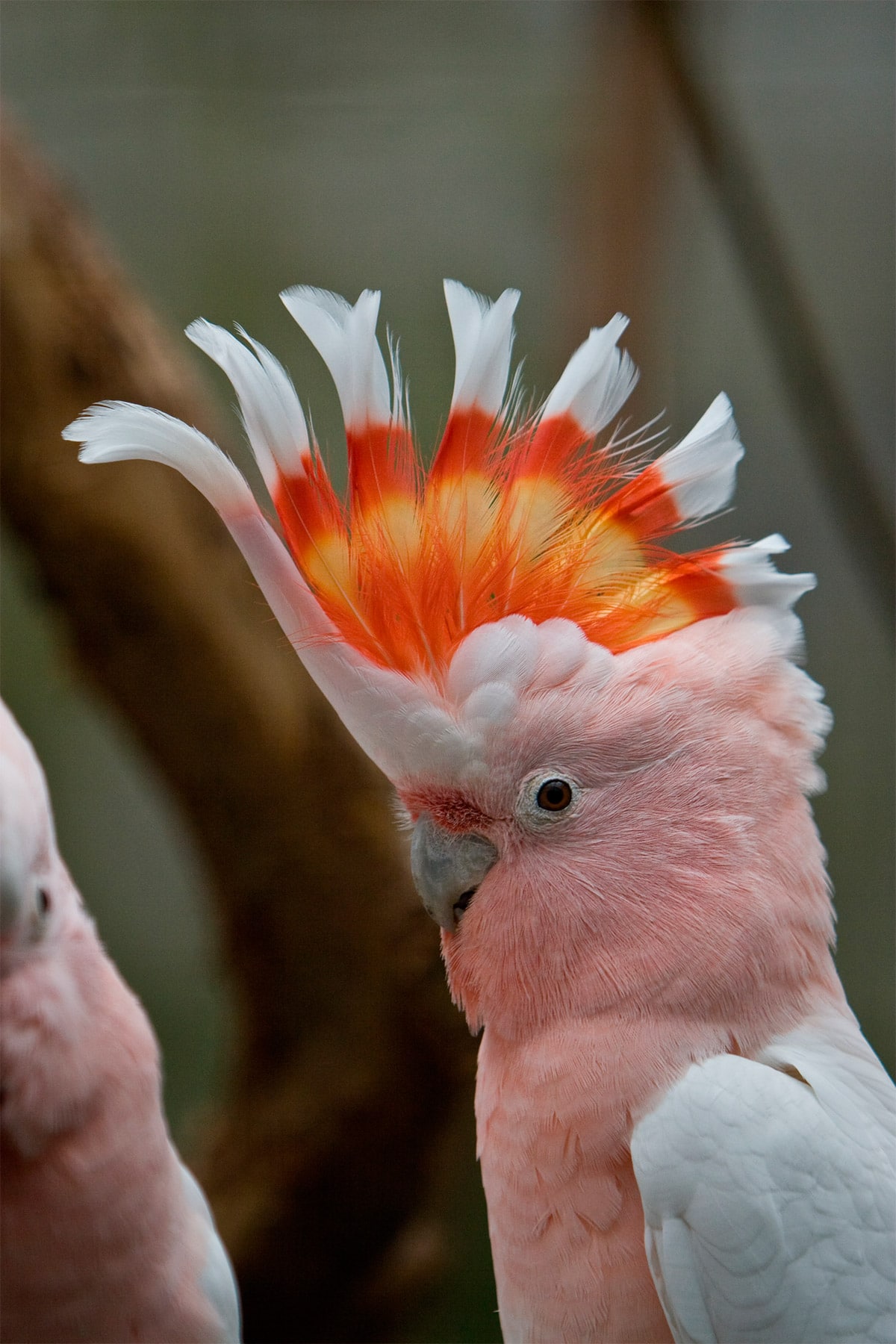
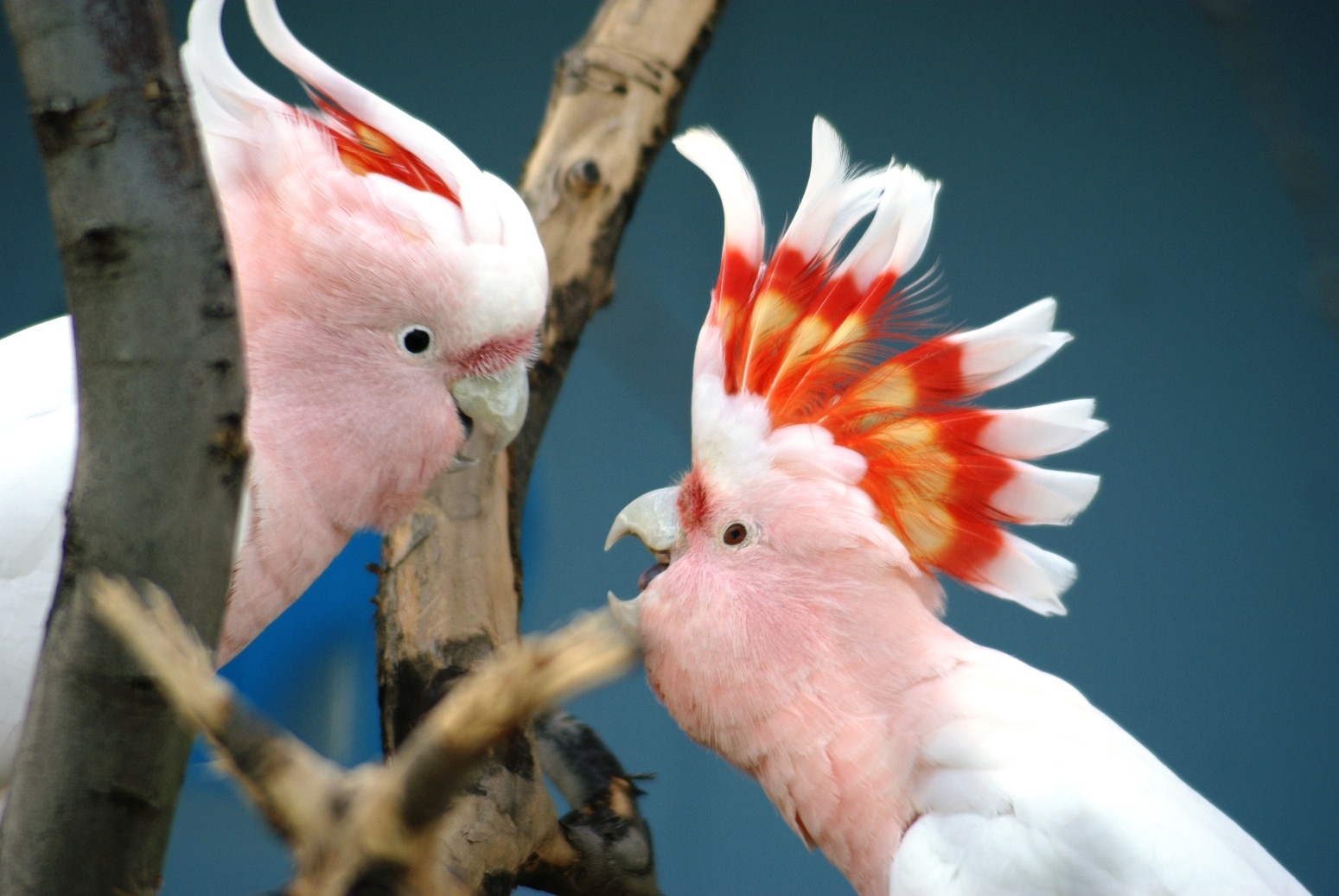
The Pink cockatoo (Cacatua leadbeateri) is distinguishable by its spectacular Crest composed by 16 long feathers forward curved. These pens have a wide base with a slightly pink and yellow red-stained central part.

The top ends of the crest are white. Another set of more rounded feathers grow over the eye, forming a white base when the crest is raised. The forecrown is spanned by a band thin and reddish.

The face, neck and underparts are salmon, becoming is white in the coverts.
The flight feather and tail are white with infiltration of salmon on the bottom.

The bill is horn. The irises dark brown and legs grey.

The female looks like your partner, but the head Pink salmon and underparts they are paler. The band Yellow that decorates the bill is brighter and wider. Upper belly It is white instead of Pink salmon. The irises are reddish-pink.

The immature they are identical to the female. The frontal band is bright orange-red, the irises light brown.

Description 2 subspecies

  • Cacatua leadbeateri leadbeateri

    (Vigors, 1831) – Nominal.


  • Cacatua leadbeateri mollis

    (Mathews, 1912) – Both similar to the kind adults nominal, but with the crest darker red, with little or no yellow. White Peak.

Behavior:

The couple is the basic social unit, but are maintained contact with other couples nonreproductive through the establishment of groups.

Out of it breeding season, There are mainly small bands consisting of 10 to 50 birds. Major gatherings occur only during periods of drought or when food sources are abundant. In this case, There may be a few hundred individuals, among them, small Galah.

Dormitories they are occupied exclusively outside the breeding season and the birds leave early at dawn.

The Pink cockatoo they forage in trees and on the ground. But, This species is more arboreal that the Galah wave Little corella.

When moving on the ground, He walks slowly to avoid the tall grass.

In the Flock, a bird play always the role of Sentinel. It adopts a very careful attitude, it partially roughcast its crest and regularly pauses during which is very upright inspecting the surroundings.

During the mid-day heat, it finds shelter in the foliage of the trees.. During the summer, rest period is longer.

The paired birds they are always near each other. During periods of intense heat, This bird visit water points, even during the day. At sunset, they return to your bedroom.

Habitat:

Video – "Pink cockatoo" (Cacatua leadbeateri)

Cockatoo leadbeateri _ Inkakakadu`s in Aktion

Its population is distributed by a variety of forest habitats in arid or semi-arid areas.
The species is closely related to the areas of «Mallee«.

Found particularly in afforestation of cypress and eucalyptus, in mixed plots of eucalyptus and Casuarinas or near cliffs.
Its presence in a place is largely also to the existence of a water fountain.
On the other hand, shows a very weak attachment to the fragmented habitats that is no long.

Reproduction:

The nesting season running from August to December. Cockatoos return to their traditional nesting sites.

The cavity for the nest receives improvements: the entrance is enlarged and covered with a layer of fresh chips placed at the bottom of the nest. The nests they are almost always far from one another, at a distance of 2 km.

The spawning is between 2 and 5 eggs being deposited between 2 and 3 days. The incubation It made both parents, begins after the deposit of the third egg and lasts between 23 and 24 days.

The chicks they remain at the bottom of the cavity during 57 days and are fed by the male and the female indistinctly. The family stays near the nest until the last hatchling leaves the nest., they will then join other family groups in the place where food resources are appropriate.

On rare occasions, the Pink cockatoo is forced to eject a couple of Galah He started to lay eggs in their nest, but it can also happen that this form of parasitism is a success. In this case, the partner of the Pink cockatoo takes care of eggs and young after hatching. When are born, the young of the species Eolophus roseicapilla, they behave exactly like their hosts, ignoring the difference in origin.

Food:

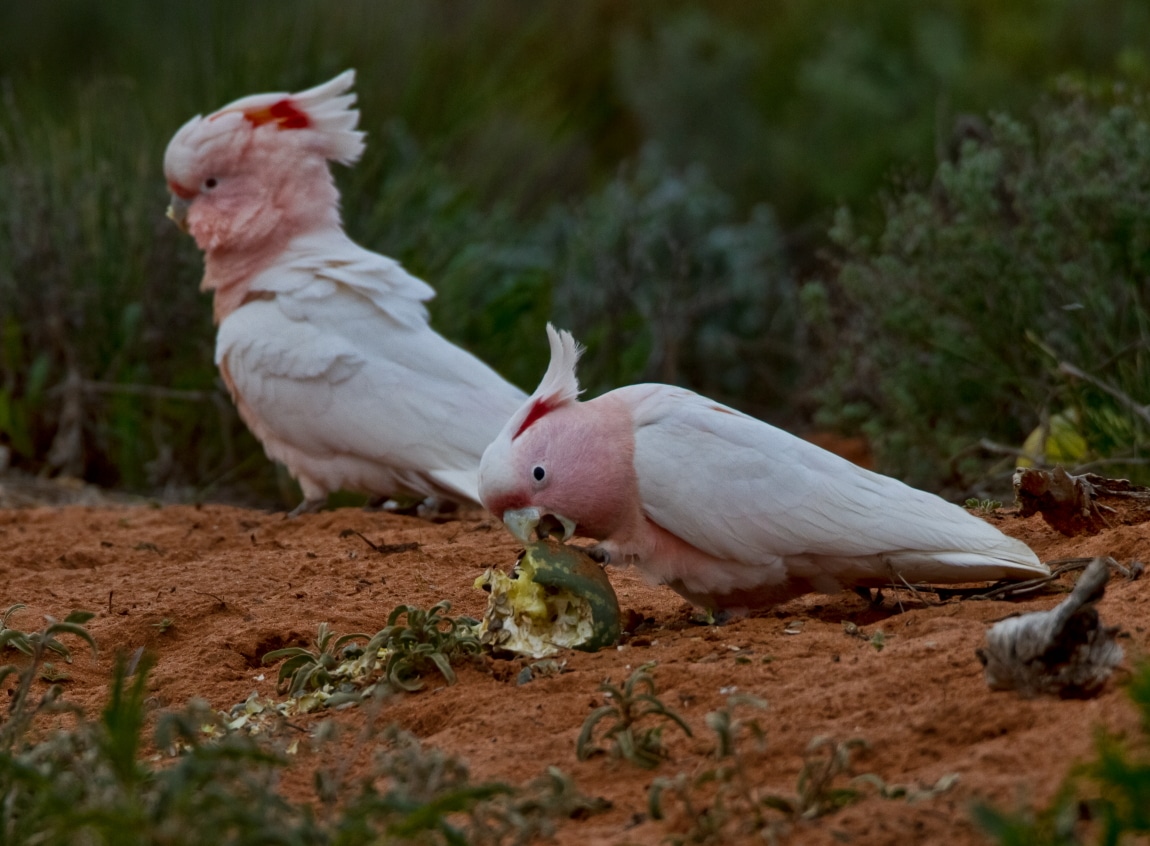
With feed seed, herbs, cereals and often of melons (Cucumber myiocarpus). Also consume fresh local figs, pine cones, eucalyptus seeds, bulbs, dried fruits, estate, insects and larvae.

During and after your meal, These birds biting branches and pieces of bark, causing a shower of timber crushed at the foot of the trees.

During periods of intense heat, increase the frequency of his visits to water points.

Distribution:

Size of the area of distribution (reproduction / resident): 2,88 million km2

endemic to Australia. Its main strongholds are in the southwest of Queensland where is quite extended and South of Australia, where is locally common.

In other parts of the continent are very rare and scarce, going back to the vicinity of the Northern Territory and carrying out raids in Western Australia.

Distribution 2 subspecies:

  • Cacatua leadbeateri leadbeateri

    (Vigors, 1831) – Nominal.


  • Cacatua leadbeateri mollis

    (Mathews, 1912) – Interior West and centre of Australia, towards the East, up to the eyre peninsula and the basin of the Lake Eyre, South of Australia.

Conservation:

• Least concern (Red list 2006).

• Listed as vulnerable by NSW national parks and wildlife.

• Threatened by the law of conservation of species (2005).

Its distribution is very unequal, but only in the Centre - this actually is and South-East where they have widespread. In other parts of Australia, This species is declining due to the thinning of the habitat and its marketing as bird cage.

Competition with the Galah's disability for nesting cavities may be a crucial problem in the future if this species continues to grow. The world population of the Pink cockatoo It is estimated in a little less than 20 000 birds. It is classified as near threatened.

"Pink cockatoo" in captivity:

It is a frequently held in captive animal in your Australia natal, but it is less known in other countries like ours. Its price in the market is very high, especially that of males, being one of the most expensive white cockatoos.

Very noisy, with a great personality, playful and very active. It is very destructive, We must therefore provide toys and wood to gnaw, or otherwise you will satisfy with house furniture and other elements. Inactive animals, bored or stressed tend to yell a lot.

Its life expectancy round between the 40 and 60 years of life.

Alternative names:

– Pink Cockatoo, Leadbeater’s Cockatoo, Major Mitchell’s cackatoo (ingles).
– Cacatoès de Leadbeater, Cacatoès commandant Mitchell (French).
– Inkakakadu (German).
– Cacatua-rosa (Portuguese).
– Cacatúa Abanderada, Cacatúa Inca (español).

scientific classification:

– Order: Psittaciformes
– Family: Cacatuidae
– Genus: Cockatoo
– Scientific name: Cacatua leadbeateri
– Citation: (Vigors, 1831)
– Protonimo: Plyctolophus Leadbeateri

Images Flag-crested Cockatoo:


Species of the genus Cacatua
  • Cacatua tenuirostris
  • Cacatua pastinator
  • —- Cacatua pastinator derbyi
  • —- Cacatua pastinator pastinator
  • Cacatua sanguinea
  • —- Cacatua sanguinea gymnopis
  • —- Cacatua sanguinea normantoni
  • —- Cacatua sanguinea sanguinea
  • —- Cacatua sanguinea transfreta
  • —- Cacatua sanguinea westralensis
  • Cacatua goffiniana
  • Cacatua ducorpsii
  • Cacatua haematuropygia
  • Cacatua galerita
  • —- Cacatua galerita eleonora
  • —- Cacatua galerita fitzroyi
  • —- Cacatua galerita galerita
  • —- Cacatua galerita triton
  • Cacatua ophthalmica
  • Cacatua sulphurea
  • —- Cacatua sulphurea abbotti
  • —- Cacatua sulphurea citrinocristata
  • —- Cacatua sulphurea parvula
  • —- Cacatua sulphurea sulphurea
  • Cacatua moluccensis
  • Cacatua alba

  • Sources:

    – Avibase, infoexoticos, Oiseaux.NET

    – Photos: imagenesdeanimalessalvajes (Alexis Obninsk), David Cook Wildlife Photography, Wikimedia , parcodeipappagalli , Geoffrey Dabb

    – Sounds: Patrik Åberg (Xeno-canto)

    ▷ The world of Pets: Dogs, cats, birds, reptiles, amphibians

    Purple-naped Lory
    Lorius domicella

    Purple-naped Lory

    Content

    Lori damsel drawing

    Description

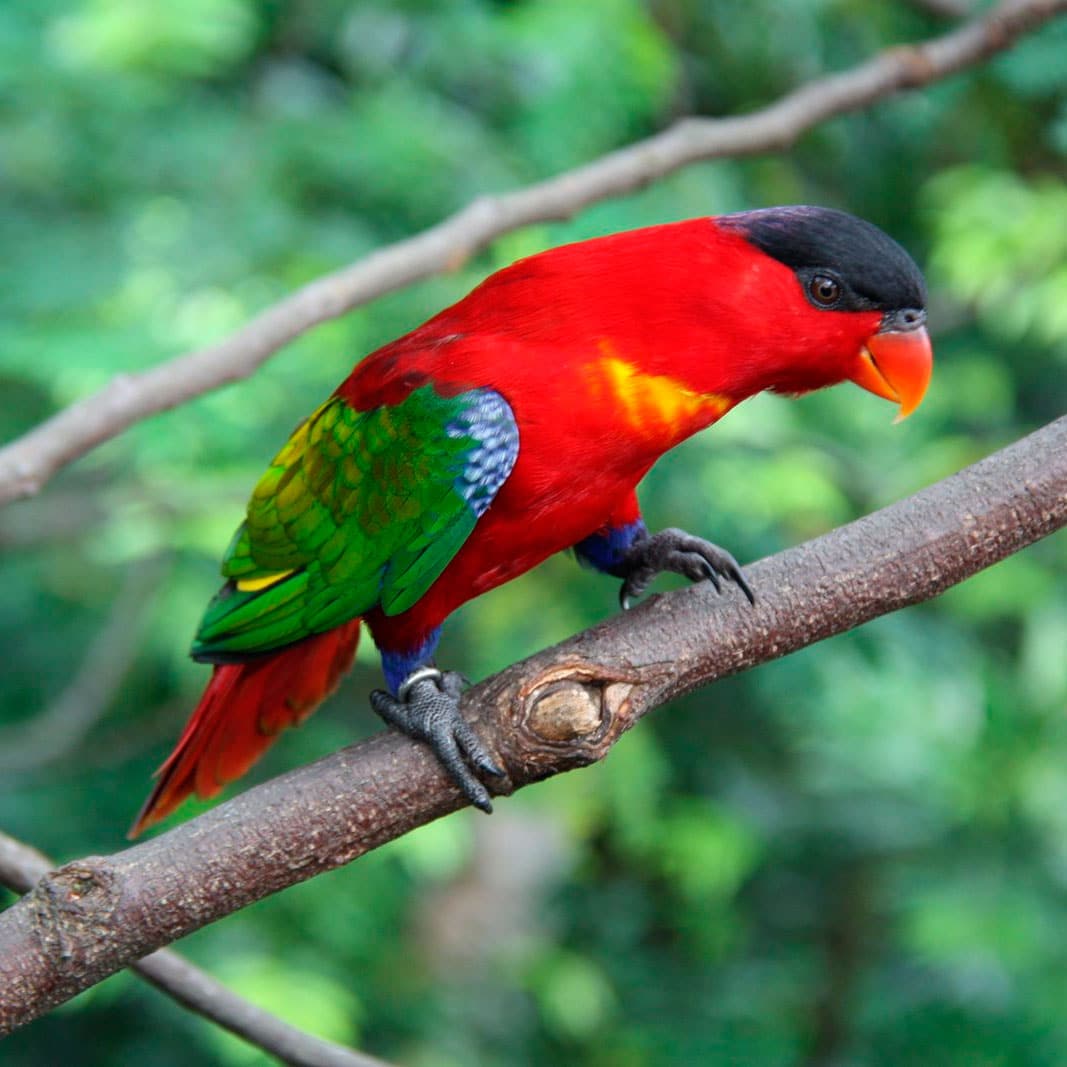
    The Purple-naped Lory (Lorius domicella) has a length of 28 cm.. and an approximate weight of 235 g..

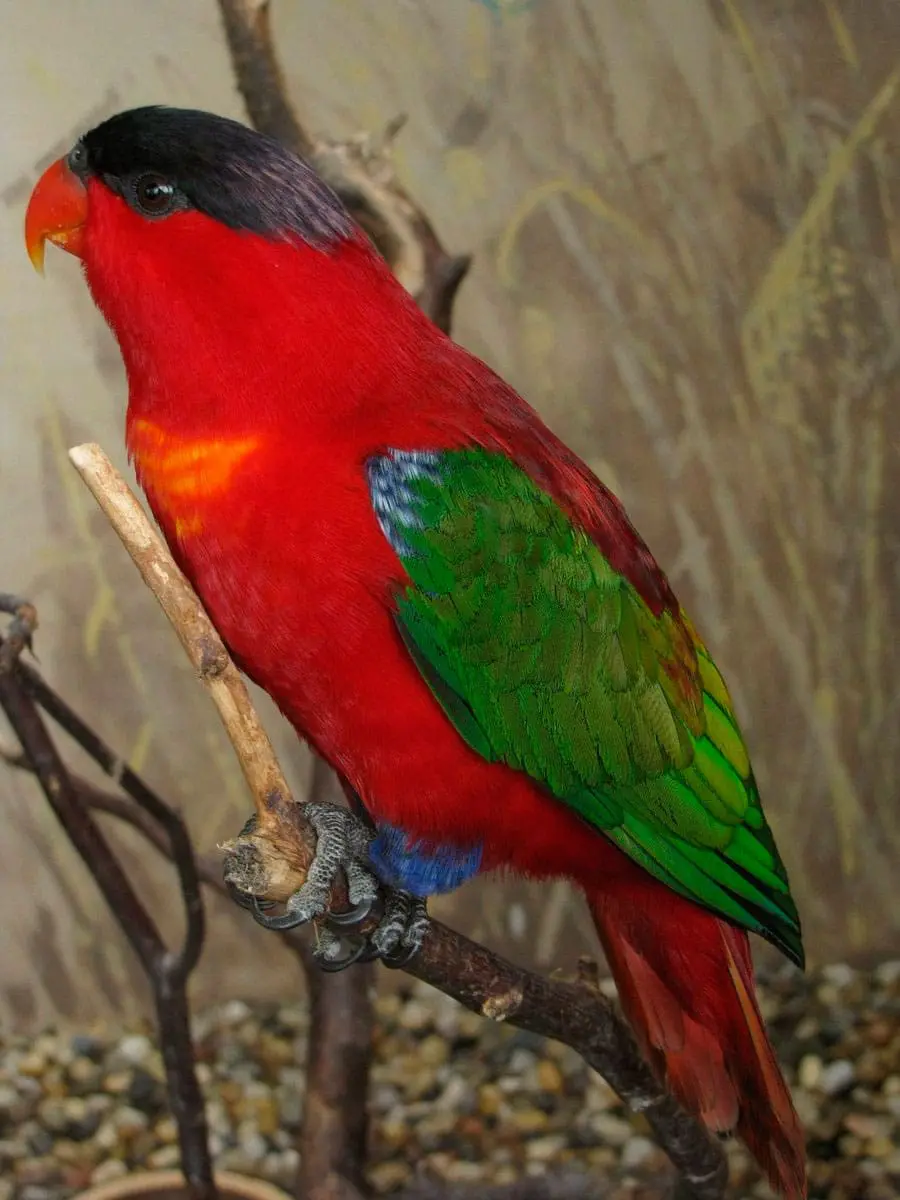
    The forecrown, crown and nape black, with variable purple spots on the back of the top. The cheeks, lores and ear-coverts red. Upperparts red, darker in the center of the the mantle. Upper wing Green with white and purple patch in the shoulder. Color bronze in all the upper inner coverts, the most marked inside opaque red. the flight feather Blackish with area central in the interior of color yellow. Underwing-coverts Violet Blue impregnated white. Underwing coverts black; blue purple in them axillary. Parts low Red with band yellow, variable at the top of the chest; Violet Blue the the thighs, slightly impregnated in green. Tail red, reddish brown tipped. Bill orange; irises reddish brown; dark grey the legs.

    Males and females are equal.
    Immature with yellow stripe in the chest more extensive and more diffuse. Bill Brown in very young birds.

    There is no geographic variation

    Habitat:

    In Seram the Purple-naped Lory found in montane and submontane forests, both primary and secondary, a altitude between 400 and 1.050 m; also in the jungle in the this of the island and in the areas cultivated. They move in pairs, rarely in groups and can be territorial. reproductive ecology of the species in the wild is unknown. Forshaw gives details of an instance of poultry farming in which two eggs were laid., hatching around the 25 days; the young are independent only three months more afternoon.

    A group birding in Ambon

    Reproduction:

    The reproduction of the species in the wild is unknown. Details of breeding in poultry farming establish a clutch of two eggs, incubation in a few 25 days, and the young three months after independence.

    Food:

    Feed on fruits of Pandanus scattered.

    Distribution:

    Size of the area of distribution (reproduction / resident): 6.300 km2

    endemic to the Seram Islands and Ambon (has also been seen in Buru: probably an escaped bird), in Indonesian. There are no recent records of Ambon or Buru. The current records come from the Manusela National Park (uncommon) and the center of Seram and WAE Fufa (locally common).

    In 1987 Bowler and Taylor they found a rate of 0,7 birds per hour in Kineke, in the Manusela National Park; But during nearly two months of observations in 1990, they only saw 10 individuals.

    The species is a bird people of cage in Seram and throughout the province of Maluku and the expansion of foreign trade could pose a threat to their survival.

    The population worldwide is estimated at less than 20.000 individuals in 1991, but currently, the population, is considered on the rise. VULNERABLE.

    Conservation:


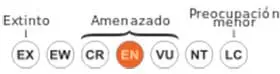
    Endangered

    • Current IUCN Red List category: Danger.

    • Population trend: Decreasing.

    This species has been upgraded to In danger Since its population It is suspected that has fallen below 2.500 individuals mature, with more than 250 in any subpopulation mature individuals.

    Capture unsustainable for local and national trade, as well as the loss of forests due to logging, oil extraction and hydroelectric power combinations.

    These facts, It is suspected, they are causing an downhill fast and constant in the species.

    "Purple-naped Lory" in captivity:

    Very rare.

    Alternative names:

    – Purple-naped Lory, Purple naped Lory (ingles).
    – Lori des dames (French).
    – Erzlori (German).
    – Loris-de-nuca-roxa (Portuguese).
    – Lori Damisela, Lori Domicela (español).

    scientific classification:

    – Order: Psittaciformes
    – Family: Psittaculidae
    – Genus: Lorius
    – Scientific name: Lorius domicella
    – Citation: (Linnaeus, 1758)
    – Protonimo: Psittacus Domicella

    “Damsel Lori” Images:

    Videos "Purple-naped Lory"

    ————————————————————————————————

    «Lori Damisela» (Lorius domicella)


    Sources:

    – Avibase
    – Parrots of the World – Forshaw Joseph M
    – Parrots A Guide to the Parrots of the World – Tony Juniper & Mike Parr
    – Birdlife

    – Photos:

    1 – Zoológico de Praga: Púrpura-naped Lory – animalphotos
    2 – «Lorius domicella-Artis Zoo-Netherlands-8a» by Arjan Haverkamp – originally posted to Flickr as Img_4196e. Licensed under CC BY 2.0 via Wikimedia Commons.
    3 – «Lorius domicella-Banda Islands-Indonesia-upper body-8» by Henri – originally posted to Flickr as Lory = green-tailed lory. Licensed under CC BY 2.0 via Wikimedia Commons.
    4 – Birds-pet-wallpapers – link
    5 – «Lorius domicella-Jurong Bird Park, Singapore-8a-toc» by Lorius domicella-Jurong Bird Park,_Singapore-8a.jpg: kwang chongderivative work: Snowmanradio (talk) – originally posted to Picasa Web Albums as Picasa Web Albums and uploaded to Commons as Lorius domicella-Jurong Bird Park,_Singapore-8a.jpg. Licensed under CC BY-SA 3.0 via Wikimedia Commons.
    6 – Illustrations ©2010 by Frank Knight

    – Sounds: George Wagner (Xeno-canto)
    ▷ The world of Pets: Dogs, cats, birds, reptiles, amphibians

    Galah
    Eolophus roseicapilla


    Cacatúa Galah

    Content

    Description

    Measured around 35 centimeters and between 240 and 330 g. weight.
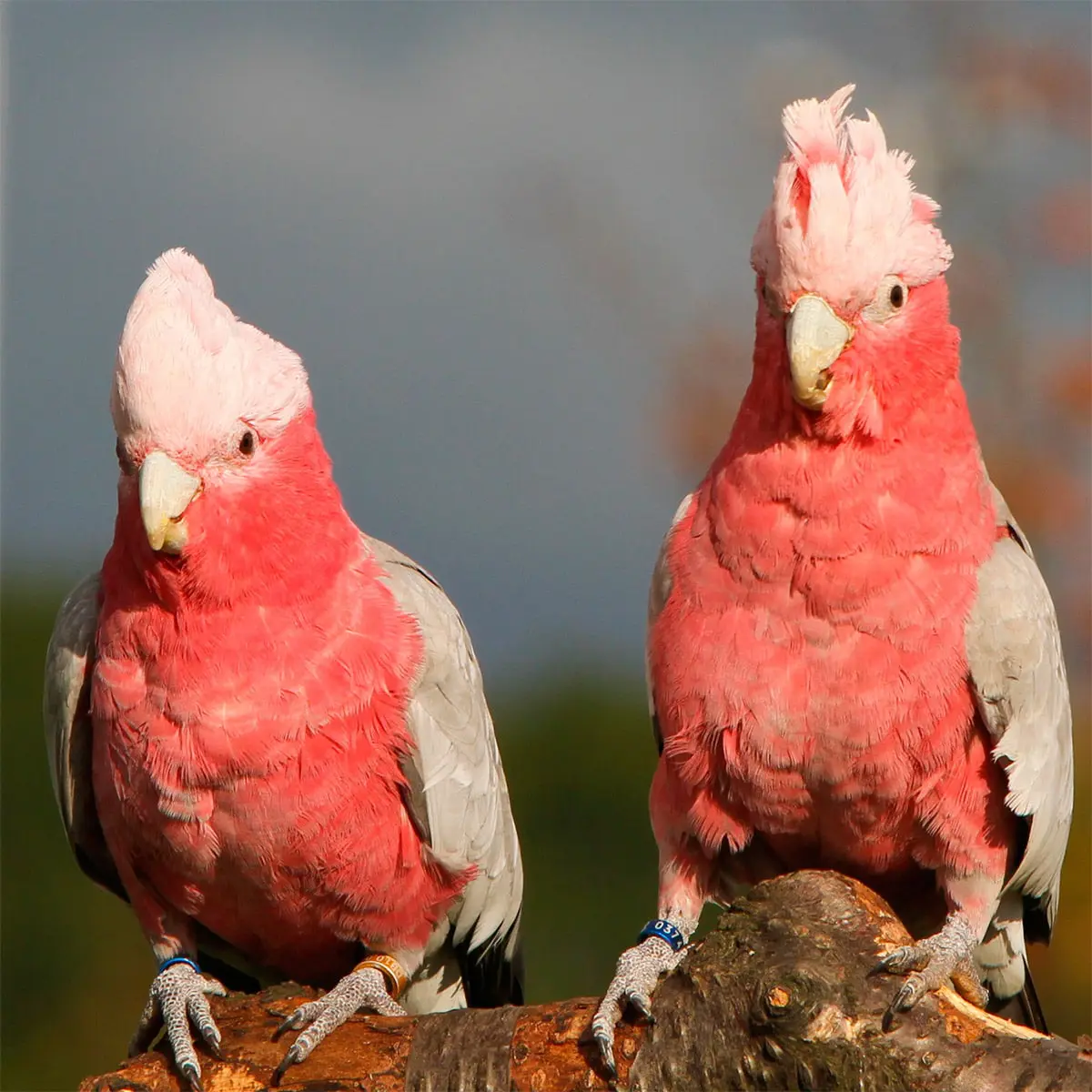
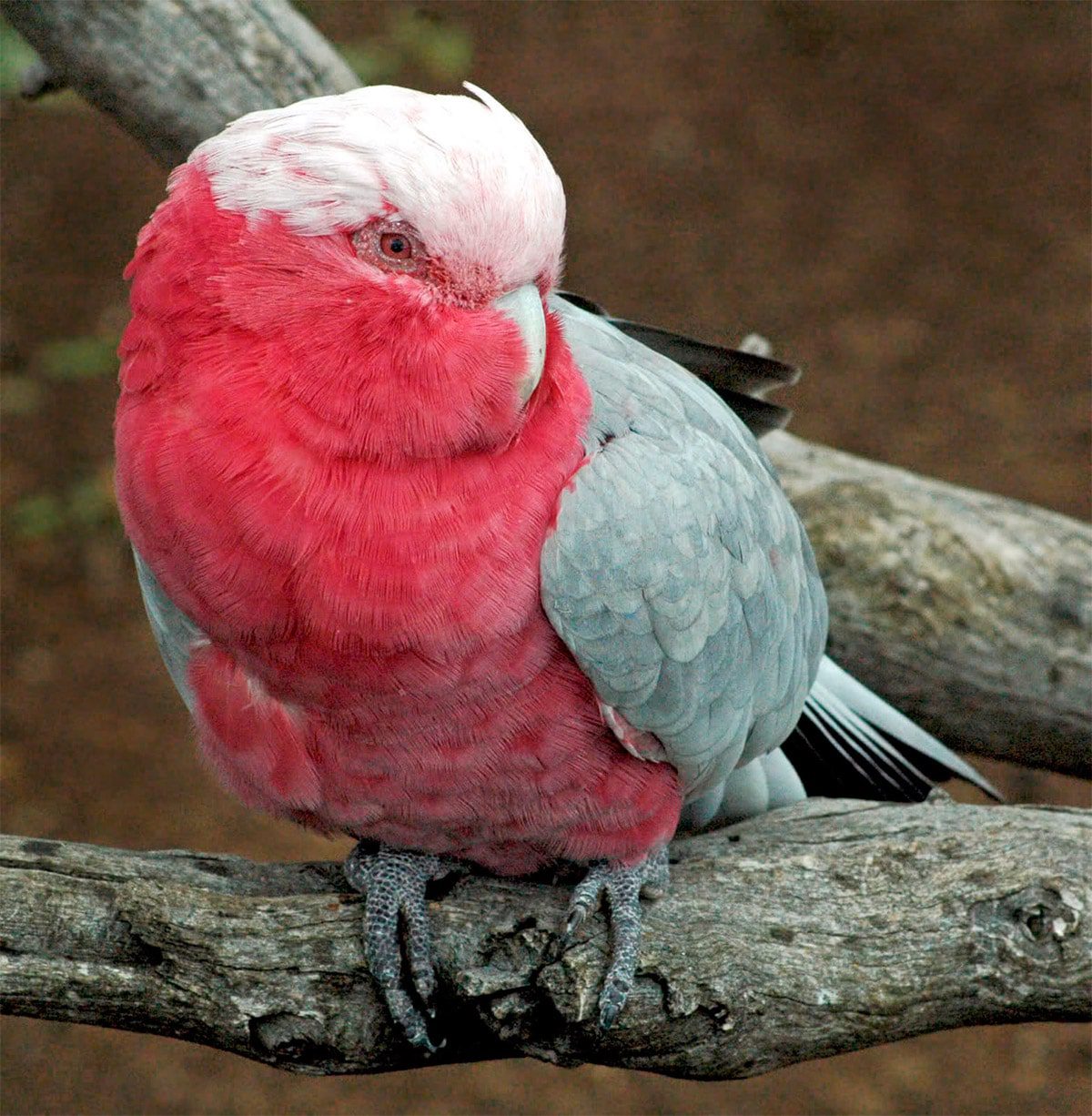
    In the Galah (Eolophus roseicapilla) adult, the front, the hoopoe and the cap they form a joint undercover pale pink in white which contrasts slightly with the back of the neck darker. The face, neck and underparts they are deep pink.
    The bottom of the flanks, the the thighs and mantas subcaudales are grey clear. The upperparts They show a grey pigeon which is slightly paler on the rump and in their flow rates. Tertiary they are grey and dark grey and medium the flight feather.
    The upper part of the tail It is pale grey with a darker terminal tips. The bottom of the tail is uniformly Brown.

    The bill is horn. The bare periophthalmic is greyish Red. The irises shows a dark brown hue. The legs are grey.

    The female is similar to fellow, outside of the irises red.

    The youth can distinguish is from the adults by their underparts grey infiltrated.

    Subspecies description

    • Eolophus roseicapilla roseicapilla:

      The species nominal


    • Eolophus roseicapilla albiceps:

      Differs from the nominal by their larger size, the crest whitish instead of pink, and eye ring Red instead of greyish white.


    • Eolophus roseicapilla kuhli:

      It has a plumage paler and a crest shorter.

    Habitat:

    Video – "Galah" (Eolophus roseicapilla)

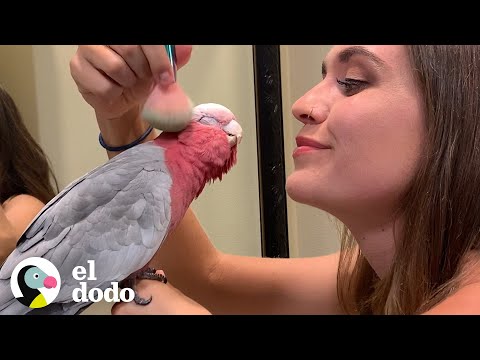
    Ave wants to do everything her human mom does I Soul Mates | the dodo

    In the North of its distribution area, the Galah frequent mountain forests, While much further South, most tend to live in the temperate forests of the lowlands.
    During the summer season, It is more common in high altitude forested areas., staying mainly in small cool and shady ravines, always near a river.

    In Winter, He moved to arid forests in more moderate altitudes. At this time of the year, also visit the parks and urban gardens.

    The Galah It is a bird of open areas, always avoiding the dense forests.

    During the nesting season they live in pairs or in small family groups, but the rest of the year, gather in large flocks where food resources are important. Sometimes can gather up to 1.000 birds in the pastures where they feed.

    They are sentinels responsible to give the alarm in case of danger.
    The power stations are separated by many miles of the rest areas.
    In the evening devoted to drinking and perform aerial stunts before joining the residence. Occasionally it can be active and noisy at night.

    Reproduction:

    In the North, the reproduction has place between February and June.

    During the courtship, the male Struts before his partner making bows, shaking his head, producing low notes and showing a repertoire of stunts.

    Most of the time, the nest is a natural cavity in a eucalyptus, between 2 and 20 meters above the ground.
    The cacatúa Galah You strum the bark of the trunk around the hole which is the entrance of the nest. This practice is sometimes so excessive that they cause the death of the tree. Cliffs can also be used as a place of nesting.

    The same couples usually are mate during all their life and are loyal to the same nesting sites for several consecutive years.

    The spawning includes 2-6 eggs. The female lays an egg every one or two days and the incubation period is about 25 days. Both parents incubate at the same time, and they provide assistance to young people. They feed their young every 3 hours, sounding his beak to regurgitate the food. The young remain in the nest during 7 u 8 weeks.

    While they are able to fly quickly when they come out of the nest, their survival rate is small. The first days after the flight, they return to the nest for the night. Shortly after, large nurseries are formed in which the parents continue to feed their young.

    From time to time, the Galah It has a second litter in a season.

    Food:

    Consume a wide variety of plants, such as oats or wheat seed or the other many herbaceous plants. In addition to that, They also eat insects and their larvae, berries, outbreaks, flowers and seeds of eucalyptus.

    They feed almost exclusively on Earth.

    Distribution:

    Size distribution (reproduction / resident): 14400000 km2

    endemic to Australia where it occupies the entire continent. Most of its population lives in the south-east of New Welsh of the South and in the State of Victoria. In other places, is less abundant.

    Subspecies distribution:

    • Eolophus roseicapilla roseicapilla:

      (Western Australia, South of the great desert of sand and probably in the Simpson Desert in the southern part of the territory of the North)


    • Eolophus roseicapilla albiceps:

      (Tasmania and Southeast of Australia, heading north to the 20 degrees latitude South and East)


    • Eolophus roseicapilla kuhli:

      (to the North of the of Australia, from the District of Kimberley to the cape york peninsula)

    Conservation:

    State of conservation ⓘ


    minor concern Minor Concern ⓘ (UICN)ⓘ

    • Current category of the Red List of the UICN: Least concern.

    • Population trend: In increased.

    Although it has a beneficial action stopping the spread of some weeds, the Galah have a considerable potential of destruction and is considered a pest in most of Australia.

    Crops, especially cereals, they suffer great losses each year. They often cause the destruction of the trees where they nest or establish their residences. The world population It is estimated in more than 5 millions of individuals and the number is constantly growing.

    This remarkable species not is protected in all the regions and can be killed if it causes too much agricultural loss.

    "Galah" in captivity:

    It´s very common in poultry around the world, for being one of the easiest cockatoos both to raise and to care for and for being highly demanded as a pet both for its physical appearance and for its more manageable character than that of other cockatoos. Her offspring should take into account the different subspecies, Therefore we will avoid possible hybridization between them.

    Son parrots extroverts, friendly, playful and affectionate. However, they are still cacatuidos, They therefore require more attention than other psittacine species to be happy animals. Its speaking ability is fairly high within the group of cockatoos, with males that better mimic. It is considered that it might also noisy, especially if you are bored or if it has been poorly educated or poorly maid, so you will have to always buy weaned and well socialized specimens. When they are young and still take porridge his voice is very unpleasant.

    They possess a behavior that is similar to the of the small Cockatiel. Males are more talkers and possess a strong character. The females., on the other hand, they are silent and less dominant. They are most appropriate, Therefore, to be adopted as pets.

    The males they may become aggressive in mating season.

    They have a high tendency to obesity, thing very significantly decreases their hope and quality of life, by what control seriously its diet, providing low number of fats and allowing to do much exercise.

    Its life expectancy formerly was around the 15-18 years, probably due to a bad diet popular ignorance of your requirements. Today there is talk of animals up to 40 years of life.

    If we opt for a cockatoo for the home, a pink may be the best alternative: less demanding than her sisters, slightly less noisy and, If we chose a female, We have the gentleness and docility secured.

    Its price market round the 1.000 €.

    Alternative names:

    – Galah, Rose Cockatoo, Roseate Cockatoo, Rose-breasted Cockatoo, Willock (ingles).
    – Cacatoès rosalbin, Galah (French).
    – Rosakakadu (German).
    – Cacatua-galah (Portuguese).
    – Cacatúa Galah, Cacatúa Rosa (español).

    scientific classification:

    – Order: Psittaciformes
    – Family: Cacatuidae
    – Scientific name: Eolophus roseicapilla
    – Genus: Eolophus
    – Citation: (Vieillot, 1817)
    – Protonimo: cockatoo roseicapilla

    Images Galah Cockatoo:


    Sources:
    – Avibase
    – Oiseaux
    – kktwas
    – faunatura

    – Photos: de.wikipedia.org , commons.wikimedia.org, David Cook Wildlife Photography (kookr), Richard.fisher

    – Sounds: nick talbot (Xeno-canto)
    ▷ The world of Pets: Dogs, cats, birds, reptiles, amphibians

    Gang-gang cockatoo
    Callocephalon fimbriatum


    Gang-gang cockatoo

    Content

    Description

    Of approximately 35 cm.. height and an average weight of 257 g.
    The Gang-gang cockatoo (Callocephalon fimbriatum) it's a little cockatoo, robust, with one crest Dim, large wings wide, and tail short. Son gregarious but relatively calm.
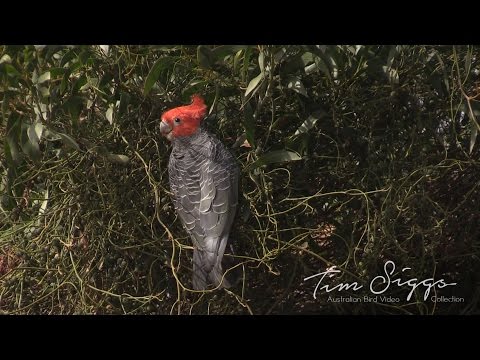
    The males of the Gang-gang cockatoo they are immediately recognizable by their head and crest scarlet. The remaining plumage is slate grey.
    The females they have the head and crest grey. The feathers of the part inferior of the body are lined with green Orange and yellow, giving a scaly appearance. The tail also has stripes horizontal white. Otherwise, is identical to the male.

    The juveniles they are similar to the females, they differ in their top, the head Red and one crest shorter and less twisted.
    The Gang-gang cockatoo not can confuse it with other species of parrots. In flight, However, sometimes their shape resembles to the cacatúa Galah.

    Habitat:

    Video – "Gang-gang cockatoo" (Callocephalon fimbriatum)

    Gang- gang Cockatoo (Callocephalon fimbriatum)

    During the summer are found in the forests of mountain and areas with understory of shrubs dense. In Winter they will move to more dry and low altitudes, more open forests. They can often be seen along the roads and in parks and gardens in urban areas. They require high hollow trees for nest.

    Reproduction:

    Forman couples monogamous. The female chooses a hole in the right tree and both sexes prepare the nest for egg-laying. They line the sides of the hole with sawdust and chewing dust. Both sexes incubate the eggs and care for the young. Parents feed their young for four to six weeks after hatching. Feather.

    Family groups are commonly seen feeding together during the breeding season.. In some cases, nurseries will be formed’ where have several couples nested together, their young perch together in the same tree, While their parents seek for food.

    Food:

    With feed mainly seeds trees and shrubs, native and introduced, with a preference for the eucalyptus, beards and thorns. They also eat berries, fruit, dried fruits, insects and their larvae.

    They are mainly arboreal, they perch on the ground only to drink and forage among the fallen fruits or cones.

    They feed in flocks of up 60 birds out of breeding season. Feed in pairs or small family groups during the breeding season.

    They are able to use exotic plants as food in the urban areas.

    Distribution:

    Size distribution (reproduction / resident): 333.000 km2

    They are endemic to the South-East of Australia. They are widespread in the East of New South Wales, from the Central slopes and plateaus to the South Coast, along the northeastern regions of Victoria to Seymour, with some records in the East of Melbourne, mornington peninsula and Southwest Gippsland.
    Have also been introduced in the Kangaroo Island to the South of Australia.

    Conservation:

    State of conservation ⓘ


    minor concern Minor Concern ⓘ (UICN)ⓘ

    • Current category of the Red List of the UICN: Least concern.

    • Population trend: In increased.

    Is come affected negatively by deforestation and the removal of mature trees (potential breeding sites). A population is classified as threatened: in the Valley Cove Lane, New South Wales.

    The the rest of the population It is suspected that it may be increasing and now will spend the winter in the suburbs of Canberra.

    The world population are estimated at more of 20,000 individuals.

    "Gang-gang cockatoo" in captivity:

    It´s very rare in poultry and hard to find as a pet.

    Son Smart and playful, but they have a great tendency to suffer from software. They are very destructive for what need of abundant toys to not attack against the furniture of the House.

    When you get bored, they are often automutilan as a way to fight against boredom.

    Its life expectancy You can overcome the 60 years.

    Alternative names:

    – Gang-gang Cockatoo, Cockatoo Corella, Helmeted Cockatoo, Red-crowned Cockatoo, Red-headed Parrot (English).
    – Cacatoès à tête rouge, Cacatoès gang-gang (French).
    – Helmkakadu, Helm-Kakadu (German).
    – Cacatua-gang-gang (Portuguese).
    – Cacatúa Gang Gang, Cacatúa Gang-gang (español).

    scientific classification:

    – Order: Psittaciformes
    – Family: Cacatuidae
    – Scientific name: Callocephalon fimbriatum
    – Genus: Callocephalon
    – Citation: (Grant,JB, 1803)
    – Protonimo: Psittacus fimbriatus

    Images Gang-gang Cockatoo:


    Sources:
    – Avibase
    – infoexoticos
    – Birdlife

    – Photos: Jan Wegener, Marbiz (Panoramio), papouch.webzdarma.cz, Benjamint444 (commons.wikimedia.org)

    – Sounds: (Xeno-canto)
    ▷ The world of Pets: Dogs, cats, birds, reptiles, amphibians

    Glossy black cockatoo
    Calyptorhynchus lathami


    Glossy black cockatoo

    Content

    Description

    46 to 51 cm.. height and between 400 and 500 g. of weight.
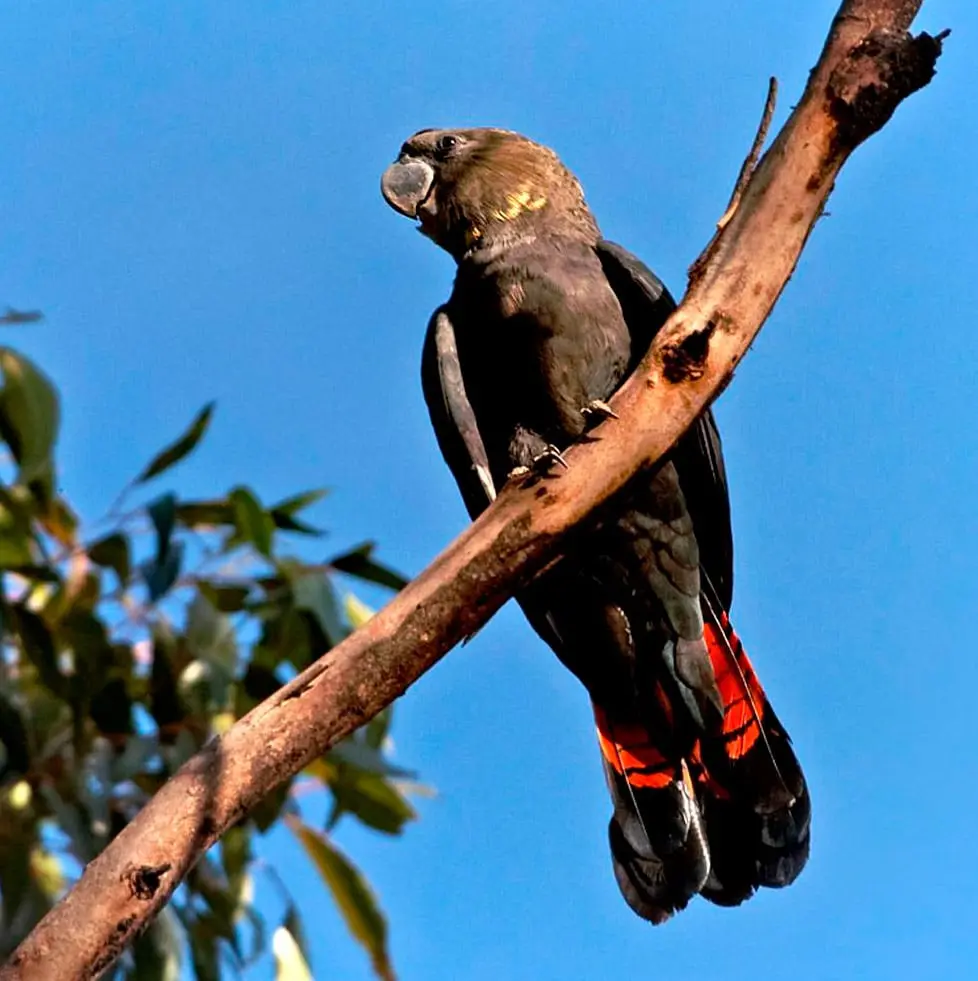
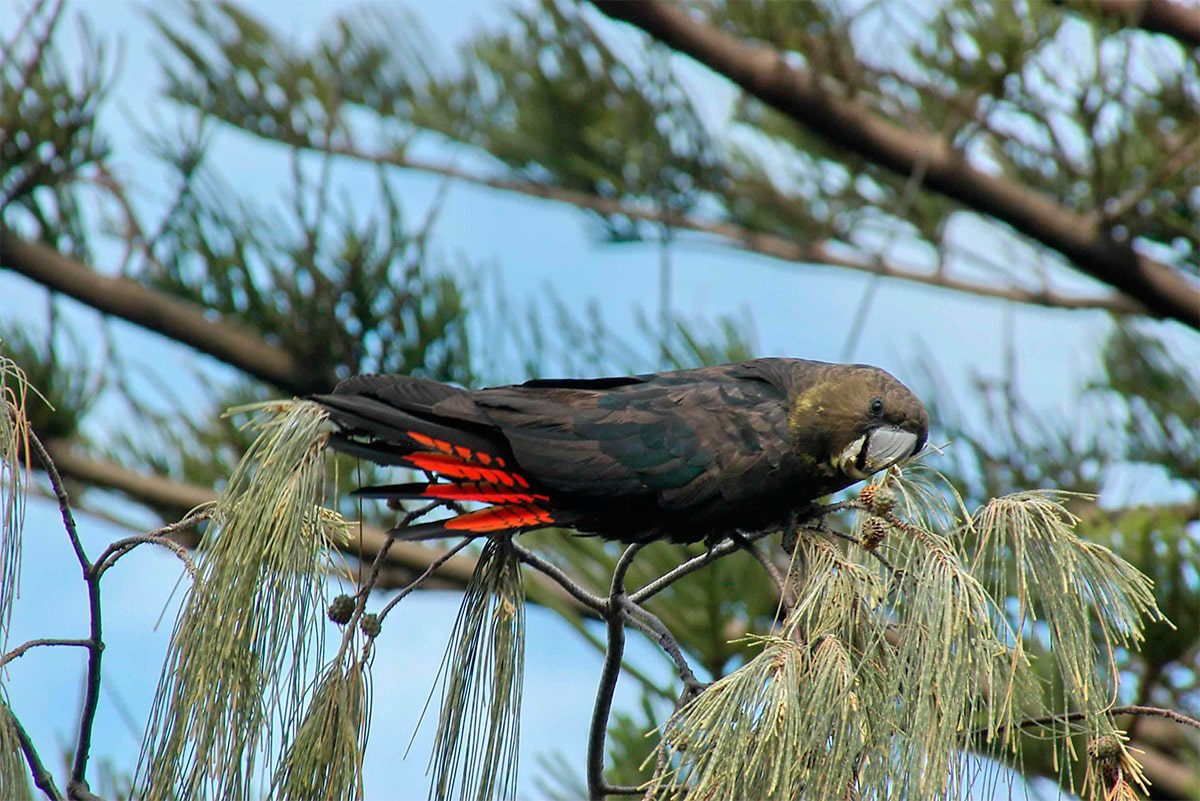
    The Glossy black cockatoo (Calyptorhynchus lathami) is the smallest of the 5 black cockatoos and is restricted to the East coast of Australia (a population isolated also is reproduced in the Islands Kangaroo).
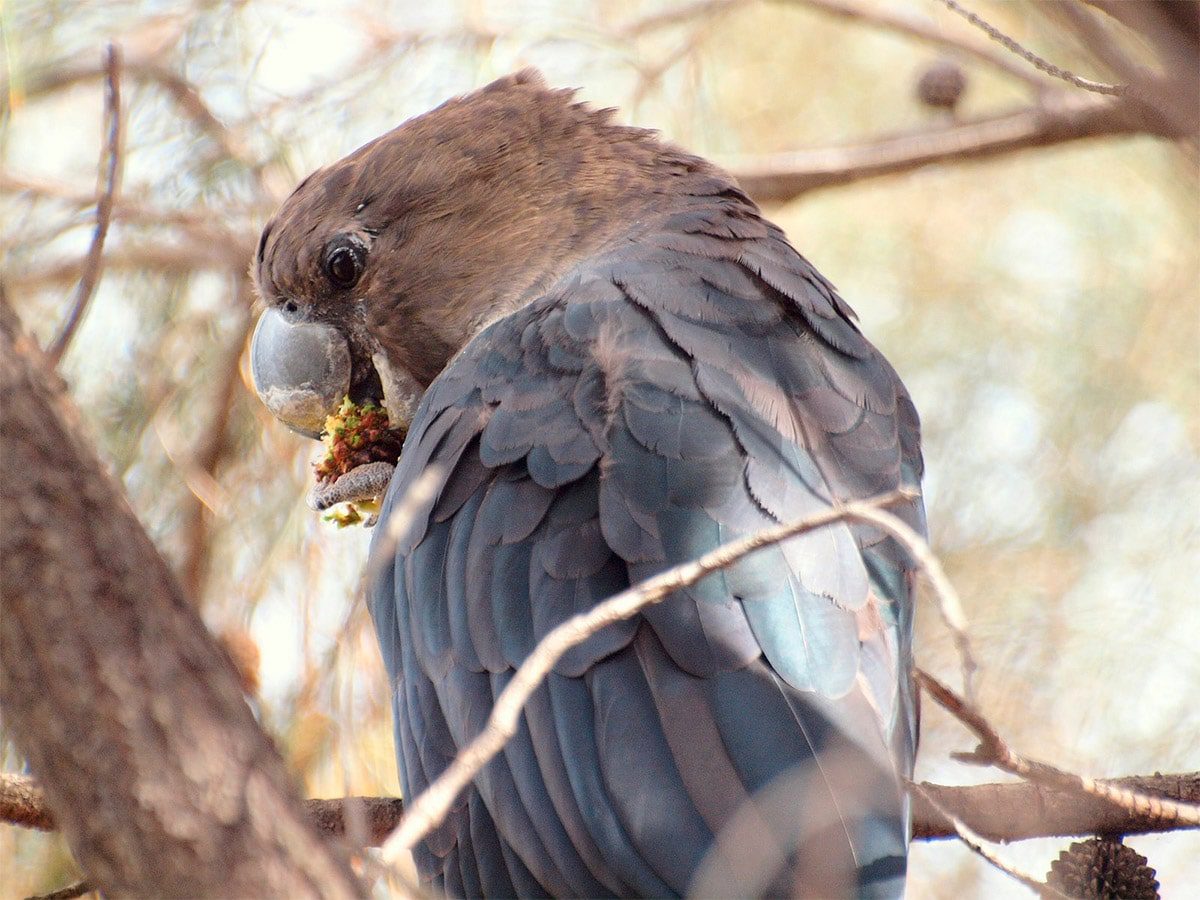
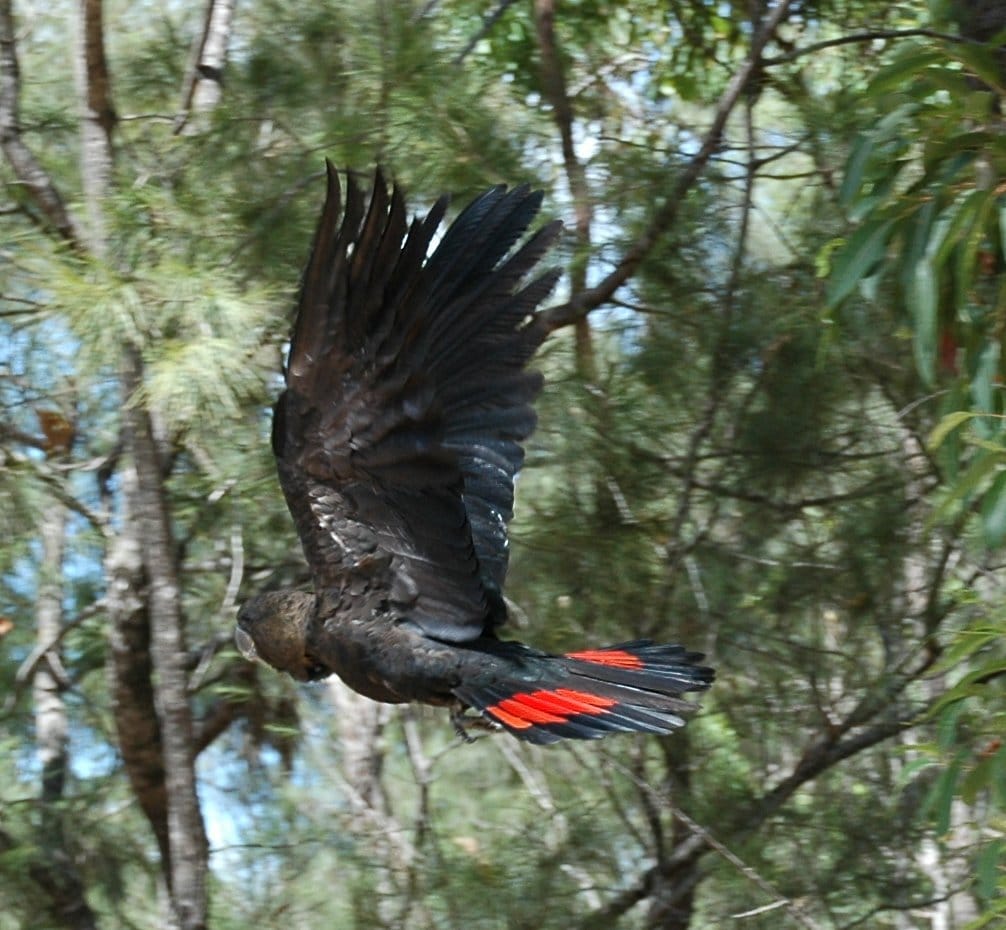
    The male is brown-black color with a small crest rounded and bright Scarlet spots in the tail. The female shows spots irregular in color yellow in it head, The Scarlet patches in the tail they are permeated by narrow black bars and edges of pale yellow on the underparts of the wings.
    The immature they are similar to the females, but they lack the yellow markings on the head and show different yellowish tones in the feathers, the chest and in the belly.

    Subspecies description

    • Calyptorhynchus lathami lathami

      (Temminck, 1807) – The nominal.


    • Calyptorhynchus lathami halmaturinus

      (Mathews, 1912) – Medium-size ones 48 cm. length and 510 to 515 weight g, with a wing of approximately 90 cm.. The of adults they are mainly black, dark brown in the head, the neck and the bottom of the body, and Red panels (in males) or orange-red with bars Black (in females) on tail. The female adult is also conspicuous in the head. These patches are absent from most males., Although they can be expressed faintly in a few individuals (Higgins 1999).

      The immature are similar in appearance to the male adult, but have small stains yellow in it head; spots or bars yellow in the chest, belly and flanks; yellow or orange spots on the wing (mainly on the bottom); Red or orange-yellow panels with black bars at the tail; One bill pale grey (instead of dark); And a ring of skin around the eye pale grey (instead of grey dark) (Higgins 1999, L. Pedler 2007, com. Pers.).


    • Calyptorhynchus lathami erebus

      (Schodde & Mason,IJ, 1993) – The only difference with the nominal species resides in that has the bill shorter.

    Habitat:

    Video – "Glossy black cockatoo" (Calyptorhynchus lathami)

    Glossy-black Cockatoo (Calyptorhynchus lathami ) HD Video clip 1/3

    Areas forested frequently dominated by casuarinas of which are highly dependent for its food. These are small shrubs commonly known as the Sheoaks, wood for beef (Beefwood) or Australian pine. These shrubs are widespread in tropical and subtropical regions.

    They are also distributed in open humid forests, difficult terrain where deforestation has not been too great. They have an imperative for natural tree cavities to nest.

    Reproduction:

    Forman couple during all the life. The couple has relationships throughout the year. This type of family of them parrots prefers to nest in cavities natural of the eucalyptus, whether dead or in full vitality. The nest usually placed at an altitude that ranges between the 3 and 30 meters above the ground. The cavity is filled with leaves and branches. Sometimes, together with other breeding pairs, they share the same tree year after year.

    In New South Wales the season extends from March to August. The spawning It consists of a single egg white. It is the female that takes charge of most of the tasks.: It prepares the nest and incubates herself. Never leave the nest until the small is reached the age of one week. In most cases, the male provides the female with food and assistance until the young can fend for itself, normally four months which remains with them until the next breeding season.

    Food:

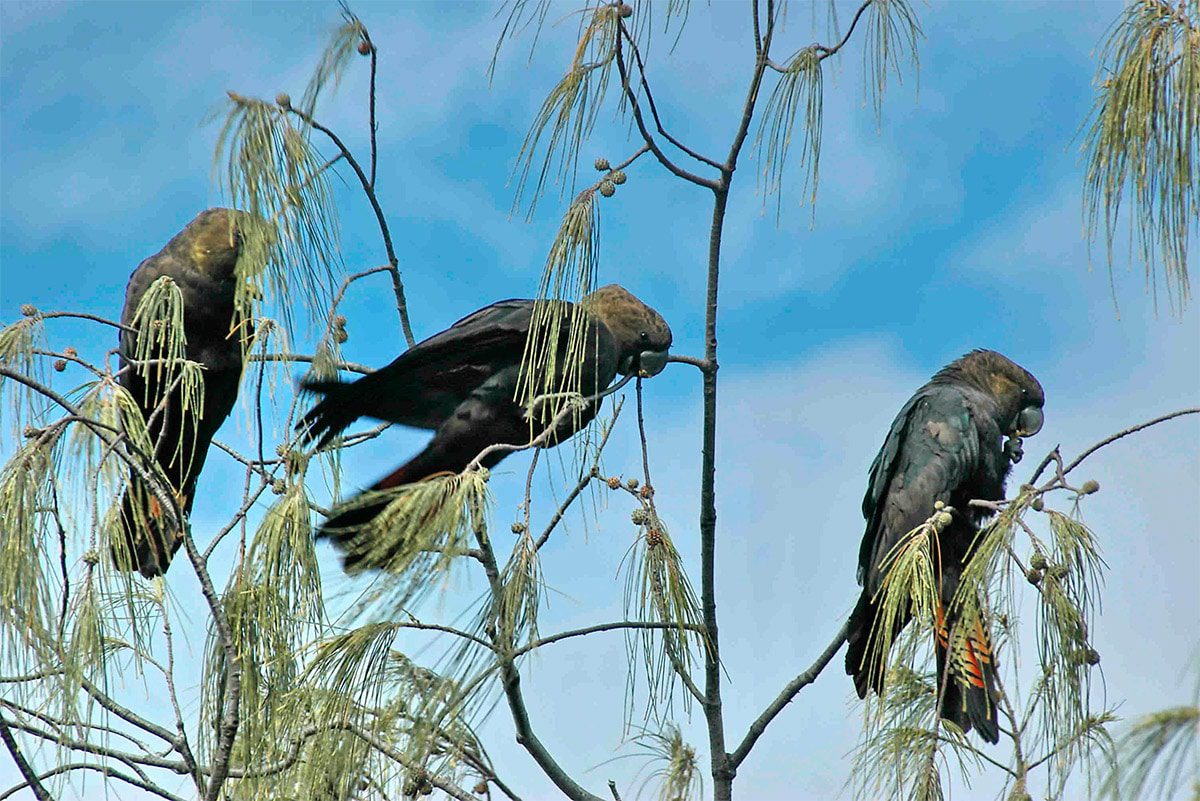
    It feeds almost exclusively on the seeds several species of She-oak (Casuarina and Allocasuarina). You can also sometimes eat larvae of wood-boring. They feed in threes, less frequently in pairs, small groups or flocks of up to 60 birds. They can be detected by the snapping of their beaks and the remains of the casuarina cones and twigs that fall.

    Distribution:

    Size distribution (reproduction / resident): 770.000 km2

    The species is Rare Although widespread in suitable forests of the central coast and forest habitats of Queensland and in the interior of the southern plateaus and Plains of the Midwest's New South Wales, with a small population in the Riverina. There is an isolated population in the Kangaroo Island, South of Australia.

    Subspecies distribution

    • Calyptorhynchus lathami lathami

      (Temminck, 1807) – The nominal.


    • Calyptorhynchus lathami halmaturinus

      (Mathews, 1912) – Kangaroo Island (South of Australia)


    • Calyptorhynchus lathami erebus

      (Schodde & Mason,IJ, 1993) – It is from Australia (the central eastern coastal area of Queensland)

    Conservation:

    State of conservation ⓘ


    minor concern Minor Concern ⓘ (UICN)ⓘ

    • Current category of the Red List of the UICN: Least concern.

    • Population trend: Decreasing.

    Like most parrot species, the Glossy black cockatoo is protected by the Convention on international trade in endangered species of Fauna and Flora Silvestres ( CITES ), with its inclusion in the list of the Appendix II of vulnerable species, What makes the import, the export and trade of animals captured in the wild is illegal.

    Justification of the population

    Garnett and Crowley (2000) estimated the size of the population in the following way: 12.000 individuals of the subspecies lathami, 70 breeding pairs of the subspecies halmaturinus (equivalent to 140 individuals) and 5.000 individuals of the subspecies erebus giving a total of 17.140 individuals.

    Justification of trend

    They suspected that the population is declining in general Since the largest subpopulation, lathami, It is slowly decreasing throughout its range. However it is believed that the subspecies Erebus is increasing and the subspecies halmaturinus It is increasing as a result of conservation efforts in the Island Ganguro (Garnett and Crowley 2000).

    "Glossy black cockatoo" in captivity:

    Like the other black cockatoos, the Glossy black cockatoo (Calyptorhynchus lathami) is extremely rare in the poultry. In Australia It has attained breed in captivity.

    Alternative names:

    – Glossy Black-Cockatoo, Casuarina Cockatoo, Casuarine Cockatoo, Latham’s Cockatoo, Leach’s Black-Cockatoo, Leach’s Red-tailed Cockatoo, Nutcracker (English).
    – Cacatoès de Latham, Cacatoès noir étincelant (French).
    – Braunkopfkakadu (German).
    – Cacatua-preto-brilhante (Portuguese).

    scientific classification:

    – Order: Psittaciformes
    – Family: Cacatuidae
    – Scientific name: Calyptorhynchus lathami
    – Genus: Calyptorhynchus
    – Citation: (Temminck, 1807)
    – Protonimo: Psittacus Lathami

    Images Calyptorhynchus lathami:


    Species of the genus Calyptorhynchus
  • Calyptorhynchus banksii
  • —- Calyptorhynchus banksii banksii
  • —- Calyptorhynchus banksii graptogyne
  • —- Calyptorhynchus banksii macrorhynchus
  • —- Calyptorhynchus banksii naso
  • —- Calyptorhynchus banksii samueli
  • Calyptorhynchus lathami
  • —- Calyptorhynchus lathami erebus
  • —- Calyptorhynchus lathami halmaturinus
  • —- Calyptorhynchus lathami lathami

  • Sources:
    – Avibase
    – Parrots of the World – Forshaw Joseph M
    – Parrots A Guide to the Parrots of the World – Tony Juniper & Mike Parr
    – Birdlife

    – Photos: commons.wikimedia.org, The Glossy Black Conservancy,

    – Sounds: Nigel Jackett (Xeno-canto)
    ▷ The world of Pets: Dogs, cats, birds, reptiles, amphibians

    Red-tailed black cockatoo
    Calyptorhynchus banksii

    Red-tailed black cockatoo

    Content

    Description

    55 to 60 cm.. length between 570 and 870 weight g.

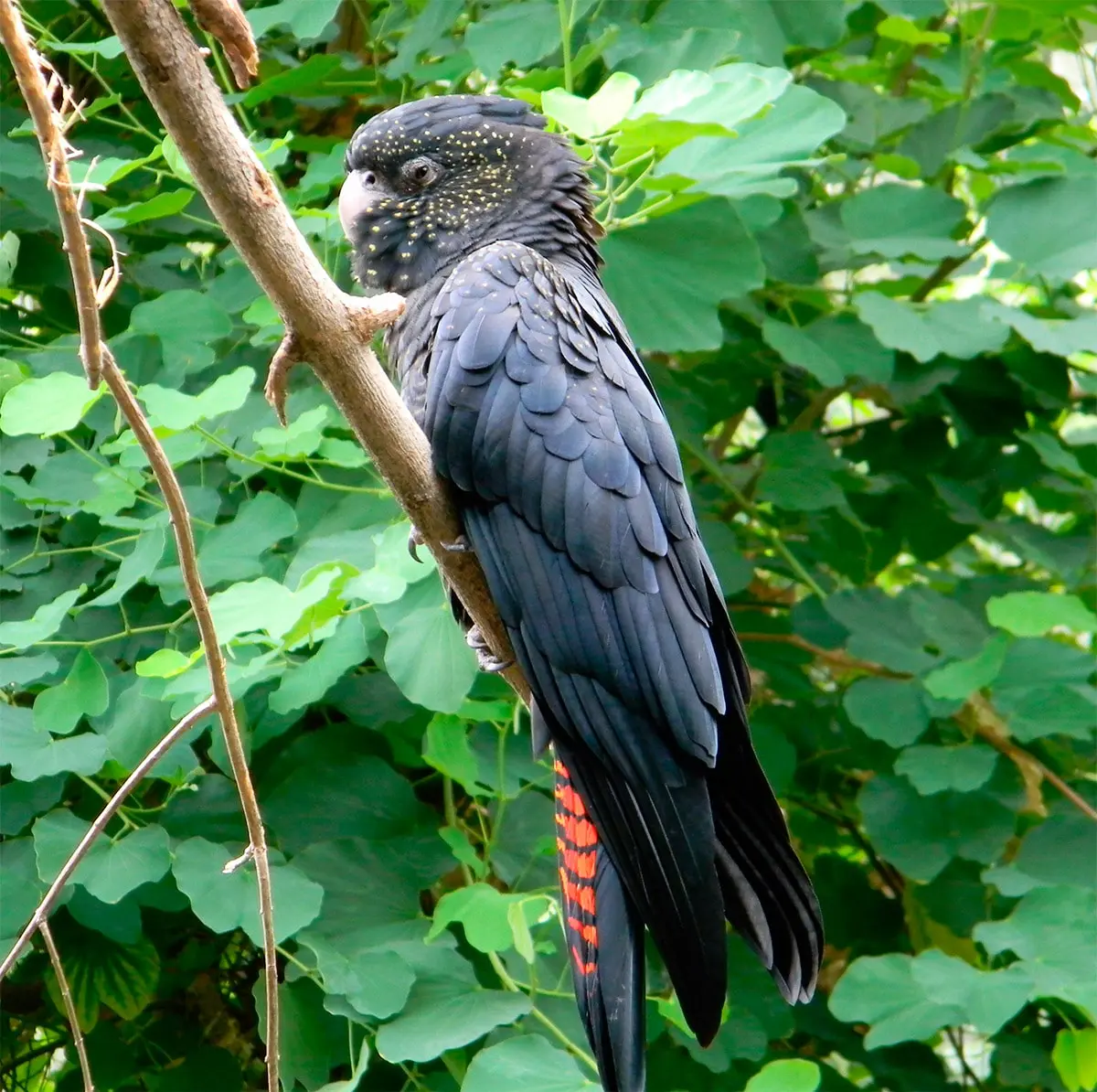
    The adults of the Red-tailed black cockatoo (Calyptorhynchus banksii) present sexual dimorphism. The male is entirely black, with the exception of the sides of the tail that are of color red glossy. The upper part of the head It is a long Ridge which starts from the front and goes up to the nape. The bill is grey dark.
    The females they are slightly smaller. Show a plumage blackish brown with yellow-orange stripes on the tail and the chest. The cheeks and wings they are covered with small yellow spots. The bill is of color bone pale. Lower parts to the tail coverts they are finely excluded in beige.

    The youth are similar to the females until they reach the maturity sexual, around the 4 years. Gradually, as they approach this age, YM will acquire their feathers red which gradually replaced their initial feathers in yellow.

    Description 5 subspecies

    They differ from each other mainly by the size of their beak.

    • Calyptorhynchus banksii banksii

      (Latham, 1790) – Nominal. Grand. Bill dark grey.


    • Calyptorhynchus banksii graptogyne

      (Schodde, Saunders,DA & Homberger, 1989) – It is the smaller of the 5 Subspecies.


    • Calyptorhynchus banksii macrorhynchus

      (Gould, 1843) – Large as it nominal.


    • Calyptorhynchus banksii naso

      (Gould, 1837) – They have wings that seem to be more long and pointy.


    • Calyptorhynchus banksii samueli

      (Mathews, 1917) – Have a size and bill smaller.

    Habitat:

    Wide variety of habitats. Grasslands and scrub, from the dense rainforests to the forests of acacia and eucalyptus.
    Nestbox, These birds are generally dependent on the old eucalyptus, although according to which regions regions, the variety of trees for nesting, could be different.

    To feed, flocks of these cockatoos, they penetrate in agricultural lands and orchards, becoming a real plague.
    In all parts of the Australian mainland, have been observed seasonal movements.
    In the North, most cockatoos flee from high humidity areas during the rainy season.
    In other parts of the continent, We are seeing movements directly related to food.
    In South Australia, the movements are carried out in the South-North direction and are not necessarily linked to the stations.

    Reproduction:

    It nests in the hollow of the following trees: MARRI, Jarrah, Wandoo, Karri and Bullich. Eggs are laid on the bottom of a hollow log, up dry branches, between March and December. The cavity can have a depth of one to two meters. The diameter of the entry may vary from 25 to 50 centimeters.

    The laying is of an only egg (In rare cases two). The incubation runs by features of the female and lasts between 29 and 31 days.
    At birth the chicks are covered by a little and yellow plumage. Most of the time, the second calf is abandoned and eventually dies from lack of food. The surviving offspring is fed by both parents..

    Food:

    It feeds mainly from seeds, in particular those of Eucalyptus Marri (E. calophylla). Chew small branches, grabs clusters with its legs and “chews” them to extract the seeds. Strip the remains to the soil, at the foot of the tree. It is a great vegetarian, also eats berries, fruit, some insects and larvae. Occasionally it feeds on plants or varieties introduced as the radish wild, turnips or melons.

    Distribution:

    Size of the area of distribution (reproduction / resident): 8.680.000 km2

    endemic to Australia, where in drier areas.
    They are especially prevalent in the northern part of the country. In the South, they are less abundant and more dispersed.

    The WPT (World Parrot Trust) contributed funds to a project in the South of Australia for help to save to these birds.

    Distribution 5 subspecies

    They differ from each other mainly by the size of their beak.

    Conservation:

    State of conservation ⓘ


    minor concern Minor Concern ⓘ (UICN)ⓘ

    • Current category of the Red List of the UICN: Least concern.

    • Population trend: Decreasing.

    In the past it was common, but now it has become rare, It is distributed unevenly in areas that have been significantly reduced.
    The decrease is caused by the deforestation, the competition for the nesting with species native and exotic, as well as the fires.

    It is believed that the world's population exceeds the 100.000 individuals.
    the subspecies graptogyne was estimated to be in less of 1.000 individuals in 1989.
    Only the subspecies of the Southwest, Calyptorhynchus banksii naso, is listed as "Vulnerable".

    The subspecies Calyptorhynchus banksii banksii is not classified as threatened in all regions.

    "Red-tailed black cockatoo" in captivity:

    Excellent with a very devoted owner. It can be quite noisy. It has a moderate ability to imitate human sound.
    There has been an increase in captive birds in Australia. It is very rare as bird cage.
    They can live in 50 to 100 years in captivity. The variety Calyptorhynchus banksii naso, of 25 to 50 years.

    Alternative names:

    – Red-tailed Black-Cockatoo, Banksian Cockatoo, Banks’s Black Cockatoo, Black Cockatoo (English).
    – Cacatoès banksien, Cacatoès de Banks (French).
    – Rabenkakadu (German).
    – Cacatua-negra-de-cauda-vermelha (Portuguese).
    – Cacatúa Colirroja, Cacatúa Fúnebre de Cola Roja (español).

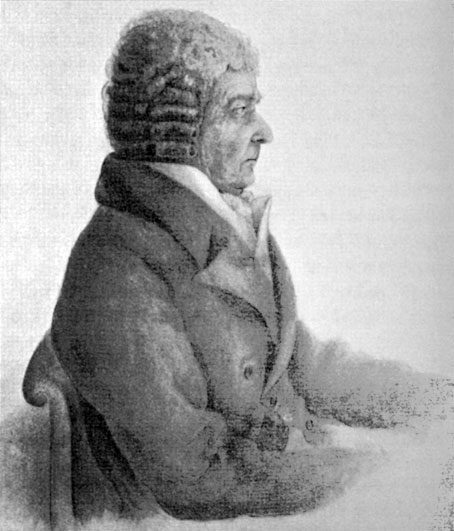
    John Latham
    John Latham

    scientific classification:


    – Order: Psittaciformes
    – Family: Cacatuidae
    – Genus: Calyptorhynchus
    – Scientific name: Calyptorhynchus banksii
    – Citation: (Latham, 1790)
    – Protonimo: Psittacus Banksii


    Images Red-tailed Cockatoo:


    Species of the genus Calyptorhynchus
  • Calyptorhynchus banksii
  • —- Calyptorhynchus banksii banksii
  • —- Calyptorhynchus banksii graptogyne
  • —- Calyptorhynchus banksii macrorhynchus
  • —- Calyptorhynchus banksii naso
  • —- Calyptorhynchus banksii samueli
  • Calyptorhynchus lathami
  • —- Calyptorhynchus lathami erebus
  • —- Calyptorhynchus lathami halmaturinus
  • —- Calyptorhynchus lathami lathami

  • Sources:

    – Avibase
    – Parrots of the World – Forshaw Joseph M
    – Parrots A Guide to the Parrots of the World – Tony Juniper & Mike Parr
    – Birdlife

    – Photos: Laslovarga (commons.wikimedia.org), Wikipedia, Scarlet23 (Wikipedia), Uploaded by Casliber (Wikipedia), Uploaded by Peter Campbell (Wikipedia)

    – Sounds: Nigel Jackett

    ▷ The world of Pets: Dogs, cats, birds, reptiles, amphibians

    Baudin's black cockatoo
    Zanda baudinii

    Baudin's black cockatoo

    Content

    Description

    50 to 57 cm.. height and weight between 560 and 770 g.
    to Baudin's black cockatoo (Zanda baudinii) is almost entirely of black, with whitish margins in the feathers, patches rounded on them ear-coverts (yellowish to white in the female and Brown to grey in the male), white rectangular panels in the tail.
    has a powerful bill (with greatly elongated upper jaw), Black in the male and white-gray color with a black color in the female tip.
    Iris dark brown surrounded by a eye ring Red in the male and female grey.
    Tail rounded, crest Erectile and legs greys. birds youth are like adults in appearance, but the bill of the male juvenile is equal to the of the of the female adult. The bill the juvenile male begins to darken after the second year.

    Habitat:

    Its natural habitat is the dense forests dominated by the Marris (Corymbia calophylla) in the extreme southwest of Australia.

    Gregaria, is often seen in groups of three, a pair of adults with a young, or in small groups. Occasionally they gather in large flocks of up to 300 birds during the non-breeding season, usually in places where food is abundant.

    Reproduction:

    Very little is known about the reproductive biology This cockatoo, such as their reproduction area, nesting events calendar, the nest tree, Characteristics of holes for nests, implementation size, incubation period, incipient and successful nesting period.

    Little is known about their reproductive cycle because nests are extremely difficult to locate.. Most of the characteristics of the biology of the species are inferred from the Short-billed black cockatoo.

    They show a strong union of couple and probably is pair of by life. They remain together throughout the year, except when the female is incubating eggs. Probably they begin to breed at the age of four. The species breeds in late winter and spring, from August to November or December. Copulation probably takes place three days before laying. The female lays one or two white eggs and you can lay an egg of replacement if the first since egg fails. The incubation lasts a few 29 days and only the female incubates them. The chicks remain in the nest for a maximum of 16 weeks.

    The nests are composed of a layer of wood chips, built in large hollow in the high eucalyptus, 30 to 40 cm. in diameter and more than 30 depth cm.

    Food:

    Are fed mainly from the seeds of MARRI and Karri. They are also fond of the rending of wood, Apart from pierce the bark of trunks in search of larvae. Apple trees and pear trees are frequently visited to enjoy its fruits.

    Distribution:

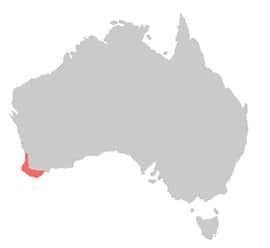
    Confined in the South-West of Western Australia, especially among Perth, Albany and Margaret River.

    Distribution Long-billed Black-billed Cockatoo

    Small captive populations in the Melbourne Zoo, in the Healesville sanctuary in Victoria, and in the Zoo of Perth. The species is bred in captivity with great difficulty.

    Conservation:

    State of conservation ⓘ


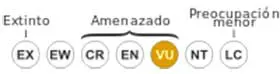
    Vulnerable Vulnerable ⓘ (UICN)ⓘ

    In Australia is listed as Vulnerable by the law on protection and conservation of biodiversity for the environment.

    The total population of the species is estimated at 12.500 individuals, with one downward trend.
    Before the inclusion of the threatened species, the annual reproductive rate was of 0,6 per couple, too low to replace the large number of birds that were killed by horticulturists to protect their crops. It is now illegal to shoot these birds, However is it still done.

    In captivity:

    Appears in the Appendix II of CITES, what limited international trade in the species. It´s illegal capture These wild birds, a penalty of up to 10,000 $. This cockatoo is protected under the Wildlife Conservation Act of Australia.

    Alternative names:

    – Baudin’s Black Cockatoo, Long-billed Black Cockatoo, White tailed Black Cockatoo (English).
    – Cacatoès de Baudin (French).
    – Langschnabel-Rußkakadu, Weißohr-Rabenkakadu (German).
    – Cacatua-negra-de-bico-longo (Portuguese).
    – Cacatúa Fúnebre de Pico Largo, Cacatúa Fúnebre Piquilarga (español).

    scientific classification:

    – Order: Psittaciformes
    – Family: Cacatuidae
    – Scientific name: Zanda baudinii
    – Genus: Zanda
    – Citation: Lear, 1832
    – Protonimo: Zanda Baudinii

    Images:


    Species of the genus Zanda
  • Zanda funerea
  • —- Zanda funeral funeral
  • —- Zanda funerea whiteae
  • —- Zanda funerary xanthanota
  • Zanda baudinii
  • Zanda latirostris

  • Sources:
    – Avibase, Australian Government
    – Photos: Long-billed Black-cockatoo, Taronga Zoo, Sydney, Wikipedia, Goura (zoochat.com),
    – Sounds: Chris Benesh (controles-canto.org)