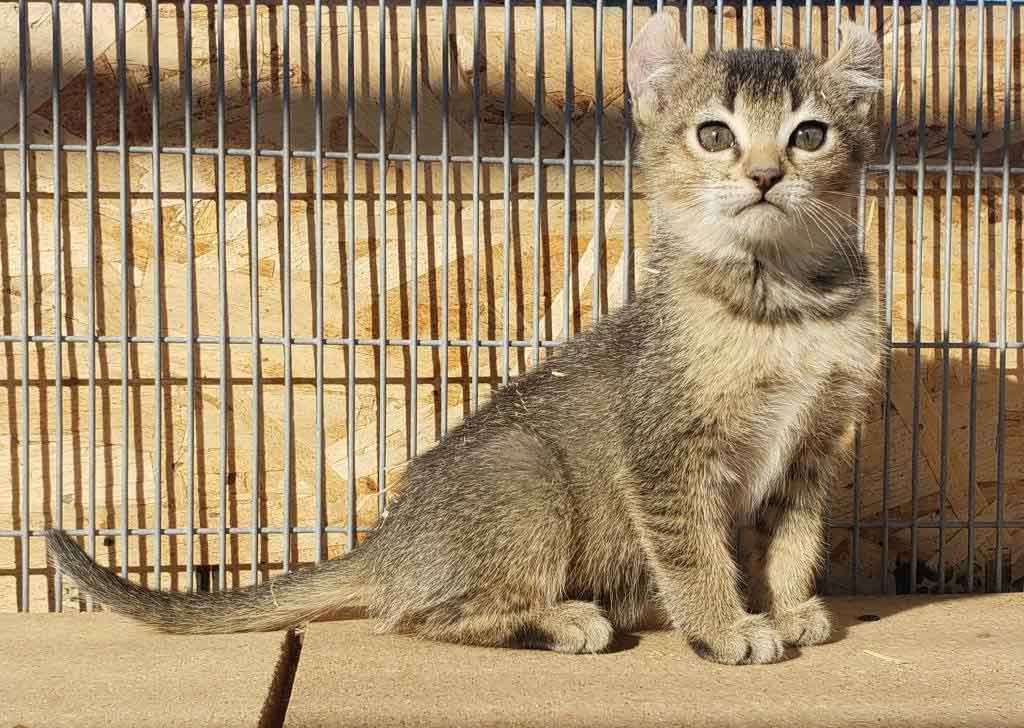
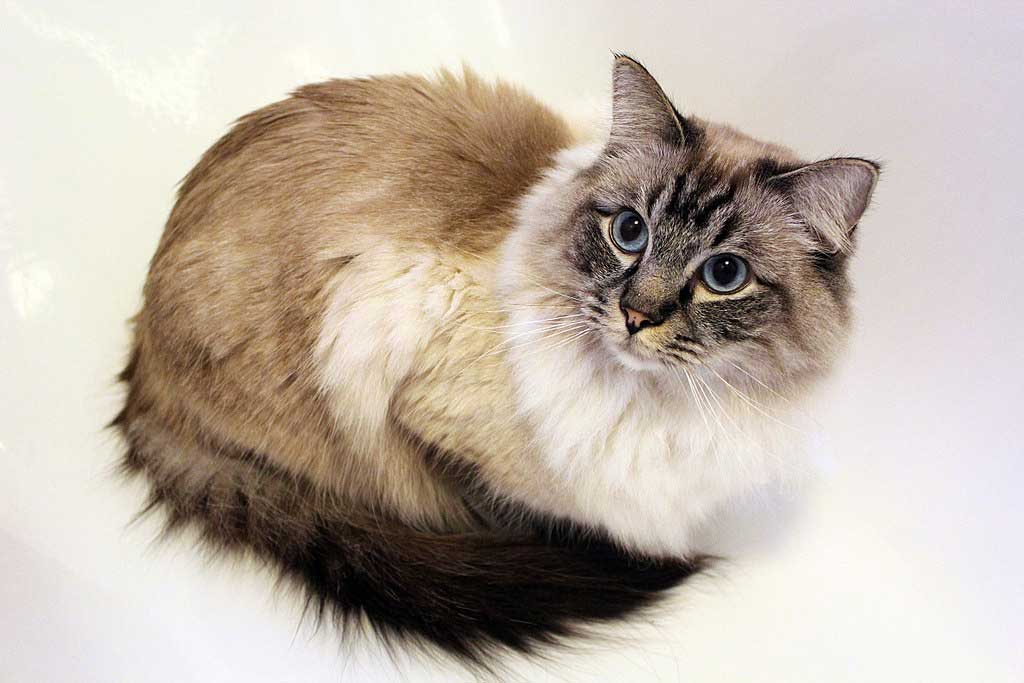
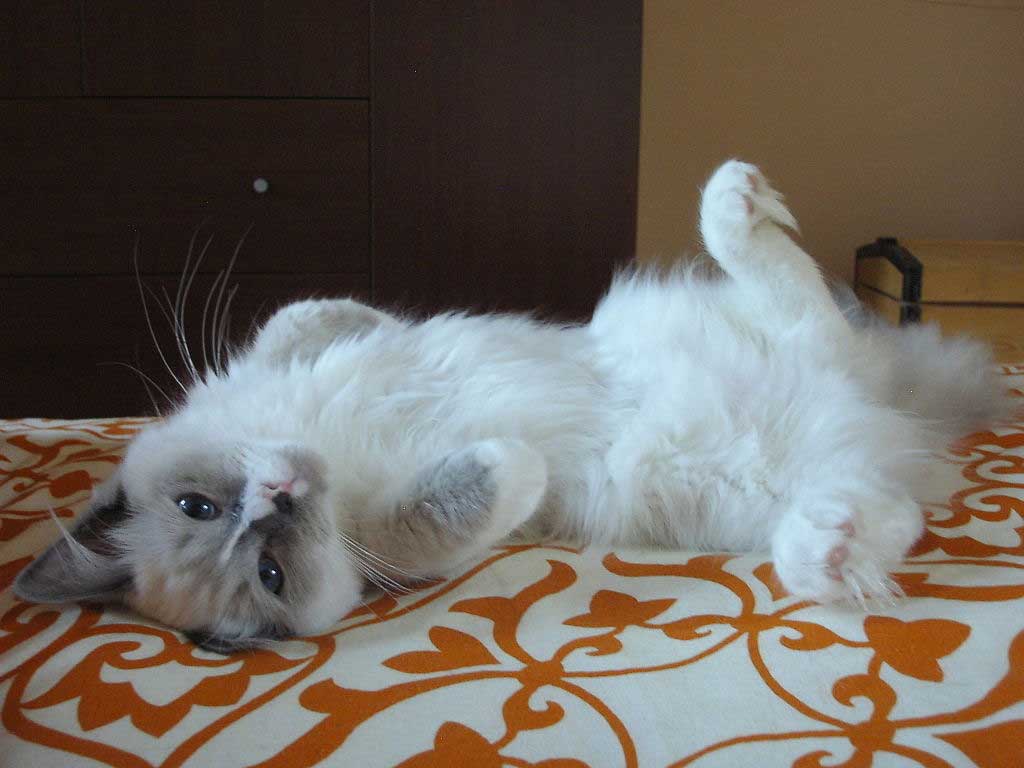
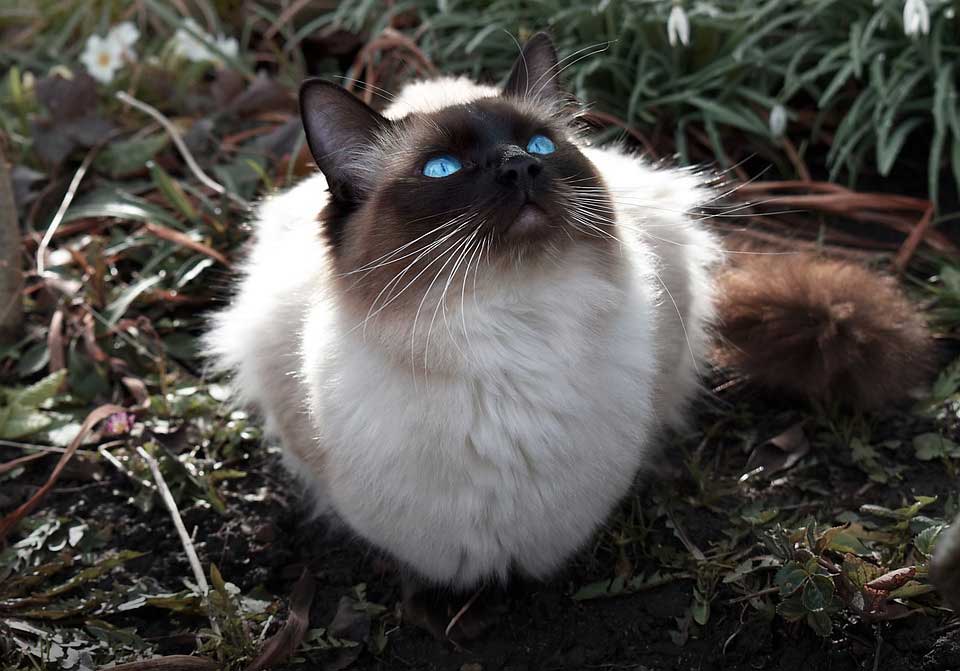
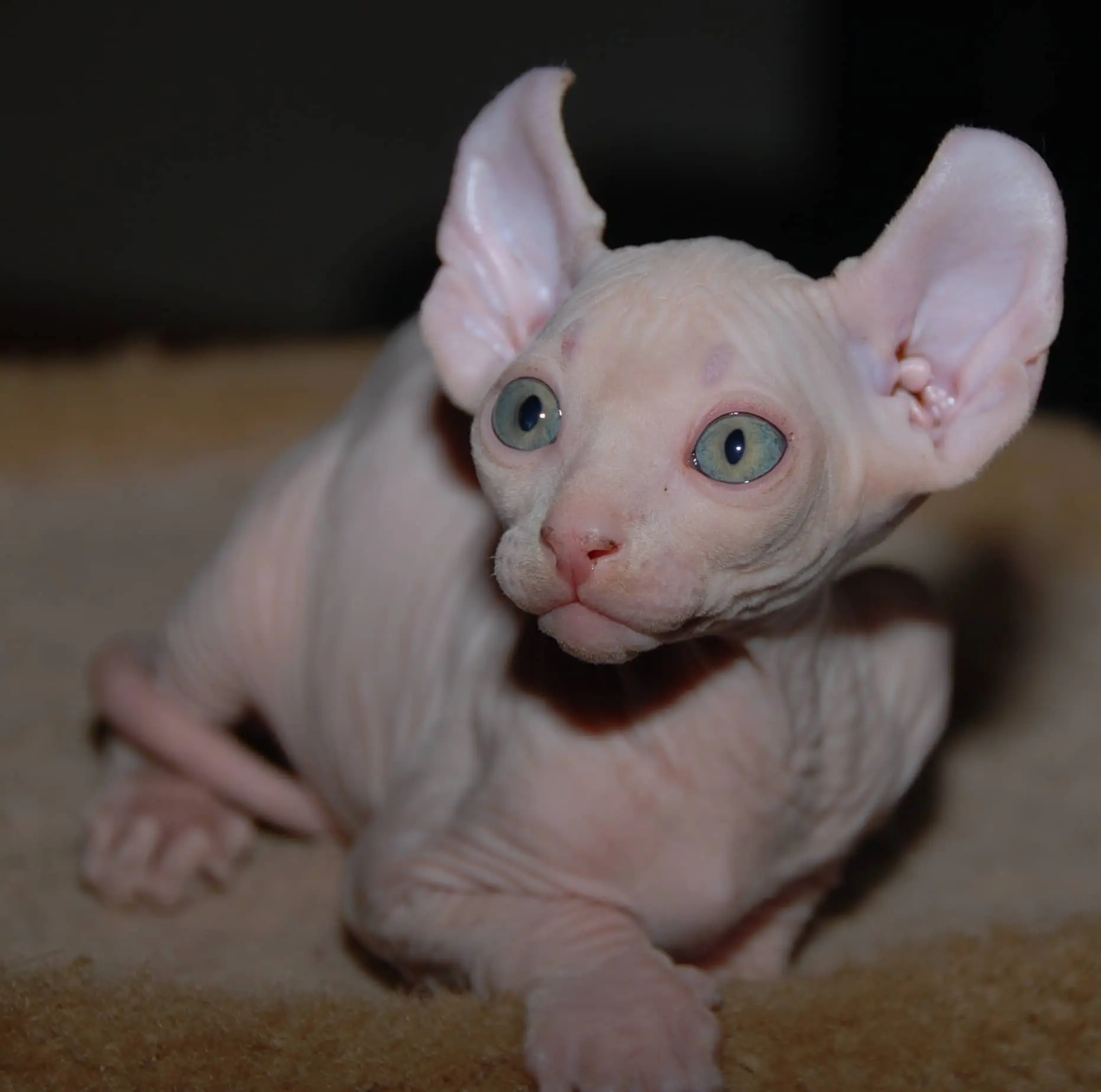
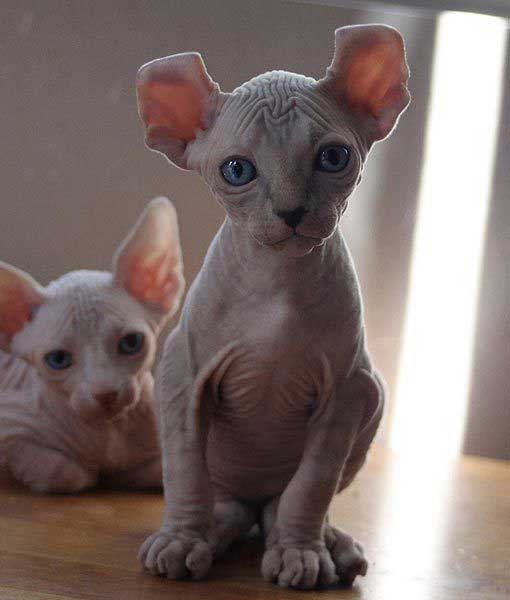
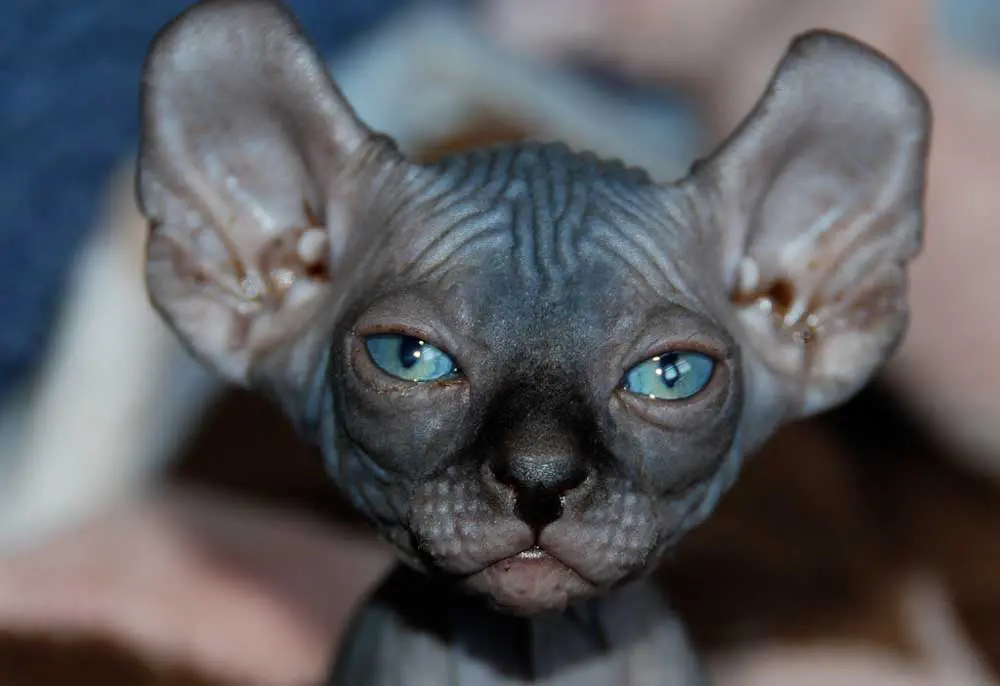
The Ojos Azules cat still one of the rarest feline breeds in the world, and the number of breeders remains confidential.
Photo: elblogdegatos.com
Content
History
The history of Ojos Azules cat started on 1984 in New Mexico ((UNITED STATES)UU.), when a family discovered a colony of stray cats, some of whose members had intense blue eyes. Their attention focused on a tortoiseshell cat that they took in and called Cornflower.
She was bred with other unrelated cats and gave birth to kittens, some with the same eyes. More intense than the Siamese cat, this blue color is not linked to the color of the cat's fur, and the gene responsible for it does not cause strabismus or deafness, unlike other blue-eyed cats.
In fact, regardless of race, it is the absence of melanin in the iris that makes the cat's eye blue. But, the cause of this absence is not the same; in the case of Ojos Azules, it is a hitherto unknown gene that is in the origin.
It was the discovery of this new gene, that allowed to have cats with dark fur and blue eyes, without being affected by strabismus or deafness, which led to the International Cat Association (TICA) to recognize this breed in 1991 and to set a standard, although at that time it was still very rare. In fact, in 1992 they only registered 10 specimens.
But, Later research showed that the gene responsible for blue eyes was also responsible for a life-threatening cranial deformity. A subsequent investigation by the DRA. Solveig Pflueger, judge and president of the TICA Genetics Committee since its creation in 1979, confirmed the link. But, at the same time he discovered that the gene is Heterozygosity, so these dangerous cranial deformities can be avoided by crossing a blue-eyed individual with a standard-eyed individual. This led to prohibiting the breeding of two Ojos Azules cats together.
At the same time, a Ojos Azules in Australia, although no specimen had been imported there. This led breeders to believe that this mutation could occur spontaneously in the domestic cat population..
In France, the LOOF (Livre Officiel des Origines Francaises) established a standard for Blue Eyes in 2004.
But, contrary to what is usually observed, recognition of the breed by reference bodies did not lead to its expansion: the Ojos Azules still one of the rarest feline breeds in the world, and the number of breeders remains confidential. In fact, in 2019, both the TICA and the LOOF eliminated the Ojos Azules from the list of recognized breeds.
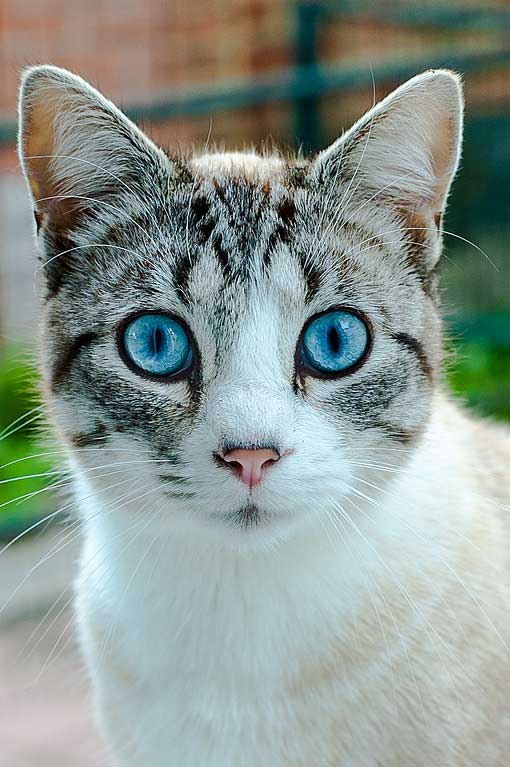
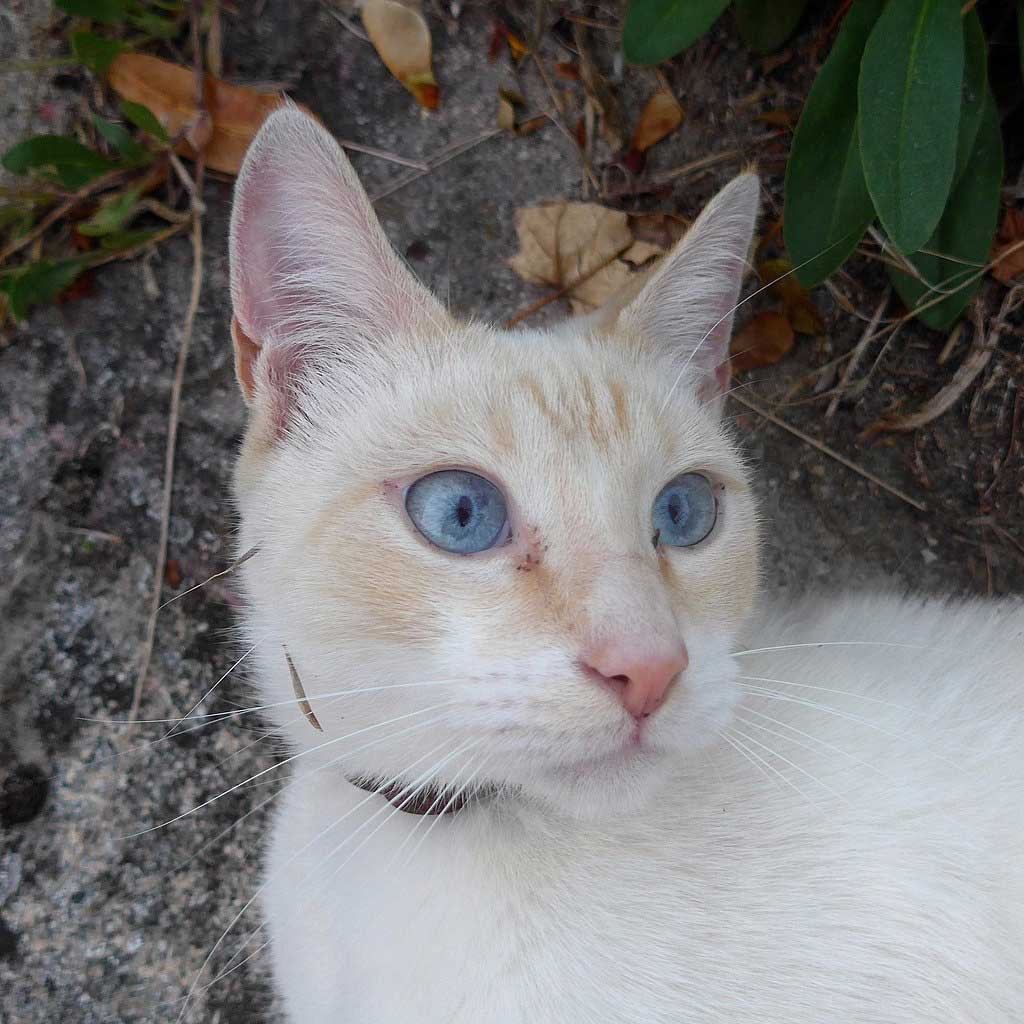
The main feature of the Ojos Azules cat It, as the name reflects, her magnificent deep blue eyes.
Otherwise, the standards describe a body rectangular with a fine and solid bone structure, well proportioned and flexible: it is about, because, of a semi-linear cat. The legs hind legs are slightly longer than front and legs, round or oval, they are rather small and delicate. The tail is of medium length and tapers to the tip.
The head it is triangular seen from the front, with prominent cheekbones and a slightly rounded forehead in profile, followed by a slight stop at the beginning of the nose. The ears medians are rounded, while the muzzle is rather square. The eyes they are almost round and as big as possible. Different colored eyes are tolerated, being one of them blue and the other green, gold or copper.
The fur it can be short or medium long and has a silky smooth texture. All colors and patterns are accepted, except for the White, to distinguish this breed from the usual white cats with blue eyes.
The gene responsible for blue eyes also usually gives white markings on the tips of the legs, ears and tail.
Size and weight
Size: 30 cm.
Weight: Of 4 to 6 kg
Varieties
By recognizing the Ojos Azules in 1991, the TICA (International Cat Association) distinguished between two different varieties in the first published standard: the Ojos Azules Shorthair and the Ojos Azules Longhair, having a medium length coat.
Character and skills
The rarity of Ojos Azules cats makes it difficult - even dangerous- draw conclusions about their character. But, owners of this breed describe them as affectionate, loyal, smart and playful.
Health
The population of the Ojos Azules cats it is not large enough to have reliable information on possible health problems specific to this breed.
But, in the early days of the breed, some individuals were affected by a cranial deformity that was sometimes fatal.
A study carried out later on the specific gene of this breed that is at the origin of the color of its eyes made it possible to establish that it was enough not to breed two individuals with blue eyes.: being the gene Heterozygosity, kittens born from the union between a Blue Eyes and another cat that does not have blue eyes are protected from this risk of cranial deformation. In fact, this risk has already been eliminated: current specimens no longer suffer from this life-threatening malformation.
The Ojos Azules cat It is an easy-care breed of cats: one brushing a week is enough to remove dead hair.
The teeth, the eyes and ears should also be checked once a week to avoid any risk of infection.
Last, if the claws are too long because they do not wear out naturally, it is necessary to trim them from time to time.
Food
The Ojos Azules can be commercially fed, either with kibble or cat food. Quality industrial products provide all the nutrients and vitamins necessary for good health.
For sale "Ojos Azules cat"
The rarity of Ojos Azules cats makes it very difficult to get one of these cats. The few specimens that exist are, Obviously, in the hands of breeders, and no kittens are officially available for sale.
Most people have heard of or seen cats. Ocicats, But you never hear about the classic "Jungala". An image of one may not be found on a website, that farmers are allowed to breed with them, However, they may not exhibit them. There are three additional variants in the breed Ocicat, The classic «Jungala,», the classic tabby Ocicat which in New Zealand is called a cat Jungala, as well as the name of the race of the Ocicat cat (‘Oci‘), It is derived from the name of the cat of Ocelot, a "wild" Central American or a cat "jungle", The new name in Spain for the "Jungala", which is also taken from the Sanskrit word that means "the jungle".
"Jungala Ocicat cat"
This breed was achieved by crossing a mixture of the Abyssinian cat, the Siamese cat and of the American shorthair cat. As such, is a home race, that was selectively bred to emulate the ocelot is found in nature, while retaining the friendly disposition of domestic.
In New Zealand, the first cats Jungala were registered by the Karakakat kennel, with CATZ Incorporated, who recognized the Jungala cat as an independent breed with full championship status in August 2001.
Physical characteristics
The so -called "Jungala" is a Ocicat cat without stains. Or more specifically, a cat with genetics Ocicat that express only one pattern Tabby Classic. The conformation and personality type are exactly the same as an Ocicat, but the pattern should conform to that of the classic brindle model of the American shorthair cat
"Jungala Ocicat cat"
The Oci-Classic has a large bullseye circle on each side of the torso broadly defined with a beautiful color contrast. Their stomachs are also marked with spots. The spotted kittens are very nice, the classical coloring is awesome, with a luxurious and exceptional velvety color, an authentic and unusual color combination. Are highly prized for its stunning beauty. This pattern is especially striking when viewed on a Tabby Silver, where the silver under light allows a strong contrast with the marks of the final layer color depth.
Character and skills
The Jungala cat, just like their counterparts Ocicat, they are very sociable and somewhat similar to dogs in their devotion for the people. They are bright, easily manageable and often are outgoing, even with strangers. As such, they are an ideal cat for households where there are other pets and children.
Contrary to what the various exotic names might suggest, was created in the United States.
Photo by blackmystica
Content
History
In 1985, at Sholine Cattery in Houston, Texas, United States, an oriental short hair and a pellets they escaped their vigilance and be aparearon. The result was a litter of silky puppies and semilargo hair of Eastern plain colors. Wisely, the owner of the cattery, Sheryl Ann Boyle, decided to raise this race, and the main records in North America and Europe soon recognized, with the exception of the GCCF in Great Britain, It believed that it was too similar to the angora, now known as Oriental Longhair cat (angora).
In 1995, the CFA joined the Oriental shorthair cat and to the Oriental longhair cat in a single breed with two hair lengths, a controversial fact according to some breeders, that they preferred the longhair trait to be eliminated from breeding lines of the Oriental Shorthair. Due to its dotted ancestors, all Asians can have puppies occasionally dotted, but cannot be displayed in most associations, since they look very similar and can be confused with the Siamese and balinese.
Character and skills
Although the Oriental Longhair cat looks elegant, his personality is often described as less languid anything. All Oriental races have the reputation of being habladoras, playful, very curious and sociable. They need the company of other cats or their owner's undivided attention for a little while each day, and some studies on the nature of these cats show. Much of the personality of this cat is inherited, and for decades farmers have reinforced the extroverted personality of Eastern races. Copies walk willingly strap and play around to get an object as if they were dogs.
▷ The world of Pets: Dogs, cats, birds, reptiles, amphibians
The cats Sokoke it is one of the few recognized breeds that are of natural origin. It is native, It means that they have evolved on its own, no human intervention or initial breeding selection.
Content
Characteristics "Sokoke cat"
Coexistence is important that you have with your new friend. Before considering the acquisition of a cat of the breed "Sokoke cat" you know certain factors. You must take into account their character, their need for exercise, their interaction with other pets, their care and if you have small children, their level of tolerance towards them.
Joy
4,0 of 5 stars (based on 1 review)
Activity level
4,0 of 5 stars (based on 1 review)
Friendliness to other pets
4,0 of 5 stars (based on 1 review)
Friendliness to children
4,0 of 5 stars (based on 1 review)
Grooming requirements
2,0 of 5 stars (based on 1 review)
Vocality
4,0 of 5 stars (based on 1 review)
Need for attention
2,0 of 5 stars (based on 1 review)
Affection towards its owners
4,0 of 5 stars (based on 1 review)
Docility
3,0 of 5 stars (based on 1 review)
Intelligence
4,0 of 5 stars (based on 1 review)
Independence
4,0 of 5 stars (based on 1 review)
Hardiness
3,0 of 5 stars (based on 1 review)
History
The genesis of the Sokoke
The Sokoke it is one of the rarest cat breeds in the world. Historically it has lived in the wild in the rainforest of Sokoke-Arabute, a nature reserve on the east coast of Kenya. But, it is not known since when.
One of the hypotheses is that it descends from domestic cats who arrived at the end of the 19th century with British settlers and then took over the forest of Sokoke-Arabute.
But, it is more likely that the Sokoke have lived in the area for much longer, in particular through contact with Giriamas, a local tribe that hunts and feeds on the Sokoke, even today. The Giriamas they also gave it its original name, Khadzonzo, which means "like the bark", in reference to its mottled coat.
In any case, never ceased to intrigue scientists, and many tried to study it. For a long time this was in vain, given their stealth and propensity to evade them.
In 1978, Jeny Slater, an Englishwoman who lived on the edge of the nature reserve, discovered a litter of three kittens Khadzonzo abandoned and hidden in the hollow of a log. Decided to take them home and feed them. His fascination was even greater because normally it was very difficult to see them, much less catch them. He was very surprised to see how easy it was to tame these little wild cats. Worried about the possibility of this animal disappearing, decided to raise them. When they became adults, two of the little cats gave birth to their first litter.
Scientists were finally able to begin studying the Khadzonzo. DNA tests were carried out to find out if it was descended from African wild cats, but they were negative: could not establish that link. It was then decided to call the cat simply «African shorthair cat«.
In 1984, a danish friend of Jeny Slater, Gloria Moldrop, came to visit her in Kenya. Enchanted with Khadzonzos, took two of them to Denmark, Good gene, to try to publicize the breed and contribute to its development. In fact, that year he exhibited them at a cat show in Copenhagen.
In 1985, Good gene they had their first litter. But, starting with just two individuals was not enough to establish a breeding program that would avoid inbreeding and all the health problems that it could entail.. In 1990, Gloria Moldrop brought three more specimens from Kenya and was able to start a real breeding program with the aim of getting the breed recognized.
In 1992, Gloria Moldrop presented several copies to the Fédération Internationale Féline (FIFé). The following year, the organization recognized the breed under the name of Sokoke, in reference to the forest Sokoké-Arabute, its natural habitat.
In 2003, the International Cat Association (TICA) did the same. It was also in this year that the Sokoke was recognized by the Official Book of Feline Origins (LOOF) French.
But, in 2014, TICA decided to lower its status: it was still possible to register their representatives in the registers kept by the institution, but they could no longer compete in the cat shows organized under their auspices. In effect, had not received the report that breeders normally send and that allows statistics to be established: annual number of births, distribution between males and females, age of the reproducers…
In any case, the Sokoke cat still has a long way to go to be fully recognized around the world. In fact, still ignored by some major organizations, as the Cat Fanciers’ Association (CFA).
Others have given their blessing, but only in a preliminary way, waiting for your full recognition. Is the case, for example, of the Governing Council of The Cat Fancy (GCCF) from 2015, or from Association Féline Canadienne (CCA), which grants it the status of an experimental breed.
The popularity of "Sokoke"
A part of the population of Sokoke cat still living in the wild in the forest of Sokoke-Arabute, in Kenya. But, they seem to be in danger of extinction.
Can't say that the Sokoke domesticated is imposing, as it is still extremely rare worldwide. Its population is also very small.
In France, only three specimens were registered in the Libro Oficial de Orígenes Felinos (LOOF) over the years 2000 and 2010, more specifically in 2004.
The breed is a bit more established in Britain, with almost a dozen annual registrations in the Governing Council of The Cat Fancy (GCCF) at the end of the Decade of 2010. But, this is still a matter of confidentiality.
In Denmark, Gloria Moldrop has had some followers, so there are also a handful of breeders. There are also some in other European countries, like germany.
The situation is quite similar in North America: In both the United States and Canada there are hardly more than a handful of breeders. But, the Association Féline Canadienne (CCA) has accepted it as an experimental breed, waiting for your full recognition. The leading organization in the United States, the Cat Fanciers’ Association, has not yet taken the step.
The Sokoke It is an elegant and distinguished feline of medium size and semi-linear type. Domesticated and bred individuals look much more harmonious than those left free.
The body medium length is slim and muscular, built around a strong bone structure. The chest is well developed and prominent.
The tail is moderately long to long. Thick at the base, tapering towards the tip.
The legs they are tall and thin, which contributes to the elegant appearance of the dog, But they are, However, muscular. Finish in feet oval with black pads. The hind legs are longer than the front legs and have a significant angle specific to the breed.
The head rests on a neck long and muscular that separates it well from the shoulders. It is small in relation to the body, and is shaped like a smoothed triangle. The skull it's almost flat.
The ears are size medium, wide at the base and rounded at the tip. They can end in plumes, and this feature is highly appreciated.
The eyes they are big, they are far apart, are almond-shaped and slightly sloping. Their color ranges from amber to light green and they are expressive and bright.
The nose is straight and of medium length. Finish off with a brick red nose. Seen on side, there is a slight concave curve between the forehead and the nose.
Whisker pads are well marked, but they are not prominent. They dominate a strong and broad chin.
The fur of the Sokoke It is brilliant, very short and has no undercoat. This is a tabby cat, which can be any shade of black brindle. It is preferable that the marks have sharp hairs, that is to say, that alternate light and dark areas.
Last, this cat is not characterized by a sexual dimorphism pronounced: males and females are quite similar in size and weight.
Size and weight
Size: 30 cm.
Weight: Of 3 to 5 kg
Breed standard
The breed standards are documents produced by official bodies that list the conditions that a dog must meet. Sokoke cat to be fully recognized as belonging to the race:
Although it may seem surprising, the Sokoke was originally a wild cat and was easily tame.
He even enjoys the company of humans, and is especially attached, kind and affectionate with the members of his family, with both adults and children. He is also very playful, which makes it an excellent entertainment companion for them, and vice versa. But, this does not prevent a certain caution: a small child and a cat should never be left alone unsupervised, and this applies to all races. In any case, things are better if the children are old enough to have learned to behave in a respectful way with their companion.
His playful nature and intelligence make it essential to provide him with interactive toys to stimulate and develop his faculties.. Always play very intensely for short periods of time, then you need to calm down to start over. Of course, he is even happier when he can play with his family. The possibilities are very numerous, since his proximity to the family and his intelligence make him perfectly capable of learning different tricks. These may include, catching an object that is thrown at him is a lot of fun for him. Being an activity with your family and spending time with them, It doesn't bother him to be walked on a leash either, and he can get used to it..
More broadly, His intense relationship with his family means that he is both an attention seeker and an attention giver. Participates willingly in family activities and tends to follow family members and greet them at the door when they arrive home. This is especially true of the person who cares the most about him., although he does not ignore the others.
He is also very vocal when interacting with family members.. Purr loudly to express well-being, meows softly to calm its owners when its great sensitivity makes it sense that they are in an unusual emotional state, or give your opinion on the TV show. Pretty talkative, knows how to use different recognizable tones to communicate: these different modulations allow you to quickly know, for example, if he is asking for a hug, asking for attention, asking for food or indicating pain.
He is loyal to his family and enjoys interacting with them, for example playing or receiving pampering. Of course, also needs time apart, since it could be in nature. But, he does not like to be alone: even when he rests quietly in his corner, be grateful that there is someone close.
Close to yours, the Sokoke he is also very sociable with strangers who enter his domain. He is not one of those who are scared or aggressive towards them: although he should not be expected to hug them, will play happily with them.
He is also able to share his home with another dog. But, as it is quite territorial, gradual adaptation is necessary for everything to go well, and the ideal is that the coexistence is established from the earliest age of the two protagonists.
The Sokoke he is very active and does not really belong to a flat. to prosper, you need to live in a house with a garden to which you can have free access, thanks to a cat flap, for example. His instinct is to climb trees, where in nature he used to spend most of the time. This allows you to recover part of its original state, hunt insects, satisfy your curiosity and keep an eye on your territory. It is especially agile in this area.
He also likes to have some height when he is indoors., so a cat tree is an essential purchase to make you feel comfortable.
It also, the Sokoke differs from his peers in his attraction to water; not only does he like to play with her, but that it is one of the cat breeds that like to swim. So don't be surprised to see him come back drenched from his wanderings., since he is delighted to bathe in a river or a lake. But, if there is a pool in the house, it is better to cover it to avoid getting into it, since chlorinated water is not good for cats and if they drink it regularly it can cause kidney problems and irritate their skin. So, if he can get into it, it is better to rinse it afterwards with clean water.
The same, after any bath anywhere, or even just when I come back from the outside wet, it is important to dry him well with a towel so that he can then snuggle up in a blanket and prevent him from getting cold. Of course, this is even more important when the temperature is low.
Health
"Sokoke cat"
Sokoke
The Sokoke wild has been little studied. It also, its domestication is relatively recent and the breed's population remains small. All this explains why there is little time to know the diseases to which this cat is especially exposed. But, the cat is known to be generally in good health.
It is also known to withstand high temperatures very well, which is not surprising for an animal native to the rainforests of Kenya. But, it is also known to fear the cold, above all because does not have undercoat. But, can adapt to all climates, as long as you have constant access to a well-heated place where you can shelter in cold weather, so as not to catch a cold. This risk should not be taken lightly, since the coryza, the common cold, can have lifelong consequences. The risk is even higher for young and old cats, that are more fragile and, Therefore, more prone to colds.
To adopt a Sokoke, it is essential to contact a serious breeder. This will give you the best chance of having a healthy kitten and keeping it that way.. In effect, a true professional takes the time to socialize little felines and monitor their health from a very young age. But, above all, as the genetic background of the breed is quite small, can also ensure that parents do not have a common ancestor to avoid inbreeding problems. You can also present a certificate of good health issued by a veterinarian, as well as the health or vaccination card containing the vaccines administered to the animal.
Once the adoption is final, it is the owner's responsibility to take care of the health of his little companion throughout his life. In particular, should ensure that the pet receives a regular check-up by a veterinarian, to make sure everything is okay or, on the other hand, to diagnose any problems as soon as possible and to be able to react as best as possible. Once a year is the minimum, and it is better to go further when the animal gets older. It also, these appointments are also an opportunity to repeat the necessary vaccinations.
It also, the owner must give his cat the necessary treatments throughout the year to ensure that he is always protected against parasites. This is even more important for an animal like him, who spends a good part of his time outside and who likes to climb trees.
Grooming
The Sokoke it's a low maintenance cat.
This is especially true of their very short coat., that has no undercoat: a simple weekly brushing is enough to remove dead hair.
It is also important to check your ears once a week and clean them with a damp cloth to remove any impurities., which could otherwise end up accumulating and becoming infected (ear infections, etc.).
You should take the opportunity to check your eyes. If they are dirty, wiping the corners with a damp cloth will also reduce the risk of infection.
Regular brushing of your pet's teeth is essential too. This should be done at least once a week, although the ideal is to do it daily. Otherwise, plaque builds up and turns into tartar. This can lead not only to bad breath, but also to more or less serious diseases.
Last, you need to check the length of the cat's claws every month. If they get too long, there is a risk of injury, discomfort or breakage. Due to its high level of activity, this is not a problem, due to natural wear and tear. But, natural wear and tear may not be enough (for example, in the case of a less active and / or elderly person), and manual trimming may be required. In any case, even for an individual with free access to the outside, the presence of a scratching post (either inside or outside) is essential. This allows them to satisfy their essential need to scratch on an object designed for it., instead of using furniture or curtains, for example.
Whether for the fur, the ears, the eyes, teeth or claws, the different treatments necessary for the care of the Sokoke are available to everyone. But, to avoid the risk of harming or injuring you - and traumatizing you at the same time- it's best to ask a vet or groomer for advice the first time. This will allow you to know the appropriate gestures to act safely and effectively.
The best way to get this care to become, with the time, in a special moment between the owner and his pet, is getting used to it from a young age. It also, will appreciate these moments even more if they are sprinkled with cuddles and caresses, or even if they allow a little conversation, since he likes to talk a lot.
Food
In its natural state, the Sokoke spends most of the time in the trees, where he also hunts. Unlike their peers, does not eat birds or rodents, but insects like crickets, butterflies and flies. He then descends to ingest his weed loot.
A domesticated individual needs the food provided by his master to satisfy his nutritional needs.. So, both quantitatively and qualitatively, must suit your age, your health and activity level.
Quality industrial products usually fulfill this function perfectly.. But, it is not advisable to feed your dog human food, that is unlikely to meet your nutritional needs unless it has been carefully selected for this purpose. For this reason, Giving him table scraps or rummaging through the trash is rarely a good idea, especially since some foods popular with humans are toxic to cats. So, it is better to avoid these situations, and this from a very young age, to prevent you from developing bad habits.
Last, the Sokoke, just like any other cat, you must have fresh water at all times.
For sale "Sokoke cat"
The Sokoke it is one of the rarest cat breeds in the world. Although it has spread to various regions far from its native Kenya, especially in Europe and North America, the number of breeders is still very limited. So, a person wishing to adopt a representative of this breed should not fear traveling many kilometers or having to wait several months.
Even so, the price of a kitten Sokoke usually hovering between 1500 and 1800 EUR.
But, when adopting a cat from abroad, It is important to note that transport costs and administrative costs are added to the price of the cat. It also, it is necessary, of course, find out about the legislation regarding the importation of animals and comply with it.
whatever the country, the price charged can vary significantly depending on the reputation of the kennel, the lineage from which the animal originates and, above all, its intrinsic characteristics, especially when it comes to physical. This last point explains why there can be significant differences within the same litter..
The Jungle Curl is an experimental breed from North America, so new and confidential that it is not recognized by any major feline organization. The only institution that allows the registration of a jungle cat is the Registry of Rare and Exotic Felines (REFR), a small association that, as the name reflects, is specialized in rare and exotic cat breeds.
Due to the lack of recognition by the different national and international feline organizations, there is no standard that defines the appearance of a Jungle Curl. The result is that the different breeders of the breed do not necessarily have the same criteria and regularly create new lines., making it difficult to unify the race.
But, all the Jungle Curl They have something in common: are the result of crosses between the Domestic cat and the jungle cat (Felis chaus), a wild cat found in Egypt, the caucasus, Central Asia, India and Southeast Asia.
This hybridization between the Felis chaus and the domestic cat is not new: the first experiments in this field date back to the years 60 and gave rise to the Chausie cat, a breed of domestic cat recognized since then. But, the Jungle Curl is not a Chausie cat: they are two very different cats.
Usually, a line of Jungle Curl is created by crossing a jungle cat (Felis chaus) with a American Curl, but breeders also often use other breeds such as the Highland Lynx or the Hemingway Curl ⓘ. The resulting hybrids are crossed with other domestic cats., as the Abyssinian cat, the Chausie cat, the Serengeti cat or the Bengal cat.
The Jungle Curl it's a rare cat, found primarily in the United States and Canada, although it also exists in Europe. But, in any country, the number of breeders can be counted on the fingers of one hand.
Physical characteristics
The Jungle Curl It is a medium-sized, wild-looking cat, with a long slim body. But, there is a great disparity in sizes, according to the breeds used in the different crosses. The hind legs are slightly longer than the front legs and the tail is medium to long..
The polydactyly it is common in this breed, but due to the lack of a standard, opinions differ: some breeders promote it by favoring polydactyl cats for breeding, while others prefer to try to remove this feature.
The head of the Jungle Curl it is rather round, with eyes tears that vary in color from yellow to green. The most distinctive feature of Jungle Curl they are her little ones ears round, similar to those of a lion, that curve backwards to a greater or lesser extent depending on the individual. These round and curved ears are the main difference between the Jungle Curl and the Chausie cat -the breed with which the Jungle Curl-, who has big ears, tall and triangular.
There are long-haired and short-haired specimens. In any case, the preferred patterns of the REFR (Rare and Exotic Feline Registry), they are the fawn and the leopard. Regarding the color of the cat's coat, diversity is the order of the day, since we find individuals with a silver fur, as well as chocolate, blue, black ebony, lilac purple, cream or even red.
Last, the sexual dimorphism it is well marked, being the male larger than the female.
Size and weight
Male size: 28 to 35 cm.
female size: 25-32 cm.
Male weight: 6-12 kg
female weight: 4-10 kg
Character and skills
Jungle Curl
It is often risky to venture a general definition of the character of the individuals of a race, but this is especially true in the case of Jungle Curl, since it is an experimental breed that has not been established or unified between different breeders. But, there are some aspects that seem to emerge in this cat that has retained the looks and intelligence of its wild ancestors, while having the character of a domestic cat.
So that, the Jungle Curl he is an affectionate cat, close to his family and fond of children. He is very attached to his owner and requires a lot of attention, so it is to fear destructive behavior of the cat if it spends too much time alone.
Living with other cats or dogs accustomed to the presence of a cat usually goes well, but it is not recommended to have small rodents in the house: this would awaken his wild instincts, so it's likely that one day I'll scare them away.
The Jungle Curl he is a playful and active cat, who loves to chase a ball or bring things to its owner. They adapt well to life in a flat, but they like to be able to go out from time to time to run and climb trees. But, it is important to be aware that his strong exploratory instincts can take him beyond the limits of the garden. Depending on the location, this can endanger your own safety and / or that of small animals in the neighborhood.
Last, the Jungle Curl is quite territorial, to the point that some individuals become true "guard cats" capable of letting strangers know that they are not welcome.. This territorial instinct counteracts his need to explore the environment and leads him to return home most of the time on his own..
Health
As the Jungle Curl It is a new and rare breed of cat., there is no reliable information about possible inherited diseases or particular predispositions to certain conditions.
Many breeders claim that the special coat of the Jungle Curl turns it into a breed of cat hypoallergenic and does not cause allergic reactions in people with allergies to cats.
Life expectancy
10 to 15 years
Grooming
The Jungle Curl it is an easy-care breed of cat.
Weekly brushing removes dead hair and distributes oil from the skin, which is enough to keep the coat clean and healthy.
This grooming session is also an opportunity to check that the eyes, the cat's ears and teeth are clean and there are no signs of infection.
Looking at its claws, natural wear and tear is usually sufficient, especially if you have the opportunity to go outside and / or have a scratching post. If that is not the case, it is enough to trim them with a nail clipper from time to time.
For sale "Jungle Curl"
The price of a kitten Jungle Curl varies enormously from one breeder to another and according to the characteristics of the animal. This is mainly due to the fact that this breed is still experimental and not standardized.; for example, the polydactyly of the cat is considered by some breeders as a defect that justifies a reduced price, while for others it is, on the other hand, a sought after feature, with a higher price as a result.
The price range is, Therefore, broad, of 1500 to 2500 EUR.
In any case, the rarity of this cat makes it difficult to find kittens Jungle Curl available for sale.
Legislation
The Jungle Curl is a hybrid cat, but it is not a recognized breed, so the regulations that affect it are not clear at all. In any case, since some local authorities prohibit hybrid cats born from a forced or natural cross between a domestic animal and a wild animal, it is strongly recommended to ask the breeder, to a vet and / or the town hall about any restrictions that may apply.
HTTPS://youtu.be/-skPCWa0FP8
Jungle Curl Male
HTTPS://youtu.be/pj3eqhYROzs
Savannah and jungle curl
▷ The world of Pets: Dogs, cats, birds, reptiles, amphibians
Most official bodies consider that the Shorthair japanese bobtail It is a variety of Japanese Bobtail, but the TICA (International Cat Association) consider it to be a breed in its own right.
Physical characteristics
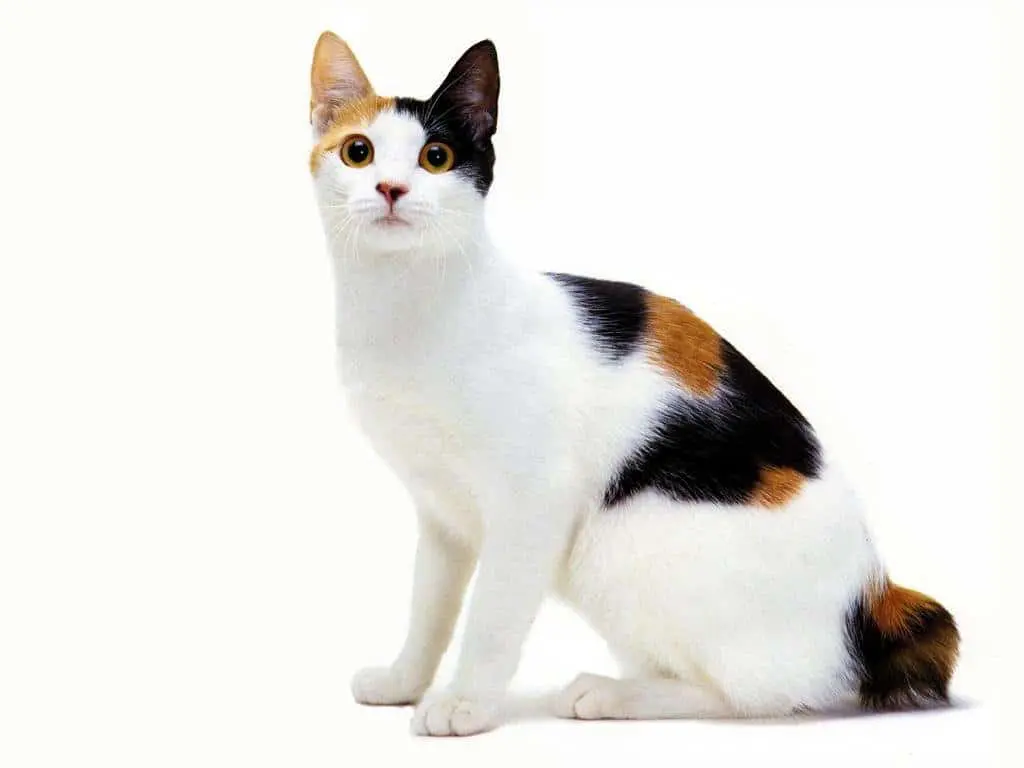
The Japanese Bobtail looks similar to a domestic cat, but with a very shortened tail.
Its coat is short and, mostly, bicolor (white-red or white-black); the tricolor variety, less common, is especially popular. Are size medium, but very light. Even the males, that do not weigh much more than females, reach a maximum of just 3 kg.
Body: The body is medium in size, elongated, slim and elegant, but muscular.
The legs: they are long and thin, oval legs.
The tail: must be bent and / or curved and be shorter than 8 cm.. The fur on the tail is longer than the rest of the body (pompom effect).
Head: The head is no longer than it is wide and is shaped like an equilateral triangle with smooth contours.
The profile: is slightly curved. The muzzle is deviated and slightly rounded.
The chin and lower jaw: they are strong.
Ears: The ears are large and erect. They are far apart, the tips are slightly rounded.
Eyes: The eyes are large, almond-shaped. They are placed slightly obliquely. The color of the eyes corresponds to the color of the coat.
Fur: The coat is short and smooth. Has a silky texture and hardly any undercoat.
Color variations: The colors chocolate and cinnamon, as well as its dilution (lilac and fawn) are available in all combinations. (Bicolor, Tricolor, Striped) they are not recognized. A pattern with dots is also not recognized. Everyone else
All other colors and designs are accepted. Any amount of white is allowed.
▷ The world of Pets: Dogs, cats, birds, reptiles, amphibians
Coexistence is important that you have with your new friend. Before considering the acquisition of a cat of the breed "Ragdoll cat" you know certain factors. You must take into account their character, their need for exercise, their interaction with other pets, their care and if you have small children, their level of tolerance towards them.
Joy
3,0 of 5 stars (based on 1 review)
Activity level
2,0 of 5 stars (based on 1 review)
Friendliness to other pets
4,0 of 5 stars (based on 1 review)
Friendliness to children
4,0 of 5 stars (based on 1 review)
Grooming requirements
4,0 of 5 stars (based on 1 review)
Vocality
2,0 of 5 stars (based on 1 review)
Need for attention
2,0 of 5 stars (based on 1 review)
Affection towards its owners
4,0 of 5 stars (based on 1 review)
Docility
5,0 of 5 stars (based on 1 review)
Intelligence
4,0 of 5 stars (based on 1 review)
Independence
2,0 of 5 stars (based on 1 review)
Hardiness
3,0 of 5 stars (based on 1 review)
History
The Ragdoll cat He is originally from California, United States. At the beginning of the Decade of 1960, Ann Baker, a breeder of persian cats, a white cat began to cross, semi-wild and looking like Turkish Angora cat call Josephine with several street cats. Josephine gave birth, among others, to two cats named Buckwheat and Fugianna.
They were large and docile in temperament and tended to relax completely when picked up., becoming real "Ragdolls".
Two males were added to the breeding program of the Mrs. Barker: Blackie, a black guy looking like Burmese cat, and Daddy Warbucks, dark in color and with white tips of the legs. These five cats interbred and gave rise to the breed Ragdoll as we know it today.
Aware that he had a new breed of cat on his hands, Ann Baker decided not to have her recognized by feline associations and, Instead, chose to register the trademark Ragdoll and create your own record, the International Ragdoll Cat Association (IRCA), in 1971. At the same time, prohibited anyone from using the name Ragdoll, breed these cats outside the strict conditions imposed to preserve the purity of the breed or register them with another feline association.
Although the eccentric claims of Ann Baker about what Josephine was genetically altered by aliens in a car accident are not credible, it seems likely that he had a unique genetic makeup, probably a natural genetic mutation, which was later passed on to their offspring.
The eccentricities of Ann Baker sparked dissension among other breeders of the Ragdoll cat, especially because of the high level of inbreeding caused by the strict restrictions imposed by. In 1975, Denny and Laura Dayton they were among the first to distance themselves from the breed and attempt to give it a legitimate existence under the umbrella of recognized feline associations. They drew up the standard that was used later when it was recognized by the Fédération Internationale Féline (FIFé) in 1991 and for the American Cat Fanciers’ Association (CFA) in 1993.
In the meantime, the Ragdoll had arrived in Britain already in 1981, when breeders Pat Brownsell and Lulu Rowley they imported the first specimens and began to breed this cat that little by little would conquer British cat lovers. A few years later, in 1986, made its appearance in France.
In the news, the Ragdoll is recognized by most major national and international feline associations: is the case, in particular, of the Governing Council of the Cat Fancy (GCCF) British, of the Livre Officiel des Origines Félines (LOOF) French, of the International Cat Association (TICA) and of the World Cat Federation (WCF).
Well established in both North America and Europe, and its success is undeniable. In United States, it is one of the most popular breeds in terms of number of registrations in the CFA, and even ranked first in 2018. In the United Kingdom, has firmly established itself in second place since 2010; with about 3.000 kittens registered every year, it only represents around the 15% of the country's cat population.
It is also one of the five most popular cat breeds in France., and its growth is dazzling: While in 2003 less than 100 specimens in the LOOF, in 2010 more than 1.000 and in 2019 more than 2.600, surpassing the Persian for the first time. So, represents almost the 6% of births registered in the country.
Physical characteristics
Ragdoll
The Ragdoll it is one of the largest breeds of domestic cats, but it grows slowly and in fits and starts, and does not reach maturity until four years.
Has a kind of body long and mighty. His body is wide and imposing, with a solid bone structure and supported by medium-sized muscular legs that end in legs round and wide. The tail is quite long and tapers slightly towards the tip.
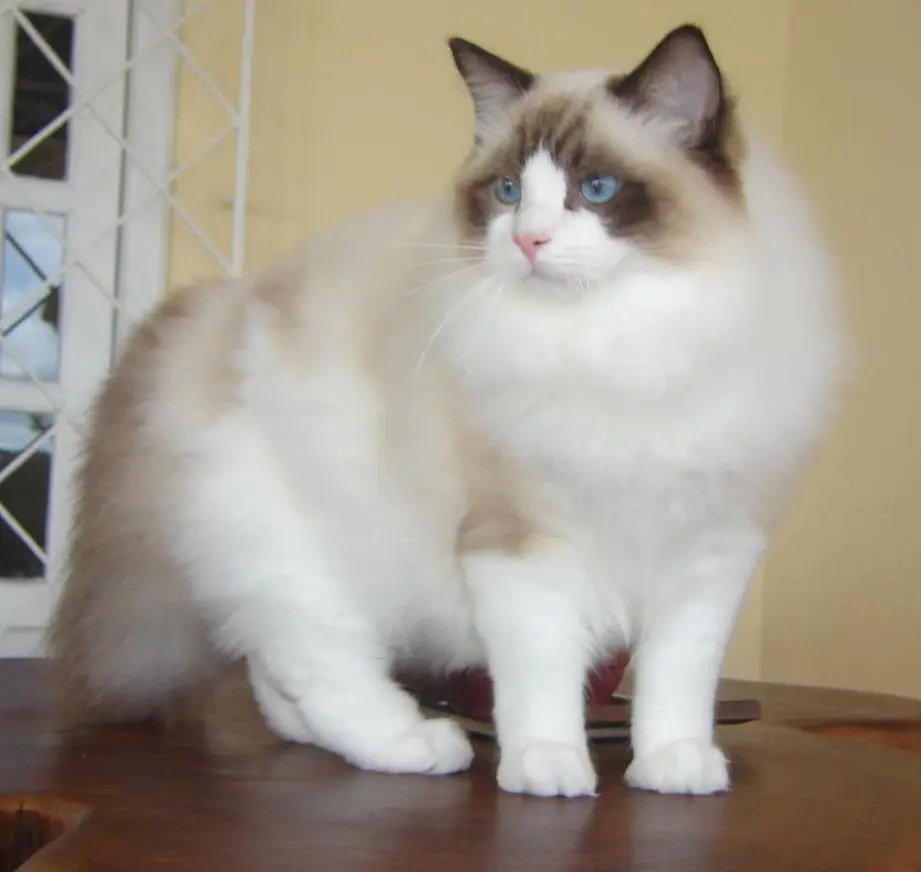
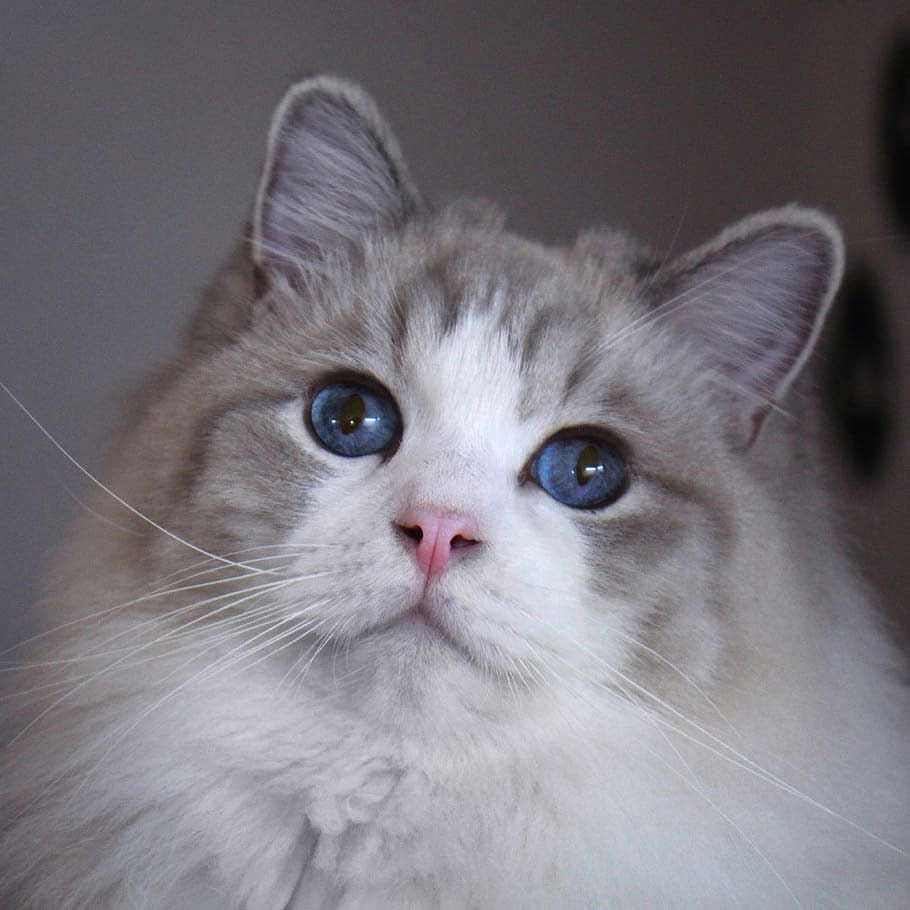
The head forms an equilateral triangle viewed from the front. Profile, the rounded forehead is prolonged with a slide-shaped depression at the nose. The ears are size medium, point forward and end in a rounded shape. The eyes they are big, oval and of an intense blue color that rarely leaves you indifferent.
The fur of the Ragdoll, composed of a sparse undercoat and a medium length topcoat, it is silky and close to the body. Tends to elongate in winter and is densest in the back of the body, and the queue is particularly crowded. It also, some dogs have a well-developed mane.
The fur tends to be colourpoint (a light color and dark tips), but it can also be gloved or bicolor. In United States, the CFA (Cat Fanciers’ Association) also allows pattern van, or Seychelles, which is a white individual with a colored tail and head, and spots on the body. The colors allowed by the standards of the different organizations that recognize the breed are the seal, the blue, chocolate, the lilac, red and cream. These colors can be found in tortoiseshell patterns (black and Red) or tabby (striped), which gives rise to a large number of possible combinations and, Therefore, to as many cats with different appearances.
Last, the sexual dimorphism it is very marked, being the male much more imposing than the female.
Size and weight
Male height: Of 30 to 35 cm.
Female height: 28-32 cm.
Male weight: 5-9 kg
female weight: 4-7 kg
Breed standard
The breed standards are documents established by official bodies that list the conditions that a dog must meet. Ragdoll to be fully recognized as belonging to the race:
Male Ragdoll, about three years old, with prototypical tabby patterns in the head region – BlackIceNRW, CC BY-SA 3.0, via Wikimedia Commons
Docile and devoted, the Ragdoll he loves the company of his family and follows them around the house, greeting them at the door when they arrive. He is a gentle and loving companion, who just wants to get into his master's lap to warm him up and relax him with a lot of purring after a hard day's work.
Very sociable, he has no problem greeting guests. If they take it in their arms, he behaves as he would with his masters: relax all your muscles, which reminds us why it's called "Ragdoll".
Its quiet character, relaxed and easygoing makes it an excellent choice for a cat breed with children, especially if they have learned to interact with an animal. But even if they are not treated with respect, for example, if they are carried around the house for a long time, it is very rare that they remove their claws. And if there is a cat that is willing to be dressed like a doll and then carried in a stroller, it's the ragdoll. Of course, make sure that the child does not cross the line and abuse their indulgent nature.
It is not a problem of coexistence with other dogs, as long as they don't chase you around the house. It can even live with small rodents or fish, but it is advisable not to tempt the devil: the Ragdoll still a feline, and his hunting instincts can resurface at any moment.
Its flexible and calm personality makes it a cat that adapts well to changes and is capable of living in almost any environment. A move with a cat goes much better if it is a Ragdoll that a race that does not share this quality. The owner can also perfectly consider taking his cat on vacation, without fear that your partner will be completely disoriented and not enjoy the change of scenery. It is also possible to take your cat around your holiday destination on a leash, since it is something that this breed accepts very well.
Despite its impressive size, the Ragdoll adapts perfectly to life in a flat, as long as you have everything you need: the warmth and comfort of a cozy home, the affection of his family and a little space to play. Even if you live in a house and have free access to the outside, it's more of an indoor cat: rarely goes outside to explore the garden or surroundings.
On the other hand, his closeness to humans and his patience make him suitable for friendship with anyone, and turn you into a excellent therapy cat. His presence and willingness to interact with people also means that he can be a real comfort to his owner when he is going through a difficult time., and he knows that he has a support in him that he can trust in those circumstances. On the other hand, It is not for someone who likes to be alone and does not want a companion who is a little "clingy", who prefers to opt for a more independent breed.
The Ragdoll is moderately active, but enjoy chasing a cloth mouse, especially because he retains a playful side throughout his life. They are also able to learn some tricks, especially if the owner uses positive reinforcement techniques with praise and treats. It also, if given the opportunity, they love to play fetch for an object thrown by its owner, how would a dog. But don't expect him to constantly jump on the kitchen table or climb on furniture.: prefers to run rather than jump and does not venture beyond the living room sofa or bed. Like this, unlike most of his peers, does not seek a high position to observe its surroundings from above, but choose a place that facilitates contact with your family.
It also, against a legend, not insensitive to pain, and reacts like any other cat if someone steps on its tail: cries out in pain and then walks away with a reproachful look at the offender.
Last, has a soft and musical voice, but he rarely uses it, except when you order your food.
Health
"Ragdoll cat"
Male Ragdoll of 4 months. Blue mitted with a blaze – CalistaZ, CC BY-SA 3.0, via Wikimedia Commons
The Ragdoll cat it is a fairly robust breed with few genetic predispositions.
But, you are not immune to certain health problems. Among the possible risks, the most common are:
The feline hypertrophic cardiomyopathy, a growth of heart tissue that can have serious consequences. But, from 2007 there is a DNA test to detect the responsible gene, so serious breeders of Ragdoll have taken all precautions to minimize this risk;
Bladder lithiasis, that is to say, stone formation in the bladder;
The urolitiasis, what is stone formation in the urethra.
These last two conditions can cause the cat to be unable to urinate, a serious situation that requires the urgent intervention of the veterinarian.
Life expectancy
Of 12 to 15 years
Grooming
The Ragdoll it is a breed of cat that is easy to care for: the brushed once a week removes dead hairs and knots that may form. This session is usually appreciated by the receiver, who enjoys the attention and caresses he receives.
Although they do not shed excessively (especially because its undercoat is not very abundant), it is advisable to increase the frequency of grooming sessions during their shedding periods, in autumn and spring.
The teeth, the eyes and ears should also be checked and maintained once a week to make sure they are clean and free of infection.
It also, depending on wear and tear and how often your dog uses the scratching post, its claws need to be trimmed more or less frequently.
Last, keep in mind that, given its size, a large litter box is necessary so that she can turn over without difficulty.
Food
Ragdoll
The Ragdoll it does not pose any difficulties in terms of feeding and adapts very well to industrial cat foods available on the market. But, food must be of good quality, adapted to your age and activity level, to provide you with everything you need to stay healthy.
Kittens of this breed can experience large growth spurts, so it is important that they always have food at their disposal to develop properly. This is especially true as they are capable of self-regulation., so the risk of being overweight is very limited. This is not a sign of obesity, but a normal morphological characteristic of the breed.
Adults are also capable of self-regulation and can also have food at all times without this generally posing a problem.
But, your dog's weight should be monitored regularly and a veterinarian should be consulted in the event of a pronounced increase.
What is the price of a "Ragdoll cat"?
The price of a kitten Ragdoll round the 1100 euros on average, whether it is a male or a female.
But, this stocking hides a fairly wide range of prices, since it goes from the 600 euros of the cats with the characteristics furthest from the standard up to almost 3.000 euros of the specimens belonging to a prestigious lineage and destined for their physical attributes to shine in feline exhibitions.
Interesting data
Do "Ragdolls" have a reduced sense of pain?
Since the Ragdoll hangs limply when caught and lets everything hang over him, some researchers assumed the breed has a lower sense of pain than other cats. For some time, experiments were done on the poor animals. It is even believed that the founder of the breed, Ann Baker, made this claim to better market his breed. At the end, the tests led to the conclusion that there are no differences with other cats.
The "Ragdolls" on social networks
Their funny and clumsy character makes cats Ragdoll be real stars on the internet. There is hardly a compilation of "funny cat videos" in which this breed does not appear.. The Ragdolls most famous on Instagram are the three cats Lola, Nina and Olan, whose day to day you can follow under the name of @ladylolathecat. The three cats live with their owner in a floating house and delight 139.000 subscribers almost daily with funny videos and images.
The Elf cat, a new and extremely rare hybrid breed, is a playful and intelligent cat that combines the physical and personality traits of cats Sphynx and American Curl.
Content
Characteristics "Elf cat"
Coexistence is important that you have with your new friend. Before considering the acquisition of a cat of the breed "Elf cat" you know certain factors. You must take into account their character, their need for exercise, their interaction with other pets, their care and if you have small children, their level of tolerance towards them.
Joy
5,0 of 5 stars (based on 1 review)
Activity level
4,0 of 5 stars (based on 1 review)
Friendliness to other pets
4,0 of 5 stars (based on 1 review)
Friendliness to children
5,0 of 5 stars (based on 1 review)
Grooming requirements
3,0 of 5 stars (based on 1 review)
Vocality
3,0 of 5 stars (based on 1 review)
Need for attention
4,0 of 5 stars (based on 1 review)
Affection towards its owners
5,0 of 5 stars (based on 1 review)
Docility
5,0 of 5 stars (based on 1 review)
Intelligence
4,0 of 5 stars (based on 1 review)
Independence
2,0 of 5 stars (based on 1 review)
Hardiness
3,0 of 5 stars (based on 1 review)
History
Since the Elf cat it is such a new and extremely rare breed, its history is somewhat limited. Cat breeders and enthusiasts Karen Nelson and Kristen Leedom are considered the creators of the breed; in 2004 Nelson and Leedom came together with a vision to breed a curly-eared cat that retained the personality and physical attributes of their beloved cats. Sphynx cat.
The Elf cat developed successfully from the crossing of cat breeds Sphynx and American Curl. Each of these two races has a distinctive trait, and the Elf cat was designed to combine them. The most distinctive features of this cat are the appearance of curly ears, taken from American Curl, and the absence of hair, taken from Sphynx cat. But, similar to the Sphynx, the Elf cat not completely hairless; their skin may be covered with a very fine fur that is practically imperceptible both to the eye and to the touch.
Any of the Elf cat is now found in generations exhibiting the traits that were originally conceived, and they are beginning to be introduced in the halls of the International Cat Association (TICA). Once the required numbers were reached, the original creators and enthusiasts of the breed gained acceptance of the Elf cat as a new feature of the Sphynx cat; the Elf cat has been accepted for registration in the TICA, and they are shown as Sphynx with new features in cat shows.
Physical characteristics
"Elf cat"
The Elf cat it seems like a Sphynx, except that their ears they are small and curved, like those of American Curl. This is one of the most striking features of this cat.
The other striking feature is that it is a naked cat, or covered only with a fine down on the legs, the ears, nose and tail. The vibrisas are short or absent, and there is no hair in the ears. Skin feels like a peach or suede. At birth, it is heavily wrinkled. This appearance diminishes in adulthood, but there are still deep wrinkles on the shoulders, ears and muzzle.
Its body, similar to the of the Sphynx, it is semi-linear, well built, with an athletic silhouette and legs long and thin. The tail it's long and thin. The head is elongated, with prominent cheekbones and short or absent vibrissae. Last, big ones eyes ragged lines complete the portrait of this elegant cat.
The male is on average a 25% larger than female.
Last, all coat colors are allowed, with or without marks.
Size and weight
Size: 30 cm.
Weight: Of 3,6 to 6,8 kg
Character and skills
The Elf cat was bred to perpetuate the best personality qualities of Sphynx and American Curl cats, like kindness and affection. They are also considered one of the most intelligent breeds of cats. Being so outgoing and sociable, want more contact and interaction with humans than the average cat and, therefore, are better suited to homes where they are not left alone for long periods of time. They will also be happier sharing their home with a feline companion to play with..
The Elf cat they are active and friendly cats who love to be the center of attention, and they are also extremely curious and playful (and they are known to get into some mischief). Prospective cat owners Elf cat they should be aware that these cats love to climb and will want to play with just about anything in their reach, so it is essential that they have plenty of play time and lots of toys, as well as high shelves or other safe spaces where they can climb.
Grooming and care
The Elf cat is generally regarded as a low-maintenance breed of cat. Due to the fact that the Elf cat Does not have hair, potential owners won't have to worry about moving. But, these cats will need a bath or routine cleaning. Regular grooming is important to remove secretions from the skin, otherwise a Elf cat can become sticky to the touch or even develop skin problems. Many Elf cat tolerant (and they even enjoy) an occasional bath.
The Elf cat it is a very sociable and friendly breed, meaning it can easily fit into most home environments and family structures. They also adapt well to other pets in the home. But, their lack of hair means that they must remain indoors for their comfort and safety.
As with their ancestors American Curl, the ears of these cats must be treated carefully so as not to damage the cartilage. With or without soft cover, the Elf need protection against UV rays. It also, without hair, they react to heat and cold just like we do. If your need a sweater, he also needs it Elf cat.
Health and nutrition
Because of her hairless body, sunburn, Sensitivity to cold and heat and other skin problems are potential concerns for owners of the Elf cat. Your delicate skin can also be easily injured, for example, when playing with a feline companion.
The Elf cat is considered a healthy cat and, being a new breed, Genetic health problems have not yet been determined. But, may be susceptible to health conditions that affect their parent breeds, such as heart and gum problems.
Food
Like all races, the Elf cat may be susceptible to weight-related problems, such as obesity or heart disease, so you should eat a high-quality, protein-rich diet, and get plenty of exercise in the form of games with your family.
The potential owners of the Elf cat they should know how much the race Sphynx as the American Curl tend to have a robust appetite (and they have a bulging belly to prove it), so it is much more important to feed these cats a proper and balanced diet.

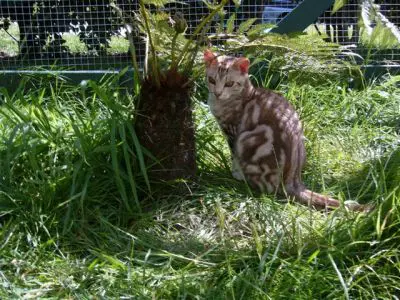

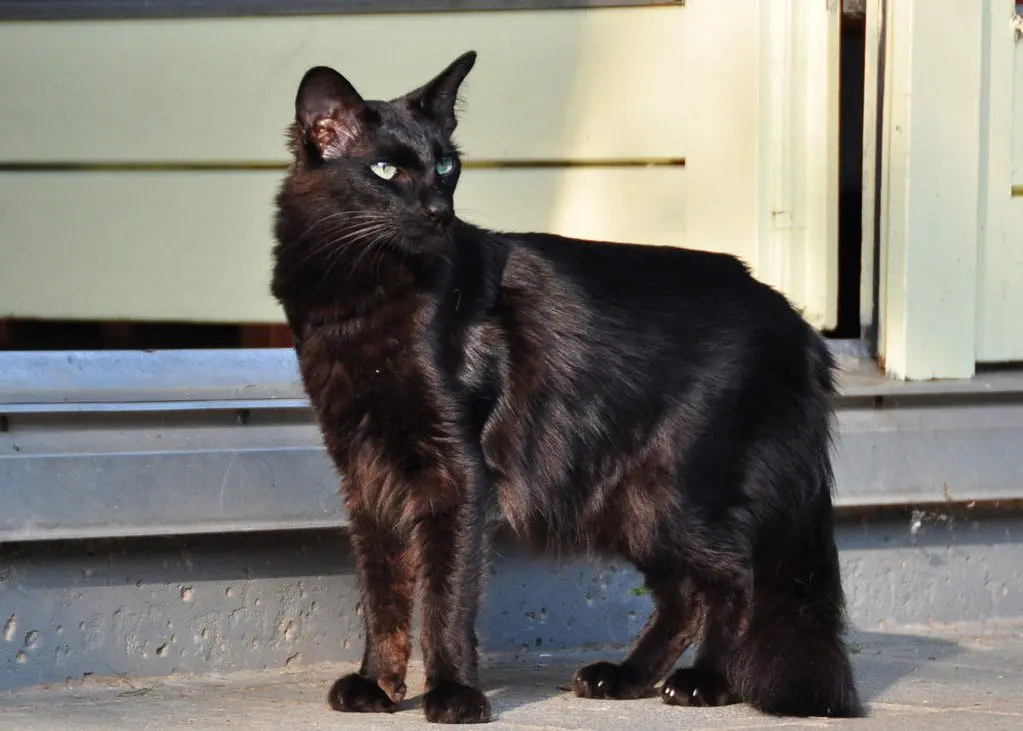
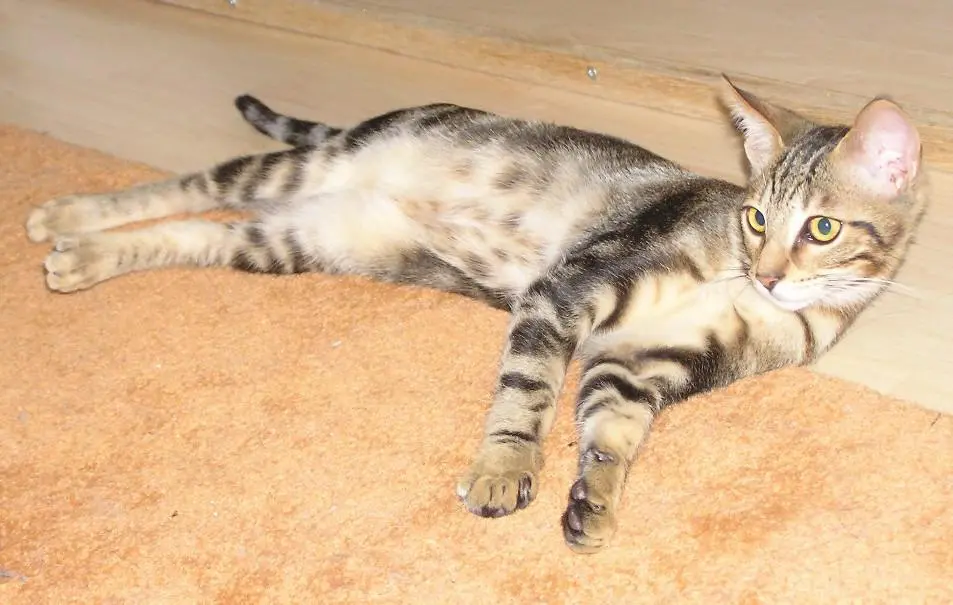

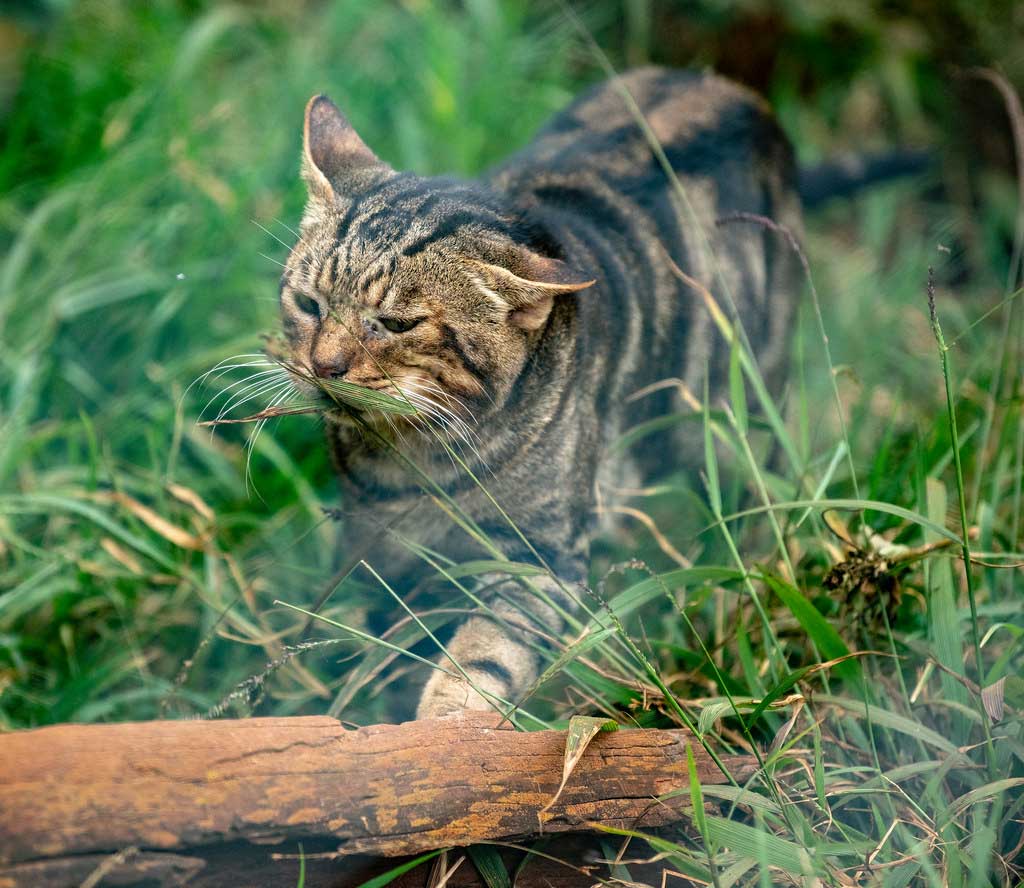

 Adorable Sokoke Cat Berlioz : African Shorthair Cat
 Rarest Breed of Domestic Cat – Sokoke
 Sokoke kitten Barika having fun on the bamboo curtains for kitchen
 Sokoke cat in Spain