The Australian mist cat has been named Australia's national cat.
Photo: breeds.traditionalcats
Content
Characteristics "Australian mist cat"
Coexistence is important that you have with your new friend. Before considering the acquisition of a cat of the breed "Australian mist cat" you know certain factors. You must take into account their character, their need for exercise, their interaction with other pets, their care and if you have small children, their level of tolerance towards them.
Joy
5,0 of 5 stars (based on 1 review)
Activity level
5,0 of 5 stars (based on 1 review)
Friendliness to other pets
4,0 of 5 stars (based on 1 review)
Friendliness to children
5,0 of 5 stars (based on 1 review)
Grooming requirements
3,0 of 5 stars (based on 1 review)
Vocality
2,0 of 5 stars (based on 1 review)
Need for attention
4,0 of 5 stars (based on 1 review)
Affection towards its owners
5,0 of 5 stars (based on 1 review)
Docility
3,0 of 5 stars (based on 1 review)
Intelligence
4,0 of 5 stars (based on 1 review)
Independence
3,0 of 5 stars (based on 1 review)
Hardiness
4,0 of 5 stars (based on 1 review)
History
In 1977 The doctor. Truda Strait, the creator of the “Australian Mist Cat” breed, It presented an idea to the Royal Agricultural Society of NSW Cat Control (This body was replaced by the Cat Fanciers’ Association of NSW, a member agency of the Coordinating Council of the cat from Australia) to develop a cat breed that was truly unique to Australia.
The breed was developed by crossing the European Burmese Cat., Abyssinian cat cats and dogs domestic short hair to create a cat for short hair with a spotted coat.
The goal was to create a new breed with a peaceful temperament and spot pattern especially for use indoors.. In 1986, the breed was really recognized in Australia, at that time still under the name «Spotted Mist«. By increasing the range of brands and colors -between, the cat is also available with tabby coat-, the name was finally changed into 1998: Today the cat is called "Australian Mist".
The Australian mist cat has an athletic and muscular body. His figure with strong legs and wide torso already suggests that he likes physical activities. This medium-sized cat has large green eyes and a rounded head.. Ears are slightly rounded and stand out alertly. In general, the face radiates kindness and curiosity, attributes that are part of your personality. The fur has several drawings (stains, stripes and squiggles) and color dimensions that give the cat a hazy look. Due to these color characteristics, It is also called "Australian fog cat".
The Australian mist cat comes in different colors:
blue
brown
Caramel
Chocolate
Oro
Lila
Durazno
Character and skills
The Australian mist cat is caring and people-oriented. But it is also social in relation to other species, so socialization with other cats is not only possible, but also very important.
Whenever it can come into contact with other creatures, prefers solo adventures. Although she is one of the typical house cats, seldom lazily lies down. The Australian mist cat is lively, curious and active, so he does not like monotony or boredom.
The Australian mist cat adapts flexibly to the living conditions of its owner. Can cope with large families, both in a flat and in a nursing home, as long as there's someone to hang out with.
If you acquire an adult cat, you may need some time to get used to the new environment, especially if there are children around and the cat does not yet know how to interact with them. By the way, there are no diseases typical of the breed with regard to the Australian mist cat. This breed of cat is healthy, robust and long-lived. However, You must go regularly to veterinary check-ups and update vaccination and antiparasitic protection.
Life expectancy
The life expectancy of a "Australian mist cat" healthy is from 13 to 17 years on average.
Indoor or outdoor cat?
The Australian mist cat it is a social animal that prefers to stay close to its interaction partners rather than roam outside only. They will take advantage of small outdoor spaces, like an adjoining garden, but they will also be happy in a flat, as long as, of course, can exercise and occupy themselves at home. A spacious apartment is not essential, but it would be ideal due to its agile character. If there are several options to climb and play on the premises, the Mist australiano thoroughly explore your environment.
It also, in an unsupervised outdoor area, there is always a basic risk of loss for purebred cats. Criminal gangs see lucrative business in outdoor cats, especially when it comes to a specimen as special as the Australian mist cat. If a getter gets it, he catches it and sells it. For this reason, if you allow your cat to access an outdoor area, you will need adapted protection. These may include, equip your cat with a GPS tracker or transponder. It may even be mandatory for your cat to be marked where you live.
How much activity does he need? "Australian mist cat"?
The Australian mist cat is a cat with a playful interest and a greater desire to exercise, so if you keep it as an indoor cat, will need to climb a lot. Variety in the form of different toys should also be provided at all times. The cat likes it best when it doesn't have to take care of itself, but its owner or a fellow man plays with it.
For sale "Australian mist cat"
Buy purebred kittens Mist australiano can be treacherous, as these purebred cats are practically non-existent outside of Australia. In all Europe, it is considered a real stroke of luck to get hold of one of these rare kittens, as they are mainly bred in New Zealand and Australia. In general, the feline race is still very young, so global awareness must first be broadened before a jurisdiction of special breeding clubs can gradually emerge. It also, cats have a proud price. A prospective buyer has to pay a few 1000 euros for your desired cat, always depending on the breeder, general demand and location.
But, with a little luck, you will find a Australian-Mist-Mix or a cat of at least similar appearance.
The Antipodean cat was previously known as the New Zealand shorthair cat and / or the Australian longhair cat.
Content
History
The New Zealand cat (domestic) shorthair or longhair is New Zealand's own breed, whose ancestors are the cats that reached the antipodes with the first pioneers of Europe. These early cats were brought by early settlers to hunt rats that threatened the food supply and later worked as "farm cats" and "store cats" in the new colonies..
For more than 150 years, these robust cats have flourished, establishing itself as New Zealand's indigenous house cat, facing the cold of the mountain ranges, to the humidity of subtropical forests, to the dry tundra that borders desert regions and the dangers of a busy life within the confines of the growing city.
Physical characteristics
The Antipodes can be long-haired or short-haired and brindle in color, solid or percal. Cats with points of color (that is to say, Siamese) cannot be considered true Antipodean cats.
The Antipodean cat has a body medium, solidly built, is a muscular cat. Count with one chest broad and rounded, the shoulders well developed, and a level backward, equally broad of shoulder to the hip.
The head is a slightly truncated triangular wedge. The Antipodes has the cheeks full, the jaws large, a forecrown smoothly rounded, and nose straight or slightly curved down.
The ears are slightly rounded at the tips. The eyes they are big and bright, between rounds and almond-shaped. The color of the eyes of the antipodes can be green, Turquoise Blue, yellow, oro, copper, including blue.
It has legs average length, proportional to the body and legs are firm and forward. The tail is heavier at the base and tapers smoothly at the tip.
The New Zealand Shorthair cat and the of Longhair are now registrable with CATZ Inc. Almost any domestic cat can qualify to be included in the open registry of this new breed. But, there are some rating factors…
First of all, cats must be WHOLE and approved for a registered breeding program. This means they must be used to produce PEDIGRED New Zealand Shorthairs and Longhairs or used in another breeding program where New Zealand Shorthairs and Longhairs are an approved cross..
In second place, although the breed comes in a range of over 90 colors, including all standard solids, tabbies, silver tabbies, bicoloured, calicos and vans, must not show any evidence of HYBRIDIZATION. As with the American Shorthair, cannot be color POINTED, of SEPIA of MINK, Neither CHOCOLATE or LILAC, o CINNAMON o FAWN, all colors showing evidence of Hybridization with the Siamese (himalayan pattern) or the Birman (Sepia pattern), or the Tonkinese (Mink pattern), or the Abyssinian (Where did the Cinnamon and the Fawn come from).
Character and skills
Both shorthair and longhair New Zealand are the family of the cats of the antipodes , and it can be a friendly companion and a playmate for children. The shorthaired antipodes is known for its longevity, good health, and by its ability to easy treatment, they are cordial, happy and loyal. They are recognized for their ability to deal with all climates and conditions.
▷ The world of Pets: Dogs, cats, birds, reptiles, amphibians
The Chinchilla Persian cat it's a kind of Persian cat characterized by its white fur with spikes. This means that the tips of the hairs are colored.
Photo: Some rights reserved by pareeerica - Flickr
Content
Characteristics "Chinchilla Persian cat"
Coexistence is important that you have with your new friend. Before considering the acquisition of a cat of the breed "Chinchilla Persian cat" you know certain factors. You must take into account their character, their need for exercise, their interaction with other pets, their care and if you have small children, their level of tolerance towards them.
Joy
2,0 of 5 stars (based on 1 review)
Activity level
2,0 of 5 stars (based on 1 review)
Friendliness to other pets
3,0 of 5 stars (based on 1 review)
Friendliness to children
5,0 of 5 stars (based on 1 review)
Grooming requirements
5,0 of 5 stars (based on 1 review)
Vocality
2,0 of 5 stars (based on 1 review)
Need for attention
3,0 of 5 stars (based on 1 review)
Affection towards its owners
4,0 of 5 stars (based on 1 review)
Docility
3,0 of 5 stars (based on 1 review)
Intelligence
4,0 of 5 stars (based on 1 review)
Independence
2,0 of 5 stars (based on 1 review)
Hardiness
2,0 of 5 stars (based on 1 review)
History
The first Chinchilla Persian cat born in 1880 at Mrs Vallence's kennel in Great Britain. Kitty, christened Silver Lambkin, was the result of the cross between a Smoke colored Persian cat and a Silver-Tabby Persian cat. His fur was silver.
The new breed descends from this Persian kitten, hence the name of Chinchilla, of the small rodent with dense gray fur. They are also called "silver Persian.".
The breed was first recognized in Great Britain in 1901. But, it is rare, mainly due to the restricted selection made by breeders to obtain Persian kittens that meet the criteria.
This selection is so strict that the breed disappeared in Europe during World War II..
Today there are two varieties of Persians Chinchilla Persian cat: the one with silver fur, with white / silver fur, and the one with golden fur. The latter comes from a cross between a Chinchilla Persian cat and Persian cat brown-tabby.
Physical characteristics
The Chinchilla Persian cat has the same physical characteristics as the Persian cat around the world. It is a medium-sized cat with a robust body.. Its legs are rather short and it has large round legs..
The Persian Cats are recognized at first glance by their peculiar head. It is round and large and is dominated by small bushy ears. Its muzzle is as wide as it is long and very flat.
But, the Chinchilla Persian cat it has a narrower head than other Persian cats and its ears are usually longer.
The eyes of the Chinchilla Persian cat they are especially vivid emerald green. They have a black border, that gives them depth. In puppy cats, the color is displayed from the seventh month. The muzzle is also marked by a fine black line., as if i was made up.
Fur
The hair Chinchilla Persian cat it has a tip, which means that the ends of the hair are a different color than the roots. This tip is on the back, the head, the tail and sides and covers less than a quarter of the hair length. The belly and chin are always white.
The tip of a cat silver-colored persian it's silver, a gray that appears darker than a true Chinchilla, although this one does not have a white undercoat.
The coat of a golden-colored Persian cat is "golden", that is to say, predominantly beige, while the undercoat is more apricot. In golden cats the tail is black.
It's not common, but some Chinchilla Persian cat they can also have blue tones, chocolate, lilac, red, cream a carey.
Character and skills
The Chinchilla Persian cat tends to be very calm and relaxed. Sometimes they can even be a bit lazy and prefer to sleep during the day..
This does not prevent them from enjoying some moments of activity, especially with their owners, with those who are especially trusting.
Yes indeed, be careful not to humiliate them. The Chinchilla they can quickly get offended if they don't get what they want.
All Persian cats are highly susceptible to disease. Especially their eyes are very sensitive and the dryness of the cornea is very frequent in many breeds of cats..
The bilateral cryptorchidism it is also the most common in this breed. The result is the sterilization of affected male cats..
The Persian Cats have a predisposition to hypertrophic cardiomyopathy, which can lead to high blood pressure and other heart conditions.
The Persian Cats are also frequently affected by the dominant type of the genetic renal polycystosis. This applies to 40-50% of the Persian Cats, regardless of sex. The disease can be detected from the tenth month of life and at least allows treatment to be planned in advance, since the disease does not manifest itself until approximately the seventh year of life of the cat.
Grooming
The Chinchilla Persian cat it is a cat that needs a lot of attention and care. Its long coat is highly prized by fleas and parasites. That is why it is important to brush it very regularly and check if the parasites have managed to settle.. A bath is recommended from time to time.
Chinchilla eyes should be washed every day., and ears every week.
Videos "Chinchilla Persian cat"
Chinchilla Persian Cat Playing (My Fluffy Snow Leopard)
The Highlander cat is a relatively new breed, the first litter back to the year 2004. This race is a little rare, to remove doubts it is registered with the International Cat Association (TICA) as a new preliminary certification.
Content
Characteristics "Highlander cat (Highland Lynx)"
Coexistence is important that you have with your new friend. Before considering the acquisition of a cat of the breed "Highlander cat (Highland Lynx)" you know certain factors. You must take into account their character, their need for exercise, their interaction with other pets, their care and if you have small children, their level of tolerance towards them.
Joy
5,0 of 5 stars (based on 1 review)
Activity level
5,0 of 5 stars (based on 1 review)
Friendliness to other pets
4,0 of 5 stars (based on 1 review)
Friendliness to children
4,0 of 5 stars (based on 1 review)
Grooming requirements
3,0 of 5 stars (based on 1 review)
Vocality
2,0 of 5 stars (based on 1 review)
Need for attention
3,0 of 5 stars (based on 1 review)
Affection towards its owners
4,0 of 5 stars (based on 1 review)
Docility
4,0 of 5 stars (based on 1 review)
Intelligence
4,0 of 5 stars (based on 1 review)
Independence
3,0 of 5 stars (based on 1 review)
Hardiness
4,0 of 5 stars (based on 1 review)
History
The Highland Lynx, better known today as Highlander cat, it was created in 1993 by crossing two hybrid cat breeds, the Jungle Curl and the Desert lynx. But, despite its exotic name, This breed of cat does not have an iota of blood from its distant wild cousin, the Lynx. The desire to create a Domestic cat with the appearance of a wild cat with curved ears was the main reason for its creation and for the choice of its name.
Since the appearance of the breed, the breeders of Highland Lynx they have continued to select and perfect the physical features of this very special cat to distinguish it from its parent, the Desert lynx cat.
Your efforts are beginning to pay off. Like this, although the highland lynx is still considered by the Rare and Exotic Feline Registry as a subgroup of the Desert lynx cat, as the Alpine Lynx and the Mohave Bobs, is starting to emerge at feline shows as a breed in its own right. The name change in 2005 to Highlander was seen by the breeder community as a strong sign of demarcation.
The 1 in May of 2008, the breed was recognized by the International Cat Association (TICA) to participate in the feline shows organized under his auspices in the preliminary class of new breeds, reserved for new breeds that can enter competitions, but do not participate in them. Eight years later, in 2016, rose to the category of New Advanced Race, which means that he could compete but not win any official prize. The application of the breed to participate in presentations as a competition breed (final status which means official recognition) is being considered in 2019. It should be noted that the TICA divides the Highlander in two varieties: the Highlander Shorthaire for short-haired specimens, and the Highlander Longhair. Other international feline associations, as the Fédération Internationale Féline (Fife), the Cat Fanciers Association wave Word Cat Federation they still don't recognize the breed.
Despite TICA approval and resulting visibility, the Highlander not yet widely distributed outside its country of origin, United States. There are some breeders of Highland Lynx in Canada and Europe (France and UK), but your number remains confidential.
Physical characteristics
Highlander CatDigitalDirt, CC BY-SA 4.0, via Wikimedia Commons
The Highland Lynx has a physical look that is sure to attract attention when you walk into a room. With his muscles, his curved ears, its short tail and brindle fur reminiscent of its distant wild cousins, the Highlander He is as imposing as his cousin the Desert lynx cat, if not more.
Bigger than the average cat, the Highlander has a body powerful, with well-defined muscles that show in every movement. Its torso is quite developed and its long hind legs end in large feet with prominent joints.
The polydactyly in cats, that is to say, having more "toes" on each paw than normal, It is very common in Highlanders, regardless of kinship. This feature does not pose any risk to the animal's health.. On the other hand, it can even be an advantage, as it provides more stability in your movements.
Another physical feature of Highlander is your tail naturally shortened, to the point of having only between 5 and 15 centimeters in length. It also, it is thick and can be straight or curly. This anomaly does not influence the cat's daily behavior or its health either.. He even tends to wag his tail to express his mood, like a dog.
Last, the head and the face of Highlander are generally longer than wide. Its forecrown long, their nose wide and its chin deep and pronounced form a rather rectangular face. The Greats eyes oval and flattened can vary in color between gold, blue and green, and they are especially expressive. The ears, with wide bases and curved tips, are placed high on the skull, alerts and open. This last characteristic develops in the first months after the birth of the kittens., who initially have straight ears.
Last, a wide variety of coat colors and patterns are accepted. Those with short hair tend to have a softer and denser coat than those with long hair..
Size and weight
Size: 25 to 40 cm.
Male weight: 5 to 11 kg
female weight: 4 to 7 kg
Varieties of "Highlander cat (Highland Lynx)"
The standard of the Highland Lynx accepts all feline coat colors: ebony, blue, Brown, leonado, chocolate, lilac, Red and cream, as well as all silver variants, sepia, snow, mink and cameo.
But, the breeders of Highlander They currently prefer three coat patterns to maintain the "wild" look of the breed.:
The leopard pattern
It consists of a tabby with dark spots on the flanks and belly of the cat. The size of the spots can vary, but they must be evenly distributed. Rosette-shaped spots are preferable (almost full circle, with a center lighter than the edges). A dark dorsal line, ideally made up of small spots, should travel the length of the cat's spine to the tail. The face has brindle markings. Ghost spots (marks that fade as the cat sheds and ages) are preferred for snow colors, cuttlefish and mink.
The leonado pattern
The coat is brindle all over the body, with more pronounced brindle markings on the legs, tail and face. Collar markings are usually present on the neck and chest, but they are not essential.
The marbled pattern (the cloudy leopard)
It is a variation of the brindle brand, but with horizontal guidelines instead of vertical. Colors must be contrasted, with well-defined shapes and contours. The belly is stained.
Accepted Highlanders smooth or brindle, but they are less desirable, as they are closer to the look of a Domestic cat.
Character and skills
Highland cat reclined – TAnthony, CC BY-SA 4.0, via Wikimedia Commons
Despite his wild looks, the Highlander is far from sharing the temperament of his cousins, starting with his circumspection and shyness. In fact, it's the opposite. In fact, it is one of the most affectionate cat breeds. This character trait, as well as its tendency to follow its owner everywhere, has earned him the nickname "cat-dog".
A giant with a kind heart, quickly becomes familiar with his new surroundings and soon demands a lot of attention and caresses from everyone who enters his home. This applies even to strangers, those who do not hesitate to touch, if you are encouraged to do so. Sometimes he even goes out to party with his master and follows him around when he comes back from work., without the noise and the drool. In other words, not a suitable breed of cat for a master who is away often, that you would do better to opt for an independent cat.
On the other hand, unlike other affectionate cat breeds, the Highlander not talkative: shows your affection through your movements and attitude, not through your voice.
This personable and patient character makes them ideal for a family with children., provided they are not too agitated in your presence. Moderating the ardor of the youngest is all the more necessary since the mountaineer has an excellent memory and, Therefore, tends to run away from people with whom the first exchanges have been random.
It is possible to have more than one cat at home, since the Highlander is generally sociable with other cats. But, it is important to avoid bringing two unsterilized males together.
Cohabitation of your cat with a dog should not be a problem either, since they also get along very well with dogs, sharing the same devotion to their master. In fact, It is not uncommon to see that they quickly start playing together once they have been introduced..
It also, his intelligence and excellent memory make him a perfect student to teach your cat tricks and games, like the recovery of balls. An indoor cat perfectly adapted to life in an apartment and not to that of a garden cat, however requires distractions and activities between two naps. Playing with your cat on a regular basis will allow him to channel his energy while maintaining his powerful muscles, and it will prevent you from destroying everything in the house to get your attention.
Last, the Highland Lynx he is a water-loving cat, whether it's watching a faucet run for hours or getting sprayed during a gaming session.
Health
The Highland Lynx is a new breed of cat and breeders have not yet identified any specific disease.
However, It's recommended that, before making any purchase, the cat's parental history and vaccination record is checked to ensure that all its vaccinations are up to date.
Grooming
Depending on the hair length of the Highland Lynx, maintaining the cat's coat may require more or less work. The longer the coat, more regularly you will need to brush your cat (about twice a week), to help you groom. In any case, it is best to accustom your cat to being brushed from a young age, since older cats do not appreciate this type of attention if they are not familiar with it.
It is also important to monitor and maintain your cat's ears. Dirt or excess wax can collect in the cartilage folds, causing discomfort and infections. Cleaning your cat's ears regularly will go a long way in preventing this problem..
Food
The Highland Lynx does not have a special sensitivity to food. It also, provided that the food is of good quality and is adapted to the dietary and energy needs of the cat, there is no risk of him becoming overweight.
However, keep in mind that the Highlander tends to drink more than other cats. So, it is even more important that they always have access to fresh water.
For sale "Highlander cat (Highland Lynx)"
The price of a kitten Highland Lynx ranges between 700 and 900 EUR.
The British longhair cat was recognized as a breed by the International Cat Association (TICA) in 2009. Some other registration organizations still do not consider it a breed of its own..
Content
History
The British longhair cat originated in Great Britain at the beginning of the 20th century and is the result of crossing the British Shorthair cat and the Persian cat. The British Shorthair cat They had long interbred with the persian cats, but the resulting cats that showed the long-haired gene of the Persian they were considered unusual.
Because the breed has only recently been bred for its specific traits, have achieved race status in recent history. Much of the history of British longhair cat is associated with its relationship with its namesake and ancestor, the British Shorthair cat.
Physical characteristics
The British longhair cats are size medium, with long hair and a nice round face. His big round eyes, their sweet expressions and fluffy fur give this breed adorable charm. Under all your fluff, these cats have muscular and robust bodies. The british long hair usually weigh between 3 and 7 kg, and males tend to weigh more.
The coat of the British longhair it's dense and straight, and moves away from the body to make these cats appear larger than they really are. Its fur is also soft, thick and available in many colors, like black, the lilac, chocolate or gold. They can also have a bicolor pattern, ticked o colorpoint. These cat breeds shed little compared to other long-haired breeds, but they have a thick undercoat.
The British longhair cat is often compared to the British Shorthair cat and with the Persian cat as for its appearance, And for good reason: This breed of cat follows the same breed standard as the British Shorthair cat, except for their long, soft fur. The magnificent mane of British longhair is the result of the side of Persian cat of his genealogy.
British longhair cat Bounty Amouge, No. 4 according to the catalog of the international cat exhibition of the RosKosh club «Golden Autumn-2014» (WCF). – Nickolas Titkov from Moscow, Russian Federation, CC BY-SA 2.0, via Wikimedia Commons
Character and skills
These sweet cats are as personable as their smiling faces would suggest.. The British longhair cat He is known for his smooth, calm demeanor and easygoing demeanor. These cats are not easily upset – some might even call them lazy!! Although sometimes they behave like typical playful kittens, they are significantly less active than most cat breeds and become less active with age. They also sleep quite a bit, even by cat standards.
But these cuddly cats are so much more than just sofa companions.. They are incredibly smart, social and loving. The British longhair is a loyal breed that loves people and tolerates most environments.
Although they are very sociable, these cats also have an independent vein, and they often feel good doing their own thing. That does not mean that these cats always leave you alone.; in fact, They have been described as small "private investigators". True to the cats of pop culture, these cats are quite curious. Don't be surprised if you find these cats pawing at your personal belongings or looking closely to see what you are doing..
The British longhair cat He is affectionate and tolerant with children, but he doesn't like to be caught. Parents will have to spend time teaching their little ones not to pick up these adorable cats and to meet them on the floor to pet and play.
Needs of the "British longhair cat"
Thanks to his laid-back temperament, the British longhair adapts to a wide variety of environments. Their gentle and carefree demeanor makes them patient and loving pets for families with young children and frequent guests.. These friendly felines are sociable and adapt to changes, they tolerate curious young children and noisy dinners.
They are far from sticky, and they don't mind being left alone while you go to work or your social activities. This independent spirit also means that the British longhair can be a bit stubborn. They prefer to do things their own way, and often do not respond to owners starting the game when they prefer to lie down. But, this does not mean that your british longhair cat does not want to know anything about you. On the contrary, you will have to spend time showing your love and affection. Lots of pampering, attention and the presence of other pets will keep you from feeling lonely.
These cats love to chat and will have small conversations with you often to let you know that they are hungry., thirsty or just to get your attention. If you have roommates who are easily irritated or you live in an apartment with thin walls, this breed might not be the most suitable.
If what you are looking for is a friendly and cuddly companion that adapts to different lifestyles and living spaces, the British longhair cat it's a good option. This calm cat adapts well to family life, to frequent travel and most life situations, as long as I receive a lot of love and care.
Health
The british longhair cats they are not more prone to disease than other cats, but they have a certain incidence of health problems. This breed has a life expectancy of between 15 and 17 years.
«It is important to check for polycystic kidney disease, in which cysts develop in the kidneys causing decreased function and, finally, "kidney failure". DNA tests are now available to detect the risk of this disease in parents, so it is advisable to do a previous screening. This disease is also very common in the Persian ancestors of the British longhair.
Responsible breeders will test kittens for genetic health problems, but it is important to keep regularly scheduled veterinary appointments and follow the advice of your cat's veterinarian. Health problems can develop later in life and will need to be managed.
British longhair cat
Grooming and care
British longhair mainly handles that task itself. Because of all this self-grooming, your British longhair cat is prone to swallowing a lot of hair and developing hairballs. Help your cat by brushing more frequently or offering hairball relief treatments.
The British longhair cat tends to be a bit lazy, and owners will have to motivate them to move. Encourage play often, provide trees to climb and interactive toys to play with.
«Weight control is very important with these cats because they tend to be less active as adults compared to other cat breeds.. «They are prone to being overweight, Therefore, daily exercise is essential..
How are they smart, these cats are usually easy to train to perform simple tasks, how to use the litter box or scratching post. These food-loving cats will always appreciate a treat to reward good behavior.
Socialization should be easy with this easygoing breed. Kittens british long hair those who are introduced to people and pets at a young age are usually easy to get along with and accept unfamiliar faces well.
Food
The British longhair cat should be fed a high-quality diet approved by your veterinarian. Look for protein ingredients primarily of animal origin. Your cat can be fed dry or wet food. This breed is prone to obesity, so it is important to monitor your food intake.
A bluish-white long-haired British cat from the McQueen Cattery. – Felinology, CC BY-SA 4.0, via Wikimedia Commons
For sale "British longhair cat"
Kittens british long hair from a reputable breeder usually cost between 700 and 1.100 EUR, depending on pedigree.
Characteristics "British longhair cat"
Coexistence is important that you have with your new friend. Before considering the acquisition of a cat of the breed "British longhair cat" you know certain factors. You must take into account their character, their need for exercise, their interaction with other pets, their care and if you have small children, their level of tolerance towards them.
The Cyprus cat they are one of the oldest cat breeds in the world.
Content
Characteristics "Cyprus cat (Saint Helen cat)"
Coexistence is important that you have with your new friend. Before considering the acquisition of a cat of the breed "Cyprus cat (Saint Helen cat)" you know certain factors. You must take into account their character, their need for exercise, their interaction with other pets, their care and if you have small children, their level of tolerance towards them.
Joy
4,0 of 5 stars (based on 1 review)
Activity level
4,0 of 5 stars (based on 1 review)
Kindness to other people
4,0 of 5 stars (based on 1 review)
Friendliness to children
5,0 of 5 stars (based on 1 review)
Grooming requirements
2,0 of 5 stars (based on 1 review)
Vocality
2,0 of 5 stars (based on 1 review)
Need for attention
3,0 of 5 stars (based on 1 review)
Affection towards its owners
5,0 of 5 stars (based on 1 review)
Docility
2,0 of 5 stars (based on 1 review)
Intelligence
4,0 of 5 stars (based on 1 review)
Independence
4,0 of 5 stars (based on 1 review)
Robusted
3,0 of 5 stars (based on 1 review)
History
The Cyprus cat It is a breed of cat native to the island of Cyprus, located in the Mediterranean Sea, south of turkey. The history of the relationship between Cypriots and cats is very old. In fact, during the excavation of a Neolithic tomb in the village of Shillourokambos in 2004, French archaeologists discovered a cat skeleton buried alongside a human skeleton, dating from about 9500 years before Christ. This discovery was even more important, as it is the oldest evidence of human domestication of cats.
Although the small cats had been present on the island for thousands of years, the race Aphrodite had benefited from many other influences. The first proof of this is found in the Life of Constantine, written towards the year 338 by Bishop Eusebius of Caesarea (235-369) during the reign of the Roman Empress Helen (250-330). It is said that the Roman empress Helena (250-330 d.C.) discovered during a visit to Cyprus that, after a drought 37 years, the island was infested with poisonous snakes, especially around monasteries located in dry and rocky areas. He decided to send hundreds of cats from Egypt by boat to regulate its population. The monasteries took care of the newcomers: they lived around the convents and the monks were in charge of feeding and caring for them.
This tradition continued for centuries, even to this day. In 1484, the Franciscan friar Francesco Suriano, recounting his trip to the Holy Land and his visit to the island and the monastery of San Nicolás de los Gatos, He said "it's wonderful to see them.", because almost all of them are mutilated by snakes; one has lost a nose, another an ear… And it is curious that when it comes to eating, to the sound of a bell, meet at the monastery; and when they have eaten enough, to the sound of the same bell, they all go out together to fight the snakes.
But not only the Romans brought cats to the island. It was invaded by the Ottomans in 1571 and then occupied by Great Britain in 1878. In both cases, cats were put on board ships to ward off rats and mice. When the ships docked off the shores of Cyprus, some escaped and stayed on the island, mixing and reproducing with the local population.
Most Cypriots have always resented the large cat population on their island. Cats were often abused, killed or poisoned with impunity, what is still happening today.
The beginnings of the breed Aphrodite
In 2005, by chance, an English cat breeder named Teresa Litherland moved to Cyprus. He was shocked by the treatment the cats received there, and at the same time he realized the very different and unique characteristics of many of them. They were large compared to European cats, with long and muscular bodies, hind legs slightly longer than front legs, long bushy tails, triangular heads and fairly large ears. A beautiful cat he named Cassidy and a female he named Lady came soon into his life as they entered his garden.. They were the first breeding pair to create the breed Aphrodite as we know it today. Next, set out to breed them to see if their characteristics were passed on to offspring. That's how it went, and this success convinced her to embark on an ambitious project: getting the Cypriot cat recognized as a breed in its own right.
Of 2005 to 2008, Teresa Litherland produced 4 generations of kittens. Some were big, long or short hair, others were smaller, mostly short haired. In 2008 met Andreas Mobius in Cyprus, international judge of the World Cat Federation (WCF) ⓘ, and presented them. They were all larger than the wild cats of Cyprus and had a truly unique appearance., both in its skeleton and in different features such as the ears, the eyes and the shape of the mouth. Andreas Mobius focused solely on the big cats and came to the conclusion that they did indeed have unique characteristics and that it made sense to continue this project with a view to gaining recognition as a Cyprus cat breed.. Decided to call the race Giant aphrodite in reference to its impressive size and the goddess Aphrodite What, according to legend, was born in the waters of the island.
That same year, in 2008, the Teresa Litherland se le union Lynn Nyland, a friend from England who was also touched by the situation of the local cats and who decided to help her carry out her project. She, too, realized that the best way to improve her situation in the long term, ensuring adequate protection, was to make the locals realize that they had a treasure, some cats that could be the envy of the whole world. the only way to do it, as difficult as it was, was to get the recognition of the race.
In 2009, they created the Cyprus National Cat Association (CyCNBA), that Aphrodite set out to promote. A few months after its creation, became a full member of the World Cat Federation (WCF) ⓘ.
As they continued their work, and still aiming to breed Aphrodite was recognized as a breed in its own right, they sent Dr.. Leslie A. Lyons, from the Laboratory of Feline Genetics, a letter of intent. Lyons, from the Laboratory of Feline Genetics of the University of California, Davis ((UNITED STATES)UU.), I take 248 cat DNA samples, mixing individuals from their breeding program with those they simply cared for. At the beginning of 2012, the geneticist concluded that they form a distinct and unique population.
They also opened their association to new members, whose breeding work they supervised with great care. The number of litters was a maximum of two per year, and they were strictly controlled. Those who did not conform to the breed standard were castrated, whether they had long or short hair. Others, intended for breeding, they were subjected to tests to check their DNA and thus preserve the purity of the breed. It also, since they couldn't afford to keep all the kittens, the two friends sent some to foster homes or kennels in Europe.
A few months after Dr.. Lyons will present his findings, the WCF officially recognized the breed as the Long Haired Giant Aphrodite. It was the first time that the recognition of a new feline breed was based on DNA tests.
In the news, the organization also recognizes the short-haired version as Short Haired Giant Aphrodite. But, refuses to recognize smaller cats as part of the breed.
With this, disagrees The International Cat Association ETHICS ⓘ, that in 2017 granted the breed recognition with preliminary status, prelude to full recognition. Decided to admit both varieties (long-haired and short-haired), as well as the giant individuals and the smallest (that usually have short fur). Like this, the name of Aphrodite covers no less than four possible combinations.
The fact that there were individuals with short and long hair on the island is related to the fact that Cyprus is partially covered by mountains. The cats that live there have adapted to the living conditions of their environment. Like this, the fact that they have an undercoat and long hair, allows them to cope with the very cold and snowy weather of winter. At the same time, their large size allows them to hunt larger and more dangerous prey, like big rodents, lizards or snakes. On the other hand, those that live on the coast have a shorter coat and a less dense undercoat, since the temperatures there are much milder. They are also usually smaller in size, like their prey, mainly city mice or rats.
The opposition between TICA and WCF continues until today. The other major organizations worldwide have not been able to settle the debate: either the Fédération Internationale Féline (FIFé), the American Cat Fanciers’ Association (CFA), the Livre Officiel des Origines Félines (LOOF) French or the Governing Council of the Cat Fancy (GCCF) British, they just don't recognize the breed Aphrodite.
The CyCNBA still exists today, and has expanded its missions to an awareness role in the island's schools, in order to teach future generations that cats must be protected and receive the respect and care they deserve.
Popularity of the "Cyprus cat (Saint Helen cat)"
Although it is recognized by the World Cat Federation (WCF) and The International Cat Association (TICA), the international development of Aphrodite continues to be hampered by the fact that the vast majority of other leading organizations have not yet followed suit. The prohibition of crossing with other breeds imposed by the institutions that recognize it also contributes to limiting its development..
But, there are a handful of breeders in Europe, Asia and the United States that are members of the TICA and that they have decided to start raising the Aphrodite, either a giant or smaller race, short-haired or long-haired. But, this is not the case in france, Belgium and Switzerland, for example, where there are no breeders. In fact, it is still difficult to adopt a representative of the breed outside its island of origin.
In cyprus, the Cyprus Cats National Breed Association (CyCNBA) and the "Aphrodite" kennel continue to breed the breed.
The Cyprus cat comes in two different sizes: The Giant Aphrodite, whose length reaches 40-90 cm., while the smallest individuals measure 30-40 cm females and 35-45 cm males.
Although they differ in size, representatives of the two varieties share the same physical characteristics. Like this, this cat has a long and very muscular body, especially on the hips and shoulders. Your bone structure is very strong, without being chunky. It also, despite its musculature and bone structure, still quite thin, so it retains a certain elegance. The back is long and the neck is too.
♦ The hind legs are slightly longer than the front legs. The tail is very bushy and is almost as long as the body, giving a perfectly balanced morphology.
♦ The head is triangular in shape, with a small dome on the forehead and a long, straight nose and muzzle, surrounded by slightly hollow cheeks and dominating a strong chin. The ears are wide at the base and can be large or medium. They form an open V shape, with the rounded skull between the two.
♦ The eyes are shaped like oblong olives. Many different colors are possible, from very pale blue to brown, but they must have a solid tone. Color may differ from eye to eye: minnows are allowed.
♦ The fur of the Aphrodite can be semi-long or short, with an undercoat in winter that sheds in spring. The top coat is very soft and bushy, although its density varies with the seasons. Topcoat can be solid or bi-color. In the first case, there should be no white spots. Bi-colored plants should have an uneven distribution of the two colors. In any case, all coat colors are allowed, except mink, chocolate, the cinnamon, the fawn and the lilac.
Last, both large and small individuals are sexually dimorphic: the male can be up to a 25 or 30% bigger and heavier than the female.
Varieties of "Cyprus cat (Saint Helen cat)"
The "Cyprus cat (Saint Helen cat)" comes in nothing less than 4 varieties:
♦ Long Haired Giant Aphrodite;
♦ Giant short-haired aphrodite;
♦ Long haired aphrodite;
♦ Short haired aphrodite.
The "Cyprus cat (Saint Helen cat)" it is one of the biggest cats in the world. Males are long or short haired, They measure between 50 and 90 cm and weigh between 6 and 11 kg. The females measure between 40 and 55 cm and weigh between 5 and 7 kg.
As for him Aphrodite normal size, males measure "only" 35 to 45 cm and weigh in 4 to 5 kg, in front of 30 to 40 cm and 3,5 to 5 kg of females.
The TICA (International Cat Association) consider that they are all part of the same Aphrodite race, since they only differ in the size and length of the coat. The World Cat Federation (WCF), on the other hand, refuses to recognize the smaller sizes and keeps the name of Giant Aphrodite.
The Aphrodite has a gentle and affectionate demeanor, but it is also a live and very active animal, whether he's keeping himself busy or interacting with his owners.
They have an athletic body, they need to use to keep their balance. So, needs room to frolic, play or chase small prey. A life within the four walls of a flat is far from ideal for him: it is better to have a garden or access to the outdoors.
The aphrodite "Cyprus cat (Saint Helen cat)"develops a very strong relationship with the people who care for her, they feed her, they pamper her and take care of her. Needs attention but is not possessive, enjoying their moments of independence and seclusion. So, must have places to do it, especially if strangers regularly come to the house. In fact, he is as sociable with his family as he is shy with her, preferring to hide rather than say hello.
On the other hand, gets along especially well with the children of the house, especially if they are old enough to have learned to behave with respect and delicacy with him, avoiding, for example, pulling or hitting his ears when playing with him.
A good option to allow you to spend your high energy is to share your home with another animal. Cats often enjoy the company of other cats, especially if they are as active as him. That your cat lives with a dog is also perfectly feasible, especially if they live together since they were little.
On the other hand, it is better to give up the idea that it lives in harmony under the same roof as a rodent or a bird, because the Aphrodite has a very strong hunting instinct. It also, during their outings, this activity is their main occupation.
Last, It is important to note that the "Cyprus cat (Saint Helen cat)" does not reach full maturity until 4 or 5 years of age. Develops slowly and remains a kitten for a long time, both physiologically and psychologically. It is important to take it into account to take care of it properly: whereas an adult cat is quite independent, a kitten requires more attention and care.
Grooming "Cyprus cat (Saint Helen cat)"
Both short-haired and long-haired cats should be brushed once or twice a week to remove dead hair and dirt., and to prevent knots from forming. Once this is done, you can use a velvet or calfskin cloth to give a good shine to his coat. How he loves pampering, will appreciate it even more.
In the case of long-haired cats, it is advisable to insist on brushing the collar, of the hollows of the front and rear legs and the tail to avoid knots. Without regular and rigorous maintenance, these become impossible to untangle, and there is no choice but to cut his fur. In this way, beauty and aesthetics would be lost, as well as protection against the cold.
Unlike other races, the "Cyprus cat (Saint Helen cat)" only molt once a year: their fur falls out in large clumps in spring. Although this may be impressive, it's quite normal. Brushing helps keep the coat in good condition, but do not insist on it, as it can cause hair to pull out before it is ready to go out.
It is also absolutely necessary to clean his ears once or twice a week with a damp cloth., especially since it is easily prone to ear infections (otitis, etc.).
This is also an opportunity to brush your cat's teeth and check that there are no problems in this area. (caries, tartar deposits, etc.). Lack of dental care can lead to very serious illnesses, like septicemia.
Once a week, wiping the corners of the eyes with a damp cloth will ensure they stay clean, and thus the risk of problems in this area will be reduced.
To the Aphrodite he likes to run around outside and do his first steps in the trees. So, it is usually not necessary to cut the nails manually. But, you have to check them once a month and trim them if they get too long.
Health and nutrition
This photograph depicts a Cypriot cat enjoying the Limassol Medieval Castle by night. – CitrusFlowerTalk, CC BY-SA 4.0, via Wikimedia Commons
As the "Cyprus cat (Saint Helen cat)" has only been the subject of breeding programs for a few years, it is difficult to know which diseases you are most prone to. But, appears to be generally in good health.
But, is prone to ear infections, and rigorous maintenance of the ears is necessary to reduce the risk of problems.
They are also known to have a weak stomach. Thus, food choice is especially important to avoid, for example, repeated diarrhea.
As with any breed, regular veterinary control - in particular through the unavoidable annual health check of the cat- allows early detection of any disease and ensures that you are always up to date with your vaccinations.
Last, all organizations that recognize the "Cyprus cat (Saint Helen cat)" (or at least some of its varieties) interbreeding with other breeds is prohibited. The goal is to keep this endemic cat from Cyprus as pure as possible.
Feeding of the "Cyprus cat (Saint Helen cat)"
The "Cyprus cat (Saint Helen cat)" not a difficult animal to feed: industrial foods available on the market are perfectly suitable, especially if you opt for quality products, which typically contain everything you need to meet your nutritional needs. Of course, you should make sure to feed your cat the right amount for his age, body size, activity level and health.
This cat matures late, between 4 and 5 years of age. Thus, although it is already large, it is necessary to feed her a kitten diet until she has a few 2 years, on all of you are not neutered.
When a change in diet is required, for example because a new product is needed due to age and / or unwanted weight gain, the fragility of your stomach makes it very important to avoid doing it abruptly. More so than any other race, this change should be made within the framework of a gradual and careful dietary transition, so that your stomach can gradually get used to the new product.
Given your level of activity, the Aphrodite not especially prone to obesity. But, remember that no cat is immune, especially if it has been sterilized. So, a rule of thumb for keeping your cat in good health is to make sure it doesn't have a tendency to put on weight, and not allow the situation to continue, since this would lock him in a vicious circle (the fatter a cat is, less wants to move). If weight gain is observed for several months in a row, you have to go to the vet, who is the only one capable of determining if the problem is medical (disease, medication, etc.) or is it related to the cat's diet (inadequate feeding and / or insufficient quantity).
Last, like any cat, it is essential that you have fresh water at all times, especially in hot weather. not a difficult animal to feed: industrial foods available on the market are perfectly suitable, especially if you opt for quality products, which typically contain everything you need to meet your nutritional needs. Of course, you should make sure to feed your cat the right amount for his age, body size, activity level and health.
For sale "Cyprus cat (Saint Helen cat)"
It's hard to find a kitten Aphrodite to adopt, due to lack of breeders. The most realistic solution is usually to import one from abroad, and more specifically from your country of origin: in cyprus, the price can be around 900 EUR. They are also available in the UK for a few 700 pounds.
In both cases, transport and administrative costs are added to the price and, of course, it is important to ensure that the legislation on the importation of animals from abroad is respected.
Characteristics "Cyprus cat (Saint Helen cat)"
Coexistence is important that you have with your new friend. Before considering the acquisition of a cat of the breed "Cyprus cat (Saint Helen cat)" you know certain factors. You must take into account their character, their need for exercise, their interaction with other pets, their care and if you have small children, their level of tolerance towards them.
1. Cypriot cat, Saint Helen cat, Saint Nicholas cat (English).
2. Chat de Chypre, (French).
3. Zypriotische Katze, Sankt-Helena-Katze, Sankt-Nikolaus-Katze (German).
4. Gato cipriota, Gato de Santa Helena, Gato de São Nicolau (Portuguese).
5. Gato chipriota, Gato de Santa Elena, Gato de San Nicolás (español).
▷ The world of Pets: Dogs, cats, birds, reptiles, amphibians
Coexistence is important that you have with your new friend. Before considering the acquisition of a cat of the breed "Japanese Bobtail" you know certain factors. You must take into account their character, their need for exercise, their interaction with other pets, their care and if you have small children, their level of tolerance towards them.
Joy
5,0 of 5 stars (based on 1 review)
Activity level
4,0 of 5 stars (based on 1 review)
Friendliness to other pets
3,0 of 5 stars (based on 1 review)
Friendliness to children
5,0 of 5 stars (based on 1 review)
Grooming requirements
2,0 of 5 stars (based on 1 review)
Vocality
4,0 of 5 stars (based on 1 review)
Need for attention
4,0 of 5 stars (based on 1 review)
Affection towards its owners
5,0 of 5 stars (based on 1 review)
Docility
4,0 of 5 stars (based on 1 review)
Intelligence
4,0 of 5 stars (based on 1 review)
Independence
2,0 of 5 stars (based on 1 review)
Hardiness
4,0 of 5 stars (based on 1 review)
History
The Japanese Bobtail it owes its name to its very short, pom-pom-shaped tail, breed characteristic. There are two types: the Shorthair japanese bobtail and the Longhair Japanese Bobtail. Most official bodies consider that they are two varieties of the same breed., but the TICA (International Cat Association) consider each to be a breed in its own right.
The oldest records of this breed date back to the 6th century. But, despite its name, it likely actually originated from China or Korea. Some ancient Japanese texts say that the cat was initially gifted to the Emperor of Japan by the Emperor of China or Korea as a sign of friendship.. Another hypothesis is that Japanese Bobtail was brought to Japan by early Buddhist monks (who also came from Korea at the same time), as they used it to control rodents in order to protect the rice paper books and documents stored in the temples.
Whatever its origin, believed to be a natural breed, that is to say, not created or modified by the hand of man.
Originally, the Japanese Bobtail it was especially popular with silkworm farmers in Japan due to its incredible hunting skills. It allowed them to get rid of rodents forever.
The imperial family also quickly fell under the spell of the race, and granted privileges reserved to the nobility: all the care was given. In the 10th century, Emperor Idi-Jo even imported more copies from Korea to protect his manuscripts from small rodents.
In 1602, due to the invasion of rats that destroyed silkworm farms and rice crops, Japanese authorities decreed that cats should no longer be domesticated, they were allowed to roam freely through the farms and streets. Like this, feeding was prohibited, buy or sell cats. The Japanese Bobtail became the "alley cat" of Japan.
It was not until many centuries later that the Japanese Bobtail became known outside of Asia. It was not the Japanese who made the breed official and gave it international recognition, but an American breeder named Judy Crawford, that brought several Bobtails japoneses of his trip to Japan in 1968. So he decided to join forces with Elizabeth Freret, another american breeder, to try to get the cat to be recognized by the different organizations. The breed was officially recognized by the CFA (Cat Fancier’s Association) in 1976, and by FIFe in 1990. Since then it has spread on American soil, and is now also recognized by the other two great American organizations, la American Cat Fanciers’ Association (ACFA) y la International Cat Association (TICA).
In France, owes its arrival to Hélène Choisnard, who discovered the breed during a stay in Thailand in 1980. While visiting a Buddhist temple, a monk gave him a young cat Japanese Bobtail tricolor called Sirikit, that had caught your attention. He took her to France and crossed her with another Japanese Bobtail that he had brought from the United States. The first litter of Bobtails “made in France” was born a year later, in 1981. The breed is now recognized by the Livre Officiel des Origines Félines (LOOF), but it is still little known in Europe, where other short-tailed cats, as the Manx cat, they steal the show.
Physical characteristics
The Japanese Bobtail he is an athletic cat, medium-sized. Its body long and slender and his back straight, raised by legs tall and thin with feet oval, give it an unusual elegance. The neck it is harmonious and the legs strong despite their delicate appearance.
A Japanese Bobtail stares intently at the camera, showing the triangular face that is a characteristic of the breed – jonny-mt, CC BY-SA 3.0, via Wikimedia Commons
The head triangular, with clean lines and ears large, straight and spaced, is characterized by a forecrown rounded and prominent cheekbones, surrounding a nose long with two parallel lines. Its big eyes ovals are slanted and give a soft, tempered look. The eyes are often two different colors.
But what makes this breed special (and gives his name) is your tail short, tall and curled, which forms a kind of pompom. The Japanese see it as a chrysanthemum, good luck symbol according to japanese beliefs. This trait is derived from an autosomal gene. (that is to say, located on a non-sex chromosome; neither X nor Y) recessive and has no negative impact on the animal.
The fur of the Japanese Bobtail can be short or semi-long hair, with little undercoat in both cases. In any case, can be tortoiseshell or tortoiseshell. All cat coat colors are accepted, except for chocolate, the lilac, the cinnamon and the tawny. The tricolor coat, also called Mi-Ké (What does "three hairs" mean in Japanese?), is the most appreciated, as it is said to bring good luck to its owners. Last, to be accepted, color must be solid and deep or, when there are many colors, present pronounced contrasts.
Size and weight
Male length: Of 30 – 35 cm.
Female length: 30 – 35 cm.
Male weight: 5 – 10 kg
female weight 2,5 – 4 kg
Varieties
There are two varieties of Japanese Bobtail: the Shorthair japanese bobtail and the Longhair Japanese Bobtail. The latter was not recognized by the CFA (Association of amateurs of cats) until 1993, while the TICA considers it a feline breed in its own right.
Both cats have a silky coat with very little undercoat.
Character and skills
The Japanese Bobtail he is a smart cat, mischievous and very curious that exudes joy of living. very difficult to alter, is constantly alert and ready to discover everything new in the house. His curiosity leads him to explore every corner of his home, and allows you to easily adapt to new environments, which makes it a perfect travel companion.
Their outgoing character helps them express themselves and make themselves understood. It is a very talkative cat and will return the meow to whoever addresses it. It's not especially loud though, has a lot to say, And a whole host of meows and sounds at your disposal to say so!! Attached to its owner, can follow you all day without getting bored, but without showing his excessive meowing or his disturbing behavior.
It is possible to train your cat, since he is quite intelligent and playful by nature: can easily learn some tricks and understand some commands. You can even walk your cat on a leash, if you can make me see it as a game, so that you find it interesting. But, they can be stubborn, so sometimes it's hard to make them change their minds about certain things (for example, what they can and cannot do).
On the other hand, this cat is very laid back and can jump to impressive heights. Providing suitable perches or toys will encourage them to jump and exercise.
You should also make sure to give them a few minutes of play each day., since it is necessary for its development. It is a breed of cat that adapts well to children, whose energy and enthusiasm shares. Also easily accepts the presence of strangers and other animals. In the case of a dog, put them together little by little, if possible when the cat is still young, makes it easier for them to get along and coexist.
Last, the Japanese Bobtail it is one of the few breeds of cats that like water.
Japanese bobtail and normal-tailed cat – Wikipedia
Health
The Japanese Bobtail you do not have any particular genetic disease. His athletic build makes him one of the most vigorous cats, and has a constitution of iron.
The life expectancy of the cat is approximately 15 years, making it one of the longest-lived cat breeds.
Life expectancy
13 to 16 years
Grooming
Due to its scarce undercoat, the fur of the Japanese Bobtail not prone to knots and, Therefore, requires relatively little maintenance.
In the case of a Shorthair japanese bobtail, a weekly brushing is usually sufficient. In the case of a Longhair Japanese Bobtail, daily brushing of the cat's coat, although it is not essential, will help the coat retain its beauty and shine. For both cases, the Japanese Bobtail seasonally molts, in spring and autumn. The long-haired variety is constantly shedding.
But, the Japanese Bobtail he is very playful when groomed. Unlike some of his peers, This is not usually a moment that I hate, All the more reason not to exempt him from it!!
The coat of the Japanese Bobtail it is waterproof, meaning bathing and shampooing can be difficult. Fortunately, these two tasks are rarely necessary.
It also, to prevent the build-up of tartar and the development of infections such as gingivitis, regular brushing of the cat's teeth is recommended. The ideal is daily brushing, but the weekly is fine.
Last, it is a good idea to check the condition of your cat's ears at regular intervals, and clean them if they look dirty.
For sale "Japanese Bobtail"
The price of adopting a kitten Japanese Bobtail usually oscillates between 800 and 1100 EUR. There is no big difference between the price of a kitten Japanese Bobtail male or female.
If you don't get a "Japanese Bobtail", You will always have the consolation of being able to buy the famous «Mancki-neko«, or cat who greets, a popular lucky charm very typical in Japan.
Recognized by CFA, FIFe, TICA, ACF, ACFA/CAA, CCA-AFC, GCCF
Origin: Russia
Antiquity: Before the 19th
Character: Reserved and cautious
Weight: 3,5 to 5 Kg.
The nature of Russian Blue Cat it is fascinating and versatile. On the one hand he is frugal and calm, but on the other hand it can also be temperamental and wild.
Photo: Wilkipedia
Content
Characteristics "Russian Blue Cat"
Coexistence is important that you have with your new friend. Before considering the acquisition of a cat of the breed "Russian Blue Cat" you know certain factors. You must take into account their character, their need for exercise, their interaction with other pets, their care and if you have small children, their level of tolerance towards them.
Joy
3,0 of 5 stars (based on 1 review)
Activity level
3,0 of 5 stars (based on 1 review)
Friendliness to other pets
3,0 of 5 stars (based on 1 review)
Friendliness to children
3,0 of 5 stars (based on 1 review)
Grooming requirements
2,0 of 5 stars (based on 1 review)
Vocality
1,0 of 5 stars (based on 1 review)
Need for attention
3,0 of 5 stars (based on 1 review)
Affection towards its owners
3,0 of 5 stars (based on 1 review)
Docility
4,0 of 5 stars (based on 1 review)
Intelligence
4,0 of 5 stars (based on 1 review)
Independence
4,0 of 5 stars (based on 1 review)
Hardiness
4,0 of 5 stars (based on 1 review)
History
Companion of the Russian Tsars, or from the English sailors?
Was the cat born near the cold waters of the Russian port of Arkhangelsk, or under the Maltese or Spanish sun?
Many legends surround the origin of the mysterious Russian Blue Cat. But, fans and official associations today privilege the Russian track, according to the breed name.
It all started in the 17th century on the shores of the White Sea, in the vicinity of the port city of Arkhangelsk, in northern Russia. Coveted and hunted for its unique thick, bluish fur, this typical cat of the region was quickly adopted by sailors for its qualities to hunt rodents. About 1860, British merchant ships brought this amazing feline to their holds. This allowed the breed to spread, initially in the UK and later in the rest of Europe. But, this diffusion is still quite modest.
The first mentions of him Russian Blue Cat as a whole-part race appear in works published in Great Britain from 1865. They are then evoked there under the name of "blue archangels", russian shorthair or still foreign blue. But, was not up 1871 when the breed really became known to Victorian society under the name "Archangel Cat", after his presentation at the Crystal Palace in London.
As a cultural center that hosted part of the Universal Exhibition of 1851 and as a cabinet of animate and inanimate curiosities open to the public, the Crystal Palace had international fame at the time. Animal exhibits, especially cats, were the most common and popular. But, the Russian Blue Cat did not arouse much interest in this first public appearance. Introduced at the same time as other blue-coated cats like the Chartreux or the British shorthair cat, it blended into the background and only attracted the attention of some rare fans, among them one such Constance Carex-Cox.
Russian Blue
Then, in charge of a hatchery of Abyssinian cats, British shorthair cats and Manx cats, acquired his first Russian blues, developed the breed and took it upon himself to promote it to the general public. He wrote an article defending the differences between the Russian Blue Cat and the British shorthair cat in one of the first reference books on cat breeding, The Book of cats, de Frances Simpson (1903). His pugnacity was rewarded in 1912, When the Governing Council of the Cat Fancy (GCCF), the main British feline organism, officially recognized the difference between British shorthair cat and the Russian Blue Cat. As a result, a separate class was created for cat shows, which is now registered under the name of «Foreign Blue». This inversion of the terms in relation to the name used previously ("blue alien") underlines that his most important feature is the blue of his eyes, more than its “exotic” appearance.
In 1939, still in the uk, officially received the name of Russian Blue. The other countries will adopt this name as the breed is recognized by the different national organizations..
In fact, its mitigated success among the British public does not prevent the Russian Blue Cat be exported to the United States and Canada between 1888 and 1890. There it also suffered from comparison with other local blue cats, including American shorthair cat. But, careful crossing allowed to develop a Russian Blue Cat finer than original, which was successful until 1940.
In the rest of europe, and in particular in France, the Russian Blue Cat was almost a victim of history, especially after the Bolshevik revolution of 1917. In fact, driven by deep anti-Bolshevik sentiment, the population despised everything that could have a Russian origin. The race had a hard time establishing itself. But, was presented for the first time in France in 1925 with the name of Maltese cat, before receiving the official name of Russian Blue in 1939, like on the other side of the canal.
The fighting and deprivation of World War II also endangered the survival of the Russian Blue Cat. But, after the end of the conflict, the dynamic breeding programs in England and Scandinavia make it possible to stop the extinction of the breed thanks to, in particular, to crosses with other cats, that contribute to the appearance of various morphological varieties of Russian Blue. In the United Kingdom, Marie Rochford, the only breeder that has preserved a pure lineage, decides to cross their specimens with siameses Blue Point. This permanently modifies the morphology of the Russian Blue, that gets thinner, to the point where the breed standard changes in the fifties. But, this trend stops a few years later, in 1965-1966, in particular thanks to the breeding program established by the Association Russian Blue. In 1967, the British Russian Blue had returned to its original more rounded shape and the original standard was back in force.
At the same time, in scandinavian regions, local breeders chose to recreate the breed by crossing Siamese with local blue stray cats. Compared to British lines, these lines of Russian Blue have a shorter, denser coat and smaller body size.
In United States, the Association of amateurs of cats (CFA) recognized the breed in 1949. But, the importation of British and Scandinavian specimens makes it difficult to evaluate cats in competitions, since the representatives of the breed have very different appearances. From 1960, Crossing programs between the different types were launched in order to homogenize the physical, what drove in the years 90 to the disappearance of the Scandinavian type in the country, for the benefit of British and American types only.
Is this the end of the tribulations of the Russian Blue Cat?
Not counting the interventions of Australian and New Zealand breeders who, over the years 60, they launched experiments to create russian blues black and russian blues White. The Australian Mavis Jones thus obtained the first Russian Blue Cat black and white in the years 70, when crossing a domestic cat white and a Russian Blue. But, 50 years later, only a limited number of organizations recognize the White Russian Blue and Black Russian Blue as official varieties of the breed. But, is the case of the Australian Cat Federation (ACF) in Australia, the New Zealand Cat Fancy (NZCF) in New Zealand, the Southern African Cat Council (SACC) in south africa, just like him Governing Council of the Cat Fancy (GCCF) in the UK and the Official Book of Feline Origins (LOOF) in France. In fact, these various feline organisms have gone so far as to change the breed name to eliminate any reference to color: for them, the cat is now simply Russian. The Cat’s Fanciers Association (CFA) and The International Cat association (TICA) in United States, as well as the Fédération Internationale Féline (FIFé) and World Cat Association (WCF) in Europe and around the world, disagree and refuse to recognize these varieties.
Last, it is impossible to close the history of Russian Blue Cat not to mention his long haired brother, the Nebelung cat, born in the years 80 and today recognized as a breed in its own right.
In the news, the emerald-eyed blue feline has a following mainly in the UK (located between the 10 Britain's most popular cats), Japan, EE.UU. (it is located just below the post 20 of the most popular cat breeds in the U.S.), Germany and France, where does he occupy the position 25 of the favorite breeds of cats of the French, nails on 150 annual inscriptions in the Official Book of Feline Origins (LOOF)
Physical characteristics
The Russian Blue Cat is an elegant short-haired cat with long legs and a slim complexion..
Russian Blue. American type. The breeder is Brad Kardux, Bluemews Cattery, Pennsylvania – Doug Miller, CC BY 2.0, via Wikimedia Commons
The special feature of Russian Blue it's your calling double fur, in which the outer coat is the same length as the undercoat. This makes the coat stand out and is especially soft and silky.. As the name suggests, the the fur color is always blue or blue-gray. Shading is not allowed, white spots or brindle markings. When they are young, cats may still be slightly tabby.
Although black and white are not recognized by all feline organizations, all agree that the color of the cat's coat must be perfectly uniform throughout the body, including muzzle and paw pads. Shading is excluded, brindle marks or spots. But, kittens can sometimes show ghost markings on their flanks and tail, that disappear at approximately one year of age.
Thanks to the colorless hair ends (tipping), blue fur glows silver in the light.
The elegant Russian has a graceful posture and a head angular with a "smiling" mouth. The Greats eyes, almond-shaped, develop an emerald green coloration in adult animals.
Size and weight
Male size: 30 cm.
female size: 30 cm.
Male weight: 3,5 – 4,5 kg
female weight: 2,5 at 3,5 kg
Varieties "Russian Blue Cat"
Despite the efforts of the breeders of the Russian Blue Cat for standardizing the physique of the breed, different morphological types still exist, due to its rich history:
The type Siberian / Scandinavian, smaller than other representatives of the breed and particularly elegant, with spread ears and a darker color than the other blue Russians;
The American type, the most graceful. It is medium in size, with a rather light color and widely separated ears;
The English type, the most robust. Visually distinguishable from other varieties by its fine vertically placed spikes.
Most big cat associations only recognize the color blue, with a tip of slightly white and gray guard hair, giving the coat a shiny, silver appearance. The nose and pads are gray, charcoal or dark lilac.
The white variety, which is only recognized by organizations in some countries, has white fur with silver highlights and pink nose and pads.
Last, the black variety, which is in the same situation as white in terms of recognition, is characterized by shiny jet-black fur from root to tip, and a black or dark brown nose and pads.
Character and skills
The nature of Russian Blue Cat it is fascinating and versatile. On the one hand he is frugal and calm, but on the other hand it can also be temperamental and wild. But, in general it is a balanced cat that establishes a strong bond with humans.
The russian cats prefer to sleep near their owners or even in bed with them, but they are never intrusive. But, they are quite reserved with strangers and the breed does not tolerate noise very well. To feel comfortable, the sensitive cat prefers a regular daily routine and the company of a sitter.
These smart cats are curious and playful, allowing them to quickly learn new skills. If they want, jumping animals can open doors and climb tall cabinets. But, Your cautious and considerate nature ensures nothing is broken in the process. In summary, The Russian Blue is an ideal cat for a calm couple or a single person.
Care "Russian Blue Cat"
Indoor or outdoor cat?
The Russian Blue Cat it is a frugal cat breed, that is also satisfied with living only inside. Unexpected situations outside can even be too much for the sensitive cat and strangers can scare it.. Secure access outside in a fenced garden or on the balcony is a better alternative, depending on the possibility. The cat is also one of the breeds that can even be taken for a walk on a leash if it gets used to it.. The russian cat will also get along well with people who work and have many opportunities to scratch and climb. He is happy to have a partner to cuddle and play with. It also, the smart cat wants to be challenged and needs challenging activities without access to the outside.
How much activity does he need? "Russian Blue Cat"?
Although the Russian Blue it is a calm and relaxed cat breed, there is also a bit of predator in it. Don't need much, but yes a challenging activity. Most cat intelligence toys are seen more quickly than many other breeds. It is best to alternate between different games and toys so that he does not get bored. Athletic cats also want to exercise their athletic skills regularly.. So, there must be one or more scratching posts and enough room to run. You should not miss the daily pampering sessions with your favorite human. The Russian cat likes to observe the surroundings from a high vantage point and relax in peace and quiet.
Health and nutrition
Close up of a Russian Blue’s face – Wikipedia
The Russian Blue Cat it is a long-lived race, with a life expectancy between 15 and 20 years. In fact, this resistant animal does not present any specific health problem, except a predisposition to kidney stones.
On the other hand, being a big glutton, the risk of obesity in cats is real, especially if they are not active enough or are pampered by their owners. So, it is important to ensure that the cat's daily ration is adapted to its needs, asking the vet for advice if necessary.
Last, It should be noted that litters of the English type tend to have more kittens than those of other types.
For sale "Russian Blue Cat"
If you want to have your own Russian Blue Cat, you will find many breeders of this breed. Unfortunately, More and more Internet scams are selling non-purebred or even sick cats at expensive prices. Thus, make sure the breeder is a member of the Breeders Association of Russian Blue. This is the only way to guarantee a purebred and healthy kitten.. Of course, you will pay much more, with prices that are around 700 EUR, but it's worth it. Most kittens are already house trained, vaccinated, desparasitados and chip. If you want to help an animal in need, you can also find what you are looking for in an animal shelter.
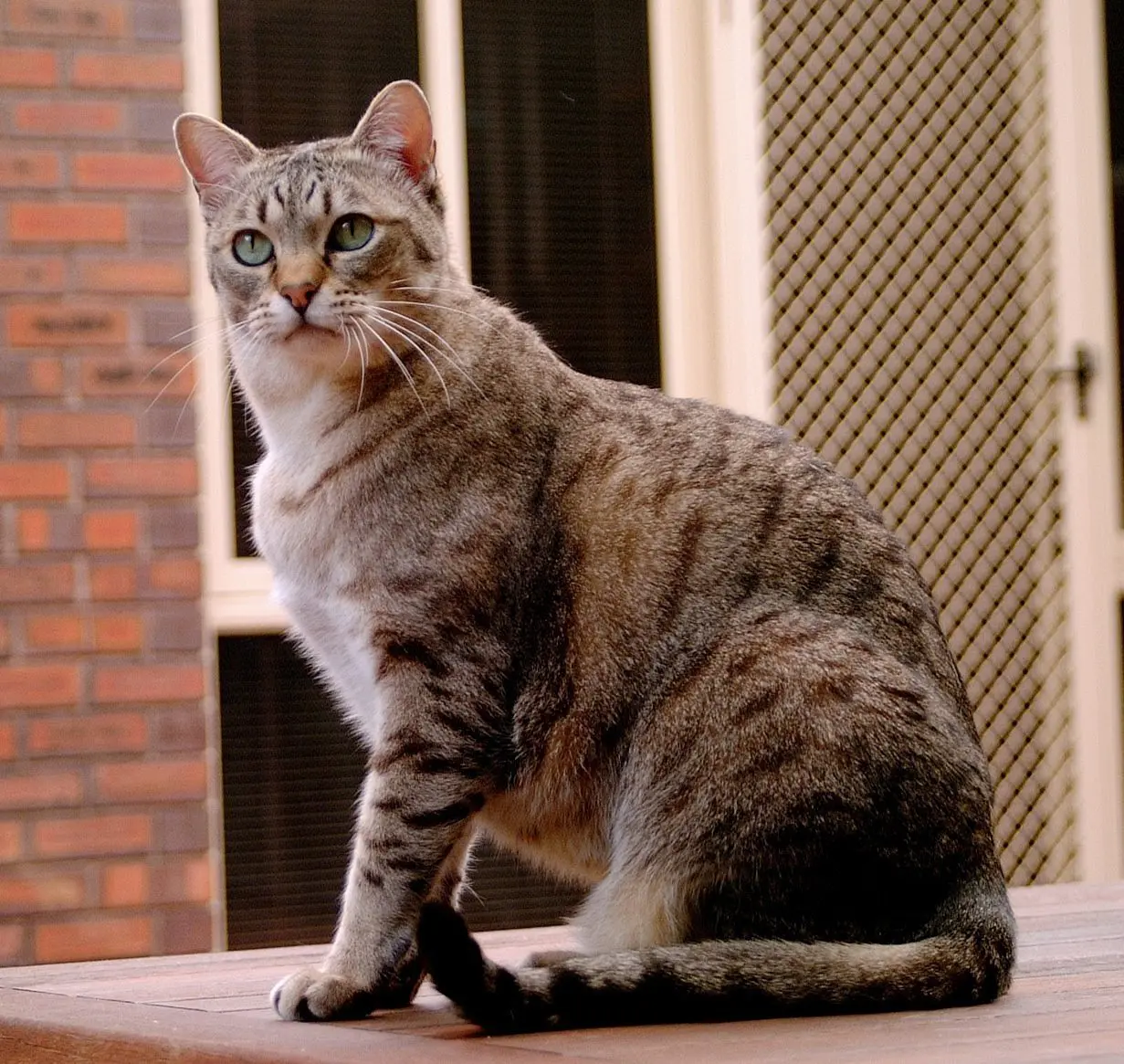
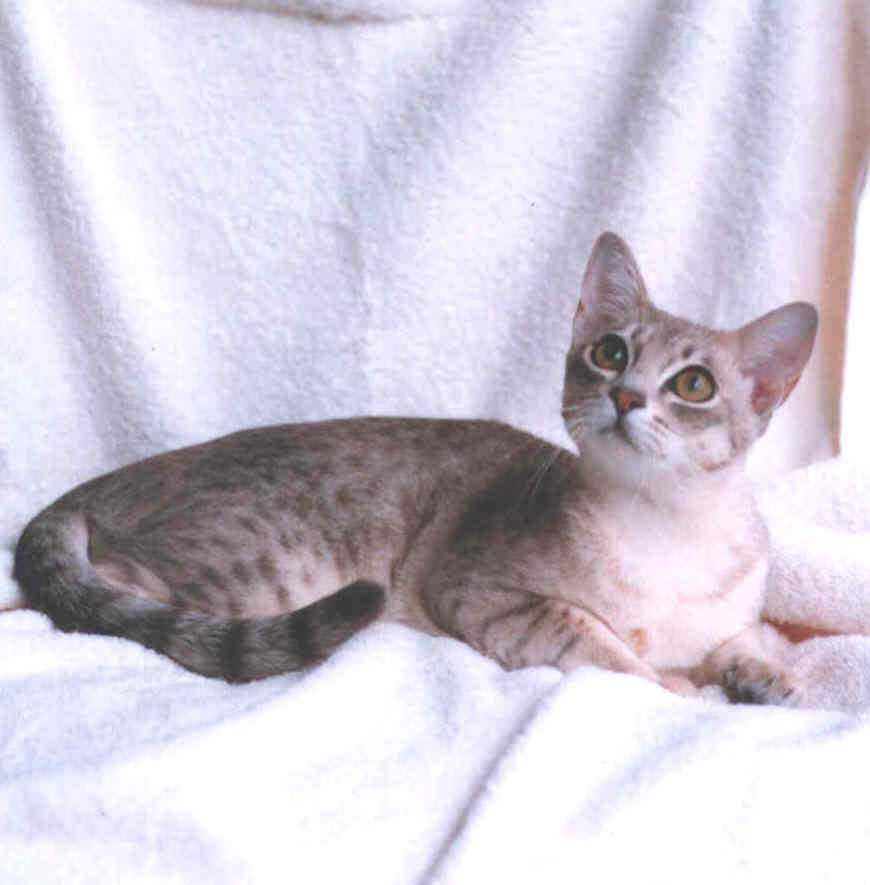
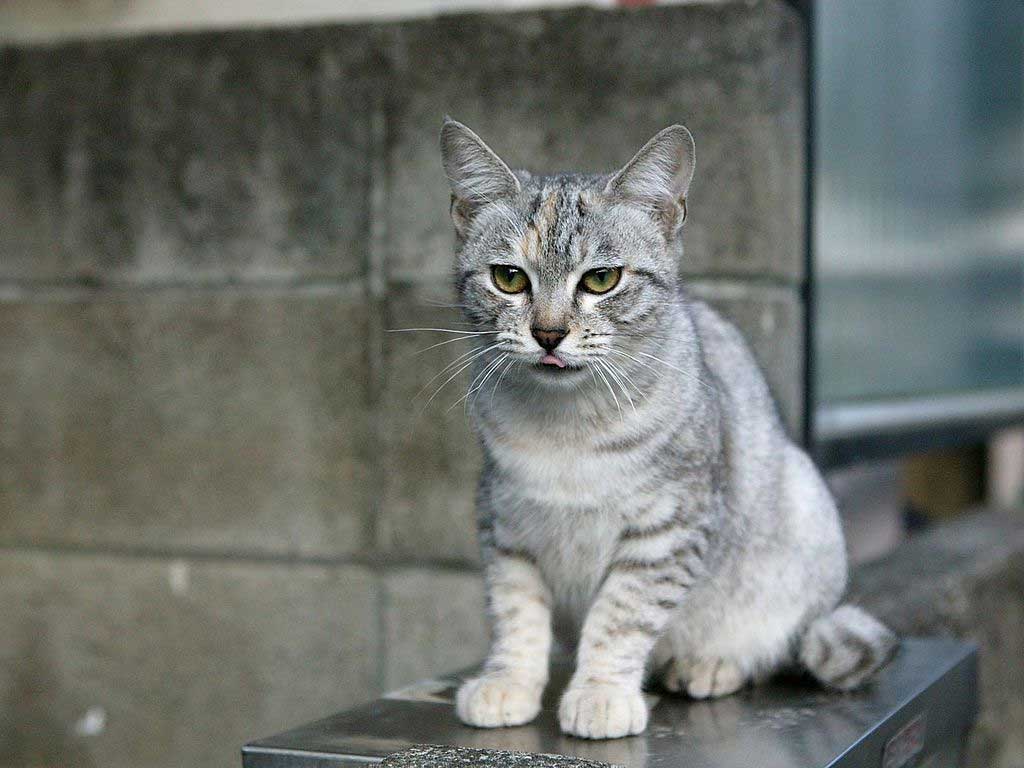
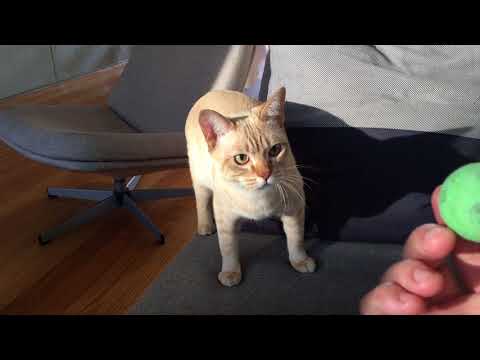
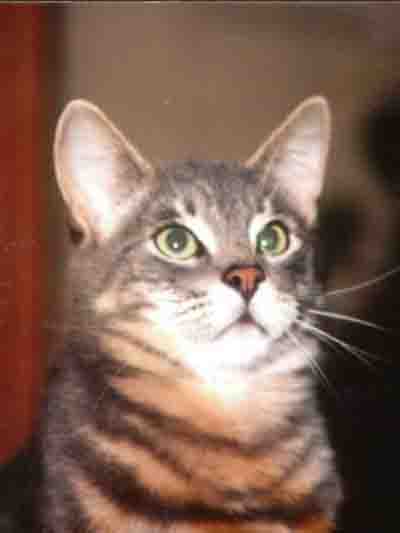
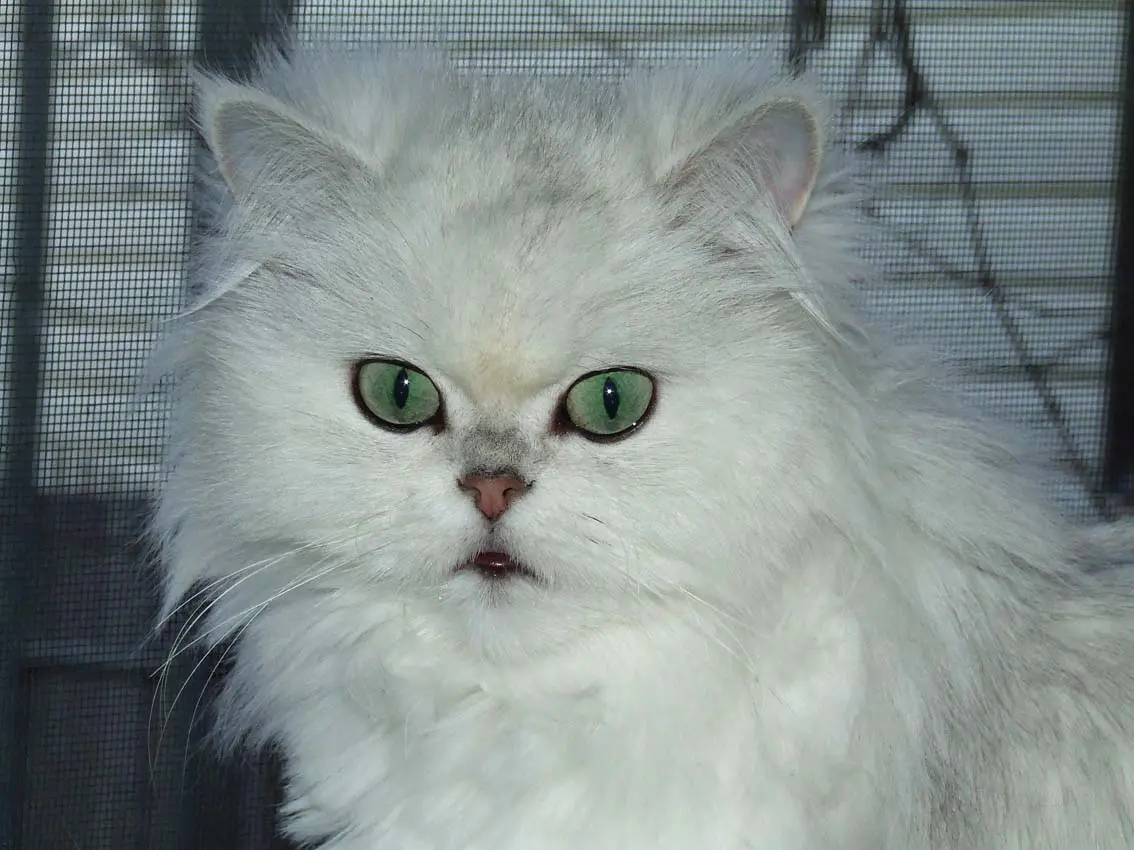
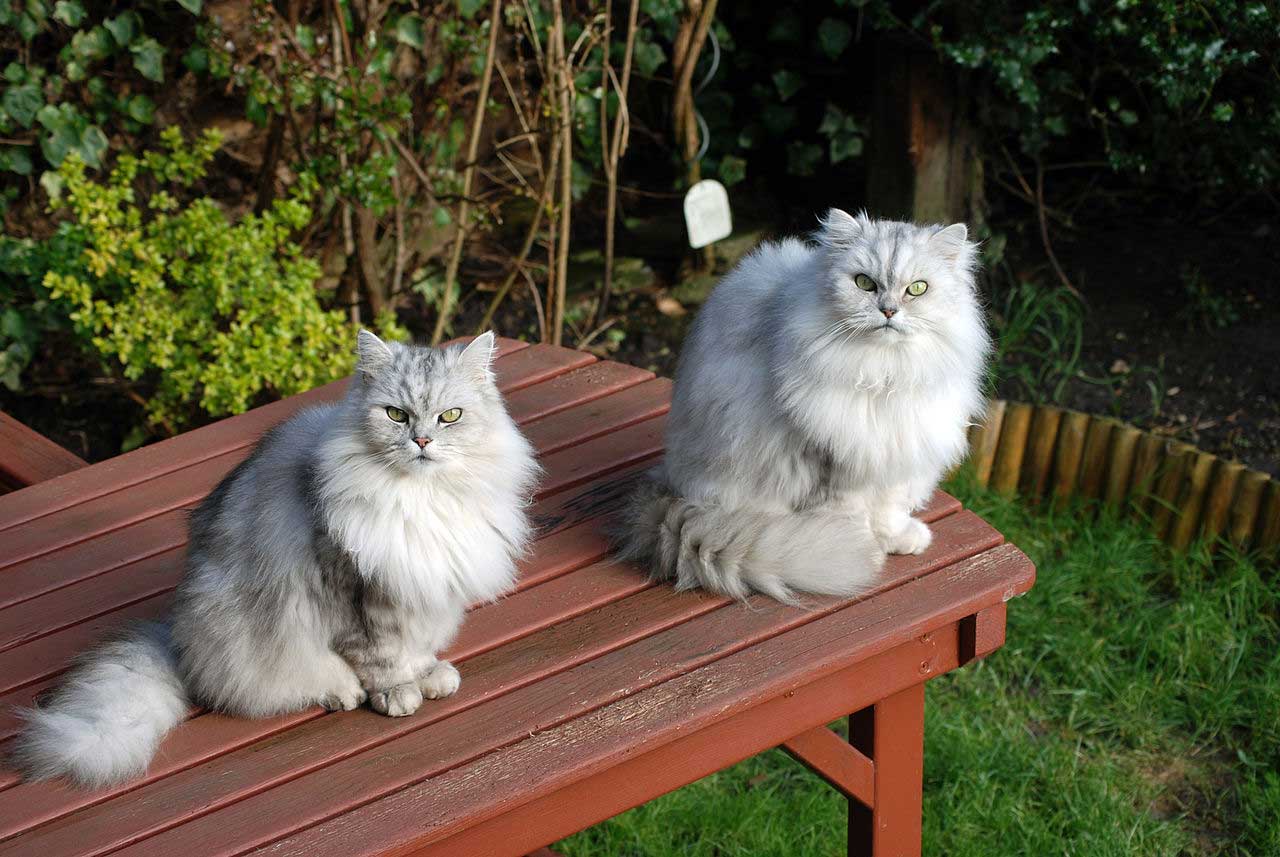
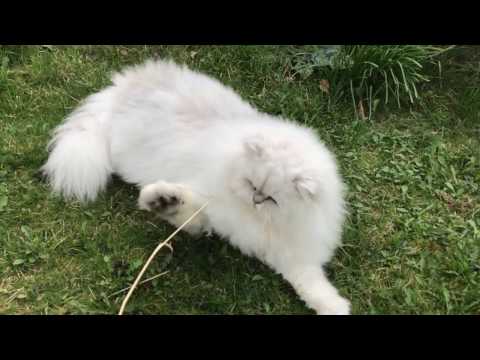
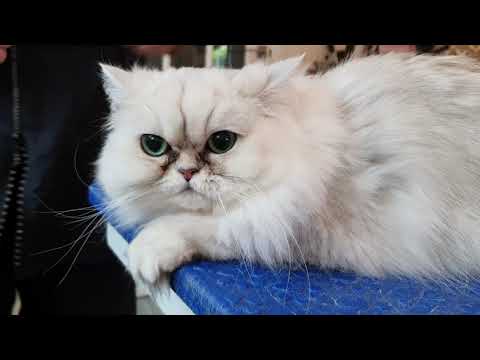
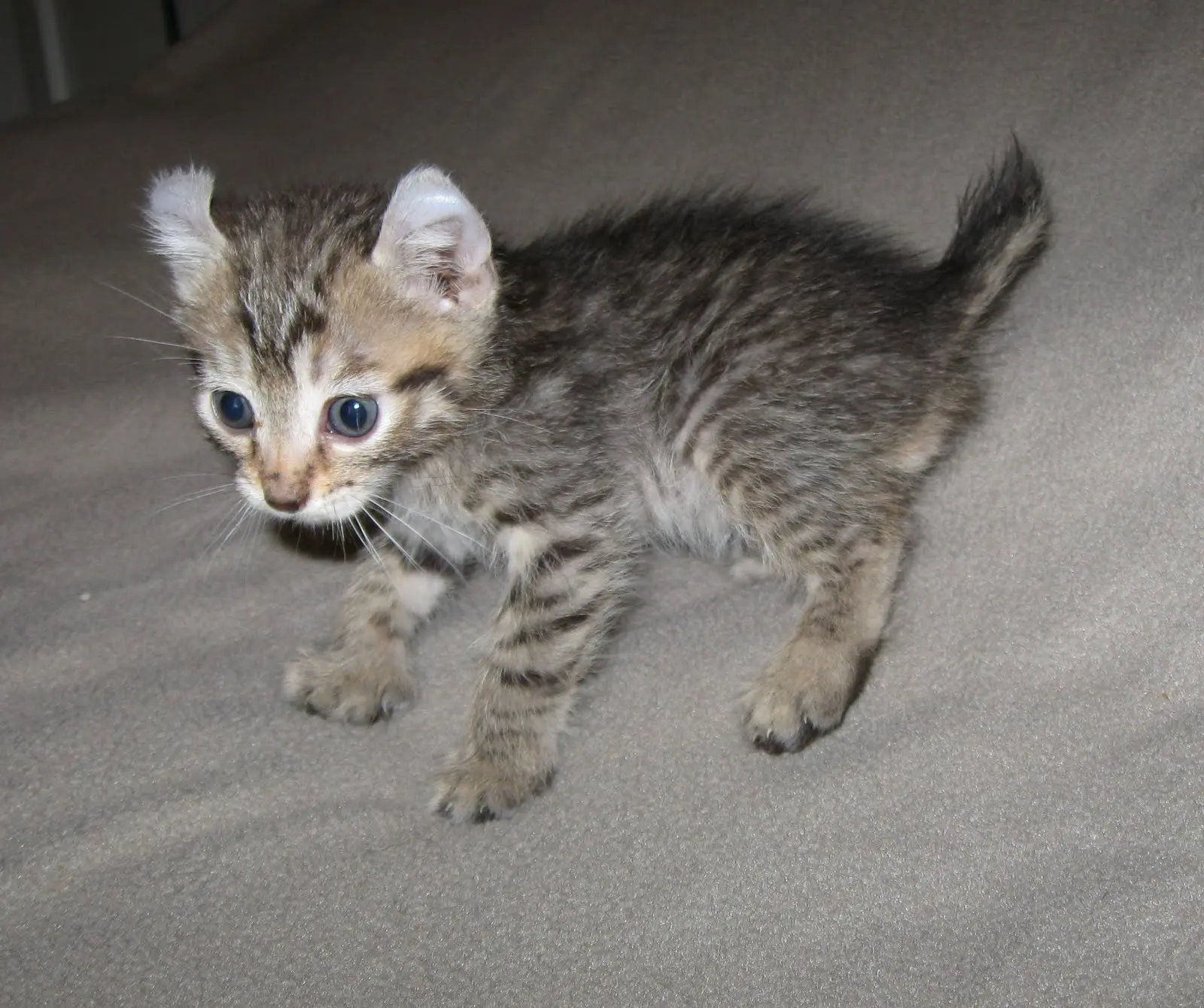
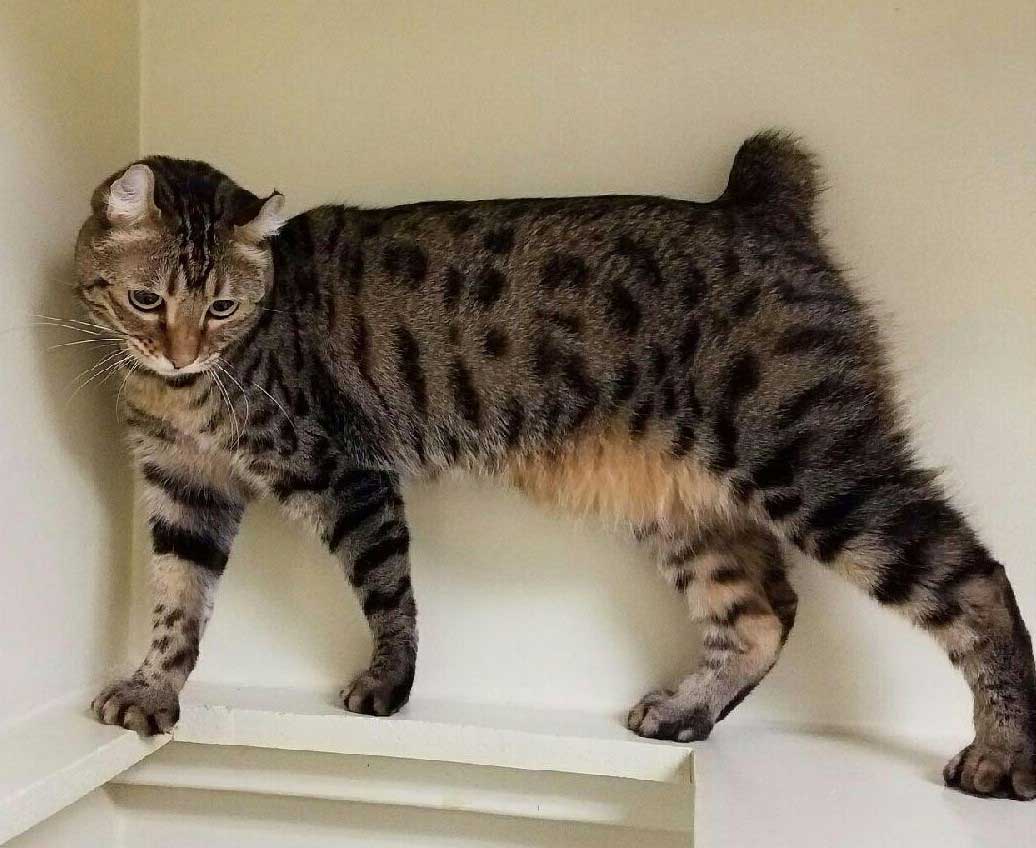
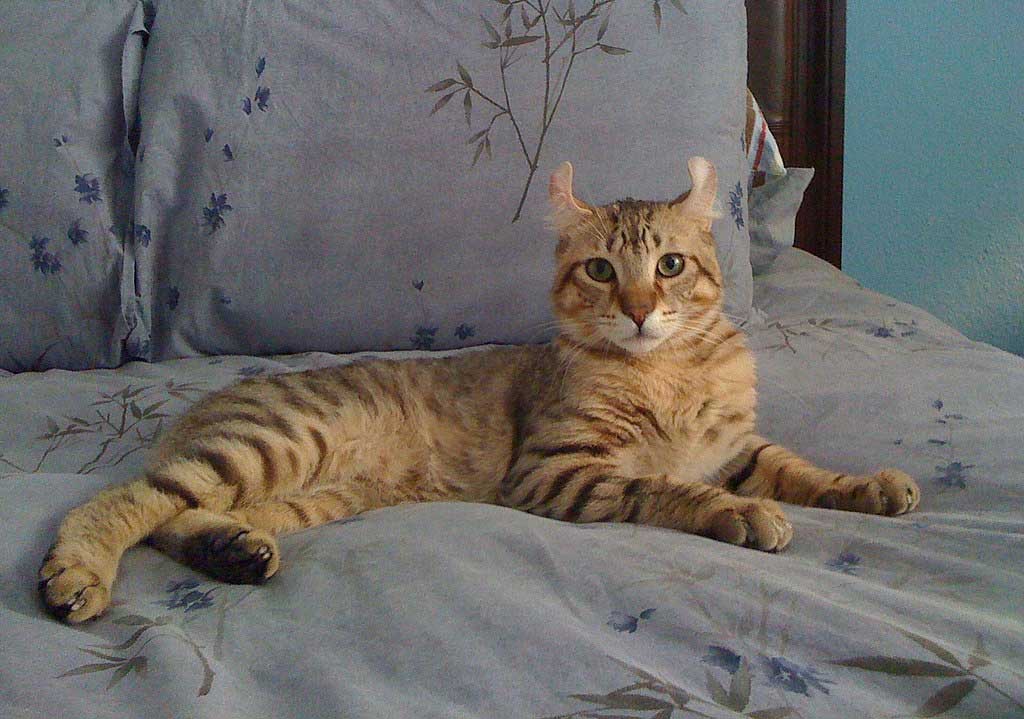

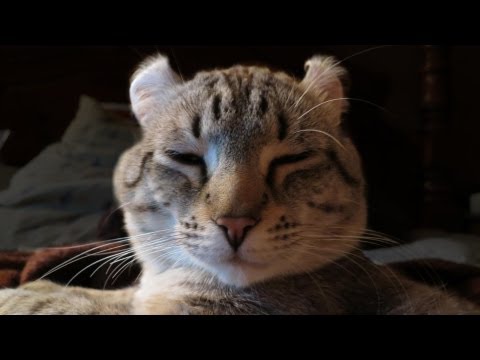
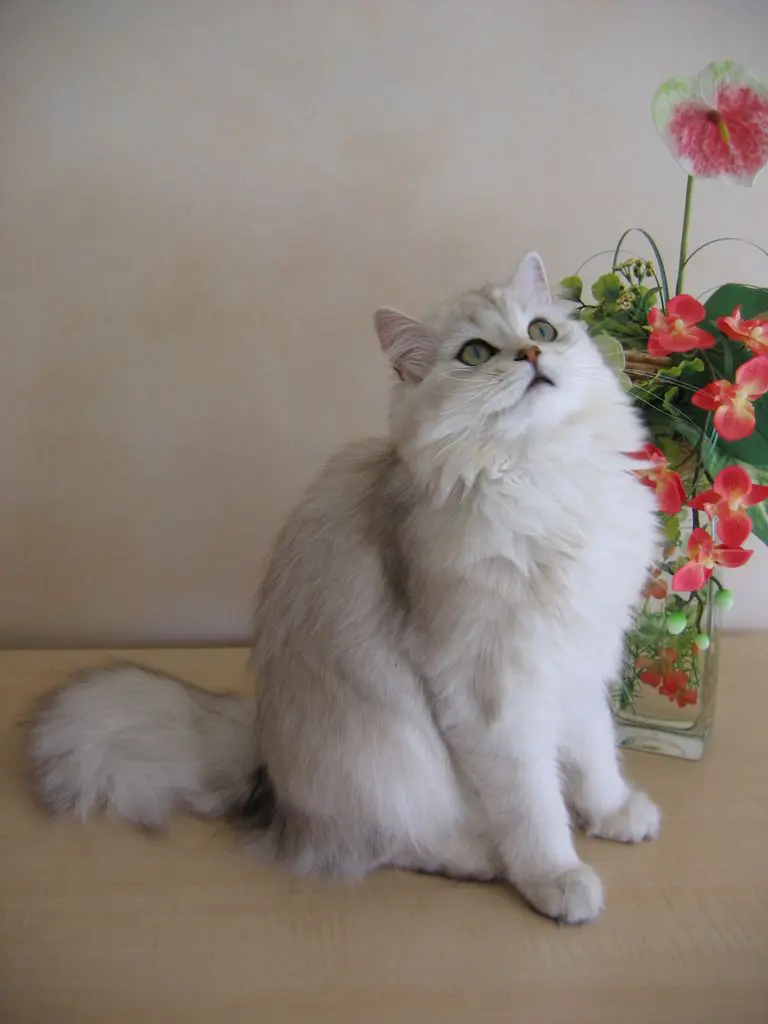
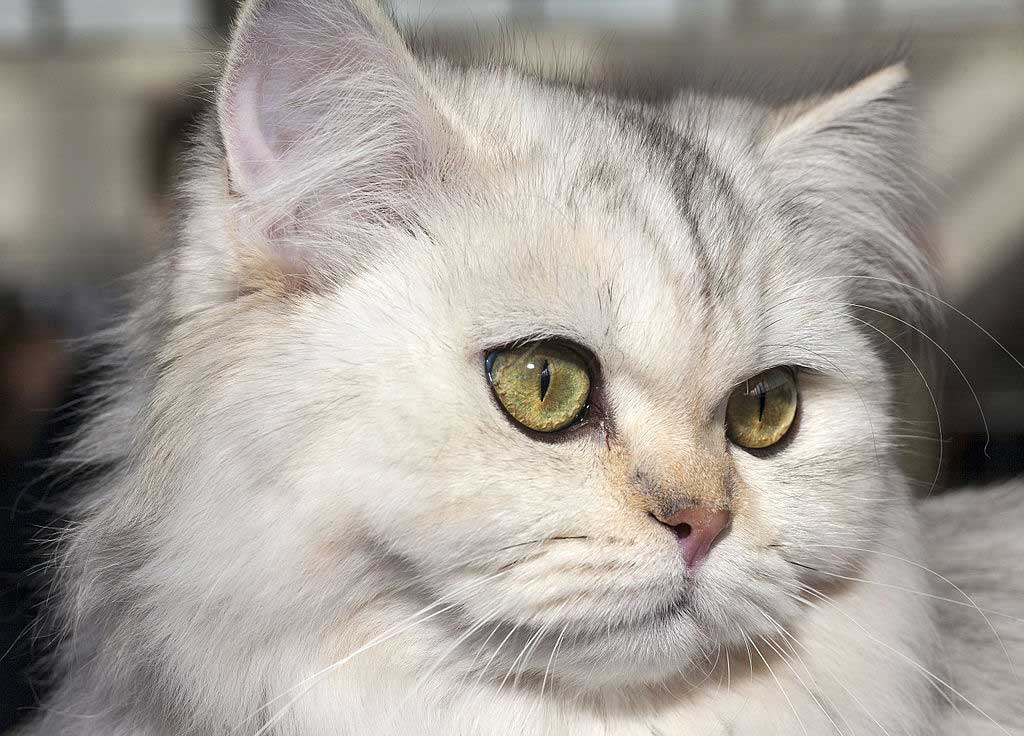
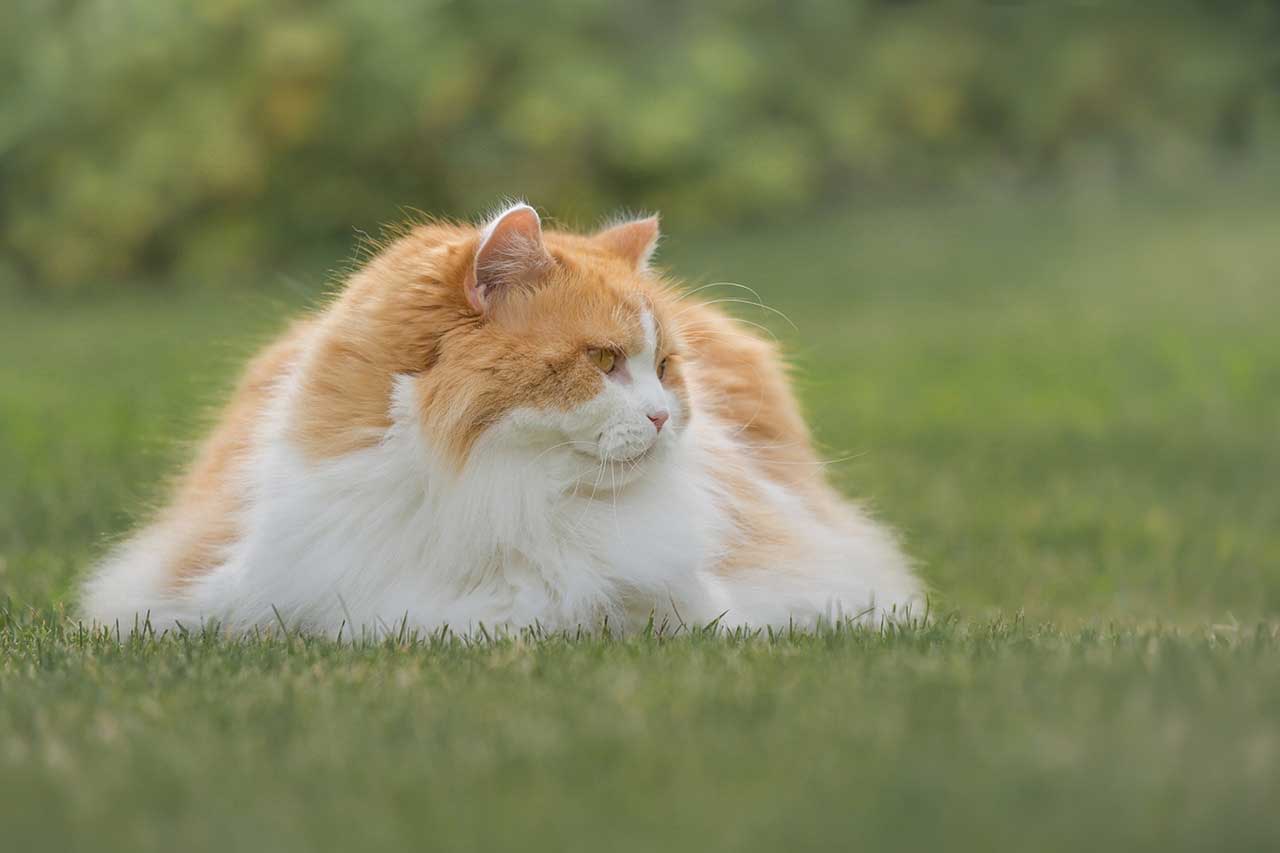


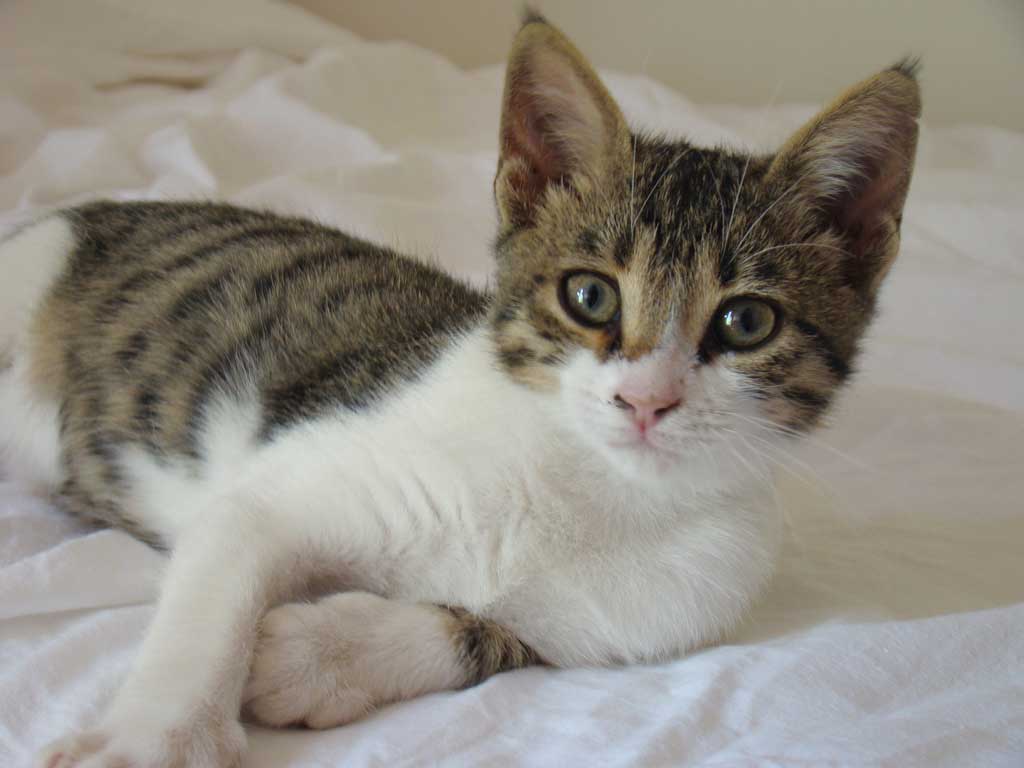



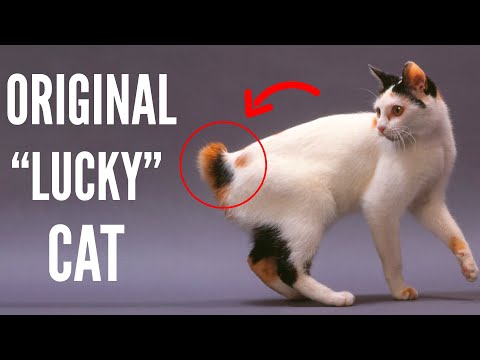
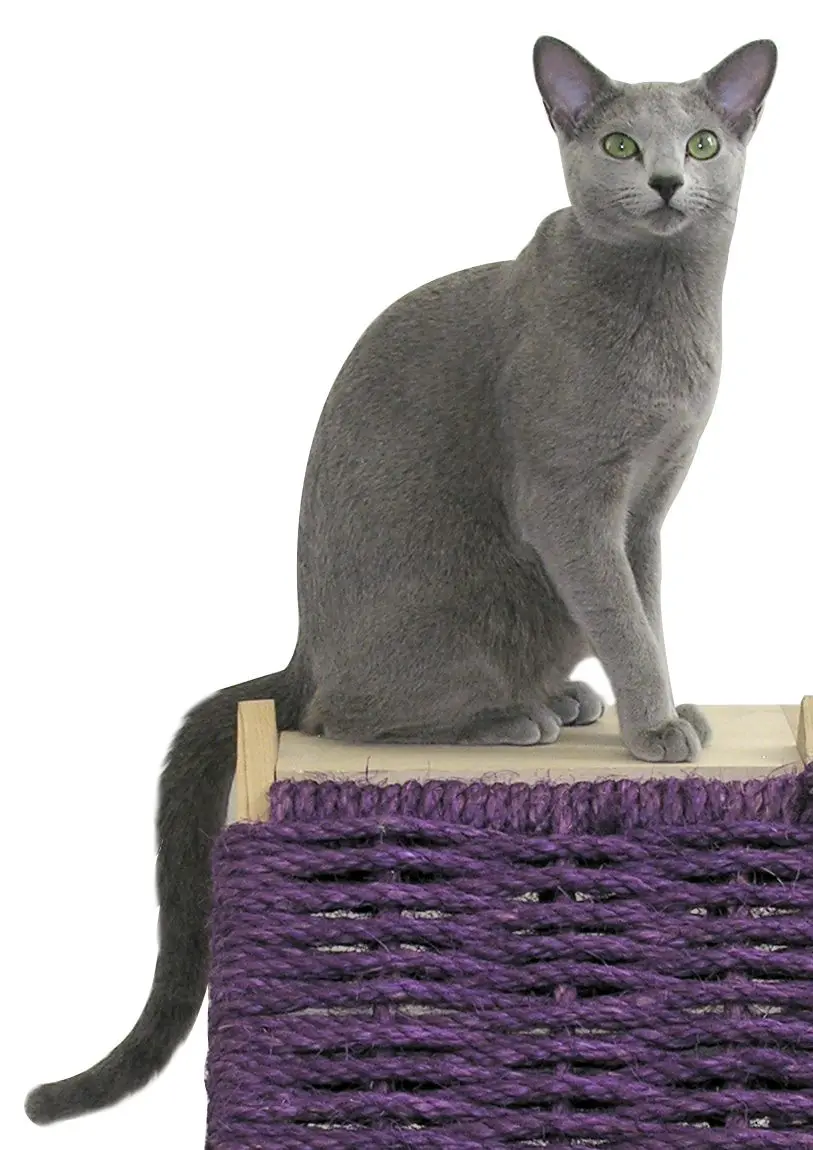
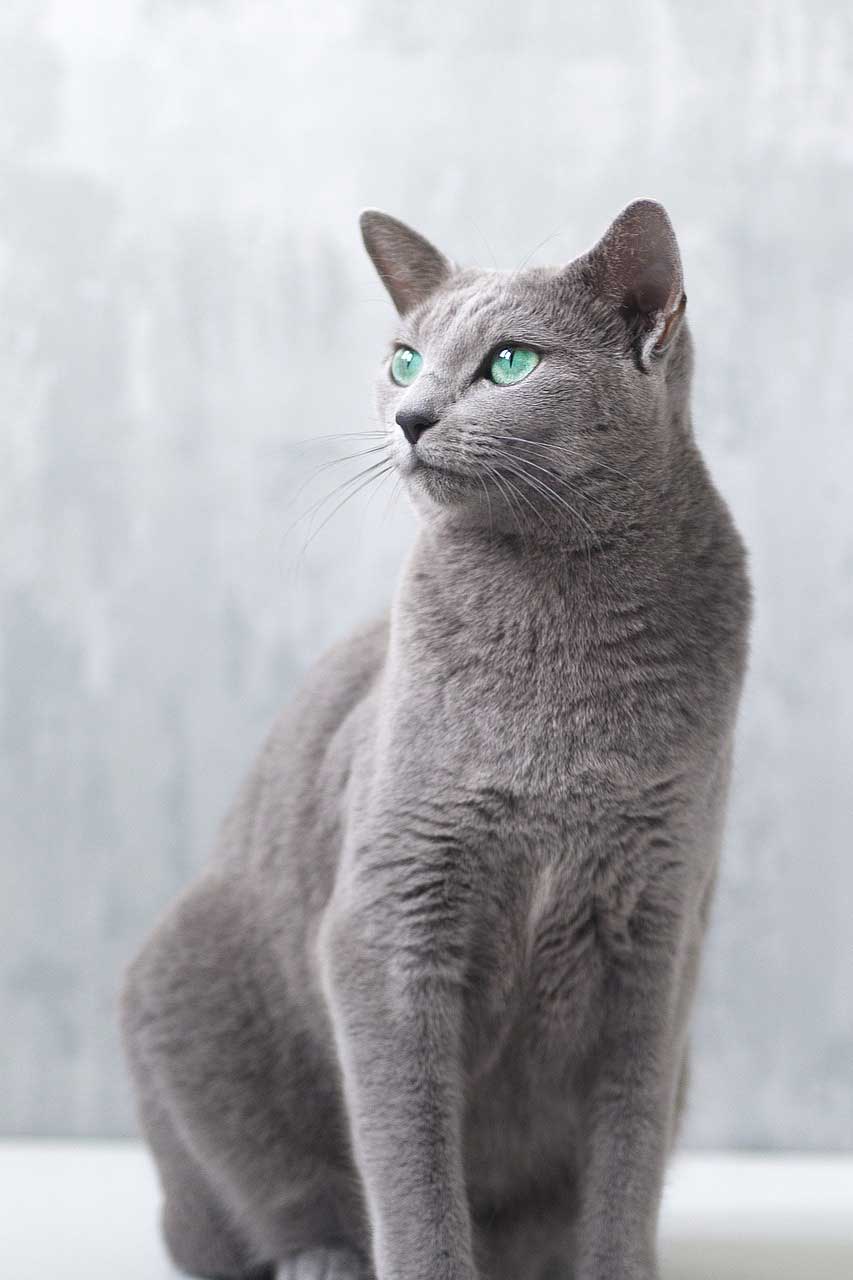
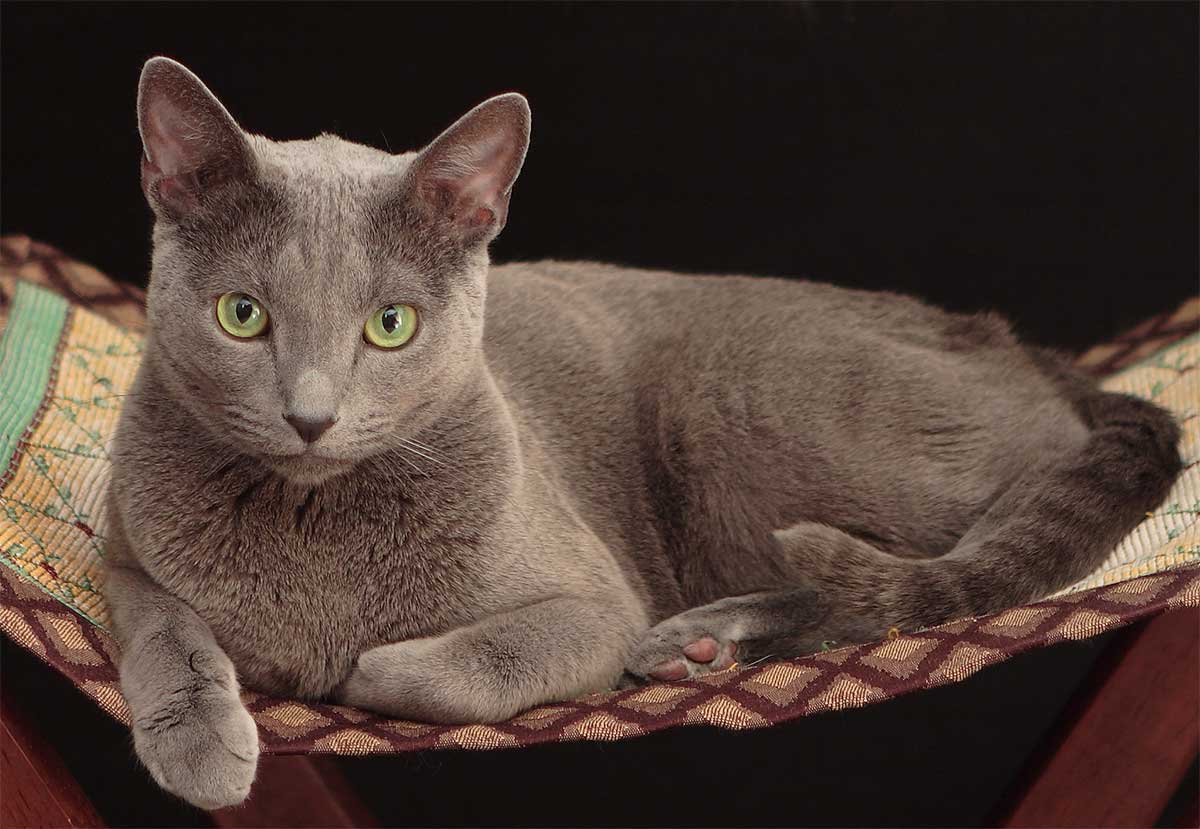
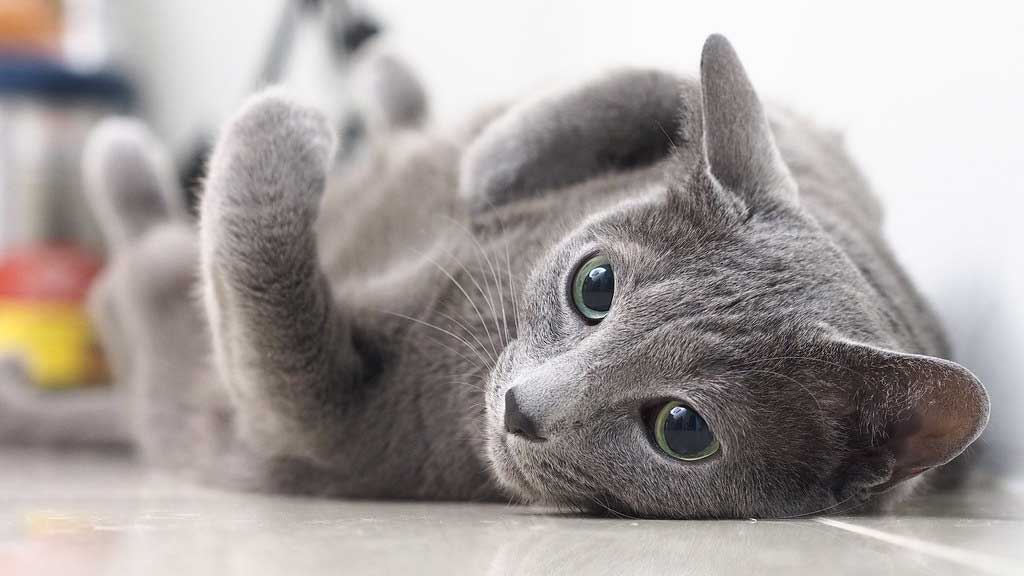


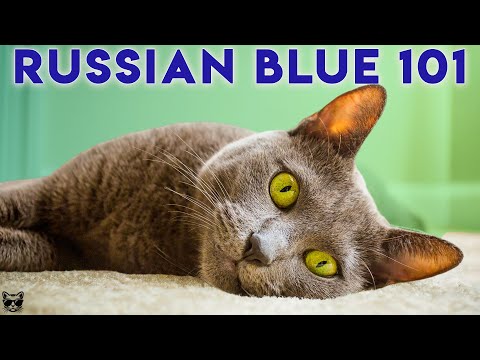

.jpg)
.jpg)

_Hugo_by_TAnthony.jpg)
.jpg)


