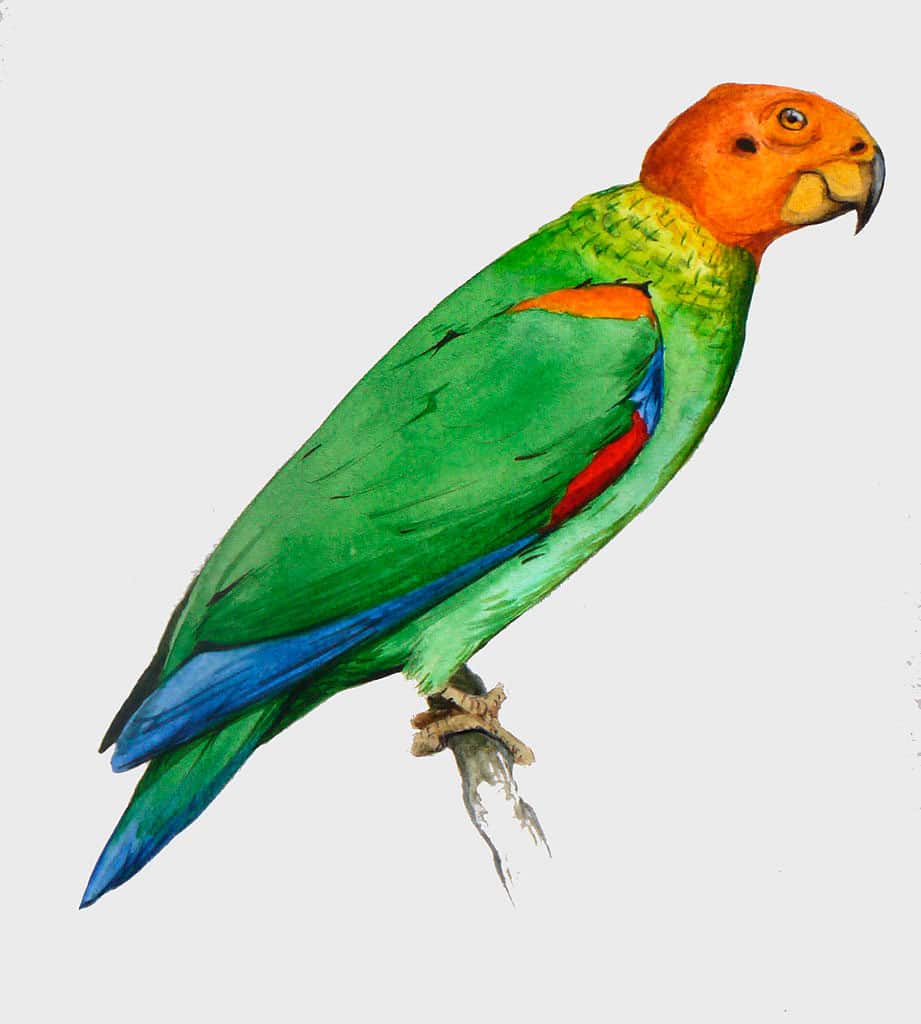
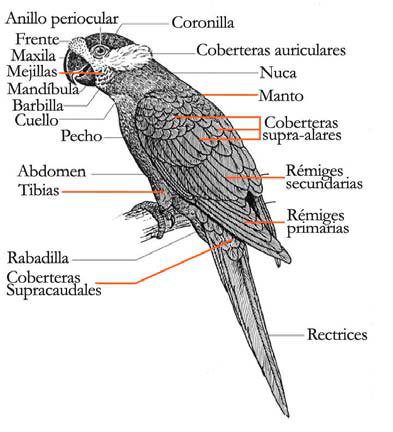
The Bald Parrot(Pyrilia aurantiocephala) has the mandible and the upper maxilla, black with a large orange dot in the base; head naked orange chrome; lores, forecrown, pileum, nape, face and chin no true feathers; coverts only black bristles and some white bristles in lores; true feathers beginning in dorsal area neck, spectrum yellow in proximal half and yellow-green in distal half with black apex, passing rapidly to parrot green as basic color the mantle, back, uropigium, and of the uppertail-coverts; feathers in bend of wing and scapulars, yellowish orange with base scarlet; lesser wing coverts green, except scarlet carpal edge; median and greater wing coverts, with large suffusion of ultramarine blue.
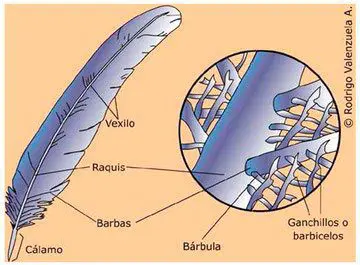
The upper surface of the of remiges black with outerweb shaded with indigo blue; undersurface of remiges black color with a a shamrock greenish on the innerwebs; the outerweb and the apex of the upper surfaces of the rectrices, indigo blue, shaded to varying degrees with green; the base innerwebs of the rectrices, yellow; feathers of the chest with greenish yellow base and apex, forming a large banda pectoral; lower breast, abdomen and crissum, emerald green sprinkled with cyan; underwing-coverts scarlet; the thighs yellow; feet feet orange yellow with suffusion of ochre; irises orange.
The immature with the bare lores to the area around the eyes, orange, the rest of the head feathered dull green; upper breast greenish yellow. Bill yellow in very young birds.
Note:
This parrot was initially believed to be an immature of the species Vulturine Parrot(Pyrilia vulturina) due to the orange color head calva. But, when it was discovered that individuals were sexually mature, He described as a new species. In fact, the youth of both species have feathers head greenish, unlike adults.
Formerly, It was included in the genus Pionopsitta.
Sound of the Bald Parrot.
Habitat:
Seen in gallery forest and in forest ‘campinarana‘ (on white sand soils). This region is threatened by logging (Gaban-Lima et al., 2002).
viewed individually, in pairs or small flocks of up to 10 birds. It is most active during the early morning that other parrots, and before going to sleep. It stays in the upper canopy where it is well camouflaged.
Reproduction:
The breeding season possibly either during September; little is known about their breeding habits.
Food:
Feeds of seeds, fruits and possibly larvae of gall wasps (Cynipidae).
Distribution:
Size of its range (breeding/resident): 407.000 km2
The Bald Parrot They are known only in some locations covering the lower basin of Madeira river and the upper basin of Tapajos River in the Brazil Amazon, more specifically in the São Benedito river (Field observations) and Cururu-acu River, both tributaries on the right bank of the river Teles Pires, himself a tributary of Tapajós.
There are several recent records of this new species from the micro-region of Madeira in the vicinity of Borba.
Since the species is currently known only from Two types of habitat and a relatively small area, it is unlikely that the population is much higher 10.000 individuals, so it is considered that it is near-threatened. It is likely to occur more records now that has been formally recognized as a species, and this may clarify its exact state.
Conservation:
• Current category of the Red List of the UICN: Near-threatened.
• Population trend: Decreasing.
Population size: 6.700 specimens.
Rationale for the Red List category
This species has recently described a moderately small population is declining due to loss of habitat. So, it is classified as near threatened.
Justification of the population
The population is preliminarily estimated with a number of at least 10.000 individuals, approximately equivalent to 6.700 mature individuals. This requires confirmation.
Justification of trend
It is suspected that this species has lost 8,8-13,1% of habitat within its distribution over three generations (21 years) starting from a model of deforestation Amazon (Soares-Filho et to the., 2006, Bird et to the., 2011). So, you suspect your decrease in population <25% durante tres generaciones.
– Avibase
– Parrots of the World – Forshaw Joseph M
– Parrots A Guide to the Parrots of the World – Tony Juniper & Mike Parr
– Birdlife
– Department of Zoology, Bioscience Institute, University of Sao Paulo, Rua do Matao, dish 14, not. 101, POCKET 05508-900, Sa˜o Paulo, SP, Brazil – Notes
– Photos:
(1) – Bald Parrot (Pyrilia aurantiocephala) – Watercolor, Romain Risso. By Gossipguy (Own work) [CC BY-SA 3.0], via Wikimedia Commons
▷ The world of Pets: Dogs, cats, birds, reptiles, amphibians
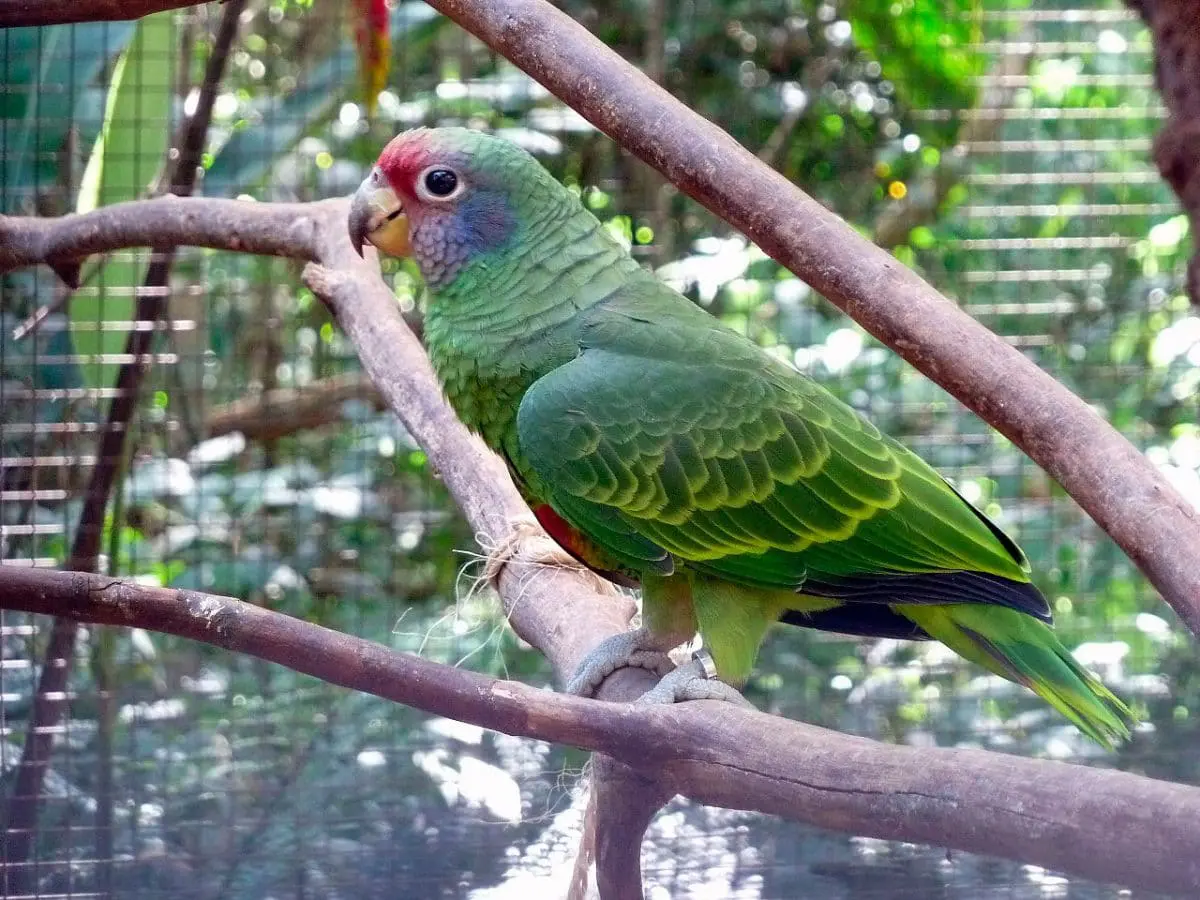
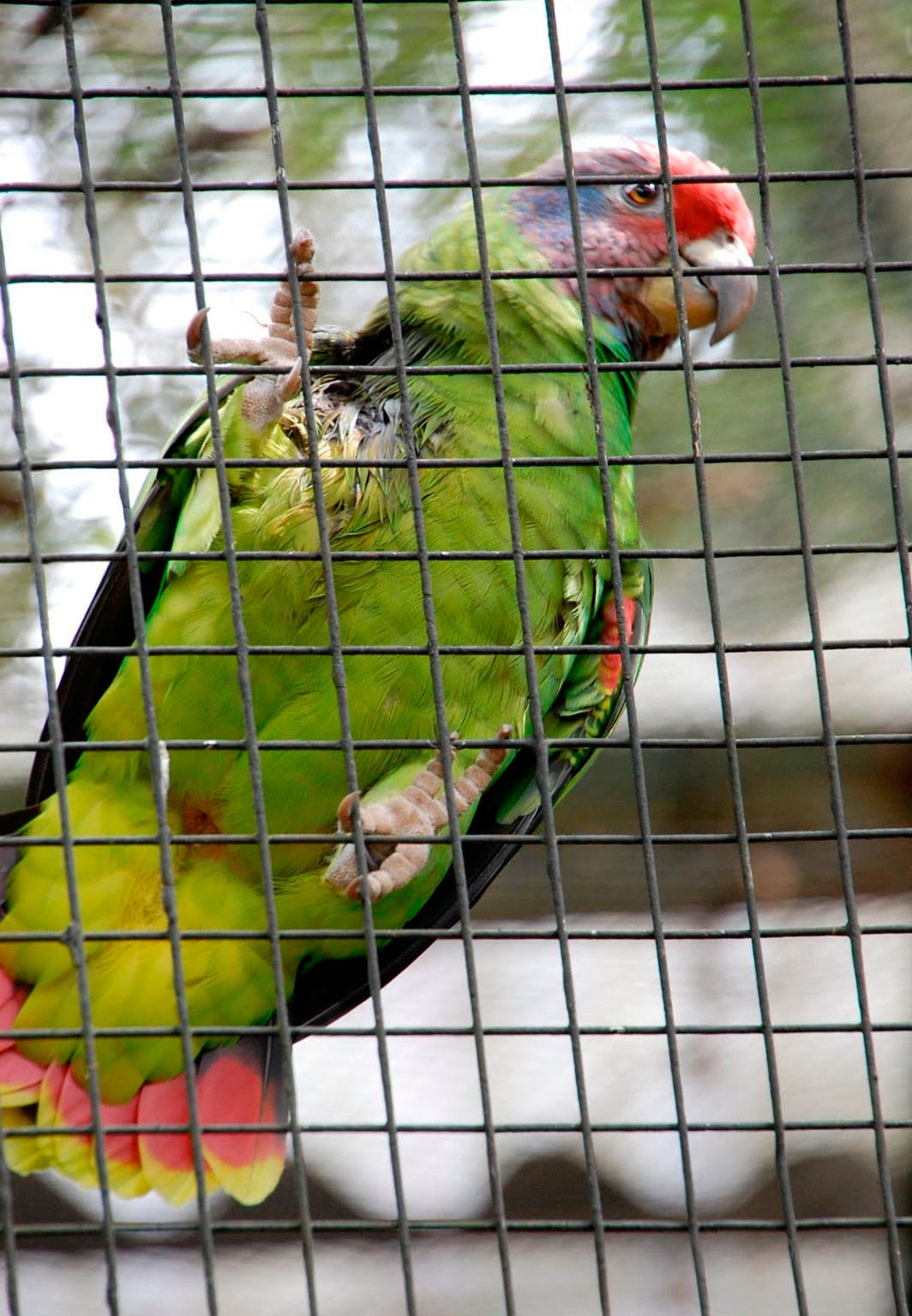
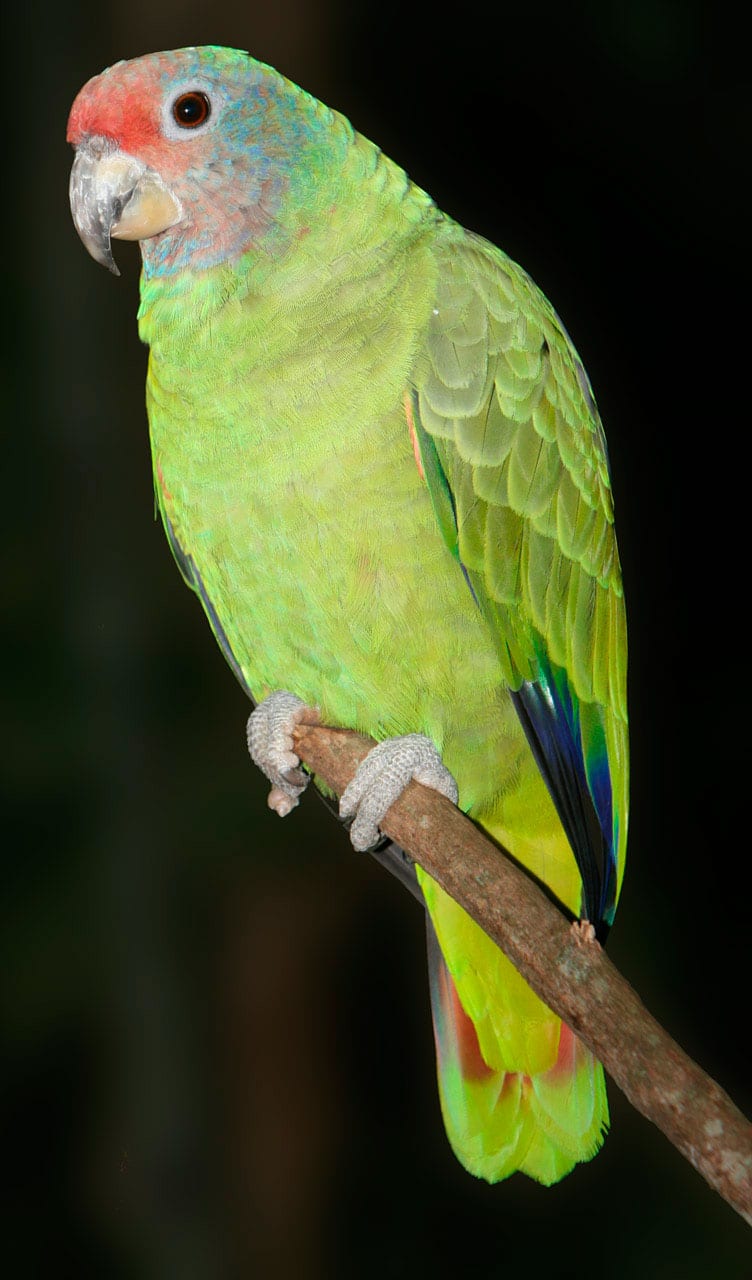
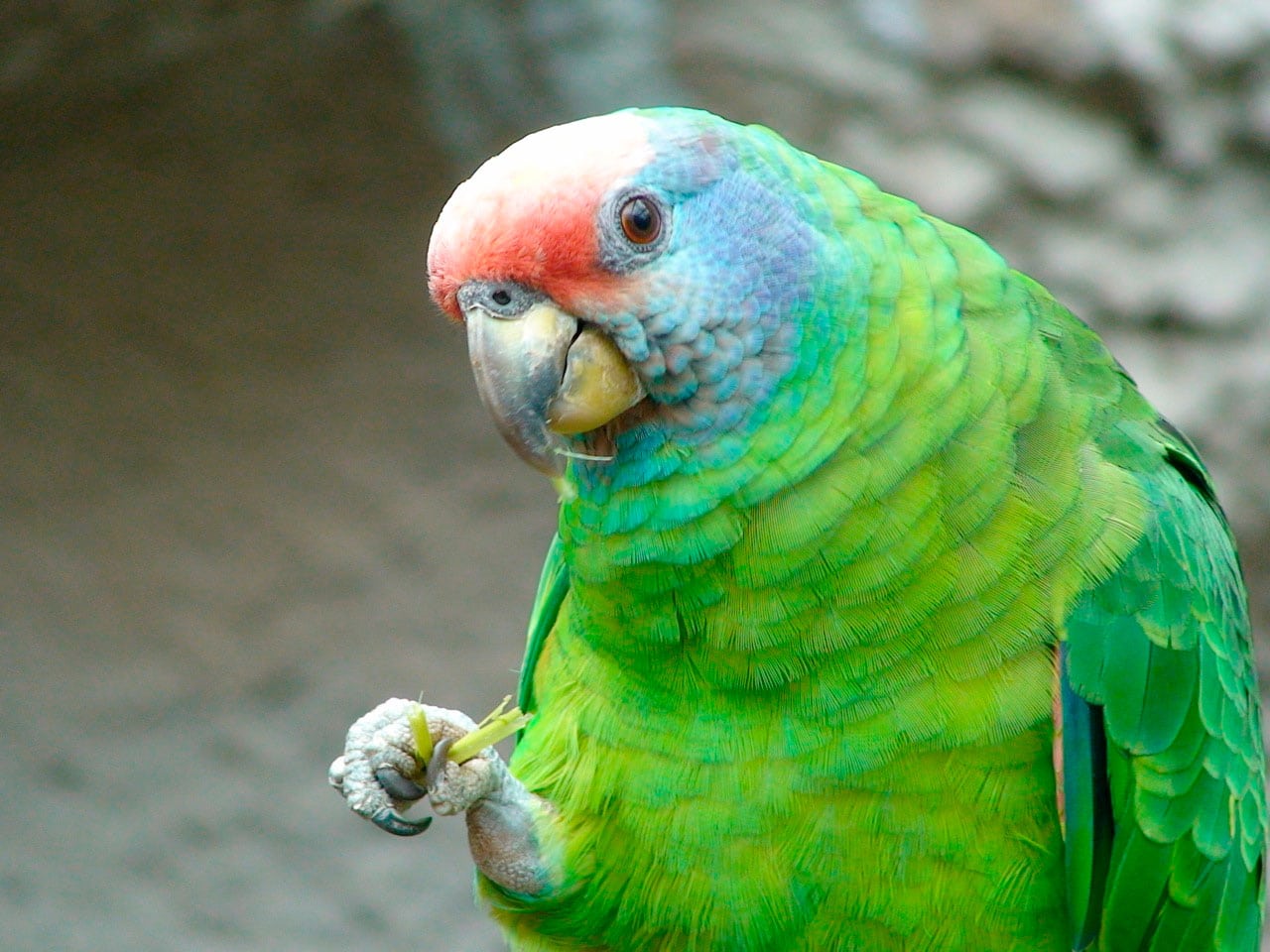
The Red-tailed Parrot(Amazona brasiliensis) has forecrown, front of crown and lores, red; Subsequent red feathers crown with purple tips; cheeks, ear-coverts, sides neck and throat, mauve-blue; back of the crown and nape, green with black tips.
Upperparts green, some feathers rump with yellow points. The median, greater coverts and secondary internal clearly appear yellow; edge front of the wing
Red and yellow; primaries grey-black, secondaries green, turning blue towards the tips.
Under the wings, brighter yellowish green; flight feather of black and blue color on the basis of innerwebs. Underparts brighter yellowish green, paler in undertail-coverts. Tail green with broad greenish-yellow tips, lateral feathers marked basally with purplish-blue on outerweb and tipped yellowish-green with broad subterminal band red.
Bill pale horn with dark tip; irises orange; legs pink-gray.
Both sexes are similar. The immature It is less extensive in red head, a plumage darker overall and irises darker.
Sound of the Red-tailed Parrot.
taxonomic note:
The molecular study suggests that this species is closest to the Orange-winged Parrot(Amazona amazonica). Previously it thought to form a group with Blue cheeked Parrot (Amazona dufresniana) and Red-browed Parrot (Amazona rhodocorytha), and it has been treated as conspecific with one or both. monotypic.
Habitat:
Video "Red-tailed Parrot"
The Red-tailed Parrot dwells in a restricted area or coastal lowland forest and wetlands with rare species and structural diversity, including moist lowland forests, restinga, freshwater marshes and mangroves. Your preferred coastal habitats have complex channel networks, swamps and wetlands. Trees characteristic of its forest habitat include Luehea and Andira, while the vegetation of the islands, where they sleep and breed, They are dominated by several species Halophyte and formations restinga.
Apparently, some birds are practically living in flooded forests, probably due to increased availability of nests. Sympatric presence and partnership with the Red-spectacled Parrot(Amazona pretrei) in forests Araucaria, probably wrong. Lives in altitudes not exceeding the 300-400 m, Although there are records to 700 metres in Paraná. Forman communal shelters (often in mangroves) during at least part of the year, with more than 750 birds reported at a meeting (1985).
Reproduction:
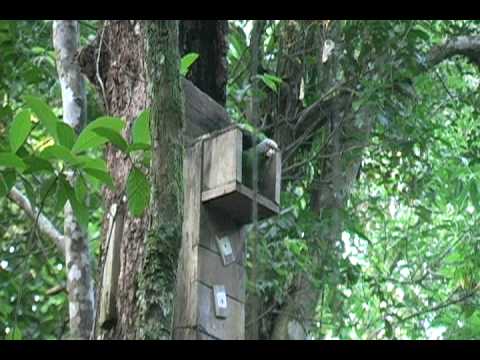
They nest in the cavity of a living or dead tree, for example, palms Jerivá(Syagrus romanzoffianum) and guanandi(Callophyllum Brasiliense) and occasionally arboreal nests of termites; height generally, but recorded only a nest 1 meter above the floodwater. Usually it played in flooded or swampy areas, including mangroves. breeding season in September to February, in some cases in April. Clutch 5-4 eggs. The eggs are hatch during 27 to 28 days, and the period until nest abandonment is thought to last from 50 to 55 days
Possibly they inhabit the extreme northeast Santa Catarina, adjacent to Paraná, but there are no reliable records. An old record Rio Grande do Sul it seems unlikely. possibly some seasonal movements lower in winter (May-August).
The rapid decline in population in the twentieth century it is due in part to the loss of habitat, with most areas densely settled and totally deforested, the remaining threatened are given by urbanization (for example, in isla Long), the felling of trees nesting and feeding, as well as the Palmas for human use (shipbuilding and food) and conversion of wetlands for water buffalo and rice production (birds also face competition from grazing animals for consumption of fruits Erythrina speciosa). But, direct human exploitation of the species is not now a less serious problem, some related to their hunting for food, although most suffer their capture illegal for trade. A recent study 49 showed that nests 41 of them they were illegally stolen their young, while the 1,27% available habitat was lost only in 1993.
Total wild population estimated in 3.600 birds (1995) with rapid decline of several hundreds Predicted. Distribution area probably no more than 6.000 km2, with large parts of this extension susceptible to sea level rise caused by climate change.
protected by national legislation. Live in several areas protected (for example, Isla del Cardoso, Sao Paulo), but in them there is only a very small proportion of birds.
Conservation:
State of conservation ⓘ
Vulnerable ⓘ(UICN)ⓘ
• Current category of the Red List of the UICN: Vulnerable.
• Population trend: Increasing.
• Population size : 6000-6700.
Rationale for the Red List category
The catch for cage bird trade and loss of habitat are the major threats to this species. Despite the heavy pressure to capture the early nineties, It is believed that the range of the species remained essentially the same, and populations have been stable or declined less steeply than feared, According to a recent estimate that suggests a population increase. Due to its small breeding range and highly fragmented habitat, the species qualifies as Vulnerable.
conservation project "Red-tailed Parrot"
Amazona brasiliensis - Puffin of red-tailed - Red Parrot-tailled
The winter counts in 2015 registered 7.464 and individuals in Paraná 1.712 in São Paulo, with both populations continuing to increase (D. Waugh in some ., 2015). The population It is estimated, therefore, between 9.000 and 10.000 individuals, equivalent approximately to 6.000 to 6.700 mature individuals.
Justification of trend
It is suspected that the conservation measures long term have contributed to a recent increase in population at a rate unquantified, although habitat fragmentation and poaching remain significant threats (Waugh 2006).
Threats
In the municipality of Canaanite (a quarter of the distribution of the species) (Freire 1994), has been caught during the breeding period of 1991-1992 for domestic trade and (especially) international with 356 birds. Of 47 controlled nests between 1990 and 1994, six were naturally default and the other 41 stolen by human (Freire 1997). Nest cavities are almost always damaged when the chicks are captured, reducing the number available (Freire 1994). Habitat loss persists for shipbuilding, banana plantations, cattle and buffalo and beach houses (Lalime 1999, Snyder et to the., 2000). They cut the Palmitos for processing in Guaraqueçaba (Lalime 1999). The proposed construction of a bridge to Ilha Comprida increase the pressure of tourism and habitat conversion (Snyder et to the., 2000).
Conservation Actions Underway
CITES Appendix I and II and protected by Brazilian law. This species is not considered of conservation concern nationwide in Brazil (MMA 2014). They are distributed within 15 protected areas, but these do not apply locally (Freire 1994, Lalime 1999). The Superagui National Park in Paraná, It is a bastion for the protection of the species (R. Bóçon in litt., 2006). The creation of new reserves is hampered by economic interests (Freire 1994). Several programs are increasing local awareness (Freire 1994, Lalime 1999 , Padua et al. 2001). Conservation projects and protected areas created in the area of ​​distribution of species appear to be paying off, although there are still pitfalls. There are herd books and successful captive breeding programs in the European Union and Brazil (Lucker 1998) and the provision of artificial nests and repair of natural nesting cavities is enhancing reproductive success in the wild (Waugh 2006). Conservation Project of the Amazon Redstart is monitoring the population in Paraná (R. Bóçon in litt., 2006).
Conservation Actions Proposed
Conduct surveys to monitor population trends and support captive breeding programs. Monitoring discount rates for trade. Monitor trade levels. Monitor the rates of loss and degradation of habitat. Apply laws on trafficking, especially in the paths to breeding islands (Lalime 1997, Lalime 1999). effectively protect existing reserves (Lalime 1997, Lalime 1999). formally appoints the Ilha Comprida State Park and Ecological Station Itapanhapina (Snyder et to the., 2000). Expand Superagüi National Park to include Ilha do Pinheiro (Snyder et to the., 2000). Reforest nursery islands (Lalime 1999). Continue and expand awareness efforts (Lalime 1999).
The "Red-tailed Parrot" in captivity:
CITES Appendix I and II and protected by the Brazilian legislation.
Each captive specimen of this species which is capable of reproducing, It is placed in a Program well managed captive breeding and not be sold as a pet, in order to ensure long term survival.
– Avibase
– Parrots of the World – Forshaw Joseph M
– Parrots A Guide to the Parrots of the World – Tony Juniper & Mike Parr
– Birdlife
Photos:
(1) – A Red-tailed Amazon at Parque das Aves, Foz do Iguaçu, Brazil By Kee Yip from Union City, California, USA (IMG_4509_P1040018) [CC BY 2.0], via Wikimedia Commons
(2) – A juvenile Red-tailed Amazon which is grasping something in its right foot, probably to chew or eat it By writhedhornbill (originally posted to Flickr as Red tailed amazon) [CC BY 2.0], via Wikimedia Commons
(3) – Red-tailed Amazon (Amazona brasiliensis) bird Park, Foz do Iguaçu, Brazil By http://www.birdphotos.com (Own work) [GFDL or CC BY 3.0], via Wikimedia Commons
(4) – Red-tailed Amazon at the zoo By Elcio Ferreira [CC BY-SA 2.0], via Wikimedia Commons
(5) – A Red-tailed Amazon at Parque das Aves, Foz do Iguaçu, Brazil By Chad Bordes (Picasa Web Albums) [CC BY 3.0], via Wikimedia Commons
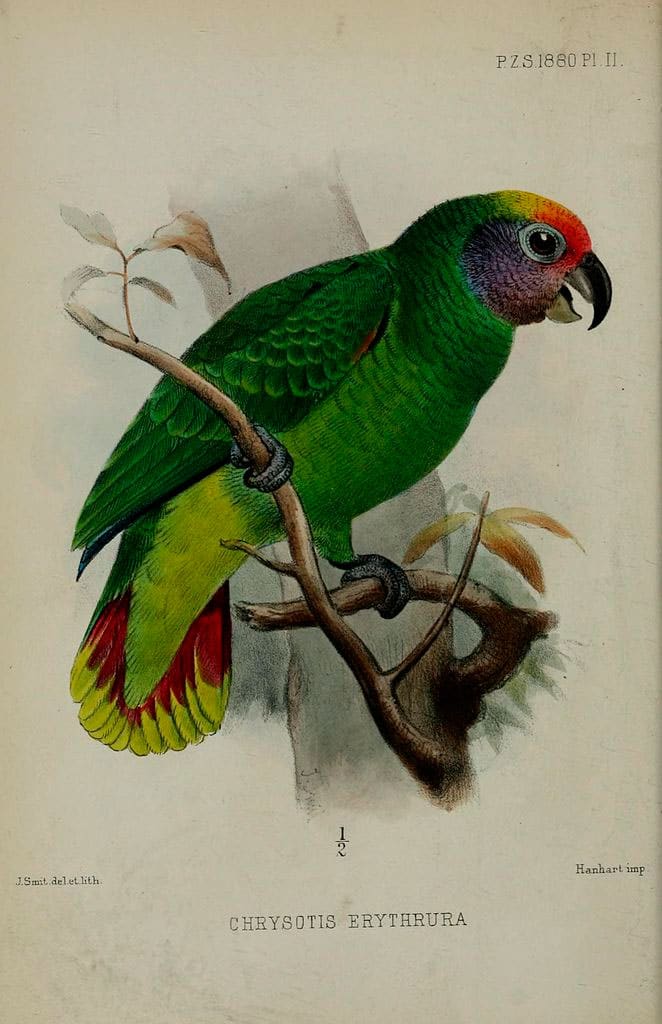
(6) – CHEYSOTIS ERYTHRURA By Zoological Society of London.; Zoological Society of London. [CC BY 2.0 or Public domain], via Wikimedia Commons
The male of the Newton's Parakeet(Psittacula exsul) It was probably green, with red patches on wings, also manifested in a variation bluish; only two skins of this species, both blue hue; the plumage It was generally greenish blue with gray shades; chest, abdomen and under cover tail slightly paler shades; head darker gray hue without; fine black line between cere and the eye; black bars cheek and narrow black strip on the neck, strip adjacent the blue-green; primaries blue-green; feathers on top of the tail blue-green, underside grey; mandible red top, mandible lower black; irises yellow; legs grey.
The female with narrow black stripe on the forehead; black bars cheek not extend to the side neck; crown washed with gray; upper jaw black.
Immature; No information
Habitat:
It was a kind forest who lived in areas of pine Pandanus and Palm trees.
The Newton's Parakeet It was endemic to the forests of Rodrigues, Mauritius (checks 1987).
It was said to be abundant by explorer Leguat in 1691 (Cowles 1987), but Pingre He noted that it was rare in 1761, and the last record was a bird captured in August of 1875 (Forshaw 2010).
It seems likely that the last birds were wiped out later that year, When the island suffered "the worst cyclonic season of the nineteenth century" (checks 1987).
Two complete specimens survive, plus several bones subfossil (Cowles 1987).
Conservation:
Rationale for the Red List category
This species was endemic to the Rodrigues Island, Mauritius, but it has not been seen since 1875 and now it is extinct.
• Current category of the Red List of the UICN: Extinct.
• The last record was a bird collected in August of 1875
It is believed that hunting and habitat loss greatly contributed to its decline, and that the final blow could have been given by heavy storms 1876. curiously, survived for much longer than most of the island's endemic bird species.
Justification of the population
extinct.
"Newton's parakeet †" in captivity:
Leguat and his followers saw the birds – presumably Newton's Parakeet – feeding nuts, and they taught to speak to some of these parakeets, which certainly it is an indication of what these birds were tame. Apparently they became bilingual; They could speak both French and Flemish!! When Leguat and his small band of followers fled the island, a parakeet they took with them on their trip to Mauritius.
Alternative names:
– Newton’s Parakeet, Newton’s Parrot, Rodrigues Parakeet, Rodrigues Ring-necked Parakeet, Rodriguez Parakeet (English).
– Perruche de Newton (French).
– Rodriguessittich, Rodrigues-Sittich, Rodriguez-Edelsittich (German).
– Periquito-de-rodriguez (Portuguese).
– Cotorra de Newton, Cotorra de Rodrigues (español).
• Avibase
• Parrots of the World – Forshaw Joseph M
• Parrots A Guide to the Parrots of the World – Tony Juniper & Mike Parr
• Birdlife
Photos:
(1) – Psittacula exsul (Newton’s Parakeet), female holotype specimen – Wikipedia
(2) – Sternum and mandible of Psittacula exsul, extracted from the female holotype specimen – Wikipedia
▷ The world of Pets: Dogs, cats, birds, reptiles, amphibians
20 cm.. height.
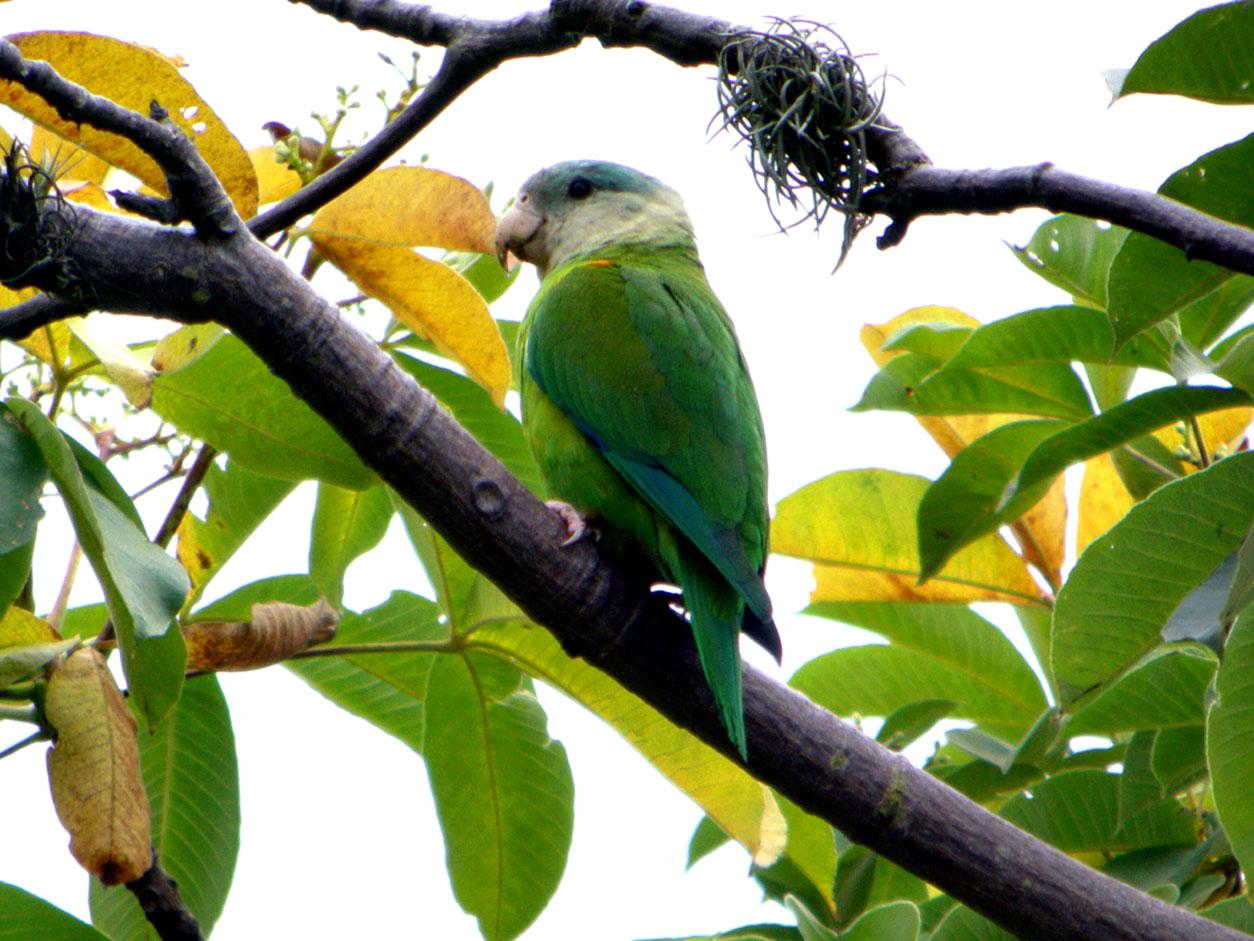
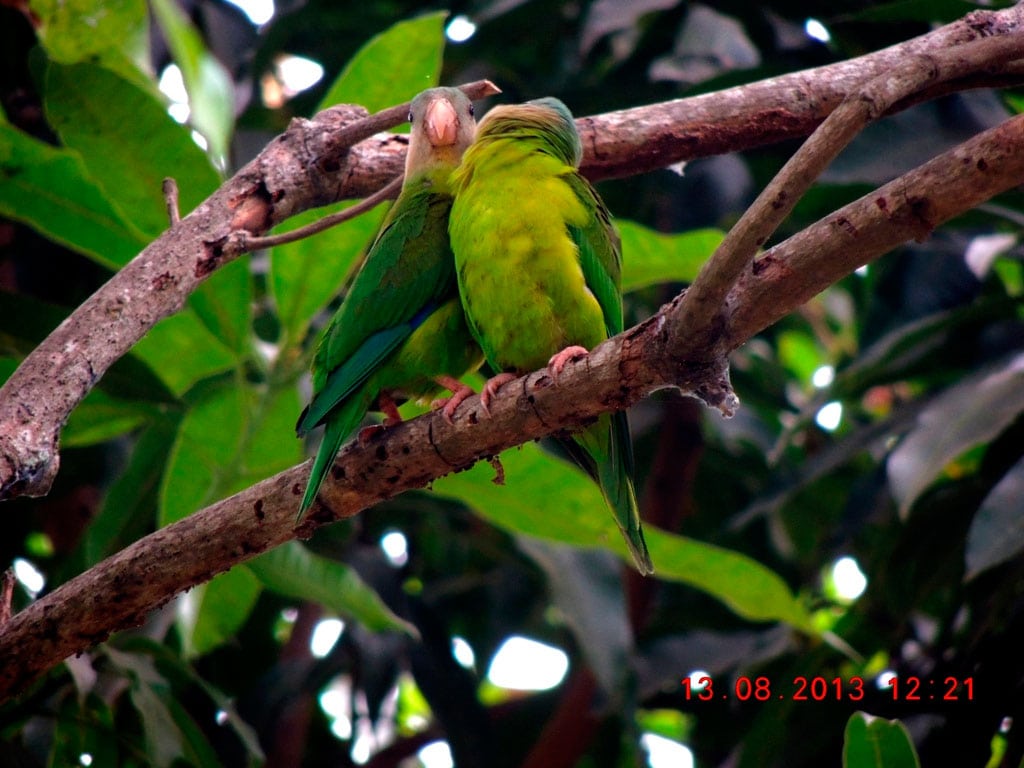
The Grey-cheeked Parakeet(Brotogeris pyrrhoptera) discovered in 1801. Is difference for them cheeks and sides neck grey, crown up to almost the nape, blue, bill yellowish, armpit reddish orange (only visible in flight), tail long and pointed, the rest of the body green.
The immature they have the crown greenish blue and the bill blackish.
hybrid species:
Brotogeris [erythrogenys x pyrrhoptera] (hybrid) Brotogeris [chevroned x pyrrhoptera] (hybrid) Brotogeris [pyrrhoptera x jugularis] (hybrid)
It inhabits in humid forest, semi-wet, secondary, formations of semi-deciduous forest and cultivated areas, until 1500 m. Has also seen it is in the banana plantations. Flies in pairs or small groups up to of 12 individuals, sometimes associated with other parrots.
Reproduction:
Nest in hollows and termite mounds on large trees and apparently be reproduced between January and March. It is still unknown why the termites tolerate their presence.
Their eggs, they are around for 2 cm.. x 1,6 cm.. they settle in sunsets of four to six eggs in a nest filled with MOSS. The female incubates them for a few 25-26 days, While the male mounts guard out of the nest.
Size of the area of distribution (reproduction / resident): 9.300 km2
The Grey-cheeked Parakeet distributed over the southwest of Ecuador and Northwest corner of Peru, from the Valley of the chone river, Manabi, to the South up to Gold and Loja in Ecuador, and Tumbes and Piura in Peru.
The populations more large is found in the coast of Manabi and Guayas, and at the border between Ecuador and Peru (Juniper and Parr, 1998).
There was a large decrease in the population during the 20TH century, at the beginning of the year 1980 (Best et to the., 1995, Juniper and Parr 1998), with 59.320 birds imported by countries CITES between 1983-1988. In 1995, the population Wild was estimated in 15.000 birds, mainly in Ecuador (Best et to the., 1995). This represents a very crude c.70% decline in 10 years, although it is still locally common in some remains of its habitat. (Juniper and Parr 1998).
• Current category of the Red List of the UICN: In danger of extinction.
• Population trend: Decreasing.
The main threat to this species is the wild bird trade. The habitat It is also losing out by logging, Agriculture and overgrazing. Its persecution as a pest crops can be also significant.
Is expected that the rate of decline is more slow in the next 10 years.
"Grey-cheeked Parakeet" in captivity:
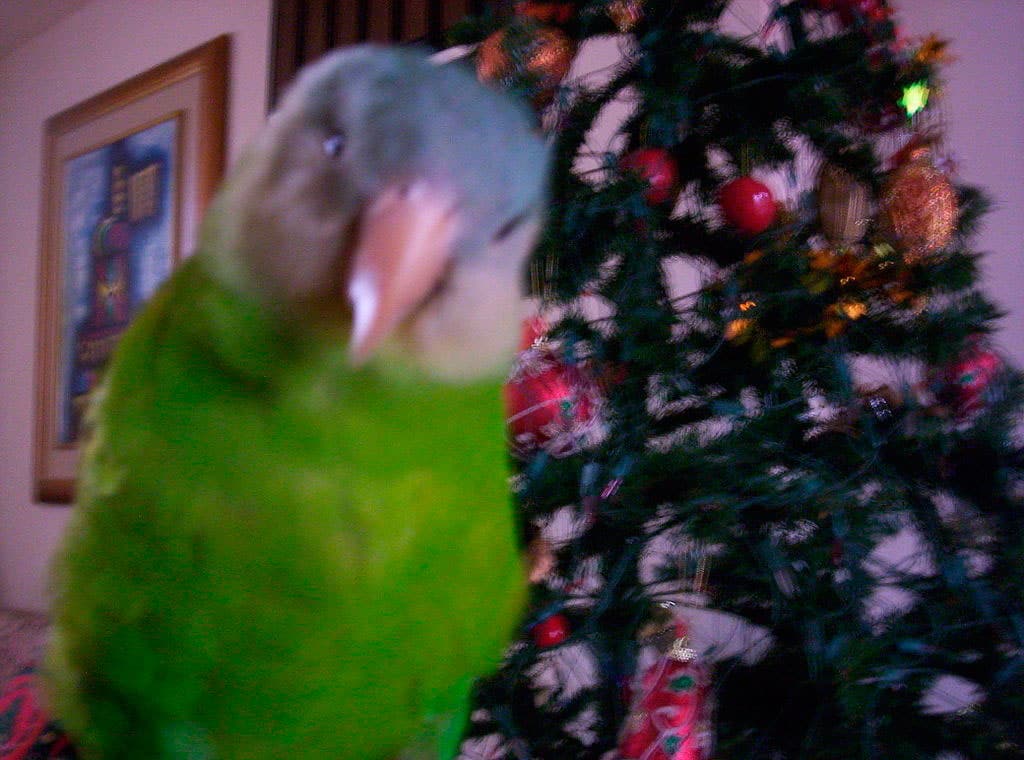
Most of the existing populations are found in the houses of individuals such as pets. Because of this, effort has been made to save this species of Brotogeris.
Alternative names:
– Gray-cheeked Parakeet, Gray cheeked Parakeet, Grey cheeked Parakeet, Grey-cheeked Parakeet (English).
– Toui flamboyant, Perroquet à flancs orangés, Perroquet de Perico, Perruche ou (French).
– Feuerflügelsittich (German).
– Periquito-de-bochecha-cinza (Portuguese).
– Catita Macareña, Periquito de Alas Naranjas (español).
– Perico de Mejilla Gris (Peru).
– Avibase
– Parrots of the World – Forshaw Joseph M
– Parrots A Guide to the Parrots of the World – Tony Juniper & Mike Parr
– Birdlife
– Parrot Book, parrots and macaws Neotropical
– Photos:
(1) – Grey-cheeked Parakeet (also known as the Fire-winged Parakeet) at El Empalme (also known officially as Velasco Ibarra), a town located in Guayas, Ecuador By markaharper1 [CC BY-SA 2.0], via Wikimedia Commons
(2) – Periquito macareño (Brotogeris pyrrhoptera), Quito, Ecuador by Diego Delso [CC BY-SA 4.0], via Wikimedia Commons
(3) – Grey-cheeked Parakeet (Brotogeris pyrrhoptera) in captivity in Cuenca, Ecuador By Beatrice Murch (originally posted to Flickr as Grey headed parrot) [CC BY 2.0], via Wikimedia Commons
(4) – A pet Grey-cheeked Parakeet By Juano80 (Own work) [Public domain], via Wikimedia Commons
(5) – Grey-cheeked Parakeet Brotogeris pyrrhoptera in Río Milagro in Yaguachi. Prov. Guayas. ECU by Ronald Navarrete-Amaya – Flickr
Origin: Brazil, Peru, Guyana, Colombia, Bolivia, Ecuador, Venezuela
Character: Excitable
Life expectancy: 40 to 50 years
Height: 38 a 41cm.
Content
Description
38-41 cm.. tall and 370g. weight.
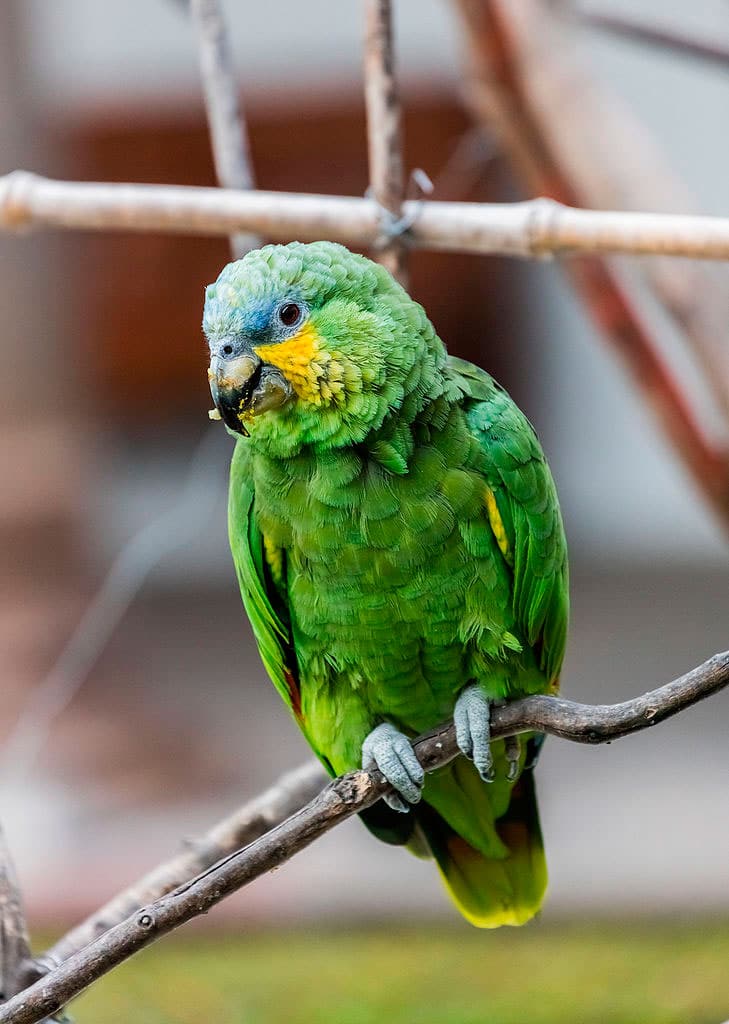
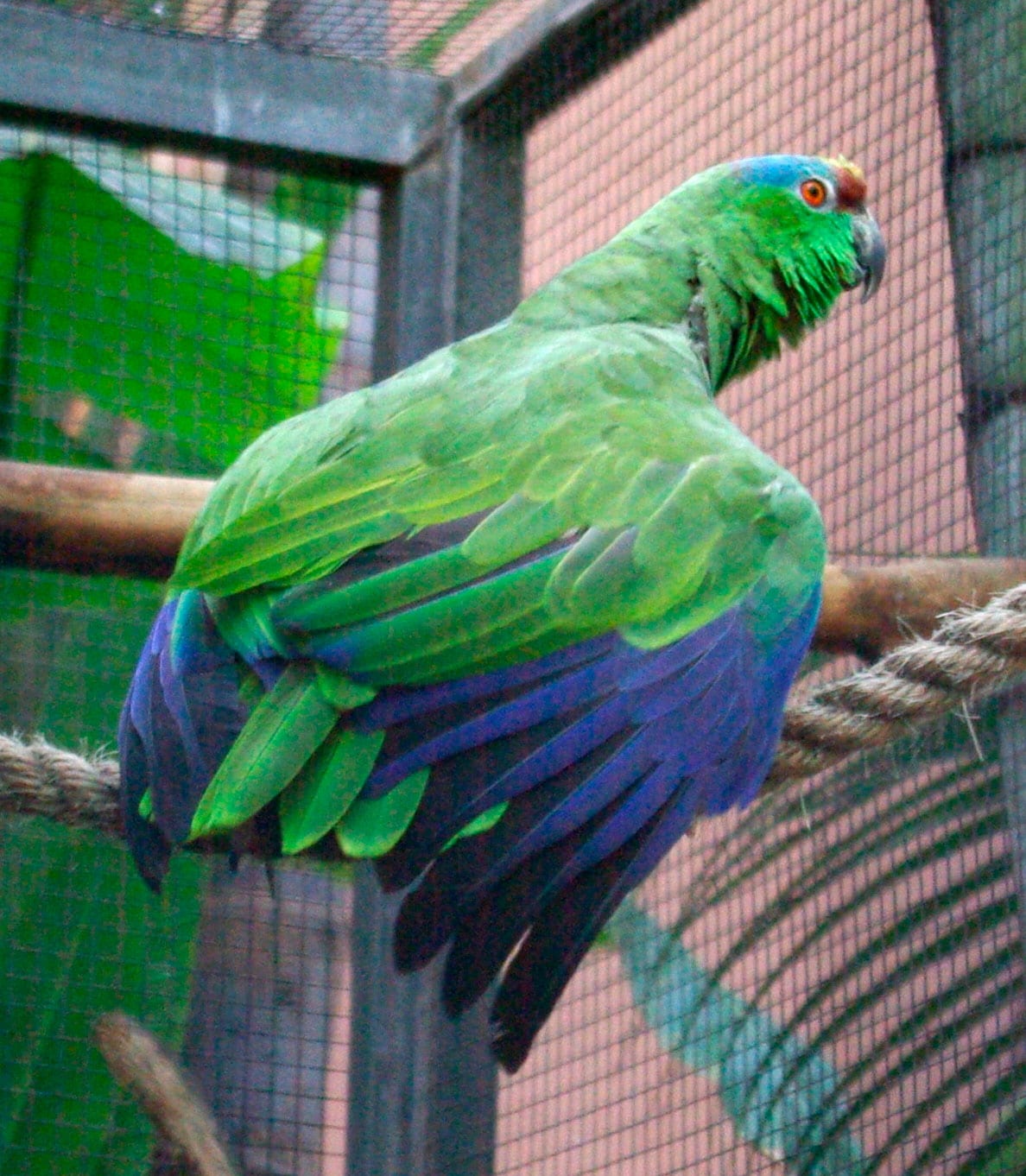
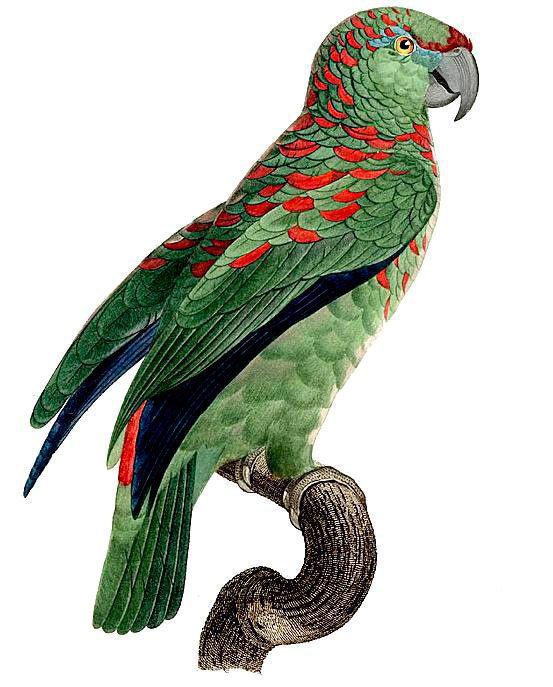
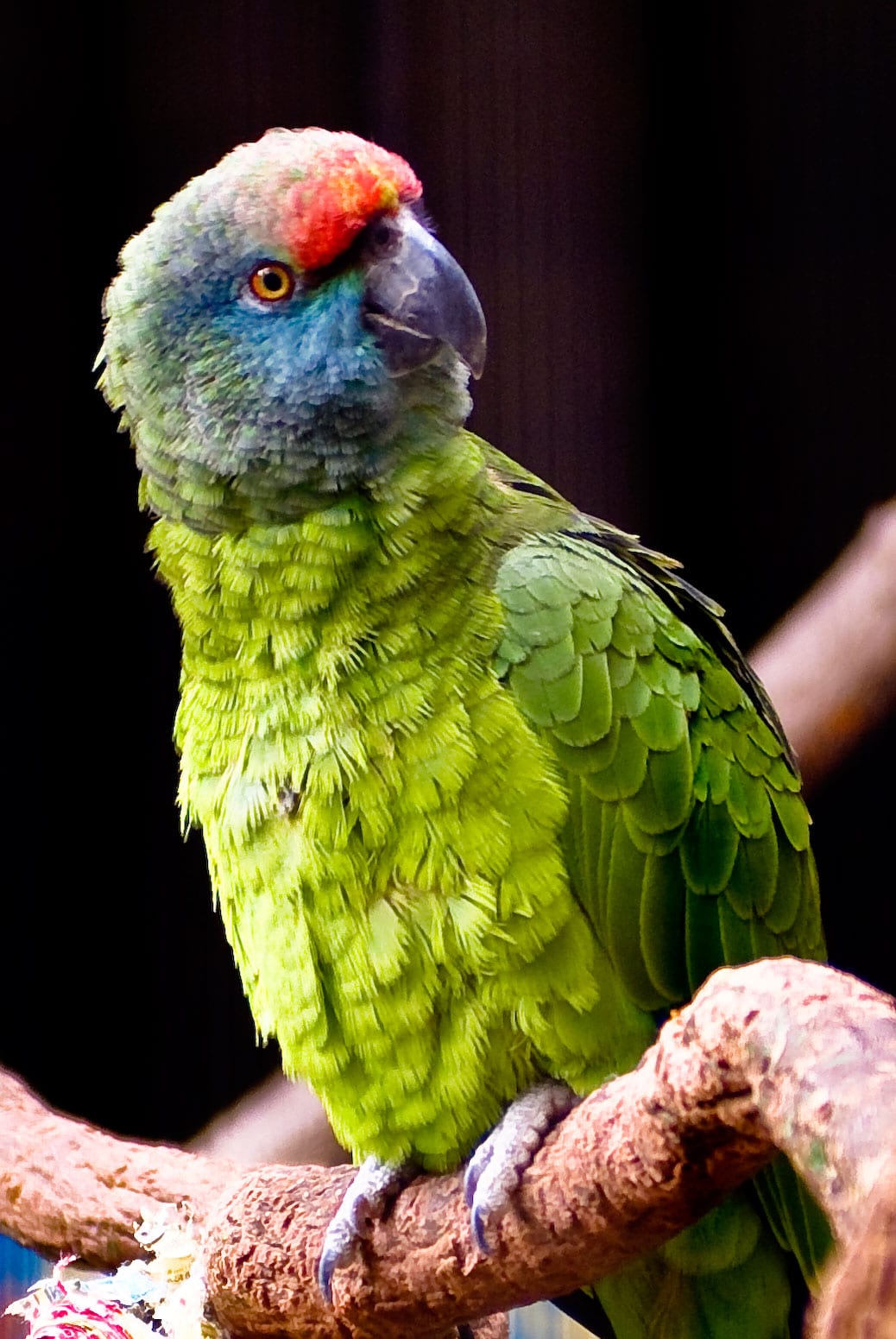
The Festive Parrot(Amazona festiva) has the cheeks and sides neck Green with strong blue diffusion; lores and a close frontal band red; feathers above and behind them eyes blue; Forehead rather yellowish green. Crown Green but darker; Feathers of the nape of color green with a band terminal dark. Mantle, scapulars, top of the back and uppertail-coverts dark green; Rump and the greater part of the low back bright red. Primary coverts Violet Blue. Other coverts dark green.
Edge carpal of the wing
and margin of the outerweb of the primaries, blue; innerwebs black; secondaries dark blue-tipped, secondaries more interior Green. Underwing-coverts green. Chin and throat blue; Breast
and belly green; coverts infra-flows brighter yellowish green. Tail green, of paler green yellowish at the tip; Trace reddish at the base of some feathers.
The bill color cuerno-marron; Iris yellow, legs dark grey.
Both sexes are similar.
Immature have irises dark and show a less intense color in the head. Its back low is practically Green; some of the pens outside of it tail they have a red base.
The Festive Parrot they attend primary and secondary lowland forests, mainly várzea, swamp forest and River Islands, as well igapó (permanently flooded forest), usually are found near the water and can prevent forests of Earth firm, although also reported in gallery forests and savannahs with scattered trees.
Observed in cocoa plantations in Brazil. At altitudes of 500 metres in Colombia and 100 metres in Venezuela. Usually in small flocks with larger meetings occasionally reported. Flocks of up to 50 birds are about Leticia between the months of May-June. Tend to gather is by the afternoon and in the evening in products communal.
Reproduction:
It nests in hollow of trees dead between mayo to June.
A breeding pair averages 3 eggs in each clutch and the incubation period is generally about 28 days.
Food:
Usually in numerous flocks, little of its power is known.
Distribution:
The Festive Parrot found in the North of South America mainly as two large populations disjunct in the basins of the amazon and Orinoco.
A population occupies the Northwest of Guyana (very few records) and Venezuela in southern Apure in the Meta River and a half Orinoco to Delta Amacuro.
The second extends from parts of the lowlands of the East (Colombia including the lower part of the Casanare River, lower Meta River and Vaupes River towards the South through the amazon of Ecuador (where birds are reported in Napo River, but few recent records) and northeast of Peru, and further to the East through the West of Brazil, from Rio Branco, Black river and bottom of the Madeira river up to the Basin Amazon East in Amapá and For and at the mouth of the amazon on Ilha Mexiana (where is its status uncertain).
Probably in its greater part resident, Although sporadic Bird on the edge of its distribution area in Ecuador and Guyana, They suggest seasonal movements outside their range, obviously low in Guyana and local in Venezuela, Ecuador and Peru, but more common in parts of the Amazonia occidental in Brazil and locally the Amazona more common in some areas Colombia (for example by of Leticia).
Pursued to the trade in live birds in parts of its area of distribution (for example, Peru). Its swampy habitat is not much in demand for agriculture, by what does not seems to have a contraction apparent large scale of its population.
Subspecies distribution:
Amazona festiva bodini
(Finsch, 1873) – It is from Colombia to the basin of the Orinoco of Venezuela
• Current category of the Red List of the UICN: Least concern.
• Population trend: Decreasing.
While it has declined locally, still fairly common throughout much of its range, and may even be close to cities as Manaus and Iquitos.
The size of the world population It has not been quantified, but this species is described as «Rare»
Consequently, is considered of least concern by BirdLife International and the IUCN , Although it was categorized as vulnerable in 2012, because of patterns of deforestation in the Amazon rainforest and the susceptibility to hunt, predicts that the population will decrease quickly during the next three generations.
Festive Parrot in captivity:
Very rare in captivity.
His temperament is extremely excitable. Males tend to be aggressive. Good to excellent imitator.
It feeds on the sunflower seeds or other provided you ,fruit, vegetables etc..
(1) – Festive Amazon at Loro Parque, Teneriffe By derivative work: Snowmanradio (talk)Festive_Amazon_BW. JPG: Berthold Werner (Festive_Amazon_BW. JPG) [Public domain], via Wikimedia Commons
(2) – A Festive Amazon at Tulsa Zoo, USA. This subspecies is known as Bodinus’ Amazon By Christopher G from Tulsa Oklahoma, USA (Amazon Parrot) [CC BY-SA 2.0], via Wikimedia Commons
(3) – A pet Festive Amazon By Tutu … F. Lopes (originally posted to Flickr as ♠) [CC BY 2.0], via Wikimedia Commons
(4) – Two Festive Amazons in an aviary at a bird park in Kaluga Oblast, Russia. They are the subspecies Amazona festiva bodini, common name Bodinus’ Amazon. They are probably jostling for room on their perch By Remiz [CC BY-SA 2.0], via Wikimedia Commons
(5) – Festive Parrot By derivative work: Snowmanradio (talk)Amazona_festiva-8.jpg: frank wouters [CC BY 2.0], via Wikimedia Commons
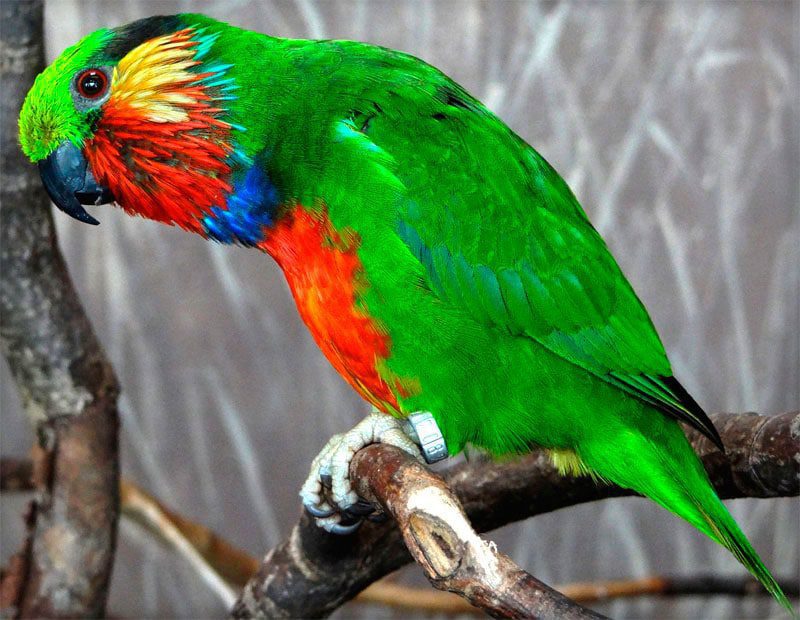
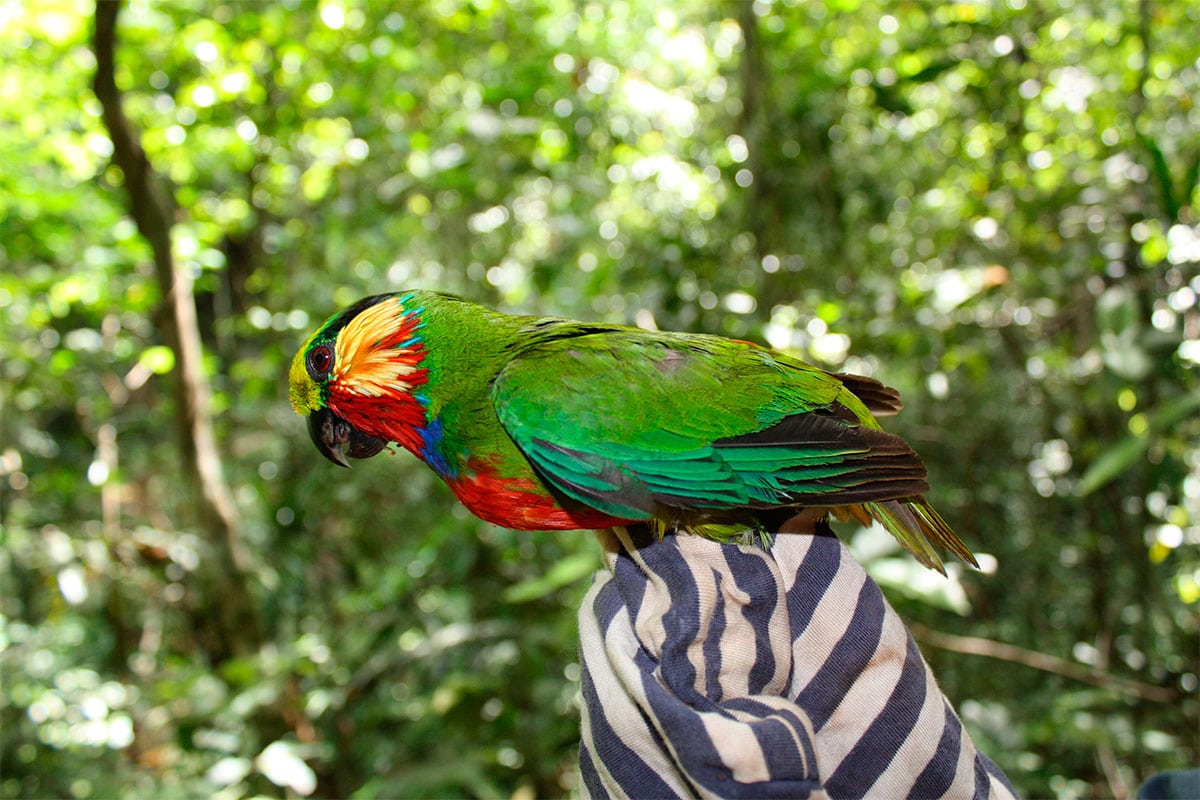
The Edwards' Fig-Parrot(Psittaculirostris edwardsii) you have the front and a bright yellowish-green Crown, with a green stripe on the back; neck greyish-Brown band above the band of gris-negruzco color that extends into the eye; area before and just behind the eyes, green. Elongated lower headset feathers and orange-red fire Gorge, with some green basal feathers interspersed and ends the headphone rear (also elongated) golden yellow with orange.
Dark green back: curve of the wing marked in blue. Black flight feathers marked with green in vane outer (except the primary outer) and with vane internal yellow, forming a set of bars under her wings; marked inner coverts reddish-orange. The wings of blue-green feathers, the longest with yellow tip. Purple-blue ruff with some lighter green feathers; Centre of the breast and upper belly of a showy orange-red; flanks, supracaudales yellowish-green coverts and thighs. Upper, the Green tail; undertail, opaque yellow olive.
the black beak; reddish brown to Brown irises; light grey legs.
The female of the Edwards' Fig-Parrot It lacks the heart of red on the chest and upper abdomen, and has a broader purple-blue band on the chest, inset below with red.
Immatures resemble females, but with the headphones coverts greenish yellow.
Habitat:
The Edwards' Fig-Parrot (Psittaculirostris edwardsii) are distributed among the humid lowland forests, partially cleared areas, wooded edges, as well as near rural areas, up to about 800 meters above sea level.
The birds are usually found in pairs or small noisy flocks, Although groups have been found for up to 400 birds collected in the canopy of fruit trees.
Rapid movements are, and usually they hang you upside down to reach food.
Has been in mixed flocks with the Double-eyed Fig-Parrot.
Reproduction:
Nesting behavior of the Edwards' Fig-Parrot they have been observed since January through may. In October he was seen a male rubbing its peak with the female and hovering above its perch. The nest is in a hole, at the top of a tree in the forest.
Food:
The diet consists of fruit, including the Ficus figs and casuarinas, nectar and probably insects
Distribution:
Endemic to the lowlands of the North of New Guinea in Irian Jaya and Papua New Guinea. It is commonly distributed in the northeast of all Jayapura along the coastal lowlands and inland to around of Pagwi, Chamhri Lake and the jimi river. Observed in the region of the Sepik River, extending eastward to the lowlands of the Huon Peninsula and the markham river. The world's population is believed to be in excess of 100.000.
Conservation:
• Current IUCN Red List category: Least concern
• Population trend: Stable
The size of the world population Edwards' Fig-Parrot It has not been quantified, It is estimated around the 100,000 specimens. The species according to sources, it is common to very frequent, at the local level (pit et to the. 1997).
The population is suspected to be stable in the absence of evidence of any reduction or substantial threats.
"Edwards' Fig-Parrot" in captivity:
active parrot, need space to exercise. It has nice voice, harmless. Initially shy and nervous, It is customary to the caregiver with the time. You can die suddenly without apparent reason.
The Mindanao Racquet-tail(Prioniturus waterstradti) has the head bright green, with broadcasting slightly more blue-green in the cheeks, the lores and front of the crown. Duller green mantle; olive rump with different shades. The Green wings, with vane Dark internal to the flight feather, narrow marginalized yellow on the edges Interior; carpal edge yellow, wing feathers green; underside of primaries with blue dye.
The underparts brighter yellowish green, more yellow in undertail-coverts. Upper, the tail green, with side feathers blackish tip; undertail, the tail bluish; Blackish spatulas
Bill light grey; Brown irises; legs blackish gray.
It is distributed in the humid montane forest, mainly between 850 and 2000 m, but have been recorded at altitudes of 450 m. Little is known about the habits of this species, that until recently was considered the same species as the Luzon Racquet-tail. Most of the observations refer to small flocks of between two and ten birds.. Apparently lower than other members of its genus is distributed in densities.
Reproduction:
There are no data on its reproductive ecology.
Food:
Without data
Distribution:
Size of the area of distribution (reproduction / resident): 11.300 km2
In 1993, the population was estimated at 5,000 individuals (Lambert et to the. 1993)
The population is suspected that it may be declining due to the continuous degradation of the forests and the capture for the cage bird trade.
Conservation Actions Proposed:
– Collect data on the impacts of the international and domestic trade.
– Review the estimate of the population.
– Calculate loss of forests within their geographic range and altitude using satellite and remote sensing images.
– Protect effectively important tracts of forest right in key places, both in the areas of strict protection, such as multi-use areas.
"Mindanao Racquet-tail" in captivity:
Not found in captivity.
Alternative names:
– Mindanao Racquet-tail, Crimson-spotted Racket-tailed Parrot, Crimson-spotted Racquet-tailed Parr, Minadnao racket-tailed parrot, Mindanao Montane Racquet-tail, Mindanao Racket-Tail, Mindanao Racket-tailed Parrot, Mindanao Racquet tail, Mindanao Racquet-tailed Parrot (ingles).
– Palette de Mindanao, Palette de Waterstradt, Perroquet à raquette de Mindanao (French).
– Mindanao-Spatelschwanzpapagei, Mindanao Spatelschwanz-Papagei, Mindanaopapagei, Mindano-Spatelschwanzpapagei (German).
– Prioniturus waterstradti (Portuguese).
– Lorito Momoto de Mindanao, Lorito-momoto de Mindanao (español).
36 cm.. length and a weight between 105 and 156 g..
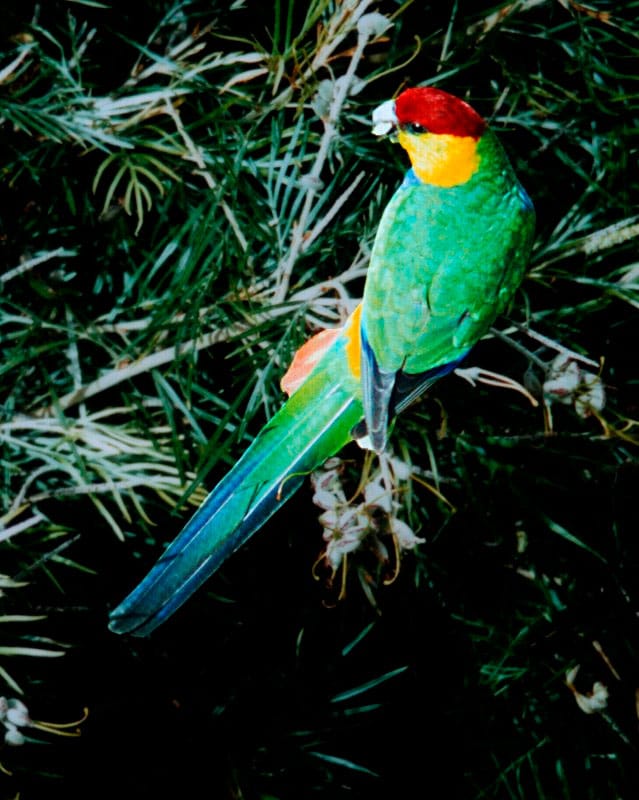
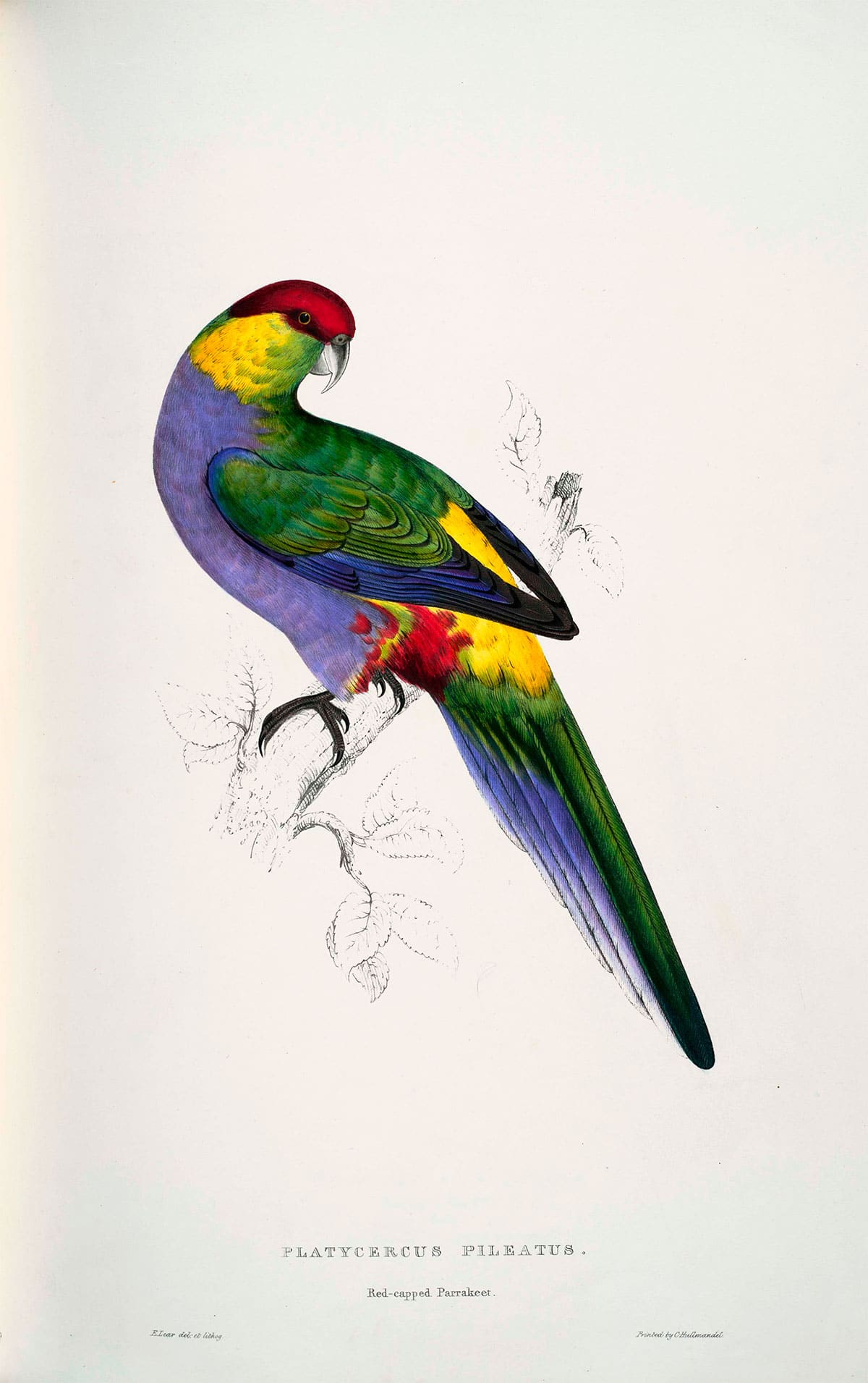
The Red-capped Parrot(Psittacus erithacus) It has the "crown" lid and the nape deep carmine red. The throat and cheeks are yellowish-green, merging slightly yellow on the sides of neck. The the mantle shows a dark green. The rump is bright yellow, which contrasts with the uppertail-coverts green. The wings covers are green, although large coberteras stain blue in the outer feathers.
The flight feather They are blackish with a large dark blue border around the outside edges of the primaries. The underparts is blue, with the exception of the flight feather that are black. The feathers of the chest and the abdomen they are blue-purple, becoming paler in area anal.
The the thighs and lower area of the tail They have a beautiful red. The undersides They have infiltrated some green feathers. Large central feathers tail They are green at the base, and bluish to the tip. side feathers tail They are dark at the base but gradually diluted colors light blue in the middle and then to white at the tips. The bottom of the tail It is pale blue with a white termination.
The bill, formed by a upper jaw more elongated, is bluish grey. The irises is of color Brown dark and the legs brown.
The female is more off than your partner. It has a crown green and chest brown. It shows a clear cross bar at the bottom of the wings, the level of flight feather. This motif is also present in the immature.
The immature they have the upperparts dark green and yellow rump duller than in adults. The the thighs They are less bright red colo. The chest It is browner. The forecrown It is covered with red feathers that are part, in small scattered groups, red feathers crown. The adult plumage It is acquired largely during the first molt and subsequently completed in the first spring.
Paired adults are sedentary, Although noisy flocks of up to 20 young birds are often seen wandering in search of food.
The Red-capped Parrot they have a preference for the eucalyptus forest and specialized to feed on seeds MARRI since its elongated upper jaw is adapted to eating the large seeds of the plant. The Fruit Marri they are available throughout the year and provide the source of staple food. The Red-capped Parrot they can also be observed in gardens (where sometimes cause serious damage), peoples, wooded pastures and forest of mallee (Eucalyptus Gracilis), feeding also on strips of grass covering the roads.
Couples remain inconspicuous, While quietly feeding in the canopy, during most of the day, Although they sometimes perch on Earth, in the clear, to feed on fallen fruit.
Reproduction:
The nesting season is between between August and December.
During the courtship, the male raises its crest, the tail, It tilts its wings and emits loud calls. The ritual offerings of food are also common, feeding the male to his partner during the incubation period.
The spawning usually includes 5 eggs, but may vary from 3 to 9. These are white. The eggs are deposited on a layer of sawdust that lines the bottom of a natural cavity of a eucalyptus marri, to a great height above the ground.
The incubation lasts a few 20 days. The male does not participate in feeding youngsters until they reach the age of 15 days. The flight of the young occurs approximately 5 weeks after hatching. The young remain in the family group for a short time after leaving the nest.
Food:
Apart from MARRI, These birds also feed on other eucalyptus, for example, Jarrah (Eucalyptus marginata), casuarinas, (Grevillea, Hakea), and they have also been feeding on flowers and insects.
Distribution:
Size of the area of distribution (reproduction / resident): 126.000 km2
Confined to the southwest corner of Western Australia. The species is distributed around the Moore river to the North of Perth (occasionally in Dandaragan), through the leafy South-West corner, usually within 100 km from the coast, reaching the inside of Lake Grace in the East and Esperance on the South Coast. The Red-capped Parrot they are regularly observed in the outskirts of Perth, and are reproduced in the King’s Park in the center of the city. The species is common, especially in the forests of MARRI (eucalyptus calphylla).
The world's population is believed to be above 20.000.
Moderate numbers in captivity. Can be shot like a plague in a small number of areas.
Conservation:
• Current category of the Red List of the UICN: Least concern
• Population Trend: Growing
The size of the world population It has not been quantified, Although the world's population is estimated at more of 20 000 specimens.
The species is described as quite common (pit et to the. 1997).
The number of captive birds It seems to be quite modest. In some areas, This bird has no protection and can be shot down if it enters an area of intensive growth. Even so, the population It is suspected that You may be increasing.
As the degradation of the habitat is permanent, new areas of suitable habitat are being created.
"Red-capped Parrot" in captivity:
It is a bird shy and nervous. They should not be housed with aggressive species. They can be noisy especially early, in the morning. Not common in captivity.
Una muestra vivió 15,3 years in captivity. In captivity, these animals have been able to play to the 2 years of age approximately.
Alternative names:
– Red-capped Parrot, Hookbill, King Parrot, Pileated Parakeet, Pileated Parrot, Purple-crowned Parrot, Red capped Parrot, Red-capped Parakeet, Western Australian King Parrot, Western Gray Parrot, Western Grey Parrot, Western King Parrot (ingles).
– Perruche à tête pourpre (French).
– Kappensittich, Rotkappensittich (German).
– Periquito-cabeça-púrpura (Portuguese).
– Perico Capelo, Periquito de Birrete Rojo (español).
– Avibase
– Parrots of the World – Forshaw Joseph M
– Parrots A Guide to the Parrots of the World – Tony Juniper & Mike Parr
– Birdlife
– AnAge: The Animal Ageing and Longevity Database – Anagé entry for Purpureicephalus spurius











.jpg)


.jpg)

%2C_Quito%2C_Ecuador%2C_2015-07-22%2C_DD_180.JPG)
_captivity.jpg)