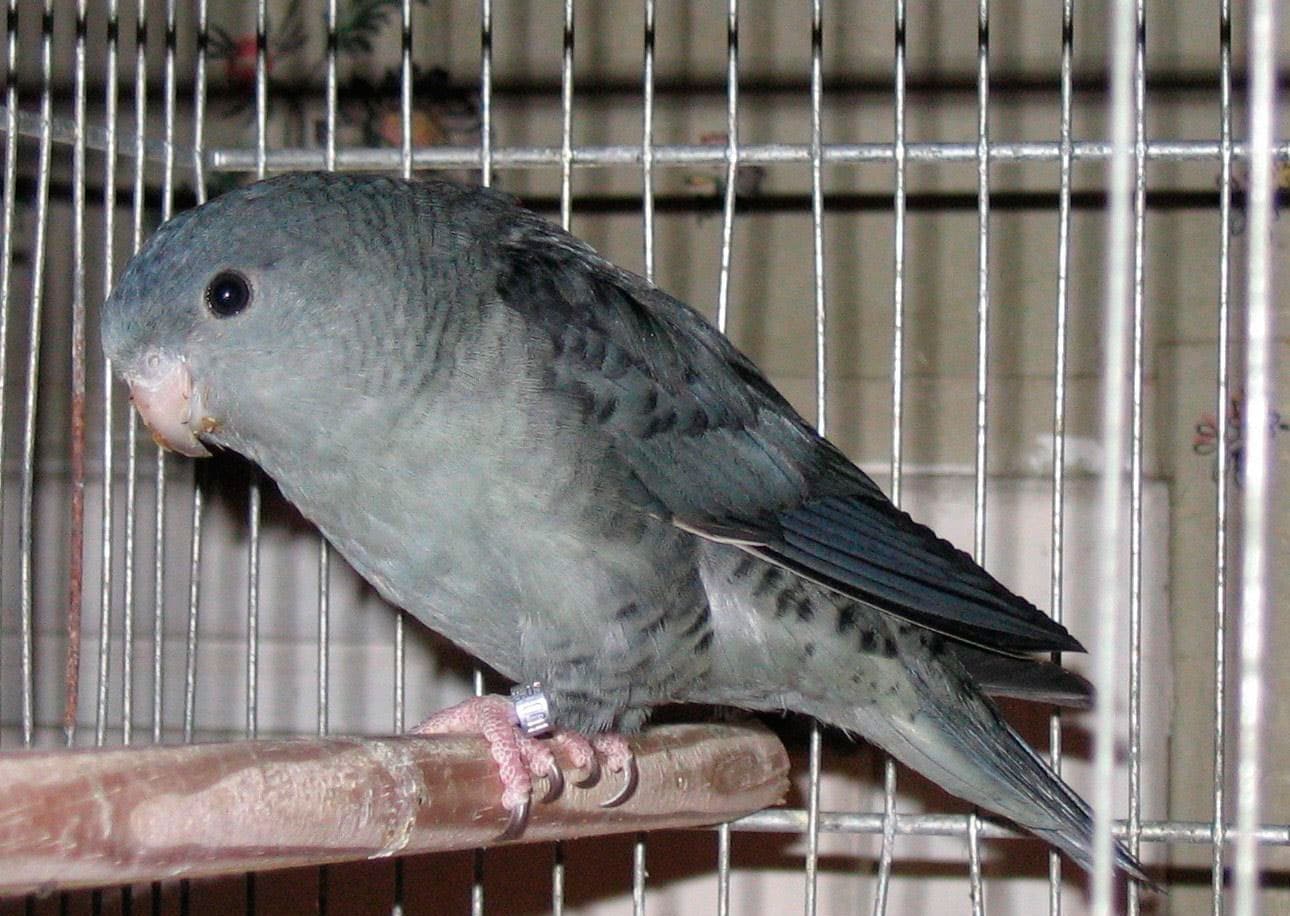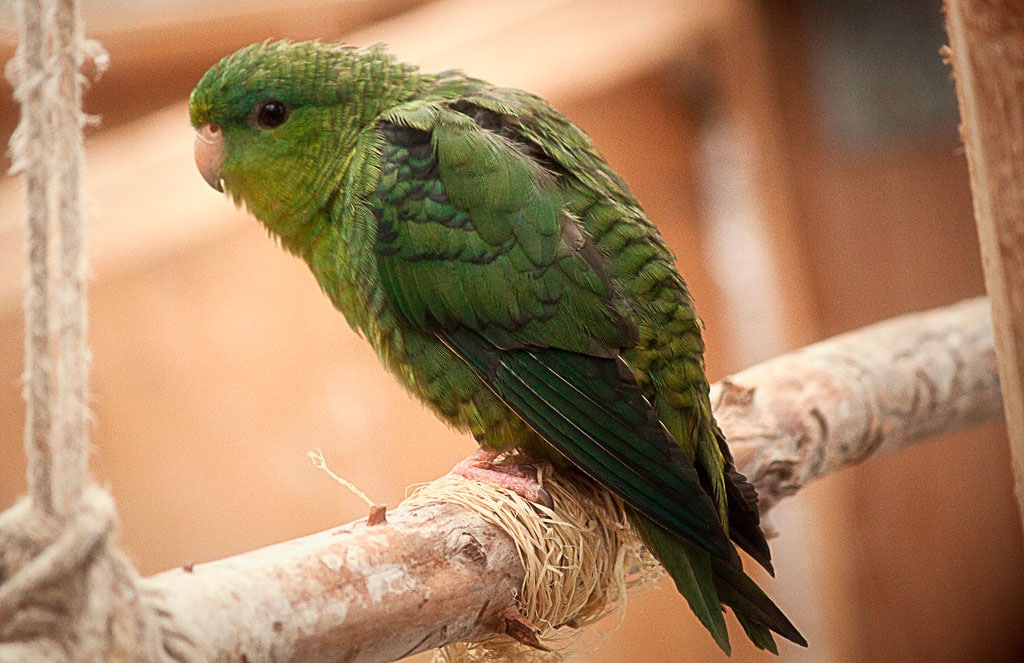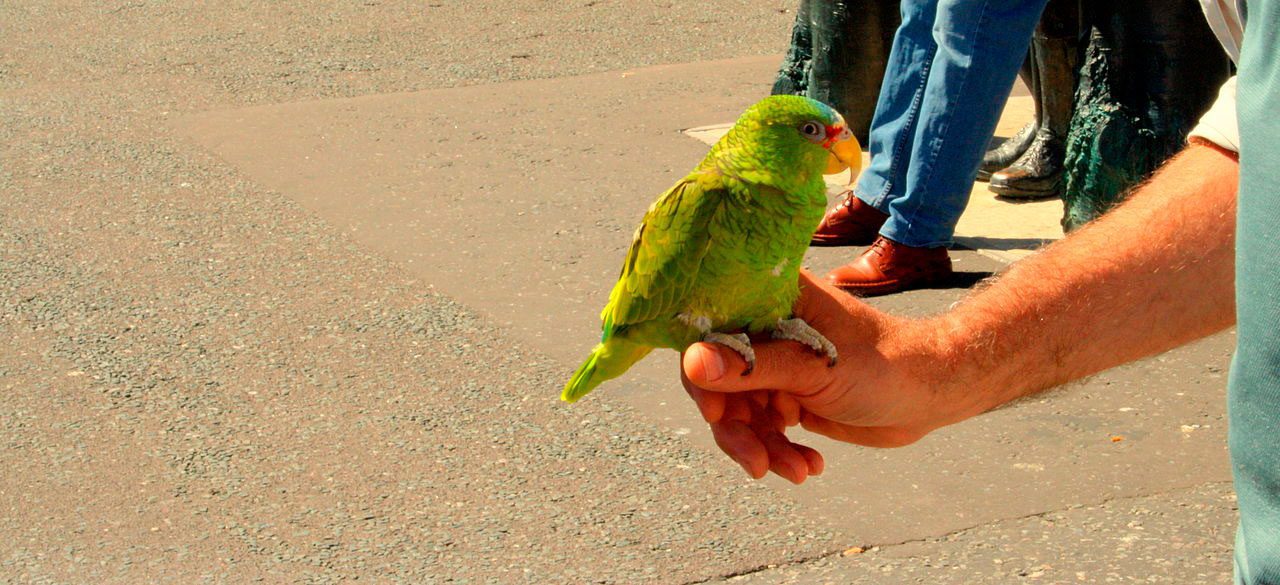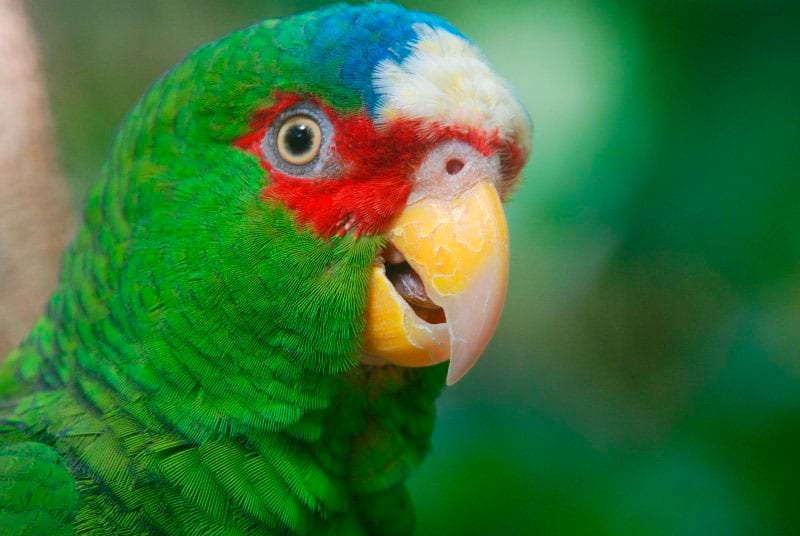
โ–ท The world of Pets: Dogs, cats, birds, reptiles, amphibians

Orange-bellied Parrot
Neophema chrysogaster

Orange-bellied Parrot

Content


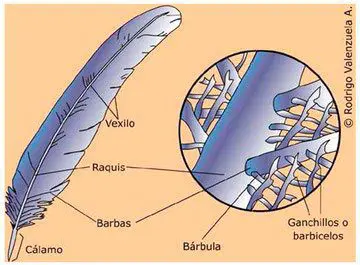
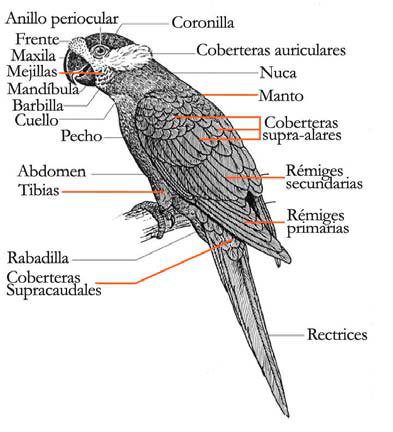
Anatomy-parrots

Description

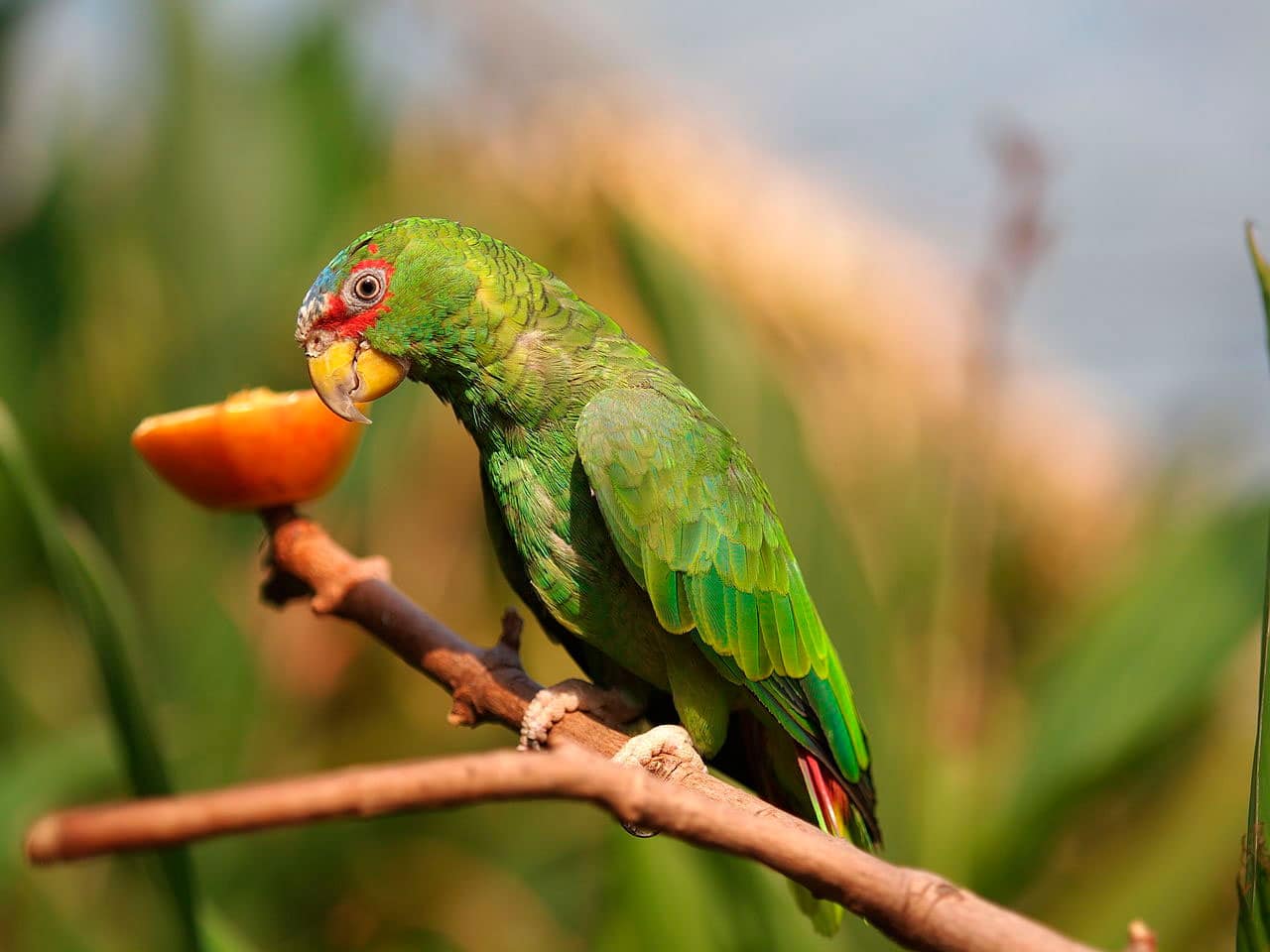
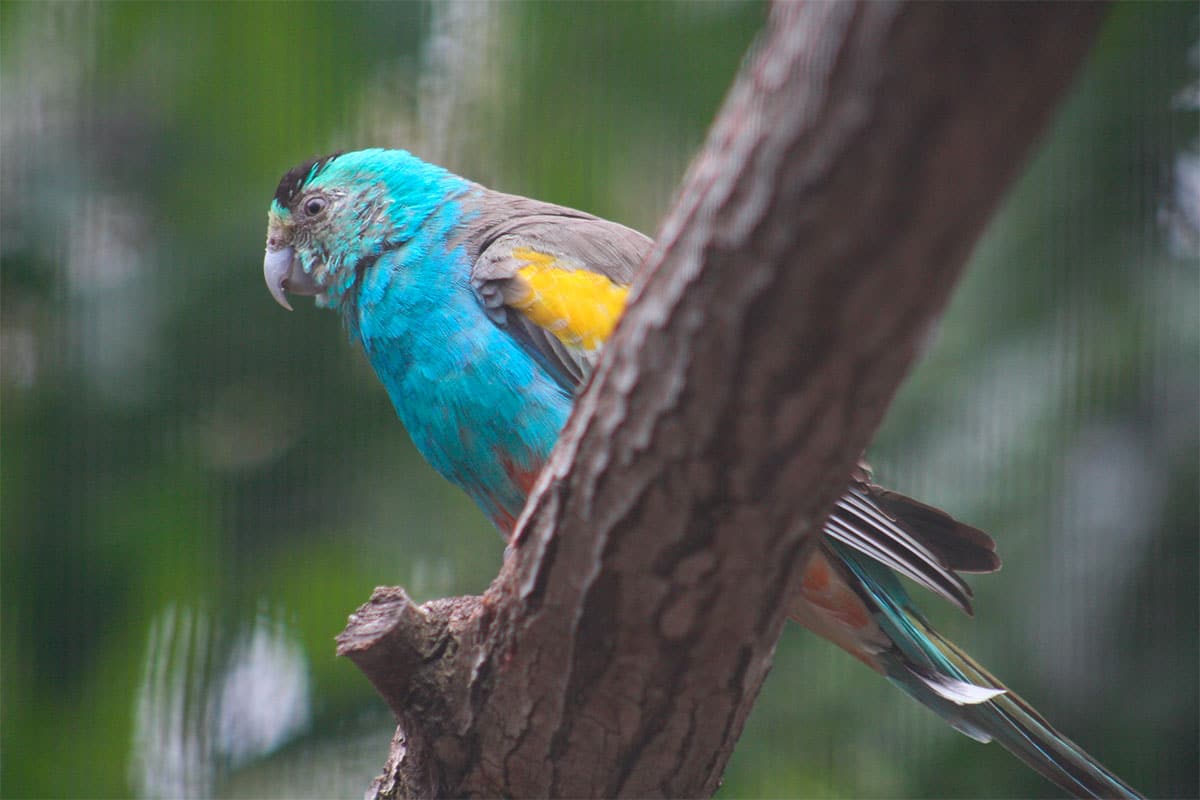
The Orange-bellied Parrot (Neophema chrysogaster) is a small ‘Grass parakeetโ€˜, so called for spending a lot of time on the ground feeding on seeds and grasses.

adults have, approximately, 21 cm length and a weight of around of 45 to 50 g..

Has the crown, the nape and the the mantle bright green, with one frontal band dark blue and a lighter blue later point that does not extend beyond the eyes.

Face and lores are yellowish-green. You have a few different bands in the wings Green and blue colors, the vane inmates of the wing-coverts are green, the blue outer.

The primary coverts are dark blue. The primary feathers Black has the outside edges with fine violet blue and yellow. The secondaries has a green border.

The underparts is blue. The chest Green is mixed with the greenish yellow color under the tail. The belly is very stained Orange. The top of queue is green with blue tip. The lateral tail feathers they are yellow with blue-green bases.

Peak and iris are black, the legs are grey.

The female is more off than the male, the frontal band has a single tone. The stain ventral Orange is smaller.

Between the juveniles, the frontal band is barely visible. The Wing band is very prominent and the bill is pale.

Habitat:

As one migratory species, its habitat varies throughout the year, with the birds that live in the marshes, coastal dunes, pastures, scrub, estuaries, Islands, beaches and Moors generally within the 10 km of distance from shore.

There is practically no records more towards the inside of 5 km and most are within 2 km from the coast. The holes of mature eucalyptus, as the Smithton Peppermint (Eucalyptus nitida) and the Swamp gum (Eucalyptus ovata), they are used by the Orange-bellied Parrot for the nesting during the breeding season in Tasmania, and breeding habitat is a mosaic of moorland and reed-covered land, dominated by the Button Gras (Gymnoschoenus sphaerocephalus) and forests.

The behavior of foraging species are usually characterized by the power in the suelor or in low vegetation, in general a less than 1 m above ground.

The birds they feed usually in pairs or individually during the breeding season, and in small herds of variable size in non-breeding season. Solitary birds often have been feeding with other species, especially with the Blue-winged Parrot (Neophema chrysostoma).

Reproduction:

In Tasmania, the only breeding place, spawning takes place in the months of November and December.

The nest of the Orange-bellied Parrot is located in natural cavities, between the 8 and 25 meters of height in eucalyptus (Eucalyptus nitida) and less frequently, in the (Eucalyptus ovata). The nest is sometimes maintained during several consecutive years. The marital ties they are strong and sometimes last a lifetime.

The spawning included among 3 and 6 eggs they are incubated during 21 days. Young people are altricial and remain in the nest for at least 5 weeks.

Food:

Initially, on Spring, the Orange-bellied Parrot they feed on plants. They mostly eat seed Sedge (Reedy) and parts of the herbs of the genus Boronia or Actinotus.

At the beginning of Winter, the regime being vegetarian, suffering some transformations. the Orange-bellied Parrot consume algae in decomposition, seeds and herbs Poaceae and Halophyte, that is to say, you adapt to saline environments, as the Rock Samphire (A maritime rhythm).

The goosefoot )Chenopodium) and Salt plants (Atriplex) also classic in their food. Introduced plants such as the Sea rocket (Cakile maritima) they are also popular.

Distribution:

Tamaรฑo del รกrea de distribuciรณn (reproducciรณn/residente) 3.100 km2

The Orange-bellied Parrot They nest along the margins of forests of the coastal plains and feeds on land covered with reeds of the Tasmanian Wilderness World Heritage Area Southwest of Tasmania, Australia, between Macquarie Harbour and Port Davey.

They migrate across Islands in the West of the bass strait (mainly King Island) towards the coast South of Australia, to Hibernate from the months of March to July, mainly along the coasts of the Bahรญa Port Phillip, Victoria (largest number of birds in Point Wilson and Swan Island, including the Queenscliffe Golf Course). They also overwinter in small numbers., from Gippsland, Victoria, to the West of the Coorong, Southern Australia. Occasionally occur during winter in areas of Tasmania and surrounding islands, as well as other individuals spend the summer on the mainland.

Every summer around 40 couples are reproduced, and an analysis of nine nests showed an average offspring of 1,7 pups per pair. The post-breeding population increased by about 50 individuals, of around 170 birds, but the population is becoming increasingly smaller, which suggests a high annual mortality. Adults begin to leave the breeding area in February and fly across the coast of Tasmania, crossing the bass strait, mainly through King Island (also records in the Hunter Croup) towards the coast of the Southeast of Australia (young birds usually travel a month later).

The Orange-bellied Parrot They tend to move around the continent, and are in the South of Australia at the end of winter. They return to breed in the months of September and October, they usually travel directly back to their breeding grounds. Since 1979 to 1990, the wintering population has remained relatively stable, with a count of 67 to 126 individuals registered every year (with a maximum of 50% of the world's population known with presence in Point Wilson).

In the last century the species flying in flocks of thousands of individuals (and raised as far East as Sydney up to approximately 1907). Wintering habitat loss and capture for the bird trade are cited as factors in its decline.

Possible winter habitat loss remains a threat, as does competition from introduced herbivores, the disturbance, and the possibility of exploration and exploitation of minerals. A detailed recovery plan includes the management of winter habitat with the exclusion of grazing animals, the diversion of economic activity and the development of Murtcaim Wildlife Management Area about Point Wilson. Captive-bred birds have been released and mixed with wild individuals.

Conservation:


critical hazard


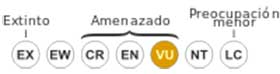
โ€ข Current category of the Red List of the UICN: Critically Endangered

โ€ข Population Trend: Decreasing

The Orange-bellied Parrot It has a very low population size. This very low population size is even more significant, given that the species migrates through of the Bass Strait, with which this species is subjected to the additional risk by stormy phenomena on their migratory journey.

Has a restricted geographic range when breeding, and apparently a limited supply of food during migration and winter.

The species is found in a single population of between 100 and 150 mature individuals. Habitat loss, fragmentation and modification, particularly on the migration route and in the wintering areas, they are the key threats to the survival of the species.

For a small population, stochastic factors, as the disease, storms during the migratory species, and the destruction of nests by forest fires have the potential to reduce the survival of the species in the long term.

The Orange-bellied Parrot It has a restricted geographical distribution which is precarious for its survival.

The Scientific Committee of Threatened Species considers that the Orange-bellied Parrot has suffered a historic decline since European colonization. It is considered, In addition, that the recent recovery actions that have been implemented are having a beneficial impact on the species and the possibility of future stability in the reproduction sites is becoming apparent. But, as the population of the Orange-bellied Parrot is so low, the data that we have are based on a small area of occupancy and it is likely that this species continue suffering from a series of threats in course, with what the Committee may not be sufficiently secure that available information indicate that the population is stable and safe.

Future declines in population are still likely as a result of potential threats, especially the stochastic and genetic threats to small populations are likely and that can lead to the extinction.

"Orange-bellied Parrot" in captivity:

The Orange-bellied Parrot is very rare in captivity and is, probably, more present in the hands of European collections. There are also some captive birds by some fans in Australia, to the South of the continent.

Video Ventrinaranja Parakeet

Orange-bellied Parrot (Neophema chrysogaster) 'Instincts': PPC R&BCaptive Management Using Biological Data

Fifteen years ago in South Australia, under expert supervision, were built cages with the aim of raising these birds and avoid that the Orange-bellied Parrot disappeared completely. In the early years, most of the young people died from diseases of the beak and feathers (PBFD), a viral disease (virus BFD). Similarly, cold winters in this region, where was launched the project, they had a negative effect on the end result.

Once the aviaries were displaced to areas more temperate and increased its amount, the result is improved and each year dozens of parrots have been released into the wild.

The Orange-bellied Parrot they are birds calm, peaceful and little noisy. They belong to the less active within the genre of the kind Neophema, so tend to the Obesity. These birds spend much time ashore. Usually, bathe once a day, in long baths. Reproduce well in captivity. They are exceptionally susceptible to various infections, including the intestinal parasites. These birds also, often, they die without apparent reason.

Alternative names:

Orange-bellied Parrot, Grass Parakeet, Orange bellied Parrot, Orange-bellied Grass-Parakeet, orange-bellied parakeet, Orange-breasted Grass-Parakeet, Orange-breasted Parrot, Purple-banded Parrot, Yellow-bellied Parrot (ingles).
Perruche ร  ventre orange, Perruche ร  poitrine orange (French).
Goldbauchsittich (German).
Periquito-de-barriga-laranja (Portuguese).
Papagayo de Vientre Naranja, Periquito Ventrinaranja (espaรฑol).

scientific classification:

John Latham
John Latham

Order: Psittaciformes
Family: Psittaculidae
Genus: Neophema
Scientific name: Neophema chrysogaster
Citation: (Latham, 1790)
Protonimo: Psittacus chrysogaster

Images ยซOrange-bellied Parakeetยป:

Videos "Orange-bellied Parrot"

ยซOrange-bellied Parakeetยป (Neophema chrysogaster)


Sources:

  • Avibase
  • Parrots of the World โ€“ Forshaw Joseph M
  • Parrots A Guide to the Parrots of the World – Tony Juniper & Mike Parr
  • Ministry of the environment – Australia – Environment Protection and Biodiversity Conservation Act 1999 (EPBC Act)
  • Birdlife

  • Photos:

(1) – Orange-bellied Parrot (Neophema chrysogaster) male, Melaleuca, Southwest Conservation Area, Tasmania, Australia By JJ Harrison (jjharrison89@facebook.com) (Own work) [CC BY-SA 3.0], via Wikimedia Commons
(2) – Orange-bellied Parrot (Neophema chrysogaster) female, Melaleuca, Southwest Conservation Area, Tasmania, Australia By JJ Harrison (jjharrison89@facebook.com) (Own work) [CC BY-SA 3.0], via Wikimedia Commons
(3) – Orange-bellied Parrot (Neophema chrysogaster) Melaleuca,Tasmania by Ron Knight – Flickr
(4) – Orange-bellied parrot, Neophema chrysogaster, photographed at Tasmania, Australia – Image: David Boyle/National Geographic [velociraptorize] (5) – Photo: Justin McManus
(6) – John Latham – Allen, ELSA G. (1951) The History of American Ornithology before Audubon. Transactions of the American Philosophical Society, New be. 41(3):387-591. See page for author [Public domain], via Wikimedia Commons

โ–ท The world of Pets: Dogs, cats, birds, reptiles, amphibians

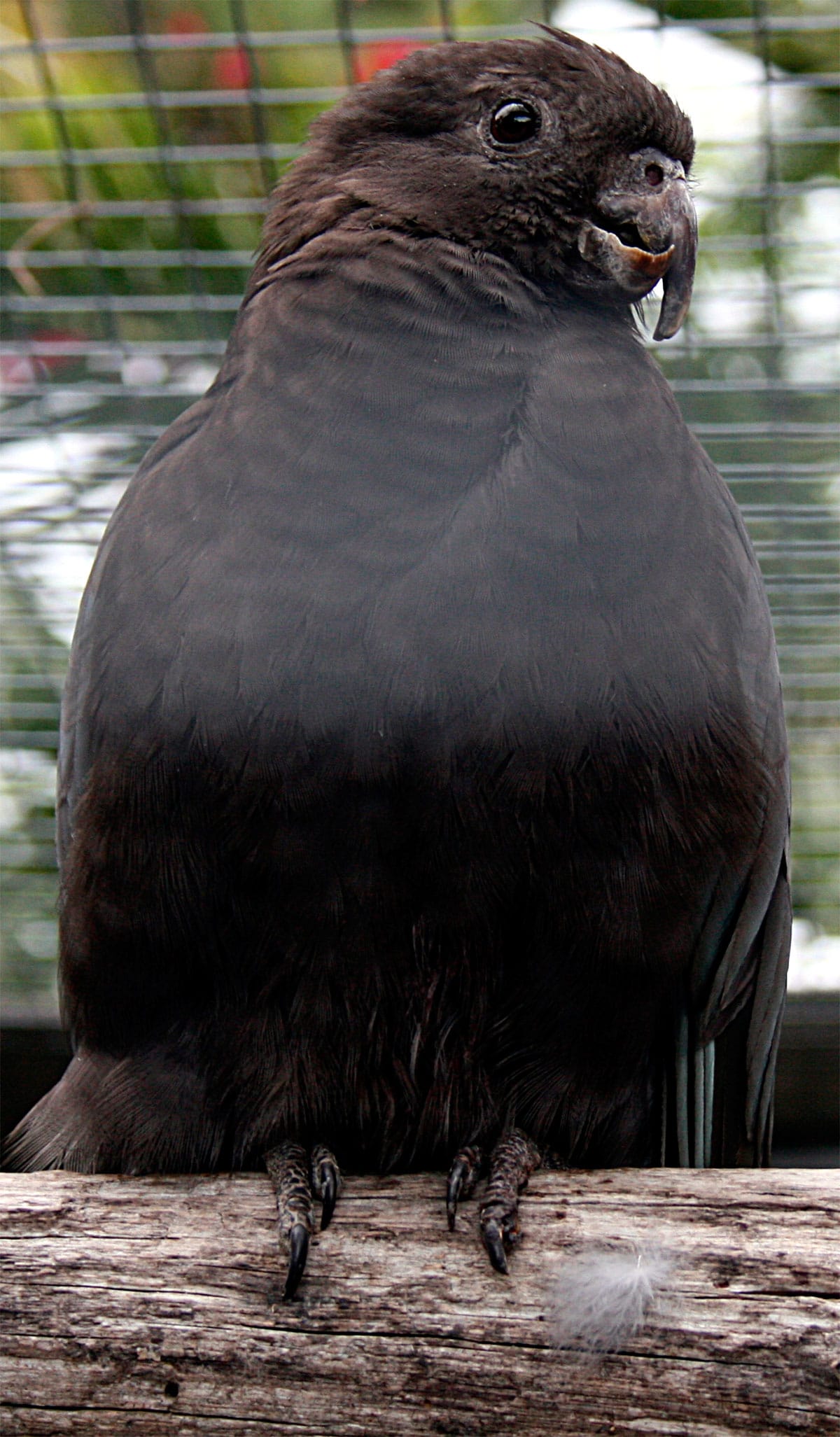
Brown-headed Parrot
Poicephalus cryptoxanthus


Lorito Cabecipardo

Content

Description:

Of 22 cm.. length and a weight between 120 and 156 g..

The Brown-headed Parrot (Poicephalus cryptoxanthus) has the head, including the nape, the chin and throat brown; ear-coverts paler. Mantle brown, but more to the tail; scapulars dark green-edged Brown; rump and uppertail-coverts bright green. Upper, the wing-coverts green, sometimes with a small yellow spot on the curve of the wing folded; wing feathers yellow. Primaries brown with vane Blue-Green external; the secondaries brown.

The feathers in the upper area of the chest brown with a narrow green edge at the bottom; the rest of the underparts green, but darker bases of the feathers, giving a mottled look.

Tail dark brown with green washing and dark green tip.

The upper jaw and cere grey-black (darker towards tip), lower pale, almost white; irises yellow-green light; periophthalmic ring and legs dark grey to black.

Both sexes similar.

Immature generally more muted than adults and with the irises brown.

Subspecies description:

  • Poicephalus cryptoxanthus cryptoxanthus (Peters,W, 1854) – Nominal species

  • Poicephalus cryptoxanthus tanganyikae (Bowen, 1930) – As the nominal but more pale species; more green and less Brown. Green mantle and underparts brighter. Bib of brown feathers on the throat and upper of the much smaller chest than in the nominal species; the head more color olive brown.

Habitat:

Is located in almost all the forests: riparian forests, in the interior of the savannah forests and in the dry forests of southeastern Africa, but it seems to avoid the miombo woodland and prefers areas with baobabs.

Registered in coconut plantations, riparian forest, the edges of small farms and mangroves.

Confined in lowlands (below the 1.200 metres above sea level in Tanzania and 1.000 metres in Malawi).

Gregarious; usually seen them is in small flocks of about 12 birds, but can meet up to 50 in places of power. Sometimes it is associated with the Cape Parrot and also observed feeding in the company of the Madagascar Green-Pigeon.

Reproduction:

Normally nest in hollows of old trees of woodpeckers, between 4 and 10 meters above the ground. Often has to compete with the Cape Parrot, Meyer's Parrot, squirrels and Crowned Hornbill the nesting sites.

Season of laying egg is April-May in the South of its range.

The laying is of 2 to 4 eggs, which are incubated solely by the female during 26-30 days, While the male feeds her on the nest.

The chicks they remain in the nest during 50-54 days Before leaving for the "breeding area", which is usually an area of โ€‹โ€‹dense broadleaf trees with a nearby water supply. During this time the chicks are silent and largely immobile, becoming fully independent a few 28 days later.

Food:

Diet includes figs, berries cultivation of cassava Manihot esculenta, seeds of Adansonia, coconut palm flowers, new shoots of trees, fruits of Pseudocadia zambesica, pods of Acacia nigrescens and Albizia gummifera, immature seeds of Erythrina and nectar from flowers of Aloe and African Kigelia; also takes millet and corn and in some areas considered a pest.

They forage, with slow and deliberate movements, climbing and often holding the food between the claws. They drink daily, around midday.

Distribution:

The Brown-headed Parrot are distributed by the southeast of Africa. From the North-East of South Africa (Swaziland, Zululand and Transvaal) through the southeast of Zimbabwe, Mozambique and South of Malawi to the East of Tanzania (including the island of Pemba and southern end of Zanzibar) and southeastern edge of Kenya.

There are also in Wasini island.

Apparently sedentary. In some places, the Brown-headed Parrot, are a species common, especially close to the coast and in the South of its range, but in some other areas are scarce or rather local; in Zanzibar possibly extinct.

Distribution Subspecies:

  • Poicephalus cryptoxanthus cryptoxanthus (Peters,W, 1854) – Nominal species

  • Poicephalus cryptoxanthus tanganyikae (Bowen, 1930) – Mozambique, to the North of the Save River across the South of Malawi and this from Tanzania to the coastal part of Kenya.

Conservation:


minor concern


โ€ข Current Red List of UICN: Least concern

โ€ข Population trend: Stable

It is not threatened, although its distribution has contracted since 1990, to a large extent due to the capture illegal for the industry of cage birds.

More and more vulnerable due to the loss and fragmentation of their habitat.

Largely confined to protected areas in Zululand and East of Transvaal.

"Brown-headed Parrot" in captivity:

The only data we have on this bird, according to sources, is that one specimen was still alive after 32,1 years in captivity.

Alternative names:

Brown-headed Parrot, Brown headed Parrot, Brownheaded Parrot (English).
Perroquet ร  tรชte brune (French).
Braunkopfpapagei, Braunkopf-Papagei (German).
Papagaio-de-cabeรงa-castanha (Portuguese).
Lorito Cabecipardo, Lorito de Cabeza Parda (espaรฑol).


scientific classification:

Peters Wilhelm
Peters Wilhelm

Order: Psittaciformes
Family: Psittacidae
Genus: Poicephalus
Scientific name: Poicephalus cryptoxanthus
Citation: (Peters, W, 1854)
Protonimo: Psittacus (Poiocephalus) [sic] cryptoxanthus

Images "Lorito Caecipardoยป:

Videos "Brown-headed Parrot"

————————————————————————————————

โ€œLorito Caecipardoยป (Poicephalus cryptoxanthus)


Sources:

Avibase
– Parrots of the World โ€“ Forshaw Joseph M
– Parrots A Guide to the Parrots of the World – Tony Juniper & Mike Parr
– Birdlife

Photos:

(1) – A Brown-headed Parrot at Kruger National Park, South Africa Henry Flower at en.Wikipedia [CC BY-SA 3.0 or GFDL], from Wikimedia Commons
(2) – Bungalow Nยฐ51, Mopani Camp, Kruger NP, SOUTH AFRICA By Bernard DUPONT from FRANCE (Brown-headed Parrot (Poicephalus cryptoxanthus)) [CC BY-SA 2.0], via Wikimedia Commons
(3) – A Brown-headed Parrot in KwaZulu-Natal, South Africa By New Jersey Birds (Brown-headed ParrotUploaded by snowmanradio) [CC BY-SA 2.0], via Wikimedia Commons
(4) – Bungalow Nยฐ51, Mopani Camp, Kruger NP, SOUTH AFRICA By Bernard DUPONT from FRANCE (Brown-headed Parrot (Poicephalus cryptoxanthus)) [CC BY-SA 2.0], via Wikimedia Commons
(5) – Lower Sabie Camp, Kruger NP, SOUTH AFRICA By Bernard DUPONT from FRANCE (Brown-headed Parrot (Poicephalus cryptoxanthus)) [CC BY-SA 2.0], via Wikimedia Commons

Sounds: Peter Boesman (Xeno-canto)
โ–ท The world of Pets: Dogs, cats, birds, reptiles, amphibians

Nicobar Parakeet
Psittacula caniceps


Cotorra de Nicobar

Content

Description:

Among 55 and 61 cm.. of length and a weight of 224 g..

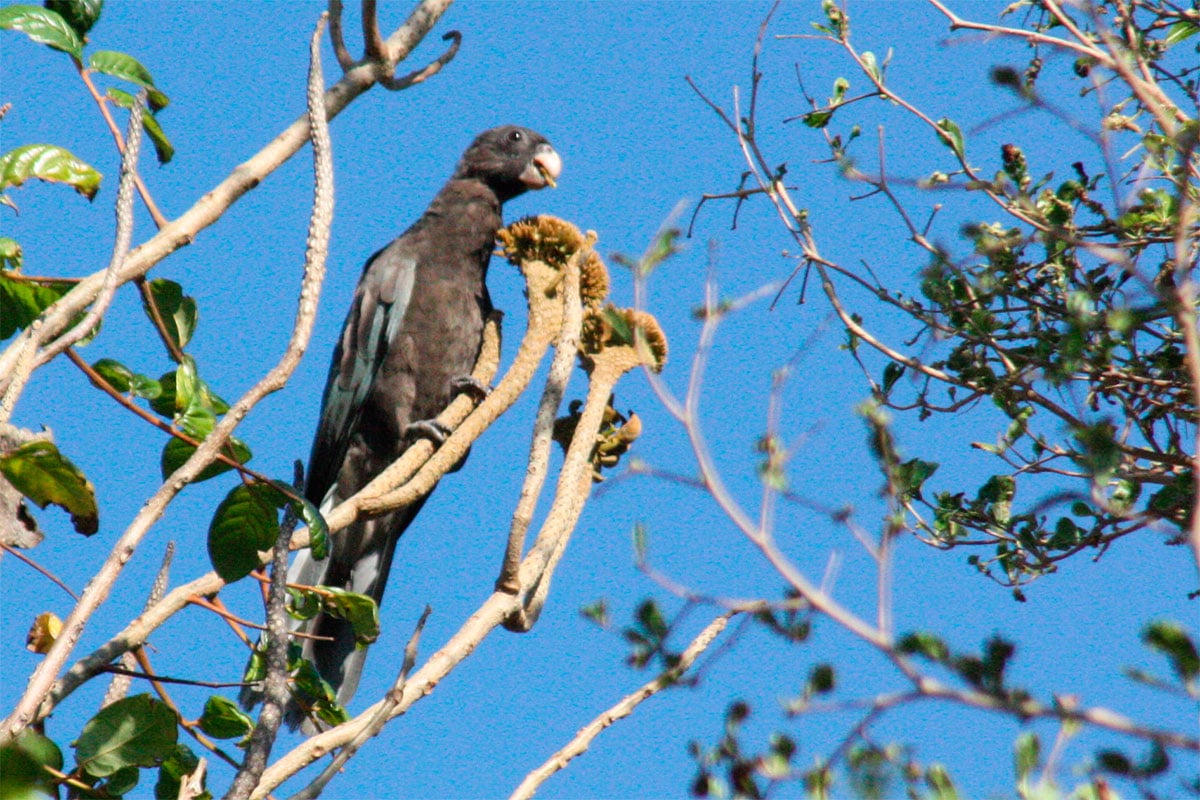
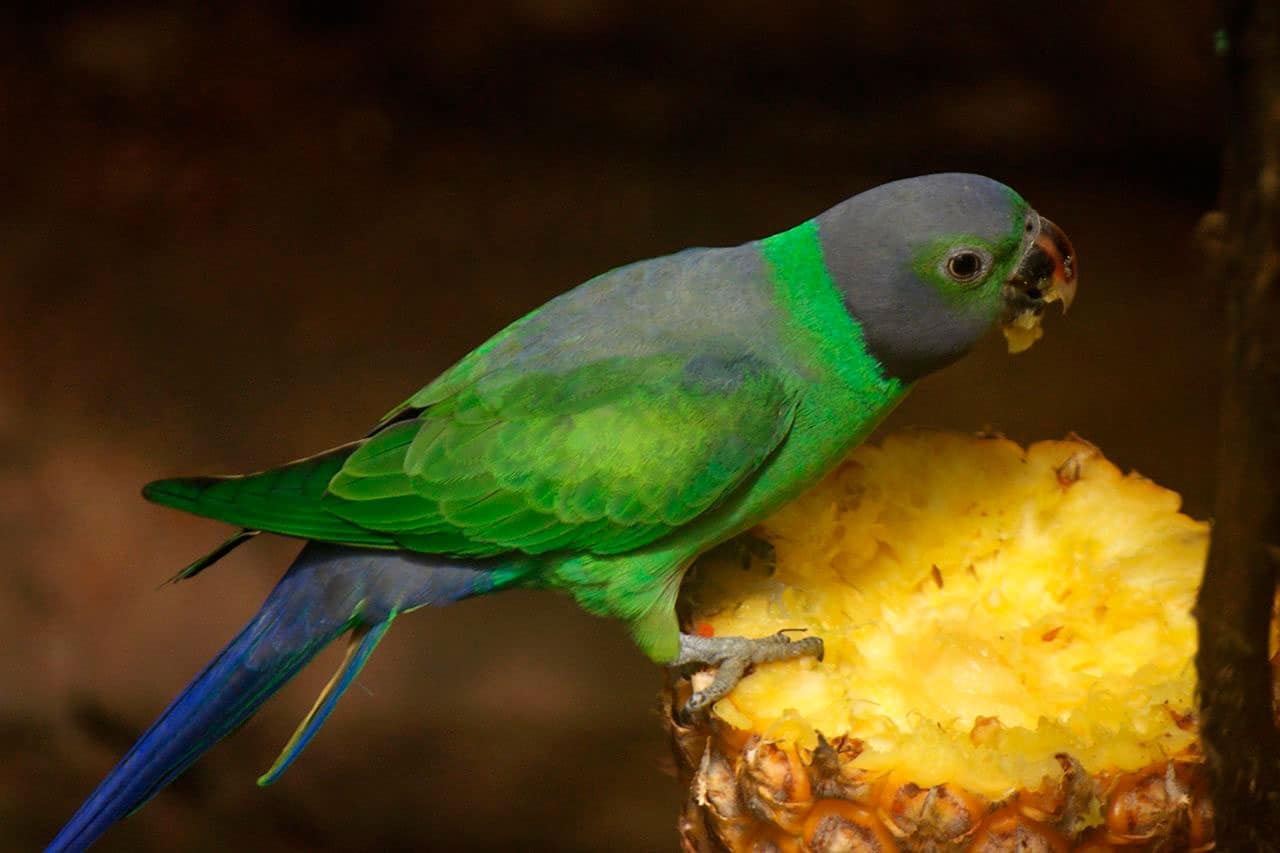
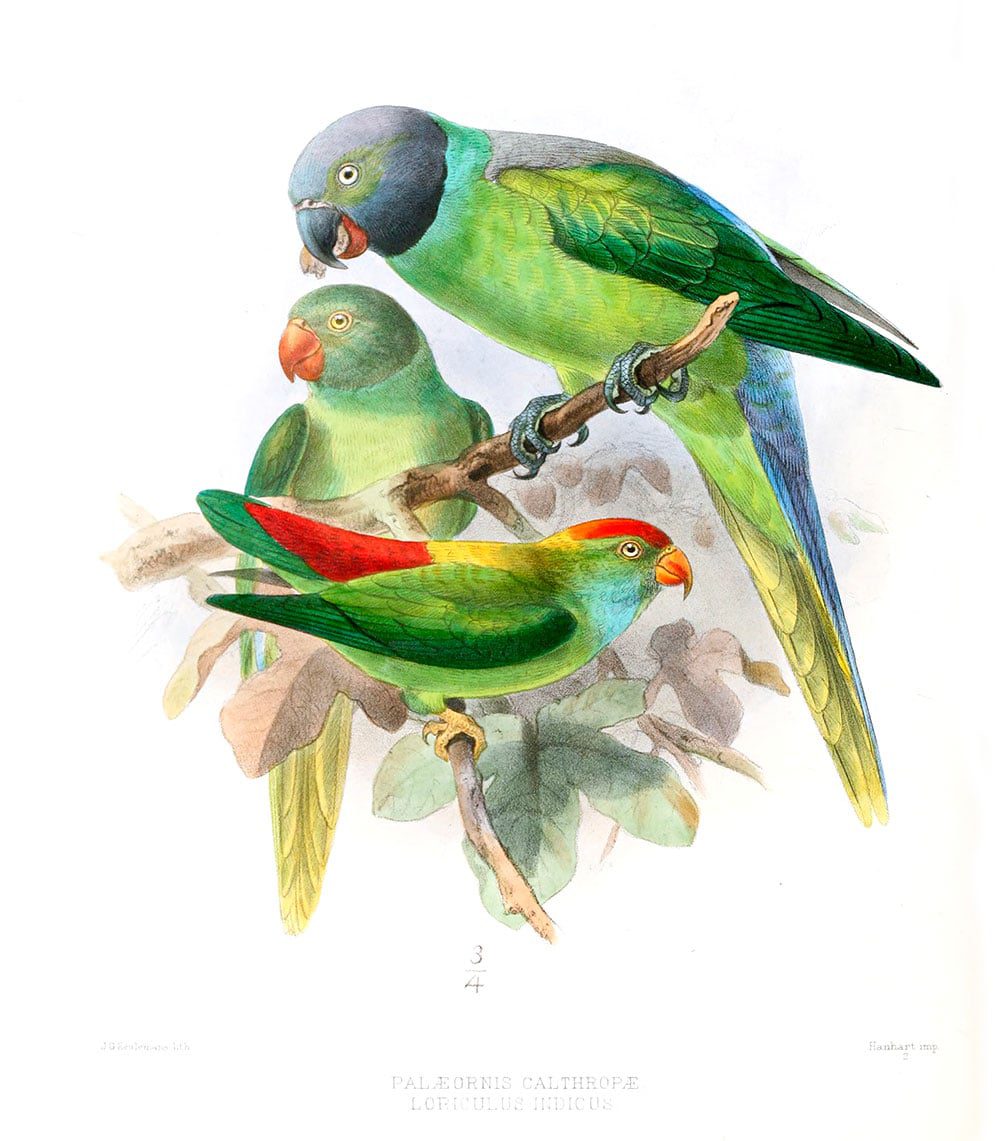
The Nicobar Parakeet (Psittacula caniceps) has the crown, upper cheeks and ear-coverts pale grey; stripe black in the region perioftalmica through the lores up to the forecrown; the lower cheeks and the chin are black. Nape and upper mantle pale gray bathed in blue; rest of the upper region green grass pale.

Upperwing-coverts green; primaries and secondaries Green with dark tips. Underwing-coverts green. Underparts green, slightly paler than upper parts. The elongated feathers central tail green with grey tinge, outer green.

upper jaw coral red, the lower black; cere dark grey; irises orange-red; legs dark gray.

The female has the bill black, the grey of the head and nape more strongly impregnated with blue, and tail slightly shorter.

The immature similar to females.

Habitat:

The Nicobar Parakeet it is difficult to locate visually among the dense foliage, Although its presence is revealed by their distinctive calls. Their flight is fast and direct.

They inhabit in the high rainforest. Generally held among the dense foliage on canopy, about everything when not fully.
They are perhaps most abundant in the coastal forests than inside.
Has also been recorded in areas with plants of Areca catechu and coconut plantations, which suggests a considerable tolerance of the species in habitats modified.
Usually, observed in pairs or in small groups.

Reproduction:

Unknown breeding habits.

Food:

Unknown diet except for the fruits of Pandanus, abundant in the inhabited islands of the Nicobar archipelago.

Distribution:

Size of the area of distribution (reproduction / resident): 1,100 km2

endemic to the Nicobar Islands, located in the Indian Ocean and belonging to the India. Registered since Great Nicobar, Montschall and Kondul. Resident. His status is unknown but they are potentially at risk due to habitat loss due to the expansion of rice cultivation; also affected its population because of the bird trade, Although there is little local use of these birds as pets and there are no known international traffic.

Conservation:

State of conservation โ“˜


Near-threatened Near Threatened โ“˜ (UICN)โ“˜

โ€ข Current Red List of UICN: Near threatened

โ€ข Population trend: Decreasing

The population of the Nicobar Parakeet It is suspected that It may be waning as a result of the destruction of habitat due to the tsunami of the 2004 (K. Sivakumar in litt. 2007), due to the development of the island, and because the capture for the wild bird trade. But, more research is needed to establish with precision the trends.

Probably between 10,000 – 15,000 specimens on freedom.

The main threats to the Nicobar Parakeet They come because of the large number of birds that are trapped for the cage bird trade.. On the other hand, the increase of settlements on the Islands It has led to increased pressure on natural resources and the planned development projects may seriously affect the habitat of this species. The tsunami of 2004 It destroyed large tracts of coastal forest that may have caused a further decline in the population. But, the data remains scarce, and the rate of regeneration of these forests is unknown (K. Sivakumar in litt., 2007).

Conservation Actions Proposed:

    – Determine the impact of the trade in the species.
    – Calculate the rates of forest loss.
    – Protect remaining habitat areas.
    – Assess the impact of the tsunami of 2004.

"Nicobar Parakeet" in captivity:

There is not much information available; probably brought for the London Zoo at the beginning of 20th century; kept as pets, at an unknown number, by the local population of the Nicobar Islands

Since the Nicobar Parakeet is a species so rare, It is not recommended to keep them captive, it is preferable to place them in a breeding program well managed by expert hands.

Alternative names:

Nicobar Parakeet, Blyth’s Parakeet (English).
Perruche des Nicobar, Perruche de Blyth (French).
Graukopfsittich (German).
Periquito-de-nicobar (Portuguese).
Cotorra de Nicobar (espaรฑol).


scientific classification:

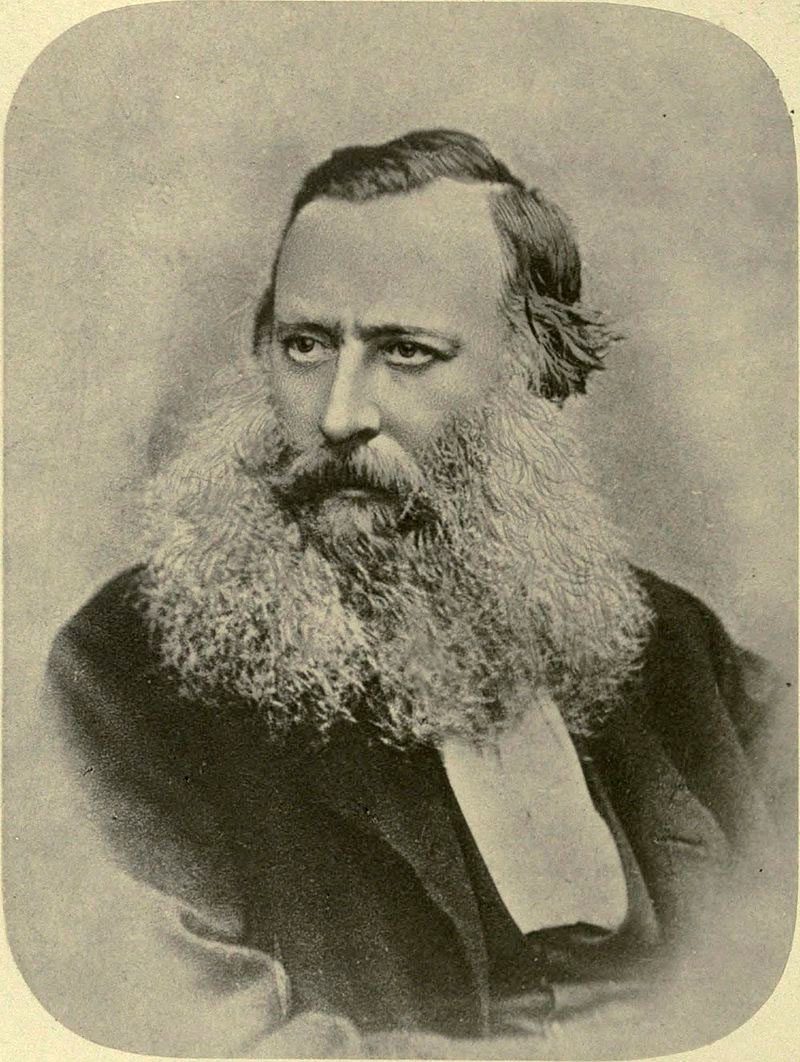
Edward Blyth
Edward Blyth

Order: Psittaciformes
Family: Psittaculidae
Genus: Psittacula
Scientific name: Psittacula caniceps
Citation: (Blyth, 1846)
Protonimo: Palaeornis caniceps

Images "Nicobar Parakeet"


Especies del gรฉnero Psittacula

Nicobar Parakeet (Psittacula caniceps)


Sources:

Avibase
– Parrots of the World โ€“ Forshaw Joseph M
– Parrots A Guide to the Parrots of the World – Tony Juniper & Mike Parr
– Birdlife

Photos:

(1) – John Gould [Public domain], via Wikimedia Commons

โ–ท The world of Pets: Dogs, cats, birds, reptiles, amphibians

Green Parakeet
Psittacara holochlorus


Aratinga Verde

Content

Description:


Anatomy-parrots

Among 28 and 30.5 cm.. of length and a weight of 232 g..
The Green Parakeet (Psittacara holochlorus) is a medium-sized Parrot with the wings in sharp form and the tail long and stitch. Its plumage is bright green, and can present several pens red or orange in the neck. In general, the underwing-coverts are metallic greenish-yellow color, While the the flight feathers and the bottom sides of the the tail feathers are yellow-olive. Presents a eye ring pale beige and the irises orange, the legs yellowish brown.

It has no sexual dimorphism.

The immature has irises Brown color.

Subspecies description:

  • Psittacara holochlorus brewsteri

    (Nelson, 1928) – Plumage, in general, darker green than that of the species nominal, with yellowish green tint and bluish suffusion at the crown.


  • Psittacara holochlorus holochlorus

    (Sclater,PL, 1859) – The species nominal.

Habitat:

Video – "Green Parakeet" (Psittacara holochlorus)

Psittacara holochlorus (green spider) pets of my niece.

The Green Parakeet, as well as their subspecies, avoid moist lowland forests; Instead, prefer deciduous forests and gallery forests, scrub, clear and the edges of the forest.

In East Mexico, mainly seen in upland forest with some movements toward deciduous forests at elevations lower than during the non-breeding season. Registered to 2.100 meters in Mexico (the subspecies ยซbrewsteriยป at altitudes between 1,250 and 2,000m).

Views in flocks outside the breeding season, sometimes in groups of more of 100 birds, being larger groupings in places where food is abundant.

Reproduction:

The nests of the Green Parakeet they are located in tree cavities (for example, cavities made by woodpeckers), crack in rocks, holes in buildings or termite mounds. Colonial nesting reported in caves in the East of Mexico.

The breeding season has been recorded in the month of January to the East of Mexico (young in the nest); in April in Tamaulipas, to the South of Mexico.

The clutch most common consists of four eggs.

Food:

Diet Green Parakeet is based on seeds, nuts, berries and fruits; reported foods include the fruits of Myrica mexicana, seeds of Mimosa and corn (they can be destructive with their crops).

Distribution:

Size of the area of distribution (reproduction / resident): 275.000 km2

Disjunct in slope populations of the Atlantic, from the East of Nuevo Leรณn and Tamaulipas at the center of Veracruz; Southeast of Veracruz, is of Oaxaca and to the East of Chiapas; Southwest of Chihuahua, North of Sinaloa and South of Sonora.

Some specimens settled in cities in southeastern Texas; It is not clear if they come from Pet escapes or are wild vagrant who emigrated from the North of Mexico. It is generally not migratory, but you can scroll to get food.

Subspecies distribution:

  • Psittacara holochlorus brewsteri

    (Nelson, 1928) – Mountains of Northwest of Mexico, to the South of Sonora, Northeast of Sinaloa and South of Chihuahua.


  • Psittacara holochlorus holochlorus

    (Sclater,PL, 1859) – The species nominal.

Conservation:

โ€ข Red List category of the UICN current: Least concern

โ€ข Population trend: Decreasing

The population of the Green Parakeet It is suspected that it is between a slow to moderate decline due to the expansion of intensive farming and capture for the wild bird trade (Juniper and Parr 1998).

The State of conservation, globally, regards it as a kind of Least concern because it is abundant and widely distributed. It is considered one endangered species within the Mexican law by its restricted distribution. Nest boxes they have been provided in the South of Texas nest (Brush 2007).

The world population is estimated at 200.000 mature individuals.

Although it is not as popular as other large amazon parrots, the Green Parakeet is maintained as pet by the local population; have also been exported as pets to the United States. Although there are no accumulated figures, during the period of 9 months between October of 1979 and June of 1980, 327 birds were imported to the United States (Roete et to the. 1982).

While the loss of habitat It is probably the factor affecting the population of the Green Parakeet, their capture for the bird trade It is likely to be negative at the local level.

With the signing of the Wild birds Protection Act of 1991, the Green Parakeet can not be imported to the EE.UU. unless they are part of a breeding program authorized.

The marketing of all the species Mexican species parrots (parakeets, parrots and macaws) is banned in Mexico. Since the year 2008 It is a federal crime to catch, sell, buy this type of animal.

"Green Parakeet" in captivity:

Maintained as pet by the locals although its marketing is prohibited in Mexico.

The illegal trade in parrots and macaws is held thanks to demand from consumers. If the demand for these wild species is reduced, then the offer would be reduced and therefore the illegal capture.

According to sources, a specimen lived 21,8 years in captivity

Alternative names:

Green Parakeet, Cut-throat Parakeet, Green Conure, Green Parakeet (Green), Red-collared Parakeet, Red-throated Conure (English).
Conure verte, Perriche verte (French).
Grรผnsittich (German).
Periquito-verde (Portuguese).
Aratinga Verde, perico mexicano, Perico Verde, Perico Verde Mexicano, Periquito verde (espaรฑol).
perico mexicano, Perico Verde Mexicano (Mexico).
Perico Verde (Nicaragua).
Periquito verde (Honduras).

Philip Sclater
Philip Sclater

scientific classification:


Order: Psittaciformes
Family: Psittacidae
Genus: Psittacara
Scientific name: Psittacara holochlorus
Citation: (Sclater, PL, 1859)
Protonimo: Conurus holochlorus


Green Parakeet pictures:


Species of the genus Psittacara

Sources:

Avibase
– Parrots of the World โ€“ Forshaw Joseph M
– Parrots A Guide to the Parrots of the World – Tony Juniper & Mike Parr
– Birdlife

Photos:

(1) – Green Parakeet From The Crossley ID Guide Eastern Birds By Richard Crossley (Richard Crossley) [CC BY-SA 3.0], via Wikimedia Commons
(2) – Green Parakeet by Vince Smith – Flickr
(3) – Aratinga verde by G. Lasley/Vireo – audubon.org
(4) – Aratinga verde by G. Lasley/Vireo – audubon.org
(5) – Aratinga holochlora (Psittacara holochlorus) – Bellas Aves de El Salvador

Sounds: Peter Boesman (Xeno-canto)
โ–ท The world of Pets: Dogs, cats, birds, reptiles, amphibians

White-capped Parrot
Pionus seniloides

White-capped Parrot

Content


Anatomy-parrots

Description:

28 to 30 cm.. high and about 229 g. of weight.

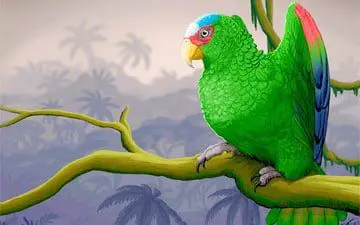
The White-capped Parrot (Pionus seniloides) It is easily identifiable by the "peak" yellow, head usually white, with the crown with reddish speckles, feathers of the nape and sides of the head with dark blue edges and red dyes which gives the appearance of flake.

Breast with greenish blue edges, under belly and internal base tail red.

Iris of color Brown and legs gray-green.

The youth have crown and chest green, and green spots on the sides of the head and neck.

Note:

Previously he was treated as a subspecies of the species Pionus tumultuosus, that is to say, Pionus tumultuosus seniloides. A midyear 2014 it is considered as own species.

Habitat and behavior:

White-capped Parrot

It is a kind Rare.
It inhabits in humid jungle and edges, from the 1900 to 3000 m. It is mainly a species of temperate zone, but you can descend to lower elevations.

Like most highland parrots, the White-capped Parrot are rather nomads, widely wandering in search of fruits and seeds (now perhaps more as a result of extensive deforestation). Usually observed in flocks 3-25 birds, sometimes more. More active with grey weather, overcast skies. Difficult to see while feeding or resting in the upper canopy. Its silhouette in flight resembles a Amazona but with the beating of wings deepest.

Reproduction:

It nests in tree hollows.

Food:

Feeds of seeds, fruit of Turpinia paniculata and plants of the family Clusiaceae; sometimes in cornfields, causing damage to their crops.

Distribution:

Size of its range (reproduction / resident): 1.020.000 km2

Live west of Venezuela (from the border TrujilloLara) through the East of the Andes of Colombia (rare in the western Andes), and on both sides of the Andes in Ecuador and Northwest of Peru (west to Cajamarca and this, at least until Freedom)

Conservation:


minor concern


โ€ข Current category of the Red List of the UICN: Least concern.

โ€ข Population trend: Decreasing.

Justification of the population

The size of the world population It has not been quantified, but this species is described as ยซquite commonยซ, but irregular distribution (Stotz et to the., 1996).

Justification of trend

They suspected that the population is declining due to the continuous habitat destruction.

"White-capped Parrot" in captivity:

Rare in captivity. In Europe they arrived first at the beginning of the century 20 and then the early 70. In captivity, However, They were raised for the first time in the second half of the 80.

Alternative names:

White-capped Parrot, Speckle-faced Parrot (White-capped), White-headed Parrot (English).
Pione givrรฉe (French).
Greisenkopfpapagei, Glatzenkopfpapagei, Greisenkopf-Papagei (German).
White-capped Parrot (Portuguese).
Loro de Cabeza Blanca, Loro seniloide, Loro gorriblanco (espaรฑol).
Cotorra Cabeciblanca (Venezuela).

scientific classification:

Order: Psittaciformes
Family: Psittacidae
Genus: Pionus
Scientific name: Pionus seniloides
Citation: (Massena & Souancรฉ, 1854)
Protonimo: Psittacus seniloides

Images "Seniloid parrot":

Videos "White-capped Parrot"

————————————————————————————————

White-capped Parrot (Pionus seniloides)


Sources:

Avibase
– Parrots of the World โ€“ Forshaw Joseph M
– Parrots A Guide to the Parrots of the World – Tony Juniper & Mike Parr
Birdlife
– Parrot Book, Parrots and macaws Neotropical
parrots.org

Photos:

(1) – By Francesco Veronesi [CC BY-SA 2.0], via Wikimedia Commons White-capped Parrot (Pionus seniloides), Ecuador by
(2) – Iconographie des perroquets :Paris :P. Bertrand,1857 by Biodiversity Heritage LibraryFlickr

Sounds: Andrew Spencer

โ–ท The world of Pets: Dogs, cats, birds, reptiles, amphibians

Red-crowned Parrot
Amazona viridigenalis

Red-crowned Parrot

Content

Description:


Anatomy-parrots

30.5-33 cm.. length and 294 g. of weight.

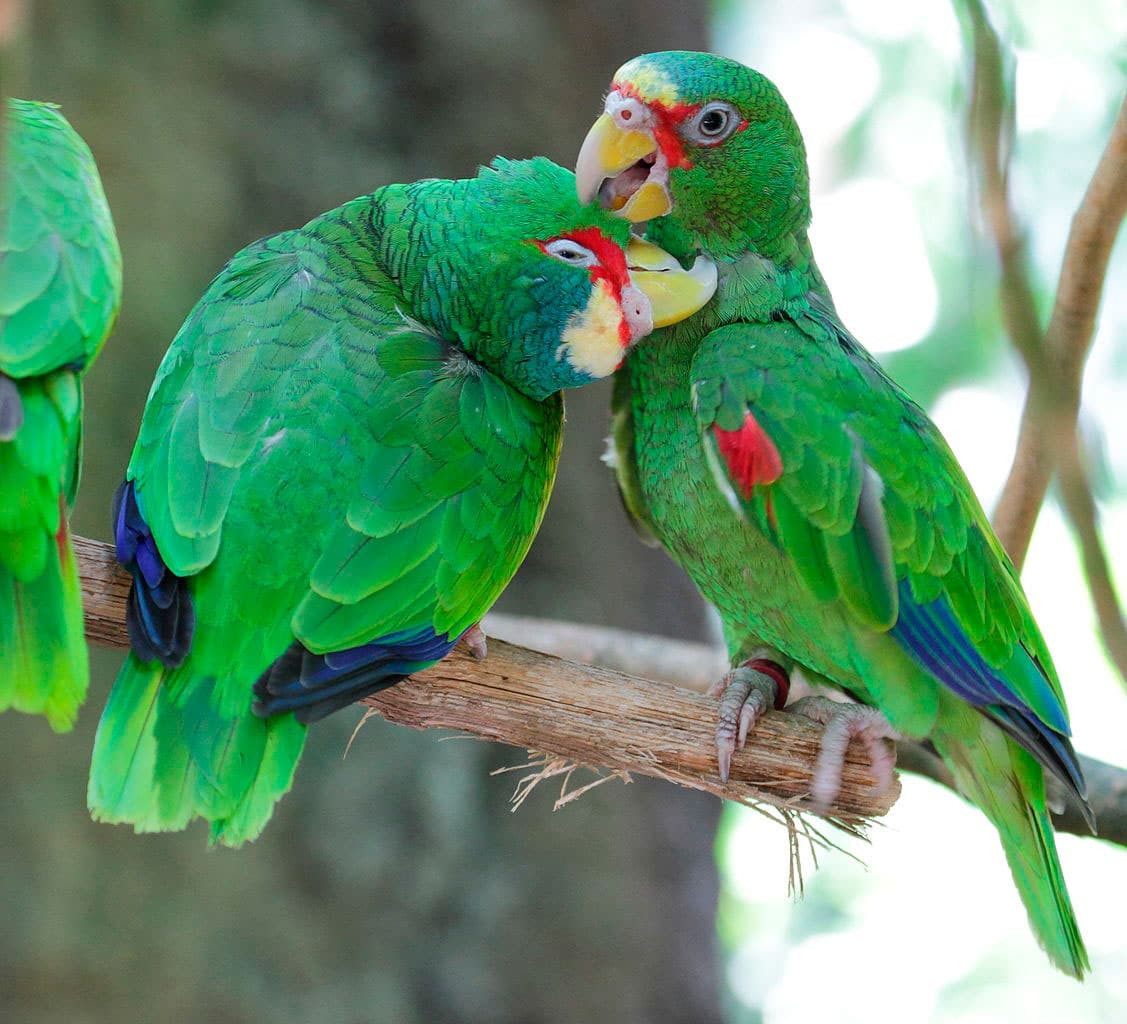
The Red-crowned Parrot (Amazona viridigenalis) has the lores, forecrown and crown, bright red, with side margins on the back of the neck and top of the neck, showing blue feathers with black ends; ear-coverts bright green without black ends in feathers; nape boldly festooned with green feathers with their ends in black.

Mantle and back green with some weak black tips; rump and uppertail-coverts, green. Wing coverts green with black margins on some weak feathers. The flight feather, mostly green, the primaries, in general, with dark ends, of dark blue or black, the Outer secondaries, with the ends of blue with red in the outerweb. Under, the wings green. Underparts green, slightly yellowish; some feathers show visible dark tips. The tail is green, in general with its yellow end. Bill pale yellow; irises yellow; legs pale grey.

Red-crowned Parrot

although females They can have on average less red in the head, probably no consistent sexual dimorphism. The immature She has red in the head very small, with feathers in the central part of the crown green tipped black and subterminally banded pale blue; feathers on the side of the crown, forming broad band over eye.

  • Sound of the Red-crowned Parrot.

Habitat:

Video "Red-crowned Parrot"

The habitat of the Red-crowned Parrot son los Bosques deciduous, gallery forests and evergreen floodplain forests in tropical lowlands, with non-breeding birds on dry ridges extend to 1,200 meters in temperate zones Pinus and Quercus.

frequenting cultivated areas where they remain large trees. Usually in flocks, generally larger than its sympatric congeners (Red-lored Amazon and the Yellow-headed Parrot, with which sometimes mixed); in larger flocks in winter. Used roost communally.

Reproduction:

They nest in tree hollows, including abandoned nests Lineated Woodpecker (Dryocopus lineatus), generally 6-20 meters above the ground. Nests reported in trees Taxodium mucronatum, Bumelia laetivirens and Brosimum alicastrum. Reproduction April-May Tamaulipas. The laying is of 3 or 4 eggs. Only the female incubates. The incubation hard 28 days. The young are cared for for nine weeks.

Food:

Foods reported include seeds of Pinus, corn, berries of Ehretia, Jewish of Pithecellobium, acorns and berries Melia azedarach; introduced populations have adapted to the food sources parks, consuming fruitsJuglans, Liquidambar, eucalyptus and Chorisia.

Distribution and status:

Size of its range (breeding/resident ): 61.900 km2

Northeast Endemic Mexico, where records from southern Nuevo Leรณn (South of Monterrey) through Tamaulipas (mostly in the center and south of the state) and East of San Luis Potosi, to the North of Veracruz and towards the south until near 21ยบN. They can be seen as visitors in the winter Brownsville, southwestern end Texas, USA.

The current range appears confined to Tamaulipas and San Luis Potosi, no known breeding records in recent decades in Nuevo Leรณn or Veracruz, except for the seemingly wild population in the suburbs Monterrey.

wild populations in California, Florida, Oahu (Hawaiian Islands) and Puerto Ricor (small number in southern dry forests).

Resident but nomadic in winter with some altitudinal movements that lead birds to higher ground in winter (perhaps to exploit the seeds and acorns Pine) and with other movements further away from the breeding range, for example, to the South of Texas. Apparently they return to the breeding area in February, declining along the ridge, but they are most common near the east coast, especially around the Sierra de Tamaulipas and on the slopes east of the Sierra Madre Oriental in Tamaulipas. Otherwise, sparsely distributed and frequently only some strengths as the Valley Sabinas River, Tamaulipas.

Total population estimated in 3.000-6.500. Popular in captivity locally and previously traded in large numbers internationally. Clearly the recent population declines are due to excessive trade and to the continued destruction of habitats scale; they are also you fired in some areas due to crop damage. There are no large protected areas within reach and illegal trade continues.

Conservation:

State of conservation โ“˜


Endangered Endangered โ“˜ (UICN)โ“˜

โ€ข Current category of the Red List of the UICN: In danger of extinction.

โ€ข Population trend: Decreasing.

โ€ข Population size : 2000-4300.

Rationale for the Red List category

    The combination of high levels of exploitation for cage bird trade, loss of habitat and long term estimates reduced density It indicates that this species is declining very quickly. Therefore it qualifies as in danger of extinction.

Justification of the population

    In 1992-1994, estimated in an area in Mexico densities indicated a wild population of 3.000 to 6.500 birds (EC Enkerlin-Hoeflich in a bit., 1994). This estimate equals approximately 2.000-4.300 mature individuals.

Justification of trend

    The historical densities recorded for the species were 25,2 in the early birds / km2 1970 (Castro 1976), down to 5,7 birds / km2 in an area 1992-1994 (EC Enkerlin-Hoeflich in 1994, Enkerlin-Hoeflich 1995), indicating a population declines of up to 77,4% on a strip of 20 years. It is suspected that the decline will continue at a higher rate to 50% in ten years, due to threats capture and forest clearing.
Threats

โ€ข In 1970-1982, 16.490 birds (mainly chicks) They were imported legally to United States.

โ€ข Las illegal exports from Mexico and mortality prior to export to the top 50% they are equivalent to 5.000 birds per year (Enkerlin-Hoeflich and Hogan, 1997).

โ€ข Los hunters damage nests when removing chicks (sometimes cutting whole trees), reducing the availability of the nest and bringing the permanent abandonment of the site (Snyder et to the., 2000).

โ€ข Many gallery forests have been cleared or degraded, with more than 80% lowlands of Tamaulipas cleared for agriculture (especially sorghum) and pastures.

โ€ข The habitat of the Red-crowned Parrot It is now distributed unevenly in cattle ranches, where the pressure is greater capture (Enkerlin-Hoeflich and Hogan, 1997).

Conservation Actions Underway

โ€ข CITES Appendix I (1992) and part of the European Endangered Species Programme [Species] of the European Association of Zoos and Aquariums (EAZA).

โ€ข The population of Red-crowned Parrot It is distributed in the Biosphere Reserves Heaven and Sierra Gorda (A. G. Navarro in some ., 1998, T. Brush in a bit., 2003), but there are only small colonies in Sierra Gorda and status in Heaven It is unknown (Wege and Long 1995, A. G. Navarro in some 1998).

โ€ข Los livestock They are increasingly aware of the benefits of keeping large trees, but this is not reflected in practice.

Conservation Actions Proposed

โ€ข Conduct surveys to obtain an estimate of the total size of the population.

โ€ข Monitor populations to determine degree of decline.

โ€ข Identify the most important nesting aggregations for protection (Enkerlin-Hoeflich and Hogan 1997).

โ€ข Integrate ranchers in efforts to reduce capture and regenerate habitat (Enkerlin-Hoeflich and Hogan 1997) .

The Red-crowned Parrot in captivity:

CITES Appendix I. (It includes species threatened with extinction. Trade individuals of these species, it is allowed only in exceptional circumstances.)

Each captive specimen of this species which is capable of reproducing, It is placed in a well managed captive breeding program and not be sold as a pet, with the order to ensure their survival long-term.

Alternative names:

Green-cheeked Amazon, Green-cheeked Parrot, Mexican Red-headed Amazon, Mexican Red-headed Parrot, Red-crowned Amazon, Red-crowned Parrot, red-crowned parrot parakeet (English).
Amazone ร  joues vertes, Amazone verte ร  front rouge (French).
Grรผnwangenamazon, Grรผnwangenamazone (German).
Papagaio-de-coroa-vermelha, Papagaio-de-face-verde (Portuguese).
Amazona de Corona Roja, Amazona Tamaulipeca, Cotorra Coronirroja, Loro Tamaulipeco (espaรฑol).


scientific classification:

John Cassin
John Cassin

Order: Psittaciformes
Family: Psittacidae
Genus: Amazona
Scientific name: Amazona viridigenalis
Citation: (Cassin, 1853)
Protonimo: chrysotis viridigenalis


Images Red-crowned Parrot:


Species of the genus Amazona


Sources:

Avibase
– Parrots of the World โ€“ Forshaw Joseph M
– Parrots A Guide to the Parrots of the World – Tony Juniper & Mike Parr
Birdlife

Photos:

(1) – Amazona_viridigenalis is native of Mexico. Specimen in Palmitos Park, Gran Canaria By Bjoertvedt (Own work) [CC BY-SA 3.0 or GFDL], via Wikimedia Commons
(2) – Red-crowned Amazon (Amazona viridigenalis) also known as Green-cheeked Amazon, Red-crowned Parrot, or Mexican Red-headed Parrot By rachael fogarty (originally posted to Flickr as Fred) [CC BY-SA 2.0], via Wikimedia Commons
(3) – Red-crowned Amazon (also known as Red-crowned Parrot, Green-cheeked Amazon, or Mexican Red-headed Parrot). Two in a cage By TJ Lin [CC BY-SA 2.0], via Wikimedia Commons
(4) – Red-crowned Amazon, (Amazona viridigenalis) also known as Green-cheeked Amazon, Red-crowned Parrot, or Mexican Red-headed Parrot by Leonhard F at the German language Wikipedia [GFDL or CC-BY-SA-3.0], via Wikimedia Commons
(5) – Red-crowned Amazon By Glandauer/Roger Moore (Roger Moore (transfer from en.wiki)) [GFDL or CC-BY-SA-3.0], via Wikimedia Commons
(6) – Red-crowned Amazonian Parrot (Amazona viridigenalis) by Heather PaulFlickr
(7) – Red-crowned Amazon (also known as Red-crowned Parrot, Green-cheeked Amazon, and Mexican Red-headed Parrot) at Tropical Birdland, Leicestershire, England By Dean Sas from Chesterfield, UK (Pieces of eight) [CC BY-SA 2.0], via Wikimedia Commons
(8) – A pet Red-crowned Amazon By jarrett chandler from Rowland Heights, US (zazu) [CC BY 2.0], via Wikimedia Commons
(9) – (Amazona viridigenalis), photographed in Heidelberg Tiergarten (Baden-Wuerttemberg, Deutschland) By 4028mdk09 (Own work) [CC BY-SA 3.0], via Wikimedia Commons
(10) – PL XXXI Chrysohs viridigenalis, (tassro) By Blanchard, Emile; Bonaparte, Charles Lucian; Bourjot Saint-Hilaire, Alexandre; Le Vaillant, Franรงois; Souancรฉ, Charles de. [CC BY 2.0 or Public domain], via Wikimedia Commons
Sounds: Aidan Place, XC306093. accessible www.xeno-canto.org/306093

โ–ท The world of Pets: Dogs, cats, birds, reptiles, amphibians

Burrowing Parakeet
Cyanoliseus patagonus

Burrowing Parakeet

Content

Burrowing Parakeet

Description:

39-52 cm. length between 260 and 280 g. of weight.

The Burrowing Parakeet (Cyanoliseus patagonus) has the forecrown, crown, lores, cheeks and nape olive brown with slight yellowish tinge; sides of neck, the mantle and back Brown olive; rump and uppertail-coverts bright canary yellow.
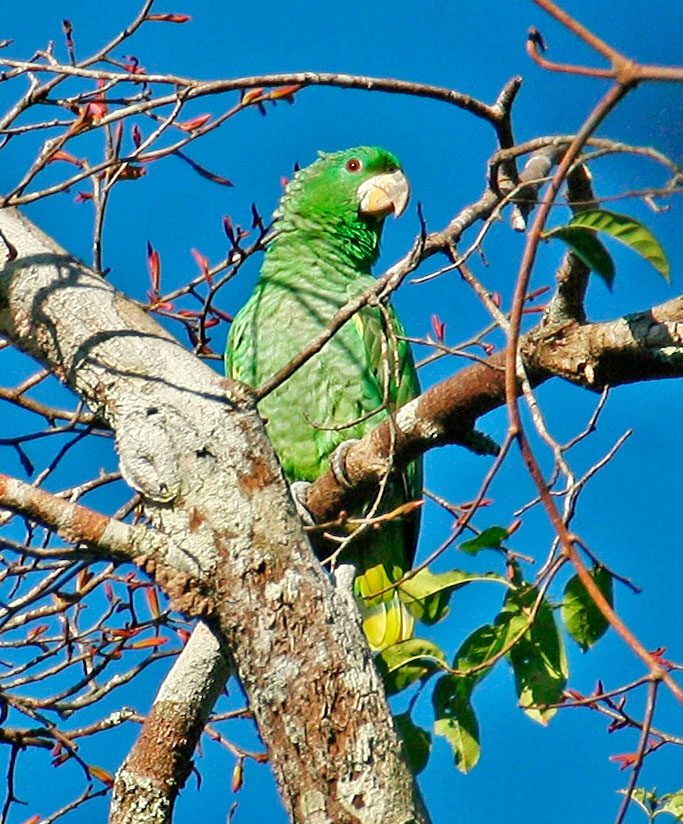
Blades brown, some slightly blue; covered primary blue, other yellowish olive brown. Primaries and Outer secondaries dark blue with edges innerwebs distal; inner secondary bluish brown. Underwing-coverts Yellow olive; underside of flight feather brown. Breast olive brown with white-cream area at the top of chest; rest of the underparts yellow-orange red patch through central belly. Uppertail brown tinted blue, especially next to the tips; undertail brown.

The bill It is grayish-black; the periophthalmic skin skin whitish; the irises is pale yellow; the legs They are pale yellowish brown.

Both sexes similar. Immature has horn upper mandible and the irises brown.

  • Sound of the Burrowing Parakeet.

Description Burrowing Parakeet subspecies
  • Cyanoliseus patagonus andinus

    (Dabbene & Lillo, 1913) – Similar to the species nominal but it lacks the bright yellow belly with pale areas on the sides of chest and rump olive colored duller. This and subspecies Cyanoliseus patagonus conlara they have the upperwing-coverts more brown than the nominal species.


  • Cyanoliseus patagonus bloxami

    (Olson, 1995) – Size larger than the nominal species (wings 250-263), upperparts, throat lower chest and dark brown; bill larger and heavier and patches creamy most extensive on the sides of chest (in some birds merge to form a band breast pale).


  • Cyanoliseus patagonus conlara

    (nores & Yzurieta, 1983) – Breast darker than the other Argentine subspecies.


  • Cyanoliseus patagonus patagonus

    (Vieillot, 1818) – Nominal.

Habitat:

The species usually inhabit areas open pastures, although it has also been reported in Savanna, wooded valleys cliffs and farmland some 2.000 m. Usually in a fairly arid land, although often it found near elevations or streams. Gregarious, forming large flocks, sometimes exceeding 1.000 birds, with common roosts trees, on wiring (sometimes in villages) and in tunnels dug to nest.

Reproduction:

It reproduces colonially in warrens carved into cliffs (usually limestone or sandstone Chile) often with stunning views. In San Luis, Argentina, reproduction is reported in the wet season (Novemberรขโ‚ฌโ€œApril), the birds return to nest in the cliffs lay eggs in September and November to December in San Luis, spreading of bird breeding sites in April; apparently earlier in Chile. Clutch 2-4 eggs. The male takes care of feeding the female during the incubation period.. The young leave the nest at 2 months of age, However, They continue to be fed by their parents until 6 months of age.

Food:

The diet of the Burrowing Parakeet It consists mainly of seeds and fruits predominance of fruit in the summer months (November to February). Food reported include berries of buckthorn joke and Discaria, fruit of Geoffroea decorticans, Prosopis caldenia, P. chilensis and P. flexuosa and seeds of Carduus mariana. Sometimes damaged grain crops; often it feeds on the floor or around.

Distribution:

Extending its range (breeding/resident): 1.590.000 km2

The Burrowing Parakeet They are distributed by the South South America, extending from northern Santa Cruz and Chubut in Argentina, passing by Black river and Pampa, up to Buenos Aires, San Luis and Cรณrdoba, San Juan, La Rioja, Catamarca, Tucumรกn and Salta, reaching westward across southern Uruguay.

They were recorded in the early 1920 from the center of Formosa, Argentina, away from Andes mountains, and above the center Chile from the North of The lakes to north of Atacama, but now they are confined to a few localities in the foothills of the Andes, for example in Bio Bio.

Will produce some seasonal movements, including the northward migration of birds south in the Argentine winter and shifts down Chile.

In Argentina is locally common or abundant, although in some places (p. e.g.. in Cรณrdoba and Buenos Aires Eastern) They are rare or occasional. Few and far between in Uruguay. drastic decline during the twentieth century Chile, so that the subspecies Cyanoliseus patagonus bloxami It is considered at risk, with an estimated population of less than 3.000 individuals at the end of the decade 1980. The decrease in parts of the Argentina It is attributed to the catch for the trade, the hunting for food, converting grassland and arable land persecution as crop pest. Probably continues to decline overall.

Burrowing Parakeet subspecies distribution

Conservation:


minor concern


โ€ข Current category of the Red List of the UICN: Least concern.

โ€ข Population trend: Decreasing.

โ€ข Population size : 95000 individuals.

Rationale for the Red List category

Even though the demographic trend It appears to be declining, the decline is not believed to be rapid enough to approach the Vulnerable thresholds based on demographic trend criteria (> 30% decrease in ten years or three generations). The population size is very large, and therefore does not approach the thresholds for Vulnerable under the criterion of population size (<10.000 individuos maduros con un descenso continuo estimado en >10% in ten years or three generations, or with a specific population structure). For these reasons, the species is evaluated as Least concern.

Justification of the population

The species is still common in many parts of its range in Argentina, with only small contractions reported in range Cรณrdoba (R. M. Fraga a slightly. 2003). The population size of four subspecies was estimated as follows by MASELLO et al. (2011): Cyanoliseus patagonus patagonus 43.330 nests, Cyanoliseus patagonus conlara 1.700 individuals, Cyanoliseus patagonus andinus 2.000 nests, Cyanoliseus patagonus bloxami 5.000-6.000 individuals. Based on these figures, the population Total overall can be about 95.000 mature individuals.

Justification trend

They suspected that the population is declining due to continuing habitat destruction and unsustainable levels of exploitation.

Threats

The species has been the subject of a intense trade: from 1981, year it was included in the Appendix II of the CITES, they have been 122.914 individuals caught in international trade (UNEP-WCMC CITES CITES Trade Database, January 2005).

Conservation actions underway

The species is included in the Appendix II of the CITES.

"Burrowing Parakeet" in captivity:

The average life expectancy is of 15-20 years in captivity. Protected by Appendix II of the CITES.

To help conservation Burrowing Parakeet, You can report your hunt, sale, trade and illegal possession, thus, We will be cooperating with the conservation of this species and not be complicit in the decline of their populations and their future extinction of wild.

Alternative names:

Burrowing Conure, Burrowing Parakeet, Burrowing Parrot, Patagonian Burrowing Parrot, Patagonian Conure, Patagonian Parrot (English).
Conure de Patagonie, Perriche de Patagonie, Perruche de Patagonie (French).
Felsensittich, Felsen-Sittich (German).
Periquito-das-barreiras (Portuguese).
Loro Barranquero, Loro de la Patagonia, Loro Patagonico, Tricahue (espaรฑol).
Loro barranquero (Argentina).
Tricahue (Chile).
Loro barranquero, Loro Patagonico (Uruguay).
Perico Barranquero (Mexico).

scientific classification:

Order: Psittaciformes
Family: Psittacidae
Genus: cyanoliseus
Scientific name: Cyanoliseus patagonus
Citation: (Vieillot, 1818)
Protonimo: Psittacus patagonus

Images "Barranquero Loro":

Videos "Burrowing Parakeet"

————————————————————————————————

"Their barranche" (Cyanoliseus patagonus)


Sources:

Avibase
– Parrots of the World โ€“ Forshaw Joseph M
– Parrots A Guide to the Parrots of the World – Tony Juniper & Mike Parr
Birdlife

Photos:

(1) – A Burrowing Parrot captive in Madeira By Rakkhi Samarasekera from London, United Kingdom (P6122982Uploaded by Snowmanradio) [CC BY 2.0], via Wikimedia Commons
(2) – Two Burrowing Parrots in Limari Province, Chile By Gerzo Gallardo (Flickr: Parrots) [CC BY 2.0], via Wikimedia Commons
(3) – Pair of cockles Cyanoliseus patagonus in the RN Cypress River By BioVipah (Own work) [CC BY-SA 4.0], via Wikimedia Commons
(4) – Burrowing Parrot (also known as the Patagonian Conure) to Lille Zoo, France By Olivier Duquesne (originally posted to Flickr as Perroquet) [CC BY-SA 2.0], via Wikimedia Commons
(5) – A Burrowing Parrot at Birds of Eden, an aviary in Western Cape, South Africa By Dick Daniels (http://carolinabirds.org /) (Own work) [CC BY-SA 3.0 or GFDL], via Wikimedia Commons
(6) – A painting of a Burrowing Parrot, also known as Patagonian Conure, (originally captioned ยซPsittacara patagonica. Patagonian Parrakeet-Maccawยป) by Edward Lear 1812-1888 – Wikipedia

Sounds: Cristian Pinto, XC380836. accessible www.xeno-canto.org/380836.

โ–ท The world of Pets: Dogs, cats, birds, reptiles, amphibians

Chatham Parakeet
Cyanoramphus forbesi

Chatham Parakeet

Content


Anatomy-parrots

Description:

23 cm. length and 95 g. of weight.

The Chatham Parakeet (Cyanoramphus forbesi) They are one of the two medium bright green parrots of Chatham Islands. Although they look very similar to those Yellow-crowned parakeet (Cyanoramphus auriceps) of New Zealand continental, the color of the crown is not a reliable indicator of taxonomic relationships.

It believes that the Chatham Parakeet descended from an ancient lineage of parrots who reached the Chatham Islands before the division Yellow-crowned parakeet and Red-crowned parakeet happened in New Zealand continental, after which the Red-crowned parakeet (Cyanoramphus novaezelandiae) also they colonized Chatham Islands.

The Chatham Parakeet They are medium-sized parrots, of tail long, with wings wide and rounded and plumage predominantly emerald. have a crown bright yellow front and a crimson front band that does not reach to the eyes, unlike in the Red-crowned parakeet. Males are larger than the females.

taxonomy:

Since 1930 is commonly treated as a subspecies of the Yellow-crowned parakeet (Cyanoramphus auriceps), and clearly the two are closely related; the species differ, However, in size considerably, It is larger species Cyanoramphus forbesi. Currently considered Monotypic.

Habitat:

The Chatham Parakeet They are at higher densities in forests and dense vegetation regenerating areas than in open grassland. Despite its rather erratic flight, They fly hard and move easily between islas Mangere and little Mangere. Occasionally they have been observed Chatham Parakeet individual in the forests of southern Chatham Island (> 20 km from the Mangere Island) and nearby islands Pitt and owner. Their social behavior is similar to other species of parakeets Cyanoramphus. They are strongly territorial around nests, calling loudly and chasing intruders from nearby.

Reproduction:

The Chatham Parakeet have a long breeding season, with eggs laid between October and March. Son nesters cavity, preferring tree holes but also using rock crevices and under dense vegetation. The size medium of laying is of 5 eggs. Like all the other parakeets Cyanoramphus, females are responsible for preparing the nest, incubation, rearing and feeding the chicks until the 10-14 days old. During this period all your food is provided by your partner.. From then on, male and female parrots feed the chicks in the nest until they leave the nest.

The incubation usually begins after the start of the second egg, resulting in chicks within a clutch that vary greatly in age and size. The last chicks to hatch are usually born at a younger age and are less developed than their older brothers.. More than one brood may be attempted if the initial nest fails or if the food supply allows..

Food:

The foods consumed by Chatham Parakeet They are affected by seasonal availability, and include seeds, flowers and leaves of various plants, It is the most important invertebrates in spring. They feed extensively in soil in open areas.

Distribution and status:

Sw extension of its distribution area (reproduction / resident): 3 km2

The Chatham Parakeet It is restricted to of Tapuaenuku ISLA ISLA Pequeรฑa Mangere and Mangere in the Group of chatham islands, New Zealand. In 1930 He quenched in Mangere Island, but in 1973 had recolonized and numbered 40 birds and a small number of hybrids with the subspecies Cyanoramphus novaezelandiae chathamensis (of which there were 12 on the island) (Higgins 1999).

In 1996, two estimates indicated that the population of the Mangere Island It was from 50 to 120 Purebred birds. The population on the small island of little Mangere It is little known because the few visits made (H. Aikman a slightly. 1999). In 1999, it was estimated that the total population was about 120 birds (Aikman et al. 2001), but studies 2003 estimated 900 individuals on Isla Mangere (Aikman y Miskelly 2004, D. Houston y C. Miskelly a slightly. 2008).

A recent study estimated that more than 50% of the population of parakeets in Isla Mangere consisted of individuals hybrids (Chan et al. 2006), but this is expected to decrease due to mating positive range (T. Greene a slightly. 2012); the number of phenotypes forbes It is approaching the threshold management 10% (D. Houston a slightly. 2012) (that is to say, the number above which culling can be resumed as a management tool). There have been birds visiting South isla Chatham, the Pitt island and ISLA ISLA Chief of Sudeste (Taylor 1998, D. Houston y C. Miskelly a slightly. 2008, T. Greene a slightly. 2012).

Conservation:


Vulnerable


โ€ข Current category of the Red List of the UICN: Vulnerable.

โ€ข Population trend: Stable.

โ€ข Population size : 250-999 individuals.
Rationale for the Red List category

This species may still have a small purebred adult population.. Possible removal by hybridization has been avoided thanks to three decades of conservation efforts, which they have seen increasing population size. It is restricted to one place (given the proximity of the small islands that lives and mobility), and its small population size means it still deserves to be listed in a threatened category, but it is likely that their population size has been more than 250 mature for more than 5 years, so it has been transferred to the category of Vulnerable.

Justification of the population

The population of phenotypes similar to those of Forbes It has increased dramatically in the Mangere Island, with the best estimates placing the population between 800 and 1.000 individuals. A survey in 2011 It assessed that the phenotypes of interest are in the 10%, the trigger level for management action (D. Houston a slightly. 2012). It is likely that populations have exceeded 250 mature for more than 5 years, so now it is in the range of 250-999 mature individuals.

Justification trend

The population has shown minor fluctuations in recent years, since the species recolonized the Mangere Island over the years 70 and it has benefited from habitat restoration, while hybridization has also suffered. In general, It is estimated that the population has remained stable for the last ten years, and It is probably increasing (T. Greene a slightly. 2012).

Threats

โ€ข Disappeared from Mangere Island due to a combination of deforestation for grazing, decades of burning, the effects of introduced grazing mammals and predation by feral cats (Higgins 1999).

โ€ข The greatest current threat is the hybridization with the Cyanoramphus novaezelandiae chathamensis, subspecies Red-crowned parakeet (Cyanoramphus novaezelandiae) What, despite the sacrifice, still it is settling in Mangere Island (J. Kearvell a slightly. 1999).

โ€ข It is believed that the rate of hybridization High above is the result of the then low population sizes of the two species (D. Houston y C. Miskelly a slightly. 2008).

โ€ข The levels of hybridization They have remained below 10% of the total population of parakeets Mangere Island over the last decade, so no management intervention was not necessary.

Conservation Actions Underway

โ€ข Appendix I and II of CITES. The Mangere Island It has been substantially replanted (Aikman et al. 2001, D. Houston y C. Miskelly a slightly. 2008).

โ€ข An ecological and genetic research program has investigated population dynamics, the hybridization and selection of partners (H. Aikman a slightly. 1999, Chan et al. 2006).

โ€ข During 1976-1999, hybrid birds and individuals of the subspecies Cyanoramphus novaezelandiae chathamensis They were sacrificed population (Nixon 1994).

โ€ข In 1998, 40 hybrids And six Cyanoramphus novaezelandiae chathamensis were killed, leaving 10 copies between hybrids and Cyanoramphus novaezelandiae chathamensis after the operation (H. Aikman a slightly. 1999).

โ€ข Surveys of the relative proportion of hybrids regarding type phenotypes Forbes They are held every two years (D. Houston a slightly. 2012).

โ€ข The translocation a fenced area predator proof in Chatham Island It is planned for 2017 (D. Houston a slightly. 2012).

Conservation Actions Proposed

โ€ข Complete the investigation ecological, biological and genetic, including analysis and dissemination of results.

โ€ข Monitor trends in the extent and quality of forest habitats on the island of Mangere.

โ€ข Restore forest habitats Mangere Island to increase the number and reduce the hybridization.

โ€ข Work for the establishment of one or more populations in the Chatham Island (H. Aikman a slightly. 1999).

"Chatham Parakeet" in captivity:

There are no data from Chatham Parakeet in captivity.

In the wild, its lonjevidad is probably similar to that of Yellow-crowned parakeet (Cyanoramphus auriceps): 10 years.

Alternative names:

Chatham Island Yellow-crowned Parakeet, Chatham Islands Parakeet, Chatham Parakeet, Forbes’s Parakeet (English).
Kakariki de Forbes, Kakariki des รฎles Chatham, Perruche des Chatham, Perruche des รฎles Chatham (French).
Chathamsittich (German).
Periquito-de-peito-amarelo-da-Ilha-chatham (Portuguese).
Perico de las Chatham (espaรฑol).

scientific classification:

Lionel Walter Rothschild

Order: Psittaciformes
Family: Psittaculidae
Gender: Cyanoramphus
Scientific name: Cyanoramphus forbesi
Subpoena: Rothschild, 1893
Protonimo: Cyanorhamphus [sic] forbes

"Perico de las Chatham" images:

Perico-de-las-Chatham

Sources:

โ€ข Avibase
โ€ข Parrots of the World โ€“ Forshaw Joseph M
โ€ข Parrots A Guide to the Parrots of the World – Tony Juniper & Mike Parr
โ€ข Birdlife
โ€ข Greene, T.C. 2013 [updated 2017]. Forbesโ€™ parakeet. In Miskelly, C.M. (ed.) New Zealand Birds Online. www.nzbirdsonline.org.nz

Photos:

(1) – Chatham Islands Parakeet on Mangere Island by Markanderson72 [CC BY-SA 4.0], from Wikimedia Commons
(2) – Andrew Sutherland, IBC1065693. Photo of Chatham Parakeet Cyanoramphus forbesi at Chatham Islands, New Zealand. Accessible at hbw.com/ibc/1065693.