Content |
|---|
All breeds and species.
Content |
|---|

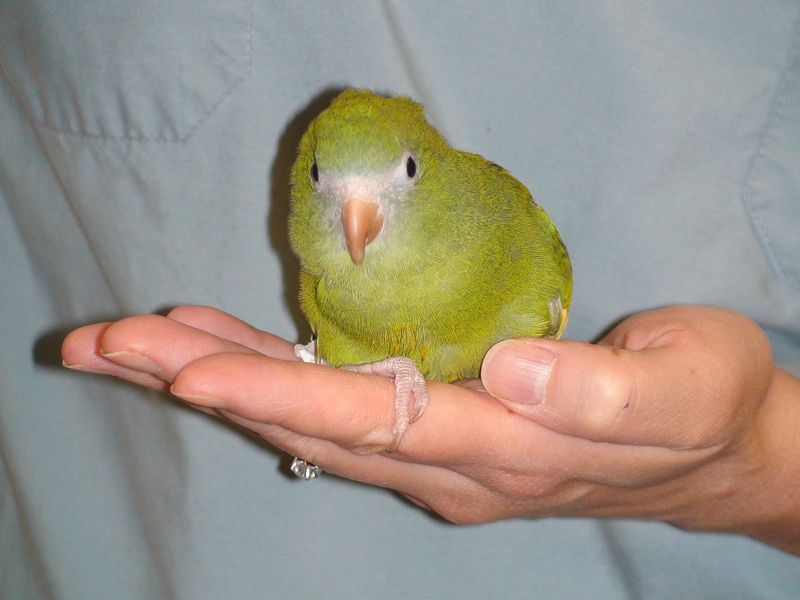
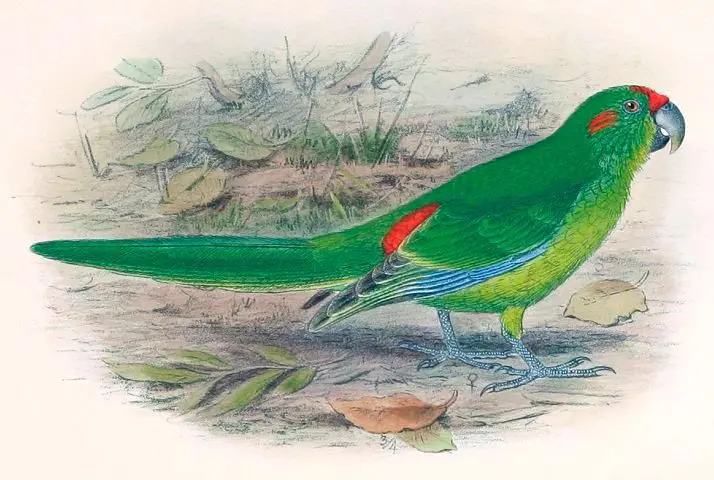
The Tepui Parrotlet (Nannopsittaca panychlora) measured between 14 and 15,7 cm.. height. Small size, with wings sharp and tail cut and wedge.
The head It is green with yellow tinge oliváceo; the eye area is yellow, color extending below and behind the eyes. The upperparts they are green (brighter and less than oliváceo head). Upperwing-coverts green. Flight feathers blackish green tipped primary, brownish opaque below; INFRACA-wing coverts green. The underparts yellowish green turn yellow-green in the undertail-coverts. Upper, the tail is green; undertail, yellower. Bill grey; cere grey; Bello to singr dark gray; irises brown; legs Rosaceae.
Both sexes are similar; the female has the forecrown Off-white to yellowish.
They inhabit moist montane forests. in tropical and subtropical highlands, sometimes in the rainforest of the lowlands around tepuyes, generally 750-1,850 m (Gran Sabana), although they observed at the top of Auyantepui to 2,200 meters and near the summit Monte Roraima A 2,200 m; to 750-950 metres in Sucre.
Can reproduce in subtropical and tropical zone descend to feed. Recent records in the view of birds in the lowlands suggest at least seasonal aparienciones at lower altitudes. Fly very high, fast and straight, in compact flocks of 6 to 150 individuals. It´s resident but it shows seasonal migrations.
Sleeps and nests in Tepuis. Not much more information about the reproduction of this species in the wild.
In their natural habitats, the Tepui Parrotlet normally eat fruits, seeds and small insects.
Size of the area of distribution (reproduction / resident): 486.000 km2
Mainly montana, It is distributed in several scattered populations in eastern Venezuela and the adjacent area of ​​western Guyana; concentrated in Gran Sabana from the east of Bolívar in Venezuela (for example, Montes Roraima and Auyantepui); It is also present around the meseta del Duida and the lowlands of Ventauri River, amazon, and in the West of Guyana from the area Camaran River; a more distant population occupies the Paria Peninsula (for example, the Monte Papelón), Sucre, to the northeast of Venezuela. Probably you can be observed at the north end of Roraima, Brazil.
Apparently locally common and stable, but perhaps it diminished in Paria peninsula due to large-scale deforestation. Much of the range is included in Canaima National Park.
State of conservation ⓘ |
||
|---|---|---|
 Minor Concern ⓘ
(UICN)ⓘ
Minor Concern ⓘ
(UICN)ⓘ
| ||
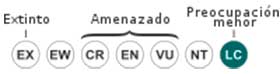
• Current category of the Red List of the UICN: Least concern.
• Population trend: Stable.
Justification of the population
The size of the world population It has not been quantified, but this species is described as «quite common, but unevenly distributed» (Stotz et to the., 1996).
Justification of trend
It is suspected that this species has lost 6,9-11,6% of habitat within its distribution over three generations (15 years) starting from a model of deforestation Amazon (Soares-Filho et to the., 2006, Bird et to the., 2011). Given the susceptibility of the species to hunting and / or capture, It is suspected that its population decline by <25% during three generations.
Breeding in captivity outside of South America. It is intelligent, quiet and very sociable.
Can normally live about 20 years.
– Tepui Parrotlet, Tepui Parakeet, Tepui parrolet (English).
– Toui des tépuis, Toui tépui (French).
– Tepuisittich, Grünsperlingspapagei, Tepui Sittich (German).
– Periquito-dos-tepuis, periquito-do-Tepui (Portuguese).
– Catita Chirica, Cotorrita de tepuy, Cotorrita Tepuí (español).
– Chirica (Venezuela).
– Order: Psittaciformes
– Family: Psittacidae
– Genus: Nannopsittaca
– Scientific name: Nannopsittaca panychlora
– Citation: (Salvin & Godman, 1883)
– Protonimo: Brotogerys [sic] panychlorus
Sources:
Photos:
(1) – Credit: © Scott Echols, DVM
(2) – Brotogerys panychlorus = nannopsittaca panychlora (color green) & Microcerculus ustulatus (color brown) By J G Keulemans (Ibis 1883 (Web)) [Public domain], via Wikimedia Commons
Content |
|---|
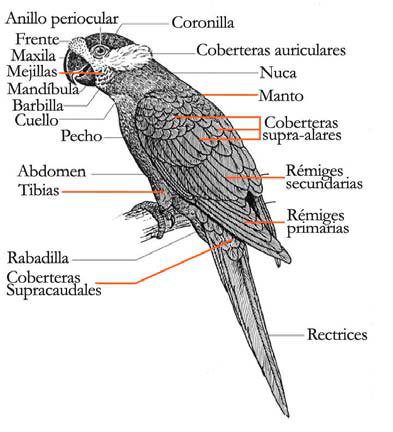
33 cm. head to tail and weighs on average 310 g..
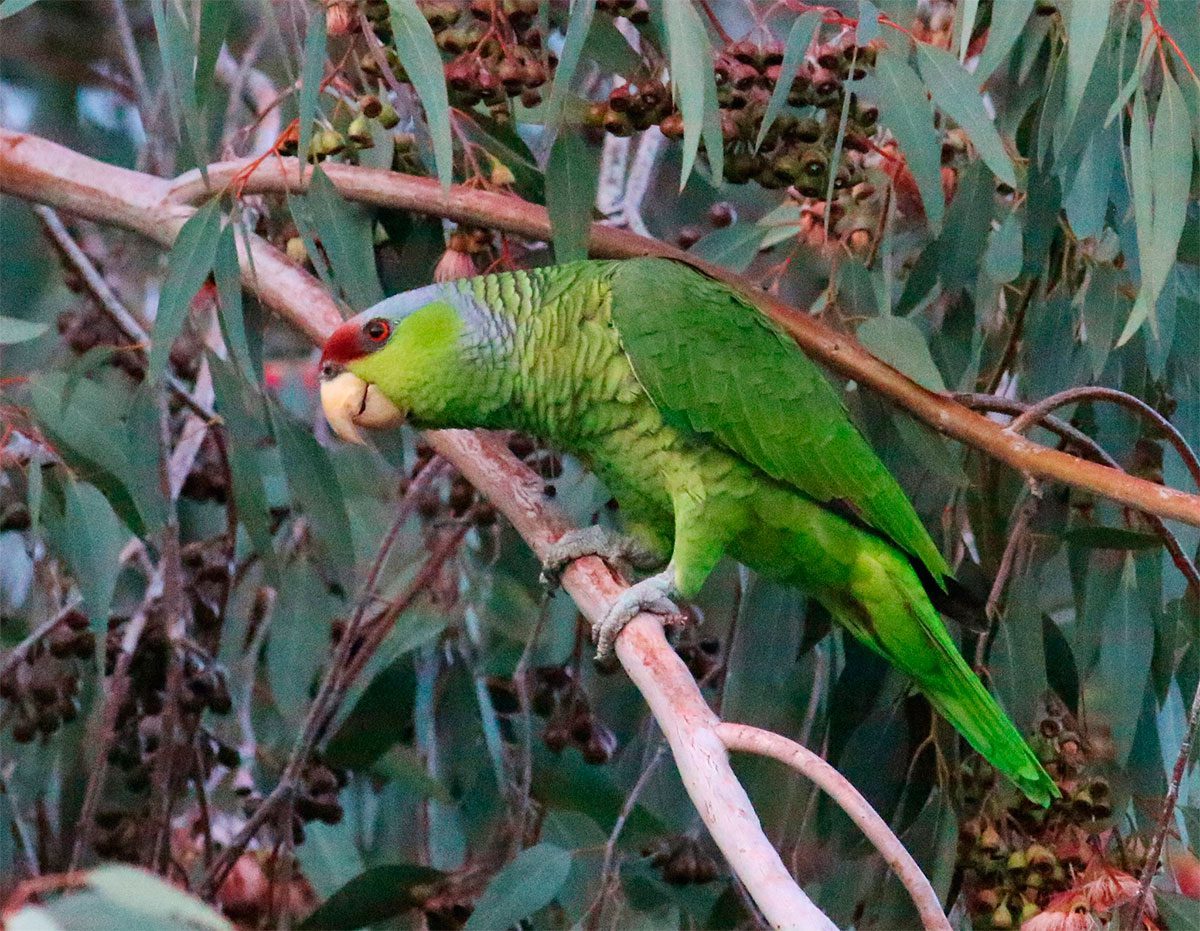
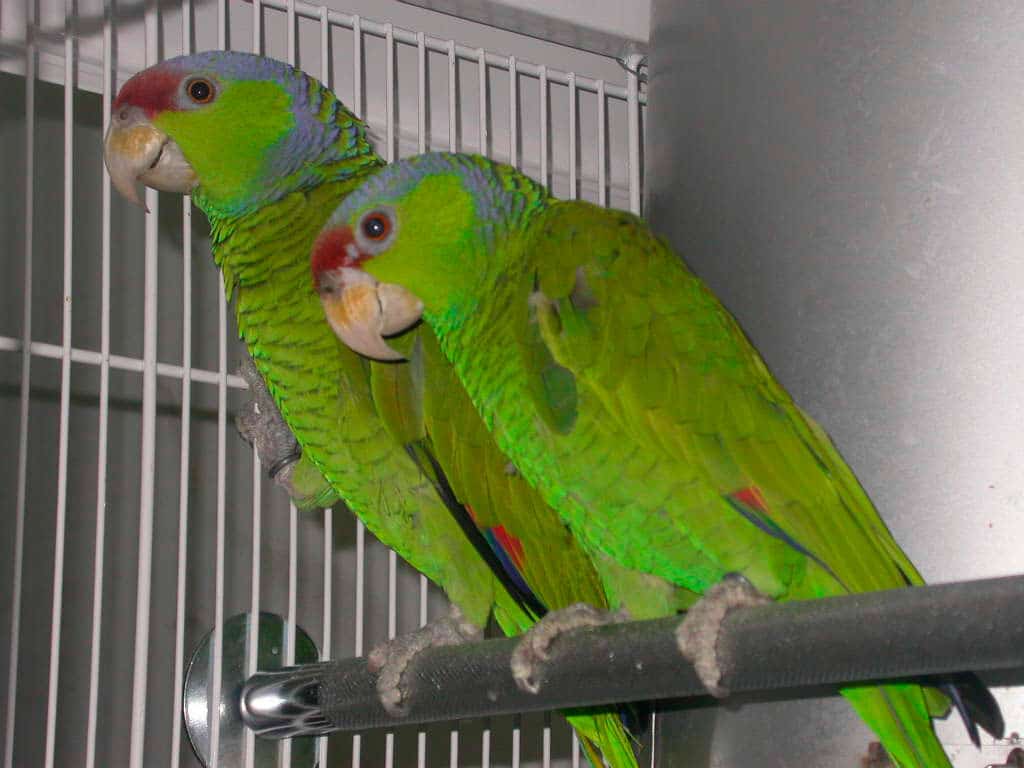
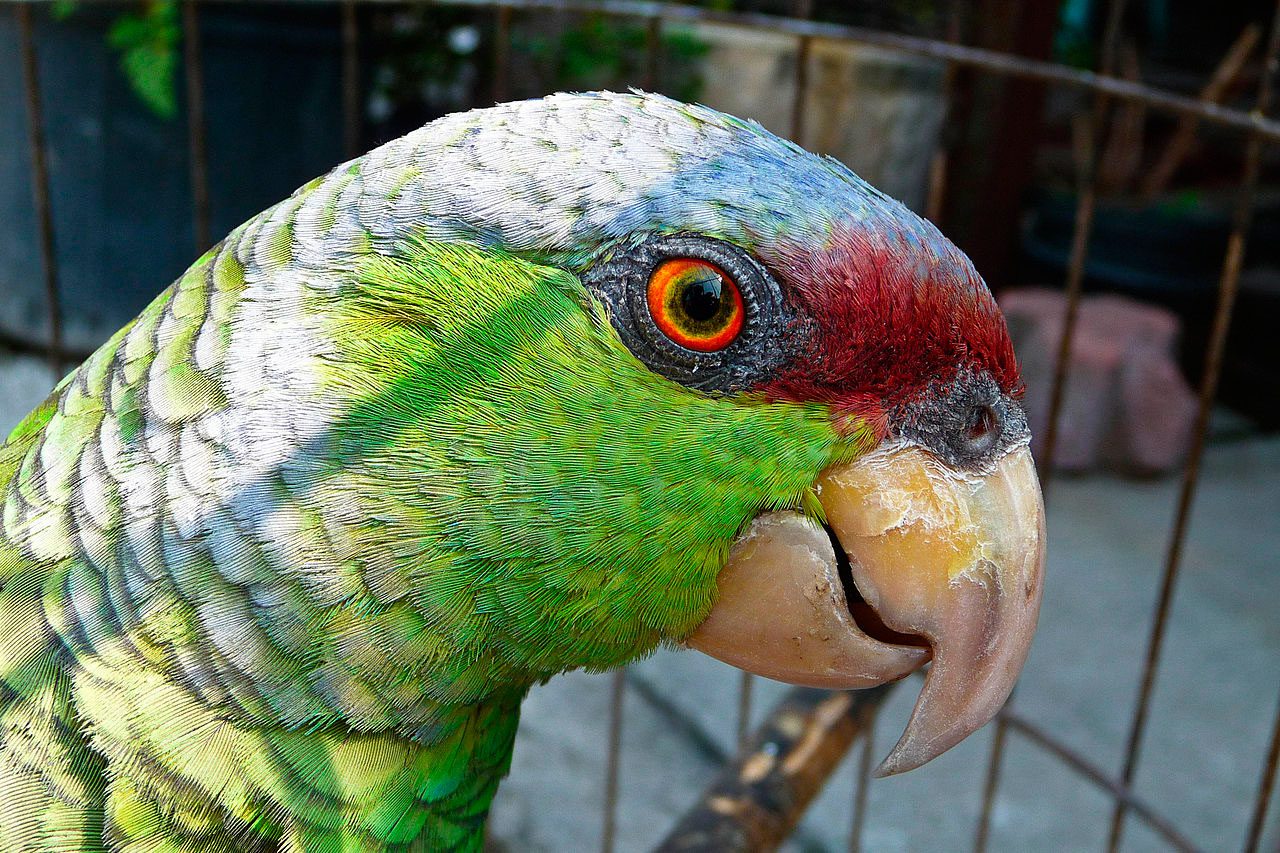
The Lilac-crowned Parrot (Amazona finschi) has the forecrown and the higher lords, red off; the lower lores, the cheeks and ear-coverts, pale lime green; crown, sides neck and nape, lilac or pale blue with some feathers crown showing narrow black margins.
Mantle green with broad black edges giving distinct scalloped effect; back and scapulars weak green with black borders to some feathers; rump and uppertail-coverts, green, slightly brighter than the back. Wing coverts green. Primaries blue toward the tip, green at the base; the base outerweb the first five secondaries, red with subterminal band yellow and blue tips, secondaries, otherwise, green, becoming blue at tips. Under the wings, brighter yellowish green; flight feather dull green.
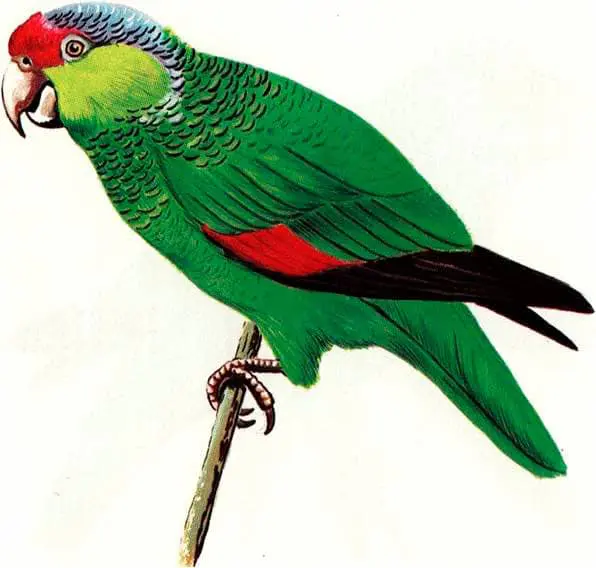
Throat yellowish green with bluish tint to some feathers; remaining underparts, yellowish-green with black margins to some feathers (especially in the chest), giving scalloped effect. Tail green tip yellowish green, lateral feathers blue margin to the base of the outerweb. Bill color horn; irises orange red; legs grey.
Both sexes are similar. Immature has the irises dark brown (rather than red).
"Lilac-crowned Parrot" |
||
|---|---|---|
The Lilac-crowned Parrot Living mainly in wooded hills and mountains, from the tropical zone in the lower levels of the deciduous forests, to the forests of oak and pine-oak forest in the highlands, preferably through the valleys with lush vegetation along streams that run on the basis of cannons; often also in areas of arid or semi-arid vegetation, or clear forest edge, coming into cultivated areas and orchards adjacent to the forest.
mainly in altitudes of 600 to 2.000 m, but recorded at sea level Sinaloa and from sea level to the temperate forest Colima. observed between 360-1.700 metres in Sonora and 880-1.480 metres in Oaxaca. Usually in pairs or small groups, although larger groups are formed in the dry season (500 birds reported) and in communal roosts (more than 1,000 birds reported in the same place Nayarit).
They nest in tree hollows (for example, Ficus), including old nests woodpeckers (for example, Phloeoceastes) or arboreal termite mounds.
The breeding season It comprises from February to June, nesting with a cycle consisting of 28 incubation days eggs, followed by two months of growth of chickens in the nest (Forshaw 1989, Renton 1998, 2002).
Eating habits are poorly documented: It has been observed a particular preference for figs. During the dry season the diet consists mainly of Astronium graveolens, Brosimum alicastrum, Celaenodendron mexicanum, Comocladia engleriana and Ficus insipida. during the rains The diet consists of species such as Caesalpinia pulcherrima, Celaenodendron mexicanum, Esenbeckia nesiotica, Jatropha spp and Sciadodendron excelsum (Renton 1998, 2001)
cause some crop damage corn and banana.
They have been observed wild species groups, feeding with the Red-crowned Parrot (Amazona viridigenalis) in Los Angeles, California.
Size of its range (breeding/resident): 372.000 km2
The Lilac-crowned Parrot inhabits Pacific coast of Mexico, from the southeast end of Sonora and Southwest Chihuahua, to the South by Sinaloa, Durango Western, Nayarit, Jalisco, Colima, Michoacán and Warrior, until Oaxaca, west of Isthmus of Tehuantepec.
It is mostly residents, but outside the breeding season, visit during autumn, lowlands, for example in Oaxaca. generally common. Described as fairly common locally in southeastern Sonora. abundant in Colima. Very rare in the highlands of Oaxaca. Several wild populations reported in several locations in the United States.
State of conservation ⓘ |
||
|---|---|---|
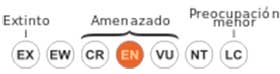 Endangered ⓘ (UICN)ⓘ
| ||
• Current category of the Red List of the UICN: In danger of extinction.
• Population trend: Decreasing.
• Population size : 4700-6700.
Rationale for the Red List category
Justification of the population
Justification of trend
Very popular as a pet throughout its area of distribution; It has cultural value as a pet or ornamental bird by its feathers; ability to imitate sounds and its tendency to form bonds with people; widespread in captivity internationally.
Currently protected by the Appendix 1 of CITES.
Each copy captive of this species which is capable of reproducing, should be placed in a well-managed breeding program in captivity and not be sold as a pet, with the objective of ensure their survival long-term.
– Finsch’s Parrot, Lilac crowned Parrot, Lilac-crowned Amazon, Lilac-crowned Parrot, Pacific Amazon, Pacific Parrot (English).
– Amazone à couronne lilas, Amazone de Finsch, Amazone verte de Finsch (French).
– Blaukappenamazone (German).
– Papagaio-de-finsch (Portuguese).
– Amazona de Corona Violeta, Amazona Guayabera, Loro Corona Lila, loro corona-lila, Loro Corona-violeta (español).
– Order: Psittaciformes
– Family: Psittacidae
– Genus: Amazona
– Scientific name: Amazona finschi
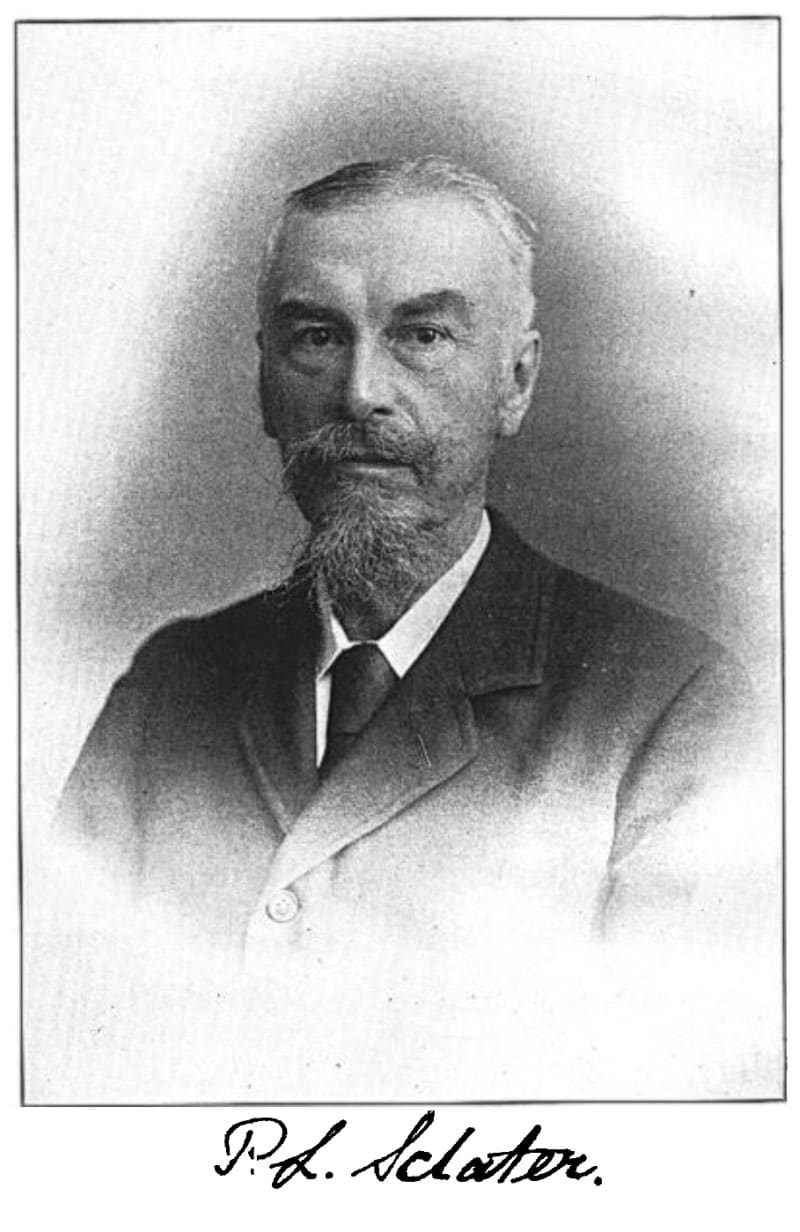
– Citation: (Sclater, PL, 1864)
– Protonimo: Chrysotis finschi




Sources:
Avibase
Parrots of the World – Forshaw Joseph M
Parrots A Guide to the Parrots of the World – Tony Juniper & Mike Parr
Birdlife
Naturalist
Photos:
(1) – Lilac-crowned Parrot by Tom Benson – Flickr
(2) – Lilac-crowned Amazon perching on a branch By Amazona_finschi_-perching_on_branch-8.jpg: Cédric Allierderivative work: Snowmanradio [CC BY 2.0], via Wikimedia Commons
(3) – Lilac-crowned Amazon (Amazona finschi) by Emilie Chen – Flickr
(4) – Lilac-crowned Parrot by wplynn – Flickr
(5) – A pet Lilac-crowned Amazon; head and neck By Gary Denness (originally posted to Flickr as Pretty Boy) [CC BY 2.0], via Wikimedia Commons
(6) – Lilac-crowned Amazon; two in a cage By TJ Lin (originally posted to Flickr as DSCN0549) [CC BY-SA 2.0], via Wikimedia Commons
(7) – Lilac-crowned Amazon (Amazona finschi) By CDest [Public domain], via Wikimedia Commons
(8) – Lilac-crowned Amazon at the Arizona-Sonora Desert Museum, Tucson, Arizona, USA By DrStarbuck from Madison, WI, USA (Arizona-Sonora Desert Museum 18) [CC BY 2.0], via Wikimedia Commons
(9) – A Lilac-crowned Amazon at Arizona-Sonora Desert Museum, USA By Dave Bezaire & Susi Havens-Bezaire [CC BY-SA 2.0], via Wikimedia Commons
(10) – Amazona finschi Uploaded by Francisco_aviario – Photobucket
Sounds: Richard E. Webster, XC353198. accessible www.xeno-canto.org/353198
Content |
|---|
40 to 42 cms. length and 200 to 250 g. of weight.
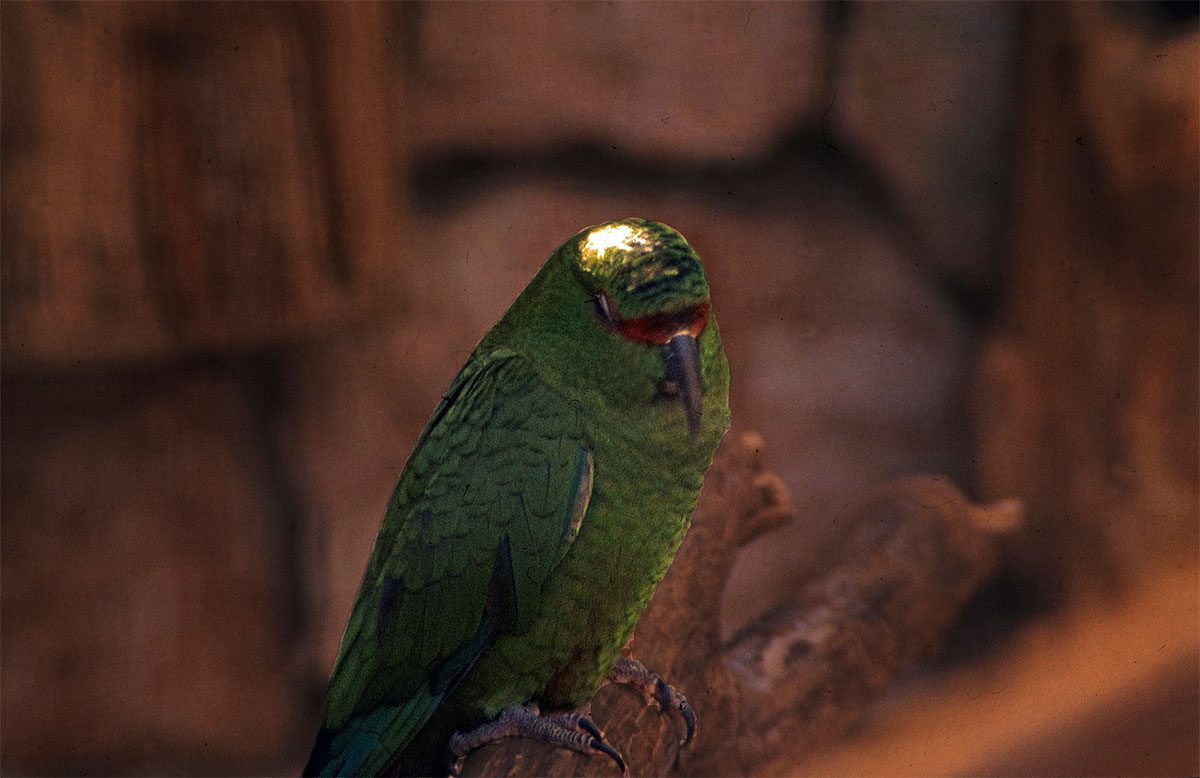
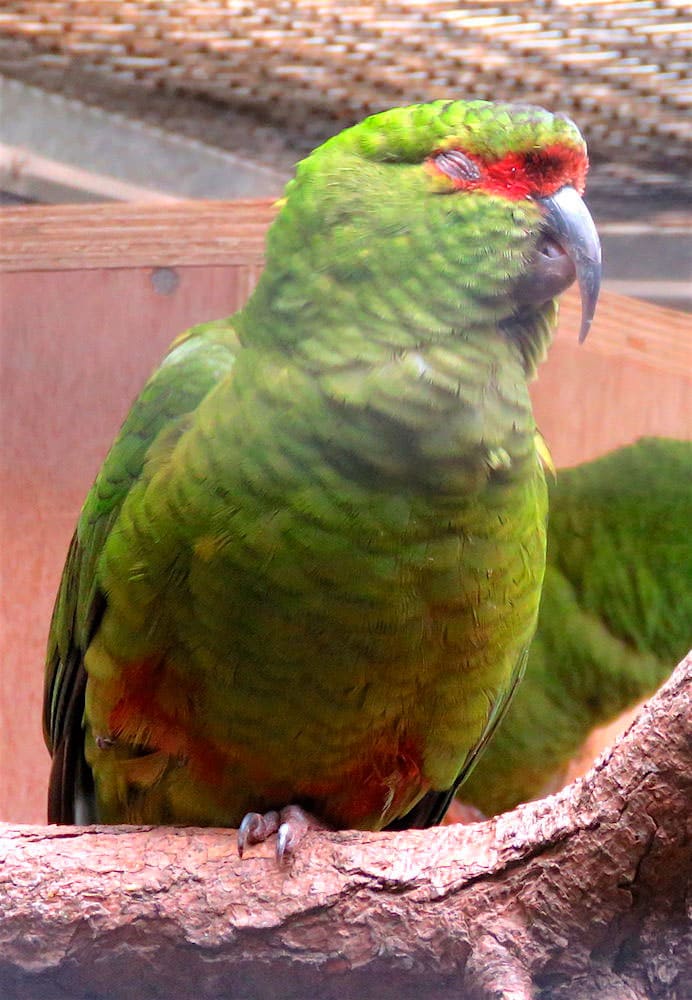
The Slender-billed Parakeet (Enicognathus leptorhynchus) has the lores, forecrown and a narrow ring feathers around the eyes bright crimson red; cheeks and sides neck, green; feathers of the crown, the nape, the the mantle and back, with dark green margins producing a scalloped effect (more pronounced in the crown, where the feathers are brighter and more emerald).
Scapulars, rump and uppertail-coverts They are green. Primary coverts green with blue suffusion; other coverts green. Flight feathers green-blue above with dark margins in innerwebs near the tips; light gray below. Underwing-coverts brighter yellowish green. Underparts yellowish green with patch dull red in centre of belly. Upper, the long tail red is off; greenish toward the tip; undertail, dull red suffused greyish.

The upper jaw It is dark gray with colored tip horn, the lower jaw is horn; Strait bare periophthalmic grey; irises orange-red; legs grey.
Both sexes are similar.
Immature darker, with the upper jaw shorter, less red in the face little or no red on belly.
Video – "Slender-billed Parakeet" (Enicognathus leptorhynchus) |
|---|
The Slender-billed Parakeet dwells in wooded areas, mainly Nothofagus and Araucaria, although they can be seen in more open cultivated fields or pastures, especially in winter. Its range is from sea level in winter to 2.000 meters in summer. Usually in flocks, of a few individuals to several hundred, even in breeding season; large communal concentrations sometimes composed of several thousand birds.
Nests generally treeholes, often at a certain height and several couples using the same tree; very deep holes fill them with twigs to raise the base level. Occasionally nidifican in rock crevices, building the nest with twigs (for example, bamboo thicket This chusquea) if there is no tree cavities available. breeding season in November-December. Clutch 5-6 eggs.
Its diet It consists of seeds of wild and cultivated plants (They are sometimes considered a pest), including grains and thistles, seed cones araucaria (March April) open with its elongated peaks, acorns, seeds of Nothofagus and bulbous roots. generally place vigilantes while the rest of the birds feed.
Distribution area (breeding / resident): 195.000 km2
The Slender-billed Parakeet It is confined to the center Chile, from the South of Santiago through coastal lowlands and valleys on the slopes of hills peaceful, south to the Chiloe Island and maybe Palena River in the North of Aysen; They can also be seen in Isla Mocha off the southwest coast bio bio.
made some movements altitudinal seasonal, with moving from coastal lowlands to the foothills of the hills between spring and autumn bird (September-May).
Quite common, although in recent decades its population has suffered a decline due to, fundamentally, deforestation, his capture and the Newcastle disease.
Less frequent and perhaps only sporadic in the northern and southern ends of its range.
Caught locally as pets, although quite rare in captivity outside Chile.
State of conservation ⓘ |
||
|---|---|---|
|
Minor Concern ⓘ
(UICN)ⓘ
| ||
(classified in Appendix II of CITES)
Justification of the Red List of the Category
This species has a range very large, and as a result does not approach the thresholds for Vulnerable under the range size criterion (extent of occurrence <20.000 km2). La tendencia de la population seems to be stable, and therefore the species does not approach the thresholds for Vulnerable according to the population trend criterion. (> 30% decrease of more than ten years or three generations). The population size It has not been quantified, but are not believed to approach the thresholds for Vulnerable based on population size criteria (<10.000 individuos maduros con una disminución continua estima en> 10% in ten years or three generations, or in a particular population structure). For these reasons, the species is evaluated as Least concern.
Justification of the population
The world population It has not been quantified, but the species according to sources is locally common (pit et to the., 1997).
Justification trend
The population suspected to be stable in the absence of evidence of any reduction or substantial threats.
Virtually unknown until 1976.
It is a nice and noisy bird, whose docility and cunning behavior have meant it to be hunted down and captured to commercialize as pets, very common but absolutely illegal practice, because they are removed from their natural means of inhabitancy in South Chile, which they can not be replaced in urban areas and in captivity. People who do sell through a network of illegal trafficking. However, it is a rare bird watching in captivity outside Chile.
In captivity, according to sources, a specimen lived 15,3 years.
– Chilean Parakeet, Long-billed Conure, Long-billed Parakeet, Slender billed Parakeet, Slender-billed Conure, Slender-billed Parakeet, Slight-billed Conure, Slight-billed Parakeet (English).
– Conure à long bec, Perriche à long bec, Perruche à long bec (French).
– Langschnabelsittich, Langschnabel-Sittich (German).
– Periquito Delgado-faturado (Portuguese).
– Choroy, Cotorra Choroy (español).

Order: Psittaciformes
Family: Psittacidae
Genus: Enicognathus
Scientific name: Enicognathus leptorhynchus
Citation: (King, PP, 1831)
Protonimo: Psittacara leptorhyncha
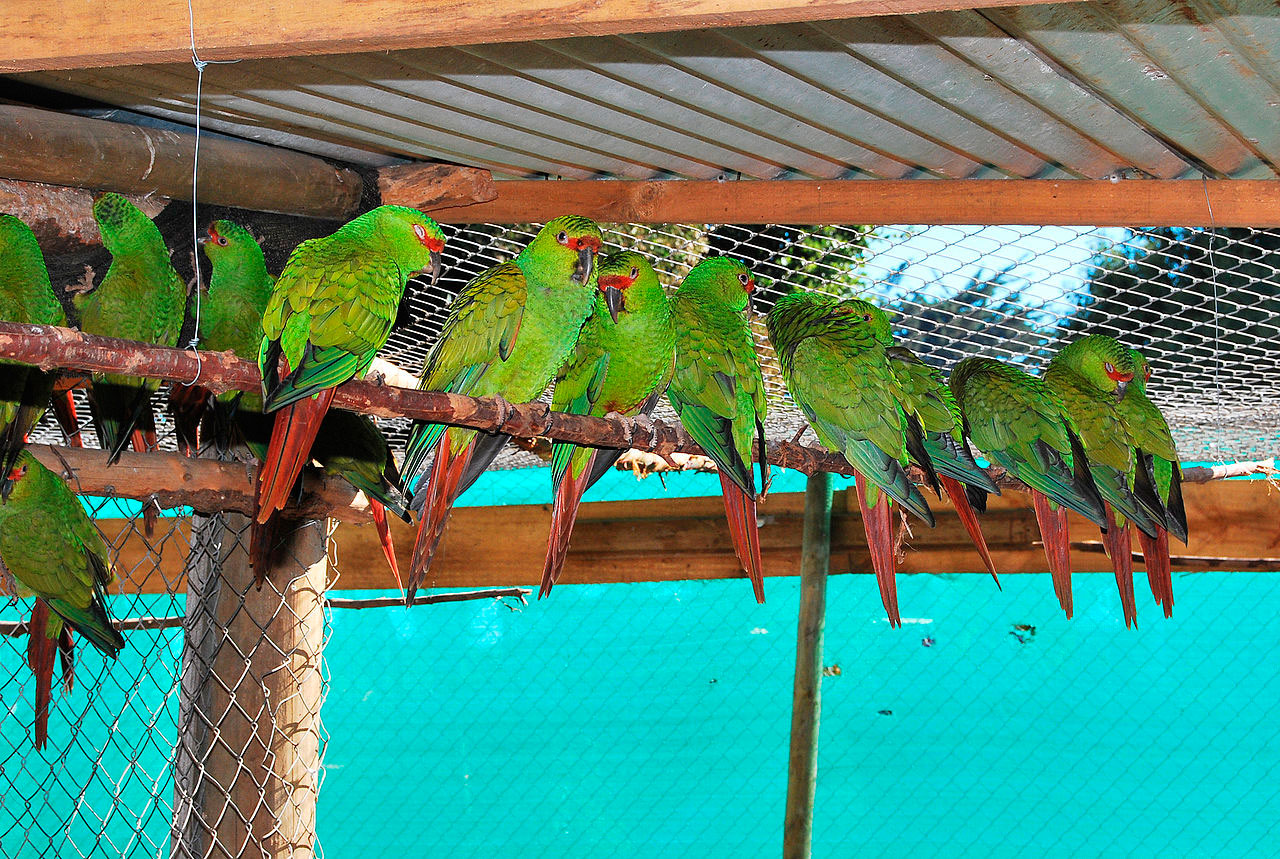
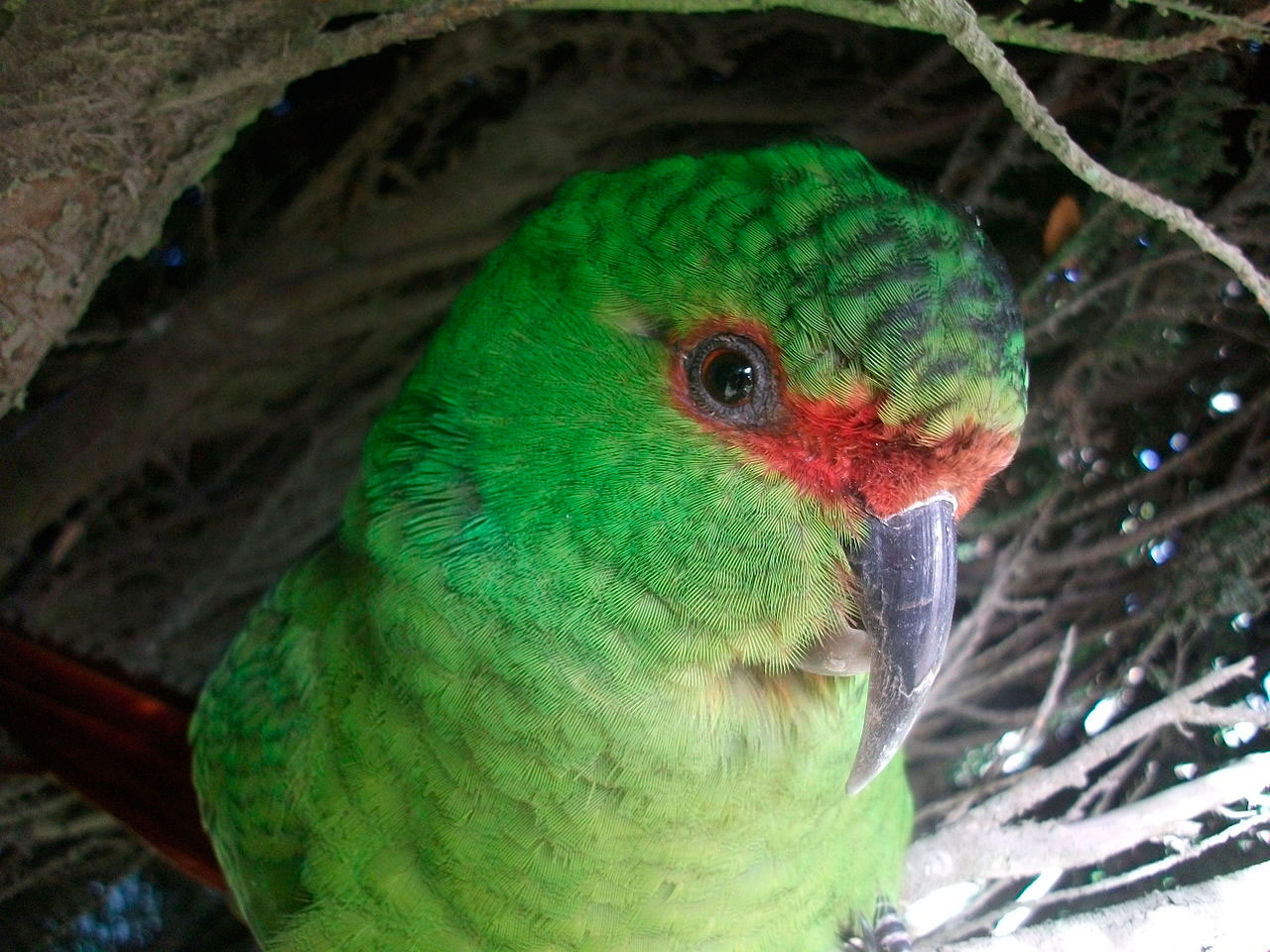
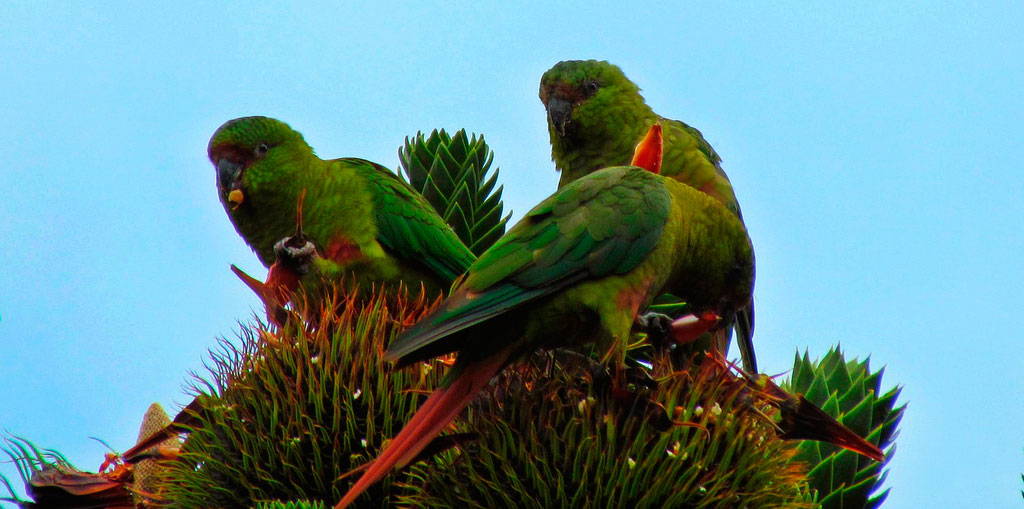
Sources:
– Photos:
– Sounds: Ross Gallardy, XC296142. accessible www.xeno-canto.org/296142
Content
|
|---|
21-27 cm.. of length and a weight of 80 g..
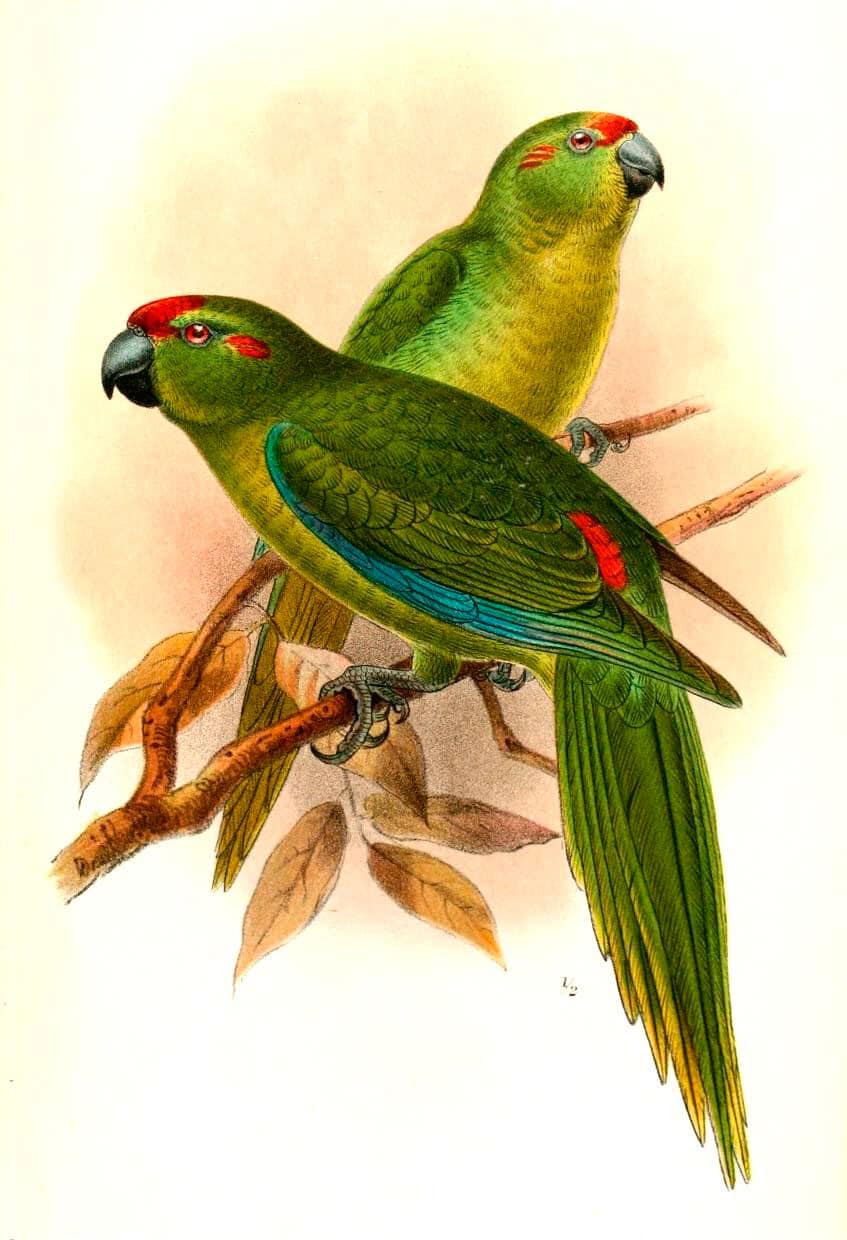
The Lord Howe Island Parakeet (Cyanoramphus subflavescens) was a medium-sized green parrot with a head bright green, the crown crimson red in color and a stripe on the eyes; the eyes were red and bill grey. The upperparts They were bright green with a dark red spot on each side of the rump (usually they are hidden by the wings when resting) and a blue border in wings; the underparts were yellowish green.
Both sexes looked similar, but the female It was smaller.
Taxonomic status:
This taxon is considered a subspecies of Cyanoramphus [novaezelandiae or subflavescens] (sensu lato) by some authors.
In 2012, World Bird List of IOC recognized him as a species [IOC world birdnames Archived 2012-08-06 at the Wayback Machine.].
The Lord Howe Island Parakeet It was occasionally observed in flocks. There is little information on their habitats, They probably lived in inhabited forests and cultivated areas of the Lord Howe Island. No information on the use of different habitats for different activities.
Nothing is known of sexual maturity, life expectancy and natural mortality of this extinct species. But, It has been estimated that the useful life of the Lord Howe Island Parakeet should be similar to the Norfolk Island Parakeet (Cyanoramphus cookii), About three years. the age of sexual maturity is also known populations of this species, although a juvenile female was seen mating with a male just a week after achieving independence, and captive birds are said to have bred when they were less than a year old.
Little else is known of the breeding of the Lord Howe Island Parakeet, probably reproduced in response to weather conditions and food availability, nesting in tree holes or hollow pipes, in crevices between rocks or cliffs.
Meal Lord Howe Island Parakeet probably consisted of plant material, as seeds, fruit, buds and leaves of native trees and shrubs. Other extant populations ate mainly seeds, fruits and berries, egg yolks, sprouts and flowers, as well as, occasionally, a small number of invertebrates.
endemic to the isla Lord Howe in the Sea of ​​Tasmania, part of New South Wales, Australia.
• The last record of this species dates from 1869. EXTINCT.
The population declines were mainly due to habitat modification, hunting, poisoning, and the introduction of predators (especially cats and rats).
But, the main threat to the Lord Howe Island Parakeet was the hunting and its capture by settlers. Formerly he abounded in the Lord Howe Island and it was said to be a plague, since it destroyed the crops and orchards of the inhabitants of the island.
There are only two copies of Lord Howe Island Parakeet. From the collection John Gould, taken by John MacGillivray in September of 1853 on tour HMS Herald, and are in the Museum of Natural History [Schodde, R.; & Mason, I.J. (1997). Birds (Columbidae to Coraciidae). In Houston, W.W.K. & Wells, A. (eds) Zoological Catalogue of Australia. Vol. 37.2. CSIRO Publishing: Melbourne. ISBN 0-643-06456-7 p.147.].
– Lord Howe Island Parakeet, Lord Howe Island red-crowned parakeet, Lord Howe Parakeet, Red-Fronted Parakeet (English).
– Perruche de Lord Howe (French).
– Lord Howe-Laufsittich (German).
– Periquito de Lord Howe (Portuguese).
– Perico de Lord Howe (español).
– Order: Psittaciformes
– Family: Psittaculidae
– Gender: Cyanoramphus
– Scientific name: Cyanoramphus subflavescens
– Subpoena: Salvadori, 1891
– Protonimo: Cyanorhamphus subflavescens
Sources:
• Avibase
• Parrots of the World – Forshaw Joseph M
• Parrots A Guide to the Parrots of the World – Tony Juniper & Mike Parr
• Red-crowned Parakeet (Lord Howe Is. subsp.) – profile | NSW Environment & Heritage
Photos:
(1) – Cyanorhamphus subflavescens (Catalogue of the Birds in the British Museum. Volume 20) by John Gerrard Keulemans [Public domain] (2) – Hand coloured lithograph (circa 1928) showing (Cyanorhamphus subflavescens) Which is now a synonym of the Lord Howe Island Red-fronted Parakeet (Gray novaezelandiae subflavescens) From The Birds of Australia (1910-28) by Gregory Macalister Mathews (1876-1949) Artwork by Henrik Gronvold (1858–1940) a Danish bird illustrator. by Henrik Grönvold [Public domain]
Content
|
|---|
23 to 26 cm.. height.
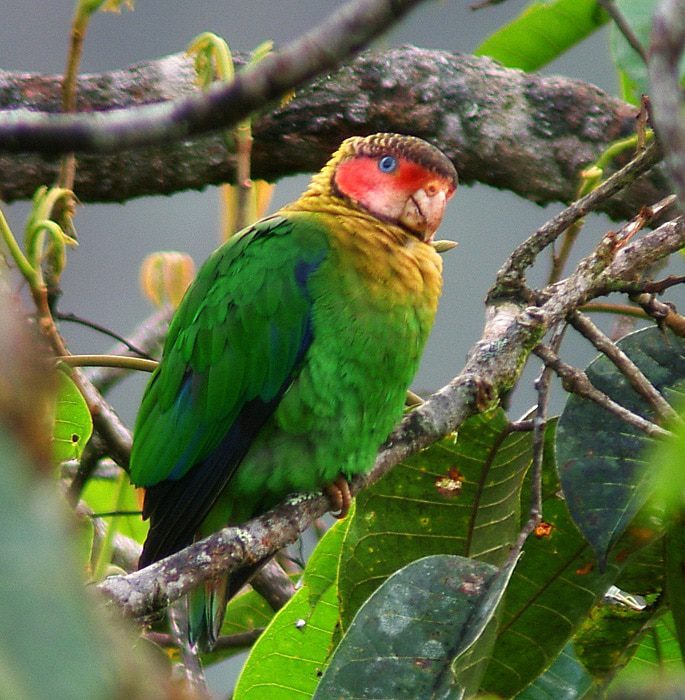
The Rose-faced Parrot (Pyrilia pulchra) be distinguished easily by your face and both sides of neck purple-red with black margin; crown and throat grayish coffee. General green olive in the back and beige in the belly. Wings with the part superior mixed with yellow or red orange and the rest green blue.
Stubby-looking and tail short. The immature they have only have a red line on the eye and the ear While their cheeks are coffee Green.
The Rose-faced Parrot is a parrot little known, which is commonly found between 1,200 and 2,100 m above sea level, Although has been observed at altitudes as low as 200 m. Inhabits humid and semi-deciduous forests of lowlands and temperate. According to the information available, is known that this Parrot is often feed is on the canopy of forests, Although visit disturbed areas and crops. Flying in pairs or groups of size variable up to of 25 or more.
The data on reproduction are scarce. But, they have observed individuals with gonads developed between November and February in the Chocó, in Colombia and Ecuador.
Its diet It is little known, but some observations indicate that includes in its feeding fruits of Oenocarpus bataua (Arecaceae) and other fruits from species wild and plants cultivated as banana and corn.
Size of the area of distribution (reproduction / resident): 195.000 km2
Are you can observe in freedom from the West of Colombia to the West of Ecuador.
• Current category of the Red List of the UICN: Least concern.
• Population trend: Stable.
Justification of the population
The population size World has not been quantified, but this species is described as "uncommon and irregularly distributed" (Stotz et to the., 1996).
Justification of trend
It is suspected that the population is stable in absence of evidence of any decline or threatens substantial.
Not usually seen in aviculture. Extremely sensitive, has ever survived more than one couple of months in captivity.
– Rose-faced Parrot, Beautiful Parrot, Rose faced Parrot (English).
– Caïque à joues roses (French).
– Rosenwangenpapagei, Rosenwangen-Papagei (German).
– Rose-faced Parrot (Portuguese).
– Cotorra Carirrosada, Lorito Carirrosado, Lorito de Cara Rosada (español).
– Order: Psittaciformes
– Family: Psittacidae
– Genus: Pyrilia
– Scientific name: Pyrilia pulchra
– Citation: von Berlepsch, 1897
– Protonimo: Pionopsitta pulchra
Sources:
Photos:
(1) – photo ©stolmstead Flickr.com
Content
|
|---|
9,5 cm. length between 11 and 14 g. of weight.
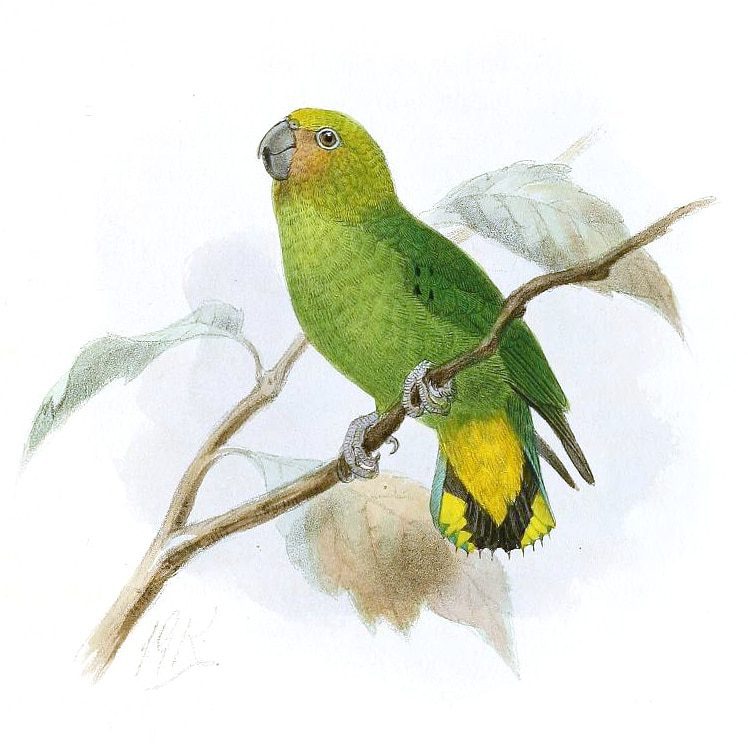
The crown of the Yellow-capped Pygmy-Parrot (Micropsitta keiensis) is yellow ocher, with a warm brown in forecrown; lores, chin and area under the eyes, brown; coverts outpus, dark green, tending to lighter green on cheeks and throat.
Upperparts, dark green with center at wing-coverts and feathers of black color with a black colored margin extrecho; flight feather black with vane Green external; feathers wings green. The underparts are yellowish-green, with fine dark stripes; undertail-coverts yellow and green. Upper, the tail It is iridescent, slightly greenish blue in the Center, Foreign feathers blackish with yellow spot on the ends. Under, the tail dark blue and yellow.
Bill dark grey; irises brown; legs dark gray.
Both sexes similar.
Immature like females but with bill pale yellow.
It inhabits in the forests of lowlands, in secondary growth and, sometimes around inhabited areas and coconut trees. The ecology species is similar to that of the Buff-faced Pygmy-Parrot. The birds are alone, in pairs or in small groups, and they can be distributed by undergrowth to some 20 meters above the ground. They climb on trunks and branches, and they can go down head, in inverted position, sometimes.
Nest and roost Termites in tree cavities, they excavate the cavity by themselves; tunnel passageways go up and may bend before reaching nest-chamber. up the laying two white eggs deposited in a cavity unlined (dimensions around 20 cm x 15 cm.), and they can be occupied by other adults roost (up to four) during the breeding season. The exact role of these visiting birds is unknown, It is thought that they can help with the tasks of nest. nesting It has been recorded from October to March
With feed lichen, fungi, seeds, fruits and insects. Most of the lichen is collected directly from the surface of the bark of trees..
Size of its range (breeding/resident): 763.000 km2
The Yellow-capped Pygmy-Parrot is distributed among the papuan islands, in the West area, including Waigeo, give, Kofiau, Salawati and Misool; through Vogelkop and Onin Peninsula (Province of West Papua); in the Kai and islas Aru, and in the South of New Guinea between Mimika and the fly river. The species is common to local scale.
• Current IUCN Red List category: Least concern
• Population trend: Stable
The size of the world population It has not been quantified, It is estimated over the 100,000 specimens.
The species, according to sources, It is considered very common within its range (pit et to the. 1997).
The population suspected to be stable in the absence of evidence of any reduction or substantial threats.
Not usually survive in captivity.
– Yellow-capped Pygmy-Parrot, Yellow capped Pygmy Parrot, Yellow-capped Pygmy Parrot (ingles).
– Micropsitte pygmée (French).
– Gelbkappen-Spechtpapagei (German).
– Micropsitta keiensis (Portuguese).
– Microloro de Kai, Microloro de las Kai (español).
– Order: Psittaciformes
– Family: Psittaculidae
– Scientific name: Micropsitta keiensis
– Citation: (Salvadori, 1876)
– Protonimo: Nasiterna keiensis
————————————————————————————————
Sources:
– Avibase
– Parrots of the World – Forshaw Joseph M
– Parrots A Guide to the Parrots of the World – Tony Juniper & Mike Parr
– Birdlife
– Photos:
(1) – Parrot-birds – link
(2) – « NasiternaPygmaeaFKeulemans » par John Gerrard Keulemans — Ornithological Miscellany. Volume 1. Licensed public via domain Wikimedia Commons.
– Sounds: Hans Matheve (Xeno-canto)
Content
|
|---|
28 cm.. length and a weight between 200 and 225 g..
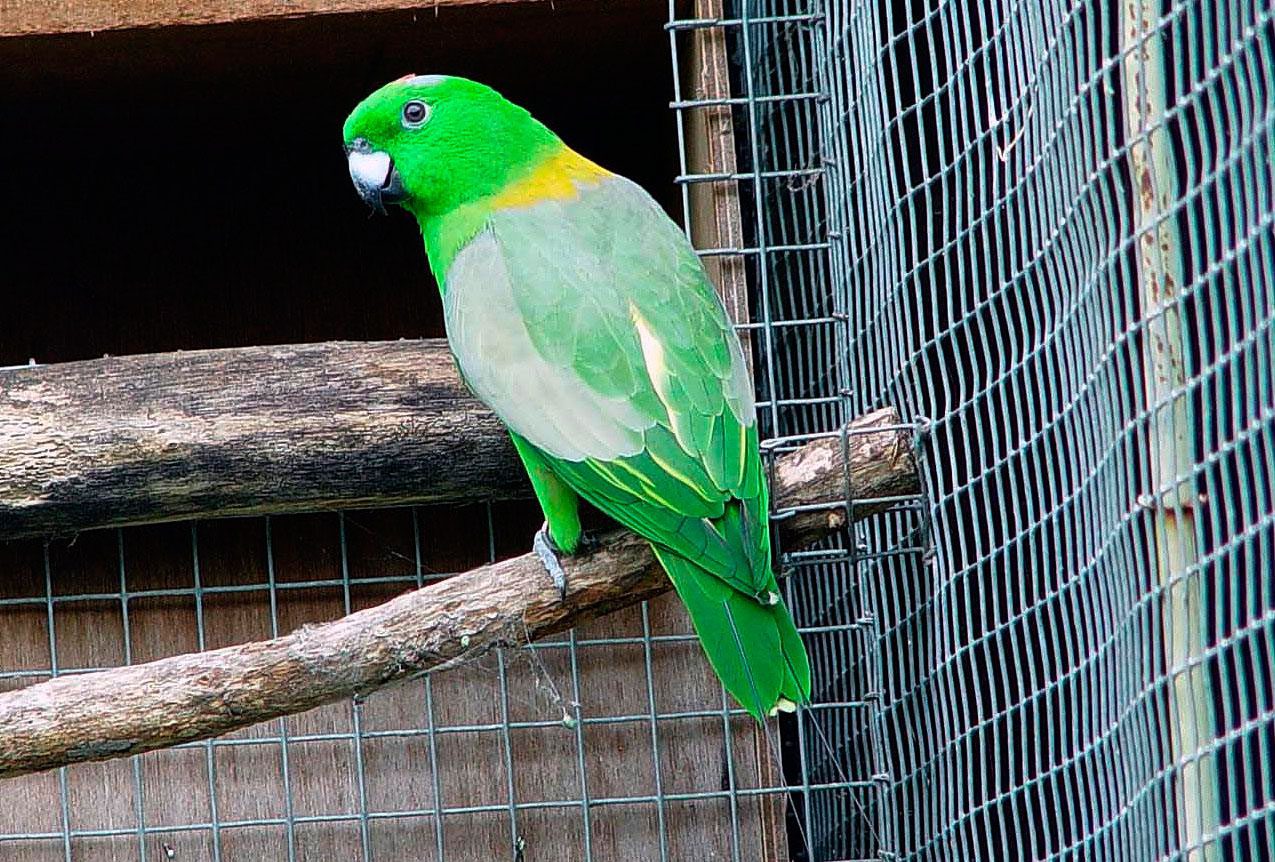
The head of the Golden-mantled Racquet-tail (Prioniturus platurus) is light green. The crown Violet gray with a red spot on the front edge; rear of the neck Ocre-Naranja. Mantle light grey, changing to green (marked in grey) on the back; rump and uppertail-coverts green. Wing coverts green, strongly impregnated with pale grey (more green in the coverts more internal); primaries Greens with vane Dark internal; secondary internal green with yellow line in the margins; bend of wing grey violet, carpal edge yellow. Wing feathers green; underside of flight feather marked in blue. Underparts brighter yellowish green, more green in the upper part of the chest, and yellow in the undertail-coverts. Upper, the tail green in the center, dotted in bluish black on the sides; undertail, the tail pale blue; spatulas blackish.
Bill pale grey, with the lower jaw and the tip of the bill darker; irises dark brown; legs grey.
The female lacks the color red and blue marks from the crown and of the collar back orange; underparts washed in less differentiated grey; rackets shorter tail.
Immature without rackets the tail.
– The nominal.
– (Hartert, E, 1898) Paler in general males; less grey on the mantle and the upper wing coverts; stain clear reddish pink on the back of the Crown with most blue patch.
The female as the nominal species but green with paler
Juveniles as the nominal species but also with the Green pale
– (Forshaw, 1971) Males with reddish pink spot away from the back of the Crown; mantle and upper wing coverts, green, slightly washed with grey; curve of wing and lesser coverts bathed in purple; smaller.
The Golden-mantled Racquet-tail inhabits the edges of humid forests, forests, orchards and forests of the lowlands Moss, to 2.000 m (most common above 1.000 m). The birds are seen generally in small noisy groups of 5-10 Member, flying over the forest, or during daily movements between the feeding and rest areas.
A female in breeding condition was observed in October and the nest was in a hollow tree; nothing more is known about the reproductive behavior of the species.
Have been seen feeding on fruiting mango (Mangifera indica), and the diet includes fruits, seeds and flowers.
Size of the distribution (reproduction / resident): 186.000 km2
Restricted to Sulawesi and nearby islands, including Talaud, Siau, Lembeh, Togian, Group Banggai, Ambon, Muna and Button. Usually, the species is common and the world population is considered to be above 10.000 exemplary and stable: Nominal race numbers are calculated to be above the 10.000 birds and stable, the subspecies talautensis It is less numerous with a population of about of 5.000 specimens, and the sinerubris It is thought that it may be around 10.000 exemplary and probably stable.
Subspecies distribution:
– The nominal.
– (Hartert, E, 1898) Is distributed in the Talaud Islands.
– (Forshaw, 1971) Is distributed in Taliabu and Mangole in the Sula Islands
One of the places where you can see this bird is the Gunung Ambang nature reserve in Sulawesi.
• Current category of the Red List of the UICN: Least concern
• Population trend: Stable
The size of the world population It has not been quantified, Although it is estimated that it may be between 10,000 and 20,000 specimens. The species is described as common (pit et to the. 1997).
The population is suspected to be stable in the absence of evidence of any reduction or substantial threats.
Susceptible to fungal infections.
Rare in captivity.
– Golden-mantled Racquet-tail, Gold-backed Racquet-tail, Gold-backed Racquet-tailed Parrot, Golden Mantled Racket-tailed Parrot, Golden mantled Racquet tail, Golden-mantled Racket-tail, Golden-mantled Racket-tailed Parrot, Golden-mantled Racquet-tail Parrot, Golden-mantled Racquet-tailed Parrot, Gold-mantled Racket-tail, Gold-mantled Racket-tailed Parrot, Gold-mantled Racquet-tailed Parrot (ingles).
– Palette à manteau d’or, Perroquet à raquette à manteau d’or (French).
– Goldmantelpapagei (German).
– Prioniturus platurus (Portuguese).
– Lorito Momoto Dorado, Lorito momoto Dorsidorado, Lorito-momoto Dorsidorado (español).
– Order: Psittaciformes
– Family: Psittaculidae
– Genus: Prioniturus
– Scientific name: Prioniturus platurus
– Citation: (Vieillot, 1818)
– Protonimo: parrot platurus
————————————————————————————————
Sources:
– Avibase
– Parrots of the World – Forshaw Joseph M
– Parrots A Guide to the Parrots of the World – Tony Juniper & Mike Parr
– Wikipedia
– Birdlife
– Photos:
(1) – Prioniturus platurus golden mantled racquet tail – Parrot-birds
(2) – «Prioniturus platurus» by John Gould – Gould, John, 1804-1881; Sharpe, Richard Bowdler, 1847-1909: Birds of Asia., Volume 6, London, [2]. Licensed under Public Domain via Wikimedia Commons.
– Sounds: Frank Lambert (Xeno-canto)
Content
|
|---|
35 cm.. length and 130 g. of weight.
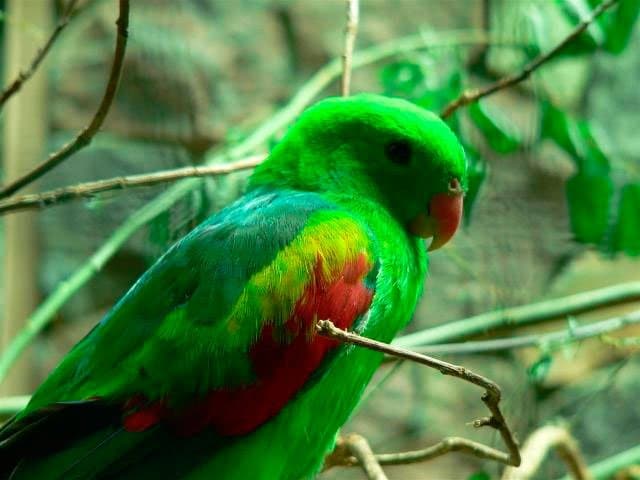
The Olive-shouldered Parrot (Aprosmictus jonquillaceus) has the head bright pale green. "Mantle" and back darker green color that the of the head and underparts, showing a blue diffusion; rump bright teal pale. Uppertail brighter yellowish green.
Upper, the wing feathers with small coverts fused in color yellow-green; Blue dark greenish in the curve of the wings; outer median coverts bright Scarlet, feathers interiors lit of color green yellowish with a bit of red in the tips. Large external coverts scarlet, feathers interiors light green, some showing red ends; some feathers turquoise green on the edge of the carpus; primary coverts Green with broadcasting blue at the tips of the vane outer; secondary green medium, primaries medium green with blue diffusion in the coats of the feathers outermost. Wing feathers brighter yellowish green; underside of flight feather black. The underparts light green, more yellowish in them the thighs and undertail-coverts. Upper, the tail of color green dark with edges of color yellow, and with vane yellowish external to the lateral feathers; undertail, the tail of color Brown blackish with tips yellow, and with yellowish diffusion in vane outside of lateral feathers.
Bill orange red, with yellow tip; irises orange: legs blackish gray.
The female lacks of the broadcast Blue in the the mantle, shows less contrast between the head and the the mantle, limb yellowish to them greater coverts red, and have them irises more Brown.
Immature has green, No greenish-yellow, in the wing-coverts and irises of Brown pale.
The female is like the female of the nominal species, but the uppertail-coverts darker green; slightly smaller in size.
The youth as the youth of the nominal species, but with the uppertail-coverts darker green; smaller.
In Timor the species is found in forests, acacia savannas, primary and secondary forest, from sea level to the 2.200 m (2.600 meters altitude extreme). In Wetar, observed in 1990 in recently logged forests, near the coast.
The ecology of the species is probably similar to that of the Red-winged Parrot, but it is not well known; observations of birds that fly involve couples and small flocks. A couple allowed a closer approach, observing her in silence to three meters high in a big tree.
Their reproductive habits are unknown, probably similar to the of the Red-winged Parrot.
Probably similar to the of the Red-winged Parrot: seeds, fruit, flowers and insects; in the mangroves, the mistletoe is your favorite food.
Size of the area of distribution (reproduction / resident): 28.500 km2
Endemic and quite common in Timor (for example, about Camplong, Kupang, Lelogama, Mutis and Dili), Wetar and Roti.
The world population is estimated at around 10.000 specimens and it is probably stable, although like most Indonesian parrots the species is vulnerable to capture and habitat loss. A moderate number in captivity.

• Current IUCN Red List category: Near threatened
• Population trend: Decreasing
The total population has been estimated at 10,000 individuals (Lambert et to the., 1993), probably including mature individuals 6,700.
The population is suspected that it may be declining due to the continuous destruction of the habitat and unsustainable levels of exploitation.
Ongoing conservation actions
Appendix II of CITES. Quotas were imposed during the Decade zero of 1990 while uncertainty existed about the total population size, but these are not met.
Conservation Actions Proposed
• Review estimates of the population of the species and review the impact of trade on their numbers..
• Determine if declines are still evident.
• Protect areas of suitable habitat.
Game, with low noise level, aggressive with other birds. You can require deworming.
Very rare in captivity
– Olive-shouldered Parrot, Jonquil Parrot, Olive shouldered Parrot, Timor Parrot, Timor Red-winged Parrot (ingles).
– Perruche jonquille (French).
– Timorsittich, Timor Sittich (German).
– Periquito-de-asa-vermelha-de-timor (Portuguese).
– Papagayo de Timor (español).
– Order: Psittaciformes
– Family: Psittaculidae
– Genus: Aprosmictus
– Scientific name: Aprosmictus jonquillaceus
– Citation: (Vieillot, 1818)
– Protonimo: Psittacus jonquillaceus
————————————————————————————————
Sources:
– Avibase
– Parrots of the World – Forshaw Joseph M
– Parrots A Guide to the Parrots of the World – Tony Juniper & Mike Parr
– Birdlife
– Photos:
(1) – Aprosmictus Jonquillaceus – LoroMania
– Sounds: Mike Nelson (Xeno-canto)


.jpg)