โ–ท The world of Pets: Dogs, cats, birds, reptiles, amphibians

Rock Parrot
Neophema petrophila

Rock Parrot

Content


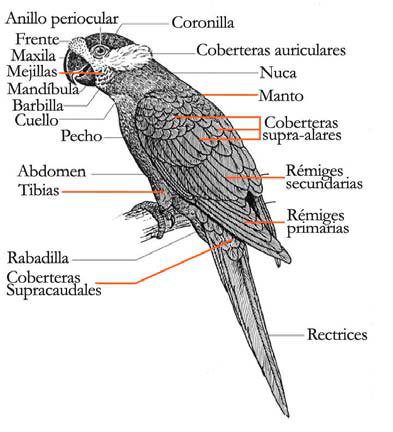
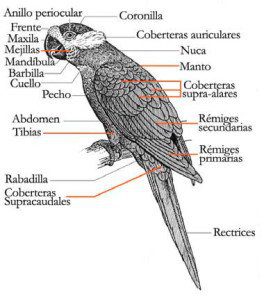
Anatomy-parrots

Description

22 cm. height and a weight between 47 and 54 g..

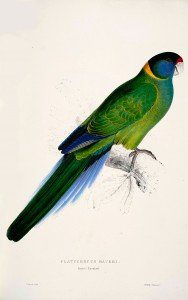
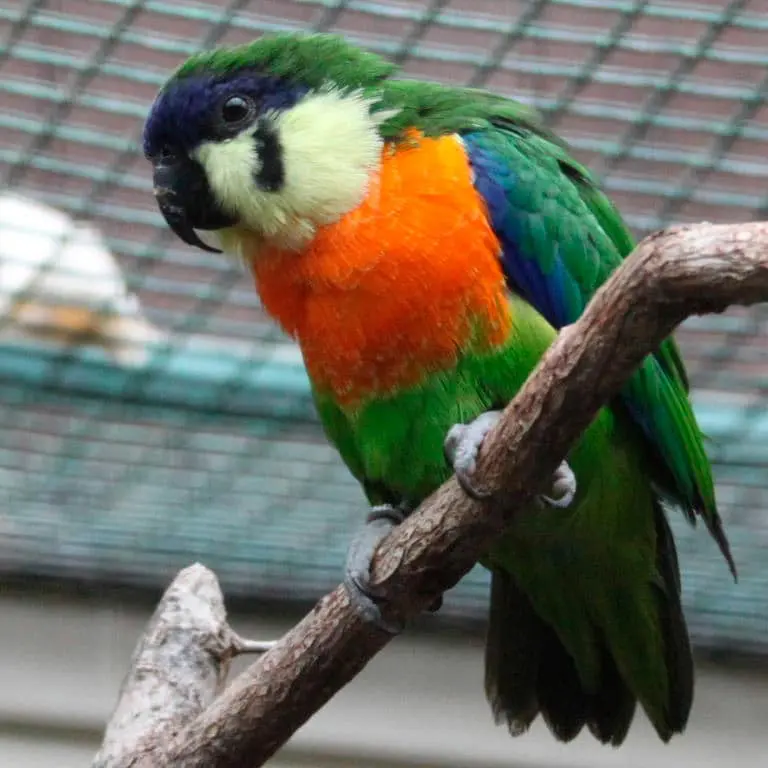
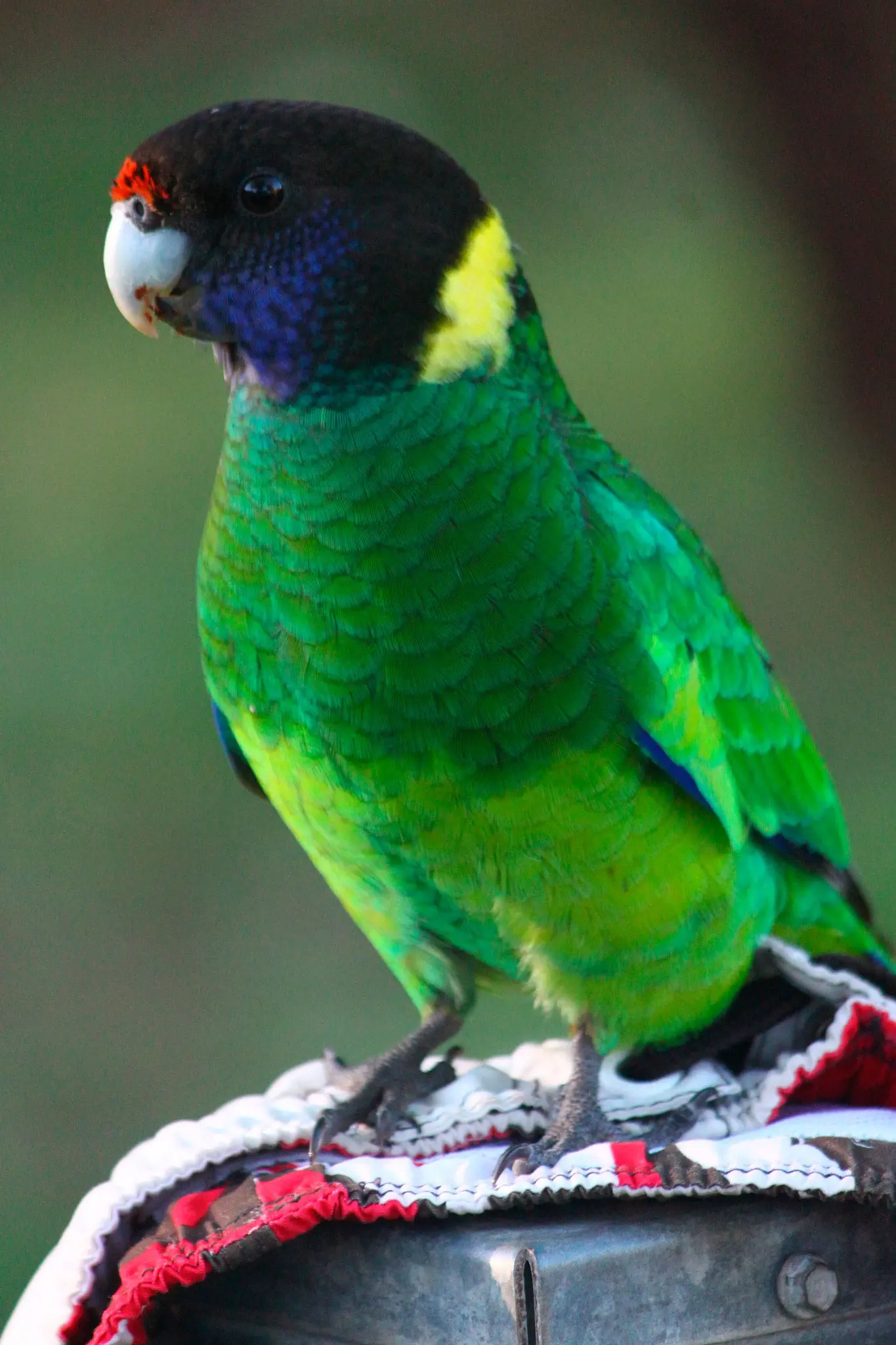
The male of the Rock Parrot (Neophema petrophila) has a band front of color blue dark that is surrounded by a small and striking edge blue marine. The blue becomes even a little bit behind the eye. The area between the eyes and ears, the region of the eye and the anterior part of the cheeks are Navy Blue. The upper part of the crown, the neck, the the mantle, the back, rump and covered wing are olive green. The cheeks, except the front edge, the region of the throat and the chest are olive-gray color. The belly, flanks, the thighs and anal region are opaque yellow.

The curvature of the wing and feathers of the median of the wings are Navy Blue. The flight feather are black with a dark blue marks.

The feathers of the uppertail-coverts are an olive green-brown color and the undertail yellow. The upper part of the feathers of the tail are matte blue streaked olive green. The bottom is dark gray. The irises the eye is dark brown, the bill is dark gray, the cere is brown, legs grayscale and nails dark grey.

The female: is very similar to the male, but its colors are more opaque, especially the blue. The frontal band is a little thinner.

The immature do not have the frontal band blue. The only decoration is a bare periophthalmic characteristic white.

2 subspecies

  • Neophema petrophila petrophila

    (Gould, 1841)


  • Neophema petrophila zietzi

    (Mathews, 1912)

Habitat:

The Rock Parrot they frequent the coastal dunes, mangroves, marshes, agricultural areas, lightly treed savanna, areas of mallee (Eucalytus slender), scrublands abound where the Salt plants (Atriplex). Also visit the coast, where small rivers flow into estuaries. They appreciate the plantations of casuarina and margins of brackish water bordering the coasts and rocky islets where nests are less susceptible to predation. Throughout the year, These birds do not deviate more than several hundred meters from the sea.

Large gatherings of the Rock Parrot, sometimes, There are land, When there is abundance of food. But, like most of Neophema, this parakeet can be hard to spot, and it will only be visible when you take flight due to some danger.

Their plumage is not anti-absorbente and often remains wet, which gives it a darker shade. They tend to use the same Burrows to the Pacific Shearwater (Puffinus pacificus), the 2 species sometimes have the same habits and the same mating rituals.

Reproduction:

The Rock Parrot reproduced from august to december, sometimes in February. Occasionally, There is a second litter.

The nest is placed in the crevice of a low cliff, on a facade or on some rocky ledge. Since relatively recently, they have come to nest on small islands of limestone, the entry hole is often hidden behind a curtain of vegetation.

Sometimes, abandoned Burrows of the Pacific Shearwater (Puffinus pacificus) they are used as a nest by the Rock Parrot. In other cases, These parakeets usurp active nests of the Paรญno Pechialbo (Pelagodroma marina).

Spawning contains 4 or 5 eggs and your incubation lasts a few 18 days. The chicks are altricial and stay in the nest during 30 days.

Food:

The Rock Parrot are, above all, vegetarian. They like to eat cultivated seeds, fruits and a variety of herbs. They also eat young shoots, shrubs and plants that are tolerant of saline environments.

Distribution:

Size of the area of distribution (reproduction / resident): 1.700.000 km2

There are two separate populations by the Great Australian Bight, which does not offer the suitable coastal islands for nesting.

The Eastern population extends from about Robe, Southern Australia, in the East, to Nuyts archipelago, approximately 133 ยฐE in the west (although breeding records in Kangaioo Island, they have not been confirmed).

The Western population extends from Israelite Bay to archipelago of the Recherche.

In Western Australia, to the West around the Cabo Leeuwin and to the North of Shark Bay.

To the North of Perth the species nests in the continent, but in other parts, birds occupy the coastal islands, at least for breeding, also sometimes traveling from the Mainland to settle on the islands of the coast.

The population of the Rottnest Island on the coast of Perth suffered, in the past, illegal capture, but has grown rapidly in recent years.

The Rock Parrot they are considered common and partially nomadic residents throughout its area of distribution; so far, coastal islands have not been subjected to the same pressures of development than continental zones.

Conservation:


minor concern


โ€ข Current category of the Red List of the UICN: Least concern.

โ€ข Population Trend: Decreasing.

In accordance with Handbook of the Birds of the World, This species is not threatened at the global level. His surprising absence from the region of the Great Australian Bight It can be explained by the lack of sites available in which to nest. In these places, rocks are in fact very limited in number, so the nests bad are protected in the absence of rocks and crevices where they serve this species as a refuge against the attacks of predators. The Rock Parrot they prefer to nest on the islets off the coast, Surely in order not to deal with rats, foxes, cats, lizards, monitors and monitor lizards.

Its population is estimated above of the 20,000 individuals.

"Rock Parrot" in captivity:

The Rock Parrot they are extremely rare in captivity and is likely to be more present in the aviaries of Europe.

In Australia they are only in the hands of some fans.

These parrots are extremely slow, within the genus Neophema, is the least active, so these birds tend to the Obesity, which is very damaging for the fertility.

The Rock Parrot they are birds peaceful in the nature, that make noise. They are birds that they spend too much time on the ground and they bathe regularly. The first generations in captivity will be very susceptible to various infections, including, among others, intestinal parasites. These birds also regularly die without apparent reason.

Alternative names:

Rock Parrot, Rock Elegant, Rock Elegant-Parakeet, Rock Grass-Parakeet, Rock Parakeet, Western Rock-Parrot (ingles).
Perruche des rochers, Perruche pรฉtrophile (French).
Klippensittich (German).
Periquito-da-rocha (Portuguese).
Papagayo de las Rocas, Periquito Roquero (espaรฑol).

scientific classification:

John Gould
John Gould

Order: Psittaciformes
Family: Psittaculidae
Genus: Neophema
Scientific name: Neophema petrophila
Citation: (Gould, 1841)
Protonimo: Euphema petrophila

Images "Rochequet Paraquito":

Videos "Rock Parrot"

————————————————————————————————

"ROQUERO PARQUITO" (Neophema petrophila)


Sources:

Avibase
– Parrots of the World โ€“ Forshaw Joseph M
– Parrots A Guide to the Parrots of the World – Tony Juniper & Mike Parr
Birdlife

Photos:

(1) – A Rock Parrot with grass seed in rain near Cape Leeuwin Lighthouse, Cape Lioness, Western Australia, Australia By Cas Liber (CAs Liber) [Public domain], via Wikimedia Commons
(2) – A Rock Parrot at Greens Pool, Western Australia, Australia By butupa (IMGP8254Uploaded by snowmanradio) [CC BY 2.0], via Wikimedia Commons
(3) – Neophema petrophila rock parrot free wallpaper in free pet category – free-pet-wallpapers
(4) – Neophema petrophila free wallpaper in free pet category – free-pet-wallpapers
(5) – Grass Parrots {Neopherma} – myparrots

โ–ท The world of Pets: Dogs, cats, birds, reptiles, amphibians

Yellow-fronted Parrot
Poicephalus flavifrons


Lorito Carigualdo

Content

Description:

28 cm.. length and a weight between 140 and 205 g..

The Yellow-fronted Parrot (Poicephalus flavifrons) has the forecrown, crown, lores, the cheeks and ear-coverts bright yellow, often with an orange colour wash; small area with yellow feathers around the cheek, often with a tinge of Brown-grey color.

The feathers of the nape, the mantle and scapulars dark green with paler areas and most brilliant green margins; rump and uppertail-coverts clearer and more brilliant green as the rest of upper parts.

Upper, the coverts dark green green with light green margins, sometimes with yellow at the edge of the wing and at the base of the primary coverts most important.

The primaries and secondaries brown in color with narrow paler margins on the vane outer. Chin and the thighs sometimes sprinkled with yellow; lower parts of bright green uniform.

Tail blackish brown.

upper jaw blackish gray, lower whitish; irises orange-red; legs brownish-grey.

The mask of the females they lack the Orange wash.

Immature as adults, but the mask is olive green, not yellow.

Habitat:

The Yellow-fronted Parrot, generally, they live in the forests of Juniperus and Podocarpus, at altitudes between 1,800 and 2,900 m, mainly in trees of the genus Hagenia, that are above the 2.900 m. Also found in forest clearings, with Ficus trees intermingled in areas of cultivated plateau and in gallery forests of Acacia savanna. Also in riparian forests of acacias and Ficus, a partir de los 800 m.

Occasionally visit urban areas, for example, gardens and parks in Addis Ababa.
Usually seen in pairs, small groups of relatives or in flocks of up to 20 birds; often in mixed flocks with the Black-winged Lovebird (Agapornis taranta).

The Yellow-fronted Parrot, probably, they use the same products trees every night.

Reproduction:

Breeding habits largely unknown, but it is suspected that nest usually in tree cavities.

The time of incubation is of 28 days. The birds fly from the nest after a few 80 days after the hatching. Even then, by generating it,l feed on the parents until its full independence.

Food:

Your diet, is created that it consists of grains, seeds and fruits. They have also been seen consuming ripe fruits of Dovyalis abyssinica.

Considered a crop pest in some areas, Although of little importance.

Distribution:

Size of its range (breeding/resident): 395.000 km2

Endemic to the Highlands of the West of Ethiopia, Although its exact range is unclear.

Common in wooded areas; more common in the upper parts, to the North of its distribution area.

Probably sedentary Although there have been some periodic movements in Addis Ababa.

Conservation:


minor concern


โ€ข Current Red List of UICN: Least concern

โ€ข Population trend: Stable

The size of the world's population has not been quantified, but the species is reported from frequent to common. It is considered more common in northern parts of its range. (pit et to the. 1997).

The population is suspected to be stable in the absence of evidence of any reduction or substantial threats.

"Yellow-fronted Parrot" in captivity:

It is a kind rare in captivity outside Ethiopia. No hay datos de su reproducciรณn.
Las hembras son prรกcticamente imposibles de conseguir.

Alternative names:

Yellow-faced Parrot, African Yellow-faced Parrot, Yellow fronted Parrot, Yellow-fronted Parrot (English).
Perroquet ร  face jaune (French).
Schoapapagei, Schoa Papagei (German).
Papagaio-de-cara-amarela (Portuguese).
Lorito Carigualdo, Lorito de Cara Amarilla (espaรฑol).

scientific classification:

Order: Psittaciformes
Family: Psittacidae
Genus: Poicephalus
Scientific name: Poicephalus flavifrons
Citation: (Rรผppell, 1842)
Protonimo: Pionus flavifrons

Images "Lorito Carigualdo":

Videos "Yellow-fronted Parrot"

————————————————————————————————

ยซParquet-facedยป (Poicephalus flavifrons)


Sources:

Avibase
– Parrots of the World โ€“ Forshaw Joseph M
– Parrots A Guide to the Parrots of the World – Tony Juniper & Mike Parr
– Birdlife

Photos:

(1) – An adult Yellow-headed Parrot near Bishangari Lodge, Ethiopia By Peter Wilton (Yellow-fronted Parrot) [CC BY 2.0], via Wikimedia Commons
(2) – exploriada.com
(3) – Merenkurkun Lintutieteellinen Yhdistys r.y
(4) – Yellow-fronted Parrot. Photo by Hakan Pohlstrand – Birds of the Bale Mountains National Park
(5) – PET FORO DE VIETNAM

Sounds: Andrew Spencer (Xeno-canto)

โ–ท The world of Pets: Dogs, cats, birds, reptiles, amphibians

Derbyan Parakeet
Psittacula derbiana


Cotorra de Derby

Content

Description:

50 cm.. of length and a weight of 320 g..

The Derbyan Parakeet (Psittacula derbiana) has the crown and lower cheeks lavender blue with pale iridescent blue shading on the forecrown and pale green bright in the upper cheeks and periophthalmic region; narrow black stripe that extends horizontally from the eyes to the area above the bill; spacious malar stripes (ยซmoustacheยซ) Black fuse next to the chin to create a great patch.

Since the nape until uppertail-coverts green, bright in the the mantle. Upperwing-coverts Green with yellow or marginalized feathers with yellow in median and greater coverts, creating distinct pale patch. The primaries and secondaries emerald green.

The underparts to belly lavender-bue; the thighs, vent and undertail-coverts grass-green. Uppertail centrally blue, outer feathers Blue in vane outer, green on inner.

Ilustraciรณn Cotorra de Derby

upper jaw red tipped yellow, the lower black; cere blue-gray, irises straw-colored; legs dark grey.

The female has the bill black.

The immature they have the head green and the underparts much paler.
The very young birds has bill pink, turning black later and then red again in males.

Habitat:

Observed in forest, between 1.250 and 4.000 meters above sea level. It is thought that you can make vertical migration seasonal. Views in the Tibet in 3.300 m, even in winter.

According to reports, have priority for coniferous forests or mixed forests of Pinus and Quercus, also of Alpine growth as the rhododendron. Visit valleys culture, especially during harvest.

Gregaria, usually seen in noisy flocks of up to several dozen birds. Only rarely are in pairs or individually.

Reproduction:

Holes for their nests they are located in tree hollows, usually at a certain height, commonly in a himalayan poplar Populus ciliata.

The breeding they performed it during the month of June.

The put in captivity is between 2 and 5 eggs.

Food:

Reported foods include barley, the corn, catkins of Populus ciliata, cones of Pinus tabulaefornis and fruit grown according to availability, including peaches; they can be highly destructive crops. It is believed that they may eat some invertebrates, Hoja-brotes and berries.

Distribution:

Distributed by the Of the Himalayas and South of the Tibetan plateau. Since Arunachal Pradesh and Assam, India, to the southeast of Tibet and Southwest China in Sichuan Western fence of 32 ยฐN and west of Yunnan to the South up to around Tengchong to 25 ยฐ N.

Visitors during the summer in the northeast of the India (May-September). Resident elsewhere, apparently with some seasonal altitudinal movements.

Usually common. Live birds traded in small numbers with a modest population captive outside their area of distribution.

Conservation:

State of conservation โ“˜


Near-threatened Near Threatened โ“˜ (UICN)โ“˜

โ€ข Current Red List of UICN: Near-threatened

โ€ข Population trend: Decreasing

The population of the Derbyan Parakeet It is suspected that it may be suffering a moderately rapid decline mainly due to the pressure that is subjected , not only due to its continuous capture for the cage bird trade, but also by the indiscriminate felling of trees in the nest, together with evidence of local extinctions and declining birds in some parts of its area of distribution.

Threats:

    – This species was previously threatened by deforestation campaigns, that it resulted in, loss of much of their breeding habitat; However, This threat ended in the Decade of 1990 (Zeidler and Francis 2011).

    – Today, Middle-aged trees, some of which provide the perfect place for the construction of the nest, they are being felled for the construction of housing and firewood, even in protected forests (Zeidler and Francis 2011).

    – Recent observations indicate that this species is subject to a strong pressure catch and the collection of eggs for the pet trade (J. Eaton in litt. 2010, Zeidler and Francis 2011).

    – The collection of eggs and subsequent incubation, for the breeding of Derby Parrots and subsequent sale, is very organized in some areas (Zeidler and Francis 2011).

    – The species is sold openly and are kept, in large numbers, as a pet in its natural distribution area (J. Eaton in litt. 2010, J. Hornskov in litt. 2010, Zeidler and Francis 2011).

Actions of conservation in CITES Appendix II course.:

    – Is listed in Schedule I of the law of 1972 for nature (Protection) on India (The India Government, 1993) and the collection for the pet trade is illegal in China (Zeidler and Francis 2011).

    – In some areas, as the Shachong valley (Szechwan), the monks provide protection for wildlife, including trap activities (Zeidler and Francis 2011).

Conservation Actions Proposed:

    – Population trends and monitor hunting pressure.

    – Addressing the threat of trade through the application of the legislation and awareness-raising activities.

    – Steadily increase the number of sites that are protected.

    – Support monks engaged in activities for the protection of wildlife (Zeidler and Francis 2011).

    – Evaluate the effectiveness of a scheme of nest boxes (Zeidler and Francis 2011).

"Derbyan Parakeet" in captivity:

The Derbyan Parakeet is a pet very popular at the local level due to the wonderful color of its plumage, his intelligence and its excellent speaking skills, that distinguishes it from other Asian parrots, usually you do not have that voice clarity.
While these parrots do not have the ability to learn an extensive vocabulary, his manner of speaking looks like the speech of Amazon parrots. Having said that, there are never guarantees that a Derbyan Parakeet you will learn to speak, but most do – even the females.

It is a bird that needs much stimulation. She loves to chew and can be very destructive, provided that provide it a variety of toys to chew, It will inhibit its destructive behavior and avoid his boredom.

It is a species with demand among farmers for several reasons, including its striking plumage, its ease of reproduction and its excellent parenting skills.

The
Derby Parrot reach sexual maturity between the 2 and 3 years of age. It reported that it may reach sexual maturity later in nature, possibly to the 5 years.

The typical breeding season It will begin in April or June and average clutch sizes are of 2 – 4 eggs. The incubation period lasts 23 – 28 days, and the chicks leave the nest to the 8 to 9 weeks of age.

The Derbyan Parakeet It must be kept in an Aviary, or in a large cage, providing a daily time flying out. They are social birds and like to be โ€œpart of a flock.โ€ – which could be a group of birds in an aviary environment or a human family.

It requires much interaction to keep its meekness. By nature, it is a shy bird to human contact, Although considered usually placid compared to some other parrots.

If they are kept outdoors they may require periodic deworming – since they spend considerable time at the bottom of your aviaries or cages. Because of this habit, they are also susceptible to fungal infections. Good hygiene is especially important to keep healthy this Parrot.

Even so, the Derby Parakeet is a rare bird outside its range and with limited breeding.

Alternative names:

Derbyan Parakeet, Chinese Parakeet, Lord Derby’s Parakeet, Upper Yangtze Parakeet (English).
Perruche de Derby (French).
Chinasittich (German).
Periquito-da-china (Portuguese).
Cotorra de Derby, Cotorra Verde China (espaรฑol).

scientific classification:

Order: Psittaciformes
Family: Psittaculidae
Genus: Psittacula
Scientific name: Psittacula derbiana
Citation: (Fraser, 1852)
Protonimo: Palaeornis Derbianus

Derbyan Parakeet images:

Videos "Derbyan Parakeet"

Derbyan Parakeet (Psittacula derbiana)


Especies del gรฉnero Psittacula

Sources:

Avibase
– Parrots of the World โ€“ Forshaw Joseph M
– Parrots A Guide to the Parrots of the World – Tony Juniper & Mike Parr
– Birdlife

Photos:

(1) – A pair of Lord Derbyโ€™s Parakeet (also known as Derbyan Parakeet)s at Wilhelma Zoo, Stuttgart, Germany By krislorenz (_DSC2098Uploaded by Snowmanradio) [CC BY-SA 2.0], via Wikimedia Commons
(2) – A male Derbyan Parakeet (also known as Lord Derbyโ€™s Parakeet) in Hangzhou, Zhejiang, China By Michael Vito from South Orange, NJ, USA (Hangzhou RevisitedUploaded by Snowmanradio) [CC BY-SA 2.0], via Wikimedia Commons
(3) – An adult male Derbyan Parakeet at Shenlong Eco Park, Peopleโ€™s Republic of China By Doug Janson (Own work) [CC BY-SA 3.0 or GFDL], via Wikimedia Commons
(4) – A male Lord Derbyโ€™s Parakeet (also known as Derbyan Parakeet) in an aviary By Richard J. Blach (Own work (Original text: eigene Fotografie)) [GFDL or CC-BY-SA-3.0], via Wikimedia Commons
(5) – Derbyan Parakeet (Psittacula derbiana) at Wellington Zoo, New Zealand. A male bird showing red beak by Peter Halasz – Wikipedia
(6) – Psittacula derbiana, drawing from nature by J. Gould & H.C. Richter By JoJan (Own work) [CC BY 3.0], via Wikimedia Commons

Sounds: jon hornbuckle (Xeno-canto)

โ–ท The world of Pets: Dogs, cats, birds, reptiles, amphibians

Blue-crowned Conure
Psittacara acuticaudatus


Blue-crowned Conure

Content

Description:

33-38 cm.. length and a weight between 170 and 176 g..

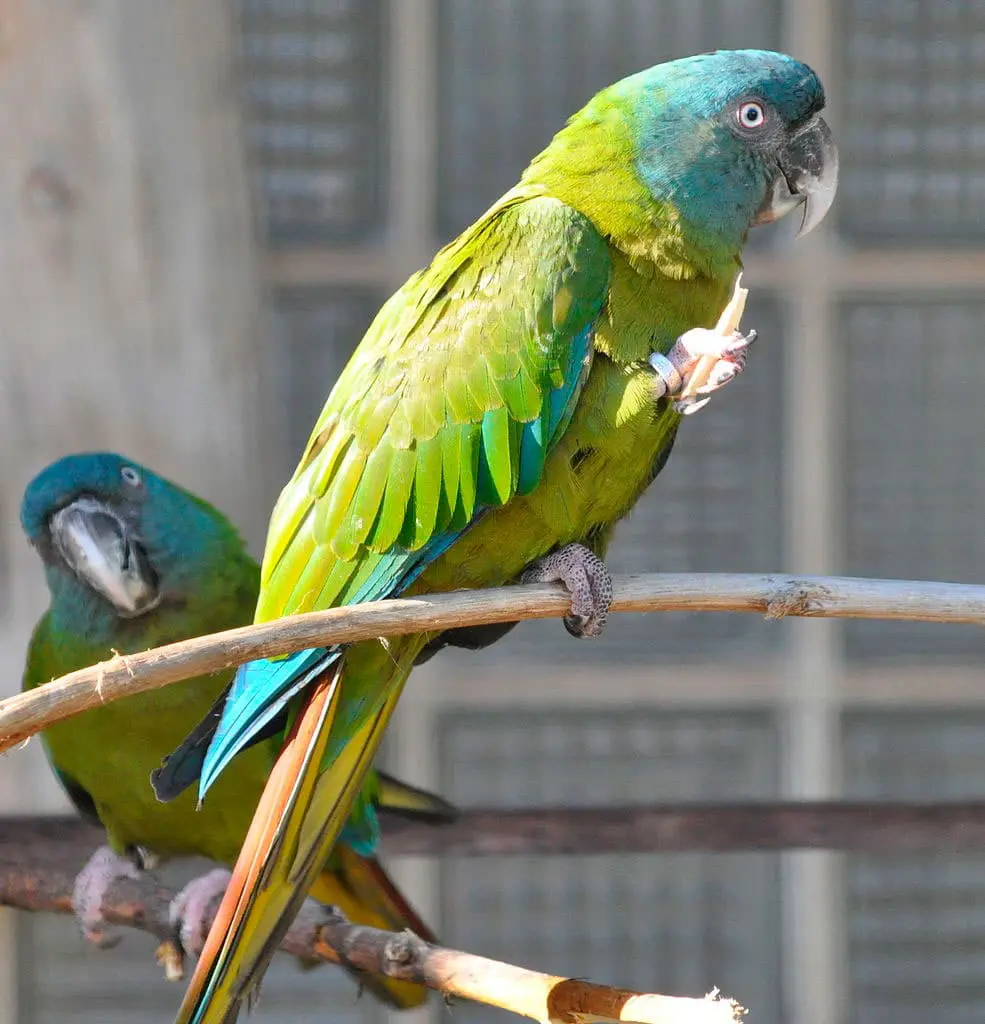
The Blue-crowned Conure (Psittacara acuticaudatus) It is one of the largest of the genus birds Aratinga. elongated body, and long tail gradada, equal to all the Aratinga.

You have the front of the crown, the forecrown, the cheeks and lores pale bright blue. The sides of the neck, the nape, the the mantle, scapulars and back are bright green; the rump and uppertail-coverts are green pale. Upperwing-coverts bright green; alula with blue dye.

Anatomy-parrots Primaries and secondaries green above, with pinkish tinge in the vane inner, olive gold below. Underwing-coverts green.

The underparts are pale green with shades of olive green; some feathers of the chest drenched blue. Upper, the tail green color in the vane outer, red brick in the vane inner with fusion of opaque green tips; undertail, the tail Red, distally faded to pale brown brick.

Ilustraciรณn Aratinga Cabeciazul

Rosacea the upper jaw, greyish the lower; nude orbital region creamy white; irises yellowish-orange; legs pale pink.

Sexes similar in plumage.

The immature has the blue color of the head restricted to the forecrown and to the crown, no blue tint in the chest. The copies juveniles of the nominal species has bill a paler tone.

Subspecies description
Subspecies

A more thorough research is needed to assess the taxonomic status of this species. The date of the original publication of the subspecies koenigi It is discussed; This and the use of nigrirostris apparently synonymous (by the same author) requires clarification. Five recognized subspecies.

  • Psittacara acuticaudatus acuticaudatus

    (Vieillot, 1818) – The species nominal


  • Psittacara acuticaudatus haemorrhous

    (Spix, 1824) – Both jaws pale pink, underparts bright green and blue of the head narrower that the of the nominal species.


  • Psittacara acuticaudatus koenigi

    (Arndt, 1995) – Similar to the subspecies ยซharmorrhousยซ, but with the vane inner at the bottom of the the tail feathers less reddish brown. Smaller (34 cm.).


  • Psittacara acuticaudatus neoxenus

    (Cory, 1909) – Similar to the subspecies ยซhaemorrhousยป but bluish-green in color chest and the belly; smaller than other subspecies except ยซkoenigiยป (34cm.).


  • Psittacara acuticaudatus neumanni

    (Blake & Traylor, 1947) – Only the forecrown, the lores and the front of the crown, are blue, Green the rest of the head.

Habitat:

Video – "Blue-crowned Conure"

Lolita. Aratinga acuticaudata

The Blue-crowned Conure they live in dry deciduous forests and open habitats including habitats semi-desiertos associated. Registered in the caatinga and the closed with vegetation of Palms Mauritia in the northeast of Brazil, in gallery forest Venezuela and Colombia, deserts in Bolivia, and pampas in Argentina; Also cultivated areas and grassland in dry forest areas.

In general, they live in the lowlands (400 m in Colombia, 600 metres in Venezuela), but ascend to 2650 m in Bolivia, in leguminous forest habitats with columnar cacti.

Usually, in pairs or small flocks, but with larger aggregations outside the breeding season, especially where is food abundant, resulting in considerable local movement and consequent fluctuations in local bird numbers.

In some places, birds roost in crevices of the rocky cliffs. Observed in association with the Mitred Parakeet (Psittacara mitratus) and White-eyed Parakeet (Psittacara leucophthalmus).

Reproduction:

Nest in high tree cavities, among the cultivated species are included as the Mango wave guava; in some areas nested in the cavities of the cliffs sandstone.

The egg laying, generally three to four, takes place in December in Paraguay and Argentina; the brood probably between the months of March and July in Venezuela.

The female incubated eggs during 26 days, and chicks they leave the nest a few 52 days after birth.

Food:

The Blue-crowned Conure they feed in the trees in bushes, and also in land.

Reported foods that make up their diet include seeds of sorghum and Bambusa, berries of Condalia lineata, fruit of Cactus and crops as the Mango Mangifera, possibly also feed on of insects.

Distribution:

Its distribution is discontinuous and wide much of South America. Can be observed in several separate populations from Venezuela to Argentina. One of the largest areas of distribution extends from the northeast of Colombia (to the southeast of the Andes to Department of Meta), including the Guajira Peninsula and Sierra Nevada de Santa Marta in the Northwest of Venezuela to the East of Monagas (including the Margarita Island) and South to the North of Bolรญvar.

A second population of the Blue-crowned Conure resides in the Northwest of Brazil, to the East of Piauรญ, North of Bay, Pernambuco and Alagoas. A third You can see from the East of Bolivia and West of Mato Grosso, Brazil, even more to the South, through Paraguay and South of Argentina until The Pampa and southwest of Buenos Aires, perhaps also some individuals in the West of Uruguay.

Pretty common in Colombia. Frequent in Venezuela, although the abundance of birds varies with the season. From just frequent up to quite common in Bolivia. In Northeast Brazil It is most abundant in some locations Parrot. Of common to quite common (but possibly in decline) in the North of Argentina.

Possibly extinct or very rare in West Uruguay. In the Margarita Islands very few examples (between 100 and 200 birds released) the loss of habitat due to tourism, his capture as a domestic fowl, and due to their predation by rats.

There are a large number of specimens in captivity (more than 94.000 birds were exported from Argentina in the period between 1985-1990).

Subspecies distribution
Subspecies

Conservation:

State of conservation โ“˜


minor concern Minor Concern โ“˜ (UICN)โ“˜

โ€ข Red List category of the UICN current: Least concern

โ€ข Population trend: Decreasing

The size of the world population It has not been quantified.

The Blue-headed Parakeet is common in most of its distribution. But like almost all species of parrots, It is threatened by deforestation and the degradation of the habitat.

Some subspecies, in particular the ยซPsittacara acuticaudatus neoxenusยป are threatened by cage bird trade. Since 1981 When it was included in the Appendix II, 193,299 individuals were captured in the wild and reported for international trade (UNEP-WCMC trade database CITES, January 2005).

The predation of nests seen as a threat by the rats. But, the Blue-crowned Conure is not considered threatened by now.

"Blue-crowned Conure" in captivity:

Birds are very sociable, very attached to their owners. It is also known have to imitate the human voice, able to learn some words and short sentences.

With regard to its longevity, according to sources, a specimen lived for 31 years in captivity

Its feeding in captivity it is omnivorous and varied, will include sunflower and pumpkin seeds, Tender corn, Green peanuts, oats, wheat, caรฑamones, In addition to fruits and vegetables: Apple, pear, banana, lettuce, Escarole, etc. During the breeding and fattening, You will be offered biscuit paste and egg yolk.

Paulie

Until the release of the movie ยซPaulieยซ, It presented a Blue-crowned Conure, This species was one of the secrets better kept in poultry production.

Alternative names:

Blue-crowned Conure, Blue crowned Parakeet, Blue-crowned Parakeet, Sharp-tailed Conure (English).
Conure ร  tรชte bleue, Conure ร  front bleu, Perriche ร  tรชte bleue, Perruche ร  tรชte bleue (French).
Spitzschwanzsittich (German).
Periquito-de-cabeรงa-azul, Aratinga-de-testa-azul, Aratinga-de-testa-azul / Periquitรฃo, jandaia-de-cabeรงa-azul, maracanรฃ, periquitรฃo, periquito-de-bico-rosa, periquito-de-pรฉ-rosa (Portuguese).
Aratinga Cabeciazul, Calacante comรบn, Calancate, Calancate Comรบn, Loro Cabeza Azul, Maracanรก cabeza azulada, Perico Frentiazul, Periquito de Cabeza Azul (espaรฑol).
Calacante comรบn, Calancate, Calancate Comรบn (Argentina).
Calancate (Bolivia).
Loro frentiazul, Perico Frentiazul (Colombia).
Maracanรก cabeza azulada (Paraguay).
Loro Cabeza Azul (Uruguay).
Carapaico, ร‘angaro (Venezuela).
Marakana, ร‘endai (Guarani).

scientific classification:

Order: Psittaciformes
Family: Psittacidae
Genus: Psittacara
Scientific name: Psittacara acuticaudatus
Citation: (Vieillot, 1818)
Protonimo: Psittacus acuticaudatus

  • Clements, version 2017: Thectocercus acuticaudatus

Images Blue-crowned Conure:


Species of the genus Psittacara

Sources:

  • Avibase
  • Parrots of the World โ€“ Forshaw Joseph M
  • Parrots A Guide to the Parrots of the World – Tony Juniper & Mike Parr
  • Birdlife

  • Photos:

(1) – Blue-crowned Parakeet, Blue-crowned Conure, or sharp-tailed conure (Aratinga acuticaudata) By John Graziano en:user:Gnocchi [GFDL, CC-BY-SA-3.0, GFDL or CC-BY-SA-3.0], via Wikimedia Commons
(2) – Blue-crowned Parakeet (also known as Blue-crowned Conure and Sharp-tailed Conure) in the square of the small village of San Isidro, Santa Cruz dept, Bolivia By Hรฅkan Sandin [CC BY-SA 2.0], via Wikimedia Commons
(3) – Feral Blue-crowned Parakeets (also knows as Blue-crowned Conure and Sharp-tailed Conure) in Miami, Florida, USA By Kevin from Rotterdam, The Netherlands (threesomeUploaded by Snowmanradio) [CC BY 2.0], via Wikimedia Commons
(4) – A feral Blue-crowned Parakeet in Pompano Beach, Florida, USA By John Spade from Pompano Beach, USA (Guava ThiefUploaded by snowmanradio) [CC BY 2.0], via Wikimedia Commons
(5) – Blue-crowned Parakeet, Blue-crowned Conure, or sharp-tailed conure (Aratinga acuticaudata) By Richard (originally posted to Flickr as Looking at you!) [CC BY 2.0], via Wikimedia Commons
(6) – Conurus acuticaudatus = Aratinga acuticaudata (Blue-crowned Parakeet) Marc Athanase Parfait Oeillet Des Murs [Public domain], via Wikimedia Commons

โ–ท The world of Pets: Dogs, cats, birds, reptiles, amphibians

Tepui Parrotlet
Nannopsittaca panychlora

Cotorrita de tepuy

Content

Description:

Tepui Parrotlet

The Tepui Parrotlet (Nannopsittaca panychlora) measured between 14 and 15,7 cm.. height. Small size, with wings sharp and tail cut and wedge.

The head It is green with yellow tinge olivรกceo; the eye area is yellow, color extending below and behind the eyes. The upperparts they are green (brighter and less than olivรกceo head). Upperwing-coverts green. Flight feathers blackish green tipped primary, brownish opaque below; INFRACA-wing coverts green. The underparts yellowish green turn yellow-green in the undertail-coverts. Upper, the tail is green; undertail, yellower. Bill grey; cere grey; Bello to singr dark gray; irises brown; legs Rosaceae.

Both sexes are similar; the female has the forecrown Off-white to yellowish.

Habitat:

They inhabit moist montane forests. in tropical and subtropical highlands, sometimes in the rainforest of the lowlands around tepuyes, generally 750-1,850 m (Gran Sabana), although they observed at the top of Auyantepui to 2,200 meters and near the summit Monte Roraima A 2,200 m; to 750-950 metres in Sucre.

Can reproduce in subtropical and tropical zone descend to feed. Recent records in the view of birds in the lowlands suggest at least seasonal aparienciones at lower altitudes. Fly very high, fast and straight, in compact flocks of 6 to 150 individuals. Itร‚ยดs resident but it shows seasonal migrations.

Reproduction:

Sleeps and nests in Tepuis. Not much more information about the reproduction of this species in the wild.

Food:

In their natural habitats, the Tepui Parrotlet normally eat fruits, seeds and small insects.

Distribution:

Size of the area of distribution (reproduction / resident): 486.000 km2

Mainly montana, It is distributed in several scattered populations in eastern Venezuela and the adjacent area of รขโ‚ฌโ€นรขโ‚ฌโ€นwestern Guyana; concentrated in Gran Sabana from the east of Bolรญvar in Venezuela (for example, Montes Roraima and Auyantepui); It is also present around the meseta del Duida and the lowlands of Ventauri River, amazon, and in the West of Guyana from the area Camaran River; a more distant population occupies the Paria Peninsula (for example, the Monte Papelรณn), Sucre, to the northeast of Venezuela. Probably you can be observed at the north end of Roraima, Brazil.

Apparently locally common and stable, but perhaps it diminished in Paria peninsula due to large-scale deforestation. Much of the range is included in Canaima National Park.

Conservation:

State of conservation โ“˜


minor concern Minor Concern โ“˜ (UICN)โ“˜

โ€ข Current category of the Red List of the UICN: Least concern.
โ€ข Population trend: Stable.

Justification of the population

The size of the world population It has not been quantified, but this species is described as ยซquite common, but unevenly distributedยป (Stotz et to the., 1996).

Justification of trend

It is suspected that this species has lost 6,9-11,6% of habitat within its distribution over three generations (15 years) starting from a model of deforestation Amazon (Soares-Filho et to the., 2006, Bird et to the., 2011). Given the susceptibility of the species to hunting and / or capture, It is suspected that its population decline by <25% during three generations.

"Tepui Parrotlet" in captivity:

Breeding in captivity outside of South America. It is intelligent, quiet and very sociable.
Can normally live about 20 years.

Alternative names:

Tepui Parrotlet, Tepui Parakeet, Tepui parrolet (English).
Toui des tรฉpuis, Toui tรฉpui (French).
Tepuisittich, Grรผnsperlingspapagei, Tepui Sittich (German).
Periquito-dos-tepuis, periquito-do-Tepui (Portuguese).
Catita Chirica, Cotorrita de tepuy, Cotorrita Tepuรญ (espaรฑol).
Chirica (Venezuela).

scientific classification:

Order: Psittaciformes
Family: Psittacidae
Genus: Nannopsittaca
Scientific name: Nannopsittaca panychlora
Citation: (Salvin & Godman, 1883)
Protonimo: Brotogerys [sic] panychlorus

Images of the "Tepui Parrotlet"

Video of the "Tepui Parrotlet"


Species of the genus Nannopsittaca

Tepui Parrotlet (Nannopsittaca panychlora)


Sources:

  • Avibase
  • Parrots of the World โ€“ Forshaw Joseph M
  • Parrots A Guide to the Parrots of the World – Tony Juniper & Mike Parr
  • Birdlife
  • Parrot Book, Parrots and macaws Neotropical

  • Photos:

(1) – Credit: ยฉ Scott Echols, DVM
(2) – Brotogerys panychlorus = nannopsittaca panychlora (color green) & Microcerculus ustulatus (color brown) By J G Keulemans (Ibis 1883 (Web)) [Public domain], via Wikimedia Commons

โ–ท The world of Pets: Dogs, cats, birds, reptiles, amphibians

Lilac-crowned Parrot
Amazona finschi

Lilac-crowned Parrot

Content

Description:


Anatomy-parrots

33 cm. head to tail and weighs on average 310 g..

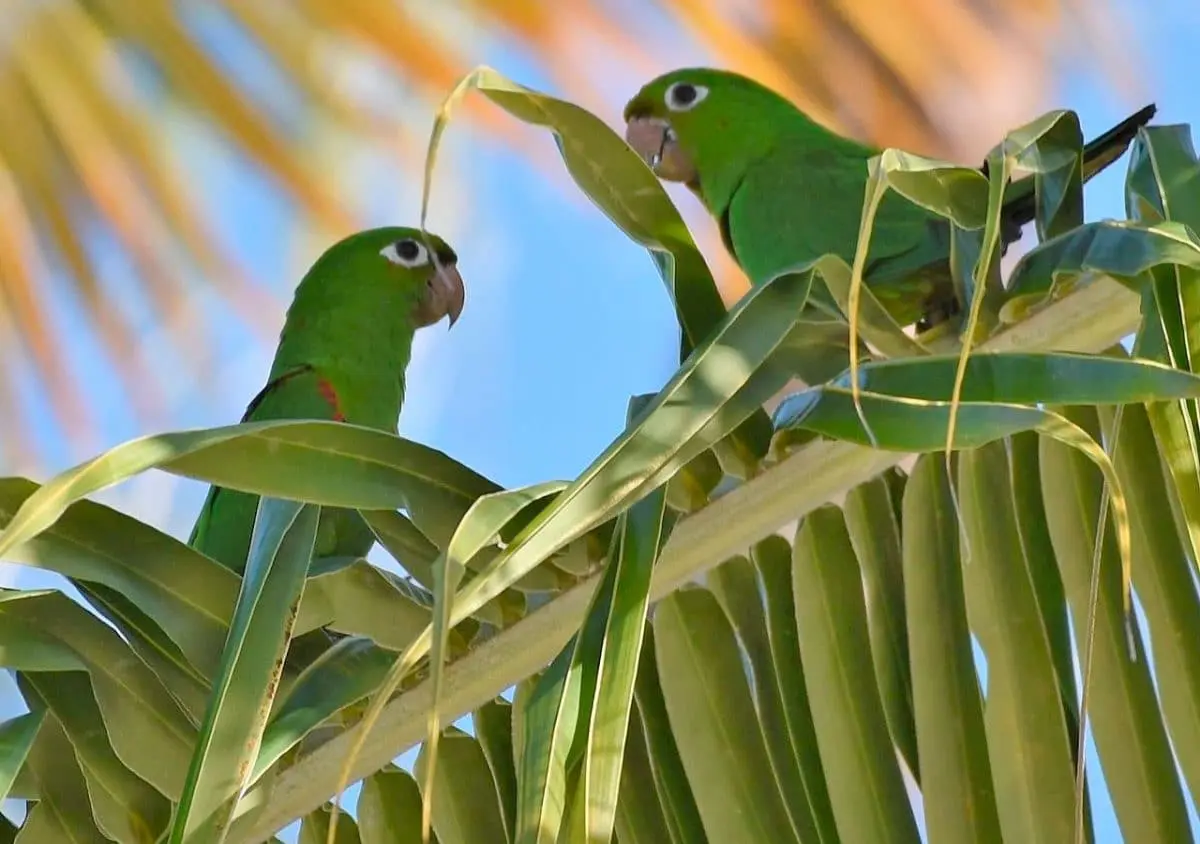
The Lilac-crowned Parrot (Amazona finschi) has the forecrown and the higher lords, red off; the lower lores, the cheeks and ear-coverts, pale lime green; crown, sides neck and nape, lilac or pale blue with some feathers crown showing narrow black margins.

Mantle green with broad black edges giving distinct scalloped effect; back and scapulars weak green with black borders to some feathers; rump and uppertail-coverts, green, slightly brighter than the back. Wing coverts green. Primaries blue toward the tip, green at the base; the base outerweb the first five secondaries, red with subterminal band yellow and blue tips, secondaries, otherwise, green, becoming blue at tips. Under the wings, brighter yellowish green; flight feather dull green.

Lilac-crowned Parrot

Throat yellowish green with bluish tint to some feathers; remaining underparts, yellowish-green with black margins to some feathers (especially in the chest), giving scalloped effect. Tail green tip yellowish green, lateral feathers blue margin to the base of the outerweb. Bill color horn; irises orange red; legs grey.

Both sexes are similar. Immature has the irises dark brown (rather than red).

  • Sound of the Lilac-crowned Parrot.

Habitat:

"Lilac-crowned Parrot"

Lilac Crowned Amazons (Amazona Finschi)

The Lilac-crowned Parrot Living mainly in wooded hills and mountains, from the tropical zone in the lower levels of the deciduous forests, to the forests of oak and pine-oak forest in the highlands, preferably through the valleys with lush vegetation along streams that run on the basis of cannons; often also in areas of arid or semi-arid vegetation, or clear forest edge, coming into cultivated areas and orchards adjacent to the forest.

mainly in altitudes of 600 to 2.000 m, but recorded at sea level Sinaloa and from sea level to the temperate forest Colima. observed between 360-1.700 metres in Sonora and 880-1.480 metres in Oaxaca. Usually in pairs or small groups, although larger groups are formed in the dry season (500 birds reported) and in communal roosts (more than 1,000 birds reported in the same place Nayarit).

Reproduction:

They nest in tree hollows (for example, Ficus), including old nests woodpeckers (for example, Phloeoceastes) or arboreal termite mounds.

The breeding season It comprises from February to June, nesting with a cycle consisting of 28 incubation days eggs, followed by two months of growth of chickens in the nest (Forshaw 1989, Renton 1998, 2002).

Food:

Eating habits are poorly documented: It has been observed a particular preference for figs. During the dry season the diet consists mainly of Astronium graveolens, Brosimum alicastrum, Celaenodendron mexicanum, Comocladia engleriana and Ficus insipida. during the rains The diet consists of species such as Caesalpinia pulcherrima, Celaenodendron mexicanum, Esenbeckia nesiotica, Jatropha spp and Sciadodendron excelsum (Renton 1998, 2001)

cause some crop damage corn and banana.

They have been observed wild species groups, feeding with the Red-crowned Parrot (Amazona viridigenalis) in Los Angeles, California.

Distribution:

Size of its range (breeding/resident): 372.000 km2

The Lilac-crowned Parrot inhabits Pacific coast of Mexico, from the southeast end of Sonora and Southwest Chihuahua, to the South by Sinaloa, Durango Western, Nayarit, Jalisco, Colima, Michoacรกn and Warrior, until Oaxaca, west of Isthmus of Tehuantepec.

It is mostly residents, but outside the breeding season, visit during autumn, lowlands, for example in Oaxaca. generally common. Described as fairly common locally in southeastern Sonora. abundant in Colima. Very rare in the highlands of Oaxaca. Several wild populations reported in several locations in the United States.

Conservation:

State of conservation โ“˜


Endangered Endangered โ“˜ (UICN)โ“˜

โ€ข Current category of the Red List of the UICN: In danger of extinction.

โ€ข Population trend: Decreasing.

โ€ข Population size : 4700-6700.

Rationale for the Red List category

    This species has been selected in danger of extinction because it is suspected that is decreasing very quickly as a function of contractions recorded ranges and due to the unsustainable exploitation and loss of habitat.

Justification of the population

    Renton and Elias (2003) estimate the world population between 7.000 and 10.000 individuals, based on surveys covering most of the global range of the species. This equates to approximately 4.700-6.700 mature individuals. An estimate that 5.400 individuals each year are caught illegally in Mexico (Cantu et al ., 2007), implies that the estimation of population Renton and Elias (2003) could be an understatement, but it remains in this evaluation to best data available.

Justification of trend

    It is suspected that the population of this species is in decline very fast, based on a study of Marin-Togo et al . (2012), who estimated the current distribution of this species along the Pacific coast of Mexico and he showed a reduction 72.6% its estimated original distribution.
Threats

โ€ข The Capture for national and international trade It is the greatest threat to wild populations.

โ€ข It is highly valued in trade (Cantu et al., 2007) and it was the kind of Amazon parrot most caught in the early eighties (Inigo-Elias y Ramos 1991).

โ€ข The illicit trade is intense and widespread, and Lilac-crowned Parrot It is one of the most frequently confiscated Mexican parrots (K. Renton in litt., 2005).

โ€ข During the period 1981-2001, were registered 4.061 individuals in international trade, of which 79% It was exported directly from Mexico and the 64% it took Nature (CITES 2004a).

โ€ข Remains one of the five species of Mexican parrots most caught, with an estimated 5.400 individuals / year caught illegally Mexico (Cantu et al ., 2007).

โ€ข Los Adults and young people are easily trapped in large numbers due to their habit of congregating at communal shelter sites in the late afternoon (Renton 2005, K. Renton in some 2005).

โ€ข Chicks are commonly poached from nests (K. Renton in litt., 2005).

โ€ข During interviews with local people throughout the range of the species, the 75% reported poaching in your area (K. Renton in litt., 2005).

โ€ข Also, it is said that this species requires semi-deciduous forest with tall mature trees for nesting and can not adapt to the changed areas nesting (Marin-worm Togo et al ., 2012).

โ€ข Habitat loss and degradation, mainly for conversion to small and large crops and pastures (K. Renton in some . 2007, A. Salinas in some . 2007, Ortega-Rodriguez and Monterrubio-Rico 2008), are serious threats, with the semi-deciduous forest along the Pacific coast lost at a higher rate than any other type of forest in Mexico (Masera et al ., 1996, K. Renton in litt., 2005), It is resulting in the destruction of nesting sites and reducing the extent of this crucial critical habitat (Renton 2005).

โ€ข In Michoacรกn, nesting areas potentially more accessible, as plains or hills, have been converted to livestock or agricultural farms (Ortega-Rodriguez and Monterrubio-Rico 2008).

โ€ข Large development projects, such as dams, also they resulted in loss of breeding habitat for the species (K. Renton in some ., 2007).

โ€ข The semi-deciduous forest now covers only 5.106 km2 within the range of the species (Renton and Elias 2003, K. Renton in litt., 2005).

โ€ข The decrease in rainfall that could result from the global climate change would lead to a decrease in the reproductive potential of wild populations in tropical dry forests (K. Renton in some ., 2007).

โ€ข Despite the various pressures on habitats, by showing that the species has disappeared from more than 70% of its former range, Marin-Togo et al. (2012), has reinforced the view that the capture pressure is the predominant threat to the species.

Conservation Actions Underway

โ€ข In 1999, the Mexican government established a Conservation Plan, Protection and Recovery Psitรกcinos in Mexico, in which the Lilac-crowned Parrot It is considered a priority species (Macias Caballero et al ., 2000).

โ€ข In 2004, the species was updated to Appendix 1 of CITES and in 2007 It approved a proposal to change its state species conservation 2008 of "threatenedยป a ยซin dangerยป under the Mexican wildlife law (K. Renton in some.)

โ€ข In Mexico, They have made considerable efforts to combat illegal domestic trade, with at least 52 seizures during 1997-2003 (CITES 2004b).

โ€ข Inspections carried out in Mexico They resulted in the seizure of 266 live individuals of the species that were offered illegally in the pet trade between 1995 and 2003 (CITES 2004b).

โ€ข The species It is in three biosphere reserves; Sierra de รlamos-Rรญo Cuchujaqui flora and fauna protection area in Sonora meridional, and Reserva de la biosfera Chamela-Cuixmala and Biosphere Reserve Sierra de Manantlรกn, in Jalisco, and according to sources, It is distributed in seven other important bird areas; However, some of them lack official protection or conservation programs (CITES 2004a)

Conservation Actions Proposed

โ€ข Monitor the demographic trends through regular surveys.

โ€ข Monitor levels of destruction and degradation of habitat.

โ€ข Implement trade regulation strategies in the plan 1999.

โ€ข Carry out extension work and environmental education as described in the plan 1999.

โ€ข Perform the habitat conservation and recovery of wild populations as it recommended in the Plan 1999.

โ€ข Monitor the success of the strategies of the plan of 1999.

โ€ข Protect the rest of the tropical forest supports in areas where the slope is greater than 6 ยฐ: ideally all areas on steep slopes should be restored to forest, to provide habitat for all native wildlife (including the Lilac-crowned Parrot)

โ€ข Prevent soil erosion AND promote alternative economic activities in rugged coastal areas such as recreation and tourism. (Ortega-Rodriguez and Monterrubio-Rico 2008).

The Lilac-crowned Parrot in captivity:

Very popular as a pet throughout its area of distribution; It has cultural value as a pet or ornamental bird by its feathers; ability to imitate sounds and its tendency to form bonds with people; widespread in captivity internationally.

Currently protected by the Appendix 1 of CITES.

Each copy captive of this species which is capable of reproducing, should be placed in a well-managed breeding program in captivity and not be sold as a pet, with the objective of ensure their survival long-term.

Alternative names:

Finsch’s Parrot, Lilac crowned Parrot, Lilac-crowned Amazon, Lilac-crowned Parrot, Pacific Amazon, Pacific Parrot (English).
Amazone ร  couronne lilas, Amazone de Finsch, Amazone verte de Finsch (French).
Blaukappenamazone (German).
Papagaio-de-finsch (Portuguese).
Amazona de Corona Violeta, Amazona Guayabera, Loro Corona Lila, loro corona-lila, Loro Corona-violeta (espaรฑol).


scientific classification:

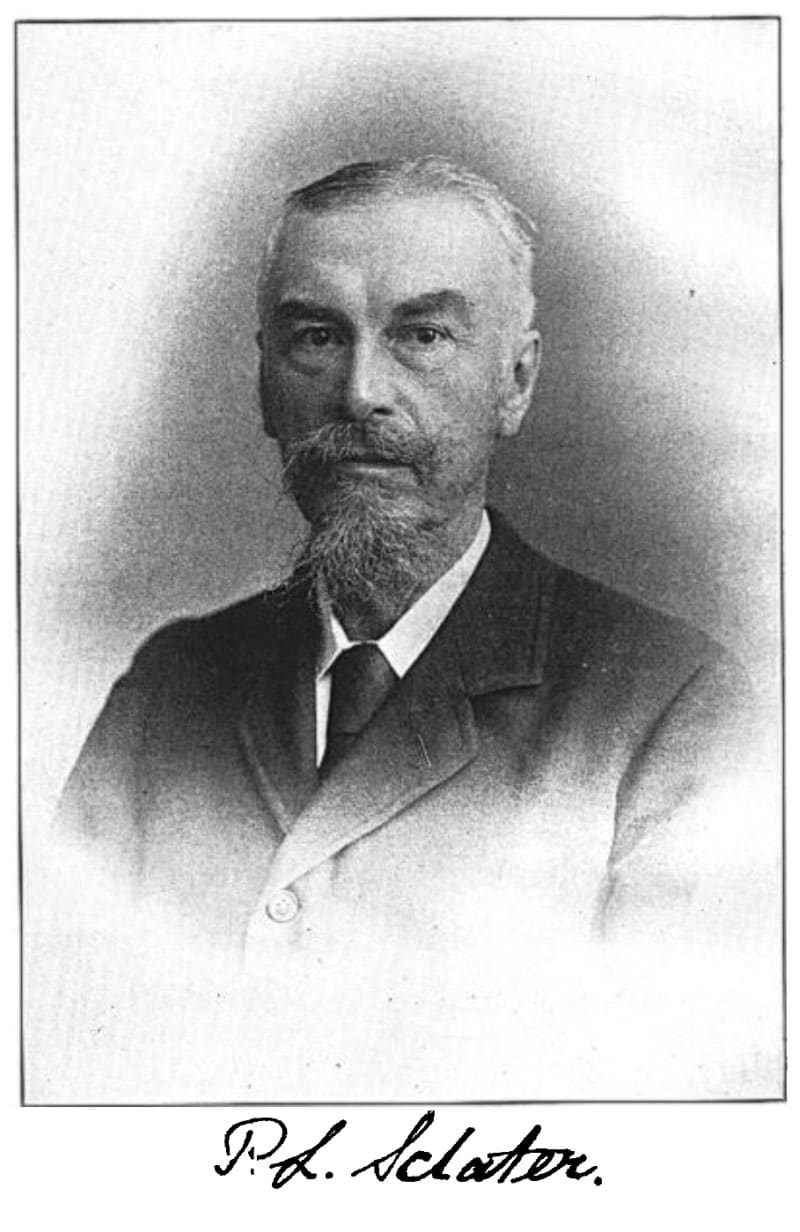
Philip Sclater
Philip Sclater

Order: Psittaciformes
Family: Psittacidae
Genus: Amazona
Scientific name: Amazona finschi
Citation: (Sclater, PL, 1864)
Protonimo: Chrysotis finschi


Images Lilac-crowned Parrot:


Species of the genus Amazona


Sources:

Avibase
Parrots of the World โ€“ Forshaw Joseph M
Parrots A Guide to the Parrots of the World – Tony Juniper & Mike Parr
Birdlife
Naturalist

Photos:

(1) – Lilac-crowned Parrot by Tom BensonFlickr
(2) – Lilac-crowned Amazon perching on a branch By Amazona_finschi_-perching_on_branch-8.jpg: Cรฉdric Allierderivative work: Snowmanradio [CC BY 2.0], via Wikimedia Commons
(3) – Lilac-crowned Amazon (Amazona finschi) by Emilie ChenFlickr
(4) – Lilac-crowned Parrot by wplynnFlickr
(5) – A pet Lilac-crowned Amazon; head and neck By Gary Denness (originally posted to Flickr as Pretty Boy) [CC BY 2.0], via Wikimedia Commons
(6) – Lilac-crowned Amazon; two in a cage By TJ Lin (originally posted to Flickr as DSCN0549) [CC BY-SA 2.0], via Wikimedia Commons
(7) – Lilac-crowned Amazon (Amazona finschi) By CDest [Public domain], via Wikimedia Commons
(8) – Lilac-crowned Amazon at the Arizona-Sonora Desert Museum, Tucson, Arizona, USA By DrStarbuck from Madison, WI, USA (Arizona-Sonora Desert Museum 18) [CC BY 2.0], via Wikimedia Commons
(9) – A Lilac-crowned Amazon at Arizona-Sonora Desert Museum, USA By Dave Bezaire & Susi Havens-Bezaire [CC BY-SA 2.0], via Wikimedia Commons
(10) – Amazona finschi Uploaded by Francisco_aviarioPhotobucket

Sounds: Richard E. Webster, XC353198. accessible www.xeno-canto.org/353198

โ–ท The world of Pets: Dogs, cats, birds, reptiles, amphibians

Slender-billed Parakeet
Enicognathus leptorhynchus

Slender-billed Parakeet

Content

Description:

40 to 42 cms. length and 200 to 250 g. of weight.
The Slender-billed Parakeet (Enicognathus leptorhynchus) has the lores, forecrown and a narrow ring feathers around the eyes bright crimson red; cheeks and sides neck, green; feathers of the crown, the nape, the the mantle and back, with dark green margins producing a scalloped effect (more pronounced in the crown, where the feathers are brighter and more emerald).

Scapulars, rump and uppertail-coverts They are green. Primary coverts green with blue suffusion; other coverts green. Flight feathers green-blue above with dark margins in innerwebs near the tips; light gray below. Underwing-coverts brighter yellowish green. Underparts yellowish green with patch dull red in centre of belly. Upper, the long tail red is off; greenish toward the tip; undertail, dull red suffused greyish.

Slender-billed Parakeet

The upper jaw It is dark gray with colored tip horn, the lower jaw is horn; Strait bare periophthalmic grey; irises orange-red; legs grey.

Both sexes are similar.

Immature darker, with the upper jaw shorter, less red in the face little or no red on belly.

  • Sound of the Slender-billed Parakeet.

Habitat:

Video – "Slender-billed Parakeet" (Enicognathus leptorhynchus)

CHOROY PARROT EATING

The Slender-billed Parakeet dwells in wooded areas, mainly Nothofagus and Araucaria, although they can be seen in more open cultivated fields or pastures, especially in winter. Its range is from sea level in winter to 2.000 meters in summer. Usually in flocks, of a few individuals to several hundred, even in breeding season; large communal concentrations sometimes composed of several thousand birds.

Reproduction:

Nests generally treeholes, often at a certain height and several couples using the same tree; very deep holes fill them with twigs to raise the base level. Occasionally nidifican in rock crevices, building the nest with twigs (for example, bamboo thicket This chusquea) if there is no tree cavities available. breeding season in November-December. Clutch 5-6 eggs.

Food:

Its diet It consists of seeds of wild and cultivated plants (They are sometimes considered a pest), including grains and thistles, seed cones araucaria (March April) open with its elongated peaks, acorns, seeds of Nothofagus and bulbous roots. generally place vigilantes while the rest of the birds feed.

Distribution and status:

Distribution area (breeding / resident): 195.000 km2

The Slender-billed Parakeet It is confined to the center Chile, from the South of Santiago through coastal lowlands and valleys on the slopes of hills peaceful, south to the Chiloe Island and maybe Palena River in the North of Aysen; They can also be seen in Isla Mocha off the southwest coast bio bio.

made some movements altitudinal seasonal, with moving from coastal lowlands to the foothills of the hills between spring and autumn bird (September-May).

Quite common, although in recent decades its population has suffered a decline due to, fundamentally, deforestation, his capture and the Newcastle disease.

Less frequent and perhaps only sporadic in the northern and southern ends of its range.

Caught locally as pets, although quite rare in captivity outside Chile.

Conservation:

State of conservation โ“˜


minor concern Minor Concern โ“˜ (UICN)โ“˜
  1. Current red list category of the UICN: Least concern.
  2. The population trend: Stable.
  3. Population size : Unknown.

(classified in Appendix II of CITES)

Justification of the Red List of the Category

This species has a range very large, and as a result does not approach the thresholds for Vulnerable under the range size criterion (extent of occurrence <20.000 km2). La tendencia de la population seems to be stable, and therefore the species does not approach the thresholds for Vulnerable according to the population trend criterion. (> 30% decrease of more than ten years or three generations). The population size It has not been quantified, but are not believed to approach the thresholds for Vulnerable based on population size criteria (<10.000 individuos maduros con una disminuciรณn continua estima en> 10% in ten years or three generations, or in a particular population structure). For these reasons, the species is evaluated as Least concern.

Justification of the population

The world population It has not been quantified, but the species according to sources is locally common (pit et to the., 1997).

Justification trend

The population suspected to be stable in the absence of evidence of any reduction or substantial threats.

"Slender-billed Parakeet" in captivity:

Virtually unknown until 1976.

It is a nice and noisy bird, whose docility and cunning behavior have meant it to be hunted down and captured to commercialize as pets, very common but absolutely illegal practice, because they are removed from their natural means of inhabitancy in South Chile, which they can not be replaced in urban areas and in captivity. People who do sell through a network of illegal trafficking. However, it is a rare bird watching in captivity outside Chile.

In captivity, according to sources, a specimen lived 15,3 years.

Alternative names:

Chilean Parakeet, Long-billed Conure, Long-billed Parakeet, Slender billed Parakeet, Slender-billed Conure, Slender-billed Parakeet, Slight-billed Conure, Slight-billed Parakeet (English).
Conure ร  long bec, Perriche ร  long bec, Perruche ร  long bec (French).
Langschnabelsittich, Langschnabel-Sittich (German).
Periquito Delgado-faturado (Portuguese).
Choroy, Cotorra Choroy (espaรฑol).


scientific classification:

Admiral Phillip Parker King

Order: Psittaciformes
Family: Psittacidae
Genus: Enicognathus
Scientific name: Enicognathus leptorhynchus
Citation: (King, PP, 1831)
Protonimo: Psittacara leptorhyncha

Images Slender-billed Parakeet:


Species of the genus Enicognathus

Sources:

  • Avibase
  • Parrots of the World โ€“ Forshaw Joseph M
  • Parrots A Guide to the Parrots of the World – Tony Juniper & Mike Parr
  • Birdlife
  • surmagico

Photos:

  • (1) Enicognathus leptorhynchus (Slender-billed parakeet), Vogelpark Walsrode Taken sometime during 1985 by Rรผdiger StehnFlickr
  • (2) Enicognathus leptorhynchus Paso Mamuil by Malal xerofitoFlickr
  • (3) they choroy, recovering after being stoned Austral By Blizzard (Own work) [CC BY-SA 4.0], via Wikimedia Commons
  • (4) Slender-billed Parakeets rehabilitating in a Parque Tumbes in a large aviary, Talcahuano, Bio Bio Region, Chile. In January 2012, about a 100 parrots were rescued from a pet shop in La Granja, Santiago Province, Chile. They were rehabilitated for about three months before being released to the wild. By Municipality of Talcahuano [CC BY-SA 2.0], via Wikimedia Commons
  • (5) Enicognathus leptorhynchus – thin-beaked conure – Slender-billed conure – long-billed conure Florin FeneruFlickr
  • (6) A painting of a Slender-billed Parakeet (originally captioned ยซPsittacara leptorhyncha Long-billed. Parrakeet-Maccaw.ยป) by Edward Lear 1812-1888 [Public domain], via Wikimedia Commons

Sounds: Ross Gallardy, XC296142. accessible www.xeno-canto.org/296142

โ–ท The world of Pets: Dogs, cats, birds, reptiles, amphibians

Lord Howe parakeet โ€ 
Cyanoramphus subflavescens

Lord Howe Island Parakeet

Content

Lord Howe Island Parakeet

Description:

21-27 cm.. of length and a weight of 80 g..

The Lord Howe Island Parakeet (Cyanoramphus subflavescens) was a medium-sized green parrot with a head bright green, the crown crimson red in color and a stripe on the eyes; the eyes were red and bill grey. The upperparts They were bright green with a dark red spot on each side of the rump (usually they are hidden by the wings when resting) and a blue border in wings; the underparts were yellowish green.

Both sexes looked similar, but the female It was smaller.

Taxonomic status:

This taxon is considered a subspecies of Cyanoramphus [novaezelandiae or subflavescens] (sensu lato) by some authors.

In 2012, World Bird List of IOC recognized him as a species [IOC world birdnames Archived 2012-08-06 at the Wayback Machine.].

Habitat:

The Lord Howe Island Parakeet It was occasionally observed in flocks. There is little information on their habitats, They probably lived in inhabited forests and cultivated areas of the Lord Howe Island. No information on the use of different habitats for different activities.

Reproduction:

Nothing is known of sexual maturity, life expectancy and natural mortality of this extinct species. But, It has been estimated that the useful life of the Lord Howe Island Parakeet should be similar to the Norfolk Island Parakeet (Cyanoramphus cookii), About three years. the age of sexual maturity is also known populations of this species, although a juvenile female was seen mating with a male just a week after achieving independence, and captive birds are said to have bred when they were less than a year old.

Little else is known of the breeding of the Lord Howe Island Parakeet, probably reproduced in response to weather conditions and food availability, nesting in tree holes or hollow pipes, in crevices between rocks or cliffs.

Food:

Meal Lord Howe Island Parakeet probably consisted of plant material, as seeds, fruit, buds and leaves of native trees and shrubs. Other extant populations ate mainly seeds, fruits and berries, egg yolks, sprouts and flowers, as well as, occasionally, a small number of invertebrates.

Distribution:

endemic to the isla Lord Howe in the Sea of รขโ‚ฌโ€นรขโ‚ฌโ€นTasmania, part of New South Wales, Australia.

Conservation:

โ€ข The last record of this species dates from 1869. EXTINCT.

The population declines were mainly due to habitat modification, hunting, poisoning, and the introduction of predators (especially cats and rats).
But, the main threat to the Lord Howe Island Parakeet was the hunting and its capture by settlers. Formerly he abounded in the Lord Howe Island and it was said to be a plague, since it destroyed the crops and orchards of the inhabitants of the island.

There are only two copies of Lord Howe Island Parakeet. From the collection John Gould, taken by John MacGillivray in September of 1853 on tour HMS Herald, and are in the Museum of Natural History [Schodde, R.; & Mason, I.J. (1997). Birds (Columbidae to Coraciidae). In Houston, W.W.K. & Wells, A. (eds) Zoological Catalogue of Australia. Vol. 37.2. CSIRO Publishing: Melbourne. ISBN 0-643-06456-7 p.147.].

Alternative names:

Lord Howe Island Parakeet, Lord Howe Island red-crowned parakeet, Lord Howe Parakeet, Red-Fronted Parakeet (English).
Perruche de Lord Howe (French).
Lord Howe-Laufsittich (German).
Periquito de Lord Howe (Portuguese).
Perico de Lord Howe (espaรฑol).

scientific classification:

Salvadori-Thomas
Salvadori Tommaso

Order: Psittaciformes
Family: Psittaculidae
Gender: Cyanoramphus
Scientific name: Cyanoramphus subflavescens
Subpoena: Salvadori, 1891
Protonimo: Cyanorhamphus subflavescens

Sources:

โ€ข Avibase
โ€ข Parrots of the World โ€“ Forshaw Joseph M
โ€ข Parrots A Guide to the Parrots of the World – Tony Juniper & Mike Parr
โ€ข Red-crowned Parakeet (Lord Howe Is. subsp.) – profile | NSW Environment & Heritage

Photos:

(1) – Cyanorhamphus subflavescens (Catalogue of the Birds in the British Museum. Volume 20) by John Gerrard Keulemans [Public domain] (2) – Hand coloured lithograph (circa 1928) showing (Cyanorhamphus subflavescens) Which is now a synonym of the Lord Howe Island Red-fronted Parakeet (Gray novaezelandiae subflavescens) From The Birds of Australia (1910-28) by Gregory Macalister Mathews (1876-1949) Artwork by Henrik Gronvold (1858โ€“1940) a Danish bird illustrator. by Henrik Grรถnvold [Public domain]