โ–ท The world of Pets: Dogs, cats, birds, reptiles, amphibians

German Spaniel
Alemania FCI 104 . Flushing Dogs
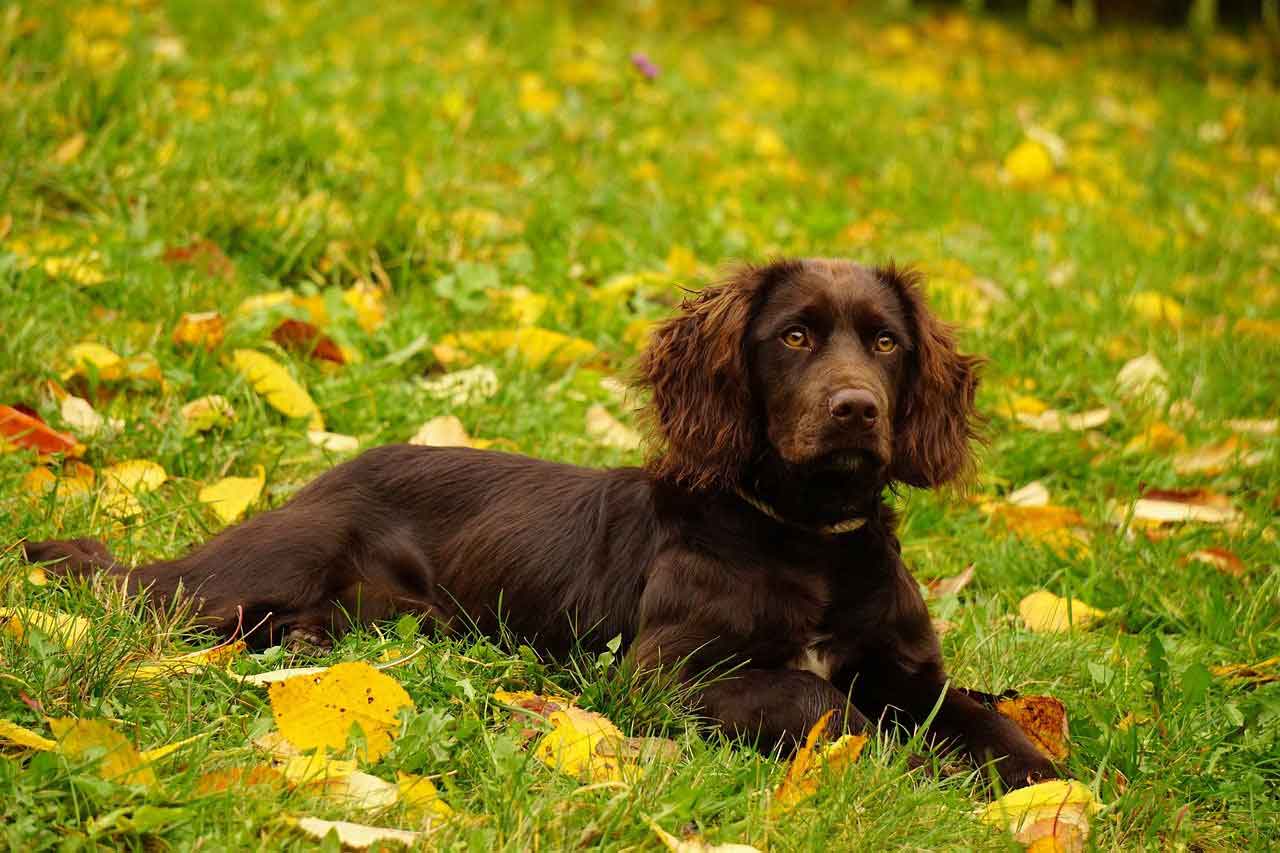
German Spaniel

The German Spaniel it is very appreciated especially for hunting.

Content

History

The study of the history of hunting teaches us that centuries ago there were hunting dogs very similar to the current one. German Spaniel. At that time they were used to hunt.

Breeding of the controlled breed in a studbook began in the early 20th century, with a few suitable bitches. The first representative of the German Spaniel was Mr. Augusta 1834 L, a Staufenberg dog in Upper Bavaria.

At first there were only brown dogs with partial white markings and dogs with white markings.. The latter had small red spots on the head and limbs, called "fire marks". It was the bitch Baby auf de Schanze 1838 L the one that introduced the roan in the race. Rudolf Friess, a dog fancier who for decades had a major influence on the breeding of the German Spaniel, introduced separate breeding of brown and roan varieties.

Despite the narrow initial breeding base, put in place an essential requirement to avoid damage due to inbreeding through selective mating. The separation of the two colors is also justified by a certain disparity in the natural qualities of the German Spaniel. Chestnut trees were easier to drive over short distances and more persistent on the track, while the roans had a highly developed penetration at long distances.

These different natural gifts are no longer a reliable differential criterion today, since in the meantime, for many reasons, there have been repeated crosses between the two color varieties. But, in principle, the separation still maintains a certain reserve of unrelated blood within the race today.

The German Spaniel it is and continues to be bred by hunters and for hunters as a hunting dog with great versatility.

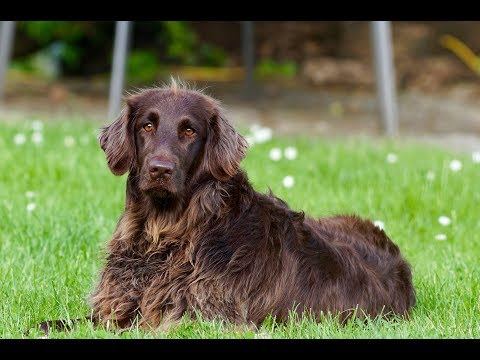
Photo: ยซGerman Retrieverยป by https://pixabay.com/de/photos/wachtelhund-jagdhund-stรถberhund-4604508/

Physical characteristics

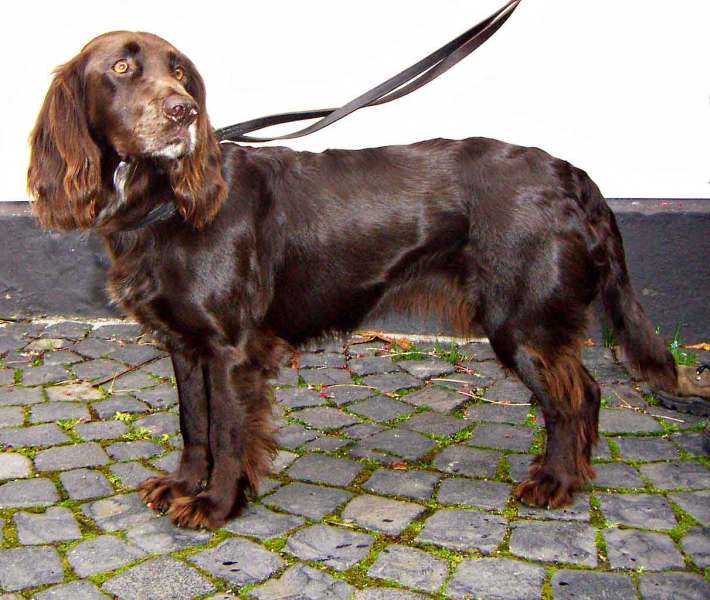
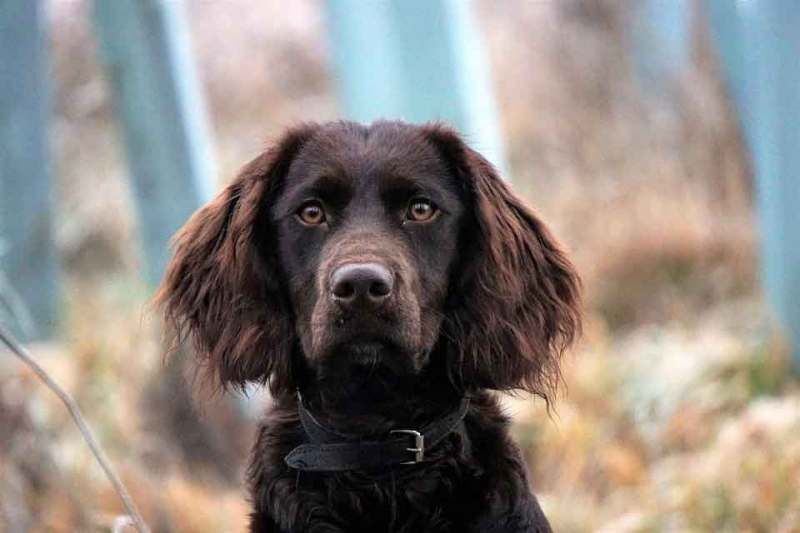
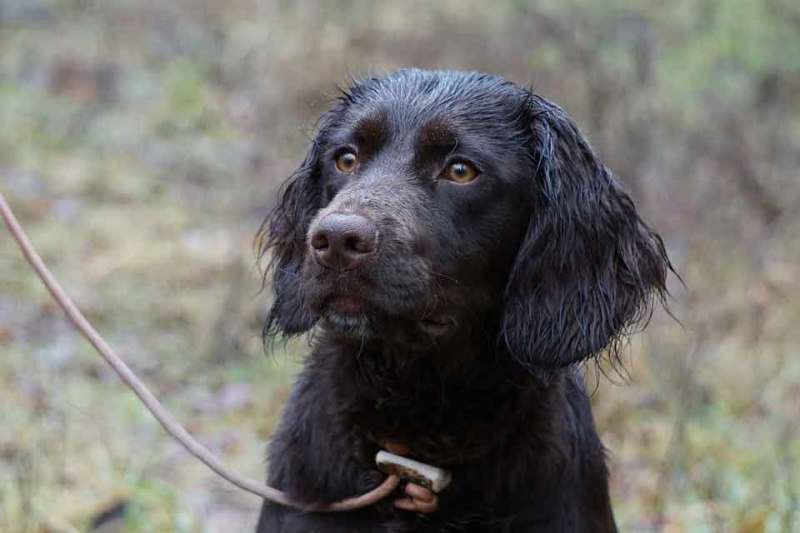
The German Spaniel it is a medium sized hunting dog, longhair, very muscular, with a noble head and strong bones. In general, they are longer than they are tall, but they should never give the impression of being tall.

Lively and very passionate about hunting, friendly and self-assured in their natural environment, very docile and very adaptable; neither shy nor aggressive.

The German Spaniel in some points:

– Has a well developed piercing,

– follow the path of hunting big and small with will and perseverance,

– give voice without hesitation,

– has a fine nose,

– he likes rapport and water,

– has a bite for hunting and vermin,

– Trained and properly managed, hunt without deviating from course over long distances; works as a Bloodhound and in the search for lost pieces; is a versatile hunting dog for tracking and hunting in ditches, heavily wooded areas and in the water. Since the beginning of the supervised breeding, the ability to stop has not been taken into account.

The coat is strong, glued, mostly wavy, occasionally also curly (Astrakhan), or long, flat with thick undercoat; not too long, especially not fine or silky; on the nape, often curled on the ears and rump; well furnished hindquarters and tail; the presence of a frill around the neck is frequent; the belly is also well provided with hair; muzzle and cranial region have short but tight hair; the ears are covered with curls or tight, wavy hair that extends beyond the edge of the pinna; the interdigital spaces have a tight hair but not too long.

The "German Retriever" is bred in two color varieties:

– Solid brown, more rarely also red; often with white or mottled markings on the chest and toes.
– Brown roan, more rarely also red roan; the background color consists of brown hairs, possibly red, intimately mixed with white hairs; often the head is brown, possibly red, with spots or also a mantle that extends all over the back ; this color variety includes variegated coats with a white background and large brown spots, possibly red, also the so-called "tiger" dogs, in which the white background is also mottled or mottled with small tufts of brown hair, possibly red; the latter can perfectly descend from monocolor parents.

All shades and variations of red are included in this term (red fox, red deer, red deer).

SIZE AND WEIGHT :

  • Males 48-54 cm.
  • females 45-52 cm.
  • Varies in relation to size, between some 18 and 25 kg.

    Character and skills

    Robust, brave, can work on all terrains, mainly forests and swamps. Active tracker, bush hunter, screaming on the road, he specializes in hunting small game but also in tracking foxes and large animals. He is a good collector, it is also a trail dog, able to search for wounded game. Loving, is appreciated as a companion. He is self-assured in his natural environment., while being endowed with a great capacity for adaptation.

    They are not shy or aggressive, but they need a strong education that starts soon.

    Education

    Kind, affectionate and docile, the German Spaniel has these wonderful predispositions by nature. But with one condition, and not the least. Because this dog needs a lot more exercise, education and activity from the beginning of what a family or active people can offer. Being on the go is not enough. The German Spaniel want more. It can and should do more than just be a family dog. Idleness goes against their nature. You need qualified training as a hunting dog that will challenge you mentally and physically. If you are successful, this passionate hunter will prove to be an obedient and loyal companion.

    Health

    The German Spaniel have a slight predisposition to hip dysplasia. Breeders are very careful not to breed animals with this predisposition. This will greatly reduce this deficiency.

    On the other hand, floppy ears predispose this dog to ear infections (and more for dogs used to getting into the water).

    Grooming

    The coat of the German Spaniel is perfectly adapted to your lifestyle. Dirt doesn't seem to stick to hair, even if he walks through the bushes for hours. A weekly brushing is enough. He usually decides when it's time to bathe. Showering in summer is a moment of well-being that you enjoy.

    Characteristics "German Spaniel"

    Coexistence is important that you have with your new friend. Before considering the acquisition of a dog of the breed "German Spaniel" you know certain factors. Not all breeds of dogs are apt to live in an apartment, you must take into account his character, their need for exercise, their interaction with other pets, their care and if you have small children, their level of tolerance towards them.

    Adaptation โ“˜

    4,0 of 5 stars (based on 1 review)

    friendly dog โ€‹โ€‹โ“˜

    3,0 of 5 stars (based on 1 review)

    hair loss โ“˜

    3,0 of 5 stars (based on 1 review)

    Affection level โ“˜

    4,0 of 5 stars (based on 1 review)

    Need for exercise โ“˜

    5,0 of 5 stars (based on 1 review)

    Social need โ“˜

    4,0 of 5 stars (based on 1 review)

    Home โ“˜

    3,0 of 5 stars (based on 1 review)

    Toilet โ“˜

    2,0 of 5 stars (based on 1 review)

    Friendly with strangers โ“˜

    3,0 of 5 stars (based on 1 review)

    barking โ“˜

    3,0 of 5 stars (based on 1 review)

    Health โ“˜

    4,0 of 5 stars (based on 1 review)

    Territorial โ“˜

    3,0 of 5 stars (based on 1 review)

    Cat friendly โ“˜

    3,0 of 5 stars (based on 1 review)

    Intelligence โ“˜

    4,0 of 5 stars (based on 1 review)

    Versatility โ“˜

    4,0 of 5 stars (based on 1 review)

    Child friendly โ“˜

    4,0 of 5 stars (based on 1 review)

    Surveillance โ“˜

    3,0 of 5 stars (based on 1 review)

    joy โ“˜

    3,0 of 5 stars (based on 1 review)

    Images "German Spaniel"

    Photos:

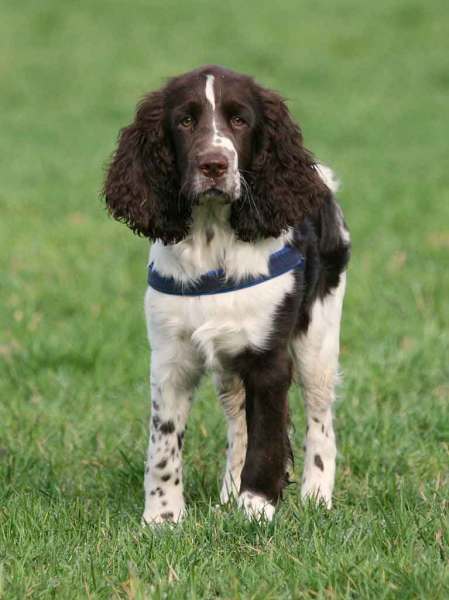
    1 – Deutscher Wachtel by Steffen Heinz (Caronna), CC BY-SA 2.5, via Wikimedia Commons
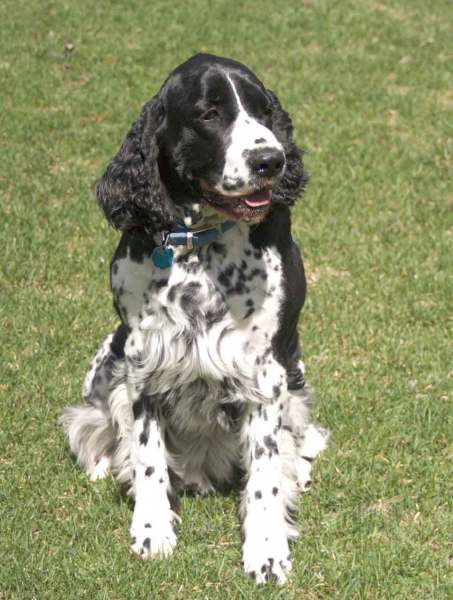
    2 – German Spaniel by https://pixabay.com/de/photos/deutscher-wachtelhund-jagdhund-4748569/
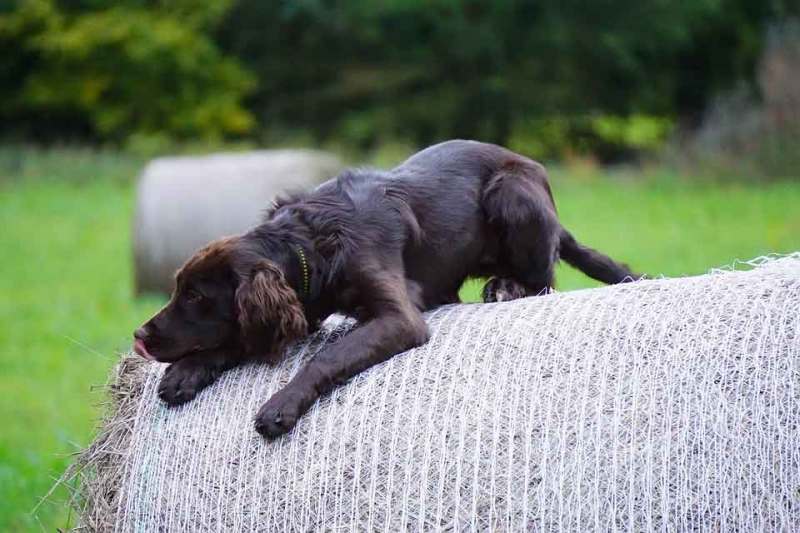
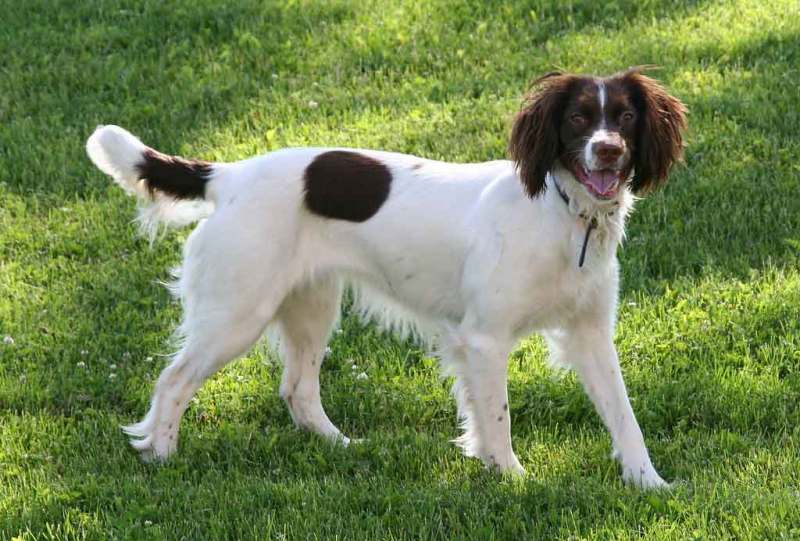
    3 – German Spaniel by https://commons.wikimedia.org/wiki/File:Deutscher_Wachtel.jpg
    4 – German Spaniel by https://pixabay.com/de/photos/deutscher-wachtelhund-hund-haustier-5753477/
    5 – German Spaniel by https://pixabay.com/de/photos/deutscher-wachtelhund-jagdhund-4763510/
    6 – German Spaniel by https://pixabay.com/de/photos/deutscher-wachtelhund-jagdhund-4905048/

    Videos "German Spaniel"

    German Spaniel (German Quail Dog)
    German Spaniel (Deutscher Wachtelhund)
    Training German Spaniel - Ayrin from Jiล™รญฤkรฝ luk
    Training German Spaniel

    Type and recognitions:

    • FCI CLASSIFICATION:
    • Group :
    • Section : . .

    Federations:

    • – FCI – Group 8: Retrievers - Flushing Dogs - Water Dogs – Section 2: Retrievers โ“˜

    FCI breed standard "German Spaniel"

    Origin:
    Germany

    Date of publication of the valid original standard:
    24.07.1996

    Use:

    Hunting dog, versatile hunting dog.


    General appearance:

    The German Retriever is a medium-sized hunting dog., Longhair, very muscular, with noble head and strong bones. Overall it is longer than it is tall and in no way gives the impression of having long limbs..

    IMPORTANT PROPORTIONS :

    โ€ข Relationship between body length and height at withers = 1,2 : 1
    โ€ข Relationship between chest height and height at withers = 0,5 : 1
    โ€ข Relationship between the length of the snout and the length of the skull = 1 : 1


    Behavior / temperament:

    He is lively and very passionate about hunting.; He is friendly and safe in his environment; very docile and adaptable, is not fearful or aggressive.

    The German Retriever is:

    โ€ข Equipped with a strong will to search.
    โ€ข It is safe in search of traces or clues.
    โ€ข Reliably has a continuous bark.
    โ€ข Has a fine sense of smell.
    โ€ข Has a pronounced taste for charging and for water.
    โ€ข It is sharp for hunting wild and predatory animals..
    โ€ข In its corresponding initiation and direction, hunting independently, extensive and controlled. It is reliable when working as a bloodhound and to search for lost prey.; It is a versatile utility hunting dog for working in dense places., in the forest and in the water. The suitability for the sample was not considered from the beginning of the breeding of this breed..

    Head:

    ---

    Cranial region:
    • Skull : Flattened, moderately wide; the occipital protuberance is not noticeable.
    • Depression links (Stop) : Only slightly marked.

    facial region:

    • Truffle : big and dark, with wide open windows; depigmentation in small spots is considered a lack; the ram's nose beautifies the dog.
    • Snout : Strong, with wide nose shank along its entire length; slightly rounded downwards, never pointed, no shorter than the skull.
    • Lips : Straight, dry, rigorously adjusted, pigmented according to coat color.
    • Mandible / Teeth : Complete bite with 42 teeth in the following order (schematic seen from the front):Right M P C I I C P M Left Upper maxillary 2 4 1 3 3 1 4 2 Upper jawโ€”โ€”โ€”โ€”โ€”โ€”Lower jaw 3 4 1 3 3 1 4 3 Lower jaw(Explanation of the initials of the dental formula : I = incisors, C = fangs, P = premolars, M = Molars).The incisors of the upper jaw closely overlap those of the lower jaw, forming a scissor bite.; pincer bite is tolerated; teeth are well developed; strong bite.
    • Cheeks : Thin with close-fitting skin; non-protruding cheekbones.

    Eyes : Medium brown color, dark as possible, medium-sized, placed a little oblique, Neither prominent nor sunken; eyelids well adjusted to the eyeball; no visible nictitating membrane. The edge of the eyelids with eyebrows.

    Ears : High and wide insertion, flattened; without being twisted, They hang very close behind the eyes; they are not thick, neither fleshy nor limp; regularly developed hair covers protruding from the inner edge of the ears. The ear turned forward reaches up to the nose.

    Neck:

    Strong; especially well muscled neck; forms an obtuse angle in its transition towards the cross; begins with no visible loose skin and extends toward the chest without forming a double chin.

    Body:

    • top line : In each of the regions the upper line is straight and gradually connects them to each other; the rump is slightly descending; the tail is carried as an extension of the line of the back or slightly hanging.
    • Cross : Strong and marked.
    • Back : Short and firm, without sinking behind the cross.
    • Pork loin : Powerfully muscular, so it gives the impression of serancho.
    • Rump : Slightly descending, never higher than the cross, situated a little below the height of the cross.
    • Breast : Seen from the front it is oval and reaches below the elbow when viewed from the side. long thorax, well arched; It is neither barrel-shaped nor flattened..
    • Lbottom line and belly : From the last false rib back it is moderately retracted; Also in its lower part it is as much as possible completely covered with hair and dense undercoat..

    Tail:

    At rest, carries it as a continuation of the upper line in a straight or downward manner; in excitement or with lively movement lifts it slightly; To avoid injuries from friction, it should be cut in the first three days of life to at most a third of its length. (amputation). (In countries where amputation is prohibited, can remain natural).

    Tips

    PREVIOUS MEMBERS :

    • As a whole : Viewed from the front, they are straight and parallel; Seen from the side they are well plumb under the body, with good angles.
    • Shoulder : Powerfully muscular; scapulae oblique and directed backwards.
    • Arm : During movement it is stuck very close to the thorax.
    • Elbows : Very close to the body, no inward or outward deviation.
    • Forearm : Straight, the parts near the joints are not hypertrophied or rickety.
    • Articulation of the carpus : Strong.
    • Metacarpus : Slightly leaning forward.
    • Previous feet : Spoon-shaped, fingers close together; Cat's or hare's feet are undesirable; hard pads, strong and well pigmented; strong nails, well worn.

    LATER MEMBERS :

    • As a whole : Seen from the side, they present good angulation in the knee and tibiotarsal joints.; Seen from behind they are straight and parallel; They are not barrel-shaped or cow-shaped.; strong bones.
    • Thigh : Wide and very muscular; good angulation between the pelvis and thigh.
    • Knee : Strong, with good angulation between thigh and leg.
    • Leg : Long, muscular and tendon.
    • Warm-foot joint : Strong.
    • Metatarsus : Short, vertical.
    • Hind feet : Like the previous ones.

    Movement:

    Fluid and space-encompassing; the limbs slide straight and parallel closely to the body.

    Mantle

    SKIN : Resistant, well stuck; It does not form wrinkles or is pigmented.

    HAIR : Strong, densely packed; It is mostly wavy, although sometimes also curly (Astrachan) long straight hair, with dense undercoat; not very long, neither thin nor hardly silky; on the nape, ears and rump is frequently curly; on the back of the limbs and on the tail it has good feathers; frequently forms a ruff on the neck (with a goal); also the belly is well covered with hair; on the snout and on the skull, the hair is short, but dense; the ears are covered with curls or thick wavy hair, the inner edge also protrudes; the spaces between the fingers are covered with dense but not too long hair.

    COLOR :

    The German Retriever is bred in two color varieties:

    โ€ข Uniform brown color, rarely also red*; often with white marks or splattered on the chest and fingers.
    โ€ข Brown roan, also rarely red roan*; The basic color is made up of brown or red hairs densely mixed with white.; often with brown or red head*; like this with plates or a coat over the entire back. This color variety also includes spotted ones with a white basic color and large brown or red plates*, as well as colored dogs called โ€œtigerโ€ in which the basic white color is dotted or speckled in addition to brown or red streaks*, even if they come from parents of a single color. In both color varieties there are red marks* (fire)on the eyes, on the snout, on the extremities and around the anus.
    *) All varieties of red tones belong to these. (red fox, roe deer red, deer red).


    Size and weight:

    Height to the cross :

    • Males 48 โ€“ 54 cm..
    • females 45 โ€“ 52 cm..

    WEIGHT : Varies depending on size, approximately between 18 โ€“ 25 kg. (Females a little lighter than males).


    Fouls:

    Any deviation from the aforementioned criteria is considered a fault and the severity of it is considered to the extent of the deviation from the standard and its consequences on the health and well-being of the dog..

    โ€ข Stop marked.
    โ€ข Very deep lips, not closed.
    โ€ข Lack of a PM1 premolar.
    โ€ข Eyelids not tightly adjusted.
    โ€ข Too narrow ear canals (provision for ear diseases).
    โ€ข Barrel chest.
    โ€ข Wide or thin ends.
    โ€ข Thin hair, sparse or silky; belly little covered with hair; leather earflap (without hair).
    โ€ข Weight and size slightly more or less than indicated.

    SERIOUS FAULTS :

    โ€ข Skin diseases (dermatitis, atopy).
    โ€ข Missing teeth (except the lack of a PM1).

    MISS PLAYOFFS :

    โ€ข Aggressive or fearful.
    โ€ข Weakness of character, shyness of wild animals or gunshots.
    โ€ข Serious bite defects (prognatismo superior, lower, incisor arcade deviated).
    โ€ข Ectropion, entropion.
    โ€ข Black hair color.


    N.B.:

    โ€ข Males must have two normal-appearing testicles fully descended into the scrotum..
    โ€ข Only functionally and clinically healthy dogs, with the typical conformation of the breed, should be used for parenting.

    Source: F.C.I - International Cynological Federation

    Alternative names:

    1. Deutscher Wachtelhund (German quail dog) (English).
    2. Chien d’oysel (French).
    3. Deutscher Wachtel (German).
    4. (em alemรฃo: Deutscher Wachtelhund) (Portuguese).
    5. Spaniel alemรกn, (en alemรกn deutscher wachtelhund) (espaรฑol).

    โ–ท The world of Pets: Dogs, cats, birds, reptiles, amphibians

    English Springer Spaniel
    Inglaterra FCI 125 . Flushing Dogs

    The English Springer Spaniel it is the oldest of all British hunting dogs.

    Content

    History

    The English Springer Spaniel is a distant descendant of dogs Spaniel type who arrived from Spain to the British Isles more than 1.500 years.

    Already in 1576, the Dr. John Caius described the descendants of these dogs from the Iberian Peninsula in his Treaty of English Dogs, but it wasn't until 1801 and Cynographia Britannica de Sydenham Edwards, naturalist and illustrator, when a distinction was made between Cockers smaller and Springers Taller.

    But, litters used to be a mix of both types, and the difference in names was simply based on the size. Both types were used to hunt game birds; his job was to detect and flush out the animal, which was then caught in a net, shot with a bow or, sometimes, captured by a specially trained hawk. The current names of the breeds derive from these hunts.: the Cockers excelled in hunting woodcock, While the English Springer Spaniel excelled at finding, make the game birds fly and collect the prey for the armed hunter.

    In the 19th century, breeders began to select dogs, so that the lines of dogs differed from region to region. The most imposing dogs were found in the region of Norfolk and they took the name of Norfolk Spaniel about 1850. This was the name by which all the greats were shown Spaniels at dog shows.

    This changed in 1902, When the Kennel Club (KC), Britain's leading organization, recognized the English Springer Spaniel as an independent race. It was given its own standard, very different from other similar looking dogs, and the breeding program became stricter.

    Only eight years later, in 1910, the breed was recognized by the American Kennel Club (AKC). The reputation of the breed grew considerably in North America from the decade of 1920. In 1932, was recognized by the United Kennel Club (UKC), the other leading organization in the United States. The Fรฉdรฉration Cynologique Internationale (FCI) followed him in 1954. In the news, the English Springer Spaniel is accepted by all major canine organizations, including Canadian Kennel Club (CKC).

    With a little less than 10.000 registrations per year in the CKC, the English Springer Spaniel is still one of the 10 Britain's most popular dog breeds. But, has been in decline since the early 1990s 2010, when they were almost born 13.000 each year.

    The trend is much more stable in France, where some 1.700 births in the Livre des Origines Franรงais (LOF) since the early years of the 21st century. This figure had previously doubled in just a decade., since at the beginning of the years 90 it was rather around the 800, and even below 500 in the early 80.

    The same stability is found in the United States, where it has fluctuated, at least since the beginning of the 21st century, between the post 25 and the 30 AKC Breed Classification, based on the number of annual registrations in the organization. The UKC also produces a classification based on the number of births reported to it, in which it is among the 20 first.

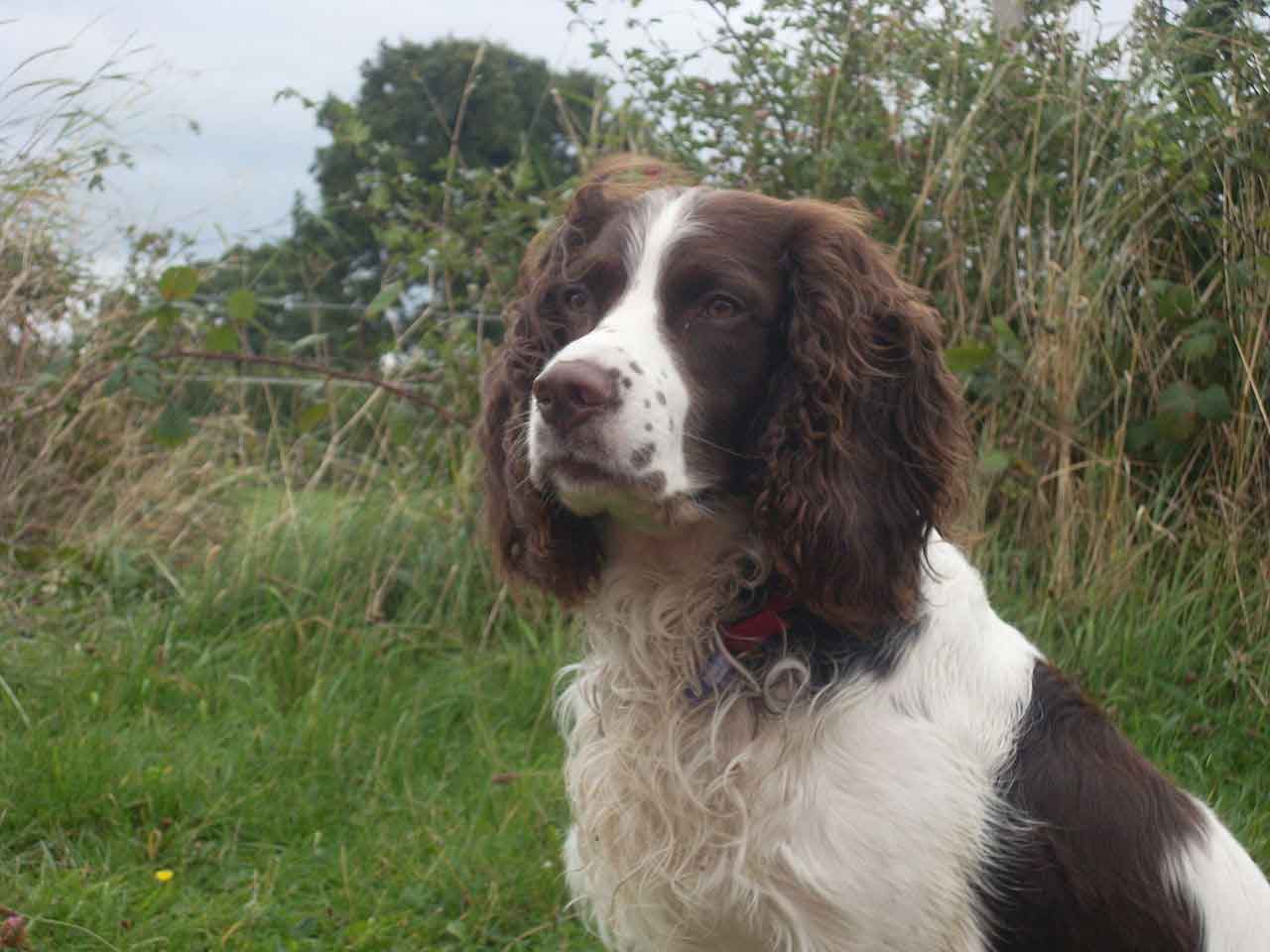
    Photo: An eight year-old, male, liver and white English Springer Spaniel named by Xandercary, CC BY-SA 3.0, via Wikimedia Commons

    Physical characteristics

    The English Springer Spaniel has a compact and harmonious appearance. But, there is a real difference in morphology between individuals in lines destined for dog shows and those whose specialty is hunting and field trials: the former are much more massive than the latter

    In both cases, the English Springer Spaniel he is tall on legs, so much so that it is the tallest of the Spaniels of British origin. Her body, slightly rectangular, muscular and symmetrical, exudes power and agility. The legs are muscular and of solid bones, and end in round, compact legs.

    The tail has fringes, it is short and very mobile. It has long been docked to avoid hunting accidents, but now docking is prohibited in most countries.

    The head of the English Springer Spaniel it is quite wide, with a well-proportioned muzzle and well-developed nostrils. The eyes are medium in size, almendrada form, with a lively and soft expression. They must be dark hazel in color, but a light color is also possible, although it is considered a fault. The ears are long, wide and lobed. They fall back along the head and have attractive fringes.

    The undercoat is short, smooth and dense, while the top layer is longer, smooth and closed. The set is made to withstand inclement weather, but it also protects you from the various thorns and twigs that could hurt you in the undergrowth. The individuals of the working lines, however, generally have shorter hair than those of the beauty lines.-

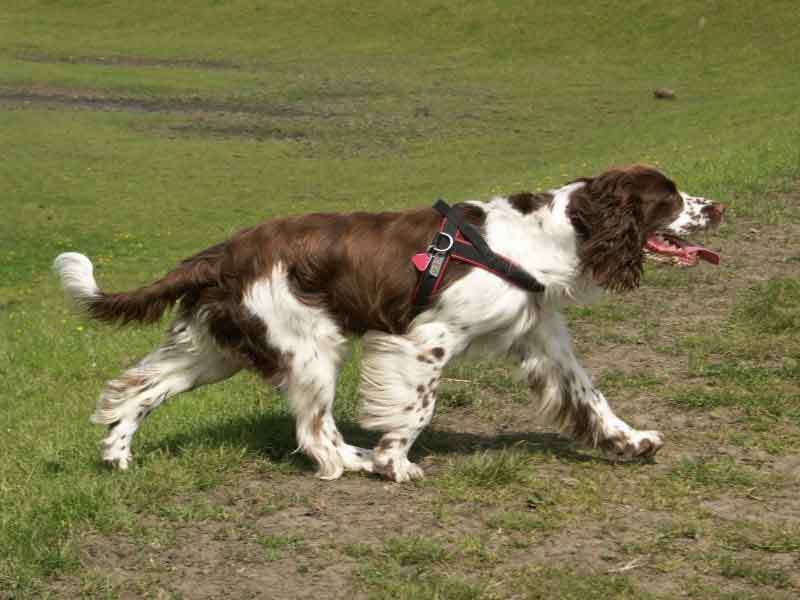
    His fur is black and white or liver and white, and may have tan markings. Also in this case there is a certain divergence between show dogs and those intended to be pets or hunting dogs., since the fur of the former has more marked colors.

    Last, sexual dimorphism is not very marked in this breed: males are only slightly larger and heavier than females.

    Size and weight
      ▷ Male size: 48 – 51 cm.
      ▷ female size: 48 – 49 cm.
      ▷ Male weight: 18 – 22 kg
      ▷ female weight: 18 – 19 kg

    Varieties:

    From the age 40, the breeders of English Springer Spaniel have tended to distinguish between lines intended for dog shows and those intended for hunting or company.

    In effect, when it became apparent that the individuals who stood out on beauty pageant podiums and those who won job tests were never the same, this led some breeders to specialize, selecting their players either for their aesthetics or for their physical abilities.

    In fact, individuals destined for podiums are generally more massive, have stronger colors and less need to strain. But, no official organization considers them a variety in their own right: no standard distinguishes between show dogs and working dogs.

    Character and skills

    The English Springer Spaniel he is incredibly sociable, open and loving. They love the company of humans in general, and his family in particular. If left alone for a long time, may suffer from separation anxiety, which can lead to destructive behavior and incessant barking.

    On the other hand, can express his joy at seeing his master come back urinating on the carpet. To get rid of this bad habit, it is necessary to avoid that the return home is an event. So, it is advisable not to pay immediate attention to the dog, but take a few minutes to take off your shoes, hang up the coat, keep the keys… encouraging you to wait without undue excitement.

    If you bark when a person approaches, generally it is less to warn him than to invite him to come and pet him and play with him. So, can play the role of a warning dog, because he is listened to in every visit, but certainly not that of a guard dog that drives malicious people back. Welcomes both adults and children, with which you can spend hours running and playing in the garden. But, it is important to remember that, regardless of race, a dog should never be left alone with a small child, even though i have known him for years; all interactions must be under adult supervision.

    His sociable character also extends to his fellow men, although some signs of aggressiveness may appear, especially between individuals of the same sex. Living with cats and rodents is also usually without problems, but the same cannot be said for birds. Anyone who adopts this dog while keeping chickens or ducks in the garden will quickly understand why his hunting skills are unanimously recognized.…

    To feel good and show the full range of your interpersonal skills, the English Springer Spaniel need to be able to exercise. One hour of intense physical exercise (footing, games…) is necessary for your well-being, and appreciates taking long walks of several hours from time to time. It is, because, from a perfectly adapted companion for a person who wants to regularly take their dog for a walk. On the other hand, your outings in an urban environment should always be done on a leash, to prevent him from rushing after all the pigeons and birds he finds. During long walks in nature, it is better to let it evolve freely so that it can fully enjoy, but then it is wise to equip him with a GPS collar to be able to locate him at any time, for example if you wander off in search of woodcocks or other game.

    Although they have a reputation for being less active, dogs on show lines should also exercise for a minimum of one hour a day.

    As long as its owner is active and takes it out enough, can live in an apartment, even if it is not ideal for him: you better have access to a garden. You better have access to a garden, but this must be well fenced to prevent it from escaping if it sees birds or follows a friendly passerby who gives it a treat. In any case, you shouldn't spend most of your time alone in the garden: its place is inside, with his family.
    It also, physical exercise is not enough for it to be balanced: you also have to stimulate it mentally, especially because he is very intelligent and has a desire to learn just as great. If these qualities are not stimulated, you are likely to get bored, and then he can find something to do biting his master's shoes, throwing things or digging in the garden.

    Dog sports are a great way to keep your dog engaged both physically and mentally. Any activity works, but they are especially good at obedience competitions, track and search.

    Last, although some individuals never give voice to their dogs, the English Springer Spaniel tends to bark quite frequently. They do it to signal the approach of a person or to greet him, to warn of boredom or simply to attract attention. If this trend is not stopped at an early age, can cause problems with neighbors.

    Education

    Like any dog, the English Springer Spaniel must be socialized from the first weeks of life. If you don't have the opportunity to meet different people, to meet other animals and to face all kinds of situations, runs the risk of becoming shy or, on the other hand, to develop some aggressiveness.

    It is also necessary to get used to walking on a leash as soon as possible, as well as teaching him not to bark untimely. If their masters are absent often or for a long time, they should also help you understand that you can spend several hours alone without worrying, because his family will always return to him.

    With his above-average intelligence and willingness to do anything to please, the English Springer Spaniel is capable of achieving wonders, even under the guidance of a novice trainer. Like this, beyond the basic teachings, his thirst for learning allows him to assimilate many tricks. But, you have to be patient and be constant, as with any dog, and know how to detect when he starts to get bored to stop the session or move on to something else.

    In any case, traditional training methods are not at all suitable for this emotional dog, who has unlimited trust in humans, since they could traumatize him. Better to use positive reinforcement, that allows you to learn while having fun and takes advantage of your natural sociability.

    Health

    The English Springer Spaniel is generally quite robust and has a good life expectancy, to the point that many representatives of the breed reach the 15 years.

    Originally from Great Britain, the English Springer Spaniel has a waterproof coat that is not affected by the weather. Their undercoat is more or less dense depending on the climate of the region in which they live., and are equally resistant to cold and heat. But, they do not like extremes and should be able to shelter in the shade when it is hot, and have a cozy place to stay when the temperature drops.

    Given its popularity around the world for more than a century, no wonder so many different diseases have been recorded in this dog. The most frequent problems are :

    • The Hip Dysplasia, a malformation in the joint that is usually inherited and can cause locomotor difficulties. Genetic testing can greatly reduce risk;
    • Patellar luxation (or dislocation of the patella), when the kneecap moves out of position, causing a limp. It can be congenital or occur after an impact;
    • Progressive retinal atrophy, leading to retinal degeneration and total loss of vision. This disease appears to be increasing in the breed's population, although it is still rare;
    • The retinal dysplasia, a congenital malformation of the retina that, In most cases, does not affect vision;
    • The entropion, when the eyelid folds over the eye and causes irritation. This problem can be corrected by a simple surgical intervention.;
    • Phosphofructokinase deficiency, an enzyme responsible for the assimilation of glucose in the blood, that usually has no consequences and is often undetected. But, in severe cases, can lead to muscle loss, fever and hyperventilation;
    • Skin problems, either hereditary or due to an allergy.

    Other rare diseases have been reported in some individuals, like autoimmune diseases, the fucosidosis canina and the very rare and surprising rabies syndrome (not to be confused with rabies disease), when a peaceful dog is suddenly overcome by an attack of hyperagression for no apparent reason.

    It also, dogs used for hunting are more prone to accidents, lesions and parasites than other dogs.

    But, do not be fooled by the long list of diseases that can affect a English Springer Spaniel, most of which are very rare. A study conducted by the Kennel Club and the British Small Animal Veterinary Association in 2004 about almost 100 breed deaths showed that the main causes of death in this breed are various forms of cancer and advanced age.

    In any case, adopt from a breeder of English Springer Spaniel serious and responsible maximizes the chances of getting a healthy puppy, above all thanks to the tests that the animal or its parents will continue to carry out to ensure the absence of congenital or hereditary diseases -or susceptible to being so- like dysplasia, for example. The professional must also provide a certificate from a veterinarian who has examined the puppy and certifies that it is in good health., as well as the data of the administered vaccines, registered in your health or vaccination card.

    But, There is no use adopting a healthy puppy if you do not do what is necessary to keep it healthy, especially through appropriate preventive actions. One of the points to pay more attention in this matter is your ears: like any dog รขโ‚ฌโ€นรขโ‚ฌโ€นwith hanging ears, has a higher risk of infections at this level.

    Regular vet visits are another essential part of prevention. They should be scheduled at least once a year to detect the beginnings of a potential health problem and to make sure your dog is up to date on his vaccinations.

    Life expectancy

    Of 12 to 14 years

    Grooming

    The maintenance of the coat of the English Springer Spaniel is simple, but it takes some effort. In fact, molts throughout the year, and it should be brushed once or twice a week to keep its coat in good condition. During spring and fall molts, it is even necessary to brush it daily to remove excess dead hair.

    It also, as his fur is quite tight, does not hesitate to get into the puddles, so it can be useful to bathe him after a hunting trip or a particularly muddy trip to the forest, to prevent it from getting dirty and / or smells bad. Then you have to be careful to use a mild shampoo specifically designed for dogs., at the risk of damaging your skin.

    In general, It is also strongly recommended that you get into the habit of thoroughly inspecting your dog every time you spend long hours outdoors, either during a hunting day or a long excursion. This allows any injury to be detected immediately, spoilage or parasites, and act accordingly.

    It also, although he doesn't really tend to drool, not a very clean diner, mostly because it turns out that her long ears get soaked in her bowl. So, it is advisable to get in the habit of wiping your face with a towel after every meal.

    Your floppy ears deserve special attention, since this morphological characteristic makes moisture and dirt easily accumulate in them, with an increased risk of infection. So, should be examined and washed at least once a week.

    Take advantage to check that the eyes are clean, and clean them with a damp cloth if they are not.

    Your weekly maintenance session is also an opportunity to brush your teeth, to prevent the formation of dental plaque. Plaque can cause bad breath, tooth decay and other oral diseases. Ideally, do it more often..

    Last, even if your activity level makes natural wear and tear is enough to file your nails, it is advisable to take a look at them every 4 or 6 weeks to make sure they're not too long. Yes they are, could get in the way of walking, or even break and hurt you, so they need to be trimmed manually with a dog nail clipper. The first time, it may be a good idea to do this under the eye of a vet or groomer to make sure you are doing it right.

    Utility

    The English Springer Spaniel was developed for hunting, especially birds (mainly the woodcock), and it must be admitted that he continues to excel in the location and the fright of the hunt, and then return it to the hunter once he has killed it. They are still used for hunting around the world, tracking both small game birds and small game animals.

    They are also excellent companion dogs., loyal and loving, suitable for a home active enough to satisfy your need for plenty of exercise.

    His propensity to bark also makes him a good alert dog.. But, as it does more to welcome intruders (or even to be happy if they give him some goodies) that to repel them, he's a poor guard dog.

    When not used for hunting, physical and mental qualities of English Springer Spaniel can be admired at dog sports competitions. They tend to excel in disciplines such as flyball, obedience, agility, crawl and crawl.

    They have long been used in law enforcement and the military, and are currently used in Great Britain, United States, Canada, Sweden and Finland. In fact, his excellent sense of smell makes him a very good dog at detecting explosives, drugs, but also illegal immigrants at the borders.

    It is also common to find them as rescue dogs and search for accident victims., either in the mountains or in urban areas.

    Last, his closeness to humans and his sociable nature also make him a very good therapy dog, sometimes found in hospitals and nursing homes.

    Price "English Springer Spaniel"

    The price of a puppy English Springer Spaniel is of some 800 EUR, without much difference in price between males and females. This average hides a range of values รขโ‚ฌโ€นรขโ‚ฌโ€นthat go from about 500 euros for dogs with characteristics that are far from the standard, up to approximately double for those with prestigious ancestry and intended for dog shows.

    The price varies depending on the reputation of the breeder, the prestige of the lineage from which the animal comes, but also and above all its intrinsic physical characteristics.

    Characteristics "English Springer Spaniel"

    Coexistence is important that you have with your new friend. Before considering the acquisition of a dog of the breed "English Springer Spaniel" you know certain factors. Not all breeds of dogs are apt to live in an apartment, you must take into account his character, their need for exercise, their interaction with other pets, their care and if you have small children, their level of tolerance towards them.

    Adaptation โ“˜

    5,0 of 5 stars (based on 1 review)

    friendly dog โ€‹โ€‹โ“˜

    5,0 of 5 stars (based on 1 review)

    hair loss โ“˜

    3,0 of 5 stars (based on 1 review)

    Affection level โ“˜

    5,0 of 5 stars (based on 1 review)

    Need for exercise โ“˜

    4,0 of 5 stars (based on 1 review)

    Social need โ“˜

    4,0 of 5 stars (based on 1 review)

    Home โ“˜

    5,0 of 5 stars (based on 1 review)

    Toilet โ“˜

    4,0 of 5 stars (based on 1 review)

    Friendly with strangers โ“˜

    5,0 of 5 stars (based on 1 review)

    barking โ“˜

    3,0 of 5 stars (based on 1 review)

    Health โ“˜

    4,0 of 5 stars (based on 1 review)

    Territorial โ“˜

    3,0 of 5 stars (based on 1 review)

    Cat friendly โ“˜

    3,0 of 5 stars (based on 1 review)

    Intelligence โ“˜

    5,0 of 5 stars (based on 1 review)

    Versatility โ“˜

    3,0 of 5 stars (based on 1 review)

    Child friendly โ“˜

    3,0 of 5 stars (based on 1 review)

    Surveillance โ“˜

    3,0 of 5 stars (based on 1 review)

    joy โ“˜

    5,0 of 5 stars (based on 1 review)

    Images "English Springer Spaniel"

    Photos:

    1 – English Springer Spaniel by Heinz Hรถfling, CC BY-SA 3.0, via Wikimedia Commons
    2 – Coffee, English-Springer-Spaniel, 8 Months by photo taken by Heinz Hรถfling [User:Hhoefling], CC BY-SA 3.0, via Wikimedia Commons
    3 – A black English Springer Spaniel named Oliver. by racermd5, CC BY 2.0, via Wikimedia Commons
    4 – English Springer Spaniel by https://pixabay.com/de/photos/hund-englisch-springer-spaniel-317039/
    5 – Mimi, English Springer Spaniel by Pedro Lopez
    6 – Tallinn, Estonia, duo CACIB 2013 August 17-18 by Thomas, CC BY-SA 3.0, via Wikimedia Commons

    Videos "English Springer Spaniel"

    Type and recognitions:

    • FCI CLASSIFICATION:
    • Group 8: Hunting Retriever Dogs. Hunting Lifting Dogs. Water dogs.
    • Section 2: Flushing Dogs. With working trial.

    Federations:

    • – FCI – Group 8: Retrievers - Flushing Dogs - Water Dogs – Section 2: Retrievers โ“˜
    • – AKC – Sporting โ“˜
    • – ANKC – Group 3 (Gundogs) โ“˜
    • – CKC – Sporting Dogs โ“˜
    • – โ€‹KC – Gundog โ“˜
    • – NZKC – Gundog โ“˜
    • – UKC – Gun Dogs โ“˜

    FCI breed standard "English Springer Spaniel"

    Origin:
    United Kingdom, England

    Date of publication of the valid original standard:
    28.07.2009.

    Use:

    Hunting retriever and lifting dog.


    General appearance:

    Symmetrical figure dog, compact, strong, happy and active. It is the longest in limb and the slimmest of all land British Spaniels.


    Behavior / temperament:

    dog friendly, cheerful and docile in spirit. Shyness and aggressiveness are highly undesirable.

    Head:

    ---

    Cranial region:
    • Skull: Medium-sized, quite wide, slightly rounded and rises from the forehead, forming a ridge or stop; it is divided between the eyes by a groove that disappears along the forehead towards the occiput that should not be pronounced.

    facial region:

    • Truffle: Well developed nose.
    • Snout: Its length must be in proportion to the skull; the muzzle should be quite wide and deep, well molded under the eyes.
    • Lips: Pretty deep and square.
    • Jaws / Teeth: Strong jaws with a regular and full scissor bite, that is to say that the inner side of the upper incisors is in close contact with the external surface of the lower incisors, the teeth being placed vertically in the jaws.
    • Cheeks: Flat.
    • Eyes: Medium-sized, macaroons, Neither prominent nor sunken, well placed (that do not show the ocular mucosa), of lively and kind expression. Dark hazelnut color. Light eyes are undesirable.
    • Ears: Lobulares, of good length and width, hanging fairly close to the head and inserting at the level of the eye line. Well endowed with long feather hair.

    Neck:

    Long, strong and muscular, without jowl. It should be slightly arched and taper towards the head.

    Body:

    Strong, neither too long nor too short.

    • Pork loin: Muscular, vigorous, slightly arched and well attached.
    • Breast : Deep and well developed chest. The ribs are well sprung.

    Tail:

    Previously the custom was to amputate the tail.
    • amputee: Low insertion, never with his bearing on the top line. With good fringe and cheerful in action.
    • Without amputating: Low insertion, never with his bearing on the top line. With good fringe and cheerful in action. In balance with the rest of the dog.


    Tips

    Former members:
    • General appearance: The forelimbs are straight and of good bones..
    • Shoulder: Well placed back.
    • Elbow: Well positioned close to the body.
    • Metacarpus: Strong, flexible.
    • Previous feet: Tight, compact and well round, with thick and strong pads.
    Later members:
    • General appearance: They must be well lowered.
    • Thighs: Widths, muscular and well developed.
    • Femoro-tibio-patellar joints (knee) and hocks: Moderately angled. Coarse hocks are undesirable.
    • Hind feet: Tight, compact and well round, with thick and strong pads.

    Movement:

    It has a strictly own movement. The forelimbs should extend forward from the shoulders, taking a long step, smooth and effortless. Hocks moving well under body, following the line of previous members. In slow motion it can ambulate, typical gait of this breed.

    Mantle

    • Fur: Denso, straight and weather resistant, never thick. The ears, forelimbs and hindquarters and body covered with moderately long feather hair.
    • Color: Liver and white, black and white, or either of these two colors with fire spots.


    Size and weight:

    51 cm. (20 inches).


    Fouls:

    Any deviation from the aforementioned criteria is considered as a fault and the severity of this is considered to the degree of the deviation to the standard and its consequences on the health and well-being of the dog., and the ability of the dog to carry out their traditional work.

    disqualifying fouls:

    โ€ข Aggressiveness or extreme shyness.
    โ€ข Any dog โ€‹โ€‹showing clear signs of physical or behavioral abnormalities.


    N.B.:

    โ€ข Males must have two normal-appearing testicles fully descended into the scrotum..
    โ€ข Only functionally and clinically healthy dogs, with the typical conformation of the breed, should be used for parenting.

    The latest changes are in bold

    Source: F.C.I - International Cynological Federation

    Alternative names:

    1. Springer Spaniel (English).
    2. English Springer Spaniel (French).
    3. English Springer Spaniel (German).
    4. (em inglรชs: English Springer Spaniel) (Portuguese).
    5. (en inglรฉs English Springer Spaniel) (espaรฑol).