โ–ท The world of Pets: Dogs, cats, birds, reptiles, amphibians

Mexican Parrotlet
Forpus cyanopygius

Mexican Parrotlet

Content

Description:

Mexican Parrotlet

13โ€“14 cm. in length and 30โ€“37 grams in weight.

The Mexican Parrotlet (Forpus cyanopygius) has lores, cheeks, forecrown and headphones coverts, brighter yellowish green.

The average area crown to the top of the back, green; lower back, rump and uppertail-coverts, turquoise. big blankets turquoise, other coverts, green. Primaries green, secondaries dark turquoise blue color with narrow edges outerweb. Under the wings turquoise blue and green, the flight feather dark blue-green. Underparts green tinged with yellow. Upper, the tail is green; undertail, duller. Bill and cere pale grayish; bare periophthalmic grey; irises dark brown; legs pink.

Female all green. Immature as female, with some blue feathers on the rump and in the wing-coverts, in the case of young male.

hybrids:

Forpus [conspicillatus x cyanopygius] (hybrid)
Forpus [heaven x cyanopygius] (hybrid)
Forpus [cyanopygius x passerinus] (hybrid)

  • Sound of the Mexican Parrotlet.

Description 2 subspecies:

Two subspecies. But, some authorities regarded the northern birds range as a third subspecies (Forpus cyanopygius pallidus), doubtfully distinct from the nominees. See also Note on Blue-winged Parrotlet (Forpus xanthopterygius).

Habitat:

The habitat of the Mexican Parrotlet They are gallery forests and deciduous forests, plantations, scrub, semiarid open field and trees cultivated areas; mainly observed in lowlands and foothills with the highest number of records in the south of Sonora to 360-455 m; at higher altitudes in western Durango and Zacatecas, with upper limit to 1.320 m.

Birds in breeding abilities have been observed above the 900 meters indicating possible breeding at higher altitudes. Gregaria, forming flocks 4-30 or more, sometimes in the company of Orange-fronted Parakeet (Eupsittula canicularis).

Reproduction:

breeding season may July. Clutch three eggs in captivity.

Food:

Little information about diet or creation: birds observed taking fruits the Ficus, berries and grass seed soil.

Distribution and status:

Size of its range (breeding/resident): 177.000 km2

Endemic West Mexico from Alamos in the South of Sonora to the South by Sinaloa, Nayarit (including the Islands Three Marias) and Jalisco until Colima, with the southernmost record in the Manzanillo Bay (19 ยฐ 03โ€™N).

Its range extends eastward Durango and Zacatecas. irregular population with widely fluctuating local abundance, perhaps in relation to the availability of local foods. There has been a large-scale modification of habitats within range but the species remain common (at least locally). The birds in the Tres Marias Island Perhaps they are in risk of extinction.

Distribution 2 subspecies:

Conservation:

State of conservation โ“˜


Near-threatened Near Threatened โ“˜ (UICN)โ“˜

โ€ข Current category of the Red List of the UICN: Near-threatened.
โ€ข Population trend: In decline.

Rationale for the Red List category

The species has risen to near threatened because its population has probably been reduced to a rate close to 30% during three generations (12 years), depending on the estimated operating levels and reducing the area of รขโ‚ฌโ€นรขโ‚ฌโ€นoccupancy and extent of occurrence; almost meet the listing requirements as threatened under the criteria A2cd + 3cd + 4cd. If the declinations are found to exceed the 30% then the species would qualify to lift to Vulnerable. If there is evidence suggesting that the global population of this species is <10.000 mature individuals, And it is suffering a continuous decrease of> 10% in three generations (until 100 years in the future), would also qualify to lift Vulnerable.

Justification of the population

Partners in Flight estimated that the population in number of less than 50.000 individuals (A. Punjabi in some. 2008), so it is placed in the band 20.000 to 49.999 copies here.

Justification of trend

It is suspected that the population is declining rapidly due to moderately heavy pressure from his capture by illegal trade (Cantu et al ., 2007, Marรญn-Togo et al ., 2012). According to reports, the population of the island Three Marias It has decreased (Collar y Bushman 2014).

Threats

The capture for trade in wild birds It poses a serious threat to a 8.000 individuals illegally caught per year (Cantu et al ., 2007). The range of the species is within one of the main routes for the illegal trade of parrots in Mexico and it is thought that the heavy exploitation of the species is an important factor in their apparent absence of suitable habitat areas.

Conservation actions and research in progress

CITES Appendix II.

Conservation and research actions proposed

Implement legislation to prevent illegal trade. Raise awareness of the species.

"Mexican Parrotlet" in captivity:

Quite frequently seen in aviculture.

Capture for trade in wild birds represents a serious threat to a 8.000 individuals illegally caught per year.

In captivity is not a very long-lived bird; according to sources a specimen lived 10,5 years in captivity.

Each captive specimen of this species which is capable of reproducing, should be placed in a well-managed captive breeding program and not be sold as a pet, in order to ensure its long-term survival.

Alternative names:

Blue-rumped Parrotlet, Mexican Parrotlet (English).
Perruche-moineau ร  croupion bleu, Perruche-moineau turquoise, Toui du Mexique (French).
Blaubรผrzel-Sperlingspapagei (German).
Tuim-mexicano (Portuguese).
Catita Enana Mejicana, Cotorrita Mexicana, Perico Catarina, Periquito Mexicano (espaรฑol).

scientific classification:

Order: Psittaciformes
Family: Psittacidae
Genus: Forpus
Scientific name: Forpus cyanopygius
Citation: (Souancรฉ, 1856)
Protonimo: Psittacula cyanopygia

Images Mexican Parrotlet:

Video of the "Mexican Parrotlet"

"Mexican Parrot" (Forpus cyanopygius)


Species of the genus Forpus

โ–ท The world of Pets: Dogs, cats, birds, reptiles, amphibians

Brown Lory
Chalcopsitta duivenbodei


Lori Pardo

Content

Description

31 cm.. length and a weight between 200 and 230 gr.

The bottom of the wings of the Brown Lory (Chalcopsitta duivenbodei) are bright yellow narcissus.

Two other features of its plumage that powerfully attract attention are, seen head-on , the yellow that completely surrounds the bill and forecrown and also the contrast of color violet or blue deep in it low back, the thighs and feathers of the tail.

The feathers of the chest have pointed yellow, giving a scaly appearance to the area.

The bill is black, as the eye ring and the skin bare at the base of the bill. The irises are orange-red, the legs are grey.

There is no sexual dimorphism, females are identical to males.

The youth they have more muted colors, with less yellow.

To the Brown Lory may be mistaken for it is a very similar species, the Dusky lory (Pseudeos fuscata). The latter, However, can be distinguished by their underparts predominantly orange or yellow, rump white, their bill Orange and its smaller size.

It is a bird of extraordinary beauty.

Subspecies description

  • Chalcopsitta Duivenbodei Syringanuchalis

    (Neumann, 1915) – 31 cm approx.. Brown is more dark by the area of the head and back. Many specimens with dark violet hue.


  • Chalcopsitta Duivenbodei Duivenbodei

    (Dubois, 1884) – The nominal

Habitat:

They frequent the primary and secondary forests with large mature trees.
They seem to especially appreciate the edges of wooded areas. They are also found in the partially open forests. They seem to be able to adapt to areas that have suffered more or less significant damage.

The Brown Lory It is a bird of lowland, It is usually present below the 200 m.

There is little information about the habits of this species. Often live in pairs or in small groups in that often is associated with other species of parrots dining rooms of nectar or near those trees in flower.

They usually seek food the canopy of the forest and vegetation at ground level. Their activity seems to have no end. At night they retire to dormitories in the branches.

When moving, they have a very characteristic flight made with very accentuated flapping at the tips of the wings.
Their flight is much slower than the Coconut Lorikeet (Trichoglossus hamatodus). Yellow-orange color under the wings are very obvious.

Reproduction:

The breeding season is produced in April. In captivity, the females usually lay two eggs, which hatch in approximately 24 days. The total duration of the nesting is very long. 11 weeks from the construction of the nest to the full autonomy of the young. We don't have more information.

Food:

We don't have many details about their menu. One thing is certain, their diet is almost exclusively vegetarian. It feeds on fruits, seeds and sprouts. Given the fact that spends most of its time in shrubs or flowering trees, pollen and nectar should be an essential resource in your diet.

Distribution:

This species has a patchy distribution along the lowlands of the North coast of New Guinea, since the Cenderawasih Bay between papua and West Papua (Indonesian) to the Astrolabe Bay in Papua New Guinea. In general they are rare (Coates 1985, Beehler et to the., 1986), but it is quite common locally in locations such as the southern zone of Vanimo Puwani River and in the area of the wapoga river (A. Mack in lit. . 1999, KD Bishop in litt. 1999, B. Beehler in litt., 2000).

Subspecies distribution

  • Chalcopsitta Duivenbodei Syringanuchalis

    (Neumann, 1915) – Cenderawasih Bay between Papua and West Papua and Astrolabe Bay, in Papua New Guinea.


  • Chalcopsitta Duivenbodei Duivenbodei

    (Dubois, 1884) – The nominal

Conservation:


minor concern


โ€ข Current IUCN Red List category: Least concern.

โ€ข Population trend: Stable.

The species has a population global estimated at more of 50.000 individuals.
Forests throughout its area of distribution is threatened by commercial logging, but the abundance of the species in secondary forest suggests that it is not threatened.

The fact that are able to adapt to them areas forest exploited or degraded, It is an encouraging sign and the mark of the relative health of the species.

"Brown Lory" in captivity:

It is of a bird rare in captivity, but its breeding is easy.

Information in BeautyofBirds

Alternative names:

Brown Lory, Duyvenbode’s Lory (ingles).
Lori de Duyvenbode (French).
Braunlori (German).
Lรณris-castanho (Portuguese).
(espaรฑol).

scientific classification:

Order: Psittaciformes
Family: Psittaculidae
Genus: Chalcopsitta
Scientific name: Chalcopsitta duivenbodei
Citation: (Dubois, 1884)
Protonimo: Chalcopsittacus Duivenbodei

ยซLori Pardoยป images:

Videos "Brown Lory"

—————————————————————————————————

ยซLori Pardoยป (Chalcopsitta duivenbodei)


Sources:
Avibase, Birdlife International, Oiseaux.NET

Photos: bob|P-&-S (Flickr), Wikimedia, J. Brubaker (IBC.lynxeds.com), iggino (IBC.lynxeds.com), animalphotos.me

Sounds: BAS van Balen (Xeno-canto)

โ–ท The world of Pets: Dogs, cats, birds, reptiles, amphibians

Brehm's Tiger-Parrot
Psittacella brehmii


Brehm's Tiger-Parrot

Content

Description

24 cm. length and a weight between 94 and 120 g..

The head of the Brehm's Tiger-Parrot (Psittacella brehmii) is marron-oliva. The neck It is colored with black and green bars. The front and sides of the neck they are surrounded by a bright yellow stripe. The chest It is slightly striped in green and black colors.

The center of the back is very green and it integrates perfectly, with yellow and black striped, the area of the rump. Black fusion is absent from yellowish green to the extent lumbar and Hip. Wings they are a dark green color with dark edges in the covered medium-sized. The flight feather are blackish with vane a thin border beige and green external. The curvature of the wing is Bluestone. Wing feathers green.

The underparts are green, totally opaque, except the undertail-coverts that are of color red Scarlet. The bottom of the tail is green, greyish black down.

The bill It is brownish grey with lighter edges and a white tip. The irises is reddish orange. The legs are grey green.

The female lacks the yellow Crescent on the front of the neck. The chest listed in green and black.

Youth with the colors green and yellow absent from the chest area. Coverts of the tail of color orange tinged with tips yellow. The bill pale.

Subspecies description

  • Psittacella brehmii brehmii

    : The nominal.


  • Psittacella brehmii intermixta

    : Its underparts and back listing are more yellowish green tones, and larger.


  • Psittacella brehmii pallida

    : As the nominal but with narrower peak.


  • Psittacella brehmii harterti

    : It is clearer and less yellowish green head. Is smaller.

Habitat:

Are observed in the montane forest, including Podocarpus, beech forests of Nothofagus and edge of forests, mainly from 1.500 metres to the 2.600 m, ends in 1.100 and 3.800 m.

The Brehm's Tiger-Parrot is distributed primarily at altitudes below the habitat of the Painted Tiger-Parrot, but there is a zone in which they find sympathy latitudinally, and is between 2.500 and 3.000 m. Birds are often found individually or in small groups and allow an approximation.

You spend much time below the canopy or even close plants feeding on seeds and berries (including conifers and Podocarpus), Although also found in levels higher in the forest. Move slowly, often using his beak to balance and sometimes you can stay still. They only make short flights, never flying above the canopy.

Reproduction:

Little is known of nesting behavior, but two nestlings were observed in a nest during the month of June.

Food:

Diet includes seeds, coniferous berries and Podocarpus.

Distribution:

The Brehm's Tiger-Parrot they are endemic in New Guinea, where often live almost exclusively in mountain areas. Its range is divided into three isolated populations, an in Vogelkop, West Papua, the second in all the central and South-Eastern Highlands of New Guinea and the third in the mountains of the Huon Peninsula (the Painted Tiger-Parrot is absent and the Parrot Brehm Tiger is observed at altitudes higher than usual). The species is widespread, but generally uncommon; the world's population is believed to be superior to 100.000 specimens.

Distribution Subspecies

  • Psittacella brehmii brehmii

    : The nominal.


  • Psittacella brehmii intermixta

    : Is located in the central mountains of New Guinea.


  • Psittacella brehmii pallida

    : Of the mountains of the southeast of New Guinea.


  • Psittacella brehmii harterti

    : Occupies the Huon Peninsula (to the northeast of New Guinea).

Conservation:


minor concern


โ€ข Current category of the Red List of the UICN: Least concern

โ€ข Population trend: Stable

The size of the world's population has not been quantified, It is believed that it is superior to 100.000 specimens.

The species, according to sources, it is quite common and widespread (pit et to the. 1997).

The population is suspected to be stable in the absence of evidence of any reduction or substantial threats.

"Brehm's Tiger-Parrot" in captivity:

It is not a bird for the lovers of the aviaries since their mortality rate in captivity is very high.

Alternative names:

Brehm’s Tiger-Parrot, Brehm’s Parrot, Brehm’s Tiger Parrot (ingles).
Perruche de Brehm (French).
Brehmpapagei, Brehm Papagei, Brehm-Papagei (German).
Psittacella brehmii (Portuguese).
Lorito de Brehm, Lorito tigre de Brehm, Lorito-tigre de Brehm (espaรฑol).

scientific classification:

Order: Psittaciformes
Family: Psittaculidae
Genus: Psittacella
Scientific name: Psittacella brehmii
Citation: Schlegel, 1871
Protonimo: Psittacella brehmii

Images "Brehm's Tiger Parrot":

Videos "Brehm's Tiger-Parrot"

————————————————————————————————

"Brehm's Tiger Parrot" (Psittacella brehmii)

Sources:

Avibase
– Parrots of the World โ€“ Forshaw Joseph M
– Parrots A Guide to the Parrots of the World – Tony Juniper & Mike Parr
Wikipedia
– Birdlife

Photos:

(1) – By Jerry Oldenettel, on Flickr – Flickr
(2) – ยซPsittacella brehmiiยป by markaharper1 – Brehmโ€™s Tiger-Parrot. Licensed under CC BY-SA 2.0 via Wikimedia Commons.
(3) – Lateral view of a male perched near the feeding table by Mikko Pyhรคlรค – Mikko Pyhรคlรค – Lynx
(4) – Male feeding at the bird feeder by David Cook Wildlife Photography – Lynx
(5) – By ยฉ Jerry Oldenettel – inaturalist

Sounds: Marc Anderson (Xeno-canto)

โ–ท The world of Pets: Dogs, cats, birds, reptiles, amphibians

Blue-throated Macaw
Ara glaucogularis


Guacamayo barbiazul

Content

Description:

Of 85 cm.. length and a weight between 600 and 1000 g..

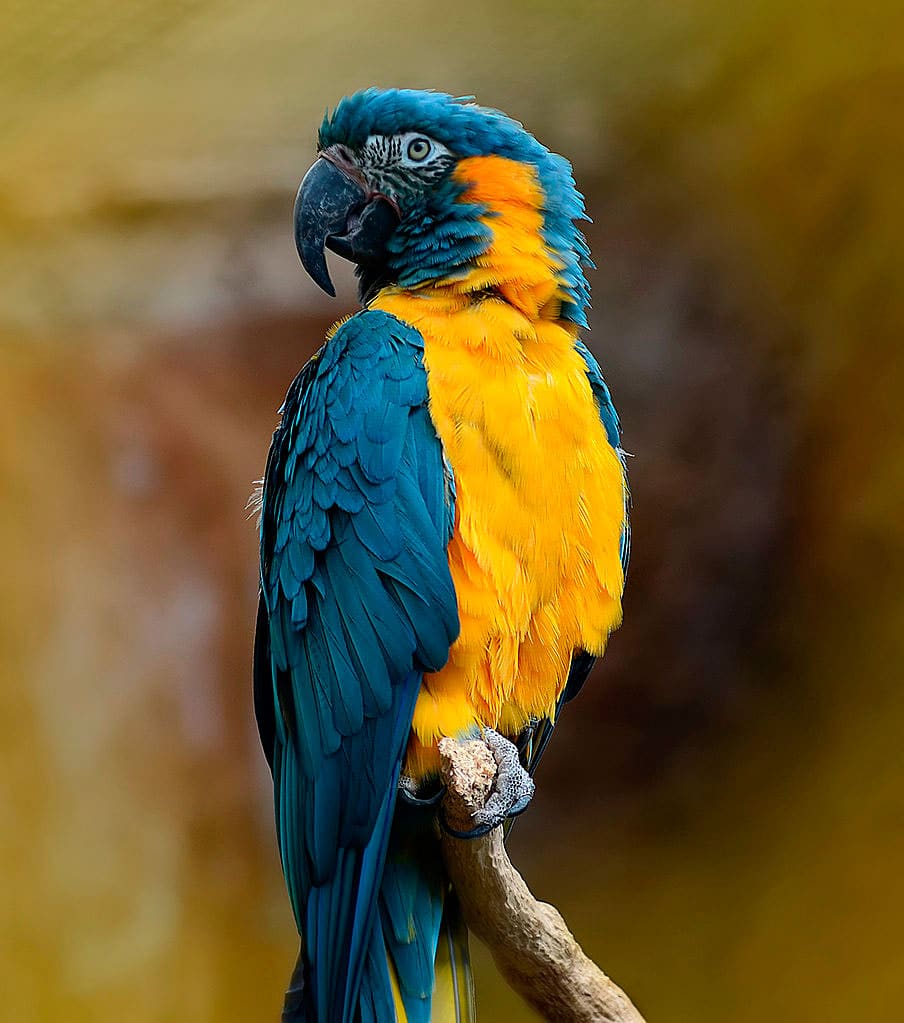
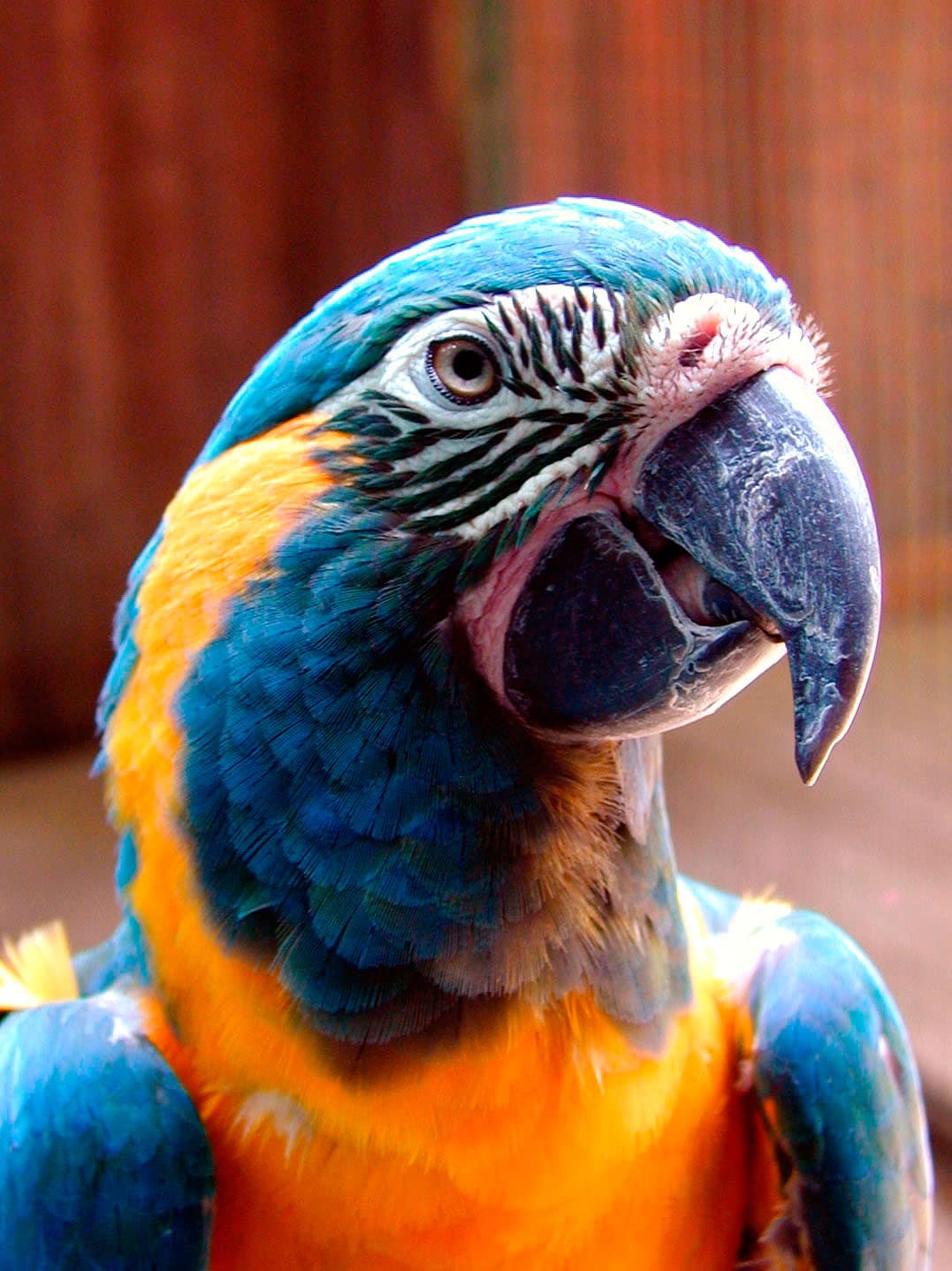
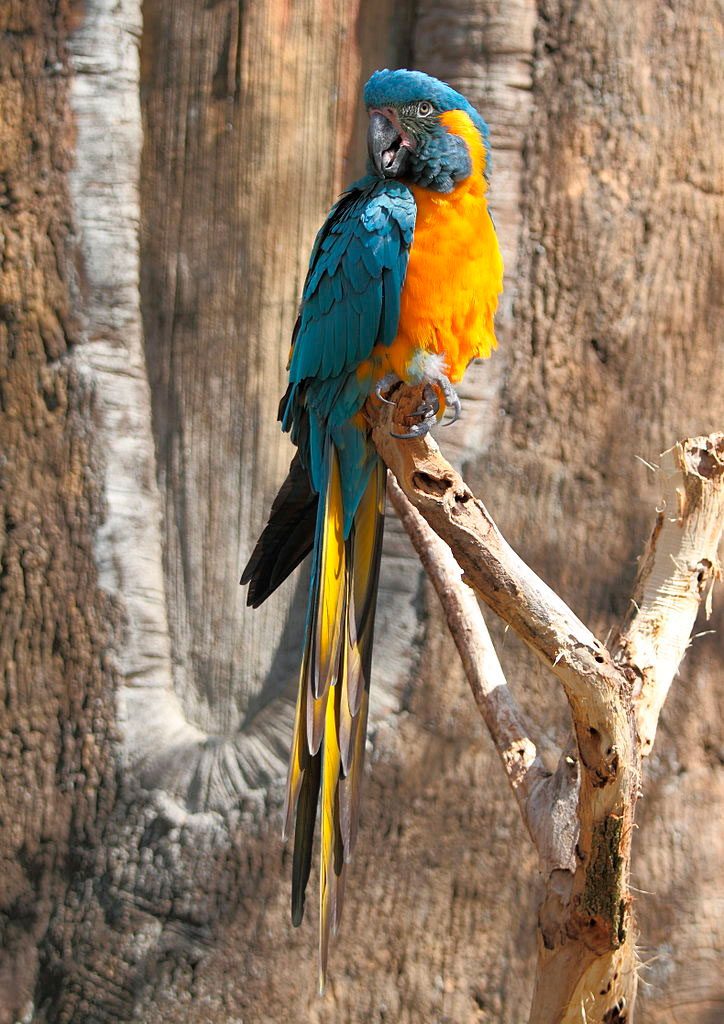
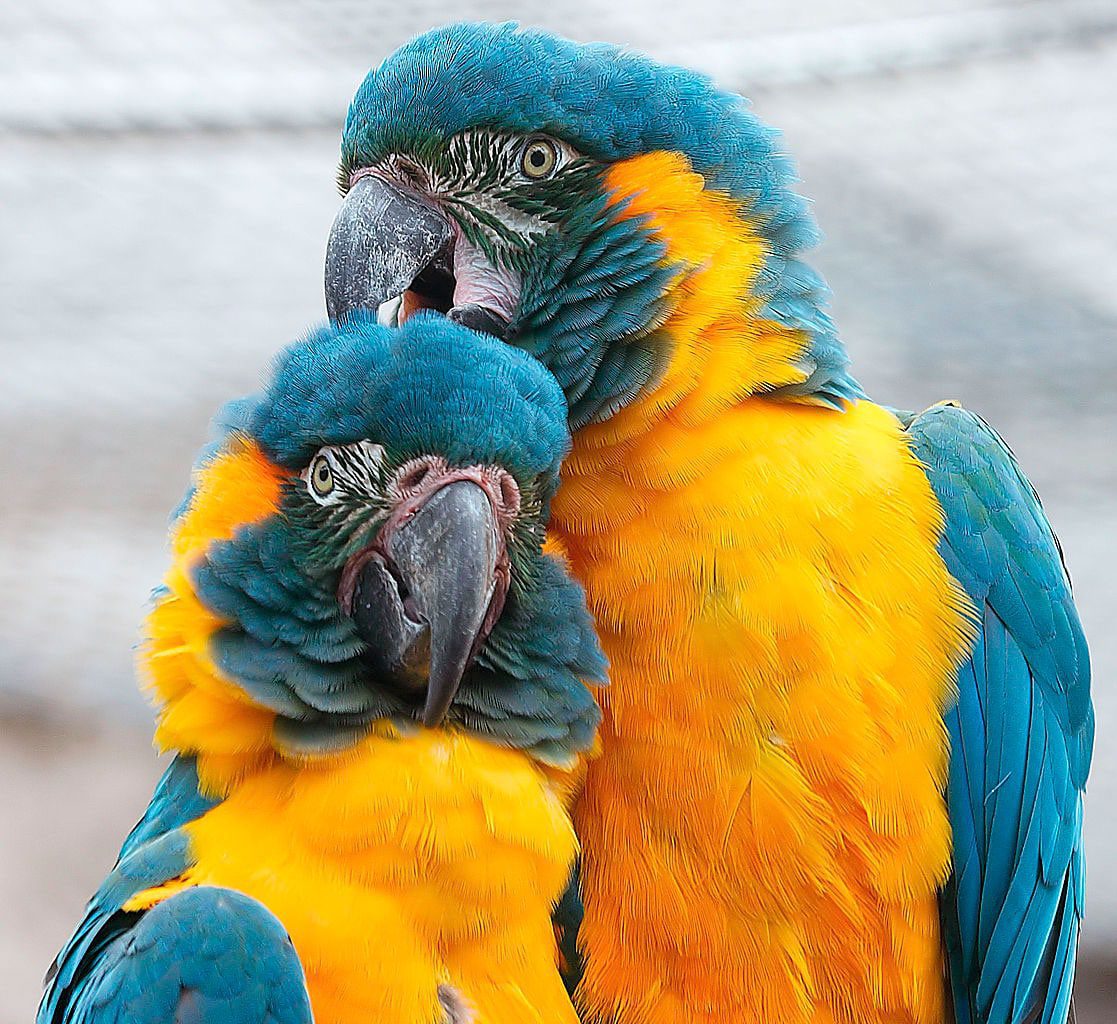
The Blue-throated Macaw (Ara glaucogularis) they have a very vivid coloration. Very similar to the more common Blue-and-yellow Macaw (Ara ararauna), easily differentiated by wide turquoise blue stain that reaches the throat.

These beautiful macaws have bright turquoise blue feathers that cover the throat, crown, the back and the back of your wings and tail. Yellow gold feathers grow in a strip between the crown blue and neck, on the sides of the face and in the ventral part of the body, the wings and tail.

In the face There is a patch sparsely feathered skin near the base of the great bill dark which has 5 or 6 horizontal stripes of blue feathers, unique for each Blue-throated Macaw and that they can be used to individually identify adults. The skin This patch is predominantly white with a tinge of pink around the bill.

The Blue-throated Macaw sample little sexual dimorphism.; However, the males they tend to be a little larger than the females with approximate masses of 600 and 800 g., respectively.

The newborn infants they are completely pink and have no feathers. The gray color of the underparts grows as they age, and is later replaced by colorful feather, fully developed. The irises It also changes color with age. The color of the eyes of a hatchling is initially black and changes to brown shortly after the opening of the eyes.

When is the Macaw one to three years, their eyes Gray become, then white. In the old mature, the irises It turns yellow and will be more golden color to the 10 years, becoming a gold richer with age.

The largest macaws They show a ring dark grey color that surrounds the pupil. This ring can be used to estimate the age of the Macaw.

Habitat:

Very scarce and localised. They inhabit gallery forests and tree islands surrounded by tropical savannah..

Seasonal rains cause floods in October to may and transform the Savannah in a swamp covered with grass that surrounds the high forest islands, permanently dry. The presence of Palms is required Motivate (Attalea phalerata) for the survival of the Blue-throated Macaw Since this species feeds, In addition to using it to build their nests. Also have favoritism by the Acrocomia aculeata.

They are most frequently between the elevations 200 and 300 m. Most of these macaws' habitat is used for cattle ranching.. But, the land is not suitable for cultivation, so there is one alteration of habitat for agriculture.

In general, observed in pairs; apparently less sociable nearby conspecifics than. The young are believed to stay with the parents for only a brief period of time., Perhaps that explains the infrequency in which observed small flocks or family groups. Probably communal roosts, sometimes with the Blue-and-yellow Macaw. They tend to use hangers in tall trees, especially of the species Tabebuia.

Although cattle trample young trees, Palms Motivate mature they are very resilient and resist damage. This Palm is also fire-resistant. As a result, Palms Motivate, often dominate the forest fragments in the Beni savanna (Llanos de Moxos).

Reproduction:

The Blue-throated Macaw are monogamous and they mate for life. It is not known if these macaws are matched with another partner if your original partner, dies. Nothing more is known about systems of mating for this species in the wild.

Usually They nest in cavities of Palm trees, often the species Attalea phalerata, but they will also use other Palm species or trees Tabebuia. You can use the holes previously occupied by other species, for example, woodpeckers.

Dead Palm trees are ideal for nesting, insofar as they are excavated by large larvae after a tree has died.

Some species of macaws, including the Blue-throated Macaw, palm leaves are eaten, causing the death of the tree. The trunk of the Palm will be recessed by larvae, resulting in the creation of a potential nest. It is not yet known if this is a coincidence or if these birds do this intentionally to create nesting sites..

Nesting couples do not remain in a nest consecutive reproductive seasons and generally seek different nesting sites each year.

The reproduction do it once a year if environmental conditions permit; However, If eggs or chicks are lost, the breeding pair can produce a second clutch in the same breeding season.

It has been speculated that the two sub-populations they breed at slightly different times: the population of North from August to November and the population of South from November to March.

The female It puts one to three eggs by laying and incubated during 26 days. The chicks have a mass of about 18 g at hatching; they leave the nest to 13 to 14 weeks and not be completely independent parents for a full year. They will reach their sexual maturity to the 5 years.

Food:

The Blue-throated Macaw do not feed on seeds and nuts to the same extent that other many other species of macaws make it. On the other hand, they eat mainly fruit of large Palm trees, including the of the Attalea phalerata and Acrocomia aculeata.

They supplement their diet with seeds and leaves of Hura crepitans, Inflorescences of Syagrus botryophora and palm trees Astrocaryum vulgare.

Birds consume ripe and near-ripe fruit and drink fluids from immature palm fruits. Attalea.

Distribution:

The Blue-throated Macaw only found in the Beni Department, Bolivia (between 200 and 300 meters above the sea level). In total, They inhabit an area of 2508 square kilometers.

There is a two inhabited areas by two subpopulations, to the Northwest of Trinidad (the capital of Beni), and the other to the South of Trinidad. This separation may have occurred because of the indigenous peoples who historically inhabited this area and who hunted the Blue-throated Macaw in order to use their feathers in their ornamental costumes. This separation could also have been caused more recently by the wild bird trade. With the high population of humans, macaws in those areas would have a higher chance of being caught. The formation of large human settlements in this area also resulted in a loss of suitable habitat and fragmentation of the habitat of this species. So, there are not any Blue-throated Macaw in the vicinity of Trinidad.

Reports of birds in Tarija and Chuquisaca they have not been tested. Stock in Paraguay and North of Argentina they are still being corroborated and seem unlikely. Apparently resident. Scarce and highly dispersed.

Conservation:


critical hazard

โ€ข Current Red List of UICN: critically endangered

โ€ข Population trend: Stable

The Blue-throated Macaw is currently classified as in critical hazard on The IUCN Red list and figure in the Appendix I by the CITES. Trapping for this species is illegal because the Blue-throated Macaw they are protected by the national law of Bolivia and Convention on international trade in endangered species of Fauna and Flora Silvestres (CITES) from 1986. (Strem, 2008; ยซBlue-throated Macawยป, 2009)

The capture for the pet trade It is the main reason that the Blue-throated Macaw are in such critical danger. The rarity of this species drove the selling price, What gives as a result an increase in the pressure of capture. As more birds were captured, the rarity of the Blue-throated Macaw was on the rise. This became a vicious cycle that greatly reduced the wild population of these Macaws to the numbers currently observed.. Currently there is an estimated number of 50 to 250 specimens in the nature. (Hesse and Duffield, 2000; Jorยญdan and Munn, 1993; ยซBlue-throated Macawยป, 2009)

Since the Spix's Macaw (Cyanopsitta spixii) became extinct in the 2000, the species Ara glaucogularis It is now the rarest among macaws in the world. With the low estimated wild population, extreme conservation actions are needed.

The World Parrot Trust has many volunteers and employees who work in the conservation of the Blue-throated Macaw. These people watch over nests to protect the chicks from predation. The chicks are also examined periodically to be sure that they are healthy and receive adequate food from their parents. If the female is not doing as well as expected, is then supplemented with formula. New nest boxes have been built and current nesting sites have been improved. The support of local landowners has also been established. (Giยญlardi, et to the., 2005; Kyle, 2006; Kyle, 2007b; Kyle, 2007to)

"Blue-throated Macaw" in captivity:

The Blue-throated Macaw they are relatively easy to breed in captivity, and the captive population is many times greater than the wild population.

This species of Macaw is now more common in captivity in United States and South Africa in its natural habitat. In a recent study of the species of the Appendix I of the CITES, carried out by the Committee CITES of the AF A, This species was the second more documented; only the Scarlet Macaw had been documented in greater numbers in captivity. It also, most owners have had success in breeding, Although it is uncommon to obtain seed of the second generation (only three owners have reported it). Without a doubt, This will change in the near future, When juveniles reach the age and maturity appropriate to reproduce.

With regard to its longevity, according to sources, a specimen lived during 22 years in captivity. It has been reported that these animals can live up to 32,8 years in captivity, but this has not been verified.

As a special, a specific installation of United States produces more than seventy copies of Blue-throated Macaw a year. The price of this species has experienced the most drastic decline of any parrot species; initially, It was not unusual to see couples of Blue-throated Macaw that were sold for even 10.000 $ americans, While it is now possible to find a pair of unrelated young by 3000 $ American or even less.

On the other hand, export made by breeders of United States to those of other countries is difficult to carry out at this time due to the strict restrictions on trade in this species imposed by the CITES. The legal trade in legal birds would certainly alleviate some of the threat hanging over the remaining flocks of wild birds..

Its feathers have also been used for ornamental costume decoration by indigenous groups..

Only breeders of a long experience with the most common species of Ara should consider obtaining these macaws.

Alternative names:

Blue-throated Macaw, Blue throated Macaw, Caninde Macaw, Wagler’s Macaw (English).
Ara canindรฉ, Ara ร  gorge bleue (French).
Blaukehlara, Kaninde (German).
Arara-de-garganta-azul (Portuguese).
Guacamayo Barbazul, Guacamayo barbiazul, Guacamayo de Barba Azul, Papagayo azul y amarillo (espaรฑol).
Guacamaya caninde, Guacamaya garganta azul (Bolivia).
Andapury, Arara (Guarani).
Bagarรก (Emberรก).
Carรบ (Yucuna).
Koatรก (Tunebo).

scientific classification:

Order: Psittaciformes
Family: Psittacidae
Genus: ARA
Scientific name: Ara glaucogularis
Citation: Dabbene, 1921
Protonimo: Ara glaucogularis

Images Blue-throated Macaw:

Videos "Blue-throated Macaw"

————————————————————————————————

"Blue-chinned macaw" (Ara glaucogularis)


Species of the genus Ara


Sources:

Avibase
– Parrots of the World โ€“ Forshaw Joseph M
– Parrots A Guide to the Parrots of the World – Tony Juniper & Mike Parr
– Birdlife
– Macaws. A Complete Guide by Rick Jordan.

Photos:

(1) – A Blue-throated Macaw at Chester Zoo, Cheshire, England By Steve Wilson – over 2 million views thank you from Chester, UK (Blue throated MacawUploaded by snowmanradio) [CC BY 2.0], via Wikimedia Commons
(2) – Blue-throated Macaws at Chester Zoo, England. Photograph shows upper bodies of two macaws By David Friel [CC BY 2.0], via Wikimedia Commons
(3) – A Blue-throated Macaw at Cincinnati Zoo, Cincinnati, Ohio, USA By Photo by Greg Hume (Greg5030) (Own work) [CC BY-SA 3.0], via Wikimedia Commons
(4) – Blue-throated Macaw at Cincinnati Zoo, USA By Ted (originally posted to Flickr as DSC_0388) [CC BY-SA 2.0], via Wikimedia Commons
(5) – Blue-throated Macaw; photograph shows upper body of pet parrot By Ruth Rogers (originally posted to Flickr as Candinde Macaw) [CC BY 2.0], via Wikimedia Commons
(6) – A Macaw Ara ararauna at Indira Gandhi Zoological Park in Visakhapatnam, Andhra Prades By Adityamadhav83 (Own work) [CC BY-SA 3.0], via Wikimedia Commons
(7) – The back of a Blue-throated Macaw showing the blue over its back and top of head By Eric Savage from USA [CC BY-SA 2.0], via Wikimedia Commons
(8) – Blue-and-yellow macaw Ara ararauna at Himeji Central Park, Hyogo, Japan – opencage.info
(9) – Blue-throated Macaw at Chester Zoo, England By Matt Sims (originally posted to Flickr as DSC_0236) [CC BY 2.0], via Wikimedia Commons

Sounds: (Xeno-canto)

โ–ท The world of Pets: Dogs, cats, birds, reptiles, amphibians

Large-billed Parrotlet
Forpus crassirostris

Large-billed Parrotlet

Content

Description:

12 to 13 cm.. height.

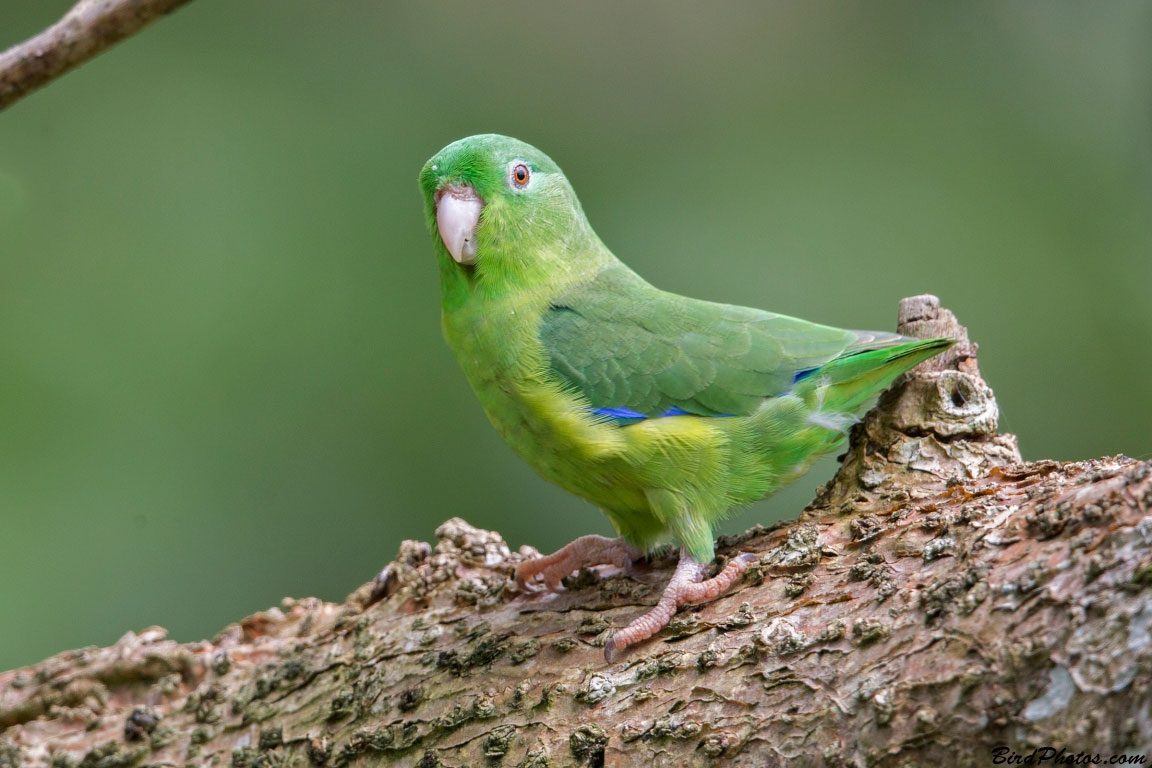
The Large-billed Parrotlet (Forpus crassirostris) has the crown, back of the neck and ear-coverts, green; the forecrown, cheeks, eye area and lores, emerald green.

Upperparts and wings, green, except the part inferior of the back, rump and greater coverts, are cobalt blue and blue color toward the base of the secondaries. Primary coverts pale grayish violet color which contrasts with the darker coverts They are cobalt blue. flight feathers Matte metallic blue. The underparts green with yellow hues. Upper, the tail green; undertail, pale green.

Bill and cere Pink with gray base up to the mandible top, laterally compressed in the Center; bare periophthalmic pale grey: irises dark brown: legs Gris-Rosado pale.
Female all green with belly yellowish green without blue color wing-coverts visible in the male.
Immature like adult respective, but with the blue of young males mixed with green.

Taxonomic note:

some authors (for example, Meyer de Schauensee 1966, Forshaw, 1973, Monroe y Sibley, 1993) They have used the name Forpus xanthopterygius, while other authors (Stotz et to the., 1996, Collar 1997) They have followed Pinto (1945) and used the name Forpus crassirostris to define this species.

  • Sound of the Large-billed Parrotlet.

Habitat:

They inhabit in forest edges, clear, riparian forests, parks and gardens in urban areas.

Reproduction:

They build their nests in tree cavities or exploit abandoned nests common hornero (Furnarius rufus); lining the nesting chamber with grass and the female lays 3 to 7 eggs White. The incubation, lasts approximately 18 days, It is carried out by the female and during this period the male is in charge of feeding her.

Food:

They compose your diet seeds, fruit, plants and flowers herbaceous. They are feeding both the ground and in trees and shrubs. Among the fruits they are highly appreciated by the Large-billed Parrotlet, palm, Trumpet trees (Cecropia spp), as well as seeds and shoots of Paineiras (Ceiba speciosa).

Melo et al, 2009, reported mass consumption flowers of Handroanthus serratifolius (Fam. Bignoniaceae), in particular its nectar, what it appears to be an important power source especially during the dry season, where scarce fruits.

Distribution:

Size of its range (players / residents) 1.312.215 kmยฒ

Southeast of Colombia to the East of Ecuador, North of Peru and West Brazil.

Conservation:


minor concern


โ€ข Current category of the Red List of the UICN: Least concern.

โ€ข Population trend: Stable.

Justification of the population

The size of the world's population of the Blue-winged Parrotlet It has not been quantified, but this species is described as ยซcommonยป (Stotz et to the., 1996).

Justification of trend

Suspected that the population is stable in absence of evidence of any decline or threatens substantial.

"Large-billed Parrotlet" in captivity:

In captivity they are not very frequent. They are birds enable you require a large cage. Quiet and something Shy. Not is easy to accommodate them with other parrots.
Can be prone to it Obesity.

Alternative names:

Blue-winged Parrotlet (crassirostris), Large-billed Parrotlet (English).
Toui ร  gros bec, Toui de Spix (crassirostris) (French).
Large-billed Parrotlet (German).
Tuim, Large-billed Parrotlet (Portuguese).
Catita enana, Lorito Aliazul, Periquito Azulejo, Cotorrita aliazul, Lorito de alas azules (espaรฑol).

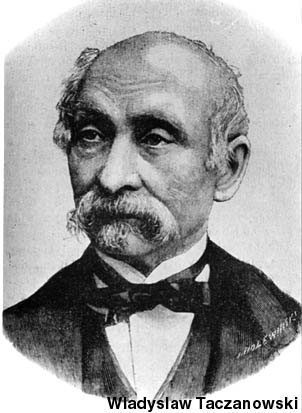
Wladyslaw Taczanowski


scientific classification:


Order: Psittaciformes
Family: Psittacidae
Genus: Forpus
Scientific name: Forpus crassirostris
Citation: (By Taczanowsk, 1883)
Protonimo: Psittacula crassirostris

Images "Large-billed Parrotlet"

————————————————————————————————

"Lorito Aliazul" (Forpus crassirostris)


Sources:

Avibase
– Parrots of the World โ€“ Forshaw Joseph M
– Parrots A Guide to the Parrots of the World – Tony Juniper & Mike Parr

Photos:

(1) – Large-billed Parrotlet (Forpus crassirostris) Male – Photo by Tom Friedel – Puerto Nariรฑo, amazon, Colombia – birdphotos.com

Sounds: John V. Moore, XC257657. accessible www.xeno-canto.org/257657

โ–ท The world of Pets: Dogs, cats, birds, reptiles, amphibians

Shawl-collared Lorikeet
Trichoglossus rosenbergii

Shawl-collared Lorikeet

Content


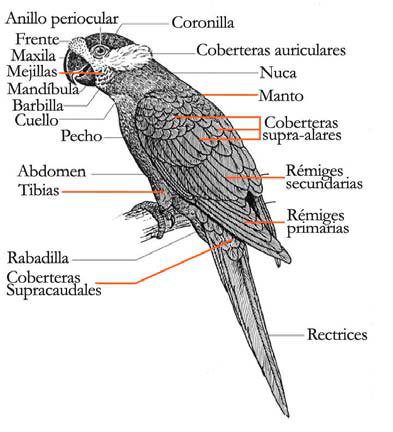
Anatomy-parrots

Description (1)

26 cm.. length and a weight between 132 and 150 gr.

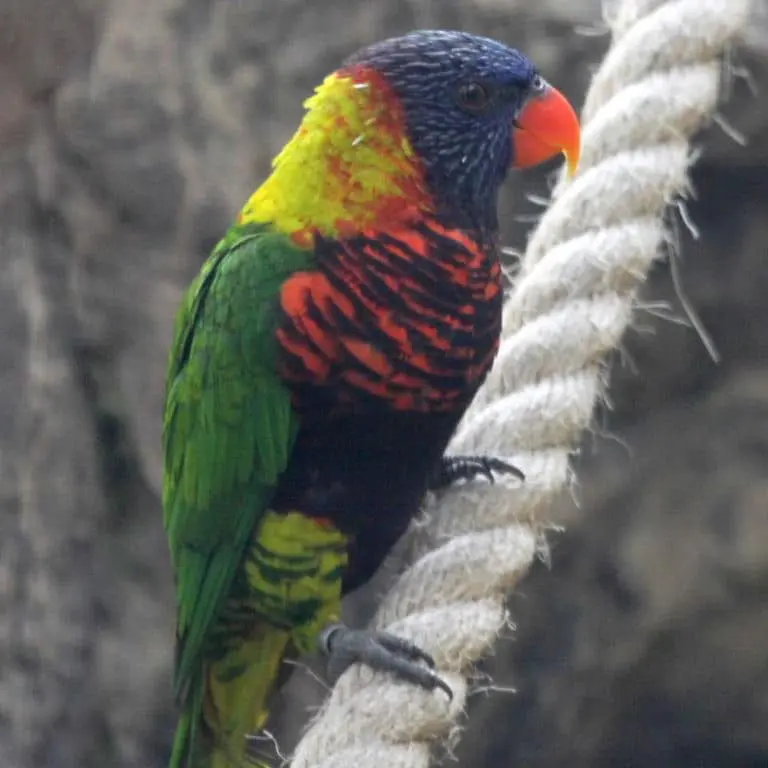
The Shawl-collared Lorikeet (Trichoglossus rosenbergii) is very similar to the Trichoglossus haematodus, but with a stronger blue in the head.

The edges of the breast feathers they are much wider, It has a broad yellow stripe on the neck, ending at the highest point with a red band narrow, their abdomen Violet is blue also has a wide orange stripe inside the flight feather.

The bill is red-orange. The irises They are orange-red and legs grey.

Variation of the nominal (Trichoglossus Haematodus).

Habitat:

They are in a wide range of habitats, including settlements in forests, coconut plantations, savannahs and mangroves.

In their natural habitats, They form small groups noisy that feed on the upper canopy. Often they are seen in mixed flocks with other species of parrots. At night, Community are hundreds of birds.

Son pollinators important species coconut.

Reproduction:

Within its natural range, usually they begin breeding between September and October – although breeding has been recorded in most months.

The average clutch it consists of 2 to 3 eggs. The female incubated eggs for about 24 to 27 days and the young become independent when they are about 80 days old.

Food:

Its diet natural It consists mainly nectar and pollen, but also it includes fruits like figs, citrus, papaya and mangoes open fruit bats. They may also feed on moth pupae and insects.

Distribution:

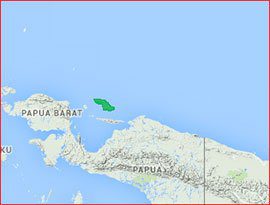
Distribucion-Lori-de-Biak
The reflection of both in the province of Papua, Indonesian.

Conservation:


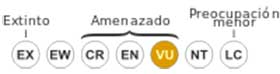
Vulnerable

The Shawl-collared Lorikeet has a single small population, that can be seen to be decreasing as a result of the loss and degradation of forests, by agriculture and logging subsistence and perhaps also for the capture for trade. So, is qualified as Vulnerable.

The bird population is assumed that can range from 3000-4000 birds.

Alternative names:

Shawl-collared Lorikeet, Biak Lorikeet, Rainbow Lorikeet (Biak) (ingles).
Loriquet de Biak (French).
Biaklori (German).
Loris Arco-รris Rosenbergii (Portuguese).
Lori de Biak (espaรฑol).

scientific classification:

Order: Psittaciformes
Family: Psittaculidae
Scientific name: Trichoglossus rosenbergii
Citation: Schlegel, 1871
Protonimo: Trichoglossus Rosenbergii

Images "Shawl-collared Lorikeet"

————————————————————————————————

    (1) – Subspecies Coconut Lorikeet (Trichoglossus haematodus)

————————————————————————————————

"Both Lori" (Trichoglossus rosenbergii)


Sources:

Avibase
– BirdLife.org

Photos: Rosenbergโ€™s Lorikeet – animalphotos.me

โ–ท The world of Pets: Dogs, cats, birds, reptiles, amphibians

Painted Tiger-Parrot
Psittacella picta

Painted Tiger-Parrot

Content

Description

19 cm.. length and a weight between 48 and 60 g..

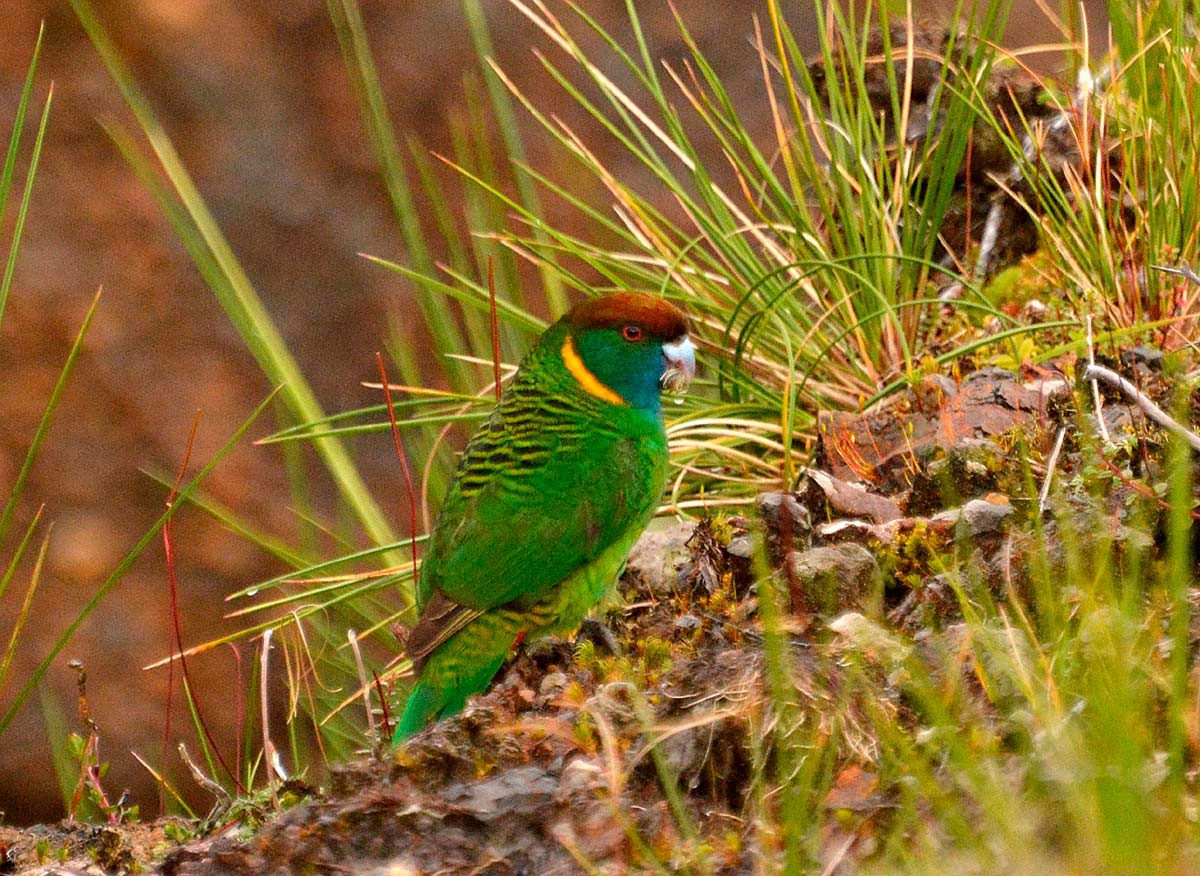
In adults of the Painted Tiger-Parrot (Psittacus erithacus), the head is predominantly Brown, but the colors of the top they are bright and warm, While the cheeks they are more off and more grey. One collar Yellow Strait decorates the neck. The plumage is green with black stripes. Rump and uppertail-coverts red. The wings They show a green with yellow stripes on the external threads and the flight feather. The underparts is yellowish-green.

The chin is brown, the upper part of the chest It has a central patch of blue. The coverts are orange-red. The rest of them underparts are a green medium, slightly clearer that the upperparts. The upper part of the tail is dark green. The bottom of the tail is blackish grey.

The bill is light grey and blue color with a white tip. The irises are reddish orange, the legs dark gray.

The collar Yellow is absent in the female. The cheeks they are dyed blue. The chest black and yellow colors absent. In the upperparts abounds over the scratched.

The immature they are similar to females.

Distribution 3 subspecies

  • Psittacella picta picta

    (Rothschild, 1896) – Nominal.


  • Psittacella picta lorentzi

    – (Victoria, 1910) Adults as the nominal species but the crown and the surroundings are color marron-oliva; cheeks teal, with a green darker in ear-coverts; rump and uppertail-coverts greenish yellow striped with black.


  • Psittacella picta excelsa

    – (Mayr & Gilliard, 1951) Males as the nominal, but the Crown is colored bright marron-oliva. The female is like the female of the nominal species but with the head color glossy marron-oliva; the throat and cheeks heavily washed in blue.

Habitat:

The Painted Tiger-Parrot they live in the mountains, in forest areas where can be seen especially at edges and clearings. They are also found in the moss-covered forests, the secondary forest, and in the thickets of Alpine and subalpine areas. These birds can be downloaded at 1.370 m. In the southeast of its distribution area, they tend to be distributed at lower altitudes than in other places. But, their preferred Habitat is between the 2.400 and 4.000 m, just above the Brehm's Tiger-Parrot (Psittacella brehmii).

The birds are generally quiet, but not shy, and move individually, in pairs or in groups of up to six members; It has been observed feeding on groups, mixed with the Madarasz's Tiger-Parrot. They often feed in low bushes or on the ground.

Reproduction:

Little is known about the ecology of the species and the only information on reproductive behavior is that birds in breeding conditions have been observed in the months of June and August..

Food:

The diet It includes seeds, berries and the fruit of conifers Dacrydium.

Distribution:

Endemic to the central band of the mountain of New Guinea. Restricted to the high montane forests, from the West of the Maoke through the central mountains, including the Tari region, about Kandep, Mount Hagen, Monte, Kubor up to the Owen Stanley mountain range in the Southeast. The world's population is believed to be superior to the 100.000 specimens.

Distribution 3 subspecies:

  • Psittacella picta picta

    (Rothschild, 1896) – Nominal.


  • Psittacella picta lorentzi

    – It is located on the westernmost stretch (Sudirman mountains).


  • Psittacella picta excelsa

    – Occupied the mountains Central of Papua New Guinea.

Conservation:

โ€ข Current IUCN Red List category: Unrecognized

According to "The World Parrot Trustยซ, in accordance with Tony Juniper, the world's population is superior to 100 000 individuals.

According to the Manual, This species, Although relatively dispersed, may be locally common. Despite its small extension, It is classified as ยซleast concernยปFor the different ornithological organizations.

"Painted Tiger-Parrot" in captivity:

Not found in poultry.

Alternative names:

Painted Tiger-Parrot, Painted Parrot, Painted Tiger Parrot, Timberline Parrot, Timberline Tiger-Parrot (ingles).
Perruche peinte (French).
Braunscheitelpapagei, Braunscheitel-Papagei (German).
Psittacella picta (Portuguese).
Lorito Pintado, Lorito tigre Pintado, Lorito-tigre Pintado (espaรฑol).

scientific classification:

Order: Psittaciformes
Family: Psittaculidae
Genus: Psittacella
Scientific name: Psittacella picta
Citation: Rothschild, 1896
Protonimo: Psittacella picta

Images "Painted Tiger-Parrot"

Videos "Painted Tiger-Parrot"

————————————————————————————————

ยซLorito-tigre paintedยป (Psittacella picta)

Sources:

Avibase
– Parrots of the World โ€“ Forshaw Joseph M
– Parrots A Guide to the Parrots of the World – Tony Juniper & Mike Parr
Wikipedia

Photos:

(1) – Psittacella picta near Lake Habbema – BIRDING AROUND THE WORLD

Sounds: Hans Matheve (Xeno-canto)

โ–ท The world of Pets: Dogs, cats, birds, reptiles, amphibians

Great Green Macaw
Ara ambiguus


Guacamayo Ambiguo

Content

Description:

Ilustraciรณn Guacamayo Ambiguo

77 to 85 cm.. length and an average weight of 1300 g..
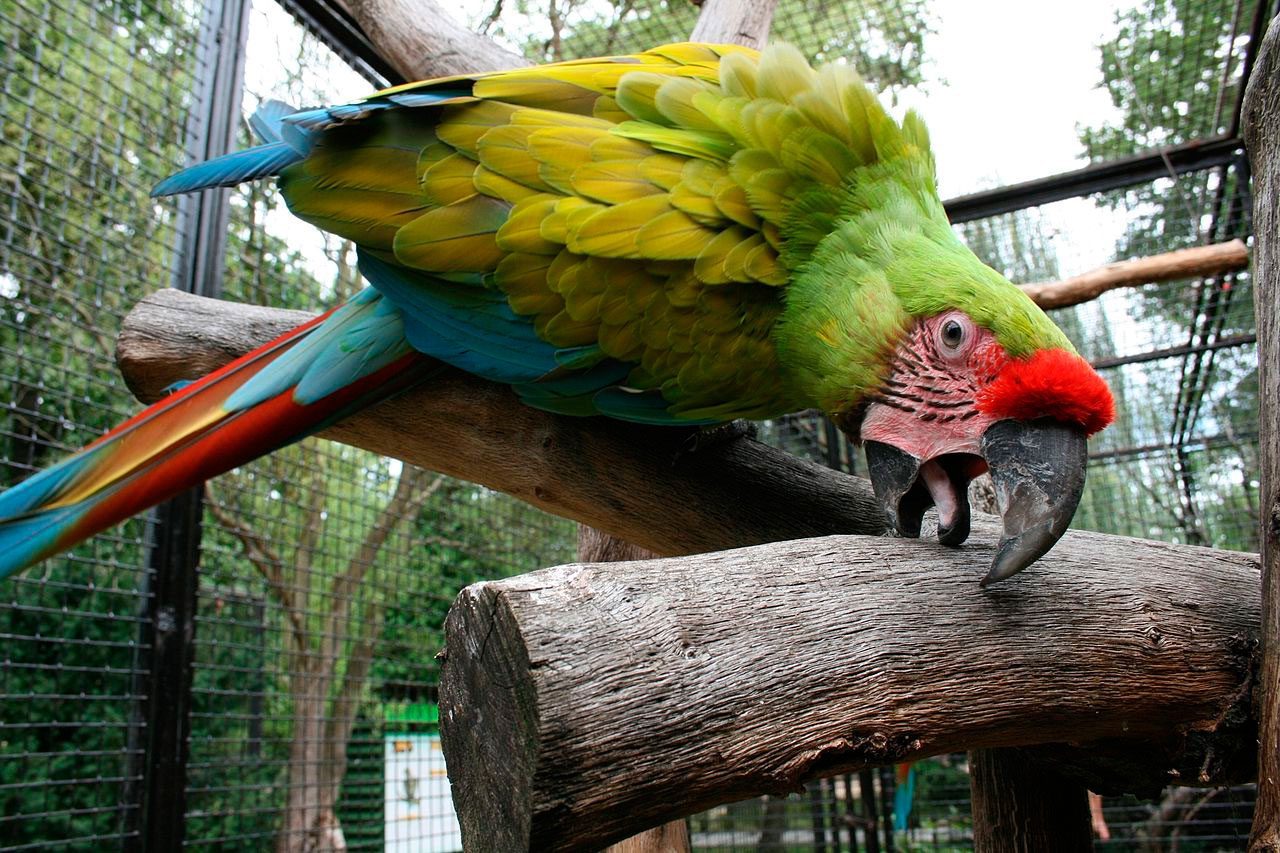
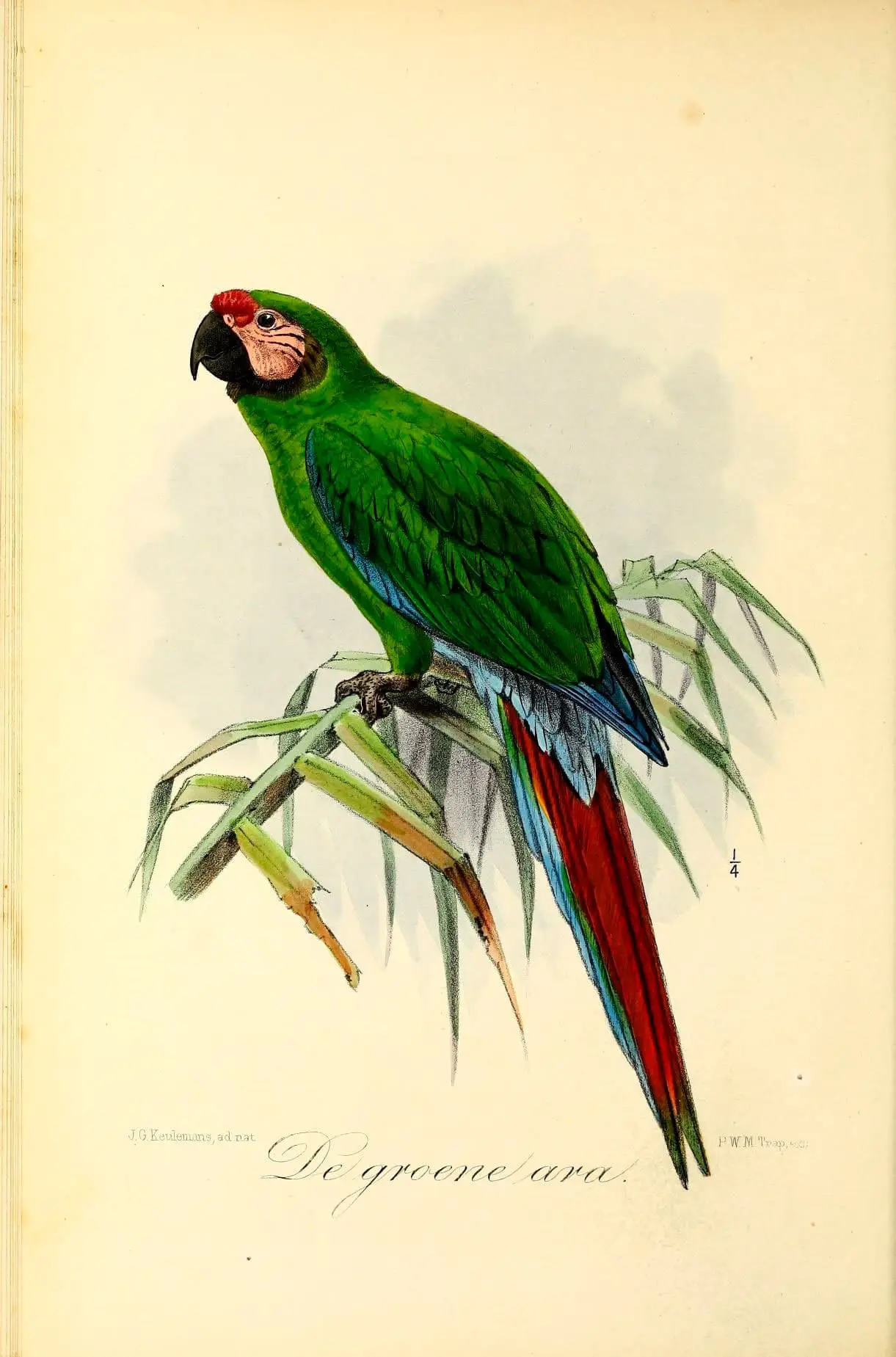
The Great Green Macaw (Ara ambiguus) has the forecrown and the former area of the lores dark red; crown bright green, bluish in the nape. The the mantle and back Green olive: scapulars of the same colour but some with blue tips; rump and uppertail-coverts bright pale blue, lesser and median coverts greenish oliva-marron; greater coverts bluish green. The primaries and secondaries blue, more dark in the margin of the vane inner. Wing feathers color olive; rest of underwing-coverts color oro-oliva.

Black feathers off at the top of the throat bordering the lower jaw; rest of the throat, the chest and the belly brighter yellowish green, feathers on the lower area of the abdomen with red bases hidden; undertail- coverts pale blue. Under, the tail, reddish orange in the Center with blue tips, increasingly blue outer feathers and more completely blue external; undertail, the tail, color oro-oliva.

upper jaw Blackish at the base, color Horn towards the tip and edges, lower jaw negruzca; bare skin of the lores posterior and cheeks of pink color crossed by narrow lines of dark red feathers in sabers and black in the cheeks; irises pale yellow, legs dark grey.

Both sexes similar.

The tail of the immature opaque yellow-tipped, the plumage duller than the adult Green (especially below), the irises brown.

The older adult birds sometimes show patches of Turquoise in the plumage, especially in rear of the neck and the chest.

NOTE:

    The Military Macaw (Ara militaris) is so similar to this species, in German are called minor military Macaw (Militaris) and greater (ambiguous).

    An Ecuadorean specimen intermediate between the Great Green Macaw (Ara ambiguus) and the Military Macaw (Ara militaris) suggests one hybridization, thus increasing the possibility that the two forms are the same species. Although separate from the ecological point of view.

    The Ambiguous macaws and Military could be in contact in the lower part of the Valle del Cauca in Colombia, and in the Northwest of Ecuador and West Colombia. The Great Green Macaw (mainly from moist lowland forests) use deciduous forests, While the Military Macaw (mainly of dry upland forest) are also recorded in humid lowland forests. Both make seasonal movements and in the case of the Military Macaw, they perform movements of long distance between their preferred habitats.

    The length of the tail and of the wings of the Mexican military Macaw and species nominal of the Great Green Macaw, They show a considerable overlap. Waiting to collect more details, the Great Green Macaw and the Military Macaw are here treated as separate species.

Subspecies description:

  • Ara ambiguus ambiguus

    (Bechstein, 1811) – The nominal species


  • Ara ambiguus guayaquilensis

    (Chapman, 1925) – The bill smaller, with a more greenish color under the flight feathers and under the tail.

Habitat:

The Great Green Macaw they are very shy birds and difficult to see, usually found at no lower altitudes of 35 meters in the treetops. They feed in silence and many times could be up to more than five hours in a same tree.

Mainly observed in moist lowland forests, but also in deciduous forests in the Chongon region to the southwest of Ecuador.

In Costa Rica in the primary forest of low and clear land with tall trees, from time to time in the lower montane forests. Crossing open between forest fragments fields and visit remnants of trees of the species Dipteryx on forest pastures.

Remote forests in Panama.

In Ecuador inhabits humid lowlands, deciduous forest and Montane forest low but also visit more open areas for feeding.

They come to the 600 metres in the Cordillera de Guanacaste, Costa Rica; between 1.000 and more rarely 1.500 m, in Darien, Panama.

Less sociable than other large macaws, Although usually seen in pairs, in groups of 3-4, and more rarely in groups of up to twelve birds.

Reproduction:

Form pairs of lifetime and are almost true to their nests, nesting from December to June. Most couples put the first egg at the end of January and by February the nests are already with hatchlings. The female incubates the eggs, While the male brings food to the nest. Both parents are responsible for feeding the pigeons, to do so approximately every two hours. They are birds that take care of their chicks until they can fend for themselves., They even take care of them until that hatch the chicks of the season.

The average clutch consists of 2 – 3 white eggs, they are incubated by the female for a few 26 days. The babies are blind, nude and completely dependent on the care of parents; they weigh around 23 g..

The chicks are fed by both parents and they leave the nest When you have about 12 – 13 weeks of age. At the time they leave the nest, usually weigh between 930-985 g..

A nest in Guayas, Ecuador, in the cavity of a tree of the species Cavanillesia platanifolia. Reported nestings between August-October in Ecuador. Breeding during the dry season (December-April) in Costa Rica.

Food:

The diet of the Great Green Macaw includes fruits of Lecythis costaricensis, Dipteryx panamensis, Sloanea, Dalium guianensis and Ficus, and flowers of Symphonia globulifera.

Feeds in the treetops.

Distribution:

Size of the area of distribution (reproduction / resident): 100,000 km2

Its distribution ranges from the East of Honduras to western Colombia and West of Ecuador.

Observed in the lowlands of the Caribbean from the east of Honduras through this of Nicaragua to the lowlands of Costa Rica especially on the slope of the Caribbean, including the Cordillera de Guanacaste.

In Panama especially on the slope of the Caribbean, but also locally in the peaceful. From East Panama to the tropical zone to the West of Colombia, on Western Cordillera of the Andes and South to the upper area of the Atrato River and Serrania del Baudo (possibly up to Buenaventura) and East towards the north end of the Andes in the West of the upper part of the Sinu river valley.

In West Ecuador observed mostly from the Colonche hills, Northwest of Guayaquil; also further north, in Esmeraldas, possibly in the extreme southwest of Colombia, although the forests here are, Perhaps, too wet (See geographic variation).

Numbers fluctuate locally due to seasonal foraging movements. Local appearances in Costa Rica they often coincide with the fruiting of trees of the species Dipteryx.

Local, being the most common of the great macaws in Panama. But, in general, Rare, with the decline in recent large scale of its population due to obvious deforestation in the range.

Extinguished much of Ecuador, where the population (only 100 birds) It is threatened by loss of habitat due to urbanization and agriculture.

The exploitation of trees of the species Dipteryx It poses a serious threat in Costa Rica.

They occur in several protected areas, including the The Darien biosphere reserve, Panama, Rรญo Plรกtano Biosphere Reserve, Honduras and Cotacachi-Cayapas ecological reserve, Ecuador, but seasonal pilgrimages suggest that these areas are insufficient on their own to preserve populations.

Less common than Military Macaw (Ara militaris) in captivity and bred rarely. CITES Appendix I. VULNERABLE (included as subspecies of the Military Macaw Necklace et to the. 1994).

Subspecies distribution:

  • Ara ambiguus ambiguus

    (Bechstein, 1811) – The nominal species


  • Ara ambiguus guayaquilensis

    (Chapman, 1925) – In critical hazard; they live in the wild in limited sectors of the western part of the Ecuador; its habitat is characteristic in humid tropical and dry forests of the Ecuadorian coast

Conservation:

State of conservation โ“˜


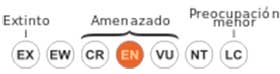
Endangered Endangered โ“˜ (UICN)โ“˜

โ€ข Current Red List of UICN: Danger
โ€ข Population trend: Decreasing

Recent estimates suggest that the population has less than 2.500 mature individuals (or less than 3.700 in total if we include juveniles and immature); the largest subpopulation would be found in Darien, to the East of Panama, with less than 1.700 mature individuals (or less than 2.500 in total). Still you have to be careful, due to that in non-breeding times can form groups of 50 individuals or more, It can be qe will overestimate their populations. It also, Although it is most abundant in Darien, It is found in specific areas, finding numerous areas without copies.

THREATS

LOSS OF HABITAT: In Central America, deforestation among other things to increase banana plantations and cattle ranching, as well as logging for other reasons, they have strongly affected. In fact, annual deforestation rates are very high throughout its range, and deforestation in Panama likely to be superior to the 30% its original range. In other countries like Costa Rica and Ecuador its range has also been reduced in recent 100 years. Urbanization and agriculture that have destroyed their habitat have resulted in great part with the subspecies of the Ecuador.

These may include, the Zona Norte (Costa Rica) has suffered the highest rate of deforestation in the country in the last two decades, both legal and illegal, leaving less than a 30% the forest on foot. But, It is important to mention that several scientific studies highlight the high level of biodiversity of the forests of the North Huetar region, among the most diverse of Central America.

As well, Although there are few protected areas for these birds as the Indio-Maรญz Biological Reserve of Nicaragua, where they found an extensive habitat conducive to its development; However, Incursions by Costa Rican loggers to the other side of the San Juan River, so this reservation, one of the most important of Central America It is also not safe from chainsaws.

CAPTURE ILLEGAL: the illegal trade that exists with the Great Green Macaw for use as a pet is a factor that jeopardizes its existence.
They are also captured because their feathers are used to make paintings about them.

HUNTING: It also seems that sometimes fires them as a pest to crops.

CONSERVATION MEASURES

With regard to the threats, of course it is your hunt forbidden for the trade, power or to obtain their feathers, Although often living standards are not met.

Is located in the CITES both in Appendix I and II as.

RESERVATIONS: It is very important for these birds the Darien biosphere reserve, Panama, and the adjacent Los Katรญos National Natural Park, Colombia. There are also other important reserves in all the countries covered, although they provide little protection for these birds..

In Costa Rica, Although it was a proposed moratorium on logging the almond trees, This finally was not carried out. On the other hand, a Government-backed conservation strategy is being implemented in Ecuador.

Proof that the investigation in these cases is important, is that in 2007, a rapid assessment study looking for last survivors in the Cordillera-Chongon Colonche, Ecuador, gave positive results.

On the other hand, There is a bi-national campaign in the lowlands of the San Juan River (Nicaragua and Costa Rica), which aims to increase knowledge of biology, threats and conservation, and strengthen the management of natural resources.

The Research and conservation of the Great Green Macaw project dedicated since 1994 to the study of the conservation biology of the Great Green Macaw on Zona Norte (Costa Rica) and it has an important biological database on this species, in fact the only information of this type that exists in Central America, according to the same source. This project was initiated to concerns that its population was restricted and that the forest was also be sacrificing at a very fast pace. The project is supported from 1997 by the Tropical Scientific Center, the same body that administers the The Monteverde Cloud forest biological reserve. The concern was justified when the first phase of the study determined that the area of distribution of the Great Green Macaw in Costa Rica had been reduced by 90% Since the beginning of the 20th century.

In Costa Rica have been reproduced in captivity at some sites, as the ZOOAVE Zoo.

PROPOSED CONSERVATION MEASURES:

โ€ข One of them is to make effective the protection in the reserves of Honduras and Nicaragua.

โ€ข Another is to designate the proposed Maquenque National Park, in Costa Rica.

โ€ข Trade should be restricted through law enforcement and educational campaigns.

โ€ข Finally, it would be very interesting to acquire private reserves in certain areas, to ensure the same protection.

"Great Green Macaw" in captivity:

Less common than Military Macaw (Ara militaris) in captivity and bred rarely.

The Great Green Macaw only recommended for experienced handlers and breeders. There are more silent than other macaws and can be kept with other large macaws outside of the breeding season.

Breeding pairs require long flights of at least 15 m. These parrots are not suitable for the interior of a House.

With regard to its longevity, according to sources, one specimen was still alive after 29 years in captivity.

Alternative names:

Great Green Macaw, Buffon’s Macaw, Grand Military Macaw, Green Macaw (English).
Ara de Buffon, Grand Ara vert (French).
Bechsteinara, Bechstein-Ara, Grosser Soldatenara (German).
Arara-militar-grande (Portuguese).
Guacamaya Verdelimรณn, Guacamayo Ambiguo, Guacamayo de Cara Blanca, Guacamayo verde mayor, Guara verde, Lapa Verde (espaรฑol).
Guacamaya Verdelimรณn, Gucamaya verde limรณn (Colombia).
Guacamayo verde mayor, Lapa Verde (Costa Rica).
Guacamayo verde mayor (Ecuador).
Bagarapabara (Emberรก).


scientific classification:

Johann Matthew Bechstein

Order: Psittaciformes
Family: Psittacidae
Genus: ARA
Scientific name: Ara ambiguus
Citation: (Bechstein, 1811)
Protonimo: Psittacus ambiguus


Images Great Green Macaw:

Videos "Great Green Macaw"

ยซAmbiguo Guacamayoยป (Ara ambiguus)


Species of the genus Ara


Sources:

Avibase
– Parrots of the World โ€“ Forshaw Joseph M
– Parrots A Guide to the Parrots of the World – Tony Juniper & Mike Parr
– Birdlife

Photos:

(1) – Great Green Macaw in the zoo in Hodonรญn, Czech Republic By Bohuna Mikulicovรก (Hodonรญn Zoo) [CC BY-SA 3.0], via Wikimedia Commons
(2) – Ara ambigua from Zoo Schmiding By Alois Staudacher (Own work) [GFDL or CC-BY-SA-3.0], via Wikimedia Commons
(3) – Great Green Macaw (also known as Buffonโ€™s Macaw). A male in a cage By Ruth Rogers (originally posted to Flickr as Male Buffonโ€™s Macaw) [CC BY 2.0], via Wikimedia Commons
(4) – Ara ambiguus at the zoo at Paradise Village Resort, Nuevo Vallarta, Nayarit, Mexico By Riley Huntley (Own work) [CC BY-SA 3.0 or GFDL], via Wikimedia Commons
(5) – Ara ambiguus, La Selva, Costa Rica By Don Faulkner (Great Green Macaw) [CC BY-SA 2.0], via Wikimedia Commons
(6) – Onze vogels in huis en tuin By Keulemans, J. G. [CC BY 2.0 or Public domain], via Wikimedia Commons

Sounds: (Xeno-canto)