▷ The world of Pets: Dogs, cats, birds, reptiles, amphibians
White-cheeked turaco
Turaco leucotis
Origin: Eritrea, Ethiopia, South Sudan, Sudan
Character: Dynamic and curious
Life expectancy: 8 to 10 years
Height: 42 to 43 cm..
Photo: fotosricardo-h
Content
Characteristics
This striking bird is native to Africa (area of Ethiopia) and reaches a size of 42 to 43 cm..
It has bright green feathers, with a dark crest on the head, may stands at will, the Underwing coverts are blue like the tail, While the primaries are intense red, and in general only be appreciated with the bird in flight. The beak is orange-red, like the ring around the eyes. In front of the eye they have "white cheeks" and two oblique white marks on the neck..
Has several other anatomical features of interest. First of all, they have strong feet and you can turn your fourth finger of the foot forward or backwards to get a better grip on its perch. In second place, the chickens of this species have claws on their wings, a strange and evocative anatomical feature for a bird that almost seems to be reminiscent of its ancient cousin, the Archaeopteryx. The chicks emerging from these claws at the time of leaving the nest.
Most of these birds have green plumage and is the result of a combination of structural coloration and pigments.. They are unique since only the Turacos, among all the birds, they produce a Green pigment, turacoverdin, It is the color of their feathers.
Character and skills
This beautiful and energetic African bird is a very popular bird in the United States and the United Kingdom., they can even be hand fed by what you become very mansas pets.
Another curiosity, and one of the things by which this bird strikes is by singing, which, It resembles the squeal of a wild monkey.
Images "White-cheeked turaco"
Videos "White-cheeked turaco"
▷ The world of Pets: Dogs, cats, birds, reptiles, amphibians
55 cm.. height and a weight between 815 and 975 g..
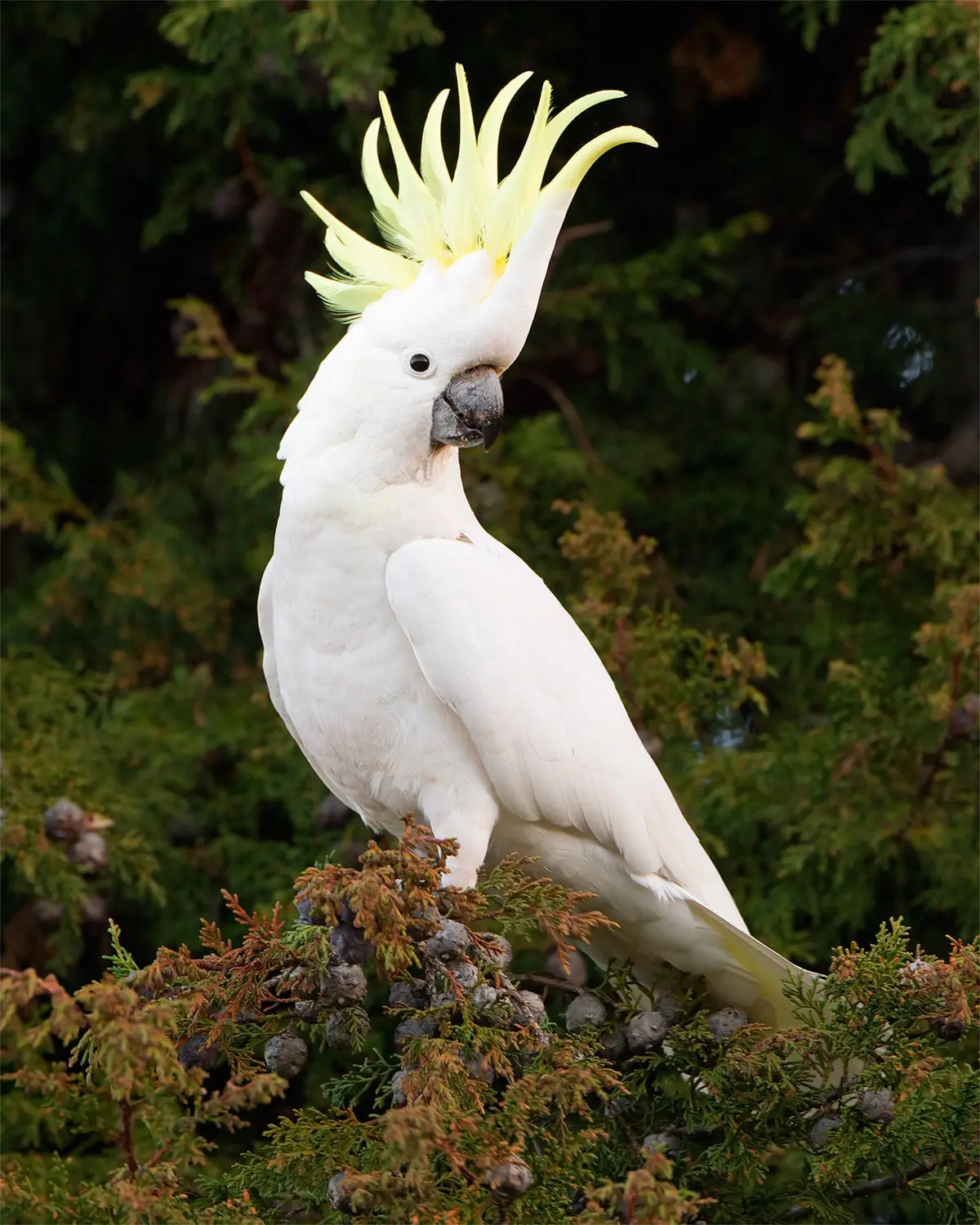
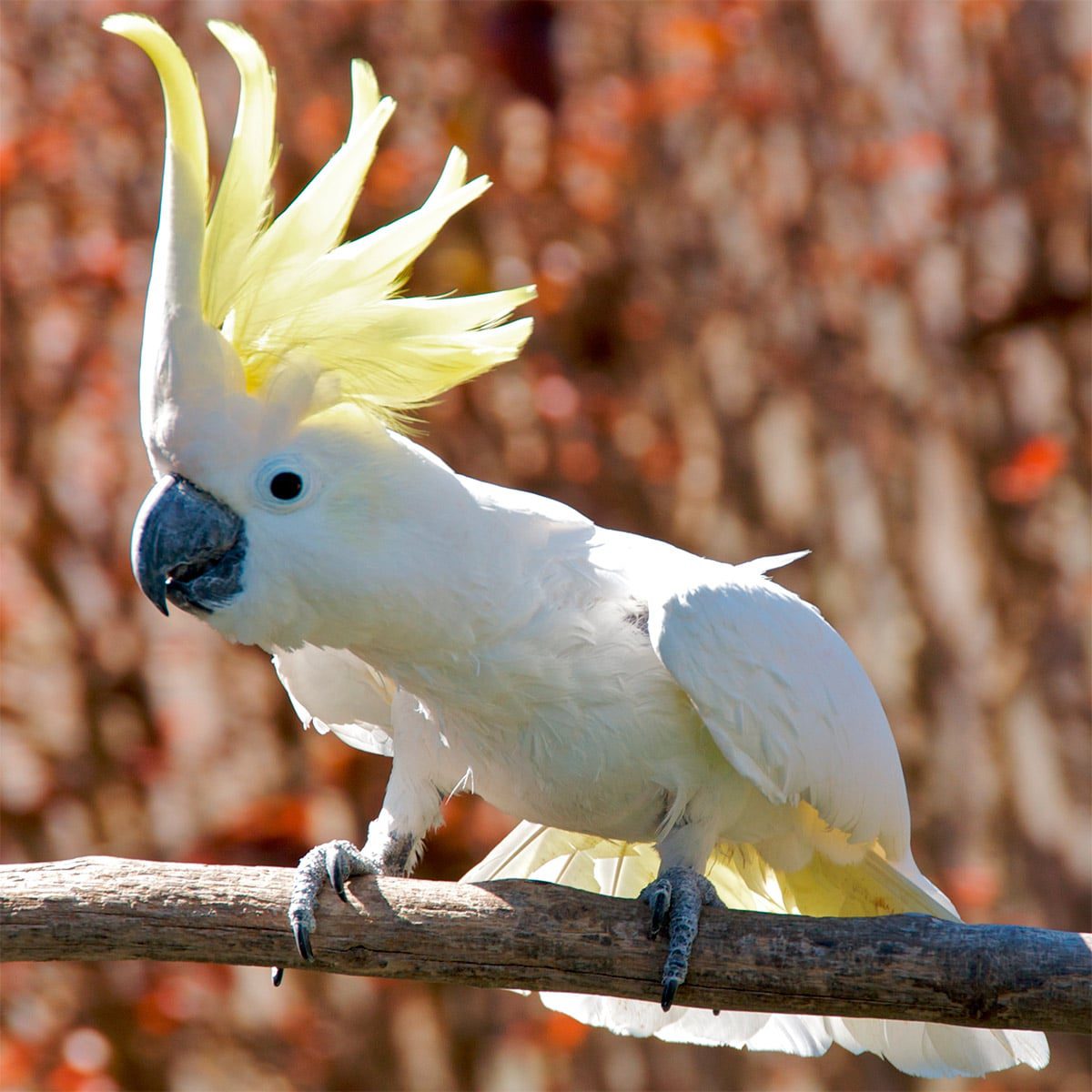
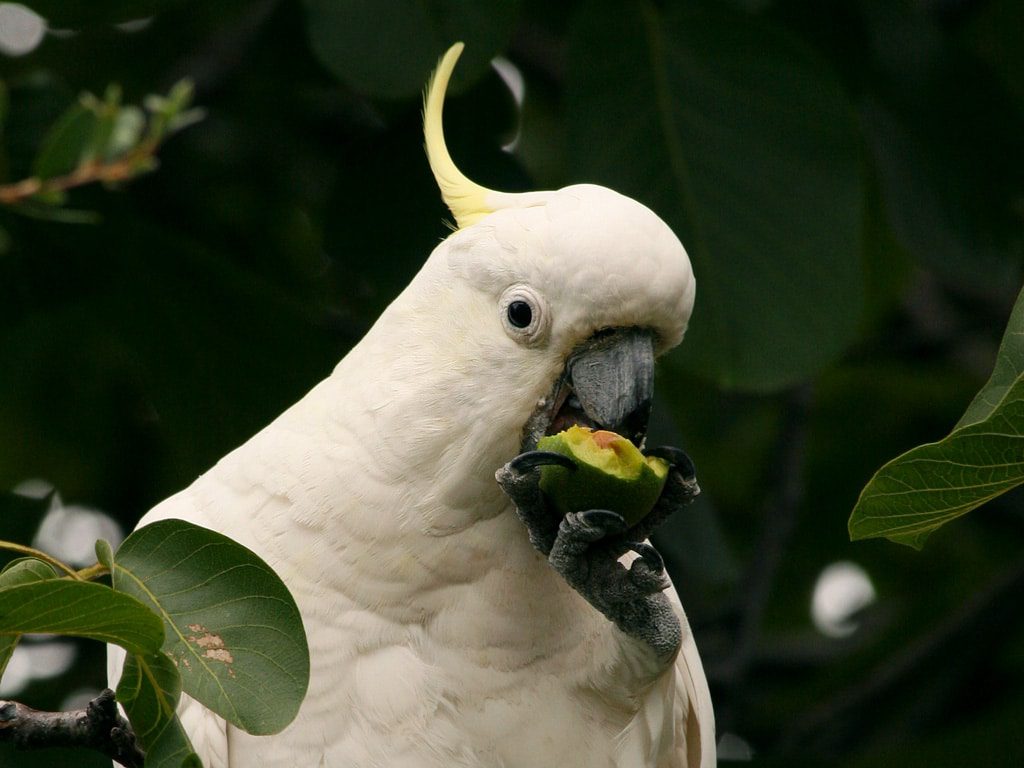
The Sulphur-crested cockatoo(Cacatua galerita) It is a bird with a predominantly white plumage.
In adults, the ear-coverts, bases feathers throat and cheeks, are pale yellow. the arista formed by the 6 Erectile feathers slightly inclined forward, are yellow. The crest You can reach up 14 centimeters in length. The bottom of the wings and of the tail van dyed pale yellow.
The ring surrounding the eye shows a white. The irises is dark brown in the male and reddish brown in the female. The bill is blackish grey, the legs grey.
The immature They are just different from adults. The irises They are pale brown.
(Temminck, 1849) – Something smaller, the crest WIDER and eye ring pale blue.
Behavior:
They are very noisy and very easy to observe, Although they are more identifiable by their cries.
During the breeding season, they live in pairs or in small family groups, but the rest of the year, They are in flocks that may contain hundreds of birds.
In the urban areas and in places that they are equipped with feeders, adopt a family behavior.
In other places, It inspired his distrust and his usual prudence, the Sulphur-crested cockatoo they are very difficult to deal with.
In open areas these birds are implementing a sentinel system that is organized as follows: while most of the flock feeds, Some birds seen from a nearby perch and are likely to sound the alarm if danger.
Habitat:
Video – "Sulphur-crested cockatoo" (Cacatua galerita)
Is located in variety of forest areas, forests (including swamps and river areas), mangroves, Open field, on farm land (including rice fields and plantations of Palm), Savannah, Mallee and suburban areas. Found up to 1.500 meters in parts of Australia, 2.400 metres in Papua New Guinea.
Reproduction:
In Australia, the breeding season occurs from May to August in the North and between August and January, in the South.
In New Guinea, It takes place during every month of the year, although the most active months are during the period from May to December.
This species occasionally breeds in colonies. The nest is a natural cavity in a eucalyptus large near a stream between 3 and 30 meters above the ground. Sometimes the residence of the Sulphur-crested cockatoo It is located in the holes of the limestone cliffs along the murray river. In this case, the eggs are deposited directly in the sand.
In New Zealand, These birds lay amid bales of hay in barns. The nest generally it contains 3 white eggs. These are deposited on a layer of debris decomposing at the bottom of the cavity. incubate both parents alternately for a period of 30 days. Hatchlings have a yellowish color and leave the nest after 6 to 9 weeks. Quite regularly, they return to the nest to rest for about two weeks.
The juveniles They remain within the family group for several months. They feed together in small scattered groups.
Food:
forages in grasses and herbs. You can take corn and wheat sprouts. It also feeds harmful herbs like cotton thistle. other foods include: estate, Rhizomes, nuts, berries, flowers, bulbs, flower and insect larvae.
They can cause great damage to crops. They dig in lands that were recently planted to eating fruit ripening, It also causes damage to crops that are stored and bales of hay to tear the plastic covering them.
Distribution:
Size of the area of distribution (reproduction / resident): 10600000 km2
This species is endemic to the north and east of Australia, New Guinea and nearby islands, especially islas Aru, Indonesian.
It was imported successfully to Palau Islands in Micronesia, New Zealand and some Maluku islands.
The population in Taiwan It has been estimated at about 100 introduced breeding pairs
Lives mainly below 1.000 m, but sometimes you can see in Australia to 1500 m. and 2000 m in east New Guinea.
(Latham, 1790) – Nominal. east and southeast of Australia, North of Queensland, South of Tasmania and Southeast of Australia, including the Kangaroo Island. Introduced in southwest Australia and New Zealand
Cacatua galerita triton
(Temminck, 1849) – West islands papua, Indonesian and New Guinea. introduced in Palau Islands, Micronesia, and some islands in the East Moluccas, Indonesian.
Conservation:
State of conservation ⓘ
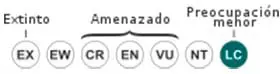
Minor Concern ⓘ(UICN)ⓘ
• Current category of the Red List of the UICN: Least concern.
• Population trend: In decline.
It is thought that his population It is greater than 500.000 individuals.
It is not an endangered species. But, despite protection Indonesian this species is followed by trapping wild bird trade. Nor is a protected species in Australia, therefore sacrifices occur.
In New Guinea, sometimes it is hunted for its feathers.
It is suspected that his population is in decline due to ongoing habitat destruction.
"Sulphur-crested cockatoo" in captivity:
and valued species often as a pet.
Very Intelligent, sociable and playful. It is a cockatiel for experienced bird owners. You can be dominant and aggressive. It can be very noisy.
There are anecdotal reports of some Sulphur-crested cockatoo who they have lived more than 100 years. In the news, However, longevity record, according to sources, belongs to a captive specimen called "Cocky" who lived more than 57 years in the London Zoo. Another report suggests that these animals can live up 73.0 years in captivity, but this has not been verified.
Alternative names:
– Sulphur-crested Cockatoo, Greater Sulphur-crested Cockatoo, White Cockatoo, Yellow-crested cackatoo (ingles).
– Cacatoès à huppe jaune, Grand Cacatoès à huppe jaune (French).
– Gelbhaubenkakadu (German).
– Cacatua-de-crista-amarela (Portuguese).
– Cacatúa de Moño Amarillo, Cacatúa Galerita (español).
Origin: Venezuela, Colombia, Ecuador, Peru, Bolivia
Character: shy
Life expectancy: ---
Height: 33 to 38 cm..
Content
Description
33 to 38 cm.. tall and 300 g. of weight.
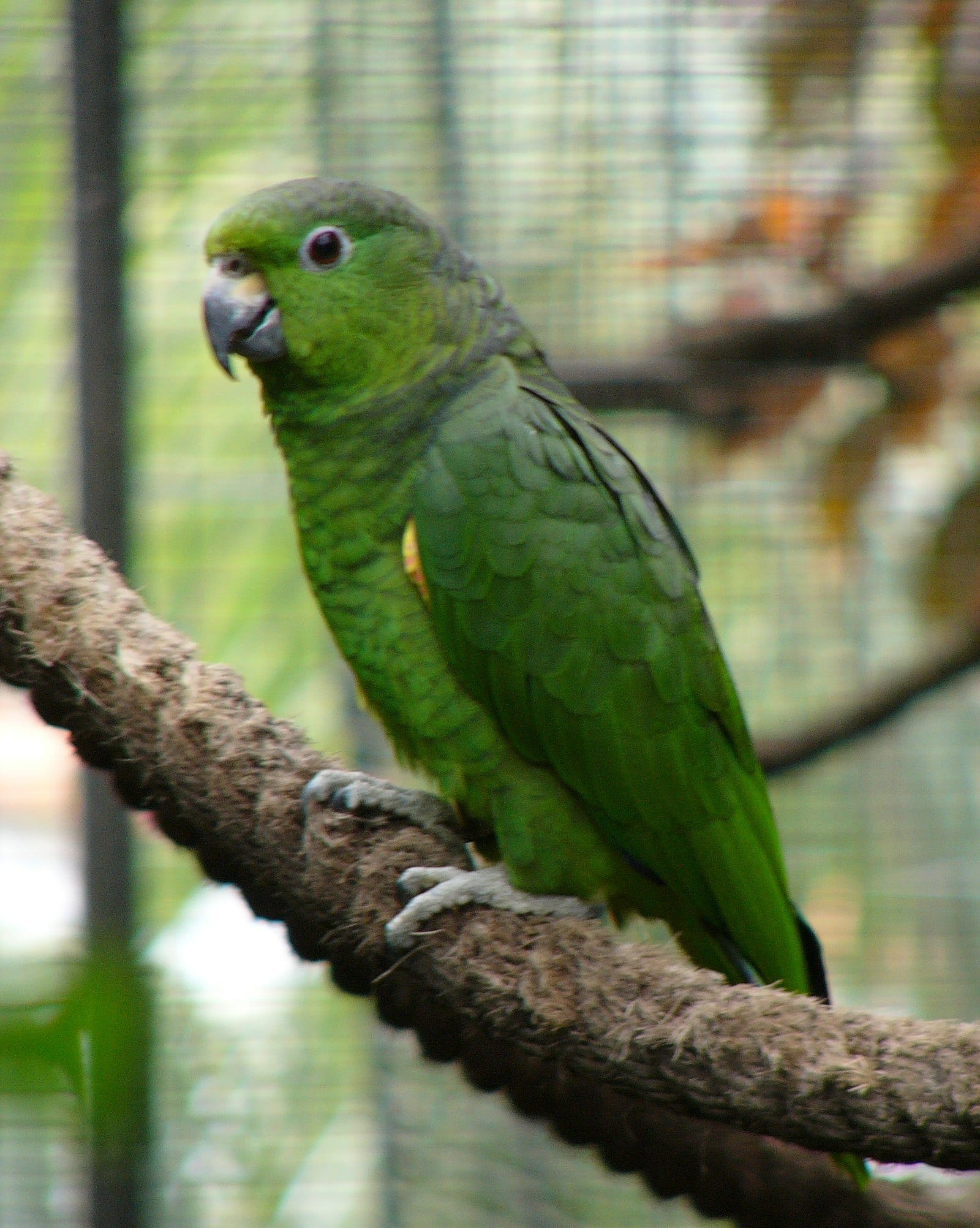
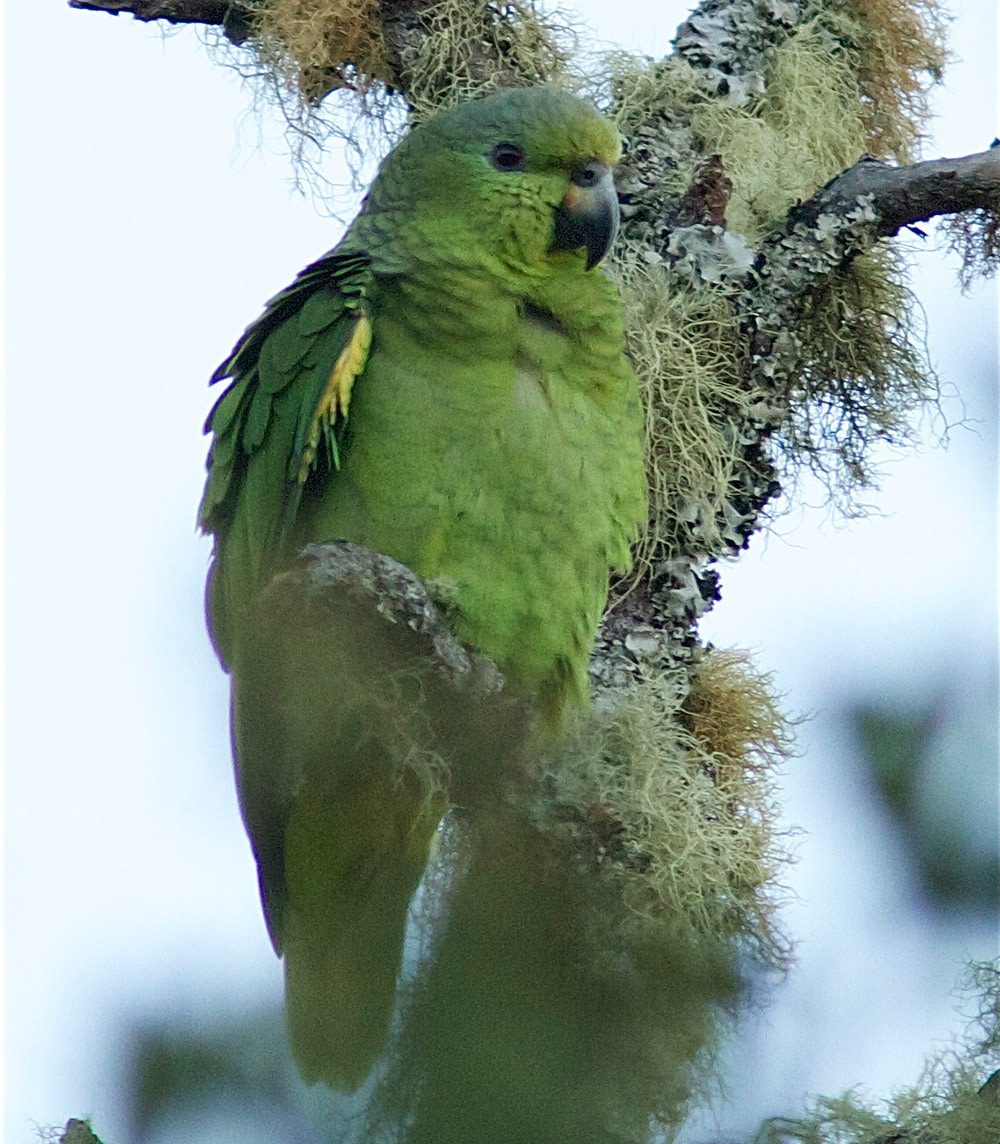
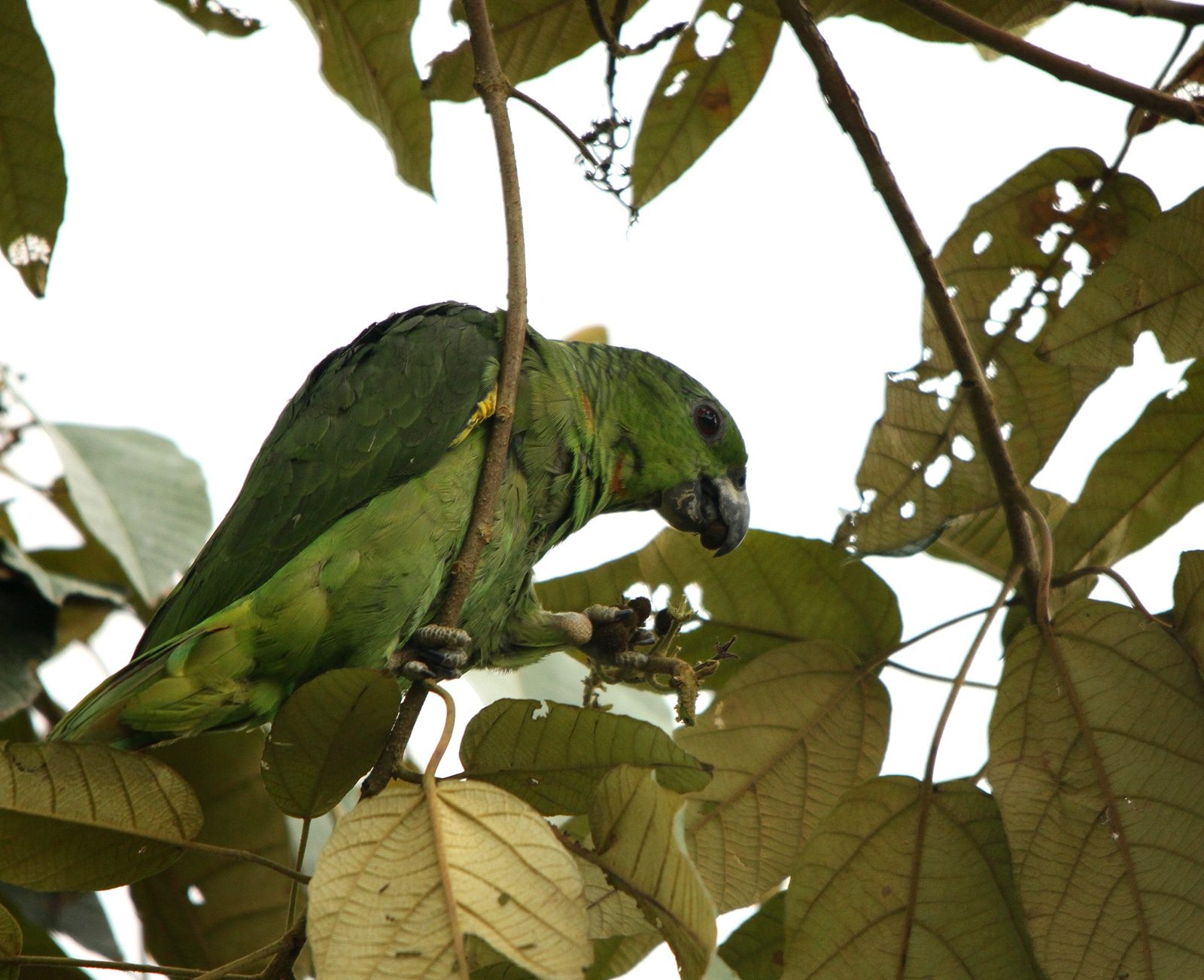
The Scaly-naped Amazon (Amazona mercenarius) it is the only amazon in mountainous areas.
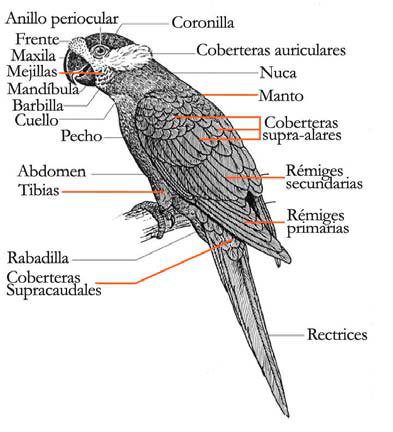
General coloring green, with the feathers of the chest with black border, It is distinguished by having the wingtip yellow with orange spots, and external feathers tail tricolor with blue base, middle part red and yellow tip.
Bill pale gray area at the base of jaw; irises orange; legs brown.
Both sexes are similar. It is thought that immature they are similar to adults.
(Cabanis, 1874) – Speculum red absent. bases outer secondaries marked with brown spots. Some specimens show scattered red feathers crown, the throat top of the chest.
Andean and sub-Andean forests permanently cloudy between 1200 and 3000 m. Occasionally in warm floor and cultivated land.
Usually in pairs or groups of 30 to 40 individuals.
Reproduction:
They have reported evidence reproduction between March and May in Colombia. Nest and eggs not yet described. The incubation period apparently it lasts 25 and 26 days.
Food:
Little information on their diet, but he has seen taking figs and fruit unidentified in Colombia.
In Colombia they have been observed down to attack corn fields.
Distribution:
Size of the area of distribution (reproduction / resident): 3.160.000 km2
Andes from Venezuela to the North of Bolivia.
Distribution 2 subspecies
Amazona mercenarius canipalliata
(Cabanis, 1874) – Andes of Colombia to northwest Venezuela and Ecuador.
Amazona mercenarius mercenarius
(Tschudi, 1844) – Nominal. Andes North of Peru to the North of Bolivia; a single record in Argentina.
Conservation:
State of conservation ⓘ
Minor Concern ⓘ(UICN)ⓘ
• Current category of the Red List of the UICN: Least concern.
• Population trend: Decreasing.
Justification of the population
The population size World has not been quantified, but this species is described as «quite common» (Stotz et to the., 1996).
Justification of trend
It is suspected that the population is in decline due to the continuous habitat destruction.
Sources:
– Parrot Book, Parrots and macaws Neotropical
– avibase
– Parrots of the World – Forshaw Joseph M
– Parrots A Guide to the Parrots of the World – Tony Juniper & Mike Parr
– Birdlife
46 to 51 cm.. height and between 400 and 500 g. of weight.
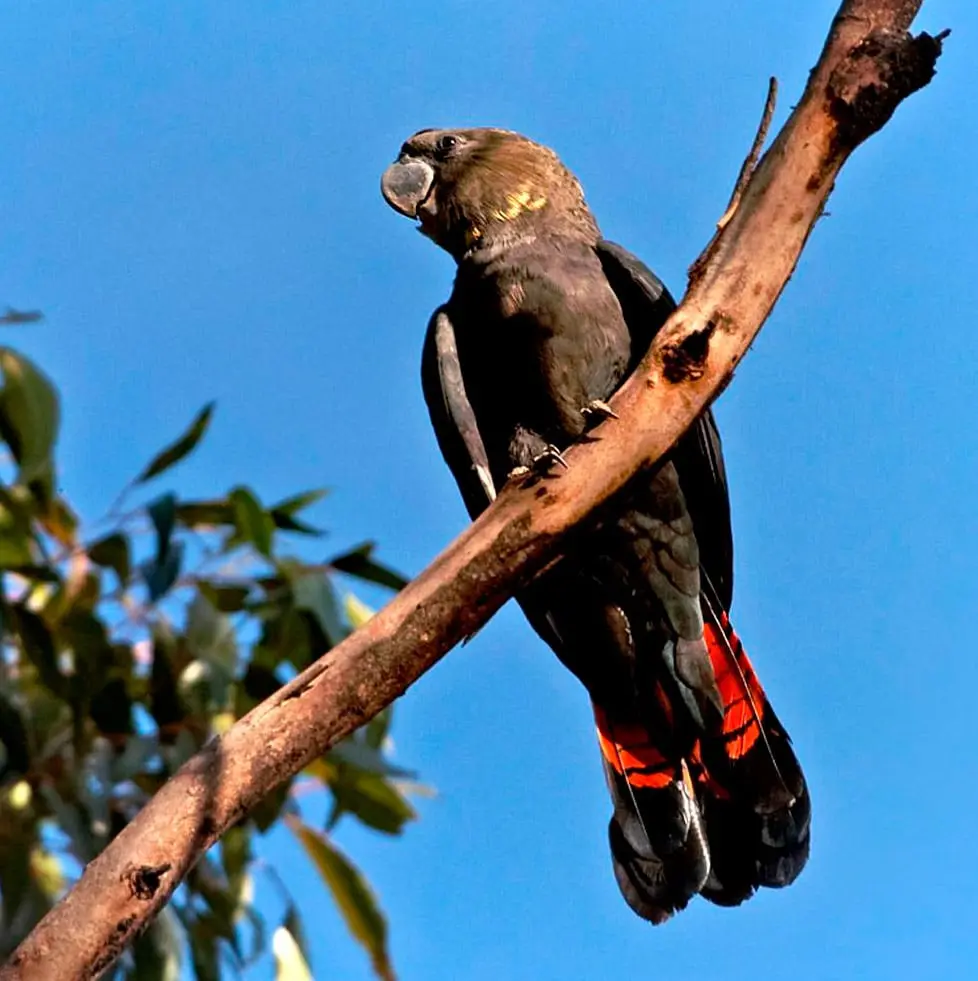
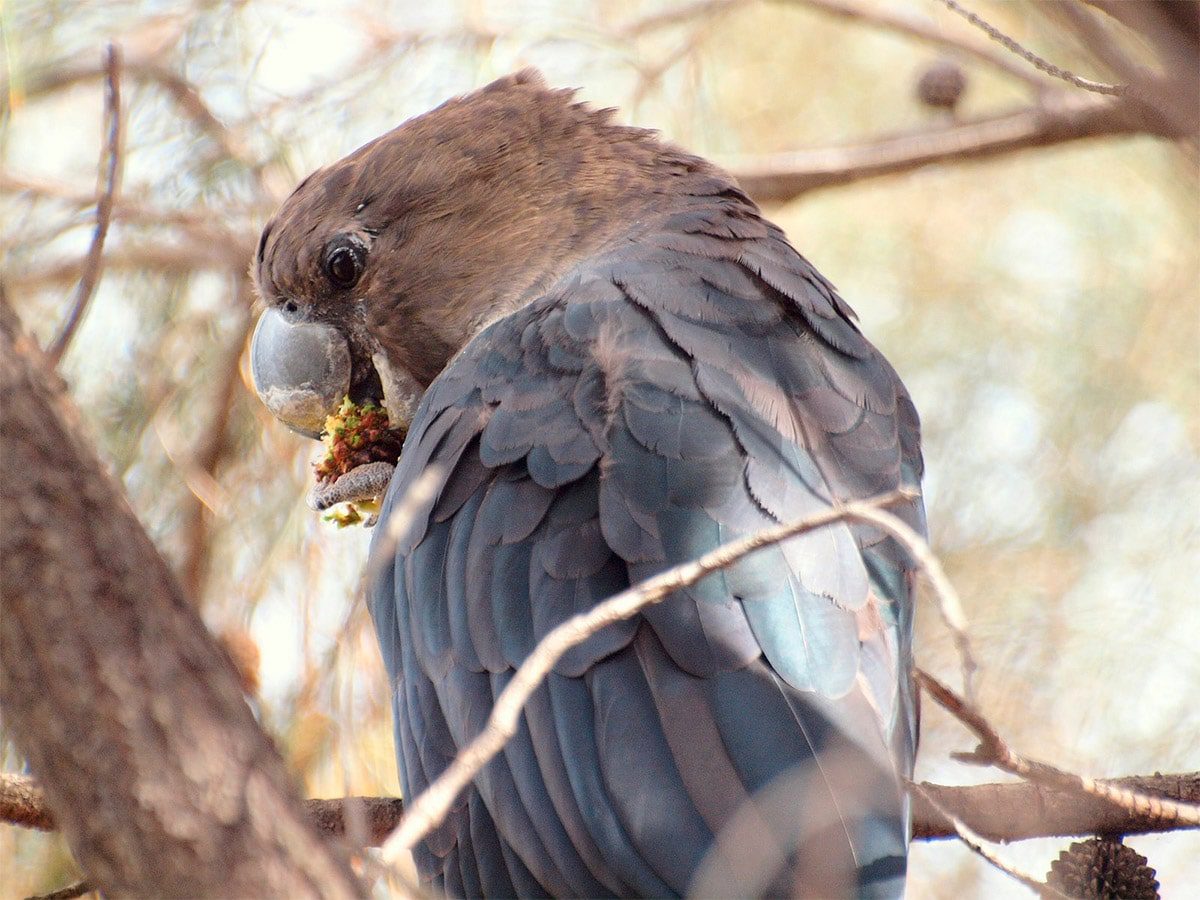
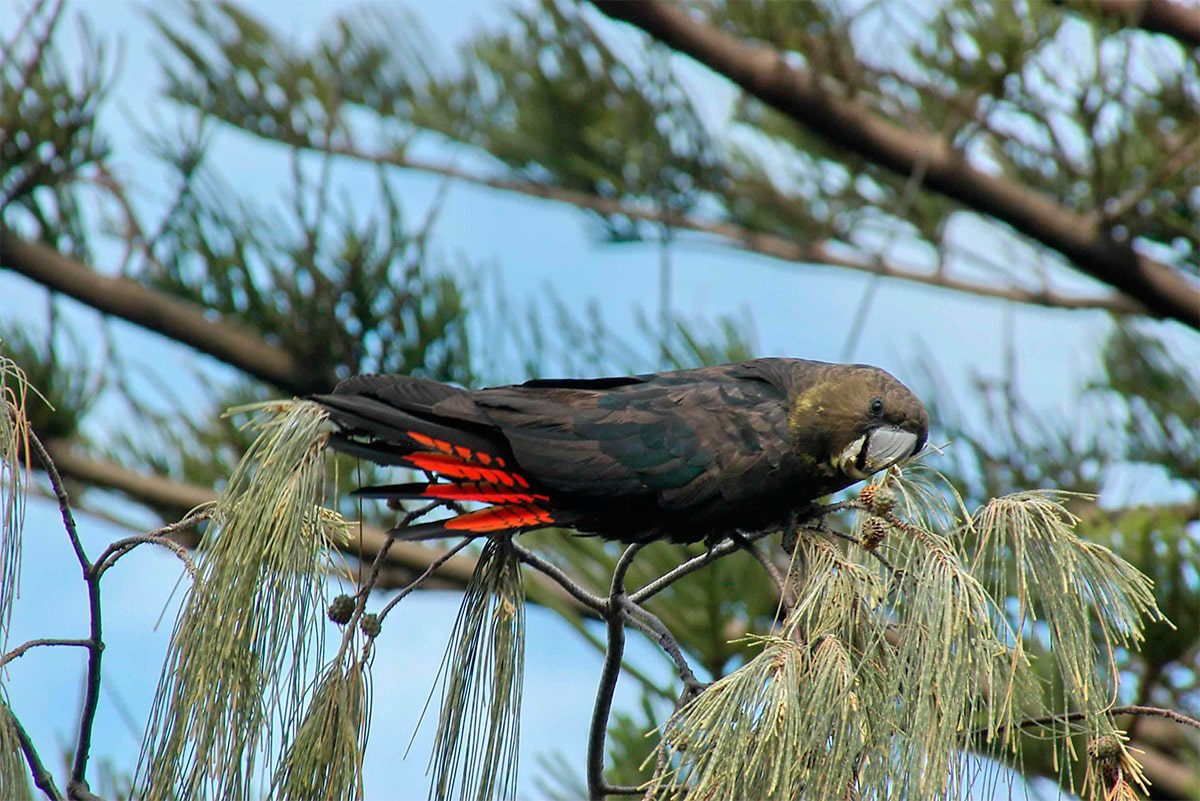
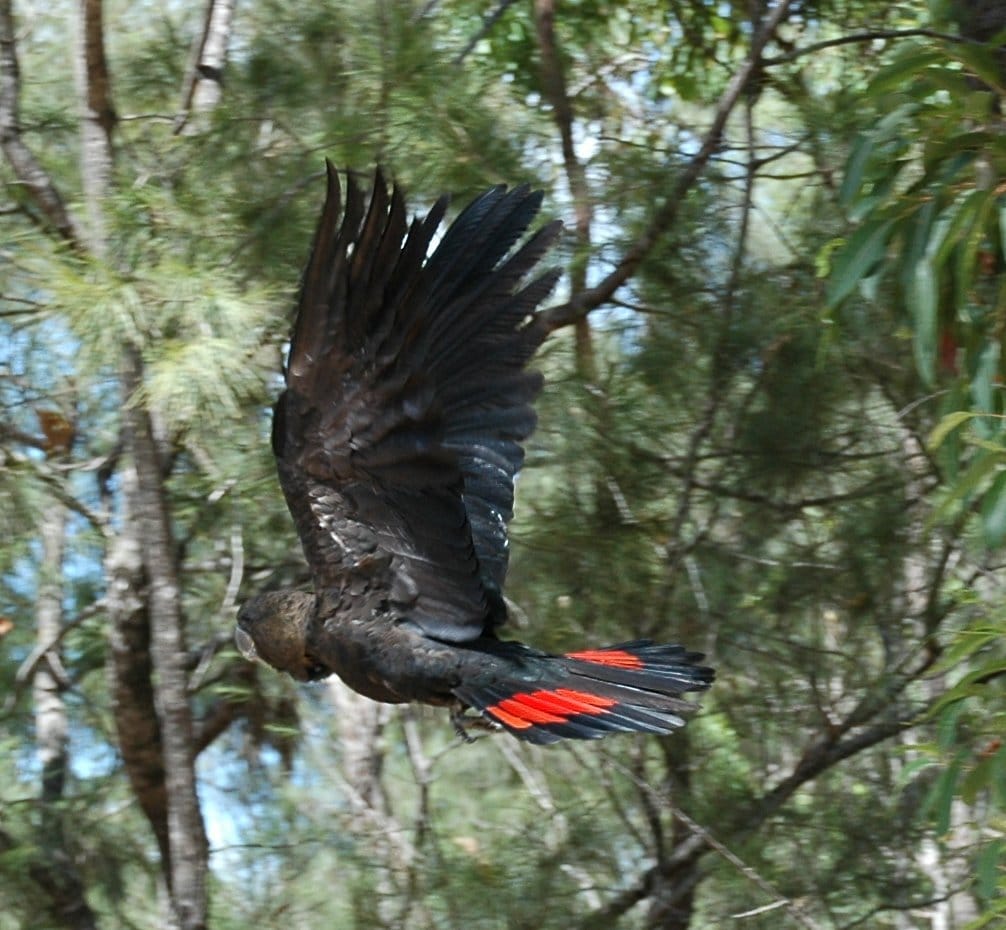
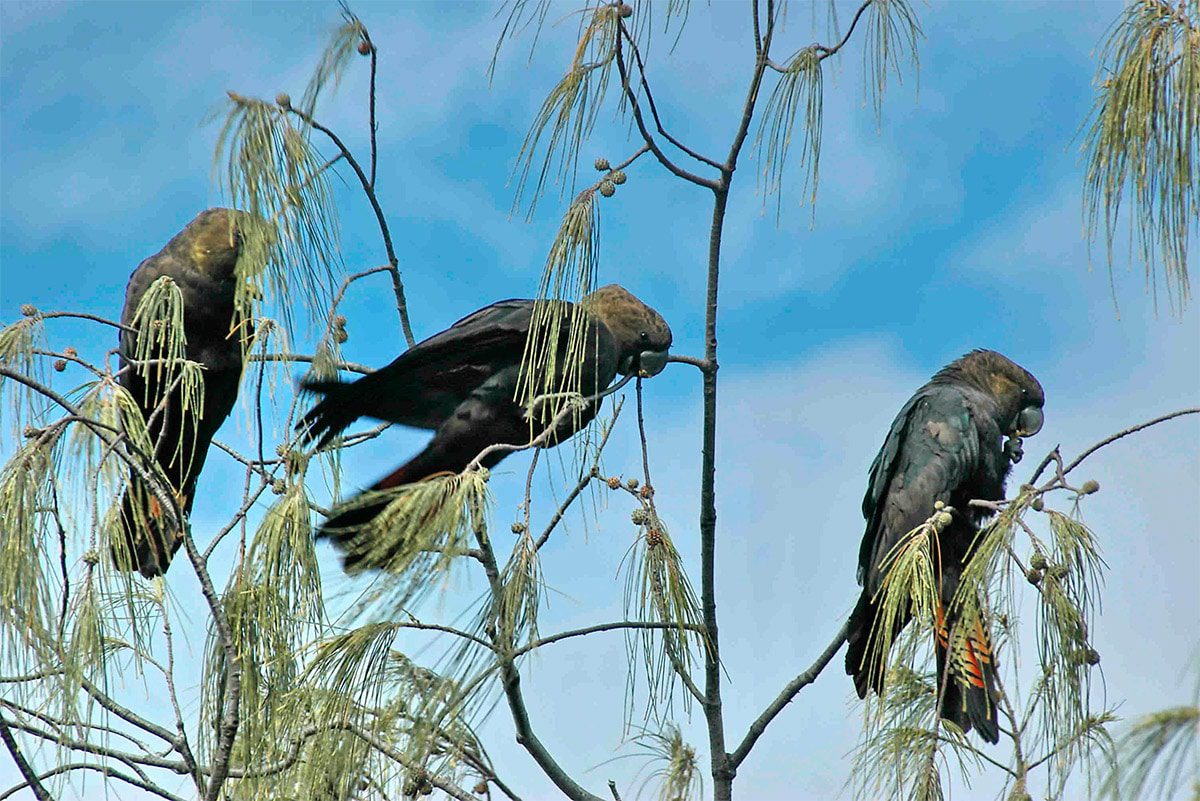
The Glossy black cockatoo(Calyptorhynchus lathami) is the smallest of the 5 black cockatoos and is restricted to the East coast of Australia (a population isolated also is reproduced in the Islands Kangaroo).
The male is brown-black color with a small crest rounded and bright Scarlet spots in the tail. The female shows spots irregular in color yellow in it head, The Scarlet patches in the tail they are permeated by narrow black bars and edges of pale yellow on the underparts of the wings.
The immature they are similar to the females, but they lack the yellow markings on the head and show different yellowish tones in the feathers, the chest and in the belly.
(Mathews, 1912) – Medium-size ones 48 cm. length and 510 to 515 weight g, with a wing
of approximately 90 cm.. The of adults they are mainly black, dark brown in the head, the neck and the bottom of the body, and Red panels (in males) or orange-red with bars Black (in females) on tail. The female adult is also conspicuous in the head. These patches are absent from most males., Although they can be expressed faintly in a few individuals (Higgins 1999).
The immature are similar in appearance to the male adult, but have small stains yellow in it head; spots or bars yellow in the chest, belly and flanks; yellow or orange spots on the wing
(mainly on the bottom); Red or orange-yellow panels with black bars at the tail; One bill pale grey (instead of dark); And a ring of skin around the eye pale grey (instead of grey dark) (Higgins 1999, L. Pedler 2007, com. Pers.).
Calyptorhynchus lathami erebus
(Schodde & Mason,IJ, 1993) – The only difference with the nominal species resides in that has the bill shorter.
Habitat:
Video – "Glossy black cockatoo" (Calyptorhynchus lathami)
Glossy-black Cockatoo (Calyptorhynchus lathami ) HD Video clip 1/3
Areas forested frequently dominated by casuarinas of which are highly dependent for its food. These are small shrubs commonly known as the Sheoaks, wood for beef (Beefwood) or Australian pine. These shrubs are widespread in tropical and subtropical regions.
They are also distributed in open humid forests, difficult terrain where deforestation has not been too great. They have an imperative for natural tree cavities to nest.
Reproduction:
Forman couple during all the life. The couple has relationships throughout the year. This type of family of them parrots prefers to nest in cavities natural of the eucalyptus, whether dead or in full vitality. The nest usually placed at an altitude that ranges between the 3 and 30 meters above the ground. The cavity is filled with leaves and branches. Sometimes, together with other breeding pairs, they share the same tree year after year.
In New South Wales the season extends from March to August. The spawning It consists of a single egg white. It is the female that takes charge of most of the tasks.: It prepares the nest and incubates herself. Never leave the nest until the small is reached the age of one week. In most cases, the male provides the female with food and assistance until the young can fend for itself, normally four months which remains with them until the next breeding season.
Food:
It feeds almost exclusively on the seeds several species of She-oak (Casuarina and Allocasuarina). You can also sometimes eat larvae of wood-boring. They feed in threes, less frequently in pairs, small groups or flocks of up to 60 birds. They can be detected by the snapping of their beaks and the remains of the casuarina cones and twigs that fall.
Distribution:
Size distribution (reproduction / resident): 770.000 km2
The species is Rare Although widespread in suitable forests of the central coast and forest habitats of Queensland and in the interior of the southern plateaus and Plains of the Midwest's New South Wales, with a small population in the Riverina. There is an isolated population in the Kangaroo Island, South of Australia.
(Schodde & Mason,IJ, 1993) – It is from Australia (the central eastern coastal area of Queensland)
Conservation:
State of conservation ⓘ
Minor Concern ⓘ(UICN)ⓘ
• Current category of the Red List of the UICN: Least concern.
• Population trend: Decreasing.
Like most parrot species, the Glossy black cockatoo is protected by the Convention on international trade in endangered species of Fauna and Flora Silvestres ( CITES ), with its inclusion in the list of the Appendix II of vulnerable species, What makes the import, the export and trade of animals captured in the wild is illegal.
Justification of the population
Garnett and Crowley (2000) estimated the size of the population in the following way: 12.000 individuals of the subspecies lathami, 70 breeding pairs of the subspecies halmaturinus (equivalent to 140 individuals) and 5.000 individuals of the subspecies erebus giving a total of 17.140 individuals.
Justification of trend
They suspected that the population is declining in general Since the largest subpopulation, lathami, It is slowly decreasing throughout its range. However it is believed that the subspecies Erebus is increasing and the subspecies halmaturinus It is increasing as a result of conservation efforts in the Island Ganguro (Garnett and Crowley 2000).
"Glossy black cockatoo" in captivity:
Like the other black cockatoos, the Glossy black cockatoo(Calyptorhynchus lathami) is extremely rare in the poultry. In Australia It has attained breed in captivity.
Origin: Bolivia, Brazil, Colombia, Ecuador, Guyana, Peru, Suriname, Trinidad and Tobago, Venezuela
Character: Sociable, outgoing
Life expectancy: 60 to 70 years
Height: 33 to 36 cm..
Content
Description Orange-winged Parrot
Of 33 to 36 cm.. height can weigh between 350 gr y 450 gr.
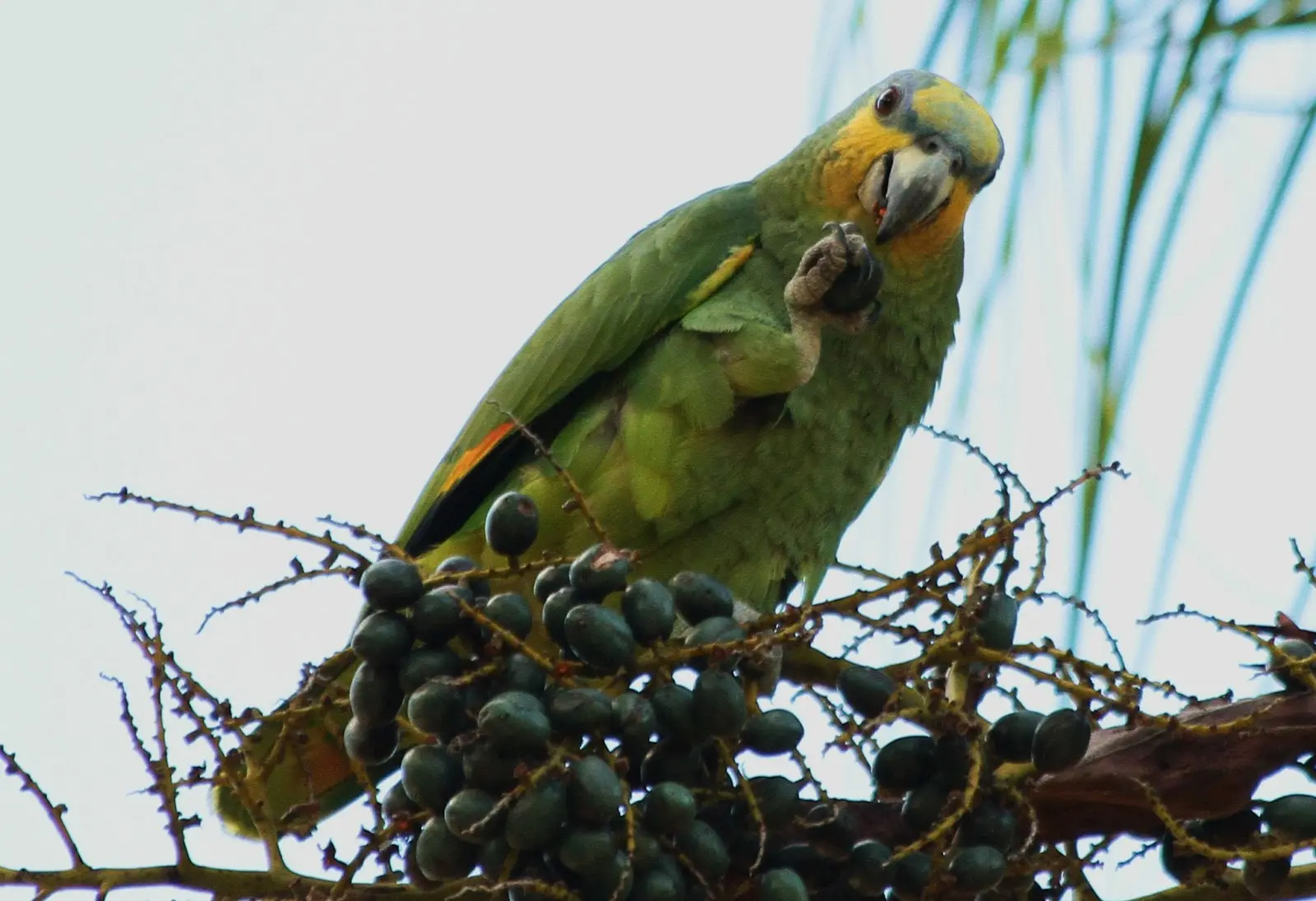
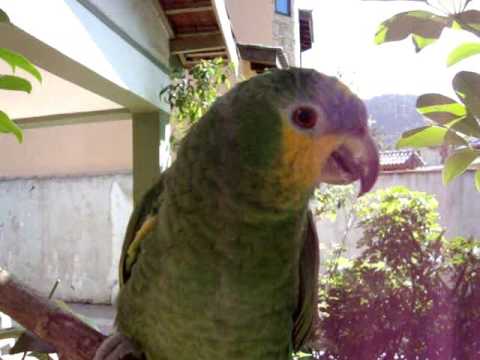
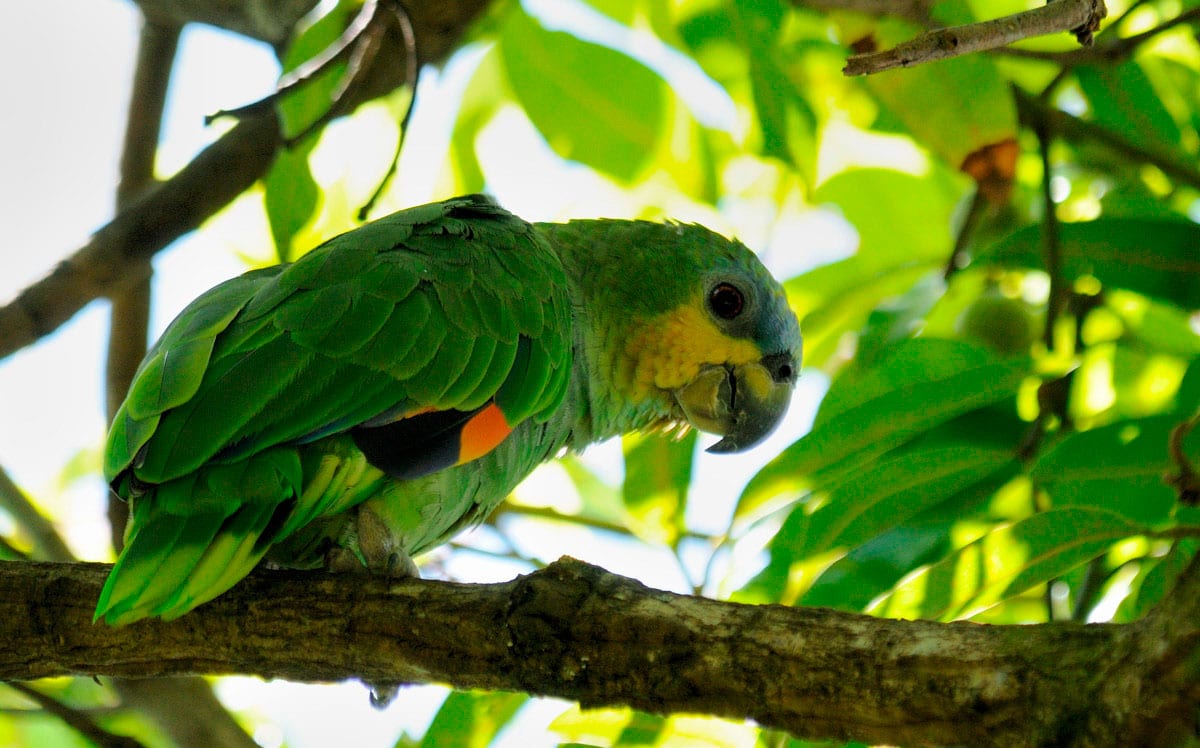
The Orange-winged Parrot(Amazona amazonica) It is distinguishable by having the Centre of the crown and cheeks yellow, separated by the forecrown and sides of the crown pale blue, edge of the wing orange, and inside of the tail Orange with stripe green in the Middle.
The copies juveniles have a color different to it of them adults; the head is green, Blue and pale yellow.
It is not possible to determine the sex of the Amazons in a safe manner by their appearance.
Present in varied habitats (dry forests, morichales, Savanna, stubble, mangroves, etc.) below the 500 m.
Frequently is seen in pairs or in flocks numerous out of it breeding season.
Reproduction:
It is a kind monogamous (the couple stays together for life).
It nests in trunks of Palms killed apparently at the end of the season dry.
The female lays from 3 to 5 eggs and she incubates them for three weeks approximately. the chicks take two months to develop.
Food:
It feeds on various fruits, seeds and sprouts leaves. Including the fruit of Palms (Sloanea, Richeria and Byrsonima) , flowers Erythrina and sometimes cocoa.
You can take oranges and mangoes of the cultivated areas when other food is scarce.
Distribution:
Size of the area of distribution (reproduction / resident): 7.420.000 km2
North and Central South America to the East of Peru, Brazilian Amazon and northeast of Bolivia.
Conservation:
State of conservation ⓘ
Minor Concern ⓘ(UICN)ⓘ
Current red list category of the UICN: Least concern.
The population trend: Decreasing.
Trapped for the wild bird trade: they have been 268.510 wild-caught individuals for international trade from 1981.
In some areas of their range they are hunted for food by the indigenous population.
The loss of habitat is also a concern.
Popular as a mascot for more than 100 years.
Loving, playful, with good ability to speak, sociable with people.
Known for being very friendly, easy to train, very Smart.
They need constant attention of their owners, they carry out all kinds of fun pranks to get that attention.
Over time they will form a strong bond with their owner., they can however be quite noisy. They will make noise early in the morning and when the Sun is setting. This usually lasts for a few 10 minutes, to wake up and just before sleep.
– Parrot Book, Parrots and macaws Neotropical
– avibase
Photos:
– Our beautiful world
– An Orange-winged Amazon at Kuala Lumpur Bird Park, Malaysia. It is eating a slice of corn on the cob by Vasenka – Wikimedia
– by Patrick Ingremeau – IBC.lynxeds.com
– by Snowmanradio (talk) – Wikimedia
– by Thore Noernberg – IBC.lynxeds.com
The Spot-winged Parrotlet(Touit stictopterus) It has a green overall coloration, clearer to the abdomen, wings brownish with white spots; below the tail opaque olive is yellow with blue edge.
The female differs from the male by feathers middle-lower wing
which they are green; the forecrown and the face They are yellowish green.
Very rare species. Observed at the local level and in low densities in a Habitat in decline. Its population It is likely to be small and declining, with very small sub-populations in each known locality. It inhabits in semi-humid cloud forests and seasonal crop areas, between 600 and 2400 m. Apparently performs altitudinal migrations, Perhaps conditioned by the supply of food.
Reproduction:
The reproduction It is performed in March.
Food:
They feed on fruit and corn.
Distribution:
Size of the area of distribution (reproduction / resident): 129.000 km2
It lives in the wild in the Andes, southern Central cordilleras and Eastern in Colombia, western Ecuador and North of Peru.
Conservation:
State of conservation ⓘ
Vulnerable ⓘ(UICN)ⓘ
Globally it is in the category vulnerable (VU) and in Colombiain danger of extinction (IN). Deforestation in Andes It is their main threat.
"Spot-winged Parrotlet" in captivity:
Because of its condition It is not recommended that you keep this bird as a pet.
35 to 41 cm.. length. The weight of 500 to 600 g..
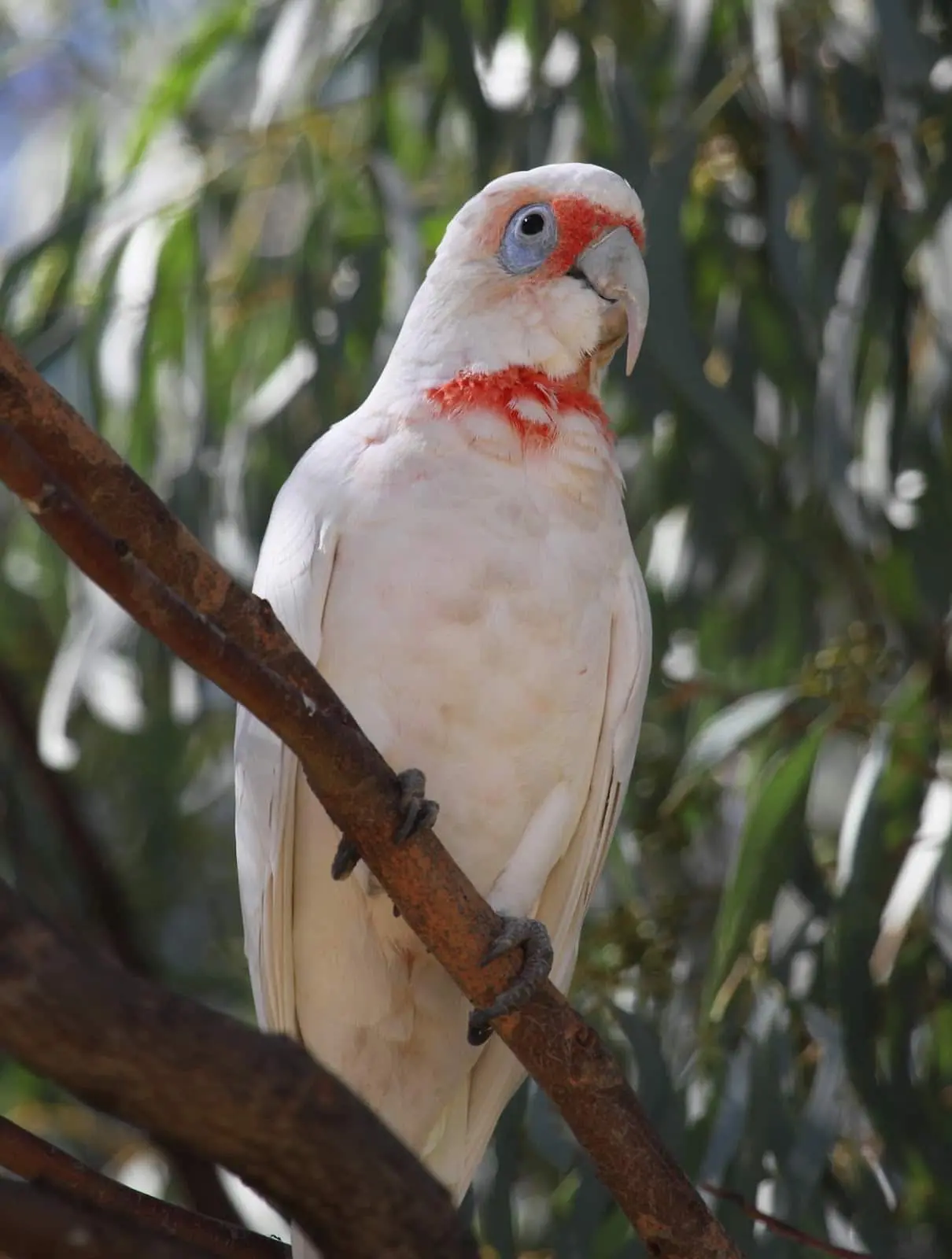
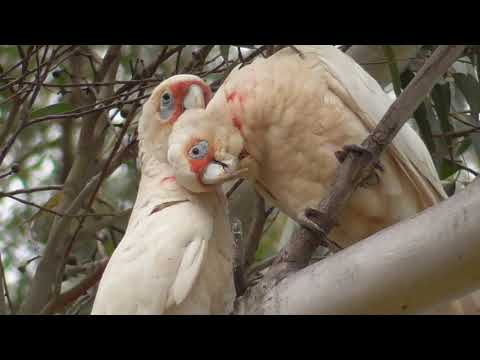
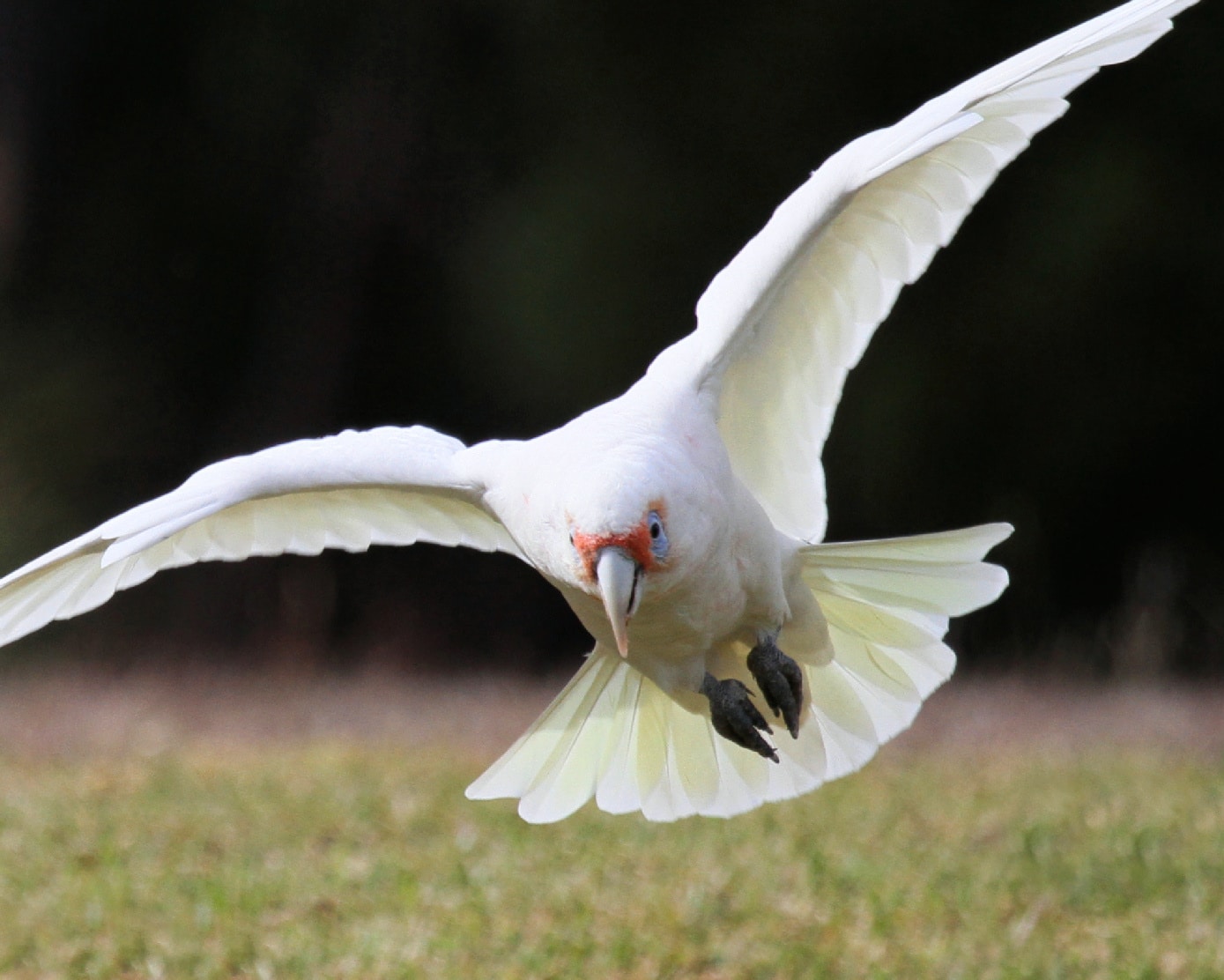
The Long-billed corella(Cacatua tenuirostris) has white plumage. The undertail coverts and the parts below from the wings they are bathed in pale yellow, very visible in flight. It has red coloration in the throat and the chest, with a Red Crescent ranked in the upper breast.
The Head shows a small crest white, Red front and a wide, nude and fleshy eye ring blue-grey around the eyes dark browns. The bill is white with blue base. upper jaw is long and hooked. The legs and feet are dark gray.
The female is similar to the male, with the upper jaw more short and less red.
There are two similar species:
– Cacatua sanguinea. Lack of forecrown Red and the red color in the neck. The upper jaw is shorter.
– Cacatua galerita. Similar in flight, has crest yellow and lacks of colour red. The bill is black.
Common in forests and remnant trees on farmland. It nests in Eucalyptus camaldulensis in the flooded Plains or close to streams. Wild populations living on farms and parks in urban areas.
Behavior:
It´s resident in their area of distribution, some local movements. Outside of breeding season, You can see in large flocks of up to 2.000 birds or more. Son noisy and visible, pronouncing discordant calls.
Pose in large eucalyptus near water. They leave the roost in the morning to drink, and then, go to the feeding areas. Again when the darkness comes to sleep, but not before excited participate in games and stunts .
They move on the floor with stunning movement jump. They do not have the other species waddling gait cockatoo. It causes damage to crops of cereals and tree fruit, considered as one pest for farmers.
Nest colonies. They can create their nests with other species of Corella, and sometimes they hybridize. Populations feral in Sydney and Perth, from the release of unwanted birds, they may hybridize with endangered species such as the Cacatua pastinator
Reproduction:
Held from July to November. Forman couples monogamous. The male and female prepared the nest in the Hollows of large old eucalypts. If you do not find a suitable tree, You can make a burrow in soft soil Bank. They fill the nest of wood chips and often reuse it for several years.
They nest in large colonies, with several nests in the same tree.
The female lays 2-4 eggs White. The incubation lasts a few 24 days, shared by both parents. The young leave the nest 55 days after hatching, being fed by the parents for three weeks more.
Food:
Feeds mainly on what obtained from soil, seeds, estate and bulbs that unearths with its upper jaw. They feed in the coolest hours of the day. Also consumes insects.
Distribution:
Size of the area of distribution (reproduction / resident): 382.000 km2
Is located in the southeast of Australia. Introduced in urban centers of Australia and Tasmania.
Conservation:
State of conservation ⓘ
Minor Concern ⓘ(UICN)ⓘ
• Current IUCN Red List category: Least concern.
• Population trend growing
Populations may be declining due to loss of breeding grounds in its original distribution area.
But, the Long-billed corella It common in its range.
Is created that in the world there are more than 250 thousand individuals.
"Long-billed corella" in captivity:
It is very popular as a pet for the most part of Australia, and has been classified as the best «talkative" of the australian cockatoos for its ability to mimic words almost to perfection.
Has a personality playful and active.
Out of its area of distribution is rare in poultry farming.
It measures 30-35 centimeters to paste 380 g..
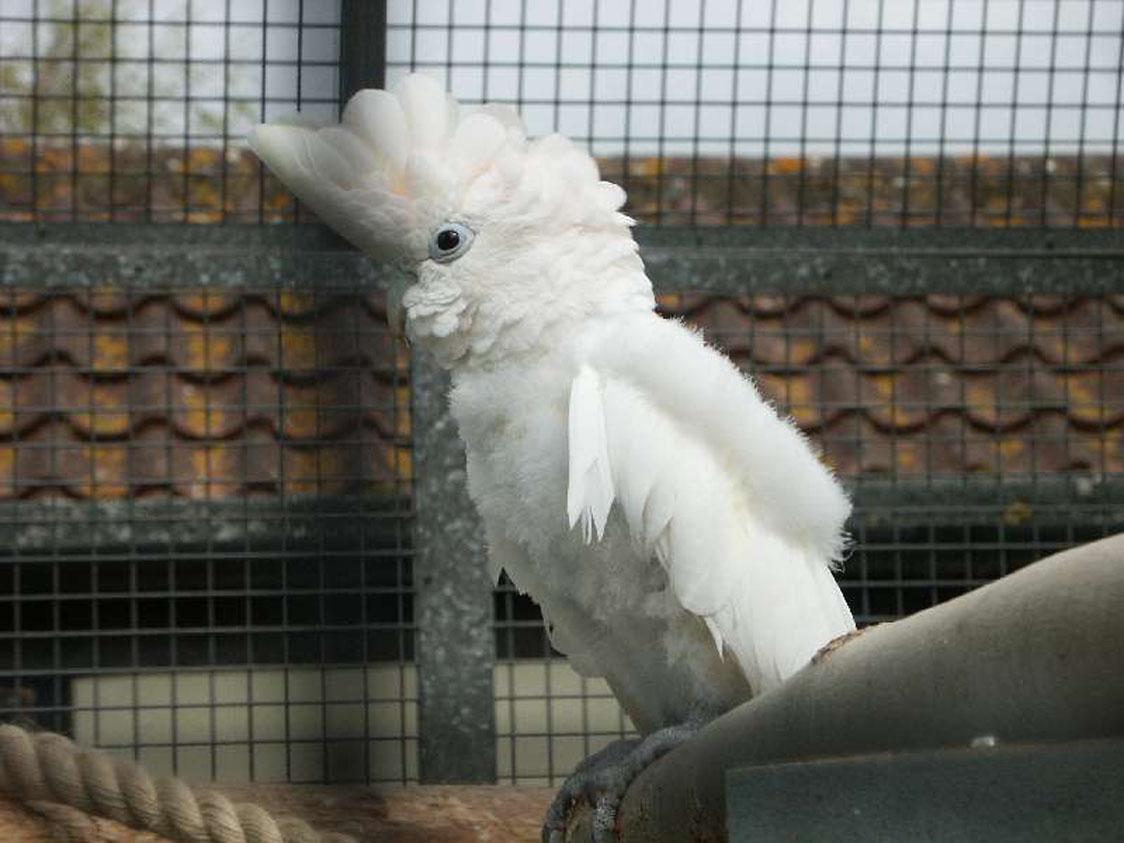
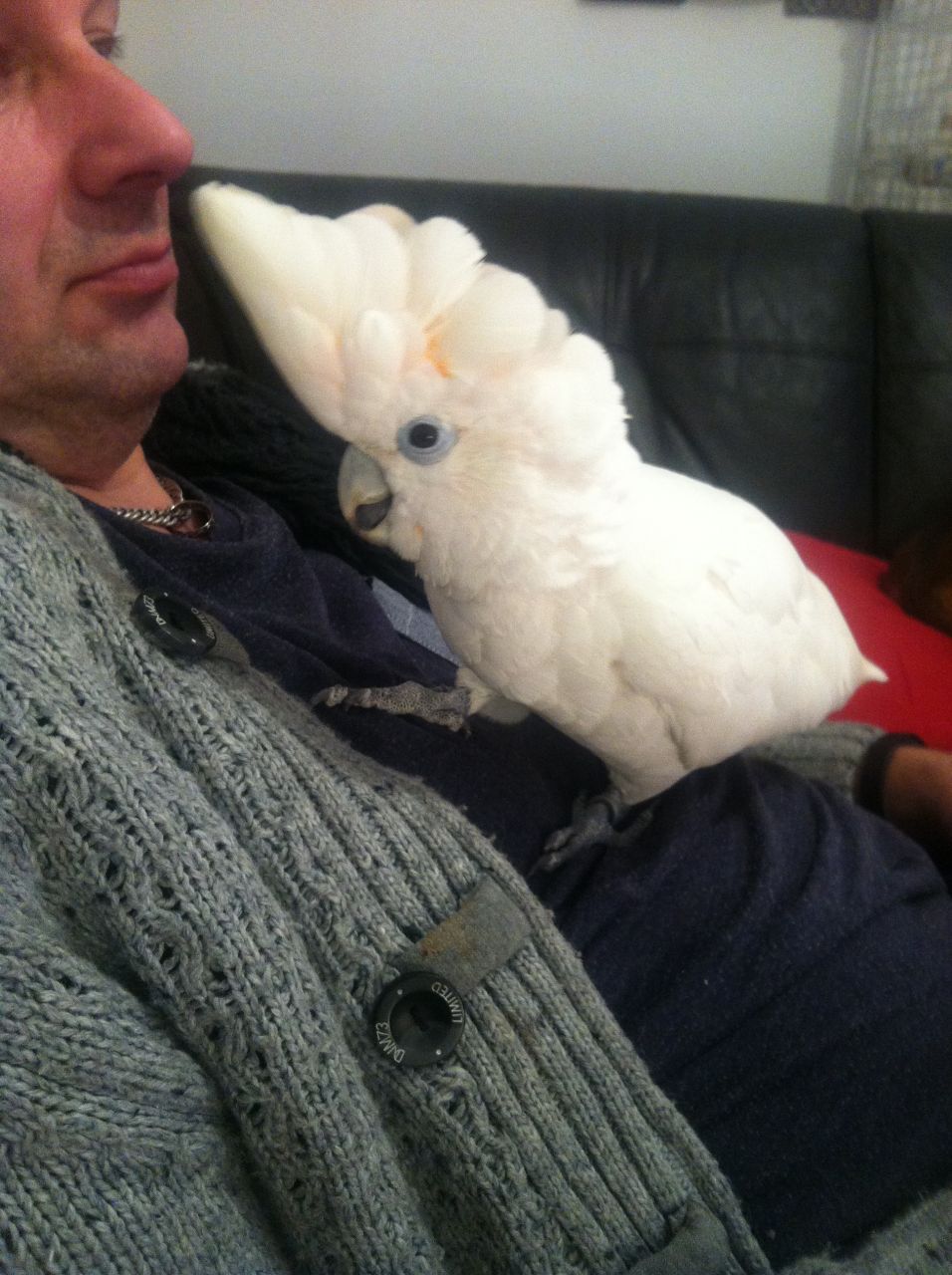
The Solomons cockatoo(Cacatua ducorpsii) is a small cockatoo immediately recognizable by its long triangular Crest.
Its plumage is almost completely white, except the part inferior of them wings and tail with infiltration of color yellow. The feathers of the crest, the cheeks, the the mantle and the chest they have a base of pink.
The bill is grey. The bare skin around the eyes is pale-blue. The irises are dark brown, the legs grey.
The females are distinguished from your partner to have the irises more reddish.
The Solomons cockatoo is quite similar to the Tanimbar corella living in the Tanimbar Islands. Also seems to the Little corella, although the latter have more bluish and developed the orbital area.
Is from coastal areas to the mountains; variety of habitats, including forests, secondary vegetation and gardens in cities. Found up to 1700m; mainly below the 700 m.
Behavior:
They are birds noisy and quite easy to observe, even though they mostly live in pairs or small groups. They fly high above the treetops where used well exposed perches in the top of the Cup.
Birds are very cautious, screaming when they are disturbed.
They have a strong and uneven consisting of shallow flapping flight.
Reproduction:
In the wild child from July to September.
They make their nests in hollows of trees or large branches and, they often use the same nest year after year.
The eggs are of color white and usually there are two in a clutch. The eggs are incubated for about 25 days, the young leave the nest 62 days after hatching.
Food:
They feed on seeds, berries, fruit, outbreaks, flowers, as well as insects and their larvae. From time to time they ingest the fleshy parts of «epiphytes«.
Distribution:
endemic to the Solomon Islands. Its area of distribution extends from Bougainville (Papua New Guinea) to Malaita, Choiseul, New Georgia and Santa Isabel. The species is absent in San Cristóbal and the islands surrounding.
Conservation:
State of conservation ⓘ
Minor Concern ⓘ(UICN)ⓘ
– Current IUCN Red List category: Least concern.
– The population trend: Stable
The population world is estimated at 100.000 birds and it seems quite stable.
The marketing of pet birds is a threat to this species, the other is the degradation of the habitat. The latter seems particularly serious, given the logging of forests in the lowlands.
"Solomons cockatoo" in captivity:
It´s little gregarious and have tendency to be aggressive with other species and with those of its same species. In relation to the human being is a Parrot very demanding. Not everyone is prepared to have a white cockatoo.
They often tend to develop behavior problems, unbearable screams, become very destructive…If not are given a rigorous education on a very regular basis. That is why it is convenient that if you intend to have a cockatoo, it should be done so that it can be accompanied by another or others of its kind to prevent it from developing an excessive dependency and thus you can enjoy it without fear of having problems or at least trying to avoid them as much as possible.
I like them much attention. They tend to create strong emotional bonds and they are quite Extrovert.
Despite the great attraction that having a pet parrot with such characteristics can mean for a person,. It is not often a parrot advised for anyone or rather, hardly anyone is prepared to have a cockatoo with these characteristics.
Alternative names:
– Ducorps’s Cockatoo, Broad-crested Corella, Solomon Corella, Solomon Islands Corella, White Cockatoo (ingles).
– Cacatoès de Ducorps (French).
– Salomonenkakadu (German).
– Cacatua-ducorps (Portuguese).
– Cacatúa de las Salomón, Cacatúa de Salomón (español).