▷ The world of Pets: Dogs, cats, birds, reptiles, amphibians

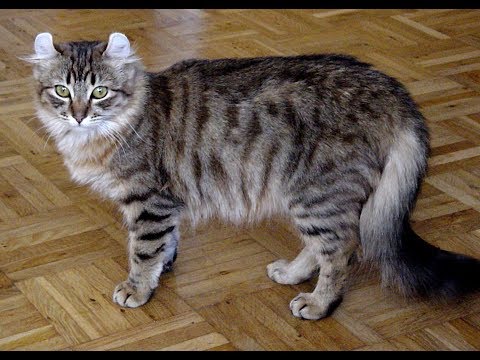
American Curl
Recognized by the CFA - AACE - TICA - ACFA - CAA

The American Curl not to be confused with Scottish Fold, having ears folded forward due to a mutation.
American Curl
Photo: Wilkipedia

Content

Characteristics "American Curl"

Coexistence is important that you have with your new friend. Before considering the acquisition of a cat of the breed "American Curl" you know certain factors. You must take into account their character, their need for exercise, their interaction with other pets, their care and if you have small children, their level of tolerance towards them.

Joy

4,0 of 5 stars (based on 1 review)

Activity level

4,0 of 5 stars (based on 1 review)

Friendliness to other pets

4,0 of 5 stars (based on 1 review)

Friendliness to children

4,0 of 5 stars (based on 1 review)

Grooming requirements

3,0 of 5 stars (based on 1 review)

Vocality

1,0 of 5 stars (based on 1 review)

Need for attention

4,0 of 5 stars (based on 1 review)

Affection towards its owners

4,0 of 5 stars (based on 1 review)

Docility

3,0 of 5 stars (based on 1 review)

Intelligence

4,0 of 5 stars (based on 1 review)

Independence

3,0 of 5 stars (based on 1 review)

Hardiness

4,0 of 5 stars (based on 1 review)

History

The American Curl was born in june 1981 en Lakewood, California ((UNITED STATES)UU.), when Joe Ruga saw two kittens in his garden on the way home from work and told his wife Grace not to feed them, to prevent them from being installed. Grace Ruga did the opposite, since he brought them food. It also, gave each one a name: the long-haired black female was named Shulamith, while his sister, white and black with semi-long hair, it was called Panda. An interesting feature of both females was that their ears were curved backwards.. But, at first the Ruga did not pay much attention to this feature.

Panda disappeared after a few weeks, and only Shulamith stayed with his adoptive family. A few months later, in December of 1981, gave birth to her first litter of four kittens, two of whom had the same curved ears as their mother. intrigued, Joe and Grace Ruga began to investigate and realized that these cats were not of any known breed. This was the beginning of American Curl, and all current representatives of the breed are direct descendants of Shulamith.

The Rugas were quick to consult Jean Grimm, judge of the Cat Fan Association (CFA) and breeder of Scottish Fold, who confirmed that this mutation was indeed new, but noted that it would be a long way to get recognition for a new breed.

In 1983, Shulamith was featured at a CFA feline show in Palm Springs, California, and the interest was immediate. A first standard was drawn up and many breeders decided to participate in the breed creation program by crossing kittens born from Shulamith..

At the same time, contacted two renowned feline geneticists, the Dra. Solveig Pflueger and Dr.. Roy Robinson, to study the genetic mutation responsible for the ears curled back American Curl. They quickly concluded that the mutation was a dominant gene, that is to say, that only one gene is required for the trait to occur.

The doctor. Robinson, settled in London, continued this study and analyzed 383 kittens of 81 litters before publishing a report in the Journal of Heredity in December of 1989, whose conclusion was to be paramount for the recognition of this new race: none of the cats studied had a defect, so the mutation was healthy for the animal.

But, the breeding program had started before the publication of this article, and the American Curl had already begun to attract professional and domestic cat fanciers, with unusual rapidity for such a new and still developing breed. The CFA allowed the registration of copies of American Curl already in 1986, and in 1988 the International Cat Association (TICA) became the first major organization to definitively recognize the breed, allowing its representatives to participate in feline exhibitions organized under its auspices.

In 1993, the CFA also definitively recognized the American Curl. It was even further, by recognizing two varieties in their own right: the American curl longhair and the American curl shorthair. Recognition of the latter is largely due to Shulamith, who gave birth to the first short-haired individual in her third litter, which showed that it was indeed the same race.

In 2003, the Fédération Internationale Féline (FiFé) also recognized the American Curl and its two varieties. But, some major organizations have not yet taken the step, in particular the Governing Council of the Cat Fancy (GCCF).

Although the American Curl is now all over the world, it is in North America where it is still most popular. In particular, is in the middle of the pack in number of annual CFA registrations.

In France, with an average of about 60 specimens registered each year in the Official Book of Feline Origins (LOOF) between 2013 and 2019, the American curl longhair represents less than 0,2% of the feline population. The short-haired variety is even rarer., with only 11 specimens registered in the same period.

Physical characteristics
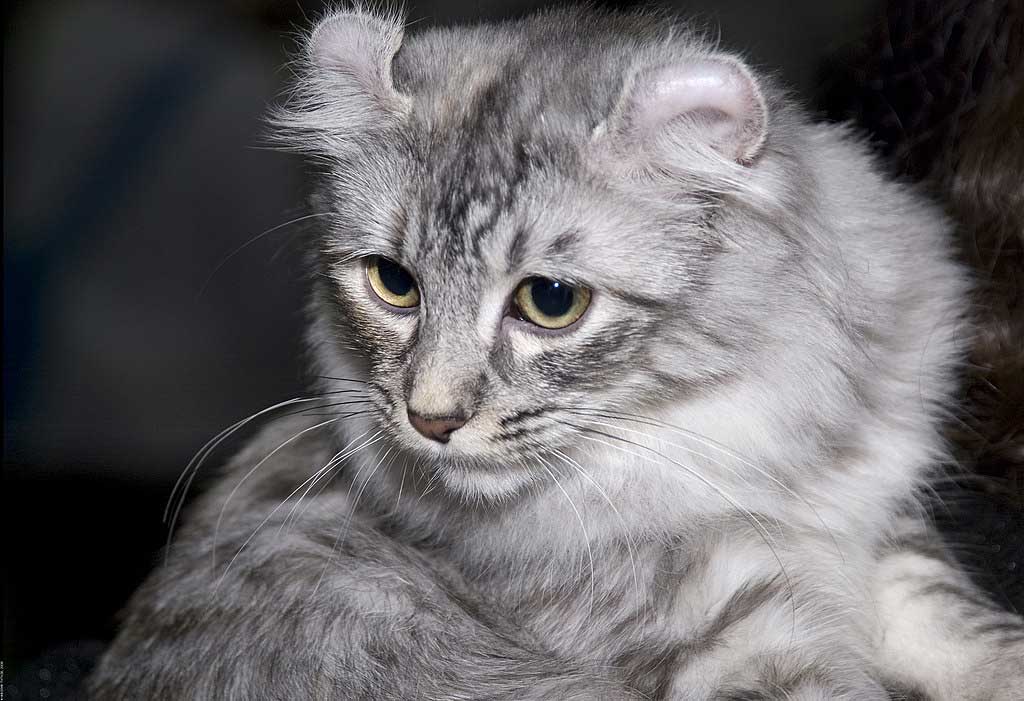
American Curl
Pointocurl Fiorentina, American curl presented at cat show. Nickolas Titkov from Moscow, Russian Federation, CC BY-SA 2.0, via Wikimedia Commons

The American Curl it is a medium-sized cat with a rectangular and moderately muscular body. The legs are straight and proportionate to the rest of the body, and tail it is as long as the body.

The head it is slightly longer than it is wide, well proportioned and without sharp transitions. The eyes are almond-shaped and moderately large, are well spaced and set slightly obliquely. They can have several colors, without any correlation with fur.

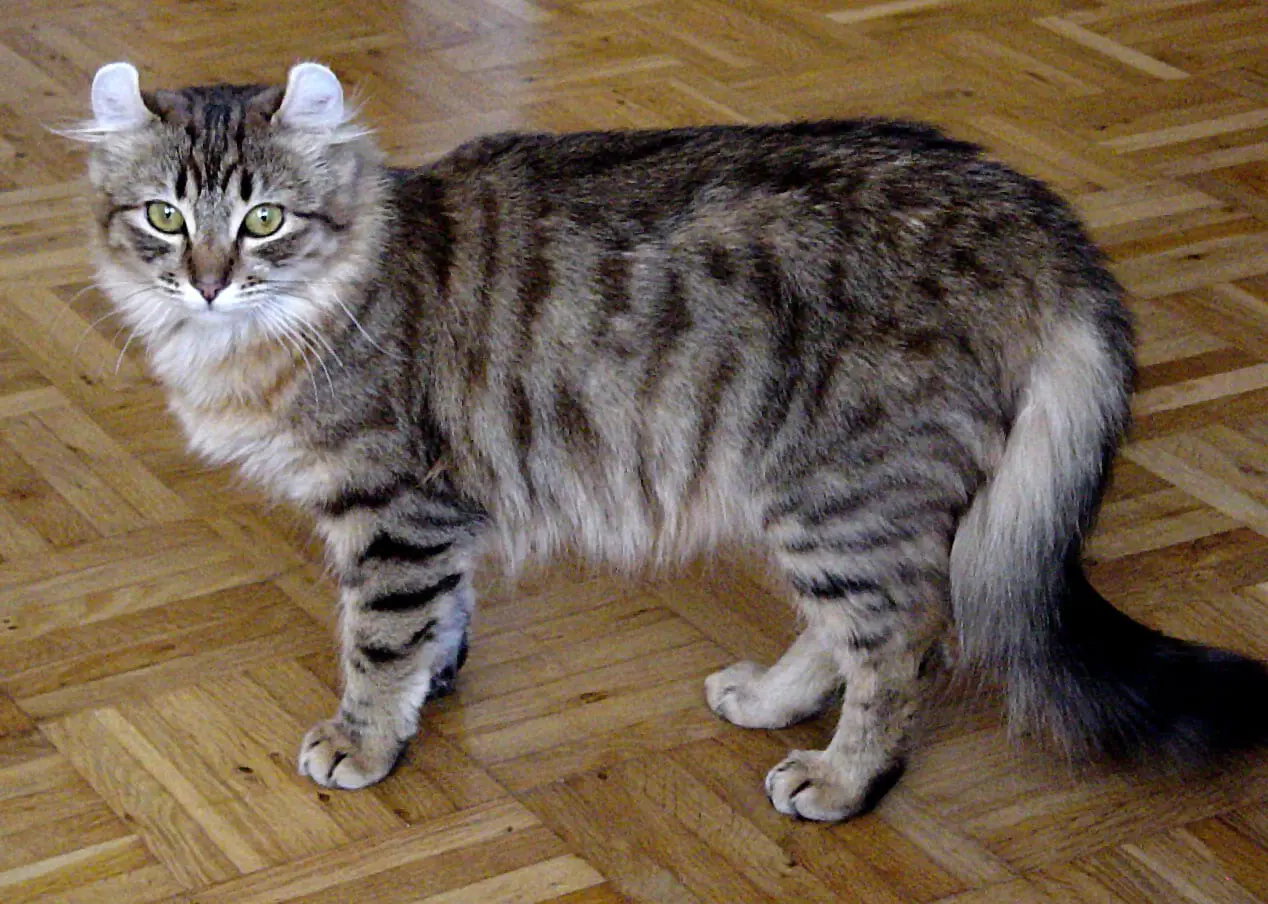
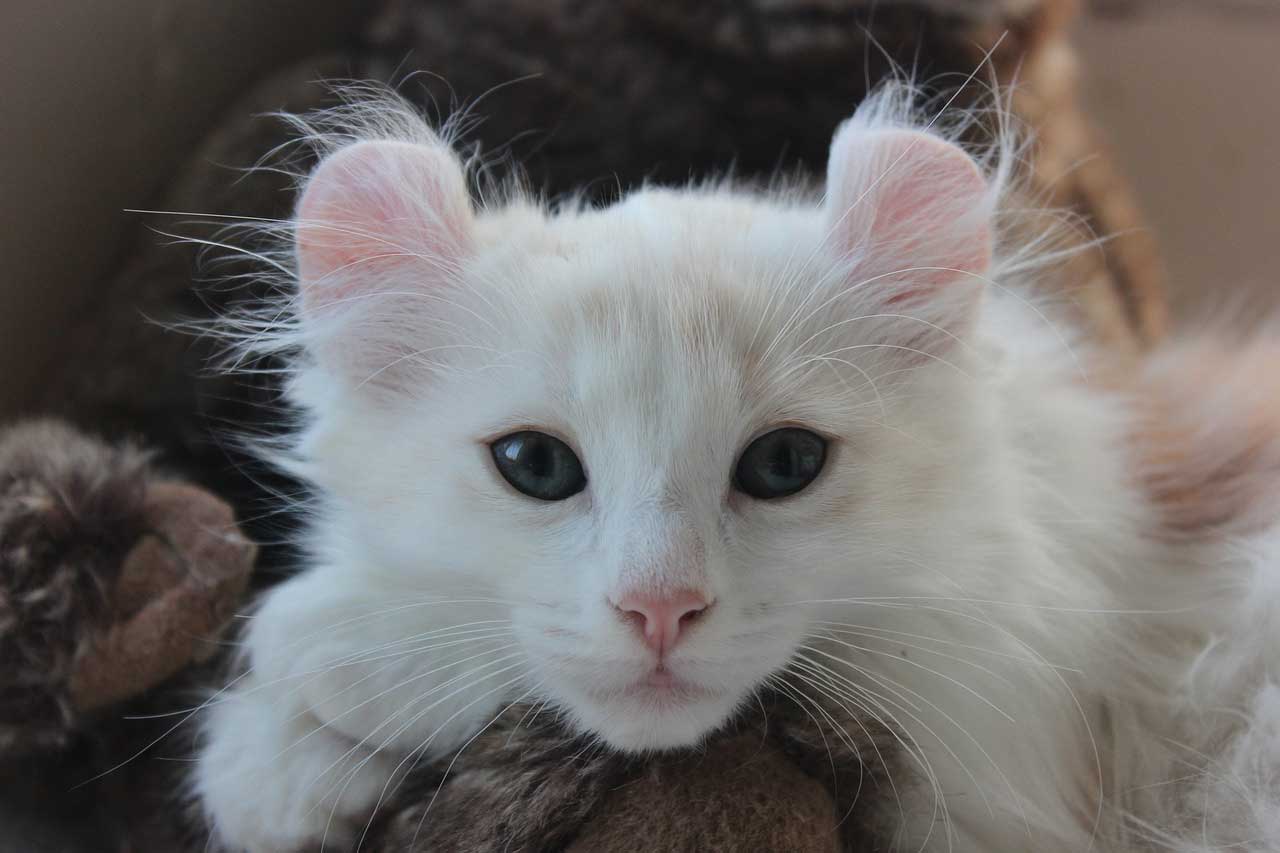
The term "Curl" ("curl" in Spanish), does not refer to fur, but at ears, which are the specificity of the breed. They are wide and open at the base, while the tip is rounded and curves back at an angle of between 90 and 180 degrees. At least the first third of the ear is made up of firm cartilage, similar to that of the human ear. On the other hand, the rest of its surface is smooth and flexible.

It is important to note that ears of the American Curl are curved back, not "broken": the line of curvature should be smooth like a circle, not steep like an oval.

But, the kitties American Curl are born with straight ears, then the cartilage begins to harden and they begin to take their typical shape. Its final shape occurs around the 4 months of age, and the breeder then determines the classification of the kitten:

  • first grade: slight curvature. The individual is destined to become a pet;
  • second grade: pronounced curvature, At right angles. The individual is destined for reproduction;
  • third degree: well marked curvature, in "crescent moon". The individual is destined for exhibitions.

  • The hair can be long or short, depending on the variety. In all cases, the texture is fine, silky smooth, and the undercoat is minimal or non-existent. It also, different standards accept all coat colors and patterns.

    Last, the sexual dimorphism it is well marked, being the male larger than the female.

    Size and weight

  • Male size: Of 22 to 28 cm.
  • female size: 20-26 cm.
  • Male weight: 3,2-4,5 kg
  • female weight: 2,3-3,6 kg

  • Varieties of "American Curl"

    The American Curl it comes in two varieties: the American curl longhair (ACL) and the American curl shorthair (ACS).

    Both varieties are officially recognized by the American Cat Fancier’s Association (CFA), as well as for the Fédération Internationale Féline (FIFé) and International Cat Association (TICA).

    Character and skills
    American Curl
    American Curl

    The American Curl is known for his great sociability and affection for his family. He likes to follow his master around the house and snuggle up next to him. But, they are not very affectionate: they appreciate being caressed, but they are just as happy when they are around their family.

    It is a breed of cat recommended for use with children: He gets along very well with them and often seeks their company., either to play or just to have a moment of tenderness. But, you have to be careful with younger children to make sure they know how to behave around a cat: despite his affable nature, to the American Curl does not like to have his tail or whiskers pulled, and can respond with a scratch.

    Their sociability extends to other animals, and accepts the presence of other cats and / or dogs accustomed to cats without difficulty. On the other hand, coexistence with small rodents is not recommended, reptiles or birds: the american curl is still a feline, and his hunting instinct can resurface at any time.

    On the other hand, the other side of its sociable nature is that it is a breed of cat that does not like to be alone. Homeowners who are away often find things spilled and / or shit out of the litter box: it's his way of letting you know he's not happy to be left alone. The presence of other pets is an interesting solution to partially solve this problem: if you have a playmate at home, being left alone all day while their owners are away is much less likely to be a problem.

    On the other hand, the American Curl is moderately active, but he is a very playful cat. Although they reach maturity around 2-3 years of age, they retain their kitten behavior until old age. Some call them the "Peter Pan of cats.". Thus, it is common to see a American Curl chasing a ball or playing with an object thrown by its owner.

    You don't necessarily need an outside space, It is a breed of cat adapted to life in a flat. But, it is important to note that many American Curl They have learned to handle a door knob and do not hesitate to open doors and cabinets.

    Whether they are confined indoors or have access to the outdoors, they like to be able to observe their territory from above: That is why it is quite common to find this excellent climber perched on top of a closet or on a curtain rod., or even on a tree or even on the roof, if you can go abroad. A tall tree for cats, where can i play, sleep and observe what happens around you, it is undoubtedly one of the best gifts that its owner can give it.

    Last, the American Curl it's not very noisy, but he likes to show his affection by butting his head, a common habit among his older cousins, the Lions. As these displays of affection can occur at any time of the day or night, the master who allows his cat free access to his bedroom should expect to be woken from time to time by his little companion, who comes to rub against him to show his affection, before falling asleep next to him.

    Health
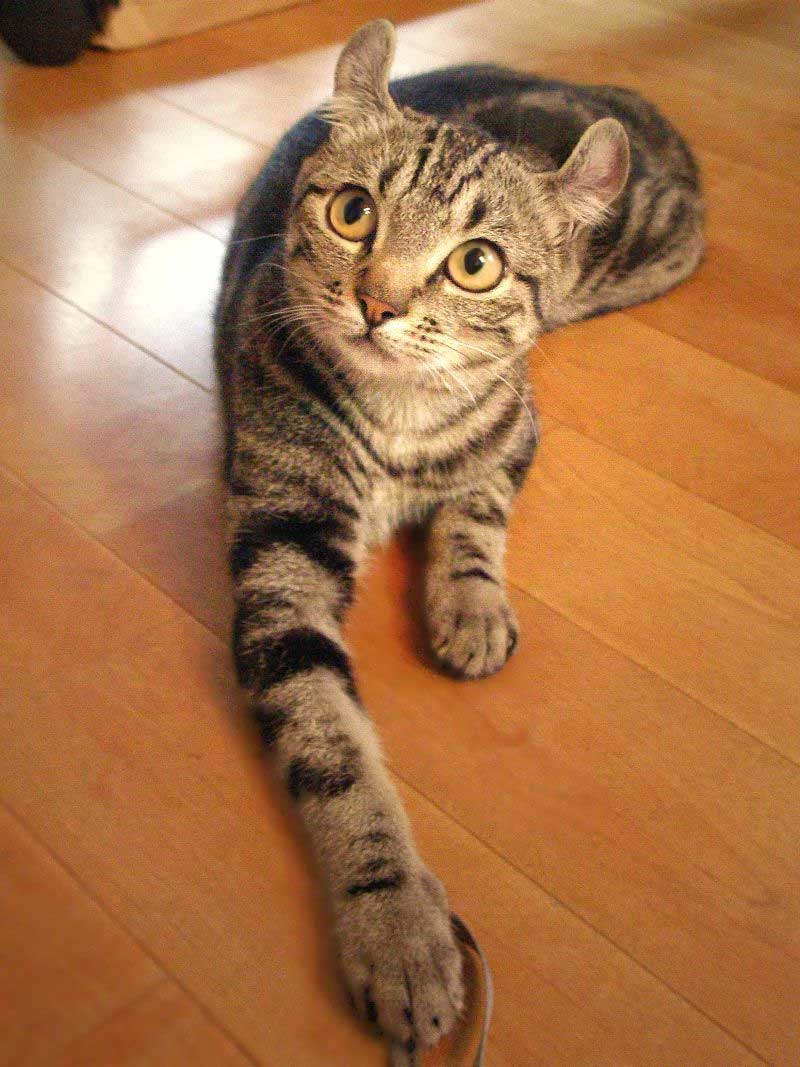
    American_curl
    American_curl – tanakawho, CC BY 2.0, via Wikimedia Commons

    The American Curl it is a very robust cat breed. Thanks to its stray cat origins and a breeding program that has favored crosses with other perfectly healthy domestic cats, does not present any genetic problem.

    But, some lines have a narrow ear canal, which is not a problem in itself, but it poses a higher risk of infection if the cat's ears are not maintained regularly enough.

    Obesity is another risk, and a responsible owner must ensure that the cat is sufficiently active and not overweight.

    Life expectancy

    12 to 14 years

    Grooming

    The maintenance of American Curl is simple, since brushing once a week is enough to keep the coat healthy and shiny and avoid possible knots.

    The American Curl molts very little in general, although the long-haired variety can shed a bit more when temperatures rise. So, in summer it may be useful to increase the number of brushing sessions to two per week to remove dead hair.

    The brushing session should be complemented by a quick check of the teeth, eyes and ears to make sure they are clean.

    You should also check from time to time that its claws are not too long, which may be especially the case if you don't have a scratching post available. If they are, just cut them with a nail clipper.

    Food

    The American Curl is not picky and can be fed commercial cat food, either kibble or cat food, without any problem. But, the food must be of good quality and adapted to their age and activity level, to provide you with the necessary nutrients and vitamins.

    Like most cat breeds, are capable of self-regulation, so it is better to leave food at their disposal. You must also have access to fresh water at all times.

    But, it is important to regularly check that your cat is not overweight: if so, it is advisable to consult a veterinarian to establish a feeding program that best suits his lifestyle and needs.

    For sale "American Curl"

    If you want to buy a American Curl, you should find a trusted breeder in your area. As the breed is not far outside its country of origin, you will have a hard time finding one. If there is no breeder association, you will have to resort to private breeders.

    On the Internet you can always find kittens at a great price, But you have to be careful. Before buying a kitten, inform yourself well and also look at parents and siblings. You can get a healthy, purebred kitten from a reputable breeder for about 800 EUR. The price depends on the curvature of the ears. The more elegant the curved ears are, the more expensive the cat will be. Only cats with third degree ears, that is to say, a graceful curve like a crescent, can be officially used for breeding and exhibition.

    Videos "American Curl"

    Get to Know the American Curl
    Get to Know the American Curl
    American curl / Cat Breed
    Curl americano / Raza de Gato

    ▷ The world of Pets: Dogs, cats, birds, reptiles, amphibians

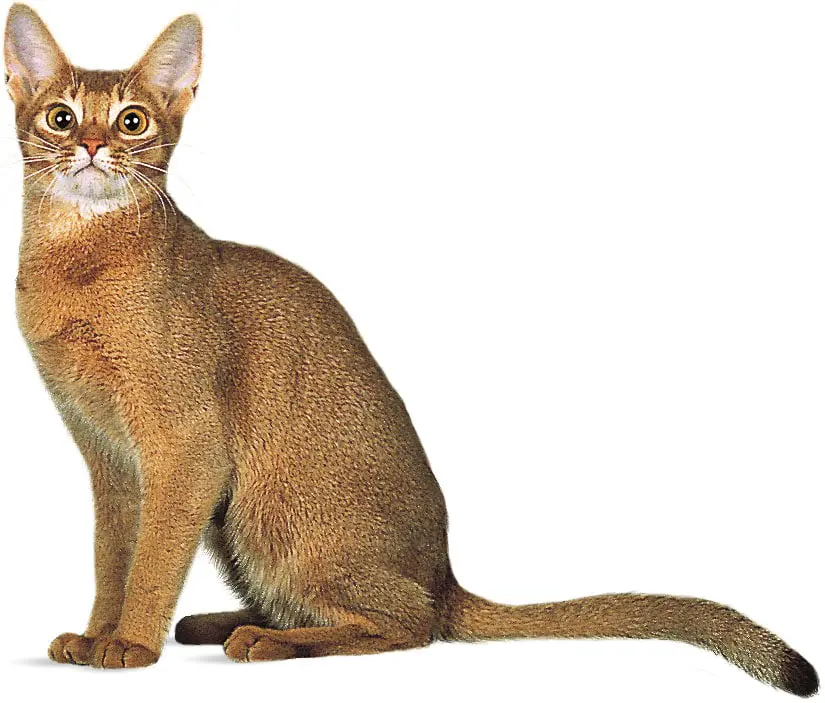
    Abyssinian cat
    Tabby and Silver/Smoke.

    Abisinio
    Photograph. Encyclopædia Britannica

    Content

    History

    The name of Abyssinia refers to Ethiopia, but most of the stories about the origins of the Abyssinian refer to Egypt. Investigation of its genes suggests that the Abyssinian cat breed originated near the coast of the Indian Ocean., where could settlers have bought the animal traders of wild animals. The breed was developed in Egypt.

    The race could originate from an Egyptian cat named Zula, which was purchased in a port of Alexandria by a British soldier and brought to England in 1868. This theory is not established because there is no strong link between Zula and the first cat on the list named as an Abyssinian in 1882.

    Many sources date the Abyssinian breed to be a few thousand years old., coming from the old Egypt , as cats that appear in ancient paintings. The ancient Egyptians made sculptures of them. There are also stories that wild "Abyssinians" living in parts of North Africa today.

    Physical characteristics

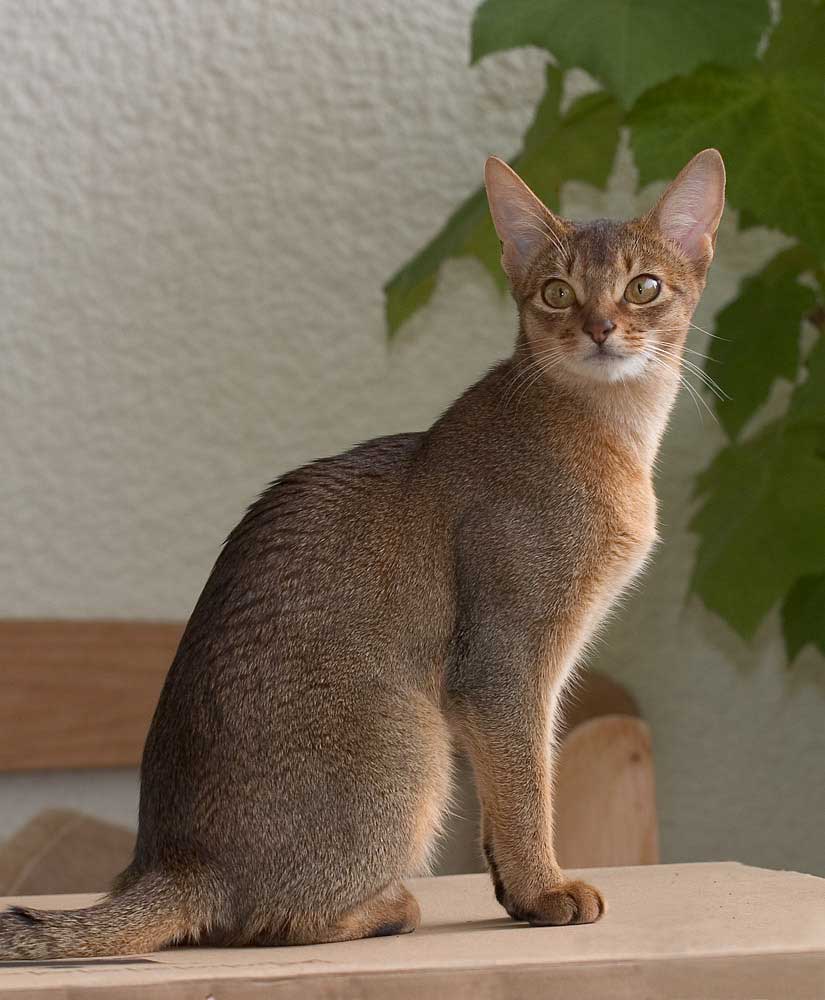
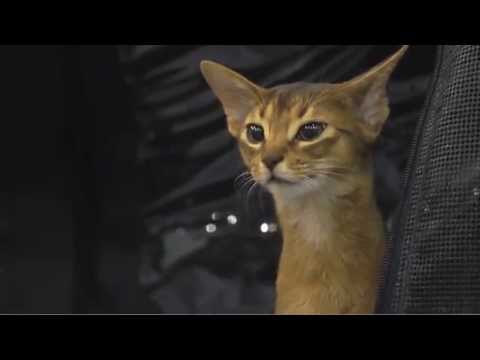
    The appearance of the "Abyssinian cat" resembles that of a small puma. They are elegant and athletic cats with long, small legs.. Wedge-shaped head sits atop a graceful neck and has large ears set wide apart. Some cats have tufts of hair on their ears similar to those of the lynx. The eyes, big and almond shaped, they can be green, walnut brown or amber. The specially colored coat of the purebred cat is short, soft and close to the body. Each of the hair is ringed in various colors, which creates a great effect. This so-called tic-tac can be pronounced in different variations.

    The breed standard includes all four chestnut colors (bright copper red with chocolate brown bands), blue (warm blue-gray with dark steel gray bands), leonado (muted beige with dark cream bands) and the typical wild color (reddish brown with black bands). Of all the colors there is also the Silver variety, where the base color is a light silver shade. Ideally, cats should be completely free of patterns and markings..

    Character and skills

    The "Abyssinian cat" is considered an intelligent and active cat breed, who gets excited about any kind of game. Especially when he's young, the cat has an irrepressible temperament and a great desire for movement. Prefers to play with other cats, so it is not recommended to have it alone. These curious cats are very people-oriented and follow their humans everywhere. In doing so, they rarely become pushy with a soft voice and prefer to watch their two-legged friend's every action. When they get stressed, these uncomplicated cats react extremely robustly and do not let anything disturb them.

    Care "Abyssinian cat"

    Indoor or outdoor cat?

    The "Abyssinian cat" it is an active and freedom loving breed that needs a lot of exercise. It's hard to be happy locked up in a small apartment. Secure access to the outdoors would be ideal for this active breed.. Walks in the enclosed garden or on the balcony give the cat a lot of pleasure. If neighborhood conditions permit, it is also a great outdoor cat.

    How much activity does he need? "Abyssinian cat"?

    If you purchase a "Abyssinian cat", you should not expect a well behaved lap cat. He loves to explore his surroundings, climb and jump. Thanks to its enormous resistance and jumping power, no part of the house is safe from her. A tall, stable cat tree is an absolute must for every cat owner.. Here you can live your desire to move, as well as sharpen their claws and rest. The clever velvet paws also rejoice in any kind of mental occupation and cheerfully accept intelligence toys. They like to be taught little tricks and enjoy going for a walk on or off the leash with their owner..

    Care and feeding

    Thanks to its short coat with little undercoat, cat grooming is especially easy. It is enough to remove the loose hairs from the coat with a rubber brush from time to time. When the coat changes, brush a little more often to soothe the cat. To be happy, cats also need a balanced and healthy diet. It is best to adapt the food to the age of the cat and its desire to move. There should also always be enough fresh drinking water available. A bubbling water bowl is easily accepted by most breed representatives.

    For sale "Abyssinian cat"

    Before acquiring an Abyssinian cat, you need to make sure you can offer this four-legged friend a species-appropriate home. Once the decision is made, it is best to buy the kitten from a reputable breeder from a registered breeding association.

    Pay attention to the behavior and appearance of kittens and parents. For a purebred kitten with papers you pay a few 800 EUR.

    Characteristics "Abyssinian cat"

    Coexistence is important that you have with your new friend. Before considering the acquisition of a cat of the breed "Abyssinian cat" you know certain factors. You must take into account their character, their need for exercise, their interaction with other pets, their care and if you have small children, their level of tolerance towards them.

    Joy

    5,0 of 5 stars (based on 1 review)

    Activity level

    5,0 of 5 stars (based on 1 review)

    Friendliness to other pets

    3,0 of 5 stars (based on 1 review)

    Friendliness to children

    2,0 of 5 stars (based on 1 review)

    Grooming requirements

    2,0 of 5 stars (based on 1 review)

    Vocality

    1,0 of 5 stars (based on 1 review)

    Need for attention

    4,0 of 5 stars (based on 1 review)

    Affection towards its owners

    4,0 of 5 stars (based on 1 review)

    Docility

    1,0 of 5 stars (based on 1 review)

    Intelligence

    4,0 of 5 stars (based on 1 review)

    Independence

    3,0 of 5 stars (based on 1 review)

    Hardiness

    2,0 of 5 stars (based on 1 review)

    images of "Abyssinian cat"

    Abyssinian cat

    Videos "Abyssinian cat"

    Abyssinian cat

    Abyssinian cat
    Abyssinian Cat Breed

    Abyssinian Cat Breed

    Alternative names:

    1. Abyssinian, Abys (English).
    2. Bunny Cat, Aby (French).
    3. Abessinier (German).
    4. Abisinio (Portuguese).
    5. Abisinio (español).

    ▷ The world of Pets: Dogs, cats, birds, reptiles, amphibians

    Chausie cat
    Federations: TICA

    Despite its wild origins, the Chausie cat has all the features of a domestic cat. Very attached to its owner.
    Chausie
    Photo: courtneyBolton (Filckr)

    Content

    Characteristics "Chausie cat"

    Coexistence is important that you have with your new friend. Before considering the acquisition of a cat of the breed "Chausie cat" you know certain factors. You must take into account their character, their need for exercise, their interaction with other pets, their care and if you have small children, their level of tolerance towards them.

    Joy

    5,0 of 5 stars (based on 1 review)

    Activity level

    5,0 of 5 stars (based on 1 review)

    Friendliness to other pets

    3,0 of 5 stars (based on 1 review)

    Friendliness to children

    1,0 of 5 stars (based on 1 review)

    Grooming requirements

    2,0 of 5 stars (based on 1 review)

    Vocality

    2,0 of 5 stars (based on 1 review)

    Need for attention

    4,0 of 5 stars (based on 1 review)

    Affection towards its owners

    4,0 of 5 stars (based on 1 review)

    Docility

    3,0 of 5 stars (based on 1 review)

    Intelligence

    5,0 of 5 stars (based on 1 review)

    Independence

    2,0 of 5 stars (based on 1 review)

    Hardiness

    3,0 of 5 stars (based on 1 review)

    History

    According to legend, the Chausie cat it is a distant cousin of wild cats domesticated in honor of the goddess Bastet in ancient Egypt. In fact, the reality is quite different, despite the eerie similarities between the Chausie real and the artistic representations of some cats of the time.

    Born at the end of the years 60 or early 70 in United States, the Chausie would be the first hybrid breed resulting from the cross between a jungle cat (Felis chaus) who lived essentially in Egypt, India, Central Asia and Southeast Asia, and domestic short-haired cats of various breeds, having in common physical characteristics close to those of the Felis chaus.

    The idea behind the creation of this hybrid was to create a "domesticated jungle cat" that looked like a Felis chaus but that he was as tame as a domestic cat. The Chausie cat It was intended to attract both daring people trying to domesticate real wild cats and lovers of "exotic" cats.. The bet paid off over the years 90: passionate breeders managed to stabilize the characteristic traits of the breed and consolidate the genetic stock to facilitate breeding.

    Thanks to the efforts of these breeders, the International Cat Association (the TICA, an organization that lists and registers all existing cat pedigrees in the world) recognized the breed in 1995. In 2003, gave the owners of the Chausie the opportunity to present your companion in the feline shows organized under your aegis, granting him the title of New Race. But, in the news, they cannot participate in the competitions by themselves.

    In France, el LEAF (Livre Officiel des Origines Félines, an association with missions similar to the TICA) follow the position of the TICA and allow owners to participate in exhibitions, but not compete.
    As for the other feline associations in the world, and in particular the FIFE (Fédération Internationale Féline), they still don't recognize the breed.

    Today, the breeders of Chausie cat they keep working to get new generations closer and closer physically to their wild cousin, especially through crosses with the Abyssinian cat. The breed is found primarily in the United States and Europe, but it also has a following in South Asia and India, although its dissemination is more confidential.

    Physical characteristics

    Chausie
    Chausie – Wolfdogrew, CC BY-SA 3.0, via Wikimedia Commons

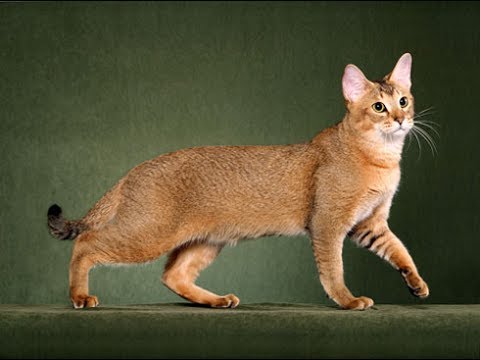
    The Chausie it's a big cat (especially the males) with a long powerful guy and a long rectangular body. Has a sleek appearance and powerful musculature, but it is not very showy. The rib cage is wide, the legs are of medium length with stronger hind legs than most other cat breeds. The tail is shorter than that of other breeds and reaches the hock.

    In the face, the Chausie has a broad, triangular head with prominent cheekbones, a rounded forehead and a long muzzle. The ears are wide at the base and wide open. Feathers are very popular with breeders of this breed. The eyes, oval in shape and slightly flattened on top, are generally golden yellow hazelnut in color. Light green tones are also accepted.

    This cat's coat has a dense coat of short to medium length. The fur is reminiscent of its wild ancestor, the jungle cat Felis chaus, especially for its ticking. The more ticking (several colored stripes on the same coat), more appreciated will be the cat in the feline exhibitions.

    Size and weight

    Size: Of 40 to 50 cm.
    Male weight: Of 6 to 11 kg
    female weight: 6-9 kg

    Varieties of "Chausie cat"

    Currently, the standards TICA y LOOF they only recognize three colors. There may be a Chausie cat with other colors, but they cannot be registered in the LOOF and / or TICA.

    Full black

    The kitties Chausie negros may show slight brindle markings that disappear as the kitten grows older. Prolonged exposure to the sun can cause your black to turn brown.

    Gray-haired black tabby

    The black tabby pattern is a direct descendant of the wild cat Felis chaus and is exclusive to Chausie. In fact, no other domestic cat has this pattern, unless you have a wild ancestor in your family tree. So, it is easy to understand why this variety is the most sought after, since it is the most similar to the fur of the jungle cat.

    The kitties, originally black, show black brindle markings as they grow, while her fur becomes lighter. The coat of the black tabby has a ticking that changes depending on the part of the body, ranging from dark mouse gray with black tips to a three-striped ticking (mouse gray, black and white) in the finest specimens. This characteristic reaches its full and definitive expression when the cat has 3 years.

    Some Chausies gray-haired blacks can be mistaken for a Chausie negro when silver ticking is scarce.

    Brown tabby

    The brown tabby has a black tabby marking on a brown background, with stripes on the inside of the legs and on the tip of the tail. The shade of brown can vary from cat to cat, as long as it doesn't get too close to the Abyssinian. As with the first two colors, the final color of the Chausie brown ticked tabby not fixed until 3 years of age.

    Character and skills

    Chausie
    Chausie – Wolfdogrew, CC BY-SA 3.0, via Wikimedia Commons

    Despite its wild origins, the Chausie cat has all the features of a domestic cat. Very attached to his master, even exclusive, it is a sociable cat that demands a lot of attention and barely supports loneliness. Very affectionate, You can enjoy both being indoors with their owners at home and playing with the other animals in the family. This cat also adapts very well to the presence of children, for whom it can be a good playmate, provided he is taught to control his claws from a young age.

    In effect, even if it is a good domestic cat, the Chausie also has a strong character, is often stubborn and may have aggressive reactions, inherited from its wild origins. Your fearlessness can also play tricks on you, especially when it goes outside. In any case, he needs a teacher capable of having authority and patience to reveal all his qualities and temper his predatory side.

    True athlete, has a reputation for being a tireless gamer and spending without sparing expense. In fact, they do better in a house with a garden or in a very large apartment, that provides them with enough space and plenty of opportunities to play and run around in the absence of their owner.

    Last, the Chausie cat distinguished by high intelligence and hunting instincts superior to those of other domestic breeds. It is one of those cats that likes to learn tricks, look for the ball, walk with harness… but also open taps and doors in the absence of supervision. Thus, it is recommended to use cat toys and stimulate their attention as much as possible, both for your well-being and for the living room furniture.

    Care and grooming of the "Chausie cat"

    The coat of the Chausie is slightly longer than that of normal domestic cats, but still easy to care. Regular brushing and removal of dead hairs ensure a shiny coat.

    Indoor or outdoor cat?

    Due to his offspring from a kind of wild cat, the Chausie cat he is very fond of freedom. This athletic cat also has a strong drive to move and can easily jump six feet from a standing position.. Thus, keeping them indoors is only possible under special conditions. If you cannot provide access to the outside, the cat must have a large outdoor enclosure. You must be able to live your natural instincts, ideally hunting mice and birds, to be happy. If you have your cat in an outdoor enclosure, You should be prepared to regularly receive “gifts” from your cat in the form of prey..

    How much activity does he need? "Chausie cat"?

    This affectionate cat likes to be around his owners and is reluctant to stay home alone. If you are a person who works, it is better to have two cats so that the animals do not get bored. A large, sturdy scratching post and several cat toys will keep them busy and provide variety around the home.. They love to play catch and chase mice and balls. You can also give your cat, water lover, a special treat with a soak in the tub or a bubbly drinking fountain. Some cats like water so much that they will even follow you into the shower.

    Health and nutrition

    Chausie
    Chausie – Wolfdogrew, CC BY-SA 3.0, via Wikimedia Commons

    The Chausie is a relatively recent hybrid. Thus, There is very little scientific literature on health problems specific to this breed..

    But, analyzes of animals born from two different species draw a picture of pathologies that Chausies, as hybrids, can present: male infertility prevalence, fluctuating physical development (very large or very small individuals), digestive problems, behavioral instability (this cat is still more aggressive than a real house cat) and, in rare cases, heart problems due to malformations of the heart muscle.

    Generations of Chausies They are classified according to their "closeness" to their wild ancestor on a scale from F1 to F4 and higher, F1 being the generation born directly from hybridization between a domestic cat (Felis sylvestris catus) and a wild cat (Felis chaus). Males of generations F1 to F3, or even F4, are generally sterile, which considerably complicates the work of breeders of Chausie to develop this breed.

    Last, due to its wild origins, this cat has inherited a shorter digestive tract than other breeds. This makes them more susceptible to certain intestinal problems., including inflammation from food allergies, and predisposes them to gluten intolerance.

    Life expectancy

    12 to 14 years

    Food

    As their direct ancestors are wild animals, a high-protein diet is even more important for the breed than for other cats. Ideally, feed them their own BARF food. In this way, your cat will have all the important components of a healthy diet that it would get in the wild.

    For sale "Chausie cat"

    Before buying a Chausie cat, you must be absolutely sure that the hybrid cat suits you. If you can't offer enough exercise, you don't even have to think about getting a cat that likes to move. In any case, in Europe it will be difficult for you to find a breeder. The breed is not very common outside its country of origin.. If you find a breeder, you must check first if he is responsible and takes care of the health of his breeding animals. Due to its rarity, the kitties Chausie they naturally have their price. Depending on the breeder, you can spend up to 10.000 euros for a purebred F1 kitten.

    Interesting Facts and Things to Know

    jungle cat
    jungle cat in Sofia Zoo – Bulgarian: Maria Teresa Cortes Garcia, Learning Center at Sofia ZooEnglish: Maria-Teresa Cortes Garcia, EERC Sofia Zoo, CC BY 3.0, via Wikimedia Commons

    To understand the Chausie cat, it is also important to know the jungle cat (Felis chaus).

    The jungle cat found in nine subspecies in Asia, Middle East and Egypt.

    With his black plumes in his ears, resembles a lynx, which also earned it the name "swamp fox.".

    In the wild, the jungle cats they are solitary animals and they hunt at sunset.

    Its habitat is mainly near water bodies or wetlands in inaccessible reed thickets or swampy riparian forests. So, they are not afraid of water and can swim excellently.
    In captivity, the jungle cats they become very tame and it is said that the ancient Egyptians even trained them to hunt.


    Videos "Chausie cat"

    HTTPS://youtu.be/wiyk-VyLLtI
    Animal Planet : Cats 101 ~ Chausie
    Chausie cat / Cat Breed
    Gato Chausie / Raza de Gato

    ▷ The world of Pets: Dogs, cats, birds, reptiles, amphibians

    Cherubim cat
    Federations: IRCA

    The "premium" breed known today as Ragdoll cat is an early descendant of a line of Cherubim cats.
    Cherubim
    Photo: KRO-Media - Flicker

    Content

    History

    Before becoming the RagaMuffins cat on ACFA ⓘ , This breed of cat was collectively known as Cherubim cat and registered in the IRCA registry of Ann Baker, the International Association of Ragdoll cats.

    The efforts of Ann Baker by breeding cats began in the early s 60 and were officially established in 1971 with the formation of IRCA, developing his first line of cats, the Ragdoll cat who was selected to be just a colored cat.

    During the following 23 years he continued to develop other breeding lines using other breeds and increasing genetic diversity; these lines included all the colors and patterns. All breeding lines developed throughout those years were collectively referred to as Cherubim cats and registered in the IRCA for their lines of development – all these lines together were the original founding breeding lines. The Cherubim cats.

    NOTE: The "premium" breed known today as Ragdoll cat is an early descendant of a line of Cherubim cats -> los Ragdolls of the IRCA ⓘ only.

    The founders were actively breeding the entire spectrum of lines of Cherubim cats in the IRCA ⓘ until 1992, When, due to the deterioration of the health and stability of Ann Baker, they decided to leave the IRCA ⓘ and seek recognition as a race within the formal organizations of Cat Fancy.

    Contracts with Ann Baker stipulated that if breeders continued to breed cats of the IRCA ⓘ off your record, The name "Ragdoll" could not be used to describe cats bred. The name Cherubim had also been recorded by Ann at that time. So, even though the RagaMuffin cats were in fact the Cherubim cats original, and that the logical thing would have been to keep Cherubim as breed name, The need arose to "change their name" to remain ethically faithful to their contracts.

    Today, the RagaMuffin cat continues the legacy of its founders by preserving the original focus of the Cherubim cat in personality, the sweet appearance and the genetically diverse and solid health.

    ▷ The world of Pets: Dogs, cats, birds, reptiles, amphibians

    Ragdoll cat
    Federations: LOOF, CFA, ACF, ACFA, TICA, FIFé, WCF

    Ragdoll
    Photo: Wilkipedia

    Content

    Characteristics "Ragdoll cat"

    Coexistence is important that you have with your new friend. Before considering the acquisition of a cat of the breed "Ragdoll cat" you know certain factors. You must take into account their character, their need for exercise, their interaction with other pets, their care and if you have small children, their level of tolerance towards them.

    Joy

    3,0 of 5 stars (based on 1 review)

    Activity level

    2,0 of 5 stars (based on 1 review)

    Friendliness to other pets

    4,0 of 5 stars (based on 1 review)

    Friendliness to children

    4,0 of 5 stars (based on 1 review)

    Grooming requirements

    4,0 of 5 stars (based on 1 review)

    Vocality

    2,0 of 5 stars (based on 1 review)

    Need for attention

    2,0 of 5 stars (based on 1 review)

    Affection towards its owners

    4,0 of 5 stars (based on 1 review)

    Docility

    5,0 of 5 stars (based on 1 review)

    Intelligence

    4,0 of 5 stars (based on 1 review)

    Independence

    2,0 of 5 stars (based on 1 review)

    Hardiness

    3,0 of 5 stars (based on 1 review)

    History

    The Ragdoll cat He is originally from California, United States. At the beginning of the Decade of 1960, Ann Baker, a breeder of persian cats, a white cat began to cross, semi-wild and looking like Turkish Angora cat call Josephine with several street cats. Josephine gave birth, among others, to two cats named Buckwheat and Fugianna.

    They were large and docile in temperament and tended to relax completely when picked up., becoming real "Ragdolls".

    Two males were added to the breeding program of the Mrs. Barker: Blackie, a black guy looking like Burmese cat, and Daddy Warbucks, dark in color and with white tips of the legs. These five cats interbred and gave rise to the breed Ragdoll as we know it today.

    Aware that he had a new breed of cat on his hands, Ann Baker decided not to have her recognized by feline associations and, Instead, chose to register the trademark Ragdoll and create your own record, the International Ragdoll Cat Association (IRCA), in 1971. At the same time, prohibited anyone from using the name Ragdoll, breed these cats outside the strict conditions imposed to preserve the purity of the breed or register them with another feline association.

    Although the eccentric claims of Ann Baker about what Josephine was genetically altered by aliens in a car accident are not credible, it seems likely that he had a unique genetic makeup, probably a natural genetic mutation, which was later passed on to their offspring.

    The eccentricities of Ann Baker sparked dissension among other breeders of the Ragdoll cat, especially because of the high level of inbreeding caused by the strict restrictions imposed by. In 1975, Denny and Laura Dayton they were among the first to distance themselves from the breed and attempt to give it a legitimate existence under the umbrella of recognized feline associations. They drew up the standard that was used later when it was recognized by the Fédération Internationale Féline (FIFé) in 1991 and for the American Cat Fanciers’ Association (CFA) in 1993.

    In the meantime, the Ragdoll had arrived in Britain already in 1981, when breeders Pat Brownsell and Lulu Rowley they imported the first specimens and began to breed this cat that little by little would conquer British cat lovers. A few years later, in 1986, made its appearance in France.

    In the news, the Ragdoll is recognized by most major national and international feline associations: is the case, in particular, of the Governing Council of the Cat Fancy (GCCF) British, of the Livre Officiel des Origines Félines (LOOF) French, of the International Cat Association (TICA) and of the World Cat Federation (WCF).

    Well established in both North America and Europe, and its success is undeniable. In United States, it is one of the most popular breeds in terms of number of registrations in the CFA, and even ranked first in 2018. In the United Kingdom, has firmly established itself in second place since 2010; with about 3.000 kittens registered every year, it only represents around the 15% of the country's cat population.

    It is also one of the five most popular cat breeds in France., and its growth is dazzling: While in 2003 less than 100 specimens in the LOOF, in 2010 more than 1.000 and in 2019 more than 2.600, surpassing the Persian for the first time. So, represents almost the 6% of births registered in the country.

    Physical characteristics

    Ragdoll
    Ragdoll

    The Ragdoll it is one of the largest breeds of domestic cats, but it grows slowly and in fits and starts, and does not reach maturity until four years.

    Has a kind of body long and mighty. His body is wide and imposing, with a solid bone structure and supported by medium-sized muscular legs that end in legs round and wide. The tail is quite long and tapers slightly towards the tip.

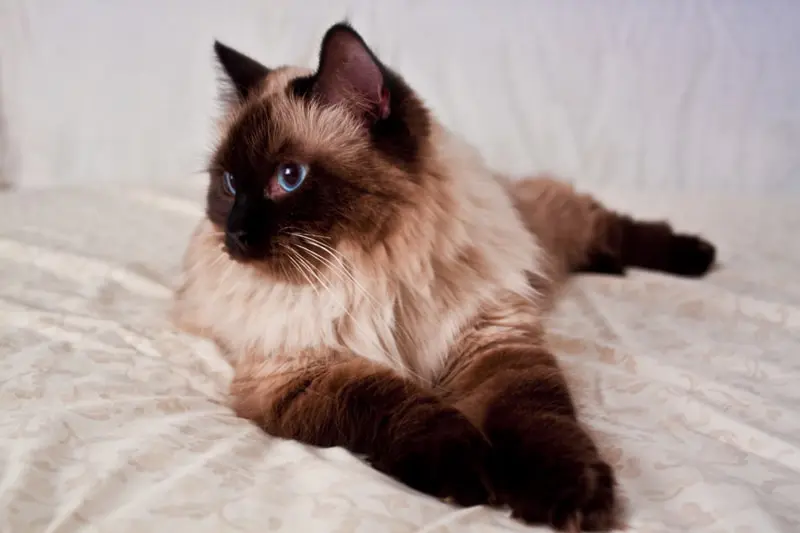
    The head forms an equilateral triangle viewed from the front. Profile, the rounded forehead is prolonged with a slide-shaped depression at the nose. The ears are size medium, point forward and end in a rounded shape. The eyes they are big, oval and of an intense blue color that rarely leaves you indifferent.

    The fur of the Ragdoll, composed of a sparse undercoat and a medium length topcoat, it is silky and close to the body. Tends to elongate in winter and is densest in the back of the body, and the queue is particularly crowded. It also, some dogs have a well-developed mane.

    The fur tends to be colourpoint (a light color and dark tips), but it can also be gloved or bicolor. In United States, the CFA (Cat Fanciers’ Association) also allows pattern van, or Seychelles, which is a white individual with a colored tail and head, and spots on the body. The colors allowed by the standards of the different organizations that recognize the breed are the seal, the blue, chocolate, the lilac, red and cream. These colors can be found in tortoiseshell patterns (black and Red) or tabby (striped), which gives rise to a large number of possible combinations and, Therefore, to as many cats with different appearances.

    Last, the sexual dimorphism it is very marked, being the male much more imposing than the female.

    Size and weight

    • Male height: Of 30 to 35 cm.
    • Female height: 28-32 cm.
    • Male weight: 5-9 kg
    • female weight: 4-7 kg

    Breed standard

    The breed standards are documents established by official bodies that list the conditions that a dog must meet. Ragdoll to be fully recognized as belonging to the race:

    Character and skills

    Ragdoll
    Male Ragdoll, about three years old, with prototypical tabby patterns in the head region – BlackIceNRW, CC BY-SA 3.0, via Wikimedia Commons

    Docile and devoted, the Ragdoll he loves the company of his family and follows them around the house, greeting them at the door when they arrive. He is a gentle and loving companion, who just wants to get into his master's lap to warm him up and relax him with a lot of purring after a hard day's work.

    Very sociable, he has no problem greeting guests. If they take it in their arms, he behaves as he would with his masters: relax all your muscles, which reminds us why it's called "Ragdoll".

    Its quiet character, relaxed and easygoing makes it an excellent choice for a cat breed with children, especially if they have learned to interact with an animal. But even if they are not treated with respect, for example, if they are carried around the house for a long time, it is very rare that they remove their claws. And if there is a cat that is willing to be dressed like a doll and then carried in a stroller, it's the ragdoll. Of course, make sure that the child does not cross the line and abuse their indulgent nature.

    It is not a problem of coexistence with other dogs, as long as they don't chase you around the house. It can even live with small rodents or fish, but it is advisable not to tempt the devil: the Ragdoll still a feline, and his hunting instincts can resurface at any moment.

    Its flexible and calm personality makes it a cat that adapts well to changes and is capable of living in almost any environment. A move with a cat goes much better if it is a Ragdoll that a race that does not share this quality. The owner can also perfectly consider taking his cat on vacation, without fear that your partner will be completely disoriented and not enjoy the change of scenery. It is also possible to take your cat around your holiday destination on a leash, since it is something that this breed accepts very well.

    Despite its impressive size, the Ragdoll adapts perfectly to life in a flat, as long as you have everything you need: the warmth and comfort of a cozy home, the affection of his family and a little space to play. Even if you live in a house and have free access to the outside, it's more of an indoor cat: rarely goes outside to explore the garden or surroundings.

    On the other hand, his closeness to humans and his patience make him suitable for friendship with anyone, and turn you into a excellent therapy cat. His presence and willingness to interact with people also means that he can be a real comfort to his owner when he is going through a difficult time., and he knows that he has a support in him that he can trust in those circumstances. On the other hand, It is not for someone who likes to be alone and does not want a companion who is a little "clingy", who prefers to opt for a more independent breed.

    The Ragdoll is moderately active, but enjoy chasing a cloth mouse, especially because he retains a playful side throughout his life. They are also able to learn some tricks, especially if the owner uses positive reinforcement techniques with praise and treats. It also, if given the opportunity, they love to play fetch for an object thrown by its owner, how would a dog. But don't expect him to constantly jump on the kitchen table or climb on furniture.: prefers to run rather than jump and does not venture beyond the living room sofa or bed. Like this, unlike most of his peers, does not seek a high position to observe its surroundings from above, but choose a place that facilitates contact with your family.

    It also, against a legend, not insensitive to pain, and reacts like any other cat if someone steps on its tail: cries out in pain and then walks away with a reproachful look at the offender.

    Last, has a soft and musical voice, but he rarely uses it, except when you order your food.

    Health

    "Ragdoll cat"

    Ragdoll
    Male Ragdoll of 4 months. Blue mitted with a blaze – CalistaZ, CC BY-SA 3.0, via Wikimedia Commons

    The Ragdoll cat it is a fairly robust breed with few genetic predispositions.

    But, you are not immune to certain health problems. Among the possible risks, the most common are:

    • The feline hypertrophic cardiomyopathy, a growth of heart tissue that can have serious consequences. But, from 2007 there is a DNA test to detect the responsible gene, so serious breeders of Ragdoll have taken all precautions to minimize this risk;
    • Bladder lithiasis, that is to say, stone formation in the bladder;
    • The urolitiasis, what is stone formation in the urethra.

    These last two conditions can cause the cat to be unable to urinate, a serious situation that requires the urgent intervention of the veterinarian.

    Life expectancy

    Of 12 to 15 years

    Grooming

    The Ragdoll it is a breed of cat that is easy to care for: the brushed once a week removes dead hairs and knots that may form. This session is usually appreciated by the receiver, who enjoys the attention and caresses he receives.

    Although they do not shed excessively (especially because its undercoat is not very abundant), it is advisable to increase the frequency of grooming sessions during their shedding periods, in autumn and spring.

    The teeth, the eyes and ears should also be checked and maintained once a week to make sure they are clean and free of infection.

    It also, depending on wear and tear and how often your dog uses the scratching post, its claws need to be trimmed more or less frequently.

    Last, keep in mind that, given its size, a large litter box is necessary so that she can turn over without difficulty.

    Food

    Ragdoll
    Ragdoll

    The Ragdoll it does not pose any difficulties in terms of feeding and adapts very well to industrial cat foods available on the market. But, food must be of good quality, adapted to your age and activity level, to provide you with everything you need to stay healthy.

    Kittens of this breed can experience large growth spurts, so it is important that they always have food at their disposal to develop properly. This is especially true as they are capable of self-regulation., so the risk of being overweight is very limited. This is not a sign of obesity, but a normal morphological characteristic of the breed.

    Adults are also capable of self-regulation and can also have food at all times without this generally posing a problem.

    But, your dog's weight should be monitored regularly and a veterinarian should be consulted in the event of a pronounced increase.

    What is the price of a "Ragdoll cat"?

    The price of a kitten Ragdoll round the 1100 euros on average, whether it is a male or a female.

    But, this stocking hides a fairly wide range of prices, since it goes from the 600 euros of the cats with the characteristics furthest from the standard up to almost 3.000 euros of the specimens belonging to a prestigious lineage and destined for their physical attributes to shine in feline exhibitions.

    Interesting data

    Do "Ragdolls" have a reduced sense of pain?

    Since the Ragdoll hangs limply when caught and lets everything hang over him, some researchers assumed the breed has a lower sense of pain than other cats. For some time, experiments were done on the poor animals. It is even believed that the founder of the breed, Ann Baker, made this claim to better market his breed. At the end, the tests led to the conclusion that there are no differences with other cats.

    The "Ragdolls" on social networks

    Their funny and clumsy character makes cats Ragdoll be real stars on the internet. There is hardly a compilation of "funny cat videos" in which this breed does not appear.. The Ragdolls most famous on Instagram are the three cats Lola, Nina and Olan, whose day to day you can follow under the name of @ladylolathecat. The three cats live with their owner in a floating house and delight 139.000 subscribers almost daily with funny videos and images.

    When I hugged the cat tightly, I got annoyed by saying 'Ang'.

    3 Minutes of a Ragdoll Cat Being a Ragdoll Cat

    ▷ The world of Pets: Dogs, cats, birds, reptiles, amphibians

    Dragon Li cat
    Federations: CFA

    It is considered that Dragon Li Cats have above-average intelligence. Mental stimulation is a must and these cats appreciate the company.

    Dragon Li

    Content

    History

    The Dragon Li cat, also called "Li Hua» or «gato chino», «Li Hua Mao«, «Li Hua Mau» o «Mao Li» descended from wild cats (Puma Bieti) who live in the chinese mountains. It is said that it has been domesticated over time to get closer to the Chinese people.

    It is not known exactly how long the Dragón Li (Li Hua), but it is likely that it has existed for several centuries. In fact, Stories of this animal can be found in Chinese folklore.

    Recently, in 2003, breeders were interested in him Dragon Li cat (or Li Hua) and started breeding programs for this breed. That same year it was approved as an experimental breed and presented in Beijing..

    The Cat Fanciers’ Association CFA allows you to participate in feline exhibitions from 2010. But, most international cat federations do not recognize it.

    This cat is now very rare and is hardly known outside of China.

    Physical characteristics

    The Dragon Li cat (Li Hua) looks wild and powerful. The body is compact and muscular. Weighs between 4 and 5 kg.

    • The fur is short, brindle mackerel.
    • The head it is wide and rounded.
    • The eyes they are big, almond-shaped. They are very bright, yellow or green.
    • The ears they are round and of medium size. May be covered in hair.
    • The legs they are muscular.
    • The feet They are round.
    • The tail of the Dragon Li cat (Li Hua) it is relatively short. Its tip is black.

    Character and skills

    The Dragon Li cat (or Li Hua) he is very playful and curious. You want to know everything that happens in your environment.

    It is a sociable animal. But, he is not the most affectionate of cats. These may include, unlikely to come snuggle in your lap. His way of getting along with his master is to play with him.

    The Dragón Li (Li Hua) gets along well with other animals in the house, especially with dogs.

    Needs a lot of space to live and be able to play outside. He has kept his wild and hunter side deep inside. That is why it is important that it can thrive in a large garden.. Flat life is not for him. in addition, it is not the ideal cat to live with young children.

    Indoor or outdoor cat?

    It is very important to note that these unique felines do not like small, enclosed indoor spaces.. While most cats are perfectly happy sharing an apartment with an attentive human family, the Dragon Li cat needs a large house with plenty of room to roam if kept completely indoors. Clearly, this cat requires special circumstances and is not the best breed for everyone.

    How much activity does he need? "Dragon Li cat"?

    Unfortunately, for those who prefer lap cats, this particular breed does not like cuddling at all. In fact, these cats can become anxious when time and space are not given to them.

    The Dragon Li Cats appreciate the outdoors and are excellent hunters. They are happiest when they are allowed access to closed and safe outdoor spaces, like the patios, and when they are taught to walk on a leash from an early age.

    Dragon Li
    A tabby cat named "Pipi" – Painjet, CC BY-SA 4.0, via Wikimedia Commons

    Grooming and health

    Does not require any special maintenance. A simple brushing once a week will suffice.

    Provide an anti-flea and anti-parasitic treatment according to the age of the cat and the type of treatment you opt for. Avoid bathing your cat unless absolutely necessary, as this can remove some of the natural oils that protect your coat. Regular baths will leave your cat with irritable skin and a rash..

    The race Dragón Li (or Li Hua) is rare and relatively recent, so we don't have enough information on the general health of this cat. A priori, does not seem to declare any specific genetic disease.

    Their life expectancy is of 12 – 15 years.

    Videos "Dragon Li cat"

    Dragon Li's, Rodimus and Optimus Prime...
    Dragon Li’s, Rodimus and Optimus Prime…
    Dragon Li Cat

    Photo: catdiaries.com.au

    ▷ The world of Pets: Dogs, cats, birds, reptiles, amphibians

    Clippercat
    Registration: CATZ

    Content

    What are Clippercats?

    They are a recently recognized breed, which is being developed under strict guidelines.

    In a nutshell, the Clippercat is the New Zealand shorthair cat and / or the Australian longhair cat. with polydactyl feet. Poly– means "many" and Dactulos – means "fingers".

    Cats usually have 5 claws on its front legs.. (4 plus a snail claw) and 4 on each hind leg. Cats with the polydactyl mutation can have between 5 and 7 fingers on the front legs and between 4 and 7 in the rear.

    History

    In New Zealand and Australia, between the years 1850 and 1900, a large number of immigrants arrived on the Clipper ships that sailed the seas between England and the Antipodes.

    Many of these ships docked in Auckland and the Hauraki Gulf, where today we find the highest concentrations of polydactyl cats.

    Following the CATZ Inc policy of inclusion and establishment of rules for the responsible registration of cats, these cats, which are a natural mutation, and an expression of an incomplete autosomal dominant gene, They can now be registered with CATZ Inc under the breed name "Clippercats", formerly called Antipodean cat, with the addition of the polydactyl mutation..

    Unlike the United States.UU., the Clippercats (Polydactyls of Domestic / Antipodean origin) cannot be raised with others Clippercats, and there are strict guidelines set by the Registry for their breeding to ensure that all Clippercats recorded are the Heterozygous form of this mutation.

    Right now, if you have a polydactyl cat, you can register it in the open registry as Clippercat, if you meet very specific guidelines.

    Breeding conventions include recording the number of toes on each foot and the breed standard includes both a limit on the number of toes allowed and restricts the structure of the feet to three accepted structural formats..

    The Clippercats they can only be bred with short hairs / New Zealander longs and the breed standard calls for the New Zealand SH / LH type with the addition of the polydactyl mutation.

    The Clippercats cannot be crossed with any other currently recognized championship breed.

    Where do polydactyls come from??

    The polydactyl cats they have a long and interesting history. For many centuries they have roamed south-west Britain and there is evidence of polydactyl cats in countries as far away as Norway, although reports in Europe are few and far between, due mostly to the perceived relationship between cats and witchcraft.

    The polydactyly is a trait allowed in the breed of Pixie Bob cat, which is classified as a natural breed, and that competes in the TICA championship, the International Cat Association. (USA)

    It was also a dominant trait in many of the early Maine Coons, and it was considered that it helped those cats to overcome the heavy snows of the winters of the State of Maine. Breeders, However, selected to remove the trait from that specific breed.

    There are several reports of a folklore in southern England, which states that when people found cats with too many fingers, They offered them to the captains of the ships, who apparently considered them "lucky cats" and very suitable for a sailor's life. They were also considered gifted buzzards and, thanks to your extra fingers, more fit for life on mobile covers.

    Large populations of cats with this mutation were seen in and around the Boston area, where they were commonly called "Boston thumb cats". An article published in the magazine «Cat Watch» from Cornell University in 1998 analyzed the studies carried out on polydactyl cats between 1940 and 1970 and tentatively concluded that the trait probably occurred in cats that came from England to the Boston area with the Puritans in the mid-17th century. These studies focused on the unusually high concentration of polydactyls in that area., and in other east coast ports with strong shipping links to the British Isles, like Halifax and Yarmouth, and in Nova Scotia, where there were also higher concentrations of polydactyl cats.

    The author Ernest Hemingway is also recorded as a gift from a ship captain polydactyl cat of the race Maine Coon cat, and this cat is believed to be the progenitor of the many polydactyl cats now cared for in the trust established for them on the author's home island in the Florida Keys. Apparently, This led to the polydactyl cats They were sometimes called "Hemingway cats.".

    There are currently three separate private registries in the United States where polydactyl breeders can register their specimens.. These cats are often called "American Polydactyl Cat«.

    But, it would be very conceited to consider them solely native to the United States, when its story is rather associated with the many boat cats that traveled with immigrants from England and Europe to the United States and other parts of the world between 1620 and 1900. Even the famous "Mayflower" was a merchant ship before its well-known voyage to the United States.. and in those days he made several trips between England and Norway before being chartered by the pilgrims.

    Source: catzinc.org

    ▷ The world of Pets: Dogs, cats, birds, reptiles, amphibians

    Munchkin cat
    Federations: LOOF, TICA

    Content

    Characteristics "Munchkin cat"

    Coexistence is important that you have with your new friend. Before considering the acquisition of a cat of the breed "Munchkin cat" you know certain factors. You must take into account their character, their need for exercise, their interaction with other pets, their care and if you have small children, their level of tolerance towards them.

    Joy

    5,0 of 5 stars (based on 1 review)

    Activity level

    4,0 of 5 stars (based on 1 review)

    Friendliness to other pets

    5,0 of 5 stars (based on 1 review)

    Friendliness to children

    4,0 of 5 stars (based on 1 review)

    Grooming requirements

    3,0 of 5 stars (based on 1 review)

    Vocality

    2,0 of 5 stars (based on 1 review)

    Need for attention

    5,0 of 5 stars (based on 1 review)

    Affection towards its owners

    5,0 of 5 stars (based on 1 review)

    Docility

    4,0 of 5 stars (based on 1 review)

    Intelligence

    5,0 of 5 stars (based on 1 review)

    Independence

    1,0 of 5 stars (based on 1 review)

    Hardiness

    3,0 of 5 stars (based on 1 review)

    History

    The Munchkin cat is a recent American feline breed, but the existence of short-legged cats has been documented several times throughout the 20th century. These may include, already in the decade of 1930, en el Reino Unido, These cats lived for four generations before disappearing during WWII. Over the years 50, in St. Petersburg (Russia), a short-legged cat appeared, nicknamed the "Stalingrad Kangaroo" for its propensity to sit on its hips and box with its small front legs. Another short-legged cat was also observed in the 1990s. 1970 in new england, United States.

    But it was in 1983, in Louisiana ((UNITED STATES)UU.), when a music teacher called Sandra Hockenedel found two pregnant short-legged cats under a truck and called them Blackberry and Blueberry. Found a home for Blueberry, but he stayed with Blackberry. Blackberry gave birth to a litter of normal and short-legged kittens. One of the latter was named after Toulouse, in honor al pintor Toulouse-Lautrec, that conserved the legs of a child in the body of an adult, and gave it to her friend Kay LaFrance, who lived nearby.

    All the Munchkins current descendants of the various encounters of Blackberry and Toulouse with others domestic cats. In fact, their owners allowed them to roam freely on the plantations, and their various encounters with other domestic cats resulted in many litters with kittens of the same anatomical peculiarity. Like this, a colony of short-legged cats soon developed in the area. Hockenedel and LaFrance they decided to call the cats Munchkin, in honor of the inhabitants of Munchkinlandia in Victor Fleming's film 1939 The Wizard of Oz, and they got in touch with him Dr. Solveig Pflueger for me to study them.

    He discovered that the short legs of the Munchkin cat were due to a natural genetic mutation that makes the upper leg bone short. This gene is dominant, which means that it is enough for one of the two parents to be a carrier, and therefore have this physical characteristic, so a kitten is likely to have it too. Aware of possible health risks, several breeders asked the teacher David Biller, from the University College of Veterinary Medicine at the University of Kansas, to X-ray the spines of several Munchkins. He concluded that there was nothing wrong with these cats, but that the results of his work could not be considered definitive, since the breed was too new.

    At the same time, breeders examined the paws of some of the older cats - also with X-rays- and found no damage to the joints or bones. They concluded that the mutation did not pose a risk to cats, sparking a debate that continues to divide cat lovers around the world..

    "Munchkin cat"

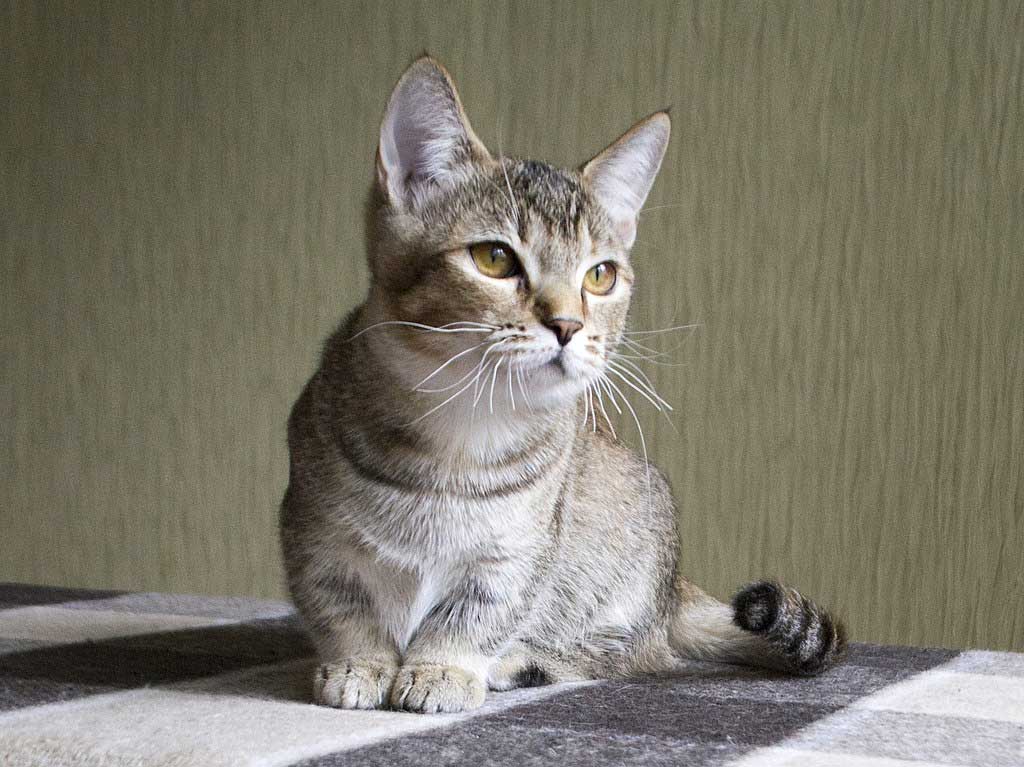
    Munchkin cat
    Munchkin cat – Sasha Krotov, CC BY 3.0, via Wikimedia Commons

    In 1991, the Munchkin cat was presented to the general public at a cat show held at the Madison Square Garden from New York, and the breeders began to pressure the TICA (International Cat Association) to recognize the race. The TICA refused at first (in 1991), but four years later it took a turn: in 1994, granted the breed the official status of a new breed in development, despite protests from Katherine Crawford, TICA judge for many years, who resigned arguing that this recognition was an affront to ethics.

    Indifferent to the heated debates that sparked, the Munchkin they continued to live their feline life and conquer the public, obtaining in particular in 2003 full recognition of the TICA, and therefore the possibility of competing in the exhibitions organized under the aegis of the organization.

    This remains the only major feline association to have recognized the breed.. The American Cat Fanciers’ Association (CFA) has not taken the step, the Fédération Internationale Féline (FIFé) says he refuses to recognize a race 'based on a genetic disease', and the British Governing Council of the Cat Fancy (GCCF) has held a similar position since 1991 advising against the importation of these cats, adding that "it is not intended to recognize a race based on a genetic abnormality".

    In other words, the dispute of Munchkin is far from over. But, it would be too easy to summarize, as some do, as a dispute between "retrograde feline organizations that do not accept change", on the one hand, and "feline organizations that do not think about the welfare of cats and only seek novelty", for another. All renowned feline organizations are committed to the health of the feline population, but they have different approaches: some prefer to take time to study any new mutation to make sure it is safe before recognizing a breed that carries it, while others choose to recognize it quickly to establish a framework for breeders and study the new mutation.

    It's not the first time, not the last, that these debates shake up the world of cat lovers. But, if the discussions around the Munchkin cat they are so virulent and they take so long, it is mainly due to the attitude of some unscrupulous breeders who take advantage of the situation to make easy money without worrying about the health of the animals. Like this, although they know perfectly well that in that case a quarter of the litter never passes the fetus phase, some do not hesitate to raise two Munchkins, with the sole objective of not obtaining a litter with half the "normal" cats that are not sold.

    At the end, despite the mistrust it generates, the Munchkin cat is present all over the world. But, due to lack of recognition and, Therefore, official registration of the breed's representatives in the registries, it is difficult to get an exact idea of ​​its true popularity. But, the countless photos and articles on the net suggest that this cat at least arouses great curiosity.

    In France, where the Livre Officiel des Origines Félines (LOOF) is one of the few national associations that recognizes the breed (in two different varieties, depending on the length of your hair) and, Therefore, keep a record, between 2011 and 2019 were registered 134 Munchkin shorthair and 198 Munchkin longhair. The trend is up, nails on 50 registrations per year, but race only represents something more than 0,1% of the country's feline population.

    Physical characteristics

    munchkin cat
    munchkin cat – Tasy Hong, CC0, via Wikimedia Commons

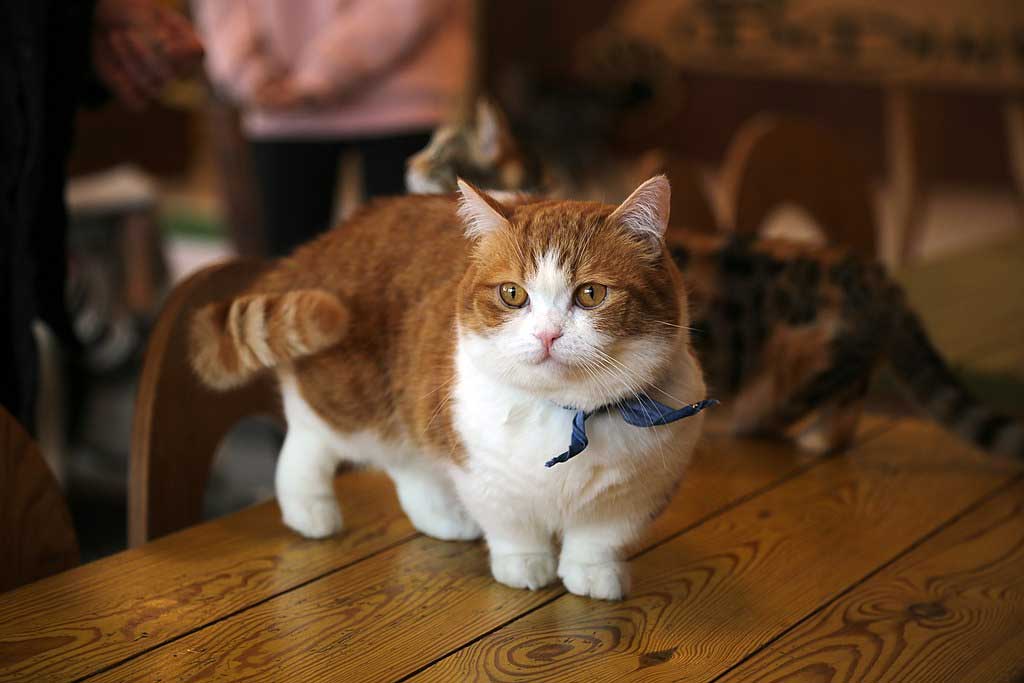
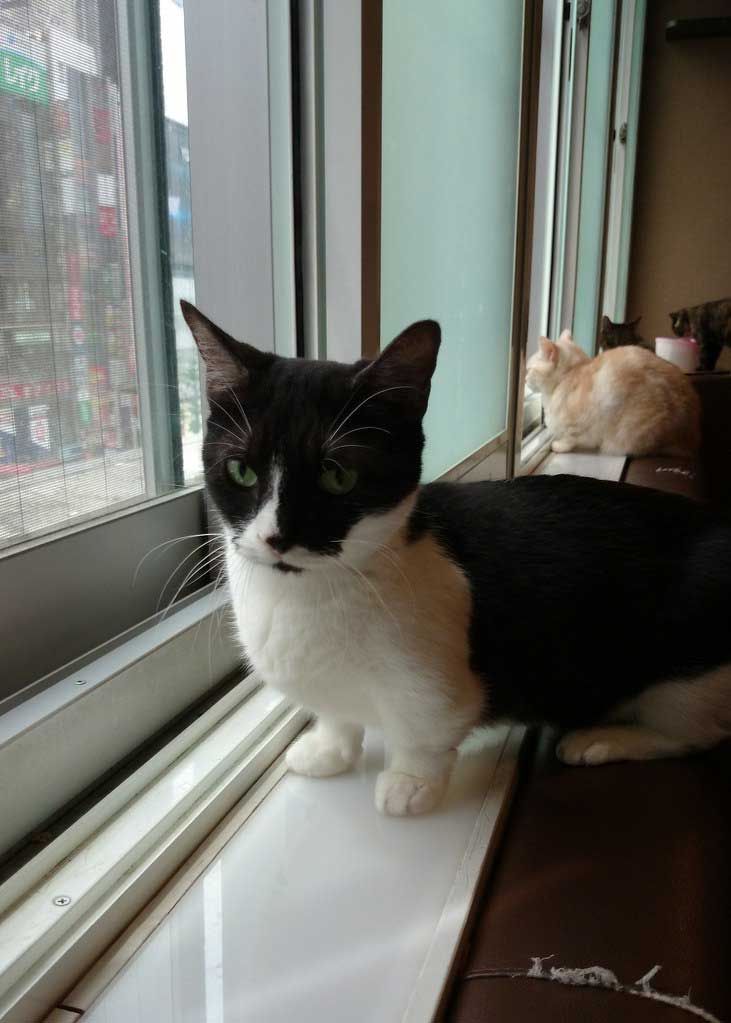
    The Munchkin cat has a midline morphology semi-foreign. His body is muscular but not compact, and ends in a tapered tail about the same length as the rest of the body.

    The legs they are short (between 5 and 10 cm shorter than a normal cat), and the upper bone is approximately the same length as the lower. They are straight, with a medium bone structure and proportionate musculature.

    The head is slightly rounded, with cheekbones well defined. The ears are of a size proportionate to the rest of the body and end in a slight curve. The eyes they are almond-shaped and can be of any color.

    The fur of the Munchkin cat can be short (Munchkin shorthair) or semi-wide (Munchkin longhair). Some organizations, as the TICA (International Cat Association), They even consider them two different breeds that compete in two different categories at cat shows., but they share the same standard. This is not the position of the LOOF (Livre Officiel des Origines Félines) French, for whom they are simply two varieties of the same breed. In any case, long hair coat has a silky texture, while the one with short hair looks shiny.

    All are allowed colors and fur patterns, including the typical pattern colourpoint of the Siamese cat.

    Last, the sexual dimorphism is marked, the female being smaller than the male.

    But, it is important to point out that today many crosses of Gatos Munchkins with other races and others domestic cats, both long-haired and short-haired. This diversifies the breed's gene pool to avoid health problems, but it also means that the aspect of the breed is not fixed and can continue to evolve in the future.

    It also, if even 2015 short legs were officially considered the exclusiveness of the Munchkin cat, and that any cat that presented this particularity and corresponded to the standard (regardless of their origins) could be recognized as Munchkin cat, It's not like that. In fact, Since this date, los «Munchkins with Persian appearance" are regarded as a breed in their own right by the TICA (The International Cat Association): the Minuet (or Napoleon).

    Size and weight

    • Male size: 16 to 20 cm.
    • female size: 15 to 18 cm.
    • Male weight: 3 to 4 kg
    • female weight: 2 – 3,5 kg

    Breed standard

    The breed standards are documents established by official bodies that list the conditions that a dog must meet. Munchkin cat to be fully recognized as belonging to the race:

    Varieties

    "Munchkin cat"

    Munchkin Cat
    Munchkin Cat – Flickr

    There is a Munchkins shorthaired and Munchkins longhair. The TICA (The International Cat Association), the only world association that recognizes the Munchkin cat, even consider that they are two different races. On the other hand, for the French reference body, the LOOF (Livre Officiel des Origines Félines), they are simply two varieties of the same breed.

    The Long-haired Munchkin cat has the same origin as the short haired munchkin cat. It is not known if Blackberry, the original female rescued by Sandra Hochenedel in Louisiana, he had the gene for long hair, but the subsequent wide variety of crosses with pedigree and non-pedigree cats may have introduced him to this breed at an early stage, Surely with all the colors and known patterns of the feline world.

    The Long-haired Munchkin cat has a semi-long, silky coat and a moderate undercoat. The hair is described as suitable for all climates, although most breeders recommend that this tiny cat be kept indoors. In other respects, the long-haired variety is very similar to short hair. It has a body size medium and rounded, wedge-shaped head and large eyes. Despite his small stature, they are very active, they have a curious nature and strong personality.

    It also, the Munchkin cat has crossed with him Persian cat to create the Minuet, sometimes called Napoleon, a new breed of feline accepted by the TICA in 2016.

    in addition, it has also been crossed with other cats to create new breeds. But, unlike in the Minuet, the results of these crosses are not yet recognized by any official body. This is how he crossed Munchkin cat with the :

    Character and skills

    munchkin cat
    A munchkin cat grooming herself – in:User:Pockle, CC BY-SA 3.0, via Wikimedia Commons

    The various organizations that recognize race allow a Munchkin cat grew up with another Munchkin cat, with a European shorthair cat (Common european cat) or with a Domestic cat (that is to say, no pedigree, but owned by a family that normally guarantees his good health). But, some people do not hesitate to break this rule and organize breeding with individuals of other breeds. How the short leg gene is dominant, some of the kittens born from these unions have short legs, so they are considered Gatos Munchkins.

    Knowing this diversity of origins, it is easy to understand that it is difficult to define the character traits that are shared by all representatives of the breed. In fact, the personality of the Gatos Munchkin varies greatly from individual to individual, since they may have more or less preserved the traits of the races from which they came. Like this, some are very attached to their family, while others are much more independent. In general, they can be especially lonely or, on the other hand, very sociable.

    Most individuals, However, are in the latter case, being very attached and affectionate with both adults and children.

    They also greatly appreciate the company of their peers and enjoy playing with them., without its anatomical specificity being perceived as a disadvantage by any of the protagonists. They also get along perfectly with the presence of a canine companion, provided that it belongs to a breed of dog adapted to cats, and therefore refrain, for example, of chasing him around the house. On the other hand, coexistence with small animals is not recommended, since many Gatos Munchkins they have retained their hunting instincts.

    It also, many owners of Gatos Munchkin have noticed that their pet has a special attraction to shiny objects, like jewels, who does not hesitate to steal and hide in a place that only he knows. They are more likely to do so because they are usually very curious and observant. There is also a point common to all representatives of the breed: they are active and surprisingly agile and lively cats. Their little legs do not prevent them from being very fast and are a definite advantage when taking a sharp turn or making a sudden change of direction. It's hard not to smile when you see a Munchkin cat running at full speed after a ball around the house and making incredible turns.

    If you prefer to stay at ground level and, usually, do not venture beyond the sofa or coffee table, unlike many other breeds, it's more by choice than obligation. In fact, even though they may not be able to jump as spectacularly as their long-legged counterparts, they are especially agile and resourceful, so that they always end up finding a way to reach in several jumps the furniture that another race will have reached in one.

    in addition, their short legs do not prevent them from climbing a cat tree, and they are very likely to end up on the curtain rod, leaving their owners wondering how they got so high.

    The Munchkin cat has developed the habit of sitting on its hind legs, adopting a position similar to that of the suricata to observe your surroundings. This feature has already been observed in 1956 in the «Stalingrad kangaroo», a short-legged cat discovered in Russia, that is not related to the current ones Gatos Munchkin, which suggests that it is an adaptation to its physical particularity.

    The Munchkin cat it is rather a breed of indoor cat, that is to say, designed for life in a flat, especially since its short legs are a disadvantage on the outside, where it is more likely to suffer accidents or predation than another breed. But, they like to be walked on a leash under the supervision of their owner.

    With everything, the Munchkin cat leads a normal life as a cat and is not particularly affected by his condition. His peers consider him completely as one of their own, and he himself doesn't seem to know the difference. So, the difference is mainly in the eyes of humans.

    Health

    Munchkin cat
    Munchkin cat – Fedorov078, CC BY-SA 4.0, via Wikimedia Commons

    All the Gatos Munchkins have acondroplasia, a genetic condition associated with dwarfism. But, it is not clear whether this genetic mutation, responsible for the short legs of the breed, has any other impact on the health of affected individuals.

    Studies have shown that homozygous embryos (carriers of two mutated genes) are not viable and die in utero, while heterozygous individuals (carriers of a single mutated gene) they do not appear to be affected and lead a completely normal life. This means that when two intersect Gato Munchkins, the 25% of embryos fail to mature and die in the womb: it is precisely to avoid it that they allow themselves, and are even encouraged, crosses with domestic cats, versus breeding between two representatives of the breed.

    It also, although this cat is recent and, Therefore, be wary of jumping to conclusions, some conditions seem to affect you especially:

    • The lordosis, an excessive curvature of the spine;
    • The excavated breast, a deformation of the rib cage inwards, causing compression leading to breathing difficulties and/or heart problems.

    Last, as with any indoor cat, obesity is a serious risk to the health of the Munchkin cat. May cause other illnesses and / or aggravate existing health problems. Thus, a good owner should regularly check that his cat maintains a normal weight, and quickly correct it if it isn't.

    Life expectancy

    12 to 14 years

    Grooming

    The maintenance of Munchkin cat it's relatively easy, especially for short-haired cats. In the case of short-haired cats, just brush its coat once a week. The long-haired variety needs to be brushed a little more frequently, once every two or three days.

    In both cases, It is also advisable to spend a few minutes each week checking your teeth for cavities and tartar., and quickly clean their eyes and ears with a damp cloth.

    Last, when they have gotten too long, you need to trim your cat's nails, to avoid being hampered in your movements.

    Food

    In general, the Munchkin cat it does not pose any problem in terms of feeding and is perfectly in line with the industrial cat food available on the market. To provide your cat with all the nutrients it needs for good health, it is recommended to give him a quality food, adapted to your age and activity level.

    It also, to avoid obesity risks, it is advisable to control your daily rations. If your cat is overweight, you should consult a veterinarian to establish a feeding program to help you lose weight.

    For sale "Munchkin cat"

    A kitten Munchkin cat it usually costs about 800 euros for a male and 700 euros for a female.

    Videos "Munchkin cat"

    Can Munchkin Cats Walk On Foil?

    How FAST can munchkin cats run?