โ–ท The world of Pets: Dogs, cats, birds, reptiles, amphibians

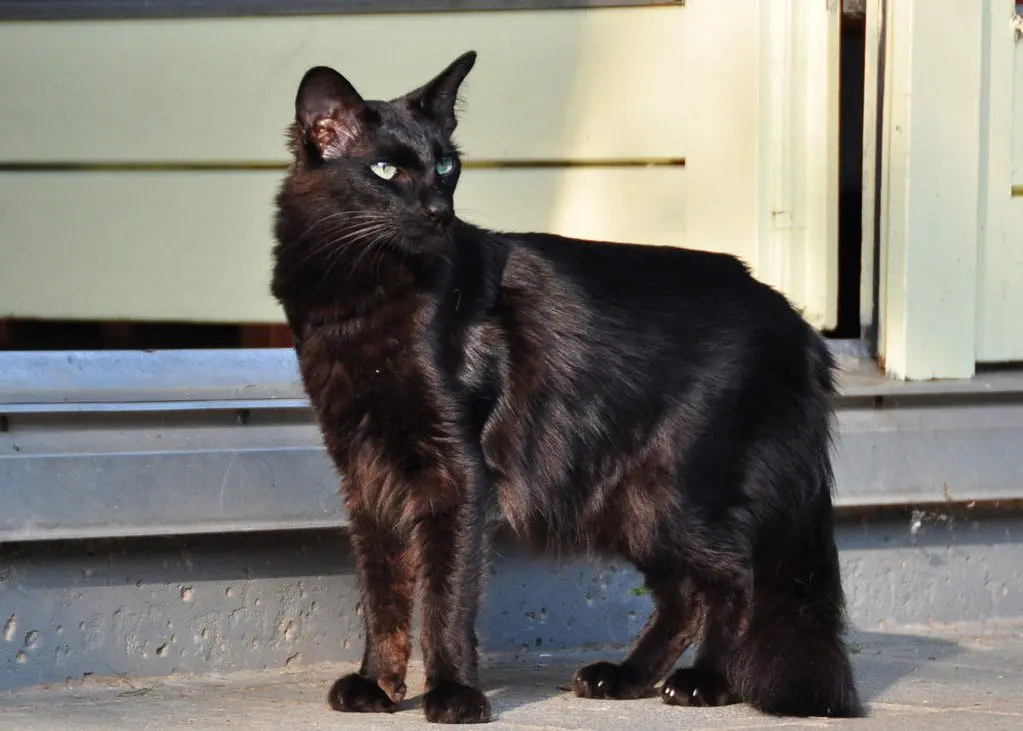
Brazilian Shorthair cat
Federations: WCF

The Brazilian Shorthair cat still very unknown today, even in your country of origin. Nowhere has he acquired much notoriety, which is most easily explained by the fact that the breed is still new and in full development.
Brazilian Shorthair
Photo: by Dutchy Doo - Flickr

Content

History

As the name suggests, the Brazilian Shorthair cat He is originally from Brazil..
The history of this breed is relatively recent, since it is assumed that their ancestors are the cats brought to South America -and in particular to Brazil- by the Portuguese colonizers in the early 16th century. In fact, they carried domestic cats on their boats to hunt pests like rats and mice. With the time, some of them ended up breeding with the local cat population already present in Brazil.

These cats arrived by boat and were domesticated. But once in Brazil, they turned into feral cats. In fact, how they were left in place for some, and escaped for others, they returned to nature. This situation lasted for centuries, more specifically until the decade of 1980.

The recognition of Brazilian Shorthair cat

Paulo Samuel Ruschi – creator, president of the Confederacao de Felinos Do Brasil (CFB) afiliada a la World Cat Federation (WCF) and the first cat club in Rio de Janeiro – emigrated to the United States, and was the first to carry out a study comparing the genetics and the different morphological aspects of cats commonly observed in the main cities of Brazil with those of other large cities in the world.. The result was very clear, since it verified that the population of Brazilian cats was quite homogeneous in terms of their appearance, and that it differed significantly from the alley cats of other big cities of the world.

From these general data, Paulo Samuel Ruschi decided to launch, already in 1985, a broader study program aimed at collecting information on Brazilian stray cats in order to develop a national breed. He organized with three other breeders to observe as many cats as possible in three different cities.: Rio de Janeiro, Porto Alegre and Caera.

The four of them walked the streets of these three cities and wrote down the morphological characteristics -shape of the body, head, legs, snout, nose, eyes, tail and fur- of all possible cats. They found that, despite the distance between the cities, their appearance was very similar.
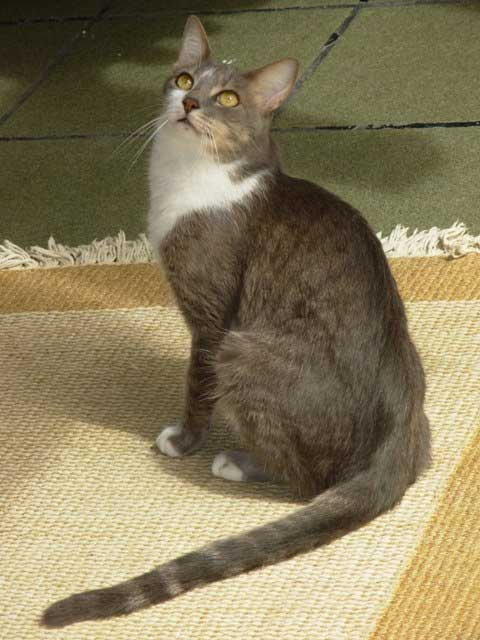
Brazilian shorthair cat
Brazilian Shorthair Cat – J.Jazz, CC BY-SA 3.0, via Wikimedia Commons

Based on these similarities, they drew up a standard for what they called the brazilian short hair: medium-sized, strong and muscular body, head characteristically small and longer than wide, big eyes, round and expressive, and a short, tight coat. Next, selected no less than 40 cats from the three cities to start a breeding program.

The Brazilian Shorthair was recognized as a breed in its own right by the BFC in 1994. That same year, an application for recognition was submitted to the World Feline Federation (WCF). The president of the WCF, Annelise Ackmann, traveled to Brazil to observe the cats and meet the WCF members who founded the breed. Shortly after his return to Germany, where the WCF headquarters is located, the standard of Brazilian Shorthair proposed by WCF was examined in detail by the organization. WCF decided to accept cats as Celtic shorthair cat, a breed also known as European shorthair cat. He came to the conclusion that they had many similarities to the European cats from which they were descended..

Paolo Samuel Ruschi contested this decision and pointed out the differences between the two races. In effect, in the European shorthair cat, the body should be medium to large and well muscled, big head, and not all coat colors are accepted. On the other hand, the Brazilian Shorthair cat has a medium size body, a longer head than it is wide and all coat colors are accepted.

The fact that he himself was a senior judge in the WCF helped Paulo Samuel Ruschi defend his position before the commission., relying on many documents and photographs. He even brought representatives of the races to support his arguments with examples. He kept pushing for a standard for Brazilian short hair to be recognized and, Therefore, the recognition of the race as such. Their efforts ended up paying off, since the institution did it in 1998.

But, was the only one. In fact, the other official bodies that were consulted, as the American Cat Fanciers’ Association (CFA), el British Governing Council of the Cat Fancy (GCCF), la International Cat Association (TICA) o la Fรฉdรฉration Internationale Fรฉline (FIFรฉ) se negaron a reconocer la raza. Todos utilizaron mรกs o menos el mismo argumento: como estos ejemplares son el resultado de la reproducciรณn de gatos callejeros, no pueden corresponder de ninguna manera a los criterios necesarios para hablar de una raza felina propiamente dicha.

In the news, the breeders keep working, always seeking to improve the characteristics of the breed. in your country of origin, the CFB issues a provisional registration for the cats presented to it whose characteristics are close to the standard, and a definitive record for those who are fully compliant.

Popularity of "Brazilian Shorthair cat"

The Brazilian Shorthair cat still very unknown today, even in your country of origin. Nowhere has he acquired much notoriety, which is most easily explained by the fact that the breed is still new and in full development. The opposition of the main world official organizations (the International Cat Federation, the International Cat Association, the Cat Hobbyists Association in America, the Governing Council of Cat Fancy in Great Britain…), with the notable exception of the World Cat Federation (WCF), obviously does not help to improve the situation.

In fact, the number of breeders Brazilian Shorthair cat still very low, and this is so all over the world: there are only a dozen of them, half in Brazil. There is no, for example, none in europe, and only a handful in America. But, the large population of these small felines on the streets of Brazil represents a huge breeding ground for their development. In fact, in Brazil, even individuals can present their cat to the Confederaciรณn de Felinos Do Brasil (CFB) for registration, as soon as it meets the criteria of the breed standard.

Physical characteristics

Brazilian shorthair cat
Brazilian shorthair kitten playing hide and seek – Button, CC BY 3.0, via Wikimedia Commons

The Brazilian Shorthair cat is a medium-sized cat with a semi-cobby complexion. Its body stocky and muscular has a broad, round chest and ends in a tail that tapers towards its rounded tip. Rises over legs strong and medium in size, that end in feet round.

The head is relatively small and longer than wide. The head is dominated by ears medium-sized, rounded at the tip and with tufts of hair at the base. The eyes they are big, round and expressive, they are quite far apart and match the color of the coat. The nose is the same width throughout its length. The lower jaw and the chin are strong and slightly prominent. Last, the slightly curved nasal bone at the level of the eyes gives it a rather particular profile.

The Brazilian Shorthair cat does not have undercoat, but he has thick and silky hair. The standard accepts all coat colors.

Last, this breed does not present any particular sexual dimorphism: males and females are identical in size.

Character and skills

The Brazilian Shorthair cat he is a very cuddly and affectionate cat, that does not tolerate loneliness and requires a lot of attention and tenderness. To keep them happy, their owners must have time to spend with them and not leave them alone for many hours of the day.

They enjoy interacting with all members of their family and they especially like children, for those who are excellent playmates; the same happens in reverse.

Being sociable by nature, it is perfectly conceivable that you share your home with another animal. They generally enjoy the company of other cats., especially if they are as active as they. It is also perfectly conceivable that your cat lives with a dog, especially if they live together since they were little. On the other hand, the utmost caution is required with birds or small rodents. It is better to keep them in a safe place, like a cage, since a cat's hunting instinct can be awakened at any time.
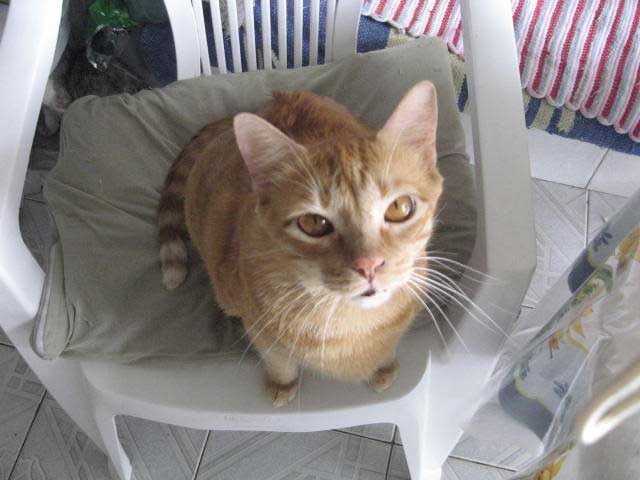
Brazilian shorthair cat
Brazilian Shorthair cat – Junius, CC BY-SA 3.0, via Wikimedia Commons
The Brazilian Shorthair cat not only energetic, but also very agile and curious. But, They can live both in a house with a garden and in an apartment, as long as it is spacious enough and they have the possibility to exercise. If you do not have access to the outside or there are no trees, a suitable cat tree is essential, so you can exercise your agility and have a perch to hide in. Unlike many of his peers, it is also very adaptable. These may include, moving in with your cat is much less of a problem for a Brazilian Shorthair cat than for many other races, as they quickly appropriate their new environment.

His curiosity and his ability to adapt also give him an unbridled character. This little cat is a good hunter, always eager to discover a new environment, and he likes to watch over his territory, which can be very extensive. Thus, no wonder they sometimes disappear for several days.

Grooming

The Brazilian Shorthair cat does not require much maintenance, since it has a short coat and has no undercoat. Brushing once a week is enough to remove dead hair.
At the same time, you can wipe the corners of their eyes with a damp cloth to make sure they stay clean, and thus reduce the risk of eye diseases in cats.

You also have to check if the ears are infected and clean them with a damp cloth.

The weekly maintenance session is also an opportunity to brush the teeth and check that there are no problems in this area. (caries, tartar deposits, etc.). In addition to the risk of bad breath for the cat, lack of dental care can lead to various diseases, some of them very serious (for example, septicemia).

Last, natural wear and tear is usually enough to file the nails of a Brazilian shorthair that is capable of running outside and scratching trees. However, it is advisable to check every month if this is the case and, otherwise, trim them manually. The same should be done with an individual confined indoors, that you should have a scratching post at your disposal to prevent your claws from growing too fast or from making them on furniture.

Whether it's ear care, the eyes, your cat's teeth or nails, don't hesitate to ask a vet or groomer for help the first time, to make sure you know how to do it correctly. It also, it is better to accustom your pet to these manipulations from a young age, so that everything goes well later.

Health

Brazilian shorthair cat
Brazilian Shorthair cat – Junius, CC BY-SA 3.0, via Wikimedia Commons

The Brazilian Shorthair cat seems to be in fairly robust health. But, as this breed is still new and in the process of development, there is not enough time to accurately identify certain diseases to which you may be predisposed.

One thing remains true: as in the case of any race, regular veterinary care is the best way to keep your cat in good health. This includes the inevitable health check at the vet.: must be done at least once a year, allows early detection of any disease and guarantees that the cat is up to date with its vaccinations.

Food

The Brazilian Shorthair cat it is not a demanding animal, but it is necessary to provide him with a diet of sufficient quality to satisfy his nutritional needs. Both the products chosen and the amount given each day should be adapted to their age and activity level..

As their physical activity is generally quite high, not especially prone to obesity. But, if they live in a flat, they tend to be less active, so the problem is more likely to arise. This is even more true if he has been neutered, since neutered cats gain weight more easily. So, to keep your cat healthy, you should make sure to weigh it about once a month. If your cat is persistently overweight, or even if it gets worse after several consecutive measurements, You must take charge or risk trapping him in a vicious cycle.: the fatter i am, less will want to move. Then it is necessary to go to the vet to determine the origin of the problem (disease, side effects of a medication, choosing an inappropriate food, daily ration too large, etc.) and remedy it.

Last, like any cat, the Brazilian Shorthair cat must have water available at all times.

For sale "Brazilian Shorthair cat"

The Brazilian Shorthair cat it is one of the rarest cat breeds. So, it's hard to get one, since there are no breeders in Europe.

The situation is not much better in the United States, where there are very few hatcheries of Brazilian Shorthair cat. They generally offer their kittens for a few 1000 $.

Even if you are heading to your home country, Brazil, it's hard to find one, again due to the reduced number of hatcheries. The price of a kitten Brazilian Shorthair cat often haunt them 1500 Brazilian real (something more of 200 EUR).

In the case of an adoption abroad, transport costs and administrative costs are added to the purchase price and, of course, It is necessary to respect the legislation regarding the importation of animals.

Characteristics "Brazilian Shorthair cat"

Coexistence is important that you have with your new friend. Before considering the acquisition of a cat of the breed "Brazilian Shorthair cat" you know certain factors. You must take into account their character, their need for exercise, their interaction with other pets, their care and if you have small children, their level of tolerance towards them.

Joy

3,0 of 5 stars (based on 1 review)

Activity level

5,0 of 5 stars (based on 1 review)

Friendliness to other pets

3,0 of 5 stars (based on 1 review)

Friendliness to children

4,0 of 5 stars (based on 1 review)

Grooming requirements

1,0 of 5 stars (based on 1 review)

Vocality

4,0 of 5 stars (based on 1 review)

Need for attention

4,0 of 5 stars (based on 1 review)

Affection towards its owners

4,0 of 5 stars (based on 1 review)

Docility

4,0 of 5 stars (based on 1 review)

Intelligence

4,0 of 5 stars (based on 1 review)

Independence

2,0 of 5 stars (based on 1 review)

Hardiness

3,0 of 5 stars (based on 1 review)

Videos "Brazilian Shorthair cat"

Typical Brazilian Shorthair Cat
BRAZILIAN SHORT-HAIRED CAT, EVERYTHING ABOUT THE BRAZILIAN CAT BREED
Cat Pelo Curto Brasileiro, O Gato Nacional Brasileiro, Brazilian Shorthair Cat, Also known as Pelo Curto Brasileiro

โ–ท The world of Pets: Dogs, cats, birds, reptiles, amphibians

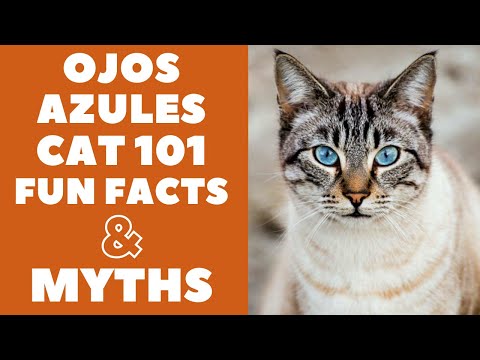
Ojos Azules cat
Unrecognized breed.

The Ojos Azules cat still one of the rarest feline breeds in the world, and the number of breeders remains confidential.
Ojos Azules
Photo: elblogdegatos.com

Content

History

The history of Ojos Azules cat started on 1984 in New Mexico ((UNITED STATES)UU.), when a family discovered a colony of stray cats, some of whose members had intense blue eyes. Their attention focused on a tortoiseshell cat that they took in and called Cornflower.

She was bred with other unrelated cats and gave birth to kittens, some with the same eyes. More intense than the Siamese cat, this blue color is not linked to the color of the cat's fur, and the gene responsible for it does not cause strabismus or deafness, unlike other blue-eyed cats.

In fact, regardless of race, it is the absence of melanin in the iris that makes the cat's eye blue. But, the cause of this absence is not the same; in the case of Ojos Azules, it is a hitherto unknown gene that is in the origin.

It was the discovery of this new gene, that allowed to have cats with dark fur and blue eyes, without being affected by strabismus or deafness, which led to the International Cat Association (TICA) to recognize this breed in 1991 and to set a standard, although at that time it was still very rare. In fact, in 1992 they only registered 10 specimens.

But, Later research showed that the gene responsible for blue eyes was also responsible for a life-threatening cranial deformity. A subsequent investigation by the DRA. Solveig Pflueger, judge and president of the TICA Genetics Committee since its creation in 1979, confirmed the link. But, at the same time he discovered that the gene is Heterozygosity, so these dangerous cranial deformities can be avoided by crossing a blue-eyed individual with a standard-eyed individual. This led to prohibiting the breeding of two Ojos Azules cats together.

At the same time, a Ojos Azules in Australia, although no specimen had been imported there. This led breeders to believe that this mutation could occur spontaneously in the domestic cat population..

In France, the LOOF (Livre Officiel des Origines Francaises) established a standard for Blue Eyes in 2004.

But, contrary to what is usually observed, recognition of the breed by reference bodies did not lead to its expansion: the Ojos Azules still one of the rarest feline breeds in the world, and the number of breeders remains confidential. In fact, in 2019, both the TICA and the LOOF eliminated the Ojos Azules from the list of recognized breeds.

Physical characteristics

"Ojos Azules cat"

Ojos Azules cat
Portrait of an Ojos Azules cat – Kipcurry, CC BY-SA 4.0, via Wikimedia Commons

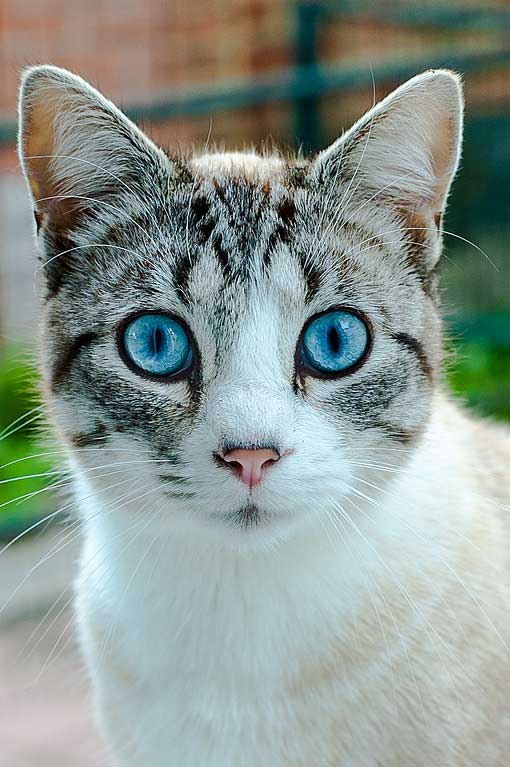
The main feature of the Ojos Azules cat It, as the name reflects, her magnificent deep blue eyes.

Otherwise, the standards describe a body rectangular with a fine and solid bone structure, well proportioned and flexible: it is about, because, of a semi-linear cat. The legs hind legs are slightly longer than front and legs, round or oval, they are rather small and delicate. The tail is of medium length and tapers to the tip.

The head it is triangular seen from the front, with prominent cheekbones and a slightly rounded forehead in profile, followed by a slight stop at the beginning of the nose. The ears medians are rounded, while the muzzle is rather square. The eyes they are almost round and as big as possible. Different colored eyes are tolerated, being one of them blue and the other green, gold or copper.

The fur it can be short or medium long and has a silky smooth texture. All colors and patterns are accepted, except for the White, to distinguish this breed from the usual white cats with blue eyes.

The gene responsible for blue eyes also usually gives white markings on the tips of the legs, ears and tail.

Size and weight

  • Size: 30 cm.
  • Weight: Of 4 to 6 kg

Varieties

By recognizing the Ojos Azules in 1991, the TICA (International Cat Association) distinguished between two different varieties in the first published standard: the Ojos Azules Shorthair and the Ojos Azules Longhair, having a medium length coat.

Character and skills

The rarity of Ojos Azules cats makes it difficult - even dangerous- draw conclusions about their character. But, owners of this breed describe them as affectionate, loyal, smart and playful.

Health

The population of the Ojos Azules cats it is not large enough to have reliable information on possible health problems specific to this breed.

But, in the early days of the breed, some individuals were affected by a cranial deformity that was sometimes fatal.

A study carried out later on the specific gene of this breed that is at the origin of the color of its eyes made it possible to establish that it was enough not to breed two individuals with blue eyes.: being the gene Heterozygosity, kittens born from the union between a Blue Eyes and another cat that does not have blue eyes are protected from this risk of cranial deformation. In fact, this risk has already been eliminated: current specimens no longer suffer from this life-threatening malformation.

Life expectancy

Of 12 to 15 years

Grooming and feeding

European cat
European cat – Celeda, CC BY-SA 4.0, via Wikimedia Commons

The Ojos Azules cat It is an easy-care breed of cats: one brushing a week is enough to remove dead hair.

The teeth, the eyes and ears should also be checked once a week to avoid any risk of infection.

Last, if the claws are too long because they do not wear out naturally, it is necessary to trim them from time to time.

Food

The Ojos Azules can be commercially fed, either with kibble or cat food. Quality industrial products provide all the nutrients and vitamins necessary for good health.

For sale "Ojos Azules cat"

The rarity of Ojos Azules cats makes it very difficult to get one of these cats. The few specimens that exist are, Obviously, in the hands of breeders, and no kittens are officially available for sale.

grandes ojos azules gatito big blue eyes kitten

Blue Eyed Cats 101 : Fun Facts & Myths

โ–ท The world of Pets: Dogs, cats, birds, reptiles, amphibians

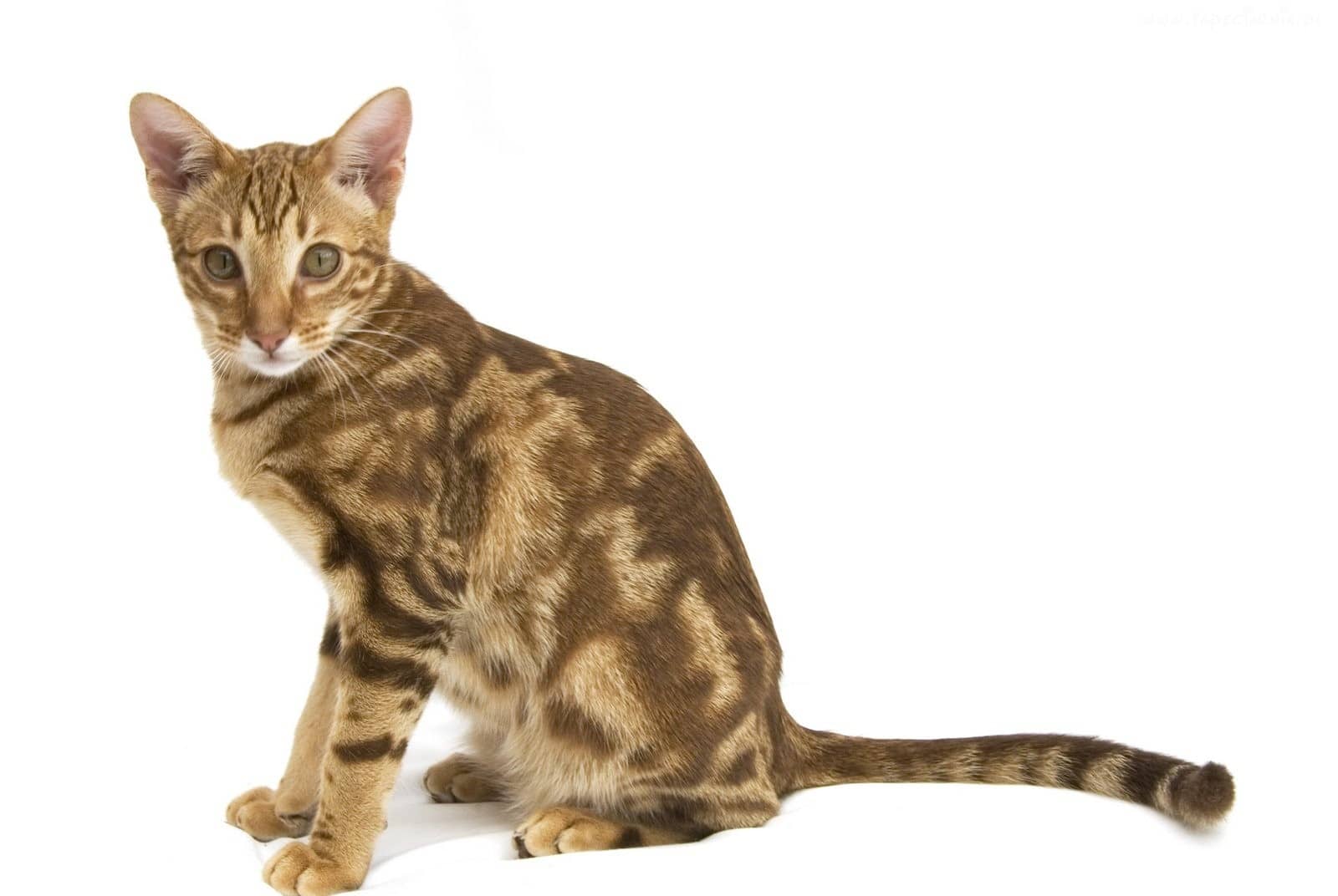
Ocicat cat
Federations: LOOF, CFA, ACF, ACFA, TICA, FIFรฉ, WCF

The Ocicat, sometimes canine behavior, is distinguished by its great adaptability, which is an undeniable asset to make it an excellent family cat.

Content

Characteristics "Ocicat cat"

Coexistence is important that you have with your new friend. Before considering the acquisition of a cat of the breed "Ocicat cat" you know certain factors. You must take into account their character, their need for exercise, their interaction with other pets, their care and if you have small children, their level of tolerance towards them.

Joy

5,0 of 5 stars (based on 1 review)

Activity level

5,0 of 5 stars (based on 1 review)

Friendliness to other pets

4,0 of 5 stars (based on 1 review)

Friendliness to children

4,0 of 5 stars (based on 1 review)

Grooming requirements

1,0 of 5 stars (based on 1 review)

Vocality

4,0 of 5 stars (based on 1 review)

Need for attention

4,0 of 5 stars (based on 1 review)

Affection towards its owners

4,0 of 5 stars (based on 1 review)

Docility

1,0 of 5 stars (based on 1 review)

Intelligence

4,0 of 5 stars (based on 1 review)

Independence

2,0 of 5 stars (based on 1 review)

Hardiness

3,0 of 5 stars (based on 1 review)

History

The Ocicat is the result of the crossing made from 1964 by Virginia Daly, an American breeder, and its name comes from the contraction of the words ยซocelotยป y ยซcatยซ. In fact, although it is the result of purely domestic ancestry, this breed looks a lot like ocelote (Leopardus pardalis), a large wild cat that lives in Central America.

But, the genesis of the breed is mainly due to chance. In effect, the objective of Virginia Daly was to raise one Abyssinian cat colourpoint, far from the image of the Ocicat

Like this, in 1964, a litter of a Abyssinian cat ruddy and a Siamese cat sealpoint. Among the kittens obtained, the breeder was left with a single female with traits mainly Abyssinians. She was crossed with a male Siamese chocolate-colored. The resulting puppies physically resembled the Abyssinians, but they all had the color point. The breeder was immediately satisfied with the result and repeated the same crossing until one day a kitten with a particular coat was born.: call Tonga, one of the kittens had golden spots on white background. By not coinciding with the objective of Virginia Daly, was quickly castrated and sold to a private.

It was not until some time later that the breeder turned her attention back to this type of wild cat of primitive color, during a correspondence with the geneticist Clyde Keeler. Seeking to revive an extinct feline breed, the "spotted fishing cat of Egypt", was very interested in the fur of Tonga. He would have liked to cross it with his own mother, but the recent sterilization of the young cat made it impossible. Then the same crossing was repeated that gave rise to Tonga, until you get stained individuals. That's how it went, and the history of Ocicat started in earnest.

Soon Virginia Daly crossed these spotted cats with the American shorthair cat. The purpose of these unions was to obtain larger individuals, as well as the silver color of the race.

Over the years 80, the Ocicat began to be known and appreciated by the public and breeders. Soon, many breeders became interested in this new breed and international organizations began to officially recognize it. Like this, after being accepted in 1966 by the Cat Fanciersโ€™ Association (CFA) as an experimental breed, obtained full breed status in 1987. That same year, the International Cat Association (TICA) also recognized the breed. Five years later, in 1992, it was the turn of the Fรฉdรฉration Internationale Fรฉline (FIFรฉ).

This period also marked the spread of the breed throughout the world and its recognition by various national bodies., as the Governing Council of the Cat Fancy (GCCF) in Britain or the Livre Officiel des Origines Fรฉlines (LOOF) in France.

But, Although various organizations from various parts of the world now recognize the Ocicat, its number of members is still limited. This can be explained in part by the fact that in some countries all interbreeding with any other breed is prohibited., which mechanically limits population growth as well as the diversity of the genetic heritage. But, this is not the case everywhere: en el Reino Unido, for example, crosses with Abyssinians are allowed, which obviously facilitates its diffusion.

In any case, today there are great differences in the establishment of the Ocicat from one country to another. In France, still a very rare breed of cats, with less than 10 registrations per year in the LOOF since the beginning of the century – the number is even nil in some years.

The same is true in Switzerland, although, unlike france, looks like a small upward trend is taking place, since since 2017 more than 10 births per year in the Fรฉdรฉration Fรฉline Helvรฉtique (FFH).

The Ocicat is much more present in the UK, since the number of annual births registered by the GCCF exceeds 50 cats a year. Although this figure may seem high compared to other countries, it is still a decrease compared to the second half of the decade of 2000 and the first of 2010, when he approached a hundred.

Last, is in your country of origin, United States, where the Ocicat is more represented and has been more successful in establishing itself in households. Throughout the decade of 2010, stood around the post 20 (of something less than 50) in the CFA's annual registration ranking.

Physical characteristics

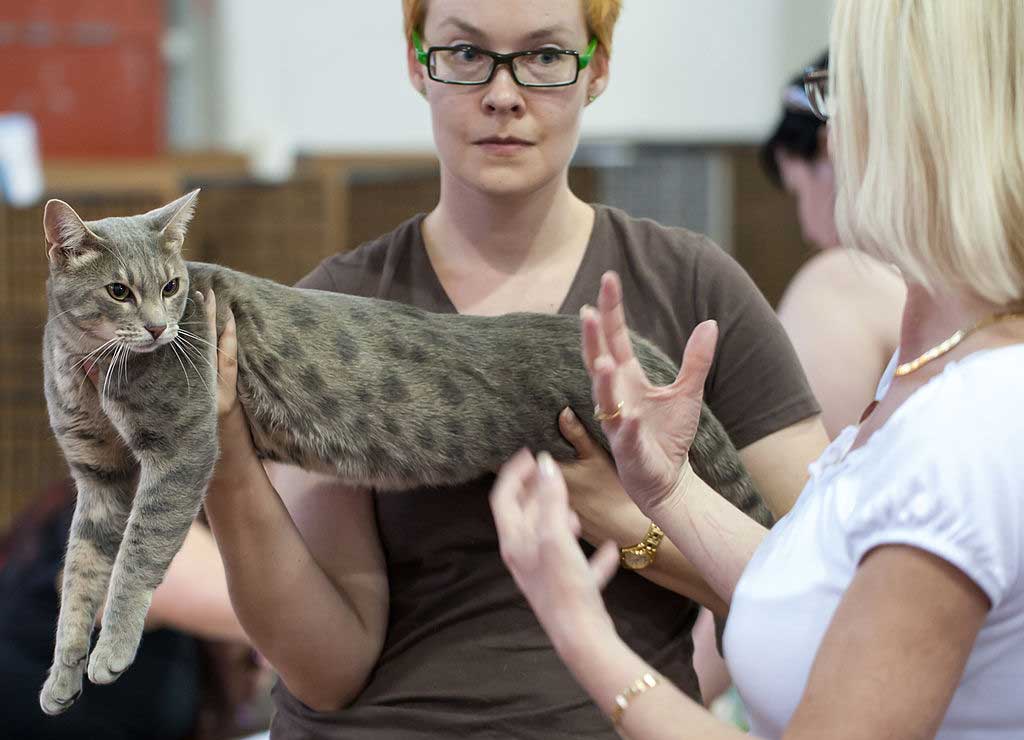
Ocicat
An ocicat presented at the FIFรฉ cat show in Hyvinkรครค in Finland. Color : Blue spotted tabby – Heikki Siltala-catza.net, CC BY 3.0, via Wikimedia Commons

The Ocicat it has particular physical traits that make it a wild-looking feline race. More concretely, although it is a Domestic cat, looks a lot like a ocelote and represents a perfect blend of grace and power: a medium-sized feline, muscular and always very elegant. It is much heavier than it seems.

The Ocicat is built around a fairly deep chest. Its back must be straight, but the topline is slightly higher at the back of the body. The tail is long, fine and has a dark tip.

The legs they are strong, muscular and of medium length. The feet must be oval, compact and proportional to the legs.

The head it is triangular and angular, like that of his Asian ancestor the Siamese. It rests very harmoniously on a neck fine and quite arched. The snout it is wide but well defined. Master a strong jawline and a well-defined chin.

The ears they are large and set high on the head. They usually have small strands of hair on top.

Their eyes they are large, almond-shaped. They are very expressive and reflect their intelligence. All are accepted colors, except blue. On the other hand, there is not necessarily a correspondence between eye color and coat color.

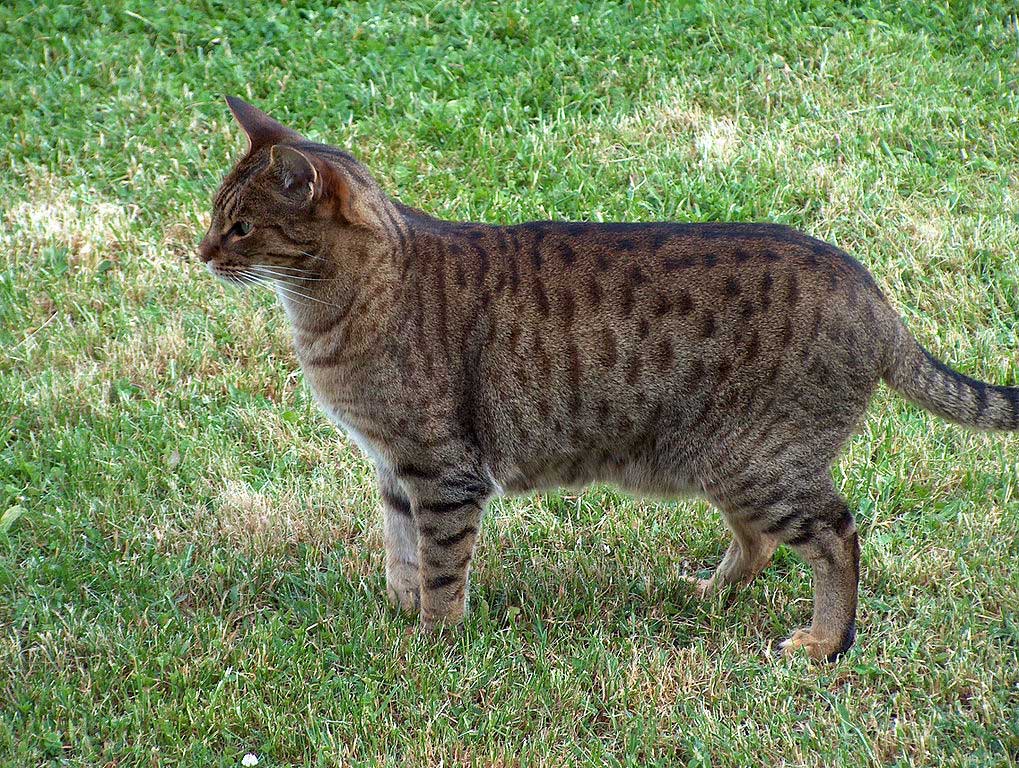
The fur of the Ocicat it is made up of short hairs, soft and shiny, always decorated with those spots that characterize it so much, giving it the appearance of a wild cat. The spots along the spine are rather round and concentrated, while those of the shoulders and the back of the body are more dispersed. The largest markings are usually found on the flanks and under the belly. The tail also has these markings, and there are usually darker hairs around the eyes and on the cheeks. It also, the forehead is usually marked with an "M", also darker than the basic coat.

There is some diversity in the exact appearance of the fur of the Ocicat, with no less than 3 fur patterns (solid, spotted tabby and silver / smoke spotted tabby) and 6 colors (chocolate, blue, leonado, black, cinnamon and lilac) possible. In all cases, slight silver shine possible, which raises the number of combinations to 36.

Last, the breed is characterized by a certain sexual dimorphism, since females are usually smaller and thinner than males.

Size and weight

  • Size: Of 30 to 35 cm.
  • Weight: Of 3 to 5 kg

Breed standard

The breed standards are documents prepared by official bodies that list the conditions that an Ocicat must meet to be fully recognized as belonging to the breed.:

Character and skills

Ocicat
Ocicat (male) – I, ToB, CC BY-SA 3.0, via Wikimedia Commons

The Ocicat is always cheerful and energetic by nature. Very sociable and active, loves to play with his humans or other animals.

They are always happy to play, but they also like to spend long periods of time resting with their owners, for example, spending the night on his lap. Many of the representatives of the breed tend to choose a particular family member with whom they form an especially intense bond., although this does not prevent them from being affectionate with others.

This closeness to their humans makes them an excellent student for those who want to teach their cat tricks.. These may include, can learn to find and retrieve objects thrown by his master, to lie down when ordered or to respond to his name.

In fact, this little feline totally breaks the image of the proud and independent cat. He is always happy to accompany his owners everywhere, without hesitation to follow them around the house… or by any other site. In fact, is usually perfectly capable of walking on a leash, making it much easier to take you everywhere. And when that is not an option, can be carried in arms: that they take it is not a problem, as long as it's done with a little respect.

It is also an ideal option for someone who wants to take their cat on vacation or even on a trip., as it can adapt to a new environment without too much trouble.

This is possible thanks to the fact that he is not worried about meeting new people.. He even likes to receive visitors at home and is not shy with them. For them, represent new possibilities for interaction and sources of caresses, and does not hesitate to meet him on his own.

It also, both at home and elsewhere, things go better because he easily assimilates the rules. He is very sensitive to vocal reprimands from his beloved masters and, usually, does not repeat the same mistake twice once caught red-handed (for example, if you have climbed on the table during the meal, or any other undesirable behavior). It is also common for him to show that he has understood the lesson by adopting an attitude similar to that of shame, like many dogs do.

In summary, do not be fooled by its wild appearance: this sometimes canine behavioral animal is distinguished by its great adaptability, which is an undeniable asset to make it an excellent family cat.

Often becomes the best friend of children, as long as they know how to behave with respect towards him. However, it is important to keep in mind the basic rules of precaution: Whatever your race, a cat should never be left alone with a young child, without the slightest adult supervision.

They can also be very suitable for older people, especially if they spend a lot of time at home and like to give them attention and affection.

Regardless of the age of the owners, they love attention and are only suitable for people who can and enjoy spending time with their pet. Otherwise, will suffer a lot.

Allowing him to have a little playmate by his side can be a wise way to keep him from suffering from loneliness., since their sociability does not only extend to humans: in general, appreciates sharing your home with a partner or with a dog, as long as, of course, this one belongs to a breed that is friendly to cats. Being dominant by nature, usually direct the other animals in the house, even when they are bigger than yours. But, this trait means that introductions to an unknown animal must be done very gradually, to avoid any kind of conflict, especially if he's also the dominant type.
In view of his tendency to play with everything that moves, It does not seem wise to try to get it to live with another animal that may be prey. In fact, it is better to avoid coming into contact with rodents, birds or fish, since it could end badly.

Due to his mental acuity and love of the game, not only quickly learn the tricks, they also love puzzles and other toys designed to stimulate their intelligence. But, they can sometimes become possessive of them, so you have to teach them to share from a young age. It also, precious items that you might mistake for games must be hidden or kept out of reach at all costs, taking into account that he is perfectly capable of learning to open doors or drawers by watching his masters do it…

Like most of its congeners, to the Ocicat he loves to hang from the heights. And given its flexibility, there is no furniture, however big it is, that you resist. You also need plenty of space and toys to feel good and get all the exercise you need.. If you live in an apartment, it must be of a certain size and equipped with numerous games, as well as with furniture and a cat tree that allows him to observe his little world from above.

Last, the Ocicat has inherited a strong voice from his ancestor the Siamese cat. He does not hesitate to use it when he has a request to make, and knows perfectly how to make himself understood when he is hungry or needs attention. Their meows are also a very good conversation tool., since he likes to chat with his master responding to his voice. Their purrs are also especially loud; some like, to others not so much. In any case, It is not as loud or demanding as the Siamese.

grooming and care "Ocicat cat"

Ocicat
Picture of a cinnamonsilverspotted ocicat – Hansboskar, CC BY-SA 4.0, via Wikimedia Commons

The Ocicat it is a breed of cat that is easy to care for.

Its short and soft coat does not need to be brushed more than once a week to remove dead hair. But, to avoid dead hair all over the house, more frequent brushing is necessary during spring and fall shedding periods.

It is seldom necessary to bathe your dog. when it is so, it is essential to use a shampoo specially designed for cats.

Weekly brushing is also an opportunity to take care of other parts of the body. The first thing to do is check the condition of your eyes and clean the area around them if necessary.. This will help prevent infections and detect any problems in this area early..

The same goes for the ears.: a weekly check and cleaning to remove dirt will help limit the appearance of problems in this area, starting with ear infections.

The teeth should also be brushed regularly with a special toothpaste for felines.. This is especially important, since the Ocicat is especially prone to periodontitis: brushing prevents plaque formation, which is the cause of many oral problems, including this one. Daily brushing is recommended, but if it is done once a week, it's already very good.

As for the claws, they tend to grow quite fast. So, if he only goes out or a little time passes, they usually need to be trimmed regularly. If they get too long, not only can they hinder you when you move, but also break and potentially injure you at the same time. In any case, if your dog does not have access to the outside, it is essential that you have a scratching post: otherwise, you risk using furniture or curtains to scratch.

The gestures to take care of your cat's coat, as well as his eyes, ears, teeth and claws, should not be done randomly, since you run the risk of harming or even injuring you. The first time, no hesitation to learn the correct way of doing things from a professional vet or cat groomer. It also, there are many reasons to get your kitten used to being handled from an early age, so that grooming sessions are not unpleasant for him, but that, on the other hand, be beautiful moments of complicity.

Indoor or outdoor cat?

The cats Ocicat they do not necessarily need to have access to the outside to feel comfortable. But, it would be ideal if you could allow the animals to go out into the wild from time to time. The ideal is a secure garden or, at least, a safe outdoor area. Basically, representatives of this breed always want to be close to their humans and not be left alone for a long time, so cats don't go on long excursions, but they stay close. Due to his affection and easy training, it is also possible to accustom the kitten Ocicat on the leash and take small excursions into nature.

How much activity does he need? "Ocicat cat"?

If you are thinking of buying a Ocicat, you should know that you will only be happy if you get enough attention. Play time and pampering together are essential. Since cats with an athletic build have quite a bit of energy, you have to dedicate time to hunting games, but intelligence games are also very well accepted. It also, representatives of this breed always seek contact with their humans, so it is especially important that, as a member of the family, be allowed to always be where the center of activity is. It also, must provide appropriate opportunities for scratching and climbing, so that the existing urge to move can also be acted upon. So being alone isn't too hard, you always have to provide a Ocicat a companion.

Health and nutrition

"Ocicat cat"

Ocicat
Ocicat "Rizzo" (cat breed) – ToB, CC BY-SA 3.0, via Wikimedia Commons

The Ocicat is generally in good health and lives a long time (until 15 years).

But, is not immune to certain problems inherited from its ancestors the Siamese cat and the Abyssinian cat:

  • Hepatic amyloidosis, a disease that can affect the kidneys and/or liver. Causes incomplete dissolution of certain proteins and leads to a buildup of deposits in organs. Loss of appetite, the diarrhea and vomiting it causes often lead to significant weight loss. Appears among 1 and 5 years of age and must be diagnosed quickly so that it can be controlled with specific treatment and a low-protein diet. Failure to do so can be fatal;
  • The pyruvate kinase deficiency (PKDef), an inherited condition that corresponds to a deficiency of this enzyme important for the proper development of red blood cells. The consequence is anemia, more or less serious depending on the case, causing various symptoms such as lethargy, diarrhea, weight loss and eating disorders;
  • The Hypertrophic cardiomyopathy (the cardiomyopathy), which is the most common heart disease seen in cats and corresponds to excessive thickening of the walls of the heart. It can be of hereditary origin, but this is only one of the possible causes. In all cases, manifests itself in various ways (breathing difficulties, hindquarters paralysis, vomiting, lethargy, significant weight loss, etc.), but the symptoms usually appear suddenly. Some individuals recover within a few months, while others die quickly;
  • The periodontal disease (o periodontitis), what is an inflammation of the gums. If the problem is not treated in time, dental abscesses may form, and it can also occur, for example, loosening of teeth or severe difficulty chewing certain foods. Longer term, if the bacteria reach the circulatory system and the jaw, infection can lead to death;
  • Progressive reticular atrophy, an incurable, inherited eye disease that causes progressive loss of vision, culminating in blindness. It has been found in some individuals, but its prevalence is still very low in the population of the breed.

The best way to avoid acquiring a cat that may suffer from some hereditary disease in the near future is to go to a serious breeder. Any breeder of Ocicat trust must be able to present not only a veterinary health certificate, but also the animal's health card (or vaccination record), containing the vaccines administered, as well as the results of genetic tests performed on the parents or the kitten, that demonstrate that they are free of inherited diseases.

Last, even if your pet looks healthy, a routine annual visit to the vet never hurts, and in fact it is highly recommended. Allows a complete health check, that sometimes allows discovering emerging problems, and also offers the opportunity to check that vaccinations are up to date. It also, the owner must ensure that their pet's antiparasitic treatments are renewed throughout the year, whenever necessary, so that the pet never stops being protected.

Food

The Ocicat he is a little complicated cat when it comes to feeding and is very happy with good quality industrial food. He also likes prepared meat dishes, vegetables and starch.

In any case, the products chosen and the servings supplied must be adapted to your needs, that depend first of all on your age, your state of health and the amount of physical exercise you do on a daily basis.

The Ocicat not especially prone to obesity but, as with any race, it is important to watch your weight. This is especially true if you have been neutered, as this increases the risk of obesity. So, a monthly weigh-in is necessary, and any deviation that is confirmed or even accentuated the next time must be taken seriously: then it is necessary to take him to the vet to identify the origin of this weight gain. This may be due to a diet that is not adapted in quality and / or quantity., but also to the appearance of another health problem.

It also, like any cat, a bowl of fresh, clean water should be available at all times.

For sale "Ocicat cat"

The price of a Ocicat usually oscillates between 700 and 1400 EUR.

But, in Europe, the number of breeders can be counted on the fingers of one hand, so it is often necessary to arm yourself with patience to find the rare pearl: you are very often placed on a waiting list for months.

One option is to search the UK, where there are many more breeders. This allows you to choose from a larger number of kittens, while avoiding long delays.

whatever the country, the amount charged depends, in particular, of the reputation of the kennel, from the lineage the kitten comes from, but also and above all of its physical characteristics. In the case of adoption from abroad, It must be taken into account that several costs are added to this price: transport, quarantine, administrative transactions, etc.

Interesting data

The Ocicats They are quite fond of water and some representatives of the breed turn out to be "water rats" and enjoy a bath in the bathtub or pool.

Videos "Ocicat cat"

[embedyt] www.YouTube.com/watch?v=qPtG-EtS3QM[/embedyt]
www.YouTube.com/watch?v=hMQ6VbAlXpA

โ–ท The world of Pets: Dogs, cats, birds, reptiles, amphibians

Oriental Longhair cat
Federations: LOOF, CFA, ACF, ACFA, TICA, WCF

Also know as Javanese cat (Colorpoint Longhair), the Oriental Longhair cat is a fairly rare breed of cat.

Contrary to what the various exotic names might suggest, was created in the United States.

Photo by blackmystica

Content

History

In 1985, at Sholine Cattery in Houston, Texas, United States, an oriental short hair and a pellets they escaped their vigilance and be aparearon. The result was a litter of silky puppies and semilargo hair of Eastern plain colors. Wisely, the owner of the cattery, Sheryl Ann Boyle, decided to raise this race, and the main records in North America and Europe soon recognized, with the exception of the GCCF in Great Britain, It believed that it was too similar to the angora, now known as Oriental Longhair cat (angora).

In 1995, the CFA joined the Oriental shorthair cat and to the Oriental longhair cat in a single breed with two hair lengths, a controversial fact according to some breeders, that they preferred the longhair trait to be eliminated from breeding lines of the Oriental Shorthair. Due to its dotted ancestors, all Asians can have puppies occasionally dotted, but cannot be displayed in most associations, since they look very similar and can be confused with the Siamese and balinese.

Character and skills

Although the Oriental Longhair cat looks elegant, his personality is often described as less languid anything. All Oriental races have the reputation of being habladoras, playful, very curious and sociable. They need the company of other cats or their owner's undivided attention for a little while each day, and some studies on the nature of these cats show. Much of the personality of this cat is inherited, and for decades farmers have reinforced the extroverted personality of Eastern races. Copies walk willingly strap and play around to get an object as if they were dogs.

โ–ท The world of Pets: Dogs, cats, birds, reptiles, amphibians

Oriental shorthair cat
Federations: LOOF, CFA, ACF, ACFA, TICA, FIFรฉ, WCF

The Oriental shorthair cat today does not come directly from Thailand, but from a hybrid of Siamese Cat mixed in the years 50 and 60.

Content

Characteristics "Oriental shorthair cat"

Coexistence is important that you have with your new friend. Before considering the acquisition of a cat of the breed "Oriental shorthair cat" you know certain factors. You must take into account their character, their need for exercise, their interaction with other pets, their care and if you have small children, their level of tolerance towards them.

Joy

5,0 of 5 stars (based on 1 review)

Activity level

4,0 of 5 stars (based on 1 review)

Friendliness to other pets

3,0 of 5 stars (based on 1 review)

Friendliness to children

3,0 of 5 stars (based on 1 review)

Grooming requirements

1,0 of 5 stars (based on 1 review)

Vocality

4,0 of 5 stars (based on 1 review)

Need for attention

5,0 of 5 stars (based on 1 review)

Affection towards its owners

4,0 of 5 stars (based on 1 review)

Docility

1,0 of 5 stars (based on 1 review)

Intelligence

5,0 of 5 stars (based on 1 review)

Independence

1,0 of 5 stars (based on 1 review)

Hardiness

2,0 of 5 stars (based on 1 review)

History

In the past, as the story goes, the cats of blue eyes and pattern ยซpointedยป were the property of royalty and kept in the Siam Royal Palace. But, the race of Siamese cat it was just one of several indigenous varieties in the area.

The "Poems from the Cat Book", a manuscript of verses and paintings written in the city of Ayutthaya, Siam, sometime between 1350 d.C., when the kingdom was founded, and 1767 d.C., when the city was destroyed by the invaders, describes and shows a variety of cats native to the area. Among them are solid black cats, the black and white bicolor, solid browns and solid blues, as well as cats with the restricted point color pattern. The color-restricted cats portrayed in the book had slender bodies and legs, large ears and sharp snouts, similar to the current ones Siamese and related breeds.

The first cats brought to England from Thailand were often solid brown or solid blue., or two-color black and white, as well as ยซcolorpointedยซ. These blue cats, browns and bicolored became very popular in Europe in the decade of 1890. But, in the decade of 1920, the dot pattern blue-eyed cat became the Siamese norm in Britain, and interest in the other varieties decreased.

The Oriental shorthair cat today does not come directly from Thailand, but a hybrid of Siamese cat mixed in the years 50 and 60. The creation of the breed was deliberate: breeders with a flair for coloration and breeding patterns, set out to create a breed of cat that would look and act like the Siamese cat, but that was profusely adorned with a wide range of colors and designs.

In the Decade of 1950, british breeders crossed siamese cats with short-haired domestic cats and the Russian Blue Cat.

At the end of the decade 1960, American breeders, fascinated by Oriental shorthair cat British, they took over and crossed Siamese, short-haired domestic with the Abyssinian cat to create a new look. Body style wasn't sacrificed for color and pattern, and the backcrosses with the Siamese preserved type and personality traits.

The breeders of the Oriental shorthair cat met with initial reproaches from breeders of Siamese, who resisted, in the best case, to the idea of โ€‹โ€‹another type hybrid Siamese, but, since the way had already been paved by the breeders of the Colorpoint shorthair cat, that obtained the acceptance of the CFA in 1964, the opposition did not prevent the Oriental shorthair cat gain ground.

The Oriental shorthair cat became popular very quickly, and their demand increased (at the beginning). In 1972, the CFA accepted the Oriental shorthair cat for registration, and granted him full status in 1977. Since then, its popularity has grown rapidly and it has become one of the short-haired breeds More popular.

The Oriental Longhair cat proceeds of the Oriental shorthair cat; the result is a cat that has the same wide range of colors and patterns as the Shorthair, but with a semi-long coat like that of the Balinese cat.

Since the Siamese cat and the Colorpoint longhair cat They had reference to Balinese cat longhair, it seemed only fair that he Oriental shorthair cat had his own variant of long hair: a breed with a long body, slim and classy, a silky coat and a full palette of colors and patterns to choose from.

The Oriental Longhair cat developed at the end of the years 70 mixing the Oriental shorthair cat with the Balinese cat. The breed obtained official recognition in 1985, when TICA accepted them with full status, and were accepted for registration by the CFA in February 1988. The breed was gaining popularity, appealing to cat lovers who wanted the sleek body type and personality of the Siamese, the style of Balinese cat, and the myriad colors and patterns of the Oriental shorthair cat.

In 1995, the Oriental shorthair cat and the Oriental Longhair cat they became a single race called Oriental Cat. A new color class was also accepted for the Oriental, the bicolor.

Popularity of "Oriental shorthair cat"

Oriental shorthair cat
ยซOriental shorthair catยป

The development and dissemination of Oriental shorthair cat has been facilitated by the fact that it was fairly quickly recognized by most of the major official feline bodies. It also, its impressive diversity of colors and designs makes it able to attract many people. If to this we add his good character and his attachment to humans, it is easy to understand why it is very attractive and successful.

Like this, today there are many hatcheries in the four corners of the world, mostly in Western Europe and North America.

In France, since the beginning of the years 2000, are recorded annually between 250 and 350 kittens of Oriental shorthair cat in the Official Book of Feline Origins (LOOF). This figure places it even slightly above its ancestor the Siamese cat.

It is far from the same success in Switzerland, since the number of annual registrations in the Fรฉdรฉration Fรฉline Helvรฉtique (FFH) barely around ten. This is a clear decrease compared to the second half of the years 90, when the number of registrations was between 50 and 100. The decline had already begun in the decade of 2000, with an average of 40 registrations per year, but it was accentuated in the following decade. But, the Oriental Longhair cat is still lagging, with zero records in some years.

In the United Kingdom, the number of annual registrations Oriental shorthair cat in the Governing Council of The Cat Fancy (GCCF) has been reduced by more than half, going from more than 1.400 in the mid 90 some 600. But, the breed remains around 7th place in the ranking of the most popular cats in the country. Once again, the Oriental Longhair cat is far behind, with close to 5 times fewer births per year.

In United States, it is not possible to have statistics only for the shorthair cat, Since the Cat Fanciersโ€™ Association (CFA) consider the Oriental shorthair cat and the Oriental Longhair cat like two varieties of the same breed: the Eastern. In any case, it is clear that the Oriental remains one of the top ten most popular breeds in the country, based on annual CFA registration figures. Although these figures include both longhair cats as the shorthair cats, it is likely that the majority of the breed's population is made up of the latter.

Physical characteristics

The Oriental shorthair cat has a body alto, elegant with long legs. Except for the fur and the color of the eyes, looks like Siamese cat throughout.

Its body it is medium size, long and tubular. His shoulders and hips are equal in width. Its bone structure is fine and has a delicate overall appearance. But, it is neither fragile nor flimsy, but that, on the other hand, he is much more muscular, dense and heavy than you might think at first glance. Its back It is prolonged with a long, fine tail that ends in a point.

The legs they are big, slim and muscular, with feet small and oval.

The head it is medium in size and triangular in shape, resting on a neck long and thin that gives it a haughty bearing. The skull and the forehead are flat or slightly rounded.

The ears, large and wide at the base, they are widely separated and perfectly prolong the triangle formed by the head.

The eyes they are almond shaped, medium-sized, wide apart and sloping towards the nose. They are as intense green as possible. A blue eye, one green eye – are possible in bicolor or white-coated individuals. The latter can also have both blue eyes.

Side view, the nose it's long and straight. Head on, perfectly fits the general triangular shape of the head, without having a narrow tip. The chin follows the line of the nose.

The cheeks they are flat, but double chin is acceptable in adult men.

Last, the fur of the Oriental shorthair cat is too short, dense, very closed, fine and silky. While the Siamese cat it can only be colourpoint, that is to say, have a solid body color and darker limbs, the Oriental shorthair cat has a very diverse appearance, with more than 300 color combinations and patterns. But, the colourpoint characteristic of Siamese cat, the typical vision of Tonkinese cat and the sepia of the Burmese cat.

Oriental shorthair cat
Female Oriental Shorthair Chocolate Golden Lynx – Scottinglis, CC BY 3.0, via Wikimedia Commons

Size and weight

  • Male size: Of 30 to 30 cm.
  • female size: 30 cm.
  • Male weight: 4 to 6 kg
  • female weight: 3 to 4 kg

Breed standard

The breed standards are documents established by official bodies that list the conditions that a dog must meet. Oriental shorthair cat to be fully recognized as belonging to the race:

Varieties of "Oriental shorthair cat"

Is he Oriental shorthair cat a variety of Siamese cat or a different race? This controversy is still valid today in the official organisms.

The Oriental shorthair cat was created as a result of the deliberate desire of British breeders to develop the breed siamesa with a greater variety of coat colors. So, share a common genotype (that is to say, hereditary characteristics) with the Siamese and a similar general phenotype (that is to say, appearance). If we refer to the scientific definition of race, things are very clear: since it only differs from Siamese in the coat or in the color of the eyes and that is far from enough to speak of a different race, is simply a variety of the Siamese.

Some official bodies share this opinion. Is the case, in particular, of the Fรฉdรฉration Internationale Fรฉline (FIFรฉ), the International Cat Association (TICA) or the Livre Officiel des Origines Fรฉlines (LOOF) French, who consider the Oriental shorthair cat as a variety of the group of Siamese breeds.

Other, as the American Cat Fanciers’ Association (CFA), the Canadian Cat Association (CCA) and the Governing Council of The Cat Fancy (GCCF), consider that the differences are sufficient to justify the recognition of the Oriental cat as a race in its own right, which in turn comes in two varieties, depending on the length of the fur: the Oriental shorthair cat and the Oriental Longhair cat.

In any case, thanks to random genetics, the same litter can mix the Siamese Cat, to the Balinese cat, Oriental shorthair cat and to the Oriental Longhair cat. This is all the more true as most organizations, like the LOOF, allow almost all possible crosses between these different cats.

Oriental shorthair cat and Oriental Longhair cat

Also called Javanese cat (Colorpoint Longhair) or mandarin cat, the Oriental Longhair cat appeared at the end of the years 70, when American breeders decided to cross the Oriental shorthair cat with the Balinese cat, a version of long hair cat of the Siamese, to give rise to a longhair cat equivalent of the oriental shorthair.

The only difference between the two cats is the length of their fur.; for the rest, have the same physical characteristics and the same character.

For some organizations, como la Cat Fanciersโ€™ Association (CFA) or the Canadian Cat Association (CCA), they are two varieties of the same breed: the Eastern.

For others, what do you consider Oriental shorthair cat as a simple variety of the Siamese cat, the Oriental Longhair cat is also a variety of the latter. This is the focus of the Fรฉdรฉration Internationale Fรฉline (FIFรฉ), for example.

Last, the fact that it is more recent and less widespread explains why some organizations do not recognize it at all. This is the case of the French LOOF.

Character and skills

Oriental shorthair cat
Oriental Shorthair, Male – Flickr

The temperament of Oriental shorthair cat is very similar to his ancestor the Siamese cat.

Without being so exclusive with his master like this, he is still quite possessive and absolutely needs contact with his family to live in a balanced way. It is also a good playmate for children. But, to avoid accidents, it is absolutely necessary to avoid leaving him alone with a small child, without adult supervision. This is valid for any breed of cat.

Although they get along with all the members of their family, they usually have a favorite person, usually the one that takes care of them the most. They tend to follow them everywhere, giving them a lot of love, such as snuggling into your lap or sleeping in your bed. You also communicate with her orally: like the Siamese, The short-haired oriental is very talkative. Has a very wide range of sounds, and the meow is an essential means of communication for him.

So, this cat is very attached to its owner and needs the same to happen to thrive. Thus, the owner should interact with him as often as possible, either playing, stroking or talking to him.

Like any cat, the Oriental shorthair cat has its moments of independence. But, although sometimes he likes to sit quietly in his corner, a bit off the beaten path, he always prefers his master to be in his field of vision.

Sociable and outgoing, does not like to be alone for a long time. When left alone, you need to have interactive toys that allow you to develop your skills and keep you busy. This prevents you from finding other interests, like turning the house upside down or playing with toilet paper, that unwinds and grinds with relish.

Sharing a home with another cat can also be a way to keep it entertained during the absence of its owners, and thus make them more bearable. In fact, he gets along very well with them, as long as it remains the dominant of the group. He knows how to impose his authority in his relationships with other cats, both at home and on your walks, and does not hesitate to fight if necessary.

You can also easily cohabit with a canine representative, and having your cat live with a dog is another option to consider, especially so that he can entertain himself when his humans are not around. But, it is important to choose a breed of dog that gets along well with cats. In any case, Coexistence works best when both parties are used to it from an early age. Otherwise, things should be done very gradually, to maximize the chances of things going well.

In any case, it would not be advisable for a Oriental shorthair cat lived under the same roof as a small rodent or bird. They have a strong hunting instinct and would soon be seen as prey.. If the situation occurs, it is essential never to leave them together unattended and to take all precautions to protect the small animal, otherwise the experiment may be a failure. When they have access to nature, your hunting instincts can also unleash, and they are happy to bring their loot to show how well they have worked.

Very energetic, agile and playful, the Oriental shorthair cat needs space to run, either in a large flat or in a house with a garden. On this last case, it is good that a cat flap allows you to go out to play or enter and be with your family. Given their need for interaction with their humans, it is important not only to provide him with toys and entertainment, but also spend time playing with your cat every day. This is especially true because they are playful throughout their lives., to the point that it doesn't take much to amuse them: for example, they enjoy giving back to its owner an object that has been thrown at them.

It is also important to provide him with a cat tree so that he can observe his surroundings and occasionally rest in it., as well as a scratching post. The latter is especially important if you live in an apartment, as it can scratch furniture or curtains.

The Oriental shorthair cat you are curious and smart. They have a talent for opening doors, drawers and bags, steal and hide the things that interest them. Although he usually understands what is forbidden, his stubborn and vindictive character makes him quickly recalcitrant when it comes to respecting them. Like this, even when his master has made it clear that something is not allowed, does not hesitate to return to the load. So, you need to be patient, consistent and firm with him, insisting everything necessary to respect you.

Last, despite his outgoing character, the Oriental shorthair cat may be afraid of strangers and hide when its owner invites strangers into the house. To avoid this, it is convenient to socialize the dog from an early age, that is to say, get used to meeting all kinds of people. This also applies to other dogs: the more dogs you meet at a young age, better it will be when you know them as an adult.

Health

"Oriental shorthair cat"

Gato Oriental de pelo corto
Oriental Shorthair – Cat Show – Ft. Lauderdale – Jill Saperstein from Boynton Beach, FL, USA, CC BY-SA 2.0, via Wikimedia Commons

The Oriental shorthair cat enjoys, in general, Of good health: most representatives of the breed get rid of major problems.

They can withstand high temperatures, but they are especially sensitive to cold. It is important to prevent them from getting cold, since the catarrh of the cats, there coryza, can have lifelong effects, especially if they are small or older. When the temperatures are low, it is important that your cat has a warm place to snuggle and can enter at any time to warm up instead of staying outside.

It also, although the short-haired Oriental enjoys, in general, Of good health: most representatives of the breed get rid of major problems.

They can withstand high temperatures, but they are especially sensitive to cold. It is important to prevent them from getting cold, since the catarrh of the cats, there coryza, can have lifelong effects, especially if they are small or older. When the temperatures are low, it is important that your cat has a warm place to snuggle and can enter at any time to warm up instead of staying outside.

It also, but the Oriental shorthair cat is generally healthy, not immune to certain diseases, many of which also affect his ancestor the Siamese cat.

The diseases to which they are most prone are:

  • The renal amyloidosis, an inherited disease that causes an abnormal buildup of amyloid-type proteins in the kidneys, leading to irreversible and fatal kidney failure if left untreated. If caught early, the effects of the disease can be treated and the cat can lead a relatively normal life;
  • The asthma, a bronchopulmonary disease that causes severe respiratory attacks in which the cat suffers attacks of dry cough and stretches its neck because it has difficulty breathing. It is caused by an allergic reaction to certain substances in the environment, both natural and chemical. Long-term treatment can improve living conditions, but it doesn't solve the root problem, since for this it would be necessary to identify and eliminate the problematic substance, what is rarely possible;
  • Strong> aortic stenosis, congenital cardiovascular malformation consisting of a narrowing of the aorta. Causes a heart murmur and can be treated with surgery or beta-blocker therapy;
  • The congenital megaesophagus, a condition in which the esophagus has a delay in its development. Produces regurgitation of food, and weight loss due to the affected animal not being able to feed itself sufficiently. This may improve on its own as the cat gets older. Otherwise, certain eating habits should be adopted to reduce the risk of regurgitated food ending up in the lungs, since it can be deadly;
  • The progressive retinal atrophy, an incurable inherited disease that causes progressive loss of vision, reaching total blindness in cats. It is difficult to detect until it has reached an advanced stage, that is to say, the animal begins to collide with everything due to the deterioration of its sight;
  • Genetic strabismus, which weakens visual acuity and reduces the cat's field of vision. There is no treatment to correct this anomaly., which in fact is not particularly disabling;
  • Psychogenic alopecia, causing loss of hair in a large or small area of รขโ‚ฌโ€นรขโ‚ฌโ€นthe body as a result of constant licking. It is a psychosomatic illness, that is to say, caused by a mental disorder. The latter is related to past trauma (especially at a young age) or with a concern in the direct environment. It is essential to seek the help of a behavioral professional to identify the source of the problem and hope to remedy it..

It also, the Oriental shorthair cat he's a bit gluttonous, so you have a certain propensity to obesity. Obesity is not without its health effects: can both aggravate existing problems and create new ones.

In any case, as many of the diseases to which the breed is prone are or may be hereditary, go to a serious breeder of a Oriental shorthair cat is the best way to ensure that the chances of adopting a healthy pet are good and are maintained. In fact, is not content to guarantee the socialization of puppies from a very young age, Rather, a professional worthy of the name is concerned that they do not inherit a hereditary defect from their parents. As such, systematically performs various genetic tests on proposed breeders and excludes those at risk. So, must be able to present the results of these tests, in addition to a certificate of good health issued by a veterinarian and the details of the vaccinations administered, registered in the animal's health or vaccination card.

Once adopted, it is the owner's responsibility to take care of their cat throughout its life. One of the best ways to keep your cat healthy is to take him to the vet regularly for a full checkup.. This should be done at least once a year, and even more often as the animal ages. Times, these visits allow the early detection of a problem, which allows to treat the cat in the best possible conditions, and can also allow cat vaccinations to be done at the same time.

At the same time, the owner must also give his animal adequate antiparasitic treatments throughout the year, so you never stop being protected. This also applies to indoor cats, that are not completely free of parasites.

Grooming

"Oriental shorthair cat"

Gato Oriental de pelo corto
Ebony Solid Oriental Shorthair –Cats rule at the English Wikipedia, CC BY-SA 3.0, via Wikimedia Commons

The Oriental shorthair cat it is a breed of cat that does not require much care, and this is especially true for their fur. Brushing the coat every fortnight with a soft bristle brush is enough to remove dead hair..

It is also necessary to examine and clean the ears with a damp cloth once a week to clean them and prevent dirt from accumulating in them., which could lead to infections such as otitis.

At the same time, you have to check the eyes and rub a damp cloth in the corner if they are dirty, to reduce the risk of infection.

It is also essential to brush your cat's teeth at regular intervals., ideally every day, and preferably no less than once a week. This will limit plaque buildup., that can cause not only bad breath, but also more or less serious diseases.

Last, the length of the claws of the Oriental shorthair cat must be checked every month. If they get too long, they can get in the way, break and even injure the dog. This is less likely to be a problem for an individual with access to the outside.: natural wear and tear should be enough to file down the claws, although it is still necessary to check from time to time that this is the case. On the other hand, for an indoor dog, a monthly cut is usually necessary. By the way, this does not exempt you from providing a scratching post so your dog can scratch on it and not on furniture.

Whether the fur, the ears, the eyes, teeth or claws, maintaining a Oriental shorthair cat not particularly complex. But, if they are not done correctly, not only can they be ineffective, but that, above all, can injure or even harm the dog. So, it is best to learn them the first time from a vet or professional groomer.

If done right, these cares can become, with the time, in a special moment between the two protagonists, especially if the owner takes the opportunity to hug his pet. In any case, things are more likely to go well if the animal is used to these different manipulations from a very young age.

Food

Like all other races, the Oriental shorthair cat you need a diet that perfectly meets your nutritional needs - both in terms of quality and quantity- depending on your age, your health and activity level.

Good quality industrial foods can perfectly meet these requirements, but in general the same cannot be said of human food. Unless carefully selected to meet the needs of the animal, unlikely to contain exactly what you need. These may include, Giving him the leftovers from the table or letting him help himself to the garbage is not usually a gift. This is especially true because, plus some foods popular with humans are toxic to cats, The Oriental with short hair has a tendency to be overweight.

The latter also means that, unlike most other cats, it is better to get used to fixed foods from the beginning. Leaving food out all day would soon become a problem., due to their inability to regulate themselves.

Your propensity for obesity also makes it important to control your weight by weighing it once a month.. In case the increase is confirmed or even amplified in the following measurements, it is advisable to use the experience of a veterinarian, since the diet or activity level of the animal are not necessarily to blame: excess weight can be a symptom of a disease, or be caused by medication. Only a professional can clarify the situation and indicate how to remedy the problem.

Like any other cat, the Oriental shorthair cat must have fresh water available at all times.

For sale "Oriental shorthair cat"

The price of a Oriental shorthair cat usually oscillates between 800 and 1500 EUR.

whatever the country, the amount charged varies depending on the reputation of the kennel, from the lineage from which the animal comes, but also and above all its intrinsic characteristics, starting with their degree of approach to the breed standard. This explains why there can be significant price differences within a litter.

Reality Honks: There are cats and then there are Oriental Shorthairs!

โ–ท The world of Pets: Dogs, cats, birds, reptiles, amphibians

Persian cat
Federations: LOOF, CFA, ACF, ACFA, TICA, FIFรฉ, WCF

The Persian cat it is placid, calm and sedentary, which makes it a recommended breed of cat for life in a flat.

Content

Characteristics "Persian cat"

Coexistence is important that you have with your new friend. Before considering the acquisition of a cat of the breed "Persian cat" you know certain factors. You must take into account their character, their need for exercise, their interaction with other pets, their care and if you have small children, their level of tolerance towards them.

Joy

3,0 of 5 stars (based on 1 review)

Activity level

1,0 of 5 stars (based on 1 review)

Friendliness to other pets

4,0 of 5 stars (based on 1 review)

Friendliness to children

4,0 of 5 stars (based on 1 review)

Grooming requirements

5,0 of 5 stars (based on 1 review)

Vocality

1,0 of 5 stars (based on 1 review)

Need for attention

4,0 of 5 stars (based on 1 review)

Affection towards its owners

4,0 of 5 stars (based on 1 review)

Docility

5,0 of 5 stars (based on 1 review)

Intelligence

2,0 of 5 stars (based on 1 review)

Independence

2,0 of 5 stars (based on 1 review)

Hardiness

2,0 of 5 stars (based on 1 review)

History

The Persian cat it is one of the oldest cat breeds. He is a direct descendant of Turkish Angora cat, native to the cold regions of Central Asia, on the border between Iran and Turkey. The long hair of the Turkish Angora cat it is probably the result of a natural mutation and was unknown in Europe at that time.

In 1626 the first long-haired cats appeared in Europe, thanks to the italian traveler Pietro Della Valle, who, impressed by the uniqueness of the Turkish Angora cat during a stay in the Ottoman Empire, some specimens were brought to Italy.

A few years later, Nicolas Fabri de Peiresc, Councilor of the Parliament of Aix-en-Provence, He also brought to his lands several copies of Turkish Angora cat from Damascus. He contributed greatly to the spread of this breed in Europe, becoming the first breeder of turkish angoras in the european territory.

symbol of luxury, refinement and exoticism, this cat quickly became highly prized by the European aristocracy and was generally reserved for the elite. In France, kings from Louis XIII to Louis XVI owned them, like Marie Antoinette, who sent her little cats to America before she was arrested.

The Persian cat Modern was created in the first half of the 19th century in the United Kingdom. It is the result of crosses between the Turkish Angora cat and the European shorthair cat (Common european cat) of Italy, France and UK. The first animals were exhibited in the first feline exhibition in modern history, held at the Crystal Palace, London in 1871. From that moment on, British breeders launched a breeding and selection program that included crosses with the Angora cat to improve coat quality. This breed became very popular and appreciated by all, and got a big boost from Queen Victoria (1819-1901), who particularly liked and owned two of them.

It also, Throughout the 19th century, a lot of work was done to improve the quality of the coat and evolve its morphology to obtain rounder cats.. The range of colors and patterns of the Persian coat was also greatly expanded, to the point that the breed now has more than 200 varieties. In effect, if the first Persians they were unicolored, the end of the 19th century marked the appearance of a wide range of additional colors. The persian smoked , for example, was first exhibited in Brighton in 1872 and is the result of crosses between Persians blacks, white and blue. In 1888, in London, it was the turn of the first Chinchilla Persian cat. And it was at the same time that the Persians atigrados, silver and gold.

This diversification effort continued in the United States during the first half of the 20th century.. Cameo cloak introduced, as well as the so-called Persian ยซPeke Faceยป, que, debido a su cabeza extremadamente plana y a los problemas de salud que esto provoca, fue -y sigue siendo- una fuente de gran controversia.

The best known varieties of Persian are the Himalayan cat (or Colourpoint Persian cat), the Exotic shorthair cat and the "Peke Faceยซ. Depending on the feline organization -and, Therefore, from the country-, These varieties are considered breeds in their own right or simply varieties of the Persian cat. He "Jump Face โ“˜ยป is not recognized as a breed, and remains highly distinctive for its different morphology and head shape than the usual Persian.

The Persian cat it is one of the most popular cat breeds in the world, being at the top 5 from many countries. This is especially the case in France, Although the number of registrations in the LOOF (Livre Officiel des Origines Fรฉlines) has shown a downward trend since 2010 (more than 5.000 inscriptions in 2010, front 3.700 in 2018). But, still the fourth most popular cat breed in France, just like in the United States. In the United Kingdom, where it was actually created, ranks sixth, According to registration figures in the Governing Council of the Cat Fancy (GCCF) in the last 10 years. The organization records around 1.000 births per year, although this figure has also dropped considerably since the first decade of the 21st century.

Last, besides being probably one of the most famous breeds in the world, the Persian cat probably participated in the creation of the Sacred Cat of Burma (Birman) and of the British Shorthair cat during the interwar period.

Physical characteristics

"Persian cat"

Gato persa
Stephanie is a Persian cat – Mike Powell from United States, CC BY-SA 2.0, via Wikimedia Commons

The Persian cat It is a cat of short morphological type. The head is round and flattened on top, with one nose short, ears small with rounded tips and eyes big and round. It leans on a neck short and thick and on a muscular body with a broad chest.

Their legs they are short, powerful and strong, with wide feet.

The tail it is thick and it is carried low: it is short but in proportion to the length of the cat, usually does not exceed the level of the shoulder blades. Too long a tail is even considered a foul.

The fur It is thick, with a silky cape and a bushy collar.

Regardless of the feline organism in question, the persian standard accepts a wide variety of colors fur. Some individuals are uniform in color (black, blue, chocolate, lilac, red, cream or white), while others have distinctive colors (striped, smoke, Chinchilla, silver, dorado, cameo o colourpoint).

The color of the coat determines the color of the eyes. These may include, white-coated individuals have blue eyes, gold or mint (one blue and one golden eye). The golden individuals, silvers and chinchillas have green or blue-green eyes. The colored dots have blue eyes.

Size and weight

  • Male size: 25-40 cm.
  • female size: 25-35 cm.
  • Male weight: 3,5-5 kg
  • female weight: 3 to 4 kg

Breed standard

The breed standards are documents produced by official bodies that list the conditions that a Persian must meet to be fully recognized as belonging to the breed.:

Character and skills

Persian Cat
Persian Cat – Payman sazesh, CC BY-SA 4.0, via Wikimedia Commons

The Persian cat it is placid, calm and sedentary, which makes it a recommended breed of cat for life in a flat. This is especially true since, unlike many of his peers, does not have a systematic need to climb to the top, at risk of injury or damage. These may include, there is little risk of it climbing up the curtains or jumping onto the kitchen counter: the Persian prefers to stick to the floor or furniture that is more accessible to him. It also, their meows are as rare as they are discreet, which is also an appreciable advantage for living in a flat.

You do not necessarily need to have access to the outside, and this could be more dangerous than anything else. In fact, bred generation after generation to be the perfect indoor cat, he would be especially vulnerable outside his house to other animals encountered during his walks, as well as all the risks of accidents outside for a cat.

The Persian cat is famous for its delicacy. Affectionate and peaceful, they are usually very attached to their owners. But, although they love to be caressed, They are not the type of cats that approach you incessantly, as with other breeds.

They are sociable by nature and have no problem living with other dogs or people, and even with the children, as long as you are nice to them and are not over-treated. In effect, if he Persian it is not an aggressive cat, an overly animated child, a very playful dog or a slightly turbulent puppy can be a source of stress for this calm cat. In fact, a noisy and overly lively environment would not suit you: you need a quiet place to live and not subject to too frequent changes.

In short, their temperament makes them an ideal cat breed for seniors. On the other hand, although they quickly approach their humans and regular visitors to their home, tend to be more distant with strangers.

On the other hand, maybe because its claws don't wear out naturally when roaming around outside, they especially enjoy doing it. So, to avoid any laceration of the walls, the curtains or the furniture, providing one or more scratching posts and / or cat trees is strongly recommended. As for the toys, prefers those that are as soft as its fur.

Health

Persian cat
Persian cat chinchilla golden male and silver female – Wiki Taro(Wiki Taro), Public domain, via Wikimedia Commons

As a result of extensive breeding and crossbreeding in the past, the Persian cat is prone to health problems, especially genetic in nature. Much of these problems are due to the structure of the head. So, who wants to adopt a Persian you must be aware that this cat, especially "racial" but which has been subjected to considerable genetic selection, may be subject to numerous ailments.

You may have breathing difficulties or noisy breathing, due to your narrow nasal passages.

They can also suffer dental malocclusion (misalignment or deviation of the teeth) and / or gingivitis (gum infection).

They are also prone to a number of feline eye diseases, as the Progressive Retinal Atrophy (an incurable retinal disease leading to loss of vision in cats), the entropion (inward turning of the eyelid margins), the lacrimal gland prolapse (u ยซcherry eyeยป, that is to say, an inflammation of the third eyelid) wave renal polyquistosis (for which there is a genetic test).

The Persian cat it is also more prone than other breeds to Hip Dysplasia (which may require surgery) and to the hypertrophic cardiomyopathy (Ho Chi Minh City).

They are also prone to a number of skin diseases in cats.: cheyletiellosis, intertrigo of facial folds, primary seborrhea, had, etc.

Last, it is a breed of cat that fears heat.

In short, the Persian cat it is a fragile cat. For this reason, Among the questions to ask yourself before adopting a cat of this breed is that of veterinary expenses -especially unforeseen-, that can end up representing significant amounts. More than any other race, prevention is the key to keeping your cat in good health, especially through frequent check-ups with the vet. It also, It may be particularly advisable to take out medical insurance for your cat to cover any unforeseen events and avoid the risk of finding yourself in a difficult economic situation.

It also, puberty of Persian it's quite late, since it occurs around the 12 months of age, and reaches full maturity around the 2 years. Litters usually consist of 2 to 3 kittens, but females rarely give birth to kittens when they are over 6 years. Your fertility period is, Therefore, more restricted than many other breeds, they can keep having kittens almost to death.

Any owner considering raising their cat should be aware that childbirth is often complicated in the case of cats. Persians. This is because, in particular, to the enormous size of kittens' heads. In fact, the mortality rate at birth of Persian kittens is higher than that of most other breeds. More than any other race, it is extremely important to monitor the delivery of the cat, as it is often difficult and not uncommon for the mother to have to undergo a caesarean section.

Last, for genetic reasons, deafness is more common in white cats with blue eyes, either Persians or other races. So, it is advisable not to plan a marriage between two individuals with white fur and blue eyes, or even only with blue eyes, since the probability of obtaining deaf or partially deaf kittens is then particularly high.

Life expectancy

10 to 15 years

Grooming

The Persian cat It is a breed of high maintenance cats, and anyone considering adopting a representative of this breed should be prepared to spend some time caring for them.

In fact, the toilet (brushed, combed and washed) it is a task as daily as it is necessary, since the length of the hair favors the rapid formation of knots and tangles. So, it is necessary to detangle your cat's fur every day, and the ideal is to take your cat to a professional groomer regularly; the exact frequency depends on the cat and its lifestyle, as well as the level of demand of the owner. It is also advisable to bathe your cat once a month.

If your cat has access to the outdoors, caring for his coat is even more demanding, as leaves and plants soon adhere to it, as well as dirt and mud. The litter box also requires special attention, as it can start to get angry if too much sand is deposited on the coat or under the paws.

It also, the Persian she loses a lot of hair all the time: living with him means accepting this fact! But, this detachment can vary significantly depending on its origin. So, this parameter can be taken into account when looking for a kitten Persian, favouring, for example, a line where the phenomenon is not too pronounced. In any case, hair loss is obviously even greater during shedding periods, in spring and autumn.

It also, their eyes cry frequently, so you have to clean them regularly. It is advisable to do it once a day (or less if they only run a little), simply wetting the area around them with a glove and warm water.

A cat was not necessarily born to be handled. But, a Persian cat needs to be handled a lot, due to its high maintenance needs. So, even more than with other breeds, it is important to get them used to being handled from an early age without reacting inappropriately.

Food

The diet of the Persian cat it is relatively simple, since he loves croquettes and is not very demanding. However, it is preferable to opt for quality industrial croquettes.

On the other hand, due to its low level of activity, this breed of cat is prone to obesity. So, it is advisable to pay attention to the daily amount distributed to avoid the risk of the cat becoming overweight or obese. This is especially true if the cat is older. (and, Therefore, less active) and / or if he has been neutered (whatever the race, a neutered cat is more likely to gain weight).

For sale "Persian cat"

Persian cat
My persian cat – Flickr

The price range to adopt a Persian cat it is especially wide, since it oscillates between 400 and 2500 EUR. The sex of the kitten influences its price, since a female costs much more than a male. The fur, but above all the pedigree and the titles of the parents, they also have a determining influence.

In general, the kittens that cost between 400 and 600 euros come from amateur or undeclared farms, so they are sold by individuals. They can also come from declared breeders that produce kittens in large quantities.. It is advisable to be especially attentive in these cases, because kittens often haven't had a DNA test, for example against the PKD (Poliquistosis Renal Dominante). It also, these kittens are often sold without LOOF registration, that is to say, no pedigree: they are not purebred kittens, but "Persian type" kittens.

The kittens that are sold between 600 and 1.400 euros usually come from official farms: meet the breed standard and have been tested (like his parents, even before breeding) to detect the most common genetic diseases.

Last, prices above 1400 euros refer to kittens of excellent lines and intended for breeding. They refer mostly to breeders. It also, a certain number of these cats are bought abroad, which implies significant repatriation costs. These expenses derived from the purchase of the parents explain, in part, that the prices of kittens that give birth are quite high, even though they are meant simply for company.

It also, beyond acquisition cost, who considers adopting a Persian cat you should take into account that this breed is much more expensive than others. This is mainly due to their high maintenance needs and poor health..

A Ton of Persian Cats

CFA International Cat Show 2018 - Persian kitten class judging - BiColors.2