โ–ท The world of Pets: Dogs, cats, birds, reptiles, amphibians

Spix's Macaw
Cyanopsitta spixii


Guacamayo de Spix

Content

Description:

Descripciรณn Guacamayo de Spix

55 to 57 cm.. length and 360 g. of weight.

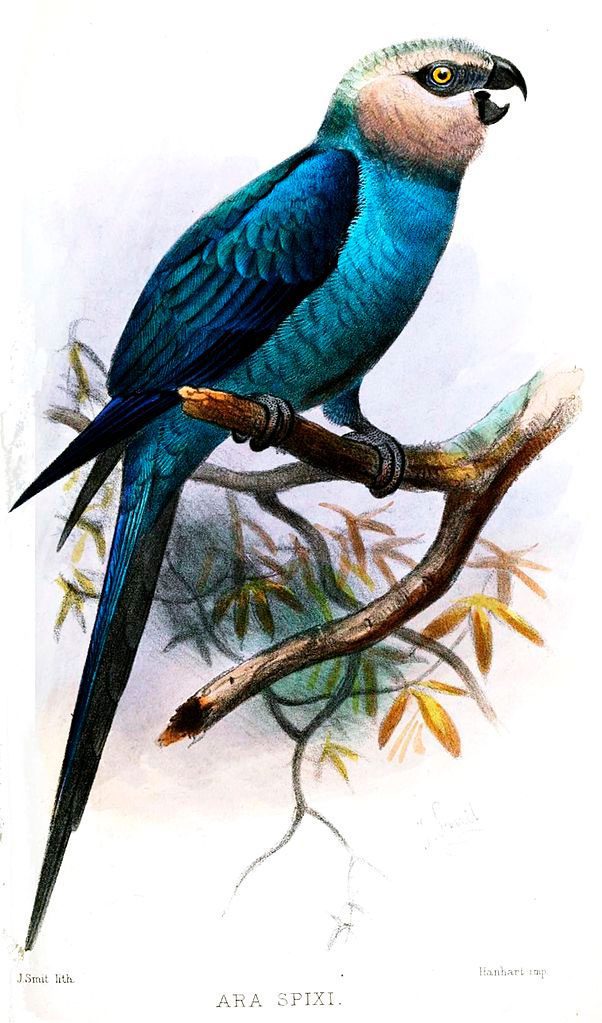
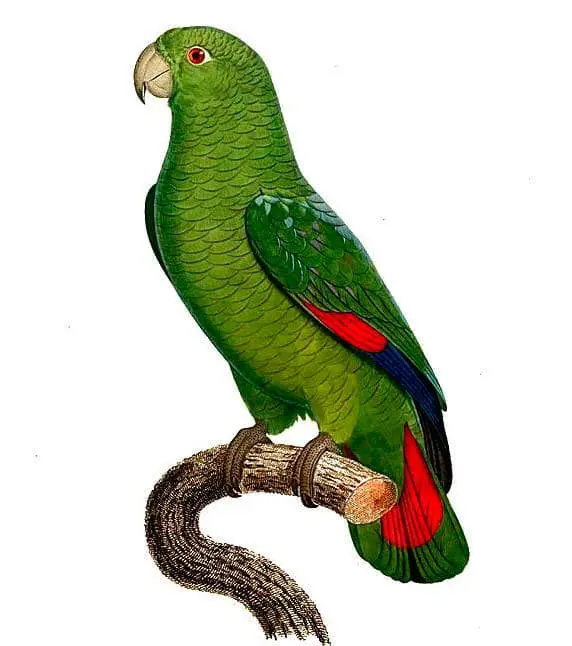
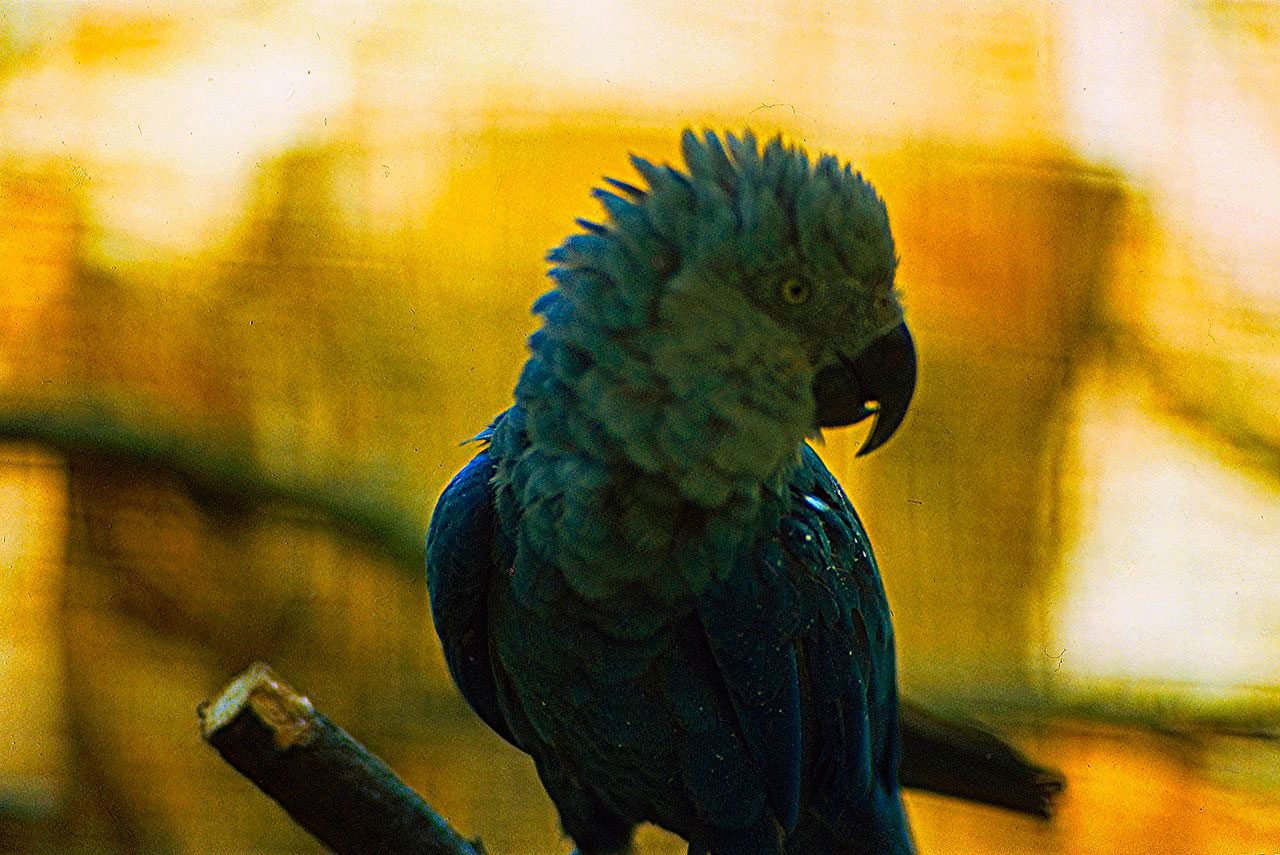
The Spix's Macaw (Cyanopsitta spixii) has various shades of blue. The head is pale-blue, the wings and tail dark blue. The underside of wings and the tail are black. They have a naked skin in the face grey / Black which sometimes fades to white and white when they are underage.

Bill is completely black, except in the youth having a clean white stripe in the center of the bill. The white band of the bill and the white skin of the face of the youth disappears after 6 months.

The legs are pale grey when they are juveniles, being dark grey, almost black when they are of adults.

The eyes they are dark in the youth, but they fade to white when mature birds.

Habitat:

Information on the natural ecology and behavior of these birds is limited., now that research not started until they were nothing more than 3 known birds those that lived in the wild.

But, there are records in which they are associated with gallery forests dominated by Tabebuia seasonal streams to grow along (streams) in the area caatinga (Thorn scrub semiarid community).

There are reports of the Spix's Macaw inhabiting sheets closed or more common in caatinga habitats (that is to say, that they do not have trees Tabebuia caraiba). Opinions that the species is ecologically linked with palms Mauritia flexuosa left without support and, in view of the wide availability of these habitats, seems totally unlikely.

When a few birds were discovered in 1980, These showed a strong herding behavior. These and the remaining birds, showed strong habitual features, using for example, hangers in the bare branches at the top of the tall trees, making particles and daily flight routes to nesting sites (one of those places, according to reports, was used continuously during 50 years), the last Spix's Macaw which data have, they were strongly linked with the Blue-winged Macaw.

According to reports, sometimes, obsrvados sleeping on top of a cactus, for example, of the species Cereus squamosus.

Reproduction:

In the wild, the Spix's Macaw They nest in tree hollows, most frequently in Tabebuia caraiba mature, at least to several meters above the ground.

the brood, in general, is between the months of November-March may vary in relation to the calendar and the intensity of the rains.

The intercourse lasts usually between 2 and 3 minutes and is done with two birds staying together on a perch with one of the legs of the male (usually right) mounted on the rear of the rump of the female.

It is believed that the normal clutch size in the wild had three eggs. But, in captivity the most common clutch size is four and can range from one to seven. An average egg is of 40 mm x 30 mm and weighs some 20 g.. They lay an egg oval-shaped and white.

The incubation period is of 25-28 days and only the female performs incubation tasks. The females are fed by the male, both within the nest, and outside the nest. The chicks hatch mostly naked with a small amount of cover at the bottom. The emplumamiento occurs in approximately 70 days and captive birds, bred by hand, they tend to become independent between the 100 and 130 days.

Food:

The diet of the Spix's Macaw wild included seeds of Cnidoscolus quercifolius and Jatropha mollissima, seeds and fruits of Melanoxylon, fruits of Maytenus rigida and Ziziphus Juazeiro, and possibly nuts of palmas Syagrus coronata, although the latter probably too strong and large for the relatively delicate beak.

Distribution:

Size of the area of distribution (reproduction / resident): 50 km2

The Spix's Macaw they were endemic in the northeast of Brazil, mainly in the State of Bay, but also from Pernambuco. There they lived in a large expanse of semi-arid territory known as the Caatinga. Within the Caatinga There are micro-habitats, one of which – the Caraibeira Riparian Woodland, was the home of the Spix's Macaw. This particular habitat area is located near a small, charming town called Curaca, conveniently located along somewhere in the san francisco river. One of the tributaries that feed to the san francisco river is the Melancia Creek and it is through this waterway, where can I find the ancient habitat of the Spix's Macaw.

The Caraibeira (Tabebuia caraiba) It is the dominant tree species occurring along the banks of the Melancia Creek; It was also the most important tree species for the Spix's Macaw, Since it provided nesting hollows, shelter and food for the species.

Possibly previously ranged in one much larger Northeastern area of Brazil, that covers much of the region of the ‘Gerais‘ including the South of maranhรฃo, to the northeast of Goiรกs, Southwest of Piauรญ and North of Bay, but reports from some of these areas are apparently based on finger-pointing and even erroneous information provided by bird hunters.

Conservation:
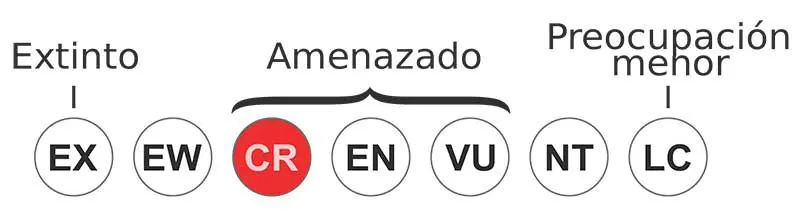

critical hazard

โ€ข Current Red List of UICN: Critical Hazard – Possibly extinct in the wild

โ€ข Population trend: Unknown

The Spix's Macaw It may not be the largest or most colourful species of macaws but is the Parrot with more critically endangered in the world, no known wild specimens(UICN, 2004).

While this species exists captive in various populations, the last known individual in the wild disappeared in late 2000, mainly as a result of the capture for the bird trade Wild addition by the habitat loss. But, cannot yet be presumed extinct in the wild until all potential areas of habitat have been thoroughly reviewed.

Any remaining population is likely to be small, and for these reasons the Spix's Macaw It is treated as a species in critical hazard (possibly extinct in the wild).

TRIVIA:

Conservation Actions Underway:

CITES Appendix I, protected by the Brazilian legislation.

– Ten years of protection, the restoration of the habitat and a variety of community-based conservation in course programmes, they will pave the way for future reintroductions (Y. de Melo Barros in litt., 1999, 2000, Caparroz et to the. 2001).

IBAMA It established the Permanent Committee of the Brazilian Government for the recovery of the Spix's Macaw and cooperation between the holders of birds resulted in annual increments in the captive population.

– This body is succeeded by the Working Group for the recovery of the Spix's macaw (Me and Melo Barros 2006), now supervised by the Chico Mendes biodiversity conservation Institute (ICMBio). This group is responsible for coordinating the captive breeding program, having reintroduction facilities in place later followed by breeding facilities.
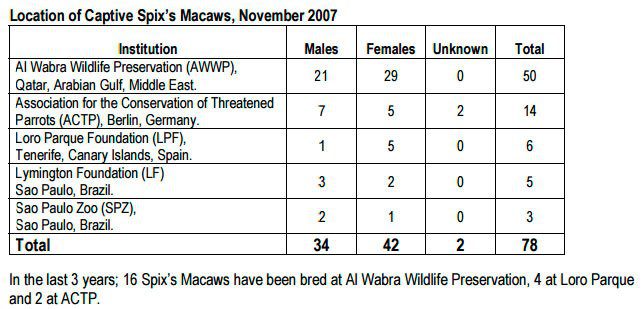
Captive Spix's macaw

– The official captive population totaled 80 individuals in 2012, currently being these important proportions in the hands of Al - Wabra Wildlife Preservation (AWWP) in Qatar and Fundaciรณn Loro Parque (LPF) in Tenerife, Spain.

– Other official media are found in Brazil and Germany.

– Including the birds that have not been registered by the official program, It is believed that more than 90 Spix's macaw can exist in captivity around the world.

– Breeding success has occurred within some registered facilities, including AWWP and LPF. The latter has maintained the species since 1984 and in 2007 a new breeding center was opened for the Spix's macaws (Anon 2008a).

AWWP raised successfully five chicks in 2012 and seven in 2013 (Gillespie 2014).

– In 2013 and 2014, females in the captive-breeding population in AWWP they were artificially inseminated, an egg-laying take place successfully (Anon 2015, Tomiska 2015).

– Management and recovery of the species in captivity is in preparation for this species.

– In February of 2009 To the Wabra Wildlife Preservation announced the purchase of the 2.200 acres of the Concord Farm in the State of Bay, Brazil, the site has one of the last recorded sightings of Spix's Macaw Wild, in October of 2000 (To Wabra Wildlife Preservation undated).

Concord Farm It was also the basis of the field project of the Spix's Macaw, funded largely by the LPF, that operated in whole decade of 1990 until the completion in 2002, and the site for the release of the only prisoner of Spix's Macaw missing by returning to their natural habitat, in 1995.

Concord Farm borders with the 400 acres of the Gangorra Farm, previously acquired by a consortium of conservation.

– Intended to allow that both farms can return to a more natural state by removing domestic cattle, in order to, long-term, the place can be a valuable habitat for the future restoration of a wild population of Spix's Macaw.

Conservation Actions Proposed:

– Identify a release site suitable for the annual potential release of birds bred in captivity from between 2013 and 2030 based on the success of captive breeding efforts (Me and Melo Barros 2006).

– Continue to develop artificial reproduction techniques to increase the population.

– Protect and enhance the habitat at the site of release identified (Me and Melo Barros 2006).

– Establish a well equipped facility in place of reintroduction in Praia do Forte under property IBAMA (Me and Melo Barros 2006).

– Introduce chicks bred in captivity and ensure its protection of trappers.

– Continue the cooperation between the holders of captive birds.

– Continue ecological studies to assess the need for habitat management (Snyder et to the., 2000).

– Continue the community programs.

"Spix's Macaw" in captivity:

Some suggest that there may be up to 120 These beautiful birds in private collections – the exact number is unknown. But, what is certain is that these last Spix's macaws survivors are among the most valuable and protected birds in the world.

Its longevity is estimated between 20-30 years in the nature and 20-40 years in captivity. Latest Spix's Macaw known wild had at least 20 years of age, at the time of his disappearance. There are two Spix's macaws in captivity who were born in 1976 and these are the Macaws oldest registered species.

Alternative names:

Spix’s Macaw, Little Blue Macaw (English).
Ara de Spix (French).
Spixara, Spix Ara, Spix-Ara (German).
Ararinha-azul (Portuguese).
Ararinha-azul (Portuguese (Brazil)).
Guacamayo de Spix, Maracanรก Azul (espaรฑol).

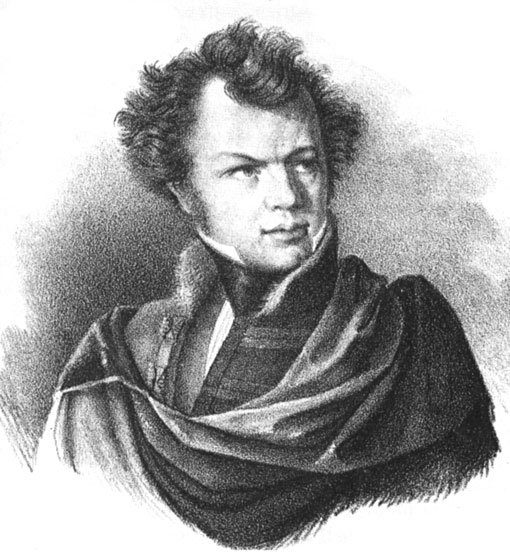
Johann Georg Wagler
Johann Georg Wagler

scientific classification:


Order: Psittaciformes
Family: Psittacidae
Genus: Cyanopsitta
Scientific name: Cyanopsitta spixii
Citation: (Wagler, 1832)
Protonimo: Sittace Spixii


Images Spix's Macaw:
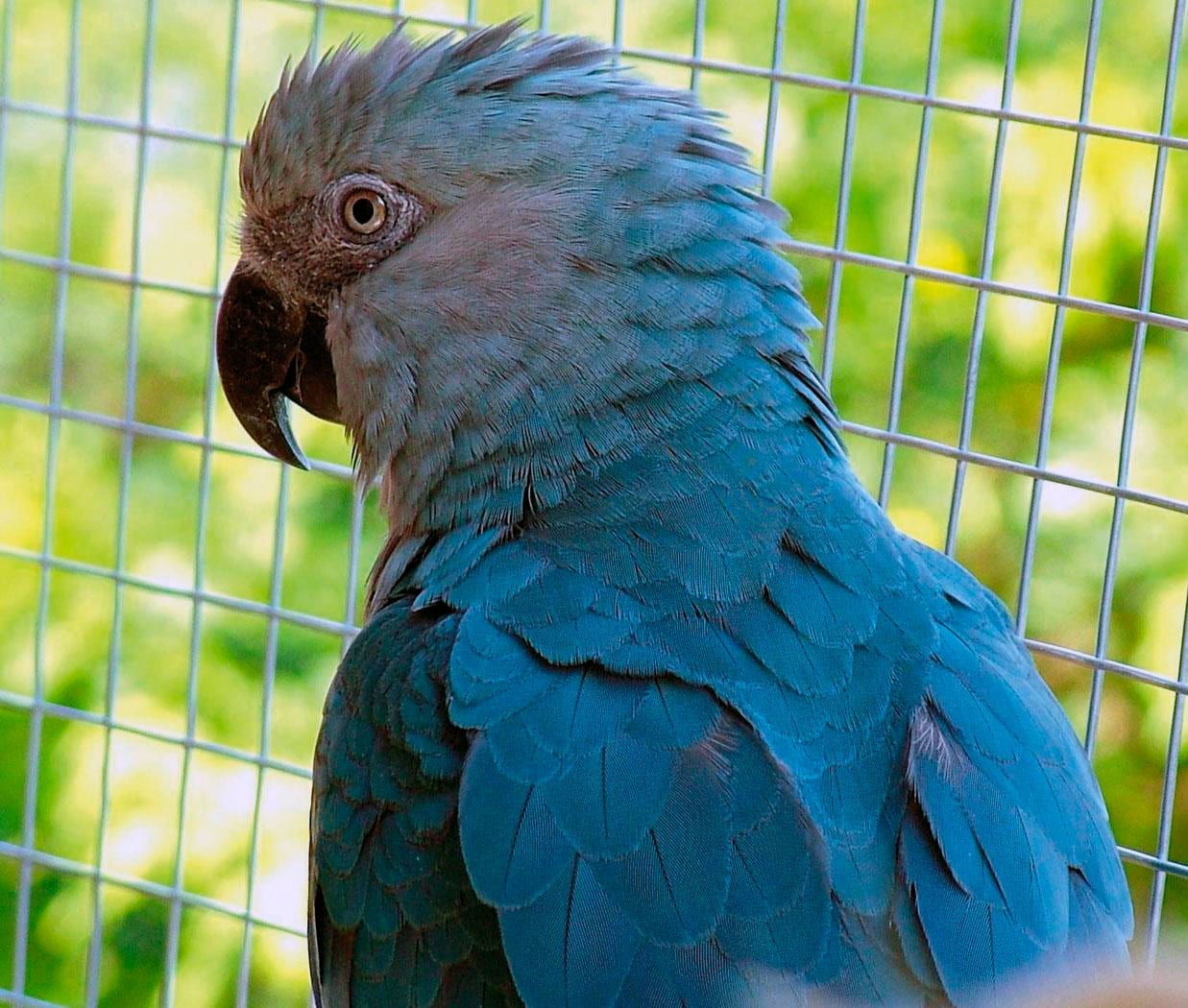


ยซSpix Guacamayoยป (Cyanopsitta spixii)

Sources:

  • Avibase
  • Parrots of the World โ€“ Forshaw Joseph M
  • Parrots A Guide to the Parrots of the World – Tony Juniper & Mike Parr
  • Birdlife
  • TO THE WABRA WILDLIFE PRESERVATION

  • Photos:

(1) – A Spix's Macaw in Vogelpark Walsrode, Walsrode, Germany in about 1980 By Rรผdiger Stehn from Kiel, Deutschland (71 Spix-Ara) [CC BY-SA 2.0], via Wikimedia Commons
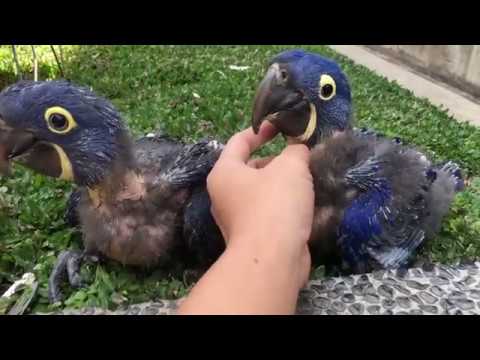
(2) – A juvenile in captivity. Note white stripe along top of beak and pale-grey bare facial skin By The original uploader was Robert01 at German Wikipedia(Original text: Robert01) (Self-photographed) [CC BY-SA 2.0 of], via Wikimedia Commons
(3) – Exhibit in Museum of Natural History, Berlin, Germany. Photography was permitted in the museum without restriction By Daderot (Own work) [CC0], via Wikimedia Commons
(4) – guacamayo de Spix (Cyanopsitta spixii) por Lycaon – Fauna extinta recientemente, redescubierta, nuevas especies – ellinceiberico
(5) – Cyanopsitta spixii – Parrot-birds
(6) – An 1878 painting of an adult by Joseph Smit [Public domain], via Wikimedia Commons

โ–ท The world of Pets: Dogs, cats, birds, reptiles, amphibians

Vinaceous Parrot
Amazona vinacea

Vinaceous Parrot

Content


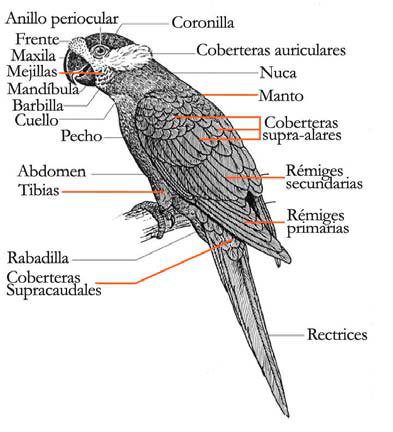
Anatomy-parrots

Description:

30 cm.. length and an approximate weight of 370 g..

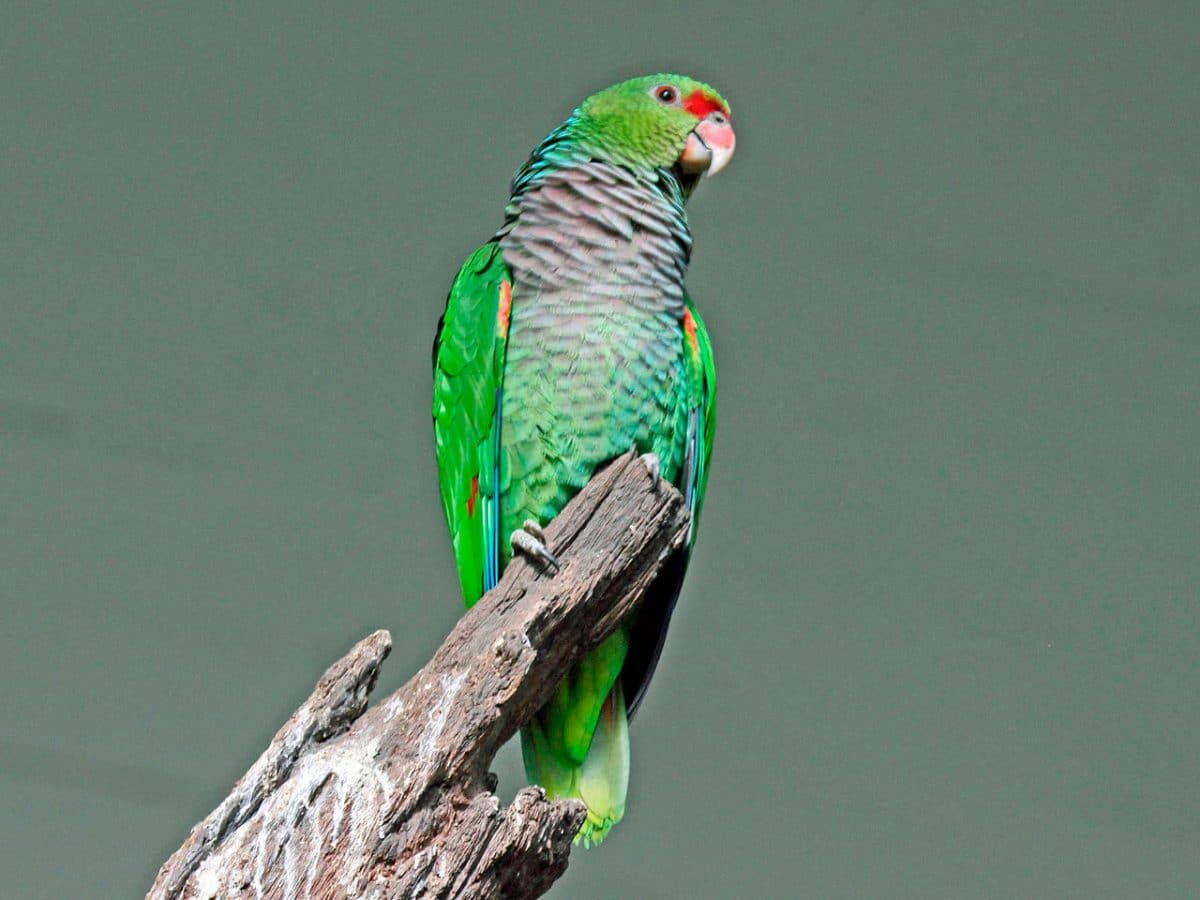
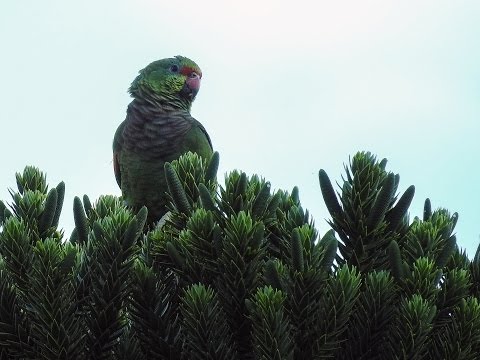
The Vinaceous Parrot (Amazona vinacea) has the lores and forecrown bright red; cheeks and crown green with black tips to some feathers head; elongated feathers on the sides of neck, the nape and the upper mantle, green at the base, subterminally light blue and black tip. The rest of the the mantle, back and scapulars, green with some feathers showing indistinct black tips; uppertail-coverts pale green.

Wing coverts green with red variable and / or yellow in leading edge of wing and the carpal area. Primaries pale bluish-green; Secondary green with blue tips, the base outerweb of the three outer secondaries, red, forming a small looking-glass. Under the wings, green. Throat and chest with shades that vary from strong wine brown to pale blue with a strong vinous diffusion; subterminal dark band at the tips of the feathers gives scalloping pattern; Belly green or yellowish green sometimes with vinous dissemination; undertail-coverts brighter yellowish green. Tail green with yellow green tip; the base lateral feathers in red innerwebs, in purple outerweb. The upper jaw It is red at the base with pale tip, horn-colored lower, reddish at the base; irises orange to reddish brown; legs grey.

Both sexes are similar. The immature It has the green suffusion in chest and the less extensive red on the head (confined to the base upper jaw).

  • Sound of the Vinaceous Parrot.

Habitat:

Video – "Vinaceous Parrot"

Purple-breasted Parrot in Itamonte - Minas Gerais, Brazil

The Vinaceous Parrot inhabit in tropical and subtropical evergreen mixed forests; in the Brazil in humid coastal forests, in the East of Paraguay They can be found in forests Araucaria angustifolia and Euterpe edulis. The extent of the ecological dependence of this species on coniferous trees (Araucaria and Podocorpus) It is not clear, but the Araucaria angustifolia It is clearly important in Missions, Rio Grande do Sul and Santa Catarina and possibly it was related to the previous distribution further north in southeast Brazil.

Mainly observed in the lowlands, but there are reports of birds seen in hills 1.500-2.000 meters in the southeast of Brazil, where the best forest remnants persist. Usually in pairs or small groups with larger meetings (up to approximately 30) in July-August. In pairs during breeding (usually around September).

Reproduction:

The Vinaceous Parrot nidifica in holes in large trees with obvious preference for the Araucaria angustifolia, including rarely cracks in the cliffs. With reproduce the May in loose colonies. breeding season during the months of September to January. Clutch 2-4 eggs.

After the breeding season (February to July), the species congregate in large groups and community shelters.

Food:

The specific foods of the Vinaceous Parrot include flowers and fruits of Euterpe edulis (which apparently it is important seasonally in East Paraguay), seeds of Araucaria angustifolia, fruits of cocoons of Achatocarpus and new leaves Eucalyptus and seeds of Pilocarpus. It has been reported damagor cause in crops of oranges, but with the current low density of this species, It is unlikely to produce a serious economic impact.

Distribution and status:

Size of its range (player / resident ): 1.230.000 km2

The Vinaceous Parrot It is endemic in Southeast South America.

In Brazil It was found in southern Bay, in West Espirito Santo and scattered localities as Minas Gerais, Brazil (a peripheral register from the sao francisco river, about Januaria), sporadically en Rio de Janeiro (possibly a seasonal visitor), but widely observed in Sรฃo Paulo, Paranรก, Santa Catarina and Rio Grande do Sul.

Records in East Paraguay come from Amambay, Canindeyรบ, Caaguazu, Alto Paranรก, Itapua and Guaira and in the North of Argentina from Missions and possibly the eastern half of Currents.

There are some seasonal movements and post-breeding dispersal, possibly in relation to the food supply (for example, seed availability coniferous trees), with invasions scale reported in Paraguay in the past. Declines in the number of birds occur in Rio Grande do Sul January, with all its people disappeared by March and return in April for the rest of the year.

Formerly abundant and widespread but now there has been a contraction dramatic of its range and population, mainly due to the habitat destruction scale, the expansion of agriculture and floods caused by large hydroelectric dams. also trapped for a long time for bird trade.

Are distributed in several protected areas, but none is large enough to maintain a viable population. The former strongholds in eastern Paraguay They are subject to rapid deforestation, with a recent reduction in its scope and numbers and now probably confined only in Alto Paranรก and Ganindeyu.

Probably extinct (or almost) in Bahia and Espirito Santo, and a few birds are likely to remain in Rio de Janeiro and Minas Gerais, Brazil. Confined to the north and northeast of Santa Catarina and locally common only in forested parts of Sรฃo Paulo and Paranรก, where it is thought that the remaining population survives. Persist in the north and northeast of Rio Grande do Sul.

A census 2007 yielded a minimum of 253 copies in Argentina.
It is perhaps the Amazona more common in populations of Rio Grande do Sul, Santa Catarina and Paranรก (several populations of more than 100 birds), in the South of Brazil, and the low number persists in Minas Gerais, Brazil and Sao Paulo, within an estimated total of 1.500-2.000 birds.

Conservation:

State of conservation โ“˜


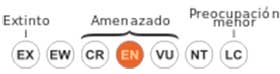
Endangered Endangered โ“˜ (UICN)โ“˜

โ€ข Current category of the Red List of the UICN: In danger of extinction.

โ€ข Population trend: Decreasing.

โ€ข Population size: 600-1700.

Rationale for the Red List category

This species is classified as endangered due to recent population estimates Brazil They indicate that the world population is very small and has suffered a rapid decline due to loss and fragmentation of habitat, aggravated by the trade. It is necessary to clarify whether Brazilian subpopulations exceed 250 specimens.

Justification of the population

Based on estimates 1.500 to 2.000 individuals in Brazil (G. Bencke in some. 2009), 220-400 in Paraguay and 253 in Argentina (K. Cockle in some. 2009), it is estimated that the total population is within the range of 1.970 -2.650 individuals and is probably positioned within the band 1,000-2,499. This is equivalent to 667-1.666 mature individuals, rounded here to 600-1.700 mature individuals.

Justification of trend

rapid and continuous population decline is suspected because of the Poaching of nests, the habitat destruction and persecution as a pest Of crops.

Conservation Actions Underway

โ€ข CITES Appendix I and II and protected by the Brazilian legislation.
โ€ข Nationally considered Vulnerable in Brazil (Urben-Filho et al . 2008, MMA 2014), and Critically Endangered in Argentina and Paraguay.
โ€ข Small populations are found in numerous protected areas (Wege and Long 1995, F. Olmos in some ., 1999).
โ€ข In the Argentina, two young provincial parks are used by the species, but they offer only partial protection because parrots use habitat outside the park for most of its life cycle, including, critically, the reproduction.
โ€ข In the Argentine stronghold of the species between San Pedro and Saint Rose, environmental education is underway to reduce the capture of chicks, and the population has been monitored since 2005 (Selva de Pino Paranรก in litt project., 2007).
โ€ข It has been achieved successful captive breeding.

Conservation Actions Proposed

โ€ข Monitor large populations (in March Argentina).
โ€ข Study reproductive biology and demography throughout the species' range and develop structured captive breeding programs to counter the high level of poaching of wild populations..
โ€ข Protect the general Carneiro (Santa Catarina), Itaipu (Alto Paranรก), RNP Itabรณ Rivas (Canindeyรบ), Estancia Golondrina (Caaguazu) and forests outside reserves Rio de Janeiro (Snyder et to the ., 2000) and between San Pedro and Saint Rose in Missions.
โ€ข Invest in permanently trained park rangers and resolve land tenure problems in Brazilian and Paraguayan reserves. (F. Olmos in some ., 1999, Cockle et al. 2007).
โ€ข Apply laws against the trafficking of species on the roads that connect the Monte Pascoal National Park with South Brazil (Snyder et to the ., 2000), in places where the species is captured and at borders and ports Paraguay and Argentina.
โ€ข Increase local public awareness to reduce nest theft and promote conservation of nesting sites..
โ€ข In Argentina, provide technical support to promote soil conservation, to avoid clearing forests for crops on small farms.

The Vinaceous Parrot in captivity:

The Vinaceous Parrot noted for its easy to imitate the human voice, better and clearer than the Amazona aestiva. Small easily they learn to speak.

Two decades ago, before placement in the Appendix 1 CITES Convention, this species was available in aviculture. It never was imported to Europe in a large number, but nevertheless often it offered for sale. Its price was higher than other species of Amazona available at that time, because of its amazing looks and his talent as an imitator. As the trade in wild birds was coming to an end, the captive population decreased markedly. While this species has been willing to breed for those that provide adequate breeding and have enough individuals to allow natural selection of the mate., captive breeding has been very disappointing, considering the number of birds that were previously available.

In the current avicultura, it seems that there are still a significant number of birds kept in Europe. A survey of amazon parrots in the European zoos, made in 1993 and published in 1994 by the EAZA, he listed in 59 species Vinaceous Parrot conserved in 11 zoological collections: of this, only three, Loro Parque (Spain), Walsrode Bird Park (Germany) and Beauval (France), had recorded breeding successes. It's known, However, that a significant number of Vinaceous Parrot They are held by private poultry farmers Europe and if these owners are willing to work in cooperation with EEP plan that can be started for this species, then the known captive population Europe could be big, enough to be considered as a viable.

The population of this species in captivity is similar to that of other species of the genus Amazona. In Loro Parque a couple is kept in an aviary in the exhibition area of รขโ‚ฌโ€นรขโ‚ฌโ€นthe park, and several more couples are kept in breeding cages suspended in their breeding outside exhibition. Suspended breeding cages are approximately 300 cm long x 95 cm width and height. Each cage has the nest-box placed against the outer rear panel, and there is a cut in the wire hole to allow birds to enter the nest-box. With the nest located outside of the cage, this eliminates the need to enter the service or inspect the nest-box.

The feeding of these birds is done twice a day. To the 7 Morning receive their main dish containing a mixed salad prepared with the following elements: – Apple, pear, tomato, beet, Carrot, alfalfa, lettuce, Peppers, papaya and other fruits and vegetables seasonally available; In addition, They are also used, when available, various fruits that are grown in the park, as nopal cactus plants and berries palmera pindรณ (Syagrus romanzoffiana). A second smaller dish meal in the morning provides birds commercial pellets dietary, and during the breeding season each pair is also given segments of their own supplement "pie" that is made fresh every day. The evening meal is given to 3:00 pm, with a mixture of nuts, seeds and beans cooked.

The Vinaceous Parrot It was raised for the first time Loro Parque in 1990, when one pigeon was raised hand. The couple proved to be very unreliable when it came to the incubation their eggs, why he has always resorted to artificial incubation or host and breeding. This couple Vinaceous Parrot He received on subsequent occasions eggs more common species to give them the opportunity to prove that they are good parents, but so far they remain unreliable.

No offspring were produced in 1991, but the couple tried again in 1992, when he carried out another manually raising and other raised squab. In 1993, when the same pair joined again, the clutch of eggs was transferred to a pair of Red-crowned Parrot (Amazona viridigenalis), which they proved to be excellent foster parents and raised chicks born. The same technique was used in 1994, but only one egg clutch proved to be fertile and the chick was raised successfully by Red-crowned Parrot.

Alternative names:

Vinaceous Parrot, Vinaceous Amazon, Vinaceous-breasted Amazon, Vinaceous-breasted Parrot (English).
Amazone vineuse (French).
Taubenhalsamazone, Taubenhalsamazon (German).
Papagaio-de-peito-roxo, chauรก, coraleiro, corraleiro, crau-crau, curraleiro, jurueba, papagaio-caboclo, papagaio-curraleiro, papagaio-peito-roxo, peito-roxo, quero-quero, tรฉu-tรฉu (Portuguese).
Amazona de Pecho Vinoso, Amazona Vinosa, Loro vinรกceo, Loro vinoso (espaรฑol).


scientific classification:

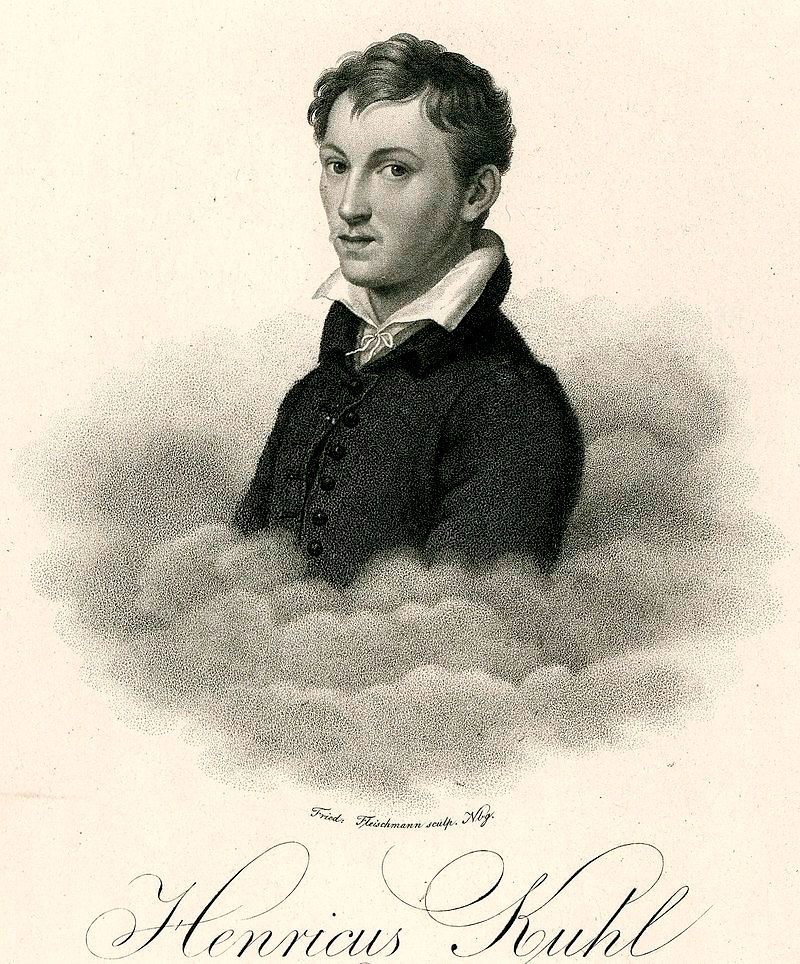
Kuhl, Heinrich
Heinrich Kuhl

Order: Psittaciformes
Family: Psittacidae
Genus: Amazona
Scientific name: Amazona vinacea
Citation: (Kuhl, 1820)
Protonimo: Psittacus vinaceus


Images Vinaceous Parrot:


Species of the genus Amazona


Sources:

Avibase
– Parrots of the World โ€“ Forshaw Joseph M
– Parrots A Guide to the Parrots of the World – Tony Juniper & Mike Parr
Birdlife
– THE VINACEOUS AMAZON Amazona vinacea AT LORO PARQUE – First Published in The Avicultural Magazine Vol. 103 No. 2

Photos:

(1) – Vinaceous-breasted Amazon (Amazona vinacea) – San Francisco Zoo, California By Dick Daniels (http://carolinabirds.org /) (Own work) [CC BY-SA 3.0 or GFDL], via Wikimedia Commons
(2) – Vinaceous Amazon in captivity at the Rare Species Foundation Programme, Florida, USA By derivative work: Snowmanradio (talk)Amazona_vinacea_-RSFP-8a.jpg: Ruth Rogers [CC BY 2.0 or CC BY 2.0], via Wikimedia Commons
(3) – Vinaceous Amazon at the Walsrode Bird Park, Germany By Quartl (Own work) [CC BY-SA 3.0], via Wikimedia Commons
(4) – Vinaceous Amazon; two in a cage By TJ Lin (originally posted to Flickr as Copy of DSCN3375) [CC BY-SA 2.0], via Wikimedia Commons
(5) – flying. Picture taken in Morretes By Leandro Govoni Lacerda (Own work) [CC BY-SA 4.0], via Wikimedia Commons
(6) – A Vinaceous-breasted Amazon at Parque das Aves, Foz do Iguaรงu, Brazil By Kee Yip from Union City, California, USA (IMG_4509_P1040019) [CC BY 2.0], via Wikimedia Commons
(7) – Pigeons neck Amazone (Amazona vinacea) Shot in Palmitospark Gran Canaria By Martingloor (Own work) [CC BY-SA 4.0], via Wikimedia Commons
(8) – Vinaceous-breasted Amazon (Amazona vinacea) – San Francisco Zoo, California By Dick Daniels (http://carolinabirds.org /) (Own work) [CC BY-SA 3.0 or GFDL], via Wikimedia Commons
(9) – Amazone vineuse, Bioparc Doue-la-Fontaine By Melvin TOULLEC (Own work) [CC BY-SA 4.0], via Wikimedia Commons

Sounds: (Xeno-canto)

โ–ท The world of Pets: Dogs, cats, birds, reptiles, amphibians

Red-tailed Parrot
Amazona brasiliensis

Red-tailed Parrot

Content

Description:

37 cm.. length and 430 g. of weight.

The Red-tailed Parrot (Amazona brasiliensis) has forecrown, front of crown and lores, red; Subsequent red feathers crown with purple tips; cheeks, ear-coverts, sides neck and throat, mauve-blue; back of the crown and nape, green with black tips.

Upperparts green, some feathers rump with yellow points. The median, greater coverts and secondary internal clearly appear yellow; edge front of the wing Red and yellow; primaries grey-black, secondaries green, turning blue towards the tips.


Anatomy-parrots

Under the wings, brighter yellowish green; flight feather of black and blue color on the basis of innerwebs. Underparts brighter yellowish green, paler in undertail-coverts. Tail green with broad greenish-yellow tips, lateral feathers marked basally with purplish-blue on outerweb and tipped yellowish-green with broad subterminal band red.

Red-tailed Parrot

Bill pale horn with dark tip; irises orange; legs pink-gray.

Both sexes are similar. The immature It is less extensive in red head, a plumage darker overall and irises darker.

  • Sound of the Red-tailed Parrot.

taxonomic note:

The molecular study suggests that this species is closest to the Orange-winged Parrot (Amazona amazonica). Previously it thought to form a group with Blue cheeked Parrot (Amazona dufresniana) and Red-browed Parrot (Amazona rhodocorytha), and it has been treated as conspecific with one or both. monotypic.

Habitat:

Video "Red-tailed Parrot"

The Red-tailed Parrot dwells in a restricted area or coastal lowland forest and wetlands with rare species and structural diversity, including moist lowland forests, restinga, freshwater marshes and mangroves. Your preferred coastal habitats have complex channel networks, swamps and wetlands. Trees characteristic of its forest habitat include Luehea and Andira, while the vegetation of the islands, where they sleep and breed, They are dominated by several species Halophyte and formations restinga.

Apparently, some birds are practically living in flooded forests, probably due to increased availability of nests. Sympatric presence and partnership with the Red-spectacled Parrot (Amazona pretrei) in forests Araucaria, probably wrong. Lives in altitudes not exceeding the 300-400 m, Although there are records to 700 metres in Paranรก. Forman communal shelters (often in mangroves) during at least part of the year, with more than 750 birds reported at a meeting (1985).

Reproduction:

They nest in the cavity of a living or dead tree, for example, palms Jerivรก (Syagrus romanzoffianum) and guanandi (Callophyllum Brasiliense) and occasionally arboreal nests of termites; height generally, but recorded only a nest 1 meter above the floodwater. Usually it played in flooded or swampy areas, including mangroves. breeding season in September to February, in some cases in April. Clutch 5-4 eggs. The eggs are hatch during 27 to 28 days, and the period until nest abandonment is thought to last from 50 to 55 days

Food:

The fruits of Callophyllum Brasiliense They are considered of considerable importance in the diet of the Red-tailed Parrot, with fruits Syagrus romanzoffianum and Psidium cattleyanum also taken in quantity; other registered foods include flowers, fruits of Erythrina speciosa, fruits of Euphorbia and Myrcia and insects in fruit. They feed in pairs or groups up 20 birds.

Distribution and status:

Size of its range (breeding/resident): 10.100 km2

The Amazona Colirroja et is confined to a small area in the southeast coastal of Brazil, in the states of Sรฃo Paulo and Paranรก. In coastal areas Sรฃo Paulo It extends southwest of Itanhaรฉm, including the isla Long and isla del Cardoso, and virtually all coastal areas of neighboring Paranรก, from Guaraquecaba, Antonina and Paianagua, until Guaratuba and several offshore islands adjacent, eg Mel Island.

Possibly they inhabit the extreme northeast Santa Catarina, adjacent to Paranรก, but there are no reliable records. An old record Rio Grande do Sul it seems unlikely. possibly some seasonal movements lower in winter (May-August).

The rapid decline in population in the twentieth century it is due in part to the loss of habitat, with most areas densely settled and totally deforested, the remaining threatened are given by urbanization (for example, in isla Long), the felling of trees nesting and feeding, as well as the Palmas for human use (shipbuilding and food) and conversion of wetlands for water buffalo and rice production (birds also face competition from grazing animals for consumption of fruits Erythrina speciosa). But, direct human exploitation of the species is not now a less serious problem, some related to their hunting for food, although most suffer their capture illegal for trade. A recent study 49 showed that nests 41 of them they were illegally stolen their young, while the 1,27% available habitat was lost only in 1993.

Total wild population estimated in 3.600 birds (1995) with rapid decline of several hundreds Predicted. Distribution area probably no more than 6.000 km2, with large parts of this extension susceptible to sea level rise caused by climate change.

protected by national legislation. Live in several areas protected (for example, Isla del Cardoso, Sao Paulo), but in them there is only a very small proportion of birds.

Conservation:

State of conservation โ“˜


Vulnerable Vulnerable โ“˜ (UICN)โ“˜

โ€ข Current category of the Red List of the UICN: Vulnerable.

โ€ข Population trend: Increasing.

โ€ข Population size : 6000-6700.

  • Rationale for the Red List category

The catch for cage bird trade and loss of habitat are the major threats to this species. Despite the heavy pressure to capture the early nineties, It is believed that the range of the species remained essentially the same, and populations have been stable or declined less steeply than feared, According to a recent estimate that suggests a population increase. Due to its small breeding range and highly fragmented habitat, the species qualifies as Vulnerable.

conservation project "Red-tailed Parrot"

Amazona brasiliensis - Puffin of red-tailed - Red Parrot-tailled
  • Justification of the population

The winter counts in 2015 registered 7.464 and individuals in Paranรก 1.712 in Sรฃo Paulo, with both populations continuing to increase (D. Waugh in some ., 2015). The population It is estimated, therefore, between 9.000 and 10.000 individuals, equivalent approximately to 6.000 to 6.700 mature individuals.

  • Justification of trend

It is suspected that the conservation measures long term have contributed to a recent increase in population at a rate unquantified, although habitat fragmentation and poaching remain significant threats (Waugh 2006).

Threats
    In the municipality of Canaanite (a quarter of the distribution of the species) (Freire 1994), has been caught during the breeding period of 1991-1992 for domestic trade and (especially) international with 356 birds. Of 47 controlled nests between 1990 and 1994, six were naturally default and the other 41 stolen by human (Freire 1997). Nest cavities are almost always damaged when the chicks are captured, reducing the number available (Freire 1994). Habitat loss persists for shipbuilding, banana plantations, cattle and buffalo and beach houses (Lalime 1999, Snyder et to the., 2000). They cut the Palmitos for processing in Guaraqueรงaba (Lalime 1999). The proposed construction of a bridge to Ilha Comprida increase the pressure of tourism and habitat conversion (Snyder et to the., 2000).
Conservation Actions Underway
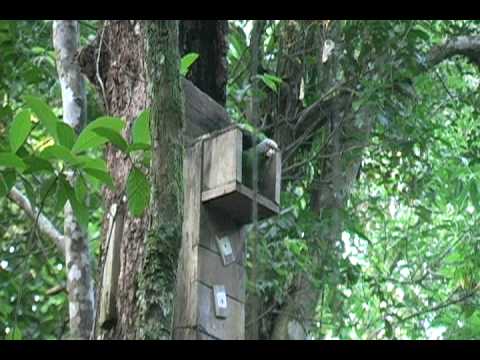
    CITES Appendix I and II and protected by Brazilian law. This species is not considered of conservation concern nationwide in Brazil (MMA 2014). They are distributed within 15 protected areas, but these do not apply locally (Freire 1994, Lalime 1999). The Superagui National Park in Paranรก, It is a bastion for the protection of the species (R. Bรณรงon in litt., 2006). The creation of new reserves is hampered by economic interests (Freire 1994). Several programs are increasing local awareness (Freire 1994, Lalime 1999 , Padua et al. 2001). Conservation projects and protected areas created in the area of รขโ‚ฌโ€นรขโ‚ฌโ€นdistribution of species appear to be paying off, although there are still pitfalls. There are herd books and successful captive breeding programs in the European Union and Brazil (Lucker 1998) and the provision of artificial nests and repair of natural nesting cavities is enhancing reproductive success in the wild (Waugh 2006). Conservation Project of the Amazon Redstart is monitoring the population in Paranรก (R. Bรณรงon in litt., 2006).
Conservation Actions Proposed
    Conduct surveys to monitor population trends and support captive breeding programs. Monitoring discount rates for trade. Monitor trade levels. Monitor the rates of loss and degradation of habitat. Apply laws on trafficking, especially in the paths to breeding islands (Lalime 1997, Lalime 1999). effectively protect existing reserves (Lalime 1997, Lalime 1999). formally appoints the Ilha Comprida State Park and Ecological Station Itapanhapina (Snyder et to the., 2000). Expand Superagรผi National Park to include Ilha do Pinheiro (Snyder et to the., 2000). Reforest nursery islands (Lalime 1999). Continue and expand awareness efforts (Lalime 1999).

The "Red-tailed Parrot" in captivity:

CITES Appendix I and II and protected by the Brazilian legislation.

Each captive specimen of this species which is capable of reproducing, It is placed in a Program well managed captive breeding and not be sold as a pet, in order to ensure long term survival.

Alternative names:

Blue-cheeked Parrot, Blue-faced Parrot, Brazilian Green Amazon, Brazilian Green Parrot, Red tailed Parrot, Red-tailed Amazon, Red-tailed Parrot (English).
Amazone ร  joues bleues (French).
Rotschwanzamazone (German).
papagaio, papagaio-de-cara-roxa (Portuguese).
Amazona Brasilera, Amazona Colirroja (espaรฑol).
Marreco ananai (Brazil)

Carl Linnaeus

scientific classification:


Order: Psittaciformes
Family: Psittacidae
Genus: Amazona
Scientific name: Amazona brasiliensis
Citation: (Linnaeus, 1758)
Protonimo: Psittacus brasiliensis


Images Red-tailed Parrot:


Species of the genus Amazona


Sources:

Avibase
– Parrots of the World โ€“ Forshaw Joseph M
– Parrots A Guide to the Parrots of the World – Tony Juniper & Mike Parr
– Birdlife

Photos:

(1) – A Red-tailed Amazon at Parque das Aves, Foz do Iguaรงu, Brazil By Kee Yip from Union City, California, USA (IMG_4509_P1040018) [CC BY 2.0], via Wikimedia Commons
(2) – A juvenile Red-tailed Amazon which is grasping something in its right foot, probably to chew or eat it By writhedhornbill (originally posted to Flickr as Red tailed amazon) [CC BY 2.0], via Wikimedia Commons
(3) – Red-tailed Amazon (Amazona brasiliensis) bird Park, Foz do Iguaรงu, Brazil By http://www.birdphotos.com (Own work) [GFDL or CC BY 3.0], via Wikimedia Commons
(4) – Red-tailed Amazon at the zoo By Elcio Ferreira [CC BY-SA 2.0], via Wikimedia Commons
(5) – A Red-tailed Amazon at Parque das Aves, Foz do Iguaรงu, Brazil By Chad Bordes (Picasa Web Albums) [CC BY 3.0], via Wikimedia Commons
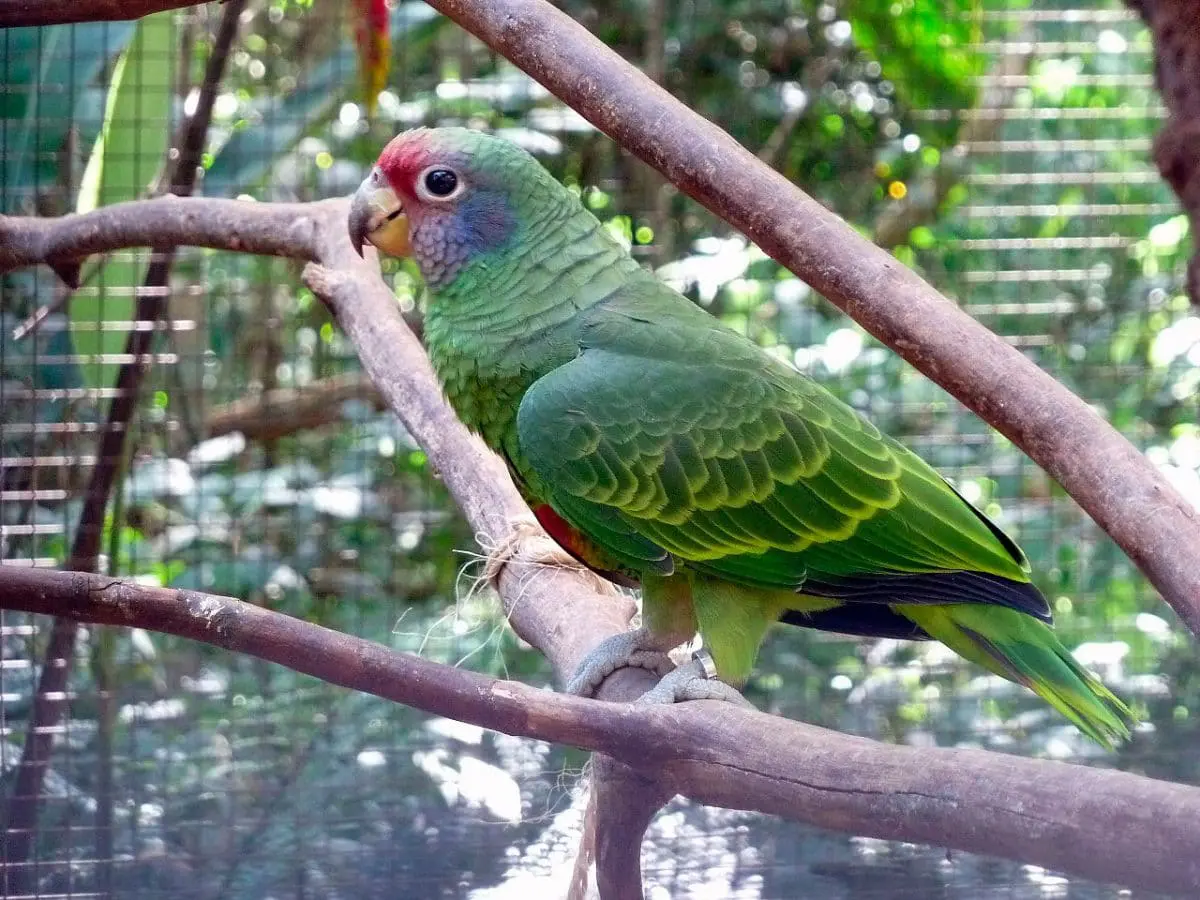
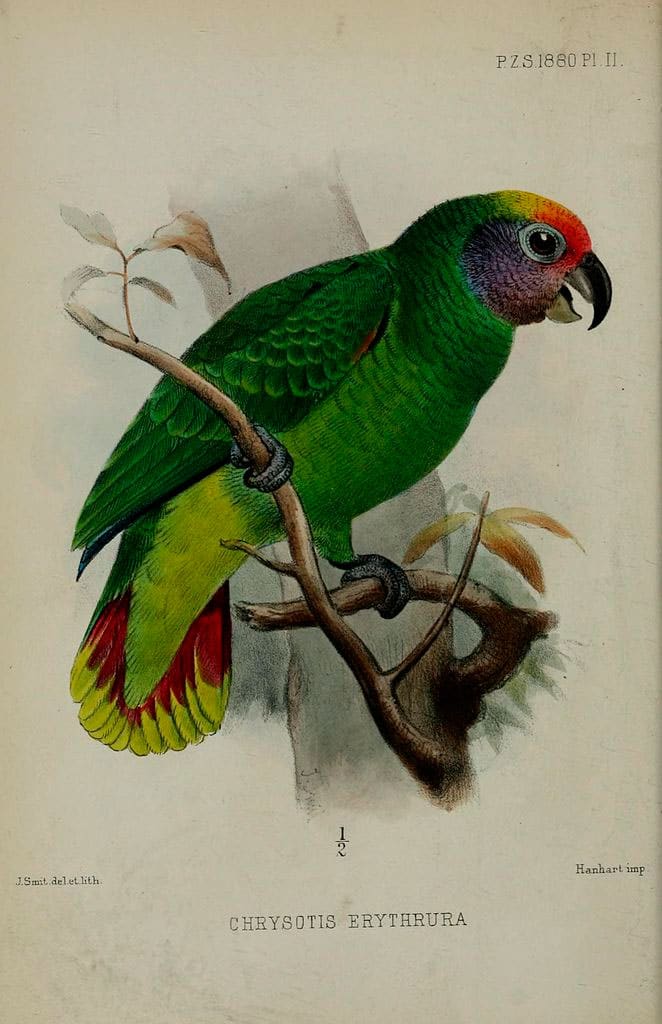
(6) – CHEYSOTIS ERYTHRURA By Zoological Society of London.; Zoological Society of London. [CC BY 2.0 or Public domain], via Wikimedia Commons

Sounds: Antonio Silveira, XC109467. accessible www.xeno-canto.org/109467

โ–ท The world of Pets: Dogs, cats, birds, reptiles, amphibians

Blue-and-yellow Macaw
Ara ararauna


Guacamayo azuliamarillo

Content

Description:

Guacamayo azuliamarillo

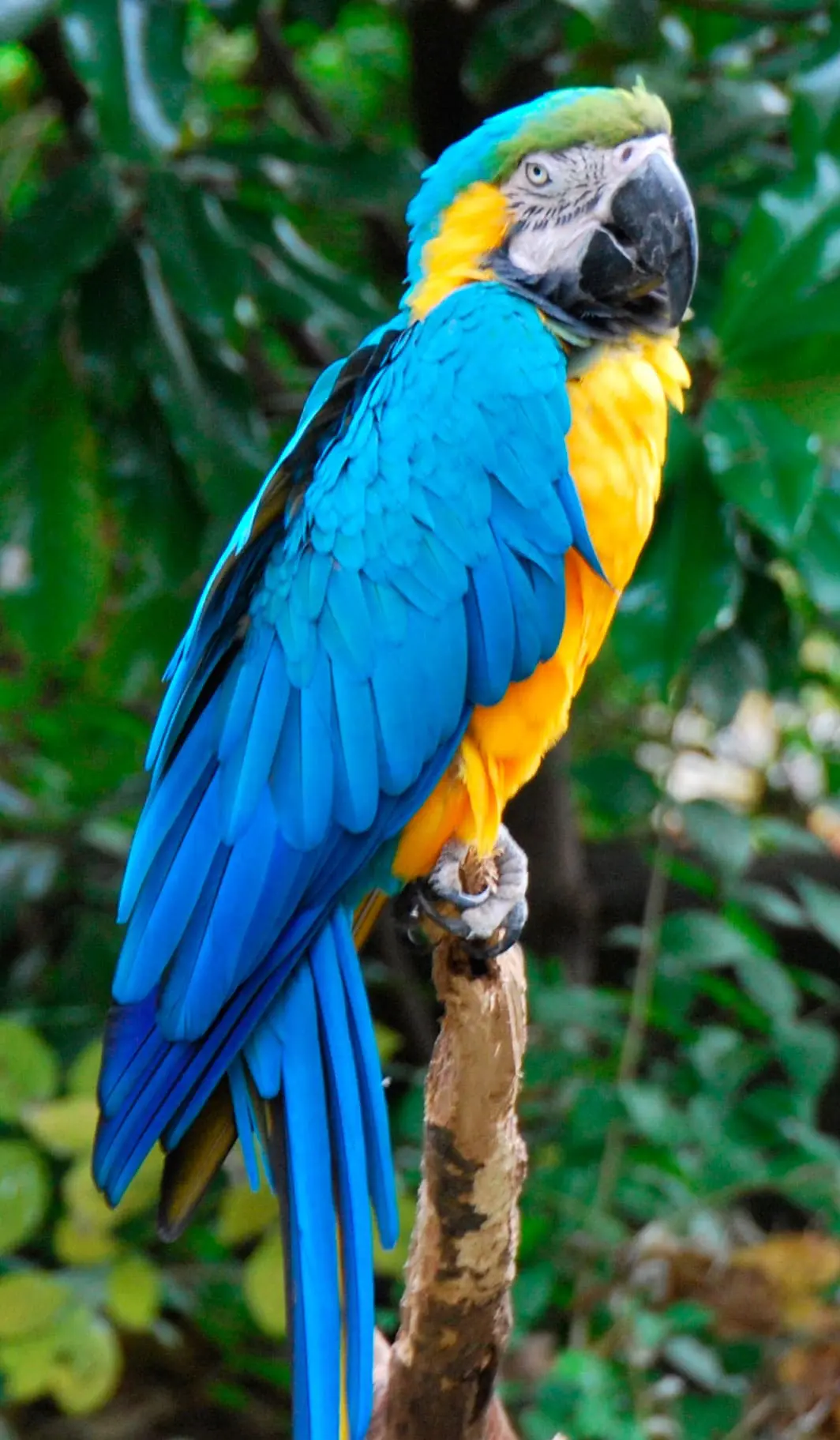
Of 86 cm.. length and a weight between 995 and 1380 g..

The Blue-and-yellow Macaw (Ara ararauna) has the forecrown and both sides of the head to behind eyes bright green, faded to bright ultramarine blue in the crown and nape.

The upperparts Blue bright overseas. Upper wing coverts Blue bright overseas; flight feather Violet Blue top, Yellow Gold to olive brown down; Depending on the light, the underwing-coverts, yellow.

Large patch yellow on the sides of the neck and ear-coverts edged ahead by a black stripe, to expand to form a black patch in the throat.

Undertail-coverts blue. Uppertail dark purple suffusion overseas; undertail, the tail golden yellow to olive brown depending on the light; Tips new feather of the tail striped wide.

Bill dark grey; cere naked and facial patch (including lores and cheeks to behind eyes) white crossed by narrow lines of feathers Black in knowledge and cheeks top (the skin of the face pink when they are excited); irises pale yellow; legs dark grey.

Both sexes similar.

The youth they have the wings and tail Cafe-grisacea and eyes browns.

Habitat:

They inhabit areas with large trees, often near water, including moist lowland forest edges (mostly forests and marshes, avoiding the lowland forest of tierra firme), gallery forest in the savannah, Savannah with trees and scattered Palms, marshy forests and swampy areas with Palm trees (Mauritia flexuosa). As well bosque deciduous away from the water in Colombia and Panama.

They sometimes feed in more open areas, posing on the floor, for example, for feeding of fruits of Palm.

Gregarious. Usually, observed in pairs, family groups or flocks of up to 25 birds (sometimes many more, especially near the roosts).

The Blue-and-yellow Macaw are observed more often in the morning and afternoon, halfway between the roosts and feeding areas.

Communal roosts in the trees.

Reproduction:

Son monogamous and they usually form a couple throughout their lives.

It nests in a hole in the top of a dead Palm tree (for example, Mauritia flexuosa).

Breeding between the months of February and March in Suriname; Between January and may in Trinidad (formerly); Between December and February in Colombia (birds observed in breeding conditions). Egg laying observed in February in Guyana and between November and January at Peru.

The laying, generally, is two or three eggs, incubated by the female for a few 28 days, the chicks leave the nest to the 90 days after birth.

Food:

They feed on a wide variety of locally available fruits (mostly from various Palm trees), nuts, Spring sprouts, etc., elements reported including fruits of Astrocaryum, Mauritia and palms Acrocomia, seeds of platypodium grandiflorum, Sloanea, Brosimum, Were, Spondias, Inga, Parkia, Hura crepitans and Enterolobium, nectar Combretum laxum and aril of Hymenaea Courbaril.

The Blue-and-yellow Macaw they eat quietly at the top of the canopy, often near clearings. Large flocks may congregate in areas of ribera, often with other species of parrots, to supplement their diet with minerals that are ncuentran in clayey soils.

Distribution:

Its distribution is varied and discontinuous: east of Panama and the tropical lowlands of South America to the South-East of Brazil, Bolivia and Paraguay.

In Panama, from the top of the bayano river (Maybe just once) to the East of Darien mainly in the drainage of the Tuira River and the Chucunaque River.

Along the lower tropics (some 500 m) in Colombia; apparently absent from the Valle del Cauca, Nariรฑo, and the moist rain forests of central Choco.

In the eastern lowlands of Ecuador, and perhaps earlier in Guayas, on the slope of the peaceful.

Tropical zone of Venezuela, mainly to the South of the Orinoco, in Monagas only in the north shore (for example in the drainage of the amana river).

extinct in Trinidad from 1970; escapes of captive birds reported since.

Spread sheets and coastal river systems of Guyanas and Suriname.

Widespread in Brazil, but extinct in Bay, South of Rio de Janeiro and in Santa Catarina, during the years 1950 or 1960; they remain in the southeast of Brazil only in the State of Sรฃo Paulo Western, as a wandering bird from populations further to the West in the region of the Pantanal and the lowlands of Bolivia and Peru.

Current situation in the Paraguay (probably Northeast, perhaps earlier in the South) It is not clear.

The records of Argentina remain corroborated.

Resident general, but with some movements of foraging season.

Locally common, but, apparently, decrease in Panama.

Fairly common in less disturbed areas of Colombia.

Scarce, irregular and decreasing to the West of the Andes in Colombia and Ecuador.

Local in Venezuela.

The largest population of the Blue-and-yellow Macaw It is located in the coastal area of Suriname and it appears to be very common in northwestern Guyana, much less numerous in the South; local in the French Guayana due to the persecution. More common in parts of Brazil (especially in the Amazonia), but rarer in Pantanal. Locally common in the Amazon area of Peru but with a drastic drop around the main capture centers (for example, Iquitos and Pucallpa).

Apparently rare Bolivia, in the Northwest area, but common (at least locally) in the East.

In the 15th century and probably until the end of the 19th century its distribution area encompassed virtually all the the Caribbean basin.

Conservation:


minor concern

โ€ข Current Red List of UICN: Least concern

โ€ข Population trend: Decreasing

The size of the world's population has not been quantified, but this species is described as ‘Rare‘ (Stotz et to the. 1996).

Not regarded as threatened, Although it is appreciated as bird cage, and their populations are declining and several are now extinct, including the of Trinidad.

The species has undergone intense trade: from 1981, When it began trading in the Appendix II of CITES, 55,531 individuals captured in nature have been registered in international trade (UNEP-WCMC CITES Trade Database, January 2005).

An investigation by the UN indicates that removal of chicks of Blue-and-yellow Macaw, in the Amazon, exceeds the 26%, which leads to overexploitation of the species.
โ€œIf a stock is already being overexploited, any rate and type of extraction would have serious effects on its viability and could quickly drive it to extinction. The extraction of adults, even in healthy populations, is even more critical as a rate of 3% already produces population declines, and if they are being subjected simultaneously to extraction of chicks and adults, hunting rates must not exceed the 1% or 2% so that there is no risk of extinctionโ€, Esteban Carrillo and Diego Fernando Builes doors explained, authors of research.
The genera Amazon (Loras) and Ara (macaws) they are particularly vulnerable, due to factors such as its low reproductive rates, low survival of chicks, late age of first breeding, large proportion of non-breeding adults and specific requirements for nest building. In addition are the two most desired genera as pets, and whose extraction generates greater economic โ€œprofitsโ€ for local hunters.
In particular, the Blue-and-yellow Macaw (Ara ararauna), that it is distributed in lowland forests from Panama to Bolivia Centre and the South-East of Brazil, it is common, but decreases according to the human activity and local extinctions have already.
Sensitivity analysis in the adult hunting scenario for crafts shows that this type of extraction can have profound effects.. Through a program of modelling, It was determined that only extract the 3% of adults, the growth rate turns negative, to extract the 8% the adult begins to have chance of extinction, and with extraction rates equal or greater to the 10%, the probability of extinction of the population in the following 100 years ranges between 52% and 100%.

Researchers warn that the only form of sustainable extraction is subsistence hunting, which is carried out in order to obtain animal protein or hunting by-products to meet the needs of human groups linked to rural areas. Likewise, they needed to hunt for chicks rates are decreased below the 10%, in order to not affect population viability.
"The recommendation we make is that protected areas be established that include their important nesting and feeding places such as the salted ones and the cananguchales, as well as including the species in Appendix I of Cites and completely prohibiting its trade until studies and Population Viability Analysis are carried out. (PVA, for its acronym in English), that establish the rates and forms of sustainable extractionโ€, conclude the researchers.

(For: Fin/pbs/feb/vbr) – agenciadenoticias.unal.edu.co

Habitat degradation in South America, pollution, development and logging are also affecting the populations of Blue-and-yellow Macaw.


"Blue-and-yellow Macaw" in captivity:

The Blue-and-yellow Macaw they have great popularity as pets. They are beautiful birds with complex behavior, and a good ability to mimic words and sounds. Son social and Smart and they can be great companions of their owners, If managed well. (Juniper, 1998)

With regard to its longevity, There is anecdotal records of animals kept as pets who have lived more than 50 years, but none has been confirmed. If it has been confirmed a specimen that lived 43 captive years. In captivity, these animals have been known that they can be raised from the 8 years of age.

Although these birds are rewarding colleagues, its large size, the complexity of their behavior and its longevity, they do need to have a large space and a big commitment. Their capture in native habitats also often includes the killing of the parents in order to obtain their young., as well as the destruction of important nesting trees.

The results of illegal trade involves much destruction.

Alternative names:

Blue-and-yellow Macaw, Blue & Yellow Macaw, Blue and yellow Macaw, Blue-yellow Macaw (English).
Ara bleu, Ara ararauna, Ara bleu et jaune, Ara bleu et or (French).
Gelbbrustara, Ararauna (German).
Arara-canindรฉ, arara-amarela, arara-azul, arara-de-barriga-amarela, araraรญ, ararauna, arari, Canindรฉ (Portuguese).
Guacamaya Azuliamarilla, Guacamayo Azul y Amarillo, Guacamayo Azulamarillo, Guacamayo azuliamarillo, Papagayo amarillo, Paraba azul amarillo (espaรฑol).
Guacamayo, Guacamaya azul, Papagayo, Guacamaya pechiamarilla (Colombian).
Guacamaya azuliamarillo, Guacamayo pecho amarillo (Ecuadorian).
Paraba azul (Bolivian).
Canindรฉ (Guarayo).
Ararakรกng (Guarani).

scientific classification:

Carl Linnaeus
Carl Linnaeus

Order: Psittaciformes
Family: Psittacidae
Genus: ARA
Scientific name: Ara ararauna
Citation: (Linnaeus, 1758)
Protonimo: Psittacus Ararauna

Videos "Blue-and-yellow Macaw"

ยซBlue-yellow macawยป (Ara ararauna)


Species of the genus Ara


Sources:

Avibase
Parrots of the World โ€“ Forshaw Joseph M
Parrots A Guide to the Parrots of the World – Tony Juniper & Mike Parr
Birdlife
Book, Parrots, parrots and macaws.

Photos:

(1) – Blue-and-yellow Macaw at Cincinnati Zoo, USA By Ted (originally posted to Flickr as DSC_0389) [CC BY-SA 2.0], via Wikimedia Commons
(2) – A Blue-and-yellow Macaw (also known as the Blue-and-gold Macaw) at Gramado Zoo, Rio Grande do Sul, Brazil By diegodobelo (Zoo de GramadoUploaded by Snowmanradio) [CC BY-SA 2.0], via Wikimedia Commons
(3) – Guacamayo azul y amarillo by, Luc Viatour [GFDL, CC BY 2.0 or CC BY-SA 3.0], via Wikimedia Commons
(4) – Portrait of a Blue-and-yellow Macaw (Ara ararauna) in the Vogelburg (bird park) Hochtaunus, Weilrod, Germany – Wikipedia
(5) – Ara ararauna ou Arara-canindรฉ By No machine-readable author provided. Observatore assumed (based on copyright claims). [GFDL or CC-BY-SA-3.0], via Wikimedia Commons
(6) – Blue-and-yellow Macaw (Ara ararauna) in Santa Fรฉ do Sul, Sรฃo Paulo State, Brazil By Miguelrangeljr (Own work) [CC BY-SA 3.0], via Wikimedia Commons

Sounds: (Xeno-canto)
โ–ท The world of Pets: Dogs, cats, birds, reptiles, amphibians

Red-spectacled Parrot
Amazona pretrei

Red-spectacled Parrot

Unknown until years 80, when a few came to Europe

Content

Description:


Anatomy-parrots

32 cm.. length and 295 g. of weight.

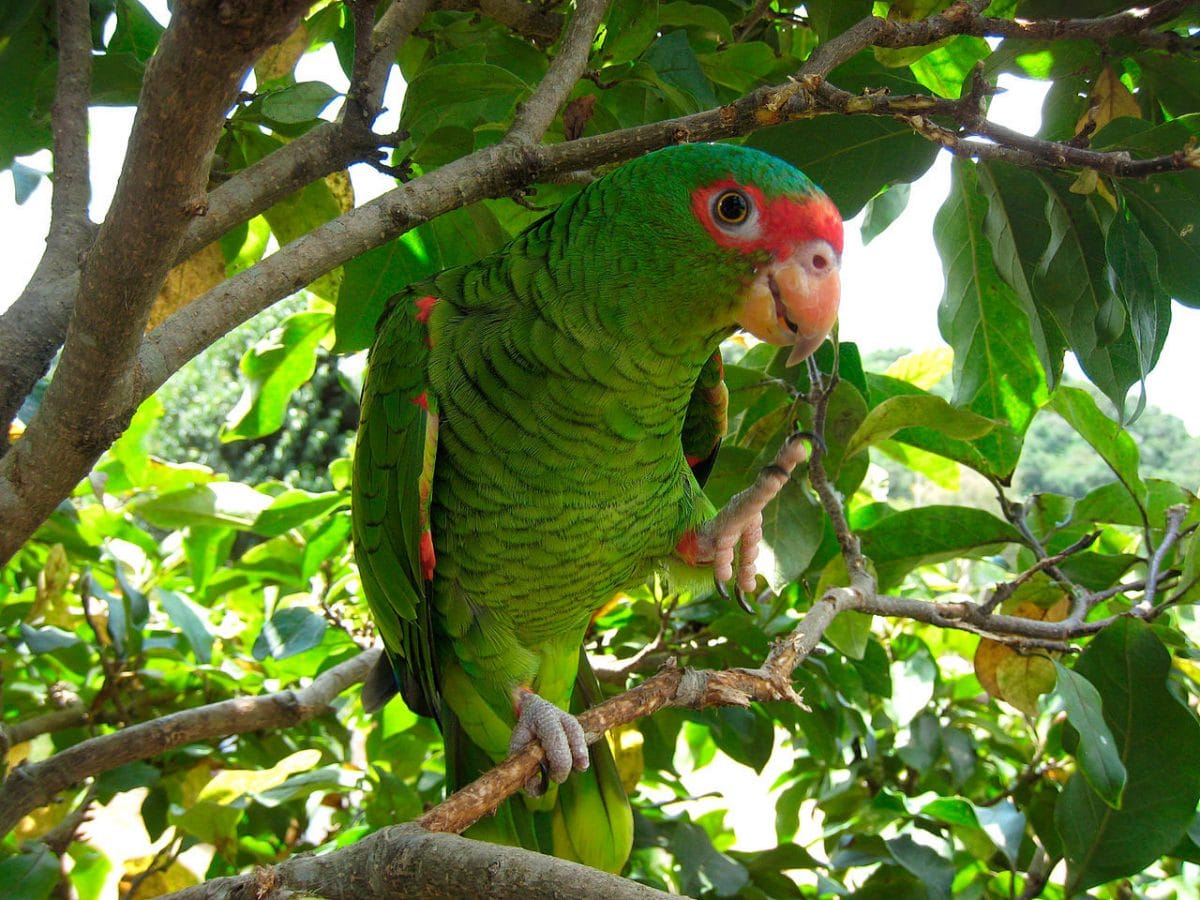
The Red-spectacled Parrot (Amazona pretrei) has the forecrown, lores, fore crown and upper cheeks up to the ear-coverts, bright red; back of the crown, nape, the mantle, back and rump, green with a narrow terminal band black in most feathers; scapulars green; uppertail-coverts pale green. Leading edge of wing, carpal area, alula and primary coverts, bright red; other coverts, narrow green with black tips.

Flight feathers, violet blue green tips. Under wings green. The underparts they are mostly green, slightly tinged with yellowish, with black tips on most feathers giving a scalloped effect; the thighs red; undertail-coverts pale yellowish green. Tail green with broad pale yellowish-green tip and patches of red on base of innerwebs of the three feathers outermost. The bill pale yellow with pale orange based on upper jaw; bare periophthalmic white; iris orange; legs gris pardusco.

Red-spectacled Parrot

The female probably it shows much less red in the wing with the carpal edge and primary coverts, mostly or completely green. Immature apparently similar to female adult.

Note Taxonomy:

Itร‚ยดs monotype. It is sometimes considered conspecific with Amazona tucumana, but they are best treated as forming a superspecies.

Sound of the Red-spectacled Parrot

Habitat:

"Red-spectacled Parrot"

Red-spectacled Parrot, Amazona pretrei

This rider is strongly associated with forests Araucaria angustifolia for use as roosts non-breeding season. It prefers open savanna forests and low riparian forests for reproduction, with trees and conifers of the genus Podocarpus, Scutia and Celtis and where they are absent Araucaria angustifolia. Most records place her at altitudes between 300-1.000 m, but they are distributed and breed at lower elevations in southern Rio Grande do Sul.

They disperse in pairs during breeding but are highly gregarious outside of breeding season. They form large concentrations community, often in plantations pinus exotic and Eucalyptus. The largest winter meetings coincide with the ripening seeds araucaria. flocks of 30 to 50 birds, composed of young adults and newborns, They may meet before the dispersion, from breeding areas to winter quarters.

Reproduction:

The Red-spectacled Parrot nest in tree hollows, for example, Casearia, Ouillaja brasiliensis and Ficus. With reproduce at the end of September to January, with young people and fledglings, usually, in early December in the south. Clutch 2-4 eggs.

Food:

Foods reported include seeds of Araucaria angustifolia (especially important in May-August) and Podocarpus lambertii (important in some areas in January-February), fruits of Eugenia, Campomanesia and Melia. The diet is altered with the town and the station. They take a variety of fruit in the spring and summer (October to February), among others: Cupania, Eugenia, Phytolacca, Allophylus, Nectandra, Ocotea, Campomanesia, Cytharexylum, Myrcianthes, Blepharocalyx, Ficus and Symplocos.

The diurnal movements cover up 100 km, perhaps in relation with the availability of food.

Distribution and status:

Size of its range (breeding/resident ): 95.400 km2

This species is endemic to South Brazil and distributed only in the states of Rio Grande do Sul and Santa Catarina (Martรญnez, 1996). Some individuals have been recorded in the forests Missions, in the northeast of Argentina (Chebez 1994) and they have recently also been reported from Paraguay (sec Lowcn et al., 1997).

It is a kind Nomad; They tend to focus on the remaining forests Araucaria Southeast Santa Catarina between March and June to feed on seeds production Araucaria augustifolia. During August and January, the Red-spectacled Parrot They are dispersed in small flocks ranging from tens to hundreds of individuals in a wide distribution throughout the state Rio Grande do Sul, particularly in habitats Cima da Serra fields, Plateau East, Alto Uruguay, Depression Central and Southeast Saws.

Reductions in seed supply Araucaria They may have been the cause of change in the feeding of Ecological Station Aracuri-Esmeralda in 1991 (Municipality of many capons) to areas around Southeast Santa Catarina. Here the remaining forest patches of Araucaria They can provide enough seed to feed the populations Red-spectacled Parrot. The intensive cattle grazing and agriculture have almost eradicated habitat Araucaria. These habitat impacts have reduced natural regeneration and may also have reduced the number of nesting sites in old trees..

a census in 1994 It estimated the total population of the Red-spectacled Parrot in 10.000 individuals, Repeated surveys have shown the sizes of the nearby population 12.600 individuals in 1996. and about 16.300 individuals in 1997 (J. Martinez in litigation 1997, N. Prestes in the proceedings 1997).

Conservation:

State of conservation โ“˜


Vulnerable Vulnerable โ“˜ (UICN)โ“˜

โ€ข Current category of the Red List of the UICN: Vulnerable.

โ€ข Population trend: Decreasing.

Rationale for the Red List category

The combination of a comparison of population estimates 1971 and 1997 and deforestation rates over the same period suggest that the species has declined rapidly, qualifying the species as Vulnerable. Current threats loss of habitat and capture suggest that this decline is likely to continue.

Justification of trend

Se sospecha una continued rapid population decline due to destruction, degradation and fragmentation of habitat and illegal trade.

Conservation Actions Underway

โ€ข Appendix I and II of CITES.

โ€ข This species is considered Vulnerable nationwide (Silveira y Straube 2008, MMA 2014) and protected Brazilian law.

โ€ข There are breeding populations in five reserves and two southern winter feeding sites are protected. (Wege and Long 1995).

โ€ข Nevertheless, less than 1% Annual range, and less than 4% of each seasonal range is within protected areas (Marini et al., 2010).

โ€ข Provided artificial nests but not occupied (Snyder et to the ., 2000).

โ€ข Since 1991 It is conducting a campaign public awareness (Prestes et al . , 1997, Snyder et to the . 2000).

Conservation Actions Proposed

โ€ข Carry out surveys to obtain an estimate of the population size updated.

โ€ข Carry out periodic surveys to assess the population trends.

โ€ข Study the current levels of off-take for the trade.

โ€ข Monitor rates of habitat loss and degradation.

โ€ข Protect breeding areas in Caรงapava do Sul and Santana da Boa Vista.

โ€ข Improve the management of protected areas.

โ€ข Apply the law to collectors and, especially, dealerships, Looking for vehicles between December and February (Prestes et al ., 1997).

โ€ข Continue the campaign of sensitization.

The Red-spectacled Parrot in captivity:

Unknown until years 80, when a few reached Europe; not well known elsewhere.

relatively silent compared to other Amazonian species. Inquisitivas although generally quiet. have a nice nature, but they can occasionally be quite noisy, especially first thing in the morning and evening. They become confident relatively quickly. outside the breeding season, They can be set in a colony system. chewing hard and excellent flying and stair climbers, so they need ample opportunities for exercise.

Its captive breeding rarely it has succeeded.

It is believed that the main threat to this bird is the illegal domestic trade, particularly in the municipalities of Lagoa Vermelha, Barracao, Esmeralda and many capons. About 500 chicks are taken annually from nests to be sold in large urban centers Caxias do Sul, Florianรณpolis, Curitiba and Sรฃo Paulo (Prestcs et al., 1997).

It is a species that should only be kept in captivity for the purpose of achieving its reproduction and subsequent insertion into the wild..

Alternative names:

1 – Red-spectacled Parrot, Pretre’s Amazon, Pretre’s Parrot, Red spectacled Parrot, Red-spectacled Amazon (English).
2 – Amazone de Prรชtre (French).
3 – Prachtamazone (German).
4 – papagaio-da-serra, charรฃ, Charao, charรฃo, chorรฃo, maragato, Papagaio-charรฃo, papagaio-chorรฃo, serrano (Portuguese).
5 – Amazona Charao, Amazona de Cabeza Roja, Charao, CharaoChorao (espaรฑol).


scientific classification:

Temminck Coenraad Jacob

Order: Psittaciformes
Family: Psittacidae
Genus: Amazona
Scientific name: Amazona pretrei
Citation: (Temminck, 1830)
Protonimo: Psittacus pretrei


Images Red-spectacled Parrot:


Species of the genus Amazona


Sources:

Avibase
– Parrots of the World โ€“ Forshaw Joseph M
– Parrots A Guide to the Parrots of the World – Tony Juniper & Mike Parr
Birdlife

Photos:

(1) – Red-spectacled Amazon that is kept as a pet in Caxias do Sul, Rio Grande do Sul, Brazil By Marie (originally posted to Flickr as Perroquet familial) [CC BY-SA 2.0], via Wikimedia Commons
(2) – A pet Red-spectacled Amazon in a parrot cage. It is 32 cm land and 295 gm in wt By Amazona_pretrei_-bird_cage-8c.jpg: Andrea O Guimarรฃes derivative work: Snowmanradio [CC BY-SA 2.0], via Wikimedia Commons
(3) – Red-spectacled Amazon that is kept as a pet in Caxias do Sul, Rio Grande do Sul, Brazil. Some of its wing feathers are clipped By Amazona_pretrei_-Rio_Grande_do_Sul_-Brazil-8e.jpg: Mariederivative work: Snowmanradio [CC BY-SA 2.0], via Wikimedia Commons
(4) – Red-spectacled Amazon that is kept as a pet in Caxias do Sul, Rio Grande do Sul, Brazil By Marie [CC BY-SA 2.0], via Wikimedia Commons
(5) – Amazona pretrei, a native of the southernmost Brasil. Specimen in Palmitos Park, Gran Canaria By Bjoertvedt (Own work) [CC BY-SA 3.0 or GFDL], via Wikimedia Commons
(6) – A pet Red-spectacled Amazon in captivity. It has a ring on its right leg By Andrea O Guimarรฃes (originally posted to Flickr as Iโ€™m watching you) [CC BY-SA 2.0], via Wikimedia Commons
(7) – Red-spectacled Amazon that is kept as a pet in Caxias do Sul, Rio Grande do Sul, Brazil By Marie (originally posted to Flickr as Temporaire) [CC BY-SA 2.0], via Wikimedia Commons
(8) – Red-spectacled Amazon that is kept as a pet in Caxias do Sul, Rio Grande do Sul, Brazil By Marie (originally posted to Flickr as Calins… :)) [CC BY-SA 2.0], via Wikimedia Commons
(9) – A pet Red-spectacled Amazon in a parrot cage. It is 32 cm land and 295 gm in wt By Andrea O Guimarรฃes [CC BY-SA 2.0], via Wikimedia Commons
(10) – Amazona pretrei = Psittacus pretei = Priest Parrot By Jean-Gabriel Prรชtre (1768โ€“1849) [Public domain], via Wikimedia Commons

Sounds: Vitor Q. Piacentini, XC27028. accessible www.xeno-canto.org/27028.

โ–ท The world of Pets: Dogs, cats, birds, reptiles, amphibians

Red-necked Parrot
Amazona arausiaca

Red-necked Parrot
Red-necked Parrot (Amazona arausiaca) | By mikko.pyhala

Content

Description:


Anatomy-parrots

40 cm.. length and 650 g. of weight.

The Red-necked Parrot (Amazona arausiaca) has the lores, forecrown, front of crown, orbital area and upper cheeks, bright blue; back of the crown, nape and sides neck, with dark blue or blackish margins.

Mantle, back and scapulars, green with narrow faint dark margins giving subtle barred effect. Wing coverts green; carpal edge brighter yellowish green. Primaries green with blue tips; the three outer secondaries, red at the base, yellow and blue at the tips; four secondaries yellow and blue tips. The remaining secondary they are green. Under the wings, the coverts green; flight feather Bluish.

Red-necked Parrot

Chin and top of the throat, blue; the bottom throat and, sometimes, upper region chest, with patch resizable bright red; remaining chest and of the belly, green; undertail-coverts, brighter yellowish green. Tail bright green in the center, their outer feathers green tip yellowish green and red marks on the basis of the innerwebs. Bill horn; iris orange; legs grey

Both sexes are similar. It is thought that the immature It is similar to adult but with irises brown. The young fledglings They are significantly smaller than of adults during its first year.

  • Sound of the Red-necked Parrot.

Habitat:

Video "Red-necked Parrot"

Amazona arausiaca www.pyaf.net/

The Red-necked Parrot inhabits the canopy mountain rainforest, preferring forest areas with trees Tabonuco (Dacryodes excelsa), especially among 300-800 m (the highest density is found and altitudes 500-600 m) although occasionally they reported to 1.200 meters and formerly was a regular visitor (August October ) of the Coast zones.

Usually in small flocks or pairs; more numerous flocks feeding areas, outside the breeding season. Communal roosting in traditional sites, for example in large trees Dacryodes excelsa or Sloanea berteriana, They are using from year to year (but not necessarily all year).

Reproduction:

Nests in a large tree cavity with most nests reported in Dacryodes or Sloanea. breeding season February-June. low productivity probably just a clutch every two years and usually only one young per nest.

Food:

The diet It includes fruits of Dacryodes excelsa, Licania ternatensis, Richeria grandis, Amanoa caribaea, Simarouba amara, Symphonia globulifera, Chimarrhis cymosa, Pouteria pallida, Cordia elliptica, C. laevigata, Pithecellobium jupunba, Byrsonima martinicensis, Dussia martinicensis, Ormosia monosperma, Buchenavia capitata and Palmas Euterpes, egg yolks of Anacardium occidentale and fruits and buds of Lonchocarpus, as well orange crops, etc. Forages mainly in the canopy but also in sub-canopy and occasionally ground level. Usually it is fed in the morning and evening.

Distribution and status:

Size of its range (reproduction / resident): 190 km2

The Red-necked Parrot It is endemic to the Dominica Island in the Lesser Antilles. Formerly it spreads through the mountainous interior, including the northern peninsula. Contraction range from about 1950 with the existing population centered Morne Diablotin (1.447 m, the highest mountain Dominica) which it may have always been his main strength but whose southern slopes birds have been absent from the hurricane 1992.

small populations, reportedly, in the north of the peninsula (where apparently they are resident) and in the eastern center of the island. They can remain very small populations in the south. Recent sporadic observations of birds in low-lying areas of the north and east; other towns in the south suggest the gradual recolonization of the parts of the former range.

mainly residents but maybe (at least once) some regular seasonal foraging movements and some November-January nomadism. Although historical accounts tell of the abundance of this species, the drastic contraction in range and population have occurred since the mid-twentieth century with its gradual retreat in the most remote forests of northern and eastern. The decline is due to the loss of habitat, the hunting and capture bird cage.

The small existing population It is especially vulnerable to the loss of food plants and nesting sites due to hurricane damage. Although the effects of habitat loss may have been especially severe because of the preference of birds through the forests of low level (which it has been under pressure) They tolerate any disturbance and returned to the old feeding areas recently after conversion to plantations of fruit trees. The hunting It was probably the greatest threat to the seventies. Capture for local pet trade now under control due to a successful education campaign.

The population 1977 It was at least 350 birds (probably), but halved by the effects of hurricanes between 1979 and 1980. A Recovery since then 350 estimated birds 1990 and evidence of further increases to more than 500 in 1992. The remaining habitat is partially protected in the North Forest Reserve, but does not include neighboring critically important areas for conservation. Completely protected by national legislation.

Conservation:

State of conservation โ“˜


Vulnerable Vulnerable โ“˜ (UICN)โ“˜

โ€ข Current category of the Red List of the UICN: Vulnerable.

โ€ข Population trend: Increasing.

โ€ข Population size: 850-1000.

  • Rationale for the Red List category

The conservation actions He has helped this species to recover a population down from 1980. Still rated as vulnerable because its population is still very small and its range of small extent and restricted to a single island. But, if future declines in habitat available, could be reclassified as danger of extinction.

  • Justification of the population

Estimating population most recent is 850-1,000 mature individuals (PR Reillo a slightly. 2012), more or less equivalent to 1.200-1.500 individuals in total.

  • Justification trend

The population size has increased possibly only 150 birds in 1980, possibly even 1.200 birds currently, based on recent surveys and density estimates (PR Reillo in some. 2016). There is no new data on the evolution of the population, but the species is supposed to still rising.

Threats
    The loss of habitat in the lower elevations has been caused mainly by clearance for agriculture (Collar 1997). Although replanting fruit crops has benefited the species (Reillo y Durand 2008), the frugivorous diet of the Red-necked Parrot, conflict is causing local farmers (Douglas 2011). Damage caused by hurricanes has also been important: another hurricane the magnitude of Hurricane David could reverse recent population increases. Hunting and illegal trade are now low-level threats, but the illegal wildlife trade throughout the Caribbean is a constant concern and there is increasing pressure from illegal wildlife trade centered in Europe (PR Reillo in some. , 2016).
Conservation Actions Underway
    CITES Appendix I and II. It is fully protected by national legislation. Much of the remaining habitat is in the northern and central forest reserves, national parks and Morne Trois Pitons and Morne Diablotin, but adjacent areas, critically important, They are not protected (Juniper and Parr 1998). Since 1980, It has benefited from the joint efforts of government and non-governmental organizations to protect their habitat and sensitize the local population of the needs of this species. Research methods have recently improved to maximize ecological information acquired, while minimizing the disturbance of birds, and the study has provided important information on nesting behavior and parental care. Similarly, census methodologies have improved to give more accurate estimates of population size and density (Reillo y Durand 2008). The population is monitored annually. A recent doctoral thesis project examined the interaction of species with fruit crops in Dominica (PR Reillo in some. 2012).
Conservation Actions Proposed
    Continue the implementation of the protection of national parks Morne Diablotin and Morne Trois Pitons and forest reserves in central and northern. Continue to monitor the population each year. To investigate the effects of nest site (and the food) competition between this species and Imperial Parrot (Amazona imperialis). Continue to prohibit the trade in this species, exports of ex situ captive breeding, and importation of non-native parrots as pets in Dominica (PR Reillo in some. 2012).

Red-necked Parrot in captivity:

CITES Appendix I and II. It is fully protected by national legislation.

Alternative names:

Bouquet’s Parrot, Dominican Blue-faced Amazon, Dominican Blue-faced Parrot, Jacquot, Red necked Parrot, Red-necked Amazon, Red-necked Parrot (English).
Amazone ร  cou rouge, Amazone de Bouquet (French).
Blaukopfamazaone, Blaukopfamazone (German).
Papagaio-de-colar-vermelho (Portuguese).
Amazona de Cuello Rojo, Amazona Gorgirroja, Amazona gorjirroja, Jaco, loro de cuello rojo (espaรฑol).

scientific classification:

Order: Psittaciformes
Family: Psittacidae
Genus: Amazona
Scientific name: Amazona arausiaca
Citation: (Statius Mรผller, 1776)
Protonimo: parrot arausiacus

Images Red-necked Parrot:


Species of the genus Amazona


Sources:

  • Avibase
  • Parrots of the World โ€“ Forshaw Joseph M
  • Parrots A Guide to the Parrots of the World – Tony Juniper & Mike Parr
  • Birdlife

Photos:

(1) – Red-necked Amazon (Amazona arausiaca) – Author: mikko.pyhalaHBW
(2) – Red-necked Amazons at the Parrot Conservation and Research Centre Botanical Gardens, Roseau, Dominica By Andrew Szymanski (originally posted to Flickr as DSCF0031) [CC BY-SA 2.0], via Wikimedia Commons
(3) – Red-necked Amazons at the Parrot Conservation and Research Centre Botanical Gardens, Roseau, Dominica By Amazona_arausiaca_-Roseau_-Dominica_-aviary-6a.jpg: Andrew Szymanskiderivative work: Snowmanradio [CC BY-SA 2.0], via Wikimedia Commons
(4) – Amazona arausiaca Sunday, West Indies by Don FaulknerFlickr
(5) – BARRABAND, Jacques (1767/8-1809) [Parrot Bouquet (Red-necked Amazon, Amazona arausiaca)] From Natural History of Parrots (by Francois Levaillant, 1801-1805) – Wikimedia
(6) – Natural history of parrots /. In Paris :chez Levrault … ;an IX (1801)-an XIII (1805).. by Biodiversity Heritage LibraryFlickr

Sounds: Aristides Elias Elias, XC211593. accessible www.xeno-canto.org/211593

โ–ท The world of Pets: Dogs, cats, birds, reptiles, amphibians

Blue-throated Macaw
Ara glaucogularis


Guacamayo barbiazul

Content

Description:

Of 85 cm.. length and a weight between 600 and 1000 g..

The Blue-throated Macaw (Ara glaucogularis) they have a very vivid coloration. Very similar to the more common Blue-and-yellow Macaw (Ara ararauna), easily differentiated by wide turquoise blue stain that reaches the throat.

These beautiful macaws have bright turquoise blue feathers that cover the throat, crown, the back and the back of your wings and tail. Yellow gold feathers grow in a strip between the crown blue and neck, on the sides of the face and in the ventral part of the body, the wings and tail.

In the face There is a patch sparsely feathered skin near the base of the great bill dark which has 5 or 6 horizontal stripes of blue feathers, unique for each Blue-throated Macaw and that they can be used to individually identify adults. The skin This patch is predominantly white with a tinge of pink around the bill.

The Blue-throated Macaw sample little sexual dimorphism.; However, the males they tend to be a little larger than the females with approximate masses of 600 and 800 g., respectively.

The newborn infants they are completely pink and have no feathers. The gray color of the underparts grows as they age, and is later replaced by colorful feather, fully developed. The irises It also changes color with age. The color of the eyes of a hatchling is initially black and changes to brown shortly after the opening of the eyes.

When is the Macaw one to three years, their eyes Gray become, then white. In the old mature, the irises It turns yellow and will be more golden color to the 10 years, becoming a gold richer with age.

The largest macaws They show a ring dark grey color that surrounds the pupil. This ring can be used to estimate the age of the Macaw.

Habitat:

Very scarce and localised. They inhabit gallery forests and tree islands surrounded by tropical savannah..

Seasonal rains cause floods in October to may and transform the Savannah in a swamp covered with grass that surrounds the high forest islands, permanently dry. The presence of Palms is required Motivate (Attalea phalerata) for the survival of the Blue-throated Macaw Since this species feeds, In addition to using it to build their nests. Also have favoritism by the Acrocomia aculeata.

They are most frequently between the elevations 200 and 300 m. Most of these macaws' habitat is used for cattle ranching.. But, the land is not suitable for cultivation, so there is one alteration of habitat for agriculture.

In general, observed in pairs; apparently less sociable nearby conspecifics than. The young are believed to stay with the parents for only a brief period of time., Perhaps that explains the infrequency in which observed small flocks or family groups. Probably communal roosts, sometimes with the Blue-and-yellow Macaw. They tend to use hangers in tall trees, especially of the species Tabebuia.

Although cattle trample young trees, Palms Motivate mature they are very resilient and resist damage. This Palm is also fire-resistant. As a result, Palms Motivate, often dominate the forest fragments in the Beni savanna (Llanos de Moxos).

Reproduction:

The Blue-throated Macaw are monogamous and they mate for life. It is not known if these macaws are matched with another partner if your original partner, dies. Nothing more is known about systems of mating for this species in the wild.

Usually They nest in cavities of Palm trees, often the species Attalea phalerata, but they will also use other Palm species or trees Tabebuia. You can use the holes previously occupied by other species, for example, woodpeckers.

Dead Palm trees are ideal for nesting, insofar as they are excavated by large larvae after a tree has died.

Some species of macaws, including the Blue-throated Macaw, palm leaves are eaten, causing the death of the tree. The trunk of the Palm will be recessed by larvae, resulting in the creation of a potential nest. It is not yet known if this is a coincidence or if these birds do this intentionally to create nesting sites..

Nesting couples do not remain in a nest consecutive reproductive seasons and generally seek different nesting sites each year.

The reproduction do it once a year if environmental conditions permit; However, If eggs or chicks are lost, the breeding pair can produce a second clutch in the same breeding season.

It has been speculated that the two sub-populations they breed at slightly different times: the population of North from August to November and the population of South from November to March.

The female It puts one to three eggs by laying and incubated during 26 days. The chicks have a mass of about 18 g at hatching; they leave the nest to 13 to 14 weeks and not be completely independent parents for a full year. They will reach their sexual maturity to the 5 years.

Food:

The Blue-throated Macaw do not feed on seeds and nuts to the same extent that other many other species of macaws make it. On the other hand, they eat mainly fruit of large Palm trees, including the of the Attalea phalerata and Acrocomia aculeata.

They supplement their diet with seeds and leaves of Hura crepitans, Inflorescences of Syagrus botryophora and palm trees Astrocaryum vulgare.

Birds consume ripe and near-ripe fruit and drink fluids from immature palm fruits. Attalea.

Distribution:

The Blue-throated Macaw only found in the Beni Department, Bolivia (between 200 and 300 meters above the sea level). In total, They inhabit an area of 2508 square kilometers.

There is a two inhabited areas by two subpopulations, to the Northwest of Trinidad (the capital of Beni), and the other to the South of Trinidad. This separation may have occurred because of the indigenous peoples who historically inhabited this area and who hunted the Blue-throated Macaw in order to use their feathers in their ornamental costumes. This separation could also have been caused more recently by the wild bird trade. With the high population of humans, macaws in those areas would have a higher chance of being caught. The formation of large human settlements in this area also resulted in a loss of suitable habitat and fragmentation of the habitat of this species. So, there are not any Blue-throated Macaw in the vicinity of Trinidad.

Reports of birds in Tarija and Chuquisaca they have not been tested. Stock in Paraguay and North of Argentina they are still being corroborated and seem unlikely. Apparently resident. Scarce and highly dispersed.

Conservation:


critical hazard

โ€ข Current Red List of UICN: critically endangered

โ€ข Population trend: Stable

The Blue-throated Macaw is currently classified as in critical hazard on The IUCN Red list and figure in the Appendix I by the CITES. Trapping for this species is illegal because the Blue-throated Macaw they are protected by the national law of Bolivia and Convention on international trade in endangered species of Fauna and Flora Silvestres (CITES) from 1986. (Strem, 2008; ยซBlue-throated Macawยป, 2009)

The capture for the pet trade It is the main reason that the Blue-throated Macaw are in such critical danger. The rarity of this species drove the selling price, What gives as a result an increase in the pressure of capture. As more birds were captured, the rarity of the Blue-throated Macaw was on the rise. This became a vicious cycle that greatly reduced the wild population of these Macaws to the numbers currently observed.. Currently there is an estimated number of 50 to 250 specimens in the nature. (Hesse and Duffield, 2000; Jorยญdan and Munn, 1993; ยซBlue-throated Macawยป, 2009)

Since the Spix's Macaw (Cyanopsitta spixii) became extinct in the 2000, the species Ara glaucogularis It is now the rarest among macaws in the world. With the low estimated wild population, extreme conservation actions are needed.

The World Parrot Trust has many volunteers and employees who work in the conservation of the Blue-throated Macaw. These people watch over nests to protect the chicks from predation. The chicks are also examined periodically to be sure that they are healthy and receive adequate food from their parents. If the female is not doing as well as expected, is then supplemented with formula. New nest boxes have been built and current nesting sites have been improved. The support of local landowners has also been established. (Giยญlardi, et to the., 2005; Kyle, 2006; Kyle, 2007b; Kyle, 2007to)

"Blue-throated Macaw" in captivity:

The Blue-throated Macaw they are relatively easy to breed in captivity, and the captive population is many times greater than the wild population.

This species of Macaw is now more common in captivity in United States and South Africa in its natural habitat. In a recent study of the species of the Appendix I of the CITES, carried out by the Committee CITES of the AF A, This species was the second more documented; only the Scarlet Macaw had been documented in greater numbers in captivity. It also, most owners have had success in breeding, Although it is uncommon to obtain seed of the second generation (only three owners have reported it). Without a doubt, This will change in the near future, When juveniles reach the age and maturity appropriate to reproduce.

With regard to its longevity, according to sources, a specimen lived during 22 years in captivity. It has been reported that these animals can live up to 32,8 years in captivity, but this has not been verified.

As a special, a specific installation of United States produces more than seventy copies of Blue-throated Macaw a year. The price of this species has experienced the most drastic decline of any parrot species; initially, It was not unusual to see couples of Blue-throated Macaw that were sold for even 10.000 $ americans, While it is now possible to find a pair of unrelated young by 3000 $ American or even less.

On the other hand, export made by breeders of United States to those of other countries is difficult to carry out at this time due to the strict restrictions on trade in this species imposed by the CITES. The legal trade in legal birds would certainly alleviate some of the threat hanging over the remaining flocks of wild birds..

Its feathers have also been used for ornamental costume decoration by indigenous groups..

Only breeders of a long experience with the most common species of Ara should consider obtaining these macaws.

Alternative names:

Blue-throated Macaw, Blue throated Macaw, Caninde Macaw, Wagler’s Macaw (English).
Ara canindรฉ, Ara ร  gorge bleue (French).
Blaukehlara, Kaninde (German).
Arara-de-garganta-azul (Portuguese).
Guacamayo Barbazul, Guacamayo barbiazul, Guacamayo de Barba Azul, Papagayo azul y amarillo (espaรฑol).
Guacamaya caninde, Guacamaya garganta azul (Bolivia).
Andapury, Arara (Guarani).
Bagarรก (Emberรก).
Carรบ (Yucuna).
Koatรก (Tunebo).

scientific classification:

Order: Psittaciformes
Family: Psittacidae
Genus: ARA
Scientific name: Ara glaucogularis
Citation: Dabbene, 1921
Protonimo: Ara glaucogularis

Images Blue-throated Macaw:

Videos "Blue-throated Macaw"

————————————————————————————————

"Blue-chinned macaw" (Ara glaucogularis)


Species of the genus Ara


Sources:

Avibase
– Parrots of the World โ€“ Forshaw Joseph M
– Parrots A Guide to the Parrots of the World – Tony Juniper & Mike Parr
– Birdlife
– Macaws. A Complete Guide by Rick Jordan.

Photos:

(1) – A Blue-throated Macaw at Chester Zoo, Cheshire, England By Steve Wilson – over 2 million views thank you from Chester, UK (Blue throated MacawUploaded by snowmanradio) [CC BY 2.0], via Wikimedia Commons
(2) – Blue-throated Macaws at Chester Zoo, England. Photograph shows upper bodies of two macaws By David Friel [CC BY 2.0], via Wikimedia Commons
(3) – A Blue-throated Macaw at Cincinnati Zoo, Cincinnati, Ohio, USA By Photo by Greg Hume (Greg5030) (Own work) [CC BY-SA 3.0], via Wikimedia Commons
(4) – Blue-throated Macaw at Cincinnati Zoo, USA By Ted (originally posted to Flickr as DSC_0388) [CC BY-SA 2.0], via Wikimedia Commons
(5) – Blue-throated Macaw; photograph shows upper body of pet parrot By Ruth Rogers (originally posted to Flickr as Candinde Macaw) [CC BY 2.0], via Wikimedia Commons
(6) – A Macaw Ara ararauna at Indira Gandhi Zoological Park in Visakhapatnam, Andhra Prades By Adityamadhav83 (Own work) [CC BY-SA 3.0], via Wikimedia Commons
(7) – The back of a Blue-throated Macaw showing the blue over its back and top of head By Eric Savage from USA [CC BY-SA 2.0], via Wikimedia Commons
(8) – Blue-and-yellow macaw Ara ararauna at Himeji Central Park, Hyogo, Japan – opencage.info
(9) – Blue-throated Macaw at Chester Zoo, England By Matt Sims (originally posted to Flickr as DSC_0236) [CC BY 2.0], via Wikimedia Commons

Sounds: (Xeno-canto)
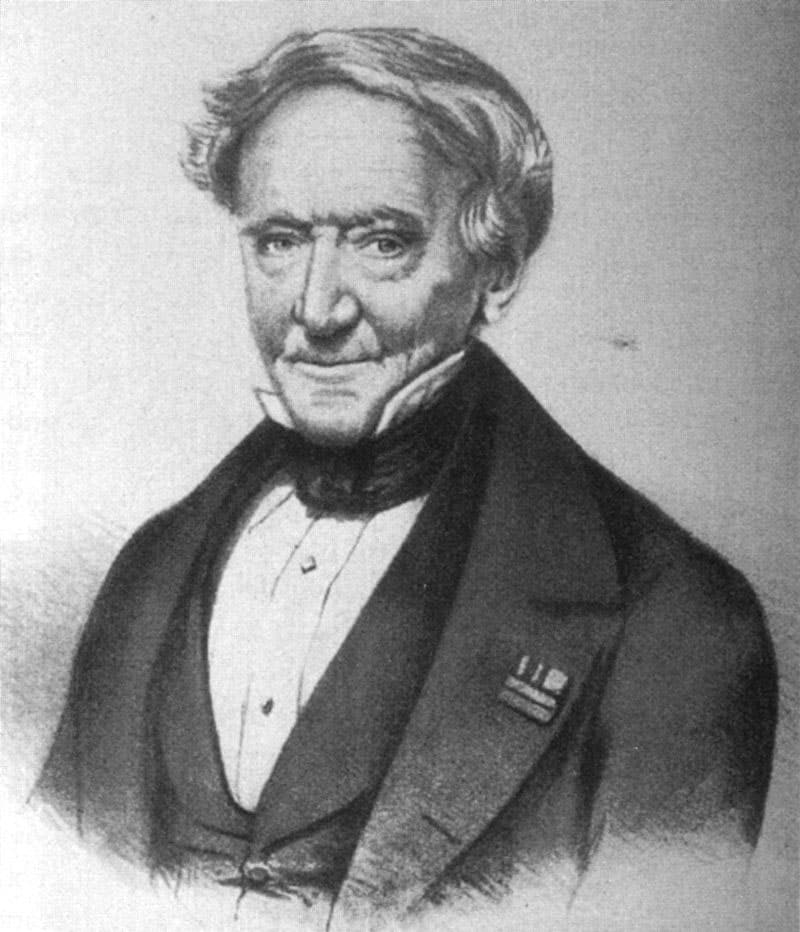
โ–ท The world of Pets: Dogs, cats, birds, reptiles, amphibians

Black-billed Parrot
Amazona agilis

Black-billed Parrot

Content

Description:


Anatomy-parrots

25 cm.. length and 178 g. of weight.

The Black-billed Parrot (Amazona agilis) It is the smallest of the Amazon parrots, and is one of only two species of Amazona endemics Jamaica.

This species, brightly colored, has a plumage, mostly, of color green with them underparts lighter, green or yellow.

The slightly darker edges in feathers of the back of the neck, one dan scalloped effect. Flight feathers darker at the tip; feathers of the tail blue in the margins with red bases to outer feathers. Their eyes They are surrounded by a dark brown ring dark grey, and the bill is black.

Black-billed Parrot

The adult male they have the coverts red on the outer of the wings, While these feathers They are usually green in females and in the immature.

  • Sound of the Black-billed Parrot.

Habitat:

Video "Black-billed Parrot"

Parrots in the world

It is in the humid limestone forests to elevations of 1.600 m. They can be seen in the upper canopy, and they can also be found foraging in cultivated land and plantations near the edge of the forest.

Form groups 6 to 30 individuals.

Reproduction:

The Black-billed Parrot used for nest the tree holes are formed from or related to weathering processes and pathogen attacks insects, at least a 18 meters above the ground. It has reported the use of cavity left by the Jamaican Woodpecker (Melanerpes radiolatus).
Like other species of parrots, the vigorous vocalizations among couples announce nesting territories.

The breeding season It is from March to August. The laying is of 2-4 eggs, with a range of about 48 hours between successive eggs. Eggs are incubated only by the female during 24 days. During this time the male will feed and exchange food with female. The incubation It begins after the first egg is placed, so hatching occurs at intervals, with up to seven days between the first and last hatching. Chicks this amazon They spend up to eight weeks in the nest.

Most nest failures do so in the early mating period., as a result of predation by Jamaican Boa (Epicrates subflavus) (Gruber 1980) and to a lesser extent Jamaican Crow (Corvus jamaicensis).

Food:

The Black-billed Parrot It feeds on fruit, seeds, dried fruits, berries and flowers in the forest canopy. The populations of this species will move in response to the location of food sources. This species also feed on crops and can cause considerable damage to fruit ripening.

Distribution and status:

Size of its range (breeding/resident): 5.100 km2

Its distribution area it is restricted to mid-level moist limestone forests, which have been drastically reduced in recent 40 years. Locally common by all the Cockpit Country, particularly in disturbed edge habitat where it is more common than the Yellow-billed Parrot (Amazona collaria), with which occasionally is associated.

The populations of the Black-billed Parrot also they found in Mount Diablo, in the center of the island. Historical reports also placed at the eastern end of the island, although recent sightings in that area are rare. But, small flocks have been recently in the John Crow Mountains. Preliminary surveys indicate population estimates much higher than those described above, and possibly more than 10.000 individuals in the region of Cockpit Country (C. Levy in some 1999).

Conservation:

State of conservation โ“˜


Vulnerable Vulnerable โ“˜ (UICN)โ“˜

โ€ข Current category of the Red List of the UICN: Vulnerable.

โ€ข Population trend: Decreasing.

โ€ข Population size : 6000-15000

Rationale for the Red List category

This species has a range very small within which its habitat is declining in extent, area and quality; and additional reductions of the population are being caused by the trampeo and predation, qualifying the species as Vulnerable. Currently it does not qualify as endangered because the habitat is severely fragmented and is known in more than five places. But, the species can requalify for inclusion in a top list in the future due to population decline likely if the three proposed mining concessions Cockpit Country They are awarded.

Justification of the population

Preliminary population estimates are those that best place the world population in the band between 10.000 and 19.999 individuals (S. Koenig in a bit., 2008). This is equivalent to 6,667-13,333 mature individuals, rounded here to 6,000-15,000 mature individuals. Further studies are needed to get an accurate figure.

Justification of trend

The data suggest that decrease of at least 50% of the population of this species could occur in the next 40-50 years as a result of habitat destruction due to three proposed mining concessions, two of which have recently been granted (Koenig, 2008). But, It is not sure if the third concession is granted (S. Koenig in some. 2010), and as such it is projected to suffer a decrease of species 30-49% over the next 37 years (three generations).

Conservation Actions Underway

โ€ข CITES Appendix II. protected under the Protection Act Wildlife Jamaica and Endangered Species Act of 2000, which together prohibit keeping the species as a domestic animal and local and international trade.

โ€ข Since 1995 He has worked to delineate its distribution, estimate the size of the population, identify long-term factors limiting reproductive performance and train local people in research methods and techniques for monitoring (Davis 1997, BirdLife Jamaica in little 1998).

โ€ข Habitat in the Blue Mountains National Park and John Crow, but the implementation and management of the park are weak (BirdLife Jamaica in little 1998).

โ€ข There is a permanent campaign of public awareness high-profile to prevent bauxite mining in Cockpit Country, by having the area declared closed to mining by the Minister's Discretion (S. Koenig in some. 2007, 2009).

โ€ข Proponents remain optimistic that, while losing a large area of รขโ‚ฌโ€นรขโ‚ฌโ€นhabitat, a large area of โ€‹โ€‹mining habitat will be declared closed (S. Koenig in some. 2007, 2009).

โ€ข Discussions have started that may lead to the ban the importation of psittacine to Jamaica to reduce the risk of leakage and hybridisation (S. Koenig in some. 2007, 2009).

โ€ข There are populations of captive breeding.

Conservation Actions Proposed

โ€ข Survey to delineate the range and evaluate the numbers (BirdLife Jamaica in little 1998).

โ€ข To establish a monitoring program long-term.

โ€ข Designate a Cockpit Country closed to mining.

โ€ข Ensure the de facto protection of the Blue Mountains National Park and John Crow (BirdLife Jamaica in little 1998).

โ€ข Design and implement Educational programs in the area occupied by the species and adjacent areas (BirdLife Jamaica in little 1998) and develop a structured captive breeding program.

โ€ข Improve the application of the legislation against poaching.

The Black-billed Parrot in captivity:

CITES Appendix II. protected under the Protection Act Wildlife Jamaica and Endangered Species Act of 2000, which together prohibit keeping the species as a domestic animal and local and international trade.

Populations of captive breeding.

Alternative names:

Black-billed Parrot, Active Amazon, Active Parrot, All-green Amazon, All-green Parrot, Black billed Parrot, Black-billed Amazon (English).
Amazone verte (French).
Rotspiegelamazone (German).
Papagaio-de-bico-preto (Portuguese).
Amazona de Pico Negro, Amazona Jamaicana Piquioscura (espaรฑol).


scientific classification:

Carl Linnaeus

Order: Psittaciformes
Family: Psittacidae
Genus: Amazona
scientific numberor: Amazona agilis
Citation: (Linnaeus, 1758)
Protonimo: Psittacus agilis


Images Black-billed Parrot:


Species of the genus Amazona


Sources:

Avibase
Parrots of the World โ€“ Forshaw Joseph M
Parrots A Guide to the Parrots of the World – Tony Juniper & Mike Parr
Birdlife

Photos:

(1) – A Black-billed Parrot in Jamaica By Ron Knight from Seaford, East Sussex, United Kingdom (Black-billed Parrot) [CC BY 2.0], via Wikimedia Commons
(2) – Amazona agilis in Wuppertal zoo By Simon J. Tonge [CC BY 3.0], via Wikimedia Commons
(3) – A Black-billed Amazon at Vienna Zoo, Schonbrunn Palace, Vienna, Austria By Alois Staudacher (Rotspiegelamazone) [CC BY 2.0], via Wikimedia Commons
(4) – A Black-billed Amazon at Vienna Zoo, Schonbrunn Palace, Vienna, Austria By Alois Staudacher (Rotspiegelamazone) [CC BY 2.0], via Wikimedia Commons
(5) – A Black-billed Parrot in Jamaica By Ron Knight from Seaford, East Sussex, United Kingdom (Black-billed Parrot) [CC BY 2.0], via Wikimedia Commons
(6) – A Black-billed Amazon at Vienna Zoo, Schonbrunn Palace, Vienna, Austria By Alois Staudacher (Rotspiegelamazone) [CC BY 2.0], via Wikimedia Commons
(7) – Black-billed Amazon in the John Crow Mountains, Portland, Jamaica By Brennan Mulrooney (originally posted to Flickr as Black-billed Parrot) [CC BY 2.0], via Wikimedia Commons
(8) – A Black-billed Parrot in Jamaica By Ron Knight from Seaford, East Sussex, United Kingdom (Black-billed Parrot) [CC BY 2.0], via Wikimedia Commons
(9) – Psittacus agilis By Barraband, Jacques; Bouquet; Le Vaillant, Franรงois [CC BY 2.0 or Public domain], via Wikimedia Commons
(10) – [Little green parrot (Black-billed Amazon [Amazona agilis])] From Natural History of Parrots (by Francois Levaillant, 1801-1805) by Jacques Barraband – Wikimedia

Sounds: Ross Gallardy, XC308430. accessible www.xeno-canto.org/308430