โ–ท The world of Pets: Dogs, cats, birds, reptiles, amphibians

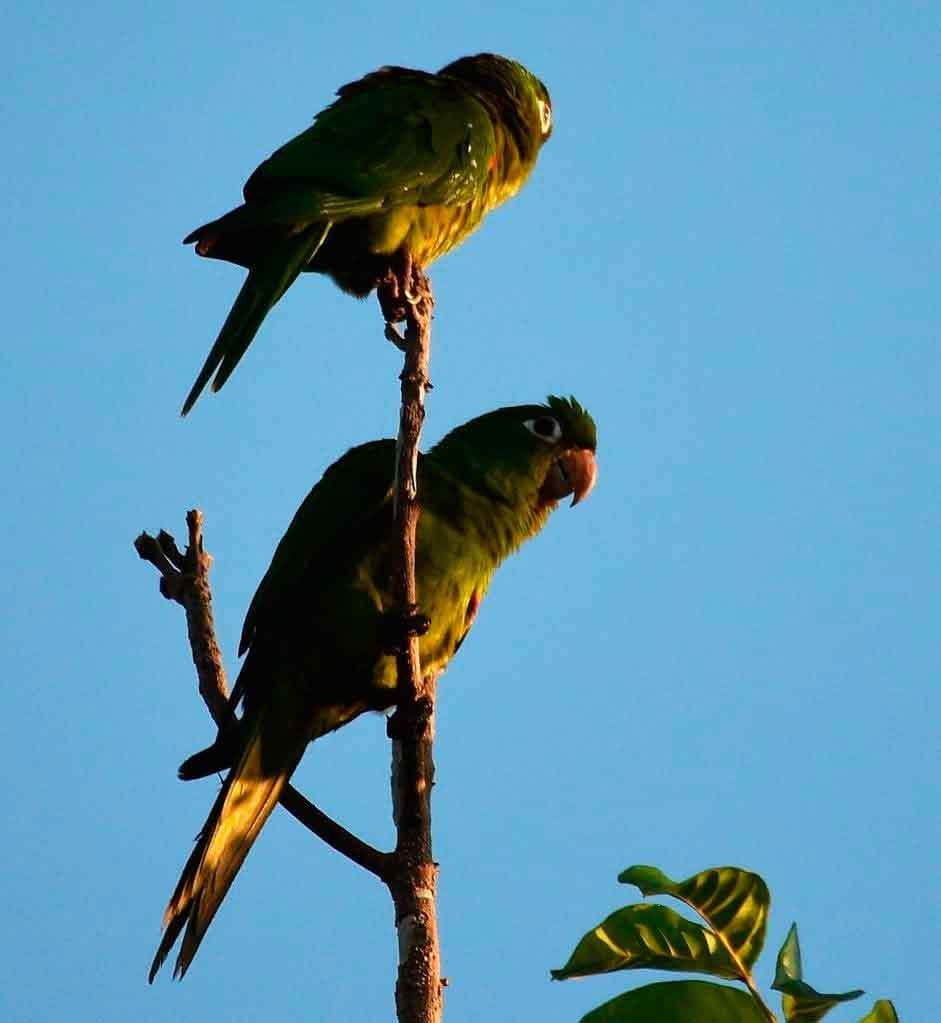
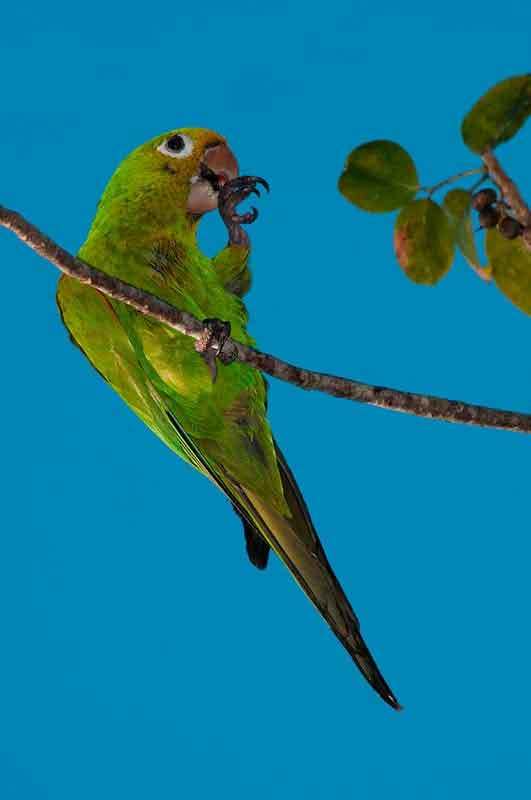
Blue cheeked Parrot
Amazona dufresniana

Blue cheeked Parrot

Content

Physical characteristics


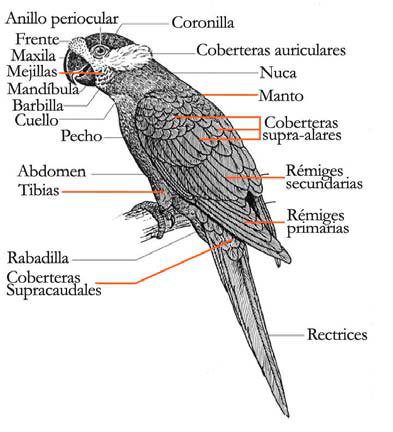
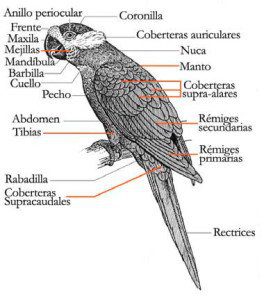
Anatomy-parrots

34 to 37 cm.. height and between 480 and 600g. weight.

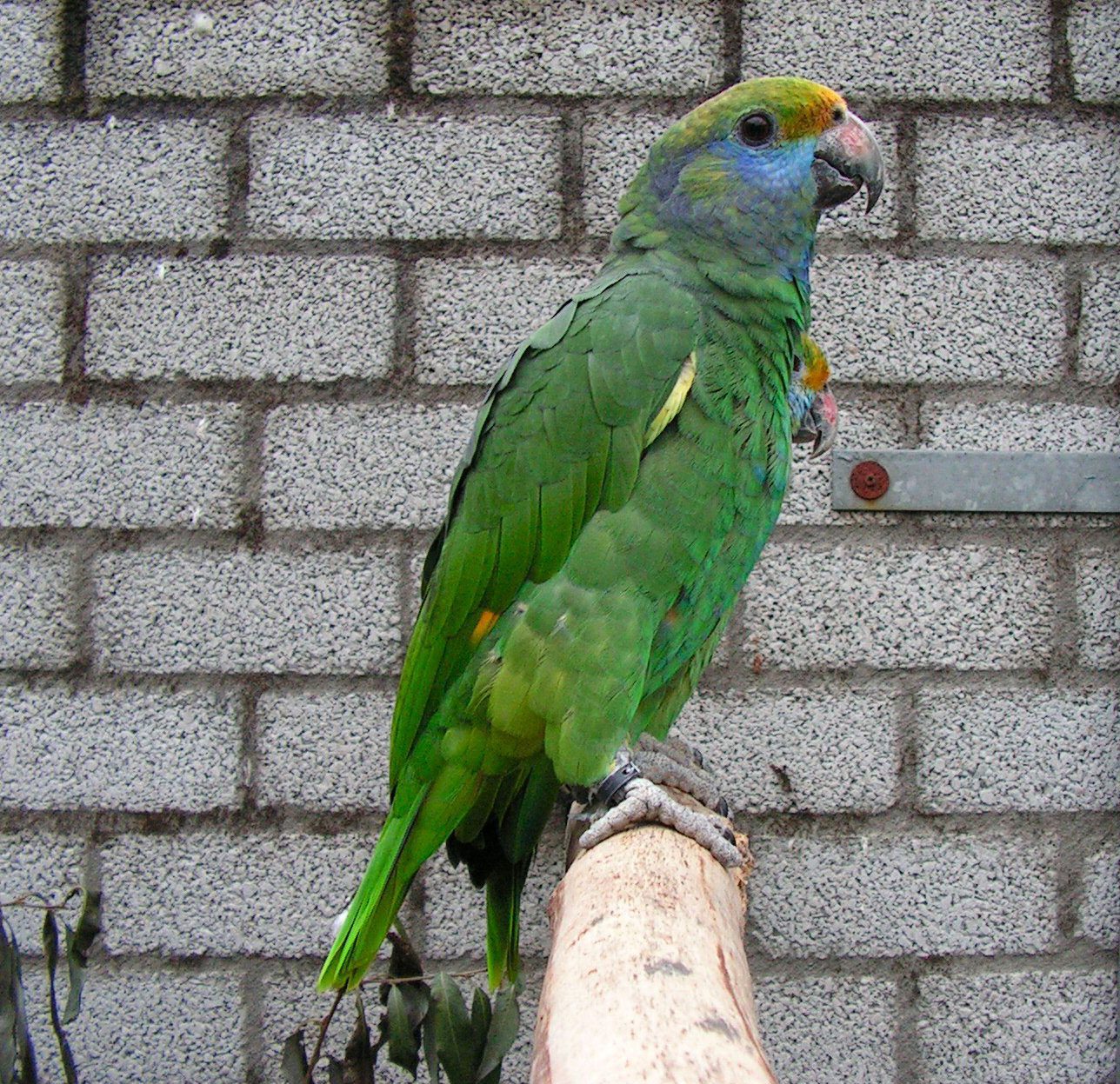
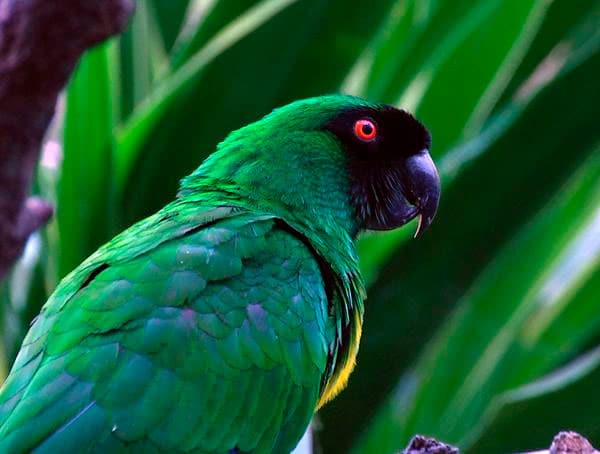
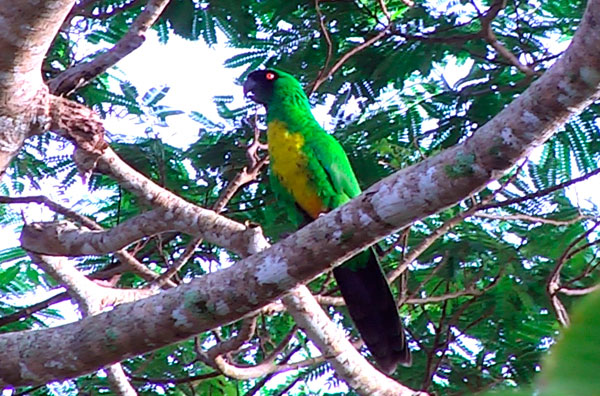
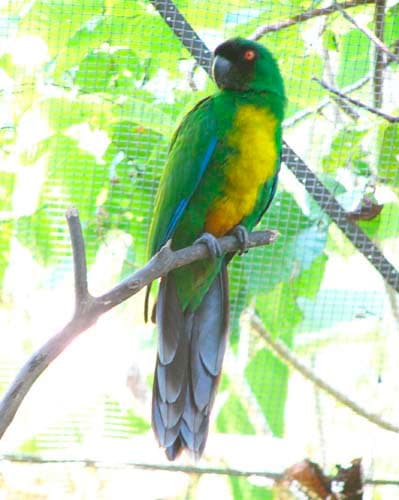
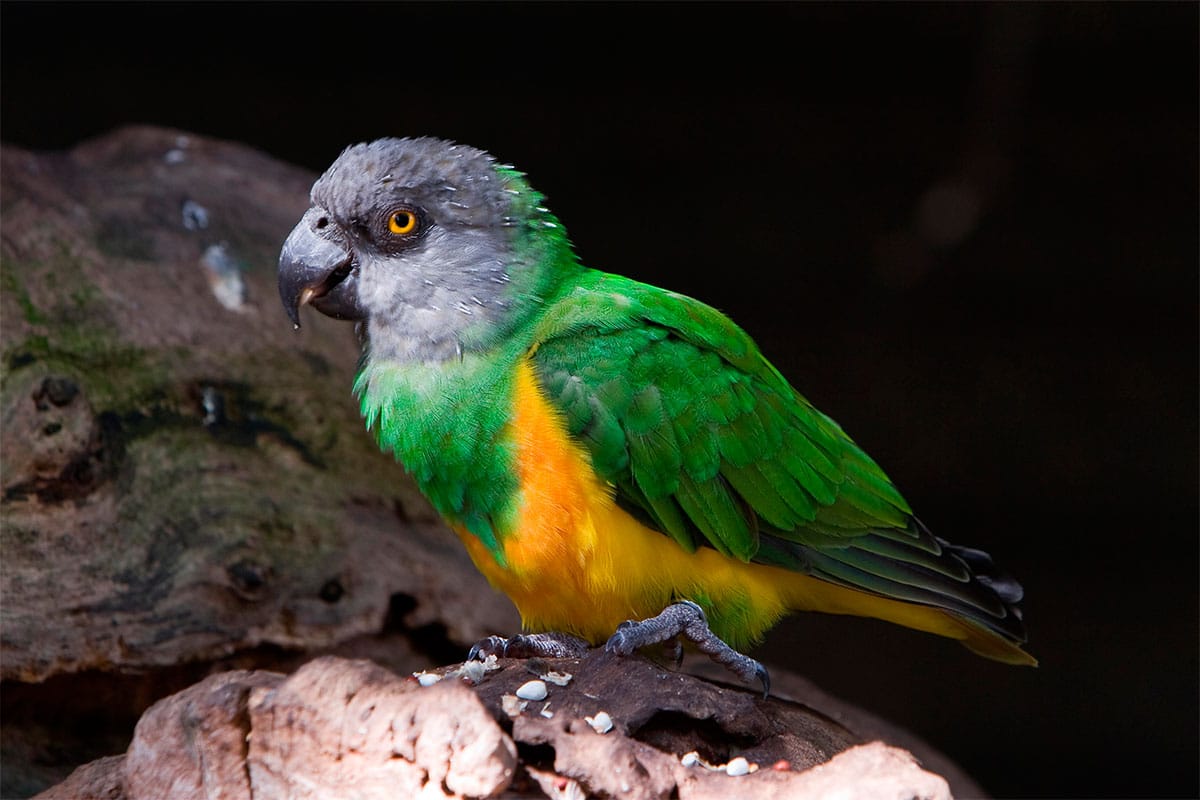
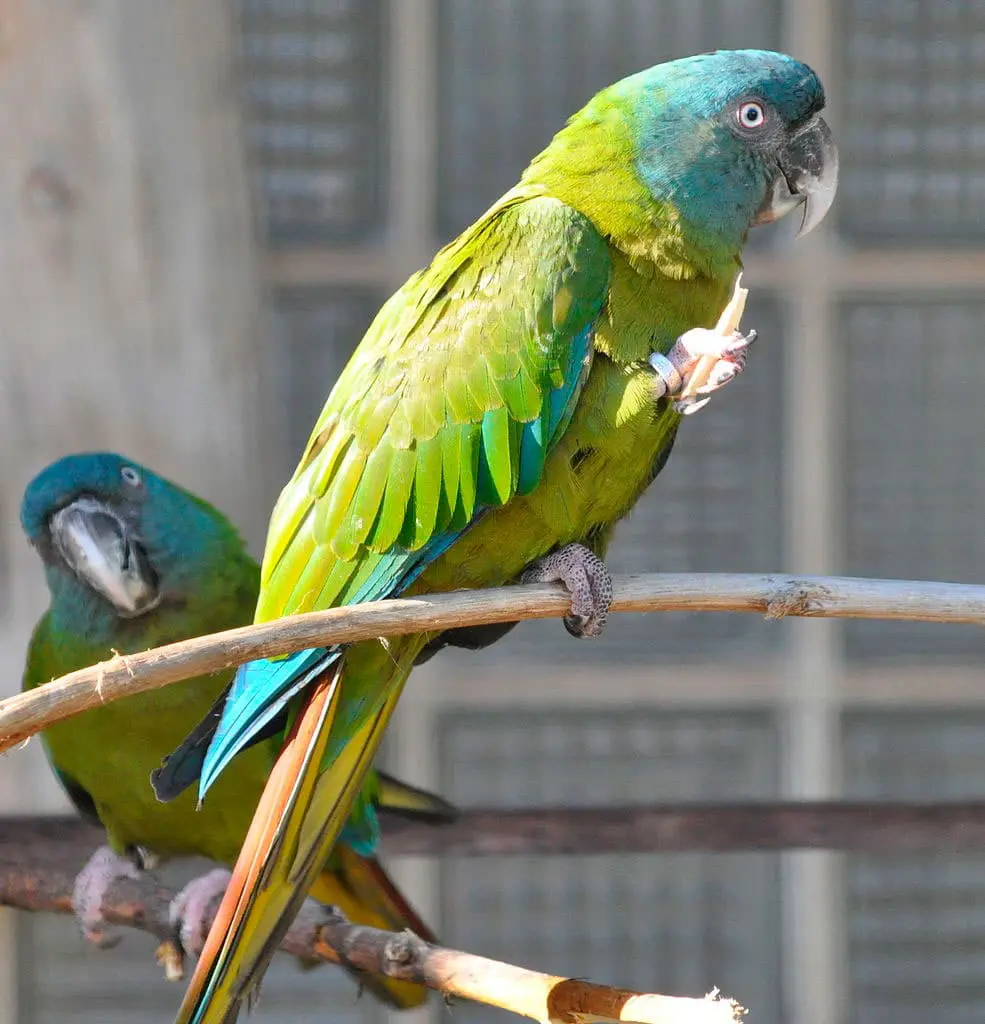
The Blue cheeked Parrot (Amazona dufresniana) It is easily identifiable by the orange yellow wing patch, much more noticeable in flight.

Head with orangeade narrow stripe on the forehead; Yellow Crown, cheeks, base of the beak, sides of the neck to almost light blue Crown.

End of the wing dark, tail with yellow border, rest of green body.

Young birds with orange-yellow feathers on the front of the head and a violet color in the bottom of the cheeks.

The binomial name of this species is in honor to the French zoologist Louis Dufresne.

Video "Blue cheeked Parrot"

Blue cheeked Parrot habitat:

It lives in humid forest, of gallery and sheets, up to 1700m.

It can also be seen sporadically in coastal areas, possibly in response to food availability.

Reproduction Blue cheeked Parrot:

They walk in pairs or small groups of no more of 4 to 8 individuals.

Reproduction and feeding, there is little information.

In the wild, the breeding season occurs in March in Guyana. In captivity, the female lays 3 eggs that we do not know exactly the incubation period.

Food Blue cheeked Parrot:

We don't know the details of your menu, but it is assumed that they eat almost exclusively seeds, and berries.

Distribution Blue cheeked Parrot:

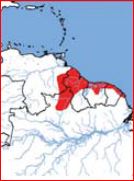
Amazon-fronted Parrotlet location

The Amazona dufresniana It is located in southeast Venezuela (Bolรญvar, with a record isolated on Amazon), Northern Guyana (north of 5ยฐN), Northeast Suriname and French Guiana northeast (Y way Collar 1991).

There are reports of Para and Amapa, Brazil, where its occurrence seems likely, but there is no conclusive records (Y way Collar 1991, Collar 1995). The scarcity of records from frequently surveyed areas suggests that it is a low-density and rare species., at the least in parts of its range (Y way Collar 1991).

a Guyana, Healthy populations are known in the area in northwestern Aruka Guyana, between the Aruka and Amakuru rivers, the Kaieteur National Park and the Kuribong River, and the Iwokrama Forest Reserve (A. Narine a slightly. 2010)

Conservation:

State of conservation โ“˜


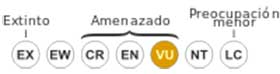
Near-threatened Near Threatened โ“˜ (UICN)โ“˜

It is in the category of near threatened. (NT), due to habitat loss and illegal trade.

Classified as near-threatened (NT) on the IUCN Red list (1) listed in Appendix II of the CITES (4).

Conservation in March CITES Appendix II actions. Banded from Canaima National Park (Venezuela), Iwokrama forest reserve (Guyana) and the Brownsberg nature park (Suriname).

Blue cheeked Parrot in captivity:

Rare in captivity.
Placid temperament, seems less active than many Amazon.

Alternative names:

– Blue cheeked Parrot, Blue-checked Parrot, Blue-cheeked Amazon, Blue-cheeked Parrot, Dufresne’s Amazon, Dufresne’s Parrot (English).
– Amazone de Dufresne (French).
– Goldmaskenamazone, Granada Amazone (German).
– Papagaio-de-bochecha-azul (Portuguese).
– Loro de cachetes azules, Amazona Cariazul, Amazona de Cara Azul, Loro cariazul (espaรฑol).

scientific classification:

– Order: Psittaciformes
– Family: Psittacidae
– Scientific name: Amazona dufresniana
– Citation: (Shaw, 1812)
– Protonimo: Psittacus dufresnianus

Blue cheeked Parrot images:


Species of the genus Amazona


Sources:

– Parrot Book, Parrots and macaws Neotropical

Photo:

1 – papageien.org
2- by Matthieu Sontag[GFDL or CC BY-SA 4.0-3.0-2.5-2.0-1.0], via Wikimedia Commons
3 – By Bjoertvedt (Own work) [CC BY-SA 3.0 or GFDL], via Wikimedia Commons
4 – papageien.org
5 – by ยฉMichel Clement – gepog.org

Sound: Olivier Claessens

โ–ท The world of Pets: Dogs, cats, birds, reptiles, amphibians

Orange-breasted Fig-Parrot
Cyclopsitta gulielmitertii

Orange-breasted Fig-Parrot

Content


Anatomy-parrots

Description

11 to 13 cm.. length and a weight between 27 and 34 g..

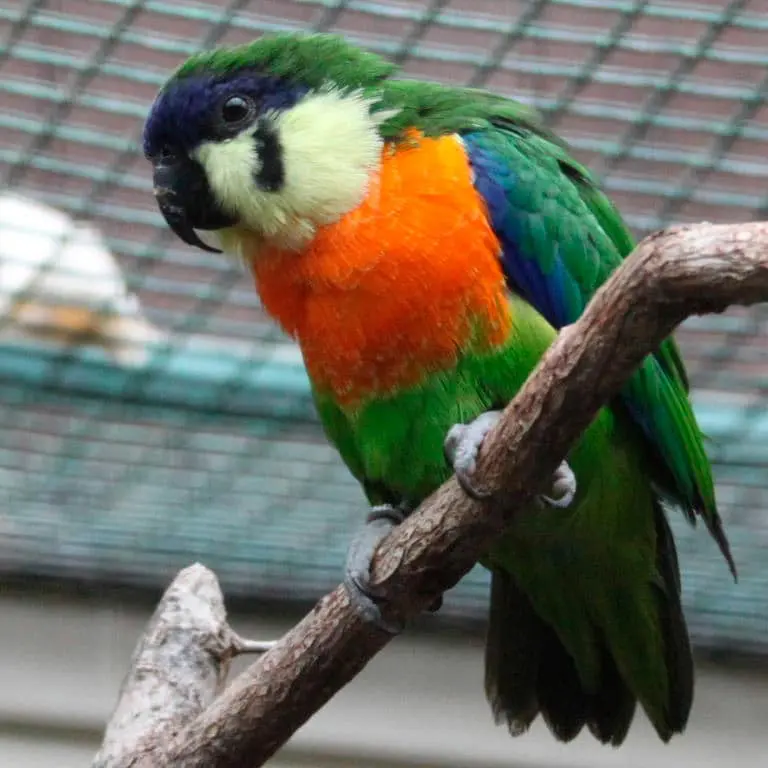
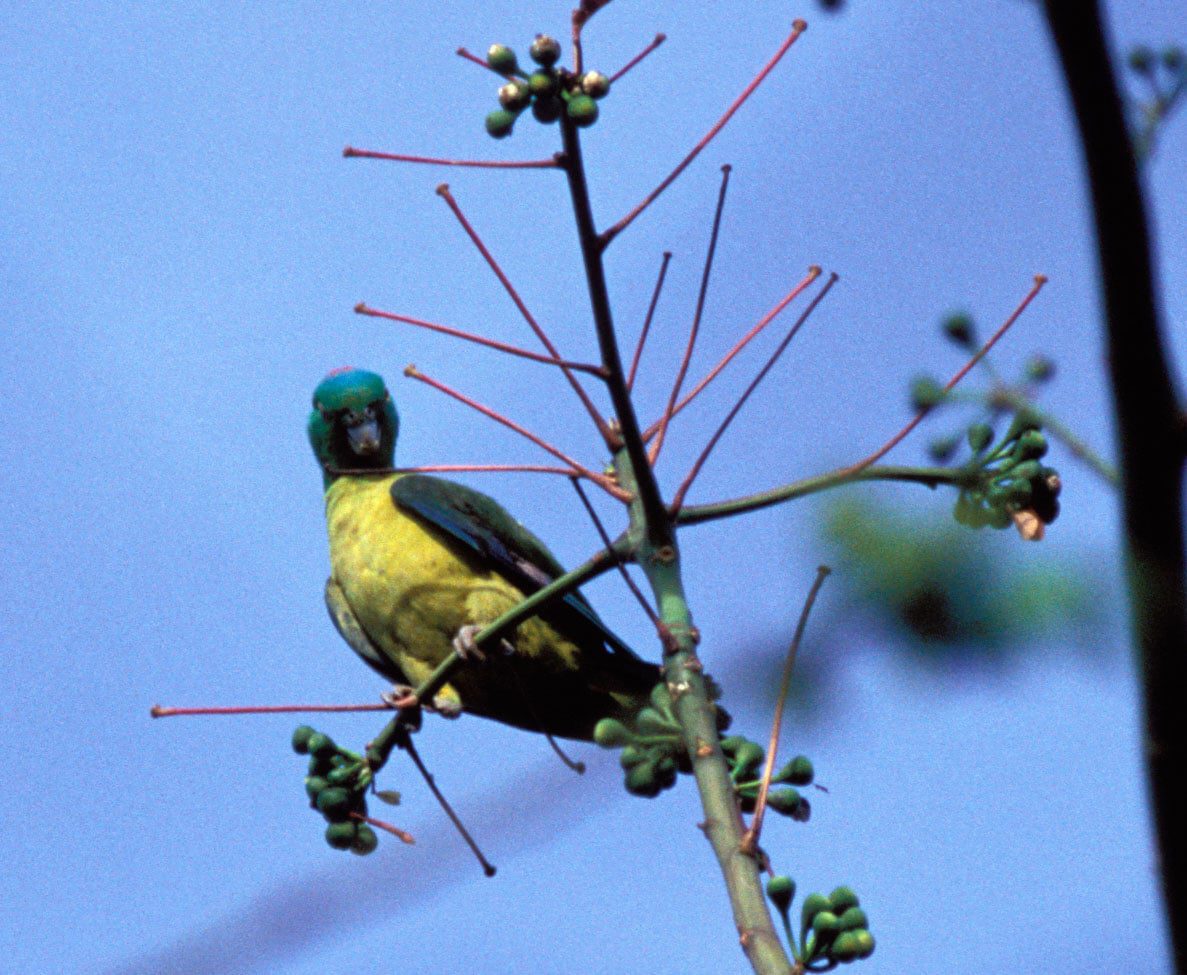
The forecrown of the Orange-breasted Fig-Parrot (Cyclopsitta gulielmitertii), back of the crown and area behind the eyes are a deep blue; pale yellow the lores, throat and both sides of the head; black spot on the back of the cheek; Orange the top part of the abdomen; the interior of the wing-coverts Yellow-edged; wide bands of pale yellow under the wings. Bill blackish gray. The eyes dark brown.

The female similar to the male, but pale yellow on the front of the cheeks black and white on the back. Frontal of the cheeks bordered below green with blue stripe; the ear-coverts on both sides of neck, orange; underparts green.

The immature as females, but orange, Since the ear-coverts and sides neck to the area below, faced with the cheeks; chest male washed with orange-brown.

Subspecies description

Description of the 7 subspecies
  • Cyclopsitta gulielmitertii gulielmitertii

    (Schlegel, 1866) – The nominal


  • Cyclopsitta gulielmitertii nigrifrons

    (Reichenow, 1891) – 13 cm.. length. Area of the forecrown, crown and behind the eye, black. Female without chest Neither abdomen orange, cheeks white-yellowish color bordered by a blackish band. back of the cheeks and headphones feathers bright orange. Under black band greenish blue. The youth they are equal to adults.


  • Cyclopsitta gulielmitertii ramuensis

    (Neumann, 1915) – It is more small, of about 11 cm.., with the area of the forecrown, crown and behind the eye Black interspersed with dark blue, cheeks and headphones feathers whitish in colour. Breast and abdomen cream color. females as males but behind the eye and cheeks with a broad black patch interspersed with dark blue. Breast whitish interspersed with orange feathers. Abdomen brighter yellowish green. The youth equal to adults.


  • Cyclopsitta gulielmitertii amabilis

    (Reichenow, 1891) – It is more small, a few 11 cm.. Forehead, crown and rear of the eye matte black. Cheeks Black interspersed with dark blue. females similar to the males but with the patch from behind the eye Black interspersed with dark blue matte. Headphones feathers whitish. The juveniles as in adult females but with the upper part of the chest greener


  • Cyclopsitta gulielmitertii suavissima

    (Salvadori, 1876) – Smaller, a few 11 cm.., area of the forecrown, crown and behind the eye blue color, great patch on cheek black. Headphones feathers and cheeks white-yellowish color and chest and top of the abdomen reddish orange. The female It has a hue of different reddish orange and black spot of the cheek is Matt and interspersed with dark blue color. The youth adult females are, but marks of the head they are more off.


  • Cyclopsitta gulielmitertii fuscifrons

    (Salvadori, 1876) – As the diophthalma gulielmitertii suavissima but the area of the forecrown, crown and back of the eye, blackish brown. The females similar to the Cyclopsitta gulielmitertii suavissima but back of the cheeks, front and behind the eyes blackish brown. The youth as adult females.


  • Cyclopsitta gulielmitertii melanogenia

    (Rosenberg,HKB, 1866) – Of 11 cm.. length. The male is as the diophthalma gulielmitertii suavissima, the female also with the fused in light green Orange tones in the abdomen. The youth are like adults.

Habitat:

It is distributed in the rainforest, swamp forest, forest of Melaleuca , dense sheets and partially cleared areas from sea level to a 300 meters above sea level, rarely recorded in higher altitudes to the 800 m, the largest known altitude is 1.100 m.

They are usually in small groups assets of 6 to 10 individuals, whether it is flying above the treetops, or congregate where can feed on figs and other fruits in the canopy or plants at lower levels.

Bird feeding can be hard to spot, since they climb around the silent tree trunks, although they can pivot upside down as they feed, sometimes dropping food.

Reproduction:

The nests of the Orange-breasted Fig-Parrot found in arboreal termite, at the top of the trees of the forest. Up to three holes can be dug., and nesting they can be community. The nests also found at the base of a complex of epiphytes. There is little information available upon the breeding season, activity in apparent nests have been observed between the months of September and June. These sites can, However also, have been used to settle, and a record in January of a male regurgitating food near an entrance hole probably indicates breeding during that month at least..

Food:

The diet includes seeds of figs and other fruits, as well as small whole figs, nectar flower e insects occasional.

Distribution:

Widely distributed, abundant and easily observable in the lowland tropical rainforest, throughout much of New Guinea. The Orange-breasted Fig-Parrot most Western they are isolated, only seen in Salawati in the West of the islands of papua, and in the lowlands of theDoberai Peninsula, West Papua.

In other parts of New Guinea the range is continuous through the lowlands of the North of the eastern edge of Yellowfinch Bay around the memberamo river, throughout the region of the Sepik River and the lowlands of the Huon Peninsula, to Milne Bay, at the eastern end.

The range continues west through the southern lowlands of New Guinea through the Purari and Fly River regions to the southeastern lowlands of West Papua, on the 138 ยฐ E; also in the islas Aru.

The Orange-breasted Fig-Parrot seems to be more common in southern New Guinea in the North.

Subspecies distribution

Distribution of the 7 subspecies
  • Cyclopsitta gulielmitertii gulielmitertii

    : The nominal


  • Cyclopsitta gulielmitertii nigrifrons

    : North of New Guinea between Mamberamo and Sepik Rivers.


  • Cyclopsitta gulielmitertii ramuensis

    : District Ramu River, North of Papua New Guinea; It is thought that it may be a cross between the nigrifrons and the amabilis, therefore, probably not a valid subspecies.


  • Cyclopsitta gulielmitertii amabilis

    : Northwest of Papua New Guinea from peninsula Huon to Milne Bay.


  • Cyclopsitta gulielmitertii suavissima

    : Southwest of Papua New Guinea West of Gulf of Papua.


  • Cyclopsitta gulielmitertii fuscifrons

    : South of New Guinea between Mimika and Fly Rivers.


  • Cyclopsitta gulielmitertii melanogenia

    : Aru Islands, Indonesian.

Conservation:


minor concern


โ€ข Current IUCN Red List category: Least concern

โ€ข Population trend: Stable


The size of the world population It has not been quantified, due to the recent taxonomic divisions, Although it is estimated above 100,000 specimens.

The population suspected to be stable in the absence of evidence of any reduction or substantial threats.


"Orange-breasted Fig-Parrot" in captivity:

Rare in captivity.

Alternative names:

– Orange-breasted Fig-Parrot, Blue-fronted Fig-parrot, Orange-breasted Fig Parrot, Orange-breasted Fig-Parrot (nominate), Orange-breasted Fig-Parrot (Orange-breasted) (ingles).
– Psittacule ร  poitrine orange, Psittacule ร  poitrine orange (nominal), Psittacule ร  poitrine orange (nominale), Psittacule ร  poitrine orange (race nominale) (French).
– Orangebrust-Zwergpapgei (German).
– Cyclopsitta gulielmitertii (Portuguese).
– Lorito de Pecho Naranja, Lorito Pechinaranja (espaรฑol).

scientific classification:

– Order: Psittaciformes
– Family: Psittaculidae
– Scientific name: Cyclopsitta gulielmitertii
– Citation: (Schlegel, 1866)
– Protonimo: Psittacula gulielmi III

Images ยซOrange Breasted Parrotยป:

Videos "Orange-breasted Fig-Parrot"

————————————————————————————————

ยซOrange Breasted Parrotยป (Cyclopsitta gulielmitertii)


Sources:

– Avibase
– Parrots of the World โ€“ Forshaw Joseph M
– Parrots A Guide to the Parrots of the World – Tony Juniper & Mike Parr
– Birdlife
– Loromania

– Photos:

(1) – animalphotos
(2) – A female Orange-breasted Fig-parrot in the Walsrode Bird Park, Germany By Quartl (Own work) [CC BY-SA 3.0], via Wikimedia Commons
(3) – A male Orange-breasted Fig-parrot in the Walsrode Bird Park, Germany – ยซCyclopsitta gulielmitertii qtl1ยป by Quartl – Own work. Licensed under CC BY-SA 3.0 via Wikimedia Commons.
(4) – Birds-pet-wallpapers
(5) – animalphotos

– Sounds: Frank Lambert (Xeno-canto)

โ–ท The world of Pets: Dogs, cats, birds, reptiles, amphibians

Blue-winged Racquet-tail
Prioniturus verticalis


Blue-winged Racquet-tail

Content

Blue-winged Racquet-tail

Description

27 cm. long, not to mention their racquets, measuring of 5 to 6 cm..

The Blue-winged Racquet-tail (Prioniturus verticalis) It has a bright green head, brighter around the lores and the base of the beak; front of the bright blue Crown with central red dot.

Light yellowish green mantle; back and rump Green. green wings, with a wash of dark blue in both bands of all primaries. green wing feathers. The underparts light yellowish-green, more green on the belly and coverts infracaudales. At the top of the queue, Foreign feathers green with black tips; dark the infracaudales, with blue bathed at the edges of the vane inner; tail blades, blackish

Whitish gray peak; dark brown irises: grey legs.

The female It has a light blue Crown, with the absence of the male Red stain: the areas of green yellow more turned off.

Young without snowshoes.

Habitat:

It lives in the lowlands of humid forests., next to forests, the mangroves, dense remnants of forest fragments and agricultural areas. The birds are seen most frequently in pairs, in quick flights over the top of the dense vegetation. They feed on fruit trees, staying calm and hard to spot.

Reproduction:

A nest was discovered in September 1991 with a female: the nest was in a large Palm tree with a broken lid in a Grove near the forest.
Little else is known about the reproductive ecology of this species..

Food:

It is known that it feeds on fruit trees, little more is known about their eating habits.

Distribution:

Is distributed in the Islands to the South-West of the Sulu archipelago, including Tawi-tawi, Bongao (considered probably extinct), Manuk Manka, Sanga Sanga (probably extinct), Tumindao, (There are no recent records) and Sibutu. Although reports indicated that the species was common in the mangroves of Tawi-tawi during the last century, Today it seems to have suffered a serious decline. Today the world population is estimated to be less than 5.000 and the species is being affected by the capture and the rapid elimination of the last forests on the islands.

The birds are also, apparently, used for shooting practice by the Islanders. In 1991 small numbers were observed near virgin forests. During 1994, in Tawi-tawi, There was a rapid elimination of its remnant forest and only six birds were observed.

Conservation:


critical hazard


โ€ข Current category of the Red List of the UICN: Critical Hazard

โ€ข Population trend: Decreasing

This parrot has been upgraded to the category a Critically Endangered due to observations that suggest that it now has a very small population, with the suspicion of a fast and rapid deterioration due to the continuous logging of forests, as well as his persecution. Conservation actions are hampered by security concerns. Urgent action is required to assess the gravity of the situation of the species, lessen the impact of threats, start your recovery.

The population was previously estimated at less of 1.000 mature individuals (BirdLife International 2001), but the most recent observations indicate that it could currently be less than 250 mature individuals, Therefore the population is now in the band of 50 to 249 mature individuals, probably equivalent to a total population of 75 to 375 individuals.

Military activity and the insurgency are still presenting a serious obstacle to the general conservation activity in the Sulus. There is no formal protected areas in the archipelago. In 1997, began an awareness campaign focused on the conservation of terrestrial biodiversity in Tawi-Tawi. There is a proposal to finance the conservation of Tawi Tawi, Coastal zone Sulu, Although neither the result nor the potential benefits for the species are known. A municipal resolution has been developing, hoping to put an end to the hunting of endemic species (I. Sarenas in litt., 2010).

"Blue-winged Racquet-tail" in captivity:

Unknown in captivity.

Alternative names:

– Blue-winged Racquet-tail, Blue winged Racquet tail, Blue-winged Racket-tail, Blue-winged Racket-tailed Parrot, Blue-winged Racquet Tail, Blue-winged Racquet-tailed Parrot, Sulu Racket-tail, Sulu Racket-tailed Parrot, Sulu Racquet-tail, Sulu Racquet-tail Parrot, Sulu Racquet-tailed Parrot (ingles).
– Palette des Sulu, Palette ร  ailes bleues, Perroquet ร  raquette des Sulu (French).
– Sulu-Spatelschwanzpapagei, Sulu Spatelschwanz-Papapgei, Sulupapagei (German).
– Prioniturus verticalis (Portuguese).
– Lorito momoto de las Sulu, Lorito Momoto Sulu, Lorito-momoto de las Sulu (espaรฑol).

scientific classification:

– Order: Psittaciformes
– Family: Psittaculidae
– Genus: Prioniturus
– Scientific name: Prioniturus verticalis
– Citation: Sharpe, 1893
– Protonimo: Prioniturus verticalis

————————————————————————————————

โ€œSulu Motmot Parrotโ€ (Prioniturus verticalis)

Sources:

– Avibase
– Parrots of the World โ€“ Forshaw Joseph M
– Parrots A Guide to the Parrots of the World – Tony Juniper & Mike Parr
– Birdlife

– Photos:

(1) – preening in top of tree by Desmond Allen – Lynx
(2) – ยซPrioniturusverticaliskeulemansยป by {{{Name}}} – Ibis 1894. Licensed under Public Domain via Wikimedia Commons.

– Sounds: Desmond Allen (Xeno-canto)

โ–ท The world of Pets: Dogs, cats, birds, reptiles, amphibians

Australian Ringneck
Barnardius zonarius

Australian Ringneck

Content


Anatomy-parrots

Description

Among 32 to 44 cm.. length and a weight between 121 and 200 g..

Two species were traditionally recognized in the genus Barnardius, Barnardius zonarius and Barnardius barnardi, but both hibridaban in the contact area and are currently considered a single species.
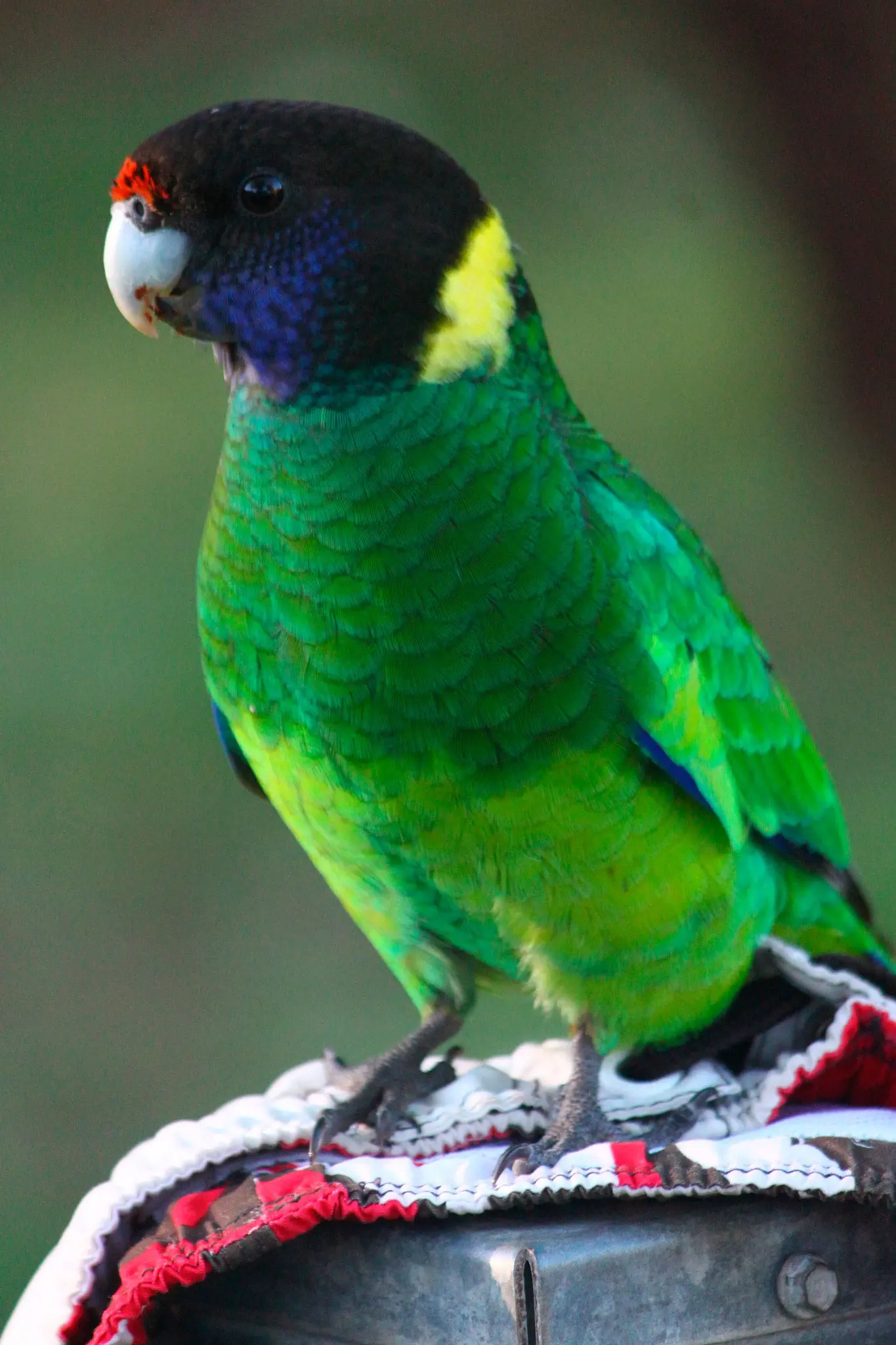
The Australian Ringneck (Barnardius zonarius) It has the head of blackish brown with cheeks, both sides of the throat and underside of the headset coverts densely dotted with dark blue (You can display a few red spots on the front of the Crown); the back of the neck of bright yellow.
Middle of the mantle of dark green with thin dark stripes; slightly more bright green rump; a little more off than the rump supracaudales coverts.

External Middle coverts slightly greenish-yellow color, Green the inner coverts, the large green with blue-green and pale inner margins coverts green outer margins in the outermost feathers; curve of the wing of Turquoise, It extends slightly towards small coverts; primary coverts dark brown with vane dark blue external; blackish flight feathers, strongly marginalized in foreign feathers, showing fusion from the blue color in the vane external to the blue gray of the tips.

Under, with turquoise coverts blackish flight feathers. Dark green chest with fine dark stripes; upper part of the abdomen of bright yellow, Green the lower belly area, slightly impregnated yellow; subcaudales coverts greenish-yellow. Central tail feathers of dark green merging to dark blue, the external of pale blue with dark bases and white tips. Under, pale blue tail.

The greyish white Peak: the Brown irises; legs grey

The female It has peak and smaller head, the slightly Browner head, and you can display a mark in the form of bar at the bottom of the wings.

The immature, they are a brand of pale bar on the wings (disappearing earlier in males than in females); they are more turned off, with a head of Brown and dissemination of greyish-Brown mantle and upper chest area; the tail is green above. Adult plumage is reached between 12 and 15 months.

Subspecies Barnardius zonarius

  • Barnardius zonarius semitorquatus

    (Quoy and Gaimard, 1830) – Of 40 cm.. length approximately. It is more than nominal, but with the red front, abdomen green more off, Pico mas grande. Female plumage more pale and head color more Brown, the Red coloration of the forehead is narrower in some absentee.

  • Barnardius zonarius zonarius

    (Shaw, 1805) – Equal to the Barnardius zonarius collared, but with a yellow abdomen and without the prominent crimson red stripe on the forehead, that if you have the subspecies collared.

  • Barnardius zonarius macgillivrayi

    (North, 1900) – Cloncurry Ringneck – Crown and nape of an intense green color and some reddish tones on the cheeks. Is lighter green shades, No red frontal band, and with a broad band uniform across your abdomen. Not recognized by all experts.

  • Barnardius zonarius barnardi

    (Vigors and Horsfield, 1827) – It has an intense green crown and nape and certain reddish tones on the cheeks.. Their underparts are Turquoise green with an irregular band yellow orange across the abdomen. Your back and mantle are blackish blue and also this subspecies has a red band on the forehead.
    Presumably either the nominal race.
Habitat:

Australian Ringneck

The Australian Ringneck is mainly sedentary, with occasional movements during extreme weather conditions. The species occupies a range of habitats, including eucalyptus red zones (Eucalyptus camaldulensis), along water courses, acacia scrub and mallee (Eucalyptus gracilis), eucalyptus open woodlands, agricultural fields, desert shrubland and suburban areas.

In general has adapted better to the effects produced by settlements that the Mallee Ringneck, and it has been particularly successful in the South-West wheat belt, in where the birds are observed while they eat at road verges. The subspecies collared has a more specific habitat, preferring the high forests of coastal eucalyptus, particularly marri (Eucalyptus calophylla).

The Australian Ringneck form strong pair bonds and, normally, is found in small family parties or groups of up to eight birds. They are usually visible, loud and inquisitive, being more active during the morning and evening. They tend to remain silent while they feed on the ground, but they chatter loudly when feeding in the canopy and when gathering to sleep after drinking, remaining assets after the sunset.

Reproduction:

The time of nesting is from June to February, starting earliest in the North.

The birds are territorial around the nest, and there are many fights at the beginning of the breeding season. In courtship, the male drops his wings, WAGs tail producing a buzzing sound, He chatters loudly and shakes head. Courtship feeding is also common. The nest is built at different heights, usually in the natural hollow of a tree based on decomposition of waste wood inside.

Between four and seven (normally five) white eggs are laid during the implementation, sometimes producing two offspring. The female incubates during 19 days and leaves the nest only to feed herself or be fed by the male. At the beginning, She feeds the chicks alone, but a week after hatching, the male joins food tasks. The young leave the nest about four weeks after. Family groups remain together for some time after the chicks have fled the nest..

Food:

The diet consists of nectar, flowers, seeds, fruit, insects and their larvae (that sometimes stripping the bark of lso trees). The cereal crops and orchards are often attacked by the Australian Ringneck, registering birds digging up onion bulbs (Romulea longifolia).

The more arboreal southwestern subspecies has preference by the ripe fruits of eucalyptus, especially those of marri.

Distribution:

The Australian Ringneck they are in the West, Central and South of Australia. Is distributed from Port Augusta, the Eyre Peninsula and Cordillera Gawler, to the North, through the center of Southern Australia in the Northern Territory, where stretches through of the MacDonnell Ranges and lies to the North of Newcastle Waters and Winnecke Creek.

Birds may also go more towards the East, sometimes up to the border of Queensland, and an off-eastern boundary record comes from Pine Creek in New South Wales.

In Western Australia, the species is increasing in the South West which concentrates around King George Sound, in the South, to murchison river, in the North, reaching inside for Kalgoorlie and Wiluna the east. Further north, is scattered through the Northwest corner, and extends eastward to the upper part of the Grey River system.

There is a small isolated population, probably, at the East end of Western Australia in the Gardiner Range region. Escapes have been recorded in the District of Port Wakefield, about Melbourne, Canberra, Sydney, Darwin and Hobart, in Tasmania.

A population of probable leak in the Lofty Mountains It was destroyed to prevent cross-breeding with the Mallee Ringneck, but there is a zone of hybridization with the Mallee Ringneck in the Montes Flinders. The two species are found and hybridize in other places also.

The world's population is piobablemente well above the current estimate of 100.000 specimens given by Lambert (1993).

A moderate number of captive.

The birds can be low temperatures under permit in some districts to prevent damage in orchards.

Subspecies B distribution. zonarius

Conservation:


minor concern


โ€ข Current category of the Red List of the UICN: Least concern

โ€ข Population trend: Growing
The size of the world's population has not been quantified, It is estimated over 100 000 specimens. The species, according to sources, is the most common species of birds in the wheat belt of Australia (pit et to the. 1997).

The population is suspected that it may be increasing. To mitigate the effects of the degradation of the habitat, new areas of suitable habitat are being created.

In the East, numbers are affected by scrub clearing Mallee and forests for agriculture. The Australian Ringneck they were considered vermin in Western Australia and in the seasons of hunting by be considered pests of orchards. Fugadas birds in aviaries are seen around the urban areas in the East.

"Australian Ringneck" in captivity:

Son aggressive toward other birds, especially during the breeding season, and it is better to accommodate them with a couple by Aviary.

Although friendly, they are not as sociable with people like other parrots. They are formidable chewing and require a heavy duty cage. You can learn to imitate.

Una muestra viviรณ 17,9 years in captivity. According to some sources, these animals can live up to 31,6 years in captivity, but this has not been verified.

Common in Europe, less in the United Kingdom and United States. UU.

Alternative names:

– Australian Ringneck, Banded Parakeet, Banded Parrot, Barnard’s Parakeet, Barnard’s Parrot, Bauer’s Parakeet, Buln Buln, Buln-buln Parakeet, Buln-buln Parrot, Cloncurry Buln-buln, Cloncurry Parrot, Eastern Ringneck, Mallee Parrot, Mallee Ringneck, Mallee Ringneck-Parrot, Mrs Morgan’s Parrot, North Parakeet, Northern Buln-buln, North’s Parrot, Port Lincoln Parrot, Port Lincoln Ringneck, Port Lincoln Ringnecked Parrot, Ringneck, Ring-necked Parrot, Scrub Parrot, Twenty-eight Parakeet, Twenty-eight Parrot, Western Banded Parakeet, Western Ringneck, Yellow-banded Parrot, Yellow-collared Parakeet, Yellow-collared Parrot, Yellow-naped Parakeet, Yellow-naped Parrot (ingles).
– Perruche ร  collier jaune, Perruche de Bauer, Perruche de Port Lincoln (French).
– Ringsittich (German).
– Periquito-port-lincoln (Portuguese).
– Perico de Port Lincoln (espaรฑol).

scientific classification:

– Order: Psittaciformes
– Family: Psittaculidae
– Genus: Barnardius
– Scientific name: Barnardius zonarius
– Citation: (Shaw, 1805)
– Protonimo: Psittacus zonarius

Images ยซPort Lincoln Parakeetยป:

Videos "Australian Ringneck"

————————————————————————————————

ยซPerico de Port Lincolnยป (Barnardius zonarius)

Sources:

– Avibase
– Parrots of the World โ€“ Forshaw Joseph M
– Parrots A Guide to the Parrots of the World – Tony Juniper & Mike Parr
– Parromania
– Wikipedia
– AnAge: The Animal Ageing and Longevity Database – Genomics.senescence.info
– Birdlife

– Photos:

(1) – An Australian Ringneck in Perth, Western Australia, Australia By Luke Durkin (Img_9967 (3)Uploaded by snowmanradio) [CC BY 2.0], via Wikimedia Commons
(2) – An Australian Ringneck at Gloucester National Park, Western Australia, Australia By Ken & Nyetta (Ring Necked CocatooUploaded by Snowmanradio) [CC BY 2.0], via Wikimedia Commons
(3) – A Australian Ringneck in Karratha, Pilbara, Western Australia, Australia By Jim Benton from Karratha, Australia (ring necked parrot_1Uploaded by snowmanradio) [CC BY-SA 2.0], via Wikimedia Commons
(4) – Twenty Eight Parrot (Barnardius zonarius collared) at Mundaring Weir picnic reserve. It is eating by holding food in is left foot By Casliber (Own work) [CC BY-SA 3.0 or GFDL], via Wikimedia Commons
(5) – ยซBarnardius zonarius macgillivrayi – Buffalo Zooยป by Dave Pape – Own work. Licensed under Public Domain via Wikimedia Commons.
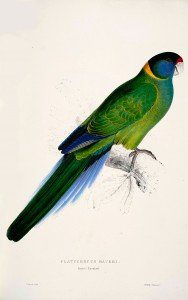
(6) – A painting of an jpg Australian Ringneck (originally captioned ยซPlatycercus baueri. Bauerโ€™s Parrakeet.ยป by Edward Lear 1812-1888. – Edward Lear [Public domain], via Wikimedia Commons

– Sounds: Patrik ร…berg (Xeno-canto)

โ–ท The world of Pets: Dogs, cats, birds, reptiles, amphibians

Masked Shining-Parrot
Prosopeia personata

Masked Shining-Parrot

Content


Anatomy-parrots

Description

47 cm of length and weight approximate of 322 g..

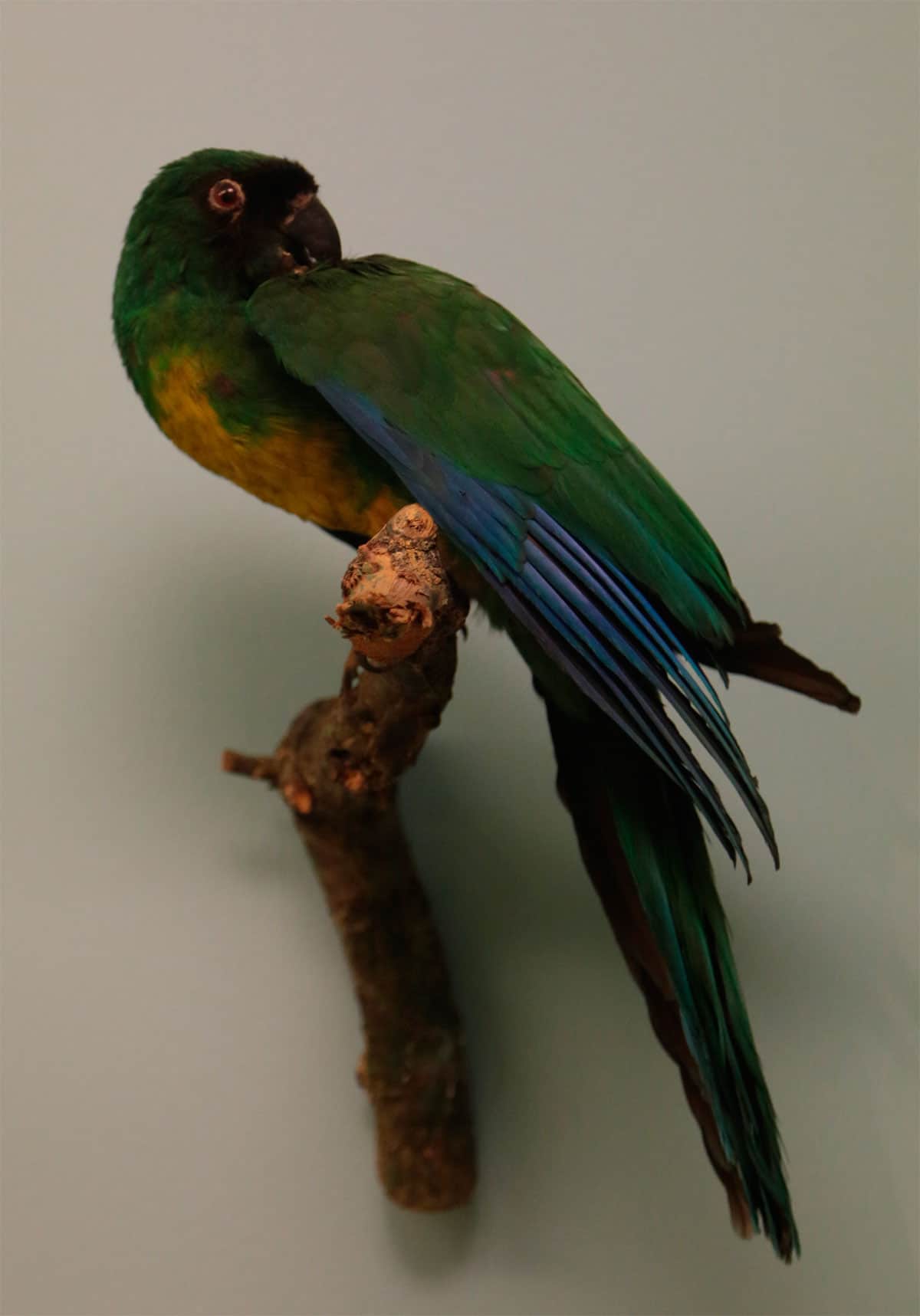
The colorful Masked Shining-Parrot (Prosopeia personata), has a plumage green over most of its body, the front of the crown, lores, cheeks and chin, are black.

The upperparts are bright pale green (with a brighter sheen on the Crown and nape). Large external coverts, primary coverts and primaries are blue with vane inner dark. Wing feathers green. Throat, top of the chest, flanks, and undertail- coverts green; center of chest and the belly bright yellow, a few feathers with the Green Tip, yellow shading in the Orange patch It is located in the lower part of the belly. Upper, the tail green; black for the part below.

The bill black; irises orange-red; legs blackish gray.

The male has the head and the bill larger that the female. The young birds have, peaks paler, less black in the face and irises brown.

El Papagayo Enmascarado (Prosopeia personata) is a large parrot, long tail which is only on an island, in Fiji.

Habitat:

Masked Shining-Parrot

They are distributed Since the sea level, until the 1.200 m altitude, in the forest reacor and secondary growth of the Windward areas and intermediate vegetation, You can also find them in orchards of villages, agricultural fields and mangroves; Often observed along forest edges near agricultural land and in trees bordering forest watercourses.

The Masked Shining-Parrot they are usually sociable and finds them alone, in pairs, or outside the breeding season in herds up to 40 birds.

Birds are sometimes interviews flying rapidly through the forest or wandering above the canopy. Son noisy birds and they are often heard before to be seen; similar to the Red Shining-Parrot, often make calls at the first sign of a human intruder, and they are generally shy and difficult to approach when they are perched on a branch.

Reproduction:

The breeding season occurs between July and September. The nest It is a hole or crack in a tree, or a cavity at the top of a stump. Two or more eggs White deposited inside a hollow form the implementation; the hole is expanded by making use of its powerful beak. Birds emit a strong odor.

Food:

The Masked Shining-Parrot they tend to rest the high parts of the trees, but descend to lower floors to feed on berries, and pick up the fruits of the soil; they can also attack fields.

The diet includes mainly fruit, for example, Mango (Mangifera indica), guava (Psidium guajava), Ficus figs and bananas, Although they can also be powered from flowers, insects, seeds and berries, as well as the cultivated grain.

When feed, They manipulate food with their legs using their beaks to catch small branches. They are powerful and it has been flying with a Mango between its claws.

Distribution:

Size of the area of distribution (reproduction / resident): 10,500 km2

The Masked Shining-Parrot they are endemic in Fiji, distributed only on the island of Viti Levu (Although the species also has been recorded in the nearby island of Ovalau in the past). In Viti Levu, It is not uncommon to see them on the inside of forests, including the surroundings of Nadarivatu and in the North of the Mount Tomanivi. In the center of Nadrau and to the East of the district Vunidawa.

The world population considered that it may be on the 5.000 specimens, but in decline due to habitat loss.

Required large trees for nesting are being felled., and tracts of mature forest are fragmented now in many areas.

The possible detrimental effect of inter-specific competition of the introduced Crimson Shining-Parrot remains study.

Conservation:


Near-threatened


โ€ข Current Red List of UICN: Near threatened

โ€ข Population trend: Decreasing

The most serious threat affecting the Masked Shining-Parrot It is the decline of forests in which inhabits, with less than the 50 per cent of the forests of Viti Levu remaining. This deforestation has led to the fragmentation of remaining forest areas. The huge trees felled during the deforestation are required by the Masked Shining-Parrot nest.

Other potential threats to this species include potential competition with the introduced Crimson Shining-Parrot (Prosopeia splendens). The Masked Shining-Parrot It can also be trafficked for the pet trade, Although the related species, as the Crimson Shining-Parrot It is believed that they are most popular).

Conservation of the โ€œMasked Parrotโ€.

The Masked Shining-Parrot is protected by the law of Fiji. But, current legislation for the capture of wild parrots is difficult to enforce. This Parrot also appears in the Appendix II of the Convention on international trade in endangered species (CITES), which means that international trade in the species must be carefully monitored.

The Masked Shining-Parrot It lives in several reserves and parks, where can you get some protection against deforestation. It has been proposed that community forest reserves must be encouraged in Viti Levu, to prevent further deforestation, and that the population figures of the Masked Shining-Parrot in these protected areas should be monitored. But, None of these measures has been put into action

"Masked Shining-Parrot" in captivity:

Rarely found in captivity.

According to sources, It is known that one as a specimen of this species lived 11,8 years in captivity.

Alternative names:

– Masked Shining-Parrot, Masked Parrot, Masked Shining Parrot, Yellow-breasted Musk Parrot, Yellow-breasted Shining-Parrot (ingles).
– Perruche masquรฉe, Perruche masquรฉe masquรฉe (French).
– Maskensittich, Masken-Sittich (German).
– Prosopeia personata (Portuguese).
– Papagayo Enmascarado (espaรฑol).

scientific classification:

– Order: Psittaciformes
– Family: Psittaculidae
– Genus: Prosopeia
– Scientific name: Prosopeia personata
– Citation: (Gray, GR, 1848)
– Protonimo: Coracopsis ? personata

Images ยซMasked Parrotยป:

Videos "Masked Shining-Parrot"

————————————————————————————————

ยซMasked Parrotยป (Prosopeia personata)


Sources:

– Avibase
– Parrots of the World โ€“ Forshaw Joseph M
– Parrots A Guide to the Parrots of the World – Tony Juniper & Mike Parr
– Birdlife
– ARKive.org

– Photos:

(1) – Masked Shining Parrot , Birds Gallery, Natural History Museum, London By John Cummings (Own work) [CC BY-SA 3.0], via Wikimedia Commons
(2) – By Benjamin Waterhouse Hawkins [Public domain], via Wikimedia Commons
(3) – Masked Shining Parrot Prosopeia personata Kula Eco Park – Viti Levu, Fiji ยฉ 2007 Sarah – The Online Zoo
(4) – Masked Shining Parrot Prosopeia personata Kula Eco Park – Viti Levu, Fiji ยฉ 2007 Sarah – The Online Zoo
(5) – A bird resting in a tree by Josep del Hoyo – Lynx
(6) – A close-up of the head of one bird by Josep del Hoyo – Lynx

– Sounds: Matthias Feuersenger (Xeno-canto)

โ–ท The world of Pets: Dogs, cats, birds, reptiles, amphibians

Senegal Parrot
Poicephalus senegalus


Lorito Senegalรฉs

Content

Lorito Senegalรฉs

Description:

Of 25 cm.. length and a weight between 130 and 150 g..

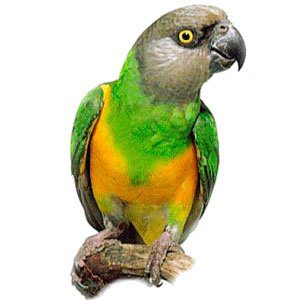
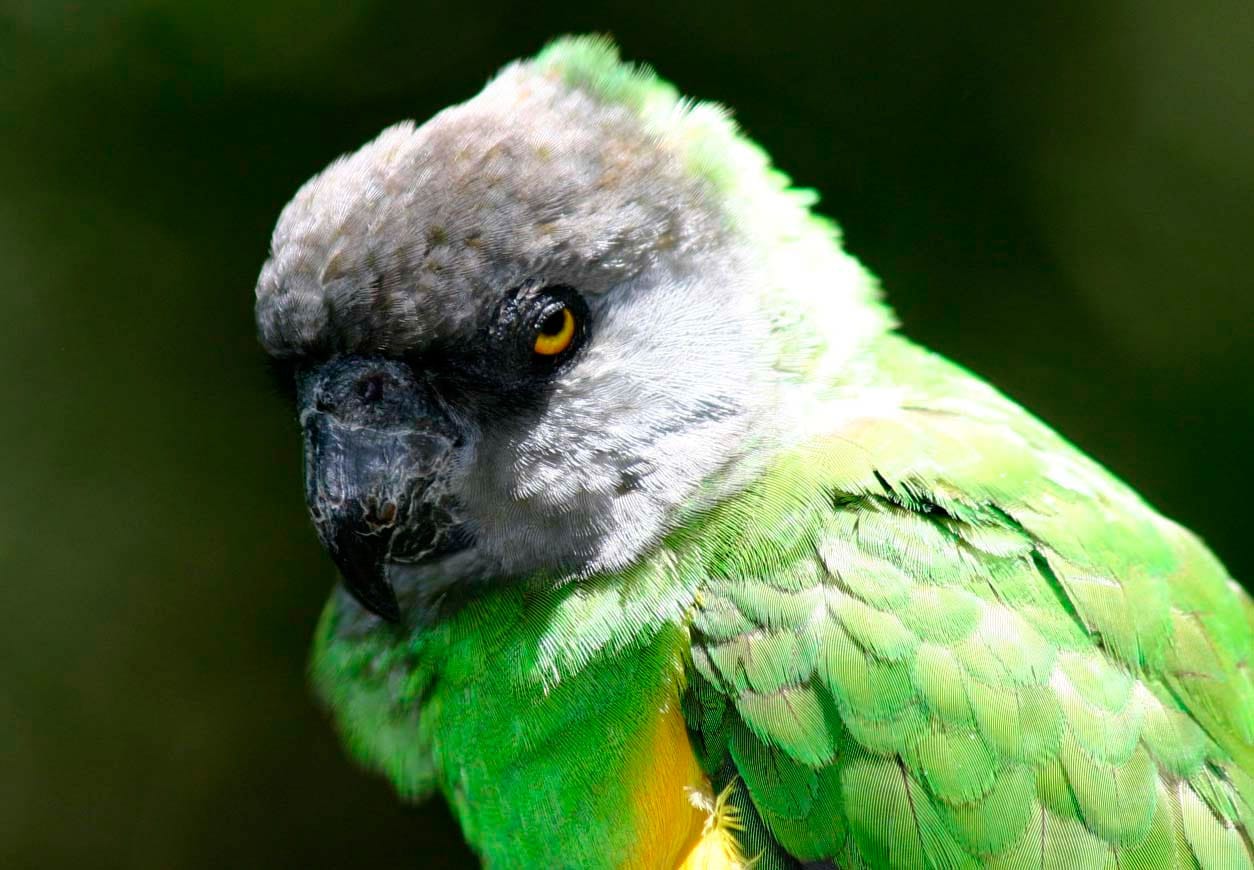
The Senegal Parrot (Poicephalus senegalus) has the forecrown, crown, lores and nape dark slate gray; clear the chin and cheeks; ear-coverts Silver. Mantle, scapulars and back bright green; rump and uppertail-coverts lighter with yellowish tint. Upper, the wing-coverts bright green ; secondaries and primaries of color Brown dark with edges green to them vane outer. Under, the wing-coverts Yellow. Throat grey, merging with the chest green (green lighter on the upper parts); low area chest and belly bright yellow with orange dye plant; the thighs green, undertail- coverts bright yellow. Tail greenish brown.

Bill grey: irises yellow with bare periophthalmic black; Chere blackish: Legs dark brown.

Sexes similar in plumage.

Immature generally paler than the adult with the head in brown tone off, has the ear-coverts Silver; sometimes extends the green on the bottoms shaped yellow patches on the flanks. Iris dark brown.

Subspecies description:

  • Poicephalus senegalus mesotypus

    (Reichenow, 1910) – Similar to the species nominal, but with the green plumage paler and green color chest It is extending into the abdomen, the abdomen It is orange.


  • Poicephalus senegalus senegalus

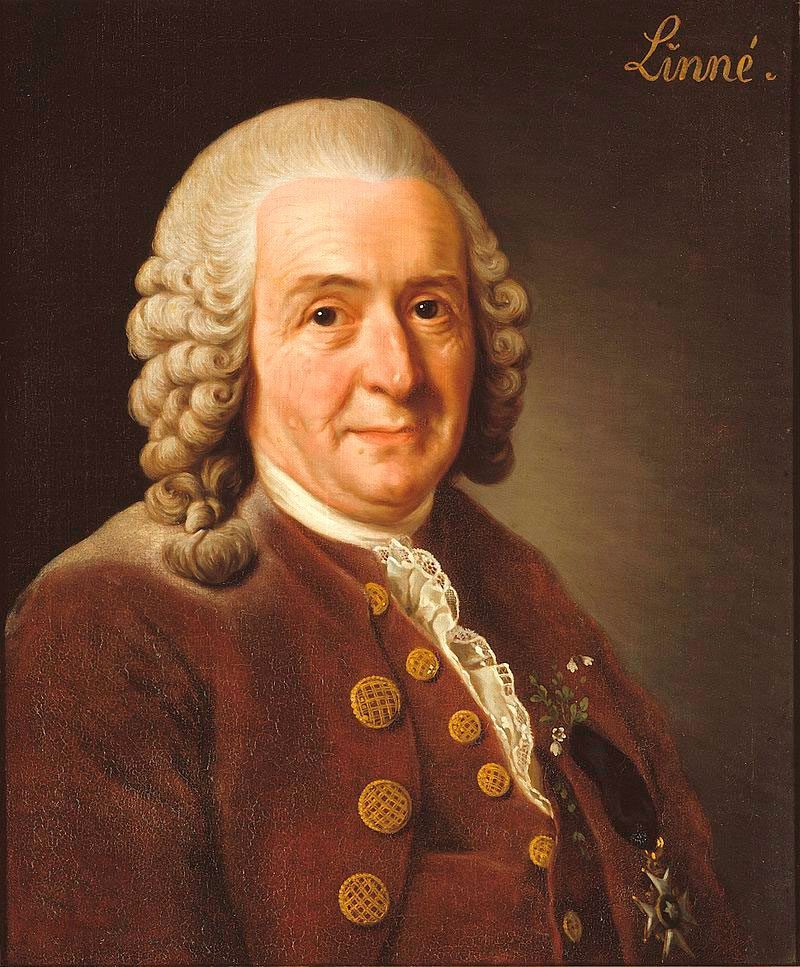
    (Linnaeus, 1766) – The nominal species


  • Poicephalus senegalus versteri

    (Finsch, 1863) – Similar to the species nominal but the green color the mantle and wings is darker; the lower regions of chest and the abdomen are yellow orange to red in the middle of the abdomen.

Habitat:

The Senegal Parrot They are found in a variety of forest habitats ranging from open field with scattered and palm trees to the dense forests closed.

Its optimal habitat It seems to be the forest savannah, relatively open, with numerous Adansonias typed or Parkia filicoidea.

In Ghana river seen in forests and swamps.

They are probably just below 1.000 meters above sea level.

Gregarious, at least outside the breeding period.

Usually they are seen in couples or groups of up to 20 birds, Larger groups can meet locally to exploit abundant food areas.

They perform diurnal movements and of longer duration in relation to the food supply;. Consequently, of the pobalaciรณn Senegal Parrot fluctuates widely in some areas.

Reproduction:

The Senegal Parrot usually they build a nest in the cavity of a tree branch (of Adansonia or Parkia), at a height of 10 m, sometimes more.

The breeding season It seems to vary depending on location. In the wetter areas, breeding season can be prolonged. In the region of Gambia and the rio Senegal, they have been egg production in the months of April, may, August and september, also from November to February. In drier areas (as Mali) the breeding season is probably limited by the rainy season (May to October).

They put of 2 to 4 eggs on alternate days and the period of incubation is of 25 to 28 days, female being fed by the male until hatching. The juveniles to leave the nest 9 weeks of age.

Food:

The diet of the Senegal Parrot It is composed of a variety of fruits, seeds and sprouts leaves.

Registered foods include fruits and seeds Khaya senegalensis, Pterocarpus erinaceus, Ficus, Parkia, Sclerocarya birrea, Butyrospermum Parkt, Vitex cienkowskii, Adansonia, Ximena American and Acacia white. They also feed on cultivated plants, including millet and peanut.

Distribution:

Size of the area of distribution (reproduction / resident): 3.590.000 km2

The Senegal Parrot they are endemic in West Africa. Since Guinea (including the The islands), Senegal, Gambia, South of Mauritania and South of Mali through forest-savanna mosaic of Ivory Coast. Burkina Faso, South of Niger, Ghana (also on the coast). Benin and Togo until Nigeria, Cameroon and Southwest Chad.

Partially sedentary but seasonal visitors in some areas (especially further north), for example, some birds move south on the niger river in Mali with the onset of the driest periods. In the rainy season visitantan Southern Mauritania and some movements Nigeria, with the driest north unemployed, off wet season.

Subspecies distribution:

  • Poicephalus senegalus mesotypus

    (Reichenow, 1910) – East and Northeast Nigeria, South of Niger, North of Cameroon, southwest end Chad and possibly the extreme northwest Central African Republic.


  • Poicephalus senegalus senegalus

    (Linnaeus, 1766) – The nominal species


  • Poicephalus senegalus versteri

    (Finsch, 1863) – Ivory Coast and this from Ghana through Togo and Benin to western Nigeria, North of llorin, Zaria

Conservation:


minor concern


โ€ข Current Red List of UICN: Least concern

โ€ข Population trend: Stable

The size of the world population Senegal Parrot It has not been quantified, but the species, according to sources, It is often abundant (pit et to the. 1997).

The population is suspected to be stable and may even benefit from the widespread loss of closed canopy forests in the West Africa.

This species has been heavily traded: 1994-2003, more than 410,000 wild individuals were exported from the range States (Trade Database, in October of 2005 UNEP-WCMC CITES). It is one of the most popular pet birds, since it is regarded as a quiet little bird in captivity. Due to the large amount of this kind traded, It was the subject of a review of significant trade of the CITES, in which it was classified as ยซpossible concernยป (Inskipp et al. 1988). However, and despite international exports of a large number of birds, trade seems to have not seriously affected this species in general, without significant decreases in reported national population.

EXPORTS:

    โ€ข Guinea exported in the dates between 1994 and 2003 a few 164.817 specimens.
    โ€ข Mali exported in the dates between 1994 and 2003 a few 60.742 specimens.
    โ€ข Senegal exported in the dates between 1994 and 2003 a few 173.794 specimens.
    โ€ข Liberia not considered diffusion area, however it is known that among 1999 and 2003 some were exported 4.860 specimens, thus becoming the fourth country with the most exports made of Africa.

"Senegal Parrot" in captivity:

The Senegal Parrot It, after the Grey Parrot (Psittacus erithacus), African parrot most traded and raised in captivity. You might say whole sentences and whistle songs. Thanks to its size it is considered a quiet pet and very manageable when it's raised hand (papillero). They are not noisy and create a very emotional bond with family members.

Imported adult birds are always reserved even when they spend a lot of time with their caretaker. Young, on the other hand, They are docile and affectionate, and then adapt to the people.

With regard to its longevity, according to sources, a specimen lived 40 years in captivity.

Alternative names:

– Senegal Parrot, Yellow-bellied Parrot (English).
– Perroquet youyou, Youyou, Youyou du Sรฉnรฉgal (French).
– Mohrenkopf (German).
– Periquito-massarongo (Portuguese).
– Lorito del Senegal, Lorito Senegalรฉs, You-You (espaรฑol).


scientific classification:

Carl Linnaeus
Carl Linnaeus

– Order: Psittaciformes
– Family: Psittacidae
– Genus: Poicephalus
– Scientific name: Poicephalus senegalus
– Citation: (Linnaeus, 1766)
– Protonimo: Psittacus senegalus

Images "Senegalese Lorito":

Videos "Senegal Parrot"

————————————————————————————————

"Lorito Senegal" (Poicephalus senegalus)


Sources:

– Avibase
– Parrots of the World โ€“ Forshaw Joseph M
– Parrots A Guide to the Parrots of the World – Tony Juniper & Mike Parr
– Birdlife
– Wikipedia

– Photos:

(1) – An adult Senegal Parrot at Artis Zoo, Amsterdam, Netherlands. The extent of yellow tends to indicate that it is probably a male By Arjan Haverkamp [CC BY 2.0], via Wikimedia Commons
(2) – An adult Senegal Parrot in Maspalomas, Gran Canaria, Canary Islands, By Juan Emilio Spain from Las Palmas, Spain [CC BY-SA 2.0], via Wikimedia Commons
(3) – Poicephalus senegalus senegalus, the Senegal Parrot By Charlesjsharp (Own work) [CC BY-SA 3.0 or GFDL], via Wikimedia Commons
(4) – A pair of Senegal Parrots in a tree. One parrot (probably the male) is feeding the other (probably the female). Thomas J. Haslam, http://www.flickr.com/photos/tjhaslam/ On 24 February 2007, I took the photos for this montage at the birding site Technopole in Dakar, Senegal. Licensed to Wikipedia under CC-BY 2.5 and GFDL. Published to my Flickr account under the same license.
(5) – A juvenile Senegal Parrot By Brian Holsclaw (originally posted to Flickr as IMG_2807) [CC BY 2.0], via Wikimedia Commons

– Sounds: Bram Piot (Xeno-canto)

โ–ท The world of Pets: Dogs, cats, birds, reptiles, amphibians

Blue-headed Macaw
Primolius couloni


Guacamayo Cabeciazul

Content

Description:

Of 41 cm.. in length and a weight that varies between 207 and 294 g..

The rare and beautiful Blue-headed Macaw (Primolius couloni), with its striking and vivid plumage green and blue, Unfortunately, now hardly seen in nature.

As its common name indicates, the head is blue, the forecrown with a narrow band of black color that will fade in blue on the area of the crown; the ear-coverts and both sides of the neck are blue, fading to green in the area of the nape. Upperparts olive green with light tint in the tail and in the uppertail-coverts. Small, large and medium-sized coverts green interiors; the large coverts Blue exterior. The flight feather are blue top (with a bit of green in high schools), by below, Yellow olive. Underparts green, slightly more yellow than the upper. The upper part of the tail is an intense Brown, while the underparts is yellowish-green.

The bill is black, Ivory at the end; the bare skin of the lores and the top of the cheeks it is gray with a bluish tint and crossed in front by very small lines of black feathers: the irises yellow; legs grayish pink.

Both sexes are similar, the male, possibly, largest average.

The immature with the irises dark. The bill is completely black and the legs more grey. The skin of the face and lores (area between the beak and eyes) is white. Depending on your age, have queues shorter.

NOTE:

    In close relationship with the Yellow-collared Macaw (Primolius auricollis) and the Blue-winged Macaw (Primolius maracana); it has sometimes been considered congeneric with the latter. monotypic.

Habitat:

The Blue-headed Macaw distributed by humid tropical forests, at altitudes between 150 and 1,550 m. They prefer habitats altered or partially open, mainly in forest edges along rivers, in the clearings and in partially wooded areas surrounding; There are also records of these macaws in marshy areas of forest with Mauritia Palms.

This species prefers possibly the wooded foothills of lowlands.

He is not very sociable: The flocks with the largest number of individuals appear between June and October, usually traveling in pairs or groups of three individuals; apparently, not associated with the Chestnut-fronted Macaw.

Reproduction:

Known that the reproduction of these birds is correlated with the period of greatest abundance of food due to the breeding of pigeons (before and after leaving the nest) It requires a lot of energy expenditure.
There are no records of their reproductive period, However there has been during the months of April to June shown to the parents with their chicks and that in Peru, species Mauritia flexuosa "guaje" and Dipterix odorata "odorata" are key to its reproduction.

In captivity they reproduce couples chosen by them and have of two to three eggs, two chicks being generally viable.

Food:

The Blue-headed Macaw they feed mainly on seeds, mature and immature fruit, and flowers, occasionally supplemented with bark and other inputs.

Unlike many other birds, the parrots of the New world They seem to not be able to modify your diet to predominately insectivorous, reason why they are intimately linked to the patterns of flowering and fruit production (Brightsmith et to the, 2008). They have a strong dependency of the colpas clay.

Distribution:

Distributed by the Western basin of the amazon at the West end of Brazil (in Acre, from time to time), Peru Eastern and in the Northwest corner of Bolivia.

In Peru are known from the top of the Valley of the Huallaga River in Loreto, San Martin and Huanuco (including the outskirts of Tingo Maria), in a town on the eastern slope of the National Park of the Sierra of the Divisor in the basin Ucayali, in the basins of the Curanja River and Purus River, in the Apurimac River in the Cuzco and Mother of God to the West of Puerto Maldonado, around Puerto Maldonado and the Tambopata River to 50 km of the border with Bolivia; You can see in the Manu National Park.

In Bolivia have been found in Peace and perhaps in the South of Beni with indications that the birds are distributed regularly to the South, in the Eastern foothills of the Andes to the South of Bolivia.

Local and erratic in its distribution, but apparently quite common in some places. Perhaps the enlargement of its range is fairly limited in the southwest of the Amazonia due to the degradation of forests.

Rare in captivity.

Conservation:


Vulnerable

โ€ข Red List category of the UICN current: Vulnerable

โ€ข Population trend: Decreasing

Until recently it was considered quite common., but a review in 2006 by BirdLife International suggested that it was rare, with a decrease in the total population to the 1.000-2.500 individuals. Thus, has been placed in the category in danger of extinction in the 2007 (Red list of the UICN).

Parts of the distribution of this species are still little known, but Tobias and Brightsmith (2007) It has been suggested that the previous estimates were too low, with the most probable real number of 9.200 to 46.000 mature individuals. It is suggested that vulnerable could be a more appropriate category for this species.

The Blue-headed Macaw It is commonly found in the markets of Brazil, still valuable, prices above the 12.000 $, and in high demand due to their rarity.

OBJECTIVES:

Information about the actual state of conservation of the species. It also, This project, that is being conducted under a partnership with the Government of Peru, includes other project, in this case for the conservation of the Grey-cheeked Parakeet, classified as "endangered".

STRATEGIES:

The two projects include the definition of methods for determining the density of populations in key places, the evaluation of the level of the illegal trade in birds, and the promotion of the local social consciousness in relation to the illicit traffic of these species.

ACTIONS:

The field team is carrying out assessments of populations and habitat analysis, and at the same time they updated the assessment of the threats weighing on the two species. The general population trend of the Blue-headed Macaw is one very gradual decrease, but it seems that the species can withstand certain levels of their forest habitat change. By censuses in consecutive years, the population of the Grey-cheeked Parakeet It has not undergone further decline despite the severe fragmentation of the preferred dry forest.

"Blue-headed Macaw" in captivity:

Very rare in captivity.

Couples are formed according to the preferences of the copies, couples chosen by the breeder will not work. The diet is based on the seasonal fruits and vitamin supplements.

The Parque de las Leyendas Zoo in Peru, captive breeding, It has no objective reproduction but the exhibition of animals that are twelve in total. Births have been but manualรข studies have not been performed. In the month of March to April of the 2010, This project through the SERNANP with scientific staff of the aforementioned zoo, he carried out the biometric studies of this species and established the protocols for the reproduction studies.

Are no data about your longevity, Although similar species such as the Blue-winged Macaw have records having lived 31 years in captivity and having raised from the 6 years of age.

The illegal traffic This species is a serious problem that affects their conservation.

Alternative names:

– Blue-headed Macaw, Blue headed Macaw, Coulon’s Macaw (English).
– Ara de Coulon (French).
– Blaukopfara (German).
– maracanรฃ-de-cabeรงa-azul (Portuguese).
– Guacamayo Cabeciazul, Maracanรก de Cabeza Azul, Guacamaya cabeza azul (espaรฑol).
– Parabachi cabeza azul (Colombia).
– Guacamayo de Cabeza Azรบl (Peru).

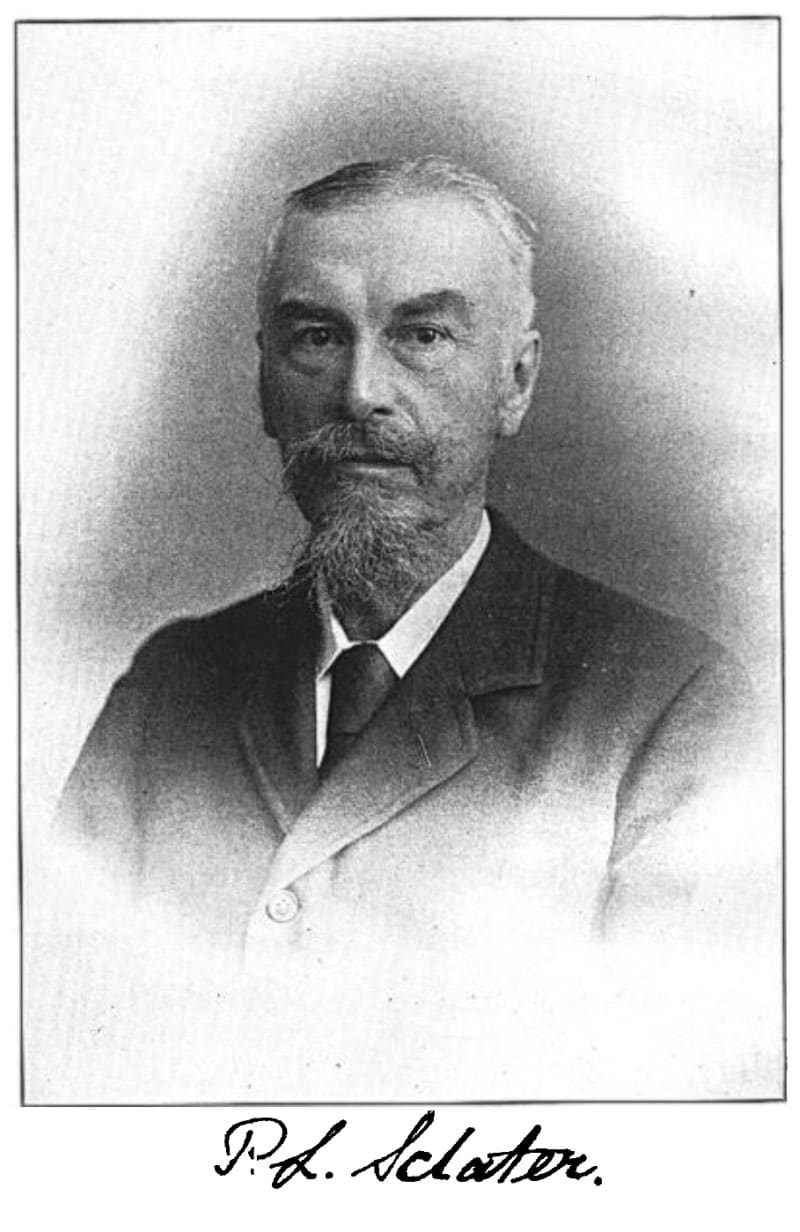
Philip Sclater
Philip Sclater

scientific classification:


– Order: Psittaciformes
– Family: Psittacidae
– Genus: Primolius
– Scientific name: Primolius couloni
– Citation: (Sclater, PL, 1876)
– Protonimo: Ara couloni


Images Blue-headed Macaw:

Videos "Blue-headed Macaw"

————————————————————————————————

ยซBlue-headed Macawยป (Primolius couloni)


Sources:

– Avibase
– Parrots of the World โ€“ Forshaw Joseph M
– Parrots A Guide to the Parrots of the World – Tony Juniper & Mike Parr
– Birdlife

– Photos:

(1) – Blue-headed Macaw in the Walsrode Bird Park, Germany By Quartl (Own work) [CC BY-SA 3.0], via Wikimedia Commons
(2) – Blue-headed Macaw (also known as Coulonโ€™s Macaw) in captivity at Walsrode Bird Park, Germany By Robert01 (Self-photographed) [CC BY-SA 3.0 of], via Wikimedia Commons
(3) – Blue-headed Macaw (Primolius couloni) at Jungle Island of Miami By DickDaniels (http://carolinabirds.org /) (Own work) [GFDL or CC BY-SA 4.0-3.0-2.5-2.0-1.0], via Wikimedia Commons
(4) – Moscow Zoo. Blue-headed Macaw (Ara couloni, syn. Primolius couloni) By Andrey Korzun (Kor!An) (Own work) [GFDL or CC BY-SA 3.0], via Wikimedia Commons
(5) – Ara couloni – Wikipedia

– Sounds: (Xeno-canto)

โ–ท The world of Pets: Dogs, cats, birds, reptiles, amphibians

Hispaniolan Parakeet
Psittacara chloropterus

Aratinga de la Espaรฑola

Content

Description:


Anatomy-parrots

32 cm. of length and a weight of 150 g..

The Hispaniolan Parakeet (Psittacara chloropterus) has the head whole and both sides of the neck green grass with some scattered red feathers; the upperparts and upperwing-coverts Green with external ends of the Middle coverts red. Primary and secondary dark green with bluish-green tips on margins vane inner. The underwing-coverts yellowish brown in the flight feather, more grayish towards the tip; coverts Green except smaller and medium-sized external coverts, they are red and the primarys which are green and Red.

The underparts brighter yellowish green, usually with scattered red feathers.
Upper, the tail dark green and below, grayish brown.
The bill color horn; bare periophthalmic whitish: irises yellowish; legs grayish brown.

Ilustraciรณn de Psittacara euops y Psittacara chloropterus

Both sexes similar.

The immature has less red and more green in underwing-coverts, No red on the upper surface of the bend of wing and grey at the base of the bill and on the cutting edge.

  • Sound of the Hispaniolan Parakeet .

Subspecies description:

Psittacara chloropterus maugei
  • Psittacara chloropterus chloropterus
  • (Souance, 1856) – The species nominal.

  • Psittacara chloropterus maugei โ€ 
  • (Souance, 1856) – Similar to the species nominal, but with a duller green in the underparts; more red in the large underwing-coverts.

Habitat:

Video – "Hispaniolan Parakeet" (Psittacara chloropterus)

Wild baby Hispaniolan Parakeet (Aratinga chloroptera) at nest hole. AVI

This species covers all types of natural habitats from arid lowland forests, to sheets of palmas, but obviously prefers upland forest (including the dominated by Pinus), to 3.000 meters above sea level, scarce, Perhaps because of the persecution, in the adjacent cultivated areas.

In general, observed in pairs or in small flocks, but sometimes in meetings of more than one hundred, at least in the past, When were most abundant. Discernible couples even within large flocks.

Reproduction:

They build their nests in tree cavities, including old holes made by woodpeckers, as well as in arboreal termite mounds.

The laying compose it between 3 and 5 eggs, exceptionally 7.

Food:

There are few details about the diet of the Hispaniolan Parakeet, but it is apparently similar to the fellow and and depends on local availability of fruits, seeds, nuts, outbreaks, flowers and beads; Some reported foods include Ficus figs and corn.

Distribution:

confined in Haiti and Dominican Republic, la Espaรฑola, Greater Antilles. Previously in the Mona Island (Psittacara chloropterus maugei), extinct between 1892 and 1901, probably as a result of the pressure due to the hunting and, possibly, the perturbations by the explosions in the guano mine; possibly, also distributed in Puerto Rico, and its, probably, at the end of the century 19, due to loss of habitat and hunting.

In Hispaniola It is subject to a significant and continuous decrease, due to destruction of habitat, trade and persecution, especially in Haiti, where possibly is extinct.

In Dominican Republic still distributed in a few upland areas, for example, Cordillera Central.

Possibly small wild populations in Puerto Rico and Florida. A small number in captivity; the international trade small volume, probably, keep going.

Subspecies distribution:

  • Psittacara chloropterus chloropterus
  • (Souance, 1856) – The species nominal.

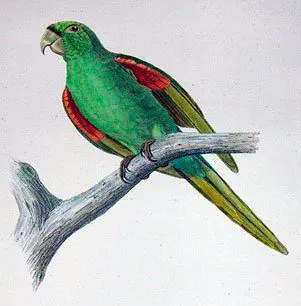
  • Psittacara chloropterus maugei โ€ 
  • (Souance, 1856) – Formerly distributed by the Mona Island and, possibly, Puerto Rico, but the last recorded specimen was in 1892. Currently extinct.

Conservation:

State of conservation โ“˜


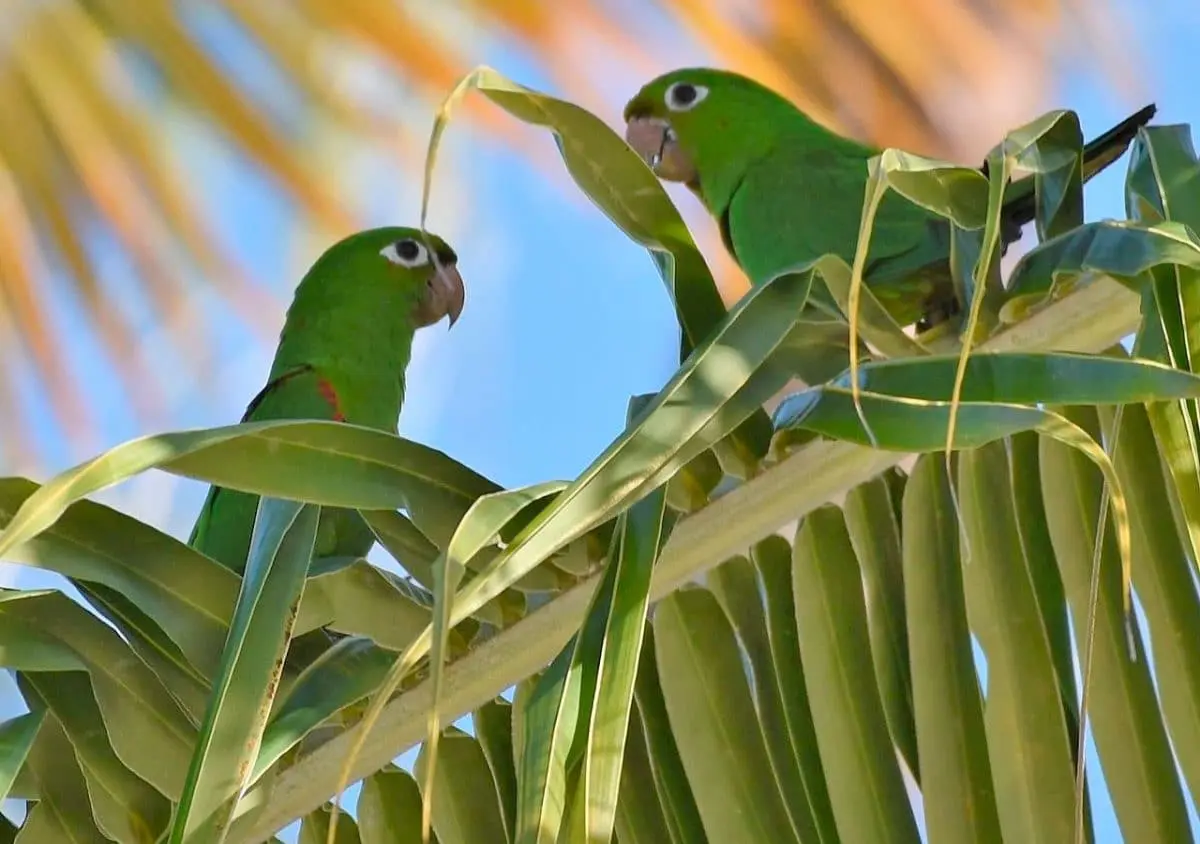
Vulnerable Vulnerable โ“˜ (UICN)โ“˜

โ€ข Red List category of the UICN current: Vulnerable

โ€ข Population trend: Decreasing

There is no new data on the evolution of the population; But, the species is suspected that it may be in decline, slow to moderate due to the hunting, capture and habitat loss.

Habitat loss and persecution as crop pest they are the greatest threats to this species. Is exploited for the local and international trade, Although only reported 12 individuals for international trade between 1991 and 1995 (Snyder et to the., 2000).

The number of copies of Hispaniolan Parakeet ranges between 1500 and 7000.

Conservation Actions Underway

โ€ข Appendix II of CITES.

โ€ข In the Dominican Republic, is legally protected against the hunt, but this legislation is not applied properly (Snyder et to the., 2000).

โ€ข A education strategy with community participation has been launched for the protection of this species (Vasquez et to the., 1995).

โ€ข Las interactions between this species and the Olive-throated Parakeet (Eupsittula nana), due to the recent increase in the number of the latter in the Sierra de Bahoruco [S. Latta in litt., 1998] ), they are being investigated (Anon. 2007).

โ€ข A group of volunteers for the protection of the parrot will work reforming the damaged nests. (Anon. 2007)

Conservation Actions Proposed.

โ€ข Clarify the status of the species in Haiti.

โ€ข Study ecology and reproductive success to determine the natural limiting factors.

โ€ข Comply with current legislation in the Dominican Republic.

The Hispaniolan Parakeet in captivity:

Rare in captivity and legally protected in Dominican Republic against the hunt and capture.

Alternative names:

– Hispaniolan Parakeet, Haitian Paroquet, Hispaniolan Conure, San Domingo Conure (inglรฉs).
– Conure maรฎtresse, Perruche maรฎtresse (francรฉs).
– Haitisittich (alemรกn).
– Periquito-de-hispaniola (portuguรฉs).
– Aratinga de la Espaรฑola, Perico , Periquito Antillano, Periquito de la Espaรฑola (espaรฑol).
– Perico, Xaxavi (Repรบblica Dominicana).

scientific classification:

– Order: Psittaciformes
– Family: Psittacidae
– Genus: Psittacara
– Scientific name: Psittacara chloropterus
– Citation: (Souancรฉ, 1856)
– Protonimo: Psittacara chloroptera

Images Hispaniolan Parakeet:


Species of the genus Psittacara

Sources:

Avibase
Parrots of the World โ€“ Forshaw Joseph M
Parrots A Guide to the Parrots of the World – Tony Juniper & Mike Parr
Birdlife

Photos:

(1) – Haitisittich Psittacara chloropterus Aufnahme in La Romana By Martingloor (Own work) [CC BY-SA 4.0], via Wikimedia Commons
(2) – Haitisittich Psittacara chloropterus By Martingloor (Own work) [CC BY-SA 4.0], via Wikimedia Commons
(3) – Haitisittich Psittacara chloropterus Aufnahme in La Romana By Martingloor (Own work) [CC BY-SA 4.0], via Wikimedia Commons
(4) – Perico de la Hispaniola / Aratinga chloroptera by Carlos De Soto Molinari – Flickr
(5) – Perico de la Hispaniola / Aratinga chloroptera by Carlos De Soto Molinari – Flickr
(6) – Evopsitta maugei. Illustrations from Iconographie des perroquets non figurs dans les publications de Levaillante et de M. Bourjot Evopsitta maugei = Aratinga chloroptera maugei == Psittacara chloropterus maugei By 48 hand-coloured lithographic plates by E. Blanchard and J. Daverne (pl. I-XV) or Juliot of Tours (XVI-XLVII, 79). [Public domain], via Wikimedia Commons
(7) – Psittacara euops Syn: Evopsitta euops & Psittacara chloropterus Syn: Psittacara chloropter bzw. Psittacara euops St. Domingue By Charles Emile Blanchard (1819โ€“1900) (biodiversitylibrary.org) [Public domain], via Wikimedia Commons

Sounds: Lance A. M. Benner (Xeno-canto)