โ–ท The world of Pets: Dogs, cats, birds, reptiles, amphibians

Blue-crowned Racquet-tail
Prioniturus discurus


Blue-crowned Racquet-tail

Content

Description

27 cm. long, 24 without snowshoes, and a weight between 140 and 160 g.

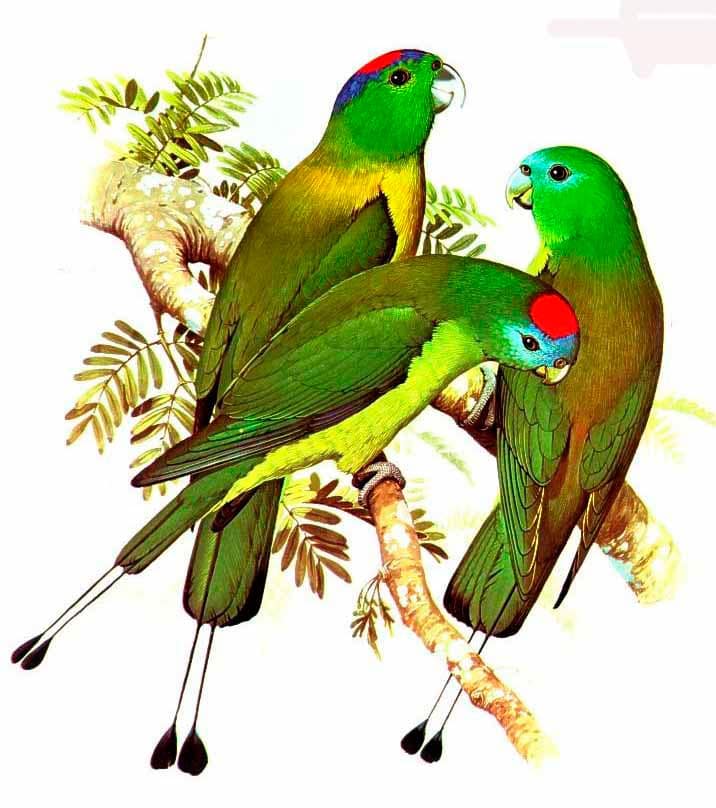
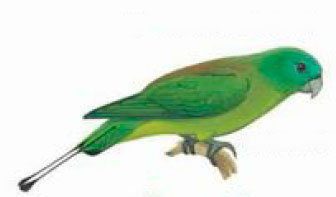
The head of the Blue-crowned Racquet-tail (Prioniturus discurus) bright green is strongly imbued with bright blue in the crown and brighter green in checks and lores.

Upperparts green. Wings green, darker in the vane inmates of the flight feather, with a narrow pale margin along the innermost edge; primary external greenish blue. Wing feathers green, underside of flight feather bluish green. The underparts yellowish-green illuminated. Upper, the lateral feathers of the tail green, Basal Blue with black tips; undertail, the tail strongly impregnated with blue; Blackish spatulas.

Bill whitish; irises dark brown; legs grey.

The female similar to the male but with the the tail rackets shorter.

Young with less blue in the crown and the absence of the rackets.

Subspecies

  • Prioniturus discurus discurus

    (Vieillot, 1822) – The nominal

  • Prioniturus Discurus Whiteheadi

    (Salomonsen, 1953) – Has less blue on the Crown and in the center of this is not clearly defined and merges gradually with the rest of the green of the head.

– Prioniturus discurus and Prioniturus mindorensis (Pit and necklace 2014) they were grouped previously as Prioniturus discurus

– Previously included the Blue-headed Racquet-tail (Prioniturus platenae) in this species.

Habitat:

Rainforests, mangroves, plantations, crops in the lowlands and mountains to 1.750 meters above sea level. Seen flying above the canopy in small noisy groups of five to twelve birds outside of breeding season. Groups gather to feed in fruit trees, including banana.

Reproduction:

breeding season from April to may in Blacks, During may in Leyte and during April in Mindanao.

Food:

The diet includes fruits, berries, nuts and seeds.

Distribution:

Residents of most of the islands of the Philippines, including Luzon, Catanduanes, Masbate, Mindoro, Guimaras, Blacks, Tables, Sibuyan, Cebu, Samar, Leyte, Bohol, Mindanao, Olutanga, Basilan and Jolo.

Subspecies distribution:

Conservation:


minor concern


โ€ข Current category of the Red List of the UICN: Least concern

โ€ข Population trend: Stable

The size of the world population It has not been quantified, is estimated at less of 10.000 specimens. The species according to information, it is generally common even in degraded habitats on heavily deforested islands (pit et to the. 1997).

The population is suspected that it may be in decline due to the capture and loss of habitat.

"Blue-crowned Racquet-tail" in captivity:

Unknown in captivity.

Alternative names:

Blue-crowned Racquet-tail, Blue-crowned Racket-tail (ingles).
Palette ร  couronne bleue (French).
Philippinen-Spatelschwanzpapagei (German).
Prioniturus discurus (Portuguese).
Lorito momoto coroniazul, Lorito-momoto Coroniazul (espaรฑol).

scientific classification:

Order: Psittaciformes
Family: Psittaculidae
Genus: Prioniturus
Scientific name: Prioniturus discurus
Citation: (Vieillot, 1822)
Protonimo: parrot discurus

Images "Blue-crowned Racquet-tail"

Videos "Blue-crowned Racquet-tail"

————————————————————————————————

"Blue-crowned Motmot Parrot" (Prioniturus discurus)

Sources:

Avibase
– Parrots of the World โ€“ Forshaw Joseph M
– Parrots A Guide to the Parrots of the World – Tony Juniper & Mike Parr
– Birdlife

Photos:

(1) – Salomonsen's racquet-tail parrot/Prioniturus discurus whiteheadi by AlexKant – ZooChat

Sounds: Frank Lambert (Xeno-canto)

โ–ท The world of Pets: Dogs, cats, birds, reptiles, amphibians

Golden-plumed Parakeet
Leptosittaca branickii


Aratinga de Pinceles

Content


Anatomy-parrots

Description:

Approximately from 36 cm.. of length and a weight of 150 g.
The Golden-plumed Parakeet (Leptosittaca branickii) has the crown, most of the forecrown, the cheeks, the sides of neck and ear-coverts grass-green; close frontal band on bottom of the forecrown orange, extending towards the upper lores; a feature yellowish stripe at the lower lores extending below the eyes to then join in a loop of yellow the part located behind the eyeball.
Upperparts green. above the wings green. Underwing-coverts greenish yellow; underside of feathers opaque yellow flight.

The underparts green, slightly more yellow than the upper, with a large yellow and orange patch at the bottom of the chest.

Upper, the tail of color green with red off on them vane inner; below its long and acute tail opaque reddish.

The bill color horn; cere grey; bare orbital skin pale whitish-grey; Orange the irises; legs grey.

Both sexes similar. The immature not described.

NOTE: Some authors include the species within the genus Aratinga. But, the facial feathers they are distinctive and monotypic, so the gender Leptosittaca is justified for this species.

Habitat:

Video – "Golden-plumed Parakeet" (Leptosittaca branickii)

Near endemic, Golden-plumed Parakeet, Leptosittaca branickii, White River (manizales)

These birds are found in high altitude formations, between 2,400 and 3.400 m, Sometimes you can see them at altitudes lower, about 1.400 m. With distributed in temperate zones, stunted forests, cloud and tree growth limits. Sometimes they cross cleared areas to visit residual plots.

Its distribution is possibly linked to the trees Podocarpus, at least in the Azuay province and parts of Colombia, Although more studies are needed to confirm this.
The Golden-plumed Parakeet make altitudinal movements day towards the Moors, returning to the lower forests for sleep; in the Puracรฉ national natural park This pattern is reversed, and birds perch on community in paramo areas (above 3.000 m), descending to feed during the day.

In general, in flocks (at least outside of breeding season) of up 20 birds (sometimes more).

Reproduction:

The Golden-plumed Parakeet nests on trunks of Palm wax (Ceroxylon quinduense) and encenillo (Weinmania sp.). Played during the first half of the year. Birds in breeding conditions during the month of February, Colombia, and birds mating in August, Ecuador.

The female lays 2-3 eggs they are incubated both during 28 to 32 days. Only the female incubates during the day., while at night, both dealt with the work. The chicks leave the nest 64-68 days after birth and are fed by both parents, While they are in the nest.

Food:

They feed on coniferous seeds, especially of cones of Podocarpus, as well as the seeds and fruits of some plants, among them included the Rosacea, Elaeocarpaceae, Lauraceae, Brunelliaceae, Loranthaceae, Moraceae, Croton, Styrax subargentea, otodectes nitida, Ficus and the corn cultivated. Sometimes it can be powered from leaves.

It forages generally in the canopy (birds frequently moving among the trees), sometimes in the layer of shrubs and fields.

Distribution:

The natural habitat of the Golden-plumed Parakeet It is discontinuous and runs from the North of the Andes from Colombia to the South of Peru.

The species is known in three areas of the Colombian Andes:

In West Cerro Munchique and at the borders of Tolima, Risaralda, Quindio and Caldas; in the Center from the North of Caldas until Cauca, including the Volcano Puracรฉ; in the East, to the East of Nariรฑo.

It has been reported from six or seven areas in Ecuador, including the province of Imbaburato in the North and the mountains of Chilla on The Oro Province, high mountains in the Azuay province and Morona Santiago province, as well as various locations in the Loja province in the South.

In Peru are distributed from the Amazonas Department and South of Departments of Cajamarca through Department of San Martin, Freedom, Department of Huรกnuco and Junin Department until Guzco.

Seasonal and nomadic, unusual and very local, especially in Colombia, in where the drastic decrease of birds is due to the deforestation; in Ecuador It scarce, possibly more common in the southeast, but absent in apparently suitable habitats in the Eastern Andes. In Peru, where is deforestation less severe, It may be more widespread. Your local observation is unpredictable and may be linked to the fructification of your favorite plants.

They are observed (Although perhaps non-resident) in many protected areas, including the Puracรฉ national natural park in the center of the Andes of Colombia, the Podocarpus national park in the South of Ecuador and the Manu National Park, Peru.

VULNERABLE.

Conservation:

State of conservation โ“˜


Vulnerable Vulnerable โ“˜ (UICN)โ“˜

โ€ข Red List category of the UICN current: Vulnerable

โ€ขPopulation trend: Decreasing

You suspect a rapid descent and ongoing in the population of the Aratinga of brushes based on the destruction, degradation and fragmentation of their habitat to large scale.

Currently its population It is estimated within a range between 1.500 and 7.000 mature individuals.

The habitat loss and fragmentation It has been significant throughout its range, with between the 90% and the 93% lost mountain forests in Colombia. In the Peru the loss of habitat is less (Salaman et to the. 1999b, PGW Salaman in litt., 1999).

Logging of the Quindio wax Palm for the services of the Palm Sunday It is a serious problem in some parts of Ecuador. (1999b Salaman et to the.).

The road construction is continuous through many areas of dwarf and humid forests in Peru, causing a severe loss of habitat in areas such as Mรกlaga (H. Lloyd in litt., 2007).

In Colombia, are persecuted as corn pests and as pet birds (1999b Salaman et to the.).

Many protected areas they are affected by the burning and grazing Moor, settlements, cleared for agriculture, logging, Narcotics and the extraction of gold (Wege and Long 1995, Salaman et to the., 1999b).

Conservation Actions Underway:

Appendix II of CITES.

Is known of many protected areas (Wege and Long, 1995), including the national parks Los Nevados and Cave of the Guacharos in Colombia, and the Podocarpus national park in Ecuador (PGW Salaman in litt., 1999, Clements and Shany 2001).

The reserves, Ucumari Regional Natural Park, Puracรฉ National Park (Colombia), Huashapamba native forest (Ecuador) and the Rio Abiseo National Park (Peru) they are apparently well protected (Wege and Long 1995).

In Ecuador, an organized campaign by Birds and conservation and Fundaciรณn Jocotoco with the support of the Government is aimed at reducing the unsustainable exploitation of the Quindio wax Palm. The Fundaciรณn Jocotoco you have installed nest boxes your reservations, that they are being used (even in preference to the natural cavities) for this and other species of parrot (D. Waugh in litt., 2010).

Conservation Actions Proposed:

Assess their condition from Peru (Flanagan et to the., 2000).

Establish the degree of dependence of the Quindio wax Palm in different regions (Sornoza Molina and Lopez-Lanรบs 1999).

Develop a network of mountain protected forest. Protect the Nevado del RuizNevado del Tolima and Cordillera de Chilla in the The Manu National Park (Jacobs and Walker 1999, PGW Salman in litt., 1999, Lรณpez-Lanรบs et al., In press).

"Golden-plumed Parakeet" in captivity:

Very rare in captivity, Some examples in Colombia.

Alternative names:

Golden-plumed Parakeet, Branicki’s Conure, Golden Plumed Conure, Golden plumed Parakeet, Golden-plumed Conure, Golden-plumed Parrot (English).
Conure ร  pinceaux d’or, Perriche ร  pinceaux d’or, Perruche ร  pinceaux d’or (French).
Pinselsittich, Pinsel-Sittich (German).
Papagaio-de-bochechas-douradas (Portuguese).
Aratinga de Pinceles, Cotorra Moteada, Perico Paramuno, Catanica de pรกramo (espaรฑol).
Loro paramuno, Perico Paramuno (Colombia).
Perico de Mejilla Dorada (Peru).
Perico cachetidorado, Cotorra moteada o Loro de mejillas doradas (Ecuador).


scientific classification:

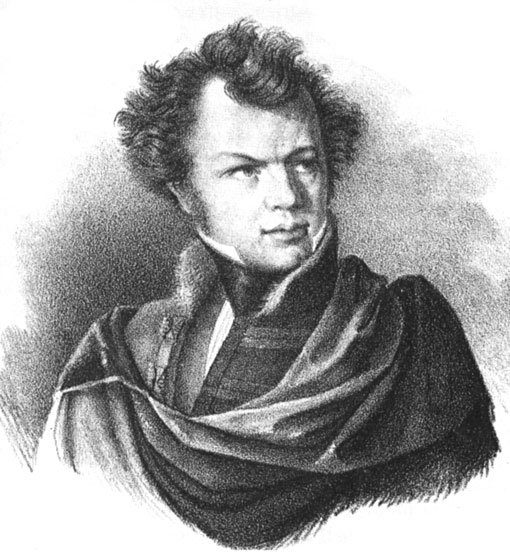
Jan Sztolcman
Jan Sztolcman

Order: Psittaciformes
Family: Psittacidae
Genus: Leptosittaca
Scientific name: Leptosittaca branickii
Citation: von Berlepsch & Stolzmann, 1894
Protonimo: Leptosittaca branickii


Golden-plumed Parakeet images:


Sources:

Avibase
– Parrots of the World โ€“ Forshaw Joseph M
– Parrots A Guide to the Parrots of the World – Tony Juniper & Mike Parr
– Birdlife
– Parrot Book, Parrots and macaws

Photos:

(1) – Golden-plumed Parakeet in Tapichalaca Reserve, Ecuador By markaharper1 [CC BY-SA 2.0], via Wikimedia Commons
(2) – Leptosittaca branickii – Golden-plumed Parakeet by ProAves ColombiaFlickr
(3) – GOLDEN-PLUMED PARAKEET by Bryant OlsenFlickr
(4) – GOLDEN-PLUMED PARAKEET by Bryant OlsenFlickr
(5) – Leptosittaca branickii – Golden-plumed Parakeet by ยฉ Carl Downing – NeotropicalBirds
(6) – Leptopsittaca branickii via Wikimedia Commons

Sounds: (Xeno-canto)

โ–ท The world of Pets: Dogs, cats, birds, reptiles, amphibians

New Caledonian Parakeet
Cyanoramphus saisseti

New Caledonian Parakeet

Content


Anatomy-parrots

Description:

26 cm.. length and 100 g. of weight.

The upperparts of the New Caledonian Parakeet (Cyanoramphus saisseti) they are mostly green, with some bluish green in the tail, violet-blue along the outerweb flight feathers, and red patches on each side of the rump. The underparts are yellowish green, yellower near throat, and gray below tail (Forshaw 1989, Juniper & Parr 1998, Doughty et al. 1999).

A red patch extends from the crown up to the forecrown, and it extends in a narrow band from the forecrown up to the ears (Juniper & Parr 1998).
The bill is leaden gray, with black tips, the irises is red-orange and legs are dark gray. (Layard & Layard 1882b, Juniper & Parr 1998).

The males typically exceed the females in size, although its plumage is similar (Verreaux & walls 1860, Layard & Layard 1882b, Salvadori 1891, Forshaw 1989)

taxonomy:

In the past it was considered to New Caledonian Parakeet conspecific of Red-crowned parakeet (Cyanoramphus novaezelandiae) of New Zealand, but genetic studies have shown that it is a separate species and occupying a basal position on gender Cyanoramphus, which indicates that the genus would have its origin in New Caledonia.

  • Sound of the New Caledonian Parakeet.

Habitat:

New Caledonian Parakeet

The New Caledonian Parakeet They were primarily fed at low altitudes canopy, and regularly they observed on the edge of the forest, on slopes or in the forest maquis (scrub).

Seem to have small populations and their distributions are expected to shrink as a result of climate change.
They are not particularly shy, although they tend to be rather calm and difficult to observe.

Reproduction:

It has been reported that the nesting It occurs between November and January, and nidadas They consist of two to five eggs, that they are placed in holes in trees (Hannecart & Lรฉtocart 1980, Theuerkauf et al. 2009b).
Genetic evidence suggests that the species is polyandrous, and the presence of male food assistants suggests that probably involves mating system poliandria cooperative (Theuerkauf et al., 1999).

Food:

It is usually fed in average heights, low canopy, but it has also been observed that feeds on the floor.
Essentially it is granivore. It feeds mainly on seeds and fruits, besides berries, nuts and other plant parts (outbreaks, flowers and leaves).

Distribution:

The New Caledonian Parakeet It is endemic to the main island of New Caledonia, although there are still uncertainties about the extent of its range and population size (Taylor 1985, Juniper & Parr 1998). The species was considered rare at the time of its introduction (Verreaux & walls 1860). But, in the decade of 1880, Flocks of birds were reported in the West, flying into the valleys Moindou from nearby mountain forests, where it is rumored to have slept in large quantities (Layard & Layard 1882b).

It has the lowest population density of parrots New Caledonia.

Conservation:


Vulnerable


โ€ข Current category of the Red List of the UICN: Vulnerable.

โ€ข Population trend: Decreasing.

โ€ข Population size : 2500-10,000 individuals.

The New Caledonian Parakeet They face a variety of threats, and their populations seem to be in decline. But, it is difficult to determine the cause or extent of their declines due to the paucity of ecological data.

classified as Vulnerable because it has a single small population suspected to be declining due to predation by invasive species; his fortress is in an area threatened by nickel mining and may be in rapid decline in the near future.
The humid mountain forest is not threatened, but it is possible that this species in need of other habitats, some of which, particularly semi-deciduous forests lowland, They have almost disappeared from the island. It is possible that introduced diseases (such as avian malaria) or the mammals (especially rats) It has been a cause of decline.

There is no evidence that nest poaching is widespread.

"New Caledonian Parakeet" in captivity:

unregistered.

Alternative names:

New Caledonian Parakeet, New Caledonian Parrot, New Caledonian Red-crowned Parakeet, Red-crowned Parakeet (inglรฉs).
Perruche ร  front rouge, Perruche calรฉdonienne, Perruche de Nouvelle-Calรฉdonie (francรฉs).
Cyanoramphus saisseti (alemรกn).
Periquito-da-nova-caledรดnia (portuguรฉs).
Perico de Nueva Caledonia (espaรฑol).

scientific classification:

Jules Verreaux

Order: Psittaciformes
Family: Psittaculidae
Gender: Cyanoramphus
Scientific name: Cyanoramphus saisseti
Subpoena: Verreaux & Des Murs, 1860
Protonimo: New Caledonian Parakeet

Images "New Caledonian Parakeet"

Videos "New Caledonian Parakeet"

Sources:

โ€ข Avibase
โ€ข Parrots of the World โ€“ Forshaw Joseph M
โ€ข Parrots A Guide to the Parrots of the World – Tony Juniper & Mike Parr
โ€ข Birdlife

Photos:

(1) – Cyanoramphus saisseti, blue river park, New Caledonia by Mickaรซl T. [CC BY 2.0], via Wikimedia Commons
(2) – Cyanoramphus saisseti Proceedings of the Zoological Society of London 1882 (Web) by Joseph Smit [Public domain]

โ–ท The world of Pets: Dogs, cats, birds, reptiles, amphibians

Long-billed corella
Cacatua tenuirostris

Cacatรบa Picofina

Content

Description

35 to 41 cm.. length. The weight of 500 to 600 g..
The Long-billed corella (Cacatua tenuirostris) has white plumage. The undertail coverts and the parts below from the wings they are bathed in pale yellow, very visible in flight. It has red coloration in the throat and the chest, with a Red Crescent ranked in the upper breast.
The Head shows a small crest white, Red front and a wide, nude and fleshy eye ring blue-grey around the eyes dark browns. The bill is white with blue base. upper jaw is long and hooked. The legs and feet are dark gray.

The female is similar to the male, with the upper jaw more short and less red.

There are two similar species:

Cacatua sanguinea. Lack of forecrown Red and the red color in the neck. The upper jaw is shorter.

Cacatua galerita. Similar in flight, has crest yellow and lacks of colour red. The bill is black.

Habitat:

Video – "Long-billed corella" (Cacatua tenuirostris)

Long-billed corella ~ Cacatua tenuirostris

Common in forests and remnant trees on farmland. It nests in Eucalyptus camaldulensis in the flooded Plains or close to streams. Wild populations living on farms and parks in urban areas.

Behavior:

Itร‚ยดs resident in their area of distribution, some local movements. Outside of breeding season, You can see in large flocks of up to 2.000 birds or more. Son noisy and visible, pronouncing discordant calls.

Pose in large eucalyptus near water. They leave the roost in the morning to drink, and then, go to the feeding areas. Again when the darkness comes to sleep, but not before excited participate in games and stunts .

They move on the floor with stunning movement jump. They do not have the other species waddling gait cockatoo.
It causes damage to crops of cereals and tree fruit, considered as one pest for farmers.

Nest colonies. They can create their nests with other species of Corella, and sometimes they hybridize. Populations feral in Sydney and Perth, from the release of unwanted birds, they may hybridize with endangered species such as the Cacatua pastinator

Reproduction:

Held from July to November. Forman couples monogamous. The male and female prepared the nest in the Hollows of large old eucalypts. If you do not find a suitable tree, You can make a burrow in soft soil Bank. They fill the nest of wood chips and often reuse it for several years.

They nest in large colonies, with several nests in the same tree.
The female lays 2-4 eggs White. The incubation lasts a few 24 days, shared by both parents. The young leave the nest 55 days after hatching, being fed by the parents for three weeks more.

Food:

Feeds mainly on what obtained from soil, seeds, estate and bulbs that unearths with its upper jaw. They feed in the coolest hours of the day. Also consumes insects.

Distribution:

Size of the area of distribution (reproduction / resident): 382.000 km2

Is located in the southeast of Australia. Introduced in urban centers of Australia and Tasmania.

Conservation:

State of conservation โ“˜


minor concern Minor Concern โ“˜ (UICN)โ“˜

โ€ข Current IUCN Red List category: Least concern.

โ€ข Population trend growing


Populations may be declining due to loss of breeding grounds in its original distribution area.
But, the Long-billed corella It common in its range.

Is created that in the world there are more than 250 thousand individuals.


"Long-billed corella" in captivity:

It is very popular as a pet for the most part of Australia, and has been classified as the best ยซtalkative" of the australian cockatoos for its ability to mimic words almost to perfection.
Has a personality playful and active.

Out of its area of distribution is rare in poultry farming.

Alternative names:

Long billed Corella, Long-billed Cockatoo, Long-billed Corella, Slender-billed Corella (ingles).
Cacatoรจs nasique (French).
Nasenkakadu (German).
Cacatua-corella-de-bico-longo (Portuguese).
Cacatรบa de Pico Largo, Cacatรบa Picofina (espaรฑol).

scientific classification:

Order: Psittaciformes
Family: Cacatuidae
Genus: Cockatoo
Scientific name: Cacatua tenuirostris
Citation: (Kuhl, 1820)
Protonimo: Psittacus tenuirostris

Images Slender-billed Cockatoo:


Species of the genus Cacatua

Sources:
Avibase
– Photos: Alice Springs in Australiaโ€™s Red Centre, commons.wikimedia.org, Ian Barker (ibc.lynxeds.com/)
– Sounds: Marc Anderson (Xeno-canto)

โ–ท The world of Pets: Dogs, cats, birds, reptiles, amphibians

Blue-headed Racquet-tail
Prioniturus platenae


Blue-headed Racquet-tail

Content

Blue-headed Racquet-tail

Description

27 to 28 centimeters length (23,5 not to mention their racquets).

The head of the Blue-headed Racquet-tail (Prioniturus platenae) is clear brilliant blue. Mantle and back of color green light; rump slightly brighter green. Wings green, flight feather with vane blackish internal.

Underwing coverts Turquoise Green, strongly impregnated with blue. Upper abdominal area green, strongly impregnated with blue; undertail-coverts brighter yellowish green, uppertail-coverts bright. Upper, the tail green, Blue-Green lateral feathers with black tips; undertail, the tail dark, bathed in blue; spatulas blackish

Bill blue-white; irises yellowish; legs black.

Female no blue in the underparts (or simply a wash light blue) and a wash light turquoise blue in the head, in the absence of the male light blue Cap; also with extensions in tail shorter.

Habitat:

Little-known. The species is found in moist lowland forests and nearby crops up to altitudes above 300 m. In the islands of the North of Palawan, you have registered in the ultrabรกsico forest, bamboo thickets, mangroves and natural grasslands with scattered trees.. Birds are often recorded in small groups and their habits are presumably similar to those of other Prioniturus.

Reproduction:

There are hardly any data relating to its reproduction. Marked juvenile birds have been collected in January (two) and in August, and a markedly immature, in the month of may.

Food:

There are many data about food. Remains of nuts have been found in the stomachs of the specimens.

Distribution:

Endemic to Palawan and associated Islands, West of Philippines. Registered in Balabac, Dumaran and the islands of the Calamian group (Culion, Calauit, Busuanga). Uncommon and declining due to the destruction of their habitat and indiscriminate capture. The species is uncommon but regular in the Puerto Princesa Subterranean River National Park.

Conservation:


Vulnerable


โ€ข Current category of the Red List of the UICN: Vulnerable

โ€ข Population trend: Decreasing

The population is estimated at 2,500-9,999 individuals based on an assessment of the known records, descriptions of the abundance and range size.

The lack of recent information on this species is opposed to making strong claims about its current trend, but threats by logging, mining and trapping, They suggest that the species is declining rapidly.

The set of Palawan It is classified as a hunting ground, where is hunting illegal, the island was designated as a Biosphere reserve in 1990. But, legislation controlling habitat disturbance and hunting is difficult to enforce effectively.

"Blue-headed Racquet-tail" in captivity:

Not found in captivity.

Alternative names:

Blue-headed Racquet-tail, Blue headed Racquet tail, Blue-headed Racket-Tail, Blueheaded Racket-tailed Parrot, Blue-headed Racquet Tail, Palawan Racket-tailed Parrot, Palawan Racquet-tail, Palawan Racquet-tailed Parrot (ingles).
Palette de Palawan, Palette ร  tรชte bleue, Perroquet ร  raquette de Palawan (French).
Palawan-Spatelschwanzpapagei, Palawan Spatelschwanz-Papagei, Palawanpapagei (German).
Prioniturus platenae (Portuguese).
Lorito Momoto de Palau, Lorito momoto de Palawan, Lorito-momoto de Palawan (espaรฑol).

scientific classification:

Order: Psittaciformes
Family: Psittaculidae
Genus: Prioniturus
Scientific name: Prioniturus platenae
Citation: Blasius,W, 1888
Protonimo: Prioniturus platenae

– Recent phylogenetic study suggests that this species is part of a clade containing also to the P. waterstradti, P. Montanus and P. mindorensis. Formerly treated as a subspecies of the P. discurus, but the treatment recently strengthened as species, considers it Monotypic.

Images "Blue-headed Racquet-tail"

————————————————————————————————

โ€œPalawan Momoto Loritoโ€ (Prioniturus platenae)

Sources:

Avibase
– Parrots of the World โ€“ Forshaw Joseph M
– Parrots A Guide to the Parrots of the World – Tony Juniper & Mike Parr
– Birdlife

Photos:

(1) – Birds of the Philippines – Near Coron Airport, Coron, Palawan. April 2010 – manilaoldtimer
(2) – minghouse.infolinker.com.tw

Sounds: Paul Noakes (Xeno-canto)

โ–ท The world of Pets: Dogs, cats, birds, reptiles, amphibians

Nanday parakeet
Aratinga nenday


Aratinga ร‘anday

Content

Description:


Anatomy-parrots

Of a length between 32-37 cm.. and a weight between 120-141 g..
The Nanday parakeet (Aratinga nenday) has the forecrown, crown, lores previous and most of the cheeks tiznadas black: both sides of the neck and ear-coverts pale yellowish green; some feathers Brown or reddish in the margins of the pileum black; the nape grass-green. Mantle and back pale green faded yellowish-green in the rump and uppertail-coverts.

Scapulars mostly green, Although some medium-sized pens are dark blue in the vane inner; under wing-coverts mostly green, with the exception of the primary coverts that are blue. The flight feather dark blue above with vane outer paler in some primaries; then color between Brown and pale black.

Aratinga ร‘anday

Most of the underwing-coverts pale yellowish green. Throat pale yellowish green with shades of pale blue at the top of the chest; underparts remaining of pale yellowish green color, except the the thighs Red and some blue feathers in undertail-coverts.

Upper, the tail reddish brown, distal blue; undertail, dull brown.
The bill black; bare periophthalmic pale grey: the irises reddish brown; legs Pink.

Both sexes similar.

The immature It has less blue on the top of the chest and throat.

  • Sound of the Nanday parakeet.
[audio:HTTPS://www.mascotarios.org/wp-content/themes/generatepress_child/sonidos/Nanday Conure.mp3]

Habitat:

Video – "Nanday parakeet" (Aratinga nenday)

The road (Aratinga nenday)

The Nanday parakeet they live in open lowland some 800 m, including the Humid or Eastern Chaco (a report on the dry Chaco in Bolivia), wetlands and livestock areas with palms. In the Humid or Eastern Chaco and lower basin of the the Paraguay River they prefer areas with fan palm treesCopernicia, growing in the seasonal flood plains with xerophytic vegetation drought related, and observed in areas of swamps with Palm trees in the Santa Cruz Department, Bolivia.

Gregaria, with flocks of up to a dozen birds during the breeding season; often several hundred birds congregate at roosts.

Reproduction:

Nest in holes of Palmas, trees or fence posts, for example, of cattle pens.

The breeding season in November in Mato Grosso. The laying is of 3-4 eggs. after breeding to their young, all birds build large communal roosts until the next breeding season.

Food:

Diet Nanday parakeet includes the Palm fruits Copernicia, sometimes taken in the ground.

They can cause damage to the crops, for example, corn.

Often seen in water wells.

Distribution:

Size of the area of distribution (reproduction / resident): 260.000 km2

This species is native from South America from the southeast of Bolivia to the southwest of Brazil, the center of Paraguay and North of Argentina, of the region known as the Pantanal.

The species is found in a band of approximately 200 km from East to West, focusing on the wetlands of the upper basin of the Paraguay River, in the East of the Santa Cruz Department, Southeast Bolivia, South-West of Mato Grosso and West Mato Grosso from the South in Brazil, to the South, by the middle of Paraguay up to the Chaco province, Formosa province and North of Province of Santa Fe in Argentina (occasional in Province of Misiones and Province of Corrientes). A report of the Province of Santiago del Estero is probably wrong.

There are several wild populations in Buenos Aires and California. You can wander, outside the breeding season, the area inside of Central Chaco.

In general locally abundant and common, especially in areas where their favorite plants concentrate. In Argentina they are more numerous in the Formosa province, and is the most common parrot in some parts of Mato Grosso.

Trapped for the bird trade, with more than 114.000 individuals exported from Argentina in the years between 1985-1990, Although many of these birds is probably came from Paraguay.

Note:

Copies released observed in the Canary Islands (Spain), in particular in the South of Tenerife and Fuerteventura, sometimes confused with the Rose-ringed Parakeet. It transpires that the species has been reproduced, In addition, in Andalusia, Catalonia. It has also been observed in points of Madrid, Basque Country and Valencia (Spain).

You escape to the South of Portugal.

Copies also introduced at different points of North America and in Asia.

Conservation:

โ€ข Red List category of the UICN current: Least concern

โ€ข Population trend: Growing

Global population size has not been quantified, but this species is described as ยซquite commonยป (Stotz et to the., 1996).

The species has undergone intense trade: from 1981, When it was included in the Appendix II, 267,246 individuals caught in the wild were recorded in international trade (UNEP-WCMC trade database CITES, January 2005).

Thousands are legally exported from Argentina.

"Nanday parakeet" in captivity:

Very common in captivity.

In captivity they are wonderful pets if care and properly socialized. They all have distinct personalities and appreciate the toys that are provided with. They like to be out of their cage for at least six hours a day..
These birds are escape artists, extremely intelligent and skilful. Some of them speak, others do not, Depending on your personality. They are characterized by having a very strong call and they are not suitable for apartments.

They are birds they reproduce quite easily in spacious accommodations and Cologne. Son, usually, good parents.

There are places, as Puerto Rico, that its possession is illegal.

They can live between 35 and 45 years.

Alternative names:

Nanday Parakeet, Black-headed Parakeet, Black-hooded Conure, Black-hooded Parakeet, Black-masked Parakeet, Nanday Conure (English).
Conure nanday, Perriche nanday, Perruche ร  tรชte noire, Perruche nanday (French).
Nandaysittich, Nanday Sittich (German).
jandaia-de-cabeรงa-negra, maracanรฃ, nendai, periquito-de-cabeรงa-preta, Periquito-de-cabeรงa-preta / Periquito-nandaรญ, Principe-negro, prรญncipe-negro (Portuguese).
Aratinga Nanday, Aratinga ร‘anday, Cotorra de Cabeza Negra, Loro Cabeza Negra, Nanday, ร‘anday, ร‘enday (espaรฑol).
ร‘anday, ร‘enday (Argentina).
ร‘anday (Guarani).

scientific classification:

Order: Psittaciformes
Family: Psittacidae
Genus: Aratinga
Scientific name: Aratinga nenday
Citation: (Vieillot, 1823)
Protonimo: Psittacus nenday

Aratinga ร‘anday images:


Species of the genus Aratinga

Sources:

Avibase
– Parrots of the World โ€“ Forshaw Joseph M
– Parrots A Guide to the Parrots of the World – Tony Juniper & Mike Parr
– Birdlife
– Parrot Book, Parrots and macaws

Photos:

(1) – Feral Nanday Parakeet (also known as the Black-hooded Parakeet or Nanday Conure) eating sunflower seeds in a garden in Sarasota, Florida, USA By Apix (Picasa Web Albums) [CC BY-SA 3.0], via Wikimedia Commons
(2) – Feral Nanday Parakeets (also known as the Black-hooded Parakeet or Nanday Conure) eating sunflower seeds in a garden in Sarasota, Florida, USA By Apix (Picasa Web Albums) [CC BY-SA 3.0], via Wikimedia Commons
(3) – Nanday Parakeet By J. Patrick Fischer (Own work) [GFDL or CC BY 3.0], via Wikimedia Commons
(4) – A pet Black-hooded Parakeet (also known as the Nanday Parakeet and Nanday Conure) By MAULI (originally posted to Flickr as Little Big Mouth) [CC BY-SA 2.0], via Wikimedia Commons
(5) – A pet Nanday Conure, named Jack By Mceder at English Wikipedia (Transferred from en.wikipedia to Commons.) [Public domain], via Wikimedia Commons
(6) – digital illustration /digital illustration – dibuixosnatura

Sounds: (Xeno-canto)

โ–ท The world of Pets: Dogs, cats, birds, reptiles, amphibians

Norfolk Island Parakeet
Cyanoramphus cookii

Norfolk Island Parakeet

Content


Anatomy-parrots

Description:

30 cm.. length and 100 g. of weight.

The Norfolk Island Parakeet (Cyanoramphus cookii) has a plumage bright green with reddish front, one red band extending through each eye; and light blue region in the leading edge of each wing . Upperwing-coverts green. Primary coverts and outerweb of primaries violet blue. Underwing-coverts yellow-green. red spot on each side of the rump. Above, the tail dark green with yellow edges, under dark gray. Eyes red.

The sexes are similar in appearance. The females They are distinguished by their smaller size, less red in the forecrown, stains on the front of the crown, and bill smaller and narrower. The pups hatched are coated with a thin gray background.

The youth They are similar in appearance to adults, but the red is less extensive (Forshaw 1981; Higgins 1999). Juveniles have a bill distinctive color meat during the first 4 to 6 weeks after the flight (Forshaw 1981).

Taxonomic status:

This taxon is considered a subspecies of Cyanoramphus [novaezelandiae, erythrotis, subflavescens, hochstetteri, saisseti or cookii] (sensu lato) by some authors

  • Sound of the Norfolk Island Parakeet.

Habitat:

The Norfolk Island Parakeet It is found mainly in the rainforest remainder, although it can also be seen in other areas of the island (Garnett & Crowley 2000; Hicks & Greenwood 1989; Higgins 1999; J. Hicks pers. comm. quoted in Hill 2002).

It is considered sedentary (Higgins 1999). The species moves from the National Park Norfolk Island to orchards and gardens when fruit available (Hicks & Greenwood 1989; Higgins 1999). Most of the sightings of the Norfolk Island Parakeet outside the National Park Norfolk Island They are recorded in December and January (Lane et al., 1998).

Foraging occurs in all strata of vegetation (Higgins 1999), including in the forest canopy, on the floor, in disturbed habitats and habitats modified depending on food availability (Forshaw & Cooper 1989; Higgins 1999). It has been observed to Perico Norfolk, including youth, feeding on the ground during winter, eating fallen seeds and fruits of African olive, Pine Norfolk Island and red guava (Garnett & Crowley 2000; Higgins 1999; Lane et al., 1998; Ortiz-Catedral 2013).

The Norfolk Island Parakeet It gregarious, usually they are seen in pairs or in family groups (Higgins 1999) and flocks (C. Jones pers. comm. 2016). The species occurs as a single contiguous breeding population (Garnett et to the., 2011).

Reproduction:

The Norfolk Island Parakeet usually nest less than two meters above the ground, usually in a recess or cavity in the branch, trunk or stump living or dead trees, especially in larger native trees. This includes Nestegis apetala (ironwood), Blood Wood (Corymbia spp. / Eucalyptus spp.), Cordyline spp. and Araucaria heterophylla (Norfolk Island Pine) (Garnett et to the., 2011; Hicks & Greenwood 1989; Higgins 1999; Lane et al., 1998). The species has occasionally been observed nesting in holes in the ground created by rotting pine roots. (C. Jones pers. comm. 2016).
Usually it perches in hidden areas with thick vegetation, including treeholes, epiphytes, tussocks, sedges and ferns. The species often perches on nesting sites (Higgins 1999). Inexperienced chicks often roost in exposed sites (Higgins 1999).

The reproduction It occurs throughout the year, peaking from December to March (Greenwood et al., 1989; Hicks & Preece 1991). The females. hatch eggs and are very reluctant to leave their nests during this time (P. Stevenson com. pers. quoted in Hill 2002). The incubation hard 21 days (Hicks & Preece 1991). When the chicks reach about two weeks old, the female can leave to start a new nest (Greenwood 1993). Norfolk Parakeets can have multiple clutches and give birth successfully up to four times a year., with males and females sharing the care of the young (R. Ward com. pers. quoted in Hill 2002). They prefer to use a fresh nest site for each clutch (Hill 2002). The chicks leave the nest six to seven. weeks after hatching and depend on their parents to feed three to seven weeks (Davidson 1997; Forshaw 1981; Hicks & Greenwood 1989; Hicks & Preece 1991). The clutch is large (1-8) (Hicks & Greenwood 1989). the age of first reproduction is unknown, but it may be soon after independence (Greene 1990).

Food:

Adults eat mainly seeds, fruit, flowers, bark and leaves of native and introduced trees, and shrubs, including Pine Norfolk Island, ironwood, Rhopalostylis Bauer (Palm Norfolk Island), Blood Wood, Cordyline, Lagunaria (White Oak), Elaeodendron curtipendulum (silvestre) arce), wild snuff (Solanum mauritianum), red guava (Psidium spp.), African olive (Olea europaea subsp. cuspidate), peach (Prunus persica) and lantana (Lantana camara) (Forshaw & Cooper 1978; Garnett & Crowley 2000; Higgins 1999; Lane et al., 1998).

Distribution:

The Norfolk Island Parakeet (Cyanoramphus cookii) is endemic of the Norfolk island. Before the European establishment it spread throughout the island, but now it is mainly in the region Mt Pitt de Norfolk. (460 has) and in the Botanical Gardens Norfolk Island (5,5 has) (Director of National Parks 2010; Garnett et to the., 2011). The Norfolk Island Parakeet also they are seen in wooded areas outside the national park and botanical gardens, and they are observed throughout the island in small amounts (Director of National Parks 2010).

The breeding of Norfolk Island Parakeet It is largely confined to a suitable habitat within the range of Norfolk Island National Park (Hill 2002), although there are reports playback on adjacent private property to the National Park Norfolk Island (C. Rowston press. comm. cited in Garnett et al., 2011).

In 2013, One study estimated that its population on Norfolk Island It was only 46-92 individuals (Ortiz-Catedral 2013).

Conservation:
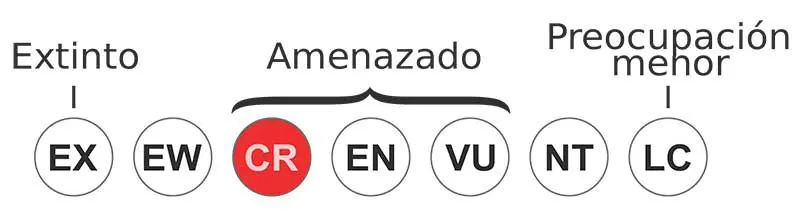

critical hazard


โ€ข Law on Environmental Protection and Biodiversity Conservation 1999 (Cwlth) (EPBC Law): Critically Endangered.

โ€ข Population trend: Decreasing.

โ€ข Population size : 50-100 mature individuals.

The Norfolk Island Parakeet (Cyanoramphus cookii) It is classified as In danger under the Law on Environmental Protection and Biodiversity Conservation 1999 (Cwlth) (EPBC Law). The species is eligible for inclusion on the list since before the start of the EPBC Act, It was included as endangered under Annexed 1 of the Law on Protection of Endangered Species 1992.

Garnett et to the (2011) They reviewed the state of conservation Norfolk Island Parakeet and they considered in Critical Hazard. The Scientific Committee of Threatened Species You are using the findings of Garnett et al. (2011) to consider whether the reassessment of the conservation status of each of the threatened birds listed in the EPBC Law It is mandatory.

The main factors causing the species to be eligible for inclusion in the List of Endangered Species are are very restricted area of รขโ‚ฌโ€นรขโ‚ฌโ€นoccupancy (< 10 km2).) and a population small (< 250 mature individuals) (Garnett et to the., 2011).

Threats

Extensive vegetation clearing for agriculture and logging of large trees destroyed nesting sites most suitable in Norfolk island (Hicks & Greenwood 1989).

A change in the structure of forests in the Norfolk island, as a result of the invasion of weeds, there may also be reduced available habitat area. (Garnett et to the., 2011).

Introduced the Crimson Rosella (Platycercus elegans), European starlings (Sturnus vulgaris), and occasionally European honey bees (Apis mellifera) competing for residues treeholes (Hicks & Preece 1991; Hill 2002).

Predation by black rats (Rattus rattus) has resulted in most nest failures and an imbalance in the sex ratio in the nest population. Norfolk Island Parakeet, as rats often surprise female incubating (Hicks & Preece 1991; Hill 2002).

The cats (Felis catus) They are also significant predators (Garnett et to the., 2011).

The illness psitacina circoviral It is present in the population and can cause mortality in individuals stressed (Hicks & Preece 1991).

Window collisions also cause a small number of deaths annually. (Hill 2002).

conservation actions

Conservation and management priorities Invasive species

or Maintaining a control program black rat in the National Park Norfolk Island using baits to reduce the number of black rats.

or Maintaining a control program cats in the National Park Norfolk Island using trapping methods to reduce the number of cats.

or Maintaining a control program Crimson Rosella (Platycercus elegans) in the National Park Norfolk Island using shooting methods to reduce their number.

Continue implementing and maintaining or protecting trees tin nesting sites (predator-proof) inside of the National Park Norfolk Island, And Botanical gardens adjacent private lands where appropriate.

Continue removing or European starlings and nesting material for nest sites.

or continue destroying the hives of european honey bees nesting sites if necessary.

o Perform intensive control weed in the National Park Norfolk Island, appropriate methods, focusing on improving habitat areas suitable playback.

Lost, disturbance and habitat modifications

o Perform habitat restoration within the National Park Norfolk Island by revegetation. appropriate areas with native plants, in conjunction with the weed control program. Breeding, reproduction and other measures ex situ

o Maintain nest sites to support breeding pairs by adding suitable nesting material and repairing nests as necessary.

or establish a wild population Phillip Island by methods translocation, when you consider that the source population is large enough to support the reduction of individuals.

Participation of stakeholders

or engage with the local community to provide information on the species and the importance of conservation actions.

o Engage with the public about Norfolk Island green parrots through conservation. and environmental interpretation center National Park Norfolk Island.

Priorities and follow-up survey

Keeping monitoring or rats and black cats within the National Park Norfolk Island to determine its relative density within the park and report management actions.

Monitor or nesting sites known to detect the presence of Crimson Rosella (Platycercus elegans), European starlings and European honey bees to determine the ongoing impact of competition from these species and the Norfolk Island Parakeet and reporting on management actions.

o Conduct population studies to assess more accurately the size of the population, reproduction and breeding of these birds, success and demographic trends.

or to perform monitoring for the presence of disease psitacina circoviral in population Norfolk Island Parakeet.

o Monitor the progress of conservation actions, including the effectiveness of management actions and adapt them if necessary to contribute to the recovery of the species.

Priorities for research and information

o Investigate options to improve the current population.

or investigate conservation benefits to establish a wild population in Lord Howe Island.

or investigate the effectiveness and cost-benefit methods for controlling predators and competitors introduced nest.

or investigate the effectiveness and cost-benefit methods for weed control.

"Norfolk Island Parakeet" in captivity:

More than 600 pups of Norfolk Island Parakeet They were banded between 1985 and 2007, most of which were bred in the national park's assisted wild breeding program.

Alternative names:

Cook’s Parakeet, Norfolk Island Green Parrot, Norfolk Island Parakeet, Norfolk Island Parrot, Norfolk Parakeet, Tasman Parakeet (English).
Perruche australe, Perruche de Norfolk (French).
Norfolkziegensittich, Ziegensittich (German).
Periquito de Norfolk (Portuguese).
Perico de Norfolk (espaรฑol).

scientific classification:

Order: Psittaciformes
Family: Psittaculidae
Gender: Cyanoramphus
Scientific name: Cyanoramphus cookii
Subpoena: (Gray, GR, 1859)
Protonimo: Platycercus Cookii

Images ยซNorfolk Parakeetยป:

Videos "Norfolk Island Parakeet"

Sources:

โ€ข Avibase
โ€ข Parrots of the World โ€“ Forshaw Joseph M
โ€ข Parrots A Guide to the Parrots of the World – Tony Juniper & Mike Parr
โ€ข THREATENED SPECIES SCIENTIFIC COMMITTEE ยฉ Commonwealth of Australia
โ€ข Perico de Norfolk cheating extinction with a little help from their human friends – abc.net.au

Photos:

(1) – Norfolk Island Parakeet (Cyanoramphus cookii) by David CookFlickr
(2) – Norfolk Parakeet (Cyanoramphus cookii), 2011 Norfolk Island National Park by Duncan Watson [CC BY-SA 4.0], from Wikimedia Commons
(3) – A Norfolk Parakeet (also called Tasman Parakeet, Norfolk Island Green Parrot or Norfolk Island Red-crowned Parakeet) in Palm Glen, Norfolk Island, Australia by Paul Gear [CC BY-SA 3.0], via Wikimedia Commons
(4) – A juvenile Norfolk Parakeet (also called Tasman Parakeet, Norfolk Island Green Parrot or Norfolk Island Red-crowned Parakeet) in Palm Glen, Norfolk Island, Australia. by Paul Gear [CC BY-SA 3.0], via Wikimedia Commons
(5) – Norfolk Island Parakeet (Cyanoramphus cookii) by David CookFlickr

โ–ท The world of Pets: Dogs, cats, birds, reptiles, amphibians

Little corella
Cacatua sanguinea


Cacatua sanguinea

Content

Description

It measures 35-40 cm.. and weighs approximately 500 g..
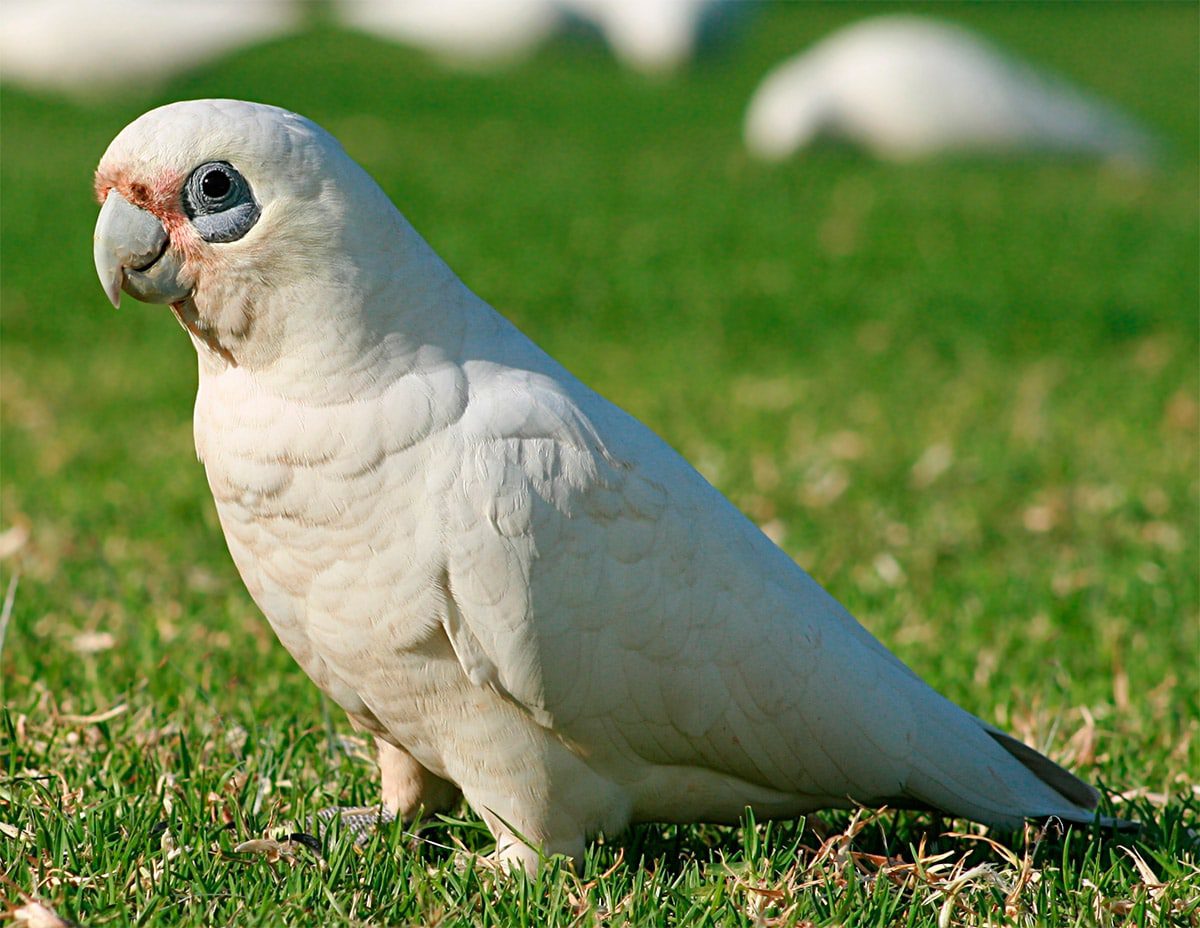
In the Little corella (Cacatua sanguinea), the head and crest (that most of the time stays low) are white. The pink base of the feathers are almost completely hidden and yet barely visible small flakes in the cheeks.
Dissemination of salmon-rosa color to the area around the eyes. The upperparts and coverts of the wing are white. There is a remarkable spread of yellow color on the bottom of the flight feather and of the tail.
The bill is grayish white. The skin nude around the eyes is blue grey. The irises is dark brown, the legs grey.

Both sexes are identical in all aspects, including the color of the irises.

The immature have a look more white and the skin of the periphery eyepiece less prominent.

Subspecies description
  • Cacatua sanguinea gymnopis

    (Sclater,PL, 1871) – Features with more naranja-rosa around them eyes and in the bases of the feathers of the head, neck and top of the chest. Its orbital skin is darker.

  • Cacatua sanguinea normantoni

    (Mathews, 1917) – Is smaller.

  • Cacatua sanguinea sanguinea

    (Gould, 1843) –

  • Nominal.

  • Cacatua sanguinea transfreta

    (Mees, 1982) – Displays below the wings and tail infiltrations slightly yellow pulling a Brown.

  • Cacatua sanguinea westralensis

    (Mathews, 1917) – It has bright orange-red colors around the eyes and the bases of feathers, also in the the mantle and in the part inferior of the abdomen.

Habitat:

Video – "Little corella" (Cacatua sanguinea)

The spectacular BLOODED COCKATOO - BIRD VETERINARY

It nests in riparian forests bordering permanent pasture and cropland. In the breeding season, they can be found in a wide variety of habitats, including areas of acacias and eucalyptus bushes of short grass or pasture with groups of scattered trees. During this time, they are also present in the rice fields, cane extensions, areas of shrubs, at the edges of mangrove areas, in the pastures for horses, on roads and gardens on the outskirts of cities.

Behavior:

The Bloody Cockatoos they often form large gatherings in crops and pastures.

Out of it breeding season, It is not uncommon to see flocks of up to 70.000 birds.
At night they fly to their bedrooms, located near the water.

Early in the morning, they drink before heading to the feeding sites often many kilometres from the bedroom.
During the hottest hours of the day, they seek shelter in the shade of the leaves..

Reproduction:

In Australia they can be played back in any month of the year, When are conditions good. But, the nesting seems to be further developed early in the North (from May to October) and in the Southeast (August-December).

In Queensland, the implementation is carried out mainly from December to April and from July to October. Reproduction is strongly influenced by climate, usually begins 2 or 3 months after the end of the rainy season in northern districts.

There may be two or three broods per season. Couple ties are very strong and seem to last for life. They are loyal to the same nesting sites year after year. The nest is usually placed in a eucalyptus (Eucalyptus camaldulensis) between 3 and 10 meters above the ground.

The cavity is approximately one meter in depth. It is fairly easy to detect since crust is often removed around inlet. They also nest on cliffs or termite mounds..

They put 2-4 eggs in a bed made from chips of wood that is replaced each year.

In general, two chicks manage to break the shell after 25 days. They remain in the nest for nine weeks, After this take off.

Food:

It has a diet mainly vegetarian. They feed on seeds you are in the trees of the genus EMEX, green areas or fields of melon (cucumber myriocarpus). They also eat nuts, fruit, berries, flowers, estate, bulbs, shoots as well as insects and larvae.

Distribution:

Size of the area of distribution (reproduction / resident): 5.300.000 km2

The Little corella lives in New Guinea and Australia. In Australia, We found in the Northwest, on the plateau of Kimberley and Arnhem in the this of the Cape York Peninsula. They are absent from the east coast and the entire southwestern part of the country..

Subspecies distribution
  • Cacatua sanguinea gymnopis

    (Sclater,PL, 1871) – Within the Centre and it's Australia.

  • Cacatua sanguinea normantoni

    (Mathews, 1917) – To the West of the cape york peninsula

  • Cacatua sanguinea sanguinea

    (Gould, 1843) –

  • Nominal.

  • Cacatua sanguinea transfreta

    (Mees, 1982) – Plain to the South of New Guinea.

  • Cacatua sanguinea westralensis

    (Mathews, 1917) – Basin of the murchison river, Western Australia.

Conservation:

State of conservation โ“˜


Near-threatened Minor Concern โ“˜ (UICN)โ“˜

โ€ข Current IUCN Red List category: Least concern.

โ€ข Population trend: Growing.

Its population is estimated at more than 1 million of birds and it believes that is in constant increase, especially in the South of Australia.

Its growth and expansion depends on the development of agriculture and the availability of artificial reservoirs. It is a Bird protected, except in the the Australia South. In this last area, the landowners are allowed to kill birds to prevent the formation of large destructive meetings for crops.

"Little corella" in captivity:

The Australian poultry to the blood cockatoo is it considered common.
They are very docile and Welcome to as pets, but you must pay them attention.

Alternative names:

Little Corella, Bare-eyed Cockatoo, Bare-eyed Corella, Blood-stained Cockatoo, Blue-eyed Cockatoo, Corella, Dampier’s Corella, Little Cockatoo, Short-billed Cockatoo, Short-billed Corella (ingles).
Cacatoรจs corella, Cacatoรจs ร  oeil nu (French).
Nacktaugenkakadu (German).
Cacatua-corella-pequena (Portuguese).
Cacatรบa Sanguรญnea (espaรฑol).

scientific classification:

Order: Psittaciformes
Family: Cacatuidae
Genus: Cockatoo
Scientific name: Cacatua sanguinea
Citation: Gould, 1843
Protonimo: Cacatua sanguinea

Blood Cockatoo Images:


Species of the genus Cacatua

Sources:
Avibase
– Photos: Wikipedia, John H. Boyd, murrundi.org
– Sounds: Nigel Jackett (Xeno-canto)