▷ The world of Pets: Dogs, cats, birds, reptiles, amphibians

Yellow-streaked Lory
Chalcopsitta scintillata

Lori Chispeado

Content

Description

Measured between 30 to 31 cm.. and a weight between 180 and 245 gr.

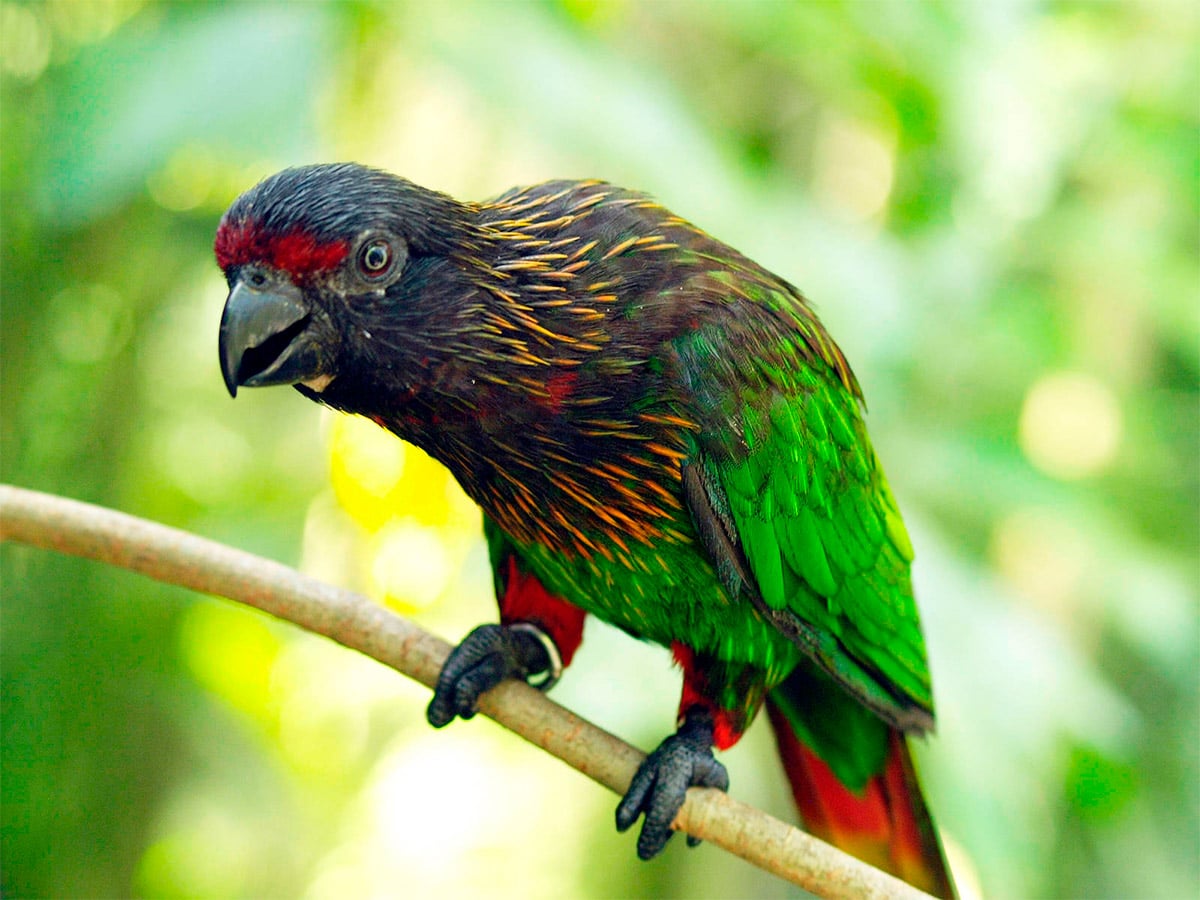
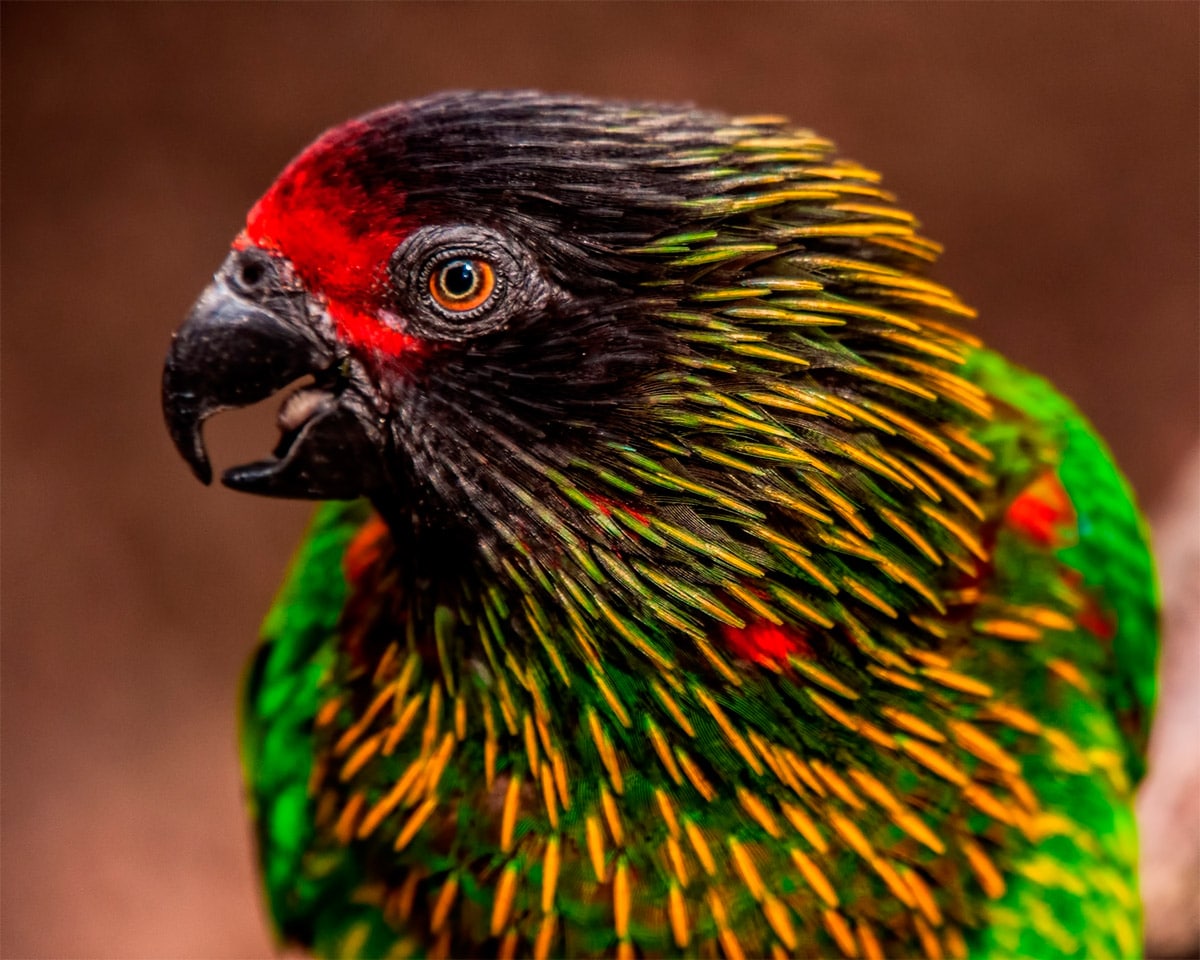
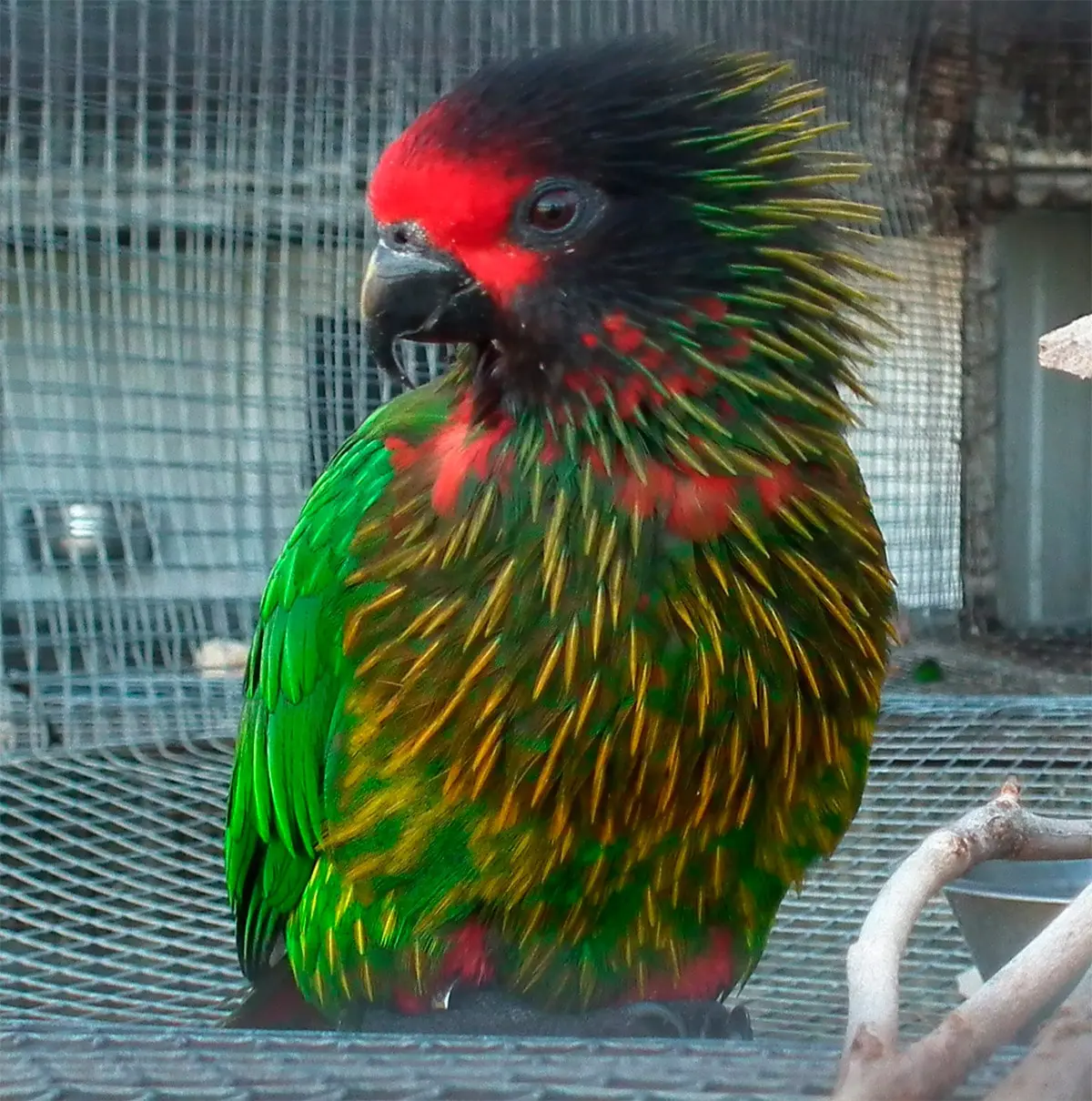
The adults of the species Yellow-streaked Lory (Chalcopsitta scintillata) have plumage dark green, pale green veins in head and the abdomen, and bright yellow bands in the chest and in the the mantle.

Chalcopsitta sintillata rubrifrons

The forecrown, cheeks and the thighs are bright red. The sides of the chest with large red infiltrations.

The under wing It is crossed by a thick yellow band. The bill is black. Bare skin eye and at the base of bill is dark gray. The irises are orange-red, the legs grey.

There is no sexual dimorphism, but in the female, the front spot It is less pronounced.

The immature They resemble adults, but have less red in the forecrown. The basis of the bill It is less stained yellow. The irises They are brown.

They are particularly visible in the early hours of the day, When the bands fly over canopy, sometimes very large heights.

They have a direct flight with rapid wing beats. In spite of this, they give the impression of moving slowly, almost in a hesitant way. Its neck tense and the tail feathers widely deployed gives them a vision in flight that is very characteristic. Couples often engage in stunts, with many screams.

Description 3 subspecies

  • Chalcopsitta scintillata chloroptera

    (Salvadori, 1876) – Adults of this subspecies differ little from those of the nominal species. But, they differ from the latter by the narrower stripes on the plumage. The bottom of your wings They are green or green with red markings.


  • Chalcopsitta scintillata rubrifrons

    (Gray,GR, 1858) – In this subspecies, both adults and juveniles, they are identical to the nominal species, but the veins of body plumage They are more spacious and orange-yellow.


  • Chalcopsitta scintillata scintillata

    (Temminck, 1835) – Nominal.

Habitat:

common in the lowlands, in the Savanna They are covering the hills, in plantations cocoteros and in the mangroves.
They are also in the primary forest and secondary adjacent, even in narrow bands of gallery forests bordering rivers in open country.
Occasionally, the Yellow-streaked Lory They sit near or inside Gardens in local villages.
They can fly to 800 m above sea level.

Reproduction:

Typically install their nests in treeholes high. There is not much information about the reproduction in the center of nature.

In captivity, the implementation is of 2 eggs which both parents incubate alternately during 26 days. At hatching, hatchlings weigh 7 u 8 g.. Duration reproductive cycle It is very long and can overcome 80 days. Despite this, There may be a second clutch in the season.

Food:

They feed in the trees.

consume nectar, pollen and fruit. Are said to some insects complete this predominantly vegetarian diet.

Distribution:

Size of its range (breeding/resident): 586.000 km2

These birds are endemic to the Islas Aru and South of Papua New Guinea.

Distribution 3 subspecies

  • Chalcopsitta scintillata chloroptera

    (Salvadori, 1876) – High of the fly river to Southeast Papua New Guinea.


  • Chalcopsitta scintillata rubrifrons

    (Gray,GR, 1858) – Only in the islas Aru.


  • Chalcopsitta scintillata scintillata

    (Temminck, 1835) – Nominal. South of New Guinea (triton bay to lower fly river.

Conservation:

minor concern

• Current IUCN Red List category: Least concern.

• Population trend: Stable.

It is not an endangered species. In a study in Southeast New Guinea, its density was estimated at 20 birds per square kilometer.
Its world population approaches the 100.000 birds.

The population suspected to be stable in the absence of evidence of any reduction or substantial threats.

"Yellow-streaked Lory" in captivity:

Pretty common.

They are birds very noisy People who like to let their loud cries are heard. They are playful, they have no fear and they can easily become meek in the hands of your caregiver. They are not only extremely aggressive against other Yellow-streaked Lory, also as with other species.

Alternative names:

– Yellow-streaked Lory, Greater Streaked Lory, Streaked Lory, Yellow streaked Lory, Yellowish-streaked Lory (ingles).
– Lori flamméché, Lori à front jaune, Lori à front rouge, Lori strié (French).
– Schimmerlori (German).
– Lóris-listrado-amarelo (Portuguese).
– Lori Chispeado (español).

scientific classification:

– Order: Psittaciformes
– Family: Psittaculidae
– Genus: Chalcopsitta
– Scientific name: Chalcopsitta scintillata
– Citation: (Temminck, 1835)
– Protonimo: Psittacus sintillatus

“Sparkling Lori” Images:

Videos "Yellow-streaked Lory"

————————————————————————————————-

"Sparkling Lori" (Chalcopsitta scintillata)


Sources:
– Avibase, Oiseaux.NET

– Photos:

– Wikipedia
– Goura (zoochat.com)
– loryland.NET
– Wikimedia
– Wikipedia
– Chalcopsitta rubrifrons = Chalcopsitta sintillata rubrifrons by Joseph Wolf [Public domain], via Wikimedia Commons

– Sounds: BAS van Balen (Xeno-canto)

▷ The world of Pets: Dogs, cats, birds, reptiles, amphibians

Solomons cockatoo
Cacatua ducorpsii


Cacatúa de las Salomón

Content

Description

It measures 30-35 centimeters to paste 380 g..
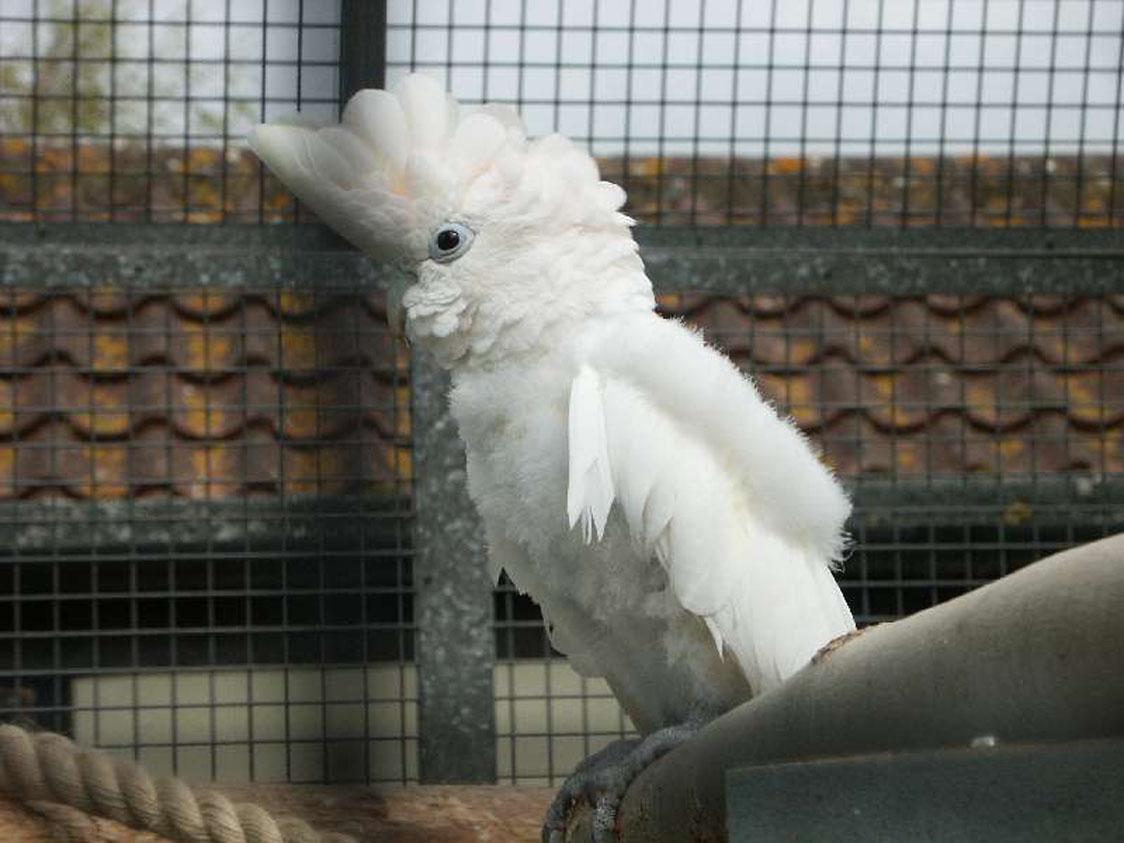
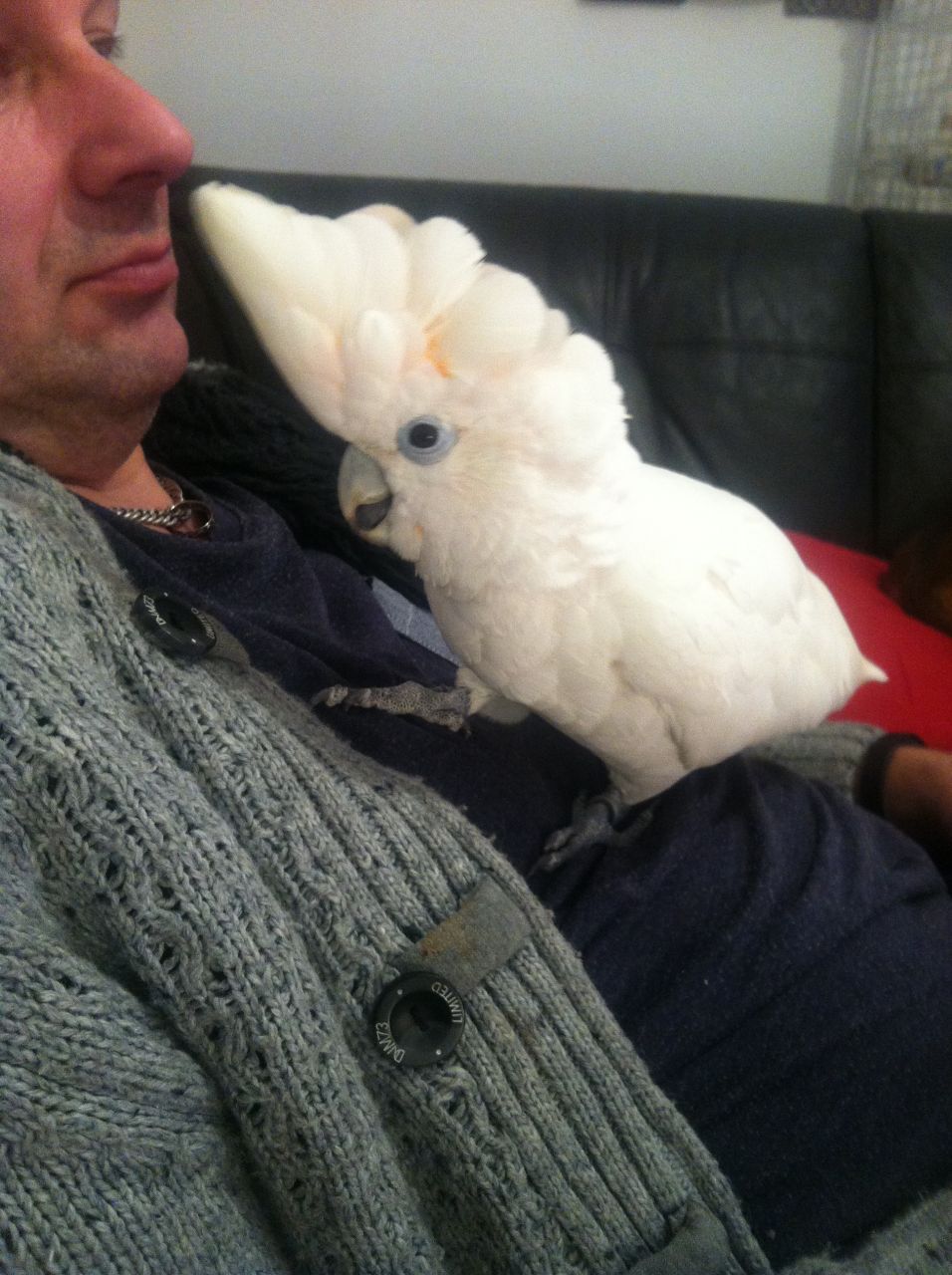
The Solomons cockatoo (Cacatua ducorpsii) is a small cockatoo immediately recognizable by its long triangular Crest.
Its plumage is almost completely white, except the part inferior of them wings and tail with infiltration of color yellow. The feathers of the crest, the cheeks, the the mantle and the chest they have a base of pink.
The bill is grey. The bare skin around the eyes is pale-blue. The irises are dark brown, the legs grey.
The females are distinguished from your partner to have the irises more reddish.

The Solomons cockatoo is quite similar to the Tanimbar corella living in the Tanimbar Islands. Also seems to the Little corella, although the latter have more bluish and developed the orbital area.

Habitat:

Is from coastal areas to the mountains; variety of habitats, including forests, secondary vegetation and gardens in cities. Found up to 1700m; mainly below the 700 m.

Behavior:

They are birds noisy and quite easy to observe, even though they mostly live in pairs or small groups. They fly high above the treetops where used well exposed perches in the top of the Cup.

Birds are very cautious, screaming when they are disturbed.

They have a strong and uneven consisting of shallow flapping flight.

Reproduction:

In the wild child from July to September.

They make their nests in hollows of trees or large branches and, they often use the same nest year after year.

The eggs are of color white and usually there are two in a clutch. The eggs are incubated for about 25 days, the young leave the nest 62 days after hatching.

Food:

They feed on seeds, berries, fruit, outbreaks, flowers, as well as insects and their larvae. From time to time they ingest the fleshy parts of «epiphytes«.

Distribution:

endemic to the Solomon Islands. Its area of distribution extends from Bougainville (Papua New Guinea) to Malaita, Choiseul, New Georgia and Santa Isabel. The species is absent in San Cristóbal and the islands surrounding.

Conservation:

State of conservation ⓘ


minor concern Minor Concern ⓘ (UICN)ⓘ

– Current IUCN Red List category: Least concern.

– The population trend: Stable

The population world is estimated at 100.000 birds and it seems quite stable.

The marketing of pet birds is a threat to this species, the other is the degradation of the habitat. The latter seems particularly serious, given the logging of forests in the lowlands.

"Solomons cockatoo" in captivity:

It´s little gregarious and have tendency to be aggressive with other species and with those of its same species. In relation to the human being is a Parrot very demanding. Not everyone is prepared to have a white cockatoo.

They often tend to develop behavior problems, unbearable screams, become very destructive…If not are given a rigorous education on a very regular basis. That is why it is convenient that if you intend to have a cockatoo, it should be done so that it can be accompanied by another or others of its kind to prevent it from developing an excessive dependency and thus you can enjoy it without fear of having problems or at least trying to avoid them as much as possible.

I like them much attention. They tend to create strong emotional bonds and they are quite Extrovert.

Despite the great attraction that having a pet parrot with such characteristics can mean for a person,. It is not often a parrot advised for anyone or rather, hardly anyone is prepared to have a cockatoo with these characteristics.

Alternative names:

– Ducorps’s Cockatoo, Broad-crested Corella, Solomon Corella, Solomon Islands Corella, White Cockatoo (ingles).
– Cacatoès de Ducorps (French).
– Salomonenkakadu (German).
– Cacatua-ducorps (Portuguese).
– Cacatúa de las Salomón, Cacatúa de Salomón (español).

scientific classification:

– Order: Psittaciformes
– Family: Cacatuidae
– Scientific name: Cacatua ducorpsii
– Genus: Cockatoo
– Citation: Pucheran, 1853
– Protonimo: Cacatua ducorpsii

Solomon's Cockatoo Images:


Species of the genus Cacatua

Sources:
– Avibase, mascotasvicmar
– Photos: animalphotos.me, goldensunbirds

– Sounds: Mark Todd (Xeno-canto)

▷ The world of Pets: Dogs, cats, birds, reptiles, amphibians

Black-lored Parrot
Tanygnathus gramineus

Black-lored Parrot

Content


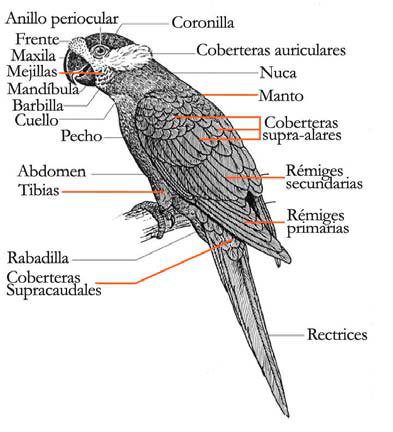
Anatomy-parrots

Description

40 to 42 cm. long.

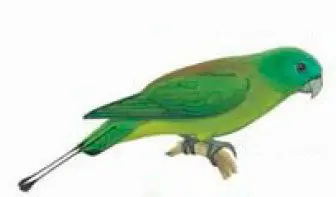
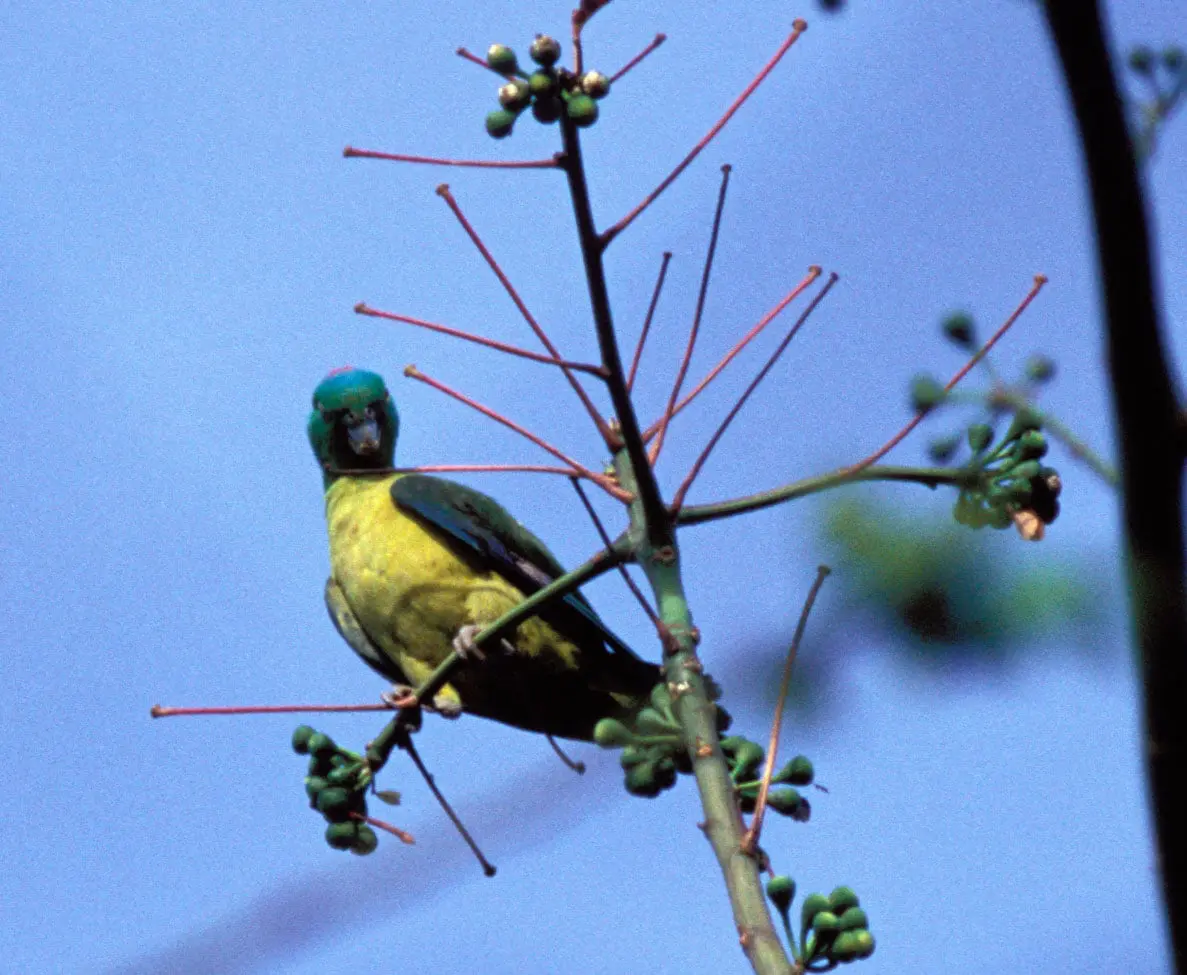
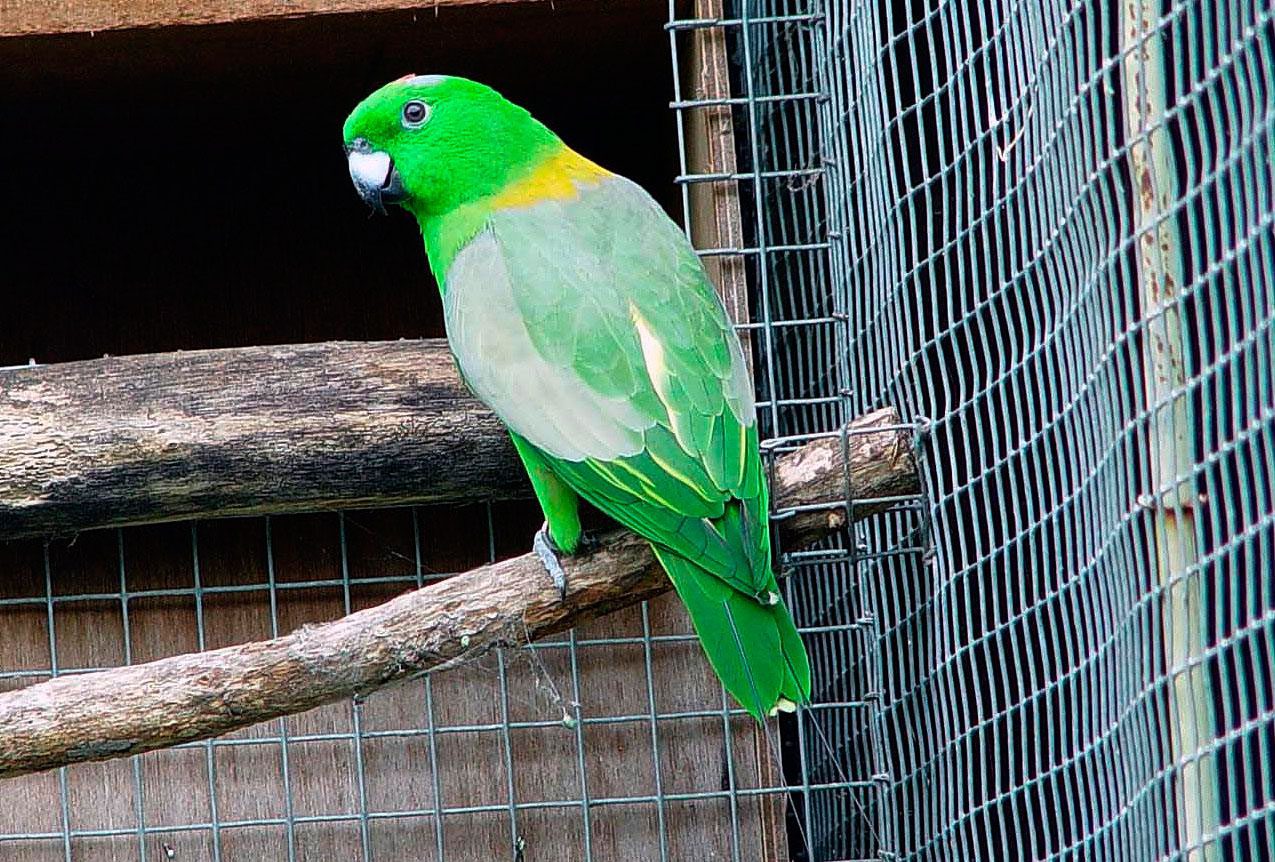
The Black-lored Parrot (Tanygnathus gramineus) It has a green head with a black line that goes from the top of the beak to the eyes.; steeped in turquoise blue Crown. The upper parts of green grass.

The medium-sized wing coverts, green; flight feather, green, a little darker, with blackish margins to the vane inner. Supracaudales coverts yellowish-green. The more underparts, more yellowish green, especially in the lower part of the cheeks and upper part of the chest. Upper, the Green tail with yellow tips; undertail, the Brown tail olive warm.

Billed red; iris yellow ; greyish legs.

Female with the grey brown peak, not red.

Immature undescribed.

Habitat:

Information is received for the first time of the Black-lored Parrot Thanks to ornithologist side Hendrik Cornelis Sieber (1890-1949) in 1930.

Very little of this species is known. Is distributed in mountain forests above 600-700 meters and also, according to sources, in the lowlands, hills and coastal areas. It is partially nocturnal, although sightings of birds perched on treetops during the day, They show that, similar to the Azure-rumped parrot, they can also be active during the day.

Migration is relatively weak and there are only a few reports of parrots flying to high altitudes during the day and descending at night., Judging from their voices.

Reproduction:

There is no data.

Food:

Possibly fruits, berries, seeds and nuts

Distribution:

Endemic to Buru, Indonesian.

Bird predominantly occupies the central part, High Island, where according to sources, There are settlements in Gunung Tagalago, WA Temun and Kunturun, at elevations of 700-1100 m, also in the lowlands of the South in Fäkal, EHU and Leksula. There was a sighting of these parrots near Kayeli Bay on the eastern shores of Buru. Most recent observations made outside North (Waflia) and (Wamlana) Northwest Coast.

The voice of the Black-lored Parrot is heard frequently in Kunturun, mostly 1-7 hours after the sunset, where the locals call the bird «The ol' blue cockatoo«, which means Blue-headed Parrot. But, was caught during the day with slingshots in fruit trees, suggesting that his activity is not purely night.

Conservation:


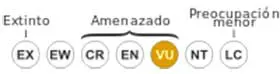
Vulnerable


• Current category of the Red List of the UICN: Vulnerable

• Population trend: Decreasing

The population is estimated at 2,500-9,999 mature individuals based on an assessment of the known records, descriptions of the abundance and range size. This estimate is equivalent to 3,500-15,000 specimens.

There are no data on trends for this species and has not been seen in the wild since 1995. Their habitat continues to decline slowly and were recorded in domestic trade in the year 2001. So, the population of the species is suspected of have been declining.

Conservation Actions Proposed:

– Conduct surveys, mostly using their vocalizations at night, mainly in the mountain areas.
– Investigate their ecological requirements and movements in order to develop appropriate conservation strategy.
– Identify the most suitable area for the conservation of this and other endangered species in Buru, and promote its establishment as protected areas.

"Black-lored Parrot" in captivity:

Unknown outside the island of Buru

Alternative names:

– Black-lored Parrot, Black lored Parrot, Blacklored Parrot, Buru Parrot (ingles).
– Perruche de Buru, Perruche à calotte bleue (French).
– Burupapagei, Buru Papagei (German).
– Tanygnathus gramineus (Portuguese).
– Loro de Buru (español).

scientific classification:

– Order: Psittaciformes
– Family: Psittaculidae
– Genus: Tanygnathus
– Scientific name: Tanygnathus gramineus
– Citation: (Gmelin, JF, 1788)
– Protonimo: Psittacus gramineus

Images "Black-lored Parrot"

————————————————————————————————

«Loro de Buru» (Tanygnathus gramineus)

Sources:

– Avibase
– Parrots of the World – Forshaw Joseph M
– Parrots A Guide to the Parrots of the World – Tony Juniper & Mike Parr
– Birdlife
– Wikipedia

– Photos:

(1) – Parrots A Guide to the Parrots of the World – Tony Juniper & Mike Parr

– Sounds: Frank Lambert (Xeno-canto)

▷ The world of Pets: Dogs, cats, birds, reptiles, amphibians

Mindanao Racquet-tail
Prioniturus waterstradti

Content

Description

Mindanao Racquet-tail

27 cm.. length between 120 and 160 g. of weight.

The Mindanao Racquet-tail (Prioniturus waterstradti) has the head bright green, with broadcasting slightly more blue-green in the cheeks, the lores and front of the crown. Duller green mantle; olive rump with different shades. The Green wings, with vane Dark internal to the flight feather, narrow marginalized yellow on the edges Interior; carpal edge yellow, wing feathers green; underside of primaries with blue dye.

The underparts brighter yellowish green, more yellow in undertail-coverts. Upper, the tail green, with side feathers blackish tip; undertail, the tail bluish; Blackish spatulas

Bill light grey; Brown irises; legs blackish gray.

females with extensions of tail more short.

Subspecies:

  • Prioniturus waterstradti malindangensis

    (Mearns, 1909) – Both adults, the color blue in the forecrown and the area under the eyes, paler; less Brown at the back.


  • Prioniturus waterstradti waterstradti

    (Rothschild, 1904) – The nominal

Habitat:

It is distributed in the humid montane forest, mainly between 850 and 2000 m, but have been recorded at altitudes of 450 m. Little is known about the habits of this species, that until recently was considered the same species as the Luzon Racquet-tail. Most of the observations refer to small flocks of between two and ten birds.. Apparently lower than other members of its genus is distributed in densities.

Reproduction:

There are no data on its reproductive ecology.

Food:

Without data

Distribution:

Size of the area of distribution (reproduction / resident): 11.300 km2

Endemic to the Highlands of Mindanao, Philippines. The records come from the Mount Apo, the Mount Malindang, Mount Kitanglad, Mount Mayon, Mount Matutum, Mt. Lebo, Anakan, Civolig, the Mount McKinley, Lake Faggamb and Baracatan, But even though the total population is estimated at 5.000 specimens, currently only limited to five mountains.

Subspecies distribution:

  • Prioniturus waterstradti malindangensis

    (Mearns, 1909) – Southeast of the mountains of Mindanao (Southeast of Philippines).


  • Prioniturus waterstradti waterstradti

    (Rothschild, 1904) – The nominal

Conservation:


Near-threatened


• Current IUCN Red List category: Near threatened

• Population trend: Decreasing

In 1993, the population was estimated at 5,000 individuals (Lambert et to the. 1993)

The population is suspected that it may be declining due to the continuous degradation of the forests and the capture for the cage bird trade.

Conservation Actions Proposed:

– Collect data on the impacts of the international and domestic trade.
– Review the estimate of the population.
– Calculate loss of forests within their geographic range and altitude using satellite and remote sensing images.
– Protect effectively important tracts of forest right in key places, both in the areas of strict protection, such as multi-use areas.

"Mindanao Racquet-tail" in captivity:

Not found in captivity.

Alternative names:

– Mindanao Racquet-tail, Crimson-spotted Racket-tailed Parrot, Crimson-spotted Racquet-tailed Parr, Minadnao racket-tailed parrot, Mindanao Montane Racquet-tail, Mindanao Racket-Tail, Mindanao Racket-tailed Parrot, Mindanao Racquet tail, Mindanao Racquet-tailed Parrot (ingles).
– Palette de Mindanao, Palette de Waterstradt, Perroquet à raquette de Mindanao (French).
– Mindanao-Spatelschwanzpapagei, Mindanao Spatelschwanz-Papagei, Mindanaopapagei, Mindano-Spatelschwanzpapagei (German).
– Prioniturus waterstradti (Portuguese).
– Lorito Momoto de Mindanao, Lorito-momoto de Mindanao (español).

scientific classification:

– Order: Psittaciformes
– Family: Psittaculidae
– Genus: Prioniturus
– Scientific name: Prioniturus waterstradti
– Citation: Rothschild, 1904
– Protonimo: Prioniturus waterstradti

Images "Mindanao Racquet-tail"

Video of the "Mindanao Racquet-tail"

————————————————————————————————

«Lorito momo de Mindanao» (Prioniturus waterstradti)


Sources:

– Avibase
– Parrots of the World – Forshaw Joseph M
– Parrots A Guide to the Parrots of the World – Tony Juniper & Mike Parr
– Birdlife

– Sounds: Desmond Allen (Xeno-canto)

▷ The world of Pets: Dogs, cats, birds, reptiles, amphibians

Blue-winged Racquet-tail
Prioniturus verticalis


Blue-winged Racquet-tail

Content

Blue-winged Racquet-tail

Description

27 cm. long, not to mention their racquets, measuring of 5 to 6 cm..

The Blue-winged Racquet-tail (Prioniturus verticalis) It has a bright green head, brighter around the lores and the base of the beak; front of the bright blue Crown with central red dot.

Light yellowish green mantle; back and rump Green. green wings, with a wash of dark blue in both bands of all primaries. green wing feathers. The underparts light yellowish-green, more green on the belly and coverts infracaudales. At the top of the queue, Foreign feathers green with black tips; dark the infracaudales, with blue bathed at the edges of the vane inner; tail blades, blackish

Whitish gray peak; dark brown irises: grey legs.

The female It has a light blue Crown, with the absence of the male Red stain: the areas of green yellow more turned off.

Young without snowshoes.

Habitat:

It lives in the lowlands of humid forests., next to forests, the mangroves, dense remnants of forest fragments and agricultural areas. The birds are seen most frequently in pairs, in quick flights over the top of the dense vegetation. They feed on fruit trees, staying calm and hard to spot.

Reproduction:

A nest was discovered in September 1991 with a female: the nest was in a large Palm tree with a broken lid in a Grove near the forest.
Little else is known about the reproductive ecology of this species..

Food:

It is known that it feeds on fruit trees, little more is known about their eating habits.

Distribution:

Is distributed in the Islands to the South-West of the Sulu archipelago, including Tawi-tawi, Bongao (considered probably extinct), Manuk Manka, Sanga Sanga (probably extinct), Tumindao, (There are no recent records) and Sibutu. Although reports indicated that the species was common in the mangroves of Tawi-tawi during the last century, Today it seems to have suffered a serious decline. Today the world population is estimated to be less than 5.000 and the species is being affected by the capture and the rapid elimination of the last forests on the islands.

The birds are also, apparently, used for shooting practice by the Islanders. In 1991 small numbers were observed near virgin forests. During 1994, in Tawi-tawi, There was a rapid elimination of its remnant forest and only six birds were observed.

Conservation:


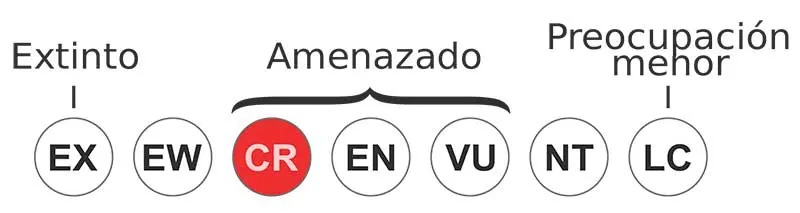
critical hazard


• Current category of the Red List of the UICN: Critical Hazard

• Population trend: Decreasing

This parrot has been upgraded to the category a Critically Endangered due to observations that suggest that it now has a very small population, with the suspicion of a fast and rapid deterioration due to the continuous logging of forests, as well as his persecution. Conservation actions are hampered by security concerns. Urgent action is required to assess the gravity of the situation of the species, lessen the impact of threats, start your recovery.

The population was previously estimated at less of 1.000 mature individuals (BirdLife International 2001), but the most recent observations indicate that it could currently be less than 250 mature individuals, Therefore the population is now in the band of 50 to 249 mature individuals, probably equivalent to a total population of 75 to 375 individuals.

Military activity and the insurgency are still presenting a serious obstacle to the general conservation activity in the Sulus. There is no formal protected areas in the archipelago. In 1997, began an awareness campaign focused on the conservation of terrestrial biodiversity in Tawi-Tawi. There is a proposal to finance the conservation of Tawi Tawi, Coastal zone Sulu, Although neither the result nor the potential benefits for the species are known. A municipal resolution has been developing, hoping to put an end to the hunting of endemic species (I. Sarenas in litt., 2010).

"Blue-winged Racquet-tail" in captivity:

Unknown in captivity.

Alternative names:

– Blue-winged Racquet-tail, Blue winged Racquet tail, Blue-winged Racket-tail, Blue-winged Racket-tailed Parrot, Blue-winged Racquet Tail, Blue-winged Racquet-tailed Parrot, Sulu Racket-tail, Sulu Racket-tailed Parrot, Sulu Racquet-tail, Sulu Racquet-tail Parrot, Sulu Racquet-tailed Parrot (ingles).
– Palette des Sulu, Palette à ailes bleues, Perroquet à raquette des Sulu (French).
– Sulu-Spatelschwanzpapagei, Sulu Spatelschwanz-Papapgei, Sulupapagei (German).
– Prioniturus verticalis (Portuguese).
– Lorito momoto de las Sulu, Lorito Momoto Sulu, Lorito-momoto de las Sulu (español).

scientific classification:

– Order: Psittaciformes
– Family: Psittaculidae
– Genus: Prioniturus
– Scientific name: Prioniturus verticalis
– Citation: Sharpe, 1893
– Protonimo: Prioniturus verticalis

————————————————————————————————

“Sulu Motmot Parrot” (Prioniturus verticalis)

Sources:

– Avibase
– Parrots of the World – Forshaw Joseph M
– Parrots A Guide to the Parrots of the World – Tony Juniper & Mike Parr
– Birdlife

– Photos:

(1) – preening in top of tree by Desmond Allen – Lynx
(2) – «Prioniturusverticaliskeulemans» by {{{Name}}} – Ibis 1894. Licensed under Public Domain via Wikimedia Commons.

– Sounds: Desmond Allen (Xeno-canto)

▷ The world of Pets: Dogs, cats, birds, reptiles, amphibians

Golden-mantled Racquet-tail
Prioniturus platurus


Golden-mantled Racquet-tail

Content

Golden-mantled Racquet-tail

Description

28 cm.. length and a weight between 200 and 225 g..

The head of the Golden-mantled Racquet-tail (Prioniturus platurus) is light green. The crown Violet gray with a red spot on the front edge; rear of the neck Ocre-Naranja. Mantle light grey, changing to green (marked in grey) on the back; rump and uppertail-coverts green. Wing coverts green, strongly impregnated with pale grey (more green in the coverts more internal); primaries Greens with vane Dark internal; secondary internal green with yellow line in the margins; bend of wing grey violet, carpal edge yellow. Wing feathers green; underside of flight feather marked in blue. Underparts brighter yellowish green, more green in the upper part of the chest, and yellow in the undertail-coverts. Upper, the tail green in the center, dotted in bluish black on the sides; undertail, the tail pale blue; spatulas blackish.

Bill pale grey, with the lower jaw and the tip of the bill darker; irises dark brown; legs grey.

The female lacks the color red and blue marks from the crown and of the collar back orange; underparts washed in less differentiated grey; rackets shorter tail.

Immature without rackets the tail.

Subspecies:

  • Prioniturus platurus platurus

    – The nominal.


  • Prioniturus platurus talautensis

    – (Hartert, E, 1898) Paler in general males; less grey on the mantle and the upper wing coverts; stain clear reddish pink on the back of the Crown with most blue patch.
    The female as the nominal species but green with paler
    Juveniles as the nominal species but also with the Green pale


  • Prioniturus platurus sinerubris

    – (Forshaw, 1971) Males with reddish pink spot away from the back of the Crown; mantle and upper wing coverts, green, slightly washed with grey; curve of wing and lesser coverts bathed in purple; smaller.

Habitat:

The Golden-mantled Racquet-tail inhabits the edges of humid forests, forests, orchards and forests of the lowlands Moss, to 2.000 m (most common above 1.000 m). The birds are seen generally in small noisy groups of 5-10 Member, flying over the forest, or during daily movements between the feeding and rest areas.

Reproduction:

A female in breeding condition was observed in October and the nest was in a hollow tree; nothing more is known about the reproductive behavior of the species.

Food:

Have been seen feeding on fruiting mango (Mangifera indica), and the diet includes fruits, seeds and flowers.

Distribution:

Size of the distribution (reproduction / resident): 186.000 km2

Restricted to Sulawesi and nearby islands, including Talaud, Siau, Lembeh, Togian, Group Banggai, Ambon, Muna and Button. Usually, the species is common and the world population is considered to be above 10.000 exemplary and stable: Nominal race numbers are calculated to be above the 10.000 birds and stable, the subspecies talautensis It is less numerous with a population of about of 5.000 specimens, and the sinerubris It is thought that it may be around 10.000 exemplary and probably stable.

Subspecies distribution:

  • Prioniturus platurus platurus

    – The nominal.


  • Prioniturus platurus talautensis

    – (Hartert, E, 1898) Is distributed in the Talaud Islands.


  • Prioniturus platurus sinerubris

    – (Forshaw, 1971) Is distributed in Taliabu and Mangole in the Sula Islands

One of the places where you can see this bird is the Gunung Ambang nature reserve in Sulawesi.

Conservation:


minor concern


• Current category of the Red List of the UICN: Least concern

• Population trend: Stable


The size of the world population It has not been quantified, Although it is estimated that it may be between 10,000 and 20,000 specimens. The species is described as common (pit et to the. 1997).

The population is suspected to be stable in the absence of evidence of any reduction or substantial threats.


"Golden-mantled Racquet-tail" in captivity:

Susceptible to fungal infections.
Rare in captivity.

Alternative names:

– Golden-mantled Racquet-tail, Gold-backed Racquet-tail, Gold-backed Racquet-tailed Parrot, Golden Mantled Racket-tailed Parrot, Golden mantled Racquet tail, Golden-mantled Racket-tail, Golden-mantled Racket-tailed Parrot, Golden-mantled Racquet-tail Parrot, Golden-mantled Racquet-tailed Parrot, Gold-mantled Racket-tail, Gold-mantled Racket-tailed Parrot, Gold-mantled Racquet-tailed Parrot (ingles).
– Palette à manteau d’or, Perroquet à raquette à manteau d’or (French).
– Goldmantelpapagei (German).
– Prioniturus platurus (Portuguese).
– Lorito Momoto Dorado, Lorito momoto Dorsidorado, Lorito-momoto Dorsidorado (español).

scientific classification:

– Order: Psittaciformes
– Family: Psittaculidae
– Genus: Prioniturus
– Scientific name: Prioniturus platurus
– Citation: (Vieillot, 1818)
– Protonimo: parrot platurus

Images "Golden-mantled Racquet-tail"

Videos "Golden-mantled Racquet-tail"

————————————————————————————————

«Lorito momoto dorsidorado» (Prioniturus platurus)

Sources:

– Avibase
– Parrots of the World – Forshaw Joseph M
– Parrots A Guide to the Parrots of the World – Tony Juniper & Mike Parr
– Wikipedia
– Birdlife

– Photos:

(1) – Prioniturus platurus golden mantled racquet tail – Parrot-birds
(2) – «Prioniturus platurus» by John Gould – Gould, John, 1804-1881; Sharpe, Richard Bowdler, 1847-1909: Birds of Asia., Volume 6, London, [2]. Licensed under Public Domain via Wikimedia Commons.

– Sounds: Frank Lambert (Xeno-canto)

▷ The world of Pets: Dogs, cats, birds, reptiles, amphibians

Modest Tiger-Parrot
Psittacella modesta

Parrot-Tiger-modest

Content

Description

14 cm.. length between 42 and 43 g. of weight.

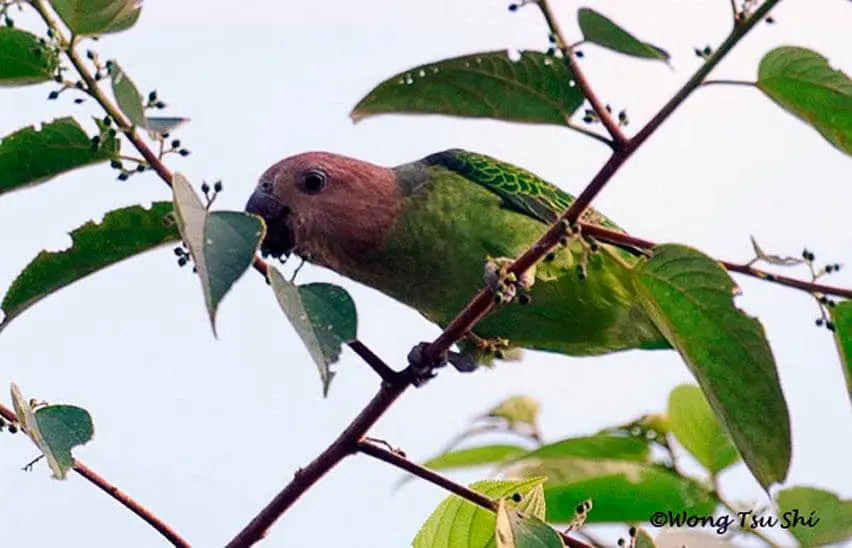
The Modest Tiger-Parrot (Psittacella modesta) has the head Brown olive, with indistinct centers yellow to the feathers of the crown and nape. Mantle dark green, with slightly darker edges to feathers; rump with indistinct greenish-yellow and black mix. Uppertail green, with fringe darker. Wings of color green dark marked in blue on the curve.

Yellow wing feathers. Of flight outer feathers blackish edged green in the bases and with fine yellow margins the vane internal and external. Top of the chest Gris-Oliva below the bend of wing, belly paler, opaque green; undertail-coverts red. Upper, the tail dark green; by down blackish.

The bill grey-blue, whitish tip; irises orange; legs bluish grey.

Female alternating the Brown dark and the pink in the chest, flanks alternating the Green and yellow-green.

Subspecies

  • Psittacella modesta modesta

    (Schlegel, 1871) – Nominal.


  • Psittacella modesta subcollaris

    (Rand, 1941) – Something more dark in General, the collar yellow on the back of the neck is more brilliant and variable, head brown / dark grey.
    The females with the head darker and some with a slight yellow colouring.


  • Psittacella modesta collaris

    (Ogilvie-Grant, 1914) – The neck yellow, irregularly present. Darker hue at the sides of the head.
    The females have mild brands yellow in the part back from the head.

Habitat:

It is found in the humid mountain forests, forest Moss, edges of secondary vegetation and forests, a altitude between 1.200 and 4.000 m (mostly between 1,700-2,800 Metro).

The Modest Tiger-Parrot is a bird quiet, discreet, quite docile and difficult to observe. It tends to prefer medium or lower forest and seeks its food crawling or jumping slowly at ground level. They only fly short distances when bother them.

Birds are found alone or in pairs, and they feed on seeds and small fruits.

The young birds as females.

Reproduction:

There is no information on the breeding ecology, but a male State of reproduction was observed during the month of June.

Food:

Observed feeding is of small fruits; seeds and pieces of berries DURAS were found in their stomachs.

Distribution:

Size of the area of distribution (reproduction / resident): 65.100 km2

New Guinea in Irian Jaya, Indonesian and Papua New Guinea. Scattered through the uplands, observed in the Vogelkop mountains (isolated population), and after all latitude 136ºE, through the central mountain belt, in the central mountain ranges, including the Tari area, the range of Victor Emanuel and the District of Mount Hagen, reaching around of 145 °E. The range overlaps with the species Madarasz's Tiger-Parrot at a length of 1,200 kilometers along the Cordillera central and where the two species overlap. The Modest Tiger-Parrot is usually found in slightly higher altitudes than the Madarasz's Tiger-Parrot. The world's population is thought to be greater of 50.000 specimens. The species is locally common.

Subspecies distribution:

  • Psittacella modesta modesta

    (Schlegel, 1871) – Nominal.


  • Psittacella modesta subcollaris

    (Rand, 1941) – extends from North of the Maoke mountains to the Montes Hindenburg;


  • Psittacella modesta collaris

    (Ogilvie-Grant, 1914) – is located to the South of the Maoke mountains.

Conservation:


minor concern


• Current category of the Red List of the UICN: Least concern

• Population trend: Stable

The size of the world population It has not been quantified, Although deemed superior to the 50.000 specimens. The species is reported as locally common (pit et to the. 1997).

The population is suspected to be stable in the absence of evidence of any reduction or substantial threats.


"Modest Tiger-Parrot" in captivity:

Not found in poultry.

Alternative names:

– Modest Tiger-Parrot, Barred Little Parrot, Barred Little Tiger-Parrot, Modest Parrot, Modest Tiger Parrot (ingles).
– Perruche modeste, Perruche olive (French).
– Olivpapagei, Oliv-Papagei (German).
– Psittacella modesta (Portuguese).
– Lorito Modesto, Lorito tigre Modesto, Lorito-tigre Modesto (español).

scientific classification:

– Order: Psittaciformes
– Family: Psittaculidae
– Genus: Psittacella
– Scientific name: Psittacella modesta
– Citation: Schlegel, 1871
– Protonimo: Psitacella [sic] modest

Images "Modest Tiger-Parrot"

Videos "Modest Tiger-Parrot"

————————————————————————————————

"Modest tiger parrot" (Psittacella modesta)

Sources:

– Avibase
– Parrots of the World – Forshaw Joseph M
– Parrots A Guide to the Parrots of the World – Tony Juniper & Mike Parr
– Birdlife
– Wikipedia
– Loromania

– Photos:

(1) – By © Wong Tsu Shi – Sooty-headed bulbul

– Sounds: Patrik Åberg (Xeno-canto)

▷ The world of Pets: Dogs, cats, birds, reptiles, amphibians

Singing Parrot
Geoffroyus heteroclitus

Parrot Heteroclito

Content

Description

25 cm.. length and a weight between 160 and 195 g..

The Singing Parrot (Geoffroyus heteroclitus) they have the head bright pale yellow.

A band Large blue-gray adorns the back of neck and gradually it fades in green on the the mantle. The throat is bluish grey. All upperparts are light green. The median stained reddish brown. You can see the pale yellow stripes on the innerwebs of the flight feather. The underparts is bright blue. Upper chest is blue-gray, which contrasts with the rest of the underparts, that are of a much lighter green back. The upper part of the tail is green. The bottom of the tail is grey, but with a slight yellow color in the outerweb external feathers tail.

The upper jaw is of color yellow pale, the dark gray lower jaw. The irises are yellow, the legs gray-green.

The sexes are dimorphic. The female has a bill totally dark. Yellow beginning of the head and neck greenish blue are away. In its place, the top It is gray and cheeks They are brownish green.

Immature show greener on the head than females. Its bill is paler and its irises dark.

Description 2 subspecies

  • Geoffroyus heteroclitus heteroclitus

    (Hombron & Jacquinot, 1841) – The nominal.


  • Geoffroyus heteroclitus hyacinthinus

    (Mayr, 1931) – Males have neck gray violáceo.

Habitat:

The Singing Parrot frequent humid lowlands, undisturbed, Hills generally below and of the 600 meters up to a maximum of 1.760 meters in the South of New Ireland . They are also partially cleared areas, at the edge of forests, in stands of trees in regeneration and in gardens.

The birds, often, they are heard when they make calls from the exposed or isolated trees, or view flying rapidly above the canopy.

They are alone, in pairs, or having relationships in small groups. There have been next to the Cardinal Lory and Duchess Lorikeet in Bougainville. They are often calm and difficult to detect when they remain perched among the dense foliage.

Reproduction:

The nest is a hole dug by the female in a dead tree stump or rotten, but nothing more is known about the breeding ecology of the species.

Food:

The diet It includes seeds, fruit, flowers and buds.

Distribution:

Size of the area of distribution (reproduction / resident): 576.000 km2

The Singing Parrot They are endemic Bismarck Archipelago and Solomon Islands. These birds are found in the following Islands: Umboi, New Britain, Lolobau, Duke of York, New Ireland, New Hanover, Tabar, Lihir, Buka, Bougainville (Papua New Guinea). It can also be seen in Choiseul, Santa Isabel, San Jorge, Malaita, New Georgia, Guadalcanal and all the little Islands Rennell (Solomon Islands).

Distribution 2 subspecies:

  • Geoffroyus heteroclitus heteroclitus

    (Hombron & Jacquinot, 1841) – The nominal.


  • Geoffroyus heteroclitus hyacinthinus

    (Mayr, 1931) – present only in the Rennell island.

Conservation:


minor concern


• Current category of the Red List of the UICN: Least concern.

• Population trend: Stable.

The world population it is generally estimated at just less than 100.000 specimens.

The subspecies that lives in Rennell Island is between 5.000 and 20.000 birds.

The Singing Parrot It suffers from the degradation of habitat throughout its area of distribution, but is not in danger.

"Singing Parrot" in captivity:

Extremely shy and touchy; they may die suddenly without discernible cause, possibly due to stress and improper diet.

Not commonly found in poultry.

Alternative names:

– Singing Parrot, Song Parrot (ingles).
– Perruche hétéroclite, Eclectus hétéroclite, Éclectus hétéroclite (French).
– Bismarckpapagei (German).
– Geoffroyus heteroclitus (Portuguese).
– Lorito Cantor, Lorito Heteróclito (español).

scientific classification:

– Order: Psittaciformes
– Family: Psittaculidae
– Genus: Geoffroyus
– Scientific name: Geoffroyus heteroclitus
– Citation: (Hombron & Jacquinot, 1841)
– Protonimo: Psittacus Geoffroyi heteroclitus

Images "Singing Parrot"

Videos "Singing Parrot"

————————————————————————————————

“Lorito heterroclito» (Geoffroyus heteroclitus)

Sources:

– Avibase
– Parrots of the World – Forshaw Joseph M
– Parrots A Guide to the Parrots of the World – Tony Juniper & Mike Parr
– Wikipedia

– Photos:

(1) – Birds-pet-wallpapers

– Sounds: Mark Todd (Xeno-canto)