โ–ท The world of Pets: Dogs, cats, birds, reptiles, amphibians

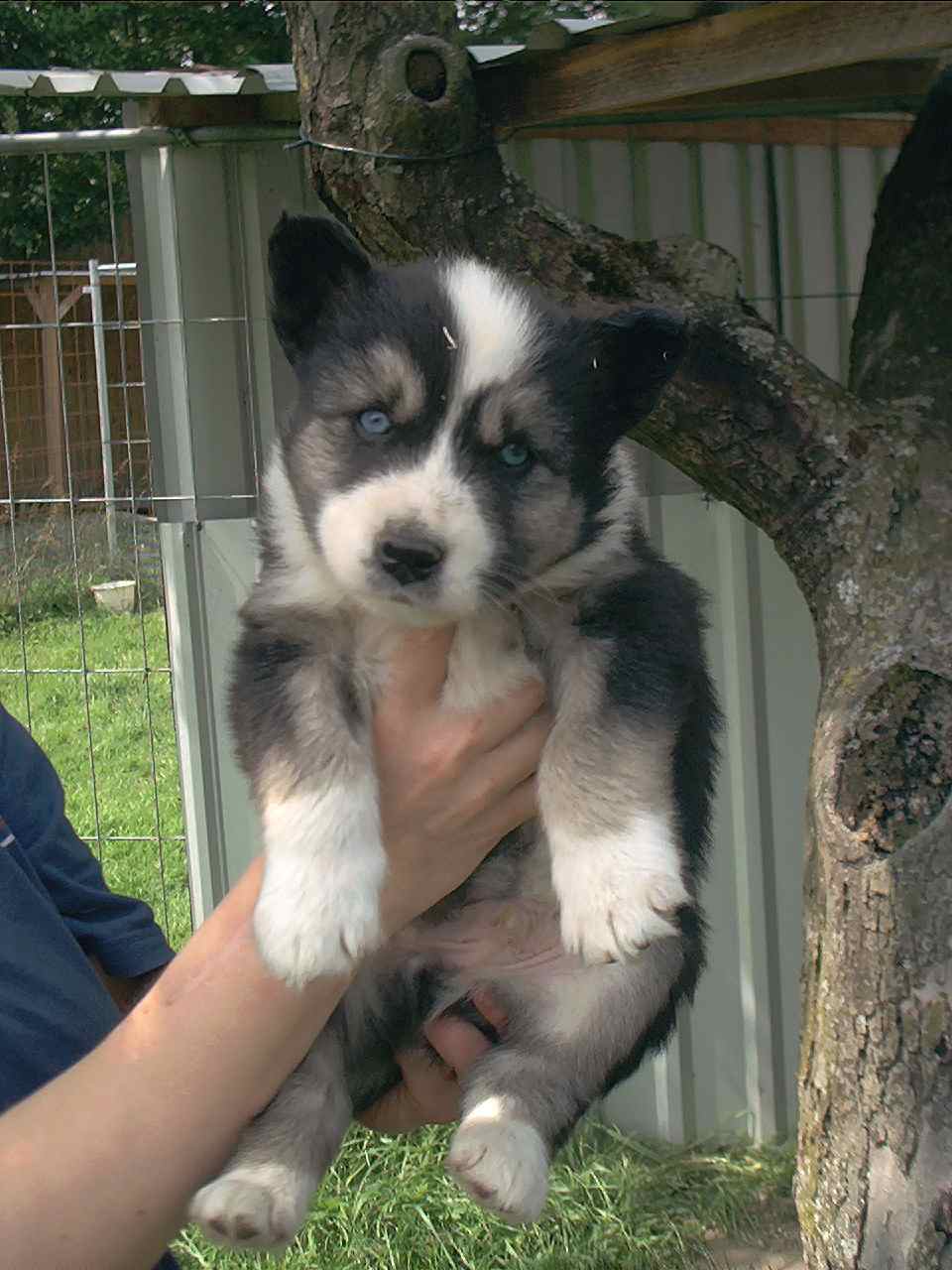
Yakutian Laika
Rusia FCI 365 . Nordic Sledge Dogs

Laika de Yakutia

The Yakutian Laika they are very intelligent dogs, with a prodigious sense of smell and an exaggerated sense of direction

Content

History

The history of the ยซLaika of Yakutiaยป is very extensive. For centuries, sleds pulled by dogs was something very important for the majority of peoples of the North of Russia, due to their way of life and the climate to which they were subjected. In the Neolithic, on the coast line of northeast Asia, These dogs were used for transportation and hunting.

At the beginning of the year 90, There was a finding on Zhokhov Island (Novosibirsk Islands, Yakutia), they found an archaeological site of hunters and dogs. It was investigated by an archaeologist from St. Petersburg, Vladimir Pitulko, there he found archaeological remains of sleighs, harnesses and that they still kept the bones of the dogs. Through the radiocarbon method, they demonstrated that these remains had an age of 7.800 to 8.000 years. This, It is the oldest find that has taken place in the Arctic..

Ethnographers MG Levin (1946), Smolyak AV (1978) and other authors, they share that since ancient times (up until the present day), for the aboriginal peoples of the north, the sled dogs were always universal animals: they were shooting animals, they were used also as food, and their skins were used for the manufacture of clothing and the rituals of worship. Times, the dogs were sacrificed and were used for religious ceremonies.

Many geographic discoveries in the Arctic were possible, with the sled dogs. The two poles of the Earth were discovered with the help of these dogs, in 1907, F. Cook and 1909 R. Piry reached the North Pole. In 1911, Amundsen was a Norwegian flag at the South Pole, in hostile climatic conditions, made 2.980 miles in 99 days with sled dogs.
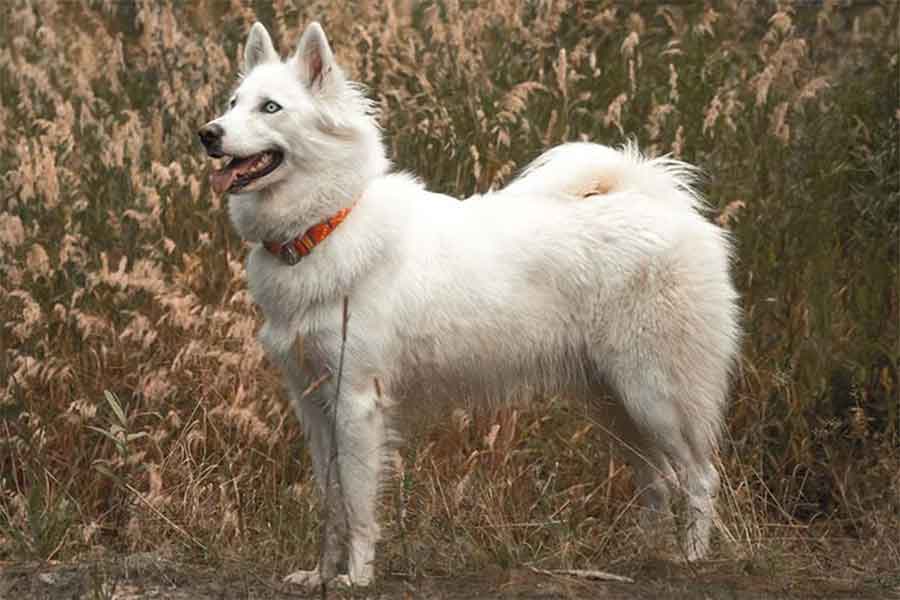
Yakutian Laika
Yakutian Laika

Until 1960 sleds pulled by dogs teams were important and, sometimes the only available form of winter transport in the northern regions of Russia. They were used not only by the local population, but also by government agencies, including troops from the border, the postal service and scientific expeditions. According to data from file, at the end of the 50 years of 20th century, in Northern Uluses of Yakutia, the total number of dogs was 33 000. The decline of dog sledding in Russia began during the last thirty years of the 20th century., When appeared on the market the snowmobiles, This led to a decline of fur and the local fishing industry, that little by little led to the extinction of the use of sledge dogs

"Give me winter and a team of dogs, and take all the rest" are the words of the famous northern traveler Knut Rasmussen, who made the trip longer on sledges pulled by dogs. This phrase describes the importance that have had these dogs to the length and breadth of history, and that in turn, shows that without them much of what we know today would belong to our ignorance.

The first written record of the dogs in the Yakutian territory dates of 1633. In the documents of the time, the olenek river, The Yana River and the Kolyma River were called "Rivers of Dogs". In Siberia, Rivers are divided into "dog rivers" and "deer rivers". In rivers rich in fish, It was easy to capture and store enough fish (dry fish – yukola) to feed the dogs and that's why they were called dog rivers. When there are fish no, it was difficult to use dogs for transport and reindeer were used, what are reindeer rivers. The journey along the โ€œrivers of dogsโ€ was more difficult, due to the continued need for fishing and hunting to obtain enough food for dogs.

In 1843, The ยซManual of Geography of the Russian Empireยป by Ivan Yakovlevich Pavlovsky was published, in this book, described the Yakutian Laika as a special race, as "a domesticated animal used for pulling sleds and hunting".

Physical characteristics
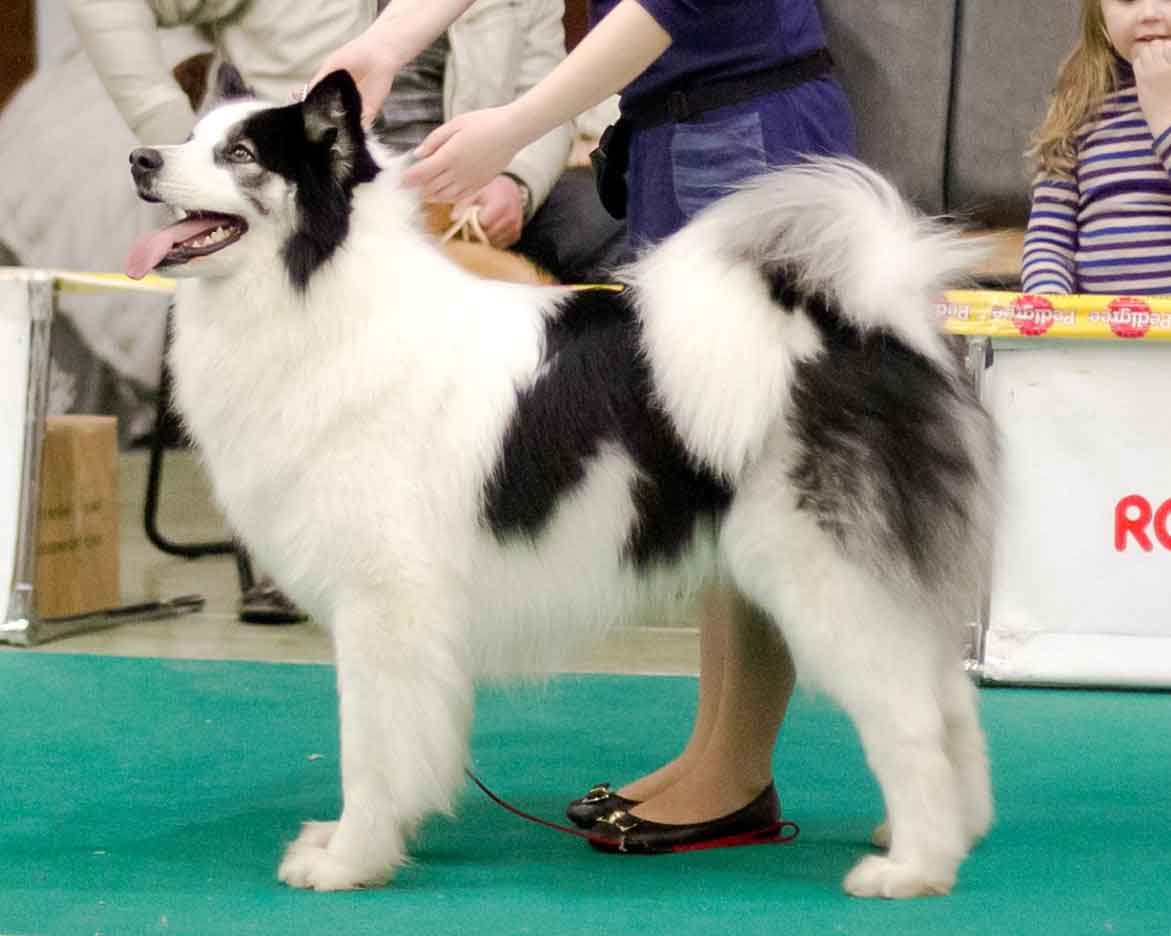
Yakutian Laika
Yakutian Laika

The Yakutian Laika, is an excellent hunting companion, they are not usually very large, its height is of 50 to 60 cm., and the reason of its size due to food, given the hostile climate, Sometimes food was really poor, However in other areas in which the race has developed, its size increases significantly. The expression on the face leaves us with an air of cunning mixed with melancholy.
Vladimir Ilyich Mikhelson was the first to describe the breed Yakutian Laika and differentiated her from other dogs in Northeast Asia.

The Yakutian Laika is a robust, built proportionally, a little tall and slim, the dog of medium size and with highly developed layers of hair, which is enough to survive under the harsh conditions of the Arctic. The Yakutian Laika is an active dog, the agile, curious, with a friendly and obedient nature, very sociable and nothing aggressive.

Its main purpose is to pull the sled and hunting. It is robust, with well-developed bones and muscles.
The Yakutian Laika is bold, outgoing, Active, friendly and sociable, an excellent companion but needs freedom, space and is very happy in cold climates.

Character and skills

Dogs Yakutian Laika, they live outdoors all year round, in the summer cavan pits in the Earth to keep fresh, or looking for the water trying to get rid of mosquitoes. In winter, They also tend to dig, they seek shelter, hiding under the snow.

Good nutrition and training of Yakutian Laika for transport has always been a main activity of the fishing population.

They are very smart dogs, with a prodigious sense of smell and an exaggerated sense of direction, which replaces a compass, a prodigious hearing and sight.

All those added to his highly developed survival instinct, they are that they are able to travel in a snow storm, mist, on dark nights and foggy, and find the nearest shelter, If they have been once, enough to register it in your memory. And we think that we are talking about a desert snow, no landmarks...

Exercises with ยซLaika of Yakutiaยป

The Yakutian Laika it is a sled dog with a well defined prey. The breed thrives on regular exercise and sufficient training. With a medium-high energy level, they love to run alongside a bicycle, do sled or tackle races, or play pickup in the yard. They play well with other dogs they are familiar with., but they distrust dogs and strange people. Usually, heat up quickly, but supervision is a good idea in new situations. The Yakutian Laika they are not suitable for people who cannot spend time with their dogs.

Training ยซLaika of Yakutiaยป

Train him Yakutian Laika It is quite a pleasant and easy task thanks to his docile nature and sharp intelligence. This dog has a strong penchant for independent thinking, so he will not follow the trainer's orders unless he fully trusts him. Pulling a sled is an innate talent of this breed, and does not need much training in this regard.

The Yakutian Laika seek human leadership and guidance, but does not respond well to corrective training techniques. Work more enthusiastically if the learning process is based on positive reinforcement and tasty treats. Like any other dog, the Yakutian Laika must learn certain rules and norms of decent behavior in human society, so elemental obedience training is imperative.

Grooming

The Yakutian Laika experiences a seasonal shedding that can get out of control if not brushed regularly. Usually, should be brushed weekly to avoid tangles and matting. When a lot comes off, it's a good idea to brush it every day to prevent the hair from sticking to everything. Use a bristle brush and metal comb when brushing. A tousler or detangler can make your job a little easier too. Since the Yakutian Laika he's a working dog, no need to over-trim their fur. Trim between your foot pads to prevent snow, ice and other debris build up and cause irritation. Their fur naturally repels dirt and is odorless, so the bath should only be done two or three times a year. Trim your nails when necessary, usually every two to three weeks. Clean your ears every week as part of your grooming routine..

Videos "Yakutian Laika"

www.YouTube.com/watch?v=Wpz_2UE_OzU
THE YAKUTIAN LAIKA DOG – EARTH’S COLDEST SUPERMODEL

www.YouTube.com/watch?v=jhYMOzm-3WA

YAKUTIAN LAIKA DOG – RUSSIA’S SUPER SLED DOGS

Type and recognitions:

  • FCI CLASSIFICATION:
  • Group :
  • Section : . .

Federations:

  • FCI – Group 5 – Section 1 Nordic Sledge Dogs. โ“˜
  • AKC – Nordic Sledge Dogs โ“˜

FCI breed standard "Yakutian Laika"

Origin:
Russia

Date of publication of the valid original standard:
04/09/2019.

Use:

Sledge Dogs, hunting and company.


General appearance:

The Yakutian Laika is a compact dog, medium-sized, strong, good muscular, with moderately long legs and thick skin, no signs of loosening. The coat is well developed and should be sufficient for living and working in extreme arctic conditions.. Sexual dimorphism is clearly pronounced, males are stronger and more powerful than females.

important proportions

  • The length of the body, from shoulder to rump, exceeds by one 10 to 15% the height at the withers.
  • The length of the head is a little less than 40% the height at the withers.
  • The length of the snout is between 38 and 40% of head length.
  • The length of the anterior part is 52 to the 54% the height at the withers.


Behavior / temperament:

The Yakutian Laika is a living dog, agile, of loving contact, friendly, sociable and energetic.

Head:

Corner shaped, moderately pointed, proportional to the size of the dog.

Cranial region:
  • Skull: Moderately wide, slightly rounded, with a high forehead.
  • Dnaso-frontal depression (stop): Well marked

facial region:

  • Truffle: Large, with wide nostrils, black or brown.
  • Snout: Well filled under the eyes, wedge shaped, gradually narrowing towards the truffle.
  • Belfos: Dried, tight, well pigmented.
  • Jaws / Teeth: The teeth are large and white, the dental formula should preferably be complete (42 teeth). Articulated by scissors or pliers. Dogs older than 3 years may have a recessed hinge.
  • Cheeks: Moderately marked.

Eyes: Straight and wide, but not deep; in the form of almond, dark brown, blue; small eyes (brown, blue) or blue segments in a brown iris. Dry, tight-fitting eyelids, that match the color of the truffle. A depigmented eyelid on a white background is allowed.
Ears: Triangular shape, high, wide at the base, thick, erect or inclined, covered with short, thick hairs; lean back when the dog is moving.

Neck:

Rather long, muscular, medium-.

Body:

Generality   Strong and muscular.
top line   Straight and firm, with a very slight moderately pronounced slope from the withers to the base of the tail.
Back   companies, broad, straight and muscular.
Pork loin   Short, wide and muscular.
Rump   Large, muscular, long, rounded, almost horizontal.
Breast   Grand, quite long, moderately deep, rounded cross section.
Ribs   Well rounded.

Tail:

Tied high, wrapped in a semicircle on the dog's back, with a thick layer of fur.

Tips

Strong, muscular, straight, well parallel.

Former members

  • Generality: Rights, parallel, strong, very well muscled.
  • Shoulder: Tilted, of moderate length.
  • Elbow: Well adjusted to the chest, placed behind.
  • Forearm: Muscular, oblique, of moderate length.
  • Metacarpus: Short, firm, slightly tilted.

Later members

  • Generality: Strong and well muscled structure. Seen from the back, they are straight and parallel.
  • Thigh: Broad and muscular.
  • Knee: Well angled.
  • Metatarsus: Strong, vertical.
  • Hock: Average length, strong. Hock angulation is well pronounced.

Pies
Wrinkled, tight, with very hard pads and a thick coating (brush) between the fingers. The hind legs are slightly larger than the front ones..

Movement:

Quick, elastic. The characteristic rhythms are the fast trot and the gallop..

Mantle

  • Fur: Thick, bright, straight, rough to the touch, average length, with a dense and highly developed undercoat. In the neck, forms a particularly pronounced mane in males; thickened behind the anterior and posterior; a little scared in line. Hair is shorter on the head and front of the limbs.
  • Color: White and any mix (two or three colors).


Size and weight:

Height to the cross

  • Males: the size is preferably between 55 and 59 cm., the ideal size is 56 cm..
  • females: the size is preferably between 53 and 57 cm., the ideal size is 55 cm..


Fouls:

โ–ท A big gap in physical constitution, short limbs.
โ–ท Square format.
โ–ท Flat chest, shallow or barrel.
โ–ท Poorly balanced and slow pace.
โ–ท Wavy hair, too soft, too short with an underdeveloped undercoat.

disqualifying fouls:

โ–ท Aggressive or shy dog.
โ–ท Disproportions in conformation.
โ–ท Males of the female type.
โ–ท Jaw too advanced or recessed with loss of contact, misaligned jaws.
โ–ท Total depigmentation of the nose, eyelids and lips.
โ–ท Any monochromatic color other than white.
โ–ท Short hairs (sweet).


N.B.:
  • Any dog โ€‹โ€‹showing clear signs of physical or behavioral abnormalities must be disqualified..
  • The aforementioned fouls that are more pronounced or more marked are eliminatory..
  • Males should have two normal-appearing testicles fully descended into the scrotum..
  • Only functionally and clinically healthy dogs, with the typical conformation of the breed, should be used for parenting.

Source: F.C.I - International Cynological Federation

Alternative names:

1. Yakut Laika, Yakustkaya Laika, Kolyma-Indigirka Laika, Laรฏka de Iakoutie, Chien de Traรฎneau de Yakutie, Laika de Yakutia, Kolyma Husky (English).
2. Yakutian Laika (French).
3. Kolyma-Indigirka Laika (German).
4. Laika da Iacรบtia, (em russo: ะฏะบัƒั‚ัะบะฐั ะปะฐะนะบะฐ) (Portuguese).
5. Yakut Laika (espaรฑol).

โ–ท The world of Pets: Dogs, cats, birds, reptiles, amphibians

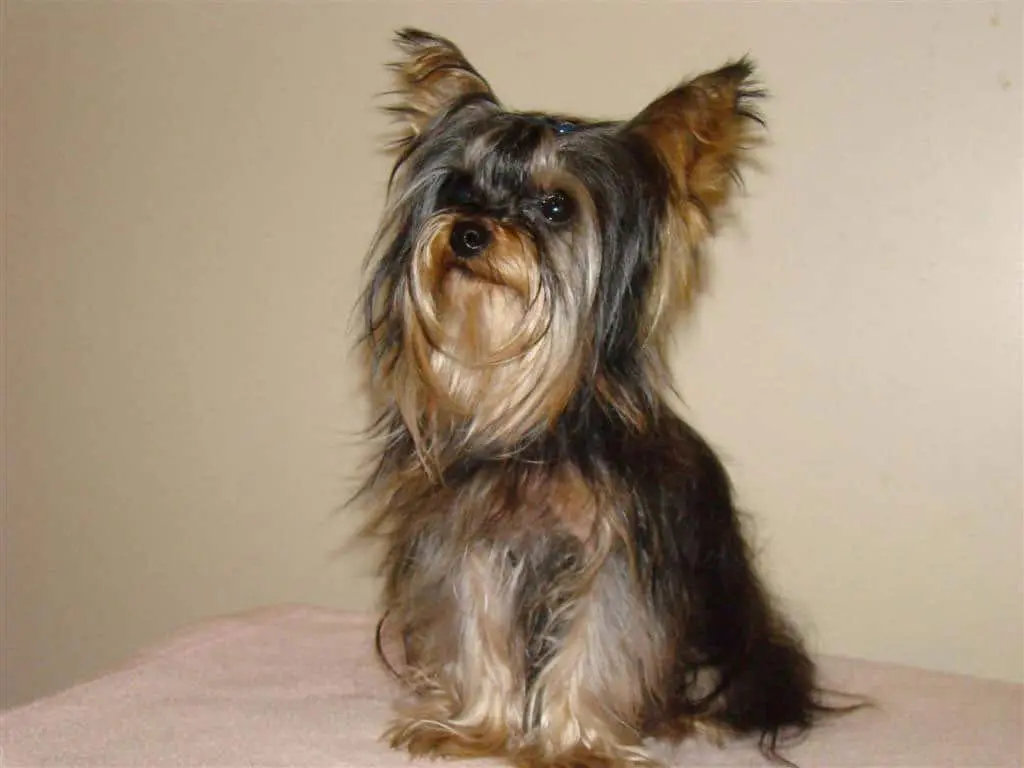
Yorkshire Terrier
Gran Bretaรฑaa FCI 86 . Toy Terriers

Yorkshire Terrier

Content

History

The Yorkshire Terrier, call Yorkie To abreviate, comes from the north of England and Scotland. Here it served for centuries as a versatile house and garden dog.. Its territory was later the settlements of the working poor, that were built en masse with industrialization. The little houses were small, conditions were tight. There was no room for a big dog. The little terriers were exactly the right fit here and served the town for many years as watchdogs and hunters.. Keeping rats and mice away small, driving away a marten or fox that wanted to attack the chickens or pigeons, occasionally killing a rabbit; the Yorkie proved to be a useful helper. It is even said that the old Yorkie has gone to the rabbit hole to hunt. Despite its rather delicate appearance, the Yorkshire Terrier it's a complete dog. Basically, it is a concise breed with a sometimes stubborn and fearless temperament. At the same time, has served as a lap dog for over 150 years.

Its current form as "Yorkshire TerrierยปWith very long and silky hair it is the result of a directed exhibition breeding. It also, their ancestors were normally much larger than the current ones or even the Toy Yorkies.

In ancient documents, even 6 KG as the weight of a Yorkshire Terrier. Like the other little British Isles terriers, the Yorkie ultimately originates from a single large gene pool of those terriers from early working class settlements. Only through deliberate artificial separation, that is to say, the separation of the brood, became the many terrier breeds that are genetically separate today. Already in 1873 the Yorkshire Terrier was recognized as a breed of dog by the Kennel Club.

according to records, the Yorkshire Terrier was the first most popular breed in the United States in 2002. His first appearance in a canine exposition took place around 1880, and immediately found great acceptance in the public. It currently ranks first in the English breeds, and it is one of the most widespread companion dogs in the world.

Read more

โ–ท The world of Pets: Dogs, cats, birds, reptiles, amphibians

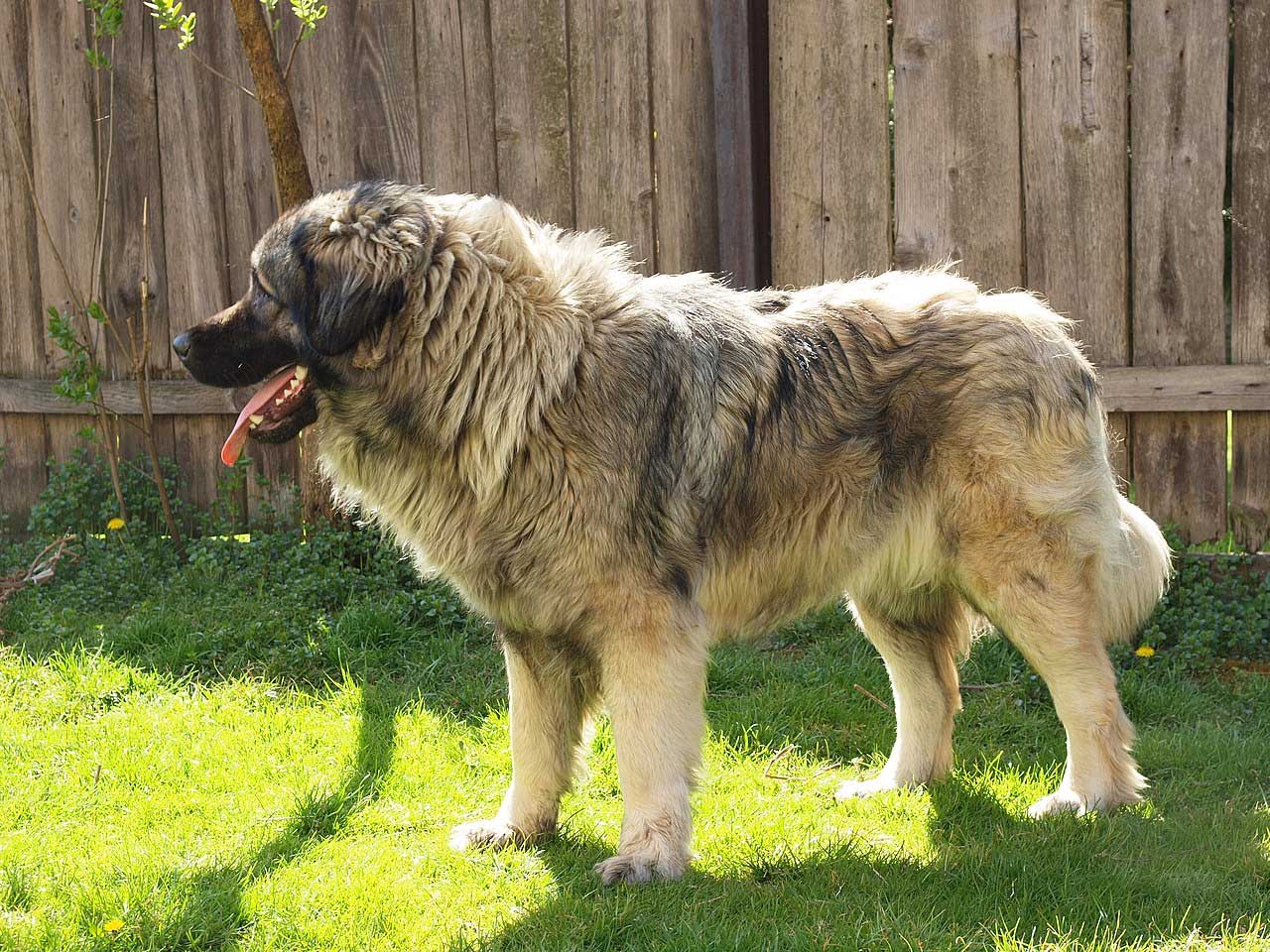
Yugoslavian Shepherd Dog Sharplanina
Yugoslavia FCI 41 - Molossoid . Mountain
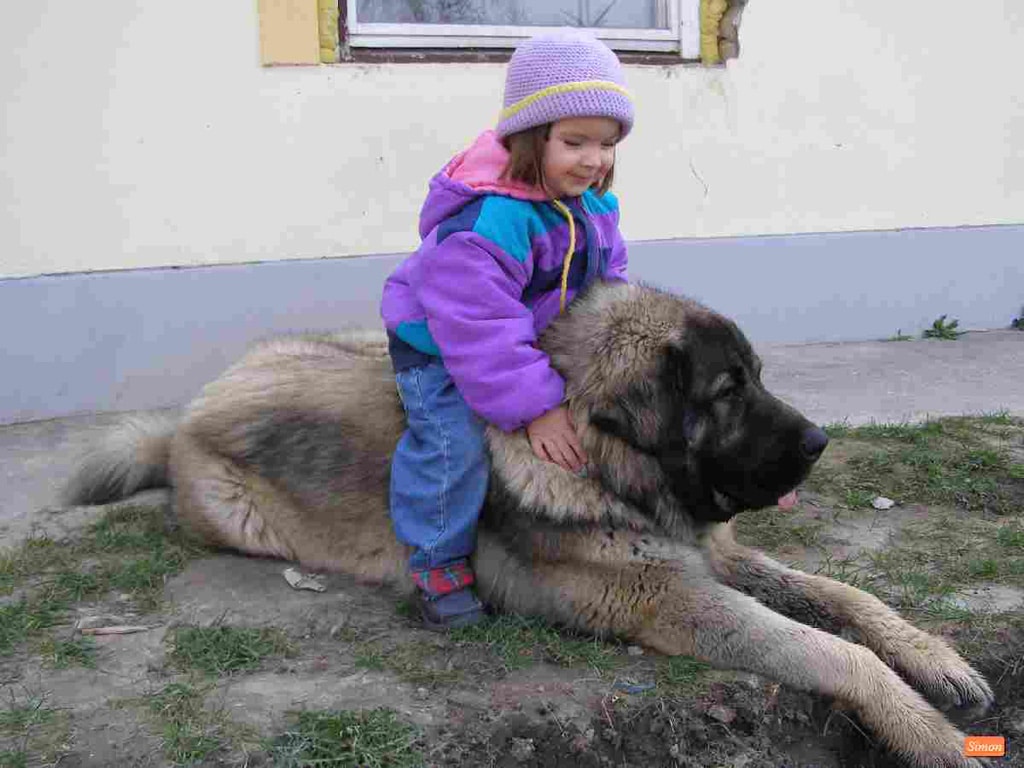
Yugoslavian Shepherd Dog Sharplanina

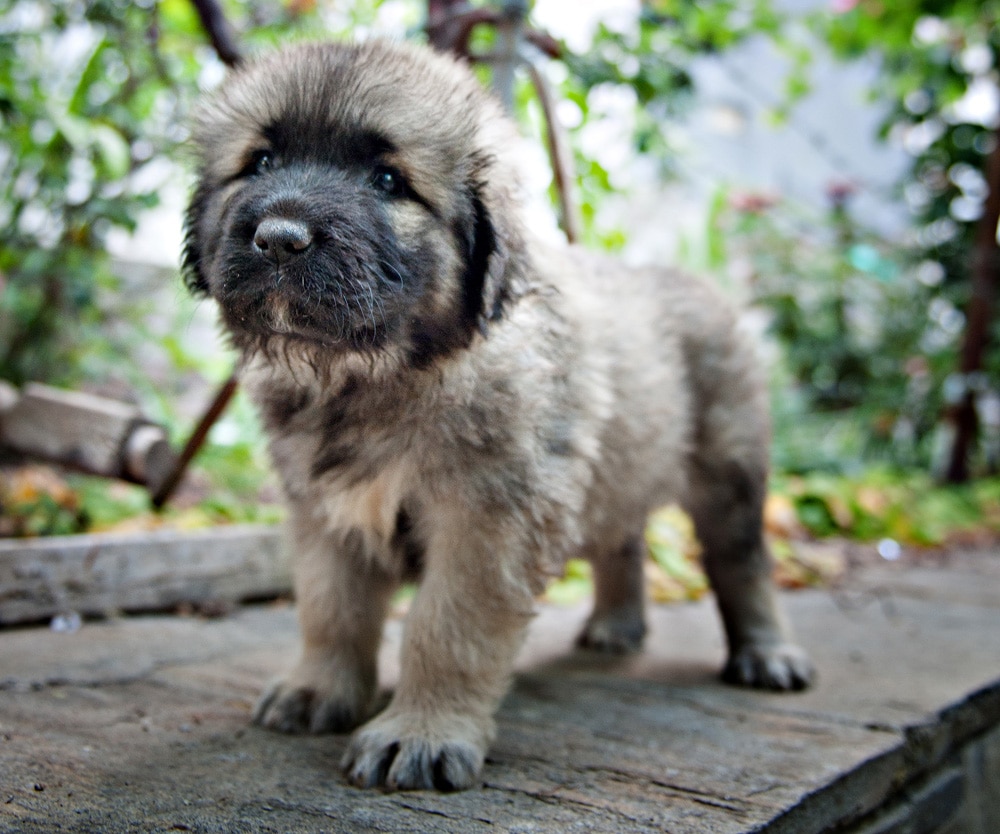
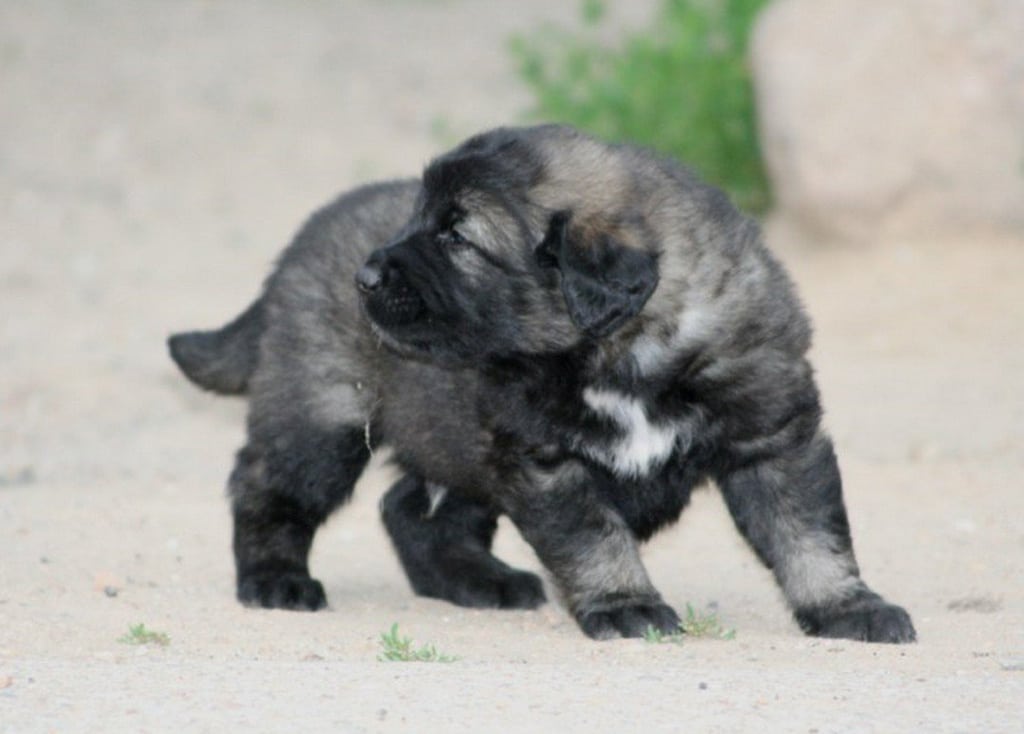
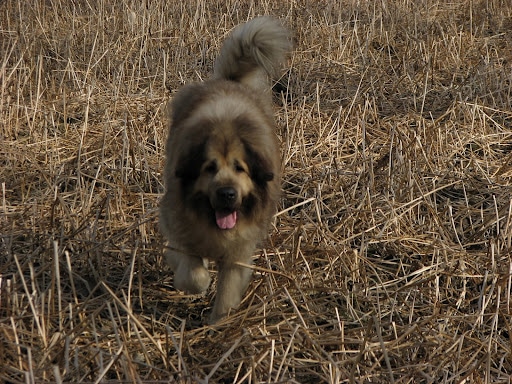
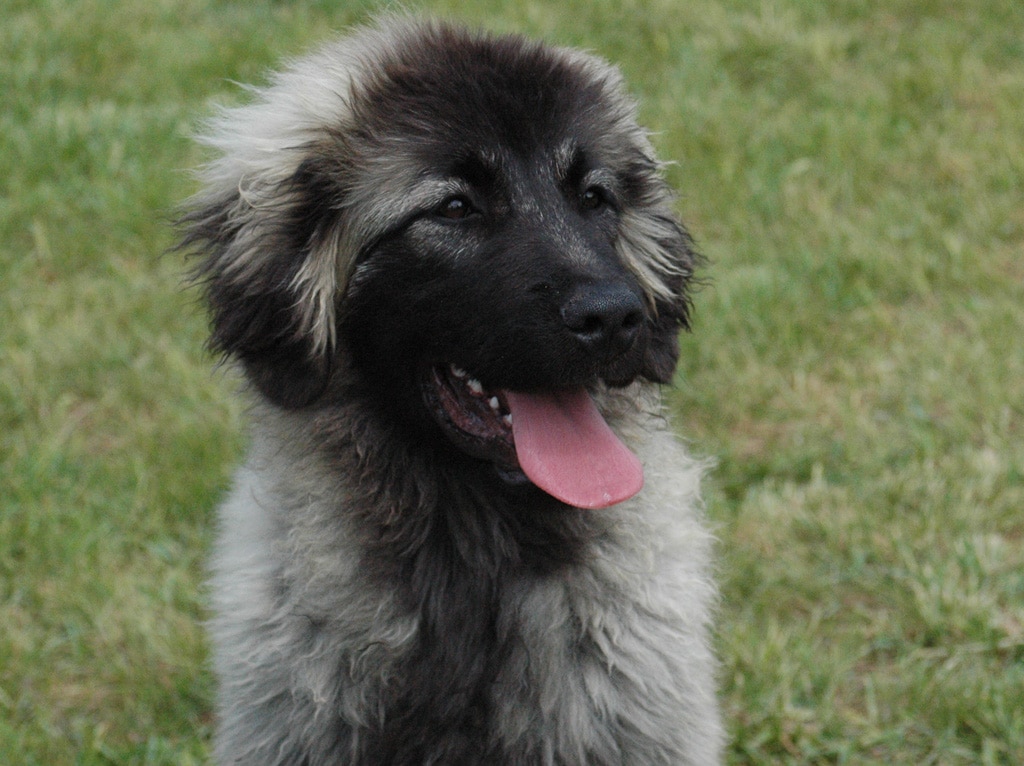
The Yugoslavian Shepherd Dog Sharplanina is a brave dog, quiet, safe and reserved with strangers.

Content

History

As it is the case with many breeds, the true origins of this big guy are unknown, although there are theories that try to approach them. Some authors raised that their ancestors were the ancient molossians, especially dogs from Greece and livestock guarding dogs from Turkey.

Other authors believe that the Yugoslavian Shepherd Dog Sharplanina, drift of Asian dogs that arrived in Europe accompanied by migration of peoples who were engaged in raising them. This theory is the most widely accepted today..

The race was initially recognized by the Federation Cynologique Internationale (FCI) in 1939 under the name Illyrian Shepherd Dog, demonstrating the ancient name of the native region of these dogs.

In 1957, at the request of the Yugoslav Canine Federation (JKS), the FCI changed the name to Yugoslav Shepherd DogYugoslavian Shepherd Dog Sharplanina, because it is in the ล ar Mountains (ล ar Planina in South Slavic languages, is a mountain range located on the southern border of Serbia in the province of Kosovo and in the northwestern part of the Republic of Macedonia), where is concentrated the largest number of specimens of the breed.

If there is something indisputable it is that the Yugoslavian Shepherd Dog Sharplanina, lives since ancient times in the mountainous regions of the former Yugoslavia, from where it has spread throughout the Balkan Peninsula and recently, beyond these borders.

Escudo de DragasThe image of the Yugoslavian Shepherd Dog Sharplanina appears on the obverse of the coin 1 Denar, issued in the Republic of Macedonia in the year 1993, and is also the emblematic protagonist of the Dragaลก shield, a city in the South of Kosovo, which is located in the region of the ล ar Mountains.

The Yugoslavian Shepherd Dog Sharplanina has reached the ranches of North America as an esteemed sheepdog and cattle guardian. Predator problems have been greatly diminished once a Yugoslavian Shepherd Dog Sharplanina , takes the responsibility of a herd. You are one of the few dogs that can chase away a wolf or bear.

Physical characteristics

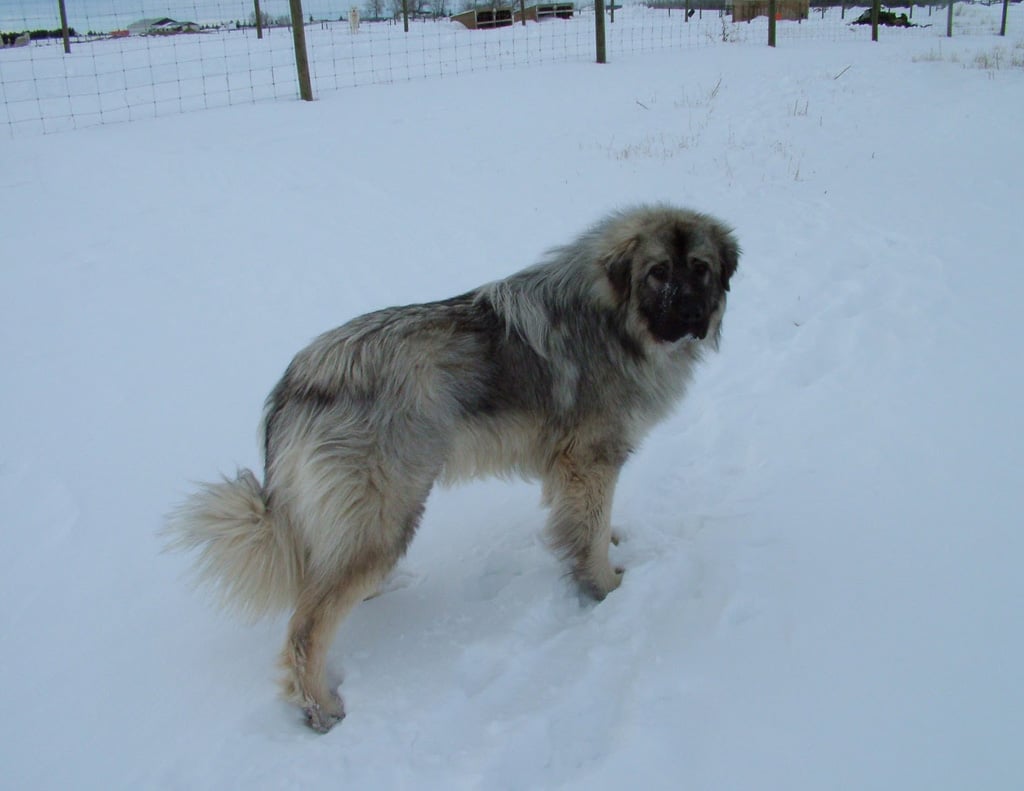
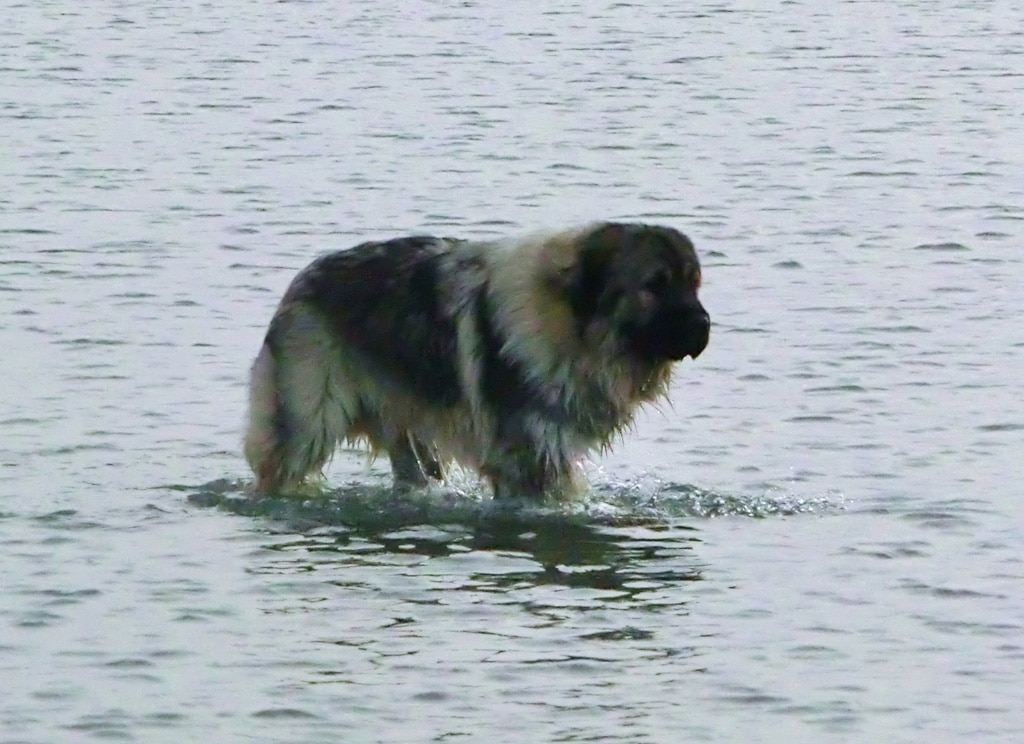
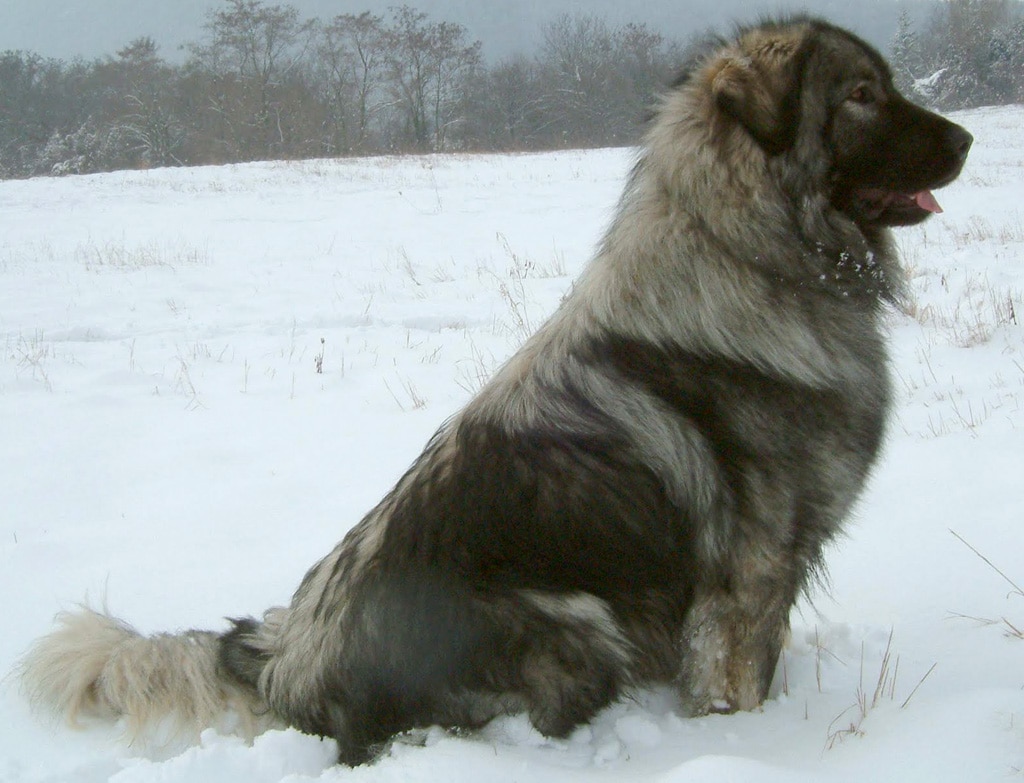
The Yugoslavian Shepherd Dog Sharplanina, is a large size dog, It is quite above average when it comes to large breeds. It is also robust and equipped with a strong Constitution.

The height males average is of 56 to 62 cm and females is of 54 to 58 cm.. The length of the body is slightly greater than the height at the withers.

Although some authors speak of the existence of individuals whose actions were between 75 and 85 cm. of height and a weight of 65 to 100 kg.

– The huge head is proportional to the body, It has the skull slightly convex and slightly longer than the muzzle.
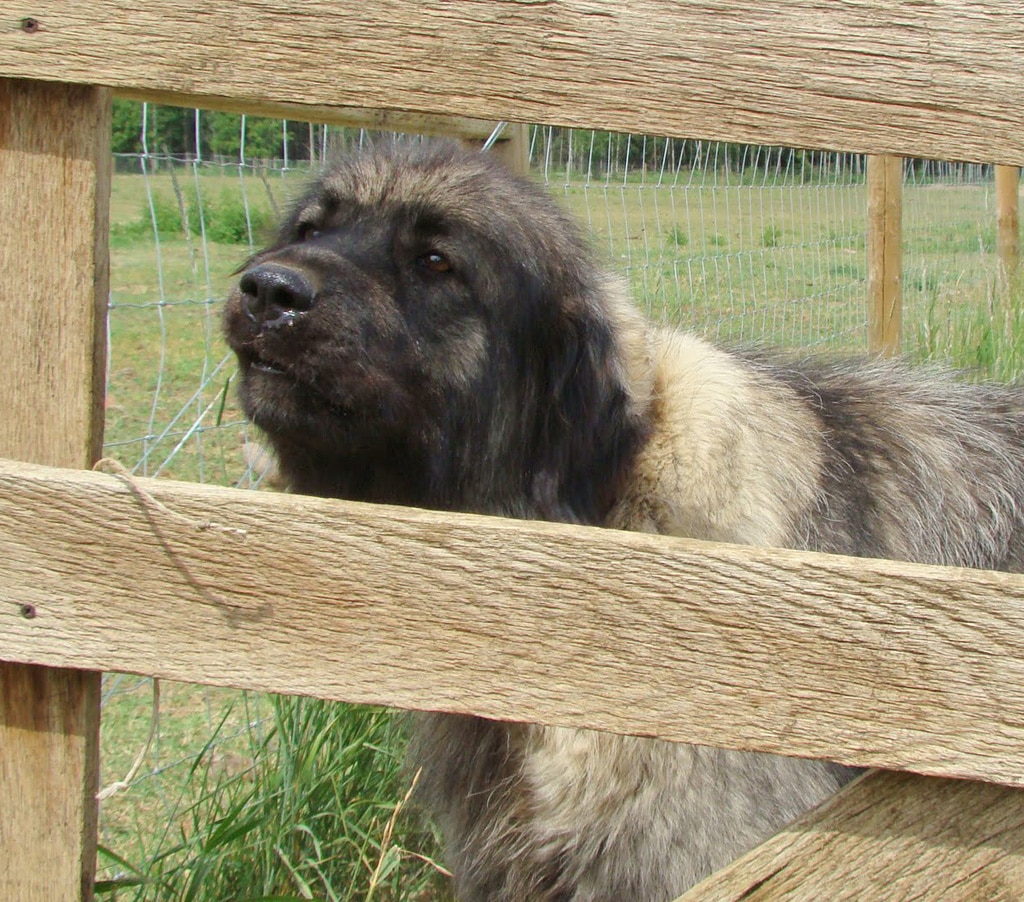
– The eyes of the Yugoslavian Shepherd Dog Sharplanina they are almond-shaped and chestnut-colored (light or dark), transmit an expression of serenity but the look is penetrating.
– The ears they are medium-sized, flat and hang on the cheeks.
– The tail It is long and Sabre-shaped, if it is in a state of alert, it carries it high, barely exceeding the line of the back.
– The fur It is long in some parts of the body and short in others. In the head, the ears and the anterior part of the extremities, is short. The length of the neck, the body and the back of the limbs and tail, is long.
– Regard to the the fur color, all uniform colors are supported but it is preferable to be gray iron and gray very dark. As well, at the top of the head, the neck and the trunk have darker hair.

Character and skills

The Yugoslavian Shepherd Dog Sharplanina it is silent, active and very protective, extremely bright, but very independent. It is an extremely good watchdog, and very reserved with strangers. The Yugoslavian Shepherd Dog Sharplanina they are calm sheepdogs, very smart, which is why, wisely, they choose their friends, trust no one too fast. They are naturally fearless defenders of the pack, as well as his master and his property, so everything he considers his property is jealously and unconditionally guarded. This is a dog with character and very dominant that requires work.. If we just want this dog to be a companion, constant professional education from an early age is essential.

The animals that live with him on the farm will be under his protection and there is no need to fear for them.. But, does not tolerate strange and unknown animals, often aggressive, and the same problems can happen with smaller pets, that can be seen as prey.

She will get along well with the children she will be together with from an early age, will be devoted and protective of them, and you may consider children you don't know as uninvited guests, so we must be very careful. You must be especially careful with younger children, since he will watch over them all the time due to the shepherd's instinct, but if the children want to get away, will drag them back, so you can injure them without realizing it.

Observations

Similar to the Caucasian Shepherd Dogthat is very much– has a temperament more characteristic of a guard dog than a herd dog.

Let us not forget that this agility, He was selected to defend the herds of the attack of wolves that were previously very numerous in their homeland.
It is necessary that the owner of this dog is a person responsible and very conscious of the copy that is in charge of, the Yugoslavian Shepherd Dog Sharplanina, It has a specially developed and powerful teeth, It can be a real danger if the dog is not given a correct and healthy education.

Education "Chaplanina pastor dog"

This is not a suitable dog for beginners. He is very suspicious and incorruptible. Usually, is completely loyal to a single owner. Education must be clear, consistent and should be carried out from the first meeting with the puppy. Early socialization is mandatory. With an inadequate education, this dog can become uncontrollable, very aggressive, dangerous even to the owner.

Required activity

These dogs really need a lot of exercise. If the dog goes to work on a farm, will meet your daily career needs while working, otherwise, need a longer walk or daily run.

Suitable environment

This is a dog suitable exclusively for outdoor life. You will feel better on a farm or in a larger rural fenced yard because you will be able to run freely and perform your primary role as a sheepdog..

Care "Chaplanina Pastor Dog"

Your care is not too demanding. Thick hair just needs brushing once in a while, once a week will be enough, except when you change your coat that more frequent brushing is recommended. As with other dogs, this breed also needs to clean their ears, eyes and shorten their claws.

Health "Chaplanina pastor dog"

No known genetic health problems, it is considered a relatively healthy breed. As with other large breeds, hip dysplasia can occur in this breed.

Images "Chaplanina Pastor Dog"

Videos "Chaplanina pastor dog"

Type and recognitions:

  • FCI CLASSIFICATION:
  • Group :
  • Section : . .

Federations:

  • FCI – Pinscher and Schnauzer-Molossoid type dogs – Swiss Mountain Dogs and Cattledogs. Section 2.2 Molossoid, mountain type. โ“˜
  • CKC – Miscellaneous list โ“˜
  • UKC – Watchdog โ“˜

FCI breed standard "Yugoslavian Shepherd Dog Sharplanina"

Origin:
Macedonia, Serbia, Montenegro

Date of publication of the valid original standard:
24/11/1970

Use:

---


General appearance:

to) It is robust, of strong Constitution, well proportioned.
Its size is above normal. Is covered in long hair, dense and quite thick, giving your body a more collected look. companies, possesses a calm temperament and good character: knows how to be a good defender without attacking. He is faithful to his master and incorruptible.

b) Height to the cross: In the male, the average is 62 cm., and in the female it is 58 cm.. Large dogs are preferred.
The dogs below 56 cm and bitches below 54 cm are excluded from reproduction. In working dogs the weight is 35 to 45 kg in males and 30 to 40 kg in females.

c) body length: It is slightly greater than the height at the withers: of 8 to 10% from height to withers in dogs, and 10 to 12% in
the bitches.


Behavior / temperament:

---

Head:

Is provided to the body and measures about 25 cm., or a 40% the height at the withers. The skull is slightly longer than the muzzle, 58 and 42% respectively of the total length of the head. The female has a little longer snout (57 and 43%). The top of the skull is slightly convex and the profile of the nasal helm is straight. The lines of both profiles are convergent.

Cranial region:
  • Skull: The cranial region is wide, with a medium marked Groove. Seen from side and from above is slightly convex and little bulky.
  • Depression links (stop) : It is little pronounced.

facial region:

  • Snout: It is shorter than the skull. Wide and deep at the base, light and gradually are reduced. The nasal helm is straight and wide. The profile of the lower jaw begins with an arch and is confirmed by a straight line that diverges from the profile of the nasal bridge..
  • Truffle: Is wide and black.
  • Lips: They are moderately thick and stretched. The upper lip slightly exceeds the lower. The corners are well connected, and they are not never reversed.
  • Teeth: They are comprehensive and applied in scissor bite.
  • Eyes: Almond biscuits; or large, or sunk. Are dark or light brown, and calm expression, but penetrating and never afraid. Both the eyelids and visible mucous membranes are black.
  • Ears: Located at the level of the prolongation of an imaginary line that starts from the tip of the nose and passes through the inner corner of the corresponding eye, or below. They are hanging and fall glued along the cheeks. They are V-shaped and medium in length.; When stretched them slightly arriving to the inner corner of the eye. They are covered with short dense pile.

Neck:

The upper profile is slightly convex or straight at the top of the neck. The lower profile is straight. The neck is of medium length, but due to the long and bushy hair seems shorter. It is wide, deep and muscular, well attached to the head and body, no sharp demarcation. It is slightly elevated in relation to the dorsal line. Your skin is stretched and does not double chin. The hair is dense, long and rough, and arriving at the head it forms a sort of well marked necklace, which apparently increases the breadth and depth of this part of the head.

Body:

As a whole, the top line is horizontal, or slightly inclined starting from the cross to the rump. In dogs bred in the mountain, be tolerated that the height of the rump is just greater than the height at the withers, Although this is not desirable. The body is slightly longer than the height at the withers.

  • Cross: Slightly marked and wide. It is strongly attached to the neck and the demarcation is inconspicuous.
  • Back: Straight and wide; is not too long.
  • Pork loin: The lumbar region is shorter than, wide and well muscled.
  • Rump: Is medium length, oblique, wide and well muscled.
  • Breast : The chest is deep and medium length; along with the bottom edge reaches the elbow. The ribs are slightly arched. The chest is wide and muscled. Chest girth should be at least 20% greater than the height at the withers.
  • Belly: Built and muscular. Lower profile line rises slightly from front to back. The legs are fairly short. The depression of the rump is marked.
  • Tail: It is long and at least reaches the tip of the Hock. The top margin of the rump, that it does not have a sharp demarcation, extends to the margin of the tail. This is large at the base and gradually reduces towards its end. The hair of the tail is dense and its bottom edge is longer, forming bangs. The oxtail Sabre-shaped and when the dog is moving is raised. When the dog is in motion, the tail may be above the line of the back..

Tail:

It is long and reaches at least to the point of the hock. The top line of the croup, that it does not have a sharp demarcation, extends to the margin of the tail. This is large at the base and gradually reduces towards its extremity.. The hair on the tail is bushy and longer on its lower edge., forming bangs. The tail is shaped like a saber and when the dog is in motion it appears raised. When is the dog moving, tail can be found above backline.

Tips

Seen as a whole are well shaved and commensurate with the body. The height of the tip of the elbow is a 55% the height at the withers. The different parts of the limbs are in proportion to each other and to the rest of the body..

  • Shoulder: It is sufficiently long and wide and is well attached to the body. It is slightly oblique and forms an angle of 65ยฐ with the horizontal line..
  • Arm: It is more oblique than shoulder, forming an angle of 55ยฐ with the horizontal line. The angle of the elbow (humeral-radial angle), is 145ยฐ. The elbow is wide, It is well located and very little separated ribs.
  • Forearm: Is vertical, of bones, and well-developed musculature. It is long, and his back is covered with long hairs that are fringe.
  • Carpo: Width, thickness and presents a slight demarcation.
  • Metacarpus: It is wide, strong and slightly oblique.
  • Pies: Strong, oval-shaped, with fingers arched and well together. The nails are black and solid. Digital pads and Plantar are firm, though flexible. Are black or a dark pigmentation.

HINDQUARTERS: Seen from the back, the position of the hind legs is uniform and slightly larger than the forelimbs. In profile, is also uniform, with the angles of the joints sufficiently closed.

  • Thigh: Muscled, strong and rounded. It is oblique, forming with the horizontal line an angle similar to that of the shoulder. The angle of the knee (stifle-tibial angle) It is a little more open than the scapular-humeral angle (around 125ยฐ). The knee is solid and wide.
  • Leg: It is oblique, strong, with a long enough musculature and well-marked bangs.
  • Hock: Wide and fairly open (an angle of about 130ยฐ).
  • Metatarsus: It is a bit less oblique to the Metacarpus. Rarely presents Spurs, But if this is low, they should be disposed.

Movement:

The step is long and agile. Preferred movement is the trot, high strides and medium length. During the Gallop motion is somewhat heavy, but long jumps well covering the field.

Mantle

SKIN: Is of medium thickness; elastic and well stretched on different parts of the body. There is no presence of dewlap. All visible mucous membranes are black, or a dark pigmentation.

Fur: The head, the ears and the outer parts of the limbs are covered with short hairs. The neck, the body, later parts of the limbs and tail are covered with long hairs almost stretched and slightly thick. The inner layer of hair presents a short hair, finest, very thick and abundant. Dl hair is in the cross the length of 10 to 12 cm.; cannot be shorter than for 7 cm..

Color: This is a dog of a single color. All the shades of colors are supported, from white, until dark brown, almost black. The most valued colors are greenish gray (grey iron), the dark grey. Piebald fur or white spots are not allowed. Pigmented dogs allow small white markings on the chest region and fingers, Although this is not desirable. The background color is more pronounced on the upper parts of the head in all pigmented dogs, the neck and trunk.

On the lower parts of the body, There is a degradation of color, and the color is lighter in the lower parts of the extremities, arriving at the gray beige or dirty. In no case should these degradations appear well delimited, imparting a light marking or piebald appearance.


Size and weight:

---


Fouls:

Any deviation from the above mentioned criteria is considered an absence and severity of this refers to the degree of deviation to the standard and its impact on the health and welfare of the dog.

MINOR FAULTS

  • Insufficient breadth of the cranial region, and the slightly longer snout.
  • well developed jaws.
  • Length and depth of chest insufficient.
  • Too flat ribs, or too arched.
  • Pronounced aplomb defects.
  • A bit shorter hair, as long as the fringes are clearly visible.
  • White markings on the chest region and feet.
  • A slight reduction of the tail.
  • The foot of Hare, as well as other minor physical offenses.

SERIOUS FAULTS

  • Too long snout, or too sharp.
  • High set ears, or they deviate from the head (they are not enough stuck to the cheeks).
  • Bite in the form of iron.
  • Sunken back.
  • Tail that falls to the side.
  • Lymphatic Constitution, as well as other serious physical offenses.

MISS PLAYOFFS

  • Aggressive or fearful dog.
  • Absence of premolars.
  • A difference marked between body length and the height at the withers.
  • Insufficient Withers height.
  • The lower hair length to 7 cm..
  • Large white markings (piebald fur), stripes (atigrados), depigmentation of the visible mucous membranes and eyes.
  • Signs of degeneration (braquignatismo or prognathism, short birth tail, or lack thereof, too depressed back, and other signs of degeneration.
  • Any dog โ€‹โ€‹showing clear signs of physical or behavioral abnormalities must be disqualified..


N.B.:

โ€ข Males must have two normal-appearing testicles fully descended into the scrotum..
โ€ข Only functionally and clinically healthy dogs, with the typical conformation of the breed, should be used for parenting.

Source: F.C.I - International Cynological Federation

Alternative names:

1. Illyrian Shepherd Dog, ล arplaninac (English).
2. berger yougoslave, charplanina, charplaninatz berger albanais, sarplaninac (French).
3. ล arplaninac, Jugoslovenski Ovฤarski Pas โ€“ ล arplaninac, Jugoslawischer Hirtenhund โ€“ ล arplaninac, Illyrischer Schรคferhund (German).
4. ล arplaninac, Charplaninatz, Sarplaninac (Portuguese).
5. Charplaninatz, Perro ovejero ilirio, Perro pastor ilirio, Perro montaรฑรฉs de Serbia, Perro pastor de Serbia, Perro montaรฑรฉs macedonio, Perro pastor macedonio, ล ar Planinac (o ล ar Planinec), Perro pastor yugoslavo, Perro montaรฑรฉs yugoslavo (espaรฑol).