โ–ท The world of Pets: Dogs, cats, birds, reptiles, amphibians

Korat cat
Federations: LOOF, CFA, ACF, ACFA, TICA, FIFรฉ, WCF

Known as a good luck messenger in his native Thailand, the Korat cat has always been a very popular wedding gift. This tradition continues today.

Korat

Content

Characteristics "Korat cat"

Coexistence is important that you have with your new friend. Before considering the acquisition of a cat of the breed "Korat cat" you know certain factors. You must take into account their character, their need for exercise, their interaction with other pets, their care and if you have small children, their level of tolerance towards them.

Joy

4,0 of 5 stars (based on 1 review)

Activity level

4,0 of 5 stars (based on 1 review)

Friendliness to other pets

3,0 of 5 stars (based on 1 review)

Friendliness to children

3,0 of 5 stars (based on 1 review)

Grooming requirements

1,0 of 5 stars (based on 1 review)

Vocality

2,0 of 5 stars (based on 1 review)

Need for attention

4,0 of 5 stars (based on 1 review)

Affection towards its owners

5,0 of 5 stars (based on 1 review)

Docility

1,0 of 5 stars (based on 1 review)

Intelligence

4,0 of 5 stars (based on 1 review)

Independence

2,0 of 5 stars (based on 1 review)

Hardiness

2,0 of 5 stars (based on 1 review)

History

The Korat is originally from Siam (current Thailand) and is one of the oldest breeds of domestic cats.

The first references appear in the Tamra Maew, or "Book of Cat Poems", a manuscript written in the city of Ayutthaya between 1350 (when the kingdom of Siam was founded) and 1767 (when the city was sacked by the Burmese invaders). At the end of the 19th century, King Rama V (1869-1910) asked the monk Somdej Phra Buddhacharm Buddhasarmathera to reproduce this text on paper Khoi, version kept in the National Library in Bangkok.

This work describes 17 cats that bring good luck to their masters, and other 6 that bring bad luck. The Korat cat It is one of the most valued lucky cats in the country., and many traditions are associated with it; for example, it is given to brides as a guarantee of a happy marriage, and usually appears in ceremonies to attract rain for the cultivation of rice. Apparently, at that time, the Korat He was a "town cat", unlike in the Siamese cat, which was mainly adopted by the nobility of the kingdom of Siam.

The first Korats appeared in Great Britain in the late 19th century and are mentioned in the Book of Cats published in 1903 by Frances Simpson, Judge and feline historian. They were shown at cat shows as "blue Siamese", but this did not convince the judges, They had a different perception of Siamese. As a result, they were unsuccessful and disappeared from the country at the beginning of the 20th century.

But, the Korat returned to the western world in 1959, When Jean Johnson brought to the United States a couple of Korats (Nara and Darra) that her Foreign Service colleagues gave her husband when he left Thailand. Based in Oregon, his kennel Cedar Glen then imported other specimens at the beginning of the years 60 and was the first in the West to start a breeding program for Korat. Not in vain, the breed was officially recognized in 1966 by the CFA (Cat Fanciers’ Association), the main feline organization in the country.

The Korats they returned to the UK (and to europe) in 1972, and the first copies appeared in France in 1979. The recognition of the race by the TICA (International Cat Association) arrived that same year, and the FiFรฉ (International Cat Federation) did the same the following year, in 1980.

Although today it is recognized by the vast majority of organizations, the Korat still a rare breed of cat in the western world. In United States, appears in the last positions of the breed classification according to the number of annual registrations in the CFA, and it hardly does any better in the UK, with less than a hundred individuals enrolled annually in the GCCF – a figure that also tends to decrease year after year. In France, the records in the Livre Officiel des Origines Fรฉlines (LOOF) were almost non-existent until 2010, but since 2013 some are registered 50 kittens a year.

Physical characteristics

Korat
Korat Yog-Hurtโ€™s Atlach-Nacha at Turok Cat Show – Yog-Hurt's_Atlach-Nacha_at_Turok_Cat_Show.JPG: HeikkisiltalaGIC_Lucky_Uffe_at_cat_show_Hyvinkรครค.JPG: Heikkisiltaladerivative work: Abujoy, CC BY-SA 3.0, via Wikimedia Commons

The Korat it is a medium size cat, semilineal, with a medium-length tail that tapers to the tip. His powerful and muscular body makes him heavier than he seems, especially when fully grown, around the 3 years. But, this does not prevent him from being an agile cat.

Its head looks quite unusual: seen from the front, it has a heart shape, with ears large, round tip and high implantation. Their eyes large, round and expressive look oversized for your head, but they retain the typical "oriental" inclination when closed or half closed. Kittens usually have yellow-amber eyes, but they turn green when they mature.

The fur it's short to medium, without Undercoat. Fine and closed, tends to bristle on the back when in motion. The coat is a uniform silvery blue color, no shading, marks or stains. The coat is glossier at the root, then tints to a darker blue and ends with a pronounced silver sheen. In the extremities of the body, where the hair is shorter, this silver glow is more intense.

The sexual dimorphism is moderately marked, the female being slightly smaller than the male.

Size and weight

  • Male size: 22 – 28 cm.
  • female size: 20 – 26 cm.
  • Male weight: 3,5 – 4,5 kg
  • female weight: 2,5 – 4 kg

Varieties:

In the Korat a recessive gene has appeared that can cause the silvery-blue color to fade, so it is not uncommon for kittens to be born with a purple-lilac color. This unrecognized variety is known as thai lilac.

Character and skills

Korat
Sitting female Korat cat with typical bulbous green eyes and blue sheen – Heikkisiltala, CC BY 3.0, via Wikimedia Commons
gentle and affectionate, the Korat he is unfailingly loyal to his master, whose company constantly seeks. He likes pampering, and spends most of the time near him to receive caresses and attention. It is not a breed of cat that easily supports loneliness: he does not like to stay home without his family, and if you have to stay there too long and too often, he runs the risk of shutting down and losing his usual affection.

The Korat it is also a breed of cat that adapts to children, appreciating playing with them and spending time with them. On the other hand, does not seek the company of other cats: between their fellow humans and the humans in their family, your preference is quite found. Its calm character makes it normally tolerate the presence of other cats or dogs accustomed to cats in its territory without problems., as long as it remains the main focus of its owner's attention. On the other hand, coexistence with birds or small rodents is not recommended.

Lively and playful, likes to chase a ball or chase paper balls thrown by their owner. But, no matter how active it is, he is not the destructive type and is perfectly comfortable in a flat without going out as long as his family takes the time to play with him.

By the way, noise and commotion are not for him either. Although they can tolerate the noise of a television or computer, they are likely to be startled by a loud ringing phone or if a family member starts listening to loud music.

It is a very intelligent and docile cat, that can be trained relatively easily and that respects, for example, the places that are forbidden, like the dining room table, the kitchen or the clothes closet. Last, the Korat it's not very noisy. Instead of meowing, often chooses to attract attention by rubbing around the paws or nibbling on the balls of the feet. But, they don't shut up: if they think they have something important to say, they do not hesitate to do it.

In short, its qualities and characteristics combine to make it a suitable breed as a first cat for someone with sufficient availability, but that will also delight an experienced owner.

Grooming and caring for the "Korat cat"

When it comes to coat care, cats Korat they do not have any complications. Their short coat, fine and silky does not require any special care. Regular brushing with a soft brush or comb is sufficient. The silver gray cloak with its silver hair tips has no undercoat, so it only needs to be brushed more frequently during the coat change season. However, it is worth brushing the Korat regularly, since this affectionate cat enjoys any kind of attention.

Being a house cat that does not explore the outside much, even when you have free access to it, it doesn't get very dirty, so it is generally not necessary to bathe him.

Indoor or outdoor cat?

Like al European shorthair cat (Common european cat), to the cats Korat they love to be outdoors and roam. So, it is perfect if you live in a rural area and you can grant them free access. It is possible to keep them only inside. If you are willing to spend a lot of time with your new housemate and can offer them a safe garden or at least a safe outside area, the Korat you will feel comfortable even without access to the outside.

How much activity does he need? "Korat cat"?

Purebred cats are very active cats that need adequate exercise and opportunities to climb and, If it is possible, access to the outside. But even if you can give them free access, love getting attention and are reluctant to stop playing and snuggling together. Basically, if you have a Korat at home, you will discover that he likes to be with you in everything you do and seeks your closeness. Ideally, allow the Korat have a partner of your own, so that in case of doubt, always have a playmate available.

Health and nutrition

Korat
Korat breed cat family – fr:User:Epita, Max BOUCHE for the KORAT CLUB DE FRANCE, CC BY 2.5, via Wikimedia Commons
The Korat it is a robust cat breed, but it can be affected by certain health problems, starting by :

  • The gangliosidosis, an inherited disease that attacks the nervous system and causes paralysis. Can be detected by a parent and / or kitten test, but any Korat breeder worthy of this name is in charge of eliminating this risk by discarding any carrier individual from reproduction.;
  • the Hypertrophic cardiomyopathy (CMH), a syndrome that makes it difficult for the heart to circulate blood, with potentially very serious consequences for the key.

It also, the Korat appears to be more sensitive than other breeds to certain vaccines. So, it is advisable to ensure that the vet, when taking care of cat vaccinations, know this particularity of the Korat and take all necessary precautions.

Life expectancy

Of 12 to 15 years

Food

Not so difficult, the Korat can be fed with cat food from the market, which are croquettes or patรฉ boxes. But, it is necessary to ensure the quality of the feed, which should provide you with all the essential nutrients for your good health.

like most cats, the Korat is capable of self-regulation, and you can thus permanently leave food at your disposal – at the same time as fresh water – without rushing over her like a hungry man. But, care must be taken that the daily ration given is reasonable, to avoid the risk of the cat becoming overweight or obese, which can cause various diseases and health problems. If required, do not hesitate to consult a veterinarian to choose a suitable diet, depending on the cat's lifestyle.

For sale "Korat cat"

The price of a kitten Korat often haunt them 1.400 EUR. There is no significant price difference between a male and female kitten.

As the number of breeders of Korat is relatively small, you will have to be prepared for waiting times. But the wait is worth it, because Korat cats are robust cats that are not affected by overbreeding and convince with their character.

Videos "Korat cat"

Cute Korat Cat Meowing - Adorable Grey Korat Kittens Purring

Jake The Korat Makes The Purr-fect Therapy Cat | Cats 101

Alternative names:

  • Si sawat
  • The goal
  • Khorat
  • Maeo Dok-Lao
  • Bluish gray cat
  • Lucky cat

  • โ–ท The world of Pets: Dogs, cats, birds, reptiles, amphibians

    Javanese cat (Colorpoint Longhair)
    Recognized by the CFA, FFE, TICA

    The Javanese cat (Colorpoint Longhair) was inspired by breeders who wanted to take the qualities of the Siamese and alter the coat and colors to your liking. All of these breeds share similar conformaities and personality types..
    Javanรฉs

    Content

    Characteristics "Javanese cat (Colorpoint Longhair)"

    Coexistence is important that you have with your new friend. Before considering the acquisition of a cat of the breed "Javanese cat (Colorpoint Longhair)" you know certain factors. You must take into account their character, their need for exercise, their interaction with other pets, their care and if you have small children, their level of tolerance towards them.

    Joy

    5,0 of 5 stars (based on 1 review)

    Activity level

    5,0 of 5 stars (based on 1 review)

    Friendliness to other pets

    3,0 of 5 stars (based on 1 review)

    Friendliness to children

    3,0 of 5 stars (based on 1 review)

    Grooming requirements

    2,0 of 5 stars (based on 1 review)

    Vocality

    5,0 of 5 stars (based on 1 review)

    Need for attention

    5,0 of 5 stars (based on 1 review)

    Affection towards its owners

    5,0 of 5 stars (based on 1 review)

    Docility

    2,0 of 5 stars (based on 1 review)

    Intelligence

    5,0 of 5 stars (based on 1 review)

    Independence

    1,0 of 5 stars (based on 1 review)

    Hardiness

    3,0 of 5 stars (based on 1 review)

    History

    The origins of the Javanese cat

    Also known as Colorpoint Longhair, the Javanese is a fairly rare breed of cat.

    Contrary to what the various exotic names might suggest, was created in the United States.

    In 1978, American breeders of the Balinese cat and the Oriental shorthair cat crossed the two races to develop a new one with a personality similar to that of the Siamese cat, but with longer hair and a greater variety of colors.

    So, the Javanese cat descends from Oriental shorthair cat, but also of the Siamese cat, since the Balinese cat is a Siamese longhair.

    Of these two ancestors, is clearly the Balinese cat the one that most resembles its general appearance: has inherited the fact that its tail ends in feather-like hairs. This explains the name Javanese, as the Indonesian island of Java is close to Bali: It, Therefore, a nod to its resemblance to the Balinese cat -although, by the way, the balinese does not come from Bali like the Javanese cat makes it Java…

    The cats Javanese and balinese they differ in the colors of their robes. In the case of the first, all dress colors are accepted. For the balinese, However, only colors are allowed point blue, chocolate, lilac and seal.

    The recognition of the breed

    The Javanese cat (Colorpoint Longhair) has caused a lot of controversy and debate about whether this cat is really a new breed., or simply a variety of Balinese cat. Major government bodies around the world remain divided, but many consider it a variety of Oriental Longhair cat, not a separate breed.

    In 1979, the International Cat Association (TICA) recognized the Javanese cat as a race in its own right, with the name of Oriental Longhair cat. But, later he changed his mind and grouped him with the Siamese cat, the Balinese cat and the Oriental shorthair cat, considering all four as one race, the group of Siamese breeds.

    The Cat Fanciers’ Association (CFA) did exactly the same thing: after recognizing the Javanese cat as a distinct breed in 1986, renamed it as Oriental Longhair cat in 2002 and classified it as an Oriental variety, in the same way as the Oriental shorthair cat. In other words, unlike TICA, the CFA regards Orientals as a race in their own right, especially for its wide variety of colors.

    The Fรฉdรฉration Internationale Fรฉline (FIFรฉ) accepted the Javanese cat as a race in its own right in 1985, but with the name of Oriental Longhair cat. It is classified in the group of oriental breeds, along with the Siamese cat, the Oriental shorthair cat, the Balinese cat and the Seychellois cat.

    The British Ruling Council of Feline Fantasy (GCCF) he took the same position when he recognized it in 1997: he also kept the name of Oriental long-haired and integrated it into the group of oriental breeds, where the Siamese already appeared, the Balinese and the Oriental Shorthair.

    For its part, the Livre Officiel des Origines Fรฉlines (LOOF), French reference body, decided to associate the Javanese cat with the Balinese cat. Like this, considered at the Javanese as a balinese with green eyes and a wide range of coat colors.
    It also, whatever the official body, accepted crosses are :

    Physical characteristics

    "Javanese cat (Colorpoint Longhair)"

    Gato javanรฉs
    Blue lynx point Javanese Cats – Adult and Kitten Females – Wikipedia

    The Javanese cat has inherited the physical characteristics of the Siamese cat, from which it descends: the only important difference is that it has a long coat and can be of a greater number of colors.

    It is, because, of a long-haired or oriental cat that is distinguished by its great elegance. In fact, its silhouette is very well balanced and its movements are graceful.

    Medium-sized, tubular and very muscular, their body it is flexible, thin and has a fine bone structure. The tail it is also thin and tapers towards the tip, where the hair is feathered.

    The Hips and shoulders they are equally wide and are attached to legs slender and well muscled. The latter are high, but the ones in the back are even taller than the ones in the front. Both legs end in small feet oval.

    The head rests on a long neck, thin and muscular. It is medium in size and triangular in shape, long and narrow. The skull and the forehead are flat. The profile is straight from the forehead to the nose, which is long and thin. The cheeks they are flat, but the double chin is accepted in the male. The eyes almond-shaped, they are far apart and are usually emerald green. But, individuals with a multicolored coat may have pearly eyes, while those with white fur may have blue eyes. The ears are especially large, long and wide at the base.

    The Javanese cat does not have undercoat, but a top layer of medium long hair, fine and silky, which is shorter on the shoulders. All coat colors and patterns are accepted, except the Colourpoints.

    Last, the Javanese cat presents a lightweight sexual dimorphism, since the male is slightly more solid than the female. It also, the male may have jowls, which does not happen with the female.

    Size and weight

    • Size: 30 to 35 cm.
    • Weight: 3 to 5 kg

    Character and skills

    "Javanese cat (Colorpoint Longhair)"

    Gato javanรฉs
    Oriental Longhair (also Javanese or Mandarin) in chocolate smokeYusui.y, CC0, via Wikimedia Commons

    If he Javanese cat shares many traits with the Siamese in terms of appearance, it also has a temperament quite similar to that of the Siamese, even if you are less demanding in daily life.

    But, by being at the same time intelligent, loving and playful, but also stubborn and possessive, it should be noted that he has a strong personality.

    Very faithful and attached to its owners and the people with whom it lives, loves pampering, but also spending time with them and participating in family activities. It's even easier to integrate it into the family, as you can learn to walk on a leash and, Therefore, to be taken for a walk.

    Gets along very well with children and enjoys playing with them, as long as you are treated with respect and attention. In any case, for the sake of both, a cat should never be left alone with a young child without adult supervision. This applies regardless of race.

    It is common for the Javanese to be especially attached to a specific member of the house, who is usually the person who takes care of you the most. Combined with your curiosity, this closeness can make them a bit sticky dogs to the point of following them everywhere, sleep with them and monitor all their movements from morning to night.

    By being very observant and intelligent, does not hesitate to take advantage to learn and reproduce them. That is why it is not strange to see him, for example, opening a door, a drawer or even emptying a bag.

    But, it is possible to use these skills to teach your cat tricks. These may include, can teach your cat to search for and retrieve objects, just like a cat. In fact, the Javanese is an easy to train cat breed.

    To keep your cat happy, it is necessary to stimulate it mentally. Enjoy games that require thought and cunning, such as kibble labyrinths or any other toy that involves difficulty. Giving him a part of his daily ration through a dispenser or toys that appeal to his intelligence is also an excellent thing., because it also helps you to satiate more quickly: this helps prevent this little wolverine from becoming obese, to which you are predisposed.

    It's also a good way to keep you busy when you're away., since his attachment to his humans makes him not bear to be alone. But, as you suffer from separation anxiety, soon begins to behave destructively. So, it is preferable not to leave you alone for a long time or too often, and leave him toys to take care of when he's out. In any case, a person who spends most of his days away from home and cannot take it with him would be better off with a more independent representative of another race.

    Another solution may be to share your home with another dog.; this playmate is sure to help you pass the time, and vice versa. But, things tend to go much better when he comes in second place, or when both enter the house at the same time. If you are used to being the only cat in the house and a newcomer enters, is likely to be jealous and possessive, but also to defend its territory against this invader.

    Due to his closeness to family, the javanese is also a breed of cat that meows a lot. In this case, has a remarkable ability to vary his vocalizations according to the object of his request, to gradually educate their masters to recognize them. He does not hesitate to communicate with his humans and ask for all the attention he needs., generally achieving without difficulty to make oneself understood.

    For seniors, this can be a bit exhausting in the long run, given the attention and response it requires. If they also have difficulty moving and he always hinders them, certain situations can even become dangerous. Again, another cat breed choice is potentially more appropriate.

    In any case, the Javanese cat behaves very differently with people he doesn't know: he is as reserved with them as he is close to those he meets on a daily basis.

    On the other hand, a dog with whom you share your home can be perfectly regarded as your friend, especially if you have lived with him since he was very young. Otherwise, a gradual adaptation is necessary for coexistence to work.

    Although he is sociable with his family, your companions and even dogs, the Javanese cat he is still a formidable hunter. Even if you have been with him since he was very young, a rodent or a bird would never be completely safe with it, because his predatory instinct could take over at any moment.

    This instinct, combined with your curiosity, makes, if you have access to a garden, do not hesitate to abandon it to follow its prey. So, there is a great risk that you will end up getting lost by getting too far away from your territory. Thus, A GPS collar for cats can be a wise investment so you know where your cat is at all times and don't worry unnecessarily.

    In any case, fear of losing it is no reason to keep it locked up when living in a house with a garden. In effect, this little feline, very athletic, agile and lively, needs space to run, frolicking and climbing. It is clear that they are happier in a house with a garden, but they can get used to living in a flat, as long as it is big enough, are stimulated and have a cat tree. You should also remember to provide a scratching post if you don't have access to the outside., as furniture and curtains can be very comfortable for scratching.

    Last, just because it's generally very active and moves often doesn't mean it can't also be calm and restrained at times.. Like this, their closeness to their humans is not incompatible with the fact that, like any cat, you also need your moments of solitude; everyone must respect them, since it is an indispensable condition for its development.

    Health

    The Javanese cat is generally in good health, although it is prone to certain diseases:

    • Asma, which is similar to chronic bronchitis. With proper treatment, the life of the animal is not in danger and can lead an almost normal life;
      Genetic strabismus, that slightly reduces visual acuity and is not treatable;
    • The glaucoma, which is caused by a sudden increase in pressure inside the eye. If not treated quickly, may cause blindness;
    • The progressive retinal atrophy (ARP), an inherited disease that also ends up causing blindness. The difference is that it is incurable;
    • The hyperesthesia syndrome, a rare disease that is manifested by occasional or regular attacks, during which numerous symptoms may appear (spasms of the skin of the back, dilated pupils, frantic licking of certain areas, aggressiveness…). Treatment is possible, but it depends on the cause of the problem, which is often difficult to identify;
    • The amyloidosis, a rare and incurable inherited disease for which there is currently no genetic screening test. It usually occurs before the 5 years and causes kidney failure;
    • The periodontal disease, an inflammation of the structures that support the teeth caused by the accumulation of tartar.
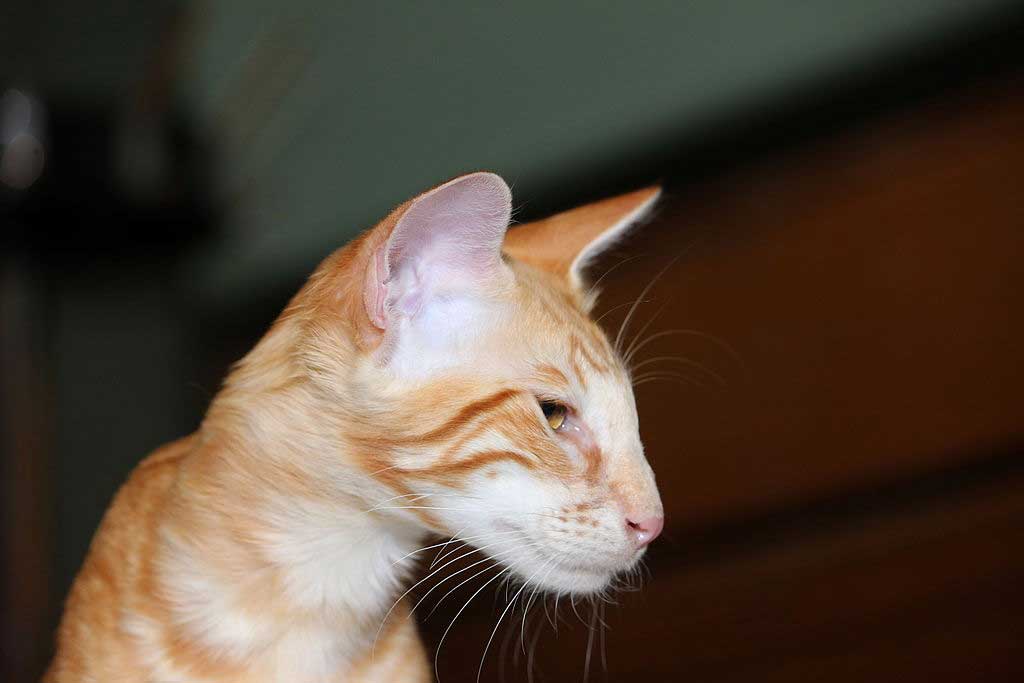
    Javanese cat
    Oriental Longhair (Javanese, Mandarin), Red Classic Tabby. Name: Firefly vom HonigtรถpfchenKamรฉe, CC BY 3.0, via Wikimedia Commons

    It also, the Javanese has a predisposition to Obesity. Easily gluttonous, you can quickly gain a lot of weight and get into a vicious circle, since an overweight animal has less desire to move and, Therefore, tends to get even fatter. Obesity can cause or aggravate many health problems. Obviously, the risk increases if the dog spends its life confined between four walls, no access to the outside world…

    As with any race, adopt a Javanese cat of a serious breeder gives you the best chance of adopting a healthy animal. In addition to a veterinary certificate that certifies that the animal is really healthy, the breeder must be able to show the details of the vaccines administered to the animal (registered in your health card, or vaccination book), as well as the results of any genetic tests carried out on the parents or offspring to counteract the risk of hereditary diseases.

    Once adopted, regular veterinary care is, as in the case of any feline, the best way to keep your pet in good health. In particular, a full check-up should be performed at least once a year to diagnose any potential problems as soon as possible and, at the same time, make sure you are up to date on your vaccinations.

    At the same time, the owner must renew his antiparasitic treatments whenever necessary, so that your partner is always protected.

    Grooming

    Like any cat, the Javanese cat requires a little maintenance every week.

    First of all, it is necessary to brush your coat to remove dead hairs and avoid knots. As it has no underspeed, this is quite easy.

    At the same time, wiping the corners of the eyes with a damp cloth can reduce the risk of eye diseases.

    You should also take the opportunity to clean your dog's ears with a damp cloth to prevent infections..

    The weekly maintenance session is also an opportunity to brush your cat's teeth with a toothpaste specially designed for cats.. This prevents tartar buildup, that doesn't just cause bad breath, but it can cause various diseases, some of them very serious (like septicemia, for example). Do not hesitate to do it even more often if your dog accepts this treatment easily., especially since this breed is prone to periodontal disease.

    Last, it is essential to check the length of the cat's nails at least once a month. If the cat lives outside, natural wear and tear is usually sufficient. But, if you live in a flat, this does not usually happen, and it is even recommended to do it more often. In any case, how long are they too long, it is necessary to cut them by hand, with the risk of them getting in the way or even breaking, with the risk of injuring them in the process. It also, if you do not have access to the outside, you have to provide a scraper to do your needs, at the risk of you using the furniture instead.

    The first time, It may be convenient to learn from a veterinarian or a professional hairdresser the correct gestures and reflexes to take care of the coat, the eyes, the ears, your cat's teeth and nails. It also, no waiting to get started: the sooner you get used to it, sessions are more likely to go well, especially since his proximity to his master makes things easier.

    Food
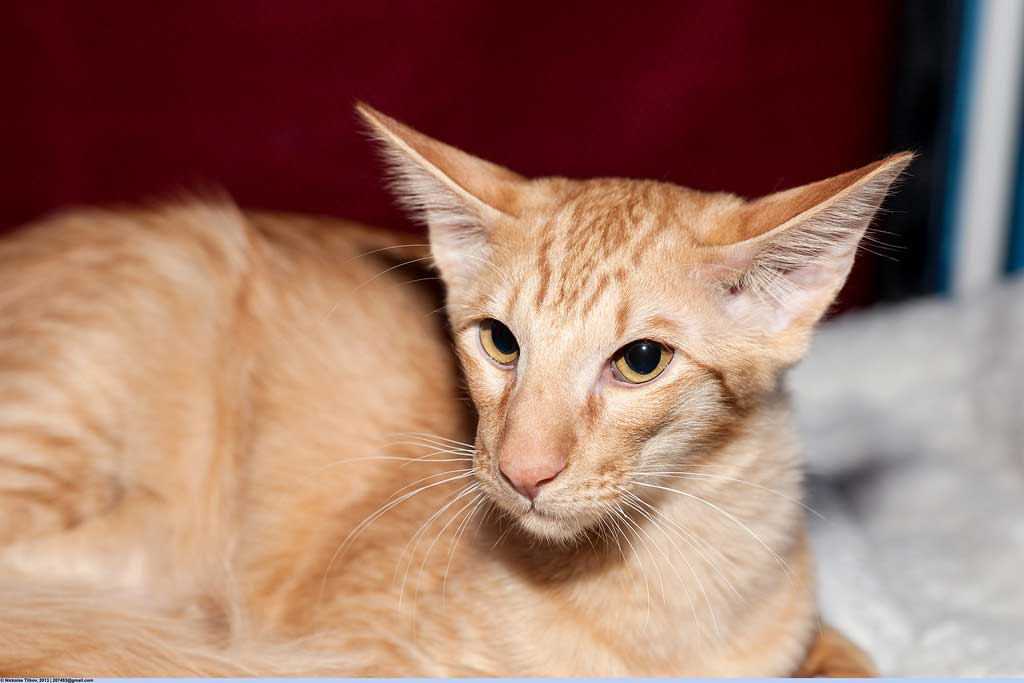
    Javanese cat
    Oriental Longhair (Javanese, Mandarin), Red Classic Tabby. Name: Firefly vom HonigtรถpfchenKamรฉe, CC BY 3.0, via Wikimedia Commons
    Like all breeds of felines, the Javanese cat you need a good quality diet adapted to your age and activity, and therefore to their nutritional needs.

    It is even more necessary to pay attention to your diet since you tend to be overweight or even obese. In addition to providing you with adequate daily rations, it is essential to control your weight through regular weighing, At least once a month. If your dog is overweight and persists during several heavy (or even gets worse), it is essential to take it to the veterinarian. The veterinarian will be able to determine if the problem is due to a disease, a medicine that is not well tolerated or a diet that is not adequate in terms of quality and/or quantity. Once the diagnosis has been made, may propose a solution to the problem.

    Last, it is absolutely essential that the Javanese cat have continuous access to available water. This is true of any cat, but even more for him, that is prone to hyperesthesia, that causes kidney failure.

    For sale "Javanese cat (Colorpoint Longhair)"

    The price of a Javanese cat often haunt them 1000 EUR.

    But, in Europe, the limited number of breeders Javanese cat makes it sometimes necessary to have patience.

    Another solution is to go abroad to get the cat. In the United Kingdom, the cost is usually about 500 pounds (a few 550 EUR). In United States, country of origin of the breed and with the largest number of breeders, the average cost is 1.500 $.

    In the case of an adoption abroad, it is necessary, of course, find out about legislation on the importation of animals, to comply with it. It also, administrative and transport costs shall be added to the purchase price of the kitten.

    whatever the country, the price that is requested may differ from one copy to another depending on its lineage, the reputation of the hatchery from which it comes, and, above all, of its own characteristics, especially the physical ones.

    Alternative names:

  • Colorpoint Longhair
  • Colourpoint Longhair
  • Balinese (Javanese Division)
  • Javi
  • Javanese
  • Mandarin
  • OLH


  • Videos "Javanese cat (Colorpoint Longhair)"

    Javanese | Cats 101

    ๐Ÿฑ Javanese Cat - Characteristics and Temperament of the Oriental Longhair Cat ๐Ÿฑ

    โ–ท The world of Pets: Dogs, cats, birds, reptiles, amphibians

    Jungala Ocicat cat
    Federations: CATZ

    Content

    History

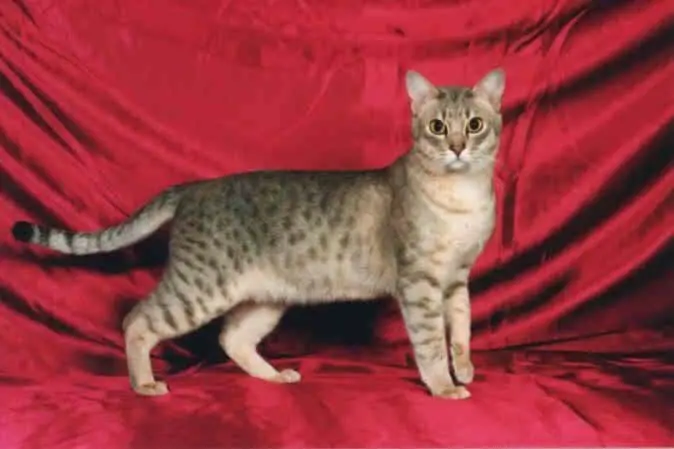
    Most people have heard of or seen cats. Ocicats, But you never hear about the classic "Jungala". An image of one may not be found on a website, that farmers are allowed to breed with them, However, they may not exhibit them. There are three additional variants in the breed Ocicat, The classic ยซJungala,ยป, the classic tabby Ocicat which in New Zealand is called a cat Jungala, as well as the name of the race of the Ocicat cat (‘Ociโ€˜), It is derived from the name of the cat of Ocelot, a "wild" Central American or a cat "jungle", The new name in Spain for the "Jungala", which is also taken from the Sanskrit word that means "the jungle".

    "Jungala Ocicat cat"

    This breed was achieved by crossing a mixture of the Abyssinian cat, the Siamese cat and of the American shorthair cat. As such, is a home race, that was selectively bred to emulate the ocelot is found in nature, while retaining the friendly disposition of domestic.

    In New Zealand, the first cats Jungala were registered by the Karakakat kennel, with CATZ Incorporated, who recognized the Jungala cat as an independent breed with full championship status in August 2001.

    Physical characteristics

    The so -called "Jungala" is a Ocicat cat without stains. Or more specifically, a cat with genetics Ocicat that express only one pattern Tabby Classic. The conformation and personality type are exactly the same as an Ocicat, but the pattern should conform to that of the classic brindle model of the American shorthair cat

    "Jungala Ocicat cat"

    The Oci-Classic has a large bullseye circle on each side of the torso broadly defined with a beautiful color contrast. Their stomachs are also marked with spots. The spotted kittens are very nice, the classical coloring is awesome, with a luxurious and exceptional velvety color, an authentic and unusual color combination. Are highly prized for its stunning beauty. This pattern is especially striking when viewed on a Tabby Silver, where the silver under light allows a strong contrast with the marks of the final layer color depth.

    Character and skills

    The Jungala cat, just like their counterparts Ocicat, they are very sociable and somewhat similar to dogs in their devotion for the people. They are bright, easily manageable and often are outgoing, even with strangers. As such, they are an ideal cat for households where there are other pets and children.

    Source: catzinc.org

    โ–ท The world of Pets: Dogs, cats, birds, reptiles, amphibians

    Karelian Bobtail
    Federations: WCF

    Content

    History

    The Karelian Bobtail is a Russian cat breed originating from the Republic of Karelia, on the Finnish border. It appeared naturally at least 200 years on the islands of Lake Ladoga, and has not undergone many human modifications.

    It is probable that the race had a link in its history with the Norwegian Forest Cat , a Scandinavian breed that also has a natural origin. But, to date there are no DNA studies that demonstrate this relationship. Specialists have also long linked the Karelian Bobtail with the Kurilian Bobtail, a feline breed also Russian but originally from the Kuril Islands, located near the coast of Japan. But, science has since established that these natural races, both with short tail and, in fact, with many physical and psychological similarities, they are actually completely different.

    The Karelian Bobtail He was highly appreciated by the inhabitants of his native region not only for his great ability to hunt vermin, but also because, according to an old legend, owning a cat without a tail or with an especially short tail brought good luck to its owner.

    This morphological peculiarity is the result of a genetic mutation that occurred naturally in cats that live on the islands of Lake Ladoga.. It is transmitted spontaneously from generation to generation and is different from Kurilian Bobtail. In the Kurilian Bobtail, the gene is dominant: it is only necessary that one of the two parents transmit it for the kittens to be carriers. On the other hand, in the Karelian it is a recessive gene, which means that both parents must have a short tail for the kitten to inherit this characteristic.

    It was in the years 80 when felinologists from present-day Saint Petersburg, members of the commission of the Kotofey KLK, a major Russian feline association, first became interested in the breed in detail and accurately described it.

    The first standard was drawn up by them in 1987, based on the breeder's cats Liliya Dvoryaninovich. I had some 15 short tailed cats, descendants of parents found on the north shore of Lake Ladoga.

    The breed was first recognized in Russia in 1990 by the Sovetskaya Felinologicheskaya Federatsiya (SFF), a Russian organization that no longer exists. He made his first appearance at a feline show at 1993, specifically at the Eurasia Intercontinental Exhibition, in Yekaterinburg. The Kotofey KLK registered the first representatives in 1994.

    Karelian Bobtail
    Karelian Bobtail
    – Lovely-dogs

    But, not much has changed since then in terms of breed recognition, which is still limited to its country of origin. These may include, nor international organizations such as the Fรฉdรฉration Internationale Fรฉline (FIFรฉ) o The International Cat Association (TICA), nor national structures like the American Cat Fanciers’ Association (CFA), el British Governing Council of the Cat Fancy (GCCF), el Official Book of Feline Origins (LOOF) inglรฉs o the Canadian Cat Association (CCA) they recognize the breed. Still unknown outside of Russia, the Karelian Bobtail is very underrepresented around the world.

    Even in russia, their number is very small. Various attempts have been made by enthusiasts to develop the breed and increase its numbers., but so far they have not been successful. The most important program was developed by the Kotofey KLK in 2012, but it quickly reached its limits as the organization does not allow any crossbreeding with other breeds. Thus, it is difficult to create a sufficient population to guarantee a bright future for the Karelian. Even if you go into the wild to find animals in your home region, is not enough. But, it must be taken into account that a large part of the population of the breed - in fact, the majority- live in nature and, Therefore, is not included in the statistics.

    The number of farms Karelian Bobtail It is very small. Most of them are located in the territories near St. Petersburg, but there are also a handful in other cities (Medvezhyegorsk, Kirov, Petrozavodsk…).

    Physical characteristics

    Karelian Bobtail
    Karelian-Bobtail

    His admirers often compare him to Karelian Bobtail with a little lynx, for its lack of a tail and its large hind legs. Hind legs are much larger than front legs, but they are all strong and very powerful.

    Although it is a fairly standard size, it is much more massive and heavier than it seems. Built around a medium, muscular chest, has a compact overall look, without looking too beefy.

    The tail It is one of the most outstanding characteristics of the breed., and their exact appearance differs greatly from one individual to another. It is in all cases very short, measuring just over 4 to 13 cm.: a totally absent or longer tail than 13 cm is not accepted in the breed standard. Whatever its size, the fur is longer at this point, giving the appearance of a pompom. On the other hand, may be completely straight or have breaks.

    This uniqueness in the size of the tail is the result of a genetic mutation, and the gene that causes it is recessive. This means that both parents must have a short tail for the kittens to be short..

    The head of the Karelian Bobtail it is medium in size and triangular in shape. Its forecrown and their cheeks they are flat, and your nose it is rather long and straight. The ears are large and are located on the top of the head. Their tips are slightly rounded. Their eyes they are almond shaped, medium in size and its color generally corresponds to that of the coat. The most common colors are green and yellow.

    The fur of the Karelian Bobtail it consists of a very thick double layer of hair, that protects you from inclement weather. It can be short or long, but in any case it must be dense, bright and smooth. All colors are accepted except tan, chocolate, leonado, lila y colourpoint. The most observed colors are white, the black, blue and blue-cream. The coat can be bicolor, tricolor or brindle, and in many individuals it has silver and gold reflections.

    Last, this breed is marked by a certain sexual dimorphism, since females are mostly smaller and lighter than males. Regardless of your gender, pups take a long time to grow, since they only reach full physical maturity around the 5 years.

    Size and weight

  • Size: 30 cm.
  • Weight: Of 3 to 5 kg

  • Variations

    The Karelian Bobtail it comes in two varieties: short-haired and long-haired individuals. Apart from the length of its fur, there is no physical or psychological difference between them.

    Character and skills

    The Karelian Bobtail he is a smart cat, sociable and curious. They love spending time with their family members and enjoy being around them, proving that they fit well in any home. Often tends to favor a specific person to whom he is especially attached, but this does not mean that I turn my back on others.

    Its playful temperament and its marked taste for interaction make it a recommended breed of cat for a child.. As long as you know how to behave in a respectful way with the child, you both can spend hours having fun together. But, it is important to remember that, for the safety of both, a young child should never be left unattended with a cat. It is a matter of safety for both the animal and the child.
    This cat also gets along very well with older people.

    The Karelian Bobtail he's also not shy around people he doesn't know, although it may take time to know them.

    Their sociability also applies to other animals: even if you have to share your home and the care of its owners with them, tends to get along perfectly with his companions and tends to make a good pair with dogs, especially those of cat-loving breeds.

    On the other hand, there is no hope of making him cohabit harmoniously with small animals that could be considered prey for him. In fact, its acute hunting instinct makes a rodent, a bird or fish is never safe around it, although they have lived together since childhood. It also, if you have access to the outside, his owner should expect to regularly receive gifts from his pet in the form of prey brought home.

    In any case, although its origins make it very resistant to cold, Being able to evolve abroad is not necessarily essential for a Karelian Bobtail. Very adaptable, you can live just as well in a house with a garden to which you have free access as in an apartment, as long as you have something to occupy yourself with and exercise. If you live inside, must have a cat tree, for example. like most cats, they love to climb trees and furniture. But, just because they are very active does not mean that they do not also enjoy quiet time with their owners, and they are happy to share the sofa with them.

    In fact, the most important thing you need a Karelian to be happy is to be in contact with other living beings. So, where you live is less important than the presence of your owners and their availability to pay attention to you. So, not suitable for people who are usually out most of the day, that they would be better off with an independent breed of cat. Having said that, Sharing the home with one or more cats or dogs can be an interesting way to compensate for the absence of the owner.

    Knowing that, besides moving a lot, he also needs to be mentally stimulated and that he is very attentive to his owners, is a perfect student for those who want to teach tricks to their cat. These may include, can learn to respond to his name, to lie down when ordered or to pick up objects.

    Not only can he learn what is expected of him, it can also understand behavior that is considered undesirable. If you are caught on the spot, for example, getting on the table during the meal, a simple reprimand is usually enough to prevent him from repeating the act.

    The Karelian Bobtail it also has the good taste of being a rather calm breed of cat: he is not one of those who use his voice, although it is very soft and melodic, to ask for favors. When they want to express a wish, they generally prefer to communicate by touching their owner with their paw. Having said that, in general, it is not demanding or invasive.

    Last, the male has the peculiarity of marking his territory very little.

    Health

    The Karelian Bobtail is in good general health and is not known to have any particular genetic problem, nor any disease to which you are especially prone. Having said that, is also related to the lack of hindsight, since cat specialists have been interested in your case for a short time and its distribution is still very limited.

    Accustomed to the harsh climate of his native Russia, it is in any case particularly resistant to low temperatures and has no problem spending most of the time outdoors, even in winter.

    Although this breed does not present any particular health risk, it is important to choose a serious breeder of Karelian Bobtail. They must be able to present a certificate of good health from a trusted veterinarian, showing that the little cat shows no signs of illness or any other problem. You should also be able to show proof of vaccinations.

    Last, as prevention is better than cure, a routine visit to the vet at least once a year is strongly recommended to get a full check up and make sure everything is okay. It is also the opportunity to do any booster shots if necessary., and to review the antiparasitic treatments that the owner should take care of administering to his cat throughout the year.

    Grooming

    The coat of the Karelian Bobtail it is easy to care. For people with short hair, a weekly brushing is enough to remove dead hair. Long hairs should be brushed a little more often - at least twice a week- to prevent knots or hairballs from forming. In normal times, both shed very little hair. But, this is not the case during the shedding season in spring and fall, when daily shedding is usually necessary to prevent hair from being found throughout the house.

    Regardless of the length of its coat, it is rarely necessary to bathe him, unless, of course, that has gotten especially dirty. When i do, you must use a shampoo specially designed for cats.

    On the other hand, your eyes need to be checked at least once a week and cleaned if necessary. In addition to removing dirt from around you, this can detect any possible infection or small injury.

    The ears should also be examined and cleaned weekly to prevent dirt from building up in them., which could also be the cause of infections (otitis, etc.).

    Brushing your teeth is also very important, as it helps limit plaque formation, which can cause a lot of problems. The ideal is a daily brushing, but once a week is enough. Whatever the frequency, a toothpaste specially formulated for small cats should always be used.

    You should also check your cat's nails at regular intervals., for example, each month. If they get too long, you have to trim them manually. Otherwise, could get in the way or even break, with the consequent risk of injury. In any case, if you live inside, a scratching post is an essential investment to keep you from satisfying your natural urge to scratch furniture or curtains.

    coat care, of the eyes, from the ears, teeth and claws are basic gestures that every owner must learn to perform correctly, at the risk of hurting or injuring your pet. So, it is advisable to ask a hairdresser or veterinarian for advice the first time, to learn the proper gestures to adopt to keep your Karelian Bobtail. On the other hand, do not hesitate to get started quickly, to teach your kitten to be handled as soon as possible: sessions will be more enjoyable for both him and his owner.

    Food

    The Karelian Bobtail it is not difficult to feed and is content with a quality and balanced industrial feed. As in the case of any cat, the chosen products and the established rations must be adapted to age, the health and activity level of the cat.

    By being able to self-regulate, you can have food at all times without fear of becoming obese.

    But, it is important to monitor the weight of the cat, as you may gain weight for medical reasons (disease, reaction to a treatment, etc.). Weighing your cat once a month is an opportunity to make sure everything is going well or, on the other hand, to make an appointment in case a later slip is confirmed or even accentuated.

    It also, like any cat, a bowl of fresh, clean water should be available at all times.

    For sale "Karelian Bobtail"

    The Karelian Bobtail it is an extremely rare breed of cat. To adopt one, you have no choice but to turn to your country of origin, Russia. even there, the offer is not much less abundant. Most of the representatives and breeders of the breed are concentrated in the city of St. Petersburg and its surroundings., but there are also some hatcheries in the cities of Medvezhyegorsk, Kirov y Petrozavodsk.

    The price of a kitten Karelian Bobtail varies greatly from individual to individual depending on the lineage of the cat, of the reputation of the hatchery but also and above all of its physical characteristics. Usually, you have to count between 30.000 and 70.000 rubles (that is to say, between 350 and 900 EUR) for such an adoption.

    To this amount must be added the expenses related to bringing the cat from Russia: transportation expenses, administrative expenses, etc.

    Characteristics "Karelian Bobtail"

    Coexistence is important that you have with your new friend. Before considering the acquisition of a cat of the breed "Karelian Bobtail" you know certain factors. You must take into account their character, their need for exercise, their interaction with other pets, their care and if you have small children, their level of tolerance towards them.

    Joy

    5,0 of 5 stars (based on 1 review)

    Activity level

    3,0 of 5 stars (based on 1 review)

    Friendliness to other pets

    3,0 of 5 stars (based on 1 review)

    Friendliness to children

    5,0 of 5 stars (based on 1 review)

    Grooming requirements

    2,0 of 5 stars (based on 1 review)

    Vocality

    4,0 of 5 stars (based on 1 review)

    Need for attention

    4,0 of 5 stars (based on 1 review)

    Affection towards its owners

    5,0 of 5 stars (based on 1 review)

    Docility

    4,0 of 5 stars (based on 1 review)

    Intelligence

    4,0 of 5 stars (based on 1 review)

    Independence

    2,0 of 5 stars (based on 1 review)

    Hardiness

    5,0 of 5 stars (based on 1 review)

    โ–ท The world of Pets: Dogs, cats, birds, reptiles, amphibians

    Kucing Malaysia
    Experimental cats

    Kucing Malasia

    Content

    History

    The idea of a cat that could identify with Malaysia arose at the end of 1994. Opinions were requested from the different international judges who were in Malaysia. For almost a year these opinions were collected and finally the President of the FIFe and also a member of the Council of the International World Organization for the maintenance and regulation of breed standards, the Mrs. Alva Uddin, proposed the selection of Kucing Malaysia or Malaysian cat.

    The breed is recognized by the Malaysian Cat ClubKelab Kucing Malaysia (KKM).

    Physical characteristics

    It is the first cat of breed Malaysia. It has a conformation similar to that of Tonkinese cat While its color is similar to the Ragdoll. These cats have a white spot on the face and muzzle with white markings on legs colorpoint.

    The model for the Kucing Malaysia or Malaysian cat It is that of a medium-sized cat with a muscular body. The main feature is the head egg-shaped that together with the opening of the eyes, should give the characteristic alert appearance of the breed.

    The head, wide and rounded at the top has a good height and smooth rounded lines. Cheeks full, the nose long to medium, with the chin moderate. Profile showing a convex curve smooth giving an oval impression.

    The hair short and glued to the body, silky, with an inner layer almost hairless.

    Videos "Kucing Malaysia"

    kucing malaysia

    โ–ท The world of Pets: Dogs, cats, birds, reptiles, amphibians

    American Keuda
    Unrecognized breed.

    Content

    History

    It is thought that the American Keuda is the descendant of some of the first cats brought to Texas and some may have come from Spain in the 16th-17th century. It seems to the Egyptian Mau A lot. But even though the Keudas seem to have roots Want to, This cannot be proven.

    The name ยซKeudaยป itself is an abbreviation of the word ยซKitten Evaluation Under Direct Assessmentยซ. It is the name of a program (which took place in oklahoma, New Mexico and Texas) that investigated the "type" of cats that survived as farm cats.

    Since 2002, This race is in constant development and is currently regarded as provisional race, not yet recognized by international cat registration organizations.

    Today, cats Keuda are valued as family pets and as show animals. Only cats Keuda that are descended from the original farm cats can be registered and exhibited.

    Isolated and remote colonies, in which the oldest lines have been checked to the maximum, have been the source of breeding cats. The American Association of the Keuda cat is the group currently responsible for its preservation and quality control of this breed. Shows are held and cats are judged according to the breed standard Keuda and the rules of the American Keuda Cat Association (AKCA).

    Physical characteristics

    American Keuda
    American Keuda – catunited.com

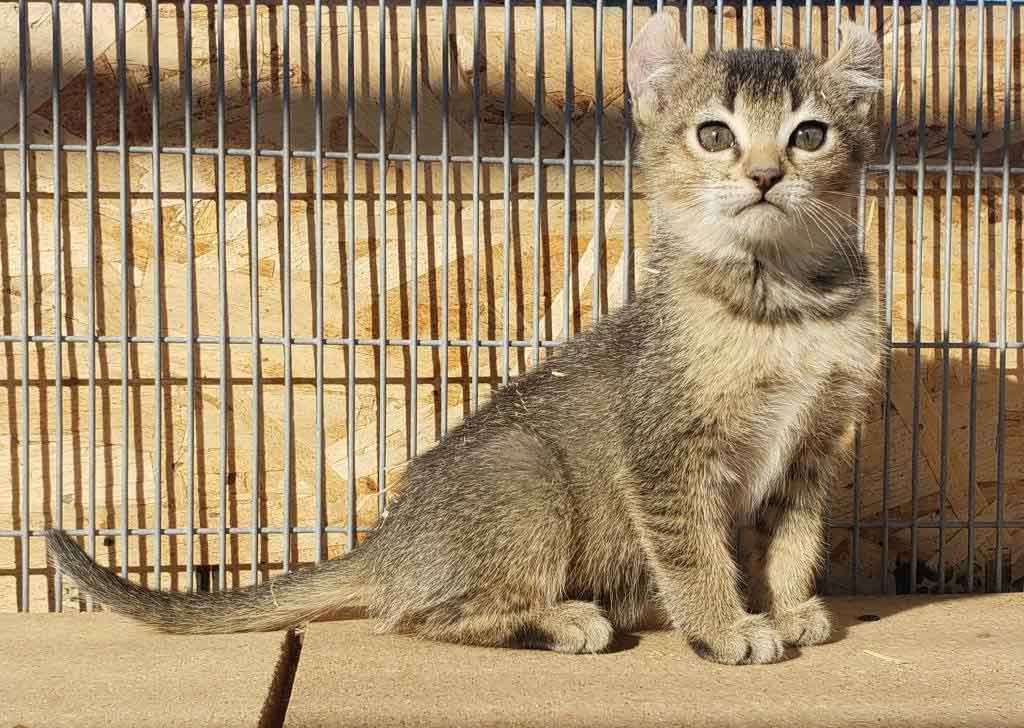
    The cat American Keuda It is distinguished by its strange shape and its most unique feature, have skin folds on the abdomen and under the elbows, allowing them to spread their legs while walking like a cheetah, and even its legs can rotate.

    These cats are of complexion semi-foreign (long tubular body type), with one head modified wedge-shaped, snout neither short nor long and ears moderately large that make the head appear triangular.

    The bone structure is medium to large and well muscled. The fur it is smooth and silky, and comes in a variety of familiar patterns and solid colors. The most common are black, the target, the blue, the smoked, the brindle brown, the silver tabby, el color point, the red and, recently, the piebaldo.

    The fur is medium to short length and smooth, and its texture is such that unwanted plant matter does not adhere to the fur. They have eyes macaroons. The ears The triangular shape of the American Keuda Cat is slightly rounded and set well back on the head. Sometimes the ears are tufted and have medium hairs inside.

    The legs of the cat American Keuda they are well muscled and have approximately the same length in the forequarters and hindquarters, allowing for a fairly level back when the cat is standing. They have queues long and sharp.

    Character and skills

    "American Keuda"

    American Keuda
    American Keuda – catunited.com

    The American Keuda is known as an active cat, outgoing, inquisitive, smooth and intelligent voice. They are quite adaptable and social. They get along well with children and other pets in the house (provided the proper introductions have been made).

    They like to play with the water, so it is recommended to maintain the tanks covered in his presence. Don't be surprised if your adorable Keuda accompanies you in the shower, or wants to "help" you with the dishes.

    The spirit of cologne is quite strong in the American Keuda, so they will often be mothers to a new kitten or defend the garden from a neighboring dog (being friends with your own dog at the same time).

    As his physiology is perfect for running, to the Keudas they love it. They love active games with racing, jumps and climbs. So, make sure you bought some scratching posts, ladders, cat trees and other necessary furniture for cats (how much more, best). To the American Keudas they can be taught to walk on a leash.

    Grooming

    Due to its fur, it will be enough to brush them once a week. In addition to these factors, not a difficult type of cat to care for, since they are not too interested in attention.

    Health

    Due to its origin, the American Keuda has the best possible health that a natural cat can have. But, due to extremely thin undercoat, the Keudas they do not tolerate the cold well.

    โ–ท The world of Pets: Dogs, cats, birds, reptiles, amphibians

    Jungle Curl
    Federations: REFR

    Jungle Curl
    Jungle Curl – wanimobuzz.fr

    Content

    History

    The Jungle Curl is an experimental breed from North America, so new and confidential that it is not recognized by any major feline organization. The only institution that allows the registration of a jungle cat is the Registry of Rare and Exotic Felines (REFR), a small association that, as the name reflects, is specialized in rare and exotic cat breeds.

    Due to the lack of recognition by the different national and international feline organizations, there is no standard that defines the appearance of a Jungle Curl. The result is that the different breeders of the breed do not necessarily have the same criteria and regularly create new lines., making it difficult to unify the race.

    But, all the Jungle Curl They have something in common: are the result of crosses between the Domestic cat and the jungle cat (Felis chaus), a wild cat found in Egypt, the caucasus, Central Asia, India and Southeast Asia.

    This hybridization between the Felis chaus and the domestic cat is not new: the first experiments in this field date back to the years 60 and gave rise to the Chausie cat, a breed of domestic cat recognized since then. But, the Jungle Curl is not a Chausie cat: they are two very different cats.

    Usually, a line of Jungle Curl is created by crossing a jungle cat (Felis chaus) with a American Curl, but breeders also often use other breeds such as the Highland Lynx or the Hemingway Curl โ“˜. The resulting hybrids are crossed with other domestic cats., as the Abyssinian cat, the Chausie cat, the Serengeti cat or the Bengal cat.

    The Jungle Curl it's a rare cat, found primarily in the United States and Canada, although it also exists in Europe. But, in any country, the number of breeders can be counted on the fingers of one hand.

    Physical characteristics

    The Jungle Curl It is a medium-sized, wild-looking cat, with a long slim body. But, there is a great disparity in sizes, according to the breeds used in the different crosses. The hind legs are slightly longer than the front legs and the tail is medium to long..

    The polydactyly it is common in this breed, but due to the lack of a standard, opinions differ: some breeders promote it by favoring polydactyl cats for breeding, while others prefer to try to remove this feature.

    The head of the Jungle Curl it is rather round, with eyes tears that vary in color from yellow to green. The most distinctive feature of Jungle Curl they are her little ones ears round, similar to those of a lion, that curve backwards to a greater or lesser extent depending on the individual. These round and curved ears are the main difference between the Jungle Curl and the Chausie cat -the breed with which the Jungle Curl-, who has big ears, tall and triangular.

    There are long-haired and short-haired specimens. In any case, the preferred patterns of the REFR (Rare and Exotic Feline Registry), they are the fawn and the leopard. Regarding the color of the cat's coat, diversity is the order of the day, since we find individuals with a silver fur, as well as chocolate, blue, black ebony, lilac purple, cream or even red.

    Last, the sexual dimorphism it is well marked, being the male larger than the female.

    Size and weight

    • Male size: 28 to 35 cm.
    • female size: 25-32 cm.
    • Male weight: 6-12 kg
    • female weight: 4-10 kg

    Character and skills

    Jungle Curl
    Jungle Curl
    It is often risky to venture a general definition of the character of the individuals of a race, but this is especially true in the case of Jungle Curl, since it is an experimental breed that has not been established or unified between different breeders. But, there are some aspects that seem to emerge in this cat that has retained the looks and intelligence of its wild ancestors, while having the character of a domestic cat.

    So that, the Jungle Curl he is an affectionate cat, close to his family and fond of children. He is very attached to his owner and requires a lot of attention, so it is to fear destructive behavior of the cat if it spends too much time alone.

    Living with other cats or dogs accustomed to the presence of a cat usually goes well, but it is not recommended to have small rodents in the house: this would awaken his wild instincts, so it's likely that one day I'll scare them away.

    The Jungle Curl he is a playful and active cat, who loves to chase a ball or bring things to its owner. They adapt well to life in a flat, but they like to be able to go out from time to time to run and climb trees. But, it is important to be aware that his strong exploratory instincts can take him beyond the limits of the garden. Depending on the location, this can endanger your own safety and / or that of small animals in the neighborhood.

    Last, the Jungle Curl is quite territorial, to the point that some individuals become true "guard cats" capable of letting strangers know that they are not welcome.. This territorial instinct counteracts his need to explore the environment and leads him to return home most of the time on his own..

    Health

    As the Jungle Curl It is a new and rare breed of cat., there is no reliable information about possible inherited diseases or particular predispositions to certain conditions.

    Many breeders claim that the special coat of the Jungle Curl turns it into a breed of cat hypoallergenic and does not cause allergic reactions in people with allergies to cats.

    Life expectancy

    10 to 15 years

    Grooming

    The Jungle Curl it is an easy-care breed of cat.

    Weekly brushing removes dead hair and distributes oil from the skin, which is enough to keep the coat clean and healthy.

    This grooming session is also an opportunity to check that the eyes, the cat's ears and teeth are clean and there are no signs of infection.

    Looking at its claws, natural wear and tear is usually sufficient, especially if you have the opportunity to go outside and / or have a scratching post. If that is not the case, it is enough to trim them with a nail clipper from time to time.

    For sale "Jungle Curl"

    The price of a kitten Jungle Curl varies enormously from one breeder to another and according to the characteristics of the animal. This is mainly due to the fact that this breed is still experimental and not standardized.; for example, the polydactyly of the cat is considered by some breeders as a defect that justifies a reduced price, while for others it is, on the other hand, a sought after feature, with a higher price as a result.

    The price range is, Therefore, broad, of 1500 to 2500 EUR.

    In any case, the rarity of this cat makes it difficult to find kittens Jungle Curl available for sale.

    Legislation

    The Jungle Curl is a hybrid cat, but it is not a recognized breed, so the regulations that affect it are not clear at all. In any case, since some local authorities prohibit hybrid cats born from a forced or natural cross between a domestic animal and a wild animal, it is strongly recommended to ask the breeder, to a vet and / or the town hall about any restrictions that may apply.

    HTTPS://youtu.be/-skPCWa0FP8
    Jungle Curl Male
    HTTPS://youtu.be/pj3eqhYROzs
    Savannah and jungle curl

    โ–ท The world of Pets: Dogs, cats, birds, reptiles, amphibians

    Kurilian Bobtail
    Recognized by FIFe, TICA, WCF

    Its affinity with water, which undoubtedly results from the nature of its natural habitat, it is a very special character trait, that distinguishes it from many other cat breeds.
    Bobtail de las Islas Kuriles
    Photo: bobkedi.com

    Content

    History

    The Kurilian Bobtail is a breed of Russia. This Bobtail has not undergone genetic modification caused or calculated. No one has tried to change, is the nature which created the race. He lives on the Kuril Islands, in extreme climatic conditions of temperature and humidity.

    These islands are located at the East end of Russia, in the northern Pacific Ocean and extends to more than 1200 km from the Kamchatka Peninsula, on the border of North Japan. It's a chain of volcanoes – hence the name – Kuril. All islands there are 40 active volcanoes. On the one hand, the Islands are bathed by the sea of Okhotsk, on the other side by the Pacific Ocean.

    These short-tailed cats have been known to be found on the Kuril and Sakhalin Islands for at least two hundred years., Although they were discovered only at the end of the 20th century.

    In the Centre of Russia, the Kurilian Bobtail began to appear only in the middle of the last century. The military and geologists, who returned from long trips to the islands, they brought with them the special short-tailed cat. But not too taken into account, Since even did not exist any feline Federation in Russia at that time. In the years 80 Some fans, who already had these amazing cats, they turned their attention to the race.

    Was in the year 1991, when the Soviet Federation accepted the first norm of the Kurilian Bobtail. In 1995, This Bobtail was accepted by WCF. In 2004, they were allowed to participate in the Championships of FIFe.

    We can say that currently the cat Kurilian Bobtail It is one of the youngest breeds and has the sympathy of many cat fans in Russia. But even today, This bred animals are very rare.

    Kurilian Bobtail
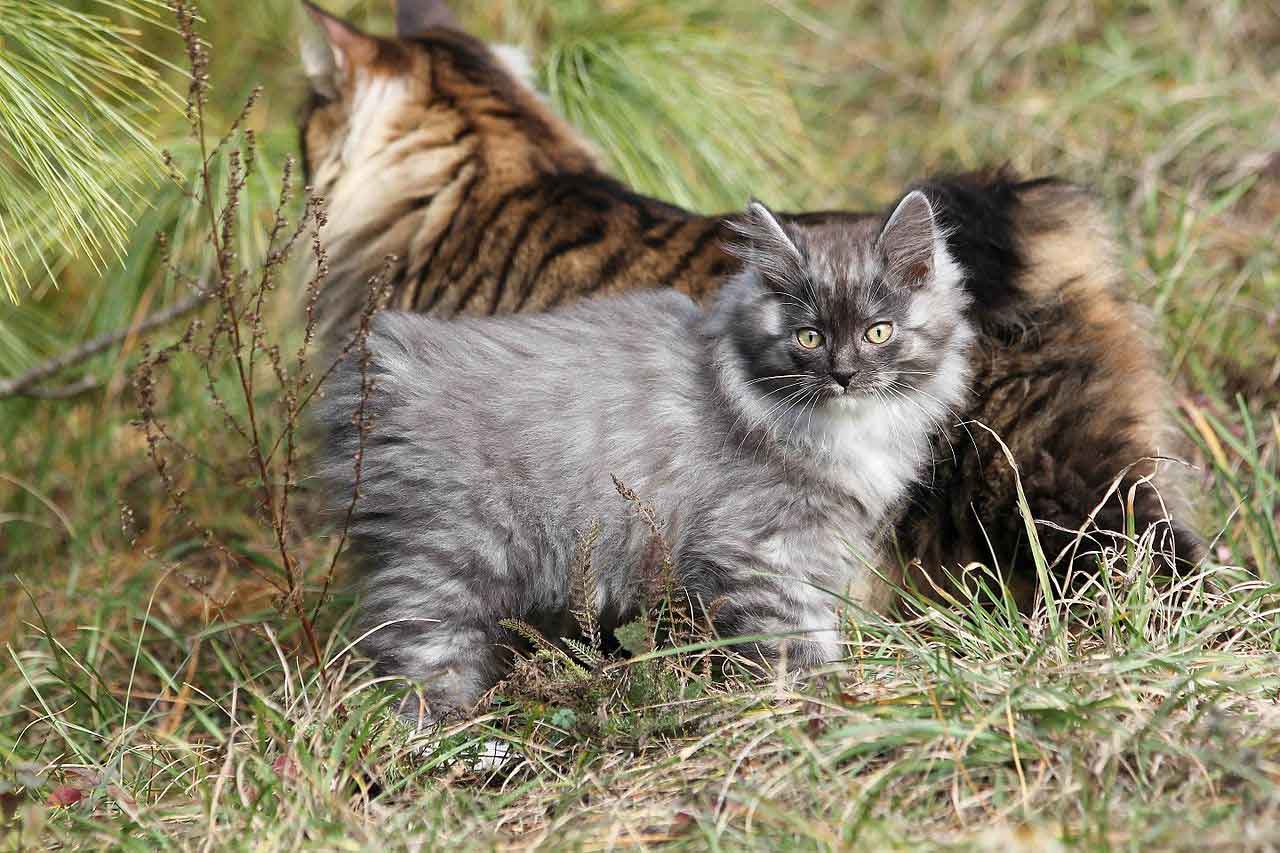
    Kurilian Bobtail kitten with its mom – TRUE KURILIANS, CC BY-SA 4.0, via Wikimedia Commons
    The history of the emergence of this breed is purely hypothetical.
    It is possible that they participated in its creation on Siberian cat and the Longhair Japanese Bobtail, who lived for some time on the islands with their Japanese masters.

    But in all likelihood, the mutation of the tail of the cats that inhabit the Kuril Islands was carried out in parallel to the observed in cats of the Japanese islands due to the influence of the mutation and similar climatic conditions. But, to date no one has studied the exact origins of this mutation.

    Even now, It is not uncommon to see cats with low and irregular tail in the islands of Malaysia, Thailand and Burma. In some Southeast Asian countries, It is virtually impossible to find the animal without the tail malformations. In this way, it is possible to assume that all mutations associated with the change in tail structure have a common cause.

    Although the Kurilian Bobtail It, probably, his distant cousin Japanese Bobtail, the difference in the second race is impressive. There is a common characteristic in the two races, the short tail. Other parts of the body differ significantly and surprisingly.

    Physical characteristics

    Kurilian Bobtail
    Kurilian Bobtail Cat Snow – Pixabay

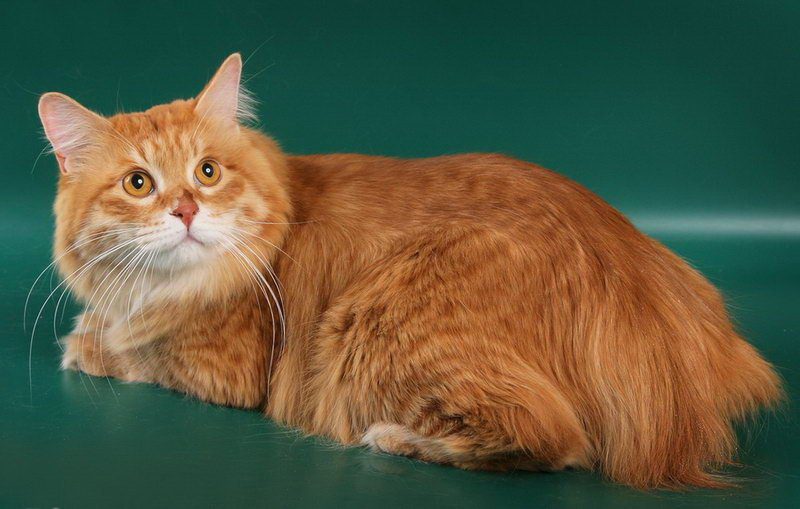
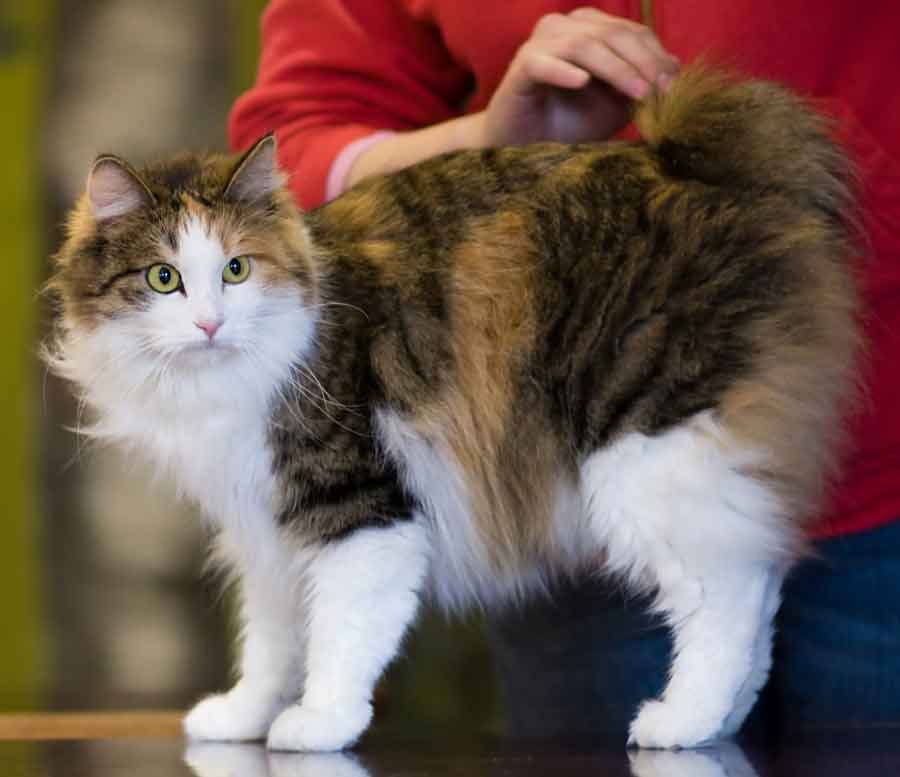
    The Kurilian Bobtail has a compact body, strong and muscular, with slightly raised croup and curved topline. The legs are strong and solid, the average length, the hind legs are longer than the Forelegs .. The feet are round and wide, lined with tufts of hair between the toes.

    Some records divide Kurilian Bobtail in separate breeds of short hair and long hair.

    • They have a large head and trapezoid, with contours rounded in broad cheekbones.
    • The nose is wide, straight, average length, with a light stop.
    • Chin broadband with a slightly rounded profile.
    • Medium-sized ears, well assorted and often adorned with a crest of hair.
    • His eyes are slightly inclined, highly placed, rounded or shaped nut.
    • The queue is full of hair. Tail deformity is not an abnormality associated with healthy cats.
    • The coat can be short and semi-long. The mantle is dense, very fine and silky.
    • In the semilargo hair group, This is considerably longer at the bottom of the body, the stomach and legs.
      Virtually all colors are permitted, except the Siamese pattern, agouti specific to Abyssinia, chocolate, cinnamon, beige, Lilac and all their combinations with white.

    The harsh climate of the Kuril Islands has endowed the Kurilian Bobtail thicker skin, adapting to the wildlife style – does not fall, almost no mess. On the Islands, the climate is very humid and the skin of the animals has acquired an extraordinary property, It gets no wet.

    The Kurilian Bobtail they are big enough. In general, Males weigh in 5 to 7 kg, but it is not extkgรฑo to see larger individuals, reaching a weight of 9 kg. The females are naturally less powerful, and weigh 3,5-5 kg.

    Character and skills

    In the Kuril Islands the Bobtail they usually live at home, but there is also absolutely wild cats, the Kuril Islands are sparsely populated.

    To the Kurilian Bobtail he likes to hunt everything that is in the forest.
    On the streets of the villages of the Kuril Islands, it is not uncommon to see these cats run after dogs they are not afraid of. But, This proximity explains, in part, by how many cats (native cats, imported directly from the Islands) they have scars and torn ears.

    Kurilian Bobtail
    Kurilian Bobtail – Arabescka – Heikkisiltala, CC BY 3.0, via Wikimedia Commons

    This is a faithful animal, sociable, with the agility and developed intelligence. It adapts well to family life with children, with whom they will share endless games. They also adapt well to other animals and dogs.

    At the same time, they are independent, and they are only suitable for those that can respect her strong personality and her need for independence. It also, the Kurilian Bobtail he will show all his affection to a single person, a teacher who chooses his own Bobtail, relations with the rest of the family members can be complicated.

    With the power and the length of its hind legs, the Kurilian Bobtail can easily jump great heights. In a House, a tree would be a great necessity for this cat.

    Another characteristic of the breed is the attraction to water.. Fresh under a faucet or picking up the drops of the same. It is the duty sacred of all the representatives of this glorious race.

    The long struggle of this race due to the severe conditions of the Kuril Islands has been beneficial for the development of their intelligence. This is a very intelligent and thoughtful cat.

    Only once will do need to show what can be done or not. They receive the voice and intonation, it is not difficult to teach them to understand the commands, They even obey them according to personal mood. It can be adapted to all lifestyles, domesticated sport and turn. It is not afraid of cold or heat. Its balanced nature makes it a very quiet cat.

    Health

    The Kurilian Bobtail comes from a very harsh climate and is extremely resistant to all temperature variations. Although they spend most of their time outside and not at home, they are very resistant to the outside environment and almost never get sick.

    Their life expectancy is about 15 years. As in the case of any breed of cat, one of the simplest and most effective ways to keep a healthy Kurilian Bobtail is to ensure that you maintain an ideal weight throughout your life.

    It is not known that this Bobtail are prone to genetic diseases. But, as the breed is rare, there is little data to draw conclusions on this point.

    Life expectancy

    15 years

    Grooming

    Kurilian Bobtail
    Kurilian Bobtail female, black smoke – Frida Nyberg, CC BY 3.0, via Wikimedia Commons

    The naturally silky and waterproof coat of the Kurilian Bobtail does not get tangled.

    A weekly brushing of the cat's coat is enough to take care of it, whether it belongs to the short-haired or long-haired variety. It also, when necessary, you should not hesitate to bathe your cat, since without a doubt he will appreciate this moment. But, your cat's bath should be an exception (a couple of times a year), as repeated use of cat shampoos can damage the cat's skin and coat.

    The Kurilian Bobtail does not require much attention, but the cat's teeth should be brushed regularly with a special toothpaste for cats (ask the vet if in doubt) and the cat should be taken to the vet whenever the cat's teeth need to be cleaned. It is also important to monitor the condition of the cat's nails, that can be trimmed to prevent damage to the house.

    As with all cat breeds, if you accustom your cat to this care from a young age, you will be more likely to accept them later.

    Characteristics "Kurilian Bobtail"

    Coexistence is important that you have with your new friend. Before considering the acquisition of a cat of the breed "Kurilian Bobtail" you know certain factors. You must take into account their character, their need for exercise, their interaction with other pets, their care and if you have small children, their level of tolerance towards them.

    Joy

    5,0 of 5 stars (based on 1 review)

    Activity level

    5,0 of 5 stars (based on 1 review)

    Friendliness to other pets

    2,0 of 5 stars (based on 1 review)

    Friendliness to children

    5,0 of 5 stars (based on 1 review)

    Grooming requirements

    1,0 of 5 stars (based on 1 review)

    Vocality

    4,0 of 5 stars (based on 1 review)

    Need for attention

    4,0 of 5 stars (based on 1 review)

    Affection towards its owners

    5,0 of 5 stars (based on 1 review)

    Docility

    3,0 of 5 stars (based on 1 review)

    Intelligence

    4,0 of 5 stars (based on 1 review)

    Independence

    2,0 of 5 stars (based on 1 review)

    Hardiness

    5,0 of 5 stars (based on 1 review)

    Videos "Kurilian Bobtail"

    PRESENTACION raza KURILIAN BOBTAIL pompom glue cat!
    PRESENTACION raza KURILIAN BOBTAIL gato de cola de pompรณn!
    BARSIK - Kurilian Bobtail
    BARSIK – Kurilian Bobtail

    Alternative names: Kuril Islands Bobtail / Kurilean Bobtail / Kuril Bobtail / Curilsk Bobtail

    Read more…kurilkot