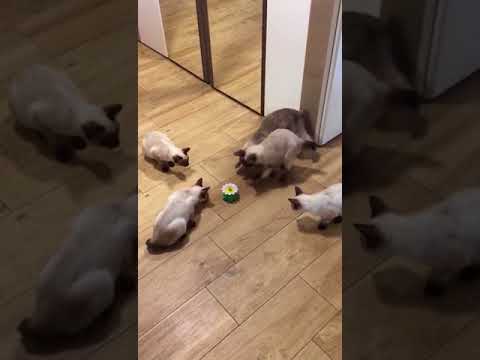
It is considered that Dragon Li Cats have above-average intelligence. Mental stimulation is a must and these cats appreciate the company.
Content
History
The Dragon Li cat, also called "Li Hua» or «gato chino», «Li Hua Mao«, «Li Hua Mau» o «Mao Li» descended from wild cats (Puma Bieti) who live in the chinese mountains. It is said that it has been domesticated over time to get closer to the Chinese people.
It is not known exactly how long the Dragón Li (Li Hua), but it is likely that it has existed for several centuries. In fact, Stories of this animal can be found in Chinese folklore.
Recently, in 2003, breeders were interested in him Dragon Li cat (or Li Hua) and started breeding programs for this breed. That same year it was approved as an experimental breed and presented in Beijing..
The Cat Fanciers’ Association CFA allows you to participate in feline exhibitions from 2010. But, most international cat federations do not recognize it.
This cat is now very rare and is hardly known outside of China.
Physical characteristics
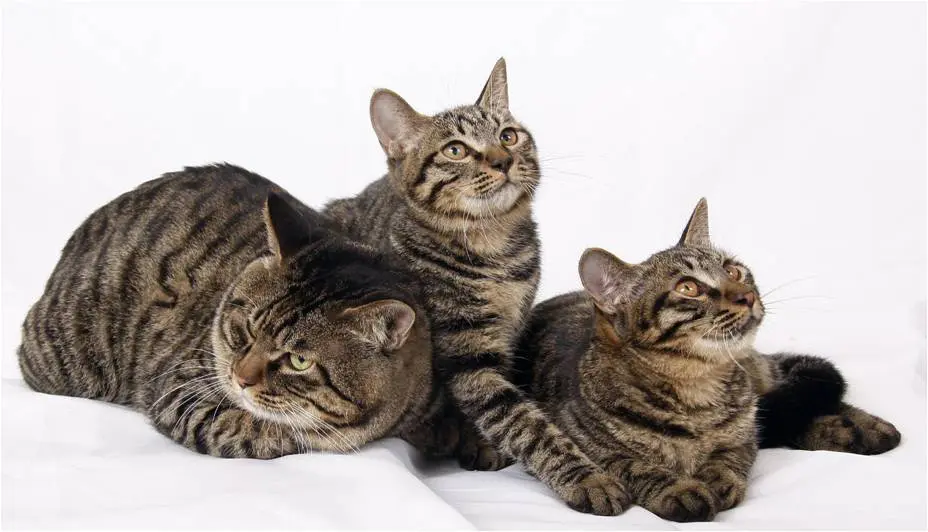
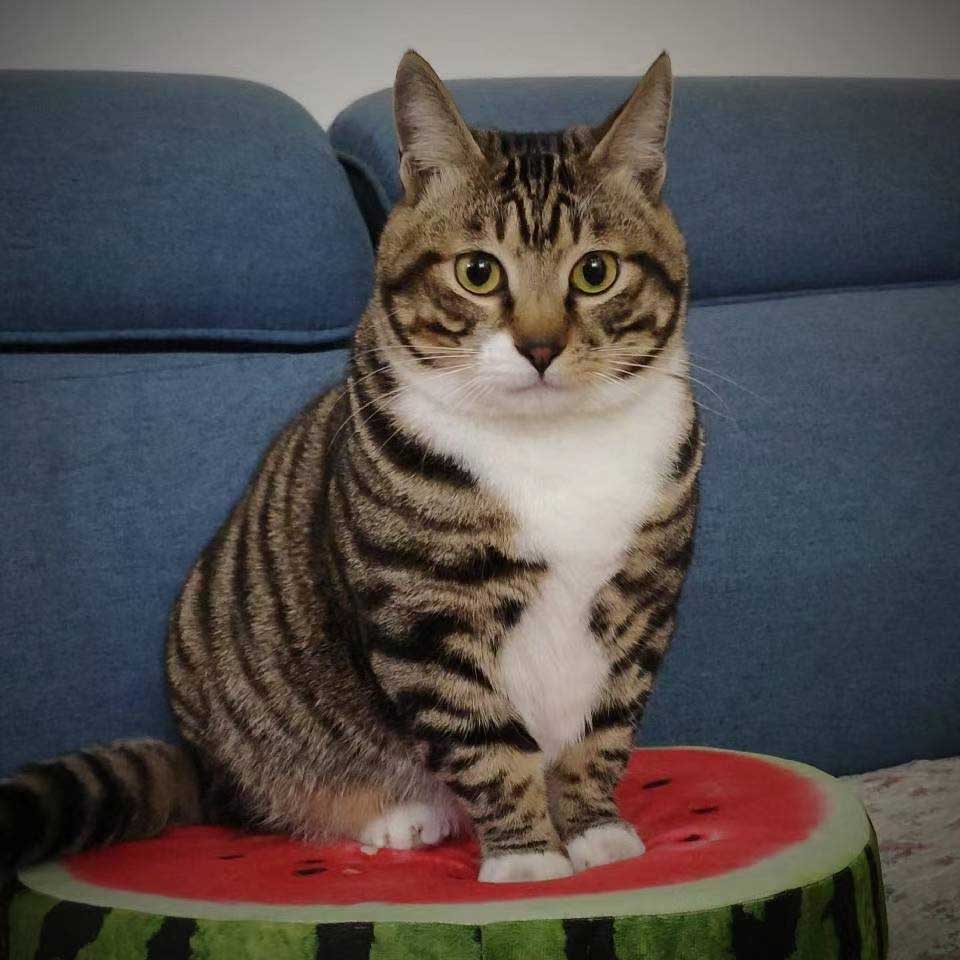
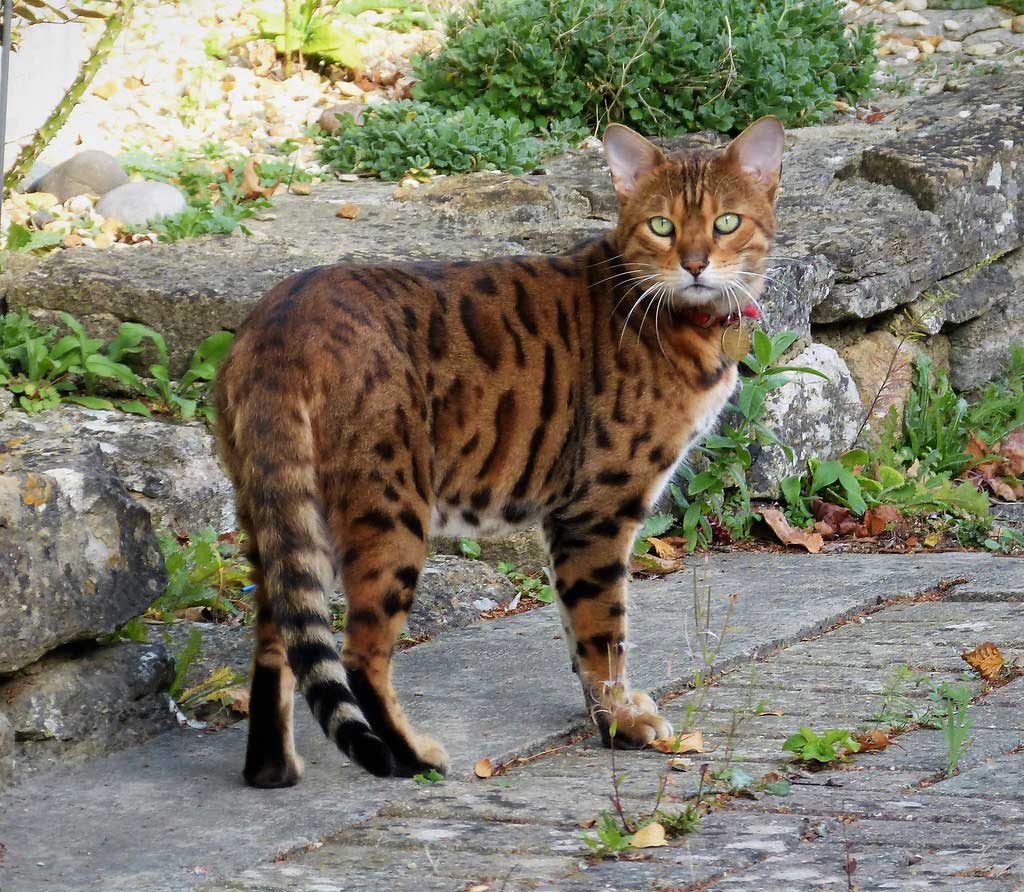
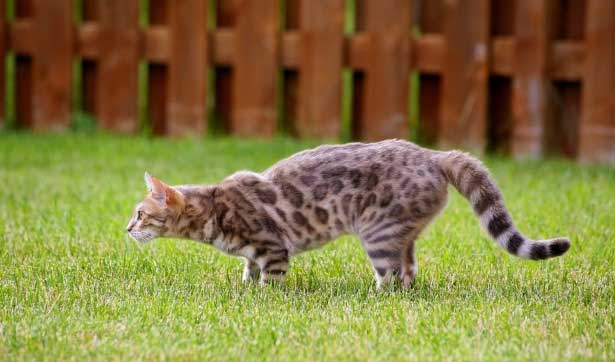
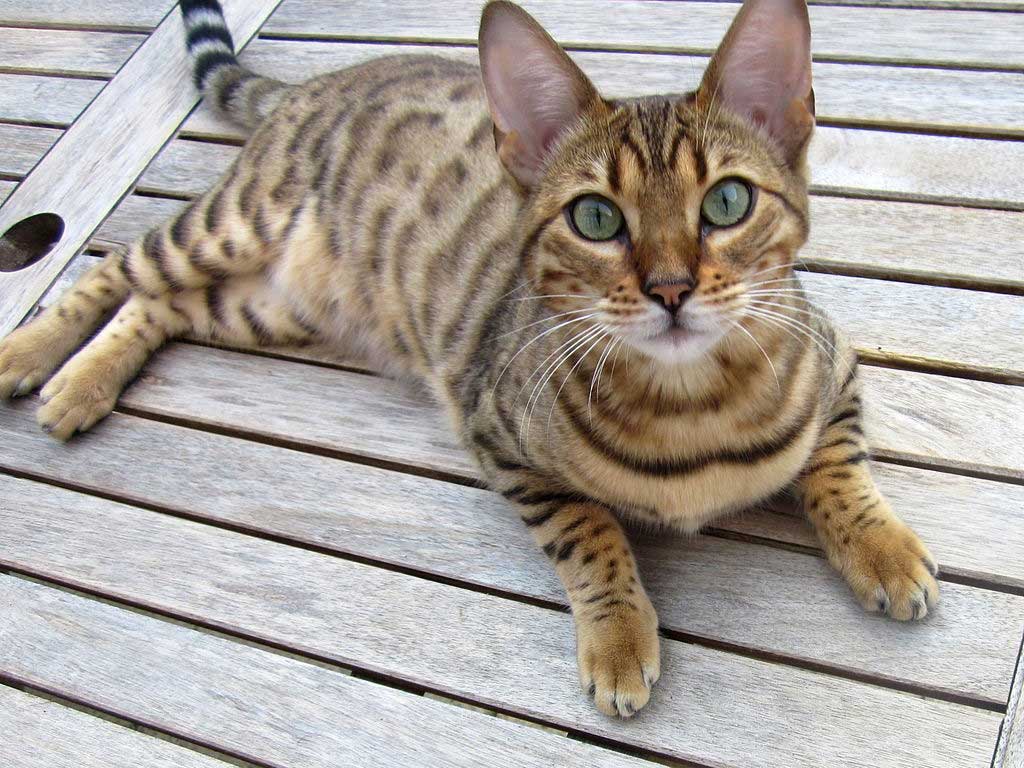
The Dragon Li cat (Li Hua) looks wild and powerful. The body is compact and muscular. Weighs between 4 and 5 kg.
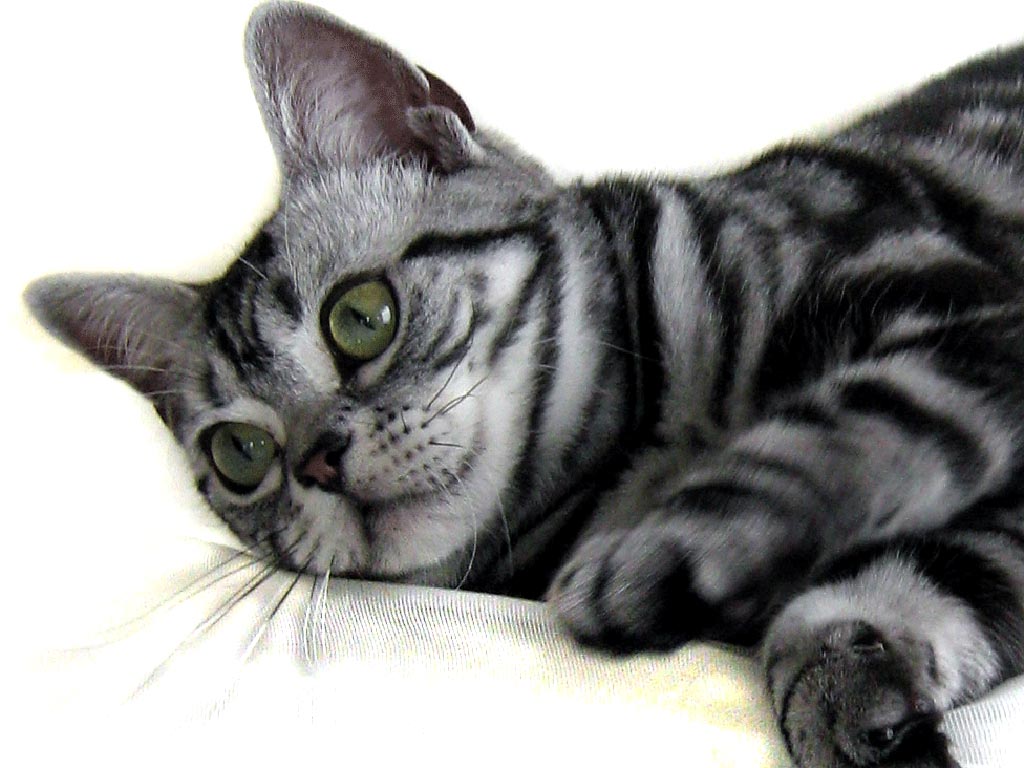
The fur is short, brindle mackerel.
The head it is wide and rounded.
The eyes they are big, almond-shaped. They are very bright, yellow or green.
The ears they are round and of medium size. May be covered in hair.
The legs they are muscular.
The feet They are round.
The tail of the Dragon Li cat (Li Hua) it is relatively short. Its tip is black.
Character and skills
The Dragon Li cat (or Li Hua) he is very playful and curious. You want to know everything that happens in your environment.
It is a sociable animal. But, he is not the most affectionate of cats. These may include, unlikely to come snuggle in your lap. His way of getting along with his master is to play with him.
The Dragón Li (Li Hua) gets along well with other animals in the house, especially with dogs.
Needs a lot of space to live and be able to play outside. He has kept his wild and hunter side deep inside. That is why it is important that it can thrive in a large garden.. Flat life is not for him. in addition, it is not the ideal cat to live with young children.
Indoor or outdoor cat?
It is very important to note that these unique felines do not like small, enclosed indoor spaces.. While most cats are perfectly happy sharing an apartment with an attentive human family, the Dragon Li cat needs a large house with plenty of room to roam if kept completely indoors. Clearly, this cat requires special circumstances and is not the best breed for everyone.
How much activity does he need? "Dragon Li cat"?
Unfortunately, for those who prefer lap cats, this particular breed does not like cuddling at all. In fact, these cats can become anxious when time and space are not given to them.
The Dragon Li Cats appreciate the outdoors and are excellent hunters. They are happiest when they are allowed access to closed and safe outdoor spaces, like the patios, and when they are taught to walk on a leash from an early age.
Does not require any special maintenance. A simple brushing once a week will suffice.
Provide an anti-flea and anti-parasitic treatment according to the age of the cat and the type of treatment you opt for. Avoid bathing your cat unless absolutely necessary, as this can remove some of the natural oils that protect your coat. Regular baths will leave your cat with irritable skin and a rash..
The race Dragón Li (or Li Hua) is rare and relatively recent, so we don't have enough information on the general health of this cat. A priori, does not seem to declare any specific genetic disease.
Known as a good luck messenger in his native Thailand, the Korat cat has always been a very popular wedding gift. This tradition continues today.
Content
Characteristics "Korat cat"
Coexistence is important that you have with your new friend. Before considering the acquisition of a cat of the breed "Korat cat" you know certain factors. You must take into account their character, their need for exercise, their interaction with other pets, their care and if you have small children, their level of tolerance towards them.
Joy
4,0 of 5 stars (based on 1 review)
Activity level
4,0 of 5 stars (based on 1 review)
Friendliness to other pets
3,0 of 5 stars (based on 1 review)
Friendliness to children
3,0 of 5 stars (based on 1 review)
Grooming requirements
1,0 of 5 stars (based on 1 review)
Vocality
2,0 of 5 stars (based on 1 review)
Need for attention
4,0 of 5 stars (based on 1 review)
Affection towards its owners
5,0 of 5 stars (based on 1 review)
Docility
1,0 of 5 stars (based on 1 review)
Intelligence
4,0 of 5 stars (based on 1 review)
Independence
2,0 of 5 stars (based on 1 review)
Hardiness
2,0 of 5 stars (based on 1 review)
History
The Korat is originally from Siam (current Thailand) and is one of the oldest breeds of domestic cats.
The first references appear in the Tamra Maew, or "Book of Cat Poems", a manuscript written in the city of Ayutthaya between 1350 (when the kingdom of Siam was founded) and 1767 (when the city was sacked by the Burmese invaders). At the end of the 19th century, King Rama V (1869-1910) asked the monk Somdej Phra Buddhacharm Buddhasarmathera to reproduce this text on paper Khoi, version kept in the National Library in Bangkok.
This work describes 17 cats that bring good luck to their masters, and other 6 that bring bad luck. The Korat cat It is one of the most valued lucky cats in the country., and many traditions are associated with it; for example, it is given to brides as a guarantee of a happy marriage, and usually appears in ceremonies to attract rain for the cultivation of rice. Apparently, at that time, the Korat He was a "town cat", unlike in the Siamese cat, which was mainly adopted by the nobility of the kingdom of Siam.
The first Korats appeared in Great Britain in the late 19th century and are mentioned in the Book of Cats published in 1903 by Frances Simpson, Judge and feline historian. They were shown at cat shows as "blue Siamese", but this did not convince the judges, They had a different perception of Siamese. As a result, they were unsuccessful and disappeared from the country at the beginning of the 20th century.
But, the Korat returned to the western world in 1959, When Jean Johnson brought to the United States a couple of Korats (Nara and Darra) that her Foreign Service colleagues gave her husband when he left Thailand. Based in Oregon, his kennel Cedar Glen then imported other specimens at the beginning of the years 60 and was the first in the West to start a breeding program for Korat. Not in vain, the breed was officially recognized in 1966 by the CFA (Cat Fanciers’ Association), the main feline organization in the country.
The Korats they returned to the UK (and to europe) in 1972, and the first copies appeared in France in 1979. The recognition of the race by the TICA (International Cat Association) arrived that same year, and the FiFé (International Cat Federation) did the same the following year, in 1980.
Although today it is recognized by the vast majority of organizations, the Korat still a rare breed of cat in the western world. In United States, appears in the last positions of the breed classification according to the number of annual registrations in the CFA, and it hardly does any better in the UK, with less than a hundred individuals enrolled annually in the GCCF – a figure that also tends to decrease year after year. In France, the records in the Livre Officiel des Origines Félines (LOOF) were almost non-existent until 2010, but since 2013 some are registered 50 kittens a year.
The Korat it is a medium size cat, semilineal, with a medium-length tail that tapers to the tip. His powerful and muscular body makes him heavier than he seems, especially when fully grown, around the 3 years. But, this does not prevent him from being an agile cat.
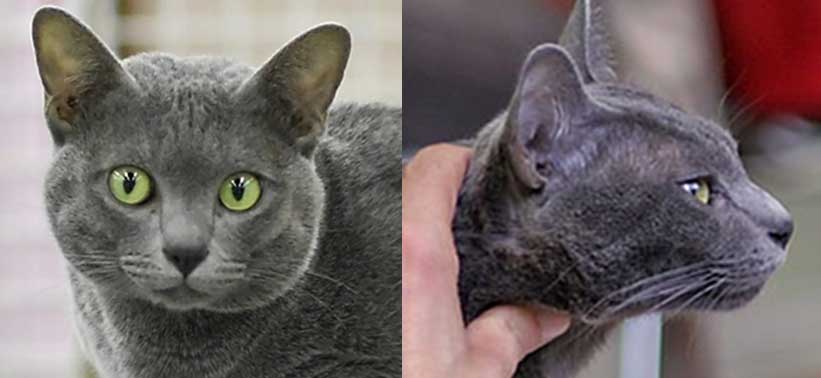
Its head looks quite unusual: seen from the front, it has a heart shape, with ears large, round tip and high implantation. Their eyes large, round and expressive look oversized for your head, but they retain the typical "oriental" inclination when closed or half closed. Kittens usually have yellow-amber eyes, but they turn green when they mature.
The fur it's short to medium, without Undercoat. Fine and closed, tends to bristle on the back when in motion. The coat is a uniform silvery blue color, no shading, marks or stains. The coat is glossier at the root, then tints to a darker blue and ends with a pronounced silver sheen. In the extremities of the body, where the hair is shorter, this silver glow is more intense.
The sexual dimorphism is moderately marked, the female being slightly smaller than the male.
Size and weight
Male size: 22 – 28 cm.
female size: 20 – 26 cm.
Male weight: 3,5 – 4,5 kg
female weight: 2,5 – 4 kg
Varieties:
In the Korat a recessive gene has appeared that can cause the silvery-blue color to fade, so it is not uncommon for kittens to be born with a purple-lilac color. This unrecognized variety is known as thai lilac.
Character and skills
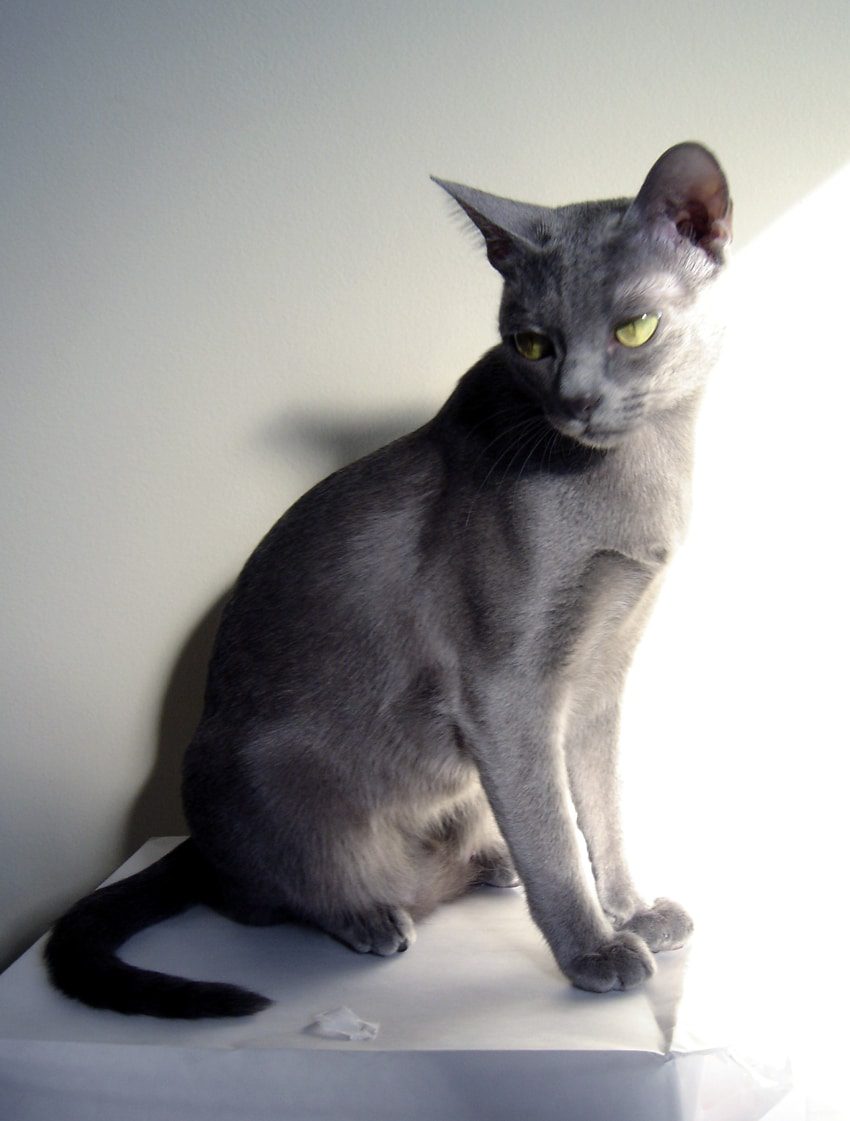
Sitting female Korat cat with typical bulbous green eyes and blue sheen – Heikkisiltala, CC BY 3.0, via Wikimedia Commons
gentle and affectionate, the Korat he is unfailingly loyal to his master, whose company constantly seeks. He likes pampering, and spends most of the time near him to receive caresses and attention. It is not a breed of cat that easily supports loneliness: he does not like to stay home without his family, and if you have to stay there too long and too often, he runs the risk of shutting down and losing his usual affection.
The Korat it is also a breed of cat that adapts to children, appreciating playing with them and spending time with them. On the other hand, does not seek the company of other cats: between their fellow humans and the humans in their family, your preference is quite found. Its calm character makes it normally tolerate the presence of other cats or dogs accustomed to cats in its territory without problems., as long as it remains the main focus of its owner's attention. On the other hand, coexistence with birds or small rodents is not recommended.
Lively and playful, likes to chase a ball or chase paper balls thrown by their owner. But, no matter how active it is, he is not the destructive type and is perfectly comfortable in a flat without going out as long as his family takes the time to play with him.
By the way, noise and commotion are not for him either. Although they can tolerate the noise of a television or computer, they are likely to be startled by a loud ringing phone or if a family member starts listening to loud music.
It is a very intelligent and docile cat, that can be trained relatively easily and that respects, for example, the places that are forbidden, like the dining room table, the kitchen or the clothes closet. Last, the Korat it's not very noisy. Instead of meowing, often chooses to attract attention by rubbing around the paws or nibbling on the balls of the feet. But, they don't shut up: if they think they have something important to say, they do not hesitate to do it.
In short, its qualities and characteristics combine to make it a suitable breed as a first cat for someone with sufficient availability, but that will also delight an experienced owner.
Grooming and caring for the "Korat cat"
When it comes to coat care, cats Korat they do not have any complications. Their short coat, fine and silky does not require any special care. Regular brushing with a soft brush or comb is sufficient. The silver gray cloak with its silver hair tips has no undercoat, so it only needs to be brushed more frequently during the coat change season. However, it is worth brushing the Korat regularly, since this affectionate cat enjoys any kind of attention.
Being a house cat that does not explore the outside much, even when you have free access to it, it doesn't get very dirty, so it is generally not necessary to bathe him.
Indoor or outdoor cat?
Like al European shorthair cat (Common european cat), to the cats Korat they love to be outdoors and roam. So, it is perfect if you live in a rural area and you can grant them free access. It is possible to keep them only inside. If you are willing to spend a lot of time with your new housemate and can offer them a safe garden or at least a safe outside area, the Korat you will feel comfortable even without access to the outside.
How much activity does he need? "Korat cat"?
Purebred cats are very active cats that need adequate exercise and opportunities to climb and, If it is possible, access to the outside. But even if you can give them free access, love getting attention and are reluctant to stop playing and snuggling together. Basically, if you have a Korat at home, you will discover that he likes to be with you in everything you do and seeks your closeness. Ideally, allow the Korat have a partner of your own, so that in case of doubt, always have a playmate available.
The gangliosidosis, an inherited disease that attacks the nervous system and causes paralysis. Can be detected by a parent and / or kitten test, but any Korat breeder worthy of this name is in charge of eliminating this risk by discarding any carrier individual from reproduction.;
the Hypertrophic cardiomyopathy (CMH), a syndrome that makes it difficult for the heart to circulate blood, with potentially very serious consequences for the key.
It also, the Korat appears to be more sensitive than other breeds to certain vaccines. So, it is advisable to ensure that the vet, when taking care of cat vaccinations, know this particularity of the Korat and take all necessary precautions.
Life expectancy
Of 12 to 15 years
Food
Not so difficult, the Korat can be fed with cat food from the market, which are croquettes or paté boxes. But, it is necessary to ensure the quality of the feed, which should provide you with all the essential nutrients for your good health.
like most cats, the Korat is capable of self-regulation, and you can thus permanently leave food at your disposal – at the same time as fresh water – without rushing over her like a hungry man. But, care must be taken that the daily ration given is reasonable, to avoid the risk of the cat becoming overweight or obese, which can cause various diseases and health problems. If required, do not hesitate to consult a veterinarian to choose a suitable diet, depending on the cat's lifestyle.
For sale "Korat cat"
The price of a kitten Korat often haunt them 1.400 EUR. There is no significant price difference between a male and female kitten.
As the number of breeders of Korat is relatively small, you will have to be prepared for waiting times. But the wait is worth it, because Korat cats are robust cats that are not affected by overbreeding and convince with their character.
The Mandalay it is a very rare and very unknown breed of cat. Its breeding began in New Zealand at the end of the 20th century., and developed in Australia some twenty years later.
Content
Characteristics "Mandalay Cat"
Coexistence is important that you have with your new friend. Before considering the acquisition of a cat of the breed "Mandalay Cat" you know certain factors. You must take into account their character, their need for exercise, their interaction with other pets, their care and if you have small children, their level of tolerance towards them.
Joy
5,0 of 5 stars (based on 1 review)
Activity level
5,0 of 5 stars (based on 1 review)
Friendliness to other pets
4,0 of 5 stars (based on 1 review)
Friendliness to children
4,0 of 5 stars (based on 1 review)
Grooming requirements
2,0 of 5 stars (based on 1 review)
Vocality
2,0 of 5 stars (based on 1 review)
Need for attention
4,0 of 5 stars (based on 1 review)
Affection towards its owners
5,0 of 5 stars (based on 1 review)
Docility
4,0 of 5 stars (based on 1 review)
Intelligence
4,0 of 5 stars (based on 1 review)
Independence
4,0 of 5 stars (based on 1 review)
Hardiness
4,0 of 5 stars (based on 1 review)
History
The Mandalay originated in the decade of 1980 in New Zealand.
A cream-colored female from the hatchery of American Burmese cat of Dorothy Horton and Pat Hogan, in the south of the country, crossed paths with a red shorthair cat. The kittens she gave birth were a beautiful deep red color with very shiny fur.
At the same time, in the north of the country, a female American Burmese from another breeder named Jan Parson crossed paths with a black cat. The kittens that were born were jet black with shiny fur.
The three breeders realized that the kittens they got from each other had very dark and deep colors that made them beautiful.. They were so fascinated that they decided to try to create a specific breeding program together..
They kept crossing American Burmese with brightly colored street cats, and they began to call the kittens obtained darker in color and totally solid, Mandalays, and raise them together. On the other hand, those that had a less intense color and whose external face (back, head, flanks and outer part of the legs) it was darker than the inside face (belly and inside of the legs) they kept calling each other burmese. So, a litter could contain both kittens Mandalay as burmese.
The breeding program accelerated when other breeders joined Jan Parson, Pat Hogan and Dorothy Horton. Dorothy Horton wrote the first rule of Mandalay. Since then, enthusiasts fought for the breed to be recognized by the New Zealand Cat Fancy (NZCF), the official feline organization of the country. His efforts were eventually successful in 1990. As a result, from that year, kittens with strong, solid color were recorded as Mandalays on the NZCF Pedigree Cat Register.
Breeders also tried to expand the color palette, which was initially limited to solid colors (black ebony, bronze blue, dark brown chocolate, cinnamon, leonado, red, cream, caramel and apricot). They also developed the brindle pattern. These advancements were later updated in the standard.
But, for many years, New Zealand was the only country that bred the Mandalay. Was not up 2013 when Australia joined the ranks of breeders, where a breeding program was also created. In the absence of imports from New Zealand, the program began with the breeding of Burmese and British Shorthairs. Next, breeders crossed the Mandalay obtained from the first matings with Burmeses.
Just two years later, in 2015, the Mandalay was recognized by the Australian Cat Federation (ACF) and the Australian Cat Control Council (CCCCA).
At the same time, in New Zealand, the gene pool of Mandalay had been depleted due to the low number of offspring since the creation of the breed. Jan Parson, Pat Hogan, Dorothy Horton and the other breeders who had been responsible for the development of the breed decided to create an experimental program, NZCF approved, to reintroduce matings similar to those that had given rise to the breed, that is to say, Burmese cat matings with dark, intense, short-haired stray cats. But, in the second generation, a large number of individuals had a problem with congenital hypothyroidism. This fiasco led to the decision to sterilize all the cats participating in the program., thus putting an end to it.
But, the problem persisted: they had to find a solution to expand the gene pool of the breed. In 2018, asked the NZCF for permission to import a Mandalay from australia. The NZCF granted the permit and the following year Bahati Outrageous Fortune, A male Mandalay ebony, was brought from Australia to help develop the breed in New Zealand. As the gene pool of the Mandalay in Australia it was also extremely limited, only one individual could be imported.
Recognition of the «Mandalay»
My beautiful mandalay, Raven by Holly Ellery – omlet.us
The Mandalay it is a very rare and very unknown breed of cat. Its breeding began in New Zealand at the end of the 20th century., and developed in Australia some twenty years later. But, remains limited to these two countries and has not spread beyond.
This explains that, outside these two countries, the breed is not recognized by the different national or international organizations. These may include, not even Fédération Internationale Féline (FIFé), not even International Cat Association (TICA), not even American Cat Fanciers’ Association (CFA), neither him British Governing Council of the Cat Fancy (GCCF), neither him Livre Officiel des Origines Félines (LOOF) French recognize the Mandalay.
There is little chance that this will change in the future. In effect, on the one hand, the breed's population is still very limited, And on the other hand, is competed by the Bombay cat: this cat that also descends from American Burmese cat is extremely close to Mandalay, and it is already accepted by these organizations. It is not very plausible that the latter recognize two races so similar, as this could lead to confusion.
But, the Mandalay is recognized by the reference organizations of its two countries of origin: the New Zealand Cat Fancy (NZCF) from 1990, the Australian Cat Federation (ACF) and the Co-Ordinating Cat Control Council of Australia (CCCCA) from 2015.
Popularity of «Mandalay»
The development of Mandalay has been limited to New Zealand and Australia.
Even in these countries, its dissemination remains confidential. There are no statistics that give an idea of the population size of the breed, but it is very limited, just like your gene pool, which obviously also hampers any significant and rapid progress. In any case, in each of these countries there are less than a dozen breeders of Mandalay.
Regarding the geographical distance of these two countries with respect to Europe and North America in particular, obviously does not facilitate the development of the breed in the rest of the world, both then and now. The Bombay cat, developed by American breeders and also a descendant of the American Burmese cat, then i would be on my way. The Bombay is very close to Mandalay, although the two races are not strictly identical: the Bombay has a totally black coat and a slightly longer body.
So, the development of Mandalay outside of Oceania is not easy, especially since his future is uncertain even in his homeland. In fact, if New Zealand breeders cannot find a solution to expand the breed's gene pool, This can end up being affected by numerous health problems caused by excessive inbreeding.
The lines Mandalay New Zealand and Australian are quite different, since until 2019 the first specimen was not exported from one country to another. But, its appearance is quite similar, except for the brindle pattern of the coat.
On the other hand, whatever the country of origin, the Mandalay looks the same as his ancestor the American Burmese cat, except for the fur and the color of the eyes. The coat is darker than that of the American Burmese and completely solid, while the eyes go only from golden yellow to amber and should be intense.
On both sides of the Tasman Sea, it is a semi-linear cat of medium length and height. Its body is built around a strong, rounded chest, but its elegance is due in part to the fact that its strong muscles remain harmonized. But, the latter implies that it is heavier than it seems.
The back is flat between the shoulders and the rump, then continue with a straight tail of moderate length, that tapers and ends in a rounded tip.
The legs they are muscular, slim and well proportioned to the rest of the body. Hind legs are slightly longer than front legs. Both end in well defined oval feet.
The head rests on a neck moderately strong muscular. Profile, presents a concave curve between its upper part and the lower jaw. The skull is slightly rounded, then there is a clear break between the slightly rounded forehead and the straight nose.
The ears, well spaced on top of skull, are medium in size and slope slightly downward when viewed in profile. They are wide at the base, with rounded tips. Some kittens are born with oversized ears, but this disproportion disappears as they grow.
The eyes they are far apart, they are big and bright. His topline is straight and slopes towards the nose, while its bottom line is rounded. Its color ranges from golden yellow to amber, the latter being the most sought after.
The cheekbones they are wide and end in a wedge in the muzzle. In men, can become prominent with age. But, the jaw is strong and the chin is firm.
The Mandalay has hardly any undercoat, but has a short thin top coat, distinguished by its silky texture and very shiny appearance. This sheen is a sign of good health and is the most prominent feature of the breed., that gives it both grace and beauty.
The the fur color is solid: may be black ebony, bronze blue, dark chocolate brown, cinnamon, leonado, red, cream or even caramel with its apricot hue. In all cases, some rare and scattered white hairs tolerated.
The coat can also have a tortoiseshell color (a mixture of red and black) and a brindle pattern. But, the latter is only accepted in New Zealand, not in australia.
Since the beginning of the decade 1950, approximately 30 years before breeders in New Zealand and Australia developed the Mandalay, others based in the United States and Canada developed the Bombay cat.
The Bombay is a cross between the American Burmese cat and the American shorthair cat and is recognized by the Cat Fanciers’ Association américaine (CFA) and the Canadian Cat Association (CCA). Like the latter, his temperament is similar to that of American Burmese, and their physical characteristics are also very similar. The only differences are the smooth, darker coat and the intense color of the eyes, ranging from golden yellow to amber.
But, there are some differences between the Bombay cat and the Mandalay. In particular, the Bombay it has a slightly longer body and its fur is only black.
It has spread much further than its Oceanian cousin, and is especially known in Europe. This explains that it is recognized, among others, by the influencer Governing Council of the Cat Fancy (GCCF) British. But, the GCCF does not consider it a breed in its own right, but simply a variety of Asian cat, which in turn is the result of matings between the European Burmes cat and the Persian cat. It also, the organization only accepts black ebony cats.
In France, the Livre Officiel des Origines Félines (LOOF) combine the Bombay cat and the American Burmese cat in the same standard. The organization distinguishes between the latter and the European Burmes cat, also known as Burmese English. The differences are physical: the American has a rounder head and a slightly more robust body.
In any case, organizations such as the CFA are unlikely, the AFC, and GCCF, the LOOF and all other organizations that recognize the Bombay cat do not end up also recognizing the Mandalay as a race in its own right, since these two cats are very similar. Recognizing them both and considering them as two different races would probably lead to confusion.
Character and skills
The Mandalay has inherited the temperament of his ancestor the American Burmese cat.
So, it is an ideal cat for a family, since he especially appreciates the presence of humans around him. He is usually very kind and affectionate with them.
They especially like to play with children, and they are excellent playmates, enthusiastic and energetic; the reverse is also usually true. He is very tolerant of them, but that does not mean that there are no risks on both sides. So, just like any other cat, should never be left alone with a young child: their interactions should always take place under the supervision of an adult.
To the Mandalay loves to be petted and has a great need for recognition, so it requires a lot of attention. It can even be a slightly clingy cat, who does not hesitate to follow their masters wherever they go and sit: in the kitchen, in front of the tv… You can also chat with them and be chatty, but their meows are soft and not loud, unless you want to reproach a lack of attention.
In other words, it's perfect for anyone who wants maximum interaction with their little friend. On the other hand, it is much less suitable for people who are away from home often or for long periods. They find it very difficult to tolerate being away from their family, especially if it is for long periods. They soon become anxious and develop behavior problems such as excessive licking, meows or even aggressiveness. Leaving several games at his disposal at those times helps to alleviate his discomfort., but the ideal is that you even share your home with another animal, either a companion or a cat-friendly dog. In fact, this ensures that you are never alone.
This coexistence is all the more feasible since this little feline is not aggressive for a penny. So, usually maintain peaceful relationships with their alter egos, as well as with dogs, at least, of course, those who can tolerate the presence of a cat. Things go better if the two partners are used to living together from an early age. If that is not the case, it is better to introduce them little by little, so that they get used to it and find their place.
In any case, that he lives under the same roof as a small rodent or a bird is a completely different story. In fact, his well-developed hunting instinct could turn the experiment upside down at any moment. If you come into contact with such a small animal, it is better to keep it in a cage or in a separate room to limit the risk of accidents.
Regarding the unknown humans entering their domain, not the type to be very suspicious of them. On the other hand, if you feel comfortable with them, it is very likely that you will approach them and ask for their attention. Having said that, even if it's not fearful, it is still essential that you have a cat tree to lean on to observe your little world, or just to rest.
The beautiful silky and satin coat of the Mandalay does not require complicated maintenance, especially since it has practically no undercoat. Brushing once a week is enough to remove dead hairs and give it a new shine.. But, during its annual molting period, it is better to brush it two or three times a week.
You should also check his ears once a week. Cleaning them with a damp cloth will remove impurities and reduce the risk of infection..
The weekly maintenance session is also an opportunity to check the eyes. If they are dirty, cleaning them with a damp cloth will also reduce the chance of an infection.
Brushing your cat's teeth is important to all breeds, but even more so for him Mandalay due to its predisposition to gingivitis. Do it at least once a week (and ideally every day) helps prevent plaque build-up, which can cause all kinds of more or less serious diseases by turning into tartar. It is necessary to systematically use a toothpaste designed specifically for cats.
Last, Once a month, you need to check the length of your claws, especially if you live indoors. In fact, if they get too long, they can break, annoy or harm you: Trimming them manually when necessary helps avoid these types of problems. Even for a person with access to the outside, this check is necessary, as natural wear and tear may not be enough. It also, these cares do not exempt you from providing your cat with a scratching post.
coat care, the ears, the eyes, the teeth and claws of his Mandalay does not require any special skills. But, to adopt the correct gestures and avoid injuring or traumatizing your cat, it is best to ask a veterinarian or professional cat groomer for advice the first time. In any case, It is essential to accustom your pet to these grooming sessions from a young age, so they are part of your routine and don't get recalcitrant.
In fact, once the owner has learned to carry out the different treatments, these moments can even become privileged moments of caresses and pampering. In fact, the Mandalay is always delighted to receive attention and affection, and does not hesitate to show it with small meows.
Indoor or outdoor cat?
Ideally, you should live in a house with a garden that you can access at any time through a cat flap when you feel like running. Curious, he loves to frolic, climb and hunt. They do not hesitate to leave their domain to follow a prey, but then they return quite naturally to their cozy nest.
If the outside is too dangerous to let you run free, you can walk him on a leash: generally does well if you get used to it from a young age, and thus it is avoided that it is enclosed between four walls.
How much activity does he need? "Mandalay Cat"?
Playing with their masters is also an activity that they love, In addition to stimulating you physically and mentally. His intelligence makes him an ideal candidate for anyone who wants to teach their cat tricks.. You can also test yourself through various interactive games that allow you to develop your skills.
In any case, whether your living environment is confined indoors or you have access to the outdoors, the Mandalay you need to have a scratching post at your disposal, like any of his classmates. Scratch is a compelling urge that cannot be denied. If there are no facilities for it, will not hesitate to turn to furniture.
Health and nutrition
Mandalay
The Mandalay has robust general health.
It also, is able to adapt to all climates. But, the lack of undercoat makes me afraid of drafts. Thus, in winter it is necessary to protect it from drafts to prevent it from catching a cold.
It also, like any breed of cat, are more likely to suffer from certain health problems. In this case, is the same one that his ancestor is predisposed to American Burmese cat:
Congenital endocardial fibroelastosis, characterized by thickening of the muscular walls of the heart leading to heart failure. The affected individual is easily out of breath, tires quickly and sometimes coughs. If it is not possible to solve the root problem, at least it is possible to improve the comfort of the animal with a lifelong medication that limits the symptoms;
The Hypertrophic cardiomyopathy, which is the result of an enlarged heart that causes a decrease in the volume of blood circulating through the body. This causes the typical symptoms of heart failure: intense fatigue, weightloss, breathing difficulties, loss of appetite, etc. Several causes are possible (hereditary origin, nutritional deficiency, etc.), and the prognosis is usually bad. But, various pharmacological treatments allow the affected animal to gain a few months - or even years- of life;
The Mellitus diabetes, an endocrine disease caused by insufficient insulin secretion, leading to high blood sugar levels. Then the cat begins to eat and drink more and lose weight.. The only effective treatment is regular insulin injections throughout the cat's life;
hypokalemic myopathy, that usually appears between the second and the tenth month of age. It is caused by low potassium levels in the blood and manifests as general weakness, muscle pain and motor difficulties. Treatment with potassium supplements and diet adjustment is enough to solve the problem.. However, a risk of recurrence cannot be excluded;
The peripheral vestibular syndrome, a congenital abnormality of the inner ear. In this case, the kitten keeps its head bowed, have problems with motor coordination and involuntary eye movements and, in some cases, he's even deaf. The problem usually resolves itself when the animal grows;
The flat rib syndrome in kittens it is a hereditary disease in which the rib cage is deformed. The rib cage is flattened from birth, and is even hollowed out in the most severe cases. This causes both shortness of breath and hyperventilation., which causes reduced blood flow and can lead to syncope. This deformation can be fatal, but individuals who reach adulthood are saved and manage to live with it;
Bent tail, congenital and hereditary malformation that causes the tail to twist in the cartilage. But, it is not dangerous or incapacitating for the animal: the only consequence is aesthetic;
The elbow osteoarthritis, a degenerative disease, progressive and irreversible. It corresponds to a progressive destruction of the cartilage of the joint., that loses its role as a buffer. This causes pain that leads the cat to restrict its movements to avoid suffering, or even lethargy. But, it is possible to improve the cat's quality of life with analgesic and anti-inflammatory treatments that slow down the progression of the disease;
The orofacial pain syndrome, a very rare disease that can be inherited. Causes the animal to lick and chew excessively. Sometimes it is even very painful to feed. No treatment, but it is possible to stop the symptoms with analgesics or antiepileptics. It is also advisable to put a collar on the cat to prevent it from licking;
Lipemia of the aqueous humor of the eye, which only affects kittens and is characterized by the milky appearance of the eye. It is only temporary and resolves itself;
Dermoide corneal, congenital and hereditary malformation, characterized by the presence of cutaneous tissue in the conjunctiva and cornea. This irritates the conjunctiva and weakens the cornea.. This can be remedied with surgical intervention.;
The gingivitis, which is an inflammation of the oral mucosa caused by the accumulation of tartar on the teeth. The cat has bad breath, suffers, has difficulty eating and can no longer wash. Next, scraping and polishing required (always under general anesthesia), which may be accompanied by a treatment with antibiotics or anti-inflammatories;
Allergic reactions to products used during anesthesia. So, if it is necessary to carry out an operation of this type, it is always advisable to make sure that the professional is aware of this particularity.
In addition to these various conditions, the Mandalay also has a tendency to overweight, yes no to obesity. Obviously, the risk is especially pronounced for people who live exclusively indoors and are not very active. Not a problem to be taken lightly, as it can aggravate existing diseases or cause new ones.
Taking into account the high number of hereditary diseases to which the breed is predisposed, the interest in adopting a Mandalay from a serious breeder who carefully selects his breeders. In effect, Systematically excluding from breeding individuals with a disease that can be transmitted to their offspring significantly reduces the risk of obtaining kittens carrying these diseases.
It also, a good breeder ensures that kittens are well socialized from an early age and that they grow up in a suitable environment, so that they are not only healthy, but have a good head and legs. It also, must be able to present a certificate of good health issued by a veterinarian and a vaccination or health record that contains the vaccines administered to the animal.
From the moment the pet is adopted, the new owner is responsible for his health throughout his life. In particular, the new owner must take the animal to the vet at least once a year (and even more often as the animal ages) for a complete health check. This allows any health problems to be detected as soon as possible and, if required, treat it in the right conditions. This appointment is also an opportunity to carry out any necessary booster shots..
Last, the owner must take care to protect his cat from parasites by repeating his antiparasitic treatments as many times as necessary, throughout the year. This is especially important for a cat that spends most of its time outside., but it is also necessary for a cat that lives indoors, since it is not completely safe from the risks.
Life expectancy
10 to 17 years
Food
Like all its fellow men, the Mandalay requires a diet that meets your nutritional needs, both qualitatively and quantitatively. Must suit your age, your level of physical activity and your health status.
His propensity to overweight, or even obesity, forces a certain vigilance. In effect, his greed makes it difficult for him to regulate himself: contrary to what is possible - and even desirable- with many other cats, it is better to avoid giving him free access to his food. So, it is advisable to opt for meals given at fixed times, and show some rigor in determining your daily ration.
Industrial cat food is perfectly suitable for your needs, but human food rarely is, unless carefully selected for that purpose. Of course, to the Mandalay loves attention and won't hesitate to ask for a bite during the meal to join the feast. But, attention and food are two different things: it does you no favors to respond to this type of request, Nor does letting him finish the table scraps or rummage through the trash. This is especially true because some foods that humans enjoy are toxic to little felines..
The trend of Mandalay obesity makes it essential to control your weight at least once a month. If a slippage is evident - or even worse- during several successive weighings, it is necessary to visit the vet. Only a healthcare professional can diagnose the cause of the problem: improper diet, disease, side effect of a medication, etc. Once the cause is identified, can indicate how to remedy it.
It also, like all his peers, the Mandalay you must have fresh water at all times, regularly renewed.
For sale "Mandalay Cat"
Despite having a very limited gene pool, the breeding of Mandalay is trying to develop in New Zealand and Australia, but the breed is completely unknown abroad.
In New Zealand, your country of origin, there are just under a dozen breeders across the country. They sell their kittens for between 800 and 1800 New Zealand dollars (between 450 and 1000 EUR).
In Australia, the number of breeders is of the same order of magnitude. Adopt a kitten Mandalay costs between 700 and 1600 Australian dollars (between 400 and 1000 EUR).
whatever the country, there are big price differences between one and the other. Can be explained by the reputation of the farm, the line from which the animal is descended or its intrinsic characteristics, especially in terms of his physique. This last point is the one that explains why prices can vary even within the same litter..
In any case, the small number of breeders makes the choice relatively limited and it is necessary to wait several months before being able to adopt a representative of the breed.
If the breed is to be repatriated to a country other than the country of origin, It must be taken into account that transport costs and administrative costs will be added to the purchase price. It also, it is essential to know the legislation regarding the importation of animals in the country in which you reside and, of course, respect her, to avoid unpleasant surprises.
Coexistence is important that you have with your new friend. Before considering the acquisition of a cat of the breed "Savannah cat" you know certain factors. You must take into account their character, their need for exercise, their interaction with other pets, their care and if you have small children, their level of tolerance towards them.
Joy
5,0 of 5 stars (based on 1 review)
Activity level
5,0 of 5 stars (based on 1 review)
Friendliness to other pets
4,0 of 5 stars (based on 1 review)
Friendliness to children
4,0 of 5 stars (based on 1 review)
Grooming requirements
1,0 of 5 stars (based on 1 review)
Vocality
3,0 of 5 stars (based on 1 review)
Need for attention
3,0 of 5 stars (based on 1 review)
Affection towards its owners
5,0 of 5 stars (based on 1 review)
Docility
3,0 of 5 stars (based on 1 review)
Intelligence
5,0 of 5 stars (based on 1 review)
Independence
2,0 of 5 stars (based on 1 review)
Hardiness
5,0 of 5 stars (based on 1 review)
History
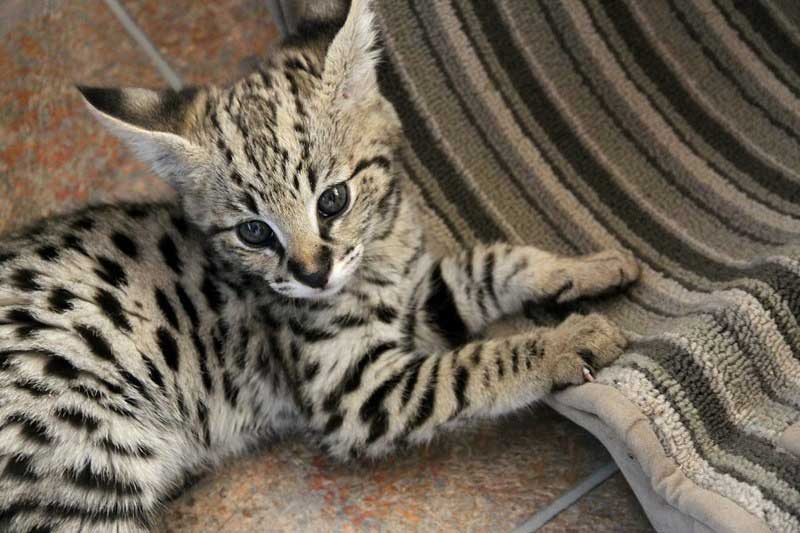
The Savannah is a breed of cat created in the United States in the decade of 1980. It is the result of the crosses between domestic cats (generally Egyptian Mau, Ocicat, Oriental shorthair cat and Domestic Shorthair) and servales males (Leptailurus serval). The latter is a medium-sized African wild cat with long legs., long neck and large oval ears. It shares a common ancestor with the lion and, having managed to adapt to various habitats, lives in the savannas, the forests or wetlands of your home continent.
The first Savannah was born the 7 in April of 1986. It was a kitten, daughter of a Siamese cat and serval male. It was named "Miracle" for Judee Frank, the breeder who owns the cat. It must be said that it was really a near miracle for the breeder, since he didn't know that his Siamese I was pregnant. At that moment, housed a Serval quite fragile that, Obviously, was responsible for the "miracle". Later, the Mrs. Suzi Mutascio He acquired the miraculous female and renamed her “Savannah.”, name that the breed also received.
Patrick Kelly, another passionate breeder domestic cats wild looking, heard about Savannah and wanted to create a new race based on the "miracle". As such, got in touch with Joyce Sroufe, an Oklahoma breeder specializing in breeding feral cats, including serval. He agreed to participate in the project and began to cross short-haired domestic cats with servales. So, all the kittens he offered for adoption were first generation hybrids (called F1). Your firsts Savannah They were born in 1994.
In 1996, in an effort to gain recognition for the breed, Patrick Kelly and Joyce Sroufe, In colaboration with Karen Sausman -a breeder of Bengalis– drafted a proposed standard for the Savannah, presented to the International Cat Association (TICA), the world's largest purebred domestic cat registration body. But, at the same time, this organization announced a moratorium on the recognition of new breeds.
This did not prevent other enthusiasts from taking an interest in savannah farming in the following years., and the breed became more and more popular. An association was even created in the year 2000 to promote the breed before the TICA. Originally called Savannah International Member & Breeder Association (SIMBA), this organization is now called simply Savannah Cat Association.
In February of 2001, TICA accepted the registration of the Savannah and allowed them to be displayed in cat shows, but not that they competed. That year more than a hundred. In 2006, the Canadian Cat Association (CCA) recognized the breed and its standard, which allowed to register the Savannah and participate in feline exhibitions organized under his authority. Regarding the TICA, was not up 2012 when he agreed to grant the same full recognition to the new breed.
In any case, as it usually happens with hybrid breeds, only dogs are allowed in cat shows Savannah from the third generation (F3). This generation is of special interest, since it is the one that can compete that theoretically has the highest percentage of Serval (although this rate may vary depending on the individual).
But, This generation is not recognized or cataloged by the American Cat Fanciers’ Association (ACFA) and Cat Fanciers’ Association (CFA) in United States; nor for him Governing Council of the Cat Fancy (GCCF), the World Cat Federation (WCF) and Fédération Internationale Féline (FIFé) in Europe.
Today, the Savannah cat is present all over the world, mostly in North and South America, Europe, Japan and Malaysia. But, is prohibited in some countries, like australia, where it was banned in 2008. Its great predatory capacity could pose a threat to the maintenance or even the survival of certain native species., with which it could compete if individuals were found in nature.
Some states, counties or cities in the United States also prohibit the possession of Savannah in its territory. Sometimes all representatives of the breed are prohibited, but sometimes only to the first generations. In other cases, a permit is required to own this cat. In summary, sometimes it's hard to navigate…
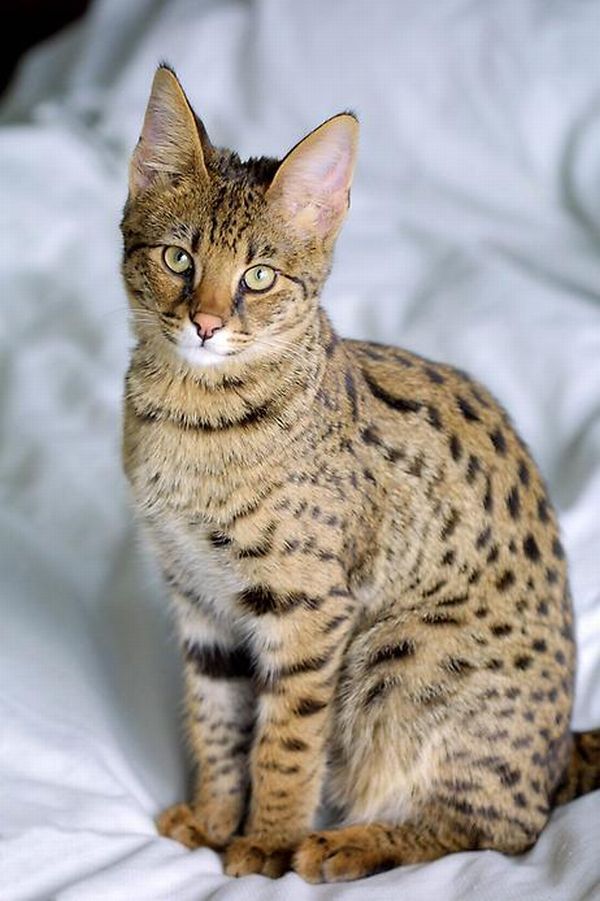
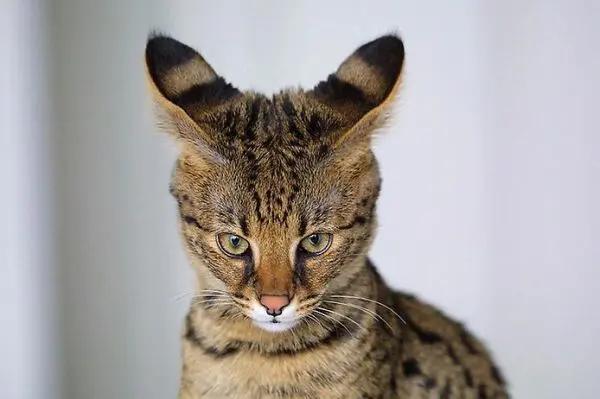
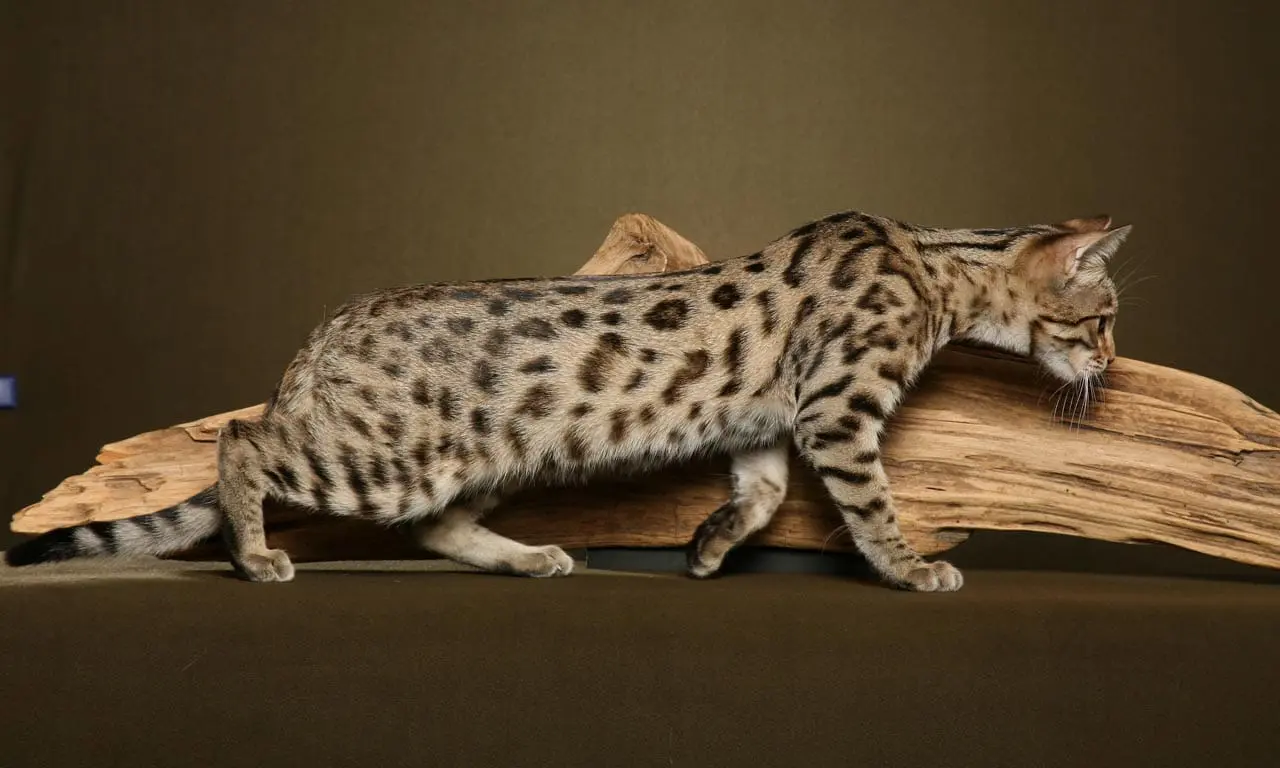
The Savannah is very large: in fact, a male was recognized in 2017 like the tallest cat in the world, with 48,3 centimeters at the withers. In fact, this breed has inherited several characteristics from its wild relative: it is a tabby cat with a spotted coat, a slim body, muscular and graceful, a head small, long legs, large ears and a slightly short tail. This is a type semi-foreign.
But, is significantly smaller than the Serval, and it also shows a noticeable difference in size from one generation to another. In fact, as they move away from the first generation of hybrids, the Savannah tend to be shorter in height and weight, between 6 and 9 kg. It also, in all generations, females are smaller than males.
There are some color variations in the Savannah. They can be inherited from one or both parent races. According to the standards of the International Cat Association (TICA), accepted colors are
Brown spotted tabby
The Savannah of this color are the most popular among breed enthusiasts, probably because its fur is the most similar to that of the serval. Your background color can be wheat, marten or saber, while its spots vary from orange brown to black and dark brown. Inside this fur color, it is rare to find adult cats with completely black noses.
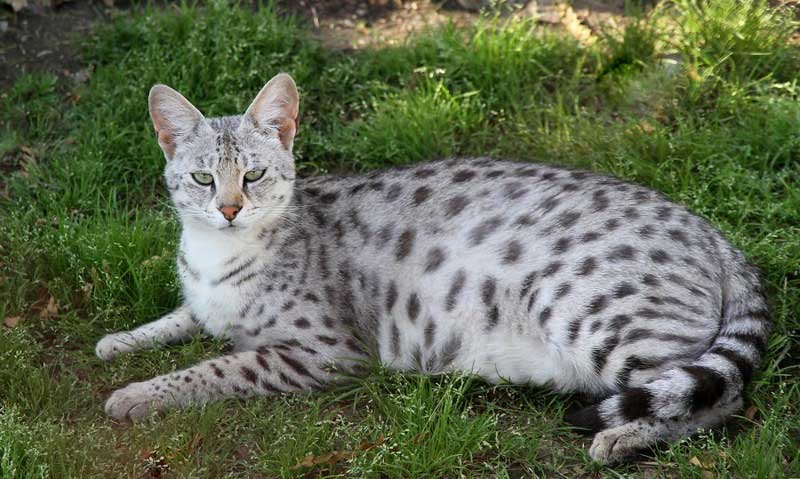
Silver Spotted Tabby
This color is probably the second most popular. The background color of the coat ranges from very pale silver, almost white, even dark silver. Stains vary from carbon black to ink black. In some individuals, can cover a large area and be accompanied by hives; This pattern is called "marbled". Some individuals of this color have a completely black nose.
The genetic inheritance of Silver Spotted Tabby comes from domestic cats that contributed to hybridization.
Smoke
The Savannah of this color variation are black, but the root of her hair is white, which gives them a lighter coloration.
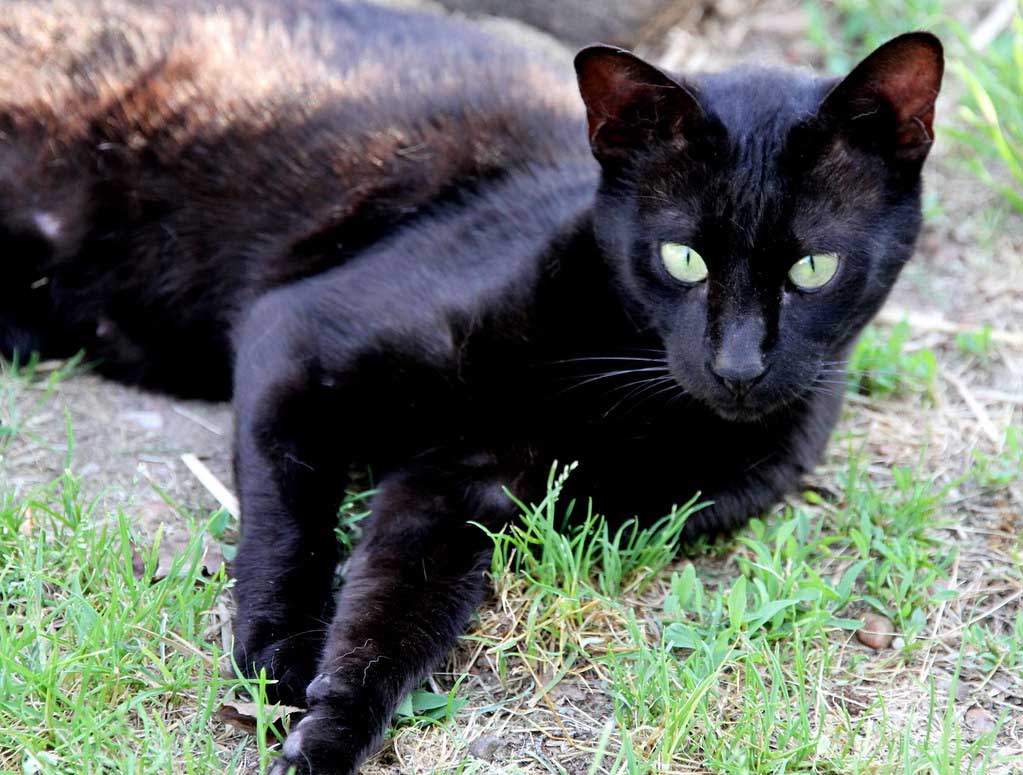
Black Savannah cat
There is a servales melancholy, that is to say, blacks, in the nature. The corresponding color variation in the Savannah cat has been inherited from the genetic background of some servales with this property. Cats of this color are spotted, although their spots are usually visible only under strong light. These Savannah they always have a black nose.
But, in addition to those accepted by the TICA, there are other colors. Cats with these colors can even be registered with the association. In fact, sometimes they are more popular with some fans of the Savannah than officially accepted colors. It is about the following colors:
Snow
This coat goes from white to light gray, and the spots are light brown. The aquamarine blue of his eyes is the most noticeable feature of the Savannah snow. Although it is not accepted by the TICA, this rare color is highly prized by some breed enthusiasts.
Lavender
The color lavender (ranging from cream to peach) is dotted with grayish spots. Again, this is a very rare color.
Size and weight
Size: Of 40 to 45 cm.
Weight: Of 6 to 12 kg
Breed standard
The breed standards are documents established by official bodies that list the conditions that a dog must meet. Savannah to be fully recognized as belonging to the race:
Despite his semi-wild ancestry, the Savannah is known to be a good-natured cat, affectionate, Gentile, loyal and playful from the first generations. He is also extremely smart, active and curious. It must be said that the serval, is contributing to your genetic makeup, It is a wild cat with a very familiar character and easy to tame. In some parts of Africa, in rural areas, servals can be used as companion cats or as hunting aids.
In fact, the owners of a Savannah often happily report that their pet is distinguished by character from any other breed of domestic cat.
Although they are not unhappy on the inside, they greatly enjoy the outdoors, allowing them to have fun climbing trees or hunting, and thus exhaust their unlimited energy. If you have your cat indoors, the best thing is that he has a large home where he can run, jump and climb with ease. A cat tree is essential to keep it active and prevent it from damaging furniture and curtains.
If you've gotten used to it from the start, can be easily walked on a leash. Like its relative the serval, the Savannah is one of the few domestic cats that enjoys frolicking in the water.
In general, to the Savannah loves the company of humans, as well as other pets in the home. They really enjoy being hugged and played with. But, la Savannah Cat Association (SCA) recommends that a first generation cat (F1) not be placed in a home with minor children. Young children love to pet and cuddle animals, but a Savannah F1 is a size that does not lend itself to such displays of affection. Although normally, when a cat is fed up, it just walks away, This SCA recommendation is a simple -but very wise- precautionary measure..
The association also suggests that small rodents or pet birds should not be left within reach of a savannah., since this could have a bad destiny for them. It also, owners who have an aquarium at home should ensure that it has a secure lid. If that is not the case, they can find their cat swimming among the fish, especially because Savannah they are water-loving cats.
Another precaution recommended by the SCA is for the owner to ensure that his Savannah do not have free access to the outside. If it escapes, the chances of me coming home are very low, and their chances of long-term survival in the wild would also be low. It has been established that a Savannah indoor can live up to 18 years, while their life expectancy in the wild is reduced to about 18 months.
The smooth and short coat of the Savannah cat it is very easy to care for and does not require any special care. A weekly brushing is enough.
It also, as to the Savannah He likes water, can be bathed easily at times.
Indoor or outdoor cat?
The Savannah cat he is a hunter, jumper and climber much more skilled than other domestic cats. So, if kept as an indoor cat, needs a space above average, as well as varied and solid climbing opportunities.
It is also possible that the big cat is delighted to have a secure outdoor enclosure or garden.. With a little patience and a lot of practice, can also be taught to Savannah to walk on a leash. It is not advisable to keep the F1 to F4 generations as outdoor cats, as they are very valuable and also excellent hunters.
How much activity does he need? "Savannah cat"?
Due to his enormous agility and his great intelligence, the Savannah cat needs a lot of attention and activity. He does not like to be home alone and loves to follow his owner around the house. He likes to be the center of attention and will confidently tell you when he wants you to keep him busy..
An especially exciting activity for the Savannah cat is playing with the water or taking a bath in the bathtub. Some breeds like water so much that they will follow you into the shower. The cunning cats also learn to look for toys with gusto and run wildly all over the floor..
Health and nutrition
"Savannah cat"
Matahah Me Al (Motzie ) is F2 savannah – Galawebdesign, CC BY 3.0, via Wikimedia Commons
In general, the Savannah is in good health.
But, two hereditary diseases are known in this breed, that have their origin in the domestic cats that contributed to their birth. Are the progressive retinal atrophy and pyruvate kinase deficiency (a type of anemia). Both can be revealed by genetic testing, allowing serious breeders of Savannah identify and remove individuals carrying the defective genes from your breeding program. Any prospective buyer should require proof that the kitten they wish to adopt has been tested negatively.
The Savannah Cat Association (SCA) also advises owners of this breed of cats not to remove their claws. The declawing, which consists of the amputation of the last phalanx of the fingers, can cause pain that can last for the rest of the cat's life. Nail removal is not recommended for all breeds of cats, and is especially contraindicated for Savannah, due to the large amount of energy you need to expend, for example, clawing a cat tree.
It also, cats of this breed should be watched carefully when they are sick, as they can become dehydrated and lose weight quickly.
Last, the Savannah fear the cold.
Food
In general, the Savannah does not require any special diet. As with other cat breeds, it is only necessary to ensure the quality of the food that is offered.
But, for the Savannah of the first generation after hybridization (F1) and of the second generation (F2), some breeders recommend serving the animal a daily meal of raw poultry.
Other breeders recommend feeding all Savannah with a diet consisting of raw meat - minced- chicken and beef. But, this diet is discussed by some of your colleagues, they point out that it requires a good knowledge of nutrition, and that all the necessary ingredients must be added for a complete and balanced diet. If adopted, this practice should be done with caution, as over-supplementation can be harmful.
For sale "Savannah cat"
Before buying a Savannah cat, you should know that it is considered the most expensive breed of domestic cat in the world.
Depending on the generation, will pay between 1.000 and 10.000 euros for a kitten. Other difficulties may arise, especially when buying a cat from the F1 to F4 generation. These animals are not very easy to conserve and are subject to the Washington Convention on International Trade in Endangered Species. So that, if you want to import a cat from the USA. or from another non-EU country, there are many requirements, such as tenure and confinement permits.
Interesting data
Criticism of breeding "Savannah cats"
The detractors of the breeding of the Savannah believe that mating a wild animal with a domestic cat for the sole purpose of obtaining a particular coat pattern is irresponsible.
As the gestation periods of cats and servales They are different, every generation of F1 is born prematurely.
The mortality rate, as well as stress for the mother, is therefore extremely high. Many of the so-called wild cat hybrids they continue to show the characteristics of a wild animal even after generations. So, keeping them species-appropriate is not possible for everyone.
Video Longest cat – Meet the Record Breakers
youtu.be/TcTbsegeyug
In Australia and New Zealand, the Savannah they are even prohibited from entering the country because they can endanger biodiversity. So the question arises whether it is really necessary to travel a path that nature did not foresee., just to get a breeding goal.
Famous cats «Savannah»
One of the Savannah cats most famous in the world is Scarlett’s Magic, of United States. Received the Guinness record the largest living domestic cat in 2010, with a shoulder height of 45,9 cm.. She was also the longest domestic cat in the world, with a length of 108,51 cm..
But, the current record is held by the cat Maine Coon Ludo with a length of 118,33 cm..
Videos "Savannah cat"
Savannah Cat : The Most Expensive Pet in the world / Largest cat breed F1 Savannah savannah-cats.com
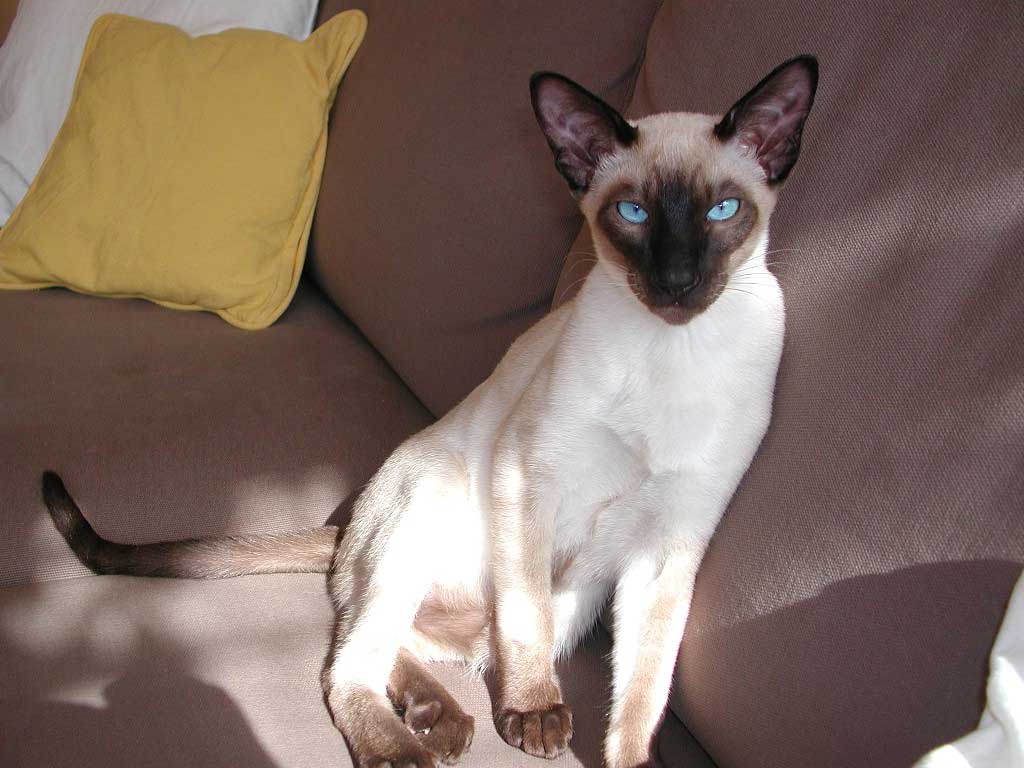
With a history of several centuries, the Modern Siamese cat began to be recognized by national and international official organizations in the years 30.
Self-made photo of Coco, sealpoint Siamese cat – Yannbee at Dutch Wikipedia, Public domain, via Wikimedia Commons
Content
Characteristics "Modern Siamese cat"
Coexistence is important that you have with your new friend. Before considering the acquisition of a cat of the breed "Modern Siamese cat" you know certain factors. You must take into account their character, their need for exercise, their interaction with other pets, their care and if you have small children, their level of tolerance towards them.
Joy
4,0 of 5 stars (based on 1 review)
Activity level
5,0 of 5 stars (based on 1 review)
Friendliness to other pets
4,0 of 5 stars (based on 1 review)
Friendliness to children
4,0 of 5 stars (based on 1 review)
Grooming requirements
2,0 of 5 stars (based on 1 review)
Vocality
5,0 of 5 stars (based on 1 review)
Need for attention
4,0 of 5 stars (based on 1 review)
Affection towards its owners
5,0 of 5 stars (based on 1 review)
Docility
5,0 of 5 stars (based on 1 review)
Intelligence
5,0 of 5 stars (based on 1 review)
Independence
2,0 of 5 stars (based on 1 review)
Hardiness
3,0 of 5 stars (based on 1 review)
History
The sophisticated Siamese takes its name from its country of origin, the kingdom of siam, which is now thailand. The oldest document that mentions it, the Tamra Maew, data of 1350 and was found in Ayutthaya, the capital of the kingdom since 1350 until 1767. This work is a treatise on cats, in the form of poems accompanied by illustrations. Some of the illustrations show cats with thin, pale bodies and darker masks on their faces., ears, legs and tails. At that time, they were cross-eyed and had knots in their tails, characteristics that only centuries later became defects that breeders were able to practically eliminate.
Legend has it that these cats were none other than the guardians of royal treasures, and that they watched them with such attention that they ended up squinting.
In Europe, it was in great britain, at the end of the 19th century, where the Siamese was first heard. In 1871, two specimens were exhibited in the first feline exhibition in modern history, held in the Crystal Palace From london. In the event catalog it was said that they were the first to set foot in the country, which is very likely.
But, they were not the ones who started the development of the breed in the country, but Pho and Mia, two specimens that Owen Gould, British Consul General, received in 1884 as a gift from the king of Siam.
He took them to Britain and his sister, Lilian Jane Veley, took care of them. He fell in love with these magnificent cats and decided to present them at the Palacio de Cristal Exhibition in 1885. Aroused great interest from the public. There are some photographs from this time that show that they were quite robust and had a round head.. They were the first two specimens registered in the British Register of Siamese, a register kept by one of the cat owners' clubs which had been in existence for several years and which were the forerunners of the Governing Council of the Cat Fancy (GCCF), founded in 1910.
They died right after this exposure, but meanwhile they had given birth to a litter. Lilian Jane Veley continued to dedicate herself to these cats; with a view to developing the breed, came to found the Siamese Cat Club in 1901, the world's first Siamese breed club.
Among 1884 and late nineteenth century, many were imported siamese cats from Siam to Great Britain and enrolled in the British Siamese Register. In fact, the breed quickly gained in popularity among the English aristocracy; as a result of fashion, many of its members wanted to own one. In 1892 a standard was developed that defined the physical attributes that a subject must have to be admitted to the registry.
The Siamese arrived in France in 1885, when a French diplomat brought two specimens from Bangkok to the Jardin des Plantes in Paris. In 1893, the Dr. Oustalet, professor at the Museum of Natural History, wrote about the siamese cats brought by the president's daughter-in-law Carnot. He took care to describe them accurately and wondered if this race descended from a wild species..
The introduction of Siamese cat in the United States took place in 1879. The American Consul in Bangkok, after learning about the fondness for cats of the then president's wife, Rutherford Birchard Hayes, sent him a Siamese, who he called Siam.
The breed really took off in America in the early 1900s, helped by the lady's cats Clinton Locke. Founder in 1899 of the Beresford Cat Club, the first registry of breed cats in the country, bought a copy in France, Lockehaven Siam, which won the award for the best cat in America in 1906 en Detroit. He repeated this feat the following year in Chicago, this time with a female, Lockehaven Elsa. In 1909 a breed club was founded, the Siamese Cat Society of America, who published a first standard.
But, the breed's development was interrupted by the First World War, both in the United States and in Europe.
The development of Siamese cat in the United States it also owes a lot to Virginia Cobb. Originaria de Massachusetts, fell in love with the breed during a cat show at the Madison Square Garden of New York in 1928. He decided to import his first copy, whom he called CH Oriental Nanki Pooh de Newton. This female lived 17 years and had many litters.
In addition to being very active and involved in the breeding and distribution of Siamese in United States, Virginia Cobb was also interested in its genetics. In collaboration with Clyde Edgar Keeler, Harvard University geneticist, explored in particular the scientific aspects of different coat colors. The first known color of the Siamese had been the seal point, with dark brown tips and a creamy coat. But, as reproductions were made, appeared the blue point (dark blue tips and bluish-white fur), the chocolat point (chocolate tips, ivory fur) and the lila point (pink gray tips, White fur).
The Second World War was a second brake on the expansion of the race, especially in Europe. At the end of the war, the breed was even on the verge of extinction in Britain.
New blood was needed to expand the gene pool and advance. Once again, several specimens were imported from Thailand, both to Europe and the United States.
But, just like before the two world wars, the Siamese had difficulty adapting to the local climate, very different from the tropical climate of your native Thailand. Breeders in all countries faced heavy losses, mostly due to gastroenteritis and parasites.
This did not prevent the breed from gaining popularity from the decade of 1960, both in Europe and the United States. Many breeders and show judges began to favor a slimmer look. The latter began to gradually evolve, as breeding and selection progressed.
The Americans, in particular, they preferred a tubular and elegant body, as well as a long head. Englishmen, on the other hand, they gave priority to almond eyes, large ears and a little lower on the skull. In addition to evolving, standards also began to differ from country to country.
But, around the world, the Siamese got longer, with a fine bone structure and a narrow head. The breeders' work also made it possible to eliminate strabismus and tail knots..
This way of evolving the morphology of the breed was chosen by most breeders, since the beginning of the years 70. Other, few, they decided to keep Thai cat. With the passing of the decades, the gap between a Modern Siamese cat, heavily modeled by man, and Thai cat, corresponding to the original physical type of the breed and known as Thai. At the beginning of the Decade of 2000, the latter was finally recognized as a distinct breed by most official bodies.
But, the Modern Siamese cat has stolen much of the limelight and enjoys much greater popularity. This explains that she herself was at the origin of several other races:
the Balinese cat, who is none other than a modern long-haired Siamese;
With a history of several centuries, the Modern Siamese cat began to be recognized by national and international official organizations in the years 30.
The American Cat Breeders Association (CFA) was the first to recognize the breed in 1934. The Governing Council of the Cat Fancy (GCCF) did the same in 1936.
The Fédération Internationale Féline (FIFé), that brings together the feline authorities of some forty countries, including Switzerland and Belgium, did the same in 1949. Ten years later, also recognized the Oriental shorthair cat, before doing the same in 1983 with the him Balinese cat, and then in 1985 with the him Oriental Longhair cat: these four races together constitute a group in their own right.
The Canadian Cat Association (CCA) recognized the Siamese in 1950, just one year after FIFé.
In 1979, the International Cat Association (TICA) also recognized the Siamese and included him in a group with the Balinese cat, the Oriental shorthair cat and the Oriental Longhair cat, who were admitted at the same time.
Popularity of "Modern Siamese cat"
In Europe, It was in Great Britain that the Siamese, and still today it is in this country where he is most successful. Still the most successful cat in the UK, ranking fourth in number of annual registrations in the British Governing Council of the Cat Fancy (GCCF), at around 1.500 a year. But, this figure triples that of the middle of the years 90, when the number of records exceeded 4.500 a year and was the second highest. The decline was especially marked in the second half of the 1990s. 2000, but continued throughout the next: early in the decade 2010 there was still more than 2.000 registrations per year.
In France, there has also been a decrease in both absolute and relative terms, and in any case the breed has never reached similar popularity levels. Nails on 250 registrations per year in the Livre Officiel des Origines Félines (LOOF), the breed is located around the position 20. In the middle of the Decade of 2000, this figure was rather 350 births per year.
In Switzerland, the Siamese has also lost part of its glory. After a peak of about 150 over the years 90, the number of annual registrations in the Fédération Féline Helvétique (FFH) steadily decreased, to the point that today it does not exceed 50 births per year. But, this places it around the tenth position in the statistics of the organization.
in Canada, it's even more discreet. In fact, the number of kittens registered each year with the Canadian Cat Association (CCA) places it around the position 25 of the ranking.
In United States, the Siamese was between 10 most popular breeds in the country in the early 1990s 2010, According to the annual registration statistics of the Cat Fanciers’ Association (CFA). Since then it has lost ground and is now around the position 12.
Physical characteristics
The Modern Siamese cat, a different looking cat Thai cat
Written in 1892, shortly after the breed's arrival in the West, the first standard of the Siamese lets us know what this cat looks like before breeders got involved. The Siamese he had a stocky body, a head round and eyes blue. It also, many of the cats were cross-eyed and/or had knots in the tail, what was not considered a defect at that time.
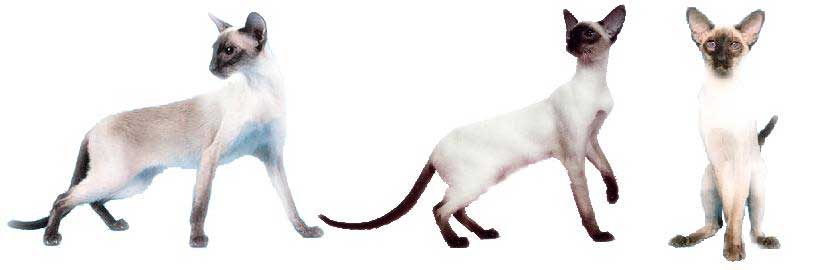
The traditional siamese has stayed quite true to this initial appearance, with its body and head round. On the other hand, decades of selective breeding have made the Modern Siamese cat away from the morphology of its ancestor and show more extreme forms: a body delgado, long and tubular, a head long in the shape of a triangle, ears very big and a tail very long and thin.
So, it is quite legitimate that these two cats are considered today as two different breeds, Although they share their intense blue eyes. The work of the breeders has also made it possible to eliminate the problem of strabismus that affected both, as well as the crooked tail.
The emergence of the "modern Siamese Cat"
The Modern siamese it is a medium size cat, lanky (Eastern) and elegant looking. Slim and athletic, they have a very harmonious overall look. But, he is quite muscular, which explains why it is heavier than one might think at first glance.
Its long body has a tubular shape, with shoulders and hips of equal width. Has firm musculature and fine bone structure. The tail it is long and fine and ends in a point.
The legs they are well muscled, long, slim and graceful. Hind legs are slightly longer than front legs. Both end in small, oval feet.
The head it is medium size, long, triangular, wedge-shaped and rests on a neck long and thin. The skull and the forehead are flat or very slightly rounded. More concretely, three types of profiles are accepted: straight, slightly convex or in two planes (the plane of the forehead is prolonged with that of the nose, but without a clear break between the two).
The ears they are very big, wide at the base and prolong the triangular shape of the head.
The eyes they are moderately large, macaroons, far apart and deep blue. They can be vairones (one green eye and one blue) in individuals whose fur is particular. Some individuals have both green eyes, but they are not recognized by the norms established by the different official organisms.
The cheeks are flat and dewlap is only allowed in adult males.
The nose it's long and straight, fitting perfectly into the triangle of the face. Its tip should not be narrow. Master medium-sized jaws and a strong chin.
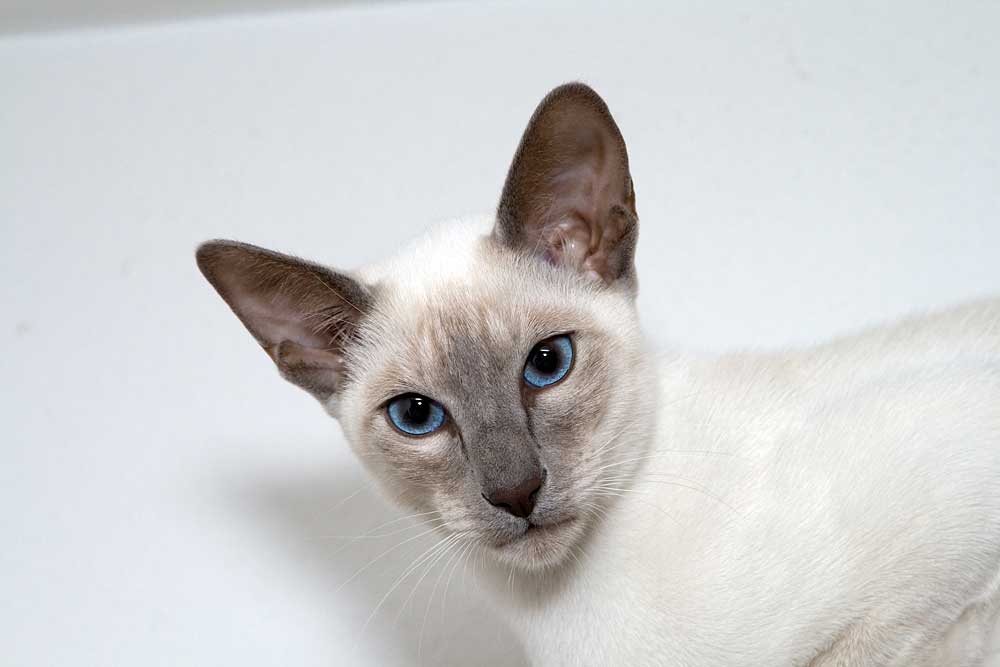
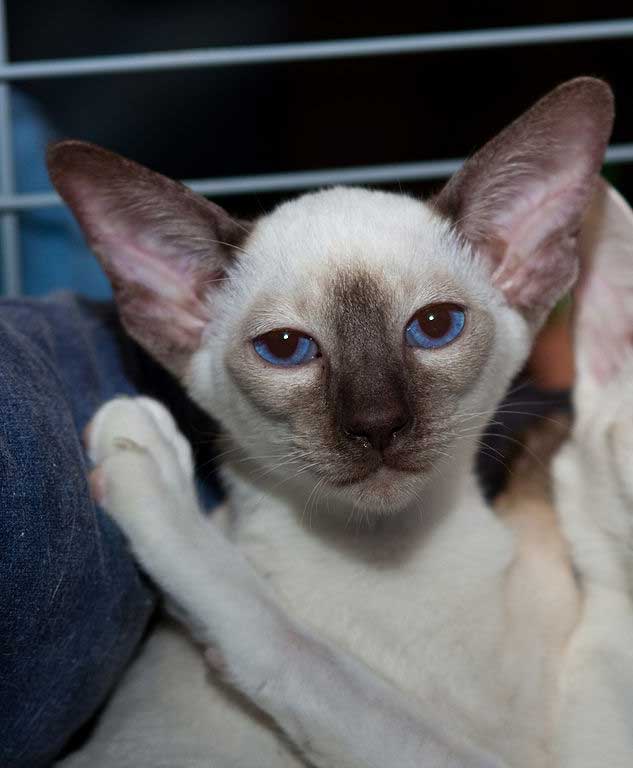
The fur of the Siamese it's closed, shiny and silky. Consists only of an outer coat: this cat doesn't have undercoat. It also, It colourpoint, which means you have a darker mask on your face and ears, as well as on the legs and tail. This makes it look like he's ready to go to a costume party.
The rest of the body color is uniform, with a clear contrast between the body and the extremities, except for kittens. Kittens are born with slightly colored tips, that darken in the following weeks.
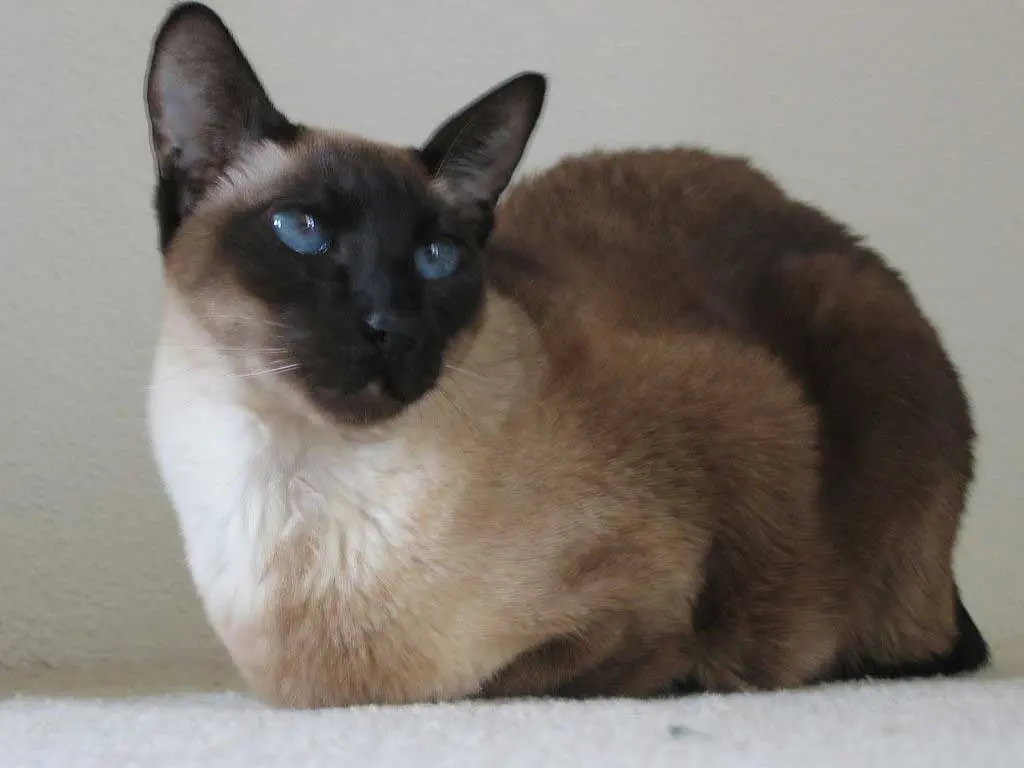
The most common combination is seal point: the tips are dark brown and the rest of the body is cream colored. The blue point it is also quite common, with a bluish-white fur and dark blue tips.
Most official agencies accept all color points. It is the case of the Fédération Internationale Féline (FIFé), the International Cat Association (TICA), the Governing Council of the Cat Fancy (GCCF) en el Reino Unido, the Association Féline Canadienne (AFC) or the Livre Officiel des Origines Félines (LOOF) in France.
The Cat Fanciers’ Association (CFA) is more restrictive, since it only accepts 4 combinations:
The seal point: cream to fawn coat, seal points (dark brown), dark brown pads;
The chocolat point : ivory cloak, chocolate dots, pink pads and skin of the nose;
The blue point: bluish white cloak, dark blue tips, slate-colored nose pads and skin;
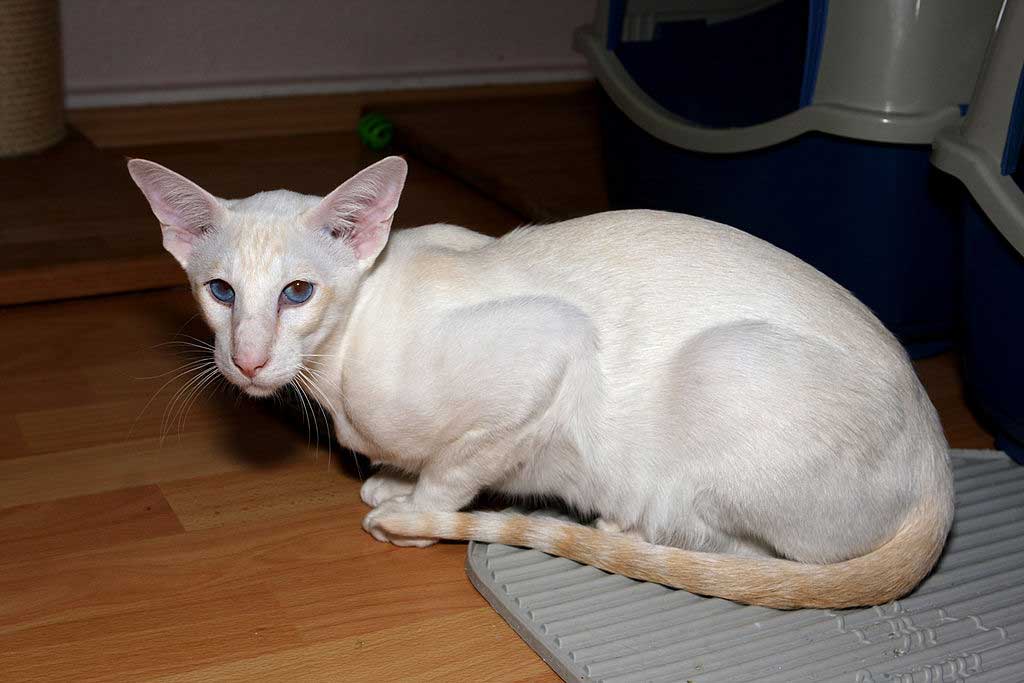
The lila point: White fur, lilac tips (grey pink), pink and leather nose pads.
Selective albinism in the Siamese
Male siamese cat red tabby point. name: By Aristotle Mike Delfino – Kamée, CC BY 3.0, via Wikimedia Commons
Although the morphology of the Modern Siamese cat has been partially modified by breeders, still basically a natural breed, that was not created by man. In particular, his dark mask on his face, the ears, legs and tail is due to a spontaneous and fairly benign genetic abnormality. This specificity was already visible in the first representations of this cat, dating back several centuries, and it was also found in all individuals imported in the 19th century to Europe and the United States. It is also present in the Thai cat.
It is related to the fact that all Siamese they have the albino gene. This gene encodes a heat-sensitive enzyme, that is to say, is active at low temperatures, but inactive at high temperatures. This explains that the main part of the body, the warmest, be light in color, while the coldest extremities, like ears, the face, legs and tail, They are darker.
The environment affects this thermosensitivity. When the kittens are born, they have a completely light color because the temperature in the uterus is constant and elevated. Their limbs begin to darken within a few weeks, and show their final color when they are about a year old.
This genetic trait also explains why individuals living in warmer climate countries tend to be lighter than those living in colder regions.. This phenomenon also occurs in other breeds colourpoint, as the Balinese cat or the Himalayan cat.
Size and weight
Male size: 30 cm.
female size: 30 cm.
Male weight: 2-6 kg
female weight: 2-6 kg
Breed standard
The breed standards are documents established by official bodies that list the conditions that a dog must meet. Modern Siamese cat to be fully recognized as belonging to the race:
Although not all of them are necessarily recognized by all feline organizations, or are sometimes considered as simple varieties, the Siamese was the origin of several other races, developed from the years 50:
The Balinese cat, which is simply a Siamese longhair;
But, Things have changed since then, since some organizations now prohibit the breeding of a Siamese with a representative of another race. This is the position of the Cat Fanciers’ Association (CFA) and the Canadian Cat Association (CCA).
On the other hand, other associations authorize marriages with some other races of the same group, in order to expand the gene pool.
Like this, the Fédération Internationale Féline (FIFé), as well as the International Cat Association (TICA), accept matings with :
Male siamese cat Lilac Point, modern type. Name: Freaky Curry vom Elzer Berg – Martin Bahmann, CC BY-SA 3.0, via Wikimedia Commons
Although their appearance differs, the Modern Siamese cat has a character very similar to Thai cat, although the latter is sometimes presented as a little more sociable.
It is a very affectionate cat, who loves to live as a family. But, it is better if the owner likes cats with a strong character. In effect, he is passionate about the person he considers his human of reference, and establish a very strong relationship with him. He is fully involved in the life of his protector, follows him in all his movements, sleep next to him, leans on his knees in quiet moments… He is totally devoted and faithful to him. So, he is quite a demanding cat: to be fully happy, the Modern Siamese cat needs a master willing to dedicate time, interest, honey and, sometimes, patience.
The downside is that they quickly become possessive and protest if they don't get the attention they expect.. He is very sure of himself, even moody and impatient: you like your requests to be answered quickly, and if you don't get the answer you want, does not hesitate to express his point of view with meows that only cease when he gets his way.
Although it is clear that he has his favorite human, the Modern Siamese cat usually have a good relationship with other people in the family, especially if they surround you with their presence, they caress him and play with him. This is because they help meet your need for care.. But, It may happen that you feel a certain dislike for one of the members of the house and do not hesitate to show it, dismissively ignoring him and refusing to interact with him.
He gets along very well with children and is a very good playmate for them (and vice versa), as long as they treat you with respect. But, remember that a small child should never be left alone with a cat without adult supervision. This is valid regardless of the breed of the cat, for the safety of both parties.
Affectionate with his family, this cat is on the other hand very suspicious of strangers. If a stranger enters "your" house, prefers to stand aside and observe the situation from above, for example from the top of your cat tree, an essential accessory.
On the other hand, his proximity to family means that he does not appreciate loneliness at all. Not recommended for people who are out most of the day.
In addition to leaving toys to distract him, a solution to make the absences of their masters more bearable may be to make them share their home with a fellow man. In fact, cohabits easily with another cat and is glad to have an additional playmate and partner in crime. This also prevents you from finding other things to do, how to shred paper towels, what he does with some relish.
It is also usually a cat that gets along well with dogs, although this, of course, it also depends on the compatibility of your partner with the feline species. In any case, things go better if coexistence is instituted from an early age. Otherwise, it is better to ensure that the contact is made gradually.
It is much riskier to have a bird or a small rodent living next to you, since his hunting instinct can be awakened at any time. If the situation presents itself, some vigilance is required. These may include, if you are out, the small animal should be kept in a place inaccessible to the cat.
Athletic and energetic, the Modern Siamese cat need to be active. It is imperative that I can run, but this does not necessarily mean that living in a flat is impossible for him, as long as the house is big enough. Especially since it is very possible to teach him to walk on a leash; you are likely to enjoy those outings, since he shares them with his master. But, Ideally, a cat flap would allow you to leave the house whenever you wanted..
In any case, you have to satisfy your urgent need to scratch. If there is no scratching post in the house or garden, will not hesitate to use the furniture or curtains.
Games are essential for him too, both to exercise and to develop or maintain your skills. Playing is essential for your mental and emotional balance and, Therefore, for your well-being.
This is especially true for intelligent and curious children., as it provides them with intellectual stimulation. These traits make him an ideal candidate for anyone who wants to teach their cat tricks., such as retrieve a thrown object. Having said that, does not stop learning various things on his own. Capable of opening taps and doors, they like to hide in cupboards and closets and stay there even when called, until they decide it's time to make their presence felt.
Last, the Modern Siamese cat is known to be a very talkative cat. As they seldom stray far from their owners, who does not like to have a partner who vocalizes all day with a hoarse voice, another breed would be better. It is impossible to avoid this behavior: it is his way of communicating not only with his master, but also with all family members. It is his way of communicating not only with his master, but also with all family members, so you can expect long conversations in which he expresses his approval or disagreement. Si and Am, the talkative conjoined twins of Beauty and the tramp (1955), are perfect examples of the eloquence of this cat.
They can also be very noisy when it comes to claiming attention., especially if they are left for many hours without company or without a toy: no wonder they do a series of shenanigans and long meowing sessions.
The Modern Siamese cat it is generally a robust dog.
But, like all races, are more prone to certain ailments. In your case, is about:
Amyloidosis, a hereditary disease caused by the deposit in different organs of a protein called amyloid, that prevents them from working properly. Most of the time, the kidneys are the most affected, resulting in kidney failure or even diabetes. The main symptoms, if any, are intense thirst and frequent urge to urinate, diarrhea, loss of appetite … Drug treatment and changes in the animal's diet (especially to reduce protein intake) they can wipe out these deposits. But, existing lesions are irreversible;
Aortic stenosis, a congenital disease that corresponds to a decrease in the diameter of the outlet of the left ventricle of the heart, at the level of the aorta. Most often causes a state of fatigue and a heart murmur. There are treatments to improve the comfort of life of the animal, but the disease itself is incurable;
Urolitiasis, characterized by stone formation in the bladder, the kidneys or even the ureter. Then, the cat has difficulty urinating, drink more and, sometimes, we notice the presence of blood in the urine. Stones can be removed with surgery;
Asthma, also known as chronic or allergic bronchitis, causing short-term breathing difficulties and long-term lung damage. Corresponds to an allergic reaction to certain substances present in the environment, like dust mites, pollens, chemical or synthetic products (for example cleaning products), cigarette smoke … The affected animal suffers bouts of coughing and shortness of breath, while your breath makes a kind of hiss. But, treatments can greatly improve your quality of life, reducing both the number and intensity of attacks;
Respiratory problems, due to the elongated and triangular shape of its head. If so, is less inclined to move and strain;
Progressive retinal atrophy, an incurable inherited disease that causes progressive deterioration of the cat's eyesight, up to total blindness. Often not detected until very late, when it is very advanced and the cat collides with everything;
Glaucoma, which is caused by increased pressure in the eye. This gradually degrades the optic nerve, so the affected animal gradually loses sight. Eye drop treatments are sometimes enough to remedy the problem, but the most serious cases require surgery;
Hereditary strabismus, reducing visual acuity and field of vision. This anomaly manifests itself from birth and is incurable., but not very disabling;
Mouth problems, again because of the shape of her face.
As many of the conditions the breed is prone to are inherited, it is important to go to a breeder of Siamese serious to obtain an animal that has not only grown up in a quality environment and has benefited from good socialization from its first weeks, but also have all the possibilities to enjoy -and stay- Of good health. In effect, a professional worthy of the name ensures that certain genetic tests are performed on proposed stallions, to make sure they are not carrying a disease that they would risk passing on to their young. If they do it, are excluded from the breeding program. So, must be able to present the results of these tests, along with a certificate of good health from a veterinarian and a list of vaccinations already administered to the kitten, registered in the kitten's health or vaccination card.
Once the adoption is complete, the new owner is responsible for the kitten's health for the rest of its life. A visit to the vet at least once a year, and more often as the cat ages, is essential to maximize the chances of keeping you healthy. This appointment allows the professional to carry out the necessary vaccination boosters, but also, and above all, carry out a complete health check of the animal. The latter should make it possible to detect any health problem as soon as possible., to be able to treat it in the best possible conditions.
At the same time, It is essential to protect your cat against parasites by renewing its antiparasitic treatments throughout the year, whenever necessary, so you never stop being protected. This applies even to an animal that lives in a flat, since you are not completely safe from danger.
As beautiful as it is, the fur of the Modern Siamese cat, requires little maintenance, especially because it does not have undercoat. Normally, brushing once a week is enough to remove dead hair and shine the coat.
But, it is better to double the frequency during your annual molts, in spring and autumn. Although the coat is short, the molt is much more pronounced.
The weekly brushing session is also an opportunity to check his ears. Wiping with a damp cloth removes dirt and reduces the risk of infection (for example, in the ears).
You should also check your eyes once a week and, if required, clean them with a damp cloth to prevent dirt from accumulating and becoming infected.
Teeth require more frequent care. It is important to limit the accumulation of plaque, that can cause not only bad breath, but also various diseases of varying severity. Brushing your cat's teeth once a week with a special feline toothpaste is the bare minimum., but it is best to brush more often, or even daily.
Last, it is important to keep your claws in good condition so that they are not too long, which could cause discomfort or even break and hurt you. Whether you live exclusively indoors or have access to the outdoors, should be checked once a month: if natural wear and tear is not enough, must be trimmed manually. This does not prevent you from having a scratching post at your disposal., otherwise it will fall back on the furniture, something he does without hesitation if necessary.
Whether the fur, the ears, the eyes, teeth or claws, caring for a Siamese is not particularly complex. But, it helps to know what to do: this not only ensures that action is taken effectively, but also that there is no risk of injuring or traumatizing the animal. So, it is advisable to seek advice from a veterinarian or professional groomer the first time.
This cat has a very strong relationship with its owner. For this reason, if the owner knows how to do it well, grooming sessions can become moments of tenderness and shared complicity. This is more likely if the cat is used to it from a young age.
Food
Like any cat, the Modern Siamese cat requires a diet that, both qualitatively and quantitatively, must meet your nutritional needs. As such, it must correspond to your age, your physical activity and your state of health.
Industrial foods may be perfectly suitable, as long as they are of good quality. But, the same cannot be said for human food. Unless specifically selected for that purpose, does not meet a cat's nutritional needs. Even worse, some of the foods that are potentially very popular with their owners turn out to be toxic to the little feline. So, it is a service for him not to offer him bits on the table, nor give him the leftovers or let him put his little head in the garbage can.
In any case, but the Siamese be very energetic and tend to eat a little more than a cat of another breed, He is not one of those who gorge himself. like most cats, the Siamese they self-regulate, so it is possible to make food available at all times without fear of overeating.
Last, like any cat, you must have fresh water at all times.
For sale "Modern Siamese cat"
It is not difficult to find breeders of Siamese. On the other hand, you should expect to pay a considerable amount of money, because it is by no means one of the cheapest breeds.
These may include, adopt a Modern Siamese cat usually costs between 1000 and 2000 EUR.
whatever the country, the price varies depending on the reputation of the hatchery, of the animal's lineage and, above all, its intrinsic characteristics, especially on a physical level. For this reason, the amount charged may vary from one individual to another within the same litter.
Recognized by the CFA, TICA, AACE, ACFA/CAA, CCA-AFC
Origin: United States
Antiquity: 20Th century
Character: Adaptable
Weight: 3,5 to 7 Kg.
An especially famous representative of the breed was the lady short hair blazer «India», who lived in the White House as "first cat" of US President George W.. Bush.
Content
History
The American shorthair cat, The "British Shorthair" and the "European Shorthair" have common ancestors. All of them, direct descendants of the "European domestic cat".
It is not known with certainty when the latter arrived in the United States., but it is very likely that European settlers brought it between the 16th and 17th centuries; in fact, the domestic cat that we know today in the United States clearly shows the traits of their European ancestors. They were excellent hunters and were carried aboard ships during long Atlantic crossings to help protect grain and other food from rodents.. Although some say he came to America on the Mayflower in 1620, others claim that it was already present a few years before. A document of 1609 mentions his presence in Jamestown, the first permanent British settlement in the New World. Other historians claim that it was already there in the first part of the 16th century, since he arrived with the Spanish in Florida. Last, some consider that it arrived much earlier through the island of Newfoundland, where it was introduced by the Vikings around the year 1000.
American shorthair cat showing the effects of the white spot gene. Dustin Warrington, CC BY-SA 2.0, via Wikimedia Commons
In any case, the specimens imported to America fulfilled the same functions there that they had on the ships, protecting farms and barns from rodents. Its morphology and color did not matter too much, as long as they fulfilled their mission. In fact, the American shorthair cat we know today is the result of strong natural selection: even before the establishment of breeding programs, already had a robust constitution, a muscular body and strong jaws. So, the selection work that began in the late 19th century had a very healthy starting point and brought them from the barn to the home as pets. They soon became very popular as pets, so some breeders began to study their case. His goal was to create a more refined model; a breed of cats in its own right.
Already in 1895, when the first cat show in American history was held at Madison Square Garden in New York, The so-called "Short-haired Domestic" was exposed to the public.
11 years later, in 1906, the Cat Breeders Association was founded (CFA). The Domestic shorthair cat was one of the first five breeds recognized by what is still the leading feline organization in the country. Buster Brown, a smoky male with British shorthair blood, was the first recorded individual and, Therefore, the first official representative of the breed.
At the same time, other breeds began to be imported from Western Europe and Turkey, especially Persian and Angora. With their original features that strongly distinguish them from the more "classic" cats, these cats overshadowed the Domestic Shorthair. Some breeders began to cross these three breeds. But, a group of enthusiasts who didn't want to hear this and who wanted to keep the Domestic Shorthair in its original form, they started a breeding program to preserve the breed as it was originally. They imposed themselves: crossbreeding of domestic shorthairs was soon frowned upon and breeders tried to preserve the breed's original pattern and temperament.
Years passed, but in the middle of the 20th century, many continued to blame the Domestic Shorthair for its similarity to stray cats, considering it too common. The breed was still struggling to establish itself, especially in the face of the popularity of Persian and Angora. Some breeders and hobbyists then became involved so that the distinction between the domestic shorthair cat and the feral cat would be recognized by the general public., while arguing that it was in the interest of the race to maintain its own characteristics. In particular, rightly pointed out that it is not possible to compare them: as the latter has not been subjected to any selection work, The physical and mental traits of kittens at birth are much more random and unpredictable than those of a "true" breed like the Domestic Shorthair, whose lines are carefully selected by breeders.
But, their efforts did not bear fruit. Over the years 50, a group of breeders started a new selection job, trying to improve the morphology of the Domestic Shorthair to clearly and definitively differentiate it from the street cat. Some chose to improve and distinguish the breed by crossing it with cats Persians. If the tests carried out in this sense at the beginning of the century did not last long because they were not accepted by the majority of breeders, those of this time met a very different fate, and constituted a decisive turning point for the Domestic Shorthair, that many breeders then tried to develop under new characteristics. In fact, his appearance was profoundly modified: his head widened and flattened, his eyes were rounded and his ears were shortened. It also, crossbreeding allowed the development of new coat colors.
In 1966, the Domestic Shorthair Happened to be called American Shorthair. This new name was intended to signify even more clearly the departure from the alley cat and the creation of a specifically American breed.. In fact, the metamorphosis of the American shorthair has earned him the appreciation of many cat lovers, to the point that it is now one of the 10 America's Most Popular Cat Breeds.
In addition to the CFA, the American Shorthair is recognized, of course, by the TICA (The International Cat Association), another American reference organization, and has been since 1979.
Outside your country of origin, the story is different. These may include, en el Reino Unido, not yet recognized by the Cat Fancy Governing Council (GCCF). In France, where it is recognized by the Livre Officiel des Origines Félines (LOOF), still a rare breed and at the bottom of the list. The number of people registered annually in the organization is less than 10, and even zero in some years.
The American shorthair cat is a medium-sized cat that can reach a shoulder height of 30 to 35 centimeters. The cats can weigh between 3 and 5 kg, the males between 4 and 7 kg.
It is a cat semi-cobby. Natural selection has given you a strong body with a pronounced bone structure. Muscular, Atlético, balanced and powerful, gives an impression of strength and harmony. This is the main criterion for judging this breed in feline shows..
His strong chest and shoulders allow him to take big, quick jumps. In fact, the evolution of this cat over the centuries has allowed it to be better and better at hunting.
The legs they are strong and parallel and the legs are well rounded. The tail is thick at the base, medium length and rounded at the tip.
The mandible of the American shorthair cat is strong. The ears are medium in size, slightly open at the base and wide apart. The head is medium in size and well rounded, with a short, slightly sloping nose and plump cheeks. The eyes are large, round and widely spaced, also slightly inclined. They are usually gold or green in color, but in the case of a white coat they are blue, golden or light brown.
The fur it is short but very dense. All cat coat colors are accepted, except for the colourpoint, the lilac, the fawn and the chocolate. Most cats are tabbies, Calico, partial, bicolor and tortoiseshell. The classic silver tabby pattern is the most popular of all.
The American shorthair cat it is also late growing. They end up developing between 3 and 4 years of age. But, puberty is early and the first signs are visible from the 7 u 8 months, with the appearance of the first heat in the female cat and the development of the testicles in the male.
Last, the sexual dimorphism is quite pronounced in this breed: males are clearly heavier than females, weighing almost twice as much as these.
Character and skills
The American shorthair cat is known for its great adaptability. They are very sociable and get along well with other cats and dogs, as long as they accept them. Is always fair, relaxed and not very aggressive, and is very close to its owner.
American Shorthair de 14 years, shaded silver, female – Ocdp, CC BY-SA 3.0, via Wikimedia Commons
It is also quite a playful animal, who always finds an opportunity to have fun. This makes them a perfect breed for children., and generally have no problems with other people's entry into their home. Exemplary companion for the whole family, they are also very suitable for the elderly, as long as they can satisfy your need for activity. But, although they always enjoy a place on the couch with their owner, some individuals do not like to be worn.
But, but the American shorthair cat is very close to humans, it is also a very independent breed of cats: he likes to have time to be alone, to rest or to escape, and it's not uncommon for it to disappear for a whole day. They remain active well into old age.
It also, you have to be very careful if you have to live with a rodent or a bird, as you are likely to consider it prey. So, it is advisable to ensure that these animals do not come into contact with each other, or even avoid such coexistence. In effect, even if you are used to rodents and / or birds since you are young, still has a strong hunting instinct.
Because of his ability to take care of himself, prolonged absences of their owners are unlikely (for example, when they are at work) make you unhappy or cause separation anxiety. In fact, it's perfectly possible to go on vacation without your cat without feeling guilty or worried, since he is perfectly capable of taking care of himself. It is only necessary to organize from time to time that a friend, a neighbor or a cat visitation service come check that everything is fine, to fill their bowls and change their litter tray.
On the other hand, although its closeness to its owners makes it unlikely that it will escape, However, is very attracted to the outside world, which can lead you to get a long way from home. Thus, it is essential that your cat is identified with a microchip or a tattoo, which is mandatory in many countries, like france, Belgium and Switzerland. It also, It may be wise to invest in a GPS cat collar, that lets you know where your cat is at all times, and thus avoid worrying absences.
Smart and savvy, they understand very quickly the rules imposed by their owners, which makes them an easy breed of cats to train. It is also a silent cat breed, that meows very little.
Care "American shorthair cat"
Indoor or outdoor cat?
It is clearly a breed of cat made to live outdoors, and that is where he exercises his greatest talent, the one that for centuries earned him his popularity in his country of origin: the one of formidable hunter. Even today, still very popular on farms and in barns, both in the United States and in other countries. Even when you don't live in those places, he is likely to return regularly from his walks in the open air with dead prey as a gift for his dear master. In any case, a American shorthair cat living in a flat with no exit would be an unhappy existence, since it would be contrary to his true nature.
How much activity does he need? "American shorthair cat"?
The American shorthair cat it is a very active cat that needs a lot of exercise. It is advisable to regularly spend time playing with her, as she tends to be overweight so she can feel comfortable. Cat trees and toys are a must for him. He also likes intelligence toys, in which you have to fish for treats from the containers, for example, and that they pose a challenge not only physical but also mental. But, she also needs her rest periods and if she wants to retire, you must take it into account.
Health and nutrition
Most of the American shorthair cats they are usually healthy, resistant and long-lived.
American shorthair domestic cream colored kitten – Blueciel8, CC BY 3.0, via Wikimedia Commons
But, since the breed has undergone a certain selection work throughout its history, it's advisable, before buying a kitten from an American shorthair breeder, ask about the possible history of the line to which it belongs.
It is important to know that this cat has a predisposition to feline hypertrophic cardiomyopathy (MCH), a heart disease that involves poor ejection of blood from the heart. It leads to a slow death of the animal, and there is currently no real treatment for it.
Some individuals may also be affected by polycystic kidney disease. (PKD), a disease that causes cysts to form in the kidneys, causing its malfunction. There is no cure for this hereditary and deadly disease.
Last, the fact that he especially likes the outdoors and spends a lot of time in it implies that you have to be very careful with vaccinations and deworming the cat, as well as with your general veterinary care. This is essential to prevent -or, failing that, quickly detect- any form of disease that can be contracted by contact with other cats or the outside world.
Life expectancy
15 years
Food
You will have to be a little careful with your food and watch what you eat, because as already said tends to be overweight. When choosing food, look for a high-quality composition with lots of protein and few carbohydrates. In no case should food contain sugar. Cats can also suffer from diabetes due to an excess of sugar and, Unfortunately, often used as a flavor enhancer in cat food.
For sale "American shorthair cat"
One American shorthair cat costs between 600 euros and 1.100 euros in a serious breeder. This may seem like a lot to a kitten at first glance., but keep in mind that responsible breeding involves many costs. A pregnant cat has to go to the vet regularly and, In addition, small cats have already been tested, dewormed and vaccinated when they move in with you. Before the twelfth week, the cat should not be separated from its family.
Characteristics "American shorthair cat"
Coexistence is important that you have with your new friend. Before considering the acquisition of a cat of the breed "American shorthair cat" you know certain factors. You must take into account their character, their need for exercise, their interaction with other pets, their care and if you have small children, their level of tolerance towards them.
Recognized by the CFA, FIFe, TICA, WCF, ACF, ACFA/CAA, CCA-AFC, GCCF, NZCF
Origin: United States
Antiquity: 1983
Character: Elegant and conservative
Weight: 4 to 7 Kg.
Despite his wild looks, the Bengal cat it's a domestic cat, affectionate and very attached to humans
Content
History
The Bengal cat is a recent breed of cat that, despite its name, has nothing to do with the Bengal tiger. In 1963, Jean Sugden Mill, an American breeder, managed to cross a Leopard cat (or Felis Prionailurus Bengalensis, a Southeast Asian feline with the appearance of a leopard but the dimensions of a cat) with a domestic cat, who gave birth to two kittens, one of which was a female named Kin Kin. Against all odds, this female was not sterile and was able to interbreed with her father, giving birth to a litter of kittens, some of which were black, while others had a spotted brown fur.
It was this first crossing, in 1963, the one that marked the true beginning of Bengal cat, by developing a breeding program to create a new breed in its own right. In fact, if there were already in the past crossing experiments between a domestic cat and Leopard cat, following the example of those already documented in 1889 in the book Our Cats and Everything About Them of Harrison Weir, an English artist with a passion for cats, they did not intend to create a new breed of domestic cat.
For personal reasons, Jean Sugden Mill could not continue with this experiment, and nowadays none Bengal descend from this line. When he wanted to resume this project a decade later, the Endangered Species Ordinance had made it illegal to import the Leopard cat, so I could no longer acquire this animal to resume these crosses. But, in 1971, the Dr. Willard Centerwall, director of the genetics laboratory at Loma Linda University (California), had started a hybridization program between the domestic cat and the Leopard cat for scientific purposes, with the aim of testing the resistance of these hybrids to the virus of the feline leukosis, a disease that does not affect Asian leopards.
At the end of the year 70, Jean Sugden Mill acquired 8 first generation hybrids Dr. Centerwall and a Mau imported directly from India called Millwood Tory de Delhi. A long and difficult selection process began, during which other well-established breeds were used, as the Burmese cat, the Siamese cat, the American shorthair cat, the Abyssinian cat and the Egyptian Mau, to convert to Bengal cat in what is today: a domestic cat with the wild appearance of Felis Bengalensis, from which he inherited his name.
But, There is another theory that attributes the name of «Bengal» a William Engler, zoo keeper and active member of the Long Island Ocelot Club. Interested in these hybrids since the early years 70, it is said that he was the first to speak of Bengal, and the term comes from his own name: Bill Engler.
Jean Sugden Mill presented his Bengalis in various feline exhibitions in 1985, and the success was immediate. In 1986, the TICA (International Cat Association) officially recognized this new breed. The GCCF (Governing Council of the Cat Fancy) British followed him in 1997, then the FiFe (International Feline Federation) did the same in 1999, while the CFA (Cat Fanciers’ Association) American waited until 2018 to do the same.
The Bengal cat had a quick success, especially in France. The first specimen was imported in 1989, and the breed was recognized that same year by the Association Nationale des Cercles Félins de France (ANCFF). Many breeders were quickly interested, to the point that today the breeding of Bengals is flourishing in France (and internationally recognized), with more than 1000 active creators, that is to say, that have registered at least one litter in the last two years.
Since 2016, in the framework of meteoric growth, the Bengal cat it has even placed itself on the podium of the most popular cat breeds in France, with more than 3.000 kittens registered every year in the LOOF (Livre Officiel des Origines Félines), versus just over a hundred at the beginning of the years 2000.
This great popularity of Bengal it is rather a French specificity. In the United Kingdom, for example, where it suffered a legal restriction until 2007, it is rather between the 15th and the 20th position in the ranking of the most popular breeds, with an average of 300 specimens registered annually with the GCCF, that is to say, some 10 times less than in France.
In United States, the Bengali entered the Top 20 of America's most popular cat breeds when the CFA finally recognized it in 2018, despite its late recognition and the fact that it is prohibited in some places, like New York City or the State of Hawaii.
Physical characteristics
The Bengal cat it is a domestic cat that has retained the general appearance of a wild leopard. It is a fairly large cat with a long, muscular body, hind legs slightly larger than forelegs and a thick tail with a rounded tip, all of which gives it a classy look. As such, belongs to the long and powerful morphological type.
The head is wide, with small rounded ears and large round or oval eyes that express curiosity and intelligence.
The fur is short, dense and silky to the touch. Emblematic of the breed, the fur is reminiscent of its wild ancestor, the Leopard cat, with random rosettes or horizontal scrolls. In both cases, these marks are bicolor and well marked.
Different standards accept many colors, the most common being brown-black, including all gold variations, bronze, copper and mahogany. But, there are also many specimens with an ivory or creamy white color, as well as some rarer ones with a beautiful silver gray.
Size and weight
Size: Of 30 – 35 cm.
Male weight: 4,5 – 7 kg
female weight: 3,5 – 5,5 kg
Varieties "Bengal cat"
There are two varieties of Bengal: the stained and marbled.
In the first, rosettes must be large, clear, bicoloured, different and randomly arranged throughout the body.
The latter has elongated horizontal marks in the form of scrolls that are reminiscent of the veins of marble., bicolor and different.
There are also specimens with long or semi-long hair, sometimes called Bengal Kashmir. For the moment, only the TICA has recognized this cat as an experimental breed.
Character and skills
Bengal cat
Despite his wild looks, the Bengal cat it's a domestic cat, affectionate and very attached to humans, whose company constantly seeks. In fact, he is never far from where his master is, To make sure you don't miss anything that happens!!
He is also very sociable with other cats and dogs, provided they are also used to cats. But, they may still have some wild reactions, especially towards small domestic rodents, those who can be mistaken for prey and chase.
It is a very active and curious cat, who spends his time playing, chasing, fucking, exploring… before coming to rest near his master. He especially likes cat trees, that allow you to jump from one platform to another and settle in a high place to observe your environment from the highest. This energy expenditure is not unique to puppies: the Bengali is hyperactive and playful even as an adult, and is not the ideal companion for an older person who wants a quiet animal. Having said that, can be perfectly adapted to life in a flat, as long as you receive the necessary care… and that your family is not offended by the possible mischief you may cause.
Lively, explorers and playful, they can also be occasionally destructive. This is especially true in the case of females., which tend to be more excessive than males, both in their games and in their displays of affection. To minimize this risk, it is advisable to ensure that the Bengali get all the care you need: if you are left alone too often without occupation throughout the day, it is likely that he will find a way to remind his master of his existence, and this will not necessarily be in a pleasant way for this one…
The Bengal cat it is also a very intelligent breed, able to adapt and learn quickly. So, if a light turns on by itself at night or if a door that had been left closed is found to be open, there is no reason to believe that it is the work of a ghost: your partner has simply learned to press the switch or turn the handle. This makes him a good candidate for teaching your cat tricks and training.. In fact, it is not uncommon to see a Bengali who has learned to use the toilet or to take things to the owner. But, do not lose sight that it is still a cat, with his independent and stubborn character: although this may give results, training (for example with clicker, which is very suitable) requires a lot of patience.
It also, it is a breed of cat that loves water. This characteristic has been inherited from its ancestor the Leopard cat, who is an excellent fisherman. Some individuals do not hesitate to follow their master even under the shower!! It is logical that aquarium enthusiasts know that the inhabitants of an open aquarium are likely to end up in the clutches of this experienced hunter.…
Last, the Bengali It, in general, a pretty talkative cat, with a wide range of sounds, ranging from chirping to a low, hoarse noise reminiscent of certain big cats.
The BengalIt is an easy-care breed of cats, since it is only necessary to brush the cat's fur to remove dead hair and distribute the oil from the skin once a month. It also, it is seldom necessary to bathe your cat.
As in the case of all cats, regular check-ups of teeth, the ears and eyes will help avoid the risk of infection.
Last, its claws may be clipped from time to time, when necessary.
Indoor or outdoor cat?
The athletic Bengalis need a lot of exercise to feel comfortable. It is best to offer them a large house with a garden where they can roam.. If you decide to keep them inside, it should also provide them with enough space and opportunities to play and climb.
These freedom-loving animals don't feel comfortable in small city flats. A sturdy cat tree or climbing track should fit the floor.
The "Bengal cat" have great jumping ability and no lift is out of reach. Definitely, you should take this into account before bringing a Bengal cat to your house. Especially when they get bored, big cats tend to wreck the floor. In general, it is advisable to maintain a Bengal like a free animal and provide you with enough to do indoors. With outdoor cats, can you be prepared for these cats, otherwise so loving, go for a walk for two days in a row.
How much activity does he need? "Bengal cat"?
Due to their offspring from wild cats, the Bengal cats belong to the very active cat breeds. They are persistent climbers and need a lot of exercise. The best place for them to vent is the scratching post., during hunting games or, ideally, in the open air.
Regular hunting games with a rod, hunting mice or balls along with your human are also a great activity. Mental stimulation with smart toys or learning little tricks is essential so that cats do not get bored.
If you are often away from home, cats need company. They get along better with other cats. It is one of the few breeds of cats that loves water so it will easily be entertained by a leaky faucet.
Health and nutrition
The Bengali has a fairly robust health, having inherited from Leopard cat remarkable longevity for a domestic cat.
But, have a predisposition to certain diseases:
The Hypertrophic cardiomyopathy (MCH), a disease that makes it difficult for the heart to circulate blood;
The Chronic anemia, a genetic disease that can be detected by any decent Bengal breeder by a simple test;
The Progressive Retinal Atrophy (ARP), another genetic disease that can also be detected by a simple test, allowing carriers to be excluded from breeding;
The cataract, an opaque film on the cornea of the eye that can cause blindness in the most severe cases.
It also, being quite large and very active, are prone to Hip Dysplasia.
Last, it is important to know that, unlike his ancestor the Leopard cat, the Bengal not immune to feline leukosis.
Life expectancy
12 to 16 years
Food
The Bengal fits perfectly in commercial cat food, both croquettes and canned wet food. But, it is important to make sure your Bengal cat eat a quality food that contains all the essential nutrients necessary for their development.
There should always be enough food and fresh water. But, no risk of obesity in cats; on the one hand, because they are quite active, and on the other, because they are able to regulate their own weight.
For sale "Bengal cat"
Bengal cat
If you want to have a Bengal cat, you should know that this breed is one of the most expensive. For a healthy kitten you will pay between 1000 and 2000 EUR in a serious breeder. The price mainly depends on the type of leopard coat.
The Bengal cats with pedigree and physical characteristics that make them suitable for breeding are priced between 2000 and 3000 EUR.
Breeders also differentiate between the three categories of companion animals, breeding and exhibition. as creator, usually only kittens showing small deviations from breeding targets are obtained. In the purchase contract you have to agree not to use the cat for breeding.
Criticism of the breeding of "Bengalis"
Critics of breeding "Bengal cat" they believe that it is irresponsible to cross a wild animal with a domestic cat just to obtain a certain coat pattern. According to animal rights advocates, the first mating is even a torture brood, since complications often arise at birth. Many of these wild cat hybrids continue to display the character traits of a wild animal.. So, before acquiring a cat of this type, you must be very sure that, even though you have inherited the activity from your ancestors, will be able to lead a life appropriate to his species.
Characteristics "Bengal cat"
Coexistence is important that you have with your new friend. Before considering the acquisition of a cat of the breed "Bengal cat" you know certain factors. You must take into account their character, their need for exercise, their interaction with other pets, their care and if you have small children, their level of tolerance towards them.
Joy
5,0 of 5 stars (based on 1 review)
Activity level
5,0 of 5 stars (based on 1 review)
Friendliness to other pets
2,0 of 5 stars (based on 1 review)
Friendliness to children
2,0 of 5 stars (based on 1 review)
Grooming requirements
1,0 of 5 stars (based on 1 review)
Vocality
2,0 of 5 stars (based on 1 review)
Need for attention
4,0 of 5 stars (based on 1 review)
Affection towards its owners
4,0 of 5 stars (based on 1 review)
Docility
1,0 of 5 stars (based on 1 review)
Intelligence
5,0 of 5 stars (based on 1 review)
Independence
2,0 of 5 stars (based on 1 review)
Hardiness
3,0 of 5 stars (based on 1 review)
Videos "Bengal cat"
These Beautiful Bengal Cats Are Incredibly Intelligent | Cats 101
The Mekong Bobtail cat still a rare breed of cat, since at the beginning of the decade of 2010 its population barely exceeded 600 registered copies.
Photos By Sinitsyn
Content
Characteristics "Mekong Bobtail cat"
Coexistence is important that you have with your new friend. Before considering the acquisition of a cat of the breed "Mekong Bobtail cat" you know certain factors. You must take into account their character, their need for exercise, their interaction with other pets, their care and if you have small children, their level of tolerance towards them.
Joy
5,0 of 5 stars (based on 1 review)
Activity level
5,0 of 5 stars (based on 1 review)
Friendliness to other pets
3,0 of 5 stars (based on 1 review)
Friendliness to children
5,0 of 5 stars (based on 1 review)
Grooming requirements
1,0 of 5 stars (based on 1 review)
Vocality
2,0 of 5 stars (based on 1 review)
Need for attention
4,0 of 5 stars (based on 1 review)
Affection towards its owners
5,0 of 5 stars (based on 1 review)
Docility
4,0 of 5 stars (based on 1 review)
Intelligence
4,0 of 5 stars (based on 1 review)
Independence
2,0 of 5 stars (based on 1 review)
Hardiness
5,0 of 5 stars (based on 1 review)
History
The Mekong Bobtail it is a natural breed originating from Thailand, for which it has long been known as Thai bobtail. It has been present in Southeast Asia for many centuries, and legend has it that his courage led the kings of Siam to use him as a guard to protect the treasure chamber from possible theft.
In the 19th century, these cats were considered symbols of loyalty. Royalty used to gift them to the nobility to reinforce their good relations. So it is not surprising that, at the end of the 19th century, el rey Somdetch Phra Paramindr Maha Chulalongkorn, better known as Rama V, give away 200 from them to Tsar Nicholas II of Russia.
Several of them were Mekong Bobtail, that sparked some interest in Russia, so more specimens were imported in the following years. These cats and their descendants are the origin of the breed we know today.. In other words, although it is basically a Thai cat breed, it was the Russians who allowed it to develop and flourish, without modifying it.
But, the breed could not develop under the communist regime, and it was not until the decade of 1980 when Olga Mironova, a renowned cat specialist, took an interest in her and decided that she should be recognized. With the help of Ludmila Esina, Russian breeder and cat specialist, drew up the first standard and adopted the name Mekong Bobtail, in tribute to the river that runs through Southeast Asia.
This cat was first presented at an international feline show in November 2003, during the «Royal Canine Grand Prix» held in Moscow. A few months later, in august 2004, received the recognition of the World Cat Federation (WCF). WCF has not been followed by other organizations since., so it remains the only major feline association that recognizes the breed.
In fact, the Mekong Bobtail cat still a rare breed of cat, since at the beginning of the decade of 2010 its population barely exceeded 600 registered copies. The vast majority are in the former Soviet countries, mainly in Russia and Ukraine. It is almost non-existent in Western Europe and North America.
MEKONG BOBTAIL cat of rare lynx-point colour Dona Miya Ayutthaya. Cofein Pride cattery (WCF). – Alex opryatin, CC BY-SA 3.0, via Wikimedia Commons
Physical characteristics
The body structure of the Mekong Bobtail is similar to that of Siamese cat. With its long, muscular body and its long, thin legs, has preserved the refined elegance of Thai cats. The strong stature in combination with the beautifully modeled head give the animal a noble appearance. The characteristic feature is the short tail. It is a quarter the length of the body and has different combinations of curves and folds. According to the international breed standard, its length is at least three vertebrae.
The coat color of the Mekong Bobtail reminds of the Siamese cat. Belonging to typical cats point, breed standard allows all colors point no target. Cats often appear with sandy to cinnamon colored fur. The coat is soft and silky to the touch. Hugs the body closely. The effect is produced because the purebred cat has hardly any undercoat.
If you look at the cat's face, you will notice the large ears with the rounded tips. They perch on top of the animal's head and give it an attentive impression. This is enhanced by the slightly outwardly curved ears.. Similar to the Siamese, the breed is characterized by its large, oval eyes. Its deep blue color contributes to the exotic beauty of this rare breed of cat..
Last, sexual dimorphism is well marked, being the males larger than the females.
Size and weight
Height: 30 cm.
Weight: Of 3 to 5 kg
Character and skills
The Mekong Bobtail cat he is an affectionate cat who enjoys the company of humans. They are very faithful and devoted to their owner and constantly seek their company.. Demands a lot of attention, that returns multiplied by a hundred in affection.
Sociable and curious by nature, this cat loves to hang out with new people, especially if they give you the attention you seek. Calm and balanced, it is an ideal cat breed for children, as long as, of course, have learned to behave with animals: his patience has limits and he runs the risk of biting, even more than scratching, to those who amuse themselves by pulling their tail or whiskers.
The sociability of Mekong Bobtail spreads to other animals, and enjoy the company of other dogs, as well as other cats. The presence of other animals in the home is an option to be seriously considered by any owner who has to be away for long periods of time each day., since it is a breed of cat that does not tolerate loneliness. On the other hand, coexistence with small rodents or reptiles should be avoided, since his hunting instinct can overcome his good manners at any moment.
On the other hand, the Mekong Bobtail easily adapts to a new environment, and traveling by car with your cat should not be a problem. So, they are an ideal option for those who move regularly or want to take their cat on vacation.
Active and athletic, to the Mekong Bobtail he loves to run around the house, jump on the furniture and perch on the closet. With this energy level, ideally they should have access to the outdoors, where they can run and have fun before returning to their owner to rest quietly. But, can live in a flat, as long as his owner makes sure he gets enough exercise by playing with him often, or even taking him out on a leash.
If you have free access to the outside, it is recommended to put a necklace with a locket in which your name and phone number appear, In addition, of course, of the essential identification of the cat by chip or tattoo. In effect, although he is very close to his master and wants nothing more than to return to his side, his curiosity and the fact that he likes the company of humans can take him away from home; the risk is that you realize too late that you don't know how to get home
Last, it is a breed of cat that usually meows, either to let its owner know that it is time to eat or that it is time to open the door to go chase the birds.
Rare MEKONG BOBTAIL kittens, color tabby-point. Mekong bobtail hatchery Cofein Pride – Alex opryatin, CC BY-SA 3.0, via Wikimedia Commons
Health
The Mekong Bobtail it is a robust breed with no known genetic predisposition to disease.
But, can be prone to several conditions common to all cats:
The feline idiopathic cystitis, a common bladder infection in cats that can have serious consequences if left untreated;
Various eye problems: secretion, redness or even a color change in the eyes;
Gastrointestinal disorders: vomiting, flatulence, diarrhea or constipation. These problems are usually due to diet and can pass within a few days or persist for several weeks..
It also, as with any breed, care must be taken to avoid being overweight or obese, that could cause serious health problems. Adequate nutrition and sufficient activity levels will normally avoid this problem..
Grooming
The Mekong Bobtail cat is a low maintenance cat breed. His short-haired coat only needs to be brushed once a week to remove dead hairs and keep it looking its best..
It is advisable to prolong the grooming session a bit to take time to check the teeth, ears and, above all, the cat's eyes to make sure they are clean. They can be cleaned with a damp cloth.
Last, depending on the activity level of the cat and the use of the scratching post, nails may need to be trimmed with nail clippers.
Rare MEKONG BOBTAIL chocolate tip color – Talestra of Cofein Pride – Alex opryatin, CC BY-SA 3.0, via Wikimedia Commons
For sale "Mekong Bobtail cat"
The price of a Mekong Bobtail cat is of some 20.000 hryvnia in Ukraine or 50.000 rubles in Russia, what corresponds to some 700-800 EUR.
As this breed is not yet common in Europe and America, it is usually necessary to import it. In this case, the cost of transport and possible customs duties must be added to the purchase price.