Content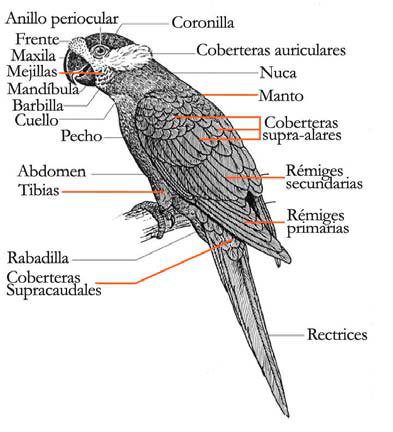
|
|---|
Description
36 cm.. length between 138 and 190 g. of weight.
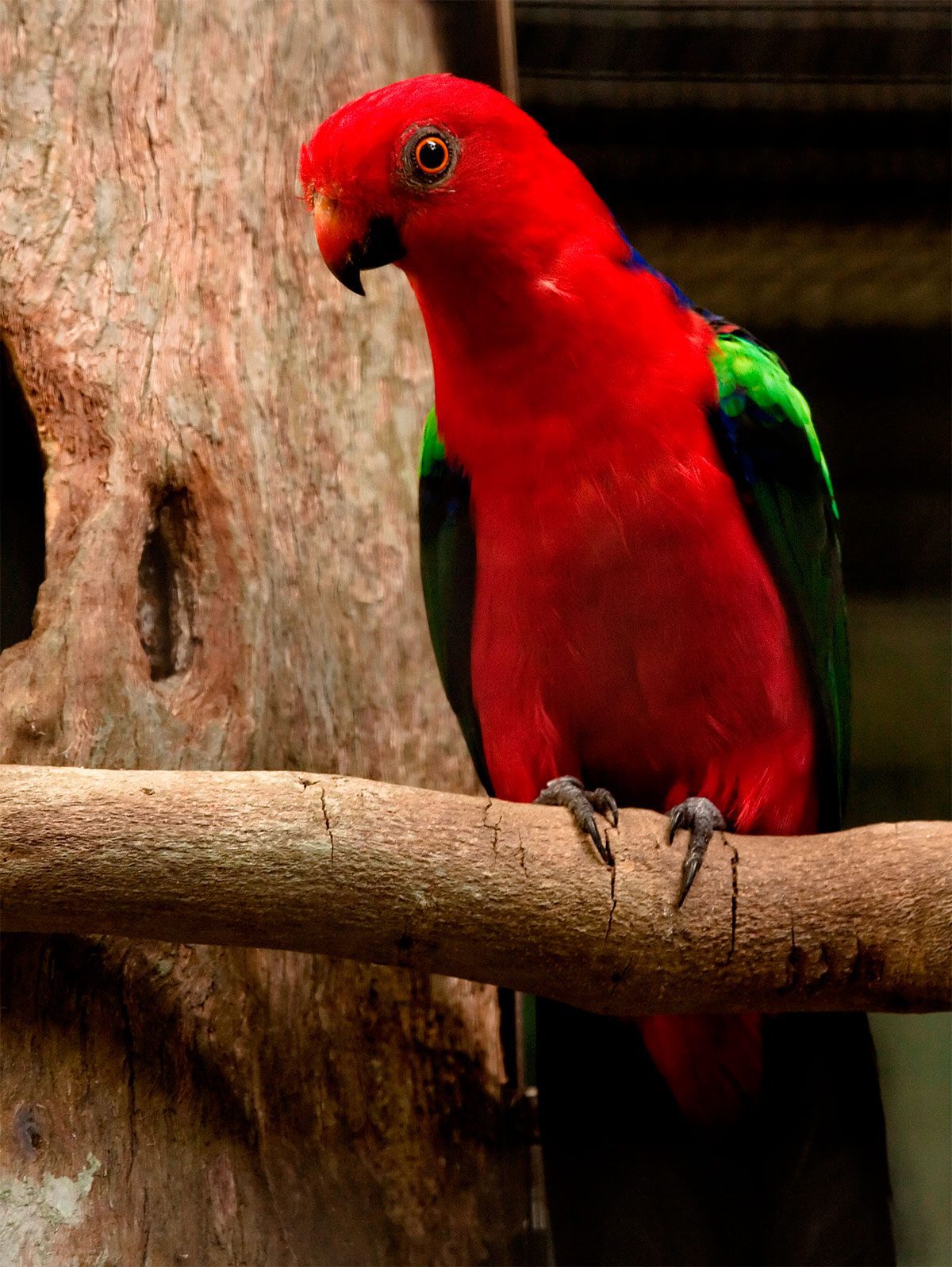
The Papuan king parrot (Alisterus chloropterus) It has a bright red head, wide rear collar of blue stretching at the nape to the back of the Crown and sides of the upper part of the chest. Blackish green mantle, apparently black in the field; lower part of the back, buttocks and supracaudales coverts Dark Violet.
Dark green wings with large patch of yellowish-green through the lower, internal medium and more large inner coverts; Green flight feathers, with vane Dark internal. Under, the wing coverts blue-violet. Bright red bottoms, with hidden dark bases to the coverts infracaudales. Upper, tail bluish black; Black down.
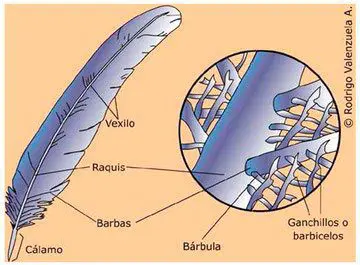
Black bill with red base to upper mandible; Orange iris; feet of color grey blackish.
The female of color green for over, devoid of the pale in wings patch, with a dark blue rump and blackish tail. Head and upper part of the chest of green (reddish mottled), and the rest of of the Red bottoms. Under, the Green wing coverts. Coverts with dark centers infracaudales, but this is less evident in the Australian females. Base with more brown on upper mandible than in males.
Young as females, but with tips to the tail feathers pink, a greener chest, and a peak and iris darker.
- Sound of the Papuan king parrot.
Subspecies description
-
(Ramsay, EP 1879), the nominal subspecies.
Alisterus chloropterus chloropterus
-
(Albertis & Salvadori 1879) – Male with blue band narrow through the mantle, It does not extend to the rear of the Crown. More green in the mantle.
Alisterus chloropterus callopterus
-
(Reichenow 1911) – Sexes generally similar. Male has no or only shows a blue light in the back of the neck band, and it has the mantle and signs on the sides of the chest of green. Male with violet that extends more down in the back that the nominal species. Both sexes can display tips pink tail feathers. Immature with narrower and more off the wings patch. Green marks on the chest.
Alisterus chloropterus moszkowskii
Habitat:
They are distributed in the dense forests from close to sea level until the 2.800 m. The birds are also sometimes found in cultivated areas, at higher altitudes, in more open habitats with casuarinas, and in areas of secondary growth. Papagayo Papuans are heard more often than they are seen, and are more frequently asked vislumbrados flying between the trees through breaks in the forest.
Bird alone, couples or groups of up to ten copies, they feed on silently and discreetly in the lower floors and half-height of the forests, and they can be addressed a short distance when they deliberately leave in search of fruits, seeds, berries and nuts; When resent, they usually only fly within walking distance.
Reproduction:
Little-known cycle of reproduction, but nesting, according to sources, begins in the month of March with two or three eggs in the implementation. The period of incubation is of 21 days, and the incipient takes 35 days. Young people reach the independence in 50 days.
Food:
Fruits, seeds, berries and nuts
Distribution:
Size of the area of distribution (reproduction / resident): 324.000 km2
The Papuan king parrot extends from North of Cenderawasih Bay, to the East, about Aitape on the North Coast. Although locally common, the species is probably suffering due to the trade of birds. The world population is estimated at around 70.000 birds.
Subspecies distribution:
-
(Ramsay, EP 1879), the nominal subspecies.
Alisterus chloropterus chloropterus
-
(Albertis & Salvadori 1879) is located in the central mountains of New Guinea up to the Weyland mountains the East and the region of the Sepik River and the high fly river.
Alisterus chloropterus callopterus
-
(Reichenow 1911) It is located in the North of the island, from bahía Paradise up to the region of Aitape the east.
Alisterus chloropterus moszkowskii
Conservation:
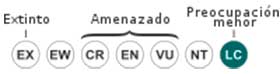
• Current category of the Red List of the UICN: Least concern
• Population trend: Stable
The size of the world's population has not been quantified, Although it is estimated at around 70,000 specimens.
The species is reported as locally common (pit et to the. 1997).
The population is suspected to be stable in the absence of evidence of any reduction or substantial threats.
"Papuan king parrot" in captivity:
active parrot; need extra space because of the tendency that has to turn into an apathetic or lethargic in a small cage bird. It is not very loud. The dietary changes must occur slowly. It has a tendency to internal parasites.
Very rare in captivity.
Alternative names:
– Papuan King-Parrot, Green-winged King Parrot, Green-winged King-Parrot, Papuan King Parrot (ingles).
– Perruche à ailes vertes, Perruche royale à ailes vertes, Perruche royale de Papouasie (French).
– Papuasittich (German).
– Periquito-rei-de-asa-verde (Portuguese).
– Papagayo Papú, Papagayo Real de Alas Verdes (español).
scientific classification:
– Order: Psittaciformes
– Family: Psittaculidae
– Genus: Alisterus
– Scientific name: Alisterus chloropterus
– Citation: (Ramsay, EP, 1879)
– Protonimo: Aprosmictus chloropterus
“Papuana Parrot” images:


————————————————————————————————
«Papuan Parrot» (Alisterus chloropterus)
Sources:
– Avibase
– Parrots of the World – Forshaw Joseph M
– Parrots A Guide to the Parrots of the World – Tony Juniper & Mike Parr
– Wikipedia
– Birdlife
– Photos:
(1) – «Alisterus chloropterus-Jurong Bird Park-male-8a» by Peter Tan – originally posted to Flickr as Australian King Parrot. Licensed under CC BY 2.0 via Wikimedia Commons.
(2) – «Alisterus chloropterus -Grant’s picnic ground -in tree-8» by Jade Craven – originally posted to Flickr as King Parrot at Grants Picnic Ground. Licensed under CC BY 2.0 via Wikimedia Commons.
(3) – Birds and Birds – Parrocchetto reale aliverdi
(4) – Bottom view of a male perched on a branch by Carmelo López – Lynx
(5) – franz.kulman


– Sounds: Sam Woods (Xeno-canto)