▷ The world of Pets: Dogs, cats, birds, reptiles, amphibians

Alpine Dachsbracke
Austria FCI 254 - Leash (scent) Hounds

Perro tejonero alpino

The Alpine Dachsbracke has a courageous personality, friendly and intelligent

Content

History

The appearance of this short-legged dog suggests a very ancient breed. The Alpine Dachsbracke it is one of the oldest breeds of hunting dogs in Central Europe. It was already mentioned in the seventeenth century and represented in paintings.

In the last quarter of the nineteenth century, Crown Prince Rudolf von Habsburg had this type of hunting dog run by his professional hunters.. The dog's appearance was unbalanced for a long time. Each canton raised its Alpine Dachsbracke differently.

But it is not a cross between a Sausage dog and Bracco, as the German name suggests «Alpenländische Dachsbracke«, but an independent race. Visually, the Alpine Dachsbracke gets closer to the Dachshund, but it's much bigger and stronger.

In the 19th century, there were numerous subspecies of Alpine Dachsbracke in the swiss alps, Bavarians and Austrians, that still differed greatly in appearance.

At the end of the 19th century, many breeders of this breed of dog were in the Erzgebirge, so the race kept calling Alpenländische Erzgebirgler Dachsbracke until 1975. Another name is the Dachsbracke Austrian.

This is because the current Club Dachsbracken is located in Austria. The goal of breeding, both then and now, is to maintain the health and performance of this ancient breed of dog.

In order to establish a constant shape, a uniform appearance and appropriate breed characteristics, the first International Club of Dachsbracken was founded in Munich in 1896.

In 1908 the club disbanded again. In 1910 the Austrian Dachsbracke Club was founded, which is still engaged in the breeding of the Alpine Dachsbracke.

In 1932, the Alpine Dachsbracke was officially recognized by the Austrian Kennel Club (with him "Bavarian Mountain Hound" and the "Hanoverian Scenthound«) like the third breed of hound.

In 1975 the Alpine Dachsbracke received recognition from the FCI, which finally classified the breed among the hounds in 1991.

A race is quite unknown outside Austria.

Physical characteristics

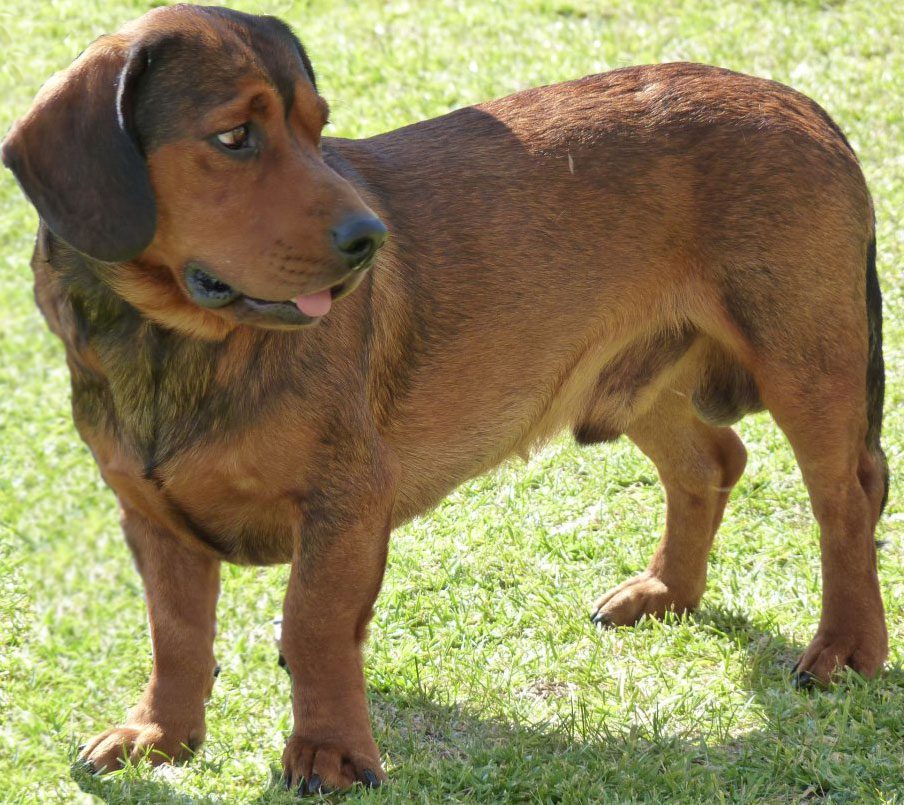
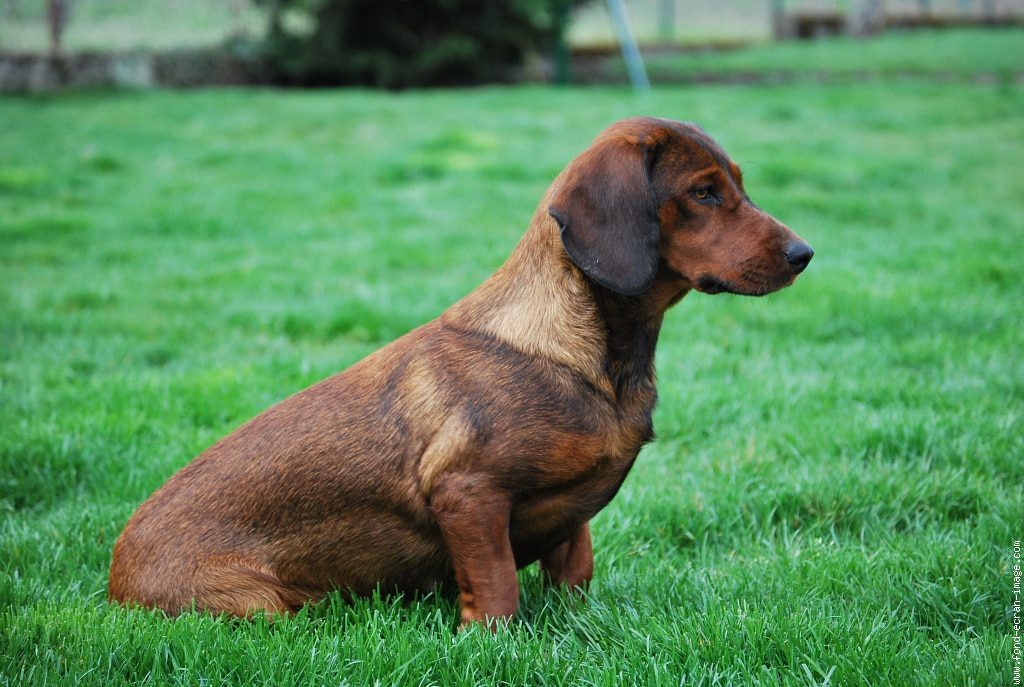
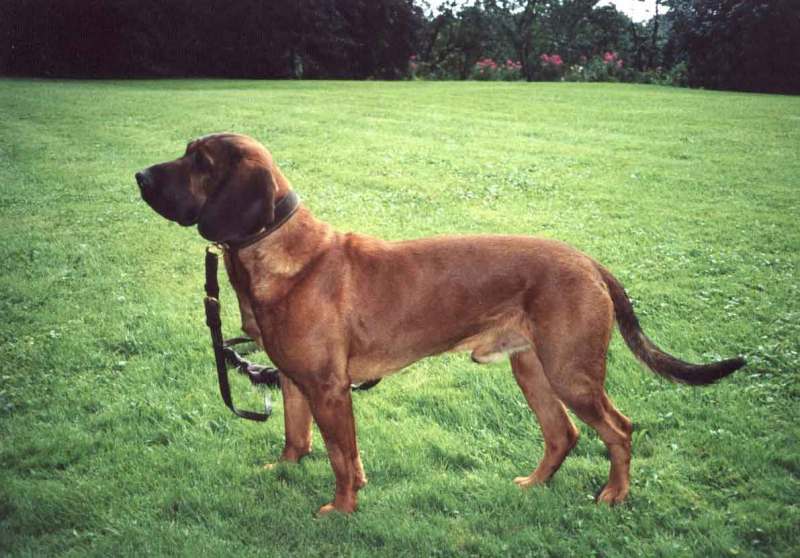
The Alpine Dachsbracke is a dog's size medium. Has relatively short legs, a strong constitution, firm muscles and strong bones.

The height to the cross is of 34 to 42 centimeters. Height at withers is measured from the ground to the shoulder in a loose dog. For males, the ideal size is between 37 and 38 centimeters of shoulder height; for females, are considered ideal 36 to 37 centimeters.

Great importance is attached to an optimal ratio of proportions. The relationship between the height of the shoulders and the torso is 2 : 3, the relationship between the face and the skull is 9 : 10.

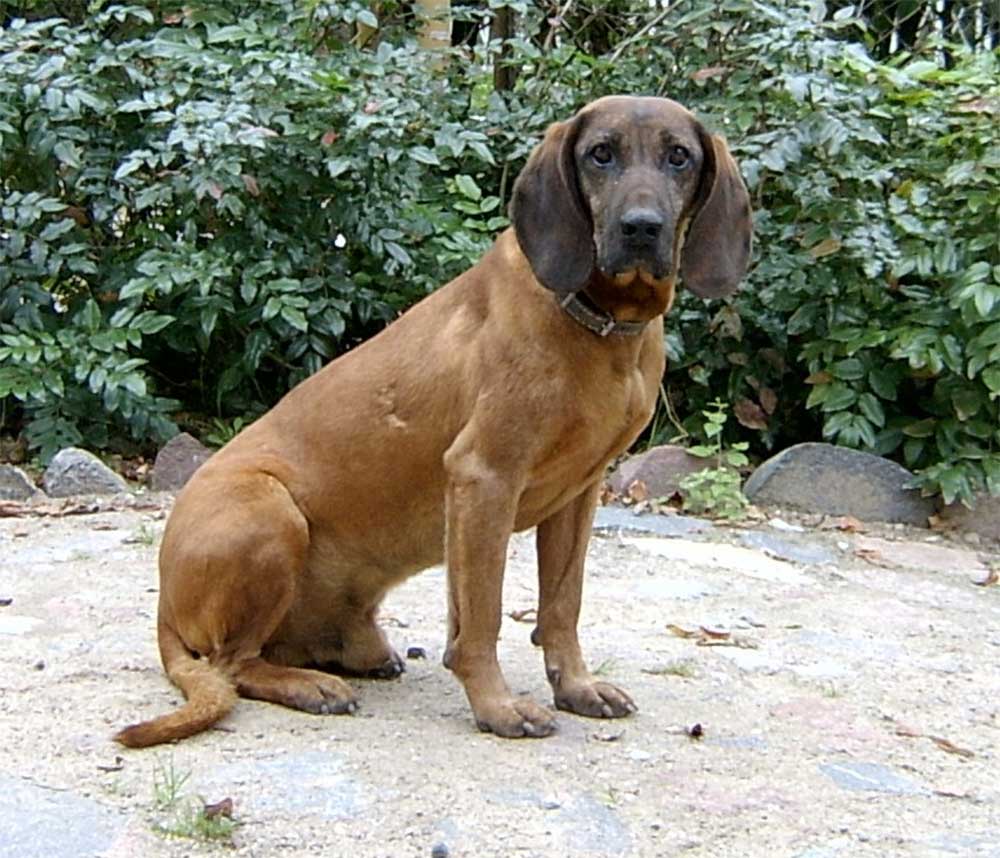
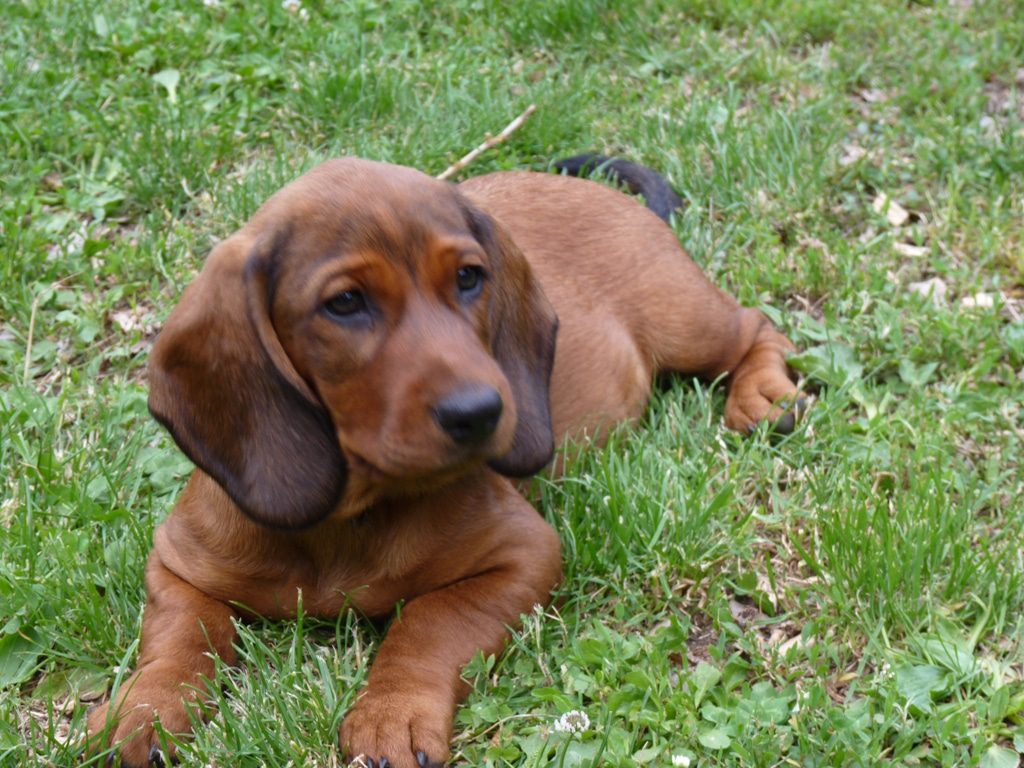
The head is held proudly erect with a slight forward tilt. High-set dangling ears are straight-haired and fall loosely to the sides. They are wide, no wrinkles and medium length (approximately reaching the canines) and rounded at the bottom.

The nose, the eyelids and lips are black. The eyes are deep brown and slightly almond shaped. The Alpine Dachshund has the typical "dachshund look". The tail is placed high at the root, but it is slightly lowered.

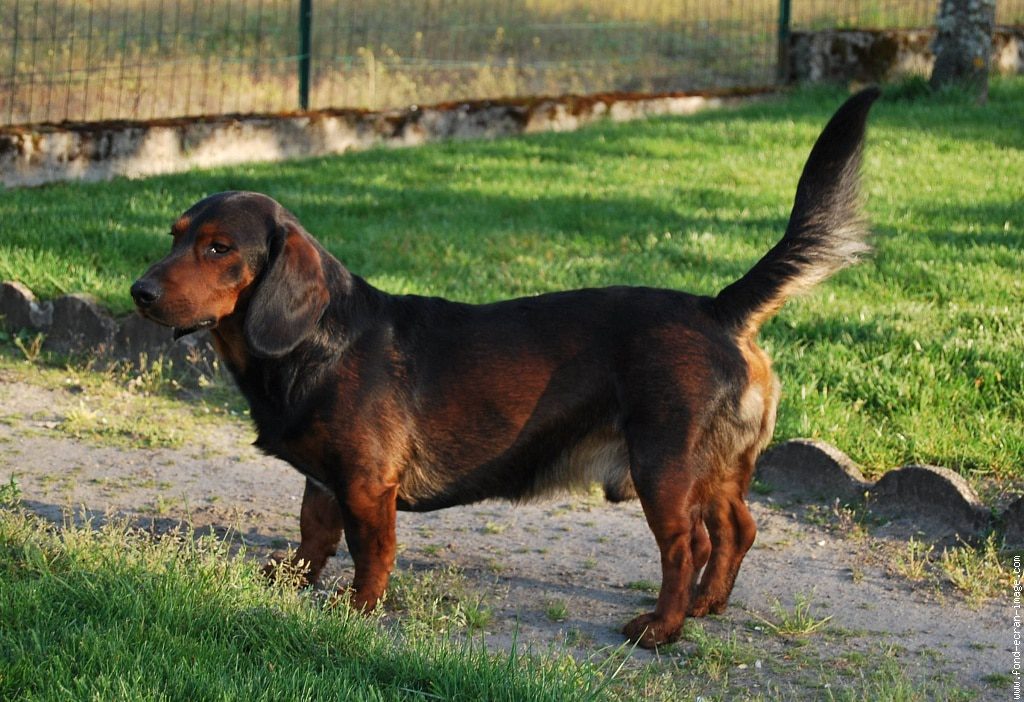
In proportion to the strong body, legs are relatively short. The body is well muscled and with strong bones, with a pronounced rib cage but with a small waist.

The coat of the Alpine Dachsbracke it's dense and short, only the lower part of the tail is slightly longer. The slightly dull coat consists of a firm stick coat with a dense undercoat.

Allows good water repellency and a perfect air balance in summer and a high heat effect in winter. A dark deer red, often with a slight tinge, is the most common coat color.

There is also a black coloration with a tan tan outlined on the head). Small white marks are allowed on the chest. On the paws, ears and tail coat coloration may be darker.

Character and skills

The Alpine Dachsbracke he's a proven working dog, small to medium size, which serves hunters especially well. Hound dogs like Alpine Dachsbracke are used for post-shot search jobs.

The strong-minded dog is not distracted and confidently tracks injured game animals. At first sight, the Alpine Dachsbracke looks like a mongrel dog, but this robust breed is a highly specialized working and hunting dog.

The fine sense of smell, safe tracking with unconditional tracking will and high hunting acuity make this breed an ideal hunting companion, animal husbandry and forestry work in the forest and mountains. The Alpine Dachsbracke feels more comfortable outdoors.

Like city dog, the Alpine Dachsbracke it's completely inappropriate.

After the hunt is before the hunt. The dog would like to go out and look for hunting every day. Family contact is desirable, because then the friendly companion shows his almost touching love and attachment to "his" people. He gets along very well with children.

But, the Alpine Dachsbracke not suitable as a pure family dog. Also in the city this breed feels extremely uncomfortable. The Alpine Dachsbracke it is a forest and prairie dog, for whose fine smell the gases from car exhausts and in general, the smells of the city, they are a punishment.

If this breed stays in the big city, without the possibility of a daily run of several hours in the woods and meadows, owners can be called cruel to animals without euphemisms. This is certainly the reason why this breed of dog is never seen in the urban area.

For the Alpine Dachsbracke a task is vital. Although this dog needs a lot of exercise, not suitable for long runs or jumping due to short legs. It is a search dog, a typical tracking dog.

Outside the hunting season, this dog with strong nerves is excellent as a guard and yard dog. But, this shouldn't be your only task. The temporary maintenance of the kennel is not a problem for him, as long as he has regular contact with the family and is allowed into the house from time to time.

Within the four human walls the dog behaves in a balanced and calm way. But, if you are not used to much, tends to show behavior problems, complains a lot or seeks an alternative occupation.

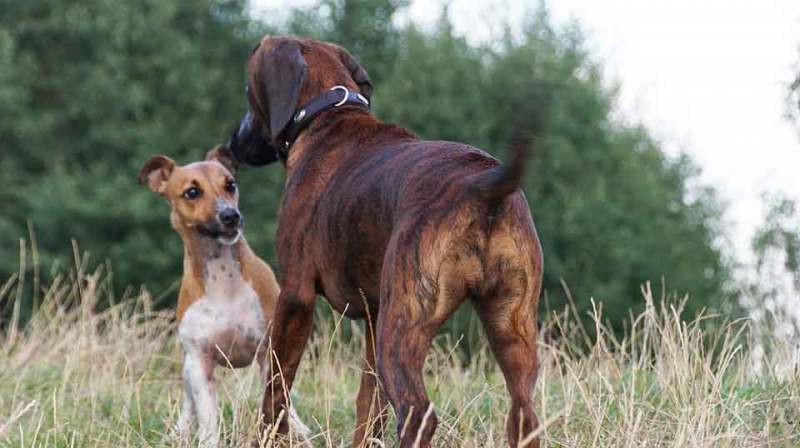
Small animals, cats, rabbits, ornamental birds are seen as prey and bark at them extensively. The Alpine Dachsbracke he is friendly with other dogs.

Training and use «Alpine Dachshund»

Hunting training is a basic requirement for living with a Alpine Dachsbracke, which is why this breed is only really found among active hunters.

This small hunting dog excels in hare and fox hunts, as well as in the tracking of deer and roe deer. With his very fine nose, the Alpine Dachsbracke shows an unconditional willingness to crawl, movement safety and quality control.
This agile hunting dog's drive to move requires a daily walk on the hunting ground. Attitude is possible so much in a spacious kennel, like in the house. The house itself should have a garden.

Staying in a small apartment in the city would be torture for the dog, even climbing stairs is not an option for him. Also with the yard or kennel attitude a close family connection comes in handy for this friendly dog..

The Alpine Dachsbracke watches the house and property carefully and makes reliable noises, so it does not tend to bite. The Alpine Dachsbracke it is considered very robust and insensitive to weather conditions. The robust dog shines with good attitude for life in good health.

This hound likes to work very much, hunting training is a basic requirement for living with a Alpine Dachsbracke, which is why this breed is only really found among active hunters.

This small hunting dog excels in hare and fox hunts, as well as in the tracking of deer and roe deer. With his very fine nose, the Alpine Dachsbracke shows an unconditional willingness to crawl, search security as well as very good visual acuity.

Education and care

Despite his innate sympathy, this breed of dog still requires consistent leadership from the puppy stage. Education takes a long time, so owners of dogs of this breed like to organize to exchange experiences.

Due to its typical breed nature, the Alpine Dachsbracke tends to be very stubborn. In the countryside, eventually you will have to make your own decisions without your master or mistress being able to intervene.

Empathy and consistency promise the best results in puppy rearing. What you have learned once, never forget it again.

Unfortunately, this also applies to mistreatment. An undesirable rarity is very difficult to unlearn.

Alpine Dachshund Grooming

Like every dog, this little hunting dog needs some grooming. The coat should be brushed from time to time to loosen the dense undercoat and remove loose hair.

No need to cut or trim. The dog doesn't like to bathe either, dirt usually falls off the coat on its own. After each walk through the territory, the coat of the small ruminant should be checked for branches, thorns and parasites.

Unfortunately, ticks also like the skin of Alpine Dachsbracke. Ears should be checked regularly for mite infestations. Too long claws indicate too little exercise. Normally, claws are sharp when walking and do not need to be cut.

Health «Alpine Dachshund»

The Alpine Dachsbracke it is considered very resistant and has a stable skin. The robust dog shines in excellent health throughout his life if he is well maintained. But, annual vaccinations should never be lacking.

Typical diseases can be, as in any short-legged dog, back problems. A well-muscular body without excess weight will counteract the risk of back diseases.

When fed wet food, teeth unfortunately tend to form tartar. In this case, Regular brushing of the teeth is necessary to prevent gum and tooth diseases.

Chewy sticks and bones are gladly accepted, but they do not serve as a substitute activity. The ears should be checked and cleaned regularly.

How long does an "Alpine Dachshund" usually live??

Their life expectancy reaches an age of up to 15 years with good species-appropriate nutrition and typical breeding.

Occasionally, small dogs exceed this age and in rare cases even reach an age of more than 20 years. Underutilized animals can suffer from psychological problems that make them prone to disease and moody.

As a responsible dog owner, now you know what the Alpine Dachsbracke need to live a long life, healthy and happy.

Don't need a guardian, but a companion at eye level, who can take care of the needs of this working dog extensively.

Buy an “Alpine Dachshund”

This dog is not a stuffed dog, despite its fairly manageable size. The breeders of this breed are mainly found in Germany and Austria. Usually the active breeders are the hunters or rangers themselves.

From the breeding associations the puppies of the Alpine Dachsbracke they occur mainly to active hunters. You can only buy that breed from a breeder.

If he Alpine Dachsbracke not used for hunting, it is essential to be a member of a sports club for dogs. Here the focus is on tracking.

As a children's playmate he is extremely patient, but he's not happy.

Walks with search and crawl games will also not meet the needs of this working dog, this is just not enough. For seniors who are not physically fit, as well as for singles working full-time, the Alpine Dachsbracke is absolutely unsuitable as a companion.

If you want to buy a Alpine Dachsbracke, you have to be a member of a local club. Outsiders hardly have a chance.

«Alpine dachshund» images

“Alpine Dachshund” videos

Characteristics "Alpine Dachsbracke"

Coexistence is important that you have with your new friend. Before considering the acquisition of a dog of the breed "Alpine Dachsbracke" you know certain factors. Not all breeds of dogs are apt to live in an apartment, you must take into account his character, their need for exercise, their interaction with other pets, their care and if you have small children, their level of tolerance towards them.

Adaptation ⓘ

3,0 of 5 stars (based on 1 review)

friendly dog ​​ⓘ

4,0 of 5 stars (based on 1 review)

hair loss ⓘ

1,0 of 5 stars (based on 1 review)

Affection level ⓘ

2,0 of 5 stars (based on 1 review)

Need for exercise ⓘ

4,0 of 5 stars (based on 1 review)

Social need ⓘ

3,0 of 5 stars (based on 1 review)

Home ⓘ

2,0 of 5 stars (based on 1 review)

Toilet ⓘ

2,0 of 5 stars (based on 1 review)

Friendly with strangers ⓘ

2,0 of 5 stars (based on 1 review)

barking ⓘ

3,0 of 5 stars (based on 1 review)

Health ⓘ

4,0 of 5 stars (based on 1 review)

Territorial ⓘ

4,0 of 5 stars (based on 1 review)

Cat friendly ⓘ

2,0 of 5 stars (based on 1 review)

Intelligence ⓘ

3,0 of 5 stars (based on 1 review)

Versatility ⓘ

3,0 of 5 stars (based on 1 review)

Child friendly ⓘ

4,0 of 5 stars (based on 1 review)

Surveillance ⓘ

4,0 of 5 stars (based on 1 review)

joy ⓘ

4,0 of 5 stars (based on 1 review)

Type and recognitions:

  • FCI CLASSIFICATION:
  • Group :
  • Section : . .

Federations:

  • FCI – Group 6: Scent hounds, and related breeds. – Section 2: Leash (scent) Hounds.
  • UKCScenthound Group

FCI breed standard "Alpine Dachsbracke"

Origin:
Austria

Date of publication of the valid original standard:
10.10.1995

Use:

The Alpine Dachsbracke is a robust and weather resistant dog, useful for the mountain hunter ; It is used as a tracker to search for wounded roe deer and as a hound when barking at hares and foxes..


General appearance:

Small hunting dog, strong, with robust body structure and heavy bones; dense fur, firm muscles.

IMPORTANT PROPORTIONS

• The proportion between the height of the withers and the length of the trunk is 2 : 3.
• The proportion between the facial region and the cranial region is 9 : 10.


Behavior / temperament:

Smart and friendly expression. Intrepid character.

Head:

---

Cranial region:
  • Skull : Slightly convex. Marked frontal groove, shallow occipital protrusion.
  • Depression links (Stop) : Marked.

facial region:

  • Truffle : Black.
  • Snout : Strong.
  • Lips : Well adherent with black pigmentation, moderately rounded lip arch.
  • Jaws / Teeth : Strong full scissor or pincer bite. You want a complete denture with 42 Dental parts ; the lack of total two PM1 or PM2 (premolars 1 or 2) is tolerated ; the M3 (molars 3) they are not taken into account.

Eyes : Dark brown iris; eyelids adherent to the eyeball and black pigmented.

Ears : High insertion, that fall wide and flat without forming folds; medium length (must reach to the fang) and well rounded at its lower edge.

Neck:

Not too long, muscular.

Body:

Broad trunk, strong and well muscled.

  • Cross : Moderately marked.
  • Back : Straight.
  • Pork loin : Short and broad.
  • Rump : Slightly inclined.
  • Breast : Deep and wide with a well-marked sill; the depth of the thorax should correspond to approximately half the height of the withers.
  • Belly : Moderately withdrawn.

Tail:

High insertion, thick at its root. On its underside it has a longer coat (brush glue) ; the tail is so long that it reaches almost to the ground ; takes it slightly inclined.

Tips

PREVIOUS MEMBERS : They are straight and strong. The limbs appear short in proportion to the rest of the body.

  • Shoulder : Adjacent, long, obliquely placed, with good musculature.

LATER MEMBERS : Muscular, strong and have good angulations ; seen from the back, the axis of the limbs is straight.

FEET : Front and rear feet are strong and round ; the fingers are very close together ; the pads are hard and the nails are black.

Movement:

During the movement covers the terrain, without kicking. His favorite step is the trot.

Mantle

SKIN : The skin is elastic and hard and does not form folds.

HAIR : double hair (Stockhaar), very dense, with thick undercoat ; covers the entire body and is well attached to the skin.

COLOR : The ideal color is dark fawn red, slightly speckled or not black, as well as the black color with fire spots, reddish-brown color) well defined in the head (four eyes), on the chest, limb, feet and on the underside of the tail; a white star is allowed on the sill.


Size and weight:

Height to the cross : 34 – 42 cm.. Ideal measure : Males : 37 – 38 cm.,females : 36 – 37 cm..


Fouls:

Any deviation from the aforementioned criteria is considered as a fault and the severity of this is considered to the degree of the deviation to the standard and its consequences on the health and well-being of the dog..

FAULTS

• Weak bones.
• Little muscle.
• Too pointed snout, short or long.
• Eye color too light, eyelids not glued.
• Short or pointed ears.
• Loose shoulders.
• Poor position of the forelimbs or hindlimbs.
• Very short or sparse coat.
• Minimal variations in color.

MISS PLAYOFFS

• Aggressive or fearful dog.
• All variations that are considered essentially detrimental to their usefulness in hunting.
• Absence of more than two premolars 1 or 2 (without taking into account the M3).
• Height at withers less than 34 cm or greater than 42 cm..
• Weak character.

Any dog ​​showing clear signs of physical or behavioral abnormalities must be disqualified..


N.B.:

Males should have two normal-appearing testicles fully descended into the scrotum..

Source: F.C.I - International Cynological Federation

Alternative names:

1. (ger. Alpenländische Dachsbracke) (English).
2. (alpenländische dachsbracke) (French).
3. Alpenländische-Erzgebirgler Dachsbracke, Österreichische Dachsbracke (German).
4. Dachbraco alpino (Portuguese).
5. Tejonero de los Alpes, Basset de los Alpes, Dachsbracke de los Alpes (español).

▷ The world of Pets: Dogs, cats, birds, reptiles, amphibians

Hanoverian Scenthound
Germany FCI 213 . Leash (scent) Hounds

Hanoverian Scenthound

The Hanoverian Scenthound He is a dog with a very good sense of smell, specialized in locating injured prey.

Content

History

The Hanoverian Scenthound it is a medium sized hunting dog.

He is a highly developed specialist, but at the same time versatile in hunting. Tracking is the supreme discipline of a hunting dog, that the Hanoverian Scenthound dominates like no other. In the crawl, keep track of the animals injured in a hunt. A fast and infallible work of the dog is decisive to reduce the suffering of the injured animal. This task is old, but no less relevant today.

The Hanoverian Scenthound dates back to archaic dog breeds. Bloodhounds are also called "Bracken". For hunting, which was an important way of life for our ancestors for thousands of years, dogs with a particularly good sense of smell and an intelligent sense of detection were of elementary importance. The scent dogs were also indispensable to hunt criminals. Before the introduction of firearms, hunters had to stalk the game much closer. This is what guide dogs were for.. From them arose the hounds of today. This type of dog is probably over 10.000 years. For the Teutons, a good "track dog" was worth more than a horse.. This is attested by a legal text of more than 1000 years of antiguaty, el Lex Baiuwariorum. In the baroque era, the rich princes directed the so-called hunting courts. This was a kind of college for hunting with a practical orientation. One of the first was the "Hanover Hound". Here these hounds were systematically bred and trained from 1657.

Breeding according to today's standards began in Erfurt in 1894 with the founding of the Hirschmann club, who is still very successful with this breed today. Their breeding has been organized in an extremely responsible manner since time immemorial.. So, it is possible to reliably breed vital and healthy dogs with great temperaments and excellent performance even today.

The Hanoverian Scenthound is a hunting dog, but also a good family dog ​​and companion in everyday life. It has to be. His controller has to be ready to act with him at any time, for example, if there has been a traffic accident and it is necessary to find an injured deer or wild boar. You don't have to be a hunter or a ranger to get a puppy from a Hirschmann club breeder, but you do have to be a member of this club and do a training course for trainers of the Hanoverian Scenthound. Among 40 and 60 puppies are bred every year under the umbrella of the German Kennel Federation – VDH.

Photo: Hanover Hound by TobiasHR, CC BY-SA 4.0, via Wikimedia Commons

Physical characteristics

The Hanoverian Scenthound it is a strong dog of medium size. By the size of her body, tends to have short legs, as this is advantageous when you must do your nose job close to the ground. Males are larger and heavier than females. Males must have a height at the withers of 50 to 55 centimeters with a weight of 30 to 40 kg. Bitches must have a height at the withers of 48 to 53 centimeters and a weight of 25 to 35 kg. The official standard describes their appearance this way:

The overall look of the powerful Hanoverian Scenthound is that of a medium-sized dog, well proportioned and powerful. Well-positioned and heavily muscled front and rear limbs allow you to work with resistance. Legs too high, especially an oversized right, they impede work with a deep nose and are out of character. The wide and deep chest provides plenty of room for the lungs and allows for long and grueling chases. The slightly wrinkled forehead and the light and dark eye give the Hanoverian Scenthound his typical serious facial expression.

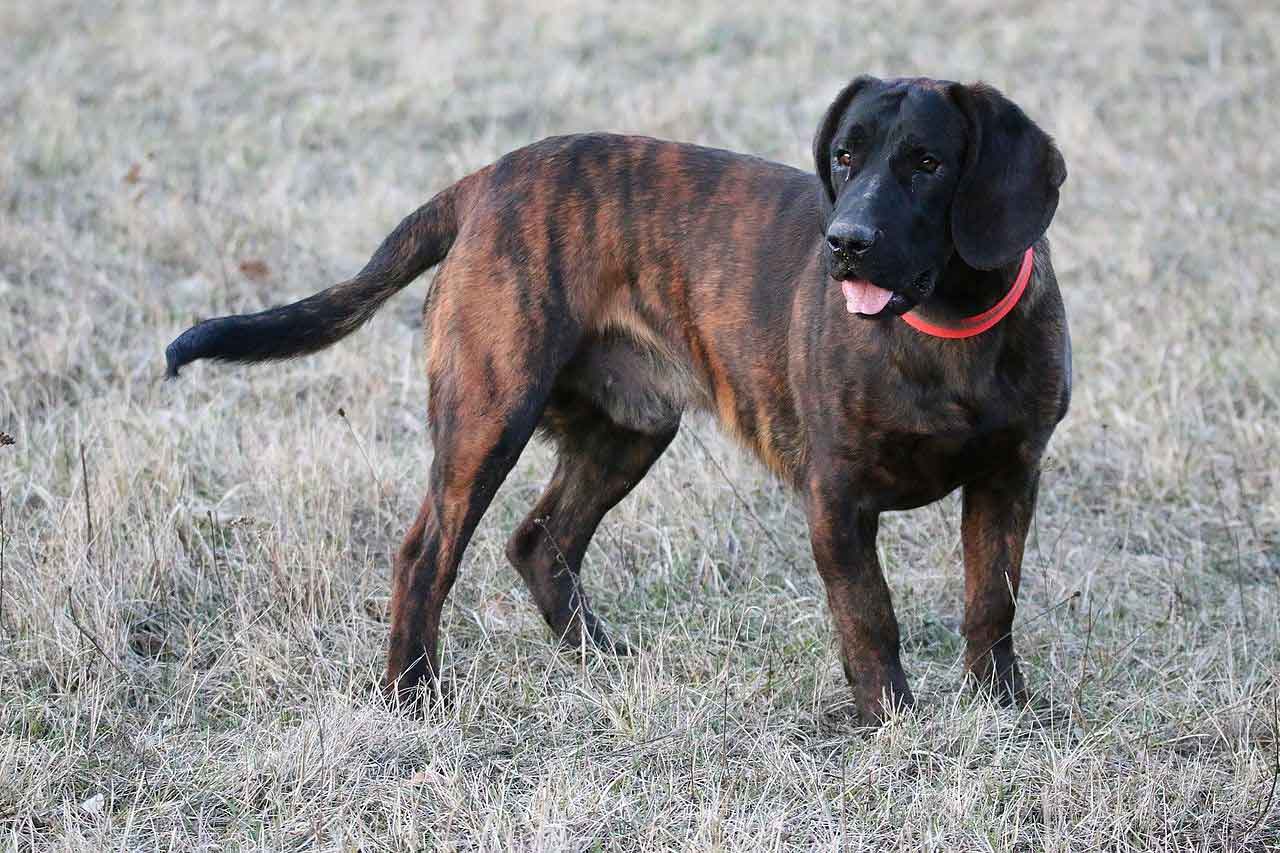
The ears are of medium length and, held high on the head, falls. Its pelage is short, dense, thick. Typical of the breed is the basic reddish color, which can range from light pale red to dark brindle, almost black.

Character and skills

The Hanoverian Scenthound is a thoroughbred hunting dog with alert senses, but without any kind of nervousness. As long as you don't have a smell in your nose, impresses with a thoughtful nature, quiet and extremely gentle, that for us humans radiates pure slowdown. On the way he shows his passion and follows her with loud barks. The FCI standard describes its nature as follows:

Quiet and safe nature, but sensitive towards its controller. Selective and reserved with strangers. High concentration capacity in hunting tracking work with a pronounced herd relationship to the main hunter.

The Hanoverian Scenthound he is a very efficient working dog, who fulfills his tasks conscientiously and with the greatest commitment. Exploring nature together with him and his higher senses is a very special experience and happiness. Its balanced nature, even sovereign, his social qualities and human kindness make him an excellent family dog.

Fitness

One Hanoverian Scenthound it is not a companion dog for the city. Not an apartment dog, but a passionate hunting assistant who wants and needs the job. Otherwise, his attitude is completely undemanding. Ideally, they should live with their humans in a house on the edge of the woods or in the country with a garden.. This already results from your task, which must also be that of your caregiver: the search.

The hunting dog team, composed of the dog and the handler, be prepared at all times to search for injured game animals on behalf of the local hunting community, either after a hunt or a traffic accident. This task should also be shared by the whole family.. The challenges are great in all aspects: all kinds of weather, day or night, crawl hard through dense terrain and open terrain, safely in search of an injured and perhaps aggressive animal, think of the boar. The hound must be able to be directed by its handler at all times. These are challenges that are unmatched in dog sports.. In everyday life he is sociable and discreet. You can do everything with it.

Education

The Hanoverian Scenthound is a deeply friendly and eager to learn four-legged friend, that makes it easier for your trainer to train and educate you, as well as working with him. You want and need this guide. But it is not a dog that waits for orders from its keeper. You can't teach him, but you can train him excellently based on positive reinforcement and deep emotional confidence.

As dogs have only been allowed to breed for many generations if they have mastered many demanding behavioral tests, its performance level is extremely high. This is at the same time a commitment to the management of this dog.

Care and health

The Hanoverian Scenthound does not require any special care.

Brushing the dog's coat weekly is enough to get rid of the various debris collected during the walk or hunting and to remove dead hairs.

But, it is recommended to regularly inspect your ears. In fact, as in any breed of dog with floppy ears, have an increased risk of otitis. Earwax and accumulated bacteria can cause such infections..

To protect you from dental problems, the dog's teeth should be brushed regularly. Ideally, this should be at least two or three times a week.

It also, when you return from long walks with your dog or hunting, it is a good idea to check the parts of your body that may be damaged, especially the legs, tail and ears.

You should also regularly check for parasites and make sure your dog receives proper pest control treatment..

Finally, the dog's nails should be trimmed if they are too long. This is particularly necessary if the dog does not regularly walk on very hard surfaces such as concrete..

Typical diseases of the breed:

Although the Hanoverian Scenthound does not have a congenital predisposition to any particular pathology, is particularly prone to ear infections in dogs. To prevent these infections, it is advisable to inspect the dog's ears regularly.

It can also be sensitive to anesthetics and pose entropion risks (the edge of the eyelid is turned inward, which makes the eyelashes and skin rub against the eye) the ectropion (the eyelid is turned out, exposing the conjunctiva and possibly causing eye infections).

It also presents a risk of obesity for the dog, if you are overfed and / or lead a too sedentary life.

It also, the main risks to which it is exposed as a hunting dog are insect bites or stings (of vipers, for example), as well as heat stroke. To avoid this, it is better to avoid hunting in the hottest hours of the day.

Finally, you also run the risk of being injured by hunting (wild pig, deer…). This risk is particularly important for the Hanoverian Scenthound, who is very stubborn at work and never gives up, even when he's hurt.

Nutrition / Food

The Hanoverian Scenthound It is a resistant dog that is not difficult to feed. Quality industrial dog food is ideal for him, ideally divided into two meals a day.

If you hunt, the dog's diet must be adapted to this activity and its seasonality: one month before opening, it may be necessary to make your dog lose weight if he has gained too much weight during winter. This can be done by reducing your portions or by giving you a lower calorie diet..

On the other hand, once hunting season begins, the dietary and energy needs of the dog are increased by its high physical activity, and it is necessary, on the other hand, or increase servings by 10 to 20% or give him a richer diet.

It also, it is preferable to divide meals during a hunting day: a small amount of food should be given before departure, and then another at noon, to prevent syncope due to hypoglycemia. This ration is preferably warm and humid so that it digests it faster, so as not to overwhelm you before intense exercise, that could make him sick (vomiting…). The largest portion is given at night.

Life expectancy

This breed of dog has a life expectancy of about 12 years.

Buy a “Hanover Tracker”

If you are interested in a Hanoverian Scenthound, you must contact him Club Hirschmann well in advance of your planned purchase. Puppies are only released to members on a set schedule. You should then be able and willing to give this hunting dog species-appropriate living conditions for at least 10 years. A puppy of this breed costs about 850 EUR.

Characteristics "Hanoverian Scenthound"

Coexistence is important that you have with your new friend. Before considering the acquisition of a dog of the breed "Hanoverian Scenthound" you know certain factors. Not all breeds of dogs are apt to live in an apartment, you must take into account his character, their need for exercise, their interaction with other pets, their care and if you have small children, their level of tolerance towards them.

Adaptation ⓘ

3,0 of 5 stars (based on 1 review)

friendly dog ​​ⓘ

4,0 of 5 stars (based on 1 review)

hair loss ⓘ

2,0 of 5 stars (based on 1 review)

Affection level ⓘ

5,0 of 5 stars (based on 1 review)

Need for exercise ⓘ

5,0 of 5 stars (based on 1 review)

Social need ⓘ

3,0 of 5 stars (based on 1 review)

Home ⓘ

3,0 of 5 stars (based on 1 review)

Toilet ⓘ

2,0 of 5 stars (based on 1 review)

Friendly with strangers ⓘ

2,0 of 5 stars (based on 1 review)

barking ⓘ

3,0 of 5 stars (based on 1 review)

Health ⓘ

5,0 of 5 stars (based on 1 review)

Territorial ⓘ

4,0 of 5 stars (based on 1 review)

Cat friendly ⓘ

2,0 of 5 stars (based on 1 review)

Intelligence ⓘ

4,0 of 5 stars (based on 1 review)

Versatility ⓘ

4,0 of 5 stars (based on 1 review)

Child friendly ⓘ

5,0 of 5 stars (based on 1 review)

Surveillance ⓘ

4,0 of 5 stars (based on 1 review)

joy ⓘ

4,0 of 5 stars (based on 1 review)

Images "Hanoverian Scenthound"

Photos:

1 – Rastreador de Hannover by https://pixabay.com/es/photos/hs-hannoverscher-schweisshund-macho-5226519/
2 – Rastreador de Hannover by https://pixabay.com/es/photos/hannoverscher-schweißhund-perros-5193568/
3 – Rastreador de Hannover by https://pixabay.com/es/photos/terrier-hannoverscher-schweisshund-4453683/
4 – Rastreador de Hannover by https://pixabay.com/es/photos/hannoverscher-schweißhund-perros-5193562/
5 – Rastreador de Hannover by https://pixabay.com/es/photos/hannoverscher-schweißhund-perros-5193559/
6 – Hanoverian Scenthound by Hirschmann Association, CC BY-SA 3.0, via Wikimedia Commons

Videos "Hanoverian Scenthound"

Type and recognitions:

  • FCI CLASSIFICATION:
  • Group :
  • Section : . .

Federations:

  • FCI – Group 6: Scent hounds, and related breeds. – Section 2: Leash (scent) Hounds.
  • UKCScenthounds

FCI breed standard "Hanoverian Scenthound"

Origin:
Germany

Date of publication of the valid original standard:
09. 06. 1999

Use:

Trail dog. Hound Dog.


General appearance:

The general appearance of the hardy Hannover Hound is that of a medium-sized dog., well proportioned and strong. Well placed front and rear limbs, with strong muscles that enable him for persevering work. Limbs that are too tall and especially an overdeveloped forehead restrict their work of sniffing with their nose on the ground and are atypical.. The deep and wide chest gives the lungs plenty of room and allows for long and demanding jobs. The slightly wrinkled forehead and the transparent dark eyes give the Hanover Hound that serious look on its face, so typical in the. The red base color is also typical for the breed., ranging from a light coloration and can vary to a brindle coloration of shades with dark effects, almost black.

IMPORTANT PROPORTIONS :

• A . Body Length / Height at the Cross : 1,4 to 1
• B. Chest Depth / Height at the Cross: 0,5 to 1
• C. Long of the Nasal Bridge / Head Length: 0,5 to 1


Behavior / temperament:

Calm and confident temperament, sensitive towards its driver and selective and reserved towards strangers. High capacity for concentration in the search work during the hunt with a marked relationship of revolt towards the hunter who conducts it.

Head:

Slightly wrinkled forehead.

Cranial region:
  • Skull : Width, increasing the same back, slightly domed. Slightly developed occipital protuberance, superciliary arch, seen in profile clearly marked.
  • Stop : Strongly marked, in males it is more noticeable.

facial region:

  • Truffle : Wide, usually black, rarely dark brown. Big nose, wide, nostrils wide open. Slightly convex or nearly flat bridge of the nose, in males more convex. Gradually narrowing in the direction of the forehead.
  • Snout : Strong, deep and wide. Well developed for use (approximately 50 % the length of the head).
  • Lips : Widths, hanging and well rounded.
  • Jaws / Teeth : Normally developed jaws, Very strong, right, giving enough space to all teeth. 42 teeth with a scissor or pincer bite.
  • Cheeks : Powerful muscles and very strong.

Eyes : Neither prominent nor sunken, tight eyelids, dark brown irises. Free of ectropion or entropion.

Ears : Long Middle, tall and wide insert, smooth and without twisting. They hang tight to the head, with rounded edge.

Neck:

Long and strong, gradually widening towards the chest, full and loose throat skin, the formation of a slight double chin is allowed.

Body:

  • top line : Long, many times slightly developed.
  • Cross : Normally checked, strong neck insert.
  • Back : Strong.
  • Pork loin : With a slight arch, wide and flexible.
  • Rump : Wide and long, descending slightly towards the tail.
  • Breast : Deep and spacious, deeper than wide.
  • Bottom line and abdomen : On a line that gradually ascends, slightly retracted.

Tail:

High insertion, long and slightly arched. In its insert is strong, gradually tapering to a point.

Tips

PREVIOUS MEMBERS :

  • As a whole : Viewed from the side, the placement is straight and parallel under the body.. Seen from the front, their placement is straight and often close together.. Well proportioned to the body.
  • Shoulder : Flat shoulder blades, strong muscles, placed well oblique.
  • Arm : Long. Elbows : Placed well back and glued.
  • Forearm : Straight, strong muscles.
  • Articulation of the Carpus : Wide, almost right.
  • Metacarpus : Never fully inclined.
  • Previous feet : Strong, round, fingers well arched and together, big rude ear pads, strong nails.

LATER MEMBERS :

  • As a whole : Seen in profile, the placement is forward or slightly back. good angulation. Viewed from the rear right. For a medium-sized dog with longer than height, the relationship with the body is normal..
  • Pelvis : Wide and spacious.
  • Thigh : With strong muscles.
  • Knee : The joint with an angulation of more than 120º.
  • Leg : Straight and dry.
  • Tarsus : Wide and strong
  • Metatarsus: Placed almost vertical to the floor.
  • Hind feet : Rounded, fingers well together.

Movement:

Master all the movements, with strong momentum and elastic and during canter it covers the surface well. The preferred movement during work is the walk and canter.

Mantle

SKIN : Thick, well loose, folds predominantly on the head and sometimes in the throat area. The forehead with folds is typical.

HAIR : Short, thick, hard, rough. In the back of the thigh somewhat longer and thicker. The hair on the tail is bushy, rough and somewhat longer and thicker at the bottom.

COLOR : Light to dark deer red, more or less brindle, with or without mask. Small white spots on the chest are tolerated.


Size and weight:

Height at the Cross :

  • Males: 50 –55 cm.
  • females: 48 – 53 cm..

Weight:

  • Males: 30 – 40 Kg.
  • females: 25 – 35 Kg.


Fouls:

Any deviation from the above mentioned criteria is considered to lack, and the gravity of this refers to the degree of deviation to the standard and its impact on the health and well-being of the dog.

• Square structure.
• Fine bone structure.
• Bite faults: Absence of the first premolars or other teeth, prognathism or inferior.
• Ectropion, entropion.
• Turned or small ears.
• Dog strongly developed at the back.
• Sunken or steep back.
• Barrel-shaped chest.
• Strongly curved or too thin tail.
• Straight or loose shoulders.
• Pronounced cow's claw or open claws.
• Open feet or hare's foot.

MISS PLAYOFFS :

• Aggressive or fearful dog.
• The aforementioned fouls that are more pronounced or more marked are eliminatory..

Any dog ​​showing clear signs of physical or behavioral abnormalities must be disqualified..


N.B.:

Males should have two normal-appearing testicles fully descended into the scrotum..

Source: F.C.I - International Cynological Federation

Alternative names:

1. Hanoverian Hound, Hanoverian Scenthound, Hannover’scher Schweisshund (English).
2. Chien de rouge du Hanovre (French).
3. Hannoversche Schweisshunde (German).
4. (em alemão: hannover’scher schweisshund) (Portuguese).
5. Sabueso de Hannover (español).

▷ The world of Pets: Dogs, cats, birds, reptiles, amphibians

Bavarian Mountain Hound
Germany FCI 217 . Leash (scent) Hounds

Bavarian Mountain Hound

The Bavarian Mountain Hound is very suspicious of strangers, I am calm and balanced with its owner.

Content

History

The Bavarian Mountain Hound it is a medium sized hunting dog. He is a highly developed specialist, but at the same time versatile in hunting. Tracking work is his specialty. Master the search and hunt and especially the tracking. On the trail, keep track of an injured animal. Fast and infallible dog work is crucial to reduce the suffering of the prey.

The Bavarian Mountain Hound dates back to ancient dog breeds. These hounds are also called «Bracken». For hunting, which was an important way of life for our ancestors for thousands of years, dogs with a particularly good sense of smell and an intelligent sense of detection were of great importance. Trace Dogs were also needed to hunt criminals.

For the Teutons a good Scent hound worth more than a horse. This is attested by a legal text of more than 1000 years of antiguaty, el Lex Baiuwariorum. A document of the year 1459 later attests to Bracken's donation to the Tegrinsee monastery (today Tegernsee) by a Count Kaspar Törring. Already at that time the count systematically raised the Bracken according to a breeding book. The actual Bavarian Mountain Hound also descends from these Bracken.

In 1870 he also grew up Hanoverian Scenthound. This resulted in a modern and versatile helper for the ranger and hunter.. The dogs had to be distinguished by their high performance in hunting. At the same time, they had to cope with the harsh conditions of the mountains. So, sharp stones were not allowed to bother them as much as storms, snow or high demands on your ability to climb. In 1883 took place the first official exhibition of the Bavarian Mountain Hound. In 1912 was founded the Klub für Bayerische Gebirgsschweißhunde, who has since been very successful in caring for these dogs.

After World War II, the genetic bottleneck was worked on by crossing into the Tyrolean hound. Although the breed is very rare, is spread throughout Germany. His breeding is organized in a very responsible way. To avoid “elite or champion breeding” the number of offspring of a breeding animal is limited to 18 to 20. On the other hand, at least one animal from each litter raised must be reintroduced into the breed if there are no signs of inherited diseases. It also, breeding is only allowed with dogs that have passed performance tests anyway. The breeding of Bavarian Mountain Hound is a model, a project, how to breed healthy and strong pedigree dogs, even with a numerically very small population. They are raised between 10 and 12 litters with 60 to 80 puppies per year. These go almost only to the professional hands of professional rangers and hunters.

Photo: Bavarian Mountain Hound (name: Zoran Spod Ruskiej Granicy) by Ralf Lotys (Surely), CC BY 2.5, via Wikimedia Commons

Physical characteristics

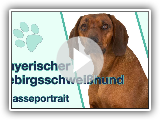
The Bavarian Mountain Hound It is a strong dog, medium-sized, with a height at the withers of about 44 to 52 cm and a weight of 17 to 30 kg. Males, However, they are larger and heavier than females. For your size, has rather short legs. The standard describes its appearance in this way:

A medium sized dog, harmonious, light, very agile and muscular. The body is slightly longer than tall, slightly raised from behind; leans on legs not too high. The head is carried horizontally or somewhat erect, tail horizontal or slanted down.

The coat must be dense, smooth, moderately rough, low gloss. The standard requires the following colors:

Dark red, deer red, Red brown, yellowish red, also pale yellow (even sand color); reddish gray like the winter hair of the red deer, also brindle or dark flecked.
In the back, the basic color is generally more intense. Muzzle and ears dark.
The tail is almost always dotted dark. A small, clear spot is allowed on the chest (hound star).

The meaning is: The colors must camouflage the dog in its hunting work and not give it away, for example with large white marks.

Character and skills

The Bavarian Mountain Hound is a thoroughbred hunting dog with wide awake senses, but without nervousness. As long as you don't have a smell in your nose, impresses with a thoughtful nature, quiet and extremely gentle, that radiates pure slowdown for us humans. The official standard describes its nature as follows: «Calm and balanced; affectionate with his owner, reserved with strangers. What is required is a stable dog, self-confident, fearless and easy to handle, neither shy nor aggressive".

The Bavarian Mountain Hound it is a very capable working dog that performs its tasks conscientiously and with the utmost dedication. He has a strong homing instinct and is a master of tracking.. Exploring nature with him is, therefore, a very special experience and happiness. The Bavarian Mountain Hound, professionally managed, it is also a very good family dog ​​with a gentle nature.

Fitness

One Bavarian Mountain Hound It is not a companion dog for the city or for walks in nature, even if they are daily. Not a dog for the home, but a professional hunting dog who wants and needs the job. Otherwise, his attitude is completely undemanding. So, Ideally, you should live in a house on the edge of the woods or in the country with a garden..

The Bavarian Mountain Hound wants and can go out in all climates. The standard provides information on the conditions of its maintenance:

«In accordance with its hunting purpose as a specialist in monitoring cloven-hoofed hunting, the Bavarian Mountain Hound must possess all the qualities required of him to be useful in a difficult pursuit. The usefulness must be proven by appropriate performance tests.".

Education «Bavarian mountain tracker»

The Bavarian Mountain Hound is a very friendly and eager to learn four legged friend, that makes it easier for its owner to train and work with him. Why you want and need this guide. But it is not a dog that awaits orders from its owner. Since dogs have been admitted to breeding for many generations only if they have mastered many demanding performance tests, your level of training is extremely high. This is at the same time an obligation for the leadership of this dog. Because you need the hunting job, where it feels good. His element is search work. Here he has brought it to a stranglehold, you also need to live. But, you should take this into account if you are playing with the idea of ​​sharing your life with a Bavarian Mountain Hound as not a hunter.

Care and health

The breed is very easy to care for. Brushing once in a while is enough.

Typical diseases of the breed:

Hereditary diseases are not known.

Nutrition / Food

The Bavarian Mountain Hound is undemanding in his diet.

Life expectancy

The Bavarian Mountain Hound has a life expectancy of about 12 years.

Buy a “Bavarian Mountain Tracker”

If you are looking for a dog of this breed, you should contact a breeder affiliated with the Club Bávaro del Bavarian Mountain Hound well in advance of your planned purchase. As a rule, dogs are only handled by rangers or hunters. From time to time, However, it may happen that a dog is looking for another place. But then you should be able and willing to give it living conditions that can be a substitute for its species-appropriate way of life.. A puppy of this breed costs about 1500 EUR.

Characteristics "Bavarian Mountain Hound"

Coexistence is important that you have with your new friend. Before considering the acquisition of a dog of the breed "Bavarian Mountain Hound" you know certain factors. Not all breeds of dogs are apt to live in an apartment, you must take into account his character, their need for exercise, their interaction with other pets, their care and if you have small children, their level of tolerance towards them.

Adaptation ⓘ

3,0 of 5 stars (based on 1 review)

friendly dog ​​ⓘ

4,0 of 5 stars (based on 1 review)

hair loss ⓘ

3,0 of 5 stars (based on 1 review)

Affection level ⓘ

4,0 of 5 stars (based on 1 review)

Need for exercise ⓘ

4,0 of 5 stars (based on 1 review)

Social need ⓘ

3,0 of 5 stars (based on 1 review)

Home ⓘ

2,0 of 5 stars (based on 1 review)

Toilet ⓘ

2,0 of 5 stars (based on 1 review)

Friendly with strangers ⓘ

2,0 of 5 stars (based on 1 review)

barking ⓘ

4,0 of 5 stars (based on 1 review)

Health ⓘ

3,0 of 5 stars (based on 1 review)

Territorial ⓘ

4,0 of 5 stars (based on 1 review)

Cat friendly ⓘ

2,0 of 5 stars (based on 1 review)

Intelligence ⓘ

4,0 of 5 stars (based on 1 review)

Versatility ⓘ

4,0 of 5 stars (based on 1 review)

Child friendly ⓘ

4,0 of 5 stars (based on 1 review)

Surveillance ⓘ

4,0 of 5 stars (based on 1 review)

joy ⓘ

4,0 of 5 stars (based on 1 review)

Images "Bavarian Mountain Hound"

Photos:

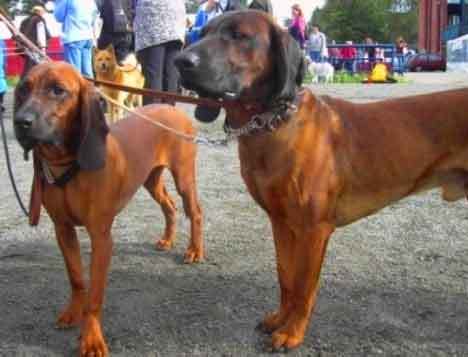
1 – Bavarian Mountain Hound, female and male by Canarian, CC BY-SA 3.0, via Wikimedia Commons
2 – «Bavarian mountain tracker» by Wikimedia
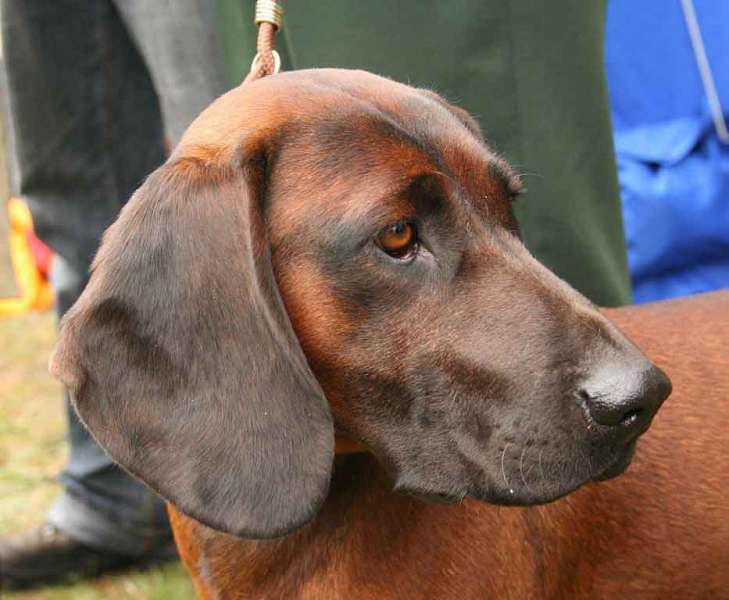
3 – A Bavarian Mountain Scenthound by Canarian, CC BY-SA 4.0, via Wikimedia Commons
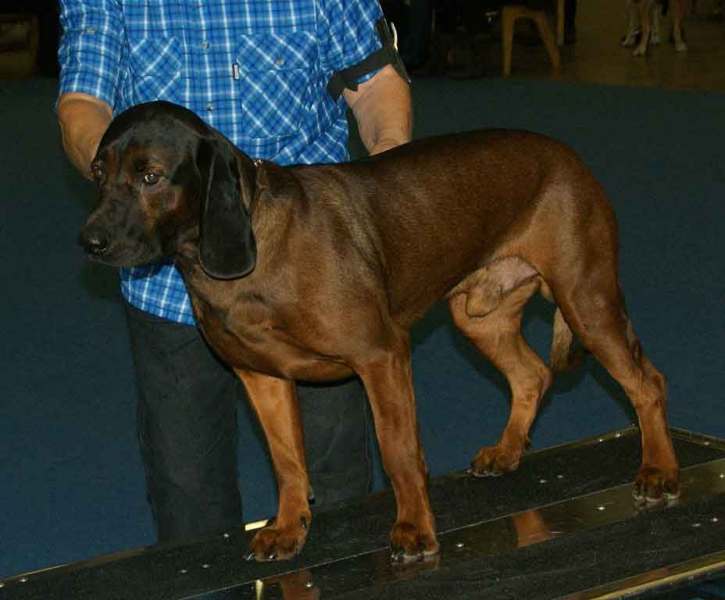
4 – Bavarian Mountain Hound during show of dogs in Rybnik – Kamień, Poland by Pleple2000, CC BY-SA 4.0, via Wikimedia Commons
5 – Kafka und Frodo beim ersten Outdoor Treffen und Grillen bei Audigast. Februar 2014. Kafka ist ein Magyar Vizsla und Frodo ein Bayerischer Gebirgsschweißhund by Andreas Krüger
6 – Bavarian Mountain Hound by Pleple2000, CC BY-SA 3.0, via Wikimedia Commons

Videos "Bavarian Mountain Hound"
Type and recognitions:

  • FCI CLASSIFICATION:
  • Group :
  • Section : . .

Federations:

  • FCI – Group 6: Scent hounds, and related breeds. – Section 2: Leash (scent) Hounds.
  • AKCGrupo FSS
  • ​KCCazadores
  • UKCScenthounds

FCI breed standard "Bavarian Mountain Hound"

Origin:
Germany

Date of publication of the valid original standard:
01.04.1996

Use:

Trail dog.


General appearance:

It is a generally harmonious dog, lighter, very active and muscular, medium-sized. The body is a bit elongated and raised in its posterior region ; stands on very long limbs. The head is horizontal or slightly erect ; has the tail carried horizontally or slightly tilted downwards.


Behavior / temperament:

It is quiet and balanced ; attached to its owner and distrustful of strangers. The dog is required to be firm, self-confident, fearless and docile, without being shy or aggressive.

Head:

---

Cranial region:

Relatively wide, little rounded, with a well marked forehead, well-developed superciliary arches and shallow occipital protuberance.

  • Depression links (Stop) : Marked.

facial region:

  • Truffle : Good size, not too wide, well open nostrils, black or deep red.
  • Snout : A little parted in front of the eyes, slightly shorter than the skull, wide enough, it is not pointed. The bridge of the nose is slightly arched or straight.
  • Lips : Upper lip falling well over the lower one, moderately thick. The corners of the lips are well visible.
  • Jaws / Teeth : Powerful jaws with a perfect scissor bite, regular and complete, in which the upper incisors overlap the lower incisors without leaving space ; teeth are implanted vertically in the maxilla. Should have 42 healthy teeth according to the dental formula. Pincer bite allowed.
  • Cheeks : Stand out moderately.

Eyes : Clean, with an attentive expression. Not too big or round. Dark brown or lighter. Well attached and pigmented eyelids.

Ears : Something more than moderately long, must reach a maximum up to the truffle ; heavy, high and wide insertion, rounded in its bottom edge, hang down close to the cheeks but not bent.

Neck:

Moderately strong. Throat skin is a little loose.

Body:

  • top line : Rise a little from the withers to the rump.
  • Cross : Bit strong. Smooth transition from neck to back.
  • Back : Strong and elastic.
  • Pork loin : Proportionally short, broad, with good musculature.
  • Rump : Long and fairly flat.
  • Breast : Moderately wide, with well developed parapet; oval rib cage, deep and long, with ribs carried well back.
  • Bottom line and belly : Gradually ascends toward the back of the body; slightly retracted belly.

Tail:

Of medium length that reaches a maximum to the tibio-tarsal joint ; high insertion, carries it horizontally or slightly inclined downwards.

Tips

PREVIOUS MEMBERS

  • As a whole : Viewed from the front they are straight and parallel, and seen from the side they are well poised under the body. They have good angulations.
  • Shoulder : Strongly muscular. Scapulae oblique and directed backwards.
  • Arm : Long, with strong and thin muscles.
  • Elbows : Glued to the body, no outward or inward deflection.
  • Forearm : Vertical and slim. With strong bones and very good musculature.
  • Articulation of the carpus : Strong.
  • Metacarpus : A little forward directed.

LATER MEMBERS :

  • As a whole : Strong bones. Viewed from behind they are straight and parallel. Good angulations.
  • Thigh : Wide and very muscular.
  • Knee : Strong leg : Relatively long, muscular and tendon.
  • Warm-foot joint : Strong.
  • Metatarsus : Short, vertical position.

FEET : Spoon-shaped, with fingers well arched and joined together, as well as sufficiently cushioned pads, hard, strong and well pigmented. They are placed on the floor in parallel when standing or during movement, no deviations outwards or inwards. Black or horn-colored nails.

Movement:

Covers terrain with good range and excellent momentum, forelimbs and hindquarters straight and parallel ; slightly elastic movement.

Mantle

SKIN : Thick, firmly attached.

HAIR : It's dense, glued, smooth, moderately rough, with little brilliance ; it is finer on the head and ears, rougher and longer on the belly , limbs and tail.

COLOR : Dark red, deer red, Red brown, yellowish red, also pale yellow (even sand color); reddish gray like the winter hair of the red deer, also brindle or dark flecked. In the back, the basic color is generally more intense. Muzzle and ears dark. The tail is almost always dotted dark. A small, clear spot is allowed on the chest (hound star).


Size and weight:

Height to the cross :

  • Male : 47 – 52 cm..
  • Female : 44 – 48 cm..

In both male and female tolerance is never allowed in the larger or smaller size.


Fouls:

Any deviation from the aforementioned criteria is considered as a fault and the severity of this is considered to the degree of the deviation to the standard and its consequences on the health and well-being of the dog..

SERIOUS FAULTS

• Flesh-colored truffle.
• Mild upper or lower prognathism. Partial clamp.
• Very loose eyelids.
• Very bowed or arched back.
• Very flattened or barrel-shaped rib cage.
• Elbows turned very outward or inward.
• Hindquarters too high.
• Very narrow position of the hind limbs, or cow-shaped or O-shaped, both when standing and during movement.
• Coat that is too fine or too thin.
• Intense deviations in color; black with red markings.
• Different size.

MISS PLAYOFFS

• Aggressive or fearful dog.
• Marked upper or lower prognathism. Deviated arch of incisors.
• Missing teeth (except P1).
• Ectropion, entropion.
• Congenital broken tail.
• Weakness in character.

Any dog ​​showing clear signs of physical or behavioral abnormalities must be disqualified..


N.B.:

Males should have two normal-appearing testicles fully descended into the scrotum..

Source: F.C.I - International Cynological Federation

Alternative names:

1. Bavarian Mountain Scenthound (English).
2. Chien de recherche au sang de la montagne bavaroise (French).
3. Bayerischer Gebirgsschweisshund (German).
4. (em alemão: Bayrischer gebirgsschweisshund) (Portuguese).
5. Sabueso bávaro de montaña, Rastreador de Baviera (español).