โ–ท The world of Pets: Dogs, cats, birds, reptiles, amphibians

Italian Pointing Dog
Italia FCI 202 . Braque Type.

Braco Italiano

The Italian Pointing Dog is a friendly dog, energetic and playful to which loves to play.

Content

History

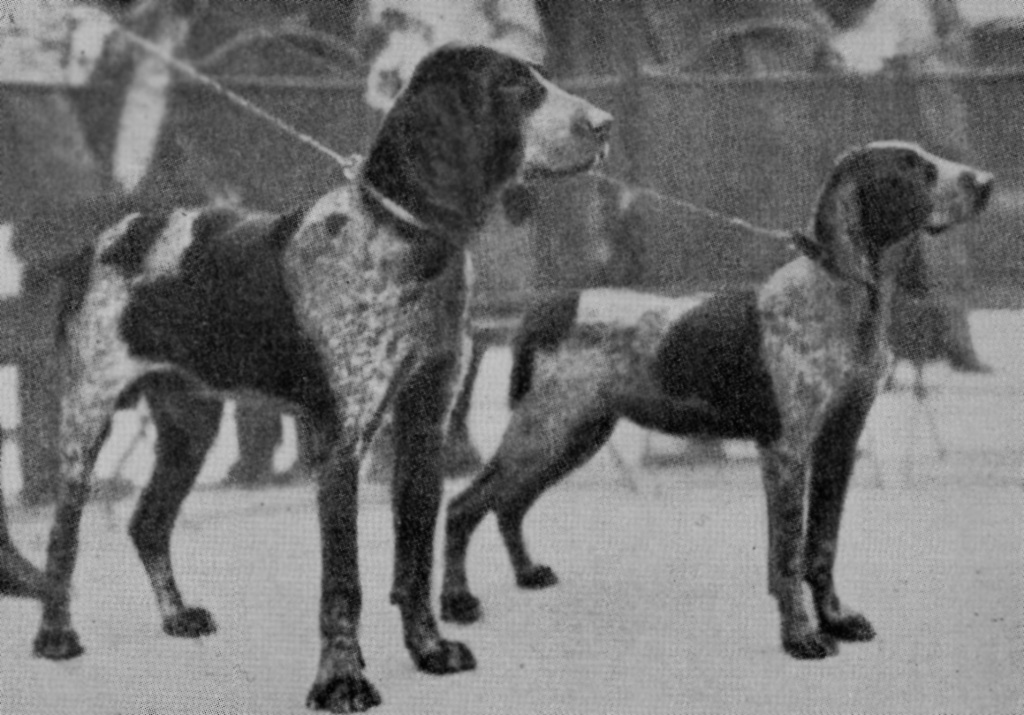
The Italian Pointing Dog has been called the Pointer oldest european, and its history dates back to the 4th or 5th century BC.. Although the exact ancestral origins are unknown, it is generally accepted that the Italian Pointing Dog was first a cross between the Italian short-haired Segugio and the asian mastiff, that has been extinct since then. The breed was developed in northern Italy, with two different varieties: the white and orange variety known to be from the Piedmont region and the brown and reddish variety from Lombardy.

in the medieval period, the breed had become established and the Italian aristocracy exported the Bracco across the old world. The popularity of Bracco reached its peak during the Renaissance, and remained in considerable numbers until the beginning of the 20th century, when they faced a steep decline.
At the end of the 19th century, the Italian Pointing Dog faced extinction. Over the years, crosses with Hounds and poor breeding resulted in dogs too heavy to do their job, and the breed suffered from various health problems. Diligent breeding selection and care helped rebuild the breed. In the Decade of 1920, it was decided to unify the two variations of the breed to preserve genetic diversity.

    First of all, the Piedmontese Pointer he was a lighter color and build dog, and originated in the Piedmont region of Italy, as its name suggests. This dog was used for work in the mountains, which reflected his conformation and temperament. The Piedmontese dog was smaller than its counterpart from Lombardy, and his hunting style was reminiscent of some Western European pointers, since he was traveling at a gallop. This dog was mainly white, with or without orange markings.
    On the other hand, the Lombard Pointer it was a brown dog with a heavier body type. This dog was used for hunting in the swampy lowlands, and it was a trotting breed. These large dogs were bred for both their visual appeal and their natural hunting ability..

Shortly after the race was officially unified, the working standard was written and published, and in 1949 was founded in Italy the Societa Amatori Bracco Italiano. When the Italian conformation standard was published, incorporated aspects of both race types, which resulted in notable variability within the standard. The breed standard had been in existence for over a century before being compiled into this single document.

The Italian Pointing Dog was brought to the UK in the late 1980s 1980, but the United States did not experience the Italian Pointing Dog up to approximately 1994. In 2001, the Italian Pointing Dog was accepted into the AKC Foundation Stock Service. In 2005 The first national โ€œMeetingโ€ was held and in 2007 the Bracco Italiano Club of America was founded.

Physical characteristics

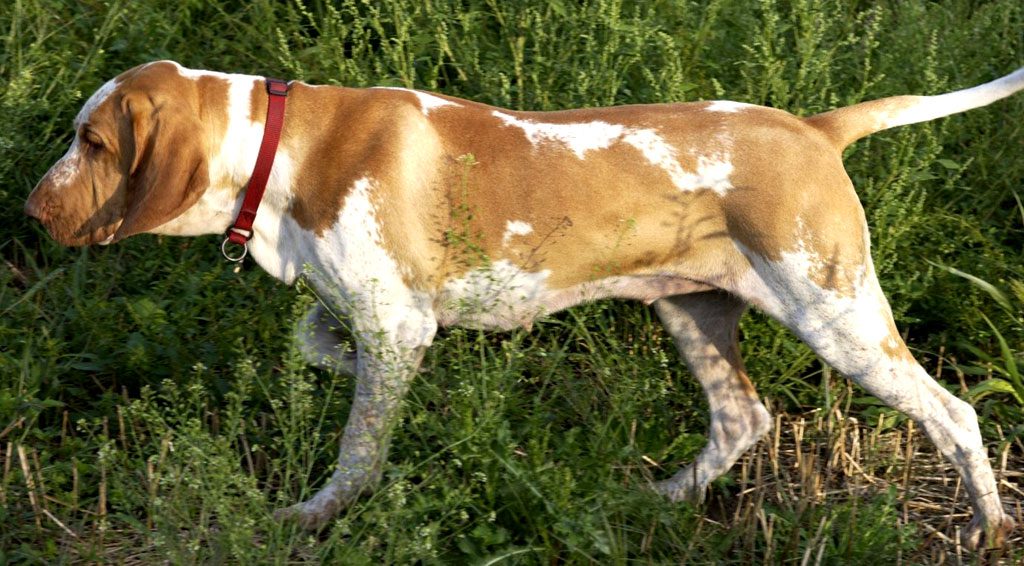
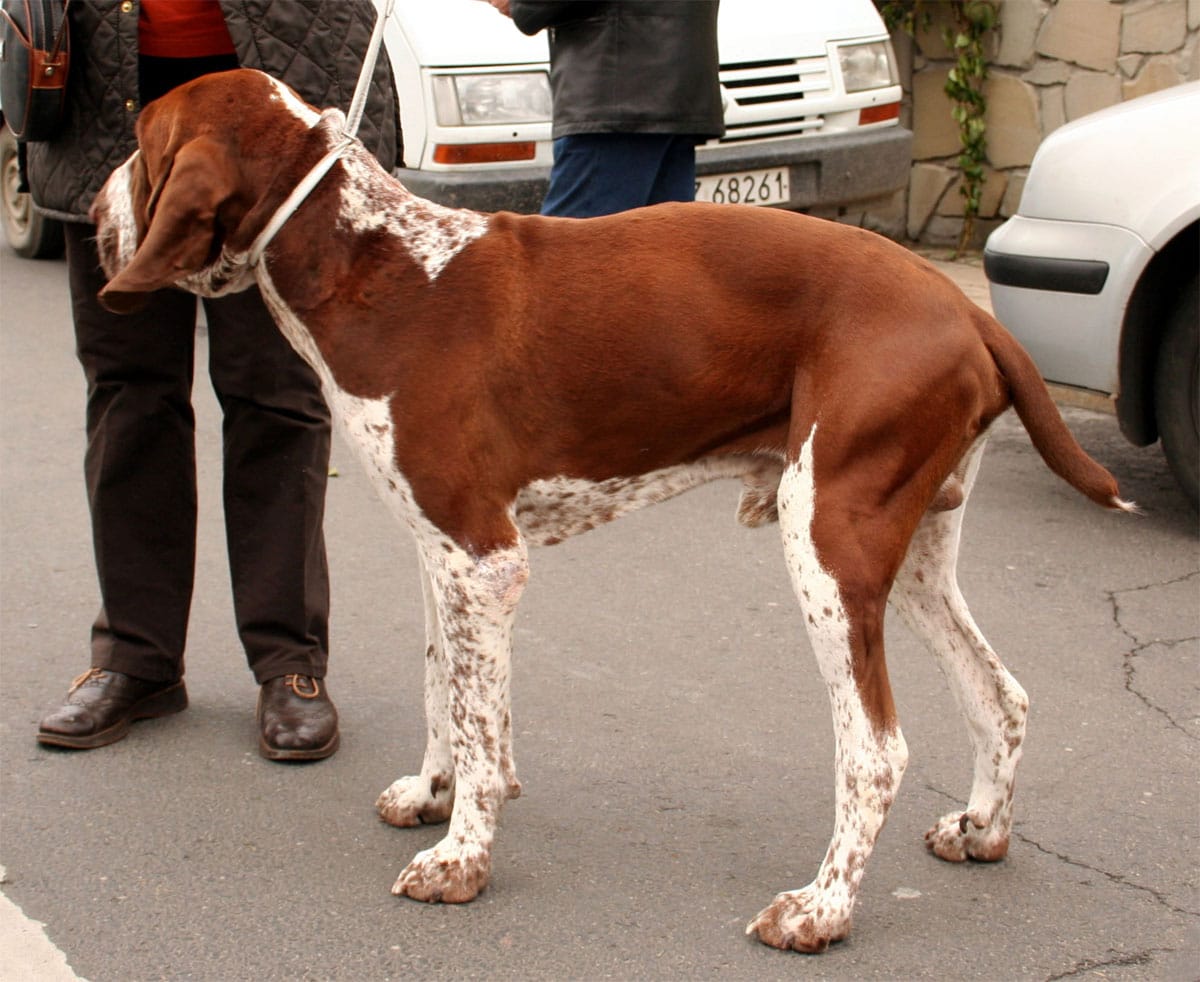
The Italian Pointing Dog It must be athletic and powerful in its appearance, more like a cross between a German Shorthaired Pointer and a hound, but in matters, differs much from the race mentioned.

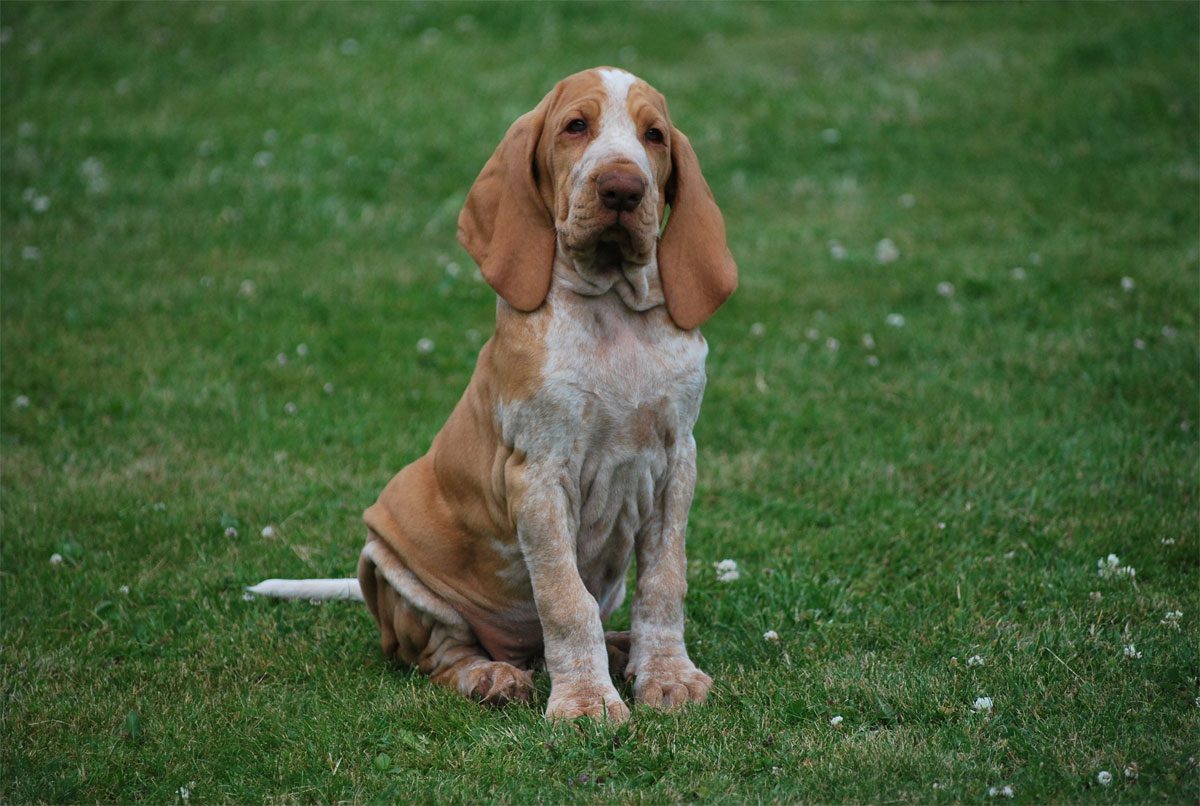
It has hanging upper lips and long ears that create a serious expression. Your body should be "almost square", which means that its height to the cross should be almost the same as the length of his body. But, it shouldn't actually be square as this would lose much of its powerful grace. The tail can be can be cut, Although this is controversial in Italy.

The fur is short, dense and glossy. The texture must be pretty hard, Although somewhat softer in the head, the neck, the ears, legs and feet. Moulting occurs twice a year, and brushing helps in the Elimination of dead hairs layer.
The fur consists of the different combination of three colors: white, Orange and Brown, years. At that time, You can find copies of the following keys: White and orange, Orange and Brown, Brown with patches of another colour (white or orange) in the face, the ears, the base of tail and body. The black color is not supported.

The weight of the Italian Pointing Dog is of 25 to 40 kg. The height at the cross in the males is of 58 to 67 cm. and in the females of 55 to 62 cm..

Character and skills

It is a dog friendly, energetic and playful. She loves other dogs, loves to play, is an active race, physical exercise is necessary, to feel happy and have a balanced mind. They get along well with children.

The training of a Italian Pointing Dog requires patience and a calm nature, next to the coach.

Other British breeds of show are more likely to search for the presence of prey with high speed, However the Italian Pointing Dog it's slower, but on the other hand it can be used on any type of terrain, both mountainous and plain. It is very smart with a surprising ability to learn.

It can be an excellent pet, because of its docile nature.

Health

The Italian Pointing Dog it is a healthy breed in general, and responsible breeders screen their cattle for health conditions like hip and elbow dysplasia, eye abnormalities such as entropion, ectropion and cataracts, and kidney disorders such as renal amyloidosis. To avoid orthopedic stresses on their rapidly growing bodies, the puppies of Italian Pointing Dog should be fed a balanced meal and should not run on hard surfaces such as concrete or perform repeated high-impact exercises until at least one year of age.

Check the long, pendulous ears of the Italian Pointing Dog to detect ear infections, and use a vet-recommended ear cleaner once or twice a week to keep the ear clean and dry to prevent infection.

Grooming

The Italian Pointing Dog they are easy to prepare. Their short coats require minimal care and their long ears require routine cleaning to minimize the risk of ear infections.. It also, an occasional bath will keep them clean and in good repair. Your nails should be trimmed regularly with a nail clipper or grinder to avoid overgrowth, breaking and cracking. Teeth should be brushed regularly.

Exercise and training

The Italian Pointing Dog is a moderate to high energy breed that requires daily exercise and mental stimulation. This can be accomplished by running freely in a safe, enclosed space or through scheduled exercises such as daily jogs.. Are needed at least 30 minutes of exercise per day, but more preferred. It also, to be happy, they need time each day to spend with their family doing an organized workout or playing a game.

One Italian Pointing Dog need a calm and patient coach who is gentle but firm. This breed can be slightly independent, but for the most part, they are eager to please and are excited when they see that they have made you happy. They are best suited for a home that will use their hunting skills and give them a job to do. But, instead of hunting, training for dog sports such as agility, Obedience and rally can also be a great way to give your dog the physical and mental stimulation he needs.

Characteristics "Italian Pointing Dog"

Coexistence is important that you have with your new friend. Before considering the acquisition of a dog of the breed "Italian Pointing Dog" you know certain factors. Not all breeds of dogs are apt to live in an apartment, you must take into account his character, their need for exercise, their interaction with other pets, their care and if you have small children, their level of tolerance towards them.

Adaptation โ“˜

4,0 of 5 stars (based on 1 review)

friendly dog โ€‹โ€‹โ“˜

3,0 of 5 stars (based on 1 review)

hair loss โ“˜

3,0 of 5 stars (based on 1 review)

Affection level โ“˜

5,0 of 5 stars (based on 1 review)

Need for exercise โ“˜

3,0 of 5 stars (based on 1 review)

Social need โ“˜

4,0 of 5 stars (based on 1 review)

Home โ“˜

3,0 of 5 stars (based on 1 review)

Toilet โ“˜

2,0 of 5 stars (based on 1 review)

Friendly with strangers โ“˜

4,0 of 5 stars (based on 1 review)

barking โ“˜

3,0 of 5 stars (based on 1 review)

Health โ“˜

3,0 of 5 stars (based on 1 review)

Territorial โ“˜

3,0 of 5 stars (based on 1 review)

Cat friendly โ“˜

2,0 of 5 stars (based on 1 review)

Intelligence โ“˜

3,0 of 5 stars (based on 1 review)

Versatility โ“˜

3,0 of 5 stars (based on 1 review)

Child friendly โ“˜

4,0 of 5 stars (based on 1 review)

Surveillance โ“˜

3,0 of 5 stars (based on 1 review)

joy โ“˜

3,0 of 5 stars (based on 1 review)

ยซItalian Shorthaired Pointerยป Images

Videos ยซBraco Italianoยป

Type and recognitions:

  • FCI CLASSIFICATION:
  • Group :
  • Section : . .

Federations:

FCI โ“˜, AKC โ“˜, ANKC โ“˜, CKC โ“˜, โ€‹KC โ“˜, NZKC โ“˜, UKC โ“˜

FCI breed standard Italian Pointing Dog

FCIFCI - Italian Pointing Dog
Bracco

Alternative names:

1. Italian Pointer, Italian Pointing Dog, Bracco (English).
2. Braque italien (French).
3. Italienischer Vorstehhund (German).
4. Bracco italiano (Portuguese).
5. Pointer italiano. (espaรฑol).

โ–ท The world of Pets: Dogs, cats, birds, reptiles, amphibians

Burgos Pointer
Espaรฑa FCI 90 . Braque Type

Perdiguero de Burgos

The Burgos Pointer is smart and learns easily, above all, tracking tasks.

Content

History

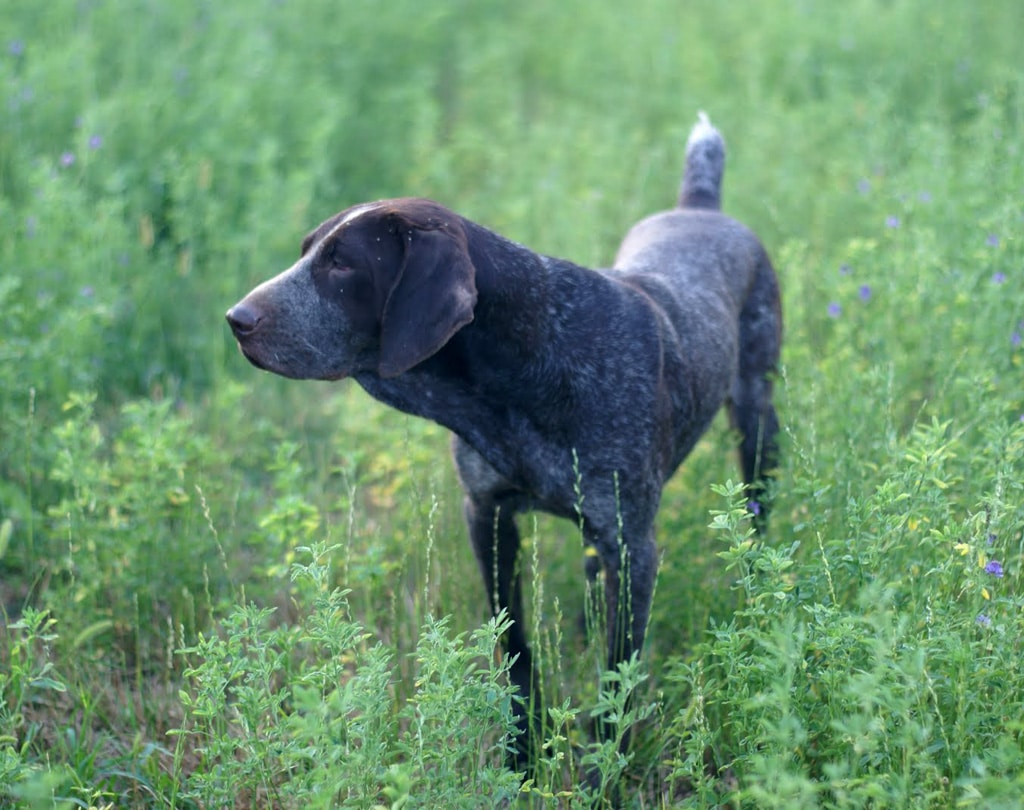
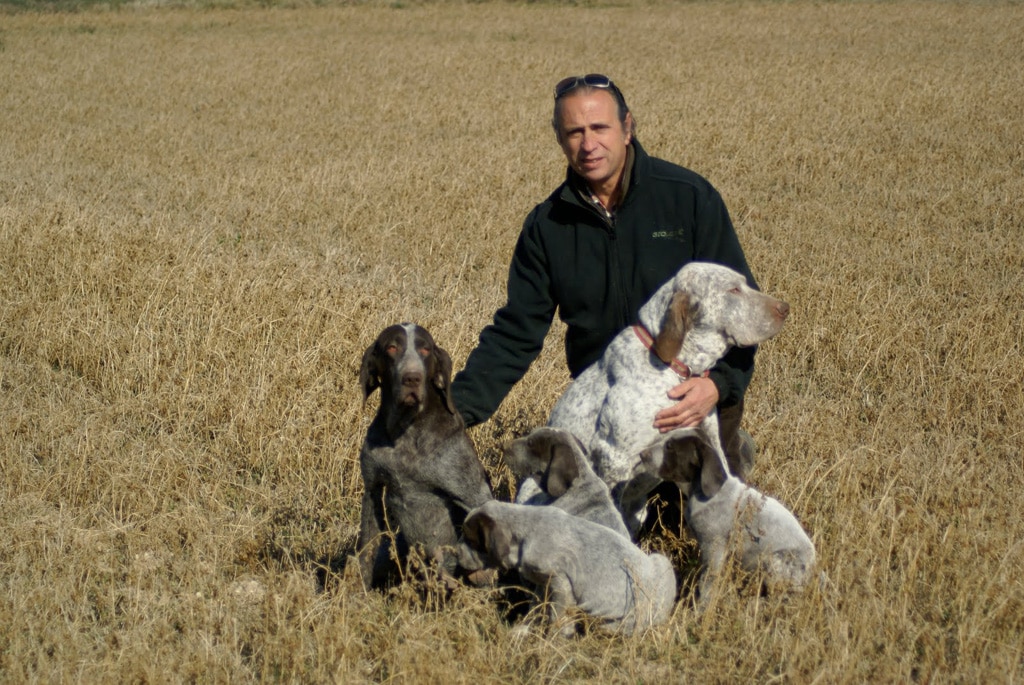
The Burgos Pointer It is a breed of dog Spain. Originally from Castile, especially in the province of Burgos, This rustic breed is intended for hunting and has exceptional characteristics for hunting small game..

It is an ancient breed from the Castilian tableland, is widespread, and according to some connoisseurs of the breed, it is likely that it has participated in the creation of other breeds of hunting dog, not only Spain.

The truth is that lot of documented material that speaks of this breed there is. Veterinary geneticist, Josรฉ Manuel Sanz rudder, has dedicated several lines to the history of this breed and in a document that appears cited in many web, speaks of the Origins and Ancient History (Until 1911). You can read the complete material on the website of the Spanish Association of el Perro Perdiguero de Burgos. Here we will only mention what refers to the word ยซPerdigueroยป and to the different theories about the origin but very briefly…

"The word ‘perdiguero‘ It occurs frequently in classical texts on venatoria and its reference corresponds to the generic Hunter dog of partridges, "perdicero" or "perdigero", but it cannot be lightly assumed that this dog was a Burgos Pointer. In numerous current texts we can read various theories about the origin of the race. The more absolute confusion arises from a whole once analysed separately. The most common mistakes that demonstrate a poor work of research are as follows:

  • Associate the word perdiguero the race Burgos Pointer.
  • Believing that the Pointing Dogs, as the Spanish classics tell us, they were Burgos Pointers and forget that they were other races.
  • Define like Burgos Pointer to the dogs that authors from Velรกzquez to Goya have been captured in numerous canvases where hunting dogs are reproduced.
  • Define incomprehensibly and lightly when Burgos Pointer as the origin of English Pointer, either in a display of patriotic enthusiasm, consider him further as the father of all European Braquesยซ.

"The authors, as often happens, they do not manage to agree on the theories about the origins of animals and while some affirm that the sample dog is originally from Italy, others say that France or Spain (according to the nationality of the author) which they were born.

On the formation of the current dog Burgos Pointer the news is null and we can only apply the parameters that are studied to form a race, they are:

  • Time and place of training.
  • Genetic basis provided the race.
  • Adaptation to the environment in which is born.
  • Geographical isolation and inbreeding operated.

With regard to the first of them, not a breed created by man ex process are being, with measured doses of one or another blood, both the time and the place of training are uncertain. A race not be based in short periods of time and having no initial selection at a single point, "We cannot think that the place of birth has only been a certain place."

(Author: Josรฉ Manuel Sanz rudder).

Physical characteristics

While the Burgos Pointer, It is not as robust and defined muscular level, like its relative the English Pointer, their appearance shows the strength of the race.

It has the ears long and the tail It tends to be cut one-third of its original length.

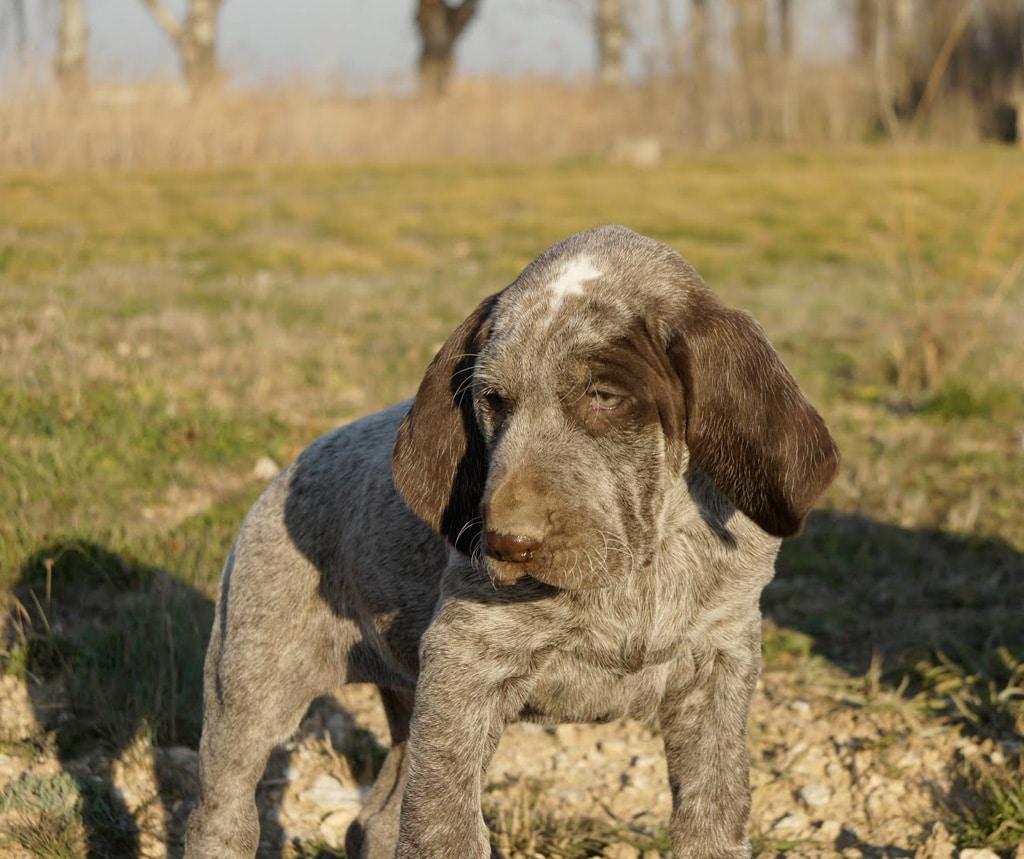
Its fur It has variants that can form different ranges within the basic color. The basic colors of the hair are the white and the liver. These colors mingle regularly, giving variegated layers that tend to liver, gray liver, mosqueados in liver and other various combinations, depending on whether the liver or white color is predominant and depending on whether the white spots are open or closed.

It is a very common feature (Although non-binding layer), that have a clear white spot on the forehead and the ears always spotted with a homogeneous liver color. Liver-colored hairs can form sharp, well-defined liver-colored patches, regularly distributed by the layer of the animal

Its the mantle is short, thick and soft. The hair is thinner in the head, ears and limbs.

The skin is elastic, but not printing, thick, abundant, pinkish spotless. All Oris they will be Brown, never black.

The height males will of 62 to 67 cm and females 59 to 64 cm to the cross. Thinking of 25 to 30 kg.

It is an animal that as all, It requires a dose of daily exercise. A long walk, and a few races in the open air will keep you happy.

Character and skills

It is a very friendly and quiet dog, not afraid easily. It is smart and learns easily, especially in tracking work.

It is not a dog that adapts very well to urban environments.

It is used for small game (rabbits, hares, etc.).

It's perfect for hunting in any field (no matter how hard it is), since it has an enviable physical resistance and a great speed.

The Burgos Pointer it is highly appreciated by hunters who want a rustic dog, hard in any terrain and type of hunting, obedient, strong and above all excellent winds and method of hunting, due to his calm and poise in the search, as well as his sample and his impeccable collection.

Although used for small game pieces not dismisses pieces of hunting trail, in which he demonstrates great bravery.

Characteristics "Burgos Pointer"

Coexistence is important that you have with your new friend. Before considering the acquisition of a dog of the breed "Burgos Pointer" you know certain factors. Not all breeds of dogs are apt to live in an apartment, you must take into account his character, their need for exercise, their interaction with other pets, their care and if you have small children, their level of tolerance towards them.

Adaptation โ“˜

3,0 of 5 stars (based on 1 review)

friendly dog โ€‹โ€‹โ“˜

3,0 of 5 stars (based on 1 review)

hair loss โ“˜

2,0 of 5 stars (based on 1 review)

Affection level โ“˜

3,0 of 5 stars (based on 1 review)

Need for exercise โ“˜

4,0 of 5 stars (based on 1 review)

Social need โ“˜

3,0 of 5 stars (based on 1 review)

Home โ“˜

2,0 of 5 stars (based on 1 review)

Toilet โ“˜

1,0 of 5 stars (based on 1 review)

Friendly with strangers โ“˜

3,0 of 5 stars (based on 1 review)

barking โ“˜

2,0 of 5 stars (based on 1 review)

Health โ“˜

3,0 of 5 stars (based on 1 review)

Territorial โ“˜

4,0 of 5 stars (based on 1 review)

Cat friendly โ“˜

2,0 of 5 stars (based on 1 review)

Intelligence โ“˜

4,0 of 5 stars (based on 1 review)

Versatility โ“˜

3,0 of 5 stars (based on 1 review)

Child friendly โ“˜

4,0 of 5 stars (based on 1 review)

Surveillance โ“˜

2,0 of 5 stars (based on 1 review)

joy โ“˜

4,0 of 5 stars (based on 1 review)

Images: Burgos Pointer

Videos: Burgos Pointer

Type and recognitions:

  • FCI CLASSIFICATION:
  • Group :
  • Section : . .

Federations:

  • – FCI – Group 7: Pointing Dogs. – Section 1: Continental Pointing Dogs. 1.1: Braque Type โ“˜

FCI breed standard "Burgos Pointer"

Origin:
Spain

Date of publication of the valid original standard:
26.05.1982

Use:

Hair and Feather Pointer Dog. The Perdiguero de Burgos is highly appreciated by hunters who want a rustic dog., hard in any terrain and type of hunting, obedient; strong and above all excellent winds and method of hunting, due to his calm and poise in the search, as well as his sample and his impeccable collection. Although used for small game game, does not discard the trail of game pieces, in which he demonstrates great bravery.


General appearance:

Hunting dog of good size, eumetric and medioline. Well developed head, compact trunk and strong limbs. Droopy ears and short hair. Longitudinal diameter as close as possible to the height at the withers. Proportionality and functional harmony must be sought, both in static and in motion


Behavior / temperament:

Rustic, balanced, calm and sitting; turns out to be a great show dog, especially suitable for hunting hair and feathers. Fresh look, very noble, it is a breed of excellent character, docility and intelligence.

Head:

As a whole : Big and strong, well developed skull; strong face and muzzle and corkscrew ears.

The cranium, seen from above, It must be moderately rectangular with a progressive decrease towards the nose, without giving feeling of pointed snout. The ratio of the length of the skull to that of the face is 6:5. The craniofacial lines are divergent.


Cranial region:
  • Skull : Width, strong, domed and convex profile; well marked central groove, shallow occipital crest. Accused frontal sinuses.
  • Depression links (Stop) : Soft, little sharp.

facial region:

  • Truffle : dark brown, wet, big and wide with wide open windows.
  • Snout : Straight profile or with a very slight curve towards the nose. Width throughout its length, it should not give the impression of being pointed. Wide muzzle.
  • Lips : Sagging without sagging. The upper one will cover the lower one well. The bottom is marked labial commissure. The mucous membranes must be brown.
  • Jaws / Teeth : Strong teeth, white and healthy; scissor bite. All premolars exist.
  • Eyes : Medium, macaroons, preferably dark hazelnut, noble and sweet look, sometimes giving a feeling of sadness. The skin of the eyelids is moderately thick, pigmented like the mucous membranes in brown. The lower eyelid should be as close as possible to the eyeball.
  • Ears : long, drooping and triangular in shape. Inserted at eye line level, at rest they fall gracefully in corkscrew. Without exerting traction, they must reach the corner of the mouth and will not reach the nose.. Soft and soft to the touch, they have fine skin and hair; marked venous network. In higher insertion care and flatter frontal conformation.
  • Palate : Pink mucous with well marked beads.

Neck:

Strong and powerful; wide part at the head and continues with a slight widening to the trunk. Slightly arched top edge. Lower border with well defined dewlap that, starting from both lip corners, It is presented double without being exaggerated.

Body:

  • As a whole : Square, strong and robust, powerful chest and ribs, giving a feeling of power and agility.
  • Cross : Well defined.
  • top line : Straight and horizontal or desirable with a slight drop from the withers. Never saddled and no oscillations during movement.
  • Back : Powerful and muscular.
  • Pork loin : Medium-, broad and muscular, giving a feeling of power.
  • Rump : Wide and strong. Its inclination will be less than 45ยฐ with respect to the dorsal lumbar line and the floor.. Height at the croup equal to or less than the height at the withers;
  • Breast : Wide and deep, reaches elbow level; muscular and powerful. Tip of the sternum marked. Well developed ribs, rounded, not flat. Well marked and wide intercostal spaces as we move towards the floating ribs. The chest perimeter must be equal to the height at the withers plus ยผ of it.
  • Bellies and flanks : Belly moderately tucked towards the genitals. Low sides and well marked flanks.

Tail:

Thickness birth and average insertion. It is amputated between a third and a half of its length.

Tips

PREVIOUS MEMBERS :

  • As a whole : Perfectly Plumb, straight and parallel. Strong bones with short pasterns and well developed feet.
  • Shoulder : Moderately oblique, muscular. The scapula should be approximately the same length as the arm
  • Arm : Strong and well muscled; its length will be 2/3 of the forearm.
  • Elbows : Glued to the trunk.
  • Forearm : Strong bone, with marked tendons. Straight and well plumb. Its length is double the total length from the carpus to the ground.
  • Metacarpus : Seen little laterally inclined, is practically the continuation of the forearm. Strong bone.
  • Front feet : Of cat, tight fingers, high and strong phalanx. dark nails. Robust plantar tuber, very wide and hard pads. Moderate interdigital membrane.
  • Angles : Scapulo-humeral angle close to 100ยฐ,Humero-radial angle close to 125ยฐ.

LATER MEMBERS :

  • As a whole : Powerful and muscular, strong bone and well poised with correct angles, well marked and angulated hocks, giving a feeling of power and solidity.
  • Thigh : Very strong and with a clear appreciation of the muscles, well marked and developed. Its length is ยพ of the leg.
  • Leg : Long and strong of bone twice the length of the metatarsal.
  • Hocks : Well marked with clear appreciation of the tendon.
  • Metatarsus : Strong bone and perpendicular to the ground.
  • Rear feet : Cat as in the forelimbs, although slightly more elongated.
  • Angles : Coxo-femoral angle close to 100ยฐ,Femoro-tibial angle close to 120ยฐ ,Open hock angle greater than 130ยฐ.

Movement:

The typical gait of the breed is an economical trot, loose and powerful without tendency to laterity and without ambling.

Mantle

SKIN :
Elastic but not detached, thick, abundant, pinkish spotless. All mucous membranes will be brown, never black.

HAIR : Bushy, medium thickness, short, smooth and distributed throughout the body to the interdigital spaces. Finer on the head, ears and limbs.

COLOR : The basic hair colors are white and liver.. These colors are mixed unevenly, giving marbled layers in liver, gray liver, liverwort and various other combinations, depending on whether the liver or white color is predominant and whether the white spots are more widespread or closed. A very common feature of the coat, although not necessary, It is the clear white spot on the forehead and the ears always stained with a homogeneous liver color.. Liver-colored hairs can form clear, well-defined spots of that color distributed irregularly across the animal's coat.. The same can happen with white hairs that can form gaps of this color on the coat without being extremely extended.. Black colorations or fires on the eyes and limbs are never allowed.


Size and weight:

Height to the cross :

  • Males of 62 to 67 cm.,
  • females of 59 to 64 cm..

A high rate of sexual dimorphism is observed in this breed., being the males more homogeneous and the females of more variable height and less corpulent in general.


Fouls:

Any deviation from the aforementioned criteria is considered as a fault and the severity of this is considered to the degree of the deviation to the standard and its consequences on the health and well-being of the dog..

MINOR FAULTS

โ€ข Profile of the snout fleshy without excess.
โ€ข Absence of any premolar.
โ€ข Pincer bite.
โ€ข Conjunctiva ligerรญsimamente visible.
โ€ข Belfos or double chin that, without being excessive, are very marked.
โ€ข Poorly solid dorso-lumbar line.
โ€ข Metacarpos, weak metatarsals or feet, but not excessively.
โ€ข Scars, wounds and abrasions during hunting season.

SERIOUS FAULTS

โ€ข Light appearance, fragile or excessively heavy and lymphatic.
โ€ข Parallel craniofacial axes.
โ€ข Poor or small heads.
โ€ข Narrow skull.
โ€ข Pointed snout.
โ€ข Absence of several premolars and canines not due to trauma.
โ€ข Very pronounced ectropion or entropion, light eyes.
โ€ข Ears that are too long or set too low.
โ€ข Belfos or exaggerated jowls.
โ€ข Saddled dorso-lumbar line.
โ€ข Height at the rump noticeably higher than the height at the withers.
โ€ข Incorrect positions, weak or deviant.
โ€ข Detached elbows.
โ€ข Cow hocks.
โ€ข Wavy or very long hair.
โ€ข Unbalanced character.

MISS PLAYOFFS

โ€ข Aggressive or fearful dog.
โ€ข Decidedly convergent craniofacial axes.
โ€ข Depigmentation in the truffle.
โ€ข Broken or black nose.
โ€ข Any degree of lower prognathism.
โ€ข Excessive upper prognathism.
โ€ข Albinism in the coat accompanied by the mucous membranes.

Any dog โ€‹โ€‹showing clear signs of physical or behavioral abnormalities must be disqualified..


N.B.:

Males should have two normal-appearing testicles fully descended into the scrotum..

Source: F.C.I - International Cynological Federation

Alternative names:

1. Perdiguero de Burgos, Burgalese Pointer (English).
2. Retriever de Burgos, Braque de Burgos, Perdiguero (French).
3. Burgos-Hรผhnerhund (German).
4. Pointer espanhol, Pointer de Burgos (Portuguese).
5. Perdiguera (espaรฑol).

โ–ท The world of Pets: Dogs, cats, birds, reptiles, amphibians

Pudelpointer
Alemania FCI 216 . Braque Type

Pudelpointer

The Pudelpointer has a great passion for water and swimming, which probably comes from the Poodle's influence on his selection.

Content

History

It was the German Baron Von Zedlitz, a real foodie, who created the Pudelpointer towards the end of the 19th century.

The Pudelpointers are Pointing Dogs hard hair, whose genetic origins date back to a cross between a English Pointer and Pudelhund, without any other race of Pointing Dogs. Although the Poodle it was only used to create the first strains, his qualities as a hunter have been preserved until today.

The first crossing of a Pudelhund and English Pointer to establish the new breed took place in Germany in 1881. The father was a English Pointer property of Kaiser Federico III called tell and mother, a Poodle named molly, belonged to a famous Teutonic author on the subject of hunting dogs, Hegewald.

The genes of Poodle, like race, seemed to have been more dominant in transmission. To alter this, many more were introduced Pointers What Poodles in the breeding program to arrive at what the Pudelpointer is today. During the first 30 years of parenting, they only used 11 Poodles instead of more than 80 Pointers. After that initial time period, only the occasional reintroduction of the Pointer. After WWI and WWII, the breed was severely reduced and the reintroduction of the English Pointer became important to rebuild the brood.

The first Pudelpointers in North America were imported into 1956. After the foundations of the breed were laid, in 1977 The Club of the Pudelpointer from North America.

Combined with the exceptional abilities of the English Pointer to work on the plains, that is to say, a fine and receptive nose even at a distance, a quick search that covers a lot of ground and firm stops, we have created a versatile and genetically strong hunting dog that meets the requirements of hunting.

Germany is very careful in preserving the health of the breed, with increased vigilance against hip dysplasia and epilepsy. It also, the Pudlepointers currently play an important role in hunting events, since only dogs that have successfully participated in them are registered in the pedigree registry.

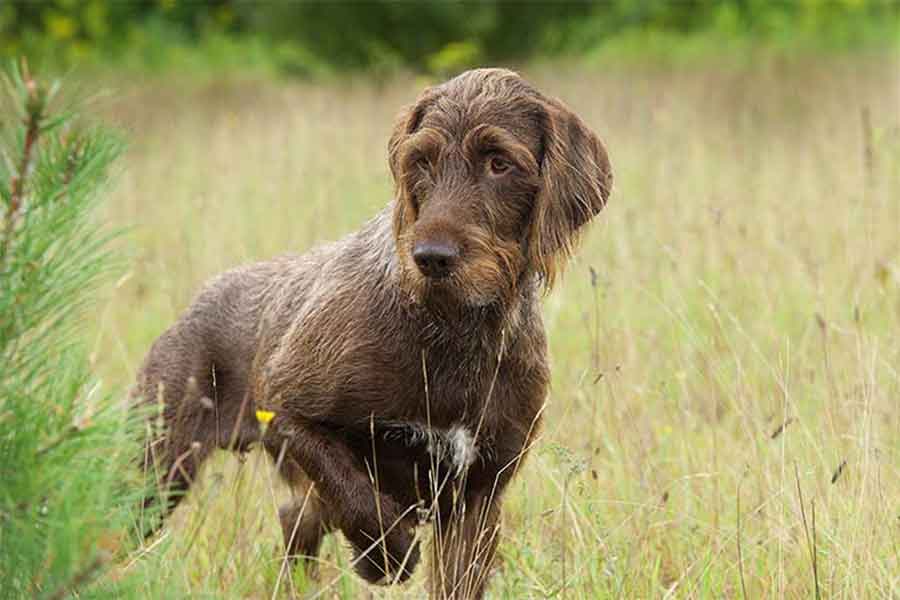
Photo: Pudelpointer by https://www.akc.org/dog-breeds/pudelpointer/

Physical characteristics

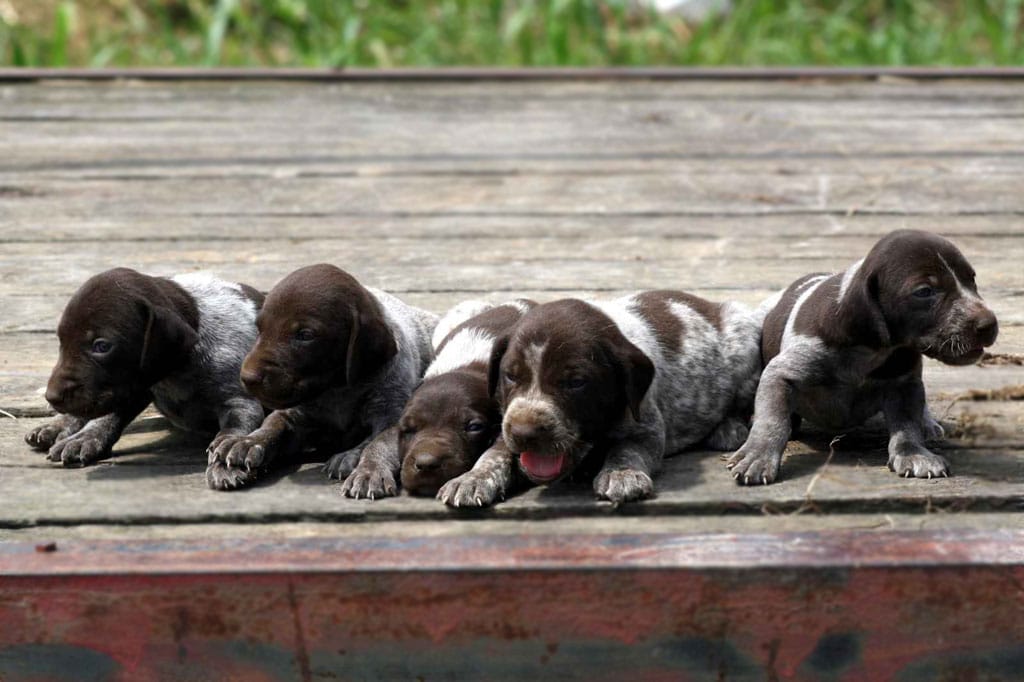
The Pudlepointer It is a breed of dog weighs between 20 and 30 Kg., measured between 53 and 66 cm.. on the shoulder and comes with liver colored fur, brown and occasionally black. The ideal coat is hard, lean and dense.

The Pudelpointer it is a large hunting dog that weighs between 20 and 30 Kg and measures between 53 and 66 cm.. The ideal type has the construction of a heavy pointer. The tail extends the rump in a regular line without breaking.. The tail can be shortened for hunting and, if the law allows it, the length should reach the lower edge of the vulva in females or cover the testicles in males. The length of the skull is equal to that of the muzzle. The ears are medium in size, hanging ears are high and close to the head. The tip of the ear is slightly rounded. Located on the sides, eyes are large and dark amber.

Covering the whole body, medium length hair is rough, close and close to the body, with a thick undercoat. The head has a beard and a toupee with curly streaks. The hair must provide protection against the cold, water and injuries. The coat is solid black, brown or dead leaf. White spots are allowed. These dogs shed very little hair.

Character and skills

Of the English Pointer, inherited the subtle nose, the burning and the lively gait. The Poodle gave him the vivacity of the spirit, the talent of transporter and the taste of water.

Energetic dog, very enthusiastic tracker and retriever at work, is comfortable on all terrains and can tolerate all weather conditions quite easily.

Health

Germany, the country of origin of the Pudelpointer, attaches special importance to the health status of the breed with special emphasis on the prevention of hip dysplasia (HD) and epilepsy in the breed. Some dogs may face these health challenges in their lives, but most of the Pudelpointers they are healthy dogs. Working with a responsible breeder, future owners can get the education they need to learn about specific health concerns within the breed.

Grooming

The Pudelpointer has a close layer, flat, hard and rough of medium length with a dense undercoat; as a result, seasonally shed. Beyond regular weekly grooming, the occasional bath will keep you clean and looking your best. Grooming can be a wonderful bonding experience for you and your dog..

Strong, fast-growing nails should be trimmed regularly with nail clippers or a nail buffer to prevent excessive growth., breakage and cracking. Ears should be checked regularly to prevent buildup of wax and debris, which can result in infection. Teeth should be brushed regularly.

Exercise

The Pudelpointer, as a hunting breed, need regular exercise. Exercise options may include backyard playtime, preferably fenced, or being taken for walks several times a day. Exercise can also be done in the form of indoor activities, like the hideout, chase a ball rolling on the ground or learn new tricks. Certain outdoor activities such as swimming, hiking or retrieving Frisbees or balls can provide a good outlet for expending energy.

Note: The Pudelpointer absolutely love water! Training for dog sports such as agility, obedience, and the rally can also be a great way to give your dog exercise.

Characteristics "Pudelpointer"

Coexistence is important that you have with your new friend. Before considering the acquisition of a dog of the breed "Pudelpointer" you know certain factors. Not all breeds of dogs are apt to live in an apartment, you must take into account his character, their need for exercise, their interaction with other pets, their care and if you have small children, their level of tolerance towards them.

Adaptation โ“˜

3,0 of 5 stars (based on 1 review)

friendly dog โ€‹โ€‹โ“˜

4,0 of 5 stars (based on 1 review)

hair loss โ“˜

1,0 of 5 stars (based on 1 review)

Affection level โ“˜

4,0 of 5 stars (based on 1 review)

Need for exercise โ“˜

4,0 of 5 stars (based on 1 review)

Social need โ“˜

4,0 of 5 stars (based on 1 review)

Home โ“˜

3,0 of 5 stars (based on 1 review)

Toilet โ“˜

2,0 of 5 stars (based on 1 review)

Friendly with strangers โ“˜

4,0 of 5 stars (based on 1 review)

barking โ“˜

3,0 of 5 stars (based on 1 review)

Health โ“˜

4,0 of 5 stars (based on 1 review)

Territorial โ“˜

2,0 of 5 stars (based on 1 review)

Cat friendly โ“˜

2,0 of 5 stars (based on 1 review)

Intelligence โ“˜

4,0 of 5 stars (based on 1 review)

Versatility โ“˜

3,0 of 5 stars (based on 1 review)

Child friendly โ“˜

4,0 of 5 stars (based on 1 review)

Surveillance โ“˜

2,0 of 5 stars (based on 1 review)

joy โ“˜

3,0 of 5 stars (based on 1 review)

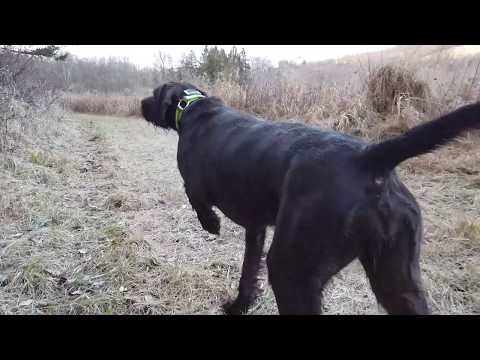
Videos "Pudelpointer"

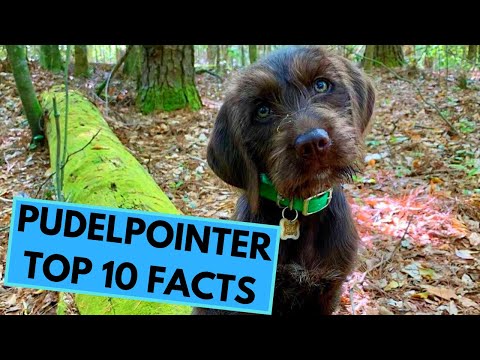
Pudelpointer - TOP 10 Interesting Facts
Pudelpointer – TOP 10 Interesting Facts
Martha the Pudelpointer - Deliver to Hand
Martha the Pudelpointer – Deliver to Hand

Type and recognitions:

  • FCI CLASSIFICATION:
  • Group :
  • Section : . .

Federations:

  • – FCI – Group 7: Pointing Dogs. – Section 1: Continental Pointing Dogs. 1.1: Braque Type โ“˜
  • – CKC – Grupo 1 – Sporting Dogs โ“˜
  • – UKC – Gun Dogs โ“˜

FCI breed standard "Pudelpointer"

Origin:
Germany

Date of publication of the valid original standard:
09.11.2004

Use:

Hunting dog. Variable with all the characteristics required for the breed. Useful for the field, forest and water.


General appearance:

Ideally, its structure should show the type of a heavy Pointer with a not too long brown coarse coat., dark brown, color of dry leaves or black which protects its entire body.

IMPORTANT PROPORTIONS :

โ€ข The relationship between the length of the body and the height at the withers must be 10 to 9.
โ€ข The ratio of the length of the skull from the occipital protuberance to the stop is equal to the length of the snout from the stop to the nose..


Behavior / temperament:

neither shy nor aggressive. Quiet character, controlled and balanced. Marked hunting instinct without fearing prey or being sensitive to being shot.

Head:

Harmonious length and width according to your height and sex.

Cranial region:
  • Skull: Plano, just a little rounded on the sides, moderately wide, clearly developed eyebrow arch.
  • Depression links (Stop) : Marked.

facial region:

  • Truffle: Its color corresponds to the color of the hair, heavily Pigmented. Well open nasal Windows.
  • Snout : Harmonious relationship between its length and width. It should not be narrow or end in a point. Straight nasal bridge.
  • Lips : Tight, not hanging. In no way should you drool.
  • Jaws / Teeth : Big teeth, strong jaws with a perfect scissors bite, regular and complete in which the upper incisors close in front of the lower ones without losing contact and the teeth are placed vertically in the jaw. With 42 teeth according to the dental formula.

Eyes : Placed on the sides, large, dark amber tones with a lively expression. Eyelids well covered with hair and close to the eyeball.

Ears : Medium-sized, High insertion hangs flat and close to the sides of the skull; They are not fleshy; well covered with hair and rounded ends.

Neck:

Long Middle, strong muscles. The neck line is slightly domed without showing a double chin..

Body:

  • top line : Right.
  • Cross : Marked.Back : Short, straight, rigid with strong muscles.
  • Pork loin : With strong muscles.
  • Rump : Long and moderately inclined, with good musculature.
  • Breast : Wide and deep. Ribs well sprung but not barrel-shaped.
  • Bottom line and belly : retracted back, forming an elegant arch. Delgado.

Tail:

The transition from the rump is even in a line without interruption. Right tail, should not be carried upwards. Cover of rough hair without forming a flag. The tail, for hunting purposes and in accordance with animal protection, In the case of females, it is amputated to the lower edge of the vulva and in males, covering the testicles. In countries where amputation is prohibited by law, the tail can be left natural.. It should reach the joint of the hoof and its carriage should be straight or slightly saber-shaped, somewhat above the top line..

Tips

PREVIOUS MEMBERS :

In general: Seen from the front straight and parallel, seen from the side, limbs straight and well placed under the body. Strong joints and bones.
Shoulder : Well-fitted and muscular scapulae. Shoulders and forearm form a correct angle.
Arm : Long, well muscled and dry.
Elbow : Placed well under the body, well adjusted without turning in or out.
Forearm : Long, well developed muscles, dry and placed vertical. Arm and forearm form a correct angle.
Articulation of the carpus : Strong.
Metacarpus : something directed forward.
Previous foot : Round to oval, closed. Strong and durable pads. The hair on the feet and fingers should not be too long.

LATER MEMBERS :

In general : Hindquarters seen from behind straight and parallel, well muscled, strong bones.
Thigh : Long, width, well muscled.
Knee : Strong. Thigh and leg form a correct angle.
Warm-tarsal joints : Strong, very well angled.
Metatarsus : Short, vertical placement.
Rear foot : Round to oval, closed. Strong and durable pads. The hair on the feet and fingers should not be too long.

Movement:

Harmonic, elastic, with good reach and thrust. Steps that cover the surface well. Forelimbs and hindlimbs straight and parallel, maintaining an upright posture.

Mantle

SKIN : Tight, footprint, without forming folds.

HAIR : Cerrado, glued, hard, medium length with abundant undercoat. The length of the outer hair above the withers is 4 โ€“ 6 cm.. The head with a beard and chip-type curls on the forehead. The hair on the belly is closed and dense. The hard and dense coat should provide, as much as possible, good protection against inclement weather and injuries..

COLOR : Unicolor.

โ€ข Brown.
โ€ข Colors of dry leaves.
โ€ข Negro.

Small white marks allowed.


Size and weight:

Height to the cross :

  • Males : 60 to 68 cm.,
  • females : 55 to 63 cm..


Fouls:

Any deviation from the aforementioned criteria is considered a fault and the severity of it is considered to the extent of the deviation from the standard and its consequences on the health and well-being of the dog..
In particular :

โ€ข Sunken or steep back.
โ€ข Elbows turned outward or inward.
โ€ข Cow's hooves, sickle or together both standing and moving.
โ€ข Stiff movement or with short steps.
โ€ข Hair that is too long, too thin, absence of inner fleece.

DISQUALIFYING FOULS:

โ€ข Shyness towards prey, nervousness, aggressiveness, teether out of fear.
โ€ข Unsuitable temperament for hunting, especially fear of being shot.
โ€ข Prognathism, enognatismo, crossbite. Narrowly placed canines.
โ€ข Lack of teeth except P1.
โ€ข Entropion, ectropion of any type.
โ€ข Upper eyelids without eyelashes as well as eyelids devoid of hair.
โ€ข Short hair.
โ€ข Absence of beard.
โ€ข Any other color or markings of another color than that described by the standard.

Any dog โ€‹โ€‹showing clear signs of physical or behavioral abnormalities must be disqualified..


N.B.:

Males should have two normal-appearing testicles fully descended into the scrotum..

Source: F.C.I - International Cynological Federation

Alternative names:

1. Pudelpointer (English).
2. Pudelpointer (French).
3. Pudelpointer (German).
4. Pudelpointer (Portuguese).
5. Pudelpointer (espaรฑol).