โ–ท The world of Pets: Dogs, cats, birds, reptiles, amphibians

Irish Red and White Setter
Irlanda FCI 330 . Setter

Setter Irlandรฉs Rojo y Blanco

Irish hunters consider the Irish Red and White Setter higher than Irish Red Setter because of its calmer temperament and because it is less visible in the autumn landscape.

Content

History

The Irish Setter it was probably well known in the late 17th century. Outside of ireland, little is known about the existence of two varieties of Irish Setter: the Irish Red and White Setter and the Irish Red Setter. It is the red and white variety that preceded the other, and it is a judicious selection that developed the uniform red color.

When the Irish setters were first exhibited shortly after the middle of the 19th century, there was a lot of confusion about its color. At the end of the 19th century, the red variety had outshone the red and white, which became so rare that the breed was thought to have become extinct.

In the Decade of 1920, the breeders tried to revive the breed and in 1944 the breed was sufficiently recovered to form a club. In the news, the breed is enjoying a slight revival, and you can find many Irish Red and White Setter in exhibitions and fields.

The current club, the Labor and Exhibition Society of the Irish Red and White Setter, was founded in 1981. Thanks to your efforts and your line of action, the breed is now well established nationally and internationally.

The Irish Red and White Setter, in competition with other breeds of Pointing Dogs, has been successful in field trials, and currently there are a good number of working and exhibition champions.

Originally all Irish Setter were, mostly, red, or red and white, but around 1880 breeders began to prefer the variety of solid red color and as a result, the race was on verge of extinction.

Photo: irwskingspeaks.nl

Physical characteristics

Exist 2 varieties of Irish Setter, which differ in both their morphology and their behavior in the field.

The Irish Red Setter can be compared to the thoroughbred horse, all steel and tension, no superfluous meat or thick muscles. It must give the impression of extreme speed and everything about it contributes to this: dry fabrics (light but strong skeleton), long and dense muscles, thin and tight skin, without jowl.

The Irish Red and White Setter is similar to the Hunter: very resistant, powerful and robust. The chest is more rounded than the red one and its skin is thicker.

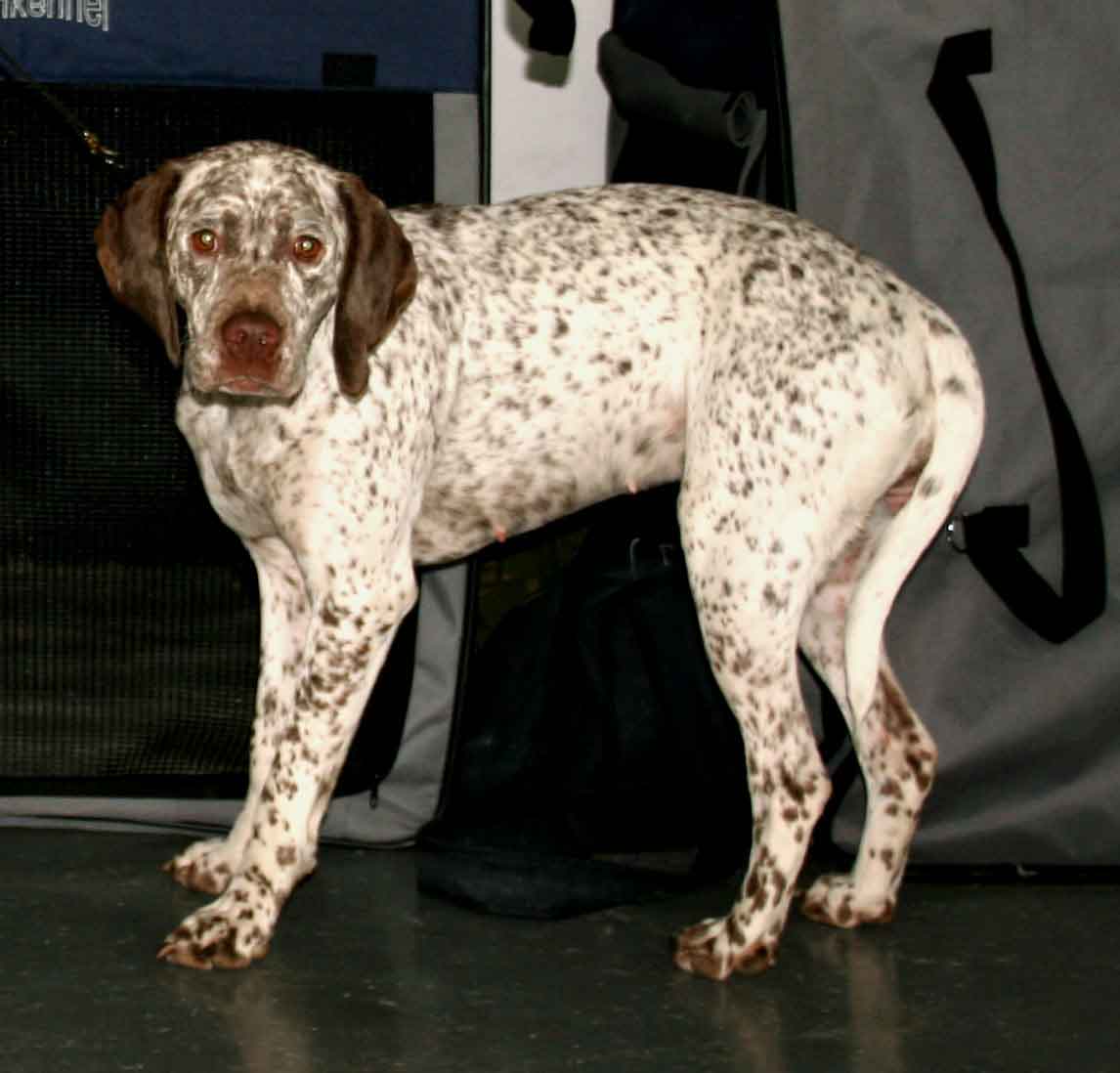
The coat is white with solid red spots.

Height and weight

    ▷ Male size: Of 62 to 66 cm.

    ▷ female size: Of 57 to 61 cm.

    ▷ Male weight: Of 20 to 25 kg

    ▷ female weight: Of 18 to 23 kg

Character and skills

The kind and caring Irish Red and White Setter not only is it a popular hunting dog. Thanks to its excellent ability to smell and its strong natural instincts to point and recover, does double duty as a friend of the family. He likes children and can fit in well in a family with children, with the caveat that he's quite rambunctious, especially when it's a puppy, and should always be supervised when there are young children.

The Irish Red and White Setter is always alert, so it is a good watchdog, but does not have the protective nature of a guard dog. In general, gets along with other dogs and is friendly with cats when raised with them. But keep in mind that it only has a score of 3 In "kindness with cats" on a scale of 1 to 5.

This is an active sporty dog รขโ‚ฌโ€นรขโ‚ฌโ€นthat needs to exercise daily. Take it for a run, to take a long walk, walk him for half an hour twice a day or play ball until his arms ache. All of these activities will help you satisfy your need to be outside doing something.. If you are interested in dog sports, is an excellent candidate for agility, the flyball, obedience, the rally and the crawl. It is nice, friendly and mild-mannered once he's past the puppy stage, and it also has wood to be a good therapy dog รขโ‚ฌโ€นรขโ‚ฌโ€นto visit facilities such as nursing homes and children's hospitals.

In the countryside, the Irish Red and White Setter work at a moderate pace, without ever straying too far from the hunter. He is full of curiosity and seeks hunting in the field. Choose it if your hunting ground is wooded or near a river or lake (better suited to large open spaces).

With regard to training, the Irish Red and White Setter may be a contradiction. He's kind but headstrong, smart but slow to mature. Train him with a light touch so as not to distort his determination, his courage and his high spirit.

Health

All dogs have the potential to develop genetic health problems, like all people have the potential to inherit diseases. Avoid any breeder that does not offer a health guarantee for the puppies, to tell you that the breed has no known problems or to keep puppies isolated from the main part of the house for health reasons. A reputable breeder will be honest and open about the health problems of the breed and the incidence with which they occur.

The Irish Red and White Setter have health problems that may be cause for concern, especially if the breeder is not carefully examined. Among them are hip dysplasia, eye problems such as cataracts and progressive retinal atrophy, hypothyroidism and an immune disorder called canine leukocyte adhesion deficiency (CLAD). A reputable breeder will be honest and open about health problems in the breed and the incidence with which they occur in their lines..

Do not buy a puppy from a breeder who cannot provide you with written documentation that the parents have been exempted from health issues affecting the breed. Having dogs โ€œvet checkedโ€ is no substitute for genetic health testing.

Inform your dog's breeder of any serious illness. If the breeders do not know that a health problem has appeared in their line, cannot take steps to eradicate it.

Grooming

The Irish Red and White Setter has a silky coat that removes dirt easily. Also loose hair, but in a moderate way. The coat should look natural and, except for the bottom of the feet, does not need to be shaved or trimmed.

Brush and comb the coat a couple of times a week - and whenever the dog has been in the field- taking care to gently remove any tangles or kills in the coat. Regular brushing will keep the coat clean, but you will need to bathe the dog from time to time if the white hair starts to get dirty.

The rest is basic care. Trim nails when necessary, usually every one to two weeks. Brush teeth frequently with a vet-approved pet toothpaste for overall good health and fresh breath.

Characteristics "Irish Red and White Setter"

Coexistence is important that you have with your new friend. Before considering the acquisition of a dog of the breed "Irish Red and White Setter" you know certain factors. Not all breeds of dogs are apt to live in an apartment, you must take into account his character, their need for exercise, their interaction with other pets, their care and if you have small children, their level of tolerance towards them.

Adaptation โ“˜

2,0 of 5 stars (based on 1 review)

friendly dog โ€‹โ€‹โ“˜

4,0 of 5 stars (based on 1 review)

hair loss โ“˜

3,0 of 5 stars (based on 1 review)

Affection level โ“˜

5,0 of 5 stars (based on 1 review)

Need for exercise โ“˜

5,0 of 5 stars (based on 1 review)

Social need โ“˜

4,0 of 5 stars (based on 1 review)

Home โ“˜

3,0 of 5 stars (based on 1 review)

Toilet โ“˜

3,0 of 5 stars (based on 1 review)

Friendly with strangers โ“˜

2,0 of 5 stars (based on 1 review)

barking โ“˜

3,0 of 5 stars (based on 1 review)

Health โ“˜

3,0 of 5 stars (based on 1 review)

Territorial โ“˜

3,0 of 5 stars (based on 1 review)

Cat friendly โ“˜

3,0 of 5 stars (based on 1 review)

Intelligence โ“˜

3,0 of 5 stars (based on 1 review)

Versatility โ“˜

3,0 of 5 stars (based on 1 review)

Child friendly โ“˜

5,0 of 5 stars (based on 1 review)

Surveillance โ“˜

3,0 of 5 stars (based on 1 review)

joy โ“˜

4,0 of 5 stars (based on 1 review)

Images "Irish Red and White Setter"

Photo:

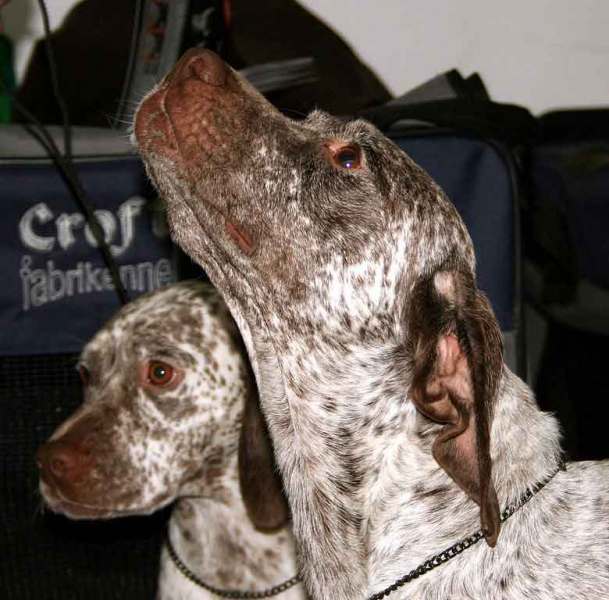
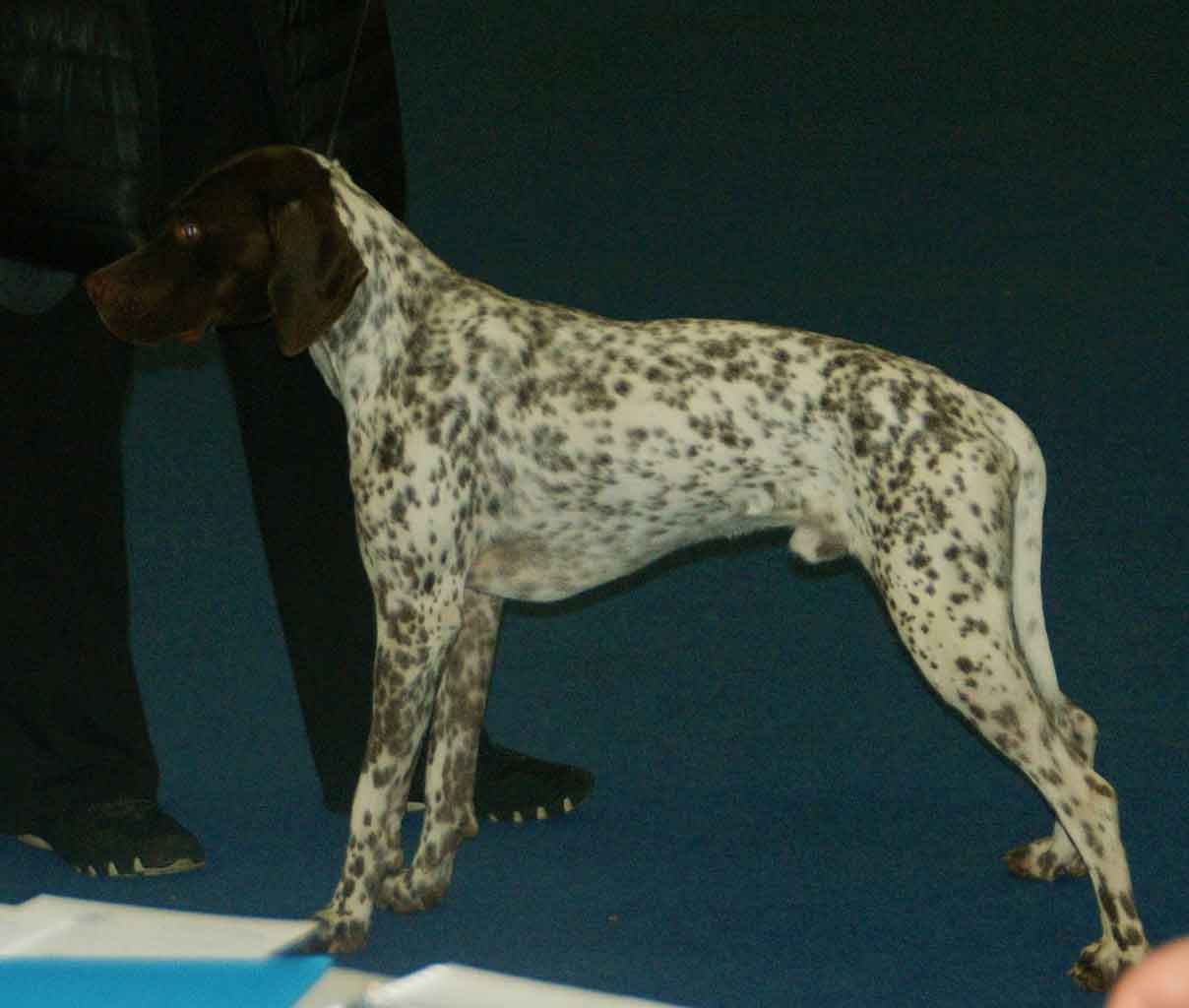
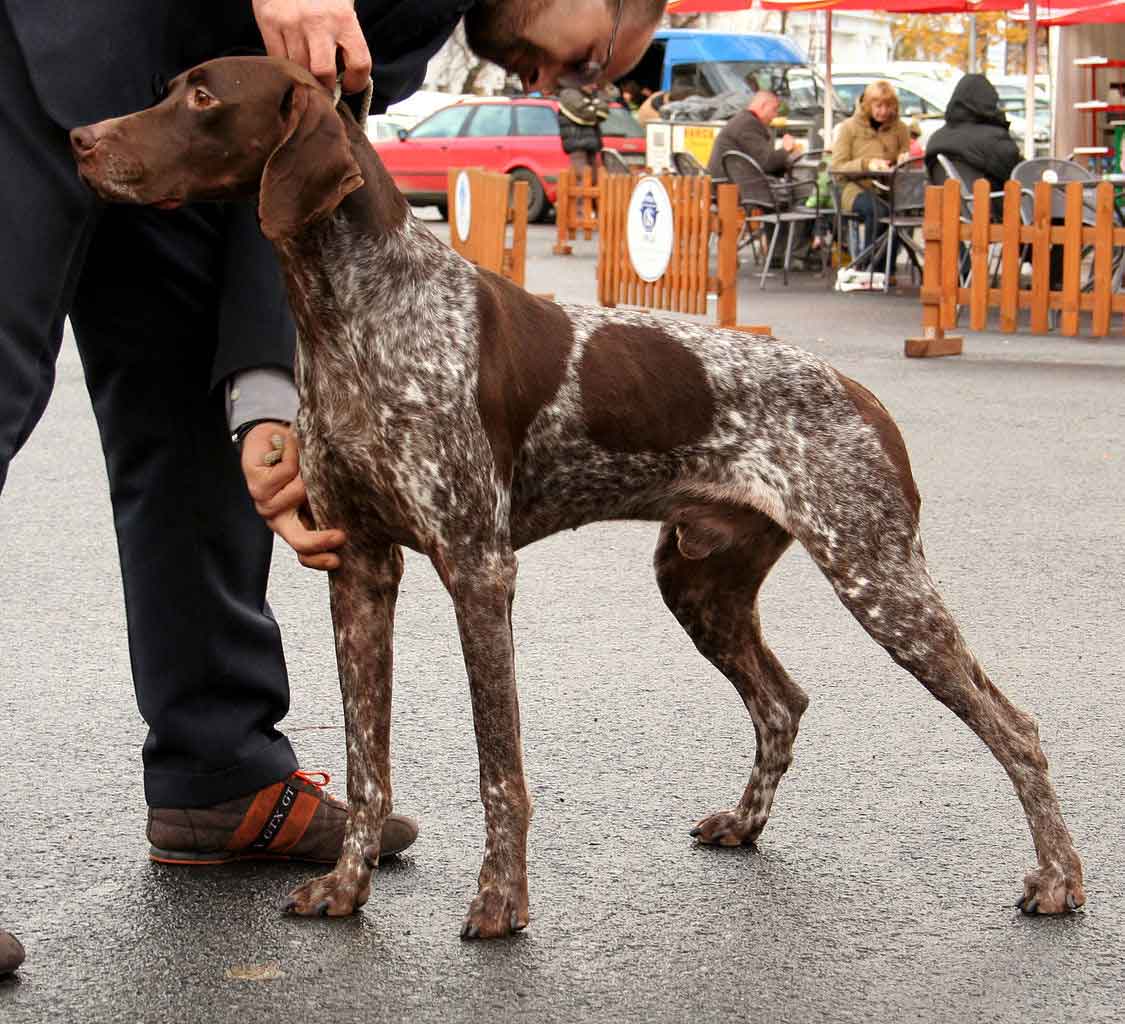
1 – Irish Red and White Setter during the international dog show in Rzeszรณw, Poland. by Pleple2000, CC BY-SA 3.0, via Wikimedia Commons
2 – Irish Red and White Setter during the international dog show in Rzeszรณw, Poland. by by Pleple2000, CC BY-SA 3.0, via Wikimedia Commons
3 – Irish Red and White Setter by Ordinary Guy, CC BY 2.0, via Wikimedia Commons
4 – Merlin in the kitchen by Dekker70, CC BY-SA 4.0, via Wikimedia Commons
5 – Irish Red and White Setter during the international dog show in Rzeszรณw, Polonia by Pleple2000, CC BY-SA 3.0, via Wikimedia Commons
6 – Irish Red and White Setter during the international dog show in Rzeszรณw, Polonia by Pleple2000, CC BY-SA 3.0, via Wikimedia Commons

Videos "Irish Red and White Setter"

Type and recognitions:

  • FCI CLASSIFICATION:
  • Group :
  • Section : . .

Federations:

  • FCI – Group 7: Pointing Dogs. – Section 2: British and Irish Pointers and Setters. 2.2: Setter โ“˜
  • AKCSporting (FSS) โ“˜
  • ANKC (Gun dogs) โ“˜
  • CKCGroup 1 – Sporting dogs โ“˜
  • โ€‹KC – Gun dog โ“˜
  • NZKCGundog โ“˜
  • UKCGun dog breeds โ“˜

FCI breed standard "Irish Red and White Setter"

Origin:
Ireland

Date of publication of the valid original standard:
19.04.2005

Use:

Very good companion and friend at home and in the field. The Irish Red and White Setter is primarily bred for the field. The standard from now on must be interpreted primarily from this point of view and all judges on the courts must judge them primarily from the point of view of work..


General appearance:

Strong, well balanced and proportioned without heaviness; more athletic than light. The Irish Red and White Setter is primarily bred for work and should be judged primarily from this perspective..


Behavior / temperament:

Aristocratic, cunning and smart, manifests kindness and friendship, dispositions behind which determination must be discerned, The courage and its great spirit. The Irish Red and White Setter is very friendly, dependent and easy to train as a hunting dog.

Head:

Wide in proportion to the body.

Cranial region:
  • Craging: And domo, no marked occipital bulge as in the case of the Irish Red Setter.
  • Dnaso-frontal depression (Stop): Marked.

facial region:

  • Hocico: Net and square.
  • Jaws: Jaws equal to or almost the same.
  • Dinentities: Regular. The scissor bite is the ideal, pincer bite is acceptable.
  • Eyes: Dark hazelnut or dark brown color; oval, slightly prominent, no visible conjunctiva.
  • Ears: Implanted at eye level and set well back, falling close to the head.

Neck:

Moderately long, very muscular, not too thick, slightly arched, without any tendency to have a double chin.

Body:

Strong and muscular.

  • Lรญnea Superior: Very muscular and powerful.
  • Breast : Deep, with well arched ribs.

Tail:

Of moderate length, does not descend below the hock. Strong at birth, progressively tapers to a fine point, without giving the impression of being knotty. It is carried at the level of the back or below.

Tips

Well muscled and sinewy legs, strong bone.

PREVIOUS MEMBERS:

  • Escapula: Well oblique.
  • Cskin: Free, neither in nor out.
  • Pinernas anteriores: Straight and wiry, with good bone.
  • Metacarpus: Strong.
  • Pinis previous: Fingers tight with thick hair between them.

LATER MEMBERS:

  • Ageneral appearance: Wide and powerful; back legs from hip to hock long and muscular.
  • Rodilla: Well angled.
  • Corvejones: Well descended; they are not deflected either outwards or inwards. From hock to heel of moderate length and strong.
  • Pinis later: Fingers tight with thick hair between them.

Movement:

At a trot, wide movement, lively, funny and efficient. The head is carried high. The rear drive is smooth and very powerful. The above are propelled well forward and held low. Seen from the front or the back, the action of the anterior and posterior (under the hock) performed in a plane perpendicular to the ground. Without crossing or knitting, in the before or after.

Mantle

Fur: Long hair, silky and fine "feathers" behind the anterior and posterior members and on the outside of the ear pavilion, also a reasonable amount on the flanks extending to the chest and throat forming fringes. All the fringes are straight, smooth and free of curlers, soft waves are allowed. The tail must have a lot of fringe. In all other parts of the body the hair must be short, smooth and free of curlers.

Color: Base color is white with solid red patches (defined islands of red), Both colors must demonstrate the maximum of life and lozania; stains allowed, but not the splashed ones (mixed hairs) in the face, the feet, on the forelimbs up to the elbow and on the hindlimbs up to the hock. Splashed, spotted and mottled on any other part of the body are objectionable.


Size and weight:

Desired height at the withers:

  • Males: 62-66 cm. (24,5 โ€“ 26 inches).
  • females: 57-61 cm. (22,5 โ€“ 24 inches).


Fouls:

Any deviation from the aforementioned criteria is considered as a fault and the severity of this is considered to the degree of the deviation to the standard and its consequences on the health and well-being of the dog..

FAFROMS GRAVES:

  • Any specimen, male or female that is not within the height standard.

FALTAS DISQUALIFYERS:

  • Aggressiveness or extreme shyness.
  • Any dog โ€‹โ€‹showing clear signs of physical or behavioral abnormalities.
  • Males who do not have two apparently normal testicles.
  • Although spotted but not splattered is allowed on the face, feet and forelimbs up to the elbow and hindlimbs up to the hock; splattered, spotted and mottledvisible and in excessin any other part of the body are eliminating fouls.


N.B.:
  • Males should have two normal-appearing testicles fully descended into the scrotum..
  • Only functionally and clinically healthy dogs, with the typical conformation of the breed, should be used for parenting.

Source: F.C.I - International Cynological Federation

Alternative names:

1. Irish R&W Setter, IRWS/span> (inglรฉs).
2. Setter irlandais rouge et blanc (francรฉs).
3. Irischer Rot-WeiรŸer Setter (alemรกn).
4. (em inglรชs: Irish Red and White Setter) (portuguรฉs).
5. IRWS (espaรฑol).

โ–ท The world of Pets: Dogs, cats, birds, reptiles, amphibians

Picardy Spaniel
Francia FCI 108 . Spaniel type

Docile and resistant, happy with little, the Picardy Spaniel however needs the constant attention of your caregiver.

Content

History

The French Spaniel and the Picardy Spaniel the two races of Spaniel oldest on the European continent. Both seem to descend from the "oyys dog" described in the works of Gaston Fรฉbus (siglo XIII). At that time, Hunting was one of the most popular activities of the French nobility and the Spaniel French type was one of the most popular breeds. The breed is represented in paintings from this period by artists such as Alexandre-Franรงois Desportes and Jean-Baptiste Oudry. It is also the first dog breed to be admitted to exhibitions..

The breed became more popular after the French Revolution, since hunting is no longer an activity reserved exclusively for the nobility. Although it is found throughout the country, a large contingent is present in the northwest of the country, where its water resistant coat makes it an ideal breed for hunting in forests and swamps. During the 19th century, English hunters crossed the English Channel and traveled to northwestern France to hunt in these famous lands. So they brought their own hunting dogs, that the French gradually adopted, thus endangering Picardy Spaniel. It also, the infusion of blood from English Setter in the race created the Blue Picardy Spaniel.

The Picardy Spaniel it is a very rare breed of dog, which is almost only found in metropolitan France.

The Picardy Spaniel is recognized by a wide variety of canine clubs and associations such as the International Canine Federation, even abroad like him North American Kennel Club, the American Rare Breed Association, the United Kennel Club. All these associations use the FCI standard. It is also recognized by the Continental Kennel Club, but unlike the Blue Picardy Spaniel, which is closely related to him, is not recognized by the Canadian Kennel Club.

Photo: ยซSpaniel Picardoยป in the World Canina Exhibition of Poznaล„ Pleple2000, CC BY-SA 3.0, via Wikimedia Commons

Physical characteristics

The Picardy Spaniel he is a beautiful dog, strong, elegant, nervous, solid and well muscled. Its coat is gray with brown spots on the different parts of the body and often tan on the head and legs.. Her dark amber eyes go wide giving you an expressive look. Its abundant and slightly wavy coat gives it protection, allowing you to work in the toughest places, especially in the water. The ears are long, quite low, located on the eye line and decorated with beautiful fringes. The tail, adorned with beautiful fur, worn with distinction. Its size ranges from 55 and 60 cm..

Character and skills

The FCI breed standard does not describe a typical temperament for the Picardy Spaniel. The Picardy Spaniel it is considered a docile breed of dog that loves to play with children, and easily bond with your caregiver. Generally described as a docile dog, good-natured and easy to train.

Above all, They are hunting dogs that need a lot of exercise to express their energy., resistance and rusticity.

His training is natural; the Picardy Spaniel they work to please their caregiver. Report, on land and in deep water, it's a pleasure for him. The rewards, caresses and compliments are the basis of his education.

Utility

The Picardy Spaniel is a hunting dog, that needs daily departures.

The Picardy Spaniel are used for hunting, in the woods for pheasant or in the swamps where they hunt, in particular, the snipe. It is also an effective dog for duck hunting, the hare or the rabbit. They are especially effective in swamps, where they do not hesitate to jump into the water. If required, can also recover hunting. This dog loves wide spaces where he can exercise, but you can also settle for smaller spaces and you can live very well in the city. The hair is abundant and slightly wavy, allowing you to hunt in dense vegetation and enter the water without any difficulty.

These docile dogs make great companion dogs., but they require a lot of physical exercise.

Health

There are no known hereditary genetic diseases in dogs Picardy Spaniel. Its longevity is of 14 years on average. The Picardy Spaniel is especially sensitive to ear infections, like most floppy eared dogs, like other breeds of โ€œSpaniels or Bassetsโ€. The Picardy Spaniel tend to gain weight quickly if overfed.

Characteristics "Picardy Spaniel"

Coexistence is important that you have with your new friend. Before considering the acquisition of a dog of the breed "Picardy Spaniel" you know certain factors. Not all breeds of dogs are apt to live in an apartment, you must take into account his character, their need for exercise, their interaction with other pets, their care and if you have small children, their level of tolerance towards them.

Adaptation โ“˜

3,0 of 5 stars (based on 1 review)

friendly dog โ€‹โ€‹โ“˜

3,0 of 5 stars (based on 1 review)

hair loss โ“˜

3,0 of 5 stars (based on 1 review)

Affection level โ“˜

5,0 of 5 stars (based on 1 review)

Need for exercise โ“˜

5,0 of 5 stars (based on 1 review)

Social need โ“˜

3,0 of 5 stars (based on 1 review)

Home โ“˜

3,0 of 5 stars (based on 1 review)

Toilet โ“˜

2,0 of 5 stars (based on 1 review)

Friendly with strangers โ“˜

3,0 of 5 stars (based on 1 review)

barking โ“˜

3,0 of 5 stars (based on 1 review)

Health โ“˜

4,0 of 5 stars (based on 1 review)

Territorial โ“˜

2,0 of 5 stars (based on 1 review)

Cat friendly โ“˜

2,0 of 5 stars (based on 1 review)

Intelligence โ“˜

4,0 of 5 stars (based on 1 review)

Versatility โ“˜

4,0 of 5 stars (based on 1 review)

Child friendly โ“˜

4,0 of 5 stars (based on 1 review)

Surveillance โ“˜

2,0 of 5 stars (based on 1 review)

joy โ“˜

4,0 of 5 stars (based on 1 review)

Images "Picardy Spaniel"

Picardy Spaniel

Our "Spaniel Picardo", Gibbs des Chaumes de Thiรฉrache to the 6 meses by Rachelle Vafidis, CC BY-SA 3.0, via Wikimedia Commons

Picardy Spaniel

Our "Spaniel Picardo", Gibbs des Chaumes de Thiรฉrache to the 6 meses by Rachelle Vafidis, CC BY-SA 3.0, via Wikimedia Commons

Videos "Picardy Spaniel"

Spaniel picardo (Picardy Spaniel) - Breed of dog
Spaniel picardo (Epagneul picard) – Breed of dog
Picardy Spaniel (Picardy Spaniel)
Picardy Spaniel (Epagneul Picard)

Type and recognitions:

  • FCI CLASSIFICATION:
  • Group :
  • Section : . .

Federations:

  • FCI – Group 7: Pointing Dogs. – Section 1: Continental Pointing Dogs. 1.2: Spaniel type โ“˜
  • โ€‹KC – Hunting dog โ“˜
  • UKCGun Dog โ“˜

FCI breed standard "Picardy Spaniel"

Origin:
France

Date of publication of the valid original standard:
30.10.1964

Use:

Pointing Dogs.


General appearance:

Very compact dog, With strong and muscular members, sweet and expressive; Hears his head with a cheerful and high attitude. Its previous members are well developed.


Behavior / temperament:

---

Head:

---

Cranial region:
  • Skull : Round and wide, with well -pronounced occiput; Parietal bones are flattened.
  • Fronto-nasal depression (Stop) : Well inclined, Without forming a right angle.

facial region:

  • Truffle : Brown in color, medium, quite rounded.
  • Snout : Long, quite wide, He gradually thin.
  • Lips : Moderate thickness; The upper lip falls a bit on the lower, but without hanging.

Eyes : Dark amber color, Well open with a frank and expressive look.

Ears : Low enough to frame your head well; The hairs are beautiful, silky and undulating.

Neck:

With good placement and well muscular.

Body:

The hips are located a little lower than the cross.

  • Back : Moderately long, slightly sunk after the cross.
  • Pork loin : Well straight, not too long, broad and thick.
  • Rump : Very slightly inclined and rounded.
  • Breast : Deep and quite wide; It clearly descends to the elbow level.
  • Flanks : Plans, But deep, quite raised.

Tail:

The insertion of the tail is not very high; form two concave and convex light curves; It is not very long and is covered with a beautiful silky hair.

Tips

PREVIOUS MEMBERS : Straight and with strong muscles, adorned with fringes.

  • Shoulder : Quite long shoulder blades, rather straight and endowed with strong muscles.
  • Arms : Well muscled.
  • Elbows : Well located.

LATER MEMBERS : Presence of good hair strip to the warm-Tarsian joint.

  • Hips : Prominent, At the level of the sword and the spine.
  • Thighs : Straight, well descended, wide and well muscled
  • Warm-tarsal joints : Little angled.
  • Metacarpus : Straight.

FEET : Round, widths, together, With a little hair between the fingers.

Movement:

---

Mantle

SKIN : Quite fine and flexible.

HAIR : Thick, Not too silky, head, slightly undulating the body.

COLOR : Mottled gray, With brown plates on different parts of the body and at the birth of the tail; more frequently marked fire in the head and feet.


Size and weight:

Height to the cross : 55 to 60 cm..

Tolerance is admitted to 62 cm in males.


Fouls:

Any deviation from the aforementioned criteria is considered as a fault and the severity of this is considered to the degree of the deviation to the standard and its consequences on the health and well-being of the dog..

โ€ข Pear -shaped head, Very narrow.
โ€ข Square skull, narrow or short.
โ€ข Very straight front-nose depression angle.
โ€ข Black truffle, sharp, closed; double nose.
โ€ข Muzzle too short, Very convex.
โ€ข Too thick lips, very tight.
โ€ข Too light eyes, Very sunk, at the level of the head, oblique; Malignant look.
โ€ข narrow ears, short, too high implantation, very curly hair covers or lacking silky hair.
โ€ข Very long neck, too short or very thin.
โ€ข Very long or reilled back.
โ€ข Loin too long, very narrow or very weak.
โ€ข Very inclined rump.
โ€ข Very narrow or not deep enough chest.
โ€ข Round flanks, very raised or very fallen.
โ€ข Saber -shaped tail, too long, hair too curly, of very high or very low insert.
โ€ข Previous members without stripes, skinny; Closed or separate elbows.
โ€ข Very short scapulae, Too many straight or inclined, directed very backward.
โ€ข Very thin arm.
โ€ข Carpo firing forward.
โ€ข Very high hips, Very low, Too close.
โ€ข Narrow thigh, without hair stripes.
โ€ข Tibio-Tarsian joints too angled or cow-shaped.
โ€ข Narrow feet, crushed, Very separate fingers.
โ€ข Too thick skin.
โ€ข Fine fur, silky, Crespo or too short.
โ€ข Too brown color, White or black spots.

FALTAS DESCALIFICANTES:

โ€ข Aggressiveness or extreme shyness.
โ€ข Any dog โ€‹โ€‹showing clear signs of physical or behavioral abnormalities.


N.B.:

โ€ข Males must have two normal-appearing testicles fully descended into the scrotum..
โ€ข Only functionally and clinically healthy dogs, with the typical conformation of the breed, should be used for parenting.

Source: F.C.I - International Cynological Federation

Alternative names:

1. Epagneul picard (English).
2. ร‰pagneul picard (French).
3. Epagneul Picard (German).
4. (em francรชs: Epagneul Picard) (Portuguese).
5. Epagneul picard (espaรฑol).

โ–ท The world of Pets: Dogs, cats, birds, reptiles, amphibians

Old Danish Pointer
Dinamarca FCI 281 . Braque Type

Antiguo perro de muestra danรฉs

Given the hunting instinct of the Old Danish Pointer, it is necessary to socialize him as a child

Content

Characteristics "Old Danish Pointer"

Coexistence is important that you have with your new friend. Before considering the acquisition of a dog of the breed "Old Danish Pointer" you know certain factors. Not all breeds of dogs are apt to live in an apartment, you must take into account his character, their need for exercise, their interaction with other pets, their care and if you have small children, their level of tolerance towards them.

Adaptation โ“˜

3,0 of 5 stars (based on 1 review)

friendly dog โ€‹โ€‹โ“˜

3,0 of 5 stars (based on 1 review)

hair loss โ“˜

2,0 of 5 stars (based on 1 review)

Affection level โ“˜

5,0 of 5 stars (based on 1 review)

Need for exercise โ“˜

4,0 of 5 stars (based on 1 review)

Social need โ“˜

4,0 of 5 stars (based on 1 review)

Home โ“˜

1,0 of 5 stars (based on 1 review)

Toilet โ“˜

2,0 of 5 stars (based on 1 review)

Friendly with strangers โ“˜

4,0 of 5 stars (based on 1 review)

barking โ“˜

4,0 of 5 stars (based on 1 review)

Health โ“˜

4,0 of 5 stars (based on 1 review)

Territorial โ“˜

3,0 of 5 stars (based on 1 review)

Cat friendly โ“˜

3,0 of 5 stars (based on 1 review)

Intelligence โ“˜

4,0 of 5 stars (based on 1 review)

Versatility โ“˜

3,0 of 5 stars (based on 1 review)

Child friendly โ“˜

5,0 of 5 stars (based on 1 review)

Surveillance โ“˜

3,0 of 5 stars (based on 1 review)

joy โ“˜

4,0 of 5 stars (based on 1 review)

History

The Old Danish Pointer, is a medium sized breed of dog with brown markings, from Denmark.

Its Danish name is Gammel Dansk Hรธnsehund, It literally means bird hunting dog. It is in the Group 7, section 1.1 of the FCI.

Trace the origin of the race can be followed until the year 1710, When a man named Morten Bak, Glenstrup neighbor (adjacent to Randers and Hobro Denmark city), He crossed for eight generations strays dogs from local farmers, until he obtained a pure breed of black and white spotted dogs that he called "Bakhoundsโ€. The result was a popular hunting dog.

Race scholars agree that it is likely that these strays to the Lord Morten Bak, used in their breeding program, they were of Spanish origin, and is therefore considered as one of the direct ancestors of the race Old Danish Pointer.

The popularity of this breed faded unfortunately during the 19th century, the race disappeared almost altogether, only a dedicated breeder continued breeding with the integrated genetic information. After World War II there was only 10 dogs and intensive breeding work was started to prevent the extinction of the breed.

The race again won great popularity, above all thanks to Poul Thomsen (presenter of a recognized programs on animals in the Danish television).

Currently there is a considerable decline in Danish sample dogs, crossing often with the Braque Francais, quite similar.

Video

Physical characteristics

Its Constitution is strong, one of its clearest characteristics is the great difference between male and female. While the male is powerful and from, the female is lighter, spirit and capricious.
Height: Male 54-60 cm. (21-23.5 in), is preferred over 56 cm. . females 50-56 cm. (19.5-22 in), is preferred over 52 cm. .

Weight: Male: 30-35 kg . Female: 26-31 kg .

Character and skills

It gives the impression of being a silent dog and stable but showing determination and courage. It is a brave and determined dog. During the hunt act calmly, patience and slowness, always maintaining contact with the Hunter and doing its job of dog shows, discreetly, without disturbing the prey.

The Old Danish Pointer usually fits perfectly, both hunt small prey and large. His affable character allows him to hunt both in packs and alone with his master..

Home pet is a very familiar and quiet dog, provided you get sufficient exercise and have large enough space to run freely. However He Old Danish Pointer not an apartment dog. An active dog, is intended for people available enough to give you long daily walks and keep you from feeling lonely.

Given their hunting instinct, We need to socialize so small that it gets used to share a roof with small animals (cats, rabbits, etc.).

Images Old Danish Pointer

Type and recognitions:

  • FCI CLASSIFICATION:
  • Group :
  • Section : . .

Federations:

  • FCI – Group 7: Pointing Dogs. – Section 1: Continental Pointing Dogs. 1.1: Braque Type โ“˜

FCI breed standard "Old Danish Pointer"

Origin:
Denmark

Date of publication of the valid original standard:
08.01.1998

Use:

Versatile dog used for bird hunting.


General appearance:

It is a medium-sized dog, rectangular shape and strong build. One of the most charming characteristics of the breed is the great difference that exists between the male and the female..
While the male is powerful and substantial, the female is characterized by being lighter, capricious and have more spirit.

IMPORTANT PROPORTION :

The relationship between the height at the withers and the length of the body is approximately 8:9.


Behavior / temperament:

Gives the impression of being a calm and stable dog that shows determination and courage. during the hunt, progresses relatively slowly, always keeping in contact with the hunter. For his behavior in the hunting field, fulfills its task as a pointer without superfluous agitation. The breed is suitable for large and small hunting grounds.

Head:

Short and wide, without a pronounced stop. The occiput is prominent and clearly visible from any angle.

Cranial region:
  • Skull : Wide enough and distinctly rounded.
  • Depression links (Stop) : Is not pronounced.

facial region:

  • Truffle : Meaty and well defined; nostrils wide open. Dark to lighter liver color.
  • Snout : Wide muzzle.
  • Lips : Widely developed fluff from the nose and covering the lower jaw. The lips help give the head its characteristic importance.
  • Jaws / Teeth : Powerful jaws with regular scissor bite. A complete denture is desirable.
  • Cheeks : Well defined and developed, very muscular.

Eyes : Medium-sized, they are not sunken or prominent. Dark brown is desirable. Considering the origin of the breed, a slight drooping of the lower eyelids is tolerated, but should not be encouraged.

Ears : Relatively low set, wide and slightly rounded at the ends.
Its length is correct if the ear pulled towards the nose leaves a little more than the outer third of the muzzle uncovered. The front edge of the ear hangs nicely close to the cheek.

Neck:

Muscular and very hairy. The double chin should be considered a hallmark but should not be excessive.

Body:

  • Cross : Well defined. The highest point of the top line is located at the cross, and then descends slightly towards the rump.
  • Back : Firm and very muscular.
  • Pork loin : Short, broad and muscular, strongly together.
  • Rump : Wide, not too short, slightly inclined towards the insertion of the tail.
  • Breast : Deep and wide; a good width is desirable especially in males. The sternal region reaches up to the elbows. Well sprung ribs that reach well to the back of the body. The thorax is not flattened or crowded. A highly developed parapet is highly desirable.

Tail:

Insertion a little high than too low. Fairly wide at its base, slimming to tip. It is of medium length and reaches almost to the tibio-tarsal joints. The tail is carried hanging naturally. Amputation is not allowed

Tips

PREVIOUS MEMBERS : Viewed from the front, they are strong, straight and parallel.

  • Shoulder : Laid flat and close to the chest, covered with strong muscles that are clearly visible during movement or at rest.
  • Arm : Good length, very muscular.
  • Elbows : Closed to the body, but not too close to it, no deviations outwards or inwards, placed rather back. Good angulation between the arm and forearm.
  • Forearm : Straight, with powerful muscles and strong bones.
  • Articulation of the Carpus : Strong.
  • Metacarpus : Slightly oblique in relation to the forearm.
  • Previous feet : Strong and firm, well arched with hard pads.

LATER MEMBERS : Seen from the back, they are straight and parallel. With good angles and strong bones.

  • Thigh : Muscular, rather long and wide. Good angulation between the pelvis and the thigh.
  • Knee : Strong, well angled.
  • Leg : Quite long, muscular.
  • Warm-foot joint : Strong and powerful.
  • Metatarsus : Slightly oblique in relation to the leg.
  • Hind feet : Strong and firm, well arched, with hard pads.

Movement:

Space-spanning steps with good rear thrust and matching reach in front. The movement is straight and parallel in the fore and hind limbs. High head carriage.

Mantle

SKIN : Not too fine, it is rather tight on the body and extremities. On the head and neck the skin is looser, forming a double chin and presenting a crease at the corners of the lips.

HAIR : Short and dense, something hard to the touch. Hair must completely cover the body.

COLOR : White with brown markings, some large or many small speckled markings on the white background. The brown color can vary but is preferred from a brown to dark brown tone.


Size and weight:

Height to the cross :

  • Male : 54-60 cm., more than 56 cm.,
  • female : 50-56 cm., more than 52 cm..

Weight :

  • adult male : 30-35 kg,
  • female : 26-31 kg.


Fouls:

Any deviation from the aforementioned criteria is considered as a fault and the severity of this is considered to the degree of the deviation to the standard and its consequences on the health and well-being of the dog..

โ€ข Incorrect head posture.
โ€ข Flesh-colored nose with depigmented spots.
โ€ข Muzzle too short.
โ€ข Underdeveloped lips.
โ€ข Missing one or two premolars (PM1).
โ€ข Eyes too light.
โ€ข Slightly bowed back.
โ€ข Croup too short.
โ€ข Tail carried well above the top line.
โ€ข Light cow corvejones or slightly arched extremities.
โ€ข Hair too thin.
โ€ข Small variations in size (1-2 cm.) above or below the limits indicated in the standard.

SERIOUS FAULTS

โ€ข Bones too weak.
โ€ข Pronounced stop.
โ€ข Pointed snout.
โ€ข Pincer bite.
โ€ข Lack of another tooth besides the PM1.
โ€ข Pronounced carp back, slightly saddled back.
โ€ข Obvious deficiency in breast development. Thorax not sufficiently defined. Ribs too flat or crammed.
โ€ข Elbows turned very outward or inward.
โ€ข Cow-shaped or severely arched limbs.
โ€ข Sunken metacarpus.
โ€ข Flattened feet, fingers apart.
โ€ข Weak behavior, shy.

MISS PLAYOFFS

โ€ข Aggressive or fearful dog.
โ€ข Serious deviations in sexual characteristics.
โ€ข Teeth : Missing more than two PM1 and one other tooth. Teeth that are not visible will be considered missing unless their existence can be certified in previous exposure.
โ€ข Upper or lower underbite or any other defective bite.
โ€ข Cleft palate or cleft lip.
โ€ข Ectropion, entropion, distiquiasis (double lash line).
โ€ข Malformation of the chest or rib cage (for example, sternum too short, which causes a sudden elevation of the lower line behind the ribs).
โ€ข Size deviations of more than 2 cm above or below the limits indicated in the standard.
โ€ข Very shy and weak behavior.

Any dog โ€‹โ€‹showing clear signs of physical or behavioral abnormalities must be disqualified..


N.B.:

Males should have two normal-appearing testicles fully descended into the scrotum..

Source: F.C.I - International Cynological Federation

Alternative names:

1. Gammel Dansk Hรธnsehund, Old Danish Bird Dog, Old Danish Pointing Dog (English).
2. Pointer danois, Ancien chien d’arrรชt danois (French).
3. Gammel Dansk Honsehund, Altdรคnischer Hรผhnerhund (German).
4. (em dinamarquรชs: Gammel dansk hรธnsehund) (Portuguese).
5. Perro antiguo de muestra danรฉs (espaรฑol).

โ–ท The world of Pets: Dogs, cats, birds, reptiles, amphibians

Cesky Fousek
Repรบblica Checa FCI 245 . Griffon type

Cesky Fousek

The Cesky Fousek It is a dog of Czech origin, defined as a breed of versatile.

Content

History

Before the First World War, The "Bohemian Wirehaired Pointing Griffon" was the most important wirehaired pointing dog in the region of present-day Czechoslovakia.. Because of the First World War and its consequences, This race was on the verge of extinction in the mid-twenties. Hereafter, a regeneration of this breed was proposed from some original typical dogs; By means of planned selection the modern type of ยซCesky Fousekยซ, which currently ranks second in number among hunting dog breeds used in the Czech and Slovak Republics.

Physical characteristics

He "Cesky Fousekยป is a noble pointer dog of medium size and rough hair that has innate qualities for work in the field, in the water and in the woods, so that its usefulness is multiple. Despite being a hunter bitterest, let easily guide and has developed attachment to man.

Did you know??

The name was given to this breed according to the "beard", It located on the chin and characterizes him.

Height to the cross: Males: 60-66 cm., females: 58-62 cm..
Weight: In males at least 28 kg, maximum 34 kg. In females minimum 22 kg, maximum 28 kg.

Character and skills

The Cesky Fousek It is a loyal dog, nice and very agile and active, very fond of hunting. It is a good retriever on land and water, but is used more frequently for exhibition games. Males are more stubborn, females are fairly quiet. It is friendly and playful with his family and acquaintances, it is customary to strangers more time. It may be too dominant during puberty, but it will fade over time. Very intelligent and insightful.

It works well with other animals , but supports the hunting instinct, chasing fast-moving objects, including pets or cyclists. It is advisable to breed in the herd, because socializes with other dogs perfection.

He is affectionate with children and has a perfect relationship with them..

It has a high bark to alert all passers-by and unwanted visitors. It's a good guard, and if you think something is wrong, You may intervene against thieves.

Care of the โ€œBohemian Wirehaired Pointing Griffonโ€

The hair Cesky Fousek It does not require a lot of care, I is sufficient occasionally comb with a brush with hard bristles. In case of heavy soiling, it is good to wash it with quality water and shampoo, as this type of hair could lose shine after an incorrect shampoo.

It is a very active and playful breed that likes to play and show hunting. He likes to do exactly that, but if it is sufficiently occupied by another type of movement, it will not lose. Every movement is suitable for him. It has an almost inexhaustible power supply, so it is particularly suitable for sports-minded people and provide them with enough exercise. Without moving, The โ€œBohemian Wirehaired Pointing Griffonโ€ could get bored and entertain itself by destroying your garden or house.

Training and education are necessary, without them it can become completely unmanageable and too dominant. You need a driver to raise him better without violence. It can be dominant, not nervous.

Characteristics "Cesky Fousek"

Coexistence is important that you have with your new friend. Before considering the acquisition of a dog of the breed "Cesky Fousek" you know certain factors. Not all breeds of dogs are apt to live in an apartment, you must take into account his character, their need for exercise, their interaction with other pets, their care and if you have small children, their level of tolerance towards them.

Adaptation โ“˜

4,0 of 5 stars (based on 1 review)

friendly dog โ€‹โ€‹โ“˜

3,0 of 5 stars (based on 1 review)

hair loss โ“˜

3,0 of 5 stars (based on 1 review)

Affection level โ“˜

3,0 of 5 stars (based on 1 review)

Need for exercise โ“˜

4,0 of 5 stars (based on 1 review)

Social need โ“˜

3,0 of 5 stars (based on 1 review)

Home โ“˜

3,0 of 5 stars (based on 1 review)

Toilet โ“˜

2,0 of 5 stars (based on 1 review)

Friendly with strangers โ“˜

2,0 of 5 stars (based on 1 review)

barking โ“˜

3,0 of 5 stars (based on 1 review)

Health โ“˜

3,0 of 5 stars (based on 1 review)

Territorial โ“˜

3,0 of 5 stars (based on 1 review)

Cat friendly โ“˜

2,0 of 5 stars (based on 1 review)

Intelligence โ“˜

4,0 of 5 stars (based on 1 review)

Versatility โ“˜

4,0 of 5 stars (based on 1 review)

Child friendly โ“˜

4,0 of 5 stars (based on 1 review)

Surveillance โ“˜

3,0 of 5 stars (based on 1 review)

joy โ“˜

4,0 of 5 stars (based on 1 review)

Images ยซHard-haired bohemian sample gryphonยป

credits:

1. https://commons.wikimedia.org/wiki/File:Cesky_Fousek_Betty.jpg When reusing, please credit me asauthor: Adam Kliczek, http://zatrzymujeczas.pl (CC-BY-SA-3.0)If you use my image on your website, please send me an email with webpage adress. If you use my image in your book, please send me an email.Contact me at: adam.kliczekgmail.complen+/โˆ’plen+/โˆ’ https://creativecommons.org/licenses/by-sa/4.0 CC BY-SA
2. Cesky Fousek by https://pxhere.com/es/photo/789408
3. Cesky Fousek by https://pxhere.com/es/photo/680392
4. Czech_fousek at the World Expo in Poznan by Pleple2000 / CC BY-SA
5. Czech_fousek at the World Expo in Poznan by Pleple2000 / CC BY-SA
6. Czech_fousek at the World Expo in Poznan by Pleple2000 / CC BY-SA
7. Czech_fousek at the World Expo in Poznan by Pleple2000 / CC BY-SA
8. Cesky Fousek by https://pxhere.com/es/photo/845285

Videos ยซBohemian Wirehaired Pointing Griffonยป

Type and recognitions:

  • FCI CLASSIFICATION:
  • Group :
  • Section : . .

Federations:

    FCI โ“˜, NZKC โ“˜, UKC โ“˜

FCI breed standard Cesky Fousek

FCIFCI - Cesky Fousek
Griffon

Alternative names:

1. Bohemian Wire-haired Pointing Griffon, Rough-coated Bohemian Pointer, Barbu tchรจque (English).
2. Ceskรฝ Fousek (French).
3. ฤŒeskรฝ fousek, Bรถhmisch Rauhbart (German).
4. Czeski fousek (Portuguese).
5. Terrier Checo (espaรฑol).

โ–ท The world of Pets: Dogs, cats, birds, reptiles, amphibians

French Spaniel
Francia FCI 175 . Spaniel type

French Spaniel

Very gentle nature, courteous and intelligent, the French Spaniel is eager to learn.

Content

History

The origins of the French Spaniel are very uncertain and many hypotheses have been raised.

Its name would come from Spain or the old French espaigner, What does "lie down" mean?. It is also considered the ancestor of the "sample dogs".

According to the most probable hypothesis, the French Spaniel would be the descendant of the Oysel dogs described by Gaston Phoebus and used in the Middle Ages.

The French Spaniel is at the origin of the different varieties of hunting spaniels. By selecting, It became the elegant and athletic race of the type of "sample dogs" that today shines in work competitions.

The first standard was written in 1891 by James de Connick, and later it was reworked and adapted to the different developments of the breed.

Photo: "French Spanish", from the group of Pointing Dogs franceses by Alephalpha, CC BY-SA 3.0, via Wikimedia Commons

Physical characteristics

Fur: Plano, silky and dense. Slightly wavy behind the neck, above the tail set over the ears. Short and fine on the head but longer on the ears.

Its color: White and Brown (from cinnamon to dark liver), with regular spots, little or moderately mottled.

His head : worn with pride, with well marked reliefs, medium length and width. The stop is moderately steep.

Ears : laid back, pulled forward, with more or less long and wavy fringes.

Eyes : So big, oval, tan to brown in color, according to the coat. Soft and intelligent expression.

Her body : slightly longer than the height at the withers. The top line is straight, always well supported, the cross is dry and wide, the back is broad and muscular, the rump is rounded and harmoniously sloping, the chest is divided and the sternum region wide and curved.

Tail : Thick at the base and tapers towards the tip. It is below the top line, carried more or less curved, provided with long and silky hair, slightly wavy.

Height and weight

▷ Male size: Of 56 to 61 cm.

▷ female size: Of 55 to 59 cm.

▷ Male weight: Of 24 to 25 kg

▷ female weight: Of 24 to 25 kg

Character and skills

Very gentle nature, elegant and smart, the French Spaniel is eager to learn. Although hunting is his main vocation, his sociability and sweetness make him a dog that adapts to all styles.

Balanced and frank, they are calm and docile dogs that are willing and eager to hunt, during which they are flexible and robust.

Very attached to their master, its deep sensitivity requires gentle training.

They do not tolerate loneliness and require regular outings.

How to take care of his "French Spaniel": your needs

As a hunting dog, the French Spaniel you need to exercise and, therefore, needs wide open spaces. But, as it adapts very well to all environments, it can live very well in the city as long as its master takes it out regularly. Must be able to take long walks, if possible also in the forest or on a wooded area. It is a dog that loves water.

Regarding maintenance, the French Spaniel it should be brushed once or twice a week to detangle its fur.

The diet โ€œFrench Spanishโ€

Like other hunting dogs, the French Spaniel he only needs one meal a day as an adult, preferably at night. You don't need any special food. It just has to be of good quality, varied and adapted to their age, health status and physical exercise.

Health ยซSpaniel Frenchยป

The French Spaniel is in fairly good health. But, can be the target of certain diseases such as cataracts, hip dysplasia or eczema. It is also advisable to monitor and clean your ears regularly..

Price of a French "Spaniel" puppy

The price of a puppy French Spaniel it will depend on the sex, the pedigree of the parents, compliance with breed standards, etc.

Average price of a male of French Spaniel: 625โ‚ฌ.
Average price of a female of French Spaniel: 625โ‚ฌ.

Characteristics "French Spaniel"

Coexistence is important that you have with your new friend. Before considering the acquisition of a dog of the breed "French Spaniel" you know certain factors. Not all breeds of dogs are apt to live in an apartment, you must take into account his character, their need for exercise, their interaction with other pets, their care and if you have small children, their level of tolerance towards them.

Adaptation โ“˜

3,0 of 5 stars (based on 1 review)

friendly dog โ€‹โ€‹โ“˜

4,0 of 5 stars (based on 1 review)

hair loss โ“˜

2,0 of 5 stars (based on 1 review)

Affection level โ“˜

5,0 of 5 stars (based on 1 review)

Need for exercise โ“˜

5,0 of 5 stars (based on 1 review)

Social need โ“˜

4,0 of 5 stars (based on 1 review)

Home โ“˜

4,0 of 5 stars (based on 1 review)

Toilet โ“˜

2,0 of 5 stars (based on 1 review)

Friendly with strangers โ“˜

3,0 of 5 stars (based on 1 review)

barking โ“˜

3,0 of 5 stars (based on 1 review)

Health โ“˜

4,0 of 5 stars (based on 1 review)

Territorial โ“˜

2,0 of 5 stars (based on 1 review)

Cat friendly โ“˜

2,0 of 5 stars (based on 1 review)

Intelligence โ“˜

4,0 of 5 stars (based on 1 review)

Versatility โ“˜

4,0 of 5 stars (based on 1 review)

Child friendly โ“˜

4,0 of 5 stars (based on 1 review)

Surveillance โ“˜

2,0 of 5 stars (based on 1 review)

joy โ“˜

4,0 of 5 stars (based on 1 review)

Images "French Spaniel"

Photos:
1 – "French spaniel" by Vertwatt94, CC BY-SA 3.0, via Wikimedia Commons
2 – ยซFrench Spanielยป by Tux-Man, CC BY-SA 3.0, via Wikimedia Commons
3 – Une femelle รฉpagneul franรงais ร  exposition by Canarian, CC BY-SA 3.0, via Wikimedia Commons
4 – ยซFrench Spanielยป by http://epagneul-francais-buck.e-monsite.com/
5 – ยซFrench Spanielยป by https://www.perdrioles.com/produit/chiots-epagneul-francais-2/
6 – ยซFrench Spanielยป https://chiens.photos/epagneul-francais-chiot/

Videos "French Spaniel"

Epagneul franรงais
Haniel & Cloรฉ in the garden

Type and recognitions:

  • FCI CLASSIFICATION:
  • Group :
  • Section : . .

Federations:

  • FCI – Group 7: Pointing Dogs. – Section 1: Continental Pointing Dogs. 1.2: Spaniel type โ“˜
  • CKCMiscellaneous โ“˜
  • UKCGun Dog โ“˜

Alternative names:

1. Canadian Setter, French Setter (English).
2. ร‰pagneul franรงais (French).
3. Epagneul Franรงais (German).
4. (em francรชs: epagneul franรงais) (Portuguese).
5. Epagneul Franรงais (espaรฑol).