โ–ท The world of Pets: Dogs, cats, birds, reptiles, amphibians

Mountain Parakeet
Psilopsiagon aurifrons


Mountain Parakeet

Content

Description:


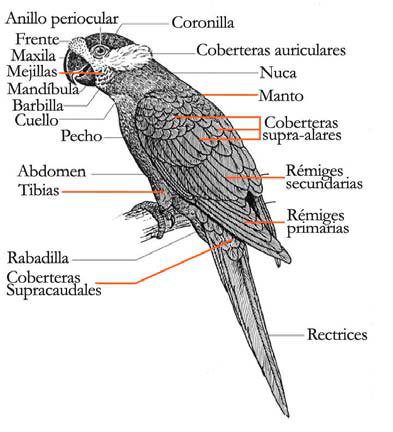
Anatomy-parrots

17 to 19 cm.. height.
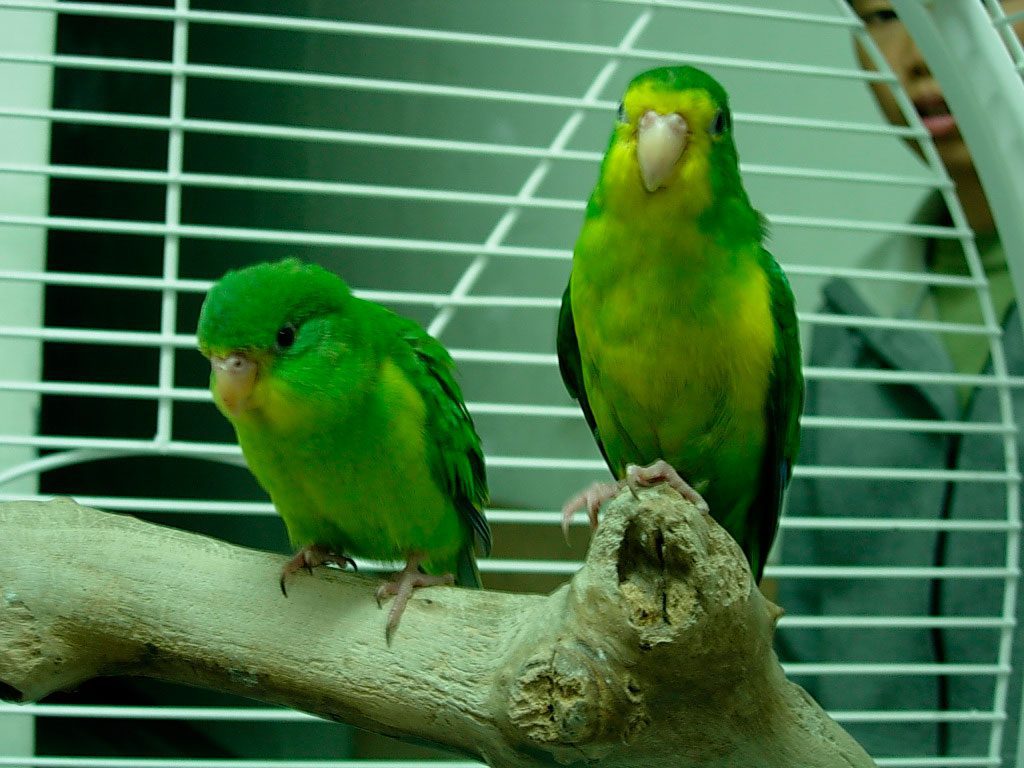
The Mountain Parakeet (Psilopsiagon aurifrons) is distinguishable by the face yellow and the belly yellow with dye-Green, bill pale, wing with extreme blue (notorious is when closed), tail long. Bill and legs color clear. Iris black.
The female with face green and belly yellow-green.
Treated above as Bolborhynchus aurifrons.

Subspecies description:

  • Psilopsiagon aurifrons aurifrons

    (Lesson, 1830) – The nominal,

  • Psilopsiagon aurifrons margaritae

    (Berlioz & Dorst, 1956) – With very little or nothing of yellow and very little dimorphic sexual, they resemble females of the subspecies nominal and robertsi. The females sometimes have the bill grey;

  • Psilopsiagon aurifrons robertsi

    (Carriker, 1933) – It has yellow only in the forecrown, sides bill, throat with green dye, and belly green with yellow line on the sides.

  • Psilopsiagon aurifrons rubrirostris

    (Burmeister, 1860) – With mask facial blue sky and no sexual dimorphism

Habitat:

Video – "Mountain Parakeet" (Psilopsiagon aurifrons)

Serrano catita girl (Psilopsiagon aurifrons): VOICE

It is found in variety of ecosystems, forest in gallery, Puna and crops, from 1000 to 2900 m (sometimes from sea level up to 4500 m). It is possible to carry out local migration after reproduction. gregarious.

Reproduction:

Sometimes They nest colonially, in cracks or holes in inaccessible Rocky escarpments.
breeding station: From October to December, North of Chile, February/March, Argentina.

Food:

It feeds on shoots, seeds, vegetables and fruits.

Distribution:

Size of the distribution (reproduction / resident): 820.000 km2

Can be found in the Centre and South of the Andes, from Peru until Argentina and Chile.

Subspecies distribution:

  • Psilopsiagon aurifrons aurifrons

    (Lesson, 1830) – The nominal,

  • Psilopsiagon aurifrons margaritae

    (Berlioz & Dorst, 1956) – The Andean slopes in the South of Peru, Bolivia, North of Chile and Northwest of Argentina.

  • Psilopsiagon aurifrons robertsi

    (Carriker, 1933) – The Valley of the Maranon River in the Center-North of Peru.

  • Psilopsiagon aurifrons rubrirostris

    (Burmeister, 1860) – The sheds Andean of the Northwest Argentine, between Catamarca and Cรณrdoba, and South of Chile

Conservation:

State of conservation โ“˜


minor concern Minor Concern โ“˜ (UICN)โ“˜

โ€ข Current category of the Red List of the UICN: Least concern.

โ€ข Population trend: Stable.

This species has a very large range, and therefore not it approaches the threshold of Vulnerable on the criterion of size of the area.

The trend of the population seems to be stable, and therefore, the species is not approaching thresholds for vulnerable under the trend of criterion.

For these reasons, the species is evaluated as Least concern.

"Mountain Parakeet" in captivity:

Itร‚ยดs rare in captivity. They are very susceptible to stress and disease, so many die during the process of acclimatization. It is good to acclimatize it in a large aviary with other birds. Prone to deficiency of vitamin D3.

Need of hiding places so that they may disappear from view.

Alternative names:

Mountain Parakeet, Golden-fronted Parakeet (English).
Toui ร  bandeau jaune, Perruche ร  bandeau jaune (French).
Zitronensittich, Zitronen-Sittich (German).
Periquito-da-cordilheira (Portuguese).
Catita de Frente Dorada, Catita Frentidorada, Catita serrana chica, Perico cordillerano (espaรฑol).
Catita serrana chica (Argentina).
Perico cordillerano (Chile).
Perico Cordillerano (Peru).
Cialla (Aymara).

scientific classification:
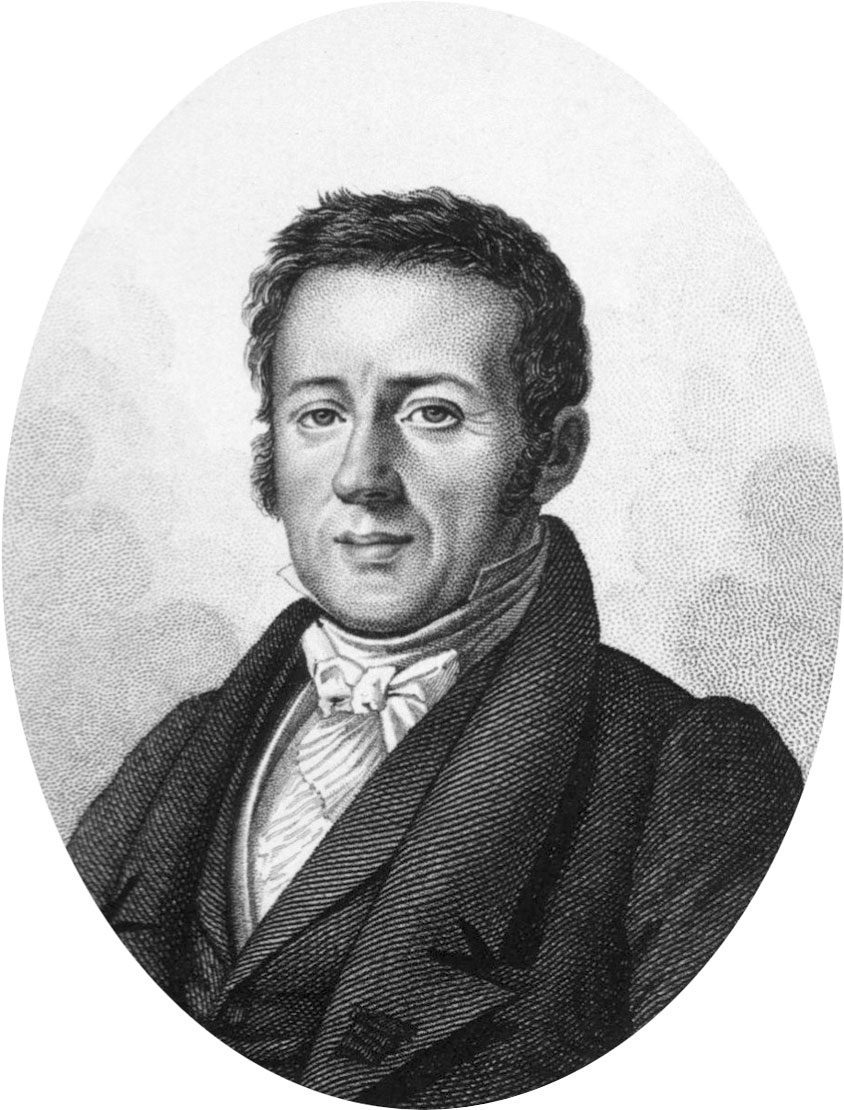
Renรฉ Primevรจre Lesson

Order: Psittaciformes
Family: Psittacidae
Genus: Psilopsiagon
Scientific name: Psilopsiagon aurifrons
Citation: (Lesson, 1831)
Protonimo: Psittacus (Lathamus) aurifrons

Images "Mountain Parakeet"

Mountain Parakeet

Two Mountain Parakeet views between Uquia and Yavi, Salta, Argentina


Species of the genus Psilopsiagon

Sources:

Avibase
– Parrots of the World โ€“ Forshaw Joseph M
– Parrots A Guide to the Parrots of the World – Tony Juniper & Mike Parr
Birdlife
– Parrot Book, Parrots and macaws Neotropical

Photos:

(1) – Mountain Parakeet; two in a cage By TJ Lin (originally posted to Flickr as mountain oarakeet) [CC BY-SA 2.0], via Wikimedia Commons
(2) – Two Mountain Parakeets seen between Uquia to Yavi, Salta, Argentina By Ron Knight from Seaford, East Sussex, United Kingdom (Mountain ParakeetUploaded by snowmanradio) [CC BY 2.0], via Wikimedia Commons

Sounds: (Xeno-canto)

โ–ท The world of Pets: Dogs, cats, birds, reptiles, amphibians

Blue-fronted Parrotlet
Touit dilectissima

Blue-fronted Parrotlet

Content

Description

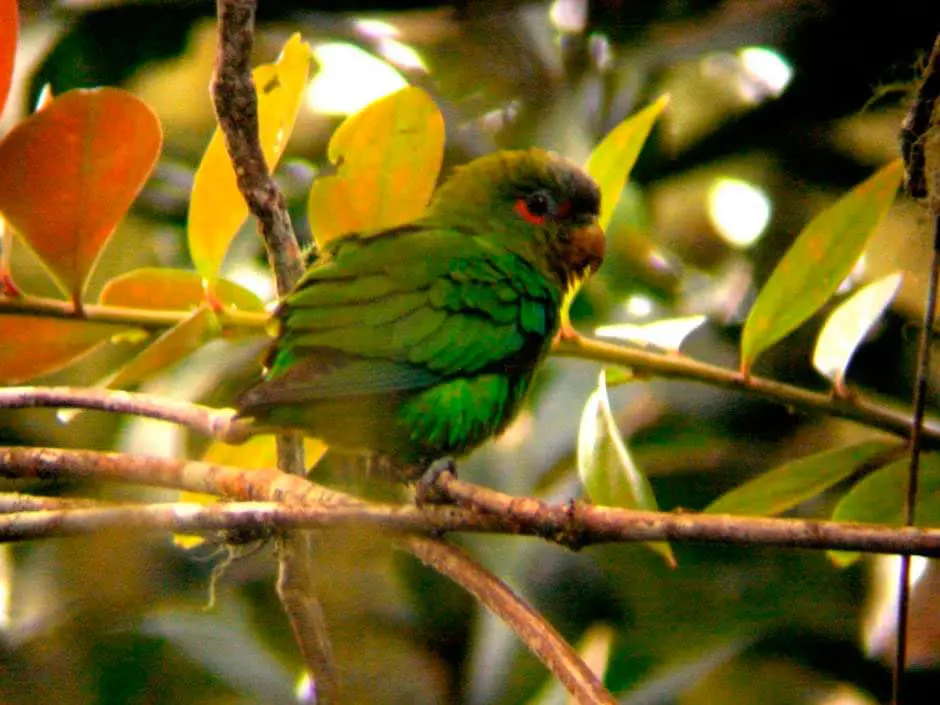
The height of the Blue-fronted Parrotlet (Touit dilectissimus) varies between the 15 and 18 cm.. It is differentiated by the red line that goes from the bill towards the back of the eye and below the eye ring white, and blue bordering the red line from the forecrown up to the back side of. Wings with the part inside red and yellow, evident on the fly, shoulder and external margin of the wings red, crown and nape green.

Tail with black border, Yellow ends and green central part.

The female have the Red of the shoulder reduced or absent.

Habitat:

Uncommon and surly. It lives in humid forest that is often cloudy and has tall stubble., between 700 and 1700 meters above sea level (apparently with migration to the 3000 m). ANDA in pairs or groups of 15 or more, lie quietly in the canopy.

In-flight calls are based on mild or sharp notes repeated several times between pauses. Calls are stronger during the flight.

Reproduction:

It nests in termite mounds on tree.

Food:

Cotorrita Cariazul
It feeds on small seeds, fruits and flowers.

Distribution:

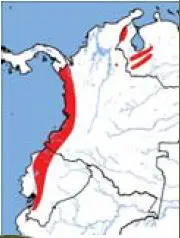
Can be seen in freedom from Panama, Colombian Pacific to the Northwest of Ecuador, and in the northeast of Colombia and Northwest of Venezuela.

Conservation:

State of conservation โ“˜


minor concern Minor Concern โ“˜ (UICN)โ“˜

Appreciated a decrease of the species due to deforestation at the local level (in particular in Colombia).
The population size World has not been quantified, but this species is described as ยซrareยป (Stotz et to the. 1996).
The population is suspected to be stable in the absence of evidence of any reduction or substantial threats.

"Blue-fronted Parrotlet" in captivity:

These birds are rare to see them in captivity. Any person possessing one has to know that it can not be put into freedom, It must be part of a well-managed maintenance program to ensure the continued existence of this species.

Alternative names:

Blue-fronted Parrotlet, Blue fronted Parrotlet, Red-winged Parrotlet (ingles).
Toui ร  front bleu (French).
Kronenpapagei, Kronen-Papagei (German).
Touit dilectissimus (Portuguese).
Cotorrita Cariazul, Lorito de Alas Amarillas (espaรฑol).
Periquito Alirrojo (Colombia).
Churiquita (Venezuela).
Periquito frentiazul (Ecuador).

scientific classification:

Order: Psittaciformes
Family: Psittacidae
Genus: Touit
Scientific name: Touit dilectissimus
Citation: (Sclater,PL & Salvin, 1871)
Protonimo: Urochroma favorite

Images:

Videos:


Species of the genus Touit


Blue-fronted Parrotlet (Touit dilectissimus)


Sources:

  • Avibase
  • Parrots of the World โ€“ Forshaw Joseph M
  • Parrots A Guide to the Parrots of the World – Tony Juniper & Mike Parr
  • Parrots, Parrots and macaws Neotropical
  • Birdlife

  • Photos:

(1) – One bird perched close to the nest by Manakin Nature Tours – lynx

โ–ท The world of Pets: Dogs, cats, birds, reptiles, amphibians

Blue cheeked Parrot
Amazona dufresniana

Blue cheeked Parrot

Content

Physical characteristics


Anatomy-parrots

34 to 37 cm.. height and between 480 and 600g. weight.

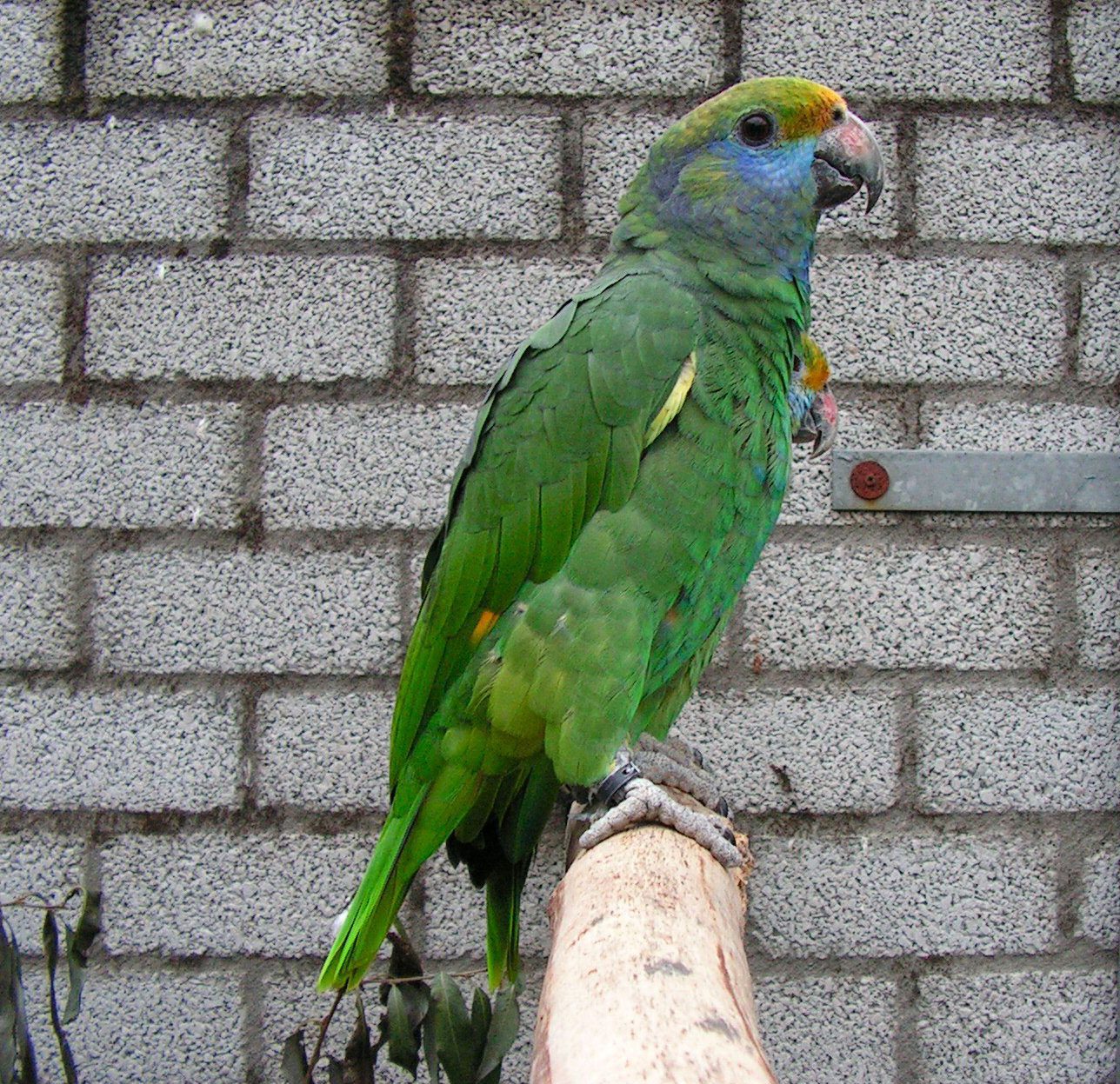
The Blue cheeked Parrot (Amazona dufresniana) It is easily identifiable by the orange yellow wing patch, much more noticeable in flight.

Head with orangeade narrow stripe on the forehead; Yellow Crown, cheeks, base of the beak, sides of the neck to almost light blue Crown.

End of the wing dark, tail with yellow border, rest of green body.

Young birds with orange-yellow feathers on the front of the head and a violet color in the bottom of the cheeks.

The binomial name of this species is in honor to the French zoologist Louis Dufresne.

Video "Blue cheeked Parrot"

Blue cheeked Parrot habitat:

It lives in humid forest, of gallery and sheets, up to 1700m.

It can also be seen sporadically in coastal areas, possibly in response to food availability.

Reproduction Blue cheeked Parrot:

They walk in pairs or small groups of no more of 4 to 8 individuals.

Reproduction and feeding, there is little information.

In the wild, the breeding season occurs in March in Guyana. In captivity, the female lays 3 eggs that we do not know exactly the incubation period.

Food Blue cheeked Parrot:

We don't know the details of your menu, but it is assumed that they eat almost exclusively seeds, and berries.

Distribution Blue cheeked Parrot:

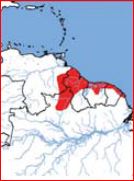
Amazon-fronted Parrotlet location

The Amazona dufresniana It is located in southeast Venezuela (Bolรญvar, with a record isolated on Amazon), Northern Guyana (north of 5ยฐN), Northeast Suriname and French Guiana northeast (Y way Collar 1991).

There are reports of Para and Amapa, Brazil, where its occurrence seems likely, but there is no conclusive records (Y way Collar 1991, Collar 1995). The scarcity of records from frequently surveyed areas suggests that it is a low-density and rare species., at the least in parts of its range (Y way Collar 1991).

a Guyana, Healthy populations are known in the area in northwestern Aruka Guyana, between the Aruka and Amakuru rivers, the Kaieteur National Park and the Kuribong River, and the Iwokrama Forest Reserve (A. Narine a slightly. 2010)

Conservation:

State of conservation โ“˜


Near-threatened Near Threatened โ“˜ (UICN)โ“˜

It is in the category of near threatened. (NT), due to habitat loss and illegal trade.

Classified as near-threatened (NT) on the IUCN Red list (1) listed in Appendix II of the CITES (4).

Conservation in March CITES Appendix II actions. Banded from Canaima National Park (Venezuela), Iwokrama forest reserve (Guyana) and the Brownsberg nature park (Suriname).

Blue cheeked Parrot in captivity:

Rare in captivity.
Placid temperament, seems less active than many Amazon.

Alternative names:

Blue cheeked Parrot, Blue-checked Parrot, Blue-cheeked Amazon, Blue-cheeked Parrot, Dufresne’s Amazon, Dufresne’s Parrot (English).
Amazone de Dufresne (French).
Goldmaskenamazone, Granada Amazone (German).
Papagaio-de-bochecha-azul (Portuguese).
Loro de cachetes azules, Amazona Cariazul, Amazona de Cara Azul, Loro cariazul (espaรฑol).

scientific classification:

Order: Psittaciformes
Family: Psittacidae
Scientific name: Amazona dufresniana
Citation: (Shaw, 1812)
Protonimo: Psittacus dufresnianus

Blue cheeked Parrot images:


Species of the genus Amazona


Sources:

– Parrot Book, Parrots and macaws Neotropical

Photo:

1 – papageien.org
2- by Matthieu Sontag[GFDL or CC BY-SA 4.0-3.0-2.5-2.0-1.0], via Wikimedia Commons
3 – By Bjoertvedt (Own work) [CC BY-SA 3.0 or GFDL], via Wikimedia Commons
4 – papageien.org
5 – by ยฉMichel Clement – gepog.org

Sound: Olivier Claessens

โ–ท The world of Pets: Dogs, cats, birds, reptiles, amphibians

Pink cockatoo
Cacatua leadbeateri

Cacatรบa Abanderada

Content

Description


Anatomy-parrots

35 cm.. length and weighing approximately between 340 and 425 g.
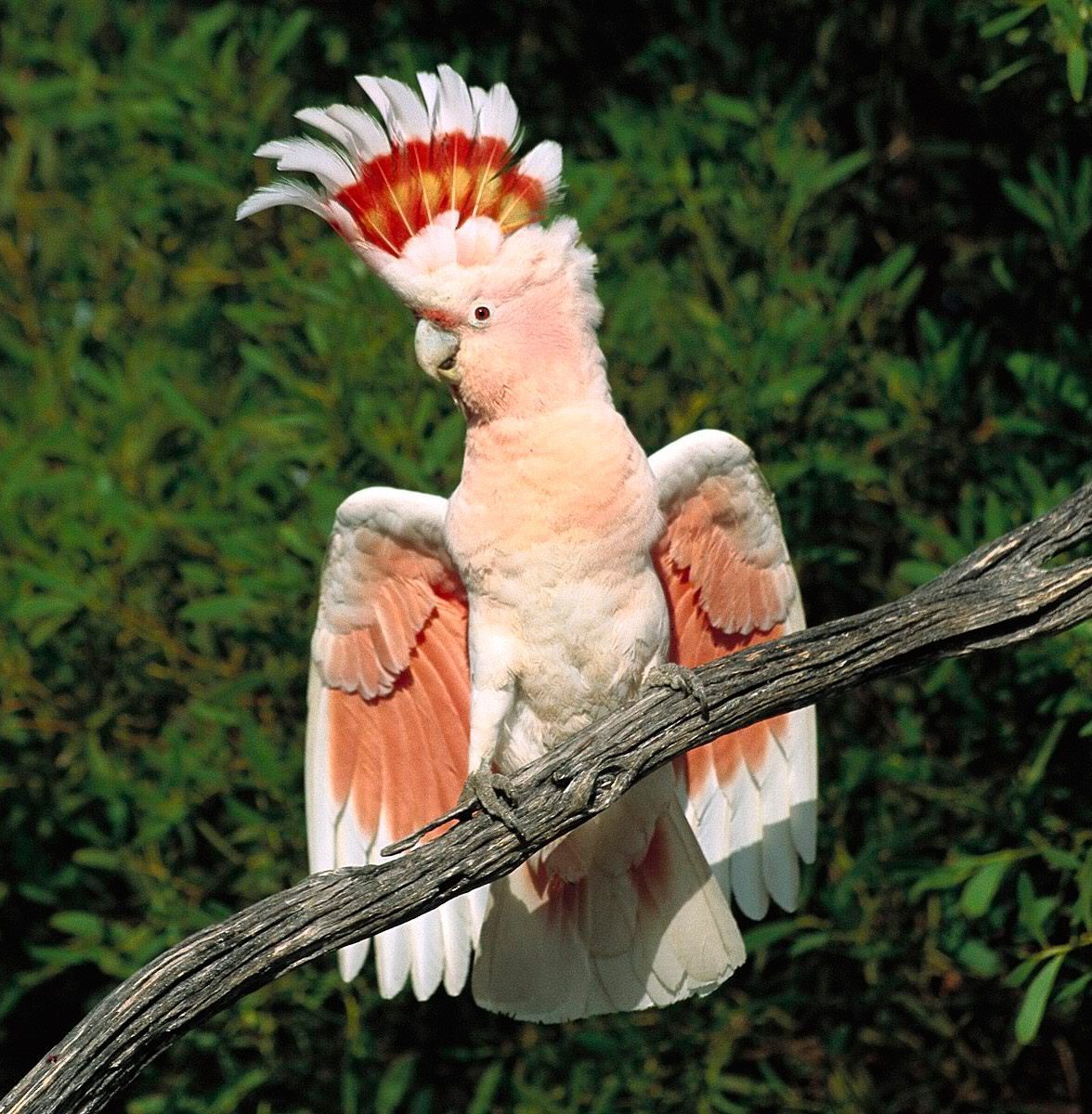
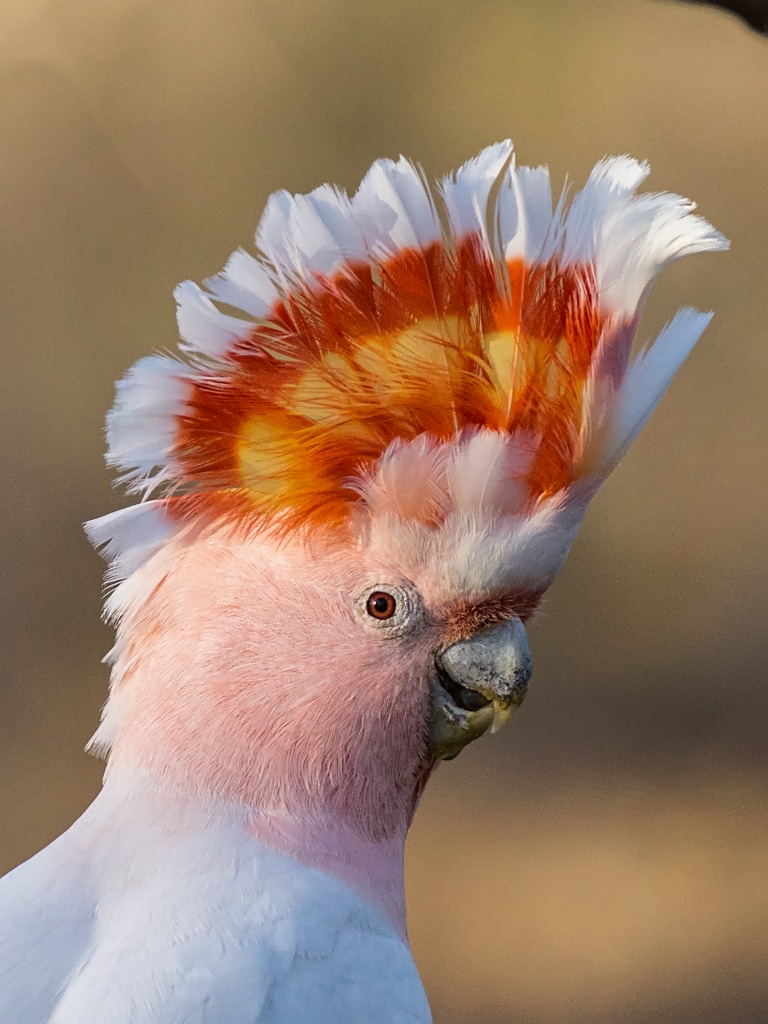
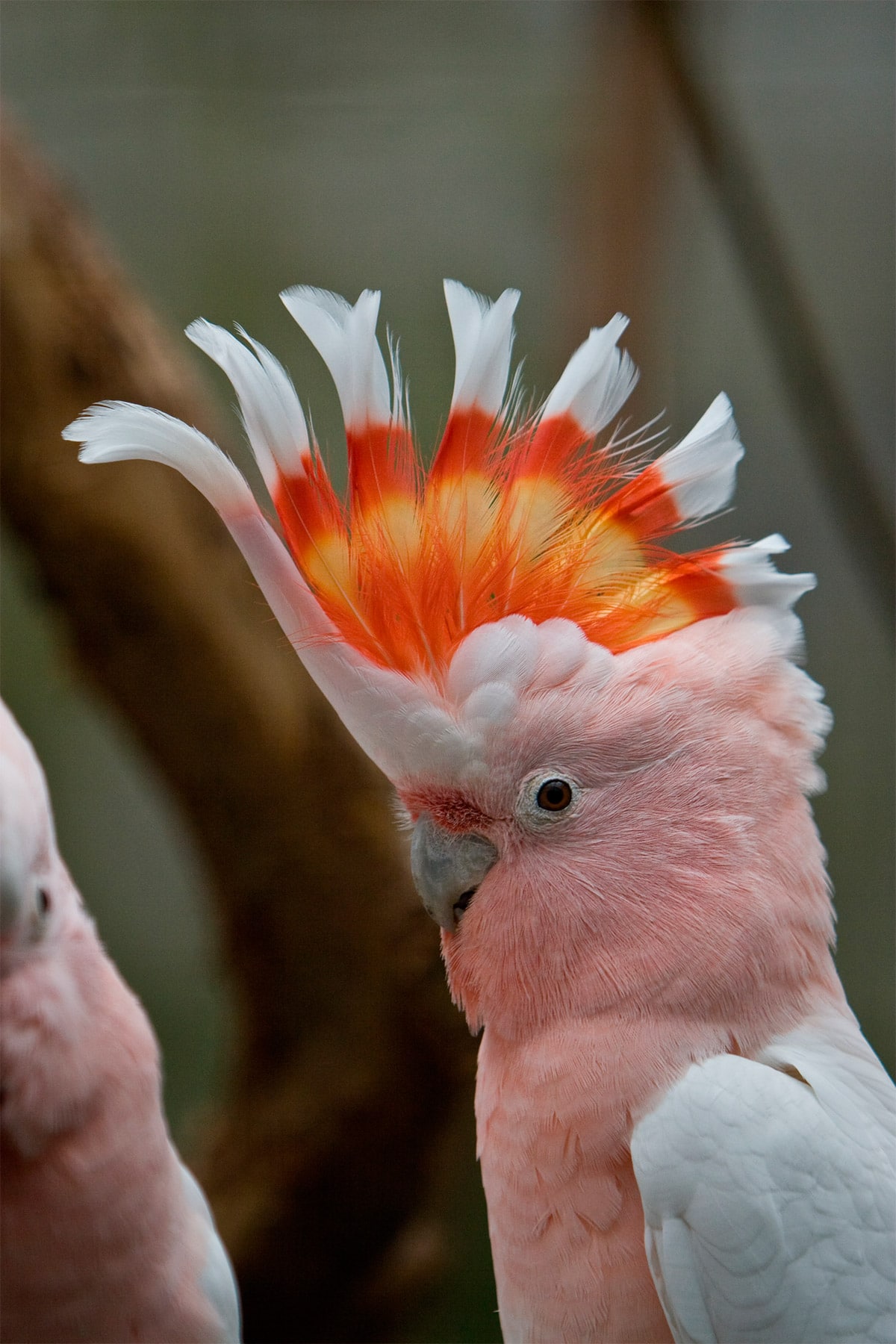
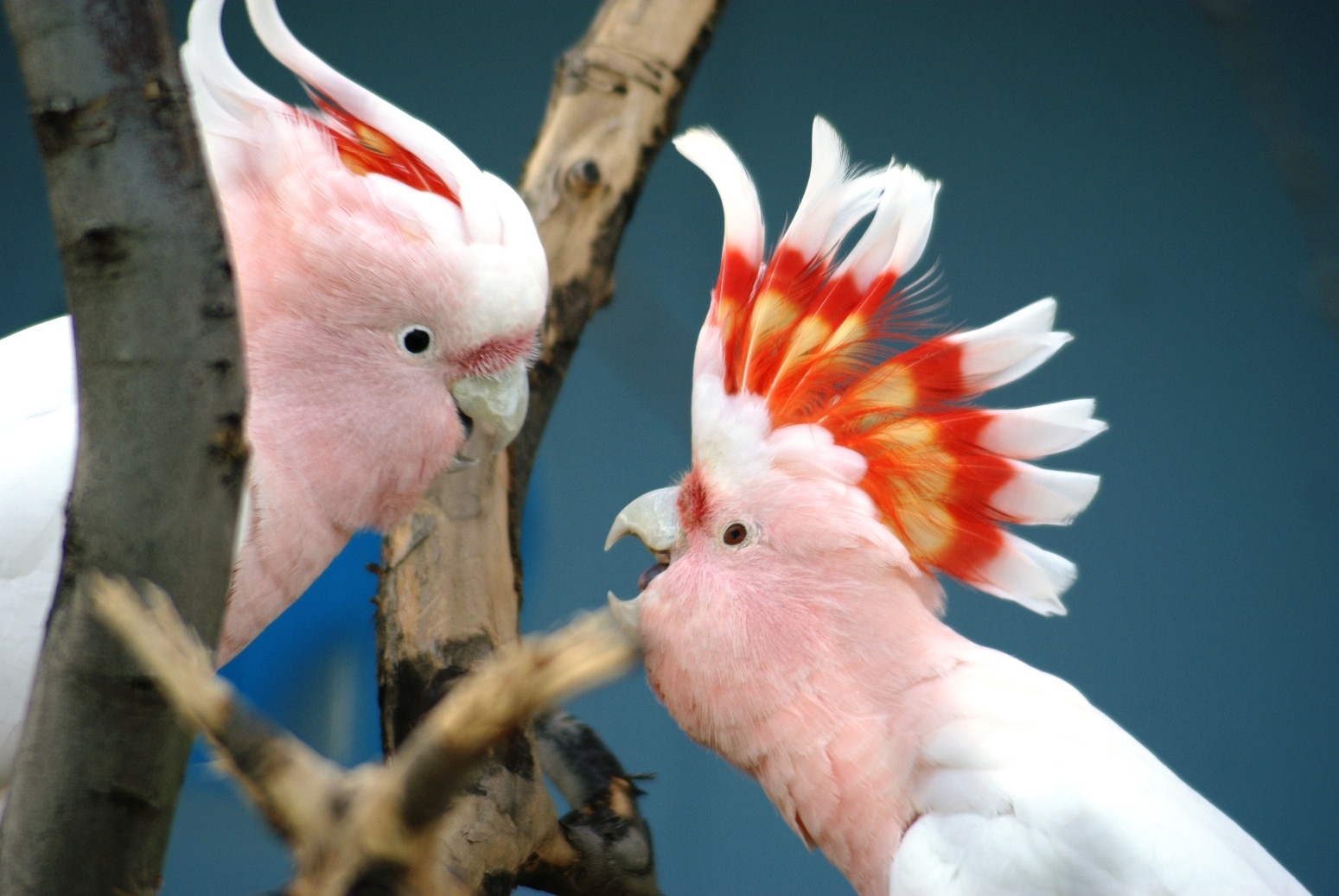
The Pink cockatoo (Cacatua leadbeateri) is distinguishable by its spectacular Crest composed by 16 long feathers forward curved. These pens have a wide base with a slightly pink and yellow red-stained central part.

The top ends of the crest are white. Another set of more rounded feathers grow over the eye, forming a white base when the crest is raised. The forecrown is spanned by a band thin and reddish.

The face, neck and underparts are salmon, becoming is white in the coverts.
The flight feather and tail are white with infiltration of salmon on the bottom.

The bill is horn. The irises dark brown and legs grey.

The female looks like your partner, but the head Pink salmon and underparts they are paler. The band Yellow that decorates the bill is brighter and wider. Upper belly It is white instead of Pink salmon. The irises are reddish-pink.

The immature they are identical to the female. The frontal band is bright orange-red, the irises light brown.

Description 2 subspecies

  • Cacatua leadbeateri leadbeateri

    (Vigors, 1831) – Nominal.


  • Cacatua leadbeateri mollis

    (Mathews, 1912) – Both similar to the kind adults nominal, but with the crest darker red, with little or no yellow. White Peak.

Behavior:

The couple is the basic social unit, but are maintained contact with other couples nonreproductive through the establishment of groups.

Out of it breeding season, There are mainly small bands consisting of 10 to 50 birds. Major gatherings occur only during periods of drought or when food sources are abundant. In this case, There may be a few hundred individuals, among them, small Galah.

Dormitories they are occupied exclusively outside the breeding season and the birds leave early at dawn.

The Pink cockatoo they forage in trees and on the ground. But, This species is more arboreal that the Galah wave Little corella.

When moving on the ground, He walks slowly to avoid the tall grass.

In the Flock, a bird play always the role of Sentinel. It adopts a very careful attitude, it partially roughcast its crest and regularly pauses during which is very upright inspecting the surroundings.

During the mid-day heat, it finds shelter in the foliage of the trees.. During the summer, rest period is longer.

The paired birds they are always near each other. During periods of intense heat, This bird visit water points, even during the day. At sunset, they return to your bedroom.

Habitat:

Video – "Pink cockatoo" (Cacatua leadbeateri)

Cockatoo leadbeateri _ Inkakakadu`s in Aktion

Its population is distributed by a variety of forest habitats in arid or semi-arid areas.
The species is closely related to the areas of ยซMalleeยซ.

Found particularly in afforestation of cypress and eucalyptus, in mixed plots of eucalyptus and Casuarinas or near cliffs.
Its presence in a place is largely also to the existence of a water fountain.
On the other hand, shows a very weak attachment to the fragmented habitats that is no long.

Reproduction:

The nesting season running from August to December. Cockatoos return to their traditional nesting sites.

The cavity for the nest receives improvements: the entrance is enlarged and covered with a layer of fresh chips placed at the bottom of the nest. The nests they are almost always far from one another, at a distance of 2 km.

The spawning is between 2 and 5 eggs being deposited between 2 and 3 days. The incubation It made both parents, begins after the deposit of the third egg and lasts between 23 and 24 days.

The chicks they remain at the bottom of the cavity during 57 days and are fed by the male and the female indistinctly. The family stays near the nest until the last hatchling leaves the nest., they will then join other family groups in the place where food resources are appropriate.

On rare occasions, the Pink cockatoo is forced to eject a couple of Galah He started to lay eggs in their nest, but it can also happen that this form of parasitism is a success. In this case, the partner of the Pink cockatoo takes care of eggs and young after hatching. When are born, the young of the species Eolophus roseicapilla, they behave exactly like their hosts, ignoring the difference in origin.

Food:

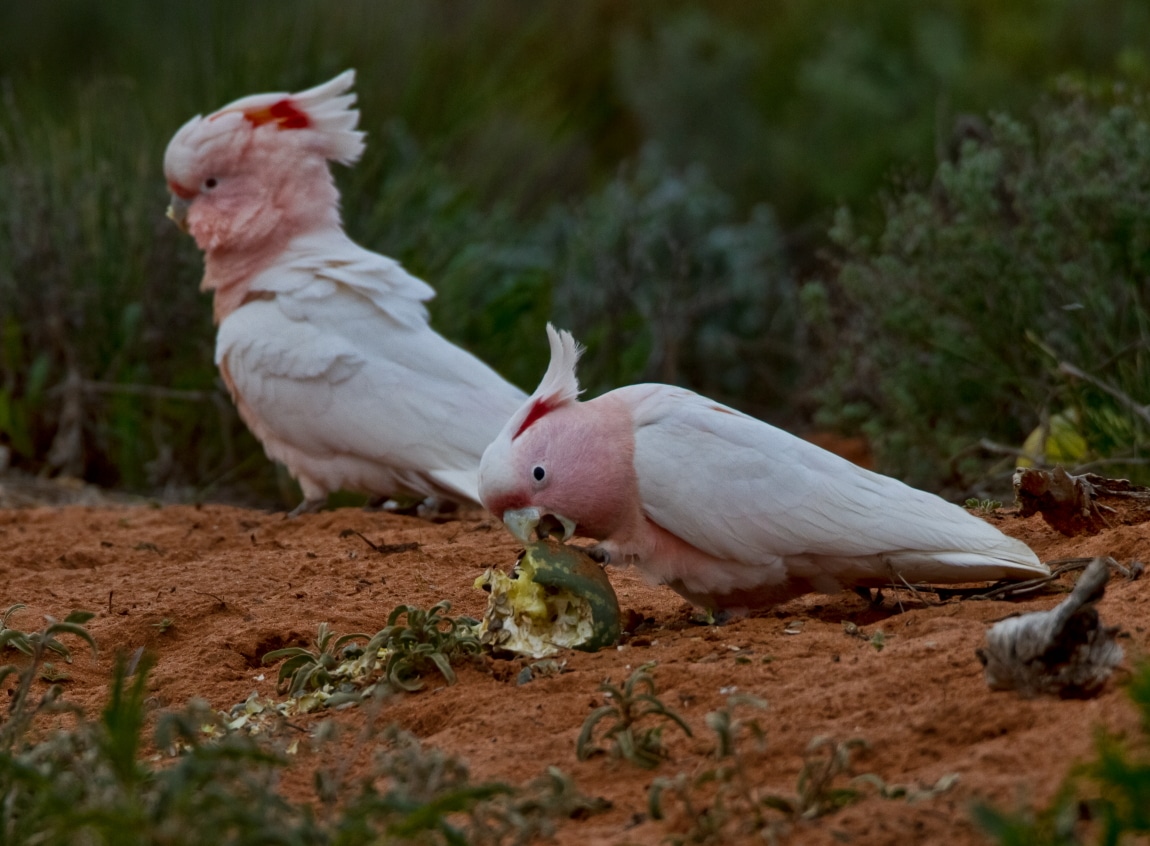
With feed seed, herbs, cereals and often of melons (Cucumber myiocarpus). Also consume fresh local figs, pine cones, eucalyptus seeds, bulbs, dried fruits, estate, insects and larvae.

During and after your meal, These birds biting branches and pieces of bark, causing a shower of timber crushed at the foot of the trees.

During periods of intense heat, increase the frequency of his visits to water points.

Distribution:

Size of the area of distribution (reproduction / resident): 2,88 million km2

endemic to Australia. Its main strongholds are in the southwest of Queensland where is quite extended and South of Australia, where is locally common.

In other parts of the continent are very rare and scarce, going back to the vicinity of the Northern Territory and carrying out raids in Western Australia.

Distribution 2 subspecies:

  • Cacatua leadbeateri leadbeateri

    (Vigors, 1831) – Nominal.


  • Cacatua leadbeateri mollis

    (Mathews, 1912) – Interior West and centre of Australia, towards the East, up to the eyre peninsula and the basin of the Lake Eyre, South of Australia.

Conservation:

โ€ข Least concern (Red list 2006).

โ€ข Listed as vulnerable by NSW national parks and wildlife.

โ€ข Threatened by the law of conservation of species (2005).

Its distribution is very unequal, but only in the Centre - this actually is and South-East where they have widespread. In other parts of Australia, This species is declining due to the thinning of the habitat and its marketing as bird cage.

Competition with the Galah's disability for nesting cavities may be a crucial problem in the future if this species continues to grow. The world population of the Pink cockatoo It is estimated in a little less than 20 000 birds. It is classified as near threatened.

"Pink cockatoo" in captivity:

It is a frequently held in captive animal in your Australia natal, but it is less known in other countries like ours. Its price in the market is very high, especially that of males, being one of the most expensive white cockatoos.

Very noisy, with a great personality, playful and very active. It is very destructive, We must therefore provide toys and wood to gnaw, or otherwise you will satisfy with house furniture and other elements. Inactive animals, bored or stressed tend to yell a lot.

Its life expectancy round between the 40 and 60 years of life.

Alternative names:

Pink Cockatoo, Leadbeater’s Cockatoo, Major Mitchell’s cackatoo (ingles).
Cacatoรจs de Leadbeater, Cacatoรจs commandant Mitchell (French).
Inkakakadu (German).
Cacatua-rosa (Portuguese).
Cacatรบa Abanderada, Cacatรบa Inca (espaรฑol).

scientific classification:

Order: Psittaciformes
Family: Cacatuidae
Genus: Cockatoo
Scientific name: Cacatua leadbeateri
Citation: (Vigors, 1831)
Protonimo: Plyctolophus Leadbeateri

Images Flag-crested Cockatoo:


Species of the genus Cacatua
  • Cacatua tenuirostris
  • Cacatua pastinator
  • —- Cacatua pastinator derbyi
  • —- Cacatua pastinator pastinator
  • Cacatua sanguinea
  • —- Cacatua sanguinea gymnopis
  • —- Cacatua sanguinea normantoni
  • —- Cacatua sanguinea sanguinea
  • —- Cacatua sanguinea transfreta
  • —- Cacatua sanguinea westralensis
  • Cacatua goffiniana
  • Cacatua ducorpsii
  • Cacatua haematuropygia
  • Cacatua galerita
  • —- Cacatua galerita eleonora
  • —- Cacatua galerita fitzroyi
  • —- Cacatua galerita galerita
  • —- Cacatua galerita triton
  • Cacatua ophthalmica
  • Cacatua sulphurea
  • —- Cacatua sulphurea abbotti
  • —- Cacatua sulphurea citrinocristata
  • —- Cacatua sulphurea parvula
  • —- Cacatua sulphurea sulphurea
  • Cacatua moluccensis
  • Cacatua alba

  • Sources:

    Avibase, infoexoticos, Oiseaux.NET

    – Photos: imagenesdeanimalessalvajes (Alexis Obninsk), David Cook Wildlife Photography, Wikimedia , parcodeipappagalli , Geoffrey Dabb

    – Sounds: Patrik ร…berg (Xeno-canto)
    โ–ท The world of Pets: Dogs, cats, birds, reptiles, amphibians

    Dusky lory
    Pseudeos fuscata

    Lori Sombrรญo

    Content

    Description

    23-28 cm.. height and a weight between 140 and 190 gr.

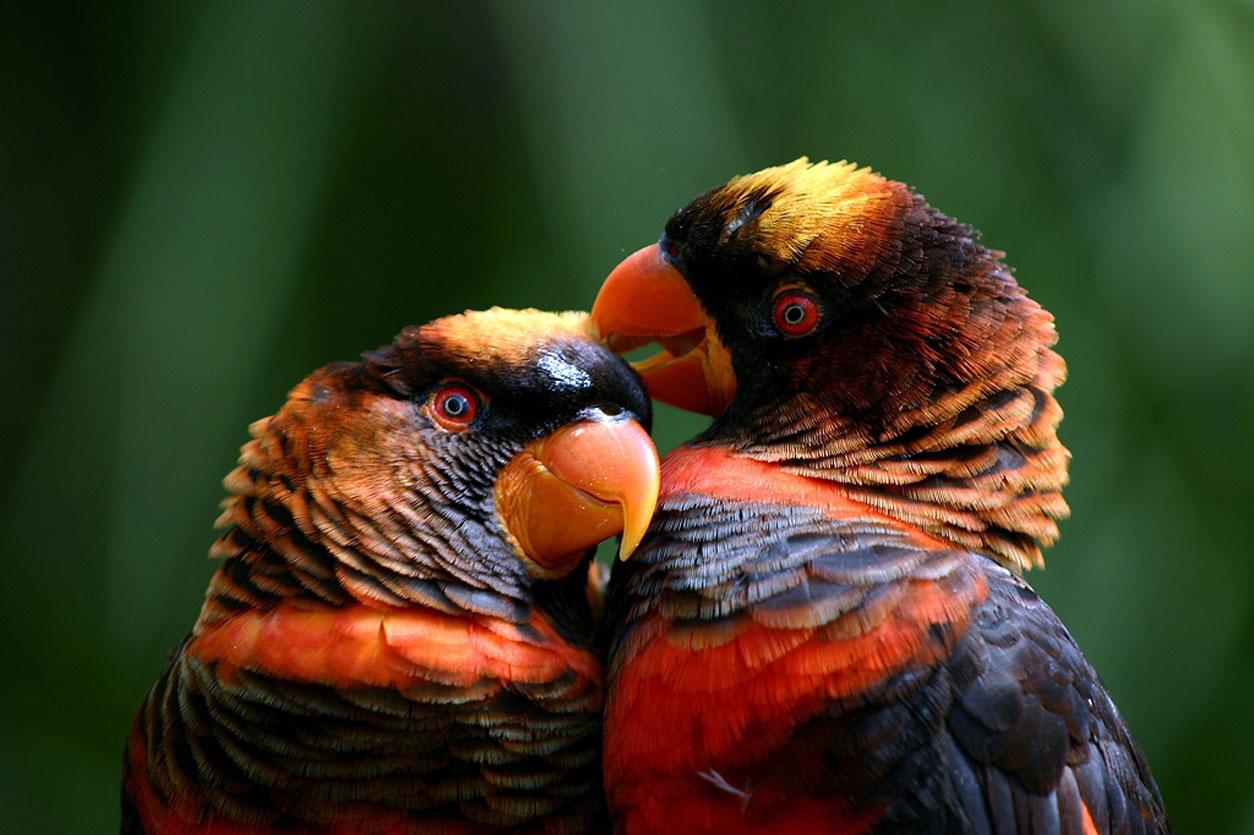
    The plumage of the Dusky lory (Pseudeos fuscata) It is difficult to describe since there are many differences in tonality between one and the other specimens.. Some are of a very dark brown color, almost black and others have a much lighter shade. In addition the same happens with the two bands that cross you the chest Since the species goes through three phases: red, Orange and yellow, according to age, gender and the place of origin.

    Characteristic of this species is the area of โ€‹โ€‹bare skin under the lower jaw until the birth of the throat. The lower wing coverts are orange and the lower flows dark blue. The obispillo is a silvery-white the bill is bright orange. The irises is orange and the legs dark.

    There is no sexual dimorphism and the only way to differentiate male and female will be through DNA, Although some authors (Tomas Arndt) they are running that adult females lack the white feathers of the obispillo.

    Habitat:

    The Dusky lory they are quite widespread and locally common in primary forests , that is to say, those who have not undergone any transformation. But they are also found in wooded areas, up to an altitude of 2.400 m, During regeneration, especially those with large mature trees.

    They are also distributed among residual tree beds during their flowering period., including those located in the parks and gardens in cities.

    They are occasionally present in the lightly wooded Savannah or plantations of teak and coconut trees.

    They normally reside in the landscape of hills or slopes steep slightly from low and middle mountain.

    Itร‚ยดs gregarious and when flies or are fed in the cup of them trees full of flowers it makes in groups of 20 to 100 individuals or more.

    Reproduction:

    The nesting season It is very different depending on the region: It extends from November to April in the mountainous areas of East, While in Irian Jaya, the Indonesian part, they do in July.

    The Dusky lory they prefer to nest in tall trees in the mountain area, the choice of a hole at high altitude on Earth probably do to protect itself against potential predators.

    If the site is of your liking, reuse it for many years consecutively. Male and female participate in the work, the enlargement of the entrance or the cavity itself. Even if the nest has been used in the past, There are always minor changes to be carried out.

    Although this species is quite common, We really know very little about its reproduction in the wild. In captivity, the female lays two eggs which are incubated for approximately 24 days. As in most New Guinea lories, the reproductive cycle is very long, about 70 days.

    Food:

    Consumes mainly nectar and perhaps the pollen it accumulates in plants of the genus schleffera or tree Rudraksha (Elaeocarpus sphaericus). Also consume flowers and fruits. It can be seen in large flocks in mango plantations and other cultivated trees. Feeds, occasionally, teak moth (Hyblaea puera).

    Distribution:

    The Dusky lory It has its area of distribution largely of New Guinea, except the mountains more high of the interior and the peaks more high of the mountains of Parotia.

    They are present in Salawati on the Western Islands of papua and further to the East in the Yapen island on Cenderawasih Bay.

    Conservation:


    minor concern


    – Current IUCN Red List category: Least concern

    – The population trend: Stable

    The species are not threatened. Common and very sociable, It often forms bedrooms that can reach thousand of birds.

    A wild population estimated above 100.000 individuals.

    In some parts of the southeast of New Guinea, its density may be superior to 30 birds per square kilometer.

    "Dusky lory" in captivity:

    Are birds enough prolific and sociable you adapt easily to captivity.

    Contrary to other parrots that eat mainly seeds and nuts; The loris require a greater percentage of fruits, outbreaks, nectar and pollen in your diet. In fact, in the nature, they can feed a maximum of 640 flowers in a day. They also feed on seeds.

    It is usually aggressive with other species of lory. Easy to startle with strangers.

    Alternative names:

    Dusky Lory, Dusk-orange Lory, Dusky-Orange Lory, White-rumped Lory (ingles).
    Lori sombre, Lori ร  dos blanc (French).
    WeiรŸbรผrzellori (German).
    Lรณris-dusky (Portuguese).
    Lori Sombrรญo, Lorito crepuscular (espaรฑol).

    scientific classification:

    Order: Psittaciformes
    Family: Psittaculidae
    Scientific name: Pseudeos fuscata
    Genus: Dusky
    Citation: (Blyth, 1858)
    Protonimo: those darkened

    Images "Lori Mson":


    "Lori bleak" (Pseudeos fuscata)


    Sources:

    Avibase, mundoexotics, Oiseaux.NET

    Photos: Wikimedia, birdsville.NET.au, Dick Daniels – Tampaโ€™s Lowry Park Zoo, Dusky Lory – Woburn Safari Park (Wikimedia),

    Sounds: BAS van Balen (Xeno-canto)
    โ–ท The world of Pets: Dogs, cats, birds, reptiles, amphibians

    Varied Lorikeet
    Psitteuteles versicolor

    Varied Lorikeet

    Content

    Description

    19 cm.. length and a weight between 50 and 60 gr.

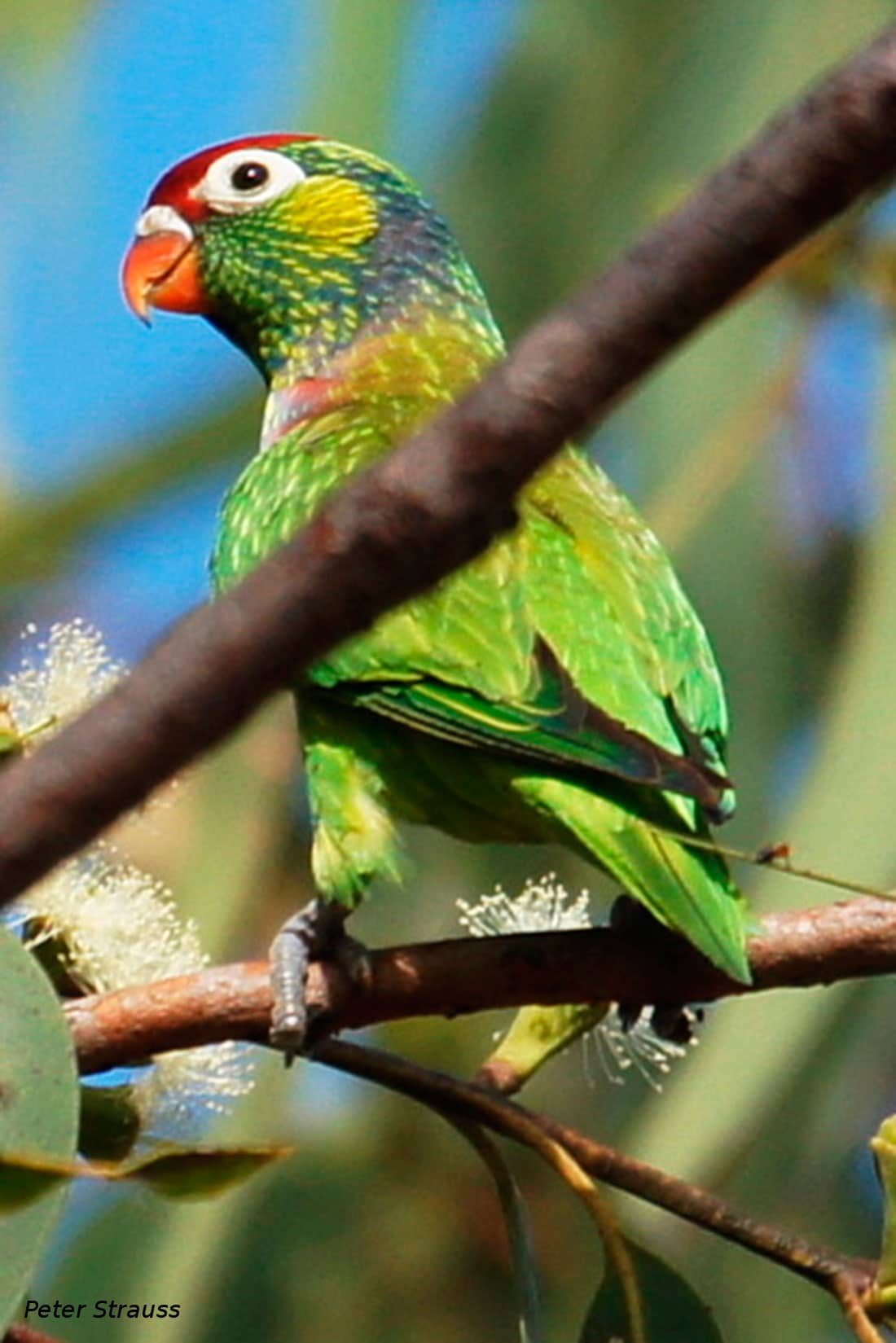
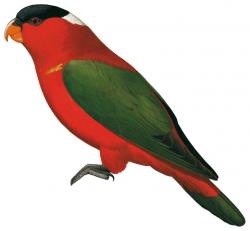
    The Varied Lorikeet (Psitteuteles versicolor) has the forecrown and beginning of skull red-scarlet; the mumps and cheeks They are bright yellow-green with a slight bluish green stripe; the back of the mumps and the back of the head They are greenish blue with yellow streaks.

    The upperparts They are olive green with pale green streaks along the rump; the Feather coverts are green with a pale border; the flight feather They are blackish green inside and outside with a thin yellow stripe on the edge.

    The bottom of the wings It is green with a yellow border; the throat It is dotted with yellow and blue-green; lower throat and the chest show infiltrations green with pink and orange; the abdomen It is pale greenish yellow with yellow stripes.

    The upper part of the tail is green, yellow-green below, darker when tail is closed.

    The bill is orange. The area covering the nostrils and the bare periophthalmic, are white. The irises It is yellow and legs grey.

    The Red coloration of the head on female It is less intensive and extensive. Its chest It is pink with less infiltrations.

    In the immature, red color lores and the cap It is absent. The bill It is more marked in brown and irises They are darker.

    Habitat:

    This species lives a nomadic life, mainly on the Plains. It is in a wide variety of forest habitats, including dense eucalyptus plots Melaleuca, swamp forest, savannas and Shrublands, grasslands and sometimes mangroves.

    The Varied Lorikeet They also inhabit regions of rolling hills and wooded areas along streams. They live in pairs, in small groups or large groups that are often associated with the Red-collared Lorikee (Trichoglossus rubritorquis), although they have a much calmer demeanor than the latter.

    are very aggressive with other species nectarivores that are competing for the same flower beds.

    outside the breeding season, the Varied Lorikeet they become more mobile because the blooming trees are rarer. In some areas they are most abundant from April to may and from September to October. But, the information is not sufficient to say that this bird is a seasonal migrant.

    Reproduction:

    The reproduction It takes place throughout the year, However, It is most active between April and August.

    install nest in the cavity of a trunk or branch, usually near a water source. The bottom of the hole is lined with wood chips or leaves that have been previously "chewed".

    The spawning is between 2 and 5 white eggs that are incubated by the female alone for about 22 days. The young are fed by both parents, and leave the nest after 6 weeks.

    Food:

    Their diet consists of pollen, fruits, seed and probably some insects. These birds feed on the Ceiba or Kapok, wood and Red eucalyptus trees of Melaleuca.

    Distribution:

    Size of its range (reproduction / resident): 2.170.000 km2

    This bird is endemic in northern Australian continent.

    Its area of distribution extends from Broome and the surroundings of the fitzroy river (Western Australia), to the Northwest of Queensland and Mount Isa.

    Crosses the region from Kimberley, all the Arnhem Land and in the Gulf of Carpentaria.

    The Varied Lorikeet It is also present in the Cape York Peninsula and in the South, Townsville.

    Conservation:


    minor concern


    โ€ข Current IUCN Red List category: Least concern

    โ€ข Population trend: Stable

    The Varied Lorikeet they are usually fairly common. In the Darwin region, for example, It can be found in large quantities when the trees are in bloom. They are less common in the Cape York Peninsula and along the east coast.

    The world population It is estimated in more than 100.000 specimens. The species is not globally threatened and does not receive any specific protection measures..

    "Varied Lorikeet" in captivity:

    It is not found outside Australia; limited breeding in Australia.

    Alternative names:

    Varied Lorikeet, Northern Varied Lorikeet (ingles).
    Loriquet variรฉ, Loriquet versicolore (French).
    Buntlori (German).
    Lรณris-versicolor (Portuguese).
    Lori Versicolor, Tricogloso Versicolor (espaรฑol).

    scientific classification:

    Order: Psittaciformes
    Family: Psittaculidae
    Genus: Psitteuteles
    Scientific name: Psitteuteles versicolor
    Citation: (Lear, 1831)
    Protonimo: Trichoglossus versicolor

    ยซLori Versicolorยป images:

    Videos "Varied Lorikeet"

    ————————————————————————————————

    ยซLori Versicolorยป (Psitteuteles versicolor)


    Sources:

    Avibase
    – Parrots of the World โ€“ Forshaw Joseph M
    – Parrots A Guide to the Parrots of the World – Tony Juniper & Mike Parr
    – BirdLife.org

    Photos:

    1 – by Peter Strauss – IBC.lynxeds.com
    2 – ยซPsitteuteles versicolor - Queensland-8-4 cยป by Psitteuteles_versicolor_-Queensland-8.jpg: Joshua Robertsonderivative work: Snowmanradio (talk) – originally posted to Flickr as Varied Lorikeet [Psitteuteles versicolor] and uploaded to commons at Psitteuteles_versicolor_-Queensland-8.jpg. Licensed under CC BY 2.0 via Wikimedia Commons.
    3 – by Steve_Murphy – IBC.lynxeds.com
    4 – Varied Lorikeet (Psitteuteles versicolor), Bell Gorge, WA – olsvik.info
    5 – Alan Marshallโ€™s Pictures of Varied Lorikeet – members.ozemail.com.au
    6 – Varied Lorikeet (Psitteuteles versicolor) Illustration by Edward Lear [Public domain], via Wikimedia Commons

    โ–ท The world of Pets: Dogs, cats, birds, reptiles, amphibians

    White-naped Lory
    Lorius albidinucha

    Content

    Description

    The White-naped Lory (Lorius albidinucha) has a length of 26 cm.. and a weight between 152 and 164 g..

    White-naped Lory

    Similar to the Purple-bellied Lory with which sympathy between 500 and 750 meters in the South of New Ireland.

    The White-naped Lory It has a distinctive patch white in nape. The underparts They are entirely red except yellow markings on the sides of chest. It lacks dark violet broadcast belly and of the undertail-coverts, If shown by the Purple-bellied Lory. Seen at close quarters, the cere Dark also separates this species from the Purple-bellied Lory, what does he have cere white.

    Lori Nuquiblanco illustration

    The White-naped Lory It is also less Beefy that the Purple-bellied Lory and has a whistle call which differs considerably with the distinctive snore nasal call of the Purple-bellied Lory.
    Has the crown black, violet slightly marked by the white patch nape; rest of head bright red. The upperparts red. The wings They are green with a yellow band on the lower part and violet with white spots on the curvature. The upperparts They are red with yellow markings on the sides of the chest and blue marks on the the thighs. Tail red on the outside and yellow on the inside part. Bill orange with dark base in the upper jaw; cere black; irises yellow to reddish brown; legs greyish black.

    Habitat:

    Known only in the mountains south of New Ireland between 500 and 2.000 m, mainly on 1.000 m.
    Normally found in pairs while feed on fruits or wild flowers "oil palm". Been seen feeding on the same tree as the Purple-bellied Lory without harming it.

    Reproduction:

    No data reproduction in its natural habitat.

    Food:

    Feeds of fruit and flowers of the oil palm plantations.

    Distribution:

    Distinctive species, little known and restricted to the forests of the hills of New Ireland in the Bismarck Archipelago (Papua New Guinea).

    Conservation:


    Near-threatened


    โ€ข Current IUCN Red List category: Near-threatened.

    โ€ข Population trend: Decreasing.

    Quite common at all limits within its altitude range. The world population probably it is lower to the 10.000 specimens.
    No information on population trends; But, the species is suspected falling slowly, as a result of logging.

    The conservation actions proposals:

    โ€ข Effectively protect hill forests.
    โ€ข Determine the tolerance of forests exploited at different altitudes.
    โ€ข Monitor populations at key sites.

    "White-naped Lory" in captivity:

    None known.

    Alternative names:

    White-naped Lory, White naped Lory (ingles).
    Lori ร  nuque blanche (French).
    WeiรŸnackenlori (German).
    Lorius albidinucha (Portuguese).
    Lori Nuquiblanco, Tricogloso de Nuca Blanca (espaรฑol).

    scientific classification:

    Order: Psittaciformes
    Family: Psittaculidae
    Genus: Lorius
    Scientific name: Lorius albidinucha
    Citation: (Rothschild & Hartert, 1924)
    Protonimo: Domicella albidinucha

    ————————————————————————————————

    ยซLori Nuquiblancoยป (Lorius albidinucha)


    Sources:

    Avibase
    – Parrots of the World โ€“ Forshaw Joseph M
    – Parrots A Guide to the Parrots of the World – Tony Juniper & Mike Parr
    – Birdlife

    Photos:

    1 – lorihaven.dk – link
    2 – Illustration: HBW.com

    โ–ท The world of Pets: Dogs, cats, birds, reptiles, amphibians

    Plum-faced Lorikeet
    Oreopsittacus arfaki

    Plum-faced Lorikeet

    Content

    Description

    15 cm.. length between 16 and 23 g. of weight.
    Plum-faced Lorikeet

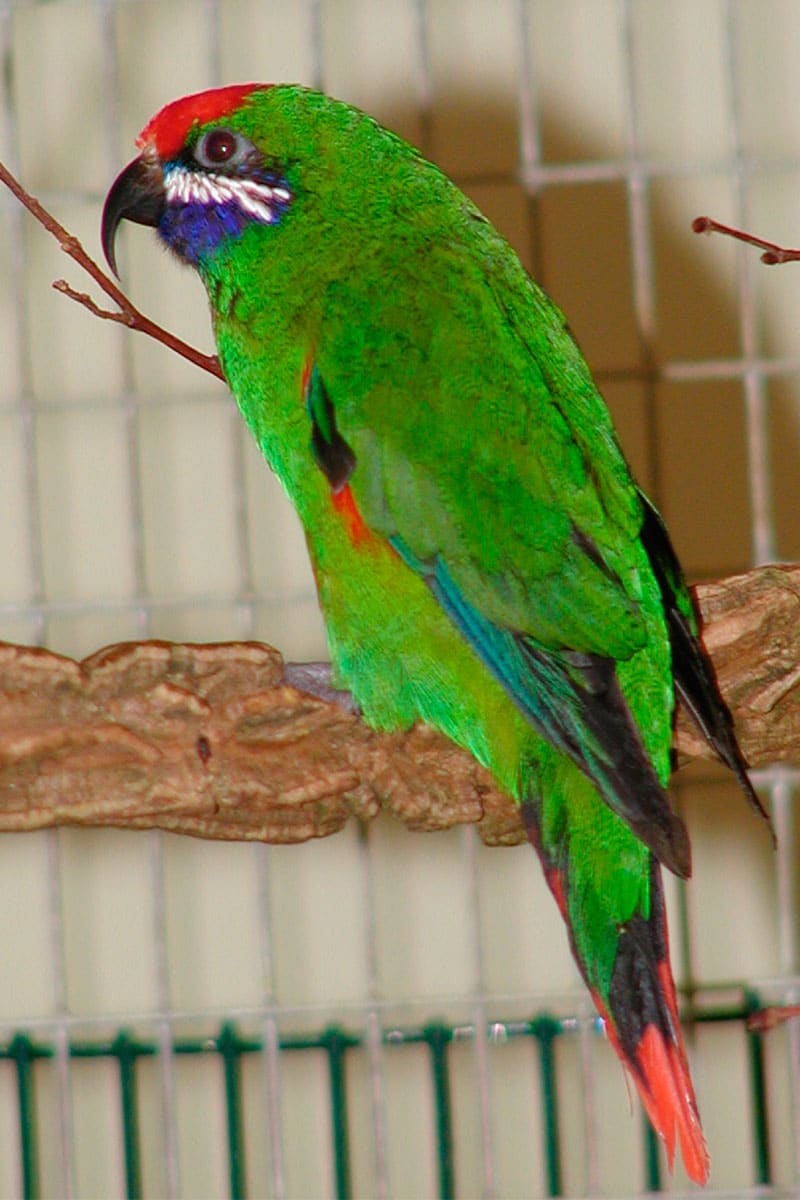
    The hood of the Plum-faced Lorikeet (Oreopsittacus arfaki), from the top of bill up to the crown rear, is Scarlet Red ; chin and Spada color plum (with bluish Sheen), broken by two rows of thin stripes.

    Upperparts of color green uniform with a light spread of olive in the the mantle. Wings, views from the top are green; vane internal to the flight feather, blackish in color and vane external to the primaries outermost, bluish green. Underwing-coverts and axillary, red (Outer secondaries slightly marked with yellow); flight feather Blackish with yellow central band. The mauve of it chin be extended slightly in the throat; top of the chest green, center of chest and belly bathed in orange-red; under belly green; undertail-coverts green, lightly bathed in yellow on sides. Uppertail green, merging to blackish and ending in pinkish-Red, in the tip lighter fusion: below, the tail is red with marked with black side feathers.

    The bill black; irises blackish brown; legs grey.

    Female lack of top red (but you can show a bit of red on the part rear of the Crown).

    Immature male with only red on the back of the crown. The young birds have a slightly 'scaly' appearance; also off the tip of orange-yellow color of the tail.

    Description 3 subspecies

    • Oreopsittacus arfaki arfaki

      (Meyer,AB, 1874) – The nominal.


    • Oreopsittacus arfaki grandis

      : (Ogilvie-Grant, 1895) – Greater than the nominal. Lack of the flanks redorange and markings of the belly of the other two subspecies.


    • Oreopsittacus arfaki major

      : (Ogilvie-Grant, 1914) – Larger that the nominal and more red-tipped in the tail.

    Habitat:

    The distribution of the Plum-faced Lorikeet is more or less continuous in the extension of the moss forests; the species is mainly found among the 2.000 and 3,750 m, but can observe is to 1.000 m occasionally. Be found with greater frequency in pairs or small flocks very vocal. They feed acrobatically in the canopy; They also feed on plants, especially in the flowers of epiphytes, often in the company of other flower aficionados such as the lories of the genus Neopsittacus.

    Reproduction:

    Habits of nesting unknown, birds in reproductive attitudes they have been observed in August and October. The display of marks under the wings have been observed in pairs and can be linked to courtship, as well as by the male head rolling.

    Food:

    It feeds on pollen, nectar, possibly, flowers, fruit (especially Schefflera) and berries.

    Distribution:

    Size of the area of distribution (reproduction / resident): 108.000 km2

    New Guinea in Irian Java (Indonesian) and Papua New Guinea, ranging from the East ofVogelkop to the Huon Peninsula and ranges from the Southeast. A small number of captivity

    Distribution 3 subspecies:

    • Oreopsittacus arfaki arfaki

      (Meyer,AB, 1874) – The nominal.


    • Oreopsittacus arfaki grandis

      : (Ogilvie-Grant, 1895) – Mountains of the Central and East of Papua New Guineto, including, those in the southeast of the region of the Huon Peninsula and Sepik, extending to the West of Victor Emanuel Range


    • Oreopsittacus arfaki major

      : (Ogilvie-Grant, 1914) – Snow Mountains (Papua New Guinea)

    Conservation:


    minor concern

    โ€ข Current IUCN Red List category: Least concern

    โ€ข Population trend: Stable

    The world population It has not been quantified, Although it is thought of more than 300.000 specimens. The species is reported to be quite common (pit et to the. 1997).

    The population suspected to be stable in the absence of evidence of any reduction or substantial threats.

    "Plum-faced Lorikeet" in captivity:

    The Plum-faced Lorikeet is a bird quiet and at times active. Young birds are susceptible to stress and disease during the acclimatization; can die suddenly without apparent cause. They become much more resistant and less timid after acclimatization.. You can be accommodated with members of their own species in a system of colony.

    It is very rare in captivity.

    Alternative names:

    Plum-faced Lorikeet, Plum faced Lorikeet, Plum-faced Mountain Lory, Plum-faced Mountain-Lory, Whiskered Lorikeet (ingles).
    Lori bridรฉ (French).
    Arfaklori, Arfakalori (German).
    Lori Bigotudo, Lori de Bigotes (espaรฑol).

    scientific classification:

    Order: Psittaciformes
    Family: Psittaculidae
    Genus: Oreopsittacus
    Scientific name: Oreopsittacus arfaki
    Citation: (Meyer,AB, 1874)
    Protonimo: Trichoglossus (Charmosyna) Arfaki

    ยซWhiskered Loryยป Images:

    Videos "Plum-faced Lorikeet"

    ————————————————————————————————

    ยซOn Bigotryยป (Oreopsittacus arfaki)


    Sources:

    Avibase
    – Parrots of the World โ€“ Forshaw Joseph M
    – Parrots A Guide to the Parrots of the World – Tony Juniper & Mike Parr
    – Birdlife

    Photos:

    (1) – Dansk Lori Klub
    (2) – arfak lori man oreopsittacus arfaki – photobucket
    (3) – By Katerina Tvardikova – pngbirds.myspecies.info
    (4) – By Guy Dutson – lynx
    (5) – By Katerina Tvardikova – pngbirds.myspecies.info
    (6) – Illustration – HBW.com

    Sounds: Patrik ร…berg (Xeno-canto(