โ–ท The world of Pets: Dogs, cats, birds, reptiles, amphibians

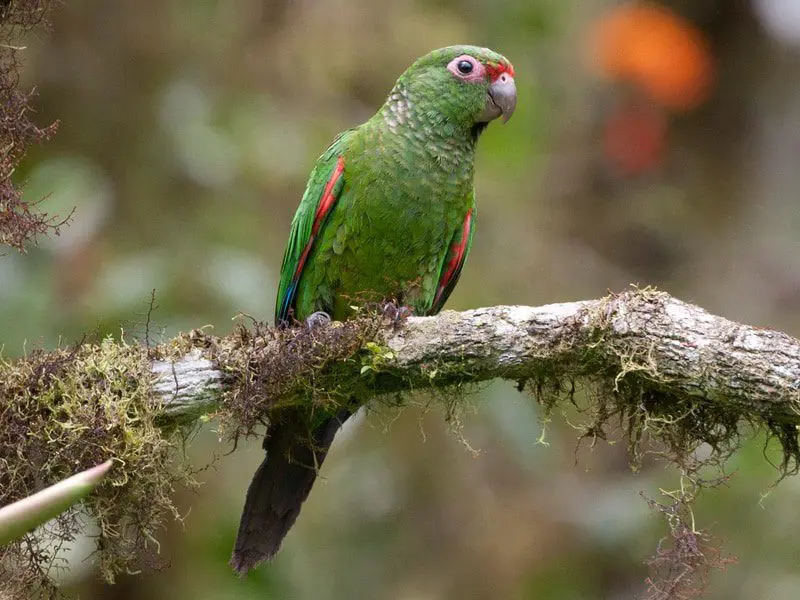
Pacific parakeet
Psittacara strenuus


Periquito Pacรญfico

Content


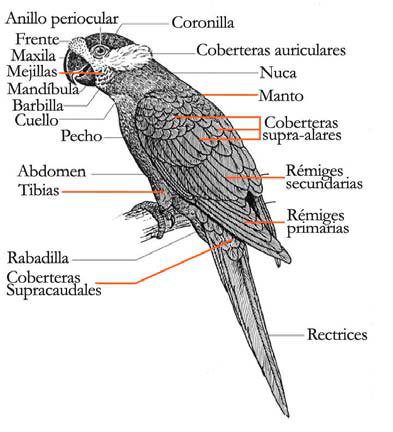
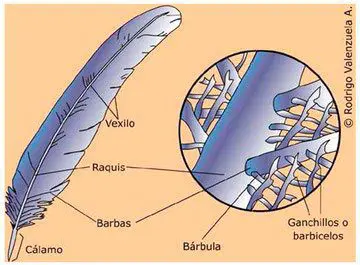
Anatomy-parrots

Description ยซPacific Parakeetยป:

Of 33 cm.. length.

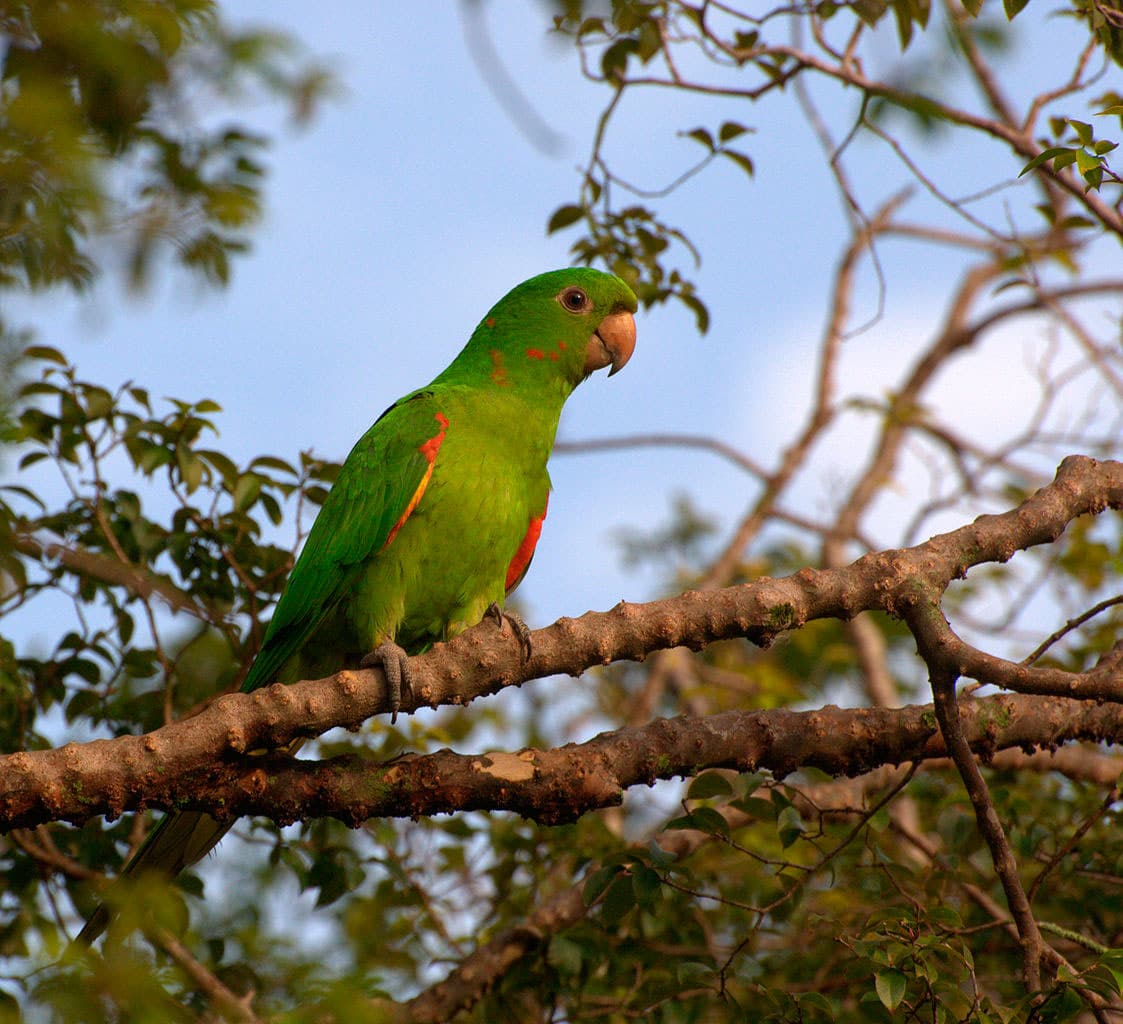
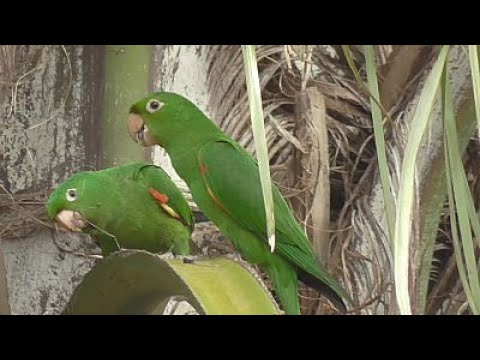
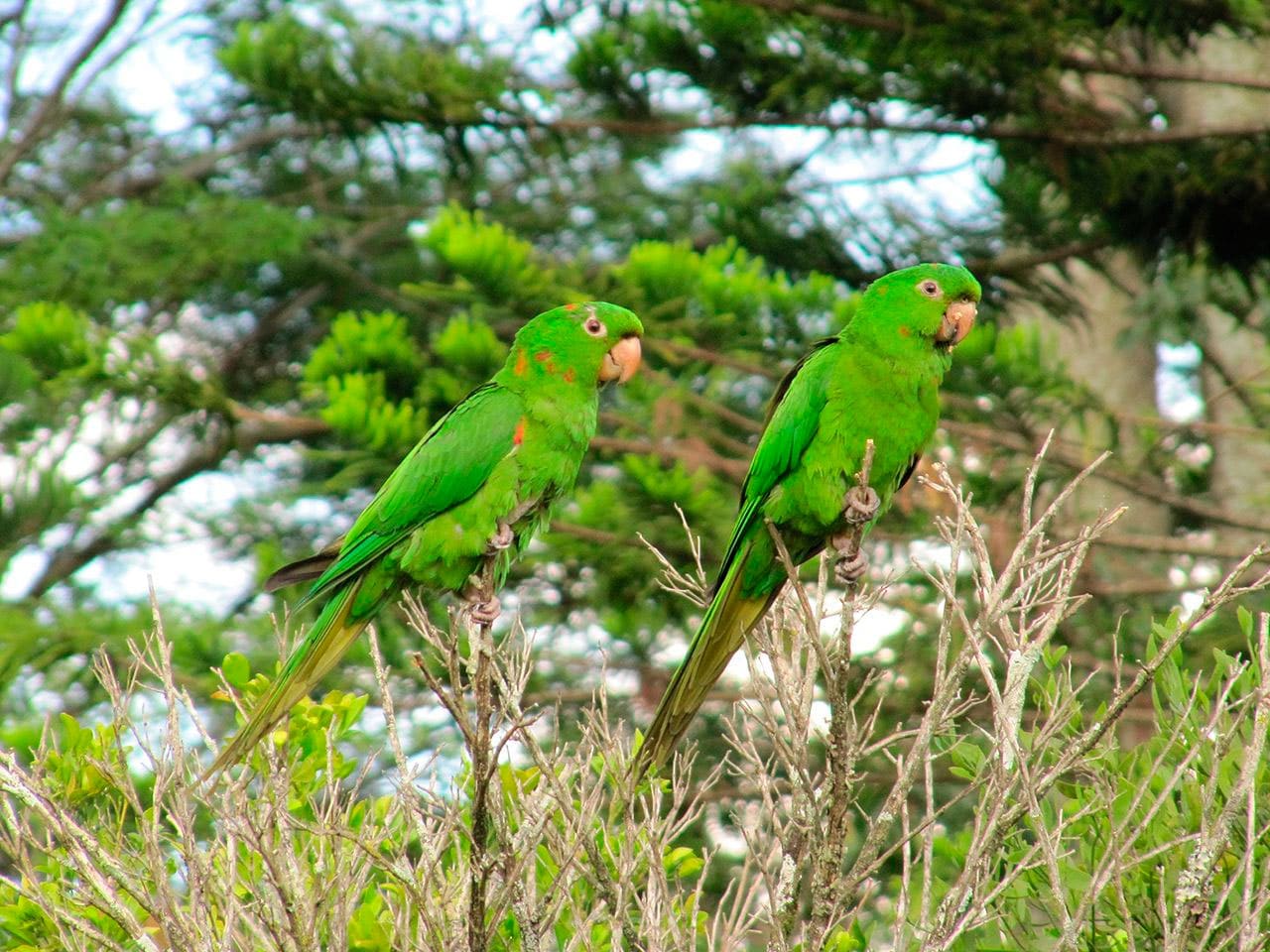
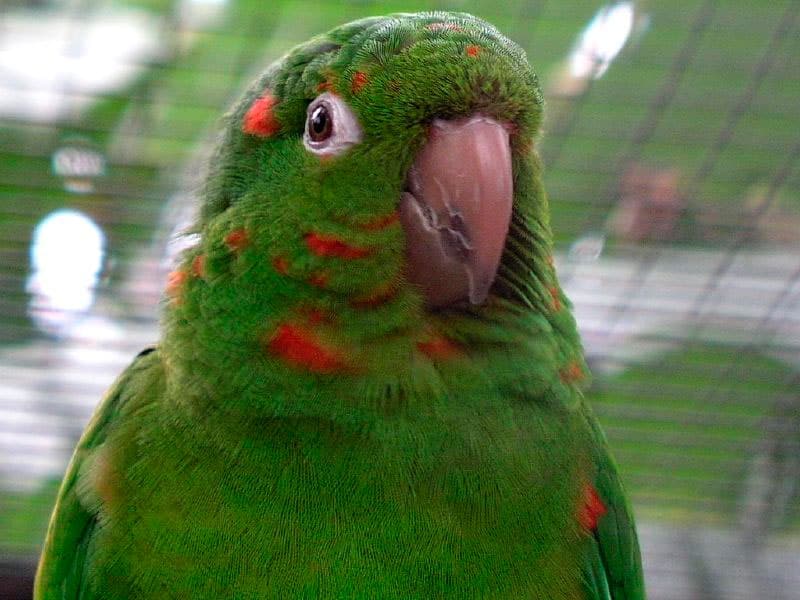
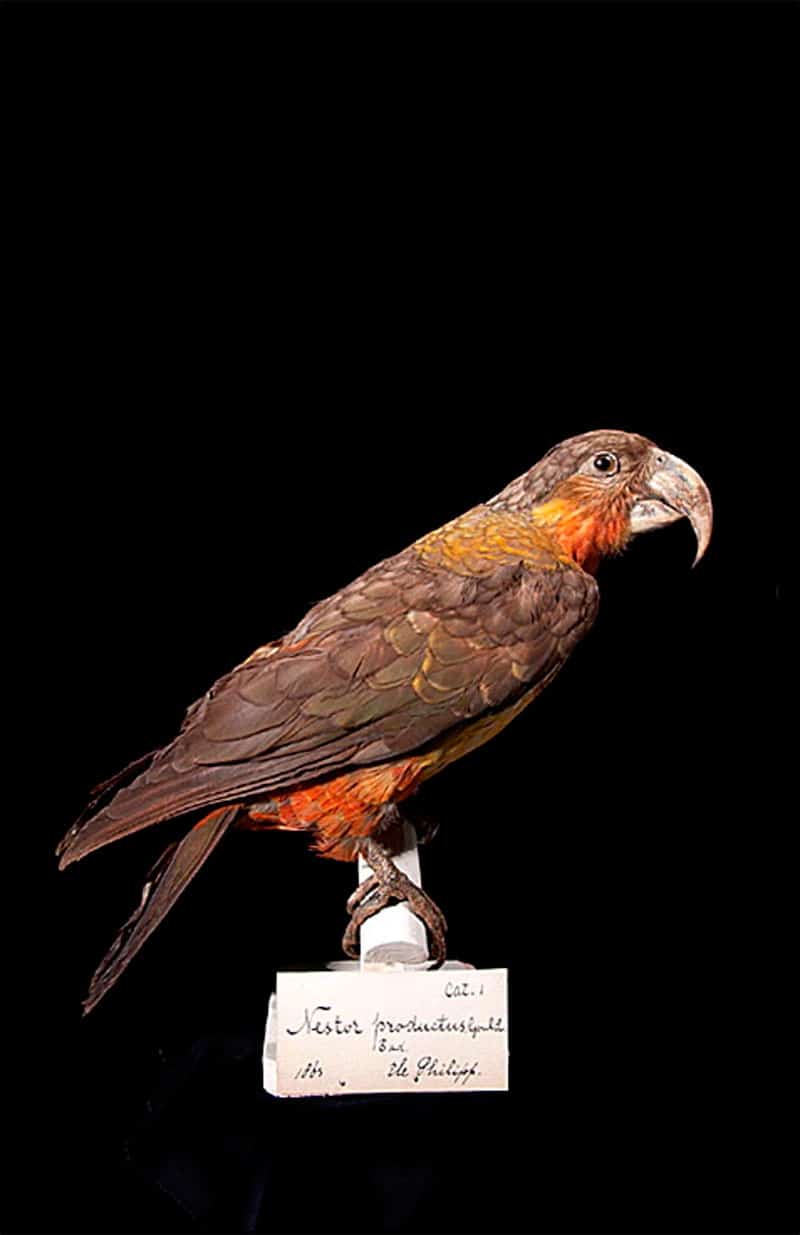
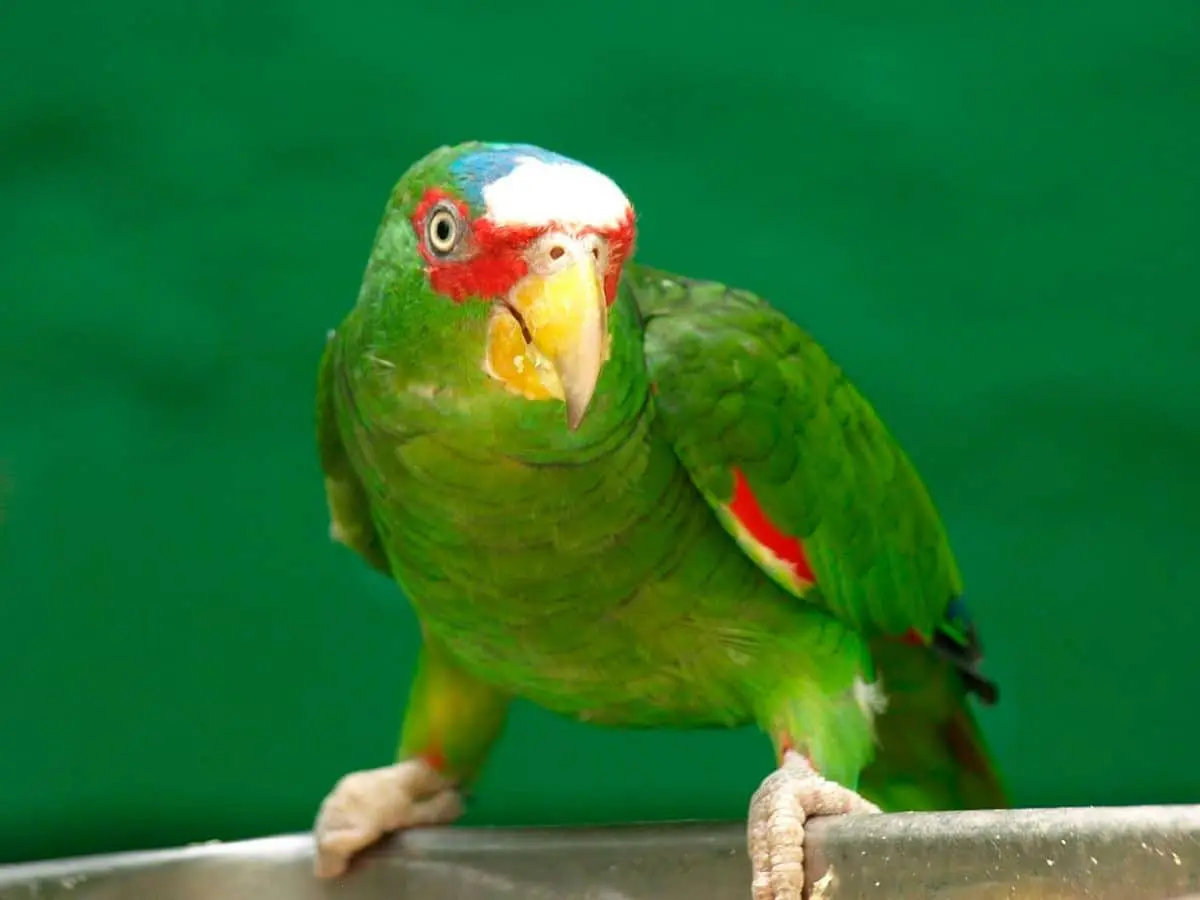
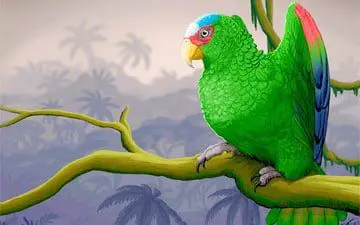
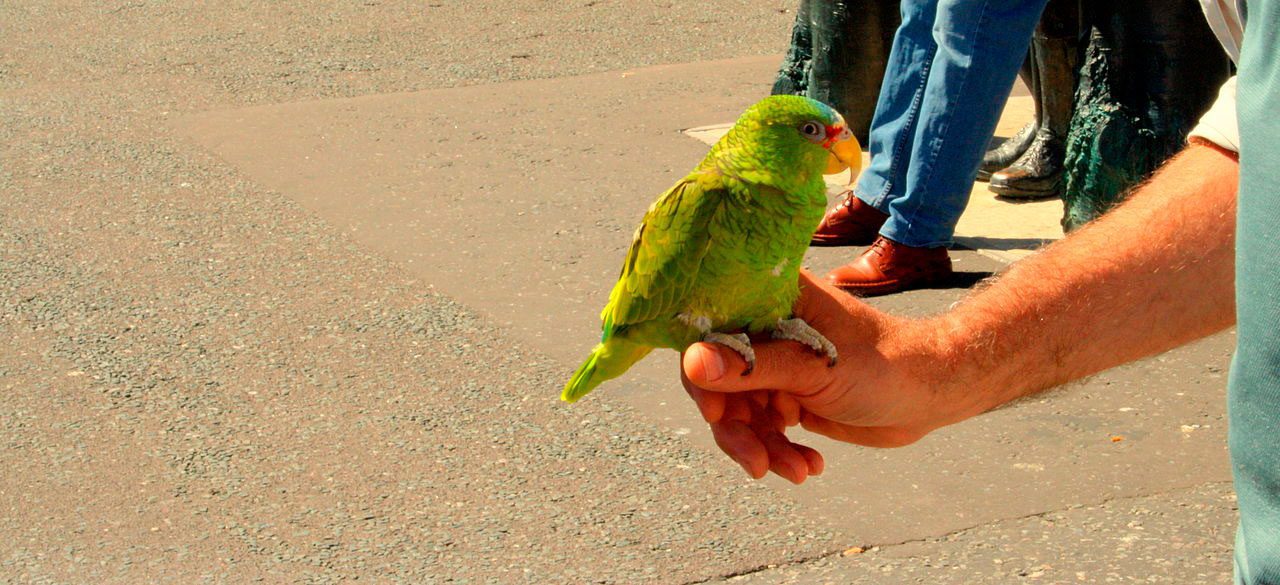
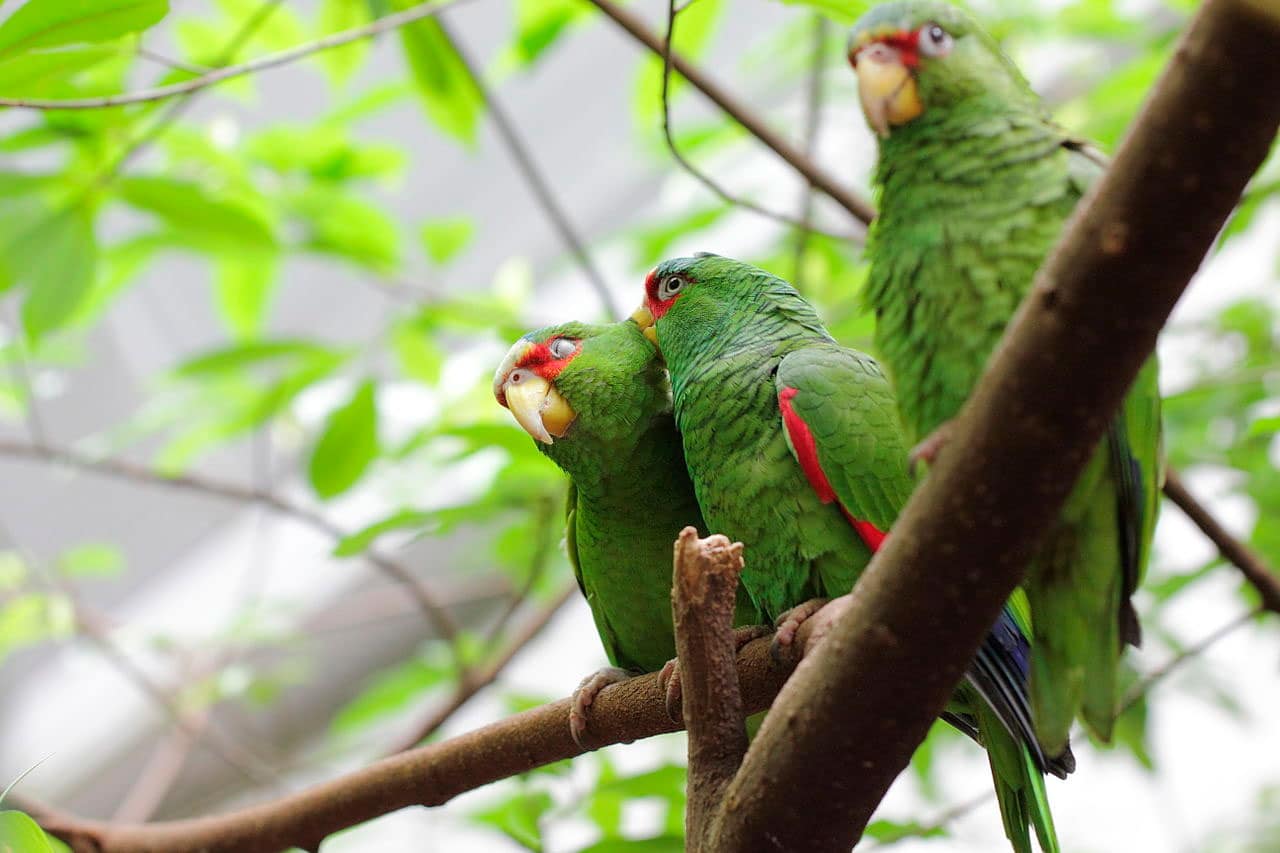
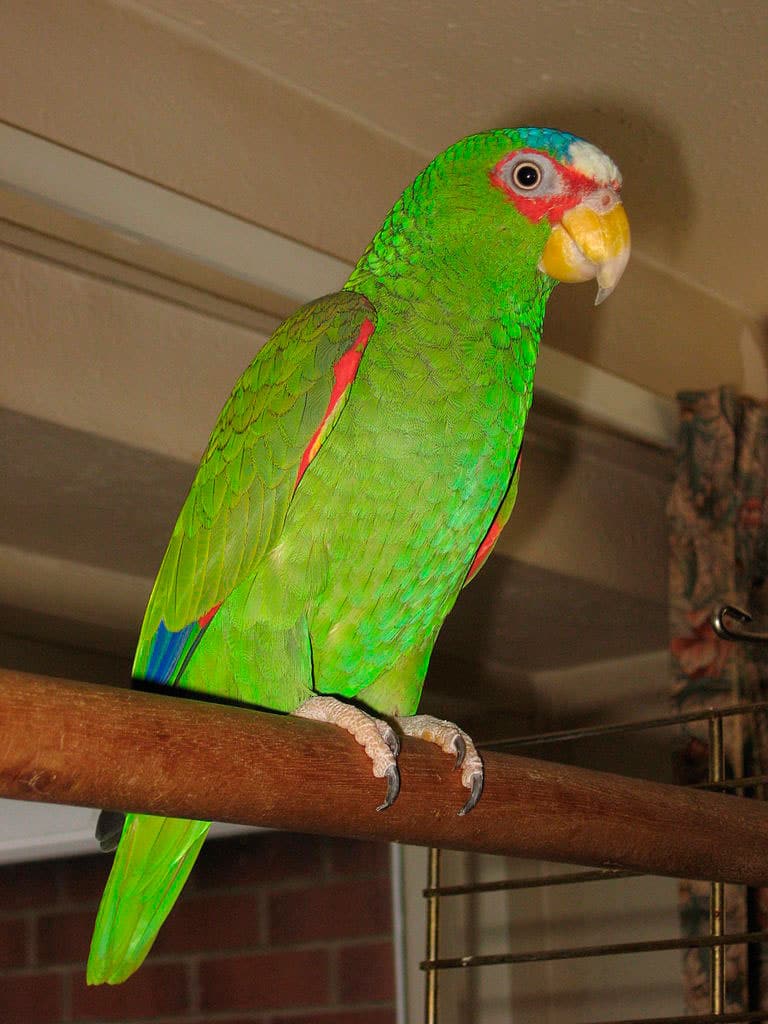
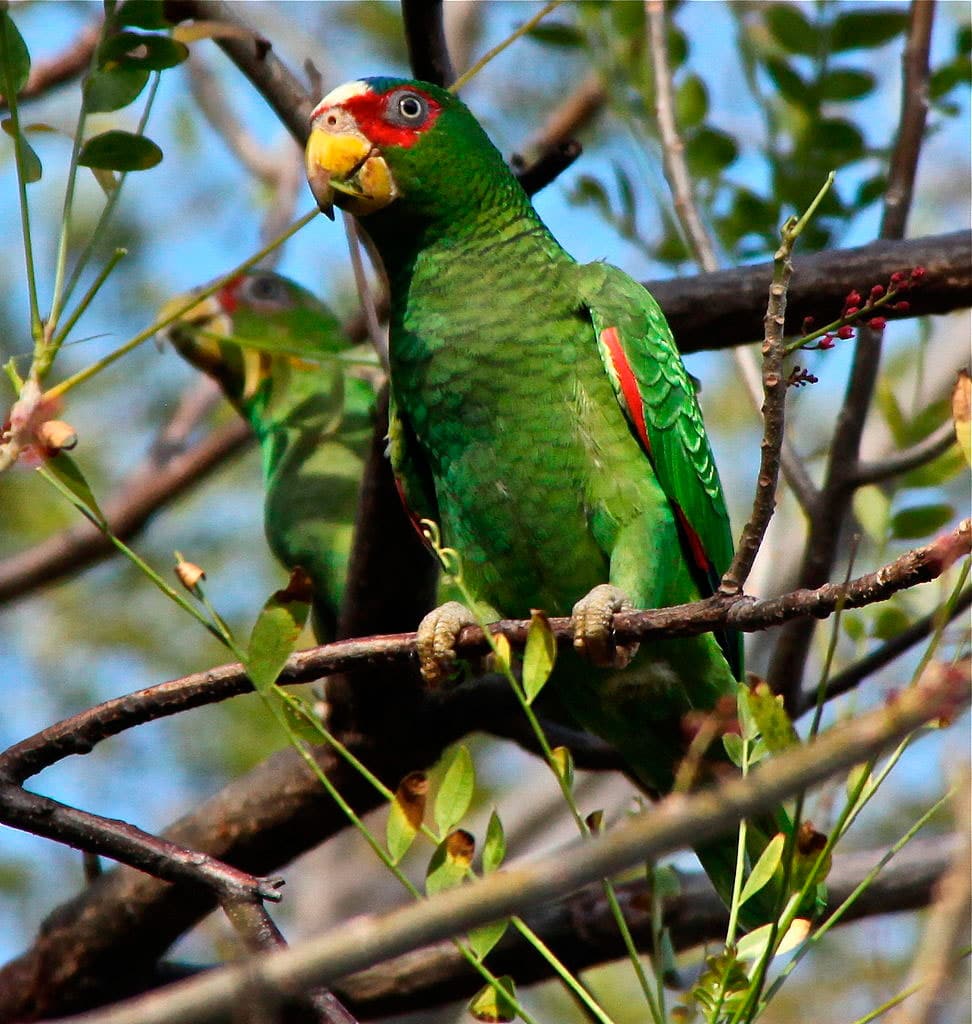
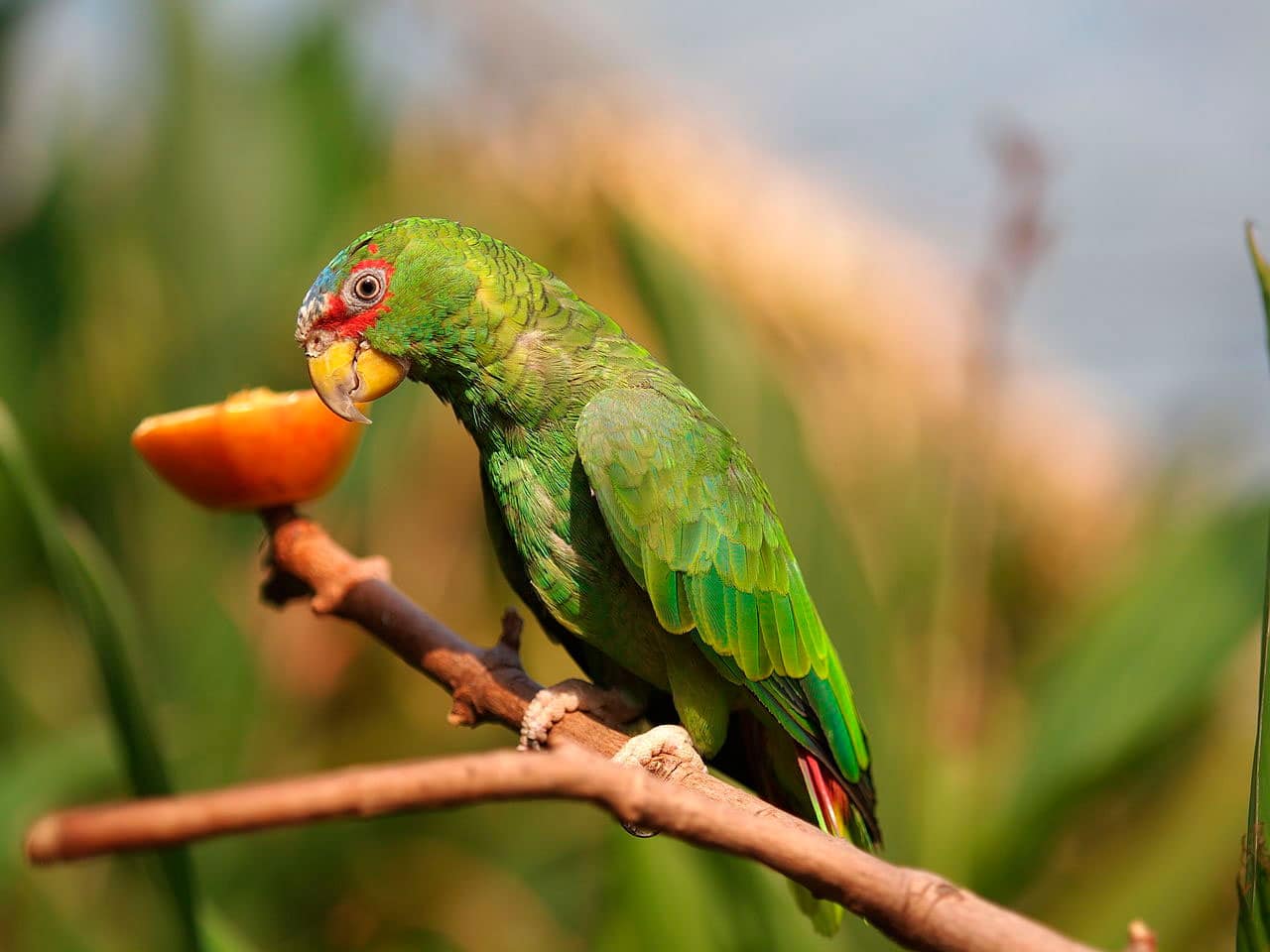
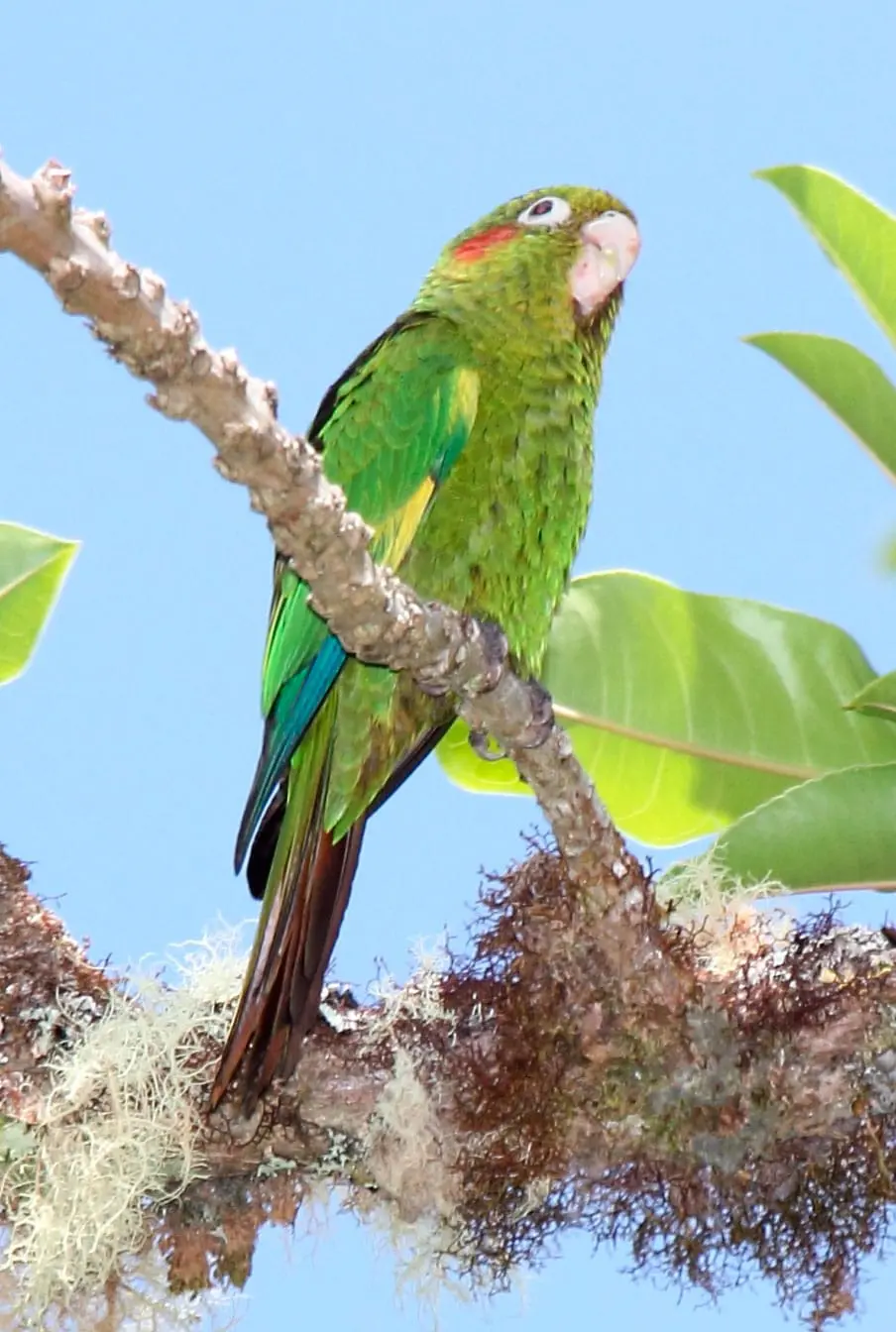
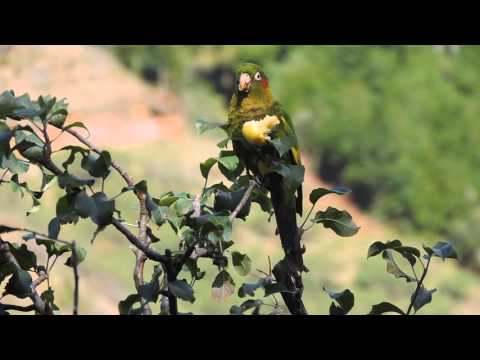
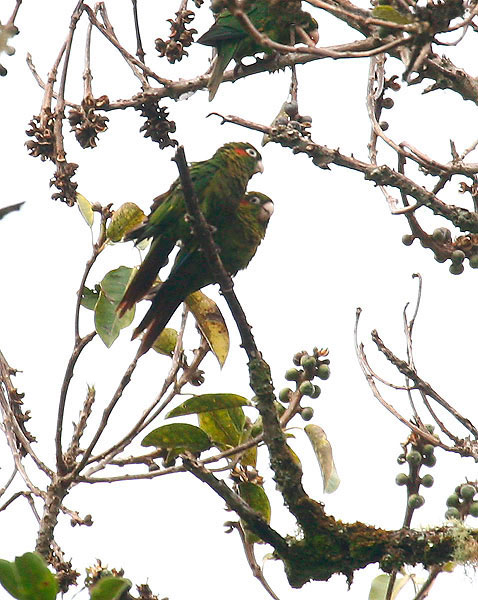
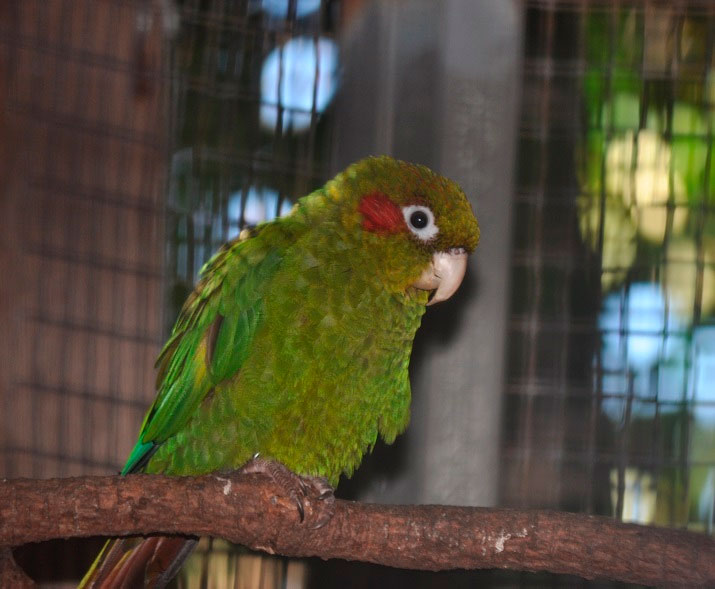
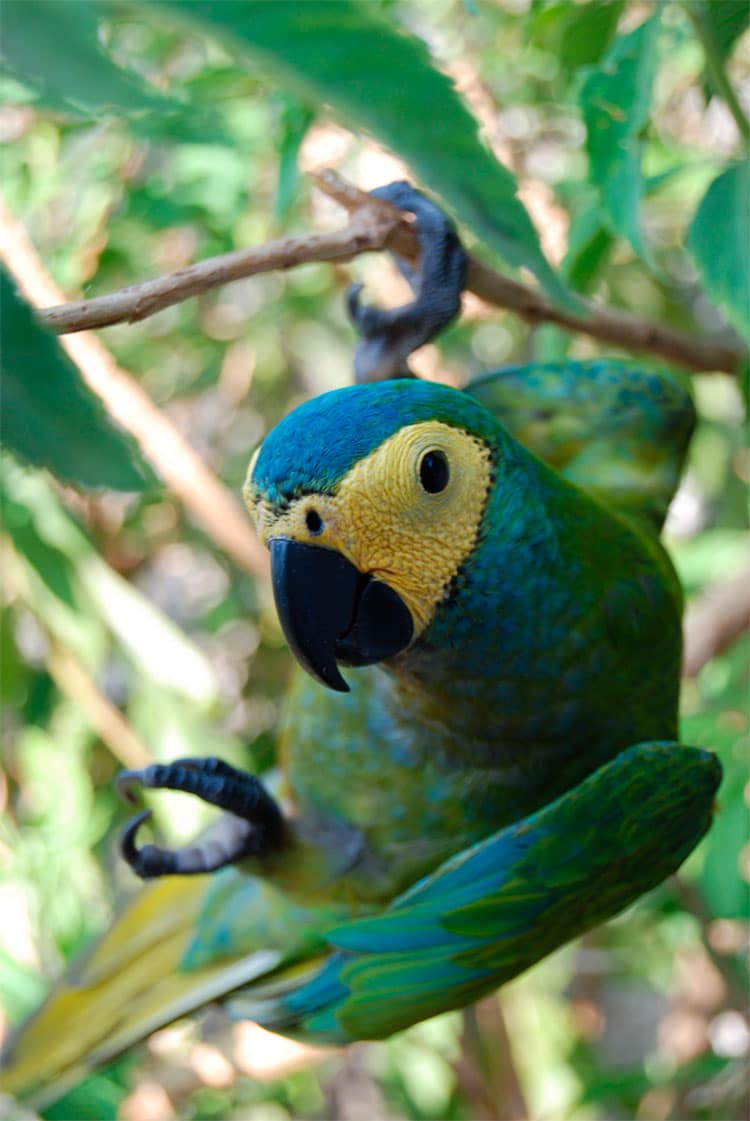
The Pacific parakeet (Psittacara strenuus) has most of its plumage bright green. The underparts are yellowish. Some birds may have some feathers Orange at neck and throat in variable patterns. blue dye in primary coverts and vane outer of the flight feather. Underwing-coverts off yellowish green. The lower feathers of the wings they are yellowish metal.

The bill color horn. Eye ring bare greyish Brown. Iris orange. The legs greyish pale.

The immature they are similar to the adults but with the irises brown.

Note:

The Pacific parakeet (Psittacara strenuus) for a long time it was considered a subspecies of Psittacara holochlorus

Habitat of the โ€œPacific Parakeetโ€:

The Pacific parakeet It is in a wide variety of forest types, including wetlands, semi-Bosque, open scrub forests, plantations and farmland with scattered groves.

In Mexico, they live in semi-deciduous forests, riparian vegetation and in the form of patches of semi-deciduous medium and perennial trees of Manilkara zapota, Ceiba petandra, Cedrela odorata, Enterolobyum ciclocarpum, Cordia allidora, Bursera simaruba, Brosimum alicastrum.

Sedentary, but it probably makes local movements in response to food availability.

Outside the breeding season can be seen in large flocks noisy, often in groups of up to 200 birds or more, especially where is food abundant.

In El Salvador, occupy the suburbs of La Sultana, Antiguo Cuscatlรกn, which it provided an opportunity to estimate the population in the roost, to assess seasonal variations and changes over one year (October 2003 – September 2004). the resting places were also observed in this area and found that these places are used by other parrots as Brotogeris jugularis, Psittacara rubritorquis and other species that probably escaped from captivity.

Reproduction:

Nest in tree cavities, on the walls of rocky cliffs or in termite colonies. Other details about their reproductive behavior remain unknown. The size of the implementation tends to be of 4 eggs.

A colony of the Pacific parakeet (Psittacara strenuus) was studied in the Masaya Volcano National Park in Nicaragua from 1993 until 1994.

The parakeets nested in two craters of the Nindirรญ volcano. They dug their nests in the soft Earth of the wall of the volcano and began to settle on the volcano at the end of the dry season. They nested Once a year, in the rainy season, and they gradually abandoned the volcano toward the end of that season, when their young could fend for themselves. All parakeets left the volcano during the morning and it was a count in the course of the afternoon, When they return from their feeding grounds.

Food:

Little is known about of its diet. They feed on fruits and seeds, they sometimes attack cereal crops.

Distribution of the ยซPacific Parakeetยป:

Endemic to the Pacific slope of the Isthmus of Central America, of Oaxaca up to the middle of Nicaragua, mountainous areas of Guatemala to 2.100 meters and El Salvador, where it is a common permanent resident inhabiting forested or semi-forested regions at altitudes of 1.350 m.

Distribution in Mexico: Pacific slope from the east of Oaxaca until Chiapas. In areas in Chiapas and Oaxaca they have disappeared from tropical forests

Conservation:

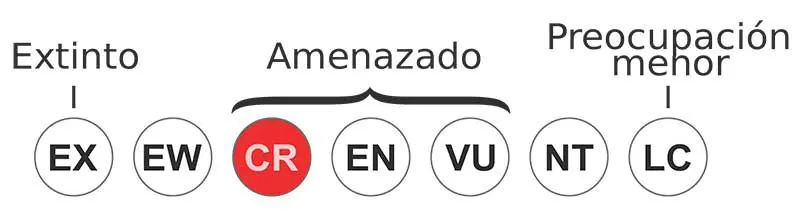
The Pacific parakeet is not threatened globally. It is considered one threatened species in Mexican legislation. Threatened on NAME-059-ECOL-2001. CITES Appendix II. This species should be classified as in Danger of extinction by their reduced distribution, deforestation of its Habitat and illegal trafficking.

However,They show a high adaptability to changes in natural ecosystems caused by the human.

There are no programs for the conservation of the species.

The "Pacific Parakeet" in captivity:

Rare in captivity.

Its marketing is prohibited in Mexico.

The illegal trade in parrots and macaws is held thanks to demand from consumers. If the demand for these wild species is reduced, then the offer would be reduced and therefore the illegal capture.

If you create an international demand of these captive-bred parrots, there will be unscrupulous traffickers who will try to meet the demand with illegally captured specimens, which will only serve to undermine more wild populations.

Alternative names:

Pacific Parakeet, Pacific Conure (English).
Conure de Ridgway, Perruche du Pacifique (French).
Mexikosittich, Mexicosittich (German).
Periquito-do-pacรญfico (Portuguese).
Aratinga del Pacรญfico, Perico Centroamericano, Perico Gorgirrojo, Perico Verde Centroamericano, Periquito del Pacรญfico, Periquito Pacรญfico, Perico Chocoyo, Barranqueรฑo (espaรฑol).
Periquito del Pacรญfico (Honduras).
perico centroamericano, Perico Verde Centroamericano, Periquito pacรญfico (Mexico).
Perico Gorgirrojo (Nicaragua).

scientific classification:

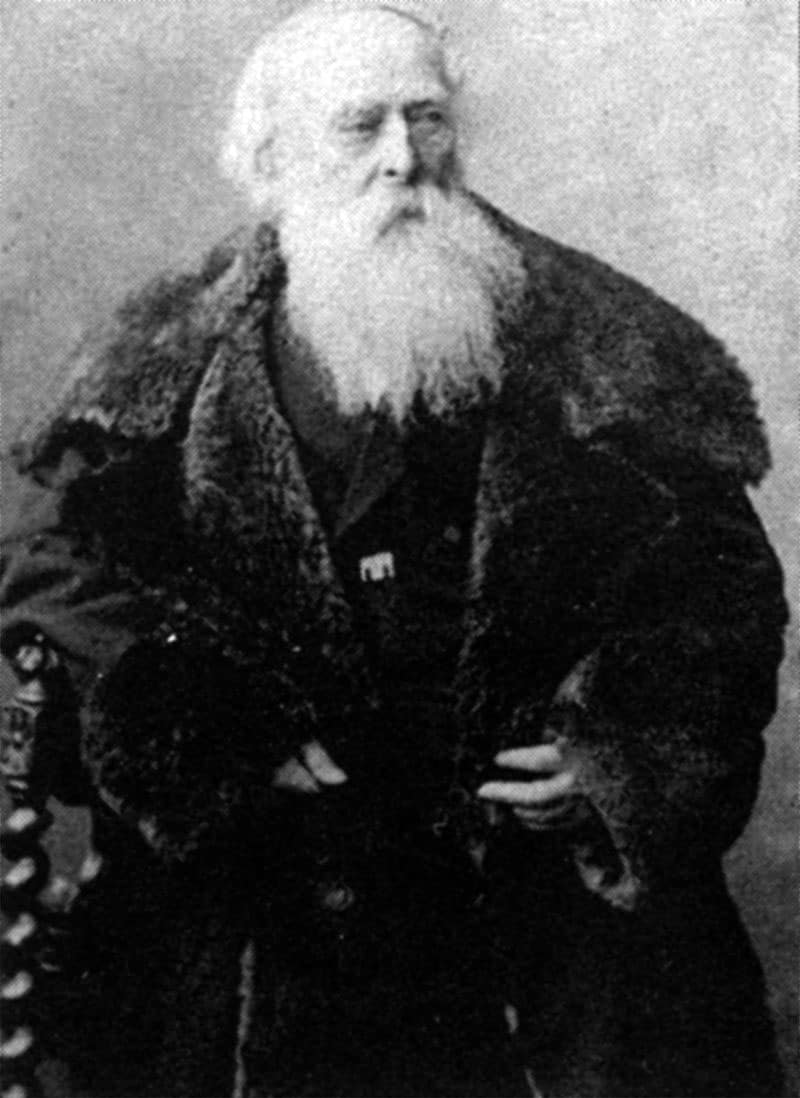
Robert Ridgway
Robert Ridgway

Order: Psittaciformes
Family: Psittacidae
Genus: Psittacara
Scientific name: Psittacara strenuus
Citation: (Ridgway, 1915)
Protonimo: Conurus vigorous holochlorus

Images "Pacific parakeet"

Videos "Pacific parakeet"

————————————————————————————————

Sources:

Avibase
– Parrots of the World โ€“ Forshaw Joseph M
– Parrots A Guide to the Parrots of the World – Tony Juniper & Mike Parr
– Colony breeding of the Pacific Parakeet Aratinga strenua Ridgway 1915 in the Masaya Volcano National Park, Nicaragua – researchgate
– pericosmexico
academia.edu

Photos:

(1) – Psittacara strenuus (Chocoyo) on the cruise, Nicaragua By SergioTorresC (Own work) [CC BY-SA 4.0], via Wikimedia Commons

Sounds: Frank Lambert (Xeno-canto)
โ–ท The world of Pets: Dogs, cats, birds, reptiles, amphibians

Coconut Lorikeet
Trichoglossus haematodus

Coconut Lorikeet

Content

Description:

26 cm.. of length and weight 100-157 g.

The Coconut Lorikeet (Trichoglossus haematodus) are colourful birds that find us almost all the colours of the Rainbow in their plumage.

Have the front of the crown, face and throat Dark bluish mauve, with violet stripes on the front of the crown, ear-coverts and part low of them cheeks; the rest of the head is dark blue with the bases of feathers brown-black color, especially around the rear of the crown and throat, and with greenish stripes at the rear of the crown.

The upperparts are of color green brilliant with specks of color reddish in the center of the the mantle (bases of feathers), and collar back brighter yellowish green.

The primaries with the tips blackish; a patch bright yellow in the innerwebs of the flight feather, that tends to orange in the secondaries; outerweb of the primaries and under wing-coverts, green. Underwing-coverts orange-red; the flight feather dark gray in tips.

The Breast , the upper part of the abdomen and flanks bright reddish orange top, barred dark blue, tending to green at the bottom of the chest; abdomen with brands of color green in the Center, sometimes forming a discrete patch or interspersed with reddish orange; abdomen and the thighs with a beaming green and yellow with bases of color yellow; undertail-coverts of color yellow with tips of color green glossy. Upper, the tail of color green with them innerwebs of the lateral feathers yellowish: undertail, the tail greyish green in the outerweb, yellow in the innerwebs.

The bill orange red: the irises orange-red; legs gray or greenish gray.

Both sexes are very similar.

The immature they are more muted than adults, with the bill and the irises dark brown and tail more pointed.

  • Sound of the Coconut Lorikeet.

Description of subspecies of Trichoglossus haematodus
  • Trichoglossus haematodus caeruleiceps

    (Albertis & Salvadori, 1879) – The blue of the head is more pale, Red is orange-red with the lined in very narrow and dark blue. Abdomen Blackish and band of the neck yellow.


  • Trichoglossus haematodus deplanchii

    (Verreaux,J & Des Murs, 1860) – 26 cm.. of length and a weight of 140 gr.

    The Coconut Lorikeet (deplanchii) (Trichoglossus haematodus deplanchii) is a variation of the nominal (Trichoglossus Haematodus)

    Similar to the nominal Haematodus, but plumage slightly paler. The head has a very bright blue. Reddish orange on the chest, similar to the Trichoglossus haematodus massena, only that more alive. The abdomen is of color green beige and is extends to the part back from the neck. The the thighs and the feathers under the tail yellow and the upper part of the tail olive green.


  • Trichoglossus haematodus flavicans

    (Cabanis & Reichenow, 1876) – Something bigger, 27 cm approximately in length. Its plumage varies from green to olive green and yellow opaque. Breast and neck reddish colour with fine dark edges. Forehead and contour of eyes violet blue.


  • Trichoglossus haematodus haematodus

    (Linnaeus, 1771) – The nominal


  • Trichoglossus haematodus intermedius

    (Rothschild & Hartert, 1901) – 26 cm approximately in length. The blue of the head extends slightly less. The neck is yellow and the abdomen dark green.


  • Trichoglossus haematodus massena

    (Bonaparte, 1854) – 25 cm.. length.

    The Coconut Lorikeet (massena) (Trichoglossus haematodus massena) is a variation of the nominal (Trichoglossus Haematodus).

    The plumage is similar to the of the Ornate Lory except that it is usually paler. The head is blue, ending at the nape with dark brown feathers interspersed with more Brown clear. The chest is of color reddish with a narrow edging blue dark. In some cases, You can see some areas yellow in the plumage of the chest. The abdomen is green; but there may be some kind of mark on the bottom of the abdomen blue-violet.

    The eyes are of color orange in the adult and Brown in the youth. The bill is red orange.


  • Trichoglossus haematodus micropteryx

    (Stresemann, 1922) – Somewhat smaller, 25 cm approximately in length. The plumage is something more pale, the chest reddish orange with narrow edging of dark blue. Abdomen dark green. Band of the neck greenish yellow.


  • Trichoglossus haematodus nesophilus

    (Neumann, 1929) – 26 cm approximately. Very similar to the Trichoglossus Haematodus Flavicans but with feathers underneath of the tail are green.


  • Trichoglossus haematodus nigrogularis

    (Gray,GR, 1858) – Something bigger, 28 cm., approximately, length. Is similar to the Trichoglossus Haematodus Caeruliceps, but the blue of the head It is more dark and often have more red feathers on the neck.

Habitat:

The Coconut Lorikeet they are parrots of the Plains and Highlands. They are distributed by a wide variety of habitats such as mangrove forests, Moors and heathland near the coast, wooded meadows, tree galleries, reforestation during regeneration and rainforests.
In all cases, they need places with abundant flowers.

The Coconut Lorikeet they have also colonized habitats formed by man: coconut plantations, orchards and gardens on the outskirts of cities. They mark a greater preference for edges and clearings inside the dense jungles. Gladly tolerate the areas with degraded vegetation and plantations of small size in the small atolls.

They are birds sedentary, that does not prevent to do short trips looking for trees in flower. Because of these movements, populations appear to vary locally. Very gregarious, they live in pairs or in bands that can vary from a few birds to several hundred, Depending on the availability of food resources.

These birds are very active and noisy, flying a bit randomly above the tops of the trees or climbing up the branches in search of flowers or fruits.

during their search for food, the Coconut Lorikeet they usually share the space with other species of frugivores.
When they are hidden among the leaves, their cries of call reveal their presence.

They adopt a flight very quick and direct.
Son monogamous. During courtship, the couple is side-by-side, swaying, the neck forward and the pupil dilated. They wave irregularly wings to reveal the clear band that crosses its sub-wing.

Reproduction:

The breeding season performed at different times depending on the distribution area.
The species nominal eat your laying between September and December. Both members of the couple set up their nests in a tree cavity, usually a eucalyptus. Several nests, two or three may be in the same tree, but the entrance of the nest will fiercely defend against any intrusion.

In the the Admiralty Islands, the Coconut Lorikeet Sometimes they nest in the ground. The female normally lays 2 eggs on a bed of wood rotting chips. She incubated alone for a few 25 days.

The young chicks are altricial and need to 8 weeks to fend for if same. As soon as they are autonomous, they bind to the bedrooms and common bands.

Food:

The Coconut Lorikeet they have a bill acute equipped with a language composed of some structures similar to hairs tiny called papilla it help excavate the pollen and the nectar from the flowers.
Also eat fruits, berries, seeds, outbreaks and insect larvae.

In Australia, they forage primarily in eucalyptus trees and trees of the genus Banksia, in particular, coastal Banksia (Banksia integrifolia) and river banksia (seminuda), trees that often exceed the 15 metres in height.
They are also found in farmland, since they are particularly cultivated fruits and seeds Milky enthusiasts.
Easily entering gardens to steal fruit and not disdain approaching feeders

Distribution:

Size of its range (breeding/resident ): 5,310,000km 2

Endemics Oceania, at the edge of the Asian continent.
Can be found in Australia, in the East of Indonesian, Papua New Guinea, New Caledonia, the Solomon Islands and Vanuatu.

In Australia, mostly found on the coast, to the North of Queensland in the South of Australia and Tasmania.

Distribution of subspecies Trichoglossus haematodus

Conservation:


minor concern

โ€ข Red List category of the UICN current: Least concern

โ€ข Population trend: Decreasing

The species has undergone intense trade: from 1981 When it began trading in CITES Appendix II and through the year 2005, 100.388 individuals were captured in the wild and reported in the international trade.

In some places of Australia, It is hunted for food and feathers are later used in ritual ceremonies

"Coconut Lorikeet" in captivity:

I recommend to read first hand information:

KNOWING THE Coconut Lorikeet

Alternative names:

Coconut Lorikeet, Rainbow Lorikeet (Coconut) (English).
Loriquet ร  tรชte bleue (French).
Allfarblori (German).
Lรณris-arco-รญris (Portuguese).
Lori Arcoiris, Lori de cocotero, Tricogloso de Pecho Rojo (espaรฑol).

Carl Linnaeus
Carl Linnaeus

scientific classification:


Order: Psittaciformes
Family: Psittaculidae
Scientific name: Trichoglossus haematodus
Citation: (Linnaeus, 1771)
Protonimo: Psittacus haematod . [sic]

โ€œCoconut loryโ€ images:

Videos "Coconut Lorikeet"


"Coconut lory" (Trichoglossus haematodus)


    Sources:

    Avibase
    – Parrots of the World โ€“ Forshaw Joseph M
    – Parrots A Guide to the Parrots of the World – Tony Juniper & Mike Parr
    Birdlife
    Oiseaux.NET

    Photos:

    (1) – Rainbow Lorikeet perching on a wooden post at Tanganyika Wildlife Park, Kansas, USA. by Snowmanradio โ€“ Wikipedia
    (2) โ€“ A Green-naped Lorikeet, T. h. haematodus, a sub-species of Rainbow Lorikeet, Trichoglossus haematodus at Jurong Bird Park, Singapore. by Benjamint444 โ€“ Wikipedia
    (3) โ€“ A Rainbow Lorikeet (Trichoglossus haematodus moluccanus) in Melbourne, Australia. by Alfred Sin โ€“ Wikimedia
    (4) โ€“ Lorikeets feeding on the flowering tree, Corymbia โ€˜Summer Beautyโ€™ (cultivar). Photographed in suburban Brisbane, Australia. by Tatiana Gerus โ€“ Wikimedia
    (5) โ€“ Two birds preening each other. Jervis Bay, New South Wales, Australia by Arnie Hollyman โ€“ ibc.lynxeds.com

    Sounds: Patrik ร…berg, XC215305. accessible www.xeno-canto.org/215305

โ–ท The world of Pets: Dogs, cats, birds, reptiles, amphibians

Santa Marta Parakeet
Pyrrhura viridicata

Cotorra de Santa Marta

Content

Description:

25 cm.. height.

The Santa Marta Parakeet (Pyrrhura viridicata) It, in general, green, with a characteristic red stripe in the middle of the chest which continues until shoulder and armpit. The scales of the chest is less evident; the flight feathers blue. Band front narrow red in the forecrown and behind the eye with red and yellow dye. Tail over green and below red opaque.

Bill color bone; brown iris; pale black legs. It has no sexual dimorphism.

Habitat:

It inhabits in humid mountain forest, clouded forest, pastures and edges, from 1900 to 2800 m. They fly at dawn and at dusk in compact and numerous flocks on the canopy of the forest. Is les has observed flying over them clear adjacent and each time more visiting them mulberry plantations.

The species rests and nests in couples and in lesser proportion in groups of three individuals in cavities of Palms of bouquet Ceroxylon ceriferum (Arecaceae).

Reproduction:

The period reproductive is starts in December and lasts until June, the cavities are visited on average 4 to 5 times a day. There is a sexual dimorphism and a low reproductive success can be associated with displacement or predation by the Aratinga wagleri wagleri (Scarlet-fronted Parakeet) or the Santa Marta Toucanet (Aulacorhynchus lautus prassinus) – Ramphastidae.

Food:

Twelve plant species are incorporated into the diet so far known to the Santa Marta Parakeet, It consists mainly of flowers and fruits, the inflorescence of the Croton bogotanus (Euphorbiaceae) is their main source of food. It forages in groups of size variable, presenting an integration and disintegration of subgroups throughout the day. A sentinel system was observed.

Distribution:

Size of the area of distribution (reproduction / resident): 1,600 km2

Endemic species of Sierra Nevada de Santa Marta, to the northeast of Colombia. The towns registered include The Summit, is of Taquiรฑa on the basis of the Pรกramo of Mamarongo in the Guajira, and Cerro Quemado in the mountains of San Lorenzo.

Will produce some movements altitudinal seasonal. Almost all the habitat forest subtropical is designated as reserve forest or Park national, but the clearing for plantations of marijuana has been extensive, similar to the use of herbicides to combat it. So it only remains for the 15% the original forest (especially in the hillsides North), including only 200 the preferred height of the species km2. Fairly common within this very restricted range, but the population probably below of the 5.000 birds.

Conservation:

State of conservation โ“˜


Endangered Endangered โ“˜ (UICN)โ“˜

โ€ข Current category of the Red List of the UICN: In danger of extinction.

โ€ข Population trend: Decreasing.

Rationale for the Red List category

The range of this species and its small population are probably decreasing as a result of habitat loss. So, qualifies as in danger.

Justification of the population

The population It has been estimated for a long time between 5.000 and 10.000 individuals, equivalent approximately to 3.300-6.700 mature individuals. The density of population is of 1 Ave per km2 (Botero-Delgadillo et to the. 2012). Assuming that the 680 km2 of habitat are fully occupied, the population total is calculated that is 2,900-4,800 birds, which is equivalent to 1,933-3,200 mature individuals; But, with occupation part is likely to remain less than 2.500 birds (Botero-Delgadillo et to the. 2012).

Justification of trend

Se sospecha una decrease moderate and continuous of the population on the basis of the rates of habitat loss.

Threats

only one left 15% the original vegetation of the Sierra Nevada de Santa Marta, to a large extent on the slope North, where this species is found (LM Renjifo, Com. 1993, 2000).

The main current threat is the expansion of plantations of non-native trees, such as the of Pine and eucalyptus, in addition to the clearing of land for livestock (C. Olaciregui in litt. 2012).

ยท Historically, the conversion of forests in plantations of marijuana and coca was also a major threat (LG Olarte in litt., 1993, com LM Renjifo. Comm., 1993, J. Fjeldsรฅ verbally they 2000, pers LM Renjifo. Comm., 2000, C. Olaciregui in litt. 2012), that is compounded by the Government with application of herbicides in the sierra (LG Olarte in litt., 1993, com LM Renjifo. Comm., 1993, 2000).

Other threats that followed the human migration to the area Since the Decade of 1950 hereafter include slash & burn (Dinerstein et to the., 1995, Snyder et to the. 2000, Salazar and Strewe undated, PGW Salaman in litt. 1999).

ยท It is known to be hunted in the cold river valley, and in the San Pedro district individuals in mulberry plantations have skyrocketed. The species not found in the local bird trade (Strewe 2005).

"Santa Marta Parakeet" in captivity:

Not marketed for captive.

Alternative names:

Santa Marta Parakeet, Santa Marta Conure (English).
Conure des Santa Marta, Perriche de Santa Marta, Perruche de Santa Marta (French).
Santa-Marta-Sittich, Santa Marta Sittich, Sittich (German).
Santa Marta Parakeet (Portuguese).
Cotorra de Santa Marta, Perico Oliva, Periquito de Santa Marta (espaรฑol).

scientific classification:

Order: Psittaciformes
Family: Psittacidae
Genus: Pyrrhura
Scientific name: Pyrrhura viridicata
Citation: Todd, 1913
Protonimo: Pyrrhura viridicata

Images "Santa Marta Parakeet"

Videos "Santa Marta Parakeet"


Especies del gรฉnero Pyrrhura

Santa Marta Parakeet (Pyrrhura viridicata)


Sources:

Avibase
Parrots of the World โ€“ Forshaw Joseph M
Parrots A Guide to the Parrots of the World – Tony Juniper & Mike Parr
Birdlife
Oliveros rooms, H.. 2005. Population and ecological evaluation of the Santa Marta parakeet Parrot parakeet in the sector of San Lorenzo, Sierra Nevada de Santa Marta, Colombia. (ProAves.org)

Photos:

(1) – ProAves Foundation – Proaves.org

Sounds: By GABRIEL MILK (Xeno-canto)
โ–ท The world of Pets: Dogs, cats, birds, reptiles, amphibians

Bald Parrot
Pyrilia aurantiocephala

Bald Parrot

Content

Description:

23 cm.. length.

The Bald Parrot (Pyrilia aurantiocephala) has the mandible and the upper maxilla, black with a large orange dot in the base; head naked orange chrome; lores, forecrown, pileum, nape, face and chin no true feathers; coverts only black bristles and some white bristles in lores; true feathers beginning in dorsal area neck, spectrum yellow in proximal half and yellow-green in distal half with black apex, passing rapidly to parrot green as basic color the mantle, back, uropigium, and of the uppertail-coverts; feathers in bend of wing and scapulars, yellowish orange with base scarlet; lesser wing coverts green, except scarlet carpal edge; median and greater wing coverts, with large suffusion of ultramarine blue.

The upper surface of the of remiges black with outerweb shaded with indigo blue; undersurface of remiges black color with a a shamrock greenish on the innerwebs; the outerweb and the apex of the upper surfaces of the rectrices, indigo blue, shaded to varying degrees with green; the base innerwebs of the rectrices, yellow; feathers of the chest with greenish yellow base and apex, forming a large banda pectoral; lower breast, abdomen and crissum, emerald green sprinkled with cyan; underwing-coverts scarlet; the thighs yellow; feet feet orange yellow with suffusion of ochre; irises orange.

The immature with the bare lores to the area around the eyes, orange, the rest of the head feathered dull green; upper breast greenish yellow. Bill yellow in very young birds.

Note:

This parrot was initially believed to be an immature of the species Vulturine Parrot (Pyrilia vulturina) due to the orange color head calva. But, when it was discovered that individuals were sexually mature, He described as a new species. In fact, the youth of both species have feathers head greenish, unlike adults.

Formerly, It was included in the genus Pionopsitta.

  • Sound of the Bald Parrot.

Habitat:

Seen in gallery forest and in forest ‘campinarana‘ (on white sand soils). This region is threatened by logging (Gaban-Lima et al., 2002).

viewed individually, in pairs or small flocks of up to 10 birds. It is most active during the early morning that other parrots, and before going to sleep. It stays in the upper canopy where it is well camouflaged.

Reproduction:

The breeding season possibly either during September; little is known about their breeding habits.

Food:

Feeds of seeds, fruits and possibly larvae of gall wasps (Cynipidae).

Distribution:

Size of its range (breeding/resident): 407.000 km2

The Bald Parrot They are known only in some locations covering the lower basin of Madeira river and the upper basin of Tapajos River in the Brazil Amazon, more specifically in the Sรฃo Benedito river (Field observations) and Cururu-acu River, both tributaries on the right bank of the river Teles Pires, himself a tributary of Tapajรณs.
There are several recent records of this new species from the micro-region of Madeira in the vicinity of Borba.

Since the species is currently known only from Two types of habitat and a relatively small area, it is unlikely that the population is much higher 10.000 individuals, so it is considered that it is near-threatened. It is likely to occur more records now that has been formally recognized as a species, and this may clarify its exact state.

Conservation:


Near-threatened


โ€ข Current category of the Red List of the UICN: Near-threatened.

โ€ข Population trend: Decreasing.

Population size: 6.700 specimens.

Rationale for the Red List category

This species has recently described a moderately small population is declining due to loss of habitat. So, it is classified as near threatened.

Justification of the population

The population is preliminarily estimated with a number of at least 10.000 individuals, approximately equivalent to 6.700 mature individuals. This requires confirmation.

Justification of trend

It is suspected that this species has lost 8,8-13,1% of habitat within its distribution over three generations (21 years) starting from a model of deforestation Amazon (Soares-Filho et to the., 2006, Bird et to the., 2011). So, you suspect your decrease in population <25% durante tres generaciones.

"Bald Parrot" in captivity:

unknown in captivity.

Alternative names:

Bald Parrot, Orange-Headed ParrotT (English).
Caรฏque chauve (French).
Orangekopfpapagei, Langkopfpapagei (German).
Papagaio-de-cabeรงa-laranja (Portuguese).
Lorito Calvo (espaรฑol).

scientific classification:

Order: Psittaciformes
Family: Psittacidae
Genus: Pyrilia
Scientific name: Pyrilia aurantiocephala
Citation: Gaban-Lima, Raposo & Hรถfling, 2002

Images "Bald Parrot"

————————————————————————————————

ยซBald Parrotยป (Pyrilia aurantiocephala)


Sources:

Avibase
– Parrots of the World โ€“ Forshaw Joseph M
– Parrots A Guide to the Parrots of the World – Tony Juniper & Mike Parr
Birdlife
– Department of Zoology, Bioscience Institute, University of Sao Paulo, Rua do Matao, dish 14, not. 101, POCKET 05508-900, Saหœo Paulo, SP, Brazil – Notes

Photos:

(1) – Bald Parrot (Pyrilia aurantiocephala) – Watercolor, Romain Risso. By Gossipguy (Own work) [CC BY-SA 3.0], via Wikimedia Commons

โ–ท The world of Pets: Dogs, cats, birds, reptiles, amphibians

Yellow-naped Parrot
Amazona auropalliata

Yellow-naped Parrot

Content

Description:


Anatomy-parrots

35,5-38 cm.. length and 480 g. of weight.

The Yellow-naped Parrot (Amazona auropalliata) It has a large size; their forecrown and front of the crown, usually, pale bluish green, sometimes with narrow frontal band yellow that extends to the front of the crown.

back of the crown pale bluish green; lores, cheeks and sides neck, green; nape with broad golden-yellow ban. Upperparts green with some feathers in the the mantle and in the back with blackish edges; rump and uppertail-coverts slightly brighter than the rest of the upperparts. The wing-coverts green but more emerald than upper body; feathers yellow feathers on leading edge of wing in some birds. Outerwebs of the four outer secondaries, bright red as speculum; primaries and secondaries violet blue outerweb and towards tips. Under, the wings are green. Underparts pale green with a slight bluish tinge throat.

Yellow-naped Parrot

Tail green with a wide terminal band brighter yellowish green, red at the base with outerweb of the outer feathers, blue. Bill blue, black tip; bare periophthalmic grey; irises orange; legs grey.

Both sexes are similar. The immature has the nape green with yellow feathers appearing at end of first year; irises brown.

  • Yellow-naped Parrot sound.

Description 3 subspecies:

Birds of Bay islands often they treated as parvipes, not as caribaea. Some copies of Guatemalan Pacific show forecrown yellow, but apparently not consistent racial difference.

  • Amazona auropalliata auropalliata

    (Lesson,PA, 1842) – Nominal.


  • Amazona auropalliata caribaea

    (Lousada, 1989) – Similar to the subespecie parvipes but with olive below and bill paler colored horn (especially lower jaw). usually adults patch yellow triangular in front of the crown. Young birds show little yellow in the head wave nape.


  • Amazona auropalliata parvipes

    (Monroe,BL Jr & Howell,TR, 1966) – Less than nominal species, with red feathers on the curve wing , otherwise similar.

Note:

The Amazona auropalliata, It is often considered conspecific with the Amazona ochrocephala and Amazona oratrix.

Habitat:

Video – "Yellow-naped Parrot"

My Yellow-naped Amazon talking and whistling

The Yellow-naped Parrot inhabits semiarid forests, arid scrubland and savannas (including those of Pinus), openings in deciduous tropical forests and swamps peaceful, evergreen gallery forests and, sometimes, second growth in agricultural areas. Observed to 600 metres in Guatemala and a 700 metres in Honduras. Usually in pairs or small groups, sometimes in larger meetings, but the decline of the population may now obscures large flocks in some areas. They meet at communal roosts.

Reproduction:

Monรณgama; It maintains the union of couples throughout the year.
It nests in natural cavities in trees, such as holes in old trunks or dead, including pines Nicaragua and Bay islands. breeding season in February Oaxaca and El Salvador; March Roatan. Clutch 2-3 eggs.

In captivity cycle nesting of the Yellow-naped Parrot complete with 29 days of incubation eggs, followed by two months increase of the young in the nest.

Food:

Foods reported include seeds of Cachlospermum, Curatella, Higos Ficus and fruit mature Terminalia. The birds in the Bay islands observed feeding on cones Pinus caribaea, with high seasonal dependence on this resource.

Distribution:

Size of its range (breeding/resident): 580.000 km2

The Yellow-naped Parrot It is confined to Central America. They are distributed in the lowlands Eastern Pacific of Mexico (Oaxaca and Chiapas), Guatemala (a sample taken in Petรฉn but his status there is uncertain), El Salvador (arid lowland tropical zone), Honduras and Nicaragua, to the Northwest of Costa Rica from the south end of Gulf of Nicoya northward. They can also be seen in the Caribbean slope of Honduras and in the Mosquito Coast from Honduras, as well as in the neighboring area of โ€‹โ€‹northeast Nicaragua. found in Roatan and Guanaja, in the Bay islands but absent in Utila.

Resident. Apparently uncommon in Oaxaca and rare and declining in Costa Rica. Birds observed in the Sula Valley, Honduras, previously attributed to this species but now included within the species Yellow-headed Parrot.

Formerly common and locally abundant, but probably now declining throughout its entire range due to conversion of habitat for agricultural uses and its capture for trade local and international. Not yet considered endangered, but its long-term status is uncertain if its population decline continues.

Although Guanaja reasonable numbers remain, the species inhabiting the Bay islands (caribaea), It is in serious decline due to capture for export (practically 100% of hatchlings are caught each year); also at risk from tourism development, especially in Roatan.

Distribution 3 subspecies:

  • Amazona auropalliata auropalliata

    (Lesson,PA, 1842) – Nominal. Pacific Coast of Central America, from Oaxaca, Mexico, to the Northwest of Costa Rica.


  • Amazona auropalliata caribaea

    (Lousada, 1989) – Bay islands, Honduras.


  • Amazona auropalliata parvipes

    (Monroe,BL Jr & Howell,TR, 1966) – Mosquito Coast in Honduras and northeast of Nicaragua.

Conservation:

State of conservation โ“˜


Vulnerable Vulnerable โ“˜ (UICN)โ“˜

โ€ข Current category of the Red List of the UICN: Vulnerable.

โ€ข Population trend: Decreasing.

โ€ข Population size : 20000-49999.

Rationale for the Red List category

    This species has been uploaded to Vulnerable because information on levels exploitation and habitat loss, and trends of the local population, They suggest that the species is suffering at least one rapid population decline. In fact, the rate of decline can be very rapid; However, Additional data are needed to confirm this, in which case the species may qualify for elevation In danger of extinction.

Justification of the population

    Partners in Flight estimated that the population in number of less than 50.000 individuals (A. Punjabi in some. 2008), so it is placed in the band 20.000 to 49.999 individuals on freedom.

Justification of trend

    It is suspected that the population is in rapid decline due to the continuous habitat destruction and unsustainable levels of hunting, a suspicion that is supported by the observations of trends of the local population.
Conservation Actions Underway

โ€ข CITES Appendix I (Endangered species, which they are or may be affected by international trade. Only trade in the species is authorized in the Appendix I in exceptional circumstances, and it must not have a primarily commercial purpose.)

โ€ข The species occurs in a number of protected areas.

โ€ข Efforts have been made to obtain an area of 4.000 hectares east of Monterrico on Pacific coast of Guatemala declared as protected area (C. Muccio in some . 2011).

โ€ข The species has been the subject of a number of local studies, some ongoing, aimed at gathering information on population trends and threats.

โ€ข The extent of exploitation of wildlife for the trade It has been highlighted by the local media, for example in Honduras ( by O. Andino in some . 2011).

Conservation Actions Proposed

โ€ข Carry out surveys coordinated through the range of the species to quantify the Total population size.

โ€ข Monitor the demographic trends through regular surveys.

โ€ข Monitor harvest rates for the trade through regular surveys of the local population and officials.

โ€ข Monitor rates of loss and degradation of habitat throughout the range of the species.

โ€ข Accomplish awareness activities to reduce exploitation.

โ€ข Increase the area of โ€‹โ€‹suitable habitat that receives effective protection..

The Yellow-naped Parrot in captivity:

The populations of the Amazon nuquigualda have suffered strong pressure by national and international trade (Ridgely, 1981, Iรฑigo- Elias and Ramos, 1992). There is now an illegal heavy traffic this species, both for domestic and international trade, Parrot's being seized in the Mexico-Texas border, with 648 copies confiscated during 1990-1993 (Gobbi, et to the., 1996).

protected by CITES Appendix I species (Endangered species, which they are or may be affected by international trade. Only trade in the species included in Appendix I authorized in exceptional circumstances, and it must not have a primarily commercial purpose.)

Each captive specimen of this species which is capable of reproducing, must be placed in a well-managed captive breeding program and not sold as a pet, in order to ensure its long-term survival.

Alternative names:

Yellow naped Parrot, Yellow-naped Amazon, Yellow-naped Parrot, Yellow-naped Parrot (incl. ssp. caribaea, parvipes),
(English).
Amazone ร  nuque d’or, Amazone ร  nuque jaune, Amazone verte ร  nuque jaune (French).
Gelbnackenamazone (German).
Papagaio-de-nuca-amarela (Portuguese).
Amazona nuquigualda, Lora de Nacu Amarilla, Lora de nuca amarilla, Lora nuca amarilla, Loro Nuca Amarilla, loro nuca-amarilla, Loro Nuquiamarillo (espaรฑol).
Lora de nuca amarilla (Costa Rica).
Lora nuca amarilla (Honduras).
loro nuca amarilla, loro nuca-amarilla, Loro Nuquiamarillo (Mexico).
Loro Nuquiamarillo (Nicaragua).


scientific classification:

drawn portrait of Adolphe Pierre Lesson
Pierre Adolphe Lesson

Order: Psittaciformes
Family: Psittacidae
Genus: Amazona
Scientific name: Amazona auropalliata
Citation: (Lesson, 1842)
Protonimo: Psittacus auropalliatus


Images Yellow-naped Parrot:


Species of the genus Amazona


Sources:

Avibase
– Parrots of the World โ€“ Forshaw Joseph M
– Parrots A Guide to the Parrots of the World – Tony Juniper & Mike Parr
Birdlife

Photos:

(1) – A Yellow-naped Amazon at Jurong Bird Park, Singapore By Michael Gwyther-Jones from UK (Flickr) [CC BY 2.0], via Wikimedia Commons
(2) – Yellow-naped Parrot or Yellow-naped Amazon (Amazona auropalliata) at Gatorland By Josh Hallett [CC BY 2.0], via Wikimedia Commons
(3) – Yellow-naped Parrot, also known as Yellow-naped Amazon, in an aviary at Leeds Castle, Kent, England By Martin Pettitt [CC BY 2.0], via Wikimedia Commons
(4) – Yellow-naped Parrot or Yellow-naped Amazon (Amazona auropalliata) in captivity. Upper body By whiskymac (Flickr) [CC BY 2.0], via Wikimedia Commons
(5) – Yellow-naped Amazon (also called Yellow-naped Parrot) in a cage. A blue colour mutant variety bred in aviculture By Ruth Rogers (originally posted to Flickr as Blue Amazon) [CC BY 2.0], via Wikimedia Commons
(6) – Yellow-naped amazon by Ecocientificos 2 IE PIO XIIFlickr
(7) – Roatรกn-Gelbnackenamazone (Amazona auropalliata caribaea) By Martingloor (Own work) [CC BY-SA 4.0], via Wikimedia Commons
(8) – Yellow-naped Parrot or Yellow-naped Amazon (Amazona auropalliata) By Just chaos [CC BY 2.0], via Wikimedia Commons
(9) – Yellow naped Amazon parrot Matt edmonds at the English language Wikipedia [GFDL or CC-BY-SA-3.0], via Wikimedia Commons
(10) – Amazona auropalliata – The zoology of the voyage of H.M.S. Sulphur :. London :Smith, Elder,1844 [i.e. 1843-1846]. by Biodiversity Heritage LibraryFlickr

Sounds: Marcio Martinez, XC239997. accessible www.xeno-canto.org/239997

โ–ท The world of Pets: Dogs, cats, birds, reptiles, amphibians

Pearly Parakeet
Pyrrhura lepida

Pearly Parakeet

Content

Description:

Pearly Parakeet

24 cm.. in length and 70โ€“80 grams in weight.

The Pearly Parakeet (Pyrrhura lepida) has the head dark blackish brown with mottled light on nape; ear-coverts creamy white; cheeks pale bluish green.

Upper mantle blue; robe bottom until uppertail-coverts, green. Scapulars green at the base, blue down; lesser wing coverts slightly green tinted olive; median coverts and older, mainly blue; some red at the leading edge of wing . Flight feathers Blue above, secondaries with green in the outerweb; dark gray below. Underwing-coverts bright red. Sides of the neck, the throat and the top chest, mainly brown with some blue marks and points yellowish brown, which gives an overall scaled aspect; The underparts remaining are green with blue on the flanks and the thighs. Upper, the tail mainly brown, green in the basal area and narrow blue tips. Bill black-brown; bare periophthalmic grey; irises dark brown; legs black slate.

The plumages of both sexes are, apparently, similar.

taxonomic history

Confusing taxonomic history: until recently known as Pyrrhura perlata, but that name is actually applied to the known way long as Pyrrhura rhodogaster, currently a synonym for the species Pyrrhura perlata; the current species therefore assumes his next oldest name, Pyrrhura lepida. Forms a pair of species with parapatric Pyrrhura perlata, with which it is sometimes considered conspecific; the recent molecular phylogeny indicated that the closest relatives of these two are the Pyrrhura frontalis and Pyrrhura molinae.

  • Sound of the Pearly Parakeet.

Description 3 subspecies:

  • Pyrrhura lepida anerythra

    (Neumann, 1927) – Similar to the species nominal but with the chest, the belly and cheeks green with occasional shades of blue.


  • Pyrrhura lepida coerulescens

    (Neumann, 1927) – Similar to the species nominal, but with the forecrown and crown brown, gray throat and upper chest, green on the upper cheeks; bluer in the lower chest

  • .

  • Pyrrhura lepida lepida

    (Wagler, 1832) – Nominal.

Habitat:

The Pearly Parakeet, usually, inhabits moist terra firme forests. The species has been observed in forest edges, clear areas and second growth.

They are seen in flocks of up to ten birds, particularly in places where food is plentiful.

Reproduction:

They nest hollow logs. The laying is of 3-4 eggs incubados during 23 days; the hatchling needs close to 7 weeks for independence.

Food:

probably catkins, small fruits and flowers.

Distribution and status:

Size of its range (breeding/resident): 585.000 km2

The Cotorra Pulcra is endemic to Northeast Brazil, to the South of the Amazonia. Observed around the basin Xingรบ and its tributaries, from the Pracui River and the left bank of Tocantins River, and from Belem and the Capim River, in For, east to around Sao Luis in maranhรฃo, and from northern maranhรฃo to the East of Rosary, although apparently no longer in some coastal areas, where according to sources, They were formerly quite common.

Today are rare and extinct in many parts of their former range (for example, North of maranhรฃo) due to large-scale deforestation, although they are, apparently, tolerant habitat alterations.

The coerulescens subspecies It is near extinction due to the almost total loss of their habitat. The species is found in protected areas but its integrity is compromised by the illegal logging.

Distribution 3 subspecies:

Note:

Pyrrhura lepida is the new name of the taxon Pyrrhura perlata, whose name has been shown to be applied first to an immature bird of that species, Crimson-bellied Parakeet (Pyrrhura perlata).

Conservation:

State of conservation โ“˜


Vulnerable Vulnerable โ“˜ (UICN)โ“˜

โ€ข Current category of the Red List of the UICN: Vulnerable.

โ€ข Population trend: Decreasing.

โ€ข Population size : 6700 individuals.

Rationale for the Red List category

From a model of future deforestation in the Amazon basin, While shows some tolerance degraded landscapes, It suspected that the population of this species decline rapidly over the next three generations and, therefore, It has risen to Vulnerable.

Justification of the population

The population is preliminarily estimated at the number of at least 10.000 individuals, approximately equivalent to 6.700 mature individuals. This requires confirmation.

Justification of trend

It is suspected that this species has lost between 47 and the 64,5% of habitat suitable within their distribution during three generations (18 years) starting from a model of deforestation Amazon (Soares-Filho et to the ., 2006, Bird et to the ., 2011). But, because the species seems to have some degree of tolerance to habitat degradation (A. Lees in litt ., 2011), It suspected to decline by 30-49% during three generations.

Threats

Despite an apparent tolerance of some degradation of the habitat, It is perhaps close to extinction in coastal areas of northern maranhรฃo, due to the large scale deforestation (Juniper and Parr, 1998). They are distributed within protected areas, but its integrity is compromised by the illegal logging (Juniper and Parr 1998). Deforestation in the Amazon basin is expected to increase as land is cleared for cattle ranching and soy production, provided by the expansion of the road network (Soares-Filho et to the. , 2006). The proposed changes to Brazilian Forest Code reduce the percentage of land that a private owner is legally required to keep as forest and include an amnesty for owners who deforested before July 2008 (That they would later be absolved of the need to reforest the illegally cleared land) (Bird et to the., 2011).

Conservation Actions Underway

CITES Appendix II. The species is classified as Vulnerable nationally in Brazil (MMA 2014), with subspecies elegant and coerulescens considered in Danger (Silveira y Straube 2008).

Conservation Actions Proposed

* Census and population monitoring to assess the world's population and demographic trends and refine distribution and locate strengths.

* Investigate its ecology, threats and conservation requirements. Strengthen the network of protected areas within the remaining core habitat.

Effectively manage resources and management of existing protected areas and new, using the emerging opportunities for funding the management of protected areas with the overall goal of reducing carbon emissions and maximize the conservation of biodiversity. It is also essential conservation on private land, through the expansion of market pressures for proper land management and prevention of deforestation on land not suitable for agriculture (Soares-Filho et to the., 2006).

Campaign against proposed changes to the Brazilian Forest Code that would lead to a decrease in the width of protected riparian forest areas as Permanent Preservation Areas (APPs), that function as vital corridors in fragmented landscapes.

"Pearly Parakeet" in captivity:

Rare in captivity.

It is a bird Vulnerable nationally in Brazil and protected by CITES Appendix II; each captive specimen of this species that is capable of reproducing, must be placed in a well-managed captive breeding program and not sold as a pet, in order to ensure its long-term survival.

Alternative names:

Pearly Conure, Pearly Parakeet (English).
Conure perlรฉe, Perriche perlรฉe, Perruche perlรฉe (French).
BlausteiรŸsittich (German).
tiriba, tiriba-de-barriga-vermelha, Tiriba-perรณla, tiriba-pรฉrola (Portuguese).
Catita cola granate, Cotorra Pulcra, Cotorra Ventrirroja (espaรฑol).


scientific classification:

Johann Georg Wagler
Johann Georg Wagler

Order: Psittaciformes
Family: Psittacidae
Genus: Pyrrhura
Scientific name: Pyrrhura lepida
Citation: (Wagler, 1832)
Protonimo: Sittace lepida

Images Pearly Parakeet:

Videos "Pearly Parakeet"


Especies del gรฉnero Pyrrhura

Pearly Parakeet (Pyrrhura lepida)


Sources:

Avibase
– Parrots of the World โ€“ Forshaw Joseph M
– Parrots A Guide to the Parrots of the World – Tony Juniper & Mike Parr
– Birdlife

Photos:

(1) – Pyrrhura lepida by Florin FeneruFlickr
(2) – Pyrrhura lepida coerulescens Neumann, 1929 – Huub Veldhuijzen van Zanten / Naturalis Biodiversity Center [CC BY-SA 3.0], via Wikimedia Commons
(3) – Pearly Parakeet (Pyrrhura lepida) also known as the Pearly Conure in aviculture. A pet parrot By manginwu (originally posted to Flickr as my name is twoday.) [CC BY-SA 2.0], via Wikimedia Commons
(4) – Tiriba-perola [Pearly Parakeet] by Helio LourenciniFlickr
(5) – Tiriba pearl (Pyrrhura perlata) – www.avesilvestre.com.br
(6) – Parrots A Guide to the Parrots of the World โ€“ Tony Juniper & Mike Parr

Sounds: GABRIEL MILK, XC212988. accessible www.xeno-canto.org/212988

โ–ท The world of Pets: Dogs, cats, birds, reptiles, amphibians

Mascarene parrot โ€ 
Mascarinus mascarin

Mascarene Parrot

Content


Anatomy-parrots

Description:

Of 35 cm.. height and a weight between 400 and 500 g..

The Mascarene parrot โ€  (Mascarinus mascarin) It was a bird dark grayish brown on top, lighter at the bottom; the the tail feathers They were brown with white bases; head lavender gray; lores and area around the bill black. had the bill bright red. The legs They were reddish brown and eyes red.

taxonomy:

A genetic study of 2011 He placed the Mascarene Parrot of Meeting between subspecies of Black Parrot (Coracopsis nigra) of Madagascar and nearby islands, and therefore would not be related to the parrots of Psittacula as believed. It was found that the lineage of Mascarene Parrot It separated made between 4,6 and 9 millions of years, before the formation of the isla Meeting, indicating that it must have happened somewhere else

Habitat:

Nothing is known, although it is likely to be distributed in uninhabited forests where feed on fruits and nuts.

Reproduction:

No data.

Food:

Probably fruits and nuts.

Distribution:

The Mascarene Parrot It was described by many early travelers to Reunion Island (in France), with several captive birds sent to France at the end of the 18th century.

The last accounts of wild birds were from the 1980s. 1770, and the birds were not mentioned by Bory a 1804, so the species may well have been extinct in the wild by then. captive birds in Paris they would also have died at that time, but one bird survived in the collection of birds king Bavaria at least 1834 (checks 1987). Two specimens survive today (Forshaw and Cooper 1989)

Conservation:

โ€ข Current category of the Red List of the UICN: Extinct.

โ€ข Population size : There are none.

Rationale for the Red List category

This species was known from the Rรฉunion, but it has been extinguished by the hunting pressure. The last record of wild birds dates from 1775, and none was observed on a visit in 1804.

Justification of the population

There are none.

Threats

It is likely to have been hunted to extinction.

"Mascarene parrot โ€ " in captivity:

Several captive birds sent to France at the end of the 18th century.

Alternative names:

Mascarene Parrot, Mascarine Parrot (English).
Mascarin de la Rรฉunion, Mascarin malgache (French).
Maskarenenpapagei, Maskarenen-Papagei (German).
Papagaio-das-mascarenas (Portuguese).
Loro de las Mascareรฑas, Loro Mascarรญn (espaรฑol).


scientific classification:

Carlos-Linnaeus
Carl Linnaeus

Order: Psittaciformes
Family: Psittaculidae
Genus: Mascarinus
Scientific name: Mascarinus mascarin
Citation: (Linnaeus, 1771)
Protonimo: Psittacus mascarin.

"Loro of the Masks" โ€  (Mascarinus mascarin)

Sources:

Avibase
Parrots of the World โ€“ Forshaw Joseph M
Parrots A Guide to the Parrots of the World – Tony Juniper & Mike Parr
Birdlife
Wikipedia

Photos:

(1) – The Mascarene Parrot (Mascarinus mascarinus) by John Gerrard Keulemans [Public domain], via Wikimedia Commons

โ–ท The world of Pets: Dogs, cats, birds, reptiles, amphibians

Macquarie parakeet โ€ 
Cyanoramphus erythrotis

Macquarie Parakeet - Cyanoramphus erythrotis

Content

Description Perico Macquarie:

27 cm.. length

The extinct Macquarie Parakeet (Cyanoramphus erythrotis) was a medium-sized green parrot. The head was bright green with pileum and a line in the eyes crimson red. The upperparts They were bright yellow-green to dark green with a scarlet stain on either side of the rump (usually they are hidden by the wings when resting), and a greenish-blue leading edge to the wings. The eyes They were yellow or red, and the bill It was black with a base Pearly. Both sexes looked similar, but the female It was smaller (Forshaw & Cooper 1981; Higgins 1999; Oliver 1955)

Taxonomic status:

This taxon is considered a subspecies of Cyanoramphus [novaezelandiae, erythrotis, subflavescens] (sensu lato) by some authors

Lives in "Perico de Macquarie":

The Macquarie Parakeet inhabited coastal grasslands tussock in the subantarctic Isla Macquarie (Forshaw & Cooper 1981; Taylor 1979).

Reproduction:

It is known nesting in grasslands without trees.

Food ยซPerico de Macquarieยป:

Little is known about the diet of the Macquarie Parakeet, but it is said that feed on crustaceans and other small invertebrates (Oliver 1955; Taylor 1979).

It was Earth (Forshaw & Cooper 1981) and it is said to have been foraged on the seashore, taking invertebrates fused cell algae on the beach (Oliver 1955; Taylor 1979).
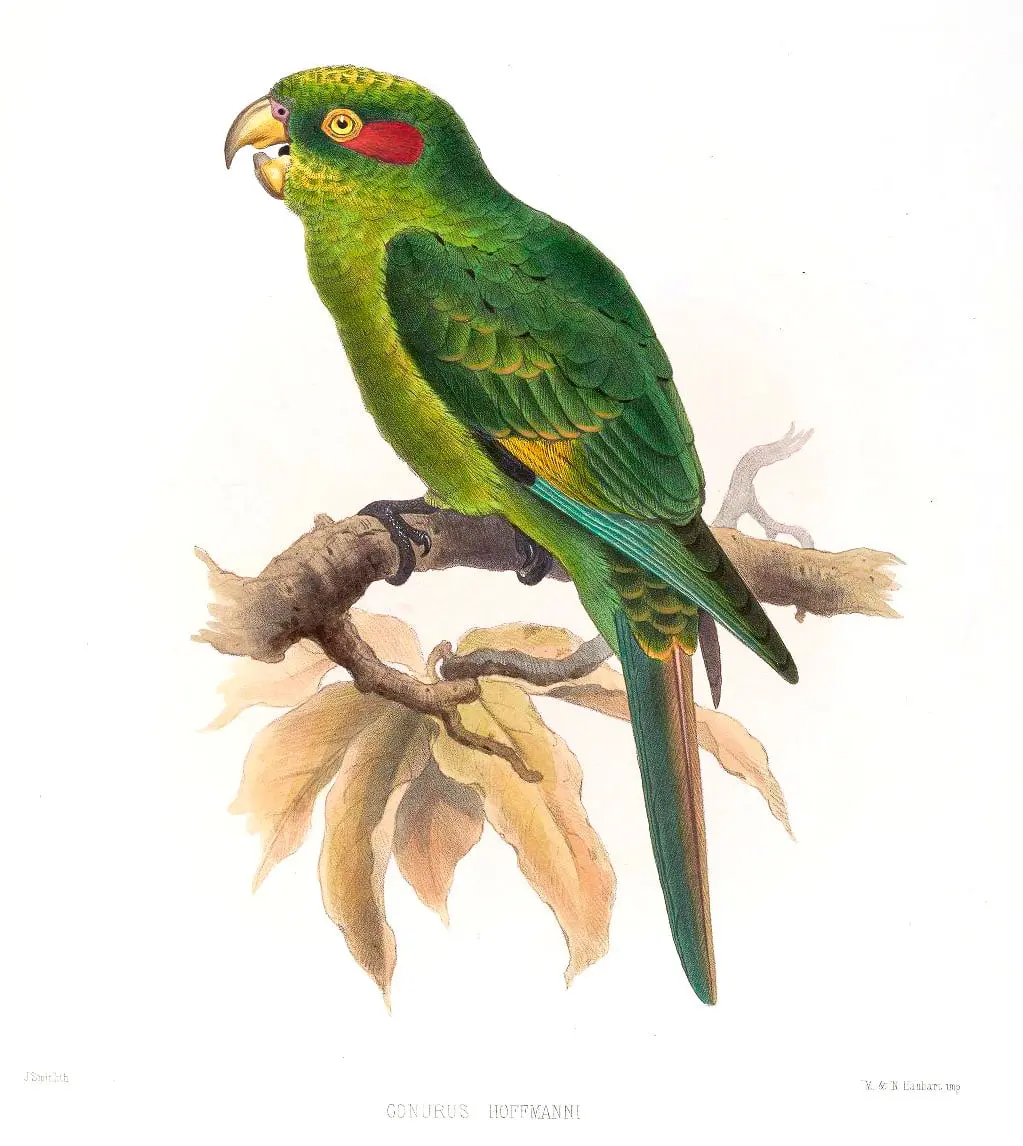
Distribution ยซPerico de Macquarieยป:

The Macquarie Parakeet It was an endemic parrot Isla Macquarie, one sub-Antarctic island in the Antartic Ocean which is politically part of Tasmania Australia. The island and this species were discovered in 1810, time when this parakeet was still very common. The last sighting of the Perico de la Isla Macquarie was in 1891.

Conservation Cyanoramphus erythrotis:

โ€ข Current category of the Red List of the UICN: EXTINCT.

Although hard Macquarie Parakeet They were adjusted well to inhospitable terrestrial environment Macquarie Island, They did not survive the predatory introduced species.

The extinction of the Macquarie Parakeet It was caused by the introduction of exotic predators, like cats, rabbits, mice and rats boat. He was also prey to rascรณn weka or the rascรณn of Lord Howe (Gallirallus australis). This robust flightless bird from New Zealand It was introduced on the island in the mid-nineteenth century as food for sealers, the same hunters killed large numbers of Macquarie's Parakeets (Macquarie Island) to feed. Unfortunately, the wekas They have caused considerable damage to endangered species, as they feed on small birds, Native insects and lizards.

The last sighting of live parrots occurred in 1891

Threat Reduction and Recovery

Translocation program may be suitable for the reintroduction of Norfolk Island Parakeet (Cyanoramphus cookii) on Isla Macquarie. Although programs have been tested for translocation failed Norfolk Island Parakeet (Garnett & Crowley 2000; Hermes et al. 1986), Similar programs have been successful for this parakeet in New Zealand. These programs have been successful with only 15 birds, Bottlenecks causing genetic programs with less than 150 birds. The low success of the pups in the breeding program New Zealand It may be the result of inbreeding depression or poor design of nests (Oritz-Cathedral & Brunton 2008).

The programs of eradication They are underway in Isla Macquarie. The cats were eradicated in 2002, the Keep (Gallirallus australis) in 1988 and is ongoing eradication program rats, rabbits and mice (Mouse muscle) (it. PWS 2009).

Alternative names:

Macquarie Island Parakeet, Macquarie Parakeet (English).
Perruche de Macquarie (French).
Macquarie-Laufsittich, Macquarie-Ziegensittich (German).
Periquito de Macquarie (Portuguese).
Perico de Macquarie (espaรฑol).

scientific classification:

Johann Georg Wagler
Johann Georg Wagler

Order: Psittaciformes
Family: Psittaculidae
Gender: Cyanoramphus
Scientific name: Cyanoramphus erythrotis
Subpoena: (Wagler, 1832)
Protonimo: Psittacus erythrotis

Sources:

โ€ข Avibase
โ€ข Parrots of the World โ€“ Forshaw Joseph M
โ€ข Parrots A Guide to the Parrots of the World – Tony Juniper & Mike Parr
โ€ข Department of the Environment (2018). Cyanoramphus novaezelandiae erythrotis in Species Profile and Threats Database, Department of the Environment, Canberra. Available from: http://www.environment.gov.au/sprat